

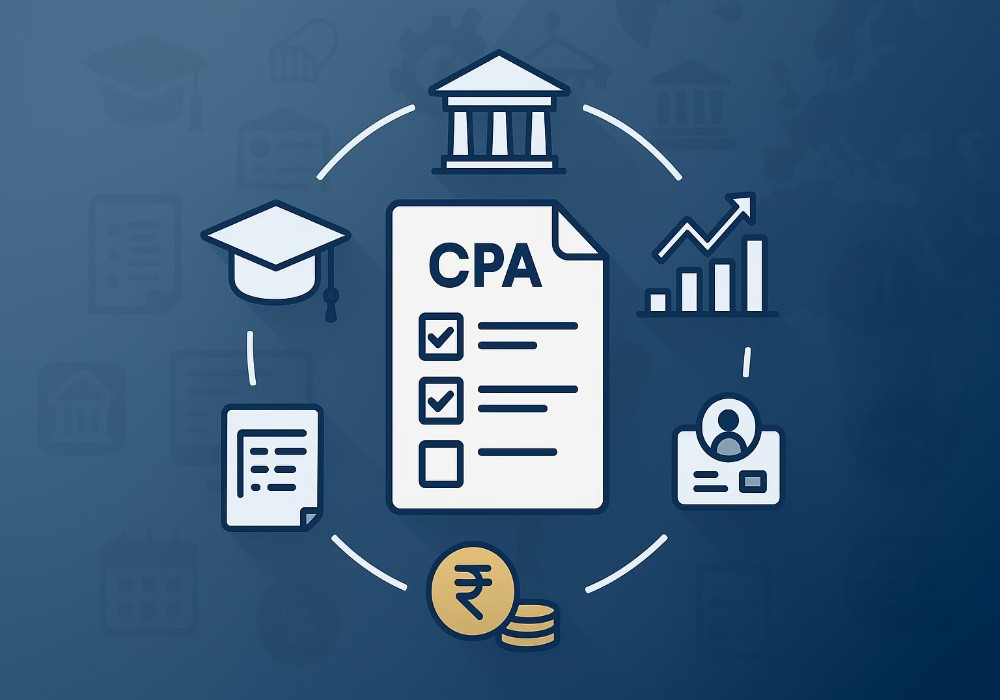
The CPA exam involves several mandatory and optional expenses paid at different stages of the journey. This guide explains what you pay for, when those payments arise, and how to plan your CPA investment without surprises. This article is written by Rohit Arora, Senior Associate at LawSikho.
If you are considering the US CPA certification, the first question on your mind is probably about the investment required.
Here is the straightforward answer: Indian candidates typically spend between ₹2.8 lakhs and ₹5.5 lakhs to complete their CPA journey, depending on their choices regarding review courses, state selection, and whether they pass all sections on the first attempt.
This range might seem wide, but once you understand where the money goes and when you need to pay it, budgeting becomes much more manageable.
This guide breaks down every cost category, explains the recent fee changes that have increased expenses for Indian candidates, and provides practical strategies to optimize your spending without compromising your preparation.
Total CPA Investment for Indian Candidates
Understanding your total investment upfront helps you plan realistically and avoid surprises midway through your CPA journey.
The costs are spread across multiple organizations and payment points over 12 to 24 months, which means you do not need the entire amount on day one. However, knowing the complete picture allows you to assess affordability, explore financing options, and make informed decisions about where to invest more or save.
The Three Investment Levels: Budget, Standard, and Premium
Not every CPA candidate spends the same amount, and your total investment depends largely on the choices you make. The budget path costs between ₹2,80,000 and ₹3,50,000 and suits disciplined self-studiers who choose affordable review courses like Surgent or Gleim, select low-fee states, and pass all sections without retakes. This path requires strong self-motivation and carries higher risk if you need additional support.
The standard path, ranging from ₹3,50,000 to ₹4,50,000, represents what most Indian candidates actually spend. This includes a quality review course like Becker through an Indian partner, standard evaluation and application fees, and a realistic buffer for one possible retake. Working professionals who want solid preparation without cutting corners typically fall into this category.
The premium path costs ₹4,50,000 to ₹5,50,000 and includes top-tier coaching with personal mentorship, live classes, placement support, and comfortable buffers for any contingencies. Candidates whose employers sponsor their CPA or those who want maximum support often choose this route. The extra investment provides more structure and resources, though it does not guarantee faster completion.
Complete Cost Summary Table with Fees
The following breakdown shows where your money goes across the CPA journey. These figures reflect current costs, including the recent NASBA fee increase for international candidates testing in India.
| Cost Category | Amount Range (INR) |
| Credential Evaluation (WES/NIES) | ₹15,000 – ₹25,000 |
| State Board Application Fee | ₹5,000 – ₹18,000 |
| Exam Fees (4 sections at ₹45,900 each) | ₹1,83,600 |
| Registration/NTS Fees | ₹25,000 – ₹50,000 |
| CPA Review Course | ₹60,000 – ₹1,80,000 |
| Document and Courier Costs | ₹8,000 – ₹15,000 |
| Ethics Exam and Licensing | ₹35,000 – ₹55,000 |
| Total Investment Range | ₹2,80,000 – ₹5,50,000 |
The exam fees represent the highest fixed cost that every candidate pays. Your flexibility lies primarily in reviewing course selection and avoiding retakes. Exchange rate fluctuations (currently around ₹90 per USD) can also affect your final rupee outflow by 5% to 10%.
Breaking Down the Four Major Cost Categories for CPA Exam
Your CPA investment flows into four distinct buckets: getting your credentials evaluated, paying exam and application fees, investing in preparation materials, and covering post-exam licensing costs. Understanding each category helps you see exactly where your money goes and identify areas where you have choices versus fixed costs that every candidate must pay.
Credential Evaluation: ₹15,000 to ₹25,000
Before any US state board considers your CPA application, they need verification that your Indian education meets its requirements. This verification, called credential evaluation, converts your Indian degrees into US credit hour equivalents.
Agencies like NIES (NASBA International Evaluation Services) and WES (World Education Services) perform these evaluations for fees ranging from $160 to $275.
NIES, operated by NASBA itself, charges $225 to $275 (approximately ₹20,000 to ₹25,000) and is accepted by over 50 state boards. Some states require NIES specifically, so check your target state’s requirements before choosing.

WES offers slightly lower pricing at $160 to $225 (approximately ₹15,000 to ₹20,000) and processes faster, typically within 7 to 10 business days after receiving documents.
The evaluation determines your total credit hours, accounting credits, and business credits. Most Indian B.Com graduates receive 90 credit hours, while M.Com or MBA holders get additional credits. This report remains valid for five years, so you complete this step only once unless you change states or wait too long to apply.
Exam Application and Section Fees: ₹2,00,000 to ₹2,40,000
This category represents your largest expense and includes state board application fees, registration fees, and the actual exam section fees. The exam fees alone account for ₹1,83,600 (four sections at $510 each for Indian candidates), making this a largely fixed cost that every candidate pays.
State application fees range from ₹5,000 to ₹18,000 depending on your chosen jurisdiction. Registration fees, charged when you receive your Notice to Schedule (NTS), add another ₹25,000 to ₹50,000 across all four sections. These fees vary by state, with some charging flat rates and others charging per section.
The total exam-related costs typically fall between ₹2,00,000 and ₹2,40,000 when you add application, registration, and section fees together. You pay these fees in instalments as you progress through the exam process, not all at once, which helps with cash flow management.
Review Course and Study Materials: ₹60,000 to ₹1,80,000
A CPA review course is not technically mandatory, but attempting the exam without structured preparation is risky given the 50% average pass rates. Your review course investment can range from ₹60,000 for budget options like Surgent to ₹1,80,000 for premium Becker packages through Indian partners like Simandhar Education.
Budget courses (₹60,000 to ₹90,000) provide solid study materials and question banks but offer less personalised support. Mid-range options (₹1,00,000 to ₹1,40,000) like Gleim through Concorde Academics add more features and local faculty support. Premium packages (₹1,40,000 to ₹1,80,000) include Becker’s industry-leading materials plus live classes, mentorship, and placement assistance.
Your choice should match your learning style and support needs. Strong self-studiers can succeed with budget courses, while candidates who benefit from structure and accountability often find the premium investment worthwhile. Many institutes offer EMI options, converting the lump sum into manageable monthly payments.
Licensing and Post-Exam Costs: ₹25,000 to ₹50,000
After passing all four exam sections, you still have expenses before receiving your CPA license. Most states require the AICPA Professional Ethics exam, costing $250 to $320 (approximately ₹22,500 to ₹28,800). This self-study course covers professional ethics standards that CPAs must follow.
State licensing fees range from ₹5,000 to ₹45,000, depending on your jurisdiction. Some states also require background checks (₹2,000 to ₹4,000) or additional documentation verification. These costs come at the end of your journey, typically 12 to 18 months after you start, by which time you have already invested most of your budget.
Once licensed, you face ongoing maintenance costs, including CPE (Continuing Professional Education) requirements and license renewal fees. Budget approximately ₹15,000 to ₹30,000 annually for these recurring expenses. While not part of your initial certification cost, knowing about them helps you plan for long-term professional maintenance.
The Recent Fee Changes Indian Candidates Must Know
If you have researched CPA costs before and are now seeing different numbers, you are not imagining things. NASBA implemented a significant fee increase in mid-2025 that specifically affects international candidates, including those testing in India. Understanding this change is crucial for accurate budgeting since many online resources still quote outdated figures.
NASBA’s June 2025 Fee Hike: $390 to $510 Per Section
In June 2025, NASBA increased the exam fee for candidates testing at international locations, including India’s eight Prometric centres. The fee per section jumped from $390 to $510, representing a 31% increase. This $120 per-section hike translates to ₹10,800 extra per exam at current exchange rates.
The increase affects all six exam sections equally: the three Core sections (FAR, AUD, REG) and the three Discipline options (BAR, ISC, TCP).
For the complete four-section exam, your total exam fees increased from $1,560 to $2,040, an additional $480 (approximately ₹43,200) compared to 2024 rates.
This fee structure applies specifically to international testing locations. US domestic candidates pay lower fees at around $344 per section. The international premium covers additional administration costs for operating exam centres outside the United States. Unfortunately, there is no way to avoid this fee unless you travel to the US to take your exams, which would likely cost more in travel expenses.
How This Affects Your Total Budget in Indian Rupees
The fee hike pushed the total CPA investment for Indian candidates approximately ₹45,000 to ₹50,000 higher than the 2024 levels. If you budgeted based on older articles or advice from candidates who tested in 2024, your calculations need updating. The exam fees alone now total ₹1,83,600 instead of the previous ₹1,40,400.
This increase makes first-attempt success even more financially important. Each retake now costs ₹45,900 instead of the previous ₹35,100, raising the penalty for failed sections by nearly ₹11,000 each. Candidates who need multiple retakes will feel this fee hike most acutely.
The silver lining is that review course prices in India have remained relatively stable, and some coaching institutes have responded to the fee hike by offering additional discounts or support to offset the increased exam costs. Shop around for current promotions before committing to a review course.
Creating Your CPA Payment Timeline
One of the biggest misconceptions about CPA costs is that you need the entire amount upfront. In reality, your payments are spread across 12 to 24 months, aligning with different stages of your journey. Understanding this timeline helps you plan savings, manage your monthly cash flow, and avoid financial stress during your exam preparation.
Month-by-Month Payment Schedule for Working Professionals
Your CPA journey begins with credential evaluation and application, requiring approximately ₹30,000 to ₹45,000 in the first two months. This covers the evaluation agency fee, transcript and document costs, courier charges, and state board application fee. Having this amount saved before starting ensures a smooth beginning.
Months two through four typically involve your review course investment. If paying in full, budget ₹60,000 to ₹1,80,000 during this period.
However, EMI options can convert this to ₹10,000 to ₹20,000 monthly payments spread over 6 to 12 months, significantly easing the cash flow burden for working professionals.
From months four through eighteen, you pay exam fees as you schedule each section. At ₹45,900 per section, you might pay this amount every two to three months, depending on your testing pace.
This natural spreading means you never need to pay ₹1,83,600 all at once. Your final payments (ethics exam and licensing) come after passing all sections, typically in months fifteen through twenty.
EMI and Financing Options Available in India
Most Indian CPA coaching institutes recognise that paying ₹1,50,000 or more upfront is challenging for many candidates. Simandhar Education, Miles Education, and other major providers offer EMI options through partnerships with banks and NBFCs. These plans typically span 6 to 12 months with zero or low interest rates.
A ₹1,50,000 review course on 12-month EMI becomes approximately ₹12,500 per month, which many working professionals can accommodate within their regular budgets. Some institutes also offer deferred payment plans where you pay a portion upfront and the remainder after passing certain exam sections.
Credit cards with EMI conversion features offer another financing avenue, though interest rates are typically higher than institution-sponsored plans. If you choose this route, calculate the total interest cost and compare it against waiting to save the full amount. For most candidates, the faster start enabled by financing outweighs the interest costs given the career benefits of earlier certification.
Five Strategies to Reduce Your CPA Costs
While you cannot eliminate CPA costs entirely, smart decisions at various points can reduce your total investment by ₹50,000 to ₹1,00,000. These strategies do not compromise your preparation quality but rather optimise your spending across areas where you have genuine choices.
Choosing the Right State Board for Lower Fees
Your state choice affects fees at multiple points: application, registration, licensing, and ongoing renewals. States like Colorado, Washington, and Montana offer reasonable fees while remaining accessible to international candidates without residency requirements. Colorado’s application fee of around ₹12,600 compares favorably to some states charging ₹18,000 or more.
Beyond application fees, consider registration fees (varying from ₹3,600 to ₹16,500 per section) and licensing costs (₹5,000 to ₹45,000). A state that appears cheaper on one fee might cost more overall. Run the complete numbers for your top two or three state choices before deciding.
Importantly, choose your state before applying for credential evaluation. Switching states after starting costs money through new evaluations and applications. Research thoroughly upfront, and if uncertain, NIES offers an “Undecided Jurisdiction” advisory service to help identify states where you would be eligible.
Review Course Discounts and Bundle Offers
CPA coaching institutes in India regularly offer discounts during festive seasons (Diwali, New Year), result announcement periods, and special promotional events. These discounts typically range from 10% to 30%, potentially saving ₹15,000 to ₹50,000 on your review course. Following your target institute on social media helps you catch these opportunities.
Many institutes also offer bundle discounts when you combine CPA with other certifications (like CMA) or when multiple colleagues enroll together. Group discounts of 10% to 15% are common.
If you have friends or colleagues also considering CPA, coordinating your enrollment can benefit everyone.
Some coaching providers include evaluation assistance, application support, and even exam scheduling help in their packages. While these services add to the package price, they can save you time, stress, and potentially costly mistakes during the complex application process.
Passing All Sections on the First Attempt
The single most impactful cost-saving strategy is passing every exam section on your first attempt. Each retake costs ₹45,900 in exam fees alone, plus potential registration fees and the time cost of additional preparation. Two retakes add nearly ₹1,00,000 to your total investment.
Investing more in quality preparation often produces net savings.
The ₹50,000 to ₹80,000 premium for a better review course pays for itself if it helps you avoid just two retakes. Give yourself adequate study time, use practice exams to gauge readiness, and do not schedule your exam until you are consistently scoring 75% or higher on mock tests.
Beyond financial savings, first-attempt success accelerates your certification timeline and career benefits. Every month spent on retakes is a month you could have been earning the salary premium that CPAs command in the Indian job market.
Leveraging Employer Sponsorship Programs
Many employers in India, particularly Big 4 firms and multinational corporations, offer CPA sponsorship or reimbursement as part of professional development programs. Deloitte, PwC, EY, and KPMG actively encourage employees to pursue CPA, with coverage ranging from partial to full reimbursement upon passing.
If your employer does not have a formal program, consider proposing one. Prepare a brief business case showing how your CPA certification benefits the organisation through improved client service capability, compliance expertise, or US GAAP knowledge. Many managers have discretionary budgets for employee development.
Even partial sponsorship makes a significant difference.
If your employer covers just the review course (₹1,50,000), your out-of-pocket expense drops to ₹1,50,000 to ₹2,50,000, dramatically improving affordability. Ask your HR department about available professional certification benefits before assuming you must pay everything yourself.
Timing Your Payments to Manage Cash Flow
Strategic payment timing can ease cash flow without reducing total costs. Pay for your evaluation and application during months when you have fewer other expenses. Schedule exams after bonus periods or during months with lower personal financial commitments.
Exchange rate timing can also create small savings. If you have flexibility, paying when the rupee is stronger against the dollar saves money on each transaction. While you cannot perfectly predict currency movements, avoiding payments during periods of known rupee weakness helps.
Build a dedicated CPA fund through systematic monthly savings.
Setting aside ₹15,000 to ₹25,000 monthly for 12 to 18 months before and during your CPA journey accumulates the necessary amount without straining your regular finances. Treating CPA expenses as a planned investment rather than ad-hoc payments reduces financial stress throughout the process.
Conclusion
The CPA certification requires a significant financial investment, typically ₹2.8 lakhs to ₹5.5 lakhs for Indian candidates, but this cost delivers exceptional returns over a multi-decade career. CPAs in India command substantial salary premiums, with experienced professionals at Big 4 firms and multinational corporations earning ₹12 to ₹25 lakhs annually. The global recognition of the credential opens doors to international opportunities that multiply your earning potential further.
Smart planning transforms this investment from a financial burden into a manageable project.
Spread your payments across the 12 to 24-month journey, utilise EMI options for the review course, explore employer sponsorship possibilities, and prioritise first-attempt success to avoid costly retakes. The candidates who struggle financially are typically those who start without understanding the complete cost picture or who underinvest in preparation and face multiple retakes.
Before beginning your CPA journey, create a detailed personal budget using the figures in this guide. Identify your payment timeline, assess your financing options, and set up a dedicated savings plan.
With proper preparation, the CPA investment becomes an achievable goal for most working professionals. Take that first step by researching your target state’s requirements and getting your credentials evaluated. Your future CPA-self will thank you for the careful planning.
If you want to know more about the CPA exam cost, then do read my full article on CPA Exam Cost in India: Complete Fee Breakdown in Indian Rupees.
 Serato DJ Crack 2025Serato DJ PRO Crack



 Allow notifications





