

This article is written by the iPleaders team.
Table of Contents
Introduction
It was 23rd April, 2025, India put a temporary suspension on the 1960 Indus Waters Treaty (IWT) with Pakistan and stopped performing a certain number of cooperative obligations. New Delhi justified this move by announcing the doctrine of fundamental change of circumstances under Article 62 of the Vienna Convention, The Law of Treaties. They also used the national security concerns due to a terrorist attack in Pahalgam as an argument. After this, India started working on hydroelectric projects and reservoir flushing.
Pakistan has hugely protested this step taken by India; they threatened to go to the judiciary, and they announced that any disruption of water flow is an act of war. The legal issues raised by this event and really complex. The legal background for this is –

- Whether Article 62 doctrine can lawfully set a party free from their obligations under a treaty.
- What is the dispute resolution machinery of IWTs when one party is seeking temporary suspension from their obligations?
- Whether India has breached any treaty obligations or not, if it did, what remedies are available?
Why does the IWT matter?
The Indus Waters Treaty was negotiated with World Bank facilitation and signed in 1960. It regulates one of the most vital transboundary river systems in the whole world. This Treaty gives India control of the eastern rivers like Ravi, Beas, Sutlej and permission for a limited use of the Western rivers. On the other hand, it allows Pakistan to use the Western rivers, such as the Indus, Jhelum, and Chenab, primarily. This treaty also created a Permanent Indus Commission, and it includes dispute settlement procedures.
Facts and timeline: India’s decision
Some major dates and steps are reported by the public:
- On 23 April 2025, the Government of India announced the suspension of the Indus Waters Treaty after the Pahalgam terrorist attack. India refused to fulfil their certain obligations decided under the treaty because Pakistan failed to honour the spirit of the treaty. India also showed this step as a security and political matter.
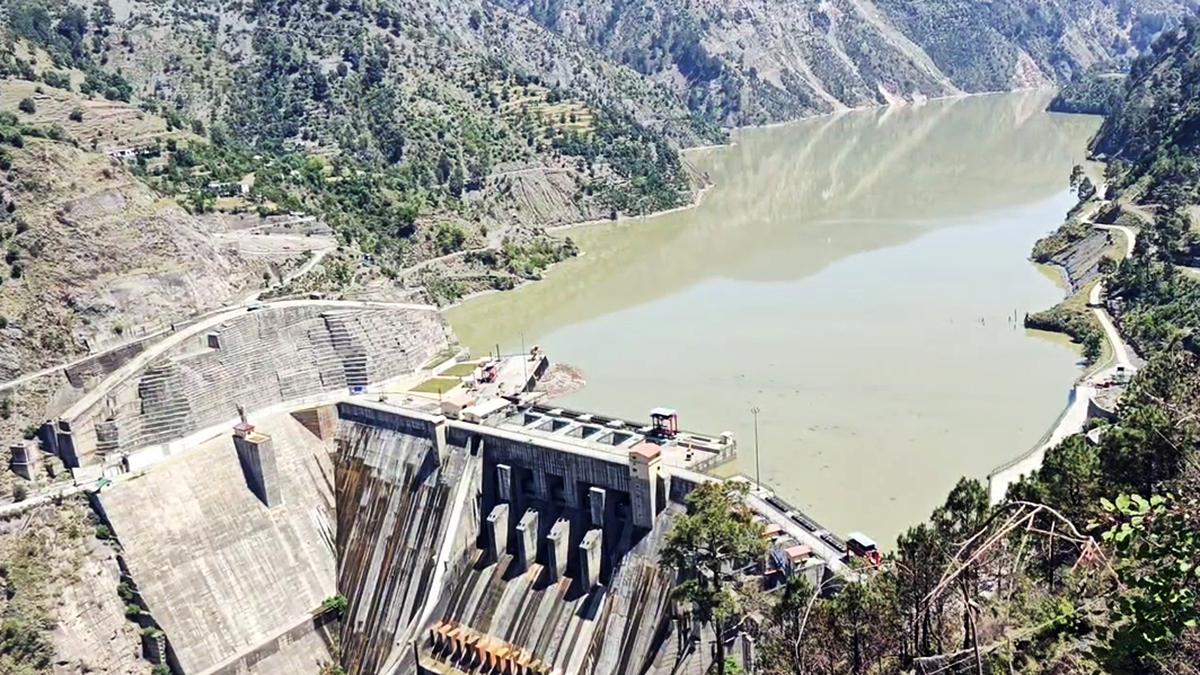
- In early May 2025, India started reservoir maintenance to enhance the capacity of project Salal and Baglihar; these works were mentioned and agreed upon in the treaty. But Reuters documented that India did not notify Pakistan about them starting the work.
- May–Aug 2025, at this time, a lot of diplomatic exchanges and international commentaries were happening. Pakistan’s warning and the World Bank’s statement about its very limited involvement attracted people. And in this period, the legal filing was going on, so it was also a very important event.
- These steps are important because the storage capacity of India on the western rivers is limited compared to Pakistan’s downstream uses. Due to the suspension of the treaty data-sharing, prior notifications and joint inspections have stopped, as the IWT has been established. Operational measures taken without notice can increase risk for the areas located further along the river.
India’s principal legal argument: fundamental change of circumstances
India has publicly stated a change in circumstances. India mentioned a security breach and unlawful behaviour of Pakistan. And India decided to implement an international law doctrine that allows the termination of a treaty in an exceptional situation. The most relevant legal provision is Article 62 of the Vienna Convention on the Law of Treaties (VCLT), which is also called the rebus sic stantibus exception. It permits termination if any major change in the circumstances happens. The Vienna Convention Treaty is a customary reflection of international Law norms.
But Article 62 has a really narrow scope. The International Court of Justice (ICJ) has repeatedly stated that rebus sic stantibus is an exceptional doctrine. No nation can use its very tiny situational changes. The changes must be significant and fundamental. In the case of the Gabčíkovo-Nagymaros Project (1997), the court stated that changes in policies or political decisions will not be enough to terminate a treaty under Article 62. So, this jurisprudence is the first and most crucial barrier to this decision made by India.
Treaty text, dispute settlement and the “abeyance” problem
The Permanent Indus Commission appoints a neutral expert to solve any technical dispute, or they send the parties to an Arbitration Court for legal questions. Historical outcomes like the Baglihar Neutral Expert decision (2007) and the 2013 Kishanganga arbitration clearly show that the given dispute resolution structure in the treaty helped to solve technical issues. It resolved the problem without terminating the agreement. The World Bank’s role is that of a depositor or facilitator. They are not an enforcement authority.
Crucial legal questions follow:
Without changing the text of the treaty, is it possible to permit unilateral suspension of performance through Article 62?
Article 62 allows termination or withdrawal in extraordinary circumstances. But this Article does not allow any party to choose some obligations to follow and some to suspend. The ICJ suggests that if India demands a total suspension of the treaty, that claim will be scrutinised. But India must establish to the judiciary that a fundamental change in the situation has occurred.
What is necessity or self-defence?
These are other doctrine that allows a party to back off from a treaty under international law. The doctrine of necessity allows a party not to perform their obligation if not performing is a way to safeguard an important interest. Article 51 of the UN Charter is linked to armed conflict. The suspension by India could be a political decision to impose security, but the doctrine of necessity or self-defence has very little scope as a legal justification.
Can the IWT anticipate emergency suspension, or are the parties bound by procedural steps?
The Treaty provides procedures to resolve disputes. The regulatory tribunal checks the weight of the situation by analysing the scenario and actual motive for seeking termination if there is a unilateral operational step taken without consultation by any of the parties.
Practical and legal consequences: what remedies and forums are available?
Responses by Pakistan (and remedies available under international law)
State-to-state arbitration (PCA/Court of Arbitration)
Pakistan can go for arbitration under the IWT Annexures to settle this matter. The Permanent Court of Arbitration is an institution that has resolved many Indus disputes. If Pakistan manages to secure an award from the arbitration court and establish India as the party at fault, they can get remedies like an order to restore cooperative functions, a claim for damages and enforcement of all the treaty obligations.
World Bank and diplomatic avenues
The World Bank has always been a facilitator for the nations. Its role is just to store, manage and keep a record of all documents related to the treaty. Pressure from different countries together and help from a neutral expert is also possible. In the public statement of the World Bank, they stated that they have very limited authority over this subject.
Security escalations
Pakistan publicly announces that if India disrupts the water flow, it will be considered an act of war. This statement clearly shows geopolitical risks. But it does not allow the nations to get into military actions. The main focus of the International Courts and arbitral tribunals is always on legal remedies, rather than military responses.
Limits on remedies and enforcement
Even if an arbitral court passes a favourable order, it will not immediately restore the established cooperation. The management will take significant time. Apart from that, the willingness of both parties to cooperate will affect the time, and there are definitely broader diplomatic contexts that will contribute to delaying the process.

Recent jurisprudence and precedent
Several precedents will be important if the matter reaches tribunals:
ICJ jurisprudence on Article 62
Gabčíkovo-Nagymaros (1997), this case gave legal validity to the fundamental change in circumstances doctrine, also called rebus sic stantibus. Under this rule, which is governed by Article 62, the tribunals have always given importance to exceptions.
Recent 2025 PCA/Neutral Expert procedural material
There are many filings and procedural orders relating to Indus litigation that happened between 2023-2025. This report shows that the PCA and associated tribunals are totally active. We can rely on their decisions about jurisdiction and admissibility.
Policy and global implications, beyond the law
Legal outcomes are important, but the consequences of policies cannot be ignored:
Erosion of technical cooperation
The suspension of notification and joint institution can cause serious problems or risks. It can also affect civilians also. And trust is quite expensive to rebuild, even if there is almost no effect of India’s without notification operation.
Precedent for politicising transboundary water law
The water treaties are something that can cause a very significant effect if terminated or changed suddenly by one party. These treaties historically survived wars because decisions relating to these are in the hands of experts, and politicians, or the public cannot decide on something about this matter.
Climate change and fragility
The Indus basin has a very sensitive climate. Rules-based cooperation is very important and effective for this place. In this place, there is a lack of adaptive capacity, so this situation can risk food security and displacement. The legal fight between the nations will impact human life directly in the region.
The legal high ground
The application of Article 62 by India is legally sound but very tough to strategically justify. Article 62 considers exceptions only when there a well-documented circumstances that have the potential to convince the court. We can see in the Gabčíkovo precedent that a tribunal cannot accept a set of reasons regarding political security alone and handle it. Especially, the treaty has a clear structure of dispute resolution.
So, using Article 62 to terminate a Treaty has clear legal challenges. It needs close judicial and arbitral scrutiny of the records and circumstances.
New Delhi’s negotiating position was also strengthened after India’s recent procedural victories in Neutral Expert proceedings and evolving hydropower technology. India may be able to renegotiate or reach favourable technical results if it can demonstrate that some operational restrictions are no longer relevant or that Pakistan’s actions actually undermined the cooperative basis of the Treaty.
From Pakistan’s perspective, the best action will be to move quickly to an impartial arbitral tribunal, they may document the lack of an objective and unforeseeable fundamental change, and pursue declaratory relief or provisional measures (if available) claiming that India’s unilateral suspension violated treaty obligations. If Pakistan frames it as a treaty breach rather security dispute will help them to get a remedy in their favour.
Practical recommendations (for lawyers, policymakers, and international actors)
Document everything
Preserving administrative records, messages, notices, and hydrological data will be helpful for the parties.
Use provisional measures early
If there is any downstream impact, Pakistan can seek provisional protection from the legal forum.
Third-party mediation as a political safety valve
The World Bank can initiate political talks. Or another mediator can get involved to come to a solution.
Conclusion
The suspension of the IWT is used as a test case for how treaty law, security strategy, and hydrological interdependence work all together. whereas the standard is high and the precedent is risky. India’s use of Article 62 or other escape doctrines is not legally impractical. The best path to a predictable decision is international adjudication (PCA/Court of Arbitration). It is backed by solid factual documentation and convincing legal arguments. Because rivers do not respect political bitterness, they will flow anyway. To create a long-term solution, it will need a combination of legislation, technical cooperation, and high-level diplomacy.
Frequently asked questions (FAQs)
- Can India legally suspend only some parts of the Indus Waters Treaty while keeping the rest intact?
Not really. International law does not allow states to choose which obligations they will follow and which they will ignore. Article 62 of the Vienna Convention is the doctrine India informally chose to use to back their suspension decision. But the main objective of this doctrine is that to use it, the party need to establish a clear fundamental change in circumstances before the court. The non-performance of obligations by India can be easily considered as a treaty breach.
- Does invoking “fundamental change of circumstances” give India a strong defence before a Court of Arbitration?
Not really. It gives India an argument but not a shield. The standard for rebus sic stantibus is extremely high: the change must be (a) fundamental, (b) unforeseeable in 1960, and (c) essential to the parties’ original consent. So, to suspend the obligation by using this doctrine will require a strong factual argument in court.
- What remedies can Pakistan realistically get if it proves India breached the IWT?
Pakistan definitely can get some legal and declaratory remedies. If they can establish that India has breached the treaty obligations, they can get an order to restore the cooperative system. Monetary claims are theoretically possible, but that’s very rare in the case of a water dispute. A clear order from an Arbitral tribunal can help Pakistan to strengthen its diplomatic and legal position.
References
- https://www.sociolegalcorp.com/law-explained/indias-suspension-of-indus-waters-treaty-legal-grounds-and-global-ramifications/
- https://lawfullegal.in/uncharted-waters-legal-implications-of-indias-suspension-of-the-indus-water-treaty/
- https://visionias.in/current-affairs/monthly-magazine/2025-05-17/international-relations/indus-waters-treaty
- https://chintan.indiafoundation.in/articles/indias-iwt-abeyance-a-strategic-legal-analysis/
- https://legalmaestros.com/current-legal-update/indias-suspension-of-indus-waters-treaty-legal-ramifications-under-international-law-and-vclt-article-62/
- https://www.icwa.in/show_content.php?lang=1&level=3&ls_id=13109&lid=8004
- https://www.thehindu.com/news/national/suspension-of-the-indus-waters-treaty-what-are-the-implications-for-india-and-pakistan/article69486740.ece
- https://www.researchgate.net/publication/394115350_Can_India_Legally_Suspend_the_Indus_Waters_Treaty_A_Legal_Analysis_Executive_Summary_Background_The_Indus_Waters_Treaty_Framework
- https://rsilpak.org/2025/indus-waters-treaty-and-the-fundamental-change-of-circumstances-misinterpretations-and-misapplications-of-international-law/
- https://thewire.in/diplomacy/has-indias-suspension-of-indus-waters-treaty-caused-a-new-faultline-in-south-asia
- https://www.orfonline.org/expert-speak/indus-treaty-in-abeyance-a-strategic-pause-not-a-legal-breach
 Serato DJ Crack 2025Serato DJ PRO Crack




 Allow notifications





