Download Now
Home Blog Page 10

Government budget allocations to SPCAs in Haryana state reveal systemic underfunding and implementation failure

0
Government budget allocations to SPCAs in Hayana
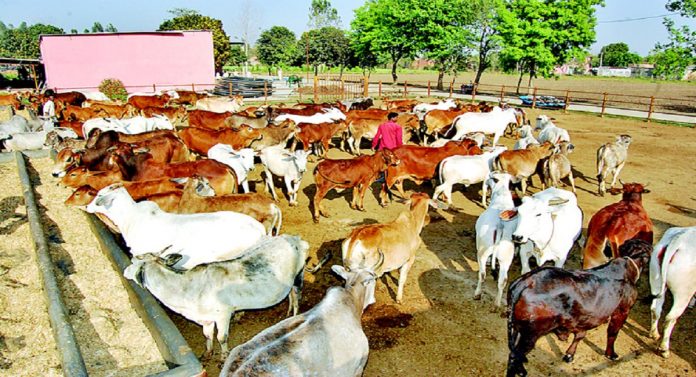
Image Source - https://shorturl.at/DCkPF

This article is written by Ramanuj Mukherjee, CEO, LawSikho.

Getting started

Despite being home to the headquarters of the Animal Welfare Board of India (AWBI) in Ballabgarh, Haryana, it is facing a serious animal welfare funding crisis. Things may look good on paper, but the ground reality is different. 

Among the 22 districts of the state, most of the Societies for the Prevention of Cruelty to Animals (SPCAs) are either not functional or do not even exist. This is a violation of the Supreme Court’s judgment, which was issued back in 2008 and later in 2015.             

We are forced to think now that if animal welfare is not a priority in Haryana, a state with fiscal strength and national significance, then what message is it sending about our collective responsibility of protecting animals? 

For over two decades, the mandated laws have not been put into effect 

India has one of the most detailed frameworks for animal welfare. The state government is required to fund and maintain the SPCAs as the Prevention of Cruelty to Animals Act 1960 and the Rules of 2001 mandate. Every state is required to set up district SPCAs within six months of the notification, as given under Rule 3, which Haryana has failed to follow for the last 23 years. The states must provide adequate land, infrastructure, a veterinary doctor and operational funding for each SPCA, as stated under Rule 4

But a recent PIL filed by the Sehjeevi trust showed that the state is still lagging in providing humane living conditions to animals. The Punjab and Haryana Court issued interim directives to the UT administration to provide clean water, adequate diet, medical facilities and ventilated space in an SPCA facility in Ripur Kalan, Chandigarh. This condition persisted even after the Animal Welfare Board of India (AWBI) inspection in 2020.        

There have been several instances in which the Supreme Court has stepped in to reinforce these obligations. There was a landmark case of Geeta Seshmani vs. Union of India (2008) in which it was directed by the Court to constitute a State Animal Welfare Board within three months. Next was the case of Gauri Maulekhi vs. Union of India (2015), in which it was ordered to establish the district SPCAs within four weeks. 

This responsibility is echoed by the Constitution itself, through provisions on environmental and wildlife protection (Article 48A ), and compassion for animals (Article 51A(g)).   

What about the right to life? Do animals have this right?

Yes, they do. The Right to Life of Article 21 was extended to animals by the Apex Court in the case of Animal Welfare Board of India vs. A. Nagarjuna (2014), calling it the “Magna Carta of animal rights jurisprudence”.

Yet Haryana continues to lag. 

Haryana’s budget and animal welfare: where’s the money for SPCAs?

While the state proudly shows its expenditure on agriculture and allied activities, there is no specific funding for SPCAs. 

On paper, records show that there was an increase of 24% in the funding of agriculture and allied activities. It was ₹6052 crore in the previous year and ₹7525 crore in 2024-25. Sounds great, right? Under this budget, there was no separate budget for animal welfare. Because of no clear details, it is difficult to check how much of the fund, if any, is going for SPCAs, or if it is getting absorbed into broader veterinary and livestock services. 

At the national level, meanwhile, the AWBI offers six grant categories to SPCAs:

  • Covering day-to-day operational expenses 
  • Rescue cattle grants
  • Grants for the shelter house
  • Program funding for animal birth control
  • Grants for ambulance
  • Grants for natural calamity    

But what is the snag here? The SPACs need to be recognised by the AWBI to access these funds. This new recognition rule, which came in 2021, made the process so bureaucratic that not all SPCAs across the country have successfully managed to qualify. This keeps many SPCAs deprived of the financial support.

In its annual plan, the Department of Animal Husbandry and Dairying (DAHD) list a scheme called “Grant-in-aid to societies for prevention of cruelty to animals”. Unfortunately, the disbursement figures remain a mystery. In the same way, the Zila Parishad’s district-level funding records are not available on how much has been used effectively.

What is the result? Just a system with different funding frameworks, but not transparency.   

Ground reality exposes critical infrastructure collapse

Acting on a petition filed by the MowgliAid Animal Welfare Society, the P&H High Court identified 15 districts where SPCAs were not established or were non-functional. This looks like a collapsed ground reality.     

Chandigarh’s SPCA handles overflow cases from surrounding regions. Between January to September 2021, a total of 6383 animal deaths were recorded as per RTI data. This is a stark reminder of what happens when the system fails.

For a fully functional SPCA, the estimated requirements are:

  • For land acquisition, ₹1-5 crore.
  • For infrastructure development, ₹2-3 crore.
  • For operations, ₹50-75 lakhs annually 
  • For vehicles and equipment, ₹15-25 lakhs   

The numbers get staggering when scaled up to 22 districts, for the initial setup, ₹100-176 crores and ₹11-16.5 crores annually to keep things running.    

The total estimated requirement for establishing functional SPCAs across all 22 districts stands at Rs 110-176 crore for initial setup plus Rs 11-16.5 crore annually for operations.

Multiple funding sources exist, but remain unutilized

No shortage of funding channels is there in Haryana for SPCAs. Yet no fund is directed by the Animal Husbandry Department, even after an increased budget. However, at the central level, the AWBI does provide grants under different categories, that too online. But the mandatory re-registration process of 2021 has made it difficult for the SPCAs to access it. 

Then there is Corporate Social Responsibility (CSR) funding. Animal welfare is explicitly recognised as eligible for CSR funding under Schedule VII of the Companies Act 2013. This also remains unexplored for the infrastructure of SPCAs, however.  

Hosting the headquarters of ABWI has also delivered no real benefit for district-level SPCAs.  

District administrations theoretically can allocate funds through local bodies, but coordination failures between the Animal Husbandry Department, Municipal Corporations, Police, and Urban Local Bodies prevent effective resource mobilisation.

Tamil Nadu emerges as the model while other states struggle

Tamil Nadu is leading the way when it comes to animal welfare funding. Through its Vallalar Palluyir Kappagangal scheme, Tamil Nadu is the first state in India that have a dedicated animal welfare budget, which is of ₹20 crore. 

Some five NGOs have received an amount of ₹88,05,000 under this scheme. This covers food, medical expenses, ambulances, infrastructure and Animal Birth Control surgeries. What stands out is that Tamil Nadu shows a political commitment with a clear, dedicated budget, transparent process and top leadership.    

Now, comparing this with other states with larger economies like Kerala, Karnataka and Maharashtra, there is no dedicated budget for animal welfare. In fact, when Gauri Maulekhi filed an RTI, it was revealed that not even a single state in India had a fully functioning animal welfare board in 2019. Also, it was only in November 2019 that Karnataka established its animal welfare board.

This systemic failure across states creates an opportunity for Haryana to lead by example, especially given its fiscal capacity and AWBI headquarters advantage.

Court interventions highlight systemic administrative failure

The judiciary has repeatedly intervened to address Haryana’s animal welfare failures. The Supreme Court’s 2008 order in Geeta Seshmani vs. Union of India gave states three months to establish State Animal Welfare Boards and district SPCAs – a deadline Haryana violated by 16 years. The 2015 order in Gauri Maulekhi vs. Union of India provided just four weeks for compliance, yet violations continue nine years later. In a fresh contempt contention in 2020, highlighted continued non-compliance across states.

In the landmark Karnail Singh vs. State of Haryana (2024) case, the High Court observed that “animal rights transcend a private settlement between human parties,” establishing judicial recognition of rights that administrative systems systematically violate.

Department structure exists, but lacks implementation capacity

Haryana’s Department of Animal Husbandry & Dairying, headquartered at Pashudhan Bhawan in Panchkula, oversees animal welfare through the State Animal Welfare Board established in April 2018. Grant application procedures exist through the Saral Haryana portal (saralharyana.gov.in), but SPCA funding applications face bottlenecks. 

The two-stage disbursement mechanism creates cash flow challenges, while extensive documentation requirements burden small organisations. Missing meeting records, insufficient staff allocation, and absent operational budgets characterise the State Animal Welfare Board’s dysfunction.

Why implementation keeps failing: seven big roadblocks

With existing funds on paper, there are seven biggest stumbling blocks that happen to make SPCAs run in the maze of challenges:

Bureaucratic delays 

This stems from AWBI’s 2021 re-registration mandate requiring dual certification. With this, there are processing delays of 4-6 months. 

Budget underutilization 

When allocated fund is not spent because of a procedural bottleneck, that is budget underutilization. 

Mismanagement and corruption 

The systematic corruption has repeatedly been flagged by the activists of Delhi-NCR. From illegal breeding rackets running at the Delhi-Haryana border to mysteriously recorded “zero deaths” sterilisation surgeries. 

Capacity gaps 

There is a lack of properly trained AWBI-recognised personnel. There is a lack of proper facilities as well.    

Lack of infrastructure 

The basic allocation of land is missing. Animal ambulance, sterilisation equipment and even autoclaves are insufficient. 

Failures of coordination 

Multiple agencies, like animal husbandry, municipal corporation, police and local bodies, have their own roles. But because of poor communication and overlapping jurisdiction, nothing moves smoothly.

Political apathy 

From directing the set-ups for feeding spots to nudging RWAs to form for welfare board, it often requires the High Court to step in and get the work done. 

Civil society fills gaps while highlighting needs

Looking at the successful models of animal welfare, what do we get? SPCAs of Haryana would not have to struggle the way they are struggling. Taking People for Animals (PFA) as an example, across the countries, with twenty-six hospitals, 165 units, and sixty mobile units, PFA has built a functional infrastructure. Their goal of establishing centres in about 600 Indian districts shows the requirement scale in Haryana.    

Funding is not the issue; it is the system. International systems like Open Philanthropy provided two years of support funding, which amounted to $120,000. It also provided cage-free farm initiatives, which amounted to $200,000. The AWBI was pushed by PETA India’s advocacy to issue an advisory ensuring sufficient funds were provided for community animal feeding. This shows that the work gets done when pressure is applied.

There is a big gap in data around how much funding SPCAs actually need. 

Financial assistance schemes exist, but lack transparency

The AWBI has a whole set of grant schemes that can be applied for through online mode.   

  • Operational expenses(maintenance, medicines, rescue operations, and establishment charges) are covered by regular grants
  • The Rehabilitation operation is supported by the rescue cattle grants. 
  • Infrastructure development is provided by the shelter grants. 
  • Disaster relief is provided by the natural calamity grants. 
  • The Animal birth control programme funds sterilisation and vaccination initiatives. 
  • Ambulance Grants provides emergency response services. 

It is not that easy to access these is not that easy. Funds always get released in two instalments, but that too after a proper, satisfactory inspection. There is a requirement to go through a complex recognition process, and the ABWI board must scrutinise the application.

Haryana’s Saral Portal theoretically streamlines applications through Digital India-compliant faceless, paperless, cashless systems. Yet practical implementation faces hurdles.

Recommendations demand immediate systematic reform

Evidence-based analysis points to clear, actionable recommendations for Haryana. Immediate requirements (0-6 months) include allocating Rs 10-15 crore dedicated animal welfare budget following Tamil Nadu’s model, establishing a functional State Animal Welfare Board with proper staffing and annual allocation, completing Punjab & Haryana High Court compliance for 15 identified districts, and filing comprehensive RTI applications for current spending audits. The state should leverage its AWBI headquarters advantage to establish model district SPCAs and create transparent online funding tracking systems.

Medium-term initiatives (6-18 months) should focus on completing land allocation for all 22 districts, recruiting required veterinary staff to fill vacancies, establishing district-wise helplines and ambulance services, and developing public-private partnerships with CSR funding targeting budget needs. Infrastructure development requires Rs 110-176 crore one-time investment plus Rs 11-16.5 crore annual operations, with priority allocation to Animal Birth Control programs, rescue and rehabilitation, infrastructure, staff and operations, and emergency response.

Talking about the long-term change, say like 2-5 years, then Haryana needs to think big. With big, it is meant that funding for animal welfare must become a legislative mandate, linking it with the plans of disaster response, setting up regional specialised treatment centres, and establishing a strong monitoring system with quarterly reviews and audits by the CAG.    

The aim for per capita spending can be at least higher than Tamil Nadu. Because honestly, Haryana has better capacity.

Money alone won’t do everything. A clear political will is required, and a proper separation of the animal welfare budget from the livestock budget. Pairing up with local NGOs would also work, and most importantly, transparency. This is what accountability is.

Looking forward

The Funding crisis in Haryana SPCAs is a clear case of government failure. There are several shortcomings despite having a strong framework. Even hosting the AWBI headquarters does not work. There are still sixty-eight per cent of the districts that have non-functioning SPCAs. There continues to be a massive shortage of veterinary staff and a lack of allocated funds.     

Haryana does not need to reinvent the wheel. There are already existing examples of proven models that are functioning fully for animal welfare. What does Haryana need to do now?

It needs to draw from these examples and proper funding for its SPCAs. Only with the right commitment, Haryana can fill the existing gaps and create an actual working animal welfare system.

Frequently asked questions (FAQs)

  1. Are SPCAs’ services restricted to stay animals?

Not really, SPCAs are for every type of animal cruelty, whether it be the domestic pet or farm animals, or working animals like donkeys and horses. This list also includes those animals that are used for trade or entertainment. 

  1. How does the lack of SPCAs affect public health?

It is very direct. When animals go untreated for various injuries, or there is no animal population control, and a lack of vaccination drive, this increases the risk of rabies and other diseases, and this affects the human population directly. 

  1. What legal power do SPCAs have?

SPCAs get their legal powers from the Prevention of Cruelty to Animals Act. They can inspect the facilities, rescue the animals and also initiate a legal proceeding against the wrongdoers.

References

Download Now

10 Hiring Trends Every Lawyer Should Watch in 2025 

0
10 Hiring Trends Every Lawyer Should Watch in 2025

This article is written by Ambreen Imam, Legal Marketing Associate at LawSikho. She brings over four years of expertise in legal writing, content strategy, and marketing, with a parallel focus on technology and intellectual property. With a strong background in crafting thought leadership across IP, fashion, and tech law, she combines legal precision with creative industry insight.

Forget everything your college placement cell told you. 2025 isn’t about who topped the batch, but who read the room. If you’re not AI-literate, business-fluent, and online-visible, you’re already 5 steps behind. 

Introduction 

2025 isn’t just another year in the legal calendar, it’s a full-blown system reset. The Indian legal landscape is shapeshifting, and your next employer might care less about your GPA and more about your digital presence, niche exposure, or even your AI literacy. From foreign law firms finally eyeing India to law firms hunting for AI-literate lawyers who can bill and build brands, the rules of the game are changing. BigLaw is slowly morphing into BigTech. And no, it’s not just Delhi and Mumbai anymore, tier-2 cities are birthing powerhouses with global ambitions. 

If you’re a lawyer or a freshly minted graduate, you’re entering a battlefield in the middle of a rule rewrite. The jobs still exist, but the qualifications have changed. This isn’t your average LinkedIn “how to get into Tier-1 law firms” listicle. This is a fact-backed guide to the 10 actual trends that are going to shape Indian legal hiring in 2025. 

Trend #1: AI won’t replace lawyers, but lawyers who use AI will replace those who don’t 

According to the 2025 Report on the State of the Legal Market by Thomson Reuters, a transformative shift is already under way in the legal profession globally. U.S. firms are moving away from traditional models and leaning into tech investment, new business structures, and client-centric practices to stay relevant. Perhaps the most striking takeaway from the report: law firms must now function like businesses with scalable systems, not like insular institutions with prestige alone as their currency. Strategic investment in legal tech is now essential for long-term growth. The report emphasizes that generative AI’s impact will only deepen in 2025 and beyond. 

Clifford Chance, for instance, has rolled out its proprietary AI tool across departments. Meanwhile, Cyril Amarchand Mangaldas has declared its intent to become an “AI-first” firm, having chosen Legora as its generative AI platform after a multi-phase pilot program involving three AI tools and 380 lawyers across offices. Similarly, Shardul Amarchand Mangaldas & Co recently partnered with Harvey. IndusLaw and Veritas Legal are working with Jurisphere, ELP has adopted AI assistant Oliver by Vecflow,  Anagram Partners launched ‘Blueprint’ in collaboration with Olin.ai., S&R and Trilegal have adopted Lucio. The list goes on. In short, AI won’t take your job, but someone who can work better with it absolutely will. 

Therefore, being AI-literate is no longer optional. Learn prompt engineering, take courses on legaltech via Coursera or LawSikho. Understand where tech meets law and build a hybrid skillset. In 2025, knowing how to use AI may matter more than your GPA (or your NLU status). 

Trend #2: Global FTAs Will Reshape Hiring Across Cross-border M&A, PE & International Trade 

India’s bilateral trade with the UK is set to double from USD 56 billion, that means twice the deal flow, twice the documentation, and twice the legal oversight. This deal is going to blow open the hiring floodgates for Indian law firms, especially in cross-border M&A, private equity, and trade compliance. And if the India-US deal follows suit? We’re looking at a decade-defining shift in the Indian legal job market.  

Source: https://surli.cc/rhrteb

FTAs aren’t just about trade; they’re legal infrastructure in motion. Every deal, every joint venture, every tariff removed creates a legal ripple. You need regulatory experts, cross-border negotiators, IP strategists, dispute resolution experts; and you needed them yesterday. 

Indian law firms will ramp up specialized hiring across M&A, international trade, and compliance teams. And this won’t just be at the senior partner level. A sharp rise is expected in mid-tier lateral roles, especially for lawyers who come with cross-border deal experience or regulatory expertise. There will also be rising demand for lawyers fluent in UK law, WTO frameworks, and ESG mandates, especially with India’s pitch as a “values-led” trade partner. 

And hiring will be decentralized. Tier-2 and Tier-3 cities will benefit too. SMEs entering global trade lanes will need local legal counsel with global acumen. 

Trend #3: Indo-US Tariffs & The Next Legal Hiring Boom  

If you’re building a legal team for 2025, forget the status quo. It’s time to think in war rooms.
The latest shockwaves from Washington-25% tariffs slapped on India, paired with a headline-grabbing oil deal between the U.S. and Pakistan, are more than just bluster. They signal a shifting fault line in global diplomacy, one that Indian law firms can’t afford to ignore.  

Source: https://surli.cc/xwqxhi 

Public International Law and Cross-Border Arbitration are about to go mainstream.
Up until now, these fields were niche and reserved for high-stakes sovereign disputes or rare treaty violations. Trade lawyers, international arbitrators, and WTO-savvy counsel are going to be in demand like never before. Not just in Delhi or Mumbai, but across rising Tier-2 hubs where exporters, logistics firms, and manufacturing SMEs are quietly plugging into global value chains.  

With the India-U.S. relationship under strain and Pakistan suddenly back in Washington’s economic lap, the next legal landmine won’t just be fought in courts, it will be arbitrated behind closed doors in Singapore, London, or The Hague. 

This changes how firms hire. 

WTO exposure, UK law training, BIT arbitration experience which were once seen as academic or CV padding are now market differentiators. If you’ve worked on even one sovereign dispute or understand treaty interpretation beyond theory, you’re in demand. Lawyers who bring this hybrid fluency are being fast-tracked not because firms suddenly care about geopolitics, but because their clients do. 

And for young lawyers or mid-level associates who are wondering where to place their next bet, here’s your answer: stop chasing only domestic litigation or gen-corp teams. Start tracking deals that involve trade corridors, ESG-linked financing, or export controls. That’s where you’ll find the new work.

Trend #4: Foreign Firms Are Here, But They’re Not Hiring How You Think 

The Bar Council of India’s March 2023 notification has marked a significant shift in the Indian law landscape. For the first time, foreign law firms are officially permitted to practice in India, but only on foreign and international law matters, and strictly under a reciprocity-based registration regime.  

Compared to jurisdictions like Singapore which actively integrates foreign firms through Joint Law Ventures or Japan (where foreign lawyers can form multi-national practices), India’s regime remains cautious and confusing and is still grappling with regulatory clarity, as seen in the introduction and hasty withdrawal of the Draft Advocates (Amendment) Bill, 2025. Yet the shift is undeniable. Foreign firms are no longer just observing, they are actively assessing talent pipelines. They’re not focused on hiring interns or fresh law graduates based purely on class ranks. What they’re looking for are lawyers who understand cross-border regulatory architecture, BIT frameworks, FDI structures under FEMA, and who can advise clients across jurisdictions.  

If your legal training only stops at Indian law, you’re already behind. What you can do now? Start by understanding the nuances of India’s foreign direct investment (FDI) policy, the bilateral investment treaty (BIT) regime, and comparative foreign legal frameworks. Track how jurisdictions like China, Singapore, and Japan have smoothly integrated liberalized legal markets while preserving their sovereignty. 

Trend #5: Tier-2 Cities Emerge as the New Frontiers of Indian Law 

The legal industry in India is witnessing a measured, yet unmistakable decentralisation. While metro cities like Delhi and Mumbai have long served as the centres for corporate and transactional law, the emergence of Tier-2 cities such as Ahmedabad, Kochi, Bhubaneswar, and Chandigarh has begun to recalibrate where the future of legal talent and business lies. These cities are no longer auxiliary to the metros; they’re becoming strategic destinations in their own right. 

The shift is partly infrastructural and partly economic. Improvement in digital court access, enhanced connectivity, and regional regulatory developments have turned cities like Indore and Lucknow into litigation hubs. Fintech regulation, IP-intensive industries, and even Arbitration practices are seeing the rise of high-calibre boutique firms, many of which are founded by former Tier-1 partners or seasoned counsels returning to their hometowns to tap into local markets. Notably, law firms like ELP, Khaitan & Co. and Desai & Dewanji have made conscious advances into cities like Pune and Jaipur, anticipating long-term client base expansion, proximity to manufacturing corridors, and the availability of cost-effective legal talent. 

This recalibration isn’t just limited to geography. Clients, especially mid-sized enterprises and family offices, are increasingly seeking highly specialised counsels rather than paying a premium for full-service law firms. The result? A flourishing class of small to mid-sized firms and chambers offering specialised legal services in IP, fintech, and white-collar crime. 

In a market increasingly defined by agility, depth of expertise, and proximity to clients’ evolving needs, the rise of Tier-2 cities signals more than just decentralisation, it signals a quiet but powerful redistribution of legal influence across the country.

Trend #6: Not All Legal Careers Begin at SAM

BigLaw has defined success in India for years. Prestige, power and stable paychecks! That was the dream. At least, that’s what we thought. But in 2025, that narrative is shifting. According to Vahura data shared with Mint, fewer than 2% of fresh law graduates join India’s top law firms, while approximately 15–20% begin their careers at boutique or specialised mid-tier firms. This shift is no accident. Many Big Law firms now prefer to hire laterally from boutique setups after lawyers have gained focused niche expertise and not freshers who have just graduated unless it’s a PPO. Boutique firms specializing in areas like fashion law, sports IP, crypto regulation, fintech or ESG are redefining the early-career lawyer’s path. These firms, though smaller in size, offer distinctly impactful work with simpler hierarchies and a breathable work environment.

According to a 2024 Vault article referencing a NALP survey, 60% of junior associates reported valuing “meaningful work” and “reasonable hours” more than the firm’s reputation. This aligns with the recent observed hiring changes, i.e, many top firms now prefer hiring lateral talent with domain-specific expertise rather than freshers. Mid-sized and boutique firms have used this to their advantage. They are growing their brand value through specialization and are attracting better-suited candidates at lower overheads. 

Boutique and mid-sized firms led by former Tier‑1 lawyers are now filling partner-track roles more aggressively. With lower billing costs, these firms offer competitive compensation without sacrificing depth. Rather than navigating long associate pipelines at a large firm, you could be owning a legal vertical say luxury fashion IP or blockchain compliance within two-three years.  

Trend #7: Your Firm’s Not a Family and Now Lawyers Know It 

For decades, the unspoken deal was to grind it out for 12–15 years at a top law firm, and maybe just maybe, you’ll make partner. But that equation is being torched by a generation of lawyers who no longer romanticize such long-term & uncertain relationships. 

They’re not giving their youth, sanity, or identity to a single firm anymore and certainly not in blind hope of some future reward. They’re playing smart, moving laterally, joining startups, building personal brands, and yes, fearlessly walking out when they’re not valued. 

The NALP Foundation’s 2024 Stay Study (US-based but globally relevant) confirms the shift. While salary still matters, the top reasons for leaving firms include lack of career clarity, poor work-life balance, and toxic work cultures. Meanwhile, Indian attrition rates are estimated at 25–33%, a silent exodus that law firms don’t openly talk about, but feel every quarter when associates resign quietly or ghost exit interviews.  

The traditional law firm ladder is cracking. In its place is a zig-zag path where agility, upskilling, and freedom trump tenure. Established firms might grumble but what choice do they have? 

Hiring is no longer just about attracting talent. It’s about retaining it. In 2025, law firms won’t just need talent acquisition teams. They’ll need talent retention teams. Because if they can’t answer why someone should stay beyond 2 years, the best lawyers will already be looking elsewhere. 

Trend #8: The Data Law Hiring Surge: Privacy Is No Longer a Niche 

With the Digital Personal Data Protection Act officially in force, India has entered a new era of tech regulation. The Act applies to nearly every business processing personal data and introduces high penalties, strict consent requirements, and executive accountability. For legal teams, this marks a shift from occasional policy updates to full-time risk mitigation. The market has already started reacting. Top firms are fast-tracking internal training, while data-heavy sectors like fintech, edtech, and health tech are quietly poaching lawyers who understand privacy and data structures. Law firms are now building dedicated data law verticals, and even IP and disputes teams are being pulled in to draft privacy notices, respond to access requests, and advise on cross-border data transfers. 

What does that mean for hiring in 2025? Lawyers trained in data protection law, consent management systems, and cross-border data transfer regimes aren’t just expensive hires, they’re strategic power centers. Firms not actively building or hiring for privacy talent are seeing clients shift to digital-first boutiques that are into GDPR, DPDP, and vendor audits. Recruitment is shifting from “find someone who can learn privacy” to “hire someone who knows it.” 

If you’re a law firm with global clients or high-volume digital mandates, stop postponing your data law strategy. Build or poach a bench of privacy experts now. For law grads and lawyers, specializing in privacy compliance, risk governance, or cross-border data law is no longer optional, it’s your best hedge. Get in early or get left behind. 

Trend #9: The Rise of Allied Professionals in Indian Law Firms 

For decades, the phrase “non-lawyer” has been the polite slur for an entire class of professionals working in the background of India’s legal industry. In 2025, that narrative is finally being challenged. Law firms are no longer just hiring lawyers. They’re hiring strategists, legal technologists, AI operations leads, business development professionals, content creators, marketing heads, community builders, innovation managers, contract automation consultants, and more. And this isn’t a fringe trend, it’s a structural realignment of how legal businesses are run. 

The shift is being driven by three realities: 

  • Client expectations have changed. Law firms are under pressure to operate like high-functioning corporations: data-driven, digitally enabled, brand aware. 
  • Technology is non-negotiable. AI adoption, compliance automation, and digital workflows demand specialized skills no JD can teach. 
  • Retention is in crisis. Younger lawyers are rejecting rigid hierarchies and opaque culture. They want impact-driven, hybrid roles. Firms that won’t evolve are watching top talent leave. 

And let’s be clear: this isn’t about token hires. It’s about rethinking the essence of legal teams. Across BigLaw, litigation chambers, IP firms, and legal startups, allied professionals are being brought in not just to support but to lead.

A 2024 exposé titled “Unseen, Unheard: The Invisible Struggle of Non-Lawyer Professionals in Indian Law Firms” laid the truth about the extent of this inequality. What was once said in work WhatsApp groups is now out of the closet: the legal industry has a class problem and let’s be real, we all know it. 

But this will be changing in 2025. Legal businesses that cling to old hierarchies are losing ground. Firms with multi-disciplinary teams, hybrid hiring models, and flat structures are attracting better clients, stronger partnerships, and the next generation of legal minds. 

For fresh law grads and lawyers, the message is clear: you don’t have to practice law to build a meaningful career in it. India is witnessing a boom in non-traditional legal careers, where your skills in storytelling, product thinking, UX, design, operations, analytics, networking and social media are not just welcomed, they’re being valued. 

Indian law firms must abandon the outdated “non-lawyer” label and embed structural inclusivity into every layer of hiring and leadership. That means performance bonuses, career tracks, and decision-making power for allied professionals in business, tech, marketing, and innovation roles.  

Firms must end the archaic, elitist gatekeeping that defines India’s legal hiring especially the Tier 1 obsession with NLU degrees and litigation pedigrees. This narrow recruitment culture is not just outdated; it’s actively sabotaging the new generation’s capability, room for innovation and client outcomes. In a global, tech-driven legal market, firms that continue to ignore talented professionals from non-NLU backgrounds, and experts from adjacent industries will lose out on clients and credibility. The future legal workforce that we are looking at is interdisciplinary, remote-ready, and custom made for the real legal world and not just rank holders. Firms that refuse to evolve will not be elite for long, they’ll actually be irrelevant. 

Trend #10: Visibility Is Currency: How Your Digital Footprint Is Your New CV 

If you’re still sending cold emails, waiting on HR replies, or refreshing “Careers” pages? That’s actually very 2015 of you. Hiring in 2025 is brutal: unemployment’s rising, inboxes are overflowing, and yes, you’re competing with 300+ other applicants for a single opening. 

Visibility is currency. Legal aspirants today must go beyond well-structured resumes and predictable LinkedIn updates. The new-age hiring funnel begins on social platforms and ends in cold DMs, viral comment sections, and newsletters.  

Here’s what they won’t tell you:  

  • Your CV might never be seen by human eyes. Over 60% of mid and top-tier Indian law firms now use ATS (Applicant Tracking Systems), filtering out resumes that lack keyword optimization, structure, or even basic formatting. If your CV looks pretty but isn’t machine-readable? Sorry but it’s getting ghosted. 
  • Video CVs aren’t cringe. They’re your new elevator pitch. With async hiring on the rise, firms want to hear your tone, clarity, and thought process. A tight 60-second “Why Me” video can do what 4 pages of bullet points can’t. 
  • And the wildest shift? People are being hired from DMs. LinkedIn comments & Insta replies, those who show up in the right places, with the right voice, are landing interviews before their CV ever hits an inbox and not the ones hiding behind, yet another generic ChatGPT cover letter. It’s not just about being qualified. It’s about being visible when it counts.  

Hiring in 2025 isn’t about formality. It’s about frequency, finesse, and being findable. The question is no longer “Are you applying?” it’s “Are you being noticed?” 

Conclusion 

2025 would see the much-needed change in the legal industry. The firms that win will be those that evolve, decentralize, digitize, and humanize. The lawyers who rise will be fluent in AI, geopolitics, tech law, and personal branding. And the students waiting for campus placements? They’ll be outpaced by the ones who build visible, versatile, cross-disciplinary careers. 

The old metrics of prestige and pay are no longer enough. Associates are no longer afraid to walk. Gen Z lawyers are choosing autonomy over all-nighters, growth over glass doors, and visibility over vague promises of partnership. They’re moving laterally, building niche practices, going in-house, and even launching their own firms. 

The Indian legal hiring market isn’t broken, it’s rebuilding. But it won’t look like the one your seniors walked into. And that’s your edge, if you’re paying attention. 

Download Now

The IBC and cross-border insolvency: is the IBC equipped for global finance?

0
The IBC and cross-border insolvency: is the IBC equipped for global finance?
Image Source - https://shorturl.at/CYtA6

This article is written by Priyanka Mandhani, a qualified Corporate Lawyer and a Company Secretary, and the Founder of Juris Summit. She specialises in corporate law, compliance and contract advisory for startups and businesses across jurisdictions. With experience in Indian and US legal systems, her work focuses on aligning legal strategy with commercial outcomes.

Getting started 

Nowadays, Indian companies are not only functioning in India but also beyond borders. But this international expansion sometimes creates difficulties in tough times. It gets quite tough when companies get into any financial trouble, and the assets are scattered across multiple countries, and every country has its own legal system.  

What happens in this case? The creditors, employees, and investors sitting in a dozen different countries are going to be affected by this. This is a reality of cross-border insolvency and is challenging. The company that manages to overcome this situation wins the investors’ trust. But who fails? This is like losing a race in the global market.   

In this global race, is India capable enough to handle these types of mess? Are the Indian law (Indian Bankruptcy Code 2016) and courts ready to handle the disputes that involve cross-border assets and creditors? Or to meet the international standards, is there a need for a strategy change?    

Let’s find out. 

Understanding the cross-border gap in the IBC 2016

Aspirations without any Implementation

What came with IBC when it was introduced in 2016?

An order and certainty to handle domestic insolvency cases. But there was a legislative gap in the cross-border insolvency part.  

Yes, it does mention international cooperation under Sections 234 and 235. But these are more like wishful promises than actual working mechanisms. One authorises the central government to make an agreement with foreign countries to enforce the IBC there (S. 234). And the other one allows the resolution professionals to receive letters of request from foreign courts. This assists in dealing with the overseas assets of the corporate debtors (S. 235).

Looks fine on the paper. But in reality, no bilateral agreement exists.

So the fact is that these provisions just exist, but are of no practical use. When any company with foreign investors and assets abroad is in trouble, then the resolution professionals and courts find it difficult to work without any practical tools. 

The absence of COMI and its repercussions 

One of the trickiest parts is that we lack a clear and formal concept of the Centre of Main Interest (COMI). This works like an anchor that decides which country has the primary jurisdiction in such cases. So COMI is a big deal in cross-border bankruptcy systems.   

But there is no statutory definition of COMI in India. No clear rules and no settled interpretation. So our courts are left navigating uncharted water when any case comes up. This often results in competing claims of jurisdiction and legal confusion. 

What is the fallout? 

When there are multiple countries running their own insolvency process at the same time, it results in higher litigation costs, delays and unpredictable results. 

Jet Airways: a groundbreaking protocol

This issue didn’t just stay within our borders, and quickly turned into a full-blown cross-border legal battle in 2019. The proceedings were running in India and the Netherlands simultaneously.  

But what actually happened?

To start the bankruptcy proceedings of Jet’s overseas operations, the creditors approached the Dutch court. While in India, the domestic Corporate Insolvency Resolution Process (CIRP) was being managed by the National Company Law Tribunal (NCLT).

The powers of the Dutch bankruptcy trustee were not recognised by the NCLT. It actually refused to recognise their powers. It pointed out that IBC has no clear legal provisions that formally allow it to recognise foreign proceedings or representatives. 

NCLAT’s Landmark judgement

But then came a historical twist.

NCLT’s landmark judgement was a game-changer. It was the very first time a cross-border insolvency process was approved that allowed the Indian resolution professional and the Dutch trustee to work together. 

The Sections we discussed above, S. 234 and S. 235, are more aspirational than functional. Also, India hasn’t adopted the UNCITRAL Model Law on cross-border insolvency. This gap was filled by the sheer level of creativity of NCLT.   

Here is what it did.

India was recognised as the COMI by the Tribunal while granting partial recognition to Dutch proceedings as a “non-main” proceeding. In simple words, it means that Indian proceedings were primary, but Dutch proceedings had legal standing.

It was the very first time in the legal history of India that a foreign insolvency administrator’s jurisdiction was recognised within an Indian insolvency case. 

Hon’ble Supreme Court’s order

The aftermath was not that smooth. While the case showed that judicial diplomacy can be used by the Indian courts to make cross-border insolvency work, even without a proper legal framework. But it was risky to rely completely on judicial patchwork instead of solid legislation.

The so-called ‘Jet Protocol’ became a symbol of what social pragmatism could achieve in a globalised financial world. But the revival plan fell apart soon. The Jalan-Kalrock Consortium failed to meet the key conditions. This was picked to rescue the jet.

Despite repeated extensions, the most-awaited first tranche payment of ₹ 350 crore never came. The consortium also attempted to alter its performance guarantee, rasing serious concerns about intent.    

Pointing out the repeated defaults, bad faith and abuse of procedural flexibility, the Court ordered liquidation on November 7th, 2024. The Court reiterated that IBC’s purpose is deliver speedy resolution and maximise value. 

Using its special power under Article 142, the Court also recommended organisational changes, CoCs need to put decision reasons on record, an oversight committee shall enforce binding guidelines of CoC behaviour, NCLT orders should have implementation milestones spelt out, and tribunal infrastructure needs to be immediately strengthened with additional members and technological advancements to avoid future delays.

Group insolvency & international assets: Videocon & others

The approach of India regarding cross-border bankruptcy should also pay special attention when the discussion is regarding group insolvency, as there are many businesses which are operating across different countries. There is a famous example of a case, State Bank of India v. Videocon Industries Ltd (2018), in this case the first substantive consolidation allowance was provided by the court under the Insolvency and Bankruptcy Code (IBC). This judgment helped in creating a judicial pathway for group insolvency long before India had introduced a legal framework for that. 

The NCLT decision

It was requested by a group of lenders for the merger of 13 Videocon Group companies, where each company was undergoing its insolvency process. These companies were all linked through shared liabilities, common promoters and strong independence. It was observed by the NCLT that these are not separate businesses that are running different and separate CIRPs, and such a thing would create confusion, make the process inefficient and lower the value. 

Keeping this issue in mind, the tribunal ordered a combined CIRP. The tribunal directed that there should be the appointment of one common Committee of Creditors (CoC), one Resolution Professional (RP), and the merging of liabilities and assets of all the companies. Most important to be kept in mind is that the NCLT also included gas assets as well as Videocon’s foreign oil, which was held in overseas subsidiaries, which is a part of the consolidated debtor’s estate.

Challenges 

This move, while aimed at value maximisation, raised profound cross-border legal challenges. Can Indian insolvency orders be enforced abroad, particularly in jurisdictions with their own insolvency frameworks and property regimes? Without bilateral treaties (under S. 234 and S. 235) or a codified cross-border mechanism, such orders have limited extraterritorial enforceability.

Globally, courts have addressed similar issues. In the US, Courts allow consolidation when entities operate as a unified whole, as in re Bonham, Genesis Health Ventures, and Owens Corning. The core principle: economic reality must prevail over corporate form when separateness is abused or inefficient.

Foreign creditors under India’s insolvency regime: Progress or tokenism?

Statutory inclusion of creditors under the IBC

Inclusion of foreign creditors under the IBC regime is a development, but far from universal. The IBC defines a “person” under Section 3(23) to explicitly include those “resident outside India,” and this definition carries through into the classification of both financial and operational creditors under Sections 5(7) and 5(20). In principle, this implies that foreign creditors ought to have access to the same recourse as their Indian counterparts. But principle and practice are not always so easy to bridge.

The Macquerie Bank ruling: Allowing foreign creditors into the market

The Apex court in the Macquarie Bank v. Shilpi Cable Technologies (2018) ruling cleared up a major hurdle for foreign creditors. The major issue was whether a certificate of an Indian-recognised “financial institution” is to be provided by a creditor under S. 9 (3) of IBC. 

It was a yes by the NCLT and NCLAT. Macquarie, a Singaporean bank, was disqualified for lacking the certificate after issuing the demand letter and starting CIRP.  But the Apex Court had a more practical view. The requirement was not mandatory but directory, as the Court ruled. It made sure that the international creditors are not blocked because of the technicalities. 

The bigger problem hasn’t gone away. Foreign stakeholders are still stuck in the procedural obstacle because the IBC does not automatically recognise foreign insolvency judgements. With no bilateral treaties and no comprehensive cross-border framework, everything ends up depending on ad hoc court discretion.  

Cross-border fallout from the Bhushan Power & Steel case

In Kalyani Transco v. Bhushan Power & Steel (2025), the Supreme Court overturned JSW Steel’s court-approved and completely implemented resolution plan for Bhushan Power due to major procedural irregularities. Despite the fact that the plan had been carried out over three years, including the injection of foreign money and payments to creditors, the Court ordered liquidation and the restoration of disbursed funds. 

Impact on foreign investors and local markets

The transaction had numerous cross-border stakeholders and foreign finance mechanisms, making the decision highly unsettling for international investors.

Do you know the international reaction? Foreign investors have marked India as a “high-risk” jurisdiction for the enforcement of insolvency. Their fundamental anxiety is not about the substantive result but about the unpredictability of judicial intervention, long after a resolution plan is approved and implemented. 

What has the Bhushan Power case uncovered? Even when stakeholders act as per the commercial and regulatory environment, failures due to resolution professionals or the CoC can retroactively deconstruct transactions. 

Concerns surrounding institutional accountability

The absence of institutional accountability, more specifically for the function of adjudicating authorities and professionals engaged, overburdens the resolution applicants and creditors disproportionately. 

Judicial unpredictability, particularly in the implementation of resolution plans that are fully executed, gravely erodes India’s reputation for credibility on cross-border insolvency issues. Reforms in law and regulation have to tackle this fault line so that the IBC comes to be a mechanism that not merely resolves distress efficiently but also generates confidence among global financial stakeholders.

What is stopping India from adopting UNCITRAL for cross-border insolvency?

Redundant approach to Internationalisation legal harmonisation

When it comes to adopting the UNCITRAL law on cross-border insolvency, India has been dragging its feet. A draft framework was recommended based on the Model Law by the Insolvency Law Committee in 2018. But years later, it is still sitting on the shelf. On the other hand, other countries like the USA, the UK and Singapore have already integrated the Model Law in their domestic system.

Why is India hesitant?  

A lot of it comes because of the sovereignty concerns. The fear is that if we let the foreign courts or administrators in, then it might dilute the domestic control. Concerns are also related to the fact that India does not have reciprocal enforcement agreements with other countries yet. 

But where companies are running in countries and capital is flowing easily across borders, these have started to look outdated. India needs to start aligning with international standards if it wants to position itself as a serious global financial hub, as it may not remain an option for long.

Dependence on reciprocal treaties that are non-operative in nature

India’s current mechanism is built based on S. 234 and S. 235. These Sections allow cooperation with foreign jurisdictions through reciprocal treaties, on paper. What is the actual problem? None of these treaties is actually in force today.

So what does this mean in practice?

Lots of uncertainty. There is no clear path for foreign creditors and insolvency professionals who want to participate in Indian proceedings. 

This lack of a functional legal mechanism creates delays, confusion and risks. At a time when global confidence is critical, there is no reliable way for the foreign insolvency proceedings. India risks being seen as a difficult jurisdiction to do business. 

Speculations surrounding India’s competitiveness as an investment location

Failure to have a globally accepted cross-border structure undermines India’s intentions to emerge as a capital competitive location. Conversely, embracing the Model Law would simplify foreign proceeding recognition, facilitate coordinated multinational resolutions, and enhance India’s international market credibility. 

Reform here is not just legal tidying up it is vital to making it easier to do business and building India’s financial stability. While India invites foreign investment, it needs to prove that its laws are able to deal with cross-border distress with transparency and predictability.

Comparison with UK and US models

There is no formal recognition of foreign proceedings, and also no clear set of rules on who gets paid first. Concurrent liquidation in different countries ends up slicing updates into pieces and reducing overall recovery. 

In contrast, the UK and the US have already adopted the UNCITRAL Law. Their systems provide creditors with uniform standards of recognition, automatic stays and strong judicial cooperation.

India, on the other hand, is still stuck with a patchwork approach. This does not provide the same assurances. IBC needs to evolve into a framework closer to the Model Law, that cuts down on multiple proceedings, brings transparency and grows investor confidence in these cases.     

Until that happens, India’s regime will remain weak, eroding asset value and investor trust in an increasingly interconnected economy.

Recommendations and roadmap for reforms

Adopting the UNCITRAL model law via “Part Z” amendments

The regimen of cross-border insolvency in India is bogged down by ad hoc judicial solutions and unpredictability, discouraging international investors. To correct this, India needs to pass “Part Z” of the IBC to unambiguously adopt the UNCITRAL Model Law.

Creating Cross-Border Facilitation Offices

Legislation has to be complemented by bilateral treaties in the central jurisdictions (Singapore, UK, US) to ensure mutual recognition and enforcement of insolvency orders and coordinate concurrent proceedings- preventing asset fragmentation and creditor conflict like Jet Airways. Enacting these reforms needs a Cross-Border Facilitation Office(CFO) which would formulate best-practice procedures, have a registry of foreign proceedings with Indian connections, and act as a point of liaison for foreign fiduciaries.

Imbibing procedural discipline

Procedural discipline is also important. To prevent asset deterioration and stakeholder frustration, courts must enforce binding timeframes for foreign representative involvement, including defined dates for claim filing, relief applications, and document exchange. Judges, tribunal members, and practitioners require specialised training in comparative insolvency law, international negotiation, and asset recovery.  The IBC, in collaboration with universities and organisations like INSOL, should offer certification courses, workshops, and mentorship.

A way forward

At the present time, India is in a very crucial stage, and the talk is regarding the strengthening of the insolvency system. It is seen that the domestic laws have been quickly developed, but the country is now also struggling to handle the cases which are related to cross-border. If India adopts the UNCITRAL Model Law through the proposed amendment, i.e, “Part Z” will help bring India with more than fifty leading jurisdictions, as well as provide relief in foreign proceedings and legal clarity which needed during recognition. Not only this, but when the country enters into a reciprocal agreement with important centres such as the US, UK and Singapore, such an agreement will ensure smooth coordination in the cross-border cases and mutual recognition of insolvency orders. 

When a cross-border facilitation Office is set up within IBBI, then through this, it will help in bringing all expertise together, which makes the procedure even and uniform and also provides a single point of contact for all foreign representatives. When the timelines are clear for the foreign participants then it helps in ensuring smoother processes and also helps in improving skills which needed in handling large multinational restructurings.

Frequently asked questions (FAQS)

  1. Can any international creditor file for bankruptcy under IBC if he does not have any local counsel?

Yes, any international creditor can file for bankruptcy under IBC if he does not have any local counsel. In the judgment of Macquarie Bank v. Shilpi Cable Technologies Supreme Court said that foreign financial creditors will now be able to start a Corporate Insolvency Resolution Process (CIRP) in India without needing a local resolution expert. 

  1. Can a legal practitioner outside India take part in an Indian CIRP directly?

Foreign practitioners cannot automatically appear at the moment; they have to wait for Section 235 letters of request, which can be given by Indian tribunals at their discretion. Foreign trustees have no recourse to reciprocal treaties or Model Law provisions and must apply for express permission of the courts to participate in a CIRP.

  1. What are the available remedies where a foreign creditor’s claim is accepted, but enforcement over assets abroad is needed?

Once a domestic judgment or order of liquidation in India is secured, foreign creditors have to depend upon mutual enforcement agreements or local laws within the jurisdiction of the asset. Without bilateral insolvency arrangements, they typically encounter further litigation for the acknowledgement and enforcement of Indian orders abroad, which adds time and expense.

Reference

Download Now

The limits of civil jurisdiction in land disputes: A study of Vinod Infra Developers vs. Mahaveer Lunia (2025)

0
The limits of civil jurisdiction in land disputes: A study of Vinod Infra Developers vs. Mahaveer Lunia (2025)
Image Source - https://shorturl.at/FhHmL

This article is written by Adv. Kunal Sinha. He holds eight years of experience in litigation and dispute resolution and represents clients before the Supreme Court of India, Delhi High Court, NCLT, NCDRC, and other forums. He is a panel counsel for leading institutes and handles high-stakes commercial, civil and arbitration matters across sectors, including real estate, pharmaceuticals and education. 

Introduction 

In the recent case of Vinod Infra Developers vs. Mahaveer Lunia (2025), the Hon’ble Supreme Court adjudicated an appeal against an order passed by the High Court of Rajasthan. The core issue of the case was whether a civil court can decide a case related to ownership rights, which also includes tenancy law governed by the revenue court.

Along with this issue, the jurisdiction of the civil court was also discussed, especially in cases where there are overlapping chances with the revenue courts’ power under Section 207 of the Rajasthan Tenancy Act 1955.           

Lastly, this judgment also elaborated the grounds for rejection of the plaint under Order VII Rule XI Code of Civil Procedure, 1908, a key procedural point for anyone practising civil law.

Jurisdiction of Civil Courts in Land Disputes

Civil Courts have jurisdiction to discuss matters related to title, inheritance, partition, declaration concerning immovable property, including agricultural land, unless any law says otherwise. 

For example, under Rule 202 of the UP Revenue Code, 2006, civil courts are not allowed to deal with matters related to land revenue assessment or collection. 

There are several other factors that lead to jurisdictional challenges. Let’s explore some.   

Jurisdictional Overlap with other forums 

The civil courts’ jurisdiction is more often contested, especially in revenue-related matters. That is because the revenue courts have exclusive jurisdiction over certain matters. For instance, Section 207 of the Rajasthan Tenancy Act, 1955, explicitly bars the civil courts from entertaining any suit involving tenancy rights. In case a party approaches the civil court for declaratory relief over the property without following the mandatory requirement of declaration of tenancy rights, then other parties may contest such a suit on lack of jurisdiction. 

In this context, placing reliance on Pyare Lal vs Subhendra Piliania and Others (2019), emphasis is placed on the jurisdictional bar imposed by the statute. The dispute involved the appellant seeking cancellation of the gift deed without obtaining khatedari rights from the appropriate revenue authority. Therefore, the Apex Court observed, the appellant could not seek a declaration without obtaining khatedari rights from the competent revenue authority.

Lack of jurisdiction demarcation 

At times, the legislature fails to demarcate between civil and other jurisdictions, particularly in cases where mixed questions of judicial and administrative relief are involved, resulting in jurisdictional challenges between civil and other forums with similar jurisdiction.               

Formulation of special laws 

Generally, the concern regarding formulation of special laws are based on lack of specific attention to the distinct nature of dispute and subject matters, which requires establishment of a specialized forum, as before enactment of Real Estate (Regulation and Development) Act, 2016, disputes concerning flat allotment of flats were addressed by consumer forums, placing flatbuyers alongside ordinary consumers seeking refunds for defective goods. This led to disproportionate and inefficient adjudication of issues.

For instance, special laws often establish specialised forums dedicated to adjudicate issues exclusively falling within their domain, thereby ensuring subject matter expertise and procedural efficiency, such as the Debt Recovery Tribunal under The Recovery Of Debts And Bankruptcy Act, 1993 illustrates a specialised forum, thereby matters exclusively triable by the Debt Recovery Tribunal fall outside the purview of civil courts.

What happened in Vinod Infra Developers vs. Mahaveer Lunia, 2025

Background 

In this case, the Vinod Infra Developers Pvt. Ltd. (appellant) filed a civil suit seeking a declaration of ownership rights over agricultural land. The land in controversy had been transferred through a sale deed executed by Mahaveer Lunia (Respondent no. 1) in his own favour and in favour of other respondents. The execution of the sale deed was based on an unregistered Power of Attorney and an agreement to sell, forming the most contentious aspect of the dispute. 

Meanwhile, respondents moved an application under Order VII Rule XI of the Code of Civil Procedure, 1908, seeking rejection of the Plaint on the various grounds, including Non-disclosure of cause of action, no mortgage existed, incorrect valuation and insufficient court fees. The Additional District Judge, Jodhpur, dismissed the application in limine (at the outset). However, the High Court, in a revision petition, reversed the order passed by the Additional District Judge. Aggrieved by the said judgment, the Vinod Infra Developers Ltd. (appellant) brought a civil appeal before the Apex Court.  

Findings of the Apex Court 

The Apex Court in the civil appeal examined the interplay between the jurisdiction of Civil courts to confer title and the jurisdiction of revenue authorities to determine khatedari Rights under Section 207 of the Rajasthan Tenancy Act, 1955. The respondent’s grievance was primarily directed at the procedural irregularity committed by the appellant in initiating civil proceedings. The contention was confined to the procedural lapse in instituting suit without first obtaining khatedari rights.  

Consequently, the Apex Court negated the pleadings concerning such procedural lapse and allowed the civil appeal. Additionally, the Apex Court by referring to Section 17 & 49 of Registration Act, 1908, which require mandatory registration of non-testamentary instruments executed to assign rights, outrightly held that the unregistered power of attorney and the agreement to sell were inadmissible before the court of law, as the said documents were mandatorily required to be registered for the purpose of effectuating the valid transfer of the property. 

Additionally, the Apex Court also relied upon Section 54 of the Transfer of Property Act, 1882, which stipulates that a mere contract of sale, even if accompanied by possession, does not, by itself, create any interest over such property. The court also referred to Section 23 of the Registration Act, 1908, which mandates that documents requiring compulsory registration must be registered within 4 months from the date of execution. Lastly, the Apex Court, while examining Order VII Rule XI of the CPC, 1908, observed that if even a single triable issue is disclosed in the plaint, it cannot be rejected summarily. 

Key Findings 

Applicability of Order 7 Rule 11 

The Supreme Court made it very clear that only in limited circumstances a plaint under Order VII Rule XI can be rejected. Basically, if the plaint fails to disclose the cause of action or is barred by any law or is undervalued or is not stamped properly, it can be rejected. It was also observed that when there is any triable issue that seems on the face of the records, the plaint should not be rejected, and the matter must be allowed to move forward for trial.

Uphold the jurisdiction of the civil court 

The Court reaffirmed that civil courts have the power to discuss cases related to the transfer of title or the grant of declaratory relief over Immovable property. However, the Court overlooked the procedural requirement that before asking for any derogatory relief, one is required to obtain tenancy rights under the Rajasthan Tenancy Rights Act, 1955.   

Affording a fair opportunity to cure the defect 

While looking into the matter of insufficient court fees, the Court relied on its earlier decision in Tajendra Singh Ghambir & Another Vs Gurpreet Singh & Others (2014). It was cleared that the suit cannot be dismissed solely because of insufficient court fees. The law gives a chance to the plaintiff to rectify such procedural mistakes. 

Application of Section 92 of the Indian Evidence Act, 1872

The Apex Court relied upon the pleadings of the appellant concerning the transaction under agreement to sell was a mortgage arrangement, falling within the exception to Section 92 of the Indian Evidence Act, 1872, (Section 95 Bhartiya shakshya Adhiniyam, 2023), thereby it can be testified through oral and extrinsic evidence to elucidate the true nature of the transaction. The proviso (1) to section 92, permits the oral testimony to invalidate any document which was executed to get a decree in his favor on failure of consideration, as in instant case the appellant argued that consideration for ‘sale’ was never truly existed the said documents were not intended to transfer the title, rather the same were in substance of mortgage.  

Inadmissibility of unregistered instruments 

The Apex Court reiterated the well-settled law regarding the mandatory registration of documents under the Registration Act, 1908, to effectuate a sale transaction, holding that an unregistered power of attorney and agreement to sell is inadmissible in evidence to effectuate such a transaction. 

In this context, reliance is rightly placed on Muruganandam vs Muniyandi (Died) Through LRs (2025), where the Apex Court outrightly held that unregistered documents may be admissible in evidence in a suit for specific performance. The court also referred to its earlier findings in S Kaladevi vs V.R. Somasundaram (2010), which affirms this well-settled principle.    

Mutation is merely an administrative consequence

The Apex Court rightly held that mutation entries are merely for fiscal purposes and do not confer any title. Particularly in this case, it was an administrative consequence of the execution of the sale deed. 

In this context, the court placed reliance on  Suraj Bhan vs Financial Commissioner, (2007) & Jitendra vs State of Madhya Pradesh, (2021), where the Apex Court reiterated the settled principle that Civil courts are well-equipped to confer title of immovable Property, mere mutation of names is not sufficient to establish title. 

Invalidation of the sale deed 

The Apex Court invalidated the execution of the sale deed, as the execution was carried out after the revocation of such power of attorney; such a transaction is deemed non-est in law.

While adjudicating the issue concerning mandatory registration of documents under the Registration Act, 1908, the Apex Court specifically observed that an unregistered power of attorney and agreement to sell can only be relied upon for a collateral purpose for specific performance.               

What makes this case Stand Out

This judgment is distinguishable from earlier findings, as particularly in this case, the Apex Court failed to classify the procedural lapse concerning the failure of declaration of khatedari rights by the appellant before obtaining declaratory reliefs from the civil court, as the appellant’s own pleadings reflect their status as khatedari tenants. 

Despite this, the Court failed to appreciate the jurisdiction of revenue courts for the declaration of khatedari rights under Section 207 of the Rajasthan Tenancy Act, 1955. This procedural lapse concerning the failure of declaration of khatedari rights by the appellant is in the violation of procedural integrity of revenue courts, as it is well-established that the party cannot seek declaratory relief from a civil court until the administrative requirements are not accompanied therewith. 

In this context, the Apex Court findings in Pyarelal vs Shubhendra Pilania (2019), under a similar set of facts, the court outrightly held that a plaintiff seeking cancellation of a gift deed must first establish his status as Khatedar, and such declaration is a prerequisite for seeking such relief. This principle was also reaffirmed in Rajasthan State Shriganganagar Sugar Mills Ltd. v. Ajeet Singh (2023), where a similar view was taken by the  High Court of Rajasthan, while rejecting the application under Order VII Rule XI of the Code of Civil Procedure, 1908. Likewise, in Sunil v. Ostwal Phoschem (India) Ltd. (2023), the court demonstrated that civil courts are not entitled to entertain a suit until the valid declaration of Khatedari Rights by the Revenue Court. 

Notwithstanding the fact, the Supreme Court appears to have misapprehended the core arguments, as respondents never disputed the jurisdiction of civil courts to confer title per se, or argued that the revenue court had such jurisdiction. Rather, their arguments were deeply rooted in the mandatory declaration of khatedari rights, before instituting the civil suit. 

The earlier pronouncements of this court were rendered on distinct factual matrices, wherein revenue court proceedings were either pending or actively contested. However, in the instant matter, no such proceeding was pending. Accordingly, the earlier findings are not directly applicable to the present case.  

Critical analysis and some unaddressed contentions

The judgment raises a mix of factual and legal questions. But there are still some common issues that haven’t been answered, such as:

Not recorded the findings of the High Court 

It seems that the Court missed the observation of the High Court regarding the party’s status as a tenant. This is essential when applying Section 207. 

The main issue was related to the procedural lapse. The suit was filed without first obtaining the khatedari rights. But since the findings were made in isolation, it should have been looked at alongside the observations of the High Court.  

Didn’t examine the veracity of the unilateral revocation 

The Court did not question the validity of the appellant’s move to revoke the power of attorney. This revocation was done without providing any notice to the respondent and also without providing them a chance to be heard. Since the document was formulated to make the decision in favour of the respondent, this was an utter violation of the principles of natural justice. Such documents could not have been revoked without them agreeing.

No clarification on the jurisdiction sequence  

The Court did recognise the jurisdiction of the civil court in declaratory relief matters. It also acknowledge the jurisdiction the revenue court for khatedari matters. But there was no discussion on how these two issues are connected. 

It is a set rule that a party is not allowed to pray for declaratory relief from a civil court until the administrative steps are finished. The question was whether the jurisdiction of the civil court would be impacted if the matter involves mandatory declaration of khatedari rights and ownership rights. 

Overlooked documentary evidence on the behest of oral testimony

There were some arguements presented by the respondents. These were related to the execution of the documents within the relevant time frame. This also included the sale agreement and was a strong evidence of the sale transaction. It showed that the transaction was a mortgage and not a sale. But these arguments were completey missed. 

It instead chose to rely on the oral testimony to interepret the actual transaction and this wrongly brought Section 92 of the Indian Evidence Act 1872 into play. 

Balance between Statutory Bar and Legal Right

Moreover, the Apex Court failed to balance the express statutory bar under Rajasthan Tenancy Act, 1955 with the enforcement of legal rights, as the Apex Court failed to appreciate the jurisdiction of revenue court in matters concerning khatedari rights vis-a-vis enlarged the scope of civil court jurisdiction, enabling litigants to approach civil courts without obtaining khatedari rights, or without following any procedural requirement (i.e. mutation of names in revenue records). 

Does this decision expand or limit the avenues available to parties in land disputes?  

This decision expands the avenues available to the litigants by broadening the scope of civil court jurisdiction, particularly in matters concerning ownership rights. The court also imposed the restriction on premature rejection of a plaint under Order VII Rule XI of the Code of Civil Procedure, 1908, particularly where a triable issue is disclosed in the plaint. Additionally, the court reiterated the plaintiff’s right to cure procedural defects –insufficient court fees and stamping, thereby securing civil remedies.               

Impact on small landholders or developers

Furthermore, this precedent may strengthen the legal protection of small landholders, as from now onwards, the registration of documents is compulsory. This judicial recognition of mandatory registration of documents may enhance the standards of legal compliance, which may protect the small landholders from losing property through informal documentation. On the other hand, this judgement may have grave implications for small or large-scale developers, as this judgement effectively mandates the developers to conduct due diligence before executing any relevant documents and also emphasises that mere notarization is not sufficient to effectuate the claim.       

Practical implications for legal practitioners

This precedent carries significant implications for both litigants and real-estate consultants, as this judgment reinforces concerns regarding registration compliance to effectuate the transfer of title, and also reaffirms the jurisdiction of the civil court in transferring the title of the immovable property. The detailed version is as follows – 

No legal sanctity of unregistered documents 

Unregistered documents hold no legal sanctity in transferring title, thereby putting stakeholders, particularly land developers, on alert to ensure strict compliance to statutory provisions. 

Procedural fairness Vs. Legal Rights 

The findings of the Apex Court affirm that the cancellation of a sale deed without obtaining khatedari rights ensures the litigants’ access to civil remedies without following the rigorous process of revenue courts, thereby safeguarding the interest of the small land-holders.  

Limitation on the scope of Order VII Rule XI

The court narrows down the scope of Order VII Rule XI, provides procedural ventilation to litigants, by reaffirming that even if a single triable issue is disclosed in the plaint, then such a lawsuit is sustainable, thereby enlarging the operational scope of civil court jurisdiction. 

Mutation entries are not sufficient to confer the title 

The court also clarified that merely the mutation of names is not sufficient to confer any title, as it is merely an administrative consequence. Consequently, the burden is now on the claimants to substantiate their title over immovable property through proper legal instruments, instead of relying on revenue entries

Nonetheless, the lack of clarity on the interplay between the grant of declaratory relief and the declaration of khatedari rights leaves litigants in a state of procedural uncertainty. This judicial silence warrants legislative clarification to harmonise the functions of the civil and revenue courts.  

Pre-contractual instrument 

Now, litigants must be more cautious in terms of unilateral execution and revocation of documents, as in this case, the court vehemently relied upon the revoked Power of Attorney while rejecting the sale deed.    

Expert Review: Striking a balance between judicial innovation and legislative silence

The Vinod Infra Developers judgment gives clarity on how the civil courts and revenue authorities work together in land disputes. It was made clear by the Court that it is the Tenancy Act that can deal with the disputes related to tenancy. But, yes, in the matter of the title and ownership, the civil court can decide the issue.

What do I see as the key takeaway from the decision? It is that this judgment stood strong against the usage of informal and unregistered documents for property transfer. The Court focused on the importance of proper registration and took a step to prevent misuse of ensure certainty in property transactions.

However, there are still some unresolved issues. There is still no proper legislative clarity on how those cases will be dealt with in which both tenancy and ownership issues are involved. Now, because of this gap, out of confusion, the litigants choose the best option that suits their interest, hence, forum shopping and procedural delays.

Well! Critics may argue that this judgment could weaken the revenue courts’ authority or may lead to premature title claims. Even so, by affirming the power of the civil courts, this judgment helps avoid prolonged litigation, especially in those cases where the parties’ status is unclear or disputed.          

Conclusion and Recommendation    

In this case, the Apex Court revisited the exclusive jurisdiction of the Civil Courts to effect transfer of title, emphasised the statutory requirement of registration of documents, and also clarified the grounds for rejection of the plaint. Nevertheless, the court failed to address the core issue concerning the declaration of khatedari rights before invoking civil jurisdiction. Notably, this omission reveals the jurisdictional ambiguity and warrants a revisit of the application of Section 207 of the Rajasthan Tenancy Rights Act, 1955. Moreover, legislative intervention is necessary to expel such ambiguity by limiting the jurisdiction of civil courts to preserve the functional relevance and exclusivity; otherwise, the formulation of revenue courts would become nugatory. 

Frequently Asked Questions (FAQs) 

  1. Under what conditions will the application under Order VII Rule XI be allowed? 

An application under O.7 R.11 can be allowed on certain grounds, which are as follows:

  • Non-Disclouser of Cause of Action 
  • Non-payment of court fees, despite the specific directions from the court. 
  • Suit barred by law 
  • Plaint not properly stamped
  • Plaint no filed in duplicate 
  • Non-compliance with Order VII Rule 9.
  1. What is the cause of action in reference to Order 7 Rule 11(a) 

The Hon’ble Supreme Court in Church of Christ Charitable Trust and Educational Charitable Society Vs Poniamman Educational Trust, (2012) elucidated that, ‘Cause of Action’ is a bundle of facts which, taken with the law applicable to them, gives the plaintiff the right to sue. It includes a set of facts that are instrumental to obtaining a decree from the court must be set out in very clear terms.   

  1. Whether the civil court is entitled to confer the title of the disputed land? 

Section 9, read with Explanation 1 of the Code of Civil Procedure, 1908, empowers a civil court to try all suits of a civil nature, particularly those involving property rights, unless expressly or impliedly barred by a statute.

  1. What is the Rajasthan Tenancy Rights Act, 1955?

This Act intends to consolidate and alter the previous laws relating to agricultural land in the State of Rajasthan, and also provides certain land reforms and matters connected therewith.   

References

Section 9 Code of Civil Procedure, 1908

Vinod Infra Developers Ltd vs Mahaveer Lunia, 2025

Order 7, Rule 11 Code of Civil Procedure, 1908 

Section 207 Rajasthan Tenancy Act, 1955 

Pyarelal vs Shubhendra Pilania (Minor) Through …, 2019

Section 17 Registration Act, 1908 

Section 49 Registration Act, 1908 

Section 54 Transfer of Property Act, 1882 

Section 23 Registration Act, 1908 

Sardar Tajender Singh Gambhir & Anr vs Sardar Gurpreet Singh & Ors on 12 September, 2014

Muruganandam vs Muniyandi (Died) Through Lrs, 2025

S.Kaladevi vs V.R.Somasundaram & Ors on 12 April, 2010

Suraj Bhan & Ors vs Financial Commissioner & Ors on 16 April, 2007

Jitendra Singh vs The State Of Madhya Pradesh, 2021 

Rajasthan State Shriganganagar Sugar … vs Ajeet Singh, 2023

Sunil vs Ostwal Phoschem (India) Ltd … on 6 January, 2025

Section 92 Indian Evidence Act, 1872 

Church Of Christ Charitable Trust & Edu vs M/S. Ponniamman Educational Trust Rep., 2012

Download Now

Be the change: challenging silence and myths around sexual harassment and building a safer campus

0
Be the change: challenging silence and myths around sexual harassment and building a safer campus
Image Source - https://tinyurl.com/yr24tsdk

The blog is written by Adv. Niyati Sharma. She holds over six years of experience in high-stakes litigation, corporate advisory, and regulatory compliance. She is a senior panel counsel for the Union of India in the Delhi High Court and represents government departments and clients in the Supreme Court of India. Her expertise spans POSH compliance, corporate and employment law and complex regulatory issues. With her passion for policy reforms and women’s empowerment in governance, she contributes legal writing, panel discussions and mentoring future legal professionals.  

Let’s begin

Don’t you think that our educational institutes aren’t just meant to be a centre for getting knowledge, but also a protector of it’s talent? Educational institutions are meant to nurture and protect the minds. But these days, protection has turned into exploitation in various places. Why do you think colleges have turned into an uncomfortable and scary place? Educational Institutions have become a place where students face sexual harassment. Sexual harassment can take place by way of touch, comments, and sometimes even by inhumane acts like rape. Mostly, many students stay quiet. They are afraid of what society might say or think. Those who don’t want to stay quiet are made silent.

We can talk about the recent case at one of the reputed Medical Colleges in India. A trainee doctor was killed in the case of RG Kar Medical College. After that terrible case of sexual assault and murder, we saw protests across the nation. Most of us also started thinking that those who save our lives are also not safe. People started thinking whether the colleges are actually safe. The questions were raised regarding the rules and regulations formulated for protection against sexual harassment. 

Well! Most of us said that Laws must work and not just exist. We have a special law for sexual harassment of women at their place of work. The Sexual Harassment of Women at Workplace (Prevention, Prohibition and Redressal) Act, 2013, deals with these kinds of cases. Basically, every workplace has to create an ICC, i.e. Internal Complaints Committee. This ICC at the workplace is meant to help anyone facing sexual harassment. But the thing is that many places treat it as a formality.

Recently, many colleges have started building better and safer places for everyone. But do you think it is enough? Who do you think is responsible for this? What do you think should be done by the victim? And most importantly, what can these institutions do to tackle sexual harassment? 

Myth vs reality

Talking about Myths, there are many surrounding sexual harassment. Don’t you think myths hide realities about sexual harassment in learning institutions? These wrong ideas end up protecting wrongdoers and make it harder for victims to get justice.

Myth 1 

These incidents take place only in isolated areas. 

But actually, the truth is, it can happen anywhere. For instance, sexual harassment can be in the form of irrelevant remarks in group discussions. Assuming that there is a woman engaged in debate, and she is arguing for the motion. Seeing this, the opponents are so pissed that they called her a ‘Slut’ and made remarks like ‘Shut up!’. This is not something that is to be taken normally.

Moreover, it includes gender-centric vulgar jokes during class interactions, unrequited staring in the library, etc.

Myth 2

Most of the harassers are strangers. 

This is a common belief. But the reality is different. Most of the attackers are someone who is known to the victims. Now, when I say known then this includes classmates and even faculty members. 

There have been some incidents, like a PhD scholar reported a sexual harassment case against a professor who attacked her, in Sambalpur University, in 2024.

Another incident is, there was a professor in Delhi University who was ordered to take mandatory retirement by the Delhi High Court in 2023.

Why? 

It is because an M.Phil. student was subjected to sexual intimidation by him. He was sending inappropriate messages to her. The disciplinary action against him was considered correct by the Court. 

Myth 3

Blaming the victim. 

People blame the victim instead of the harasser. For example, it is often the clothes worn and the way they act that result in these activities. 

Myth 4

These assaults happen with only women. 

But it is not only women but also all underprivileged groups. It includes male, transgender, and non-binary students.

The educational institutes need to recognise these facts to break the myths.

Understanding the fear of speaking out

Why do students fear confronting institutions in sexual harassment cases? What stops their voices from being heard? 

There was a review published by the Asian Review of Social Sciences. There were reasons listed, which were communication challenges and breakdowns on the part of institutions. It also combined reasons with social stigma, suppressed reporting, and prolonged campus-based violence. Students fear campus-based isolation, academic/personal revenge, losing reputation, and friendships. 

In  2018, 15 IIT Bombay students accused a senior-cum-mentor of sexual harassment and assault. However, delayed actions on the part of the redressal channels by the institution triggered a sense of suspicion and sent across a clear message, i.e. collective action can also be ignored. 

These incidents highlight the challenges encountered by victims because of a lack of institutional accountability, fear of retribution, and the communal cost. 

Role played by the institutions

It needs to be realised that encouraging silence and facts suppression empowers culprits. It can also pave the way for more serious crimes. So, it can be said that the prompt implementation of rules and policies strengthens the voices. 

There are several steps that institutions can take to strengthen the victim’s voice. 

Clear policies and procedures establishment

Comprehensive anti-harassment policies are required that mention all unacceptable behaviour and consequences. 

Safe and supportive reporting mechanisms

A confidential and simple reporting channel is required to be created. This must have multiple reporting options, like online reporting or offline reporting and be available for everyone. 

Fair and transparent investigation

A proper, impartial committee must be formed, and the staff must be trained to take complaints with empathy. The victim must be updated about every process and progress. While balancing the need for accountability, confidentiality must be maintained.

Strengthening the victim’s voice

Victim-centred support is required. It must consist of mandatory medical care, academic support and proper counselling sessions for victims. An anonymous setup must be prepared for victims that would allow them to present their story without any hesitation. Proper legal guidance must be provided.

A proper system helps students in building their confidence, as much as this increases their belief in the administration to the same level, this deters the wrongdoers. 

Justice for other genders

For the protection of female students, the cornerstone is the POSH Act, which is gender specific and has created a rights-based safety net in the universities. This protection is further strengthened under the UGC Regulation 2015

But do we have anything for male students? 

Well! The question should also include the LGBTQI+ students and the students who fall outside this community umbrella. What about them?

Thanks to the constitutional frameworks like Articles 14 (Right to Equality) and 21 (Right to life and personal liberty), along with the UGC Regulations on Curbing the Menace of Ragging in Higher Educational Institutions 2009, which includes rules related to no harassment and no discrimination.   

But again, what happens when these act takes a criminal turn? 

Like stalking, or sexual assault, or intimidation? 

Here is when the Bharatiya Nyay Sanhita 2023 plays its role, it criminalises the acts under different Sections. Sections 74, 75, and 76 for assault, Section 351 for criminal intimidation, and Section 78 for stalking.  

Recent judicial and policy developments

As usual, Indian legal machinery is evolving and has resorted to resilient measures while encountering challenges against gender-oriented crimes. Different judgments by the Apex Court outline that a safe educational environment is a constitutional right. 

You know, in early 2025, in a Public Interest Litigation (PIL), Abeda Salim Tadvi and Anr. v. Union of India, W.P.(C) No. 1149/2019), the Hon’ble Supreme Court of India reinforced the University Grants Commission’s (UGC) guidelines driven by consent. The Court directed trauma training for campus administrators to promote victim-centric solutions. This ruling of the Supreme Court promotes the interest of the victim and confirms that it shall be ranked over the reputation of the institution.

The 2024-2025 UGC circulars, that was emphasized under the 2025 ruling by the Supreme Court, include several things. Now it is also required to have a training program of ten hours for new students to raise awareness. The colleges are required to show information about POSH law, ICC and UGC regulations, etc, along with helpline numbers such as 181 and 112 across campus and on the website. Besides that, colleges have to share the compliance reports on the portals such as SAKSHAM and the University Activity Monitoring Portal (UAMP) to promote transparency and accountability. We can say that this case promotes the interest of victims and directs that it is important than the reputation of colleges. But the colleges should work honestly to help the students or else these compliances are just another formality.

Thus, the foundation and the execution of these reforms together will lead to the resolution and reduction of gender-based violence. 

Towards a safer future

Our institutions are plagued by sexual harassment incidents. This is further fuelled by ignoring and creating an unhealthy learning environment. We do have existing laws, but why are institutions still not able to implement them properly? What is lacking? 

Nothing but a strict system that supports the victim and not the myths, which often protect the offenders. 

So where should they start?

It should start with implementing a non-negotiable safety measure, bringing a strict zero-tolerance policy, setting up proper internal complaint committees and training committee staff to handle delicate cases. A proper complaint system, which is available for all and unbiased, is also required.    

A combined effort of students and faculty is required for upholding respect and supporting victims. The institution must focus on accountability and victim dignity over reputation.

At the same time, just setups won’t work; proper functioning of these setups is also essential, because true change would only come when awareness turns into concrete action.   

Frequently asked questions (FAQs)

  1. How can institutions tackle online sexual harassment cases?

Along with a proper functioning complaint channel, proper digital safety training is required. Proper monitoring on online platforms can be done. Students can be trained about online boundaries through peer ambassador programs.    

  1. How effective is the witness mediation training?

Witness Mediation training programs are mostly effective when they help participants with intervention skills, build their confidence to safely act and create a culture where everyone feels responsible for addressing and avoiding any harassment acts. 

  1. What is the role of parents in strengthening safety on campuses?

The very first step parents should take is to make their relationship with their kids comfortable so that they are able to share what they face. Being aware of the campus policies is also essential, and standing with the victim and holding the institution accountable when required. 

  1. How can teachers help prevent sexual harassment?

Many students see the teachers as role models, so the teachers should play that role wisely by becoming a protector. For example,  Ashoka University has a Committee Against Sexual Harassment (CASH) that is its Internal Complaints Committee, and professors actively take sessions with new students to raise awareness against sexual harassment. When teachers are there to guide, there’s a huge difference in the confidence level of students. These kinds of sessions make students feel safe and comfortable in college.

References

Download Now

Is it legal to trademark the name of a Government Operation? Understanding legal limits in India

0
Is it legal to trademark the name of a Government Operation? Understanding legal limits in India
Image Source : https://shorturl.at/xoVUx

This blog is written by Sidhartha Das, a seasoned Advocate, specialised in Intellectual Property Law and Senior Partner at Auromaa Associates. With extensive experience in Trademarks, Patents, Copyrights and Industrial Designs, he has represented clients in high-stakes cases before the Supreme Court of India and IP forums. His work blends legal expertise with business acumen to deliver strategic, precedent-setting solutions.     

Introduction

A lot of headlines have been made in recent days about the registration of a trademark application of the name Operation Sindoor, which has raised concerns about the registration of a trademark for the same name. The fact that the operation itself was a great initiative of the armed forces of our country, but it was also an opportunity to be witnessed by some people. And you will be amazed to know that there were about 23 applications made to obtain a trademark on the name and commercially use it, in India, the USA and the UK.  

Where others saw it as a business opportunity and lacked sensitivity, others claimed that this would water down the value and the purpose of the operation. It has now become a big legal and moral question, and there is a lot of opposition from the general populace and legal observers.

This posed a question whether any government or military activity is permitted to have a treatment as any other name with regard to trademarks? 

In order to comprehend and analyse this in a more efficient manner, we are going to break down the legal part of this, and we will know about additional guidelines that can assist us in examining whether a national military operation can be turned into a commercial brand.

What is a Trademark? Meaning and scope 

To comprehend the legal boundary of this concept in India, our discussion should start with understanding ‘Trademark’.

Section 2 (1) (zb) of the  Trademarks Act, 1999 defines a ‘Trademark’ as a sign that can be expressed graphically and is able to differentiate the goods or services of an individual over those of other people and may also include the shape of goods, their packaging and combination of colour. The logos, symbols or names that we see on any product or service tend to represent this idea. 

Nevertheless, the commercial connotation in it is much deeper. A trademark is a personification of the company in the market. Each trademark contributes a lot more than any tangible asset to the financial worth of a business. As such, it needs an equivalent degree of protection, and this protection is achieved by the rights of a trademark. 

When it comes to anything like an idea, a product or a war, there is always a name to be given to it, and there is always a race to win the name. When one possesses such a name then that person gains a competitive advantage over it. A trademark facilitates the prevention of the use of a similar name by others,  which may mislead people. For instance, you cannot use a brand name like Adidas, the half-eaten Apple logo, or the brand image like the Amul Girl because it belongs to another business. 

In case an individual makes an attempt, the actual owner may initiate an infringement case under Section 28  of the Trademarks Act, 1999. This is even more sensitive in cases where the name has national or emotional attachment, such as the name of a government operation.

What can be identified as ‘Government Operation’?

The actions, which are taken by the government and, in fact, by the military, are often referred to as the ‘Government Operations’, and are considered as the ones that are important. The names may have missions that bear names of the code, peacekeeping assignments or rescuing ones. The names of Operation Khukri, Operation Sindoor, Operation Meghdoot and Operation Bluestar are all such operations that are very important with reference to national importance. 

India lacks a strict legal framework that can prevent any person from trademarking the name of a government operation. However, in case the Defence Ministry is interested in registering any such name, then it can forbid other individuals from obtaining a trademark on such names.

So, the question that arises is, why are such trademark applications rejected? The response to this is that the usage of the name of any government operation by one individual can easily deceive people, and they may begin to believe that such an individual with the trademark may have some official support or even government backing. They may as well hurt religious or public feelings, in many cases. These are the reasons that are stated in Section 9 of the Trademarks Act, 1999, that grant the government the right to deny such registrations.

Whenever a company records any trademark that is also profound nationally, the likelihood is that it might gain an unfair advantage or profits in the marketplace. In the majority of cases, individuals have a rather natural tendency toward the names that once had some emotional content and above all, when they are linked with some government activities or any other events within the country. Thus, when these names are registered as a trademark, it do not only get the brand name but also identify and acquire the sentiments and trust of the masses. 

Operation Khukri vs. Operation Sindoor 

If we look at the very few precedents that are available on this concept, we come across the trademark registration of ‘Operation Khukri’ by Abundantia Entertainment Private Limited. 

The question here arises that in case of a Government Operation name that has already been registered as a trademark, then why is the same being criticised under a new and recent occurrence? It is also striking to note that despite falling under the same class, i.e Class 41 of the Nice Classification System dealing with services related to media, entertainment, education, culture, etc., we see different outcomes in the two cases. 

The potential responses to these questions are moving around the factual situation of the cases in terms of their magnitude, timing, social reaction and legal strategies. Operation Khukri was one of the major military activities conducted by the Indian forces in a UN Peacekeeping Mission. The contrast is that it was not a situation of moment trademarking as a display of opportunism since it was registered 23 years later than the mission, and that too by only one applicant. On the contrary, the trademark application of Operation Sindoor, which is a government operation, has merely proved to be a time of self-interested business fulfilment. In the current conflict between the two countries, many persons indicated their interest in trademarking it immediately, whereas in the Operation Khukri, the case was not similar. 

Operation Sindoor trademarking can be interpreted as the act of desperate commercialisation of an operation that has national sentiments. On the other hand, decades-old Operation Khukri is associated with an entire UN operation and war valour, whereas Operation Sindoor is a symbolic and cultural story. Operation Khukri may be recalled as military heritage, and Operation Sindoor is associated with national mourning..

What are the limitations on trademarking the name of Government Operations?

To determine the legal requirement to file the trademark registration of a Government Operation name, we must consider the varying grounds of rejection of a trademark registration application.

Trademarks Act, 1999

There are two grounds of rejection under the Trademarks Act, 1999, which are absolute and relative.  The absolute grounds are associated with the lack of such attributes which are inherent in the trademark as such, and the lack of which causes the application for registration to be stopped. There is a lack of uniqueness, having a mark that defines its value (be it geographic, qualitative, quantitative, etc.) in any manner, using common language words or tarnished as being against any law or concepts of morality. Furthermore, the Act u/S 9(2)(d) prohibits the registration of any trademark that may lead to any confusion amongst the public, deception of the public or is prohibited under the Emblems and Names (Prevention of Improper Use) Act,1950.

For example, words like sweet, laptop and rasoi cannot be used as trademarks because they indicate the nature of the product, as held in the case of M/s Hindustan Development Corporation Ltd. v. The Deputy Registrar of Trademarks [AIR 1955 Cal. 519]. Such absolute grounds of disqualification are to be found in Section 9 of the Trademarks Act, 1999. This is to avoid fraudulent activities that might mislead the general populace by causing them confusion about a certain product.

Trademark Co-existence and Implications for a Government Operation Name 

The relative grounds of refusal are supposed to consider the trademark with those ones that are in existence. This means that a trademark may be rejected when it is protected under the Copyright Law, or it has already got a large consumer base, either in the number of customers it has or through its channels of distribution or when it has been protected under any other law. 

Let’s see the case of Nandhini Deluxe v. Karnatak Co-Operative Milk Producers Federation Limited (AIR 2018 SC 3516). This was a mark infringement case on the registration of the names Nandhini and Nandini. The Apex Court ruled that co-existence of both marks may be permitted even in the face of similarities. 

Alright, but can any other party come and make a slight alteration to the names of Government Operations and have the trademark registered? 

We must see the background of the above judgment. The goods in question were associated with restaurant services and dairy products, and the parties had no common goods since the nature of the goods provided by them was different, and the co-existence was approved. But the case of a Government Operation name is not the same. In case the changes, which have been done in the name of the operation, are of such a nature that it is impossible to draw an inter-relation between the same very easily, then there is a possibility of co-existence. Also, it would depend on the purpose of using such a name, but the existing law might not be able to justify it in the scenario of living alongside such a trademark that has the emotional load of a national tragedy, which can elicit thousands of feelings in people.

Well, what if a trademark is being used not to make a profit? Then we would normally assume that it can be granted as a trademark because there is no intention to make a profit out of it. This question was settled in Tata Sons Limited v. Greenpeace International & Anr, I.A. NO. 9089/2010 in CS (OS). Here, Greenpeace was an NGO that took the logo and trademark of TATA and argued that it was a fair comment, followed by criticism through a parody of the logo and trademark. The aim was to raise awareness for non-commercial use.

They claimed that it would come under freedom of speech and expression and denied the allegations of TATA that it infringed their registered trademark u/S 29(4) of the Act. In this case, the injunction was denied, regarding some of the main arguments, such as the fact that the work of parody might be distinguished from the original one, and it was unlikely to cause confusion between customers. 

But when we are discussing the trademarking of a government operation, then it is possible that it might not pass the distinctiveness test u/S 9 of the Act. When the changes effected in the name of the operation are of such a character that it could not be easily supposed that there was any inter-relation between the same, then co-existence may be admitted. 

Public Sentiment and Religious Considerations in Trademark Registration

Other than the above reasons, which evaluate the trademarks on technical grounds, we have to also consider the wider societal and religious reasons why the names of government operations are not registered. It is important to know how the trademarking of the word Operation Sindoor can offend the religious sentiments of individuals. 

This operation is the outcome of the recent misfortune of tourists in Pahalgam. It gets its name from a sense of unity and nationality among the people of India. In India, the word Sindoor has a religious connotation as well. Thus, it is possible to say that the commercial benefits of such usage of a name may damage the overall mood of the population.

State, Sentiment and Section 9

The Trademark Act, u/S 9(2)(b), does not allow registration of any trademark that may offend religious susceptibilities. Some people can also see in this as trying to commercialise national tragedy and collective mourning in order to make money. In May 2025, there was a PIL before the Supreme Court on similar grounds. The petition emphasised the feelings of citizens and the sacrifices behind this operation.

Reliance Industries was also on the list of people running after the trademark of Operation Sindoor a few days before the aforementioned PIL. However, shortly after they were met with a Public backlash, they pulled their application back and published a statement, which attributed it to a mistake made by a junior employee. 

The foundation of PIL is in Section 9, which is mainly concerned with the absolute grounds of refusal to register a trademark. In addition to that, in India, there exists a facilitatory organisation called the ‘Trademark Registry’ that governs the rules and regulations regarding trademark registration in India. When it comes to the application, in case the Registry feels the necessity to ask any query regarding the application, it may also call the applicants to and fro. 

The registry would also highlight Section 9(2)(b) in the application of a case such as Operation Sindoor to establish that the application is damaging the religious feelings of the people of India. In case there is space for the same, then it might be rejected by the registry after verification, as long as the concerns are not addressed. The grounds of refusal would be difficult because it is frequently influenced by the current state of affairs at the time of filing.

Preventing False Government Affiliation in Trademark Registration

No name capable of bearing the relevance or bearing of the Government of India or bearing a relevance to that of a state government can be registered as a trademark as stipulated in Section 3 Clause 7 Emblems and Names (Prohibition of Improper Use) Act, 1950. It may also be stated that in case of any government operation, any attempt by any private company to or wanting to register any name as trademark then the registration of the trademark is denied on the basis that it may give a false impression to the people that it may be a government supported or approved trademark. 

The other major basis of denying trademark registration is when the mark suggests that it is linked to the national defence; in that case, the registry will reject it. This is not an expressly given ground, but can be an implied ground of rejection. In case a company or a business begins to use a Government Operation name, there is a possibility that the general population may come to believe that the products or services being marketed are in some way associated with or a part of the national defence of India. 

Accordingly, rejection of a trademark registration of the name of a government operation is exhaustive as per both legal and public interest.

Balancing national significance and private trademark claims

People have profit-making interests, and hence the whole talk about the trademark of Government Operation names. The fame of the operation rendered its name tempting to economic interests. Nevertheless, due to the sheer amount of condemnation and the fact that the applicants were not able to demonstrate that they wanted to use the specific Operation Sindoor as a trademark, the applications were turned down. 

That is not the real issue to be decided, as the position of the law is uncertain on two aspects: 

  • First, whether the government can trademark the names and 
  • Second, whether there should be permission given to the private parties to trademark the name of a government operation. 

Preferably, rights to a Government Operation name should be vested in the Government, as is the case with Emblems, Flag, etc. No privately owned entity should be permitted to trademark such a name of national significance unless a considerable lapse of time has taken place and the trademark applicant can demonstrate that it has a good faith intent of use.

Conclusion

The whole discussion that we carried out provided us with the outcome that no strict laws exist that can be applied to trademark the name of government operations. India must do something to control these things and may prevent the people from using the incidents of national concern. The recent incident of trademarking the name of Operation Sindoor is an instance of moment trademark, and that too with a motive to trademark on a very significant moment in the history of India. 

It is not a new piece of news; in the era of COVID-19, several companies have developed an interest and filed trademarks on the term COVID-19. These situations provide impetus to the development of a solid legal framework and to prevent the distortion of the name, which is associated with the memory of the population.  A regulatory body would assist in defining the boundary between respect and commercial profit.

Frequently Asked Questions (FAQs) 

  1. Is the trademarking of the unclaimed names, like Government Operations is granted based on ‘first come, first served’?

No, it is not given on a first-come, first-served basis. It perceives the mood of the people, their unique nature, as well as the probability of misleading the minds of the people. Hence, the earliest filer on a trademark registration is not automatically approved.

  1. Are Military Operation names the Intellectual Property of the Government?

This question has an answer which rests on the fact, i.e. whether it has been registered as a trademark by the government. When the answer is yes, then it turns out to be an intellectual property of the Government. Yet, trademarking of names of military actions is not a common government move. In this case, the names of the military operation are not automatically covered by the intellectual property law just because they were state projects. Hence, the doors are left open to allow the attempts of the private parties to trademark the names.

  1. What does ‘Moment Trademarking’ mean, and how is this related to ‘Operation Sindoor’?

Moment Trademarking refers to the process of applying the trademark to the marks, names and symbols that are linked with the events of public interest that are prevailing at that particular time. The most iconic example of moment trademarking is the trademark race of the matter concerning Operation Sindoor. It was considered an ideal occasion to acquire exclusive rights to the name that has a buzz around it.

References 

Download Now

India-UK free trade agreement: A new chapter in bilateral ties or a diplomatic deadlock?

0
India-UK free trade agreement
Image Source- https://shorturl.at/ME3PU

This blog is written by Punit Gaur, a seasoned litigation and arbitration lawyer with over six years of experience handling complex commercial disputes. With a distinctive academic foundation in both B.Tech and LLB, he offers a balanced blend of technical acumen and legal insight, bringing a practical and strategic perspective to complex legal challenges. 

Introduction

Over modern India-UK economic relations, the shadow of the colonial past is huge. British colonial control methodically took riches from India for almost two centuries, transforming a thriving economy into a provider of raw materials and a captive market for British goods. From a Third World or postcolonial standpoint, especially, this heritage of exploitation embodied in laws like the Charter Act of 1813 and the drain of wealth thesis espoused by Dadabhai Naoroji continues to shape how trade agreements between the two countries are seen.

Both India and the United Kingdom highlight 2024–25 as they discuss the outlines of a long-awaited Free Trade Agreement (FTA) as a sign of mutual prosperity and a new age of cooperation. While India expects more access for its textiles, IT services, and agricultural exports, the UK forecasts the pact will increase its GDP by £4.8 billion yearly. Underneath these hopeful forecasts, however, critical voices caution that the FTA might just reinterpret old systems under a neoliberal cover. Along with divisive topics like the Carbon Border Adjustment Mechanism (CBAM), the UK’s need for further access to Indian markets for cars, spirits, and financial services begs questions about asymmetric gains and the continuation of structural inequality.

From a Third World standpoint, the India-UK Free Economic Agreement (FTA) increasingly resembles a skillfully veiled continuation of neocolonial economic dynamics where the Global North reaps more than it sows, even while it is touted as a doorway to mutual prosperity.

Historical background: Second Innings in colonisation

Colonial-era economic trends that methodically destroyed India’s self-sufficiency still haunt the trade relationship between India and the UK. Policies like the Charter Act of 1813 opened Indian markets to duty-free British textiles under British rule (1757–1947), charging expensive taxes (up to 80%) on Indian exports in Europe. 

By means of this intentional deindustrialisation, India’s vibrant handicraft industry fell from 24.4% in 1750 to 2.4% by 1900, hence lowering its part of world manufacturing. Pushed into congested farming, artists were enmeshed in rural poverty and dependent on exports of raw materials. Concurrently, thirty to forty per cent of national income was syphoned overseas yearly, while the drain of wealth theory quantified colonial extraction: India’s profits fueled British wars, pensions for colonial officials, and industrial progress in Britain.

Structural adjustment programs and neoliberal reforms carried on this disparity post-independence. While Global North economies kept subsidies and non-tariff barriers, Global South countries such as India were under pressure to open markets. Dependency theory helps to understand this dynamic: former colonies remain “peripheries”, providing cheap labour or resources to the “core,” therefore monopolising high-value output. 

Modern FTAs typically mirror this hierarchy: 85% of UK goods entering India will eventually be duty-free, therefore risking market flooding similar to that of 19th-century textile imports. Concurrent with this, the Carbon Border Adjustment Mechanism (CBAM) of the United Kingdom threatens to tax $2.75 billion of Indian exports by 2027, therefore reflecting colonial extractions under fresh environmental pretexts.

This begs a basic question: Can “fair trade” between former colonisers and colonised under a global order still favour Northern capital? If we go deeper, the “fair trade” between former colonists and colonised countries is deeply damaged after a global order favouring the northern capital. Despite the language of equality and mutual use, structural imbalances rooted in colonial narratives are made up of modern trading systems. 

Global institutions such as the WTO, IMF, and the World Bank often reflect the interests of developed countries, trade rules, intellectual property regimes, and regimes in ways that benefit transnational corporations and the northern economies. The old colonies, still relying on exporting raw materials and importing finished goods, are surrounded by unequal exchange conditions. This economic asymmetry, combined with limited negotiation power and sustained debt dependence, means that fair trade often acts as a more rhetorical ideal than a concrete reality in the Northern relationship.

India’s exclusion of delicate industries (diamonds, cellphones) from tariff reduction exposes defensive negotiating, but fundamental inequalities endure. The silence of the FTA on technology transfers or reparative investments points to continuity with colonial extractivism rather than rupture. The spectre of neocolonialism will linger until trade systems redress past abuses and fairly disperse value linkages.

Who has the advantage of the neoliberal trade framework?

Often touted as a road to world prosperity is the neoliberal trade framework, as institutionalised by the WTO and repeated in bilateral FTAs, such as the India-UK pact. From a Third World or postcolonial point of view, however, these systems methodically replicate the very dependence they assert will be eliminated. Global North writes the game’s rules; Global South is left to negotiate a landscape turned against its best interests.

The Investor-State Dispute Settlement (ISDS) mechanism runs at the core of these treaties. Bypassing domestic legal systems, ISD lets foreign investors sue sovereign nations before international tribunals. Apart from being opaque and expensive, this approach compromises host countries’ regulatory sovereignty, which is usually unacceptable for developing countries. 

The United Nations Conference on Trade and Development (UNCTAD) claims that, with major financial and policy repercussions, over 70% of ISDS litigation is started by investors from rich nations against governments in the Global South. Governments fear expensive litigation and erratic arbitral rulings, so there is a well-recorded chilling effect on public interest regulation, environmental, labour, or public health.

Provisions on intellectual property and digital trade reinforce Northern dominance even more. Though India opposes the UK’s demand for more IP rights in the FTA, this reflects a larger trend: protecting pharmaceutical and technological monopolies under the cover of “innovation.” India’s generic medication market is still under protection for now, but digital trade chapters covering data transfers, source code, and cross-border services are frequently designed to benefit Western economies with established IT giants. This limits the policy space available to developing nations to foster their digital ecosystems or implement required data localisation rules.

Another feature of contemporary FTAs is regulatory harmonisation, which is sometimes a kind of economic coercion. It forces developing nations, independent of local context or developmental aspirations, to match domestic standards on commodities, services, and even environmental measures with those of the Global North. This alignment is not neutral; it locks out local innovation and favours the interests and capabilities of advanced economies, hence increasing compliance costs for home manufacturers.

Under the cover of liberalisation, FTAs such as the India-UK deal encourage reliance and asymmetry rather than a level playing field.

Variations in Bargaining Power

Though the UK’s post-Brexit need for new trade partners and India’s demographic and economic growth seem to be in line, the India-UK FTA negotiations expose ongoing disparities in negotiating leverage. Faced with reduced influence and market access following Brexit, the UK actively sought this agreement to safeguard its economic interests and world significance. Conversely, India used its position as the fastest-growing major economy in the world and its large market to negotiate concessions, including the exclusion of important sectors diamonds, smartphones, plastics, and some vehicles, from tariff reductions, and phasing in duty cuts to safeguard the home industry.

Still, under the surface, it is obvious who finally defines the terms: global capital and elite technocrats. Led by high-level bureaucrats from the trade ministry, the Indian negotiation team was commended for its strategic sense and ability to protect key sectors. But the process was mostly free from the direct involvement of those most impacted, labour unions, small farmers, and MSMEs, whose voices remain peripheral in high-stakes trade politics. Although the FTA is expected to help Indian professionals and increase bilateral trade to $120 billion by 2030, worries remain that the advantages will be disproportionately shared, favouring big businesses and export-oriented sectors over the larger base of India’s labour.

The language of strategic cooperation and mutual benefit hides the reality that discussions take place under a global economic system in which money speaks louder than democratic representation. Designed in elite venues, regulatory frameworks, tariff schedules, and market access clauses often reflect the goals of multinational investors and export lobbyists rather than those of average workers or small companies. Therefore, even with India’s increasing leverage, the structure and content of the FTA nevertheless show the ongoing impact of capital and technocratic knowledge over inclusive, democratic trade policies.

Effect on indigenous people and Indian farmers: a strike in the backbone

Particularly for Indian farmers, workers, and indigenous businesses, the home impact of the India-UK FTA is likely to be somewhat unequal. Strong resistance from farmers’ unions has been expressed, saying that lowered tariffs on British agricultural and processed food imports could lead to an inflow of cheaper, usually subsidised goods, therefore undercutting local producers and jeopardising India’s food sovereignty. 

The government has banned some sensitive goods, including dairy, apples, and cheese, from concessions, but more general liberalisation runs the danger of exposing Indian agriculture to erratic foreign prices and weakening the support system of subsidies and minimum support prices that underlie rural life. This is consistent with the justification for India’s RCEP pullout, where comparable worries about agricultural vulnerability and lack of policy scope drove a last-minute departure.

Another problem is the FTA’s liberalising rules for services. The UK’s drive for more access in telecom, financial, and digital services could put pressure on India to loosen data localisation rules and privacy standards, compromising home data protection systems and exposing gig workers to unstable employment standards moulded by foreign tech giants. Without strong legislative protections, such liberalisation runs the danger of erasing digital sovereignty and exacerbating the precarity of India’s growing gig economy.

The competitive scene would get more hostile for Indian MSMEs. The FTA opens Indian markets to UK goods that benefit from superior technology, regulatory capital, and strict product standards, areas where tiny Indian businesses struggle to compete. Faster customs processing, lower technical obstacles, and mutual recognition of standards will benefit UK exporters; Indian SMEs may be excluded from the UK market should they be unable to satisfy demanding certification requirements. This dynamic reflects the WTO solar panel conflict in which India’s attempts to safeguard its home industry collided with international trade policies to produce negative decisions giving market access top priority over local development.

In the end, even if the FTA guarantees export profits for some industries, it runs the danger of escalating already existing disparities by favouring capital-intensive, export-oriented companies over the great majority of Indian farmers, workers, and small enterprises. The lessons from RCEP and WTO conflicts imply that liberalisation can damage the very groups it purports to benefit in the absence of strong domestic protections.

Effects on climate justice and sustainability

With both parties promising to respect ambitious climate targets and support renewable energy cooperation, the sustainability portion of the India-UK FTA is positioned as a watershed for “green trade. “With clauses on renewable energy, circular economy, and biodiversity, the UK claims the treaty as guaranteeing the biggest environmental requirements India has ever agreed to in a trade agreement. These pledges are non-binding, though, and the pact does not assign various duties based on India’s developmental level.

The proposed Carbon Border Adjustment Mechanism (CBAM) for the United Kingdom would be a crucial fault line since it taxes goods depending on their carbon footprint. Although pushed as a climate solution, such carbon taxes run the danger of being green protectionism, that is, of building new trade restrictions against Indian exports in areas including steel, aluminium, and chemicals. Long accepted in climate negotiations, this strategy ignores the Common But Differentiated Responsibilities (CBDR) concept, which says that developed countries should pay more for previous emissions and climate funding. Based on emission intensity, India’s own Carbon Credit Trading Scheme demonstrates the need to combine development with sustainability; yet, the text of the FTA does not ensure acceptance of this developmental necessity.

Environmental clauses devoid of a clear distinction between developed and developing nations run the danger of hiding severe economic disparities under the cover of environmental policy. Without clear protections, ESG criteria and carbon prices could turn from tools for allowing a fair transition for the Global South to tools for limiting market access and thereby supporting the Global North’s economic dominance. Therefore, absent differentiated responsibilities, sustainability clauses in the FTA could be more of tokens than tools of actual climate justice. 

Conclusion

The UK free trade agreements seen in third world or post-colonial lenses reflect less of a break from the past than new packages of older hierarchies in the form of neoliberalism. Although we promise mutual growth and strategic partnerships, small prints show enduring asymmetry. It demonstrates historically rooted imbalances, investor-friendly conflict mechanisms, weak safeguards for farmers and KMEs, environmental regulations with risks in environmentally friendly protectionism and climate justice measures. FTAs are far from offering flat arenas, increasing the global trade architecture in which the Global North continues to determine terms economically, technically and normatively. 

India’s defence strategies, such as the exclusion of delicate sectors, show maturity in negotiations, but rarely alter the structural disadvantages embedded in global trade. With limited participation in affected communities and inadequate safeguards for domestic interests, the agreement risks the capital-intensive sector, but alienates farmers, indigenous manufacturers and small businesses. 

In the meantime, the climate and digital chapters can fix Northern regulatory control, unless exchanged for principles of justice and differentiated responsibility. If free trade is truly fair trade, it needs to be reinterpreted from scratch. Trade policies should no longer be confined to technical elite regions. It must make sense to include civil society, farmers, working groups and interest groups on a small scale. The global South, including India, must encourage alternative economic framework conditions rooted in solidarity, technology exchange, reparative justice and mutual resistance. Only through such integrated and election-oriented approaches can FTAs ​​evolve from tools of neocolonial continuity to sustainable and common development.

Frequently Asked Questions

  1. In India, who could be negatively affected by this agreement?

Local businesses, workers and small farmers can be negatively affected by this agreement as they may face competition from cheap UK imports.

  1. Why is the ISDS clause controversial?

The ISDS allows foreign companies to sue the Indian government if they think their profits are harmed. This limits the Indian government from making its laws.  

  1. Will FTA affect India’s digital and tech policies?

The UK wants easier data flow rules, which may challenge India’s efforts to keep data within the country and protect digital privacy.

References

Download Now

Axis bank ₹2 lakh credit card fraud: What I learned fighting through grievance redressal and the RBI ombudsman seeking support to continue this battle

0
Axis bank ₹2 lakh credit card fraud
Image Source - https://shorturl.at/PsqEA

This article tells the real story of Sourav Ghosh, who faced problems because of an unknown transaction. It explains what customers should look out for to avoid fraud and what steps to take if something goes wrong. The case also shows where the system fails and how these issues can be fixed. Most importantly, it teaches us that even when everything seems to go against you, it’s important to stay strong and fight for what is right.

“Fraud can happen to anyone. But the real betrayal begins when the very institutions meant to protect you turn their backs.”

Introduction: how i became both a victim and a fighter

In May 2024, a fraudster robbed me of more than just money; they stole my peace of mind, my trust in the system, and nearly a year of my life. Yet, the most painful lesson I learned is this: the system doesn’t just fail you, it fights against you.

Today, I’m still buried under growing debt, battling to prove that I’m a victim, not a defaulter. This is my story, not just to share my struggle, but to find others like me, and to appeal to legal warriors who believe this fight is worth continuing.

Things I wish I knew one year ago

Looking back, there are some critical lessons I learned the hard way, knowledge that could have saved me from financial loss, mental agony, and wasted time. I’m sharing them here in the hope that others don’t have to go through the same painful journey.

Never, ever trust phone calls claiming to be from your bank

  • Only trust phone numbers you personally collected from verified bank officials during in-person visits to the branch.
  • If you receive a call from an unknown number claiming to be from your bank, redirect them to your trusted contact or independently verify by calling the branch directly.
  • Scammers today sound extremely professional; they rely on your momentary trust. Don’t give them that chance.

Don’t rely on SMS alerts alone, and check your emails regularly

  • SMS alerts can fail or get delayed. Make it a habit to regularly check your email notifications for all transactions.
  • Missing an alert doesn’t just delay your reaction, it can cost you your legal protection under time-sensitive reporting guidelines.

Time is critical; report unauthorised transactions immediately

  • For any fraudulent or unauthorised transaction, remember that most protections under RBI guidelines depend on reporting within 24 hours.
  • Use all available channels, customer care, emails, app chats and ensure you receive confirmation that your complaint was registered within this crucial window.

Be careful when filing cybercrime complaints online

  • If possible, lodge the complaint by calling Cybercrime directly instead of relying solely on the online portal.
  • If you do file online, review the acknowledgement form thoroughly, especially to verify the transaction date and amount.
  • Any mismatch could lead to your complaint getting stuck for months, as it did in my case. If you notice errors, call Cybercrime immediately and have them corrected without delay.

File an FIR without delay, you don’t need to know the fraudster’s identity

  • Contrary to popular belief, you can file an FIR even without knowing who scammed you.
  • If your local police station refuses, consult a legal professional immediately. There are legal provisions to escalate non-registration of FIRs and hold police accountable.

Be ready to guide investigating officers and cybercrime officials

  • Many officials handling these cases may not fully understand how credit card transactions work, how credit scores are impacted, or how payment gateways and merchant liabilities operate.
  • Be proactive, stay involved in the investigation, and keep pushing for accountability. You can’t assume that officials will have all the answers or take the necessary actions without your persistence.

Final Reminder

Always document every communication, including emails, call logs, complaint acknowledgements, and any verbal assurances received. Maintain a personal log of every action you take, with dates and times. This not only strengthens your case legally but also ensures you don’t miss critical follow-ups during what can often become a long and exhausting process.

Timeline of my fight for justice

May 11, 2024 – The day it all started

A fraudster called me pretending to be from my bank. They knew my last four card digits, the type of cards, the last bill generated & PID, and even my credit limit. 

They directed me to a fake website resembling my bank’s co-branded CPP portal and convinced me to enter my name and phone number, not my card details. An OTP followed, supposedly for waiving the Annual Maintenance Charge.

Right after I gave the OTP, I felt a sinking feeling in my stomach. Something didn’t feel right. Within minutes, I dropped the call, changed all my passwords, blocked my cards, and even told my partner that I had probably managed to contain the situation just in time.

For a brief moment, I believed I had acted fast enough to stop any real damage. But I had no idea that while I was trying to secure my accounts, the damage had already been done quietly, and without even an SMS alert to warn me.

May 21, 2024 – Discovery and first complaint to the bank

I only found out about the transaction when the next credit card bill arrived. Yes, technically, the bank had sent an email alert, but let’s be honest, how many of us check every transaction email when we’re not even aware that a transaction occurred?

At that moment, it didn’t even cross my mind that a transaction like this could happen without me ever entering my card details. I couldn’t imagine that just by sharing my name, phone number, and an OTP, such a massive CVV-less transaction could be processed.

By the time I saw that bill, it was already too late. 

I immediately raised a dispute. The bank’s cold response:

“The transaction was authenticated using OTP. The liability remains with the customer.”

They refused to acknowledge that I never received an SMS alert or that the transaction was highly unusual based on my spending patterns.

May 2024 – Cybercrime complaint filed but stuck in limbo

We promptly filed a complaint through the Cybercrime Online Portal, hoping it would expedite the investigation. For nearly a year, the status simply showed “Under Process”. Each time we enquired at the local police station, we received the same vague response.

It wasn’t until we took our advocate to the Cybercrime Head Office that we uncovered the real issue, the complaint had effectively bounced because the transaction amount we entered didn’t match the actual disputed amount. Due to a technical glitch, the full amount hadn’t been submitted, but the system still generated an acknowledgement.

Shockingly, neither the authorities nor even the legal professionals we consulted noticed this error in the complaint acknowledgement. It was only after directly contacting Cybercrime support that the record was corrected within 24 hours of our call.

Only after this correction were we finally able to register an FIR on March 1, 2025, nearly a year after the fraud took place.

This experience made it painfully clear that systems meant to protect us are so poorly designed and monitored that even critical complaint errors go undetected. And while we waited in good faith, time slipped away, and the financial burden grew heavier.

May – Dec 2024 – The escalation begins

  • Level 2 (Nodal Officer): My concerns were dismissed again with a templated response.
  • Level 3 (Principal Nodal Officer): Their final stance:

“We deny your claim of these transactions being fraud.”

My questions were never answered:

  1. Why wasn’t I sent a mandatory debit SMS for a high-value transaction?
  2. Why didn’t the fraud detection system flag a transaction using 90% of my credit limit despite no prior large transactions?
  3. Why wasn’t the payment gateway or merchant held accountable?

I couldn’t help but wonder what exactly this Digital Transaction Monitoring System is that banks talk about. 

Even when we try to make legitimate purchases and enter OTPs ourselves, haven’t we all experienced situations where the bank blocks the transaction, temporarily freezes the card, and immediately floods us with SMS alerts, emails, and even verification calls asking if we authorised the transaction?

If their system reacts so aggressively for much smaller amounts, why didn’t any of those safeguards trigger when nearly 90% of my credit limit was wiped out in a single, highly unusual transaction? This is the question no one from the bank’s grievance officers to the regulatory authorities has ever cared to answer.

And this raises another critical distinction that’s often ignored: a credit card transaction isn’t like a simple account-to-account transfer through NEFT or UPI. In those cases, only the two bank accounts are involved. But with credit card transactions, two additional intermediaries are always part of the process: the payment gateway and the merchant.

If you’ve ever run a business and tried to sign up with payment gateways like Razorpay, Paytm, or PayU, you’ll know how stringent their KYC verification processes are. It’s no easy task to even open an account with these platforms. And think about it, how often do you hear about new payment gateways popping up? You don’t, because getting a license to operate as a payment gateway or aggregator, especially for card-not-present transactions, requires rigorous policy compliance and regulatory approvals from the RBI and other authorities.

So, isn’t it strange and frankly unacceptable that despite these layers of accountability, and despite the payment gateway and merchant having full identity information of who processed the transaction, they are not being held liable at all for facilitating this disputed transaction?

It feels like the very system built to prevent such fraud is instead shielding the wrong players, while leaving victims like me to suffer alone.

There’s also a very simple, common-sense question that no one seems to ask: We don’t use credit cards to just send money to individuals for personal reasons, do we? Credit cards are meant for purchasing products or services.

So, when the bank rejected my appeal, stating that “it was a successful e-commerce transaction done in a secure environment,” I asked a basic question:

If this was indeed a legitimate e-commerce transaction, why isn’t the bank asking the merchant to furnish proof of the products sold or services delivered?

Shouldn’t the burden of proof fall on the merchant to show what exactly was sold to me? After all, that’s standard practice in any legitimate business transaction. But instead of holding the merchant accountable or investigating what goods or services were supposedly purchased, the bank simply closed my case and pushed the liability onto me.

Isn’t that the exact opposite of how consumer protection is supposed to work?

July 2024 – RBI ombudsman complaint

I filed a formal complaint under the RBI Integrated Ombudsman Scheme. Outcome:

“No deficiency found in the bank’s service. Please approach law enforcement.”

March 1, 2025 – FIR finally registered

For nearly a year, I didn’t know I could file an FIR without knowing the fraudster’s identity. No one, neither the bank nor the police, told me. The FIR was finally lodged under Sections 406 and 420 IPC.

March 2025 onwards – Submitting FIR to Axis Bank again

Despite submitting the FIR, the Principal Nodal Office replied:

“In case if you have filed any FIR with the police, please share the copy with us.”

This, even after I’d already shared it multiple times, including through a Google Drive link after their email system kept rejecting attachments.

April 2025 – Submitting FIR to RBI again and facing yet another closure

After finally registering the FIR, I submitted it once again to the RBI Ombudsman, hoping this critical development would prompt them to reconsider my case.

But the response was as disappointing as it was dismissive. Despite acknowledging receipt of the FIR, the RBI Ombudsman refused to reopen the case, citing procedural closure and stating:

“The case has already been closed as per the Integrated Ombudsman Scheme guidelines. We regret that no further action can be taken on this matter.”

Even after fulfilling every requirement they previously cited, submitting the FIR, sharing all case details, and providing direct contact information for the investigating officer, I was met with yet another closed door.

The never-ending financial strain

  • Every lawyer visit to the police station and letter drafting has cost me over ₹10,000.
  • Even after the FIR, the bank refuses to stop sending monthly bills and adding interest.
  • I have already paid over ₹1.5 lakh under protest, paying the minimum payment, to avoid credit score damage, but the debt only grows.

My back is against the wall. I am fighting with dwindling financial resources and mounting emotional distress.

The legal protections that were ignored in my case

Customer protection 

  • Limiting Liability of Customers in Unauthorised Electronic Banking Transactions (6 July 2017)
    Read Here
    I reported the fraud immediately after discovering it. Yet, the bank refused to apply the zero-liability clause.

Mandatory SMS alerts (RBI Circulars)

Fraud monitoring and prevention

Chargeback and merchant accountability

Relevant legal precedents

Jesna Jose v. HDFC Bank (NCDRC, 2021) 

Read Case


The bank was held liable despite OTP authentication.

Jarnail Singh v. SBI (NCDRC, 2022) 

Read Case 

Refund granted due to lack of SMS alerts.

Jyoti Bezbarua Goswami v. SBI (Gauhati High Court, 2023)

Read Case

The court ordered a refund of ₹4.44 lakh; the bank failed to prove customer negligence.

Why I’m sharing this

To connect with others like me

If you’ve faced something similar, let’s connect. Together, we can exchange information and stand stronger.

To appeal for volunteer legal help

I am seeking legal professionals or law students willing to help me fight this injustice. 

When I win, I fully intend to claim all legal costs from the bank as part of the compensation. 

Your rightful fees will be my first priority from any recovery. But until then, I need someone who believes in standing up for what’s right, even when the odds are against us.

To understand my real legal options now

I am done wasting more time and money drafting legal notices and sending letters to the bank or RBI that lead nowhere. I’ve already spent enough on legal fees without seeing any real progress.

What I really need now is clear, actionable advice on the next step:

  • Should I approach the Consumer Court under the Consumer Protection Act?
  • Is it possible to file a Writ Petition under Article 226 in the High Court against the bank and regulatory failures?
  • Are there any other regulatory bodies or forums where I can hold the bank and the RBI accountable for negligence?
  • Could this case qualify for a Public Interest Litigation (PIL), considering the larger issue of systemic failure affecting many others?

I’m not getting straight answers from my current legal counsel. I need someone who understands both the legal framework and the most practical, effective way forward to finally bring this fight to the right forum.

Closing thoughts: I’m not done fighting

Despite everything, I’m still standing. I refuse to give up, even when every institution I trusted has turned away.

If you’re someone who believes in justice, whether you’re a fellow victim or a legal professional, I ask you, please reach out. Help me fight this battle, I should have never had to fight alone.

For personal and legal reasons, I have chosen to stay anonymous in this article. 

However, I will be actively monitoring the comments to gather any advice, learn from others facing similar issues, and explore possible solutions. 

If any legal professionals or individuals willing to help prefer a private introduction, I kindly request that you reach out directly to the publication’s editorial team. 

They can facilitate a confidential connection without compromising my privacy.

Download Now

Strict liability for aircraft-caused surface damage: airplane crashes or objects falling from aircraft

0
Strict liability for aircraft-caused surface damage: airplane crashes or objects falling from aircraft
Image Source - https://shorturl.at/XQwum

This article is written by Anjali Yadav pursuing US Contract Drafting and Paralegal Studies from LawSikho.

This article is published by Anshi Mudgal.

Introduction

Air travel serves as one of the crucial elements of our modern transportation system. As transportation by air is becoming popular among people, air accidents are also increasing day by day. The threat is not only to air passengers and cargo but also to those living on the land and their properties. The concept of strict liability requires aircraft operators to compensate for damages caused in crash incidents or by falling objects, irrespective of their level of negligence.

In aviation law, victims get compensation for their surface damage without any need to prove their negligence in the accident.

The article throws light upon the concept of strict liability in aviation, exploring its legal foundation through international conventions, national status and real aviation cases.  The article examines various facts such as the nature of aircraft damage to the surface, the responsibility of the operators and the frameworks for the compensation. 

Legal foundations of strict liability in aviation

Concept of strict liability

Strict liability is a legal concept within tort law that holds defendants liable for damage resulting from their activities or possessions, regardless of whether negligence or intentional harm is proven. Unlike negligence claims, where one must demonstrate wrongdoing, strict liability requires no evidence of fault from the defendant.

The roots of this principle trace back to Rylands v. Fletcher (1868). The court in this case said that the landowners were strictly liable for any dangerous substances that might escape their control and cause injury to others. This doctrine has evolved significantly, finding its relevance in aviation, where the operation of aircraft inherently poses serious risks to public safety.

In the realm of aviation, strict liability is followed because the intricacies of aircraft operations often make it difficult for crash survivors or victims of falling debris to prove negligence. Therefore, the strict liability in aviation helps victims with compensation without establishing blame, fostering a sense of fairness in this type of situation.

International regulations 

The Chicago Convention (1944), officially known as the Convention on International Civil Aviation, laid down foundational regulations for airspace management and civil aviation safety. While it established the framework for state responsibility in aviation oversight, it does not explicitly address strict liability for surface damage.

The Rome Convention of 1952 (Convention on Damage Caused by Foreign Aircraft to Third Parties on the Surface) sets forth clear rules regarding strict liability for damages caused by foreign aircraft operating near the surface. According to Article 1 of this Convention, the aircraft operator is held responsible, barring certain specified exceptions. This framework paved the way for various national legal systems to enact similar regulations.

Although the Montreal Convention (1999) primarily deals with liability related to passenger injuries, delays, and baggage claims, it indirectly supports operator liability, thereby reinforcing the principles established by the Rome Convention within specific jurisdiction.  

National Laws and Jurisdictions 

The Federal Aviation Act of 1958  governs aviation safety in the United States, while State tort laws allow for strict liability damages in cases such as aircraft accidents or debris drops. This principle has been reinforced by the judicial system in landmark cases like Ybarra v. Spangard (1954) and Koepnick v. Air Line Pilots Ass’n, Int’l (1991)

In India, aircraft-related liability is regulated by two key statutes: the Aircraft Act 1934, together with the Aircraft Rules 1937.  In Indian Courts, victims often receive compensation without proving anything in aviation-related disputes.

In Europe, the insurance regulations for air carriers and aircraft operators follow standardised requirements stipulated under Regulation (EC) No 785/2004, which ensures that EU member states adhere to strict liability principles. 

Types of surface damage caused by aircraft 

Airplane crashes 

Although aeroplane crashes are very rare, they can lead to disastrous surface destruction. The aftermath of these tragedies often involves the destruction of residential homes, buildings and vehicles. Besides this, vital infrastructure like roads, bridges, and power is also impacted. Many neighbourhood communities have suffered destruction from past aeroplane accidents due to their widespread impact. 

Plane crashes result not only in property damage but also in casualties and injuries among those on the ground. A notable example is the  Lockerbie bombing (Pan Am Flight 103), where debris from the explosion destroyed homes and sadly took the lives of 11 civilians on the ground, in addition to those on board. These catastrophic events have unexpected and major consequences.

Falling objects from aircraft 

Not all surface damage from aircraft is linked to crashes. Objects that fall from planes mid-flight can cause serious dangers to people on the ground. Aircraft can experience the loss of various parts, including cargo, landing gear and other components, due to mechanical malfunctions or human mistakes during flight. 

In 2021, a United Airlines Boeing 777 shed engine debris over a residential area in Denver, causing damage to homes and other properties. 

A unique phenomenon known as the blue ice effect happens when frozen waste from aircraft lavatories dislodges during descent, leading to damage to property and increasing safety risks.

As the frequency of commercial space travel rises, the risk of falling debris onto the Earth has also become a growing concern for people on the ground. This threat arises from satellites and rocket remnants re-entering the Earth’s atmosphere. Under two important treaties, the Outer Space Treaty (1967) and the Liability Convention (1972), states are held strictly liable for any damage caused by their space objects, highlighting the importance of accountability in the field of space exploration.

Liability of airlines and aircraft operators

Who is liable? 

In case of surface damage caused by aircraft, the operator is primarily held accountable. Both commercial airline companies and individual aircraft owners are responsible for any surface damage that arises out of aircraft they operate, regardless of the fact that these flights involve transporting passengers, cargo, or recreational activities.

Due to their extensive operations, commercial operators are expected to exercise a high level of care. They must cover compensation for any surface damage resulting from aircraft crashes or falling objects, even if negligence cannot be proven. Meanwhile, private aircraft owners also bear responsibility for property damage caused by their planes, but their claims may vary depending on their insurance policies and the regulations in their jurisdiction.

Military and government aircraft enjoy some protection under sovereign immunity, which can provide them with a complete or partial defence against liability. These operators or their aircraft are generally not liable unless there’s an explicit waiver from another party. Furthermore, some jurisdictions, like those governed by Indian law through Section 12 of the Aircraft Act, 1934, or U.S. Law via the Federal Tort Claims Act (FTCA), have special administrative claims procedures that provide compensation.

Compensation mechanisms

Aviation insurance must be maintained by the aircraft operators to compensate the victims in surface damage claims. The majority of commercial and private aircraft are operated under liability insurance policies that include third-party provisions, enabling victims to seek financial compensation for property damage and personal injuries.

The Rome Convention (1952) provides some limitations, requiring proof of willful misconduct to override these restrictions. However, the predictability of these limits often falls short in severe damage cases, leading to calls for reform. 

To file a claim, victims need to notify both the responsible party and their insurer before moving forward with legal action, should attempts to settle fail. All over the world, various jurisdictions have set up aviation accident investigation and compensation boards to improve the speed and efficiency of compensating victims and their communities suffering from such incidents.

Legal precedents and case studies 

The principle of strict liability in the aviation industry is shaped by landmark legal cases, which aim to ensure fair compensation for victims of aeroplane crashes and falling objects. The Following are some of the  significant legal precedents:

Pan Am Flight 103 (1988)  

The aircraft exploded over Lockerbie, Scotland, after a terrorist bomb exploded, killing 270 people and damaging local homes. A lawsuit from the victims’ families was filed against Pan Am, which accused the airline of security negligence. Ultimately, Libya, which financed the attack, agreed on a $2.7 billion settlement. This case underlines that airlines could be held liable for security failures in terrorism cases.

Tenerife Airport Disaster 1977 

This fatal event was caused by a miscommunication between pilots that led to the collision of two Boeing 747s, resulting in 583 fatalities. The disaster highlighted the essential need for strict liability in such incidents and focused attention on improvements in air traffic control measures.

India 2018 

In Haryana, an ice block fell from an aircraft and struck a home, leading to liability being traced back to the airline. The courts applied strict liability in this case, reminding the establishment of stricter regulations for aviation waste disposal. 

United Airlines Flight 328 (2021) 

An engine failure resulted in a huge amount of debris falling from the aircraft, sparking discussions on liability and the importance of safe operational practices.

Challenges in enforcing strict liability

Implementing strict liability in aviation accidents shows various substantial challenges, as victims are no longer required to prove negligence.

Identifying the responsible party

Ascertaining who is the responsible person for fallen aviation debris is often complex. With various aircraft sharing international airspace and the potential for unknown objects falling, whether they are fuselage parts or cargo, it becomes difficult to point out the responsible operators. This challenge of ascertainment is even greater for smaller or private aircraft, which may not provide immediate data for investigation.

International compensation limits

The Rome Convention (1952) imposes limitations on compensation amounts, which often do not align with the actual damages suffered by victims. Strict Liability‘s impact diminishes when facing significant property damage or personal injury situations due to these limitations. Moreover, as some countries are not members of the Rome Convention, different jurisdictions interpret liability inconsistently, leading to some limited participation in compensation efforts.

Complex insurance claims

Insurance is essential for covering surface damage, and is tangled in bureaucratic procedures that can be lengthy and inconvenient. Differences of opinion among different stakeholder groups, such as operators and manufacturers, regarding policy restrictions and exclusions, can also hold up the approval of compensation claims.

Recommendations and future directions

To strengthen the responsibility and protection of victims, we need to reform the international conventions, tighten maintenance regulations, and improve compensation structures.

Enhancing International Conventions 

The Rome Convention, 1952, deserves an update to better address the complexities of modern aviation and establish consistent global standards for liability. Additionally, expanding the Montreal Convention, 1999, to explicitly include claims for surface damage caused by third parties would be beneficial. Making an independent global tribunal for aviation disputes could lead to quicker and fairer resolutions. 

Stricter maintenance and inspection regulations  

Failure of aircraft maintenance can result in catastrophic accidents. It’s essential to implement structured checks and mandatory real-time monitoring of aircraft before the flight. A system of joint liability between airlines and manufacturers, supported by more robust product liability laws, can guarantee no escape from responsibility. Prioritising the enhancement of tracking systems for falling debris and imposing penalties for non-compliance should be done.

Improving compensation for victims

Establishing a Global Aviation Compensation Fund, financed by airlines, manufacturers, and insurers, can provide automatic compensation to victims. The Slow litigation process can be replaced by fast-track arbitration and out-of-court settlements. Additionally, the government should make third-party insurance compulsory for all aircraft, including private and military ones, in order to guarantee financial protection.

Conclusion 

The surface damage victims depend on the strict liability systems for fair compensation and swift resolutions of their claims, even in the absence of fault. This article has examined the legal frameworks and challenges, along with both global and domestic governance systems that follow this principle. Existing laws and conventions are inadequate to handle the complexities of today’s aviation operations. The rush in global air travel, alongside emerging technologies in drone usage and space tourism, calls for new legal frameworks with clear accountability mechanisms. An all-encompassing enhancement of these frameworks will reinforce public safety and ensure just judicial processes in today’s aviation landscape.

Frequently Asked Questions (FAQS)

What does strict liability mean in aviation law?

Strict Liability implies that airlines, operators, or manufacturers are implicitly held responsible for damages caused by their aircraft, regardless of any negligence. 

Which law governs strict liability for surface damage?

International laws include the Rome Convention 1952, the Montreal Convention 1999 and the Chicago Convention 1944. Additionally, National laws like the US Federal Aviation, the India  Act of 1934, and EU admission regulations also apply to aircraft accidents.

What kind of damages are covered?

It includes everything from injuries or fatalities to property damage like, broken roof, destroyed car, or worse. In some cases, it can even include environmental damage.

What if the aircraft involved is privately owned?

Private jets or small aircraft are not exempt. The owners can also be held strictly liable, although the insurance requirements and compensation limits might be more stringent than those for commercial airlines.

What happens if a foreign aircraft causes damage in another country?

This will typically depend on the fact that both countries have signed the same treaties, and what their national laws say about this. These cross-border incidents often take a long time to resolve.

Are military or government aircraft liable for damages, too?

Generally not, but many governments claim sovereign immunity. But some of the governments do offer voluntary compensation also, or have special laws that allow claims in limited situations.

Reference

Download Now

Workplace injuries and Indian tort law

0
Workplace injuries and Indian tort law
Image Source- https://shorturl.at/PIzZj

This article is written by Shruti Kumari pursuing US Contract Drafting and Paralegal Studies from LawSikho.

This Article is published by Anshi Mudgal.

Introduction

Accidents take place every day, people get injured, and property is damaged. When accidents happen, one of the first questions people typically ask is: “Who was at fault?” Under the concept of workplace injuries, the question that is raised is whether it is the employer or the employee. And we are going to understand this below, along with India’s tort law.

Workplace injury can also be defined in an analogous way as an accident or other injury caused by one party to the other, and it constitutes physical falls, like slips, machinery accidents, or exposure to harmful materials and/or psychological injury that an employee might suffer during their employment under the employer. We have multiple laws, regulations and forums that provide numerous ways for protecting employees, for their monetary benefits, legal protection under statutory and tort law. Like the  Employee’s Compensation Act, 1923, and the Employees’ State Insurance Act, 1948, for compensation benefits, while tort law allows for further claims, particularly in cases of employer negligence.

The word tort is derived from the Latin term ‘Tortum’, which means ‘to twist’. Tort law in India is derived from English common law, addresses civil wrongs that are committed against individuals or their property. It involves acts and omissions that cause harm or injury, resulting in legal liability for the responsible party and providing the rights of compensation to the injured party. In the context of workplace injuries, it provides a framework for employees to seek damages from employers or third parties for negligence, strict liability, or vicarious liability.

Understanding workplace injuries

Workplace injuries significantly affect both employees and employers. Employees suffer physical pain, emotional trauma, and financial hardship due to medical expenses and loss of income.

Common causes of workplace injuries

  1. Trips, Slips and Falls: Wet floors, uneven surfaces, and poor lighting can lead to slip-and-fall accidents.
  2. Lifting/Reaching/Pulling Injuries: Physical labour involves these activities. 
  3. Machinery Accidents: Lack of training, faulty equipment, and inadequate safety measures can cause serious injuries.
  4. Exposure to Hazardous Substances: Chemical spills, inhalation of toxic fumes, and radiation exposure can result in long-term health issues.
  5. Manual Handling and Ergonomic Hazards: Improper lifting techniques and repetitive strain injuries can affect workers’ health.
  6. Electrical and Fire Hazards: Poor electrical wiring and flammable materials can lead to electrocution and burns.

These incidents can result in temporary or permanent disability, impacting employees’ livelihoods and employers’ operations through legal liabilities and productivity losses. Occupational safety and health laws in India, such as the Factories Act, 1948, and the Mines Act, 1952, mandate employers to ensure safety measures like proper ventilation, lighting, and machinery maintenance, aiming to prevent such injuries.

Indian tort law: an overview

Everyone in this world is expected to behave properly and in a very straightforward manner, and when someone deviates from this straight path into crooked ways, he/she has committed a tort. Similarly, laws provide certain duties to an employer to take off its employees during working hours in the premises of the workplace; in case it fails to do so, then that brings workplace injuries, and the Indian Tort Law governs such breaches. Tort law in India reports civil wrongs and is a private wrong that contravenes the legal right of an individual or group. Section 2(m) of the Limitation Act, 1963 defines “Tort means a civil wrong which is not exclusively a breach of contract or breach of trust”.

1. Negligence occurs when an employer fails to take reasonable care to prevent workplace injuries. In Southern Railway v. Kartiyani (1994), the court held the railway authorities vicariously liable for the negligence of their employees, which led to a workplace accident. The judgment emphasised employers’ responsibility for workplace safety. 

2. The principle of Strict liability states that any person or party who holds or keeps hazardous substances on their premises will be held responsible if such substances escapes or seeps through the premises and causes any damage that is employers might be liable without proving negligence, while Absolute Liability concept was evolved in India by Justice Bhagwati ji in M.C. Mehta v. Union of India (1987), imposes no defenses, ensuring liability for any harm from hazardous and dangerous activities.

3. In Vicarious Liability and employers are liable for employees’ wrongful acts during employment. The principle of the master servant relationship or principal agent relationship is applicable.

Employers’ liability under tort law

Giving a proper and safe working environment to employees is the duty of the employer, including training, maintenance and safety systems. Failing to provide a proper working environment is a breach of duty of care by the employer and may be considered a serious offence.

  • In Jyothi Ademma v. Plant Engineer, Nellore University (2006), the case involved the death of an employee due to electrocution while working at Nellore University. The Supreme Court held that the employer was liable for compensation as the death occurred during employment and was awarded compensation under the Workmen’s Compensation Act, 1923. 
  • In Rylands v. Fletcher (1868) (adapted in India), the defendant built a reservoir on his land, which burst and flooded the plaintiff’s coal mine due to hidden defects. Blackburn(judge in the case) established the strict liability principle, holding that a person who brings and keeps dangerous substances on their land is liable for any damage.

 Vicarious liability in workplace injury cases

By law, an employer is held accountable for employees’ actions during the duration of their employment with the employer. It ensures that the injured party can claim compensation from the employer in case of an employee’s act. The intention of this principle is to ensure the accountability of the employer and protect the victims.

Important  case laws are: 

  • In the State of Rajasthan v. Vidyawati (1962), the Supreme Court held the State vicariously liable, ruling that the government is not immune from tortious liability for negligence committed by its employees in non-sovereign functions.
  • In Sitaram Motilal Kalal v. Santanuprasad Jaishankar Bhatt (1966), a servant negligently drove his master’s car and caused an accident, leading to injury. The Supreme Court held the master vicariously liable for the servant’s negligent act, as it was committed in the course of employment.

Strict and absolute liability in workplace injuries

Strict Liability applies mainly to the hazardous industries, industrial accidents, defective machinery and equipment, where mostly chemicals and harmful substances or faulty machinery or factories and plants, causing large-scale harm, were prevalent in use by the employees. Employers were liable to have safety measures at the top notch and protect the employees by providing a safe environment; in case of any negligence, employers were liable without proof.

  • In the 1986 MC Mehta v. Union of India case (Bhopal Gas Tragedy), the Supreme Court introduced absolute liability, a stricter standard for hazardous industries. Unlike strict liability, no defences like contributory negligence apply, emphasising public safety over industrial interests.

Compensation mechanisms for workplace injuries

 Compensation options include:

Claims under the Employees’ Compensation Act, 1923

Provides statutory compensation for injuries or deaths, based on injury extent and wages, applicable to sectors like factories and mines. This Act provides no-fault compensation for workplace injuries, covering medical expenses and disability benefits.

Claims under the Employees’ State Insurance Act, 1948

Offers medical care and cash benefits for covered employees, but Section 53 bars claims under other laws, including tort, for employment injuries.

Role of tort law

For non-ESI employees, Section 3(5) of the Employee’s Compensation Act allows choosing between statutory claims or tort damages, but not both. This ensures flexibility but requires strategic decision-making.

Defences available to employers

Employers can raise general defences like:

Contributory negligence 

If an employee’s negligence contributes to the injury (e.g., ignoring safety protocols), compensation may be reduced proportionately.

Volenti Non-Fit Injuria (consent to risk) 

It is an important condition is that the parties agree by statement or by conduct to suffer the consequences of the risk without any compulsion or threat, and employers bring this as an argument for employees voluntarily accepting the work without any objection.

Vis Major, i.e., Act of God

This means that the accidents that occur because of an unforeseen natural event. In Nichols v Marsland (1876), the court decided that overflowing the lake was due to the Act of God and therefore the plaintiff’s claim was rejected by the court.

Inevitable accident 

This means that something which is not in control, or the employer, was not in a position to control the accident.

Challenges in workplace injury claims in India

Workplace injuries can be a nightmare for both the injured employee and the company or employer. Therefore, having essential safety measures is so important in the workplace premises, and this should be communicated to the employees through various training programs. However, workplace injury can occur as a direct result of negligence, and at other times, an injury may not necessarily be caused by a negligent act. In any of these situations, you need to know your first steps and rights as an employee, you have provided by the law.

Major challenges are:

  • Complex legal compliance and regulatory challenges that keep changing on a day-to-day basis.
  • Meticulous claim documentation and record keeping for the insurance claim or medical claim.
  • Many malicious claims and misrepresentations are made by the employees to challenge their identity.
  • Lengthy dispute resolution mechanisms and complex litigation procedures.
  • Employees are not aware of their rights, are uneducated and are unaware of their privileges.

Need for legal reforms and strengthening workplace safety

Enhancing workplace safety and health regulations plays a crucial role in India. Currently, there has been legislation and a statutory framework with gaps in strict safety enforcement measures and very outdated compensation mechanisms for the employees. There is a strict requirement of having a strict and monitoring compliance framework, modernising laws as per new workplace premises and environment, streamlining workers’ protection and improving financial strain, bringing awareness about their rights and claim pursuits.

Conclusion

Tort is a violation of right in rem(right against the world at large) through negligence, vicarious liability, and strict liability principles, offering a critical avenue for justice. Workplace injuries pose significant risks to employees, and Indian tort law plays a crucial role in confirming damages and justice. Employees and employers must understand their rights and duties to encourage safety and ensure fair costs, promoting stronger regulations to address evolving workplace challenges.

Frequently Asked Questions (FAQs)

What is the role of Indian tort law in workplace injury cases?

The law in India provides a compensatory remedy for workplace injuries, focusing on the cases related to negligence or breach of duty by the employer, beyond statutory limits for non-ESI employees.

What is the difference between negligence and vicarious liability in workplace injury cases?

Law defines negligence as an act of failure by the party who fails to ensure the safety of its employees. The Latin term is ‘Nonfeasance’, which means not doing an act which you are supposed to do, while vicarious liability means liability of a person for an act committed by another person, and such liability arises out of a relationship between the two(employer and employee).

What legal remedies are available for workplace injuries in India?

Remedies include claims under the Employees’ Compensation Act, 1923, or the Employees’ State Insurance Act, 1948, with tort claims as an option for non-ESI employees, subject to choice restrictions.

What defences can an employer use in a workplace injury tort case?

Defences include contributory negligence, volenti non fit injuria, act of God, and third-party negligence, potentially reducing or avoiding liability.

References

Download Now
logo
FREE & ONLINE 3-Day Bootcamp (LIVE only) on

How Can Experienced Professionals Become Independent Directors

calender
28th, 29th Mar, 2026, 2 - 5pm (IST) &
30th Mar, 2026, 7 - 10pm (IST).
Bootcamp starting in
Days
HRS
MIN
SEC
Abhyuday AgarwalCOO & CO-Founder, LawSikho

Register now

Abhyuday AgarwalCOO & CO-Founder, LawSikho