Download Now
Home Blog Page 133

All about digital evidence 

0

This article is written by Pruthvi Ramkanta Hegde. This article explains what is digital evidence while emphasizing on the concept, scope, need, and types of digital evidence. The article further covers the admissibility of digital evidence in India, role of digital evidence in cyber crimes, IPR protection and forensic investigation. Further into the article, the author has also covered various judicial pronouncements surrounding digital evidence, its benefits in legal proceedings and challenges of digital evidence. The article also highlights different global positions with regard to the admission of digital evidence in respective legal proceedings.

Table of Contents

Introduction

Extraordinary claims require extraordinary evidence.” Carl Sagan’s statement states that extraordinary claims should not be accepted without conclusive proof of evidence. Similarly, within the Indian justice system, evidence holds a pivotal role in order to establish the claim and defence of both the parties involved in a case.  Evidence can be in many forms, but its admissibility depends on the court’s discretionary powers by following established rules and laws. As technology is growing consistently, digital evidence also known as electronic evidence is considered relevant evidence in the Indian Court of Justice. Digital evidence can be in many forms including computers, smartphones, pen drives, and other digital media. Its admissibility depends upon the circumstances of each case. 

What is digital evidence

The evidence is generally termed as proof of records or any relevant information. The explanation to Section 79A of the Information Technology (Amendment) Act (2008) defined the electronic evidence, as any information with values that is stored or transmitted electronically, and it includes evidence such as computer data, digital audio, digital video, cell phones and digital fax machines. 

Digital evidence refers to stored, transmitted, or collected information that is used as proof before the court of justice. The information is stored, transmitted, or collected in digital media like computers, mobiles, and other electronic devices. The digital evidence may be in numerous forms including, messages, pictures, videos, and other digital forms. There is no need for handwritten notes or fingerprint tests during an investigation with regard to digital evidence. The digital evidence is always stored in electronic form, not in traditional paper documents. 

Scope of digital evidence

Nowadays, the scope of digital evidence is widening because of continued growth in the digital world. Digital evidence plays a major role in different areas that include legal proceedings, cyber security, corporate investigation, e-discovery, intellectual property theft, forensic analysis, and many other areas. Digital evidence is in many forms including electronic communications, digital documents, multimedia files, internet browsing history, computer data, network data, mobile device data, digital signatures, certificates, and many others.

Need for digital evidence

In India, digital evidence plays a significant role in establishing the claims of each party before the court of law. Some of the major reasons for the need for digital evidence are as follows:

  • Digital evidence serves as a detailed and authentic record of electronic records such as emails, text messages, and social media interactions, and helps to present the comprehensive facts in an easier manner.
  • In criminal and civil cases, digital evidence assists legal professionals and law enforcement agencies such as the judiciary to investigate and reconstruct events. Digital evidence assists in identifying people, tracing financial transactions and discovering connections between people and entities.
  • Well-established digital evidence is more trustworthy and reliable. Electronic records are maintained safely by putting passwords and security. It is hard to change or mess up as compared to traditional paper documents.
  • Digital evidence helps to establish intellectual property theft, copyright infringement, or violation of digital rights by providing a clear record of data through different digitised methods. It helps to establish ownership and provides proof of unauthorized use or distribution of digital assets.
  • Digital evidence plays a crucial role in establishing facts in concern with the cyber crimes, which have been occurring more recently.  In order to combat cyber crimes like cyber harassment, online bullying, online fraud and other related offences, digital proof is essential to establish real facts.
  • The role of digital records in electronic contracts and transactions is pivotal. Due to growth in the digital world, almost every business prefers to engage in electronic contracts and many electronic transactions. In such situations, a digital proof is required to establish the reliability of these documents. This includes emails, digital contracts, and records of transactions. 
  • When there are issues with keeping information safe or if someone’s private details get leaked, digital evidence plays a very important role in order to prove what actually happened.
  • In matters that deal with national security, the role of digital evidence is phenomenal. Due to technological advancements, the government stores its important documents in the form of electronic records by establishing its official sites. If any security issues arise then it assists in enhancing accessibility, efficiency and facilitates the secure management of sensitive information. Digital evidence helps to determine cybercriminals by finding out where attracts come from and giving proof to court. It also helps to stop future attacks by finding weaknesses in a system and fixing them. For instance, if there’s a pattern that shows a possible threat, digital evidence can help to take action before an attack happens. Thus, it protects the national interest. 
  • The matter deals with border issues, digital evidence is very essential. The digital technology is used to monitor border security issues. In order to analyse and monitor activities related to potential threats, it plays a role in verifying identities, tracking the movement of individuals, and preventing illegal activities across borders.
  • Digital evidence is essential for establishing the facts concerned with public safety. Police and security teams use digital information to monitor online activities and, they can investigate as early as possible. 
  • In the healthcare sector, the adoption of digital technology is important to make sure that information about the patient is kept private and secret. It helps in checking if someone is misusing medical records or doing something wrong with the patient’s information. It can be used as digital evidence if any issues arise in future.

Types of digital evidence

Digital evidence is the information or data which is in the electronic forms. The widespread use of technology in different aspects of life has led to an increase in the different forms of digital evidence. Here are some of the types of digital evidence:

  • Communications through text messages, emails, instant messaging, and other electronic messaging platforms can be used as digital evidence.
  • Social media posts, comments, messages, and other content from any other social media platforms like Facebook, Twitter, Instagram, etc., can be used as valuable digital evidence.
  • Digital documents, spreadsheets, presentations, and other file types are also forms of digital evidence. Metadata within these files may also provide important information.
  • Digital photos and videos can be powerful evidence. Metadata, such as timestamps, and geolocation data, can be crucial in order to establish authenticity and context of media files.
  • Logs that record computer and internet activities, including browsing history, file access and system logs, can be analysed as digital evidence.
  • Mobile devices and some digital cameras record GPS and location data, and are also considered as digital evidence.
  • Records of phone calls, including call logs, durations and time stamps, can be treated as digital evidence.
  • Digital records of financial transactions are considered digital evidence. That includes bank statements, online purchases and electronic fund transfers, which can be important in financial investigations.
  • Fingerprints, facial recognition data, and recording of unique voice characteristics may be used as digital evidence.
  • Information related to network traffic, IP addresses, and connection logs can be important for cybersecurity and digital forensics.
  • Information that is related to software usage, application logs and system configurations can be treated as digital evidence.
  • Data which is stored in cloud services such as Google Drive, Dropbox, or One drive, can be used as evidence.
  • Metadata associated with digital files, such as creation data, modification history, and user information is also considered digital evidence that is used for forensic purposes.
  • Cryptocurrencies, and blockchain transactions, can also serve as digital evidence. 

Admissibility of digital evidence in Indian Law

In India, the admissibility of digital evidence depends on the different laws, and courts rulings. The Indian legal system has given legal recognition to digital evidence and such recognition of digital evidence is covered under different laws that include as following:

Indian Evidence Act, 1872

The Indian Evidence Act, of 1872 is one of the foundational legislation that continues to be highly relevant in the Indian legal system. Under this legislation, certain provisions direct how evidence is treated in the court. Initially, the Indian Evidence Act didn’t bear direct provisions for the admissibility of digital evidence. Later in the year 2000, an amendment was made to the Indian Evidence Act, accordingly, Section 65B of the Indian Evidence Act, has given legal recognition to digital evidence. Section 65B specifically addresses the admissibility of the electronic records before the court. As per the section, the electronic records include emails, or digital documents or other documents acceptable as evidence in Court. This document can be used as evidence in court without having to show the original digital file, subject to some conditions mentioned in the section that needs to be followed. This allows easier use of electronic information as evidence.

Section 65B(2) of the Act prescribes the rules that need to be satisfied for the information stored in the computer to be considered valid in legal proceedings:

  • The information in the electronic record must be produced by the computer during the regular use of that computer for storing or processing information related to ongoing activities. 
  • During this regular use, the kind of information in the electronic record was regularly input into the computer as part of the usual activities.
  • The computer must have been working correctly during the relevant time, and any issues with its operation should not affect the accuracy of the electronic record.
  • The information in the electronic record must match the information that is initially fed into the computer during regular activities.

As per Section 65B(4) of the Act, in order to present a statement from the electronic record in court, a certificate can be used. The certificate should be signed by a responsible official who can confirm how the electronic record was produced, provide details about the devices involved, and address the conditions mentioned earlier. In the case of Anver P.V v/s P.K Basheer (2014), the Honourable Supreme Court decided that a certificate under Section 65B(4)of the Indian Evidence Act is essential for admitting electronic evidence. The court emphasised that this certificate ensures the source and authenticity of the electronic record. However, in the case of Shafhi Mohammad vs State of Himachal Pradesh (2018), the Supreme Court provided a different decision. They said that the certificate requirement under Section 65B(4) of the Indian Evidence Act is not always mandatory. According to this case, the certificate is only needed when the person presenting the evidence has control over such a device, not when it’s the other party. 

Evidentiary value of the digital evidence with reference to Bharatiya Sakshya Bill, 2023

The Indian Parliament on August 11, 2023, introduced the Bharatiya Sakshya Bill (hereinafter referred to as ‘Bill’) that replaced the Indian Evidence Act, 1872. The President of India gave their approval on December 5, 2023. The Bill has changed many provisions of the Indian Evidence Act and some of the provisions remain the same. For the admissibility of electronic records or digital evidence, the bill has many provisions. The bill has validated the evidentiary value of the digital evidence. Some of the major changes with regard to electronic records are as follows:

  • Section 2(e) of the Bill has provided the legal frameworks for the admissibility of digital evidence. Accordingly, this Section states that evidence includes two forms of evidence. That includes oral evidence and documentary evidence. Oral evidence involves the statements or information provided electronically, by the witnesses in the court, that contribute to the investigation of facts. Such statements are acceptable and it is termed as oral evidence. On the other hand, documentary evidence includes documents that are extended to cover electronic or digital records that are presented to court for the examination. The Section thereby covers the electronic evidence orally as well as through documents. 
  • Section 32 of the Bill consists of electronic records in reference to the laws of the other country. Whenever a court needs to understand the laws of another country, any statement about such laws is found in a book claiming to be published under the authority of that country’s government, including electronic or digital form which is considered as relevant. 
  • The Bill has expanded the evidentiary value of electronic or digital evidence, by considering digital evidence as primary evidence. As per the Section 57 of the Bill primary evidence refers to actual documents presented for the court’s examination.  Section 65B of the Indian Evidence Act 1872, digital evidence was considered secondary evidence. Section 63 of the Indian Evidence Act stated the meaning of the Secondary evidence. However, the Bill has provided more importance to digital evidence in the legal proceedings by considering the digital evidence as primary evidence. Section 57 of the Bill prescribes the provisions for digital evidence as primary evidence. The Section in its explanation part 4 says that, when an electronic or digital record is created or stored, and this storage happens at the same time or one after another in multiple files, each of these files is considered primary evidence.

Explanation 5 states that if an electronic or digital record is produced from proper custody and is not disputed, it is also considered as primary evidence. Explanation 6 states that video is simultaneously stored in electronic form and transmitted, broadcasted or transferred elsewhere, each of these stored recordings is considered primary evidence. Explanation 7 further extends the concept to situations where an electronic or digital record is stored in various locations within a computer resource, including temporary files. In such cases, each automated storage space is considered primary evidence.

Information Technology Act, 2000 

The Information Technology Act was enacted by the Indian Parliament on June 9, 2000. The main purpose of the Act is to give legal recognition to electronic records and digital signatures which is enumerated under Section 4 and Section 5 of the Act. Digital signatures and electronic records are the forms of digital evidence.  Some of major provisions in this Act that relates to electronic evidence are:  

  • Section 4 of the Act states that if any law specifies that information or any other thing must be in written, typewritten or printed form, this requirement is still satisfied if the information is presented in electronic form. Additionally, it should be easily accessible and usable for future reference. 
  • Section 5 of the Act states the legal recognition of electronic signatures. If any law mandates that information or any other thing requires authentication through a physical signature, a document must bear the signature of a person. This provision overrides such requirements. It asserts that legal criteria for authentication are fulfilled if the information is authenticated through an electronic signature. The explanation part of section 5 states that if a law requires a person’s signature on a document, the term ‘signed’ means putting a handwritten signature or any mark on it. It also means that the term signature is understood in the same way. The provisions make it clear that electronic signatures are considered just as valid as traditional handwritten ones. However, electronic signatures are valid as long as they follow the specific electronic signature standards set by the central government.
  • Section 79A of the Act which was amended in 2008 states that, it is necessary for the central government to appoint an examiner of electronic evidence. That person’s role is to give their expert suggestions on electronic evidence in court or other authorities.

Banker’s Book Evidence Act, 1891

The Banker’s Book Evidence Act came into existence in 1891. It was amended in the year 2000. This amendment introduced specific changes that relate to the admissibility of digital records. Subsequently, the Information Technology Act was enacted, and it served as an update to the Banker’s Book Evidence Act. The amendment has made significant changes in the banking evidence. Accordingly, Section 2 of the Act states that evidence that is taken from the banker’s book as defined under this section is reliable evidence before the legal proceedings. In addition to this, Section 2A speaks about the use of printouts of electronic data that are also considered as evidence before the court. Thereby, amendment was made to this Act that provides legal frameworks for the admissibility of digital evidence in conjunction with banking evidence. 

Role of digital evidence in cyber crime investigation

Cyber crimes are one of the serious issues in India. As technology is growing, some people are misusing it for fraudulent purposes. As per the report of the National Crime Record Bureau (NCRB), in 2019 there was a significant rise of 63.5 percent in cybercrime cases reported in India. The reported cases increased from 28248 to 45546 cases in 2019. In those cases, a total 60.4 percent involved fraud as the primary motive, while 5.1 percent are related to sexual exploitation. Karnataka had the highest number of registered cyber crimes cases 12020, in Uttar Pradesh 11416, in Maharashtra 4867, and in Assam as 2231 cases. Among the union territories Delhi alone accounted for 78 percent of cyber crimes. By the end of 2022, there were a total of 65000 cyber related cases registered in India. 

The majority of the cases fall under computer related offences as per Section 66 of the Information Technology Act. There is a greater importance for the digital evidence to substantiate the facts and to prove these cases. Digital evidence is often linked to electronic crimes like identity theft, cyberstalking, and credit card fraud. Digital evidence is important in finding cyber crimes and proving them in court. The use of digital devices assists in uncovering the evidence related to proof of cybercrimes, data leaks, hackings, and other digital problems.

Indian authorities are incorporating various licensed equipment. Those equipments are specialised in software and advanced algorithms for their investigations. This helps to combat cyber crimes effectively. In this regard, tools like X-ways, WinHex, Rifiuti, Pasco, Galleta/Cookies, NMap, ethereal BinText, and more are helpful in investigation purposes. For example, Rifuti helps to recover deleted documents and Pasco gathers records of internet activities on a targeted computer.

Significance of digital evidence in protecting the intellectual property rights (IPR)

Intellectual property is gaining prominence in India  as a lucrative source of income. In order to prove the ownership of intellectual property, strong evidence is very essential. The infringement may have occurred due to copying, distributing and modifying digital content without the permission of the authorised person. In these situations, the digital evidence helps to execute the facts that validate the originality of a work. It will help to mitigate the unauthorised copying or distribution of such property.  Intellectual property is the product of intellect. Property includes literary, artistic, and scientific works, discoveries, performances, phonograms, broadcasts, industrial design, trademarks, service marks, commercial names and designations.

Property rights are confirmed on the basis of the uniqueness of ideas and creation of the mind. It is essential to prospect the rights of the original owner. Digital copies like journals, publications and books are readily available online.  In case of infringement of such assets by electronic means, it is very essential to protect such rights through the use of digital evidence. Digital evidence helps to safeguard intellectual property rights in case of infringement of such rights. In this regard metadata, digital fingerprints, digital certificates and watermarks play a very important role that includes:

  • Metadata will be used to describe other data by encompassing information like creation, date author and software used for a file. Digital fingerprints also serve a major role. It identifies the integrity of a file. Along with it, identical hash values indicate identical files. 
  • Digital certificates are used to verify the identity of a person or any organisation. This will help to prove the specific work that is created by that individual or entity. 

The watermarks are considered digital marks which are embedded in a file to show ownership of a work. They are commonly applied to various digital media such as images, videos or documents. The primary purpose of watermarks is to identify and protect intellectual property by visibly and invisibly marking the content. 

Importance of digital evidence in forensic investigation

In India, the role of digital evidence in forensic investigation is phenomenal. Forensic investigation commonly involves scientific methods of investigation. The forensic investigation includes taking physical evidence such as fingerprints, DNA, blood stains, or weapons, autopsy, post-mortem reports, and some other evidence. Along with this physical evidence, digital forensics methods also contribute a significant role in forensic investigations. This is particularly important in dealing with the cases where information is stored electronically. The information may be in any form that includes emails, files and history, all are accounted for as digital evidence while conducting forensic investigation. However, in India, digital forensic investigation is still developing. 

In 2008, a terror attack occurred at Mumbai in India highlighted that the country was still figuring out how to handle and investigate digital crimes. The investigation into the attack was criticised for missing important digital information from the US that warned about the possible terror attack. After this attack, investigators found that digital evidence played a big role in planning and carrying out these terror attacks. In this regard, the Indian government created a report which pointed out that digital devices are very important. The report also highlighted the importance of information from a satellite phone, Direct Inward Dialing (DID) facilities, GPS equipment and the tracking of emails/IP addresses. Even before this incident, there were worries about the use of digital devices in attacks in India. Pakistani hacker groups had been targeting Indian websites. They have tried to hack government official pages and an atomic research facility. 

In the Mumbai train bombings of 2006, terrorists used advanced technology. They used things like masking their IP addresses and using proxy services to hide their communications. After these incidents, India became more  conscious of the importance of digital evidence in forensic investigation and many concerns are raised on this behalf. They suggested that there is a need to improve cyber forensics and cyber security professionals to protect India’s information technology from potential harm. 

Bharat Jatav vs State of Madhya Pradesh (2021) in this case, Honourable High Court while hearing the matter with regards to grant of bail under Section 439 of the Criminal procedure Code emphasised the importance of technology in forensic science and held that the scope of forensic science extends beyond the DNA reports and blood samples. Therefore, Police officers, public prosecutors and trial judges need to be aware of the subjects and tools of digital forensics methods. Digital forensics was governed as per the Indian Evidence Act now, it is governed as per the Bharatiya Sakshya Bill and Information Technology Act. I

The major types of digital forensics are as follows:

  • Database forensics – which helps in checking databases for information.
  • Network forensics – used for the understanding of data flow in networks to prevent issues and find out what happened. 
  • Mobile forensics- this will help to get information from phones or tablets to solve cases. 
  • Malware forensics – which is used for harmful computer viruses to know who made them and what it will cause.
  • Email forensic- using emails to check out its source from whom it is sent and confirming the date and contents of the mail.
  • Memory forensic – used for checking hidden memories or information from the computers.

Judicial pronouncement surrounding digital evidence

State (N.C.T of Delhi) v. Navjot Sandhu @ Afsan Guru (2005)

This case is also known as the Parliament attack case. In this case, the Supreme Court decided on a very significant aspect of the admissibility of the electronic records as evidence in court. This case revolved around the 2001 terrorist attack on the Indian Parliament. Navjot Sandhu, former President of Punjab Pradesh Congress Politician, was accused of being involved in the conspiracy. The issue arose when the prosecution wanted to present call records as evidence. However, the defence objected on the ground that the records didn’t have the required certificate as per Section 65B(4) of the Indian Evidence Act. The Honourable Supreme Court of India had made an important ruling in this case. It was held that the electronic records could be accepted as evidence even without a specific certificate mentioned in Section 65B(4) of the Indian Evidence Act. The court further states the admissibility of electronic record as evidence depends on the details of each case. Facts like the reliability of evidence, where it came from and how it was presented had to be considered. After this case, the rules about admitting electronic records become more flexible. Parties could be allowed to either bring an original record to court and prove it as primary evidence. They could use a copy of the original record accompanied by a certificate under Section 65B(4) of the Evidence Act. However, this decision was overruled by the Supreme Court in the later case of Anver P.V. in 2015.

Manu Sharma v. The State (NCT of Delhi) (2010)

The case is known as the Jessica Lal murder case. The Hon’ble court had the opportunity of delving into the intricacies of digital evidence while deciding this case. In 1999, Jessica Lal, a model, was shot dead at a party. The case gained nationwide attention due to the accused’s influential background and the perceived lack of justice for the victim. One of the pivotal aspects of the case was the court has given recognition to the electronic evidence during the trial. The court acknowledged the admissibility of electronic evidence, including call records and CDs. It had played an important role in establishing the involvement of the accused in the crime. The court had given prominence in adopting technological advancement and incorporated such evidence in criminal proceedings. Meanwhile, the media played a major role in bringing the case into the national spotlight. Finally, in 2010 Honourable Supreme Court of India upheld the conviction of the accused and sentenced them to life imprisonment. This case is considered as one of the prominent cases that allowed the admissibility of digital evidence and upheld the rule of law by ensuring justice without considering the standing of the accused.

Unnikrishnan @ Unni v. The State by Inspector of Police (2011)

In this case, contentions were raised before the Madras High Court. The issue revolved around the admissibility of digital photographs as evidence in a criminal trial. The trial court initially considered the digital photographs inadmissible as evidence. The reason was that the negatives of the photo (this is created during the process of exposing photographic film to light, and it serves as an inverted version of the original scene) were not presented during the trial. However, the High Court took a different stance. 

The court emphasised that in the past, when photographs were captured using cameras with photo films, the negatives were considered primary evidence. Without the production of negatives, the photographs were treated as inadmissible secondary evidence. The High Court highlighted that advancement in technology and inception of modern digital cameras, reliance on traditional photo films reduced. In the case of digital cameras, the photograph itself, or its printout, is considered the primary evidence. The court further held that the requirement of producing negative, as applicable to older cameras. It doesn’t need to apply in the digital age. However, an important point was raised regarding the admissibility of digital photographs. While the Madras High Court had given recognition to the digital photograph as relevant evidence. It interpreted that the digital photograph must meet the conditions that are specified in Section 65B of the Evidence Act. Section 65B(2) of the Act states the requirements for the admissibility of electronic evidence. Section 65B(4) includes the need for a certificate confirming its authenticity and integrity. Thus, the court asserted that in cases involving digital photography, the photograph itself is primary evidence. There is no necessity of submitting negatives for its admissibility in legal proceedings.

Konnadan Abdul Gafoor v. The State of Kerala (2012)

In this case, the issue was raised regarding the admissibility of electronic evidence. The petitioner, Konnadan Abdul Gafoor, was the fourth accused in multiple crimes including illegal and fraudulent activities. The accused individuals were allegedly engaged in activities that cheated telecom service providers, and tampered with the telecommunication network. Further, it was alleged that he caused substantial monetary losses to the government and service providers and installed parallel telephone exchanges in Kozhikode. The mode of operation included the use of multiple broadband connections, illegal call routing Gateway devices, and the insertion of pre-activated SIM cards without the owner’s knowledge and consent. 

  • The issue in this case was whether the electronic device met the requirements of Section 65B of the Indian Evidence Act or not. 
  • Secondly, whether such evidence is required to be accompanied by the necessary certificate under Section 65B(4) of the Act in order to confirm its authenticity. 

The High Court of Kerala ruled that electronic evidence in the form of probative information is stored in digital form in a Court. However, the court has recognised the delicate and easily manipulable nature of digital evidence. Digital evidence such as electronic files or data which can be easily altered, damaged or destroyed. Hence, there must be special care needed to protect such information. To address these concerns for the admissibility of such evidence in court, the court had ruled that electronic evidence must meet certain specific requirements, which are outlined in Section 65B of the Indian Evidence Act. The court upheld the significance of digital evidence in this case. However, it interpreted that such evidence needs to fulfil the condition specified under Section 65B of the Act.

Anver P.V v. P.K Basheer & Ors (2014) 

The Honourable Supreme Court in this decision had ruled regarding the evidentiary admissibility of the electronic record. The appellant contested in an election as an independent candidate with alleged support from the Left Democratic Front. The respondent emerged as the victor in the 034 Eranad Legislative Assembly Constituency. The issue was related to an election dispute where the appellant alleged corrupt practices during the election campaign. The main issue involved in this case was about the admissibility of the electronic evidence. The evidence specifically included CDs and the publication of a leaflet. It allegedly contained false statements to influence the election outcome. The appellant failed to give a certificate for certain CDs which is required under Section 65B(4) of the Act. It led to questions about the admissibility of the electronic records as secondary evidence. Additionally, the case represented the claims related to the publication of the contentious leaflet (Exhibit- P1). Such claims constituted a corrupt practice under Section 123(4) of the Representation of the People Act (1951). 

The court in its judgement ruled that the electronic record in question was inadmissible as evidence. The evidence had not met the requirements of Section 65B of the Indian Evidence Act. The court clarified that the Section exclusively governs the admissibility of electronic records as secondary evidence. Specifically, the court has highlighted that a person is required to declare in the certificate that the information in CDs, VCDs and chips is to the best of their knowledge and belief. This decision underscores the mandatory nature of Section 65B for admitting electronic evidence as secondary evidence in legal proceedings. The court also held that without submitting the certificate as mentioned under section 65B of the Act, CDs are not admissible as relevant evidence. The decision of the court declared that strict adherence to the conditions outlined in Section 65B is important for the admissibility of electronic records. This decision provided clarity for the admissibility of electronic evidence in legal proceedings. It is considered one of the landmark cases in the admissibility of digital evidence.

Tomaso Bruno & Anr v. State of U.P (2015)

In this case, the Honourable Supreme Court declared that Section 65B of the Indian Evidence Act was not a complete code, but it didn’t refer to the earlier decision held in Anvar vs Basheer case, which is considered a precedent for upcoming cases. In this case, previous judgement appellants were convicted for the alleged murder of Francesco Montis an Italian tourist who resided in Varanasi. The prosecution claimed that the appellants were responsible for his death. 

Meanwhile, the court said that the evidence like security camera footage and electronic proof were not properly shown during the trial. The judges pointed out that the investigation had big mistakes, and the trial court didn’t take them seriously. The decision stressed the importance of having strong evidence in criminal trials. Because necessary proof was missing or not good enough, hence the court acquitted the accused. The court further held that though there is legal recognition of electronic evidence in the Indian Evidence Act, such evidence can be proved beyond a reasonable doubt. The court held that the law prefers to give the benefit of the doubt to the accused when evidence is not clear. However, the judgement is not made clear as to the consideration of the digital evidence.

Shafhi Mahommad v. The State of Himachal Pradesh (2018)

In this case, the Honourable Supreme Court of India addressed the issue of the admissibility of electronic evidence. Issue specifically addressed that the party presenting the evidence is not in possession of the device that generated the electronic document. The court discussed the applicability of Section 65B(4) of the Evidence Act. The Section requires a certificate for the admissibility of electronic evidence. The court held that the requirement of such a certificate is not compulsory when electronic evidence is produced by a party who is not in possession of the device. The court had replaced the procedural requirement of the certificate under Section 65B(4) of the Indian Evidence Act instead allowing electronic evidence without the certificate. 

Arjun Panditrao Khotkar v. Kailash Kishanrao (2020)

In this case, the Honourable Supreme Court of India dealt with the main issue that revolved around the admissibility of electronic records as secondary evidence in court proceedings. Arjun Pnaditrao Khotkar challenged the election of Kailash Kushanro Gorantyal under Section 80 and Section 81 of the Representation of the People Act 1951. The court has interpreted the Section 65B(4) of the Indian Evidence Act, of 1872. The court further held that a certificate is compulsory for the admissibility of electronic records in court. The purpose of this compulsory requirement is to ensure the source and genuineness of electronic records. Because these evidences are more susceptible to tampering or any modifications. 

The court further clarified that the person providing the certificate, such person, needs to state that it is to the best of their knowledge and belief. This certificate must accompany electronic records. That includes computer printouts, CDs, VCDs, pen drives, and some other records when presented as evidence. These safeguards aim to maintain the integrity of electronic records. It prevents potential injustices in trials based on such evidence. The judgement highlighted that if the original document itself is produced, then the certificate Section 65B(4) is not necessary. The owner of a device such as a laptop, tablet, or mobile phone, can enter the witness box to prove ownership and operation of the device where the original information is stored. However, if the computer is part of a larger system network, it’s not possible to physically bring it to court. In such circumstances, Section 65(B) and requirements of obtaining the certification under Section 65B(4) become essential. It is required to prove information contained in electronic records. Further courts specifically addressed the Anvar P.V. case and upheld the judgement in this case. The court interpreted that electronic records used as primary evidence do not necessarily adhere to Section 62 of the Evidence Act. This is because Section 65B is considered the complete code for dealing with electronic records.  

Overruling of judicial decisions

The Honourable Supreme Court of India overruled the decisions of the Tomaso Bruno case and the Shafhi Mohammad case while deciding the Arjun Panditrao Khotkar vs the Kailash Kishanrao case. The court stated that Tomaso Bruno’s case stated that Section 65B was not a complete code. Thereby, the court ignored the earlier decision in the Anver vs Basheer case. The court in the Arjun Panditrao Khotkar vs Kailash case held that Section 65B is a complete code for electronic records. Justice Nariman criticised Shafi Mohammad’s case interpretation that Section 65B is merely procedural, and the certificate requirement can be waived when the electronic device is inaccessible. The court further emphasised that difficulties in obtaining the certificate are not a valid reason for admitting the electronic evidence. Further the court has considered the legal provisions such as Section 165 of the Evidence Act, Civil Procedure Code Order XVI, Sections 91, and Sections 349 of the Criminal Procedure Code 1973 which allow the court to order the production of any document, including electronic evidence too. Thus, if unable to obtain the certificate a person can request the court’s order for document production. Similarly, the court ruled that section 65B(4) is mandatory, not optional. It is a prerequisite before admitting secondary copies of electronic records. It clarified that electronic evidence must be present before the trial begins, and the court can order the certificate’s production at any stage before trial completion. 

Benefits of digital evidence in legal proceedings

The digital evidence plays an important role in establishing the facts in legal proceedings. Earlier it was stuck to physical evidence. As a result of rapidly growing technology, various transactions are carried out in digital mode. Digital evidence has many benefits, some of the important merits are as follows:

  • Digital evidence can be sourced from a variety of formats and devices. Devices like laptops, mobiles, hard disks, software and documents like PDF, JPG, image, and audio formats like mp3,  mp4, and many others. These formats and devices can easily be carried in legal proceedings. Thus, it will help to widen the scope of investigations. 
  • Digital evidence is stored or transmitted in binary form. The binary form refers to it as a way of representing data using only 0s and 1s. In computing, it’s the fundamental language of electronic devices. Each digit is called a “bit”. This system forms the basis for encoding and processing information inclined every text, image, audio, and video. Digital evidence is the binary nature of data that allows the accurate, reliable representation. This will add more value to the evidence before the court.
  • Digital Evidence can be more secure as it prescribes certain passwords and security resultantly, there is less chance of violating private information with strong passwords.
  • The Digital data can be easily found, organised and shown in court. This evidence is like information on computers or phones and is helpful in court because it is easily found in different documents, easily copy-pasted and executed in legal proceedings. The digital files not only contain the main information but also keep the record of when it was created, modified and viewed. The digital evidence often comes with metadata. Metadata helps to prove that digital evidence is more organised and more truthful evidence in legal proceedings.
  • In cases where in legal proceedings any money matters are involved, digital evidence is very important. It serves as a document, showing how money moves around. This proof is helpful in situations of fraud, or any financial wrongdoing.
  • Digital technologies such as encryption, digital signatures, blockchain technology timestamps and logging technology help to maintain the originality and authenticity of the data. Thus, it will be considered as more reliable in court. 
  • Digital technology will provide real-time information. This will help lawyers and other legal experts to have access to the most recent and relevant information when dealing with ongoing cases in the court. 
  • Instead of dealing with lots of paperwork, storing physical documents, and handling everything manually, digital evidence allows, to do things more efficiently. This means with less printing, less physical storage space and less manual work. It makes the whole legal process more cost-effective.
  • The digital clues like metadata, timestamps, and other digital footprints help the experts to investigate more accurately. It provides structured information to get a better and complete picture of the case. This helps to understand the sequence of events and gather more information related to the case.
  • Extra details contained in the digital evidence help to verify facts. This might include information like geological data, device identification and user authentication details. These additional details make the evidence more reliable. This will strengthen its credibility in legal proceedings.
  • The paper documents or objects can have the change or wear out or change over time. However, digital evidence stays the same. It can be kept in a stable and unchanged condition for a long time. Digital evidence ensures that important information remains unchanged and doesn’t degrade over the years.
  • The digital evidence makes the process of finding and using information much easier by using different digital formats. This can be termed electronic discovery. It allows us to collect relevant data for the cases. It is for the better when compared with the old fashioned way of going through piles of papers. By using keywords or specific words one can find the required information very quickly. Collection of the evidence is much easier as compared to physical documents. 

Challenges in handling digital evidence in India 

Though there are immense benefits of using digital evidence, there are many challenges associated in handling digital evidence in India. In India, digital evidence got prominence after the amendment made in the year 2000 to the Indian Evidence Act 1872. But, even today there are numerous complexities in managing electronic evidence. The major challenges are as follows:

Legal framework

Initially, digital evidence did not bear any legal recognition before the court. However, amendment of the Indian Evidence Act in 2000 has given legal recognition to the digital evidence as admissible before the court. However, this Act does not consider electronic evidence as primary evidence, though it is admissible as evidence before the Court. The digital evidence is considered as the secondary evidence as per the Indian Evidence Act 1872. The major issue is as a secondary evidence it may affect its credibility in court. Primary evidence is considered as more reliable and has more evidentiary value compared to secondary evidence. The classification of digital evidence as secondary evidence could impact on the outcome of cases. Moreover, treating digital evidence as secondary evidence will place an extra burden on the person to establish their claims. 

In the legal concept, the burden of proof is something which dictates that the party making a claim must provide relevant and sufficient evidence in order to support their claim. While electronic evidence is admissible before the court as per the Evidence Act it needs to be provided with authenticated certificate to make that evidence admissible before the court. Thus, parties need to overcome additional hurdles for establishing the authenticity of the digital records. In order to combat these issues later some changes were made in the new Bill called Bharatiya Sakshya Bill 2023. The Bill has treated digital evidence as the primary evidence. However, the Bill is criticised for some reasons:

  • The Bill is lacking in sufficient safeguards to prevent tampering or contamination of electronic records during investigations. This will raise questions about the integrity of digital evidence in legal proceedings.
  • The Bill requires the need for an expert’s certificate to authenticate specific electronic evidence. While this certification is indeed to ensure the accuracy of digital evidence, it may pose a challenge in terms of the ease of producing such evidence in court.
  • Further, electronic evidence is bifurcated as both primary and secondary evidence. This will often create confusion in court proceedings. This confusion could affect while interpreting the digital evidence. This may impact the outcome of the cases.

Data protection and privacy 

Digital evidence can have both positive and negative impacts. Digital evidence is very important for the investigation of cybercrimes. However, it can also cause threats to people’s privacy rights. Such rights are protected under Article 21 of the Constitution that states that every individual has the right to life and liberty. The same contention was upheld in Justice K.S Puttaswamy vs Union of India (2018) case. 

For instance, digital evidence is like a detective tool that will be used in order to catch online criminals. It has the capacity to track and analyse activities on the internet. However, this can be misused to the rights of the individual. Because tracking their online movement without their permission is a clear way of violation of privacy. 

Furthermore, digital evidence can go beyond just identifying criminal activities. It has the power to reveal personal information about individuals. During the investigation if these information are not handled properly this may lead to potential harm to one’s own privacy. In order to balance these concerns, it is essential to use digital evidence in an ethical manner. The methods used to collect digital evidence must respect the individual privacy rights. There are so many methods to protect the privacy of the person. Using effective methods like encryption, that act like a secret code to secure data and makes it difficult for unauthorised individuals to access it. There are privacy enhancing technologies such as virtual private networks, block chain technology, and encrypted messaging apps that will inform individuals to control what personal information is collected about them. The implementation of these tools will safeguard the privacy rights and investigation can be carried in an ethical border.

Search Authority and Search & Seizure

The court will admit the digital evidence if the methods used to obtain digital evidence are in line with legal procedures. The challenge arises when digital evidence is obtained without proper authority. If the evidence is obtained without a valid search warrant is also one of the challenges. In such cases, where the procedural requirements stated in the Code of Criminal Procedure are not met, the defence has the right to challenge the admissibility of such evidence. If there is a failure to follow the correct protocols like maintaining a properly documented record of evidence handling, it can lead to challenges regarding the reliability of the evidence. 

For instance, if law enforcement seizes a suspect’s mobile device without following legal procedures, the defence can take the argument that such action violates the rights of such a person. 

For instance, law enforcement searches a suspect’s computer, without following specific guidelines in the CrPC or not getting a valid search warrant. It raises a big question about the legality of the search. The defence can take the point that any digital evidence obtained by the unauthorised search, will not be allowed as evidence before the court. The court will closely determine the legitimacy of the search process in order to maintain a fair investigation. 

Ethical issues

An ethical issue is like a problem where people have to decide what’s right or wrong based on what they believe is good or fair. It’s a situation where people may have different perspectives on what actions should be taken because ethical issues involve values and morals. The digital evidence must be in accordance with the ethical concerns. The evidence collected is affecting the privacy and the rights of the person, it may lead to ethical issues. In ethical issues, primary consideration is the respect for individuals privacy rights. This must be maintained through the collection and utilisation of digital evidence. Digital evidence can cause unfair treatment if it is not handled fairly. If only some information is looked at, or if people’s ideas or unfair attitudes affect how the evidence is understood. It can lead to treating individuals in legal cases unfairly. The important ethical rule here is that digital evidence should be looked at in a fair way to make sure everyone is treated equally.

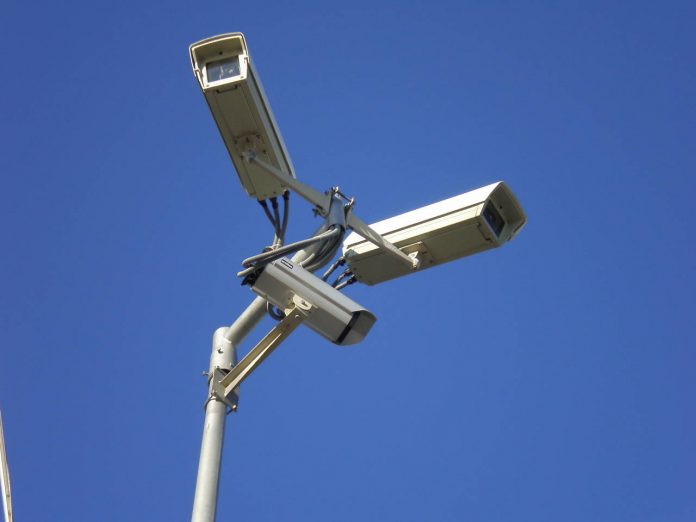
For instance, in some workplaces, employers may use digital surveillance tools like computer monitoring software or CCTV cameras to monitor employees’ activities. While the intention is to ensure productivity and security, ethical concerns arise when this surveillance extends beyond professional activities to invade employees’s privacy. Likewise, if an employer instals monitoring software on company computers without informing employees and tracks their personal online activities. Such as private emails, and social media use during breaks, it can be seen as an ethical issue. This collection of digital evidence may raise concern about the right to privacy in the workplace. 

Forensic challenges

Digital evidence often undergoes forensic examination in order to determine its authenticity. However, challenges can arise due to the rapidly growing technology. Outdated forensic tools present a challenge during the examination, potentially impacting the court’s confidence in the accuracy of digital evidence. Digital forensics experts must stay updated to address these challenges and ensure that forensic procedures align with legal standards for the admissibility of evidence. The digital forensic challenges fall into three main categories that includes: 

  • Technical challenges – means issues like anti-forensic techniques, cloud operations, skill gaps and steganography.
  • Legal challenges – involve presenting digital evidence, lack of proper guidelines, and inadequate electronic evidence collection and acquisition.
  • Resource challenges – include the power required for collecting digital evidence and analysing a running computer. 

In order to maintain the integrity and admissibility of digital evidence in legal proceedings, there is a need to overcome these challenges.

Cross border issues

In the interconnected world, the movement of digital evidence between countries is continuously increasing. It will lead to a lot of issues related to legal jurisdiction, international agreements, and recognition of foreign digital evidence in legal proceedings. When it is used as evidence in Indian courts, things can get more complicated. It will raise questions about who has authority and how such evidence can be accepted.

For instance, if evidence comes from a server outside India, it raises questions about whether Indian courts have the authority over that data. These situations can get tricky because different countries have different rules about how evidence can be shared and used. The legal issues are not always straightforward, as they expand on the unique details of each case. 

Technological Advancement 

The evolving technology has posed many challenges for defining and controlling digital technologies like artificial intelligence, blockchain, and other internet things. Because of this progress, courts have to get used to dealing with proof or information that comes from these very advanced technologies. It’s like they need to learn and understand these new technologies to make fair decisions when such evidence is involved in legal cases. For instance, the court faces issues while getting to accept evidence as created by an artificial intelligence system. Because difficulty may arise because those artificial intelligence generated evidences are more often seen as black boxes. That means it implies lack of transparency and accuracy in how the system processes information and arrives at its conclusions. This complicates determining whether such evidence is preceded by such systems is reliable or not. 

Suggestions to combat these challenges

In order to combat these challenges, the following suggestions can be followed:

  • Providing training and education for legal professionals and law enforcement officials is very important. The training and education with regard to the digital methods and its applications will enhance the proper usage of different digital methods, it will help to collect more accurate information about the cases involving such evidence. It will enhance the credibility and admissibility of such evidence before the court. 
  • There is a need for clarity regarding the rules of digital evidence in its collections, storage, and presentation. This includes making guidelines for using forensic tools, setting procedures for handling digital evidence correctly, and having protocols in place.
  • It is important for different groups like the police, lawyers, and tech experts to work together. They can share the many ways to do things, create new technologies and agree on common rules. It will help to deal with the challenges of handling digital evidence because when people from different groups work together they often have the opportunity to learn about each other’s work, details of evidence, and the rules for collecting and presenting it in court. 
  • Using strong and unique passwords for all accounts is essential to reduce the risk of unauthorised access. 
  • Implementation of two factor authentication will add an extra layer of security. It provides users with a second form of verification such as a code sent to their mobile device. Two factor authentication is a security process that requires users to provide two different authentication factors to verify their identity.
  • Keeping all software, operating systems and applications up-to-date will help to mitigate cybercrimes. When a software is updated regularly, it will protect the system from unauthorised usage or illegal hacking. Regular updates ensure that the system has the latest security measures in place.
  • Encryption tools will help to protect sensitive data. It can be used both in transactions and when such data is stored. This adds a layer of security from cyber hacks.
  • Activating a backup system can save a lot of information. It will help in the event of a cyber attack and it allows for the recovery of necessary information.
  • Applying firewalls and intrusion detection systems will help to monitor and control network traffic. This will help to mitigate unauthorised access.
  • Digital evidence is sensitive and easily changed so it is important to collect volatile evidence. This evidence refers to digital data that is temporary and can be easily altered or lost. This type of evidence is usually stored in collective memory such as RAM and can be quickly affected by actions like powering off a device. Accordingly, collecting the most sensitive data first and least sensitive at last. It is very important to collect the correct order of volatility of evidence.

Different global positions with regard to the admissibility of digital evidence 

United States (U.S)

In the U.S. admissibility of electronic evidence in the U.S. federal courts is determined by the Federal Rules of Evidence (FRE), 1975. For electronic evidence to be accepted, such evidence must be relevant and authentic. Such evidence must demonstrate that it fits a hearsay exception. The major thing is the authentication of digital evidence. The evidence provided must be proven as genuine. This is done by presenting a witness with personal knowledge. But if that’s not possible, alternatives include expert comparisons, public records, reliable systems, official publications, certified business records, or certified data copied from electronic devices would also suffice. After the authentication of records, such evidence must come from Federal Rules of Evidence Rule 401 and Rule 402. Section 401 states that evidence is considered relevant if it has the potential to influence the probability of a particular fact and if that fact is important in deciding the outcome of the legal matter at hand. Rule 402 states that relevant evidence is admissible unless there are specific reasons for exclusion. The reasons include provisions in the United States Constitution, federal statutes, the rules specific in the document or rules as established by the Supreme Court. 

Another legal requirement is the original writing rule which is stated under Federal Rules of Evidence Rule 1002. This rule applies to various forms like writing, recordings, and photos encompassing letters, numbers or stored images. In order to admit this evidence, it must be an original with the same effect as the person who made it. In the case of photography, there is a negative requirement. The ‘negative’ is considered a primary source of the image and is used to create prints and reproduction that can be presented as evidence in the legal proceedings. However, duplicates produced by various processes are also admissible unless there exists authenticity issues. Witnesses with personal knowledge can verify duplicates. In such situations, originality is not needed. There exists ambiguity regarding the truth of duplicates. Original records are needed. The process ensures the importance of authenticity with regards to electronic evidence under the Original Writing Rule. 

The key challenge in using digital evidence in US courts is understanding the hearsay rules. The Federal Rules of Evidence Rule 801 and Rule 802 state these aspects. The court carefully needs to determine whether the presented evidence is a statement made by the person, or whether it’s offered to prove something is true. If the evidence falls into these categories it might be considered as hearsay. However, there are exceptions like statements made by witnesses before or statements made by opposing parties that may allow the evidence to be admitted. It is very important for determining the admissibility of digital evidence in court.

Australia

In Australia, the admissibility of electronic evidence has been governed as per Section 146 and Section 147 of the Uniform Evidence Act, 1955. These sections are meant to make it easier to admit computer generated evidence. In Section 146 there’s the basic idea that if a document or thing is created by a process or device that usually gives a specific result when used correctly, then it is assumed that the produced material actually has that result. Section 147 is of a similar kind but it applies to documents made in the regular course of business. So, if a document is made as part of normal business activities there’s a presumption that it is reliable. These rules are stated in order to allow the electronic evidence in court. Even though rules were meant to make it easier to use computer-generated evidence in court, there are concerns among some individuals that these rules might not be sufficient. These concerns came up during a discussion about DP 69. DP 69 is a notable proposal and this suggestion is influenced by the evidence laws in South Australia. It introduced a new idea that is called the ‘redundancy test’. This test would require showing that there are extra checks in the computer system to make sure the information it produces is accurate. People who liked the redundancy test idea believed that it could make computer generated evidence more reliable. They thought that by having extra checks and safeguards in place within the computer system, the evidence would be more accurate. 

Even though the rules wanted to make it easier to use computer generated evidence in court, the DP 69 was opposed particularly by Officers of the Director of Public Prosecutions. On the other hand, the Commonwealth Director of Public Prosecutions (CDPP) disagreed and said that the presumption rules are good because presumption makes it easier to admit multiple documents and business records that originate from information stored on a computer. Some lawyers argued that these rules make it easy to bring in documents and record from computer data. Many concerns were raised about the practicality and potential drawbacks of implementing the more strict test. It also increases cost, creates disadvantages to small litigants and also impacts adversely on various computer generated evidence. When matters reached before commission they looked at all the feedback and found that there wasn’t solid proof showing any issues with the current rules. They noticed that people in the legal community had different opinions. In the end, the commission decided that there wasn’t strong enough reason to make significant changes. They preferred making small adjustments rather than changing the complet law. The rules for using electronic evidence in Australia are still the same for now. However, ongoing discussions show how important it is to find a good balance between making sure the evidence is accurate and making it accessible for legal cases. 

Canada

In Canada, the use of electronic documents in court is governed by Sections 31.1 to Section 31.8 of the Canada Evidence Act (CEA) 1985. These rules highlight the importance of electronic records in legal proceedings. The court needs to follow these rules when dealing with evidence from computers. When deciding the matter if electronic documents can be used as evidence, the court must check if they are genuine and reliable. Section 31.1 to Section 31.8 aims to create a flexible approach to admitting electronic records. It recognises how technology keeps changing. Judges need to carefully assess electronic evidence, considering its value, because electronic records can be easily changed. These rules mainly impact how electronic records are proven to be genuine and best evidence, but they don’t change other rules for admitting evidence. These rules acknowledge that technology has made the difference between originals and copies less important. Section 31 is seen as a way to authenticate and admit electronic records not as an exception to hearsay. When electronic documents are used as evidence, especially those with human-inputed data the court must think about hearsay rules. However, records created by automated processes are not considered hearsay because there’s no person behind them who can be questioned. The admission of electronic documents depends on their format. It may be printout, scanned copy or native digital format. However, they always need to be proven as genuine and follow the evidence rule. t.

Singapore

In Singapore, admissibility of digital evidence is governed by the Evidence Act, 1893. Accordingly, Section 116A of this Act provides some assumptions that a party can rely on when presenting electronic records in court. The assumptions help to make things smoother in legal proceedings. As per Section 116A(2), one important assumption is that the court will assume electronic records are authentic if certain conditions are met; it includes electronic records must have been generated or stored in the usual course of business, the record must have been created by a person who was not a party to the legal proceedings, and the person generating, recording, storing the electronic records must not have done so under the control of the party seeking to introduce the electronic records. However, it is difficult to provide electronic records without these assumptions. In order to rely on the assumption there is a specific condition that needs to be followed. The conditions are to use a certified imaging system. This system, known as an approved procedure the Act, must be certified by an independent body chosen by the Ministry of Law, referred to as a Certifying Authority. This certificate ensures that the system accurately converts physical documents into electronic images. This certificate is important for lying on the presumption stated in Section 116A(6) of the Act. It added that electronic records are trustworthy and can be accepted in court without too much difficulty. On the other hand, in Singapore electronic transactions are governed as per the Electronic Transaction Act of 2010 which gives the legal framework for electronic transitions, which includes e-commerce, electronic records, electronic contracts and electronic signatures. This framework provides consistency and clarity to agreements made digitally. The Act further specifies the legal recognition, and application of digital signatures and electronic documents in various commercial governmental settings. 

European Union

In the European Union, electronic Identification Authentication and trust Services (eIDAS) is a regulation introduced in July 2015 through EU Regulation 910/2014. It represents a significant role in electronic transactions across the European Union. eIDAS Regulation provides the legal framework for the various electronic transactions. It covers both commercial and governmental context. It has set standards for electronic signatures, digital certificates, electronic seals, and time stamps, and other authentication mechanisms. The regulation ensures that these digital counterparts hold the same legal rights as traditional paper based transactions. The regulation plays an important role by giving recognition to digital evidence.

Admissibility of digital evidence in International Criminal Courts

The International Criminal Court (ICC) is a permanent court established by the Rome Statute in 1988. It deals with serious crimes like genocide, war crimes and crimes against humanity. The court officially started its work on July 1, 2002 after 60 countries agreed to follow its rules. The ICC has its headquarters at the Hague, Netherlands. The admission of digital evidence in ICC is decided by the combination of common law and civil law tradition. The Rome statute sets up the ICC which deals with serious international crimes. It is designed to be flexible and more like the civil law system. In order to handle digital evidence, the ICC has established an “e-Court Protocol” to guarantee authenticity, accuracy, and preservation. This protocol makes it mandatory to include metadata such as the chain of custody, source identity, and author information. The main aim of this protocol is to standardise the format of digital evidence. However, it’s important to note that the protocol doesn’t specifically tackle issues related to the probative values of the digital evidence. Probative values concerns how relevant and valuable evidence is in proving or disproving facts in a case. The ICC employs a flexible approach to the admission of evidence, allowing judges with a discretion in adopting relevant probative value and potential prejudice. The three part test of the admissibility of evidence involves determining the relevance, probative value and balancing probative value against prejudicial effect. 

  • Relevance: Evidence is considered relevant if it makes the existence of fact at issue more or less probable. This is determined under the Rome Statute and rules of procedure and evidence.
  • Probative Value: The probative value means how helpful evidence is in proving something important during a trial. The court looks at the characteristics of the evidence to decide this. But the court has to make sure it does not unfairly harm the accused parties while using this evidence.
  • Balancing probative value against prejudice effect: It means the court needs to make sure that the evidence presented is important and helpful for the case. However, the court also has to check that using this evidence doesn’t cause injustice and they try to find the right balance.

The regulations of the court, particularly Regulation 26, require the establishment of a reliable electronic system to support the court’s daily operations. The Unified technical Protocol also known as e-Court Protocol serves a major role in determining the authenticity of digital evidence. 

Approaches towards Hearsay evidence 

In the ICC, there isn’t a strict rule about hearsay evidence. Hearsay evidence is literary evidence when someone talks about what others say. Usually, the ICC prefers to have witnesses to testify in court. But sometimes, they might allow digital evidence, like emails or information from unknown people even if it’s hearsay. It’s a bit of a flexible approach depending on the different situations. In the case of Prosecutor v Tolimir, (2012)  the ICC has accepted digital evidence even though it was considered hearsay. The meaning of the information was not directly witnessed or experienced by the person presenting it. The court accepted because other factors made it seem believable. The experience and expertise of the investigators and additional supporting proof help to establish the credibility of the digital evidence. The ICC generally prefers live testimony where witnesses speak in person during a trial. 

However, in certain situations, like in this case the ICC showed a flexible approach. However, other International Criminal Tribunals, known as ad hoc tribunals, have stricter rules regarding hearsay evidence. These tribunals place strong phases in ensuring the reliability of the information allowing it to be used in court. In the future, the ICC will focus on improving organisational capabilities and centralising processes for handling digital evidence. The Office of Public Counsel For Defence (OPCD) plays an important role in supporting defence teams. Caution is recommended in using digital evidence to avoid impacting trial duration. The Registry plays a very important role in processing evidence and ensuring secure IT systems. The ICC is encouraged to prepare for digital evidence challenges on the other hand it balances the efficiency and rights of the accused.

Conclusion

Digital evidence is very important in today’s investigation. Due to the rapid growth in technology, the scope of digital evidence is increasing. The Indian judiciary has given legal recognition to digital evidence by adopting digital evidence in many cases. Digital evidence or electronic evidence is used in various cases. In cases like cyber crime or fraud digital evidence is more reliable than traditional evidence. After knowing the importance of digital evidence Parliament made necessary enactment with regard to digital evidence admissibility in Bharatiya Sakshya Bill 2023. The Bill considered digital evidence as primary evidence. On the other hand, digital evidence has its own set of challenges. It is important to keep this evidence safe and unchanged by including strong passwords and some digital security measures. Digital evidence faces some challenges like software privacy, cyber hacking, cyber fraud, and cyber theft. To address these challenges legal systems need to continually update legislation. The Government had to provide clear guidelines for securing and creating awareness regarding this evidence. Digital evidence is getting legal recognition in different countries. The ICC also provided legal recognition to digital evidence in admitting such evidence in many cases. When use of technology increases, the information stored on digital devices also increases. This may lead to the misuse of technology often tends to crimes. Everyone involved in the legal system, such as lawyers, and judges, need to understand how to handle and use this digital evidence properly. Working together is needed to make sure that this kind of evidence is used correctly, by meeting the ethics of law and justice is served properly.

Frequently Asked Questions (FAQs)

How is digital evidence collected?

Digital evidence is collected using specialised tools and techniques. Forensic experts use methods such as imaging hard drives, analysing network traffic and extracting data from various devices.

What type of cases use digital evidence?

In India, the use of digital evidence is not limited to particular cases. It can be used in a wide range of cases including cybercrime, fraud, intellectual property theft, child exploitation and even in traditional criminal investigations where electronic devices are involved.

Can deleted data be recovered as digital evidence?

In many cases, deleted data can be recovered through forensic tools such as autopsy, and recuva that can be reconstructed and analysed in storage media.

How is digital evidence presented in court?

Digital evidence is presented in court through the testimony of digital forensic experts with required certificates as mentioned under Section 64B(4) of the Act.

How is digital evidence stored for the long term?

Digital evidence is typically stored in secure digital formats. It may use hash values or metadata to verify the integrity of the stored evidence over time. 

References 

Download Now

Impact of corporate governance on employee relations

0

This article has been written by Dhruva Dixit pursuing a Personal Branding Program for Corporate Leaders course from Skill Arbitrage.

This article has been edited and published by Shashwat Kaushik.

Introduction

On this topic, we will be throwing light on the impact of corporate governance on employee relations, covering various parts like what is corporate governance? the significance of corporate governance for good labour relations, challenges faced in corporate governance in the Indian context and a few case studies to supplement the hard point that good corporate governance brings improved employee relations and growth to the company.

Establishment of robust and effective corporate governance practices right from the beginning not only brings an ethical and positive working environment within the company but it also instils confidence in employees and investors and attracts foreign investments. It is the key that unlocks the doors to sustainable growth and economic prosperity.

What is corporate governance

Corporate governance is a set of internal controls, policy and procedures that form the framework of a company’s operations and its dealings with various stakeholders, such as customers, management, government and industry bodies, suppliers and employees.

The corporate governance framework or policies should be such as to uphold the principles of transparency, integrity, ethics and honesty. It is the soul of an organisation and must be adhered to while indulging in any business practices.

We will be evaluating the impact of corporate governance on employee relations, mainly in the Indian context.

The organisational framework for corporate governance initiatives in India consists of the MCA (Ministry of Corporate Affairs) and SEBI (Securities and Exchange Board of India), which monitor and regulate the corporate governance of listed companies in India through Clause 49. It is compulsory for listing companies to comply with its provisions. MCA (Ministry of Corporate Affairs) through its various appointed committees and forums, such as the NFCG (National Foundation for Corporate Governance), a not for profit trust, facilitates the exchange of experiences and ideas amongst corporate leaders, policymakers, regulators, law enforcing agencies and non-government organisations. NFCG has framed an action plan, which includes the development of good corporate governance principles on identified themes, i.e., (i) corporate governance norms for institutional investors, (ii) corporate governance norms for independent directors, and (iii) corporate governance norms for audit.

Listed companies in India are required to comply with the corporate governance requirements as specified in the Companies Act of 2013 and SEBI LODR (Listing Obligations and Disclosure Requirements) Regulations 2015

Significance of corporate governance for labour management partnerships

Good corporate governance has a very positive and lasting impact on overall employee relations. Some of the direct benefits that accrue due to good corporate governance are:

Long term sustainability

When companies follow good corporate governance, it becomes easier for employees to navigate the ever-changing business landscape. They become more agile in adapting to market trends, identifying risks and opportunities, and making strategic decisions. By taking a transparent and ethical approach to their operations, companies not only thrive in the present but also create a foundation for future success. Each employee dedicates themselves fully and remains associated with the company for a longer period of time. The overall employee turnover reduces significantly.

Positive corporate culture

Well defined and good corporate governance promotes transparency, accountability, fairness and a positive attitude throughout the organisation, inspiring employees to uphold the highest ethical standards. When employees see that their company values integrity and treats them with respect, they become more engaged, motivated and loyal. This leads to improved productivity, better teamwork, and a positive work environment where everyone can thrive.

Improves financial performance

It has been noticed in various companies that effective corporate governance has brought out the best in employees and they have given their contribution more than the desired roles, which has a direct impact on financial performance and shareholder value. This leads to increased profitability, sustainable growth, and enhanced shareholder value. Shareholders feel more confident in their investments when they see that the company is being managed by motivated employees with integrity and a long-term vision.

Builds employees’ trust

When companies prioritise good governance practices, they send a very powerful message to their employees – that they value transparency, accountability, and ethical decision making. As a result, employees develop a deep sense of trust, knowing that their interests are being safeguarded and their voices are being heard.

Employees positive social impact

Companies that are run under good corporate governance have employees who actively engage with communities and contribute to social causes. Through their close association with societal needs, they become agents of change and help in building a progressive society. These employees become responsible corporate citizens.

There have been numerous examples in the Indian context where poor corporate governance has resulted in employees working in an unethical and non-transparent manner, resulting in huge financial losses to all stakeholders. The most noticeable one was the strike and violence at the Maruti plant in Gurgaon. The company has to modify its internal policies to bring sanity to the workers associated with the union.

Challenges in corporate governance for improved employee relations 

Independence of boards

The presence of independent directors brings diverse perspectives to strengthen decision making and promote transparency within the company. However, providing genuine independence and avoiding conflicts of interest remain challenges in many companies even today.

Regulatory framework strengthening

Setting up clear and comprehensive regulations is crucial to ensuring that companies follow ethical standards and disclosure requirements and are held accountable for their actions. This framework has to be continuously evolved so that regulations are robust and ultimately benefit employees and all stakeholders.

Employee rights

Employees should be educated through a proper teaching methodology regarding good corporate governance and its benefits. It should be well articulated and each employee must have the right to know corporate governance principles and their importance.

Companies with good corporate governance 

Infosys

Believes in fostering a meritocracy where performance is recognised and rewarded. The company’s commitment to sound corporate governance and transparent disclosure norms has earned it a well earned reputation for trustworthiness. The country’s top IT talent is eager to join this company, knowing these clear fundamentals.

Here are some of the specific ways that Infosys fosters a meritocracy:

  • Performance-based compensation: Employees at Infosys are rewarded based on their individual performance rather than on factors such as seniority or tenure. This system ensures that the best performers are recognised and rewarded, and it motivates employees to excel.
  • Fair and transparent promotion process: Promotions at Infosys are based on a fair and transparent process that takes into account factors such as performance, skills, and experience. This process ensures that employees are promoted based on their merit rather than on favouritism or nepotism.
  • Open and honest communication: Infosys encourages open and honest communication between employees and managers. This culture of transparency helps to ensure that employees feel valued and respected, and it also helps to identify and address any issues that may arise.
  • Employee development: Infosys is committed to employee development, and it offers a variety of programmes and resources to help employees learn and grow. These programmes include formal training courses, on-the-job training, and mentoring programmes.

Tata model

All Tata companies place great emphasis on ethics, integrity and accountability. The Tata Group’s commitment to ethical practices, social responsibility and long term sustainability has made it a role model for many aspirants to become its proud employees.

Furthermore, the company’s unwavering dedication to sound corporate governance practices and transparent disclosure norms has earned it a well-deserved reputation for trustworthiness and integrity. This commitment is reflected in the company’s transparent financial reporting, ethical business practices, and adherence to regulatory requirements. As a result, the company has gained the trust and confidence of investors, shareholders, and other stakeholders.

This strong foundation of meritocracy and transparency has made the company a magnet for the country’s top IT talent. Aspiring professionals are drawn to the organisation, recognising the clear and solid fundamentals that guide its operations. They understand that by joining this company, they will be part of a dynamic and high-performing team where their skills and contributions will be valued and rewarded.

In essence, the company’s commitment to meritocracy, sound corporate governance, and transparent disclosure norms has not only fostered a positive work environment but also positioned it as an employer of choice within the IT industry.

Mahindra model

This company places strong emphasis on the empowerment of employees and all its stakeholders. Mahindra believes that nurturing and empowering its people leads to overall organisational success. Mahindra believes that nurturing and empowering its people is vital for several reasons:

  • Increased engagement and motivation: When employees feel empowered, they are more engaged in their work and motivated to excel. Empowerment gives them a sense of ownership and responsibility, which fosters a positive work environment and enhances productivity.
  • Innovation and creativity: Empowered employees are more likely to think creatively and come up with innovative ideas. They feel comfortable taking calculated risks and experimenting with new approaches, which can lead to groundbreaking products, services, and solutions.
  • Improved decision-making: Empowerment enables employees to make decisions at their level, reducing the need for excessive bureaucracy and bottlenecks. This agility allows Mahindra to respond quickly to market changes and capitalise on opportunities.
  • Enhanced job satisfaction: Empowered employees experience higher levels of job satisfaction and fulfilment. They feel valued and respected, which boosts their morale and overall well-being. This positive atmosphere contributes to a strong employer brand and increased employee retention.
  • Stronger organisational culture: The empowerment of employees fosters a culture of trust, transparency, and collaboration. Employees feel connected to the company’s vision and values, which leads to a stronger sense of belonging and commitment.

To achieve these benefits, Mahindra implements various practices that empower its employees:

  • Decentralised decision-making: Mahindra delegated decision-making authority to employees at all levels. This autonomy allows them to take ownership of their work and make decisions that align with the company’s goals.
  • Continuous learning and development: Mahindra invests in the continuous learning and development of its employees. Through training programmes, workshops, and mentorship opportunities, employees are equipped with the skills and knowledge they need to excel in their roles.

Findings

The implementation of good corporate governance practices has a significant impact on employees within an organisation. Here are some key findings and their expanded explanations.

Proper responsibilities allocation

Effective corporate governance ensures that roles and responsibilities are clearly defined and assigned to the appropriate individuals. This clarity enhances employee understanding of their specific duties and promotes accountability. When employees know exactly what is expected of them, they can work more efficiently and effectively, leading to improved overall performance.

Streamlined working structure and practices

Good corporate governance establishes a well-structured and systematic working environment. Clearly outlined processes, communication channels, and decision-making frameworks enable employees to navigate the organisation smoothly. Streamlined practices reduce confusion, delays, and frustrations, fostering a positive and productive work atmosphere.

Effective risk identification and management

Robust corporate governance mechanisms identify and address potential risks proactively. Employees benefit from this risk management approach as it creates a safer and more secure work environment. When risks are effectively managed, employees can focus on their tasks without undue stress or concern, leading to increased job satisfaction and reduced turnover rates.

Enhanced decision-making ability

One of the most critical aspects of good corporate governance from an employee’s perspective is the ability to participate in decision-making processes. When employees have a say in matters that affect their work and the organisation as a whole, they feel valued and motivated. This inclusive approach fosters a sense of ownership, leading to more engaged and proactive employees.

By implementing good corporate governance practices, organisations create an environment that supports and empowers employees. Clear responsibilities, streamlined structures, effective risk management, and inclusive decision-making contribute to increased employee satisfaction, productivity, and overall organisational success.

Conclusion

As we conclude our analysis of corporate governance and employee relationships in the Indian corporate sector, it’s time for all of us to realise that effective corporate governance is not a choice but a necessity in the current dynamic corporate world. It creates progress in companies, attracting employees who value ethical conduct and responsible decision making. Moreover, it plays a crucial role in shaping the nation’s economic landscape, employment and social responsibility. Corporate governance has a very positive impact on employee efficiency. Decision making abilities of employees receive a boost where corporate governance structures exist. Employees therefore feel empowered in the organisation. 

References

Download Now

Taxation of e-sports and online gaming : all you need to know

0
gaming industry post covid

This article has been written by CA Salil Arora pursuing an Executive Certificate Course in US Accounting and Bookkeeping from LawSikho.

This article has been edited and published by Shashwat Kaushik.

Introduction

The rise in internet infrastructure and the availability of smartphones in every budget bracket have led to an ancillary surge in online gaming and esports. The government of India officially recognises e-sports in the same manner as any other multi-sport event, unlike in the case of online gaming or real money gaming.

Esports has been popular after its inclusion in the Asian Games 2022 and also the Bermingham Commonwealth Games of 2022, where the Indian team won bronze in the DOTA 2 category. Esports are expected to generate USD 79 million in 2023 and they are also expected to grow at a CAGR of 9.06% between 2023 and 2028, with a projected USD 166.3 million in 2028. 

E-sports vs. online gaming

E-sports, short for electronic sports, refers to competitive video gaming, while online gaming is one that can be played using the internet and telecommunication.

The two sound the same, but the difference between the two is skill, expertise, and level of playing. While e-sports involve professional players or teams involved in competitive video games playing in tournaments or leagues, online gaming is a casual game played at an informal level and includes real money gaming. 

In esports, there is prize money involved as in any other tournament, unlike in online gaming, where a player deposits the cash or kind beforehand in the expectation of earning.

The games involved in esports are Counter Strike, Fortnite, and Valorant. The online gaming platform includes Dream 11, MPL, etc.

Source of revenue

Esports is a team-based tournament or league where the organiser gets revenue in the form of:

  1. Sponsorship and advertising: It consists of the revenue generated by organisers and teams through sponsorship deals. The deal includes product placement, sponsoring esports teams, etc.
  2. Merchandise and ticketing: It is a source of revenue from the sale of t-shirts etc., of the participating teams in a tournament. The entry fee for an online event and the sale of tickets for an offline event generate revenue.
  3. Streaming: The revenue is generated by the live broadcasting or streaming of gaming events.
  4. Media rights:  The media rights are sold to media agencies for coverage of gaming events.
  5. Publisher fees: The fees paid by game organisers to the game publishers for the use of intellectual rights related to the game to organise a tournament or game.
  1. E-sports betting: It is the act of placing a bet on the outcome of a gaming event or performance of a particular team or player.
  2. In-game purchases: In some esports games, organisers and developers can generate revenue through in-game purchases. These microtransactions allow players to buy virtual items, skins, or other cosmetic enhancements that do not affect gameplay but provide a sense of personalisation and exclusivity. A portion of the revenue from these purchases can be shared with the tournament organisers or game developers.

In online gaming, the primary source of revenue is subscription purchases, In-app purchases, microtransactions, etc. The platform operator deducts a part of the revenue towards its expenses, and the balance is contributed to the prize pool.

Taxation of online gaming : Income Tax

As per the Finance Bill of 2023, a new Section 115 BBJ has been added. It provides for taxation on the total income of an assessee, with effect from April 1, 2024, where the total income includes winnings from online gaming.

According to the Finance Bill, online gaming winnings will be taxed as part of the assessee’s total income, which includes income from all sources, such as salary, business profits, capital gains, and other miscellaneous sources. This means that individuals who earn winnings from online gaming will need to declare and pay tax on these winnings along with their other sources of income.

It’s important to note that this provision applies to all forms of online gaming, including games of skill and games of chance. Whether it’s playing poker, betting on sports, or participating in online lotteries, any winnings derived from these activities will be subject to taxation under Section 115 BBJ.

The Finance Bill also provides some clarity on the taxability of winnings from online gaming tournaments. In such cases, the winnings will be considered income from business or profession and taxed accordingly. This means that individuals who participate in online gaming tournaments on a regular basis and earn substantial winnings may need to maintain proper books of accounts and follow the rules and regulations applicable to business or professional income.

The introduction of Section 115 BBJ is a significant development in the taxation of online gaming in India. By bringing online gaming winnings under the tax net, the government aims to ensure that individuals who engage in these activities are subject to the same tax obligations as other sources of income. It also seeks to address the growing popularity of online gaming and the potential revenue that can be generated from taxing these winnings.

Introduction of TDS provisions

Finance Bill 2023 introduced Section 194 BA, applicable w.e.f. July 1, 2023, for deducting TDS from the net winnings during the financial year:

  1. The section provides for deducting TDS at the prescribed rates on the net winnings in the user account as of the last date of the financial year.
  2. In case of withdrawal during the financial year, the user shall deduct TDS on the net winnings comprising such withdrawal in addition to the net winnings in the user account at the end of the financial year.
  3. In the event that the winnings are partly in cash and partly in kind and the cash is not sufficient to cover the tax payable on the withdrawal amount, the deductor shall make sure that the tax has been fully paid before releasing the net winnings amount.

Key points about Section 194 BA

Applicability

Section 194 BA applies to payments made to any person (including individuals, companies, or other entities) for net winnings arising from:

  • Horse races.
  • Card games (including online games).
  • Other games of any sort (excluding lotteries, betting, and gambling covered under Section 115BB).

Threshold limit

TDS is required to be deducted only if the aggregate net winnings exceed a specific threshold limit during the financial year. The threshold limits are as follows:

  • Horse races: Rs. 10,000
  • Card games and other games: Rs. 15,000

Rate of TDS

The rate of TDS under Section 194 BA is 30% of the net winnings.

Responsible party for TDS deduction

The person making the payment of net winnings is responsible for deducting TDS at the specified rate. This includes organisers, clubs, or gaming houses where the winnings are generated.

Reporting and deposit of TDS

The person deducting TDS must deposit it with the government within the prescribed time frame, as specified by the Central Board of Direct Taxes (CBDT). They must also issue a TDS certificate (Form 16D) to the recipient, reflecting the amount of TDS deducted.

Non-compliance consequences

Failure to deduct or deposit TDS as required under Section 194 BA may result in penalties and interest as per the provisions of the Income Tax Act.

Implications for taxpayers

Recipients of net winnings should ensure that TDS is deducted at the correct rate and that they receive the TDS certificate. They can claim credit for the TDS deducted while filing their income tax returns.

Overall, Section 194 BA in the Finance Bill 2023 aims to streamline the taxation of net winnings from specified sources and bring them under the ambit of the regular TDS provisions. This amendment is expected to enhance tax compliance and broaden the tax base in the gaming and entertainment sectors.

Notification dated May 22, 2023

The Ministry of Finance, Department of Revenue, issued an Income Tax notification dated May 22, 2023, clarifying the net winnings to be calculated for the purposes of Section 115 BBJ and Section 194 BA.

The main provisions of notification are:

  1. Rule 133 is inserted after Rule 132 in the Income Tax Rules of 1962.
  2. The provisions are applicable as of July 1, 2023.
  3. It explains the net winnings for the purposes of Sections 115 BBJ and 194 BA.
  4. For Section 115 BBJ, taxable net winnings earned during the previous year are calculated as follows:

Taxation of online gaming : goods and service tax

In the 50th GST Council meeting held in July 2023, the GST of 28% is proposed to be levied. The GST is to be levied at the full value of the consideration received by online gaming, including entry fees. The proposal is for online gaming, casinos, and horse-trading. 

Unlike current scenarios, there is no distinction between the game of chance and the game of skill. A game of skill involves the expertise, experience, and practice of the player, whereas a game of chance involves sheer luck. The game of chance is the same as gambling or betting. The distinction between a game of chance and a game of skill is important, as a game of skill attracts a lower GST of 18% as compared to 28% in the case of a game involving skills.

Thus, the present scenario makes a distinction between e-sports and other online games.

The proposed GST regime attempts to eliminate the difference between the use of skill and the attempt at betting. It proposes a flat 28 % GST, not on the revenue charged by online platforms or e-sports organisers but on the total stake involved.

In the case of casinos, a GST of 28% will be charged for the total number of chips purchased at the time of entry. Further, GST will not be charged at the time of betting in multiple rounds, including betting made with winnings from previous rounds. 

Conclusion

The rise of high-speed internet availability and the availability of smartphones in the hands of all segments of the population have made the prospects of online gaming and esports bright in India.

The projection of the rise of the esports industry in India to USD 166.3 million by 2028 showcases its potential. Taxation of net winnings in online gaming at 30% and levies of GST at 28 % on the stake value also show the potential contribution to the country’s revenue reserves. The GST levy of 28%, irrespective of the game of skill or the game of chance, has been a point of issue among the stakeholders. It is going to make participation costly. Also, it will not only hit the growing industry but will also result in a reduction in stake money, making participation less attractive.

The Indian online gaming or e-sports industry is facing competition from USA and China based companies. The government should take steps to raise the business beyond the business in these countries and make it one more flourishing sector of the Indian economy.

References

Download Now

Tamil Nadu Lokayukta Act, 2018

0

This article is written by Naincy Mishra. This article deals with a detailed explanation of ‘The Tamil Nadu Lokayukta Act 2018’. It discusses the establishment and composition of the Lokayukta, its jurisdiction, powers, and the procedures to conduct inquiry under the Act and the related Tamil Nadu Lokayukta Rules, 2018.

This article has been published by Shashwat Kaushik.

Table of Contents

Introduction 

The global civil society, Transparency International, defines ‘corruption’ as the abuse of an entrusted power for private gain. As per the last report released by Transparency International, India has the highest rate of bribery in Asia. Moreover, as per the latest Corruption Perception Index, India has been ranked 85 out of 180 countries. This ranking is determined on the basis of the perceived levels of public sector corruption. 

Indian citizens have always made their way out to conveniences by bribing or indulging in various methods of corruption. While it is difficult to determine and regulate corruption in the private sector, it’s all the more problematic when done in the public sector arena and thus, important to regulate and curb. The Prevention of Corruption Act (PCA) 1988 was passed by the Parliament to combat corruption in the public sector. Later, the Lokpal and Lokayuktas Act 2013 was enacted in order to provide for the establishment of a body known as the ‘Lokpal’ for the Centre and the ‘Lokayukta’ for the States which will undertake the duty to conduct inquiries into the allegations of corruption against the public functionaries and for the matters connected thereto. 

These Acts have been a step towards the government’s commitment to clean and responsive governance. Further, for better enforcement of the laws, several states have come up with their own laws providing for the powers and jurisdiction of the Lokayuktas, their conduct of inquiry, the removal process of its members, etc. The state of Tamil Nadu has also enacted the Tamil Nadu Lokayukta Act 2018 (hereinafter referred to as the ‘Act’) and the Tamil Nadu Lokayukta Rules 2018 (hereinafter referred to as the 2018 Rules). 

Objective of Tamil Nadu Lokayukta Act, 2018

The preamble of the Act states that the Act is to provide for the establishment of a body called the ‘Lokayukta’ for the State of Tamil Nadu, which will inquire into the corruption allegations against certain public servants and for all the matters connected therewith or incidental thereto. Further, the 2018 Rules provide for various provisions such as meetings and procedures of the Search Committee, service conditions of the Chairperson and members of the Lokayukta, service conditions of officers and employees of the Lokayukta, inquiry, etc.

Important definitions 

A total of thirteen definitions have been given in Section 2 for the purposes of the Act. 

  • Section 2(1)(a) defines “Bench” as a bench of the Lokayukta.
  • Section 2(1)(b) defines “Chairperson” as the Chairperson of the Lokayukta.
  • Section 2(1)(d) defines that “complaint” means a complaint, made in a prescribed form, alleging that a public servant has committed an offence which is punishable under the Prevention of Corruption Act (PCA), 1988. 
  • Section 2(1)(e) provides that “Government” means the State Government.
  • Section 2(1)(f) defines “Judicial Member” as a Judicial Member of the Lokayukta.
  • Section 2(1)(h) provides that a “Member” means a Member of the Lokayukta.
  • Section 2(1)(i) states that a “Minister” means the Minister of the State Government, and it includes the Chief Minister of the state. 
  • Section 2(1)(k) defines the term “public servant” as a person referred to in Section 12(1) clauses (a) to (e).
  • Section 2(1)(m) provides that “State” means the State of Tamil Nadu.

Important definitions in the 2018 Rules

  • Rule 2(c) states that “complainant” means any person who makes a complaint under the Act.
  • Rule 2(d) defines “detailed inquiry” as an open inquiry which is conducted on the basis of the material, information or documents collected, etc., and in which the statements are recorded from witnesses and suspect officers.
  • Rule 2(h) defines “preliminary inquiry” as a discreet inquiry which is conducted on the basis of the material, information or documents collected.
  • Rule 2(i) states that “Registrar” means the Registrar of the Lokayukta.
  • Rule 2(o) defines the “Vigilance Commission” as a body which is constituted for the purpose of advising the State Government in the prevention of corruption in public services and which will undertake the enquiry or investigation into the allegations of corruption against public servants.

Meaning of Lokayukta

The Lokayukta is an authority at the state level which deals with the complaints of corruption and maladministration made by the public servants in the state. It is brought into effect in a state after passing the Lokayukta Act in the respective state legislature, and a person of reputable background is nominated for the post. Maharashtra was the first state to introduce the institution of Lokayukta in the year 1971 through the Lokayukta and Upalokayukta Act

In the Tamil Nadu Lokayukta Act 2018, the term ‘Lokayukta’ has been defined in Section 2(1)(g) of the Act, as per which, “Lokayukta” means the body established under Section 3. According to Section 3(1) of the Act, a body called the Lokayukta shall be established on and from the date of notification to be issued by the State Government on this behalf. 

Establishment and composition of Lokayukta

Section 3(2) provides that the Lokayukta shall consist of— 

  • a Chairperson who is/ has been a High Court Judge or any person having experience of at least 25 years in anti-corruption policy, vigilance, public administration, finance and law; and 
  • four other members, out of whom two shall be judicial members. 

Eligibility criteria for the members of Lokayukta

Section 3(3) provides eligibility criteria for a person to be appointed as a Judicial or a Non-Judicial member of the body. 

  • A person shall be eligible to be appointed as a Judicial Member if he is/ has been a High Court Judge or has experience of at least twenty-five years in the State judiciary with an impeccable record.
  • A person shall be eligible to be appointed as a Non-Judicial Member if he has had experience of twenty-five years in anti-corruption policy, vigilance, public administration, finance and law. 

Section 3(4) further provides that the Chairperson or a Member of the body shall not be— 

  • a Member of Parliament (MP) or a Member of the Legislative Assembly (MLA) of any State or a Union territory; 
  • a person who is convicted of any offence; 
  • a person who is less than the age of forty-five years, as on the date of assuming the office as Chairperson or a Member, whichever the case may be; 
  • a Member of any Panchayat or a Municipality; 
  • a person who has been dismissed or removed from service of the Union or any State and; 
  • a person holding any office of trust or profit (other than his office as the Chairperson or a Member) or is connected with any political party or carries any business or practices any profession. 

Pre-requisites of appointment of chairperson and members of Lokayukta 

Section 3 of the Act also lays down some conditions to be followed by the prospective Chairman or Member of the body in case –

  • If he holds any office of profit or trust, he shall resign from such office.
  • If he is carrying on any business, he shall sever his connection with the management and conduct of such business.
  • If he is practising any profession, he shall cease to practise such a profession. 

Role of Selection Committee and Search Committee in appointment of chairperson and members of Lokayukta 

Section 4 of the Act provides that the appointment of the Chairperson and the Members of the Lokayukta shall be made by the Governor of the State under his warrant and seal, and this shall be done on the recommendation of the ‘Selection Committee’ comprising the members as mentioned hereunder:—

  • Chief Minister who is the Chairperson;
  • Speaker of the State Legislative Assembly; 
  • Leader of Opposition or Leader of the single largest Party in the Opposition in the Legislative Assembly.  

It is provided that in order to select the Chairperson and Members of the Lokayukta and to come up with a panel of persons who are to be considered for the appointments as such, a ‘Search Committee’ may be constituted by the Selection Committee if they deem it necessary. The Search committee shall consist of three persons having special knowledge and expertise in anti-corruption policy, vigilance, public administration, finance, and law.

Moreover, to ensure the Selection Committee more independence in terms of carrying out its duties, it has been provided that the Committee shall regulate the procedure on its own in order to select the Chairperson and Members, however, such a procedure shall be transparent. As per Rule 4 of the 2018 Rules, in recommending the name of the Chairperson and Members of the Lokayukta, the decision of the Selection Committee shall be by majority. 

The 2018 Rules related to the Search Committee

The Rules provide certain important points with respect to the search committee:-

  • The term of office of all the Members (including the Chairperson) of the Search Committee, from the date of the constitution of the Search Committee, shall be two months. However, the Selection Committee may extend such term of office as deemed necessary. Moreover, the Selection Committee also has the power to reconstitute the Search Committee at any point in time after recording the reasons in writing.
  • The Committee shall hold its meetings at those places in Chennai as decided by the Chairperson of the Search Committee. The notice of the meetings must be issued at least three days in advance. In the meetings, the decision of the majority shall prevail when there is a difference of opinion among the Search Committee members.
  • The honorariums are such that the Chairperson of the Search Committee is paid Rs.50,000/- and Members are paid Rs.40,000/- each. In fact, they are also paid for any expenses incurred in admissible contingencies.  
  • Moreover, if a member of the committee wants to resign, he may resign from his office by writing a letter to be addressed to the Chairperson of the Selection Committee. 
  • Nodal Officer of the Committee- An Officer, not below the rank of Deputy Secretary to the Government, will be nominated as the Nodal Officer of the Search Committee, along with the supporting staff, for giving secretarial assistance to the Committee. The Nodal Officer is also authorised to claim the expenses incurred in admissible contingencies.

Term of office of chairperson and members of Lokayukta

Section 5 provides that the term of the Chairperson or a Member of the Lokayukta shall be 5 years from the date on which he had entered upon his office or until he attains the age of 75 years, whichever comes earlier. However, the Chairperson or any member can resign his office by writing a letter under his hand addressed to the State Governor. 

Moreover, such a person may also be removed from his office in the manner as provided in the Act. 

Service conditions of chairperson and members of Lokayukta

Section 6 of the Act talks about the salary, allowances, and other service conditions of the Chairperson and Members of the Lokayukta. It states that the salary, allowances, and other service conditions of the Chairperson will be similar to those of the Chief Justice of the High Court and with respect to other Members, they will be similar to those of a High Court Judge.

As per the 2018 Rules, the High Court Judges (Salaries and Conditions of Service) Act, 1954 and the related rules shall govern the service conditions of the Chairperson and Members of the Lokayukta which also includes the medical and conveyance facilities and the travelling allowance. 

Moreover, the pension of the Chairperson and Members shall be at the rate which is fixed by the Government, and it shall be along with the pension to which the Chairperson and Members may be entitled in respect of any service rendered by them under the Central or the State Government before entering the office of Lokayukta.

Restrictions on further employment

Section 7(1) of the Act states that after they cease to hold office, the Chairperson and every Member will not be eligible for— 

  1. reappointment as the Chairperson/Member of the Lokayukta; 
  2. any other assignment or appointment made by the Governor as per law; 
  3. further employment to any other office of profit under the central or state government. 

Appointment of other employees and staff of Lokayukta 

Section 9 of the Act provides for some other officers and staff for the Lokayukta who are appointed by the government for the smooth functioning of the body. As per this provision, there shall be a Secretary and a Director of Inquiry, both not below the rank of Deputy Secretary to the government and both are appointed by the Chairperson from a panel of names which is sent by the government. The service conditions of the officers and staff referred to in this provision are discussed under Chapter V of the 2018 Rules.  

Jurisdiction of Lokayukta

As per Section 12(1), the jurisdiction of Lokayukta shall be exercised on all the categories given hereunder— 

  1. Any person who is/has been a State Minister. 
  2. Any person who is/has been an MLA.
  3. All the state’s officers and employees, from amongst the public servants as defined in Section 2(c)(i) and 2(c)(ii) of the Prevention of Corruption Act (PCA), 1988 when serving or who have served, in connection with the State affairs.
  4. All the individuals referred hereinabove in clause (c) equivalent in any organisation whether it’s a Body/Board/Corporation/Authority/Company/Society/Trust/Autonomous Body (by whatever name called) which is established by an Act of the Central government or the state government or wholly or partly financed by the Government or is controlled by it.

The proviso to this sub-section says that in the case of officers and employees referred to in clauses (c) and (d) who work in connection with the affairs of the Central Government or in any Body/ Board/ Corporation/ Society/ Trust etc. under the control of the Central Government, the Lokayukta and its Inquiry Wing officers shall have the jurisdiction in respect of such officers only after they obtain the consent of the Central Government. 

  1. Any person who has served or is currently serving as a Director, Secretary, Manager or other officer of any other Society/ Association of persons/ Trust (whether registered or not and by whatever name called), that receives financial support, fully or partly, by the State Government and has an annual income which exceeds the amount as specified by the State Government. 

However, it is important to note that as per sub-section (2) of Section 12, the Lokayukta is prohibited from investigating any allegation of corruption against an MLA concerning their statements or votes given in the State Legislative Assembly or any committee as mentioned in Article 194(2) of the Constitution of India, 1949 which talks about parliamentary privileges.

Moreover, other than those referred to in Section 12(1), the Lokayukta may also inquire into any conduct of any person when he is involved in abetting, bribe giving/taking or any conspiracy related to a corruption allegation against a ‘public servant’ under the Prevention of Corruption Act (PCA), 1988.

The main proviso to Section 12 states that if an individual is involved in the affairs of the Central Government, the Lokayukta is not empowered to initiate any action under Section 12 without obtaining consent from the Central Government.

Matters not subject to Inquiry

Section 13 provides that the Lokayukta is prohibited from conducting an inquiry in the case of a complaint relating to matters related to the following –

  • action which is taken for the purpose of investigating a crime relating to the State security; 
  • action which is taken in the exercise of the powers related to deciding whether a matter should be brought to court or not; 
  • administrative action, which is taken in cases arising from contracts that solely regulate the commercial interactions between the administration and its customers or suppliers, except when the complainant claims harassment or significant delays in fulfilling the contractual obligations; 
  • action which is taken regarding the appointment, transfer, postings, removal, pay, discipline, superannuation, as well as matters related to claims for pension, provident fund, gratuity, or any claims arising upon retirement, removal, or termination of service, and other issues concerning the service conditions of public servants; 
  • grant of awards and honours; 
  • any action for which a formal and public inquiry has been initiated with the prior approval of the Lokayukta;
  • any action taken relating to a matter that has been referred to inquiry under the Commissions of Inquiry Act, 1952; and
  • any action taken related to a person or a Local Body under the purview of the Ombudsman, which is constituted under Section 3 of the Tamil Nadu Local Bodies Ombudsman Act, 2014.

Moreover, sub-section (2) of this provision states that for any complaint, the Lokayukta is empowered to question any administrative action involving the exercise of discretion only when it is satisfied that switch exercise of the discretion can’t be prima-facie considered as being improperly exercised.

Constitution of benches of Lokayukta

Section 15 provides that the jurisdiction of the Lokayukta will be exercised in the areas as notified by the Lokayukta and by the benches consisting of the Chairperson and two or more Members as the Chairperson may decide. Ordinarily, every bench shall consist of at least one Judicial Member and the bench shall be presided by the senior member of that bench. However, when a Bench already consists of the Chairperson, it shall be presided by the Chairperson himself. 

Further, Section 16 states that after the Benches are constituted, the provisions as to the distribution of the business amongst such benches and the matters which may be dealt with them are specified by the Chairperson from time to time. 

Procedure of inquiry by Lokayukta 

Chapter VI (Sections 19 to 22) of the Act deals with the procedure in respect of the Preliminary and Detailed inquiry conducted by the Lokayukta.

Complaint under the Act – Particulars and mode

As per Rule 22 of the 2018 Rules, every complaint under the Act shall be made in the form as prescribed in Schedule-V annexed to the Rules and the complaint should contain the following particulars:-

  1. the complainant’s name and address; 
  2. the name, official designation and contact address of the public functionary against whom the complaint has been made along with the grievances or allegations; and 
  3. the detailed contents of the action complained or the allegations made. 

Further, Rule 23 states that the complaint may be presented either in person to the Registrar/ any other officer duly authorised by him for this purpose or may be sent by post. Moreover, once a complaint is presented before the Lokayukta, it will not be allowed to be withdrawn unless a sufficient reason is shown that the particular complaint was a bona-fide mistake (Rule 29).

Protection of action taken in good faith

Section 37 of the Act provides that no suit will lie against the public servant in respect of anything which is done or purported to be done in the discharge of his official functions or the exercise of his powers.

Further, as per Section 38, no legal action, including suits, prosecutions, or other proceedings, can be filed against the Lokayukta, or any officer, employee, agency, or person in relation to actions taken in good faith or intended to be done under this Act or any rules or regulations made under it. 

Scrutiny of complaint

Rule 24 states the procedure for scrutiny of the complaint registered. It specifies that after receiving the complaint, the particulars of the complaint will be entered in a register of complaints by the Registrar. 

Upon reviewing the complaint, if the Registrar believes that the particulars do not comply with the Act or the Rules, he must issue a notice to the complainant within 15 days from receipt of the complaint. This notice will instruct the complainant to rectify the defect within the specified time mentioned in the notice itself. If the defects are not rectified or the omissions are not supplied within the specified time, the Chairperson or Members may reject the complaint.

Rejection of the complaint 

As per Rule 24, a complaint may be summarily dismissed by the Chairperson or Members for any of the following reasons that-

  • the complaint does not uncover an allegation which may be inquired by the Chairperson or the Members; 
  • the complaint is vexatious or frivolous or one that is not made in good faith; 
  • sufficient grounds do not exist for the inquiry of the complaint; and 
  • an earlier complaint which was based on the same allegations as those made in the present complaint had been previously disposed of by the Chairperson or the Members. 

Opportunity of hearing before rejecting complaint 

Rule 24(5) of the 2018 Rules states that the person who is making a complaint has to be informed in case no actions are taken on his complaint anymore. However, it has been provided that if the Lokayukta deems fit as per its discretion, an opportunity may be given to the complainant to show cause why the complaint should not be rejected as per the mentioned reasons.

Receipt of complaint and inquiry (S.19)

Firstly, on receipt of a complaint, the Lokayukta first decides whether to proceed with the matter or close it. If the Lokayukta decides to proceed further with the complaint, it shall conduct a preliminary inquiry in accordance with Section 19 of the Act. 

Reference of complaint to inquiry wing

Lokayukta may order for a preliminary inquiry against any public servant as mentioned in clauses (a), (b) and (e) of Section 12(1). Public servants mentioned in these clauses are-

  • any person who is or has been a Minister of the State;
  • Member of the Legislative Assembly; and
  • any person who is or has been a Director, Manager, Secretary or other officer of a Society or Association of Persons or Trust which is fully or partially funded by the government, irrespective of the fact that it is registered or not. 

The inquiry against these public servants would be made by the Inquiry Wing of the Lokayukta or any government agency in order to determine if there exists a prima facie case to move forward with the matter. 

What is an Inquiry Wing? 

Section 10 provides that for the purpose of conducting an inquiry relating to any offence that has been alleged to have been committed by a public servant, the Lokayukta shall constitute an ‘Inquiry Wing’ which will be headed by the ‘Director of Inquiry’. The Director of Inquiry shall be a person not below the rank of Deputy Secretary to the Government, and the Chairperson will appoint him from a panel of names sent by the Government itself.  

Reference of complaint to Vigilance Commission

Then, the complaint is forwarded to the vigilance commission which will conduct a preliminary inquiry in respect of the public servants belonging to Group A (minister of state), B (MLA), C (state officers and employees) and D (officers and employees of any central or state establishment) in clauses (c) and (d) of section 12(1) in order to ascertain if there exists a prima-facie case to move forward with the matter.

Preliminary inquiry 

Secondly, the inquiry wing/ agency of the government/ the vigilance commission, whatever the case may be, shall conduct the preliminary inquiry as referred to herein above, on the basis of the material, information, and documents collected. It can seek comments on the allegations as made in the complaint from the public servant and the competent authority and after receipt of such comments, shall submit a report to the Lokayukta within 60 days from the date of receipt of the reference. 

Reviewing report of preliminary inquiry 

A bench comprising not less than three members of the Lokayukta is responsible for reviewing each report received from the inquiry wing, government agency, or vigilance commission. After providing an opportunity for the public servant to be heard, the bench finds out if there exists a prima facie case. Further, the bench proceeds with the following actions:— 

  • order for a detailed inquiry in respect of the public servants mentioned in Section 12(1) (other than the public servants belonging to Group C and D) by its inquiry wing/ any agency of the government; 
  • recommend for a departmental action in respect of the public servants who belong to Group A and Group B; or
  • close the proceedings against the public servant and take action against the complainant in case the complaint was false in accordance with Section 35 of the Act. 

Detailed inquiry

If the Lokayukta makes a decision to proceed with a detailed inquiry of the complaint, it shall direct the inquiry wing/ any agency of the government to expeditiously carry out the inquiry and complete the same within a period of 6 months. The Lokayukta may also extend the said period by a further period, but the same must not exceed 6 months at a time and the reasons have to be recorded in writing.

Report of detailed inquiry

For cases referred to it by the Lokayukta, the inquiry wing or the government agency directed to conduct the investigation must submit a detailed inquiry report to the Lokayukta. (Section 19(6))

A Bench comprising a minimum of three Lokayukta members will evaluate each report received under sub-section (6) from the inquiry wing/ the government agency so directed and then, the Bench may— 

  • send a report to the competent authority for appropriate action in respect of the public servants mentioned in section 12(1) (excluding the public servants belonging to Group C and D); 
  • order for closing the complaint.

Order of the Lokayukta 

The Lokayukta has the authority to pass appropriate orders for the safe custody of the relevant documents during the preliminary or a detailed inquiry, as the case may be. It is important to note that as per Rule 25, all the orders passed by the Lokayukta need to be authenticated in such a manner as the Lokayukta may specify from time to time.

As per the provision, the Lokayukta is permitted to retain the original records and evidence that are likely to be needed during the process of a preliminary or detailed inquiry. Moreover, the website of the Lokayukta shall publicly display the status of a number of pending complaints or the complaints disposed of by it, from time to time in the prescribed manner.  

In camera proceedings

Rule 26 of the 2018 Rules prohibits the in-camera proceedings in all the cases. It states that subject to the provisions incorporated in the Right to Information Act, 2005 (“RTI”), every inquiry under the present Act shall be conducted in private. Moreover, it is essential to ensure that the identity of the complainant, as well as the public functionary under the inquiry, is not revealed to the public or the press. Furthermore, the same shall also not be published in any form whether before, during or after the inquiry. 

Discontinuance of inquiry

Rule 27 of the 2018 Rules states that when any inquiry can be discontinued by Members or Chairperson. After the commencement of inquiry under the Act, the Chairperson or a Member, in their discretion, may at any time order for the discontinuance of any further inquiry of a complaint containing an allegation or may refuse to inquire or stop inquiring any such complaint if in his opinion,- 

  • sufficient grounds don’t exist for an inquiry or to continue the inquiry; or 
  • there are other remedies available to the complainant, and it would be more appropriate for the complainant to use such remedies in the circumstance of such a case. 

Where any such decision is being made with respect to the discontinuance of an inquiry relating to a complaint, the reasons have to be recorded, and the same shall be communicated to the complainant and the concerned public functionary.

Death of the complainant

As per Rule 28, in a case where after making a complaint, the complainant either dies or does not take any further steps to substantiate the allegation made in the complaint, the Chairperson or the Members, may proceed further with the complaint on the basis of the material available and the reasons have to be recorded in writing in lieu of the same.

Persons likely to be prejudicially affected (Section 20)

A person who is likely to be prejudicially affected by the complaint or the inquiry must be given a reasonable opportunity to present their case and provide evidence in their defence, in conformity with the principles of natural justice, if the Lokayukta –

  • deems it necessary to inquire into the conduct of a person other than the one against whom the complaint has been lodged; or 
  • believes that the reputation of any person other than the person against whom the complaint has been filed is at risk of being prejudicially affected by the inquiry.

Requirement of furnishing information (Section 21)

In order to conduct either a preliminary or a detailed inquiry, the Lokayukta or the director of inquiry is authorised to require any public servant or any other person deemed capable of providing relevant information or documents to furnish such necessary information or produce such required documents. 

Previous sanction not necessary (Section 22)

It has been provided that the Lokayukta does not need prior sanction or approval from any authority to conduct a preliminary or detailed inquiry through the inquiry wing, vigilance commission, or any government agency regarding a complaint filed against any public servant. 

Powers of the Lokayukta

Chapter VII of this Act deals with the powers of the Lokayukta in order to efficiently carry out the duties it is conferred with. 

Supervisory powers (Section 23 of Tamil Nadu Lokayukta Act, 2018)

Notwithstanding anything which is contained in any other law for the time being in force, the Lokayukta shall, under this Act, have all the powers of superintendence and direction over the Director of inquiry in respect of the matters relating to any inquiry under this Act. 

Powers of civil court (Section 24 of Tamil Nadu Lokayukta Act, 2018)

For the purpose of an inquiry under the Act, the Inquiry Wing of the Lokayukta will possess all the powers of a civil court as incorporated under the Code of Civil Procedure (CPC), 1908 while dealing with the following matters:— 

  • summon and enforce the attendance of a person and examine him on oath;
  • require the discovery and production of a document; 
  • receive evidence on affidavits; 
  • requisition any public record or its copy from any court or office; 
  • issue commissions for the examination of the witnesses or documents. However, in the case of a witness, a commission can be issued only if, in the opinion of Lokayukta, the witness is not in a position to attend the proceeding before the Lokayukta; and
  • such other matters as may be prescribed under the law.

NOTE- As per Section 41 of the Act, no Civil Court is authorised to deal with matters falling within the jurisdiction of the Lokayukta as determined by or under this Act.

Power to utilise services of Government Officers (Section 25 of Tamil Nadu Lokayukta Act, 2018)

Under the Act, for the purpose of conducting a preliminary or a detailed inquiry, the Lokayukta is allowed to utilise the services of any officer or an agency of the Government with the prior approval of the Government. For the same, any officer or agency whose services are utilised under Section 25(1) has the power to – 

  • summon and enforce the attendance of a person and to examine him; 
  • require the discovery and production of a document; and 
  • request any public record or its copy from any officer.

Ultimately, such an officer or agency shall inquire into any matter related to the preliminary or a detailed inquiry and accordingly submit a report to the Lokayukta within a period specified by Lokayukta.

Power to recommend transfer or suspension of an alleged public servant (Section 26 of Tamil Nadu Lokayukta Act, 2018)

The Lokayukta has the authority to suggest to the Government for transfer or suspension of a public servant from their current position for a specific time duration. This action is taken when, during a preliminary inquiry into corruption allegations, the Lokayukta is prima facie satisfied on the basis of the evidence available that— 

  • the continuance of the public servant as referred to in Section 12(1) clauses (c) or (d) i.e. state officers and employees or officers and employees of any central or state establishment, in his post while conducting the preliminary inquiry can affect such an inquiry adversely; or 
  • the public servant, who is/has been a state minister, might attempt to destroy, tamper with the evidence, or influence the witnesses relevant to the ongoing inquiry.

Then, the Lokayukta may recommend to the Government for the transfer or suspension of such public servant from the post held by him till such period as may be specified in the order, subject to administrative reasons. 

Power to give directions to prevent destruction of records (Section 27 of Tamil Nadu Lokayukta Act, 2018)

In order to discharge its duties under the Act, the Lokayukta is authorised to issue appropriate directions to any public servant who is entrusted with the preparation or custody of any document or a record for— 

  • protecting such document or record from any destruction or damage; or 
  • preventing the public servant from altering or concealing any such document or record; or
  • preventing the public servant from transferring or alienating any assets which are allegedly acquired by him through any corrupt means.  

Power to delegate (Section 28 of Tamil Nadu Lokayukta Act, 2018)

The Lokayukta may also, wherever necessary and allowed, direct that any administrative or financial power that is conferred on itself may also be exercised or discharged by any specified members or officers or employees.

Legal assistance to complainant (Section 42 of Tamil Nadu Lokayukta Act, 2018)

As per Section 42, if any person against whom a complaint has been made under this Act, requests before the Lokayukta for any legal assistance to defend his case, the Lokayukta is obliged to provide them with the necessary assistance. 

Removal and suspension of Chairperson and Members of Lokayukta

Section 29 lays down the conditions for the removal and suspension of members or Chairperson of Lokayukta. 

Removal of Chairperson or members

Section 29 specifies certain conditions on which a member of Lokayukta or the Chairperson himself can be removed. These conditions are outlined below- 

Misbehaviour [Section 29(2) of Tamil Nadu Lokayukta Act, 2018]

As per this provision, the Lokayukta shall not inquire into a complaint which is made against the Chairperson or any Member. Nonetheless, if a petition (signed by at least 45 Members of the Legislative Assembly) raising grounds of any ‘misbehaviour’ by the Chairperson or any Member is referred to the High Court by the Governor, and after inquiry, the High Court does report that such person should be removed on such ground, then the Governor may make an order accordingly to remove the Chairperson or such Member from his office. 

The Chairperson or a Member will be considered to be guilty of misbehaviour if he is involved or becomes involved or interested in any contract/agreement made by the Government of India or State of Tamil Nadu or on the behalf of the Indian government or that of Tamil Nadu. This includes participating in the profits or benefits resulting from the contract, otherwise than as a member and in common with the other members of an incorporated company. 

Other Grounds [Section 29(4) of Tamil Nadu Lokayukta Act, 2018]

Notwithstanding anything above said, the Governor may remove from the office, the Chairperson or any member of the Lokayukta, if he— 

  • is adjudged an insolvent; or 
  • during his term of office, involves himself in any paid employment outside his office duties; or
  • is believed to be unfit to continue in office by reason of infirmity of mind or body, in the opinion of the Governor. 

Suspension of chairperson or members

It is important to note that the chairperson or members can be suspended in certain circumstances. As per Section 29(3) of the Act, the Governor may suspend from office, the Chairperson or any Member in respect of whom a reference has been made to the High Court under sub-section (2), on receipt of the recommendation or interim order made by the High Court in this regard until the Governor has passed orders on receipt of the final report of the High Court on such reference. 

Complaints against officials of Lokayukta

Section 30 states that every complaint of an allegation or wrongdoing which is made against any officer/ employee/ agency under or associated with the Lokayukta for an offence that is punishable under the Prevention of Corruption Act (PCA), 1988 will be handled in conformity with the provisions of this Section. Some such offences, along with respective provisions,  are as follows-

  • accepting or obtaining gratification, other than legal remuneration, as a motive or reward to perform/abstaining from performing an official act (Section 7)
  • giving/promising to give an undue advantage to another person(s) with an intention to induce a public servant to improperly perform a public duty or to reward a public servant for improper performance of public duty (Section 8)
  • accepting or obtaining bribes as a motive or reward to show favour/disfavour in the exercise of official functions (Section 9)
  • obtaining, by corrupt or illegal means, any valuable thing without any consideration from a person related to any proceeding or business transacted by such public servant (Section 11)

The Lokayukta shall complete the inquiry relating to any such complaint or allegation within a period of 30 days from the date of its receipt. While making such an inquiry against any officer/ employee of the Lokayukta/ agency associated with the Lokayukta, an order of suspension may be made by the Lokayukta to suspend such officer/ employee of the Lokayukta or in case of agency associated with the Lokayukta, divest such agency of all its powers and responsibilities. However, for such a divestment, the Lokayukta must be prima facie be satisfied on the basis of the evidence available that—

  • the continuance of such an officer/ employee of the Lokayukta/ agency engaged or associated with his post while conducting the inquiry is likely to affect the inquiry adversely; or 
  • an officer/ employee of the Lokayukta/ agency engaged or associated is likely to destroy or in any way tamper with the evidence or influence the witnesses.

When the inquiry is completed, if the Lokayukta is satisfied that there is prima facie evidence of the commission of an offence under the Prevention of Corruption Act (PCA), 1988, or of any such wrongdoing, the Lokayukta shall, within a period of 15 days of concluding the inquiry, send its report to the Vigilance Commission of the State for an appropriate action to be taken on such officer/ employee of the Lokayukta or any such officer, employee, agency engaged or associated with the Lokayukta and initiate a disciplinary proceeding against the concerned official. 

Action on false complaints

Chapter X of the Act gives recourse to the persons who have been arbitrarily dragged into the purview of the Act by false and frivolous complaints. Nevertheless, a reasonable opportunity to be heard must be given to such officer/ employee of the Lokayukta/ agency so engaged or associated, before making such an order. 

Prosecution for false complaint (Section 35 of Tamil Nadu Lokayukta Act, 2018)

Section 35 lays down that notwithstanding anything which is contained under this Act, if a person makes any false or frivolous complaint under this Act, then on conviction, he shall be punished with imprisonment up to 1 year and with a fine up to 1 Lakhs rupees. However, it is important to note that a complaint regarding a false, frivolous, or vexatious complaint can be filed by the person against whom the false complaint was made or by an officer authorised by the Lokayukta.  

When the person convicted under this Act for making a false complaint is an individual/ Society/ association of persons/ Trust (whether registered or not), such person shall be liable to pay compensation to the public servant against whom such false complaint was made and this will be in addition to the legal expenses incurred for contesting the case by such public servant, which will be determined by the Court. Section 35(3) further states that all such expenses connected with the prosecution of the concerned person shall be borne by the Government.

Importantly, this provision will not be applicable if a complaint was made in good faith. As per the explanation, the expression “good faith” here means any act which is believed or done by a person in good faith and with due care, caution and sense of responsibility or by any mistake of fact believing himself that it is justified by law under Section 79 of the Indian Penal Code (IPC), 1860.

False complaint made by society or association of persons or trust (Section 36 of Tamil Nadu Lokayukta Act, 2018)

If an offence under Section 35 has been committed by any Society, Association of Persons, or Trust (whether registered or not), every individual who, at the time of the offence, was directly in charge of and responsible for the conduct of the business or affairs of the Society, Association of persons, or Trust, will be considered guilty of the offence, and they will be liable to be punished accordingly. However, if any such person is able to prove that the offence was committed without his knowledge or that he had taken all necessary due diligence to prevent its commission, then he shall not be liable for any punishment. 

Moreover, if it is proved that the offence was committed with the consent, connivance, or negligence of any Director, Manager, Secretary, or other officers of such Society, Association of persons, or Trust, then these individuals will also be considered to be guilty of that offence, and they shall be liable to be punished accordingly.

Finance, audit and account

Chapter IX of the Act contains provisions relating to budget, grants by the government, annual statements of accounts, and furnishing of returns, etc. to the government. 

Budget

Section 31 provides that in each financial year, the Lokayukta shall prepare the budget for the next financial year, which shall contain the estimated receipts and expenditures of the Lokayukta and such a budget shall be forwarded to the Government. 

Grants 

As per Section 32, after due appropriation made by the State Legislative Assembly, the Government may make grants of money to the Lokayukta as required for the payment of salaries and allowances to the Chairperson and Members and the administrative expenses, including salaries, allowances, and pension for officers and other employees of the Lokayukta. 

Annual statement of accounts

Section 33 requires the Lokayukta to maintain proper accounts and other relevant records and to prepare an annual statement of accounts in a form as prescribed in consultation with the Accountant General of Tamil Nadu, who shall also audit such accounts. Further, after certification from such Accountant General or any other person appointed by him on this behalf, the accounts of the Lokayukta and the audit report shall be forwarded every year to the State Government which shall lay it before the State Legislative Assembly.

Furnishing of returns 

Section 34 further requires the Lokayukta to furnish to the Government such returns, statements, and particulars as may be needed by it. This furnishing of returns to the government would be done at such time and in such form and manner as may be prescribed.

Power to make rules and regulations

Section 44 and 45 of the Act empowers the government to make rules and regulations, respectively,  to carry out the provisions of this Act. For example, it can make rules relating to the following matters- 

  • the form of complaint
  • term of Search Committee, fees, and allowances payable to its Members and manner of selection of panel of names for its appointment
  • conditions of service of the Secretary and other officers and staff of the Lokayukta 
  • the form and time for preparing the budget, etc.

Importantly, the Tamil Nadu Lokayukta Rules, 2018 were made using power under this provision. 

Similarly, the Government can make regulations relating to:— 

  • the manner for displaying the status of all complaints pending or disposed of along with records and evidence on the Lokayukta website; and
  • any other matter which is required/ specified under this Act.

Points to be remembered

  • It is important to note that a complaint under this Act shall only be pertaining to a period during which the public servant was holding the office or serving in that capacity. 
  • The Lokayukta is authorised to investigate only those complaints made within a period of four years from the date on which the offence mentioned in such a complaint is alleged to have been committed (Section 40). 
  • If there is a matter or proceeding related to allegations of corruption under the Prevention of Corruption Act (PCA), 1988, that was pending before any court, committee of the Legislative Assembly, or any other authority before the commencement of this Act or before the start of an inquiry after the commencement of this Act, such matter or proceeding shall continue before the respective court, committee, or authority. (Section 14).
  • No legal action, including suits, prosecutions, or other proceedings under this Act, can be initiated against any public servant in relation to actions taken in good faith or intended to be done in the discharge of his official functions or in the exercise of his powers (Section 37).

Conclusion 

Corruption undermines trust, erodes the democratic foundation of a nation, impedes economic progress, and worsens inequality, poverty, social division and the environmental crisis. In order to expose corruption and hold the corrupt accountable, we have to understand the way in which corruption works and the systems that enable it. The Tamil Nadu Lokayukta Act 2018 is a short document, but it incorporates the necessary provisions in detail. 

Despite the existence of various laws at the national as well as the state level, it has been really difficult to curb corruption-related practices in the public sector. However, there are some changes which can be made in the daily transactions of the administrative works, to curb corruption. For example, the public sector departments should be technologically automated and payments over a certain threshold should only be accepted in digital form to tap the end-to-end transactions. Moreover, CCTV cameras and microphones must be installed in the public offices. Transfer of public officials can be taken out periodically to prevent the risk of favouritism, etc.

Frequently Asked Questions (FAQs) 

Which is the central Act providing for the establishment of Lokayuktas?

The Lokpal and Lokayuktas Act 2013 is the central act which provides for the establishment of Lokpal for the Union and Lokayuktas for the states. 

Are there any related rules or regulations to the Tamil Nadu Lokayukta Act 2018?

Yes, the Tamil Nadu Lokayukta Rules, 2018 is the ancillary document along with the 2018 Act. It provides for the Search Committee, its terms, meetings, etc. and service conditions of the Chairperson, members, officers and staff of the Lokayukta. 

Is there any limitation period for making a complaint under the Tamil Nadu Lokayukta Act 2018?

Yes. As per Section 40 of the Act, a complaint can be made only within a period of four years from the date on which the offence is mentioned in such complaint.

References 

Download Now

All about freelancing and gig economy

0
freelancer

This article has been written by Zeba Khan pursuing a Remote freelancing and profile building program from Skill Arbitrage.

 This article has been edited and published by Shashwat Kaushik.

Understanding the concept of freelancing and gig economy

Freelancing means doing a particular kind of work for one or more than one client, on a part-time or a full-time basis,without committing to full-time employment. Unlike full-time employment, where an’ appointment letter’ is issued to the employee after he/she joins the organisation, in freelancing, the terms and conditions of work are mutually decided and thereafter documented in the form of a contract, which is valid for a certain period of time only.

People who do such work are called ‘Freelancers’ .

Depending on the nature of the assignment and the terms and conditions agreed upon,the freelancer is paid on an hourly/weekly/fortnightly or monthly basis. In some cases,the freelancer is paid only after the completion of the given assignment or project.

Recruitment,teaching, designing/web-designing or graphic design, marketing, copyrighting, photography, data entry, proof-reading, writing and search engine optimisation (SEO) are some of the areas where freelancing is quite prevalent nowadays.

The gig economy refers to an economy that is characterised by freelance jobs, short-term assignments and temporary and part-time jobs taken up by individuals on a contractual basis.

The people who perform such jobs are collectively called “gig workers.” The terms “freelancers” and “gig workers” are often used interchangeably.

Evolution of freelancing and gig economy in India

It is difficult to trace the exact year of origin of the gig economy in India. However,when COVID struck in 2020, people started giving some credibility to freelance work,part-time/contractual jobs and short-term assignments, not only in India but across the world. COVID made a deep dent in the sales and businesses of big multinationals. Their manpower and operational costs started eating into their profitability.

As per news published in ‘The Hindu’ dated May 7, 2020, an estimated 12.2 crore Indians lost their jobs due to the coronavirus lockdown in April 2020. This figure stood at 114 crore across the world in 2020.

This loss of employment was not limited to India; it was felt across the globe. According to the International Labour Organisation (ILO), the number of people who lost their jobs worldwide due to the pandemic reached a staggering 114 crore in 2020. This unprecedented level of unemployment has had far-reaching consequences for individuals, families, and societies around the world.

The reasons behind this massive job loss are multifaceted. The lockdown measures, implemented to contain the spread of the virus, resulted in the closure of businesses and industries across sectors. This led to a sharp decline in economic activity and a subsequent reduction in demand for labour. Additionally, travel restrictions and disruptions in supply chains further exacerbated the employment crisis.

The impact of job losses on individuals and families has been profound. Many have struggled to make ends meet, facing financial hardships and uncertainty about their future. The loss of income has also had a significant effect on consumer spending, further impacting businesses and the economy.

Governments around the world have implemented various measures to address the unemployment crisis caused by the pandemic. These include financial assistance programmes, wage subsidies, and support for businesses to retain workers. However, the road to recovery is long and challenging, and many people continue to face unemployment and economic insecurity.

As societies navigate the ongoing challenges of the pandemic, addressing the issue of unemployment and supporting those who have been affected remains a critical priority. The lessons learned from the economic fallout of the coronavirus lockdown serve as a reminder of the importance of building resilient and inclusive labour markets that can withstand future crises.

The International Labour Organisation (ILO) estimated that working hours lost in 2020 were equivalent to 255 million full-time jobs,leading to $ 3.7 trillion in lost labour income.

These series of events led to a paradigm shift in the way organisations function, irrespective of their size and nature of business.

The concept of ‘Work from Home’ that was earlier prevalent mostly in the IT sector has now become the ‘new normal’. In the pre-COVID era, most of the organisations resisted the concept of ‘work from home’ as they believed it led to a reduction in their employee productivity. But,in order to keep their business up and running, COVID left no choice for the employers but to allow their employees to work from home.

COVID and the changing working environment

On one hand,employers realised the benefits of employees working from home, i.e., reduced manpower and operational costs. On the other hand,multi-skilling and up-skilling became the new mantra for the workforce to deal with any kind of calamity in the future.

The people who were rendered jobless during COVID had no other option but to look for work, irrespective of their area of expertise.

We all know that the second wave of COVID in 2021 was more severe than the first one. More people lost their jobs and many suffered a pay-cut. However,it reinforced the belief of the employers as well as the employees in the concept of ‘work from home’ ,that was adopted during the first wave. At the same time,freelancing,contractual/part-time jobs and project based assignments began to be seen as options to generate income and earn a livelihood.

By the end of 2021, COVID restrictions across the world started easing out and things were gradually getting back to normal. Employees started resuming work from offices and recruitment across sectors also showed an upward trend.

‘Necessity is the mother of Invention’.

The ‘Work From Home’ (WFH) practice, which was the need of the hour during COVID, now became a popular and sought after practice by the workforce in the labour market. Employers too found merit in continuing with the ‘WFH’ practice for at least some of their departments,especially where an interaction with the external stakeholders was not required on a regular basis.

This eventually led to the birth of two new work models across industries and sectors. These were:-

  • Work from Home (WFH) and
  • The hybrid model.

Under the hybrid model,employees have the flexibility to work from home on certain days of the week and from the office (WFO) on other days, depending on the organisation’s needs.

We are now witnessing an upward sweep in the number of freelancers,part-time workers and professionals working on short term or project assignments. We also see organisations advertising the model of work, i.e,(WFO/WFH or hybrid, against their full-time positions. Gigs have surely found a place in the HR manuals of various organisations.

Government regulations for gig workers

As per a press release in HT in October 2023, the Rajasthan government released the draft ‘Rajasthan Platform Based Gig Workers’ (Registration and Welfare) Bill, 2023, the first legislation of its kind in India outlining social security and welfare measures.  It also  invited feedback from stakeholders, including the state’s approximately three lakh gig workers, till July 7.

The HT release also stated that “the demand for a legal framework echoes throughout India’s 77-lakh-strong gig workforce (expected to swell to 2.34 crore by 2030). Gig workers, portrayed by many companies as ‘partners’ partaking in an ‘economic revolution’, often work unregulated hours, receive inadequate wages, do not have social security, and face discrimination and harassment at the hands of both companies and customers”.

‘Populii’ launched by Tech Mahindra”

The business section of Hindustan Times dated December 14, 2023, published the news of Tech Mahindra (Tech M) launching ‘Populii, 13th December 13, 2023.’  The release mentioned that “Populii’ is a crowdsourcing platform that enables gig workers to collaborate with leading organisations through micro jobs requiring ‘human in the loop’ services.

According to the HT release,gig jobs on Populii will include content rating,data collection,data transcription and data annotation of multiple data types. This platform aims to create flexible work opportunities for the gig workforce while equipping businesses with reliable data from trained and qualified candidates to build competitive artificial intelligence (AI) algorithms. Populii is designed to connect businesses with a vast network of experts, innovators, and problem solvers from diverse backgrounds and industries. Built on the principles of open innovation and shared expertise, this platform empowers businesses to tackle complex challenges, accelerate growth, and drive digital transformation.

Through Populii, businesses can post specific challenges, problems, or requests for proposals and invite the global community to contribute their unique insights, ideas, and solutions. This collaborative approach leverages the collective intelligence of the crowd, enabling organisations to access a broader range of expertise, perspectives, and out-of-the-box thinking.

For individuals, Populii offers an exciting opportunity to showcase their skills, solve real-world problems, and contribute to innovative projects. By participating in challenges, individuals can gain recognition, rewards, and the chance to collaborate with leading companies on cutting-edge initiatives.

The launch of Populii has been met with great enthusiasm from both the business community and tech enthusiasts alike. Tech Mahindra’s vision of fostering a global ecosystem of innovation aligns perfectly with the evolving demands of the digital age, where collaboration and knowledge sharing are key drivers of success.

Merits and demerits of freelancing and gig work

Even though freelancing and gig work are gaining momentum in the labour market, it is of utmost importance to do a SWOT analysis of this model of work.

Merits 

The growing popularity of freelancing and gig work can be attributed to the following reasons:

  • Flexibility- The biggest advantage of freelancing and gig work is flexibility with respect to the place of work, time of work and kind of work. A freelancer also has the freedom to choose the clients and projects he/she would like to take on. This also helps in creating a healthy work-life balance.
  • Control- A gig worker has complete control over the amount of workload he/she might want to take on at any point in time.
  • Exposure- By working with different organisations and different brands located in different geographies,freelancers get a lot of exposure, which may develop into meaningful business relationships around the world. Such exposure may not be possible while working with one organisation at a time.
  • Improved skill set- Working with different clients /different projects with different parameters hones the existing skills of the freelancers and may also enable him/her to acquire new skills
  • Setting your own rates- A freelancer is his/her own boss. They themselves set and decide their own rates or remuneration,depending on the amount of work they can take on in a certain period of time.

Demerits

The following points shed light on the flip side of freelancing and gig work:

  • No job security and stability- Unlike a full-time job,a freelancer does not have any kind of job security or stability. There is no job-continuity or guarantee that the freelancer will get more work or more projects from the same client in the future.
  • No employer funded benefits- Employee benefits such as medical and accidental insurance and paid leave,which are a given in most full-time jobs,do not exist for freelancers and gig workers.
  • Isolation- With no team to work with and no colleagues to interact with,freelancing can lead to feelings of loneliness and demotivation. A freelancer has to completely rely on self-motivation to keep the work going.
  • Delay in payment- One of the biggest challenges freelancers face is a delay in payment or a shortfall in payment of remuneration without assigning any valid reason. This wastes a lot of time for the freelancer in following up with the client, apart from setting in feelings of demotivation and frustration.
  • Administrative responsibilities- Since a freelancer mostly works in isolation,all the administrative work, such as invoicing, taxation, and marketing, has to be done by the freelancer himself/herself.

Opportunities

Multiple assignments-multiple clients- The biggest opportunity is that a gig worker may simultaneously work on more than one project with more than one client at a time.

Can be taken up by students before their course completion- Freelancing offers a huge opportunity to students pursuing any kind of course. It may help them to ‘earn and learn’ together. This may give them an edge over others when they apply for full-time jobs after their course completion.

Fills in the gap between theory and practice- As mentioned in the above point,a freelancer has the opportunity to gain practical experience in a particular stream in which he/she is simultaneously obtaining theoretical knowledge.

No age constraints- Freelancing does not have any age criteria. A freelancer only needs to have adequate knowledge to be able to take on an assignment in his/her area of work.

Fill in the gaps arising due to career breaks- Professionals,especially women, go on career breaks and sabbaticals to raise children or look after their families. However, after having worked in a corporate set-up,one may feel isolated and out of touch with their respective field of work. Freelancing offers a good opportunity for such individuals to stay connected with their area of interest without the rigour and hassles of a full-time job.

Threats

Misuse of confidential information- Freelancing and gig work are definitely not good options where there is a threat of extremely confidential and sensitive information being  leaked out. The freelancer may use that information to reach out to the competitors after the completion of the contract with a particular organisation.

Less commitment to the organisation- A freelancer is not a regular employee of the organisation. They have limited day to day interaction with the employer. As a result, the commitment and loyalty to the organisation may not be the same as those of a regular employee.

Reliability is a concern- Since freelancing and gig work are only for a short period of time,the organisation cannot rely on the services and support of the freelancer after the contract is over.

Fixing accountability is difficult- In the case of incomplete or sub-standard work,the maximum the employer can do is hold on to the remuneration and not renew the contract of the freelancer. The accountability,however, for any sub-standard work remains with the organisation.

Conclusion

Like any model of work, freelancing and gig work too have their positives and negatives. The exponential rise of this kind of work in the last few years has prompted the government to think about laying down certain rules and regulations for gig workers. In India,the Rajasthan government is the first to take this kind of initiative.

According to me, even though freelancing and gig work have created a space for themselves in the labour market, they are still at a nascent stage. A lot of work still needs to be done. One very important step that needs to be taken is establishing a framework of rules and regulations that govern both gig workers and employers offering gig work. Only then can we reap the full benefits of freelancing and gig work.

References

Download Now

Importance of corporate restructuring in times of an emergency

0

This article has been written by Yamuna K. pursuing a Diploma in M&A, Institutional Finance and Investment Laws (PE and VC transactions) course from LawSikho.

This article has been edited and published by Shashwat Kaushik.

Introduction

The Indian economy has brought drastic changes to the world market. Corporate restructuring plays a very crucial role in establishing business operations to build the monetary and financial systems. The adaptability of corporate restructuring implies for corporate entities in terms of loans and investment purposes. The corporate restructuring, which will strengthen the legal system, will enhance institutionalisation. Institutionalisation refers to non-performing assets, liquidation, and repayment of money. But during pandemic times, the economic system was completely locked down for corporate restructuring. It has affected companies, industry, factories, banking and other institutions. The World Bank has issued an order to file insolvency and to facilitate the recovery of debt from creditors. The Reserve Bank of India has passed a moratorium resolution for six months. The corporate debt crisis was existed and borrowers were unable to lend money to the banking companies. The Government of India made the intervention of COVID-19 to protect effective measures for financial investment, banking, loans, liquidity, SEBI, insolvency procedure and the recovery of debt. In this paper, we discuss how corporate debt restructuring in COVID-19 has faced challenges in filing an insolvency petition and how creditors’ rights were extended.

Corporate restructuring

Corporate debt restructuring was first introduced by the Reserve Bank of India in 2001. The main objective of corporate debt restructuring is to support and safeguard the company’s requirements, stakeholders, investors, and multiple loans. It applies to all financial institutions restructuring debt and restoring liquidity problems. The corporate debt restructuring will undergo fiscal difficulties to fulfil the loan repayment. Corporate debt restructuring is a prerequisite for economic growth, new investment, and access to banks and non-performing corporations. Corporate debt restructuring is a business tool that enhances profitability without causing any effect on the company. The processes of debt restructuring include standstill agreements, valuations and restructuring options. It shall measure for a moratorium policy and extend the longer period for repayment of the loan. It has assurances to reduce the risk of interest rates. The companies will always depend on corporate debt and the profit of their businesses. It will protect the company’s assets and provide jobs for employees. But in the pandemic crisis, banks were unable to negotiate with borrowers. This pandemic crisis was addressed by the judicial system but left to the Reserve Bank of India to make the implementation policy to clear the corporate debt restructuring. The RBI had imposed guidelines on banks and corporations. A legal remedy was conducted in virtual mode to resolve the debt recovery.

World Bank on corporate restructuring

  • Limited period: The insolvency laws have declared closure in the pandemic and approval of the reorganisation plan procedure has been dismissed. The court has provided a limitation period to avoid the mitigation of losses and extend moratorium for creditors.
  • Suspended business operations: The worldwide lockdown is affecting business operations and parties are struggling to approach firms and companies. The situation has become worse for business commodities, supply chains and labour workers. The government has temporarily locked down business operations and has a duty to impose liquidation to recover from creditors.
  • Encouraging e-filings and virtual court proceedings in insolvency matters: During the emergency period, the court has temporarily locked down banks and corporations based on court intervention. The insolvency court has resumed virtual proceedings and encouraged the E-filings process in the crisis.

Insolvency petition in COVID-19

The Insolvency and Bankruptcy Code of 2016 provides a flexible time process to resolve insolvency petitions for banks and corporations. The ordinance imposes that an application be filed for insolvency proceedings against a company for committing default on or before March 25, 2020. It shall file before adjudicating authority for pending admission, corporate insolvency, liquidation, and ongoing insolvency against creditors and debtors. The COVID-19 has protected the default of companies for committing insolvency petitions. The procedure was extended to 6 months and the code has protected the MSME of the local plan. The loans were followed through informal sources and there was no access to frameworks of resolution. The threshold of default for filing an insolvency petition was increased from 1 lakh to 1 crore.

Fresh start scheme

The ministry of corporate affairs has issued a notification to grant relief to companies and LLPs during the outbreak of COVID-19. The government has issued a new policy for the companies’ fresh start scheme 2020 and revised the LLP settlement scheme 2020, which has allowed filing a fresh start for any filing default, limitation of default, and entitlement to file a complaint fully. This scheme has changed the LLP scheme for filing compliance and lessened the burden of compliance. It also implies various filing obligations under the Companies Act 2013 and the LLP Act 2008 and the burden of financial requirements on long-standing defaults. The scheme has provided certain immunity from penal proceedings, late submissions, and filing appeals before the regional directors. The scheme has introduced MCA 21 for delayed filings of applications and appeals. The validity of the scheme shall extend from April 1 to September 30, 2020 and upon expiry of the scheme, ROC shall take necessary action against defaulting companies.

Moratorium policy on financial emergency

The moratorium period refers to the repayment of a loan extended for a shorter period. Whereas the borrowers are unable to pay the loan due to a force majeure situation. It will allow an individual to pay EMI after some time. The central government has the authority to implement this policy and not harm the creditors. During the outbreak of COVID-19 Reserve Bank of India implemented a loan moratorium to suspend loan repayment. It shall apply to all commercial banks, including regional rural banks, small finance banks, co-operative banks, and financial institutions, for a period of three months.

Benefits for a borrower

Extension of a borrower’s repayment

During the crisis, the borrower failed to repay the loan and developed no tension or risk. It was a systematic rule applicable to all creditors and borrowers of payment.

Financial emergency on COVID-19

The COVID-19 caused a huge breakdown of the economic system and it had effects on millions of people. Some of them have lost their jobs, family and no repayment of money. The moratorium has brought relief for the borrowers to repay the money.

Less impact on credit score

The credit score didn’t affect the borrower’s non-payment of the loan in the EMI process. The moratorium policy never had any negative impact on credit scores, and borrowers were relieved.

Liquidity measures

With the help of the moratorium policy, the RBI announced measures to control COVID-19 effects. The measures were related to mitigating risk and burden on debt-serving, accessing working capital, and financial institutions in the Indian market.

The policy on liquidity measures is:

  • Reduction in policy repo rate: The policy repo rate was applicable under the liquidity adjustment facility for less than 4 percent.
  • Working capital financing: The RBI has sanctioned working capital facilities in terms of cash credit and lending institutions, which may be recalculated to reduce the margins, which may be extended up to August 31, 2020.
  • Granted relief for CRE loans: The loans that were approved by NBFCS, which caused delays for commercial real estate projects, were extended a year without restructuring.
  • Relief for maintaining LCR: As per the guidelines of the RBI, the liquidity coverage ratio was 100%. It has reduced less than 80% until September 2020 and 90% of the ratio from October 2020 to March 2021.

Listed companies on financial emergency

The government of India has issued a gazette on the Securities and Exchange Board of India (Listing obligations and disclosure requirements) Regulations of 2015, which was amended on January 10, 2020. The government initiated on listed companies to follow the COVID-19 pandemic in a strict sense, which has impacted business operations in the company and industries. The SEBI has granted relief to listed entities to follow the order passed by LODR regulations:

  • Regulation 30(3) Disclosure of events or information says that any listed company shall disclose events specified in Para B of Part A of schedule III, based on application requirements specified under sub-regulation(4), which says any event which means disruption of events strikes/lockdown or lockdowns that may be caused by the omission, natural calamity, etc.
  • Regulation 33(3) financial results says that the listed entity shall submit quarterly and year-to-date financial results to the stock exchange within 45 days by end of the quarter year
  • Regulation 34’s annual report shall be submitted by the listed entities and was extended during the lockdown period.

Conclusion

The consequences of corporate debt recovery make it difficult and complex to resolve the issue. The issue of corporate debt is increasing in insolvency petitions, and agreements for loans are waved off. The World Bank had implemented a moratorium policy, which was followed by the RBI. However, the Reserve Bank of India has implemented policies with a positive impact. The protective measures were initiated by the RBI to encourage the Indian markets to participate and provide certain relief to borrowers. The companies have faced the biggest challenges in the corporate debt restructuring. Some of the companies were able to recover their debt through insolvency procedures.

References

Download Now

Anuradha Bhasin v. Union of India, 2020 : case analysis

0
Image Source- https://bit.ly/2K1ghSK

This article is written by Rishita Gupta, Varsha Agarwal and Gautam Badlani. It provides a comprehensive overview of the landmark judgement of Anuradha Bhasin v. Union of India. The article discusses the significance of the judgement and its aftermath. The article gives a detailed analysis of the legality of internet suspension orders and explains the principle of proportionality, which is used to determine the validity of internet restrictions.

This article has been published by Shashwat Kaushik.

Table of Contents

Introduction

In today’s  times, the internet has become a necessity. Educational institutions, businesses, medical services, etc operate through the medium of internet. The Internet has not elevated to the pedestal of a basic human right. However, the internet has a negative side too. It can be used to spread rampant misinformation and can be used as a tool to promote social unrest. Thus, throughout the world, we witness that the governments often suspend internet services during riots and violent protests. 

As per the report published by digital rights group Access Now, 84 internet suspensions were recorded in India in 2022. India had the highest number of recorded internet shutdowns in the world. 

Anuradha Bhasin v. Union of India is a landmark judgement which underlines the growing importance of the internet in today’s times and imposes limitations on the power of the government to issue orders imposing blanket ban on internet services. In this case, the Court was dealing with the petition filed by Anuradha Bhasin, a journalist, contending that due to internet suspension in Jammu and Kashmir, she was unable to publish her newspaper and this violated the freedom of press. Another petition was filed by Gulam Nabi Azad, a Member of Parliament, who pleaded that due to the internet suspension, he was unable to meet the members of his constituency, The Supreme Court of India clubbed the two petitions and delivered this landmark judgement wherein the Apex Court laid down guidelines to be followed by the administrative authorities while issuing internet suspension orders.  

Details of the case

  • Case no.– Writ Petition (Civil) No. 1031 of 2019 combined with Writ Petition (Civil) No. 1164 of 2019
  • Equivalent Citations – (2020) 3 SCC 637, 2020 SCC OnLine SC 25, AIR 2020 SC 1308
  • Court- Supreme Court of India (Civil Original Jurisdiction)
  • Bench– N. V. Ramana, R. Subhash Reddy and B. R. Gavai, JJ.
  • Petitioners– Anuradha Bhasin and Gulam Nabi Azad
  • Respondents- Union of India & Others
  • Judgement Date– 10th January, 2020

Facts of Anuradha Bhasin v. Union of India, 2020

The Home Department of Jammu and Kashmir issued an advisory in January 2019 asking visitors to cut short their trip to the state and make safe arrangements for their return. Subsequently, the government issued orders for the closure of educational institutions and offices in the state. Ultimately, on August 4, 2019, an order was issued for the suspension of internet services. Access to the internet was curbed until further notice. The next day, Constitutional Order No. 272 was issued by the President, and all the provisions of the Indian Constitution were made applicable to the State of Jammu and Kashmir. The Constitutional order terminated the special status enjoyed by the state since 1954. The order amended Article 370 of the Indian Constitution to revoke the special status conferred on the state of Jammu and Kashmir. Article 370 provided a certain degree of autonomy to the former state of Jammu and Kashmir within the Indian Union. The makers of the Constitution had inserted this Article as a temporary provision to facilitate negotiations between the Indian government and political leadership of the state in order to determine the political status of Jammu and Kashmir. 

The state of Jammu and Kashmir had its own Constitution, and the Indian Constitution did not apply to the  state in toto (as a whole). By Order No. 272, the system of separate state constitution for Jammu and Kashmir was removed. 

Subsequently, the Magistrate issued an order under Section 144 of the Code of Criminal Procedure, 1973 and prohibited public gatherings on the ground of apprehension of danger to public order and peace. This order was challenged before the Delhi High Court on the ground of being violative of Article 19 of the Indian Constitution. Due to the restrictions imposed by the order, journalists were not able to effectively report on the affairs of the state. 

In this background, the petitioners challenged the constitutional validity of the restrictions on public movements and suspension of internet services before the Supreme Court of India under Article 32 of the Constitution.

Arguments advanced in Anuradha Bhasin v. Union of India, 2020

This section entails various arguments put forward by both sides of this case. 

Petitioners

The primary contentions of the petitioners were that blanket internet suspension order violated the freedom to carry on any trade, business and profession guaranteed under Article 19(1)(g) of the Constitution and the freedom of Press which is a facet of freedom of speech and expression guaranteed under Article 19(1)(a) of the Constitution. Moreover, the petitioners contended that the internet suspension orders did not comply with the Telecom Services (Public Emergency or Public Service) Rules, 2017. The government had not provided any reasons for the internet suspension nor did it fix any deadline within which the suspension would be lifted. 

Several Interlocutory Applications had also been filed challenging the internet suspension order. However, after entertaining some applications, a Coordinate Bench of the Supreme Court observed that the hearings had been delayed for a long time due to the interventions. In view of the expediency of the matter and the delays caused during the hearing, the Coordinate Bench thus declined to entertain any further interventions in the matter.

Writ Petition (Civil) No. 1031 of 2019 

  • This petition was filed by Ms. Anuradha Bhasin. She is the executive director of the Kashmir Times and looks after the publication of the Srinagar edition. Ms. Bhasin pleaded that the internet is a necessity in modern days. Due to the restrictions imposed on internet services, print media had come to a standstill in the state. Ms. Bhasin was unable to publish her newspaper due to the internet restrictions. She argued that the internet suspension orders were not based on any material grounds, and they had been passed on mere apprehension of danger to law and order. 
  • Ms. Bhasin pleaded that neither public order nor law and order were in any danger, and thus, the orders were unconstitutional. 
  • An intervenor argued that there is a need to balance the measures aimed at safeguarding national security with the rights of citizens. The state was justifying its actions on the basis of the prevalent law and order situation in the state. However, permitting the state to suspend internet services every time the public order is disturbed would result in broad unchecked powers in the hands of the government. It will subsume individual rights over social control. He submitted that restrictions imposed are in contravention of Indian National Telecom Policy, 2012. Lastly, he said that restrictions imposed were temporary in nature but are being imposed for more than 100 days, which should be taken into consideration while deciding the matter.
  • The intervenor argued that the order of the Magistrate must be judged in light of the circumstances prevailing on the date on which the orders were passed. The Court must determine whether, on the date on which the Magistrate had issued the internet suspension order, the situation was so grave that a blanket ban on internet was necessitated. 
  • The necessity to publish internet suspension orders is part of natural justice, and it also be made accessible to the public. If the order is made accessible to the public, then they would be able to raise their grievances and make representations before the authorities, This would enable the authorities to make well-informed decisions as they would be aware of the grievances of the people. The state cannot claim any privilege before the court for not producing judgements. The intervenor argued that the validity of the restrictions imposed by the government should be tested on the basis of the proportionality test. In determining proportionality, the court should not only consider the physical and legal restrictions imposed on the citizens, but also the fear that the restrictions are likely to engender in the minds of the general public. 
  • The petitioner contended that the suspension of the internet was not in accordance with the Telecom Services (Public Emergency or Public Service) Rules, 2017. The government had not provided the reasons for the suspension of the internet and thus infringed on the suspension rules. Rule 2(2) expressly states that the internet suspension order must specify the reasons for the suspension of the internet. 

Writ Petition (Civil) No. 1164 of 2019 

  • This petition was filed by Mr. Ghulam Nabi Azad. Mr. Azad is a Member of Parliament, and he argued that the government cannot claim privilege to resist producing administrative orders before the court. He pleaded that ‘emergency’ can be declared under certain specific conditions. In the present case, there was no evidence of any ‘internal disturbance’ or external aggression, and thus, the suspension of internet on the ground of public emergency was unjustified. 
  • An order under Section 144 of the Code of Criminal Procedure (CrPC) can be issued only in cases of breach of law and order. In the present case, there was no breach or apprehension of danger to law and order. In any case, the government should have imposed restrictions on the people who were likely to disturb public order. The government, however, imposed blanket restrictions on the entire state. The restrictive measures have to be judged against the fundamental rights of the citizens, and the least restrictive measures have to be adopted. The petitioners pleaded that restrictions on internet services affect the freedom of speech and expression as well as the freedom to carry on any trade, business, or profession.  Due to the suspension of the internet services, people were unable to express their views on social media platforms and the press was unable to broadcast its reports. Moreover, the business which relied on digital platforms had come to a standstill. 
  • Azad pleaded that due to the restrictions imposed on communication, he was unable to travel to Jammu and Kashmir and was unable to communicate with the people of his constituency. 
  • The government had not proved the presence of ‘external aggression’ or ‘internal disturbance’, and hence the imposition of restrictions was unjustified. 
  • The petitioners argued that the government should have imposed restrictions only on social media websites, and that a blanket ban on the internet was uncalled-for. 
  • Restrictions cannot be imposed generally on the movement of the public and must be imposed on specific individuals who are apprehended for disturbing the peace. 

Intervenor in Interlocutory Application No. 139555 in Writ Petition (Civil) No. 1031 of 2019 

  • The intervenor contended that the restrictions on the internet must be temporary in nature. However, in the present case, the restrictions had continued for more than 100 days. 

Intervenor in Interlocutory Application No. 140276 in Writ Petition (Civil) No. 1031 of 2019 

  • The intervenor contended that the order imposing restrictions on telecom services was unenforceable as it had not been published. The petitioners contended that publication is an essential feature of the principles of natural justice. The orders were not made available to the public, and the government refused to present the orders before the court on the ground of privilege communication. 

Writ Petition (Criminal) No. 225 of 2019

  • Although the petition was withdrawn during arguments, the petitioner submitted that the restrictions imposed on the internet caused harm even to law abiding citizens.

Respondents

The primary contentions of the respondents were that the internet services can be used to spread flagrant misinformation, which can disturb public disorder. Thus, it was necessary to suspend the internet services. The Magistrate had issued the internet suspension order after analysing the ground situation prevalent in the state. The internet services were being restored in a phased manner depending on the situation of law and order. The internet was suspended to prevent violent protests. 

Mr. K.K. Venugopal, learned Attorney General for Union of India

  • The Attorney General submitted that the background of terrorism in Jammu and Kashmir has to be taken into account. He submitted that before passing the order, “the cognizance of problems in the state” has to be taken into consideration. It will be foolish not to take any preventive measures, knowing that cross border terrorism and internal militancy are widespread in the state of Jammu and Kashmir. Knowing the background, if the government does not take any measures, there can be huge violence. 

Mr. Tushar Mehta, Solicitor General for the State of Jammu and Kashmir 

  • The Solicitor General submitted that the first and foremost duty of the State is to protect the citizens. And knowing the history of Jammu and Kashmir, such measures are necessary to be taken. The state is suffering from both physical and digital cross border terrorism. Countering the arguments of petitioners and intervenors, the Solicitor General said that they don’t know the exact situation in Jammu and Kashmir and that individual movements were never restricted. The restrictions imposed were gradually relaxed, depending on the circumstances of that area. 
  • The orders under Section 144 CrPC were passed by the Magistrates within their respective jurisdictions. The Magistrates exercised their discretion while taking into account the actual situation in that area. The restrictions, which were earlier imposed on the basis of threat perception, were subsequently relaxed as the situation improved and televisions, radio channels, and newspapers resumed functioning in all areas, including Srinagar, where the petitioner is situated. There were no restrictions imposed in Ladakh region, which shows that there was an application of mind while passing the order, and there was no “general clampdown” stated by the petitioners.
  • The orders passed under Section 144 of CrPC can be preventive in nature in order to ensure the safety of citizens. The Solicitor General submitted that, seeing the situation in Jammu and Kashmir, orders passed can be justified as they were necessary for the maintenance of “the security of the state”.
  • He submitted that the internet was never restricted in the Jammu and Ladakh regions. Through social media, messages can be sent to a large number of people at once, which can be used to incite violence. Therefore, the use of social media was restricted as the internet can be used to circulate fake news, images, and messages. The dark web allows the purchase of illegal weapons. The attempt to ban access to only certain sites while continuing access to the remaining sites failed in 2016. 
  • The respondents also drew a distinction between newspapers and the internet. They submitted that through newspapers, there is only one-way communication, but with the internet, there is two-way communication, which makes it very easy to spread misinformation. Different reasoning is to be applied while imposing the restrictions on both. 
  • Responding to the petitioners’ arguments that the restrictions should have been imposed against specific individuals, the respondents submitted that it was impossible to segregate the troublemakers from ordinary citizens. 
  • The Magistrate passed the orders under Section 144 of CrPC based on the prevailing circumstances. There was speculation of violent protests against the decision to abrogate Article 370. Proactive speeches were being made in public domain, and thus, the orders imposing restrictions on the internet were passed by the officers. The officers had not acted mala fide, and their actions were solely aimed at safeguarding the security of the state. 
  • In 2016, the government tried to block access to limited sites while continuing access to remaining services and websites. However, such a move was unsuccessful, and thus, the government decided to impose a complete restriction on internet services in the present case. 
  • The degree of restrictions should be determined by the officers who are well aware of the ground realities and not by the courts. 

Issues raised in Anuradha Bhasin v. Union of India, 2020

On the basis of the facts of the case and the arguments advanced by the parties, the Court framed the following questions of law for its consideration:

  1. Whether the government could claim privilege to escape producing administrative orders issued under Section 144 before the Court?
  2. Whether the freedom to carry on any trade, occupation or profession through the medium of internet comes within the domain of Article 19(1)(g)?
  3. Whether the government was justified in prohibiting access to internet services?
  4. Whether the orders issued by the Magistrate under Section 144 of the CrPC were lawful. 
  5. Whether the restrictions imposed by the government had violated the fundamental rights of Ms. Anuradha Bhasin. (petitioner). 

Court’s decision with reasoning

The Court held that the government cannot refuse to produce internet suspension orders before the Court. Moreover, the government must regularly review the suspension orders, and it cannot indefinitely suspend the internet services. While the internet services can be suspended to safeguard public order, the restrictions on internet services cannot be arbitrary and excessive. The Court ordered the government to publish or notify the internet suspension orders in the public domain. 

Can the Government claim exemption from producing all the orders passed under Section 144 of the Code of Criminal Procedure and other orders under the Suspension Rules

The court held that the state had to produce the order placing restrictions before the court. The Court cited the difficulty in determining the legality of the restriction imposed when the state refused to produce the order before the court. On the obligation of the state to disclose information, especially in a writ petition, the court cited the judgement passed in Ram Jethmalani v. Union of India (2011) and observed that in order to make Article 32 meaningful, the petitioners should be provided with all the relevant information that is needed to articulate the case. Article 19 can be interpreted in a way where the right to information is one of the important facets of freedom of speech and expression. 

The Court pointed out that the state cannot pass any law in a secret manner on mere apprehension of danger. The state should take proactive measures in producing orders before court unless there is special privilege or countervailing public interest. Whether a case involves public interest or privilege, which can override the petitioner’s rights, has to be decided by the court according to the facts and circumstances of the case. In the present case, initially the state claimed privilege and refused to produce the orders, but later on, the state produced some orders and cited difficulty in producing the remaining orders. Hence, this cannot be a valid ground or reason to refuse to produce the order. 

The Court directed the State to present all the orders that led to the imposition of Section 144 CrPC and the ban on telecom services, including the internet. We can say that this direction of the Court is justified because such impositions and bans affect the Fundamental Rights of the people. So, the people have the right to know on which grounds such impositions and bans are applied. The Court also said that the test of Proportionality should be satisfied so that there isn’t any violation of natural justice. 

Whether the freedom of speech and expression and freedom to practise any profession or to carry on any occupation, trade or business over the Internet are part of the fundamental rights under Part III of the Constitution 

The Court held that Article 19(1)(a) embodies the fundamental right of speech and expression, and this right includes the right to make any expression through the medium of the internet. The Court observed that nowadays, the internet has become one of the most important sources for disseminating information. Through the medium of the internet, information can be provided to millions of people in the blink of an eye. Thus, the freedom to make any speech or expression through the medium of the internet is an important facet of Article 19(1)(a), and the government cannot impose undue restrictions on this valuable freedom. 

The Court did not delve into deciding whether the right to access the internet is a fundamental right or not, as none of the parties had argued on that issue. The court further emphasised the term ‘reasonable’ which is limited to follwing things- 

  • the sovereignty & integrity of the nation; 
  • security of state;
  • friendly relations with the foreign state;
  • public order, decency, morality, or 
  • contempt of Court, defamation, and 
  • incitement to an offence. 

The Court in various judgments held that restriction also includes complete restriction, but there should be no excessive burden on freedom of speech, and the government has to justify why lesser restrictions would be inadequate. For instance, in Madhya Bharat Cotton Association Ltd vs Union Of India (1954), the government had restricted the petitioner from carrying on the trade of hedge contracts. The government had banned all cotton contracts except those which had been approved by the Textile Commissioner. The petitioner challenged the power of the government to impose such a complete prohibition on cotton trade. The Court upheld the power of the government to impose a total prohibition on cotton trade and observed that cotton is essential to life and thus the government may, for a time, prohibit all normal trading operations relating to cotton. 

Similarly Sushila Saw Mill v State of Orissa (1995), the government had prohibited the operation of Saw Mills. The power of the government to completely prohibit the functioning of the Saw Mills was challenged before the Supreme Court of India. The Court, while upholding the validity of the prohibition, observed that the government may impose restrictions on the freedoms guaranteed under Article 19 in the interest of the general public. In rare case, the prohibition may extend to complete prohibition. 

Whether complete prohibition is justified or not is a question of fact that has to be decided by the court on a case-to-case basis. Whether the restrictions are least intrusive has to be determined by balancing and proportionality. The Court cautioned that the complete suspension of internet services is a drastic measure which should be undertaken only if it becomes necessary and unavoidable. 

The Court discussed the geopolitical situation in the state and observed that the state has long been plagued by terrorism. Modern terrorism relies heavily on the internet, which is used to raise money, spread ideologies and recruit people. The Solicitor General argued that ‘war on terrorism’ requires such restrictions so as to “nip the problem of terrorism in the bud.”

The Court discussed the U.S. First Amendment and observed that speech that incites violence does not come under freedom of speech. During the U.S. civil war, Clement L. Vallandigham said that war was ‘wicked, cruel, and unnecessary’. Later, he was found guilty of espionage and imprisoned. The U.S. enacted the Espionage Act of 1917, which penalised anyone who “wilfully caused or attempted to cause insubordination, disloyalty or mutiny by refusal from duty or naval services.” In Abrams v. United States (1919), Justice Holmes observed that the government can punish speech that intends to produce a clear and imminent danger. This power to punish dangerous speech is greater in times of war. In the case of Brandenburg v. Ohio (1969), the court held that the state cannot punish advocacy of any unlawful conduct unless it is intended or likely to incite ‘imminent lawless action’. 

The Court in CPIO v Subhash Chandra Aggarwal (2019), observed that proportionality ensures that “neither right is restricted to a greater extent than necessary to fulfil the legitimate interest of the countervailing interest in question.” 

In the case of Modern Dental College & Research Centre v. State of Madhya Pradesh (2016), the Supreme Court observed that “no constitutional right can be claimed to be absolute in a realm where rights are interconnected to each other, and limiting some rights in the public interest might therefore be justified.” Whenever two fundamental rights are in conflict, they must be balanced so that they “harmoniously coexist with the others.” 

The court opposed the state’s argument that selective internet sites cannot be banned due to a lack of technology. The Court pointed out that if such an argument is accepted that the state has the power to do complete blockade every time a threat to law and order is apprehended, then it would result in arbitrary powers in the hands of the government. It is the duty of the courts to observe that while ensuring peace and tranquillity the executive does not place an excessive burden on freedom of speech and expression.

The Court observed that the development of technology  seldom corresponds to similar developments in law. The law must evolve itself and imbibe the developments in technology. The internet is also a very important tool for trade and business. Some trades are exclusively dependent on the internet, and the right to carry on trade and commerce through the internet is constitutionally protected under Article 19(1)(g). However, this right is subject to the restrictions contained in Article 19(6).

The Court did not rule on whether access to the internet is a fundamental right or not. The Court stated that mere internet suspension would not amount to infringement of fundamental rights, as the government can impose reasonable restrictions on the fundamental rights. However, the restrictions must not be excessive and disproportionate to the object sought to be achieved by such restrictions.

Doctrine of proportionality 

The Court also discussed the doctrine of proportionality and observed that the doctrine has been etched in the Indian Constitution by the use of the word ‘reasonable’ in Article 19. Article 19 permits the state to impose only reasonable restrictions on freedom of speech and expression. This principle implies that the legislature or the administrator should strive to achieve a proper balance between the purpose of the legislative or administrative order and the adverse effect that the legislation or order is likely to have on the rights and liberties of the concerned persons. 

The restrictions imposed on a person should not be arbitrary and excessive. Only such restrictions should be imposed as are necessary for the interest of the public at large. The legislature or administrator has discretion in deciding the range of restrictions to be imposed, but the judiciary will determine whether the restrictions excessively infringe on the rights of the subjects. 

The German Federal Constitutional Court has laid down a four pronged test to determine proportionality. 

  • Firstly, the restrictions should serve a legitimate goal. 
  • Secondly, the restrictions should be suitable for furthering the legitimate goal. 
  • Thirdly, it must be determined whether there is an equally effective but less restrictive alternative available. 
  • Lastly, it must be determined whether the restrictions disproportionally affect the rights of the subjects. 

Canada, on the other hand, has developed the Oakes test to determine the proportionality of the restrictions to the object to be served. Under this test, the goal of the restrictions must be compelling enough to override constitutionally guaranteed rights. There should be a nexus between the restrictions imposed by the government and the object sought to be achieved by such restrictions. The measures should be the least restrictive and there should be proportionality between the effect of the restrictive measures and the goal sought to be achieved by them. 

Unlike the German test, which mandates a less restrictive effective measure, the Oakes test calls for the least infringing measure and does not stipulate any requirement of effectiveness. 

The Indian courts have relied on the German test while determining the proportionality of the restrictive measures. In Justice K.S. Puttaswamy (Retd.) & Anr. vs. Union of India (2018) (Aadhar judgement), Justice Chandrachud pointed out that a law restricting fundamental rights should have a legitimate State aim. There should be a rational nexus between the restrictive measures, the situation in fact and the goal sought to be achieved by the restrictions. The restrictions must only serve and protect legitimate purposes and should be necessary to achieve the State aim. The territorial as well as temporal scope of the restrictions should have a relationship with the goal sought to be achieved. 

Was the Government’s action to prohibit internet access valid 

The Hon’ble Supreme Court turned its attention to the procedural aspect of the law and said procedural justice cannot be sacrificed on the altar of substantive justice. The Court observed that the procedural mechanism laid out for restrictions on the internet is two-fold: contractual and statutory. In the present case, the latter part was dealt with because it was more relevant to the case at hand. 

The Court said that the government cannot justify the shutdown under Section 69A of the Information Technology Act, 2000 read with the Information Technology Rules, 2009 for blocking access to the internet, as these provisions authorise the government to block access to particular websites on the internet, while in the present case, the government had imposed a blanket ban on the internet. 

Prior to 2017, any measure restricting or shutting down the internet was passed under Section 144 of CrPC. Section 144 granted wide powers to magistrates for passing orders restricting internet access if there was any apprehension of danger. But after the enactment of Suspension Rules under Section 7 of Telegraph Act, the position changed. Rule 2 lays down the procedure that has to be followed for the telecom suspension. A competent authority is specified under Rule 2(1), who, in ordinary circumstances, can issue suspension orders.

In Hukam Chand Shyam Lal v. Union of India (1975), the Supreme Court interpreted Section 5 of the Telegraph Act. The Court observed that Section 5 does not give unbridled power to the government to take possession of any telegraph. The existence of a public emergency is the sine qua non for exercising the power stipulated under Section 5. The Court observed that the term ‘public emergency’ has not been defined in the Section and interpreted ‘public emergency’ as an emergency that adversely affects the interest of the general public, sovereignty and integrity of the nation, Security of the State, public order, friendly relations with foreign countries or which incites the commission of an offence. 

The same interpretation was followed in PUCL v. Union of India (1996). The Court rules that a suspension order can be passed only if there is some “public emergency” or if such an order is “in the interest of public safety”. The meaning of the phrase “public emergency” can be inferred from its usage in conjunction with the phrase “in the interest of public safety” following it. Also, the Supreme Court stated that the definition of “emergency” varies. For example, Article 4 of the International Covenant on Civil and Political Rights defines a public emergency as an emergency that threatens the life of the nation and whose existence is officially proclaimed. Comparable language has also been used in Article 15 of the European Convention on Human Rights, which defines a public emergency as an emergency that threatens the life of the nation”.The Supreme Court held that a ‘public emergency’ must be of a serious nature and only then would an order restricting access to the internet be justified. Another requirement of Section 5(2) is that the authorities should be satisfied that it is necessary or expedient to pass the order. 

There were eight orders placed before the court. Four were passed by the Inspector General and the other four by the Government of J&K. The Court said that any new restrictions have to be passed in accordance with the new order. Since all the orders were not presented before the Court, the Court accordingly moulded the relief in the operative portion.

The Court observed that even though the Telecom Services (Public Emergency or Public Service) Rules, 2017 do not provide for the publication or notification of the order, the order must be made freely available to the public as publication of the order is a part of the principles of natural justice. The Court observed that any law or rule that affects the life, liberty or property of individuals should be notified in the public domain. The Court thus read in the requirement of notification and publication in the Suspension Rules and directed that the suspension order should be made freely accessible to the general public through an appropriate mechanism. 

The Court further pointed out that publication of the order would facilitate the right of the aggrieved persons to challenge the constitutionality of the order. The Court held that even though no appellate mechanism has been provided under the Suspension Rules to challenge the validity of the order, it is a settled legal principle that administrative orders can be challenged before a court of law. The Court thus held that an aggrieved person can challenge the validity of an order made under the Suspension Rules before a High Court under Article 226 of the Indian Constitution. 

Procedure for suspension of internet 

The procedure for suspension of the internet is prescribed under the Telecom Services (Public Emergency or Public Service) Rules, 2017. As per the Rules, telecom services can be suspended by both the Government of India and the concerned State Government. In the case of the Government of India, the order has to be issued by the Secretary to the Government of India in the Ministry of Home Affairs. In the case of the State Government, the order has to be issued by the Secretary to the State Government in-charge of the Home Department. 

In extraordinary circumstances, the order for suspension of telecom services can also be issued by the Joint Secretary to the Government of India. The order of the Joint Secretary must be confirmed by the competent authority within 24 hours of its issue. 

An order for suspension of telecom services must clearly state the reasons for such directions. The order has to be forwarded to the Review Committee on the next working day. Both the Central and the concerned state government have to constitute a Review Committee. The Review Committee constituted by the Central Government will consist of the following members:

  • Cabinet Secretary
  • Secretary to the Government of India In-charge, Legal Affairs 
  • Secretary to the Government, Department of Telecommunications

The Review Committee constituted by the State Government will consist of the following members:

  • Cabinet Secretary
  • Secretary Law or Legal Remembrancer In-charge, Legal Affairs
  • Secretary to the State Government  

The Review Committee has to meet within 5 days of the issue of the order and has to record its findings on whether the order complies with the requirements of Section 5 of the Indian Telegraph Act, 1885. Section 5 deals with the power of the Government to obtain possession of licensed telegraphs and intercept messages. It states that the Government can prevent the transmission of messages or order the interception of messages in case of a public emergency or for the purpose of safeguarding public interests. Such orders can be issued if the government is satisfied that it is necessary or expedient to do so in the interests of the sovereignty and integrity of India, public order, friendly relations with foreign countries, or preventing the commission of any offence. 

Safeguards in Section 144 CrPC

The Court enumerated five safeguards that have been etched in Section 144 of the CrPC. These safeguards are:

  • For issuing an order under Section 144, the magistrate must be of the opinion that the issuance of the order would prevent annoyance, obstruction or risk to human life and safety. Thus, the Magistrate must be of the opinion that there is sufficient ground for the issuance of an order under Section 144. The Magistrate should conduct a careful inquiry prior to the issue of the order and must be of the opinion that the speedy remedy is desirable. 
  • Once the Magistrate is satisfied that an order needs to be issued under Section 144, the Magistrate can direct an individual to do or refrain from doing something. However, the Magistrate cannot issue a blanket order. The magistrate must state the material grounds upon which he arrived at the opinion that an order needs to be issued under Section 144. 
  • The order must be served on the person against whom it is made. If such person cannot be found, then the order should be notified by proclamation and publication. Only in exceptional and emergency situations can an order under Section 144 be issued ex parte. 
  • An order issued by a Magistrate under Section 144 can stay in force for a maximum period of two months. However, the State government may extend the application of the order for a further period of 6 months if the State government is of the opinion that such extension is necessary for preventing danger to human life and health. 
  • The order can be altered or rescinded by the Magistrate either suo motu or on the application by an aggrieved person. The State Government may also suo motu alter or rescind the order made by the Magistrate. When an application for rescinding or altering the order is made before the Magistrate or the State Government, the authority must act judicially and should provide a personal hearing to the aggrieved persons. If the application is rejected, then the reasons for refusal shall also be provided. 

If certain sections in a particular area are disturbing public order and the Magistrate finds it difficult to distinguish between ordinary citizens and persons engaged in unlawful activity, then the Magistrate can pass an order affecting the entire area. However, any aggrieved person can file an application before the Magistrate seeking exemption from the order or seeking permission to carry on the lawful activity. The validity of the order can be challenged before the High Court, and the High Court may quash the order by exercising its revisionary powers. 

However, the Court observed that an order under Section 144 should be quashed only in cases of patent illegality, extraneous consideration, or where the order has been made with an ulterior motive and without jurisdiction. Interference with orders should be an exception, not the norm. 

The purpose of Section 144 is to protect society from persons who imperil public health and safety and cause serious disturbances. However, the disturbance must be of sufficiently grave character and only then it would be deemed to affect public order. Orders passed under Section 144 directly affect the fundamental rights of citizens, and thus, these orders must not be passed in a casual and cavalier manner. 

Was the imposition of restrictions under Section 144 CrPC valid

The petitioners argued that for the imposition of Section 144 of CrPC, the state needed to prove that there existed a circumstance that was likely to create annoyance, obstruction to any person or might cause disturbance to public tranquillity. They said restrictions can’t be imposed merely on the basis of apprehension. The respondents pleaded that the volatile history of the state should be taken into consideration while determining the validity of the orders. The respondents pointed out that there was overwhelming material available, which indicates that aggressive and nefarious secessionist activities were being planned throughout the state. Proactive statements, aimed at causing public unrest, had been made by public leaders. All these circumstances made it necessary for the government to issue restrictive orders under Section 144. 

The Court observed that Section 144 of the CrPC is a tool that enables the government to effectively prevent imminent public menaces. The provision enables the government to take preventive measures to prevent public threats and maintain tranquillity and peace. However, the powers conferred on the officials under Section 144 are not absolute. Certain safeguards have been etched in Section 144. These include a mandatory prior inquiry before issuing the order and the mandate to modify the order if the situation improves. 

In State of Bihar v. Kamla Kant Mishra (1969), the Supreme Court had to consider the Constitutional validity of Section 144(6) of the CrPC as it then existed. The provision authorised the government to indefinitely extend an order passed under Section 144. The Court held that such a power was arbitrary and unconstitutional. The provision did not provide any limitation on the duration of the applicability of the order and did not provide any mechanism to make a representation against an order made under Section 144.  

In Madhu Limaye v. Sub-Divisional Magistrate, Monghyr (1970), the SC highlighted that power under Section 144 CrPC must be exercised in urgent situations, and “the emergency must be sudden and the consequences sufficiently grave”; it should be exercised in a judicial manner that can withstand judicial scrutiny. 

In Gulam Abbas v. State of UP (1981), the Court said that an order passed under Section 144 CrPC is an executive order that can be questioned in exercise of writ jurisdiction under Article 226 of the Constitution. In Acharya Jagdishwaranand Avadhuta v. Commr. of Police, Calcutta, the Court reiterated that repetitive powers under Section 144 of the CrPC would be an abuse of power. 

The Court held that the power under Section 144 cannot be used to suppress legitimate expression of opinion, grievance, or exercise of any democratic rights. The power under the said section has to be exercised in a situation of emergency and for the purpose of preventing obstruction, annoyance, or injury to any person lawfully employed. 

The petitioner contended that ‘law and order’ is of a narrower ambit than ‘public order’ and if Section 144 is invoked for the ‘law and order’ problem, then that would justify the ‘public order’ problem as well. In Ram Manohar Lohia v. State of Bihar (1965) the Court distinguished between ‘law and order’ and ‘public order’, former being the larger circle and comprising the latter in its ambit. Therefore, the Court held that mere disturbance in law and order may not necessarily lead to a breach of public order. 

The Court said that it is up to the magistrate and the State to decide about the likely threat to public peace & law and order. However, they should state the material facts for invoking this power. This will enable judicial scrutiny and a verification of whether there are sufficient facts to justify the invocation of this power. However, it is imperative that the state make such an order public because there exists a fundamental principle of law that no person should be deprived of his liberty, but if a restriction is placed on this principle checking the reasonableness of the same is palpable. 

To summarise, the Court held that Section 144 of the CrPC can be exercised when there is present danger as well as apprehension of danger. It can’t be used to suppress legitimate opinions, grievances, or exercise of any democratic rights. An order passed under Section 144 should state material facts to enable judicial review of the same. The magistrate is duty bound to apply the principle of proportionality to the restrictions and should balance the rights. Repetitive orders would be an abuse of power. 

Was the freedom of press of the Petitioner in W.P. (C) No. 1031 of 2019 violated due to restrictions

The petitioners contended that restrictions on movement and communication imposed in Jammu and Kashmir directly curtailed the freedom of the press and journalists’ ability to perform their professional duties. The Court rejected this plea. The Court began by elaborating on freedom of the press and mentioned the case of Channing Arnold v. the Emperor (1914), a Privy Council judgement that for the first time recognized the freedom of the press. Therefore, it is unquestioned that freedom of the press is one of the quintessential features of a democracy, which is very well protected by the Constitution. 

The petitioners contended that restrictions on freedom of the press led to infringements on their rights, which are protected by the Constitution. However, the Court mentioned that this principle of freedom of speech should be used judicially, otherwise it may result in a “self-proclaiming instrument”. 

The Court said that the petitioners failed to prove that the restrictions imposed by the government infringed the freedom of press. Since the petitioner failed to produce evidence, therefore, the Court couldn’t distinguish whether it was a legitimate claim for chilling effect or a mere emotive argument for the purpose of self-fulfilment. 

The Court observed that since the petitioner had resumed publishing, there was no need to pass any order in this regard. The Court advised the government to act in a responsible manner and not restrict freedom of press in an arbitrary manner. The government should try to accommodate the journalists as much as possible to enable them to report effectively. 

Directions issued by the court 

After deciding each of the above-mentioned issues, the Court issued the following directions:

  • The State was directed to publish all orders in force and all future orders issued under Section 144 of CrPC and the Suspension Rules, 2017. 
  • Restrictions on freedom of speech and expression and freedom to carry on any trade, business, profession, or occupation must pass the test of proportionality.  
  • Internet cannot be indefinitely suspended under the Suspension Rules, 2017. Suspension can only be for a temporary duration, and the suspension order must be based on the principle of proportionality. 
  • The Court observed that the existing Suspension Rules neither provide for a periodic review of the internet suspension nor prescribe a time limitation for the suspension. The Court directed the Review Committee to conduct a periodic review of the order every seven working days. 
  • The authorities were directed to review all existing internet suspension orders and revoke orders that do not comply with the test of proportionality. 
  • Power under Section 144 of CrPC must be exercised in a bona fide and reasonable manner and must be based on material facts that indicate application of mind by the authorities. 
  • The authorities were directed to consider allowing access to government websites, baking services, and hospital services. 
  • Power under Section 144 is remedial as well as preventive. Thus, it can be when there is any danger or when there is any apprehension of danger. However, the danger should be in the nature of an emergency. 
  • Issuing repetitive orders under Section 144 would amount to abuse of power. 

Compliance of Anuradha Bhasin guidelines

After the Anuradha Bhasin judgement, the Foundation of Media Professionals, one of the original petitioners in the Anuradha Bhasin case, followed up for the implementation of the guidelines. They found that many states continued to impose internet shutdowns in violation of the guidelines and did not notify the internet suspension order in the public domain. Thus, the Foundation filed a miscellaneous application before the Supreme Court and prayed for the implementation of the guidelines. 

The Foundation made three prayers to the Court:

  • Firstly, it prayed for a direction to the competent authorities to proactively publish orders relating to internet shutdown and telecommunication restrictions. 
  • Secondly, the Foundation pleaded that information relating to the internet shutdown order should be made available to the public through Right to Information (RTI) applications. The authorities should be directed not to deny the applications by claiming blanket exemption. 
  • Thirdly, it sought clarification to the effect that internet shutdowns can be ordered only under Telecom Rules, 2017 and not under Section 144 of CrPC.

The Foundation argued that despite the Anuradha Bhasin guidelines, many states were ordering internet shutdowns without publishing the orders. Moreover, the state governments were denying RTI applications seeking information on internet shutdowns. 

The Supreme Court admitted the application and issued notice to the concerned parties. However, in December 2023, the Court pointed out that once directions have been issued in the Anuradha Bhasin case, the same issue cannot be re-opened through a miscellaneous petition. The Court thus allowed the parties to withdraw their application. Internet was subsequently restored in the entire Union Territory of Jammu and Kashmir in February, 2021. 

Telecom Bill, 2023

In December 2023, the Lok Sabha passed the Telecommunications Bill, 2023. The 2023 Bill was passed by the Lok Sabha on December 20 and by the Rajya Sabha on December 21, 2023. The Bill defines telecommunication as the transmission, reception, and emission of messages by radio, wire, optical or other electro-magnetic systems. The definition would cover such messages irrespective of whether or not they have been subjected to any computation, rearrangement, or any other change in the course of transmission. The definition is broad enough to cover internet-based services.  

The Bill empowers the government to take possession of telecom services in cases of public emergency and in the interest of the general public. The Bill seeks to replace the Indian Telegraph Act, 1855 as well as the Indian Wireless Telegraphy Act, 1933

The Bill provides that telecom service providers would be required to obtain prior government approval for establishing and operating telecommunication services and for possessing radio equipment. The Bill authorises the government to intercept telecommunication messages on specific grounds, such as security of the state and public order. Spectrum will be allocated by the government through an auction. However, spectrum may also be administratively assigned for certain specific purposes. 

The Telecommunication Bill has been criticised on the grounds that it might allow mass surveillance. The Bill does not provide any procedural safeguards against the power to search premises and vehicles. However, the Bill states that procedural safeguards concerning the interception of telecommunication messages would be laid down by the Central Government. Thus, effective safeguards can be provided by enacting appropriate Rules under the Telecommunications Act.

Conclusion

In this case, the court passed a number of judgements, which left a ray of hope for betterment in this area. To summarise, the court held that the government cannot claim an exception from producing any order before the court passes under Section 144 of the CrPC, and whether the government can claim exemption or not is a matter of fact that is to be decided by the court in every case according to the facts and circumstances. Further, the court said that nowadays the internet has become an essential part of everyday life and thereby freedom of speech and expression and freedom to practise any profession or to carry on any occupation, trade or business over the Internet are part of the fundamental rights under Part III of the Constitution. 

Moreover, the court held that while the officials can pass orders restricting the internet, there must be “unavoidable circumstances” necessitating the restrictions, or otherwise the order passed will cease to exist. There can be the imposition of restrictions under Section 144 of the CrPC on apprehension of danger, but it cannot suppress the legitimate opinion of the public, and repetitive orders of restrictions lead to abuse of power. In the last issue, the court did not indulge in the matter as the petitioner had resumed publication. But it said that, as a responsible government, freedom of the press should be taken care of. 

The Court has allowed it to impose a complete prohibition on freedom of speech and expression, which can be misused by the government to suppress any voice that reasonably questions the actions of the government. 

The Court said that, as per power under Section 144, even if there is an apprehension of danger, the said Section can also be imposed. However, this power can be misused by the government or the State for their benefit, as in they can impose the section whenever it suits their needs or aspirations without their actual apprehension. So, there should be an authority that can check the power of the Government without being biassed and with neutrality over the issue.

Therefore, it can be said that with the passage of time, the doctrines held in this case will age well and can be used more judiciously to render justice. To cite Robert Browning’s poem Rabbi Ben Ezra, the doctrines may yet “come grow old with me, the best is yet to be”.

Frequently Asked Questions (FAQs) 

What is the difference between ‘law and order’ and ‘public order’?

‘Law and order’ refers to disorders that are of lesser gravity as compared to ‘public order’. Thus, an act may breach ‘law and order’ but might not affect ‘public order’. A mere disturbance of law and order will not necessarily amount to a breach of public order. In Anuradha Bhasin, the Court explained the difference between the two terms by giving an illustration that a conflict between two families over irrigation water disturbs ‘law and order’ but a conflict between two communities over the same subject matter would disturb ‘public order’. 

What were the key legal principles and issues involved in Anuradha Bhasin v. Union of India?

The principal issue in the case was whether the right to carry on business or profession through the medium of internet is a fundamental right. The Court had to determine if there are any limitations on the power of the government to impose restrictions on access to the internet. 

What are the consequences of an internet shutdown?

An internet shutdown affects the freedom of speech and expression which is guaranteed under Article 19(1)(a). It also has economic consequences and disrupts businesses and trade activities which operate through the medium of the internet. Thus, it also affects the freedom to carry on trade, business and profession (guaranteed under Article 19(1)(g). Educational institutions using online platforms  also face difficulties. 

Reference 

Download Now

Maneka Gandhi v. Union of India, 1978 : case analysis

0
Image source - https://bit.ly/2MniLfL

This article is written by Akella Poornima and revamped by Arya Senapati. This article talks about the landmark case of Maneka Gandhi and its impact on law and society. It also explores the interpretations of Article 21 and other fundamental rights in the Golden Triangle.

This article has been published by Shashwat Kaushik.

Table of Contents

Introduction

Imagine a situation where you have to live without access to clean water, a green environment, nutrition and every other necessity of sustaining life. What a dystopian world that would be! Similarly, when our Constitution deals with the right to life under Article 21, it must encompass the right to live a life with dignity and access to basic sustenance. The means of life are sacrosanct to life itself, and this idea has been interpreted by the judiciary in multiple cases, the primary of which is Maneka Gandhi v. Union of India (1978). This case became a landmark judgment for highlighting the importance of the right to life as an expansive right and for emphasising the interconnectedness of rights in the form of the golden triangle. The judgement deals with various aspects related to the expansive interpretation of Article 21, including peripheral rights, the right to travel abroad, the relationship between Articles 14, 19 and 21, as well as the difference between due process of law and procedure established by law. Principles of natural justice as enshrined in the judgement are also discussed in brief. The article also explores cases similar to Maneka Gandhi and how it overruled established principles in AK Gopalan v. State of Madras (1950). These concepts will be discussed in further detail in the following sections of this article.

Summary of facts 

The petitioner (Maneka Gandhi) was a journalist whose passport was issued on June 1, 1976, under the Passports Act, 1967. Later on July 2nd, 1977, the Regional Passport Officer, New Delhi, ordered the petitioner to surrender her passport by a letter posted. On being asked about the reasons for her passport confiscation, the Ministry of External Affairs declined to produce any reasons “in the interest of the general public.” 

Therefore, the petitioner had filed a writ petition under Article 32 of the Constitution of India stating the size of her passport as a violation of her fundamental rights, specifically Article 14 (Right to Equality), Article 19 (Right to Freedom of Speech and Expression) and Article 21 (Right to Life and Liberty) guaranteed by the Constitution of India.

The respondent countered stating that the petitioner was required to be present in connection with the proceedings that were going on, before an inquiry comission.

Identification of parties

  • Petitioner: Maneka Gandhi
  • Respondent: Union Of India And Other
  • Date Of Judgment: January 25, 1978
  • Bench: Before M.H. Beg, C.J., Y.V. Chandrachud, V.R. Krishna Iyer, P.N. Bhagwati, N.L. Untwalia, S. Murtaza Fazal Ali and P.S Kailasam.

Issues before the Court

  • Whether the Fundamental Rights are absolute or conditional, and what is the extent of the territorial application of such Fundamental Rights provided to the citizens by the Constitution of India?
  • Whether ‘Right to Travel Abroad’ is protected under the umbrella of Article 21 as a peripheral and concomitant right?.
  • What is the connection between the rights guaranteed under Articles 14, 19 and 21 of the Constitution of India (The Golden Triangle Principle)?
  • What is the scope of the phrase “Procedure established by Law” as mentioned under Article 21?.
  • Whether the provision laid down in Section 10(3)(c) of the Passport Act, 1967, is a violation of Fundamental Rights, and if it is, whether such legislation is a concrete law?
  • Whether the impugned order of Regional Passport Officer is in contravention of principles of natural justice?

Contentions by parties on issues

Petitioner’s Contention

  1. The ‘Right to Travel Abroad’ is a derivative of the right provided under ‘personal liberty’, and no citizen can be deprived of this right except according to the procedure prescribed by law. Also, the Passports Act, 1967, does not prescribe any procedure for confiscating, revoking or impounding the passport of its holder. Hence, it is unreasonable and arbitrary. 
  2. Further, the Central Government acted in violation of Article 21 of the Constitution of India by not giving the petitioner an opportunity to be heard. Hence, the true interpretation of Article 21, as well as its nature and protection, are required to be laid down. 
  3. Any procedure established by law is required to be free of arbitrariness and must comply with the “principles of natural justice”.
  4. To uphold the intention of the Constituent Assembly and to give effect to the spirit of our Constitution, Fundamental Rights should be read in consonance with each other and in this case, Articles 14, 19 and 21 of the Constitution of India must be read together.
  5. Fundamental rights are entitled to every citizen by virtue of being human and are guaranteed against being exploited by the state. Hence, these fundamental rights should be expansive and comprehensive to provide optimum protection.
  6. To have a well-ordered and civilised society, the freedom guaranteed to its citizens must be in regulated form, and therefore, reasonable restrictions were provided by the Constituent Assembly from clauses (2) to (6) in Article 19 of the Constitution of India. But the laid restrictions do not provide any grounds to be executed in this case.
  7. Article 22 confers protection against arrest and detention in certain cases. In this case, the government, by confiscating the passport of the petitioner without providing her any reasons for doing so has illegally detained her within the country.
  8. In Kharak Singh v. The State of U.P. (1962), it was held that the term “personal liberty” is used in the constitution as a compendium including all the varieties of rights in relation to personal liberty, whether or not included in several clauses of Article 19(1).
  9. An essential constituent of natural justice: “Audi Alteram Partem,” i.e., every individual must be given a reasonable opportunity to be heard, not granted to the petitioner.
  10. Passports Act 1967 violates the ‘Right to Life and Liberty’ and hence is ultra vires. The petitioner was restrained from traveling abroad by virtue of the provision in Section 10(3)(c) of the Act of 1967.

11. The petitioner highlighted the importance of judicial review in cases dealing with administrative action and law, as the judiciary has a vital role in scrutinising the legality of executive actions and orders. By doing so, the petitioner demanded judicial scrutiny of the decision that led to the impoundment of her passports and sought the judiciary to examine whether such action was constitutional or not. 

12. The petitioner also highlighted the standards prescribed by International Human Rights Law and drew a comparison with other jurisdictions. It stated that the right to free movement across borders is a globally recognised right, and restricting international travel is a clear violation of international legal norms. It argued for the necessity of aligning domestic laws with international laws. 

Respondents contentions

  1. The Attorney General of India argued that the ‘Right to Travel Abroad’ was never covered under any clauses of Article 19(1) and hence, Article 19 is independent of proving the reasonableness of the actions taken by the Central Government. 
  2. The Passports Act was not enacted to adversely affect the fundamental rights in any manner. Also, the government should not be compelled to state its grounds for seizing or impounding someone’s passport for the public good and national safety. Therefore, the law should not be struck down, even if it overflowed Article 19.
  3. Further, the petitioner was required to appear before a committee for an enquiry, and hence, her passport was impounded.
  4. Reiterating the principle laid down in A.K. Gopalan v. State of Madras (1950), the respondent contended that the word law under Article 21 cannot be comprehended in light of fundamental rules of natural justice.
  5. Further, the principles of natural justice are vague and ambiguous. Therefore, the constitution should not refer to such vague and ambiguous provisions as a part of it.
  6. Article 21 is very wide, and it also contains in itself the provisions of Articles 14 and 19. However, any law can only be termed unconstitutional under Article 21 when it directly infringes on Articles 14 and 19. Hence, passport law is not unconstitutional.
  7. Article 21 in its language contains “procedure established by law,” and such procedure need not pass the test of reasonability.
  8. The respondent also stated that the petitioner’s passport was impounded for national security concerns and established that it is the government’s duty to protect its interests. They argued that such restrictions on international travel are important to prevent subsequent threats and preserve public order. 
  9. The constitutional makers, while drafting this Constitution, debated at length on American “due process of law” and British “procedure established by law”. The conspicuous absence of due process of law from the Constitutional provisions reflects the mind of the framers of this Constitution. The mind and spirit of the framers must be protected and respected.

10. The respondent stressed that the act of impounding passports was done under “executive discretion” as it was necessary in the moment where security concerns were highly escalating, leading to possible disruptions to public order. Therefore, the execution decision was justified. 

Judgment in Maneka Gandhi v. Union of India, 1978

After thorough analysis of the contentions of both the parties, the court held that:

  1. Before the enactment of the Passports Act 1967, there was no law regulating the passport whenever any person wanted to leave his native place and settle abroad. Also, the executives were entirely discretionary while issuing the passports in an unguided and unchallenged manner. In Satwant Singh Sawhney v. D Ramarathnam (1967), the Supreme Court stated that “personal liberty” in its ambit also includes the right of locomotion and travel abroad. Hence, no person can be deprived of such rights except through procedures established by law. Since the State had not made any law regarding the regulation or prohibiting the rights of a person in such a case, the confiscation of the petitioner’s passport is in violation of Article 21, and its grounds being unchallenged and arbitrary, it is also in violation of Article 14.
  2. Further, clause (c) of Section 10(3) of the Passports Act, 1967, provides that when the state finds it necessary to seize the passport or take any such action in the interests of sovereignty and integrity of the nation, its security, its friendly relations with foreign countries, or the interests of the general public, the authority is required to record in writing the reason for such act and, on-demand furnish a copy of that record to the holder of the passport. 
  3. The Central Government never disclosed any reasons for impounding the petitioner’s passport; rather, she was told that the act was done in “the interests of the general public,”. The reason was given explicitly that it was not really necessarily done in the public interest, and no ordinary person would understand the reasons for not disclosing this information or the grounds for her passport confiscation. 
  4. “The fundamental rights conferred in Part III of the Constitution are not distinctive nor mutually exclusive.” Any law depriving a person of his personal liberty has to stand a test of one or more of the fundamental rights conferred under Article 19.  When referring to Article 14, “ex-hypothesis” must be tested. The concept of reasonableness must be projected into the procedure.
  5. The phrase used in Article 21 is “procedure established by law” instead of “due process of law,” which is said to have procedures that are free from arbitrariness and irrationality.
  6. There is a clear infringement of the basic ingredient of principles of natural justice, i.e., audi alteram partem and hence, it cannot be condemned as unfair and unjust even when a statute is silent on it. 
  7. Section 10(3)(c) of the Passports Act 1967, is not violative of any fundamental rights, especially Article 14. In the present case, the petitioner is not discriminated against in any manner under Article 14 because the statute provided unrestricted powers to the authorities. The ground of “in the interests of the general public” is not vague and undefined, rather it is protected by certain guidelines which can be borrowed from Article 19.
  8. It is true that fundamental rights are sought in case of violation of any rights of an individual and when the State has violated it. But that does not mean, Right to Freedom of Speech and Expression is exercisable only in India and not outside. Merely because state action is restricted to its territory, it does not mean that Fundamental Rights are also restricted in a similar manner.
  9. It is possible that certain rights related to human values are protected by fundamental rights, even if they are not explicitly written in our Constitution. For example, Freedom of the press is covered under Article 19(1)(a) even though it is not specifically mentioned there.
  10. The right to go abroad is not a part of the Right to Free Speech and Expression as both have different natures and characters. 
  11. A.K Gopalan was overruled stating that there is a unique relationship between the provisions of Article 14, 19 & 21 and every law must pass the tests of the said provisions. Earlier in Gopalan, the majority held that these provisions in themselves are mutually exclusive. Therefore, to correct its earlier mistake, the court held that these provisions are not mutually exclusive and are dependent on each other.

Understanding Article 21 of the Indian Constitution

The Indian Constitution is considered the focal point of all the laws and is also the supreme law of the land. The Latin maxim “salus populis suprema lex” adequately explains the importance of constitutional ideals and their role in governing the legal regime in India. As a consequence, the fundamental rights prescribed in the Indian constitution is the strongest defence every citizen has against the state and any action by the state that affects the full realization of the fundamental rights entitled to all the citizens through the force of the constitution. Any law which violates the fundamental rights of an individual is unenforceable and unconstitutional. Similarly, Article 21 of the Indian constitution is one of the most significant and crucial provisions of all the fundamental rights, as Article 21 protects an individual’s “Right to Life and Personal Liberty”. 

Due to this implied importance, Article 21 has a very expansive and comprehensive scope which has been interpreted by the apex court in many cases. One such case is Maneka Gandhi v. Union of India, which we discussed above. It is important to understand that the peripheral and concomitant rights attached to Article are so vast that the court is still discovering multiple facets of the provision through contemporary cases like K.S. Puttaswamy v. Union of India (2017) which stated that the right to life and liberty must be interpreted in such a way that it includes the right to privacy, and cases like  Navtej Singh Johar v. Union of India (2018), which dealt with the right to sexual orientation as an extension of Right to Life and Liberty. Therefore, it is safe to say that the framers of the Indian Constitution projected a large amount of significance on Article 21 and its role in encapsulating the state’s commitment towards protecting an individual’s life and liberty, and through dynamic interpretation, the judiciary has recognised the sphere of rights that are necessary to accrue for every individual to enjoy their right to life and liberty. Additionally, as Maneka Gandhi v. Union of India dealt with the right to travel abroad, many other cases have attempted to deal with other rights such as right to clean environment, air, water, sleep, livelihood etc., which are important aspects of life necessary for sustaining life itself. 

The courts have time and again reminded the authorities that the right to life is not to be understood as mere physical existence but as a right to live a dignified life with access to all the necessary elements of life and living. The judiciary’s role in expanding the contours of Article 21 cannot be ignored. The attempt has been to expand the interpretations of Article 21 to match the pace of the developing world and emerging concepts. As society develops, law must develop with it and this measure of transformative constitutionalism, i.e., the idea that constitutional protections must be reviewed, revisited and expanded is necessary to counter the adverse effects of modern developments on human rights. 

The courts have also attempted to explain the term “personal liberty” time and again to include free will with an obligation to not hamper anyone else’s person or property. The courts have effectively interpreted personal liberty to include the right to privacy, freedom of movement and the right to livelihood. The provision attempts to prevent individuals from arbitrary detention and emphasises the necessity of following due process, i.e., legal procedures, regulations and processes necessary to be followed before detaining a person with proper reasoning by force of law. 

Comparative analysis of Article 21 : procedure established by law v. due process

The right to life and liberty as enshrined in the Indian Constitution under Article 21 is an internationally recognised right, and all major jurisdictions like the United States of America, the United Kingdom, Canada, Australia, etc. recognise the right to live a life with dignity in a similar manner. The only difference that arises in terms of comparison is between the American jurisdiction and the Indian jurisdiction. This comparison is between the phrases “due process of law” and “procedure established by law” for depriving an individual of their personal liberty. This comparison was largely observed in the case of Maneka Gandhi. 

American due process

The United States of America follows the due process doctrine, which is a consequence of the 14th Amendment of 1868. The lawmakers identified that there are protected interests of an individual that are deprived from him when he is deprived of his personal liberty and detained. The courts initially protected this interest through a concept called “procedural due process,” which required adherence to established procedure for depriving liberty and following a set of guidelines as given by law to determine if the deprivation of liberty was valid or not. Throughout the course of the development of this concept, the courts developed the doctrine of “substantive due process”. This concept allowed the courts to prevent government interference and take an active role in protecting a person’s fundamental right to life and liberty. It goes beyond procedure and asks the question: “is the deprivation of liberty justified and fair?”. The fairness and reasonableness factors come into play when substantive due process is applied. This approach was recognised primarily in the case of Lochner v. New York (1905). In a simpler sense, procedural due process asks whether the actions taken by the government were in accordance with the procedures established and substantive due process asks whether the actions taken by the government while depriving someone of their liberty are just, reasonable and fair. It creates the notion that the individual has an opportunity to be heard before detention. While procedural due process is the standard, substantive due process is also applied in many cases, even after strong opposition and criticism. 

Indian procedure established by law

The Indian jurisdiction follows the principle that says when a person is deprived of his personal liberty, the government must follow procedure established by law while doing so. This principle is similar to the procedural due process concept of American law. It encompassed any sort of procedure laid down by the Indian legislature. The Supreme Court of India, while dealing with the landmark case of A.K Gopalan v. State of Madras, stated that the intention of the framers of the constitution was to strictly follow the procedure that has been set by the lawmakers and nothing else. Mere adherence to procedure set by an enacted law is enough. After almost three decades, when the courts had to deal with the case of Maneka Gandhi v. Union of India, they overruled the decision taken in the Gopalan case and held that the term “procedure” mentioned in Article 21 must be a fair and reasonable procedure and must not be arbitrary in any sense. The court stated that the procedure must be in consonance with Article 14, which deals with the right to equality.  J. M Hameedulla stated that: “So far as constitutional rights are involved due process of law imports a judicial review of the action of administrative or executive officers. This proposition is undisputed so far as the questions of law are concerned but the extent to which the Court should go and will go in reviewing determinations of fact has been a highly controversial issue”. The judges held that the process of seizing Maneka Gandhi’s passport cannot simply be understood through the lens of enacted law but has to be scrutinised through ideals of fairness and reasonableness. Since the decision, “procedure established by law” has transformed into having the same effect as “substantive due process,” and every case related to violation of fundamental rights and deprivation of liberty has started getting judged through the interconnected lens of Articles 14, 19, 21 and thorough judicial scrutiny. 

It is also important to note that substantive due process moves away from the narrow interpretation of fundamental rights and creates a broader interpretation to protect the rights effectively without any lacunae or loopholes. The judicial scrutiny is important to prevent the arbitrary exercise of state authority, which can lead to violations of fundamental rights. Therefore, the developments in the field of interpretation of Article 21 have reformed the sphere of natural justice and have been termed the initiators of judicial activism in a fruitful and meticulous manner. 

The golden triangle concept and Maneka Gandhi v. Union of India, 1978

The Indian Constitution is considered a living document as it continually evolves and encompasses multiple aspects of human rights and societal rights. It attempts to balance the protections of individual rights with the public interest and state actions to achieve a comprehensive solution. In this attempt, the court recognised the golden triangle of fundamental rights in Maneka Gandhi v.  Union of India to recognise the imperatives of a functioning democracy. Let’s explore the fundamentals of the Golden Triangle, which constitutes Articles 14, 19, and 21.

Article 14: This particular provision embodies the right to equality before the law as a primary fundamental right necessary for individual entitlement through constitutional ideals. This provision ensures that all individuals are treated equally by the state and its authorities or instrumentalities, without any form of discrimination. This protection extends to citizens and non-citizens alike, forms the very foundation for the golden triangle of fundamental rights, and manifests fairness in the process of applying laws and legislation.

Article 19: This provision guarantees every citizen of India the “right to freedom of speech and expression” except for certain reasonable restrictions that are necessary for maintaining public order, health and national integrity. This freedom is important for the healthy functioning of democracy in a society, as unrestricted speech and expression are necessary to dissent and create healthy governance. The nexus between Articles 14 and 19 ensures that every individual is treated equally while exercising their right to free speech and expression. This helps in maintaining uniformity by enabling citizens to articulate their thoughts and opinions.

Article 21: This constitutional protection extends to the right to life and personal liberty and encompasses all the rights that are necessary for having a dignified life with access to all the necessities of life and living. It is the linchpin of the golden triangle, as the rest of the rights can only manifest if the right to life is protected efficiently. The courts have interpreted this article many times to demand that every individual get all the peripheral rights manifesting in Article 21 for an unobstructed life and living. It ensues that no person be deprived of life and personal liberty without fair and reasonable procedure established by law

Harmonious co-existence of all these articles and their effects is necessary to maintain a delicate equilibrium for wholesome protection of human rights as enshrined in the constitution of India. While Article 14 guarantees equality before the law, Article 19 protects freedom of speech and expression, and Article 21 ensures the right to life and personal liberty, their synergy prevents arbitrary application of the law, as observed in Maneka Gandhi v. Union of India and many other cases. 

Overruling of the A.K. Gopalan case

In the case of A.K. Gopalan v. State of Madras, the main question pertained to the validity of the Preventive Detention Act, 1951 and whether the process of detaining individuals under the said Act falls under the scope of Article 21. A.K. Gopalan argued for the application of due process of law to analyse whether detentions conducted are fair and reasonable, but the Supreme Court took the stance that the word “due” is nowhere mentioned in Article 21, and therefore, adherence to established procedure is enough to detain an individual. The court said that the legislature has the final word when it comes to procedure. The court also stated that Articles 19 and 21 are mutually exclusive and cannot be stated as complementary to each other. It further held that a law cannot be declared unconstitutional merely because it goes against the principles of natural justice. Justice Fazl Ali gave a dissenting opinion in this matter and stated that Articles 19 and 21 are interconnected, and the court, by ignoring the principles of natural justice, is paving the way for situations of dictatorship. This criticism was upheld, and the judgement of A.K. Gopalan was overruled in the case of Maneka Gandhi, where the courts held that “procedure established by law” must be a fair and reasonable procedure. The application of Article 21 goes beyond executive action and also applies to preventive detention. Principles of natural justice must be upheld while depriving a person of their personal liberty. This progressive judgement gave rise to judicial activism and advocated for strict judicial scrutiny employing the golden triangle to adjudge the fairness of a procedure established by law.

Administrative Law aspects of The Maneka Gandhi judgement

The Maneka Gandhi case served as a landmark judgment for administrative law as it touched upon various aspects of the law and explored them through thorough analysis of the facts and the contentions. Few of the concepts of administrative law discussed in Maneka Gandhi are: 

Post Decisional Hearing

Administrative law proposes that the interest of public, public morality and public health are good enough grounds to exclude the applicability of principles of natural justice. Whenever the administration takes a prompt action for the interests of the public, it is not bound by the scrutiny of natural justice principles. An opportunity to be heard in such matters can delay the proceedings and hamper public interest largely. In the Maneka Gandhi case it was observed by the courts that even in such situations of emergency, an individual must be provided with certain safeguards to prevent administrative abuse of power or misuse of administrative discretion. J. Bhagwati stated that “Courts make every effort to salvage this cardinal rule to maximum extent permissible in every case”. By saying so, he meant that the exclusion of natural justice principles would not be right simply because the power to impound the passport would be frustrated if the person is given an opportunity to be heard. It would have been the right thing to do for the authorities to give the party a reasonable opportunity to be heard immediately after the passport was impounded. This remedial measure is necessary to strike a balance between the interests of the public and natural justice. This measure is what is known as post decisional hearing. Wherein a party is given an opportunity to be heard immediately after an administrative decision is taken. This case became the first one to include post decisional hearing in any matter but it is not unheard of in the sphere of Indian administrative law. In Sadhu Singh v. Delhi Administration (1995), the court ordered for a periodical review of a detention order once every six months. The courts have also noted that summary action can lead to administrative errors as the authorities have access to incomplete information based on which a fair decision cannot be taken. Therefore, post-decisional hearing was offered as a remedy in the Maneka Gandhi case to prevent such errors. The court also specified that even though post decisional hearing is a good remedy, prior hearing must be the rule and post decisional hearing must be the exception.

Applicability of Natural Justice Concepts

In the Maneka Gandhi case, the judgment delivered by J. Bhagwati discusses the applicability of principles of natural justice on administrative action. He says that since the principles of natural justice seek to establish fairness in any process, it must be applicable on both quasi-judicial and administrative functions. He substantiates his opinion by referring to the landmark English case of Ridge v. Baldwin (1964) that states that the distinction between quasi-judicial and administrative function is insignificant when it comes to the applicability of natural justice principles. The pre-established position was that when it comes to administrative law, principles of natural justice shall only apply to judicial or quasi-judicial functions but after the Maneka Gandhi case, the court decided that there is no necessity of labeling these functions and creating a distinction as natural justice principles are about fair play and such fairness must always be upheld. 

Statutory requirement to give reasons

In the Maneka Gandhi case, the Passports Act was the statute which was used to impound the passport of the petitioner and she was not allowed to travel abroad. The Passports Act invariably states that it is a legal necessity to provide reasons for impounding the passport of an individual and the authority making such an impoundment must furnish the reasons in writing to the individual whose passport is seized. On the contrary, the statute states that the authority can deny furnishing the reasons if at all there is a concern of protection of public interest. In short, unless furnishing the reasons for seizing someone’s passports poses a threat to public interest, the authority must furnish such reasons on demand of the individual. In the Maneka Gandhi case, the courts held that they have the power to scrutinize whether the reasons for not disclosing the reason for impoundment of a passport, is fair and valid or not. Therefore, the idea that the government is the only judge of such administrative actions is wrong and courts have a role to play in deciding whether such administrative actions fall under the statutory validity of provisions and their interpretations. In this case, the government did not produce any reasons and refused to do so stating that such disclosure shall hamper public interest but the courts held that the refusal of disclosing reasons is not valid as there is no nexus between public interest and furnishing of reasons in this particular case. 

Effect of failure to follow natural justice principle or furnishing reasons

The courts held that the refusal to furnish reasons when there is no harm to public interest and the non-observance of principles of natural justice while taking an administrative action will lead to quashing of the same and this is an established principle that needs no support through citations. 

Cases succeeding Maneka Gandhi v. Union of India

The judgment given by the apex court in Maneka Gandhi v. The Union of India became a cornerstone for interpreting fundamental rights and brought about a paradigm shift in the process of shaping and understanding the rights of an individual, especially the right to life under Article 21. Subsequently, many other cases broadened its horizons and provided a wholesome understanding of fundamental rights as enshrined in the Indian constitution. Some of these cases include:

Sunil Batra v. Delhi Administration (1979)

Through this case, the Supreme Court of India highlighted the importance of proper conditions of imprisonment and the validity of the “death penalty” as an extreme form of punishment. The apex court stated that prisoners are not devoid of their fundamental rights and are very well deserving of the protection of constitutional rights. By this measure, the right to life and dignity also extends to prisoners. The court also stated that the death penalty must be carried out after strict scrutiny of the matter and after abiding by stringent guidelines drawn while considering the essentials of human dignity and life. Even in the case of convicts, they can’t be made devoid of these rights. 

Francis Coralie Mullin v. Administrator, Union Territory of Delhi (1981)

The urgency was felt by the apex court of the country to deal with the matter of custodial violence that was suffered by detained individuals and other such rights that these detained individuals are entitled to. The question of law pertained to the right to life of detainees. After discussing the matter in depth, the court held that right to life must be interpreted as right to live with basic human dignity, which is countered by any form of torture, cruel act, inhuman and degrading treatment, etc. These are all violations of the fundamental rights of detainees, and Article 21 forbids such acts. The court reiterated the Maneka Gandhi judgment in this matter and stated that the dimensions of Article 21 must encompass a dignified life. 

Olga Tellis v. Bombay Municipal Corporation (1985)

This matter came before the court when the pavement dwellers and hawkers in Mumbai  were evicted, and the primary argument was that such an act done by the state clearly violates the fundamental right to livelihood. The court stated that the right to life as defined under Article 21 must include the right to livelihood, as it is one of the essentials for sustaining life. Therefore, the act of evicting pavement dwellers without providing them with any other alternative to shelter or livelihood is violative of their fundamental rights. This case also highlighted the importance of the golden triangle of fundamental rights, as did Maneka Gandhi v. Union of India. 

Vishaka v. State of Rajasthan (1997)

The case deals with the predicament of a social worker who was harassed sexually while trying to stop a case of child marriage. The court had to deal with the issue of sexual harassment in the workplace through this case. The court highlighted that the right to work with dignity is a right that falls under the right to life under Article 21, and therefore it is important to have legislative measures in place to prevent cases of sexual harassment at the workplace. The court laid down certain guidelines called the Vishaka Guidelines, which were later converted into the Prevention of Sexual Harassment at Workplace Act 2013. 

These cases formed the basis for the expansive interpretation of Articles 21, 14 and 19 as the golden triangle and took inspiration from the precedent set by Maneka Gandhi v. Union of India. Subsequently, the courts dealt with many such cases to enlist the rights peripheral to the right to life and initiated an interconnected approach to fundamental rights by applying the golden triangle principle. The continual interpretations of fundamental rights which are reflected in such cases distinctly talk about the interplay of Article 14 (Equality), Article 19 ( Speech and Expression) and Article 21 (Life and Personal Liberty)

Territorial extent of Fundamental Rights

The fundamental rights mentioned in the Indian constitution are not absolute in all circumstances but are qualified based on specific reasonable restrictions and limitations on application. One such limitation is the geographical or territorial application or extent of fundamental rights. Fundamental rights are limited by jurisdictional boundaries in terms of their extent of application. This aspect was reflected and discussed in the case of Maneka Gandhi v. Union of India. The courts held that Article 21 guarantees the right to travel abroad within its expansive interpretation and this right is applicable to citizens and non citizens alike. 

In this regard Justice M Hameedullah Beg stated that: “The right to go abroad, as held in Satwant Singh Sawhney’s case, is included in “personal liberty” within the meaning of Art. 21 and is thus a fundamental right protected by that Article. This clearly shows that there is no underlying principle in the Constitution which limits the fundamental right in their operation to the territory of India. If a fundamental right under Art. 21 can be exercisable outside India, there is no reason why freedom of speech and expression conferred under 19(1)(a) cannot be so exercisable.”

In terms of the golden triangle, Article 19, which guarantees freedom of speech, expression, assembly, association, movement etc. is subject to certain reasonable restrictions, but in terms of territoriality, this right is available to only the citizens of India, residing within or outside India, irrespectively. These rights can be curtailed by certain reasonable restrictions, like the sovereignty and integrity of India, the security of the state, friendly relationships with foreign countries, public order, decency and morality. 

Comparatively, Article 21 is not just limited to citizens of India. It is not limited by territorial boundaries and extends the right to life with dignity to all individuals, irrespective of their citizenship status. All citizens and non-citizens fall within the purview of this protection, and the Supreme Court too has interpreted the article to recognise that it can apply to all persons irrespective of their nationality. 

Critical analysis of the judgement in Maneka Gandhi v. Union of India, 1978

Overruling the judgment given in A.K. Gopalan was appreciated nationwide, and this case has become a landmark in history since it broadened the scope of fundamental rights. The respondent’s contention that any law is valid and legit until it is repealed was highly criticized by judges. Also, by providing a liberal interpretation to the Maneka Gandhi case, the court set a benchmark for coming generations to seek their basic rights, whether or not explicitly mentioned under Part III of the constitution. Today, the courts have successfully interpreted different cases in order to establish socio-economic and cultural right under the umbrella of Article 21, such as –  Right to Clean Air, Right to Clean Water, Right to freedom from Noise Pollution, Speedy Trial, Legal Aid, Right to Livelihood, Right to Food, Right to Medical Care, Right to Clean Environment, etc.as a part of Right to Life & Personal liberty. The judgment opened new dimensions in the judicial activism and PIL’s were appreciated and judges took interests in liberal interpretation wherever it was needed in the prevailing justice. The many facets of the judgment included:

  1. Dynamic Constitutionalism: The judgment made clear that the constitution is a dynamic and living document and will continually evolve as society evolves. This concept is elucidated in the expansive interpretation of Article 21 by the courts in the case. 
  2. Ambiguous Interpretation of Process: The “procedure established by law” phrase was not dealt with properly as the court simply emphasized on “fair and reasonable”” procedure which was highly vague. Critics said that such a loophole can lead to inconsistent application of the provision, which can be truly harmful 
  3. Need for proper tests: Legal scholars stated the importance of having proper tests to determine the reasonableness and fairness of procedures for detaining an individual’s liberty as such tests would be fool-proof measures of violation of fundamental rights and prevent any inconsistent applications. 

As a whole, the judgment is highly appreciated for its transformative nature and progressive standpoint, which are necessary for giving rise to public interest litigation for the protection of fundamental rights.

Conclusion

As a whole, what started as a mere action of seizing a journalist’s passport led to a judgment which has been precedential in every way and has led to many international jurisdictions taking inspiration from the case and appreciating the judgment for its progressive and transformative outlook on constitutional ideals. It is necessary to understand that the role of the state is to protect and preserve the life of every individual, but the courts stated that the obligation of the state is not merely limited to the physical existence of the person but also towards the necessary means of sustaining life and living a life with dignity. It is essential for the state to make provisions for sustaining the life of an individual by entrusting them with rights peripheral to Article 21, i.e., right to sleep, right to food, right to livelihood, right to clean air and water, right to privacy and many more. The courts also highlighted the necessity of natural justice in the process of depriving an individual of their personal liberty by providing individuals with an opportunity to be heard in a fair and reasonable manner. Therefore, the case also highlighted the role of the judiciary in scrutinising such administrative and executive action to prevent the arbitrary and partial exercise of their powers. It has been observed in the recent times that such an interpretation of fundamental rights in Maneka Gandhi has led to many PILs and cases where individuals are seeking redressal for violations of their fundamental rights and are aware of their constitutional entitlements, which leads to a healthy democracy and hopeful future. 

Frequently Asked Question (FAQs) on Maneka Gandhi v. Union of India

What is the importance of Maneka Gandhi v. Union of India case in the realm of Indian Constitutional Law?

The case is known for its significant contributions towards the interpretation of fundamental rights, especially Articles 21, 14 and 19. It expanded the horizons of Article 21 to state that the right to life does not entail mere physical existence but a right to live with dignity. It also touched upon principles of natural justice and liberty. 

On what grounds was the passport of Maneka Gandhi impounded by the state?

The government stated that the executive decision for impounding the passport was: “interest of the general public” and “security of the state”. 

What Articles of the Indian Constitution for the Golden Triangle?

Article 14 , Article 19 and Article 21 constitute the “Golden Triangle of Fundamental Rights” to reflect on the interconnectedness of such rights in terms of application and interpretation. 

What was the Apex Court’s interpretation of Article 21 in the case?

The apex court stated that Article 21 is expansive and includes a lot of rights that are necessary for sustaining the right to life and a right to live a life of dignity. It also emphasised on the importance of fairness, reasoning and natural justice in the process of depriving an individual of their personal liberty.  

What was the impact of the Maneka Gandhi case on extraterritorial application of Fundamental Rights?

A: The courts acknowledged that while certain fundamental rights like Article 19 are limited to citizens, others like Article 14 and 21 also apply to non-citizens and have an extraterritorial application. Especially when it comes to the right to life and liberty, extraterritorial implications are present and must be acknowledged.

References

Added: 5235 words

Download Now

White paper on why we need a National-level Legal Talent Search Exam

0

How do we recognise talent today

Legal industry runs on talent. Any law firm, chamber of advocate, legal startup or in-house legal team cannot function without a steady stream of high quality legal talent.

Yet, we see a peculiar situation.

On one hand employers complain that their growth is being stifled due to lack of industry ready talent. And on the other hand, job seekers complain that they are not getting reasonable opportunities.

Could the problem lie in the difficulty of identification of talent?

One way to identify talent is to see who cracked CLAT at the age of 17 and went to some of the highly ranked universities.

But this is a suboptimal way to identify talent and also leads to concentration of opportunities at the top.

Another way is to give internships to many students and see who stands out. This can be expensive, resource intensive and could be prone to systemic biases.

Of course, as talented individuals struggle and make their way through the system, after a few years it becomes easy to tell them apart.

But can we reduce the struggle of these talented individuals at the entry-level? Can we prevent talented & committed individuals from giving up because their initial challenges are insurmountable?

There are three critical questions that we must ask:

  1. Do we believe that there are talented individuals distributed all over India in different places?
  1. Do we believe that even those individuals who did not get to go to top universities may still self educate and become competitive in the era of the internet? Can we afford to miss out on that talent?
  1. What about those individuals who focus on an area of interest and develop advanced knowledge or capabilities outside the university education system? Do we have a mechanism to identify them? 

What if the All India Bar Exam was of a high quality and declared percentile of every test taker just like CAT or SAT does? We believe that would have led to increased employability of thousands of law graduates and ease in selection by employers at the entry level.

Unfortunately, this is not likely in the near future.

But what if we could launch a National Legal Talent Search Test, in the form of a standardised test any law student can take? What if we had different focus areas such as tech law, IP law, corporate law, litigation etc?

Could we give an opportunity to serious law students to showcase their knowledge, aptitude and commitment towards different niches in the legal industry that helps to signal their employability?

If we could pull this off, can this create significant opportunities for law students across India, as well as employers who then find it easier to spot relevant talent?

We believe that is the case.

What will NLTSE Look like

  • Language: English
  • Standardised objective type test 
  • Time: 1 hr
  • Online AI proctored exam 
  • All questions are application based and require prior knowledge of law
  • Negative marking
  • Questions will be tough
  • Paper will be difficult to finish in one hour, the test duration
  • We will declare and certify the percentile where a test taker has scored, just as CAT (used for MBA admissions by IIMs)
  • The first NLTSE exam will have a theme – technology law practice (we intend to follow up with other themes too)
  • We will prepare a question bank vetted by experienced lawyers of around 300-500 problem based questions. Test takers will be presented with 200 randomly selected questions from this question bank.
  • Every person will see the exam differently as questions, their order, and even multiple choices will be randomised by AI, removing possibility of cheating
  • This will also enable us to keep the exam open over a few days
  • We aim to have over 1000 law students appear in the inaugural version of the National Legal Talent Search Exam, and we are in the process of driving around 5000 registrations

Who will benefit from NLTSE

What will test takers get

  • LawSikho will be providing cash prizes worth Rs. 1 lakh to the toppers of the test
  • Several leading law firms, senior advocates and startups have agreed to take those who perform in the top 95 percentile of the NLTSE as interns for a minimum of 1 month, which may be extended if they perform well. Almost all of these are paid internships.
  • LawSikho will also offer 100% scholarships to top 100 rankers to any LawSikho course of their choice
  • All test takers will get a digital certificate showcasing their percentile if they are in top 70 percentile

What will employers get

  • Access to overlooked, committed talent who have proven their interest and commitment to technology law
  • A pipeline for long term interns and future employees
  • An opportunity to mentor and shape some of the most promising young law students

What do we need to pull it off

  • LawSikho has the required marketing outreach and budget required to kick start the inaugural version of this exam. We are able to attract the necessary registrations required to make this a viable project.
  • We have already identified internal and external tech solutions required to conduct seamless online AI proctored exam where cheating will not be possible
  • We have brought together a volunteering team of tech lawyers who are vetting the question bank
  • We also need participation from 50 strong brands including law firms, in-house legal teams, startups and senior advocates who would offer 1 month paid internships to two law students each. So far, we have received commitment from around 10 law firms, investment funds, investment bankers, recognizable startups and senior advocates. 

Why is LawSikho promoting the NLTSE 

  • It would help us to select high calibre learners and offer them scholarships so they can join LawSikho courses with 100% scholarship, which we expect to further enhance classroom experience for all our learners 
  • It gives us an opportunity to meaningfully engage our 10 lakh plus law student community members and create life changing opportunities for them
  • This would also set a new standard for our own 20k+ learners to aspire to

To participate in the NLTSE, click here.

How will we ensure fairness and transparency

  • Advisory council to oversee the process
  • Questions are vetted by tech lawyers respected in the industry
  • We will keep the exam transparent and subject to audit by any participating recruiter
  • Students will be offered to choose from the internship pool that is being created, and we will follow a counselling process just like CLAT
  • Once a student selects an opportunity, it will be locked and the HR of the respective organisation will be introduced over email to the candidate and they may take it forward
  • The quantum of stipend paid for the 1 month internship will be decided by the organisation, we will play no role in this
  • How would internships be distributed: Rank no 1 has 100 internships in the pool to choose from. Once he chooses one, the option is locked and cannot be changed. Next, Rank no 2 gets to choose one from 99 options. Rank 3 gets to choose from 98 options and so on.
  • Do we charge the test takers? We will keep a token registration fee of Rs 100 to avoid non-serious and irrelevant people registering for the test or taking it just to experiment which would increase our costs exponentially. LawSikho will far outspend any money raised from such registrations so we are not treating this as a source of revenue.

Which organisations have agreed to partner with NLTSE so far?

Firms

  • Cyril Amarchand Mangaldas
  • Khaitan & Co
  • Luthra & Luthra
  • Laxmikumaran & Sridharan
  • Saraf & Partners
  • Fox Mandal
  • H&B Partners
  • Spaviatech Law
  • Ikigai Law
  • Ashlar Law
  • Sarvada Legal
  • Legajoist
  • Sarvottam Law
  • ES Law Chambers
  • Innove Law
  • MAAZ Legal 
  • Paash & Associates
  • Intelia Law Offices
  • GMA Legal
  • Peritum Partners
  • Corrida Legal
  • Aarambh Legal
  • Equicorp Associates
  • Tarun Gahlot Law Offices
  • Dr G’s House of Justice
  • Cyberjure Legal Consulting
  • LexStart Partners
  • Juris Corp
  • AARC Partners
  • Kashyap Partners & Assoc. LLP

Funds & Investment Bankers and NBFCs 

  • Beeline Capital
  • Ironlink Capital
  • Frontline Ventures
  • Longview Research
  • Narnolia Ltd
  • Supermorpheus Fund (Singapore)
  • Da1 Global Ventures (Abu Dhabi, Shikhar Dhawan) 
  • Neev Credit

Startups and tech companies

  • EXL
  • Riverus
  • Data Is Good
  • QuantAscend
  • Good Nutrition
  • Medtel
  • Shrimath
  • ML360 Education Private Limited
  • Anu Educom Pvt Ltd (OPC)
  • 1 Pharmacy
  • HiVoco.
  • Deskera
  • Instaspaces
  • OppDoor
  • Leroc Media Services Private Limited
  • Bbetter
  • Globetk
  • Omnify

Advocates and Others

  • Advocate Anuj Agarwal
  • Advocate Ashish Dixit
  • Indranil Rudra, former Data Protection Attorney, Allendevaux & Company and former Head – Legal, Jindal

Senior advocates

  • Sr. Adv. Adish Aggarwal, Chairman, Supreme Court Bar Association
  • Sunil Agarwal, Senior Standing Counsel, Delhi High Court (Ex-IRS, Ex-Senior Partner, AZB & Partners)

SILF support

  • Dr. Lalit Bhasin, President – Society of Indian Law Firms (and Chairman of the Advisory Panel of Industry Experts for NLTSE) 
Download Now

Body-worn cameras and police transparency

0

This article has been written by Khushbu S. Yadav pursuing a Certificate Course in Advanced Criminal Litigation & Trial Advocacy from LawSikho.

This article has been edited and published by Shashwat Kaushik.

Introduction

Compact recording devices called body-worn cameras (BWCs) are worn by people, usually security guards, police personnels or other law enforcement agents, to record audio and video from their point of view. These gadgets are a useful tool for improving accountability, openness, and public and officer safety in general. Body-worn cameras are a technologically advanced solution that is becoming more and more common in a variety of professional contexts. This has ushered in a new era of documentation and analysis in industries where first hand testimonies are essential.

The increasing significance of body-worn cameras in modern culture stems from their capacity to tackle various important problems. First off, these tools improve security and law enforcement operations’ transparency and accountability. The videotaped material offers an objective narrative of the events, supporting inquiries and guaranteeing an equitable evaluation of the measures implemented.

Secondly, by discouraging misconduct and encouraging responsible behaviour during interactions, body-worn cameras help to protect both the public and law enforcement personnel. Improved community-police relations and a decrease in the use of excessive force are possible outcomes of this greater accountability.

Additionally, the video recorded by body-worn cameras is an objective account of events that can be very important in court and is used as valuable evidence in legal proceedings. Law enforcement gains from this, and it also shields those who might face unjust accusations.

Body-worn cameras are essential for building community trust in an era where law enforcement tactics are closely scrutinised by the public. Technology is becoming more and more important in today’s world as it keeps developing and gaining better features and capabilities.

Rise of body-worn cameras

In the early 2010s, body-worn cameras (BWCs) became increasingly popular among law enforcement. In response to public outcry for greater accountability and high-profile instances of police misconduct, a number of police departments started BWC pilot programmes to evaluate their efficacy. Technology was viewed as a way to give an objective account of the exchanges between the public and law enforcement.

As the application of BWCs showed promise in lowering incidents of the use of force and building community trust, their dissemination increased. Law enforcement agencies were further encouraged to incorporate body-worn cameras (BWCs) into their standard practices by means of federal funding initiatives like the Department of Justice’s Body-Worn Camera Partnership Programme. A major change was observed by the mid-2010s when BWC programmes were being implemented by numerous police departments worldwide.

The incidents of officials abusing their power and harassing people are not new. Racism is also somewhat associated with such abuse and misuse of power. For example, in many foreign countries where the dominant group is whites,  incidents of blacks being abused, being falsely accused of crimes, etc. are rampant.

Also, for instance, shopkeepers being subjected to verbal abuse, violence, etc. has become quite common. In fact, in today’s time, it is increasing day by day. The growing rate of such incidents has raised questions regarding their safety and security.

Apart from the aforementioned situations, there are plenty of other such concerns. To keep them in mind and to reduce or keep track of such activities, one approach that has been gaining popularity is that of “body-worn cameras.”

Despite these issues being prevalent, a major boost to the incorporation of body-worn cameras in the police system came after the fatal shooting of a black teenager named Michael Brown by a white police officer in Ferguson, Missouri, in 2014. This incident was not recorded and led to widespread protests. As a result of these protests, the law enforcement agencies were in such a tight spot that they had no choice but to boost the usage of body-worn cameras to increase police accountability and transparency.

How body-worn cameras can improve police transparency

By using body-worn cameras, police officials can be held accountable for their actions. Its usage makes it easier for the higher authorities, the courts and even the public at large to know what actually happened in the concerned incident. Also, the question of doubt does not arise as the facts of the case are present for anyone and everyone to witness.

The usage of body-worn cameras, unlike that of any other electronic gadget such as a smartphone or a camera, etc., does not have any scope for manipulation. While recording any video or audio on devices other than a body-worn camera, the recorder has the opportunity to manipulate it by playing and stopping the recorded audio or video as per his convenience. Whereas, in the case of a body-worn camera, this was not the case, thereby gaining popularity. This led to unbiased judgements relating to the guilt or innocence of the police officials.

Body-worn cameras lead to increased transparency, especially when they are set to automatically record the happenings. The recordings of a body-worn camera could also prove the point of an officer in the case of any unwarranted and spontaneous encounters that would otherwise have been questionable.

Apart from all this, body-cams lead to an increase in the professional conduct of officials, which in turn leads to increased transparency and accountability.

Benefits of body-worn cameras

Body-worn cameras are beneficial for numerous reasons. These reasons include increased transparency, acts of evidence leading to a fair trial, etc. Following are some of the benefits of body-worn cameras:

  1. Increase accountability and reduce cases of misconduct- Due to real time recording of audio and video, there are minimal chances of manipulation.
  2. Help conduct fair trials- The recordings of body-cams serve as evidence and can verify the events as to whether they actually took place or not, whether it took place in the same manner as mentioned or not, etc.
  3. It helps to generate Metadata- Metadata is generally referred to as “data about data.” It is the data that provides information and explanations regarding the data that is in question. It serves as a medium to provide details such as the date, time, place, etc. of an event that has been recorded.
  4. Reduction in the number of false complaints against police officials- Since the happenings are recorded from start to finish, it helps to prove the innocence of the official, thereby confirming that the complaint filed against the official is false. This leads to action being taken against the complainant. It is because of the fear of action taken against such a complainant that there is a drop in the number of such false complaints. 
  5. Enhances scope for self-improvement- By referring to the recordings of their conduct, officials get an opportunity to review their performance, the tactics they use, etc., for successfully resolving a case.
  6. Helps in training programmes- With the help of the real time images and videos captured by  body-cams, trainee officials can get first hand experience even before actually joining the force. This helps to widen their horizons while they are still being trained.

Disadvantages of body-worn cameras

Similar to other technological developments, body-cams too have certain disadvantages. Though they have several benefits, they do have certain shortcomings as well. The following are some of its disadvantages:

  1. Breach of privacy- Body-worn cameras may lead to a breach of privacy for the individuals who are being recorded. It could lead to the identity of the offender being revealed as well as that of the victim being revealed. Witnesses may turn hostile due to the fear of their identity being revealed.
  2. Not pocket-friendly- Incorporating body-cams cameras into the police system is extremely expensive. Adding new equipment along with the already existing ones is quite difficult. Also, in order to manage the data so collected, new people need to be recruited, thereby exceeding the allotted budget.
  3. Data security- Data collected by body-cams is susceptible to cyberattacks. Body-cams hold crucial and confidential data and such attacks may lead to such data landing in the wrong hands.
  4. Concerns regarding storage- Body-cams record tonnes of audio and videos on a daily basis and this is a never ending process . Keeping these as records is quite a task, be it storing it in an external hard drive, cloud storage, etc.

Way ahead for body-worn cameras

The use of body-worn cameras results in the public at large being assured that no wrong will be done with them. It reduces the fear of being wrongfully abused by the officials. Body-worn cameras have various benefits; therefore, they are here to stay. As a result of these, the usage of body-cams cameras will increase with the development of technology in the coming years. Body-worn cameras may be made in such a manner that they sense unusual movement and automatically start recording. Also, there may be technological advances that would make live streaming of the data being recorded by body-cams possible.

Body-worn cameras in India

The use of body worn cameras (BWCs) by law enforcement officials in India is a relatively new phenomenon. The first BWCs were introduced in the country in 2012, and their use has since been steadily increasing. As of 2023, there are an estimated 100,000 BWCs in use by law enforcement agencies across India.

In addition to the central law, states have also enacted their own laws and regulations governing the use of BWCs. These laws vary from state to state, but they typically include provisions that require law enforcement agencies to obtain a warrant before using BWCs to record private conversations and that require the footage to be stored securely and only used for law enforcement purposes.

The use of BWCs has been the subject of much debate in India. Some people believe that BWCs are a valuable tool for law enforcement, as they can help to deter crime, increase transparency, and protect the rights of both law enforcement officers and the public. Others argue that BWCs can be a privacy invasion and that they can be used to target and harass certain groups of people.

The debate over the use of BWCs is likely to continue for some time. However, it is clear that BWCs are becoming an increasingly common tool for law enforcement in India. As the use of BWCs grows, it is important to ensure that they are used in a way that protects the privacy of individuals and upholds the rights of all citizens.

In addition to the laws and regulations that govern the use of BWCs, there are also a number of ethical considerations that law enforcement agencies need to take into account when using BWCs. These considerations include:

  • The need to protect the privacy of individuals.
  • The need to ensure that BWC footage is used for law enforcement purposes only.
  • The need to avoid bias and discrimination in the use of BWCs.

Law enforcement agencies need to carefully consider these ethical considerations when developing policies and procedures for the use of BWCs. By doing so, they can help to ensure that BWCs are used in a way that is fair, transparent, and respectful of the rights of all citizens.

Conclusion

In conclusion, body-worn cameras, or BWCs, have become a revolutionary instrument, especially for law enforcement, providing a comprehensive solution to important problems. Their adoption represents a paradigm shift in the recording and analysis of critical incidents and is motivated by a desire for greater accountability and transparency. The historical background indicates an increase in the use of BWC, driven by high-profile cases and an increasing demand for unbiased reports in the face of mounting worries about wrongdoing and power abuse.

The benefits of BWCs are clear; they promote better community relations while also strengthening police accountability and transparency. These tools support impartial prosecutions, act as priceless evidence, and encourage law enforcement personnel to behave professionally. But it’s important to recognise the drawbacks, such as possible privacy violations and monetary concerns.

References

Download Now
logo
FREE & ONLINE 3-Day Bootcamp (LIVE only) on

How Can Experienced Professionals Become Independent Directors

calender
28th, 29th Mar, 2026, 2 - 5pm (IST) &
30th Mar, 2026, 7 - 10pm (IST).
Bootcamp starting in
Days
HRS
MIN
SEC
Abhyuday AgarwalCOO & CO-Founder, LawSikho

Register now

Abhyuday AgarwalCOO & CO-Founder, LawSikho