Download Now
Home Blog Page 1456

Blockchain and Lending Startups – Usage and possible Legal issues

0
Lending Startups
Image Source: http://www.intheblack.com/~/media/intheblack/allimages/technology/2018/blockchain-infographic.jpg

In this article,  Adv. Shamika Vaidya, practising lawyer in Bombay HC and NCLT, pursuing Diploma in Entrepreneurship Administration and Business Laws from NUJS, Kolkata discusses how lending startups are using blockchain and the possible legal issues regarding the same.

Introduction

Blockchain Technology

Blockchain consists of data batches called blocks which are digital ledgers containing information and cryptographic hash which links them to the previous chain of blocks. Each block comes with a timestamp, and information of cryptographic hash of itself and the previous block, public keys of both the parties and is restricted to the modifications.

A block contains:

  • Hash
  • Hash of the previous block
  • An Index
  • A nonce
  • a timestamp
  • The data
  • Hash representation of the data  

Decentralisation

Blockchain technology is decentralised, there is no particular entity or an intermediary like a bank that is running or controlling or regulating it, making it more distributed and resilient. The documents, transaction get copied and updated in many nodes in a P2P network. However, they cannot be changed or edited making it highly secured.

Keys

An account of every user is known as his public address or public key. A Private key is like a password and has to be kept discretionary and is already saved in the account of the user. Both keys are a complex alphanumeric combination. For the peer networks to understand that the transaction is genuine one there is a digital signature that is new for every transaction and proof that the user has the private key for the nodes to verify it. Digital Signature is the combination of private key and transaction details. The digital signature cannot be reused and any alterations in message invalidates the digital signature.

Consensus Protocol

A consensus protocol is set of rules that describe the mode of transmission and the communication of data between the electronic devices such as node network. Consensus protocols are governing rules that allows devices that are scattered across the world to factually come to an agreement allowing the network to function without being corrupted. In case of conflicting versions at the same time. Majority of network agreeing to the data is called consensus which is the base of the security.

Hash Functions and Smart Contracts

Hash function takes any digital media like documents, PPTs and runs an algorithm on it to produce a unique digital output known as Hash, which is much smaller than the original input. Thus, the hash is representing the document in a small and different form and will be unique for every media. Even when the slightest change that is change in a single bit of digital data will result in a totally different output to the original one. There is no way to derive the original media from its function making hash function one way.

Smart Contracts are also known as Self implicating, Blockchain and Digital Contracts. As the name suggest the smart contracts are automatic enforcement of the obligations and are secured and irreversible without third party involvement. Verification, negotiation and performance is possible through these contracts. Suppose in a clause in the contract a particular date is mentioned where A has to pay B a certain amount, date the same will be performed automatically, neither A or B has to do anything for performance.  

Mining

The document in the blockchain is copied and stored into the systems of many networkers all over the world. Which means the copies of the single document are in the systems of many users. Now, if there is a new information that is to be added then there has to be a creation of new block. Here comes the role of miners, who solve a complex mathematical puzzle. The solution is called proof of work. There are special computers which are used by the miners.  The difficulty of Math problems increases with the number of miners, the purpose is only one miner solves the problem at a time. The one who is able to solve the complex puzzle gets to publish the update on the ledger which is updated by the other peer networks in their systems. There are rewards for the solving of the puzzle is getting newly created coin (Bitcoins) on the blockchain.

Lending Companies

Benefits

NBFC

Non-Banking Financial Companies are regulated by the Reserve Bank of India and are registered under the Companies Act. They differ from the banks in  ways like they cannot accept demand deposit, cannot issue cheque drawn on itself and for settlement of debt, their liabilities unlike banks cannot be used for settlement.

P2P Lending Companies and Blockchain Benefits

Lending companies which are mere platforms that connect the lenders referred as investors to the borrowers are called Peer 2 Peer(P2P) Lending Companies. This type of lending is not government regulated and there is no intermediary like a bank, the lender, loans the money to borrowers the medium being the P2P. The company is not involved in lending any money themselves. The loans are unsecured, totally online and the loans can be converted into securities and sold to others lenders. Investors look forward to P2P platforms, as the risk is distributed, as one loan can be lent by various investors with the amount they desire to. Due to the following reasons, P2Ps are burgeoning.   

Many new startups have started with using the Blockchain technology in the lending market. Some of them are

  1. Coinloan
  2. Lendoit
  3. ETHlend
  4. Inspeer
  5. SALT
SALT

Every official SALT lender must pass SALT Lending Suitability Test to become an Accredited Investor. SALT lends money to the borrowers allowing them to keep their cryptocurrency (blockchain asset) as collateral. One need not exchange it but simply keep it collateral.

ETHlend

ETHlend is a platform for both borrowers and lenders. They can meet and decide on the interest rate. The platform runs on Ethereum network and tokens are the deposit for the loan.

Benefits of Blockchain Technology

Curtail menace of NPA

Non-Performing Assets are defaults in payment that is non-payment of loans on the principal or interest for a period of more than 90 days in most of the cases. There are severe effects of NPA, like reducing the cash flows and reduction in the available capital thus disrupting the whole budget. The measures that the lenders can take is turning bad loans in equity, possessing the collateral security. Blockchain technology will be considerably help in reducing the NPA by providing a centralised information and the present liabilities on the applicant.  

Transaction Cost as less as Zero

Presently, due to operation complexity, the transaction setup costs the lending companies about 35%, it can come down to as low as zero with Smart Contracts as analysing data, completing scoring, calculating the interest rate and scheduling of the payment.

Handling Defaulters

Smart contracts can automatically withdraw monthly payments from the lenders account when payments are due. As per the conditions in the contract, appropriate penalties can be imposed or it can be referred further to arbitration. Recognition of person or institute with the history of defaults is traceable easily, either appropriate collateral can be taken or they can be rejected. Settlements of payment is one of the most painful area for lending companies.

Centralised Details

In a typical system details like KYC, credit history of a borrower, financial transactions of the customer are maintained by the supplier, logistic company, producer, retailer, insurance company, bank, audit agent which gives a space for fraudulent transactions due to individual records and also puzzling for a financial institute, tax department. Cases where one property in mortgaged multiple times or sold to multiple buyer does not have a clear title and ends in litigation dispute for years can be very easily avoided.

Over Valuation & Window Dressing

In order to achieve the targets most of the times property that has to be mortgaged is over valued by the sales representatives of the lending companies and the loan sanctioned is comparatively high than the value of the property mortgaged which is troublesome in case of default. It can also help in cases where the company misrepresents its assets to be greater than they are (window dressing).

For P2P Platforms

One of the main challenges for the P2P companies is unlike banking system they do not accept collateral for the loans they advance making them more vulnerable to risk. With blockchain, it is possible to tokenize assets like branding and intellectual property which gives interest to the investors to earn interest on the collateral and gives better value even for the borrowers being placed in the global market and can be used as a collateral which is not possible in mainstream lending.  

Fraud monitoring

Public Sector Banks in India lost at least 227.43 billion (Rs 22,743 crore) owing to fraudulent banking activities between 2012 and 2016, according to an IIM-Bangalore study. Frauds can be avoided by blockchain technology because of the centralized information and a check on past records before advancing unsecured loans and LOU would not had been issued or transaction would not had been approved by all in the Peer network.

Some other benefits

  1. High End Security
  2. Accuracy
  3. No Intermediary

Legal issues

Jurisdiction and Dispute Resolution

The technology being operated on a global level and in a decentralized form where there is no single point of operation it can be a challenge for the legal framework to regularise the transactions in case of any dispute. In case of a bank, where one can sue it on the basis of jurisdiction. It will be difficult to decide the jurisdiction as to whether it shall be the one where transaction initiated that is a request by the borrower or the one where the borrowers meet the lenders that is the platform or the one where it was published by the miner or the relevant computer servers.

Adaptation

Even to bring a set of laws set for determining the duties and obligations of the parties will be a challenging task. Not only the law framers have to understand the complex technology but all the possible repercussions and a very efficient system to safeguard the legal rights. Let’s say, even if such set of laws is ready it will take considerable time for the judges to understand and study the technology which opens the door for the probability of error and a considerable delay.

Liability & Enforceability

DAO are Decentralized Autonomous Organisation which, as of now do not come under legal personality frame. However, they have been given with some rights in few countries like getting in contractual obligations. The basic question that arises is of liability and enforceability. Who is to be held liable for any defects in the whole transaction chain, the miner, the controller, the owner, the one who initiated the transaction. The second question is how one would enforce performances if there is no legal framework.

Results of Amendments

Law changes with time, the new regulations that will come into existence, leaves with the question as to changes in the prior documents and transactions that are already in the chain and  are not in compliance with new laws.

Irreversibility

In traditional law system mistakes can be rectified, let’s say with something like Deed of Rectification, however in Smart Contracts it is irreversible, if there is a mistake one cannot rectify it and has to perform the contract. In case of losing the private key, there is nothing one can do about, maybe eat few almonds every day to sharpen the memory!

Conclusion

Blockchain technology will make transaction hassle free and faster, increase the cash flows and maximise the profits. 

Download Now

Anti-Lynching Law in U.S

0
Lynching

This article is written by Ravit Yadav. The article discussing the laws against lynching in the United States.

“How could they do it, how could they?
I do not know, but they did. They have done it before and they did it tonight and they will do it again.” – To kill a mockingbird by Harper Lee

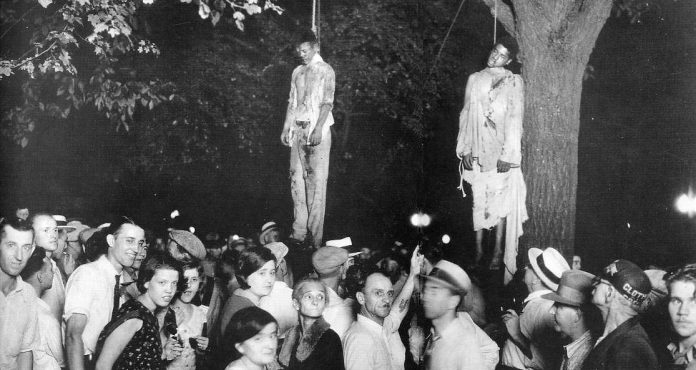
Can you sense the fear in above-given lines? If yes, congratulations, you are still a human. People have lost their senses and the word lynching is the new normal in today’s world. People across the world are lynching each other and India is also not untouched by it.

Defining Lynching

According to Oxford dictionary, the word lynching means the illegal killing of somebody, usually by hanging, by a crowd of people and without a trial.

People have modified this definition and invented various ways to lynch an accused. Lynching includes mob-lynching, attacks by vigilantes, murder, attempt to murder, harassment, assault and gangrape.

History of lynching

Lynching traces its history from the southern part of United States of America where the racial tension between white and slaves was growing severely in the 19th century. Slaves that lived around white people all those years were freed and this became the bone of contention for the white people of America. They blamed them for their financial loses.

From 1882 to 1968, almost 4743 lynching occurred in America in which 3446 were racial in nature. A big reason for this was the end of the Civil War. Once blacks were given their freedom many people felt that the freed blacks were getting away with too much of freedom and felt they needed to be controlled.

From America to Nigeria it spread like fire in the 19th century and thus a need was felt to implement strict laws to eliminate this practice.

Laws against lynching

Dyer anti-lynching law 1918

This bill classified lynching as a federal felony, which could have allowed the US to prosecute such cases. It called for the prosecution of lynchers in federal court and State officials who failed to protect lynching victims or prosecute lynchers could face five years in prison and a $5,000 fine. The victim’s heirs could recover up to $10,000 from the county where the crime occurred.

The anti-lynching law of 1928 in Virginia

This bill was a breakthrough in curbing violence against African-American in Virginia. The law gave the state the power to enforce stiff penalties against localities that did not report vigilante murder.

Nigerians anti-lynching bill 2009

All you need to shout “bug-bug” (bug means thief) in Nigeria and a number of people will gather to burn that accused to death. It was very difficult to charge the offenders under the laws that cover murder and assault in Nigeria so it has to pass an anti-lynching bill in 2009 to maintain the rule of law and due process.

What does it change?

It defines lynching as “Three or more persons acting in concert for the purpose of depriving any person of his life without authority of law as a punishment for or to prevent the commission of some actual or supposed public offence”.

Punishments

A person found guilty of instigating any of these three criminal offences will be punished by imprisonment for life or not less than 25 years.

The bill stipulates that a security officer who fails to make reasonable efforts o prevent an attack, or to apprehend a perpetrator, will be punished by up to five years imprisonment or face a fine of up to N 500,000 (US$1400).

A security officer who takes part in, or conspires to an extrajudicial attack, would be guilty of a capital offence. Those who have failed at prevention would be subject to dismissal and 15 years imprisonment.

Instances of lynching across the globe

• Iraqi citizens killed four American Blackwater security guards in support of coalition provisional authority.

• The Druze minority in Syria has been targeted by jihadist rebels.

• In Afghanistan, a twenty-seven-year-old lady was publically beaten and slain by a mob in Kabul.

• Forty-nine suspected people were tried in the case out of which four sentenced to death and 8 others were given 16 years imprisonment. This trail was noted for its unusual brevity as it lasted for two days only.

• In Bangladesh outrage over the lynching of a 13-year-old boy samiul had been noticed. Police arrested 5 people who tied samiul to a pole and then assaulted him. Samiul was accused of stealing a bike.

• In Srilanka, lynching and violence between Muslims and Buddhists spread so much that president had to impose emergency for ten days.

• Pakistan court recently sentenced one person to death and five others to life imprisonment over the mob lynching of a student who was falsely accused of blasphemy in 2017.

Instances where mob lynching was legalised in Bolivia

• Bolivian president Evo Morales, who was an indigenous Aymara launched Bolivia’s judicial reform to allow “traditional justice” among indigenous communities. As a result of which Bolivia saw the amazing rise of lynching culture in the name of traditional justice.

• About two years ago when Philippines president legalises lynching, he was brutally slammed by United Nations. President of Philippines claimed that the victims slaughtered by hundreds of people were suspected drug dealers and he also warned its media and journalists that they may become the next target.

• The situation is even worst in Malaysia where government associated media engages in public lynching of the individual that dares to challenge the Umno-scripted about the political system, religion and monarchy.

How India is dealing with lynching

India has seen a flood of lynching incidents from 2010 to 2017. was the worst year for such lynching since 2010. In the first six months of 2017, 18 such cases were reported which was almost 75% of the 2016 figure.

These attacks–sometimes collectively referred to as gautankwad, a portmanteau of the Hindi words for cow and terrorism, on social media–were reported from 19 of 29 Indian states, with Uttar Pradesh (9), Haryana (8), Karnataka (6), Gujarat (5), Delhi (5), Rajasthan (5) and Madhya Pradesh (4) reporting the highest number of cases.

Minorities and Dalits are the easy targets for these lynchers. The spate of violent attacks is in no way spontaneous expressions of mob anger. They are the product of systematic incitement to violence by Hindu nationalists.

There are various reasons for such lynching in India and cow protectors and cow eaters are one of them. Besides this organised hate campaign, meat politics, calling for cow protection, hinduisation of public places, the silence of political class are some other reasons for such inhumane incidents in India.

Further, there is no specific punishment for term mob lynching in India. It depends on the fact of the case. For example, if a group of people during lynching commit murder as in case of two Assam boys then it will fall under section 302 of IPC.

In most of the lynching cases, Indian penal code comes Into play. Section 302, 304, 307, 323, 325 should be read with section 34, 141, 149,147, 148 and 120(B) for reaching the conclusion in such cases.
Further, the absence of authentic data allows govt to live in denial. Above mention ned sections of criminal laws are inadequate in deterring the cause of lynching as the hate element in such crimes is not addressed yet.

Recently members of a national campaign against lynching (NCAML) drafted the MaSuKa which is also known as MANAV SURAKSHA KANOON.
It proposes the definition of “lynching”,”mob”, and “offensive material” and makes lynching a Non- bailable offence with a graded level of punishment depending upon the injury caused to the victim.

It also provides the investigation by a senior police officer, designation of judges for trial and appeal at the high court, special rights for victim and witnesses and mandatory compensation by the state government.
Some people also claim that MaSuKa seems to be protecting all human beings but internally it has hidden agendas of minority appeasement.

MaSuKa has good ideas like making police responsible, compensation for victim’s families, and witness protection.
On the other hand, Ambiguities could lead to ineffectiveness and misuse and timeline are too short. Currently, there are no provisions for compensation, rehabilitation of the family, lies and speedy justice in the existing lynching laws so despite MaSuKa’s pros and cons at least good points should at least be incorporated into existing law.

Judicial observations on the human right violation in India

In the case of National Human Rights Commission v. State of Gujrat and others, (2009) 6 SCC 342 The court observed: “Communal harmony is the hallmark of a democracy. No religion teaches hatred. If in the name of religion, people are killed, that is essentially a slur and blot on the society governed by the rule of law. The Constitution of India, in its Preamble, refers to secularism. Religious fanatics really do not belong to any religion. They are’ no better than terrorists who kill innocent people for no rhyme or reason in a society which as noted above is governed by the rule of law.”

Again in the case of S. Krishna sradha vs State of A.P. 2017 it is observed that “right is conferred on a person by the rule of law and if he seeks a remedy through the process meant for establishing the rule of law and it is denied to him, it would never subserve the cause of real justice”.

Is there an ending?

The problem is rooted in the mindset of the people. The most recent case is about Nath, 30, and Das, 29, who had gone to remote Kachari village on Saturday for sightseeing in a black four-wheel drive when they were chased and beaten to death on the suspicion of child kidnapping.

The government should have said clearly that ‘eating habits’ were individual liberty and we as a nation must stop sniffing each other’s refrigerators.

Unless factors like Illiteracy, Religion and casteism, stress, unemployment, intolerance, Political support or indifference and low conviction rate are there in India and the world I don’t see any end to this violence and lynching.

Sources:
Killing a Mockingbird by Harper Lee
Oxford dictionary
NAACP.org
Woodstockwhisperer.info
Nigerian anti-lynching bill, 2009
India spend database
Aljajeera India
The wire
Hindustan Times
Times of India
The Hindu
The Indian Express
Indian penal code
Code of criminal procedure
Indiakanoon.org

Download Now

EU and Copyright Reforms – An analysis

0
EU
Image Source: https://cdn.arstechnica.net/wp-content/uploads/2011/04/eu-copyright-flag-ars.jpg


In this article, Yash Agarwal, pursuing Diploma in Entrepreneurship Administration and Business Laws from NUJS, Kolkata discusses Copyright Reforms in EU.

Introduction

What is a copyright?

Copyright is a form of intellectual property which is protected by the law of the land. It is a set of rights conferred by law on creators of literary, dramatic, musical and artistic works, and producers of films and sound recordings. The rights provided by copyright law include the rights of reproduction of the work, communication of work to the public, adaptation of work and translation of work. The scope and duration of protection under the Copyright Law vary according to the nature of the work protected by copyright.

What is the copyright reform of the EU?

On 9 December 2015, about six months after the initial presentation of the digital single market, the Commission presented the action plan for an accurate European copyright framework. Copyright reform has been divided into four areas:

  • Broaden the content access throughout EU
  • Exceptions to copyright rules for an innovative and inclusive society
  • Create a fairer market for copyrighted works
  • Fight against piracy

The first three pillars were covered in the five draft regulations and guidelines in the area of copyright. However, the fourth pillar and, in particular, enforcement issues have not been central to the Commission’s legislative efforts. This will now change depending on the mid-term review. The Commission plans to announce measures that will include procedural aspects and principles for the elimination of illegal content. However, according to a recently published Commission document, the review of the application of Directive 2004/48 is currently in a “stalemate”. It remains to be seen if and how the subsequent procedure will look.

To know more about how to approach copyright clients please visit

Objectives of EU copyright proposals

  • More cross-border access to online content;
  • Expand the possibilities of using copyrighted material in education, research and cultural heritage;
  • A copyright market that works better.

In addition, the implementation of the Marrakesh Treaty, which will make more books and texts available for people with visual impairments or who have other difficulties to access a printed text in a format adapted to their situation. The proposals will help the good industries of European authors to become a digital single market and European writers to reach new audiences, while making European works widely accessible to European citizens, also across borders.

The aim is to ensure an adequate balance between copyright and the objectives of relevant public policies, such as education, research, innovation and the needs of people with disabilities.

1. Better choice and access to online and cross-border content

One of the main objectives of these proposals is to increase the availability of works for the entire European population, to create new distribution channels for creators and to highlight the EU’s cultural heritage.

To achieve these objectives, following measures were adopted:

    • Create great conditions for cross-fringe circulation of TV and radio projects on the web
    • Increase the accessibility of varying media deals with VoD stages
    • Facilitate the digitization and dispersal of non-business works.

2. Improvement of Copyright Laws in Research, Education and Cultural Heritage

Most copyright special cases in EU law are presently discretionary and don’t make a difference crosswise over outskirts. Moreover, some of them should be re-assessed in light of current mechanical substances.

The point of the proposition for an order is to modernize the EU rules appropriate to the fundamental special cases and constraints in the fields of training, inquire about and the conservation of social legacy, with accentuation on the utilizations advanced and cross-fringe.

The mandatory exceptions announced by the proposed directive are related to:

  • Teaching activities
  • Exploring text and data
  • Preservation of cultural heritage.

3. Realize a well-functioning copyright market

The proposed measures aim to create a more equitable online content market, particularly for press publications, online platforms and the remuneration of authors and artists.

The main elements of the proposed directive are:

  • Related law or “neighbour” for newspaper publishers
  • Enhanced rights holders’ situation to arrange and be made up for the online misuse of their substance from video sharing stages
  • Remuneration of creators and translators through new principles of straightforwardness.

Modern European rules on copyright

European Internet users are listening to more and more music, watching videos and playing online. In its recent communication on the promotion of a copyright-based European economy in the digital, fair, efficient and competitive single market adopted on 14 September 2016, the Commission presented a combination of legislative and non-legislative measures aimed at to modernize EU Law Laws:

  • A proposition for a Directive of the European Parliament and of the Council on copyright in the Digital Single Market;
  • A proposition for a direction of the European Parliament and of the Council setting down tenets on the activity of copyright and related rights for certain online communicates of broadcasting associations and the retransmission of TV projects and radio;
  • A proposition for a Directive of the European Parliament and of the Council on certain allowed employments of copyright and related rights-ensured works and other material for the visually impaired and those with restricted access to print and revising Directive 2001/29/EC on the harmonization of specific parts of copyright and related rights in the data society; and
  • Proposal for a Regulation of the European Parliament and of the Council on cross-fringe trades between the Union and third nations of open duplicates of specific works and other material secured by copyright and related rights for the advantage of the visually impaired or the crippled visual Inability to print.

The modernization of EU copyright is based on four complementary pillars

  • Extending access to content across the EU: As a first step, the Commission has proposed specific measures to encourage the cross-border distribution of online television and radio programs and to facilitate licensing agreements.
  • Exceptions to Copyright Rules for an Innovative and Inclusive Society: Exceptions permit the use of copyrighted works in defined circumstances without the prior permission of the rights holders. At the same time, two legislative proposals on the implementation of the Marrakesh Treaty in EU legislation were approved, which obliges Parties to introduce exceptions to help people with difficulties to access accessible books and other formats printed.
  • Creating a fairer market: The Commission analyzed the role of copyright brokers online and proposed to introduce specific measures to ensure the proper functioning of the copyright market and the fair distribution of copyright rights, author-generated by new forms of content.
  • Fight against piracy and greater availability of content will help fight piracy: Beyond this, the Commission will increase the enforcement of commercial-scale infringements of intellectual property rights. A public consultation assessed the functioning of the existing legal framework in the online environment in order to identify the possible need for adaptation and propose actions It will work within a European framework for “tracking money” in order to reduce financial flows to companies that derive their revenues from piracy, and the Commission said it will also explore other options to improve the participation of intermediary service providers in the protection of intellectual property rights.

Before the European Commission unveiled the copyright reform agenda, the European Parliament adopted two resolutions setting out the European Parliament’s approach to modernizing the EU’s intellectual property rules.

  1. On 9 July 2015, the European Parliament received a determination on the use of Directive 2001/29/EC on the harmonization of specific parts of copyright and related rights in the data society. The determination welcomed the Commission to display an eager change proposition and welcomed the Commission, inter alia, to contemplate the effect of the presentation of a solitary European title on copyright to fortify certain special cases to copyright assurance (for the interests of open organizations, for example, libraries and for examine and instructive purposes specifically) and carefully examine the possibility making certain required exemptions. The report likewise welcomes the Commission to propose approaches to enhance cultural diversity.
  2. Furthermore, in its Resolution towards a Digital Single Market Act, embraced on 18 January 2016, the EP respected the Commission’s sense of duty regarding modernizing the present copyright structure keeping in mind the end goal to adjust it to the computerized time and asked Commission to assess the part of online stages to battle unlawful substance on the Internet. The EP has additionally focused on that the standard of territoriality remains a fundamental component of the copyright framework in the EU and underlined that the geo-blocking approach and the advancement of cross-fringe online administrations ought to ensure social decent variety and monetary model of the business.

Proposed Legislative Proposals to Modernize EU Intellectual Property Laws

Copyright Directive in the Digital Single Market

In accordance with the advanced single market technique, the European Commission has displayed an authoritative bundle for the modernization of EU copyright rules, including another copyright order in the Digital Single Market.

The goal of the Copyright Directive in the Digital Single Market is to adjust European copyright in a setting where advanced advances are quickly changing the way works are made, created, disseminated and exploited, facilitates the licensing of European audiovisual works and digitization and the provision of non-commercial works, adapting key exceptions to digital and cross-border environments and creating a well-functioning copyright market, especially the exchange of value in the marketplace.

The proposition presents another required exemption for the investigation of content and information for logical research purposes. At last, the proposition additionally incorporates another obligatory special case for advanced conservation by social legacy organizations, which considers the requirement for content in computerized frames and the utilization of computerized innovation in protection.

The Directive introduces specific measures to ensure the proper functioning of the copyright market and the fair distribution of the value generated by new forms of online content. To this end, the Commission proposes to create a new related right for publishers of press publications for the digital use of their publications in order to put them in a better position when accessing online services that use and authorize access to their content and, therefore, better fight against piracy. Member States are also required to establish a legal mechanism to facilitate licensing agreements for non-commercial works and other issues, as well as a negotiation mechanism to facilitate negotiations on the online exploitation of audiovisual works. Finally, measures are proposed which include transparency obligations and a dispute settlement mechanism to ensure a better functioning of the copyright market in the EU.

Regulation on the online transmission of broadcasting organizations and the retransmission of television and radio programs

In accordance with the Digital Single Market procedure, the European Commission has introduced an administrative bundle for the modernization of EU copyright laws, including another control on telecasters’ online communicates and program communicates TV and radio. The draft Regulation means to advance the cross-fringe arrangement of subordinate internet broadcasting administrations and to encourage computerized retransmissions through shut systems of TV and radio projects starting from other Member States by adjusting the legitimate structure of the EU. It proposes to address the difficulties of authorizing copyright in two ways:

First, the regulation establishes that the rights required for the online services of broadcasting organizations that are directly related to their broadcasts (for example, the simultaneous on-line transmission of their satellite transmission) must be authorized for the country of origin. This measure would help broadcasters to put their content online in the other Member States.

Second, the direction grows the obligatory aggregate administration framework at present appropriate to link retransmission to other proportionate advanced retransmissions. This would enable telecom associations to all the more effectively approve the rights to the projects of other Member States to offer their clients more stations all through the Union.

The framework for the implementation of the Marrakesh Treaty

The Marrakesh Treaty to Facilitate Access to Published Works for the Blind and Visually Impaired was negotiated and adopted in 2013 under the auspices of the World Intellectual Property Organization (WIPO). Its purpose is to facilitate the cross-border provision and exchange of books and other printed materials in accessible formats for people with difficulties in accessing printed materials worldwide. To this end, the Marrakesh Treaty requires parties to grant exceptions or limitations to copyright and related rights for the benefit of the blind, visually impaired and other persons with difficulties in accessing printed material, such as dyslexic people. The treaty also allows the cross-border exchange of copies as a special book, which includes audiobooks and digital files, and other printed material from countries that are parties to the treaty.

The EU marked the arrangement in April 2014 and should now actualize it in EU enactment. On 14 September 2016, in accordance with the Digital Single Market Strategy, the European Commission introduced an administrative bundle for the modernization of EU copyright laws, including two messages on the execution of the Treaty of Marrakech.

A Directive on Certain Permitted Uses of Works and Other Materials Protected by Copyright and Neighboring Rights for the Blind, Visually Impaired and Disabled has presented a required exemption for the recipients of the Marrakesh Treaty on the Internal Market and cross-fringe with this special case.

A Regulation on the cultural diversity trade between the Union and third nations of available duplicates of specific works and other material ensured by copyright and related rights for the advantage of the visually impaired, outwardly hindered or experiencing issues in replicating the entrance to printed versions in an open organization with third nations that are gatherings to the Marrakesh Treaty. The content presents another obligatory special case that permits individuals who are visually impaired, outwardly debilitated or handicapped to peruse (for instance, dyslexic individuals) access to books and other substance in available arrangements, even crosswise over fringes.

What will happen next?

The initial three between institutional transactions for the last content in February, March and April 2018 occurred with no advance. In December 2017, the leaders of the three EU establishments marked a joint affirmation on EU administrative needs and announced their expectation to accomplish comes about before the European Parliament decisions in 2019. However, some fear that the Commission you can extend the process to advance the possibilities of applying the original version of the Regulation after the holding of Satellite-Cable elections in the European Parliament in 2019.

Download Now

Anticipatory bail: Should it be restricted in time?

0
Anticipatory bail crpc
Image Source - https://www.hindustantimes.com/lucknow/rampur-molestation-police-arrest-12-out-of-14-suspects-to-slap-nsa-on-four/story-iPFGVvDktm4Os9Igh1YThN.html

This article is written by Tarun Gaur.

Recently, in Sushila Aggarwal v. State (NCT of Delhi)[1], Supreme Court has made a reference to a larger bench to address the issue as to “whether an order granting anticipatory bail should be restricted in time or not?” This comes at a time when questions on anticipatory bail are being raised from many fronts. Vide this article, I have tried to conceptualise the provisions for anticipatory bail, by analysing the provisions given u/s 438 CrPC and judicial precedents on the said point, in order to ascertain as to whether there was any need for such reference or the issue stands settled way back in 1980?

The legal framework

The law relating to anticipatory bail is laid down in section 438 of the Criminal Procedure Code which is-

[2][(1) where any person has a reason to believe that he may be arrested on accusation of having committed a non bailable offence, he may apply to the HC or the court of session for a direction under this section that in the event of such arrest he shall be released on bail; and that court may, after taking into consideration, inter alia, the following factors, namely:-

  • The nature and gravity of accusation;
  • The antecedents of the applicant including the fact as to whether he has previously undergone imprisonment on conviction by a court in respect of any cognizable offence;
  • Possibility of the applicant to flee from justice; and
  • Where the accusation has been made with the object of injuring or humiliating the applicant by having him so arrested;

Either reject the application forthwith or issue an interim order for the grant of anticipatory bail:

Provided that, where the high court or, as the case may be, the court of session, has not passed any interim order under this sub-section or has rejected the application for gent of anticipatory bail, it shall be open to an officer in-charge of a police station to arrest, without warrant the applicant on the basis of the accusation apprehended in such application.]

XXX                                                            XXX                                                                XXX

Analysis of the provision

A bare perusal of the aforementioned provision provides for a remedy for a situation, where a person is not yet arrested by the police but he apprehends his arrest on an accusation of having committed a non-bailable offence, he can move to High Court or Court of Session with that apprehension and ask the court to grant him an order which would entitle him to be released on bail in the event he be arrested. The section, nowhere provides for any kind of time limitation on the orders passed under same.

The controversy

The controversy regarding an order of anticipatory bail is that of time limitation. Lately, Courts are trying to interpret section 438, as a provision which provides for a relief for limited duration. The reasoning given for such interpretation is that, they feel, provision for anticipatory bail exists for the sole purpose of providing the accused person some time to enable him to apply to the regular court for grant of regular bail and therefore, an order granting anticipatory bail will operate only until the regular bail of said accused person is finally disposed of. This line of reasoning also gets its backing from certain judgments of Supreme Court where it has been held that an order of anticipatory bail is not an order until the end of trial but is an order which can only be passed for a limited duration. The court said that it’s for the purpose of allowing the applicant to approach the regular court for the grant of regular bail and it will survive only till the time his regular bail is finally disposed of. Such judgments are passed in ignorance of the law laid down by the constitution bench in Shri Gurbaksh Singh Sibbia & Ors v. State of Punab[3] (Sibbia’s case).

The Supreme Court’s judgments, which are given in ignorance of Sibbia’s case, have already been overruled by Supreme Court in Siddharam Satlingappa Mehtre v. State of Maharashtra & Ors.[4](Mehtre’s case).

In Sushila Aggarwal v. state (NCT) (supra), one line of arguments placed before the court was in accordance with the reasoning given in Sibbia’s case and Mehtre’s case, and counter line of arguments was in accordance with the judgments, which were passed in ignoratium of Sibbia’s case, which stated that anticipatory bail should be for limited duration only. One of the earlier decisions of three judges which placed time restrictions on an order of anticipatory bail is Salauddin Abdulsamad Shaikh v. State of Maharshtra[5]. The court held that anticipatory bail is granted in anticipation of arrest in a non bailable case but that does not mean that regular court should be bypassed. The court held:

Anticipatory bail is granted in anticipation of arrest in non-bailable cases, but that does not mean that the regular court, which is to try the offender, is sought to be bypassed and that is the reason why the HC very rightly fixed the outer date for the continuance of the bail and on the date of its expiry directed the petitioner to move the regular court for bail. That is the correct procedure to follow because it must be realised that when the Court of Session or the High Court is granting anticipatory bail, it is granted at a stage when the investigation is incomplete and, therefore, it is not informed about the nature of evidence against the alleged offender. It is, therefore, necessary that such anticipatory bail orders should be of a limited duration only and ordinarily on the expiry of that duration or extended duration the court granting anticipatory bail should leave it to the regular court to deal with the matter on an appreciation of evidence placed before it after the investigation has made progress or the charge-sheet is submitted.

This view was then reiterated in K L Verma v. State[6], Sunita Devi v. State of Bihar[7], Adri Dharan Das v. State of WB[8].

Another point on the same lines, with certain modifications, given by Supreme Court in HDFC Bank Ltd v. J.J. Mannan[9] is as follows:

19. The object of section 438 has been repeatedly explained by this court and the high courts to mean that a person should not be harassed or humiliated in order to satisfy the grudge or personal vendetta of the complainant. But at the same time the provisions of section 438 CrPC cannot also be invoked to exempt the accused from surrendering to the court after the investigation is complete and if charge-sheet is filed against him. Such an interpretation would amount to violence to the provisions of section 438 CrPC since even though a charge-sheet may be filed against an accused and charge is framed against him, he may still not appear before the court at all even during the trial.

  1. Section 438 contemplates arrest at the stage of investigation and provides a mechanism for an accused to be released on bail should he be arrested during the period of investigation. Once the investigation makes out a case against him and he is included as an accused in the charge-sheet, the accused has to surrender to the custody of the court and pray for regular bail. On the strength of an order granting anticipatory bail, an accused against whom charge has been framed, cannot avoid appearing before the trial court.

With due respect, I believe, this is an erroneous conclusion drawn by Supreme Court, especially the fact that anticipatory bail is till the period of investigation. Nowhere in the entire section 438 CrPC, is any such thing mentioned. It’s impossible to fathom as to from where the court has reached this conclusion. This is despite the fact that the judgment of Sibbia’s case was placed on record in this case, yet the court, reached such an erroneous conclusion.

Another example, where in my view, the court has interpreted the concept of anticipatory bail contrary to what is mentioned in section 438 CrPC, is Satpal Singh v. State of Punjab[10]. The court held:

14. In any case, the protection under section 438, CrPC is available to the accused only till the court summons the accused based on the charge sheet (Report under section 173(2), CrPC). On such appearance, the accused has to seek regular bail under section 439 CrPC and that application has to be considered by the court on its own merits. Merely because an accused was under the protection of anticipatory bail granted under section 438 CrPC, does not mean that he is automatically entitled to regular bail under section 439 CrPC. The satisfaction of the court for granting protection under section 438 CrPC is different from the one under section 439 CrPC while considering regular bail.

It is important to note that, when a person is already out on anticipatory bail and he gets arrested and executes a bond in accordance with the order of anticipatory bail, then the order of anticipatory bail becomes regular bail and therefore, the accused when appears in court on filing of charge sheet, he is already out on bail and not on anticipatory bail. Therefore, he doesn’t need to apply for bail again and if he is forced to apply again, then it would lead to subjecting him to a process where he is applying for a relief which he already possess, which is contrary to everything including common sense. Further we follow adversarial method of criminal justice system, wherein accused is deemed to be innocent until proven guilty and this system of subjecting him to such double test, for a relief he already possess, goes against the entire criminal jurisprudence and what it means is that the accused is being asked to prove his innocence in the very beginning.

Supreme Court’s stand on the issue

A constitution bench of Supreme Court in Sibbia’s case, dealt with this issue at length and put the controversy to rest by holding categorically, that an order of anticipatory bail is not limited in time and will subsist till the end of trial. The court has explicitly and unequivocally held that in cases where FIR is not yet registered and the applicant is seeking anticipatory bail, in those cases, the court ‘may’ grant an order of anticipatory bail, limited in time but in other cases, i.e. where applicant is seeking anticipatory bail after the registration of FIR, the order of anticipatory bail ‘shall’ not be restricted in time. This difference of ‘may’ and ‘shall’ is quintessential to the whole concept of time limitation on anticipatory bail, as is enumerated in the Sibbia’s case, and therefore can’t be overlooked. This difference has been deliberately added in order to make sure that if in future such controversy arises, then it can be solved then and there. The court in para 42 held:

“42. There was some discussion before us on certain minor modalities regarding the passing of bail orders u/s 438(1). Can an order of bail be passed under the section without notice to the Public Prosecutor? It can be. But notice should issue to the public prosecutor of the government advocate forthwith and the question of bail should be re-examined in the light of respective contentions of the parties. The ad interim order too must conform to the requirements of the section and suitable conditions should be imposed on the applicant even at that stage. Should the operation of an order passed u/s 438(1) be limited in point of time? Not necessarily. The court may, if there are reasons for doing so, limit the operation of the order to a short period until after the filing of an FIR in respect of the matter covered by the order. The applicant may in such cases be directed to obtain an order of bail u/s 437 or 439 of the code within a reasonably short period after the filing of the FIR as aforesaid. But this need not be followed as an invariable rule. The normal rule should be not to limit the operation of the order in relation to a period of time.

  1. “during the last couple of years this court, while dealing with appeals against orders passed by various High Courts, has granted anticipatory bail to many a person by imposing conditions set out in section 438(2)(i),(ii) and (iii). The court has, in addition, directed in most of those cases that (A) the applicant should surrender himself to the police for a brief period if a discovery is to be made under section 27 of the Evidence act, or that he should be deemed to have surrendered himself if such a discovery is to be made. In certain exceptional cases, the court has, in view of the material placed before it, directed that the order of anticipatory bail will remain in operation only for a week or so until after the filing of the FIR in respect of matters covered by the order. These orders, on the whole, have worked satisfactorily, causing the least inconvenience to the individuals concerned and least interference with the investigational rights of the police. The court has attempted through orders to strike a balance between the individual’s right to personal freedom and the investigational rights of the police. The appellant who were refused anticipatory bail by various courts have long since been released by this court under section 438(1) of the code.”

Examining the SC’s arguments

In my opinion, the argument that an order of anticipatory bail should be restricted in time and it is only passed till the stage of investigation is over, after which the accused have to apply for regular bail, is inherently fallacious. An order of anticipatory bail, by virtue of its special character, is one which becomes operative on the arrest of a person and the provisions of regular bail come into picture when a person is arrested or in custody. Therefore, when a person who has obtained an order of anticipatory bail, gets arrested and then gets released by virtue of order of anticipatory bail, the person ceases to be in custody. Therefore, he can’t move regular court for regular bail as the very essence of regular bail is absent in such a situation. Therefore, it is completely unimaginable as to how such process can be facilitated and if this is made a law, it would lead to bypassing of what is mandated in section 439 CrPC. In other words, the requirements of section 439 would become dead letter and no part of a statute can be rendered redundant in that manner.

To say, granting anticipatory bail means bypassing the regular court is, in my opinion, an absurd argument. It is not bypassing, as if that would have been the case, the legislature wouldn’t have thought of including a specific provision for anticipatory bail, instead would have simply added one sub para or by way of proviso in 437/439 only, that the regular court only have the power to grant anticipatory bail for a shorter period or till the time the bail application is disposed of. But again, that would be interim bail and not anticipatory bail. Therefore, saying that grant of anticipatory bail till the end of trial is bypassing the regular court is vague and absurd and not in consonance with the law. Further there are certain considerations that need to be looked into before granting or refusing anticipatory bail. This in itself means meticulous application of judicial mind of higher courts i.e. High Court and Court of Session, which wouldn’t have occurred if purpose of anticipatory bail was intended to be only to give an accused person some time to approach the regular court for obtaining an order of regular bail. If contrary would have been the case, then the role of High Court and Court fo Session would have been a formal one and they wouldn’t have required to go into facts of the case and apply the considerations in order to find out if a case for grant of anticipatory bail is made out or not.

Moreover, the legislature amended section 438 in 2005, but didn’t insert anything to the provisions by which it would have interpreted that provisions of 438 are to operate for limited duration only. All this shows that neither there is any nor there have been ever any, intent of this nature in the mind of legislature.

Main ground given for reference by the Ld. Amicus Curiae, is that Sibbia’s case didn’t specify about the time limit of anticipatory bail. With all due respect to the Ld. Sr. Amicus, I disagree with his contention. Sibbia’s case, very categorically and in clear terms, states that anticipatory bail is not time restricted. The only time it puts such fetters on order of anticipatory bail is in a situation when anticipatory bail is obtained but FIR is not registered. And even in that case, the word, it used is “may” and not “shall”, there go even in that case, it is left to the discretion of court.

Some often overlooked issues

There are certain important aspects which have been constantly overlooked and I believe, it is the ignorance of same only which has lead to the controversy at hand. One of the important issue which have been constantly overlooked is that, an order of anticipatory bail is not an order which stays an order of anticipatory bail forever. It is an order which, when a person gets arrested and he furnishes a bond in accordance with the order of anticipatory bail, he is no longer out on anticipatory bail but on regular bail. Therefore, what it means is that an order of anticipatory bail becomes an order of regular bail, the moment the person is arrested. Therefore, the argument i.e. once anticipatory bail is granted, one must approach regular court for regular bail, fails on this very aspect. Now, if a person on anticipatory bail, after furnishing the bond, is out on bail, is forced to apply to regular court for grant of regular bail, it will lead to a situation, in which the applicant is subjected to different judicial forum’s mind for the same thing, twice, which have huge possibility of creating imbalance in judicial propriety.

Further, section 438 provides for concurrent jurisdiction of High Court and Session Court. If the intent would have been to provide relief of anticipatory bail only till the time investigation is going on, there wouldn’t be concurrent jurisdiction, that too of such higher courts. Forums are clearly defined in 437 and 439, therefore, legislature wouldn’t have bothered to create a new provision for anticipatory bail when it could have simply added the relief of anticipatory bail in 437/439 only. Moreover, the very fact that the power to grant anticipatory bail is given to superior echelons i.e. High Court and Court of Sessions and not to magisterial court, clearly shows that the intent of legislature behind enacting the provision of anticipatory bail is that, it is a remedy which is exceptional in nature, requires a higher degree of scrutiny and therefore, will fall in exclusive domain of higher courts. It is true that regular court is not involved in this process, but at the same time, the considerations and scrutiny of the facts in conjunction with well settled grounds for bail, is also high as the same is done by higher courts. Therefore, in such situation when an order for grant of anticipatory bail is passed, its veracity can’t be assailed by placing imaginary fetters on order granting anticipatory bail i.e. treating it as an order granting temporary relief.

Recourse after the granting of anticipatory bail

The entire controversy, as is narrated in Sushila Agarwal (Supra), in my opinion, stems from the fear as to what can be done in the event, the order of anticipatory bail is misused by the applicant. It is generally believed that if anticipatory bail is granted, the applicant will misuse his liberty and will not be available for his trial or will try to tamper with the evidence or will threaten the witnesses, so on and so forth. It is to be remembered that the legislature has not left any vacuum for such situation. The recourse regarding such situation is provided by the legislature in CrPC itself i.e. the remedy of filing an application for cancellation of bail, granted to the accused. It’s not like there is nothing that prosecution or complainant can do in case anticipatory bail is misused by the accused. In fact section 439(2) in its clear terms stipulates that a High Court or Court of Session may direct that any person who has been released on bail be arrested and commit him to custody. This provision clearly and categorically stipulates that High Court or Court of Session have the power to commit any person, released on bail, to the custody again. 

Conclusion

In the light of above, I feel, that the law laid down by the constitution bench in Sibbia’s case which is then meticulously examined and reiterated by Supreme Court in Mehtre’s case, is the correct law on the point of time restriction on an order of anticipatory bail. An order of anticipatory bail can’t be restricted in time and saying that once anticipatory bail is obtained, one will invariably have to approach regular court to obtain regular bail, will be unreasonable, fallacious and illegal. In view of same, I believe, there was no need for any reference of such issue to a larger bench, but since a reference has already been made, the ultimate outcome is best left to the wisdom of the court and its fine sense of judgment.

[1] 2018 SCC OnLine SC 531

[2] Subs. By Act 25 of 2005, sec. 38, for sub-section (1) (effective date yet to be notified)

Sub-section (1), before substitution, stood as under:

“(1) when any person has reason to believe that he may be arrested on an accusation of having committed a non-bailable offence, he may apply to the high court or the court of session for a direction under this section; and that court may, if ti thinks fit, direct that in the event of such arrest, he shall be released on bail.”

[3] AIR 1980 SC 1632

[4] (2011) 1 SCC 694

[5] (1996) 1 SCC 667

[6] (1998) 9 SCC 348

[7] (2005) 1 SCC 608

[8] (2005) 4 SCC 303

[9] (2010) 1 SCC 679

[10] (2018) SCC OnLine SC 415

Download Now

Affray – Explanation of section 159 of the Indian Penal Code

1
affray
Image Source - https://www.youtube.com/watch?v=drN-E2aVHLY

In this blog post, Niharika Mittal discusses affray along with its elements and distinctions.

INTRODUCTION

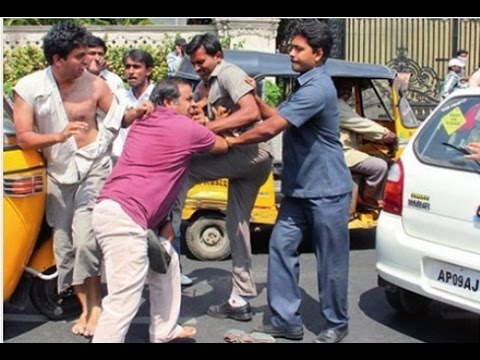
The word “affray” means a skirmish or fighting between two or more, and there must be a stroke given or offered, or a weapon drawn. An affray is committed is a public offence to the terror of the people. According to Section 159 of the Indian Penal Code, Affray is defined as “When two or more persons by fighting in a public place, disturb the public peace, they are said to commit an affray.”

The punishment for committing affray is imprisonment for up to one month or fine up to one hundred rupees or both (Section 160). This offence necessarily postulates the commission of a definite assault or a breach of the peace. Mere quarrelling or abusing in a place not resulting in the exchange of blows is not enough to draw the attention of Section 160 IPC. A fight is a necessary element to constitute affray. This means both the parties have to be aggressive and participate in the struggle.

To know more about the Affray under English Law and under IPC in brief, please refer to the video below:

AFFRAY UNDER ENGLISH LAW

In English law, if two or more persons fight in a public place to the terror of the sovereign’s subjects, this constitutes an affray and is a misdemeanour at common law. To fight in a private place or at a place where no persons are present except those who aid and abet do not constitute affray, but an assembly for such object is unlawful, and the parties may be convicted of crimes relating to it.

It is an aggravated form of affray violently to disturb the officers of justice in the due execution of their office, by the rescue of a person legally arrested, or the attempt to make such a rescue. The offence is severely punishable when committed in the Queen’s Courts, or even in the palace yard near those courts and it is highly fineable even when made in the presence of an inferior court of justice.

Quarrelsome and threatening words themselves cannot in law  create such terror so as to amount to an affray, yet there might be an affray without the presence of actual violence as where persons are themselves armed with dangerous and unusual weapons, in such manner as will naturally cause terror to the people which is an offence at common law.

In the absence of any direct evidence, it is sufficient to prove an affray that any subject of the Queen was put in fear or terror to show that the circumstances were such that reasonable persons might be frightened or intimidated.

The offence is punishable with fine and imprisonment.

MEANING OF AFFRAY

According to Blackstone, “The offence is the fighting of two or more persons in public place to the terror of His Majesty’s subjects for, if the fighting be in private, it is no affray but an assault.” The gist of the offence consists in the terror it causes to the public. The word ‘affray’ is derived from the French word ‘affraier’ which means ‘to terrify’ and so, in a legal sense it is taken for a public offence causing terror to the people. For the conviction to arise under this offence, it is sufficient that an alarm would have been caused to the public or members of the public. It is not necessary that any particular member of the public must give evidence to the effect that he was alarmed. The presence of public at the time of disturbance would be sufficient to show that the members of the public must have been alarmed by reason of the disturbance and there was sufficient breaking of the peace.

INGREDIENTS OF AFFRAY

An affray consists of the following:

  • fighting by two or more persons
  • the fighting must take place in a public place
  • such fighting must also result in disturbance of the public peace

Fighting by two or more persons

The offence of Affray is nevertheless a fight, i.e., a bilateral act, in which two parties participate and it will not amount to an affray when the party who is assaulted submits to the assault without resistance. Fighting necessarily implies a competition of struggle for mastery between two or more persons against one another. When members of one party beat the members of other party and the latter does not retaliate or make an attempt to retaliate but remain passive it can’t be said that there was fighting between the members of one party and the members of the other and the offence of affray can’t be said to have been established[Jodhey v. State (AIR 1952 All. 788 at p. 794)].

“Fight” contemplated under Section 160 IPC, is certainly different from a mere quarrel. The Law Lexicon by P. Ramanatha Aiyar defines “fight” as follows:

To strike or contend for victory, in the battle or in single combat to attempt to defeat, subdue, or destroy an enemy, either by blows or weapons.”

“Quarrel” means an exchange of angry utterances between two or more persons and not the mere use in an ordinary tone. Though it may need two for a fight or quarrel, the difference between them is obviously apparent.

Fighting in a public place

A place where public go, no matter whether they have a right to go or not, is a public place.

There is a difference between an act done in public and an act done in a public place. In England, some statutes make acts penal which are done in public, others make acts penal which are done in public place, so that in the criminal statute law in England the distinction is, it will be observed, between doing an act in public and doing an act in a public place. The same demarcation is depicted in the Acts of Indian Legislature. The offence here contemplated must be committed in a public place and in the presence of public without whom there can be no breach of the public peace.

Disturbance of the public peace

In order to constitute an affray, there must be not only fighting, but it may cause disturbance of public peace.

CHARACTERISTICS OF AN AFFRAY

  • A charge of affray brings in both the sides as accused persons since both the fighting groups have committed the offence.
  • It is a bailable offence.
  • It is non-compoundable offence.
  • The Criminal Procedure Code, 1973 has now made it a cognisable offence.
  • It may be tried by any magistrate and is triable summarily.

SOME IMPORTANT CASES

Jagannath Sah [(1937) O.W.N. 37.]

Two brothers were quarrelling and abusing one another on a public road in a town. A huge number of people gathered around them. Even the traffic was jammed but no actual fight broke out between them. It was held that no affray was committed.

Babu Ram and Anr. vs. Emperor [(1930) I.L.R. 53. All.229.]

A person was attacked and overpowered by two other persons in a public place. He could merely defend himself. It was held that they were guilty of the offence because there was fighting in public place which disturbed the public peace.

DISTINCTION BETWEEN AFFRAY AND RIOT

The offence differs from a riot in the following ways:-

  • An affray cannot be committed in a private place whereas a riot can be committed in a private place.
  • To constitute an affray there must be a presence of two or more persons while for a riot it has to be five or more.

DISTINCTION BETWEEN AFFRAY AND ASSAULT

An affray is distinguishable from assault as:-

  • An affray has to be committed in a public place while an assault may take place anywhere.
  • The offence is considered to be an offence against public peace whereas assault, against the person or an individual.

CONCLUSION

The offence of affray is thus a bilateral act in which two or more parties participate to fight against one another which is committed at a public place and this results in the disturbance of public peace. It involves an actual fight between the parties to establish this offence and mere quarrelling would not result in an affray. Section 159 of the IPC defines it and Section 160 IPC imposes punishment for the offence. It has also been distinguished from riot and assault due to its distinction of place where the act was committed, the number of parties and whether the public was affected or not.

Download Now

How to Succeed by Burning Bridges and Putting All Eggs in the Same Basket

1


This article is written by Ramanuj Mukherjee, Co-Founder and CEO at LawSikho.

In the ancient Roman empire, when generals will cross a bridge to invade a new territory, they would order the bridges to be burnt after the troops crossed the river. Why is that? When the bridges go up in smoke, the troops know that there is no option to retreat. It is either win or perish. Losing or running away is not an option, right from the beginning.

In some cases, generals will burn their ships after landing in the enemy territory. This is what Hernan Cortes did during the Spanish conquest of Mexico. Does such a strategy pay off in real life?

I think so. That’s how the big successes in my life have come. There needs to be a single-minded focus when you face really hard and very important challenges. Things that distract you, take away from that focus, compete for your time, cannot be indulged in.

When Abhyuday and I started the online courses’ business under the banner of iPleaders, after quitting our jobs at Trilegal, initially we were getting a decent bit of legal work, thanks to our network with other startups as well as the blog. We did several assignments that helped to pay the bills for the first few months as well. However, after that when such work really started to flow, we made a conscious decision of doing no other paid work apart from iPleaders.

This was because we knew services will keep us busy, give immediate money, and eventually we would fail to get the education platform off the ground. So we turned away paying clients and told people we have stopped doing legal work and single-mindedly began to work on iPleaders.

Not only that, for the first 3 years of our life as a fledgling startup, we offered only one course, and kept making it better. We were tempted to launch more courses but didn’t though, as it would have probably given an immediate short-term boost to our revenue. We had only one goal – make this one the best that is there, set a new standard for what online courses can be. Only after we were convinced that we have hit that target that we began launching more courses. The latest version of that business law course is available here. Go through the syllabus and perhaps you will figure out how much work went into making something like that.

Putting all your eggs in the same basket is not always a terrible idea. Think of One Plus. Unlike other mobile companies that launch many different versions and products, they launch only one phone. They focus on launching only one great phone every year. They do not have 10 different versions in different shapes and sizes and price ranges. Result? In India, they rule 50% of the premium phone market. In the world, it is one of the fastest growing technology companies. Quite similar to Apple, which launches 1 great phone at a time. Putting all their eggs in one basket at a time? It pays off.

When I talk to our students over a call, I face this question a lot. “I like 3 different courses. I want to do M&A, but I also want to do Cyber Law. And how about that general business law course also?” I want to be a litigator, but I like the idea of working for a company also. Well, that’s great. I have 10 different dreams too. Every other month I come up with a fabulous idea I really want to work on. However, at a time I can only pursue one fantastic idea. Chasing two rabbits at the same time is a terrible idea. If you chase one at a time, you may eventually go home with a dozen though.

It is high time that you put your actions, resources, money and time investment in one pre-decided, well-aligned, laser-focused goal. That’s much more likely to produce results than waiting for the universe the decide it for your through coincidences.

Recently Tanuj Kalia of Lawctopus wrote on a Facebook post that it is not a great idea to drop a year to prepare for CLAT. I registered my disagreement. I strongly recommend dropping out, taking a break from everything else to work on one thing with single-minded dedication, especially if that will change the course of your life. “But is it advisable to burn all bridges and put all your eggs in the same basket?” a friend commented.

I am glad she asked that. We are so scared to burn bridges, so eager to keep our options open, we often do not make the decision to pursue what is most important to us with a single-minded focus. That is surely a good recipe for remaining comfortable and perhaps even safe, but that guarantees mediocrity.

Make a commitment. Burn some bridges so you have no option to turn back. Chase your passion with single-minded passion. If you fall, get up and chase again. Never turn back.

In what area you could take such action? Maybe your career? Maybe in a relationship? Maybe it’s about the business you want to start?

Let’s see what happened in the year when I burned bridges and decided to prepare for law entrances to the exclusion of everything else (my parents got me admitted to a night college, technically, but I stopped going for classes after the first week, didn’t appear for any of the exams, hence burnt all bridges):

I was very poor with English, having studied in a vernacular medium till then. I focused on improving my vocabulary and managed to learn all the words in the Webster Collegiate Dictionary. I would not only read the dictionary, but mark out the words that are new to me, and learn to write a sentence with it. I will write a very funny sentence with the newly learnt word so that it is memorable. The goal was to spend enough time with the word so that it is committed to my memory. I also worked on my grammar, read a lot of books in English (got a membership of British Council Library), studied books that copywriters read for style and usage, watched only English movies (at least 2 every week, again picked up from British Council Library). By the end of that year, you can imagine, my English writing was transformed. I still struggled to speak fluently in English, as I got next to nil practice, but I could understand and write perfectly. I could explain complex ideas in simple English. I scored almost full marks in the entrance test in English section, but the benefits were far-reaching and not just limited to getting through to a law school

I read up on the laws. I started reading contracts law and law of torts. I read the constitution and commentaries. I read up on Indian constitutional history and history of India like nobody’s business. I read a lot of biographies. At that time it was about scoring well in GK and legal GK sections, but in reality, this helped to develop my nascent worldview. It was the beginning of an intellectual development.

I used to write poetry, but that was the year perhaps in which I wrote the highest number of poems.

I was anxious. I was worried and afraid. People around me shunned me and underestimated me because I didn’t write JEE and didn’t join a good college even. To manage the stress, I turned to meditation. That was the only year in my life when I consistently meditated every day. I wonder how much that helped in shaping my ability to stay calm under stress and danger. I also learned to not rely on social validation, learned to stand against the world in favour of my conviction.

By the end of the year, I was the 2nd topper in national admission test held by NUJS (we didn’t have CLAT back then). But the benefits of the drop year wasn’t really just that. I joined law school on a much more sure footing. I was ready to take the challenges head-on. The confidence that I can figure out and survive, only if I prepare hard, serve me well in life after that.

How much of all that do you think I could do if I had also taken admission in a college, and attended classes, did homework, kept writing exams there and prepare for law entrance on the side? I had decided to become a lawyer, and I made productive use of that 1 year. I may have learned more useful things in that one year compared to the next 3 years combined.

Do not be afraid to make your own way. The guy with the best preparation wins. Give yourself time, space and resources to prepare.

If you could take a one year break right now in life and prepare, what would you do? It’s ok if you cannot take a one year break. Can you take a 1-hour break every day and invest that time into your development? What could you do for 1 hour every day for the next 1 year that sets you apart in your career or serves you for a long time?

Think about it. Take a pen and some paper and write it down.

Here are some suggestions from me.

Develop a habit such as exercising or meditating for one hour every day.

Start writing! In 1 hour, you can write at least 400-500 words. In a year, that will add up to more than 400 pages of content. It could be your first book. Have you considered what a great break it can be if you write a popular book in your niche? Let’s say you are a criminal lawyer. What if you write a book on your courtroom experiences? If you are a law student, how about writing a book on an emerging area of law? When I was studying at NUJS, two sets of seniors published two different books, one on biotechnology law (5 years students), and another on SEZ laws (4th-year students). It not only made their CV bulletproof and eligible for amazing scholarships from foreign universities, they also bagged a handsome signing amount of a few lakhs from the publisher.

Take up an area of law that has potential, and develop yourself in it. Let’s say you are really interested in M&A and want to be the next Harvey Specter. You got to invest at least 1 hour a day learning more about M&A law, capital markets and other aspects of corporate law. Let’s say you recognize that technology companies are on the rise and you want to land a job as an in-house counsel at such a company. You need to develop your knowledge about emerging technologies, regulations around the work, fintech, block-chain, GDPR – a bunch of things. Can you not spare an hour a day learning? Is it not important to write articles from time to time in an area in which you are trying to develop your expertise? Studying from a course can help, as that will streamline the learning process.

Or if you can, take a real break. Take a month off with the only goal of writing a book. Take up a 6 months challenge to transform your CV. Take a year off to explore a business you always wanted to start.

We incorporate these approaches in our courses. Especially the new generation courses we have started. Our students get to do these things, with expert support and regular feedback from our side. Our courses are now more about doing and less about reading or watching videos passively. Those of you who already did our courses before, and loved it for the great content, will now have another much more powerful to love our courses. That is: you will get things done when you sign up for course.

You will write articles, publish in good platforms, find your clients, impress lawyers and industry stalwarts, increase your professional network, bag dream internships and jobs you want, make your dream CV, experiment with business ideas. All of these as a part of the 1 year courses your pursue.

See these courses that you can finish by giving 1 hour a day every day for the next 50 weeks:

Batches beginning from July 1, 2018

LAWSIKHO DIPLOMA IN M&A, INSTITUTIONAL FINANCE AND INVESTMENT LAWS (INCLUDING PE AND VC TRANSACTIONS) – only 6 seats left out of 20

LAWSIKHO DIPLOMA IN ADVANCED CONTRACT DRAFTING, NEGOTIATION AND DISPUTE RESOLUTION – only 4 seats left out of 20

Batches beginning from August 1, 2018

LAWSIKHO DIPLOMA IN CYBER LAW, FINTECH AND TECHNOLOGY CONTRACTS

LAWSIKHO DIPLOMA IN INTELLECTUAL PROPERTY, MEDIA AND ENTERTAINMENT LAWS

Join us, burn the bridges you use to retreat. Commit, enroll, start the learning process. Give yourself the room and opportunity to grow. Don’t let lack of time, work pressure, laziness win over your ambition to become an extraordinary lawyer, entrepreneur or professional.


Download Now

Right to work under the Indian Constitution

0
labour law
Image Source - https://bit.ly/33eruaj

In this article Tissy Annie Thomas of Vivekananda Institute of Professional Studies, GGSIPU discusses the fundamental right of Right to Work.

Introduction

Leaving aside the factors which make life livable, it is the practical truth of the economic world that one must earn a living to be able to live. In other words, work to maintain an adequate standard of living. Leave aside the labour power, economic assets are unevenly distributed therefore making each one of us interdependent. Consequently, one must work otherwise the basic necessities of life shall remain unfulfilled. The world has been moving forward based on the policy of give and take. And as we have come a long way from the barter system, the present-day medium which enables such exchange of resources, for which one must ‘work’, is money.

The ‘right to work’ hence is the most essential element of life to be able to live. To enable the fulfilment of the basic need for food, water, clothing and shelter and also something more than just the basic requirements of life one must work to earn.

Right to Work and Part IV of the Indian Constitution.

The Universal Declaration of Human Rights and the International Covenant on Economic, Social and Cultural Rights, both of which were acceded by India, in Article 23 and Article 6 respectively, recognise the right to work in an employment of one’s choice and the State’s responsibility to safeguard this right.

However, the Indian Constitution does not explicitly recognise the ‘right to work’ as a fundamental right. It is placed in Part IV (Directive Principles of State Policy) of the Constitution under Article 41, which hence makes it unenforceable in the court of law. Despite the absence of an express wording of the ‘right to work’ in Part III (Fundamental Rights) of the Constitution, it became a ‘fundamental right’ through a judicial interpretation.

All thanks to the wider interpretation of Article 21 made by the Hon’ble Supreme Court through its judgement in Olga Tellis & Ors. v Bombay Municipal Corporation & Ors.- ‘right to work’ was recognised as a fundamental right inherent in the ‘right to life’.

Olga Tellis & Ors. v Bombay Municipal Corporation & Ors. (AIR 1986 SC 18)

The case came about through a writ petition filed by the petitioners under Article 32 before the Supreme Court of India challenging the decision of the Respondents- State of Maharashtra and the Bombay Municipal Corporation, to demolish pavement dwellings and slums.

The Hon’ble Bench which decided the case consisted of  C.J., Y.V. Chandrachud, J., A.V. Varadarajan, J., O. Chinnappa Reddy, J., S. Murtaza Fazal Ali and J., V.D. Tulzapurkar.

Arguments Raised

Arguments of the petitioners-

  1. That such demolition amounted to a violation of the right to livelihood, which could be read under Article 21 along with the right to life.
    2. That the action of the respondents would violate the right of the petitioners under Article 19 (e)(g).
    3. That S. 314 of the Bombay Municipal Corporation Act, 1888 was arbitrary as it enabled the Municipal Commissioner to cause the removal of encroachments without giving a notice to the parties who would be affected.
    4. That the petitioners’ act of encroaching the pavement rose out of an economic compulsion and thus calling them trespassers would be constitutionally not permissible.

Arguments of the respondent-

  1. That as the petitioners had accepted before the High Court that they did not claim any fundamental right to put up huts on public passage routes and had given an undertaking to the High Court that they would not obstruct the demolition of the huts after October 15, 1981, they should be estopped from claiming that the demolition of slums and pavement dwellings violated their right to livelihood.
    2. That no person has the right to put a public property to private use. That the right conferred under Article 19(e) to reside and settle in any part of the territory of India cannot be read as a right to encroach/trespass public property.
    3. That S. 312, S. 313 and s. 314 of the Bombay Municipal Corporation Act do not violate the Constitution but are legislated in public interest.
    4. That the slum hutments near the Western Express Highway, Vile Parle were constructed on an accessory road, which was part of the Highway itself, and were neither regularised by the Corporation nor registration numbers were assigned to them.
    5. That no deprivation of life, directly or indirectly is involved in the eviction of the slum and pavement dweller from public places. That the Municipal Corporation is under an obligation under S. 314 of the Bombay Municipal Corporation Act to remove obstructions on public streets and other public places.

The Judgement- Right to Work

Having paid heed to the arguments of all the parties the Court gave its judgement.

At the very outset, the Court dismissed the argument of the respondent which stated that by the operation of the doctrine of estoppel, the petitioner could not claim the fundamental right- the right to livelihood. The Court held that there could be no estoppel against the Constitution. That, it was to fulfil the vision in the Preamble that Fundamental Rights were conferred and no person could barter away the rights thus conferred by way of Fundamental Rights.

With respect to the case at hand, the Court observed that persons in the position of the petitioners lived in slums and on pavements because they had small jobs in the city. That they chose to live on pavements or in slums in the vicinity of their place of work to avoid the commuting costs which cost them way too much when compared to their meagre earnings. Losing the sheds hence meant losing a job.

The Court also observed that though the petitioners were using public property for private use, they had no intention of committing an offence, intimidate, insult or annoy any person, which is the gist of the offence of ‘Criminal Trespass’ as defined under S.441 of the Indian Penal Code. That they lived there due to economic compulsion.

  • Right to work is a Fundamental Right.

Coming on to the question of the ‘right to livelihood’ as claimed by the petitioners the Court had observed that to make living life meaningful there had to be a means of living, i.e. the means of livelihood.  That, if the right to livelihood was not treated as a part of the right to life, the easiest way of depriving a person of his right to life would be to deprive him of his means of earning a living.

The Court held- that, which makes life possible to live, must be deemed to be an integral component of the right to life. For if a person is deprived of his right to livelihood he shall be consequently deprived of his right to life, for life- as enshrined under Article 21, meant more than mere animal existence.

  • DPSP and Fundamental Right.

‘Right to work’ was recognised in light of the supplementary and complementary characteristic of the Fundamental rights and DPSP with respect to each other. Right to life must include the right to work as has already been explained above as per the judicial interpretation. The DPSP, on the other hand, provides for the state’s responsibility to ensure that all citizens have the right to an adequate means of livelihood. Keeping in mind the non-enforceable nature of the DPSPs the Court had held that DPSPs reflect the vision of the State and thus possible steps should be taken in furtherance of it.

Hence, ‘Right to work’ is an outcome of a harmonious interpretation of both the fundamental rights and directive principles of state policy.

  • Right to work v. Right to demand employment from the government.

It should, however, be understood that the State cannot be compelled to provide adequate means of livelihood or work to the citizens by acting affirmatively. In others words, no person can sue the State for not providing him with a job. But if any person is deprived of his right to livelihood except according to just and fair procedure established by law, he can challenge the deprivation as offending the right to life conferred by Article 21.

The landmark judgement of the Supreme Court in the Olga Tellis case thus recognised the right as being inherent in Article 21. Though ‘right to work’ is not a fundamental right explicitly mentioned in Part III of the Constitution of India, it is now read along with the ‘right to life’ under Article 21.

Invoking Olga Tellis case- State of Uttar Pradesh v Charan Singh

State of U.P. v Charan Singh is a 2015 case where an appeal against the order of the High Court of Allahabad was filed.  In this case, emphasis was again laid on the importance of including ‘right to work’ in ‘right to life’ under Article 21 of the Constitution of India.

The respondent who was a permanent employee was terminated from his job as a tube-well operator. Terming his termination as illegal the Industrial Tribunal had ordered for his reinstatement. The appellant however appealed against the order of the Industrial Tribunal and subsequently of that of the High Court of Allahabad, thereby spending 4 decades in litigation.

In light of the facts of the case, the Supreme Court held that the appellant unnecessarily litigated the matter for so long. The Court observed that keeping a person out of job for years was arbitrary and unreasonable. Reiterating the ruling of Olga Tellis case, the court held right to work to be a fundamental right. The employer, the state of U.P., was held liable for its arbitrary and unreasonable action of terminating the service of the respondent and depriving him of his livelihood for a long period.

Labour and Employment Laws

As one goes in search of employment it is important that he/she is aware of their rights and liabilities pertaining to such employment.

The labour laws attempt to regulate employment. These laws contain provisions with respect to working conditions, wages, welfare, social security and employer-employee relation. There a number of Centre and State made laws which aim to protect and safeguard the rights of employees/labours. It is hence mandatory that the contract between the employer and employee adhere to the provisions of the law of contract as well as the prevalent labour laws.

The central laws which address the labour issues are-

Legislating authority Legislation
Central law
  • The Factories Act, 1948.
  • Industrial Employment (Standing Orders) Act, 1946.
  • The Minimum Wages Act, 1948.
  • Payment of Wages Act, 1936.
  • The Industrial Disputes Act, 1947.
  • Employees Provident Funds and Miscellaneous Provisions Act, 1952.
  • Payment of Gratuity Act, 1972.
  • The Payment of Bonus Act, 1965.
  • Maternity Benefit Act, 1961.
  • Workmen Compensation Act, 1923.
  • Equal Remuneration Act, 1976.
State law Shop & Establishments Act.

1. The Factories Act, 1948.

The Act regulates the employment of workers in factories. It lays down provisions for the health, safety, welfare, working hours and leaves of workers in factories and the standards which are to be complied with by the Employer.

The Act empowers State Governments to frame rules so that the local conditions prevailing in the State are suitably addressed.

2. Industrial Employment (Standing Orders) Act, 1946.

The Act applies to all industrial establishments having one hundred or more workmen employed. It requires the industrial establishment to define and explain the conditions of employment to the workmen employed. The conditions of employment which the employer proposes to adopt are to be issued in form of standing orders which shall be applicable only on being duly certified as per the provisions given under the Act. The standing orders must state the following-

  1. Classification of workmen, e.g., whether permanent, temporary, apprentices, probationers, or badlis.
  2. The manner of intimating to workmen periods and hours of work, holidays, pay-days and wage rates.
  3. Shift working.
  4. Attendance and late coming.
  5. Conditions of, the procedure of applying for, and the authority which may grant, leave and holidays.
  6. The requirement to enter premises by certain gates, and liability to search.
  7. Closing and re-opening of sections of the industrial establishment, and temporary stoppages of work and the rights and liabilities of the employer and workmen arising therefrom.
  8. Termination of employment, and the notice thereof to be given by employer and workmen.
  9. Suspension or dismissal for misconduct, and acts or omissions which constitute misconduct.
  10. Means of redress for workmen against unfair treatment or wrongful exactions by the employer or his agents or servants.
  11. Any other matter which may be prescribed.

3. The Minimum Wages Act, 1948.

Key provisions of the Act are-

  • The Act has classified workers into four categories- unskilled, semi-skilled, skilled and highly skilled.
  • The Act prescribes for fixing of minimum wage rates of workers in all establishments.
  • The Act also provides for fixing of working hours, that there should be intervals during the day and at least one holiday in a week.
  • The minimum wage rates fixed under the Act are to be revised by the Central and respective State governments periodically.
  • The employer must maintain a record of the employees pertaining to the number of hours worked, wages and its receipts.

4. Payment of Wages Act, 1936.

Key provisions of the payment of wages are-

  • Every Employer shall make timely payment of wages to the Employee without any unlawful deductions from the wages.
  • The Employer must fix a wage period for which the salary shall be fixed and within which it shall become payable, however, such wage period should not exceed a period of one month.
  • The Act requires that the wages should be paid in currency notes or current coins. Wages can be paid by cheque or credited to the employee’s bank account only receiving a written consent for the same by the employee.

5. The Industrial Disputes Act, 1947.

Key provisions of the Act are-

  • The Act provides for the payment of compensation to the workmen on account of closure or lay off or retrenchment.
  • The Act lays down the procedure for obtaining prior permission of appropriate Government for laying off or retrenching the workers or closing down the industrial establishment.
  • The Act aims to stop unfair labour practices on part of employers and workers.
  • The Act also provides for investigation and amicable settlement of industrial disputes in relation to lockouts, layoffs, retrenchment etc.

6. Employees Provident Funds and Miscellaneous Provisions Act, 1952.

The Act seeks to provide financial security to the employees in an establishment by providing for a system of compulsory savings. The Act establishes a contributory Provident Fund to which both the employees and the employer shall contribute. Minimum contribution by the employees is 12% of the basic salary+Dearness Allowance.

This amount becomes payable to the employee after retirement, however, it could also be withdrawn partly for certain specified purposes by the employee.

7. Payment of Gratuity Act, 1972.

The Act provides for the payment of gratuity to all types of employees/workers in all establishments having ten or more employees, on retirement/resignation of the employee/worker. It is calculated at the rate of 15 days salary of the employee for each completed year of service subject to a maximum of Rs. 3,50,000.

8. The Payment of Bonus Act, 1965.

The Act provides for the payment of bonus to employees in certain establishments (as have been listed in the Act) on the basis of profits/production/productivity. The Act is applicable to establishments having 20 or more employees.

The Act further provides that even if losses are suffered by the Employer in an accounting year, he shall pay a bonus equivalent to 8.33% of the salary to the employees.

9. Maternity Benefit Act, 1961.

The Act regulates the employment of women during and after pregnancy.

The employer is required to pay maternity benefits and/or medical bonus and allow maternity leave and nursing breaks. As per the Act, only a woman who worked in the establishment for a period of 80 days during the 12 months immediately preceding the date of her expected delivery will be entitled to receive such maternity benefits.

The Act, however, does not apply to an establishment governed by the Employees State Insurance Act, 1948.

10. Workmen Compensation Act, 1923.

The Act states that in event of an accident if any injury or death is caused of an Employee during the course of employment when the Employee was on-duty, the Employer shall pay compensation to the employee or his legal representatives in accordance with the Act.

11. Equal Remuneration Act, 1976.

The Act applies to all corporations established by or under a Central Act. As the name suggests, the Act provides equal pay for equal work, aiming to curb gender discrimination in workplace.

12. Shop & Establishments Act (State wise).

The act is a state wise legislation wherein each State has made its own rules. The Act aims to regulate the payment of wages, terms of service, holidays, leaves, working conditions, working hours, etc for persons employed in shops and other commercial establishments i.e. unorganised sector.

The labour laws ensure that the workers/employees do not suffer due to the unethical practices of the employer, and hence act as a safeguard against victimisation of the employee/worker.

Know your right

It has been a few decades since ‘right to work’ was recognised, yet many of us still struggle with its practical aspects.

How does one know that his right to work has been violated? How can one approach the Court to seek remedy for such violation? Is unemployment a violation of the right to work? What are the reasonable restrictions on the right to work?

This article shall now make an attempt to answer these questions.

When is the ‘right to work’ violated?

The first and foremost thing to be kept in mind is, leave alone the exceptions, since it is the State which enforces the existence of fundamental rights, the same can only be claimed against the State and not against any private institution. In other words, the right to work can only be claimed against the State and not against any private institution.

Decoding the Supreme Court ruling in Olga Tellis case right to work is violated-

  1. When a person is terminated from his job against the terms of his employment. For instance, as in the Charan Singh case (above), if a permanent employee is terminated from his job without a reasonable cause it amounts to the violation of the ‘right to work’.
  2. When a person is terminated from his job in violation of the already laid down Central or State laws.
  3. When a person is excluded from being employed based on unfair and unreasonable classification.
  4. When a person is deprived of his livelihood in violation of the just and fair procedure established by law, as was the case in Olga Tellis & Ors. v Bombay Municipal Corporation & Ors.

It is important to note that voluntary unemployment or unemployment due to lack of jobs or lack of skills shall not amount to a violation of the Right to Work.

How to approach the Court to seek a remedy?

In event of violation of the ‘right to work,’ a writ petition can be filed-

  • In the High Court of the respective State under Article 226 of the Constitution of India, or
  • In the Supreme Court of India under Article 32 of the Constitution of India.

As opposed to the other fundamental rights which are suspended for the period during which the Proclamation of Emergency is in force, Article 21 and 22 of the Constitution continue to operate. Thus, ‘right to work’ which is included in ‘right to life’ under Article 21 can be claimed even during the period of Emergency and the aggrieved can seek remedy from the Court in event of its violation.

However, a person pursuing an occupation/ trade/ business prohibited by law cannot claim the ‘right to work’ when the State takes measures to curb it. For instance, living on the gains of prostitution, gambling and the likewise is not protected under the ‘right to work’.

Conclusion

To what started as a struggle to stop the demolition of pavement dwellings and slum hutments ended with the Supreme Court recognising ‘right to work’ as a fundamental right. Henceforth, providing every person within the Indian territory with the right to be employed in an employment of their choice, subject to lawful restrictions, to protect them from being deprived of their life. Furthermore, the Right prevents the removal of any person from employment or deprivation of a person from being employed except as per procedure established by law.

Download Now

Keeping Up With the Changing Public Narratives

0


As I started writing this article, I realised my wifi was acting up. All my work is dependent on the internet and my computer! How on earth will I do any of my work today? So I checked my wi-pod, switched it off and then back on again. It started working! All was well again.

Have you thought what would happen if your phone and computer lost all the charge at the same time? I recently moved for work to a more remote place from my city of joy. I was used to the magic of uninterrupted electricity and wifi, both at work and at home. But in my first week in, one of my worst nightmares became real as heavy thunderstorms resulted in a power outage! I felt, helpless and a little lost, to be honest. After all, I never realised my dependence on electricity and internet connection before. I did not realise how technology had come to become an integral and indispensable part of my life!

With no electricity and internet comes the gift of time. You get the time to ponder upon the things which were at the back of your mind. After exhausting the usual topics like love, life and career, I moved on to thinking about greater things in the news that I have been meaning to think about!

I thought about technology: from big, bulky wired computers, we now have ones that are in our hands and even our wrists! We can monitor things like the steps we took to the weather or the global news. We have the little devices in our palms which we can use to learn so much and improve. We can read the news, blogs, even do online courses in varied topics and much more! Sky is the limit. But we tend to limit ourselves to just the fluff!

Then I moved on to thinking about the bigger things like, What is net neutrality? What about the big AT&T In & Times Warner, Inc. acquisition deal in the USA? How do competition and market get affected by this? What about the Flipkart & Walmart deal? Is Walmart really targeting at the kirana shops? Has Facebook really reformed and stop collecting and selling our data?

Being an average netizen, my thoughts kept coming back to net neutrality and Facebook! So here is my observation from the point of view of an interested netizen, who has followed this for past couple of years.

Net neutrality is simply put – everyone having access to everything on the internet. Then what is the whole commotion about? You can all use the same search engine for the same topic and get the same results. So that means, YouTube cannot charge extra to put the content of one party over the other or promote one content more than others in theory. It is a consumer-driven market. Consumer determines the bestsellers.

Now, the telecommunications industry has been after a taste of profits derived from the use of the internet. They claim that since they are providing the infrastructure to content creators on the internet, they should get a share in the revenues earned by content creators. But most content creators are independent and start small. In the USA, the telecoms wanted to create a fast lane and slow lane. The paid collaborators’ websites would load faster than unpaid ones. The smaller content creators would not have the financial resources to compete. This would stifle the content creator. Eventually, the consumer will end up paying more! If you don’t think it is true, think about the different ‘package plans’ for your mobile usage or premium cable channels! You are already being charged differently for the content of your choosing, aren’t you?

But, why should you care about things happening in the USA after all? It does not affect you, right? That is only for now.

That’s the beauty of technology, laws and regulations. They are fascinating, for they evolve right in front of us! We didn’t care about Facebook-Cambridge Analytica controversy until we realised that our Indian politicians also used our Facebook data to do similar things. They were merely not as successful as their USA counterparts. No wonder data privacy and cyber laws are a hot topic now. This is probably the best time to get educated in cyber laws and privacy laws-only India doesn’t have any legislation for privacy laws!

Basically, there are organisations like Cambridge Analytica, which aid the politicians in a sort of public relations strategy by collecting data on public, analysing and then changing the narratives to sway the public. Public narratives are stories that help us understand our world.It is both extremely popular and effective. Public narratives changes to accommodate some assumptions and become dominant narratives, which determine how we understand important issues. It is a powerful tool of strategy. But it can used both to empower and stupefy, and our leaders use it mostly for the latter.

It is like a magic trick, you know you were just duped, but you can’t put your finger on how exactly! That’s the beauty of changing narratives, they are so enormous, yet so subtle. They are the one idea that can change the image of political leaders, their (in)actions and make us believe them! Think about digitisation, demonetisation, GST, etc.

As I said that when I have the time, I sometimes like to think about some of the real things which affect us in our day to day life. For instance, the whole digitisation movement in India, did we see changes as things happened? For Indians, the central theme here would be the digitisation campaign and its evolution. The changing narratives around the campaign to make it thrive. We need to keep an eye out on the news and the changing narratives.

So right after Facebook came to India around 2015 and our PM Modi supported it wholeheartedly with full pages of news adverts and the likes, digitisation crept in. Whether Modi government’s interests aligned with Facebook’s, or the other way around is hard to say, but the timing worked for them both. However, there was a problem. Facebook’s Free Basics Campaign. Conceptually it was almost noble; free basic internet for everyone. Then Reliance came on board and soon enough became the telecom partners of Facebook in India! This was the beginning of en masse digitisation of India.

Around the same time, I had gotten a Reliance and whenever I surfed Facebook, I used to get the Free Basics Campaign adverts! It was borderline annoying. I almost filled out the pre-filled response of Facebook which claimed to support Free Basics! I mean, I’d be a monster to not want Chanda in a remote village, counting on the free basic internet to succeed in her life, right?

But then, something on YouTube caught my attention. It was the infamous comedy sketch group: All India Bakchod (AIB). They were out with a plea to save the internet. I wondered what on earth was it about.

Turns out, TRAI had asked for the public response to few questions which essentially dealt with keeping net neutrality or forsaking it. AIB and other YouTubers (re:content creators) tried there medium-sketch comedy to educate people about net neutrality and the impact of Facebook’s Free Basics pre-filled forms.

It was a huge controversy because of the pre-filled forms! Most people did not even know about TRAI’s questionnaire which is available here

By submitting Yes in the form for Free Basics, people were sending out forms through Facebook. The pre-filled forms essentially agreed to support the Reliance-Facebook collaboration of providing basic internet, i.e., only some applications and websites will be accessible. How do they decide which are the necessary or important websites? The common business sense would dictate whichever of these websites and applications paid or collaborated with them, right? But it would be against differential pricing and net neutrality. Why not provide access to all of the internet and instead of just basics? Well, because it is bad for business!

This happened and ended three years ago. Why do we still care? The point is to see the changing narratives around the same idea. They span over months and years and are subtle. Changing narratives are literally the story around a topic or policy being changed or evolved. So the topic like, Digital India Campaign  remains the same, but the story around it changes!

Let me show how the narratives shift to support the policy.

PM Modi had supported Facebook because of his Digital India initiative. However, as soon as the shit hit the fan, his support was withdrawn and the damage was beautifully contained. There was no hue and cry about PM Modi’s and Facebook at the time. Why was that? Even the Digital India Campaign was muted and not much heard for a while. Until the demonetisation of currency notes in November 2016.

With demonetisation, people were forced to increase their digital transactions because of the shortage of the currency notes. Then the Digital India Campaign found a new collaborator-PayTM! Again came the one-page advertisements where PayTM supported PM’s initiatives and encouraged digital transactions through PayTM! The success of PayTM can be ascertained by the fact that they opened up a bank shortly thereafter! It pays to know the right people, does it not?

As for one of the old Facebook collaborator Reliance, they started giving out free Jio sim cards for three months’ free usage! This was revolutionizing for the telecom industry.It was launched in September 2016, just in time, around demonetisation (November 2016). They also went on to launch INR 1500 handsets in 2017, with pre-loaded applications and unlimited data and voice calls. The phone also had another feature: the users could link their Jan Dhan accounts (another initiative by PM Modi) and other modes of secure payments.

Do you see the subtlety? The digitisation movement gets repackaged and relaunched with PayTM. They get their due soon and start a digital bank! Reliance sim and phone launches not only crippled their competition, they also promoted another government initiative- Jan Dhan Yojna! Everyone wins! Almost everyone.

Demonetisation was a huge inconvenience for public at large and it barely did anything for corruption (except, maybe sway the UP elections in BJP’s direction). Ironically, the new motto of the Digital India initiative is: ‘Saaf Niyat, Sahi Vikas’ i.e., a clean conscience, correct development!

Facebook changed its policies following the Cambridge-Analytica congressional hearings. But as their entire business model is based on people’s data, I do not know how effective those policy changes really are. Net neutrality issues came up again in both India and USA.For the time being net neutrality is protected in India, not so much in the USA.

The problem is that our government is way more subtle and PR equipped than the USA, at present. So, we need to keep an eye out for changing narratives around the policies, I know I will. The subtlety and lifespan of changing public narratives can be hard to spot sometimes. But when the realisation finally dawns, you’ll be both awed and stupefied!

It would be a shame to be duped by the same trick over and over again, won’t it?


Download Now

Understanding General Data Protection Rights (GDPR)

0
gdpr
Image Source - https://www.dreamstime.com/stock-photo-flags-front-european-parliament-building-brussels-belgiu-waiving-belgium-image47002515

This article is written by Ayushi Dubey, Tissy Annie Thomas, Shrishti Vatsa, and Christina. The article discusses the provisions and the impact of General Data Protection Rights (GDPR).

GENERAL DATA PROTECTION RIGHTS

What is GDPR?

GDPR is a regulation that protects the personal data and privacy of the EU citizens which are used by either public authorities or businesses. According to Article 1 of the GDPR, it lays down rules relating to the protection of personal data, protecting every individual’s Right to the Protection of Personal Data, and the free movement of personal data within the European Union, without the fear of the leakage of the same.  Companies that collect data from citizens in the EU countries have to strictly comply with the GDPR rules and the non- compliance with which would cost companies heavily.

History of GDPR

GDPR was adopted by the European Parliament in April 2016, which replaced an old Data Protection Directive of 1995, officially known as Directive 95/46/ EC.

The Data Protection Directive was built on seven principles, which included:

  1.      Notice
  2.      Purpose
  3.      Consent
  4.      Security
  5.      Disclosure
  6.      Access
  7.      Accountability

However, these guidelines were non- binding, and moreover, the data privacy laws changed depending on where you were located in Europe.

It was only in January 2012, that the European Commission submitted a draft proposal for a reform of data protection rules in the EU, hoping that through the creation of a single, EU- wide law, fragmentation and expensive administrative measures associated with implementing and enforcing the DPD across different member states can be eliminated. This also aimed to facilitate cross-border cooperation in terms of the fight against crime and terrorism.

Hence, on Dec. 15, 2015, the European Parliament, Council, and Commission reached an agreement on the new data protection rules, known as the EU General Data Protection Regulation. It was more modern and had a more collaborative framework.

The GDPR supersedes the DPD and became a national law for all the EU Member States by May 2018. It has more specific data protection requirements, a global scope, and stiffer enforcement and non- compliance penalties.

Why is GDPR the Need of the Hour?

The GDPR applies to controllers and processors that are handling the personal data of European individuals. The Regulation shall apply to the processing of personal data handled by a controller, or a processor in the Union, regardless of whether the processing takes place in the Union or not. It also applies to a controller or a processor not established in the Union, but where the processing activities related to the offering of goods or services to such data subjects in the Union takes place, and would also be applicable in a place where a member state law applies by virtue of public international law.

Now, why is GDPR so important, and why has it been increased to such an extensive territorial jurisdiction?

The making of GDPR is a solution to the modern need for a sustainable development of technological dynamics. In this 21st century, with the advancement of technology and everything going digital, European Government had to make all-encompassing changes in its data protection rules. GDPR will help to bring outdated personal data laws across the EU up to the level to match the pace with the levels of technological change.

It is to be taken into account that, the act of coding rights’ regulations was actually the result of social-driven necessity, coming out from an economic, political and cultural era, afterwards represented onto the judicial field.

In the initial years of DPD, the personal data of an individual only had a value as an information which is just related to the private sphere and was protected only under the right to confidentiality.

Whereas at present, the collection, processing and controlling of personal data are daily activities in any business; the sources and purposes of processing consequently expanded, allowing for more accurate services, requiring increasingly analytical information. Personal data of an individual has more or less become the information society’s “work capital”, and therefore having to cope up with added weight on the individual’s personal data, the existing rules had to be changed, by adopting “data protection right” moving ahead of the conventional, “right to confidentiality”.

As soon as GDPR is enforced by the data protection authorities, it will alter how businesses and public sector organisations can handle the information of their customers. GDPR also boosts the rights of individuals and gives them more control over their information.

Furthermore, companies covered by the GDPR will now be all the more accountable for their handling of people’s ‘personal data’. The processors and controllers have to now come up with different policies, data protection impact assessments having relevant documents on how data is processed.

In the recent past, there had been hundreds of massive data breaches, which included several Yahoo, LinkedIn, and MySpace account details. According to the rules under GDPR, the “destruction, loss, alteration, unauthorised disclosure of, or access to” people’s data has to be reported to a country’s data protection regulator- where it could have a deleterious effect on those people who it is related to. The regulator has to be told about a breach 72 hours after an organisation finds out about it and the people it impacts also needs to be told.

Moreover, companies that have “regular and systematic monitoring” of individuals on a large scale or process a lot of sensitive personal data have to appoint a Data Protection Officer (DPO). The DPO has to report to the senior members of the office, so as to check if GDPR is complied with; and as said by Denham, “It means the data protection will be a boardroom issue in a way it hasn’t in the past combined.”

In EU law, personal information leak is a breach of security prompting the unlawful destruction, change, unapproved revelation of, or access to, personal data transmitted, stored or otherwise processed. The GDPR and the Bill in its present frame list the financial outcomes that an information breach may have for the association being referred to. These include:

  • Fines from the Information Commissioner’s Office of up to the higher of 4% of an organization’s annual global turnover or €20m;
  • The right for affected individuals to seek compensatory damages even if the firm did everything possible to avoid the breach; and
  • Reputational problems for the firm, which would include high profile staff’s departure, poor publicity and a drop in their share price.

LIST OF MAJOR BREACHES GLOBALLY

  1. FACEBOOK (US-2018)

Facebook revealed that the personal data of up to 87 million clients may have been wrongfully imparted to political consultancy Cambridge Analytica, up from a past media estimation of 50 million. Not only did the scandal lead to a dip in the social media’s market value, it also raised doubts over the latter’s apparent involvement in the elections. The greater part of the 87 million individuals whose information was imparted to Cambridge Analytica, which apparently regulated the US president Donald Trump’s 2016 decision battle, were in the US.

  1. YAHOO (US-2017)

Yahoo estimated that at least 500 million user account credentials were stolen; such data would make it the biggest breach of all time — bigger than the Myspace breach which leaked 450 million passwords. The stolen data included names, email addresses, telephone numbers, hashed passwords, and some “encrypted or unencrypted security questions and answers.

  1. WANNACRY(2017)

Wannacry, a ransomware worm that perpetrated through a number of computer networks affected window computers and encrypted files making them inaccessible for all the users. More than 300,000 machines were hit across a number of industries, including healthcare, bank, finance and car companies.

  1. CLINTON CAMPAIGN (2017)

Hillary Clinton’s campaign network was plagued by hackers who breached the data of several large Democratic Organizations. It was estimated that around 19,000 emails from DNC officials were published on WikiLeaks only prior to the Democratic National Convention, casting a shadow over her presidential race.

  1. PANAMA PAPER LEAK(2016)

The Panama Paper leak was one of the most controversial breaches of all time with a number of politicians and celebrities involved. It was an unprecedented leak of 11.5 million files from the database of one of the biggest offshore law firms, Mossack Fonseca. Around 12 national leaders were said to be among the 143 politicians who had indulged in the usage of offshore tax havens.

  1. UBER (US-2016)

Uber concealed a hack that affected around 57 million customers worldwide and over 2.7 million users in the UK. The breach which took place in 2016 was kept under wraps by the firm by paying the hackers a sum of $100,000 to delete the data. The company also confirmed that names, addresses and mobile phone number of customers were exposed. Additionally, 60000 drivers had their names and license details exposed.

  1. CARPHONE WAREHOUSE (UK-2015)

The UK’s data protection regulator, the Information Commissioner’s Office (ICO), slammed ‘Carphone Warehouse’ with a £400,000 fine after the details of three million customers were accessed in 2015. The organization’s inability to secure the framework enabled unapproved access to the individual information of more than three million clients and 1,000 representatives. The compromised client information included: names, addresses, telephone numbers, dates of birth, and, for in excess of 18,000 clients, card payment details.

  1. MALAYSIAN LEAK(2014)

About 46.2 million cell phone numbers from Malaysian telecommunication and mobile virtual network operators (MVNO) have been released on the web. The break incorporates postpaid and prepaid numbers, client points of interest, addresses and sim card data – including unique IMEI and IMSI numbers.

  1. TARGET BREACH (US-2013)

The Target breach that affected about 40 million users finally won the battle to receive the compensation for their loss. Target agreed to pay $10 million to establish a fund for victims of the data breach, according to a 97-page settlement reached in a class-action lawsuit. Victims of the breach were eligible for up to $10,000 in compensation each. Losses covered by the claim included unauthorized charges, fees for hiring someone to correct a credit report, and similarly various costs for monitoring accounts or replacing important documents in the wake of the breach.

  1. TUMBLR ( US-2013)

Tumblr stated in 2016 that it had found out about a 2013 data breach that hampered the email ids and numbers of only a ‘set of its users’, but the company refused to reveal how many users were affected. As it turned out, that number is 65 million, according to an independent analysis of the data.

  1. EVERNOTE (US-2013)

The online note-taking organization endured a security breach that prompted the California based organization to issue a new password for each of their 50 million users. It was found that those responsible for the hack had been able to gain access to Evernote user information such as usernames, linked email addresses, and encrypted passwords as well.

  1. DROPBOX (US-2012)

An enormous cache of information from Dropbox that contained the usernames and passwords of about 70 million record holders had been found on the web. The data incorporated the passwords and email locations of 68.7 million clients of the cloud storage service. Dropbox confirmed that the credentials were stolen by hackers who used stolen employee details and accessed a number of users personal information.

Impact of GDPR on India

The General Data Protection Regulation (GDPR) legislated by the EU Parliament is believed to have a far-reaching impact globally. Article 3 of GDPR provides that it shall be applicable to data controllers and processors dealing with personal data of persons belonging to EU nations, irrespective of the fact that the processing takes place in EU or elsewhere. This is a borderless and sector neutral legislation Thereby, the Indian data processing companies handling the data of persons belonging to EU nations shall also fall within the ambit of the said legislation.

Europe has been a substantial marketplace Information Technology Enable Services, Business Process Outsourcing Organizations and pharmaceutical industries in India. Therefore, Indian industries have to comply with these rules, if they have to continue doing their business in EU Countries.

The Indian data processing companies will now have to abide by the General Data Protection Regulation with respect to their EU customers. Indian companies will have to renew their contract with the EU based Data Subjects in accordance with the GDPR. Henceforth, the methodology of data acquisition, processing,  management and protection will have to be changed and seen into.

This further becomes necessary because any non- compliance from any industry shall now impose a penalty structure of 20 million Euros or 4% of global turnover.

Though this would require the Indian companies to match the pace of the changing privacy laws, it will also provide a platform to study and update the laws related to data protection and then develop data protection mechanism in India.

What can be the Challenges faced by Indian Companies due to GDPR regulation?

  1. India as a country has very weak data protection laws. At the same time, BPOs in India contributes nearly 9.3% to the GDP, EU being one of its biggest market. Thereby, India’s weak data protection laws shall act as a drawback to these companies, and make them less competitive than other BPOs around the world.
  2. GDPR reduces the autonomy of data controllers with respect to risk assessment and data transfer outside EU. Indian companies will hence have to implement sufficient safeguards which will further increase the compliance costs.
  3. Companies not complying with GDPR will have to face penalties and may even suffer business losses otherwise due to such non-compliance.

What are the opportunities before the Indian Companies that come with GDPR?

  1. Indian IT companies form the second largest service providers in the EU market, it is hence a huge business opportunity knocking at the door.
  2. India has developed as a technology hub in the past few years with a large pool of talented and expert human resource. The Indian IT companies can hence utilise the opportunity in providing privacy compliant services and solutions.
  3. The ‘adequacy requirements’ ensure that the country to which the personal data of data subject is being transferred has adequate safeguards to protect the data. In wake of the data protection framework proposed by the Srikrishna Committee, it is important to see if the legislation will also satisfy the criteria laid in GDPR.

Data Breaches in India

1.   Facebook  

New York revealed that a researcher linked to Cambridge Analytica (CA), a political consulting firm that worked on Trump’s campaign, had accessed details of 50 million Facebook users, without their knowledge or consent and shared it with the company, which uses online information to reach voters on social media with individual messages.

2.   Aadhar

The government’s database is filled with personal details of citizens like fingerprints and iris scans of eyes of registered Indian citizens.  Even companies, like Amazon and Uber, can look into the Aadhaar database and identify their customers. Anyone in the database can use their data or their fingerprint to open a bank account, buy a SIM card, enroll in utilities, and even receive state aid or financial help.  

3.   2016 Indian Banks Data Breach

2016 Indian Banks data breach occurred in October 2016. It was found that around 3.2 million debit cards were compromised. Major hit were- SBI, HDFC Bank, ICICI, YES Bank and Axis Bank. Many users reported unauthorized use of their cards in locations in China. This resulted in one of the India’s biggest card replacement in banking history. The State Bank of India announced the blocking and replacement of almost 600,000 debit cards.

4.   Data Breach Indian Government Organisations  

More than 6,000 Indian enterprises information was taken from the servers and was put up for sale on darknet. It  is one of the biggest data breach reported in India. Not only the access, the hacker also sold personal details and various contractual business documents and was said to have access to a large database of Asia Pacific Network Information Centre (APNIC).

5.   Zomato Data Breach

A hacker stole the email addresses and password details for 17 million users of an Indian food delivery app, Zomato in May 2017. Reportedly, Zomato confirmed that no financial information was reportedly compromised.  

6.   Identity Theft

The Tribune newspaper said its reporters were able to access names, email addresses, phone numbers and postal codes by typing in 12-digit unique identification numbers of people in the government’s database, after paying an individual about $8. For more money, Tribune said that the individual offered reporters software to print out unique identification cards of citizens.

7.  Indian Railways

The online ticket booking site of Indian Railways had been hacked in May 2016 and was reported that personal information of around 10 million customers was at risk of theft from the servers of the online ticketing portal. IRCTC officials also feared that personal details including banking details, date of birth, bank account numbers, phone numbers, and other personal details of citizens had been sold. IRCTC did not accept that their online site had been hacked or any data breach has occurred.

8. Hitachi Payment Services

Virus was introduced in systems of Hitachi Payment Services and it allowed criminals to steal financial information of customers of a number of banking institutions.

Data breach is a modern crime, jeopardizing the identity and personal information of the person who is a victim.

In a case of a data leak, for a claim of compensation to be successful the plaintiff must prove-

  • That his personal information has been compromised with, without his consent.
  • That injury has been caused to the plaintiff due to such breach of data.
  • That such data leak could have been avoided by the data controller by taking adequate security measures/ that such data leak has been voluntarily done by the data controller.

Cases where fine/compensation has been awarded-

The following are a few cases wherein compensation was awarded or fine was imposed for the breach of confidential/personal data-

  1. Wm Morrison Supermarkets PLC-

Wm Morrisons is a chain of supermarket in the United Kingdom. One of the Morrisons’ employee, Andrew Skelton, had leaked the payroll data of nearly 100,000 Morrisons’ employees in 2014 including their names, addresses, bank account details and salaries. The information was posted online. The High Court held Morrisons vicariously liable for the act of its former internal auditor, awarding a compensation of £170,000.

  1. TalkTalk Telecom Group PLC-

In 2016, a fine of £400,000 was imposed on TalkTalk Telecom Group PLC (“TalkTalk”) by the UK Information Commissioner’s Office (ICO), in respect of a data breach that affected over 157,000 customers who had their personal data stolen. It was found that the company had not encrypted the details of its customers. Hence, it was held that the breach happened due to the failure of the company to implement necessary security measures.

  1. Brighton and Sussex University Hospitals NHS Trust-

In 2012, The UK Information Commissioner’s Office (ICO) had imposed a fine of £325,000 on Brighton and Sussex University Hospitals NHS Trust for giving away its computers to a contractor, without ensuring that the sensitive information of its patients was erased, who further auctioned the computers on eBay. Henceforth, putting confidential information of patients at risk.

  1. TerraCom Inc. and YourTel America Inc.-

The Federal Communications Commission, an independent agency of the government of the United States had imposed a fine of $10 million on two telecommunication companies- TerraCom Inc. and its affiliate YourTel America Inc., for storing the personal information of customers without adequate security safeguards. The personal information of customers was available online from September 2012 till April 2013 without password protection.

  1. Nationwide Building Society-

In 2007, The Financial Services Authority, a quasi-judicial body in the UK, had imposed a fine of £1 million on Nationwide Building Society, UK’s largest building society, after the theft of an employee’s laptop put confidential information of its customers at risk for having contained the same. As opposed to the common notion that customer details are kept safe in the servers of the company locked inside the office, Nationwide Building Society was condemned for carelessly handling its customer records.

GDPR Summary

Chapter No. Chapters Sections Articles
1. General Provisions -nil- Article 1: Subject matter and objectives

Article 2: Material scope

Article 3: Territorial scope

Article 4: Definitions

2. Principles -nil- Article 5: Principles relating to personal data processing

Article 6: Lawfulness of processing

Article 7: Conditions for consent

Article 8: Conditions applicable to child’s consent in relation to information society services

Article 9: Processing of special categories of personal data

Article 10: Processing of data relating to criminal convictions and offences

Article 11: Processing which does not require identification

3. Rights of the Data Subject Section 1: Transparency and Modalities Article 12: Transparent information, communication and modalities for the exercise of the rights of the data subject
Section 2: Information and Access to Data Article 13: Information to be provided where personal data are collected from the data subject

Article 14: Information to be provided where personal data have not been obtained from the data subject

Article 15: Right of access by the data subject

Section 3: Rectification and Erasure Article 16: Right to rectification

Article 17: Right to erasure (‘right to be forgotten’)

Article 18: Right to restriction of processing

Article 19: Notification obligation regarding rectification or erasure of personal data or restriction of processing

Article 20: Right to data portability

Section 4: Right to object and automated individual decision making Article 21: Right to object

Article 22: Automated individual decision-making, including profiling

Section 5: Restrictions Article 23: Restrictions
4. Controller and Processor Section 1: General Obligations Article 24: Responsibility of the controller

Article 25: Data protection by design and by default

Article 26: Joint controllers

Article 27:  Representatives of controllers not established in the Union

Article 28: Processor

Article 29: Processing under the authority of the controller or processor

Article 30: Records of processing activities

Article 31: Cooperation with the supervisory authority

Section 2: Security of personal data Article 32: Security of processing

Article 33: Notification of a personal data breach to the supervisory authority

Article 34: Communication of a personal data breach to the data subject

Section 3: Data protection impact assessment and prior consultation Article 35: Data protection impact assessment

Article 36: Prior Consultation

Section 4: Data protection officer Article 37: Designation of the data protection officer

Article 38: Position of the data protection officer

Article 39: Tasks of the data protection officer

Section 5: Codes of conduct and certification Article 40: Codes of Conduct

Article 41: Monitoring of approved codes of conduct

Article 42: Certification

Article 43: Certification Bodies

5. Transfer of personal data to third countries of international organizations -nil- Article 44: General Principle for transfer

Article 45: Transfers of the basis of an adequacy decision

Article 46: Transfers subject to appropriate safeguards

Article 47: Binding corporate rules

Article 48: Transfers or disclosures not authorised by union law

Article 49: Derogations for specific situations

Article 50: International cooperation for the protection of personal data

6. Independent Supervisory Authorities Section 1: Independent status Article 51: Supervisory Authority

Article 52: Independence

Article 53: General conditions for the members of the supervisory authority

Article 54: Rules on the establishment of the supervisory Authority

Section 2: Competence, Tasks, and Powers Article 55: Competence

Article 56: Competence of the lead supervisory authority

Article 57: Tasks

Article 58: Powers

Article 59: Activity Reports

7. Co-operation and Consistency Section 1: Co-operation Article 60: Cooperation between the lead supervisory authority and the other supervisory authorities concerned

Article 61: Mutual Assistance

Article 62: Joint operations of supervisory authorities

Section 2: Consistency Article 63: Consistency mechanism

Article 64: Opinion of the Board

Article 65: Dispute resolution by the Board

Article 66: Urgency Procedure

Article 67: Exchange of information

Section 3: European Data Protection Board Article 68: European Data Protection Board

Article 69: Independence

Article 70: Tasks of the Board

Article 71: Reports

Article 72: Procedure

Article 73: Chair

Article 74: Tasks of the Chair

Article 75: Secretariat

Article 76: Confidentiality

8 Remedies, Liability, and Sanctions -nil- Article 77: Right to lodge a complaint with a supervisory authority

Article 78: Right to an effective judicial remedy against a supervisory authority

Article 79: Right to an effective judicial remedy against a controller or processor

Article 80: Representation of data subjects

Article 81: Suspension of proceedings

Article 82: Right to compensation and liability

Article 83: General conditions for imposing administrative fines

Article 84: Penalties

9. Provisions relating to specific data processing situations Article 85: Processing and freedom of expression and information

Article 86: Processing and public access to official documents

Article 87: Processing of the national identification number

Article 88: Processing in the context of employment

Article 89: Safeguards and derogations relating to processing for archiving purposes in the public interest, scientific or historical research purposes or statistical purposes

Article 90: Obligations of secrecy

Article 91: Existing data protection rules of churches and religious associations

10. Delegated Acts and Implementing Acts -nil- Article 92: Exercise of the delegation

Article 93: Committee procedure

11. Final provisions -nil- Article 94: Repeal of Directive 95/46/EC

Article 95: Relationship with Directive 2002/58/EC

Article 96: Relationship with previously concluded Agreements

Article 97: Commission Reports

Article 98: Review of other union legal acts on data protection

Article 99: Entry intro force and application

CONCLUSION

In this article we can see that with the exponential advancement in the technology, and the number of cases coming up with respect to the data leaks, the fear individuals have regarding their personal data has quite obviously increased and now wants the government to give full protection of their personal data. The data protection of every individual has now become the need of the hour, and now the countries worldwide, like, the European Union needs to readapt from the conventional Right to Confidentiality to acknowledging the Data Protection Rights of the individuals. To ensure this, shifting the burden of protection of the individual’s personal data to the companies who have taken them and processes or controls will prove to be more efficient, as now the companies will be penalised for any leakage of the individual’s personal data and shall be heftily fined.


Download Now

How can the existing CSR policy be improved

0
about corporate social responsibility

Rishabh, a student of USLLS, GGSIPU discusses the CSR policy and its flaws whilst suggesting improvements to the policy.

CSR

About corporate social responsibility, it is known that big corporate houses consume natural raw materials on a large scale and this mass consumption depletes the natural resources that are at our disposal whilst having a detrimental effect on nature, giving rise to pollution.

Since, in order to carry out their businesses, the corporations unwillingly harm the environment they are under the obligation to contribute towards making positive social developmental changes and in order to make up for these losses various large corporations come up with certain schemes and set of goals that seek to contribute towards social development. Funds for the same are generated by reserving some part of the profits earned by them.   

Section 135

Section 135 of the Companies Act, 2013, Schedule VII of the Act and Companies CSR Policy Rules, 2014 states that Every company having net worth of rupees five hundred crore or more,turnover of rupees one thousand crore or more or a net profit of rupees five crore or more during any financial year shall constitute a Corporate Social Responsibility Committee of the Board consisting of three or more directors, out of which at least one director shall be an independent director.

Every company is bound by the section to spend at least 2% of the average net profits of the company made during the three immediately preceding financial years, in pursuance of its Corporate Social Responsibility Policy.

(A financial year is a period of 12 consecutive months after which every government, organization, business entity calculates its profits, losses, and budget during that year.)

Basically, about corporate social responsibility, policy instructs the corporate houses to contribute to the social development, particularly in the area in which it operates and also the areas which are backward.

Certain activities have been listed under this policy, which needs to be taken up by the corporate houses as part of their CSR activities. They include eradicating hunger and poverty, promoting education, promoting gender equality and empowering women, reducing child mortality and improving maternal health, and combating HIV virus, AIDS, malaria and other diseases.

The Act was gazetted in 2014 and since then, according to the Ministry of Corporate Affairs (MCA), companies have spent Rs 5,922 crore, Rs 7,549 crore and Rs 8,446 crore in 2014, 2015 and 2016 respectively on eligible CSR activities.

FLAWS IN THE CSR POLICY

Currently, the funds for CSR activities are being used in a discretionary manner, free of external interference as long as the desired parameters are met.

Now the question arises, would a better (proposed) model be to instead pool the CSR funds to create a larger fund that could be used for a collective purpose?

There are three main reasons for asking this question.

Corporates fail to understand the meaning of the term, social development

One, corporates are not experienced when it comes to social development. Since it is not a part of their business and even if they are genuinely committed to the social upliftment, this is not an activity they are trained to lead or manage; although they do hire resources to bridge the gap so created, by this lack of experience. There are many entities that have a better understanding of social issues and much more capable of distributing the CSR funds.

Second, the MCA (Ministry of Corporate Affairs) data shows that the majority of the CSR money (almost 75%) is allocated to only three areas- education, health(including sanitation and water), and rural poverty. These are indeed the issues which have troubled our country for a long time.

However, this raises questions. Is there a duplication of effort? are the corporations trying to come together for their personal benefits?

Third, the MCA data also reveals a bias in the distribution of the CSR funds. Almost 40 percent of the money goes to a few well-developed states- Maharashtra,   Gujarat, Karnataka, Tamil Nadu, Andhra Pradesh and Telangana. This is not surprising given that India’s most profitable companies (Reliance, Infosys, Wipro, ITC, HDFC) invest regularly and actively in these states and section 135(5)of the act encourages companies to “give preference to the local area and areas around it where it is based or functions, for spending the amount that has been reserved for the CSR activities. ”The current policy, in short, worsens rather than improving the existing regional and social disparities.

Odisha was the most attractive state for investment in 2013. It accounted for over one-fifth of project proposals in the first 10 months, valued cumulatively at ₹4.7 lakh crore, according to data from the department of industrial policy and promotion (DIPP).

Of the 30 districts in Odisha, the three relatively more developed districts of Ganjam, Jajpur, and Jagatsinghpur, which attracted the largest investors, already have an industrial presence. With literacy rates of 81, 80, and 87 percent respectively, their development indicators were better.

On the other hand, a ministry of home affairs (MHA) report identifies six districts as Naxal-affected. The most backward — Malkangiri — with a literacy rate of 49 percent and almost 80 percent of the population belonging to the SC/ST communities, is not likely to attract investments. What hope is there for communities in such districts?

CSR has been a controversial subject. People like the Nobel Prize Winning economist, Milton Friedman, held that business had only a single responsibility to their shareholders and that “the business of business was business”,i.e., the only purpose of a business/company is to do business.

The Economist magazine stated that the CSR policy was in trend among the corporate houses when the concept was first introduced. Corporates have regarded the CSR policy as nothing more than a necessity for keeping their businesses running. A “price” they need to pay to keep their operating license; a means of ensuring and making everyone believe that they are running the business that is in line with basic moral values; an important part of their public relations exercise. They did not spend money on social projects because they had committed to a social cause or moral values.

This attitude has undergone a small but significant change in recent years. It is believed that an increasing number of Indian companies, especially the large corporations which are managed professionally, have introduced and included social responsibility into their corporate values. Their leaders have discarded what Milton Friedman, the Nobel Prize economist, proposed.

They, of course, hold themselves responsible for their “business” but not to just work towards the benefit of the “business”. They recognize the responsibility they have towards stakeholders that fall outside the boundaries defined by the shareholder community.

(A stakeholder is a party that has an interest in a company and can either affect or be affected by the business. On the other hand, a Shareholder is a person who owns a share in a company)

It is believed that profits and principles can’t go hand in hand and believing that is ridiculous, for the two words somewhat contradict each other. This criticism may be strong but it does not discard the idea of increasing corporate involvement in social issues.

Way Forward – POSITIVE CHANGES TO THE CSR POLICY

To bring about a positive change to the society and to make the existing CSR policy more effective some improvements are needed.

CSR TRUST FUND

The corporates should pool their CSR funds into a common “CSR trust” and allow an authority, which doesn’t work under any other authority’s influence, to manage and distribute the funds. This body should include the corporates, NGOs, field experts, and government. Its role should be to define the CSR agenda, identify the CSR projects, select the local partners, allocate the resources and keep a check on the implementation of the same. This model would improve upon the existing model for the following reasons:-

  • It would create a pool of knowledge and experience and a platform for sharing of best methods.
  • It would provide a medium for learning from the experiences of NGOs and the local community.
  • It would facilitate the coming together of corporations and no two corporations will make individual efforts towards a cause rather they will together towards that particular goal achieving the desired results in a short span of time.
  • It would allow an equal distribution of funds to every part of the country.
  • It would help provide effective solutions as multiple join forces, meaning the trust fund will be armed by the financial and non-financial assets of the corporations. For example, if Reliance JIO, TCS, Unilever and Larsen and Toubro worked towards improving education in a particular area then JIO can provide the schools with tables, chairs, and internet, IT support can be provided by Wipro, marketing skills by Unilever, vocational training by Larsen and all these companies can provide internships. Providing sustainable income generating opportunities for all.
  • Having competing entities working together to accomplish a CSR goal would automatically ensure that the funds are not directed back to any corporation’s account, for every corporation will keep an eye on the other; this will create a system of checks and balances.
  • If anything, accounting and auditing of CSR funds will be far more stringent and effective, since it is unlikely that corporations will let other corporations get away with any sort of foul play in terms of using the contributions for their personal benefits.

The government is responsible for social development. Corporates cannot replace them in this role. But governments need help. Corporations can make meaningful contributions to any social cause especially when they are provided with a platform which is conducive to such a work and which brings their technology, skills and, resources to use. The corporations will no doubt resist this loss of control over a fund of their annual profits but this resistance will weaken if they are assured that this collaborative effort will be more beneficial for them for achieving their respective CSR goals. The Niti Ayog can call for meetings between the representatives of the CSR trust and keep a check on the response from various corporations.

BIBLIOGRAPHY

Download Now
logo
FREE & ONLINE 3-Day Bootcamp (LIVE only) on

How Can Experienced Professionals Become Independent Directors

calender
28th, 29th Mar, 2026, 2 - 5pm (IST) &
30th Mar, 2026, 7 - 10pm (IST).
Bootcamp starting in
Days
HRS
MIN
SEC
Abhyuday AgarwalCOO & CO-Founder, LawSikho

Register now

Abhyuday AgarwalCOO & CO-Founder, LawSikho