Download Now
Home Blog Page 1458

Can two operational creditors file for CIRP at the same time?

0
CIRP
Image Source: https://ak1.picdn.net/shutterstock/videos/21347071/thumb/1.jpg?i10c=img.resize(height:160)

In this article, Shilpa Nagral, pursuing Diploma in Entrepreneurship Administration and Business Laws from NUJS, Kolkata discusses on the question whether two operational creditors can file for CIRP at the same time.

Introduction

What is insolvency?

Insolvency is a situation where an entity does not have enough cash to fulfil its financial obligations or to pay debts as and when they become due for payment. In other words, when liabilities exceed assets, the company is said to be insolvent.

Need for Insolvency and Bankruptcy Code

In India, there were numerous acts like Sick Industrial Companies (Special Provision) Act, 1985 (“SICA”),  Securitisation and Reconstruction of Financial Assets and Enforcement of Security Interests Act, 2002 (“SARFAESI Act”), Recovery of Debts due to Banks and Financial Institutions Act, 1993 (“RDDBFI Act“), Companies Act, 2013, to deal with matters related to reorganisation and Insolvency and bankruptcy.  This led to confusion as to which authority to approach in related matters. There were overlapping decisions given by different authorities as different stakeholders approached different authorities. Like in the case of Oswal Foods Private Limited, the corporate debtor approached the BIFR while the creditor approached High Court for winding up of the company. Similarly, in case of Jeevan Diesels and Electricals v HSBC, one creditor approached the Calcutta High Court while the other creditor approached initiated proceeding under the RDDBFI Act, against the same company in the same matter. Hence, to provide for time-bound and easy closure of business and to overcome the various issues and challenges, a strong bankruptcy and Insolvency law was required.

The Insolvency and Bankruptcy Code, 2016 is a uniform law that resolves all insolvency and bankruptcy issues in a time bound and economically viable manner. It replaces all the other acts thereby avoiding confusion and multiplicity of decisions. It provides comprehensive Insolvency legislation encompassing all companies, firms and individuals. The Code strikes balance between interests of all stakeholders involved. Speedy and time-bound disposal of cases increases the availability of credit and also provides the manner for maximisation of the value of assets. This benefits not only the creditors but also the debtor companies and the Indian economy overall.

Ecosystem under IBC

  1. Adjudicating Authority and Appellate Tribunals: Adjudicating authority would be the body who would have exclusive jurisdiction to deal with insolvency cases under the code. The National Company Law Tribunal (“NCLT”) is the adjudicating authority for companies and limited liability partnerships whereas Dispute Resolution Tribunals (“DRT”) is the adjudicating authority for individuals and firms. For appeals against the judgements delivered by the adjudicating authority, appellate tribunal I.e National Company Law Appellate Tribunal is to be approached.
  2. Insolvency and Bankruptcy Board of India: to oversee the Insolvency proceedings and regulate the entities registered under it
  3. Information Utility: specially licensed bodies which would collect, store and disseminate information relations to the indebtedness of a company
  4. Insolvency Professional Agency: These agencies will admit Insolvency Resolution Professionals (IRPs) and develop a code of conduct for them and help them develop best practices for governance.
  5. Insolvency Professionals: licensed professionals who will be recruited by insolvency professional agencies and they will help with the entire insolvency/bankruptcy process by acting as trustees and managing debtor assets during insolvency.

What is Corporate Insolvency Resolution Process (CIRP)?

When a corporate debtor commits a default, Insolvency proceedings can be initiated against it. As per Insolvency and Bankruptcy Code, a corporate defaulter means a corporate person (i.e. company as defined under Companies Act, 2013 or Limited Liability Partnership as defined under Limited Liability Partnership Act, 2008) who is unable to pay the debt when part or whole of the instalment becomes due and payable. To initiate CIRP, the debt exceeding Rs. One Lakh should be due and unpaid by the corporate debtor. Insolvency Resolution and Liquidation for the Corporate person is dealt with under Part II of Insolvency and Bankruptcy Code.

Corporate Insolvency Resolution Process can be initiated by:

  1. Financial creditor;
  2. Operational creditor; and
  3. Corporate debtor who commits default

Who are operational creditors?

As per IBC, operational creditor means “a person to whom an operational debt is owed and includes any person to whom such debt has been legally assigned or transferred.”

Operational debt means “a claim in respect of the provision of goods or services including employment or a debt in respect of the repayment of dues arising under any law for the time being in force and payable to the Central Government, any State Government or any local authority.”

It is pertinent to note that, a creditor would fall into the category of operational creditor only if he owes an operational debt. What exactly will fall under operational debt becomes clear from the case of Vinod Awasthy v A.M.R Infrastructures Limited. In this case, the NCLT laid down that ‘operational debt’ under the code only covers four categories viz. goods, services, employment and government dues. If the debt owed by the creditor does not fall in any of these four categories, the creditor cannot be called ‘operational creditor’ and hence he cannot initiate corporate insolvency resolution process against the corporate debtor.

Procedure for initiation of CIRP by Operational Creditor  

Step 1: Operational creditor can serve a demand notice on the corporate debtor along with the invoice of the amount unpaid.
Step 2: Within 10 days of demand notice, the corporate debtor should either:

  • Make the payment and provide evidence of payment in form of record of electronic transfer or record of encashment of cheque
    Or
  • Intimate the operational creditor of existence of dispute or pending suit or arbitration proceedings
Step 3: When no reply is received from the corporate debtor within 10 days, the Operational creditor can file an application before the adjudicating authority along with the following documents:

  • Copy of invoice;
  • Demand notice served;
  • Certificate from financial creditor confirming that the operational debt has not been paid;
  • Affidavit: No notice stating the existence of any dispute received from the corporate debtor;
  • Name of proposed insolvency resolution professional (optional)
Step 4: Within 14 days of the filing of an application by the operational creditor, Adjudicating authority to ascertain the existence of a dispute and admit or reject the application
Step 5: If application admitted by the adjudicating authority, corporate insolvency resolution process shall commence from the date of admission of application

Can two or more operational creditors file a joint application for initiation of CIRP?

As per Section 8 and Section 9 of Insolvency and Bankruptcy Code, an operational creditor on the occurrence of a default by the corporate debtor should deliver a demand notice along with invoice demanding payment of the amount due. If the corporate debtor fails to make payment or provides records of the existence of a dispute, within 10 days of receipt of demand notice, the operational debtor can initiate insolvency resolution process against him. One of the questions that arise here is, can two or more operational creditors file a joint application for initiation of insolvency resolution process against the corporate debtor. This issue was dealt with in the case of Uttam Galwa Steel Limited v DF Deutsche Forfait Ag. Limited.

Uttam Galwa Steel Limited v DF Deutsche Forfait Ag. Limited.

Facts of the case: In this case, two operational creditors ( DF Deutsche Forfait AG and Misr Bank Europe Gmbh) filed a joint application against the corporate debtor for initiation of corporate insolvency resolution process.

Issue: Can two or more operational creditors file a joint application for initiation of Corporate Insolvency Resolution Process against the corporate debtor?

Analysis: The respondents put forth the argument that as per Rule 10 of the Adjudicating Authority Rules, 2016, Rule 20, 21,22,23,24 and 25 of the NCLT Rules will be applicable to present case. Reliance was also placed on Rule 23A of the NCT rules which expressly states that the bench may permit more than one person to join together and present a single petition if the nature of relief prayed for any cause of action is common to all the parties involved. Hence, basis Rule 23A, both the creditors could file a joint application against the corporate debtor for initiation of corporate insolvency resolution process.

Findings of NCLT Bench:

The NCLT bench stated that, after study of Section 8 and Section 9 of Insolvency and Bankruptcy Code, 2016, it becomes very clear that notice to the corporate debtor against the default has to be served individually by an operational creditor. The presence of the word “an” in section 8 makes it clear that individual operational creditor has to send notice individually. Also, Section 9 makes it clear that if the operational creditor does not receive any reply or proof existence of any dispute from the corporate debtor, he individually can file for initiation of corporate insolvency resolution process.

As the respondents relied on Rule 23A of the NCLT Rules, the bench clarified that the said rule has not been adopted by Section 10 of Insolvency and Bankruptcy Code, 2016 and hence, Rule 23A is not applicable to proceedings under the Section 9 of the Insolvency and Bankruptcy Code, 2016.

It is also pertinent to note that, where the code intended for the creditors to file for joint applications, it made an express provision for the same. In Section 7 the code expressly provides for financial creditors to file for application by itself or jointly. No such provision is made for operational creditors, which makes it clear that the code never intended for operational creditors to file a joint application.

Also, as individual operational creditors will have to send individual demand notices. In each demand notice, the claim and demand will vary, due to which the petition to be filed under Section 9 will have separate individual data. Also, the date of the notice under Section 8 for different operational creditors will be different. Considering all these issues, it is not practical for two or more operational creditors to file for a joint application. Such joint application under Section 9 is not maintainable.

Judgement: Application under Section 9 of Insolvency and Bankruptcy Code, 2016 has to be filed individually by operational creditors. Joint applications under Section 9 is not maintainable.

The way forward

The Insolvency and Bankruptcy Code, 2016 is a one-stop solution for resolving the issues of bankruptcy and insolvency in a time-bound and economically viable manner. The most positive point of this code being, after considering various factors it gives fair chance to the corporate debtor for its revival and not directly rush into liquidation. The code while protecting the interests of small investors will create a process of doing business which is less cumbersome. A strong insolvency framework which was less time and cost consuming was long overdue in India.

Download Now

Right to Clean Environment – M.C Mehta vs Union of India

1
clean environment
Image Source - https://www.sakshi.com/news/telangana/supreme-court-lawyer-mc-mehta-criticize-projects-1067202

The article by Shrishti Vatsa of Symbiosis Law School, Noida discusses the landmark case of MC Mehta vs Union of India and the impact it had on the Indian legal environment. 

Right to Clean Environment

The environmental law being a civil tort presents us with expansive legislations and statutory provisions to seek remedy for the harm caused to the environment. Up until the seventies, not much was done to improve the degrading environmental scenario in the country. Owing to certain industrial disasters, the courts in India have produced landmark judgments, introducing certain new reforms. Statutory laws concerning the environment have come into being today; Some of them being The Wildlife Protection Act, The Air (prevention and control of pollution Act), The Water Act, etc. The widespread destruction caused due to the Bhopal gas leak gave way to the inclusion of The Environment Protection Act,1986. A landmark judgment that changed the scope of Environment Law in India was that of MC Mehta vs Union of India, also referred to as the Oleum Gas Leak case.

Facts of the Case

The most important element of the case are the facts that led to the commencement of the proceedings. Shriram Food and Fertilizer Industry, a subsidiary of Delhi Cloth Mills Limited, was engaged in the manufacture of dangerous chemicals. The original petition was filed by MC Mehta for the closure of various units of Shriram as they were hazardous for the community. While the petition was pending, a huge amount of oleum gas spilled from one of the units that resulted in the death of many people. The spillage was a result of human blunders. It led to an outcry among the general population dwelling close-by and within two days, another spillage, a minor one, broke out because of the oleum gas escaping the joints of the pipe. On 6th December 1985, the District Magistrate, Delhi requested Shriram to stop the production of dangerous synthetic compounds and manures at their factory in Delhi and to expel such synthetic substances and gases from Delhi. Further, applications were filed by the Delhi Legal Aid and Advice Board for compensation for the victims of the tragic disaster.

Change of Bench

The case was first referred to a three-judge bench which allowed the power plant and the other concerned plants to begin its operations subject to certain regulations laid down by the court. Considering the issues to be of utmost importance to the legal and environmental scenario of the country, the bench further referred the applications for compensation to a larger bench of five judges. Thus the matter was eventually looked upon by the larger bench of five judges.

Invoking the jurisdiction

The court, in this case, ruled that the legal procedures are only a set of rules that need to be conformed with to get access to justice. Though, they should not stand in the way of justice. People from the poor, disadvantaged society who may get affected due to such tragedies may not be able to conform to the guidelines. Any individual from the public or social group may maintain an application for a writ in the High Court under Article 226 and in the Supreme court under Article 32 if a breach of his fundamental right takes place. Thus, even a letter from an affected individual or social worker would be sufficient to invoke the jurisdiction of the Supreme Court. Since there exists a Public Interest Litigation Cell as well, all the letters addressed to individual judges shall be forwarded to the former to be scrutinized thoroughly. Thus, letters addressed to the individual judges as well may be sufficient in such cases.

Scope and ambit of Supreme Court

One of the major issues regarding the case was the extent of the Supreme Court to decide upon cases under article 32 since the application for compensation was sought to be maintained under the said article. The court iterated that the court’s job was to not only issue writs for the enforcement of the fundamental rights but also protect the fundamental rights of the people. The court has also earlier enforced new strategies as and when was required for the protection of people’s rights especially when masses are concerned. Additionally, the power of the court is not only injunctive in nature but also remedial. Thus, the power of the court to grant such remedial relief includes the power to award compensation in appropriate cases. The infringement should be of a large scale affecting a large number of people or economically disadvantaged people. Ordinarily, a petition under Article 32 is not accepted as a right to claim compensation through the ordinary process of Civil Courts. In exceptional cases though, compensation can be claimed. Thus in the mentioned case, considering the factors, the claim for compensation was maintainable.

Would Shriram fall under the ambit of Article 12 so as to be subjected to the discipline of Article 21?

This was the central issue to the case over which the court debated extensively. According to the constitution, article 12 states that the State includes the Government and Parliament of India and the Government and the Legislature of each of the States and all local or other authorities within the territory of India or under the control of the Government of India. Whether Shriram would be included within its scope would further decide its subjection to article 21.

As per the petitioners, article 21 was available, as Shriram was carrying on an industry which, according to the Government’s self-announced policies, was eventually intended to be carried out by itself, but instead of the Government immediately embarking on that industry, Shriram was permitted to carry it on under the active control and regulation of the Government. As the mode of carrying on the industry could vitally affect the public at large, the control of the Government was linked to that aspect of the industry which could affect public interest at large.

Nevertheless, the regulation of a private corporation’s activities by the State under statutory laws such as the Industries Development and Regulation Act, 1951 is only in the exercise of police power. Thus, such regulation could not convert the activity of a private corporation into that of the State and that it would be unfair to extend the ambit of Article 12. After an extensive debate, the court stated that Shriram was indeed working under the shadow of the government. It also contended that there would always be an element of risk when a new industry is introduced for development. Since the development was integral to the country, the private entities could not be kept under the looming threat of being labeled as a public entity which could discourage them from opening new private corporations. Since this issue required a lot of time and deliberation, the court eventually did not take a decision.

Application of Ryland v Fletcher

The rule in Rylands v. Fletcher was evolved in the year 1866; it proposed that a man who for his own purposes keeps on his land any object likely to escape and cause damage to others, should do so at his own risk. The liability under this rule is strict and it is no defense that the thing escaped without that person’s willful act, default or neglect or even that he had no knowledge of its existence. While the concept of strict liability was an essential rule laid down by the court, the Indian courts chose to look at it rather differently. With technological advancements taking place for the required globalization of the country, hazardous industrial work was integral for the successful development of the country. Additionally, the rule was laid down in the 19th century which could certainly not encompass the obligations that an enterprise would have in the current era. Hence, the court ruled that there existed no need for the court to blindly follow the rules set down by a foreign court. Since Indian laws are of expansive nature, the court felt new regulations could be set as per the requirements of the case.

Absolute Liability

While the foreign rule of Strict Liability was not completely accepted, the court brought in its own interpretation of the liability that an enterprise owner had. The court was of the view that an enterprise which is engaged with an innately unsafe industry which represents a potential risk to the health and security of the people working in the processing plant and dwelling in the neighbouring regions, owes an outright and non-delegable obligation to the group to guarantee that no loss/ harm is caused to the group on account of the activities committed by the industry. The activities should be undertaken with due care to not cause harm to anyone involved or residing in the neighbouring region. Additionally, an enterprise that seeks to work with the aim of earning profits is permitted only when they guarantee to compensate the victims in case of any harm/ loss suffered by them. Thus the rule of absolute liability was arisen by the court in this case where the enterprise is completely liable for the damage caused and no exceptions or defense may absolve them of this liability. As opposed to strict liability, no exception to be held liable for the damages can be used as a defense. The enterprise/person shall be held totally liable for the acts.

Public benefit at large most integral

An important issue which was debated over was why compensation should be provided by Shriram when no such claim was made in the writ petition. The petition only asked for the company to stay shut and not otherwise. It was conceded by the opposition party that the gas leaked occurred subsequent to the filing of the petition; hence any claim for compensation could not be made earlier. The objection raised was why the writ petition was not amended to claim damage after the leak materialized. The court after much thought decided in favour of the public at large. It iterated that the court could not be completely technical in its approach and that a certain level of flexibility is required. The purpose to obtain justice cannot be done away with due to technical issues on part of the petitioner in cases of such mass tragedies. Additionally, these applications for compensation are for the enforcement of the fundamental right to life enshrined in article 21 and thus cannot be compromised on.  

Flexible Interpretation of the Constitution

An important facet of this case was the court’s willingness to introduce newer and innovative concepts to the existing legislation of the constitution. The Indian jurisprudence cannot stay static and that has been reiterated by the court with their focus on improving the law in consonance with Human Rights Jurisprudence. With such a mass tragedy having materialized, the court took all required steps to ensure that justice was meted out to each of the individuals affected. Thus the constitutional interpretation may keep changing as per the era and situation before the court.

Judgment

Since the court eventually decided to not adjudicate on whether article 21 is available against Shriram or not, no special machinery was formulated to decide on the compensation to be received by those who alleged that they were victims of the Oleum gas leak. But they did direct the Delhi Legal Aid and Advice Board to take up the cases of all those who claimed to have suffered on account of oleum gas and to file actions on their behalf in the appropriate court for claiming compensation against Shriram. Such actions claiming compensation were to be filed by the Delhi Legal Aid and Advice Board within two months from the date of the judgment; the Delhi Administration was directed to provide the necessary funds to the Delhi Legal Aid and Advice Board for the purpose of filing and prosecuting such actions.


Conclusion

The court adjudicating on the issue of Shriram’s closure produced several new stances that are hailed even today. It remains to be one of the landmark judgments by the court in the environmental Indian context. While stringent laws and legislation were introduced, there seems to be a blatant violation of environmental laws in our country today. The degrading situation of natural resources is an example of how the resources are being misused by corporations and people alike. It is integral that we cautiously use the resources to be able to sustain our environment for the future.


Reference


Download Now

Impact of increased U.S. tariffs on imported washers, solar panels on the Indian Market

0
a tarrif is
Image Source - https://www.pinterest.com/pin/24277285474943898/

This article is written by Rishabha Meena. The article discusses the Impact of increased U.S. tariffs on imported washers, solar panels on the Indian Market.

The issue here is with regard to the legality of the tariff imposed by the United States on imported washing machines and solar cells. A tariff is imposed on imported washing machines and solar cells by the US. It is inconsistent with Agreement on Safeguards [AoS] and the General Agreement on Tariffs and Trade, 1994 [GATT]. The Agreement on Safeguards and Article XIX of GATT deal with the application of safeguard measures and before any such measure is imposed, the conditions under both the provisions must be satisfied.

Non-compliance with Article 12 of the AoS and XIX 12 of the GATT

Under Article XIX:2 of the GATT and Article 12.3 of the AoS, it is mandatory to provide an opportunity to the exporting countries to participate in consultations with the importing country before the imposition of a safeguard measure. This obligation has been ignored by the U.S.[1]

Article XIX:2 of GATT contains two obligations, first,  is the granting of a notice in writing before taking action pursuant to Article XIX:1(a) and the second, is the opportunity to hold consultations in respect of proposed action.

The word ‘shall’ in Article 12.3 of the AoS indicates the provision is not merely hortatory. As noted by the Panel in U.S.-Wheat Gluten,[2] Article 12.3 of the AoS allows the exchange of views and hence enables the exporting members to reach an equivalent level of concessions. Under Article 12.3 of the AoS, information on the measure must be provided in advance so that the measure can be correctly addressed during the consultations. In U.S.-Line Pipe,[3] the Panel expressly stated that non-compliance with Article XIX of the GATT and Article 12.3 of the AoS results in inconsistency with the AoS.

Under Article 12.4 of the AoS, a country must notify the Committee on Safeguards regarding the proposal of the imposition of a safeguard measure, i.e. before actual imposition. The importance of this provision as stated in Korea—Dairy,[4] is that it allows any interested Member to decide whether to request consultations with the importing country and persuade the latter to modify the proposed measure and/or reach an agreement on compensation.

Thus, US has not complied with this obligation. Therefore, the imposition of the measure is invalid even if there exists a situation of imposition of safeguard measure.

The non-existence of the critical circumstances so as to be exempted from consultation

Article XIX:2 resembles Article 6 of the AoS. These provisions exempt the country from having consultations if there exist any ‘critical circumstances’. ‘Critical circumstances’ include the situations of precarious finances of companies, high unemployment, decrease in production and decline in capacity utilization reflected in the decreasing share of that industry in the GDP due to increase in imports.[5]

There is no critical circumstance in the U.S. as per the fact sheet released by the U.S. Trade Representative which would exempt it from having a consultation.

Analysis under Article 6 of the AoS

Although the imposition of provisional safeguard measures is allowed under Article 6 of the AoS, but critical circumstances must exist in the importing country and a preliminary determination showing evidence that the increasing imports might cause serious injury must be made. Further, under, Article 6 of the AoS, a provisional safeguard measure can exist for maximum 200 days.

Insufficiency and validity of data

In Argentina-Footwear (EC),[6] the panel stated that mere presentation of data and conclusion is not sufficient, there must be reasoned explanation which links the data to the conclusion. According to Committee on Safeguards, Systemic Concerns with Certain Safeguard Proceedings, the hasty imposition of safeguards in a very short period of time without any basis in ‘clear evidence’ has been recognized as a systemic concern regarding the application of safeguard.[7]

As per the fact sheet released by the U.S. Trade Representative,[8] washing machines were allegedly dumped and their production subsidized. Consequently, U.S. manufacturers filed a case against this and consequently, the producers shifted to China, then to Thailand and Vietnam. With regard to Solar Cells, it states that from 2012-2017, 25 domestic companies have closed. It also states that only two producers and eight firms remain viable, but is silent on the total number of producers and firms in the U.S. domestic market.

The data released by USTR is based on insufficient evidence as USTR Report is silent on the aspect of total number of manufacturer and firm in its domestic market.

The existence of critical circumstances

Critical circumstances refer to a situation where damage would be difficult to repair in addition to there being a causal link between the import and the injury caused. This test for critical circumstances is similar to Article 2.1 of the AoS. In Argentina-Footwear, the Panel refused to adjudicate Article 6 on the ground that the measure already violated Article 2 of the AoS.

First, increased import means that the import is recent, sudden, i.e. over a relatively short period of time, sharp, and significant.[9] It is determined by taking into account the rate, as well as amount of increase, must be considered.[10] The increase in import must be the result of unexpected development.[11] In US – Steel Safeguards, it was held that member imposing the measure must give reasoned and adequate explanation of unforeseen development and the effects of tariff concessions resulted in increased imports causing or threatening to cause serious injury to the relevant domestic producers.[12]

The USTR Fact Sheet states that import of washer increased dramatically from 2012-2016 which does not lead to the conclusion that increase in import was recent and sudden. Further, the Fact Sheet is silent upon the amount as well as rate of increase in import. Thus, there is no increased import.

Second, serious injury is a significant overall impairment in the position of a domestic industry.[13] Domestic industry is determined by (i) the products at issue; and (ii) the number and the representative nature of the producers of these products[14].

Although, there is serious injury to the domestic industry which is evident from the fact that by 2017, two producers of both solar cells and modules, and eight firms that produced modules using imported cells, remained viable.[15]

Third, there is no causal link between the increased import and the serious injury as there is no increased import in the first place.

Thus, there is no critical circumstance so as to apply the safeguard measure.

Further, the U.S. imposition of tariff on the washing machines and the solar panels is inconsistent with AoS as there is no critical condition and it is being imposed for a period longer than 200 days. There does not exist any causal link between the import and injury.  Further, the report by U.S.T.R. has been given in a very short period of time and it is not based on any ‘clear evidence’ as per the above principle.

A tariff is tax or duty to be paid on a particular class of imports or exports.

Violation of Article 2.2 of the AoS

According to a report,[16] the measure excludes some countries, citing “legally-mandated thresholds of import share and injury to domestic producers which must be met to qualify.” This violates Article 2.2 of the AoS according to which the measure should be applied on the imported goods irrespective of its source. It is, therefore, accepted that if a WTO Member wants to apply a safeguard, it must apply it to all imports including those specific imports or sources of importation that do not cause injury.

Conclusion

Thus, the safeguard measure is in violation of the AoS and the GATT.

[1] Amiti Sen, US rejects India’s request for talks on steel, aluminium tariffs under safeguards pact, Hindustan Times (April 19, 2018), https://www.thehindubusinessline.com/news/world/us-rejects-indias-request-for-talks-on-steel-aluminium-tariffs-under-safeguards-pact/article23606686.ece

[2] Panel Report, United States – Definitive Safeguard Measures on Imports of Wheat Gluten from the European Communities, WT/DS166/R, adopted 19 January 2001, as modified by Appellate Body Report WT/DS166/AB/R, DSR 2001:III, p. 779, ¶ 8.202.

[3] Panel Report, United States – Definitive Safeguard Measures on Imports of Circular Welded Carbon Quality Line Pipe from Korea, WT/DS202/R, adopted 8 March 2002, as modified by Appellate Body Report WT/DS202/AB/, DSR 2002:IV, p. 1473, ¶ 7.303.

[4] Panel Report, Korea – Definitive Safeguard Measure on Imports of Certain Dairy Products, WT/DS98/R and Corr.1, adopted 12 January 2000, as modified by Appellate Body Report WT/DS98/AB/R, DSR 2000:I, p. 49, ¶ 7.128.

[5] Panel Report, Argentina – Safeguard Measures on Imports of Footwear, WT/DS121/R, adopted 12 January 2000, as modified by Appellate Body Report WT/DS121/AB/R, DSR 2000:II, p. 575, ¶ 5.424.

[6] supra note 4, ¶ 8.225.

[7] Committee on Safeguards, Systemic Concerns with Certain Safeguard Proceedings, G/SG/W/226, p. 1 (Oct. 5, 2012),

[8] FACT SHEET, Section 201 Cases: Imported Large Residential Washing Machines and Imported Solar Cells and Modules,https://ustr.gov/sites/default/files/files/Press/fs/201%20FactSheet.pdf, Accessed on 23rd April, 2018.

[9] Appellate Body Report, Argentina – Safeguard Measures on Imports of Footwear, WT/DS121/AB/R, adopted 12 January 2000, DSR 2000:I, p. 515, ¶. 131.

[10] Article 4.2, Agreement on Safeguards.

[11] Appellate Body Report, Korea – Definitive Safeguard Measure on Imports of Certain Dairy Products, WT/DS98/AB/R, adopted 12 January 2000, DSR 2000:I, p. 3, ¶ 85.

[12] Appellate Body Report, United States – Definitive Safeguard Measures on Imports of Certain Steel Products, WT/DS248/AB/R, WT/DS249/AB/R, WT/DS251/AB/R, WT/DS252/AB/R, WT/DS253/AB/R, WT/DS254/AB/R, WT/DS258/AB/R, WT/DS259/AB/R, adopted 10 December 2003, DSR 2003:VII, p. 3117, ¶ 289-281.

[13] Article 4.1, Agreement on Safeguards.

[14] Article 4.1(c), Agreement on Safeguards.

[15] supra note 8.

[16] US President Confirms Hefty Tariffs on Solar Products, Washing Machines, https://www.ictsd.org/bridges-news/bridges/news/us-president-confirms-hefty-tariffs-on-solar-products-washing-machines, Accessed on 23rd April, 2018.

Download Now

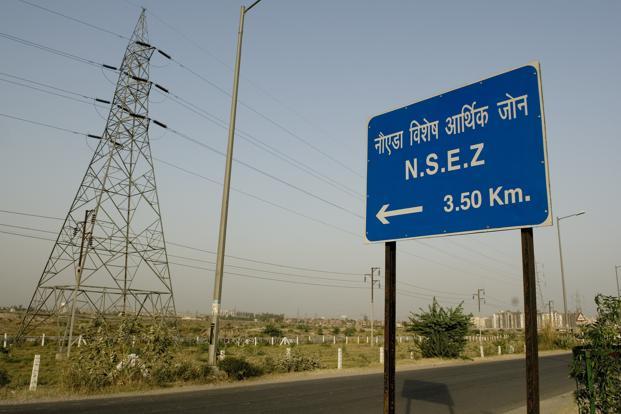
Regulation of units in Special Economic Zones in India – An Analysis

3
Regulation
Image Source: https://www.livemint.com/rf/Image-621x414/LiveMint/Period1/2013/10/04/Photos/sez%20--621x414.jpg

In this article, Siddhartha Sain, a student pursuing Diploma in Entrepreneurship Administration and Business Laws from NUJS, Kolkata discusses the regulation of units in Special Economic Zones.

SEZ – Special Economic Zone

The term SEZ stands for special economic zone. Such zones are set up by governments in different countries in order to boost the global business, attract foreign investments and enhance the standard of export. In a SEZs, the tariffs, customs and tax rates are completely different from the rest of the country which creates a level playing field for the domestic manufacturers and enterprises to be able to compete worldwide. SEZ are set up in various countries around the world in order to achieve the same objective. India, Malaysia, Singapore, South Korea, Jordan, China, Russia, Philippines and Africa are some of the examples of the countries having SEZs.

SEZ in India

In 2000, SEZ policy was made in India for the first time. The concept which was originally borrowed from the neighbouring country China was finally adopted by India. The objective was to attract foreign investors by giving tax breaks and single window clearance etc. However, this policy only applied through various amendments in different laws and executive orders and was in a dire need of a robust framework as the policy was not nearly as good as China’s SEZ framework. It was only till 23rd June 2005, SEZ Act, 2005 was passed by the assent of the President of India. This Act along with SEZ Rules, 2006, became the sole statute covering all the legal and regulatory aspects of the SEZs along with units set up under it. In the Act, SEZs are defined under Section 2(za) as any area which is notified by the government after prescribed requirements under the Act as “Special Economic Zone”.  Under Section 3(1) of the Act, SEZ is established by the Central government, state government or any other person jointly or severely for rendering services or manufacture of goods or free trade warehousing zone. Further, SEZ Rules, 2006 provides detailed rules with respect to SEZs.

How to Set up a Unit under SEZ Act, 2005?

A “unit” within the Act is defined under Section 2(zc) as a Unit set up by a businessperson in a Special Economic Zone which includes an Offshore Banking Unit, existing Unit and a Unit in an International Financial Services Centre. In order to set a unit under SEZ, Act 2005 an entrepreneur or a manufacturer has to follow procedures laid down under Section 15 of the Act, which are as follows:

Step 1: Any person who intends to set up Unit for carrying on the authorized operations in SEZ, must submit a proposal to the Development Commissioner in a prescribed form and manner with prescribed particulars.

Step 2: On the receipt of the proposal, the Development Commissioner shall submit the proposal to Approval Committee for approval.

Step 3: The Approval Committee may, “approve the proposal without modification” or “approve the proposal with modifications” or “reject the proposal”.

Step 4: Any aggrieved person has an option to appeal to the board within the prescribed time and no appeal will be preferred after the expiry of the prescribed time under Section 15 (5).

Step 5: A letter of approval is granted by “Development Commissioner” after the approval of the proposal under Section 15 (3) to the person concerned to set up a Unit.

Step 6: Under Section 16, the “approval committee” may also cancel the letter of approval if they have a reason to believe that the entrepreneur has violated any terms and conditions on which the letter of approval was granted.

Regulation of SEZ Units under the SEZ Act, 2005

As it has been established above that a unit can be set up by applying to the Development Commissioner under SEZ, Act 2005. Further, the Approval committee approves or rejects the application. Development Commissioner and approval committee have given powers under SEZ Act, 2005 in order to approve or reject the application of setting up of a unit under the Act through various provisions. Under the Act, an approval committee is instituted by the central government under subsection (1) of Section 13, which consists of a Development Commissioner. The approval committee with respect to the SEZ units has the power to approve, modify or reject a proposal for setting up the units and also to grant a license under the provisions of the Act. The approval committee can also refer to the board of approval for a decision on any process which the committee is unable to decide if a particular process involves manufacture or not.  

Now apart from that, Central Government also has certain powers to regulate and inspect the framework of a unit under the Act these powers are discussed below:

  1. Under Section 20 of SEZ Act, 2005, the Central government has the power to specify any agency or officer to carry out surveys or inspections for securing of compliance with the provisions of any central Act by a Developer or an entrepreneur. It may also, under Section 21, specify any act or omission made punishable under any central Act and may appoint any officer in order to conduct investigation, inspection or search or seizure under relevant Central Act in respect of notified offences.
  2. Under Section 23 of the Act, the state government with the correspondence with the Chief Justice of High Court of that state, designate one or more courts to try all suits of civil nature and notified offences in SEZ.

Regulation of SEZ Units under SEZ Rules, 2006

The Central Government has the powers to make the rules under SEZ Rules, 2006 by Section 55 of Special Economic Zones Act, 2005. Under SEZ Rules, 2006 there are detailed procedures mentioned in order to set up of an SEZ Unit under Rule 17 to 21. Under the Act, the approval committee and the development commissioner have been given various powers to regulate the units and their operations. These powers are discussed in detail below:

  1. Under Rule 17 of the Act, the proposal for approval of unit is made to the development commissioner under form F. After the proposal it is now up to the Approval committee to consider the proposal for setting up of a unit in SEZ under Rule 18 of the Act, which scrutinizes the whole proposal and approves or approve with modification or rejects it within 45 days of the receipt. It is pertinent to mention that the proposals only get approved if they have met positive net foreign exchange earning requirements, available space and infrastructure, undertaken to fulfil environmental and pollution control norms amongst other requirements.
  2. Letter of approval is granted after the approval by the Development Commissioner and it specifies certain terms & condition which the unit has to abide under Rule 19 of the Act. Under Rule 22 (3) the units under SEZ are required to submit Annual Performance Reports in Form I to the Development Commissioner and further the Development Commissioner forward it to the Approval Committee.
  3. A unit’s performance is monitored under Rule 54 of SEZ Rules, 2006. An approval committee which is set up under the Act monitors the performance of the unit. A unit needs to achieve net foreign earning, abide by the terms & conditions of Letter of Approval or bond-cum-legal undertaking and if the approval committee come to a decision that the unit has not complied with any of the above-mentioned requirements then the said unit shall be liable for penal action under the provisions of Foreign Trade (Development and Regulation) Act, 1992.
  4. Appeal: Under Rule 55 of the Act any person who is aggrieved by an order passed by the approval committee with respect to cancellation of the letter of approval, can appeal to the board of approval in Form J.

SEZ Units and the Goods and Services Act

Under the IGST Act, 2017 concept of “Zero-rated supply” has been introduced in which export or supply of goods and services, made to a unit under SEZ will be termed as the same under Section 16 of IGST Act, 2017.

Further, under Section 17 (5) of IGST Act, input tax credit can be claimed for such supplies. Under Section 7 (5) of IGST Act, 2017 supply of goods and services to or by SEZ Unit is treated as the supply of goods or services as an inter-state trade.

For example, a supplier named as X Ltd. supplies the goods for Rs.1, 50,000/- to a Unit located in Surat SEZ, 18% IGST will be charged. The invoice for the whole transaction would be like:

Selling price of the supply = Rs.1,50,000/-

18% applicable IGST           = Rs. 27,000/-

Total = Rs.1,77,000/-

The supplier X Ltd. will now get a refund of Rs.27,000/- after claiming input tax credit.

Conclusion

Most of the rules and regulations that currently exist are under SEZ Act, 2005 and SEZ Rules, 2006 for the units under SEZ. Under these acts as discussed above, there are few bodies that regulate the functioning and operations of the unit under SEZ such as Approval Committee, Development commissioner and board of approval. These bodies have a crucial role in regulating the units under SEZ and are the only source of authority apart from central government. In each framework, a regulatory body is a must as it helps the framework grow and keep it in check.

Download Now

Guidelines on conducting Extraordinary General Meetings under Company Law

1
Guidelines
Image Source - https://www.zuidema.nl/en/blog/four-things-you-can-do-when-a-meeting-becomes-unproductive/

In this article, Prakarsh Seth, pursuing Diploma in Entrepreneurship Administration and Business Laws from NUJS, Kolkata discusses the guidelines for conducting EGMs under Company Law

Extraordinary general meeting 

The clause 42 of Table F (Schedule 1) states that all the meetings other than the ones which are annual general meetings shall be classified as extraordinary general meetings. The Board of directors of the company have the power to call an extraordinary general meeting whenever, in its opinion, it deems fit. The reason for the existence of an extraordinary general meeting is that the annual general meeting is conducted within a gap of about 18 months between two consecutive meetings. This gap is mandatory and shall be maintained, however, if an urgent matter arises between the two annual general meetings then it can be handled by the way of extraordinary general meeting. The matters if requires the shareholder’s approval, then an extraordinary meeting may be called.

When can an extraordinary general meeting be called?

From the abovementioned, it can be understood that an extraordinary general meeting may be called if the business which has to be transacted is of urgent nature and cannot be put on hold till the next annual general meeting. Usually, an EGM may be called in the following circumstances:

1) By the board ‐ an extraordinary general meeting may be called by the board on its own motion.
2) By a director ‐ An EGM may be called by a director and if at a time they are called and are not in India, then the director capable of acting and who are sufficient in number shall be called to form the quorum.

3) An EGM may be called by the board at the requisition made by the members as per Section 100.
4) It may be called by the requisitionists themselves
5) Tribunal ‐ An EGM may be called by the Tribunal or the NCLT.

Matters that can be dealt in EGM

It has been provided in the Companies Act, 2013 that any business that is considered in the extraordinary general meeting shall be considered as special business. EGM has various functions attached to it. EGM is used to help the Board to know about certain matters which are important in nature. It also places a duty on the company to provide to the shareholders more information about the business to be transacted in the form of an explanatory statement. The explanatory statement shall have attached to itself a notice to the EGM which shall include the relevant information such as the nature of concern or interest which may be financial or otherwise. It shall also include the information and facts that may enable members to understand the meaning and the implications of the business and the scope of transactions of business and to take decisions.

Procedure to call for an EGM

The meeting shall be called at any day other than the national holiday and the procedure for calling an extraordinary general meeting shall be given in the articles of association of the company.

How to initiate an EGM?

By requisition

Section 100(2) of the Companies Act, 2013 makes it clear that an extraordinary general meeting can be held via requisition which has been made by a member who at the time of making a requisition holds at least one‐tenth of the share capital. This can be done only in the companies which have share capital. In the case of companies, which do not have share capital, the members who have a minimum of a total of one‐tenth of the total voting power of all the member who have the right to vote, such members on the date of requisition shall have the power to call an extraordinary general meeting.

The requisition mentioned above has to set out the matters for which the meeting has to be held and these matter of considerations shall be signed by the requisitionists and has to be sent to the registered office of the company. The board has a duty to call proceed to call the meeting within 21 days from the receipt of the said requisition and the meeting has to held within 45 days. If the board fails to do so, then the meeting can be called and held by the requisitionists within 3 months. In the latter scenario, the meeting which has to be conducted by the requisitionists has to follow the same manner in which the meetings are conducted by the board.

The expenses which have been incurred by the requisitionists shall be reimbursed to them from the company and the company can deduct these amounts from the remuneration of directors, because of whom the default occurred and the meeting had to be conducted in the said manner.

Amendment to Section 100

There has been an amendment to Section 100 of the Companies Act which states that unless the company is a wholly owned subsidiary of a company registers outside India, the extraordinary meeting of all the companies which are remaining shall be conducted a place in the territory of India.

Another modification which has been made into the Act is that there is a proviso inserted into the subsection 1 of section 100, which states that in case of Specified IFSC companies, the board can if the shareholders have given their consent, conduct their Extraordinary general meeting at any place. This shall include places within the territory or outside the territory of India.

Case Laws

With respect to the requisitions mentioned above, it has to be noted that the requisitions shall set out the matter for considerations and no other business can be done apart from it. This principle was laid out in the case of Malvika Apparels v. Union of India in which the notice which was served in response to the requisition had not included all the items specified by the requisitionists.

Similarly, in the case of Ball v. Metal Industries where the meeting was conducted by the requisitionists for inducting three new directors and subsequently the agenda for removal of a director was also added, the matter was restrained to be considered.

The calling of the meeting cannot be refused only on the ground that the resolution which shall be discussed will go against the act. The directors do not have the power to refuse for the abovementioned reason as the court has the power to take action if at all that is the case. In the case of Cricket Club of India v Madhav Lal Apte, the requisitionists wanted to add a clause in the articles of the company which stated that a person occupying the position of a director for six years shall not have the power to stand for re‐election. This shall be done for a period of three years after that he shall be rested with the power to stand for elections. Although this was violative of section 168 as it added additional ground of disqualification, even then the directors should not refuse to respond to the said requisition.

If the resolution in the EGM has to be with respect to the removal of a director, a requirement of sending a special notice has to be given. If this is not done, severability has to be maintained as the meeting shall stand to be valid but the resolution shall be considered as void. In the case of Queens Kuries and loans (p) Ltd v. Sheena Jose, it was held that where a notice was not given to the director who was concerned to the resolution, the proceedings had to be declared invalid.

With respect to the place for conducting the Extraordinary general meeting, it is not mandatory to conduct it at the place of the registered office of the company. The resolution passed at a meeting held at a different place shall have the same validity as that of the one conducted at the office. This was held in the case of Metal Box Ltd., A meeting cannot be called for the declaration that the directors of the said company have been elected in a manner which is not valid and that in his place the people applying for the requisition shall be put in their place.

One thing which is very much important for an Extraordinary general meeting is that the refusal to grant a meeting upon requisition would not amount to an offence. The requisitionists have the remedy of calling an alternate meeting. The requisitionists have an alternate to go to the tribunal under section 98 if the holding of any meeting other than the annual general meeting has become impracticable, in such cases the tribunal has the power to order a meeting on the application of a member or the director. But the requisitionists, according to the case of B Mohandas v. AKMN cylinders P(ltd), cannot go to the tribunals directly if they have first not exhausted the remedy of applying for an extraordinary general meeting themselves.

Download Now

A Guide to the Startup India initiative by DIPP

0
Startup India program
Image Source: https://officechai.com/wp-content/uploads/2016/12/standup-india-1-1024x570.jpg

In this article, Sandip Ghosh, a student pursuing Diploma in Entrepreneurship Administration and Business Laws from NUJS, Kolkata discusses the Startup India program started by DIPP.

Introduction

A startup company is an entrepreneurial venture which is typically a newly emerged, fast-growing business that aims to meet a marketplace need by developing a viable business model around an innovative product, service, process or a platform. The concept had been introduced in India on 16th January 2016 by the Government.

About DIPP (Rules and Functions of the Department)

The Department of Industrial Policy & Promotion was established in the year 1995 and has been rebuilt in 2000 with the merger of Department of Industrial Development. The primary rules and functions are as follows:

  1. It formulates and implements the Industrial policies in conformity with the industrial needs and national objectives.
  2. It provides advice to all technical and industrial matters and monitors the growth of industries specifically assigned to it.
  3. Formulation of Foreign Direct Investment (FDI) policy and promotion, approval and facilitation of FDI.
  4. Providing encouragement to foreign technology collaboration at an enterprise level and prepare policy matter for the same.
  5. Prepare the policy related to IPR (Intellectual Property Right) – Patents, Trademarks, Industrial Designs and Geographical Indications of Goods and administration of regulations.
  6. Administration of Industries (Development & Regulation Act), 1951.
  7. Promoting Industrial development to the Industrial backward areas especially North-East region including international cooperations for Industrial Partnership.
  8. Promoting productivity, quality and technical cooperations.

Definition of a start up by DIPP

As per DIPP startup means an entity, incorporated or registered in India which fulfils the following criteria:

  1. The period must not exceed seven years from the date of incorporation and in case of Biotechnology sector, it is up to 10 years.
  2. It can be incorporated as private limited company or registered as a partnership firm or a limited liability partnership.
  3. The annual turnover must not exceed INR 25Cr for any financial year since incorporation/registration.
  4. It should work towards the innovation, development or improvement of products or processes or services, or it is a scalable business model with a high potential of employment generation or wealth creation.

Exclusion

Any company formed after splitting up from existing business shall not be considered as ‘Startup’.  

For recognition of your startup

Under the Startup India Action Plan, startups that meet the definition as prescribed under the notification G.S.R 364(E) are eligible to apply for the recognition under the programs.

Startups can also apply for exemptions on profit under the Section 80-IAC of Income Tax Act and exemption on investment above fair market value under Section 56of Income Tax Act.

The Documents required for recognition of the Startup:

  • Company Incorporation;
  • Company Registration with the Income Tax-Pan, Tan, VAT and GST;
  • If the proposed business is Software development only for Exports, then the Company should be registered with the Software Technology Parks, India;
  • If the proposed business is related to manufacturing then different requirements are to be met with;
  • If the business is related to the services sector, the law will be different;
  • A company has more than 20 employees must have to register with the provident fund;
  • Shop and establishments must be registered with the local authority;  
  • If the company is involved with export and import must have the necessary registration;
  • Employee-related legal documents;
  • Investor related legal documents;

Please find the benefits offered to recognized startups here.

How to register your Startup Business with Startup India

The registration of the startups is very short and simple. One must login to https://www.startupindia.gov.in/registration.php and follow the steps given in the same.

New Definition of startup by DIPP and its requirement for changes

https://lawsikho.com/course/diploma-companies-act-corporate-governance
click above

On the early stage, despite of year of its launch, there is no significant progress seen because of the stringent norms and regulations. Up to May 2017, DIPP could only recognize 798 applicants as startups and only 10 of those have availed the tax benefits.

Initially during innovation was proposed as the base of any entity being considered a startup. The entity to be identified as start up as per the earlier definition given.

In recent time, Government of India has further enlarged the definition of “Startup India, Standup India” initiative introduced in January 2016. From now on the overall age limit has been increased from five to seven years and has been further extended to 10 years for biotech startups.

In March 2017, The Department of Industrial Policy & Promotions (DIPP) had invited feedbacks and suggestions from various industries in India in order to alter the definition of the startups.

The Changes that are infused in the definition of Startup and its policy are as follows

  1. The Government had announced to take job creation capabilities and financial standards of the Startups as a measure to gain benefits from startup India plans.
  2. The tax rates of SME’s with an annual turnover up to $7.6Mn are reduced to 25%. Further to this Government with effect from April 2018 has allowed carrying forward and setting up the loss of startup for seven years.
  3. For obtaining tax benefits startups are not required to get a letter of recommendation from an industry association.
  4. Companies that are incorporated after March 2016 can now avail a tax holiday of three years of their seven years of existence, earlier the limit was three years out of five years.
  5. The Government will provide startups with 80% rebate while filing of patents vis-à-vis other Companies. This will help the companies in their initial year of formation.

These changes are made to ease of starting up a new business to promote the startup ecosystem and build a nation of job creators than job seekers.

https://lawsikho.com/course/diploma-entrepreneurship-administration-business-laws
click above

Apart from putting relaxation on setting up the process, Government has moved one step ahead to fast-track the activities. For instance, as per the latest report on April 15, 2017, panels of 423 facilitators for patent design applications and 596 facilitators for Trade Mark application has been created for providing assistance in the filing of IP applications and to make the process faster for filing and acquisitions.

As mentioned above, in the recent years, Government of India has introduced several measures to help the startup ecosystems including amending the definition of the Startup that will definitely help in addressing few burning concerns by encouraging indigenous development and talent.

Discussion with DIPP secretary Mr. Ramesh Abhishek tells that how the above-mentioned change points have boosted the startup registration. See here.

List of entities recognized by DIPP as a startup can be accessed here

Conclusion

This initiative by the Government of India has created a new dimension to the entrepreneurship by helping the newcomers in setting up their business as well as makes a live network of startups through the connection. This is a platform provided by the Government to the highly skilled professionals who can generate new jobs and fulfill the dream of developed India by the year 2022 with the availability of house, electricity and all other basic needs.

Download Now

IPR benefits from DIPP ‘Start-up India’ Program

0
IPR Benefits
Image Source: https://images.yourstory.com/2016/04/Student-Guide-Startups.png?auto=compress

In this article, Prakarsh Seth, pursuing Diploma in Entrepreneurship Administration and Business Laws from NUJS, Kolkata discusses the IPR benefits available under DIPP Startup India Program.

Start-up India

Start-up India is an initiative by the government of India which was first announced by Prime Minister Narendra Modi. This program was formed for the simplification of the process of new entrepreneurs. The three main objectives of this program are

• Simplification and Handholding.
• Funding Support and Incentives.
• Industry-Academia Partnership and Incubation.

This program is organised by Department of Industrial Policy and Promotions (DIPP). The focus area of this scheme is to discard the license raj and focus on simplifying the process pertaining to the domain of Land Permissions Foreign Investment Proposals, and Environmental Clearances.

Start-up Definition

As per the website of start-up India, the following criterion has been given for an entity to qualify as a start-up. Therefore, to avail the benefits under the scheme of start-up India, the following tests have to be passed:

1) The venture shall be started and has not crossed the age of 7 years, which shall be calculated from its date of incorporation/registration. In case of biotechnology firms, the age limit has been increased to 10 years.

2) the incorporation of the venture shall be done as:

a) Private Limited company or
b) Registered Partnership or
c) Limited Liability Partnership.

3) The turnover for any fiscal year shall not exceed INR 25 Crore.

4) The entity’s existence should not have been come into existence via the means of splitting up or reconstruction of a business already in existence.

5) The entity shall be working towards innovation, development or improvement of products or services. It can also be considered as a start-up if the potential of the business succeeding is high or is involved in high employment creation/ wealth creation.

IPR and Start-ups

IPR activity in India has shown significant growth in the last few years. The number of Patents filed has increased to a multiple time. The ministries have taken various initiatives to ensure that the intangible assets which have been registered are protected.

Benefits available for IPR under DIPP

Scheme for Facilitating Start-Ups Intellectual Property Protection (SIPP)

• This Scheme has been started by the government of India to nurture their innovation and creativity.
• This further helps in encouraging and promoting awareness IP in start-ups.
• It helps in promoting technologies in the start-up culture.

Importance of Registration

1) Self-Certification – This is an effective way to reduce the reduce the liability of certification as the start-ups are allowed to self-certify compliance with 9 labour laws and environmental laws. No inspection shall be done, for cases dealing with labour laws, for a period of minimum three years.

2) Start-up Patent application – This fast tracks the process of filing the patents and further grants a rebate of 80% in filing patents. This rebate will be provided on the total value of the patent fees and shall be provided once the patent is filed.

3) Public Procurement – This ensures that the opportunities given for start-ups and experienced entrepreneurs are equal. This has been changes as earlier there was a requirement of having a prior experience and or prior turnover but this has been relaxed for start-ups.

4) Winding Up of the Company– This ensures that the winding up of the company can be done in the period of 90 days under the insolvency and Bankruptcy Code 2016.

5) Investment – this has made possible the availability of INR 10,000 core worth of funds for investments into start-ups via the means of alternative investment.

6) Credit – This ensures that there is an availability of INR 2,000 crore worth o credit for start-ups through national credit guarantee trust or SIDBI over 4 years.

7) Tax exemptions – This ensures that there is a tax exemption of Income-tax for a period of 3 years. Further, this also provides for exemption on capital gain and on investments above fair market value which is made by incubators or angel investors.

8) Learning – This programme will provide opportunities to learn from the experienced and shall also promote the research and innovation among students.

9) Mobile application– The start-up India provides the facility to companies to register via a single platform on the mobile application. This process has resulted in the simplification and has made the process very easy.

How to avail IPR benefits

The ministry of commerce and industry in its recent move, for the purpose of ease of doing business, has stated that the businesses now have to get a certificate of recognition from DIPP. This certificate will be sufficient to avail all the benefits pertaining to IPR which are provided by the start-up India Programme.

This is a welcome move as earlier the budding entrepreneur had to go through an elaborate process of approaching an inter-ministerial board to get the intellectual property benefits.

This announcement was made at the Start-up India State’s conference.

Start-ups have also been made eligible for expedited examination of patent applications.

How to Avail the Certificate of recognition from Department of Industrial Policy and Promotion (DIPP)?

There are two procedures which have been laid out. The first one talks about the scenario wherein there has not been an application of a patent and the other one talks about the scenario where there has been an application for a patent.

For applicants who have NOT filed an application for Patent

The application form is available on the Start-up India website under the registration column.
The following information has to be filed
• Name of the entity
• Nature of the venture- whether it is a private limited company or a partnership or a limited liability company.
• The registration number or the incorporation number depending upon the nature of the venture
• Date of the registration or incorporation
• Address or registered office
• Details of the authorised representative
• Details of the partner

The following documents are also required to support the application
1. Letter of recommendation
2. Letter of support by Incubator

There has been a formation of panel of facilitators for providing assistance and support in filing application for IPR. The facilitation cost shall be borne by the Department Of Industrial Policy And Promotion.

3. Letter of recommendation, from an incubator established in a post-graduate programme. This has to be in a form as specified by DIPP.
4. Letter of Funding from Government of India or any state government.
5. In case the state government or the Central government has provided funds with respect to scheme pertaining to innovation promotion, then the letter of funding from the central or state government.
6. Letter of funding of not less than 20 percent in equity by any Incubation Fund/Angel Fund/Private Equity Fund which are duly registered with Securities Exchange Board of India which endorses the innovative nature of business. If the funding by SEBI is not less than 20% in equity via any of the abovementioned funds which have endorsed the innovative nature of the business of the entity to the applicant, only then the letter of funding can be submitted.
7. Letter of recommendation from Industry association recognized by DEPARTMENT OF INDUSTRY POLICY AND PROMOTION – A Recommendation Letter can be obtained by any Industry Association or Organisation which is recognized by DIPP.

Further, on the start-up India website, the organisations which provide funding has been given.

  • The format of all the letters which have to be submitted has also been uploaded on the same website and shall be strictly followed.
  • The time for the application to be processed shall be around 10-25 working days.

For applicants who have filed an application for Patent

Under this category, the procedure, which pertains to applicants who have filed for patent and as a result of which it has been published, is given.

1. The details which are mentioned above, under the first category, have to be filed on the start-up India website.

2. The option of “patent filed and published by the office of India Patent in the area of nature of business being promoted” shall be selected in the nature of recommendation

3. In the category of supporting documents for the recommendation, the journal extract of the patent application shall be uploaded.

4. The registration certificate or the incorporation certificate shall be uploaded depending upon the nature of your entity.

5. Under the column of brief note of your innovativeness of the product or service offered, the document providing the details of your company pertaining to the nature of the business and explaining your innovativeness shall be uploaded. This shall be in a PDF format.

6. With respect to tax benefits, there are two options which can be opted-

a) If you wish to opt for tax benefits – the process here will be cumbersome and time consuming as the application has to go through the Inter-Ministerial board for evaluation.

b) opt out for Tax benefits- If the aim of your enterprise is only to get the IPR benefits and you wish to save time and effort, then opting out for tax benefits can be considered.

7. The application shall be submitted as it has been self-certified.

If there has been any false information or the application has been uploaded without uploading any other document, or there has been a forging of a document, then the applicant shall be liable to a fine of rupees 25,000.

Points to remember

By the start-up India initiative, the government of India aims for simplification, funding support and industry-academia partnership. DIPP is the organisation responsible for its conduct. Not all ventures can come under the definition of start-up as the conditions mentioned above have to be satisfied. The start-up has to be registered to avail a number of benefits. Start-ups have to get a certificate of recognition from DIPP the process for which has been simplified. To avail the benefits from DIPP there are two ways to get certification as the procedure is different for start-ups who have applied for a patent and for those which haven’t is different.

Download Now

The Repealing and Amending Act (Second) of 2017 – An analysis

0
repealing
Image Source - https://www.thebalance.com/how-to-copyright-a-book-2800079

In this article, Riya Kothari, pursuing Diploma in Entrepreneurship Administration and Business Laws from NUJS, Kolkata discusses the repeal of the 1999 and 2012 Amendments to the Copyright Act by the new amendment and its effect on copyright law in India

Introduction

What is copyright?

Copyright is a set of rights conferred by law on creators of literary, dramatic, musical and artistic works, and producers of films and sound recordings. The rights provided by copyright law include the rights of reproduction of the work, communication of work to the public, adaptation of work and translation of work. The scope and duration of protection under the Copyright Law vary according to the nature of the work protected by copyright.

The Repealing and Amending Act (Second) of 2017

The Repealing and Amending Act (Second) of 2017 has no legislative effect. It is simply an editorial review aimed at removing dead matter from the law and reducing its volume. The Act had received assent by the President on 5 January 2018.

Section 2 of the Act states that the enactments set out in the First Schedule are repealed. The First Schedule contained legislative provisions of the Copyright Amendment Act, 1999 and the Copyright Amendment Act, 2012.

Section 4 of Act tells us that-

  • The repeal by this Law of any provision shall not affect any other provision in which the revoked law has been applied, incorporated or derived; and this Act does not affect the validity, invalidity, effect or results of anything that has already been done or suffered, or any right, title, duty or responsibility already acquired, accrued or incurred, or any other appeal or proceeding, or release or discharge of any debt, penalty, obligation, liability, claim or claim, or any adjudication already made, or evidence of an act or thing approved;
  • this Law does not affect any principle or rule of law, jurisdiction, form or appeal, practice or procedure, use, custom, privilege, restriction, exemption, position or existing appointment, without prejudice to the same, respectively, may have been in some way affirmed or recognized or derived by, in or from an act repealed;
  • the repeal of this Act will not restore or restore any jurisdiction, trade, custom, liability, right, title, privilege, restriction, exemption, use, practice, procedure or other thing or thing that does not exist or that is in force.

Now the question at hand is whether the amendments which came into being through the Copyright Amendment Acts of 1999 and 2012 are maintainable any longer?

The Copyrights Amendment Act, 1999

The Act was amended extensively in 1994, in which it took care of the challenges posed by digitisation of works and the Internet, although partially. Later, the Act only required minor changes to comply with the obligations under the Trade Related Aspects of Intellectual Property Rights (TRIPS) which was brought in by the 1999 amendment.

The Copyrights Amendment Act, 2012

Before 2012, the Copyright Act of 1957 was modified five times. Of these, the 1994 amendment is perhaps the most important, as it dealt in part with issues related to the digitization of works protected by copyright.

The Copyright (Amendment) Act (2012) is popularly favoured by progressive changes such as the “right to royalty” and exceptions for the disabled, which are widely publicized. However, there are also some regressive amendments that have not received much public attention.

The amendments introduced through Copyright (Amendment) Act 2012 can be categorized into:

  • Amendments to rights in artistic works, cinematograph films and sound recordings.
  • WCT and WPPT related amendment to rights
  • Author-friendly amendments on the mode of Assignment and Licenses
  • Amendments facilitating Access to Works
  • Strengthening enforcement and protecting against Internet piracy
  • Reform of Copyright Board and other minor amendments

The Copyright Amendment Act 2012 has added to the Indian Copyright Act certain provisions that have not yet been incorporated in a number of developed countries. This is an advantage for copyright writers as well as copyright users. Clarification of what constitutes an offence has eased those who have always advocated “fair use”, but feared allegations of violation.

Response to Amendments

Changes have not fallen well with the producers of the films and the major music companies in the country buying the music rights of the film. Therefore, a number of written petitions challenging the constitutional validity of the amendments have been filed before Delhi High Court.

Surprisingly, a category of songwriters and composers (whose favour changes are claimed to be) are not particularly happy with the changes and have challenged their constitutional nature. These songwriters and composers belonging to a regional linguistic brotherhood have challenged the second reservation in Section 33(1) which obligatorily requires that they operate licensing through a copyright society on the grounds that it limits their right to license their work and forces them to participate in a copyright society which, in view of the limited popularity of regional language music, harms their commercial interests, as they would not have anything to say in determining the distribution scheme for royalties collected by the Copyright Society. While these writs have not yet been decided, it has been widely reported that movie producers already devise genius ways to create instruments to maintain their broad interests.

The government had ensured that it would establish a permanent Copyright Board and also a Copyright Enforcement Agency Council to ensure compliance with the provisions of the act of amendment. Some concrete steps toward this goal have yet to be taken.

Effects of Repealing Amendment Acts of 1999 and 2012

An interpretation that is circulated is that the main act, which is the copyright law, 1957, survives as amended and only the amending Act is repealed. The other interpretation is, of course, that all the changes proposed in the 1999 and 2012 legislation also go out of the window and the law returns to its form since 1994 when it was last modified. Providing weightage to the first interpretation is Section 4of the statute, “The repeal by this Act of any enactment shall not affect any other enactment in which the repealed enactment has been applied, incorporated or referred to”. In other words, it may be possible to assert that when the main act has been changed, it takes a life by itself incorporating the changes into its text and continues to survive regardless of whether the legislation has been changed. This interpretation is supported by the fact that in a normal parliamentary convention when a law is changed, it is normal to change only the text of the main legislation and not the amendment legislation. The other opposite interpretation derives from simple logic. If the amending act is the source of power and it has been removed, it is not obvious that the changes to the main act lose their validity and are automatically cancelled? What is another point about repealing the amending act? It can certainly not be the case that status quo exists whether or not a law is repealed by Parliament. If there is no effect after Parliament repeals legislation, why even go through the decisions to repeal the law? What is the purpose of such an exercise? Parliament must have intended to take effect at the time it decided to repeal the law, and the intention is simply to junk these set of amendments.

Moving on to case laws to support the first interpretation.- in the Supreme Court case of Jethanand Betab v. The State of Delhi, which was decided in 1959. The Indian Wireless Telegraphy Act, 1933 had been amended in 1949 to introduce a particular penal provision. The amending act was eventually revoked by The Repealing and Amending Act, 1952. The question was whether the penal provision included in 1949 would continue to live or be omitted from the law. The court speaking through Justice Subba Rao held that the amendment introduced in 1949 would continue to exist even after the amending legislation was revoked because of Section 6A of the General Clauses Act and not Section 4 of the repealing act.

Conclusion

By applying the same logic to the law of 2017, it will be possible to safeguard the effectiveness of the 2012 Copyright (Amendment) Act on the main legislation even after the repeal of the amending legislation. These laws have no legislative effect but are designed for editorial review, with the sole purpose of eliminating dead materials from the law and reducing their volume. For the most part, they delete the Acts of Amendment because, having given the amendments to the main laws, these laws have served their purpose and have no other purpose. Sometimes, inconsistencies are also eliminated by repealing and amending laws.

In my opinion, it is clear, without a doubt, that the Repealing and Amending (second) Act, 2017, does not make the amendments introduced by the 1999 and 2012 amendments redundant. It is only an editorial exercise and will not have an effect.

Download Now

Rights and Duties of Shareholders of a Company

0
Rights
Image Source: http://tudocondo.com.br/app/uploads/2016/12/assembleia-geral-ordinaria-e-extraordinaria-no-condominio-1140x400.jpg

In this article, Kumar Gourav, pursuing Diploma in Entrepreneurship Administration and Business Laws from NUJS, Kolkata discusses the rights and duties of Shareholders of a company

In India, companies are mostly established and governed by Companies Act 2013. There are basically two types of companies established in India, namely public limited company and private limited company. In India, people prefer to open private limited firm because of fewer restrictions and more benefits. Shareholders play an important role in a company. It is very important for a company to look after them as they should also be safeguarded and time to time proper bonus should be given to them.

Introduction

A shareholder, commonly referred to as a stockholder, is any person, company, or institution that owns at least one share of a company’s stock. Because shareholders are a company’s owners, they reap the benefits of the company’s successes in the form of increased stock valuation. Shareholders play an important role in the framing and profits of the company. Shareholders are the owner of the company. They are the main stakeholders in the company. There are two types of shareholders:


  • Equity Shareholders

    Equity shareholders are the main stakeholders in a company and when the time of dividend distribution comes the preference shareholders would get the first.

  • Preference shareholders 

    Preference shareholders generally have no voting rights because of their preferred status.  They receive fixed dividends, generally larger than those paid to common stockholders, and their dividends are paid before common shareholders.

The number of shareholders in a company depends upon the type of company which they are opening.

  • For a one-person company, one person is required.
  • For a private limited company, two persons are needed.
  • For a public limited company, a minimum of seven persons are required.

Shareholders’ Rights

There are various rights available to a shareholder. Different type of rights has been discussed below:

  1. Appointment of directors

Shareholders play an important role in the appointment of directors. An ordinary resolution is required to be passed by the shareholders for the appointment. Apart from this, shareholders can also appoint various types of directors. They are:

  • An additional director who will hold the office until the next general body meeting;
  • An alternate director who will act as an alternate director for a period of 3 months;
  • A nominee director;
  • Director appointed in the case of a casual vacancy in the office of any director appointed in a general meeting in a public company.

Apart from this shareholder also can challenge any resolution passed for the appointment of a director in the general body meeting.

  1. Legal action against directors

Shareholders also can bring legal action against director by the rules laid down in the Companies Act 2013. They are:

  • Any act done by the director in any manner which is prejudicial against the affairs of the company.
  • Any act done which is beyond the law or against the constitution.
  • Fraud.
  • When the assets of the company are being transferred at an undervalued rate.
  • When there is a diversion of funds of the company.
  • Any act done in a mala fide manner.
  1. Appointment of company auditors

Shareholders also have a right to appoint the company auditors. Under Companies Act 2013, the first auditor of the company is to be appointed by the board of directors. Further the shareholders at the annual general body meeting at the recommendation of directors and audit committee. The appointment is generally done for five years and further can be ratified by passing a resolution in the annual general body meeting.

https://lawsikho.com/course/diploma-companies-act-corporate-governance
Click above
  1. Voting rights

Shareholders also have the right to attend and vote at the annual general body meeting. Every company registered in India should comply with the provisions of the Companies Act 2013. It is mandatory for every Indian company to hold an annual general meeting once in every year. The meeting can be held anywhere at the head office of the company or any other place as given by the company. At the meeting, there are various mandatory agendas which are to be discussed. These include the adoption of financial statements, appointment or ratification of directors and auditors etc.

When a resolution is brought by members of a company then according to companies act 2013 it can be passed only by the means of voting by the shareholders. Companies Act 2013 recognizes following types of voting:

  • Voting by the showing of hands – Every member present in the meeting has one vote. So, in this type of voting shareholders vote just by showing of hands.
  • Voting done by polling – In this type of voting the chairman or the shareholders’ demand for a poll.  However, in case of differential rights as to voting, a particular class of equity shares may also have weighted voting rights.
  • Voting done by electronic means– every company who has more than 1000 shareholders has to put up a facility of voting through online means. Every member should be provided with the means of voting of online.
  • Voting by means of postal ballot– any resolution in the meeting can also be passed by means of a postal ballot.

A shareholder also has a right to appoint proxy on his behalf when he is unable to attend the meeting. Though the proxy is not allowed to be included in the quorum of the meeting in case of voting, it is allowed by following a procedure mentioned in the Companies Act 2013.

  1. Right to call for general meetings

Shareholders have the right to call a general meeting.  They have a right to direct the director of a company to can all extraordinary general meeting.  They also can approach the Company Law Board for the conduction of general body meeting, if it is not done according to the statutory requirements.

  1. Right to inspect registers and books

As shareholders are the main stakeholders in a company, they have the right to inspect the accounts register and also the books of the firm and can ask questions about the same if they feel so.

  1. Right to get copies of financial statements

Shareholders have the right to get copies of financial statements. It is the duty of the company to send the financial statements of the company to all its shareholders either in a quarterly or annual statement.

  1. Winding up of the company

Before the company is wound up the company has to inform all the shareholders about the same and also all the credit has to be given to all the shareholders.

Other Shareholders’ Rights

  • When the sale of any material of any company is done then the shareholders should get the amount which they are entitled to receive;
  • When a company is converted into another company then it requires prior approval of shareholders. Also, all the appointment has to be done according to all the procedures and also auditors and directors have to be done;
  • Right to approach the court in case of insolvency.

Shareholders’ Duties

There are also responsibilities and duties of shareholders which they should perform. Besides several rights which they have, there exists several duties. They are:

  • Shareholders should participate in the general body meetings so that they can see and also can advise on the matters which they feel is not going good.
  • Shareholders should consult on the matters of finance and other topics.
  • Shareholders should be in touch with other members of the company so that they can see the work progress of the company.

Conclusion

Shareholders thereby play an important role in the functioning of a company. They have various rights which include the appointment of the company’s director, auditor etc., to voting rights and having a say when the company goes insolvent. With every right, comes a corresponding responsibility which the shareholder must carry out diligently.


LawSikho has created a telegram group for exchanging legal knowledge, referrals and various opportunities. You can click on this link and join:  

https://t.me/joinchat/J_0YrBa4IBSHdpuTfQO_sA

Follow us on Instagram and subscribe to our YouTube channel for more amazing legal content 

 
Download Now

The Minimum Wages Act, 1948 – A Critical Analysis

0
Minimum
Image Source: https://www.hindustantimes.com/rf/image_size_960x540/HT/p2/2017/09/11/Pictures/mnrega_51ae8ad6-96f1-11e7-baba-4acd69b87684.jpg

In this article, Raghav Harini, pursuing Diploma in Entrepreneurship Administration and Business Laws from NUJS, Kolkata gives a critical analysis of the Minimum Wages Act

Indian economy, in its elements, is a typical example of double-crossing. While the organised sector is excessively regulated by a litany of regulations and labour law, the unorganised sector is in the abyss of development. The unorganised sector which accounts for more than 50% of the employable population is abused by the wealthy and aristocratic employers. What we as a community need is a well-balanced, sophisticated mechanism that is instrumental in regulating the wages and employment of workers in the unorganised sector. In a bid to bring tougher sanctions on the employers, legislators introduced the Minimum Wages Act in India in the year 1948.

The Enactment and The Constitution

While independent India was still in its nascent stage, Minimum Wages Act (hereinafter the Act) was enacted. The Act was a brainchild of the Shri.K.G.R.Choudhary, who was appointed to analyse the deplorable wages of the unorganised sector.  The Act, which is older than the Constitution itself, was introduced with a communist and socialist perspective. Soon after the independence, the learned legislators realised the impending need to regulate the middle and lower class (these two classes constituted more than 75% of the Indian population). It was a period when the industrial and economic revolution was burgeoning and the wealthy abusive bourgeoisie was emerging. Soon after the independence, an array of industrial and economic policies were introduced in a bid to control the excessive growth of the bourgeoisie.

Constitution of India conceives the concept of basic standard of living for every citizen by promulgating suitable economic and labour legislations under Article 43 (recognised as a directive principle and not as a fundamental right). Several state and central machineries have been constituted to moderate and alleviate the deplorable conditions of the unorganised sector. But despite continuous legislative and societal intervention, the unfortunate dichotomy in the economy has not ceased to exist. The unorganised sector has not witnessed any significant development in terms of positive work environment.

The Act

The legislative intent of the Act is to guarantee basic remuneration and wage subsistence for the workers in the lower strata of the society. The Act aims at revising the rates of wages at timely intervals by the Central/state machinery. The Act confers the statutory right on the employees to institute a suit against the employers or the other contractors if they pay less than the stipulated amount as per the timely revision. It also appoints advisory committees and other Boards which are the primary statutory institutions for effectively implementing the Act. While on a microeconomic level, the Act seeks to improve the purchasing power of the lower class at par with the middle class (by regulating the wages) and enforce the right to work, on a macroeconomic level, it seeks to increase the collective bargaining power of the lower strata against the abusive bourgeois. The Act empowers the workers to demand special allowance which is contingent upon the cost of living index prevalent, in addition to basic pay, as per Section 4. As per Section 9 of the Act, an adult is entitled to a weekly holiday and 1-hour interval. The maximum working hours per day is 9 hours while the weekly working hours should not exceed 48 hours. The Act also demands the employer to compensate appropriately for extra working hours and overtime duty. Labour Commission is the statutory body that has been set up under the aegis of this Act which is authorised to hear any matters regarding non-payment or underpayment of the stipulated wages. The aggrieved party may get his claims within 6 months from the date of intimating and filing a complaint in the office of the Labour Commission.

Legislative intervention in regulating the unorganised sector has always been very apathetic for various reasons. While the lack of necessary infrastructure and funds can be pointed out as a fundamental reason, the government’s “scrap it if it’s not effective” attitude without critically analysing the loopholes of the schemes, has exacerbated the problem. The fate of the infamous Mahatma Gandhi National Rural Employment Guarantee Act (MGNREGA)under the flagship of the Congress government, illustrates the bureaucratic inefficiency in implementing the Act.  

Parameters for determining the minimum wages

While fixing the basic remuneration as per the Act, various parameters have to be considered. The following are the basic factors that have to be evaluated to ascertain the wages as suggested by the Indian Labour conference in 1957

(a) Three square meals with a minimum calorie requirement of 2700 kcal per average Indian adult per day

(b) Cloth requisite of 72 yards per annum per family,

(c) Rent as per the minimum area provided under the relevant state government’s Industrial Housing Scheme (IHS) and  

(d) Fuel requirements, electricity and other miscellaneous items of expenditure which account for 20% of remuneration,

(e) Education of children, medical expenditure, minimum leisure including festivals/ceremonies and provision for old age, marriage etc. should further constitute 25% of the total minimum wage.

On a cursory perusal of the Act, it seems that the Act confers affirmative enforceable rights against the employers, but in reality, most of these rights are nothing more than mere travesties.  Notwithstanding the bureaucratic red-tapism and apathy, the central government and the concerned ministry have rather adopted a conservative approach in gauging the floor level pay to the workers in the unorganised sector. Thus an important question that we need to raise is why does this approach suggest by the committee fail? One of the basic reasons is the asymmetry to the Consumer Price Index (CPI). CPI is an aggregate change in the prices paid by retail customers for certain quantitative measures of goods and services. Real CPI accounts for inflation but the nominal GDP does not account for the same. Wages which are not adjusted for inflation rates (that is wages calculated on nominal CPI) ensues in reduced consumer purchasing power. Such an amendment to the Act would result in a fruitful realisation of the legislative intent of the Act.  

The Proposed Bill – The way forward

The Act and various other regulations which intervene in the labour market operations are replete with loopholes. Thus in a bid to bring unilateral convergence in the regulatory regime of the labour market, the Wage Code Bill was introduced in 2017. The proposed bill seeks to merge 4 Acts, namely Payment of Wages Act of 1936, the Minimum Wages Act of 1949, the Payment of Bonus Act of 1965, and the Equal Remuneration Act of 1976.  The proposed bill could result in a paradigm shift in the labour market operations considering the unique mandates in the code. The code seeks to ascertain the basic pay for minimum subsistence based on geographical contours. Moreover, the bill, if enacted, would set up judicial forums and appellate tribunals to look into labour disputes. The bill also envisages an increased accountability on part of the concerned officer. However, the government turned down the recommendation of the Seventh Pay Commission to set Rs 18,000 as the monthly minimum wage.

In a bid to further regulate the existing labour laws, we need to approach the public policy from a beneficial and holistic perspective

  1. Recognition of labour: – International Labour Organisation in one of its founding principles states that labour is not a commodity. Bonded labourers and contractual labourers who are paid less than the stipulated wage are victims of modern-day slavery. It is, however, quite ironic that the government itself has been paying less than Rs.8, 000 to a lot of employees who are working under the MUNREGA and Anganwadi programmes.
  2. Improving the working conditions: – A positive and reassuring legislation is the one that ensures utmost protection and conditions conducive to working. Such a regulation should provide for fundamental measures such as regulating the minimum hours of work, safety and safety while handling toxic substances in the factories, equal wages that transcend beyond the gender, prohibition of employment of children.
  3. Multidimensional poverty – Poverty is merely not a financial parameter. In addition to lack of resources, poverty accounts for inability to fund education and most importantly health insurances. While the proposed code guarantees significant growth in the unorganised sector, affordability of health insurances and education is instrumental in alleviating the standard of living.

The myth of evolving unorganised sector is nothing but a debunked parody without any affirmative social reforms and convergence in the regulatory regime.

Download Now
logo
FREE & ONLINE 3-Day Bootcamp (LIVE only) on

How Can Experienced Professionals Become Independent Directors

calender
28th, 29th Mar, 2026, 2 - 5pm (IST) &
30th Mar, 2026, 7 - 10pm (IST).
Bootcamp starting in
Days
HRS
MIN
SEC
Abhyuday AgarwalCOO & CO-Founder, LawSikho

Register now

Abhyuday AgarwalCOO & CO-Founder, LawSikho