Download Now
Home Blog Page 1461

All you need to know about Human Rights Commission in India

0
Complaint Human Rights Commission
Image Source - http://bricsjournal.com/today-human-rights-day-day-commemorate-sharpeville-massacre/

The Human Rights Commission in India

This article is written by Utkarsh Trivedi, a student at The National Law University Odisha, Cuttack, batch of 2017-22. This article discusses about the safeguards of human rights and powers of the National Human Rights Commission conferred by The Protection of Human Rights Act, 1993.

Introduction

The term Human Rights is a very dynamic and broad term; It includes natural rights, fundamental rights etc. In short, all the rights that an individual needs to live a sustainable and respectable life, are known as Human Rights. These rights are universal in nature and are inherent to an individual.

The Universal Declaration of Human Rights (UDHR) is a milestone document in the history of Human Rights. The 30 articles of the Declaration were adopted in 1948 by the United Nations General Assembly, and over time these have been integrated into national laws and international treaties. The core values of the UDHR – human dignity, fairness, equality, non-discrimination – apply to everyone, everywhere.

India, like every country, has its own National Human Rights Commission which is the guardian of Human Rights in India.

The NHRC was given statutory basis by The Protection of Human Rights Act, 1993 (TPHRA).

The members of the NHRC are;

  1. Chairperson, who was the Chief Justice of the Supreme Court
  2. Member, who is/was a Judge of the Supreme Court
  3. Member, who is/was a Chief Justice of a High Court
  4. Two members to be appointed from among persons having knowledge of, or practical experience in, matters relating to Human Rights
  5. Four members, the Chairpersons of the 4 national commissions (SC, ST, Women, and Minorities) serve as ex-officio members.

Work of the NHRC is illustrated below;

  1. The NHRC proactively or reactively inquires into violations by the Government of India or negligence in the prevention of such violation by a public servant.

The NHRC takes into cognizance the cases where a public servant, having the authority to prevent a violation but doesn’t stop it from occurring.

The most recent case is where the NHRC sent a notice to the Govt. of Tamil Nadu and Chairperson CBSE where there was alleged humiliation by CBSE officials in the name of security checks at NEET centers.

  1. The NHRC also takes Suo Moto cognizance of cases

The commission takes into consideration reports which come in print and digital media about a violation and then acts on it.

The most recent case it took suo moto cognizance was in a communal violence case in Asansol, West Bengal where the Commission had come across various media reports regarding ongoing violence in Asansol-Raniganj area of West Bengal which started on 25.03.2018, on the day of Ram Navami in which several people had died and a Police Officer had sustained grievous injuries. As reported by the “Indian Express” in its 31.03.2018, edition, the situation was still out of control.

  1. The NHRC encourages the work of NGOs that are working in the field of Human Rights.

Under Section 12(1) of the Protection of Human Rights Act, 1993, the Commission is to encourage the efforts of the NGOs which work under the ambit of uplifting the human right values in the country.

The NHRC encourages NGOs to bring these violations to their notice so that they can take the matter into their own hands and bring justice to the victims.

The NGOs, as they work at the grassroots have much more exposure and thus are most suitable for this work, is what the commission believes, and is right at it.

  1. The NHRC undertakes and promotes research in the field of Human Rights.

The Statute of the Commission requires it to undertake and promote research in the field of Human Rights (Section 12(g) of the TPHRA,1993). Accordingly, it conducts research studies in collaboration with universities, technical institutions and non-governmental organizations. A recent research was undertaken for 8 months by the NHRC for the Council of Social Development on Understanding the social dynamics and challenges of surrogates.

  1. The NHRC with media works together to take the Human Rights programmes to the masses.

The media has become very sensitive on the issues of Human Rights and the interaction between the Commission officials and media have increased. The Commission with its Information and Public Relations Division maintains constant contact with electronic and print media so that no Human Rights violation goes unnoticed. Hence, this way the commission also takes suo-moto cognizance of cases.

The NHRC and Human Rights Defenders

  • Human Rights are inherent and integral to a human and there are safeguards to it as well. As the army protects us on the borders, the Human Rights Defenders (HRD) protects us from the violations of these rights.
  • In the month of April 2018, the NHRC took cognizance of 14 cases, where 4 were Suo-Moto and 10 were registered by HRD’s, thus forming the most number of complaints being from the HRDs.
  • They make use of the Right to Information Act,(2004) to extract information out for the betterment of the public and henceforth also extract violations in the form of Human Rights.
  • Human Rights Defenders in India face a diverse range of attacks and harassment from state and non-state actors alike, including killing, physical assault, arbitrary detention, threats and judicial harassment.

Case study of a Human Rights Defender

  • Henri Tiphagne is a Human Rights Defender from Tamil Nadu and has filed more than 5 cases in the NHRC till date about various Human Rights violations in the country.
  • Most of his complaints are on deaths by terrorists/extremists, abuse of power and illegal arrest.
  • He has been instrumental in providing the commission information about such violations and hence is a probable target by the perpetrators of the violations that he has reported.
  • In a study published by Amnesty International, it has been found that more than 3500 HRD’s have been killed since 1998, whereas 281 were killed in 2016, a significant increase from 156 in 2015.

What the government needs to do:

  • The government needs to safeguard the interests of the HRD’s
  • Provide them with protection if necessary
  • Give some monetary benefit so that their work is rewarded and more people come together to work for the nation
  • The government should reward these Defenders so that they are known to the public in the diaspora

Important guidelines by the NHRC

  • Medical Examination of Prisoners on admission to the Jail
  • Visits to Police lockups
  • Improving Public-Police relationships
  • Revised format of Post-Mortem examination in custodial/judicial deaths
  • Ending manual scavenging
  • Guidelines for the media in addressing the issue of child sexual abuse
  • Procedure on the premature/early release of prisoners

These guidelines are among a lot many which the commission uses to keep the rights of the citizens intact and to be harmonious with the Constitution of India as well as the Universal Declaration of Human Rights.

State Human Rights Commission

According to the The Protection of Human Rights Act, 1993, amendment to point 10, State Human Rights Commissions were formed to perform the functions of the commission as stated under chapter V of TPHRA,1993 (with amendment act 2006). At present, 26 states have constituted State Human Rights Commission.

The SHRC works under the NHRC and takes cognizance of cases under their jurisdiction and if applicable transfers the cases to the NHRC, if an appeal is made, the NHRC works as the Supreme Court and is the highest appellate authority in these matters.

The State Human Rights Commission constitutes of the following members;

  1. A Chairperson, who has been The Chief Justice of a High Court
  2. A member, who is or has been a judge of the High Court or of a district court with minimum experience of 7 years as a district court judge
  3. A member, who has practical knowledge and experience in matters relating to the Human Rights

An important point to note is that the NHRC, under Section 36 of the The Protection of Human Rights Act,1993 cannot take jurisdiction of any case pending under a State Human Rights Commission.

Controversies

The commission has not been free from controversies though, with the most prominent one being a case which involved high-ranking officials being implicated in the murder of a journalist, opened the organisation up to questioning over the usefulness of Human Rights commissions set up by the government at the national and state levels. This was the murder of Shivani Bhatnagar, a journalist, this case was rejected by the NHRC.

Another case where the credibility of the commission was under question was where the chairman of the NHRC, ex-Chief Justice K.G. Balakrishnan came under a cloud for allegedly owning assets disproportionate to his income. His son-in-law P. V. Srinijan, an Indian National Congress politician, had to resign for suddenly coming into possession of land worth Rs. 25 lakhs.

Conclusion

Every commission set up by the government is to serve the people and maintain public law and order, and just so, the NHRC has been doing work for the country. It has to date disposed off a lot of complaints pertaining to the violations of Human Rights reported by the media, Defenders or has taken suo-moto cognizance of it. The NHRC, under the guidance of senior members, like the ex-Chief Justice of India(ex-CJI) being the Chairperson has shown an upward trend in disposing of the cases and has been instrumental in keeping the violations in check and punishing the perpetrators.

References

  1. http://www.nhrc.nic.in/documents/hrd.pdf
  2. http://www.nhrc.nic.in/documents/suomotu.pdf
  3. https://amnesty.org.in/news-update/human-rights-Defenders-serious-risk-india-across-globe/
  4. http://nhrc.nic.in/documents/hrd.pdf
  5. http://www.nhrc.nic.in/documents/Medical%20Examination%20of%20Prisoners%20on%20Admission%20to%20Jail.pdf


 

Download Now

How to conduct an Intellectual Property due diligence check

0
Image Source - http://caglarlaw.com/intellectual-property-law/

In this article, Anmol Rathore, pursuing Diploma in Entrepreneurship Administration and Business Laws from NUJS, Kolkata discusses how to conduct an Intellectual Property due diligence check.

Introduction

What is Intellectual Property (IP)?

Intellectual property (IP) refers to creations of the human mind including inventions, literary and artistic works, industrial model and trademarks used in trade and commerce. In other words, IP is the protection of creations of mind which have both commercial and moral value attached to it. IP primarily encompasses patents, copyrights and trademarks. Intellectual property rights (IPR) entitles the creators, or owners, of these intellectual properties to benefit from these intangible creations of the human intellect.

What is IP due diligence?

With cut-throat competition in every industry, business enterprises in order to expand their business, to raise capital and to provide financial gain have understood the importance of intellectual property (IP) assets. Therefore, companies regularly conduct IP audits to understand the full value of these intangibles assets and make the most of their potential benefits. IP due diligence is the evaluation of an IP portfolio of any business, “checking valid intellectual property rights subsisting therein and scope of their protection, analyzing the risks involved with respect thereto and in turn, assessing their potential value”.

In other words, IP due diligence is an exercise which provides comprehensive knowledge of the value and risks of a company’s intangible assets.  Any business transaction involving IP, the due diligence is designed to examine and analyze the strength, scope and future potential that could be derived from the intangible assets- patents, copyrights or trademarks.

IP due diligence is conducted in following scenarios:

  • If there is a Merger & Acquisition
  • If an investor wants to invest in any startup company
  • If a company wants to raise money by mortgaging its IP assets

Why is IP due diligence important?

  • IP due diligence helps a business reorganize its operations with the aim of enhancing the marketability of its products or services
  • IP due diligence helps to maximise the value of these intangible assets which can boost the company’s balance sheet
  • Ignoring IP due diligence could over-value or devalue the assets that have to be acquired
  • IP due diligence helps to reveal risks and allows the acquirer to tackle the issues pre-close

With the increasing number of acquisitions more small and medium-sized enterprises (SMEs) looking to raise capital, pursuing a deal without conducting IP due diligence is unlikely. As a seller, you are ‘stress testing’ your IP. In doing so you detect the risks connected to IP assets, fix what is possible, and if it cannot be fixed, create a suitable narrative justifying the price. As a buyer, you are informing yourself about the risks of acquiring the IP, and therefore adjust the valuation of acquiring the IP assets. Without conducting IP due diligence, a business enterprise cannot understand the risk, and therefore the price. Therefore, due diligence is more of an information gathering exercise. You are informing yourself about risk and therefore price because the price is a function of risk. Without the proper information, any business cannot develop the right strategies to mitigate the risks or correct the price (selling) when the risks cannot be mitigated.

How to Conduct IP due diligence?

The task of conducting an IP due diligence requires professional skills and should be conducted thoroughly. Ideally, IP due diligence should be conducted at the onset of the negotiations as it helps to identify any legal issues which may affect the value of the IP.  When more time is allowed to complete due diligence investigation, this not only helps to determine a more reasoned value of the IP, but corrective action can proactively be taken if any legal concerns are identified.

Though every business transaction is different from each other and will have a different set of requirements for conducting an IP due diligence. Some of the general requirements that should be involved in an IP due diligence are:

Identify IP assets

In all businesses, patents, domain names, trademarks and brand names are the intangible assets and these are the intangible subject matter that needs to be identified.

Verify Ownership and existence of IP

Ownership is often one of the first issues investigated while conducting an IP due-diligence. A series of questions are asked about each IP asset to establish the target company’s rights in it and whether those rights are free of any strains and can be easily transferred. If the ownership of the IP asset is disputed, the seller cannot transfer the title and rights of the asset to others. If the seller does not own the intangible asset, the evaluation will be done to check whether proper steps were taken to obtain the rights from the actual owner.

Check for applicable territory and terms

It is important to check the validity of each IP asset i.e., their term and territory. Most IP rights are limited to a certain territory only.  So it is important to ascertain the territories in which the IP rights are protected. If the company operates in several countries and has not got the IP rights covered in all those territories, it might cause problems in the future.

IP assets like patents and copyrights are valid for a limited time period. On the other hand, copyrights can be protected perpetually. Local IP laws of each territory should be scrutinized to check the validity term of different IP assets.

Check for any Third-party claims

Along with the ownership check, it is sensible to check any third-party claims or interests with respect to the seller’s IP asset. Sometimes rights can accrue in favour of a third party unknowingly also. So, scrutiny of all license and franchise agreements, joint venture agreements, memorandum of understandings should be done to identify if any exclusive rights have been granted in relation to relevant IP. The records of IP office can be perused with regard to the relevant IP asset to find any discrepancy.

Evaluate potential IP infringements

Further, while conducting IP due diligence it is important to check whether a third party is infringing a company’s IP right or it is the company that might infringe a third party’s right. In both cases, if the relevant IP rights are subject to any encumbrance, a dispute is likely to arise with the consequence of disrupting the business operations. A freedom to operate (FTO) search should be conducted to check whether the investor could make, use or sell the IP assets without infringing any third party rights. This provides a more comprehensive insight into patent rights of others and identifies any potential roadblocks. If any potential legal roadblocks are identified, steps can be taken to circumvent the issues that might arise later in the future.

Steps to be followed to conduct an IP due diligence

Following steps should be taken while conducting an IP due diligence in order to comply with the above requirements:

  1. Set a proper IP due diligence team and discuss fully with IP professionals your expectations from the transaction
  2. Prepare and send an IP due diligence checklist
  3. Identify and separate the IP assets of the target relevant for the transaction– at the outset, segregate IP rights or protectable intangible assets relevant for the transaction from those which are not so; the IP due diligence should highlight the importance of connecting such additional IP rights with the main IP rights for the transaction; this will ensure that the focus of due diligence for the transaction is clearly set.
  4. Commission a thorough search of the ownership of the IP, gather information on other IP rights which may affect the use or sale of these rights in the future. Analyze if there is any litigation or infringement involved.
  5. Further, it is the duty of the due diligence team to verify facts and confirm information received from the target, if and when any discrepancy is found, going back to the target with the further set of issues and questions must not be avoided at any cost.
  6. Analyze protected and protectable IP rights – Status check, validity check, ownership check, claim check and conflict check should be conducted, in the manners specified above.
  7. Provide a final diligence report on risks involved along with the strategies to mitigate the risks and liabilities involved.
  8. Document, execute and record the IP agreements

Conclusion

No matter what the composition of the IP portfolio or no matter what the type of transaction conducting due diligence enables to identify as well as mitigate the risks involved or managed so that expectations and objectives can be met. A well-timed and properly conducted due diligence investigation can benefit both the parties involved and may lead to long-term relationships and business collaborations.

Download Now

Demand Notice for unpaid operational debt under the IBC

0
demand notice

What is meant by Demand Notice?

Demand Notice means a notice served by the operational creditor to the corporate debtor demanding repayment of the operational debt in respect of which the default has occurred.

What is the format for submitting the demand notice by an operational creditor?

A demand notice can be submitted in Form No.3 or a copy of an invoice attached with a notice in Form 4 as per Rule 5(1) of Insolvency and Bankruptcy (Application to Adjudicating Authority) Rules, 2016. Sample is attached below.

FORM OF DEMAND NOTICE / INVOICE DEMANDING PAYMENT UNDER THE INSOLVENCY AND BANKRUPTCY CODE, 2016

(Under rule 5 of the Insolvency and Bankruptcy (Application to Adjudicating Authority) Rules, 2016)

[Date]

To,

[Name and address of the registered office of the corporate debtor] From,

[Name and address of the registered office of the operational creditor]

Subject: Demand notice/invoice demanding payment in respect of unpaid operational debt due from [corporate debtor] under the Code.

Madam/Sir,

  1. This letter is a demand notice/invoice demanding payment of an unpaid operational debt due from [name of corporate debtor].
  2. Please find particulars of the unpaid operational debt below.
  • PARTICULARS OF OPERATIONAL DEBT
  • 1.
  • TOTAL AMOUNT OF DEBT, DETAILS OF TRANSACTIONS ON ACCOUNT OF WHICH DEBT FELL DUE, AND THE DATE FROM WHICH SUCH DEBT FELL DUE
 
  • 2.
  • AMOUNT CLAIMED TO BE IN DEFAULT AND THE DATE ON WHICH THE DEFAULT OCCURRED (ATTACH THE WORKINGS FOR COMPUTATION OF DEFAULT IN TABULAR FORM)
 
  • 3.
  • PARTICULARS OF SECURITY HELD, IF ANY, THE DATE OF ITS CREATION, ITS ESTIMATED VALUE AS PER THE CREDITOR. ATTACH A COPY OF A CERTIFICATE OF REGISTRATION OF CHARGE ISSUED BY THE REGISTRAR OF COMPANIES (IF THE CORPORATE DEBTOR IS A COMPANY)
 
  • 4.
  • DETAILS OF RETENTION OF TITLE ARRANGEMENTS (IF ANY) IN RESPECT OF GOODS TO WHICH THE OPERATIONAL DEBT REFERS
 
  • 5.
  • RECORD OF DEFAULT WITH THE INFORMATION UTILITY (IF ANY)
 
  • 6.
  • PROVISION OF LAW, CONTRACT OR OTHER DOCUMENT UNDER WHICH DEBT HAS BECOME DUE
 
  • 7.
  • LIST OF DOCUMENTS ATTACHED TO THIS APPLICATION IN ORDER TO PROVE THE EXISTENCE OF OPERATIONAL DEBT AND THE AMOUNT IN DEFAULT
 
  • If you dispute the existence or amount of unpaid operational debt (in default) please provide the undersigned, within ten days of the receipt of this letter, of the pendency of the suit or arbitration proceedings in relation to such dispute filed before the receipt of this letter/notice.
  • If you believe that the debt has been repaid before the receipt of this letter, please demonstrate such repayment by sending to us, within ten days of receipt of this letter, the following:

(a) an attested copy of the record of electronic transfer of the unpaid amount from the bank account of the corporate debtor; or

(b)  an attested copy of any record that [name of the operational creditor]   ;has received the payment.

  1. The undersigned, hereby, attaches a certificate from an information utility confirming that no record of a dispute raised in relation to the relevant operational debt has been filed by any person at any information utility. (if applicable)
  2. The undersigned request you to unconditionally repay the unpaid operational debt (in default) in full within ten days from the receipt of this letter failing which we shall initiate a corporate insolvency resolution process in respect of [name of corporate debtor].

Yours  sincerely 

Signature of person authorised to act on behalf of the operational creditor (         )

Name in block letters (                 )

Position with or in relation to the operational creditor (              )

Address of person signing (                  )

Instructions

  1. Please serve a copy of this form on the corporate debtor, ten days in advance of filing an application under section 9 of the Code.
  2. Please append a copy of such served notice to the application made by the operational creditor to the  Adjudicating Authority.

Rule 5 of Insolvency and Bankruptcy (Application to Adjudicating Authority) Rules, 2016

Demand notice by the creditor. —

(1) A creditor shall deliver a demand notice to the debtor for the payment of the unpaid debt in default under Section 95(4)(b), which shall contain the following-

(i) the amount of debt due;

(ii) the amount of debt in default;

(iii) the basis for (i) and (ii);

(iv) a statement that if the debtor does not pay the unpaid debt in default within a period of fourteen days from the receipt of the demand notice, an insolvency resolution process will be initiated; and

https://lawsikho.com/course/insolvency-bankruptcy-code-ibc-nclt-sarfaesi
click above

(v) a statement that the right to make an application in respect of the debt is not barred by limitation under the applicable law.

(2) The demand notice shall be delivered to the debtor at the last known address simultaneously by registered post, speed post and courier and in any case through electronic means at the last known e-mail address.

(3) If the demand notice under sub-rule (2) is not delivered to the debtor, it shall be affixed at the last known address of the debtor and shall be deemed to be delivered.

(4) A copy of the demand notice delivered under this section may be filed in an information utility, if any.

Application by creditor to initiate insolvency resolution process under the IBC

Under Section 95 of the IBC

(1) A creditor may apply either by himself, or jointly with other creditors, or through a resolution professional to the Adjudicating Authority for initiating an insolvency resolution process under this section by submitting an application.

(2) A creditor may apply under sub-section (1) in relation to any partnership debt owed to him for initiating an insolvency resolution process against—

(a) any one or more partners of the firm; or

(b) the firm.

(3) Where an application has been made against one partner in a firm, any other application against another partner in the same firm shall be presented in or transferred to the Adjudicating Authority in which the first mentioned application is pending for adjudication and such Adjudicating Authority may give such directions for consolidating the proceedings under the applications as it thinks just.

(4) An application under sub-section (1) shall be accompanied with details and documents relating to—

(a) the debts owed by the debtor to the creditor or creditors submitting the application for insolvency resolution process as on the date of application;

(b) the failure by the debtor to pay the debt within a period of fourteen days of the service of the notice of demand; and

(c) relevant evidence of such default or non-repayment of debt.

(5) The creditor shall also provide a copy of the application made under sub-section (1) to the debtor.

(6) The application referred to in sub-section (1) shall be in such form and manner and accompanied by such fee as may be prescribed.

(7) The details and documents required to be submitted under sub-section (4) shall be such as may be specified.

Lawyer Can Issue Demand Notice Of Unpaid Operational Debt On Behalf Of Operational Creditor

Lawyers can issue demand notice of unpaid operational debt on behalf of operational creditor. The issue is settled by the Hon’ble Supreme Court in Macquarie Bank Limited v Shilpi Cable Technologies.

Section 8 of the Code speaks of an operational creditor delivering a demand notice. If the legislature wished to restrict such demand notice being sent by the operational creditor himself, the expression used would perhaps have been “issued” and not “delivered”. Delivery, therefore, postulates that such notice could be made by lawyers. In fact, in Forms 3 and 5 it is clear that this is the understanding of the draftsman of the Adjudicatory Authority Rules, because the signature of the person “authorized to act” on behalf of the operational creditor must be appended to both the demand notice as well as the application under Section 9 of the Code. The position further becomes clear that both forms require such authorized agent to state his position with or in relation to the operational creditor.

Copy of demand notice to be annexed while making an application by operational creditor for initiating corporate insolvency resolution process under the IBC

The position is clearly stated Under sub-rule (1) of rule 6) of the Insolvency and Bankruptcy (Application to Adjudicating Authority) Rules, 2016.

Demand Notice a condition precedent for triggering section 9(2) of the IBC

Section 9(1) contains the conditions precedent for triggering the Code insofar as an

operational creditor is concerned. The requisite elements necessary to trigger the Code are:

  1. occurrence of a default;
  2. delivery of a demand notice of an unpaid operational debt or invoice demanding payment of the amount involved; and
  3. the fact that the operational creditor has not received payment from the corporate debtor within a period of 10 days of receipt of the demand notice or copy of invoice demanding payment, or received a reply from the corporate debtor which does not indicate the existence of a pre-existing dispute or repayment of the unpaid operational debt.

It is only when these conditions are met that an application may then be filed under Section 9(2) of the Code in the prescribed manner, accompanied with such fee as has been prescribed.

For initiation of corporate insolvency resolution process by operational creditor under Section 9(3) along with the application, a copy of demand notice delivered by the operational creditor to the corporate debtor is mandatory to be attached

Under Section 9(3), what is clear is that, along with the application, certain other information is also to be furnished. Obviously, under Section 9(3)(a), a copy of the invoice demanding payment or demand notice delivered by the operational creditor to the corporate debtor is to be furnished.

Demand Notice under Section 8 of the Code

(1) An operational creditor may, on the occurrence of a default, deliver a demand notice of unpaid operational debtor copy of an invoice demanding payment of the amount involved in the default to the corporate debtor in such form and manner as may be prescribed.

(2) The corporate debtor shall, within a period of ten days of the receipt of the demand notice or copy of the invoice mentioned in sub-section (1) bring to the notice of the operational creditor—

(a) existence of a dispute, if any, and record of the pendency of the suit or arbitration proceedings filed before the receipt of such notice or invoice in relation to such dispute;

(b) the repayment of unpaid operational debt—

(i) by sending an attested copy of the record of electronic transfer of the unpaid amount from the bank account of the corporate debtor; or

(ii) by sending an attested copy of record that the operational creditor has encashed a cheque issued by the corporate debtor.

Explanation.—For the purposes of this section, a “demand notice” means a notice served by an operational creditor to the corporate debtor demanding repayment of the operational debt in respect of which the default has occurred

Conjoint reading of sections 8 and 9(1) of the Code.

Under Rules 5 and 6 of the Adjudicating Authority Rules, read with Forms 3 and 5, it is clear that, as Annexure I thereto, the application in any case must have a copy of the invoice/demand notice attached to the application. That this is a mandatory condition precedent to the filing of an application is clear from a conjoint reading of sections 8 and 9(1) of the Code.

Section 7 qua financial creditors has a process which is different from that of operational creditors under Sections 8 and 9 of the Code

There is no requirement of a bank certificate under Section 7 of the Code, as compared to Section 9. The difference between Sections 7 and 9 has been noted in Innoventive Industries Ltd. v. ICICI Bank & Anr., Civil Appeal Nos. 8337-8338 of 2017 decided on August 31, 2017, as follows:-

The scheme of Section 7 stands in contrast with the scheme under Section 8 where an operational creditor is, on the occurrence of a default, to first deliver a demand notice of the unpaid debt to the operational debtor in the manner provided in Section 8(1) of the Code. Under Section 8(2), the corporate debtor can, within a period of 10 days of receipt of the demand notice or copy of the invoice mentioned in subsection (1), bring to the notice of the operational creditor the existence of a dispute or the record of the pendency of a suit or arbitration proceedings, which is pre-existing – i.e. before such notice or invoice was received by the corporate debtor. The moment there is existence of such a dispute, the operational creditor gets out of the clutches of the Code.

Best Practices for sending a demand notice

  • Demand notice to be sent on the registered office of the contesting respondent,
  • Prefer sending the demand notice through registered post,i.e. post Registered AD
  • If sending the demand notice electronically, the electronic mail service to a whole time director or designated partner or key managerial personnel, if any, of the corporate debtor

What will be the consequence if the demand is disputed?

If the demand is disputed and if such disputed has been raised before the issuance of the notice, application shall not be admitted as the Adjudicating Authority is not empowered to go into the dispute. Thus, application can be admitted only if demand of the debt is undisputed.


LawSikho has created a telegram group for exchanging legal knowledge, referrals and various opportunities. You can click on this link and join:  

https://t.me/joinchat/J_0YrBa4IBSHdpuTfQO_sA

Follow us on Instagram and subscribe to our YouTube channel for more amazing legal content.
 
Download Now

Role and Effect of IRDA in the Insurance Sector

2
IRDA
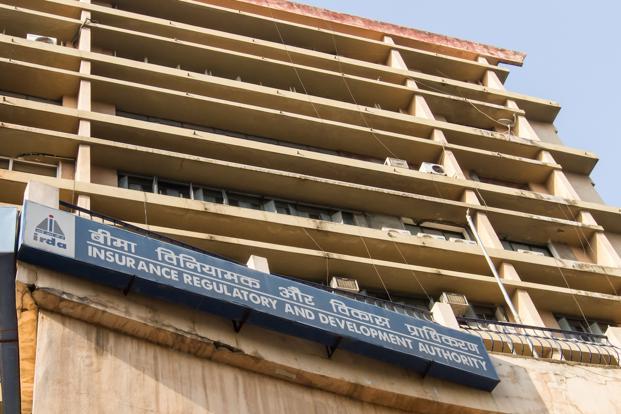
Image Source: https://www.livemint.com/rf/Image-621x414/LiveMint/Period1/2015/08/22/Photos/irda.jpg

In this article, Agrima Tripathi, pursuing Diploma in Entrepreneurship Administration and Business Laws from NUJS, Kolkata discusses the role and effect of IRDA in the Insurance Sector

Introduction

Insurance Regulatory and Development Authority of India Act was passed by the Parliament in the year December 1999. The Act received President’s approval in the year January 2000. The Act intents to protect the interest of the insurance policy holders. It also aims to encourage and ensure the systematic growth of the insurance industry. The Insurance Regulatory and Development Authority is a statutory body formed by the Insurance Regulatory and Development Authority of India Act, 1999.

What do we mean by Insurance?

Insurance is a monetary instrument, which reduces the financial burden in the events of eventualities, and provides a financial safety. A certain type of loss can be covered by paying a small premium. In case of loss, the Insurance Company will pay a certain amount of money, which will help in reducing the financial burden.

Insurance Products

There are a variety of Insurance products to cater to the different needs of different people. The customer has a lot of options to choose from depending on their needs. The customer is nowadays in place to analyze and compare the policies of various companies with one another and choose the best amongst them. The insurance industry has a large market to target. The Insurance products act more as a protection tool than as a way to save tax. As there is more demand from the customer for new, beneficial and improved insurance products, there is a healthy competition amongst the insurers. This acts as a boon to the customer. Improved products along with attractive schemes have been designed by the public sector to give tough competition to the private sector.

The market is full of different kinds of insurance products. Price, service and products are the main factors that differentiate one product from another. No Company can introduce a new product before taking a prior approval from Insurance Regulatory and Development Authority.

Insurance Regulatory and Development Authority of India

Composition of the Authority

The Authority Comprises of the following members mentioned below;-

  1. The Authority comprises of chairman, whole time members and part time members and together they act as a group of members and work jointly not individually like Controller of Insurance.
  2. The Authority will continue to work even in cases of death or resignation.
  3. The Authority is a body corporate with perpetual succession and a common seal.
  4. The Authority has the power to sue or can be sued in its own name.

Powers & Functions of the Authority

Section 14 of the Insurance Regulatory and Development Authority of India Act, 1999 states the powers and functions of the IRDA. The power and functions of the Authority are as follows:

  1. The Authority aims to protect the interest of the insurance policyholders in the matters related to surrender value of the policy, settlement of insurance claims, insurable interest, nomination by policy holders etc.
  2. The authority gives the Certificate of Registration to the applicant. It can also renew, modify, withdraw, suspend or even cancel the registration of the applicant
  3. The Authority states the qualifications, code of conduct and practical training for the intermediaries and insurance agents.
  4. The Authority promotes the efficiency in the conduct of the business of insurance.
  5. The Authority states the code of conduct for surveyors and loss assessors.
  6. The Authority promotes and controls the professional organizations that are connected with the insurance business. It levies fees and charges for carrying the purpose of this Act.
  7. The Authority has the power to call for information, conduct investigation, audit and enquiry of the insurers, insurance intermediaries and organization connected with the business of insurance.
  8. The Authority controls and regulate the rates, gains terms and conditions that are offered by the insurers with respect to the general insurance business.
  9. The investment of funds by the insurance companies are regulated by the Authority.
  10. The Authority regulates the margin of solvency.
  11. The Authority provides dispute resolution between the insurers and insurance intermediaries.
  12. The Authority controls the working of Tariff Advisory Committee.
  13. The Authority lay down the percentage of premium income of the insurer to fund the schemes for promoting and controlling the professional organizations.
  14. The Authority lay down the percentage of life insurance and general insurance business that can be carried out by the insurer in the rural or social sector.

Role of Insurance Regulatory and Development Authority (IRDA)

  1. To protect the interest of and ensure just treatment to insurance policy holders.
  2. To encourage and ensure the systematic growth of the insurance industry so as to benefit the common man and help in bringing economic growth.
  3. To set, promote, monitor and apply high standards of integrity, fair dealing, financial viability and capability of those it regulates.
  4. To ensure clarity, preciseness, transparency while dealing with the insurance policy holder. The Authority ensure that correct information about the products and services is passed on to the policy holders along with making them aware of their responsibilities.
  5. To provide dispute resolution mechanism and ensure speedy settlement of genuine claims. The Authority must check insurance scams and other misconducts.
  6. To take suitable steps against circumstances where set standards do not prevail or inappropriately enforced.
  7. To bring about the optimal amount of self-regulation in day-to-day activities of the industry reliable with the requirements of the prudential regulation.

Effect of Insurance Regulatory and Development Authority (IRDA)

Effect on Regulation of Insurance Industry

Insurance Regulatory and Development Authority regulates the Insurance sector. It aims to protect the interest of the insurance policy holders. It also encourages and ensure the systematic growth of the insurance industry.

Effect over protection of policyholders

IRDA has great impact over the protection of policyholders. The Authority aims to provide fair treatment to all the policyholders.

Effect over Awareness about Insurance

IRDA is taking steps to increase awareness amongst the masses about the benefits of insurance. There is a separate Consumer education website of IRDA to educate people about insurance.

Effect over Insurance Market

There is a drastic effect of Insurance Regulatory and Development Authority over insurance market. IRDA regulates the insurance market and ensure the systematic and speedy growth of the insurance market.

Effect over Development of Insurance Product

All the insurance companies must take approval from Insurance Regulatory and Development Authority before launching any new product or before making any changes in the existing product or withdrawing a product. The insurers who wishes to launch a new product or make changes to the existing product or withdrawing a product shall submit an application to the Authority in the prescribed form along with the necessary details and reasons for the change reasons. The authority may ask for additional information if required. If no information is asked for then the insurer can start selling the product. The insurer can introduces the new product after allowing it for 60 days for non-life and 30 days for life for clearance by IRDA. This might be delayed due to lack of details about the product, which is necessary to assess the product before approval is given by the Authority.

Effect on Competition between Private and Public sector

As there is more demand from the customer for new, beneficial and improved insurance products, there is a healthy competition amongst the insurers. This acts as a boon to the customer. Improved products along with attractive schemes has been designed by the public sector to give tough competition to the private sector.

Effect over Banks and Post Offices

With the increasing awareness amongst people about the benefits of insurance, the flow of funds have shifted to the insurance industry from Banks and Post Offices. Insurance has become a medium for not only covering losses and risks but has also become a popular way to save tax.

Bhopal Gas tragedy – Importance of Insurance

A Story of Industrial Disaster vis-à-vis Insurance Protection

In 1970, Union Carbide India Ltd (UCIL) established a pesticide manufacturing plant in Bhopal. Pesticides are substances, which shield crops from being damaged by pests. Pesticides are toxic chemicals. In December 3, 1984, a fatal gas, namely, Methyl Isocyanate (MIC) started leaking from a tank at UCIL Bhopal plant. Due to leakage of this fatal gas, approximately 3,800 people lost their lives and many other suffered other health related ailments.

Human life is precious and nothing can compensate the loss of a life. The company was bound to pay compensation to the dependents of the victims to lost their lives. UCIL had to compensate for the damages caused.

Even though human life is invaluable but this situations like these Insurance acts as a big relief. Insurance helps to recover the losses to some extent as the resulting financial liabilities could be transferred to the insurer. Insurance acts as a preventive measure for the unforeseen events, which reduces the financial burden.

Ultimately, an Act was introduced to provide damages to the sufferers of the accidents, which has resulted due to the handling of hazardous chemicals. The Act is Public Liability Insurance Act, 1991, which is applicable to all the owners, related with the manufacturing or handling of the hazardous substance.

Workmen Compensation Act, 1923 also provide compensation to employees in case of injury at the workplace. The employer is liable to pay compensation to the injured employee in case of mishappening. The amount of compensation depends on various factors like nature of the injury, age of the employee, the average monthly wage of the employee.

Furthermore, if the victims who died in the Bhopal gas tragedy had their lives insured, their families would have received some amount of money as help. Money cannot compensate anyone’s life but it can surely act as some support to tide over their loss. In today’s time of uncertainty, everyone must take the benefit of insurance.

Conclusion

Indian economy is growing rapidly. There are several new players in the insurance industry, which has opened new opportunities and has contributed the employment generation. Insurance awareness is very important at different levels of the society. Individuals should know the importance and the consequent benefits of insurance. In order to achieve higher levels of penetration and spread of insurance among larger sections of the population, the insurance companies should pay more concentration on the rural communities rather than the urban and the higher segment of the society. With IRDA in place, the insurance sector is regulated and the interest of the policyholders is ensured. IRDA also has to bring necessary changes whenever required in consultation with the stakeholders.

Download Now

Can Hotels Stop Unmarried Couples From Booking A Room?

0
Unmarried Couples From Booking A Room

In this article, Shrey Lodha, of National Law University Odisha discusses whether Hotels can stop unmarried couples from booking a room, even if the latter have authentic and required identity proofs or not. 

Can they? Or a more pertinent question to be asked is that “should they”, considering the kind of pseudo-liberal society that Indian unmarried couples are surrounded by? Is there any legal provision underpinning this act of some hoteliers of denying booking of any room for unmarried couples?

Let’s dive into the nitty-gritty of these questions by considering prevailing practices going on in the country.

Is there any legal provision for such denial?

As per the officials of Hotel Association of India, there exists no such law which bars the unmarried couples from getting a room booked in any hotel pan India. However, it has been observed umpteen number of times that the unmarried couples have gone to the extent of pleading to the hoteliers for providing a room, which in reality, is their fundamental right of freedom of movement provided under Article 19(1)(d) of the Indian Constitution.

In a country like India, where its apex court has time and again subscribed to the progressive and modern approach of delivering justice, its judgement’s authority has been unequivocally not followed under the cloak of discretion and morality. Reformative decisions like that of validating live-in relationships and pre-marital sex still play a very dormant role in terms of its applicability.

Is it the abject fear of the society that compels the hoteliers to do so?

It is a well-known fact that behaviour of a person or an institution has to be socially guided and acceptable. Society, since the time immemorial, has played an influential role in the rise and fall of traditions, cultures and conventions. The perception of the society towards living of unmarried couples together is that of contempt and disgust. Till date, none has been successful in explaining as to why is it inappropriate for the unmarried couples to live together but the blind-folded followers of this norm are increasing every day in numbers.

Societal refutation of allowing unmarried couples to live together has been pervasive in nature with its extension into the hotel industry.

Audacity would mean tarnished reputation

Non-conformity to societal norms and conditions by some courageous youth has always compelled these recipients to either leave their clan or their existence. The audacity to go against the societal perception of upholding unmarried couples’ choice of living together would not only follow daunting repercussions of abolishment but also a tarnished reputation which the hoteliers are not ready to face.

Is there no alternative for the unmarried couples to book a room in a hotel?

The God’s Plan of throwing every problem along with a solution, though it takes time to find the latter sometimes, has been a wonderful blessing. Most recently, startups like StayUncle, LuvStay, OYO Rooms, Cleartrip, MakeMyTrip, etc., have started to provide options of the hotels which are couple friendly which include married as well as unmarried couples. The startup, StayUncle, as a result of robust polarization of ideologies condemning the idea of unmarried couple living together, had started a campaign “couples need a room, not a judgement” which had gone viral and as a result, unmarried couples could groove into the pleasant and safe environment of having some privacy.

In addition, an unmarried couple is not required to provide multifarious identification proofs for booking a room in a hotel through these platforms.

The unmarried couple is required to provide a valid ID proof to avail a room in a hotel. Valid identity proof can be an Aadhar card, Driving License, Passport, PAN Card, etc. Both, the man and the woman, are required to provide the hotel with their valid identity proof. Nevertheless, an unmarried couple doesn’t need to worry about their identity proof’s misuse as the hotels are more interested in getting business and least interested in creating bad publicity.

Dichotomy involved

It is pertinent to note that though the aforementioned platforms provide a hassle-free accessibility in booking a hotel room for an unmarried couple, then too, they place a caveat warding off any liability involved upon rejection of admission into the hotel of an unmarried couple.

Is it an offence if an unmarried couple books a room in a hotel?

Your reflex to this question shall always be the same as when people ask you, is it an offence to stand for the national anthem during the movie. No, it is not an offence for an unmarried couple either to book a room in a hotel or to stay for two nights and three days in a hotel.

Legal rights vested with an unmarried couple

  • If the police officials barge into your hotel room in the middle of night and harass you by saying that they will charge you with “indecent public behaviour” or “abduction of girl”, then, just have a firm stance and consistently reiterate the fact that it is not an offence under any of the said charges. Rather, the police officials would be penalized for the act of violating the right to privacy under sections 166 and 166A of the Indian Penal Code, 1860.
  • It is legal for two consenting adults to do whatever they want, lawful, inside the closed walls.
  • If videotaping or photographing is a means subscribed by anyone then it is a blatant intrusion upon your privacy and you can run charges of its violation on the person so does it. If a police official begins to use criminal force against women then that police official can be booked under section 354 of the Indian Penal Code, 1860.
  • If the parental pressure is used as a mean to extort money from you or make you subject to sermons involved during moral policing, then, make sure that your parents are well-aware or at least ar in consonance with your stance.
  • Also, it is pertinent to note that if a police official has an intention of arresting you under the cloak of aforementioned charges then he is bound to inform your relative of the place of arrest as prescribed under section 41B of the Code of Criminal Procedure, 1973. In addition to this, under section 50 of the Code of Criminal Procedure, 1973, the person so arrested has to be given proper reasons for the arrest.

What can the couple do if denied a room?

Denial of services, in the form of refusing to provide any room, are at the possibility of occurring at 2 different stages. The first one being that the hoteliers have denied booking a room for unmarried couples wherein the payment is preceded by booking. In this situation, an unmarried couple or as a matter of fact, a couple or not, has no legal right violated since, the hotelier’s vest within themselves the right of admission to the hotel to guests. Depending upon their hotel policy and at their discretion, the hoteliers can deny a room at the pre-payment stage.

However, in the post-payment stage, i.e., when an unmarried couple has pre-booked a hotel room for which payment has been already advanced to the respective hotel authorities through OYO Rooms, MakeMyTrip or any other online booking portals, then, in that case, the hoteliers cannot deny such services. For the reason that past consideration has been given to the hoteliers in the form of advance payment for the services to be availed in future which are to be provided by the hotel authorities amongst one of which is availability of confirmed room. In such a case of violation of legal sanctity, the unmarried couple being subjected to lack of services can approach the consumer court, depending upon the amount of payment advanced, for seeking redressal under the Consumer Protection Act, 1986.   

Is societal determination of a norm higher in the hierarchy than the progressive Supreme Court?

The judicial pronouncement of the Supreme Court decisions has changed umpteen times for adapting to progressive and modern approach leave alone its judicial reliability. With changing times the societal ideologies shall shift from rigid dogmas to flexible convictions. However, the police raids in Mumbai charging thirteen unmarried couples of “indecent public behaviour” under section 110 of the Bombay Police Act, and also booked under section 7 of the Prevention of Immoral Traffic Act, 1956, for staying together in a hotel room, kicking out teenage couples off the bus in Kolkata are all true incidents which explicitly show signs of a civilization trapped in the roots of non-cohesive and liberally-backwards culture.

Ground-breaking judgements of the Hon’ble Supreme Court in Justice KS Puttuswamy (retd.) vs Union of India WRIT PETITION (CIVIL) NO 494 OF 2012 with respect to live-in relationships, premarital sex and right to privacy clearly highlight that the faith of the citizens of the country on judiciary, which aims for serving justice, would be upheld and would not be stabbed by following radical ideologies which are the ones expected by the ideologically-backwards society. Notwithstanding anything of this sort, the moral policing and the societal refutation have always been a casting spell of morality on unmarried couples’ choice to live together.  

Privacy is the constitutional core of human dignity

In the most recent decision of the Hon’ble Supreme Court, wherein, a constitutional bench of reverential judges pronounced that right to privacy is an inalienable part and parcel of right to life and personal liberty guaranteed in Article 21 of the Indian Constitution. Considering various questions relating to the decriminalisation of homosexuality, the validity of premarital sex and other issues related to privacy, the Supreme Court upheld the privacy of a human as the core of his existence to live with dignity.

However, the act of refusing unmarried couples the right to book a room in a hotel on the behest of societal pressure and dogma is a blatant violation of the fundamental right of right to privacy incorporated under Part III of the Indian Constitution which guarantees various fundamental rights to the citizens of the country.

Moral policing: A contradiction to the right to privacy

Mumbai’s raid by the police officials in the hotel room of unmarried couples, Kolkata’s trial-by-society of the teenage couple standing close to each other are the examples which explicitly illustrate the state of increased moral policing is a corollary of violation of the right to privacy. If the executive and the society have taken up the job of determining who should have an intimate relationship with whom and at what age and breach of the same shall attract what punishments, then, don’t you think that the role of the judiciary and that of human emotions shall be completely done away with?

Despite pictorial representation of a true incident, in the movie Masaan, where a boy commits suicide due to being made subject to moral policing and public shaming by certain police officials who barged into his privacy in presence of his female companion, still, a number of 21st century Indian society pupils subscribe to the ideology of radical morality.

Conclusion

If two consenting adults want to live together, irrespective of their marital status, should that amount to an offence? If the mere act of living with a person, married or unmarried; of the same sex or opposite sex, for whom one has emotions to being made an offence? Certainly not. If radical morality or pseudo-liberality begins to encroach upon the emotions of the people, then, believe you me, all will one day be mechanised to follow the whims and wishes of those who portray themselves as guardian of decency.

Download Now

Registration of documents under the Registration Act, 1908

0
Registration of documents

In this article, Sanjana Tripathy explains the concept of registration of documents and the advantages arising out of it.

INTRODUCTION

Registration is the process of recording a document with a recognized officer and to safeguard its original copies (See Here). Any document whether binding or non-binding shall be registered in a required manner. Registration of every document is not necessary but doing so affirms the authenticity and helps in avoiding legal process. Many people are not familiar with the concept of registration and hence, do not understand its importance in eyes of law. It is crucial to be familiarized with registration and what it includes to avoid disputes. There are two kinds of registration according to The Registration Act, 1908 namely “Mandatory Registration” and “Optional Registration” which have been explained below. Apart from them, a person going for registration should also know the following:-

  1. Who can register?
  2. Where to register?
  3. When to register?
  4. What fees to be paid?

If the person knows all of these then he will be able for apply for registration of a document without any difficulty.

MANDATORY REGISTRATION

Section 17 of the Indian Registration Act, 1908 provides for mandatory registration of certain documents. Those are as follows:-

  1. Gift deed related to an immovable property;
  2. Non-testamentary instruments:                                                                                                  a. purporting to creation, assignment, declaration, extinguishing of any interest in any immovable property worth Rs. 100 and above;                                                        b. which acknowledge receipt or payment of any consideration for creation, assignment, declaration or limitation of any right, title or interest;
  3. Lease of immovable property for any term exceeding one year or reservation of yearly rent;
  4. Contracts for transfer of immovable property for a consideration for purpose of Section 53A of Transfer of Property Act, 1882 is executed on or after the inception of Registration and Other Related Laws (Amendment) Act, 2001.

Failing to do so will result in transfer being invalid.

OPTIONAL REGISTRATION

But not all documents have to be registered. Section 18 provides for optional registration of some documents such as:- (See here)

  1. Adoption Deed
  2. Instrument relating to shares in joint stock company
  3. Debentures issued by joint stock company
  4. Will
  5. Lease of immovable property not exceeding 1 year
  6. Document of a past transaction
  7. Power of Attorney with respect to movable property
  8. Decree or order of court comprising an immovable property valued below Rs. 100
  9. Certificate of Sale granted
  10. Agreement of Mortgage
  11. Promissory note
  12. Instrument of partition by Revenue Officer
  13. Grant of immovable property by Government

WHEN TO REGISTER DOCUMENTS?

According to Section 23 of The Registration Act, 1908, all documents except a will have to be presented for registration within 4 months from the date of execution. If a document is executed by several persons at different times then that document has to be presented for registration and re-registration within 4 months from the date of each execution (Section 24 of The Registration Act, 1908).

If due to any urgency or unavoidable accident, any executed document or a copy of decree or order is not presented within 4 months but it is presented after its expiry will be accepted for registration provided that 10 times the amount of registration fees is paid and delay in presentation does not exceed 4 months.

Application for such a step has to be made to Sub-Registrar who will forward such application to the Registrar to whom he is a subordinate (Section 25 of The Registration Act, 1908). If a document is executed outside India by any or all of the parties and is presented after expiry 4 months then it will be accepted for registration provided that it was executed and presented for registration within 4 months after its arrival to India (Section 26 of The Registration Act, 1908).

WHERE TO REGISTER?

In case of documents regarding immovable property, it shall be presented for registration in the office of Sub-Registrar within whose district the property or part of it is located (Section 28 of The Registration Act, 1908). In case of all other documents, they shall be presented:-

  1. In the office of Sub-Registrar in whose sub-district the document was executed; or
  2. In the office of any other Sub-Registrar under State Government where all individuals desire the document to be registered.

The Officer authorized to register a document may on a special cause being shown also go to the individual’s private residence who desires to present a document for registration or deposit a will (Section 31 of The Registration Act, 1908).

Who can apply for registration?

According to Section 32 of The Registration Act, 1908, every document (except in cases of Sections 31, 88 and 89 of The Registration Act, 1908) shall be presented for registration or deposited in a proper registration office by:-

  1. some person executing or claiming under the same, or, in the case of a copy of a decree or order, claiming under the decree or order, or
  2. the representative or assignee of such a person, or
  3. the agent of such a person, representative or assign, duly authorized by power-of-attorney executed and authenticated in the manner hereinafter mentioned.

Every person presenting a document for registration shall affix his passport size photograph along with fingerprints to the document. In a case where a document is related to transfer of ownership of immovable property, passport size photographs and fingerprints of all the buyers and sellers mentioned in the document shall be affixed (Section 32A of The Registration Act, 1908).

In case of a will or authority to adopt, the testator or after his death any executor may or a donor or after his death the donee or adoptive son may present it to the Registrar or Sub-Registrar for registration respectively (Section 40 and Section 41 of The Registration Act, 1908). It shall be registered if it is satisfied that:-

  1. The will or authority to adopt was executed by the executor or donor;
  2. The testator or donor is dead;
  3. The person presenting the will or authority to adopt is entitled to present the same

FEES

The prescribed fees for registration of documents shall be paid on presentation of documents (Section 80 of The Registration Act, 1908).

CASE LAWS

In Narinder Singh Rao v. Air Vice Marshal Mahinder Singh Rao (2013) settled by Supreme Court, the Appellant’s father wrote on a piece of paper that his wife would inherit the property on his death. It was signed by a single witness and was not registered. After the father’s death, his widow executed a will, transferring the entire property to only one of her nine children. The aggrieved siblings challenged the mother’s will in court, stating that she had not inherited the entire property because the father’s will was invalid. The argument was accepted, stating that for a will to be valid, it must be attested by two witnesses. Besides, it could not be held as a valid transfer of property as it was not registered under the Indian Registration Act, 1908.

So, the Supreme Court held that the rule of succession would apply in dividing the property as the father’s will was invalid. This case recapitulated two rules which have been clearly set out in legislation. They are: (See Here)

  1. The proper attestation of wills and
  2. The registration of documents.

In Satya Pal Anand v. State of M.P. & Ors. (Civil Appeal No. 6673 of 2014), the Supreme Court held that once a document is registered then authority is not open to cancel its registration.

For this case, an application was moved by a man before the Sub-Registrar (Registration) to cancel the registration of extinguishment deed executed by the Society cancelling an allocation of the plot. Persecuted by the rejection of his application, on the ground that Sub Registrar has no domain to cancel the enrollment of a registered document being referred to, he moved toward Inspector General (Registration) which was in vain.

The High Court, on its writ petition, held that, since the Registering Officer selected the deed acquainted with him for registration, his ability is exhausted and he would then advance towards becoming functus officio (an officer or agency whose mandate has expired either because of the arrival of an expiry date or because an agency has accomplished the purpose for which it was created. When used in relation to a court, it may also mean whose duty or authority has come to an end) and no vitality to appropriate the report under Section 33 of the Act. This decision by the High Court was condemned in the Supreme Court.

The appeal in Part XII especially under Section 72 limits just to the refusal of Registering Officer to register a document. It was similarly held that power given to Registrar under Section 68 can’t be used to cross out registration of a registered document.

Moreover, the court observed that there is no express course of action in the Registration Act or Rules bound by the State of Madhya Pradesh nor any circular issued by the competent authority of the State of Madhya Pradesh with the goal that the extinguishment deed should bear the characteristics of both the vendor and the buyer and both must be accessible before the Registering Officer when the document is presented for registration. (See Here)

WHAT ARE THE BENEFITS OF REGISTERING DOCUMENTS?

Registration of a document gives a more transparent deal. Even if a registered document is lost or damaged, the registration records prove the authenticity of the document. A document stating that a Power of Attorney has been revoked should also be registered so that there is no misuse after revocation. Easy access also helps in finding the owner who has the title and right to the property and whether there is any case against him or an existing liability before someone decides to buy it. Registration also prevents forgeries or fraud in transactions specifically in tax, stamp duty etc.

Even though some documents are registered on an optional basis, it is still advised to register them as this will prove the authenticity of the document and set aside any doubts arising because of it. (See Here)

CONCLUSION

Therefore, it can be seen that registration of a document is of utmost importance and must be done as soon as possible otherwise it would lead to long years of legal battle which is costly and time consuming.

REFERENCES

  1. www.livelaw.in
  2. Sakina Babwani, ‘Advantages of Registering Documents’ https://economictimes.indiatimes.com/analysis/advantages-of-registering-documents/articleshow/19879392.cms
  3. The Registration Act, 1908
Download Now

How to tackle workplace bullying legally

1
workplace bullying
Image Source -

In this article, Keshav Khandelwal discusses steps for tackling workplace bullying legally.

Introduction

“Blowing out someone else’s candle won’t make yours shine brighter”

Bullying is an aggressive behaviour with hostile intent involving use of force, threat, power to abuse, dominate and intimidate others. Those involved in bullying use words, actions and physical contact with the victim to achieve their intended outcome. Bullying is a scathing conduct mostly prevalent in schools and workplaces. Victims of such behaviour can become drugs and alcohol abuse, have physical and emotional health issues and may suffer from low self-esteem.

How to tackle workplace bullying legally

India has no specific laws related to bullying. Such issues are minimally dealt by using different sections of IPC such as Section 339– Wrongful restraint, Section 340– Wrongful confinement, Section 506– Punishment for criminal intimidation, Section 323– Punishment for voluntarily causing hurt, Section 306– Abetment of suicide. As per the survey of

National Crime Prevention Council 2006, 40% of the teens have experienced cyberbullying making this issue of utmost importance. Moreover, internet bullying has also become a major problem which has not been strictly dealt with Indian laws in the time when cyberbullying is taking serious roots in India.

Provisions of Indian Penal Code are silent in dealing with issues related to cyberbullying, school bullying by peers, organisational or workplace bullying which includes mob behaviour, role of active bystander, effects on passive bystander, tyrannical behaviour, coercive power and many related aspects i.e. insecure colleague conspiring collectively to pull a person down in public meetings with the bosses, forcing to opt out of the project, using other’s work and getting credits.

Harassment in workplaces are only dealt by the guidelines mentioned in the case of Vishakha v. State of Rajasthan(1997 6 SCC 241) and it covers only the sexual harassment of a woman, not the non-sexual harassment which has wider adjunct in workplace bullying. No Indian laws explicitly talk about the bullying of male personnel in the workplace which causes a huge amount of loss to the talents and economic resources of the country.

Bullying in school and colleges

A survey showed that 60.4% of children were bullied in their school time and it is in the form of teasing, calling names and physical interactions. Bullying in colleges mostly takes place in form of ragging only.

For governing the ragging related activities Raghavan Committee guidelines and UGC regulations are there acting as measures for preventing ragging done by senior students on juniors. But both of these are silent while dealing with issues related to bullying by the peer group of students. So pertaining to these reasons there is a scope for new legislation or some amendments in IPC for mitigating bullying in schools and colleges.

Workplace/Organisational Bullying

Workplace bullying is a dynamic term which involves negative behaviour comprising of aggression, hostility, intimidation, and harm characterised by repetition and persistence, displayed by an individual or group and directed towards another individual or group at work in the context of an existing or evolving unequal power relationship. The issue of workplace bullying is so gigantic that it has emerged in Bollywood movies like Rocket Singh and Kartik-Calling-Kartik. Workplace bullying or organisational bullying is equitable to yelling, name-calling, mocking, and intimidating a person in the workplace. It can be done by managers or co-workers. It generates lots of stress-related health complications like hypertension, immune disorders, depression, and anxiety. The person’s immediate job and career are also disrupted.

Two types of bullying behaviour are:

1) Person-related bullying which involves making insulting remarks, teasing, spreading gossip or rumors, persistent criticism, intimidation, and threats.

2) Task-related bullying which involves giving unreasonable and unmanageable deadlines, excessive monitoring of work and assigning meaningless or no tasks.

Bullying at workplaces is still overlooked by India’s lawmakers, even though thousands of young men and women succumb to bullycide all over the country. Though Indian Law speaks about Sexual Harassment at a workplace, no mention of bullying as a non-sexual harassment against the employees is there and it includes activities such as Harassment based on race, sex, religion, age, disability, national origin, and stalking. Also, roles of mob-behavior, active-bystander, tyrant, coercive power in bullying is not mentioned in any law but is treated as a crime in many countries. Indian legal system always tries to negate the term bullying as an offence and try to link it with certain other offence which further enlarges the problem of bullying as not being recognized as a separate offence. Bullying in workplaces is dealt only when the situation becomes cruel leading to suicide and depression to the bullied person. Organizational bullying has always being understood within the different offences through which it has surmised itself into offences of abetment to suicide [Madan Mohan Singh v. State of Gujarat and Anr (2010) 8 SCC 628], sexual harassment by employer, hurt or injury voluntarily caused by employer under IPC and has not been linked with criminal law in relation to labour law issues of discrimination, equality in promotion and wages and exploitation of personnel.

Workplace non-sexual harassment by superior and colleagues on engineer had resulted in suicide and Court has observed that administrative control and discipline cannot be exercised by superior to harass, bully or scolding inhumanly [Praveen Pradhan vs. State of Uttaranchal (2012) 9 SCC 734]. Many HCs in various cases like Dr. Subhash Manchanda v. State Of U.P. & Others [(2006) 9 Adj 208] and Sanjay Singhal v. The State [(2007) Crl. L. J 4568] has refused to quash the proceedings against superior on the charge of abetment of suicide under Section 482 of Cr.P.C, 1973. For arriving at this decision, these court have shown non-compatibility with SC previous judgments like Madan Mohan Singh v. State of Gujarat [(2010) 8 SCC 628] and Netai Dutta v. State Of West Bengal [(2005) 2 SCC 659] in the pretext of differentiating facts and circumstances but divergent conclusions have emerged on the issue of humility at workplace. SC judgments on the above-mentioned issues are based only on section 306 (Abetment to suicide) and had not taken conducts affecting rights of employees and liability of the employer. Thus two different opinions are existing as primarily not recognizing bullying as a crime in itself which has caused the courts to part ways with each other and secondly limiting the powers of employers which are to be dealt with amending IPC so as to include bullying as a crime.

ANTI WORKPLACE BULLYING LAWS IN INDIA

Though no specific law deals categorically deal with workplace bullying the perusal of some of the legislation can provide help to mitigate workplace bullying where non-sexual harassment or bullying behavior occurs, i.e.,

  • NO DELAY IN PAYMENT OF WAGES – Section 5 of the Payment of the Wages Act, 1936 provides timely payment of wages.
  • NO UNREASONABLE DEDUCTION OF WAGESSection 7-13 of the Payment of the Wages Act, 1936 provides when deductions are to be made and up to what extent deductions can be made.
  • EQUAL PAY FOR EQUAL WORK – Equal Remuneration Act 1976 provides that each and every employee should receive the same remuneration for similar nature of work.
  • DEFAMATION  – Sec 500 of IPC provides punishment for defamation and civil suit can be filed as civil wrong in Law of torts.
  • UNREASONABLE CLAUSES IN THE EMPLOYMENT AGREEMENT Industrial Disputes Act, 1947 regulates the dismissal regulation and Chapter 5A of the act deals with Lay Off and retrenchment procedures to be followed by the companies.
  • MATERNITY BENEFIT ACT, 1961– It enshrines non-discriminatory treatment to women under pregnancy and provides for maternity benefits given to woman under recovery from pregnancy.
  • SEC 24 A OF THE PERSONS WITH DISABILITIES ACT, 1995 It mandates for non-discrimination in Employment.
  • NO SEX DISCRIMINATION IN PROVIDING WAGES According to Article 39(d) of the Constitution and Section 2(h) of the Equal Remuneration Act 1976, it is the duty of the employer that every employee whether male or female should equal remuneration for equal work

Conclusion

Harassment and bullying of employees at workplace inherently vitiate their right to live with human dignity enlightened by our constitution. Article 42 and Article 43 of the constitution directs the state to provide provisions securing just and humane conditions of work. So the state should make it possible for employees to work free of any bullying and harassment by amending IPC.

A wider scope of Article 21 has included faculties of thinking and feeling [Francis Coralie Mullin v. Ut Of Delhi 1981 SCR (2) 516], and thus bullying vitiating these faculties should be made a crime and unconstitutional. Today many issues prevalent in form of bullying by peers, taking credit of some other’s work, excessive monitoring and teasing in the workplace by employers are some of the major enigmas which are not currently dealt by Indian laws and legislations which has led to an escalation of suicide rates, depression and tendency to commit a crime. Thus to avoid degradation of the employees, wastage of talent and economic resources, upsurging crime rate and other health issues there is a need for a specific law to deal with such bullying like situations.

References

  1. Bullying, American Psychological Association, available at http://www.apa.org/topics/bullying/
  2. India lacking laws to curb cyberbullying, available at http://www.ciol.com/india-lacking-laws-curb-cyberbullying/.
  3. Indian Journal of Pediatrics in March 2011, Volume 78, Issue 3, pp. 307–310.
  4. Strictly enforce antiragging regulations: Raghavan panel, The Hindu, available at http://www.thehindu.com/todays-paper/tp-national/Strictly-enforce-anti-ragging-regulations-Raghavan-panel/article15239970.ece.
  5. UGC Regulations on Curbing the Menace of Ragging in Higher Educational Institutions, 2009.
  6. Einarsen et al., 2011; Hoel and Beale, 2006; Tracy et al., 2006.
  7. Bullying in the Indian workplace: A study of the ITES-BPO sector, by Premilla D’Cruz, Charlotte Rayner, available at http://citeseerx.ist.psu.edu/viewdoc/download.

Download Now

Everything you need to know about Phantom Stock Options

2
Phantom Stock Options

In this article, Vibhuti Kochhar, pursuing Diploma in Entrepreneurship Administration and Business Laws from NUJS, Kolkata discusses on Phantom Stock Options

Introduction

The recent startup revolution and boom in the e-commerce industry has given rise to immense competition and an array of job opportunities. Therefore, it has become essential for companies to not only offer high remuneration packages but also incentives to its employees, primarily key managerial personnel and senior management to retain them and not lose them to their competitors in the long run. Such incentives include employee stock option schemes and employee purchase plans, stock appreciation rights, general employee benefit schemes and retirement benefit schemes.

Employee Stock Options

ESOPs or Employee Stock Option Scheme involves granting the employees some ownership stake in the company for the creation of ownership attitudes amongst the employees and aligning their interest with those of the company and its shareholders. These act as great motivators and can get employees highly involved in their jobs and focused on corporate performance. It is an imperative device to attract and retain quality employees and encouraging long-term attitudes in the employees.

Under a stock option plan, a company grants to an employee the right to buy a certain number of shares in the company at a fixed price for a certain number of years. The participating employees may purchase the stock at a discounted price.

Stock Appreciation Rights

Another way to curb attrition amongst employees is to offer Stock Appreciation Rights (SARs). These create a right to the increment in value of the company’s stock over a specified period of time. The employee makes no payment of a price for the share unlike in ESOPs. The right to appreciation is based on a specified number of shares of the company and the settlement of the appreciation right is either done through equity shares of the company or cash payment. The issue of SARs provides the employees with an impetus to work towards the growth of the company as their settlement is directly linked to the appreciation in the share price of the company.

Phantom Stock Options

Phantom Stock Options are those units of SARs that are settled by way of cash settlement. These options are based on the performance of the employees and are basically incentive plans through which the employee would receive a cash settlement after a specified period of time or on reaching a specified target. The value of the settlement is linked to the value of the share price. Therefore, if the share prices are high the employee is likely to get a high cash payment. Issuing of phantom stocks is a preferred means of incentivizing employees on the basis of the share price if the company does not wish to actually share equity with the employee and give up control of the company for under such a scheme the stock is never actually owned by the employee.

Basically, phantom stocks are a promise to pay a bonus to the employee proportionate to either the value of the shares or the increase in the value over a specified period of time.

Types of Phantom Stock Options

Phantom Stock Options can be of two kinds:

  • Appreciation only
  • Fully paid

Appreciation Only

When a phantom stock offered to an employee in appreciation only, the participants would not receive the cash settlement based on the current value of the shares but only the appreciated value. This means that they receive the difference between the value the phantom stock was worth when it was granted and the current value of the stock.

Full Value

Full value phantom stock pays exactly out what the stock is worth at the time of the cash settlement of the stock.

How does a Phantom Stock Plan Work?

In order to issue phantom stock to its employees, the company would enter into an agreement with the participant employees. The terms of the plan are given in the agreement. Conforming to the terms of the plan, the company would grant a number of units of shares or phantom stocks to the participating employees for a specified period of time. The agreement states the starting value of the shares as well as the other conditions of the plan like the vesting schedule, the payment events, dividend if applicable etc.

Once the terms of the plan are fulfilled, the employees become eligible to exchange their units of phantom stock for cash payment. The amount of the cash settlement is dependent on:

  1. the number of vested units they hold,
  2. the value of the units at the time of payment, and
  3. whether the plan was for the full value of their units or strictly the appreciation in the value from the date of grant.
For example, an employee received 20 phantom shares with an initial value of Rs. 100, and the shares value on the payment date at Rs. 150. At the date of the payment, the employee would receive Rs. 3000 under a full value plan and Rs. 1000 under an appreciation only plan.

The payment of a phantom share is treated like a bonus and is usually redeemed in cash. It requires a formal agreement that determines the terms of plan and conditions of payment.

Legal Framework

The Companies Act, 2013 has prescribed rules for the issuance of ESOPS but it does not mention anything with regard to phantom stock. The applicability of SEBI (Share-Based Employee Benefits) Regulations, 2014 to Phantom Stock has been clarified in an informal guidance raised by Mindtree Limited.

The informal guidance by SEBI clearly states that for an employee benefit scheme to be covered under the SBEB Regulations, the scheme should actually involve “dealing in or subscribing to or purchasing securities of the company directly or indirectly”. However, Phantom Stock Scheme does not involve any actual purchase or sale of equity shares. Thus the SBEB Regulations are not applicable on Phantom Stock Schemes.

Tax and Accounting

On the exercise of Phantom Stock Options once the conditions of the plan are fulfilled the cash settlement received by the employee is treated as salary income in the form of perquisites of the employee. The company is liable to deduct tax at source before making the payment of the cash entitlement to the employee. The company is to make provisions for the cash required for the entitlement based on fair market value at the end of each financial year until the exercise of the Phantom Stock Options.

Phantom Stock Options in Partnerships and LLP

Since partnerships and LLPs do have equity shares and common stock they cannot issue phantom stock per se to the partners. However, partnership firms can exercise plans that are much alike to phantom stock but in this case, the value of the phantom stock unit would not be linked to the value of the common equity stock, rather it is linked to the partnership equity value. Other than this all aspects of the plan would remain the same and the entitlement received on the exercise of the stock would be treated as salary income. For the reason, that phantom stock is not actual equity stock in the partnership but the only way to incentivize by issuing hypothetical stock and is settled in cash and not equity the question of whether the partners are considered employees should be irrelevant here.

Advantages of Phantom Stock Options

Phantom Stock is usually preferred over Employee Stock Options by companies since it is a means of sharing the profits of the company without actually parting with the voting rights and giving equity to the employee. The employee is never actually the owner of the stock. As asserted before it basically like a cash bonus only it gives the employee the impetus to work harder towards the common goal of raising the value of the phantom stock unit as it is directly linked to the amount of the settlement he shall receive on the exercise of the stock. The higher the value of the shares, the higher the settlement he shall receive.

Thus, the following are the advantages of phantom stock:

  • No voting rights – Phantom stock is never owned by the employees, therefore, they do not have voting rights in the company. Thus, the key decisions of the company remain with the management.
  • Invested employeesEven though the employees do not have voting rights, they remain invested in the growth of the company as the cash settlement they receive on the exercise of the option depends on the appreciated value of the shares. The higher the appreciation, higher is their entitlement.
  • FlexibleSince the phantom stock scheme does not actually deal in purchasing or subscribing shares, this option can be used by companies owned privately, publically, even partnerships and LLPs.
  • Less complications- Phantom stock is only paid to the employees if the terms of the plan are met, which may be meeting of specific targets or appreciating the value of the stock over a specified period of time. If the terms of the plan are not fulfilled the employer is under no obligation to pay out the entitlement. In case the employee leaves the company before the meeting of the terms, the phantom stock would disappear. As compared to ESOPs where the right to the options vests in the employee even after he leaves the company, phantom stocks are less complicated.
  • No taxes owed till the stock maturesUnlike equity shares held by the employees for a specific period of time that are taxable income on the company for the entire term, phantom stock is only taxed once the stock matures and the cash settlement is paid to the employee. Even then it is taxed as perquisites under the salary income head.
  • Less ExpensiveAs compared to ESOPs, Phantom Stock is much less expensive as it is paid out as a cash bonus.

Even though the phantom stock is highly advantageous and globally a popular practice, it has not evolved as a practice in India. Employees usually prefer ESOPs as it gives them a stake in the company thus, a higher impetus to be involved in the company’s growth. With the growing start-up revolution, most companies go through the conventional method issuing ESOPs as a motivator for its key employees to ensure their long-term loyalties to the company and curb attrition. However, Phantom stocks would serve to be highly advantageous if the company chooses to employ this method rather than ESOPs as it would preserve the ownership and the decision making power of the company.

References

Bushman, A., 2017. RSM. [Online] Available at: https://rsmus.com/what-we-do/services/tax/lead-tax/9-frequently-asked-questions-about-phantom-stock-plans.html
[Accessed 28 May 2018].

Sanjanwala, P., Mehta, N. & Kashmira, B., 2016. Economic Times. [Online] Available at: https://economictimes.indiatimes.com/small-biz/legal/can-phantom-stock-option-be-the-best-way-to-incentivize-employees/articleshow/52119814.cms
[Accessed 28 May 2018].

Shenoy, S., 2017. Novo Juris. [Online] Available at: https://novojuris.com/2017/05/09/phantom-stock-options/
[Accessed 28 May 2018].

Somayajula, D., 2018. IndiaCorpLaw. [Online] Available at: https://indiacorplaw.in/2018/04/sebi-regulation-phantom-stock-options.html
[Accessed 28 May 2018].


Download Now

Oracle America, Inc. v. Google, Inc. – An Analysis

2
Oracle
Image Source: https://cfoc.org/wp-content/uploads/2015/07/google-oracle-android-610x350.png

In this article, Roshni Singh, pursuing Diploma in Entrepreneurship Administration and Business Laws from NUJS, Kolkata discusses the Oracle-Google case.

Introduction

Oracle America, Inc. v. Google, Inc.

Court  

United States Court of Appeals for Federal Circuit
Full case name  

Oracle America, Inc. v. Google, Inc.

Decided

March 27, 2018

Citation(s)

 750 F.3d 1381, 750 F

Judge(s) sitting

Kathleen M. O’Malley, S. Jay Plager, Richard G.Taranto

Damages sought

upward US$ 8.8 billion


The most trending and endless lawsuit of copyright and patent claims has again hinged at the judgment of the federal appeals court of United States. The judgement stated that Google had violated the copyrights of Oracle when it made the custom version of Java platform i.e. API (Application Programming Interface) which is used for building software applications with the help of routines, protocols and tools and use to facilitate communication between various software components, for its Android operating system.

This case started in 2010 by Oracle after it acquired the Sun Microsystem (the company which originally built the Java Language and the platform). Where Google used the Java language and its API in a cleanroom version. Oracle filed a lawsuit claiming infringement of both copyright and patent.

The district court in 2012 ruled that the APIs are not copyrightable. And that was overturned by the appeals court to decide by the jury that the Google’s use of Java APIs is within the ambit of “fair use” under the law.

In 2016, Jury gave its decision in the favour of Google. Oracle appealed against the decision of the jury and then the appeals court gave the decision against Google ruling that Google violated the copyrights of Oracle

Background

Sun microsystem originally developed Java in 1990, which was an Object-Oriented language. It runs with a principle of “Write Once Run Anywhere” which means it needs to be written just once, which can be run on different platforms without making changes in the Java program. Only the Java interpreter is changed depending upon the platform. Google purchased Android in 2005 and started developing its Android operating system which included the use of Java language and API also, by using it in a cleanroom version for its own Android platform. Google decided to take the Java API’s instructions for how to program all that code that does the parsing and converting source code into object code themselves, and they did it in a cleanroom environment, so that Oracle’s code is not included in it, yet the API has remained the same as the Java apps would not work without the same API. Prior to this Google and Sun Microsystem were initiated to deal for the license. But due to disagreement on the conditions of both the parties, the deal failed to arrive at a decision and Google failed to get the Java license.

Later in 2010, Oracle acquired Sun Microsystem for US$ 7.4 billion and it continued developing Java and pursued licensing opportunities and in the same year, it filed a lawsuit claiming both copyright and patent violation on Google.

Trial Phase

Phase 1

The first district court trial tried by the District Court for the Northern District of California in 2010, when Google was sued by Oracle for patent and copyright violation. Oracle accused Google of being aware of their Android developing without a Java license and also illegally copied its APIs which were 37 in number and hence created the infringement of copyright. Oracle sued for both pecuniary damages as well as an injunction to use the claimed materials by Google.

The Jury in 2012 ascertains that the copyrights of Oracle has been infringed by Google related to code, structure, sequence, organization, APIs and also range check function but still it was a question that whether it was within the ambit of fair use or not.

The same Jury also decided the patent claims which comprised claim for two patents:

  • US6061520A- method and system for performing static initialization, and
  • USRE38104E1- method and apparatus for resolving data references

And here the Jury didn’t found infringement in any of the patent claims.

This case was handed over to Judge Alsup who himself learned the Java language to better understand the technicalities of this case and he related the Java language to a ‘bookshelf’. The final verdict given by Judge Alsup was that “anyone is free under the Copyright Act to write his or her own code to carry out exactly the same function or specification of any methods used in the Java API”.

Appeal filed by Oracle

Oracle filed an appeal against the decision of District Court which was assigned to the United States Court of Appeals for the Federal Circuit. The court keeping in mind the Copyrights Act in mind concluded that “the overall structure of Oracle’s API packages is creative, original and resembles a taxonomy”. Therefore the Court held that the SSO (Structure, Sequence and Organization) of an API is copyrightable.

The Appeals Court remanded the case to the District Court for Second Trial and to get the matter of ‘fair use’ concluded.

In 2014 Google filed a petition in Supreme Court to hear the case which was denied by the Supreme Court in 2015.

Phase 2

The appeals court remanded the case to the District Court to start a new trial on the matter of “fair use”. Again the Jury found out that the Google didn’t infringe Oracle’s copyright as the use of Java’s API were under the ambit of fair use.

As against to the verdict of Jury, Oracle filed an appeal in 2016. The appeal was heard by the United States Court of Appeal for the Federal Circuit.

The Appeals court came on a verdict that the fact that Google has copied the copyrighted API packages and also it copied the SSO (structure, sequence and organization) of Java API packages. The Court found out that Google didn’t follow the prescribed criteria of fair use and hence it doesn’t come under the ambit of fair use and was just a non-transformed reuse. It was pointed that “the fact that Android is free of charge does not make Google’s use of Java API packages noncommercial”. And in the counterpart, Oracle charges a fee for licensing its API for who wants to use it and also imposes strict parameters on licensees.

And the situation created huge damages to Oracle and hence Court found it commercial and was not fair use. The Appeals Court ruled in the favour of Oracle and remanded the case to the District Court of Northern District of California to decide that how much of pecuniary damages shall be paid by Google to Oracle.

Violation of Oracle’s copyright

Now the main question arises that whether the use of Java infringes the copyright of Oracle or not?

In the U.S. to copyright a work there should be two parameters to be fulfilled which are as follows:

  1. It has to be work of requisite level of creativity.
  2. It has to be fixed into a tangible medium of expression.

As far as computer programs are concerned they are under the definition of literary works as under the Copyrights Act of U.S.

Copying of both literal as well as non-literal elements of a computer program are prohibited from copying, it also includes SSO of the program.

Terms of Free and Open Source Licenses are also enforced through Copyright law.

Oracle allowed the use of java freely to the developers but licensed it to a certain including in mobile devices. Google used Java language including its API to develop its Android operating system which had to compete with iOS which already have been on the market for few years.

Here Oracle sued Google as soon as its acquisition of Sun Microsystem regarding copyright and patent claims. And Google claimed that it was unaware of any patent infringements and that its use of freely available API’s was within fair use.

Jury decided in the favour of Google. But the Jury didn’t give a final verdict on the matter of “fair use”.

The appellate court gave the decision in favour of Oracle. And concluded that the use of Java language and its API package is not under the attributes of fair use.

Taking the Copyrights Act and the context of fair use into consideration it can be said that Google has violated the copyrights and patents of Oracle. Though Sun Microsystem didn’t show any obligation on the use of Java by Google but Oracle as soon as it acquired Sun Microsystem it sued Google as it used the Java for commercial purpose and the Android Operating System was a competing product.

Conclusion

An almost a decade-long Tech-War which seems to have been arrived at a decision now. Though Google can approach Supreme Court against the decision so arrived by the Appellate Court.

This lawsuit has also been criticized by many people around the world, most of them are found saying that Google could have licensed Java at much lesser cost than his legal expenses which it spent over years.

Patrick Lenihan, spokesman of Google had said in a statement that “We are disappointed that the court reversed the jury finding that Java is open and free for everyone, this type of ruling will make apps and online services more expensive for users.”

The whole case matter revolves around APIs and ‘fair use’ of the intellectual property of Oracle.

It will be now interesting to watch the further step of Google, whether it stops now and pay off the damages or it will again go for appeals.

Taking the whole scenario into consideration it is likely to again get a completely different decision by the Supreme Court.

Download Now

All you need to know about paying advance tax

0
Advance tax
Image Source: http://www.india.com/wp-content/uploads/2017/03/why-advance-tax.jpg

In this article, Samadrita C Bhattacharjee, pursuing Diploma in Entrepreneurship Administration and Business Laws from NUJS, Kolkata discusses on advance tax.

Introduction

The Income-tax Act, 1961 is an Indian Parliamentary Act which lays out the groundwork for the imposition, accumulation, management and return of income-tax in India. It acts as the standard measure of regulating taxation in the country. The Government of India had drafted a bill known as the “Direct Taxes Code” with the intention of replacing the Income Tax Act of 1961 and the Wealth Tax Act of 1957. The bill was later discarded as the wealth tax act was abolished by the government.

The Taxation Laws (Second Amendment bill) of the Act was introduced by Finance Minister of India, Arun Jaitley on 28th November 2016, after nationwide demonetisation of 500 and 1000 rupee notes. It was passed in the Winter Session of Indian Parliament by Lok Sabha Speaker Sumitra Mahajan.

What is advance income tax?

Advance income tax refers to the tax paid before the end of each financial year. It is also known as the “pay as you earn scheme” and is payable in the same year that the income is received if the estimated income tax liability is more than 10,000 in a financial year. The receipt of the advance income tax generates a constant flow of income for the government on a quarterly basis and is a mechanism to incur the expenses in the same year.

Who needs to pay advance income tax?

As per Section 208 of the Income Tax Act of 1961, advance income tax is pertinent to individuals who have a steady income apart from their salaries. If the total tax liability of a taxpayer is Rs 10,000 or higher in a financial year, it is mandatory for him to file advance tax. This applies to all taxpayers including salaried personals, freelancers and businesses. People who are 60 years or older, ie. senior citizens who do not have any commercial engagement are excused from advance income tax.

Salaried personals, freelancers and businesses who earn a high income from sources, besides their regular income, then, after adjusting for expenses or loses, need to pay advance income tax.

While TDS on salaries are deducted by employers, advance income tax is paid on other income that is not subject to TDS. Self-employed professionals and businessmen need to pay taxes in advance as, given the income of their business, the liability can be huge. The same applies in case of companies and corporates.

In case of presumptive businesses, the taxpayers who have opted for the presumptive business scheme, where the income of the business is assumed at 8% of the turnover of less than 2 crores in INR, are exempt from payment of advance income tax. (FY 2017-18)

Illustrations

  • Mrs Bose is 47 years old and she is engaged in the business of furniture. The total turnover of her furniture store for the financial year 2017-18 has amounted to Rs. 1,64,00,000 and she wishes to reveal her income under the relevant section, at 8% of the total turnover. She has no other source of income. Is Mrs Bose obliged to pay advance income tax?

** Mrs Bose fits the criteria as mentioned in Section 44AD of the Income-tax Act with respect to the nature of her business. She can opt for the provisions under the relevant section and declare income at 8% of the turnover. Any taxpayer who opts for the presumptive taxation scheme of this section is liable to pay advance income tax in respect of the business he is engaged in. Thus, if Mrs Bose adopts the provisions under the relevant section of the Income-tax Act, she is also liable to pay advance tax in respect of income generated from such a business.

  • Ms Vibha is 29 years old and she runs a pharmacy. The total turnover of her business for the financial year 2018-19 is Rs. 64,00,000. Her accounts revealed a net profit of Rs. 2,44,000. Is she obliged to pay advance income tax?

** In this case, Ms Vibha is obliged to pay advance tax as per the income generated from her pharmaceutical business if the estimated tax liability for the financial year is Rs. 10,000 or more. The taxable income of Ms Vibha is Rs. 2,44,000, hence the taxation on Rs. 2,44,000 will be zero. Therefore, Ms Vibha does not have to pay advance tax.


For the financial year 2018-19, the rates of advance tax as relevant to individuals below 60 years of age are as per this list.

As per Section 87A of the Income-tax Act of 1961, a taxpayer, who is a resident of India, will be granted a rebate of Rs. 2,500 or 100% of his tax liability, whichever is lower, if his total income does not exceed Rs. 3,50,000. In addition to the rebate, there will also be an added health and education cess of 4% that will be levied on the amount of tax payable by the individual.

Schedule for payment of advance income tax

Advance income tax is to be paid in three to four different instalments in every quarter of the year. The due dates for payment of those instalments are as mentioned below:

Advance tax schedule for self-employed and businessmen:

Due date Amount to be paid
On or prior to September 15th At least 30% of the advance tax liability
On or prior to December 15th At least 60% of the advance tax liability
On or prior to March 15th 100% of advance tax liability


For individuals and corporate taxpayers apart from those who are eligible under Section 44AD or Section 44ADA of the Income-tax Act, 1961:

Due date Amount to be paid
On or prior to June 15th 15% of advance income tax
On or prior to September 15th 45% of advance income tax
On or prior to December 15th 75% of advance income tax
On or prior to March 15th 100% of advance income tax


For taxpayers who have opted for presumptive taxation scheme having business income from various activities like plying, hiring or leasing of goods carriages under Section 44AD or Section 44ADA:

Due date Amount to be paid
On or before June 15th Nil
On or before September 15th Nil
On or before December 15th Nil
On or before March 15th 100% of advance tax


  • Note (1): Any tax paid till March 31st is always treated as advance income tax.
  • Note (2): As per Circular No. 674, dated 14/01/1994 states that if the last day for payment of any instalment of advance income tax is a day on which the banks are closed, then the payment should be made on the following working day.

Illustration

Dr Das is a surgeon. Although Dr Das is in a profession specified under Section 44AA(1), she hasn’t opted for the presumptive taxation scheme under the relevant section of the Act. Her tax liability for the financial year 2018-19 is estimated at Rs. 1,10,000. By when should she pay advance income tax and how much?

** If the estimated tax liability of a taxpayer is Rs. 10,000 or more, then she has to discharge her tax liability in the form of advance income tax. Advance income tax is to be paid in different instalments.


The due dates for payment of different instalments of advance tax are as follows:

For individuals and corporate taxpayers who are eligible assessee as referred to in Section 44AD or Section 44ADA:

Due Dates Amount to be paid
On or prior to June 15th 15% of advance tax
On or prior to September 15th 45% of advance tax
On or prior to December 15th 75% of advance tax
On or prior to March 15th 100% of advance tax


For taxpayers who have opted for presumptive taxation scheme having business income under the relevant section of the Act.

Due Date Advance Tax Payable
On or prior to June 15th Nil
On or prior to September 15th Nil
On or prior to December 15th Nil
On or prior to March  15th 100% of advance tax


Dr Das being a surgeon is in a profession specified under section 44AA(1) but she hasn’t opted for the presumptive taxation scheme under the relevant section. Therefore, Dr Das has to pay advance tax in four instalments as mentioned:  Her first instalment of advance tax will fall due on June 15th, 2018. She has to pay 15% of her tax liability in advance and hence, she has to pay Rs. 16,500 on account of advance income tax by June 15th, 2018.

The second instalment of advance tax will be due on September 15th, 2018. By September 15th, she should pay 45% of her income tax liability in advance, i.e., Rs. 49,500. Assuming that she has already paid Rs. 16,500 as advance income tax by June 15th, she should pay a balance of Rs. 33,000 on account of advance tax by September 15th, 2018. Thus, the total payment of advance tax till September 15th will amount to Rs. 49,500.

Her third instalment of advance tax will be due on December 15th, 2018. By December 15th, she should pay 75% of his liability in advance, i.e., Rs. 82,500. Assuming that she has already paid Rs. 49,500 as advance tax till September 15th, Dr Das should pay a balance of Rs. 33,000 on account of advance tax by December 15th, 2018. Thus, the total payment of advance income tax made till the December 15th, 2018 will amount to Rs. 82,500.

Her fourth and last instalment of advance tax will be due on March 15th, 2019. By March 15th, she should pay 100% of her income tax liability in advance, i.e., Rs. 1,10,000. Assuming that Dr Das has already paid Rs. 82,500 as advance tax till December 15th, she should pay a balance of Rs. 27,500 on account of advance tax by March 15th, 2019. Thus, total payment of advance income tax till March 15th, 2019 will amount to Rs. 1,10,000.

Mode of payment of advance tax

According to Rule 125 of the Income-tax Rules, 1962, it is mandatory for corporate taxpayers (i.e., companies) to make their payment of advance income tax only through the electronic payment mode, ie. by using internet banking facilities of the authorised banks (refer to the section below). Individual taxpayers other than companies, who are required to get their accounts audited, are to make payment for their advance tax only through the electronic mode using the internet banking facilities of the authorised banks. For any other taxpayer, there are two options to make the payment for advance income tax. They can either make their tax payment by electronic payment mode or by depositing the challan at the receiving banks.

Steps to be followed for payment of advance income tax

Individuals who do not need to get their accounts audited may make their payment of advance income tax using tax payment challans at bank branches authorised by the Income Tax (I-T) Department. It can be deposited at one of the 926 branches of any of the banks from this section. Taxpayers may also pay their taxes online through the I-T department or the National Securities Depository.

The steps to be followed to make e-payment of advance income-tax are as mentioned in this document.

What happens in case of non-payment?

If a taxpayer fails to make payment of the advance income tax in the first quarter or the amount paid is less than 30% of the total liability by the first deadline (September 15th), he needs to pay an interest which is computed at 1% simple interest per month on the defaulted amount for a period of three months.

The same interest penalty would apply if he fails to pay the second deadline (December 15th) and the third and last deadline (March 15th) would mean paying 1% simple interest on the defaulted amount for every month until the instalments of the advance tax are fully cleared.

What if advance income-tax paid is more than required?

If a taxpayer makes a payment that is higher than his total tax liability, he or she will receive the excess amount as a refund. If the amount paid is more than 10% of tax liability, the Income-tax department will pay him an interest of 6% per annum on the excess amount paid by him.

Conclusion

The provisions relating to payment of advance income tax help both the government and the taxpayers. By collecting the tax in easy instalments it aids the taxpayers as they do not have to stress about paying a lump sum amount at a time. The process also speeds up the collection process and increases the state fund as the government earns an interest on the collected tax on a regular basis. The quarterly schedule saves taxpayers from defaulting on their income tax payments and helps businesses manage their finances systematically.

Download Now
logo
FREE & ONLINE 3-Day Bootcamp (LIVE only) on

How Can Experienced Professionals Become Independent Directors

calender
28th, 29th Mar, 2026, 2 - 5pm (IST) &
30th Mar, 2026, 7 - 10pm (IST).
Bootcamp starting in
Days
HRS
MIN
SEC
Abhyuday AgarwalCOO & CO-Founder, LawSikho

Register now

Abhyuday AgarwalCOO & CO-Founder, LawSikho