Download Now
Home Blog Page 1464

Single Parent Adoption in India

1
Single Parent adoption
Image Source - http://achhikhabre.com/aditya-tiwari-youngest-single-parent-india/

In this article, Utkarsh Trivedi, of The National Law University of Odisha, Cuttack,. discusses adoption laws in India with special emphasis on single parent adoption.  

Introduction

A study by the Indian Association for Promotion of Adoption and Child Welfare has reported that the number of single women who want to adopt is growing steadily in India, and this is supplemented by the want of having a family.

Adoption in India for Buddhists, Jains, and Sikhs is maintained by the Hindu Adoptions and Maintenance Act, 1956.

Muslims, Parsis, Christians, and Jews do not recognise complete adoption, so if a person belonging to such religion has a desire to adopt a child, he/she can take the guardianship of a child under section 8 of the Guardians and Wards Act, 1890.

The Juvenile Justice (Care and Protection of Children Act, 2000) and The CARA Guidelines and Adoption Regulations, 2017 are supplementary acts to the action for adoption.

Who can adopt?

Under THE HINDU ADOPTIONS AND MAINTENANCE ACT, 1956 following category of people can make adoptions:

  • “Any male Hindu (including Buddhist, Jain or Sikh by religion) who is of sound mind, not a minor and is eligible to adopt a son or a daughter”. But if such male has a living spouse at a time of adoption then he can adopt a child only with a consent of his wife (unless she has been declared incompetent to give her consent by the court).
  • “Any female Hindu (including Buddhist, Jain or Sikh by religion) who is not married, or if married, whose husband is not alive or her marriage has been dissolved or her husband has been declared incompetent by the court has the capacity to take a son or daughter in adoption”.

So according to the act, if you’re a Hindu (Hindu here includes Buddhist, Sikh , and Jain) of sound mind and have attained majority, you can adopt a child, but if you have a living spouse at the time of adoption, then you need the permission of the spouse.

Adoption rules for Muslims

The Islamic term for what is generally called adoption is kafala. A guardian/ward role is played out rather than a parent. This relationship has specific rules. These rules are mainly to preserve the integrity of the family line. Adoption is certainly not prohibited. What is unlawful is to attribute one’s adopted child to oneself, as if there is a biological relationship. This is because Islam seeks to safeguard biological lineage and not confuse lineage.

In a recent judgement of Shabnam Hashmi v. Union of India and Ors. AIR 2014 SC 1281, the apex court has held that the secular laws of adoption will supersede personal laws in this regard and that Muslims can adopt under the Juvenile Justice (Care and Protection of Children) Act 2000. The honorable justice, while ruling stated,“The Juvenile Justice Act 2000 is a secular law enabling any person, irrespective of the religion he professes, to take a child in adoption. It is akin to the Special Marriage Act 1954, which enables any person living in India to get married under that Act, irrespective of the religion he follows. Personal beliefs and faiths, though must be honoured, cannot dictate the operation of the provisions of an enabling statute,” was a ruling given by a bench headed by Chief Justice P. Sathasivam.

Adoption rules for Christians and Parsis

The personal laws of Christians and Parsis do not recognise adoption and so, in this case, an adoption is done from an orphanage, by obtaining permission from the judiciary i.e. by the courts under The Guardians and Wards Act as the Christians have no adoption act.

Since adoption is the legal association of a child so adopted, it comes under the personal law of the religion of the parents wanting to adopt. Christians have no adoption laws hence they have to approach the court under the Guardians and Wards Act, 1890. Christians can take a youngster under the said Act just under foster or child care. Once a child under foster care becomes major, he is free to walk away from all his connections. Besides, such a child does not have a legal right of inheritance under Christian Law.

There is no law regulating adoption among Christians in India. In the absence of a statutory or customary adoption recognized by courts, foster children are not treated in law as children.

But it is to be noted that the amendments by the Supreme Court in the Juvenile Justice Act after the Shabnam Hashmi case held that the secular laws of adoption will supersede personal laws in this regard and therefore Christians can be parents of children and not just have them under foster care.

Single parent Adopting a child

According to the Juvenile Justice Act that was amended in 2006, adoption means, “The process through which the adopted child is permanently separated from his biological parents and becomes the legitimate child of his adoptive parents with all the rights, privileges and responsibilities that are attached with the relationship.”

The most intriguing progress is by the Central Adoption Resource Agency (CARA) Guideline, 2015 issued by the Ministry of Women and Child Development with help from Ms. Maneka Gandhi. The guidelines govern the adoption of children that allow a single female to adopt a child of any gender. Also, the age limit for single parent adoption has been significantly lowered, from 30 to 25 as well.

Therefore, in India, the issue of not being able to adopt a child if you are a single parent is no longer a major problem.

Adoption rules for Males under the Juvenile Justice Act.

Under the Juvenile Justice Act, a single male is not lawfully prescribed to adopt a girl child. The relevant section of the act is as follows:

  1. (1) The prospective adoptive parents shall be physically fit, financially sound, mentally alert and highly motivated to adopt a child for providing a good upbringing to him.

(2) In case of a couple, the consent of both the spouses for the adoption shall be required.

(3) A single or divorced person can also adopt, subject to fulfilment of the criteria and in accordance with the provisions of adoption regulations framed by the Authority.

(4) A single male is not eligible to adopt a girl child.

(5) Any other criteria that may be specified in the adoption regulations framed by the Authority.

This is criticized as clause 4 is not arguing in favour of gender neutrality which is the need of the hour, but keeping.  in mind safety and relevance to certain problems that on

How to adopt a child in India

The steps needed to adopt a child in India are as follows:

  1. Parents wishing to adopt have to register online or can reach District Child Protection Officer (DCPO) to register the prospective parents online. The application form is also available at the website of CARA.
  2. The adoption agency then creates a Home Study report, describing the various factors and compliances of the family within 30 days of the registration of prospective parents.
  3. The home study report is posted on the database by the concerned agency.
  4. The parents are then allowed to choose their prospective child based on their preferences and choices.
  5. They are shown photographs of the child their study reports and the child’s medical examination reports, of up to 6 children.
  6. The adoptive parents have the option of reserving one child within a period of 48 hours for the possible adoption while rest of the children would be released for other prospective parents.
  7. The adoption agency will then fix the meeting of the prospective adoptive parents to access whether they are suitable parents for the child or not. The parents should also be allowed to have a meeting with the child.
  8. This entire process of matching should not take more than 15 days.
  9. While accepting the child the prospective adoptive parents should sign the Child Study Report in presence of a social worker as a witness.
  10. In case the parent or the child is not compatible, the process is followed to start the matching procedure again.

Costs incurred in adopting a child in India

Under CARA rules, an adoption within India should cost no more than Rs 46,000: registration for Rs 1,000, the home study process for Rs 5,000 and Rs 40,000 for the agency’s official child-care corpus fund.

  • Foreign program fees
  • Adoption agency fees
  • Travel expenses
  • Home study costs
  • Documentation and application fees
  • Third party costs

These expenses are paid not all at once, but over the course of the adoption journey. Many agencies and independent organizations offer loans and grants to help families achieve their dreams of adoption. If you have questions about financial aid, consult an adoption professional.

External Agencies that help to adopt a child in India

Adoption is a big decision for which you need proper support and guidance at every step. There is a lot of time-consuming paperwork and procedures involved. The assistance of reputed adoption agencies can reduce your levels of anxiety associated with adoption.

Some agencies that are well reputed are listed below:

  1. Children Of The World (India) Trust

401, Arun Chambers, 4th Floor, Tardeo Mumbai

Tel: 91-022-23520249, 91-22-23520032, 56602196

  1. Delhi council of child welfare

Delhi Council For Child Welfare,

“Palna” Civil Lines,Qudsia Garden, Yamuna Marg,

Delhi – 110054,Tel: 91-11-23968907 91-11-23944655

Inter-Country Adoption

On the global front, the Convention on the Rights of the Child (CRC) manages the issues of between nation selection. It is additionally controlled by the Hague Convention on the Protection of Children and Cooperation in Respect of Inter-Country Adoption, 1993 (the HC) and it has been approved by around 90 nations.

Problems Arising in Case of Inter-Country Adoption

  1. Child trafficking

In many cases, the child becomes the victim of human trafficking. Children are sold after being taken out of the country by providing false information about the child and forging documents.

  1. Post-Adoption Negligence

In transnational adoption, post-adoption monitoring is extremely tough and hence the child may be prone to negligence by the adoptive parents.

The Youngest single parent in India

Aditya Tiwari, a 27-year-old software engineer, had applied for adopting Binny, a child with down syndrome to one of the private child adoption agencies in India. His application got rejected because he did not attain 30 years which is the legal age for adopting a child in India and that, he is not married. The matter was investigated upon, and it was found that Binny along with other children was prepared to send to Delhi for illegal foreign adoption. But now Aditya’s matter was taken into consideration and the law regarding the minimum age for adopting a child got reduced to 25 years by the parliament.

The way forward

India is on the brink of banning commercial surrogacy for everyone except couples married for more than 5 years, by enacting the Surrogacy (Regulation) Act, 2016. After this enactment, the only way, by which a single parent could raise a child will be by adoption . Adoption laws in the country are very procedural but the adoption agencies and societal pressures, be it ever so stupid, are a hindrance to single parents who want to adopt children.

If a woman wants to adopt a child, the society will throw logically deviated questions at her, and might even exclude her from the communal arena, this mindset needs to take a backseat for single parents to take over the wheel.

Conclusion

Adopting a child is a very noble cause, and I believe, the barriers of religion, caste, etc., shouldn’t overshadow a noble deed like this. A couple who wants to raise a child, but because of a biological deformity cannot do so, or a single parent who wants to adopt a baby, is denied adoption, just because he is not married is not a good enough excuse for the same, hence I believe the right to adoption should be included in the Fundamental Rights of the Constitution of the Country.

References

  1. http://cara.nic.in
  2. www.wcd.nic.in
  3. http://indianexpress.com/article/lifestyle/feelings/daddys-little-boy/
  4. http://tcw.nic.in/Acts/Hindu%20adoption%20and%20Maintenance%20Act.pdf
  5. http://cara.nic.in/PDF/JJ%20act%202015.pdf
  6. http://ncpcr.gov.in/showfile.php?lang=1&level=1&&sublinkid=270&lid=708

Download Now

UGC Rules Regarding Plagiarism by Indian Academicians

1
Image Source: http://bit.ly/395DQqv

In this article, Neitseizonuo Solo pursuing B.A.LL.B. honours from Hidayatullah National Law University, Raipur discusses the UGC rules regarding plagiarism.

Introduction

Plagiarism is one of the biggest issues that educational institutions and academia are facing, not only due to the fact that it is basically stealing someone else’s work, but also because this practice is so widespread in higher education, be it Ph.D. scholars or the average undergraduate. Plagiarism is a stain upon the legitimacy of education in India, thus the UGC has recently drafted certain regulations to control and punish plagiarism.

The University Grants Commission

The University Grants Commission or the UGC was set up in 1956 by an act passed by the legislature called the University Grants Commission Act, 1956 (available here) under the Ministry of Human Resource Development. It was created in order to regulate the higher education system of India. The UGC is thus responsible for the rules and guidelines that a college or university is supposed to follow.

Functions of the UGC

The powers and functions of the UGC have been described in Chapter II of the UGC Act, 1956 as follows:

Maintaining the standards for teaching, examination, and research. The law has further provided certain powers to ensure such standards. The UGC can;

  • Inquire about the financial situation of a university.
  • Allocate funding to universities established or incorporated by a central act.
  • Allocate funding to any other universities as they may deem fit.
  • Recommend any measure for the improvement of education of a university.
  • Advise the State or Centre on the issue of allocation of grants to universities or any other matter referred to the UGC by centre or state.
  • Prescribe minimum standards of qualification for both students and teachers.
  • Prescribe regulations regarding the fees and course of study.
  • Under Section 26 of this act, the UGC has the power to frame any rules or regulations in order to fulfill the above functions.

Procedure of Passing Rules and Regulations under Section 26 of UGC Act, 1956

Sections 26, 27 and 28 of UGC Act 1956 have provided certain conditions which must be fulfilled before a binding regulation can be made. The conditions are as follows:

  1. The rules and regulations must be notified in the Official Gazette.
  2. The permission of the Central Government must be taken before it can be made.
  3. Such rule or regulation has to be placed before both the houses of parliament for a total period of 30 days and if both the houses recommend modifying the rules or regulations, then it shall have effect only in the modified form or have no effect if the parliament rejects it.

UGC Rules Regarding Plagiarism

The UGC had constituted a committee to look into the issue of plagiarism and this committee framed a draft regulation known as the University Grants Commission (Promotion of Academic Integrity and Prevention of Plagiarism in Higher Education Institutions) Regulations, 2017 (available here), which was publicly notified by the UGC on 1st September 2017. On 20th March 2018, the regulations were approved by the UGC awaiting notification after the approval of the Ministry of Human Resource Development (MHRD).

Objectives of the Guideline

The objectives of the guidelines have been given in Section 3 of the draft as:

  1. Creating awareness of responsible conduct in academia and prevention of misconduct including plagiarism.
  2. Establishing an institutional mechanism for the promotion of academic integrity, responsible conduct, and prevention of plagiarism.
  3. Setting up a system for catching plagiarism and mechanism for punishing the act of plagiarism.

Plagiarism Defined

The definition of plagiarism has been defined in Section 2 (k) of UGC Act 1956, the regulation as, “…an act of academic dishonesty and a breach of ethics. It involves using someone else’s work as one’s own. It also includes data plagiarism and self-plagiarism.”

Self-Plagiarism

The inclusion of self-plagiarism is an interesting addition as it means that using your own previous work without adequately citing it has also been brought within the ambit of the definition. This idea may appear counterintuitive to the very soul of plagiarism which is stealing someone else’s work but it is important to understand that representing old work as new work is stealing from yourself. It also defeats the purpose of research papers which is to present original work and the integrity of the work is marred. Most publishers will not allow for self-plagiarism as there is no differentiation made between your published work and other people’s published work. One of the most important facets to consider is that the copyright for published works are usually held by the journal rather than the author and plagiarizing from your own work would mean the violation of such copyright.

Scope of the Guidelines

The guidelines have been restricted to Higher Education Institutions which are as follows:

  1. Universities, which are the institutions that have been incorporated by a Central, Provincial or State Act or any institution that has been deemed as such.
  2. Any institute that has been declared by the parliament to be of national importance.
  3. Or any constituent unit within such institutions that provide education after 12 years of schooling and which provides degrees or diplomas after completion of said education.

Further the guidelines are applicable only on “scripts”, the definition of which has been provided in Section 2 (n) as any “…research paper, thesis, study, project report, assignment, dissertation and any other such work submitted for assessment/opinion leading to the award of degree or publication in print or electronic media by students or faculty or staff of an Institution of Higher Education;” the guidelines have also provided that exam scripts are exempt.

Duties of Higher Education Institutes (HEI) for Curbing of Plagiarism

The guidelines have provided in Section 4 and 5 that HEIs must perform certain duties in order to fulfill the objectives specified in the guidelines. HEIs must:

  1. They must establish a mechanism in order to spread awareness so as to promote responsible conduct, deterrence of plagiarism and academic integrity.
  2. The HEIs are to hold sensitization seminars for students, faculty and other members every semester for responsible conduct in pursuit of academia as well as teach academic ethics to students.
  3. The HEIs must put academic ethics in the coursework for Undergraduate, Postgraduate, and Masters degrees. They must also include research and publication ethics for coursework of Ph.D. and M.Phil scholars.
  4. The HEIs must provide training for using plagiarism detection technology.
  5. The institutions must establish facilities for the detection of plagiarism.

Methods for Curbing Plagiarism

Section 6 provides the various ways in which plagiarism is to be deterred by the various Higher Education Institutes. They are as follows:

  1. All HEIs are to implement a mechanism in order to detect plagiarism at the time the scripts are submitted to the institution.
  2. Every student who is submitting such scripts must also provide an undertaking which says that the work is original and no content has been plagiarised. The undertaking will also include that the work has been checked for plagiarism.
  3. All the members of the faculty, Ph.D. or M.Phil students are to be given access to such plagiarism detection tool.
  4. The institutions will come up with a plagiarism policy that has to be approved by the relevant statutory bodies.
  5. All supervisors will provide a certificate which states that the student or researcher under him/her has not plagiarised any content.
  6. All soft copies of the dissertations and theses by M.Phil and Ph.D. scholars after degree is awarded are to be submitting on the Information and Library Network Centre (INFLIBNET) for hosting by the HEIs.
  7. The institutions will set up an online repository for dissertations, theses, paper, publication and all other in-house publications.

Exemptions

Certain content will be exempted from the charge of plagiarism even though they are reproductions of other works. The said exemptions are as follow:

  1. Quoted work which is either in the public domain or has been attributed adequately or permission has been granted for its use.
  2. All references, table of content, preface, acknowledgement, and bibliography are exempted.
  3. Similar content which is minor.
  4. Standard equations and symbols, laws and generic terms.

Tolerance of Plagiarism

Tolerance of plagiarism has been divided into two part under Sections 8 and 9, they are:

  1. Zero-tolerance areas: This means that plagiarism of any degree will not be tolerated. Zero tolerance is restricted to core areas. Core areas are the hypothesis, the recommendations, the abstract, the summary, the conclusion, the results and the observations.
  2. Tolerance areas: Plagiarism in all areas but the core areas is tolerable to a certain extent. The various levels of plagiarism have been quantified and given below;
  • Up to 10%- Excluded
  • Between 10% and 40%- Level 1
  • Between 40% and 60%- Level 2
  • Above 60%- Level 3

Reporting of Plagiarism and Procedure to be Followed

In case plagiarism is suspected and there is proof of such, any member of the academic community may approach the relevant institution after which the institution will refer it to the Academic Misconduct Panel (AMP). The AMP is to be set up by all HEIs in order to investigate and submit a report. After the AMP has thoroughly investigated the situation, they will make a report to the Plagiarism Disciplinary Authority (PDA), preferably within a period of 45 days. The PDA is to be formed by the HEI and their job is to take appropriate decision after consideration of both the recommendations of the AMP as well as the hearing of the accused. Their decision will be final and binding.

Penalties for the Act of Plagiarism

The various penalties for plagiarism have been provided in Section 13 of the guidelines. Different penalties have been given for different tiers of plagiarism severity. Section 13 provides that penalties shall be awarded only when there is no doubt that the accused has committed the act and after all other avenues of appeal have been exhausted. The accused must also be given adequate opportunity to defend himself/herself. Further, the proceedings are to be held in camera, meaning that proceedings are to be closed to the public. The penalties given should be in proportion to the severity of plagiarism.

Penalties for Students

Penalties will be given to students according to the decision of the Plagiarism Disciplinary Authority (PDA). The punishments given to students for plagiarism for different levels of severity are given below:

  1. Level 1 (10%-40%)– the student will not be given any mark or credit and revised script must be resubmitted within a stipulated time period which does not exceed 6 months.
  2. Level 2 (40%-60%)– the student will not be given any mark or credit and the revised script is to be resubmitted between 1 year and 18 months.
  3. Level 3 (above 60%)– the student will not be given any mark or credit and their registration for that course will be canceled.

If a student repeats such act of plagiarism then the punishment will be for the next level to the one previously committed. In cases where the highest level of plagiarisation occurs then the punishment remains the same and the registration will be canceled.

If degree or credit has already been obtained and the accused has been proven to have plagiarized content then said degree or credit will be suspended for a stipulated time period.

Penalties for Faculty, Staff or Researcher

Penalties for faculty, staff or researcher of Higher Education Institutes will also be given according to the severity of plagiarism.

  1. Level 1 (10%-40%)– he/she will be asked to withdraw the manuscript submitted for publication and will not be allowed to publish any work for a minimum time period of 1 year.
  2. Level 2 (40%-60%)– he/she will be asked to withdraw manuscript submitted for publication and will not be allowed to publish their work for a minimum time period of 2 years. He/she will also be denied any annual increment that they have been receiving, he/she will also not be allowed to act as a supervisor for students or scholars for 2 years.
  3. Level 3 (above 60%)– he/she will be asked to withdraw manuscript submitted for publication and will not be allowed to publish any work for a minimum time period of 3 years. He/she will also be denied any annual increment they are receiving for 2 years, he/she will not be allowed to act as a supervisor for students or scholars for a period of 3 years.

If a person repeats the same act of plagiarisation then he/she will be subject to punishment of the next level from the level which the person was previously punished for. If Level 3 plagiarism is repeated than the person committing it will be dismissed from their job.

If a person has already attained any benefit or credit before plagiarism was proved then such benefit or credit will be suspended for a time period that is to be decided by the AMP and PDA.

Head of Higher Education Institute

If the head of an HEI is accused of plagiarising then the guidelines have provided that appropriate shall be taken by the concerned authority.

Conclusion

The current draft guidelines have provided a recourse for the problem of plagiarism which has been allowed to run rampant throughout institutions all across the country. These guidelines will be the first of its kind to be introduced in India and as with other regulatory legislations, its effectiveness can only be determined after it is applied. Thus the UGC must make sure that it is properly implemented by the institutions and the institutions, in turn, must comply with the guidelines before any positive result towards significant reduction of plagiarism can be seen.

References

  1. India creates unique tiered system to punish plagiarism (https://www.sciencemag.org/news/2018/04/india-creates-unique-tiered-system-punish-plagiarism)
  2. UGC drafted strict regulations on plagiarism by teachers, students (https://www.indiatoday.in/education-today/news/story/ugc-drafted-strict-regulations-on-plagiarism-by-teachers-students-1203761-2018-04-03)
Download Now

Obligations of Parties to Contract – A Theoretical Perspective

0
Obligations
Image Source: https://blog.ipleaders.in/wp-content/uploads/2018/05/58-contract-law.jpg

In this article, Dileep Krishnan N, pursuing Diploma in Entrepreneurship Administration and Business Laws from NUJS, Kolkata discusses on obligations of parties to contract

Introduction

‘Contract’ is a word having very wide connotations. We are all aware of the Rousseau’s hypothetical social contract theory. One is a part of that contract by just being born as a human being. This social contract helps the society to develop. This is the edifice on which some of the rights are built. Social contract tells how to enjoy without even entering into a contract. A perfect example is your human right. That is a right you enjoy inherently as you are born. A complete person is somebody who can enjoy his rights and fulfil his duties.

Generally, in agreements, the rights and liabilities are chosen by the parties themselves. When the rights and liabilities are chosen by the parties themselves, the law doesn’t have a say there. But if you want your agreement to be enforceable, then you must enter into an agreement which is enforceable under law. So, in other words, contract law enables you to enter into agreements which are enforceable. There are certain criteria that the agreement has to fulfil so that it becomes enforceable under law. Thus an agreement is regarded as a contract when it is enforceable by law.

Definition of a contract

The word Contract comes from a Latin word ‘contractus’ meaning to collect, combine or make an agreement. In its most basic form, a contract will have two parties, coming together, wanting to enter into a relationship where they want to create rights, liabilities and obligations. The law of contracts confines itself to the enforcement of voluntarily created civil obligations. It does not cover the whole range of civil obligations. There are many obligations of civil nature whose infringement may be actionable under other branches of law like the law of torts or of trust or some other statutes. But they are outside the purview of the law of contracts. The fundamental pre-requisite to have obligations (enforceable) in a contract is that the contract must be valid and enforceable. Thus the obligation of the parties to a contract comes predominantly from the terms of the contract itself.

Formation Of Contracts

Proposal and Acceptance

According to H.L.A Hart, contracts are ‘created by the deliberate choice of the individual’. Agreements that are acceptable or rather enforceable alone will be treated as contracts. Every contract is an agreement, but every agreement is not a contract. All agreements are contracts if they are made by the free consent of the parties competent to contract, for a lawful consideration and with a lawful object and are not expressly declared as void. The proposal and its acceptance is the universally acknowledged process for making an agreement. A proposal is the starting point. When one person signifies to another his willingness to do or abstain from doing anything, with a view to obtaining the assent of that other to such act or abstinence, he is said to make a proposal. When a person to whom the proposal is made, signifies his assent thereto, the proposal is said to be accepted. A proposal, when accepted, becomes a promise. So these are the norms which one needs to look into in order to determine whether there exists a valid contract or not. And further, it can be noted that the obligations of the parties to a contract derive from implicit or explicit promises. To be more specific, it is rooted on two factors, that is, actual choice and actual and voluntary acceptance.

Contractual Obligations

In its cardinal level, the term contractual obligations are those duties which the parties to a contract are responsible through the terms of the contract. So, pre-dominantly the nature of obligations of parties to contract is dependent on the terms of the contract. Every contract is accompanied with the exchange of a valid consideration which can be almost anything ranging from products, services, money etc. Each party to the contract will have various obligations in connection with this exchange of consideration. If any of the parties to the contract fails to carry out their contractual obligations in accordance with the contractual terms, usually the end result will be the breach of the contract.

Thus, the contractual obligations mostly depend upon the specific subject matter of the contract. It may be different for different types of contracts. However, some of the most basic forms of contractual obligations which can be traced in almost all the contracts include payment (for which the contact can again specify obligations regarding amounts, deadlines etc), delivery (for which the contract can specify obligations as to the time, place and mode of delivery), quality of goods (which can again be described in the contract) etc. These types of specific obligations can be varied or modified according to the pertinent details of the contracts at hand. Apart from these, the parties may also be bound by certain general principles and obligations while forming a contract. For example, every party to a contract is obligated to deal fairly and truthfully with other parties and is also obligated to refrain from the use of force or coercion in obtaining the consent to the agreement.

When it comes to the Indian Contract Act, 1872, Section 37 of the Act deals with the obligations of parties to contracts. Thus, according to section 37, each party is bound to perform his obligation under the contract, unless the performance is dispensed with or excused under the provisions of the Contract Act, or of any other law. For example, a performance under section 37 may be dispensed by agreement under section 62 or it may be excused under section 56 by supervening impossibility of performance.

A very important case law in this regard is the case of Syndicate bank v. R. Veeranna, where the court held that the bank had the right under the agreement to vary the interest upwards up to a certain percentage. The exercise of this power did not require that the borrower should have been put on notice.

Theories of Contractual Obligations

There are certain theories which help in assessing the nature of contractual obligations. Out of which the five most commonly used theories are will, reliance, efficiency, fairness and bargain theories. These theories are generally used to explain which commitments warrant enforcement and which do not. These theories of contractual obligation actually exemplify three types of contract theories. Will and reliance theories are party-based. Efficiency and fairness theories are standards-based. The bargain theory is process-based.

However, there are existing lacunae for each of these theories. The party based theories are known for supporting one particular party to a transaction too much. The will theory gives too much protection to promissory whereas the reliance theory is known for its too much protection to promise. This undue emphasis which these theories place on one single party to the transaction is identified as its main drawback and it undoubtedly creates insoluble problems.

Standards-based theories are those which evaluate the substance of a contractual transaction to see if it conforms to a standard of evaluation that the theory specifies as primary. Economic efficiency and substantive fairness are two such standards that have received wide attention. All the standard based theories usually suffer from a fundamental problem. This fundamental problem is identifying and defending the appropriate standard by which enforceable commitments can be distinguished from those that should be unenforceable.

Process-based theories shift the focus of the inquiry from the contract parties and from the substance of the parties’ agreement to the manner in which the parties reached their agreement. Such theories posit appropriate procedures for establishing enforceable obligations and then assess any given transaction to see if these procedures were followed. The single biggest problem associated with the process based theories is that they place insurmountable obstacles in the way of minimizing difficulties for enforcement.

Conclusion

A contractual obligation on the parties which arose from an agreement between the parties can thus be enforced either specifically or by giving the obligee the damages which is again stipulated more or less by the contract itself. The cause of action arises only when the agreement and its breach is proved. The obligation to perform the terms of the contract is the primary and antecedent obligation. The obligation to pay the damages is only secondary and a remedial obligation.

The obligation of parties to a contract is acquired by the signing on for those particular obligations. It must be a voluntary acceptance of a cluster of rights and duties. Thus it is plain to say that the validity of a contractual obligation lies on the very fact that the formation of a contract involves the parties to take up voluntarily, a morally binding promise. Since the contract is legally recognized and enforceable, the contractual duty gives a legal effect and validity to the moral duty.

Download Now

Article 12 of Indian Constitution – Definition of ‘State’

3
socialist

In this article, Saurabh Kumar discusses the definition of the state and its overview in various judicial decisions.

INTRODUCTION

This article is an attempt to understand how the definition of the state, which in common parlance is termed “government”, has evolved over the years, being shaped by interpretation of constitutional statutes by different courts in different cases over a chronological set-up. It aims to further understand if the present definition is good enough or if further expansion is needed if such expansion will lead to a boom in the number of cases being filed.

Article 12 of the Indian constitution defines the following components as a state

  1. The Government of India or the Central government and the Parliament of India that is the houses of Lok Sabha and the Rajya Sabha.
  2. The state based governments and legislative bodies.
  3. Local Authorities like municipalities, panchayat, port trusts etc.
  4. All other authorities that are present in Indian Territory or are operating under the supervision of Indian governments.[1]

Of these, the last phrase of “other authorities” is a wide ranging term that has been a game changer and has been the topic of discussion in several cases which have laid down their own set of criterion for defining it like Rajasthan Electricity case[2], Sukh Dev VS Bhagat Ram etc[3]. This is a critical area when it comes to defining the state as it deals with a broad horizon and courts often have to strike a very delicate balance while deciding this serious aspect about defining states.

This definition has also been used in Article 36 (Part IV) that deals with the Directive Principles of State Policy[4], Article 152(Part VI) that deals with the functioning and handling of states[5] and Article 308 (Part XIV) that deals with services allocated under Union and States among others[6].

WHAT DOES THE CONCEPT OF EJUSDEM GENERIS SAY?

This is the Latin phrase for the expression “from the same generic group”. It was for the first time since the inception of the Indian state, that the Supreme Court was asked to formulate criterions to define “state”. This terminology was first used by Justice VS Ayyar Rajmannar in The University of Madras V Shanta Bai, in 1951, where he suggested that this term could be used for defining different bodies as the state only if they performed activities that could be termed as synonymous with government functions[7].

This phrase thus took into account anything that could be termed as “sovereign function” or any allied activity. It was not precise and included a great deal of subjectivity depending on the judges’ discretion. It is to be noticed that it is relatively a narrow term and was subsequently rejected in the Rajasthan Electricity case [8]but was later used by Justice Alagiri Swami in his dissenting opinion in Sukhdev V Bhagatram as he defined “sovereign functions”[9].

This term this was not widely recognized in Indian courts while dealing with the definition of the state. It can be attributed to the fact that this phrase is narrow and does not deal with the components that constitute a state in a wide manner.

Rejection of Ejusdem Generis by the Indian courts

This phrase was developed in the case of Electricity Board, Rajasthan, SEB V. Mohanlal (Rajasthan Electricity case) in the year 1967[10]. The concept of Ejusdem Generis was completely rejected for being incoherent and incomplete. The concept of “other authorities” including those that were created by statutes or laws and/or the constitution was rather approved. This was definitely a notch above the decision in Shantabai, it focused on granting of legal sanction behind any such body that could be termed as a state, its subsidiary or any other organization that could be termed to be performing any kind of governmental activity. But it is to be known that it could have brought in more precise terminology and increased the scope to include bodies that may not have been created by a statute or the constitution, but could be engaged in an important or related governmental activity by deputation. Thus, as compared to the concept of Ejusdem Generis, this term had a larger shelf life due to its clarity and greater acceptability[11].

SUKHDEV vs BHAGAT RAM(1975):

This case was decided in 1975 and can be termed as very important due to the three sets of judgments that emerged as a result of the judges having their own sets of opinions about the concept of what could be termed as a state[12].

The majority of Chief justice Ray, Justice Chandrachud and Justice Gupta in this constitutional bench decision that also consisted of Justices Matthew and Justice Alagiri Swami, partly agreed with the concept of statute or constitution created authorities as discussed in Rajasthan Electricity case and also added two other sets of criterion, that were[13]:

  1. The organization had the power to make rules and regulations that were considered as binding
  2. There was an existence of pervasive governmental control.

Thus, it was more comprehensive and did build upon the concept enshrined in Rajasthan Electricity case, but it again emphasized upon legal sanction, which is absent could lead to problems while pursuing meaningful legal remedies.

On the other hand, Justice Matthew gave a different but concurrent opinion on this topic, he suggested the following two tests to be taken cumulatively to consider something as the state, it included[14]:

  1. Instrumentality or agency of a state
  2. If the functions being performed could be seen as “public service”.

This set of functions can be termed as more inclusive and provide greater opportunity to include different sets of organizations within the ambit of the term “state”. It does not allow the need for creation by a statute or constitution but also takes into account the core fundamentals behind any such body. This was in addition to the decision of dissent given by Alaigiri Swami, but perhaps Matthew seems to be the most significant and logical one.

AJAY HASIA vs KHALID MUJIB(1981):

In 1981, Justice Bhagwati set six parameters for defining “public service”[15]-

  1. Whether the entire share capital is controlled by the government?

2) Whether financial assistance by the government is said to constitute almost the full expenditure incurred?

3) Whether the corporation enjoys any kind of monopoly that has been allotted or protected by the state?

4) Whether there is deep and pervasive state control?

5) If the functions of the body are of public importance and are closely related to governmental duties?

6) If there has been any transferring of any department of the government to this body?

There is a major fault line with this concept. It does not clarify if these functions work cumulatively, individually or in some sets or combinations. It is thus not precise and requires judges to decide at their discretion about availability or non-availability of some of these criterions.

DOCTRINE OF STATE ACTION

This concept was discussed in MC Mehta V Union of India; in the year 1986, it is originally enshrined in American constitution[16]. The logic behind this idea is that in cases where the extent of State aid, control and regulation involved in a private activity is so great so as to term it as State action. But, Justice Bhagwati felt that this concept did not suit Article 15 (2) of the constitution and thus there was a need to domesticate this concept and mold it as per Indian needs.

THREE POINT RULE

Ruma Pal’s opinion on what constitutes state is the latest and in a sense the most complete set of opinion in the case of Pradeep Kumar Biswas V Indian Institute of Chemical Biology in the year 2002[17]. This principle has eclipsed Ajay Hasia and was also used in the high profile case of Zee Telefilms V Union of India in 2006 that was dealing with if BCCI was a state, following the guidelines set by Ruma Pal it decided in the negative[18].

POSITION OF THE JUDICIARY

It was an issue of great debate if the judiciary should also be termed as a part of “state”. Since the independence of the judiciary from the other two wings of the state is also necessary to ensure its transparency and accountability, in the landmark case of Naresh Shridhar Mirajkar V State of Maharashtra, it was said that only administrative functions of the court can be termed as a state but not the judicial functions. This allows the judiciary to maintain its rightful autonomy from the state and thus allow independence in action, at least in theory[19].

CONCLUSION

Thus, after explaining in a timeline that has ranged from 1951 to 2005 and dealing with how this term has evolved over these years. The concept of state is a wide ranging one and has evolved over the years largely due to the judiciary’s interpretation of the phrase “other authorities” in Article 12 of the constitution. This concept has evolved over these years based on factors like judges’ interpretation, socio-economic factors involved etc. It has thus far not been a static idea in any way. The current concept of “other authorities” includes those bodies that are financial, functionally and administratively controlled by the government. as decided in the case of Pradeep Kumar Biswas V Indian Institute of Chemical Biology. This, I believe that the definition of “state” is expansive enough and there is no further need to improvise or add to this concept right now.

REFERENCES:

[1] The Constitution of India, Article 12.

[2] 1967 AIR 1857.

[3] AIR 1975 SC 1331.

[4] The Constitution of India, Article 36.

[5] The Constitution of India, Article 152.

[6] The Constitution of India, Article 308.

[7] AIR 1954 Mad 67.

[8] Supra note 2.

[9] Supra note 3.

[10] Supra note 8.

[11] Id.

[12] Supra note 9.

[13] Id.

[14] Id.

[15] 1981 AIR 487.

[16] 1987 AIR 1086.

[17] (2002) 5 SCC 111.

[18] AIR 2005 SC 2677.

[19] 1 1966 SCR (3) 744.


Download Now

Legal Consequences when a Company fails to hold its Annual General Meeting within the Prescribed Time

0
legal consequences
Image Source: https://blog.ipleaders.in/wp-content/uploads/2016/09/Annual-general-meeting.jpg

In this article, Amit Kumar Asthana, a student pursuing Diploma in Entrepreneurship Administration and Business Laws from NUJS, Kolkata discusses the legal consequences of not holding an Annual General Meeting on time.

Introduction

Legally, a company is an artificial person and therefore, cannot act by itself and at the same time, being an artificial person it enjoys certain rights as well as duties and for that, it must act through some human intermediary. No corporate entity can effectively work and survive without meeting its legal obligations. Companies Act, 1956 which was in effect till 2013 was a complicated piece of legislation. Further, keeping in mind the international standards for regulation of a company and judicial decisions on the matter have added new dimensions to the interpretations of the several provisions of the legislation. Before passing of the new act i.e., Companies Act, 2013 The Department of Company Affairs, Government of India and Securities & Exchange Board of India, had also over the years issued a large number of clarifications and explanations related to the provisions of the Act. In view of all these considerations it has become a necessity to consolidate the provisions and regulations governing the company and to come up with a simplified version of it so as to provide an altogether different insight which can guarantee smooth functioning of a company and, therefore, the Companies Act, 2013 was passed by both houses of parliament and it came into force at once. Some provisions are yet to be notified by Central Government.

Meaning of Meeting in Company Law

Meeting in the context of Company Law has a very wide connotation and meaning. Under Companies Act, 2013, a meeting means ‘a gathering or assembly or association of a number of legal persons for the purpose of looking into or carrying lawful business of any nature and observe the compliance as per the provisions of the act’ The Company meetings must be convened and held in compliance with the provisions of Companies Act. 2013 and the rules framed therein.

Broadly, we can divide the meetings into the following types depending on the nature of it:

  1. Meeting to be properly convened;
  2. Meeting to be legally constituted and
  3. Meeting to be properly conducted

Types of Meetings

Section 179 of the Companies Act, 2013 states that there will be a Board of directors to manage the affairs of a company. Companies act 2013 provides for the different type of meetings of member namely:

  1. Annual General Meeting (AGM);
  2. Extraordinary General Meeting (EGM) and
  3. Class Meetings. 

Annual General Meeting

Annual General Meeting is very important for a company because of the business transacted at that meeting and in this context a perusal of Section 96 and 102(2) is compulsory which describes the very purpose and nature of the business which is to be transacted in such meetings. Annual General Meeting as the name itself signifies is an annual meeting of every company irrespective of its being a private company or public company, having a share capital limited or unlimited must hold this meeting as per the mandate of Section 96 of the Act. It is important here to mention that the provisions of Section 96 is not applicable for One Person Company.

Section 96

Section 96 of the new Companies Act makes it mandatory to hold the First Annual General Meeting within the timeframe of 9 months from the date of the closing of the financial year of a company and no extension of time can be allowed for delaying the first AGM of any company. Additionally, it provides that the gap between the holding of two AGM’s should not be more than 15 months. To put it simply it means that there must be one AGM held in each calendar year. In cases where a company has to hold its AGM for the first time and such meeting is properly convened within 9 months from the date of closing of its financial year then it isn’t necessary for such company to hold another AGM in the year of its incorporation. In all other cases, the company has to hold its annual general meeting within a period of 6 months from the closing of its financial year.

Further, Section 96 states that Registrar may for any special reason explained to him by the company or its members extend the prescribed time period of holding AGM by a period not exceeding 3 months. In the case where a Company has to hold its first AGM, such extension can not be given even by the Registrar.

The business which is to be transacted in such AGM is provided under Section 102(2)(a) according to which all such business transacted at AGM shall be deemed special, other than:

  • the consideration of financial statements and the reports of the board of directors and auditors;
  • the declaration of any dividend;
  • the appointment of directors in place of those retiring and the appointment of and the fixing of the remuneration of the auditors.

Apart from the above businesses, the rest are deemed to be a special business, transacted during the AGM.

Annual General Meeting is compulsory

Annual General Meeting is compulsory because consideration of annual accounts of company is one of the main business to be transacted in AGMs and the directors are under statutory obligation to hold the meeting laying down the annual reports of the company and for that annual accounts are kept ready and where such annual accounts of a company are not ready then it shall be open to the company to adjourn the AGM to a subsequent day when the annual accounts are expected to be ready. However, such adjourned meeting shall take place within the time limit prescribed under Section 96 of the Act.

Legal consequences of not holding an AGM within the prescribed time

If a company, private or public, having a share capital or not, limited or unlimited fails to comply with the provisions of Section 96 i.e., does not hold its AGM within the prescribed time then the Tribunal under Section 97 of the Act of 2013 is empowered to call or direct the calling of AGM of such company on the application of any member of the company and further order for any consequential or ancillary measures or directions as it deems fit or appropriate under the circumstances. Such meeting held under the directions of the tribunal shall be deemed to be an AGM of such company.

Furthermore, where such company fails to act according to the mandate of Section 96 i.e., to hold its AGM within the prescribed time period or even where an order for holding of AGM is passed by a tribunal under section 97 and the company fails to comply with the order of the tribunal then the company and every other officer of the company acting on its behalf and are in default will be punishable with fine which may extend to INR One Lakh and in case of continuing default with a further fine which may extend to INR 5000/- per day during the continuance of such default.

Compounding of Offences

The compounding provision in the Act was first inserted on the recommendation of Sachhar Committee in 1988, which later was amended by the Companies (Amendment) Act, 2000 and now the same has been incorporated with some modifications in the Companies Act 2013.

Compounding of Offence and its effect Under Companies Act, 2013

The word “compounding of offence” is not defined under Companies Act, but it has been defined in Indian Penal Code, 1860 (Section 40) as well as in General Clauses Act, 1897 {Section 3(38)} but in the context of Companies Law the definition given under General Clauses Act, 1897 {Section 3(38)} is meaningful and useful which states that an Offence is any act or omission made punishable by any law for the time being in force.

According to the Section 439 of the Companies Act, 2013, every offence except those referred to in Section 212 (6) shall be deemed to be non-cognizable. Further Section 439 (2) provides that no court shall take cognizance of any offence unless the complaint is in writing against the company or any officer thereof who is in default, by the Registrar, a shareholder of the company or a person authorised by the central government

Further, If we analyse the Section 441 of the act, it becomes clear that compounding under the section is nothing but “admission of guilt”. And the delay or mistake in holding out an Annual General Meeting is not a Cognizable Offence, therefore, it can very well be compounded under section 441.

Section 441(1) of the Act provides that where an offence under this act is punishable with fine only then notwithstanding the provisions of CrPC, it may either before or after the institution of any prosecution be compounded by:

  1. The Tribunal; or
  2. Where the maximum amount of fine for any offence does not exceed 5 Lacs Rupees, by the Regional Director or any other officer appointed in this behalf by Central Government.

On payment of fine by the defaulter company or such other sum specified by the Tribunal, Regional Director or any other officer empowered in this behalf by Central Government.

Further, it has been provided under the section that sum so specified shall not exceed in any case the maximum amount of fine for the offence which has to be compounded.

Again if the offence is such of which investigation has been initiated or pending against such company or its officer thereof, such offence cannot be compounded.

And where the offence is such for which an offence is compounded under the provisions of this section and it has been committed again within a period of 3 years then the same cannot be compounded before the expiry of 3 years.

On the composition of an offence under Section 441, an intimation of the same shall be given by the company to the Registrar within 7 days from the date of composition of offence.

Post Compounding obligations of ROC

As per Section 441 of Companies Act, 2013, The ROC is under obligation to do the following:

  1. Where the compounding of any offence is made after the institution of any prosecution, such compounding shall be brought by the Registrar in writing, to the notice of the Court
  2. Cases in which the prosecution is pending, On such notice of the compounding of the offence being given, the company or its officer in relation to whom the offence is so compounded shall be discharged.

Effects of Compounding

Compounding of an offence under Companies Act has very significant impacts and they are as follows:

  1. i) Once the offence is compounded, no further prosecution shall be initiated in respect of that offence.
  2. ii) if any prosecution is going on in any court in respect of the offence, then on the successful compounding of the same, the person against whom the prosecution is going on shall be discharged and it will have the effect of an acquittal.

iii) Failure of compliance with the order of compounding is an offence punishable with imprisonment of six months or fine not exceeding Rs 100,000/- or with both.

  1. iv) Compounding or composition will have the same effect i.e., Acquittal of accused as per Section 320 0f Criminal Procedure Code, 1973.

Conclusion

A company while functioning is entrusted with numerous works but at the same time, a suitable and desirable legal framework was required to monitor the ways in which a company runs. Due to the complex nature of company, at times there is a possibility of delay or mistake in compliance with all the rules and regulations which can not be justified by saying that since company is an artificial juridical person so it should also be subjected to penal laws so an attempt has been made by the present law to differentiate between the offences by company which are of grievous nature and for that it can be punished by fixing the accountability of persons entrusted with managing the affairs of company and at the same time take a lenient approach where laches is either because of mistake or delay and in that case penalty can be imposed for such mistake so that it can run smoothly.

Download Now

All you need to know about the Jurisdiction of the NCLT & NCLAT

3
NCLT & NCLAT
Image Source: https://images.financialexpress.com/2018/04/nclt.jpg

In this Article, Rose Mathew pursuing Diploma in Entrepreneurship Administration and Business Laws from NUJS, Kolkata discusses the jurisdiction of the NCLT and NCLAT.

Introduction

India has had a range of Company Laws starting from 1600, The East India Company under the Royal Charter, the Joint Stock Company Act, 1857, Companies Act passed in the year 1866 followed by Indian Companies Act, 1913. The Indian Companies Act, 1913 was replaced by Indian Companies Act, 1956 and saw various amendments in the years to come. In the recent year, 2015, the Supreme Court issued the National Company Law Tribunal (NCLT) and National Company Law Appellate Tribunal (NCLAT) as valid. This decree thus formed the foundation of the constitutionalized NCLT & NCLAT, by the Central Government on June 1st, 2016.

Evolution of the NCLT and NCLAT

NCLT, National Company Law Tribunal, is a quasi-judicial structure to regulate and resolve civil corporate disputes. Whereas, NCLAT is the higher forum where appeals from the Tribunal are dealt with, i.e. Appellate Tribunal. The power to establish NCLT and NCLAT has been derived from Article 245 of the Constitution of India.

The Tribunal, the outcome of the Eradi Committee, is institutionalized under the Constitution and practices both authority and power like that of the court of law. At its centre, the Tribunal is required to be objective and pass orders based on natural justice by close scrutiny of facts provided in the cases that are heard.

The transfer of authority from CLB to NCLT was the first among the many steps towards the independent jurisdiction of the latter. Further procedures to forward the transfer included the pending cases under the CLB to be shifted to the NCLT, under Section 434 of the Companies Act. The Central Government passed legal proceedings by which the powers of the High Court, the Appellate Authority for Industrial and Financial Reconstruction (AAIFR) and Board of Industrial and Financial Reconstruction (BIFR) to be vested upon the Tribunal along with other new powers and functions. Thereby encompassing the governance of every company registered under the Companies Act, except for banking institutions. Thus NCLT became legally active on June 1st, 2016 with ten benches and one principle bench.

Jurisdiction of the NCLT

Both the Tribunal and Appellate Tribunal follow the Code of Civil Procedure and are subject to any rules formed by the Central Government. The former two entities hold the authority to direct and make-do their own procedural methods.

The jurisdiction of NCLT includes the following:

Class Action

Class Action comes under Section 245 of the Indian Companies Act, takes action against frauds and improprieties where the shareholders and depositors are the main victims. There has been a long chain of cheating where the companies registered under the law drain dry the investments and savings of their investors and shareholders. The Companies Act, 2013 has presented measures to effectively bring down the offenders by subjecting the guilty to punishment, wherein they ought to give compensations to the victims for the losses on account of the fraudulent practices.

https://lawsikho.com/course/diploma-companies-act-corporate-governance
click above

One or more plaintiffs can file a lawsuit on behalf of a large group and accelerate the procedure. Thereby representing a whole group of, perhaps, geologically dispersed class of people: shareholders or depositors, who are being wronged. Section 245 has brought great relief to the investors, protecting their assets and safeguarding their rights. Class Action can be filed against both private and public run companies with an exception for banking companies.

Refusal to Transfer Shares

Under Sections 58 and 59, if a company refuses to register a transfer or does any malpractices leading to dissatisfactory of the transferor or transferee, the latter is entitled to appeal to the National Company Law Tribunal, after a period of two months. The two Sections, in effect, give importance to contracts or arrangements for transferring securities entered into by two or more people with respect to valid conditions.

Oppression and Management

Under Section 397 of the Companies Act, 1956 a member could file a complaint only about ongoing instances of oppression and mismanagement. Unlike its predecessor, the Tribunal, under Section 241 grants any member permission to find justice for past and present instances of oppression and mismanagement. Thus, setting forth remedies for any member or ex-member of a company or Central Government subjected to the crime under scrutiny. 

A member can file an application to the Tribunal upon the grounds that the affairs of the company are run in a way prejudicial to public interest, prejudicial and oppressive towards members of the company or prejudicial to the very interest of the company. Section 397 permits the dissolving of the eligibility criteria the condoning of the Tribunal, thus a member not within the eligibility criteria can apply in deserving cases.

Reopening of Accounts and Revision of Financial Statements

The one too many cases of falsification of books of accounts in plain sight during the Companies Act, 1956 led to the addition of several procedures to counter this malfunctioning in the Companies Act, 2013. Section 130 and 131 read along with Section 447 and 448 in the new Act is a measure taken against this menace. These Sections act as provisions that refrain companies from suo muto opening their accounts and revising their financial statements. Section 130 gives the Tribunal power to hold the authority to direct a particular company to reopen its accounts under certain given circumstances. The company is allowed to revise its financial statement under Section 131 but not allowed the reopening of any accounts.


Deregistration of Companies

Section 7(7) under the new Act preserves power upon the Tribunal to deregister or dissolve companies that are found to have attained ‘registered’ status through illegal and wrongful manner. In essence, the procedural errors of registration of companies can be investigated or questioned by the Tribunal, if found suspicious. Also, the court can declare the liability of members unlimited.

https://lawsikho.com/course/diploma-entrepreneurship-administration-business-laws
click above

Deposits

Deposits under the Companies Act, 2013 includes any receipt of money in the form of loan or deposit in any other form by a company. It is also to be noticed that deposits are not inclusive of such categories of amounts that may be prescribed in consultation with the Reserve Bank of India (RBI). Chapter V of the 2013 Act and the Companies (Acceptance of Deposits) Rules, 2014 deals with deposits and defines the regulations of deposits. Deposit Rules provide aggrieved depositors with the remedy of class actions so that they can seek justice for the omissions of the companies which hurt their depositor rights.

Power to Investigate

Chapter XIV of the Companies Act, 2013 instils upon the Tribunal the power of investigation. The Tribunal can authorize an investigation into the affairs of any company if or when an application is filed against the particular company by 100 members. The investigation can be extended to the ownership of companies. Also, if a person outside the company is able to provide conditions acceptable to NCLT, the latter holds power to authorize an investigation. The court can in course of action freeze company assets under given conditions and place restriction orders on securities, unlike before.

Conversion of Public Company to Private Company

The Tribunal in accordance with Section 13-18 has a say in the conversion of public companies to private companies. This authority not only includes the consent and confirmation for the conversion, it goes further. Section 459 of the Act maintains that NCLT can impose certain terms and restrictions or grand approval along with certain conditions.

Tribunal Convened General Meetings

‘Annual general meetings’ (AGM) or ‘extraordinary general meetings’ (EOGM) are to be held to revise the opinions of shareholders and provide a general outline of the company workings. These meetings ought to follow procedures provided under the Companies Act, 2013. If for some extraordinary reasons the AGM or EOGM cannot be called, the Tribunal under the provisions of Sections 97 and 98 is empowered to convene a general meeting.

Financial Year

NCLT exercises power to change the financial year of companies registered in India. Under Section 2 (41) the companies in existence should have a uniform financial year ending on 3ist of March.

Jurisdiction of NCLAT

The National Company Law Appellate Tribunal is headed by the Chairperson and consists of not more than eleven members. It is a higher law governing forum than NCLT. The Appellate Tribunal hears appeals filed against the Tribunal court orders. The appeal can be placed within 45 days from the date on which NCLT announces its decisions. The Appellate Tribunal court goes through the evidence transferred from the Tribunal, making changes or confirming the order given by the latter. This process happens within a time span of six months.

Dissatisfaction with Tribunal Orders

If a group or an individual is to be dissatisfied with the orders passed by the Tribunal Court it is obvious to move on to the next, only, option, that is filing an appeal to the Appellate Court where the decisions of NCLT are reviewed and checked from the point of law and facts. The Tribunal Court is in charge of finding and gathering evidence while the Appellate Court decides cases based on the already collected evidence. If the outcome is not satisfactory even then, one should approach the Supreme Court.

Conclusion

The merits of establishing NCLT and NCLAT include exclusive jurisdiction, a decrease in the multiplicity of litigation before courts and the time efficiency with which the cases are heard and decisions passed. Although this is true in theory, the practical side has not entirely been a success since its implementation. From the data collected on the jurisdictive exercising of power, it is safe to say that NCLT has not succeeded, if not laid back, in upholding the fulcrum of concern.


LawSikho has created a telegram group for exchanging legal knowledge, referrals and various opportunities. You can click on this link and join:  

https://t.me/joinchat/J_0YrBa4IBSHdpuTfQO_sA

Follow us on Instagram and subscribe to our YouTube channel for more amazing legal content 

 
Download Now

Is it legal to copy business model or business idea of another company?

0
Copying Business Model
Image source: https://rb.gy/p8ns5g

This Article is written by Himani Singh, of Bhartiya Vidhyapeeth Deemed University. The article discusses whether it is legal to copy the business Model or business idea of another company or not.

Introduction

Imitating ideas from another business which is doing better in the market is not a new practice. For example A tomato seller when observe that the onion seller is making more value proposition and is having more gain switches to onion selling if he does not switch then he at least starts selling onion along with tomatoes so, this is not something new but imitation of business idea and business model has been applied throughout history.

Is it Illegal to Copy Business Model

No, it is not illegal to copy business model if done correctly. If it’s not done correctly then you become thieve but if you do it correctly then you can profit from it. It is all about knowledge that you acquire before imitating someone else’s business model. It is very evident that when we see other’s business model gaining more financial gain and name than our own. We try to imitate the business model of that company to gain same profit as the other business is gaining cause of its business model but the crucial part that one should be aware of before imitating or cloning another’s business model is that the business model is not protected and is open to the market and for people.

Business Model Copying from Startup by the Incumbents

In case of incumbents, the human factor is the restricting factor present in the transfer or copy of the business model from startups to the incumbents. We could analyze the case based on this where the business model of startup company got compiled by the incumbents

Comparative study of Amazon and Barnes and Noble

It wasn’t a hard task to copy Amazon at time of in late the 1990s’. It was just a simple startup trying to grow reselling books online. Incumbents were well aware of Amazon and its business model, they were just waiting and watching if Amazon can succeed using its business model. When the incumbents observed that Amazon had done a great job in reselling books then they took up the similar business structure. Barnes and Noble who was a big and famous stationary seller at that time tried to follow the similar business structure as of Amazon. But the question here is whether they were successful in doing so?Did they get the same success rate as of the Amazon?

The answer to it is no, not really. They tried to copy the Amazon business structure in reselling of books via online mode but they do not succeed in doing so the cause of the presence of the human factor in their traditional business model which hinder the growth of the business using the new model. The incumbents always had in their mind to protect the existing business and the fear and issues of the cannibalization, so their venture into the new business structure was half-hearted whereas Amazon was fully dedicated towards its online business model and its business structure

Case study of Amazon and Otto Versand

Otto Versand is the biggest mail order house company in Europe but why should a big mail order house company be afraid of a newbie like Amazon, reason was that time Amazon become more than just an online bookselling company, it was hard to believe that a newbie like Amazon has created a structure of warehouse and system which Otto adopted later after Amazon became a success in this area.

Copying Business Model from Mature Firm

Here we talk about copying the business model of a mature firm. The factor that plays a main role in this is that the company who is in the market from a long period of time has gained customers, partners, experience, marketing strategy and contacts which makes it hard for another company to copy and succeed using the business model of the mature company.

Case study of Geberit

It is a Swiss-based firm which did plumbing and maintenance work. They have created a business model of selling easy bathroom renovation and it was easy to copy and paste the business model of the Geberit but what was hard was that one cannot easily succeed in this if somebody is to follow the business model of Geberit in the same market cause Geberit was an old and named firm in Switzerland which provides technical services for plumbing to plumbers and has contacts. It was a named and trusted company for the services it provides so, it was difficult to copy the business model Geberit.

Is it Illegal to Copy Business Idea

People think that it’s illegal to copy the business idea of any firm but they don’t know that it is illegal only till a certain point otherwise it is completely legal to copy the business idea of another company. If one does copy the idea smartly and does not infringe on the legal rights of that company till the extent it is completely legal. Imitating business idea of a company is legal up to the point where it is legally protected under copyright, trademark, trade secret, patent and etc. laws and so the company imitating the idea should always be aware if the idea is protected or not, if one copy the unprotected idea of a successful company then it could help him to gain name and if he tries to copy a protected idea then he can be put in jail.

Case study of Facebook

Facebook has given the world a youngest billionaire Mark Zuckerberg but the idea of Facebook (online community) was stolen from its original creator. Orkut came before Facebook and the idea of Orkut was the same as Facebook launched later and when facebook come into the existence with the improved idea in the market the fame of Orkut started dimming which lead to the extinction of the Orkut and Facebook became the dominant social media site.

Case study of Whatsapp

Whatsapp gather its idea from the BBM pin concept of the Blackberry phone where people could send messages to anyone using the internet by sharing their pin but the flaw in that was it could only be used in the Blackberry phones, using the same concept Whatsapp came into existence with improved and developed features and it started being used worldwide because it was not restricted to any particular handset and replaced the use of pin numbers to message. Whatsapp took the place of BBM and it became extinct after a while.

Companies that Clone Ideas of Another Company

Everywhere from school to colleges and to the business world, people focus most on ‘innovation’ and try to bring out something innovative but if we will observe then it comes to our notice that most of the companies that are acing in the business world are those companies which have copied the business structure, idea, and practice of another company.

“It’s always easier when you’re starting a company to try to improve an existing idea,” Paul B. Brown

Indian Companies that Copy the Business Structure and Practise of Foreign Countries

There are some Indian companies that have copied the business ideas of the foreign-based companies which are as follows

Uber and Ola

Ola, an Indian company which provides the cab services in the Indian territory and it has followed the business idea of the foreign company that is, Uber. Ola got its idea from the foreign-based companies uber and it is currently competing with Uber in the Indian territory and doing quite well in the market.

Flipkart and Amazon

Amazon is an old foreign-based company which got its fame in the year 1990 and is known for providing online services. Taking inspiration from the Amazon two Indians working in Amazon created Flipkart and it is ruling in the Indian territory. Gaining its idea from Amazon and establishing the same practices in the Indian territory has turned out to be boon for the Flipkart establishers/entrepreneurs.

Companies from other Countries

Xiaomi and Apple

Back in the year 2014, chief design officer of global technology titan of Apple said that Xiaomi was good at theft. Xiaomi came up with a model Mi which is similar to the Apple iPhone. In present time the Chinese smartphone producer is worth more than $45 billion, and comes in the top five largest in the global industry.

Xiaomi ceased disclosing its annual sales figures in 2016, but 2015 revenues state that it was nearly $12.5 billion. Its revenue target for 2017 is $14.5 billion. Compared to Apple, whose fiscal was of revenue was $234 billion.

Google Homes and Amazon Echo

Amazon came up with a product where people could ask Alexa about anything and she answers and in the same manner. Google also came up with the same feature where you could ask Google to search for anything.

Steps to Protect Businesses Ideas and Models

There are certain steps which could be taken by the entrepreneurs to protect their business ideas and business practices. Those steps are as follows:

IPR Protection Methods

Copyright

If the idea is protected under copyright than the company which tried to clone the idea will get punished for the infringement of copyright act under Section 14 of Copyright Act and one who violates the copyright of anyone will have to go through the legal proceedings. All those ideas which are protected under Copyright Act can be copied only after getting permission from the owner. Without informing the owner and without his permission, if anyone copy and paste idea then it will be an infringement of copyright of the owner.

Trademark

This is an additional protection to a company by getting the name of the company registered under the Trademark Act. Name of the company is most closely tied with the purpose of the company and so if any case arises where companies get into any legal dispute of idea then by using the documentation which was filed during trademark registration the company could show that they were in the process of working on the idea and the date of the documentation will be important in depicting the exact date on which process of work on your idea started.

Provisional patent

If you invent something or bring the inventive idea to light, the right will get security under the Patent Act. While one is gathering and detailing more for its idea, he can protect his business idea under this for the period of 12 months.

Trade Secret

Trade secret covers mostly the formula of making something. Companies which have the certain type of formula for producing a certain type of commodity are covered under trade secret. For example, Coca-Cola has registered the formula of making the drinks and that formula is protected as a trade secret.

Other Methods of Protection from Cloning of Business Model and Business Ideas

Non-Disclosure Agreement

It is an agreement which is signed to not disclose business ideas to the workers and other employees or any associate of the company. Many investors won’t face the firm on this particular thing which could lead them to lose investors or have to give up on this agreement. Since the balance of power is in their favor, this may be something you’ll have to give up if you want investors. The same holds true for potential clients. Instead of requiring a signature, consider simply printing a confidentiality statement on your business plan.

Non-Compete Agreement

In the event that you employ somebody to help you, have him or her sign a non-compete agreement. A non-compete protects a person or entity from beginning a business that would compete or undermine your setup.

Documentation

Put as much in writing as possible, by getting everything in written one will have proof if in the case of the court trial.

Research the Recipient

Regardless of whether you’re relaying an idea to a potential investor, customer, or a contractual worker, do your part in inquiring about that individual or organization before your appointment. Data is so effectively accessible now, an entrepreneur can decide somebody’s reputation before choosing to work with that individual. Search for any dispute with previous partners and ensure that the individual has built up a positive reputation in his or her picked field.

Work-for-hire agreement

In the event that you contract somebody to help adjust your item, make a point to set it up so that you own any and all enhancements and developments made to the idea and business model. Anything they come up with is what you own not what they own till they are working for you. You will still need to list the individual who comes up with the improvement of an idea as a co-innovator in your patent, yet they will have no rights to your creation.

What About the Victim of Imitation

Yet, that leaves the precarious issue of the victim. The organization that did all the diligent work of coming up with a unique idea and putting it up for sale to the public just to have it grabbed away.

Having been forced to bear this, Hootsuite was among the first to create scheduling technology for online networking, enabling post to be drafted ahead of time and published days or weeks ahead. Very quickly, that feature was imitated by rivals, similarly, it might well help Snapchat and different organizations in comparable positions.

  • All that a victim company can do is to keep improving and developing its market strategy.
  • Keep the momentum of competition high with competitors.

Benefits of Legalizing the Copying of Business Models and Ideas

  • The reason behind legalizing this method is to maintain the Competition in the market.
  • To remove monopoly rule.
  • Due to competition in market price, the prices of goods will become reasonable.
  • To motivate the market to improve and grow.
  • To protect customers from getting exploit due to of monopoly rule.

Conclusion

When something new comes into the market and it performs well, then its very easy to catch the eye of copycat companies. To gain the same profit and success they try to implement the stolen business model but we can save our ideas and business structures from getting copied by following the procedure given above or we could compete in the market by improving and developing.

Download Now

Critical Analysis of Section 138 of Negotiable Instruments Act, 1881
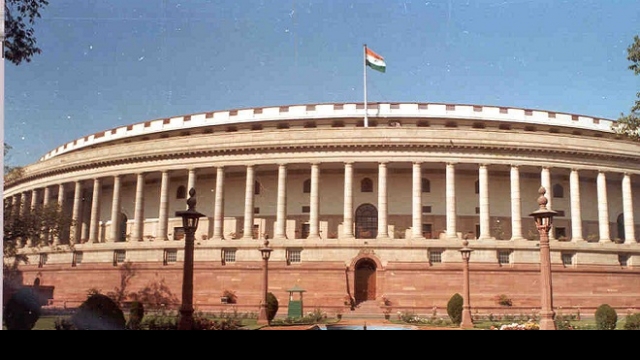
2

In this article, Sanjana Tripathy does a critical analysis of section 138 of the Negotiable Instruments Act.

WHAT IS A CHEQUE?

A cheque is a written instrument containing an unconditional order addressed to a banker signed by the person who has deposited money to the banker requiring him to pay on demand a certain sum of money to the bearer of the instrument.

Section 6 of the Negotiable Instruments Act, 1881 defines cheque-

Cheque is a bill of exchange drawn on a specified banker and not expressed to be payable otherwise than on demand and it includes the electronic image of a truncated cheque and a cheque in electronic form.’

There are two expressions which is used in this definition namely ‘cheque in electronic form’ and ‘truncated cheque’. For the purpose of this definition,

  1. “Cheque in electronic form” is a cheque which is drawn with the help of a computer program signed in a secure system with a digital signature with or without biometrics and asymmetric crypto system or electronic signature.
  2. “Truncated Cheque” is a cheque which is truncated during clearing cycle either by clearing house or by the bank whether paying or receiving payment immediately on generation of an electronic image for transmission, substituting the further physical movement of the written cheque.

TYPES OF CHEQUES

The different types of cheques are as follows:- (See Here)

  1. Bearer Cheque When the words “or bearer” are present on the cheque, the cheque is called a bearer cheque. The bearer cheque is payable to the person specified therein or to any other else who presents it to the bank for payment. However, such cheques are risky because if such cheques are lost, the finder of the cheque can collect payment from the bank.
  2. Order Cheque- When the words “or order” appears on the cheque instead of the word “bearer”, it is called an order cheque. Such a cheque is payable to the person known as the payee, or to somebody else to whom it is endorsed (transferred).
  3. Uncrossed / Open Cheque When a cheque is not crossed, it is known as an “Open Cheque” or an “Uncrossed Cheque”. The payment of such a cheque can be obtained at the counter of the bank. An open cheque may be a bearer cheque or an order one.
  4. Crossed Cheque Crossing of cheque means drawing two parallel lines on the face of the cheque with or without additional words like “& CO.” or “Account Payee” or “Not Negotiable”. A crossed cheque cannot be encashed at the cash counter of a bank but it can only be credited to the payee’s account.
  5. Anti-Dated Cheque If a cheque bears a date earlier than the date on which it is presented to the bank, it is called as “anti-dated cheque”. Such a cheque is valid upto three months from the date of the cheque.
  6. Post-Dated ChequeIf a cheque bears a future date for encashment, it is called a post-dated cheque. A post dated cheque cannot be honoured before the date on the cheque.
  7. Stale Cheque If a cheque is presented for payment after the expiry of its validity i.e. beyond 3 months from the date on which the cheque is issued it is called stale cheque. A stale cheque is dishonoured by the bank.

E-CHEQUE

E-cheque is a payment made directly from a bank account via internet. It can be processed in few steps and has more security than paper cheques such as authentication, digital signatures, encryption etc. It is part of Electronic Fund Transfers along with ATMs, Debit and Credit Card transactions which require technologies for gaining access to the bank account. E-cheques were developed due to huge transactions in electronic commerce. They are used for all types of transactions similar to a paper cheque and are governed under the same laws as the paper cheque. (See Here)

Section 138 of Negotiable Instruments Act, 1881
The Negotiable Instruments Act, 1881, provides for three instruments namely promissory notes, bills of exchange and cheques. The word ‘negotiable’ means transferable with respect to consideration and ‘instrument’ is a written document which creates a right in favour of a person. Thus negotiable instrument means a document (sum of money) transferable by delivery. (See here)

Section 138 of the Negotiable Instruments Act, 1881 provides for circumstances under which a case for dishonour of cheques is filed. It states that a cheque has to be presented to the bank within 6 months from the date on which it was drawn or within a period of its validity whichever is earlier. Also the following circumstances must be seen:-

  1. The payee or holder, during validity of the cheque, makes a demand for payment of money specified in the cheque by giving a written notice within 30 days of the receipt of the information from the bank that the cheque was returned as unpaid to the drawer of the cheque.
  2. The drawer of cheque failed to pay the said amount to the payee or holder, during validity of the cheque, within 15 days of receipt of notice.

Either or both civil and criminal complaints can be filed. In case of a criminal complaint, the drawer of the cheque will be punished with:-

  1. Maximum imprisonment for 2 years;
  2. Fine which may extend to twice the amount of the cheque; or
  3. Both

In case someone wants to go for civil proceeding, a money recovery suit has to be filed under Order 37 of Civil Procedure Code within 3 years of the date of cause of action. The drawer of the cheque will be ordered to pay the full amount of the cheque and the interest accrued from the date of suit to the date of decree. The choice is on the plaintiff. If a sufficiently large amount is involved it is advisable to file both.

GROUNDS FOR DISHONOUR OF CHEQUES

The following are the grounds under which cheques presented to the bank are dishonoured:- (See Here)

  1. Insufficiency of funds– This means that the amount written in the cheque is more than the actual amount in the bank account of the drawer. While writing a cheque, the drawer has to be sure that he has sufficient funds in his account otherwise the cheque presented to the bank would get dishonoured.
  2. Irregular Signature- If the signature of the drawer in the cheque does not match the specimen signature available with the bank, the cheque will get dishonoured.
  3. Alterations- According to RBI guidelines on Alterations/Corrections on the cheque effective from 1st December, 2010, no changes shall be allowed on the cheques except the mentioned date on the cheque. If any changes are to be made, a new cheque has to be issued. (See Here) Even if the alteration is signed for verification then also the cheque will be considered invalid and will get dishonoured by the bank.
  4. Post-dated Cheque– It is a cheque in which a future date is mentioned for collection through an account. It has to be presented to the bank on the date mentioned on the cheque. If it is presented before that date then it will get dishonoured.
  5. Stale Cheque- If the cheque is presented to the bank after the expiry of its validity i.e. after three months, the cheque gets dishonoured.
  6. Stop Payment instructions– A ‘Stop Payment’ instruction is made to a bank to cancel a cheque or stop the process of payment. This order is made by the account holder and can be enacted if cheque or payment has not been processed. The cheque will get dishonoured in this case.
  7. Frozen Account- It is an account from which the account holder cannot withdraw or transfer money due to a court order but he can check his transactions and also receive deposits. Therefore a cheque presented for collection through this account will get dishonoured by the bank.

Section 138 OF NEGOTIABLE INSTRUMENTS ACT, 1881

The Act is silent in terms of territorial jurisdiction under Section 138. This issue needs to be examined from point of view of Criminal Procedure Code, 1973. Section 177 of the Criminal Procedure Code, 1973 provides that every offence shall be tried by that court within whose jurisdiction it was committed. (See here) In Harman Electronics (P) Ltd. v. National Panasonic India (P) Ltd. [(2009) 1 SCC 720] it was held that, offence under Section 138 of Negotiable Instruments, 1881 is governed by Section 177 of Criminal Procedure Code, 1973 with respect to territorial jurisdiction. (See here)

In 2016, Gujarat High Court in its judgment of Brijendra Enterprise v. State of Gujarat and Others (Criminal Misc.Application No. 13062 of 2011) explained the issue on territorial jurisdiction in case of dishonour of cheques with examples. It was held that when a cheque is delivered for collection of money through an account, the complaint should be filed in that court within whose jurisdiction the branch of the bank is located where the payee or holder maintains his account and secondly when the cheque is presented for payment over the counter, the complaint has to be filed before the court within whose jurisdiction the branch of the bank is located where the drawer maintains his account.

It was further held that:- (See here)

  1. There should be inquiry and trial shall be done only in that court within whose jurisdiction the branch of the bank is located.
  2. If there is any cheque bouncing case pending in any court before the inception of the proposed legislation then it should be transferred to a court which comes under the new system of jurisdiction.
  3. If more than one case is filed by the same payee against the same drawer which is pending then all subsequent complaints have to be filed in the court which comes under the proposed legislation [Section 142(2)].
  4. If a complaint filed in a court which has jurisdiction under the proposed legislation, all the upcoming complaints under Section 138 have to be filed in the same court notwithstanding of the fact that those cheques were presented within the jurisdiction of the court.
  5. Explanation I of Section 6 was amended due to insufficiency as it draws a presumption of drawing of a physical cheque which resulted in addition of Explanation III for the purpose of reference to Information Technology Act, 2000.

PERSON SPECIFIC OFFENCE

The Supreme Court in N. Harihara Krishnan v. J. Thomas (Crl. App. No. 1534 of 2017) held that offence under Section 138 is person specific. The general concept under Criminal Procedure Code, 1973 that cognizance was taken against the offence and the offender was not appropriate in prosecution under Negotiable Instruments Act, 1881. The first ingredient which constitutes the offence is the fact that a person drew a cheque. The identity of the drawer of the cheque should be known to the complainant (payee) to start the trial. Only then will there be a dispute if the person alleged to have drawn the cheque denies the very fact. The other facts that are required to be proved for punishing the alleged drawer of cheque that got dishonoured is that the payee followed each of the steps given under Section 138 before commencing the prosecution. Otherwise there will be no cause of action. Disclosure of name of drawer of the cheque is one of the most important allegations which should be mentioned in the complaint. Therefore for prosecution under Section 138 there must be cognizance of offence and not the person is inappropriate. There cannot be a prosecution without the accused. (See here)

CAN A GROUND THAT ‘CHEQUE WAS ISSUED AS SECURITY’ BE USED FOR DISMISSING A COMPLAINT OF DISHONOUR OF CHEQUE

The Supreme Court in HMT Watches Ltd. v. Abida (Crl. Appeal No. 472 of 2015) held that a complaint under Section 138 cannot be dismissed by a High Court on the ground that the cheque was issued as a security invoking its power under Section 482 of Criminal Procedure Code, 1973. The court further held that:-

The questions such as:-

  • Whether cheques were issued as security?
  • Whether there was an outstanding liability?

are questions of fact which are to be determined only by the trial court after evidence of parties have been recorded. The High Court should not have given its views on those disputed questions in a petition under Section 482 of Criminal Procedure Code, 1973 for the purpose of coming to a valid conclusion. The defence provided by the accused though credible should not be taken into consideration to exercise jurisdiction. This does not imply that trustworthy documents should not be investigated to find out if criminal proceedings would amount to harassment to the drawer or abuse of process of court. The court cannot encourage such practice but also cannot go beyond its jurisdictional powers to interfere with an otherwise genuine proceeding.(See here)

OFFENCE AGAINST COMPANIES

Section 141 of the Negotiable Instruments Act, 1881 states the offence of Section 138 committed by companies:-

  • If the person committing an offence under section 138 is a company, every person who, at the time the offence was committed, was in charge of, and was responsible to the company for the conduct of the business of the company, as well as the company, shall be deemed to be guilty of the offence and shall be liable to be proceeded against and punished accordingly: Provided that nothing contained in this sub-section shall render any person liable to punishment if he proves that the offence was committed without his knowledge, or that he had exercised all due diligence to prevent the commission of such offence:

Provided further that where a person is nominated as a Director of a company by virtue of his holding any office or employment in the Central Government or State Government or a financial corporation owned or controlled by the Central Government or the State Government, as the case may be, he shall not be liable for prosecution under this Chapter.

  • Notwithstanding anything contained in sub-section (1), where any offence under this Act has been committed by a company and it is proved that the offence has been committed with the consent or connivance of, or is attributable to, any neglect on the part of, any director, manager, secretary or other officer of the company, such director, manager, secretary or other officer shall also be deemed to be guilty of that offence and shall be liable to be proceeded against and punished accordingly.

Explanation.— For the purposes of this section,—

  • “company” means any body corporate and includes a firm or other association of individuals; and
  • “director”, in relation to a firm, means a partner in the firm.

Therefore for the cheque dishonour case to prosecuted against any company the Director who has signed the cheque on behalf of that company must be in charge of the daily activities of the company on that day when the cheque was signed.

There are other issues which need to be answered under this Section such as:-

Issue 1. Whether company can be included as accused if cheque is signed by Director on behalf of the company? What will happen if the accused company is let off?

Issue 2. Whether notice under Section 138 is mandatory to be given to the Director who has signed the cheque?

Issue 3. Whether a cheque issued on personal capacity of the Director will make a company liable if it gets dishonoured?

Regarding the first issue, the Supreme Court in N. Harihara Krishnan v. J. Thomas (Crl. App. No. 1534 of 2017) held that failure to include a company as accused would be enhance the prosecution against the accused even if the previous complaint was valid against the signatory of the cheque. The court relied on its earlier decision in Aneeta Hada v. Godfather Travels & Tours Private Limited (2012) 5 SCC 661 in which it was held that for prosecution to be maintained the company must be included as accused within the limitation period for filing the case. (See  Here)

In Anil Gupta v. Star India Private Limited & Others (Criminal Appeal No. 1364 of 2014), the Supreme Court held that if the accused company is let off, the case cannot continue against Managing Director who is only vicariously liable. The court while applying the doctrine of strict construction opined that commission of an offence under Section 141 is a condition precedent to attract the vicarious liability of others. The words “as well as the company” in the section make it clear that first the company has to be prosecuted then only the signatory could be vicariously liable subject to the petition and proof.

Regarding the second issue, the Supreme Court in Kirshna Texport & Capital Markets Limited v. Ila A. Agarwal & Ors. (Criminal Appeal No. 1220 of 2009) held that Section 138 does not include necessity of issuing individual notices to the directors of the company in case of dishonour of cheques. The directors are in charge of the affairs of the company and would be aware of the notice received by the company. Therefore on a literal construction it is not required to issue individual notice under Section 138. It was further stated that if the directors contend that they had no knowledge about the offence committed or they diligently tried to prevent such commission, it would be a defence at any stage of the trial except stage of notice under Section 138. If the provision of giving notice is read in Section 141 then it will go against the meaning of the Section and remedy under Section 138 will become complicated.

Regarding the third issue, the Supreme Court in Mainuddin Abdul Sattar Shaikh v. Vijay D Salvi (Criminal Appeal No. 1472 of 2009) held that accused can be made liable under Section 138 even if the company is not accused as on the facts it was held that complainant did not have to necessarily prove that the accused was in charge of the affairs of the company by virtue of the position held by him. Plain reading of Section 138 states the basic ingredients which constitutes the offence first being that for a person to be held liable must be the drawer of the cheque on account maintained by him with the bank  for payment of money to another person from that account in discharge of the whole or part of any debt or liability.

This case was supported by the judgment in P.J. Agro Tech Limited and Ors.  v. Water Base Limited [(2010) 12 SCC 146] wherein it was held that cheque drawn by an employee of a company on his personal account even though he was doing it on behalf of the appellant company and its Directors, the appellant company and its Directors cannot be held liable under Section 138.

BLANK CHEQUE

A blank cheque is a signed cheque without a written amount. In a common judgment (Criminal Misc. Application Nos. 968, 1067, 1754 & 1756 of 2014) Gujarat High Court held that the statement that if a blank cheque is issued it should not be filled in and if it is filled then it would amount to material alteration within Section 87 of Negotiable Instruments Act, 1881 is not always necessary. It depends on the facts of the case. The following issues were asked:-

  1. Does Section 20 of Negotiable Instruments Act, 1881 applicable  to a cheque?

  2. Filling up of a blank cheque amounts to Section 87 of Negotiable Instruments Act, 1881. Is it necessary?
  3. Is there any implied authority to fill up a blank cheque with any amount desired?

The court answered that Section 20 makes it clear that no alteration can be made in a cheque for reason only that it would eventually be filled up. At the same time, it cannot be said when a blank cheque is given there is an implied authority to fill it up. Every filling up of a blank cheque may not come under Section 87 because there is no insertion, erasure, alteration etc. because there is no complete negotiable instrument within the Act. Therefore Sections 20 and 87 do not apply to a blank cheque.

Bare reading of the provisions of Negotiable Instruments Act, 1881 proves that under this Act drawer may give a signed blank cheque to the payee with an implied or express consent to fill it up and then present for payment to the drawee.
Regarding implied authority, the court held that if a blank cheque or post-dated cheque is issued, trust is placed that the cheque will be used as per agreement between the parties. If not, then prosecution under Section 138 would be an abuse of process of law. (See Here)

PRINTED DATE/YEAR ON CHEQUE

The Supreme Court in T. Vasanthakumar v. Vijayakumari (Criminal Appeal No. 728 of 2015) reversed the judgment of Karnataka High Court and held that printed date/year on a cheque does not conclusively prove the authenticity of the fact that the cheque was issued on that particular date/year. (See Here)

CHEQUE DISHONOUR OF ADVANCE PAYMENT IN CONTRACTS

The Supreme Court in Indus Airways Pvt. Ltd. & Ors. v. Magnum Aviation Pvt. Ltd. & Anr. (Criminal Appeal No. 830/2014), held that post-dated cheques issued by purchaser as advance payment is not considered to be in discharge of legally enforceable debt or liability and hence does not come under Section 138 of Negotiable Instruments Act, 1881. (See Here)

CHEQUE REPORTED LOST

In K. Sadanandan V. Satheesh Kumar (Crl.Rev.Pet.No. 2016 of 2003), the High Court of Kerala held that in case a cheque is returned by the bank due to “cheque reported lost”, it will not come under Section 138 of Negotiable Instruments Act, 1881. It was further held that the penal provision in Section 138 of the Negotiable Instrument Act, 1881 shows that a legal liability drawn would be applicable when a cheque is returned unpaid by the bank. Such non-payment by the bank may either be :

(i) due to the credited amount of that account being insufficient to honour the cheque, or

(ii) it is more than the amount arranged to be paid from that account by an agreement made with that bank.

Before proceeding with the case, the legal requirements mentioned therein must be have been abided and court has to be convinced that all the ingredients of the offence have been complied with. Therefore it is clear that the parameters for invoking the provisions of Section 138 of the Act is limited. (See Here)

DISHONOUR OF CHEQUE ISSUED AS SECURITY FOR REPAYMENT OF LOAN

The Supreme Court in Sampelly Satyanarayana Rao v. Indian Renewable Energy Development Agency Limited (Crl. Appeal No. 867 of 2016) held that dishonour of a post-dated cheque for repayment of loan described as a security in the loan agreement comes under Section 138 of Negotiable Instruments Act, 1881. Regarding the security clause in the agreement, the court stated that the word ‘security’ refers to those cheques for repayment of installments. Repayment becomes dues when loan is advanced and installment is due. The loan was disbursed on 28th February, 2002 before the date of cheque leaves. Once the loan was disbursed and installments fell due on the date of the cheque as per the agreement, dishonour of such cheques would fall under Section 138. The cheque leaves represent the outstanding liability.

ISSUE REGARDING SERVICE OF NOTICE

This issue has been dealt with in many cases and it was decided that notice is presumed as served if it is returned with plausible reasons namely ‘refused’ or ‘not available in house’ or ‘house locked’ or ‘shop closed’ etc. The following guidelines were given in Kalamba Jail v. Gautam Umed Parmar (Crl. Revision Application No. 435 of 2011 decided on 3rd April, 2013):-

  1. When the notice is sent with correct address of drawer, requirement under Section 138(b) is complied with.
  2. There is not need to give much emphasis on basic facts regarding mode and manner of issue of notice to the drawer.
  3. Court must be satisfied that a case under this section is applicable and statutory requirements mentioned in the above two points have been complied with.
  4. Then the drawer can rebut that he did not know about the notice delivered at his address or that notice was delivered at the wrong address or that the notice was never tendered or postman’s report was false.

It was further held that there is no dispute about service of notice under Section 27 of General Clauses Act, 1897 and Section 28 of Bombay General Clauses Act, 1904. (See here)

POWER OF ATTORNEY

While passing a combined judgment in the cases A.C. Narayanan v. State of Maharashtra & Anr. (Criminal Appeal No. 73 of 2007) and Shri. G. Kamlakar v. M/S Surana Securities Ltd. & Anr. (Criminal Appeal No. 1437 of 2013), the Supreme Court held that Power of Attorney can file a complaint under Section 138 of Negotiable Instruments Act, 1881 provided that he must specifically plead and support the complaint by relevant documents. If the Power of Attorney does not know about the transactions of the company then he/she will cannot be examined.

SPEEDY DISPOSAL OF CHEQUE BOUNCING CASES

The Supreme Court in M/S Meters and Instruments Private Limited v. Kanchan Mehta (Criminal Appeal No. 1731 of 2017) held that the accused in a case under Section 138 can be discharged without the consent of the complainant if the court is satisfied that he has been compensated adequately. The court issued certain guidelines for conduct of cases under Section 138:- (See Here)

  1. Offence under Section 138 is a civil wrong. It has to be tried summarily as per provisions of Criminal Procedure Code, 1973. Section 258 of Criminal Procedure Code, 1973 is applicable and the court can discharge the accused if it is satisfied that the complainant is compensated.
  2. The object of the provision being primarily compensatory, punitive element being mainly with the object of enforcing the compensatory element, compounding at the initial stage has to be encouraged but is not debarred at later stage subject to appropriate compensation as may be found acceptable to the parties or the Court.
  3. Compounding requires consent of both parties but in the interest of justice the court can close the case and discharge the accused without such consent if it is satisfied that the complainant is duly compensated.
  4. Procedure for trial of cases under Chapter XVII of the Act has to be summary. The Magistrate’s discretion under second proviso to Section 143, to hold that it was undesirable to try the case summarily as sentence of more than one year may have to be passed, is to be exercised after considering the further fact that apart from the sentence of imprisonment, the Court has jurisdiction under Section 357(3) Cr.P.C. to award suitable compensation with default sentence under Section 64 IPC and with further powers of recovery under Section 431 Cr.P.C. Therefore, prison sentence of more than one year may not be required in all cases.
  5. Since evidence of the complaint can be given on affidavit, subject to the Court summoning the person who gave the affidavit and examining him and the bank’s slip being evidence of the dishonor of cheque, it is unnecessary for the Magistrate to record any further preliminary evidence. Such affidavit can be given as an evidence at all stages of trial or other proceedings. The manner of examination of the person giving affidavit can be according to Section 264 Cr.P.C. The plan is to follow summary procedure except where exercise of power under second proviso to Section 143 becomes necessary, where sentence of one year may have to be awarded and compensation under Section 357(3) is considered inadequate, having regard to the amount of the cheque, the financial capacity and the conduct of the accused or any other circumstances.

MEDIATION IN CHEQUE DISHONOUR CASES

Section 89 of Code of Civil Procedure provides for Mediation in civil cases. In Afcons Infrastructure Limited and another v. Cherian Varkey Constructions Company Private Limited [(2010) 8 SCC 24], the Supreme Court set out certain cases in which Mediation is not permissible:- (See Here)

  1. Representative suits under Order 1 Rule 8 of Civil Procedure Code, 1908 involving public interest and interests of numerous persons who are not parties to the suit.
  2. Disputes regarding election to public offices.
  3. Cases which involve grant of authority by court
  4. Cases regarding serious allegations like fraud, forgery, coercion, fabrication of documents etc.
  5. Cases in which protection of courts is required

The suits in which ADR mechanism is used in disputes:-

  1. Related to trade, commerce and contracts
  2. Related to tortious liability
  3. Related to consumers
  4. Between employers and employees
  5. Between neighbours (trespassing, nuisance etc.)
  6. Related to partnership among partners
  7. Among members of societies/associations/apartment owners’ associations
  8. Related to matrimony, custody of children , maintenance etc.
  9. Related to partition/division among family members/coparceners/co- owners

MERE HANDING OVER CHEQUE TO COMPLAINANT

The Rajasthan High Court in Smt. Asha Baldwa v. Ram Gopal (S.B. Criminal Misc (Pet.) No. 2726/2014), held that mere handing of cheque which later got dishonoured does not come under the offence of Section 138. The cheque was issued by the Petitioner’s son and after that the Petitioner was added as a partner to the firm. Section 141(2) was pointed out by the Petitioner according to which allegations can be made against the company or its partners only if the offence was committed with their consent, collusion or negligence. When the complaint was read, it was found out that the Petitioner only handed over the cheque to the Respondent and no allegations were made as to her role in the  commission of the offence. Whereas the complainant-respondent contended that since the Petitioner handed over the cheque to him she was liable under Section 138 of Negotiable Instruments Act, 1881. (See Here)

CHEQUE DISHONOUR IN CASE OF PARTNERSHIPS

In Katta Sujatha v. Fertilizers & Chemicals Travancore Ltd. (2002) 7 SCC 655, the Supreme Court held that partner of a firm is liable to be convicted for offence under Section 138 if he was in charge of the conduct of business of the firm or if it was committed with the consent or negligence of that partner.

NEGOTIABLE INSTRUMENTS (AMENDMENT) BILL, 2017

A new bill has been introduced in Lok Sabha with the objective of reducing delay in proceedings of dishonour of cheques and provide interim relief to the payee.The Amendment Bill has inserted a new Section 143A which provides that the drawer of dishonoured cheque should pay interim compensation of 20% of the value of the cheque during pendency of proceedings:-

  1. In a summary trial if drawer pleads not guilty.
  2. In any other case upon framing of a charge.

The time limit for payment of interim compensation is 60 days from the date on which the order made in this context. It shall be deductible from the fine imposed under Section 138 or any other compensation given under Section 357 of Criminal Procedure Code, 1973. The said amount shall be recovered as given under Section 421 of Criminal Procedure Code, 1973.

It also provides for insertion of Section 148 which states that in an appeal by drawer against conviction under Section 138, the court has the power to order the appellant to deposit minimum 20% of fine or compensation awarded by the trial court. The same has to be deposited within 60 days of the date of the order made in this context.

The appellate court can direct the delivery of the amount to the complainant during pendency of appeal. If the appellant is acquitted then that amount will have to be paid to the him along with the rate of interest published by Reserve Bank of India prevalent at beginning of that financial year. (See here)

Let’s see what benefits the new amendment bill will provide for litigation process in cheque dishonour cases.

CONCLUSION

It can clearly be seen that there have many changes in law regarding dishonour of cheques especially jurisdiction. This law promises to aid in speedy trial in such cases and also to bring sanctity to the system by reducing default of payments. (See here)


LawSikho has created a telegram group for exchanging legal knowledge, referrals and various opportunities. You can click on this link and join:  

https://t.me/joinchat/J_0YrBa4IBSHdpuTfQO_sA

Follow us on Instagram and subscribe to our YouTube channel for more amazing legal content.
 

REFERENCES

  1. www.livelaw.in
  2. Shivam Goel, ‘The Negotiable Instruments Act 1881: Critical Analysis’
  3. Article- Effect of Recent Amendments in Negotiable Instruments Act on the Pending Cases as well as Appeals
  4. Article- Legal Notice under Section 138 Returned Unclaimed
  5. Negotiable Instruments Act, 1881
Download Now

10 Banking Transactions Every Banking Lawyer Should Know About

0

In this article, Kashish Khattar discusses ten banking transactions every banking lawyer should know about.

Syndicate Loans

When a large group of lenders wants to collectively extend a loan to a single borrower, using similar terms and conditions, documentation etc. administered by a common agent, it is called a syndicated loan. The group of lenders is called “syndicate”.

Generally, this loan is provided to corporations and government bodies because the amount to be lent is huge. Syndicated loans are primarily given by the banks, but these days a variety of investors are also involved in this loan lending institution such as mutual fund, insurance companies, pension plans and hedge funds etc.

Image explaining how a Syndicate Loan works in practice Source: https://blog.ipleaders.in/introduction-to-basics-of-syndicated-loans/

Consortium Finance

Typically, banks finance loans according to their lending policy. Sometimes, when a single banker is not able to finance a single customer. When a situation like this arises, banks jointly grant loans and advances to a customer. This kind of financing is called consortium financing. When two or more banks come together, it is called consortium financing. In this situation, which is based on an agreement between banks of the consortium and group will select one banker as the ‘Lead Bank’. Its functions range from arranging meetings between the member banks and active involvement in credit appraisal, obtaining legal documents etc.

Banks tend to loan consortium finance on account of various factors, which can be:

  1. Various regulatory requirements.
  2. Restrictions on single and group borrower’s limits.
  3. Part of risk management and diversification policy of banks.
  4. At the request of a borrower.

There is a subtle difference between Syndicated Loan and Consortium Finance, which can be briefly understood as every syndicate is a consortium, but every consortium is not a syndicate. The art of understanding the difference lies in the technicalities of their individual operations, procedures, relationships and legal complexities. But the key difference in these banking transactions is that with a consortium the lender will be able to repay one bank and fail to repay another. In the case of a syndicate, there is only one loan. The borrower would default on the whole loan which will land him in legal trouble.

Further reading on the difference, here.

Bridge Loans

Bridge loans are short-term loans which are granted typically to industrial undertakings to meet their urgent and essential needs during the period when formalities for availing of the term loans sanctioned by financial institutions are being fulfilled or necessary steps are being taken to raise the funds from the capital market.

These loans are granted by banks or by financial institutions themselves and are automatically repaid out of an amount of the term loan or the funds raised in the capital market.

The key guidelines to sanction Bridge Loans as notified by RBI should include the following aspects –

  1. Security should be for the loan.
  2. There should be compliance with the individual or group exposure norms.
  3. The value of the outstanding bridge loan (or the limit sanctioned, whichever is higher) during the year
  4. Ensuring the end use of bridge loan, as to where is the loan going to be used.
  5. The maximum period of the bridge loan to be one year only.
Image Source – https://loanscanada.ca/mortgage/short-term-mortgage-financing-bridge-loans/

Letter of Credit

A letter of credit (“LC”) is issued by the bank at the request of its customer (Importer) in favour of the beneficiary (Exporter). It is an undertaking by the bank, informing the beneficiary that the documents under the LC will be honoured if the beneficiary submits all the paperwork as per the terms and conditions. Banks are mainly involved in LC to avoid default in payments, to facilitate trade and also enable the exporter and importer to receive and pay for the goods sold and bought.

Bill Purchasing and Discounting

It is basically is an exercise to reduce the risk. Bill discounting is a process where the seller recovers an amount of sales bill from the financial broker before it is due. A broker charges a fee for this service. It is like selling the bill to a discounting company before the due date of payment at a price which is relatively less than the bill amount. The difference between the bill amount and amount paid is the fee of the discounting company. It will mainly depend on the period left before the payment date and the perceived risk.

It is a win-win situation for both the parties in the transaction, ie, the buyer and seller. The seller gets his money instantly on payment of a small charge and gives the buyer, a credit period. It is an easy way of getting finance, requiring no sanctions.

Mortgage and Hypothecation

Both the terms talk about a secured loan for the creditor. Where Mortgage is basically said to be a charge against an immovable property. Which may include – Land, Building, Warehouse, etc. A mortgage is typically against something that is attached to the earth or deriving benefits from the earth. There are 6 types of mortgage defined in the Transfer of Property Act, 1882 which are Simple, English, Usufructuary, Anomalous, Deposit by Title Deeds and Conditional Sale. Delivery depends on the type of mortgage between the parties.

Hypothecation is a charge against movable property mostly cars, account receivables, and stocks etc. Hypothecation is defined under the SARFAESI Act, 2002 as charge in or upon any movable property, existing or future, created by a borrower in favour of a secured creditor without delivery of possession of the movable property to such creditor, as a security for financial assistance and includes a floating charge and crystallisation of such charge into a fixed charge on movable property.

Revolving Credit

Revolving credit is mainly defined as having a line of credit where the borrower just has to pay a commitment fee to a financial institution such as a bank to borrow money and is then allowed to use the funds whenever they are needed. They are typically used for operating some big projects or purposes. The amount can vary from a month to month basis. Revolving credit is usually taken out by corporations or high net worth individuals. The maximum amount of revolving credit is called the credit limit. The bank which is the main financial institution in these kinds of transactions reach an agreement over the commitment fee, interest expenses and carry forward charges for consumer accounts.

Revolving credit is such a huge advantage for people or companies that face sharp fluctuations in cash flow and face unexpected expenses. The convenience and the flexibility account for the high rate of interest which is charged by the banks. They are different than instalment loans as they require a fixed number of payments over a period of time whereas the revolving credit only requires payment of the applicable interest and the fee.

Overdraft Facilities

An overdraft facility can be understood in a simple way, it is a general credit agreement which is made with a financial institution, such as a bank that permits the account holder to use, withdraw more than the amount that they really have without exceeding a specified maximum negative balance in their agreement.

Usually done by individuals and small-medium sized enterprises who can have a short-term cash flow problems. Typically, the negative balance needs to be repaid in a month’s time.

Project Finance

Project Finance is basically the long-term financing of an industrial, infrastructural or a public services project based upon non-recourse or limited recourse of financial structure. The project debt and equity which is used to finance the project are paid back from the cash flow generated by the project itself. It is a kind of a loan structure, which relies mainly on the project’s cash flow. With the project’s assets, rights and liabilities are considered as collateral.

These kind of loans are mainly non-recourse, which are protected by the assets of the projects and are paid entirely from the cash flow generated from the project. Instead of being sponsored by the general assets of the sponsors or their creditworthiness. They mainly are fancy to the private sector as they can fund these major projects off balance sheet. Which means, that these assets won’t come on the balance sheet of the company, but they are effectively assets or liabilities of the company.

A project finance structure mainly a build, operate and transfer project has some essential key elements. A special purpose vehicle is constituted for project financing. The sole purpose of the company is to carry out the project by subcontracting various construction and operations agreement. The main attraction of project financing is that it remains off-balance sheet for the sponsors and the government.

A diagram showing project financing of a Wind Farm Project.

Image Source – http://www.windfarmbop.com/tag/project-financing/

Term Loan

It can be simply understood as a loan for a specific amount which has a specific repayment schedule and a fixed or floating interest rate over it. Meaning, it can be paid in lump sum or in suitable amount according to the agreement. A loan is known as a Demand loan if it has to be repaid within three years. If the loan’s term is three or more than three years it is known as a Term Loan.

They are mainly given to the manufacturing, trading and service sectors which require funds for buying various fixed assets, such as land, building, machinery, and electrical installation etc. Repayment of term loans depends mainly on the firm’s capacity to produce goods or services by the fixed assets financed by the bank.

Acknowledgement:

Banking Laws and Practise ICSI
Investopedia

Wikipedia

Download Now

When is a Company said to be an Associate Company?

0
Associate Company
Image Source: https://cdn.pixabay.com/photo/2015/11/26/07/47/hands-1063442_960_720.jpg

In this article, Neha Verma pursuing Diploma in Entrepreneurship Administration and Business Laws from NUJS, Kolkata discusses the question when a company will be considered as an associate company

Introduction

A Company as defined under Companies Act, 2013, means a Company which is incorporated under the Companies Act, 2013 or under any previous company law. In India, there are several laws and regulations which govern Companies and the mode of their operations. The principal Act which governs all Companies is the Companies Act, 2013 and all rules and regulations made therein including any amendments thereof such as Companies (Amendment) Act, 2017.

There are various types of Companies under the Companies Act, 2013, such as:

  1. Companies limited by shares
  2. Companies limited by guarantee
  3. One Person Company
  4. Section 8 Company

The Companies limited by shares are further divided into private companies and public companies.

A company must ensure the compliance with all relevant laws and regulations for itself and for its associate companies as well. Every Company having an associate Company is required to consolidate the accounts of such associate companies with its own accounts as per the Companies Act, 2013 and the Indian Accounting Standards provided therein.

Definition of an Associate Company

As per Section 2(6) of the Companies Act, 2013, an Associate Company is defined as follows:

“Associate Company”, in relation to another Company, means a company in which another company has a significant influence, but which is not a subsidiary company of the company having such influence and includes a joint venture company.

For the purpose of Section 2(6) of the Companies Act, 2013, explanation provided is as below:

  1. The expression “significant influence” means control of at least twenty percent of total voting power, or control of or participation in business decisions under an Agreement,
  2. The expression “joint venture” means a joint Agreement whereby the parties that have joint control of the arrangement have rights to the net assets of the arrangement.

Therefore, for a Company to be considered as an Associate Company of another company either the company should have significant influence over the other Company or it should be a joint venture company.

Analysis of Associate Company under the Companies Act, 2013

https://lawsikho.com/course/diploma-entrepreneurship-administration-business-laws
click above

A Company can determine if any other company is its Associate Company based on the following criteria:

  1. If the Company has significant influence over the other Company; or
  2. If the other Company is a joint venture Company of the Company

A Company is said to have significant influence over the other Company if:

  1. the Company controls at least 20% voting power of the other Company; or
  2. the Company controls the business decisions of the other Company under an Agreement;
  3. the Company participates in business decisions of the Company under an Agreement

To better understand the concept of “control” as provided in the explanation of “significant influence”, Section 2(27) of the Companies Act 2013 has described the term “control”.

As per this section, the term “control” shall include:

  1. the right to appoint a majority of the directors; or
  2. to control the management of a Company; or
  3. to control the policy decisions of a Company

The aforesaid rights are exercisable by a person or persons acting individually or in concert, directly or indirectly, including by virtue of their shareholding or management rights or shareholders agreements or voting agreements or in any other manner.

As per Companies Act, 2013 a subsidiary company with regard to any other Company means a Company in which holding Company:

  1. controls the composition of Board of directors of the Company, or
  2. controls more than one-half of such Company’s total voting power either on its own or together with its one or more subsidiaries.

An Associate Company is a Company which is not a subsidiary as defined above, therefore, an Associate Company and a subsidiary Company are two completely different kinds of Companies.

Analysis of the various provisions of Companies Act, 2013 related to “Associate Company”

https://lawsikho.com/course/diploma-companies-act-corporate-governance
Click Above

Associate Company will be considered as a Related PartyAs per Section 2(76) (viii) of the Companies Act, 2013, “related party” with reference to a Company includes “a holding, subsidiary or an associate company of such Company”. According to this section, an associated company is treated as a related party for a company and consequently, the company must abide by Section 188 while dealing with such associate companies.

However, Section 2(76)(viii) does not apply with respect to Section 188 to private companies and also does not apply to an unlisted public company which is licensed to operate by RBI or SEBI or IRDA from the International Financial Services Centre located in an approved multi-services SEZ under SEZ Act.

Associate Company details should be provided in Annual Return

The Companies Act, 2013 requires that every company should mention the details and particulars of its associate companies in its Annual return which is prepared by the Company in the prescribed form as provided in Section 92.

Company needs to prepare Consolidated Financial Statement of its Associate Companies also

As per Section 129(3) of the Companies Act, 2013 as amended by the Companies (Amendment) Act 2017, a Company which has any associated company or companies is required to prepare consolidated financial statement of the company and all its subsidiary and associate Companies in the same form and manner as it prepares its own financial statements. Such consolidated financial statement as prepared by the Company needs to be laid before the shareholders of the Company at its annual general meeting along with its own financial statements. The Company is also required to attach with its financial statement a separate statement containing the salient features of its associate Companies.

Vacation of office of Director if he was appointed as a director by virtue of holding any post in an Associate Company

As per this section, the office of a director becomes vacant in case he was appointed as a director of the Company by virtue of him holding any office or other employment in the holding, subsidiary or associate Company and he no longer holds such office or employment in that Company.

Related Party Transactions with respect to an Associate Company

The consent of the Board of Directors of the Company given by passing a resolution at the meeting of the Board is required before the Company enters into any contract or arrangement with related party with respect to such related party’s appointment to any office or place of profit in the Company, its subsidiary Company or associate Company. Therefore, before any related party is appointed to any office or place of profit even in associate Company of a Company, the Company would be required to obtain the approval of Board for the same.

In the event, the related party is to be appointed to any office or place of profit in the Company or its associate Company for monthly remuneration exceeding Rupees Two lakh fifty thousand per month then the Company needs to take prior approval of its members, by way of passing a resolution at the meeting of shareholders, for entering into such transaction.

Restrictions on non-cash transactions involving directors

This section clearly provides that a Company shall be required to take prior approval by its shareholders in general meeting if the Company wishes to enter into an arrangement by which a director of the company or its holding, subsidiary or associate company or a person connected with him acquires or is to acquire assets for consideration other than cash, from the Company. A resolution in general meeting needs to be passed to give effect to any such transaction.

Prohibition on forward dealings in securities of company by the director or key managerial personnel

Section 194 prohibits the director or key managerial personnel of a Company from forward dealing in securities of its Associate Company.

Associate Company as per Accounting Standards

As per Accounting Standard 28, an “Associate” is defined as an entity over which the investor has significant influence.

“Significant influence”, as per the Indian Accounting Standard 28, means having the power to participate in the financial and operating policy decisions of the investee but does not mean control or joint control of those policies.

As per the Indian Accounting Standard 28, if a Company holds either by itself or through its subsidiaries 20% or more of the voting power of another Company then it is presumed that the Company has significant influence over the other Company unless the Company can clearly demonstrate that this is not the case. Similarly, if a Company either by itself or through its subsidiaries holds less than 20% voting power of any Company then it is presumed that the Company does not have significant influence over the other Company unless such influence can be clearly established.

To determine whether or not a Company has significant influence over the other Company, the following evidence can be relied upon:

  1. Representation of the Company on the Board of directors of the other Company;
  2. Participation of the Company in the process of policy making of the other Company;
  3. Material transactions between such Companies;
  4. Interchange of managerial personnel between Companies;
  5. Provision of essential technical information

At the time of accounting of investments of the Company, this standard is used to determine whether a Company has an associate or joint venture company and also to prepare and draw up accounts for the same.

The equity method of accounting is used as per Indian accounting Standard 28 for the accounting of investments in associates. The equity method of accounting is a method of accounting whereby the investment is initially recognized at cost and adjusted thereafter for the post-acquisition change in the investor’s share of the investee’s net assets. The investors’ share in the investee’s profit or loss is recognized in the investor’s profit or loss. Therefore, initial recognition and measurement is applied at cost.

Conclusion

In recent times, the concept of “Associate Company” has become all the more important and relevant so that the promoters and/or directors of these Companies operate them in a clear manner and do not roll over and utilize the funds obtained by one company in its associate Companies. The consolidation of financial statements of a Company along with its Associate and subsidiary company ensures that the statutory authorities have a clear view of the dealings undertaken by a Company and to detect any misappropriation of funds.


LawSikho has created a telegram group for exchanging legal knowledge, referrals and various opportunities. You can click on this link and join:

https://t.me/joinchat/J_0YrBa4IBSHdpuTfQO_sA

Follow us on Instagram and subscribe to our YouTube channel for more amazing legal content 

 
Download Now
logo
FREE & ONLINE 3-Day Bootcamp (LIVE only) on

How Can Experienced Professionals Become Independent Directors

calender
28th, 29th Mar, 2026, 2 - 5pm (IST) &
30th Mar, 2026, 7 - 10pm (IST).
Bootcamp starting in
Days
HRS
MIN
SEC
Abhyuday AgarwalCOO & CO-Founder, LawSikho

Register now

Abhyuday AgarwalCOO & CO-Founder, LawSikho