Download Now
Home Blog Page 1466

Can Foreign Architects practice in India?

0
Foreign architect
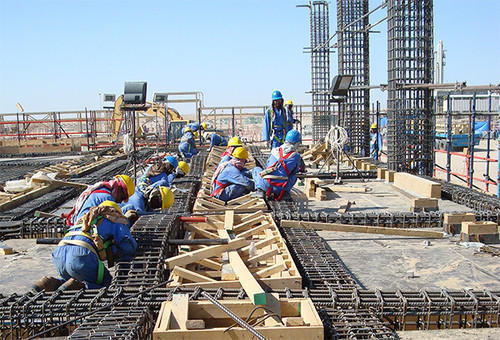
Image Source - https://www.indiamart.com/rajenterprisesbengaluru/civil-construction-work.html

In this article, Shreyanshi Maheshwari, pursuing B.A.LL.B from Symbiosis Law School, NOIDA discusses that, can foreign architects practice in India

Introduction

The profession of architecture in India has undergone a drastic change in the past decade. The past few years have been turning point not seen since the independence of India.

The increasing economy and the growing middle class have caused the developers to bring the foreign architects for designing bungalows, resorts, airports, residential and office buildings.

Currently, there are many companies practicing architecture in India. The profession of architects is governed and regulated by the Architects Regulation, 1989 (as amended in 2003).

What is Architecture?

Architecture deals with the process of designing, planning, constructing, maintenance and restoration of buildings, and physical structures. It has the elements of science, art, aesthetics, technology, and mathematics in it.

According to Oxford dictionary, ‘Architecture’ is the art or practice of designing and constructing buildings.

Who is an Architect?

An architect is a professional who renders services in relation to designing, planning, and construction of buildings and physical structures. Architects have knowledge in the areas of designing, project management, construction management, material management, cost estimation and legal matters related to the profession of architecture.

According to Section 2(a) of The Architects act, 1972, ‘Architect’ means a person whose name is for the time being entered in the register.

Architecture Firms follow these business patterns

Sole Proprietorship

Partnership Firm

Private Ltd Company

Individual ownership. Shared ownership between two or more people. Increase in the size of the firm and annual income.
  • Individual invests capital.
  • Individual has the decision making authority.
  • Single owner is responsible for both profit and loss.
  • If not registered as a limited liability company or corporation with the state. Then the owner does not pay income tax separately for the company but mentions income or losses on his/her personal income tax return.
  • Investment of capital is done by all the partners.
  • Partnership activities are governed by (Indian Partnership Act, 1932).
  • Sharing of profits can be equal or unequal as per the terms of the agreement.
  • All the partners in an architectural firm should be registered architects (Architects Act, 1972).
  • As per the Companies Act, 1956, the company is to be registered with the Registrar of the Companies.
  • If any of the members of the company is a non-architect than the company will be registered as business firm and not a professional firm.
  • They can offer a variety of services under one roof.

Illegal Practices in the Architecture profession

There are three aspects under which the profession is illegally practicing in the modern day:

Illegal Practice 1- Foreign companies practicing with the local players in India

  1. Have unregistered Foreign/Indian directors in the company.
  2. The company is registered to pay Architecture service tax.

Illegal Practice 2- Indian companies practicing

  1. Have unregistered Foreign/Indian directors in the company.
  2. Company registered to pay Architecture service tax.

Illegal Practice 3- Indian company practicing architecture

  1. Have registered Indian Directors.
  2. The company is not registered to pay Architecture service tax.

Requirements for practicing as an architect in India

  • Registration with COA (Council of Architects, constituted by Government of India under the provisions of The Architects Act, 1972) as an architect.
  • Registration with the Tax Department of India as an architectural practice.

Registration with the Council of Architecture

One cannot use the title ‘Architect’, if not registered with the Council of Architecture in India.

Qualifications required for registration as specified by the Architects Act, 1972 [see here]

  • A recognized architectural degree or diploma.
  • Resides in India.
  • If he/she is not an Indian but is engaged in the practice for not less than 5 years.
  • Possesses other qualifications that certify his application for registration (Search here).

Section 37(1) of the Architects Act, 1972

Prohibition against use of title.

  1. No individual other than a registered architect, or a firm of architects may use the title and style of an architect after the termination of one year from the appointed date under sub-section (2) of section 24 provided that the provisions of this section do apply to:
  1. A designated “landscape architect” or “naval architect” practicing the profession of an architect. Wherein “landscape architect” means any person dealing with the designing of open spaces relating to plants, trees and landscapes, and “naval architect” means a person dealing with the designing and construction of ships.
  2. A person who is carrying on the profession of an architect outside the boundaries of India as far as he has the prior permission of the Central Government to undertake the position as a consultant or designer in India for a specific project.

Case: Premendra Raj Mehta and Ors vs National Building Construction Corp. Ltd. and Ors [W.P. (C) 2106/2012]

Facts

The petitioners, registered architects under the Architects Act, 1972 complained that respondent no. 1 National Building Construction Corp. Ltd. (NBCC) has awarded to respondent no. 4, a foreign firm, work for providing consultancy services for a project of redevelopment of Kidwai Nagar, East, though the firm is neither registered under the Architect Act, 1972 nor has it taken permission from the Government in terms of the proviso to Section 37 of the Architect Act,1972. Therefore, petitioners seek relief through the issue of the writ of certiorari and mandamus.

NBCC in the counter affidavit claimed that petitioners have no locus standi in the present petition and also submitted that the petition does not comply with the Delhi High Court (PIL) rules, 2010. NBCC states that section 37 of the Act only regulates the use of the term “architect‟ as title or style and has no bearing on the right to engage any architectural practice.

Work awarded by the respondent no.1 is for comprehensive services not limited to architectural services but extends to other fields such as consultancy and engineering as well. It is further submitted that the architectural functions assigned to respondent no.1 would be carried out principally by its Indian partners M/s Sapna Kumar who is duly registered under Section 37 of the Act.

Issues

  1. Whether the petitioners have Locus Standi to file the writ petition?
  2. Whether or not the respondents have violated the terms of Section 37 of the Architects Act, 1972?

Court’s Reasoning

  1. The petitioners have no Locus Standi as the petition was not filed in public interest and during the hearing the petitioners had also stated that they have not filed a PIL. Being the registered architects under Section 37 of the Architect Act, 1972, the petitioners had a personal interest in the outcome of the petition, therefore, they cannot possibly file a petition in public interest.
  2. No, the respondents have not violated the terms of Section 37 of the Architects Act, 1972. As we read Section 37 of the act which is laid down under the heading “Prohibition against use of title” shows that though the provisions herein bars a person other than a registered architect or firm of architects from using the title and style, but it does not stop him from giving architectural services as long as he does not use the expression architect or firm of architects.

Holding

V.K.JAIN, J held that “For the reasons stated hereinabove, I find no merit in the writ petition and the same is dismissed. No order as to costs.”

Opinion

Such interpretation of law may lead to unqualified persons providing services such as supervision of construction of buildings and the constructions supervised by such persons may not be safe and economical, but, then the remedy lies in the hands of the Parliament who have the power to amend the provisions of the act, and not in the court taking an interpretation of the already existing provisions of the act.

(For full judgment see here)

What is being done?

The Council of Architect is asking the illegal organizations to either shut down or change their MoA (Memorandum of Association). It is summoning illegal/ unregistered practitioners. Companies are also facing criminal charges against them.

  1. A circular was released by Ministry of Corporate Affairs (MCA) on 10th October 2011, instructing all ROCs (Registrar of Companies) and RLLPs (Registrar of LLPs) to not register any company having the architecture in their MoA. (For Notice see here #116).
  2. Another circular was released by MCA to ROCs and RLLPs on 1st March 2012, reinforcing the October circular and all ROCs and RLLPs were to refer to the respective regulatory body before registering a company. Therefore, for architects, the Council of Architects was to be referred. (For Notice see here).
  3. Council of Architects on 15th November 2014 issued a Public Notice for Information and Guidance. (For Notice see here).
  4. Council of Architects on 15th November 2014 also issued a Public Notice regarding Unqualified and Unregistered persons practicing as architects wherein they asked such persons to stop the use of the title and style of architect and/or practicing architecture immediately or else they will face penal action against them. (For Notice see here).

Conclusion

The love of Indians for all foreign things can be seen everywhere and most of the real estate players utilize this opportunity. That is the reason many of them advertise their residential and commercial projects as the one being designed by reputed international architects, giving buyers a misleading impression that the apartments made by foreign collaborations are of the international level and of better worth. However, by doing this, they are violating the provisions of Section 37 of the Architects Act, 1972, which prohibits a foreign architect from working in India without the prior permission of the Government of India.

References

  1. https://timesofindia.indiatimes.com/business/india-business/Architects-keep-foreign-players-out/articleshow/23433916.cms
  2. http://www.thehindu.com/news/cities/Delhi/HC-dismisses-petition-against-foreign-architects/article17279363.ece
  3. https://www.coa.gov.in/
  4. http://epaper.timesofindia.com/Repository/ml.asp?Ref=VE9JQS8yMDEzLzEwLzAzI0FyMDE1MDA%3D
  5. https://indiankanoon.org/doc/194771575/


Download Now

How is Law as a career in India

0
Law as a career
Image Source - https://english.kolkata24x7.com/calcutta-high-court-lawyers-agitation-extended.html/

This article is written is written by Vasudha Krishnamurthy. This article talks about how is law as a career in India.

Law as a career in India

In India, Law has always been considered a noble and respectable profession. The roots of our country have the work of great lawyers involved, such as Mahatma Gandhi, Madan Mohan Malviya, Dadabhai Naoroji, Motilal Nehru and others. These great lawyers not only practiced law but also made immense contributions in the National freedom struggle. The lawyers then and the lawyers now have always been meticulously helping in regulating the legal system of our country. The lawyers help the society and ensure that the legal machinery is regulated. They support members of the society by representing them in cases, by filing PILs, by giving them suitable legal advice on matters sought by the clients, and most importantly to help the client get justice. Anybody in the legal profession is always treated with utmost respect and consideration. This is because the legal profession is so noble and prestigious in nature. The very fact that a person is a part of the legal system makes the other members respect him. This shows what a noble profession ‘Law’ is. This paper attempts to list down and analyze the reasons why the law is a noble profession. The reasons are as follows:

DIVERSITY IN CAREER OPPORTUNITIES

As long as there is a society, there will be a necessity for lawyers. People of the society and the lawyers are mutually dependent. The individuals need lawyers to get out of trouble, to represent them in legal proceedings and to ensure that the laws of the land are properly implemented and the lawyers need to perform such services for livelihood and to help make corrections in the societal behavior. The reason a career in law is so recommendable and prevalent is that of its diversity. A student pursuing law can take up the following careers with just a bachelor’s or a master’s degree. The available opportunities in the legal field are as follows:

  1. A lawyer is also known as an attorney or counselor in some parts of the world. The main functions of a lawyer are to litigate, to provide service to the clients, to advise the clients on matters sought by them, to represent the clients whether prosecution or defence in both trials as well as appellate courts.
  2. A lawyer can perform paralegal functions such as drafting of court documents, drafting legal documents, perform legal research and to assist the senior counsels with whatever they require from time to time.
  3. Compliance analyst- The main function of such an analyst is to ensure good governance, risk management and compliance of the company or firm they work for with the laws of the land. They must ensure that the company’s policies, rules, and bylaws are in accordance with the constitution and other legal statutes of the country.
  4. Judge- A lawyer, can undoubtedly enter into the judiciary. They can become a Judge or a Magistrate. They can use this position to ensure that the disputes are settled fast and in accordance to principles of natural justice, they preside over all the court proceedings and are empowered to give rulings in favor of the deserving party in a dispute.
  5. Arbitrator, also known as a mediator ensures that the disputes between parties are settled in a smooth and amicable manner. He guides and persuades the parties to arrive at a compromise or at a settlement without going to the court as such.
  6. Stenographer- He is a court reporter, who sits in the courtroom and assists the Judges. They have to make a note of every word spoken during a proceeding. They transcribe the legal proceedings in court and every other following aspect until the end of a dispute.
  7. Civil services- Another excellent career option for law students is to be a part of the government. They can, by clearing the UPSC exams, become civil servants and help in effective administration and management of the country.
  8. Others- There are many other careers available to a law student such as a forensic expert, law firm administrator, in-house counsel, court clerk, law professor, Legal career counselor, Dean of a law school, litigation support professional, legal analyst, conflict analyst, etc.

INFLUENCING HUMAN BEHAVIOUR

As members of the legal system, we have to understand the main objective of the law, which is to regulate and influence human behavior. Today, we have laws for everything, from major crimes to simple things like construction of roads. We have laws that are of civil, criminal and constitutional nature. All of these laws, in the end, aim at regulating the behavior of the members of the society. Since the laws restrict most of the wrong activities, humans, as a result, become more obedient. For instance, more people wear helmets while riding, because it has been penalized by the law. This has helped alter their behavior. Law ensures that people are more responsible. For example, we have laws that ban alcohol consumption or laws that impose a duty to care for the environment, the public and one’s neighbors. This makes the citizen more responsible. Thus, the lawyers are indirectly helping the people to modify their behavior. The lawyers help correct wrong behavior by punishing those who do wrong activities.

PRESTIGE

We all know that law is a noble and prestigious profession, but have we ever wondered why? The reason is simple. It is because a large number of people depend on the lawyers to obtain fairness, equity, and justice. The lawyers become officers of the court, and this is no piece of cake. They have to finish their graduation, pass an All India Bar examination and only then can they start practicing. Law is one of the most honorable professions because of the power, prestige, and dignity attached to this position. Lawyers put behind their self-interest and work toward the betterment of their client. The lawyers diligently work towards helping their client get justice and to punish the wrongdoers. The judges, similarly, work in a humble and diligent manner to ascertain which party is right and which is wrong. They provide judgment in such a manner as to punish the wrongdoer but also to compensate for the victims’ loss. They put in a lot of effort for the same and have all the power to make appropriate decisions. Because of this unrestricted power, they are considered prestigious.

HELP CHANGE THE WORLD

Lawyers are in a unique position to help individuals, groups, and organizations to deal with their legal problem and to ensure that they help them to obtain justice, equity and fairness in the given circumstances. We can say, without any hesitation that lawyers help change the world-One person at a time. Helping the people around the world is like helping the world, similarly, helping to change the behavior of people around the world constitutes what is changing the world. Lawyers can help change the world by helping and representing the vulnerable sections of the society. They can help represent the victims of child labor, forced labor, trafficking, domestic abuse, elderly, abandoned, and any other groups of people who are not in a mental or economic position to voice their opinions and concerns. In India, this is done by many Public spirited lawyers who are known as public interest lawyers. They file and represent affected and vulnerable groups of people by means of a Public interest litigation. By this litigation, they intend to provide the vulnerable groups’ justice by giving them adequate remedies and restoring them to a good state.

OPPORTUNITY TO WORK WITH AND REPRESENT FAMOUS PEOPLE AND BUILD ONE’S NETWORK

Although this might not happen at the beginning of a legal career, with eventual career growth and success, the chances to work with important personalities and famous people increases. For instance, a successful Cyber lawyer may get a chance to work with CEO of IT companies, such as Salil Parekh, Mukesh Ambani, Anil Ambani, Jong-Kyun Shin, Bill Gates, Tim Cook, etc. In case they are working for the Media Industry, they can work with famous people such as singers, actors and famous directors of movies. In case they are working for the Government, they can work with the ministers of various departments such as Ministry of defense, Telecommunication, Health, Law, and justice, Etc. The more success a lawyer gets in his career, the more are his chances to represent famous people. It is a great pride for a lawyer to represent such great people. We all want to eventually want to be around the best of the best in the country or world. Thus, lawyers can be around such famous and inspirational people during the case and have the honor to represent them as well. Working with such people helps build one’s network in the legal field.

THE PROFESSION IS VERY CHALLENGING

The legal field is very challenging for both the lawyers as well as paralegal appointed. They have to deal with the challenging issues of the society, legal reasoning of such problems and give a clear picture of what the position is to the clients. The lawyers have to analyze each fact of the case in a step by step manner so that they are fully aware of the facts and circumstances under which the incident occurred, and thus are able to represent the client in a court proceeding. Lawyers have many challenges to face such as effective client management, analysing and understanding the facts and circumstances of the case, keeping track of the cases yet to be decided, keeping up with the facts of the case as they can change from day-to-day in one case itself, keeping up with the technology used in present-day legal systems, etc. The members of the legal system, on account of solving and handling such challenging issues, naturally have the ability to solve and deal with any kind of problems.

OPPORTUNITY TO EXPLORE WITHIN THE LEGAL FIELD

A practicing lawyer can work with a wide variety of settings and ventures. Those who are part of the legal field can easily transition from one career venture to another. They may, in their initial years after graduating from law school use their time to explore various opportunities before they blindly settle onto one. They can switch from litigation to corporate work, from civil to criminal to constitutional areas of practice, they can try out various positions in a corporate-like compliance manager, legal analyst, legal advisor, conflict manager, etc., they can change their choice of practice of law or field of practice itself. For instance, they can join the judiciary, join the executive sector of the government, join politics and the legislature, etc. The reason lawyers are so flexible is that there is no complexity in the transition process. They can freely move from one career opportunity to another or even experiment under the same career opportunity. This is one of the most advantageous aspects of a legal profession as it doesn’t make the job monotonous and there is scope to experiment.

RESPECT AND ESTEEM ATTACHED TO THIS PROFESSION

Lawyers are looked up to in most countries. They are the most highly esteemed bunch of professionals in the society. People respect lawyers and those in the legal profession mainly because they have unrestricted power to save and help the people of the country. They are respected for the way they carry themselves, for the way they conduct in courts and in public, for their attires and for the extensive vocabulary they use in their ordinary courtroom communication and legal documentation. They are respected because they deal with the truth and uphold values such as justice, equity, fairness in the society. This is a different kind of respect associated with only the legal profession and is of such a nature that no one can put a price on it. Even those lawyers who have come from lower or middle-class backgrounds are treated with immense respect and dignity once they occupy a position in the legal system. No one forces the public to respect the lawyers, judges, magistrates, etc. Such a respect that they get is earned as a result of the nobility of their profession and not as a result of the imposition of any rule.

THE AMOUNT OF TRAVEL INVOLVED

Lawyers’ job is no longer a 9-5 desk job as it used to be once upon a time. Nowadays, legal jobs involve a lot of traveling. Traveling can be within the city, between two cities, within the country or even traveling abroad as the circumstances may demand. For instance, a lawyer has to travel to the Sessions court, district court and High court for a particular case. In case of an appeal, he has to travel to the Supreme Court of India. In case of International law cases, they have to travel to the country of the party involved. Sometimes during arbitrations, they might have to visit another country to amicably settle the disputes. A lawyer has to travel from one office to another, from one chamber to another and from one court to another. Besides this, lawyers travel around the state, around the country or even to foreign countries based on the facts and circumstances of the case.

THE REMUNERATION ASPECT

Although money is not the sole reason to pursue any career, it cannot be avoided. Income is at the end of the day our only source of livelihood. We cannot merely run behind what interests us and what we are passionate about without considering the financial aspects. Thankfully, the legal field is a perfect blend of passion and pay. It is an interesting and challenging field, but also is well paying. In India, lawyers working in the courts get paid a salary based on the type of law they are practicing. A lawyer is sometimes called upon to perform the role of advisor or counselor to help clients with problems such as divorce, relationships between parents and children, drafting wills, drafting contracts and other matters. The general range in which the lawyers are paid based on their specialization or field of practice is  Rs. 15,000-20,000 for a civil lawyer, Rs. 30,000-40,000 for a corporate lawyer, Rs. 20,000-25,000 for a criminal lawyer and around Rs. 20,000 for a divorce lawyer. This is for fresher’s who have just graduated. The pay of a practicing lawyer is directly proportional to his experience. Lawyers have good earning potential, but the pay depends on a number of factors such as location, experience, Number of cases the firm is currently handling, etc.

Download Now

How to register a project with RERA – Step by Step Guide

1
How to register a project with RERA

This article is written by Ankit Juneja. The article gives a definitive idea of the standard procedure adopted by the professionals while registering a project in the State of Rajasthan and is empirical.

How to register a project with RERA

The Real Estate sector is the backbone of the Indian economy, as it contributes to Gross Value Added (GVA) at current prices for services sector is estimated at 73.79 lakh crore INR in 2016-17 towards growth of our economy. Due to its major influence, for changing legislation as well as implementation of a specialized regulator and to bring uniformity and transparency, there has always been a requirement for its regulation through a uniform code of law and changes in the relevant existing laws governing this sector.

The Government of India, Ministry of Law and Justice (Legislative Department) published the Real Estate (Regulation and Development) Act, 2016 (“RERA Act”) in the Gazette of India as on 25th March 2016, to address and overcome the difficulties surrounding this sector. It aims to ensure transparency, accountability, standardization, and consistency by regulating the sale of real estate and timely completion of projects. The RERA Act intends to protect the interests of home buyers and enhance transparency in the real estate sector and thus the corporates in India drastically changing their business policies accordingly.

The general meaning and key definitions as mentioned under the RERA Act, 2016 are stated below to understand the basic differences between them:

Authority: Section 2 (i) of RERA Act, 2016 defines that “authority” means the Real Estate Regulatory Authority established under sub-section (1) of section 20.

Project: Section 2(zj) defines that “project” means the real estate project as defined in clause (zn).

Promoter: As per Section 2(zk) a “promoter” means;

  • a person who constructs or causes to be constructed an independent building or a building consisting of apartments, or converts an existing building or a part thereof into apartments, for the purpose of selling all or some of the apartments to other persons and includes his assignees; or
  • a person who develops land into a project, whether or not the person also constructs structures on any of the plots, for the purpose of selling to other persons all or some of the plots in the said project, whether with or without structures thereon; or
  • any development authority or any other public body in respect of allottees of-
  • buildings or apartments, as the case may be, constructed by such authority or body on lands owned by them or placed at their disposal by the Government; or
  • plots owned by such authority or body or placed at their disposal by the Government,for the purpose of selling all or some of the apartments or plots; or
  • an apex State level co-operative housing finance society and a primary co-operative housing society which constructs apartments or buildings for its Members or in respect of the allottees of such apartments or buildings; or
  • any other person who acts himself as a builder, coloniser, contractor, developer, estate developer or by any other name or claims to be acting as the holder of a power of attorney from the owner of the land on which the building or apartment is constructed or plot is developed for sale; or
  • such other person who constructs any building or apartment for sale to the general public.

Explanation—For the purposes of this clause, where the person who constructs or converts a building into apartments or develops a plot for sale and the persons who sells apartments or plots are different persons, both of them shall be deemed to be the promoters and shall be jointly liable as such for the functions and responsibilities

Real Estate Project: Section 2 (zn) states “real estate project” means the development of a building or a building consisting of apartments, or converting an existing building or a part thereof into apartments, or the development of land into plots or apartment, as the case may be, for the purpose of selling all or some of the said apartments or plots or building, as the case may be, and includes the common areas, the development works, all improvements and structures thereon, and all easement, rights, and appurtenances belonging thereto.

The process before applying for RERA registration to be followed by the promoter(s) and co-promoter(s) of a project in this regard:-

1. Approval of Board of Directors in a duly conveyed meeting to authorize its Director(s)/KMP(s)/Official(s) for following:

  1. To open a separate account to be maintained in a scheduled bank to cover the cost of construction and the land cost and shall be used only for that purpose pursuant to the provisions of Sec. 4 (2) (l) (D) of Real Estate (Regulation and Development) Act, 2016. (ANNEXURE-I)
  2. To file the RERA registration of the project with regulatory authority.
  3. To approve the draft of following documents to be executed with customer/buyer: (ANNEXURE-II)]
  • Allotment Letter,
  • Agreement to Sale (prescribed format in Form-G), and
  • Conveyance/ Sale Deed

2. Obtaining the title search report of the land on which the real estate project is proposed (ANNEXURE-III)

3. Obtaining various approvals/sanctions/NOCs/licenses from the local body and state government (as the case may be) such as:

  1. OC from Fire Department
  2. NOC for Height from Airport Authority of India (“AAI”)
  3. Environment Clearance from Rajasthan State Pollution Control Board (“RSPCB”)
  4. NOC from National Highway Authority of India (“NHAI”)
  5. Design and structural approval from National Building Code (NBC-2205)
  6. Approval from National Authority Disaster Management Authority (“NDMA”)
  7. Any other approval as may be necessary and expedient as per the basis of nature of land and type of its development (Group Housing Project/Township, Plotted Development, Commercial or Mixed Development)

4. Preparing checklist forming part of Form-A: (ANNEXURE-IV)

5. Documents of the promoter entity:

  • Certificate of Incorporation/Registration
  • PAN of the Promoter
  • LLP Agreement(s) of the LLP /Memorandum of Association (“MOA”) and Articles of Association (“AOA”) of the Company
  • Cancelled Cheque of Bank A/c
  • Land Title Papers / Chain Documents
  • List of Projects Completed in Last 5 years
  • List of Agency/ Contractors/ Subcontractors taking up external development works
  • Registration Fee (Online/ Cheque/ RTGS/ NEFT)

6. Documents related to the Promoter/Developer in the context of project:

  • PAN of the Promoter
  • Audited Balance Sheet of preceding financial year
  • Legal title deed reflecting the title of the promoter of the land on which the real estate project is proposed to be developed along with legally valid documents for chain of title with authentication of such title.
  • Documents of Loans/ Encumbrances/ Lien/ Mortgage, if any.
  • Development Agreement / Power of Attorney, etc.
  • Documents of Approvals and Commencement Certificate from Competent Authority
  • Approved Maps, Layout, etc.
  • Facilities Proposed:
    1. Fire Fighting Facility
    2. Drinking Water Facility (wherever applicable)
  • Emergency Evacuation Services
  1. Use of Renewable Energy
  • Demarcation with Longitude and Latitude (NOC from the Airport Authority of India)
  • Proforma to be executed with allottees:
  1. Allotment Letter
  2. Agreement to Sale
  • Conveyance / Sale Deed
  • Carpet Area (Excluding Common Areas)
  • List of No. of Garage for Sale in project
  • List of No. of Parking Areas
  1. Open,
  2. Basement,
  3. Stilt,
  4. Mechanical
  • List of Real Estate Agents for proposed projects
  • List of Contractors / Architect / Engineers and other persons involved in Construction
  • a Declaration in Form – B

Procedural requirements for obtaining RERA Registration:

  1. Preparation of a checklist and collection of documents relevant to application.
  2. Obtaining bank account number opened with compliance to the Sec. 4 (2) (l) (D) of RERA Act from a scheduled bank.
  3. Form-A: Application for registration of project pursuant to Section 4 of Real Estate (Regulation and Development) Act, 2016 (ANNEXURE-IV)
  4. Form-B: Declaration pursuant to Section 4 (2) (C) of Real Estate (Regulation and Development) Act, 2016 read with Rule 3 (4) of Rajasthan RERA Rules, 2017 (ANNEXURE-V)
  5. Form-G: Draft agreement to sale and allotment letter accordingly.
  6. Submitting an affidavit certifying that the draft agreement to sale (Form-G) is not inconsistent or contrary to the provisions of Real Estate (Regulation and Development) Act, 2016 and Rajasthan RERA Rules, 2017. (ANNEXURE-VI)
  7. Submitting another affidavit certifying that no booking amount is being taken from the prospective customers pursuant to the provisions of Section 3 of Real Estate (Regulation and Development) Act, 2016 and Rajasthan RERA Rules, 2017. (ANNEXURE-VII)
  8. Payment of applicable fees as prescribed under Rule 3 (3) of Rajasthan RERA Rules, 2017.
    • Enclosing the duly signed hard copy of online submitted project summary and web-based project profile along with the payment challan
  9. Dispatching a physical hard copy of all above documents (including annexures) in original or true copy (as the case may be) duly signed, either by hand or through registered post to RERA authority office of competent jurisdiction after the application submitted on official website as provided under sub-section (3) of section 4 of Real Estate (Regulation and Development) Act, 2016.
  10. Form-C: Obtaining registration certificate of project granted under Section 5 of the Real Estate (Regulation and Development) Act, 2016.

ANNEXURE-I

CERTIFIED TRUE COPY OF THE EXTRACT OF THE BOARD RESOLUTION OF MEETING (S. NO. / <YEAR>) OF THE BOARD OF DIRECTORS OF XYZ PRIVATE LIMITED HELD AT THE REGISTERED OFFICE OF THE COMPANY SITUATED AT <ADDRESS> AS ON <DAY>, <DATE> AT <TIME>

Item No.#

To open a separate account to be maintained in a scheduled bank to cover the cost of construction and the land cost and shall be used only for that purpose pursuant to the provisions of Sec. 4 (2) (l) (D) of Real Estate (Regulation and Development) Act, 2016

“RESOLVED THAT

  1. The Company do open a banking account in the name and style of _________________ PRIVATE LIMITED – <PROJECT NAME> – RERA A/c with ABCD Bank Ltd. (“the Bank”) at its branch located at ___________, _________, Rajasthan and further severally authorized X (DIN: ____________) as Whole-time Director of the company (or) Mr. Y (DIN:_______) as Director of the company to seal, sign, execute and deliver necessary application forms and other documents therefore and do all acts and deeds as may required by ABCD Bank in connection with opening / activating the account and that the company do accept the terms and conditions applicable for such banking account as may be contained in the Application Forms and displayed on the website www.abcdbank.com (“Website”) or any other terms and conditions as may be notified by ABCD Bank from time to time in connection with the provision of products and services offered in respect of the such banking account.
  2. ABCD Bank be instructed to accept and credit to the Account all moneys deposited with or collect and credit into the Account all cheques that are deposited and notes, bills, other negotiable instruments, orders or receipts in the name of the company that are endorsed/signed/issued by X (DIN: ____________) as Whole-time Director of the company (or) Mr. Y (DIN:______________) as Director of the company for the time being, SEVERALLY on behalf of the company.
  3. ABCD Bank be instructed to honour all cheques, promissory notes, and other instruments drawn by and all bills accepted on behalf of the company up to the Limit of UNLIMITED per instrument/bill, so long as the Account being in credit balance or within the overdraft limit, where overdraft facility is provided by ABCD Bank in respect of the Account, and are endorsed/signed/issued by Mr. X (DIN: __________) as Whole-time Director (or) Mr. Y (DIN:____________) as Director on behalf of the company and such signature(s) shall be sufficient authority to bind the director (“COMPANY”) in all transactions between the Company and the ABCD Bank including those specifically referred to herein AND ABCD Bank further be instructed to honour all tax payments made through internet banking for and on behalf of the company upto a limit of Rs. ___NIL____ up to any number of transactions, per day, so long as the account being in credit balance or within the overdraft facility is provided by ABCD Bank in respect of the account by __N.A.___ as __N.A.___ (“Director” / “Authorized Signatory” / “User” / “Approver” of the Company for the time being, singly) on behalf of the Company and such approval shall be sufficient authority to bind the director (“COMPANY”) in all such transactions between the Company and the ABCD Bank including those specifically referred herein.
  4. The company do also operate the Account through the mode of Phone Banking, Internet Banking, Email Banking, fax mode, mobile banking, Debit Card, ATM Card offered by ABCD Bank for operation of the Account from time to time and the following Officials are authorized to operate the Account under different Limits in the manner set out below,

Corporate Internet Banking (CIB):

Name of the Official (User) Limit (Rs.)

From-To

To be approved by Official (approver should be a user in CIB)

1 Option

Phone Banking, Email Banking:

S. No. Name of the official (user) Limits

ATM Card, Debit Card:

S. No. Name of the Official (user)

and the aforesaid authorized Officials be and are hereby authorized to complete the relevant formalities as may be stipulated by ABCD Bank Mr. X (DIN: _________) as Whole-time Director (or) Mr. Y as Director is severally authorized to act as interface between the authorized Officials and ABCD Bank in completing the formalities including collecting the applications and other documents from authorized Officials, submit the same to ABCD Bank and collect the Login ID and Password(s) / Debit Cards / ATM Cards, as the case may be, from ABCD Bank and deliver the same to the respective authorized Officials.

  1. The company do opt for SMS alert service offered by ABCD Bank in respect of debits / credits of amounts exceeding ________/- (Rupees ___________ Only) in respect of the account and register the Mobile No. +91-xxxx-xxxxx for that purpose, with the understanding that the company, on behalf of company is responsible for maintaining safety and confidentiality of SMSs sent to that Mobile number under all circumstances and with further understanding that SMS sent is merely an Alert Mechanism from ABCD Bank and is not part of Banker – Customer communication for accuracy and the SMS alert service may be withdrawn by ABCD Bank without any prior intimation and without assigning any reason.
  2. Notwithstanding the mode of operation and authorization given above, the Director/ Managing Director/ Executive Director/ Finance Director of the Company are severally authorised to additionally authorize such other Official(s) to operate the Account in any of the modes indicated in Item (4) above/ evaluate and decide on adopting any other mode of operation of the Account either in addition to or in substitution of, like (but not limited to) opting for Cash Management Service (CMS) in various modes as may be offered on such terms and conditions by ABCD Bank from time to time and details of every such additional authorization / adoption of mode of operation shall be placed before the next following Meeting of Board of Directors for information.
  3. The Company do avail and the Director/ Managing Director / Executive Director / Finance Director are severally authorized to avail from ABCD Bank facilities in the normal course of business in the form of Overdraft, Cash credit, Demand Loan, Bill purchase / discount, Letters of Credit, Letter of Undertaking (Buyers Credit), Bank Guarantee and such other Fund based / non-Fund based Facility(ies) as may be offered by ABCD Bank from time to time up to the Limit of Rs. A.— in aggregate / individually (delete inapplicable), secured / backed by 100% Fixed Deposit with ABCD Bank generated from the amount standing in the Account, on such terms and on such conditions as may be stipulated by ABCD Bank and any two Shri —.N.A.—, Shri. —.N.A.—, Shri —N.A.— and Shri —N.A.— are severally (delete inapplicable) authorised to negotiate, finalise, settle, execute and deliver with / to ABCD Bank such Documents as may be required by ABCD Bank and complete all formalities for creating Fixed Deposit out of the Account and creating security thereon in favour of ABCD Bank in the manner required by them for availing the Facility(ies).
  4. The company do authorize the Director/ Managing Director/ Executive Director/ Finance Director of the company severally to open one or more current account(s), fixed deposit accounts in future, based on their assessment of the business requirement of the company in any location within the Country, either in the name of the said company or in the name of any Division / Unit of the Company, as may be necessary, and authorize such Official(s) to complete the formalities of opening such current account(s), fixed deposit accounts and authorize such set of Official(s) in such combination as to initiator / approver (where required) for operation of such current account(s) besides exercising all the powers set out in this Resolution in respect of such current account(s) opened including raising facilities as stipulated in Clause (7) above up to the Limit set therein and details of every such current account opened with scope of operation and raising of facilities shall be placed before the next following Meeting of Board of Directors for information.
  5. The company do convey to ABCD Bank that the transactions done under the mode of operations adopted by the company in respect of the current account(s) are binding on the Company notwithstanding any fraud, negligence, allowing unauthorized use, failure to maintain confidentiality of Login ID and / or Password or default on the part of the authorized Official(s) in the operation of the Account and the Company agrees to hold ABCD Bank harmless and its interest protected on execution of every transaction and shall not hold ABCD Bank liable for any such unauthorized or fraudulent transactions.
  6. Copies of the foregoing Resolutions certified to be true copies by the Chairman/ director/ Managing Director/ Secretary of the Company be furnished to ABCD Bank and it be requested to act”.

RESOLVED FURTHER THAT the aforesaid authority shall be valid and effective (or) shall be exercised by Mr. X (DIN: ____________) as Whole-time Director (or) Mr. Y (DIN:______________) as Director so long as they are associated with the company or intimated otherwise.

“RESOLVED FURTHER THAT a certified copy of the foregoing board resolution be provided to the parties concerned and interested in the matter(s) as stated above by anyone of the directors or company secretary of the Company.”

CERTIFIED TO BE TRUE

BY THE ORDER OF THE BOARD

For XYZ Private Limited

Sd/-                                     Sd/-

Name: X                              Name: Y

Whole-time Director           Director

DIN:                                     DIN:

Address:                              Address:

Date:

Place:

ANNEXURE-II

CERTIFIED TRUE COPY OF THE EXTRACT OF THE BOARD RESOLUTION OF MEETING (S. NO. / <YEAR>) OF THE BOARD OF DIRECTORS OF XYZ PRIVATE LIMITED HELD AT THE REGISTERED OFFICE OF THE COMPANY SITUATED AT <ADDRESS> AS ON <DAY>, <DATE> AT <TIME>

Item No.#

Approval for authorizing directors/ signatories for issuing allotment letter, executing agreement to sale, sale deed and obtaining other applicable approvals and facilities for its project named “__________” at __________, Rajasthan:

“RESOLVED THAT the consent of board of directors of ___________ Private Limited (hereinafter referred as “the Company” or “the Promoter” or “the developer”) be and hereby is given in accordance with the terms and conditions of the Development Agreement and Power of Attorney executed between _______________(hereinafter referred as “the Land Owner”) and the Company dated __________, 2017 and registered with sub-registrar dated ___________, 2018 to severally authorize following person(s):

  • X (DIN: _____________) as Whole-time Director, and
  • Y (DIN: _____________) as Director

of the Company to do the following acts for and on behalf of the Company and the Company shall ratify the same in respect of project “_____________” situated at Plot No. ________ at Khasra No. _______________________, Village: ___________, Tehsil: __________, __________, Rajasthan:

  1. To seal, sign and execute Form-A (application for registration of project), Form-B (declaration cum affidavit), Form-G (draft agreement to sale), applications, affidavits, forms, annexures, schedules, maps and any other applicable document(s) as may be necessary and expedient for the purpose of registration (or) furnishing/ updating the further approvals, certifications, other documents, if any, as have been specified by the rules and regulations made under Real Estate (Regulation & Development) Act, 2016 (“the Act”) and other applicable laws, as may be amended (or) modified (or) notified from time to time.
  2. To seal, sign and submit authenticated copy of title search report, encumbrance details, allotment letter, agreement to sale (ATS), sale deeds, memorandum of understanding (MOU), demand letter, permission to mortgage, tripartite agreement (or) any other necessary and ancillary document(s) and also to provide documents to banks (or) financial institutions for loan facility as or when availed by any of the customer(s)/client(s) for the said affordable group housing project named “________________” situated at Plot No. _____________ at Khasra No. _________________, Village: ____________, Tehsil: __________, ___________, Rajasthan.
  3. To make requisite payments and submit any other applications, affidavits, forms, annexures, schedules, estimated cost details, maps, drawings, specifications and applicable document(s) to the RERA Authority.
  4. To evaluate, negotiate and appoint various consultants such as contractor, architect, structural engineer, landscaping consultant, plumbing and electrical consultants, etc. for the aforesaid project.
  5. To apply, submit, obtain, amend or modify (as the case may be), the consent, approvals, licenses, permission, certifications or No Object Certificates (NOCs) from various departments such as Fire, Airport Authority of India (AAI), Environment Clearance (RSPCB), National Highway (NHAI), Railway, Soil Test, Water Ground Level, Electricity (RSEB/JVVNL), etc.
  6. To submit any other papers or documents as may be necessary and expedient for the purpose of registration and updating of Rajasthan RERA website rera-rajasthan.gov.in with the further approvals, consent, permission, certification, maps, development and progress reports, etc. (if any) as specified under the rules and regulations made under Real Estate (Regulation & Development) Act, 2016 as may be amended (or) modified (or) notified from time to time.
  7. To authorize, delegate powers and give effect to any subsequent changes, amendment (or) modifications in any other applicable laws, as may be amended (or) modified (or) notified from time to time, for and on behalf of the Company and the Company shall ratify the same in respect of its aforesaid project.
  8. Further, to do all such acts, deeds, matters and things as may be considered necessary, proper (or) expedient, in order to deal with the various central government, state government, semi-government, local development authorities, UIT/ Nagar Nigam, municipal corporation, private (or) public sector corporate organization/s for;

Utility Facilities such as:

  • Electricity: Rajasthan State Electricity Board (RSEB), Jaipur Vidhyut Vitran Nigam Ltd. (JVVNL), their engineers and officials, etc. for obtaining electricity connection/s, etc.
  • Water: Water Board for water connection/s, Public Health Engineering Department (PHED), etc.
  • Environment Clearance (as applicable, if any): Rajasthan State Pollution Control Board (RSPCB).
  • Internet & Telephone Services: BSNL, Airtel, Reliance, Vodafone, Idea, Tata Docomo, and other IT service providers for obtaining telephone, internet, broadband lease line(s), Primary Rate Interface (PRI) services, Integrated Services Digital Network (ISDN), Virtual Private Network (VPN) line(s), Wi-Fi, cable connection/s, etc.
  • Gas: LPG Connection/s for domestic purpose.
  • Sewerage connection/s, Drainage system, septic tank/s, etc.
  • Security system/s, Fire Systems/extinguishers, etc.”

“RESOLVED FURTHER THAT the consent of board of directors be and is hereby accorded that the aforesaid documents such as agreement to sale/ sale deed/ allotment letter/ demand letter/ permission to mortgage/ tripartite Agreement or any other necessary paper as signed and executed by the authorized signatories mentioned herein shall be represented severally by anyone of the following as an authorized representative of the Company:-

  • Q (Aadhar: xxxx-xxxx-xxxx) designated as ________________, or
  • R (Aadhar: xxxx-xxxx-xxxx) designated as _______________

specifically and only to get the agreement to sale/ sale deed registered with sub-registrar of competent jurisdiction in respect of flats/ units constructed/ to be constructed in the project named _________________.”

“RESOLVED FURTHER THAT the aforesaid authority shall be valid and effective or shall be exercised by the said officials so long they are associated with the Company or intimated otherwise.”

“RESOLVED FURTHER THAT a certified copy of the foregoing board resolution be provided to the parties concerned and interested in the matter(s) as stated above by anyone of the directors or company secretary of the Company.”

CERTIFIED TO BE TRUE

BY THE ORDER OF THE BOARD

Specimen signatures of Mr. Q: ……………………………………..

Specimen signatures of Mr. R: …………………………………….

For XYZ Private Limited

Sd/-                                     Sd/-

Name: X                          Name: Y

Whole-time Director           Director

DIN:                                 DIN:

Address:                              Address:

Date:

Place:

ANNEXURE-III

Ref. No.:_________                                                                              Date:

TITLE SEARCH REPORT

Subject: Title report for the Converted Colony for Residential use, property situated at Khasra No. ____________ Total Area ____________ Hectares or Sq. Mtrs., Village: ______________, Tehsil and District: __________, Rajasthan India on the name of Mr. ______________ S/o Mr. __________________, Caste: ____________, resident of Village: _____________Tehsil _______________District: _____________, Rajasthan, India.

1. Name of the Mortgagor/Constitution
2. Full address of the Mortgagor/Constitution
3. Name of the applicant and constitution (In case different from the mortgagor)
4. Full address if the applicant (In case of different from the mortgagor )
5. Type of Property

6. Detailed description of the Property;

Khata No.
Plot No. / S. No. / G. No. / Khasra No.
Extent of property                            
Area
Locality / Landmark
Village / Town/ City
Tehsil
District
State
PIN
Date of conversion order passed
Signing Authority

7. Complete details of the documents scrutinized by the advocate;

S. No. Date of Document Document No.(if any) Nature of Document Original / Copy
8. a. In case of Housing Co-operative Societies, whether NOC from Society is available.
b. If in builders possession, whether NOC from builder is available
9. Whether the property is mutated in the name of the person creating mortgage
10. Whether the property has been notified for acquisition by the Government authorities:
11. Whether up to date paid land revenue/municipal tax receipts have been verified and it is ensured that there are no arrears of land revenue/Municipal taxes, as the case may be, over the property
12. Whether the possession of the property offered as security is in unhindered possession of the mortgagor and the period for which he/she is in such possession
13. In case of Partition/Settlement deeds whether the original thereof is available for deposit
14. In case of partition deeds, whether the same is registered under the law for time being in force
15. Whether the local laws or any other law restricts the creation of the mortgage/sale of the property to be mortgaged to the Bank
16. Whether the occupancy right is inheritable and assignable
17. Whether any restrictive condition is required to be mentioned in the mortgage deed
18. Whether the Property is enforceable under SARFAESI Act, 2002.
19. Flow of title of the property (___ years/ ___ years), should contain how the party acquired the title, details of parent / link documents, etc.

This is to certify that a search has been conducted by me in the office of Sub- Registrar, ___________ for a period of last ______ years from ________ to _______ of the Property, Inspection Receipt No. _____________ dated ___________. The details and description of the property as mentioned above Point No. 6, and documents mentioned above point no. 7. The aforesaid property at present belonging to Mr./Mrs. ____________________ S/o or D/o Mr. ____________, Caste: __________, resident of Village ___________,Tehsil: ____________, District:____________, PIN: _______ Rajasthan India and the above land is free from all sorts of the encumbrances, charges, liabilities of any kind whatsoever and title of the owner to the said property is clear, free marketable and channel of title is complete.

I certify that the said immovable property as far as I have been able to ascertain is not subject to any attachment or any process of the court nor the same is the subject matter of any litigation pending before any court. I, confirm that the said property has not been notified or any acquisition by neither the concerned authorities nor it comes within any Ceiling Laws.

I have also seen the Original Jamabandi of Tehsil Office concerned to verify the title rights and possession of the concerned farmer over the land and found it correct and in order. Thus, the applicant has got good, clear, absolute owner and marketable title of the property. I have also perused the record of Sub-Registrar _____________ and verified that the above land can be mortgaged in favour of ___________Bank Ltd.

20. Physical search conducted
Sub-Registrar For period Copy of search report enclosed Copy of receipt of fee paid enclosed
21. Also, Online Search Conducted
22. Nature of Title: Free Hold/ Lease Hold/ Full Ownership Right/ Occupancy / Possessory right or any other tenure
23. If the property is leasehold property
a. Whether lease deed has been registered as required under the law
b. Residual period of lease
c. Whether there are any prejudicial clauses or restrictive covenants in the lease deed which is likely to affect the leasehold interests offered as security
d. Whether the consent/permission from the lessor is required to mortgage the property. If yes, whether the permission/consent has been obtained.
e. Whether the property is granted under Government grant or any other grant. If Yes please specify if any permission is obtained.
f. Whether any adverse conditions in the grant. If yes, mention in detail
24. Encumbrances & Litigations pending ( If Yes mention in detail )
25. Whether minor interest is involved? If yes, explain steps to be taken for creating effective mortgage and safeguard the Bank Interest.
26. Whether the landholding of the title holder affected by land ceiling legislation in force. If yes remedial measures to safeguard the Bank interest.
27. Opinion on Type of mortgage to be created
28. Complete details of the documents to be deposited for creation of valid mortgage:

(i)

(ii)

(iii)

29. I Hereby certify that the title of the said property is clear, marketable, valid and binding on the mortgagor subject to following conditions (Please specify if any or write ‘Not Applicable’).

I have personally scrutinized the title of applicant to the property detailed in point No. 6 from the office of Sub Registrar ____________, records of Patwari & Tehsil office and other relevant record. I hereby state that the land measuring ___________ Hectares is absolutely owned and possessed by the applicant and property is free from all type of liens, charges, and encumbrances. I confirm that _______________Bank Ltd. (“the bank”) has sole & undisputed charge on the above property i.e. a residential property bearing details as mentioned under point 07 of this report.

I have also perused the record of registrar __________ and verified that the above land has not been declared surplus under the SARFAESI Act, 2002.

Date:

Place:

XYZ

(Advocate)

ANNEXURE-IV

FORM-A

[see Rule 3(2)]

APPLICATION FOR REGISTRATION OF PROJECT

To

The Real Estate Regulatory Authority

Rajasthan, Jaipur

Sir,

I/We hereby apply for the grant of registration of my/our project to be set up at Khasra No. _______________, ____________________, Rajasthan, India.

  1. The requisite particulars are as under:-

2. Status of the applicant, whether individual / company / proprietorship firm / society/trust/ limited liability partnership / competent authority: XYZ Private Limited

  1. (In case of individual)                           -N.A.-

(a) Name:

(b) Father’s Name:

(c) Occupation:

(d) Permanent address:

(e) Photograph:

(f) Contact details (Phone No., e-mail, Fax No.):

Or

(In case of firm / society / trust / company / limited liability partnership/competent authority etc.)

  1. Name: ___________________________
  2. Address: _________________________

  1. Copy of registration certificate as firm / society / trust /company /limited liability partnership / competent authority etc;

  1. Main objects;

  1. Contact Details (Phone No., Email, Fax No. etc.);

  1. Name, photograph, and address of chairman/partner/director and authorized person etc.;
Name of the Director/Authorised Signatory
Photograph
Address
  1. PAN Number of the promoter;

  1. Name and address of the bank or banker with which account in terms of sub-clause (D) of clause (l) of sub-section (2) of section 4 of the Real Estate (Regulation and Development) Act, 2016 will be maintained;

Beneficiary


Name: XYZ Pvt. Ltd. <Project Name> – RERA A/c

                   Name of the Bank       :___________________

                   Account No.                : ____________________

                   IFSC                           : ____________________

                   Address :______________________________

(v)    Details of project land;

Situated
at Khasra No. _________________, Rajasthan, India

(Total Area of Land: ___________Hectares i.e _________ Sq. Mtrs)

  1. Brief details of the projects launched by the promoter in the last five years, whether already completed or being developed, as the case may be, including the current status of the said projects, any delay in its completion, details of cases pending related to project land, details of type of land and payments pending etc. ___________________________;

  1. Agency to take up external development works ___________ Local Authority/Self Development;

  1. Registration fee by way of a demand draft/bankers cheque dated ___ drawn on _____________________ bearing number ______ for an amount of Rs._______________/- calculated as per sub-rule (3) of Rule 3 of the Rajasthan Real Estate (Regulation and Development) Rules, 2017 or through online payment as the case may be. (give details of online payment such as transaction number, date etc.);
  2. Any other information the applicant may like to furnish.

  1. I/we enclose the following documents in triplicate, namely:-
  1. Authenticated copy of the PAN card of the promoter; ___________
  2. Audited balance sheet of the promoter for the preceding financial year;
  3. Copy of the legal title deed reflecting the title of the promoter to the land on which the real estate project is proposed to be developed along with legally valid documents for chain of title with authentication of such title;
  4. the details of encumbrances on the land on which development is proposed including any rights, title, interest or name of any party in or over such land along with details;
  5. where the promoter is not the owner of the land on which development is proposed details of the consent of the owner of the land along with a copy of the collaboration agreement, development agreement, joint development agreement or any other agreement, as the case may be, duly executed, entered into between the promoter and such owner and copies of title and other documents reflecting the title of such owner on the land proposed to be developed;
  6. `an authenticated copy of the approvals and commencement certificate (wherever required under local law) from the competent authority obtained in accordance with the laws as may be applicable for the real estate project mentioned in the application, and where the project is proposed to be developed in phases, an authenticated copy of the approvals and commencement certificate (wherever required under local law) from the competent authority for each of such phases.
S. No. Type of Approvals and Commencement Certificate Date of Approval (DD/MM/YYYY)
1. Lease Deed (Patta) from __________ Development Authority / UIT (as the case may be)
2. Map Approvals from ______________ Development Authority / UIT (as the case may be)
3. Other approvals/licenses/sanctions/NOCs/consent;
  • the sanctioned plan, layout plan and specifications of the proposed project or the phase thereof, and the whole project as sanctioned by the competent authority;
  • the plan of development works to be executed in the proposed project and the proposed facilities to be provided thereof including fire-fighting facilities, drinking water facilities (wherever applicable) emergency evacuation services, use of renewable energy;
  1. the location details of the project, with clear demarcation of land dedicated for the project along with its boundaries including the latitude and longitude of the end points of the project;

  1. proforma of the allotment letter, agreement for sale, and the conveyance deed proposed to be executed with the allottees;

  1. the number, type and the carpet area of apartments for sale in the project along with the area of the exclusive balcony or verandah areas and the exclusive open terrace areas with the apartment, if any;
  • the number and areas of garage for sale in the project;
  • the number of parking areas in each type of parking such as open, basement, stilt, mechanical parking etc. available in the real estate project;
  • the names and addresses of his real estate agents, if any, for the proposed project;

  1. the names and addresses of the contractors, architect, structural engineer, if any and other persons concerned with the development of the proposed project:
  • a declaration in Form-B.(Note: If any of the above items is not applicable write “N.A.” against the appropriate items)

  1. I/We enclose the following additional documents and information regarding ongoing projects, as required under Rule 4 of the Rajasthan Real Estate (Regulation and Development) Rules, 2017 and other provisions of the Act, rules, and regulations made thereunder, namely:-

  1. I/We solemnly affirm and declare that the particulars given in herein are correct to my /our knowledge and belief.

Yours faithfully,

Signature and seal of the

applicant(s)

Date:

Place:

ANNEXURE-V

FORM-B

[see Rule 3(4)]

DECLARATION

Affidavit cum Declaration of Mr./Mrs. _____________________, Director of XYZ Private Limited (CIN: ________________) as promoter of the proposed project / duly authorized by the promoter of the proposed project vide its board resolution and authorization dated ___________:

I, __________________ (DIN: ____________) S/o Mr.__________________ aged ________ years resident of _________________________________Rajasthan, India promoter of the proposed project/ duly authorized by the promoter of the proposed project do hereby solemnly declare, undertake and state as under:

  1. That I / promoter have / has a legal title to the land on which the development of the project is proposed

or

the land is owned by Mr./Mrs. ______________________________ who have/has a legal title to the land on which the development of the proposed project is to be carried out and a legally valid authentication of title of such land along with an authenticated copy of the agreement between such owner and promoter for development of the real estate project or phase thereof, as the case may be, is enclosed with application.

2. That the said land is free from all encumbrances.

Or

That details of encumbrances on such land including details of any rights, title, interest or name of any party in or over such land, along with details.

3. That the time period within which the project or phase thereof, as the case may be, shall be completed by promoter: is

 Sl. No.     Name of the Phase      Date of Completion
1.            <Phase-I>

4. That seventy percent of the amounts realised by promoter for the real estate project from the allottees, from time to time, shall be deposited in a separate account to be maintained in a scheduled bank to cover the cost of construction and the land cost and shall be used only for that purpose.

5. That the amounts from the separate account, to cover the cost of the project, shall be withdrawn in proportion to the percentage of completion of the project.

6. That the amounts from the separate account shall be withdrawn only after it is certified by an engineer, an architect and a chartered accountant in practice that the withdrawal is in proportion to the percentage of completion of the project.

7. That I / promoter shall get the accounts audited within six months after the end of every financial year by a chartered accountant in practice, and shall produce a statement of accounts duly certified and signed by such chartered accountant and it shall be verified during the audit that the amounts collected for a particular project have been utilised for the project and the withdrawal has been in compliance with the proportion to the percentage of completion of the project.

8. That I /promoter shall take all the pending approvals on time, from the competent authorities.

9. That I /promoter have/has furnished such other documents as have been specified by the rules and regulations made under the Real Estate (Regulation and Development) Act, 2016.

10. That I /promoter shall not discriminate on the basis of caste, religion, region, language, sex or marital status against any allottee at the time of allotment of any apartment, plot or building, as the case may be, on any grounds.

Date:

Place:

__________

Deponent

Verification

I, _______________ (DIN: _____________) S/o Mr._________________ aged ____ years, resident of _______________________________________ Rajasthan, do hereby verify that the contents in para No. 1 to 10 of my above Affidavit cum Declaration are true and correct and nothing material has been concealed by me therefrom.

Verified by me at ________ on this ____ day of _______.

Date:

Place:

___________

Deponent

ANNEXURE-VI

AFFIDAVIT CUM DECLARATION

Affidavit cum Declaration of Mr. ________ (DIN:________), Whole-time Director of XYZ Private Limited (CIN: ____________) as promoter of the proposed project / duly authorized by the promoter of the proposed project vide its board resolution dated ___________:

I, _____________ (DIN: ____________) S/o Mr._________________ aged _____ years resident of __________________________ Rajasthan, promoter of the proposed project/ duly authorized by the promoter of the proposed project do hereby solemnly declare, undertake and state as under:

  1. That Agreement for Sale for the project named ___________ has been prepared on the basis of substance of the proforma of Agreement of Sale provided under Rajasthan Real Estate (Regulation and Development) Rules, 2017 (“Rajasthan RERA Rules”) by customizing the same as per the requirement of our project and the contractual terms offered by us to the customers, while observing the framework of Real Estate (Regulation and Development) Act, 2016 (“RERA”) and the Rajasthan Rules.
  2. We undertake that such additions/amendments are not contrary to the provisions of Real Estate (Regulation and Development) Act, 2016 and Rajasthan RERA Rules, 2017.
  3. That if any clause of the Agreement for Sale is found and declared to be in violation of the RERA, 2016 and Rajasthan RERA Rules, 2017, the same shall be deemed to be non-existent.

Date:

Place:

__________

Deponent

Verification

I, _______________ (DIN: _____________) S/o Mr._________________ aged ____ years, resident of _______________________________________ Rajasthan, do hereby verify that the contents in para No. 1 to 3 of my above Affidavit cum Declaration are true and correct and nothing material has been concealed by me therefrom.

Verified by me at ________ on this ____ day of _______.

Date:

Place:

___________

Deponent

ANNEXURE-VII

AFFIDAVIT CUM DECLARATION

Affidavits cum Declaration of Mr. _____________, as Whole-time Director for and on behalf of XYZ Private Limited, duly authorized by the promoter of the proposed project vide its Board Resolution dated __________:

I,__________, son of Mr._________________, aged________years, resident of _______________________, Rajasthan, India duly authorized by the promoter of the proposed project, do hereby solemnly declare and undertake under:

  1. That our project named as “_______________” is a new project and as on ______________ <date> in compliance to the provisions of Section 3 of Real Estate (Development and Regulation) Act, 2016 no booking amount has been taken from any prospective customer/applicant in the said project.

Date:

Place:

__________

Deponent

Verification

I, _______________ (DIN: _____________) S/o Mr._________________ aged ____ years, resident of _______________________________________ Rajasthan, do hereby verify that the contents in para No. 1 of my above Affidavit cum Declaration are true and correct and nothing material has been concealed by me therefrom.

Verified by me at ________ on this ____ day of _______.

Date:

Place:

___________

Deponent

The above discussion gives the comprehensive and concise idea regarding the registration of real estate project especially in State of Rajasthan. The procedure as mentioned above consists of a corollary method which could be used while registering a real estate project for a private limited company.

The article gives a definitive idea of the standard procedure adopted by the professionals while registering a project in the State of Rajasthan and is empirical. But it is advisable to take expert advice before consummate the same.

Sources:

  1. Real Estate (Regulation and Development) Act, 2016
  2. Rajasthan Real Estate (Regulation and Development) Rules, 2017

References:

  1. http://rera.rajasthan.gov.in/
  2. https——————————————————————————————————————//maharera.mahaonline.gov.in/
  3. http://statisticstimes.com/economy/sectorwise-gdp-contribution-of-india.php

Download Now

Make In India – Critical Analysis of Defence Manufacturing In India

0
defence manufacturing
Image Source - https://www.reuters.com/article/us-aerospace-industry-employment-idUSKCN0VP1PE

This article is written by Eshan M Saha. Eshan is an advocate and holds experience in Infrastructure (Projects) & Litigation (Arbitration) and currently advice on Policy & Regulatory aspects of Defence & Aerospace Sector.

It is indeed commendable to have a MAKE IN INDIA Policy in the DEFENCE SECTOR. India’s current requirements on Defence, seem to be dependent on imports. Therefore, private sector participation is being encouraged. This is to build STRATEGIC PARTNERSHIPS, with Original Equipment Manufacturers. Indeed an excellent proposition to build local capabilities, and also help exports. There is a broad, macro and generic objective, in the long term. It is to build a holistic network of local suppliers. This is to match the supply with the demand. Demand can go up manifold during war.

It is not too ambitious, to make India into a defence sourcing hub, through initiatives like MAKE IN INDIA.  The IDDM (Indigenously Designed Developed and Manufactured) is supposedly a game changer. Whether apparently or not, only time will tell. The questions which are being raised are:

The Original Equipment Manufacturers (“OEM”) and Vendors face issues on achieving the indigenous content of a certain percentage in India and this is owing to the percentage of indigenous content to be achieved as per “Buy Indian” vis-a-vis “Buy IDDM” category.  

  • As per DPP (Defence Procurement Procedure) 2016, did the OEMs and Vendors found the process of categorisation complicated?
  • Were the OEMs and Vendors apprehensive about issues with regard to local customisation?
  • What are the benchmarks for the Vendor to show that Equipment Design is indigenous?
  • What were the apprehensions on the percentage of Indigenous content vis-a-vis the total value of the contract?
  • What were the issues faced by Vendors to modify equipment to achieve compliance as per Essential Parameters ?
  • How can the costing of indigenisation be balanced?
  • What are the parameters of the Contract Negotiation Committees to work out a Reasonable Rate vis-a-vis Last Procurement Price?

The above queries are not new. Queries to gain further clarity, with regards Defence procurement, have cropped up earlier as well. Let us take a general view of the above problems. Now let us compare the same, with manufacturing in other sectors as well. OEMs from abroad have mostly relied on the concept of “LOCAL BUILD” in terms of STRATEGIC PARTNERSHIPS with domestic players.

MAKE IN INDIA = LOCAL BUILD

This concept of LOCAL BUILD is applicable across the board, in other industries and sectors. Therefore, IS MAKE IN INDIA a new “nomenclature” for LOCAL BUILD? Let us find out. A comparative study of any foreign OEM manufacturing in India or elsewhere, may reveal certain valuable insights. The same are on Terms & Conditions of partnership with local players. The Terms & Conditions could have been for a variety of issues. It could have been for achieving backward integration, creating supply chains; cheap skilled labour, Research & Development facilities, subsidies from local government etc.   

According to the current status, what is the most important condition we need to factor in for local manufacture? Needless to mention, it is a technical clause. After all the entire STRATEGIC PARTNERSHIP is for Technology Transfer. However, is Technology Transfer self sufficient? How is this so called Technology transferred? Through drawings of course. Is there any guarantee that we can execute manufacturing a finished product, if we have drawings in place?

Usually the most, if not one of the most important clauses in a Contract/Agreement is the EXIT CLAUSE. This may or may not be part of the TERMINATION CLAUSE. However, what takes precedence in Agreements for such Technology Transfer and Strategic Partnerships, is  a clause wherein foreign OEMs and concerns which provide technology, shall send respective experts for quality control and manufacturing in India. This clause should be made mandatory as part of DPP 2016 and other initiatives for global strategic tie ups, where manufacturing is involved in India. The same is to safeguard, not just interests of the industry, but also of National Security. Therefore in case of Technology Transfer from abroad, specially in the DEFENCE SECTOR for STRATEGIC PARTNERSHIPS, technical experts also need to be brought in from abroad, to implement the technology borrowed, as there is no certainty, that the same can be executed and implemented through drawings alone.  

SOLUTION – WAY FORWARD

In case, this clause is absent from the contracts/agreements with foreign players. What can be done to mitigate the risk factor arising due to the absence of the exit clause in an agreement?  All the Contracts/Agreements with the Government of India have to be renegotiated. Section 62 of the Contract Act has to be applied for the same. The Attorney General, or Solicitor general or any of the Additional Solicitor Generals need to ratify the same ideally. If the Opposition parties have any issue, then they should escalate it to the relevant High Court and further, so that any doubt on legality is clarified. This will pave the way for smooth transition of such remedial measures. After all, nothing is as important as National Security in such matters. The rest of the issues are secondary. Therefore, now it is incumbent upon the Industry as well as the Central Government to take a relook on the same. Then follow up and make necessary changes.

Let us take a look at probable earlier precedents

Has Air India successfully reneged and renegotiated contracts with Aircraft Lessors and Engine Makers?

Have contracts for Public Partnership Projects been renegotiated to make the Model Concession Agreements flexible? Have RESOLUTIONS in respect of SPECIFIC PROJECTS been renegotiated?

Have Public Sector Units like Gas Authority of India been successful in trying to renegotiate contracts with foreign suppliers ?

In order to reduce investor risk can renegotiation of contracts with Government entities have an adverse effect on credibility?

Therefore what is the way forward?

YES, WE DO NEED A CENTRAL TASK FORCE, TO RENEGOTIATE GOVERNMENT CONTRACTS ON A WIN WIN BASIS, FOR BOTH PARTIES. THIS WILL CLEAR A LOT OF ROADBLOCKS, FOR PENDING INFRASTRUCTURE PROJECTS. IT WILL ALSO EXPEDITE A LOT OF PENDING LITIGATION, WHICH IS PROVING TO BE A CRUNCH ON THE JUDICIAL INFRASTRUCTURE AND DEPLETING STATE FUNDS, WHICH CAN BE USED IN OTHER DEVELOPMENT PROJECTS.

Download Now

Legality of accessing Dark Web from India

5
dark web
Image Address: https://cdn2.techadvisor.co.uk/cmsdata/features/3593569/dark_web_thumb800.jpg

In this article, Varsha Jhavar, pursuing Diploma in Entrepreneurship Administration and Business Laws from NUJS, Kolkata discusses the legality of accessing the dark web in India 

“The internet is the first thing that man built that humanity doesn’t understand, the largest experiment in anarchy that we have ever had.”

-Eric Schmidt.

The Internet is one of the most important inventions of the century. It brings us closer to the world and informs about the happenings at the other side of the globe. Like every invention of science, it also has its advantages and disadvantages. Data suggests that the number of people having access to the internet has been constantly increasing over the years. The number of people using the internet have increased from 0.4 billion in 2000 with 6.8 percent penetration (percentage of world population), to 1 billion in 2005 with 15.8 percent penetration, then to 2 billion in 2010 with 29.2 percent penetration and then to 3.1 billion in 2015 with 43.4 percent penetration. In 2016 the number of individuals having access to the internet is 3.4 billion with 46.1 percent penetration.[1]

Internet consumes so much of our time, yet a large number of people don’t know about the existence of deep web and dark web, which came into the limelight after the Silk Road incident (discussed later). It has manifold uses, for example communication, shopping, banking.

What is the Dark Web?

Essentially the dark web is a collection of websites, which are encrypted and which cannot be accessed through ordinary software and conventional search engines like Google, Bing, they require specific browsers for access like The Onion Network or more commonly TOR. The Dark Web also called Darknet consists of small networks like friend-to-friend, peer-to-peer, and also large ones like TOR, I2P which are operated by public organizations. In TOR the data is encrypted in layers analogous to the layers of an onion.

TOR through encryption keeps the identities and IP addresses of the people accessing the Dark web untraceable. The TOR browser protects the identity of the user by routing traffic through various IP locations and relay computers. The visitor to a Dark website has to use the same encryption tool as the site he wants to access and also know where to find the site, so as to type the URL and visit. Sites on the Dark Web can be accessed by anyone but it is problematic to find who is behind a site.

It is often confused and used interchangeably with the Deep Web which is much bigger.  Dark Web is a part of the Deep Web. Deep Web is a collection of websites which cannot be opened on the browsers due to encryption on the internet but it also includes mundane data regarding the document. It makes the right to privacy real. Simply surfing on the Dark web is not illegal, unless illegal content is accessed. There are email servers like SIGAINT, ProtonMail which allow users to send and receive mail without their location or identity being revealed. Facebook has a version of its site on the dark web so that it can be accessed from countries like China and Iran where it is restricted. The basic idea about this is the maintenance of anonymity i.e. it protects a user’s identity and masking IP addresses, which in turn makes the location unknowable.

TOR was created by a non-profit group and later on took over by the Government. It is officially sponsored by United States Department of State Bureau Of Democracy, Human Rights, And Labor, The Ford Foundation and The Swedish International Development Cooperation Agency.[2]

History of Dark Web

In 1969, the first message was transmitted between computers connected by ARPANET, which was developed by the Defense Advanced Research Projects Agency. Within a few years, other secretive networks appear alongside ARPANET. In the 1980s, the standardization of internet created the problem of storage of illegal data, a solution came up in the form of “data havens”. Then peer-to-peer data transmission came, which resulted in decentralized data hubs which could store illegal files and were password protected. In 2000, Freenet was developed by Ian Clarke, a software that offered anonymous access to the darkest recesses of the web. In 2002, the U.S. Naval Research Laboratory released TOR, a software which concealed the location and IP addresses of its users. Originally made for government use, protection of identities of American agents working in suppressive countries like China, but later on, came to be used by the common people. Wired magazine in 2005 estimated that about half a million movies were distributed on the Darknet everyday. There was copyright infringement of everything right from Bollywood blockbusters to Microsoft office. In January 2009, Satoshi Nakamato introduced the world to an untraceable form of cryptocurrency, Bitcoin. It instantly became popular with people operating on the Dark Web as it guaranteed anonymity. Silk Road, an online market for buying and selling of drugs on Dark Web became famous because of an article on a blog and the value of Bitcoin tripled. In 2013, Eric Eoin Marques, described by Federal Bureau of Investigation to be “the largest facilitator of child porn on the planet” was arrested. FBI shuts down Silk Road and arrests its developer and about a month another online marketplace surfaces, Silk Road 2.0.[3]

Uses of Dark web

A clever person who wishes to buy illicit drugs wont search for them on the Surface Web, but instead he will go to the Dark Web anonymously, so as to protect his location and IP address. Likewise, the drug sellers would also not sell on the sites such as Google where they can be easily tracked by law enforcement.

Individuals may communicate through email, web chats or personal messaging on the Dark Web. Users navigate the Dark Web through directories such as the “Hidden Wiki”, where sites are organized according to their categories and it also tells which sites are live and which defunct and which ones are trustworthy.

It is used for legitimate as well as criminal purposes. It is used by whistleblowers, privacy minded citizens as well as by terrorists, hackers, paedophiles, drug traffickers. It is used for maintaining privacy, selling illegal goods, selling fake passports and IDs, for getting assassinations done, finding hackers, viewing child pornography. It is the criminal side of it, for is of concern to law enforcement agencies and public policy makers.

The top 10 countries having the highest number of individuals accessing the Dark Web in terms of relay users, who are connected directly are United States with 0.4 million daily users, followed by Germany, United Arab Emirates, Russia, Ukraine, France, United Kingdom, Netherlands, Canada and Indonesia.[4]

Daniel Moore and Thomas Rid, of King’s College London, conducted a research, which helps understand the common uses of websites on TOR and published it in an essay titled ‘Cryptopolitik and the Darknet’. “The results suggest that the most common uses for websites on Tor hidden services are criminal, including drugs, illicit finances and pornography involving violence, children and animals,” this finding brings into focus the amount of illegal content on the darknet. They conducted the study for a period of five weeks and  found 5,205 live websites, out of which 1,547 hosted illicit material.[5]

Journalists in heavily censored countries like China use the deep web to communicate and exchange information, without any fear of Government. The Dark Web provides them with an avenue to to get information out to the rest of the world without censorship.[6]

‘Relays’ have been established by TOR on computers around the world through which information passes. All traffic passes through at least three relays before reaching its destination. Last relay is called exit relay.[7]

The process of crawling is used by conventional search engines, but they don’t gather content from the Deep Web for reasons such as them being unstructured, unlinked or temporary content. The URL format is different for use of TOR, instead of suffixes like .com, suffixes like ‘. onion’ are used. It is used for free speech, privacy, anonymity.

TOR may be used for circumvention of censorship in countries where regulations have been imposed by governments. It may also be used by political dissidents to hide share theirs at the same time hiding their identities. It is also used for sensitive communications by individuals and businesses. Criminals, terrorists as well as state sponsored spies may use it for coordination, communication and action.  The Deep Web search engine for drugs is Grams.[8]

It was observed through the analysis of some cases that the best way to defeat the online criminals may be traditional law enforcement in addition to technology.[9]

Physical boundaries between the countries, means different enforcement agencies but the internet has no boundaries, and when criminal activities on internet cross boundaries, law enforcement agencies of two or more countries became involved and the laws of different nations may not be consistent. This inconsistency in the laws of different countires is exploited by the criminals accessing TOR.[10]

Dark Web: A Double-Edged Sword

Dark Web is a double-edged sword, which along with its its advantages involves some risks as well. Like everything there are two sides to it, every has two sides; pro and cons a negative and a positive one. There are two aspects two it; one the associated with crimes like Silk Road and darker sphere of activities of the human beings, the other is the good one which includes whistleblowing, some just for maintaining their privacy. It used in two ways by the people accessing it: first, there are the good ones who use it just for maintaining their privacy and for whistleblowing which they cannot do on the regular internet and others, who use it for terrorism, buying of weapons and drugs, making fake IDs and watching child pornography. On one hand, there are people genuinely concerned about privacy on the other hand there are drug dealers and paedophiles. In 2015, data from a website called Ashley Madison, which was a website to facilitate bored spouses to cheat on their partners, was put on the Dark Web and hackers stole it. These hackers threatened to upload it unless the website was closed down. The users of this website have received blackmail letters to either pay $2500 in bitcoin or have their infidelity exposed. A study conducted in 2014 by Gareth Owen from the University of Portsmouth found that the most commonly found content on TOR was child pornography.[11]

The Surface web, Deep Web and Dark Web

Websites that are accessible through traditional search engines like Google are not the only websites on the Internet, this Surface Web only constitutes a small portion of it. The Surface Web is Google, Facebook, Amazon, eBay and everything else a search site typically shows. Depending on the survey, Google only catalogues and searches 4 to 16 percent of the Surface Web. If the internet were equated to an iceberg, the traditional search engines like Google, Bing comprise the Surface Web and constitute 4 percent of the internet, which is above the virtual waterline. Below the virtual waterline is the Deep Web which contains the legal documents, medical records, databases like Westlaw and Lexis Nexis, financial records, organisation specific repositories etc. and forms 90 percent of the internet. Below the Deep Web is the portion of the internet which is intentionally hidden from conventional search engines, that is, the Dark Web which includes drug trafficking, TOR encrypted sites, illegal information, private communications and constitutes 6 percent of the internet.[12] This is the deepest part of the internet that anyone can reach. The Dark Web is employed by the military, police, journalists, whistleblowers like Edward Snowden, criminals and terrorists.  It is used for criminal activities like drug trafficking, weapons and arms trading, selling stolen credit cards, making fraudulent passports, child pornography among other nefarious happenings. According to data, in 2003 there were 500 billion pages on the Deep web in comparison to a billion pages on the regular net. Books which are banned in throughout the world can also be found there. The best hackers in the world can also be found there.

Edward Snowden Revelation

Edward Snowden is a former National Security Agency employee who leaked classified information of the United States Government in 2013 without authorization.[13] PRISM is an NSA program that gives the government access to the government to private electronic data of users collected by Gmail, Facebook and others. Edward Snowden’s revelation about monitoring of data by the NSA has made some privacy minded individuals switch from the conventional search engines to the Dark Web. Post revelation, the number of TOR users have increased by 75 percent in the US itself and doubled globally. Edward revealed classified documents to journalists Glenn Greenwald, Laura Poitras, Ewen MacAskill and is currently seeking asylum in Russia after his US passport was cancelled.[14]

Silk Road and Operation Onymous

Silk Road was once the most reliable source for purchasing drugs online. It was an online marketplace for the sale and purchase of illegal drugs and it could only be accessed through TOR. Transactions on this website took place only through Bitcoins. In February 2011, the website was launched by Ross William Ulbricht, known online as ‘Dread Pirate Roberts’.[15] It initially opened with a fixed number of new seller accounts available, selling accounts on auction to new sellers, later that was changed to a fixed fee. It had vendors from more than 10 countries and more than a 100,000 buyers. In October 2013, the website was shut down by the Federal Bureau of Investigation(FBI) and its founder arrested. A month later, another website with the name Silk Road 2.0 came online, which provides services similar to the last one, which too was shut down. In May 2015, Ulbricht was sentenced to life imprisonment. Ulbricht earned over $13 million in commissions from sales.[16] Silk road apparently sales over $1.2 billion had occurred.[17] Silk Road along with illegal drugs also made available pirated digital goods, fake passports and services like computer hacking.

Operation Onymous was a law enforcement operation involving police forces of over 17 countries. They worked together targeting Dark Web markets, to take down sites such as Silk Road 2.0, Cloud 9, Hydra. There arrested 17 people and seized $1 million in Bitcoin. A software developer who as running the Silk Road 2.0 under the name ‘Defcon’ was arrested. Within hours of the seizure, Silk Road 3.0 appeared.[18]

Legality of accessing Dark Web from India

It is not illegal to access Dark Web from India because TOR hides the IP address and location of the user. As a result of the location being hidden, it is not possible to know from which country a user is accessing the Dark Web, so the question of the legality of access in India will not arise.

Conclusion

The Internet is one of the most important inventions of the century and the number of people accessing it are continuously increasing. The web most people know constitutes only 4 of the internet and is called the Surface Web. If the internet is an iceberg, the Deep Web would be below the waterline and it constitutes around 90 percent of the internet with databases like Westlaw and Lexis Nexis, and the Dark Web which is below the Deep Web, includes drug trafficking, TOR encrypted sites, illegal information, etc. and constitutes about 4 percent of the internet. The Dark Web is a collection of encrypted websites, which cannot be accessed through conventional search engines and require specific browsers for access like The Onion Network, in which the data is encrypted in layers analogous to the layers of an onion. When a person uses Dark Web, his location and IP address cannot be traced. It is used for legitimate as well as criminal purposes, it may be used by whistle-blowers, privacy minded citizens as well as by terrorists, hackers, paedophiles, drug traffickers. It is not illegal to access Dark Web from India because TOR hides the IP address and location of the user. Since the location being hidden, it is not possible to know from which country a user is accessing the Dark Web, so the question of the legality of access in India will not arise. Like all things Dark Web has its advantages and disadvantages, its use just depends on the user.

[1] http://www.internetlivestats.com/internet-users/#trend

[2] http://www.theclever.com/15-facts-you-should-know-about-the-deep-web/

[3] http://foreignpolicy.com/2013/12/09/the-darknet-a-short-history/

[4] https://metrics.torproject.org/userstats-relay-table.html

[5] https://motherboard.vice.com/en_us/article/3daqxb/study-claims-dark-web-sites-are-most-commonly-used-for-crime

[6] https://www.quora.com/Is-it-safe-to-access-the-deep-web

[7] Electronic Frontier Foundation, What is a Tor Relay?, https://www.eff.org/pages/what-tor-relay

[8] https://www.blackhat.com/docs/eu-15/materials/eu-15-Balduzzi-Cybercrmine-In-The-Deep-Web-wp.pdf

[9] https://fas.org/sgp/crs/misc/R44101.pdf

[10] “The Changing Boundaries Between Federal and Local Law Enforcement,” Boundary Changes in Criminal Justice Organizations, pp. 81-111, http://www.ncjrs.gov/ criminal_justice2000/vol_2/02d2.pdf

[11] Mark, Ward (30 December 2014). “Tor’s most visited hidden sites host child abuse images”. BBC News. Archived from the original on 25 April 2015. Retrieved 28 May 2015.

[12] https://www.thedarkwebsites.com

[13] https://en.wikipedia.org/wiki/Edward_Snowden

[14] https://www.dailydot.com/layer8/tor-usage-doubles-snowden-nsa-prism/

[15] https://en.wikipedia.org/wiki/Silk_Road_(marketplace)

[16] https://fas.org/sgp/crs/misc/R44101.pdf

[17] Sui, D., J. Caverlee, and D. Rudesill. 2015. “The Deep Web and the Darknet.” Accessed August 30, 2016. https://www.wilsoncenter.org/publication/the-deep-web-and-the-darknet.

[18] https://en.wikipedia.org/wiki/Operation_Onymous

Download Now

Information to be stated in the Prospectus of a Company

1
Information
Image source: http://www.consult4india.com/wp-content/uploads/2017/02/bonus-issue.jpg

In this article, Bhavesh Bhatia, a student pursuing Diploma in Entrepreneurship Administration and Business Laws from NUJS, Kolkata, discusses on information to be stated in a prospectus.

Introduction

What is a Prospectus?

A prospectus is a document issued by the company inviting the public and investors for the subscription of its securities. A prospectus also helps in informing the investors about the risk of investing in the company. A Prospectus is required to be issued only after the incorporation of the company. These documents describe stocks, bonds and other types of securities offered by the company. Mutual fund companies also provide a prospectus to prospective clients, which includes a report of the money’s strategies, the manager’s background, the fund’s fee structure and a fund’s financial statements. A prospectus is always accompanied by performance history and financial information of the company. The reason for accompanying such an information along with the prospectus is to make sure that, the investors are well aware of the company’s background and overall performance and the investors do not fall into the prey of investing in a bad company.

Definition of Prospectus under the Companies Act, 2013

Section 2(70) of the Act defines prospectus as, “A prospectus means any document described or issued as a prospectus and includes a red herring prospectus referred to in section 32 or shelf prospectus referred to in section 31 or any notice, circular, advertisement or other document inviting offers from the public for the subscription or purchase of any securities of a body corporate.”

Thus, it is clear from the above definition of the prospectus that, a prospectus is a just an invitation to offer securities to the public and not an offer in the contractual sense.

Companies that are required to issue a prospectus

  • A public listed company who intends to offer shares or debentures can issue prospectus.
  • A private company is prohibited from inviting the public to subscribe to their shares and thus cannot issue a prospectus. However, a private company which has converted itself into a public company may issue a prospectus to offer shares to the public.

Types of Prospectus under the Companies Act, 2013

There are four types of a prospectus, which are as under:

  • Abridged Prospectus

According to Section 2(1) of the Act, abridged prospectus means a memorandum containing such salient features of a prospectus as may be specified by the SEBI by making regulations in this behalf. It means that a company cannot issue application form for purchase of securities unless such form is accompanied by an abridged prospectus.

  • Deemed Prospectus

According to Section 25(1) of the Act, where a company allots or agrees to allot any securities of the company with a view to all or any of those securities being offered for sale to the public. Any document by which such offer for sale to the public is made is deemed to be a prospectus by implication of law.

  • Shelf Prospectus

According to Section 31 of the Act, Shelf prospectus is a prospectus in respect of which the securities or class of securities included therein are issued for subscription in one or more issues over a certain period without the issue of a further prospectus. Only the companies which have been prescribed by the SEBI can issue a Shelf prospectus with the Registrar.

  • Red Herring Prospectus (RHP)

According to Section 32 of the Act, an RHP means a prospectus which does not have complete particulars on the price of the securities offered and quantum of securities to be issued. A company may issue an RHP prior to the issue of a prospectus. The company shall file RHP with Registrar at least three days prior to the opening of the subscription list and the offer. An RHP carries the same obligations as are applicable to a prospectus and any variation between the RHP and a prospectus shall be highlighted as variations in the prospectus

Matters to be stated in a prospectus

Under the Companies Act, 2013

  • According to Section 26 of the Act, every prospectus issued by or on behalf of a company must be dated and that date shall unless the contrary is proved, be regarded as the date of its publication.
  • It shall state such information and set out such reports on financial information as may be specified by the SEBI in consultation with the Central Government.
  • A copy of the prospectus shall be signed by every director or proposed director or by his agent must be delivered to the registrar on or before the date of publication.
  • Every prospectus issued to the public should mention that a copy of the prospectus along with the specified documents has been filed with the registrar.
  • If prospectus includes a statement made by an expert, the expert must not be engaged or interested in the formation or promotion or in the management of the company. A written consent of the expert should also be obtained before the issue of prospectus with the statement.
  • A prospectus must not be issued more than 90 days after the date on which a copy thereof is delivered for registration. If a prospectus is issued it will be deemed to be a prospectus a copy of which has not been delivered to the registrar.
  • A prospectus shall make a declaration about the compliance of the provisions of the act and nothing contained in the prospectus is in contravention of the provisions of the Companies Act, Securities Contracts (Regulation) Act, 1956 and Securities Exchange Board of India Act, 1992.
  • Section 27 of the Act states that a company can vary the terms of a contract referred to in the prospectus or objects for which the prospectus was issued, subject to the approval of an authority given by the company in general meeting by way of special resolution. The details of the notice in respect of such resolution to shareholders shall also be published in the newspapers in the city where the registered office of the company is situated.

Under the Companies (Prospectus and Allotment of Securities) Rules, 2014

  • Rule 3 states that every prospectus issued shall contain the following information—
  1. the names and addresses of the registered office of the company, company secretary, Chief Financial Officer, auditors, legal advisers, bankers, trustees, if any, underwriters and such other persons as may be prescribed;
  2. the dates of opening and closing of the issue;
  3. a declaration made by the Board or the Committee authorized by the Board in the prospectus that the allotment letters shall be issued or application money shall be refunded within fifteen days from the closure of the issue or such lesser time as may be specified by SEBI;
  4. a statement by the Board of Directors of separate bank account;
  5. the details of all the utilized and unutilized monies out of the monies collected in the previous issue made by way of a public offer;
  6. the details of the underwriters and the amount underwritten by them;
  7. the consent of trustees, advocates, merchant bankers, registrar, lenders, and experts;
  8. the authority for the issue and the details of the resolution passed, therefore;
  9. the capital structure of the company in the prescribed manner;
  10. procedure and time schedule for allotment and issue of securities;
  11. main objects of the issue, the purpose for requirements of funds, funding plan, the summary of the project appraisal report and such other particulars as may be prescribed;
  12. minimum subscription, amount payable by way of premium, issue of shares otherwise than on cash;
  13. the details of any litigation or legal action pending or taken by any Ministry or Department of the Government or a statutory authority against any promoter of the issuer company during the last five years immediately preceding the year of the issue of the prospectus;
  14. the details of pending litigation;
  15. the details of default and non-payment of statutory dues;
  16. the details of directors including their appointment and remuneration, and particulars of the nature and extent of their interest in the company;
  17. the disclosure for sources of promoters’ contribution;
  • The reports that the company needs to set out in the prospectus, are given in Rule 4, which are as under
  1. Reports by the auditors with respect to profits and losses and assets and liabilities of the company.
  2. Reports relating to profits and losses for each of the five financial years.
  3. Reports about the business or transaction to which the proceeds of the securities are to be applied.
  • Other matters and reports which are to be stated in the prospectus, are given in Rule 5. They are as under
  1. Proceeds or any part of the proceeds, of the issue of the shares or debentures, are applied directly or indirectly in the purchase of any business, profits or losses of the business, assets, and liabilities of the business, in purchase or acquisition of any immovable property.
  2. Acquisition by the company of shares in any other body corporate.
  3. Matters relating to terms and conditions of the term loans including re-scheduling, prepayment, penalty, default.
  4. The aggregate number of securities of the issuer company and its subsidiary companies purchased or sold by the promoter group and by the directors of the company.
  5. The Related Party Transactions(RPTs) entered during the last five financial years.
  6. The details of acts of material frauds committed against the company.

Misstatements in the Prospectus

Contravention of Section 26 of the Companies Act, 2013

  • If a prospectus is issued in contravention of the provisions of this section, then the company shall be punishable with a fine, not less than fifty thousand rupees which may extend to three lakh rupees, and
  • Every person who is party to the issue of the prospectus shall be punishable with imprisonment for a term which may to three years or with a fine, not less than fifty thousand rupees which may extend to three lakh rupees, or with both.

Criminal Liability for Misstatement in the prospectus

Where a prospectus is issued which includes any statement which is untrue or misleading in form or context or any matter is likely to mislead the investor, then every person who authorizes the issue of prospectus shall be punishable with imprisonment for a term which may not be less than six months, but which may extend to ten years; or a fine not less than the amount involved in fraud but it may extend to three times the amount of fraud; or with both.

Civil Liability for Misstatement in the prospectus

If there is any inclusion or omission of any matter in the prospectus issued, which is misleading and the person who has subscribed the securities has sustained any loss or damage, then the company and every person who is a director, promoter and expert at the time of issue of prospectus, shall be responsible and be liable for punishment under section 36 of the act, and shall be liable to pay compensation to every person who has sustained such loss or damage.

Conclusion

As seen above, a prospectus is a mandatory document for limited companies to commence their business, but its complicated procedure delays the operation of any business, therefore a number of organizations hesitate to issue prospectus to the general public for subscription of share capital & debentures.

Download Now

Role of the Registrar of Companies in the Incorporation Process

2
company law

In this article, Kavya Lalchandani,  pursuing Diploma in Entrepreneurship Administration and Business Laws from NUJS, Kolkata discusses on registration of a company by a registrar.

Introduction

Who is a Registrar of Companies?


Section 2(75) of the Companies  Act defines ‘Registrar’ as a “Registrar, an Additional Registrar, a Joint Registrar, a Deputy Registrar or an Assistant Registrar, having the duty of registering companies and discharging various functions under this Act.

The registrar is the key person both at the time of incorporation as well as at the time of winding up. All the returns are also to be filed with him. He is fundamental in allotting a name to the company thus providing an identity to the Company. Once the Company gets registered its effect are given under the Section 9 of the Act which states that the Company would now be recognised as a separate legal entity, can buy or sell any property or enter into any transaction in its own name, etc.

Certificate of Incorporation to be granted by the Registrar

The Registrar has to keep in mind various substantive as well as various procedurals aspects of the Companies Act and Rules for incorporation in mind while granting the Certificate of Incorporation. Certificate of Incorporation is an important document as it acts as a proof of the existence of a company.  Any mistake or non-compliance by the Company with respect to either of the rules or provisions leads to Registrar to not grant the Certificate.


Procedure for Incorporation under substantive sections of Companies Act, 2013

Section 7 of the Companies Act, 2013 states the procedure and requisites of incorporation of a company. Section 7(1) lays down the documentation required to be filed with the registrar while incorporation. They are:

  • Memorandum of Association
  • Article of Association
  • A declaration of compliance with provisions of the Act by an Advocate, Companies Secretary, Chartered Accountant or Cost Accountant currently in practice and by the director, manager or secretary named in the Articles.
  • An Affidavit in declaration by all the subscribers and the first directors stating that they have not been convicted of any offence relating to fraud, breach of duty or misfeasance to any other company formed under the present Companies Act or any other previous company law.
  • The Correspondence Address till the registered office comes into the picture.
  • Complete details of the first Directors of the Company with family or surname, address, Director Identification Number (DIN) and any identity proof. Director Identification Number is a unique 8 digit identification number introduced by a way of an amendment in 2006 which has to be obtained by each of the directors within a prescribed time frame.
  • Interests of first directors with their consent of becoming the first directors of the Company.

Under Section 7(2) the Registrar records the submission of all the documents submitted and if satisfied give the Certificate of Incorporation.

Thus, the first situation under which the Company may not be getting registered with the RoC is due to the deficiency or incomplete documents as stated in Section 7(1). It is also to be kept in mind that application is made to the registrar having a jurisdiction of that area.

Section 4 of the Companies Act, 2013 also states the uniqueness of the Company name that is to be chosen.


Company (Incorporation) Rules, 2014


The substantive provisions of the Act should be read along with the incorporation rules of 2014. The relevant rules are as follows:

  • Rule 8 states the different standards that are to be kept in mind while choosing a unique name for the company. it is a detailed rule which exhaustively gives the list of things that are to be kept in mind while choosing a name.
  • Rule 9 states that the reservation of unique name (RUN) can be made through MCA Website (www.mca.gov.in) and by paying the requisite fees the name can be reserved.
  • According to Rule 10, the Registrar is to be given a notice of any entrenchment provision the Articles of the Company.
  • Under Rule 12, the application for incorporation is to be made to Registrar having the jurisdiction where the registration office is situated.
  • Under Rule 13 lays down extensive manner and procedure which is to be followed for getting the MoA and AoA signed. It is desirable to follow such procedure for avoiding any mistakes.
  • Rule 14 and 15 lay down the provision for the declaration by professionals and affidavits to be filed by subscribers and directors respectively.
  • Rule 16 gives the details of the information of the Directors that are required for Registration. It is of utmost importance that all the information therein shall be filled carefully to avoid any problem in the process of registration.

Fast Track Registration under INC-29


The new INC-29 inserted by Rule 36 of Company (incorporation) Rules, 2014 requires the Companies to get incorporated electronically. Steps that are to be followed give the basis for rejection or acceptance of application of the form. This can be followed by public, private and one person companies.

  • Digital Signature Certificate (DSC) of Class II type containing the signature of the director of the company shall be obtained from any of the providers listed with Ministry of Corporate Affairs (hereinafter MCA) like e-Mudhra, Tata Consultancy Services and others. DSC may get rejected due to minor mistakes like that of spellings or maybe not using Class II form or using abbreviations or prefixes. Director Identification Number (DIN) is also to be obtained by filling Form No. DIR-3.
  • Availability of Company Name on the website of MCA has to be searched for. Ideally, the company name should be unique and should not resemble any company which is existing in the same business or an established trademark. Any resemblance leads to outright rejection by the RoC.
  • After the Name is approved the Company has to prepare its Memorandum of Association (hereinafter MoA – Section 2(56) of the Companies Act, 2013) and Articles of Association (hereinafter AoA- Section 2(5) of the Companies Act, 2013). The MoA of the Company is the most fundamental Document of the Company which contains the following clauses (in chronological order): Name Clause, Situation Clause, Objects Clause, Liability Clause, Capital Clause and Subscription Clause. The AoA, on the other hand, specifies the rules, regulations and bye-laws for the internal governance of the Company. It contains clauses such as Powers of the Directors, Shareholders’ rights, Employee Protection, ESOPs, etc. One of the important provisions with regards to the formation of a Private Company is a restriction on transferability of shares.
  • The Company has to upload the above mentioned required documents in the following order DIN Application, Name Approval, MoA and AoA, Registered Office Verification and Appointments and Declarations.
  • File Form INC-29 along with registration fees and required stamp duty. CIN number is provided to the Company if timely and accurate compliance with procedures are undertaken by the Directors.

After all these steps if the Registrar is satisfied with the documents then he will issue the certificate of incorporation and if he is not then he will return the documents for correction rejecting the first application made.

INC-7 Form for incorporation


Along with Company (Incorporation) Rules, 2014 and Section 7 of the Companies Act, INC-7 an e-form has to be filled and submitted to the RoC if the company does not opt for integrated and fast-track registration under INC-29.

  • Similar to the INC-29, first DSC and DIN No. have to be acquired by the Directors of the Company, 3 in case of public company and 2 in case of private company.
  • For reservation of name with compliance with Rule 8 and 9, the Company has to fill e-form INC-1 for the same with required fees.
  • Payment of the required fees at each step is governed by Table of Fees attached as an annexure in Companies (Registration Offices and Fees) Rules, 2014 wherein the payment can be made through online (Credit Card and Net Banking) or offline portals (Challan). If the payment is not complete in the requisite time then the e-Form INC-1 will be treated as incomplete and consequently, the process of registration will not be completed. Also, it is to be borne in mind that all the details through online mode are correct otherwise the MCA 21 website will redirect to a fresh application.
  • After the e-form 1 is submitted there might be instances where a person would like to review the form filled at different stages before the final stage of going to the RoCs’ office. There are options for pre-scrutiny, modify and others for the complete satisfaction of the person. Once it goes to RoCs office the electronic form cannot be changed and thus the RoC shall accept the form as it is for background check and scrutiny.
  • The form shall be submitted by attaching the DSC to the RoC.
  • The RoC after this stage can reject the application if the name is not available for the company with the reasons for refusal to grant the name.
  • Before finally submitted the MoA and AoA, check and recheck the clauses so that there is no correction or hassles during the time of incorporation by the RoC and the Stamp Duty shall be payable on both MoA and AoA with respect to the Stamp Act. Do not forget to follow the Rules for MoA and AoA that are to be followed before submitting the Documents. Inc-8 by professionals and INC-9 by the subscribers or directors are also to be filed along with these documents. Form INC-22 is to be filed for verification of the Address.

Again, Compliance with all these rules is mandatory and thus if there is any deficiency in the form then the RoC can reject the application form.

Please note that under both INC-29 and INC-7 obtaining PAN (Permanent Account Number) and TAN (Tax Deduction Account Number) is optional but advisable.

e-FORM 32


Under electronic form 32 which is used for incorporation of the Companies, there are various requirements with regard to information of the type of the company, name approval, registered office and all the rules mentioned above in the preceding sections as discussed in detail.

Registration of One Person Company (OPC)


One Person Company is a new concept under the New Companies Act wherein only one member can be the member of the company and he or she has to nominate one other member with the consent of that member.

  • Rule 3 lays down in detail as to who can run an OPC and by following what procedure. Only a natural person who is a citizen and resident of India (not less than 182 days of the immediately preceding one year) can become the owner and nominee of such company. The subscriber to the memorandum in this can be a sole subscriber to only on such company at a particular period of time. Minor cannot be a nominee or a member of an OPC.
  • OPC cannot be formed to be converted into a Section 8 company or cannot carry non- banking financial investment activities.
  • Rule 4 lays down that Form INC2 for the nomination of another member and INC 3 for written consent of the member have to be given with the required fee under Companies (Registration Offices and Fees) Rules, 2014.
  • One Person Company has to be within the limits of its paid-up capital and specified turnover. The minimum paid-up capital should not exceed more than Rs. 50 lakhs and the turnover should not exceed more than Rs. 2 crores for a particular period (Preceding three years).
  • Apart from this, all the criteria which were there for incorporating any public or private company are to be followed under Form INC-7 and INC-29 and pay the fees accordingly.


Other Important Considerations

  • It is to be kept in mind that following forms are to be submitted to Registrar – Form 1, 18 and 32
  • The Memorandum and Articles of Association of the company shall be duly stamped by paying the requisite stamp duty which varies from state to state.
  • The application form shall only be submitted to the Registrar having the jurisdiction to issue the certificate of incorporation in that area.
  • RUN (Reservation of Unique Name) facility should be used by the Companies to reserve the name along with a fee of Rs. 1000.

What happens when the RoC refuses to give the Certificate of Incorporation?

There are two possible outcomes when RoC turns down the application for registration:

  • If there is a defect which can be cured by alteration, say in Memorandum or Articles of the Company, the directors may by passing a special resolution alter the Articles or Memorandum (as the case may be) and apply again to the RoC.
  • The Company may decide to appeal against the decision to NCLT. The Court back in the 1900s in the normal course would not interfere with the decision of the Registrar as it was assumed to be a conclusive proof of incorporation and decision of Registrar would be final.

But, now the Court may interfere with the decision of the Registrar and may reverse its findings if it finds out that there was procedural impropriety and the certificate is wrongfully refused to be granted.


Download Now

Admissibility of summons through Whatsapp in Legal Proceedings

2
summons
Image Source: http://odishasuntimes.com/wp-content/uploads/2016/08/whatsapp.jpg

The article is written by Lokesh Vyas, a student of Institute of law Nirma University. This article discusses the usage of Whatsapp in the legal proceedings.

Introduction

We live in the age of information where internet is more accessible than humans. We live within the contours of the internet because it makes our work easy to do. Considering the era we live in, the usage of Whatsapp in courts is neither surprising nor it is something new. There have been instances where the court allowed electronic means of communication to facilitate the court proceedings and expedite the delivery of justice. Such usage also strengthens the existence of the right to a speedy trial which is a Fundamental Right of a person. Allowing Whatsapp to serve the summons by the courts has caused a huge discourse on the internet and has become a moot point among people. This article would highlight usage of Whatsapp in facilitating legal proceedings.

Summons under Indian Legal System

Meaning of summons

Summon is a legal instrument used by a court to call upon a person who is involved in a legal proceeding. Summons are served to ensure the presence of a person before the court on the given date of the proceeding. Summons can be issued in both civil and criminal cases.

Legal Provisions for Summons

The Code of Criminal Procedure (CrPC), 1973 and Code of Civil Procedure (CPC), 1908 both deal with the summons.

Law Legal provisions for summons
The Code of Criminal Procedure (CrPC), 1973 Section 61 to 69 and Section 91-92
Code of Civil Procedure (CPC), 1908 Section 27 and Order 5


The Validity of Summons Served via Electronic Means

Order V Rule 9(2) of CPC empowers the court to deliver summons in such manner as the court deems fit. Moreover, Order 5 Rule 9(3) uses the expression “any other means of transmission” which includes fax message or electronic mail service. Therefore the usage of Whatsapp by the court was not against legal provisions.

Usage of Electronic Means to Serve Summons and Legal Notices

In India, serving the summons by electronic media or electronic legal notices is not a new development. There have been cases in the past where the court allowed usages of email or SMS to serve summons e.g. In 2G case, the court considered summons sent through email as a valid summon.

Many times, questions pertaining to the validity of electronic legal notice and processes arise. Provisions under Part X of the Code of Civil Procedure, 1908 (5 of 1908) and Order V, Rule 9 of the Code of Civil Procedure, 1908 enables the High Court to make rule and regulations in this regard.

The Delhi High Court has also made rules regarding the service of legal notices through email by the virtue of above legal provisions and other provisions which enables it in this regard.

A recent case of Supreme Court Central Electricity Regulatory Commission vs National Hydroelectric Power Corporation Ltd [(2010) 10 SCC 280], resolved this question after observing the cases that were pending before the courts due to non-serving of notices. Most of these case were commercial cases. Here, the court permitted the service of Notice by email along with the ordinary mode of serving notice. (see here)

In Ksl and Industries Ltd., (Formerly Known as Krishna Texport Industries Ltd.), a Company Duly Incorporated Under the Companies Act, 1956 vs Mannalal Khandelwal and the State of Maharashtra Through the Office of the Government Pleader (Criminal Writ Petition No. 1228 of 2004), Mumbai High Court said that to avoid the delay in legal proceedings because of unserved summons must be interrupted by using all the practical methods and services including emails. Moreover, the Court said “The Court should avoid giving long dates. Instead, the Court must repeatedly issue summons to secure the presence of the accused. The Court must ensure that the accused are not permitted to abuse the system.” (see here)

In Indian Bank Association & Ors vs Union Of India & Anr (2014) 5 SCC 590, the Supreme Court gave directions and said that while issuing summons by Metropolitan Magistrate/Judicial Magistrate a pragmatic and realistic approach should be embraced. Serving of summons should be proper with right address and must be sent properly by post as well as by the email address received from the complainant. If a need arises, the assistance of the police or the nearby Court to serve notice to the accused may be taken by the court. Furthermore, the Apex Court also said that a short date should be fixed for notice of appearance and if the summons is received back un-served, follow up action should be taken immediately. (See here)

Serving of Summons via Whatsapp

The court expanded the scope of electronic media by using Whatsapp to serve summons.

The first such instance happened in the State of Haryana where financial commission headed by IAS officer Ashok Khemka in the matter of property dispute allowed the serving of summons through Whatsapp to one of the respondents who had shifted to Kathmandu. (see here)

In another case of Tata Sons Limited & Ors vs John Does CS(COMM) 1601/2016, Justice Rajiv Sahai Endlaw of the Delhi High Court permitted the right to serve summons to the defendant via Whatsapp texts as well as by emails to a defendant. (see here)

In another case, Kross Television India Pvt Ltd & Another vs Vikhyat Chitra Production & Others, on 23rd March 2017 Justice Gautam Patel of Bombay High Court in the case of copyright infringement allowed the serving of the notice of summons through Whatsapp after normal attempts for serving summons failed.

In a recent case, Justice Surabhi Sharma Vats of the Delhi High Court allowed a woman to serve the summons to her estranged husband who was living in Australia via Whatsapp. Moreover, the court considered “double-tick” as valid delivery of summons.

This case involved the issue of domestic violence and maintenance. All the other available means to serve the notice of summons were used but all attempts failed.

Finally for sake of justice and respecting the interests of parties, the court allowed the sending summons through Whatsapp. The court allowed Whatsapp, text message and email after considering the time consumed in ordinary service and two failed attempts to serve summons. (see here)

Points to ponder upon

The court in this recent case did not go into the technicality of Whatsapp application. In this case, the key takeaway is that mere “double-tick” was considered as a served summon. The Court, in this case, did not ponder upon the question that whether the message serving summon was actually read by the person. Because generally when the message is delivered it shows double-tick but it becomes blue-ticks once the person reads the message.

In all the above cases, the court took the interest of innocent parties into account and mandated the submission of the affidavit that shows that the correct contact details are provided and summon is served to the right person. The question what if the Whatsapp number is changed and summon served to someone else was not explicitly dealt by the court in such cases. It is the duty of the party who is giving the required contact details to ensure that the summon is served to the right person otherwise it would not be the fault of the person who is expected to be served summons. Generally, the court ensures before sending summons that it is delivered to the right person.

In furtherance of the same, the issue of privacy may arise. However, there was no breach of privacy by the court in such cases. The admission of Whatsapp in the court proceedings was the last resort and it is adopted when all the ordinary methods fail. The action of the court is to facilitate the pending proceedings and the question of privacy breach does not arise in such scenario. The breach of privacy is the loss of, unauthorized access to, or disclosure of, personal information. The serving of summon through Whatsapp does not involve any of them, therefore, there is no breach of privacy.

The underlying principle behind permitting Whatsapp in all the above cases was to take away the unjust benefit of voluntarily keeping oneself away from court proceedings. This would also speed up the proceedings of cases which are stuck due to the unserved summons. Moreover, in all the above cases, the court also mandatorize the submission of an affidavit to assure that the right person is actually served summon. It prevents people from misusing the right given by the court.

By Considering the ordinary time taken to serve such notice, the Court strengthened the well-established legal principle which states that “justice delayed is justice denied.”

Not a Matter of Right

In another case, Bhim Rathke vs Mr. R.K. Sharma on 22 February 2018 Special Judge of Patiala House Courts, New Delhi dismissed the application of complainant who sought the usage of email and Whatsapp for serving summons. Rejecting the application, the Court said that the court system does not have the facility to effect the service through electronic mode. (see here)

This shows that claiming the usage of Whatsapp or email is not a matter of right of the applicant rather it is the discretion of the court to grant permission for the same.

Limitations

The usage of SMS, email, and fax is already in force and the usage of Whatsapp has only widened the scope of electronic media. It suggests that now Whatsapp, email, fax, and other such means come under the purview of electronic media. Even after using these means for serving legal notices, we cannot overlook their inherent limitations. Everyday technology is advanced, people can take the help of techno experts to escape any problem which involves technology.

Even Whatsapp is available with many hacked versions which allow hiding your identity or last use of the application. Nowadays, there are various hacked versions of Whatsapp which helps one to hide delivery of message even after if you have read that message. So if the defendant or any other person wants to evade legal proceedings he/she can do it by using such applications along with other tricks to escape court proceedings. Therefore we should not be content with the usage of Whatsapp for serving notice. Thinking that such action will resolve all the possibilities of evasion from court proceedings is not appreciated, rather we need to brood upon the situation that may arise if the current action fails.

Concluding Remarks

After taking all the above-mentioned cases into account, it can be deduced that Indian legal system is ready to accept changes if the changes align to meet the ends of justice. The main purpose behind the establishment of courts was to impart justice which is not limited to giving punishment to wrongdoer or providing compensation to the aggrieved party. All the stages of legal proceedings should meet the interest of people then only it can be said that justice has been served. Although the advent of Whatsapp use in legal proceedings is in its nascent stage in India yet its contribution cannot be overlooked. The use of Whatsapp in serving summons is the last resort which means that it should be used when all the other available means are exhausted.

Moreover, it cannot be claimed as a matter of right by the applicant because Indian laws explicitly do not allow it but at the same time, the interpretation of statutes lies with the court which allows judges to expand the law. Indian judiciary has never left a stone unturned whenever it felt the interest of an innocent party at stake. The underlying principle of the right to a speedy trial is used in Expedited court proceedings and the court has followed the same principle by allowing the use of Whatsapp to serve summons, therefore it is in harmony with constitutional principle.

Reference

  1. Service Of Court Notice Through WhatApp Is A New Dynamic Norm Of Service Of Court Notice, (http://www.mondaq.com/india/x/592636/court+procedure/Service+Of+Court+Notice+Through+WhatApp+Is+A+New+Dynamic+Norm+Of+Service+Of+Court+Notice)
  2. Service of summons via Whatsapp!, (https://www.thedailystar.net/law-our-rights/service-summons-Whatsapp-1402657)
  3. Delhi HC Allows Service Of Summons Via Whatsapp, Text message and Email (http://www.livelaw.in/delhi-hc-allows-service-summons-via-Whatsapp-text-message-email-read-order/)
  4. ‘Double Tick’ On Whatsapp Prima Facie Shows Summons Have Been Delivered (http://www.livelaw.in/double-tick-on-Whatsapp-prima-facie-shows-summons-have-been-delivered-read-order/)
  5. Delhi Court Allows Service Of Summons Through Whatsapp, SMS, E-Mail In Domestic Violence Case (http://www.livelaw.in/delhi-court-allows-woman-serve-summons-estranged-husband-australia-Whatsapp-sms-e-mail-read-order/)
  6. Validity Of Electronic Legal Notices And Processes In India Through E-Mails, (http://ptlb.in/iips/?p=299)


Download Now

M&A Negotiation Lessons Learnt From Harvey Specter!

0
M&A Negotiation Lessons Learnt From Harvey Specter!
Image Courtesy: https://storage.googleapis.com/cv-site-client-images/cv-site-2ffc20b67879af5b8e3213592acc70e7a9775b17.png

He’s the best in the business, and we are all aware of his legal and negotiating prowess. Sarang Khanna, Marketing Executive at iPleaders, tries to take a trip inside Harvey Specter’s head to bring to you M&A negotiation lessons inspired from the man himself.

Mergers, acquisitions, business negotiations and high-value transactions. Extremely (and rightly) glorified business operations are what make businesses so challenging and fun. More often than not, you will always find a sharply dressed, slick looking lawyer sitting in the driver seat during these negotiations, single-handedly steering the company through a complex path to success.

If there is one person that comes to mind who is the embodiment of all the traits in a successful and ingenious lawyer, it is the main character of popular TV series “Suits”, Harvey Specter himself. On the show, Harvey is often referred to as “New York’s best closer”, and he has idolized the corporate lawyer lifestyle for lawyers and even non-lawyers across the world. But what does being ‘the best closer’ mean? What are the traits that make him the best corporate shark in the business?

At the time when corporate law is set to become the next big thing in our country, it is best to learn the tricks of the trade, and to draw inspiration from the man himself. Wouldn’t we all like to know how he does it? Let’s see!

Take the time to think

M&A negotiations are challenging and require deep thinking and attention to detail. On the show, Harvey is always caught in various scenes ruminating and strategizing about his next move. During negotiations, having everything planned in advance can be your game changer.

It is best to always talk at length with your client about the concerning issues, and to prepare a detailed list of the points of negotiation. Discuss the potential issues that can be brought up during negotiation, and figure out your stand on all those issues well in advance. This will make sure you’re not caught by surprise on the important day, and always have the upper hand during all potential terms of discussion. Circulate your issues to the other party beforehand to project cooperation from your end, and ensure a smooth and fruitful negotiation process.

“First impressions last”, says Harvey. “If you start behind the 8-ball, you’ll never get in front”. Merger and Acquisition negotiations will put you to the test and will demand extensive research. Is the investment more rewarding by the way of preference shares, or equity shares? Should the foreign partner be allowed to appoint directors? If yes, how many? What will be the status when one party chooses to exit the company in the future, etc. etc.

Tons of consideration-worthy questions, but no straightforward answers. Take your time to think, prepare beforehand, and become ‘the best M&A closer’ your town has seen.

Play hard to get

In Season 3 of Suits, when Ava Hessington, the oil baroness of the Hessington Oil offers Harvey the opportunity to be her right hand man, it is unclear whether Harvey wants this opportunity or not. Of course, the generous job offer catches him by surprise but his initial inclination is to play hard to get.

This is very much the rule of negotiation in cases where you already have an upper hand. When the other party offers you something that may even be to your benefit, or wants a certain kind of help or coordination from you, make them work for it. They will ultimately value what they’re getting even more. However, remember not to overdo it. It’s wise to use this as an upper hand and negotiate what you want. There can be a lot of temperament clashes during negotiations, with both clients and opposite parties having difficult mindsets. The idea is to keep your calm, stick to your strategy, and improvise when it’s not working. Be polite, firm, and of course, play hard to get when it’s necessary.

In Season 3, when Jessica offers Harvey to put his name on the firm’s wall, he doesn’t jump at the opportunity. Instead, he assesses Jessica’s motives to make sure it’s an actual gesture and no dirty politics, and plays hard to get all this while. Negotiations may sometimes have offers that seem too good to be true. A good negotiator always goes to the depth of these without pouncing on a sugar-coated offer.

Do Not Give Into Frame Battles

In Episode 7 of Season 1, Harvey’s ex-college mate from Harvard, Dana Scott, comes to initiate merger negotiations with Harvey for her major law firm, Darby International. While Harvey sits and waits with his clients, Dana appears and immediately tells everyone that Harvey was fifth in class at Harvard Law, and goes on to ask in a smirking manner “And I was……”, to which Harvey replies, “Married to the library”. “That’s right, number one!”, says Dana. “Number one at studying”, Harvey corrects her.

This scene is important, as one – this is an actual merger negotiation between two parties in the show, and two – because even as the other lawyer isn’t attacking Harvey directly, she is doing everything to make her look better, and him look weak.

This is a classic case of trying to capture the opposite party in a ‘frame’. A frame can simply be put as a perspective through which an idea or an issue is viewed. As a corporate lawyer, you will have to deal with frame battles all the time, and if you fall into the other lawyer’s frame, you are sure to drown yourself and your client during the negotiation.

Resist the viewpoint that the other lawyer wants you to succumb to. Of course, in this particular scene, the issue isn’t that serious or a legal one, it’s just about who’s smarter, but Harvey very conveniently breaks the frame that Dana tries to establish, without saying a word about himself. “Number one at studying” is how he ensures to break, and rather reframe the frame, and establish that he’s the one in control in the real world.

A key negotiation and corporate dealing skill, from the man himself.

Have The Harvey Mindset

As a lawyer, there have been many instances for me, personally, where I have paused to think “what would Harvey do here?” Instead of being a young and hungry Mike Ross, in the starting stages of his high-profile career, I chose to try and conquer my challenges the Harvey Specter way. I soon realized that Specter’s mindset was the key to my questions, and viewing my challenges through that lens brought more clarity to me, which is sure to help every corporate lawyer in the business.

For one, Harvey is the embodiment of the winning mindset. Winning is his Number 1 priority. Remember the time when he tells Mike “I’m not about caring, I’m about winning”? Your client wants you to bring in the winner’s mindset to the negotiation table. He doesn’t want you giving into the opposite party’s demands, without gaining what you need throughout the discussions. It’s not always important to have the upper-hand in the negotiation (although it sure helps), it’s about how you ensure that you’re winning without giving away more than you’re willing to.

Harvey also has a no-excuses mindset. “Winners don’t blame the ball, or the rim, or the wind speed. Excuses don’t win Championships”, he tells Mike Ross. Be it the question of your client’s stature after the potential merger, the dilution of shares, the terms of allocation of investment money, or even the use of property; a corporate lawyer is always expected to carve the best possible deal in everything for his client. Harvey never lets himself be distracted by anything, whatever the circumstances, when it comes to making things right. No excuses!

M&A will throw transactions, tax, employment, regulatory and a number of other issues at you. To be Harvey, you’ve got to be able to think on your feet. “I don’t get lucky. I make my own luck“, is the man’s motto, and that happens when you’re prepared.

Be prepared! Goodluck!

Download Now

Can a case be filed under RERA tribunal as well as consumer forum simultaneously?

3
RERA,2017
Image Source- https://bit.ly/2qeDgTG/

In this article, Hardik Sabbarwal, pursuing Diploma in Entrepreneurship Administration and Business Laws from NUJS, Kolkata discusses on the filing of cases under the RERA tribunal and the consumer forum at the same time.

Introduction

The Real Estate (Regulation and Development) Act (RERA), which came into force on 1st May 2016, is a legal framework which was enacted to deal with the disputes of homebuyers, as much as it will help to boost the Real Estate Investment. The RERA is a game-changing legislation in the field of real estate as it provides exclusive protection to homebuyers, by setting up a RERA tribunal, which something they did not enjoy before. Though they had the National Consumer Dispute Redressal Commission (NCDRC), it provides certain restrictions and issues as it not only deals with real estate matters. The Commission is overloaded with other matters too. So in order to deal with real estate matters more effectively and efficiently, RERA Tribunal was established.

Big Relief to Homebuyers

RERA is first of its kind Act which is exclusive for the real estate sector, aiming to establish an authority, for the benefits of the consumer. It also seeks to look at important issues which in past has created a problem for homebuyer such as timely delivery of the project, quality of construction etc.

The regulation has come to become a big relief for lakhs of aggrieved home buyers. Earlier the Homebuyers would fall into, to invest in unapproved projects which falsely promise high returns, but now to protect the interest of the homebuyers only registered projects can approach RERA Tribunal.

Also, a restriction is put by RERA that developers cannot advertise their projects and seek customers’ bookings, without getting all the required permissions from the authorities. Moreover, now booking amount is also been fixed to 10 percent of the property cost, so builders cannot charge booking amount arbitrary.

The RERA Act has also made it mandatory for developers/project promoters to make all necessary disclosures about projects including permissions secured from authorities, promised date of delivery, date of launch, project specifications, amenities/facilities etc. And all this information is to be loaded on the project website by the builder. This information will help the consumer to do a proper due diligence check and make the right choices.

Also, one most important thing which RERA has done, that to save the investment which is collected by the consumer, RERA has made it mandatory for the developers to put 75 percent of investment in an escrow account, therefore it could not be used elsewhere. Also, RERA has forced the developer/builders to sell the property to the consumer by addressing only the carpet area of the property, which saves the consumer from cheating and help them to choose wisely.

Can you file a case under the RERA tribunal as well as consumer forum at one and the same time?

Though RERA does not bar the original jurisdiction of the National Consumer Dispute Redressal Commission, it is not possible to file a case at RERA Tribunal as well as at NCDRC at one and the same time. An aggrieved person has two option, either to approach RERA Tribunal or to approach Consumer Forum to seek redressal for his grievance. If a consumer decided to approach NCDRC he has to keep the pecuniary jurisdiction of the court in mind, that is the claim must be of one crore rupees or above and if a consumer decided to approach RERA Tribunal he will be guided by the Territorial Jurisdiction of the court i.e. the consumer has to approach the RERA tribunal in which the claimed property is situated, but it is to be kept in mind that only ongoing project fall within the ambit of RERA, whereas the jurisdiction of Consumer Forum applies to both existing as well as completed project.

Moreover, most of the states Legislation has an express clause in their respective RERA Act that for filling a complaint to RERA, the complainant has to ensure that no other complaint has been pending in any other court or authority. But Consumer Forum has not been excluded from such restriction, moreover the Act allows the complainant to withdraw the complaint, with consent of the forum, any complaint which is earlier lodged with a Consumer Forum and pending on or before the enactment of the act and file the same under the provision of RERA with regards to advance payment by a buyer, development of project as per sanctioned plan and inability to give possession as per the terms of agreement

We must keep in mind a thumb rule, that our laws do not permit forum shopping. Hence, an aggrieved party can only approach one of the two tribunals for disputes over the same matter, i.e. either to approach NCDRC with appropriate jurisdiction or to approach RERA Tribunal with Territorial Jurisdiction. As already said that there is no bar to approach a consumer forum but since RERA is a special Act and particularly set up to protect the interest of homebuyers, a consumer would be advised to approach the adjudicating officer. Also, there are some issues which a consumer could face if approaching a Consumer Forum for the relief, those are as follows:

  1. Unless and until a complaint is not filed before NCDRC, an investigation cannot be initiated. Which is not same in the case of RERA.
  2. In NCDRC only an agency which is registered or consumer can file a complaint, which is not true in case of RERA.
  3. A consumer has to file a complaint first before the district-level authority and then with the state-level authority before knocking at the doors of the national-level body. Also when a complainant moves up the level, the cost of litigation grows. The same is not true of the RERA.
  4. NCDRC can only impose fine on the defaulter but cannot impose them a jail term, but it is not same in the case of RERA. RERA can impose a huge fine on defaulting Promoter also can impose a jail time to the defaulter.

Difference between NCDRC and RERA

PARTICULARS NATIONAL CONSUMER DISPUTE REDRESSAL COMMISSION THE REAL ESTATE (REGULATION AND DEVELOPMENT) ACT, 2016
JURISDICTION  To complaint to consumer Court the consumer has to determine the subject matter and compensation complained must be above 1 crore. As per the recent judgments of the National Consumer Commission, a group of buyers can jointly file a complaint before National Consumer Commission under Section 12(i) (c) and after totalling their claim the pecuniary jurisdiction of NCDRC will be decided. Under RERA an aggrieved party has to file a complaint within the territorial jurisdiction of the claimed property.
APPEAL  NCDRC is the second highest consumer body, an appeal to the order of NCDRC only lies in Supreme Court of India. After An order or Adjudication, an appeal will lie to appellate authority of RERA, a further appeal will lie to the respective high court and then, at last, the appeal will lie at Supreme Court.
PROJECTS A complaint in NCDRC can be filed for any projects either ongoing or delivered. A complaint can be made before RERA Tribunal only towards the ongoing and upcoming project.
WHO CAN COMPLAIN A complaint can be made by allottees or association of allottees Real Estate Agents, Promoters and allottees or Group of Allottees.
CASE NOT PENDING BEFORE ANY COURT OR TRIBUNAL Complainant further has to declare that in any matter regarding which complaint has been made but now should not be p[ending before any court or tribunal. A complaint under FORM ‘CRA’ as per rule 28 (1) of RERA, 2016.


Conclusion

The Real Estate (Regulation and Development) Act, 2016 is a powerful and first of its kind legislation in the field of Real Estate. This regulation was much needed from years to solve the various problems of homebuyers and to fight with various irregularities in the field of Real Estate. It has established an authority and regulation aiming to protect the rights of the homebuyers. Though there is this new regulation, the aggrieved allottees are not restricted to approach Consumer Forum, it is this that a consumer cannot file the same complaint in both the tribunals at the same time. The consumer has to choose either to approach RERA or the Consumer Forum according to their case and situation also with the motive either to just receive compensation or fight for the jail term to the guilty Developers/Builder. But as the RERA is the a Legislation only exclusive for the field of Real estate it is advised to the consumer or aggrieved party to approach the RERA Tribunals as there is obligation on the Tribunal to solve the dispute as fast as possible but is also to be noted that, the NCDRC in recent time in other to protect the interest of the buyers have made changes to the Consumer Protection Act in favour of buyers. It ruled that developers cannot force buyers to settle their disputes through arbitration by restraining them from approaching consumer forums. So now it all depends upon the aggrieved party where to approach.

Download Now
logo
FREE & ONLINE 3-Day Bootcamp (LIVE only) on

How Can Experienced Professionals Become Independent Directors

calender
28th, 29th Mar, 2026, 2 - 5pm (IST) &
30th Mar, 2026, 7 - 10pm (IST).
Bootcamp starting in
Days
HRS
MIN
SEC
Abhyuday AgarwalCOO & CO-Founder, LawSikho

Register now

Abhyuday AgarwalCOO & CO-Founder, LawSikho