Download Now
Home Blog Page 1474

How to choose the Right Business Structure for Foreign Companies Entering India

0
Image Courtesy : http://www.101smallbusiness.com/wp-content/uploads/2016/11/business-structures-810x540.jpg

With the recent relaxation in business regulations in the country, more and more foreign companies are making their way to India. In this article, the content marketing manager of iPleaders, Aditya Shrivastava talks about choosing the right business structure for foreign companies entering India

As per an article by Economic Times, India’s contribution to the world economy is on steady growth. There are instances where companies like Vodafone managed to cut through its losses and start earning profits through its phenomenal performance in India. Even Swiss Holcim, the world’s leading cement manufacturer, spent more than 2 billion Swiss Francs on acquiring ACC Ambuja to combat it’s ailing housing market in the USA. These strategies are reflective of the fact that India is indeed one of the fastest growing economies of the world with immense human potential and a market comprising of 1.2 billion people.

India, in the past two decades, has managed to attract not just the biggest of MNCs, but also several Small-Medium Sized Enterprises (SMEs). This sudden inflow of foreign companies making investments in India is primarily because of the low-cost production, the unfathomable potential of the local market, and now the relaxed regulations. It is also undeniable that international media has played a significant role in attracting the foreign companies to India. For example, Tata Chorus has given India an image of a global player on the world stage.

However, India has its own challenges. Even after all the amendments, and relaxations India has only moved to the 100th rank in the ease of doing business category with the Distance to Frontier (DTF) score only at 60.76.

Having said that, starting a business in India is a complex process, and it requires a clear idea of all it’s administrative, legal and cultural aspects with courses like these. Opportunities in India are massive which have attracted a large amount of FDI in the country too. In this post, we will discuss the strategies and do’s and don’ts of setting up a business in India.

What strategy can a company adopt to make an entry in India?

A company in India can enter through the following structures:

1.Incorporation Of A Company (Private Or Public Ltd.)

This is the most common and recommended structure around the world which provides an option of security by having a provision of limited liability. It is highly recommended because it is easier to understand and has comprehensive legislations limiting the scope of confusion. However, it is high on compliance and penalties.

2. Limited Liability Partnership (LLP)

This entity is a hybrid of both a company and partnership. That is while there can be partners to incorporate an LLP. However, the liability in an LLP is limited. As it is a pretty recent setup, there are lesser compliances, and it is highly recommended for effective ease of doing business.

3. Branch Office

Ideally viewed as an extension of the overseas company itself, entering the business through a branch office technically means that you are entering as an independent Indian entity. Although most people argue that it is a viable option, however, entering the Indian market as a branch office means higher tax rates and a lot more compliances.

4. Liaison Office

You can opt for this option if you are looking forward to establishing an entity for a specific project, and it can only be used for that project only. This is not a very commonly opted option as most of the companies look forward to establishing themselves for a longer run.

What Are The Requirements For Establishing A Company In India?

If you plan on establishing a company in India, you require a minimum of two persons and an office address in India. A private limited company requires a minimum of two directors and a minimum of two shareholders (persons or legal entities). In addition to this, one of the directors is required to be an Indian citizen as well as an Indian resident.

What Are The Documents Required For Registering A Company In India?

If you want to register the company in India, the foreign nationals who are determined to serve as the directors will be required to submit a copy of their passport along with valid address proof. A copy of the original documents must be notarized by a notary in the home country or by the Indian Embassy of the country of residence of the director.

If the parent company wishes to become a shareholder in the Indian Company, then the board resolution of the foreign company authorizing such investment would be required. The resolution must have the notarized copy of the certificate of incorporation of the foreign entity attached.

What Are The Formalities After The Company Is Incorporated?

After the company is registered in India, the company is required to have a bank account in its name. Once the bank account is approved, and in place, then the company is required to make an FDI reporting to the Reserve Bank of India. Completing this reporting and getting the approval would mean that your company is compliant and ready to embark its operations in India.

While most of the companies think of operating through a subsidiary company, it is exceptionally crucial to explore all the available possibilities. A cut out for you can depend on what you want your business entity to be. You need to decide on the basis of which model provides you with lesser compliance requirements and easier tax slabs.

In most of the cases, it is also possible to begin with a certain type of a structure, and then transition at a later stage (i.e., when a certain scale of profit/turnover/capital has been achieved.) However, you need to opt for correct guidance and knowledge of the same.

Till then, all the luck.

Download Now

Issuance And Operation Of Prepaid Payment Instruments In India

0
Image Source - http://www.eltoma-property.com/how-to-choose-a-lawyer-in-cyprus/

In this article, Nritika Sangwan pursuing Diploma in Entrepreneurship Administration and Business Laws from NUJS, Kolkata discusses on Issuance and Operation of Prepaid Payment Instruments in India.

One of the greatest impacts that Demonetization had was on the Prepaid Payment Instruments business. The aim to achieve a cashless economy and the aspirations of a digital India lead the Prepaid Payment Instruments ecosystem to witness a massive growth in the later months of 2016. The Reserve Bank of India introduced the New Directions for the Issuance and Operation of Prepaid Payment Instruments with effect from October 11, 2017. These brought in various changes in the guidelines that were followed under the previous regime. These changes have been discussed hereunder.

Introduction

Prepaid Payment Instruments or ‘PPI’ as they are commonly called, are instruments which can be used to pay for transactions by parties and the  value of the same is prepaid to the issuer. According to the Reserve Bank of India, PPIs are instruments which facilitate the purchase of goods and services, inclusive of transfer of funds by using the value stored on such instruments. The value is equivalent to the value of cash debited to the bank by the party. Instruments like smart cards, online and mobile accounts, magnetic stripe cards, food cards and internet wallets are examples of Prepaid Payment Instruments.

The Government’s agenda of ensuring a cashless economy and a digital India has made many companies; specifically, NBFCs seek approval from the Reserve Bank of India (RBI) to set up business in Prepaid Payment Instruments (PPI).  India has witnessed the greatest traffic with respect to issuance of PPI post demonetization and in such a scenario, it is important to understand the functioning and laws governing the same.

Background

Reserve Bank of India is the governing authority entrusted with framing of regulations pertaining to the issuance and operation of PPI in India. The Issuance and Operation of Prepaid Payment Instruments before 2017 was regulated by the Master Circular-Policy Guidelines on Issuance and Operation of Prepaid Payment Instruments, 2016. Recently significant changes have been brought about by the Issuance and Operation of Prepaid Payment Instruments Directions, 2017 which was enacted by the RBI on October 11, 2017. These New Directions are now applicable to all the Prepaid Payment Instruments issuers, system providers and participants. The existing issuers have to comply with these new rules and directions on or before 31st December 2017.

Types of PPIs

According to RBI, there are 3 types of PPIs –

  1. Open System– The payment instruments which can be used for purchasing goods and services along with transfer of funds at any location accepting card payment and facilitating with withdrawal of cash.
  2. Closed System– These payment instruments are used in the purchasing of goods and services from only the issuing bank. Cash withdrawal and redemption is not facilitated by these and nor are payments and settlements made to third parties.
  3. Semi-Closed System– These are made of instruments which can be used for the purpose of purchasing and selling goods and services only to certain locations under contract with the issuer. Moreover, the withdrawal and redemption of cash is not catered for.

General Guidelines for the Issuance of PPIs

The Reserve Bank of India, under the Policy Guidelines on Issuance and Operation of Pre-paid Payment Instruments in India, 2017 (See here) have prescribed certain guidelines with respect to the issuance of PPIs in India. They have been briefly summarized as follows:

  1. All permitted authorities can issue reloadable and non-reloadable PPIs under the permissible categories.
  2. It is imperative that the issuer has set rules and policies approved by the Board governing the issuance.
  3. It is to be ensured that the name of the company for which the PPI has been authorized is visible along with the PPI brand name.
  4. No interest shall be accorded on the balance in a PPI.
  5. There must be permissibility to reload the PPI by cash, debit to an account by credit or debit card.
  6. PPI must be issued after due diligence of the customers.
  7. The loading of cash should be limited at 50,000/- per month.
  8. The mode of loading and reloading must only be made in Indian National Rupee Currency.
  9. The customer would be responsible for the PPI after issuance and the agents would only be responsible for acts of omission or commission on their part.
  10. There must be a Grievance Redressal Mechanism in place.

Guidelines for Issuance of Specific Types of PPIs

Certain guidelines are in place for specific types of PPIs. These can be summarized as follows-

  • Issuance of Semi Closed PPIs

Appropriate banking and non banking entities can issue PPIs of semi closed nature after abiding by the due diligence method. The following are the types of semi closed nature PPIs they can issue-

  • Up to INR 20,000 by the acceptance of minimal details

  • The outstanding amount, as well as the monthly reloading or loading, is to never go above 20,000 INR.  
  • The PPI is to be issued in an electronic form
  • Requirements for minimum details are to include a One Time Pin, a verified mobile number and a self declaration of the person’s name, gender, address and date of birth.
  • They are to be converted into full KYC PPI after a time of 60 days having elapsed. On the failure of doing so, crediting to the PPI would be halted and merely the balance would be up for usage.
  • The issuers are to make sure that no person avails the same PPI against the same number and address again.
  • The issuers would have authority to ascertain the limit for transfer of funds to the source bank or the customer’s own account.
  • The customer has the power to close and transfer the said PPI at any point of time.

Up to INR 1,00,000 along with complete KYC

  • The outstanding amount and the monthly loading and reloading can never go above 1,00,000 INR.
  • The issuance is to be in electronic form only.
  • The issuers would have authority to ascertain the limit for transfer of funds to the source bank or the customer’s own account.
  • There must be a provision for the appointment of ‘pre-registered beneficiaries’ by the customer and this is to be taken care of by the issuer. The holder is to provide the bank details and details of PPIs issued by the same issuer to the beneficiary, to the issuing entity.
  • The limit for the transfer of funds by the pre beneficiary remains the same.
  • In case of transfer in any other scenario, the limit is ascertained at 10,000 INR per month.
  • The customer has the power to close and transfer the said PPI at any point of time.

Issuance of Open System PPIs

  1. The banks are to be the only entities with authority to issue open system PPIs subject to complete KYC.
  2. Such PPIs are to be available with the option of reloading and in electronic form like cards.
  3. The outstanding amount and the monthly loading and reloading is to never go above 1,00,000 INR.
  4. The cap on the transfer of funds would be equivalent to that of a semi close system PPI along with complete KYC.
  5. There should be provision for transfer of funds from any such PPI to another alike open system PPI as well as debit and credit cards.

Changes brought by the New Directions, 2017 and their Impact

  • Changes in Paid-up Capital and net-worth requirements

According to the Previous Circular, the mandate prescribed to the PPI issuers was a minimum paid-up capital of INR 50 million and an individual minimum positive net-worth of INR 10 million.  The New Directions have provided for an all-inclusive definition of “net-worth” and the requirement for minimum paid-up capital of INR 50 million has been done away with. However, they have prescribed a minimum positive net-worth for all non-bank entities seeking PPI authorisation as well as existing non-bank PPI issuers. It is mandatory for all the non-bank entities which have sought authorisation to have a minimum positive net-worth of INR 50 million in accordance with the latest audited balance sheet on day one and by the end of the third financial year after receiving PPI authorisation, such entities must achieve a minimum positive net-worth of INR 150 million. Existing non-bank PPI issuers are required to meet the minimum positive net-worth of INR 150 million by 31 March 2020. Further, in case the PPI issuer is a bank, it needs to meet the necessary capital requirements applicable to banks.

The purpose behind necessitating the maintenance of higher levels of net worth is to make sure that only those entities which possess sufficient finances are allowed to issue PPIs. Therefore, the impact of such change is that that those issuers who do not comply with the new net-worth requirements will no longer be eligible to issue or operate PPIs. They would either have to surrender their authorisation to the Reserve Bank of India or would have to merge with larger players. This would ensure that only serious players are allowed to issue and operate PPIs.

  • Interoperability

One of the significant changes brought by the New Directions has been the introduction of provisions for harmonization and interoperability of PPIs in a phased manner, to allow the customers to carry out transactions across commercially and technically independent payment platforms seamlessly. All KYC-compliant wallets are required to be made interoperable via the Unified Payments Interface, within 6 months of the issuance date of these New Master Directions in Phase 1. The second phase requires interoperability to be enabled between wallets and bank accounts through UPI, followed by interoperability for PPIs issued in the form of cards. It is mandatory for the PPI issuers to comply with the technical and operational requirements for the interoperability; but, the actual operational guidelines on interoperability are issued separately.

This alteration enabling interoperability of PPIs has garnered tremendous support from the stakeholders of the PPI ecosystem. By virtue of such interoperability, users and customers of smaller PPI issuers will be permitted to send and receive payments from larger PPI issuers having a greater number of users.  Those entities selling goods and services are also going to be beneficiaries such interoperability as the need to sign-up with multiple PPI issuers in order to receive payments from customers is now done away with. Interoperability will also benefit the customers as they will no longer need to sign up with multiple PPI issuers.

  • Stringent Know Your Customer compliance norms

The Know Your Course Guidelines prescribed by the Reserve Bank in 2016 listed the documents which can be used as the identity proof and address proof for verification but these guideline did not present directions for a strict KYC compliance.  However, the New Directions now require complete KYC verification of PPI holders. This verification is done in a phased manner.

There is likely to be significant financial as well as administrative inconvenience for the PPI issuers to ensure the completion of KYC verification in such a short time period, i.e. by 31 December 2017. The costs incurred in deploying workers for the physical verification of addresses of the holder will substantially increase.

The stringent full KYC requirements were put in place to curb fraud and misuse; however they may now act as an obstruction for quicker implementation of the revised framework. It is likely to create great difficulty for the employees who have been transferred, the workers who have migrated as well as other holders in the physical verification of their permanent address. Further, it is mandatory that PPI users are fully KYC compliant to transfer funds, irrespective of the amount of funds involved.  This reduces the utility and ease of PPIs considerably; this is likely to dissuade many users from using PPIs, thereby affecting the overall growth of PPIs.

Provisions for risk management, ensuring Security and preventing fraud

The RBI with the objective of fostering innovation and competition, safety, security, and customer protection has, by virtue of the New Directions, put in place several guidelines for prevention of fraud as well as for the maintenance of the security of the system participants. There was no presence of any previous prescription of standards in the pre-existing circular which might have helped in the prevention of fraud and the assurance of security at the same time. It is now that the issuing authorities have to come up with and ensure the maintenance of a risk management system in place along with provisions for the security of data under the purview of consumer protection. There has also been established a requirement for a policy to secure the information and for ensuring safety of payment systems. It is imperative that this policy be approved by the board as well.  

Another addition to the authentication process and verification is the inculcation of 2FA that is to be applicable to the physical as well as virtual cards and the only exception being the PPIs meant for mass transit system. This diminishes the convenience of using PPIs as an additional step has been added before the PPI can be operated.

Moreover, an arrangement for the need of a certain ‘cooling period’ on the transfer of funds upon the opening, loading and reloading or addition of a beneficiary to the PPI has been brought about. While this has been introduced with the intention of cutting down on fraud, this change too will lead to inconvenience in the use of PPIs. The goal could have been achieved by merely restricting the said introduction to high value transactions.

Authorization Process

The New Master Directions require the issue of an ‘in principle’ approval by the RBI, with a validity of 6 months which is conditional on the entities fulfilling the eligibility requirements and all other prescribed prerequisites. To receive the final authorization, these entities need to submit an SAR, i.e. a Satisfactory System Audit Report to the RBI within these 6 months. On the failure to submit the SAR, the ‘in principle’ approval will automatically lapse. However, there is a provision wherein the entities can request for a one-time extension for a maximum period of 6 months for submission of SAR.  

Categories of recognised PPIs

The New Directions recognize only two categories of PPIs:

  1. Gift instruments and
  2. PPI for mass-transit systems.

The Previous Circular recognized various other categories of PPIs, such as PPIs issued by banks to Government organizations for onward issuance to beneficiaries of Government sponsored schemes, and PPIs issued by banks to corporates for onward issuance to their employees. Such categories of PPIs are no longer recognized. This is likely to cause inconvenience to those entities which have already issued PPIs falling in the category previously recognized.

Conclusion

As a result of Demonetization, the business of Prepaid Payment instruments experienced a significant growth over the last year. The number of transactions carried out through PPIs had increased by a magnificent amount. Fewer than 100 million transactions were carried out via PPIs in July 2016. However, by July 2017, this number had risen to more than 270 million. Various promotional schemes advertised by PPI issuers in the form of cash backs, etc. coupled with the ease of setting up and using PPIs proved to be a catalyst for the success of the digital payments revolution.

The New Master Directions of 2017 have undoubtedly brought in a number of some positive changes in the PPI regulatory regime which include the introduction of interoperability, fraud prevention mechanisms, the steps to mitigate misuse of PPIs, better consumer protection framework etc. However, these have also introduced several obstructions for the stakeholders; reducing the ease and convenience of using PPIs by introducing the stringent KYC compliance requirement for PPI accounts to be completed in such a short period of time, the substantial increase in the minimum net-worth requirements and various mandatory security requirements to be fulfilled are some of the reasons because of which the PPI industry may witness a downfall.

Download Now

How and Why to Make a Disclosure Schedule in M&A Transactions

0
mergers
Image Source- https://bit.ly/2N7NOg3

This article is written by Parul Shanker. Parul is a corporate lawyer based in Bangalore. She graduated from Campus Law Centre, University of Delhi in 2014. The article discusses How and Why to Make a Disclosure Schedule in M&A Transactions.

The Context

When investors make an investment (whether financial or strategic) in a company, they seek to minimise their exposure with regard to liabilities which may arise as a result of the past conduct of such company. One of the ways in which they do so is by seeking representations and warranties regarding certain key matters from the investee company and its promoters as part of the Share Subscription Agreement (‘SSA’) or the Share Purchase Agreement (‘SPA’), as the case may be. An SSA or an SPA is the document in which the parties put together the terms on which shares are subscribed or purchased respectively by investors in the current round. Most lawyers prefer to group together the warranties made by the investee company in a separate schedule (known as the ‘Warranties Schedule’) to the SSA for the purposes of ease of reference and clarity. Accordingly, various clauses in the SSA which depend on the warranties sought from the investee company in turn reference the above Schedule.

The investee company is required to provide these warranties even though the investors conduct separate due diligence exercises on the company to assess the risk associated with the particular investment. This practice of seeking warranties which are independent of the investors’ own findings assumes that the board members and promoters, being insiders in the investee company, are the persons who possess complete knowledge about its affairs and dealings, including issues which the investors’ due diligence fails to unearth.

In fact, in most cases, an investee company would not even receive the full due diligence report from the investors, because such a report is meant for the internal use of the investors and aids their decision making. However, in some, especially smaller transactions, investors do share their due diligence report with the investee company – which may serve as the starting point for the investee company’s lawyers to begin working on the Disclosure Schedule.

So, what is a Disclosure Schedule?

A Disclosure Schedule, as the name indicates, is a list of disclosures, generally in the form of a schedule to the SSA. These disclosures are exceptions to the representations and warranties made by the investee company in the transaction documents.

What is the purpose of a Disclosure Schedule?

A Disclosure Schedule provides the investee company the opportunity to disclose exceptions to the representations and warranties made by it under the Warranties Schedule.

Usually, an introduction to the Warranties Schedule in an SSA reads like this:

The Parties hereby agree that the Warranties hereunder shall be read and interpreted in conjunction with the relevant statements made in the Disclosure Schedule, and to the extent an exception to a specific Warranty is disclosed in the Disclosure Schedule, such exception shall not constitute a breach of the particular Warranty.

As is evident from the above sample wording, the aim of the Disclosure Schedule is to avoid a breach of warranty claim by the investors at a later date. In the absence of such disclosures, there exists a likelihood that the investors may claim a breach of warranty against as well as trigger an exit from the investee company. However, such a claim would fail if the facts that gave rise to the breach were disclosed as part of the Disclosure Schedule drafted and accepted by the parties during the relevant transaction.

Here I would like to clarify that disclosures under a Disclosure Schedule only help an investee company avoid breach of warranty claims – investors may, and in all probability will, ask the company and its promoters for indemnity protection regarding liabilities which may arise as a result of items listed in the Disclosure Schedule.

What to disclose under a Disclosure Schedule?

In order to minimise the risk of a breach of warranty claim, an investee company’s lawyers will seek to disclose as many exceptions to warranties as possible without making the disclosures vague or ambiguous. On the other hand, the investors’ lawyers would prefer to narrow down both the number and scope of such disclosures to protect their clients’ investments against liabilities which may be imposed on the investee company as a result of its past conduct.  

In my experience, warranties related to the following subject matters are most likely to require disclosures under the Disclosure Schedule:

  • Payment of taxes
  • Statutory filings
  • No loans due
  • No pending litigation
  • Exit of key employees
  • Absolute ownership of intellectual property
  • Rights of existing investors

Here are a few examples of warranties and probable exceptions/ disclosures which may be made against each of such warranties:

  • Sample Warranty 1: “The Company has not executed any prior agreements creating any special rights in favour of any other Person.”

Possible Disclosure: An agreement executed with an existing investor providing special rights to such investor. [Note: Followed by details of the relevant agreement and the specific rights provided to the existing investor.]

  • Sample Warranty 2: “All filings required to be made with the relevant Registrar of Companies have been made within the statutory time limit prescribed for the relevant filings.”

Possible disclosure: In the past, some forms may have been filed by payment of additional filing fee after the statutorily permitted timelines. There are no future financial liabilities that the Company may incur due to the aforementioned late filings.

  • Sample Warranty 3: Neither the Company nor the Promoter has given or agreed to give any guarantees or indemnities.

Possible disclosure: The Promoter has given a personal guarantee as a collateral to avail certain loans for the Company. [Note: Followed by details of the relevant loans and the agreement under which the guarantee was provided.]

Do lawyers use a Disclosure Schedule template?

No, lawyers do not use a template when drafting a Disclosure Schedule because disclosures in respect of each organisation are specific to its business and history and therefore cannot be standardized. In fact, because the parties face significant risks due to an incomplete or inaccurate Disclosure Schedule in any transaction, they negotiate and share multiple iterations of the Disclosure Schedule. More often than not, the final draft is significantly different from the version the parties began their discussions with.

What formats may be used to make the disclosures?

Disclosures may be listed either in a schedule attached to the SSA or in a separate letter from the company or the promoter to the investors. In both of the above formats, each disclosure must be mapped to a specific warranty in the SSA in order to fortify such exception against that particular warranty. Sometimes the same disclosure may be required to be made in respect of multiple warranties.

Disclosures must also be supported by copies of relevant documents. These documents together with the Disclosure Schedule constitute the Disclosure Bundle.

Avoid these common mistakes

The mistakes which a party may make when drafting and negotiating a Disclosure Schedule depends on whether it is the investee company or an investor.

In the event the party is the investee company, the company should be wary of making the following mistakes:

  • Not taking note of all warranties in the transaction documents

When an investee company’s lawyers go through the transaction documents, they must mark all warranties sought from the company in these documents and include them in the Warranties Schedule. This makes it easier to refer and disclose exceptions against such warranties in the Disclosure Schedule. It also reduces the chances of missing a necessary disclosure.

  • Not disclosing all exceptions

The investee company must ensure that disclosures against each such warranty which has an exception are included in the Disclosure Schedule. The above holds true even if: (a) a particular disclosure is required to be made in respect of multiple warranties; or (b) the investor is aware of the relevant exception.

  • Making vague disclosures

There is a high chance that courts will hesitate to throw out a breach of warranty claim made by the investors if a disclosure is too vague or ambiguous.

  • Failure to involve the employees with the required knowledge

While it is neither possible not advisable to involve each employee in the investment process, when the senior management of a company fails to seek comments from those employees who have the necessary knowledge regarding the subject matter of warranties sought by the investors, the company faces a significant risk of missing out on making a required disclosure.

On the other hand, an investor should:

  • Avoid accepting wide disclosures

An investor must resist wide disclosures in the Disclosure Schedule because such disclosures may end up diluting the strength of a breach of warranty claim if such a need arises in the future.

  • Raise enquiries about disclosures

An investor must raise enquiries about and discuss the disclosures made by the investee company in the Disclosure Schedule in order to fully understand and negotiate the scope of such disclosures.

Download Now

Foreign Direct Investment in E-Commerce Sector in India

0
Foreign Direct Investment in E-Commerce Sector in India
Image Courtesy - http://www.dnaindia.comhttp:/

Foreign Direct Investment in E-Commerce Sector in India can be a confusing area to venture in. In this article, Aditya Shrivastava, Manager Content Marketing at iPleaders has some interesting insights to offer.

On 1st April 2016, a group of startups in India breathed an air of relief after the government announced 100% FDI in e-commerce through an automated route as per a report by Economic Times. The move seemed legit as it had the potential to enable 20,000 offline retailers to sell their wares through small and large online platforms and prosper accordingly.

In the past 2-3 years, Indian multi-brand e-commerce sector has been the center of quite a few headlines. Witnessing exponential growth, investments ranging in millions of dollars, uncountable mergers, and acquisitions, businesses being valued for costs unimaginable and an ever-increasing competition between domestic and global champions, the e-commerce industry is touted to be on an all-time rise.

However, there were a couple of confusions too. For example, the retail face of IndiaMart, Tolexo abruptly shut its operations after a government notification created a lot of chaos regarding the FDI in the retail sector. The FDI policy issued by Department of Industrial Policy and Promotion (DIPP) imposed a ceiling of 51 percent FDI in multi-brand retailing, subject to government approval and observing relatively complex conditions.

The situation has been a little better after the Government of India issued Press Note 3 of 2016 on March 29, 2016, and subsequently, the Reserve Bank of India codified it in the form of a regulatory amendment on March 9, 2017 (as the Policy Amendments) exactly a year later.

With an aim to reinforce the investors and stakeholders sentiments in the Indian e-commerce sector, these policy amendments are directed to ensure that online and offline B2C businesses are put on the same pedestal as B2B business models. Of course, there are a few problematic regulations. However, there have been efforts to change the same like offering guidance to the companies to receive FDI.

Marketplace And Inventory Model

The policy amendments have taken a step further in defining and clarifying the scope of a “marketplace” e-commerce model as a company which only offers a platform to sellers who wish to get listed on the platform for selling goods directly to the end users/customers/consumers in India. This makes them a mere facilitator between a seller and a consumer. These platforms have no ownership over the goods sold on such marketplace platforms. Giants such as Flipkart, Amazon, Snapdeal work on the same model.

The policy amendments also take a step further to define an inventory based model of e-commerce. Unlike marketplaces, inventories in e-commerce sell only their own goods to the end customers. That is, the entity which owns the platform sells its own products to the end-users. This means the e-commerce entity is a seller too.

The underlying difference between inventory model and marketplace model is the fact that the said policy amendments do not allow any FDI in an Indian e-commerce company which operates as an inventory. Which was also one of the major reasons for Tolexo to fail. Thus, while the FDI is permitted upto 100 percent to those companies who are operating as marketplaces, inventory-based models are falling apart each passing day. Even the companies which are permitted as marketplaces are subject to various compliances in order to avail 100% FDIs.

Should The Inventory Based Companies Be Scared?

Not all hope is lost. If a report by The Hindu is to be believed, the government is further trying to relax the FDI norms. As per FICCI, “FDI should be allowed in B2C e-commerce in a phased manner, and there could be a requirement to source significantly from within India to promote ‘Make in India’ and focus on preferable sourcing of certain percentage from SMEs and MSMEs.

It is imperative that the companies who are trying to venture into B2C inventories and even marketplaces take extremely calculated steps. The regulatory uncertainty should not impact the business in the long run. An easy way is to keep yourself updated and track every notification by the government. It is also advisable to take up a course if required to ensure that all the risks are taken care of beforehand, and the nuts and bolts of regulations are well understood.

These pointers can help you take your game a notch higher if you are running on a marketplace model:

  1. As a marketplace, you can only act a facilitator of various goods and services. You cannot in any way whatsoever, influence the selling price of any goods or services on your platform.
  2. Registration of the seller with your platform is non-negotiable. You cannot permit anyone to sell on your platform without authenticating them.
  3. A single vendor or its group companies can only sell up to 25% of the total sales on your platform.

It might seem strange, however, much before the policy amendments were officially operational, leading e-commerce businesses with FDI such as Amazon, Flipkart, Ebay, Snapdeal, etc., had already started restructuring themselves on the guidelines which the current policy holds. It is easy to presume that such alignment can be primarily to avoid the increasing litigations and regulatory uncertainty while the policy was being framed. However, the startups which are recently coming up need to ensure that such regulations are complied with accordingly.

In the same article, Sunil Munjal, past-President, CII, said “startup should be defined as any business within the first three years of its existence, employing 50 people or less, and having a revenue of Rs. 5 Crore or less. He added that such startups should be given the benefits of simpler labour laws and lower tax rates.

For the newer start-ups and e-commerce companies which are proposing or considering FDI for their companies, it is essential that they are aware of key policy considerations, regulatory uncertainties and the challenges that the two have to offer.

As these policies are fairly new, it is undeniable that such issues will keep on evolving and settling as the amendments progress. What is important is that one must stay at par with them. Read as much as possible, take up online courses and subscribe to RBI, FICCI, DIPP, etc. on your feed. It is also advisable to speak to the experts and the ones who have suffered before. Do what it takes to keep your business safe and secure.

Stay updated.

Download Now

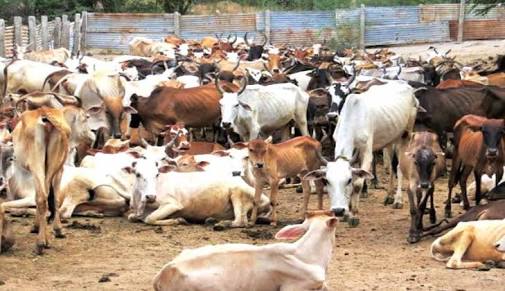
Cattle Slaughter Ban in India

1
Cattle slaughter
Image Source - http://www.livelaw.in/ban-trade-cattle-slaughter-centre-power/

In this article, Arnaz Pestonji, pursuing Diploma in Entrepreneurship Administration and Business Laws from NUJS, Kolkata discusses on the current debate on the ban of cattle slaughter.

Introduction

Considered holy by many Hindus, slaughter of cattle is a sensitive political topic which has gained much attention since the present government came to power in 2014. After gaining power, the present government enacted strict laws holding persons criminally liable for cattle slaughter, which is not just limited to cows but includes all sorts of cattle such as buffalo, bull, bullock, steers, heifer, calves and camel as well.

However, the debate on cattle slaughter is not a new phenomenon and has been prevalent in the Indian society since 1948. After various lively debates in the Constituent Assembly, a ban on the slaughter of certain animals was included as a Directive Principle of State Policy.

Cow Slaughter under the Constitution of India

Under Article 48 of the Constitution of India, the State shall endeavour to take steps for preserving and improving the breeds, and prohibiting the slaughter of cows, calves and other milch and draught cattle.

Article 48A of the Constitution of India mandates that the State to enact laws in order to protect and improve the environment and to make provisions for the safeguard of forest and wildlife of the country.

Also, the Constitution casts a Fundamental Duty upon every citizen of India under Article 51A(g), to protect and improve the natural environment and to have compassion for living creatures”.

The ban on cow slaughter was justified because this enactment enabled the State to protect and improve the environment. The excreta of cow progeny is a source of rich organic manure which helped in improving the quality of the earth and avoided the use of chemicals and inorganic manure.

Also, under Entry 15 of List II (State List), the State Legislatures can make laws to implement directive contained in Article 48 regarding prohibition of cattle slaughter as they have been empowered by the Constitution of India to enact laws related to Preservation, Protection and Improvement of stock.

The structure of the Constitution of India is such that even a blanket wide ban on cattle slaughter falls within the ambit of constitutionality and can hence be termed as constitutional. However, the fact that such type of ban is violative of various fundamental rights of citizens cannot be disregarded either.

Opposition To Ban on Cattle Slaughter

Numerous ordinary citizens, butchers, gut merchant and cattle dealers in India have challenged this ban by filing petitions in various Courts across the nation on the ground that it violates their fundamental rights as under.

Article 19(1)(g) – Freedom to practise or carry on any profession, trade, business or occupation.

Under this article, every citizen has the right to choose any employment or to take up any trade or calling, subject only to the limits as may be imposed by the state in the interest of public welfare.

Butchers, gut merchants and cattle dealers have suffered a great amount of losses after the ban on cattle slaughter came into effect even when the constitution has provided them with the right to carry on any trade or occupation of their calling.

Also, under Article 19(2), State has been empowered to put reasonable restrictions on freedoms that have been guaranteed under Article 19, however, even these restrictions cannot be irrational, unconstitutional or arbitrary.

Article 21 – Right to Liberty states that,

“No person can be deprived of their right to life or liberty except according to the procedure that has been established under law. “

Art. 21 refers to “right to life” and embodies several aspects of life including the right to live with human dignity, right to livelihood, right to legal aid, right to pollution free air, right to health, right to food etc.

Legislation that bans cattle slaughter have taken the right away from the people to choose what they want to eat and thus right of citizens to be able to consume food of their choice has been snatched away from them which portrays India society as one that is bigoted and anti-liberal.

The exception provided under Article 21 which states that the liberty of an individual can be restricted by the State as per the procedure established by law, however this procedure also cannot be irrational, unconstitutional or arbitrary.

The Current Debate

Reasons why it should be banned

Environmental concerns: The environmental concerns have to be placed on the same pedestal as human rights concerns, both being traced to Article 21 of the Constitution. A Bench headed by Justice K S Radhakrishnan stated that ”Animals also have honour and dignity which cannot be arbitrarily deprived of and its rights and privacy have to be respected and protected from unlawful attacks,”. It further added that the “Court has a duty under the doctrine of parents patriae to take care of the rights of animals since they are unable to take care of themselves as against human beings”. (See here)

Not An Absolute Ban

The issue relates to a total prohibition imposed on the slaughter of cow and her progeny. The ban is total with regard to the slaughter of only one particular class of cattle. The ban is not on the total activity of butchers (kasais); they are left free to slaughter animals other than cow progeny and carry on their business activity.

Reasons not to ban

Alternatively, certain findings were concluded by the constitution bench in the case of Qureshi v. State of Gujarat

Wasteful Drain of Resources: The cattle population that is fit for breeding and work must be properly fed for maintaining the health and nourishment of the nation. The maintenance of useless cattle which cannot work or breed involves a wasteful drain on the nation’s cattle feed.

Losses for Cattle Dealers: A total ban on the slaughter of cattle would bring a serious dislocation, though not a complete stoppage, of the business of a considerable section of the people who are by occupation Butchers (kasai), hide merchant and so on.

Anti-liberal: Such a ban will deprive a large section of the people of what may be their staple food or protein diet.

Timeline of the Debate in the Supreme Court

1984

To reconcile the right of butchers to carry on trade and restrictions imposed on the killing of animals through several state laws, the Supreme Court has adopted economic approach viz killing of useful animals could be prohibited but not of those animals who have become economically useless to the society.

The Court has emphasized that a prohibition imposed on the fundamental right to carry a trade and commerce cannot be regarded as reasonable if it is imposed not in public interest, but merely to respect the susceptibilities and sentiments of a section of the people. Thus, it is unreasonable to prohibit the slaughter of cows of all ages and male or female calves of cows or buffaloes. Prohibition of slaughter of bulls, bullocks and she-buffaloes below the age of twenty-five years is an unreasonable restriction on the butchers right to carry on their trade as well as not in public interest as these animals cease to be useful after the age of 15 years (Manick Chand v. the Union of India)

1986

The Court observed in this connection in Qureshi: “The maintenance of useful cattle involves a wasteful drain on the nations cattle feed. To maintain them to deprive the useful cattle of the much-needed nourishment. The presence of so many useless animals tends to deteriorate the breed”.

A ban was put on the slaughter of bulls and bullocks below the age of 16 years. the Supreme Court found these animals could be used for breeding, draught and agricultural purposes up to the age of 16 years. Accordingly, the Court ruled that restriction was not unreasonable, looking to the balance which needs to be struck between public interest, which requires preservation of useful animals and permitting the different traders in beef etc to carry on their trade and profession’. (Haji Usmanbhai Hasanbhai Qureshi v state of Gujarat)

1996

“Again, the state of Madhya Pradesh imposed a total ban on the slaughter of bulls and bullocks and again the Supreme Court quashed the same”. (Hasmattullah v State of Madhya Pradesh)

After referring to all the provisions cases of this question, the Court stuck to its view that these animals were useful only up to the age of 16 years and their slaughter thereafter could not be banned. Referring to Article 48(a) Directive Principle, the Court observed that absolute ban on cattle slaughter of bulls and bullocks is not necessary to comply with article 48. The Courts had thus sought to strike a balance between the right of the butchers to carry on their trade and public interest.

2002

However, the National Commission on Cattle was of the view that It cannot be accepted that bulls and bullocks become useless after the age of 16. It has to be said that bulls and bullocks are not useless to the society because till the end of their lives, they yield excreta in the form of urine and dung which are both extremely useful for production of biogas and manure. Even after their death, they supply hide and other accessories. Therefore, to call them ‘useless’ is totally devoid of reality. If the expenditure on their maintenance is compared to the return which they give, at the most, it can be said that they become ‘less useful’.

2005

In the case of State of Gujarat Vs. Mirzapur Moti Kureshi Kassab Jamat and Ors it was held that “With the growing adoption of non-conventional energy sources like biogas plants, even the waste material has come to assume considerable value. After the cattle cease to breed or are too old to do work, they still continue to give dung for fuel, manure and biogas, and therefore, they cannot be said to be useless. The backbone of Indian agriculture is the cow and her progeny in a way. The whole structure of the Indian agriculture and its economic system is indirectly dependent on the cow.”. It was thus considered necessary to impose total prohibition against slaughter of progeny of cow.

Conclusion

Although the intention of the government behind laws related to cattle slaughter might be purely in the interest of public as cattle are an integral part of agricultural and animal husbandry sector, issuing a blanket nationwide ban on cattle slaughter appears to be anti-liberal as India is a democratic nation.

Completely banning the slaughter of cattle for professional or consumption purposes in all states is not justifiable as it completely neglects and violates the fundamental rights of the people such as Right to Personal Liberty [Article 21] and Right to Freedom to carry any trade or occupation [Article 19(1)(g)].

India is an agrarian economy, protection of cattle is of utmost importance, however, laws relating to the slaughter of cows have been made part of Code of Criminal Procedures. If the states have taken the defence of public interest or environmental protection then why should an offence related to slaughter of cows be punishable up to 10 years or for life in certain states.

Such sentences are nowhere near proportionate to the objective sought to be achieved by the government. Is there an element of religion present in the legislation related to cattle slaughter? If yes then India is a secular state, such draconian laws appear to be violative of the basic structure of the constitution.

Prohibiting consumption of cattle meat which forms a daily part of consumption habits of one section of the society to maintain the religious sentiments of another section of the society is not a reasonable legislation in a federal nation.

The judgment passed by Supreme Court in the case of Qureshi v state of Gujarat to allow the slaughter of bulls and bullocks above 16 years created a balance between the rights of the butchers to carry on their trade, liberty of citizens and public interest by preserving the cattle which are termed useful for agricultural purposes.

Similarly, the Centre, as well as the State, need to make such legislation and adopt such reasonable rules and regulations related to cattle slaughter so that a balance can be struck between the two.

SOURCES:

Indiankanoon.org

Manupatra

Constitution of India – Prof MP Jain

Constitution of India – Durgadas Basu

Constitution of India – Seervai

Download Now

How To Get Foreign Funding For NGOs Under FCRA?

19
foreign funding for NGOs under FCRA
Image Courtesy : http://www.iuemag.com/l17/di/images/inspiration-unlimited-iu-e-magazine-ngo-volunteering-volunteer-adad-social-impact-inspi-news-social-projects-marketing-non-profit.jpg

Individuals, campaigners and activist groups working in the non-government/non-profit sector have been battling to stay afloat in these times of scarce funds. In this article, Sarang Khanna, Researcher and Analyst at iPleaders, talks about how to obtain foreign funding for NGOs under FCRA.

Non-governmental organizations (NGOs) play a crucial role in influencing change in the society and also in upliftment of the weaker sections. Thousands of NGOs in India operate in almost all major sectors of the country, such as, health, education, rural development, food security,  etc. There is a long list of potential sectors with varied scope of work right from the grassroots.

However, NGOs often function around a blurry line when it comes to acquiring capital, and usually rely on donations, charity, government-funded campaigns, Corporate Social Responsibility (CSR), and foreign funding. Foreign funding for NGOs is regulated by the Foreign Contribution (Regulation) Act (FCRA) of 2010 and about 30,000 NGOs in India are registered with FCRA as eligible to obtain foreign money.

Reportedly, only last year as many as 6000 NGOs feared cancellation of their FCRA license. The issue was of non-compliance of the provisions of FCRA, and the Union Home Ministry issued show cause to all demanding explanation, and filing of the missing annual returns pertaining to five financial years.

Well recognized international organizations such as Amnesty International, Human Rights Watch and People’s Watch have all been targeted under FCRA norms.

People’s Watch has had their license suspended and bank account frozen by the government three times since 2012. They had to eventually approach the Delhi High Court to get a ruling in its favour. U.N. experts have said they are stunned by the way India implements their laws, and that the FCRA is “overly broad and vague” and the government uses it to frustrate its critics, according to a report by Thomson Reuters.

While the Modi government has been severely strict with non-profit organizations regulated under FCRA and has said that the groups that don’t disclose information on foreign funding indulge in “anti-national” activities.

Foreign investment is actively encouraged in all key sectors in India, but when it comes to the non-government groups that work for the vulnerable and marginalized, the government has been known to keep a strict stance. In this article, we will try to look at the relevant provisions of the FCRA and how NGOs and NPOs (Non-Profit Organizations) can procedurally raise foreign funding.

Is your NGO eligible?

Under the FCRA, 2010, all companies, associations, societies as well as NGOs need to fulfill certain criteria to be eligible to receive foreign funds. Registration with the Central Government is usually important, but there is also a separate provision of prior permission for case to case basis.

As FCRA is a broad legislation that regulates foreign contribution in all organizations, an organization must have a defined cultural, economic, educational, religious, or social programme to be first eligible to accept foreign contribution. For registration under FCRA, the organization must have been in operation for at least 3 years, whereas for prior permission no such minimum years of operations are required.

Eligibility for grant of registration

  1.       Should be registered under an existing statute like the Societies Registration Act, 1860,  the Indian Trusts Act, 1882, or the Companies Act (1956 or 2013), etc.
  2.       Having been in operation for 3 years
  3.       Should not have a parent society already registered under FCRA
  4.       No foreigner should be on the board of this aforementioned society

Apart from just being in operation for 3 or more years, the organization must also submit proof of activities undertaken in its chosen field of operation. The organization must have also spent at least Rs. 10,00,000 over the last three years on its aims and objectives, excluding administrative expenditure. Statements of Income & Expenditure which are duly audited by a Chartered Accountant are also to be furnished for the same.

A separate bank account must also be maintained by the organization which is solely for the purpose of foreign transactions, and no other funds must be kept in this account. This is applicable for registration and prior permission both.

Eligibility for grant of prior permission

An organization in its early stage may not be eligible for registration. Such organization may apply for grant of prior permission under FCRA, 2010. Prior permission is granted for receipt of a specific amount, from a specific donor, and for carrying out specific activities/projects.

An association or an organization can receive foreign contribution without registration only with prior permission from the FCRA department. Such prior permission for foreign contributions can only be received under these circumstances-

  1.  Should be registered under an existing statute like the Societies Registration Act, 1860,  the Indian Trusts Act, 1882, or the Companies Act (1956 or 2013), etc.
  2.  Should submit a specific commitment letter from the donor indicating the amount of foreign contribution and the purpose for which it is proposed to be given;
  3.  For Indian recipient organizations and foreign donor organizations having common members, FCRA Prior Permission shall be granted to the Indian recipient organizations subject to some conditions.

When can you apply? Is there a time limit?

No. There is no specific time limit prescribed under the FCRA for making an application. Normally registration under FCRA is granted after 3 years of active existence, therefore, the application should be made after three years, though nothing in the Act prevents them from making such application earlier.

However, form FC-3 (the form required to apply for registration and prior permission), provides for uploading of past three years audited statement. On the basis of the requirement of form FC-3, it is normally understood that application for registration under FCRA can only be after 3 years of the creation of the organisation.

However, the Hon’ble Supreme Court’s view in this matter in the case of STO vs. K.I. Abraham [1967] 20 STC 367, was that the rule making authority had no power to prescribe any time restriction. Infact, the FCRA rules also do not provide any restrictive time limit. It is only the requirement of Form FC- 4 (as per the old forms) as well as Form FC-3, which requires 3 years audited statements and activity reports. Such requirements are directory and general in nature and therefore, should not be construed as a mandatory requirement of the FCRA.

Consequently, in our opinion, although the application for registration under FCRA can be filed any time after the registration of the organisation, but, the organizations with a considerable past history of activities have a greater chance of convincing the FCRA authorities with regard to the genuineness and the relevance of their purpose. Even your organizational structure can be of much importance in getting an FCRA registration. To learn about the underlying realities and other practical challenges with respect to registration and prior permission, you can visit here.

For prior permission, an application under form FC-3 can be made any time after the legal constitution of an organization. Although the same clause of form FC-3 requires submission of details of activities of past three years and three years audited statements, but where the organisation is less than three years old, it can submit the documents for lesser number of years as may be available. Prior permission can be obtained at any time, for a specific reason and time duration.

What are the documents required to apply?

A long list of documents is required as proofs to apply for registration or prior permission with the FCRA.

  • Registration Certificate of Association
  • Memorandum of Association/Trust Deed
  • Commitment Letter from the donor organization and agreement
  • Project Report for which FC will be received
  • Audited statement of accounts of past three years.
  • Activities Report of past 3 years.
  • If the association is a registered Trust or Society a certified copy of the registration certificate.
  • Copy of the Memorandum of Association and/or the Articles of Association as applicable.
  • A copy of the latest commitment letter from the donor.
  • A copy of the proposal / project which has been approved by the foreign source for funding, including projected outlays, budget breakups.
  • Details of names and addresses of the members of the Executive Committee/Governing Council etc. of the Association.
  • Copy of any prior permission granted to the organization.
  • List of present members of the Governing Body of the organisation and the office bearers.
  • Copy of any Journal or other publication of the organization.
  • If the association is having any parent or sister or subsidiary organisation which is registered under the FCRA then the registration number along with Ministry of Home Affairs file number should be mentioned.
  • If the association has submitted any application earlier then its reference number should be mentioned.
  • If the association has received any foreign contribution with or without the prior approval of the Central Government, then the detail should be given.
  • Details of Bank along through which the foreign contribution shall be received.
  • A recommendation certificate from any competent authority, if any.
  • Copy of certificates of exemption or registration issued by the Income Tax Department u/s 12A, if any

How to make best use of these foreign funds?

The FCRA and the use of foreign money in India has been heavily scrutinized in the past. So much so, that the FCR Act has been asked to be scrapped off by many stakeholders. According to a report, major foreign donors continue to be churches, priest organizations, and other religious organizations year after year.

Evidently, the major sectors like rural development, education of the poor, health, etc. are being ignored when it comes to foreign funding. Also, according to a press release, the registration of about 15,000 NGOs has been cancelled since 2014. This is obviously a huge number and the main reason is the non-compliance of provisions of the FCRA.

Clearly, the government is not ready to grant any levay to organizations who are entitled to access foreign money but do not follow the correct procedures of doing so or later use the money for unassigned purposes. The lack of thorough knowledge and improper structural organization of your NGO can also lead to cancellation of your licenses. All essentials of FCRA and foreign funding for NGOs and NPOs can be understood and learnt here.

All funds received by an NGO must be used only for the purpose for which they were received. Such funds must not be used in speculative activities identified under the Act. Except with the prior approval of the Authority, these funds must not be given or transferred to any entity not registered under the Act. Every asset purchased with such fund must be in the name of the NGO and not its office bearers or members.

Various such conditions are imposed for the use of foreign funds, and many NGOs are known to be under constant scrutiny for not aligning with these conditions. Moreover, anti-national and other illegal activities are also suspected to be undertaken by various organizations with the use of these foreign grants. There is a high trust deficit around NGO operations and their workings are always under a close eye by the government.

The role of NGOs and NPOs is crucial in bringing a much needed change in the Indian society. If you are the owner of an NGO or planning to a start an NGO for the greater good, be responsible, and know the laws.

Download Now

2nd ANNUAL CONSTITUTIONAL LAW AND POLICY REFORM DEBATE COMPETITION

0

ABOUT THE COLLEGE

Marcel Proust once said, “The voyage of discovery is not in seeking new landscapes but in having neweyes.” This observation clearly enunciates the goals and objectives of SVKM’s Pravin Gandhi College of Law (5 Year Course). The institution recognizes the fact that there lodges within the heart of everystudent that spark of creativity that, is the essence of singularity in every individual. Beginning from this premise, the college structures its learning programme in order to identify, hone in on and unearth thisreserve of creativity. This institution provides the students with varied platforms to develop their skills;by way of debates at the intra and inter collegiate levels; Seminars, workshops, trial advocacy throughmoot competitions, the Juris-cine club, L’avocat an in-house student’s newsletter which enablesstudents to air their passionate concerns on issues.

ABOUT THE CLPRS COMITTEE

The Constitution of India is the fountain head from where all others laws derive their very existence. As such, a sound theoretical & practical understanding of the laws of the land is incomplete without a comprehensive understanding of the working of the Constitution of India. The main objective of the ‘Centre for Constitutional Law & Policy Reform’ is to provide a platform for the students & faculty of Pravin Gandhi College of Law to develop, Foster and disseminate interest in Constitutional Studies. The Centre also strive towards coming out with innovative policy and law reform recommendations keeping Constitutional principles in mind.

FACULTY INCHARGE

KAVITA SHARMA
APURVA THAKUR
ASIM VIDYARTHI

CHAIRPERSON

ADITYA MANUBARWALA

ABOUT THE COMPETITION

“For good ideas and true innovation, you need human interaction, conflict, argument and debate” -Margaret Heffernan. SVKM’s Pravin Gandhi College Of Law in association with Kathmandu Tribune andSmart Maharashtra, is immensely proud to present the 2nd Annual Debate Competition and invites allthe debate enthusiasts to participate and witness the WAR OF WORDS which will have four excitingrounds. It will be held in SVKM’s Pravin Gandhi College Of Law, Mumbai on 21st April ’18, Saturday.

TOPIC

The topics for this year’s debate are :

PRELIMIARY ROUND – Whether Population Control Policy is unconstitutional?

QUARTER FINAL ROUND – Judicial Activism v. Judicial Overreach .

SEMI FINAL ROUND – Whether the Directive Principles of State Policy have become redundant?

FINAL ROUND – Whether the law relating to adultery in India is gender discriminatory andunconstitutional?

ELIGIBILITY AND FORMAT OF THE DEBATE

  1. Any student pursuing an undergraduate, postgraduate or professional course in any recognized
    University/College in India are eligible to participate in the competition.
  2. Only one team from each college is eligible to participate.
  3. Each side will comprise of two speakers
  4. One round of the debate will consist of two teams – one for the motion and against themotion.
  5. The sequence of the speeches shall be as follows:Opening Appeal (For the Motion) – 4 MinutesOpening Appeal (Against the Motion) – 4 MinutesRebuttal Round – 4 Minutes
    Closing Speech (For the Motion) – 4 MinutesClosing Speech (Against the Motion) – 4 MinutesQuestion & Answer Round – 10 Minutes
    (Total=30mins)
  6. Opening Appeal: The participants are expected to put forth their constructivearguments during their opening speeches. The opening speaker for the motion shalldeliver his/her speech first followed by the opening speaker against the motion.
  7. Rebuttal Round: The opening speeches shall be followed by a four-minute rebuttal round wherein each team may pose two questions to the opposite team. The questionsshall be posed alternately by teams. The time limit for each question and the answerthereto shall be 1 minute.
  8. Closing Speech: The participants are expected to summarise, analyse, rebut andprovide a conclusion to the arguments already made during the opening speeches andthe rebuttal round. No new constructive arguments shall be introduced during theclosing speeches. However, the participants are allowed to nuance the argumentsalready made and state additional facts in relation to the same. The closing speaker forthe opposition shall deliver his/her speech first followed by the closing speaker for theproposition.
  9. Question & Answer Round: The judges may, at their discretion, pose questions to theteams during the question and answer round.
  10. Candidates will be allowed to refer to materials during their speech.
  11. The upper limit on the number of participating teams is 16.
  • Out of the total teams, top 8 teams will qualify from the Preliminary Rounds for the Quarter-Final Round.
  • From the Quarter-Final Round, the top 4 teams will qualify for the Semi- Finals.From the Semi-Final round, the top 2 teams will qualify for the Finals.
  • All rounds are knockout rounds.

PRIZES

• Best Team: 5000 INR
• Runners-Up: 2500 INR
• Best Speaker: 2500 INR

All the Participants shall recieve Participation Certificate.

REGISTRATION AND PAYMENT DETAILS

Registration Fees : 500 INR.

Register Online at https://docs.google.com/…/1FAIpQLSdRkfUKl-2JR_Fs47…/viewform

Payment Details:

• Cash at college counter.
• Online Payment to: – Pravin Gandhi College of Law, DENA Bank,
A/c No: 013111001690 IFSC Code: BKDN0460131 Juhu Vile Parle Branch,Mumbai
• PAYTM: – 9765421775 OR 8291324118

CONTACT

For any queries contact: [email protected]

RSVP

Prince Awana

8291324118

Download Now

Significance & Importance of ‘Statement of Working’ for Patenting System in India

0
Statement of working

In this article, Jyoti Chauhan, Registered Indian Patent & Trademark Agent (IPO), Manager Operations (IPR) at Effectual Services discusses the Significance & Importance of Statement of Working for Patenting System in India.

Introduction

The Statement of working is important information which is submitted by either the patentee or the licensee to the IPO (Indian patent office) that clearly states the commercial exploitation of a patent in India. This statement of working system also checks if the patent meets the reasonable requirements of the public.

Legal provisions

Statement of working needs to be submitted for all patents in force under Section 146(2) of the Indian Patent Act and under rule 131. These statements are required to be filed on an annual basis with respect to all the granted patents in India. These statements of working disclose the extent to which the patented invented has been worked on the commercial scale. The timeline for filing of the working statement is March 31st of every year for each preceding calendar year. This statement is submitted by filing prescribed Form-27 each year within 3 months from the end of the calendar year. This form can be filed online by either the patentee or the licensee, or by a patent agent/ attorney who has the address of service in India. In case, the patentee or licensee is residing outside India, he must contact an Indian patent agent/ attorney for submitting this form at the IPO.

The controller at any time can also ask the patentee or the licensee to submit details in writing as to what extent of commercialization in respect of the patent has been exploited in India, as per Section 146(1).

One must update the Indian patent office with following details while filing form-27 i.e. statement of working of patented invention:

(i) The patented invention:
{ } Worked { } Not worked

(a) If not worked: reasons for not working and steps being taken for the working of the invention.

(b) If worked: quantum and value (in Rupees), of the patented product:
i) manufactured in India
ii) imported from other countries (give country wise details)

(ii) Licenses and sub-licenses granted during the year

(iii) State whether the public requirement has been met partly/adequately/to the fullest extent at a reasonable price.

Significance and importance of statement of working in India

Compulsory license

The information disclosed in the statement of working is used while taking decisions on granting a compulsory license. Therefore, legal provisions relating to compulsory licenses and working of patent are interlinked. IPAB (Intellectual Property Appellate Board), India, also takes into consideration the same information disclosed in the statement of working by the patentee at the time of granting the first compulsory license in India. IPAB has taken a landmark decision in “Bayer Corporation v. Natco Pharma Ltd” case where compulsory license was granted to Natco.

Penalty on failure to oblige

In case, the patentee or licensee refuses or fails to submit information as required under Sec 146, the patentee or licensee can be punished with a fine, which can be extended up to Ten lakh rupees under Section 122(1)(b). Further, providing wrongful information or statement can impose imprisonment up to six months or fine or both under Section 122(2).

Section 122(1)(b) of The Indian Patent Act:

122. Refusal or failure to supply information (1) If any person refuses or fails to furnish—

(b) to the Controller any information or statement which he is required to furnish by or under section 146, he shall be punishable with fine which may extend to ten lakh rupees.

A patent can be also revoked on the grounds of non-working of patented invention under section 85 of Indian Patent Act.

Patent litigation

Working or non-working of a patent becomes an important factor while considering infringement suits. In suits relating to infringement under section 108 of Indian Patent Act, the patentee, can claim damages and injunction and/or an account of profit as relief. The disclosed information in the statement of working can be used by the court to estimate the actual damages that may have been claimed. On the other hand, if statement of working is not filed, the alleged infringer may argue that the patentee might not have encountered any damages in view of not filing any statement of working.

Publication of working statements

The statement of working provides useful insights into effectiveness of the patenting system for various companies, industries and other business bodies which utilize the patented invention in their course of business. The IPO made all working statements publicly available online, filed by the patentee during the preceding year. Section 146(3) clearly mentions power of Controller to publish the information received by the IPO under section 146(1) and (2). Such type of publication of valuable information shows the effectiveness of patenting system in India and can be utilized in many forums like academicians, law-makers and potential licensees to amend or improve the Indian patent law. It also helps to evaluate the patents covered under these published working statements.

Publication of statement of working encourages development in the science and technology domain. Beside this, it also has business and trade advantages. Working statements pertaining to a patent help in evaluating the value of a patent and thus help a potential licensee to negotiate the fee for getting the license which would be based on the value of a particular patent. Moreover, a working statement is also important in proving a milestone from the business merger or a business takeover perspective. Furthermore, industries may customize their resources occupied in research and development which would be according to the prospering technology relating to their field based on the information extracted from available working statements. Thus, the information we acquire from working of inventions gives an excellent idea about the commercial viability of inventions, effectiveness of inventions and plays an important role in valuation of patent portfolios and compulsory licensing.

Conclusion

Submitting information regarding working of patent is becoming a peculiar requirement under Indian patent law. Patents are granted to encourage invention, innovation, research and technology and to ensure that the invention, for which the patent has been filed, is being commercialized for the benefit of the public. Filing of statement of working discloses periodic information to the Indian patent office regarding Commercialization of the patented invention in Indian Jurisdiction thereby preventing the non-commercialization/ non- use or misuse of patented inventions. It does appear that the information from relevant form helps to evaluate critical information for compulsory licensing, also this information is important in the industry, and helps in taking business decisions. Therefore, the filing of Form 27 for all granted patents is a statutory requirement which is required to be followed and the Indian patent office should enforce action strictly against those people who are violating the Indian patent law.

Download Now

Prohibition of Fraudulent and Unfair Trade Practices relating to Securities Market

2
Fraudulent and Unfair Trade Practices
Image Source - https://www.bbalectures.com/the-role-of-the-securities-market/

In this article, Bharath Selvakumar, pursuing Diploma in Entrepreneurship Administration and Business Laws from NUJS, Kolkata, discusses on fraudulent and unfair trade practices in the securities market.

Introduction

The Securities market is a part of the financial market where buying and selling of securities are done. Just like any other financial market, securities market is also prone to scams, frauds and illicit activities. Securities market in India involves millions of active investors on a daily basis investing and earning money through the trade done. So it is very essential to check and prevent any of the scams or frauds in the market to safeguard the interests of all the investors in the securities market.

Governing body for the Securities Market

Owing to the growth of securities market in the Indian economy in 1992, the Government of India established a regulatory body to look after this market. It was called the Securities and Exchange Board of India (SEBI). This Securities and Exchange Board of India (SEBI) was entrusted with the following responsibilities:  

  1. Protecting the interests of investors in securities market.
  2. Regulate the operations of the securities market.
  3. Promote and develop securities market.
  4. Regulate the insider trading in a company.

Protection of Investor Interests

One of SEBI’s key responsibilities is to regulate and maintain the interests of the investors in the securities market which is the key for the functioning of the securities market. This is evident from the case below:

Securities and Exchange Board of India (SEBI) v. Sahara India Real Estate Corporation Ltd.

Sahara issued Optionally Fully Convertible Debentures (OFCDs) to investors without the approval of SEBI from 25th April 2008 to 13th April 2011 and collected over Rs.17,400 crore. SEBI, on noticing the interests of the investors at risk took up this issue and ordered Sahara to return the entire collected amount to the investors with 15% interest rate.

Fraudulent and Unfair Trade practices

As stated by SEBI in the Prohibition of Fraudulent and Unfair Trade Practices Relating to Securities Market Regulations, 2003

“Fraud includes any act, expression, omission or concealment committed whether in a deceitful manner or not by a person or by any other person with his connivance or by his agent while dealing in securities in order to induce another person or his agent to deal in securities, whether or not there is any wrongful gain or avoidance of any loss”.

Prohibition of unfair dealings in Securities

The Prohibition of fraudulent and unfair trade practices regulation passed on July 17, 2003 lists down the following points as unacceptable in securities market for regulating the securities market from frauds and scams. Chapter II (3) of this regulation deals with prohibition of unfair dealings in securities. It states that:

  • Nobody directly or indirectly should indulge in fraud relating to selling, buying or dealing with securities;
  • No one should use any manipulative or deceptive means to violate the provisions of the Act;
  • No one should employ any scheme or device or a strategy to defraud the dealings connected with securities.

Any breach to the above-mentioned statements would be considered, unlawful. If any of those breaches are done by any individual or a company it would be investigated by SEBI and appropriate actions would be taken against the party who commits such unlawful activity by SEBI.

Prohibition of Manipulative, Fraudulent and Unfair trade practices

Securities and Exchange Board of India (SEBI) plays a pivotal and instrumental role in prohibiting any sort of activities that are manipulative or fraudulent or unfair in the securities market. After SEBI encountered many unfair practices, frauds that affect the securities market, SEBI passed a special regulation pertaining to prohibition of manipulative, fraudulent and unfair trade practices in chapter II (4) of 2003 regulation. The following has been mentioned:

  • No person shall indulge in frauds or unfair trade practices in the securities market.
  • Creating a fake appearance of trading of securities that would give a false appearance of trading to the investors is not allowed.
  • Handling with securities with a purpose of inflating or causing fluctuations in securities is not allowed instead it should be intended for transfer of ownership only.
  • To pay any person money or money’s equivalent for the purpose of handling securities with a motive of causing fluctuations or inflation is not allowed.
  • Any act to manipulate the price of securities is not allowed.
  • Use of any information that is false to make a person handle with securities is not allowed.
  • To handle securities without any intention of performing or without the intention of change in ownership is not allowed.
  • Should not deal with any securities that are stolen or fake.

SEBI also has certain regulations to the intermediaries such as stock brokers, sub-brokers etc. which are:

  • No intermediary should promise a price to a person and if any change of price occurs later, profiting from that change occurred is not allowed.
  • An Intermediary should not offer any information that is not verifiable and make a person handle securities with that unverified information.
  • Should not advertise with half or partially true information that is misleading and influences a person to handle with securities.
  • An intermediary handling inflated securities on behalf of a person with an intent of higher brokerage is not allowed.
  • No intermediary should restrain from reporting the transactions in securities that is done on a person’s behalf.
  • To make circular transactions that projects a fake view of buying or selling of securities in securities market is not allowed.
  • No intermediary should encourage or recommend a person to handle certain securities with a motive of higher brokerage.
  • No intermediary should falsify or predate any documents like contracts.
  • An intermediary should not sell or buy securities in advance knowing a future order of a company or a client, which known as the act of front-running.
  • To spread fake news that induces selling or buying of securities.

These are the interpretations of regulations that have been passed by the Securities and Exchange Board of India (SEBI) which states those things to a company or an intermediary or an investor those things that are unacceptable and are punishable. To know these regulations with more clarity a couple of orders by SEBI are discussed below:

Adjudication order against Mr. Dipak Patel in the matter of Trading Activity of Kanaiyalal Baldevbhai Patel with Passport India Investment (Mauritius) Limited (see here).

Kanaiyalal Baldevbhai Patel used the information from his cousin Dipak Patel who was Portfolio Manager for Passport India Investment Ltd. (PII) illegally to front-run for those stocks that were to be ordered by the company and later sold those to PII for a profit. By doing this for a period of over 2 years Kanaiyalal Baldevbahi Patel earned a profit of about Rs.1,56,32,364. The Adjudication Officer after the investigation of SEBI sighting this act of front-running with illicit information unlawful levied a fine of Rs.5,00,00,000 to Dipak Patel.

Adjudication Order in respect of Shri. N. Narayanan and Shri. V. Natarajan in the matter of Pyramid Saimira Theatre Limited (see here).

N.Narayanan and V.Natarajan the full-time directors of Pyramid Saimira Theatre Limited (PSTL) during the financial year 2007-2008 published fake accounts with inflated figures in their financial report. This act of fraud deliberately done to lure investors was investigated by SEBI and the Adjudication Officer levied fine of Rs.50,00,000 to V.Narayanan and Rs.40,00,000 to V.Natarajan.

Complaint against Unfair Trade Practices

If any of the investors encounter any frauds or unfair trade practices in securities market they can approach SEBI and file a complaint for the same. SEBI has a separate complaint cell named SEBI Complaints Redress System (SCORES) for quicker resolution of complaints. SCORES has an online platform (https://scores.gov.in/) for the ease of investors to file a complaint.

Conclusion

For any market to flourish and maintain a constant growth on a long-term, it is necessary to maintain the market free from any frauds, illicit activities, unfair and manipulative actions. This goes same with Securities market. In order to maintain a long-term growth and protect the people involved in investing in the securities market, the Securities and Exchange Board of India (SEBI) has taken every step possible to maintain the same with all possible means. In India owing to population and many investors entering into the market, there is a greater risk for any frauds to occur capitalizing from a large number of investors and also in the modern technological era, India lags behind cybersecurity compared to other developed countries. Since most securities are handled now through online platforms, applications etc. SEBI should also bring in the cybersecurity guidelines and cyber security wing to protect the securities market from any possible cyber hacking eventually protecting and guiding securities market in India to a path of development.

Reference:

Regulation on Securities and Exchange Board of India act [https://www.sebi.gov.in/acts/futpfinal.html (March 31, 2018)].

Download Now

Good Fellowships With Great Stipend

0
Fellowships
Image Courtesy : https://mphprogramslist.com/files/2013/07/Fellowships-public-health.gif

In this article, Sarang Khanna, Marketing Executive at iPleaders, mentions a list of fellowships that everyone must aspire to work with in order to experience true learning through on-ground reality

Fellowships are great to gain experiential learning and grow your skills and network. In India, there are various such fellowships for students and young graduates to be a part of a social change and also attain leadership skills. They develop cultural competence and awareness and look great on the CV. Fellowships will help you gain new insights, stand out, and get the career boost you’ve been looking for!

Let’s look at a few fellowships relevant for law students and graduates, that also pay good stipend and are much respected to be a part of.

SBI Youth For India Fellowship: Stipend of INR 15,000 per month and additional benefits! (Applications Open!)

This is a 13 month long fellowship run by SBI with various NGOs as their CSR initiative. The opportunity is available in several locations across India and promotes cultural exploration by fellows. The SBI Youth For India Fellows work in rural development and gain first-hand experience of solving the issues in rural India. They aid in resolving pressing problems related to health, education, food security, energy, etc., and aspire to bring a change through empowerment of rural people and social entrepreneurship.

Young professionals and graduates between the age of 21-32 are eligible for this fellowship and shortlisted candidates must go through an interview before being inducted. Additional benefits include local transport allowance of INR 1,000 per month, to and fro travel costs from residence to project location, and an allowance of INR 30,000 upon successful completion of the fellowship.

Applications for this extremely respected fellowship are now open, with last date being the 10th of May, 2018. Visit their official website to know more and apply.

CSJ’s Young Professionals Programme for Legal EmpowermentStipend of INR 25,000

The Centre for Social Justice (CSJ) runs this Young Professionals Programme for Legal Empowerment (YPPLE) with the idea to promote social change through law. Started in 2014, YPPLE is influencing change at the bottom of the societal pyramid and making young legal professionals do it. It is designed to equip young legal professionals to become powerful change agents by giving them the opportunity to develop holistic understanding of how legal empowerment can contribute to social change.

The programme is designed for 2 years, although the minimum required commitment is of 1 year after which an option to opt out is available. Role includes a good blend of field work and research projects, with special emphasis on community engagement and capacity building.

A personal statement of purpose and a CV is required in order to apply, and short-listed candidates are invited for a two day selection process at CSJ, Ahmedabad. A group of 6-8 legal professionals are to be selected, and applications were open till 15th April, 2018. Access their brochure here.

Urban Fellowship Programme (UFP) by IIHS, Bangalore: Fully funded fellowship; no additional stipend (Applications open!)

The Urban Fellowship Programme is a 9 month long full time fellowship at IIHS in Bangalore. It focuses on urban development issues and aims at developing skills to combat them. It is an interdisciplinary programme, which could be a great opportunity for young legal graduates to diversify their experience. It will also enable them to network on a global level and equip fellows with knowledge and practice to enter the developmental field.

A bachelor’s degree and an age below 30 are the prerequisites to apply for this programme, but consideration is also given to people without any formal education after 10+2. Although there is no formal stipend, but tuition, travel, accommodation  and all other costs are covered.

After the completion of the fellowship, UFP guarantees a two-month internship for all fellows to facilitate transition from classroom learning to the real world of work and practice. Applications are open till 16th of April, 2018, and telephone or Skype interviews are required for shortlisted candidates. To know more about this opportunity, you can visit the official website.

Legislative Assistant to a Member of Parliament (LAMP) FellowshipStipend of INR 25,000

LAMP Fellowship is a much coveted fellowship, especially amongst legal graduates. It gives you a chance to closely work with a Member of Parliament and be a part of legislation making process. It is open to students from any discipline, and has an age bar of 25 years for the applicants. The 11-month fellowship begins in Monsoon session till the budget session where a fellow works full time with the MP and indulges in extensive research.

Due to excessive interest from the student community, a stringent selection procedure is put up which includes writing a detailed statement of intent, an essay on a legislative issue of your choice, and finally an interview before selection.

Work can include anything  depending upon your assigned Member of Parliament. Working on laws and policies related to health, economics, environment,  social, foreign affairs etc. are the common tasks of a LAMP fellow. More about this great opportunity can be learnt here.

Transforming Tihar FellowshipStipend of INR 15,000

Turn Your Concern Into Action (TYCIA) Foundation is poised to make education equally accessible to all classes of the society. They do not believe in being called a charity or an organization that works with underprivileged, to keep the dignity of all the stakeholders intact. Keeping in mind their objective, they came up  with a unique initiative in the form of Transform Tihar Fellowship in 2017. The idea is to help aid the education for young inmates in Tihar, which is indeed a commendable initiative.

It is a 12 month fellowship that started in August last year and it still ongoing, and upon having a conversation with the founder, Saanchi Marwaha, she confirmed the second edition of this fellowship shall start later this year, with many other plans in pipeline for the TYCIA foundation.

Open to people from all disciplines, it can be especially beneficial for law students and graduates to delve into transforming how education is imparted in India. Great opportunity to influence change. Read about how to connect with them on their official website.

While there are only a handful of fellowships in India that not only give you a once in a lifetime opportunity but also pay you for the experience, there are only so many fellows that can make it. What do you need to do make it?

What can make you stand apart amongst the lakhs that apply for these fellowships? Your application goes a long way. A focused resume that shows that little extra effort, whether it’s through going the extra-mile with your statement of intent, a list of coveted and worthy internships with the Central Ministries or NGOs that depict your desire to propagate change, or by way of taking online courses to gain knowledge and acquire a certain skill-set; this all goes a long way in helping you land a place in these much celebrated fellowships.

Wishing you all good luck!

Download Now
logo
FREE & ONLINE 3-Day Bootcamp (LIVE only) on

How Can Experienced Professionals Become Independent Directors

calender
28th, 29th Mar, 2026, 2 - 5pm (IST) &
30th Mar, 2026, 7 - 10pm (IST).
Bootcamp starting in
Days
HRS
MIN
SEC
Abhyuday AgarwalCOO & CO-Founder, LawSikho

Register now

Abhyuday AgarwalCOO & CO-Founder, LawSikho