Download Now
Home Blog Page 1525

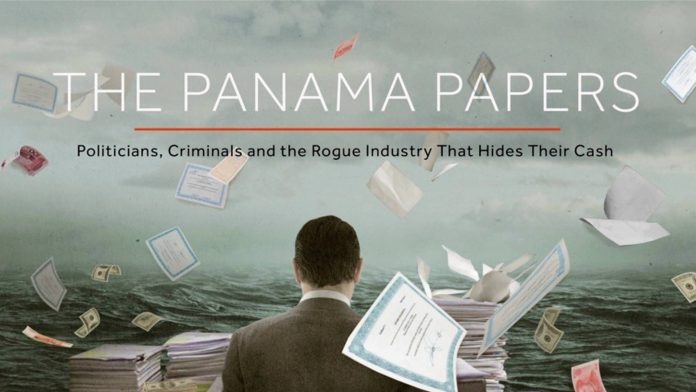
Impact of Panama papers on Indian Market

0
panama

Bhargav Chetankumar Thakkar

BACKGROUND OF PANAMA PAPERS

On 3rd April, 2016 first news story was published by the German newspaper Süddeutsche Zeitung (SZ), about Panama Papers, leak of 11.5 Million documents and files from the records of one of the best offshore Law firms of the world i.e. Mossack Fonseca established in Panama. Though the trail of the event is from way back in 2014 when “John Doe”, (a pseudonym used by anonymous) the whistleblower contacted a reporter of Süddeutsche Zeitung (SZ), Bastian Obermayer. After the contact John transferred around 11.5 million documents, which consist details of financial and attorney-client information, of Panamanian law firm and corporate service provider Mossack Fonseca, for more than 214,488 offshore entities. As the data received was huge consisting chunk of files, SZ asked the International Consortium of Investigative Journalists (ICIJ) for help. The analysis of the law firm operation from the data began by Journalists from 107 media organizations in 80 countries which took more than a year.      

The Database showed how the rich and powerful clients of Mossack Fonseca were able to launder money and avoid huge tax liabilities. In one of such cases, the Law Firm offered an American fake millionaire ownership records to hide money and evade tax from the Authorities. This has attracted direct breach of International regulations and treaties, which were designed to stop tax evasion and money laundering worldwide. It is one of the major leaks in the history of World economy.

WHAT IS THE ROLE OF THE OFFSHORE LAW FIRM

An offshore Law firm undertakes the work of incorporating and selling anonymous offshore companies around the world to its clients. Such companies which commonly known as shell Companies are used by their promoters to hide their big business deals. Such business deals can be illegal or illegitimate but are without any active business operations and noteworthy assets. Such Companies have many offices all around the world.

The major work of the offshore law firm is managing to find and sell the thousands of Companies and thus making a huge amount of profit by helping its client to hide its black money and evade tax liability. It helps its clients in furtively maintaining a maze of accounts to ensure the secrecy of their money and thus converting the black money into white money or evasion of tax. These Offshore Law Firms makes it very easy and convenient for its clients to find and float an offshore company by selling its shell companies across the world in different cities.

They ensure that their clients get a bucket full of services in their minimal fees of say $1000. Their bucket of services include selling of shell companies at cheaper rates, appointing a fake director for such company and also help in hiding the real stakeholders of the company if desired by the client. Thus, overall identity of the Company is concealed.

WHO IS MOSSACK FONSECA

Mossack Fonseca is a Law Firm established and based in Panama a country in Central America. The Firm is into the business of providing its clients with services relating to selling and maintaining shell companies around the World. The Firm can be said to be a concierge to its clients along with maintaining their secret money. The Firm clientele includes mafias, dons, drug dealers, big/ corrupt politicians, entertainers who are tax evaders and another businessperson who are willing to evade tax liability.

WHAT IS THE DATABASE ALL ABOUT

The database contains identity information of shareholders and directors of more than Two Lakh shell companies, set up by Mossack Fonseca and some of their financial transactions. According to ICIJ most of the transactions though are legal; there seem some transactions which are at least ethically wrong if not legally, due to incomplete data the same cannot be verified. Though the offshore shell companies’ transactions as provided in the database seemed to have broken various laws and trade sanctions.

The database contains such financial transaction details of many of the public figures including world politicians, sports persons, artists, etc. these public figures are from more than 200 countries including India. It further shows how wealthy people keep personal financial details private to themselves.

THE NEED BEHIND SUCH FINANCIAL TRANSACTIONS

Most of the transactions turn out to be entirely legal though ethically wrong, amongst them the prime reason turn out to be is tax havens. Tax Haven is the country whose banking infrastructure is of such manner which provides service to such people or business with very little or no disclosure of information of such financial transactions on very low tax rate. This saves person from disclosing the details of transaction and also low tax in compare to the home country. The other reasons for such transactions are money laundering, hiding undeclared income offshore, routing of funds to the non-friendly countries, raise foreign capital when it’s against the law of the land, fraud, kleptocracy, tax evasion, evading international sanctions etc.

PEOPLE NAMED IN THE PAPERS

The papers included the name of the high ranking political figures their relatives, celebrities and business figures. Among many some must mention names are, who were then-current national leaders, including President Khalifa bin Zayed Al Nahyan of the United Arab Emirates, Petro Poroshenko of Ukraine, King Salman of Saudi Arabia, and the Prime Minister of Iceland, Sigmundur Davíð Gunnlaugsson.

Former Heads of State Mentioned in the Papers

Sudanese president Ahmed al-Mirghani, who was president from 1986–1989 and died in 2008. Emir of Qatar Hamad bin Khalifa Al Thani owned Afrodille S.A., which had a bank account in Luxembourg and shares in two South African companies. Al Thani also held a majority of the shares in Rienne S.A. and Yalis S.A., holding a term deposit with the Bank of China in Luxembourg. A relative owned 25 percent of these: Sheikh Hamad bin Jassim Al Thani, Qatar’s former prime minister and foreign minister.

Former Prime Ministers

Prime Minister Bidzina Ivanishvili of Georgia, Pavlo Lazarenko of Ukraine, Prime Minister Ayad Allawi, also a former VP of Iraq, had Mossack Fonseca supply a nominee to stand in for him and screen his identity as owner of the Panama-registered company IMF Holdings. The organization was liquidated in 2013 and possessed a $1.5 million house close to London. An another offshore company, Moonlight Estates, enlisted in the British Virgin Islands, additionally held a property in London for his benefit. His media contact confirmed his sole ownership for two organizations and of Foxwood Estates also, saying IMF was set up to possess land on legitimate guidance for security after an assassination attempt, and including that any income was accounted for and taxes paid “promptly and timely manner”.

  • Ion Sturza of Moldova.
  • Ali Abu al-Ragheb of Jordan.

The leaked files identified 61 family members and associates of prime ministers, presidents and kings, including:

  • The brother-in-law of China’s paramount leader Xi Jinping
  • The son of Malaysian Prime Minister Najib Razak
  • children of Pakistani Prime Minister Nawaz Sharif
  • children of Azerbaijani President Ilham Aliyev
  • Clive Khulubuse Zuma, the nephew of South African President Jacob Zuma
  • Nurali Aliyev, the grandson of Kazakh President Nursultan Nazarbayev
  • Mounir Majidi, the personal secretary of Moroccan King Mohammed VI
  • Kojo Annan, the son of former United Nations Secretary-General Kofi Annan
  • Mark Thatcher, the son of former British Prime Minister Margaret Thatcher
  • Juan Armando Hinojosa, the “favourite contractor” of Mexican president Enrique Peña Nieto.
  • Spanish Royal Family: Infanta Pilar, Duchess of Badajoz and her son Bruno Gómez-Acebes, Iñaki Urdangarín, Amalio de Marichalar, and people close to the family like the mistress of former King Juan Carlos I, Corinna Larsen

HOW THE LEAK SHOOK INDIA

Bollywood actor Amitabh Bachchan, Aishwarya Rai Bachchan and actor and producer Ajay Devgan are recorded in the papers. Bachchan has denied any association with abroad organizations, and a representative of Rai likewise questioned the records legitimacy. Bachchan repeated the refusal in response to the 21st August report that he was recorded as a director of two organizations and took part in the board meetings of such organisations.

Further papers provided names of popularly known businessman names, a real estate developer and DLF CEO Kushal Pal Singh, Sameer Gehlaut of the Indiabulls gathering, and Gautam Adani’s senior sibling Vinod Adani. Share price of the two companies fell after the revealing their name in the papers, and thereafter of the Apollo Tires, which had likewise been specified. DLF said it had invested into existing abroad organizations in consistency with the LRS Scheme set up in 2004 and revealed this to the Indian revenue department. An Apollo representative said that the relatives of Chairman Onkar Kanwar who had been accounted for as owning offshore organizations did not live in India and had informed and complied with the law where they were compiled to inform. Gehlaut said he had paid full charges and made necessary compliance.

Indian government officials on the rundown incorporate Shishir Bajoria from West Bengal and Anurag Kejriwal, previous head of the Delhi Lok Satta Party. Bajoria said he possessed two other Isle of Man organizations however not the one attributed to him in the leaked papers. Corporate administrations supplier First Names Group confirmed that they had mistakenly given their data to Mossack Fonseca. MF records indicate Kejriwal as executive of three offshore organizations situated in the British Virgin Islands (BVI), and holding two private establishments in Panama and energy of lawyer of another BVI organization. He recognized having had seaward organizations, however, said he close them down after a brief timeframe.

The name of late drug king Iqbal Mirchi has additionally surfaced in the papers. Around 500 Indian residents seem to be mentioned including individuals and their fiduciaries. Indian PM Narendra Modi in the wake of the leak of papers further ordered an inquiry, and along these lines the Indian government reported that it was constituting an special multi-organization team involving officers from the investigative unit of the Central Board of Direct Taxes and its Foreign Tax and Tax Research Division, the Financial Intelligence Unit and the Reserve Bank of India.

STEPS TAKEN BY THE INDIAN GOVERNMENT TO HUNT BLACK MONEY EVADERS AFTER PANAMA PAPERS

It was informed to the media by one of the officer that a Tax officers’ team and other government officer visited Panama and some other countries for tax data collection in December. The government is trying to finalise the tax data collection/ exchange as soon as possible, possibly by end of year 2017 or first quarter of 2018 as informed by the inside officials to the media sources. Finance Minister’s website portal has uploaded minutes of the Panama meeting, which indicates that Indian Government is pushing the deal of tax data exchange agreement or Tax Information Exchange Agreements (TIEA).

As per the above mentioned minutes “Discussions covered several bilateral, regional and global issues, ranging from the early conclusion of pending bilateral agreements; (to) India’s desire to finalize the tax information exchange agreement at the earliest”. The visits take after the April 2016 leak of the Panama Papers—11.5 million records that detail money related and lawyer customer data for more than 214,488 offshore organisations, generally accepted to be utilized for tax avoidance and reserving of illicit riches. The records made by Panamanian law firm Mossack Fonseca contain names of no less than 500 Indians. The papers were made open by the International Consortium of Investigative Journalists (ICIJ) and other media associations. The issue is additionally being observed by the Supreme Court following a writ appeal. The administration has told the apex court that it is considering the issue important and has framed a team of officers from various agencies to inspect the issue.

The Indian revenue department were facing challenges quite recently working on the incomplete data as revealed under the panama papers as the same number of the people and organizations were denying any association with the offshore entities. The onus of evidence was on the Indian regulatory. Without a TIEA, the authorities were contacting Panama through discretionary channels and the data given to India came with such condition that it can’t be utilized for litigation. On the off chance that the tax agreement is not executed, India has the only choice of naming Panama as a ‘non-cooperative’ jurisdiction and collect a higher withholding tax of 30%.

Conclusion

India’s recent Foreign Exchange Regulation Act (FERA) had for since quite a while ago forced confinements on inhabitants from exchanging reserves abroad because of the outside trade lack in the nation. In any case, it’s a well known fact that billions were redirected to outside safe houses. The remote trade rules were facilitated in 2004 with the Liberalized Remittance Scheme that enabled people to transmit $25,000 every year, a point of confinement that stands at $250,000 today. India doesn’t need rules in regards to outside trade exchanges. There is the Foreign Exchange Management Act ( a less draconian form of FERA), the Prevention of Money Laundering Act, the Black Money (Undisclosed Foreign Income and Assets) and Imposition of Tax Act, the Prevention of Corruption Act and the Income-Tax Act. Be that as it may, recognition can on a specialized point spurn the soul of these laws. A few people contended that they had not set up seaward organizations, which was illicit yet just procured them, which was allowed. Others said that they are non-inhabitant Indians to whom the Indian assessment and different standards don’t make a difference.

 

Download Now

Should ICO’s be subjected to securities law in India?

0
Family members under money laundering act

In this article, Charmi Sanjay Chhadva pursuing M.A, in Business Law from NUJS, Kolkata discusses whether ICO’s be subjected to securities law in India or not.

ICO stands for “Initial Coin Offering”. We understand that Initial Coin Offering refers to the securities market. But as we all know, that the securities market is vast and massive. It embraces innumerable terms, concepts, ideas, models and theories. Initial Coin Offering hereinafter referred to as “ICO” is one of these ideas and a new concept which we need to know about herein and of its subjection to the securities market in India.

To understand whether ICOs should be subjected to securities market in India or no, we shall first understand this new concept and idea in depth herein below.

Meaning of the Term ICO

ICO is an unregulated means by which reserves are raised for another crypto currency (a computerized cash in which encryption methods are utilized to direct the generation of units of money and check the exchange of reserves, working autonomously of a central bank) project. ICO is utilized by new businesses to sidestep the thorough and directed capital-raising procedure required by investors or banks. In an ICO crusade, a fraction of the digital money is sold to early sponsor of the task in return for legal tender or different cryptographic forms of money, but generally for Bitcoin. ICOs are also called as Initial Public Coin Offering (IPCO).

Procedure Followed by Offering ICOs

After understanding the meaning of the term Initial Coin Offering, we also need to know about the actual procedure followed while offering ICOs herein below.

At the point when a cryptographic money start up firm needs to fund-raise through an Initial Coin Offering, it as a rule makes an arrangement on a white paper which states what really matters to the task, what need(s) the task will satisfy upon fulfilment, how much cash is expected to commence the project, the amount of the virtual tokens the pioneers of the venture will keep for themselves, what kind of cash is acknowledged, and to what extent the ICO crusade will keep running for. Amid the ICO crusade, devotees and supporters of the association’s drive get a portion of the conveyed crypto coins with fiat or virtual money. These coins are alluded to as tokens and are like shares of a company sold to financial specialists in an Initial Public Offering (IPO) exchange. In the event that the cash raised does not meet the base assets required by the firm, the cash is come back to the supporters and the ICO is regarded to be unsuccessful. In the event that the assets necessities are met inside the predetermined time span, the cash raised is utilized to either start the new plan or to finish it.

Early financial specialists in the operation are normally persuaded to purchase the crypto coins with the expectation that the arrangement ends up noticeably fruitful after it dispatches which could mean higher crypto coin esteem than what they bought it for before the task was started.

Example of such a Transaction

A case of an effective ICO venture that was beneficial to early financial specialists is the shrewd contracts stage called Ethereum which has Ethers as its coin tokens. In 2014, the ETHEREUM venture was reported and its ICO brought $18 million up in BITCOINS or $0.40 per Ether. The task went live in 2015 and in 2016 had an ether esteem that went up as high as $14 with a market capitalization of over $1 billion.

ICOs are like IPOs and crowdfunding. Like IPOs, a stake of the startup or organization is sold to fund-raise for the entity’s operations amid an ICO operation. In any case, while IPOs manage financial specialists, ICOs manage supporters that are quick to put resources into another venture much like a crowd funding occasion. Yet, ICOs vary from crowd funding in that the benefactors of the previous are roused by a forthcoming return in their investments, while the assets brought up in the last battle are fundamentally gifts. Thus, ICOs are alluded to as crowd sales.

In spite of the fact that there are effective ICO exchanges on record and ICOs are ready to be problematic creative devices in the computerized time, speculators are forewarned to be careful as some ICO or crowd sale crusades are really false. Since these raising money agents are not controlled by budgetary experts, for example, the Securities Exchange Commission (SEC), supports that are lost because of false activities may never be recuperated.

Legality

After understanding the concept of ICOs and how it functions, let’s discuss the legality of ICOs in India in the securities market.

Since the companies looking to raise money create their own cryptocurrency and offer fanatics the opportunity to buy their new cryptocurrency in exchange for established ones like bitcoins. Let us discuss the depth of bitcoins in India. From practicing alert over Bitcoin cryptographic money, the Government of India could at long last be moving towards compliance. According to a current CNBC India report, an advisory group of finance service officials, IT service authorities, NITI Aayog, and Reserve Bank authorities, might be crawling nearer to legitimizing virtual monetary standards in India.

The Inter-Disciplinary Committee’s report was relied upon to be declared before the finish of July, after which the Securities and Exchange Board of India (SEBI) might be made a request to venture in to regulate transactions.

In this way, if Bitcoins are authorized in India, the following would happen:

  • Bitcoins would fall under the domain of RBI’s 1934 Act.
  • Bitcoin financial specialists / financiers would be taxed.
  • RBI would issue rules and guidelines with respect to investment and buy of Bitcoins.
  • If any foreign disbursement is made through Bitcoins, it would fall under the domain of Foreign Exchange Management Act, 1999.
  • Returns from investment in Bitcoins would be taxed.

Curiously, the news comes around a similar time when the Bitcoin exchange examiner, Chris Burniske, featured that exchanges from India represented 10% of worldwide cryptocurrency exchange, in May. He tweeted an outline following cryptocurrency exchanges that show India represented 16,754.76 coins in terms of trade volume. It has additionally been positioned fourth on the Bitcoin crypto currency exchanging market. While India still thinks about sanctioning cryptographic money, China’s national bank — the People’s Bank of China — has officially built up a model of a cryptocurrency that it could wind up flowing it in the near future. It would be presented close by the China’s essential cash, the renminbi or the yuan. China will be recreating conceivable situations and running mock exchanges utilizing the crypto currency with some business Chinese banks.

History

In the course of recent years, regardless of the absence of controls in the Indian digital currency industry, a couple of Bitcoin trades have jumped up and begun working with self-controlled exchanging stages with strict Know Your Customer (KYC) and hostile to tax evasion frameworks set up. These incorporate new businesses like Zebpay, Coinsecure and Unocoin. These new businesses have likewise raised financing from speculators and have gradually been building confidence in the Bitcoin and advanced cash segment regardless of distrust from the administration.

For example, Bengaluru-based Bitcoin startup, Unocoin, brought $1.5 Mn up in a Pre Series-A round from Blume Ventures, Mumbai Angels and ah! Ventures last September. Thus, Ahmedabad-based portable Bitcoin wallet startup, Zebpay, raised Series A financing of $1 Mn from heavenly attendant speculators in January 2016. What’s more, Bitcoin exchanging stage Coin secure raised $1.2 Mn as a component of its Series A speculation round from an undisclosed financial specialist in April 2016.

In 2015, the RBI distributed a money related strength provide details regarding interruptions in monetary innovation. In the report, it distinguished the significance of ‘private block chains’ which can possibly change how bank back-end operations work, and also expanding the speed of instalments. The bank said that with its capability to battle falsifying, the block chain is probably going to realize a noteworthy change in the working of monetary markets, guarantee ID, and instalments frameworks.

In December 2015, previous RBI Governor Raghuram Rajan had expressed that computerized money was “captivating” and that India’s national bank could utilize advanced monetary standards. He had stated, “I have almost certainly, that down the line, we will be moving towards principally a cashless society and we’ll have some sort of monetary forms like this which will be grinding away.”

For example, Bengaluru-based Bitcoin startup, Unocoin, brought $1.5 Mn up in a Pre Series-A round from Blume Ventures, Mumbai Angels and ah! Ventures last September. Also, Ahmedabad-based portable Bitcoin wallet startup, Zebpay, raised Series A financing of $1 Mn from blessed messenger speculators in January 2016. Also, Bitcoin exchanging stage Coin secure raised $1.2 Mn as a major aspect of its Series A venture round from an undisclosed financial specialist in April 2016.

In 2015, the RBI distributed a monetary soundness provide details regarding disturbances in budgetary innovation. In the report, it recognized the significance of ‘private blockchains’ which can possibly change how bank back-end operations work, and in addition expanding the speed of instalments. The bank said that with its capability to battle duplicating, the blockchain is probably going to achieve a noteworthy change in the working of money related markets, guarantee recognizable proof, and instalments frameworks.

In December 2015, previous RBI Governor Raghuram Rajan had expressed that digital money was “fascinating” and that India’s central bank could utilize computerized monetary forms. He had stated, “I have almost certainly, that down the line, we will be moving towards principally a cashless society and we’ll have some sort of monetary forms like this which will be grinding away.”

Be that as it may, in February this year, the RBI issued a preventative public statement, on the back of a prior one issued in December 2013. The discharge cautioned clients of the hazard they are probably going to as of now know about. In particular, that the RBI does not control and has not authorized any virtual monetary standards in India. Thus, anybody utilizing them does as such at their own particular hazard.

After a month, on March 1, 2017, RBI Deputy Governor R. Gandhi additionally raised worries over virtual monetary standards. He said that cryptographic money postures potential monetary, legitimate, client assurance and security-related dangers.

Notwithstanding, in the background of the developing utilization of Bitcoins post demonetisation and the stringent self-directions being trailed by Bitcoin trades, it appears the legislature has observed the way that it can’t bashful far from virtual monetary standards any longer. Particularly when controllers somewhere else are receiving proactive measures.

In April this year, the Department of Economic Affairs in the Ministry of Finance in India shaped the interdisciplinary committee to look at the system on virtual monetary forms. Moreover, the legislature started an exchange on its discussion, MyGov, to look for general assessment on virtual monetary forms. Plainly, regardless of beginning reservations, the Indian government is excited about seeing how Bitcoin functions and will convey assets to assemble systems.

Also, private Bitcoin organizations have even shaped their own affiliation – the Digital Assets and Blockchain Foundation India (DABFI). The self-directed element is working towards instructing the majority about cryptographic forms of money and illuminating them about best industry rehearses for organizations. No big surprise, Bitcoins clients are happy with the administration’s enthusiasm to venture out perceiving and directing cryptographic money.

The Influence of Bitcoin / Cryptocurrency / ICO Legislation in India

The principal effect of the sanctioning of Bitcoin in India is required to additionally expand exchanging volumes and Bitcoin exercises in India by noteworthy edges. Sanctioning would likewise enable Bitcoin new companies to address worries over security and dangers relating to the utilization of Bitcoin and in the long run work towards enhancing its framework.

Sanctioning would likewise help evacuate fears around its unwavering quality as money for the normal Indian buyer. Then again there have been reports of Bitcoin exchanging adding up to illegal tax avoidance and that it spreads the financing of psychological militant outfits. All the more in this way, to alleviate these feelings of trepidation, Bitcoin new businesses in India are executing different security checks. All Bitcoin organizations look for a valid ID confirmation from clients that incorporate government-checked address reports, a Permanent Account Number (PAN) or an Aadhaar number.

Zebpay Co-originator Saurabh Agrawal disclosed to Inc42 how any control that comes in would be useful for customers. He stated that, “Frankly speaking, we have no official confirmation from the government on what it is trying to do. So we will have to see what they come out with, what kind of regulations they are looking at. But of course, any regulation which comes in is good for the consumers in terms of trading and holding Bitcoins.”

Such legislation will also lead to an increase in trust in private money over stable currencies. Unlike IPOs where individuals must experience burdensome administrative process, ICOs just requires a whitepaper and intrigued client base. It is new technique for crowdsourcing where advanced tokens are issued to the members in return of BITCOIN or other digital forms of money. In most recent couple of months we have seen more than 100 ICOs raising $1 million to 5 million inside couple of months. Curiously there is additionally a rating office for such ICOs! While in US SEC has issued rules on ICOs, India has not yet issued any counselling.

As a conclusion, while digital currencies are promising, one ought not to overlook the dangers related with them. Numerous new digital forms of money are exceptionally illiquid and a portion of the ICOs are outsight tricks. In particular, in India, till the time RBI or Government think of clear rules, it is smarter to play safe.

Scope of Bitcoins and Cryptocurrency

With the legislature sanctioning it, Bitcoin specialist co-ops will likewise have the capacity to extend the extent of utilization. Right now, Bitcoins are utilized to make buys through portable applications, purchase blessing vouchers, for broadcast appointment top up, and for paying bills. In any case, later on, an enhanced foundation would help bolster settlements to India and furthermore give online money related answers for the nation’s unbanked and underserved populace.

Bitcoin makes it greatly simple to send a little settlement back home which could set aside to billions in expenses paid to outsiders for a nation like India, which is the world’s biggest settlement advertise at over $60 Bn yearly. For India, the time is ready to use the Bitcoin unrest. Particularly when Bitcoin costs are surging through the rooftop. The estimation of Bitcoin achieving $2,000 per coin without precedent for history.

The explanation behind this accomplishment Japan authorized the cash in mid-March this year. Along these lines releasing a spike in Bitcoin exchange which affected the Bitcoin cost in Japan as well as prompted a surge in worldwide costs. Today, Block. one, a designer of blockchain advances for organizations will dispatch the offer of another blockchain-based computerized money or token called EOS. The deal is the most recent capital-raising activity by an innovation startup making its own computerized cash and pitching tokens to the general population (otherwise called an ICO or Initial Coin Offering). The organization needs EOS to be utilized by substantial organizations, empowering companies to computerize forms, screen resources, and make various applications.

India and Concerns over Bitcoins

Bitcoin’s future in India excessively looks encouraging. According to a BitConnect report, India Counts more than 1 Million Bitcoin Users. Truth be told in India, with a great many new clients running to Bitcoin consistently, trades have been overpowered prompting downtime and moderate handling of exchanges a month ago. Zebpay reports more than 500,000 downloads of its portable application and is including around 2,500 new clients consistently.

The figure is that the anxieties of Indian Bitcoin merchants will ideally be dealt with if to be sure the legislature and RBI legitimize it, in this manner empowering numerous Indians to lawfully share and receive rewards from the worldwide wonders of Bitcoins and the hidden innovation of BlockChain.

Subjection to Securities Laws in India

Bitcoin cannot be termed as a security according to Section 2(h) of The Securities Contracts (Regulation) Act, 1956 (“SCRA”); as instruments have an  underlying capital asset there is no underlying asset in relation to bitcoin. Bitcoin, as per the Negotiable Instruments Act, 1881 does not fall within the purview of the term ‘negotiable instrument’. Thus, we come to the conclusion that a cryptocurrency like a bitcoin shall be termed as a security and thus when crypto currencies are exchanged for bitcoins by the startups in India, it shall be subjected to the securities laws in India as well as cryptocurrencies are a form of securities. Subjection of bitcoins and other such crypto currencies which can be used by the start ups in our nation, it will lead to smooth functioning of their businesses and once, it can be taken within the purview of the term ‘security’, SCRA and other such laws relating to securities can be subjected to it. The securities law is wide to take control on any form of security in the nation and just as how shares and stocks are one of the biggest markets in our nation, bitcoins may lead to wider, extensive and widespread prosperity of our country.

How can this be done

The Central Government is empowered to include any new security within the ambit of the definition of the term ‘Security’. In the same way, bitcoins can also be legalized by the same powers of the Central Government and the same can be subjected to the Securities Laws in India. Our Central Government has varied powers within its ambit and the same can be exercised in legalising bitcoins in India as this move can lead to promotion and prospering of our nation.

The government will soon take a call on whether India should regulate virtual currencies such as bitcoins — a cryptocurrency used as a digital mode of payment. A government official has said that bitcoin is unlikely to be legalized but at the same time it will be difficult to ban.


Download Now

How to avail benefits under the Make in India policy

1
make in india

In this article, Anirban Dip Ghosh pursuing M.A, in Business Law from NUJS, Kolkata discusses How to avail benefits under the Make in India policy.

Availing Benefits under the Make in India Policy

“In the beginning, God created the heaven, hell and the earth. After that, everything else was made in China” – Internet Humor

Wait a minute, if you thought this article is going to discuss Make in India Policy, then yes that remains to be my agenda, so please stay with me. But before I go into that, let us understand the backdrop against which this entire matter bears relevance.

It is common knowledge today that India has carved a name out for herself over the last 15-20 years as the epicenter of technology revolution, providing labor and skill to the developed economies to the tune of 5,800 billion INR[1]in annual revenues. The influence on the tech sector needs no elaborate description, after two of the world’s biggest Technology Companies Google and Microsoft hired Indians at the helm of their affairs for defining global domination, in recent times. Names of Companies such as Wipro, TCS and Infosys cannot be left behind, who have together created a new industry that today produces lakhs and lakhs of workforce and revenues.

However, at a macro level, when we consider the overall growth, relatively speaking, the country was left far behind by our neighbor, China during this period. China’s growth has been fueled in three critical dimensions over these years. Investments, Infrastructure and Manufacturing.

While India’s growth was fueled in 1991 after the revamped economic policy popularly known as Economic liberalization by then Finance Minister Dr. Manmohan Singh, opening our doors to foreign direct investments, the culture of subsidies and poor tax collections have prevented Government from making its own investments on nation development, as compared to its super poor neighbor. By statistics, 30% of the country’s GDP goes into investments, as compared to 50% by China. Similarly, Manufacturing is 20% of India’s GDP compared to 30% of China and on the infrastructure space, China is significantly ahead, in line with western countries, while India is still considered a nation of broken roads, poor power generation and hydel capacities and low on bandwidth.The Narendra Modi Government, which came into power after winning the 2014 general elections decided to change the course of the country as he announced the ambitious initiative of Make in India.

Among the various nation-building initiatives, make in India initiative is a wider set devised to transform India into a manufacturing hub as well as a global design. This initiative for sure represents an unprecedented and comprehensive overhaul of backdated policies and processes. It represents, most importantly, a complete shift in the Government’s mindset – a major change from issuing authority to business partner, in line with ‘Minimum Government, Maximum Governance which is the Prime Minister’s tenet.

In December 2014, a national workshop was held on sector specific industries. The primary objective was to aim to raise the contribution of the manufacturing sector to 25% of the GDP by 2020. This national workshop created an opportunity to bring the Secretaries of the Government of India and industry leaders together under one roof in order to facilitate discussion and debate to formulate the plan of action for the consecutive three years.

It has been speculated that India is the ‘next China’, which will be possible within a decade or so, if not today. However, if this happens to be true with regards to expansion and growth, India seems to be a very different country altogether if compared to China on the basis of democracy, multiple fundamental dimensions and demography being the most important factors among the rest. While India has barely touched the surface of infrastructure, investment and manufacturing, China has been most importantly been built on these three critical aspects which is required for strong economy of any country for that matter.

As already mentioned, India initiated its economic reform in the early 1990s, more than a decade after China. But in the last 25 years, while India has languished in relative terms, China has turbocharged its economy.

Some of the world’s highest investment rates have actually driven the Chinese growth. In turn, this has made it possible to revolutionize the infrastructure of the new cities, airports and ports, high-speed trains and rail lines as well as manufacturing muscle that is the envied by the world now. For 20 long years now, China has also been the world’s factory. One of the critical ingredient of its own growth miracle and been its strong ability to quickly and efficiently move what it produces domestically and around the world.

Unlike China, the development for India will not be through government investment, because the Indian state is crippled by limited taxation and endemic budget deficits of big subsidies. The ‘Make in India’ initiative is very promising as it does not depend on the Indian government. ‘Make in India’ is an invitation for the global firms to maximize their financial commitment to India. ‘Make in India’ has been boldly launched with keeping an objective in mind for India surpassing China with regards to direct foreign investment Currently innovative firms as varied as Samsung, Lenovo and Boeing have openly supported this initiative showing evidences that the private sector is ready to pitch in.

However, it seems that the private sector won’t take a change until and unless it is more confident about political scenario prevailing in India. India is nowhere different from China if we consider the world of politics. But this does not prove that India will not be able have a growth rate, the way China has. India has very rich raw material to work with. The current challenge is to catalyze it now.

Policies to Encourage Investors

To encourage foreign and investors from India itself, the Indian government has developed certain specific policies for each sector as follows, under the Make in India campaign:

Automobile and Automobile Components

  • Foreign equity investment up to 100% will get automatic approval with no minimum investment criteria.
  • Manufacturing and imports are exempted from licensing and approvals.
  • Rebates on R&D expenditure for encouragement

Aviation

  • Airport Authority of India (AAI) has been given the responsible to develop, finance, operate and maintain all public sector airports.
  • New airports are permitted under the Greenfield Airport Policy 2008 and investment is encouraged under the PPP Policy of the Government of India.
  • Exemption of landing, parking and navigation fees to airlines operating at designated airports in non-metro areas as per the Regional Air Connectivity Policy which offers these attractive incentives.

Biotechnology

National Guidelines for Stem Cell Research 2013 which applies to stakeholders including individual researchers, organizations, sponsors, oversight/regulatory committees, have been laid down to ensure that research with human stem cells is conducted ethical and in accordance with the regulatory requirements.

Guidelines on Similar Biologics-Regulatory Requirements for Marketing Authorization in India 2012 address the regulatory pathway for manufacturing process and quality aspects for similar biologics in addition to addressing the pre-market regulatory requirements including quality, preclinical and clinical studies and post-market regulatory requirements for similar biologics.

The National Biotechnology Development Strategy 2015-2020 launched on December 30, 2015, intends to establish India as a world class bio manufacturing hub

National Intellectual Property Rights Policy 2016 (IPR Policy 2016)released in May 2016 with an aim to create awareness of IP (Intellectual Property) in the country

Chemicals

  1. Industrial licensing has been removed for most sub-sectors except for certain hazardous chemicals.
  2. To facilitate greater investment in technology upgradation and modernization, the government is continuously contracting the list of reserved chemical items for production in the small-scale sector.Various strategies have been made to facilitate setup of PCPIRs throughout the selected locations.

Construction

  1. Smart Cities Mission; and Atal Mission for Rejuvenation and Urban Transformation (AMRUT) to transform 100 cities to smart cities in India
  2. Swachh Bharat Mission aims at eradication of manual scavenging, scientific Municipal Solid Waste Management, elimination of open defecation, to generate awareness about sanitation and to improve public health
  3. Heritage City Development and Augmentation Yojana (HRIDAY) aims to preserve the rich Indian heritage city and reflect its unique character

Defense Manufacturing:

  1. Procurement Policy governed by the Defense Procurement Procedure (DPP 2016-latest revision in March 2016).
  2. Offset Policy aims at leveraging capital acquisitions in order to develop the domestic defense industry.
  3. Procedures for the Grant of Industrial Licenses have been streamlined by increasing the validity period of industrial licenses from 3 years to 15 years with a provision to grant extension for a period of 3 years.Also, guidelines for the extension of validity of industrial licenses have been issued.

Electrical Machinery

  1. Delicensing of electrical machinery has been done, facilitating entry of global majors in India
  2. The customs duty on power generation equipment is 5% at present whereas transmission and distribution equipment attracts 7.5% customs duty.
  3. Various Initiatives to Increase Power Generation by end of 2017 has been taken.
  4. National Electricity Policy (NEP) targets per capita electricity consumption of 1,000 kWh
  5. Vision 2022 for the Indian Electric Machinery Equipment Industry to reach an output of USD 100 billion by having balance exports and imports.

Electronic Systems

  1. National Policy on Electronics, NPE’s aim is to develop a globally competitive Electronics System Design and Manufacturing (ESDM) industry to meet the country’s needs and meet the international market standards. State specific policies have also been developed in this sector.
  2. Preferential Market Access to domestically manufactured electronic products in Government procurement
  3. Information Technology Investment Regions (ITIR) developed which involves huge investments in Karnataka and Telangana

Food Processing

  1. As per new manufacturing policy in 2011, food processing has been recognized as a priority sector in the country.
  2. Government has set up a special fund called “Food Processing Fund” of approximately USD 300 million (at Rs. 67.25 to 1 USD) in National Bank for Agriculture and Rural Development (NABARD).

IT and BPM

Indian IT & BPM industry is expected to grow to USD 300 billion by 2020. Several IT centers in the country have come up due to rapidly growing urban infrastructure supported by favorable government policies and incentives to facilitate investments in IT sector.

Leather

  1. Capacity modernization and up-gradation of technology of the leather sector has been largely brought about by the Integrated Development of Leather Sector (IDLS) sub-scheme implemented as part of the ILDP
  2. There is no central excise duty and import duty on raw hides and skins, semi-processed leathers like wet blue, crust leather or finished leather. Various other raw materials have been made duty free.
  3. State governments have developed single window clearance system to fast-track approvals for the establishment of production units.
  4. Imported leather too is now available to the industry at competitive prices.

Media and Entertainment

  1. ‘The Cable Television Networks (Regulation) Amendment Act’ was passed in December 2011, for digitization of cable television networks by the year 2014. Customers can access subscribed channels through a set-top box (STB) while cable operators under the digitization regime are bound legally to transmit signals digitally only.
  2. Various countries like Italy, Brazil, UK and Germany have signed co-production treaties in order to increase the distribution of the films abroad.

Mining

There has been a recent amendment to the MMDR Act, which governs the mineral sector This amendment brought in greater transparency by confirming auction to be sole method of grant of major mineral concessions and bringing in deemed extension of mining leases.

National Mineral Exploration policy, 2016 has also been announced in July, 2016.

Oil and Gas

Numerous policies have been made, the most recent one being Hydrocarbon Exploration & Licensing Policy (HELP) which has been notified on March 30, 2016. A uniform licensing system has been developed as per this policy to produce as well as explore all hydrocarbons such as coal bed methane, gas, oil, shale oil/gas, etc. under one licensing framework. This policy also provides various incentives to facilitate development of this sector.

Pharmaceuticals

On December 7, 2012, the National Pharmaceutical Pricing Policy, 2012 (NPPP-2012) has been notified. This policy helped to bring about regulation of prices of drug depending on various factors. A Drug Price Control Order 2013 has been notified in May 2013 to implement the provisions of NPPP-2012.

Ports and Shipping

Government of India plans to develop two major ports as well as two port hubs. There are also plans to implement complete mechanization of movement and cargo handling at ports.

Railways

Huge investments are required to modernize and expand the existing railway network. Privatization will help to fasten the process of development of the railways. The Ministry of Railways has issued Sectoral Guidelines for allowing domestic/foreign direct investment (FDI) in construction, operation and maintenance in the various areas.

Renewable Energy

The Indian Government has worked towards the development of solar, wind energy and biofuels in a major way. Various policies have been developed in India for setting up of Solar Energy Corporation in India, Offshore Wind Energy, Repowering of Wind Power Projects and State Initiatives.

Roads and Highways

This sector has received strong budgetary support over the years from the Government since development and maintenance of road infrastructure is a key priority­ for development of any country’s economy.

Space

A policy framework for Satellite Communication in India was approved by Government in 1997. The norms, guidelines and procedures for implementation of the Policy Framework for Satellite Communications in India was approved by the government in the year 2000. INSAT Coordination Committee was formed and Remote Sensing Data Policy was made in 2011.

Textiles and Garments

The Government of India has made the following initiatives to strengthen the textile production and encourage this industry to cater to the domestic and international market efficiently.

  1. Technology Upgradation Fund Scheme (TUFS)
  2. Scheme for Integrated Textile Parks (SITP)
  3. Integrated Processing Development Scheme (IPDS)
  4. Integrated Skill Development Scheme (ISDS)
  5. Amended Technology Upgradation Fund Scheme for textiles industry (ATUFS)
  6. Market Access Initiatives (MAI)
  7. Market Development Assistance (MDA)
  8. Technology Mission for Technical Textiles (TMTT)
  9. Special package for Textile and Apparel sector
  10. Implications of Goods and Services Tax (GST) for Indian Textiles Sector

GST will result in ‘Fibre-neutrality effect’ that means all man-made and natural fibres will have equal tax levied.

Thermal Power

Following sector policies have been developed for Thermal power:

  1. Electricity Act, 2003:
  2. National Tariff Policy, 2006:
  3. Revised Tariff Policy, 2016:
  4. Ultra Mega Power Projects (UMPPs):
  5. Renovation & Modernization of Distribution System
  6. Domestic and Street LED lighting program
  7. Fuel Supply Agreement
  8. Public Private Partnership(PPP)
  9. National Electricity Policy
  10. Ujwal DISCOM Assurance Yojana (UDAY)

Tourism and Hospitality

National Tourism Policy, 2002 aims to increase employment within this sector and also to increase the economy of the country.

Wellness

To promote this sector a National Health Assurance Mission has been developed along with number of AYUSH clusters in the country. The improvement and availability of medical services in the rural areas is also a point of focus in this sector.

Challenges faced by Make in India

In addition to availing the benefits of Make in India, let us look at five challenges that ‘Make in India’ could possibly face:

  1. A conducive and healthy business environment can only be created when the administrative machinery is effective and efficient. When it comes to procedural and regulatory clearances, India has always been very stringent. A business-friendly environment can only be created if India can develop easier and quicker approvals of projects and can set up a hassle free mechanism for clearance.
  2. India should also be prepared to face various factors that negatively affect competitiveness for manufacturing. All the unfavorable factors must be eliminated to make the country a manufacturing hub. India should also encourage companies who come and set up unit in the country, by giving tax concessions to them.
  3. A major role can be played by India’s small and medium-sized industries in making the country take the next big step in manufacturing. Indian economy should largely focus towards novelty and innovation for these sectors. Special sops and privileges should be planned to be given to these sectors by the government to encourage such sectors.
  4. India should constantly keep up its momentum and strength so as to outpace China’s supremacy in the manufacturing sector. India’s make in India campaign will be constantly compared with China’s ‘Made in China’ campaign. The ‘Made in China’ campaign was launched on the same day as India seeking to retain its manufacturing prowess.
  5. India will to be motivated and better prepared to do world class research and development. The government must ensure that it provides relevant and adequate platform for such research and development. These steps will also encourage high-tech imports, research and development (R&D) to upgrade ‘Make in India’ and to give edge-to-edge competition to the Chinese counterpart’s campaign.

On the other hand, the introduction of ‘Make in India’ and this whole drama and debate over Land Acquisition is an indication that India is on the verge of creating a new horizon of industrialization. But what should be the length and breadth of the industrial expansion about to happen?  This is a very serious question and describes the type of results (good or bad/positive or negative) we will get from industries. In order to answer this question let us initially have a look at certain facts. Increase in pollution, overcrowded cities, unhealthy residents and lack of sanitation were some of the hazards which were the direct result of intense industrialization which happened in Europe during the mid 18th to 19th century. The live example is China of an overly industrialized country which is economically doing excellently but is a masterpiece of pollution to such extent that some 1.6 million Chinese citizens die per year because of it and rest of the population suffers from serious and severe lung diseases. It is a common practice therein China to wear a mask when someone is going outdoors.

Incidents like Bhopal Gas Tragedy have resulted from blindfolded industrialization in India. The residents of some major industrial cities like Chennai, Bangalore, Kolkata, Delhi and Mumbai to name a few are facing serious pollution and health problems even today due to pollution.

Conclusion

Even though Make in India is an ambitious project, but it is the need of the hour now and one that India desperately needs to start and sustain its economic growth momentum. With simple and easy to follow policies developed towards this end, it is definitely possible to make India the powerhouse of manufacturing sector in the world. Any country would need factories and farms both in proper ratio.Too much or too less of either of them will be a wrong decision to be taken. Having said that, India being a developing country has the huge benefit of learning from the mistakes of other developed countries and further redefining the meaning of development.

References

http://economictimes.indiatimes.com/news/economy/policy/can-india-really-be-the-next-china/articleshow/49548115.cms

https://www.quora.com/What-are-the-advantages-and-disadvantages-of-Make-In-India

http://www.makeinindia.com/home

http://zeenews.india.com/business/news/economy/narendra-modis-make-in-india-campaign-five-challenges_109098.html

Note: Written while pursuing the NUJS M.A. in Business Laws.

Endnotes

[1]https://www.vccircle.com/charts-how-india-s-software-services-exports-grew-recent-years/


Download Now

Is it hard to clear CLAT being a science student?

2
clat science

In this article, Gazal Preet Kaur of Rajiv Gandhi National University of Law gives answer to the query, is it possible for a science student to clear CLAT and what will be the time management for it.

Presuming CLAT to be difficult for Science students is a STEREOTYPE!

If you are a science student, one can assume that you must be sagged by the expectations of your parents and teachers. You are expected to take off from your schools and land into IITs, NITs, AIIMS, only to name a few. At times, you are forced to choose what you wouldn’t in absence of peer pressure and advice. Science is not a subject, it is an extensive sea of ideas, thoughts and jargons that one can’t resist.

Diving into the unknown is well versed by the students who undergo the immense transition in self when pursuing a stream that includes mathematics and science as the soul of the knowledge’s source. Law is usually not the first preference of these students, it is something that they come across by coincidence. But if you are a science student, determined to get into the shoes of a lawyer, this profession is made for you!

If you have searched a bit about getting admission in the top law schools of India, CLAT is the sole answer to the question, something similar to JEE MAINS, AIIMS and NEET. The only artefact that separates them is the period required for preparation. The engineering and medical entrances require at least two dedicated years for getting into the elite institutions while CLAT is comparable to an aptitude exam that tends to judge your mental ability and understanding, therefore does not take long to prepare for. It is no difficult for any prudent science student to beat this metamorphically monstrous exam. In fact, it won’t be wrong to say that science students do it better! Furthermore, Rajat Maloo, a Jaipur lad, topped CLAT 2017 and to everyone’s surprise, he was a science student! People do prefer coaching institutes for the preparation of CLAT, but I believe it can be done by self when you know what to read and what to do.

Am I too late to prepare for CLAT?

Usually, students presume that CLAT needs a lot of time for preparation, which is very wrong. I have come across students who begin to prepare for the exam post their board exams and excel! Though, preparing it from the beginning of 12th standard does give an edge over the students who begin to comprehend their dream of studying in an elite law school of India a bit late. But, it hardly makes a difference, it does not matter for how long do you study, grasping the gust of the knowledge available from the subjects is what matter the most. It is never too late to realize your dream, therefore, even if you dedicate one or two months honestly, you have a great chance of cracking this metamorphically monstrous exam.

Self-Study v. Coaching

Science students have the capacity to sit for a long time and do nothing but study. This is one of the most vital habit that one must possess to crack CLAT. A science student does not need extra efforts to study on his own. He is capable of the same. Choosing between a coaching institute or choosing to study by self is the most common confusion that students usually have. Since, the subjects of this exam are entirely different from that of yours, special preparation is required. Hence, in many cases coaching institutes and crash courses are favored.

  • One can prepare for CLAT on his own, only and only if he is serious enough and knows precisely what is required to study.
  • Logical reasoning is generally easy, the only thing required to score well in it is patience and management of time. The only score defining factor required in this section is speed. In order to improve the speed, there are 40 questions, one cannot afford to waste a single minute. One must try to finish them off in 30 minutes. I would suggest you to practice completing around 45 questions in half an hour so that it becomes easier for your body and brain to cope up with the stress and time trouble.
  • Numerical Reasoning (Mathematics) includes the syllabus till that of 10th standard, therefore, NCERTs are best preferred for it. There are only 20 questions in this section, customarily, they are easy. This section must be attempted at the end since it has the least weightage.
  • English can be prepared by self, one needs to read at least two newspapers, usually The Hindu and The Indian Express are preferred the most. English section includes comprehension, antonyms and synonyms. Their sources cannot be delimited therefore, it is pre-eminently preferred. There are 40 questions in this section.
  • Legal Aptitude and Legal Reasoning are the subjects that usually require guidance, therefore, a crash course or guidance from some CLAT mentor. This section has 50 questions.
  • Newspapers are the essentials that help you the most. Comprehension, antonyms, synonyms, etc., can never be delimited, newspapers help you to enhance your knowledge for the same. Online quizzes of current affairs are an innovative means of learning the current affairs. Apps like GK Current Affairs, CLAT Law Entrance, etc. serve as a great interface to understand the objectives required for the exam. They act as liberators in weeks just before the exam. Though one gets a hold of facts through modern means of websites like Jagran Josh, GK Duniya, GK Today, etc., newspapers, though primitive, always serve as the best means to study for CLAT. Erratically, tough questions for general knowledge are asked. There are 50 questions in this section.

Time Management

12th standard is probably the most important stage of schooling, saying it to be the end of the schooling will be apt. No one would like to finish it off with a disaster, therefore any student irrespective of the stream he chooses tries his best to score good in his boards as well as all other entrance exams. Usually, CLAT is not the first bag thing for Science students. It is something that they come across later. But there are many who have a huge inclination towards this exam. Therefore, managing time for studies of boards as well as CLAT becomes crucial.

  • Reading newspapers is the most vital part of preparation therefore, an hour for it in a day is very necessary. One can study General Knowledge anytime anywhere with the help of magazines like Gyanam, Pratiyogita Darpan or Competition Success Review and various current affairs apps.
  • Design a schedule, that allows you to finish off your home-work and revision of class room notes, and practice questions, which is the most important part of studying science. Since, physics will be one of your subjects, you will have a hold of mathematics, even if you study biology.
  • Make sure that you study General Knowledge and Current Affairs daily, and the rest of the subjects can be studied at alternative days.
  • Try testing your knowledge every week through online mock tests and apps, or through test series offered by various coaching institutes.

Boards and CLAT

  • Do not neglect your board exams in the pursuit of CLAT preparation. They do matter.
  • Do not forget to read newspapers since their importance increases with the incoming of CLAT, conventionally, questions related to latest news are asked.
  • Try spending at least one hour a day to revise Legal Aptitude and Legal Reasoning, because one tends to forget the topics related to it.
  • Try to dedicate 3 to 4 hours for Logical and Numerical Reasoning in a week, that will help you to improve your speed which is an essential part of the two sections.
  • Strictly stick to the criteria of solving at least one mock test in a week.

Post Board Exams

Generally, there is a gap of one month (on a lower end)  between the boards and CLAT, unlike JEE MAINS or AIIMS, that follow them (boards)  immediately, therefore, a student gets enough time to revise the entire syllabus. This is the most crucial time that may define your victorious journey to your law school.

  • Dedicate at least 10 days to revise the entire syllabus methodically, so that you may begin with a rigorous regime of mock tests.
  • After the revision, solve questions and mock tests seriously and in the stipulated time of 2 hours.
  • You may join online test series offered by various coaching institutes and mentors.
  • Apart from mock tests, try solving maximum questions that you can for more than 2 hours, so that you do not get tired while attempting the questions.
  • Again, do not leave reading newspapers even for a day.

A Week Before the Exam

It is expected of you to be prepared by this time, it is the time when you plan your strategy.

  • Analyze the mistakes that you made in your mock tests, evaluate the places that you are weak in and try giving a quick glance at all of them.
  • Though you might be preparing for CLAT in specific, do apply for exams for other law schools as well, that gives you an experience of attempting a CLAT like exam.
  • Fix the time period that you would devote to a specific section. I would prefer 30 minutes for English, 30 for Logical Reasoning, 40 for Legal Aptitude, 10 for GK and 10 minutes for Mathematics.
  • The most commonly followed sequence to attempt these sections is GK, English, Legal Aptitude, Logical Reasoning and Mathematics. It is not necessary to follow the same sequence, one has to look at his own convenience.
  • Sleep well and try relaxing yourself few days before the exam.

It is appropriate to say that, Science is a beautiful virtue bestowed upon us. It cannot restrict the scope of understanding, in fact it lays the foundation to acquire any other scope of knowledge.

Also, nothing in life is hard, that’s something present in our cerebrum. Never lose hope, never give up on yourself. Trust yourself, remain cool before the exam. Do not let anxiety and fear overpower you and trap the best that you have. Push yourself every day from your bed to the study table, until you achieve what you want. BEST OF LUCK!

ONLINE CLAT PREPARATION COURSE – ADVANCED LEGAL REASONING AND LEGAL GK

Download Now

Laws Protecting children against sexual exploitation and abuse

1
Paedophilic

This article is written by Arijit Bhowmick pursuing M.A, in Business Law from NUJS, Kolkata and Deepanshi Dwivedi from Dharmashastra National Law University, Jabalpur.


“Childhood should be carefree, playing in the sun; not living a nightmare in the darkness of the soul”

Introduction

We often hear occasionally about the child sexual abuse cases, many a time there are cases of a newborn being raped and has encountered a lot of troubles, where she can’t discern the nature of the action taken place on her. Discussing child abuse and offences against the child is a vast concept. Nonetheless, the court takes cognizance in every case of child abuse to provide justice to the victim. This article will deal with all the facets and nature, classifications, and uproar against child Abuse in each case and also will look towards the landmark judgment.

As Justice Bhagwati has a quote “The child is a soul with a being, a nature and capacities of its own, who must be helped to find them, to grow into the maturity, into fullness on physical and vital energy and most breadth, depth and height of its emotional, intellectual and spiritual being” Children have special human rights that are necessary to protect them during their minority.

The children who are being outraged need to be protected by the law and to protect every human life is not only where the only court can provide them justice but it also, becomes an ethical vision and every human either who is stranger to the child, it becomes the moral duty to take him to the hospital with bona fide intentions and it comes to be the matter of humanity.

Meaning

Child Sexual Abuse (CSA): Means attempt or completed act of sexual gratification with or engaging or involving a child who is forced, coerced, threatened etc. against violation. Thus, a mental or physical violation of a child’s rights with sexual intent is committed by a person who is in a position of power to apply such force over that person. CSA includes an array of sexual activities like fondling, inviting a child to touch or be touched sexually, intercourse, exhibitionism, involving a child in prostitution or pornograph, or online child luring by cyber-predators.      

Definitions 

United Nation: Defines it as CSA (Child Sexual Abuse) as a contact or interaction between a child and an older or more knowledgeable adult or child is being used as an object of gratification. The contact and interaction against children are carried out by the use of force, bribery, threats, and pressure etc. UNICEF (United Nations International Children’s Emergency Fund)  has stated that child marriage “represents perhaps the most prevalent form of sexual abuse and exploitation of girls”.

The World Health Organization (WHO) Defines CSA as:

“The involvement of a child in sexual activity that he or she does not fully comprehend is unable to give informed consent to, or for which the child is not developmentally prepared and cannot give consent, or that violate the laws or social taboos of society. Child sexual abuse is evidenced by this activity between a child and an adult or another child who by age or development is in a relationship of responsibility, trust or power, the activity being intended to gratify or satisfy the needs of the other person. This may include but is not limited to: the inducement or coercion of a child to engage in any unlawful sexual activity; the exploitative use of a child in prostitution or other unlawful sexual practices; the exploitative use of children in pornographic performances and materials”. 

POCSO Act, 2012

Here the term child is the person below the age of 18 years and is gender-neutral.

Protection of child from sexual offences amendment bill 2019, was introduced in Rajya Sabha by the ministry of women and child development on 18 July 2019. It was passed by Rajya Sabha on 24 July and by Lok Sabha on 1st august 2019.

Various punishment under the amendment Act

Under the parent act POCSO (Prevention of Child from Sexual Offence) 2012, it declares that punishment of penetrative sexual assault is between 7 years of imprisonment or life imprisonment with fine but POCSO, 2019 enhances the punishment from 7 years to 10 years and also, further add that if a person commits the penetrative sexual assault on a child below the age of 16 years he will be punished with 20 years of imprisonment to lifelong with fine.

2012 Act defines aggravated penetrative sexual assault which includes certain actions act when the police officer, member of the armed force, and other government officials commit the act. Further actions also include cases where the offender is the relative of the child or the child becomes pregnant or injures the sexual organ of the child. Further the act of 2019, adds two more actions which include 1. Assault resulting in the death of the child and 2. Assault committed during the natural calamity or in any similar situation. It further enhances the minimum punishment from 10 to 20 years and maximum to the death penalty.

Under the act of 2012, the sexual assault actions include when a person touches the vagina, penis, anus or breast of a child with sexual intent without penetration and aggravated sexual assault include where the abuser is the relative of the child or where the assault injures the sexual organ o the child. The 2019 act includes two more offences under the aggravated sexual assault first if it occurs in natural calamity and secondly administering any chemical to the child body for thriving the maturity before the age. Further also, in 2019 committing the act of pornography or storing such images, punishment has been enhanced.

 About the CSAB

Sexual abuse and sex trafficking remain highly prevalent and are among the serious problems in India. In the last two decades, an increase in the prevalence of sexually transmitted diseases has been shown in children. Looking at the various aspects and definition of the CSA, it inherent that can be chalked out are as follows:

  • Violation of trust 
  • Abuse of power
  • Child inability to consent
  • The age difference between the abuser and the child
  • Sexual intent of gratification 
  • Cognitive, emotional sexual development of the child

When educated people either are a stranger to the victim of CSA, he can help them as human behaviour. Lack of awareness of the CSA is not only due to the yokel and mostly uneducated peoples but also, many educated people commit the act and offence to fulfil their sexual desire. 

What can be sexual abuse?

There are a few examples that can lead to the sexual abuse of child they can be:

Sexual harassment

  • This can be done via social media or face to face by touching and threatening you about your body and other parts.
  • When someone SMS you like they like your body parts.
  • When someone presses or rubs their body against yours.
  • When someone offers you a reward for their sexual favour.
  • When someone makes sexual jokes and continuously stalks your body, commenting on certain private parts makes you uncomfortable.

Rape

  • When offender or abuser forces you to have sexual intercourse or oral intercourse with him/her.
  • When someone irrespective of your consent stabs a sharp object or penis of his in her vagina or anus.

Sexual assault

  • When someone thirties you. 
  • Someone shows you their nude pictures etc. comes under the scope of the child sexual abuse for which a child must be saved.

Reports and studies 

A systematic review of 55 studies from 24 countries found heterogeneity in studies in terms of definition and measurement of CSA and concluded that rates of CSA ranged from 8 to 31% for females and from 3 to 17% for males. Nine girls and 3 boys out of 100 are victims of forced intercourse. Heterogeneity between primary studies was high in all analyses. Among 892 female students, 25.6% reported having experienced CSA (any one of 12 forms non-physical contact and physical contact CSA) before the age of 16 years. 

Talking about the ratio in India 

The data collected by NCRB (National Crime Report Bureau) 2015, data on 8,800 child rape cases registered under POCSO Act, added that 25% of rapes of children in a year were committed by their employers and co-workers. Women who were sexually assaulted in the workplace was only 2%. Talking about the cases of 2014, a child abused raised from 8,904 in the year 2014 to 14,913 in the year 2015 under the POCSO Act.

It was found that 94.8% of abusers know the victim and they were not strangers.

In India, a child is sexually abused every 15 minutes, according to the latest government figures. The National Crime Records Bureau report shows a steady rise in incidents of offences against children in the latest reports of 2017. According to the report on crimes in India for 2016, released by Indian Home Minister Rajnath Singh in Delhi, 106,958 cases of crimes against children were recorded in 2016.

Types of child sexual abuse 

Three categories of CSA were used: (a) non-contact sexual abuse (e.g., exhibitionism, indecent exposure, sexual harassment or voyeurism); (b) contact sexual abuse without penetration (e.g., non-genital fondling, kissing, or genital touching); and (c) forced intercourse (i.e. anal, oral, or vaginal intercourse), as previously classified in a WHO publication.

  • Rape and sexual assault
  • Exhibitionism
  • Voyeurism
  • Grooming
  • Fondling/Molestation
  • Trafficking and Prostitution
  • Pornography
  • Obscene and Lewd Conduct

Talking about each type of sexual abuse cases individually, many infants and children have faced many problems, being unaware of the action taken place on the child, they are unable to give consent due to lack of awareness and mental capability. 

Rape and sexual assault

Basically, rape implies oral, vaginal, or anal intercourse with penetration and when done without penetration it amounts to sexual assault.

Under Indian law when these types of offences are being done by the person known to the child or his any of the relatives then it is known as aggravated incidents and warrants a greater punishment. Talking about the data of NCRB, of 2015-2016 total of 10,854 rape cases were registered pan India and cases rise in 2016, 19765. We are well aware that cases of these types are increasing day by day and by the end of the year the cases reach the zenith.

Talking about the rape cases and sexual assault cases in case of Child marriage, although being declared as illegal it is still prevalent in many parts of the country today.

Many rape cases also, comes under cases registered in child marriage.

However, as per the supreme court of India, sexual intercourse and relation between a man and his wife if she is below 18 years will amount to rape. As the wife is too young, unaware of the fact, ill-informed, and is under the control of their husband and societal pressure, so many of the cases are being unregistered.

Exhibitionism

Non-contact sexual assault is exhibitionism. Exhibitionists are offenders who expose themselves to others, typically a stranger and usually in a public place. These offences could involve anything from a “trench coat flasher” to a male wearing short shorts that allows for his penis to be partially exposed. In the case of the “trench coat flasher,” surprise on the victim’s face is not interpreted as disgust or shock at the act; instead, it is sometimes interpreted by the offender as a surprise about the enormous size of his penis. These perpetrators tend to commit the largest number of offences. 

Voyeurism 

These sex offenders are commonly referred to as “peeping Toms.” Voyeuristic offences consist of a sundry of offences. Some of the most common include perpetrators looking through windows with the hope of seeing people in various stages of undress; taking pictures of others in bathrooms; and viewing others in dressing rooms without their knowledge. These offenders often escalate in risk level, as barely avoiding detection is part of their arousal.

Grooming 

The U.S. Department of Justice, Office of Sex Offender Sentencing, Monitoring, Apprehending, Registering, and Tracking (SMART)uses the following definition of grooming. Grooming is a method used by offenders that involve building trust with a child and the adults around a child to gain access to and time alone with her/him. Many times, we have seen cases where abusers or the offender use the force of power or sometimes threaten or coerce the victim to fulfil their sexual desires and feelings and commit an offence. Aspects of sexual grooming may include:

  • targeting the victim, 
  • securing access to and isolating the victim, 
  • gaining the victim’s trust, and
  • controlling and concealing the relationship.

Grooming may take place in ways like in person, via the internet, or in institutional ways.

Other behaviours predators may use during the grooming process are “activities that can be sexually arousing to adults who have a sexual interest in children”. These behaviours include: “bathing a child, walking in on a child changing, deliberately walking in on a child toileting, asking a child to watch the adult toileting, tickling and “accidentally” touching genitalia, activities that involve removing clothes.

Fondling/Molestation

These offences include actual physical contact with the victim of CSA. It may involve forcing a child to touch the abuser’s private body parts, it may involve masturbation and his unwillingness to act, also, imitating body parts and genitals for sexual gratification and arousal.

https://lawsikho.com/course/certificate-criminal-litigation-trial-advocacy
                 Click Above

Trafficking and prostitution

Kidnapping and selling of a child are known as child trafficking and selling of a child’s body for the use of sexual acts is called child prostitution. United nations define prostitution as, an act of engaging or offering the services of a child to perform the sexual act for money or other consideration for that person or other person.

The Worst Forms of Child Labour convention 1999, of ILO (International Labour Organisation), defines it as use, procuring, and offering of a child for prostitution.

Pornography

Child sexual abuse material (legally known as child pornography) refers to any content that depicts sexually explicit activities involving a child. Visual depictions include photographs, videos, digital or computer-generated images indistinguishable from an actual minor. Which are circulated for personal consumption? Section 2256 of Title 18, United States Code, defines child pornography.

Identifying the signs 

When you are not sure whether the child is the victim of the CSA, but you are concerned about the child’s behaviour and have seen the changes in them. Generally, where the child becomes the victim of the CSA and assault has done, the parent should contemplate they must identify the signs that cause the change like the child’s behaviour and what can be its outcomes.

The signs can be identified in three ways:

Behavioural change

When you see that the child was very active before the incidents but now is getting isolated and also, there is a change in his attitude and has become less talkative, the parent should identify the certain signs they are:

  1. That child is now shrinking away from or seeming threatened by physical contact.
  2. Regressive behaviour like thumb sucking, bedwetting, or other self -soothing actions.
  3. Change in hygiene routine like, bathing excessively or not taking bath many days.
  4. Age inappropriate sexual behaviour.
  5. Changes in sleep patterns, nightmares, sleep disturbances can be considered as some of the behavioural signs to identify whether your child is the victim of CSA or not.
  6. Stress accompanying any kind of abuse causes children to feel distressed and frustration.

Physical Signs

Physical signs can be identified by looking at the body parts of the childlike:

  1. Bruising or swelling near the genital area. 
  2. Blood on sheets or undergarments.
  3. Broken bones and other bruises, indicative of being forcefully held down.

Verbal Clues

They can be:

  1. Using words or phrases that are too adults for their usage. 
  2. Unexplained period of science and suddenly being untalkative.
  3. Signs of stammering, and earlier they do not use to be.

Prevention from child abuse

Roles and duties of police 

When the information of the offence is received by the police officer it becomes his duty under the act to:

  • Register an FIR (First Information Report).
  • To provide the copy of an FIR to the complainant.
  • If a child needs a medical emergency, arrange for that immediately without any delay.
  • Take the child to the hospital accompanied by his parents and with a person whom the child trusts.
  • Ensure the sample collection for forensic examination.
  • Inform the parent of a child about the legal advisor and lawyer.

When a child is exploited by, a person in the family, shared household or other places of shelter where a child is residing and found out that child is without the parental support or a home, it becomes the duty of the police to produce the child before the child welfare committee within 24 hours with stating the reason in writing that child needs the care and protection, And request for the detailed assessment from the CWC. After the CWC, the police shall inform the special courts to provide support to the child. The police should inform the victim’s parents in case of the pursuance of the case and other additional information of the abuser. The police have to inform the parents, about certain facts and additional requirements:

  1. Availability of medical services
  2. Procedural steps involved in criminal prosecution 
  3. Availability of the victim compensation
  4. The arrest of the offender 
  5. Filing of the charge against the offender
  6. Dates of the court proceedings
  7. Arrest and bail of the offender
  8. Rendering of the verdict 
  9. And the sentence imposed on the offender

It becomes the punishable act if the officer fails to register the case or to take the cognizance of the offence under Section 326A, Section 326B, Section 354, Section 354 B, Section 370, Section 370 A, Section 376 A, Section 376 B, Section 376 C, Section 376 D, Section 376 E of IPC it is the punishable offence.

One-stop centres 

The ministry of women and child development, the government of India has developed one-stop centres to provide help and financial assistance to the victim of child abuse and gender violence.    

Doctors

It has been now under the POCSO Act has become mandatory for the doctors to register a medical-legal case in all the cases referring and reporting the CSA. Being failed to comply with the following rule of reporting the cases, their punishment can be of 6 months/imprisonment or fine, under section 21 of POCSO Act, 2012.

Medical examination, (it should be done by the female doctor in the presence of the parents of the victim) medical investigation and forensic examination need to be performed if the child is a victim of CSA.

Procedure before the courts 

To ensure the best facilities to the child victim of sexual assault or violence/abuse, the POCSO act provides various measures and deals with every aspect that how a child can be given justice and hoe the victim can be compensated. The act tells about the procedure of the court as:

  1. The recording of the statement of the child can be done only at his place of residence and Infront of his parents by a woman police officer, not below the rank of sub-inspector.
  2. The child for any reason cannot be allowed to stay at the police station
  3. Police officers must be in plain clothes and not in uniform at the time of recording the statement of the child.
  4. The statement of the child is recorded as spoken by the child
  5. The medical examination must be conducted of girl victim by women doctor
  6. The media is barred from disclosing any identity of a child without the permission of the special court.
  7. The statement of the child must be recorded within 30 days of the offence and a special court must have to complete the trial within one year.

Role of society 

Always parents have a tremendous and considerable amount of responsibility for their children to help and solve the issues of their children. Every parent should be generous and must carry a friendly nature towards the child, so the child from their teenager can share every hardship with the parents and family and there should be at least one person whom the child can trust. Addressing the suspicion of the parents and their role:

  • Children between the age group 3-5 years can be told about what can be contemplated as a reasonable and decent touch or awful and nasty touch or what is alright touch and also, what can be considered as an unfair and outrageous touch.
  • The parents should be steady at every stage and reminisce with the children about the parts of bodies, where only their mother can fondle and a child, no other person has the ownership and privilege to touch that part.
  • When the children start going to school, they should be nurtured about the discrepancy between the girl’s and boys’ body parts and also, about some of the concerns of that place, also, parents should voluntarily tell the names of the body parts to the children.   

Parents should ask the child to report the unusual behaviour by adults whether he is a stranger or a member of the family or other older person. Education of a child since the child is being admitted to the school becomes very vital. Every child has the right to education instituted under article 21 of the constitution of India. Child surroundings in school, their method of getting an education, teachers’ way of teaching all these comes to be very significant in the life of the child, commencing from their primary education. The naming of the body parts: From the age of infants teach children the names of their body parts, without any embarrassment. Private body parts should not be considered as taboo words.

Assuage their curiosity: every young child becomes bizarre about their thriving body parts to tell the child that “you solely can tickle your own body”. Boosting curiosity becomes important, sometimes it transpires that the child is among the people who flaunt their body parts, and then a child becomes curious and sometimes it runs in the mind of a child to do the same even, unknown about nature and aftermaths. Let them do not come in touch with the awful people in their surroundings, they must have a generous company

Allow them to be in control: Allow your child to control their own body and must have a preference in who can touch their body. Respect the child’s behaviour when he/she is denying the adults to touch their body parts, let them be free to address the issues, and say no to a person whose demeanour is unusual towards that child.

Introduce age-appropriate sex education: In school chapters that earlier used to be skipped by teachers in science, should not be skipped furthermore. Now the nation has changed make children aware of the basic sex education and tell them what are their private parts and what duty they owe towards that. As, the child grows toindulge them with the conversation of the sex, puberty and make the child aware of the incidents that have taken place.

Be open and available: Your child should always have you as a friend and they should always know that they can talk about anything and everything about them with the parents freely. They should understand that you will not judge the child after knowing about the incidents and will respond to the same effect and with proper answers. Children should always know that their parents are for them to protect and safeguard them in every case.

Impact of CSA on child 

Its action of committing sexual abuse on the child is a very fatal and lethal act. and can impact the child very badly. Where the act has laid down the certain punishment for the abuser who commits the act of sexual assault or violence but then also, there has been no decline seen in such incidents. Even educated people are among the ones who commit this dangerous act on a child. We can say as to when an educated and learned personality does not understand what we can say to uneducated youth. looking at the problems not only adults and older ones commit such acts, but also, it has been said that a child below the age of 18 years commits this act and comes under the offender. In-country only we can say is law and court are the major arms that can bring justice to the people and unaware adorable kids who don’t even know that their birth will lead to such a dreadful act on them. Talking about the impact of the assault/violence;

It can lead to: 

  • Death: sexual violence act when committed against the child of very tender age can lead to the death of that child. Moreover, after committing such an act the child is being murdered by the abuser so that they can escape from the punishments. Sometimes the child itself commits suicide.
  • Severe injuries: committing this brutal act on the smooth body of a child with force can lead to severe injuries like damaging the sexual organ, fracture of bones, marks, and other signs of such acts.
  • Unintended pregnancies: when such an act is committed on the child from 8 to18 years can lead to the unintended pregnancies which a child cannot bear and which mentally unstable the child.
  • Infertility: sometimes the force is very much used during committing such a brutal act which leads to the infertility of the child.
  • Non-Communicable Diseases and STDs (Sexually Transmitted Diseases): since most of the cases of child abuse are committed without using protection and contraceptives, the victim might end up contracting sexually transmitted diseases. 
  • Runaway, Dropouts, and Juvenile delinquency; the reports show that mostly the runways from schools and other places mostly occur due to the sexual violence action has taken place on them.

Conclusion 

Preserving the child and their modesty has become the utmost importance for the people and due to the concern for them lawmakers changes and amended the act from time to time, to provide the better and compensation to the victim of the child sexual abuse. Also, so to give the abuser the punishment and to warn the others about what can be the outcome of the particular act if being violated by the police, or doctors or for the abuser who has done such a lethal act on the soft soothing body of the infant. To give child priority irrespective of their gender, hence the word child is being free from gender neutrality, as such an act can be done on boys too other than girls. Hence to make a society aware about the cases and incidents of CSA, they must be educated, even in simple language, must be a campaign by the government to make the people aware of this particular act and to warn the people who think such a dreadful act against a child. Not only parents have the duty for their child but also, every person living in society even just for a case of humanity and to show their ethical values can protect the child even being a stranger to him/her. It is the matter to protect the child and to make the world free from such abuses and bad thinking members living in society.

The Maltreated child cries ‘I Hurt.’ Unheard or unheeded, that cry becomes prophecy.”

References

  • https://indiankanoon.org/search/?formInput=all%20ipc%20sections
  • Putnam FW. Ten-year research update review: child sexual abuse. Journal of the American Academy of Child and Adolescent Psychiatry. 2003;42(3):269–78. Epub 2003/02/22. 10.1097/00004583-200303000-00006.
  • Wolak J, Finkelhor D, Mitchell KJ, Ybarra ML. Online “predators” and their victims: myths, realities, and implications for prevention and treatment. American Psychologist, 63(2), 111–128. https://doi.org/10.1037/0003-066X.63.2.1112008;63(2):111–28.
  • UNICEF pdf. https://www.unicef.org/chinese/protection/files/Child_Marriage.pdf 
  • World Health Organization. Report of the consultation on child abuse prevention (WHO/HSC/PVI/99.1) World Health Organization; Geneva (Switzerland): 1999. Available: http://www.who.int/mip2001/files/2017/childabuse.pdf

LawSikho has created a telegram group for exchanging legal knowledge, referrals and various opportunities. You can click on this link and join:

Follow us on Instagram and subscribe to our YouTube channel for more amazing legal content.

Download Now

Whistleblowing Policy in India

2

In this article, Kinjalkini Rai Choudhury pursuing Diploma in Entrepreneurship Administration and Business Laws from NUJS, Kolkata, discusses whistleblowing Policy in India.

Introduction

The term ‘whistle-blowing’ is a recent entry into the vocabulary of corporate and financial affairs but the concept is not new. The meaning of the term whistle blowing is the act for which an employee or any former employee of disclosing whatever he believes to be unethical in nature or illegal behavior to the higher management (internal whistle blowing) or to any of the outside or external authority or to the public (which is the external whistle blowing). The process of whistle blowing is not to be viewed as an individual event. The four important process which involves the whistleblower, the complaint or revelation, the party to whom the revelation or the complaint needs to be made and the particular organization against whom it will be made. The basic aim of whistle blowing policy is to protect the interest of the public.

Who Are Whistleblowers?

Whistleblowers are individuals who exposes information regarding any wrongdoing, any sort of corruption or mismanagement or fraud and reports such actions inside the organization to the Chief executive officer or to any senior management member unknown to be internal whistleblowers. Where any individual who reports such kind of wrong doings outside the organization that is to the media, law enforcement agencies, etc. are known as the external whistleblowers. In simple words whistleblowing is the act of exposing misconduct and any sort of malpractices, which is going within an organization. In India incidents of whistleblowing are few and they are far between.

Whistleblowing Policy And legislation In India:

The Companies Act, 2013 and whistleblowing policy

With the coming of the Companies Act 2013, the pressure has been towards fraud elimination and to put an effective corporate vigilance mechanism. The Companies Act 2013 has been developed to eliminate various corporate scandals, loophole by prescribing more strict compliance and norms than which were there earlier. The Sections 206-229 of the Companies Act 2013 has incorporated detailed provision, which is relating to the inspection, investigation and injury. Under Section 208 of the Act there will be appointment of an Inspector who is different from the Registrar to inspect records, which is unlike to the provisions of the old act of 1956. The Inspector has the power to recommend and conduct investigation in matters as required. Under Section 10 the Central Government may order any investigation in the affairs of the company either on the report of the Inspector or Registrar of the company or by special resolution, which is passed in which the matters of the company needs to be investigated if mentioned and for public interest. The SFIO, which stands for Serious Fraud Investigation Office, is now a statutory body that has the power to arrest for offences, which are specified as frauds, and this is mentioned under 211 of the Act. There is also responsibility on auditors at to act as whistleblowers and they have to report directly to the Central Government if they have any reason to believe that there is any fraud being committed against the company by any of its officers or any employees. Under the schedule iv of Section 149(8) of the Companies Act 2013 sates about professional conduct and behavior of independent director, it is much more elaborated in part iii of the schedule iv and also ensures that the company has adequate and functioning vigilance mechanism and the interest of the people using it are not harmed. The independent directors are also given the task for reporting any concern over any wrong or suspected fraud or an unethical behavior for the violation of any code or policy of the company. Actions will be taken for such violation.

SEBI and the Whistling blowing policy

SEBI stand for The Securities Exchange Board of India on circular dated 2003 amended its principles on corporate governance, which is given in the standard listing agreement. The annexure I D or clause 49 of the Listing Agreement states that the company will have mechanism for employees to report to the management about any concerns or unethical behavior, any suspected fraud or any kind of violence against company code of conduct or any ethical policies. This mechanism will protect against the victimization of employees who will avail this mechanism will also be provided direct access for the Chairman of the Audit committee in any exceptional case. The existence of such mechanism will be communicated within the company.  Though its not mandatory for companies to have whistle blowing policies, but beside that the company will have mandatory requirement to disclose all its report on corporate governance to the extend of the non mandatory practices. Many companies in India now have started to adopt the practice of taking in and putting into effect whistle-blower policy which is quite an encouraging stand but this policy is either used to uphold the corporate governance standards of the company or for the fear of being regarded as the late entries among the well governed companies group.

The Whistleblower Protection Bill of 2011

This bill is another piece of legislation, which was passed by Rajya Sabha in 2014 and got the permission from the President in May 2014, but unfortunately it has not come into force yet. This Bill will aim to protect ones officials from any wrong harassments with protecting persons making public interest a sort of disclosure. Under Section 4 of sub-section 6 the Act stops or puts a bar on the competent authority from enquiring any complaint which may be anonymous and has made it compulsory for all the complains to make the disclosure and reveal their true identity. The Hon’ble Supreme Court of India made an interference in this regard passing an order which is dated 20th November 2014 and legitimized the practice of anonymous whistleblowing which can turn out to be a great help and gift for anonymous whistleblowers in India.

Advantages Of Whistleblowing Policy

Whistleblowing policy can be extremely beneficial for any organization; there employees, shareholders, society and the general public will be benefitted at large. The violation and misconduct and any sort of malpractices, which would be harmful for the stakeholders and those who will be guilty, will be duly punished. Whistleblowing policy will help removing many ambiguities also educates and make the employees aware about different wrong doing which might take place in the organization. The underline spirit of the policy helps in identifying risks and fights those risks with efficient mechanism. The Berger Paints in India has adopted this whistleblowing policy. It only helps in registering any direct complaints regarding the violation of the company’s code of conduct and also specifies its results and also reports if there is any violation of the policy.

The Challenges Faced By This Policy

Corruption in India

India is a place where there is a democratic system of Government but the dark and dense network of beuracracy stops genuine victims from reaching the point of justice. People who try to raise their voice against the maligned systems ends up being tortured and harassed by the apex of the system. One example of such incident was the murder of Satyendra Dubey in 2003 who was an engineer and was charged for taking on corruption in a highway project and bowed the whistle and became one of the major example in the fate of whistleblowers in India. Another example of the lack of protection of whistleblowers was the case of Manjunath Shanmugam who was a employee of the Indian Oil Corporation Ltd and was brutally murdered for clamping down the oil adulteration racket in the state of Uttar Pradesh.

Problems due to the gap in the present legislation

It is very sad that despite of having specific legislation for public disclosures known as The Whistleblower Protection Bill, 2011 the Central Government could not yet bring it to force. Another Bill, which is pending before, the Parliamentary Standing Committee, which is about correcting a ‘patent error’ in the Whistleblowers Act, is also left to be done. The court cannot also compel or force the Government to bring such act into force and so the Executive can annul such Act by inaction. This Bill basically defines the term ‘disclosure’ as any complaint, which has any relation to any criminal offence or corruption or any willful misuse of power, which leads to the loss of Government or any kind of game to the public servant. Another reason for the lagging behind of the legislation is that there is no penalty against any public servant who may be victimizing the complaint, and it also does not protect witnesses during investigation and any trial despite their guidelines laid by the Law Commission for such identity protections.

Lacking Holistic Power of the Legislation

Both the SEBI and the Companies Act 2013 establishes an efficient mechanism for whistleblowing in the growing corporate scams and scandals which cannot be overlooked Companies Act provides for vigilance, trough the clause 49 of SEBI of the Listing Agreement mentions it as a non-mandatory requisite for provision of whistleblower mechanism. Till time there has been no proper set of rules provided by legislation specifying what the whistleblowing policy should contain and there is still ambiguity in it. The absence of holistic law clarifies all the vagueness with the establishment of whistleblower mechanism, which is a major way of achieving efficient corporate governance.

An Ideal Whistle Blowing Policy

The wrong doings of an organization when remains unblown leads to a brand disruption and the company incurs financial loses. Appropriate whistle blowing legislation needs to enforce it and support a culture of openness, commitment and integrity. The main tings required for a whistleblowing policy to be perfect are that it should have all the anonymity of information in which the whistleblower feels safe and secure. Secondly, the purpose of whistleblowing is to remove unethical practices, which are harming the economy and morality and didn’t swallow the bitter pill of the extra burden of frivolous complains. Lastly, it should be said that whistleblowing policies should be inclined towards the desires of treating the employees fairly. Initiating both ways of communication will not only clear the communication channel but also eliminate doubts, which will generate trust.

Conclusion

In order to defeat all the scandals and scams and rise above in an organization efficient whistleblowing mechanism should be incorporated. There should be more employment of internal auditors to strengthen the inside control system and other methods through which the organization will be able to control whistleblowing activities. There is no way to deny that whistleblowing policies will not only be extremely beneficial to the organization and its employees but will also help the share holders, society and the nation in a large way. Formulating concrete holistic laws and implementing such laws can reduce the ever-rising label of corruption and malpractices and this policy will also create a corporate world, which will be free from frauds and scams. This policy will not give immediate outcomes but will have a proverbial magical touch in it. The seed has already been sown and only active participation is needed for nurturing this policy then only the seed will blossom into flowers of a corruption free society.


REFERENCES:

http://journal.lawmantra.co.in/?p=153


Download Now

Delays & corruption in Judicial system – Remedial Measures

0
derivatives

In this article, Aishwarya Sujay Kantawala pursuing M.A, in Business Law from NUJS, Kolkata discusses remedial measures to delays & corruption in the Judicial system.

‘Injustice anywhere is a threat to justice everywhere.’

A lofty and wondrous ideal indeed that judges and lawyers around the world claim to swear by. However, piercing the veil of solemnity and secrecy, we find the justice system, especially criminal justice dispensation, plagued by a deluge of delays and cacophonic corruption. Before taking a closer look at the prevalent malaise, let us briefly acquaint ourselves with the Indian judiciary’s hierarchy and system and procedure of functioning.

At the apex, lies the Supreme Court of India, headed by Honorable the Chief Justice of India, comprising another 30 judges, who make up possibly one of the strongest and most powerful judicial systems across the length and breadth of the globe. The States have High Courts (with varying judge strengths depending on the case burden and population) which are the principal or lead judicial fora in their assigned jurisdictions. [1]They operate over ordinary, original, civil, criminal, constitutional etc. branches of law. States or Union Territories, alone, or in combination can share a common High Court as well. A case in reference being the Punjab and Haryana High Court at Chandigarh, which has territorial jurisdiction over the States of Punjab and Haryana and the Union Territory of Chandigarh.[2]

Apart from this, below them come the District and Sessions Courts (including the City Civil Courts in the metros and some other cities where the nomenclature is slightly differently worded) and lower Courts, including Courts of Civil Judges (Senior Division and Junior Division). [3]This setup is further reinforced and supplemented by certain tribunals, commissions and other quasi-judicial authorities. The Supreme Court and the High Courts are the superior courts of the land, established directly by the Constitution. The High Courts also have administrative control and supervision over the lower and subordinate courts that operate in their respective territories.

Without any semblance or iota of doubt, a plethora of ills beset the judicial machinery in the current age, some for which the Bar and the Bench are to be blamed, and some for which the government i.e. the executive is to be held liable. A common refrain is that it takes years and decades for Indian courts to decide cases even in the face of mounting pendency, arrears piling up and the like. We can cull out certain important stakeholders in the justice delivery wing – judges, lawyers, the state/police, victims/accused (the litigating parties) and the general public.

Delays

‘Justice delayed is justice denied.’[4]

Those familiar with Indian films, in particular Bollywood movies, may recall and recollect the actor Sunny Deol expressing his anguish with the famous ‘taareekh pe taareekh’[5] dialogue. As much as the film would have you believe, the reality is different. The curse of adjournment however is a creation of the advocate, for his client. The Judge sits and hears cases for the specified period. If one case is adjourned, the other is taken up. If this is also adjourned, another gets heard. Thus, the Judge hears cases. It is not as if he or she gets it easy and can afford to relax if a matter is adjourned because there still remain cases on the bench’s docket.

One can proffer the argument that judges need to be sensitized to not give adjournments until absolutely necessary. Per contra, lawyers should be counselled to not seek adjournments without due cause. A system can possibly be devised to fine the parties that unnecessarily or wantonly seek dates and accommodations. This is the major predicament with regard to civil cases.

Coming to matters on the criminal side, the prosecution connives with the accused to prolong trials. Production of witnesses for the prosecution is a responsibility resting solely on the shoulders of the State, with criminal courts more often than not hauling up the concerned police officers, more specifically the Superintendent of Police in charge for failure and negligence in producing important witnesses on time and to guarantee their safety.

In fact, a three Judge Bench of the Supreme Court was pleased to observe thus, “The Code of Criminal Procedure is comprehensive enough to enable the Magistrate to close the prosecution if the prosecution is unable to produce its witnesses in spite of repeated opportunities. Section 309(1) Cr.P.C[6]. supports the above view as it enjoins expeditious holding of the proceedings and continuous examination of witnesses from day to day. The section also provides for recording reasons for adjourning the case beyond the following day.” The District Judiciary should be suitably instructed to follow scrupulously the relevant provisions of the Civil Procedure Code and the Code of Criminal Procedure.

The Honorable Apex Court has also duly asked the High Courts to ensure examination of witnesses is not unduly adjourned in the lower courts on flimsy grounds. The Constitutional Courts have repeatedly cautioned against unwarranted grant of adjournments. Adjournments not only delay and indefinitely prolong the cases being brought to a logical quietus, they also sow seeds of persistent doubts in the minds of the general public, especially the common litigants, who develop a cynical approach towards turning to Courts for justice because of the unwieldy time-period as if being in a slow, if at all moving, queue. It is the faith of the common masses from where judges and judicial officers derive their strength and they are repositories of the public trust having been vested with immense powers under the Constitution and other statutes.

‘Justice must not only be done but also seen to be done.’

In the times we live in, public confidence in the Legislature and the Executive has dwindled to record lows due to various factors. But a heartening fact emerges that despite the batterings and bruises the judiciary’s image has taken, it remains one of the last bastions to still retain a pre-eminent role in the eyes of Indian citizens. This boost, of course owes much to three recent judgements which have re-enamoured affection and adoration to judiciary – the Triple Talaq verdict, the Right to Privacy adjudication and the conviction and sentencing of a self-proclaimed godman.

The Malaise of Corruption: Et tu, Judiciary?

The vice of corruption is a malady, nay, a cancerous conception, that is eating away at our great nation from all sides. Sadly, the judiciary is also not immune from this pervading persistent pestilence. While there are reports on and off, of corruption in the lower courts, particularly with regard to bail cases, by and large, the higher judiciary has despite certain aberrations, of corruption, impropriety, misuse of office viz. Justice Dinakaran, Justice Ramaswami et al.

While lower court judges have a proper disciplinary mechanism, there is no effective alternative in place to handle errant judges a la Justice Karnan. This is majorly due to the fact that the framers of the Constitution and the founding fathers of the nation thought it fit to impart an unprecedented level of protection to Judges of the higher courts to guarantee them full security in office to ensure their independent thinking and wisdom of judgement.

‘Be ye never so high, the law is above you.’

The High Courts, being the sentinels and guardians of the lower judiciary have the onerous responsibility of ensuring judicial administration in their states runs on track and judges act responsibly, all the while also ensuring that the officers are protected from false attacks and frivolous allegations and vexatious innuendos with regard to their conduct. A watchful and vigilant judiciary must ensure that its house remains in order. It must not demand respect, rather should command it.

‘Respect yourself and others will respect you.’

It is in this context that the nexus between lawyers on opposite sides needs to be addressed seriously. The Bar Associations should sensitize members of the bar, with emphasis on the young blood, to uphold the noble ideals of the profession. The Bar Council of India and the State Bar Councils should also take the lead in this regard, being the regulatory bodies established by Parliament.

The relationship between advocates and judges is a uniquely unparalleled one. While judges are expected to maintain a reasonable standard of aloofness, which is an occupational hazard, lawyers have no such inhibitions, forced or voluntary, to abide by. This is where an individual’s sense of propriety, conscience and judgement sets in. It is a matter of great satisfaction that right from the times of the Emergency to instances more known to memory, the Bar has stood up for bold and upright judges in the face of unprincipled opposition from even the might of an arrogant State and its agencies. This bodes well for the future of a country as a proactive bar means an aware citizenry.

In similar fashion, all judges on their exalted positions have reached there through the Bar. Every judge was once a lawyer. And every Judge will return to the Bar after demitting judicial office. Hence, judges must also ensure that a cordial relationship subsists with members of the Bar, and minimum courtesy must be extended to and maintained between both sides, inside and outside court. Both must exercise and observe restraint so as to maintain decorum in the courtroom and consistent with the majesty and rule of the law.

Commentators and observers alike lament that the excruciatingly slow pace of the system also promotes corruption. It is prudently pertinent to note here that this corruption is not limited to bribing the judge, it encompasses bribing the staff like court clerks, peons etc. for little favors. It is this culture of laxity that needs to be sternly dealt with since the judicial staff also plays a vital role in administering justice, more so in the rural areas where they are even more revered.

It becomes the bounden duty of the Presiding Judge to ensure that the staff attached to his or her Court display high standards of personal and professional behaviour. This adds to the prestige of the justice administration wing and builds and evokes confidence in the large populace that every litigant with a genuine grievance will find appropriate redress in the temples of justice.

The Road Ahead

The Indian judiciary lies at a historic crossroads in the sands of time. It is now or never. It has to perform or perish or reform and replenish. But all is not lost. The most compelling thing is to resolve the current logjam over the appointments of Judges of the higher courts. The Memorandum of Procedure is swinging like a pendulum between the Executive and the 5 member Supreme Court Collegium for long. This has been the situation, one of flux ever since a 5 Judge Constitution Bench struck down the National Judicial Appointments Commission and ordered a re-drafting of the Memorandum of Procedure. It is imperative that this is resolved at once and the issue brought to its logical closure. The Executive must have a say in the appointment of judges, but the independence and primacy of the Judiciary must be maintained at all costs by the Chief Justice of India and his Brother and Sister Judges. This is also the mandate laid down by the supreme law of the land, viz. The Constitution of India. Indeed a free and fair judiciary is the hallmark of a modern democracy and a civilized society founded on the egalitarian principle of rule of law, and not an unjust rule of man.

For proper justice dispensation, courts at all levels and tiers must function at their sanctioned strengths and not at abysmally low members as they are now. Even recruitments to the lower judiciary must be streamlined but more significantly a time-bound plan of induction and training and promotions must be made at the earliest. Fortunately, under the auspices of the Supreme Court, a start on this front has been made. Let us hope for a quick culmination of these matters.

‘Right is right, even if everyone is against it, and wrong is wrong, even if everyone is for it.’

A comprehensive witness protection law may also be enacted by the Parliament and the State Legislatures. Several Reports of the Law Commission of India have suggested the same. It will enable witnesses to depose before Magistrates and courts free from fear, coercion, undue influence, harassment, threats and inducements. A Private Member’s Bill in this regard was introduced in Parliament by a Member of the Lok Sabha (House of the People), but was not able to see the light of day.

Broadly speaking, the concerned court should consider, while delving into the question of arranging adequate protection for a witness matters like cost of providing police protection to the witness, his or her family, period of protection commensurate with the case, nature of investigation into the case and last but not in the least, the court should take into account the importance of the witness in the matter as also the information and evidence he or she is likely to provide for the case at hand. Citizens who appear before the courts to testify so as to render a helping hand in the dispensation of justice.

The courts are also rapidly witnessing digitization of records to enable technological advancements are utilized for the benefit of the entire system and in the best way possible. E-courts are the future and this will save time, money, efforts and resources but going paperless will enable the judiciary to be eco-friendly. The Supreme Court and all the twenty-four High Courts have set up special e-Committees comprising senior judges to oversee the computerization drive and provide the requisite leadership and give it the desired impetus to move forward at a fast pace.

The biggest litigant, with the largest number of cases is the government, central and of the States. The National Litigation Policy framed by the Government of India and the State Litigation Policies put in place by the respective State Governments must be scrupulously adhered to and followed by the governments, its agencies, instrumentalities and all concerned bodies. Imposing costs to discourage the practice of seeking adjournments has also been mooted.

Appointments and engagements of lawyers to government panels must be made strictly on merit basis and for fixed periods only. The State of Punjab, prodded by an order of the Supreme Court of India, has shown some quick movement in this regard. Even this has been though, greeted with trenchant criticism and scepticism with regard to its enforcement. The judiciary relies on its reputation for fairness, impartiality, integrity, institutionalism and incorruptibility. It is gainsaid that the courts can scarcely afford any loss of public faith.

‘There is no virtue so truly great and godlike as justice.’

The Legislature also needs to ensure that existing laws are updated by way of amendments or repeal so as to de-clog the statute books. The concept of sunset clauses wherein the Acts themselves provide that they will cease to have effect or become inoperative after a certain date passes by or a some fixed period of time elapses should be seriously considered. The legislative organs should also undertake either time-specific or statute-specific Judicial Impact Assessment studies to gauge the possible effect of enactment of laws on the already overburdened courts and tribunals. Alternative forms of dispute resolution and grievance redressal should also be encouraged

It is also quite essential to curb disquiet and murmurings against the system from within the system. Differences of opinion amongst the members of the three member collegium or the five member collegium best not, need not and should not be aired out in public or debated against on television or news platforms. The sanctity of judicial discipline, decorum and conduct must be upheld. This piece of sagely advice is exactly what has been advocated by none other than the legal luminary, Fali Nariman, who also incidentally happens to be the father of Shri Justice Rohinton F. Nariman, a sitting Judge of India’s Supreme Court and among the rare lawyers to have been directly elevated for induction to the bench of the highest court of the land.

Let us now turn our attention to the problem of nepotism in judicial appointments. Lawyers unanimously concur that wards or juniors of Judges or Senior Advocates or those with particular family backgrounds or political leanings have an unwarranted advantage when it comes to getting appointed as Judges or being on the panel of the State or other prestigious institutions, organizations, or entities. Opponents of such a thought counter by saying that being relatives of judges or well-known advocates or politicians does not disentitle them from being considered for higher positions in public life, the rider being they are qualified and meritorious.

Obviously, one cannot find fault with people just because they were born in or happen to hail from certain families who by dint of fate, fortune, or hard work happen to be well-known and established! This can be effectively taken care of by inducing transparency in the system of appointments and transfers to the extent possible. On many occasions, the courts have themselves remarked, “Sunlight is said to be the best disinfectant.” The degree to which public scrutiny of such sensitive matters can be permitted has to be decided by the judges themselves.

Lives and careers of judgeship candidates cannot be ridiculed or exposed to public gossip. Rumors and half-truths cannot form part of the reasons for selection or rejection of the lot of aspirants. But surely, some intricate middle path can be conceived and conceptualized whilst thereby also preserving and safeguarding all relevant interests by the Supreme Court Collegium which is supposed to be the fountainhead of judicial wisdom for the entire country and whose members are held in high regards and esteem by the general public of the country for its judicial intellect and dedication and commitment to furthering the cause of justice in our nation.

On a concluding note, one can only remark, or rather more poignantly, hope and believe that the only song, nay poem, on the judiciary’s lips goes somewhat like this…

‘The woods are lovely, dark and deep, But I have promises to keep, and miles to go before I sleep, And miles to go before I sleep.’

Endnotes

[1]http://supremecourtofindia.nic.in/

[2]http://supremecourtofindia.nic.in/jurisdiction

[3]http://ecourts.gov.in/mumbai/citycivil

[4]http://www.legalserviceindia.com/articles/jdjd.htm

[5]taareekhpetaareekh movie

[6]Section 309(1) Cr.P.C


Download Now

Foreign Direct Investment in Limited Liability Partnership

0
direct investment

In this article, ABUL KALAAM AZAD A.S pursuing M.A, in Business Law from NUJS, Kolkata discusses Foreign Direct Investment in Limited Liability Partnership.

Introduction

LLP is a new corporate vehicle in India and it is a right combination of features of a Partnership firm and a Limited Liability Company (a private limited company). It is as flexible as a Partnership firm and has the advantages of a Limited Liability Company. Limited Liability Partnership Act, 2008 introduced this new corporate structure in India. Small and medium size businesses, service sector businesses, and professionals (like Chartered Accountant firms, Law firms etc) prefer to incorporate as LLP[1]. It is a trendy internationally as the service industry and professionals prefer to structure their entity as LLP. This article is about FDI in Indian LLPs. Foreign Direct Investment (FDI) is the major source of funds for development of the economy in India. Due to the cheap wages and vibrant changes in the Indian economy, foreign investors invest directly in rapidly developing businesses in India. Since 1991, India started liberalisation and that has helped to create more than 10 million jobs and rapid growth in the country’s economy. The then Prime Minister of India P.V. Narasimha Rao and the Finance Minister (Later he became the Prime Minister of India for two times in 2004 and 2009) Dr. Manmohan Singh brought the concept of Foreign Direct Investment in India[2]. Since the Limited Liability Partnership is a new corporate vehicle, there were several new changes, legal amendments in the FDI in Limited Liability Partnerships. In this article, we will discuss about the FDI in Indian LLPs.

FDI in India

Two routes are available in India to receive Foreign Direct Investment. One is Automatic Route and the other is Government Route. In the Automatic Route, there is no need of prior approval from Government of India or Reserve Bank of India to receive Foreign Direct Investment. But in the case of Government Route, prior approval from the Government of India and Reserve Bank of India is necessary to receive Foreign Direct Investment. The Government Route is also called as Approval Route. To receive Foreign Direct Investment via this Government Route, the application has to be submitted through the Foreign Investment Facilitation Portal[3] which is managed by the Department of Industrial Policy & Promotion (DIPP), Ministry of Commerce & Industry, Government of India. This portal facilitates the parties with single window clearance. The Portal will forward the application to the relevant ministries and those ministries will follow the standard protocol and act on the application. Earlier there was a Foreign Investment Promotion Board (FIPB) bestowed with the powers regarding the Foreign Direct Investment through Government Route. Foreign Investment Promotion Board (FIPB) was abolished on 24th May 2017[4].

LLP in India

LLP is a new corporate vehicle and is preferred by Small and Medium sized entities, service industry and professionals (Chartered Accountant Firms, Law Firms etc), because of the flexible nature of the Corporate Structure. It is also one of the easiest business structure to incorporate and manage in the long run. Compliance is very simple and easier than any other form of business in India.[5] Since it is a new form of business in India, there was some ambiguity initially. Investors, especially angel investors etc preferred to invest in a Limited Liability Company (Private Limited Company) than investing in an LLP. It is because, in the case of Limited Liability Company, transfer of shares is very easy. Later Reserve Bank of India liberalised Foreign Direct Investment[6] in Limited Liability Partnerships. Let us look into this in detail on the following topics.

RBI and FDI in Indian LLPs

Apart from Indian Nationals and Businesses incorporated in India, Limited Liability Partnership Act, 2008 also permits foreign nationals, foreign companies (companies incorporated outside India) and Limited Liability Partnerships incorporated in foreign countries to be designated as partners[7] in Limited Liability Partnerships in India.

In April 2011, the Government of India issued a notification in which permission was granted to allow Foreign Direct Investment (FDI) in Limited Liability Partnerships (LLPs) with certain conditions. Even then, it did not materialize as Reserve Bank of India did not proceed to allow Foreign Direct Investment in LLPs. Later, in 2014 Reserve Bank of India allowed FDI in LLPs through the Government Route that is with prior approval from Government of India and Reserve Bank of India.[8]

On April 16, 2014, the Reserve Bank of India through AP (DIR Series) Circular No. 123 of 2014 allowed Foreign Direct Investment in Limited Liability Partnerships[9] only in some specifically permitted sectors with a cap (limit) for each such sector. The permission was granted only through Government Route, that is with prior approval. Although Foreign Nationals were allowed to be the partners in a Limited Liability Partnership in India, capital subscription by such foreign nationals could not be done.

In 2015, Press Note 12 of 2015 was published and there were some major amendments in the Consolidated FDI Policy of 2015. After this amendment, Foreign Direct Investment in Limited Liability Partnerships is allowed under Automatic Route (under this route, there is no need of prior approval from Government of India or Reserve Bank of India) in sectors in which 100% Foreign Direct Investment is allowed generally. There are no other conditions or requirements based on FDI-linked performance.  

Limited Liability Partnerships having received the Foreign Direct Investment is also allowed to perform downstream investment in any other Limited Liability Company (Private Limited Company) or Limited Liability Partnership (LLP) in those sectors in which 100% Foreign Direct Investment is permitted through the Automatic Route and there are absolutely no conditions or requirements based on FDI-linked performance. Moreover, the Limited Liability Partnership must have control, managing authority and ownership in the downstream Limited Liability Partnership as given below:

  1. Ownership: To be considered as owned by resident citizens of India, at least 50% of the total investment for the LLP has to be by such resident citizens of India or entities in India and the resident entities from India should have the maximum share of profits.[10]
  2. Management and Control: With regards to the downstream LLP, the LLP which is investing must have the rights to appoint all or majority of the designated partners in the downstream LLP and the policy decision of the downstream LLP should be done by the designated partners of the investing LLP. That means the designated partners of the downstream LLP, who are appointed by the investing LLP should have control over all policy making decisions of the downstream LLP.

The Investor (angel investor or foreign entity), who have done Foreign Direct Investment in India can repatriate their investment (capital contribution) automatically, but such repatriation should follow and comply with the requirements related to reporting and appropriate guidelines regarding pricing.

Till March 2017, issues were persisting regarding FDI in Indian LLPs, although the Government liberalised the conditions with the revised FDI policy of Government of India. There were several restrictions in receiving External Commercial Borrowings (ECB). Moreover, if a Limited Liability Company (Private Limited Company) is converted to a Limited Liability Partnership, then such LLP has to follow the Government Route (Approval Route).

Later, the Reserve Bank of India amended Schedule 9 of the FEMA 20/2000-RB dated 3rd May 2000 by issuing the notification FEMA 385/2017-RB dated 3rd March 2017. With this amendment, the notification incorporated the liberalizations in the Reserve Bank of India regulations related to Foreign Direct Investment in a Limited Liability Partnerships.

Salient Features of the Foreign Exchange Management Act [11]

The important and salient features[11] of the Foreign Exchange Management Act 385/2017-RB dated 3rd March 2017 are as follows:

  1. If a company is doing business in any of the sectors in which 100% Foreign Direct Investment is allowed under Automatic Route (that is, without prior approval of Government of India or Reserve Bank of India), then such Companies can also be converted to a Limited Liability Partnership even after receiving Foreign Direct Investment and this can be done through the automatic route and there are no conditions regarding FDI-linked performance. Earlier to this FEMA 385/2017- RB, if a Limited Liability Company (Private Limited Company) is converted to a Limited Liability Partnership, then such LLP has to follow the Government Route (Approval Route).
  2. Earlier to FEMA 385/2017-RB, there was a condition/requirement[12] that only a Corporate Body (entity) who is also a partner in the Limited Liability Partnership can appoint a designated partner only if it is incorporated under the Indian Companies Act.  Now this condition/requirement has been removed with the notification of FEMA 385/2017-RB and hence even a Foreign Company or any Body Corporate incorporated in a foreign country can also appoint a Designated Partner in the Limited Liability Partnership.
  3. If a Limited Liability Partnership has received Foreign Direct Investment and If an individual is appointed as Designated Partner in that Limited Liability Partnership, there is a condition or requirement that the individual must satisfy the condition of residency test under Foreign Exchange Management Act and also must satisfy the conditions of residency test as given in the Explanation to Section 7 of Limited Liability Partnership Act, 2008. These two requirements have been withdrawn by notification under FEMA 385/2017-RB.
  4. With regards to External Commercial Borrowing, earlier Limited Liability Partnerships were explicitly prohibited from receiving External Commercial Borrowings. [13]The recent amendment (that is Foreign Exchange Management Act 385/2017-RB) did not specifically mention about the prohibition of External Commercial Borrowings by the Limited Liability Partnerships. At the same time, the amendment did not explicitly give any permission to receive External Commercial Borrowings by the Limited Liability Partnerships. Hence we can understand that, although the permission was not granted, the explicit prohibition of External Commercial Borrowings by the Limited Liability Partnerships has been removed. The permission may be granted after the amendment to the External Commercial Borrowing Policy Framework.[14]
  5. Now there is a requirement that the Limited Liability Partnerships, if they have received Foreign Direct Investment, have to submit a report along with their annual return regarding the foreign assets and liabilities on or before 15th July of every year, to the Reserve Bank of India in the prescribed format. The report has to be filled as prescribed by the Reserve Bank of India from time to time.
  6. The terms ‘control’, ‘internal accruals’ and ‘ownership’ with regards to Limited Liability Partnerships have been defined by the latest amendment and thus to assist in smooth Foreign Direct Investment in Limited Liability Partnerships.

Till 2017, to say specifically, till the amendment by notification under FEMA 385/2017 -RB, there was a huge confusion, ambiguity, and discrepancy between the Foreign Direct Investment Policy of Government of India and Regulations issued by Reserve Bank of India regarding Foreign Direct Investment in Limited Liability Partnerships. This amendment is long awaited and removed the discrepancy and ambiguity prevailed between the Foreign Direct Investment Policy of Government of India and Regulations issued by Reserve Bank of India regarding Foreign Direct Investment in Limited Liability Partnerships.15

Government of India is focusing to improve the business environment and ease of doing business in India, this amendment by notification FEMA 385/2017-RB can definitely assist businesses as the businesses can take advantages of the Limited Liability Partnership such as flexibility in managing the business, the Corporate status of the entity and limited liability as like a Company. Moreover, the Limited Liability Partnerships need not pay the Dividend Distribution Tax (DDT) while distributing the profits to the partners of the Limited Liability Partnership. The current effective rate of Dividend Distribution Tax (DDT) is 20.36%. These advantages will surely make Limited Liability Partnership as a preferred corporate vehicle for business groups from abroad who are interested in establishing a business presence in India. Since several business groups from abroad are already established and operating in India by incorporating as a Limited Liability Company, those businesses can benefit from the advantages of the Limited Liability Partnership by converting their existing company to LLP.

Advantages for Non-Resident Indians and Foreign Nationals [16]

Advantages for Non-Resident Indians[16] and Foreign Nationals in incorporating a Limited Liability Partnership:

Due to the relaxation given by the Reserve Bank of India through notification in March 2017 regarding the Foreign Direct Investment in Indian Limited Liability Partnerships, now Non- Resident Indians and Foreign Nationals can choose to incorporate a Limited Liability Partnership and reap the benefits of the same, if the annual sales turnover will not exceed Rupees Forty Lakhs (Rs. 40, 00,000) and/or if the capital of the business will not exceed Rupees Twenty Five Lakhs (Rs.25, 00,000). If the Limited Liability Partnerships satisfy the above condition (less than annual sales turnover of Rs.40, 00,000 or capital of the business is less than Rs.25, 00,000), then such LLPs need not appoint an auditor and conduct board meetings. Thus it will make incorporating and operating a Limited Liability Partnership easier than any other business structure for NRIs and foreign nationals.

Chronicle of Events

LLP is a new corporate structure which came into existence in India in 2008. Foreign Direct Investment in Limited Liability Partnership was first allowed in The Dynamic Indian Foreign Investment Regulatory Regime February 2011. However, this could not materialize as there were several restrictions[17] like the requirement of prior approval from Government of India and Reserve Bank of India (Government Route) for FDI in Indian LLP. There was also a restriction in converting a Company which has received Foreign Direct Investment to a Limited Liability Partnership. There was also a prohibition in downstream investment and in receiving External Commercial Borrowings (including loans from abroad). There was also a requirement to have a designated partner who is a resident of India.[18]

In November 2015, the Government of India issued a Press Note Number 12, which has relaxed the earlier restrictions and to enable Foreign Direct Investment in Limited Liability Partnerships through the Automatic Route (without prior approval from Government of India and Reserve Bank of India) in all those sectors in which the 100% Foreign Direct Investment is allowed through the automatic route and there were no FDI-linked performance conditions. This new regulation has also allowed downstream investments by a Limited Liability Partnership having received Foreign Direct Investment into another Limited Liability Company (Private Limited Company) or Limited Liability Partnership. Those sectors in which 100% FDI is allowed under the automatic route and in which there are no FDI-linked performance conditions.

On 15th February 2016, the Reserve Bank of India released Notification No. 362/2016-RB and this has amended[19] the Foreign Exchange Management (Transfer or Issue of Security by a Person Resident Outside India) Regulations, 2000 (called as FEMA 20 regulations). This amendment has provided a statutory framework under the Foreign Exchange Management Act, 1999 to these relaxations relating to Foreign Direct Investment in Indian Limited Liability Partnerships.

Although these amendments gave positive effects[20] and vibrant changes to the existing scenario, still the investors from abroad (angel investors etc) had to comply with some strict conditions/requirements like those investors had to mandatorily appoint a company incorporated in India or a resident citizen of India as a Designated Partner in the Limited Liability Partnership. The explicit prohibition in availing External Commercial Borrowings by the Limited Liability Partnership was also not addressed by this amendment under Notification No. 362/2016-RB dated 15th February 2016.

Reserve Bank of India immediately took quick decisions and addressed the issues/concerns faced by the Foreign Investors (Angel Investors, Venture Capitalists etc) and issued a notification on 3rd March 2017. The Notification No. Foreign Exchange Management Act 385/2017-RB further amended FEMA 20 Regulations and brought in the necessary modifications to the Foreign Direct Investment regulations in Limited Liability Partnership.

Recent amendment by the FEMA

The recent amendment by the FEMA 385/2017-RB says as follows:

A. In the Foreign Exchange Management (Transfer or Issue of Security by a Person Resident outside India) Regulations, 2000, (Notification No. FEMA 20/2000-RB dated 3rd May 2000), in Regulation 5, for the existing sub-regulation (9), the following shall be substituted[21], namely:

“5 (9) A person resident outside India (other than a citizen of Pakistan or Bangladesh) or an entity incorporated outside India (other than an entity in Pakistan or Bangladesh), not being a Foreign Portfolio Investor or Foreign Institutional Investor or Foreign Venture Capital Investor registered in accordance with SEBI guidelines, may contribute foreign capital either by way of capital contribution or by way of acquisition / transfer of profit shares in the capital structure of an LLP under Foreign Direct Investment, subject to the terms and conditions as specified in Schedule 9”

Conclusion

The amendments brought in tremendous changes in the Foreign Direct Investment regulations in Limited Liability Partnerships. Under the Limited Liability Partnership Act, 2008, a designated partner is mandatory in a Limited Liability Partnership. Such designated partner has to be either an individual or another juridical person such as another Limited Liability Partnership, a Limited Liability Company, or any other body corporate. The earlier FEMA 20 regulations[22] has permitted only a Limited Liability Company incorporated in India under the provisions of the Companies Act to be a designated partner and did not allow any other entities including any other body corporate such as a Trust or a Limited Liability Partnership. Further, it was necessary that if an individual was appointed as a designated partner, he must be a person resident in India as defined under Foreign Exchange Management Act and satisfy the residency test as given in the FEMA. These conditions have been relaxed by the recent amendments and now even a Foreign Company can also be a designated partner in a Limited Liability Partnership. If an individual is appointed as a designated partner of a Limited Liability Partnership,  such individual appointed as a designated partner need not satisfy the residency test under Foreign Exchange Management Act.

Already LLP is one of the easiest business structures to incorporate and operate. It is also very flexible in nature and has very fewer compliance requirements. Globally LLPs are preferred by small and medium enterprises, service industry and professionals. With the amendments to the FEMA by the Reserve Bank of India under Notification No. 385/2017-RB, there are several advantages[23] to the Foreign investors who are looking to invest in a Limited Liability Partnership in India.  These advantages will definitely make Limited Liability Partnership as a preferred corporate vehicle for business groups from abroad who are interested in establishing a business presence in India.

References

Sumesh Dewan, ‎Kaviraj Singh:Doing Business in India: India commercial Laws

Tejpal Sheth: Business Law

Chandan Kumar Gupta: LLP: Limited Liability Partnership

Sairam Bhat: Law of Business Contracts in India

M.C. Kuchhal & Vivek Kuchhal: Business Legislation for Management, 4th Edition

Rupa Chanda, Pralok Gupta: Globalization of Legal Services and Regulatory Reforms

Arpita Mukherjee, ‎Nitisha Patel: FDI in Retail Sector, India

Niti Bhasin: Foreign Direct Investment (FDI) in India: Policies, Conditions and Procedures

Bisweswar Bhattacharya, ‎Satinder Palaha: Policy impediments to trade and FDI in India

K.S.V. Menon & Garima Malik: Funding Options for Startups: A Conceptual Framework and Practical Guide

Tapan Kumar Shandilya: Foreign Direct Investment in India: Problems and Prospects

Endnotes

[1] Sumesh Dewan, ‎Kaviraj Singh: Doing Business in India: India commercial Laws

[2] Tejpal Sheth: Business Law

[3] Arpita Mukherjee, ‎Nitisha Patel: FDI in Retail Sector, India

[4] Tejpal Sheth: Business Law

[5] Chandan Kumar Gupta: LLP: Limited Liability Partnership

[6] Niti Bhasin: Foreign Direct Investment (FDI) in India: Policies, Conditions and Procedures

[7] Sumesh Dewan, ‎Kaviraj Singh: Doing Business in India: India commercial Laws

[8] Niti Bhasin: Foreign Direct Investment (FDI) in India: Policies, Conditions and Procedures

[9] Chandan Kumar Gupta: LLP: Limited Liability Partnership

[10] Tejpal Sheth: Business Law

[11] K.S.V. Menon & Garima Malik: Funding Options for Startups: A Conceptual Framework and Practical Guide

[12] Sairam Bhat: Law of Business Contracts in India

[13] Arpita Mukherjee, ‎Nitisha Patel: FDI in Retail Sector, India

[14] K.S.V. Menon & Garima Malik: Funding Options for Startups: A Conceptual Framework and Practical Guide

[15] Rupa Chanda, Pralok Gupta: Globalization of Legal Services and Regulatory Reforms

[16] Sairam Bhat: Law of Business Contracts in India

[17] Tapan Kumar Shandilya: Foreign Direct Investment in India: Problems and Prospects

[18] Rupa Chanda, Pralok Gupta: Globalization of Legal Services and Regulatory Reforms

[19] M.C. Kuchhal & Vivek Kuchhal: Business Legislation for Management, 4th Edition

[20] Tapan Kumar Shandilya: Foreign Direct Investment in India: Problems and Prospects

[21] M.C. Kuchhal & Vivek Kuchhal: Business Legislation for Management, 4th Edition

[22] Bisweswar Bhattacharya, ‎Satinder Palaha: Policy impediments to trade and FDI in India

[23] Bisweswar Bhattacharya, ‎Satinder Palaha: Policy impediments to trade and FDI in India


Download Now

Related Party transactions under the Companies Act, 2013

1
Family members under money laundering act

In this article, Nehal Nikhil Wagle pursuing Diploma in Entrepreneurship Administration and Business Laws from NUJS, Kolkata, discusses Related Party Transactions under the Companies Act, 2013.

The enactment of Companies act, 2013 is leading towards a new era in the Indian corporate sector which places more reliance on disclosure norms rather than on regulatory framework. One such area is related party transaction. The concept of related party transaction was not defined under the earlier act, Companies Act, 1956. However, the old companies act dealt with restrictions imposed on various transactions with parties like director of the companies or his relative, firm in which such a director or relative is a partner, any other partner in such a firm and private company of director is a member or director. Under the companies act 2013 the whole concept of related party transaction has been encapsulated in single section namely section 188 which is a combination of section 314 and section 297 of the Companies Act, 1956.

Applicability of Section 188 of Companies Act, 2013

Section 188 is applicable to both private as well as public companies and is applicable with effect from 1.4.2014.

Meaning of Related Party Transaction

As per section 2(76) of Companies Act, 2013 the term Related party transaction means-

Related party with reference to a company means-

  1. A director or his relative
  2. A key managerial personnel or his relative
  3. A firm, in which a director, manager or his relative is a partner
  4. A private company in which a director or manager is a member or director
  5. A public company in which a director or manager is a director or holds along with his relative more than 2% of his paid up share capital
  6. Anybody corporate whose board of directors, managing director or manager is accustomed to act In accordance with the advice, directions or instructions of a director or manager
  7. Any person on whose advice, directions or instructions a director or manager is accustomed to act: provided that nothing in sub-clauses (vi) and (vii) shall apply to advice, directions or instructions given in professional capacity
  8. Any company which, is
  • A holding, subsidiary or an associate company of such company
  • A subsidiary of a holding company to which it is also a subsidiary
  1. A director or key managerial personnel of the holding, subsidiary or associate company of such company or his relative
  2. Any person appointed in senior management in the company or its holding, subsidiary or associate company i.e. personnel of the company or its holding, subsidiary or associate company who are core management team excluding board of directors comprising all members of management one level below the executive directors, including functional heads.
https://lawsikho.com/course/diploma-companies-act-corporate-governance
Click Above

Transactions which are deemed to be related party transaction

Following transactions between a company and its related party relating to:

  1. Sale, purchase or supply of any goods or materials
  2. Selling or otherwise disposing of, or buying, property of any kind
  3. Leasing of property of any kind
  4. Availing or rendering of any service
  5. Appointment of any agent for purchase or sale of goods, materials, service or property
  6. Appointment to any office or place of profit in the co., its subsidiary or associate
  7. Company Underwriting the subscription of any securities or derivatives thereof, of the company

Exemption/Non-applicability

However, it is to be noted that the above-stated conditions shall not be applicable in case of transactions entered into by a company in its ordinary course of business which are on arm`s length basis. An arm’s length transaction means a transaction between two related parties that is conducted as if they were unrelated, so that there is no conflict of interest. In this case, it is to be noted that the onus of responsibility lies with the parties entering into contract that the said transactions come within the purview of arm`s length basis.

Nature of Approval Required

A contrasting change has been introduced by the Act of 2013, in comparison to the act of 1956 is that in the later act the previous approval of the central government was mandatory for companies having paid up share capital of not less than one crore rupees for entering into any transaction with the related parties.

As per the new act of 2013 every company irrespective of its capital needs to seek the approval of BOARD OF DIRECTORS before entering into any related party transactions. It is necessary that such a resolution is obtained at a meeting conducted by the board of directors. As per rule 15 of Companies (meeting of board and its powers)  Rules 2014, a director who has `an interest` in the contract or arrangement with such related party must not be present at the meeting during the discussions pertaining to the subject matter of the contract or arrangement.

  • In following cases, in addition to the approval of board of directors, prior approval of members by special resolution must be sought before entering into related party transaction

All related party transaction in case of companies having paid up share capital of Rupees 10 crores or more-

  • Sale, purchase or supply of any goods or materials directly or through appointment of agents exceeding 25% of annual turnover
  • Selling or disposing of property of any kind directly or through appointment of agents exceeding 10% of the net worth
  • Leasing property of any kind exceeding 10% of the net worth
  • Availing or rendering services directly or through appointment of agents exceeding 10% of the net worth
  • Remuneration for underwriting the subscription of any securities or derivatives thereof of company exceeding 1% of the net worth
  • In case of a Special Resolution in an extraordinary general meeting, no member of the company who is a related party shall cast a vote on such a special resolutions which aim at approving any contract or arrangement which may be entered into by the company. In case of wholly owned subsidiary the special resolution passed by the holding company shall be considered sufficient for entering into transactions between wholly owned subsidiary and the holding company.

Disclosure Norms

  1. Board Meeting

The agenda at the board meeting in which a resolution is to be passed must consist of the following

  • Name and nature of the relationship with the related party
  • The duration of the contact
  • Material terms of the contract or arrangement
  • If any advance has been paid or received for the contract or arrangement
  • Manner of determining pricing and commercial terms both of which form a part of the contract and the once that are not considered part of the contract.
  • Any other relevant or important transaction undertaken by the board.
  1. Disclosure by interested directors

Every director of a company who has any direct or indirect interest involved in the contract or arrangement entered into or about to be entered in to must disclose the nature of his concern or interest at the meeting of the board in which such contract or arrangement is discussed.

  1. Board Disclosures

Every related party transaction or a contract or an arrangement shall be disclosed in the board`s report along with the justification for entering into such contract or arrangement

  1. Disclosures to be made in the Register

Every country has to maintain one or more registers in MBP 4, and shall enter the particulars of the contract or arrangement with a related party with respect to transactions enumerated in section 188 of companies act, 2013

Audit

As per the provisions of the Companies Act, 2013 it is required that the audit committee to approve or modify the transactions with the related parties, scrutinize the same as per the provisions of the act. Further the companies act gives the audit committee the authority to investigate into any matters falling within its ambit and to have full access over the information contained in the records of the company.

Non Compliance

In cases where a contract or an arrangement is entered into by a director or any other employee, without obtaining the consent of the board or approval by a special resolution in the general meeting then in such cases, the contract or arrangement shall be treated as voidable. Such a director or employees who contravene the provisions of the act shall be punishable with imprisonment for a term which may extend to one year or fine not less than twenty-five thousand rupees which may extend to five lakh rupees or both. And in case of any other company shall be punishable with fine not less than twenty-five thousand rupees but which may extend to five lakhs.

Proposed Amendments

Following a great representation from the industry, the Government of India has proposed to introduce Companies (Amendment) Bill 2014, which has already been passed by Lok Sabha and now awaits the approval of Rajya Sabha. The proposal is expected introduce new amendments pertaining to related party transaction, the categories of related party transactions that earlier required approval through special resolution (more than 75% of the voting members) will now need an ordinary resolution (more than half of voting members). However, the listing agreement shall stipulate a special resolution requirement for transactions exceeding the threshold limit.

LawSikho has created a telegram group for exchanging legal knowledge, referrals and various opportunities. You can click on this link and join:  

https://t.me/joinchat/J_0YrBa4IBSHdpuTfQO_sA

Follow us on Instagram and subscribe to our YouTube channel for more amazing legal content 

 
Download Now

Lessons on environmental sustainability that every corporation must follow

0
issues on environment

In this article, Nabin Singha pursuing Diploma in Entrepreneurship Administration and Business Laws from NUJS, Kolkata, discusses lessons on environmental sustainability that every corporation must follow.

Environment just not affects normal individuals and households or the Government, but it has a great deal of effect on and of everything present in the sphere of the society. This includes companies and corporations too. If a Company or Corporation is not serious about the issues of Environmental degradation, they will ultimately end up destroying themselves. Ultimately, resources are limited and can only be extracted from the environment. The source of all the resource is Environment. They have thus taken up a sustainable way of utilizing the resources, besides guaranteeing safeguards through various measures.

Let us see some examples in this regard

  1. Panasonic

When you consider green organizations, Japanese gadgets organization Panasonic most likely isn’t the main organization to fly into your head. Truth be told, in 2014, Fortune found that Panasonic endured the biggest recognition hole between the moves the organization’s made and what individuals believe it’s finished.

Maintainability is a key piece of the organization’s corporate citizenship exercises and has affected everything from vitality sparing creation enhancements to the selection of reusing focused assembling.

One of the coolest ways Panasonic is strolling the walk is with its new North American central station. Generally situated in rural Secaucus, NJ, the organization moved to a prime area in downtown Newark in 2013. The move was hailed as a key approach to revive the battling city, yet for Panasonic, it satisfied a manageability mission.

The organization manufactured another LEED guaranteed tower (gold outsides, platinum insides) just squares from Newark Penn Station, a key travel hub for both nearby and territorial travel. This network and travel availability has prompted an almost 50 percent drop in the quantity of laborers driving to work via auto alone from 88 to 36 percent. Panasonic’s VP for corporate correspondences assesses that the move has taken 500 autos off the street consistently.

  1. New Belgium Brewing Company

Blending lager can have a great deal of natural drawbacks, from the vitality required to superheat squash to the transfer of spent grain and other waste. Colorado-based New Belgium Brewing Company, the third-biggest art bottling works in the United States, is demonstrating that you don’t have to hurt nature to become wildly successful.

Being eco-accommodating is a piece of the organization’s way of life and brand, and it’s made an amazing number of natural ventures. Sun based boards help control the packaging plant; an anaerobic digester forms modern wastewater into vitality to control the preparing procedure; organization issued bikes enable representatives to get around the 50-section of land bottling works site.

Past its operations, New Belgium has taken a political remain on supportability as well. It was the twentieth organization—and the main distillery—to join Ceres’ Business for Innovative Climate and Energy Policy coalition in 2011. Today, over 19 bottling works have joined to sign the Brewery Climate Declaration in help of lessening carbon contamination.

  1. Walmart

At first become flushed, you may scoff at the incorporation of Walmart on this rundown about ecologically benevolent organizations. However, the super retailer has settled on some key practical options that, because of its extensive piece of the overall industry, can have colossal gradually expanding influences.

Walmart’s 2014 choice to stock items from natural provider Wild Oats accumulated consideration and acclaim for growing access to natural sustenances at more reasonable costs. That took after a 2013 refresh to its chemicals arrangement, which concentrated on both enhancing fixing divulgence and supplanting 10 dangerous chemicals with more secure choices. Considerably prior, Walmart focused on solely offering maintainable fish.

Notwithstanding the immediate effect of expanding offers of natural nourishment (as of April 2015, Wild Oats natural items were accessible in more than 3,800 Walmart stores) and lessening offers of items with unsafe chemicals, these strategies all specifically affect Walmart’s providers. Walmart’s help of natural nourishment floats the business and makes more request and deals open doors for natural ranchers. The organization’s synthetic strategy gives a solid motivator to providers to hold fast to stricter norms or hazard losing access to Walmart clients.

  1. Ikea

In June 2015, Ikea reported it would put €1 billion in maintainability endeavours, including purchasing sustainable power source to control its stores and workplaces, and executing reasonable assembling. As The Telegraph calls attention to, “The figure predominates the sums promised by a few nations to the UN Green Climate Fund. Germany, one of the greatest benefactors, swore €750m.”

This is recently the most recent stride in a long history of eco-accommodating ventures the Swedish furniture monster has made. The establishment of housetop sun oriented to control the organization’s new St. Louis, MO, store is the 42nd such establishment in the United States, and the organization has likewise entered the private sun based market.

Notwithstanding structures, Ikea has greened a significant number of the items it offers. It presented a veggie lover variant of its well known Swedish meatballs, a gesture to opposers of the naturally escalated meat industry. In September 2015, Ikea declared its intend to offer just confirmed fish. That same month was the main that 100 percent of its cotton was reasonably sourced from agriculturists who utilize less water, chemicals, and manures. All that is quite recently the tip of the organization’s green endeavours.

  1. Unilever

Unilever has likewise been commended for its manageability duties, most as of late by being top positioned in the 2015 Climate Survey among organizations for handling atmosphere issues, drawn from reactions from 624 maintainability specialists from 69 nations. More than 20 percent of respondents said the organization was the main supporter of atmosphere arrangement.

Notwithstanding solid help among senior initiative, Unilever has been a blunt backer about the significance of checking deforestation. In 2010, the organization resolved to accomplish zero net deforestation in 10 years, which means for each section of land of backwoods cleared, an equivalent real esatate must be replanted. Unilever’s CEO has called deforestation the “most dire atmosphere challenge.”

The organization is as of now beating its objectives. Starting at 2012, the majority of its palm oil originated from reasonable sources, three years in front of calendar, through the buy of GreenPalm declarations, a balance program for organizations utilizing palm oil. Instead of stop there, Unilever has pushed forward to follow all its palm oil to practical sources. Starting at 2014, 58 percent of the organization’s palm oil was traceable, including 98 percent that was sourced for its European Foods business.

  1. ChicoBag

In spite of the fact that ChicoBag, a producer of reusable staple packs and different items, is not as vast as the organizations referred to above, I would be neglectful not to recognize no less than one organization that isn’t simply making green enhancements to its business, yet whose real cash making model is a green activity.

Plastic sacks are an especially tricky ecological peril, adding to the Great Pacific Garbage Patch, hurting natural life that unwittingly expends little bits of it, and littering our lovely scene for the centuries they take to break down. Plastic pack bans have developed in prevalence as more purchasers and nationals see the damage of these inefficient holders.

ChicoBag gives an option and profits doing it. In accordance with its business, the organization doesn’t utilize what it calls the “Huge 4″– single-utilize plastic sacks, single-utilize water bottles, single-utilize glasses and polystyrene takeout containers– and has a forceful, mission-arranged zero-squander program. In 2014, B Corporation made ChicoBag an honoree for Best for the World Environment.

  1. IBM

IBM has been a pioneer in maintainability for a considerable length of time, a status perceived in 2013 by the European Union Code of Conduct for Data Centers. In 2015, the organization made open responsibilities regarding proceeding with its heritage through lessening ozone-harming substance outflows by 35 percent by 2020, contrasted with 2005 levels, while at the same time getting 20 percent of its worldwide power from inexhaustible sources over a similar time period.

Maybe more amazing is the organization’s acknowledgement of its impact over its store network. With 18,000 providers in more than 90 nations, IBM’s endeavours to imbue maintainability—including the 2010 necessity that all providers have a natural administration program and that they openly report their advance—have huge progressively outstretching influences.

These are basically taken up as CSR initiatives by companies, which had been made compulsory in India after the 2013 Companies Act coming into force. Non-legislative associations and lobbyist associations have turned out to be substantially more dynamic and considerably more obvious, and they can some of the time prompt purchaser crusades like blacklists. This has made altogether different flow for how organizations need to react to these sorts of issues – they need forms set up, systems about how to manage these sorts of issues. Organizations can hold up until the point when they’re assaulted or they can build up a procedure for how. At last, societal and natural issues likewise influence the execution of firms in a positive or negative way.

It is high time all the other corporations still not contributing to this noble cause, to take this matter with utmost concern and preference. Maybe, this must be just at par in priority with flourishing of business. Replenishing what one had taken away is the only way in which we can expect for a long and sustained survival, lest we should be nearing the days, when Corporations to provide ‘Clean Air’ would need to be built up.

Download Now
logo
FREE & ONLINE 3-Day Bootcamp (LIVE only) on

How Can Experienced Professionals Become Independent Directors

calender
28th, 29th Mar, 2026, 2 - 5pm (IST) &
30th Mar, 2026, 7 - 10pm (IST).
Bootcamp starting in
Days
HRS
MIN
SEC
Abhyuday AgarwalCOO & CO-Founder, LawSikho

Register now

Abhyuday AgarwalCOO & CO-Founder, LawSikho