

This article on the laws related to anticipatory bail in India by Pragati Singh from Faculty of Law, Lucknow University.


This article on the laws related to anticipatory bail in India by Pragati Singh from Faculty of Law, Lucknow University.
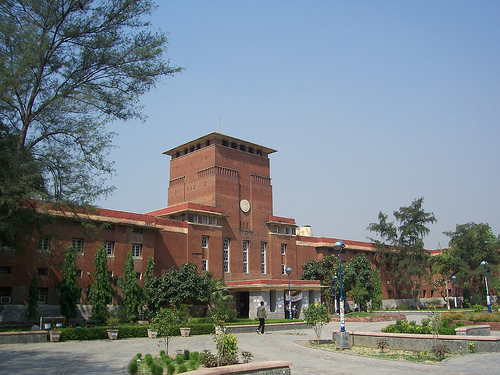
This article on Delhi University photocopy case is written by Pragati Singh from Faculty of Law, Lucknow University.

This article is written by Pragati Singh, from Lucknow University and Neha Mohanty.
“There are no unwanted children, just unfound families.”
Adoption has always been a sacred act performed by the humans. As per the Merriam-Webster legal dictionary legal adoption means “to take voluntarily (a child of other parents) as one’s own child especially in compliance with formal legal procedures”.
Adoption can be legal as well as illegal. Under Indian law adoption is legal coalition between the party willing for adoption and a child, it forms the subject matter of ‘personal law’ where Hindu, Buddhist, Jaina or Sikh by religion can make a legal adoption. In India there is no separate adoption laws for Muslims, Christians and Parsis, so they have to approach court under the Guardians and Wards Act, 1890 for legal adoption.
As we mentioned above that in India only legal adoption is recognised and valid, so firstly we have to understand that “what is legal adoption”?
According to section 2(aa) of the Juvenile Justice (Care and Protection of Children) Amendment Act, 2006, “adoption means the process through which the adopted child is permanently separated from his biological parent and becomes the legitimate child of his adoptive parents with all right, privileges and responsibility that are attached to the relationship”.
In India, an Indian whether he is married or single, Non-Resident Indian (NRI), or a person belonging to any nationality (foreigner) may adopt a child. The guidelines and documentation process for each group of adoptive parents may differ.
Under THE HINDU ADOPTIONS AND MAINTENANCE ACT, 1956 following category of people can make adoptions:
 Personal laws of Muslim, Christian, Parsis and Jews do not recognise complete adoption so if a person belonging to such religion has a desire to adopt a child can take the guardianship of a child under section 8 of the Guardians and Wards Act, 1890.
This statute only makes a child a ward, not an adoptive child. According to this statute, the movement child turns to the age of 21, he is no longer consider as a ward and treated as individual identity.
In “Mohammed Allahadad Khan v. Muhammad Ismail” it was held that there is nothing in the Mohammedan Law similar to adoption as recognized in the Hindu System. Acknowledgement of paternity under Muslim Law is the nearest approach to adoption.
However, an adoption can take place from an orphanage by obtaining permission from the court under Guardians and Wards Act. Christians can take a child in adoption under the Guardians and Wards Act, 1890 only under foster care. Once a child under foster care becomes major, he is free to break away all his connections from his adoptive parents.
Intercountry adoption: In India, there is no separate act that governs adoption by foreign citizens or NRIs but it is covered under Guidelines Governing Adoption of Children, 2015. Under these guidelines misuse or illegal use of the children through adoption is prevented. As per the Supreme Court Guidelines for intercountry adoption a foreign parent can adopt an Indian child before he/she completes the age of 3 years. In the absence of any concrete Act on intercountry adoption, the provisions of Guardians and Wards Act, 1890 will be followed for adoption.
In case of adoption of abandoned, abused and surrendered children all intercountry adoptions shall be done only as per the provisions THE JUVENILE JUSTICE (CARE AND PROTECTION OF CHILDREN) ACT, 2015 and the adoption regulations framed by the Authority.
Guardians and Wards Act, 1890 remains silent about the adoption of orphans, abandoned and surrendered children. Chapter VIII of the Juvenile Justice (Care and Protection of Children) Act, 2015 deals with adoption in such category of the child. Section 58 of this Act defines that any Indian citizen of India, irrespective of their religion, if interested to adopt an orphan or abandoned or surrendered child, may apply for the same to a Specialised Adoption Agency, in the manner as provided in the adoption regulations framed by the Authority.
Section 57 of this Act deals with eligibility of prospective adoptive parents. As per this Section, the adoptive parents should be physically fit, financially sound, mentally alert and highly motivated to adopt a child for providing a good upbringing to him and both partners must consent for the adoption. A single or divorced person can also adopt in accordance with the provisions of adoption regulations framed by the Authority but a single male is not allowed to adopt a girl child.
A couple or a single parent can adopt an orphan, abandoned and surrendered child. Nothing in this act shall apply to adoptions under HAMA. By virtue of section 37 of the JJ Act, 2015 and regulation 6 and 7 of AR, 2017 child welfare committee can declare legally an orphaned, abandoned and surrendered child free from adoption and also allows children up to the age of 18 for adoption.
The capacity of male and female under the Juvenile Justice Act, 2015 can be grouped under the umbrella term prospective adoptive parents as mentioned under section 57 of the JJ act 2015 and regulation 5 of AR, 2017.
Couples who have three or more children shall not be allowed for adoption except in special need as mentioned in regulation 2(12) of AR, 2017.
As per the Hindu law following child may be adopted namely-
As per the Guardianship law and The Juvenile Justice (Care and protection of children) ACT, 2015 following child may be adopted namely-
Cara is a statutory body under the ministry of women and child development, Government of India. It functions as the central or nodal body of the adoption of Indian children and monitors the in-country and inter-country adoptions.
Under the Guardianship and Wards Act, 1890, the party seeking guardianship has to file application to the Court where they provide complete information on them, reasons behind to become guardian of a child and other information asked in the application. After admitting the application, the court will set the date of hearing where it will hear and view evidence, requirements and considering the interests of a minor, then the court will decide whether the guardianship of a minor should be given to such party or not.
There is a directive that adoption proceedings have to be completed within two hearings, and the petition has to be disposed of within two months of the filing of the petition. The certified copy of the order has to be obtained by the agency within 10 days. The agency must also obtain the birth certificate of the child, with the names of the adoptive parents.
Step 1: Registration
Firstly the adoptive parents have to register their names with an authorized agency. The parents can visit the agencies nearer to their area to register themselves where a social worker will explain in detail about all the necessary documents , paperwork which are required.
Step 2: Home study and counselling
In this the members of the organization or the agency will visit the house of the adoptive parents to do a home study . And sometimes the agency might also ask the parents to attend the counselling session in order to understand the strengths, weakness of the parents. According to CARA, the home study need to be completed within 3 months from the day which the parents registered.
Step 3: Referral of the child
The agency shall inform the parents about the child when ready for adoption. The organization shall share all necessary information like about the child’s medical reports and all to the parents and also allow them to spend time with the child to create a bond between them.
Step 4: Acceptance of the child
Once the parents are comfortable after all the procedures then they have to sign few documents related to it.
Step 5: Filing of petition
All the important relevant documents are submitted to the lawyer who then prepares a petition to be presented in court. Once it is all ready then the lawyer informs the parents and they come to sign the petition in front of the officer.
Step 6: Pre-adoption foster care
Once the petition is signed in the court then the parents can take the child to the pre-adoption centre for understanding properly the habits of the child from the staff.
Step 7: Court hearing
The parents have to attend the hearing in court which takes place between the judge and the parents. The judge inquires and ask questions to the parents and mentions the amount that has to be invested in the name of the child.
Step 8: Court orders
Once the receipt of investment is made shown then the judge finally passes the adoption orders to the parents.
The following documents are required for the procedure of adoption:
An adoptive child is treated the same as a biological child of his or her adoptive parents. According to law, the adoptive child has the same legal rights to benefit from the property as that of a biological child. The adoptive child can claim stakes on their adoptive parents property.
But according to Hindu adoption and maintenance act the adoptive child loses rights from their biological parents once they are adopted. They cannot claim any rights from their adoptive parents or coparceners. If the parent of the adoptive child is disqualified from any ancestral property in general then in that case the child adopted cannot claim their stake on it.
Adopting a child in India is a long process. Earlier, parents who wished to adopt would go to the nearest agency and register. The agency would match preferences of the couple with the children available. The match may or may not happen, and would take months, even years. Now, all adoption agencies have to upload details and the Central Adoption Resource Authority (CARA) software will match preferences across the country. This has lessened the duration of an adoption.
Under Hindu Adoption and Maintenance Act,1956 a child who has completed the age of fifteen years shall not be given in adoption unless there is a custom or usage applicable to the parties who are willing to make an adoption that permits them to adopt a child above the age of fifteen years.
Under the Guardians and Wards Act any child who had not completed 18 years of age can be adopted.
An adoptive parent is allowed to ask for a child, as per their preferences. For example, a parent may ask for a child of a certain age, gender (if it is the first child in the family), skin colour, religion, special features, health condition, etc. However, greater the specifications, more difficult it is to find a child who conforms to them.
Since India has an overpopulation problem, with so many unwanted children, there are various options for the adoptive parents. Depending on the adoptive parent’s desired details, children are scrutinised to find a suitable match. When a child with the desired characteristics is found, she is shown to the prospective parents. In case the parents are unhappy with the selection, about two more children with the same characteristics may be presented to the parents.
Yes. The gender of the child becomes a factor here. The Hindu Adoption and Maintenance Act, 1956 (HAMA, under which Hindus, Jains, Sikhs, Buddhists and Arya Samaj adopt) allows only to adopt a child of the opposite gender to the adoptive parent which they already have. There is no such problem under the other 2 adoption laws, namely the Guardians and Wards Act, 1890 and the Juvenile Justice Act, 2015 which has enabled many Indians to adopt a child of the same gender.
As per CARA, couples must have a minimum average monthly income of Rs. 3000. Lower income may be considered considering other assets and support systems e.g. one’s own house etc.
Adoption is a pious act so it should be performed by the people at a large scale because India is a country where there is too much population and there is a huge number of unwanted children.
In the past few years, agencies and adoptive parents have noted a growing preference for the girl child over boys in India’s adoption system. Adoption is one of the ways to control and prevent female foeticide and infanticide problem raging in India. And what could be better to give a good and standard life to a child who really need it.
LawSikho has created a telegram group for exchanging legal knowledge, referrals and various opportunities. You can click on this link and join:

This article on traditional knowledge and IPR is written by Aishwarya from ICFAI University.

Bharat Rajvanshi, pursuing Diploma in Entrepreneurship Administrative and Business Laws from NUJS, Kolkata, assesses the topic dishonor of cheques.

Athiti Devo Bhava. Turning this concept into reality, the Ministry of Tourism of India launched the scheme of Bed and Breakfast(b&b). Homestay Establishment scheme popularly known as Bed and Breakfast scheme is setting its feet in the tourism industry at a very fast pace. In this article, Anubhav Kumar Pandey deals with the intricacies of law involved in the registration of Bed and Breakfast in India. In addition to this, the article also talks about Airbnb and its hosting process.
Stay overnight, have your breakfast in the morning, pay and leave. This is the concept of b&b. Ministry of Tourism in India is promoting the b&b home establishment scheme. Furthermore, one needs to register their b&b establishment as per the guidelines. Also, an establishment under b&b, have to abide by certain standards.
An application has to be made to the office of the regional director of the scheme. A list of registration address will be provided in the later part of the article.
Content of the Application
In addition to the introduction of the person making the application, the following listings should find its place in the application.
All the documents should be self attested. The authorities will reply within 30 days.
Regional Director (North), Indiatourism, 88 Janpath, New Delhi – 110001.Tel: 011-23320005/8.
2. For the States of Gujarat, Chattisgarh, UT of Daman & Diu, Dadra Nagar Haveli and Maharashtra except for Aurangabad
Regional Director (West), Indiatourism, 123 M. Karve Road, Mumbai -400020.Tel: 022-22033144.
3. For States of Tamil Nadu and UT oLakshadweepep
Regional Director (South), Indiatourism, 154 Anna Sallai, Chennai – 600002. Tel: 044- 28460193
4. For States of West Bengal and Jharkhand
Regional Director (East), Indiatourism, “Embassy,” 4 Shakespeare Sarani, Kolkata -700071. Tel: 033 -22825813.
5. For States of Assam, Tripura, Mizoram, Nagaland, and Sikkim)
Regional Director (North- East), Indiatourism, Amravati Path, Christian Basti, G.S. Road, Guwahati -781007. Tel: 0361- 2341603
6. For the State of Karnataka
Director, Indiatourism, KFC Building, 48 Church Street, Bangalore – 560001, Karnataka. Tel: 080-25585417
7. For the State of Rajasthan
Director, Indiatourism, State Hotel, Khasa Kothi, Jaipur- 302001. Tel: 0141- 2372200
8. For the State of Bihar
Director, Indiatourism, Sudama Palace, Kankar Bagh Road, Patna- 800020, Bihar. Tel: 0612-2345776
9. For the State of Madhya Pradesh
Manager, Indiatourism, Near Western Group of Temples, Khajuraho -471606, Madhya Pradesh. Tel: 07686-242347.
10. For the State of Andhra Pradesh
Manager, Indiatourism, 3-60-140, IInd Floor, Netaji Bhawan, Liberty Road, Himayat Nagar, Hyderabad -500029, Andhra Pradesh. Tel: 040-23261360.
11. For the State of Kerala
Manager, Indiatourism, Willingdon Island, Kochi -682009, Kerala. Tel: 0484-2668352.
12. For the State of Goa
Manager, Indiatourism, Communidade Building, Church Square, Panaji -403001, Goa. Tel: 0832-2223412
**To know the mailing address for your state, click the following link.
Only those properties which are registered under the proper law are eligible for registration under the b&b scheme. Also, properties which are on the lease can be used for the purpose of the b&b scheme.
Those who are convicted of a punishable offence and those who are undischarged insolvent cannot apply for the scheme.
Registration of a B&b is necessary. How to check whether an establishment under the B&b scheme is registered or not? First thing first, ask the concerned person for a registration certificate. Every registered B&b under the Government of India scheme receives a registration certificate. (For instance, FORM D of Delhi b&b rules.)
Moreover, the government of India maintains a list of establishments registered under B&b scheme. We bring for you the complete revised list of the registered bed and breakfast establishment.
Every establishment registered under the B&b scheme are required to follow the guidelines laid by the government of India. Not following of these guidelines will lead to cancellation of license by the appropriate authority.
Let us take a look at the guidelines, non-fulfillment of which might result in the cancellation of the license under the B&b scheme.
The application given in the above part of the article (Under the Heading Step) needs to be true. Take the instance where in the registration form the application is made for the silver category but instead the facilities provided belong to the golden class. This will lead to termination of the license.
One of the grounds under which the license of an establishment under B&B scheme can get annulled is non-maintenance of visitor’s register.
The time period for which a b&b is registered is two years. After the lapse of this time, the owner have to apply for registration once again. Non-compliance of this will lead to cancellation of the license.
This is a penal provision wherein the license of a B&B establishment can get canceled. Therefore, if a B&B establishment is being used for the purpose of prostitution or perhaps any other unlawful purpose, this will lead to the cancellation of the license of the establishment.
What exactly is Airbnb?
Airbnb provides accommodation to travelers through hosting multiple B&b on its website. It does not own any room of its own but has created a platform for those who have can and wish to accommodate travelers at their place.
It registers hosts who provide accommodation to the travelers and helps the travelers find a place to stay in their desired city and location. It connects the host and the traveler and enables them to communicate and avail the service of a host by charging a service fee for the same.
Get to know the tax levied on B&b scheme
Every state has their corresponding regulation on the taxation policy of B&B scheme. Therefore, it is important to check for the taxes which applies to the b&b scheme. Various taxes such as water, electricity, etc. are generally charged in every state.
Taxes may include things like hotel/transient occupancy tax, sales, and other turnover taxes such as Value Added Tax (VAT), or income tax.
Before answering this question, it is important to understand the reason why the government of India is promoting the B&b scheme. The sole purpose of the government of India is to boost the tourism by providing cheap rates accommodation to the travelers. Therefore, by looking at the number of visitors and to accommodate the travelers during the Commonwealth Games, the Ministry of Tourism launched the scheme.
Rule Number 4 of the guidelines on B&b establishment provides, the list of registered b&b will be duly publicized by the government. Also, the regional team of the tourism ministry will check on the issue of registration. Also, the intent of the government is to get constant updates on the progress on B&b scheme, and this will not be possible without registration of the establishment.
Therefore, if you host through B&B without registration, you might get into trouble if someone complaints. Also, the government might find the same during any routine check. Therefore, it is recommended to get your B&B registered.
Thinking of enjoying your stay at a B&B or planning to avail the scheme of B&B? Do not forget these guidelines. Do comment and share.

The writer is the founder of JurisOpen.org – an online platform dedicated to the publishing, sharing and archiving of authentic & reliable secondary legal materials with open accessibility.

This article is written by Divya from UILS, Panjab University Chandigarh while pursuing a diploma course in Entrepreneurship Administration and Business Laws from NUJS, Kolkata.

Special Economic Zone: Favourite Investment Destinations
A Special Economic Zone (SEZ) is a geographical region that has economic laws more liberal than a country’s typical economic laws. They are established with an aim to purport development , promote rapid economic growth by providing tax and business incentives for attracting foreign technology along with investment. These are not merely SEZ’s but may be called as “favorite Investment destinations” for foreign establishments. Such units would be future sources of employment, hubs of latest technologies and equipped with the best infrastructure. Today, there are approximately 3,000 SEZs operating in 120 countries.[1]
In this research paper an attempt is made to trace the origin of the SEZ’s, a brief overview of the SEZ Act, 2005 and the latter part mentions about institutions that made India a Software hub.
Concept and Origin of SEZ’s
The first time when the setting up of SEZ came into limelight was when it was established in the Caribbean island Puerto Rico with an aim to attract investment from US. It was in the 1980s China brought SEZs to spotlight by setting up the largest SEZ in Shenzhen.
It was in 1965 that India experimented with the concept of Export Processing Zones (EPZ). Although these EPZ’s somehow failed to achieve the objective they were created for but in the year 2000, there were winds of change where the Export and Import policy allowed the setting up of SEZ’s in all sectors. Subsequently all EPZs were converted into SEZs. And the process for setting up of various SEZ’s was also put into action.[2]
India’s special Act relating to the SEZ came in 2005 taking country’s foreign investment policy and converted its EPZs to SEZs. This act further lays down provisions for setting up of additional SEZ’s which is discussed elaborately further. Currently there are, nearly 200 SEZs operating and approximately 565 have already been given the permission to operate, which are sure to open new doors of investment and opportunities for Indian Markets.
The need for a special Legislation
Before the enactment of the SEZ Act,2005, the necessary provisions in respect of the SEZ’s were a part of the Foreign Trade Policy which is released every five years. The policy discussed the latest incentives and benefits that were conferred to them. The need for this act was well highlighted in the arguments by one of the counsels in a recent case Biomedical Lifescience Pvt vs Union Of India, “In order to give a long term and stable policy framework with minimum regulatory regime and to provide expeditious and single window clearance mechanism, a Central Act for Special Economic Zones has been found to be necessary in line with international practice.[3]

Overview of the Special Economic Zone Act,2005
Government took the initiative of enacting the SEZ Act keeping in mind various objectives including generation of additional economic activity, promotion of export of goods and services, attracting investment from foreign sources as well as domestic along with creating employment opportunities at all levels..[4]
Following the SEZ Act,2005 came the rules in 2006 that lay down comprehensively how a zone first may be classified specifically and then establishment of a unit in that zone, the procedural requirements and other miscellaneous provisions.
Establishing a Special Economic Zone
Taxation and SEZ’s
Any goods or services exported out of, or imported into, or procured from the Domestic Tariff Area by –
Shall, subject to such terms, conditions and limitations, as may be prescribed, be exempt from the payment of taxes, duties or cess under all enactments specified in the First Schedule.
The Second Schedule to the Act makes modifications to the Income-Tax Act, 1961.A special Section 10 AA discusses about the Tax incentives that shall be made available to the SEZs.
With an aim make investment in SEZ’s a lucrative option the government introduced various tax incentives. The income tax act was also amended and provisions related to SEZ’s were added to the Act, to provide them with amenities so that they may startup and establish their operations in India. Besides the provisions that have been laid down in the Income tax act, 1961 provisions have also been made under Central Sales Tax Act, 1956, Service Tax Act, 2013; The Central Excise Act, 1944 and the Customs Act, 1962.[5]
To avail the benefits that have been conferred under the Income tax act,1961 a SEZ needs to fulfill certain conditions
Steps that need to taken to ensure the proper Utilization of SEZ’s
Monitored and Regulated Approach: Systematic efforts need to be made to help zone units forge links with the outside units. To make the best use of the SEZ there is a dire need for a comprehensive policy framework which needs to be introduced to ensure that strategies are developed in a timely manner to strengthen the opportunities that are likely to emerge, protect interests of the Special Economic Zones workers, and build a link between Special Economic Zones and the domestic economy. It is only by adoption of a regulated and monitored approach that full worth may be extracted from these potential laden SEZ’s
Better execution : It is essential that the investors are taken into confidence and given rationalized benefits along with an outline for their availability.
Promotion of Strategic Industries: Rationalized Tax incentives to promote industries of strategic importance. Special schemes may be introduced for Technology-intensive and industries which have a lower rate of survival and struggle to survive in the market.
Integration with National Schemes: the much popular Make-in-India initiative could be well integrated with the SEZ to create manifold oppourtunities.
Transparency at all levels: This is a must so that the challenges that come up are tackled effectively, and red-tapism of any kind is reduced and the favourite investment dstinations actually serve as an engine for economic growth.
SEZs have the potential to be a major growth engine for India. The government should act fast to revive them otherwise SEZs will become another missed growth opportunity.[7]
Incentives for Setting Up of SEZ’s in INDIA
The Government of India is keen on making India an export hub and with this aim established several foreign trade zone schemes to promote production which is export-oriented. Such schemes are great incentives for a company to grow and simultaneously they provide an escape through from the country’s restrictive fiscal and infrastructural obstacles and make Indian goods and services competitive in international markets.
Other than the SEZ’s schemes include the Export Processing Zone (EPZ) and the Software Technology Park (STP),which are designated areas for export-oriented activities there are also certain EOU’s that is Export Oriented Units that have also been established with an aim to multiply the exports of the country. They are governed by separate rules and have been conferred various other benefits.[8]
In comparison to China India provides for better options for setting up of SEZ’s as the measures which the Government is providing is more conducive for their functioning. In contrast to China which has only five major SEZ’s functioning contrary India has a huge reservoir of SEZ’s that are upcoming and numerous have already been established. Indian Government is also giving the benefits at all levels to these SEZ’s for their growth.
Software technology Parks in India
Software Technology Parks of India (STPI), is a Government of India initiative that set up and established a society by the Ministry of Communications and Information Technology,Government of India in 1991.
Software Technology Park [STP] Scheme is an absolute scheme for export orientation. This scheme was undertaken with an objective for exporting software services and developing them using data communication links that may be in form of physical media.[9] Such parks offer multifarious services that are required day to day.
The scheme was set up to contribute to the prosperity of the national economy through promotion of exports from the Software & services Industry by facilitating all the statutory services of the Govt., strengthening the Communication Infrastructure
Currently, STPIs that are established across the country are equipped with outstanding infrastructure and statutory support which further aims at improving and enhancing the development process of Information Technology in the country.it is because of these STPI’s that have given India recognition all across the world as a global hub for software services.[10]
The objectives of the Software Technology Parks of India are:
(a) Promotion and development of software and software services including Information Technology (IT) enabled services/ Bio- IT.
(b) Providing statutory and other promotional services to the exporters by implementing Software Technology Parks (STP) that shall be formulated and made by the Government from time to time.
(c) Provision of data communication services including value added services to IT / IT enabled Services (ITES) related industries.
(d) Encouraging micro,small and medium entrepreneurs by creating better opportunities for entrepreneurship in the field of IT/ITES.[11]
LawSikho has created a telegram group for exchanging legal knowledge, referrals and various opportunities. You can click on this link and join:
https://t.me/joinchat/J_
[1] World bank website – James Crittle (IFC) – http://rru.worldbank.org/Discussions/Topics/Topic40.asp taken from http://www.nishithdesai.com/fileadmin/user_upload/pdfs/Special_Economic_Zones.pdf last accessed on 15th February,2017.
[2] https://www.gtap.agecon.purdue.edu/resources/download/4103.pdf last accessed on 15th February,2017.
[3] 3 July, 2013
[4] http://taxguru.in/corporate-law/special-economic-zones-act-2005-an overview.html#sthash.AYuIa83Z.dpuf
[5] http://taxguru.in/corporate-law/special-economic-zones-act-2005-an-overview.html#sthash.9jxBgdwK.dpuf
[6] https://blog.ipleaders.in/special-economic-zone-tax-benefits/
[7] http://www.boomlive.in/special-economic-zones-in-india-growth-engines-or-missed-opportunity/
[8] Research Paper by “SEZs In India: Concept, Objectives And Strategies”Department Of Economics,Bangalore University
[9] http://swapnilkosare.blogspot.in/2015/06/normal-0-false-false-false-en-in-x-none.html
[10] http://www.psalegal.com/pdf/e-newsline-january-201001252010113255am.pdf
[11] http://www.letscomply.com/SEZ-and-STPI-Compliances.php

This article discussing checklist – Addressing Suspected Violations of Non-compete and Non-solicitation Agreements is written by Balaji, pursuing Diploma in Entrepreneurship Administrative and Business Law from NUJS, Kolkata.

Ashok K. K. Vasudevan, pursuing Diploma in Entrepreneurship Administrative and Business Laws from NUJS, Kolkata, assesses the topic of “What are the common issues on which businesses have internal policies”.






 Allow notifications

