Download Now
Home Blog Page 1639

Google, Amazon, And Starbucks: Big Players Of Tax Shaming

0

In this blog post, Aniket Chaudhury, a student at Department of Law, Calcutta University (Hazra Campus) and pursuing a Diploma in Entrepreneurship Administration and Business Laws from NUJS, Kolkata, compares and contrasts how big market players modify their financial situation to pay lesser tax.

What is tax shaming?

Tax shaming can be understood in simple words as the modification of an individual’s financial situation to lower the amount of income tax owed using legal methods. This can be achieved only by claiming the permissible credits and deductions. This practice is therefore different from tax evasion which uses illegal means such as underreporting of their income to avoid paying taxes.

Many companies worldwide, for instance the U.S. companies have had a growing outcry over “inversions,” which is a means of restructuring the business so that the U.S. parent could be replaced by a foreign parent entity in a nation which has lower corporate tax rates.

This in recent times lead to Apple CEO Tim Cook being called to testify regarding Apple’s tax strategies by the U.S. Senate Permanent Subcommittee on Investigations in April 2013 and executives from Apple, Google, and Microsoft faced an Australian senate inquiry into their alleged tax avoidance in April 2015.

Tax shaming could be better understood if we analyse the cases of three big and well-known companies worldwide.

Google

The multinational company which is virtually the lifeline of most of the people in the world and which requires no brief explanation as to what it is and what it stands for had also been a culprit of tax shaming. It’s a shame to have such a black patch associated with a powerhouse like Google.

In 2012, it was reported that the tech giant avoided paying $2 billion in global income taxes by moving $10 billion in revenue, or 80 percent of its pre-tax profit to Bermuda because it doesn’t have a corporate income tax. It had nearly doubled the money that it was sheltering in Bermuda since 2008.

The U.S. Internal Revenue Service (IRS) audited Google’s offshore strategy in 2011. According to their reports Google was saving about $1 billion in taxes per year by shifting its profits through Ireland and the Netherlands to Bermuda, cutting its overseas tax rate to 2.4 percent. Its overall effective tax rate was 22.2 percent in 2009.

The European Commission therefore in 2012 proposed that the EU countries should collaborate to crack down on tax evasion, which costs them about $1.31 trillion per year.

In 2012, when asked about the scenario of the way his company avoids paying taxes, Eric Schmidt, then CEO of Google had to say that he is “proud” of the situation. “It’s called capitalism. We are proudly capitalistic. I’m not confused about this. We pay lots of taxes; we pay them in the legally prescribed ways,” he said. “I am very proud of the structure that we set up. We did it based on the incentives that the governments offered us to operate.”

The head of Britain’s public accounts committee, Margaret Hodge publicly rebuked Google’s tax behaviour in 2013. She told one of the company’s European executives that Google’s practices were “devious, calculated and, in my view, unethical.” Hodge’s comments were seen as one of the catalysts for the development of the Google Tax bill.

Amazon

Amazon is an American electronic commerce and cloud computing company with headquarters in Seattle, Washington as of 2016. It is the fifth largest company overall. It operates in sixteen (16) different countries all together with sales of 62% or $55.469 billion from North America sales and 38% or $33.519 billion from international sales in 2014.

Amazon had made an elaborate avoidance scheme and codenamed Project Goldcrest. It came into light earlier this year after intense scrutiny from European authorities. It embarked on a complex 28-step scheme, which took more than two years to complete and fundamentally reordered its global business in Europe using a maze of offshore entities and intercompany agreements.

The company had never publicly disclosed full details of Project Goldcrest. The company’s move to Luxembourg had been well documented in this. Now, Amazon is facing a landmark court ruling in the US that could prise open its obscure tax structure in Luxembourg, after a high-stakes legal battle that has shed unprecedented light on the technology giant’s irregular and twisting tax affairs. The case could force Amazon to pay more than $1.5bn (£1bn) in unpaid taxes. It also throws sharp relief tensions between the US and Europe over how to tax multinationals that operate in both jurisdictions. Both the continents are trying to recover vast sums from Amazon’s multibillion-dollar pool of untaxed income held in Luxembourg.

The IRS had criticised Project Goldcrest for depriving it of tax and attacked core features as predicated on “legally baseless” methods. The new documents that have emerged show the complexity the company resorted to in order to make the scheme work and the involvement of executives at the highest levels of the company.

Amazon on the other hand maintains that it operates a pan-European business from its Luxembourg base, where it has more than 1,000 employees. “Amazon pays all the taxes we are required to pay in every country where we operate,” a spokesman for the company said.

Over the past 20 years, Amazon had largely avoided US federal taxation by managing its books to avoid reporting any meaningful profits. Project Goldcrest had played a significant role in Amazon’s aggressive tax strategy, depriving governments on both sides of the Atlantic of large sums of tax since the project’s completion in 2006. Critics argue that Amazon’s aggressive tax planning had also bolstered its ability to undercut rivals on price.

In 2015, Amazon decided that they will start paying more taxes in several European countries where it does business, instead of channelling its revenue through a holding company in the low-tax haven of Luxembourg, after pressure from regulators. Amazon had attributed more than $7 billion worth of sales to Britain in 2013, but paid only $6.5 million in tax.

Starbucks

Starbucks Corporation is an American coffee company and coffeehouse chain. Starbucks was founded in Seattle, Washington in 1971. Today it operates 23,768 locations worldwide.

They had sales of £400m in the UK in 2012 but paid no corporation tax. It transferred some money to a Dutch sister company in royalty payments, bought coffee beans from Switzerland and paid high interest rates to borrow from other parts of the business.

In 2012, Lawmakers scoffed as Troy Alstead, Starbucks global chief financial officer, claimed that the coffee giant had reported losses for all but one of the 15 years it has operated in the U.K. and was down to poor performance and still didn’t make an attempt to minimize its taxes in Britain. Margaret Hodge, head of parliament’s Public Accounts Committee upon hearing the above statement cross questioned as to if the Company had been incurring such losses over the years then what might have been the reason for them to stick around and continue investing for so long?

To his defence Alstead acknowledged to the panel that its taxable profits in the U.K. are calculated after royalties paid to its European headquarters in the Netherlands have been deducted. He said that Starbucks had a special tax arrangement with the Dutch government covering its headquarters, but declined to give details. “Respectfully I can assure you there is no tax avoidance here,” Alstead told the panel.

Starbucks became the poster child for corporate tax avoidance in 2012 after details of its meagre tax contribution emerged. It was accused of using artificial corporate structures to shift profits out of the UK into lower tax jurisdictions. Owing to this they paid nearly as much corporation tax in 2015 as it did in its first 14 years in the UK, after bowing to pressure to scrap its complex tax structures. (Tax contribution for 2015 was only slightly less than the £8.6m it paid over the 14 years after its 1998 UK debut, despite £3bn worth of sales in that time).

It still faced criticism for a lack of transparency that makes it hard to determine whether it is paying a fair amount of tax. Tax accountant Richard Murphy said it was impossible to know if Starbucks was still aggressively avoiding tax until accounts for its European parent company, Starbucks EMEA, are published. However, the coffee company’s increased UK tax bill was partly the result of a strong year in which like-for-like sales grew by 3.8%.

Starbucks said in-store technology such as wireless charging Power mats and super-fast Wi-Fi had helped boost sales. It also cut costs by renegotiating leases, closing unprofitable stores and selling others to franchisees. Administrative expenses have been reduced, while it benefited from lower coffee prices, leading to an increase in its operating profit margin from 0.5% to 6.9%.

Conclusion

Going through tax shaming and its ploy being adopted by such big names we get an idea as to why, even if it isn’t illegal yet it’s a way of getting away especially for big companies who make their revenue in billions and thus the subsequent taxes amount to a healthy figure and precisely the reason why they try avoiding it. Nobody likes paying taxes from a household to a big multinational powerhouse yet to give it back to the government in respect of the enormous profits gained, we do need to fill the tax bills as and when necessary else even bigger influential names don’t get away from such global shaming. In 2013, the director-general of the CBI, John Cridland had come down to the conclusion that, “A company may be making good revenues but pay lower amounts of tax for completely legitimate business reasons. But if it’s doing this by using so-called ‘black-box’ arrangements, where transactions are designed for no commercial purpose at all, other than to avoid tax, then the CBI does not condone it, even if it is legal.”

Aniket Chaudhury

DEABL July 2016

+919051556336

[email protected]

Download Now

International Humanitarian Law and Its Effect on Indian Law

0
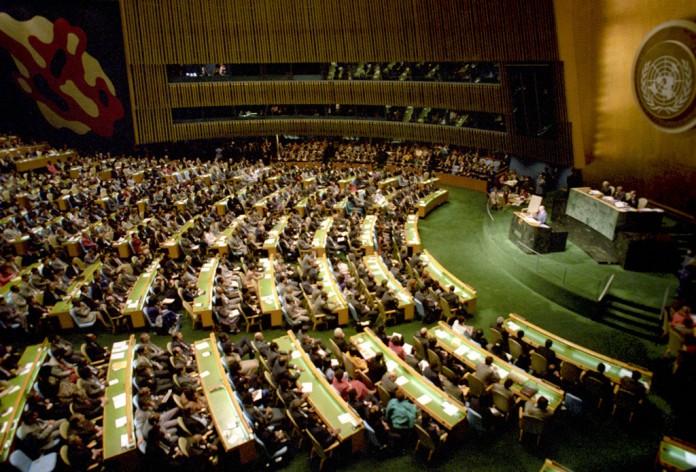
828797 08.12.1988 Генеральный секретарь ЦК КПСС, Председатель Президиума Верховного Совета СССР Михаил Сергеевич Горбачев выступает на сессии Генеральной ассамблеи ООН во время официального визита в США. Юрий Абрамочкин/РИА Новости

In this blogpost, Deepshikha Ranjan, a fifth-year BA LLB (Hons.) student at Chanakya National Law University Patna analyses the effect of International Humanitarian Law on Indian Law.

“International Law is a body of legal rules established by customs or treaty which are recognized by nations.” It sets a framework for the practice of organized international relations. International laws are formed by making treaties among states. Those laws are not binding on state until they have consented for it.

International Humanitarian Law (IHL) is a part of International Law. IHL comprises those rules which limit the effect of armed conflict. This law mainly protects those countries which do not involve in it the activities of hostilities and also keep under control the method and system of warfare. International Humanitarian Laws are also known by two other names i.e. (i) the law of armed conflict or (ii) the law of war. It is one of the subdivisions of International Human Rights law. This law takes measures concerning with armed struggle between states which can either be at international or non-international level. It aims at providing protection to combatant and non-combatant who have been disabled during conflict. IHL has three parts, namely:

  1. Geneva Convention 

  2. Hague Convention 

  3. Customary International Law 


GENEVA CONVENTION

Since the adoption of Geneva Convention 1949, people have experienced number of armed conflicts. It aims at providing legal protection to people who do not participate in hostilities anymore.

Before 1949 there was nothing that restricted the use of force by armed group within state. Although there was International Humanitarian Law

which dealt with war as well as peaceful situation but after World War II it was realized that problem of internal character has accrued, which violated Human Rights due to which the need to regulate conduct of war was felt.

HAGUE CONVENTION

In 19th century the beginning of codification of customary principles of war conduct was done. In this convention IHL prescribes special rules for the conduct of war anywhere on land, at sea and in the air. Hague convention not only prescribed rules but also address the issue such as, which enemy should be attacked. They also made sure that unarmed civilians and their property are to be respected and to treat the wounded and prisoners humanely. Hague convention also codified the prohibition of use of weapons which cause unnecessary suffering.

CUSTOMARY INTERNATIONAL LAW

Customary laws play an important part in the evolution of IHL. These laws are based on general and consistent practice carried out by the nations which give the sense of legal obligation. IHL acknowledges jus cogens norms which also known as peremptory norms. They are such principles of International Law which are so fundamental that no nation may ignore them or act in contrary.

PURPOSE OF IHL

The purpose of creating IHL was to limit the use of violence in armed conflict by:

  1.   Sparing those who either do not or no longer participate in hostilities. 

  2. Regulating the means and methods of warfare. 


War means outburst of primitive raw violence when nations do not settle their disputes or disagreement through peaceful discussion, they use weapon to speak as an alternate option.

War causes inevitable sufferings to people and damage to objects. The United Nations Charter has also expressed views and dealt with the circumstances under which states are allowed to use force. IHL is concerned with fate of those who are not taking part in war.

It is to be noted that the aim of IHL is not to prevent conflicts or wars between the countries. The purpose of IHL is to limit the human suffering which is caused by war. It mainly aims and intends to make rules on the ways in which war can be waged. It restricts the use of means in warfare and ensures proportionality. In other words, the purpose of IHL is to preserve a measure of humanity even during conflicts.

RULES TO BE FOLLOWED BY IHL

There are certain rules which must be followed by IHL. In order to spare the civilian population and their properties they must distinguish between civilian population and combatants. Attacks may be made only against civilian objectives.

Another rule forbids killing and wounding adversary who surrender in the fighting. The countries who are participants in the conflict and the member of armed forces are not allowed to choose methods and means of warfare. They cannot use means and methods that are likely to cause unnecessary excessive losses.

Medical personnel and medical establishments, equipment are spared. Those who are wounded should be taken care of.

APPLICATION OF IHL

IHL is applied in two situations i.e. one in International Armed Conflict and another in Non-International Armed Conflicts.

  1. International Armed Conflicts

Humanitarian law intends principally for the parties to conflicts and protects other individuals who doesn’t take part in conflicts, which includes-

  1. Non-International Armed Conflicts

In this situation, humanitarian law destines for the purpose of armed forces, either regular or irregular, which takes part in conflicts and involves in the protection of every person or category of individual who do not actively take part in activities of conflict and hostilities any more. A few such examples include:

  1. Sick or wounded fighter 

  2. People who are prevented from having their freedom because of armed struggle 

  3. Civilian people 


LEADING INSTITUTIONS

ICRC which stands for International Committee of Red Cross is the body of International Law which is devoted in developments, implementation and promotion of International Humanitarian Law.

ICRC is the protector and guardian of IHL. ICRC acknowledges parties to the conflict of their duties they are morally and legally bound to do. This organization makes sure that application of law is done effectively and therefore respected. They also make representations that are confidential to the related authorities in the event of violation of humanitarian law. When the violations are serious, the ICRC retains the right to speak for the public and stand for them. It does so only if it deems it to be in the interest of the people affected.

EFFECT ON INDIA’S LAW

International Humanitarian Law balances the necessity and concern for humanity but hurdles in its application are created by ambiguity and non-clarity in the provisions.

The Additional Protocol II of Geneva is a 1977 amendment protocol which relates to the protection of victims of non-internal armed conflict. It strives to provide better protection for victim of internal armed conflicts taking place within the border of single country. But this protocol has not been accepted universally, it has not been accepted and ratified by India as well as by USA, Iran, Pakistan and few other states.

India has certain obligations under some International Convention and treaty at an international level. The ‘Universal Declaration of Human Rights’ (UDHR) declares that “all human being are born free and equal in dignity and rights. They are endowed with the reason and conscience. They should act towards one another is a spirit of brotherhood.” But later, the Indian Government passed the Geneva Convention Act, 1960 under Article 253 of the Indian Constitution. It prescribed punishment for the breach of convention 1949. Misuse of Red Cross and other protected emblem are also prohibited under this law.

At present two major problems are being combated by India i.e. ‘militants’ and ‘extremists’ which refer to group operating in Jammu & Kashmir to a large extent and group in the Naxal affected area respectively. Despite various human right treaties and signatory, India has failed to protect the Human Rights of Jammu & Kashmir people.

According to Indian perspective of the International Humanitarian Law, it has not participated in the Additional Protocols of 1977. Therefore, India would not allow ICRC any access to detainees, but it allowed ICRC access to terrorism affected areas.

International Criminal Court (ICC) is allowed to take action or measure only when a judicial system of India is not in existence or when it is not able to deal with crimes of particular nature which are covered by the statute.

Download Now

How Are Educational Institutions Taxed

0

In this blog post, Sudipta Ghosh, a student of Surendranath Law College, Calcutta University and who is currently pursuing a Diploma in Entrepreneurship Administration and Business Laws from NUJS, Kolkata, writes about the taxation procedure in an Educational Institution.


Introduction

An educational institution is a place which imparts education to people of various age groups and is of various types including pre-schools, universities, elementary schools, high schools, stream specific colleges, etc. Educational institutions may also be defined as establishments that provide services relating to education to individual or other educational institutions. The expression ‘educational institution’ means institutions that impart education where education is as understood hereinabove.[1] An educational institute may be managed by the government, private body, local authority, university or any other person. “Educational Institution” means any institution imparting education referred to insection 3 and includes a private Educational Institution but does not include an institution under the direct management of the University or of the Central Government or a tutorial institution”[2] .

Taxation of educational institutions is a very complicated concept. This is because the apparent sole purpose of any educational institution would be imparting education only which is a noble, charitable, social service. Then how can a social service be taxed? At the same time we have seen the mushrooming of innumerable educational institutions wherein degrees can be bought with high capitation fees. These types of institutions exist for making profits only often at the cost of an innocent students’ parents hard-earned income. Can this kind of educational institution be described as one existing for noble purposes? Thus, the taxation policy of educational institution cannot be generalized. It has to be dealt with in a case to case basis. Also, it may be mentioned here that the activities of educational institutions always needs to be kept under the scanner for identifying any kind of shift away from set norms and rules which will in turn reverse/change the taxation policy.

Elaborating on the above concept with the purpose of giving it more clarity, the concept of taxation can be discussed as follows:

Taxation of an educational institution depends upon its registration i.e. separate rules would apply for registration under separate act. An educational institution may be registered as a charitable trust, as a society under the society’s registration act1860, a company or in the name of an individual proprietor.

Now let us discuss the taxation policy in each case of registration of the educational institution.


Registration as a charitable trust

An educational institution may be registered as a trust under the Indian trusts Act 1882. Trusts are formed by a trust deed, prepared on a stamp paper of requisite value (the value varies from state to state) containing trustee information, rights, duties, operation of trust, liabilities and the most important information among all of the above mentioned, the object of the trust i.e whether religious or charitable. Genrally an educational institution is formed under the head of charitable institution. The trust deed must be submitted to the local registrar along with all the prescribed requirements and at the time of such registration the settler and two witnesses with proof of identity must be present. The registrar shall retain a photocopy of the trust deed and return the original registered one. After registration the trust must apply for a PAN card as it is amust for income tax registration with the income tax department, Government of India. Here sec12A of the income tax plays role. After the trust has received the income tax certificate under section 12A, it can apply for various tax exemptions for donors as well. Such as an application can be submitted under Sec 80G for 100% deduction but there is a condition to it. The institution must be of national eminence. It can be any educational institution registered under 12A of the Act including a university.

https://lawsikho.com/course/diploma-entrepreneurship-administration-business-laws

Registration of an educational institution as a SOCIETY

An educational institution may be registered under the Societies Registration Act 1860. A society may be formed by an association of 7 or more persons for charitable, literary, scientific purposes as defined in section 20 of the act. The associated 7 persons have to subscribe their name in memorandum of association and file the same with registrar of joint stock companies. As per the provison of sec 12A of the income tax act, income of an organisation is exempted if NGO has 12A registration. If registration under section 12 A is not done, the NGO or organisation must pay income tax on the surplus income during the year. This registration under section 12A is a one-time registration.


Registration as a company

If an educational institution is registered under the Companies Act 1956, then we may say that it is registered as a Company. When an educational institute is registered as a Company it does not mean that it is for the purpose of making profit only. In fact such steps taken by big companies are a part of their Corporate Social Responsibility and a part of their profit generated from other businesses are utilized in the making of an educational institution for charitable purposes.

Hence as it does not violate the fundamental concept of educational institution as institution for imparting education only and not for making profit, the system of taxation is lenient and much like other clauses mentioned above.

Registration as Sole Proprietorship

As we know, sole proprietorship may be defined as a business enterprise owned by a single person who has entire responsibility and authority with respect to such business. Educational institutes run in the name of a single individual, who has solely invested his capital comes under such category. These types of institutions are normally small-scale like a small coaching institute, a pre-primary or primary school etc. In this case taxation is done on the name of the individual in whose name the institution is registered.

Educational Institutions exempted from payment of Taxes:

Government institutions – Those educational Institutes which are wholly or substantially financed by the Government (either Union or State) are exempted from payment of taxes under section 10(23C) sub clause iii(ab) of the Income Tax  Act. This is because such educational institutes are considered to exist solely for educational purposes and not for the purpose of profit.

The second category of educational institutions which are exempted from payment of taxes are those which exist for the purpose of education only and not for making any profit and whose annual receipts do not exceed Rs. 1 crore.

Any educational institution which does not fall in the above two categories but have been approved by the prescribed authority for exemption may be exempted from payment of taxes.

For claiming exemption the certain statutes need to be followed by educational institutions. These are:

  1. The property must be held by a trust or as a legal entity
  2. It must be for charitable purposes, i.e. for general public utility and no part of its income can go for the satiation of needs of any particular individual.
  3. The accounts of the institiute can be audited if need arises.


Withdrawal of exemption

The privilege of exemption from taxation by any educational institution is not permanent but is subject to change as well. The prescribed authority who had given the exemption reserves the right to withdraw such exemption if any of the following conditions arises:-

  1. In case the prescribed authority has reason to believe that the income generated by these institutions is not being applied for educational purposes solely but are being siphoned off for meeting personal interests, then the prescribed authority reserve s the right to withdraw such exemption.
  2. If the institution violates any of the clauses under which it had been given tht exemption or if it is suspected that the activities of the institution are not genuine then the exemption may get cancelled.

However, before withdrawing such approval, they must be given an opportunity of being heard. Thus, this is a quasi-judicial process.

Whatever may be the type of educational institution, all of them have to file returns and get their accounts audited by a Qualified Accountant and must furnish such report in prescribed form.


CONCLUSION – The Honorable Supreme Court in a landmark judgment has specifically stated that even if an educational institution makes any kind of income which may be a surplus it does not mean that it becomes a profit making company. It would not mean that the institution would cease to be an educational institution. This particular judgment has come as a relief to many educational institutions which were strangulated by strict assessment and income tax calculation leading to mammoth demand notices. Thus it can be concluded that those educational institutions which live up to its task of imparting education only without any profit motive are not taxed by the Government.


LawSikho has created a telegram group for exchanging legal knowledge, referrals and various opportunities. You can click on this link and join:  

https://t.me/joinchat/J_0YrBa4IBSHdpuTfQO_sA

Follow us on Instagram and subscribe to our YouTube channel for more amazing legal content 


Reference

  1. https://indiankanoon.org/doc/91472407/
  2. http://mhrd.gov.in/university-and-higher-education
  3. www.incometaxindia.gov.in
  4. https://indiankanoon.org/doc/1353758/

[1] T.M.A.Pai Foundation & Others (supra), para 20, page 13, indiankanoon.org/doc/91472407/

[2] Karnataka Educational Act, 1983 (Act No.1 of 1995) , section 2(14)

Download Now

The problems of limitation under the Arbitration Act of 1996

2
ITAT or Income Tax Appellate Tribunal

In this blog post, Tresa Ajay, a student of National University of Advanced Legal Studies, Kochi, who is currently pursuing a Diploma in Entrepreneurship Administration and Business Laws from NUJS, Kolkata, discusses the problems of limitation under the Arbitration Act of 1996.

Every citizen is empowered by the right to constitutional remedies to address their grievances with regard to any violation of fundamental rights as guaranteed under Article 32 of the Constitution of India. Various statutes enacted for different purposes also specify the procedure and instances in which the parties can take matters to the Court.

Arbitration is another way of seeking justice without going to the courts. The dispute is settled by means of an arbitrator. This person is seen to be unbiased and is decided upon by the parties to help reach a middle ground in a dispute that might arise between them. It is a diplomatic method to resolve an issue to prevent further harm to both parties. It is commonly used for the resolution of commercial disputes.

However every statute or Act specifies the period within which the suit must be filed. In the case of maladministration, if it is a grievance it is given one year but if it is an allegation then five years is allotted. The limitation period for filing a complaint for an offence under section 406 of IPC is one year from the date of commission of the offence. The ‘Law of Limitation’ prescribes the time-limit for various suits for which an aggrieved can approach the court for delivery of justice.

Before the enactment of 1996 Act, under S.30 of Indian Arbitration Act of 1940 contained broad grounds to set aside an arbitral award whereas S.34(2) of the Act restricted the grounds for challenging an award. Procedures were specified to limit the scope of the powers of the arbitrator. There are many though who are of the opinion that there should not be provision that allows for the setting aside of the arbitral award and treated as final judgment. The Court cannot reassess the evidence even if the arbitrator committed error.[1] It is further stated that Arbitrators are judges of fact as well as law and has jurisdiction and authority to decide wrong as well as right, and thus, if they reach a decision fairly after hearing both sides, their award cannot be attacked.[2] However erroneous his decision may be, it cannot be interfered with by any Court.[3]

When the parties have decided the forum that should adjudicate the matter, then Court must be given the power to appraise the evidence. It is now a well-established principle that the decision of the arbitration tribunal is final and binding, it cannot be set aside on the ground that the facts/law is erroneous. This will be outside the scope of S.34 of the Act.

Unless the arbitrator disregards the principles of natural justice in the arbitration proceedings such as radically wrong or vicious in proceedings or disregarding the fundamental rules of evidence, the Court cannot interfere.[4]

Section 34(3) mentions a three month time-period within which an application must be made to set aside an award, the period begins from the date the applicant receives the award. The proviso states that if the applicant is able to show that that he had a reasonable cause for the delay in filing the application, the Court may further grant a period of 30 days to file it.

The issue arose in Union of India v. Popular Construction Company[5] of the provisions of Section 5 of the Limitation Act are applicable to an application that challenged an award under Section 34 of the Act. The Court looked at the history and objective of the Act and also the intention of the Legislature, one which is to minimise the Court’s intervention in the arbitral process. The words “but not thereafter” in the proviso to Section 34(3) were from which this intention of the Legislature was inferred. It was taken that this expression meant an express exclusion within what was mentioned under Section 29(2) of the Limitation Act and thus bars the application of Section 5.

However the above decision needs reconsideration. Though the Act was framed to expedite the process of justice delivery, one must not lose sight of the practicalities of life that may have hindered the litigant from approaching the Courts. Take for example when a person is prevented from challenging a blatantly wrong award in time for a bona fide reason like a terminal illness, is this proviso justified. Does the proviso to section 34(3) wholly shut out such persons from seeking justice?[6]

Suppose the limitation period expires on 10.5.2016 and the vacations of the Court begins from 28.5.2016 to 3.7.2016. If proceedings were initiated on 3.7.2016 there is no issue whether section 4 or 5 applies as the holidays will constitute sufficient cause. However, if the application was under section 34 of the Arbitration Act even if sufficient cause is shown, there will be no extension because of the proviso. Thus, while applying section 4, it is material whether ‘prescribed period’ includes extended period or is limited to the original period of limitation. This anomaly needs to be clarified.

Procedural law should not be allowed to defeat the right provided by substantive law. There is no doubt that that objective of the Act and the intention of the legislature should be given importance but the overall aim of the justice system should not be subverted in the process but that will be the case if a narrow definition is given to Section 34(3). The interpretation of the Act must be such that it furthers societal goals.

BIBLIOGRAPHY

Websites

  1. The Problem of Limitation, visited on 29th November 2016 http://indiacorplaw.blogspot.in/2010/12/problem-of-limitation-under-arbitration.html
  2. The Limitation of time under Section 34 of the Arbitration Act, visited on 30th No 2016 http://www.mondaq.com/india/x/452038/trials+appeals+compensation/Limitation+Of+Time+Under+Section+34+Of+The+Arbitration+And+Conciliation+Act+1996
  3. Analysis of Section 34 of the Arbitration and Reconciliation Act, visited last on 30th Nov 2016 http://manupatra.com/roundup/326/Articles/Arbitration.pdf
  4. The Arbitration and Reconciliation Act 1996, last visited on 30th Nov 2016 https://indiankanoon.org/doc/1306164/

[1] Eastern and Northern Frontier Railway Cooperative Bank Ltd. v. B. Guha & Co. AIR 1986 Cal 146

[2] Yeshwantrao Ganpatrao v. Dattarayarao Ramachandrao AIR 1948 Nag 162 (DB)

[3] Bharu Kure Jat v. Tara Lal AIR 1962 Punj 173

[4] Des Raj & Sons v. UOI 1984 Arb LR 156

[5] MANU/SC/0613/2001

[6] M.V. Soundaraman, “Finality of Domestic Arbitral Awards”, 3(2) Company Law Journal (2003), at 46.

Download Now

Supreme Court Once Again Taking Away Freedom in the Name of Nationalism

0

In this blog post, Sudhanshu Jatav, a fourth-year law student from Gujarat National Law University, Gandhinagar analyses the decision f the Supreme Court of infusing people with Nationalism by running the National Anthem in theatres before a movie.

Not that I don’t have any respect for the honourable Supreme Court of India but this theatrical decision to run the national anthem in theatres before a movie is so out of place that it is amusing. On 30th of November the court decided to appoint itself as the national anthem’s protector-in-chief, an entirely solicited role for which there was no particular need. The court banned the “dramatization” of the anthem, banned people from deriving “any kind of benefit” from the anthem’s performance, partially banned the anthem from being printed and forced cinemas to play the anthem at the start of every film.[1] The first few things that ran through my mind after going through that news were, what do we get out of this decision? Why is there a need for this? Why is Supreme Court role playing? Will this get implemented properly?

As we all know, we have the concept of “Separation of Powers” and to implement the same, three separate bodies has been made Judiciary, Executive and Legislative, the three pillars of democracy. Our beloved Supreme Court is the crown of Judiciary and their role is to declare any law null or void if it violates the constitution (in a nutshell). Now the power to make laws goes with the legislative body, they are the policy making body of India, and every bill proposed by the executive is initiated, reviewed and discussed in the legislature. So the ill-fitting part here is the job of Supreme Court. Being a judicial body the court is not supposed to go all over the place and make laws, we have our legislative body competent enough to do that. The mighty Modi Sarkar as we all know was chosen by the people of India to be our representative and make laws. Government handles this part of the business and they are answerable to the citizens of India. Supreme Court is at the helm of the judiciary; all the other courts come under it making it not answerable to anyone. The Supreme Court totally went out of their jurisdiction in this situation.

Furthermore what makes me question the jurisdiction is the very question is that are judicial orders “law” for the purpose of Article 19(2)? Article 13(3) of the Constitution, which defines “law” for the purpose of Part III as “any ordinance, order, by law, rule, regulation, notification, custom or usages having in the territory of India the force of law”, when read noscitur a sociis, seems not to include judicial orders. Now, it may be argued that various judgements have held that Article 141 of the Constitution speaks of the “law” declared by the Supreme Court, and that consequently, Supreme Court judgements or orders constitute “law”. That is true, but textually, Article 141 only envisions the Supreme Court “declaring” law; more importantly, however, it does not follow that the word “law” used in Article 141 carries the same meaning as “law” under Article 13/19(2). To start with, textually, Article 13(3) prefaces its definitional terms with the phrase “in this article…law includes…” The definition, therefore, is specific to Part III of the Constitution. [2]

Let’s get down the memory lane for a better understanding of the National Anthem Saga. Supreme Court in the case of Bijoe Emmanuel & Ors v. State of Kerala in 1986 decided that forcing someone to sing or stand for national anthem qualifies as the violation of the fundamental rights. This is no obligations on anyone to sing the anthem to show respect. The aim of getting independence from the British rule was to ultimately get freedom, the freedom to express opinions in any way one chooses. When in the shadow of nationalism the government compels an individual to do something or to express their views in a predefined way, they are, be it intentionally or unintentionally taking away that very freedom of free speech and expression.    Now after 30 years Hon’ble Mr. Justice Deepak Mishra and Hon’ble Mr. Justice Amitava Roy in the case of Shyam Narayan Chouksey v. Union of India after quoting Art 51A Fundamental Duties stated, “it is clear as crystal that it is a sacred obligation of every citizen to abide by the ideals engrafted in the constitution. And one such ideal is to show respect to the National Anthem and National Flag” [3]

The problem with this judgement here is that Supreme Court tried to justify their puerile judgement backing it only on the basis of fundamental duties vested under Art 51: “Fundamental duties – It shall be the duties of every citizen of India- (a) to abide by the Constitution and respect its ideals and institutions, the National flag and the National anthem”  [4] which does not even remotely justify as to how not standing for national anthem qualifies as disrespect towards the so called prestige of the Nation. Furthermore what comes into question is that whether there exists any legal basis on which theatres and other private institution can be compelled to play national anthem? There is absolutely no legal basis and wholly comes out as the violation of freedom of speech and trade.

Looking at what J. Mishra said in his judgement “Be it stated, the time has comes, the citizen of the country must realize that they live in a nation and are duty bound to show respect to National Anthem which is a symbol of constitutional patriotism and inherent constitutional quality. It does not allow any different notion or the perception of individual rights that have individually thought of have no space. The idea is constitutionally impermissible.” It becomes a lot clear that his concept of respect for national anthem and perception of individual rights are rusty from its roots since it clearly ignores the fundamentals of legal theory. These kinds of weakly thought judgements are being delivered more often than not, which makes me question whether the Indian judiciary in its near future will be able to deliver the justice that was promised?

[1] Bhairav Acharya (2016, December 2) National Anthem and Supreme Court’s Popcorn Nationalism. Retrieved from http://thewire.in/83910/the-national-anthem-and-the-supreme-courts-popcorn-nationalism/

[2] Indian Constitution and Philosophy (2016, November 30) The Illegality of the Supreme Court’s National Anthem Order

[3] Shyam Narayan Chouksey v. Union of India, 2016

[4] The Constitution of India, 1949

Download Now

Overview of Surrogacy Regulation Bill 2016

0

In this blog post, Ishita Mehta, a final year law student from Christ University Bengaluru provides an overview of the Surrogacy Regulation Bill 2016 and ban on commercial surrogacy.

Download Now

The Law Commission Report on Amendments to Arbitration and Conciliation Act

0
Arbitration laws in European Union

In this blog post, Seuj Bikash, an Advocate, presently practicing in the Gauhati High Court who is also currently pursuing a Diploma in Entrepreneurship Administration and Business Laws from NUJS, Kolkata, describes and details the Law Commission’s Report on Amendments to the Arbitration and Conciliation Act.

Introduction:

The Arbitration and  Conciliation Act, 1996 (hereinafter the 1996 Act), is an Act to consolidate and amend the law relating to domestic arbitration, international commercial arbitration and enforcement of foreign arbitral awards, to define the law relating to conciliation and for matters connected therewith or incidental thereto. The first direct law on the subject of arbitration was the Indian Arbitration Act, 1899; but Application of that Act was limited to the presidency towns of Calcutta, Bombay and Madras. In the later phase of the history of arbitration laws in India, the Code of Civil Procedure, 1908 came into force where the Second Schedule was completely devoted to Arbitration. Then the Arbitration Act,1940 (herein after the 1940 Act), the first major consolidated legislation governing the subject was enacted which repealed the Arbitration Act,1899 and the relevant provisions in the Code of Civil Procedure,1908, including the Second Schedule thereof. But, the working of the 1940 Act was not so satisfactory and the same was subject of much adverse comments by different High Courts and the Apex Court in several cases. The Supreme Court in F.C.I. v. Joginderpal Mohinderpal,(1989)2 SCC 347, at paragraph no. 7, observed that the law of arbitration shall be made simple, less technical and more responsible to actual realities of the situation. It must be responsive to the canons of justice and fair play and make the arbitrator adhere to such process and norms which will create confidence, not only by doing justice between the parties, but by creating a sense that justice appears to have been done.

        The 1940 Act was mainly criticised by the Judiciary because the procedure of alternative dispute redressal system involved therein was time consuming, complex and expensive. After liberalisation of the economy in the year 1991, it was considered that an efficient system of alternative resolution of disputes is a pre-requisite to attract and sustain foreign investment. With a view to eradicate all the prevailing lacunas of the prevailing alternative dispute redressal system, the Arbitration and Conciliation Act 1996 was enacted to cover domestic arbitrations, enforcement of foreign awards and conciliation. The 1996 Act was made applicable to both domestic and international arbitration. The Act aims at curtailing the delays in the arbitral process, minimising supervisory role of the courts in arbitral process and enforcement of the final arbitral award in the same manner as if it was a decree of the court. Special concentration has been given in the said Act to comprehensively cover international commercial arbitration and conciliation and domestic arbitration and conciliation.

176th Report of the Law Commission on Amendments to Arbitration and Conciliation Act:

In the year 2001, Government made a reference to the Law Commission to undertake a comprehensive review of the 1996 Act in view of various shortcomings observed in the working of the Act and various representations received by the Government in this regard. The UNCITRAL Model (prepared by the United Nations Commission of International Trade Law) on the basis of which the 1996 Act was enacted was mainly intended to enable various countries to have a common model for ‘International Commercial Arbitration’, but the 1996 Act had made provisions of such a Model Law applicable also to cases of purely domestic arbitration between Indian nationals. Therefore, certain difficulties had arisen in the implementation of the said Act. Besides, there were several conflicting judgements of various High Courts with regard to the interpretation of the provisions of the 1996 Act. Several other aspects about the difficulties in the working of the Act was also noticed by the Commission for which the Law Commission made its recommendations for bringing amendments in the Arbitration and Conciliation Act,1996 in its 176th Report.

246th Report of the Law Commission:

In the year 2010, the Ministry of Law and Justice vide (Notification) F.No.A-60011/48/2010-Admn.III (LA), requested the Law Commission to undertake a study of the Amendment proposed to the 1996 Act. Pursuant to such reference, the Law Commission set up an expert committee to study the proposed amendments and made the suggestions accordingly. The following are some of the observation made by the Commission in brief with regard to the amendment of the said Act.

  1. A) Since the litigation in the Courts in India is a time-consuming and expensive exercise, achieving of justice becomes difficult. Therefore, it was stated that one must examine “arbitration” as a method of dispute resolution that aims to provide an effective and efficient alternative to traditional dispute resolution through court.
  2. B) Delays are inherent in arbitration process and the costs of arbitration can be tremendous for which the quick alternative dispute resolution in the country has been frustrated.
  3. C) There is an urgent need to revise certain provisions of the 1996 Act to deal with the problems which frequently arise in the arbitral process.
  4. D) The institutional arbitration could be distinctively advantageous in resolving disputes. However, the 1996 Act neither promotes nor discourages parties to consider institutional arbitration. Therefore, definite attempts should be made to encourage the culture of institutional arbitration in India.
  5. E) There is a complain of high costs associated with arbitration, more particularly, the ad hoc arbitration. It was observed that there was an arbitrary, unilateral and disproportionate fixation of fees by many arbitrators and therefore, as a cost effective solution for dispute resolution, the need of a mechanism to rationalise the fee structure for arbitrations is emphasised by the Commission.
  6. F) The Commission has emphasised on the proper conduct of arbitral proceedings and observed that the arbitral proceedings should not be a replica of court proceedings. The Arbitration Tribunals should use the existing provisions in the Act to reduce delays. The culture of frequent adjournments should be kept in check.
  7. G) A balance between the scope of judicial intervention and judicial restraint has to be achieved since judicial interventions in arbitration proceedings add significantly to the delays in arbitration proceedings.

The amendments to the Arbitration and Conciliation Act, 1996 proposed by the Law Commission in its 246th Report:

The Chapter-III of the Law Commission’s 246th Report has provided for the proposed amendments to the said Act. Some important amended suggested by the Report are explained as follows-

  1. The Preamble to the 1996 Act was proposed to be amended in order to further demonstrate and reaffirm the Act’s focus on achieving objectives of fairness, speed and economy in resolution of disputes through arbitration.
  2. Amendments in relation to cost: By proposing the insertion of a new Section 6A into the parent Act, the Commission has suggested that in relation to an arbitration proceeding or any proceeding under the provisions of the Act, the court/arbitral tribunal, notwithstanding anything contained in the Code of Civil Procedure, 1908, has the discretion to determine whether cost are payable by one party to another and the amount of those costs, when they are to be paid. Costs include the fees and expenses of the arbitrators/courts and witnesses, legal fees and expenses, any administration fees of the institution supervising the arbitration, and other expenses incurred in connection with the arbitral/court proceedings and the arbitral award. It is expected that such a provision will disincentivize frivolous proceedings and inequitable conduct.
  3. Certain amendments have been proposed by the Commission in the Section 7 of the Act. Those suggestions are made to clarify that only when the nature of the dispute is arbitrable in the first place, the same can be placed for arbitration under the said Act. Further the insertion of sub-sections (3A) and (3B) are proposed in order to bring Indian Law in conformity with the UNCITRAL Model Law on International Commercial Arbitration and to clarify that an arbitral agreement can be concluded by way of electronic communication as well.
  4. The commission has suggested certain amendments in the Section 9 of the Act firstly, to ensure timely initiation of arbitration proceedings by a party who is granted an interim measure of protection, secondly, to reduce the role of the Court in relation to grant of interim measures once the Arbitration Tribunal has been constituted. After all once the Tribunal is seized of the matter it is most important for the Tribunal to hear all interim applications related to the matter.
  5. The Section 11 of the Act is proposed to be amended to the effect that reference by the High Court to any person or institution designated by it shall not be regarded as a delegation of judicial power, an affirmative judicial finding regarding the existence of arbitration agreement and the administrative act of appointing arbitrator are final and non-appealable. It is also proposed that the High Courts should be given liberty to frame their own rule in relation to the fees of the arbitration in accordance with the Sixth Schedule of the Act.
  6. Required amendments are suggested in the Section 12 of the Act in order to ascertain the independence or impartiality of the arbitrators in an endeavour to give legislative colour to the phrase “independence or impartiality” as is used in the Act.
  7. Likewise, the Section 14 of the Act is proposed to be amended in the interest of principle of natural justice that is an interested person cannot be adjudicator. The suggestion is that if the arbitrator’s relationship with the parties, counsel or subject matter of dispute falls under one of the categories set out in the fifth schedule, such an arbitrator shall be unable to perform his function.
  8. It is suggested by the commission that the Section 16 of the Act shall be amended to the extent that the arbitrator shall have the power to make an award or give a ruling notwithstanding that the dispute before it involves a serious question of law, complicated questions of fact or allegations of fraud, corruption etc.
  9. The Commission has recommended certain amendments in the section 17 to provide the arbitral tribunal the same powers as a civil court in relation to grant of interim measures. Such provision, as per the Commission, will force the defaulting parties to approach the Arbitral Tribunal for interim relief once the tribunal has been constituted. The arbitral tribunal should continue to have powers to grant interim relief post-award.
  10. The Commission has recommended addition of the Second proviso to Section 24(1) to the Act, which is intended to discourage frequent and baseless adjournments and to ensure continuous sittings of the arbitral tribunal for the purpose of recording evidence and for arguments.
  11. The Commission recommends addition of Section 34(5) and 48(4) which require that an application under those sections shall be disposed of expeditiously and in any event within a period of one year from the date of service of the notice.

        The Law Commission has recommended several other amendments for an efficient working of the Arbitration and Conciliation Act, 1996.

Conclusion:

The Law Commission of India has submitted its 246th Report in August, 2014.In the Month of October, 2015, the President of India promulgated an ordinance to bring into force umber of those amendments recommended by the Law Commission to the Arbitration and Conciliation Act, 1996 and ultimately the Arbitration and Conciliation (Amendment) Act, 2015 have come into force on 23rd October, 2015. The said Amendment Act is certainly a welcome move and has been hailed for providing the much needed impetus to the growth of India’s arbitration regime. Despite some deviations, the Amendment Act is largely in consonance with the Law Commission Report.

Download Now

Clearing the air: Application of Part I on Arbitration Agreements preceding BALCO

0
Section 8

In this blog post, Sanjna Vijh, a student pursuing a Diploma in Entrepreneurship Administration and Business Laws by NUJS, describes arbitration agreements preceding BALCO.

Introduction

The Arbitration and Conciliation Act, 1996 (Act) of India regulates three effective private dispute resolution mechanisms outside the court of law via Arbitration, Mediation and Conciliation. Scheme of the Act includes three parts; Part 1 provides for domestic arbitration and International Commercial Arbitration (ICA) seated in India, Part 2 deals with foreign awards in ICA and Part 3 contains provisions for Conciliation.

An ICA[1] means an arbitration in which either party is a foreign resident, foreign body corporate or an association of people from a foreign country. In ICA, parties can choose their seat of arbitration to be either in India or a foreign seat. When the seat of an international arbitration is in India, Part 1 of the Act shall be applicable. Part 1 will not be applicable to any foreign seated arbitration. However, there has been a tale of misunderstandings on that status.

In 2002, Supreme Court had held in Bhatia International v. Bulk Trading (AIR 2002 SC 1432) that Part 1 of the Act will be applicable to foreign seated arbitrations as well, unless it was excluded by Parties in an agreement.

Post BALCO

In 2012, the Apex Court decided a dispute in case of Bharat Aluminum Co. v. Kaiser Aluminum Technical Service, Inc., (2012 (9) SCC 552) (BALCO) holding that no section of Part 1 will be applicable to foreign seated arbitrations. The dispute in BALCO was that parties had agreed expressly that any dispute under the Agreement would be settled in accordance with the English Law and venue of the proceedings would be London. However, the applicability of Part 1 was contended to raise a dispute. The Apex Court analyzed the “Territoriality principle” of United Nations Commission on International Trade Law (UNCITRAL) Model Law in this case – (UNCITRAL is an agency of UN to promote international trade). The principle states that the law of the seat or place where the arbitration is held is normally the law to govern the arbitration. It was expressly said in this decision that Part 1 will not be applicable to foreign seated arbitrations and courts of jurisdiction where arbitration is seated will have supervisory jurisdiction as well. However, this was effected prospectively and was applicable to only agreements entered into after 6th September 2012. Pre – Balco agreements were suggested to be amended to expressly exclude Part 1.

Later, in Harmony Innovation Shipping Ltd v. Gupta Coal India Ltd. & Anr, (2015 (3) SCC 295) it was clarified express and implied exclusion of Part 1 from pre-BALCO agreements. It was held that application of Part 1 will be decided based on principles of Bhatia International’s case. Unless the arbitration clause is clearly amended in pre-BALCO agreements, the arbitration would continue to be governed by Bhatia International’s judgment.

Final Word

Recently, it has been expressly clarified by the Arbitration and Conciliation (Amendment) Act, 2015[2] that Part 1 will not apply to any foreign seated arbitration except Sections 9, 27 and 37 unless an agreement exists to the contrary. But this is with effect from October 23, 2015 (i.e. the commencement of the arbitral proceedings should be on or after October 23, 2015). The dubiety of foreign seated arbitration being governed by the provisions of Part 1 still exists. The types of arbitration agreements have been divided into Pre-BALCO, Post BALCO and Post Amendment 2015.

The final word for Pre-BALCO agreements i.e. agreements entered into before 6th September 2012 is that Part 1 of the Act will be applicable to foreign seated arbitration unless their arbitration clauses have been amended to exclude the same.

[1] 2(I) (f) “international commercial arbitration” means an arbitration relating to disputes arising out of legal relationships, whether contractual or not, considered as commercial under the law in force in India and where at least one of the parties is— (i) an individual who is a national of, or habitually resident in, any country other than India; or (ii) a body corporate which is incorporated in any country other than India; or (iii) 2 *** an association or a body of individuals whose central management and control is exercised in any country other than India; or (iv) the Government of a foreign country;

[2] http://www.indiacode.nic.in/acts-in-pdf/2016/201603.pdf

Download Now

Job Opportunity-Legal Assistant-Lakshachandi Realty

0

Lakshachandi Realty job opportunity.Lakshachandi Realty is hiring for ‘Legal Assistant’ at Mumbai.Details are as follows:

job  at  a  glance

  • Designation-Legal Assistant
  • Qualification-LLB/LLM
  • Experience-2 to 7 years
  • Location-Mumbai
  • Salary-Negotiable
  • Keyskills-Legal knowledge
  • Company name-Lakshachandi Realty
  • Company website-www.lakshachandi.com

company profile

Established in the mid eighties, Lakshachandi Realty is a premium Real Estate Company that has been built on a strong reputation of excellence through quality. Today, the Group is one of Mumbai’s top Real Estate developers, specializing in Commercial, Residential and Retail. Its existing product portfolio ranges from upscale buildings to the most elite malls in the country, with new developments coming up at a tremendous pace.

Click here to apply


Download Now

Job Opportunity-Legal General Manager- Runwal Projects Pvt Ltd

0

Runwal Projects Pvt Ltd job opportunity.Runwal Projects Pvt Ltd is hiring for ‘Legal General Manager’ at Mumbai.Details are as follows:

job at a glance

  • Designation-Legal General Manager
  • Qualification-LLB/LLM
  • Experience-10 to 20 years
  • Salary-Negotiable
  • Location-Mumbai
  • Keyskills-Non litigation,Contracts
  • Company name-Runwal Projects Pvt Ltd
  • Company website-http://www.runwal.com

company profile

Runwal Group is one of the leading Real Estate Development Company, with diversified interests in Residential, Commercial and Mall Management business at Mumbai.Runwal Group is pioneer for mall culture in Mumbai by virtue of Launching its first mall in Mumbai, besides making over35 Landmark Projects. The Company is expanding its business at Pune,Banglore etc .Runwal Group is trusted name that has become synonymous with class & Luxury in the field of Real Estate over last three decades.

Runwal Projects Pvt Ltd

Download Now
logo
FREE & ONLINE 3-Day Bootcamp (LIVE only) on

How Can Experienced Professionals Become Independent Directors

calender
28th, 29th Mar, 2026, 2 - 5pm (IST) &
30th Mar, 2026, 7 - 10pm (IST).
Bootcamp starting in
Days
HRS
MIN
SEC
Abhyuday AgarwalCOO & CO-Founder, LawSikho

Register now

Abhyuday AgarwalCOO & CO-Founder, LawSikho