This article has been written by Mariya Khan and edited by Shashwat Kaushik. In this article, two case laws have been discussed thoroughly which draw the attention of the courts to protect the fundamental right to change or keep a person’s surname.
Introduction
The Indian Constitution has given us diverse fundamental rights, from Article 12 to 35. Article 21 has resulted in the most crucial one for our day-to-day lives, which states that “no person shall be deprived of his life or personal liberty except according to a procedure established by law.” Thus, Article 21 secures two rights: the right to life and the right to personal liberty. The right to life and personal liberty can not be taken away from us even in an emergency. Along with that, it imposes a restriction that says if such rights interfere with the procedure established by law, then such law can be struck down.
The right to change or keep one’s name also falls under Article 21 of the Constitution of India; everyone has the right to identify by name as per his preference or choices and authorities cannot take such rights.
“The human name is an inviolable part of someone’s life, and a crucial device for the human ethnicity to enter into social groups and flourish as a race,” Justice Bhanot said.
Therefore, one can change their surname when women get married and receive their husband’s surname and adoptive children receive their adoptive parent’s surname but a person is not allowed to change their name/surname at their will because one’s surname reflects the caste of that person and one can change their caste at their will.
Sadanand & Anr. vs. CBSE & Ors. (2018)
Facts of the case
In this case, a writ petition was filed under Article 226 of the Constitution, which mentioned the power of the High Court to provide constitutional remedy by the two residents of Delhi who are brothers with their breach of fundamental rights against the letter issued by the Central Board of Secondary Education in June 2017 rejecting the application for the change of their surname name from the marks certificate of 10th and 12th standard.
At the time of giving examinations in 10th and 12th grade, their surname was “Mochi.” They belonged to backward communities, and their surname was a factor in indicating that they were from that particular group of people. Because of this, they and their father were not treated as well as the average person expects. Their father was determined to switch his surname from “Laxman Mochi” to “Laxman Naik” and fulfil the prerequisite conditions, such as notifying the government in the gazette and giving notice in newspapers.
The Central Board of Secondary Education gave the reason behind rejecting the application, changing their surname would mean a change in their caste, which could be misapplied.
Issues involved in the case
The following issues were to be decided by the Delhi High Court:
Does the right to change one’s surname come under the ambit of Article 21 or not?
Will a change of surname lead to a change of caste as well?
Will reservations apply to a person who changed their surname to a lower caste?
Observations of the Court
The Court noted that the father of the petitioners has already fulfilled the requisite procedure required in the process of changing names, such as notifying the masses in any well-known newspaper and publicising in the Gazette for objections, if any. The surname of the petitioner was duly changed in all other legal documents issued by the administration.
The Court also brought to light the issue of bigotry and prejudice against the lower caste people and stated that every individual in a democratic country like India has a full right to live with dignity and an honourable life, and if he suffers any disadvantage on account of his surname or name, he can do all such things to remove impartiality, including changing their surname.
After noting the facts and circumstances, the Court opined that the rejection was done unjustly. Therefore, there is no ground for denying making changes to the mark sheet certificate of the petitioner.
Judgement of the Court
Hon’ble Justice Mini Pushkarna of the Delhi High Court gave the verdict that the right to change name is the personal right of the individual guaranteed under Article 21 of the Indian Constitution and can not be denied for any reason whatsoever. It is permissible to not be identified by any particular caste based on the surname of the individual ‘which causes prejudice’ to such person.
The Court also clarified that a change of surname does not change the caste of the individual and will not lead to any benefits that may be available to the adopted caste’s surname
The Court directed CBSE to forthwith carry out the requisite change in the 10th and 12th certificates of the petitioner brothers to reflect the changed name of their father.
However, it clarified that the change in the surname in the CBSE Certificate shall entail only the change in their father’s name and not the change of their caste for them to take advantage of any reservation or other benefits available to the changed caste’s surname.
Md. Sameer Rao vs. State of U.P. (2022)
Facts of the case
As we Indians know, sometimes parents call their children by more than one name. The issue in this case was that Sameer also grew up with two names; his official name was Shahnawaz, as his school certificate mentioned him as Shahnawaz. But in all other documents, he mentioned himself as Md. Sameer Rao, the surname Rao took from the maternal side family’s surname rather than the paternal side and because of this, he faces a lot of inconvenience in his day-to-day life with having two names.
In 2020, he firmly decided to change his name and surname officially from all the documents named Shahnawaz, such as his high school and intermediate examination certificates issued in 2013 and 2015, respectively. He did all the prerequisites by disclosing his change of name and surname through the Gazette and public notification in Hindustan newspapers.
But, on December 24, 2020, the Regional Secretary, Madhyamik Shiksha Parishad, Bareilly U.P., refused the application by the impugned order.
After facing rejection for the reason of delay, he went to Allahabad High Court and filed a writ petition of mandamus. Because of a lack of money, Shri Hritudhwaj Pratap Sahi, a learned counsel, represented him in pro bono service.
Contentions of the petitioner
The application rejected by Regional Secretary Madhyamik Shiksha Parishad was against the statutory provisions.
The right to retain or change their names is a fundamental right of the people and is protected by Article 19(1)(a) and Article 21 of the Constitution of India.
Respondents arguments
The application for a change of name was rightly rejected since it was barred by limitation because of Regulation 40 of the Uttar Pradesh Intermediate Education Act, 1921. The imposed limitation on filing the application is that within three years from the date candidates appear in the examination.
Articles 19(1)(a) and 21 of the Constitution of India grant every citizen the fundamental right to keep or change his or her name. However, it is not an absolute right and is subject to various restrictions as prescribed by law.
This right cannot be granted because the proposed name falls into the prohibited category and it discloses the religion of the applicant.
Judgement of the Court
Allahabad High Court, by way of reading down the disputed provision, held that rejection of the application of changing name was done arbitrarily and transgresses the fundamental rights of Sameer under Article 21 and Articles 19(1)(a). Direct the Regional Secretary, Madhyamik Shiksha Parishad, to issue the high school and intermediate certificates with the requested changes.
Reading down: Reading down means a statute or law is to be interpreted narrowly or less strictly than its literal meaning would suggest. This is often done to avoid constitutional issues or to better align the law with its intended purpose.
In simple words, reading down means trimming the meaning to make it fit; to give justice, on the other hand, striking down means revoking entirely or killing the provision.
Opinion of the judge
Justice Bhanot also said, “The human name is an inalienable part of an individual’s life, and an indispensable tool for the human race to enter into social groups and thrive as a race”.
Directions of the Court
The Court instructed the competent authority to ensure that all his identity-related documents, including his Aadhaar card, PAN card, ration card, driver’s licence, passport, and voter I.D. card, were followed to avoid confusion later on.
Other judgements on the right to change name
Jigya Yadav Thru Her Father vs. C.B.S.E. (2021)
In this case, the Supreme Court opined that “name is an intrinsic element of identity”. The name of the individual and his identity go hand in hand, and to be identified in a certain way is the choice or preference of the individual.
Rashmi Srivastava vs. State of U.P. Thru. Prin. Secy. … (2022)
In the above-mentioned case, the Allahabad High Court again acknowledged that the right to change name is the fundamental right of the person guaranteed under Article 19(1)(a) and Article 21 of the Constitution of India.
Coeriel et al. vs. The Netherlands (1994)
Above mentioned case, presented at the United Nations Human Rights Committee, also admitted that name is a crucial element of a person’s identity and falls within the domain of the right to privacy.
International conventions on the right to change name
The American Convention on Human Rights
The American Convention on Human Rights was signed on November 22, 1969. Article 18 enumerates the “right to a name.” Every person has the right to a given name and to the surnames of his parents or that of one of them. The law shall regulate how this right shall be ensured for all, by the use of assumed names if necessary.
The Convention on the Rights of the Child
The Convention on the Rights of the Child was adopted on November 20, 1989. And Article 8 of the convention also stands for the rights of the individual. States Parties undertake to respect the right of the child to preserve his or her identity, including nationality, name, and family relations as recognised by law, without unlawful interference.
The International Covenant on Civil and Political Rights
From the above judgements and international conventions, it is now clear that living a life with dignity and with the preference of their choice is the individual’s fundamental right and no other general provisions of any statute can prevail over it. The right to keep and change a name is protected under Article 21 of the Constitution. According to Rigveda, keeping names is a primal act of human life. The significance of an individual’s name is experienced in all aspects of life, including social interfaces, commercial transactions and the power and glory of the human name.
This article is written by Susanna Sharma. This article discusses all about the SEBI Law Officer Exam and delves into the details of the post, eligibility criteria, vacancies every year, reservations, Frequently asked questions (FAQs) and some tips and tricks to prepare for the exam. An effort has been made to provide exhaustive knowledge about the topic for easy reference.
It has been published by Rachity Garg.
Table of Contents
Introduction
If you are a law student or a working professional in the field of law dreaming of becoming a part of the Securities and Exchange Board of India (SEBI) as a Law Officer, you have come to the right blog. The Securities and Exchange Board of India is a regulatory body for the securities market in India. As the preamble of Securities and Exchange Board of India Act, 1992 reads, it aims at protecting the interests of the investors in the securities market and regulates and promotes the market in India. The SEBI hires eligible candidates for the post of Law Officer. It is a very respectable and enriching job with multiple perks and benefits, which makes it a very sought after job by thousands of aspirants every year. The recruitment for Law Officers is made through a three-stage selection process, which tests the candidate’s knowledge, calibre, mental strength, etc and chooses the best among the lot for this job. As a Law Officer, the job entails various responsibilities, including handling the legal issues of SEBI and working to protect the interest of the investors in the securities market.
So, let’s dive into this article and know all that you need to know about the SEBI Law Officer Exam to be prepared and to ace it.
SEBI Law Officer Exam : an overview
The SEBI Law Officer Exam is conducted by the Securities and Exchange Board of India for the post of Officer Grade A Assistant Legal Manager in SEBI. The exam is conducted in three stages-
Phase I (which is an online screening examination consisting of 2 papers, i.e. Paper I and Paper II)
Phase II (which is an online examination consisting of 2 papers)
Interview (which is conducted offline)
The vacancies for the post of SEBI Law Officer are announced, subject to availability, by the Securities and Exchange Board of India. The notification for the year 2023 was released, where a total of 25 vacancies were announced by SEBI in its official website for the post of Law Officer in SEBI.
Tabular representation of SEBI Law Officer Exam
Conducting Body
Securities and Exchange Board of India
Eligibility
Citizen of IndiaBachelor’s Degree in Law
Stages of Exam
– Phase I – Phase II – Interview
Age limit
– No lower age limit – Upper age limit of 30
Relaxation in Age
– Schedule Caste- 5 years – Scheduled Tribe- 5 years – Other Backward Class- 3 years – Persons with benchmark Disability- 10 years – Ex-servicemen- 5 years
Application Fee
Rs 1000/- for all Rs 100/- for Scheduled Caste, Scheduled Tribe and Persons with Benchmark Disabilities.
To be a Law officer of SEBI is a dream shared by many, and rightfully so, so it has many perks and benefits to offer along with a fulfilling and enriching work profile. Let us have a look into the details of the post of a SEBI Law Officer.
Designation
Candidates who clear all three stages of the selection process of SEBI Law officer exam are selected for the highly esteemed Grade A Assistant Manager- Legal Stream Post. As a SEBI Law Officer, one has to perform the following duties among many others-
Handle the legal issues of SEBI
Drafting legal documents
Handle policy related documents
Carrying out inspections of different stock exchanges
Involvement in the approval of the by-laws of SEBI, etc.
Grade A Law Officer of SEBI will have to perform diverse roles to facilitate and improve the securities market in India as mentioned above. It is an entry level assistant manager position and just the beginning of your career trajectory, the career path of an SEBI Law officer by way of promotion is mentioned here.
Pay Scale and Allowances
One of the biggest advantages of the post of a SEBI Law Officer is the pay scale and allowances offered to the Officers.
The basic pay scale for a SEBI law officer starts from Rs. 44,500 with four annual increments of Rs 2500 each. Thereafter, the basic pay will increase to Rs. 54,500 around the 6th year of service with several annual increments of Rs 2850 each, followed by further increments and rise in basic pay up to Rs. 89,150. This way the basic pay rises.
Along with the basic minimum pay, SEBI Law officers are also entitled to various allowances. So, the monthly salary for a Law officer in SEBI is approximately Rs. 1,49,500/- without availing the accommodation provided by SEBI. Those candidates who avail the accommodation, the monthly salary would be approximately Rs. 1,11,000/-.
This salary is inclusive of the following kinds of allowances-
Contribution towards the National Pension Scheme or NPS
Grade allowance
Special Allowance
Dearness Allowance
Family Allowance
Local Allowance
Learning allowance
Special grade Allowance
Special Compensatory allowance, etc.
Some other benefits provided to a law officer in SEBI are-
Medical expenses
Leave Fare Concession
Education Allowance, for those who wish to take on additional courses and study
Eye refraction
Financial dailies
Book grant
A briefcase
Expenses of conveyance
Allowance for house cleaning
Staff furnishing scheme
Scheme to purchase computers
Lunch facility at a subsidised rate, etc.
Promotion
SEBI Law officers who are recruited as Grade A officers have a great opportunity of rising through the ranks by promotion. As the officers are promoted, their grades gradually increase in the following manner:
Grade A- Assistant Manager
Grade B – Manager
Grade C -Assistant General Manager
Grade D- Deputy General Manager
Grade E – General Manager
Grade F- Chief General Manager
Executive Director
The Chairman
The ladder for promotion is long, and SEBI Law officers have tremendous opportunities for learning and growth. These promotions are given through a promotion test and are as per the internal policies of SEBI. With each promotion, officers are entitled to more benefits and a variety of great work.
Eligibility Criteria for SEBI Law Officer exam
The Securities and Exchange Board of India notifies the vacancies for the post of SEBI Law officer and announces the required eligibility criteria, only those candidates who fulfil the eligibility criteria can fill the form and appear for the exam. Thus, it is important to carefully look into the required eligibility criteria.
Required Qualifications
The candidate must be an Indian Citizen.
The candidate must have completed a Bachelor’s degree in Law from any recognized University or an institute, it can either be a 5 years integrated law course or a 3-year law course.
The candidate must not be more than 30 years old at the time of filling the examination form.
Desirable Qualification
Apart from the mandatorily required qualification to apply, the candidates may also possess this desirable work experience. An advocate with two years of post-qualification experience will be a desired candidate for this esteemed post. This work experience can be gathered either by working as an associate under an advocate , or as an associate of any law firm, too.
Age Limit for SEBI Law officer Exam
The Securities and Exchange Board of India has prescribed an upper age limit for candidates to apply for the post of SEBI Law officer. As per the notification of 2023, the candidate must not have exceeded 30 years of age at the time of filling out the form for the exam.
There is no lower age limit to apply for this post, which gives the opportunity to young freshers to apply, despite their age.
Age relaxations
Along with the prescribed upper age limit of 30 years for the candidates to apply for the post of Law Officer of SEBI, the Securities and Exchange Board of India has provided relaxations with respect to age for certain categories of candidates. So, if you belong to any of these below-mentioned categories, you are entitled to some relaxations in the upper age limit-
Candidates belonging to the Scheduled Caste (SC) are entitled to a maximum relaxation in the upper age limit up to 5 years, this means that they can apply for the post up to the age of 35 years. (30+5=35 years of age).
However, it is important to note that this relaxation is applicable only if there are posts reserved for the scheduled caste in the official notification of recruitment. If no separate reservation is made for persons belonging to the Scheduled caste, they are not entitled to this upper-age relaxation.
Candidates belonging to the Scheduled Tribe (ST) are also entitled to a maximum relaxation in the upper age limit of upto 5 years, which means they can also apply for the post up to the age of 35 years. (30+5=35 years of age).
Similarly, it is important to note that this relaxation is applicable only if there are posts reserved for the scheduled tribe in the official notification. So, if no reservation is made for persons of scheduled tribe, they are not entitled to this age relaxation.
Candidates belonging to Other Backward Classes ‘Non Creamy Layer’ (OBC) are entitled to a maximum relaxation in upper age up to 3 years, which means they can apply for the exam up to the age of 33 years. (30+3=33 years of age).
It is also important to note that this age relaxation will only be applicable if there are posts reserved for the candidates belonging to the OBC category in the official notification for recruitment.
Persons with Benchmark Disabilities (PwBD) are entitled to relaxation for up to 10 years, which means they can apply for the exam up to the age of 40 years. (30+10=40 years of age).
Please note: The age relaxation for PwBD candidates is applicable even if there are no reservations for candidates who are Persons with benchmark disabilities.
Persons with Benchmark disabilities who also belong to the Scheduled Tribe and Scheduled Caste are also entitled to the relaxation provided to ST Candidates, i.e. 30+10+5= 45 years if there are seats reserved for Scheduled Tribe or Scheduled Caste, as the case may be.
Similarly, Persons with Benchmark disabilities who belong to the other backward classes (OBC) are also entitled to the relaxation provided to OBCs, i.e. 30+10+3=43 years, if there are seats reserved for OBCs.
Candidates who are ex-servicemen are entitled to relaxation in the upper age limit of up to 5 years, which means they can fill the form up to the age of 35 years. (30+5=35 Years of age). The persons who are included in the category of ex-servicemen is mentioned here.
Number of attempts for SEBI Law Officer Exam
The Securities and Exchange Board of India has not prescribed any limits to the number of times a candidate can apply for the examination. So, all candidates can attempt the exam numerous times.
However, it must be noted that although there is no limitation on the number of attempts, the candidates must still be within the prescribed upper age limit mentioned here.
Vacancies for the post of SEBI Law Officer
The Securities and Exchange Board of India, announces the vacancies for the post of SEBI Law Officer Exam every year through the official recruitment notification. The notification of 2023 announced a total of 25 vacancies for this post. This number varies every year as per the existing vacancies.
Category-Wise Reservations in the SEBI Law Officer Exam
The Securities and Exchange Board of India reserves several posts for various categories of candidates. There are vertical reservations as well as horizontal reservations.
The categories of vertical reservations are-
Unreserved (UR)
Scheduled Caste (SC)
Scheduled Tribe (ST)
Other Backward Classes (OBC)
Economically Weaker Section (EWS)
Horizontal reservation is provided to candidates who are Persons with Benchmark disabilities.
As per the notification of SEBI, the number of reservations for each category over the years is as follows:
Categories of Vertical Reservation for SEBI Law Officer
Number of vacancies in 2023
Number of vacancies in 2022
Number of vacancies in 2020
Number of vacancies in 2018
Number of vacancies in 2017
Unreserved
11
11
12
12
6
Other backward classes
7
2
8
4
0
Scheduled Caste
3
1
4
2
1
Scheduled Tribe
2
1
2
0
0
Economically Weaker Section
2
1
2
0
0
Categories of Horizontal Reservation for SEBI Law Officer
Number of vacancies in 2023
Number of vacancies in 2022
Number of vacancies in 2020
Number of vacancies in 2018
Number of vacancies in 2017
Persons with Benchmark Disabilities
2 (1 for low vision and blindness, and 1 for Intellectual disability/autism/mental illness/specific learning disability or multiple disabilities mentioned herein).
2(1 for persons with autism/ Intellectual disability/specific learning disability/ mental illness or multiple disabilities mentioned herein, and 1 for persons with blindness and Low vision).
1(1 for persons with blindness and Low vision).
1(1 for persons with blindness and Low vision).
1(1 for persons who are visually impaired).
Details of reservations in the SEBI Law officer exam
Reservation for Other Backward Classes (OBC)
The SEBI Law officer post has reservations for persons belonging to the other backward classes, however, there are a few noteworthy things to remember:
The candidate must belong to the ‘Non creamy layer’ of Other Backward Classes.
Those candidates who belong to the Creamy layer or the Other Backward classes are not entitled to the reservation.
Creamy layer of OBC candidates must fill out the examination form as the General-Unreserved Category.
Candidates who fill out the form under the OBC category must present the OBC certificate at the time of the interview. Any delay or excuse for non-presentation of the OBC certificate is not entertained by the Securities and Exchange Board of India, and they will not be allowed to sit for the interview round.
Reservation for the Economically Weaker Section (EWS)
Separate vertical reservation has been made for persons who belong to the economically weaker section by SEBI in the SEBI Law Officer Exam. There are a few noteworthy things to remember for candidates applying under this category:
Candidates applying under the EWS category must produce the Income and Asset Certificate issued by the competent authority for the gross annual income of that financial year.
The Income and Asset Certificate is to be produced at the time of the interview, failure to produce the same shall result in denial from sitting for the interview.
Any delay or excuse for non-presentation of the Income and Asset certificate will not be entertained by the Securities and Exchange Board of India.
Reservation for Persons with Benchmark Disability
Persons with benchmark disabilities are provided horizontal reservation for the Post of SEBI Law Officer exam. A few noteworthy things with regard to reservation for PwBD are-
The candidates who are persons with benchmark disabilities may belong to any one of the categories from Scheduled Caste, Scheduled Tribe, Other Backward Classes, Economically Weaker Section or unreserved category.
Only the following kinds of benchmark disabilities are considered for the post of SEBI Law Officer post, keeping in mind the physical and functional requirements of the job: –
Blindness and Low Vision
Deaf and Hard of Hearing
Locomotor disabilities in one arm or one leg, which include Cerebral Palsy, Cured leprosy, Acid attack victims, muscular dystrophy and Dwarfism
Autism, specific learning disability, intellectual disability and mental illness
Multiple disabilities of the above-mentioned nature.
These specific categories of disabilities have been included to make sure that the officer is capable of carrying out the functional characteristics in the daily job.
Candidates claiming reservation under the category of persons with benchmark disabilities must produce the latest disability certificate. This certificate must be issued by the competent authority as per the Rights of Persons with Disabilities Act 2016.
All disability certificates presented by candidates are subject to verification or re verification by the Securities and Exchange Board of India.
Stages of the SEBI Law Officer exam
The SEBI Law Officer exam is conducted in three stages. They are-
Phase I
Phase II
Interview
Phase I- Screening Examination
The very first stage of the SEBI Law officer exam is Phase I. This phase is conducted through an online examination and is held for the purpose of screening the candidates for the second stage.
Phase I consists of two (2) papers, namely
Paper 1 for 100 marks
Paper 2 for 100 marks
Both Paper 1 and Paper 2 consist of Multiple Choice questions (MCQs). The candidates will have to choose from any of the given choices, and they will be marked accordingly. Both the papers are held on the same day. After successfully completing Paper I, the online system automatically leads the students to the second part of the exam, which is Paper 2.
Syllabus for the Phase I of the SEBI Law Officer Exam
As already pointed out, the Phase I exam consists of 2 papers. Let us have a look at the syllabus of both the papers carefully.
The syllabus for Paper 1 of Phase I consists of the following topics:
The syllabus for Paper 2 of Phase I consists of the following subjects of Law:
Question Pattern of Phase I exam
The Phase I of the SEBI Law Officer Exam is held for 200 marks in total, where Paper 1 is held for 100 marks and Paper 2 is held for 100 marks. The questions are multiple-choice questions (MCQs).
The exam is conducted for a duration of 1 hour 40 minutes, where 1 hour is dedicated to solving Paper 1 and 40 minutes are dedicated to Paper 2. There is a negative marking for every wrong answer given in the exam, where 1/4th of the marks for each question is deducted for the wrong answer.
Cut-off marks for Phase I of SEBI Law Officer Exam
It is very important to note that, in order to qualify the Phase I of the SEBI Law officer exam, the candidates must secure the minimum cut-off marks separately for each of the Papers, Paper 1 and Paper 2, as well as the aggregate cut off marks.
The cut-off percentage for Paper 1 of Phase I is 30%
The cut-off percentage for Paper 2 of Phase I is 40%
The aggregate cut-off percentage to qualify Phase I of the SEBI Law officer exam is 40% overall.
It must be noted that the marks obtained in Phase I of the exam are only qualifying in nature, which means they are only counted to qualify for Phase II and are not included in the final counting for the selection of candidates.
Tips and tricks for preliminary examination
If you are looking for some tips and tricks on how to prepare and write the Phase I preliminary exam of SEBI Law Officer Exam, I am here to help you out with some important tips:
General Knowledge and Current Affairs
Being up-to-date with the current affairs and general knowledge is very important to answer the questions in Paper 1 of Phase I. The questions are based on the recent events happening around us everyday. A candidate can go through the last six month’s news. For example, in the SEBI Law Officer Exam 2023, few questions were based on the Chandrayaan-3 project of ISRO, revised GST rates on online gambling. Thus, it is important to read the news on a daily basis and make a note of important affairs.
Latest updates relating to the financial sector
A major part of the Paper 1 of Phase I is based on news and updates relating to the financial sector, and the increasing trends in them. Any and all noteworthy financial developments, schemes, advancements, projects, etc. must be noted duly including the steps taken by the government. A candidate can go through SEBI’s and RBI’s recent updates.
Practising test of Reasoning and Quantitative Aptitude
The reasoning test is also a very important aspect of the SEBI Law officer exam. Candidates must be able to solve questions on reasoning and quantitative aptitude within the prescribed time limit, which can be quite confusing and overwhelming. Thus, one must practise reasoning tests as many times as they can. It is truly said that practice makes perfect, and those who practice regularly will be able to solve these questions, efficiently
Time Management
The total time given for Phase I of the SEBI Law Officer exam is 1 hour 40 minutes, while it may seem to be a long time to solve 130 Multiple Choice Questions, it will certainly not be enough if the candidate does not manage the time well. One must carefully plan and dedicate their time to each of the sections. Please remember that the questions on reasoning and aptitude are lengthy and require more time, so quick responses may be needed in questions relating to general knowledge.
Read the bare acts
It is always advised to read the bare acts carefully for writing the Phase I of the SEBI Law Officer exam. The questions are mainly based on the bare acts and illustrations. A good understanding of the bare acts will help the candidates to answer the questions efficiently in Paper 2 of Phase I. Paper 2 is much more scoring and candidates with good knowledge of the bare acts and laws will have an upper hand. So, keep your concepts clear and continuously read the bare acts.
Make notes
It is simply not enough to read and memorise the important parts of the exam, it is always advised to make comprehensive notes for your own convenience. These notes will help the candidates during quick revision at the peak hour.
Mock tests
Candidates must attempt as many online mock tests as possible before the SEBI Law Officer Exam. This will help them to identify the lacking areas as well as help them to efficiently understand time management. Consider these mocks as actual exams and appear for them. This will prepare you for the main exam day. Not a single mock test is a waste of time, each mock will help you for the exam.
Phase II – examination
After successfully qualifying the Phase I of the SEBI Law Officer Exam, the candidates then have to sit for the second stage, which is Phase II of the examination. The Phase II examination is also an online examination, and it consists of 2 papers, they are-
Paper 1 for 100 marks
Paper 2 for 100 marks
The Phase II examination is conducted for a total of 200 marks. It consists of both descriptive and multiple-choice questions.
Syllabus for the Phase II Examination
`As pointed out above, the Phase II of SEBI Law Officer exam also consists of two papers, let us have a look at the syllabus of both the papers-
Paper 1 (Phase-II)
The syllabus for Paper 1 of Phase II consists of an English Descriptive test only. Candidates must focus on the following elements among others for the English descriptive test: –
Precis writing
Comprehension, and
Essay writing
The question paper is designed to test the candidates on their writing and drafting skills. Candidates are expected to read the questions, understand them and accordingly express themselves in their answers.
Paper 2 (Phase-II)
The syllabus for Paper 2 of the Phase II exam consists of the following subjects of law:-
Question Pattern of Phase II- examination
The Phase II examination is conducted for 200 marks, and consists of 2 papers for 100 marks each.
Paper 1 of Phase II– The questions are descriptive in nature and candidates have to type the answers in the computer with the help of the keyboard. All examinations are held online on the computer. The exam is held for 100 marks and the duration of the exam is 60 minutes, i.e. 1 hour. There are no negative markings for Paper 1 of the Phase II examination.
Paper 2 of Phase II- Paper 2 of Phase II, consists of both descriptive as well as Multiple choice questions for 100 marks.
There are 3 descriptive type questions of 10 marks each
There are 70 multiple choice questions of 1 mark each on the syllabus mentioned above. There will also be negative markings for every wrong answer. 0.25 marks shall be deducted for every wrong answer in the Multiple Choice questions in Paper 2 of Phase II exam.
The duration of the exam is 3 hours or 180 minutes, where 1 hour is dedicated to Paper 1 and the other two hours are dedicated to Paper 2 of the Phase II of the exam.
Cut-off marks for Phase II of SEBI Law Officer Exam
The candidates must secure a minimum cut-off in both Paper 1 and Paper 2 of the Phase II examination. Along with the separate cut-offs for each paper, the candidates must also secure the aggregate cut-off to qualify the Phase II.
The cut-off percentage for Paper 1 of Phase II is 30%
The cut-off percentage for Paper 2 of Phase II is 40%
The aggregate cut-off required to qualify for Phase II is 50%
Only those candidates with the required cut-off are selected for the third round of the selection process.
Tips and Tricks for Phase II Examination
Here are some tips and tricks to help you prepare for Phase II of the SEBI Law Officer Exam:
Practise English Grammar
Paper 1 of Phase II is completely dedicated to English and writing skills. It is very important to have a good understanding of the English language and the ability to articulate and write well written answers. Candidates must practise their writing skills on a regular basis. Read different kinds of books to increase your vocabulary. It is important to write stellar, structured and well-constructed answers.
Go through the syllabus
While the number of subjects might seem overwhelming to the aspirants, it is important to note that not everything in the book is important for the exam and candidates must study smartly. SEBI has exclusively demarcated the parts of each subject which are necessary for the exam. Thus, aspirants must read the syllabus carefully and study accordingly.
Understanding of Bare Acts
Paper 2 of Phase II examination consists of both descriptive as well as MCQs on various Acts and Rules. Thus, it is important to have a proper understanding of the Bare Acts. Read the Acts properly and make proper notes of all the subjects for quick revision for exam time.
Make Notes
Paper 2 of Phase II exam also consists of descriptive questions, and the candidates are expected to write three descriptive answers on any of the law subjects mentioned in the syllabus, thus it is important to make extensive notes of questions for answer writing. These notes will come in handy for quick revision before the examination.
Take mock tests
The paper also consists of 70 MCQs on law subjects mentioned in the syllabus, thus it is important to take as many mock tests as possible. This will help the candidates to learn time management, and practise before the main exam. This will also help the candidates to identify parts of subjects which need revision and more preparation.
Manage your time efficiently
This point cannot be stressed enough for all the candidates appearing for the SEBI Law Officer exam. While 2 hours for paper 2 might seem like a long time, it might not be enough if we do not plan our answer strategy carefully. Dedicate your time to the descriptive questions very carefully so that you can write fast and well within the given time period. Practise your typing skills on a regular basis.
Give your best
Candidates must note that during the final selection, due weightage is given to both Phase II and the interview. More so, 85% of the weightage is given to the marks obtained in the Phase II examination for the final selection. So, the candidates must perform and give their best. Candidates who manage to score higher in the Phase II have more chances of selection. Once the Phase II examination is cleared with good scores, one can expect to give the best interview and get the job of your dreams.
Phase III- interview stage
The third and final stage of selection for the post of the SEBI Law Officer is the Interview Stage. Only those candidates who successfully clear Phase II can appear for the interview.
The interview can be conducted in either English or Hindi, the candidates can choose their preferred language for the interview themselves. The interview stage is specifically designed to have a one-on-one interaction with the candidates and test their personality and the ability to present themselves and answer confidently.
Syllabus for the Interview
There is no specific syllabus for the interview stage. The panel of interviewers may choose to ask the candidates any and everything from current affairs, and laws to financial news. Thus, it is advised to be up-to-date with current affairs and be ready to answer conceptual questions with respect to laws and securities markets.
Qualifying marks for Interview stage
The interview for SEBI Law Officer Exam is conducted for 15 marks, out of which-
13.5 marks are dedicated towards the interview with the panel, and
1.5 marks are dedicated to the relevant post-qualification experience of the candidate.
Candidates must perform well in the interview stage to maximise their chances of qualifying for the exam. No qualifying marks have been prescribed for the interview, it ultimately depends on the overall performance of the candidate.
Tips and Tricks for the Interview
While the types of questions that can be asked in the interview are vast, here are some tips and tricks to help you:
Dress for the Occasion
One of the first things the interviewing panel will notice about you is the way you are dressed. Dress appropriately and smartly for the interview, and look professional and serious for the job.
Be Confident
Candidates must be confident while answering the questions in the interview, while this may seem like a normal tip given by everyone, it is very important. It will set the environment for your interview. Answers given in confidence attract the interviewer’s attention and help the interviewee to score a good mark.
Be up-to-date with current affairs
The candidates appearing for the interview must be well-read and informed of the current affairs happening around them. Questions may be asked to check how aware a candidate is regarding their day to day environment and important affairs.
Have a good understanding of the Securities Markets
Since the job profile of a law officer in SEBI is to deal with the securities market mainly, it is expected from the candidates that they have a good understanding of the securities market and the field they have to work in. Questions around the securities market, stocks, and regulations may be asked which will require the candidates to be aware of the intricacies of the securities market.
Listen to the questions
The candidates must listen to the questions carefully during the interview and answer carefully. Answer only after completely understanding the question, and politely ask them to repeat if you fail to understand or hear something properly. Disinterest in listening to the questions will leave a bad impression in front of the interviewing panel.
Do not bluff
It may not be possible to know the answers to all the questions asked during the interview, in such a scenario, candidates must not bluff and give irrelevant or made-up answers. The panel of interviewers is learned and have extensive knowledge of the field on which they question the candidates. Bluffing might put the candidates in an awkward position and leave a bad impression. Politely pardon yourself if you are unaware of an answer and mention that you will surely look it up later.
Mock interviews
Practising for the interviews is a great way to boost your confidence and prepare. Conduct mock interviews with friends, and families or in front of the mirror to practise your answers for your introduction and basic questions.
Final selection of the candidates
For the final selection of the candidates, due weightage is given only to the marks obtained in Phase II and Interview. The Phase II examination is given 85% weightage and the interview round is given 15% weightage.
Thus, it is very important for the candidates to perform exceptionally in both of the rounds.
Probationary Period of SEBI Law Officers
Candidates who successfully qualify all three stages of the examination are selected for the post of SEBI Law Officer. They must complete a two-year Probationary period for confirmation in the services.
The overall performance of the candidates during the probationary period is evaluated for determining whether or not a candidate is fit for the post, and the candidate shall be confirmed for the post after the successful completion of the said 2 years period.
Application process for SEBI Law Officer Exam
The application process for the SEBI Law Officer exam begins with the official notification of recruitment, which is published in the official website of SEBI. The application princess is completely online, and no offline forms are allowed.
To start the application process, the candidates need to register themselves in the official website for which the candidates must have-
A valid email ID; and
An active mobile number
Documents required to fill out the online application form for SEBI Law Officer Exam
Here are a list of documents that the candidates must keep ready for ease in filling the application form-
A recent Passport size colour photograph
Scanned copy of the signature of the candidate
Class 10 board exam results
Class 12 board exam results
Marksheet of the Bachelor’s Degree in Law
Marksheet of Post graduation, if any
Scanned copy of the left thumb impression of the candidate
Scanned copy of the OBC certificate as per format, if applicable
Scanned copy of the Scheduled Caste certificate as per format, if applicable
Scanned copy of the Scheduled Tribe certificate as per format, if applicable
Scanned copy of the Certificate of Disability as per format, if applicable
A handwriting declaration as stated by the Securities and the Exchange Board of India in the recruitment notification.
Steps to fill out the online application form for SEBI Law Officer Exam
Candidates can follow these steps to fill out the application form for SEBI Law Officer Exam:
Step 1: Register yourself
The first step is to register yourself as a new user to fill the application form. Visit the career link of SEBI website and click on “Click here for new registration”. Candidates need to register with their email ID and phone number.
After successfully registering themselves, the candidates will be provided with the provisional registration number and its password in both email ID and SMS in the mobile number. Candidates can also note it down for future reference to log into their account and complete the application process.
Step 2: Fill the Application form
Candidates can start filling their details in the application form, beginning with name, address, father’s/mother’s/guardian’s name, date of birth, and other required details.
Candidates are advised to save the details after they are entered on the website through the “Save and Next” button. This will save the application form and candidates can resume the application process from the step they paused in, instead of starting over. Be careful with the spellings entered in the Application form.
Candidates belonging to the reserved category must ensure to select for reservation in the application form itself, if they fail to mention and select it in the application form, they will not be entitled to the reservation later.
Step 3: Uploading documents
Photograph
The passport-size photograph of the candidate must be a recent one.
It must be clear with no shadows and a clear background, it would be better to have a white background for the photo.
Candidates who wear glasses must ensure that there are no reflections on the glasses.
Do not wear caps, hats, or shades while clicking the picture. Candidates who wear religious headbands can click the picture with the religious headband, however, it must not cover the face.
The picture dimension must be between 200 x 230 pixels.
The picture must be scanned properly and while scanning set the colour to true colour only, and save in a jpg/jpeg format.
The size of the scanned photo document should be between 20kb – 50 kb. Documents above 50 KB cannot be uploaded.
Upload the Photograph.
Signature
The candidates must sign on a white sheet of paper with a black ink pen only.
The signature must NOT be in BLOCK or CAPITAL letters.
The signature uploaded while filling out the form must match with the signature of the candidate during the examination in the centre.
The signature page must be scanned properly in true colour.
The size of the document should be between 10kb-20 kb only.
Candidates must be mindful to upload the documents in their designated slots only. Mistakes in uploading the signature will result in the cancellation of the candidate from taking the exam.
Upload the signature.
Thumb impression
The candidates must ensure that the thumb impression is of the left hand only.
Candidates who do not have a left thumb can give the impression of their right thumb.
The thumb impression must be done on a white sheet of paper with either blue ink or black ink.
The thumb impression must be scanned properly in true colour.
It must be saved in a jpg/jpeg format only.
The size of the file should be between 20kb-50 kb only.
Upload the thumb impression.
Handwriting declaration
Candidates are also required to submit a handwritten declaration while filling out the form.
The contents of the declaration are provided by the SEBI in the official notification.
The declaration must be written in English with a black pen on white paper.
Scan the declaration in true colour.
Save the same in either jpg or jpeg format.
The size of the file should be between 50kb – 100 kb.
Upload the declaration in the required slot.
Please Note: Candidates are advised to scan and upload the documents clearly without any mistakes, as unclear photos or documents can lead to the rejection of the application by the SEBI.
After filling out the entire application form and making payment, the candidates are advised to download their forms for future reference.
Fees for the SEBI Law Officer Exam
After filling in the details and uploading the required documents, candidates are then asked to proceed towards paying the application fee.
The application fee for the SEBI Law officer exam is:
Category
Fees to be paid
Unreserved
Rs 1000/- only (One Thousand) along with 18% GST
Other Backward Classes (OBC)
Rs 1000/- only (One Thousand) along with 18% GST
Economically Weaker Section (EWS)
Rs 1000/- only (One Thousand) along with 18% GST
Scheduled Caste (SC)
Rs 100/- only (One hundred) along with 18% GST
Scheduled Tribe (ST)
Rs 100/- only (One hundred) along with 18% GST
Persons with Benchmark Disability (PwBD)
Rs 100/- only (One hundred) along with 18% GST
How to make the fee-payment for SEBI Law Officer Exam
The payment for the application form must be done online only. No offline payment is accepted by SEBI.
Here are the steps to successfully make the payment for the application form:
After uploading the requisite documents and carefully rechecking the uploaded information, the candidate can proceed towards the payment.
Candidates must click on the PAYMENT option.
The modes of payment accepted are-
Credit Card
Debit Card ( Visa/Master Card/Maestro/Rupay)
Internet Banking
IMPS
Cash cards or Mobile wallets
Pay the required amount through the payment mode.
Download the e-receipt of payment.
How to prepare for the SEBI Law Officer Exam
Every year thousands of candidates await the official notification for recruitment to the post of SEBI Law Officer. Thousands dream of it and few among those who persevere and work towards it finally achieve it. The candidates have to work hard, smart and regularly to prepare for this exam.
Here are some pointers to help you prepare for the exam:
Clear your concepts regarding the securities market
As a SEBI Law officer, candidates are expected to work and deal with the intricacies of the capital market, thus having a basic understanding and clarity of the securities market and its working will be very helpful in the overall preparation. It will prepare the candidates for reading the securities law and answering questions related to it.
Work smartly
As shown in the syllabus for the exam, not everything from the bare acts are important for the exam, definite parts from various acts have been mentioned which are important. The aspirants must plan accordingly and start their preparation. Choose the areas which are difficult and start studying.
Make a study plan
It is very important to make a rigid study plan and follow it. Often candidates tend to let go of their preparation schedule and it severely hampers their overall preparation. Remember there are thousands of more candidates preparing for the same job, and you must prepare harder.
Refer to past year question papers
It is advised to have a look at the past year question papers for your preparation, it will give the candidates an idea of how the questions are formed. This will make the questioning pattern familiar to the students, and solving them will also act as mock tests.
Read about the Securities and Exchange Board of India
Candidates must read about the securities and Exchange Board of India and acquaint themselves with its working, functions, and regulations. This will give the candidates a fair idea about the work and may also be able to answer questions regarding SEBI in the interview round.
Refer bare-acts as well as books for various subjects
For the purpose of preparation for the exam, the candidates must refer to the bare act thoroughly. Bare acts are a major part for the MCQs. Along with the bare acts, candidates must also refer to various books from different authors for conceptual clarity if needed. This will also help in writing descriptive answers for Phase II of the exam.
Choose your method of preparation
It is important to choose a method of preparation for the exam. Some students may choose to self-study, while some may choose to take up a course for the same. It completely depends upon the students and their plan. Aspirants looking for a course to guide them can check out this course from Lawsikho to help them in their preparation in an organised manner.
How to check results of the SEBI Law Officer Exam
After every phase of the exam, the Securities and Exchange Board of India publishes the list of selected candidates. The list is published on the official website of SEBI, in the RESULTS section and the notification of publication of the result is made available.
After the completion of Phase I and Phase II, the list of selected candidates is released on the website
The roll numbers of the selected candidates are published, and candidates can refer the same to check the status of their selection
After the publication of the list of candidates, SEBI also releases the Marks obtained by the Candidates.
All the Candidates can check their marks through the link provided on the website.
In order to check their marks, candidates must enter the following details:
Roll Number
Registration Number
Date of Birth
Here is an image of the results tab from the SEBI website on how to check your result-
This image shows how to check the marks obtained by candidates in the Phase I exam of 2023.
Books to refer for SEBI Law Officer Exam
Books to refer for Phase I- Preliminary Examination
Candidates can refer to these books for their preparation of Phase I- Preliminary SEBI Law Officer Exam-
PAPER 1
PAPER 2
Books to refer for Phase-II Written Examination
Here is a lists of few books that are helpful for conceptual clarity for descriptive answers for Phase II of the SEBI Law officer examination:
PAPER 1
The syllabus for Paper 1 of the Phase II examination consists of an English descriptive test only. So, here is a list of a few books which will help candidates to improve their grammar and writing skills for the examination:
NAME OF THE BOOK
AUTHOR/PUBLICATION
High School English Grammar & Composition Wren & Martin
N.D.V Prasada Rao
Descriptive Book- English with Nimsha Bansal
Nimsha Bansal
Word Power Made Easy
Norman Lewis
PAPER 2
Books to refer for Interview round
Preparation for the interview round, requires extensive knowledge of the current legal as well as financial affairs of the nation and the World. Here are some references to help you prepare for the interview round:
BOOK
Author
Daily newspapers
The Hindu
Interview guide-RBI, SEBI & NABARD
Anuj Jindal
Other than these, good revision of bare acts and concepts of Securities market will be very helpful for the candidates.
Important pointers for the SEBI Law Officer Exam
SEBI Law Officer Exam is a highly competitive and sought after exam by thousands of candidates every year, so it is very important for them to prepare well. Make a study plan and strictly follow it.
Have a good understanding of the securities market. It is very important to understand the field that you will be working in, the basics of the securities market must be clear so that the candidates can find the topic and the work interesting.
Follow the past year question papers and take up as many mocks as possible to increase your chances of selection for the post. This will give a fair idea as to the pattern of the exam.
Always fill the form prior to the last date, do not wait for the last date. Many times some technical or server error might occur and candidates may miss out filling the form, for which SEBI shall not be responsible. So, fill the forms at the earliest date possible.
Always reach the exam centre well before time. It is always better to reach early than be late and miss out on the exam.
Candidates must always carry their valid ID proof to the examination centre, the name in the ID proof should be an exact match of the name mentioned in the admit card.
Stay calm and study for the exam. Give your best and do not be nervous.
Words of motivation!
Being a SEBI Law Officer is a dream which is shared by thousands of aspirants in India, if you are one of them, this is your cue to prepare well, work hard and be smart. Remember that it is just an exam and it is not impossible. Many have cleared before you and many will after, it is now your turn to crack it. With the right preparation and mindset, you can surely achieve it.
Wish you all the very best.
Frequently asked questions (FAQs) on SEBI Law Officer Exam
Preliminary Phase I Examination of SEBI Law Officer Exam
What are the total marks of the Phase I SEBI Law Officer Exam?
The Phase I of the SEBI Law officer exam is conducted for 200 marks and is divided into two papers. Each paper is out of 100 marks and the candidates must sit for both the papers on the same day.
What is the time duration of Phase I of SEBI Law Officer Exam?
Phase I of the SEBI Law officer exam is held for 1 hour and 40 minutes, where 1 hour is for Paper 1 and 40 minutes is dedicated to Paper 2. Both the papers are held together, and the paper is submitted automatically after the time runs out.
What is the cut-off for Phase I of SEBI Law Officer Exam?
Separate cut-offs are mentioned for Paper 1 and Paper 2 of Phase I. The cut-off for Paper 1 is 30% and cut off for Paper 2 is 40%. Along with paper wise cut-offs, candidates also need to secure the minimum aggregate cut off of 40% altogether inclusive of both the papers to qualify for the exam.
Is there negative marking for Phase I of the SEBI Law Officer Exam?
There is negative marking for every wrong answer in the exam. According to the notification, 1/4th marks is deducted for every wrong answer. Thus, candidates must be mindful not to bluff and give wrong answers.
Will the marks of Phase I be counted for final selection?
No, the marks of Phase I are only qualifying in nature. It is a screening test to lower the number of students, so the marks obtained in Phase I are not counted for the final selection. However, it is important for the candidates to perform well to be selected further.
What is the required time for preparation of Phase I of SEBI Law Officer Exam?
It is always advised to start early and keep up the preparation for the exam. For candidates who are still studying, 5th year of the Law college would be a great time to seriously prepare for the exam. For aspirants who are already working as professionals, decide your goal and prepare accordingly.
How many mock tests should I attempt to clear the SEBI Law Officer Exam?
Candidates must appear for as many mock tests as possible. No mock test will go to waste as it will increase your knowledge, give you confidence and make you acquainted with the process of examination. Candidates can check out excellent mocks tests from Lawsikho here.
Phase II Examination of SEBI Law Officer Exam
What is the time duration of Phase II Exam of SEBI Law Officer Exam?
Phase II is held for 3 hours or 180 minutes. Paper 1 is held for 1 hour and Paper 2 is held for a total of 2 hours. The candidates must be mindful and utilise the time properly.
How to write the descriptive answers for Paper 1 of Phase II?
The syllabus for Paper 1 of Phase II consists of English descriptive questions only. Candidates are tested on their drafting skills, so they must-
Write well articulated, structured and grammatically correct answers.
Read different kinds of books to learn new words and frame good sentences.
Read all the questions and comprehensions properly
Type your answers quickly to complete your exam on time.
Is the SEBI Law Officer Exam only held in English?
Candidates appearing for the examination have a choice of language between English and Hindi. Candidates can choose either of the two. In case of descriptive answers, candidates can type their answers in Hindi, and they can type with the help of INSCRIPT and Remington (GAIL) keyboards layout as well.
However it must be noted that Paper 1 of Phase II which consists of an English Descriptive test will only be held in English and not Hindi.
Is there negative marking in Phase II of the SEBI Law Officer Exam?
Yes, Paper 2 of Phase II of the examination has negative marking. 1/4th of the marks of every question is deducted for every wrong answer in the multiple choice questions.
However, there are no negative markings for the descriptive questions of Paper 1 and Paper 2 of Phase II.
What are the cut-off marks for qualifying Phase II of the SEBI Law Officer Exam?
Similar to Phase I, in the Phase II examination also the candidates must secure separate cut-offs for both the papers. The cut-off for Paper 1 is 30% and the cut-off for Paper 2 is 40%. Along with the paper wise cut off, the candidates must also secure the aggregate cut-off of 50% also to qualify the examination.
Interview of SEBI Law Officer Exam
Can I give the SEBI Law Officer Interview in Hindi?
Yes, candidates have the option to choose between English and Hindi language for the interview. It is not necessary to give the interview in English only. However, when a candidate chooses a particular language for an interview, they must complete it in the same language. Candidates must make sure that they are comfortable and fluent in the chosen language. Proper English or Hindi language must be used, no Hinglish is allowed during the interview.
What type of questions are asked in the interview for the SEBI Law Officer Exam?
The interviewing panel of the SEBI Law Officer Exam consists of 4 to 5 members, with each of the panellists asking different questions to the candidate. In an anonymous interview, one of the Candidates who appeared for the SEBI Law Officer Exam 2020-2021 shared their own experience and questions asked.
Some of the questions that might be asked are:
Giving a brief introduction of yourself
What are some of the functions of SEBI as the regulator of the Securities Market?
What is the nature of the orders that are passed by SEBI?
Any question on any of the recent happenings around the World, for e.g. the recent attack of Hamas against Israel.
What are non-performing assets or NPA?
Questions on the recent developments in the capital market
Since SEBI has now announced due weightage to post-qualification experience also, candidates with experience may also be asked questions on the field they are currently working in. For example, Candidates working in the Real Estate Law or Criminal Law might be asked questions about their respective fields.
So one must be well-informed about their current job and brush up your basic concepts before the interview.
Age criteria of SEBI Law Officer Exam
What is the age limit to apply for the SEBI Law Officer Exam?
There is no lower age limit to apply for the exam, however, there is an upper age limit of 30 years to apply.
This upper age limit is relaxed from 5 to 10 years, depending upon the categories of the candidates. The age relaxation has been mentioned in this article, here.
Who are Persons with Benchmark Disability eligible for age relaxation?
Only certain categories of kinds of disabilities are eligible for reservation for the SEBI Law Officer Exam, they are-
Blindness and low vision
Deaf and hard of hearing
Locomotor disability which includes Cerebral Palsy, Dwarfism, Leprosy cured, Acid attack victims and Muscular Dystrophy.
Autism, intellectual disability, specific learning disability and mental illness.
Candidates who have multiple disabilities of the above-mentioned kind.
Only those candidates who belong to the above-mentioned list are eligible for the age relaxation.
Who are ex-servicemen for the purpose of age relaxation for the post of SEBI Law Officer?
Candidates who are ex-servicemen are also given an age relaxation of 5 years for the SEBI Law Officer post. Ex-Servicemen include the following categories of candidates-
Emergency Commissioned Officers, or
Short Service Commissioned Officers
These candidates must have completed at least 5 years of military service and must have retired either by completion of service or due to some physical disability.
Those candidates who have been discharged due to misconduct are not eligible for this relaxation.
Reservation of SEBI Law Officer Exam
Who is provided reservation in the SEBI Law Officer Exam?
The following categories of candidates are provided reservation for the post of SEBI Law Officer-
Scheduled Caste (SC)
Scheduled Tribe (ST)
Other Backward Classes (OBC)
Economically Weaker Section (EWS)
Persons with Benchmark Disabilities (PwBD).
Who all are included in the category of Other Backward Classes?
Candidates must note that only those who belong to the Non- creamy layer are eligible for the reservation. Candidates who are from the creamy layer cannot apply for the reservation.
Where can I find the format for claiming a reservation?
The Securities and Exchange Board of India uploads the format for the application for the reservation on their official website. The formats of reservation for the SEBI Law Officer Exam in 2023 are provided here.
Candidates can also follow these steps to access the certificate formats-
Click on the career option provided at the lower right-hand side of the page.
The candidates will then be directed to the career page with all the required formats
You can download the applicable format and fill it.
General FAQs on SEBI Law Officer Exam
Are scribes provided for visually impaired candidates?
Though the Securities and Exchange Board of India does not provide the candidates with scribes, the candidates themselves have to arrange the scribe for their examination at their own cost.
Candidates must note that the scribe should not be from the legal stream. The candidate and the scribe must also give an undertaking in the format provided by SEBI along with a passport-size photograph of the Scribe.
Is it necessary to have post-qualification experience for the SEBI Law Officer Exam?
No, it is not necessary to have post qualification experience to apply for the post of SEBI Law Officer. As notified by SEBI, the 2 years post qualification requirement is only desirable, which means some advantage will be given to the candidates with experience, so candidates who have 2 years of post qualification experience in any law firm or who have worked as an advocate will also be marked additionally out of 1.5 marks in the interview round.
However, the candidates must be able to show the experience certificate during the interview.
Are SEBI Law Officers provided with accommodation?
Yes, SEBI Law Officers may be provided with accommodation in Mumbai, if the same is available. In case of non-availability, officers will have to find their own accommodation and SEBI is not responsible for the same.
Can a candidate already working in the government sector apply for the exam?
Yes, candidates who are working in the Govt. sector or quasi Govt. sector, or any Public sector bank or undertaking can apply for the examination however they must procure a No Objection Certificate (NOC) from their employer at the time of the interview.
Where should I contact in case of any query or problem in filling out the SEBI Law Officer application form?
In case the candidates face any problems while filling out the application form or making the payment, the candidates can present their queries here, https://cgrs.ibps.in/ . Candidates must mention the subject of the mail as Officer Grade A – legal Stream 20__(the applicable year).
Where are the exam centres for the SEBI Law Officer Exam?
The SEBI Law officer exam is held in various cities across India and candidates can exercise their choice of the most suitable location. The list of the exam centres can be found in the official notification released by SEBI. Candidates can choose 3 centres as per their preference. Candidates are also free to choose different centres for Phase I and Phase II.
Is the SEBI Law Officer Exam held every year?
It is seen that the SEBI Law Officer exam is conducted very frequently and almost every year, however, candidates must note that recruitment is subject to the vacancies available for the post. So in case there are no adequate vacancies, SEBI might not hold an exam for that year. However, aspirants must continue their preparation rigorously.
Students of Lawsikho courses regularly produce writing assignments and work on practical exercises as a part of their coursework and develop themselves in real-life practical skills.
LawSikho has created a telegram group for exchanging legal knowledge, referrals, and various opportunities. You can click on this link and join:
This article has been written by Shobhit Kapoor and edited by Shashwat Kaushik. This article aims to create awareness in the minds of internet and social media users about the significance of privacy policies and the potential consequences of being mindless while using the internet.
Table of Contents
Introduction
We as a country are on the cusp of being tech savvy and it’s evident that we as technology users are in a state of flux. I hope this short article will at least spur thoughts in the minds of active internet users and make them aware of the technology they are rapidly making a part of their lives.
Imagine….
Bob installed a social media app on his Android. He registered on the app and provided his personal information, such as calling number, email, etc. He started using the app for whatever purpose the app was to serve him. Life goes on and he is happy.
In about a month’s time, Bob’s email inbox starts receiving promotional emails and requests for financial help from unknown senders. It does not stop here. He even gets senseless emails with jumbled up words as the subject line, all of which lend suspicion to the emails. To add to this, his SMS folder starts getting promotional or informational messages. This constant pouring in of emails and messages freaks him out because he cannot recall if he ever shared his e-mail with any such person or organisation as much as he could recall. He is so particular about his privacy that he does not have a business card. Hence, there was no doubt in his mind whether he may have accidentally shelled out his business card carrying his email ID at any of the conferences he had attended. Bob is clearly upset and unable to make out what has gone wrong, why he is so famous among strangers, and for what reason?
Not stopping here, every time he logs onto the social media app, he is shown advertisements based on his interests and likings, which for the most part, are very disruptive to the normal pleasant experience he may like to have.
What happens in such cases
It is a clear indication that the social media app may have given away his email to third-parties who may have started the volley of emails to him. And this is done without the consent of Bob. Clearly, this was an unwanted situation, which is sufficient to upset anybody like Bob.
Imagine yourself in place of Bob. Or even worse, if you are not active in checking emails, just think about how you would deal with spam mail once you opened your email account after a really long time.
Imagine when you start getting calls in the midst of your meetings, where the caller is pushing a product or a service in a cold call. It might be real estate agents, insurance agencies or NGOs, many of which may be fake and aim to fleece you of your money.
We must accept the fact that, till today, internet and smartphone users in India are not aware of the do’s and don’ts when it comes to their usage and sharing of data on the internet. The issue is not just knowing things but also being able to actually act on them.
Yes, we are here to talk about the degrees of freedom that any app or portal may exercise with a user’s personal data and what you should do in order to have sufficient control over this freedom.
Data stealing
Apps and portals do need your personal information in order to provide you with the services they are meant for. But that definitely should not lead them to share your data with third parties without your consent. Otherwise, you may imagine your plight if you install multiple such apps or register on multiple portals serving your purpose of education, shopping, news, informatics, etc. Isn’t it like a deluge of strangers knocking at your door? And the least that needs to be done by you is to answer the doorbell and shoo them away. At times, such a stranger may even take a peek inside the house to further his ill intentions. Spam and malicious emails do exactly that. Targeted malicious mail may wreak havoc for you if opened.
Malicious e-mails are known to even steal data from the device, which means even more threats and dangerous communications, whether it is by email, SMS or even WhatsApp messages.
What kind of data is collected
Sites usually collect data like name, email ID, phone number, address, etc. explicitly from you at the time of registration. Such information is genuinely needed by the site/app to provide its services to you.
However, some of the data pertaining to your browsing behaviour and choices you make on the site is auto-collected by the use of cookies, etc.
Why do they collect your data
Sites need this data to provide a certain degree of personalisation of services for you, which is a legitimate cause, besides the fact that some of your data is essential for them to even render the basic services such as customer support, fraud detection, voice services, etc. And some data is also passed on to third-party affiliates, whom they have partnered with for targeted advertising purposes. Such partnerships cannot be done away with by these sites. For example, it is just not possible for Amazon or Flipkart to cater to all the aspects of retailing. They need able partner organisations that integrate their internal portals and systems to carry out tasks that these giants want them to perform. Partner sites say Amazon will need your personal data for fulfilling orders, delivering packages, sending postal mail and e-mail, removing repetitive information from customer lists, analysing data, providing marketing assistance, providing search results and links (including paid listings and links), processing payments, transmitting content, scoring, assessing and managing credit risk, and providing customer service. Hence, these third-party service providers have a genuine need to access your personal information to perform their functions.
On the other hand, there are some other types of partner sites that gain access to your data and start sending you communications. These partner sites may also share your data with others without your knowledge. Unfortunately, this does not stop and you, as an innocent user, will never get to know who is holding your data by the end of the day. You may only become aware when an attempt to cause damage happens. Therefore, it’s better to be aware of your data and its usage to prevent any potential harm.
Shared data does the rounds and gets into various hands—some with genuine and harmless intentions, and some that can really turn your life into chaos. Yes, I am talking of the money-fleecing callers who can easily and brilliantly wipe out money from your accounts with a phone call or a message. How do they get your data? Obviously, the negligence of one of those handlers of your data who got hold of it through legitimate means. There is no check on the degree of diligence or any negligence in handling data.
For those who are avid watchers of OTT, please go and watch the series “Jamtara”, and you will be appalled to see how young boys who have acquired not even one-tenth of the average education we have are able to con the innocent using smartphones and by sheer knowledge of OTP. The series is an eye-opener. Take it as a crime series, not as an entertainer!
All said and done, you have some good control over how the site/app can pick up or share your data, but unfortunately, such knowledge is anything but common. The Internet has boomed rather faster than the knowledge and awareness of it. There are still many areas where people lack knowledge and need to be more informed about them.
How do you control the use of your personal data
Privacy policy and cookies
Every time you download an app from the store or register for an app, watch out for the cookie as well as the privacy policy for that app or portal. It is for you to read through it and infer as to what kind of personal data the app/portal will read and store, which of your attributes will be shared with its partner sites and how you can withdraw your consent to such a sharing of your data or browsing behaviour.
Most sites or apps provide you with the option to deny sharing your data with partner sites. This is a valuable option for you to exercise, which will prevent much of your troubles. Data privacy laws in almost all jurisdictions around the globe mandate some sort of control and provide the user with the option to deny sharing his data. Additionally, mature sites and apps provide the option to opt out of receiving any promotional emails and other communications.
Sites also have cookie policies, which inform you as to what type of cookies they create on your device or system. Cookies are small files that carry information about your browsing behaviour (using the identifiers of your browser and device) on the site in order to give you sufficient personalisation for your forthcoming visits to the site. It is imperative for you to read the cookie policy and uncheck the cookies, which could lead to data sharing.
Grievance officer
Sites in India have been mandated to appoint a Grievance Officer and a team to address any privacy breach issues of a user. The details of GO, i.e., name, email, phone number, and postal address, are published in the privacy policy or in allied links for the user to make note of. The Grievance Officer can be contacted for any issues related to privacy infringement, issues with the site content if found objectionable or for any other objective that may be detrimental to the security of the user.
Opt-out control
You have the option to withdraw your consent to receiving any targeted ads from the site’s network of affiliates and advertisers. Most sites that present ads to their users have this feature available to them. You can even opt out of receiving any email communications or any other messages and the site needs to allow this for its users.
Conclusion
With the rampant use of technology and a plethora of apps and portals, whether they are social media, or ecommerce or any other service of significance, users need to learn the new needs in order to know their rights with respect to their personal data or sensitive data that is captured by these apps and sites.
The need for this awareness is essential, especially in the wake of the neck-breaking usage of the internet and the availability of services on one’s smartphones.
As users of technology, we need to realise that it is a barter of sorts. On one hand, we are promised fast and accurate delivery of products and services at the click of a button and we can order things that are delivered to our doorstep. And on the other hand, we may run into the risk of having our data compromised. It is the user community, when equipped with such knowledge and street smartness, that can compel policymakers to bring useful and needed legislation for the intermediaries to make the rightful use of data and to take up reasonable accountability. So let’s wake up before it gets late !
The world is going through a tremendous shift, right from the advent of technology to the boom of accessibility for the common person. We can see them benefiting from the advent and advancements of technology, while mostly it has empowered them to exercise their rights, especially those classified as fundamental rights, but on the flip side, it has made us vulnerable in an equal sense of losing our fundamental rights. Sounds confusing? This essay is exactly what it is meant to be; it will clear up the clutter around the key concepts of fundamental rights, technology, and their relationship. We will delve into these concepts but before that, we need to understand what these concepts mean.
Fundamental rights : a harbinger of free life
When we say rights, what do we mean? A right in legal terms can simply be defined as any action of a person that the law permits the freedom to do. If this is clear, then fundamental rights are nothing but those sets of rights that are sacrosanct for humans to exist; they are fundamental for any modern state, hence the name fundamental rights. For instance, we often hear about freedom of speech, which is one of the fundamental rights that constitutions across the major democracies provide for their citizens to easily dissent their opinions freely and fearlessly. For example, in the Indian Constitution, Article 19 provides for its citizens the freedom of speech and expression, which enable us to express our thoughts, speeches, and expressions.
Imagine an autocratic country where the concept of rights in general and fundamental rights in particular are non-existent, in such countries, citizens are not free to dissent; whatever the king says is the final word, and no one can step out of that and disagree with those words. On a lighter note, the movie “The Dictator” represents this kind of instance where the dictator abruptly imprisons or kills those who did not follow his orders. Bringing our discussion back to the idea of fundamental rights and technology, there are a few niche areas where fundamental rights have been affected positively due to technology. Let us try to first quote a few particular Fundamental rights mentioned in our constitution under Part III (3) broadly important articles are, Article 15, which prohibits discrimination on grounds of race, religion, caste, sex or place of birth. Article 19, which protects certain rights regarding freedom of speech and expression. Article 21, which protects life and personal liberty.
Before analysing the impact of technology on fundamental rights, let us try to understand what this technology is in the first place.
Technology is technically the application of scientific knowledge, tools, techniques, and processes to solve problems, create products, and achieve various objectives; simply to quote a dialogue from the movie, “Technology is anything and everything that makes life easier, simpler, and better.” Now it becomes crucial for us to understand why and how technology has a profound impact on our fundamental rights.
Impacts of technology on fundamental rights
Advancements in technology in recent decades have had a profound impact on fundamental rights, from information to empowerment. Take the example of technology as a platform to empower people of different backgrounds. For instance, if traditionally a particular caste worked as manual scavengers, but with advancements in technology many sewer cleaning robots have been deployed across the country, the example developed in Telangana is worth mentioning, where instead of manual scavenging robots are used to clean the sewer lines (Sewer crocs to clear choked lines in Hyderabad | Hyderabad News – Times of India (indiatimes.com). This is directly an example where one caste is benefiting from the atrocities committed and is it not relevant to one of the fundamental rights mentioned previously, Article 15?
Of course, technology like this has a profound impact on humanity. As such, people traditionally employed in discriminating jobs have found a new way of life filled with much dignity and respect. Data from the Ministry of Social Justice and Empowerment reveals that in 2023, the number of deaths caused by manual scavenging was 9, while it was 117 in 2019, despite having a law, namely the Prohibition of Employment as Manual Scavengers and their Rehabilitation Act, 2013. Since 2013, with the post-implementation of technology and stricter enforcement of laws, we have achieved partial success in eradicating manual scavenging. There is still a lot to be done to completely eradicate it; however, this proves that technology has played an important role in uplifting and protecting the fundamental rights of people.
Another major impact of technology on fundamental rights would be leveraging information technology. It has a direct impact on one of our most crucial rights, namely the fundamental right to free speech and expression. Who will not agree that the world of information technology, mainly social media platforms, has empowered them to seek and speak their thoughts out to the people freely and fairly? This has not only empowered but also been a voice for the voiceless. How could we imagine this? For instance, if you find something disturbing, say a bad road for which no official is taking accountability and responsibility. What will you do? Take this issue to social media, say ‘X’ (formerly Twitter), create a hashtag (#) and just wait for the issue to rise on its own. Leaders in the higher ranks of the government are proactive these days on such social media platforms. It is also worth mentioning that governance has been revolutionising. The “Hyderabad Declaration,” officially known as the 24th National Conference on e-Governance 2021, has brought` next-generation administrative reforms to bring citizens and government closer on digital platforms. Many have been proactive in taking this up and rightly naming it ‘Twitter governance’. As such, these platforms have no national or international boundaries and have helped us reach out to different societies and cultures, thereby making us what we are, “Global Citizens.” Talking about borderless reach, technology additionally has a profound impact on one of our crucial rights, called the “Right to Life.”
Article 21 of the Indian constitution mentions one of the fundamental rights called the Right to Life and Personal Liberty, and when we refer to the concept of life it has a wide meaning as put forth by the honourable Supreme Court in Maneka Gandhi vs. Union of India (1978), in which the meaning of life was interpreted as not only a mere bodily existence but a wider array of concepts, it would be right to say that technology has become a part and parcel of human comfort and this comfort is directly relatable to the factor of life, say technology such as Automobiles, Communication devices and other relatable equipment’s from the most common ones to the most complex ones have had a deep impact on our lives and our rights. Having said so, is it only a positive impact of technology on fundamental rights?
Impacts of technology on fundamental rights: the other side of the same coin
The answer will be a big no. Technology is a double-edged sword; if it has at one instance empowered fundamental rights, on the other it has created a crack in the same. For instance, in the notorious “Pegasus” scandal, it was alleged that the government in power was using military-grade spyware to snoop into the mobile phones of various personalities to check on their activities, which, if proven, leads to blatant misuse of power and a violation of Articles 19 and 21. Further, another instance of violation can be said to be the usage of Section 66A of the Information Technology Act, 2000, which states that any person who sends, using a computer resource or a communication device:
any information that is grossly offensive or has menacing character; or
any information which he knows to be false, but for the purpose of causing annoyance, inconvenience, danger, obstruction, insult, injury, criminal intimidation, enmity, hatred or ill will, persistently by making use of such computer resource or a communication device; or
any electronic mail or electronic mail message for the purpose of causing annoyance or inconvenience or to deceive or mislead the addressee or recipient about the origin of such messages. It will be punishable with imprisonment for a term that may extend to three years and a fine.
Section 66A was contrary to both free speech and life but thankfully, the famous case of Shreya Singhal vs. Union of India (2015) was a landmark judgement where the Supreme Court of India struck down the section, thereby protecting the fundamental rights of the citizens and enabling them to use technology freely. Instances like this show how technology, while enabling citizens to access their fundamental rights, may also lead to equal denial. These issues can be further substantiated using the case laws related to this topic.
Case studies illustrating tech influences on fundamental rights
Case 1: Right to Privacy, The “K.S Puttaswamy Judgement”
The Honourable Supreme Court in this judgement, with unanimity, reaffirmed that privacy is a fundamental right under Article 21 of the Constitution. This judgement came at a crucial juncture when digital footprints of individuals and related abuses were on the rise; hence, it is of utmost importance for us to consider that after this judgement, the government appointed “The Committee of Experts on a Data Protection Framework for India,” commonly referred to as the Justice B.N. Srikrishna Committee, which finally culminated into the Digital Personal Data Protection Act, 2023. Privacy is enshrined in the Universal Declaration of Human Rights and is viewed as a human right. For a quick fact, do you know that, during the age of the Indus Valley Civilization (IVC), people in that age respected privacy? It was proved by analysing the architectural styles where the main doors of the home usually did not face the main road so that no one could try to peek in and disturb the privacy. This is how important privacy is; from the Indus Valley to international relations, privacy has, is, and will be a key right for every citizen.
Case 2: Freedom of Speech
The right to freedom of speech is a cornerstone of democracy and an essential component of individual expression and participation in public discourse. With the advent of technology, individuals now have unprecedented platforms to express their opinions and ideas to a wider audience. Social media platforms and online forums have provided a space for individuals to engage in discussions, share information, and advocate for their beliefs. However, technology has also presented challenges to freedom of speech. One challenge is the rise of online censorship and surveillance. Governments, corporations, and other entities could monitor and control online content, potentially restricting individuals’ ability to express themselves freely. This view has been further reinforced by the revelations regarding the highly intrusive and indiscriminate internet surveillance practices carried out by the US, UK, and other EU states. These revelations have exposed the extent to which privacy can be compromised in the digital age. The impact of technology on fundamental rights, specifically privacy and freedom of speech, are fundamental human rights that play vital roles in the functioning of democratic societies. They protect individuals against threats such as social control, mass surveillance, censorship, and loss of autonomy and human dignity.
Challenges in balancing fundamental rights and technology
While it is now established that technology and fundamental rights have both positive and negative impacts, technological advancements have brought numerous benefits, but they have also raised significant concerns related to privacy, freedom of expression, equality, and more. Privacy concerns, surveillance, government power, freedom of expression, the digital divide, and equality are a few concerns. Additionally, regulatory compliance is one of the major challenges as technology operates globally, and issues such as data flows, content moderation and legal jurisdiction can be complex.
Strategies to protect fundamental rights in digital age
Protecting fundamental rights in the digital age requires a multi-faceted approach that combines legal, technological, and societal efforts. A few of the strategies to protect fundamental rights include, mainly, having a strong legal framework, robust data protection laws, user empowerment, and, crucially, digital literacy and education for people at large. Protecting fundamental rights in the digital era requires a collaborative effort involving governments, technology companies, civil society, academia, and individuals. It is important to ensure that technological advancements are harnessed to enhance human rights and well-being, rather than undermine them.
Conclusion
Technology is a sine qua non for the modern generation, without it, there is no life and no rights, technology has proactively enhanced the quality of life and empowered people greatly, it has been a voice for the voiceless, but however, complete dependence on technology for human comfort and rights will come at a cost, as Yuval Noah Harari rightly mentions in his book “Homo Deus,” where over-dependence on technology will in future create a separate race among humans in terms of Haves and Have-nots if this was initially propounded by Karl Marx during the age of Industrialisation 1.0, the future Have and Have-nots are a direct result of Industrialisation 4.0. Those having access to technology will be considered a superior race and will be at a stage to dominate others. This is a practical observation; large companies controlling user data are already in the stage of colonising. This must be regulated considering a threat to humanity at large, and each stakeholder, government, corporations, data controllers and most importantly, we people are responsible for averting such future divisions amongst humanity by demanding accountability and enforceability on technology and its derivatives.
Students of Lawsikho courses regularly produce writing assignments and work on practical exercises as a part of their coursework and develop themselves in real-life practical skills.
LawSikho has created a telegram group for exchanging legal knowledge, referrals, and various opportunities. You can click on this link and join:
This article is written by Prithviraj Dutta. The aim of this article is to understand the current scenario of abortion laws in the United States of America. For this firstly, emphasis has been put on the history and timeline of abortion laws in the U.S. Following this, a detailed explanation of the judgment of Roe v. Wade has been provided that proved to be a landmark judgment in providing abortion access in the U.S.A. Next, the overturning of Roe v. Wade in the judgment of Dobbs v. Jackson Women’s Health Organisation has been explained in detail. Following this, the status of abortion access in each state of the United States has been provided. Finally, the ongoing debate on abortion access in the United States has been discussed.
It has been published by Rachit Garg.
Table of Contents
Introduction
Abortion Laws in the United States today, have been more contentious than ever before. However, for the first century of the country’s existence and also for most of human history before that, the topic of abortion was much less controversial. At that point in time, abortion was an uncontroversial fact of life.
The U.S. attitude towards abortion until the mid-19th century was pretty similar to what it has been throughout history. Abortion was a quiet reality that was legal until the foetal motion could be felt by the mother, also known as “quickening”. The foetus was not treated as a separate, distinct entity but just an extension of the mother.
The Change
The first anti-abortion movement in the U.S. was not driven primarily by moral or religious concerns. The first major foe of abortion laws in the U.S.A. was physicians, who were on a mission to regulate medicine.
Medical Literature as well as newspapers in the late 1700s and beginning of the 1800s made referrals to medications and herbs as abortion-inducing methods. At this point in time, surgical methods were very rare. Reproductive care, which also included abortion, was very rare in those days. To this point, abortion services had been the work of women. Most of the abortion providers were midwives. These midwives were legitimate and trusted medical professionals who provided essential reproductive care. Most of these midwives had made a good living out of abortifacient plants. These providers relied on methods that had been passed down through generations, such as herbal abortifacients and pessaries. This was a tampon-like device that was soaked in a solution to induce abortion. This device helped in catheterizing the abortions that irritated the womb and resulted in miscarriages. It made abortion a minor surgical process known as Dilation and Curettage. It remained one of the most common methods for terminating an early pregnancy.
The cottage abortion industry was successful in catching the attention of the American Medical Association, established in 1847. Black people were excluded from its membership at that time. The American Medical Association was keen to be taken seriously in the medical profession. Abortion Services made midwives and other irregular practitioners, who were also so-called quacks, an easy target. May Fisell was of the view that their rhetoric was strategic and linking midwives to providing abortion was a way of getting them out of business.
Rules banning abortion for black women
Abortion Bans were evidently rooted in white supremacy when looked at from the point of view of the history of Black women in the country. Even though abortion was legal in the United States until after the Civil War, the rules for enslaved women were different for Black women. They were valuable properties and did not have the freedom to control their bodies.
White men owned black women’s bodies. These black women had to induce their own abortions in secret. Even after the abolition of slavery in 1865, societal control over black women continued to exist. Page Law restricted Chinese women from entering the country, and this way, Chinese workers were targeted.
History and evolution of abortion laws in the USA
The practice of abortion was frequent during the period from 1600-1900. There were many tribal societies that were aware of how to induce abortions. The state passed a number of anti-abortion laws during the 1860s. These laws were, in most cases, ambiguous and very difficult to enforce. Stronger anti-abortion laws were passed after 1860 and it was made sure that these laws were more seriously enforced. As a result, many women began to utilize illegal underground abortion services.
A timeline of abortion laws in the USA
1821– Connecticut became the first State to pass the first law in the United States barring abortions after “quickening”. This was normally done by administering poison to the woman after her fourth month of pregnancy.
1856 – Dr. Horatio Storer established a national drive through the American Medical Association. This drive was undertaken to make all abortions illegal. First Trimester abortions were legal or treated as a misdemeanour in most of the states.
From the time of the Civil War, a group of male doctors, the backing of the Catholic Church and others who wanted to control the bodies of women, led a movement pushing state governments to outlaw abortion across the board. The medical profession, which was male-dominated at that time, wanted to take authority from the female-dominated profession of midwives, which included the authority to provide abortion.
1860 – By this time, twenty of the states in the USA had laws limiting abortion.
1873 – The Comstock Act of 1873, supported by the American Medical Association, banned the dissemination of information related to abortion or artificial contraceptives by mail.
1875 – Susan B. Anthony, a suffragist, and feminist in a speech known as Social Purity, spoke against abortion. She was joined by many feminist for-mothers who decreed abortion in the 19th Century.
1890 – The American Medical Association advocated statutes banning abortion unless it was deemed essential to save the life of the mother.
Abortion was banned nationwide by 1910. Wealthy white women, however, who had the means would travel abroad to skirt the law and access abortion. The other people, however, could not access services to abortion.
1920s – Margaret Sanger, who was the founder of Planned Parenthood and a proponent of Eugenics, headed the rise of the birth control movement.
Through the 1960s, abortion law reform was observed. Eleven states liberalised their abortion laws in the late 1960s. 1973 saw Roe v. Wade where the legal right to access abortion nationwide was observed through this landmark decision.
Even after this, laws restricting abortion continued to target black people and other people of colour. Instances of these are as follows-
The The Hyde Amendment barred federal Medicaid dollars from being used to cover abortions.
The freedom of Black and Latino people was affected by the Hyde Amendment.
Due to systemic racism built into the economic practices and policies in America, Black and Latino people found it difficult to have access to jobs that offered employee-sponsored health insurance and as a result, they had to rely more on Medicaid.
1962 – Sherry Chessen tried to emotionally persuade the people through the media to legalise abortion. During her pregnancy, she took the drug, thalidomide unaware of its harmful effects, which resulted in hindering the development of limbs of her unborn child. She was denied a “therapeutic abortion” in America and later was successful in getting an abortion in Sweden.
1963 – The Society for Human Abortion was established in San Francisco. They challenged the existing laws by openly providing information on abortion and contraceptives.
1965 – Griswold v. Connecticut, (1965) – This was a landmark case in which the Supreme Court ruled that the Constitution protected the Right to Privacy. A Connecticut law prohibiting the use of contraceptives was involved in this case.
1967 – Colorado became the first state to liberalise its abortion laws. During the time when abortion was banned in 49 states, Dr. Leon Belous was convicted of having referred a woman to an illegal abortionist. This led to a 1969 judgement, People v. Belous (1969), of the California Supreme Court favouring the right to choose abortion.
1969 – Dr. Bernard Nathanson, Help, and Abortionist Lawrence Leader founded the National Association for the Repeal of Abortion Laws.This is now called NARAL-Pro Choice America. Later, Nathanson renounced his abortion stance. He admitted to falsifying abortion statistics to garner sympathy for the pro-abortion cause.
1970s – Harvey Karnen, despite not being a physician, committed illegal abortions. He developed a flexible curette that made the vacuum curation method safer for women. It proliferated in the United States as a choice for early abortions.
1970 – Washington, New York, Hawaii, and Alaska repealed their bans on abortion after viability. Abortion was made available at the request of the woman and her doctor for a period extending up to 24 weeks. Dr. Jane Hodgson was convicted in Minnesota for committing abortion on a 23-year-old woman. It was considered a felony at that time. In this case, the decision was appealed but not ruled on by the State Supreme Court until after Roe v. Wade.
1971 – The portion of the Comstock Act that dealt with abortion and contraceptives was repealed.
1972 – Eisenstadt v. Baird, (1972) – The Griswold decision was extended to unmarried couples. Until this point, the Right to Privacy only applied to married couples. The Einsted and Griswold decisions were cited in Roe v. Wade.
1973 – Roe v. Wade, (1973) – The Supreme Court in this landmark judgment, made abortion in-demand legal. Thisjudgementt struck down all the state laws that had made abortion illegal.
In Doe v. Bolton, (1973) it was stated that this right would continue for all nine months of pregnancy. This they did by opening up the definition of women’s health.
The National Right to Life Committee was officially incorporated in response to Roe v. Wade. This was a non-religious group that held its first convention in Detroit.
1974 – The first National-Pro Life March was organised by Nellie Gray in Washington D.C., which to this day continues annually. This March started gathering support for a Human Life Amendment that had been introduced by the U.S. Congress, a year prior. Federally Funded Research involving the use of fetal tissue was banned by the National Science Foundation Authorization Act.
1975 – Bigelow v. Virginia, (1975) – This case invalidated Virginia’s ban that prohibited advertising abortion.
1976 – Planned Parenthood v. Danforth, (1976) – This judgment resulted in some changes in the existing abortion laws. It invalidated spousal and parental consent before an abortion. Congress adopted the first Hyde Amendment, which barred the use of Federal Medicaid Funds that sold abortions to low-income women. The provision was upheld by the Supreme Court in 1980.
Singleton v. Wulff, (1976) – This judgment gave abortion facilities and abortionists the ability to challenge the existing abortion laws. Prior to this, only women seeking abortions had the right to challenge abortion laws.
1977 – A revised Hyde Amendment was passed which allowed the states to deny medical funding except in cases related to rape, incest, or damage that was severe and long-lasting for a woman’s health.
1979 – Bellotti v. Baird, (1979) – In this case, the Supreme Court ruled that teenagers do not need parental consent to obtain an abortion.
Colautti v. Franklin, (1979) – This case struck down the Pennsylvania statute that required abortion techniques that gave the foetus the best opportunity to be born alive after viability.
1980s – Pregnancy Help Centres and Crisis Pregnancy Centers were opened taking the pro-life movement to the grassroots levels to help women facing unplanned pregnancies.
1980 – Harris v. McRae, (1980) – This Judgment upheld the limitation on limiting abortion. The states participating in Medicaid were not required to fund “medically necessary abortions”.
1983 – Akron v. Akron Ctr. for Reprod. Health (1983) – This case removed the requirement that doctors provide patients with information related to alternatives to abortion, risks related to abortion, and other medical risks related to abortion.
committed an abortion during the second trimester and outside of a licensed hospital.
1984 – The pro-lifers following the election, controlled the White House and Congress. Their efforts led to the passing of the Human Life Amendment and Human Life Bill in case the amendment was rejected by the states. Pro-life advocates were divided in their support between the amendment and the Bill. They lobbied against each other, resulting in the failure of both.
1988 – The American Collegians for Life, a non-profit, pro-life organisaion, was founded. This group was renamed Student’s Life for America in 2006.
1989 – Webster v. Reproductive Health Services, (1989) – This judgment upheld the prohibition of public facilities from performing abortions and performing ultrasounds after a period of 20 weeks.
1990s – There was a rise in the number of pregnancy centres, which allowed pro-life women to garner support for pregnant women in their communities.
1990 – Hodgson v. Minnesota, (1990) – This judgment invalidated Minnesota’s requirement for two-parent notification of minors.
Ohio v. Akron Center, (1990) (Akron III) – This judgment upheld the Ohio statute that required a minor to notify one parent or obtain a judicial waiver.
1991 – Rust v. Sullivan, (1991) – This judgment upheld the constitutionality of a 1988 HHS Regulation, which prohibited doctors and counsellors of clinics receiving federal funding from providing their patients with information about and referrals for abortion.
1992 –Planned Parenthood of Southeastern Pa. v. Casey, (1992). – This judgment upheld the Roe Principle that every woman has the “right” to abortion before fetal viability, but it also allowed the states to restrict abortion access as long as these restrictions did not cause “undue burden” on women seeking abortions. These restrictions would make up the incremental approach to reducing abortions.
1993 – Buffer Law was first enacted by the state of Colorado, which restricted whether pro-life demonstrators and sidewalk counselors could be outside abortion facilities.
1994 – Congress in 1994, passed the Freedom of Access to Clinic Entrances. This Act forbade the use of “force, threat of force or physical obstruction” to prevent a person from receiving or providing abortions. “Operation Rescue” was brought into force. People peacefully linked arms to block access to an abortion facility while sidewalk counselors directed women to PHCs.
1995 – The first nationwide ban on “partial-birth” abortion was passed by the U.S. Congress. President Bill Clinton vetoed it in 1996. Norma McCorvey, who was the “Jane Roe” in Roe v. Wade, was not even able to get an abortion. This is because the judgement came too late, and she was befriended by pro-life activists. She declared that she was pro-life and regretted her role in the landmark case.
1997 – A slightly amended version of the “partial-birth” was passed by Congress. The abortion ban law was immediately vetoed by President Clinton.
Mazurek v. Armstrong, (1997) – This judgment upheld the “physical-only” requirement to commit abortion in Montana.
1999 – The 1997 version of the Abortion ban was passed by the Senate and the House.
2000s – Massachusetts and Montana implemented their own buffer zone laws, which further restricted sidewalk counselors. States continued passing their own abortion laws restricting abortion – these included parental notification, periods, and ultrasound requirements. Planned Parenthood, the nation’s largest abortion vendor, reacted to the economic hardships of small neighborhood facilities by building “mega-center” facilities in Texas, Colorado, Illinois, and Massachusetts.
2000 – Stenberg v. Carhart, (2000) – This judgment struck down Nebraska’s ban on partial-birth abortion as unconstitutional. 29 of 31 similar statewide bans were invalidated. The Food and Drug Administration approved mifepristone – RU-486 which was the chemical abortion drug.
2003 – The “Partial Birth Abortion” ban was signed into law by President George W. Bush and Congress.
National Organization for Women, Inc. v. Scheidler, (2004), went on for 21 years of litigation. It affirmed the free speech of pro-life activists and sidewalk counselors. This ruling against NOW’s claim that pro-lifers were responsible for the criminal activity of a few people. Students for the Life of America hired its first full-time staff and thereafter launched its Field Program. This led to over 500+ new pro-life student organisations in six years.
2007 – Gonzales v. Carhart, (2007) – The U.S. Supreme Court in this case upheld the federal “partial-birth abortion” ban. This ban restricted D and X – a type of late-term abortion. The first nationwide 40 Days of Life campaign was launched. This semi-annual grassroots effort was successful in mobilising new pro-life activists and also in shutting down abortion facilities through continual presence and prayer.
2009 – Gallup released poll results that indicated for the first time that a majority of Americans, comprising 51 percent, identified themselves as pro-life. Congress, despite massive pro-life efforts, narrowly passed healthcare reform with the potential for tax-payer-funded abortions.
2011 – The U.S. House of Representatives voted in 2011 to remove federal funding for Planned Parenthood. However, the Democrat-controlled Senate blocked this measure.
2013 – After 20 weeks, the State of Texas banned abortion.
2016 – Whole Woman’s Health v. Hellerstedt(2016) – In this judgement, the Supreme Court stated that the states are restricted in their ability to regulate the health and safety standards of abortion facilities if it leads to the closure of abortion facilities. This was even though it was a by-product of abortion facilities that could not meet their basic requirements.
2017 – President Trump fulfilled his campaign promise by appointing pro-life Neil Gorusch to the Supreme Court.
2018 – Brett Kavanaugh was appointed to the Supreme Court by President Trump. He replaced retired Justice Anthony, and the pro-life got a 5-4 majority.
2020 – Amy Coney Barrett, a pro-life Catholic Mother of seven, was appointed to the Supreme Court by President Trump. The Court’s pro-life majority stood at 6:3.
2022 –Dobbs v. Jackson Women’s Health Organization, (2022) – The Supreme Court in this judgment ruled that the U.S. Constitution does not give or guarantee the right to abortion. The Court reversed both Roe V Wade and Planned Parenthood V Casey by a 6:3 majority, thereby returning the issue of abortion laws back to the States.
2023 – The U.S. Food and Drug Administration issued guidelines declaring that chemical abortion pills could be dispensed by certified pharmacies even in those states that outlaw abortion.
Landmark judgment of Roe v. Wade
The Pathway to Roe
In most of the states in the U.S. in the 1960s, abortion was illegal. This did not include exceptions in cases of rape or a threat to someone’s life. A number of high-profile cases have highlighted the impact of these restrictions.
In the 1950s, thousands of babies were born with serious birth defects due to their consuming the morning sickness drug thalidomide while they were pregnant. The most well-known among these cases is that of Sherry Finkbine. She was the host of the television program Romper Room and was forced to travel to Sweden to get an abortion. The majority of people supported Finkbine’s decision, as shown by a Gallup Poll.
Soon after, the thalidomide scandal, which was an epidemic of rubella, also known as German measles, spread across the country. Babies who survived rubella in utero were born with several disabilities, including – heart defects, liver damage, and deafness. The Rubella Vaccine did not become available until 1971.
High Profile doctors like Allan Guttmacher began arguing that situations like these demanded that abortions be treated like a normal medical procedure and that this decision was to be taken between the patient and the physician.
Griswold v. Connecticut (1965)
Public perceptions of abortion were changed by the Thalidomide and Rubella situations. The foundation of the coming revolution in abortion law was laid through a series of cases. The first of these involved the right to contraception, and the story began in the 19th Century.
P.T. Barnum, a Connecticut senator in 1879, introduced a bill that not only barred contraceptives but also the spread of information related to contraceptives. The Barnum Act was still present in Connecticut in 1960. This is when the Food and Drug Administration approved the first oral contraceptive. Estelle Griswold, who was the executive director of Planned Parenthood of Connecticut, was fined $100 for a violation of the law. The Supreme Court heard the appeal.
A seven-justice majority struck down the Barnum Act in Griswold v. Connecticut, (1965). The Bill of Rights included a right to privacy, as explained by Justice Willam O. Douglas, because, when viewed as a whole, it focuses on reducing government interventions. In this judgment, the Griswold majority held that the government could not prevent married couples from accessing contraceptives. This right did not extend to unmarried people at the time. The contention of Griswold was that a zone of privacy is created by the Constitution into which the government cannot enter. This judgment paved the way for Roe, along with other landmark decisions.
Eisenstadt v. Baird (1972)
Two years after Griswold, William Baird, who was a reproductive rights activist, offered contraceptives to an unmarried woman following a lecture on contraception at Boston University. Bard was sentenced to a prison sentence of 3 months.
Baird appealed his conviction in the Supreme Court. Eisenstadt v. Baird (1972), the judgment extended Griswold. William Brennan explained the six-justice majority by saying that the 14th Amendment guaranteed equal protection before the law. There was no reason to treat married and unmarried women differently.
United States v. Vuitch (1971)
Milan Vuitch, a Washington, D.C.- based physician, was arrested 16 times during the course of 9 nine years for performing abortions that were illegal in the district since 1901 except when it was necessary for the mother’s health or for saving her life.
Vuith appealed against his eventual conviction, stating that the exception for “health” was constitutionally vague. United States v. Vuitch (1971) – The Supreme Court disagreed, taking a broader view of health, and stated that abortion was legal in the districts wherever necessary so that the mental and physical health of the mother could be protected.
The significance of this judgement was, however, short-lived. Roe V Wade was already finding its way through the courts by the time of this judgment. The justices decided to hear Roe a day after the judgment, in this case, was delivered.
The parties in Roe
In 1969, Texan Norma McCorvey, for the third time, became pregnant. She had previously relinquished responsibility for her two children because of her struggles with drug and alcohol abuse. She, therefore, decided against continuing with the pregnancy.
However, Texas Law only allowed abortion to save the patient’s life. Texas lawyers Linda Coffee and Sarah Weddington filed a suit on her behalf in the federal court under the pseudonym Jane Roe. McCorvey was six months pregnant at this time.
A legendary and controversial district attorney, Henry Wade, most famous for prosecuting Jack Ruby, who killed JFK’s assassin, Lee Harvey Oswald, had an impressive conviction rate. He was, however, an odd-foil for pro-life activists. He had neither aggressively prosecuted illegal abortions nor said much about them.
The Lower Court
Texas’s abortion ban was struck down by the three-judge panel of the U.S. District Court that had been established for the Northern District of Texas. They found that it was overboard and located the right to reproductive choice in the Ninth and 14th Amendments. Griswold was cited in this case, and the court noted that the Constitution guaranteed the right of choice over events that bore their character and consequences in a fundamental manner on the privacy of individuals. Although the federal court declared the Texas Law unconstitutional, they declined to immediately block its enforcement. Roe v. Wade, (1973), was put on the fast track to the Supreme Court.
On June 2, 1970, Norma McCorvey gave birth to a girl, Shelley Lynn, fifteen days before the federal court gave its ruling. Norma McCorvey was adopted when she was three days old. Until 2021, her identity was not known to the public.
Oral Arguments in Roe v. Wade
At the age of just 26, Sarah Weddington stood before the justices of the Supreme Court on December 13, 1971. Her case of abortion was built around the 9th and 14th Amendments. She argued that “meaningful” liberty must include the right to terminate a pregnancy that was unwanted.
The judges were largely receptive to Weddington’s arguments. However, Justice Bryon wanted to know whether the right to abortion was extended till the moment of birth. After a bit of hesitation, Weddington answered in the affirmative. She said that legal personhood began right after birth. Until that moment, the unfettered constitutional right to abortion must be present.
Following this, the Texas Assistant Attorney General, Jay Floyd defended the State Law. He began with a highly inappropriate joke which was followed by three seconds of dead silence. He said that when a man argues against two beautiful ladies that he was arguing against, the ladies would always have the last word.
There was one witty moment during his argument. Folyed argues that when a woman becomes pregnant, she has already made a choice. Justice Potter Stewart shot back at him by saying that in all probability the woman makes a choice when she decides to live in Texas. This retort brought roars of laughter from the gallery.
The oral arguments given in this case focused little on the history of abortion laws during the founding or the post-civil War era. The 14th Amendment was ratified during this time. The justices focused more on the Constitution and the biological realities of abortion.
Interestingly, Justice Harry Blackmun wrote the majority opinion in Roe v. Wade speaking only twice during the oral arguments. Justice Thurgood, in sharp contrast, spoke ten times, Justice White and William Brennan more than twenty times, and Justice Stewart spoke more than thirty times. This was probably because he was initially more inclined to write a more restrained opinion than what he wrote.
The opinion in Roe v. Wade
On January 22, 1973, the Supreme Court gave its decision. Out of nine judges, seven agreed that the Due Process Clause of the 14th Amendment, which said that no state would deprive any person of their life, liberty, or property without due process of law, implied the right to privacy. Weddington’s definition of liberty was seized by the majority, whilst they cited a series of prior cases indicating that liberty has to be interpreted broadly in a free sociewhoty.
However, it was stated by the Justices that the States would have the power to place some limits on abortion, if necessary to further a compelling state interest. The ability of the state increased with the progress of pregnancy. After a foetus reaches viability, the state could prohibit abortion except when it was essential to protect the life or health of the mother.
Justice Rehnquist and White did not agree. Rehnquist resented by saying that privacy in the constitutional sense of illegal search and seizure had nothing to do with abortion. He observed that since bans on abortion implicated no fundamental rights, thus they should only have a rational basis such as the protection of a foetus. It was stated by him that only the recognizable rights not explicitly listed in the Constitution were those rights that were deep-rooted in the American Legal Tradition.
H. L. v. Matheson, (1981) – It was upheld by the Court in this judgment that parental notification was required when the patient was a minor living with her parents.
Akron v. Akron Ctr. for Reprod. Health, (1983) – In this judgment, the judges invalidated a wide range of limitations on abortions. These included a waiting period, a ban on abortions outside the hospital after the first trimester, and consent of the parents without judicial bypass.
Hill v. Colorado, (2000) – This judgment upheld the law that limited protesting and leafleting close to an abortion clinic.
Stenberg v. Carhart, (2000) – In this judgment, the Court struck down Nebraska’s ban on the dilation and extraction abortion procedure.
Gonzales v. Carhart, (2007) – The Court in this judgment upheld a federal ban on the dilation and extraction procedure.
The overturning of Roe v. Wade
Dobbs v. Jackson Women’s Health Organization, (2022), was a Supreme Court decision. It was passed in 2022, overturning Roe v. Wade as well as Planned Parenthood of Southeastern Pennsylvania v. Casey. These judgments asserted that abortion was a fundamental right available to women prior to the viability of the foetus. The Supreme Court in Dobbs v. Jackson stated that the Constitution does not confer a right to abortion. The authority regulating abortion was returned to the elected representatives of the people.
Facts of the Case
The Mississippi’s Gestational Age Act, prohibited abortions after 15 weeks except in cases of medical emergencies or severe fetal abnormalities. The application of penalties like license suspension to abortion providers was also applied under this Act. The Jackson Women’s Health Organization as a consequence filed a suit in a federal court challenging the validity of this Act. Thomas Dobbs who was the petitioner in this case was a Mississippi State Health Officer. He filed a petition for Certiorari which was granted. The Supreme Court allowed the writ with the purpose of addressing the question of whether every pre-viability prohibition on elective abortions was to be deemed unconstitutional.
Arguments
In this case, Dobbs argued that the Constitution does not provide a right to abortion. The states could freely ban abortions in cases wherethere where rationally related to legitimate government interests. Emphasis was put on the text of the Tenth Amendment, which denied the states the power to make treaties without directly denying them the power to restrict abortion. It was also argued that liberty, as written in the 14th Amendment, only implicated those fundamental rights that were deeply ingrained in U.S. History and tradition. The state of Mississippi further argued that abortion was not a fundamental right since many states at the time of the 14th Amendment had bans on abortions. They also contended that the “viability line” prevented a state from protecting its interests and that it was too subjective or arbitrary.
The Jackson Women’s Health Organisation, in contrast, argued that abortion was grounded in the Fourteenth Amendment while asserting that physical autonomy and body integrity were essential elements of liberty that were protected by the Due Process Clause. Contraception, for example, was included in the word “liberty”. They also said that a woman’s right to abortion was part of the common law tradition. Women’s Health also pointed out that the viability line was uniformly applied by the Federal Courts.
Decision
Justice Alito in this judgment wrote the majority opinion. He was joined by Justices Thomas, Barett, Kavanaugh, and Gorsuch. The Court in this case gave the explanation that the important question here that was to be answered was whether the Constitution, when properly understood, conferred a right to abortion. Firstly, the Court stated that the Constitution made no express references to abortion. The Court’s precedent in this case held that state regulation of abortion was not a sex-based classification. It would therefore not be subjected to heightened scrutiny.
The Court then established that abortion was not deeply rooted in America’s history and traditions. They also elaborated that the Due Process Clause protected only two types of substantive rights those guaranteed by the first Eight Amendments and those deemed fundamental. The Court stated that at the time the 14th Amendment was adopted, three-quarters of the states had made abortion illegal during any stage of pregnancy. The Court stated that this was true until the judgment passed in Roe v. Wade. The Court stated that the judgment in Roe v. Wade “either ignored or misstated this history”.
The Court also explained in its decision that the people of different states could evaluate the interest between “potential life” and a “woman who wants an abortion” differently from that of the Court. Lastly, the Court concluded by stating that abortion was not part of a broader encroached right and that justifying this premise “proves too much”. The Court also stated that linking abortion to a right of autonomy would also license other fundamental rights like the use of drugs, prostitution, etc.
Implications
The implications that came out of this judgment were that each State could regulate abortions for legitimate reasons. If those laws were challenged under the Constitution, they would be entitled to a strong presumption of validity.
Abortion Access by Each State
Alabama
The state of Alabama has banned abortions except in situations where abortion was necessary to prevent a serious health risk to the mother of the unborn child.
The State Law exempts patients from prosecution. In reaction to the recent Food and Drug Administration ruling, the State Attorney General has given indications that he would pursue prosecution against providers under the Human Life Protection Act.
Alaska
Abortion is legal throughout the period of pregnancy of the mother.
Arizona
Abortion is legal up to a period of 15 weeks in Arizona. A law in Arizona is currently blocked
That would ban abortion in all cases except to save the life of a woman who is pregnant. In a ruling given by the Arizona Court in December 1864, the law banned nearly all abortions which the Arizona Court of Appeals has declined to repeal and cannot be used to prosecute licensed providers. Kattie Hobbs of the Democratic Government in June 2023, signed an executive order that resulted in the addition of protection of abortion providers in Arizona. It was also stated in the order that Hobbs would deny extradition requests from states that seek to prosecute those people who provided, seek, assisted, or received abortion services. Lastly, the order also gave the Democratic Attorney Kris Mayers, the power to handle every abortion-related prosecution in Arizona.
Arkansas
Abortion in Arkansas is banned except in cases of medical emergencies when it is essential to save the life of a woman who is pregnant.
California
Abortion in California is legal up to fetal viability.
Voters in California passed a state constitutional amendment that stated that the state would not interfere, or deny a person’s reproductive freedom and not interfere with decisions that were most intimate to them. This amendment enshrines the right to abortion and that of contraceptives. However, it is not clear as to whether it would override the current restrictions. California has also launched a hotline that would provide callers with legal help surrounding abortion.
Colorado
In Colorado, abortion is legal throughout the pregnancy.
Jared Polis of the Democratic Government on April 14 signed the Senate Bill 23-190, into law that aimed to make Colorado a safe haven for all those women seeking an abortion, puberty-blocking medications, and gender-affirming surgery without fear of prosecution. Colorado along with Illinois offers reproductive rights to residents of conservative states on three sides. This is according to the Associated Press. Colorado has become the first state to ban the prescription of progesterone as a reversal of abortion. It is illegal to approach any person within 100 feet of a Colorado health facility due to a state “bubble law”. It also includes abortion clinics. This law is being challenged in a federal lawsuit.
Connecticut
Abortion in Connecticut is legal up to the period of fetal viability.
Delaware
Abortion in Delaware is legal up to the period of fetal viability.
District of Columbia
Abortion in the District of Columbia is legal up to the period of fetal viability.
Florida
Abortion in the state of Florida is legal for up to 15 weeks of pregnancy.
Those seeking abortion pills in Florida have to seek a physician in person 24 hours before the procedure, and they must take some medication in the physician’s presence. This means that the state will not allow pharmacists alone to remotely fill prescriptions for abortion pills. This is despite the recent Food and Drug Administration ruling. The Florida Supreme Court will hear the legal challenges to the state law banning abortions after a period of 15 weeks in September, but until then the bans will remain in effect. However, if the Florida Supreme Court upholds the 15 weeks ban, then a six-week ban will take place 30 days later. This is because of a bill signed in April 2023 by Ron DeSantis of the Republican Government.
Georgia
Abortion is legal up to the detection of a fetal heartbeat. This is as early as the first six weeks of pregnancy.
The Supreme Court of Georgia reinstated a ban a few days after a lower court had made abortions legal up to 22 weeks of pregnancy. However, the State Supreme Court, in early April, heard arguments that the ban was void because of invalidating precedent when it passed.
Hawaii
Abortion in Hawaii is legal up to the period of fetal viability.
Josh Green of the Democratic Government signed a bill into law that expanded abortion access by a number of measures. The new law removed the requirement that abortions take place in a hospital or clinic. This expanded access to medically assisted abortions, which in most cases happen at home. It has now become legal for medical providers that include physical assistants to perform the procedure only in situations where the doctors or nurses were previously allowed to do so. Also, for out-of-state patients, additional protection has been provided.
Idaho
Abortion in Idaho is banned except in cases of rape or incest that have been reported to law enforcement or when it is necessary to prevent the death of a woman who is pregnant.
Earlier this year, the Idaho Supreme Court ruled that access to abortion was not a fundamental right in the Constitution of the State. Brad Little of the Republican Government in April, made it illegal for an adult to help a minor to get an abortion without the consent of the parents. Opponents in Idaho say that they would mount a legal challenge to the law which would be the first of its kind in the U.S.A.
Illinois
Abortion in Illinois is legal up to the point of fetal viability.
The state lawmakers in the month of January 2023, approved additional protections for the procedure that would ensure abortion providers and out-of-state patients would not be prosecuted across state lines.
Indiana
In Indiana, abortion is legal up to 22 weeks of pregnancy of the mother.
An Indiana Judge in September 2022 blocked the enforcement of a law that would ban abortion with very limited exceptions. This was due to arguments that the ban violated the Constitutional right to privacy. In June, after getting elevated to the Supreme Court, it was held that the ban was not in violation of the Constitution and thus was upheld. The case once again has been pressed back to a county judge. However, if the ban takes effect then all abortion clinics would lose their license and in all cases, abortion would be banned except in cases of rape, incest or to protect the health of the mother and in cases of fetal abnormalities. It has been shown by data that Indiana’s abortion rate significantly dropped at the end of 2022 due to confusion and staff shortages at clinics.
Iowa
Abortion in Iowa is legal up to 22 weeks of pregnancy.
There has been the detection of a law that would make abortion illegal after the detection of a fetal heartbeat. This is likely to take effect from mid-July and pending a signature from Kim Reynolds of the Republican Government. The new ban has met with some legal challenges.
Kansas
In Kansas, abortion is legal up to 22 weeks of pregnancy of the mother.
In a statewide referendum in August 2022, the state voted for the right to uphold abortion. A state judge blocked Kansas in November from enforcing a ban on telemedicine for abortion care. This is now available in the state. The lawmakers of Kansas have recently Passed several bills including House Bill 2313, that could prosecute abortion providers for not providing enough care to infants who are born alive during abortion procedures. House Bill 2264, is a Bill that would require providers of medical-assisted abortion to inform patients that the procedure can be reversed after its start. Laura Kelly of the Democratic Government vetoed both these Bills but the lawmakers of Kansa have the power to override her veto.
Kentucky
Abortion in Kentucky is banned except in those cases when it is to prevent death or there is a substantial risk of death due to the presence of a physical condition or to prevent the serious impairment of a life-sustaining organ of a woman who is pregnant.
In November 2022, voters of Kentucky rejected a ballot proposal amending the state constitution to explicitly state that there is no right to abortion in Kentucky.. A federal court ruled in December on the enforcement of a buffer zone around healthcare centers per city ordinance in Louisville infringed on protestors’ First Amendment Rights.
Louisiana
In Louisiana abortion is banned except in situations where there is a medical emergency or if the pregnancy is medically futile for the mother.
In May, The Lawmakers rejected legislation that would have added exemptions in cases of rape or incest to the state’s ban.
Maine
Abortion in Maine is legal up to the period of fetal viability.
At this point in time, Maine’s state law has an exception allowing abortion after fetal viability which is typically at 24 weeks, in cases where it is essential to save the life or protect the health of the mother. However, Janet Mills is likely to sign a bill into law where the exception would be expanded to include cases where the physician thinks abortion would be necessary. If this is successfully enacted, then Maine would be one of the states with the least restrictive abortion policies in the USA.
Maryland
Abortion in Maryland is legal up to the period of fetal viability.
A constitutional amendment enshrining the right to abortion successfully passed the Maryland House and Senate. This means that it will go before the voters in November 2024. In May, Wes Moore of the democratic government signed a series of additional protections into law which included protections for abortion providers and givers, a data privacy bill, and also another bill that would ensure access to contraception and abortion for those students who attend public colleges or universities in Maryland
Massachusetts
Abortion in Massachusetts is legal up to 24 weeks of Pregnancy.
Michigan
Abortion in Michigan is legal up to the period of fetal viability.
On the day of the election, the voters enshrined the right to abortion via an amendment to the state Constitution. This rendered the pre-Roe abortion ban unconstitutional.
Minnesota
Abortion in Minnesota is legal up to the period of fetal viability.
Following a month into the state’s new legislative session, Tim Walz of the Democratic Government signed a Bill into law that established that every individual had the fundamental right to make autonomous decisions about their own reproductive health in Minnesota.
Mississippi
Abortion in Mississippi is banned except when it is essential to protect the life of the mother or when the pregnancy has been caused by rape that has been reported to law enforcement.
Tate Reeves of the Republican government signed into law a measure that would ensure access to Medicaid for one full year after giving birth. This is an increasingly common move in the Red States. The governor has also recently signed additional bills to improve foster care, adoption services, and care for pregnant women. As of 2020, Mississippi has the highest infant mortality rate. This is according to the Centre for Disease Control and Prevention.
Missouri
Abortion in Missouri is banned except in medical emergencies.
Missouri voters in 2024 could decide whether to enshrine abortion rights as well as access to birth control in the State Constitution. However, this process has been severely delayed. This is because of the several debates over what they would cost the taxpayer.
Montana
In Montana, abortion is legal up to a period of 15 weeks of pregnancy.
The situation in Montana is volatile. This is because Planned Parenthood has challenged several of the laws, and several others are temporarily blocked.
House Bill 721 – The Bill became effective on May 16, after being signed by the Governor. This banned the most common abortion procedures which included dilation and evacuation procedures after 15 weeks of gestation. However, this has been temporarily blocked by a Judge from taking effect.
Senate Bill 154– The right to abortion is not included under the right to privacy in the State Constitution.
House Bill 575 – According to this Bill, abortion providers have to provide how they calculate gestational age and viability. The patients also require to get an ultrasound before undergoing the procedure.
House Bill 625 – House Bill 625 states that life-saving care has to be provided to newborns after attempted abortions.
House Bill 544 – This Bill states the essential requirement to get prior authorization if they claim Medicaid insurance to cover abortion. The law was to take effect from July 1.
Nebraska
Abortion in Nebraska is legal up to a period of 12 weeks of pregnancy.
A bill making abortion illegal at 12 weeks was passed by Nebraska Lawmakers. The bill also prohibits gender-affirming care for minors in Nebraska. The ACLU is suing to block the law and has been adjourned for a year.
Nevada
Abortion is legal up to a period of 24 weeks after pregnancy.
A bill strengthening protections for out-of-state patients and for abortion providers that would treat them has been signed into law in May by Joe Lombardo.
New Hampshire
Abortion in New Hampshire is legal up to 24 weeks of pregnancy.
The Senate of New Hampshire recently rejected a Bill that would codify the right to abortion into state law. This was argued by some as already protected by the law of the State. The Legislators in the House also tabled a Bill that repealed the abortion ban at 24 weeks of pregnancy.
New Jersey
Abortion in New Jersey is legal throughout the pregnancy. Awards of $15 Million would be provided to healthcare facilities that provide abortion services in the form of zero-interest loans and grants for updated security and facility improvements.
Nex Mexico
Abortion in New Mexico is legal throughout the pregnancy.
Michelle Lujan Grisham of the Democratic Government recently signed a Bill into law overriding local lawmakers who attempted to limit access to abortion. The Supreme Court of the State also blocked local ordinances from taking effect in March.
New York
Abortion in New York is legal up to the period of fetal viability.
New York City in mid-January became the first U.S State to offer free abortion pills at a city-run health clinic. This was done in an effort to reduce the number of barriers to care in low-income communities.
North Carolina
Abortion in North Carolina is legal up to 12 weeks of pregnancy.
Since July 1, most abortions are legal for up to a period of 12 weeks, as opposed to the previous 20 weeks. Ray Cooper attempted to veto the Bill, but lawmakers successfully overrode it.
North Dakota
Abortion in North Dakota is banned with a limited number of exceptions.
Doug Burgum signed legislation in April banning abortion throughout pregnancy, with the exceptions of rape, incest, or medical emergencies being applicable only in the first six weeks.
Ohio
In Ohio, abortion is legal up to 22 weeks of pregnancy of the mother.
A law banning abortion after six weeks of pregnancy has been paused. The pause has been extended indefinitely.
Oklahoma
Abortion in Oklahoman is banned except in cases where it is essential to protect the life of a woman or if the pregnancy caused is due to rape, incest, or sexual assault that has been reported to law enforcement.
The past few months have however seen a debate over when an abortion is actually considered necessary. Also who is allowed to make this call is a question of debate.
Oregon
Abortion in Oregon is legal throughout the period of pregnancy
The lawmakers in June passed updated requirements that outlined when parents should be notified in cases where the child was seeking abortion care.
Pennsylvania
Abortion in Pennsylvania is legal up to 24 weeks of pregnancy.
Rhode Island
Abortion in Rhode Island is legal up to the period of fetal viability.
Dan Mckee recently signed a bill into law allowing state funding to support health insurance covering abortions for state workers and Medicaid recipients.
South Carolina
Abortion in South Carolina is legal up to 22 weeks of pregnancy.
South Dakota
Abortion in South Dakota is banned except in cases when it is essential to save the life of the woman who is pregnant.
Tennessee
Abortion in Tennessee is banned except in cases when it is essential to save the life of the woman who is pregnant
Bill Lee in April signed a bill allowing doctors to use reasonable medical judgment during an abortion to save a mother’s life.
Texas
Abortion is banned except in those cases when a life-threatening condition is caused by the injury.
Utah
In Utah, abortion is legal up to 18 weeks of pregnancy of the mother.
The trigger ban of the state would prohibit abortions throughout pregnancy except in those cases related to incest, rape, or severe abnormalities.
Vermont
Abortion in Vermont is legal throughout the period of pregnancy.
Virginia
Abortion in Virginia is legal up to the third trimester.
Washington
Abortion in Washington is legal up to the period of fetal viability.
Washington state officials have stocked up on a three-year supply of mifepristone ensuring access that would prompt several other states to stockpile as well.
West Virginia
Abortion in West Virginia is banned with exceptions for rape, and incest, which is applicable for a period up to eight weeks and up to a period of 14 weeks for those under 18.
Wisconsin
Abortion in Wisconsin is effectively banned.
Wyoming
Abortion in Wyoming is legal up to the point of fetal viability.
The Ongoing debate surrounding abortion law in the USA
The majority of the public in the United States has disapproved of the judgment of the Supreme Court to overturn Roe v Wade. Nearly six in ten adults amounting to 57 percent disapprove of the Court’s decision that the Constitution of the U.S. does not grant a right to abortion and that the laws of abortion can be set by the states. 43 percent strongly approve according to the summer survey and about 4 in ten approve and 25 percent strongly approve.
Most women amounting to nearly 62 percent disapprove of the Court’s decision that ended the federal right to abortion. More than twice the women strongly disapprove of the Court’s decision in overturning Roe v. Wade. The opinion among men though is more divided with 52 percent of the people disapproving while the other 47 percent of the people approving.
According to the Summer Survey, six in ten people say that abortion should be legal in all or most cases. 29 percent of Americans say that it should be legal in all cases while 33 percent of Americans say that it should be legal in most cases. A third of U.S. adults amounting to 36 percent are of the view that abortion should remain illegal amounting to 8 percent or in most cases amounting to 28 percent.
The number of Americans taking an absolutist view on abortion is relatively few. They either oppose it or support it completely, regardless of the circumstances.
Religious divides in the views of whether abortion should be legal are wide, as found by the Summer Survey. Religiously affiliated adults stood at an overwhelming 83 percent, and they were of the view that abortion should be legal in all or most cases. This view was also shared by six out of ten Catholics. Protestants, however, are divided in their views. 48 percent are of the view that abortion should be legal in most cases, while 50 percent say that abortion should be illegal in most cases. When it comes to Black Protestants, the majority, amounting to 61 percent, take the position that abortion should be legal in all or most cases, while three-quarters of White evangelicals, amounting to 73 percent, say that it should be illegal in all or most cases.
Catholics are divided among religious and political lines in their views and opinions towards abortion. Catholics attending masses are the strongest opponents of abortion being legal. They don’t believe that life begins at conception and that the foetus has rights.
It has been observed that women 66 percent of women are more likely than men to say that abortion should be legal in most or all cases.
More than half of the adults in the U.S.A which include 60 percent of men and 51 percent of men are of the view and opinion that women should have a greater say than men in the role and the setting of abortion policy. A very minimal number amounting to 3 percent of U.S adults are of the view that men should have more say than women in abortion policy.
Conclusion
The Judgment given in Dobbs v. Jackson Women’s Health Organization is not the end of the road to abortion in the U.S.A. The opponents of abortion have continuously worked towards broadening more restrictions. Reproductive rights advocates on the other hand are backing efforts to make abortion more accessible in the states where it is legal and also in an effort to keep options open for patients in the State having bans.
When it comes to the opponents of abortion, these opponents are working to restrict use of abortion medication. The Anti-Abortion Alliance for Hippocratic Medicines has sought to rescind the approval of mifepristone by the Food and Drug Administration, through a federal lawsuit. These opponents also continue to work on legislation targeting websites offering abortion medication and also the out-of-state doctors prescribing pills and private citizens who help to obtain them.
Abortion Rights advocates on the other hand are working on ways to expand access. 15 states and the District of Columbia have passed “shield laws” protecting the providers of abortion and patients from investigations and prosecutions by the authorities in the states that have bans. An increased number of states shield doctors prescribing abortion medication by telehealth to patients in those states where abortion is banned. Including Washington, authorities of several of the states have amassed mifepristone in case it becomes unavailable.
There are some abortion rights advocates who have remained optimistic for a long time. However, they express deep concern over the coming months and years.
Frequently Asked Questions (FAQs)
What is the legal status of abortion in the U.S.A?
After the decision of Dobbs v. Jackson Women’s Health Organization, the legal status of abortion varies from state to state. There are a handful of states that protect the right to abortion throughout pregnancy. On the other hand, states such as Texas and Mississippi have triggered bans to outlaw abortion as soon as the Supreme Court overturned Roe v. Wade. Few states could reinstate abortion bans that were previously in place or laws that were unconstitutional during the period when Roe v. Wade was established into the law.
Does a foetus have any rights?
The Constitution of the U.S.A only guarantees rights only to “people”. The judgment given in Roe had established that foetuses and embryos have no rights until they attain “personhood”. However, Courts and legislative bodies have faced struggles with determining the exact moment when the foetus becomes a person. Health care providers and lawmakers for almost 50 years have relied on the conclusion of the Supreme Court that a foetus becomes a person when it is outside the womb of a person.
Abortion opponents, post-Roe however, have argued that foetuses should have the same rights as that of a person. If enacted, “fetal personhood” laws could have a profound impact on abortion care.
Who gets abortions in the U.S.A?
Most women undertake abortion procedures in their first trimester of pregnancy. 43 percent of abortions take place during the first few weeks after the woman finds out that she is pregnant. 92 percent of abortions occur during the first 13 weeks.
Most people in their 20s undergo abortion procedures. This number amounts to 57 percent according to the CDC. In comparison the number of teens getting abortions only amounts to nine percent and the number of women getting abortions over 30 amounts to 35 percent.
Patients of color and low-income patients are most affected by the bans on abortion.
If a girl is under the age of 18 does she need parental consent to have an abortion?
The requirement for minors to get parental consent before having an abortion varies from state to state. There are a few states that actively require parental consent for people who are under 18 with exceptions for incest, abuse, and neglect. Usually, this includes the involvement of one parent, although some states require parental consent of both her parents.
There are other states having parental consent laws that have currently not yet been enforced. A handful of states have no requirement of parental consent, although physicians often use their discretion on whether they should notify the parents of a planned abortion.
Does Medicaid or private insurance cover abortions?
The insurance coverage for most women who are in their reproductive age is heavily restricted in certain insurance plans and also in public programs like Medicaid and Medicare.
Federal law has restricted abortion funding under the Indian Health Service, Medicare and the Children’s Health Insurance Program. Language similar to the Hyde Amendment has been incorporated into a range of other federal programs providing or paying for health services. These include women in the military’s TRICARE Program, the Peace Corps, and the Federal Employees Health Benefits Program.
Is the use of birth control legal in the United States?
Birth control is legal everywhere in the United States. According to Guttmacher however, there are several states that allow doctors to refuse to prescribe or describe contraceptives. The Court overturning Roe v. Wade does not mean that it would reinstate its previous methods of birth control.
Some legal experts have however raised concerns that justices could apply the overturning of the Roe v. Wade judgment to limit access to contraceptives. Those supporting birth control access are of the view that legislators could use the abortion ban to make birth control less accessible.
The two forms of abortion pills available namely – Plan B and Ella work in different ways to prevent the occurrence of fertilisation. Both prevent or delay ovulation. They allow the sperm in the reproductive tract to die out.
Are partial-birth abortions legal in the United States?
Partial-Birth abortions are a controversial procedure to end a pregnancy through a method that partially delivers an intact foetus before aborting it. It is known a Standard Dilation and Evacuation
More than a dozen states have banned partial birth abortions, with a few banning them after viability. Exceptions are there for those pregnant women whose life are in danger
In a case where the father wants an abortion but the mother wants to keep the baby, does the father have any say in the matter?
In most cases, men don’t have the legal right to determine whether their partner can seek an abortion or not. Although men have the same rights as women, when it comes to legal rights related to abortion, men are not “similarly situated”.
In a few states, not requiring the father’s consent is seen as a safety measure. For example, if a woman is in a relationship where she faces domestic abuse, then she might be feared to reveal the pregnancy to her partner because of fear of getting hurt as a result.
In the U.S.A. is there a mandatory waiting period between seeing a Counsellor and seeking an abortion?
In several states, a person can schedule an abortion the following day after seeing a counselor. Many states, on the other hand, have waiting periods of mostly 24 hours, but in some cases 72 hours before one can have the abortion procedure.
Waiting periods are given to the patient to learn information about abortion procedures and health risks from the provider. In selected states, counsellors have to give a person who is more than 20 weeks pregnant, information on the foetus’s availability to feel the pain.
What is the view of U.S. Citizens on abortion?
Most Americans are in support of abortion access while also supporting some restrictions on its availability. Americans are most supportive of those women who have been raped or face serious health concerns about continuing with the pregnancy.
People are of the opinion that politicians should not have a say in abortion bans, but women in consultation with their doctors should have a say on abortion access.
Students of Lawsikho courses regularly produce writing assignments and work on practical exercises as a part of their coursework and develop themselves in real-life practical skills.
LawSikho has created a telegram group for exchanging legal knowledge, referrals, and various opportunities. You can click on this link and join:
A cyberwar is a cyberattack that is launched by one nation-state against another nation-state. Sometimes these attacks are carried out by terrorist organizations. Cyberwar does not include spying on other government activities, stealing information, or creating controversy in private and economic sectors like the espionage that the US has long accused China of carrying out. “The US Department of Defence recognises the threat to national security posed by the malicious use of the internet but does not provide a clear definition of the cyber war”.
Cyberwar is also known as cyberwarfare. It means one state or more states conduct attacks from computers and networks that are connected by cyberspace. The main motive of cyberwarfare is to wage war against the government (that is, cyber espionage or military cyber warfare) and to stop them from using computers by destroying or disrupting computer networks. The threat of cyberwar is an important issue for governments or militaries around the world because the whole world is dependent on the computer network, which is collectively known as the domain of cyberspace.
Definition
US President Bill Clinton said in 2001 that “today our critical systems, from power structure to air traffic control are connected and run by computers and that someone can sit at the same computer, hack into a computer system, and potentially paralyse a company activity or government activities”.
The 2010 Book of Cyber War, written by Richard Clarke, who was later appointed cyber security advisor to President Obama, defines cyber war as an action by a nation and computers or networks for the purpose of causing damage or disruption.
Purpose of cyber warfare
The purpose of cyber warfare or cyberwar, is to paralyse other state’s computer networks and destroy their essential functions.
Military
As we see, there is always war between the country’s militaries. They try to get control over other countries and cyberwarfare is the easiest and best method to get victory in war and it provides a huge aid to getting easy control over the enemy nation.
Civil
Civil cyber warfare simply generates fear in the country’s people by attacking the infrastructure of the nation. Sometimes it causes a revolt against the government and if there is any protest in the country, it helps weaken the opponent from a political standpoint.
Hacktivism
Hacktivism simply means a group of criminals who unite to carry out cyber attacks in support of political causes by breaking into a computer system and discouraging secret information by leaking the organization’s websites. These groups of criminals may be civilians or appointed by the government. If government-sponsored hacktivism has become more prominent, i.e., the Russia and Ukraine war. Hacktivism caused by the DoS is a denial of service attack that shuts down a system to prevent customer access. It also includes data theft, distributed denial of service (DDoS) attacks, and website defacements
Income generation
The cyber attacker, through various techniques, attacks the enemy country for their own financial benefit, whether they are appointed by the government or they themselves can destroy the defence of financial institutions and steal money for them.
Non profit research
Here, hackers have only one purpose: to steal information regarding anything that is not available to anyone in the whole world, instead of attacking nations. So the purpose is only to reveal the valuable information that a country can use to solve a critical problem or to get information pertaining to their solution.
Types of cyber warfare
There are several types of cyberwarfare that help to understand cyberwar.
Propaganda attacks: Propaganda attacks mean to control or manipulate the target country’s people to change their point of view against any circumstances, situation, or incident continuing in the country through fake news, video, or the creation of fake scenarios. The Internet is now a means of communication through which lies and misinformation are spread easily.
Espionage: Espionage is a stealth attack that can be started by a government-backed intelligence organisation To acquire an economic, political, security, business, or technology edge. Attack factors include downstream software from supply chain partners. It can continue for months or longer. These attacks were not started by the military commanders.
Examples of espionage attacks:
In the US government, organizations and agencies were attacked by nation-states. It was a SolarWinds back door attack (the SolarWinds back door allowed the hackers to access system files and hide their tracks by blending into the Orion activity, masking the malicious code from antivirus packages) that had an impact on security, tech, and the world at large, resulting from a massive supply chain on SolarWinds.
North Korea has launched many espionage attacks targeting countries like South Korea, Vietnam, and Japan. North Korea is also responsible for Sony Pictures, a hack conducted by malware, and many message-blocking tools like server message block (SMB) worm tools.
Sabotage: Sabotage refers to destroying the sensitive information of the government. The government or terrorists steal the information, destroy it or leverage insider threats such as dissatisfied or careless employees or government employees with affiliations to attack the country.
Denial of Service (DoS): DoS includes attacks on individual computers or websites with the intent to deny service to users or make the computer unavailable to its users by flooding it with fake requests and forcing the website to handle these requests.
History of cyber warfare
Over the past few decades, there have been many cyberattacks by state nations on enemy nations.
Proto cyberwars
Estonia attack: The proto-cyber war known as the “web war”. In 2007, strange DDOs (Distributed Denial of Service) attacked more than a hundred ESTONIA websites, which have been targeting the government or government sites, six news organisations and media, two online banking systems, and any other websites that had been presented in that country, whether government or private. These attacks lasted not only for one or two days but continued for weeks. Although there is no conclusive evidence, Estonia’s government still blames Moscow for the attacks.
The 2008 Russia and Georgia War: Russia-Georgia War continued in July and August 2008. Georgian Government authorities accused Russia of attacks but the Russian government denied all the allegations and stated that individual groups from Russia may attack Georgia. Cyber security experts claim that it was prepared by the group known as the ‘Russian business network’.
Russia had attacks by various cyber techniques, including the distribution of denial of service. To ensure the cyber war between Georgia and Russia forced shaping and maintaining public opinion on the internet, it was the first war in which military and hacker forces were combined.
2010 Stuxnet Attack
Stuxnet is known as the first cyberattack ever that was created to directly damage physical equipment. It is also alleged that the Stuxnet attack was the creation of America and Israel. In 2009 or 2010, Stuxnet destroyed more than a thousand of the six-and-a-half-foot tall aluminium centrifuges installed in Iran’s underground nuclear enrichment facility in Natanz. At that time, Natanz was air-gapped because Iran was developing nuclear at the ‘uranium enrichment facility’, and no one knows how the Stuxnet came out.
2012 Shamoon Malware
Shamoon malware is W32, DisTrack, an aggressive disk-wiping malware programme. It is a compound of a number of factors used to infect the computer, like a dropper, wiper, and reporter. In August 2012, Shamoon malware attacked the Saudi Arabian firm “Saudi Aramco,” which is one of the largest companies. It was attacked by pieces of malware known as Shamoon (or w32. DistTrack) by antivirus that wiped 30,000 computers. The Shamoon was created to follow up on two steps, first, it erased the data from the hard drives and replaced the data with a burning image of the American flag; second, it also reported the addresses of the infected computers back to a computer inside the company’s network. Those files destroyed by the malware were reported back by this. While erasing the data, files are overwritten with the corrupted files so that they can not be recovered. The result of this is that the company was forced to shut down the company’s internal corporate network, disabling employees’ email and internet access, to stop the virus from spreading. In 2016, Shamoon malware was reformed into a new version and focused on Saudi Arabia. Again in 2018, it appeared after the modification and became more disastrous.
Sony Pictures Hack, 2014
Sony Pictures Entertainment (SPE) New York was targeted by wiping malware. This wiping malware was physically introduced into the company’s network and used in Microsoft Windows to manage the network file-sharing features to propagate and totally shut down network services. Later, it was found that the effects were attributed to North Korea. The hackers took revenge on Sony Pictures. Sony’s picture did not meet the demand of the hackers to halt the release of ‘the interview’. This movie describes the CIA assassination attempt against Kim-jong-un, the North Korean supreme leader.
Yahoo Data Breach, 2014
In the Yahoo data breach, 500 million accounts were hacked in 2014. The company said that through these cyber attacks, the attacker stole the names of the victims, email addresses, telephone numbers, dates of birth, and encrypted passwords. A Latvian hacker, Aleksey Belan, was hired by the Russian agents to gain access to the Yahoo database or management tools through a spearphishing campaign that targets Yahoo employees. These data breaches have had a huge impact on Sony Picture’s reputation, business, and finances.
Russia-Ukraine Cyber Warfare, 2022
The Russia-Ukraine war started in 2020. This is also a combination of cyberwarfare and military war. Russia used the new wiper malware to attack Ukrainian targets and installed it on at least hundreds of machines across Ukraine.
The Budapest Convention
In the modern era, cybercrime is a challenging aspect for countries. Nations and states have to work together and cooperate to stop cybercrime or cyberwar. We have already seen many incidents. Here are some treaties on cyber warfare;
The Budapest Convention is the first international convention on cybercrime and was drawn by the COE in Strasbourg, France, also known as the Council of Europe (COE). It was formatted in 2001 and came into force on July 1, 2004. The explanatory report and convention were adopted by the committed ministers of the Council of Europe at its 109th session on November 8, 2001. It is approved by 64 countries, i.e., Canada, Japan, the Philippines, South Africa, the United States, and others. The Budapest Convention was adopted to fulfil three purposes:
to harmonise the national laws on internet crime,
increasing cooperation among the states, and
for investigation of cybercrime.
It provides guidelines to countries that want to make legislation on cybercrime. The Budapest Convention adopted some cyber crimes like illegal access, data interference, illegal interference, misuse of the devices, system interference, cyber fraud, Computer related fraud, procedures for investigations, and securing of E- evidence in relation to any crime.
India is concerned over the signing of the convention:
The first concern is that India did not participate in the negotiation of the convention so India is worried about it.
Under Article 32 (b) of the convention, it is defined that they allow for transborder access to data that infringes on national sovereignty.
The regime of the convention is not that effective; the promise of cooperation is not enough and there are grounds for refusal to cooperate.
Conclusion
Cyberwar, or cyberwar, is a concern all over the world. As we know, artificial intelligence is becoming smarter day by day, and it will surely be involved in cybercrime in the coming days. So it is necessary to protect the world from cyberwarfare. Here, it is important to use the various tools, protocols, exploits, and resources. The Budapest Convention also defines how countries protect themselves from cybercrime.
Students of Lawsikho courses regularly produce writing assignments and work on practical exercises as a part of their coursework and develop themselves in real-life practical skills.
LawSikho has created a telegram group for exchanging legal knowledge, referrals, and various opportunities. You can click on this link and join:
Conditions for women differ depending on their culture and where they belong. It may be traced from east to west and from north to south. Another difference is also remarkable in the context of the economy and education.
The famous feminist and existential philosopher of France, Simone De Beauvoir, discusses in her book “The Second Sex” the treatment of women in society as well as throughout history. However, it covers mostly the scenario after the industrial revolution.
On the other hand, the ancient concept of marriage in Hindu society developed with the moral principles of the sages ‘Swetketu’ and ‘Uddalak’.
Recently, Geeta Oberoi wrote about gender justice. Her research touches on some grey areas. Arun Shourie, a famous journalist, writes about his experience while coming across the situation under which his handicapped wife was kept in trauma in his book “Anita Gets Bail”.
History tells us how the women of our society have fought bravely against various ill practises that were prevalent in our society, whether it be the practise of Sati, polygamy, devdasi or other such kinds of male dominated customs and practises. These practises were somehow linked with the authority of the almighty by citing various religious texts. But as we know, those citations and origins were merely illusory. We are also aware of how Raja Ram Mohan Roy was able to prove that the practise of the Sati System didn’t find any solid or authoritative mention in any religious texts. These practises owe their origins to the male dominated world, where some ill minded people seem to be afraid of the progressive minds of women, who, as we know, are continuously marking a new history in the context of this scientific and developing world.
If we consider the rights of women in light of equality before the law, then, as our constitution mandates, they are to be treated equally and can’t be restricted or prohibited from exercising their constitutional rights merely on the ground of gender. However, they can’t be put on equal footing when muscular strength is calculated. In India, it is said that muscular power is the worst power, mental power is better than muscular power and the power of the soul is the supreme power. The soul does not discriminate between males and females, just as the law doesn’t allow any discrimination between males and females.
The case of Indian Young Lawyers Association & Ors. vs. The State of Kerala & Ors. (2018) also highlights one of such miseries and the unequal treatment that was put on the women on unjust grounds. These unequal treatment and the discrimination faced by them on unjust religious grounds form the background and history of the case, which have been dealt with in brief in the next heading, “Background and facts of the case.”
Background and facts of the case
The present case comes into existence because of a writ petition filed under Article 32 of the Constitution in the Supreme Court of India. The writ is filed against the Government of Kerala, the Devaswom Board of Travancore, the Chief Thantri of Sabarimala Temple and the District Magistrate of Pathanamthitta.
Among the various issues raised by the petitioner and denied further by the respondent in their respective pleadings, the primary issue revolves around the right of entry of the women aged 10 to 50 years to the Lord Ayyappa Temple at Sabarimala, Kerala.
Lord Ayyappa, as per the famous saying, is said to be born out of the union of Lord Shiva and Lord Vishnu (the form of Mohini). This divine lord, Ayyappa, is worshipped by almost all the Hindus and therefore many temples have also been built in his name as a mark of respect and to do pooja or worship. However, the temple of Lord Ayyappa situated at Sabarimala is special and distinct. The Sabarimala Temple is said to be of divine origin, as Lord Ayyappa himself is said to have instructed King Rajasekara, the Pandalam King, to build his temple at Sabarimala by shooting an arrow that fell at the spot where the temple presently lies. It is further said that Lord Ayyappa had himself directed the King as to how the Sabarimala pilgrimage would be undertaken and the methodology to be adopted for his worship. This methodology, as directed by the Lord, includes the system or practise of ‘Vratham’ or penance.
The Vratham is a form of penance that the devotee of Lord Ayyappa has to undergo for 41 days for his darshan. This form of penance entails many things, like abstaining from physical relation with one’s spouse, cooking one’s own food, walking barefoot, living in isolation from the rest of the family, etc. However, the essence of Vratham lies in the Sathvic lifestyle and brahmacharya, which are believed to make a person pure and unpolluted both physically and mentally.
This practise of Vratham basically restricts any woman from visiting the Sabarimala Temple because it is believed that a woman can’t maintain her purity and perform the practise of Vratham for 41 days. As the women have to undergo a menstrual cycle during the gap of these 41 days, their purity is said to be disturbed, and that’s why they are prohibited from entering the temple to maintain the purity of the temple.
Another reason on the ground of which the women are restricted is the belief that the divine god Lord Ayyappa is a Bramchari deity and is present in the temple in the form of a Nasthik Bramchari. As such, the entry of the women can disturb the celibacy of the Lord Ayyappa.
This fact of the prohibition of women from entering the premises forms the root cause of this writ petition. The writ petition filed under Article 32 of the Constitution raises the concern of the Supreme Court by asking the Hon’ble Court whether these prohibitions violate the rights enshrined in Articles 14, 15 and 17 and whether these prohibitions are in any way protected by the usage of the word ‘morality’ in Articles 25 and 26 of the Constitution.
It is also important to mention here that this writ petition filed by the group of five women lawyers was filed against the decision of the Kerala High Court, which earlier concluded in its judgement that the prohibition of entry of women into the temple is not unconstitutional but valid. The High Court concluded that such a restriction was non-violative of Articles 15, 25 and 26 of the Constitution of India and also held Rule 3(b) of the Kerala Hindu Places of Public Worship (Authorisation of Entry) Act, 1965, to be valid and not in violation of the Kerala Hindu Places of Public Worship (Authorisation of Entry) Act.
The ruling of the High Court reported asS. Mahendran vs. The Secretary, Travancore…(1991) was challenged by the petitioner on various grounds and therefore this case in the form of a writ petition came up in the year 2006 before the Supreme Court of India.
Composition of the bench and parties involved
Bench: The Constitutional Bench of the case consisted of Chief Justice of India Dipak Misra, Justice A M Khanwilkar, Justice R F Nariman, Justice D Y Chandrachud and Justice Indu Malhotra.
Petitioners: The Indian Young Lawyers Association, Dr. Laxmi Shastri, Prerna Kumari, Alka Sharma, and Sudha Pal constituted the list of petitioners.
Respondents: The alleged rights were claimed against The State of Kerala; Travancore Devaswom Board; Chief Tanthri of Sabarimala Temple; District Magistrate of Pathanamthitta; Nair Service Society; Akhil Bhartiya Ayyappa Seva Sangham; Ayyappa Seva Samithi; Ayyappa Pooja Samithi; Dharma Sanstha Seva Samajam; Akil Bhartiya Malayalee Sangh; sabarimala Ayyappa Seva Samajam; Kerala Kshetra Samarak Shana Samithi; Pandalam Kottaram Nirvahaka Sangham; sabarimala Custom Protection Forum.
Petitioner’s lawyers: The petitioners were represented by R.P. Gupta, Raja Ramachandran (Amicus Curiae), and K. Ramamoorthy (Amicus Curiae).
Respondent’s Lawyer: The respondents were defended by Jaideep Gupta, Liz Mathew, Venugopal (Travancore Devaswom), V. Giri (State of Kerala), Rakesh Dwivedi, and K. Radhakrishanan.
Issues of the case
The primary issues dealt with under this writ petition are as follows:
Whether the exclusionary practise of prohibiting women from entry to the temple premises is in violation of 14, 15 and 17 of the Constitution and not protected by the provisions of Articles 25 and 26 of the Constitution?
Whether such an exclusion of women from entrance forms part of the “essential religious practise” under Article 25?
Whether a religious institution is justified and empowered to impose such a prohibitory restriction in light of the right to management given under Article 26 of the Constitution?
Whether the ‘Sabarimala Temple has a denominational character.
Whether Rule 3(b) of the Kerala Hindu Places of Public Worship (Authorisation of Entry) Act, 1965, permits such a proclaimed ‘religious denomination’ from imposing such an exclusive ban on women between the ages of 10 and 50, and if it does, whether its stand is valid as per the constitutional mandates of Article 14 and Article 15(3) of the Constitution?
Arguments by the parties
Arguments by the petitioners
The petitioner argued that the women have the right of entry into the temple and the prohibition restricting their entry is in violation of Articles 14, 15, and 17 of the Indian Constitution.
The petitioner submitted that the restriction is in violation of Article 14 as it is discriminatory in nature and such a restriction of entrance even lacks the existence of intelligible differentia and the rational nexus with the object of preventing the deity from being polluted. The petitioner, citing the case of Shayara Bano vs. Union of India and Ors. (2017), said that the exclusionary practise is arbitrary in nature as it is based upon physiological factors that fail the test of reasonable classification under Article 14 of the Constitution.
It was further submitted by the petitioner that, as such, exclusion is based on sex; therefore, it is discrimination based on sex, which is prohibited as per Article 15(1) of the Constitution and therefore it violates the said Article.
Article 17 was also said to be violated by the petitioner by such a restriction, as Article 17 prohibits untouchability in any form and the discrimination being done upon women on the grounds of their menstrual cycle is in violation of the said Article.
On the next issue, which is whether such an exclusion of women from entrance forms part of the “essential religious practise” under Article 25, the petitioner pointed out that it fails the test of essential religious practise, which was laid down in the case of The Commissioner of Police and Ors. vs Acharya Jagdishwarananda…(2004), and argued that such a practise is not an integral part of the said religion. To substantiate their arguments, they contended that the exclusion of women from being called an essential practise lacks proof of continuity and submitted that women were earlier allowed in the temple for the purpose of first rice feeding their children and this practise of exclusion of women has been in prevalence for the last 60 years only.
The petitioner in his next argument submitted, citing primary the case of S.P. Mittal Etc. Etc. vs. Union of India and Ors. (1982), that the Sabarimala Temple is not a religious denomination and the practises performed in the temple are similar to any other Hindu temple. Here, it must be mentioned that Article 26 of the Constitution guarantees every religious denomination the right to establish and maintain institutions for religious and charitable purposes.
The other Act, the Kerala Hindu Place of Public Worship Act, 1965, was argued to be in violation of Articles 14, 15 and 25 as it imposes a restriction on the entry of women into the temple. The petitioner submitted that if the expression ‘at any such time’ mentioned in the said act is interpreted to be imposing a complete ban on the entry of women, then it can very well be challenged to be unconstitutional as being in violation of Articles 14 and 15 of the Constitution.
Arguments by respondent
The respondent, by denying the submission of the petitioner, said that the respondent’s act is not discrimination against women and, as such, is not in violation of Articles 14, 15 or 17 of the Constitution.
The respondent submitted that the restriction imposed on the entry of women is only for the purpose of maintaining celibacy and the purity of the deity. As per the submission of the respondent, the practise of Vruthum is the essential part and fulfilling criteria of entering the temple, which can’t be performed by the women due to their menstrual cycle; therefore, their entry is banned, and such a ban is not arbitrary but bears religious textual grounds. The respondent thus submitted that there is a reasonable nexus between the restriction on women and such a ban upon their entry.
The respondent further submitted that the Sabarimala temple is a religious denomination because the worshippers of Lord Ayyappa have to follow certain holy practises that are distinct from the practises of others who are basically Hindus.
Section 3(b) of the Kerala Hindu Places of Worship (Authorisation of Entry) Rules, 1965, is not unconstitutional as it does not impose a complete ban but a ban only for 60 days and therefore it doesn’t violate Articles 14, 15 and 17 of the Constitution.
Judgement of the Court
The five judges, in their judgement by a majority of 5:1 concluded their judgement in favour of the petitioner, thereby allowing the entry of the women into the Sabarimala temple.
The Chief Justice, Hon’ble Deepak Mishra, along with Justice R. F. Nariman, Justice A M Khanwilkar and Justice D. Y. Chandrachud (who formed the majority), along with Justice Indu Malhotra, held that the restriction on the entry of women into the temple premises was in violation of Articles 14, 15, 17, 19(1) and 25 of the Constitution.
The Apex Court declared that the Sabarimala temple is not a religious denomination as such to restrict the entry of women on the grounds of its religious tenets. The Chief Justice, his holiness Deepak Mishra, further concluded that the prohibition of women ageing 10 to 50 years doesn’t constitute a part of essential religious practises and, as such, is not protected by the constitutional provision of Article 25, thereby making it unconstitutional.
The restriction of women on the basis of their natural menstrual cycle for maintaining the purity of the deity was found to be unethical, arbitrary and violative of Article 17 and therefore was held to be unconstitutional.
Also, Rule 3(b) of the Kerala Hindu Places of Public Worship Act, which mandates a complete ban on the entry of women between the ages of 10 and 50, was declared invalid as it was found to be in violation of Article 25, which restricted the women from exercising their fundamental right to practise their religion.
However, Justice Indu Malhotra dissented from the view of the majority by concluding in her judgement that the question of what constitutes the essential religious practises can’t be decided by the rational mind of the court and that the essence of a religion depends upon the faith of the people who follow that particular religion.
She said that the personal viewpoint of the court can’t determine the essence of a religion as such and therefore, Hon’ble Justice Mrs. Indu Malhotra, in her dissenting opinion, ruled that the ban on women between the ages of 10 and 50 is right as it constitutes the essence of the religion in question.
Ratio decidendi and obiter dictum
Ratio decidendi is a Latin phrase that means “the reason or rationale behind the case.” The ratio decidendi thus acts as a rule of law and is legally binding on the subsequent court exception being the larger bench of the Supreme Court.
In the case of Smt. Bimla Devi vs. Chaturvedi and Ors, the Supreme Court held that all contents of a judgement are not binding but only the part forming the ratio decidendi is binding as per Article 141 of the Constitution.
Coming back to the Sabarimala case, the ratio decidendi of the case, acting as a rule of precedent, decided that the exclusionary practise of non-entry of women is in violation of Articles 14, 15, 17, 19(1) and 25 (1) of the Constitution. Rule 3(b) of the Kerala Hindu Places of Public Worship (Authorisation of Entry) Act, which banned the entry of women on the arbitrary grounds of their menstrual cycle, was declared unconstitutional and thus struck out.
Thus, the final outcome resulted in the allowance of women in the temple and the practise of discrimination on the grounds of sex was said to be derogatory to the prestige of the women. Moreover, the Supreme Court declared that “devotion can not be subjected to gender discrimination.”
Obiter dicta is also a Latin phrase and means “that which is said in passing”, It does not form part of the essential judgement and thus is not binding.
The Hon’ble Chief Justice, while making his judgement, said that “the attribute of devotion to divinity cannot be subjected to the rigidity and stereotypes of gender.”
Justice D.Y. Chandrachud, not commenting on the essence of the case but highlighting the importance of the preamble of the Constitution, said that the fundamental principles of the Constitution are reflected in its preamble.
The bench, while delivering the judgement, made the remark that “devotion can’t be subjected to gender discrimination” and that Article 25 of the Constitution basically conduces to spiritual well-being.
Current status of the case
The review petition, which was filed against the judgement of this very case, was upheld by the Apex Court and a nine-judge bench led by former Chief Justice S.A. Bobde was formed in the year 2019. After the retirement of Hon’ble Justice Bobde in the year 2021, the bench is now led by the present chief justice, his holiness Justice D.Y. Chandrachud.
The review bench as constituted is still determining the issues involved and thus the review petition remains pending.
Conclusion
The freedom to practise a religion is a fundamental right of an individual and it can’t be infringed on either by the state or a non-state entity. The proviso of Article 25 empowers the state to impose certain restrictions on the right to practise religion on the grounds of health, morality and public order. But whether such a restriction is for social welfare, public order or to maintain health and morality is to be determined by the court at last.
The Supreme Court is the final interpreter of the Constitution and as such, what constitutes the essence of a religion and whether any temple as such in question in this case constitutes a religious denomination is to be best decided by the Apex Court.
Women form an essential part of the society and any discrimination based only on the grounds of sex is not only unconstitutional but, by its very nature, arbitrary and against natural justice. Any such act, under the umbrella of Article 26, which gives the right of management to a religious denomination, can’t go on infringing on the fundamental right of equality provided under Article 14 of the Constitution on arbitrary grounds, and there must be constructive harmony between Articles 25 and 26 of the Constitution. Article 25 provides freedom of conscience and free profession, practice and propagation of religion and Article 26 gives the right to manage religious affairs. They are not in conflict with each other but are to be read in harmony with each other.
Students of Lawsikho courses regularly produce writing assignments and work on practical exercises as a part of their coursework and develop themselves in real-life practical skills.
LawSikho has created a telegram group for exchanging legal knowledge, referrals, and various opportunities. You can click on this link and join:
The decision of the Government of India to reorganise the State of Jammu and Kashmir by altering its constitutional status invited both criticism and appraisal equally. The criticism was primarily on the grounds of the constitutionality of doing so and the consequences that followed, and the appraisal was on the grounds that a supposed historical mistake stood corrected.
Not pertaining to the majoritarian or popular view and neither to its criticism, the constitutional validity of the Jammu and Kashmir Reorganisation Act, 2019 and the process followed to even introduce the bill need to be judged solely on legal grounds. Though it has been years and counting, the Supreme Court has yet to arrive at its verdict. Meanwhile, society at large, being unaware of the legal conundrums, bases its proclivity on moral and nationalistic grounds. It wouldn’t be wrong to include such aspects in one’s opinion, but it most certainly needs rational grounds to uphold it. While some are still trying to make sense of what and how, the dust has settled for most of them. However, since the matter is still to be adjudged by the Supreme Court, the legal fraternity remains curious as to its constitutionality.
Irrespective of whether it is constitutionally valid or not, one of the significant aspects of it was the repercussions that the people of Jammu and Kashmir had to face, which raised some serious questions concerning citizen state relationships and governance. The sudden and drastic move was even met with international scrutiny and criticism, and India reverted back to the rationale of it being an internal matter, and rightly so. However, we must understand that the legality of the process can have different views and opinions, but the way or manner in which it was implemented and the rights that were abridged during this process cannot be overlooked either.
Historical retrospection
By giving a final shape to the Mountbatten Plan, the Indian Independence Act, 1947, was enacted, which incorporated the idea of two independent dominions, i.e., India and Pakistan, where the other princely states that did not come directly under the British colonial administration were given a choice to stay independent or to join either of the two dominions. Akin to many other princely states, Jammu and Kashmir acceded to India when Raja Hari Singh, after wavering between the two dominions, finally signed the instrument of accession on October 27, 1947.
However, due to the involvement of Pakistani troops in acquiring Jammu and Kashmir by force, it resulted in a war that only came to an end when the UN intervened by way of a resolution that was signed on January 1, 1949. It provided for a ceasefire in order to maintain the status quo. Moreover, it paved the way for conducting a plebiscite in J&K in order to know the will of the people, which seemed possible. However, since its first condition was never fulfilled by Pakistan, which required it to withdraw the troops from the Pakistan Occupied Kashmir region, the fulfilment of other conditions was not possible.
Considering this as a caveat, in 1954 India consequently dropped the idea of a plebiscite, and by way of negotiations between the then Prime Minister of India, Jawaharlal Nehru, and the Prime Minister of Jammu and Kashmir, Sheikh Abdullah, the Constitution (Application to Jammu and Kashmir) Order, 1954, was made pursuant to Article 370(1) of the Constitution.The consequence was that it added Article 35-A to the Indian Constitution, which, other than describing the provisions for permanent residence in the state, also talked about certain special privileges for such residents.
The dispute between the two countries did not come to an end, and since events like the 1971 war regarding East Pakistan and 1999, the Kargil ended up with bilateral settlements, namely the Shimla Agreement of 1972 and the Lahore Declaration of 1999, both upholding the cease fire regulation of the UN of 1948. And since then, there has been a rise in militancy, which often results in armed rebellions.
Conundrum of constitutional validity
On August 19, 2019, the Indian government brought an amendment to the Constitution removing the special status given to the state of Jammu and Kashmir. The manner in which this amendment was sought has been questioned since. The amendment not only scrapped Article 35-A but also took away the effect of Article 370 altogether.
It started with the Rajya Sabha bringing in the Constitution (Application on Jammu and Kashmir) Order 2019 as per the un-amended Article 370(1)(d) of the Constitution, which provided that other provisions of the Constitution shall apply to J&K as the President may by order specify. However, it provided for such an order to be in concurrence with the state government, which has been provided for in the said notification.
The order provides: Firstly, ‘with the “concurrence of the Government of Jammu and Kashmir,” all the provisions of the Constitution, as amended from time to time, shall apply in relation to the State of Jammu and Kashmir’. Secondly, since the government could not rely upon Article 370(3) to abrogate other provisions, it sought to amend Article 367, which is the Interpretation Clause, by using the powers under Article 370(1). The amendment so made altered the phrase “Government of the State [Jammu and Kashmir] in Article 370 to mean “Governor of Jammu and Kashmir”. Thirdly, the expression “Constituent Assembly” in Article 370(3) was altered to mean “Legislative Assembly of the State”. This order supersedes the previous Presidential Order of 1954, hence abrogating Article 35-A as well.
Another major step towards completely revoking or scrapping Article 370 was when a Statutory Resolution was passed in the Upper House by exercising the powers given to the President by way of Article 370(3), providing that all the clauses of Article 370 would cease to operate except clause (1). And finally, the Jammu and Kashmir Reorganisation Act, 2019 was introduced and passed by the Parliament, which ultimately reorganised the state of Jammu and Kashmir into the two Union territories of Kashmir and Ladakh, respectively.
On an explanatory note, Presidential Order C.O. 272 used Article 370(1) to amend Article 367, which amended Article 370(3), which replaces the term “Constituent Assembly”. It is this amendment that kicked off the Statutory Resolution by which the President eliminated Article 370 from the Indian Constitution. Those saying that this was constitutionally not valid propose that Article 370(1)(c) makes it patent that the “provisions of Article 1 and this Article (370) apply in relation to that state,” meaning thereby that the President’s power to amend provisions relating to J&K do not extend to Article 1 and Article 370 itself. Moreover, since proviso to Article 3 requires the President to consult the state legislature before altering its status, it has been argued that since the state has been under presidential rule since early 2019, it was in reality the consent of the governor rather than the state legislative assembly, and the governor is considered a representative of the centre at state. Therefore, it can be said that the Central Government gave its own consent to proceed with the amendment.
Impact of amendment on the constitutional rights of people
Ever since the amendment was put in motion, the government has put various restraints on the rights granted to the people by the constitution. One, the government did not hesitate to put major political leaders in Jammu and Kashmir under house arrest and detention, thereby restricting freedom of movement. Moreover, internet services and communications had been banned in the state, and much later, after the Supreme Court’s intervention, they were restored. Hence, freedom of the press was even taken away in this process. Second, the government imposed Section 144 of the Code of Criminal Procedure (1973), thereby restricting the movement of people in the state. All offices, public gatherings, schools, and such were shut down.
So, in a way, all the freedoms guaranteed under Article 19 of the Constitution were abridged under the garb of national security and reasonable restrictions. Whether such restrictions were reasonable or not can, of course, be a matter of debate for some, but the question remains that when less restrictive measures were available, instead of abrogating Article 370 in one instance, other provisions of the Constitution of India could have been applied gradually as they have been done in the past. Also, the right to internet access has been held as a fundamental right under Articles 19 and 21. In Minerva Mills Ltd. and Ors. vs. UOI and Ors. (1980), it has been held that fundamental rights can be suspended in uncommon circumstances, and such suspension should not come at the cost of human freedoms.
It was indeed the need of the hour that Article 35-A should have been altered to make Jammu and Kashmir more accessible to the rest of India, but to make it happen more constructively, an organised strategy could have been adopted instead of making witty amendments by finding loopholes in the law. A welfare state has an obligation towards its citizens to protect their rights and should not resort to inappropriate measures merely to achieve its purpose at the cost of its citizens.
Conclusion
India has been described in the constitution as a union of states. The constitution makers refrained from using the word ‘federation’. The word ‘Union’ was preferred because it bolstered the idea that the Union of India is not the outcome of an agreement among the old provinces, the result being that it was not open to them to secede from the Union on their volition.
However, it would be wrong to say that the signing of the Instrument of Accession was a free choice actually given to the independent princely states. Though the idea as enshrined in the Indian Independence Act, Section 7(1)(c), provided for the princely states to join either of the two dominions with conditions, when it genuinely came into play, the two dominions didn’t shy away from using political sway or force on these independent states. In many such instances, the princely state of Junagadh had signed an instrument of accession in favour of Pakistan. It was when India realised that the state was a Hindu majoritarian state and that joining Pakistan would result in communal tensions that it forcefully occupied Junagadh. Another such incident was in Hyderabad, where the Nizam of Hyderabad and the Government of India had signed a standstill agreement for one year to give the state some time to choose. Before the limitation period of the agreement even came to an end, India sent its forces to acquire the state.
Similarly, there was no such nationalistic ideology that determined the choice of states to join either side. Each state weighed its benefits and losses before picking a side. For instance, Jodhpur initially had an inclination towards joining Pakistan in the advent of a better quid pro quo. It was only when better terms were provided by India that the state agreed to join the dominion of India. Similarly, Bhopal and Travancore wanted to stay independent and join neither of the two countries, but only due to wavering circumstances and better terms of the agreement that they chose to pick up a side. So, the choice of such decisions was clearly not ex gratia. It was what, in today’s time, we call a contract. Similar was the situation in Kashmir, where an agreement was signed and the basic principle of contract law in terms of rescission provided that in case of any breach of agreement, the parties would be restored to their original position as if no such contract had ever been signed. Would that mean that if the amendment constitutes a breach of contract in the eyes of the Hon’ble Supreme Court, the status of Kashmir would be restored to its novel state, i.e., the Independent State of Jammu and Kashmir?
The point in consideration is that if, in originality, everything is initiated as a contract between two independent territories, the instrument of accession being a treaty between the two states, can its breach by one result in something that most of us are not ready to assimilate? Hence, if proved constitutionally invalid, would the Hon’ble Court go further to decide on the status of the contract? But then again, how would it be nationalistic? Be that as it may, the plight of people is of utmost significance, and irrespective of the status of a piece of land on earth, it is the basic human rights that prevail above all. How this amendment has affected the lives of people in Jammu and Kashmir needs to be considered, and if the territorial aspect is kept aside along with the political manoeuvres that the world resorts to, the least we can do is restore the nature of life of the affected people and compensate them for the losses that they suffered during this tussle.
Students of Lawsikho courses regularly produce writing assignments and work on practical exercises as a part of their coursework and develop themselves in real-life practical skills.
LawSikho has created a telegram group for exchanging legal knowledge, referrals, and various opportunities. You can click on this link and join:
Corporations play a vital role in a country’s economy. If corporate frauds happen due to weak corporate governance, it can pose a threat to foreign investors, which can hurt the Indian economy. Such companies rely on complex corporate structures, face business challenges and go down because it reflects on their earnings and stock prices.
Corporate governance is integral to many issues ranging from business to accounting standards,from corporate social responsibility to managing the supply chain. It helps in averting potential financial crises and greatly contributes to an economy. Ever Since LPG (liberalisation, privatisation and globalisation) reforms were incorporated in 1991 into India’s economic policy, corporate governance has played a vital role in the economic growth of the country. The global recession is predicted as of now since the US, China and Europe show signs of weaker growth due to the invasion of Ukraine by Russia, COVID, high inflation and tight monetary policies, which can have an indirect impact on India. Thus, there is a need for good corporate governance. Furthermore, if we consider the global recession of 2008, India was able to survive the crisis and factors that helped were an increase in foreign direct investment, a non-effect on IT and BPO exports and the continuation of ongoing projects by long term companies and plants. Corporate social responsibility also played a vital role when socio-economic activities were disrupted due to the COVID-19 pandemic.
This article examines corporate governance, including its advantages, problems, and how it can help during a financial crisis and CSR.
What is corporate governance
Corporate governance is the manner in which the company is governed or controlled by the rules, bylaws, regulations and policies that amount to effective management of the company. It acknowledges the power and accountability of the person making decisions. It is an effective business model that helps companies tackle issues when challenges arise. It strives to create a balance between the interests of the stakeholders. Stakeholders include shareholders, employees, suppliers, customers, the board of directors, the government, the community, etc. Good corporate governance is when stakeholders can confide in and trust the company they’re invested in.
Good corporate governance in companies can help reduce systematic risks caused by financial scandals, improve a country’s ability to allot and monitor investments, provide employment opportunities, foster economic growth and facilitate the development of the capital market. Strict adherence to rules and regulations can constitute good corporate governance
Its aim is to achieve company objectives and provide a good framework to make quality decisions for the better working of a company. Corporate governance is the mode of operation or guidelines for a business to work.
The goals of corporate governance are to bring about fairness, transparency, accountability, and the ability to manage risks that are incurred. Well-governed companies have higher returns, low financial risks and the capability to reduce risk during corporate crises. Corporate inefficiencies are detected by better supervision and are essential to minimising the losses incurred during financial emergencies. Reliable financial reporting, timely disclosures, maintenance of accounts, an efficient board of directors, etc. are crucial for companies to facilitate strong capital markets and better administration.
Benefits of corporate governance
Corporate governance enables the business to create a module and maintain decorum. Good governance assures the stakeholders that the company has the potential and the ability to fulfil the requirements.
Other benefits are mentioned below as follows:
It helps in the progress of corporate performance and forms better strategies.
Highlights accountability of the board of directors towards their shareholders.
It provides for compliance with the relevant laws and regulations and complying to third parties enhances credibility and henceforth attracts investments
Enables effective decision-making free from external control.
Improves access to information required for clear communication between stakeholders and shareholders. Thus, it helps reduce internal conflict within the organisation.
Transparency also attracts investments from foreign investors and enables the smooth running of operations.
Opens doors for external funding from institutions and provides for the development of businesses
It helps in identifying and eradicating risks.
Improves the capital flow and helps boost corporate reputation.
Good corporate governance ensures the long-term survival of companies.
It helps in eradicating corruption and malpractices leading to bankruptcy or closure of the company and it also helps to tackle legal issues.
Difficulties faced due to bad corporate governance
Corporate governance has the ability to save or destroy an economy during a crisis. Domination by individuals, lack of board involvement, lack of supervision, illegal insider trading, concealing information, giving misleading information, no clear communication with shareholders, lack of accountability, mismanagement of funds, money laundering, lack of independence to independent directors, focusing on the short term, etc. leads to fraud, forgery, corruption, loss of trust, decreased profits, tarnished brand reputation, difficulty in attaining investments and poor risk management.
Failure to adhere to the set rules by the board of directors leads to poor decision-making and thereby adversely affects the stakeholders and economy at large.
Corporate fraud became unavoidable as the Indian economy developed and led to the loss of potential investors. Laws are amended to increase the penalties for such crimes, and authorities are set up to safeguard investor’s interests.
Examples of bad corporate governance:
Committing massive fraud, inflating the company’s profits, and falsifying company accounts, leading to the collapse of the company (Satyam scandal 2009).
Unauthorised Letters of Undertaking (LoUs) were given by corrupt PNB (Punjab National Bank) officials to Nirav Modi and his firm, thereby constituting fraud (Nirav Modi Scam 2018).
An increase in corporate governance failures leads to a decline in investor confidence, loss of employment, decreased availability of credit, loss of public investment and foreign investment that not only adversely affect the companies but also hinder the country’s economic growth.
Corporate governance and prevention of economic crisis
Effective corporate governance can do wonders for a country’s economy and also plays a vital role in helping a country during a global recession. Good governance leads to economic growth and such companies are stable, profit-generating, provide employment, and increase investments by strengthening the confidence of investors in the capital market.
Effective checks and balances in corporate governance are a requirement to tackle the economic crisis. The business provides locally produced goods and services, and the tax money from those companies can also contribute to the social welfare of the people. A country relies on powerful companies with good corporate governance across different sectors. Economies are constructed basically by these companies and they depend on their productivity and supply. In this era of globalisation, corporate sectors have an immense hold on a country’s economy. Small business with good corporate governance provides stability and nurtures local economic growth. Hence, corporate governance is essential and companies must operate ethically.
Corporate social responsibility
As per Section 135 of Schedule VII of the Companies Act, 2013 and the Companies (CSR) Rules 2014, it is mandatory for the companies covered under Section 135 to comply with the CSR provisions in India. Companies are required to spend a minimum of 2% of their net profit over the preceding three years as CSR. It is a company’s social responsibility towards the community and environment.
During the COVID-19 pandemic, CSR played a vital role. CSR made the companies provide public health systems, supply hygiene kits and support the establishment of quarantine facilities. According to the Ministry of Corporate Affairs on March 23, 2020, all expenditures incurred on activities related to COVID-19 would be added as permissible avenues for CSR expenditure. Funds were spent for various activities related to COVID-19 under the items of Schedule VII.
Thus, CSR played a vital role during pandemics and economic crises. It also provided for its employees to work from home when they were stuck in their homes during the contagious spread and for business operations in this era of digitisation. Thus, CSR contributes to the social and economic welfare of the people during a crisis.
Conclusion
Corporate governance is crucial for the workings of a company. It strives to protect the interests of the stakeholders. It refers to the rules that are to be followed by the board of directors when managing the company. Corporate governance in India requires improvement and still has a long way to go. Laws are amended to increase punishment related to economic crimes involving corporate scams and to uphold the stakeholders’ interests. Scams are byproducts of inefficient, poor management, which leads a business to collapse. The four P’s of corporate governance are people, purpose, process and performance, which control company operations. Corporate governance acts like armour to tackle difficulties during a crisis.
Bad corporate governance can lead a company to ruin. Corporate frauds result from forgery, fraud and misleading statements, leading to losses of investment, credit and jobs that can negatively impact the economy.
Good corporate governance assures quality,long running of the business, generates profits, benefits the stakeholders and also contributes to the country’s economy.
CSR highlights the responsibility of the company towards society and the environment. Lack of transparency, accountability and initiatives are current challenges, and the companies must take appropriate measures. CSR played a vital role during the COVID epidemic.
Students of Lawsikho courses regularly produce writing assignments and work on practical exercises as a part of their coursework and develop themselves in real-life practical skills.
LawSikho has created a telegram group for exchanging legal knowledge, referrals, and various opportunities. You can click on this link and join:
Industrialisation is considered the driving engine for development, as Amartya Sen opined that there has not been a developed nation that has reached ‘there’ solely relying on agriculture. The Special Economic Zone Act was passed by Parliament in 2005. The underlying objective of the SEZ policy is to provide a geographical area with liberalised business regulations to facilitate foreign investments and enhance the ease of doing business in India. Enactment of the long term SEZ policy was a methodology adopted by the government to balance economic development and progress in various regions of India by simplifying the procedure to set-up or maintain a SEZ unit and ensuring exemptions from taxes to promote exports and employment.
Procedure to Establish a SEZ unit
Section 15 of the SEZ Act elucidates the procedure to establish a SEZ unit in India. A company that wants to set up a unit in a SEZ is required to submit a consolidated proposal in Form F of the SEZ Rules to the Development Commissioner of the specific Special Economic Zone. The SEZ approval procedure is a single window clearance system. The development commissioner then should submit that proposal, under Clauses (c) and (e) of sub-section (2) of Section (9), to the Approval Committee. The Approval Committee could either approve with modification or without modification and can reject the proposal within 15 days based on the requirements prescribed by the Central Government. A person aggrieved by the decision of the Approval Committee can prefer an appeal before the Board before the expiry of the prescribed time. The board is constituted by the Central Government and consists of 19 members from various bodies (Ministry of Law & Justice, Ministry of Central Board of Excise and Customs, Department of Economic Affairs, etc.) and is chaired by the Secretary, Department of Commerce, Ministry of Commerce and Industry.
After the approval of the consolidated proposal, a Letter of Approval in Form G is issued by the Development Commissioner. The letter of approval for setting up the unit would contain several details regarding the unit, such as the nature of the business and net foreign exchange. The LOA is valid for a year from the date of issuance. Within that duration, the unit should have commenced the production or service activity and the date of such commencement should be communicated to the respective Development Commissioner. An extension for up to two years can be given to the unit based on the reasoning provided to the Commissioner and additionally, an extension for one year can be provided when the company can show that two third of the activities regarding setting up have been completed, including a charter engineer’s certificate.
The LOA is valid for five years from the commencement date of activities and after the five years, the particular unit can request the Development Commissioner for an extension of the validity of the LOA for a further duration of five more years. In the case ofCambay SEZ Hotels Pvt. Ltd. v. Board of Approval for SEZs (2018), the Gujarat High Court opined that the Board of Approval has the power to cancel the LOA at any time, provided that it has sufficient reason and cause to believe the SEZ unit or developer in question has been consistently in contravention of the terms and conditions of the LOA.
Administrative set up
Section 8-14 of the SEZ Act elucidates the three-tier administrative set up of a SEZ. First is the Board of Approval (BOA), which is the apex body headed by the Secretary, Department of Commerce, Ministry of Commerce and Industry. Second, at the zonal level, is the Unit of Approval (UAC), which is concerned with the approval of units of SEZs. Lastly, each zone is headed by the specific development commissioner, who is also the ex-officio chairperson of the approval committee.
The mechanism followed is that when a SEZ obtains approval from the Apex Body Board of Approval (BOA) and the Central Government notifies that area of the SEZ, units can be set up in that SEZ. Further, the approval regarding the SEZ unit takes place by the Approval Committee at the zonal level, which involves the Development Commissioner with discussions with customs officials and representatives of the state government. The Approval Committee has another branch that specifically oversees the performance of the SEZ units periodically. The third tier consists of the Development Commissioner, who is considered the nodal officer of the SEZs and is responsible for providing support in case of any problems faced by units or developers.
Benefits and exemptions
Tax benefit
Section 7 of SEZ Act states that goods or services exported, imported or procured from a Domestic Tariff Area by a Special Economic Unit or by a developer would be subject to exemption from tax, cess or duties under the Acts mentioned in First Schedule of SEZ Act some of the enactments it includes are the Agriculture Produce Cess Act, Coffee Act, Rubber Act, etc. Some other tax benefits, such as the first 5 years of 100% income exemption for exports for a SEZ unit under Section 10AA of the Income Tax Act, would be 50%; the next 5 years would be 50%. SEZ units also benefit from duty-free imports or domestic goods for the development and maintenance of a unit. Moreover, SEZ units fall under the exemption of Section 16(3) of the GST Act and any supplies to such units are considered zero rated. Section 54 with Rule 96 allows claiming a refund of tax paid.
Custom benefit
Certain custom exemptions that can be claimed by SEZ units include being permitted to import and receive goods from domestic sources duty-free without approval. The goods, either imported or domestically procured duty-free, can be utilised over the approval duration of 5 years.
Environmental exemptions
SEZ units are exempted from a public hearing in the EIA (Environment Impact Assessment) Notification. Furthermore, SEZs are allowed to have non-polluting industries in IT and facilities such as golf courses, hotels, desalination plants and non-polluting service industries in the Coastal Regulation Zone area.
Foreign direct investment
Foreign direct investment is encouraged by the implementation of the SEZ Act, hence 100 % FDI is freely permitted in the manufacturing sector in SEZ units. However, this is subject to some exemptions in the case of arms, explosives, atomic substances, narcotics and hazardous chemicals, the brewing of alcoholic drinks, cigarettes, cigars and other activities associated with tobacco and its substitutes.
Labour laws
Labour regulations in SEZs are primarily enforced by the respective state governments. It is important to highlight that state governments have been advised to implement a method devoid of ambiguity by introducing a single window clearance mechanism by delegating appropriate powers to the Development Commissioners.
In accordance with Section 49 of the SEZ Act, the application of labour laws in SEZs cannot be suspended, especially those regarding the welfare of the labour, that is, trade unions, labour dispute welfare, provident funds, etc.
Exit procedure
The procedure to exit for an SEZ unit has been outlined in Section 74 of SEZ Rules 2006, which states that a SEZ unit may opt-out of a SEZ with the approval of the Specific Development Commissioner. The exit would be subject to payment of the duties on the imported or local capital goods, raw materials, components, consumables, and finished goods in stock. However, if the specific unit has not been able to attain a positive net foreign exchange, it would be subject to a penalty under the Foreign Trade Development and Regulations Act, 1992.
Another aspect to be considered is that the Development Commissioner may permit the SEZ unit a one-time exit option under the EPCG Scheme by payment of duty on the goods. However, the unit would have to meet the prerequisites of the EPCG scheme. Standard Conditions for Exit: A unit wishing to exit from a SEZ should pay the respective penalty imposed by the authorities. When there is an appeal against the penalty imposed by the authorities, an exit will be considered subject to the unit obtaining a stay order from the requisite authority. Additionally, the unit should have furnished a bank guarantee for the penalty. In a situation where a particular unit has failed to comply with the terms and conditions stated in the Letter of Approval or has penalties that have been imposed or may be imposed, a legal undertaking for the payment of the penalties should be executed with the Development Commissioner.
Under Rule 74A of the SEZ Rules, a unit may transfer its assets and liabilities to another and exit from a SEZ through a transfer of ownership. However, the conditions stated under Rule 74A must be duly satisfied by the unit.
Conclusion
The legislative intent behind the establishment of SEZs in India has been to ensure a procedure devoid of complexity for setting up businesses to facilitate investments in those designated areas. Although the scheme of the SEZ Act, Rules and other circulars must be duly complied with to avoid cancellation of the LOA, which would negatively impact the units as they would be exempted from the various benefits available to a unit in the SEZ, the units should ensure compliance in accordance with the terms of the LOA as well as various SEZ regulations for smooth functioning and to avail themselves of the benefits.
Students of Lawsikho courses regularly produce writing assignments and work on practical exercises as a part of their coursework and develop themselves in real-life practical skills.
LawSikho has created a telegram group for exchanging legal knowledge, referrals, and various opportunities. You can click on this link and join:




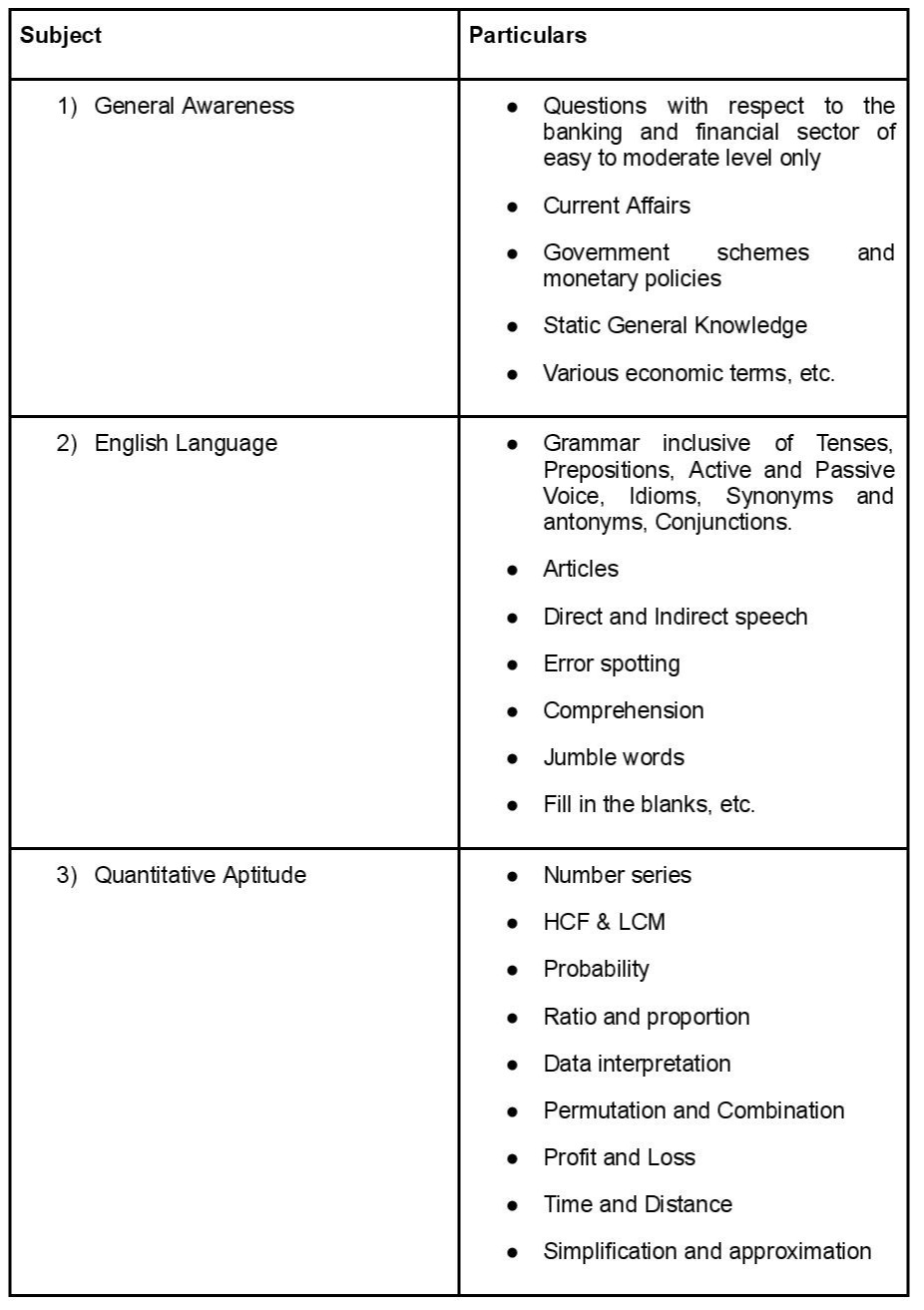
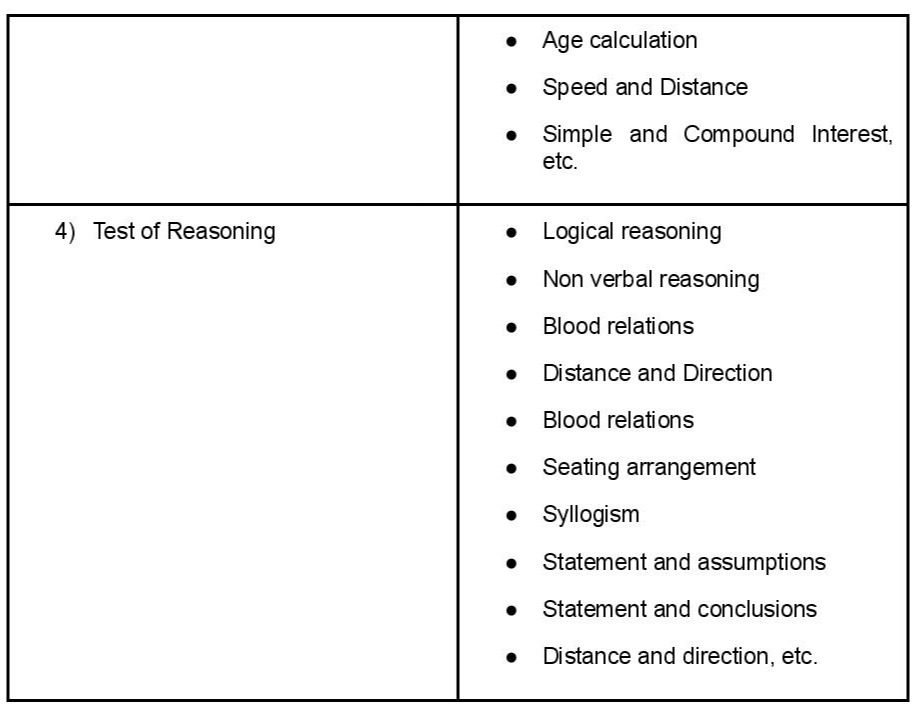
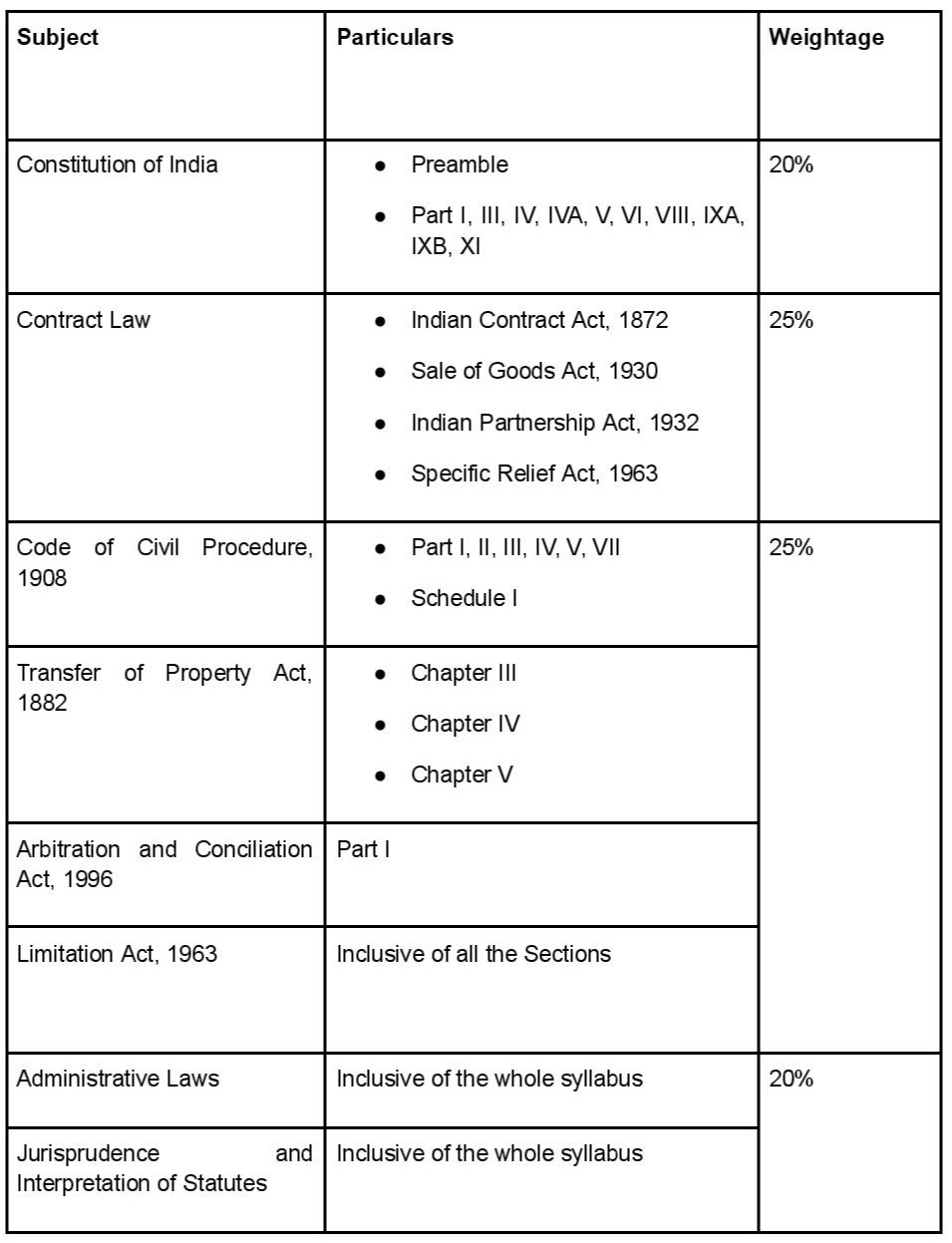
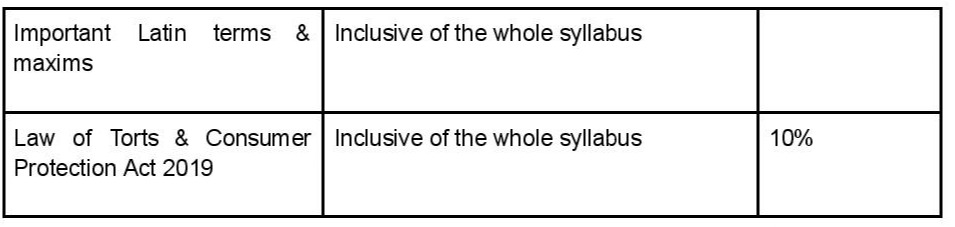
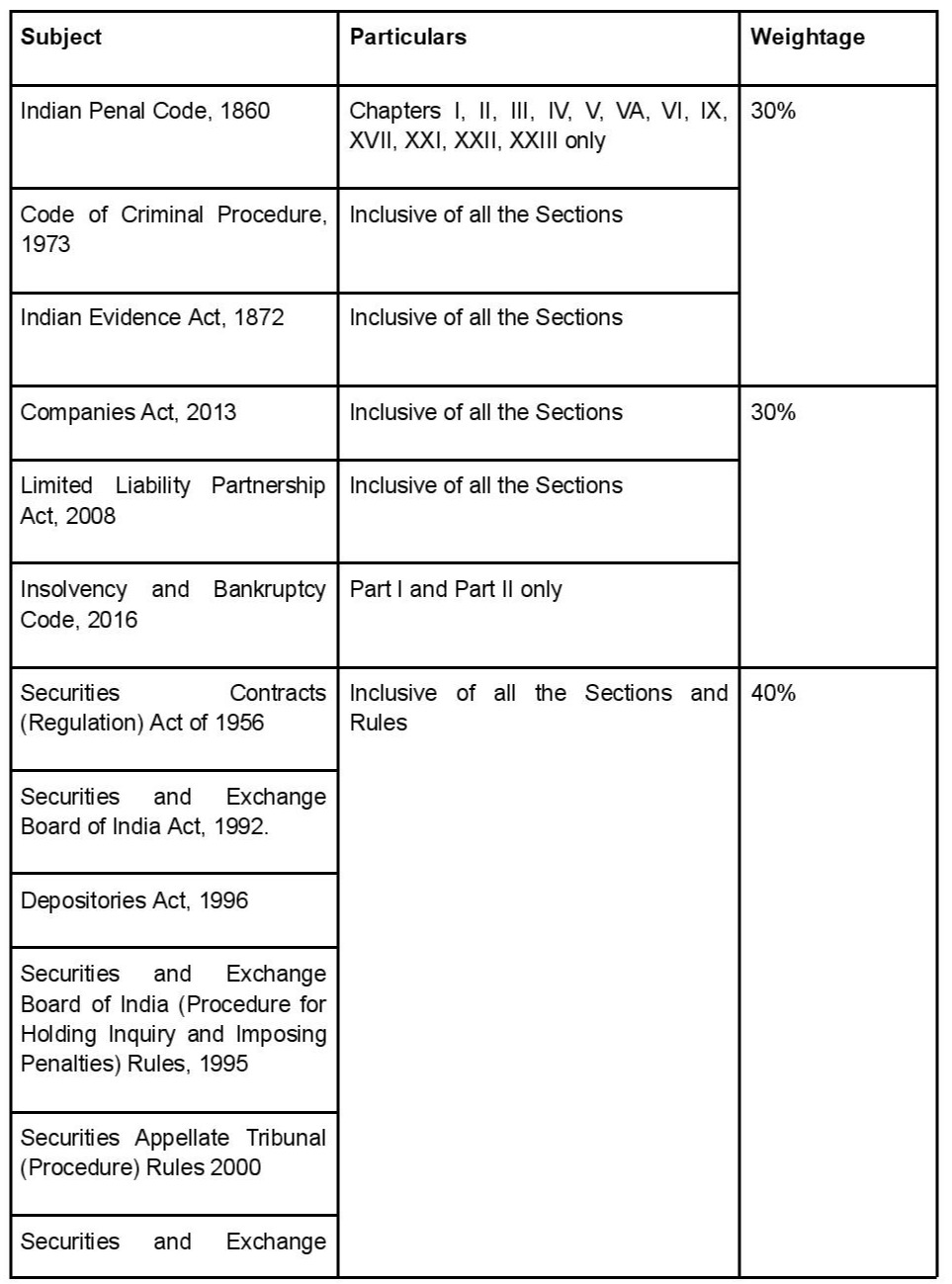
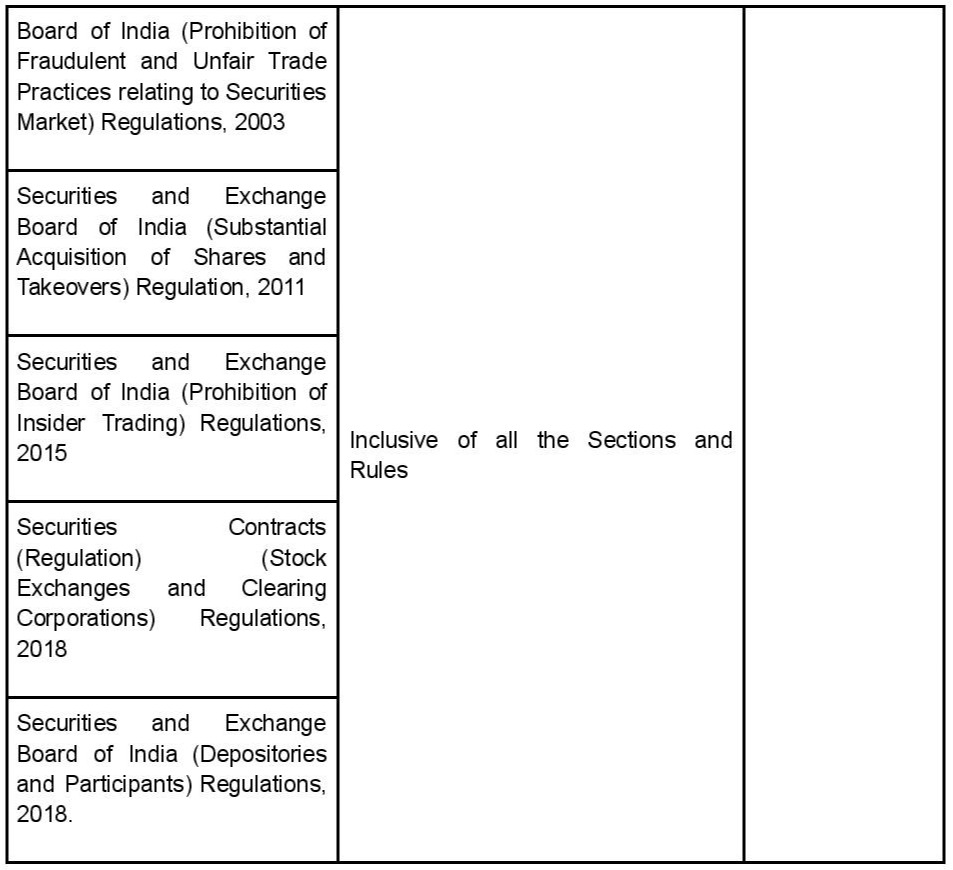
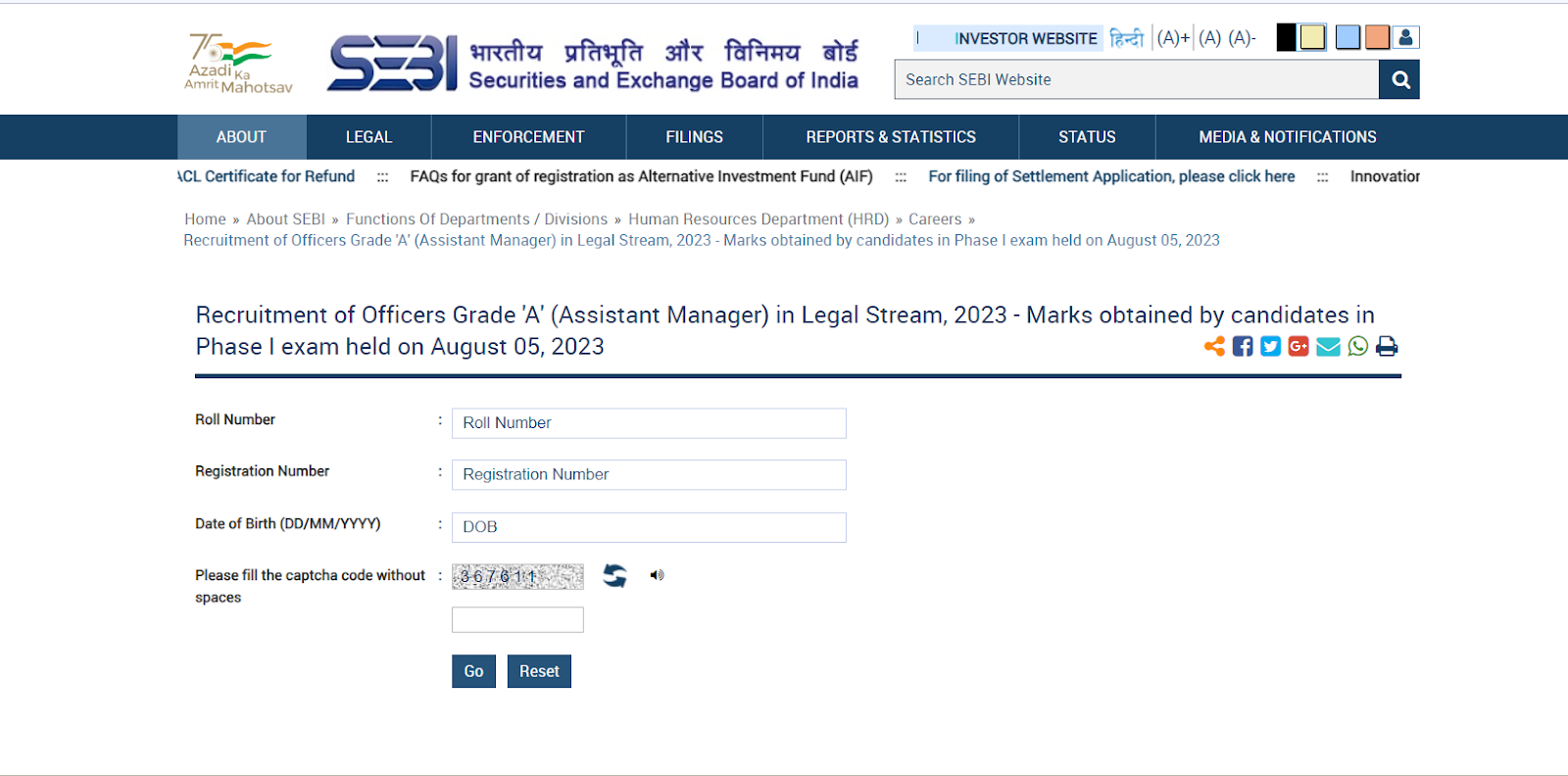
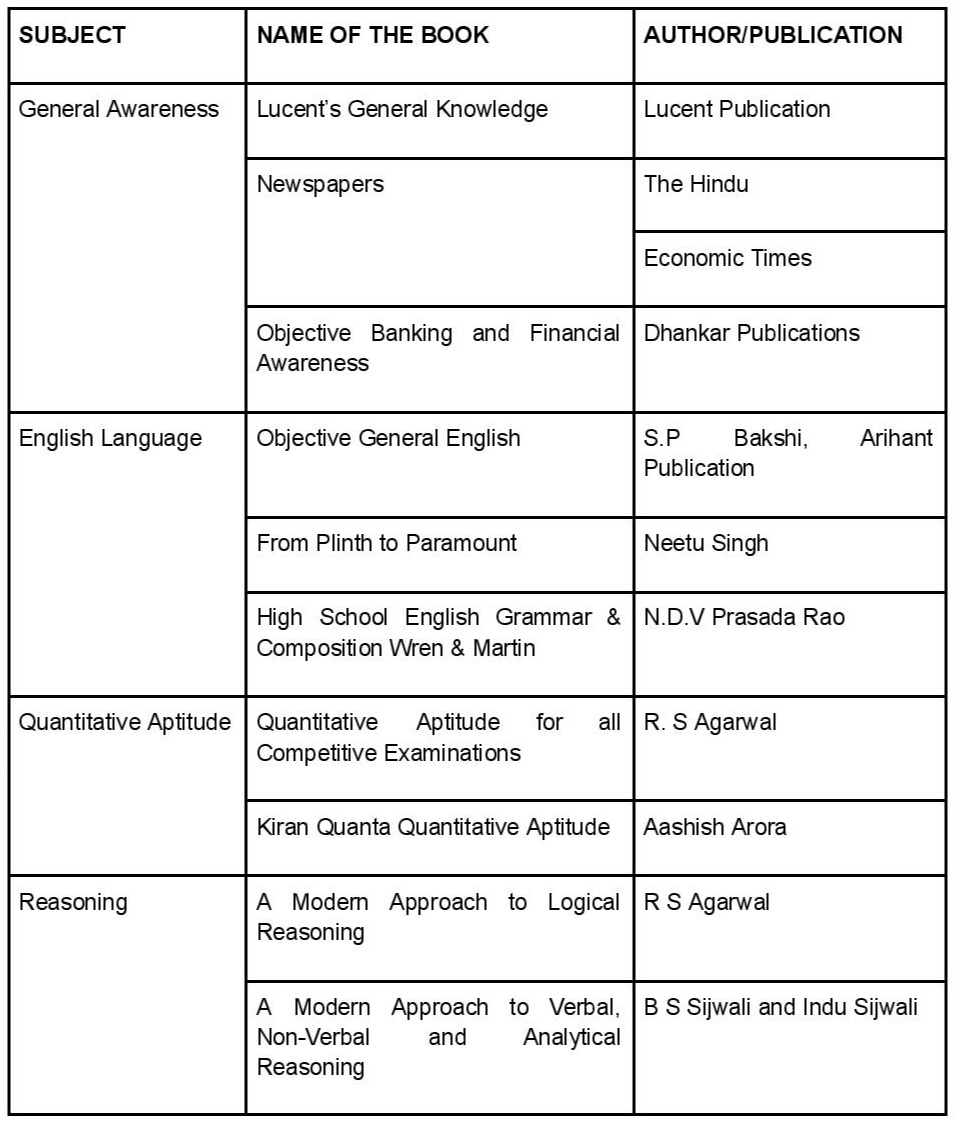
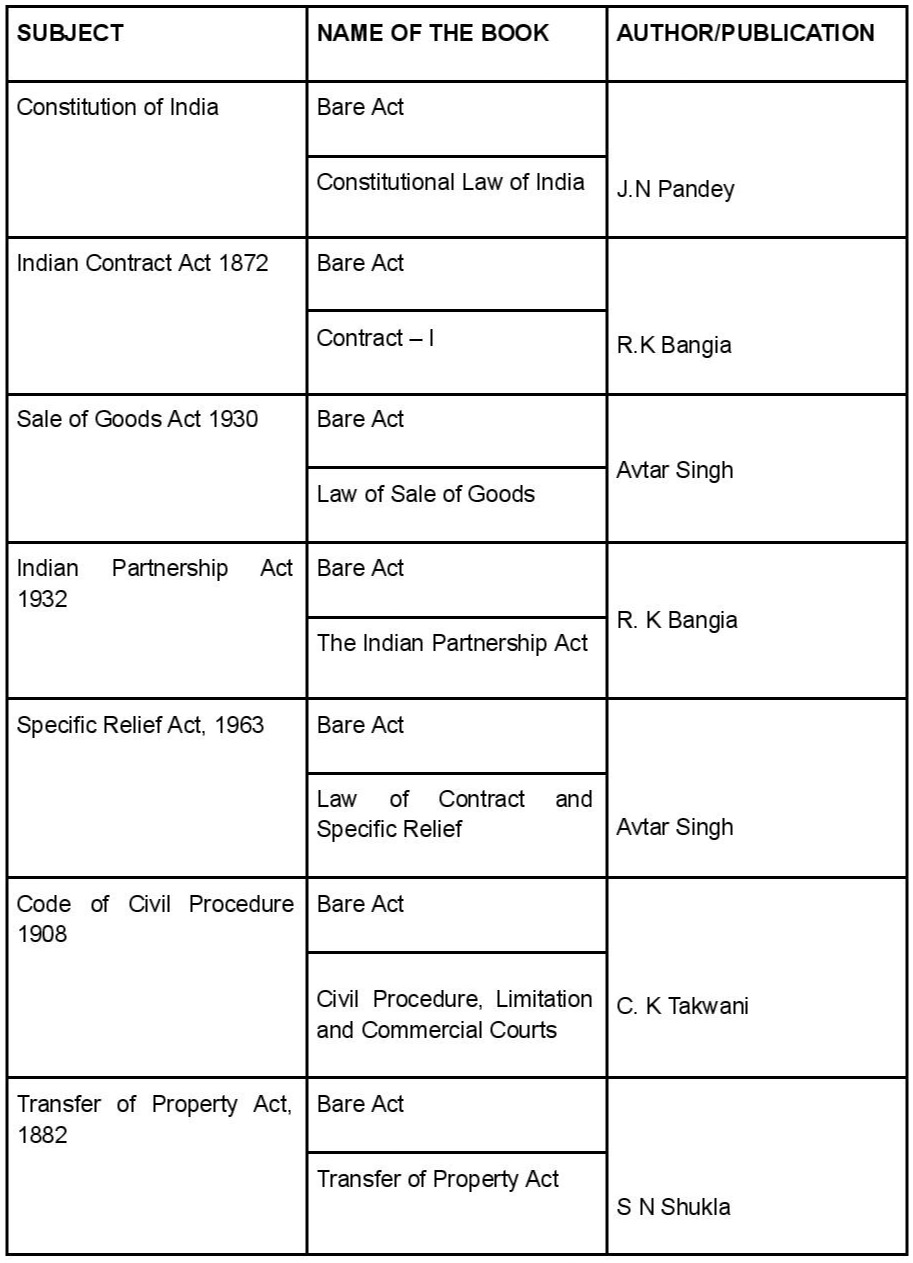
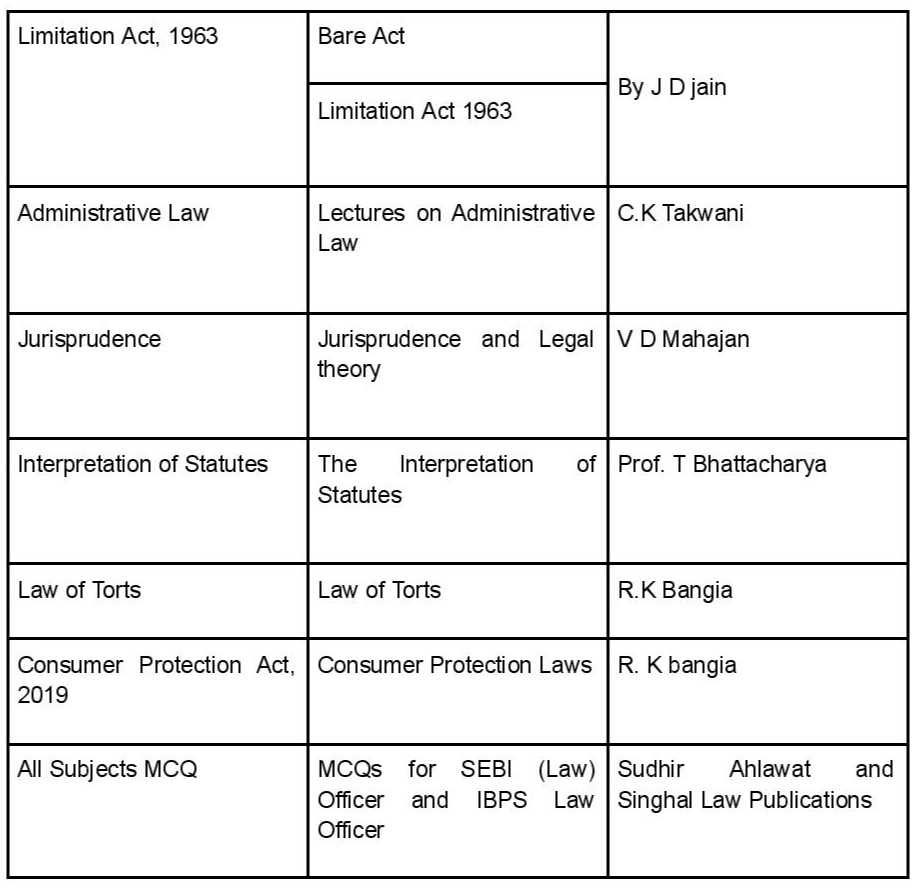
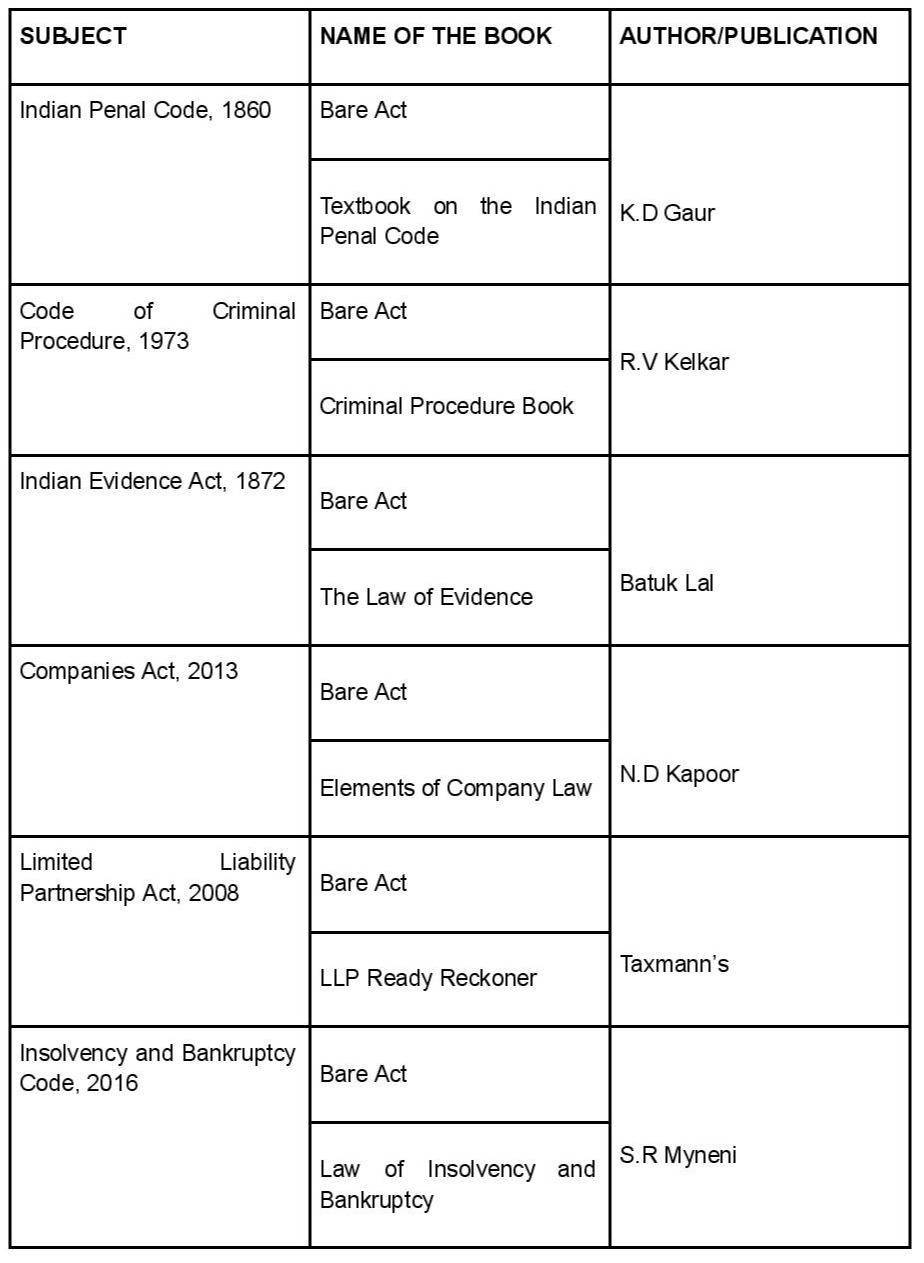

















 Allow notifications





