A glance through the history of interaction between new technology and the works of artists reveals that copyright law has often had to mutate and adapt to the changes brought in by emerging technology. A repeat of this event has been witnessed by way of the Music Modernisation Act, 2018. This Act seeks to transform the existing copyright regime in the US to overcome the challenges posed by digital streaming and address the other legal loopholes.
A song dissected through the legal eye shows a layering of two sets of protection: protection afforded to the musical composition as a musical work and the mechanical rights for the sound recording.
Musical works and sound recordings in US Copyright Law
The US Constitution provides intellectual property protection for scientific and artistic works. Musical works were included as original works of authorship under the Copyright Act of 1831. With inventions that could create mechanical copies of musical compositions, appropriate changes were made to protect the rights of the composers to reproduce and distribute their work through the Copyright Act, 1909. The term of protection afforded to musical works is as follows:
Year
Term of protection
Before 1923
Work in the public domain.
1923-1963
If the copyright was renewed in the 28th year, the work is protected for a total of 95 years from publication. If the copyright was not renewed, the work is in the public domain.
1964-1977
95 years from publication.
“Sound Recordings” are works that result from the fixation of a series of musical, spoken, or other sounds, but not including the sounds accompanying a motion picture or other audiovisual work, regardless of the nature of the material objects, such as disks, tapes, or other phonorecords, in which they are embodied. Copyright protection was extended to sound recordings by way of an amendment in 1971. However, the amendment focused on non-interactive streaming (radio), creating ruptures in its wake.
This amendment created a disparity between legacy artists and other artists in terms of federal intellectual property protection. Legacy artists are those artists whose sound recordings were created prior to February 15, 1972. Legacy artists were adversely affected as they could not when various persons made unauthorised copies of their original works and distributed the same without paying the due royalty.
With the emergence of the internet as a formidable element in the distribution of protected works, the Digital Performance Rights in Sound Recordings Act, 1995, brought the making of digital copies and its distribution within the ambit of copyright protection. Royalties had to be paid by digital music streaming platforms at rates determined by the erstwhile body, the Copyright Royalty Board (CRB). However, the rights were not applicable to non-interactive music streaming. The passing of the Digital Millennium Copyright Act, 1998, is often described as overarching legislation, with the copyright owner having the upper hand in licensing transactions, as well as restraining the freedom of speech and expression. Hence, there is a need for balancing the rights of the copyright holder and those of the public, especially with regard to the burgeoning content creation industry.
The Music Modernisation Act, 2018 as a player in the US Copyright Regime
The Orrin G. Hatch-Bob Goodlatte Music Modernisation Act, 2018 popularly known as the Music Modernisation Act (hereinafter referred to as the MMA, 2018) endeavours to transform the current US copyright framework from obsolescence and tailor it to the requirements of the contemporary music industry. The issues addressed by this Act are as follows:
Licensing regime
The pre-MMA licensing regime enabled the exploitation of the music industry to a great extent, wherein the digital music providers made huge profits without having to pay just and fair royalties to the creators. When a digital music provider was going to use a work, it was required to file a Notice of Intent with the copyright owner or the copyright office (if the copyright owner cannot be located), seeking the issue of a compulsory license from the creator. The law placed a minimum requirement on the applicants to only exercise good faith in identifying the creators. This was exploited by digital streaming companies, wherein they filed Notice to Intent for works whose authors could not be identified.
The MMA 2018 brought in ‘blanket mechanical licensing’ for digital music providers. Instead of obtaining a separate license for each work, the blanket mechanical licensing will allow the providers to broadcast works available in a particular set by paying the appropriate fee.
This blanket mechanical licensing mechanism falls under the purview of a non-profit organisation called the Mechanical Licensing Collective (hereinafter the MLC). Governed by music publishers and other industry players, the MLC will be responsible for the maintenance of a musical works database, which will enable better identification and location of copyright owners. Mechanisms are also put in place to resolve disputes as to royalty rates and oversight as to unclaimed royalties. Disputes will now be determined by the ‘wheel’ approach, wherein judges would be randomly assigned to preside over negotiations, reducing the possibility for forum-shopping and bias.
Royalty rates
US Copyright Law differentiated between non-interactive and interactive digital music broadcasting services, with Section 114 of the Copyright Act only addressing the former, with interactive streaming left to be determined by negotiation between parties. The MMA, 2018 now vests the responsibility of fixing royalty rates with the Copyright Royalty Board. The CRB will determine the rates based on a willing buyer/willing seller standard. The change in measurement standard aims to simplify the royalty calculation process and bring it close to the market value.
Legacy artists
The MMA 2018 has streamlined the protection available to pre-1972 or legacy works and payment of royalty for digital streaming. The MMA, 2018 is a combination of three legislations, and the provisions relating to Legacy artists were enclosed in the Classics Protection and Access Act. The position prior to the MMA, 2018 did not provide for the right of public performance. With the MMA, 2018, the gap between the legacy artists and post-1972 artists has been reduced to a great extent, with pre-1972 sound recordings acquiring the same rights as post-1972 sound recordings.
Further, the royalty distribution scheme has been revamped, taking away the reliance on agreements between the artist and the record label, and 50% of the royalty will go to the record label and the rest to the artists via license issued to digital music providers. For sound recordings published within 1923–1946 and 1947–1956, a copyright term of 100 years and 110 years is provided to compensate for the loss of earnings due to the prior legal position. The term of protection is expressed as 95 years + transition period after publication.
Year
Transition period provided
Before 1923
3 years from the date of enactment of MMA, 2018
1923 – 1946
5 years
1947 – 1956
19 years
1957 – 1972
95-110 years
Music producers
The MMA regime envisages the distribution of royalty to music producers and sound engineers as well and guarantees them the statutory right to royalties. Initially, distribution was to be carried out on a good faith basis.
Is the MMA 2018 really the panacea it claims to be
With the introduction of the blanket license scheme, the MMA, 2018 similar to its predecessors, has created disparities. It encompasses the right to public performance of musical works but excludes the same for sound recordings, leaving the digital streaming platforms to obtain authorisation separately, complicating the process. Furthermore, non-interactive streams are still left in the lurch, and artists are denied the benefits of modernisation of the law in this respect.
The practical application of the MMA (2018) has invited criticism on multiple fronts, as the claims for protection are not verified, allowing multiple conflicting claims. Insufficient awareness among minorities poses challenges to the inclusivity of the Act. In addition to this, it is claimed that the transition period afforded to the legacy works is excessive under certain divisions.
The working of the MLC is also questioned to a great extent, especially in regards to unclaimed royalties and orphaned works. The MLC is composed of music producers and songwriters, and it is argued that the former hold greater leverage in choosing the latter to be a part of the MLC. The rights of the music producers are also subject to the direction of the artists that they work with.
Conclusion
The Music Modernisation Act, 2018 widens the scope of copyright protection to anomalies created by the digital streaming industry. Establishing an independent body, the MLC, to streamline the licensing process for digital streaming and ensure the flow of just and fair royalties to those involved in the creation of musical works and sound recordings. It sets aside arbitrary disparities and bestows statutory rights on other players in the music industry for the first time in history. The MMA, 2018 is a reminder for other legal systems to bring about international uniformity with regard to the copyright regime and accommodate contemporary changes.
Human resource accounting is a method to use human resources effectively for achieving the desired results. It helps the organisation find out the actual costs incurred for recruiting the required human resources. Human resource accounting started in the 1960’s. This method is used as a significant tool in finding out the value of the employees as human resources. The Father of Human Resource Accounting is “George Elton Mayo.”
Human resource accounting offers several advantages, like enhancing decision-making, evaluating HR investments, and assessing employee performance. The difficulty of accurately qualifying the value of human capital, the subjectivity involved, and the challenges of future predictions are the major limitations of human resource accounting. HR Accounting needs great expertise and should be done in the right manner.
The role of human resource accounting in the organisation is to measure the cost of recruiting and training. And also to develop the employee, individually and collectively. Components of human resource accounting are to identify the requirements of the employees in the organisation and to develop proper human resources for the organisation.
Definition
According to Stephen Knauf, “Human Resource Accounting is the measurement & quantification of human organisational inputs such as recruiting, training, experience & commitment.
M.N. Baker defines human resource accounting as follows:
“Human resource accounting is the term applied by the accounting profession to quantify the cost & value of employees to these employing organisations.”
American Association of Accountants define- “HRA is a process of identifying and measuring data about human resources and communicating this information to interested parties.”
According to Woodruff Jr. – “HRA is an attempt to identify and report investments made in the human resources of an organisation that are not accounted for under conventional accounting practice. It’s an information system that tells the management what changes over time are occurring to the human resources of the business.”
“Human Resource Accounting is a method of quantifying the value of employees as assets in an organisation. It involves measuring their contributions to productivity, skills and experience to assess their impact on the company’s performance. This approach allows businesses to better understand the value of their workforce and make informed decisions about talent management and investments in human capital.”
Features
Recruitment and selection of human resources: Various methods are followed in selecting the applicants for the job.
Records for management: It will keep recording of day-to-day tracking of the human resources.
Continuous update of information: Employee skills, knowledge and experience are continuously monitored and recorded.
Evaluation of human resources: Human Resource Accounting provides feedback on the performance of the employees. Provides the analysis where the employee performance improvement is to be done.
Employee capital: With the help of human resource accounting, organisations can know the employees working hours, Turnover and absenteeism.
Payroll: With the proper maintenance of the payroll, we can know the human capital, payroll taxes, overtime allowances and other expenses incurred for the employees.
Employee benefits: Health insurance, retirement Benefits and other perks will also be analysed by the Human Resource Accounting.
Objectives of human resource accounting
The following are benefits of human resource accounting:
Human resource management: HRA provides the framework to manage human resources better strategically. This happens by assigning the financial value for employees and organisations to make informed decisions about recruitment, training, development, and retention.
Valuation of human resources: HRA aims to measure and report the economic value of employees to the organisation. This involves developing methods to quantify the knowledge, skills, experience, and potential of the workforce.
Better resource allocation: By understanding the value of human resources, organisations can allocate resources. This includes investing in employee development programs and creating a positive environment for working.
Performance enhancement: HRA is used to identify and track key performance indicators related to human capital. This information can be used to improve employee performance, productivity, and overall organisational effectiveness.
Employee motivation and incentives: When employees know that the contributions were valued and measured, it can boost morale and motivation. HRA can be used to design incentive programs to reward employees for performance and contributions to the organisation’s success.
Human resource accounting manages the human capital effectively
Human resource accounting develops policies and programs for the better development of employees.
Human capital study about the number of hours the employee is working, absenteeism of the employee and the turnover
Evaluation of Human Resources is useful for the evaluation of the employees working capability and can make improvements in areas of necessity.
Payroll analysis is an effective tool to control the overtime of the employee as well as the taxes incurred for the employee.
Continuous updating of the employee records will allow the organisation to analyse the skills of the employee and can be used in an optimistic way.
What are the different methods used in human resource accounting
There are different ways or methods in which the human resource accounting will be calculated.
Replacement cost method: The cost of replacing an employee in the place of a previous one is called replacement cost. This cost includes recruitment, training and other benefits provided to the present employee.
Cost-based Method: This method also includes the cost of benefits provided to the employee.
Income-based Method: In this method, human resources are evaluated based on the revenue generated by the employee to the organisation and Prophets.
Market-based Method: It is a comparative study method. The salaries, wages, and other perks provided in another organisation will be compared with the salaries, wages, and other perks provided to the similar position employee in his organisation.
Recruitment Cost Method: This method calculates the total cost of recruiting and hiring the employees, as well as the cost of training and development. The cost of these expenses is considered the value of an employment.
Historical Cost Method: It calculates an employee value based on the total costs incurred for hiring the employee. This method is simple to apply. The drawback of the historical cost method is to make a decision on which costs are to be capitalised and which costs are to be considered as expenditures.
Advantages and disadvantages of human resource accounting
Advantages
Improving decision-making: HRA provides a comprehensive view of the workforce’s value, enabling management to make more informed and strategic decisions. By understanding the financial implications of human capital investments, organisations can optimise workforce planning, allocate resources efficiently, and evaluate the impact of HR initiatives. This data-driven approach enhances decision-making across various areas, including recruitment, training, performance management, and succession planning.
Evaluation of HR investments: HRA facilitates the evaluation of HR programs and initiatives by measuring their return on investment (ROI). Through cost-benefit analysis, organisations can assess the financial impact of training programs, employee development initiatives, and other HR interventions. This allows for better resource allocation and ensures that HR investments are aligned with organisational goals and deliver tangible results.
Employee performance assessment: HRA provides a framework for assessing employee performance beyond traditional metrics. By considering the economic value that employees contribute to the organisation, HRA enables a more holistic evaluation of individual and team performance. This information can be used to identify high-potential employees, determine training and development needs, and tailor performance management strategies.
Better human resources planning: Strategic workforce planning and effective resource allocation are the bases for human resources planning.
Increases employee motivation: Recognition and appreciation and performance-based incentives will play a vital role in employee motivation.
Disadvantages
Subjectivity and lack of standardisation: Assigning financial value to human capital is a very challenging task, as skills, knowledge and experience are the intangible assets of human capital.
Complexity and resource requirements: Data collection, analysis and expertise in the analysis are the basic disadvantages in human resource accounting.
Ethical concerns: Ethical concerns arise when there is a lack of transparency, objectivity and fairness in the treatment of human resources.
No clear-gut guidelines: Universally accepted accounting guidelines are not available. Assessing the organisational workforce is really a difficult task for stakeholders.
Continuous process: On-going process is needed. Human Resource Accounting must adapt to the changes and adjustments for defining the human capital accurately.
Human resource concepts
Human Resource Accounting can be examined from 2 types of Concepts
The expenditure incurred by the organisation for recruiting, training and the development of the employee during his tenure with the organisation.
Expected Rate of Return on the above expenditure incurred on an employee in the future.
Traditional Accounting Practice
There is no specific way to measure the monetary value of human resource accounting as a traditional accounting practice.
Human Resource Accounting is a way that helps to generate monetary value for an organisation. This provides a better way to understand the records of the human resource, which can be used towards planning, training and development. Traditionally, all the expenses incurred towards recruitment, selection, training and development are taken into consideration, in the calculation of the same. Among the traditional accounting practices – standard costing, variance analysis, return on investment and capital budgeting are the major.
Conclusion
Human Resource Accounting is a process of estimating the cost incurred on recruiting, Staffing and training of an employee. The major setback of this concept is a lack of guiding principles, concepts, Conventions and a regulatory body to guide the same.
Human resource accounting is the process of estimating the cost benefit of investments on human resources with a view to assessing its value to the organisation. There are two approaches to the study of human resource accounting: cost based approach and value based approach. The weaknesses of human resource accounting are lack of real ownership, lack of guiding principles, concepts, conventions and a regulatory body, lack of recognition by tax authorities, possible opposition from employees and their union, and the absence of adequate awareness and research.
This article is written by Nishka Kamath. This article covers everything an individual should know on notice for illegal construction. This includes the provisions, noteworthy case laws, format and specimens, FAQs, etc., related to notice for construction without permission.
Have you ever thought about what happens when buildings are constructed without seeking prior permissions from the authorities? These illegal constructions are more common than we may think! But they can cause serious legal troubles.
Then, there is rapid development, urbanization, etc., (especially, in Tier-1 cities where every square foot counts!) which are becoming a major contributing factor in illegal constructions in our country. These constructions have been a contributor to several issues (which lead to a surge in legal and environmental challenges) like-
Hampered safety of workers who work there,
Major hazard to the people residing there,
Potential trouble to the local public nearby, etc.
So, whenever the authorities come across any such illegal or unauthorised construction, they send a notice of illegal construction to the concerned parties. If you have received any such notice or if you are a lawyer or an advocate who wants to reply to such a notice or simply someone who wants to learn about notice for illegal construction, this article will serve as a guide to help you understand the legal nitty-gritty, draft a response and navigate all the relevant laws, regulations and procedures thus involved.
Point to be noted
Please note, this article is divided into five major parts. The first part is a brief on the complexities of illegal construction and includes what is illegal constructions and the laws associated with the same. The second part talks about the key factors to know related to illegal construction like the common reasons for sending and receiving a notice for illegal construction, the actions to take, the repercussions for ignoring the notice, case laws, etc. Whereas, the third part talks about how to prevent receiving such a notice. Then, the fourth part mentions the specimens related to the same and the fifth part addresses the FAQs related to notice on illegal construction.
Navigating the complexities of illegal construction in India
Before we begin to read on notice of illegal construction, it is important that we have a fair idea of what exactly can be illegal construction in India. So, let us begin, shall we?
What is an illegal construction
While learning about illegal construction it is important to understand what exactly the terms ‘illegal construction’ mean. Well, illegal construction can be defined as any building or construction that is carried on without seeking prior permission from the concerned authority. In most of the states it is the local municipality authorities who give permission for such constructions.
An illegal construction may include constructing residential or commercial buildings having no proper sanction, or they could be some sort of encroachment (meaning the owner of one property is infringing the rights of the actual owner by building on or extending a structure on to the adjacent land or property intentionally or otherwise), on a public land or a restricted area or simply a violation of zoning laws and building codes. More often than not, these illegal constructions come in the middle of the effort of urban planning and may also compromise safety standards. Such unauthorized constructions may cause significant legal issues or lead to heavy fines for builders and occupants.
Reasons for illegal construction
Construction of illegal buildings is a major problem that urban and rural areas are facing nowadays. The reason behind this could be :
The ever-growing rates of houses in such areas;
Major delays in granting permission from the requisite department to build up a certain site; or
The bureaucratic process that is followed by the authorities in such matters.
Pictorial representation of notice on illegal construction
Key factors one must know on notice for illegal construction
Why and how is a notice for illegal construction sent
Usually, the municipality or local authorities or other such regulatory bodies serve notice for illegal construction. Here, notice includes all the details about the type and nature of the encroachment or the violation of law, legal provisions that were breached, and the corrective actions needed to be taken thence. Such a notice will act as a formal document and a sort of curtain-raiser to take possible legal actions.
Any person who gets such a notice must take it with utmost seriousness as failure to respond or act on it in an appropriate manner, may lead to severe sanctions, including the whole demolition of the illegal construction. Now if we look at all this, it becomes important to understand what the notice contains and implies. This becomes the only way to solve such matters and avoid legal troubles.
Reasons for sending notice for illegal construction
Well, there are some grounds on which the authorities send notices for illegal constructions. Wanna know a few key pointers? Here, are they-
Construction without permission
The authorities, if they find out it is an illegal construction, and if they are well aware or after enquiry come to know it was constructed without proper permissions, they may send a legal notice.
Encroachment
Now, if the authorities see that the lands are constructed without the person doing so actually owning it, then they may send a notice. Also, if the land is not legally leased, the constructor itself or if it is a public land, then also the notice may be sent.
Not following the approved plan
Now, if the builder/constructor does not follow the sanctioned plan, nor do they take permission for changing the plan, then the authority may send a legal notice.
Neglecting local zoning laws
If the builder/constructor is building something in an area that he/she should generally not then a notice could be sent. Let me explain with the help of an example.
Say, there is a builder named Mr. Gokhale. He is building a commercial mall in an area marked as residential. This infringement stands in the way of urban planning. It also obstructs the safety of the residents nearby. This obviously will land Mr. Gokhale in legal and financial (more like fine-nancial) troubles.
So, the quicker his actions are to resolve the issue, the lesser the scope of such punishments. Simply put, the faster the mitigation of these problems is entertained, the less the chances of having an unfavourable outcome.
Illegal use of any land
If say, a property or land is meant to be used for agriculture or residential purpose only and it is used for commercial purpose, thereby also building a commercial sort of structure (say a mall, where a residential building must be made), chances are, the concerned authority may send a legal notice to the infringer and consider it as illegal construction.
Non compliance of environmental laws
If any property is not built in accordance with the set environmental laws, the authorities may send a notice for the same and may regard it as an illegal construction as well. So, it is crucial that the necessary rules under Water (Prevention and Control of Pollution) Act, 1974, and Air (Prevention and Control of Pollution) Act, 1981, are properly followed, amongst other laws and regulations. An example of this could be a factory that has been redirecting industrial waste which is toxic, ignitable, corrosive or reactive into clean water sources like a river or lake, thereby harming the life of sea animals in/near that water body, flora and fauna in/near that water body, the environment, the groundwater (and in turn the drinking water), and the human health.
All these violations interfere with urban planning and safety while also paving a path for a breeding ground for legal and financial repercussions for all the parties. The quicker the mitigation of such issues, the lesser the possibility of the adverse outcomes.
What happens after a notice on illegal construction is issued
Municipal corporations and other authorities issue legal notices when they deem a construction was illegal. Mentioned below are some of the necessary steps the authorities, especially the municipal corporations take to rectify and remedy the circumstance:
Identifying the illegal construction
Municipal corporations of every state have designated teams who carry out regular inspections for pinpointing illegal constructions. Here, the term ‘teams’ include the following members:
Professional, experienced officials;
Qualified engineers;
Expert surveyors, etc.
These teams assess the buildings and check if there are any plans, provisions, rules or regulations being violated.
Issuing the notice
Once the authorities are sure that there is some illegal construction, the authorities send a legal notice to the owner/developer/constructor. Such a notice usually includes all the necessary information regarding the breach, like-
Details about the unauthorised floor area,
Information on the deviation from the already approved plan,
Construction without having the permission and approval.
Timeline for rectifying the violation
Within the notice, the authorities make sure there is a deadline before which the owner must fix the infringement/breach on the property. This timeline will depend on how serious is the violation and who the local authorities are. However, if you have gotten such a notice, you better follow whatever they say and the set timeline. Chances are, you could face some issues if you do not! I have talked about the repercussions in the upcoming passage.
Legal actions
If the owner/developer does not adhere to the sent notice, then the authorities will have to take some legal action. It will include fines, sealing or demolitioning the property, etc.
Read the following to know more on what I just said-
Repercussion of neglecting a notice for illegal construction
Not acting on a notice for illegal construction would have serious consequences and strict sanctions, including:
Order for demolition
The local authorities (like the municipal corporation) could pass an order for demolishing the illegal construction. If challenged, the same could also be sent by way of judicial order. Then, here the court has to ensure that the legitimate process of demolition is followed, including sending proper notices and giving just and fair opportunities to the parties to respond, while maintaining fairness and legal integrity.
This demolition may also cause a major loss to the individual who built the site.
Order to pay fines
The local authorities (or if needed, the court) may ask the person(s) to pay a huge amount of fines so no such activity is performed again. This also acts as a deterrence and also helps in making sure others follow the set construction codes and rules. Also, when I talk about fines, they can vary depending upon the violation and encroachments or the nature of such an illegal construction.
Sealing the property
If the authorities reach an inference that the property is illegal and the owner or the person receiving the notice for illegal construction did not act on the same, they can order the property to be sealed. A notice will be sent to the concerned party regarding the same. Then, this person(s) could also face legal proceedings, restrictions on constructing anything further, penalties, etc., as I have reiterated time and again. So, I say, you better beware!
Legal framework related to notice for illegal construction
Now, before I start to tell you about the laws and important sections on illegal construction, do understand-
This is not an exhaustive list,
I have simply mentioned a quick summary of a few Acts,
If needed, go talk to your real estate lawyer.
Public Premises (Eviction of Unauthorised Occupants) Act, 1971
First in the line will be the Public Premises (Eviction of Unauthorised Occupants) Act, 1971. This Act simply discusses laws on the eviction of unauthorised occupants, especially from public property (as the title suggests), amongst other things. This makes it a little easy for the authorities to demolish/evict the people/property in these areas. These lands could be either public premises that are owned by the government- like government lands or buildings.
Let us take a look at some of the key sections (again, not an exhaustive list).
Sections under the Public Premises (Eviction Of Unauthorised Occupants) Act, 1971, related to illegal construction and its notices
Section 3
Under Section 3 of the Act, the Central Government is entrusted with the authority to appoint estate officers. So, if there is any illegal construction being carried on, such officials can take legal action against such a construction by sending a notice for illegal construction.
Section 4
As per Section 4(1), if the estate officer comes to know there is any sort of illegal construction or unauthorised occupancy-on a public property, then a notice can be issued by them. This has to be done within 7 working days from the time the officer was notified that it was an illegal site.
Now, there is another provision which you should know-Section 4(1A). Under this, if the estate officer believes a person is an ‘unauthorised occupation’ and is on a public property, a notice be sent in writing. This officer may call upon the individual to show cause (sort of give reason/justification or proof) for why the premise must not be vacated.
Then, this is one more Section. Under Section 4(2), the notice shall-
Discuss the basis upon which the order to empty the property is being based on, and
Mandate the concerned people who are living on or occupying the property of the public premises to-
Show cause (if any), against the proposed order as mentioned in the notice. This must not be done after 7 days from issuing the notice.
Appear before the estate office as specified in the notice. This has to be with proper proof to support the cause shown and also for personal hearing, if needed.
Then there is another law you should know-Section 4(3). It says that the estate officer must make sure that notice is served by fixing it on the outer door or some part of the property that is visible. Such a notice has to be served to all the concerned individuals.
Section 5
Another Section here is Section 5. Here, an estate office is very sure the occupancy is unauthorised (and has proof to back up the same), he/she can ask the people living there to vacate.
He/she will make an order of evidence asking the occupants to vacate the place. The time period for evacuating such a premises as per this provision is as mentioned in the order or notice. However, it shall not exceed 15 days.
Then, there are Sections 5A, 5B, and 5C. They discuss the authority’s power to remove unauthorised construction, pass an order on the same and the power to seal it.
Section 7
Then there is Section 7. Under this, an estate officer can ask the infringer to pay rent or damages (obviously after an order is passed, he cannot simply go and tell them- “Hey, pay the money”. After the order, the money has to be paid as mentioned in that time period only.
Section 11
Here, if a person is living unlawfully on public property, he/she can face a punishment. Let me explain with an example.
Say, there is a man named Golu who is living in an unauthorised, illegal area. When the authorities catch him and give him the proof, he can face some sort of penalty. Now, the penalty can be a jail time not going beyond 6 months. It can also be a fine of ₹5000. At times it can be both. Better not do what Golu did!
Sections under the Bharatiya Nyaya Sanhita, 2023
Please note: TBNS was previously known as the Indian Penal Code, 1860.
Well, there are no explicit laws here under the BNS on illegal construction. But the authorities can look at these sections-
Section 270
Section 270 of the BNS, 2023, was under Section 268 of the IPC. Here, any person who acts like any type of threat, hindrance, annoyance or causes any injury to any people who live there, can be blamed for committing public nuisance. Such a Section makes sure it does not cause harm or inconvenience to the general public. Also, the people doing wrong get punishment. So, an officer while sending a notice can include this if they wish to and if feasible.
Section 285
Section 285 previously came under Section 283 of the IPC. Under this, if a person poses as a threat (becomes a hindrance or injures someone), there is a punishment. Now, let me explain this with the help of an example.
Say, there is a boy named Dholu. If Dholu does any of this, there could be a fine. Dholu will have to face a fine of ₹5000/-.
Section 324
Now, Section 324 of the BNS was previously known as Section 425 of the IPC. Here, if any person destroys or makes changes in a land which diminishes the value or its utility, will be said to commit mischief (not the one a kg kid does, this is serious).
Further, there are subsection that say as follows:
Subsection (2) states that such an illegitimate act will attract a punishment of description extendable to 6 months and a fine, if needed- both.
Subsection (3) states that if there is any damage to the property (the property being owned by the Government or the local authority), the act will attract an imprisonment which is extendable to 1 year or a fine, at times, both.
Subsection (4) states that if the amount of damage exceeds ₹20,000/- but is below ₹100,000/-, then there could be imprisonment which is extendable to 2 years or a fine, at times, both.
Subsection (5) states that if the amount of damage exceeds ₹1,00,000/-, there could be imprisonment which is extendable to 1 year or a fine, at times, both.
So, if the individual causes damage to any property, thereby, committing mischief, will face any of the aforementioned punishment and the local authorities could charge and send a notice to the wrongdoer under such sections, inter alia.
The Real Estate (Regulation and Development) Act, 2016
Under Section 3 of the Real Estate (Regulation and Development) Act, 2016, all the real estate construction projects have to be registered with the Real Estate Regulatory Authority (RERA). They cannot advertise, market, book, sell, offer for sale or invite people to purchase such property (could be any plot, apartment, building, etc.,) unless registered. So, if anyone infringes this provision, it will be considered as an illegal construction and the authorities can send a legal notice for such activities.
Further, the Section states that, registration of the following real estate projects is not necessary-
When the area of the property exceeds 500 square metres or the total number of apartments does not go beyond 8. However, if the appropriate Government considers it necessary, it may lessen the threshold below to 500 square metres or 8 apartments, as the case may be, including all phases, for exemption from registration under this Act.
Wherein the promoter has received completion certificate for a real estate project before commencement of the Real Estate (Regulation and Development) Act.
If the property is being renovated or repaired or redeveloped and does not involve marketing, advertising, selling or new allotment of any apartment, plot or building, as the case may be, under the real estate project.
Section 11
Under Section 11 of the Real Estate (Regulation and Development) Act, 2016, which talks about functions and duties of promoters, the real estate promoter must specify all the details, like:
The project approvals and permits;
The project plans and specifications of the projects thus proposed;
Buyers rights and agreements;
The timelines and construction phases within which the stages of construction will commence and end, etc.;
So, the promoter must report deviation or illegality, if there is any. Failure to do so, may attract a penalty along with a notice for illegal construction from the concerned authorities.
Definition of promoter
Here, the term ‘promoter’ can be defined as-
An individual who carries out a construction or causes to carry out a construction for an independent building or a building that has several apartment or converts a pre-existing building or a part thereof into apartments, for selling all or some of the apartments to other individuals and includes his/her assignees; or
An individual who develops land into a project, irrespective of the fact as to whether or not the individual has also constructed structures on any of the plots, for selling the whole property or its parts to other individuals, whether with or without structures theron; or
Any development authority or any other public body in respect of allottees of-
buildings or apartments, as the case may be, constructed by such authority or body on lands owned by them or placed at their disposal by the Government; or
plots owned by such authority or body or placed at their disposal by the Government, for the purpose of selling all or some of the apartments or plots; or
An apex state-level co-operative housing finance society and a primary co-operative housing society which constructs apartments or buildings for its Members or in respect of the allottees of such apartments or buildings; or
Any other individual who plays the role of a builder, coloniser, contractor, developer, estate developer or by any other name or claims to be acting as the holder of a power of attorney from the owner of the land on which the building or apartment is constructed or plot is developed for sale; or
Any other individual who constructs any building or apartment for sale to the general public.
Please note: For the purpose of this clause, if any individual who constructs or converts a building into apartments or develops a plot to be put up for sale and the person who sells apartments or plots occur to be two different people, then in such cases both of them will be considered to be the promoters of the said property. Further, both the individuals will be held liable for the functions and responsibilities mentioned under the Act and the rules and regulations mentioned herein.
Section 14
Now, let us look at Section 14. Here, the promoter is supposed to propose a project while also considering the pre-approved plans and layouts. Basically, this Section does not allow many changes in the plans (it kind of restricts modifications), especially without prior consent from the allottees. If anyone goes against it, they may receive a notice related to illegal construction for not adhering to the approved plans.
Did you know? If there is any sort of structural defect or any issues related to workmanship, quality or provision of services or any obligations of the promoter as per the agreement and the same are put forth within 5 years from the date of handing over possession, the promoter must rectify the defect without charging any additional fees within a period of 30 days. If the promoter is not successful in rectifying or fixing the issue, the aggrieved allottees will be entitled to receive an appropriate compensation.
Section 31
Let us take a look at this last Section under the Act. This Section is Section 31. Under this Section, any party (the aggrieved one’s only, not a random party) may complain to the authority for any infringement (as the Act mentions).
Did you know? This complaint could be filed against-
A promoter,
A real estate agent, or
Someone who is responsible for doing what I have talked about above.
Each state or city in India has its own set of city/state specific development control regulations. These regulations are carefully tailored in accordance with the local urban planning needs, infrastructure capacities and topographical considerations. While these regulations can vary from state to state, there are some similarities in each of the regulations, namely:
To stop unfavourable demand and misuse of any land where there is illegal construction.
The power to authorities to punish the defaulters in case of any illegal construction, inter alia.
All the aforementioned rules, regulations and provisions are enacted so that proper safety standards, and environmental norms are followed. Then, it is important that everyone also follow the urban planning standards. All this comes in handy while one is drafting or replying to a notice on illegal construction. We can say this for authorities and lawyers (dealing with this matter) combined.
How can one alert authorities for issuing a notice for illegal construction
If one notices there is an illegal construction, they can inform the concerned authorities to issue a notice for illegal construction. Mentioned below are some of the steps one can follow for alerting authorities to issue a notice.
Collecting proof
Well, the first and foremost thing one can do when it comes to alerting the authorities for an illegal construction is to actually make sure and collect evidence to support their claim of such construction. Here, evidence becomes very important as it helps ascertain the course of nature for illegal constructions and other such construction sites. One can further strengthen their case by attesting documents, witness statements and photographs in the notice/letter they send to the authorities responsible to look into that matter.
Identify the governing body
It is of quintessential importance that one finds the relevant body in charge to report such illegal constructions in that particular area. It could be anyone from the town planning commission to the local municipal corporation or even the development authority, depending on the authority responsible there.
Draft a notice
Now, this is crucial, so read properly! Drafting a proper notice is helpful, for it-
Helps in addressing the concerns in a clear way,
Acts as a legal ground if any legal action is needed,
Helps in carrying measures if there is any against illegal construction.
Now, you must discuss all this while doing so-
The site where the property is located,
The nature of the violation (is it a minor encroachment or a major building built illegally or another type of infringement).
The potential risks involved (it could be related to the environment, or pose a threat to the local public or be a legal violation, inter alia).
If possible, also cite down what further steps should be taken to rectify the matter.
Taking a follow up
One can also take regular follow ups from the authority to make sure that suitable action is being taken against the individuals behind the illegal construction.
Documents required for notice on illegal construction
List of documents the authorities would need to send a notice on illegal construction
In order to issue a notice against illegal construction, the authorities will need the following documents:
Details of the illegal construction
The details should, amongst other details, mention-
The name of the owner of the property (if known);
The exact location and address of the construction site;
The description of the unauthorised work;
Dates when such a construction started and when it was noticed by the authorities (if known).
Supporting evidence
The supporting evidence, amongst other details, must include:
Photographs of the illegal construction shot from various angles,
Witness statements (if available),
Video footage of the construction.
List of documents the complainant would need to send it to authorities so they can send a notice on illegal construction
The following details (not an exhaustive list) must be mentioned by the complainant:
Personal identification and information
Full name of the complainant;
Aadhar card number of the complainant;
Details of photo ID proof;
Residential address of the complainant;
Contact details of the complainant;
E-mail address of the complainant;
Passport of the complaint (not a mandate).
Details of the illegal construction
Name of the owner or the individual occupying the property or carrying out the illegal construction on;
Exact address of the construction site or location where there is an illegal construction being carried out;
Complete details of the unauthorised work like the nature of the work, the number of unauthorised floors or rooms (approx), the area of the land and the approx area of illegal construction, etc.;
Electoral ward in which complaint structure is located;
Relation of the owner or the individual occupying the land wherein illegal construction is carried on;
Dates when such a construction started and when it was noticed by the authorities (if known);
Reasons/proof/evidence on the grounds of which the said construction can be declared to be illegal or unauthorised;
An undertaking like-
‘I hereby declare/undertake that this Complaint/Petition/Subject matter is not sub-judice in any court’.
Supporting evidence
The supporting evidence, amongst other details, must include:
Photographs of the illegal construction shot from various angles;
Witness statements (if available);
Video footage of the construction.
List of documents the person to whom such a notice of illegal construction was sent would need
If someone has received a notice of illegal construction on their property, they must submit the following documents as a reply to the notice, amongst others, to the concerned authorities:
Personal identification and information
Full name of the individual receiving the notice on illegal construction;
Aadhar card number of the individual receiving the notice on illegal construction;
Details of photo ID proof;
Residential address of the individual receiving the notice on illegal construction;
Contact details of the individual receiving the notice on illegal construction;
E-mail address of the individual receiving the notice on illegal construction;
Passport of the individual receiving the notice on illegal construction (not a mandate).
Details of the construction
Exact address of the construction site or location where there is an illegal construction being carried out;
Complete details of the construction work like the nature of the work, the number of authorised floors or rooms, the area of the land, the permissions given by the concerned authorities, etc.;
Electoral ward in which complaint structure is located;
Dates when such a construction started and when the notice was sent by the authorities;
Reasons/proof/evidence on the grounds of which the said construction can be declared to be legal or authorised;
An undertaking like-
‘I hereby declare/undertake that this Property is not sub-judice in any court’.
Supporting evidence
The supporting evidence, amongst other details, must include:
Photographs justifying that the construction is legal, to be shot from various angles;
Witness statements (if available);
Video footage of the construction justifying the construction to be regarded as legal.
Responding to a notice on illegal construction
Well, I understand (and so will you if you are facing this issue, which I hope not!) getting a notice that says one’s property is an illegal construction could top one’s nightmares list (One of my friends went through this IRL, it was bad). However, if you follow proper steps the damage could be minimized (at least to some extent, I’d say).
Now, if you have received a notice and you think it is unfair, you can choose to appeal for regularisation. Also, you can appeal for minor infractions in some cases (of course, when the officials allow the same, and they do this in exchange of a payment- not bribe, okay?! An official penalty it would be).
The following are some of the steps and legal remedies one should follow while receiving a notice for illegal construction:
Analyse the notice
If one receives a notice for illegal construction, it is really important to understand exactly what is contravened and under what violation the notice for such construction is referred to in order to respond properly. One can simply start by examining the exact violations referenced and the bylaws and provisions allegedly breached as per the notice. Further, one should be very careful with the time limit (if any mentioned, which usually will be the case) thus mentioned to respond in the notice. Failure to comply with the set rules and regulations or responding as per the limitation, may result in penalties and in worst case scenarios, the demolition of the whole property.
Now, if one must carefully look into the details of the notice to prepare a good reply. This can help you give a proper, appropriate response. To do so, you can discuss the issues and points which you think are unjust.
But, go talk to your lawyer also. This issue must not be taken lightly. If you think you need legal help, chances are high- you do! Let us look at other points.
Seek legal advice
One must also consider consulting a lawyer or advocate who has specialised in property laws and regulations related to construction. Seeking legal assistance will help the party who has received such a notice on understanding the concept of legal and illegal construction. Then, if you take legal help from your lawyer (I hope he/she knows about real estate laws), it will be of help in drafting the suit/reply. It will also be helpful to represent you and the property in question in the court, if the case goes to the court.
Taking action immediately
In accordance with the set deadline, one must write a formal response to the issuing authority. The following details, inter alia, have to be mentioned:
Your concerns;
What corrective actions you are planning to take to rectify the issue; and
A request for clarification of additional information, if needed, to ensure full compliance with legal requirements.
Did you know? In some places in India, say Ghaziabad- the Government has given its assent to a scheme wherein building owners who constructed a property on an illegal place can legalise it by paying a penalty or obtaining a regularisation certificate. Such a scheme provides relief to the residents and also helps the development authority in generating an additional income.
Appeal the violations
If possible, one must take the necessary steps and remedial actions to bring the structure to follow the compliances of the legal requirements. One can obtain prior approvals from the authorities for making changes in the property.
Filing a writ petition
Now, if one says/opines that a notice is not justifiable or if it violated the fundamental rights, they can file a grievance before the High Court. This could be through Article 226 of the Constitution of India. If one files this, they can request the court for a stay order or ‘status quo’ (more on this and its meaning in the next para). This order will be effective until the court has a final say to give (so, until the final verdict is out).
Please note: Here the term ‘status quo’ means an order that is passed from the court for maintaining the existing state of affairs. It is related to the situation or the property in question, that is yet to receive a final decision, a verdict or a judgement from the court. In simple words, we can say that no further actions like demolition, eviction or any other modification can be taken until the court has fully reviewed and ruled on the subject matter. Basically, a status quo order restricts a party from making changes or modifying the conditions or circumstances as they existed at the time the writ petition was filed, thereby, preserving the situation as it is on a temporary basis.
Filing an appeal
One may also go and appeal in front of the appellate body, put forth their views and situation and pray for relief if they opine that the notice is not just and fair.
Please note: In this context, the term ‘appellate body’ would refer to a higher authority or court which is entrusted with the power to review and potentially overturn or amend the decisions that were given by a lower authority or court. So, if someone does not agree with a notice and opines that it is unfair and unjust, they can file an appeal with such an appellate body. They can further present evidence and proof thereby justifying the disagreement, present their contentions and request a relief. This appellate body will then look into the facts of the case and examine other details to ascertain if the original decision was fair and legally correct. In case the appellate body opines otherwise, they can overturn the order/verdict.
Obtaining an injunction
If the court is satisfied that-
There is a prima facie case; and
Irreparable loss or injury would be caused if the injunction was not granted; and
The balance of convenience is in the favour of the applicant,
then it may grant an interim injunction.
Please note: Seeking injunction may take several weeks or months. Whereas, when it comes to urgent cases, the harm thus caused if imminent, may help one seek an interim injunction. Further, such a relief can be granted in a few days or at times within hours of filing the application.
Having said that, the court may take its own sweet time before it decides to pass a final order for a permanent injunction. You may wonder why? So, before giving its final say, the court will ensure it hears both the parties thus providing a just and fair chance to them to put forth their case, and then go about examining the evidence. All this, definitely, will need a considerable amount of time.
Case laws related to notice on illegal construction
Campa Cola Compound case
In 2013-2014, the resident residing at the Campa Cola compound received demolition notices related to illegal construction. Here, the Brihanmumbai Municipal Corporation (BMC) issued notice because there were 35 more floors built than upon which approval was granted. In thiscase [Campa Cola Residents Association and Anr. vs. State of Maharashtra and Ors. (2012)], BMC asked the residents to vacate the premises within 48 hours for which the case went to the Bombay High Court and then the residents approached the Supreme Court.
After prolonged legal battles and a lot of support from renowned personalities like the Ex-Chief Minister of Maharashtra- Ashok Chavan, and Raj Thackeray, and celebrities like Lata Mangeshkar and media attention, the Supreme Court issued an order for demolishing the illicit parts. This definitely portrays how grave the repercussions could be if any unauthorised construction is carried out.
Recent update: The Maharashtra Government, in 2021, informed the Supreme Court that it was inclined to grant relief to the residents of the Campa Cola society in Mumbai and was inclined to consider regularising the illegal flats in accordance with the law.
This case clearly highlights the importance of adhering to the already approved construction plans and ensuring they are released when needed, as any non-compliance may lead to severe legal repercussions and in worst cases, the demolition of the whole or part of the property.
Unauthorised colonies of Delhi case
The Delhi Government had sent numerous notices to the parties related to unauthorised colonies. Regularisation campaigns have also been started and allowed fulfilment. Even then, a major chunk of illegal structures are under the peril of being demolished. This case exemplifies the need for a robust urban planning system and the demand for carefully dealing with the large-scale proliferation of illegal construction, especially in rapidly growing cities, that would also require significant political will and thoughtful, sensitive approaches.
Well, even though all of these cases do not directly highlight the notices sent for illegal construction, they talk about the ability of the court to prioritise humanitarian concerns. This is so, even when the case is related to illegal construction and demolition. These cases act as a potential precedent for individuals to seek relief when an individual receives a notice on demolition.
Issuance of guidelines related to show cause notice case
In all cases when a notice is issued under Section 351 of the Mumbai Municipal Corporation Act, 1888 (also known as the BMC Act as mentioned in the judgement), and Section 260 of the The Bombay Provincial Municipal Corporations Act, 1949, the party should be given a time of 15 days to submit their reply. After the party sends the reply along with the show cause notice and documents the Municipal Commissioner or Deputy Municipal Commissioner shall consider the reply. Further, if no sufficient cause is shown, a short reason for not accepting the contention of the affected party must be given.
The Commissioner has the power to demolish an illegal structure after 15 days from the order of the Commissioner or the Deputy Municipal Commissioner is sent to the party.
In case the staff of the corporation discovers that the building is built or rebuilt or an extension to it is made without seeking prior permission from the authorities, a short notice of 24 hours could be given. A panchnama has to be sent and also pictures that indicate the date when they were taken have to be clicked.
In case the demolished structure (the demolition being carried out by the municipality in compliance with the set rules and regulations) is being reconstructed, without seeking prior permission from the authorities within a span of 1 year, the corporation can demolish it by issuing a short notice of 24 hours.
If the corporation is assessing any building or extension for 2 years, a notice for a 15 days time period to show cause must be sent. If the Deputy Municipal Commissioner opines that there is a need to seek assistance from the party, an oral hearing can be given (this is not a mandatory process, but can be carried out at the direction of the said Commissioner) before passing the order.
In cases other than the one mentioned in pointers 1 to 4, the corporation shall provide a time period of 7 days to show cause.
Notice on unauthorised construction under the MRTP Act
In the case of Agricultural Produce Market Committee vs. The State Of Maharashtra and Ors. (2023), the Bombay High Court received a writ of mandamus (under Articles 226 and 227 of the Constitution of India) byAgricultural Produce Market Committee (APMC) against the authorities to remove encroachment and illegal construction site. Further, the writ petition requested that the ‘open space, parking space, public utilities and service road in the premises’ be restored.
The Bombay High Court via Justice S.G. Chapalgaonkar, passed an order directing the municipal corporation to take proper action to removal illegal, unauthorised construction and other such encroachments that were built in open areas (in pursuance of notices already served u/s 52, 53, 54 of the Maharashtra Regional and Town Planning Act (MRTP), 1966, read with section 260(1)(2) and 478 of the Maharashtra Municipal Corporations Act, 1949) and that serve a notice within 3 months. Further, the Court dismissed the petitions for regularising unauthorised construction. The Court further extended the interim protection granted to the lease holders for another period of 8 weeks enabling them to avail appropriate remedies.
Judgement issued by the Supreme Court on notice for illegal construction
If the interim order is vacated, the building has to be demolished within a period of 4 weeks from the date of the dismissal.
That if the building is going to be demolished, the municipal staff be provided proper police protection while carrying out the action.
Thus, the Supreme Court ordered the Bombay High Court’s decision be carried on on an immediate basis. It further ordered that a sum of ₹50,000/- be also deposited by the appellants with National Legal Services Authority (NLASA) within four weeks from date and deposit the receipt thereof in the registry of the court for misleading. All of these actions were taken after issuing popper notices related to the illegal construction under the provisions related to the MRTP, 1966.
How to prevent receiving a notice for illegal construction
The following actions can be taken to ensure all the key compliances are followed and one does not receive a notice for illegal construction:
By the authorities
Enlightening the public
Enlightening the citizens and general public to get proper approvals and follow building codes to avoid legal issues and be safe can play a crucial role in preventing illegal construction. The authorities can consider organising workshops, seminars and other such awareness programs on building construction sites in a legit manner. They can also keep the public informed about the procedures, zoning regulations and the repercussions of violating notices. Then, they can also encourage proper compliance, thereby ensuring that the construction projects remain lawful and secure.
Strict enforcement and stringent penalties
Authorities must enforce regulations and penalties in a stringent manner. They must also promptly react to any infringements, thus having a deterrent effect on illegal activities.
Simplified approval processes
Simplifying the approval process when it comes to construction projects is of quintessential importance for it will help in reduction of illegal construction. Streamlined and transport processes would make sure that the builders adhere to the legal compliances and the process would become more efficient and less burdensome. Moreover, by making the approvals simple and easy to obtain, the builders will feel at ease to comply with the regulations and not bypass the set regulations and procedures.
Regular inspections
Having regular inspection on the sites where construction is ongoing will easily reveal non-compliance against the already approved plans. Besides, one can also keep an eye on the violations at their early stages, thus, saving adverse legal actions in the future after the construction is complete.
Strengthening regulatory bodies
One way to prevent illegal construction or receiving a notice for the same is to strengthen the existing regulatory bodies like the municipal corporations and development authorities. Such bodies must be well-equipped with resources and manpower so as to efficiently oversee and enforce building and construction rules and regulations.
Using technology
The authorities and regulatory bodies can make use of advanced technology to detect and prevent illegal construction, thereby not having the need to send the notice for the same. Further, the implementation of an online building permit system can reorganise, ease and simplify the approval process and help in reducing the scope for corruption.
By owners and builders
Obtaining proper approvals and permits
Obtaining proper approvals and permits before beginning the construction can help mitigate the chances of receiving a notice for illegal construction which may also lead to legal disputes.
Proper documentation
Before carrying out any construction, one must thoroughly review the documentation of that property and must keep an eye if there are any restrictions imposed on the plot.
Ensuring that the aforementioned steps are followed will make sure that most of the compliances are followed, thus reducing the chances of receiving a notice for illegal construction from the requisite authorities.
Role of technology in solving the issue of illegal construction
I think, we all know how important the role of technology is these days [I am writing this article from the comfort of my home, on my laptop at 8 am, thanks to technology and WFH opportunities :)] Now, coming back to the topic at hand, technology also plays a major role in looking at the issue of constructing illegal properties. These days there are so many tools like satellite imagery, something called as GIS (geographic information systems), drones (you must have seen they come with cameras now), etc. All of these tech-savvy equipments help to trace such construction. Then, then, what’s more? They are better than humans and have shown promising outcomes. So, efficient, fast and everything else? WOW! Plus, these tech-savvy gadgets provide real time data and HD picture quality. This makes the work easier for everyone. They have proved to be very useful to trace these properties and rectify the infringement with little effort and not much of hard work (so ease and comfort, too).
Then, digital platforms help develop approval and tracking systems. This promotes transparency and efficiency. It also helps reduce the chance of noncompliance when it comes to constructing a property/land. Also, building online approval systems helps in decreasing illegal activities related to illegal construction.
So, from this I can say, making use of technology and these tech-savvy gadgets in urban planning will help the community as a whole. If you think why, read this- It is because such a technology will help monitor the constructions and lands with ease. Also, it would help enforce the laws. This will obviously help in mitigating the chances of receiving and sending notices related to illegal construction.
Format of notice for illegal construction
Now that we have learned the basics, let me take a step forward and teach you this advanced level sort of pointer. Ready?
So, the governing authority (and you while replying) have to include the following details (some may be applicable, some may not, so research, research before taking a step)-
The date when the notice was sent,
The name of the person who is owning the property (it could be a public property or a private property, make amends according to the land),
The proper address of the property (include pin code, area, etc.),
The description of what exactly was breached (if it is a small portion or a huge land, everything be mentioned in detail),
Compliance notice,
Consequences if one does not follow the details/guidelines/instructions (include legal warnings and steps if you are an authority), and
The contact details of the authority.
Reply to notice for illegal construction
One may wonder what can be done or how to reply when a notice for illegal construction is sent to them. Well, mentioned below are some specimens of reply to notice for illegal construction along with some tips to be kept in mind.
Now, to explain it better, I am going to use some characters. Let us say, Mr. Golu is a official who has sent a notice to Mr. Dholu for building a 4 storey bungalow when the permission was for only 2 ½ storey (basically terrace after the second floor).
Tips while replying to notice for illegal construction
Be concise
Mr. Dholu, while replying to notice for illegal construction, must ensure that only the necessary details are added, no beating around the bush.
Do not add anything that is emotional or sentimental, keep it formal, factual and professional
Mr. Dholu should not go all ‘It is my grandfather’s property and I have saved every penny to build it’. Instead, he should talk about the facts and address them properly to Mr. Golu.
Do not use defensive language
Mr. Dholu should avoid using defensive language. Doing so may give the impression that Mr. Dholu did this deliberately (so he is guilty). This may worsen the situation further. So, instead of Dholu saying ‘You authorities are completely wrong in sending such a notice. This is so unfair!’ Dholu should maintain a calm and persuasive tone. He can say something like ‘The said property was constructed by seeking prior approval from the concerned authority. I have hereby attached the documents and copies of permissions of the said property for your kind perusal’.
Attaching the right documents
Now, Dholu should also attach whatever docs Mr. Golu has asked him to submit properly. This is a very important step. It will help strengthen Dholu’s case.
Be cooperative, yet assertive
Dholu has to be cooperative with Mr. Golu. Dholu can talk about his concerns, but it should be decent and firmly put. Dholu should not use threat, violence or unkind language.
Specimens related to notice for illegal construction
P. S. These specimens are for general guidance only. The laws related to illegal construction may vary from state-to-state and depend solely on the jurisdiction, legal procedures, and other local regulations. If one is dealing with any sort of illegal construction or planning to issue or respond to any of the notice thus received, it is advisable to seek legal professional help to make sure everything is in accordance with the applicable laws and for receiving proper legal advice depending on the facts of the situation.
P. P. S. For your ease and for better formatting, I am adding images of the specimens.
Specimen of notice from a citizen to the regulating body regarding illegal construction
Specimen 1: Specific format
Specimen 2 : General format
Specimen of notice from the regulatory body regarding illegal construction
Specimen of notice from the regulating body regarding vacating an illegal construction
Specimen of notice related to illegal construction from a neighbour to another neighbour
Specimen of reply to notice for illegal construction: official notice
Specimen of reply to notice for illegal construction from neighbourhood, coresident, etc.
Please note: These notices are written from the perspective of the owner or the individual residing on the property. If you are a legal professional sending a reply to such a notice, please mould the specimens as per your needs. Basically, you, as a legal representative will have to add statements like “My client does not believe the contentions to be true” or something like “The arguments and pointers mentioned in the notice dated ____ are false, wrong and frivolous”.
Career opportunities related to illegal construction for legal professionals
Let me help you understand the career opportunities with the help of a character. Let us call him Mr. Ram Kapoor. So, Mr. Kapoor is a real estate agent for 10 years now. He was working in a corporate firm (looking after real estate compliances) for 8 years and then he decided to start his own practice. So, Mr. Kapoor has been successful in corporate and practice in courts when it comes to real estate laws.
So, basically, what I am trying to say here is, there is a huge demand for real estate lawyers who are well-versed in construction laws who can navigate the intricate landscape of zoning regulations, compliance issues, and property rights. Legal, experienced professionals like Mr. Kapoor can provide legal assistance and advice to their clients on how they (the clients) can adhere to the local construction and zoning laws and how they can prevent illegal construction. Mr. Kapoor will do three important things by giving advice-
Protect his clients and their precious land/property,
Safeguard community standards,
Build his own repute as he is giving proper, trustworthy, researched advice/guidance in a competitive job market.
So, it’s a win-win for all! Then, Mr. Kapoor can also represent his clients in the court, if the case is filed by the authorities/other party. Then, Mr. Kapoor can also ask for halting the illegal construction (if the client’s property is being used like this) by an injunction. Furthermore, Mr. Kapoor can enhance his career by way of mediation and conciliation. He can resolve disputes related to illegal construction amicably without having the need to go to the court (and follow the tedious litigation process).
Conclusion
Well, now that we have seen what Mr. Ram Kapoor (a real estate lawyer) can do to reach heights of success, let us talk about the concluding remarks here. To conclude, we can surely say illegal construction is a serious matter. If you receive a notice do not think it is nothing, please take it seriously! Reading about the basics helps a lot. Also, talking to a lawyer can help in resolving the matter (I hope, you find one as good as Mr. Ram Kapoor).
Then, if the matter is under judicial review, for any violation or breach, it is important you take timely legal remedies like filing a writ petition, asking for an injunction or stay order, can help in halting the proceedings on a temporary basis. Then, making use of technology for transparency and compliance can help make sure that the construction activities remain lawful and compliant with regards to the regulations. Again, an experienced legal professional like Mr. Ram Kapoor can help here.
Besides, seeking approval from the authorities beforehand is better than facing all the legal drama, so chop chop before you chop the trees on the land (if any) to carry on the construction. Talking about cutting trees, I hope you know there are local set laws, zoning laws and other regulations that you should look into before taking any step.
Also, I hope you have looked at the specimens and formats above. They will act as a guide on effectively drafting a notice or reply. Also, if you are a lawyer or a law student, being a real estate lawyer/attorney can be useful. You can reread the heading highlighting ‘Career opportunities related to illegal construction for legal professionals’.
Frequently Asked Questions (FAQs)
What is considered illegal construction?
Illegal construction can be referred to any building, construction site or structure that is constructed without seeking the requisite approvals or permissions. This can include:
Buildings that are not in compliance with the guidelines of the local constitution in that particular state/city;
Construction on public property without having the permission to do so;
Adding additional floors to an existing building without seeking approval;
Building walls or fences that encroach on neighbourhood property;
Extending parts of the building or property into shared or private areas without seeking permission from the concerned authority.
What can be a solution for illegal construction?
The simple solution for preventing illegal construction includes strict enforcement of building regulations and proactive measures by the concerned authorities.
What to do when you receive a notice for illegal construction in India? Are there any steps you can follow after receiving such a notice?
Well, firstly, one should not panic! But they should take the notice quite seriously as ignoring the notice may lead to demolition of one’s property or may lead to paying hefty fines or a legal action be taken w.r.t. the property. One should identify the specific violations from the notice.
Further, one can seek legal assistance from an advocate or lawyer who is expert in that field. What happens is, these lawyers basically go through these issues day in and out. So, they (some of them) are kinda a pro in handling these issues. They will help in sending a response and defend you if the case goes to the court. They will help you take corrective actions (if needed) and modify the structure as per the approved plan and everything else. Then, if nothing is working (and all the other options have been tried-tested-not successful), they can also help you appeal the case. So, go talk to your lawyer!
What are the venues of appeal for receiving the notice for illegal construction?
Yes, one can seek regularisations of petty violations, file a writ petition if any unreasonable notice is served, and also for injunctions to avert property from being demolished.
What are the repercussions of building an illegal construction?
Usually, a notice for taking the necessary steps is issued to the builder, promoter or owner related to illegal construction, failure to comply the same may attract fines, demolition orders and legal penalties. The same is discussed in detail under the heading ‘Repercussion of neglecting a notice on illegal construction’.
How can one avoid an unauthorised construction?
There are several measures one can take for avoid unauthorised/illegal construction, like:
Being vigilant about the building codes,
Having proper knowledge about the approval processes in pre-construction, and
Creating pressure for increased implementation of rules and regulations and for fast-track approval processes.
What is the method to file an online complaint on illegal construction?
For filing an online complaint, go visit the official website of the corporation. Every municipal corporation of every state has its own website. You will have to fill in the important details accordingly.
Let me show you Mumbai’s website. Basically, you would have to visit the BMC complaint registration website. Click here to access it. Then select the preferable language and the nature of complaint. Then you will be prompted to fill in other necessary details. Hit send afterwards.
Please refer to this image to see what the site looks like:
Which authorities are responsible for illegal construction in India?
Well, there are several authorities who look after illegal construction in India. Some of them are-
Local municipalities authorities,
Urban planning department, and
Other such regulatory bodies.
These authorities usually help prevent illegal construction.
How to get a stay order on illegal construction?
For getting a stay order on illegal construction, you can file a writ petition in court. After that, the aggrieved party can request for a stay order or ‘status quo’. This stay order will be effective until the court has a final decision.
This article has been written by Gaurav Kant Lohiya.
Introduction
In this article, we are going to talk about effective digital marketing strategies for online retailers. So that you can truly understand what online marketing is and use the strategies which other giants used to effectively grow your business.
According to Statista, global e-commerce sales are estimated to reach $6.33 trillion in 2024 and are expected to exceed $7.96 trillion by 2027.
If you are planning to start an online store, then this is good news for you. This means that the e-commerce pie is going to get bigger and bigger, and you can get a bigger share of it.
After the pandemic, we are seeing a big change in people’s behaviour. People have shifted to online mode for shopping instead of going to stores. Online stores also offer a wide variety of choices in your hands and also have good discount deals.
Thanks to the global logistic providers who have created a global system where consumers now have access to products that were previously unavailable in their local markets, and that too at a much cheaper price.
Consumers worldwide now spend more time shopping online than offline. Even if they are buying from a brick-and-mortar store, their buying decisions are heavily influenced by online factors. Like comparing prices online and looking for product reviews before buying the product either online or offline.
So today, it is very important for any e-commerce owner to create and implement effective marketing strategies that are directed towards their target audience to grow their business online.
Digital marketing strategies for retailers
Here are some digital marketing strategies that should be implemented by online retailers to grow and sustain their business online in 2024.
Create content that attracts
The internet has significantly changed global consumer behaviour. And so do the marketing strategies with it. Unlike offline marketing, we have to attract customers instead of forcing our marketing onto them. You can’t just show your products all the time and say, “Hey, this is us, and you should buy from us.” No, it doesn’t work like that anymore.
So how can new business owners implement digital marketing strategies to create awareness about their brand and attract more and more customers? Help your customers by creating educational and helpful content for them, which solves their problems, and if they appreciate your help, then they might choose to explore your products and services and eventually end up buying them.
This strategy of attracting your customers towards your business by creating helpful content tailored to your customers is called inbound marketing.
A business can create a variety of content like blog posts, social media posts, infographics, videos, etc., helping the customers throughout the different stages of their buyer journey.
By helping its customers with valuable content, a business can create meaningful relationships with them; this can create a positive brand image, resulting in more traffic, conversions and loyal customers.
For example, if you sell herbal products, you can create content on health tips, nutrition, diet, and weight loss.
Optimise for search engines
Creating content is just the first step; you have to make sure that the content reaches the right audience as well. If you can not reach your target audience effectively, then there is no use, even if the content is written by Shakespeare himself. And to make that happen, we need to implement SEO strategies for our website.
Search engine optimisation means optimising your website so that it can be easily crawled and indexed by search engines, making it appear in the search results when your target audience searches for the keywords relevant to your products or services.
We can divide SEO into three main types, i.e : On-Page, Off-Page and technical SEO. On-page SEO means optimising the local elements of a website, making it more readable and accessible for search engines to read and index it. Such as:
Create and optimise meta titles and descriptions.
Create internal links.
Using Alt text to media like images, videos, etc.
Technical SEO is optimising the technical aspect of a website, which involves things like:
Solving indexing issues
Using redirects for the deleted pages
Improving website loading speed.
SEO is a very important factor that every online retailer should keep in mind when planning about online marketing. It not only increases a website’s visibility and search rankings, bringing more traffic, but also helps in building a strong brand reputation by building trust, authority and a delightful user experience.
Use email marketing
Do you know that
Email is the most effective way to have personalised communication with your customers. You can create personalised email campaigns retargeting your website visitors or delighting your existing customers through personalised discounts and offers and product suggestions based on their purchase history.
If you don’t have an email list ready yet, start building one. Email is the most effective marketing channel when it comes to personalised communication with your customers.
Create a strong social media presence
It is impossible in today’s day and age for an online business to be absent from social media. Platforms like Facebook, Instagram, Snapchat and Youtube are like business hubs; together, they boast the highest number of internet traffic worldwide.
Therefore, it will be a grave mistake for any business to underestimate the power of social media platforms. These are the places where your ideal customers spend most of their time. They meet, get entertained and discuss various topics there. Where else will be a better place to attract and engage your target audience if not on social media?
The best thing about social media is that you can attract a large following without spending a single penny. All you need to do is create engaging posts that will attract and engage your target audience. By leveraging the power of social media platforms, you can create brand awareness, promote your products, attract traffic to your website and even sell directly on the platforms. You can even use social media as a social listening tool, getting information about what people are talking about your brand or industry or keeping an eye on your competitors.
Use affiliate marketing
Affiliate marketing has gained traction in recent years; it’s a very affordable and effective way to drive traffic or sales on your online store. You can think of it as a referral program, where businesses partner with affiliates who promote businesses by creating content. And when someone buys using the link, they get commission for saleling.
Instead of spending their time and energy on planning and creating content, business owners can focus on other operations of the business, and the promotion and marketing can be taken care of by the affiliate partners, who will create a variety of content to promote your products and in return will get paid in commissions.
But always make sure of the quality of the content being created and the brand voice that is being used. Because you are putting the reputation of your brand in other people’s hands, it is very important to regularly monitor and manage their activities.
Paid advertisement
Along with organic content marketing, every business should have paid marketing campaigns in its marketing strategy. Paid ads are a powerful tool for creating brand awareness, driving more traffic, and getting conversions for your business.
Unlike the traditional advertisements, where businesses used to pay a hefty amount for their ad to be published, digital paid ads have enabled businesses to publish targeted ad campaigns tailored to their audience and marketing funnels, and more importantly, they have empowered businesses with the precious audience data, which can be tracked and used to take more informed decisions.
Paid advertising campaigns can be run on both Google and Bing as well as all the major social media platforms. Making it far more easy for online retailers to reach their target audience effectively than ever before.
Collaborate with influencers
Global influencer marketing is on fire right now; it has already reached a market size of $24 billion in 2024 and is expected to grow at an annual growth rate (CAGR) of 30.3%. Brands across various industries are investing heavily in influencer marketing and this trend is not going to stop soon.
The reason any business should start thinking about implementing influencer marketing in their marketing strategy is because today, social media has drastically changed consumer behaviour. There are higher chances of a product recommended by an influencer being purchased than by a celebrity.
Every social media platform has thousands of influencers who are creating content for a niche-specific audience. Their audience feels a bond with them, which is why they are highly trusted by their followers. And brands should leverage the popularity of such influencers to target a specific audience.
Even if you are a small business, you can still collaborate with influencers; there are many micro-influencers with followers less than 100,000 who are happy to promote your brand in exchange for gift hampers and product samples. Making them a very affordable option for brands to consider.
Create a smooth user experience (UX)
You wouldn’t want your physical store to look untidy or unorganised, right? So why should your website look that way? The first thing any visitor notices when they visit your website is how it looks and feels. And if you fail to make a first impression, then they are not going to come again and purchase from you.
Having a smooth user experience is important because your website is the place where customers come to research, explore and buy your products. Unplesing site navigation and UX can negatively effect both your brand image and conversions.
Some common elements every shopping website should have are:
Intuitive navigation: A clear website design with easily accessible menus, filters, and a search option to easily find products. A clear website design with easy navigation. It can be achieved by using accessible menus, using breadcrumbs on every page, filters and a search option for easily finding the products.
Engaging product pages: Websites should have attractive pages and the description of the product should be proper; high-quality images and videos should be used.
Responsive design: Website must be fully responsive and should work smoothly on all the types of devices, such as phones, laptops, etc.
The goal of a website should be to provide a smooth shopping experience to the customers where they can easily buy the products.
Bonus
Optimise for voice search
Every year more and more users are adopting voice search technology, and it is expected to reach the $164 billion market by 2025. So online retailers need to take advantage of the trend and stay ahead of the game.
Optimise for AR/VR
Augmented reality and virtual reality have huge potential when it comes to e-commerce marketing. Online shopping has already changed the way customers shop across the world, but AR/VR is going to completely transform the online marketing landscape because customers can easily see what a product might look like in their room with the help of AR/VR, thus helping them make informed decisions.
More exciting buyer journeys and memorable experiences are created using AR/VR. Now businesses can show their products and their use cases in a better way, like creating simulated situations where the product can be shown with its practical use.
Conclusion
Every day more and more users are coming online to explore and buy products. Global consumer behaviour is changing rapidly and e-commerce holds a very bright future, offering many opportunities for growth and innovation.
To stay ahead of the competition, businesses must recognise these changes early and start capitalising on this opportunity. And any online business today can only survive in this tough competition if they implement smart online marketing strategies.
Nutrition is the process of utilising food for energy, growth, and maintaining bodily functions like movement, defences, cellular process, etc.
Nutrition along with physical activity are among the key ‘controllable’ factors in deciding the health of an individual, i.e., we can manage these factors. Other often ‘uncontrollable’ environmental factors like food we eat, pollutants in air, water, etc., and social factors like staple diet, societal norms like parties, eating outside or junk food also play a role in the health of an individual.
As shown in research, nutritional deficiencies that start as minor disorders like a headache, blood pressure, circulation, metabolism problem, ageing, etc., over a period of time become the gateway to chronic diseases like diabetes, heart-related problems, cancer, osteoarthritis, etc. Hence, if nutrition is well handled, it can bring down the burden on the medical field by improving the ‘healthy ageing’ aspect.
Science of a cell in the human body
The human body is a living colony of approximately 30 trillion cells. These cells form the tissues and organs of our body. Further, each cell can be considered as a unit in itself, i.e. just like any other living organism, every cell eats, breathes (through osmosis), generates energy after breaking down food by process of metabolism, reproduces, excretes, etc.
Nutrition is obtained through food and water consumed and it helps every cell carry out the basic functions. It is composed of vitamins (like vitamin A, B, C, D, E) and minerals (macro-like calcium, magnesium, sodium, potassium, chloride, etc.) and micro-like iron, copper, zinc, selenium, molybdenum, chromium, etc.) that are obtained after food is broken down by the process of metabolism.
Free radicals and the role of vitamins
In chemistry, free radicals are atoms/molecules that have an unpaired electron, causing them to be unstable and highly reactive. Electrons always prefer to be in pairs to remain stable.
As per research, these free radicals are generated in our body at various stages of the biochemical process. They are aggravated further due to various environmental factors like pollution in air, water, stress, smoking, drinking, Sun rays going through ozone layer, certain drugs, pesticides, etc. The accumulation of these free radicals causes oxidative stress. This starts affecting ageing in various organs like the heart, brain, liver, etc. and causes lifestyle disorder and diseases like cancer, heart-related problems, diabetes, osteoporosis, brain-related disorders, etc.
Antioxidant role in neutralising free radicals
Antioxidants like vitamin A, B, C, E, etc. are atoms / molecules that contain extra electrons, which they readily donate and neutralise the free radical, yet continue to remain stable themselves. They help neutralise free radicals in blood, tissues, and organs like skin, eyes, immune system, etc.
Fig. Antioxidant neutralising free radicals.
Role of micro and macro minerals.
All the micro and macro minerals play an important role in the biochemical reactions that occur in the body. E.g., Kreb’s cycle is known to oxidise the acetyl-COA (derived from the food consumed-proteins, fats, carbohydrates) to convert into energy as part of metabolism. Minerals like magnesium, iron, manganese and others like vitamin B series participate in this cycle.
Here is an example of how a long-term deficiency of a trace mineral like copper can disrupt crucial biochemical reactions that subsequently cause chronic conditions.
Copper: In chemical terms, copper is a cofactor for superoxide dismutase (SOD), an enzyme that enables the dismutation of superoxide radicals into oxygen and hydrogen peroxide. In cases of copper deficiency, there is reduced activity of SOD that increases oxidative stress and damage to cells and tissues. This ultimately contributes to chronic diseases such as cardiovascular diseases and neurodegenerative disorders.
Some research-based outcomes in preventing heart attacks with antioxidants
Below is doctors research explaining how free radicals cause heart arterial blockage and how antioxidants can reverse this condition:
Dr. Strand Ray (a doctor turned nutritionist)-his study shows: When the free radical merges with the LDL (low density lipoprotein) referred to as ‘bad cholesterol’, it is engulfed by monocytes (the defence mechanism of the body) and ultimately causes the plaque along the arterial walls that supply blood to the heart (called atherosclerosis).
The vitamins A, B, C, and E that contain antioxidants can help neutralise the free radicals that trigger the process of plaque building along the arterial walls and hence avoid heart disease.
Nobel laureate nominee Dr. Linus Pauling (nobel prize winner) and Dr. Mathias Rath their study shows: Scurvy was a disorder usually seen in sea sailors in earlier days when they used to be lost in seas, with shortages of fruits and vegetables. Scurvy was associated with a redness of the eyes, fingernails, reddish skin patches, etc. This redness occurs because the arteries were ruptured and the blood flowed in the areas of thin skin layers. The arterial walls rupture because the collagen that holds them (like the iron rods in a concrete pillar) is synthesised by vitamin C. And so vitamin C deficiency leads to Scurvy.
In modern times when vitamin C deficiency is seen, a form of scurvy similarly affects the arterial walls that supply blood to the heart. To prevent this condition, the body comes up with its own defence mechanism and seals these ruptured walls with plaque. With time, this plaque buildup narrows the blood flow in the heart artery and eventually leads to a heart attack. This condition is called atherosclerosis. He claims most animals like Polar Bear never die of heart attack despite the very high cholesterol levels, as their bodies can generate vitamin C unlike human beings.
Both their research shows how most of the chronic disorders, like osteoarthritis, cancer, diabetes, heart-related disorders, dementia and brain-related problems, etc., can be reversed using vitamin C (along with other vitamins, minerals and amino acids found in proteins).
Roots of nutrition in traditional medical practices.
Nutrition is deeply intertwined with traditional medical practices, serving both as a preventive measure and a therapeutic tool. As per these systems, nutritional food influences health by balancing energies and supporting overall well-being.
Ayurveda: As per Ayurveda, food (Ahar) is considered medicine because what we eat impacts our body and mind. The holistic approach of Ayurveda relies on the pharmacological properties of herbs and plants to treat the root cause of disorders. Ayurveda tailors treatments by considering an individual’s unique constitution, nature of disorder, etc. Example of Ayurvedic medicine: Ashwagandha is used to balance the Vata and Kapha doshas. It is obtained from the root of the plant Withania somnifera, which is a small shrub. Ashwagandha is known as an adaptogen (something that helps the body to adapt to stress that may be physical, mental or emotional). It also helps to treat disorders like hypertension and diabetes.
Traditional Chinese Medicine (TCM): TCM is based on the concept of balance and harmony within the body and between the body and the environment. The balance is maintained by ensuring smooth flow of Qi (energy), balancing Yin and Yang and harmonising the five elements. As per TCM, health is a state of balance in the body’s vital energies (Qi) and illness is a result of imbalances or disruptions in this energy flow.
Yin is associated with qualities such as coolness, darkness and rest. Yang is associated with warmth, light and activity. The five elements-wood, fire, earth, metal and water—are used to describe the relationship between body and environment, and each of the elements is further associated with specific organs, emotions and seasons.
In TCM, food is viewed as a source of nutrients and a form of medicine that can influence the body’s energy (Qi) that helps to balance the body’s internal environment and promote overall well-being.
Ways to increase nutrient value in source
Water: Based on the geological and environmental conditions of the area, groundwater usually contains macro and micro-mineral nutrients. However, in the process of making drinking water potable, most of these nutrients are lost during the treatment process, like in Reverse Osmosis (RO) units, chemical treatment, etc.
Following methods can help retain nutrients:
Zoning of water-holding areas away from pollutants.
Rainwater harvesting to recharge groundwater naturally.
Minimise use of disinfectants like chlorine and use UV treatment or ozonation instead.
Vegetables and fruits: Are the source of most of the vitamins and minerals and depend upon the soil and habitat in which they are grown for the mineral content. As farming practices moved away from organic methods, there has been a depletion in the nutrient content of the soil. An example is the usage of urea and other pesticides that has almost eliminated the earthworms and other important microbes from soil. Earthworms and microbes enhance nutrient uptake for the plant, help in decomposing organic matter, which enhances soil fertility, etc. Earthworms improve soil structure by remixing the soil layers.
To improve the nutrient content of soil:
Use composting methods obtained from organic waste to promote useful microbes.
Use crop rotation to avoid common nutrient depletion.
Mulching using straw, grass clippings, wood chips, etc.
Use agroforestry and permaculture methods.
Other ways nutrients are lost before reaching us are when there is:
A delay in vegetables and fruits from being plucked from the source farm to reach our plates.
Excess storage/transportation time between farm and plates.
Overcooking, frying or boiling reduces the nutritional content.
To overcome this nutritional loss, it is advisable to have one fourth portion of our meals in the form of raw vegetables and fruits that is preferably procured within 1-2 days. This also improves the fibre content of the food and promotes gut bacteria for better health.
Guidelines for choosing supplements
Supplements should be sourced from organic farms and should not have chemical properties.
Before buying the supplements, one must check whether the vendor has complied with the local regulations or not. They should follow Good Manufacturing Practices (GMP)
The digestibility factor should be very good of the supplements.
The quality and effectiveness must be maintained over the years of production.
The supplements must be made from original plant seeds and should not be made from seeds that are genetically modified.
Conclusion
Based on research, nutrition can be used for: prevention, an alternative to medical treatment or to complement the on-going medical treatment for a chronic disease. The approach to health should first ensure proper upkeep of nutrition at all ages and still, if a health issue persists (unless it is an emergency), consult a practitioner following ancient traditional treatments in Indian Ayurveda, Traditional Chinese Medicine, etc., or treatments like homoeopathy, which also utilise plant or nature-based medicines. So, adapting a nutritional approach along with other lifestyle habits like exercising, fasting, socialising, etc. can promote good long-term health and keep chronic disorders at bay.
This article has been written by Raghavendra Kulkarni.
This article has been edited and published by Shashwat Kaushik.
Table of Contents
Introduction
A company, being an artificial entity established by law, lacks its own mind and body and cannot function independently. As per Section 2(20) of the Companies Act, 2013, a company is defined as one that is incorporated under this Act or any earlier company law. The company operates through its board of directors, who are officially appointed. According to Section 2(34) of the same Act, a director is defined as an individual appointed to the company’s board.
Hence, it is the paramount duty of the directors to protect the interests of the creditor in case of insolvency and even otherwise. The directors are responsible for the day-to-day activities of the company; under such circumstances, they owe fiduciary duties to the creditors to protect the interests of the creditors. All these duties are codified under Section 166 of the Companies Act. Let’s discuss them one by one in detail.
Duties of the director
Section 166 of the Companies Act, 2013 states about the duties of directors.
On the analysis of the above Section of the Companies Act, one can conclude that below listed are the duties of the directors.
The directors should always act in accordance with the articles of association of the company. A company’s director must always work in accordance with articles of association and resolutions passed by the board of directors. Articles of association include various elements, including the purpose for which the company is formed, administrative structure, and powers and duties of the directors.
Duty to act in good faith: Directors and officers of a corporation, when making decisions as fiduciaries, must act with a clear and deliberate awareness of their responsibilities. This duty of good faith requires them to prioritise the corporation’s interests and fulfil their roles with integrity and conscientiousness.
Duty to avoid conflict with the company: Directors are under a fiduciary duty to avoid conflict between their interests and those to whom they owe a duty. For example, “A director of the company enters into a contract for certain services and that director himself is the owner of the company with whom the contract is entered into or by entering into such a contract, the director may be passing some benefits to his own family members or relatives.”
Duty to exercise reasonable care, skill and diligence, and independent judgement: It is the duty of the director to exercise reasonable care and utilise all his skill and expertise as a man of ordinary prudence would have exercised in ordinary circumstances. Where the director has some special knowledge of the subject matter he is dealing with. Then in such circumstances, the director should make all reasonable efforts to utilise his special knowledge for the benefit of the company. Provided that such knowledge should not be in contravention of any law in force.
Duty to avoid undue gain or advantage: A company director must not seek or try to obtain any improper benefit or advantage for themselves, their family members, partners, or associates. If a director is found guilty of gaining such an undue advantage, they must repay an amount equal to that gain to the company.
Duty not to make assignments of his or their duties to any other person: The director is supposed to work or complete all the duties or tasks assigned to him without assigning the same to any other person unless and until the same is permitted by law or the same is lawful as per the rules and regulations of the company. According to Section 167(1)(b) of the Companies Act, if a director does not attend any of the Board of Directors meetings over a 12-month period, regardless of whether they have requested leave for their absence, they will automatically be disqualified from their position.
Further, the act also provides a penalty for acting in contravention of this provision, which may vary from one lakh rupees to 5 lakh rupees.
The 41st Law Commission Report recommended some amendments to penal provisions, specifically suggesting that fines should replace imprisonment for offenders that are corporate entities. Despite these recommendations, no changes have been made to the law so far.
Apart from this, if you analyse the UK Companies Act, 2006, it also imposes certain duties on the directors to protect the creditor’s interest. Section 172(3) states that the responsibilities outlined in this section are subject to any laws or legal rules that require directors to consider or act in the interests of the company’s creditors under certain circumstances.
Apart from this, Section 172 of the UK Company’s Act 2006 provides that it is the duty of everyone to work towards promoting the success of the company.
In BTI 2014 LLC vs. Sequana SA and others, the Supreme Court of the United Kingdom recognised the obligation of directors to have regard to the interests of creditors when a company becomes insolvent or is on the verge of becoming insolvent. In the same case, the Supreme Court also observed that, according to Section 172(1) of the Companies Act 2006, directors are obligated to act in a manner that is most likely to benefit the company’s success, considering the interests of its shareholders collectively.
The creditor duty modifies this obligation. When the creditor duty applies, directors must also consider the interests of creditors when making decisions that aim to promote the company’s success. Importantly, this duty to creditors is not separate from their duty to the company itself; it’s integrated into their overall responsibilities.
Furthermore, shareholders cannot approve or validate any actions by directors that breach the creditor duty.
Steps director should take to protect the creditor in case of insolvency
Take legal advice- Seek legal advice as early as possible from the company’s panel of legal experts. If there is a possibility the company is on the verge of facing insolvency proceedings or failure to follow any regulatory requirements. The director must seek legal advice as soon as possible from the panel of advocates appointed by the company.
Keep a close eye on the company’s financial condition and give honest and accurate information about the company’s financial situation to creditors and other relevant persons-accuracy in financial reporting ensures financial credibility and reliability and more investors come forward to invest in the company. To ensure accuracy in financial reporting, it’s important to establish robust internal controls, use dependable accounting software, perform regular audits, keep thorough documentation, and stay current with accounting standards.
Every step taken to protect the company from insolvency and every decision taken concerning the same should be documented and made available to the concerned persons as and when the same is sought.
Create KPIs so that employees can focus on their efforts- KPIs are a very useful tool in performance management and business management and are widely used as a result. Setting KPIs that change the behaviour of your team and align effort and action on the tasks, activities, and projects that will best help the team reach the goals set is a critical first step.
Comply with regulatory requirements and local legislation.
Call for an annual meeting of shareholders without fail. Calling for an annual general meeting ensures healthy and effective interaction between the shareholders and management of the company. The Companies Act 2013 mandates that all companies, except one-person companies (OPCs), must hold an annual general meeting (AGM) each year to review and discuss the company’s results. This AGM should take place within six months after the end of the financial year, meaning by September 30th of each year. Additionally, the interval between two consecutive AGMs must not be more than 15 months. This ensures that shareholders are regularly informed about the company’s performance and important decisions are made in a timely manner.
Re-evaluate the company’s activities to focus on the creditor’s interest- When a company faces or approaches insolvency, its directors must begin prioritising the interests of the company’s creditors. As the company’s financial situation becomes more unstable, directors are required to increasingly consider and protect the interests of the creditors.
Minimise the additional debt- Section 185 of the Company Act 2013 puts certain restrictions on the granting of loans. On the analysis of Section 185(1), it is very clear that Section 185(1) of the Act states that:
Advancing loans directly or indirectly: The company cannot provide loans directly to any individual or entity associated with the directors.
Advancing loans represented by book debt: This includes not only direct loans but also any loans that are represented as receivables or debts on the company’s books.
Giving guarantees or providing security for loans: The company cannot offer guarantees or security for loans taken by certain individuals.
These restrictions specifically apply to loans or financial assistance involving:
A director of the company.
A director of the company’s holding company.
A partner or relative of any director.
Any firm in which a director or their relative is a partner.
Conclusion
It is very important and vital to the growth and stability of the company that directors should make all endeavours to protect the interests of the creditors at all times. Otherwise, no shareholder will come forward to invest in the company. The more robust the plan the directors make to protect the interests of the creditors, the more creditors come forward to invest in the company.
This article has been edited and published by Shashwat Kaushik.
Table of Contents
Introduction
From time to time, India had been known for its rich natural biodiversity, which had been a point of exploitation. Beneath this labyrinth lies the vibrant flora and fauna, home to many species that are innumerable. The mighty western guards, accounting for the majority of the tropics, aid as guardians protecting nature and climatic conditions, which impact us directly or indirectly evidentially. It’s crucial to conserve wildlife, as it may impact the sustainable living conditions that nature offers us. As the species chain is webbed, extinction of one hinders another.
The involvement of corporations and its impact on nature can be significantly observed. Which calls for wildlife conservation, what it is, what measures can be taken by the government, and the role of the growing companies is to be keenly analysed to address the uncertainties that may be faced.
Wildlife and wildlife conservation
What do wildlife and wildlife conservation mean? Are they interrelated? Wildlife, from the colloquial term, can be understood as animals, birds, insects, etc. that are wild and live in a natural environment. A two-dimensional aspect that defines wildlife that distinguishes it from wild to domestic animals is that wild animals are not artificially selected in a medium or long-term considered wild that is not tamed under human intervention similarly to that of domestic animals. This distinguishes wild animals from domesticated animals. We could also generalise that wild animals come under the purview of the wildlife. Protection and conservation of wildlife can be drawn out as wildlife conservation. Thus, both terms are interrelated.
Wildlife conservation and its impacts
Animals and plants live in different terrain ecosystems that are not inhabited by humans. The terrain ecosystem includes forest, grassland, and so on. In this sense, the protection of the natural habitat of plants and animals without causing disturbance to their existence can be referred to as wildlife conservation, with the peaceful coexistence of plants, animals, and humans along with the essence without losing its balance being the primary objective of wildlife conservation. To achieve this objective, recognised NGO along with the government is working together to hinder and put an end to the unauthorised encroachment and other illegal, threatening activities that cause severe endangered and extinction of wildlife.
With the rise in unauthorised human activities, the wildlife biosphere suffered tremendously, resulting in:
Change in climatic conditions;
Destruction, fragmentation, and degradation of habitat;
Pollution;
Exploitation of resources resulting in its extension and so on.
To bring an end to this exploitation and the side effects of this cause, many government legislations, awareness programs among the public and officials, categorisation of zones, implementation of biosphere reserves, many protective projects, recognition of the NGO’s and other similar measures had been implemented, but the arising question is how far the steps taken had been effectively implemented. Though much had been passed on, corruption and humans’ basic instinct of grumpling greed to a certain degree had made this goodwill in a lukewarm state. The rising calamity in eco-sensitive areas due to illogical human intervention can be cited as a thriving example.
Legal framework for wildlife conservation
The Government of India has carved out spectacular legislation with respect to conservation of wildlife, which was made in response to the growing wildlife destruction. A few of the renowned legislative frameworks include:
Wildlife Protection Act, 1972
This legislation is said to be one of the strongest legislation regarding wildlife conservation. It prohibited hunting. Worked for the protection and management of wildlife habitat. It established protected areas and categorised them as wildlife sanctuaries, national parks, tiger reserves, conservation reserves, and community reserves. It also regulated and prevented the trade practices that exploited the wildlife. Through the amendment in 2006, the Wildlife Crime Control Bureau (WCCB) was established. This act dives into the rights of wildlife conservation.
The Indian Forest Act, 1927
Enactment of this Act gave the state government exclusive control over forest to meet the timber needs. As for this purpose, the forest area was categorised into reserved, protected and village forest. This act also defined what state ownership is and regulated its use. A reserved forest is the most protected one and any sort of activity in the said forest is a punishable offence.
The Forest Conservation Act, 1980
When state governments started releasing the forest to meet with agricultural, industrial, and other projects, there seemed to be a surge in deforestation. To put a rapid check on these surges, this Act was enacted. With the implementation of this Act, states had to go through the central government’s acceptance for the use of forests.
It could be summarised that the Indian legal framework for wildlife conservation had put a great effort into implementing, conserving and protecting wildlife.
Legal perspective of cooperates in wildlife conservation
It is to be understood that India stands as one of the greatest holders of mega-biodiversity in the world. So protection concerning the same is of highest demand with respect to cost. It’s also the nation that has always attracted the corporations in its investment and development goals. Since time immemorial, the philanthropist activity of conserving and protecting the nature of cooperation has been directed to only education, health and so on. With the enactment of the Companies Act 2013, CSR, i.e., the concept of corporate social responsibility towards wildlife, had made a significant change but on observation, it can be verified that only a few contribute, compared to the significant expansion of corporate footing in India. So is it worth it for such a movement? It could be stated that such action is worthy. As it not only makes a name for the corporate entity but also covers the financial burden faced by the government in wildlife conservation to an extent. It’s the Companies Act 2013 that brought a legal framework that promoted such activities to be implemented fruitfully.
CSR stance in wildlife conservation
The practice of CSR can be traced back to the 19th century. Its evolution can be categorised into four. Initial phase (1860-1914) donation mainly to religious causes. 1940-1960, phase two focused on social development. The period between 1960 and 1980 saw the 3rd phase; initiatives of business went through legal steps and the last phase is the 4th, which we go through is a mix of traditional CSR and sustainable business strategy. Clause 136 of the Company Act 2013, any company with an annual turnover of 151 million USD or more in net profit has to comply with the provision of the Act. That is, to spend at least 2% of their revenue of the last 3 years in CRS deeds.
Protection of wildlife comes under the purview of item 6 of Clause 135, Schedule 7 of the Companies Act 2013. Ensure all activities promote protecting the environment, its balance, conservation, and so on. Here the arising question is, is this activity solely enough to address the concern of wildlife conservation? It could be stated that at many times companies do their activities for name or hidden agendas, and hence most of the activities are far away from practicality, less scientific or may turn worse in the long run. A much more research-orientated initiative proceeding may change the face of this scenario and hence aid in implementing the goals error-free successfully.
TATA Capital Limited: Save the whale shark initiative
The initiative of the tata group in protecting whale sharks that’s currently Scheduled in I of the Indian Wildlife Protection Act, 1972, is an endangered species. They conducted a campaign among the fishing community, assigning an ambassador. Convinced people of not choosing sharks for consumption. Researched and studied on its habitat migration, etc. introduced shark tagging. This was possible with cooperation of Gujarat state forest department and wildlife trust of India. This and many other initiatives were done in several phases. Other projects include ‘save the asian lion project,’ etc.
Muthoot Group: Human elephant conflict management program
The financial limited logo itself shows the conservation initiative. Implemented several projects to reduce the affected areas of elephant attacks. Equipped villages with spencers and other advanced technology to protect themselves and so on.
Other such projects include Aircel’s- ‘Save Our Tiger Project’, Nokia India’s- ‘River Water Project’ and so on.
It would be recommended that the initiatives taken by the cooperation be in the practical sphere, addressing all issues faced in wildlife conservation and giving importance to all. Not concentrating on just one species or so. Such projects are of active collaboration of the government or department, hence increasing its efficiency. Making sure that the projects are not just paper talks but active walks
Conclusion
Corporates and entities play a crucial role in wildlife conservation; a major success for such a project is the effective legal framework of the Companies Act. It is expected that more amendments would be made so as to meet the modern sustainable requirements of all time for an effective implementation of wildlife conservation.
We are travelling for an important meeting! We run out of gas/fuel. Petrol stations are empty. No stock?
Imagine our communication devices have broken down, and no spares are available. A similar situation is automobiles.
Say we have no footwear to wear as rubber is not available.
Everywhere, we have a common situation: “Not Available “.
Why have we reached that situation?
We all have heard the word “Sustainability”. What does it say?
Leave something for tomorrow. Don’t consume everything today.
Leave something for the next generation.
Think of nature, the environment, the earth, the land, forests, water bodies, etc.
These are all needed forever, as long as the environment exists.
It means don’t deplete the resources today. Think of tomorrow.
Think of regenerative philosophy. Don’t buy, use, and throw.
Put the resources back into circulation. Think of zero waste and extend the life of products.
This is called the Circular Economy.
What is circular and why is the economy? Circularity means closed-loop manufacturing, a continuous process of less and less use of virgin materials and more and more use of the same materials and resources.
Why the economy? A circular economy provides great business opportunities to generate profit and contribute to society. It generates employment, helps the economy grow, and creates a greener society.
The basic motto is Zero Waste, which extends life longer than what is practiced in a linear economy.
The article focuses on the circular economy, its impacts both negative and positive, and business opportunities in recycling different consumer products. A detailed business model can be worked out for different products.
What is a circular economy
The circular economy is based on the principle of reuse and regeneration rather than use, throw and buy again and again. It aims at reducing the mining of virgin materials and sustainable business practices.
The products are manufactured with locally generated clean energy and made from sustainable, reproduced, and recycled or non-polluting biodegradable materials.
Circular Economy principally designs a product for longevity, not obsolescence and repair and reuse. The product life cycle is extended and not put to the grave.
The products are designed and manufactured to be in harmony with nature, not risking the lives of people and living beings.
Positive impacts.
Moving from a linear economy to a circular economy has many positive impacts.
Environment benefits: This helps in reducing the extraction of virgin materials and reduces generation of waste materials. A circular economy helps in preserving the natural resources and protects the environment and the ecosystem. This in turn leads to less deforestation, land degradation, air pollution, soil pollution and water pollution.
Human Health, Less Pollution: Circular economy minimises the release of harmful substances and pollutants in the environment that leads to clean air, water and soil. This also leads to improved public health and a reduction in diseases that are related to pollution.
Clean and green environments lead to good physical and mental health, promoting healthier communities.
Sustainability: A circular economy promotes resource efficiency and reduces the dependence on limited resources by increasing the use of already existing products.
The reliance on reuse, repair and recycling lessens waste generation, which leads to fewer landfills and also reduces the environmental impacts associated with it.
A circular economy also helps in preventing greenhouse gas emissions contributing to climate protection. It reduces the emissions associated with the extraction, production and disposal of materials.
Business Opportunities, Employment Generation: When the economy system to a circular one jobs are created in industries which recycle, repair and remanufacture and the sharing economy helps in promoting sustainable economic growth.
Less expensive for consumers as products are designed for a long-lasting life span: Circular economy focuses on quality and durability, which provides consumers with well-made long-lasting products. Products that are designed for reuse and repair are generally more durable and can last longer than the regular ones.
Shift to service as a model and not own everything yourself: A circular model promotes service-based models, which means sharing. In this type of model, consumers access the products by sharing, renting or leasing rather than buying.
Circular economy saves money for the country by avoiding the extraction of virgin materials and avoiding landfills: Circular economy promotes reuse and recycling, which minimises the extraction of virgin materials and disposal of waste, which in turn saves money for the country because they don’t have to spend money on continuous extraction and also helps in preventing resource depletion and environmental damage.
While a lot needs to be done yet, government policies and private businesses need to come forward to invest in a circular economy model to reap a profit in the future.
Operating principles for the circular economy business model
Reduce: Continually reduce the amount of natural resources used, the waste generated, the environmental damage done, and the amount of greenhouse gasses generated.
Reuse: Build for durability, longevity, and packaging that can recirculate to new users.
Remake: Repair, refurbish and remanufacture.
Recover: Design for easy disassembly and repurposing of materials and develop well-designed reverse logistics and take-back programs.
Renew: Use only renewable energy, use regenerative methods of production, and develop an environment that replenishes natural resources.
This brings us to an important concept called “Cradle to Cradle “. What does it mean?
It is opposite to “Cradle to Grave”. What is born, product, or service cannot die or go to the grave.
It has to come back to circulation and be part of the economy. Continuous process of reuse.
This is what was and is being practiced in “Linear Economy.” Here, the product is used once and discarded. Again, a new product is purchased. The buying power of citizens in some parts of the world has destroyed our planet.
Not just buying capacity, but discarding of used materials has led to serious environmental disturbances like pollution, water pollution, air pollution, health disasters, and climate change.
The belief that “Not In Backyard” (NIBM ) has led to unbelievable movement of waste across the continents. Though there is a strict law called transboundary movement, it is hardly followed.
The waste from developed nations finds its way to not-so-developed countries in the name of charity.
The waste from developed countries is processed in less fortunate countries in a most primitive manner.
This has led to environmental issues, and the entire city is engulfed with smoke. Children are appointed to process the waste without adequate protection, leading to death and destruction.
What is the solution: positive impacts and business prospects
Not everything is gloomy and lost.
We discuss the factors affecting the planet and how to get value from the waste. This shows the positive impact of waste management and the circular economy.
Mining the Gold
(Monetising the waste)
Waste recycling is one of the fastest-growing businesses in the world. India has always been a recycling country for centuries. We don’t throw away anything and accumulate old items, including newspapers, at home.
Of course, extending the life of products has its disadvantages; for example, an old refrigerator consumes more power than a new one. However, what is needed is a modern way of recycling without causing further pollution.
E-waste recycling
It is the fastest-growing and most hazardous waste in the world. Used electronics have been one of the main pollutants across the globe. However, proper recycling can yield precious metals like gold, silver, aluminium, and copper. However, recycling needs big investment and infrastructure as well as the flow of raw materials and legislation from the authorities. After all, electronics are made from precious metals and silica.
With good infrastructure and technology, electronic recycling is a real gold mine.
Municipal Solid waste (MSW)
All of us are familiar with domestic waste that we produce and discard every morning to be picked up by the local municipal authorities. However, there is a huge business potential due to sheer volume.
The MSW contains plastics, paper, wood, and food waste. Each of these items has enormous business potential. These items can be separated and recycled separately. The biodegradable part of the waste can be used for biomethanation. The gas generated can be used for fire turbines to generate electricity.
Alternatively, the biodegradable part can be converted into compost and further processed to be used as organic fertiliser for agriculture.
Plastic recycling
Our consumption of plastic is very high, and plastic is one of the biggest contributors to ocean pollution, land pollution, drinking water pollution, animal deaths by choking, etc. Plastic harms the environment and the presence of microplastics in the human body, and plastic does not degenerate.
We use plastic daily from morning to evening to night, from toothbrushes to buttons on our nightgowns.
A complete ban on plastic is nearly impossible.
A typical plastic recycling business comprises collection, segregation, cleansing, size reduction, and melting.
Mixing and extrusion. The pellets of plastic can be reused in new applications of plastic.
Tetra pack recycling
Tetra Pack is synonymous with multi-layered packaging and liquid packaging. Tetra Pack is a multi-layered material with 3 to 6 layers of packaging. Tetra Packs cannot be recycled; however, they can be reprocessed, and materials can be recovered for other uses. If tetra packs are not reprocessed, they will not disintegrate for 1000 years and create all sorts of environmental problems, such as GHG emissions and the blocking of rainwater percolation. Tetra pack is made of 75% paper,20% polyethylene, and 5% aluminum. On processing the tetra pack is shredded and a lot of paper is exposed. Paper is converted to pulp. The pulp can be used to manufacture paper and used in newspapers, cardboard, etc.
The aluminium and polyethylene can be separated from each other and aluminum can be converted into sheets or new tetra packs.
Polyethylene can be converted into a refuse-derived fuel.
Automobile recycling
End-of-life vehicles constitute a very high percentage of waste generated worldwide. Worldwide, it is a big business. Even manufacturers are interested in setting up recycling units.
The steps involved are washing, dismantling, classification of components, shredding, bailing, pulverisation metal-nonmetal separation, and precious metal recovery.
From the separated parts, fairly new usable parts can be salvaged, refurbished, and returned to inventory as refurbished parts. There is a large market for old spares.
For older, used parts, the best way is to recycle them, recover metals, and use them in remanufacturing.
The engine is a great source of aluminium, and the catalytic converter contains platinum. The wire harness contains high-quality copper. The axle is a ferrous alloy of high quality.
Tyre recycling
Tyres are yet another large waste stream. The automobile industry’s largest ancillary is the tyre industry.
Tyre recycling involves rubber recycling and the extraction of steel and the rubber from waste tyres can be crumbled and can also converted into fuel. The steel wire around its rim can be removed by de-beading or cutting.
The rubber recovered can be used again in the rubber manufacturing industry. The tyre crumbs can be used in road building and making turfs or rubber blocks.
Battery recycling
As of now, lead-acid battery recycling is a proven profitable business. However, dry-cell batteries are the future. Cell batteries, lithium-ion. With the advent of electric vehicles, the importance of recycling lithium-ion batteries has assumed significant importance. Recycling these batteries has a huge business value as they contain rare earth metals and are extremely valuable from economic and environmental perspectives.
Textile recycling
Textile recycling is nothing but the recovery of yarn and fibre from worn-out and torn clothes. Every cloth that we wear is worn out someday. However, most of the worn-out clothes get shipped to developing countries rather than the recovery of energy. The textile, even after worn out, contains the same energy that was there at the time of production. So it’s necessary to recover the energy rather than selling at a cheaper rate. The fashion industry has a lot to answer as the aim is to push for newer designs, which are very frequently supported by big brands and industrialists.
Pre-consumer textile waste: The waste generated in manufacturing. That is before shipping to the consumer. Here, the waste is governed by a different set of rules as it happened inside the factory.
Post-sales Textile waste: Once it is shipped, the responsibility shifts to the brand owners and the consumers. How it is taken back, how it is recycled, and how it is resold, etc.
Construction and demolition waste
C&D is a waste stream generated during the construction and demolition of buildings, retrofit buildings, offices, etc. The construction in India is very high because of the demand for housing, space, etc. The lack of space in metros has made the developers go for the redevelopment of old buildings. These activities generate enormous amounts of debris; again, the lack of space/facility to dump the waste is a big concern.
The dumping facility is governed and controlled by local government authorities and is operated by private enterprises.
Cork recycling
Cork is a natural resource that can be recycled easily and is made from the bark of an oak tree. Many by-products, like tiles, cricket balls, footwear, mats and furniture, etc., can be produced. Hence, we can avoid cutting more and more oak trees, less consumption of water, less transportation and less manufacturing waste. A further amount of carbon emissions is reduced.
Challenges in the implementation of the circular economy business model
Institutional
The institutional intervention from policy formation, guidelines, implementation, incentivisation, awareness, and education is extremely critical to implement waste management and contribute to the circular economy.
The legislation and its implementation are the keys. Though a stick/penalty for polluting is not the solution, proper guidelines and guidance are the need of the hour.
Stricter implementation of Extended Producer Responsibility (EPR), easy procedure to file the reports, extending the product scope, and strengthening the monitoring level is critical for the implementation.
Eco-friendly waste management starts at the local level, but many areas don’t have proper localised regulations.
Economic
Economic happiness is the key, apart from social responsibility. Encouraging start-ups by incentivising the business is vital. Not just legislation but technology know-how, lower taxes, and providing land at a discount are very important.
Skill set and knowledge development and awareness
The skill level at local levels and the effects of informal recycling leading to health problems and destruction of the environment have to be planned through school curriculum at the school level (catch them young); making them aware early helps to spread the awareness. Many times, children are the best teachers. Include in the university curriculum, particularly technical courses.
Benefits of circular economy (reduce/recycle/reuse)
Protects ecosystems and wildlife
When we recycle, we automatically reduce the mining, extraction of natural resources, the destruction of forests and landfills and leaching and water contamination.
Conserves our natural resources
When we recycle, say, electronic waste, we reduce the mining of precious metals. When we recycle paper or cork, we reduce the destruction of forests. Likewise, for every product life is extended by repair/recycling, we can save the earth by protecting the natural resources from extraction.
Saves energy
Energy is scarce. Very critical for our living. It takes much less energy to make products out of recycled materials than from raw materials. For example, recycling one glass bottle saves enough power to light a 100-watt light bulb for four hours.
Reduces carbon emissions
Recycling conserves energy and reduces carbon footprints and emissions. Reduction in carbon footprints helps in minimising methane release waste which has adverse effect on the environment.
Brings people together
Recycling brings communities together and helps people raise money for schools, hospitals, etc., for community living.
Educate people about the importance of protecting the environment
When people come together and raise awareness about recycling, it actually creates an impact on the people at ground level. Educating people about the benefits of recycling will also help future generations understand the importance of reducing pollution.
Creates jobs
Recycling creates jobs such as sorters, drivers, mechanics, and more. This can only be possible if we introduce waste management techniques from the school level. Villages have plenty of resources and no jobs; teaching them about recycling and waste management will also lead to job generation.
Sale of recycling machinery
A big business opportunity. Innovations, legislators, investors, and nature are all happy.
Conclusion
Next time, before you toss a plastic bottle into a thrash, sell your end-of-life electronic gadgets to a local scrap dealer, or throw your used clothes into a landfill, think and take a minute to ponder the following important benefits. As a responsible citizen, spread, educate, and implement them.
It all begins with you and me. If we can do it, it is possible. No law can make it happen if we don’t want to implement it. After all, it is our city, our country, our world, our nature, and our Earth. If we don’t do it, no one else can.
At the end of the article, it is evident that there is no substitute for the circular economy business model. In the interest of the environment, making it a business model is not far away. It is a question of time before we adopt and implement the business model in our daily lives. We, consumers and responsible citizens owe much to the planet we live on.
WE PLEDGE WE ALL WILL SAVE OUR EARTH/PLANET/ECOLOGY.
This article has been written by Charu Kohli. The present article elaborates on the derivative rights and duties of a person who finds goods that are lost. Further, it deals with the contractual obligations and rewards, which might attach to finding such goods along with case laws to make one understand the topic better.
Imagine a situation where on your way to the court you found a black wallet lying on the footpath. Now imagine what would be your first reaction? Would you pick it up and keep it or try to find the real owner of the wallet? A reasonable and prudent citizen will look out for some documents of some kind to discover the original owner or will turn it into the nearest police station.
Therefore, in this case, the person who has found the wallet is the finder and is hereby bound by certain rights and duties. Let us now begin this article by understanding that the finder of the lost goods is that person who, without a relation to the particular good in the scenario. He or she as the case may be is the one who finds the good while the owner of the good misplaces it. This article will help you in understanding the same by elucidating upon those rights and duties of the finder.
But before diving into the concept of rights and duties, we need to touch upon the basic understanding of the topic. Let us start by understanding the meaning of finder of lost goods.
Finder of lost goods
The term finder of goods must be construed upon by us in order to get a better grasp on the rights and duties in the subsequent sections. So, you and I generally understand that a finder is someone who finds lost goods. He or she in such a case takes the possession of such goods for the time-being, till the actual owner is found. The finder assumes the status of a bailee as per the law. That allows one to understand the rights and duties of a finder.
Since you are an avid reader and wish to read more about bailment and the bailee, refer to the blog here and learn about the same. Also here in order to get even more clarity into the concept and to understand how it is different from the topic of pledge, refer here. Let us now jump back into understanding the topic at hand. Now, the definition of the finder could be illustrated by the following example:
Suppose that while you are walking on the road outside your house, you found a gold anklet. As it is in your possession, you are to be the finder of that lost good. The original owner is unknown and sure enough, those goods are to be declared lost, on that ground of being out of possession. In this instance, you will become the holder, as they are under your possession.
But now the question in your mind would be, what are lost goods? The first thing we need to do is contrast goods that are lost by those that were just misplaced to help clarify the meaning of lost goods. This will help crystallize what is the actual meaning of lost goods. So let’s get into it further on.
Lost goods vs. misplaced goods
An easier explanation would be that the goods are said to be lost whenever they are absent from the power of an owner. This displacement from the owner is one which can take place intentionally or unintentionally by the true owner of the goods itself. However, on the other hand, if there is unintentional forgetfulness and absent mindedness of the owner. This makes him or her forget altogether, that he or she left something out, then the goods have just been misplaced.
Before we understand further, let us work through an example to clarify the difference in a better way.
One night Vivek puts his sunglasses on a table in his hotel room. He goes away without them for the entire time during his holidays and finally finds them later while packing. This means that, if they have generally been found in such a case, then the sunglasses must have been misplaced but not lost.
However, if after that he has completely forgotten about it, the hotel staff will have a duty of care for the sunglasses because they have found them. This is the time when the goods have been lost due to the absent mindedness of Vivek.
Now before we proceed into another subject, we must first focus on the relationship between the owner of the goods and the finder. It’s time for us to dig deep into its nature and understand it better.
Nature of relationship between finder and actual owner
The relationship between the finder of a lost good and the owner of such good may very well resemble the nature of a contract. It is the Indian Contract Act of 1872 which provides in Chapter V the rights and liabilities that arise, which bear some relation to a contract. In other words, the term used for this resemblance to a contract is called quasi-contract. The terminology was borrowed from the legal nomenclature of English law.
The quasi-contractual relationship will then be one existing between the finder of the goods and the real owner. So in order to get more clarity on the concept of relationship, we need to look into what is a quasi contract. Now, let us dwell into the next segment of the article to understand the same.
Quasi contract
Firstly, we need to keep in our minds that a quasi-contract is distinguishable from a contract. Therefore, remember that a quasi-contract resembles but it is not equal to an actual contract. Here we are already aware that the term ‘Contract’ is defined under Section 2(h) of the 1872 Act. It basically states that a legal agreement enforceable by law is termed a contract.
So what are quasi contracts? Let us have a look. It is interesting to note that quasi-contracts are not actual contracts but are more ‘like’ contracts. But when do these contracts come into the picture? So, in some situations, when there is no contractual duty between the parties then quasi contracts come into being. It is not only that while forming a real contract the law enforces parties to have certain rights and duties. But also, when there is no contract between parties can this situation arise and that is referred to as a quasi contract.
From this, it is clear that a ‘quasi-contract’ refers to an arrangement where the parties do not intend to create a contract. But by law, such contractual obligations are imposed on them. Let us illustrate this with an example:
For example, when, by pure mistake, you forget your wristwatch in some shop. The owner becomes under an obligation to return the watch back to you as the owner of the watch. Now, if by chance the watch is broken by him, he is bound to pay you its value.
It is on that principle that no man shall profit at another’s expense. Such quasi-contract for all practical purposes serves as a valid contract as they are in line with the principles of equality. The principle of equality which says that no person can be allowed to enrich himself at another’s expense. We shall, therefore, look at these principles with clarity to throw more light on the nexus between the right and an obligation of a finder of goods.
Further, the avid readers who wish to learn more about quasi contracts can refer to this blog.
Principles of quasi contract
There are two principle theories on which the quasi contracts are based and these principles are:
Implied contract: As the name here suggests that there is no formal or express agreement which exists between the parties. So here in such cases, the persons involved have a distinctive relationship which exists without any express conditions set by the parties.
Theory of unjust enrichment: This theory based on moral laws states that no person shall be allowed to gain at the cost of others. Moreover, this theory believes it to be against the interests of justice for anyone to get unjust enrichment.
On these principles, every mentioned quasi contract is thereafter under Section 71 of the Indian Contract Act, 1872, which deals with the quasi contractual relationship between a finder of lost goods and an owner. Further, in order to get a view of the critical analysis of Section 71, one can refer to this blog.
Let us now dive into Section 71 to understand the ambit of quasi contracts.
Role and responsibility of the finder of lost goods
Since the lost goods are found by someone, then there should be some legal notion regarding the role and responsibility of the finder. So, let us look at them. As we already know that the responsibility of the finder of goods is mentioned under the ambit of Section 71 of the Indian Contract Act, 1872. A person who finds the goods which belong to another person and takes them into custody despite not being the actual owner of the goods is the finder of the goods.
Let us look at an illustration to get more clarity on the concept.
Hira, who is a guest at Payal’s party, finds a diamond brooch near the staircase. On finding it she announces the same on the mic. Moreover, she asks the owner to come and contact her. In this case, as a reasonable finder, she has tried to find the actual owner of the goods. Thus, the finder successfully carried out the responsibility of trying to find the actual owner of a lost good.
It can be stated that according to Section 71 of the Indian Contract Act, 1872 when a person finds the goods which belong to someone else and takes them into his or her own custody then that person is to be governed by the same rules as that of a bailee. It simply means that the legal position under the Indian Contract Act, 1872 of a finder of goods is that of a bailee.
A bailee is the person to whom the goods are transferred by the owner in order for the person of either custody or repair. It is only a delivery under the Contract Act and not the transfer of ownership of the goods.
Therefore the finder of the goods is the one who is supposed to not only take reasonable care and caution in regards to the goods found by him but he is the one empowered with the rights of a bailee under the ambit of Section 151.
The main aim of this Section is to ensure that the finder does not make any restitution of a benefit at the expense of the owner which is unjust and unlawful. Therefore, the finder of goods has a quasi contract with the owner of the goods. Further, since the finder is bound to the legal obligations since it is a quasi contract, let us understand the rights and duties. This will be followed by case laws for a better illustrative explanation.
Rights of finder of goods
The rights are that the finder must receive compensation from the owner by way of recovery of expenses incurred, and the reward announced by the owner, if any. Moreover, they also have the right to sell the goods when they are perishable in nature among other rights. The Indian Contract Act, 1872 thus outlines certain rights for a finder of goods in Sections 168 and 169; so, for better comprehension of these rights, those are elaborated with illustrations below.
Now let us deep dive into the understanding of the various rights.
Right of particular lien and retainment of goods
The first right is according to Section 168. This right states that every finder of goods does not have the right against an owner to repay for any trouble or expenses incurred by him. Thus even in cases when the finder of the good voluntarily incurs any expense which is in order to preserve the good or to find its real owner then also the same cannot be made to repay for compulsorily.
It simply means that the finder of goods does not have the right to see the owner for payment in regard to any trouble or voluntary expense incurred by him. However, it is important to note that the finder of the good has the right of a particular lien in respect of such good.
It basically means that he can retain the goods himself unless and until he is compensated for the expenses or troubles incurred by him in order to preserve the goods. Therefore the right of lien is one bearing the person can sue the owner of the goods in cases when such a person goes through the trouble or spends the purse in preserving such goods.
Illustration: In case when Priya found a gold chain in the main market area of a village and in order to find the owner of the gold chain she had the local newspaper print a column under their lost and found section regarding the chain. Then in such a case, it is the duty of the owner to ensure and acknowledge the contribution of person Priya in helping the owner find their chain before claiming it.
There is one more clause attached to Section 168, let us read that now.
Right of claiming the reward if announced by the owner
Section 168 provides for the right of a finder of goods to remunerate himself for his expenses or trouble until he can get some reward from the owner. Such trouble and expense are ones which have arisen during the time of preserving the goods or to find the owner for those goods with the sole intention of returning them. Besides this right, under this section, the finder of good has also other rights.
One such right is he can receive such specific reward or compensation from the actual owner of the goods. Such reward has to be specific in nature and is to be paid by the actual owner of the goods. Until he receives this reward he may sue, or retain the goods of the owner until the reward is received.
Illustration: If Bina pasted missing posters of his bike along with the tagline “Rs. 500 to whoever finds the bike.” In case, where Cheema finds the same on an empty alley then it is the right of Cheema to get the Rs. 500 as an award from Bina.
In fact in the case when the actual owner of the goods has stated that he or she will be a certain sum as a reward to the finder of the goods then they have to pay the same to the finder. Also, it is interesting to note that if the owner of the goods promises to compensate the one who has found the goods for his voluntary act done in the past then also the contract will be binding and the owner will have to pay some as promised.
Illustration: If Arpit finds the gold pen and inkpot of Gaurav voluntarily and Gaurav states that she will pay Arpit an award of Rs. 500 for his act, then Gaurav is bound by contract to pay the same and Arpit can even sue if the same is not fulfilled.
Next up, we will be studying the right of a finder to sell the goods and the specific circumstances under which this right is available.
Right to sell the goods found
The goods found can, according to the provisions contained in Section 169, be sold by the finder only in those cases where there lays some exceptional circumstances. It is quite specific that such circumstances arise only when the actual owner of the goods cannot be found. It is to be so in cases where even after the finder has thoroughly searched for and made very reasonable inquiries are made, the owner is not found.
Moreover, if the true owner refuses upon demand to pay the finder the fees that he ought to pay the finder. In such a case, the goods could be offered for sale by the finder of the goods. Let us now look at the cases in detail when you can sell the goods as a finder. So, the right of sale of the finder is present if:
True owner cannot, even with reasonable diligence, be found
In the circumstance of abandonment, the finder is guaranteed “reasonable time and exhortation” to find the owner. If, after full inquiry and reasonable efforts on the part of the finder to locate the owner, there is still no owner identifiable, the finder may sell the property.
Illustration: Bittu found a gaming console in the park. He, like a reasonable person, spent a reasonable amount of time trying to find the owner. For this, he not only contacted the police and the park guard but also informed the community lost and found department to get the news printed in their monthly list of goods found. Now a lot of time has passed and no one is claiming the property within the community, so he has the right to sell off the gaming console.
If the owner of the good refuses to pay the charges that he/she is legally bound to pay to the finder
If the owner of the goods shows unyieldingness to pay the charges which he/she has to legally pay to the finder. Then in such a case, the finder will have the right to sell the goods.
For example: Nirmal on his trip to Jammu lost his camera. He is a resident of Kerala. This camera was found by the hotel owner Mohan. When Mohan contacted Nirmal, the owner asked for its delivery. But here he stated that he will not pay the delivery charges and that Mohan should pay the same. Since here his legal duty is to pay the charges which he fails, Mohan can sell the camera.
When the goods run the risk of losing their market value, and there is an urgent need to dispose of them
Perishable goods such as edible items like fruits and vegetables will rot after some time and, therefore, with time, they lose their market value. So, to avoid the loss of the value of the goods before the true owner is found, and for an opportunity for the owner to still have at least some benefit out of the lost properties, he/she can’t sell the goods. Let us look at an illustration for a better grip on the concept.
Illustration: Joy comes across a cart full of apples standing on the roadside alley. He undertakes an enquiry and makes a great deal of fuss to detect its owner. After all these measures have been put in place and passing of two months also if he is unable to detect the owner. Then in such a case, he can sell the apples if the owner remains consistently elusive. Later, if it is determined who actually owns them, he can give him back whatever that was left over from the sale to him.
When the reasonable expenses amount to two-thirds of the value of the property under consideration
In cases when the reasonable expenses which have been borne out of the pockets of the finder exceed two third the actual value of the good, then the finder has the right to sell the goods. Here the expenses incurred by the finder should only be in respect to the thing found by him. Also, a point to be remembered is that the amount of expenses should amount to atleast two-thirds or more of the value of the property which is under consideration.
For example, suppose Himant found a pen worth Rs. 20 and tried his best to find the owner by asking around but could not find anyone to identify as the owner. In such a case, it is worthwhile to sell the pen, considering the effort that is going into finding the owner would be greater than Rs. 20 itself.
Since we have covered the rights of finder of goods in detail, now let us jump into the next section and study the duties.
Duties of finder of any lost goods
All coins have two sides, and the finder has the right to protect himself and have protection. Accordingly, he should also exercise the same honesty and reasonableness to the actual owner of the goods. The finder of a lost good is neither an actual owner of those goods, but he is a special class of bailee of those goods. As such bailee of the goods, he has the duty to take care until he finds the real, actual owner and returns the goods to him.
For the cases in which someone is acting in the position of a finder, he or she has to take care that the set of duties occurs as in the case of a bailee. They are attached with them and thereby the finder will act as a reasonable man would have throughout under the given circumstance.
Now let us look at the Sections 151 to 163 of the Indian Contract Act, 1972 which deal with duties of finder of lost goods. The duties of a finder of any lost goods can be listed as:
Duty to find the owner
The primary duty when we talk about the lost goods is to locate the true owner of those finds. Here the burden of finding the real owner, in actuality, rests upon the shoulders of the finder of the goods. This must have been the most basic of things every finder would have been bound to follow. It is quite an elaborate job to delineate that a person would not have taken possession of goods lost to an inhabitant under the law if the goods were found in their own land.
On the occasion when the actual owner is found on their land; they ought to find the owner of the lost goods and take them into their possession. The moment these goods have come under the finder’s possession he has got the legal position of a bailee of the goods. Therefore, remember in this case, they have to shoulder the duties of a bailee.
Illustration: Riya during his journey finds a watch on the train from Meerut to Kolkata. Now she has to step into the role of a bailee and she must take reasonable steps to find the owner of the watch. To note here is that these reasonable steps may include asking other passengers and notifying the ticket inspector about the watch. Moreover, these steps can also include informing the lost and found department of the railway.
Duty to take reasonable care of goods
Section 151 of this act meticulously endows the finder with another set of duties. This duty is based on the principle of due care. Now what does due care entail? It means that the finder needs to take reasonable care in respect of the goods found by him. Once again you will notice that the duty flows from the standpoint of the protection of the goods by an ordinary man. This care must be similar to what he will give to his own goods.
So, in case if the person finds a good and takes it into his possession, he later has to take care of the goods in a reasonable manner also. But the point to be noted here is that he simply cannot defend himself in case of harm or loss of goods by merely stating that he took care of his goods in a similar manner. Rather, he will be liable to prove in front of the court that his reasonable care was similar to what an ordinary man would have done in his place.
For example, if Bhumit finds the gold ring on the table of the factory and puts it on a shelf with his own valuables and, later, it is lost from there, he cannot plead that he had kept his own valuables there also. Rather, in this case, it will be upon him to establish that putting the ring on the shelf was reasonable and, indeed, the safest place. This is the case wherein, to prove his grievance, he should show that any reasonable man(if appeared in real life) would have acted in the same manner under the same circumstances.
In Kavita Trehan v. Balsara Hygiene Products Ltd. (AIR 1992 Del 103), the court has pointed out that in all cases of bailment, the extent of care shall be the care which, in similar circumstances, a man of ordinary prudence would render. Since the finder is a bailee, he is bound to exercise reasonable care.
Section 152 mentions, that in the absence of a special contract between the parties, if the finder of the goods has in his possession taken reasonable care thereof, he shall not be liable. Any finder of lost goods shall not be liable for negligence in respect of the loss or destruction of the goods, provided that the loss was beyond his control and that in any case, he took ordinary care of the goods.
For example, Zila found a pair of earbuds on the street, so she is obliged to take ordinary care of them. Here Zila should not play with them or experiment with them but rather store them appropriately in a safe place.
Duty not to make unauthorised or personal use of goods
Section 153 is the one which purports to terminate bailment by the finder of goods. It so happens in the cases when the actions of such a finder go contrary to the conditions that were expressly stated in the contract. A contract of bailment is a contract revocable or voidable only at the option of the true owner.
Since the finder therefore has similar duties to those of the bailee and no express contract exists, the finder should not use goods for self-use. A finder shall be liable for any kind of unsupported use of the good. The only duty the finder has towards the found goods is that they shall not make any sort of unsupported use of the found goods.
Then again, Section 154 states liability for the finder of the goods shall arise in case there is an unauthorised use of the goods. The section expressly sentences the finder of the goods to pay for any and all damages occurring during or as a result of the finder making some kind of unauthorised use of the goods.
Thus, it is clear that a finder is not the owner of goods and cannot use the found goods for personal needs. It, therefore, follows in such cases, where any unauthorised use has occurred, compensation will have to be paid for the finder.
Illustration: If a bag full of clothes falls from a truck transporting them from Delhi to Kanpur, Rohit, finds it lying on the highway, and without even initiating inquiries about the real owner of the clothes, starts utilizing the same for his own needs. Then, in that case, he will be bound to compensate the owner of the bag of clothes.
Duty not to put adverse title on the goods
A very important duty which the finder of the good must perform is to ensure that the good be returned to its owner. It is tantamount to a breach of the principles of natural justice to allow the finder to set up squatter’s rights over the good of another.
In simple words, you can say that the squatter’s rights dictate that no individual or corporation should be allowed to occupy a property for which they do not have a legal claim with themselves. Thus, the most important thing to note here is that unless the finder of the good has tried reasonably to find the owner of the good and this has failed, he should be quite unable to put forward any claim of the adverse title with respect to the good.
Illustration: Krrish has no right to impose an adverse title over the box of diamonds he has just found on his way to the weekly market.
Duty not to mix goods
Three sections of the Indian Contract Act, 1872 deal with the effect of the mixture of goods:
Section 155 of the Indian Contract Act, 1872
The first type of mixture of goods is present under the ambit of Section 155 which states that the mixture when made with the consent of the owner. In case there is the owner’s consent involved while mixing the goods of both the finder as well as the owner, then both of them will receive an interest in the proportion to their respective shares.
It simply means that in this case, the true owner of the goods has given his or her consent to the finder of the goods to mix them and the distribution would be in regards to the shares of both the parties involved.
Illustration: Suppose Adam mixes the rice of both his and that of Clara with the consent of Clara. In this case, if the proportion was such that 5 kg rice belongs to Adam and 10 kgs belongs to Clara then the interest will be divided as per this share only. Here Clara will receive the interest over the 10 kgs of rice whereas Adam will only receive the interest over the 5 kgs.
Section 156 of the Indian Contract Act, 1872
This second kind of mixture of goods arises when the consent of the true owner is missing. Section 156 deals with a situation where the consent of the owner is not there, but the goods finally mixed are separable. Here both the finder of the goods as well as the owner of the goods, will receive their respective due share only.
But remember here that it was the finder of the goods who had mixed without the permission of the owner. Therefore, he shall be the only one who will be bound to bear the costs of separation. Moreover, any damages that may arise out of the mixture will also come out of the finder’s pockets only.
So let us take a look at Shubham, who owned 10 pairs of Nike shoes. He mixed his shoes with those of Kartik without his consent. Kartik owned 10 pairs of Adidas shoes. During mixing the shoes, one of the pairs of the Adidas shoes is torn. Therefore, Shubham will be liable for the separation of the shoes from the mix of which he is guilty. In addition, he will be liable to make good the loss suffered as a result of torn shoes.
Section 157 of the Indian Contract Act, 1872
A third type of mixture is achieved when there is no permission from the owner. Also in this case, the goods are such that they cannot be separated from each other. In this case, the law will speak about the loss of goods. Under the express provision of law, the true owner can, therefore, be compensated only by the finder of the goods.
Section 157 clearly discusses this instance and provides that the finder/bailee of the goods shall have to compensate the true owner for the loss of the same.
Illustration: If Mira, without permission of Neelam, mixes cow milk produced in his diary with that obtained from Neelam’s dairy’s goat milk, then it is the duty and responsibility of Mira to compensate Neelam for mix-up
After focusing on the sections, we can put forth that if the finder also gets the goods made to mix and integrate with those of the owner who did not give the former permission, he is bound either to separate them or give equal division between the parties. In this case, he will also have to pay for separating the goods.
Illustration: If Paul finds two bags lying near his shop and takes those away with himself without taking proper care to find the owner. Here one of the bags contained rice and the second contained soft toys. In this Paul mixes both bags with his own rice and soft toys.
So in this case, when the true owner is found then it will be the responsibility of Paul to separate the toys. Also, it shall be his responsibility to give back the rice to its actual owner. Remember that in this case, if any expenses are present while unmixing then it will be Paul who will be paying it.
Duty to return goods
Let us now dwell into Section 160, of the Act and see how it relates to the duty of returning the goods. This Section clearly states that the finder has to return the goods before the stipulated time gets over. Also, interestingly this section states that once the purpose for which the goods were taken has been fulfilled, the goods must be returned to the true owner.
But now you might be wondering how taking of goods can stand equivalent to finding? So the answer is simple: we will only consider the part of the section which talks about returning goods. Since in the cases of the finder, the goods were never bailed to the finder.
Remember Section 160 lays down that he or she shall return the found goods or deliver them to the true owner. This means that the finder has to send back the goods to the owner once such an owner is found. Therefore, in any case of goods being found, it is the duty of the finder to deliver such goods back to the owner as prescribed in the section.
Suppose Ankit is the true owner of an iPad. Here Ankit instructs Vivek, who is the finder, to hand over the iPad to his representative. He further gives instructions that the representative will reach Vivek’s house on 12 November 2024 by 12 o’clock noon. In such an event, Vivek must perform his duty to hand the iPad over to representatives on the specified day and time.
The provisions of Section 161 further states that in cases when the goods are returned, delivered or tendered on time then the finder will be responsible. So if he does not return it, however, and it is lost, then he will be liable. Whether the goods are not delivered or tendered in time will lead to the liability will remain. Therefore, the finder in such cases will have to bear the expenses of any loss, destruction or deterioration of the goods.
Here is a scenario for your better understanding. Bhoomi finds, after due diligence and reasonable search, that the owner of the gold ring is Charvi. Therefore she must return the gold ring to Charvi; if she does not, she will become liable for the loss.
Duty to return profits on goods and render accounts
Section 163 provides us with the provision that states that any profits that may accrue to the finder of the lost goods are to be given back by him to the owner. Profits gained in this context by the finder must be viewed as any profits he is competent to make on her behalf due to the goods.
Thus, it must be an accepted principle that the real owner should be the one to earn the profit and not the finder. Thus, also all accounts and expenditures are being pleaded on behalf of the goods owner.
Illustration: If Oberoi, who finds oranges, sold them because they were of perishing value, liable to represent accounts of profits made and hand the actual owners the profits, rather than keeping it all for himself.
Since we have covered both the rights as well as the duties of the finder of lost goods, let us now read into the case laws related to the same. These case laws will help us in developing a better concept clarity and understanding. Let us begin.
Case laws on rights and duties of finder of goods
Newman vs. Bourne (1915)
The case Newman vs. Bourne (1915), 31 TLR 209, concerns a brooch lost by the plaintiff. In this case, the brooch was found by the defendant. This brooch was of the plaintiff which he had forgotten in the defendant’s shop. The defendant had taken it into the store to save it from theft. However, later on, while closing the store, he discovered that the brooch was no longer there. Moreover, the drawer was closed.
In this case, the defendant was held by the court to be the finder. Therefore, the court held that it was his duty to take reasonable care of the goods. But since in this case, he had not taken care therefore, he was held liable.
Union of India (UOI) vs. Mahammad Khan (1958)
In this case, the timber owned by the plaintiffs had been discovered on the land belonging to the defendants. This land was leased out to the defendants. The defendant saw that there was timber on this land and wanted the owners of the timber to remove it. However, they did not remove it, and he had to get the site cleared.
During this clearing, the timber was damaged. The plaintiff argued that since reasonable care was not exercised over the timber, they were entitled to compensation. However, the defendant was not a finder, as he had not acted as a bailee or exercised care with respect to the timber. However, he could not be considered a finder under the ambit of Section 71 of the Indian Contracts Act, 1872.
This case of the Orissa High Court decided that since the defendant had not taken possession of the goods, he could not therefore be regarded as the finder of the goods. So, the compensation was not given to the plaintiffs.
Union of India vs. Amar Singh (1960)
The case started with its facts leading back to 1947, the respondent wanted his shipment of goods reserved in the N.W. Railway. The goods had reached the Indian border, and the next year, they were sent to New Delhi, where he could not find them when invited to take possession. Part of the goods and freight were delivered to him afterwards. The respondent treated the railways as guilty of neglecting their duties and took his grievance to court with a suit for damages.
Whereas the Supreme Court of India held that a contract of bailment existed between the respondent and the Forwarding Railway. Whether or not a contract was implied must be construed from the conduct of a respondent and the act of the Forwarding Railway taking custody of the goods. Here it was observed that the acknowledgment of a contract of a bailment is recognized by law as merely an implied engagement within Section 71.
If the Railway Administration in Pakistan authorized their confinement on Indian grounds, the Forwarding Railway administration would be a bailee concerning the goods in question. The court distinguished the contract entered into by the party’s conduct from one that will be quasi-implied by law. The Forwarding Railway was held guilty of some degree of negligence in this case.
State of Bombay (Now Gujarat) vs. Memon Mahomed Haji Hasam (1967)
In the case of the State of Bombay (Now Gujarat) vs. Memon Mahomed Haji Hasam (1965), the finder of lost goods was treated as a bailee with special duties toward the owner’s goods resembling those of a bailee. In this case, the Junggarh Sea Customs Act No. (Il) of the year S. Y. 1998 imposed restrictions, and the vehicle owned by the respondent was seized. So here, the vehicles remained in the custody of the police for years on end, and ultimately nothing was done by the real owners to reclaim them.
So after several years, the police sold these as unclaimed property in accordance with Section 523 of the Criminal Procedure Code, 1973. It was thereafter stated that either the vehicles should be restored or they should be compensated for monetarily. This was said on the basis of the argument that this was the liability of the State.
The Supreme Court stated in this matter that if the State is not said to be in a position of bailee, then the State was bound to return the goods as ordained by law. Here, there is nothing which could possibly exonerate the State on this one, as these vehicles were auctioned in accordance with the statutory obligation imposed by the law.
Still, the State or government stands liable to pay the value of the vehicles to the respondent. This arose due to a condition when the state could no longer return the vehicles owing to the State’s agents’ actions, whereby the police had sold the vehicles.
Now let us understand the consequences that one would have to face when he/she does not comply with the duties of a bailee as the finder of lost goods.
Consequences of non-compiling with duties
Under the Indian Contract Act, 1872, finders of lost goods only have duties and obligations like those of a bailee. It should be noted here that non compliance on the part of a bailee shall not impose liability against any of the parties concerned in matters of this kind. It is because there is no ostensible contract between the parties rather the contract is quasi in nature. Therefore, the finder has duties and personal responsibilities closely akin to those of a bailee.
However, in cases where the finder has used the property for his own or other persons purpose, then it has been labelled as criminal misappropriation of property. So a breach in the duty to try and find the actual owner and rather using the goods for one’s own use leads to criminal misappropriation. Further, in cases where the finder converts the ownership of goods in his or her own, then he or she is liable for conversion of goods. Here the finder uses the goods only for his personal use.
Since, we have covered the consequences of non-compliance of duties by the finder. Let us jump to the next section and look at all the ways in which this provision of law can be misused.
Limitations and potential misuses
Now it becomes important for us to notice that there are various limitations as well as potential misuse of the lost goods by both the finder of such goods as well as the claimant. Interestingly, the finder of lost property is the one person who is directly presented with a moral, legal, and practical set of issues. These ranges due to all of them having diverse natures and different probabilities of activities that somehow manage to diverge with varying jurisdictions and situations.
Limitations of lost goods reaching true owner
Let us now discuss some of the most important limitations and their plausible solutions which are to be borne in mind while doing such a varying act and possible misuse of:
Reporting issue
When determining what is to be done upon finding lost goods, consideration is given to whether or not one is able to report to the right persons. This begs another important question: which organizations are responsible to handle cases of the loss and which are worth reporting to the police officers or community aid centers?
Geography and accessibility of the authorities from where the items have been lost need to be looked into for a solution. In the cases of Indian jurisdiction, it is easier to reach the police station or booth on every corner. A local checkpoint could probably be the reporting center used for reporting in mountain areas.
Reasonable time issue
It is, however, considered important to wait for a certain time before dispossession of the lost goods, giving the authorities, or the owners, time enough to claim them. But the question is, what is the time to wait? Days, months, or years? In case the goods are of a perishable nature, the finder is given the duty to dispose of these before they perish. This can, however, only be determined in accordance with the facts of the case and by the finder only, based on his reasonableness.
So, here it is important to note that the nature of goods and reasonable care, in such cases, become paramount. In all such cases, the time up to which the goods may either be consumed or brought into the notice of proper authorities shall depend on how an ordinarily prudent man would act in such situations as reasonable. This means that he has to avoid the use or sale of the property until a rightful owner can be discovered.
Ownership claims
Ownership claims can be numerous. It can be so, as numerous individuals can lay claims for the ownership of goods discovered by the person. The weight of those claims is to be checked and rechecked before handing out the goods. It is in situations like these that the Hon’ble court of law steps in to decide the actual owner. Many times, though this does have some disadvantages, particularly when the bona fide owner has to fight several battles in court to establish ownership over the goods.
Potential misuses of lost goods
Since we have covered the limitations that may arise and depend from case to case situation, it is now time we study the potential abuses as well. So, the potential abuses that follow from loss of found property by an individual include the following:
Condemnation or theft of the lost property is one of the potential misuses of the property found by a person. According to legal definition, the finder keeping goods without any reasonable effort towards locating the original owner has theoretically committed theft.
Exploitation of goods which here means the act using such found goods for one’s own profit. This basically means when a person sells the goods found by him for a great profit before practicing due diligence to establish the rightful owner. Such an act by the finder of the lost goods is both immoral and illegal in most parts of the world.
Destruction caused to the goods found, whether it be via willful damage or willful neglect. This is in regard to a found item and may mean a complete loss for the rightful owner and is an actionable case in court.
Negligence means when a finder fails to take reasonable care in respect of the goods. Thereto he or she may be held liable for any damage or destruction on that property. This liability would resemble that of a bailee as envisaged under Sections 151-152 of the Indian Contract Act as we have discussed above.
If goods not belonging to an individual are kept and used by another individual without any attempts to find out the true owner, he or she is then liable either for conversion or theft in accordance with the IPC. This is the act of misappropriating the goods so found.
False claim of ownership is also a potential misuse which we should take into account. If one person lays a conscious fraudulent claim to the ownership of a found item or gives falsified documents as evidence of ownership of that item, he or she is basically committing an act of fraud. If the finder has made a false claim to ownership over the goods or has unduly prevented the true original owner from getting them back, such conduct constitutes fraud under the auspices of civil and criminal laws also.
Transactions in the black market of such goods which were lost. Such persons who found these goods are sometimes who engage in the unlawful transaction of selling valuable or culturally significant, found, property. This denies the property any semblance of legitimacy or morality.
Now let us take a look at the various challenges that may arise in this arena of law.
Challenges
Now you might be wondering what are the challenges related to lost goods? So it becomes essential for us to check the nature of the lost goods. Lost property inherently is concerned with tangible properties, digital properties and intangible assets. Now, with the advancement in technology and the ever growing use of electronic means everywhere, the problem of goods being lost electronically is also growing.
Here the legal ambit of the Indian Contract Act cannot be taken into account, because of it being drafted in the era before industrial progress on substantive goods, has failed to confer any modernity problems.
The traditional challenges and problems were encountered before digital goods and intangible property. So, let us take a look at all the traditional problems that can be there.
Challenges related to traditional lost goods
Identifying the proper authority in cases of the loss of a tangible object. In such cases, it can be handed in to the police station. It becomes a challenge in understanding the authority and the procedure as no laid law is present in this case.
Deciding who is the owner in cases of conflict. While spontaneous proof of ownership exists in the case when a single individual claims so, however, in case two or more people claim ownership then it becomes difficult.
Securing goods i.e. physical goods which require safekeeping until claimed by their owners becomes difficult. It is so because if they are lost or harmed then also the responsibility of harm is to be shouldered by the finder.
However now with advancements in cyber space, the challenges are the ones which are being wholly based on the technology. So let us take a minute to read into the modern challenges.
Modern challenges related to digital goods and intangible assets
So what are digital goods? Let us look at the types of digital goods to get better clarity. Digital goods in general range from software, e-books, cryptos, to many others goods that do not physically exist. Hence remember that they are also termed as intangible assets. Further, do keep in mind that their value is enormous in the global technological world today. Digital goods are not only simple to modify, and tamper with, but also easy to destroy.
This is done only with the help of technical competencies. Therefore, in today’s day and time, it is important to do metadata retention or encryption to safeguard such assets. There are various issues that can take place in today’s fast paced world, let us have a look at them. These modern challenges are as follows-
Lack of tangible identification of ownership of digital goods is a challenge. These digital objects can include software licenses, crypto-currencies, e-books, and such inclusive digital media. Since these do not have any physical quality as in the case of unembodied assets of intellectual property or confidential data. So who the actual owner is difficult to determine if the actual licenses are missing.
Ownership regarding digital assets becomes quite abstract because the identifier for ownership is based on access codes, passwords, or encryption keys. Losing such access brings this additional burden of identifying the “finder” or recovering the transferred digital asset by someone. So, the question is also as to who is the finder if a digital good is lost.
In a number of cases, it may be quite tricky to separate whether the digital asset was lost, stolen, or misplaced. For instance, in a situation where unauthorized access to someone’s e-mail or cloud account has taken place, should this be qualified as theft or rather as finding? Such a question poses a lot of confusion in the minds of the actual owner of such a digital property.
Another challenge is the absence of traces about the owner. There can be instances, wherein the digital assets may not have obvious signs as to who owns them.
Let us take an example where you dropped your USB stick or a blockchain wallet while travelling. Now both these things will offer no indication of how its previous owner aka you should be contacted. Whereas, if it would have been the case with a lost wallet or phone it would have been easier. Therefore, the question of traceability is of importance here and thereby poses an issue.
Counterfeiting of digital assets is another challenge. Now you might be wondering how? Some forms of digital assets enable the creation of false claims, for instance, wrongful derivation in ownership concerning digital files or cryptocurrencies. In most of the cases, these types of crimes will be particularly hard to trace, mostly due to the very nature of a digital asset that allows replication.
Moreover, the lost cryptocurrency or stolen digital wallets also acts as a serious challenge. Mostly bitcoins pose a problem in the global domain. Whereas, other cryptocurrencies depend on personal keys for access. So in case of a lost key, it will equal to lost assets. The point to be noted here is that this will cause disputes if some other party gains unlawful access.
Moreover, there can be no proof or record for owners of an asset on a blockchain that might identify them as legitimate or make them the true owners of such goods.
If delicate files are lost, the finder might misuse the information. This may further cause irretrievable damage to the actual owner of the files. Further, as we already know that digital files cannot be touched, the risk of them being pirated or infiltrated is higher. This is because it is easier to be accessed without either the user’s knowledge or approval.
The lost credential for accounts like email, social media, or cloud storage is something that happens. Now, maybe you want to know how and why. Because here such acts, with the so-called precautions, will seemingly act more like intermediaries than owners.
Cross-boundary issues arise because digital goods are usually present on a global platform. This globally electronic nature of goods gives rise to jurisdictional problems. So in case of losing access to a cloud account, there is a probability that the data could be kept fictively in at least two countries cloud storage. Here, jurisdiction related issues regarding legality when a case is to be filed and cloud data-induced matters like when data is to be accessed can also take shape.
After covering the various challenges related to modern and traditional goods, let us understand the issue of legality in detail.
Legality challenge
We are already aware that the Section 71 of the Indian Contract Act, 1872 casts a duty on the finder of lost goods which are in his possession or under his control to act like a bailor and exercise due care. The presence of tangible goods makes it possible to physically bring them under the ambit of the Act. However, here the idea of certain digital goods with an intangible nature seems impossible as there is no known way to provide for the equalization of compensation for those cases.
There are aims and objectives of the Information Technology Act, 2000 concerning unauthorized access, data theft, and cybercrimes. These are the ones which come into light from the point of view of lost digital goods. The ambit of the Bharatiya Nyaya Sanhita, 2024 (Indian Penal Code), fundamentally deals with the issues related to unauthorized access, theft, misappropriation, and fraud.
Moreover with the coming up of laws like the Digital Personal Data Protection Act, 2023. issues on matters concerning digital assets are also being dealt with, but the issues mostly concern personal data and not the lost digital assets. However, it is important to note that India’s new challenges include issues relating to lost digital assets and intangible assets.
Thus, it becomes imperative that Indian laws revolutionize in order to meet those requirements. Moreover, the need is to chart the route for evolving online legislation, technological advancement, and ethical measures that guarantee just treatment of lost digital assets. Also, it is important to enable the law to keep up with changing economic realities.
Let us now see what the law in another country says about the finder of lost property. Do they treat him also as a bailee in other countries? Or is he left bare without any armour of rights and only loaded with obligations?
Global perspective on finder of lost goods
Let us now see what the law in another country says about the finder of lost property. Do they treat him also as a bailee in other countries? Or, is he equally left bare without any armour of rights and only loaded with obligations?
We shall now briefly touch upon several commonalities and contrasts between the Indian law and the English Common law, Korean law, Japanese law, and Chinese law. This will be done as a comparative study in order to paint a picture of the global perspective of laws on the matter at hand.
English Common Law and Indian Law
The following characteristics are important to be observed by us in both English and Indian law within the domain of the finder of lost goods, which are as follows-
Most importantly, in both enactments, the finder is the one who shall owe the duty of redressal to the true owner. At that stage, the finder has to act as a prudent man and take proper care. All efforts and steps made to hand it over should be reasonable.
Another similar ground is that both the laws allow reimbursements for any reasonable expenses incurred by the finder to keep them safe or deliver them to the true owner.
A further interesting similarity is between the duties that the finder has in other cases with respect to both the statutes, the finder has ethical duties to act with good faith, being honest and honourable in his care for the goods.
Under both the laws, it’s the finder who shall acquire no ownership in the goods
All of the differences between the two laws can be understood clearly by viewing the following table of differences-
Grounds of difference
Indian Law
English Law
Source of law
Section 71 of Indian Contract Act, 1872
Judicial precedents and common law principles, like the Finder’s law
Finder’s legal status
The finder is treated as a bailee and has similar rights and duties.
The finder is the custodian only with limited rights.
Right to possession
A finder may in law retain possession until he has been compensated for expenses reasonably incurred by him. This compensation is to be paid off by the actual owner of the property.
In this case, the finder of the lost property by himself possesses no inherent right to withhold the goods. However, he may claim reimbursement.
Right to reward
The finder has the right to claim the reward if such a reward has been explicitly offered by the owner. Moreover, it has to be known to the finder before taking any action that such a reward exists.
Finder is the one who can claim a reward only if it was offered publicly or is otherwise deemed reasonable and just.
Reporting authority
In ordinary cases the duty of the finder is to report to the local police station or the local authorities if and when a good is found by them.
Finder has to notify either the local government authority or follow statutory requirements, if there are any.
Treatment of valuable goods
Finders of valuable goods are duty bound to efforts that are reasonable in nature in order to locate the owner. Moreover, they may not sell them without legal permission unless and until the goods are perishable in nature.
Treasure or valuable goods as per the English law are governed by the Treasure Act 1996. This law is prevalent in England and Wales and requires proper reporting to authorities.
Criminal implications
Keeping goods without attempting to locate the owner may lead to charges of dishonest misappropriation (Section 314, BNS, 2024).
Finders may be prosecuted for dishonestly, keeping goods when they ought reasonably have been returned.
China and the Indian law
Both the laws are very similar in that they define how lost goods should be handled by the finder in various ways:
In the case where the owner cannot be identified, the finder must report the finding to public security organs or a designated authority in both countries.
The finder in both countries is entitled to recover, as a matter of right, reasonable compensation for the expenses he has incurred in terms of safekeeping the found goods for return. The property in question must be for safe measures since the finder did his best to identify the real owner.
Except as provided in the policies, the finder can claim on demand a reasonable reward against the owner. However, this is subject to the discretion of the authorities.
If the goods are perishable, the finder has it in his right to sell them if, even after making reasonable efforts, the owner could not be found.
On the other hand, there are slight differences given in contrast form for better understanding.
Grounds of difference
Indian law
Chinese law
Source
The laws regarding the finders of lost goods are mentioned under the Indian Contract Act, 1872
Civil Code, 2021 is the one that covers the provisions related to finder of lost goods in China.
Legal status of finder of lost goods
The obligations of the finder under section 71 include a duty to take care of the goods and a duty to make some reasonable attempts to find the true owner.
The finder must act in good faith and promptly report the find to the owner or appropriate authority.
Obligation to return goods
Finders must take reasonable steps to locate and restore the goods to the rightful owner.
Finder must notify the owner as soon as possible, or in case the identity of the owner is unknown, file with appropriate public authorities or police.
Right to ownership
The finder does not become the owner unless this is a case of legally abandoned goods or formal transfer of ownership.
Finder can claim ownership of lost property if, after 6 months of being declared lost by authorities, the property has not been claimed, unless of course, its nature is such that ownership has its own distinctive mark, such as cultural relics.
Japan and the law of India
The Japanese law and the Indian law are as such similar in respect to finder of goods lost-
The finder is required to inform the local police station or other proper authorities after reasonable attempts have been made to find the owner of the lost article.
Fortune must exercise reasonable care to preserve goods and prevent their deterioration while he has possession of them.
In both the countries, the finders are entitled to be indemnified for the personal expenses incurred in returning the goods to the local authorities. The compensation may take the form of the return of possession, the release from detention, or reimbursement for the costs incurred in store-keeping and offering the goods for sale.
The differences, however, are as follows-
Grounds of difference
Indian law
Japanese law
Source
Indian Contract Act, 1872 is the law of the land dealing with the laws related to finder of lost goods.
The finder is regarded as a bailee under Section 71, with the duty to take reasonable care of the goods.
The finder is to be simply seen as a temporary custodian, who bears with it the duty of providing such reasonable protection.
Right to possession
Finder can’t keep possession until he has been reimbursed for reasonable expenses incurred in respect of keeping or returning of the goods.
The finder cannot claim long-term possession but may keep good temporarily until it is turned over to the police.
Right to ownership
Finder does not acquire any ownership of goods except in following cases where goods were found, and they were legally abandoned, or ownership was transferred formally.
Finder can take ownership only after 3 months of the public notice going unanswered. Here it is interesting to note that the valuable securities are handed over to the securities only. These include items like cash or securities, which are deemed valuable.
Reporting requirements
The local police or authority is the one who is to be reported by the finder in cases where the owner cannot be identified.
Finder is bound under law to report the goods to the police or municipal authorities within the first seven days of such finding.
Sale of goods by finder
The finder may part the goods only in case1. Goods found are perishable.2. The rightful owner is not found despite reasonable efforts.
Finder cannot sell the goods. So in the cases if the goods went unclaimed, then the goods may be disposed of by authorities after following all necessary procedures as per the law of the land.
Public notice for unclaimed goods
There is no designated time within which the public notice must be administered in India. The point to note here is that the law is not stringent on giving out notice to the general public.
Here the authorities have to issue a public notice. Herein, after 3 months the unclaimed goods will be given to the finder.
Conclusion
With a thorough reading of this article, we have established that the finder has legal rights and duties like that of the bailee. Therefore, he or she must always ensure that they are taking care of the goods which they have found. This care must be both reasonable and due in nature. Also, the finder is the one who is entitled to get compensation for expenses incurred and a reward if one is previously promised by the real owner of the goods.
It may be stated in other words that the Indian Contract Act, 1872, makes the finder of goods a bailee in the discharge of certain duties. Moreover, there are many challenges, limitations and potential issues that are shadowing the lost goods, their owner as well as the finder. The laws related to technology and contracts deal with these issues, but it is the need of the hour to make more comprehensive laws. So, we can together conclude that the finder of goods in the shoes has various rights and duties to look after.
Frequently Asked Questions (FAQs)
Would the finder be liable for criminal misappropriation of property?
In cases when a finder takes property and uses it for his or her own purpose it is an offence. For example, when he or she knows the means of identifying the owner but does not make any attempt to find out, it is an offence of criminal misappropriation. Further, before any reasonable inquiry is made to discover the owner, any use of the goods by the finder will also constitute criminal misappropriation.
When is a finder liable for conversion of goods?
As the name in itself suggests, conversion means changing. Here, as we have already read, the finder of goods is one who not only finds but also takes the goods into his or her custody for safe keeping. Therefore, the finder is not an owner but a caretaker. Here remember that he or she has the duty to give back the goods to the real owner when he is found.
But it may happen that the finder may convert ownership of the goods and so take it away from the party owning the goods. So, it is important to note that the finder can be held for the conversion of goods. For better understanding, we can say that if the person makes no effort to return the goods but rather starts acting as the real owner, then he or she will be liable. To make it more clear let us take an illustration:
A person named Hemant found a phone on the road. He started using it as his own and did not even try to find the real owner. Here he will be held for conversion.
References
Pollock & Mulla The Indian Contract Act,1872, 15th ed
This article was written by Janhavi Arakeriand has been updated by Sakshi Raje. The article revolves around the distinction between two types of contractual damages that are liquidated and unliquidated damages, exploring their legal implications and the advantages and disadvantages they present.
Innovation and evolution is the continuous process of this earth, and due to such process every second there is a change in one or the other thing be it the result of human action or human mind. It is also the fact that, one such result of evolution is the changes that have occurred in the law and order of the nation. Do you know why in ancient times the concept of compensatory damages was very different? Since in ancient times, there was a huge difference in geographical boundaries and general public cultural beliefs because of this such difference arose. However, in the present world, this concept is not only popular but is also very widely accepted, especially in the world of corporate’s. Hence where one individual violates his/ her promise to execute a contract, they have to provide a compensatory amount to restore the aggrieved party to their original position.
In cases where the parties have already agreed to the amount of damage to be paid when the violation of promise takes place then it is liquidated damage. Whereas, if we reverse the scenario, where the damages have occurred and the amount is yet not agreed then? Then under such circumstances the amount is agreed upon by the parties in accordance with the order of the court, such circumstances is referred to as the unliquidated damage. Hence, these are the two types of damages which can be granted by the court of law as a relief to the aggrieved party.
There are various other types of damages that an individual can claim which will be discussed in brief in upcoming sections to deliver a comprehensive view before jumping into the main differences between liquidated and unliquidated damages. Let’s first start by discussing the meaning of damages under Indian law to get better clarity over the concept.
Meaning of damages
As a legal personnel we refer damages as the punitive punishment or compensatory amount which is paid to the injured party for loss or injury caused by the wrongful act. For instance, when Zane promises to deliver Bharti certain good items but Zane fails to fulfil his promise, because of which Bharti has to suffer loss. Then under such circumstances, Bharti has the right to claim compensation for the loss she has suffered.
Now you might be wondering where you can find the usage of these concepts? You can have further read on the concepts in two statutory legislations. Those two statutory legislations are tort law and contract law. Now, under the contract law you will notice the concerns about the promise to fulfil certain obligations which have been agreed by the parties. Whereas under the law of tort, you are gonna notice the concerns that deal with the aim to bring back the party to the original situation in which they were before the happening of the incident.
Types of damages under Indian Contract Act, 1872
Let us look at the types of damages under the Indian law to get better clarity. Since there are various types of damages covered under the provisions of the Indian Contract Act, 1872 let us understand some of them as mentioned below:
General damages
These are popularly known as “direct” or “ordinary” damages and generally arise as a result of the occurrence of an event that has occurred naturally and directly due to the non-performance of the contract. It is mainly awarded to compensate the injured party for the loss or harm that is a result of direct harm that has occurred.
Special damages
It is a type of damages that has not occurred as the result of any breach of contractual terms or conditions but rather have occurred due to the occurrence of some special or unique circumstances which were pre-anticipated by both the parties at the formation of the contract.
Nominal damages
Nominal damages are the kind of damages where the plaintiff in a lawsuit has not suffered any actual loss but his/ her legal right has been violated due to the breach of contract. The readers should know that the main motive of nominal damages is to address the concern. The concerns where the plaintiff’s rights are violated. The same further involves cases where the other party does not suffer any financial loss.
Substantial damages
Now let’s ponder around another kind of damages which is the visa-versa of nominal damages. This kind is known as substantial damages. These are the kinds of damages which are awarded in situations where the extent of the contract breach is proved. However one should remember that only contractual breach is proved and uncertainties in regard to calculations are left to be taken into account.
Aggravated damages
Moving forward is the another kind which is aggravated damages. These are one of the types of damages, which are of compensatory nature. That is, such damages are awarded in situations where the wrongdoer has failed to perform the contract and because of which the victim party has suffered mental agony and stress.
Exemplary damages
Exemplary damages are another type, which are awarded in the circumstances where due to such failure to perform the contract the injured party has suffered the loss. And, therefore in order to compensate the injured party the wrongdoer has been asked to reimburse for such loss or may even have to face punishment. These damages are commonly known as punitive damages.
Consequential damages and incidental damages
Consequential damages are the kind of damages, where the victim party has suffered the actual loss because of the failure which the other party has failed to fulfil his part of the contract.
On the other hand, incidental damages refer to the loss or the injury that the injured party has suffered due to the breach of contract.
Liquidated and unliquidated damages
In the case of a contract, parties might have to agree to pay a specific amount on the breach of the contract, where such provisions are provided in the contract they are popularly known as liquidated damages. Whereas as we mentioned above, unliquidated damages are generally granted by the courts. These are granted on the basis of an assessment of the loss or the injury caused to the party suffering such breach of contract.
So in simple terms we can say that the motive behind these damages is to hold the offender accountable. The wrongdoer is to be held accountable and also this will help in deterring the behaviour of the wrongdoer from happening of the event on the same lines in future. This article will majorly deal with liquidated and unliquidated damages. Moreover we will also look at the legal implications of it. Let us now take a deep dive to understand them along with case laws.
Liquidated damages under the Indian Contract Act, 1872
Now, let us have a deep understanding as to what is liquidated damages? These refer to the kind of damages where parties have agreed to pay a certain pre-agreed amount of money. This exact amount of money or an estimated compensation that the party has agreed to pay in case breach of contract will be the amount of compensation for the loss to the injured party. However, the reader should remember to mention the liquidated damages clause in the agreement. Such a clause should mention about the agreed amount by both the parties before the contract gets finalised. Henceforth, following this provision of law, the parties benefit from compensating the injured party without the need for lengthy legal proceedings or calculation of the amount of actual loss.
In the world full of commercial contracts the concept of liquidated damages has been of great importance as it has helped in serving a very crucial role under contract law. Furthermore it has also been supported in the circumstances where it is very difficult to quantify and measure the loss suffered by the other party in such circumstances of the breach of contract. In the upcoming section of the article, let us have a look at the legal meaning and essential of liquidated damages to get a better grasp of the content.
What does the provision mention? The statutory provision mentions about the legal perspective of liquidated damages which relates to the stipulated damages. According to the same, there must be an incident of breach of the contract. Such an incident of breach of contract helps the plaintiff to claim damages. However, where there may be a reasonable revocation of the contract without any breach of the terms of the contract, there is no chance for the claim for damages to arise.
The mentioned provision speaks about the condition where the parties have agreed upon the amount of damages (compensation) and where one has to pay in case they breach the contract. However, it is also to be noted that, where the party who has been so affected due to the breach of contract should not receive compensation more than the loss so suffered.
That is to put it simply if according to the wrongdoer, the amount agreed is a bit too high than the actual loss or if the contrary the victim party is of the opinion that the loss suffered is higher than the agreed amount, then the courts of law might not consider the agreed amount and shall have a look at the case as fresh.
Let us look at the below mentioned representation of Section 74 to understand the steps involved:
Section 74
Contract comes into being
↓
The contract mentions the pre-agreed amount as compensation or penalty that would be generated in the event of a breach of the contract
↓
Breach of Contract
↓
Compensation is to be paid by the party who failed to perform the contract, however, it is to be noted that such compensation shall be appropriate and not more than the amount of damages as determined in the clause of the contract.
The general concept of damages is ideally to claim and get awarded in order to restore the plaintiff’s situation in which he/ she would have been if the breach had not occurred. Such damages are ideally being claimed from the party that causes such breach of contract.
Under the circumstances where the clause for the liquidated damages under Section 74 has been mentioned, both the victim party and the defendant have the chance to present their own claims. But readers should also remember that where the claim for liquidated damages is already pre-decided, under such circumstances there can not be more possibility of compensation assurance. Therefore, in such scenarios, it would be expected that since the risks of a party causing a breach would be lower, damages are already determined.
Nevertheless, it is worth mentioning that even though the concept of liquidated damages guarantees a fixed monetary amount as a form of compensation. It can also raise the doubt of possibility that either the injured party has the belief that the liquidated damages are not appropriate or even the breaching party may believe that the damages are unreasonably high. Therefore, if you think if you are stuck under such circumstances, the court of law may not allow liquidated damages if the mentioned amount is unreasonably high or is contrary to public policy.
Conditions to be considered to claim liquidated damages
You can claim liquidated only after the following conditions are satisfied:
Valid form of contract
The agreement you have entered, which has its provision mentioned under the clause of Section 2(e) of the Indian Contract Act, 1872. Also, one must also be aware that the contract must be valid and supported by lawful consideration and also must be freely signed by both parties. Since the agreements which are not enforceable by law, are termed as void as mentioned under Section 2(g).
Contract Breach:
Moving towards the next pointer would be that to claim damages there should be mandatory breach of one or the other contract condition. Therefore, no matter how much profit one tries to claim out of the claimed damages, there will be no award unless the breach of contract is proven. And additionally, the party who is responsible for such breach of contract would be held liable to compensate or the claimed damages. Further in order to prove a breach the same must be adjudicated and be proven and not merely decided by the parties.
Reasonable estimate of damages
For the purpose of claiming damages, in the circumstances where one party has voluntarily expressed their failure to perform the anticipated contractual obligation. However, here this information should have been expressed before the actual performance of the obligation. Then in such a case the other party still has the option to seek damages. However, under such circumstances the other party is needed to prove that there was the intention to continue the agreement before terminating the same.
Proof of damage
It is worth mentioning that the clause “whether or not actual damage or loss is proven to have been caused by it” would not dispense with the establishment of proof in toto for a claim of liquidated damages. This helps us to understand that the reasonable compensation agreed upon as liquidated damages in case of breach of contract is in respect of some loss or injury; thus, the existence of loss or injury is indispensable for such claim of liquidated damages.
Causation
There must be a causal link between the breach committed and the loss or injury suffered for a claim of damages and attaching liability. This causal link is said to have been created if the defendant’s act of infringement of the contract is the only “real and effective” cause of the injury or damage for which damages are claimed. Moreover, in this case the “dominant and effective” cause is to be taken into consideration in the presence of multiple causes.
Remoteness of damage
Where a party is injured due to the breach of contract, may tend to recover only those damages which either “should reasonably be considered as occurring normally or naturally. Further, that is in accordance with the regular course of events” from the breach, or “should reasonably have been considered by both parties at the time they entered into the contract, as the likely result of the breach thereof.”
Mitigation
It is very important to mention that if you claim any damages on breach of a contract which ought to have been performed or was ready to perform the required part of the contract. Therefore it will be your duty to mitigate the losses before claiming damages.
Key case laws
Maula Bux vs. Union of India (1969)
In the current case, the plaintiff has entered into two different contracts with the Government. Out of two, one was for supplying vegetables and the other for poultry eggs. Therefore as a part of the contract Maula Bux the plaintiff had to also deposit a specific amount of security to the government for the performance of the contract. However, he made some defaults while performing his part of the obligation, which resulted in the rescinding of the contract. The Union of India Post claims the right to rescind the contract and to also to forfeit the security deposit. The main concern here was raised in regard to the breach of contract and the forfeiture of the amount of the security deposit made by Maula Bux (contractor).
The matter thereby went to trial court, where they ruled in favour of Maula Bux, stating that the government was wrong in forfeiting the deposit, since, they have failed in proving the actual loss suffered due to such loss. The court further emphasised the amount deposited was not earnest money but rather security for performance. The Allahabad High Court while disallowing the plaintiff’s case held that the plaintiff was not entitled to any interest and awarded interest at 3% on the claim amount, as no contractual or statutory basis for higher interest was established.
Disagreeing with the decision the plaintiff thereby approached the Hon’ble Supreme Court, where it was held that the forfeiture of the deposit should not exceed rational compensation for the breach. And since, in the present case at hand, the court found that the government has failed to prove the actual loss suffered, therefore the action by the government for the forfeiture of the security amount was considered unjust.
State of Karnataka etc. vs. Shri. Rameshwara Rice Mills (1987)
In the present case, there was a contractual agreement between the State of Karnataka and Shri Rameshwara Rice Mills for the supply of paddy. The mentioned terms and conditions of the agreement particularly states the consequences for the breach of contract, as per which “any amount that may become due or payable by the first party to the second party under any part of the agreement, shall be deemed to be and may be recovered from the first party as if they were arrears of land revenue”.
The State later claimed that the Rice Mill had failed to perform the contract by making short delivery of rice and had thereby breached its part of the obligation under the said contract. Because of such breach, the State filed a claim under the Revenue Recovery Act,1890 in order to recover the amount under the arrears of the land revenue.
The Rice Mills therefore filed the suit to challenge the proceeding stating that it is illegal and asked for a permanent injunction so as to restrain the State from pursuing the recovery proceedings. It was further argued by the respondent that the damages arose from the breach of contract and the same is not directly related to land revenue or taxes.
The matter therefore was listed before the Trial Court which had dismissed the appeal post that the matter was later listed before the Appellate Court and post that the High Court where the Full Bench was of the view that the State is not entitled to recover damages under the arrears of land revenue. The court stated that, as the damages for breach of conditions will not amount to “money due under the contract”.
Unhappy from the court’s orders the case was transferred to the Supreme Court, where it was held by the Hon’ble Supreme Court that it was unjustified to recover damages for the contract as arrears of land. Furthermore, in this case while talking about the liquidated damages the court considered it to be a predetermined law. The court here held that it should only be deemed as the predetermined loss and should not be taken into account as a punishment for the breaching party.
Moreover, as stated by the court that to claim liquidated damages the concerned party has to prove the occurrence of loss. And also that they have to suffer from such loss due to the breach of contract. And hence it was concluded that to claim amount here is just and reasonable to reinstate the victim party in their original position as they would have been had their no breach occurred.
M/S Kailash Nath Associates vs. Delhi Development Authority (2015)
In the mentioned scenario, the plaintiff M/S Kailash Nath Associates took active participation in the public auction which was held by the Delhi Development Authority (DDA) for one of the piece of land. The stated rules for the auction states that the higher bidder needs to pay 25% as the earnest money. However, due to the sudden break of economic recession, the appellant M/S Kailash Nath was not able to pay the amount and sought an extension for the payment, which was also granted by the DDA. But even after multiple attempts for the extension DDA authorities eventually cancelled the allotment and also forfeited the earnest money.
It was therefore argued by the Kailash Nath Associates that DDA has not suffered any actual loss and therefore the forfeiture of the amount was unreasonable. It was further held that the forfeiture of the amount by DDA was unjustified. The Hon’ble Supreme Court furthermore emphasised that for the liquidated damages to be valid there must be a breach of contract by the defaulting party and the victim party must have suffered actual loss due to such breach.
Pros and cons of the liquidated damages clauses in agreements
Since every coin has two sides, let us look at both the pros as well as the cons of the concept of liquidated damages.
Pros
Lets first understand the importance of liquidated damages. The mentioning the clause of liquidated damages can be beneficial for both owners and operators. If you pre-determine the amount of damages that the other party may claim, then it can allow you to delineate your risks. It can also help in minimisation of the time, cost, and risk of litigating issues pertaining to the other party entitlement and value of his / her claim for loss of profits. The owners therefore can also use their negotiating power to limit the amount of damage payable to the operator to one or more years of lost profits.
Cons
Even if the liquidated damages have their own positive pointers, there are certain negative aspects as well related to the same. Since the amount mentioned for the compensation in the case of breach must be a reasonable ask the courts therefore have jurisdiction to reduce the disproportionate or punitive amounts (if any).
Also, in order to avoid having the recovery reduced, the non-breaching party may reduce their damages. Further, the major point to be noted here is that even though liquidated damages clauses help in reducing litigation burden. It is because they require proof of actual loss and leave room for judicial interpretation their enforcement may become more difficult.
Unliquidated damages under Indian Contract Act, 1872
Now it’s time to understand the concept of unliquidated damages under the Indian Contract Act, 1872. Unliquidated damages are the kind of damages which occur in cases where the liquidated clause is not specifically mentioned during the formation of such contract. Therefore in such circumstances where the breach occurs, the matter may directly be forwarded to the court of law.
Here the court will further decide based on the actual loss or the injury that the other party had suffered due to the breach, whereas under liquidated damages the parties have to agree on the pre-approved amount of compensation to be recovered from the other party. This part of the article basically deals with unliquidated damages and its legal implications.
Meaning of Unliquidated Damages
The meaning of unliquidated damages as per law is discussed here. So as per the provision of Section 73 of the Indian Contract Act which states the law on unliquidated damages according to which in the event of any breach of contract, the aggrieved has the right to receive compensation for the loss or injury so suffered by the victim party. However, it is to be emphasised that such loss must have occurred naturally or within the scope of both parties while forming the contract.
Hence it can be said that the statute deals with the actual damages resulting from the infringement of the contract. Also, the injury arising from such a breach is in the nature of unliquidated damages. It is because the damages are granted by the courts on the basis of the evaluation of the loss or injury caused to the party against which the infringement occurred.
Herein the steps involved as per Section 73 are represented to get an easier grasp of the concept. Let us take a look at the steps involved:
Section 73
↓
Contract comes into being
↓
Breach of Contract
↓
Loss or damage as a consequence of this breach
↓
The loss or the damages should have arisen from the circumstances that were foreseeable by the parties or should be of the nature that it resulted due to the natural course of events
↓
In case of breach, the wrongdoer has to pay compensation
Further, below mentioned are the key pointers to be remembered about liquidated damages, do give them a good read:
Victim party to be reimbursed: Where under the circumstances of the breach of agreement between the parties the victim party deserves the compensation to be paid by the party responsible for such breach of contract. However, it is to be noted that such compensation to be reimbursed depends on the actual harm the party has sustained due to the breach.
Foreseeability: At the time of formation of a contract it is required that both the sides of parties at the time of the contract must have anticipated the events that may lead to the award of damages. Legally, reparation needs to occur naturally after the violation.
Damages assessment: As per the provision of unliquidated damages, courts shall have the authority to assess the loss or injury suffered by the victim party. Therefore in order to restore the innocent party in the same situation they would have been had the breach not occurred.
Proof of loss: As per the provision of unliquidated damages, the amount of compensation or damages the victim has asked for, they have to submit proof for the actual loss they have suffered. It is however the evidence shown should be reasonable and should have a connection between the alleged damages and the breach.
Working of unliquidated damages
Let us analyse the working of the unliquidated damages. The provision of unliquidated damages is the kind of damages that are claimed for any unforeseeable loss or where there is no mention of a liquidated damages clause in the agreement. In such situations where there has been no contractual violation, such types of damages are being awarded. But, since the amount of damages is not predetermined this may also lead to long legal proceedings for determining the amount of damages one should receive in order to serve justice.
Therefore in order to avoid long proceedings big industries like that of engineering and construction companies generally deal with the liquidated damages.
In order to award unliquidated damages the court of law generally follows a compensatory approach:
Recover the loss incurred by the complainant
Bring back the complainant to the position he had before the breach
Lessen the penalty to the respondent
Avoid enhancing the complainant’s position over and above where it would have been if the breach had not taken place
It is therefore important to note that the losses incurred by the plaintiff must be the result of natural consequences for the breach of contract, which has to be taken into consideration while determining the compensation.
It is also very important for one to disclose all the facts or specific details relating to the work about the unusual losses, since, if in any instance, it is found that the other party was aware of the possibility of damages that could have arisen from a breach of contract. But if he/she has voluntarily chosen not to disclose such important information and or to take the necessary precautions to mitigate those damages. Then under such circumstances the court will only compensate for the loss that would have been incurred had those safety precautions been taken. When taking reasonable precautions could have stopped or minimise losses the plaintiff cannot let them accumulate.
It is essential for both the parties to clearly mention their objectives in the contract. Mentioning the same would also help both the parties in preventing all the feuds and ambivalence caused by confusion and ambiguity. In general, if in the contract “NIL” is mentioned for liquidated damages for those who do not wish to claim it. This can also be interpreted as unliquidated damages are also not applicable.
Upside downside of unliquidated damages
Let us first have a brief understanding of the upside i.e. benefit that both the parties can have because of the mentioning of the clause of unliquidated damages. It can help the victim party in recovering the losses that were not predicted or might be difficult to calculate prior to the breach of contract. On the other side of the party i.e. the injured party should also be ready to present proof of their real loss which they have incurred at the time of the occurrence of the incident. Moreover, the victim party might also have to prove that the losses which are not “remote” but rather are the natural outcome of the breach of contract.
However, do you know that even though the provision of mentioning unliquidated damages has its own upside, it might also be disadvantageous in certain circumstances. As such, type of damages can cause issues between both the parties i.e. the victim party and the wrongdoer. And since it is unpredictable kind of the damage, the party who is responsible for breaching the agreement might not even be aware of future possible obligations. For better understanding we can have a simple example, in the event of any non-economic losses, where the non-breaching party can have trouble proving their true losses.Therefore in precise it can be said that determination of any such unliquidated damages will be difficult and expensive, and there can be an excess of compensation if the non-breaching party does not take steps to lessen their losses.
Key Case Laws
Union of India vs. Raman Iron Foundry (1974)
In the present cited case analysis, the Union of India (UOI) and Raman Iron Foundry were in commercial contractual relationship, where the contract for the supply of certain materials was formed. The terms and conditions in the contract specifically states that a certain penalty would be levied in the situation of delay in the performance of obligation mentioned under the contract. However, due to various reasons which also include delay and deficiencies in performance by Raman Iron Foundry the Union of India sought to impose a penalty and claim damages. The major concern here involves in regards to the unliquidated damages i.e. can the Union claim damages for unliquidated damages for the alleged breach of contract without proving actual loss.
The matter thereby was listed before the Delhi High Court under Section 20 of the Arbitration Act, 1940. The Hon’ble High Court therefore held that the Union has no authority to stop payment of pending bills as a way to satisfy its claim for damages without obtaining a judicial adjudication on that claim. It was moreover emphasised that the claim for damages be it liquidated or unliquidated must be assessed and adjudicated before any amounts can be appropriated from pending payments.
However, not satisfied by the decision, the matter was then listed before the Hon’ble Supreme Court. Where the hon’ble court held that Union is entitled to unliquidated damages, the court further mentions that such an amount would be fixed only on the basis of foreseeability and remoteness factors. It was moreover pointed out that while parties may have agreed on certain penalties, these cannot be enforced unless there is clear evidence of loss. If a party claims unliquidated damages, it must provide evidence that such damages were suffered.
Difference between Liquidated and Unliquidated damages
Let us recapitulate the differences between liquidated and unliquidated damages by way of the table.
Particulars
Liquidated Damages
Unliquidated Damages
Meaning
The term liquidated damages mentions the condition where one party has to pay the compensation i.e. pre-agreed amount of damages to the victim party.
The term unliquidated damages mention the condition, where there are no as such any concept of pre-agreed damages but in case of any breach, the court of law has the authority to serve justice to the victim party.
Is evidence required to prove loss?
As per the statutory provision under liquidated damages, there is no evidence required to prove the loss suffered by the victim party.
Whereas under unliquidated damages, one has to show evidence which is mandatorily required to prove the loss suffered by the victim, and also the onus to make such a claim is on the victim itself.
Statutory provision
Liquidated damages is defined under Section 74 of the Indian Contract Act, 1872.
Whereas the provision relating to unliquidated damages are mentioned under Section 73 of the Indian Contract Act, 1872.
Damages
Under liquidated damages the compensation amount of damages is fixed, however, if the parties feel the amount is not fair they also have the option to claim the same before the court of law.
However, under unliquidated damages the amount of damages is not fixed, and therefore the court of law restores the power to serve justice.
Contract claim
The injured party has the right to get damages in case of breach of contract.
In any case of any unanticipated damages, the victim party has to make a claim.
Conclusion
After going through the whole article, in summary, it can be said that liquidated and unliquidated damages both are practical tools in contract law, and both of them has unique features of bringing advantages and disadvantages on the table. On one hand where we have noticed that, the performance of the contract is enhanced and conflict is reduced due to the predictability and clarity from liquidated damages. The same must also follow the reasonableness requirements which may not accurately reflect the actual loss. On the other hand, even though they provide a flexible way to compensate for a variety of losses, the unliquidated damages can be challenging and unpredictable to calculate for both parties.
Therefore observing at the nitty-gritty of a contract, the parties’ choices and the risks involved, then you have to decide whether liquidated or unliquidated damages are to be granted. However, taking into consideration the guidelines and the norms governing both types of damages, it can help parties to draft more beneficial contracts and settle disputes in a way that conforms with legal requirements.
Frequently Asked Questions (FAQ’s)
If my actual damages exceed liquidated damages can you guide the consequence?
If in case the actual damages of an individual exceed the compensation amount, as is specified under the agreement as liquidated damages. Moreover, the injured party as such cannot claim more than the agreed-upon amount unless they can prove any specific loss that is not mentioned under the liquidated damage clause.
Can I still seek other remedies in case a liquidated damages clause is availed?
Yes, even if in case where liquidated damages clause has been exhausted the parties can seek other legal remedies as the clause does not prevent parties from seeking other legal remedies. The other legal remedies can include the reliefs from the court such as specific performance or equitable relief, depending on the terms of the contract and applicable law.
Will I be right in saying that liquidated damages are punitive in nature?
No,the statement won’t be considered right. Even though since ages we consider damages as a form of punishment, however it will be wrong to assume liquidated damages as punitive in nature. The conceptual thinking behind liquidated damages is to compensate the injured party instead of punishing the wrongdoer or the breaching party.
In what ways do penalties and liquidated damages different?
Even though both the terms hold similar meaning in layman’s language, both the terms hold different conceptual meanings. And despite this fact both damages and penalties have differences in their meanings under their respective legal principles and definitions. Also, none of the legal statutes mentions the explicit distinction between the two, however, it should be kept in mind that both terms have different implications, which are as mentioned below:
Penalty, which refers to the amount of compensation in the form of punishment one has to face in the case of the actual loss being suffered by the party, the same however also restricts the violating party from committing such breach.
Liquidated damages, refer to the pre-term clause in a contract where both the parties agree on the stipulated amount to be recovered from the other party as a form of compensation in the cases of breach of contract.
Are there any remedies available under the damages of contract?
Yes, there are remedies available under certain circumstances where the party fails to perform his/ her part of the promise. In scenarios where one party fails to perform his or her part of promise then the other party gets the right to seek damages i.e. monetary compensation, under those circumstances. The remedy can be availed under three types of concepts, which are as follows:
First one is known as, restitution whichrefers to the scenario where the victim party is being restored to its original position i.e. the goods, services, or money that was promised or that has been so suffered by them is being restored.
Second one is known as expectation, whichrefers to the scenario where the wrongdoer is rewarded with the kind of punishment to get the injured party or the victim in the position, had the contract been fully performed. It moreover also involves the profits anticipated had the contract been completed.
And third the last one is reliance, which refers to the scenario, in which the injured party is forced to get compensation for the expense. Compensation should be for the amount being invested or the debts being incurred in order to complete the contract.
Above mentioned are the few types of damages, which are limited to the consequences, that are reasonably foreseeable by both parties at the time of the contract. These remedies can be used in different combinations in the situations of breach of contract. The same was further expressed by the contract scholars Fuller and Perdue as according to them the damages shall be sought under the protection of “expectation of interest”, “reliance of interest” or “the restitution on interest”.









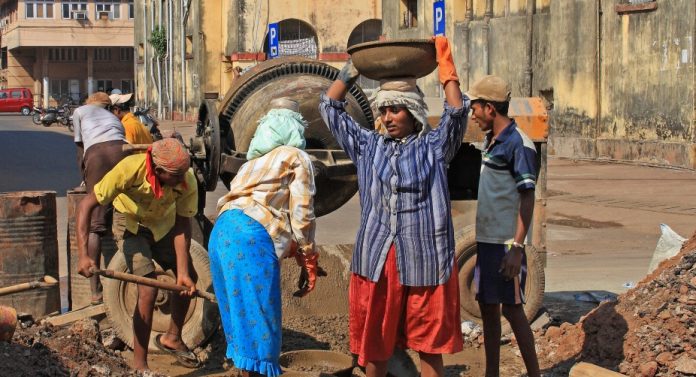



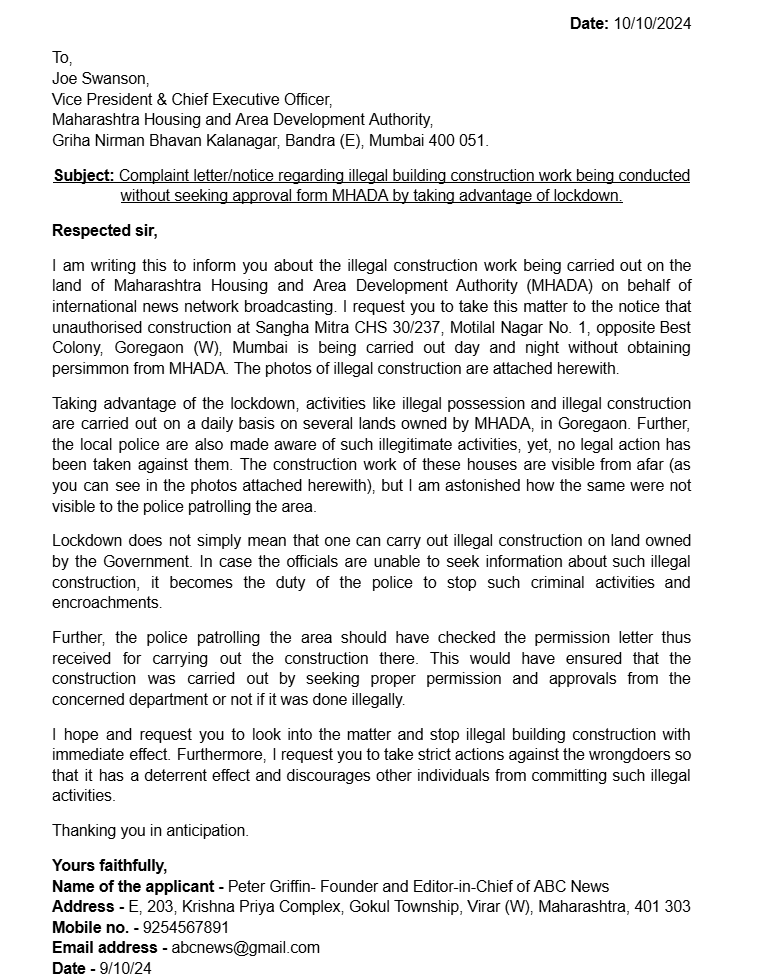
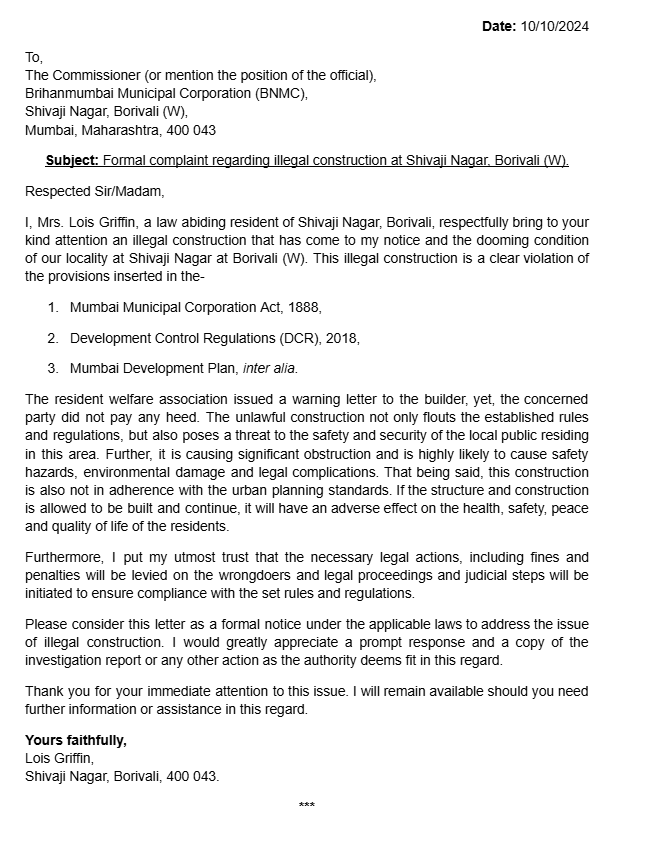
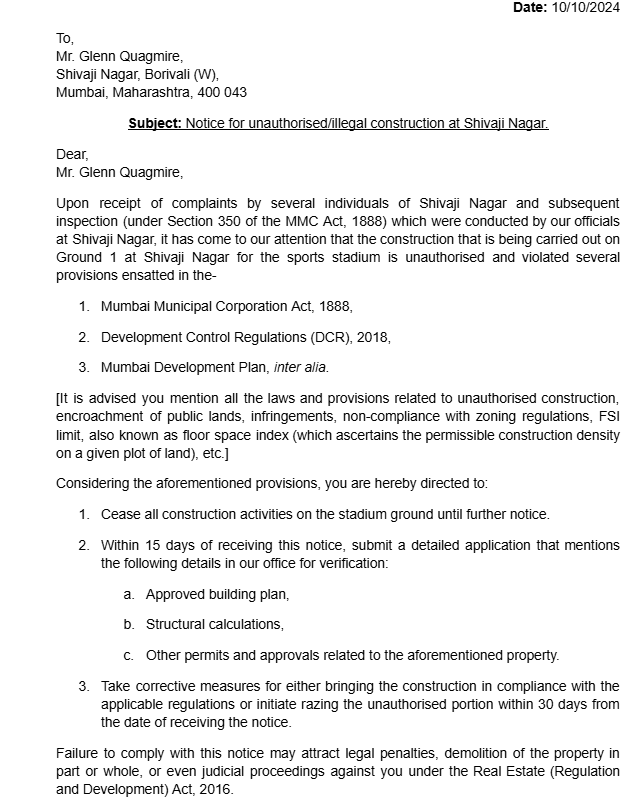
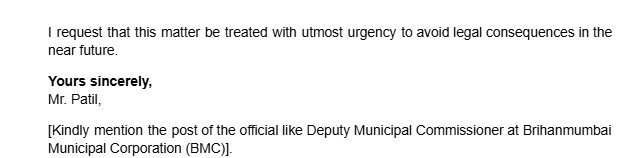
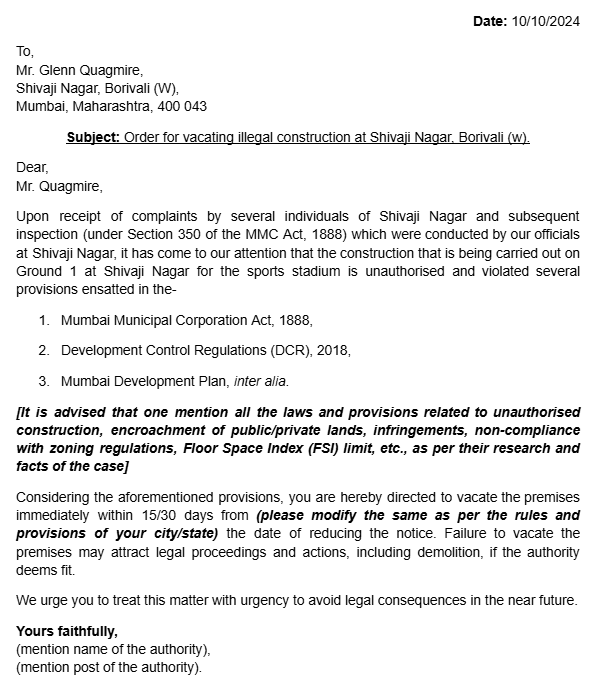
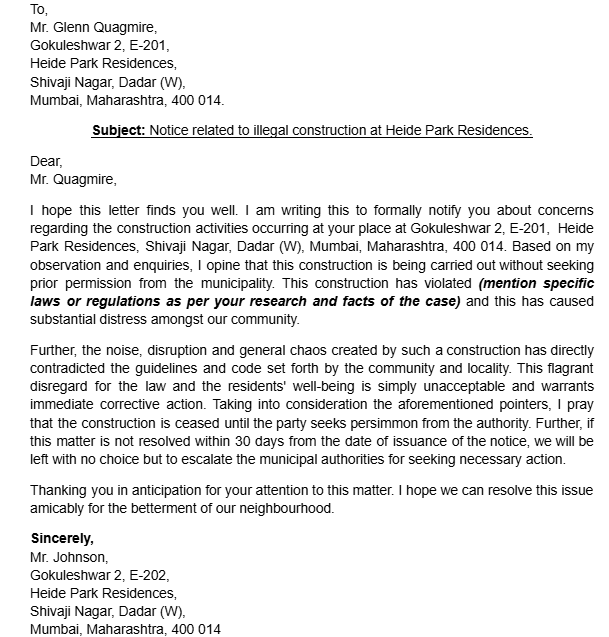
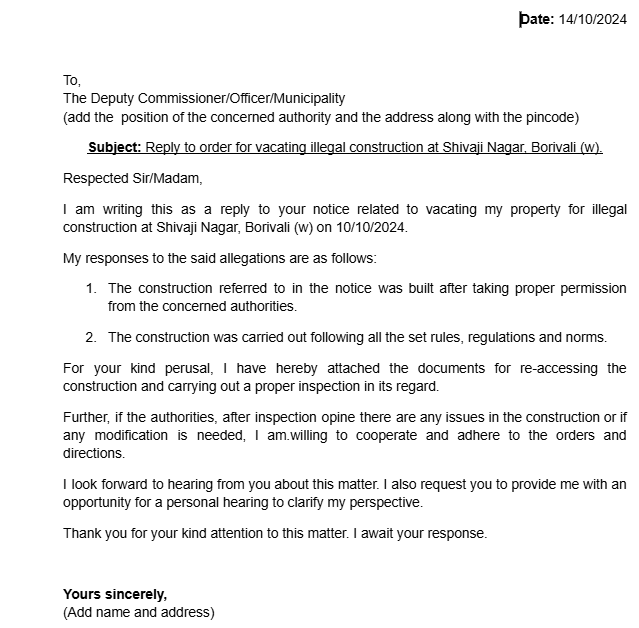
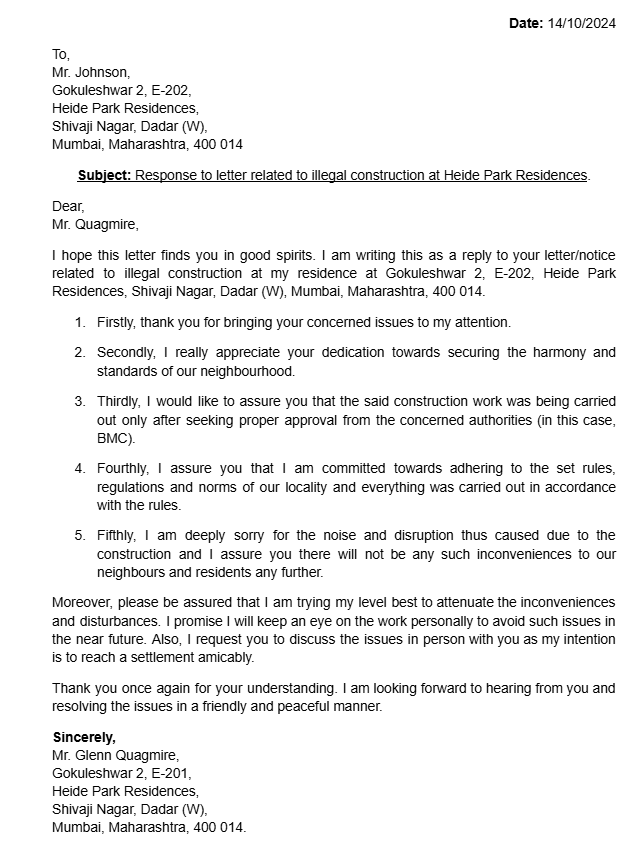

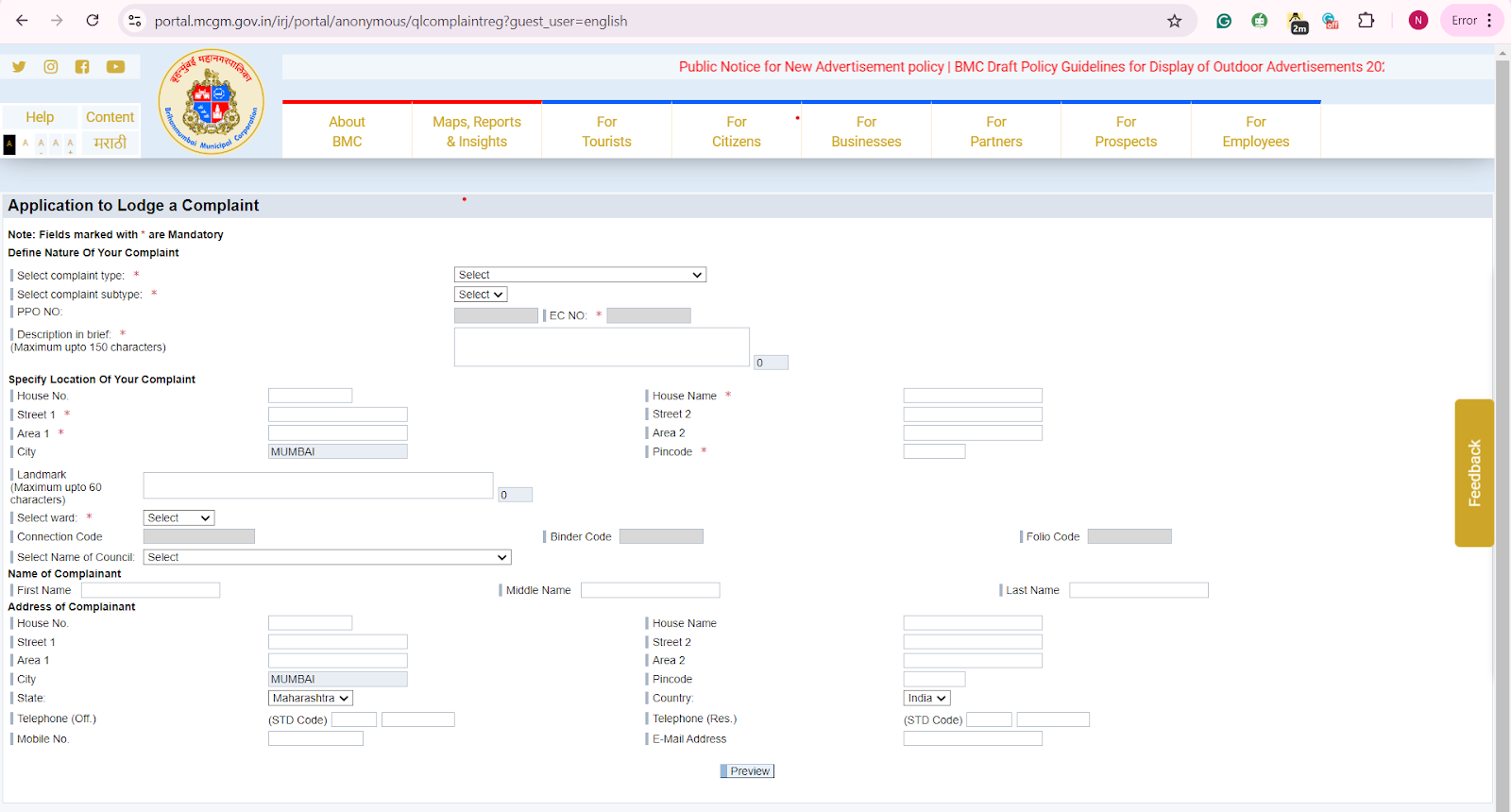







































 Allow notifications





