In the matter of administration of Justice in the United States of America, certain operational guidelines are set out objectively in an organised manner to regulate their professional work. The set of operational guidelines are evaluated by the apex body of legislature, called the Senate and upon obtaining Senate’s approval, the State Administration then stipulates the Senate approved guidelines into Model Rules of Professional Conduct. Every legal officer must observe Model Rules of Professional Conduct in their day to day legal transactions in the courts operating in their jurisdiction. Model Rules of Professional Conduct sets out well operating instructions each of which reflect ethical standards in the legal profession. The Department of Justice oversees the activity of all courts or legal offices and ensures that all legal transactions function on the same lines. Recently, the legal profession, or the organised portion of it suffered through a six-year dispute over the norms it would adopt to define the professionally responsible behaviour of its members.’ A new model ethics code, known as the Model Rules of Professional Conduct (Rules), was accepted by the American Bar Association’s House of Delegates in August 1983 after several drafts, some of which were widely published, some of which were not, and with occasional major changes between them.
Chronologically, ABA evolved a system of operating procedure for lawyers, known as the following:
This article serves as a guide discussing the interrelationship between ABA Model Rules of Professional Conduct and ABA Model Code of Professional Responsibility and giving a brief insight to the Model Rules of Professional Conduct (Rules).
ABA Model Rules of Professional Conduct
The ABA Model Rules of Professional Conduct has 59 rules shaped into 8 Chapters, namely,
Preamble and scope,
Client – Lawyer relationship,
Counsellor,
Advocate,
Transactions with Persons other than Clients,
Law firms and associations,
Public service,
Information about legal services,
Maintaining the integrity of Profession.
Preamble and scope
The Preamble lays down that a lawyer is a representative of his client and should explain all aspects of the contest impartially to his client and act as a prudent professional whereas the scope elaborates on the interpretation of rules by connecting them with an underlying reasoning in a clear manner.
Client-Lawyer Relationship
The client-lawyer relationship has been discussed under Rule 1.0 of the ABA Model Rules of Professional Conduct. The Rule also inculcates terminologies such as belief, confirmed in writing, firm, fraud, informed consent, knowingly, partner, reasonable belief, reasonably should know, screened, substantial, tribunal, writing.
Further, Rule 1.1 to Rule 1.18 cover the various aspects of client lawyer relationship such as competence, extent of representation and authority, due diligence, communication, fees, confidentiality of information, conflict of interests, imputation of conflicts of interests, organisation as a client, client with diminished capacity, safekeeping property, declining or terminating representation, sale of law practice, and duties to prospective client.
The restriction of lawyer advertising and solicitation, as well as client confidences, are two of the Model Rules’ most contentious topics. These Rules are the ones whose Model CPR equivalents differ significantly from state to state. Due to these and other regional variations, each state’s evaluation of the Model Rules should involve a careful examination of regional interpretations of the state’s current CPR in order to identify which of the Model Rules needs to be changed to comply with state policy.
Model Code of Professional responsibility
There are 22 canons shaped in four chapters named as Lawyer and Society, Lawyer and legal Profession, Lawyer and the courts, Lawyer and the Client. A few canons are summarised herein below:
A lawyer shall uphold the constitution, obey the laws of land and promote respect for law and legal process.
A lawyer shall make his legal services available in an efficient and convenient manner compatible with the independence, integrity and effectiveness of the profession.
A lawyer in making, must know that his legal services should be true, honest, fair, dignified, objective information or statements of facts.
A lawyer shall participate in development of the legal system by initiating or supporting efforts in law reform and in improvement of administration of justice.
A lawyer shall keep abreast of legal developments, participate in legal education programs, support in achieving high standards in law schools as well as in practical training of law students and assist in disseminating law and jurisprudence.
Relationship between Code, Rule and Responsibility
The Code of professional conduct stipulates as to how a lawyer should shape himself as a legal entity with reference to society as a whole. It refers to characteristics that a lawyer must possess irrespective of the period of his service in the profession. A Rule of professional responsibility engraves linings as to how he should deal with his clients and work out his legal transactions in respective jurisdiction. It reflects the professional mark of an advocate. An advocate with a good grain of personal character and a good professional conduct owns professional responsibility and sets an example of cohesive personification of Model Code of Professional Responsibility and Model rule of Professional Conduct.
An advocate with excellence in professional knowledge and irregular professional conduct may not rise in profession. Similarly, an advocate with excellence in professional conduct, finding dearth of professional responsibility also may not rise in profession. A successful advocate means an “advocate who attains excellence in professional knowledge, professional conduct and demonstrates through performance best standards in assuming professional responsibility”.
The inter-relationship between Code, Rule and Responsibility is showcased in the dependency of one with the other. Although these elements are independently independent of each other, they are not interdependently independent. Both the ABA Model Rules of Professional Conduct and ABA Model Code of Professional Responsibility incorporate this essence thereby establishing a healthy relationship among Code, Rule and Responsibility.
Conclusion
The purpose behind writing this article has been entirely to discuss the Model Rules in a brief manner so as to highlight the essence behind it thereby not going within the detailed provisions for the same is readily available in the internet. The article has focused on the client-lawyer relationship on one hand and the inter-relationship among Code, Rule and Responsibility on the other. These two serve as the fundamental pillars reflecting the essence of our discussed Rule.
Students of Lawsikho courses regularly produce writing assignments and work on practical exercises as a part of their coursework and develop themselves in real-life practical skills.
LawSikho has created a telegram group for exchanging legal knowledge, referrals, and various opportunities. You can click on this link and join:
This article has been written by Anantkumar Collins, pursuing a Diploma in Corporate Litigation from LawSikho. and edited by Shashwat Kaushik. It includes a thorough explanation of each type of online fraud as well as remedies.
It has been published by Rachit Garg.
Table of Contents
Introduction
Since the beginning of time, crime has existed on earth everywhere and affected everyone. Crime is generally understood to be an illegal activity, such as someone seeking unnecessary retribution or gain. An offence has been charged by the government, and different authorities and courts have decided on punishment in criminal or civil law, such as penalties, compensation, and protections under the existing law and rules. Indian penal law is the Indian Penal Code 1860 (IPC), 1860 procedural by the Code of Criminal Procedure, 1973.
A brief history of fraud and definition
Fraud involves the false representation of facts, whether by intentionally withholding important information or providing false statements to another party for the specific purpose of gaining something that may not have been provided without the deception. The first instance was discovered in Greece in the year 300 B.C., when a Greek businessman named Hegestratos purchased a large insurance policy known as a bottomry. He took out a loan against his ship and promised to repay it with interest, but he did not give back the money with interest. It is very clear and widely accepted that anyone who lies to another person in order to benefit financially or otherwise—but not legally—from his dishonesty is acting dishonestly. Online frauds include spam, scams, spyware, identity theft, phishing, and internet banking fraud.
There are three types of crimes: felonies, misdemeanours, and violations. Each one carries a different penalty depending on the nature and circumstances of the crime. Felonies mean homicide (maha apradh) and are covered in sections IPC 299 to 302. Misdemeanours are insignificant offences that happen frequently, such as someone operating a vehicle without a valid licence. Violations refer to breaking the law or the rules; in the city, for instance, traffic infractions have risen steadily over time.
As a result of information technology, a new type of crime known as online fraud has emerged. Online fraud has now become a global concern. This kind of online fraud can affect anyone. We are in a technological age known as 4G, 5G, and 6G. We use the newest devices, including computers, laptops, and mobile phones, to conduct business online. As of January 2023, 5.18 billion people used the internet, which represents 64.6% of the world’s population. Out of this total, 4.76 billion people, or 59.4% of the world’s population, used social media sites like Facebook, WhatsApp, and Instagram. 95 out of 100 people use the internet on average. Every country is seeing an increase every day. India has a separate law known as “Cyber Law,” which is governed by the Indian Penal Code, 1860, and the Information Technology Act, 2000. The Information Technology Act, the Indian Penal Code of 1980, and National Institute of Standards and Technology (NIST) Compliance are the laws that form the foundation of cybersecurity. In nations like India, where the internet is widely used, there are numerous laws.
Types of online fraud and modus operandi
Online fraud has used a variety of innovative strategies and tactics to commit online crime. It includes malicious software, email, and instant messaging services to spread malware, spoofed websites that steal user data, and elaborate, wide-reaching phishing scams.
Phishing links
Fraudsters create third-party link websites which look like original websites, such as bank’s website, e-commerce websites, search engines, etc. Fraudsters generally spread and send SMS/E-mail/instant messages. Most of the time, customers enter secure credentials by just having a glance and clicking on the link without checking the detailed URL. The links are covertly masked through authentic looking names of websites, but they are not real, and the customer gets redirected to a phishing website. When customers enter secure credentials on these websites, they are secured and used by the fraudsters.
Remedy
Do not click unknown links and immediately delete the messages /emails. Also, avoid clicking on them in the future. Priority must be given to checking and verifying details where and when required.
Fake calls
Fraudsters call as a fake officer from the bank/government institutions/insurance agent, etc. and get private information like name, date of birth residence, Aadhaar card number, etc. They sometimes pressurize the victim for urgent details to prevent the blocking or freezing of an account.
Remedy
Avoid receiving fake calls and do not share personal information such as username/password/card details/ name, date of birth, address, or Aadhar number.
Fraudsters using online selling platforms
Fraudsters set up phoney online marketplaces for vendors, so they can draw customers and offer their products for free. It’s totally free, and as a result, there are higher level cheating possibilities.
Remedy
Avoid as much as possible, and be careful with financial transactions on online products. Remember that when receiving any money online, there is no need for a password or PIN anywhere. Never install any application to receive money.
Fraud due to use of unknown/ unverified mobile apps
Through SMS, social media platforms, and instant messages, scammers typically distribute links with covert masks in order to access your mobile device, laptop, or desktop. Anyone who downloads unidentified or unverified apps is then forwarded to unidentified applications. Then the scammers will have full access to the device.
Remedy
Never download applications from unidentified /unverified sources.
ATM/ debit/ credit card skimming
It has been noted that scammers install skimming devices in ATMs to steal information from your card PIN. This information is also stolen by the small, well-hidden camera in the ATM. Sometimes thieves are waiting outside an ATM cabin to access your PIN as you enter, create a duplicate card, and withdraw cash.
Remedy
Never enter an ATM cabin while someone is in it. Always cover the keypad with your hand while entering a PIN. Do not give cards or details to an unknown person and never share confidential matters
Fraudsters using sharing app/ remote access
Fraudsters use ultramodern technology to cheat. Fraudsters trick people by using screen-sharing apps, through which they can watch/control mobile/laptop/computer to gain access to confidential credentials. After finishing, they can make a payment using your internet banking/payment apps.
Remedy
Do not download or activate screen sharing features with unknown people.
SIM swap/ SIM cloning
As most of the account details and authentication are connected to your registered mobile number. Fraudsters try to gain access to the SIM card or obtain a duplicate SIM card to carry out digital transactions using the OTP received on such a duplicate SIM. Fraudsters generally call the person by posing as telephone or mobile network staff, requesting details for a free upgrade of their SIM card from 3G, 4G, or 5G, providing additional benefits.
Remedy
Never share credentials pertaining to a SIM card. If you have not used your phone’s mobile network in a significant amount of time in a normal setting, you should get suspicious right away and call the mobile operator to make sure that your SIM has not been issued a duplicate.
Fraud by stealing credentials from various sites
It has been observed that people use search engines to obtain contact details of their bank, insurance company, Aadhar updation centers, etc. and may end up contacting unknown/unidentified contact numbers displayed on the search engine. These contact details on search engines look original and genuine, but they are actually fake, and fraudsters use this feature to attract their victims towards them. Once the person calls them, the imposters ask to share your details for verification. As a result, people compromise all their details and share them, and that’s how fraud occurs.
Remedy
First, go to the proper banks/company office and get websites from them. Avoid searching for unidentified/unknown contact details on search engines.
Scam through QR scan
Fraudsters often contact customers under various pretexts and trick them into Scanning QR codes using payment apps. This allows the fraudsters to withdraw money from customer’s account
Remedy
Always be cautious while scanning any QR codes using payment apps. Remember QR codes embedded with account details that transfer money to a particular account.
Impersonating through social media
Fraudsters create fake accounts on popular social media platforms like Facebook and Instagram. They send a friend request and ask for money for urgent Medical purposes, etc. Fraudsters also gain trust over time and use private information for extortion or blackmail later.
Remedy
Do not accept any friend request from an unknown/unidentified person. Do not send confidential matters; moreover, care when unknowns ask to call/ or meet physically. Be sure this type of profile are purely deceitful
Lottery fraud
One of the most enticing techniques is when fraudsters send an email or message about winning a big lottery and ask to deposit some money for tax purposes, shipping charges, processing charges, etc. on the account given by the fraudster. The victim may fall into the cage, and the fraudster may receive the money illegally.
Remedy
Do not respond to any enticing offer or make a payment when you receive this type of mail or message.
Online job fraud
Unemployment is real. Fraudsters easily take advantage of rising unemployment rates. Victims easily fall into the trap because when there is time to share confidential matters, fraudsters use shared credentials to withdraw money from the account.
Remedy
Remember, a genuine job offer never asks for money
Conclusion
Online fraud has affected various countries in various ways. It is true that the banking system is the heart of any country. If the banking system is paralysed, the whole economy is scattered and affects the people. As internet users are increasing all over the world, especially after the pandemic COVID-19, it is essential to work online for health reasons. Internet user’s are spreading at rocket speed. And there is also a lack of knowledge about the safety precautions of new technology, which fraudsters can easily gain and deceive people with. However, India has awareness, and it has the Information Technology Act, 2000, and the Indian Penal Code, 1860. Moreover, they have been updated from time to time.
Students of Lawsikho courses regularly produce writing assignments and work on practical exercises as a part of their coursework and develop themselves in real-life practical skills.
LawSikho has created a telegram group for exchanging legal knowledge, referrals, and various opportunities. You can click on this link and join:
This article is written by Nishka Kamath, (Team iPleaders) and edited by Vanshika Kapoor (Senior Managing Editor, Blog iPleaders). This article covers everything an aspiring candidate of the Chhattisgarh Civil Judge (entry-level) Examination 2023-24 must know, including the important dates, the eligibility and disqualification criteria, some important pointers to note regarding the exam, the stages of the exam, the syllabus, important books to refer, numerous tips and tricks, the vacancies, the application process, the selection process, the documents to be submitted, the fees for the exam, forms for PwD candidates, information on declaration of results, steps to check the results and answer keys, etc. Further, the steps to fill out the application form, the steps to correct the error on the application form, advice on how to study for the exam, and the ways to improve your communication skills as a judiciary aspirant are also discussed in great detail.
Chhattisgarh Judiciary Exam 2023 : a brief overview
The Chhattisgarh Public Service Commission issued an official Notification in June 2023 for a total of 49 vacancies. As per the official Notification, some of the most important pointers to note are as follows:
Some important pointers to note for the Chhattisgarh Judiciary exam
All the applications for the Chhattisgarh Judiciary Exam will be accepted online only. Any applicant who sends an application either manually or through post will not be accepted by the Chhattisgarh Public Service Commission.
Before filling the application form, candidates have to ensure they fulfil all the conditions enshrined in the eligibility criteria. The same has been discussed in detail below.
If an applicant does not fulfil the eligibility category, the candidature could be cancelled at any time.
The admission at any stage of the exam will be purely provisional, provided the eligibility conditions are satisfied.
Mere issuance of admit cards will not imply that the candidature of a candidate has been accepted by the Commission. It must be noted that the Commission checks the eligibility criteria only after the candidate is marked for examination.
The payment for the examination and portal fee/admission fee can be made by the candidate in online mode only, and no bank drafts or cheques will be accepted.
Candidates have to fill the examination form between 05/06/2023 from 12:00 noon to 24/06/2023 at 11:59 pm at www.psc.cg.gov.in.
Candidates are expected to check publications regarding information, amendment, etc., about the exam and the advertisements posted by the Commission on the official website.
Candidates are expected to visit the website regularly and the Commission will not individually issue separate notices of amendment or information thus published.
After the completion of the final selection process and after redressing the claim objection, the revised model will be released on the website of the Commission.
The decision of the Commission as to the eligibility or otherwise of any candidate for admission to the examination shall be final.
The Commission will have the right to interpret the conditions, important instructions/information, etc., mentioned in the official Notification, and the representation submitted by any candidate in this regard will not be accepted, and the decision taken by the Commission will be final and binding on the candidate.
For candidates who have erred in filing the application form, they can rectify their mistakes from 25/06/2023 at 12:00 PM to 26/06/2023 at 11:59 PM after the last date of application. The errors can be rectified in online mode only once.
Paid error correction can be made via online application after the last date from 27/06/2023 from 12:00 PM to 28/06/2023 till 11:59 PM. a fee of Rs. 500/- will be charged for rectifying the errors. The errors can be rectified only once.
In case a candidate has erred in selecting the category (the online application form filled by a candidate as a reserved category is rectified to an unreserved category and is given the option of not being in the original residence), the candidate will have to pay the difference thus incurred in the fees.
Further, in case the candidate did not show that he/she is a resident of Chhattisgarh earlier, then the difference in the fee amount will not be refunded if the candidate then makes changes in the application form.
The examination fee or any of the charges are not refundable under any circumstances.
Brief details on the post of Civil Judge for the Chhattisgarh Judiciary exam
Designation
The designation will be that of a Civil Judge (Entry Level).
Category
The category for the CJS exam is Gazetted – Class II.
Pay scale
The pay scale is 77840-136520 for Level – J-1.
Tabular representation of Chhattisgarh Judiciary exam 2023
Eligibility criteria for the Chhattisgarh Judiciary Examination
There is a specific criterion prescribed by the Chhattisgarh High Court for being qualified for the civil judge exam. So, before proceeding to fill out the application form, the candidates must ensure that they fulfil the following conditions:
Educational qualifications for the Chhattisgarh Judiciary Examination
A candidate is eligible to apply for the Chhattisgarh Civil Judge Exam if he/she has completed his LL.B. degree (either 3 years, post-graduation, or 5 years) from a University recognised by the Government.
Age limit criteria for the Chhattisgarh Judiciary Examination
Only those candidates who satisfy the age limit criteria shall be eligible to attempt the exam; if not, the candidature will be cancelled. The age criteria are as follows:
The age of the candidate on 1st January 2024 should be not less than 21 years and must not exceed 35 years.
For candidates belonging to the following categories, there is some age relaxation, which is as follows:
For candidates belonging to the Scheduled Castes, Scheduled Tribes and Other Backward Classes (non-creamy layer), there is an age relaxation of five years in the upper age limit.
For candidates who are natives of the state (Chhattisgarh residents), there is an age relaxation of five years in the upper age limit.
For women belonging to the Scheduled Castes, Scheduled Tribes and Other Backward Classes (non-creamy layer) and Unreserved, there is an age relaxation of ten years in the upper age limit.
For those candidates who have been employees of the Government of Chhattisgarh (higher or permanent or temporary employees), there is an age relaxation of three years in the upper age limit.
Furthermore, the maximum age limit, including all the relaxations, will not exceed 45 years.
General requirement for the Chhattisgarh Judiciary Examination
The candidate must be a citizen of India.
The candidate must have a sound mind and have decent morals and values.
The candidate must not have a history or any criminal record or should not be connected to any such criminal cases.
The candidate must have good character and be free from any bodily defects that may consider him to be incapable of being appointed as a civil judge.
Ineligibility and disqualification grounds for the post of Chhattisgarh Judicial Service officer
Those candidates whose information is found to be incorrect, then their candidature will be cancelled.
The candidature of all the candidates who have been convicted of criminal prosecution or those who have been found guilty of misconduct by the Commission for either of the offences will be terminated-
Obtaining or making an attempt to support his/her candidature by any means; or
Impersonation; or
Has made an attempt to impersonate another individual; or
Has submitted forged documents; or
Has furnished false information at any stage of selection or has suppressed any material information; or
Has adopted any irregular or unfair means; or
Has used any unfair means in the examination/interview hall is or has attempted to be; or
Has harassed the staff engaged in the conduct of the examination/interview or intimidated or caused any bodily harm; or
Has violated any instructions by the Head of the Center/Assistant Center Head/Invigilator/other authorised staff engaged in the conduct of the examination against any instructions or other instructions given to the candidates in the Admit Card/Call Letter, including a violation of any of the instructions given orally according to established arrangements; or
Has misbehaved in any other way in the examination hall or in the interview; or
Has violated the ban on mobile phones/communication devices in the building premises/examination centre premises of the Chhattisgarh Public Service Commission.
For candidates who have been found guilty of criminal prosecution or any criteria stated just above, the following actions will be taken by the Commission against him:
His/her candidature will be cancelled;
he/she shall be debarred either permanently or for a specified period from—
The examination to be held by the Commission or the selection made by it.
He/she will be debarred from employment by or/under the State Government.
If he/she is already in service under the Government, then disciplinary action may be taken against him/her for the contravention as above.
Furthermore, no penalty shall be imposed upon the candidate unless-
He/she has been given an opportunity of making such representation in writing as he may wish to make in this regard, and
The representation submitted by the candidate within the period allowed has not been considered.
In accordance with Rule 6 of the Chhattisgarh Civil Services (General Conditions of Service) Rules, 1961, the following shall be disqualified:
Male candidate who has more than one wife living at that time or a female candidate who has married a man whose first/previous wife is already alive and he still married the other female.
However, a female candidate who has married a man who already has a wife living shall be eligible for appointment to any service or post, provided that the Government is satisfied that there are special reasons for doing so. Thus, if the authority (Government) is satisfied, only then such a candidate will be exempted from such a clause and will be allowed to attempt the exam.
Further, candidates shall be appointed only after he/she is subjected to such medical examination as may be prescribed.
Additionally, the candidates must have good mental and bodily health. They must also be free from any defect of mind or body that may interfere with the performance of the duties of the service or office. However, in exceptional cases, a candidate may be appointed temporarily to any service or post before his medical examination, upon the condition that if he/she is found unfit from the point of view of health, his services may be terminated forthwith.
Moreover, a candidate will not be appointed in case if the authority opines that the candidate is not suitable for the post after carrying out proper investigation.
Also, if the candidate is visually not suitable then his candidature may be terminated.
Furthermore, any candidate who has been held guilty of an offence against women shall be deemed ineligible for being appointed as a judicial officer.
Besides, the above pointers, any candidate who got married before he/she attained the minimum age prescribed for marriage will also be considered ineligible for the post.
Also, under Chhattisgarh Lower Judicial Service (Recruitment and Conditions of Service) Rules, 2006, a candidate will be disqualified if-
He/she does not hold a degree in law from a recognized University,
He/she is not of good character,
He/she is physically or mentally unfit,
He/she has disabilities that would consider him eligible for such an appointment.
Candidate’s candidature will be dismissed if he/she has been dismissed or removed from service by any High Court, Government, Government authority or local authority.
Also, a candidate who has been convicted of having indulged in an offence of moral turpitude or has been permanently debarred or disqualified by a High Court or the
Union Public Service Commission or a State Service Commission or a Service Selection Board or the Staff Selection Commission will also be disqualified.
In case if the candidate has been found guilty of professional misconduct under the Advocates Act, 1961 or any other law for the time being in force, will also be disqualified from attempting the exam.
Additionally, if a candidate tries to obtain support for his candidature by any means, his/her candidature will be disqualified, and his/her name won’t be proceeded for admission to the examination or for selection to the Service.
Please note:
It is mandatory that candidates write their roll numbers only at the designated place on the answer sheet. A candidate must not write their roll number, name or any other mark on any other part of the answer book by which the identity of the candidate can be guessed.
It is also prohibited to attach any other material with the answer book.
Further, the candidate shall not highlight any line or any part of the answer in his/her answer sheet.
Drawing any picture, sign, religious picture or writing a word on the answer sheet other than the relevant subject will be considered as an identification mark. If such details are found, it will not be mandatory for the Commission to inform the applicant in cases with identification marks and his/her candidature will be cancelled without providing any such information.
Further, the appointment for the post of Civil Judge (Entry Level) Chhattisgarh Lower shall be subject to rule 11 of the Judicial Services (Recruitment and Conditions of Service) Rules, 2006.
In case any issue arises, the service may be terminated by providing a notice of one month.
All the selected candidates have to produce a Medical Fitness Certificate that must be issued by the authorised Medical Officer. The cost should be incurred by the candidate.
Top six important points to note on eligibility criteria and the selection process
Any issue regarding the selection will be resolved by the Hon’ble Supreme Court. Further, any decision taken by the Supreme Court with regard to the selection process will be final.
The selection process includes 01 vacancy for candidates with OA – One Arm / OL- One Leg / BL Both Leg/ OAL-One Arm and One Leg.
Further, the selection process has 40% or more vacancies for the reserved candidates.
The final number of vacancies may vary and are subject to change upon receipt of revised vacancies from the concerned department.
Candidates must ensure themselves whether they are eligible to appear in the exam or not. If any candidate is disqualified at any stage of the examination or even after the declaration of the result.
Before applying online, candidates must ensure that they fulfil all the eligibility conditions and fill out the form only when all the conditions are satisfied. Even if the candidate’s name is included in the examination or he/she is invited for the interview, it would never mean that the candidate has been considered or is qualified for the post. Further, if the candidate is found ineligible at any stage of the selection, his/her application will be cancelled without giving any information, and his/her candidature will be terminated.
Stages and syllabus for the Chhattisgarh Judiciary exam
The CGPSC conducts the judiciary exam in 3 stages, which are as follows:
Preliminary stage
The Preliminary exam shall be conducted to select the number of candidates to the reasonable limit for the Main Examination.
Syllabus for the Prelims Exam
For the Prelims Exam, candidates have to study for the following subjects, inter alia:
General subjects
The Indian Penal Code, 1860;
The Code of Civil Procedure, 1908;
The Code of Criminal Procedure, 1973;
The Indian Evidence Act, 1872;
The Constitution of India;
The Transfer of Property Act, 1882;
The Indian Contract Act, 1872;
The Limitation Act, 1963;
The Specific Relief Act, 1963;
The Court Fees Act, 1870;
The Negotiable Instruments Act, 1881
The Registration Act, 1908.
State-specific subjects
The Chhattisgarh Rent Control Act, 2011;
The Chhattisgarh Land Revenue Code, 1959;
The Chhattisgarh Excise Act, 1915.
Scheme of Prelims Exam
There shall be a screening test in the Preliminary Exam to shortlist candidates for the Mains Exam.
The question paper for the Prelims Exam will consist of 100 questions of 1 mark each.
Each question will be an MCQ type question and will have four options.
The duration of the exam will be 2 hours.
Out of the aforementioned four options, one option will be correct, and the candidate has to tick/mark the correct option.
The Prelims Exam will be conducted in two languages- English and Hindi.
Candidates who are more meritorious candidates among those who appeared in the Preliminary Examination in the ratio of 1:10 with regard to the number of vacancies shall be declared qualified for appearing in the Mains Examination.
The mark sheet for the Preliminary Exam will not be issued, nor the marks obtained in that Examination will be added or considered while preparing the merit list of the Main Exam.
The mark sheet for the Preliminary Exam will not be issued, nor the marks obtained in that Examination will be added or considered while preparing the merit list of the Main Exam.
For more information on the Preliminary Exam, please have a look at the FAQs section on Prelims Exam.
Mains Exam
The Mode of conducting the Chhattisgarh Judiciary Exam will be offline mode.
It will be a written exam.
The exam will be held in two languages, English and Hindi.
The Mains Exams will be held for 3 hours.
The maximum obtainable marks for the exams will be 100 marks.
Syllabus for the Mains Exam
The Mains Exam will be conducted via 4 papers:
Framing of Issues & Writing of Judgement in Civil Cases (40 marks);
Framing of Charges & Writing of Judgement in Criminal Cases (40 marks);
English to Hindi Translation (10 marks);
Hindi to English Translation (10 marks).
Tabular representation of Mains Exam : paperwise
Subject
Marks
Writing of Judgement and framing of issues in Civil Cases
40 marks
Writing of Judgement and framing of charges in Criminal Cases
40 marks
Translation: English to Hindi
10 marks
Translation: Hindi to English
10 marks
Total
100 marks
Scheme of Mains Exam
The candidates obtaining equal marks as obtained by the last qualified candidates will also be declared to be qualified for attempting the Mains Exam. As a result, the number of candidates declared as qualified may exceed the parameter of 10 times the number of notified vacancies.
The same procedure will be adopted for the Viva-voce round in the Mains Exam selection while announcing the candidates qualified on the basis of merit, possibly three times against the number of vacancies.
The final selection will be on merit on the basis of total marks obtained in the written (Main) Examination and Viva-voce.
Please note : The decision of the CGPSC with regard to calling the candidates for Viva-voce will be final.
How to ace writing judgements for the Mains Exam
In order to write judgements in the Mains Exams, it is crucial that a candidate knows all the important elements that must be added in a judgement. Further, in order to have a hold of this part of the exam, it is crucial that the candidate practice writing them on a regular basis. Moreover, candidates must also take help from previous year question papers while learning to answer this part. Additionally, if need be one can take up a judgement writing course to ace the exam.
Further, LawSikho has one of the best online judgement writing courses (Judgement Writing and Drafting). This course is recognized by the National Skill Development Corporation, a PPP under the Ministry of Skill Development and Entrepreneurship of the Government of India. All the individuals who enrol for this course will receive a certificate co branded by NSDC and Skill India on successful completion. The course is quite exhaustive in nature and has around 12 modules that are specifically curated to cover all the important details of judgement writing.
For more information on the Mains Exam, please have a look at the FAQs section on the Mains Exam.
Viva voce
The viva voce or the interview round will be the final round for the Chhattisgarh judicial exam.
It will be conducted in a manner one conducts a personal interview.
The maximum marks fixed for the viva-voce round are 15 marks.
Relatively more meritorious candidates from among those who appeared in the Mains Exam will be selected.
The ratio of selecting the candidates is 1:3 of the applicants who attempted the Mains Exam as per the number of vacancies advertised.
Scheme of viva voce round
A candidate belonging to the unreserved category has to secure a minimum of 33% (33 x 25/100 = 8.25) of the total marks in the viva-voce.
Moreover, those belonging to the reserved category (Scheduled Castes/Scheduled Tribes/Other Backward Classes) shall be required to secure a minimum of 25% (25 x 25/100 = 6.25) of the totalmarks in the viva-voce.
The candidates who remain absent in the viva-voce round will be disqualified from the selection process.
For more information on this stage of the exam, please have a look at the FAQs section on the viva voice round.
How to start preparing and ace the Chhattisgarh Judiciary Examination
There is no straight-jacket answer to this as different strategies work for different candidates. However, a candidate may follow the following tips and tricks to excel in the exam:
Top tips and tricks on how to study for the Chhattisgarh Judiciary Examination
Mentioned below are some of the top tips and tricks on how can a candidate study for the Chhattisgarh Judiciary Exam preparation:
Prepare for Prelims and Mains Exams together
Instead of focusing separately on Prelims and Mains Exams, one can start with a comprehensive and in-depth study. Following such an approach will help a candidate cover for both exams, thus allowing them to grasp concepts efficiently and recall them easily at the time of the actual exam.
Make notes
One can develop a habit of making notes as it will not only help in retaining information and concepts for a longer period but also prove beneficial during revision. Further, well-crafted notes can be a lifesaver for last-minute preparations and can help a candidate recall important information quickly.
Build a question bank
A candidate can refer to old question papers and try building his/her own question bank. Further, a candidate can collect 25 questions from the previous year’s question papers and develop 25 Higher Order Thinking Skills (HOTS) questions based on past Chhattisgarh Judiciary exams. This will not only help the candidate during revision but also will enhance his/her knowledge and understanding of the subjects.
Stay updated with current affairs
A candidate must always take the time to read and stay updated on current affairs for at least 12 months before the exam. This will help them in the general knowledge section and enable them to score well by having knowledge of the latest events and developments worldwide.
Practise previous year’s question papers
A candidate, after studying all the topics, must devote his/her time to practising as many questions as possible from question papers of previous years of the CGPSC questions. This will also help the candidates enhance their time management skills and speed, thus, allowing him/her to attempt questions in the examination in quite an effective manner.
Study landmarks judgements
A candidate has to familiarise himself/herself with recent landmark judgements, especially the ones given by the Supreme Court and the Chhattisgarh High Court. These judgements are easily accessible on several legal websites. This will help a candidate deepen his/her understanding of the judicial system and also strengthen their knowledge of law and legal matters.
By implementing the aforementioned tips and tricks, a candidate can increase his/her chances of having the Chhattisgarh Judiciary Exam.
Some pointers regarding the Chhattisgarh Judiciary Exam
There is no provision as such for recalculation of revaluation after conducting the exams. Hence, no queries shall be entertained in this regard.
During the examination, if any candidate has to complain about any typographical error in any question or in the answer option or regarding any wrong question or wrong answer option or any other type of error, then he/she can do so online within the stipulated time given by the Commission.
Objection has to be lodged and necessary documents in this regard can be submitted to the controller of Examinations, Chhattisgarh Public Service Commission, North Block, Sector-19, Nava Raipur Atal Nagar by registered / post / personally in the Commission.
After the time for raising such an issue is passed, no further queries will be entertained on this matter.
Books to refer for the Chhattisgarh Judiciary Examination
Subjects
Name of the book
Author/Publisher of the book
The Indian Penal Code, 1860
– P S A Pillai’s Criminal Law – INDIAN PENAL CODE – The Indian Penal Code
– P S A Pillai’s Criminal Law – K.D. GAUR – Ratanlal and Dhirajlal
The Code of Civil Procedure, 1908
– Civil Procedure, Limitation and Commercial Courts – Universal’s The Code Of Civil Procedure
– C.K. Takwani – Universal Law Publishing
The Code of Criminal Procedure, 1973
– Criminal Procedure – R.V. Kelkar’s Criminal Procedure – Bare Act – The Code of Criminal Procedure
– Bare Act – V. P. Sarathi’s Law of Evidence – The Law Of Evidence
– Nil – K. A. Pandey – Batuk Lal
The Constitution of India
– Bare Act – Indian Constitutional Law -V N Shukla’s Constitution of India – Pratiyogita Darpan
– Nil – M. P. Jain – Mahendra P. Singh – Pratiyogita Darpan Editorial Board
The Transfer of Property Act, 1882
– Mulla on the Transfer of Property Act, 1882 – The Transfer of Property Act – The Transfer of Property Act
– Dinshaw Fardunji Mulla – RK Sinha – S.N. Shukla
The Indian Contract Act, 1872
– Avtar Singh’s Law of Contract and Specific Relief – Law of Contract I and II – Indian Contract Act
– Rajesh Kapoor – S S Srivastava – R. K. Bangia
The Limitation Act, 1963
– The Limitation Act, 1963 – Bare Act
– LexisNexis – Nil
The Specific Relief Act, 1963
– The Specific Relief Act, 1963 – Specific Relief Act – Avtar Singh’s Law of Contract and Specific Relief
– Pollock and Mulla – Dr. R. K. Bangia – Rajesh Kapoor
The Court Fees Act, 1870
Bare Act
Nil
The Negotiable Instruments Act, 1881
– Negotiable Instruments Act – The Negotiable Instrument Act, 1881 – Bare Act
– R.K Bangia – Harsh Vardhan Singh – Nil
The Registration Act, 1908
– Commentary on The Registration Act, 1908 – Bare Act
– Malik – Nil
The Chhattisgarh Rent Control Act, 2011
Bare Act
Nil
The Chhattisgarh Land Revenue Code, 1959
Bare Act
Nil
The Chhattisgarh Excise Act, 1915
Bare Act
Nil
Application, submission process and duration of the Chhattisgarh Judiciary Examination
Documents required to be submitted before interview
Attested copies of certificates and mark sheets
Before the final round, i.e., the interview round, it is mandatory for a candidate to submit self attested copies of the following certificates and mark sheets along with the attestation form, after which the eligibility of the candidate will be checked:
Generally High School / Higher Secondary School or Matriculation Certificate or proof of equivalent qualification for proof of age.
Mark sheets of all semesters/years related to the educational qualification required for the post advertised.
Certificate of educational qualification claiming Graduation/Post Graduation Degree, Registration, Experience etc., has to be submitted for the concerned post. These certificates could either be self attested or attested by a gazetted officer.
Further, the attested copies submitted by candidates should ensure that the applied essential educational qualifications, experience and other qualifications required for the post must be held till the last date.
Please note : Other certificates will not be accepted.
Certificate of disability
Furthermore, those candidates that come under the Orthopaedically Handicapped, must submit a “Certificate of Disability”. The certificate must be issued by the Authorised Medical Authority.
Caste certificate
In case the candidate is a domicile of Chhattisgarh State and belongs to the SC/ST/OBC (non-creamy layer) category and who is eligible to apply online for availing the benefits of relaxation (age/fee/reservation) as shown under this advertisement If applying, a permanent caste certificate that is issued by the competent authority has to be submitted.
Caste certificate for married women
For candidates who are married women belonging to Scheduled Tribes/Scheduled Castes, it is mandatory that they submit a caste certificate bearing their name along with their father’s name. Such a reservation policy will not be accepted if the caste certificate is not submitted.
Domicile certificate
Candidates who are natives of the Chhattisgarh state and choose the option of the same while filling the application form for the exam have to submit a domicile certificate, thus claiming they belong to the state of Chhattisgarh or are residents of the same.
Income certificate for OBCs
Reservation policies to Other Backward Classes (OBCs) is payable only on the basis of a non-creamy layer. The non-creamy layer is determined on the basis of annual income. Therefore, along with the caste certificate, the OBC candidate will also have to attach an income certificate issued within the preceding 3 years from the date of application to prove that he/she belongs to the non-creamy layer.
Documents/certificates for age criteria
If any sort of relaxation is sought in the prescribed upper age limit by the candidate, then the following documents/certificates must be submitted:
The eligibility for relaxation in the upper age limit (please check clauses – 5 (i) and 5 (ii) of the official notification).
Certificate from the Competent Authority/Employing Officer.
No objection certificate (NOC) of the employer
In case if any candidate who is working in the Government Department/Corporation Board/Undertaking under the Government of Chhattisgarh or is working in the service of the Government of India or any of their undertakings or working in nationalised/non-nationalized banks, private institutions and any University, then they can apply online. However, before or immediately after applying online, the candidates should obtain a “No Objection Certificate” from their Appointing Authority/Head of Office and present it at the time of document verification.
However, if such a candidate is called for an interview by the Commission, before the interview, a copy of the application has to be submitted to the Appointing Authority/Head of Office for the issue of a “No Objection Certificate” and the acknowledgement given by the Appointing Authority/Head of Office of the said application (indicating the date of receipt of application).
In case if a candidate fails to submit the “No Objection Certificate” as mentioned above, then he/she will be interviewed, but in the event of selection after the interview, their appointment will be cancelled as a result of not being relieved by the concerned organisation, etc. If such an action is taken, then the concerned department of the Commission/Government will not be responsible for this, and no representation of such a candidate will be accepted in this regard.
Application process for the Chhattisgarh Judiciary Examination
This is what the official website of the Chhattisgarh Public Service Commission (CGPSC) looks like. A candidate has to select one of the options he/she is looking for from the one mentioned above.
Online application instructions
It is advised that a candidate reads all the information and conditions given in the advertisement thoroughly before filling out the application to avoid any issues in the future. The necessary instructions regarding applying online are as follows:-
The active link for the online application will be available on the website www.psc.cg.gov.inon the scheduled dates.
In the online application process, the candidate will first have to fill a Candidate’s Registration form. In this form the following details have to be entered:
Name of the candidate,
Father’s name of the candidate,
Mother’s name of the candidate,
Address of the original residence,
Class and caste of the candidate,
Gender of the candidate,
Date of birth,
Mobile number and
The candidate’s email address.
The candidate has to mention all the aforementioned details on the same page.
Once done, if the candidate fulfils the conditions of the age limit, he/she will get the registration ID for the online application, and a password will be sent to the mobile number and email ID as registered.
The candidate should keep his Registration ID till he/she completes the whole selection process, as all the necessary information can be only accessed if a candidate has the Registration ID and password. Thus, the Registration ID is important at each and every level of selection, which is why it is advised that one must keep the password safe and note it down properly to avoid any issues in the future.
Similarly, it is advisable that candidates keep their mobile numbers and email IDs handy till the completion of the related selection process. Do not change the mobile number and email ID and keep them active.
In case of loss or damage of mobile and/or SIM, immediately contact the mobile service provider company and get the mobile number that was used for registration activated.
Some important points to note on the application process and form for the Chhattisgarh Judiciary Examination
In the process of applying online by the Commission, it is assumed that the information entered by the applicant in the online application is certified information. Therefore, before submitting the online application, the applicant should carefully read and understand all the entries in his application. Only after the applicant is satisfied with the information given by him, submit the online application by clicking the Submit button and pay the application fee.
After submitting the online application and paying the fee, the candidate will get the receipt of his online application and payment.
Print them and keep them safe with the candidates. The same will have to be presented before the Commission, if demanded, at further stages of the selection process. Generally, after the issue of admit card, a copy of the online application and payment receipt is not available. Therefore, the representations given by the Commission for providing a copy of the online application and/or receipt of fee payment will not be considered. Thus, a candidate has to take printouts or save the same in pdf format when the results are declared and avoid any delay in this process.
The work of error correction in the online application can be done online on the prescribed date. Error correction can be done only once.
No modification will be done in the entry of online application after the last date and the Commission will not consider any representation in this regard.
Applicants should keep in mind that any error made in the application form for the advertised post will not be rectified at any stage of selection. So candidates should fill out their applications very carefully. If still any error occurs, make the desired correction within the error correction period.
Documents and details required to fill out the Chhattisgarh Judiciary Examination application form
In the online application process, the candidate will first have to fill out a Candidate’s Registration form. In this form, the following details have to be entered:
Name of the candidate (full name as mentioned in Class 10th mark sheet),
Father’s name of the candidate,
Mother’s name of the candidate,
Date of birth in DD/MM/YY format as mentioned in the Class 10th mark sheet,
The original residence,
Pin code of the candidate’s residence,
Class and caste of the candidate,
Gender of the candidate,
Nationality of the candidate,
Date of birth of the candidate,
Languages known to the candidate,
Mobile number and
The candidate’s email address.
Further, please keep the following documents ready before applying for the exam:
An active email ID,
Phone Number,
Signature,
Caste Certificate (if applicable),
Graduation Marks Sheet,
Passport Size Photograph,
Passing Certificate of the Graduation,
ID Proof, i.e., Aadhar Card, Pan Card, Voter ID card, Passport, etc.
Steps to fill out Chhattisgarh Judiciary Examination application form
Visit the official website of the Chhattisgarh Public Service Commission (CGPSC).
Search for the option of ‘Recruitment’ on the homepage of the website.
Choose the option of ‘Chhattisgarh Judiciary Recruitment’ from the drop-down menu.
Press the ‘Apply’ button for the desired job post.
Read the instructions carefully before you proceed to fill out the application form.
Carefully enter the details (name, address, etc.) as asked.
Upload your recent passport-sized photograph and signature in the prescribed format. Kindly check these instructions for the photograph and signature, respectively.
Enter your education qualification, experiment and other relevant information as asked.
Recheck all the information provided by you once again.
Click on the ‘Submit’ button.
After submitting the Chhattisgarh Judiciary Application Form, take out a print of the application form for future reference.
Error correction
The process of paid error correction will be purely online.
All the candidates have to pay the correction fees along with GST in case they have to make any changes in the Online Application form.
In case of paid error correction, the paid error correction fee and payment gateway fee will be payable by the candidate as per the prescribed rate.
After the expiration of the specified time period to correct the errors in the application form, only the important details like the date of birth, gender, class, domicile and disability related to the candidates will be allowed to be rectified considering the special cases.
Further, a fee of Rs. 500/- will be levied on the concerned candidates for making changes or corrections to one or more errors in the details.
If a candidate corrects the error of “No” in place of a “Yes” in the resident column of Chhattisgarh in the online portal, then the candidate has to pay the fee as per the set rules. However, if the error is corrected in place of “No” in the Chhattisgarh resident column, then the amount of fee will not be applicable in the process of paid error correction as per the prescribed rate.
After the paid error connections are made, the data of the candidate will be considered to be final, and the said data will be verified on the basis of original documents during the document test before the interview/final selection process.
Please note : After the paid error correction, no candidate will be given any opportunity to correct the error in any way.
Points to note regarding the online application form
Some points to note about the application form
A candidate will be able to apply online using the registration ID and password. The application will be shared via a notification on the official website.
During the online application, the candidate will have to enter all the necessary information and upload his photo and signature.
On submission of the completely filled online application through the Submit button, the candidate will get the page for the fee payment process, on which fee payment can be made by selecting one of the available payment options.
On successful payment of the fee, the candidate will get the receipt for his/her application. Candidates should ensure that the prescribed fee has been paid successfully. Failing which, the online application submitted by the candidate will not be accepted.
Till the completion of the selection process, it will be mandatory for every candidate to keep the print of the online application receipt and payment receipt with him and produce it when demanded by the Commission.
All necessary information from the online application process to the final selection process will be made available on the website of the Commission www.psc.cg.gov.in. Candidates must visit the said website regularly.
The Commission will not be bound to give any information personally via letter / SMS to any candidate, and no candidate will be able to submit an objection on this basis.
The applicant himself/herself can pay the examination fee by filling out the online application from his/her home or through an internet cafe by choosing the prescribed payment option i.e., through credit card or debit card or internet banking.
The applicant should carefully read and retain the copy of the online application and the information given in the fee payment receipt and ensure that the fee has been paid successfully.
The correctness and truthfulness of the information and the full responsibility of completing the application process will be on the applicant.
While applying through any cyber cafe or other institution, the applicant should get the process of online application done under his own supervision. Applicants will not be able to hold cyber cafes or other institutes or Commission responsible for any type of error in online application.
Instructions regarding the photograph of the candidate to be uploaded for the online application
Applicants should keep the passport-size photograph with them, which was taken on or after the date of issue of advertisement for online application.
The background of the photograph should be white/light coloured and both the eyes of the candidate should be clearly visible in the photograph.
The name of the candidate and the date the photograph thus taken should be printed at the bottom of the photograph.
The photograph should be in .JPG file (Max. size 100KB).
Special care should be taken that while scanning, only the photo should be scanned, not the background (the paper on which the photo is pasted / Reflective Document Mat).
The candidate must keep 3 copies (hard copies) of the said photo with him.
In future, it will be mandatory for the candidate to submit/send the said photograph as directed by the Commission.
Instructions regarding the signature of the candidate to be uploaded for online application
During the online application, the candidate will have to upload his/her signature separately. For this, the candidate should sign on a white paper with a black ballpoint pen.
Further, candidates should prepare/get the .JPG file (maximum size 100KB) scanned.
Special care should be taken that while scanning, only the signature should be scanned and not the background (the paper on which the photo is pasted / Reflective DocumentMat).
While applying online, it should be kept in mind that the information which is sought in the online application should be entered correctly.
Points to note on the online application form for PwD candidates
While filling out the online application form for the Chhattisgarh Judiciary Exam, it is important that the candidates belonging to the PWD category have to clearly mention the number, date, designation of the issuer and other information of the certificate by clearly mentioning all the details at the appropriate place.
The PwD candidates have to submit Form 1 and Form 2, which have to be issued by the Chief Medical Officer/Civil Surgeon/Medical Superintendent of a Government Health Care Institution. Only after the production of the certificate claiming that the concerned candidate is not physically fit and is incapacitated to write the exam, and it is necessary to take the help of a co-author for writing the examination on his/her behalf, he/she may be permitted to use a co-author. The candidate himself can arrange for a co-author as per the rules or can request the District/Divisional Office to provide a co-author.
The qualification of the co-author himself or the one provided by the District/Divisional Office should be less than the minimum qualification prescribed for the examination. However, the qualification of the co-author should always be matriculation or above. It is the discretion of the candidate to bring his/her co-author or to request the District/Divisional Office for the same. Candidates taking the facility of co-author in the examination, who want to get a co-author from the district / divisional office or want to bring a co-author themselves, then they should fill and submit the available Form-1, Form-2, Form-3 and Form-4 at the time of online application. After obtaining the signature of the competent authority in Form-1, the signature of the examinee in Form-2 and Form-3, the signature of the co-author in Form-4 and the signature of the co-author, the forms must be kept safe with the candidate.
To arrange for a co-author by self or to take the facility of a co-author from the district/division office, in both cases, the candidate has to fill Form 01, 02, 03 and 04 completely and submit it to the concerned district/division office after getting it signed by the concerned authority and the permission of the co-author is taken.
Following the above steps is mandatory, otherwise, the candidate will not be able to use the facility of a co-author on the day of the examination.
Further, an extra compensatory time of 20 minutes for every hour of exam will be allotted to candidates with benchmark disability under the following categories:
Blindness,
Bilateral Affected, and
Cerebral Palsy.
According to the Form-1, Form-2, Form-3 and Form-4, on presentation of a certificate issued by the Chief Medical Officer/Civil Surgeon/Medical Superintendent of a government healthcare institution, thus claiming that the concerned candidate is physically unable to write, the facility of co-author will be provided.
It is crucial to note that the candidates who are given the facility of co-author are expected to complete all the formalities in this regard after the issuance of the admit card. The same has to be done 05 days before the date of examination and after applying online from the concerned district/divisional office authorised by the Commission. The candidate has to contact the Commission by filling Form – 1, Form-2, Form-3 and Form-4 and getting the signature of the concerned person and also getting signatures of the authority on the letter issued by the District/Divisional Office in the name of the Head of the Examination Center in which the candidate will be allowed to use the co-author in the examination along with all the requisite details of the co-author.
Fees for Chhattisgarh Judiciary Examination
The fee payable for the application depends on the category a candidate belongs to.
For the general category, the fee is Rs. 400/-.
Also, for those candidates who belong to the general category and are residents outside the state of Chhattisgarh, the application fee is Rs. 400/-
Whereas, for the reserved categories, the fee is Rs. /-.
No examination fees will be charged from the local resident applicants belonging to the state of Chhattisgarh.
Please note : All the candidates have to pay the Portal fee charges compulsorily. The amount for the same is Rs 40/-.
Some important points to note on the application form fees for the Chhattisgarh Judiciary Examination
Payment of fees
In the process of payment of any fee (if any) through credit or debit card/net banking/cash deposit, the applicant will be liable to pay any service charges, if any, levied by the concerned bank.
The applicant shall be solely responsible for avoiding phishing/hacking or any other cyber activity during online banking. Such applications will not be accepted, which after filling online; will be printed and sent to Chhattisgarh Public Service Commission by post or any other means.
No draft will be accepted for the examination fee. On doing so, the applications will be rejected without validating them, and the applicant will be held responsible for the same.
Tabular representation of fees for the Chhattisgarh Judiciary Examination
Category
Fees
SC/ST/PWD
Nil
General category
Rs. 400
Chhattissgarh domiciled candidates
Nil
Residents outside Chhattisgarh
Rs. 400
Portal fees (to be payable by everyone irrespective of their category)
Rs. 40
Payment for travel expenses
Cash payment of the actual ticket fare will be made by the head of the centre at the examination centre before the return journey. For this, the candidates have to fill out the required declaration form addressed to the head of the centre and will have to present all the necessary certificates related to the eligibility for travelling allowance. Therefore, they should attach a copy of the caste certificate issued by the authorised officer of the Chhattisgarh Government by themselves or attested by the gazetted officer and the journey ticket declaration form. Candidates have to follow all the aforementioned steps; only then will they be compensated for the ticket fare.
For the interview round, candidates belonging to the above categories and selected to appear for the interview will be paid the actual ticket fare amount of ordinary class by the commission’s office on production of the desired certificate mentioned in clause 19 (i) as per the rules.
Translation of forms mentioned in the official notification
Declaration of disability
Appendix-5
Form – 1
Certificate for persons with specified disability having 40% or more disability covered under the definition of section 2(d) of RPWD Act, 2016.
This is to certify that a resident of ……………… (Name of Village/PO/PS/District/State), son/daughter of ……..…………………., age ……… years, …………………………. (Shri/Ms./Mrs. (Name of the candidate)) who is suffering from ………………… (nature/condition of disability) has limitations due to which his/her ability to write is impaired, thus, he/she needs a scribe to write the exam.
2. The above candidate uses assistive devices such as prosthetics and orthotics, and hearing aid (name to be specified) which is essential for the candidate to appear for the examination with the assistance of a scribe.
3. This certificate is issued only for the purpose of appearing in written examinations conducted by recruiting agencies as well as educational institutions and is valid up to ………. (It is valid for a maximum period of six months or less as per medical to be certified by the authority).
Signature of medical authority
(Signature and Name)
(Signature and Name)
(Signature and Name)
(Signature and Name)
(Signature and Name)
Orthopaedic/ PMR expert
Clinical Psychological/ RehabilitationPsychologist/ Psychiatrist/ Special coach
Neurologist (if available)
Occupational therapist (if available)
Other experts, as nominatedby the Chairman (if any)
(Signature and Name)
Chief Medical Officer / Civil Surgeon / Chief District Medical Officer………….. President
Name of Government Hospital / Health Care Center with Stamp
Declaration and details of a scribe
Appendix-6
Form – 2
Persons with specific disabilities covered under the definition of section 2(s) of the RPWD Act, 2016, but not covered under the definition of section 2(d) of the said Act, i.e., with less than 40 percent disability and difficulty in writing by the person.
I, …………………, a candidate having ………………… (nature/condition of disability), is sitting in …………………. (Name of Examination) from ……………… (District), for Roll No. ………………………….. (name of the centre) of (state name). My educational qualification is …………………………………..
2. I hereby undertake that …………………………. (Name of Scribe) will provide the services of a scribe for the undersigned to take the above examination.
3. I hereby undertake that the scribe possesses the necessary qualifications (…………………….. (add qualification). In case, if it is subsequently found that his/her qualifications are not as declared by the undersigned and are more than those prescribed for the post, I shall forfeit my right to claim the post.
(Signature of the candidate)
(Countersignature by the Guardian/Guardian, in case the candidate is a minor)
Location:
Date:
Letter requesting for appointing XYZ as a scribe/co-author
Appendix-7
Form- 3
To,
The Collector,
District __________________
Subject:- Request for providing me with a scribe/co-writer for ___________________ examination organised by the Commission.
—–00—–
It is an appeal that I, _________________, request you to appoint my father ______________, to write the ___________________ (name of the exam) examination organised by __________________. Since I am a Blind, Bilaterally Affected, and Cerebral Palsy (cerebral palsy) candidate with disabilities (____ percent) appearing in this examination, I cannot write myself; therefore, I, Mr./Ms. _____________, request that my father Mr.______________, be appointed as a co-author for me for the exam.
I humbly request you to appoint my father, Mr. _______________, as the co-author and send an affirmative reply.
Signature of the candidate _______________
Name of the candidate __________________
Candidate’s email ______________________
Mobile number of the candidate ___________
Self-declaration letter to be submitted by co-author
Appendix-8
Form – 4
Chhattisgarh Public Service Commission, Nava Raipur
Self-declaration letter to be submitted by co-author
1. Name of the Examination ______________________________________ Year ________
2. Mode of Examination (Online / Offline) ________________________________________
3. Date and Time of Examination _______________________________________________
4. Number and name of the examination centre ___________________________________
5. Name of the candidate _____________________________________________________
6. Roll Number of the candidate ________________________________________________
7. Candidate’s Father’s Name _________________________________________________
8. Name of co-author ________________________________________________________
9. Father’s name of co-author _________________________________________________
10. Highest Educational Qualification held by the co-author __________________________
Self-declaration letter
I, ________________________, solemnly certify that I am co-author with my own consent to help Mr./Ms. ________________________, the candidate to take the examination as per his/her statement. I have appeared at my own discretion, and no attempt will be made to overwrite or correct the answer to any question to the best of my educational qualification. Verbatim answers will be written or selected according to the said disabled candidate. If any part of the above declaration made by me is found to be wrong at any stage of selection or after selection, then the Chhattisgarh Public Service Commission and/or the concerned department will have all rights to take disciplinary/legal action against me. No case will be presented by me in this regard.
Co-author’s signature Signature of the candidate/ Signature of the Head of
Thumb impression The centre and centre seal
Selection process for the Chhattisgarh Judiciary Examination
The essential educational qualifications prescribed for selection to the advertised post are the minimum and mere possession needed for the examination.
These qualifications do not automatically entitle a candidate to be called for examination/interview.
Candidates will be selected merit-wise and category-wise on the basis of total marks obtained in the Mains Exam and interview round. In simple words, candidates will be selected through examination and interview rounds, respectively.
The selection process will be carried on as per the Chhattisgarh Lower Judicial Service (Recruitment and Service Conditions) Rules, 2006, as amended. Further, the rules which are not mentioned in the said (Chhattisgarh Lower Judicial Service Recruitment and Service Conditions Rules, 2006) Recruitment Rules, will be set forth by the Commission. The procedure will be provisioned according to the Rules – 2014 (as amended).
Some important pointers regarding admit card and interview call letter
Admit card/interview call letter will be uploaded about 10 days before the exam/interview, and its information will not be given separately.
Admit cards/interview call letters will not be sent personally but will be available only on the Commission’s website www.psc.cg.gov.in.
Any correspondence made in this regard will not be valid.
No candidate will be admitted to the examination/interview unless he/she has the admit card/interview call letter issued by the Commission.
If the photograph and signature or both printed on the Admit Card/Call Letter for Interview are illegible or difficult to read, then the Head of the Center/Inquiry Officer may debar the candidate from appearing in the Examination/Interview if he does not act as per the instructions on the Admit Card.
Number of attempts for Chhattisgarh Judiciary Examination
There is no specific number of attempts for a candidate. So, a candidate can appear as often as he/she wants to if he/she fulfils the required qualification criteria. However, there is a specified age limit, after which a candidate cannot appear for the examination.
Declaration of results
The list of marks will be published on the website itself.
The list of marks related to any written test and interview will be issued only when the final selection list for the posts advertised through the relevant advertisement is issued.
Further, the final list of selected candidates will be declared by the Commission in order of their efficiency based on the score of the candidates in the written test, i.e., the Mains Exam and the interview.
In case two or more candidates obtain equal marks in aggregate, the name of the candidate who is older in age shall be placed higher.
Also, if two or more candidates of the same age obtain the same aggregate marks, the name of the candidate who obtained more marks in the written examination shall be placed higher.
Steps to check results for the Chhattisgarh Judiciary Examination
Candidates can check the CGPSC Recruitment exam results once they are published by following the steps mentioned below:
Open your desired web browser on your device.
Visit the official website of the Chhattisgarh Public Commission from your web browser.
Type psc.cg.gov.in. and open the first page you see.
Now, on the homepage of the Commission, you will find various options to navigate the result page.
Click on any of those results links pages.
Then click on the desired link to check the Chhattisgarh Civil Judge Result 2023.
Click on the provided link to view the result. It will be in PDF format, allowing you to download it for future reference.
Please note, in case a new page opens, click the download button to download the answer key. In case a PDF file opens, one can download it using the download icon in the PDF viewer.
Steps to check the answer key for the Chhattisgarh Judiciary Examination
Checking the answer key of the Chhattisgarh Judiciary Exam answer key is quite a hassle-free process. A candidate has to follow these steps:
Visit the official website
Firstly, open your preferred web browser and then visit the website of the Chhattisgarh High Court. Here you will find the official documents and information necessary to fill the online application form.
Go to the Notifications/Announcement section
On the homepage, look for sections dedicated to notifications or announcements. The section might also be labelled as “Latest Updates”, or “Notifications” or the like.
Find the relevant link related to the answer key
After checking the aforementioned sections, look for a link that explicitly mentions “Chhattisgarh Judiciary Exam Answer Key”. It is important that the candidate checks the year and phase of the exam (the result is of Prelims or Mains Exam).
Click on the link
Click on the appropriate link for the Chhattisgarh Judiciary Exam Answer Key. This action will either open a new page or directly download a PDF file to your device.
Download the Answer Key
In case a new page opens, click the download button to download the answer key. In case a PDF file opens, one can download it using the download icon in the PDF viewer.
Open and verify the answers
Once the answer key is successfully downloaded, open the file. It is always advised that a candidate double-checks that it is the correct answer key by verifying details like the exam year, phase and set (if applicable).
Probation period
The probation period for the candidates who have been selected and appointed for the post of civil judge will be 3 years.
Important note
It is mandatory for a candidate to possess and fulfil all the aforementioned educational qualifications, experience and other such requirements.
The candidates have to meet the requirements till the last date of applying for the exam in online mode.
If they do not possess all the qualifications, the candidature will be dismissed.
There is no need for a candidate to attach any such certificates in his/her online application unless asked for.
Exam centres for the Chhattisgarh Judiciary Examination
The examination centres for the Chhattisgarh Judiciary exam is as follows:
For Prelims Exam
Bilaspur,
Durg-Bhilai,
Raipur.
For the Mains Exam
Bilaspur,
Raipur.
Please note : lt is not necessary that the exam centre chosen by the candidate will be allotted to him/her. The CGPSC will allot centres based on the capacity and administrative convenience. Further, the Commission has the liberty to delete any examination centres enlisted in the aforementioned list. Candidates have to appear in the examination centres allotted to them.
Frequently Asked Questions (FAQs) on the Chhattisgarh Judiciary Examination
Frequently Asked Questions (FAQs) on the Chhattisgarh Judiciary Prelims Examination
Is there any particular syllabus for the Chhattisgarh Judiciary Examination Preliminary Paper? If yes, what is it?
Yes, there is indeed an explicit syllabus for the Chhattisgarh Judiciary Examination Preliminary Paper, and it consists of the following:
General subjects
The Indian Penal Code, 1860;
The Code of Civil Procedure, 1908;
The Code of Criminal Procedure, 1973;
The Indian Evidence Act, 1872;
The Constitution of India;
The Transfer of Property Act, 1882;
The Indian Contract Act, 1872;
The Limitation Act, 1963;
The Specific Relief Act, 1963;
The Court Fees Act, 1870;
The Negotiable Instruments Act, 1881
The Registration Act, 1908.
State-specific subjects
The Chhattisgarh Rent Control Act, 2011;
The Chhattisgarh Land Revenue Code, 1959;
The Chhattisgarh Excise Act, 1915.
Is the judiciary Preliminary exam pattern the same for all the states in India?
The judiciary exam pattern varies from state to state, so, to answer the aforementioned question, no, the pattern is different depending upon the state, which is why it is always advised that one look at the official circulars issued by the high courts of those states. For Chhattisgarh, one has to visit http://www.psc.cg.gov.in.
Do all the states have Prelims Exams compulsorily?
Yes, all the states conduct the Prelims Exams compulsorily for the judiciary exam.
What are some tips and tricks to prepare for the Chhattisgarh Judiciary Examination Preliminary Exam?
The following are some of the tips and tricks given by industrial experts that a candidate can follow to prepare for the Preliminary Exam-
Always try to focus on the bare acts.
Solve and try to remember as many MCQs as you possibly can.
Highlight and note down some of the most important provisions from each bare act and revise them on a daily basis. An aspirant can also try developing their own codes for remembering the sections and provisions in a better manner.
Word of advice : Always try to get the latest version of the bare acts. You can easily find them online. Once you do, do not switch the bare acts to the latest version once you have started studying. Ensure the bare act is in accordance with the syllabus. If there are any amends, you can note them on a separate page or, best of all, use sticky notes!
What is the ideal time for a judicial aspirant to start with judicial preparation?
Ideally, as per industry experts, the following timeline is the most suitable one-
Five-year course
Ideally, for a five-year course student, the ideal time to start the judicial preparation is from the 4th or 5th year.
Three-year course
Ideally, for a three-year course student, the ideal time to start the judicial preparation is from the 2nd year.
However, there cannot be a straight-jacket answer to this as it depends on the candidate’s level of understanding, ability to interpret laws, and knowledge in the field of law.
Word of advice : No matter which year of law school you are in, ensure that you, as a candidate, focus on academia as well as current affairs and the current legal affairs.
Frequently Asked Questions (FAQs) on the Chhattisgarh Judiciary Mains Examination
What subjects must be studied to cover the portion of the Chhattisgarh Judiciary Mains Exam for the post of Civil Judge?
For the Chhattisgarh Judiciary Mains Exam, one must cover numerous subjects related to the following-
Civil law,
Criminal law,
English, and
Hindi.
Everything is discussed in the above passages, click here for more information.
Do all the states have a Mains Exam compulsorily?
Yes, all the states conduct the Mains Exams compulsorily.
Are there any tips and tricks for a candidate to successfully ace the Chhattisgarh Judiciary Mains Exam?
Mentioned below are some of the best tips and tricks needed for a candidate to ace the Chhattisgarh Judiciary Mains Exam successfully:
An aspiring candidate must make sure that he/she has sound conceptual knowledge of the Mains subjects.
While writing the answer, candidates must ensure that there is clarity in their thought process. All the answers should be succinct and to the point.
Rote learning will not help at all.
A candidate can only interpret and apply laws properly if he/she follows a detail-oriented approach right from Day 1.
The questions asked in the examinations are lengthy, hence, a candidate must develop the habit of highlighting important provisions while reading.
Practise writing judgements, translations and answering questions right from the start. Preferably, set a timer to keep track of time.
Try to write the answers in good handwriting.
Avoid scribbling right from the beginning.
RACE AGAINST TIME : Ensure you have good handwriting and a good pace!
Learn, revise, and apply- Keep your notes handy at all times.
Further, adding legal maxims in judgement writing will let the examiner know you have done your study well, and this will surely give you an extra edge over others!
The length of the answer will not be a determining factor for scoring marks. Ensure the quality of the answer is good enough.
Open books examinations- In the Mains Exam, a candidate is provided with bare acts; however, these bare acts do not include information on comments, cases, etc.
Stay up to date with general knowledge, current affairs, and current legal affairs. Watch the news daily for 15-30 minutes, and ensure you read the newspaper every day, especially the editorial section. Add all this information whenever you can to your Mains written exams.
Focus on the language and your tone, too. Also, ensure there are minimal errors and scribbling on the answer sheet.
Choose a pen wisely. Preferably, go for a black ballpoint pen.
Avoid unnecessary aggravation while writing the answers for the Mains Exam.
Is there any way a candidate can work on improving his language skills?
Yes, definitely. Mentioned below are some of the best tips and tricks for Chhattisgarh Judiciary aspirants:
Concentrate on enhancing your vocabulary. Watch TV series, read books, and subscribe to YouTube channels that can benefit you! There are ample of them available on the internet.
Work on your articulation and expression.
Practise grammar and solve MCQs. Focus on tenses, articles, and idioms.
Include quotes from renowned personalities, statistics, and schemes while writing the judgements.
Maintain a suitable structure for judgements and ensure the flow is proper. Do not add any information anywhere.
Read editorials of newspapers and refer to relevant books.
Is there an alternative where I don’t get study materials but want to just give test series to self-access my progress?
Yes, definitely. In case one does not want to opt for a full-fledged coaching to prepare for judicial examination, there is always an option of enrolling in Test Series to help you assess where you stand on the level of preparation and how and on which areas you have to focus more on!
Frequently Asked Questions (FAQs) on the Chhattisgarh Judiciary viva voce Examination
How should one prepare for the viva voce exam for the Chhattisgarh Judiciary?
In order to prepare for the viva voce, an aspirant must focus on current legal affairs and develop skills that would enhance their communication skills.
Are there any specific subjects a candidate can have his/her main focus on when it comes to acing the viva voce exam?
As the type of questions asked in the interview would depend on the panel of interviewers conducting the examination, there cannot be made an explicit mention of what all subjects one can focus on to ace the interview; however, a few tips that can help an aspirant ease the interview process are as follows:
Enhance knowledge of the legal and non-legal current affairs,
Having a solid knowledge of the legal concepts and judgements, as the Chhattisgarh Judiciary Exam focuses mainly on conceptual clarity.
In this viva voce round, the panel judges the candidate based on his presence of mind, clarity of law, ability to comprehend the questions put forward, and the quality of answers he/she gives. Hence, it is important that one prepares accordingly to ace this stage.
How to improve your communication skills for the viva voce round?
In order to improve communication skills, a candidate can take mock interviews, record himself/herself while pretending to give the interview, and send them to peers or mentors for feedback.
What should one wear to the interview for the viva voce round?
While going for the viva voce round, ensure you dress formally and decently. Avoid flashy or casual outfits.
For more tips on the viva voce round, check the FAQs section of the same on my article on Delhi Judiciary. It has a lot of tips and tricks for a candidate to ace the viva voce round. Please follow this link to read about the same – https://blog.ipleaders.in/delhi-judicial-services-exam-2023-24/.
How can a candidate demonstrate their character traits during the viva voce round?
To demonstrate one’s character traits, it is advisable that you follow the instructions stated below:
Be authentic,
Show enthusiasm,
Highlight your strengths and accomplishments,
Avoid giving a negative answer or being a critic for every question asked.
What are some personality-based questions one can expect during the viva voce round?
An interviewer or the interview panel may ask the following personality-based questions:
Please introduce yourself.
Tell us about your family history.
What made you decide to work in the field of law?
What made you decide to give the Delhi Judicial Service Examination?
Why do you think you are qualified for this position?
What is your cope-up mechanism to deal with all the stress and pressure in your student/professional life?
What is your cope-up mechanism to deal with all the stress and pressure in your personal life?
Tell us about your career goals and aspirations.
Tell us about your hobbies and interests outside work.
What is the fuel behind working so hard and attaining success?
How do you manage your time efficiently so as to accomplish all your set tasks and targets?
What qualities, in your opinion, are important to become a judge?
What are some subject-based questions a candidate can expect during the viva voce round?
An interviewer or the interview panel may ask the following subject-based questions:
Who can be arrested under Section 151 of the Criminal Procedure Code?
Which provisions are applicable to a Magistrate’s trial?
Till what stage can a court alter the charge?
What does the term XYZ mean?
Name any two Directive Principles of State Policy.
Explain the term ‘suit’.
Explain the term ‘injunction’.
How can a court grant preventive relief?
Who is a performa defendant?
In which cases the rule of sub judice is not applicable?
Can a foreign judgement be applied in India? Kindly justify your answer.
How to answer the question “What are strengths and weaknesses?”
List out your strengths and weaknesses, honestly.
Justify your strengths and weaknesses by giving instances and examples.
How to answer “What are you doing to overcome your weaknesses?”
Give an apt and concise reason and justify your answer. An example of how you are trying to improve that particular weakness would be a great addition.
Do not over-justify your answer. Stick to the point.
How to answer the question- “Why should we select you?”
Try to explain your skills, talents and achievements and why you would be a perfect candidate for being selected for the position of a judge. You may also discuss your time management skills, your leadership skills, and your ability to understand and comprehend a situation, inter alia.
General Frequently Asked Questions (FAQs) on the Chhattisgarh Judiciary Examination
What is the allocation of marks for the Chhattisgarh Judiciary Examination?
For the Chhattisgarh Judiciary Examination, the bifurcation is as follows:
Preliminary – 100 marks,
Mains – 100 marks, and
Viva voce – 15 marks.
If I want to be a judge, should I still do internships? What kind of internship should I do?
Yes, definitely. An aspirant can do numerous internships even when he/she is aspiring or just thinking of becoming a judge. He/she can start with a district court internship, then work in the high courts, and, if possible, also in the Supreme Court under any lawyer. One can also apply for a clerkship while preparing for the judicial examinations. This will help the candidate gain a better understanding of the courts and the processes and procedures they follow to resolve disputes on a daily basis, amongst other things.
How can an aspirant start preparing for the Chhattisgarh Judicial Exam?
Proper planning
An aspirant should try creating a proper plan and then stick to that plan. He/she can try different methods before finally choosing one.
Also, the plan has to include everything, i.e., all the subjects and topics one has to study for the exam. Further, it is crucial that some time is reserved for revisions.
Do not waste your precious time
Candidates who have attempted the Prelims paper should quickly start preparing for the Mains Exam considering the vastness of the syllabus, as you must be aware already.
Go through the exam pattern
Before starting to prepare for the exam, a candidate must take a look at the exam pattern. Doing so will have them understand the rule of questions, the marking scheme, and how much time to distribute for each type of question, among other things.
Refer to previous year’s question papers
A candidate must also refer to previous year’s question papers as much as they can for doing so will help him/her get clarity on the types of questions that are likely to be repeated.
Solving mock tests
An aspirant should also solve mock tests to understand where he/she needs to improvise and for better time management.
Revision
Furthermore, an aspirant has to make sure that he/she revises the subjects on a regular basis. For this, the aspirant will have to finish studying all the subjects well in advance, thus, leaving sufficient time for revision.
Short and handy notes
Aspirants must prepare short notes for all the subjects and topics and keep them handy.
Prepare question banks on your own
A candidate can consider preparing question banks for all the major subjects and local laws by himself/herself which will definitely help him/her in cracking the exam. This will also help the candidate revise the whole syllabus quickly and make them aware of the difficulties and problems they are facing, if any, in any of the subject(s).
Choose states that have a similar pattern
It is always advised that a candidate can choose to appear for multiple exams of different states having a similar pattern.
Is there anything a candidate must keep in mind while he/she is preparing notes for the Chhattisgarh Judiciary Exam?
Yes, mentioned below are some of the pointers a candidate/aspirant can follow to master the Chhattisgarh Judiciary Exam:
Make notes and keep revising all the essential legal terms that you come across during the preparation.
You can also consider taking a printout or writing the information on a piece of paper and glueing it to a wall and keep reading them once or twice daily.
Another interesting way to study for the examination is to make use of placards.
Also, one can use colourful bookmarks, sticky notes and highlighters to make notes, thus making them easy to read and remember.
While studying a subject/topic, note down the potential questions you think can appear in the exam and prepare a list of all such questions.
What is the mode of writing the Chhattisgarh Judiciary Exam?
Candidates have to write the Chhattisgarh Judiciary Exam in offline mode.
Is it necessary for a candidate to seek help from coaching classes to crack the Chhattisgarh Judiciary Exam in one go?
Well, there is no straight-jacket formula to answer this question, however, it will be a good option to seek guidance and interact with industrial experts in this field. Which is why, LawSikho has come up withLord of the Courses (judiciary test prep), for an aspiring candidate like you. They offer insights on every topic that is important to pay attention to in the exam syllabus, from the strategies to crack the exam to past year papers and solutions to practical insights and thousands of MCQs. You have everything one can possibly need to crack this exam!
Does a candidate have to have knowledge of the local laws to ace the Chhattisgarh Judiciary Exam?
Yes, definitely, yes! For a candidate to ace the Chhattisgarh Judiciary Exam, it is crucial that he/she be well-versed with the local laws. The reason behind this is quite simple: knowing the local laws of Chhattisgarh would assist a candidate in assessing the legal system and procedures followed in the courts in Chhattisgarh.
Do all the states carry out the language test like Chhattisgarh does for Hindi translation?
No, not all states conduct the language test. There are only a few states that follow this process like Chhattisgarh and Delhi, inter alia.
Are there any important subjects one must focus on to ace the Chhattisgarh Judiciary Exam or do all carry the same weightage?
As per industry experts, all the subjects deserve an equal amount of attention. Further, as a candidate, you might think you should focus on core law subjects, however, strengthening other areas like-
The local laws of that state;
The language(s) used in that state;
General knowledge and current affairs, both local and national;
The newly added subjects
are equally important and will help a candidate create a cutting edge.
What are the local laws one must focus on to ace the Chhattisgarh Judiciary Exam?
The following laws, inter alia, must be referred to in order to ace the DJS Exam-
The Chhattisgarh Rent Control Act, 2011;
The Chhattisgarh Land Revenue Code, 1959;
The Chhattisgarh Excise Act, 1915.
Frequently Asked Questions (FAQs) on the Chhattisgarh Judiciary Examination age and eligibility criteria
What is the age limit for the Chhattisgarh Judiciary Exam?
The candidate should have a minimum age of 21 years and maximum age of 35 years to appear for the Chhattisgarh Judiciary Exam.
What is the eligibility criteria for the Chhattisgarh Judiciary Examination?
In order to successfully apply for the Chhattisgarh Judiciary Examination, a candidate has to ensure that the following requirements are met:
He/she has a Bachelor’s Degree in Law from a recognised University/Institution.
He/she is between the age of 21 and 35 years as on 1st January 2024.
Is there an upper age limit relaxation for candidates appearing for the Chhattisgarh Judiciary Examination?
Yes, there is an upper age limit relaxation for some candidates appearing for the Chhattisgarh Judiciary Examination. The relaxation is for candidates belonging to the Reserved Category. The Reserved Category includes candidates belonging to the Scheduled Caste or Scheduled Tribe. It also includes candidates from the PwD (person with a disability) category. The same is discussed in detail below.
Are there specific age criteria for candidates belonging to any categories?
Yes, there are indeed specific age criteria for candidates belonging to any category, like reserved category or the like. For candidates belonging to the following categories, there is some age relaxation, which is as follows:
For candidates belonging to the Scheduled Castes, Scheduled Tribes and Other Backward Classes (non-creamy layer), there is an age relaxation of five years in the upper age limit.
For candidates who are natives of the state (Chhattisgarh residents), there is an age relaxation of five years in the upper age limit.
For women belonging to the Scheduled Castes, Scheduled Tribes and Other Backward Classes (non-creamy layer) and Unreserved, there is an age relaxation of ten years in the upper age limit.
For those candidates who have been employees of the Government of Chhattisgarh (higher or permanent or temporary employees), there is an age relaxation of three years in the upper age limit.
Please note, the maximum age limit including all the relaxations will not exceed 45 years.
What is the general requirement to be eligible for the Chhattisgarh Judiciary Examination?
The candidate must be a citizen of India.
The candidate must have a sound mind and have decent morals and values.
The candidate must not have a history or any criminal record or should not be connected to any such criminal cases.
The candidate must have good character and be free from any bodily defects that may consider him to be incapable of being appointed as a civil judge.
Frequently Asked Questions (FAQs) on the Chhattisgarh Judiciary Examination vacancies and selection process
How many vacancies are released for the Chhattisgarh Judiciary Examination in 2023?
The notice about the vacancies for the post of judicial officer has been released, and the CGPSC has announced vacancies for a total of 49 candidates.
How frequently are vacancies released for the Chhattisgarh Judiciary Examination?
There is no straight-jacket answer to this question, but the vacancies for the Chhattisgarh Judiciary Examination are released periodically. The time period depends on the requirements of the High Court and the judicial system.
How do I apply for the Chhattisgarh Judiciary Examination?
Generally, applications for the Chhattisgarh Judiciary Examination vacancies are accepted online through the official website of the High Court. For Chhattisgarh, one has to visit www.psc.cg.gov.inand register and follow the instructions given in the notice.
What is the selection process for Chhattisgarh Judiciary vacancies?
The selection process for the Chhattisgarh Judiciary vacancies has multiple stages, namely
Preliminary Exam,
Mains Exam, and
Viva voce.
Each of these stages is discussed in detail above, along with the syllabus.
Frequently Asked Questions (FAQs) on Chhattisgarh Judiciary Exam – career, scope and pay scale
What are the career prospects when it comes to the Chhattisgarh Judiciary Exam? Is there any scope for growth in this field?
Entering the field of judiciary offers amazing career prospects with several opportunities ranging from personal growth to professional growth. These opportunities also include being promoted to higher judicial roles and having the ability to make a substantial impact in the field of law and justice.
What is the designation and category of the candidates who successfully clear all three stages of the Chhattisgarh Judiciary Exam?
The designation will be that of a Civil Judge (Entry Level). Further, the category for the CJS exam is Gazetted – Class II.
What is the pay scale for a Chhattisgarh Judicial officer?
The pay scale is 77840-136520 for Level – J-1.
Words of motivation
Joel Brown once quoted, “When it comes to your dreams, every risk is worth it“, and indeed, when it comes to your dream of being a judge, every hurdle, every hardship, and every struggle is definitely worth it! Always remember, winners never quit, and quitters never win. So believe in yourself, seize the opportunity and just go for it! The team of LawSikho and iPleaders wishes you the very best!
Small and medium enterprises-initial public offering, abbreviated as SME-IPO or also referred to as MSME-IPO is an offer to the public for the subscription of shares for the first time. MSMEs, also referred to as start-up companies in the business ecosystem, are the backbone of India’s economy and contribute 33% of India’s GDP. SMEs are the pillar of India’s economy, as they contribute to employment and income generation. The idea is to directly tap public markets and gain substantial liquidity in the process. Large corporations have stringent regulatory requirements, while SME’s/MSMEs have relatively relaxed regulations. In 2011, SEBI approved SMEs raising funds through a public issue (SME-IPO).
Before getting into the topic of the IPO listing of SMEs/MSMEs, let’s look at which enterprise qualifies for SMEs/MSMEs. To qualify as an SME/MSME, two criteria are used. One based on investment and the other based on turnover.
Classification
Micro
Small
Medium
Manufacturing and services
Investment<Rs. 1 Cr. &Turnover< Rs. 5 Cr.
Investment<Rs.10 Cr. &Turnover<Rs. 50 Cr.
Investment<Rs.50 Cr. &Turnover<Rs. 250 Cr.
Advantages of listing
Easy access to equity capital, thereby lowering the debt burden, leads to low financing costs.
Enhances company’s visibility as it goes to public, which enables company to build a corporate image, thereby increasing brand value.
Facilitates expansion of the investor base, which helps company get access to secondary market.
Increased participation from equity investors.
Prerequisites to launch SME IPO
Changes in the Board of Directors, like appointment of independent directors, CFOs, etc.
Should have its own website.
3 years financial statement to be published on its website.
Appoint merchant bankers, share transfer agents and carry out agreements with them.
Eligibility before going in for an IPO
The company should be incorporated under the Companies Act 2013
SME’s must have a minimum paid-up capital of Rs. 3 crore and maximum of Rs. 25 crore.
SME’s should have net tangible assets of Rs. 3 crore. Tangible Assets are Total physical assets like land, buildings, plants, machinery, furniture and fixtures minus intangibles like goodwill, patents, and copyright.
SME’s should have a Net Worth of Rs. 3 crore. (Net Worth = total assets minus total liabilities.)
A financial statement should show distributable profits for at least two years out of three preceding financial years, excluding extraordinary incomes.
25% of the shares are to be held by the public.
There should be minimum of 50 investors to subscribe to the IPO
100% mandatory underwriting, of which 15% must be done by Merchant Bankers in their own accounts, to ensure that issue is fully subscribed.
Minimum application amount Rs. 1,00,000 per trading lot.
Shares need to be sold in lots, not individually.
Half-yearly reporting is mandatory.
Mandatory trading in Demat form.
Key players in the IPO process
Key players in the IPO process are:
Promoter,
IPO assistants,
Registrar of Companies (ROC),
Merchant bankers,
Registrar and Share Transfer Agents (RSTA),
Market makers,
Depositories (NSDL and CSDL),
Stock exchanges (BSE and NSE), and
Statutory auditors.
Working of SME IPO
SMEs must comply with the below two-stage processes:
Pre-listing compliance, and
Post-listing compliance
Pre-listing compliance
SMEs need to fulfil certain conditions mandated by SEBI to complete the listing process, which are:
Merchant bankers: As a first step, SMEs need to appoint merchant bankers, who will act as a lead manager on the issue.
Compliance and due diligence: The next step is to ensure that all financial metrics reflect true and fair view of the affairs of the company. This is to ensure that there is no discrepancy in the data that can impact company’s performance.
Filing of Draft Red Herring Prospectus (DRHP): It contains comprehensive information on the operations of the company and acts as a guide for prospective investors.
Scrutiny and feedback: All the documents submitted undergo thorough scrutiny to eliminate discrepancies and ensure that information provided is not misleading.
Site visit: A site visit is done by relevant officers to ensure that the company exists.
Approval: Approval is given subject to fulfilling certain additional conditions. The company needs to satisfy all the conditions before opening the offer to the public.
Opening the issue: The offer is open to the public to bid, which remains open for few days before the offer closes.
Listing of shares: It takes about a week to list the shares in the market. Once the shares are listed and allotted, they are then available to the investors for trading in the secondary market.
Post-listing compliance
Some post listing compliances are:
The outcome of the Board meeting is to be announced within 15 minutes of the meeting’s closure.
The annual report must be published as soon as it is issued
Share holding patterns are to be disclosed half yearly within 21 days from the end of each half year as per format specified
Financial results are to be sent half yearly within 15 minutes from the closure of the meeting in the format specified
1st half yearly report to be accompanied by a limited review report to be submitted within 45 days of the end of the first half year
2nd half yearly report is to be accompanied by an audit report to be submitted within 60 days of the end of the second half year/ financial year
A quarterly corporate governance report must be submitted within 15 days of the end of each quarter.
Reconciliation of the share capital audit report to be submitted on a quarterly basis within one month from the end of each quarter.
Vital statistics
No. of companies listed on BSE SME till date (25 August, 2023)
450
Market cap of companies listed on SME till date (Rs. crore) (25 August, 2023)
83,124.07
Total amount of money raised till date (Rs. crore) (25 August, 2023)
5,454.73
No. of companies migrated to main board
179
No. of companies listed as of date (25 August, 2023)
271
Hurdles faced by SMEs/ MSMEs
Despite the contribution of the SME sector to India’s GDP in terms of employment generation and achieving balanced economic growth, MSMEs face several challenges. To name a few, like funding constraints, a lack of marketing and branding for their products, and labour related challenges. To overcome this,the government has taken steps to strengthen and enhance the competitiveness of the MSME sector by passing the Micro, Small, and Medium Enterprises Development Act, 2006, so that the bottlenecks are eliminated.
Conclusion
Though SME-IPO’s add immense value to start-ups and the business ecosystem, they are still in their infancy. Currently, the market cap of the SMEs is insignificant but will continue to grow as India’s start-up ecosystem continues to mature. SME IPOs help investors gain access to early-stage opportunities that have been the purview of venture capitalists and financial institutions.
Students of Lawsikho courses regularly produce writing assignments and work on practical exercises as a part of their coursework and develop themselves in real-life practical skills.
LawSikho has created a telegram group for exchanging legal knowledge, referrals, and various opportunities. You can click on this link and join:
The banking sector of a country is considered to be an integral part of its financial system. A nation’s economy revolves around its banking system. Strong banking indicates that the financial backbone of a country is strong and that a concrete path has been laid for growth and development. The Indian banking sector is advancing at a phenomenal rate, and its condition is considered to be far better than that of the other major economies in the world. Indian banks have proven resilient to global economic downturns. The financial market and technology are also constantly changing, and banks often have to compete fiercely in order to capture a substantial customer base. This is where the role of mergers and acquisitions (“M&As”) becomes vital for the banks. Merger refers to the amalgamation of two separate entities into a single entity, with one losing its corporate existence. An acquisition is the act of taking over the controlling interest in the share capital of a smaller entity from a bigger entity. M&As have been used by banking companies throughout the world to increase their market dominance. It is considered to be the best and most effective way to enter new markets and gain the existing customer base of the target bank along with its technological capabilities. The modern corporate world has resorted to the strategy of M&As for the extension of the domain of its business as well as to manage the financial struggles that have emerged due to the economic slowdown.
As the economy opened, Indian industries were exposed to international and domestic competition, forcing them to restructure their business operations with the support of M&As. For the Indian banking industry, the adoption of M&As has proved to be rewarding, as they have been able to expand their global outreach through mergers. And as acknowledged by the RBI in its occasional paper, acquirer banks’ efficiency and financial performance have been reported to have improved post-merger.
Benefits of M&A for Indian banks
The following are the benefits of M&As for Indian banks:-
A survival necessity for weaker banks
With the advent of international banks in the Indian market, a lot of banks struggle to survive amidst the increased competition. M&As tend to stabilise weaker banks by diversifying risk management. The existence of weaker banks is not wiped out with the support of stronger banks, and the stronger banks get to expand their customer base as well.
Economics of scale
Due to the amalgamated customer base, the product becomes more profitable. The range of banking products is expanded for the revised customer pool, and broader options for financial instruments are provided as well. The merged bank gets a stronger risk management plan along with an expansion in market capitalisation.
Increased financial liquidity
M&As ensure direct access to capital for a cash-strapped bank. Mergers guarantee an increase in financial liquidity and enable the banks to utilise their pool of resources properly. Post-merger, several projects can be undertaken by the merged bank that could not be undertaken due to the paucity of financial resources.
Advancement in the technological aspect of banking
The advent of E-banking has somewhat replaced the traditional methods of banking. Having a technological edge is imperative for a modern bank in order to retain and expand its customer base. M&As enable banks to adopt the latest technology for delivering better services to their customers.
New opportunities for skilled and talented
With the amalgamation of two banks, their workforce also combines. Hence, with an increased workforce, banks can utilise their talented workforce to gain an edge over their competitors. M&As also provide fresh opportunities for the employees of the merged bank, as they provide better networking opportunities and expose them to a larger pool of resources.
Mergers in private and public banks
Since the year 1969, India has witnessed numerous bank mergers. Most of these mergers were the result of banks failing to sustain themselves and, therefore, having to merge with big banks to ensure their survival. Of these bank mergers, the State Bank of India witnessed 12 mergers. The Bank of Baroda and Punjab National Bank witnessed the merger of 5 banks each. In 1969, the policy of nationalising commercial banks was aggressively pushed by the Indira Gandhi Government. Out of the 14 nationalised banks by the Indira Gandhi Government, 10 are still robust and retain their identities. The argument presented by the government for nationalising private banks was that the private banks were often involved in shady dealings and that nationalised banks were suffering in the market because of the unfair competition given to them by the private banks. Another reason for nationalisation was that the private banks focused primarily on the urban population, as a result of which the rural areas were deprived of the facilities of effective banking. As a result of nationalisation, Public Sector Banks (PSBs) captured a huge market share, out of which, at present, post-M&As, only 12 survive.
The Indian commercial banks were struggling in terms of operational and distributional efficiency, in response to which the government of India appointed several committees to figure out the structural changes needed to strengthen the banking system. The emphasis of the Banking Commission in 1972 and the Committee for the Functioning of Public Sector Banks in 1978 was on restructuring the banking system so that credit delivery could be improved. However, it was the Narasimhan Committee, set up in 1997, that primarily emphasised the convergence and consolidation of the Indian banks. The recommendations for mergers were not limited to only PSBs; the committee also suggested reforms to strengthen the mergers of private sector banks with Non-Banking Finance Companies as well. Another significant suggestion laid down by the committee was that there must be 2 -3 Indian banks that can be oriented globally to compete with foreign banks, and for banking to reach rural areas, a massive grid of 8–10 national banks along with local banks should be formed.
In 2019, the Government of India announced that 10 PSBs were to be merged into 4. In this massive consolidation, Vijaya Bank and Dena Bank were merged with the Bank of Baroda. Oriental Bank of Commerce and the United Bank of India were merged with the Punjab National Bank. Syndicate Bank was merged into Canara Bank. The Allahabad Bank was merged with the Indian Bank. Andhra Bank and Corporation Bank were amalgamated with the Union Bank of India. Out of these mergers, the State Bank of India witnessed the merger of 6 PSBs. These were the State Bank of Bikaner and Jaipur, the State Bank of Hyderabad (SBH), the State Bank of Mysore (SBM), the State Bank of Patiala (SBP), the State Bank of Travancore (SBT), and the Bharatiya Mahila Bank. This mega-merger reduced the number of PSBs to 12 from 27. The principal objective behind merging these banks was to establish next-generation banks and achieve the target of a trillion-dollar economy. The merger has resulted in the weaker banks showing positive results. The mean technical efficiency of the acquirer banks also increased post-merger from 90.88 to 94.24 in the span of 4 years. The consolidation is based on the government’s strategy to empower the PSBs to compete in both domestic and international markets. Post-merger, the State Bank of India, among all banks, holds a market share of 22%. Punjab National Bank, post-merger, holds a market share of 8%.
The practise of M&As is becoming prevalent in private-sector banks as well. The merger of HDFC with HDFC Bank has been approved by the NCLT. The merger is considered to be the biggest corporate amalgamation in history, with combined assets worth over 18 lakh crore post-merger. Private sector banks are likely to be at the forefront of the fresh phase of bank consolidation between FY 22-24. Inorganic growth opportunities resulting from the buoyancy shown in the equity markets have enabled large private banks to grow in size by acquiring smaller and weaker private banks. It has been further reported that the PSB mergers have caused a significant shift in business towards the private sector banks. The PSBs have witnessed a sharp decline in their credit market share. The private banks seem to have been steadily gaining credit market share and have taken over the around ten percent market share of PSBs in deposits and advances in the last five years. The large private banks have further continued to grow their market share at the expense of the small private banks that have struggled due to a shortage of capital inflow resulting from chronic asset quality problems. The current economic slowdown has also contributed to forcing these small private banks to consolidate with the bigger ones.
RBI’s take on bank mergers in india
In 2016, guidelines were issued by the RBI pertaining to the merger process of private sector banks in India. The guidelines apply to the merger of two banking entities and also govern the merger of a banking entity with a non-banking financial institution (NBFC). As per the guidelines, the RBI, under the Banking Regulation Act 1949, has the authority to exercise its discretion in authorising the voluntary merger of two banking entities. However, these powers are applied only in the case of a voluntary merger between two banking companies. The NCLT, under Sections 232 to 234 of the Companies Act of 2013, holds the ultimate power to authorise merger plans between a banking company and a non-banking company. This position has also been affirmed by the Bombay High Court in the case of Indusind Enterprises And Finance… vs. Indusind Bank Ltd., 2003. In order for the amalgamation process to be complete, the plan must be ratified by a two-thirds majority of the total board members.
Law dealing with M&As in India
The Banking Regulation Act of 1949 governs the merger of two banking entities. As per Section 44A, for banks to merge, the approval of two-thirds of the shareholders of each bank is necessary. Then the proposal is sent to the RBI for its approval of the merger plan. The Banking Regulation Act of 1949 has armed the RBI to propose forced and involuntary mergers of banks in cases where they are financially weak. The forced mergers are done by the RBI in order to protect the deposits of the customers of the weak banks. Section 45 of the Banking Regulation Act, 1949, states that the RBI may apply to the Central Government for suspension of the operations of a banking company and for passing an order of moratorium in respect of that banking company. During the moratorium, if RBI is of the opinion that, in the public interest, in the interest of the depositors, or in the interest of the banking system of the whole country, it is necessary to prepare a scheme for the reconstruction of the bank or for the merger of the bank with a stronger bank, then it may do so. The Companies Act, 2013 mandates under Sections 234 to 234 that the approval of the RBI is necessary to voluntarily merge a banking company with an NBFC. The approval of the RBI to carry out such a merger is given after the boards of the respective banks and the NBFC have given their assent to moving forward with the merger plan. After the RBI’s approval, the merger plan is filed before the National Company Law Tribunal for its approval.
The Competition Act of 2002 also regulates M&As taking place in the banking sector. The act focuses on the anti-competitive practices that may be exercised by banks with M&As in order to gain a competitive edge in the market. As per the Act, the Competition Commission of India was to be notified of the amalgamations taking place. However, in 2017, the nationalised banks were excluded for not complying with the requirements of the Act. The government did this to ensure quick consolidation of the PSBs.
Conclusion
The banking sector is on the path to becoming one of the fastest-growing sectors in India. The banking sector has flourished since the liberalisation policy of 1991. The banks have resorted to M&As in order to grow their market size. However, the use of M&As has been resorted to by many banking companies that could not sustain their operations independently due to the sluggishness shown by the market, which was a byproduct of the economic slowdown. The slowdown has forced a lot of weak banks into amalgamations. M&As have been used by some large banks as a strategic tool for the expansion of their businesses. M&As have also helped in the emergence of many international players in the Indian market. Post M&As, the profitability of struggling banks has been shown to have improved. However, the competitiveness in the market has also increased, and that has resulted in the banks using the tool of M&A to gain an unfair competitive edge over competitors in the market. Though M&As are useful for banks to overcome the impact of losses that occurred due to increasing NPAs, the abuse of power by big players in the industry by entering into anti-competitive amalgamations has to be checked by the government. The government, in consultation with the RBI, should introduce regulations that prevent anti-competitive practises so that mega-mergers won’t negatively affect the Indian banking system.
Students of Lawsikho courses regularly produce writing assignments and work on practical exercises as a part of their coursework and develop themselves in real-life practical skills.
LawSikho has created a telegram group for exchanging legal knowledge, referrals, and various opportunities. You can click on this link and join:
The text below aims to discuss what constitutes digital media and how it has become a market for millions. It is a revenue source for the service providers and the consumers, as well as a continuous exchange of their roles in such marketplaces. This article also ventures into the conditions of privacy concerns as a major challenge arising out of the media marketplace. It discusses the applicable laws, their sources, and how they developed. Here, the critical review of inadept laws is vastly covered, as are its most probable concerns, such as surveillance and inadequacy.
Digital media marketplace and its evolution
The growth of technology has proliferated along with human development, and the modernisation of such technologies has led to a rise in online marketplaces of various orientations. Companies are constantly changing the ways we consume traditional services by projecting themselves as industry disruptors. COVID-19 accelerated such behaviour among consumers and companies.
Media marketplace is an online B2C, C2C and sometimes B2B business model that is designed to monetize attention or action by facilitating multi-seller, multi-brand and inter-customer transactions.
Before the internet became popular, newspapers, TV media and radio broadcasts were the only information sources available. After the advent of the internet, there was a galactic outburst of data generation and consumption where not just traditional media platforms grew manifolds but also consumers themselves became the creators of massive data volumes. This paved the way for consumer technologies such as all the electronic and semiconductor devices and other technologies of which these devices were the parents.
Necessity being the mother of invention, as Plato famously said, the reasons for the evolution of the digital media marketplace were high consumer expectations for personalisation and a higher chance of creating multiple revenue pathways.
Its avenues and outcomes
Online shopping, booking accommodation and travel, watching TV online, OTT platforms, news agencies making their print media digitally accessible, etc. are some of the most popular applications. But, apart from that, there have been some of the most advanced areas of its use, such as Artificial Intelligence, Augmented Reality, Quantum Computing, etc. Such media has also been a largely cost effective and quality booster for businesses, as they can now outsource for help, and various online tools can replace costly staffing and increase agility.
Now, due to the large audience and excessive holding capacity of the media marketplace, in which pivots and modifications are constantly happening, a gigantic pool of consumer data, much of which is personal, is built every second. Although it gives rise to new employment opportunities, a major concern still remains that such an amount of data poses an unbridled threat of misuse and theft if not regulated by the law.
Data privacy in India
For democratic rights and freedom to remain intact, our data privacy laws need to be strengthened. As our social structure is an ever-evolving machine, so is the definition of privacy. The right to privacy, as defined in Black’s law dictionary, is the right of a person to go his own way and live his own life free from interferences and annoyances.
During the time when our Constitution was implemented, such a concept in general understanding wasn’t part of the document, but in later years, the discussions started. In 1954, in the case of M.P. Sharma and Ors. vs. Satish Chandra District… (1954), the Supreme Court debated for the first time the right to privacy as a fundamental right, although a majority of 8-judge bench ruled against the idea. But in Kharak Singh vs. State of UP and Ors. (1962), the Supreme Court equated the right to privacy with personal freedom.
Revealing one’s own personal information or data by falling into the trap of services being offered has become a common human trait. The privacy policies of the applications we use on our phones are more of a window into their agenda, which anyone hardly pays attention to. Such apps usually pry on the consumers personal and official data without their being informed, and then they may be subject to misuse, unwanted sales advertisements, calls or worse. Consumer data is a major revenue gateway for some applications because one’s data is currency to the other; hence, ‘nothing is for free.’ For example, most websites today, right on entering them, ask for a mandatory “cookie” acceptance, which in some cases can prove to be a privacy concern. One can search for flights on GoIbibo or shoes on Amazon, and later we encounter advertisements on every other website or social media for the same.
Constitutional mandates and Supreme Court’s observations
The Judiciary started setting the grounds for the right to privacy long before millennials were born and paired it with Article 21 as its intrinsic part, which can also be derived from the Constitution by having a concise understanding of both Articles 19 and 21.
The enforcement measures provided by the constitution are Article 32 for approaching the Supreme Court and Article 226 for the High Court; thus, appropriate writs can be filed under these articles for illegal infringement of fundamental rights.
Laws and regulations
Till date, there is no single piece of legislation that could address the data privacy of consumers in the digital arena, apart from the Draft Digital Personal Data Protection Bill, 2022, which needs to be enacted. In the meantime, there are various provisions in different laws that can comprehensively be said to be data protection laws in India. Some of which are:
Information Technology Act, 2000
The IT Act embodies provisions such as penalties and compensation for damage to computers (Section 43), compensation for failure to protect data (Section 43A), and the Information Technology (Reasonable Security Practices and Procedures and Sensitive Personal Data or Information) Rules, 2011 also known as SPDI rules, which may get replaced when the aforementioned bill is enacted. It is applicable to any person or corporate entity for the protection of the privacy of citizens, with a maximum punishment of up to 3 years with or without a fine. In Rule 3, it specifies what can be considered personal or sensitive data, such as passwords, bank details, health details, sexual orientation, and biometrics.
Other important provisions are punishment for dishonestly receiving stolen computer resource or communication devices (Section 66B), punishment for identity theft (Section 66C), punishment for cheating by personation by using computer resource (Section 66D), punishment for violation of privacy (Section 66E), punishment for publishing or transmitting obscene material in electronic form (Section 67), punishment for publishing or transmitting material containing sexually explicit acts, etc., in electronic form (Section 67A) and for material depicting children in such way (Section 67B), preservation and retention of information by intermediaries (Section 67C) under which Information Technology (Preservation and Retention of Information by Intermediaries Providing Digital Locker Facilities) Rules, 2016 were framed and punishment for disclosure of information in breach of lawful contract (Section 72A).
There are other laws that aim to address privacy and data protection issues for consumers, such as the Consumer Protection (e-Commerce) Rules, 2020, to prevent consumers from engaging in unfair trade practises while preserving their rights and interests. The rules apply to OTT platforms and online service platforms such as those offering education, booking transportation, etc. The rules contain provisions for compliance, grievance redressal, controlling market structure, manipulations and penalties.
As protected under SPDI rules, there is yet another piece of legislation to protect digital health data, i.e., the Digital Information Security in Healthcare Act (DISHA), 2018. It created state and national electronic health authorities as adjudicatory bodies of appeal, whose jurisdiction lies with the high courts. The act provides rights to individuals regarding their digital health data to maintain its confidentiality, rectify it, permit collection, processing, storage and transmission, and seek damages for breaches. There is also provision for punishment, which may extend up to 5 years for serious breaches.
Also, there is the Indian Copyright Act to protect computer-generated work and databases, but it needs to be strengthened as compared to the laws of other jurisdictions.
Digital Personal Data Protection Bill, 2022
The Digital Personal Data Protection Bill, 2022 focuses primarily on the specifics. Some key definitions in the document are data (representation of information, facts, concepts, opinions, or instructions in a manner suitable for communication and interception by humans or automated means); personal data (such data by which one can be identified as an individual); data principal (to whom the personal data relates); data fiduciary (body who determines the purpose and means of collection); and data principal (to whom the personal data relates).
The jurisdictional extent of this law will be within India for data processed online or offline and digitised later. It will also apply to such processing outside India if it is done to provide goods and services to people in India. It also sternly mentions that fiduciaries, while keeping the data secure, need to erase it after the purpose is fulfilled. These provisions apparently align with the EU’s GDPR.
There are some of the rights granted within the document. Right to information about the processing of personal data, i.e., how and when one can be informed about the processing of such data. One can also withdraw consent from the processing of such data if it is being shared with a third party. There is a major loophole within this provision, which says that consent will be assumed to be given by the data principal if it is legally required, for state’s security, for employment with the state, etc. Now, such reasons, if not explained, are vague and provide a blanket exception to the government. There is also provision for the correction and erasure of personal data by the data principal. One can erase his data unless it is legally required; thus, this provision has some similarities with GDPR (Article 17), yet on comparison, it appears to be loosely framed. The right to be forgotten was also an intrinsic part of Justice K.S. Puttaswamy (Retd) vs. Union Of India, 2017.
For grievance redressal, the Bill creates the Data Protection Board of India (DPB), which will be an adjudicatory body that will have the power to impose fines and direct actions on fiduciaries in the case of a data breach, but there are no provisions formulated in the bill with respect to its composition, appointment, removal, etc., which again raises questions on its independence since the bill can’t be tested for these parameters according to the constitution.
Despite recommendations from The Srikrishna Committee (2018), the Bill has no provision on Data portability (which allows individuals to safely move, copy or transfer personal data from one IT environment to another); on the contrary, the previous drafts of 2018 and 2019 of the same law had such a provision, including the right to be forgotten. On the other hand, GDPR expressly provides for data portability under Article 20. The Committee also said that if there is such an imbalance of power between individuals and the state in areas where the state is only the service provider, then the data principal won’t have the choice to refuse consent, so the idea of requiring consent will be meaningless. For example, AADHAR required for MGNREGA scheme or to get subsidised grains, etc.
There are penalties for various violations by fiduciaries of different amounts, which can go up to 500 crores, but compared to the amount that data protection agencies around the world have imposed, 500 crores may seem like a drop in the ocean because foreign companies do have credible markets in India (examples given later).
Data privacy laws in other jurisdictions
The United States of America
To date, even this country has no single federal privacy law; rather, it has different federal as well as state laws focusing on different aspects of privacy. Although not all of the states have laws yet in place. The Federal Trade Commission (FTC), established under the Federal Trade Commission Act of 1914, is the highest government body whose major function is to enforce antitrust consumer protection laws. It prevents fraudulent and unfair business practices. For example, the FTC levied a fine of $22.5 million on Google in 2012 for discrepancies in its privacy policies, and in 2018, Facebook paid a fine of $5 billion levied by the FTC for deceiving consumers about the control of their personal data; similarly, Twitter was fined $150 million for an alleged violation of the collection of personal data.
The main federal laws which function in United States
The main federal laws that function in the United States are:
Children’s Online Privacy Protection Act (COPPA-1998) which regulates and protects data collected about children under 13 years of age. It also contains provisions regarding parental control and access.
Health Insurance Portability and Accountability Act (HIPAA-1996) which regulated healthcare data and how service providers could use patient’s personal details. It also provides for the editing and control of such data by patients.
Gramm-Leach-Bliley Act (GLBA- 1998) ensures safety of consumers information and their sensitive data as used by financial institutions for products and services of varied kinds.
Fair Credit Reporting Act (FCRA), which protects information collected by consumer reporting bodies such as credit bureaus and tenant screening companies. It’s also used by medical information companies.
Family Educational Rights and Privacy Act (FERPA), which protects student educational records, also gives some rights to parents with respect to the same. These rights no longer remain with parents after child attains 18 years of age or graduates high school (whichever is earlier)
And, some states have their own privacy laws, such as California’s Consumer Privacy Act (CCPA-2018) which was amended by the California Privacy Rights Act in 2020. It is the strongest privacy protection law in the United States. Also, there is Virginia’s Consumer Data Protection Act (CDPA-2021) which is in line with some provisions of GDPR. The Colorado Privacy Act (CPA-2020) is also in place, which contains similarities to California’s CPRA, Virginia’s CDPA, and the EU’s GDPR. Some other states in recent years also have passed such privacy laws. A few of them are Utah, Connecticut and New York, whereas others are on the verge of bringing up their own state laws.
General Data Protection Regulation (GDPR-2018)
It is the most comprehensive and strictest data protection law in the world. Apart from EEA (European Economic Area) countries, it applies to European residents and citizens. Also, certain non-EEA countries that process personal data in EEA jurisdiction. Any activity within the EEA that involves the processing, collection or even monitoring of data is covered by the GDPR, irrespective of the company’s country of origin.
The GDPR used to apply to the UK until the end of 2020, when the UK implemented its own amended Data Privacy Law (DPA-2018) alongside adopting the GDPR, collectively known as the UK’s GDPR. It also applies to Switzerland, with some exceptions, as Switzerland updated its own 1992 Federal Act of Data Protection. Penalties in GDPR go as high as 20 million Euros or 4% of global revenue (whichever is greater). For now, this sets fairly even standards for the world to adopt and also for what it is worth to violate data protection rules.
GDPR lays out some basic principles in Article 5, such as lawfulness, fairness, transparency, purpose limitation, data minimization, accuracy, storage limitation, integrity, confidentiality, and accountability. It provides for data provided by various data controllers or processors to be protected and to remain unambiguous and transparent with the consumer or data subject. It gives 72 hours to data controllers or processors to intimate a breach to the data subject unless the breach isn’t controlled.
The consent of data subjects has been a major focus all along while framing every provision of this regulation. The regulation contains some important rights, such as erasure, restriction, and portability of data, in Articles 17, 18, 19 and 20, respectively, of Chapter 3.
The European Data Protection Board is an independent body that functions as the supervisory authority of different states under the EEA to ensure the enforcement of GDPR. Article 38 of GDPR is a provision to appoint a DPO (Data Protection Officer) in some cases, but GDPR mandates in Article 25 the appointment of a compliance officer in those firms that collect or process personal data.
Every other country around the world has some sort of personal data protection in place. Either in the form of legislation or regulation. For example, Canada has the Personal Information Protection and Electronic Documents Act (PIPEDA-2000), Brazil has the Lei Gral de Protecao de Dados Pessoais (LGPD-2020), Japan has the Act on Protection of Personal Information (APPI-2005). Similarly, other countries such as Israel, New Zealand, South Africa, etc. have their own laws. But these laws are either loosely framed or are probably anachronistic in comparison with today’s digital marketplace.
Data privacy and its implied nexus with state surveillance
It is not an unimportant or illegitimate concern for citizens. In the 2020s, the world order is a clear marker to raise such concern. It’s a fact that one has witnessed such examples in the recent past that raised eyebrows and pointed fingers towards state surveillance. The laws that are deemed to be a privacy protection tool for citizens have fewer enforcement and compliance mechanisms when it comes to the government being put in the role of a data fiduciary, especially in the upcoming bill on data protection in India.
Many of the major areas that US and EU data protection laws address are not covered by the upcoming bill in India. In the upcoming bill, the government can be seen taking a higher pedestal than private data fiduciaries by curing itself through exceptions such as “state security”, “maintenance of public order”, or “state sovereignty”. These are indeed important for the safety of citizens and national integrity, but the loose formulation of provisions and unexplained scenarios with respect to these terms make them vague and very prone to violating fundamental rights.
Some examples that have implied the same concern are that the government did allegedly use the Pegasus spyware to target journalists, activists and political party leaders. In another example, the government, with the help of the Information Technology (Intermediary Guidelines and Digital Media Ethics Code) Rules 2021, is alleged to have greater control over social media and online contents, mostly to sabotage freedom of speech and expression and, consequently, privacy. One such example is the WhatsApp case, where the government wanted a message to be traceable by its origin and path, which would have made the end to end encryption of WhatsApp redundant and the privacy of a message a farce.
The Indian Telegraph Act of 1885 in Section 5 attempts to give arbitrary power to the government with respect to call intercepting, although it only applies to certain situations as mentioned in Section 5(2), and again it has similar vague terms as previously mentioned. It has also been pointed out by the Supreme Court in the case of People’s Union Civil Liberties vs. Union of India (1996) as a lack of procedural safeguards and an invasion of privacy.
Some sections of the IT Act (2000) also give arbitrary exceptions to the government, much more vaguely than the Telegraph Act. Section 69 of the IT Act gives the green light to electronic surveillance as a part of an investigation of an offence. Such provisions give the government blanket, arbitrary and unregulated power with opacity on its part to control the citizenry and invade the privacy of people.
In the case of Justice K.S. Puttaswamy (Retd) vs. Union Of India (2017), the Supreme Court said that although privacy can be restricted, the curtailment must be proportional and legitimate. The judgement also said that blanket surveillance and mass data collection violate the right to privacy. It was also said that AADHAR infringes on privacy rights by collecting demographic data on residents. Although the Supreme Court in its 2018 judgement said that the Aadhar Act serves the legitimate state aim and read down Section 57 of the same.
Some famous data breaches around the world
Cambridge Analytica case
In 2010, the personal data of more than 50 million Facebook users was collected by this British consulting firm, predominantly for Political advertising. It included psychological profiles of Facebook users. It was the largest known leak in history, for which Facebook was fined $725 million.
Aadhar Data Breach
This government ID contains names, bank details (as it is linked to bank accounts), and biometric data. It was reported by the Tribune newspaper that over one million ex-employees of MIETY had access to the Aadhar database. It was revealed when sellers on WhatsApp were provided with unrestricted access to such a database.
Similar data breaches have happened with other websites and businesses that are part of the digital media marketplace nationally or internationally. Learning about them is just a Google search away.
Conclusion
In the present scenario of the digital media marketplace, having multiple laws, unlike the GDPR, creates clutter and makes consumers feel antiquated, as in the legal field, multiple amendments and new laws are emerging every year, including court ruled judgements, due to which consumers may become easy prey to manipulations. In India as well, the upcoming bill appears to fail to cover various avenues of data privacy, although many of its provisions are taken from GDPR itself. In today’s date, the EU’s GDPR is an exemplary regulation that is being followed by other countries in either amending their own laws or incorporating a ‘hint’ or a ‘chunk’ of this regulation as it is. Data protection is and will be an essential ingredient of a country’s legal system in the future, so, taking the job of framing the laws seriously is a must to survive democratically.
Students of Lawsikho courses regularly produce writing assignments and work on practical exercises as a part of their coursework and develop themselves in real-life practical skills.
LawSikho has created a telegram group for exchanging legal knowledge, referrals, and various opportunities. You can click on this link and join:
This article has been written by Pradnya Vishal Gangurde, pursuing a Diploma in Advanced Contract Drafting, Negotiation and Dispute Resolution at LawSikho, and edited by Shashwat Kaushik. This article is a detailed analysis of whether the fundamental rights in Articles 19 and 21 of the Constitution are enforceable even against private citizens and not just the state and its instrumentalities.
It has been published by Rachit Garg.
Table of Contents
Introduction
The fundamental rights enshrined in Part III of the Constitution of our country are supreme in protecting the rights and freedom of its citizens. The scope of Article 19 and Article 21 has been expanded by the Supreme Court’s judgement dated January 3, 2023, in writ petitionKaushal Kishor vs. The State of Uttar Pradesh and Ors. with a special leave petition, stating that they can be used not only against the state but also against private citizens. Whether freedom of speech and the right to express freely under Article 19 or the protection of life and personal liberty under Article 21 can be claimed against anyone other than the ‘State’ or its instrumentalities was one of the five issues raised in this matter. Rights such as restraining untouchability, forced labour, and trafficking are clearly available against the state as well as other individuals. In this article, we will delve into the significance of Article 19 and Article 21 and explore the implications of their enforceability beyond the state.
What are fundamental rights
Fundamental rights are a set of basic rights and freedoms that are considered essential for the development and well-being of individuals. These rights are given by our constitution to its citizens. They are designed to protect the inherent dignity, equality, and liberty of every person. In India, the Constitution guarantees several fundamental rights in Part III, such as:
If any of the fundamental rights of a citizen have been violated, he can seek help from the high court or Supreme Court of India. He can file a writ for the enforcement of fundamental rights in the high court under Article 226 and in the Supreme Court under Article 32 of the Constitution.
What is Article 19
The citizens of India are bestowed with the right to freedom of speech under Article 19(1), which guarantees every citizen their freedom of speech and right to express freely, assemble peacefully without arms, form associations or unions, enjoy the freedom of movement within the country, choose a place to reside and settle, and pursue any profession, trade, occupation, or business.
These rights are subject to restrictions and are not absolute; the Constitution has given the state the right to impose certain reasonable restrictions on each of the rights as may be required in the interest of the citizens. Clauses 2 to 6 of Article 19 provide these restrictions.
Article 19(2)
Article 19(2) states that the right to freedom of speech and expression shall not hinder the functioning of any current law or prevent the state from enacting laws that impose reasonable limitations on exercising the right. These limitations are imposed in the interest of safeguarding the sovereignty and integrity of India, maintaining national security, fostering friendly relations with other countries, upholding public order, decency, or morality, or dealing with contempt of court, defamation, or incitement to commit an offence.
Article 19(3)
Article 19(3) states that the right to assemble peacefully without arms shall not affect the operation of any existing law. The state can enact laws that impose reasonable restrictions in the interest of the sovereignty, public order, and integrity of India.
Article 19(4)
Article 19(4) puts restrictions on the freedom to form associations or unions in the interest of public order, morality, sovereignty, and integrity in India.
Article 19(5)
In Article 19(5), the citizen can enjoy the freedom of movement within the country and choose a place to reside and settle in such a manner that the operation of any existing law will remain unaffected. The state can enact laws imposing reasonable restrictions on these rights in the interest of the general public or to protect the interests of any Scheduled Tribe.
Article 19(6)
Article 19(6) states that the citizens have the right to pursue any profession, trade, occupation, or business, but in the interest of the general public, the state can make laws relating to the technical or professional qualifications that are required for practising any profession or engaging in a trade, occupation or business.
What is Article 21
Article 21 emphasises the protection of life and personal liberty as fundamental rights. It states that no person can be deprived of their life or personal liberty except through a legally established procedure. This means that any infringement on these rights must be done in accordance with a lawful process. The purpose of this provision is to ensure that the state cannot arbitrarily take away someone’s life or personal liberty without following due process of law. It guarantees the safeguarding of these fundamental rights and serves as a protection against any unlawful deprivation.
Significance of Article 19(1) and Article 21
The statement by George Washington, “If the freedom of speech is taken away then dumb and silent, we may be led, like sheep to the slaughter” highlights the importance of freedom of speech in society. It suggests that when people are unable to express their thoughts, ideas, and opinions freely, they become passive and vulnerable to manipulation and oppression.
Freedom of speech is a fundamental human right that allows people to express themselves freely without fear. It enables open conversation, the exchange of different viewpoints, and the progress of society. When people are not allowed to express themselves, they blindly follow oppressive ideologies or policies. They may become submissive, unaware of their rights, and easily manipulated by those in power.
Every individual is born free and has the right to life and liberty. Protection of everyone’s life and personal liberty is essential to ensuring a just and secure society. Whenever an individual’s life and liberty are secured, they can fearlessly contribute to society and explore new ideas to pursue self-development that will lead to the development of society.
Hence, freedom of speech and the protection of life and personal liberty provided under Article 19(1) and Article 21 are critical for the proper operation of democracy. It is the responsibility of the state as well as every other individual to ensure that they do not violate the rights and freedoms of other citizens.
The judgement by the Supreme Court on January 3, 2023, in writ petition Kaushal Kishor vs. The State Of Uttar Pradesh Govt. and Ors. with the special leave petition ruled that the rights guaranteed under Article 19(1) and Article 21 can be enforced against private individuals and not only against the state.
Kaushal Kishor vs. The State Of Uttar Pradesh Govt. and Ors. (2023)
Facts of the case
The facts of the writ petition were that the petitioner and members of his family were travelling to attend a relative’s funeral on July 29, 2016, when they were stopped by a gang on the national highway. The possessions of the petitioner and his family members, including cash and jewellery, were snatched away by the gang. The petitioner’s wife and minor daughter were also gang raped by the gang. Azam Khan, the then Union Minister for Urban Development in the Government of Uttar Pradesh, called for the press conference and termed the incident a political conspiracy, although an FIR was registered on July 30th, 2016 for various offences, and newspapers and television channels reported this incident. The petitioner was upset by the careless statement made by the minister and was afraid that a fair investigation in the matter would be hampered; therefore, he filed a writ petition for several reliefs, including monitoring the investigation of the FIR and the trial of the case outside the state, and prayed for the registration of a complaint against the minister for the outrageous statements made by him against the victims. Following the order of the Supreme Court, Azam Khan issued an unconditional apology, which was accepted by the Court, and the Court moved towards the other questions regarding freedom of speech and protection of life and liberty that were raised due to the statements of the minister.
The second special leave petition arising out of the judgement of the Kerala High Court dismissing two writ petitions also came before the same three member bench. The writ petition was filed on the basis that the Minister for Electricity in the state of Kerala issued certain statements in February 2016 and April 2017 that were extremely disparaging towards women. The Minister faced no official consequences, but his political party publicly reprimanded him. Hence, writ petitions were filed by the petitioner, in which he requested that a direction be given to the Chief Minister to structure a code of conduct for ministers who are bound by the constitutional oath of office and take appropriate measures if any of the ministers failed to uphold the oath. In the second Writ, the petitioner requested instruction to the relevant authority to take action against the Minister in question due to his statements. The division bench of the Kerala High Court rejected both petitions, stating that it falls outside the domain of the Court to decide whether the code of conduct for Ministers can be framed by the Chief Minister.
Issues to be determined
Five similar issues, as mentioned below, were raised in both matters:
Can the restrictions on the freedom of speech mentioned in Article 19(2) be imposed based on reasons not found in it by invoking other fundamental rights, and are these restrictions comprehensive?
Whether freedom of speech and the right to express freely under Article 19 or the protection of life and personal liberty under Article 21, given as the fundamental rights by the Constitution of India, can be claimed against anyone other than the ‘State’ or its instrumentalities.
Is the state obligated to affirmatively protect the rights of a citizen under Article 21 of the Constitution of India, even when the liberty of the citizen is threatened by the actions or negligence of another citizen or private citizen?
Whether the Government itself should be held vicariously liable for the statement by a Minister, traceable to any affairs of the state, or made to protect the Government, especially in the light of the principle of collective responsibility.
Whether a statement made by a minister that is not consistent with the fundamental rights of the citizens enshrined in Part 3 of the Constitution amounts to a violation of constitutional rights, and can action be taken as a “Constitutional Tort”?
Arguments
The Court heard the learned Attorney General of India, Mr. R. Venkataramani; Ms. Aparajita Singh, who assisted as amicus curiae; Counsel for the petitioner, Mr. Kaleeswaram Raj, in the special leave petition; and counsel who sought to intervene, Mr. Ranjith B. Marar.
One of the issues to be determined by the court was whether freedom of speech and the right to express freely under Article 19 or the protection of life and personal liberty under Article 21, given as the fundamental rights by the Constitution of India, can be claimed against anyone other than the ‘State’ or its instrumentalities. It was contended by the Attorney General, Mr. R. Venkataramani, that the Constitution has inherent arrangements for claims of fundamental rights against the state or its instrumentalities. Furthermore, it has enacted provisions to address breaches or violations of fundamental rights by persons other than the State or its instrumentalities. But it would essentially amount to constitutional change if any proposal to include subjects or matters for which claims can be made against persons other than the state is introduced.
Ms. Aparajita Singh submitted that some fundamental rights, such as access to shops, public restaurants, hotels, and places of public entertainment, restraining untouchability, forced labour, and trafficking, are clearly available not only against the state but also against other individuals. She further pointed out that some of the elements of Article 21, such as the right to a clean environment, have been upheld and enforced against private entities. In the case of M.C. Mehta vs. Kamal Nath and Ors. (1996), damages were awarded against non-state actors for violation of the right to a clean environment, as guaranteed under Article 21. In the same way, the majority and concurring opinions in the case of Justice K.S. Puttaswamy (Retd.) vs. Union of India (2018), while elaborating on the duty of the state and non-state actors to protect the rights of citizens, pointed out that for the acknowledgement and enforcement of claims against non-State actors, legislative intervention might be necessary. However, in the context of Article 19, a 1951 Constitution Bench ruling in P.D. Shamdasani vs. Central Bank of India Ltd. declared it not applicable against private individuals.
Mr. Kaleeswaram Raj submitted that for the enforcement of fundamental rights against non-state actors, the transition from a vertical approach to the concept of horizontal application is justified as the role of the state is ever expanding with the Nation States slowly moving towards welfare governance. The vertical approach implies a scenario in which enforceability is solely against the Government and does not extend to private actors. In India, for enforcing fundamental rights, such as access to shops, public restaurants, hotels, and places of public entertainment, restraining untouchability, forced labour, and trafficking, a direct horizontal approach can be seen. He further argued that countries like Canada and Germany have embraced an indirect horizontal application, wherein the rights govern the laws and the statutes, which, in turn, regulate the conduct of citizens. The court has time and again held that the power under Article 226 is available not only against the Government and its instrumentalities but also against any person or authority. There are a number of examples where the Supreme Court has issued writs under Article 32 against non-State actors where private entities were performing public duties and non-State actors were doing statutory activities that impact the rights of citizens.
Judgement of the Court
The decision on all five issues raised was given by the Five Judges Constitution Bench. Regarding issue no. 2, the majority of the bench opined that the fundamental right under Article 19 or Article 21 can be enforced even against persons other than the state or its instrumentalities. The Supreme Court, while making the decision, said that the issue before them is whether Part III of the Constitution has a vertical or horizontal effect. The vertical effect is when the rights of an individual are enforceable only against the action of the Government, but when the rights are enforceable against the government as well as private individuals, it is said to have a horizontal effect. The Court said that there is no jurisdiction in the world that adopts a pure vertical or horizontal approach. While arriving at this decision, the bench referred to several decisions of foreign countries. The bench referred to the decision by the U.S. Supreme Court, wherein it overturned the decision in the matter of Jones vs. Alfred H. Mayer Co. (1968), stating that Congress could regulate the sale of private property to prevent racial discrimination. In this case, a suit was filed by Joseph Lee Jones in the District Court against Alfred H. Mayer Co.; he alleged the company refused to sell a property to him because he was African American. Jones relied on 42 U.S.C. § 1982, which provides that all citizens of the United States have the same right in every state and territory as white citizens thereof to inherit, purchase, lease, sell, hold, and convey real and personal property. The complaint was dismissed by the District Court, and the decision was also affirmed by the Court of Appeals on the ground that the 13 and 14 amendments apply only to state action and do not apply to private refusal. This decision of the U.S. Supreme Court was noted as a shift from a purely vertical approach to a horizontal approach. The bench also discussed how the rights provided in the Irish Constitution have a horizontal effect.
It was also noted that some of the rights guaranteed in Part III of the Constitution are directed to the state, while others, such as those under Article 15(2)(a) and (b), Article 17, Article 20(2), Article 21, Article 23, Article 24, and Article 29(2), are enforceable against non-state actors as well. The court also referenced the case of M.C. Mehta vs. Kamal Nath, which was highlighted by the learned amicus curiae, wherein damages were awarded against non-State actors under the environmental law, and many other cases where the Court applied a horizontal approach. The bench also referred to the decision in the case of Justice K.S. Puttaswamy (Retd.) vs. the Union of India, wherein privacy was upheld as a fundamental right that protects the privacy of the person from being breached by both the State and non-state actors. The Supreme Court has therefore taken a horizontal approach and decided that “a fundamental right under Article 19/21 can be enforced even against persons other than the State or its instrumentalities”.
However, Justice B.V. Nagarathna J. held a different view, stating that while a fundamental right under Article 19 or Article 21 might serve as a basis for seeking common law remedies, it cannot be enforced against individuals other than the State or its instrumentalities. On the other hand, a remedy in the form of a writ of Habeas Corpus can be sought against a private individual before a Constitutional Court through Article 226 before the High Court or Article 32 read with Article 142 before the Supreme Court.
Conclusion
This judgement will have far-reaching consequences for the concept of fundamental rights. When the Constitution of India was drafted, it was assumed that most of the fundamental rights were available against the state; however, over time, this perception appears to have evolved. It has now become obligatory on the part of the Government to ensure that non-State actors respect the fundamental rights of the individual. In today’s digital world, almost everyone has access to social media. Numerous platforms enable people to freely express themselves, but this openness can lead to instances where one person’s comments may hurt another. It is the responsibility of each individual to respect the freedom of others and their right to express themselves. Hence, fundamental rights, which are an important pillar of our democratic society, must be exercised responsibly, respecting the rights and dignity of other people.
Students of Lawsikho courses regularly produce writing assignments and work on practical exercises as a part of their coursework and develop themselves in real-life practical skills.
LawSikho has created a telegram group for exchanging legal knowledge, referrals, and various opportunities. You can click on this link and join:
Competition is for the social good. It ensures the best allocation of scarce resources and the production of good quality goods and services at the most efficient price, ensuring economic liberty and the greatest material progress in a holistic sense. With globalisation, liberalisation, and technological advancement in every sector, the growth prospects in the Indian market have reached endless possibilities. Competition worldwide provokes competitors to develop and protect their business interests from their rivals. Therefore, the need for regulation of competition in the market was felt, and legislation in this aspect was long overdue. In 2002, the country saw the birth of the Competition Act, which was the most celebrated enactment. The objective of this Act is to foster competition and promote consumer welfare by curtailing anti-competitive practises by enterprises. With this purpose in context, this article will assess the need and viability of restrictive clauses in the realm of agreements and the contours of the
Vertical agreements
Competition in a market is required for the sole purpose of a fair market’s existence. A market is an interaction between buyers and sellers for the purpose of consumption of goods or services, leading to the development of the nation. When the equilibrium is broken by the market participants by engaging in restrictive agreements, it leads to frustration with competition, thereby resulting in the exploitation of consumers by enterprises. To combat the enforceability of such agreements, Section 3 of the Competition Act, 2002, was introduced.
Section 3 of the Competition Act of 2002 enumerated both horizontal and vertical agreements. The former is undertaken between enterprises dealing in similar goods and services that intend to distort the market equilibrium through clauses like price fixation, bid rigging, and others. The latter, on the other hand, is an agreement entered into by enterprises of different stages, and such restraints include tie-in arrangements, exclusive agreements, refusal-to-deal arrangements, and others.
Vertical agreements are not per se anti-competitive and have to be tested on an effect-based approach/ rule of reason. Therefore, Section 3(4) of the Competition Act, 2002, undergoes a rule of reason litmus test to conclude the effect of the agreement on competition. The test requires a substantive assertion of the case based on reason and a market survey. The non-exhaustive list in Section 3(4) has the potential to cause Appreciable Adverse Effects on Competition (AAEC). Such an effect is ruled out under Section 19(3) of the Competition Act, 2002, which lists out factors with both negative and positive effects. For the purposes of competition law, vertical agreements should be between members at different levels of the production chain, i.e., having an upstream and downstream market. Exclusive clauses are seen to find seats in both upstream and downstream agreements, and such are recognised by the Act of 2002. Downstream agreements take the form of distribution or dealership agreements. Non-compete obligations in the nature of single branding and purchase quotas would most likely be assessed as exclusive supply, refusal to deal or exclusive dealership agreements under Sections 3(4)(b), (c), and (d) of the Competition Act, respectively.
The Competition Commission of India (CCI) has adjudged the validity of such dealership agreements having exclusive clauses, restraining dealers in various forms/practices from dealing with goods or services of the contracting party’s competitors in numerous cases, as discussed below. The validity of featuring such restrictive/exclusive clauses in agreements, their enforceability, their need, and their de jure/ de facto impact are further assessed through important judicial precedents later in this article.
Explanation of anti-competitive clauses in vertical agreements with case laws
Mr. Ramakant Kini vs. Dr. L.H. Hiranandani Hospital (2012)
The informant alleged violations of Sections 3(4), 4(2)(a)(i), and 4(2)(c) of the Act when Life Cell (a stem cord facility preferred by the informant) was denied access to the stem cord. Instead of treating the agreement between the party and Cryobanks as a vertical agreement, the majority suggested that such an agreement was neither a vertical nor a horizontal arrangement between the parties. The CCI developed its justification to contend that, under Section 3(1) of the Act, horizontal and vertical agreements are merely subspecies of anti-competitive agreements and are in no way exhaustive of the purview of this Section.
The case led to a violation of the above-mentioned sections solely on the basis of the fact that CCI noted that the hospital’s choice of Cryobanks was neither based on a competitive criterion nor a result of quality consideration but oozed out of an understanding of commission. There were no attempts by the CCI to identify market share, relevant markets, or their actual impact on competition. Where it is being studied that the upstream market, which the OP held, was about 62%, the downstream market, which Cryobanks held, was 34.3%, and its competitor, Life Cell, held about 33%, the exclusive agreements entered by the OP with Cryobanks did have the effect of foreclosing competition and creating entry barriers for companies like Life Cell and the remaining 40%. In response to this judgement and the subsequent analogy of opening a third category of agreement having the potential to have anti-competitive effects, the Draft Competition (Amendment) Bill, 2020, proposed an amendment to Section 3(4) that would capture any other agreement and not restrict it to agreements amongst enterprises or persons at different stages of the section of the Act.
Shri Ghanshyam Dass Vij vs. M/S Bajaj Corp. Ltd. & Ors. (2015)
An allegation was levied against the OP, a Fast-moving Consumer Goods (FMCG) company, that it imposed vertical restrictions on the sale of hair oil in gross violation of Sections 3(4)(c), 3(4)(d), and 3(4)(e) of the Act. This case erred on the face of its analogy as it was based on the limited scrutiny of identifying the position of strength of the alleged party with other brands, ignoring the need to find the relevant market and market share of the parties on both the supply and distribution levels. thereby giving a narrowed result on AAEC of the agreement on the actual relevant market of the product of the OP.
Shri Shamsher Kataria vs. Honda Siel Cars India Ltd. & Ors. (2014)
In Shri Shamsher Kataria vs. Honda Siel Cars India Ltd. & Ors. (2014). The informant primarily alleges in this case that the opposite parties have prevented other aftermarket firms, through unfair and anti-competitive agreements, from offering complementary goods or services, thereby abusing their dominant position in the aftermarket. Original Equipment Manufacturer (OEM) enter into three types of agreements: (i) agreements with overseas suppliers; (ii) agreements with Original Equipment Supplier (OES) and local equipment suppliers; and (iii) agreements with authorised dealers. These agreements are being scrutinised for engaging in anti-competitive practises. Such agreements are in contravention of Sections 3(4)(c) and 4(2)(a)(i), 4(2)(a)(ii), 4(2)(c) and 4(2)(e) of the Act.
Analysis of agreements with overseas suppliers- As per US laws and jurisprudence that established the requirement of direct or circumstantial evidence that reasonably proves the unlawful objective, the commission was unable to conclude the existence of agreements between these OEMs and the overseas suppliers, within the meaning of Section 3(4)(c) of the Act, because of insufficiency of evidence.
Analysis of agreements with OEMs and OES
The question to be adjudged was whether the restrictions on the sale of spare parts by the OESs to third parties without the consent of the OEMs amount to AAEC under Section 19(3) of the Act. Thus, whether an agreement restricts the competitive process is always an analysis of the balance between the positive and negative factors listed under Sections 19(a)-(f).
The arguments of the OEMs and their submissions show how the restrictions imposed are to safeguard their legitimate business interests.
If permitted, the OEMs will be unable to ensure the quality of such spare parts,
If permitted, the OEMs will be jeopardising the safety and health of their customers,
If permitted, the OEMs will be jeopardising the goodwill of their brand of automobiles.
They invoked the defence under Section 3(5)(i) of the Act, and if permitted, the OEMs will be compromising on their IPR.
The Commission appreciates the concern of the OEMs but is unable to conclude that the OEMs cannot achieve their desired objective without imposing the current restrictions upon their OESs. The commission, with respect to the fourth submission, held that IPR can be protected by the OEMs through contractual agreements; therefore, mere selling of the spare parts to a third party will not result in any compromise on the IPR of the OEMs. It is further emphasised on this point that it is not under the obligation to prove the legitimacy of the IPR standing but is obliged with the duty to assess the reasonability of the restrictions imposed by the IPR holder as necessary to protect his rights and interests. The words “reasonable” and “necessary” as enshrined in Section 3(5)(i) of the Act, i.e., allowing an IPR holder to “impose reasonable conditions, as may be necessary for protecting any of his rights,” were stressed upon. However, the CCI has adopted a narrow interpretation of Section 3(5)(i) of the Act; therefore, only restrictions that satisfy the twin limbs of ‘necessity’, as well as ‘reasonability’, are permitted.
Analysis of agreements with authorised dealers by OEMs
In another set of selective distribution agreements, the OEMs restricted the sale and supply of genuine spare parts, diagnostic tools/ equipment, and technical information required to maintain automobiles to only the authorised dealers in the downstream market. As a result, independent repair workshops could not compete with authorised dealers in after sales automobile maintenance services.
Restrictions of such kinds are anti-competitive in nature; such clauses and terms are in violation of Sections 3(4)(b), 3(4)(c), and 3(4)(d) of the Act, as they result in restricting consumer choice and foreclose the aftermarket for repairs/maintenance contracts by independent repairers.
Fx Enterprise Solutions India … vs. Hyundai Motor India Limited … (2017)
This case gives a pragmatic understanding of the contours of enforceability of exclusive clauses in vertical agreements and the CCI approach towards the importance of defining the market, relevant markets, and other factors to be considered while concluding anti/pro-competition effect.
The claims arose because HMIL’s exclusive dealership agreements with dealers restrained them from conducting business with HMIL’s competitor. Such dealership agreements were challenged on the grounds of allegations that Clause 5(iii) of the agreement prohibited the dealer from investing in any other business, particularly in dealerships with competitors of HMIL.
It has been alleged further that Clause 5(iii) of the Dealership Agreement amounts to “refusal to deal” in contravention of the provisions of Section 3(4)(d) of the Act. The CCI’s assessment found that such a clause is not exclusive in nature or does not prevent dealers from dealing with competing businesses, but rather only requires prior written permission to do so. Thereby, it does not qualify as de jure exclusivity; however, if such is not practised in reality, it would amount to de facto exclusivity.
Therefore, after analysing the evidence on records, it was finally concluded by the CCI that Clause 5(iii) of the Dealership Agreement has not restricted, in form or in practise, any dealer in any manner from operating other OEM dealerships. The avowed objective of the clause appears to be to ensure the legitimate interest of the business of the company, i.e., that HMIL dealers do not free-ride on facilities and services provided by HMIL. Further, such a stipulation ensures that HMIL is kept posted on the financial and investment activities of its dealers to ensure that funds meant for the functioning of the dealership business are not diverted elsewhere. In reaching this conclusion, the CCI’s primary focus has been on market power and other factors set out in Section 19(4) of the Act.
Exclusivity in digital markets
Following international trends, the CCI has recently begun to show a growing degree of interest in cases involving businesses engaged in e-commerce. Large e-commerce firms, including Flipkart, Amazon, MakeMyTrip, and OYO, were the subject of probe orders issued by the CCI. The CCI determined that the players in these instances exercised significant market power and dealt with problems particular to digital markets, like platform parity agreements and preferential listing.
In Mr. Umar Javeed and ors. vs. Google LLC and Anr. (2018), a probe against Google was launched for abusing its dominant position in the mobile operating system-related market and was held to be in contravention of Section 4 of the Competition Act, 2002. The informant alleged that Google mandated the OEMs to preinstall GMS, i.e., Google Mobile Services, which contains Google’s proprietary applications like YouTube, Gmail, the Google Play Store, etc., in the Android operating system device. Through the Mobile Application Development Agreement (MADA) and Anti Fragmentation Agreement (AFA), vertical agreements entered into by OEMs and Google consisted of an anti-competitive clause that pre-mandated such OEMs to install GMS in their devices, thereby causing a barrier to entry for rivals in the space.
The CCI found Google to be a dominant player in the relevant market, i.e., the market for licensable Mobile Operating Systems in India, as it accounts for 82% of India’s mobile operating system market as of 2018. The CCI also found that such pre-installation of GMS under the Mobile Application Development Agreement (MADA) and Anti Fragmentation Agreement (AFA) entered between Google and OEMs was considered an unfair condition on the device manufacturers and thereby a gross violation of Section 4(2)(a)(i).
This conduct results in hindering the development and market access of rival mobile applications/services. In October 2022, CCI fined Google to the tune of Rs. 1337 crore for abusing its dominant position and adversely affecting competition in the Indian market.
In Federation of Hotel & Restaurant … vs. Makemytrip India Pvt. Ltd. (Mmt) & … (2019), The Commission found the arrangement between MMT Go and OYO to be in contravention of Section 3(4)(d) read in conjunction with Section 3(1) of the Act. Such commercial agreements were entered into to delist other competitors of OYO like FabHotels and Treebo from the MMT Go online portal in 2018. Based on the information in the dossier, the Commission determined that OYO and MMT-Go had an agreement or understanding that was in the nature of a vertical arrangement subject to Section 3(4)(d) read with Section 3(1) of the Act and that this agreement/understanding had negatively impacted market competition by preventing access to an essential channel of distribution through foreclosure. Thus, the commission, in its order, directed MMTGo to immediately relist such companies to ensure transparency, consumer welfare, choice, and competition in the market.
Conclusion
From a legal and economic perspective, determining the proper welfare assessment of vertical agreements under Competition Law is a challenging task. This article examined some prominent vertical agreement cases in India with the goal of evaluating the CCI’s level of analysis in these cases. It also highlights the CCI’s propensity to promote consumer welfare, choice, and increased market access for businesses while balancing these interests with acknowledging the reasonable restrictions/restraints imposed by businesses to protect their legitimate business interests, trade secrets, and intellectual property. It should be ensured that when exclusive clauses are used, they are justified with respect to scope and duration, well-constructed, targeted, reasonable and offer substitutability/interchangeability to the contracting party or end users.
Students of Lawsikho courses regularly produce writing assignments and work on practical exercises as a part of their coursework and develop themselves in real-life practical skills.
LawSikho has created a telegram group for exchanging legal knowledge, referrals, and various opportunities. You can click on this link and join:
Encryption refers to the scrambling of data so that only authorised parties can decipher it. Technically speaking, it is the process of changing plaintext (readable by humans) into ciphertext (incomprehensible text). It changes readable data to make it seem random. So only those who know the correct password can decode it and further view the data. This way, data is concealed from those for whom it is not intended, even from those who are able to see such encrypted data. Therefore, being protected with a simple tool and a password, it takes years to crack encryption.
The purpose of encryption, in addition to maintaining the confidentiality of data, is that it can further authenticate the data’s origin, ensure the data hasn’t changed since it was sent or been tampered with, and stop the senders from disputing that such an encrypted message was sent by them.
On the other hand, information security is the primary goal of cryptography. Cryptography can therefore be said to be the study of using mathematics to encrypt and decrypt data. Its key objective is to offer straightforward methods for employing encryption and similar techniques to secure and safeguard data and communications. With the help of cryptography, you can store and send sensitive data in a way that only the intended recipient can read over public networks like the Internet.
Why encryption/ cryptography shouldn’t be regulated
Trust is one of the biggest factors affecting the internet. Without trust, the internet wouldn’t be a safe place. Accordingly, when it comes to encryption, an important foundational element in promoting trust online is robust and trustworthy encryption. It safeguards billions of people using the Internet from the day-to-day threats constantly posed to their accounts, financial system, delicate infrastructure, and oppressive governments. As a result, we are all less secure without encryption.
In 2016, Apple received a court order from a federal magistrate judge in California sought by the Federal Bureau of Investigation (FBI) to unlock a phone that belonged to one of the San Bernardino shooters. The mobile device in dispute was encrypted, and because Apple is unable to gain access to the encrypted data contained within the device, the FBI requested a court order. This court order required Apple to develop a special operating system capable of disabling the device’s key security features. Apple opposed the order as unlawful and unconstitutional and further argued that handing over this technology’s keys would mean incorporating a vulnerability into it that could be used by future malicious actors.
A tense standoff between the tech industry and law enforcement developed as a result of the San Bernardino Case. According to law enforcement officials, the encryption used by companies like Apple makes it more difficult for them to solve crimes and thwart terrorist attacks. Tech companies, on the other hand, have retaliated, claiming that encryption is essential for safeguarding user data from hackers.
There is no question that encryption creates difficult investigative problems for law enforcement. However, such a solution as creating backdoors or key recovery systems would create a risky precedent for users’ privacy and fundamental rights, defeating the entire purpose of encryption.
Such backdoors or key recovery systems will rather create chaos than help law enforcement agencies because criminals could then easily either install alternative software or modify the encryption software to disable the key-recovery features. Additionally, key recovery would turn out to be very expensive. The cost of building, staffing, and upkeep of the key-recovery centres would also need to be covered.
Consequently, a backdoor used by law enforcement to track criminal communications also allows criminals to track any communications through that same backdoor. This is because a tool created for weakening encryption for one purpose further weakens it for all purposes. In this regard, millions of personal, business, and government secrets would all of a sudden be exposed to cybercrime.
International scenario
Moreover, nations like the UK and Australia have already introduced laws that force businesses to add backdoors to their encryption.
UK Online Safety Bill of 2021
The UK published the Draft Online Safety Bill in May 2021. According to the Bill, service providers have a responsibility on their platforms to police illegal and harmful content, and those who do not comply would face fines and other penalties. E2EE (End-to-End Encryption) service providers would have to disable or otherwise weaken their encryption if they wanted to adhere to this duty of care. By doing this, service providers would be allowed to monitor user messages without going against the implied duty of care. According to the Joint Committee’s report published on December 14, 2021, E2EE should be incorporated into risk assessments and profiles, advising providers to further identify and mitigate these risks.
Australia Assistance and Access Act of 2018
The Australian government passed the Assistance and Access Act in 2018 that enables law enforcement to compel companies to turn up customer data even if it’s encrypted. Companies will be obligated to develop methods to enable law enforcement to access user data if they lack the ability to intercept encrypted traffic.
However, there are countries like the US that are still analysing the upsides and downsides of regulating encryption. This can be seen by the two US committee reports over the years –
American Cryptographic Policy
Congress requested the National Research Council to investigate the American Cryptographic Policy in 1993. The Council then assembled a 16-person committee. After two years’ worth of work, its 1996 report provided the following:
Overall, the benefits of wider adoption of cryptography outweigh the costs.
No law should prohibit the creation, distribution, or utilisation of encryption in the United States.
Export restrictions on cryptography should be gradually loosened but not abandoned.
The conclusion of the committee members came to be that a ban on unregulated encryption would be “largely unenforceable.”
The Encryption Working Group
On December 20, 2016, the Energy and Commerce and Judiciary Committees of the U.S. House of Representatives jointly released a report on encryption titled “The Encryption Working Group (EWG),” in which they highlighted four key observations concerning encryption:
It is against the national interest to take any action that weakens encryption.
The availability of encryption technology is growing and is widespread throughout the world.
There is no one-size-fits-all solution to the encryption challenge due to the diversity of technologies, stakeholders, and other factors that produce distinctive challenges with regard to encryption and the “going dark” phenomenon.
Congress needs to encourage collaboration between tech firms and law enforcement.
While several governments have already passed legislation imposing hefty fines for improperly handling consumer data, new legislation is also being passed to weaken encryption, as seen above. Absurdly, the solution, i.e., encryption, is being opposed by the same authorities who are also demanding its use. And due to these two opposing desires, it is creating an impossible duality.
In addition, since many of the perpetrators interact with allies in different jurisdictions, encryption solutions would have to be available globally. This would therefore make it possible for any government in the world to spy on any other individual. Naturally, anyone utilising secure encryption would stand out in a world where all commercial encryption allows government backdoor access, making it easier for governments to even detect dissidents alongside such cybercriminals.
Likewise, it only takes one dishonest person (whether a government official, whistleblower, or frustrated worker) to disclose the software decryption keys to exploit these backdoors, which would have a disastrous effect on cybersecurity as a whole. A cybercriminal organisation could, without surprise, buy off the appropriate authorities to issue a set of decryption orders. For instance, when the WannaCry ransomware attack occurred, it affected computers globally. This attack was made possible by the NSA’s disclosure of an exploit for several Windows operating system versions.
Notably, malicious actors would continue to adapt to this shifting security ecosystem just like they always have, even if governments were able to permanently degrade encryption and legally forbid the use of non-backdoored encryption globally.
All things considered, governments are striving to eliminate safe encryption because doing so is a straightforward, morally just thing that makes the duties of law enforcement simple. However, in reality, it is based on ignorance and failure to understand just how adaptable cybercriminals are and that removing secure encryption would only offer a minor setback to them. They also fail to understand that weakening encryption eventually helps cybercriminals while further harming free speech, democracy, and the general public.
Conclusion
As a solution, law enforcement should invest in R&D into cutting-edge encryption systems that would permit secure access to law enforcement while still providing the same level of security that makes encryption so alluring, rather than imposing restrictions on the tech companies and demanding that certain kinds of encryption be weakened, banned, or have backdoors.
Accordingly, encryption can serve as a key frontline defence against cyberattacks within the government. To put it another way, encryption should be considered both a crucial tool for national security that can shield our political institutions and critical infrastructure from external attacks and a crucial tool for consumer protection to safeguard digital transactions and free speech. All in all, democracy depends on citizens being able to express their ideas freely without being concerned about being monitored or facing punishment.
Thus, it would be a setback for democracy if legislation globally decided to restrict the right to use encryption or cryptography.
Students of Lawsikho courses regularly produce writing assignments and work on practical exercises as a part of their coursework and develop themselves in real-life practical skills.
LawSikho has created a telegram group for exchanging legal knowledge, referrals, and various opportunities. You can click on this link and join:
In recent times, huge numbers of antitrust cases have been observed against giant tech companies, and various governments are tackling this problem by imposing hefty penalties. Digital markets are growing day by day, and a large number of people are employed in this sector; hence, governments have started realising the need for regulation to promote healthy competition in this field. The European Union recently enacted the Digital Market Act to deal with giant tech companies. The United Kingdom is also planning to regulate competition and healthy practices in the field of digital markets by creating a separate unit by the Competition and Market Authority (CMA) on the lines of the EU’s Digital Market Act. The UK’s new pro-competitive regime is targeting consumer harm and anti-competitive behaviour that risk becoming endemic when too much power rests in the hands of a few companies.
Structure of UK’s new pro-competition regime
Digital Market Unit (DMU)
The Digital Market Unit will have the responsibility of implementing and enforcing this new pro-competition regime. DMU is already been partially established by the government as a channel to consult with the stakeholders of the digital markets in order to reflect their concerns in the upcoming law. The core objective of the DMU is to benefit consumers by promoting competition and healthy practices within and outside the UK. DMU has been given the additional duty to consult with other regulators to ensure that this regime coordinates effectively with them. During the process of consultation, it was a matter of concern as to who would bear the expenses incurred by the DMU. A balanced approach has been adopted by the government of the UK in this matter, it has been decided that it will be funded by the exchequer as well as penalties collected by DMU itself. The DMU will be a subsidiary of the CMA and work within the CMA. The DMU has been a long time coming and has been operating in shadow form since 2021, undertaking preparatory work, gathering evidence and engaging with stakeholders across industry and government.
Strategic Market Status (SMS)
DMU will have this duty to identify firms with substantial and entrenched market power in at least one activity, providing the firm with a strategic position known as Strategic Market Status. The government of the UK is also planning to introduce a minimum revenue threshold to keep smaller firms out of the ambit of the SMS, though a clear figure for such a threshold has not been provided yet. DMU will have discretionary power to prioritise designation assessments. The process of designation assessment will be a time-bound process that will ensure the effective functioning of DMU. The DMU will be given 9 months to complete the assessment, which would be expandable up to 3 months in case of special circumstances. A range of qualitative and quantitative evidence will be used in the designation process by the DMU.
Conduct requirements
Some binding terms will be drafted by DMU. These binding terms or conduct requirements have a binding effect on the Strategic Market Status firms. The government of the UK, by implementing such a term, will be able to control the behaviour of such firms. The government has ensured that they will keep consumers’ interests in mind while drafting such terms. These conduct requirements will ensure healthy competition in the digital market by keeping a check on the dominance of Strategic Market Status firms. The Digital Market Unit has been given ample power in this regard. It can be said that it is a flexible and tailored approach. The main objective of these conduct requirements would be to:
Prevent giant tech firms from applying discriminatory terms and conditions or policies to certain users compared to equivalent transactions.
Prevent these giant firms from bundling or tying the provision of other products or services together by making access to them conditional on the use of the relevant designated activity.
Not to leverage other parts of the business to further entrench power in a designated activity.
To provide clear, relevant, accurate, and accessible information to users.
Pro-competitive interventions (PCIs)
The power of pro-competitive intervention is given to Digital Market Units. The Digital Market Unit will be able to intervene immediately in case they observe any unhealthy competition or practises by these strategic market firms by taking a flexible approach. In the event that the strategic market firms are deviating from the designated activities, such firms could be stopped immediately by using pro-competitive interventions. A time period of nine months will be stipulated by the government for the pro-competitive intervention investigation, which would be extended up to three months in exceptional cases. It has been proposed that the DMU will have the power to impose fines up to a maximum of 10% of global turnover for the most serious offences, with further daily penalties of up to 5% of daily worldwide turnover for continued breaches. It has also been proposed that fines of up to 1% of global turnover may be imposed for the offences related to information, which are supported by further daily penalties of 5% of worldwide turnover for continued non-compliance. These are wide remedial powers, which include structural separation. The consultation document shows that PCI will in many ways mimic the current CMA’s market investigation regime. Whenever the DMU applies PCI, it will have to prove an adverse effect on competition posed by the firm.
Regulatory framework
The Digital Market Unit will have the power to impose heavy penalties on the firms in cases of non-compliance. In the event that any firm gives false information, the DMU will impose various criminal and civil penalties on such firms. To ensure accountability, the government is planning to give more power to the DMU; such powers will include civil penalties on named senior managers and director disqualification in cases of non-compliance or breach. The decisions of DMU will be open to judicial review to avoid prejudice against such firms.
Strategic Market Status merger reform
The government has stated in the consultation process that they recognise the importance of ensuring that the changes to mergers are proportionate, targeted and take account of the needs of the digital market ecosystem by not blocking or discouraging beneficial mergers. The provisions will be made in the legislation that the SMS firms will be required to report certain transactions to the CMA prior to the compilation of the transaction. These transactions could be the following:
When a SMS firm acquires more than 15% equity or voting shares after the transaction;
When the value of the SMS firm’s holdings will be more than GBP25m; or
When the transaction meets a UK nexus test, however, the government has not defined this test so far.
The clearest picture of such transitions will come when the legislation is passed by the UK legislature.
Criticism
Many stakeholders and experts in the industry are of the view that we do not need a new set up such as Digital Market Unit; instead, they are emphasising the modernization and upgrade of the CMA. The rationale behind this given by such stakeholders and industry experts is that almost all sectors and almost all kinds of markets are going digital, and in such a situation, they do not feel the need to create a new setup when there is already something present to take care of such issues.
Various industry experts have expressed their concern that such a dedicated setup is merely a trend. James Marshall, Partner at Washington, DC-based multinational law firm Covington and Burling LLP, indicated a trend that reminds him of the global crisis of 2008, when investment banks and big market participants were the focus of antitrust enforcement globally.
The consultation documents indicate that a range of qualitative and quantitative evidence will be used in the designation process, but it is a matter of concern that excessive focus on quantitative thresholds for specific indicators such as market share, revenue or user base could lead to unsatisfactory results and act as a hindrance to the business.
The government is planning to give broad discretionary power to the DMU, which may enable it to act in an arbitrary manner; i.e., the DMU will be able to implement PCIs anywhere within an SMS firm.
Advantages
These markets are different from other kinds of markets, and normal competition rules of CMA are not adequate to tackle the problem arising from digital markets. Hence, a new, dedicated regime is required to tackle such a different market.
It is necessary to foster more competitive digital markets, make changes to the competition framework that will include streamlined decision making and updating mergers, and protect consumers in fast moving markets by tackling subscription traps and fake reviews online.
It will serve the aim of keeping users safe from illegal goods, content, or services and it will also help in protecting their fundamental rights.
DMU will set out each firm’s conduct requirements; hence, we can say it will be a more customised kind of approach.
Conclusion
These digital markets play a huge role in the economic activities of a country. In the UK itself, employment in this sector has grown by 40% in the last two years, accounting for 9% of the national workforce. Digital markets are mainly controlled by a few giant tech companies commonly known as the big five or GAMAM (GAMMA defines: Google, Amazon, Meta, Apple, and Microsoft). A setup to protect digital markets from the influence of such companies is now inevitable. There could be various ways to reach the final destination; it might be an old, traditional way or a newly constructed highway. Similarly, it is necessary to control the digital market; it might be done by using an existing setup or by making a completely new setup.
India should keep an eye on such digital market regulation reforms in the EU and the UK because India has a large and growing digital market. Not today, but tomorrow, India will be facing the same problem, and it has to implement some laws along the same lines.
Students of Lawsikho courses regularly produce writing assignments and work on practical exercises as a part of their coursework and develop themselves in real-life practical skills.
LawSikho has created a telegram group for exchanging legal knowledge, referrals, and various opportunities. You can click on this link and join:








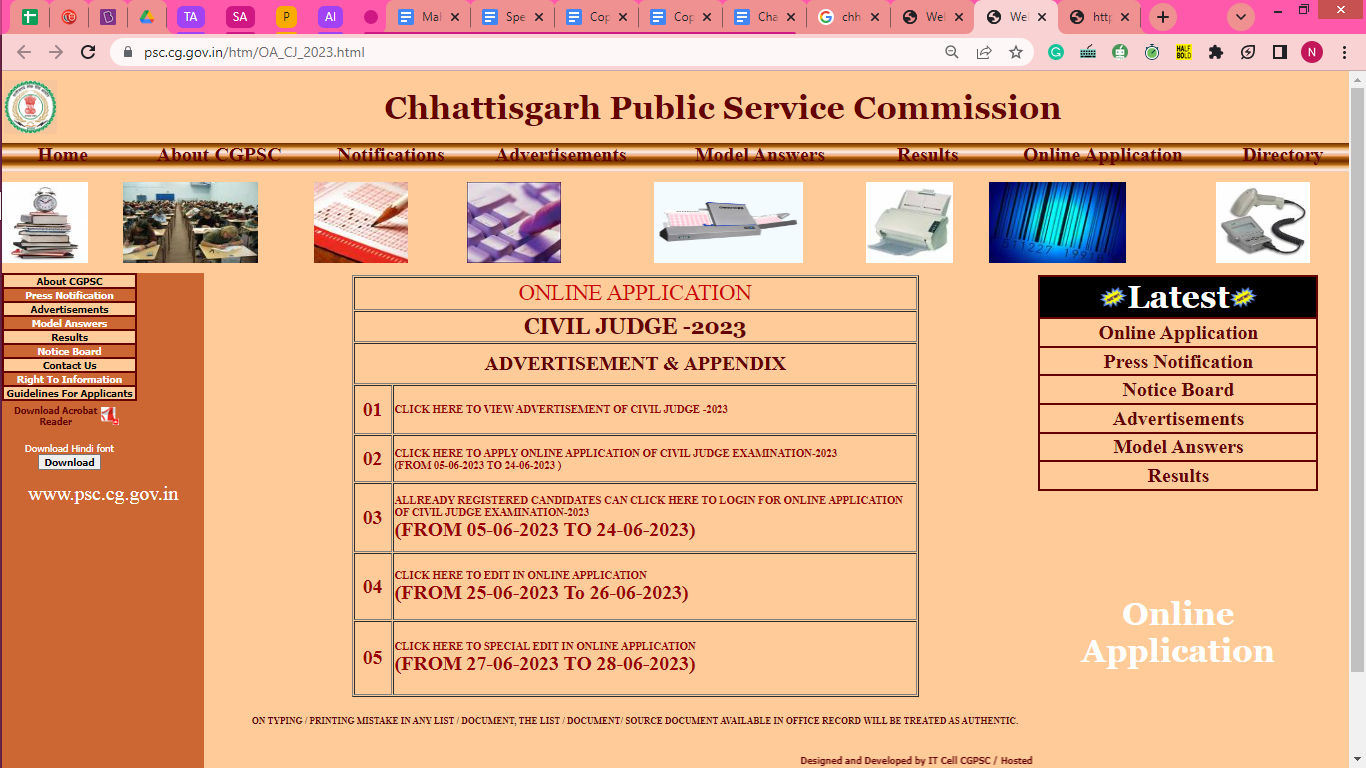












 Allow notifications





