Download Now
Home Blog Page 185

Central bank digital currencies and the global financial system : an overview

0

This article has been written by Priya Nandi pursuing a Diploma in International Business Law  at LawSikho, and has been edited by Shashwat Kaushik.

It has been published by Rachit Garg.

Introduction 

India is among the very few countries that are launching their own central bank digital currency. Which are digital rupees. RBI has called it e-Rupees and it will be officially launched in 2-3 months. Think of an incident where you are travelling to a remote area. It usually happens when the autorickshaw or taxi drivers refuse to take payment through UPI or any other online payment mode and ask you to pay in cash. What if he can not refuse to accept your online payment mode, or if he is bound to accept the payment in the digital mode itself?

So, first, the question that arises here is what are E-Rupees or CBDC, which have been recently launched?

Here is the answer to these questions, which I have discussed in the above summary. A person cannot refuse to accept your online payment mode if you wish to pay your bills through a digital payment mode. So, to sum up, a simpler description of digital payment is that it is a mandate for every citizen of the country after the launch of the E-Rupees monetary policy.

CBDC and e-rupees

CBDC, or e-Rupee, is a form of real physical money in digital form. Utility wise it is exactly like cryptocurrencies. Also, it is similar to the UPI payment system, but it will be regulated by the RBI. This means RBI has been accepted as legal tender. Whereas in digital currency, we can find the benefits of cryptocurrencies as they will be routed by blockchain technology, which will include e-wallets as crypto wallets, and in addition, they will be legal tender fiat money accepted legally.

After analysing the explanation of CBDC, you might have a few questions

  • How is CBDC different from the UPI payment mode?
  • What was the harm of cryptocurrencies? How are these e-rupees different from cryptocurrency?
  • What was the issue with physical cash?

How is CBDC different from other UPI payment modes

When we make UPI payments via this app, such as Phonepe, Google Pay, Paytm, etc., it takes 2-3 seconds, and sometimes the transaction fails. This is because in UPI payments, the settlement between banks happens in the background.

Eg- you paid someone via Phonepe, then it may show the payment is credited and debited, but in the background, the settlement of banks is involved, which takes at least 1 to 7 days. But in CBDC, there is no bank involvement in any settlement. At the same time, when you receive the money, the settlement is done in cash, whereas if you pay cash to a person, there is no bank settlement involved; it is between the two parties, the payer and the receiver. Also, if there is any money in your wallet, you can reach out to the bank, and for physical cash, they will also provide you with the cash. This is how the e-rupee is different from other payment modes.

Differences between CBDC and cryptocurrency

The first difference is that cryptocurrencies are decentralised and de-regularised. Nobody in the world is responsible for the functioning of cryptocurrency; people like you and me who’re spread across the world are responsible for it.

So, in that way, cryptocurrency is decentralised. But the e-rupee will be centralised and legalised by RBI, and RBI will be responsible for the end-to-end functioning of the e-rupee. That’s all there is to the basic difference.

Physical cash and CBDC

CBDC is exactly the same as physical cash. There is no such difference; only the e-rupee is digital cash, which is kept in a mobile wallet rather than in a leather wallet as physical cash.

It is convenient to use as it does not involve the risk of carrying physical cash, which may get lost, burned, or wet. Also, it is easy to track, as we have all the transaction histories of the payments made, so there is less chance of fraudulent cases.

Reasons for launching CBDC

The main reasons for launching CBDC are:

  • Apart from India, there are 83 countries that are already working on launching their digital currencies in 2011. After seeing the massive adoption of cryptos, all countries understood the need for their own digital currencies.
  • The Indian Government has been trying hard to get rid of physical cash for so long now. Physical cash is expensive to print, but digital money doesn’t have any printing costs.
  • The distribution of physical cash to the bank is expensive.
  • Physical cash is difficult to track. Hence, it leads to corruption. To tackle this, the government did a demonstration in 2016, which controlled corruption to some extent but had some massive effects. It slowed down the economy and took us a lot of time to get over it.

CBDC and its impact on the global financial system

The technological evolution in recent years, where AI and blockchain have transformed the traditional activities of all sectors into digital activities with easy and cheaper accessibility. So, the financial system of this technological era has been rapidly changing. Financial stability is the core of the economic development of a country; therefore, financial stability not only benefits the private sector but also helps the government of the country in its economy. As the payment system is the main subject of the economy. Digital payment modes have completely transformed the monetary systems of countries and made them more efficient. Also, the pandemic helped bring about these changes at a very fast pace.

The global financial system has been the result of all economic, political, and technological advancements that have been followed from the beginning until the present. Therefore, to meet the requirements of this changing society, the central banks of many countries have decided to take the initiative to upgrade their monetary policies so that they could regulate the people efficiently in terms of finance, help them avoid the unprotected services of digital payment, and help them avoid the unprotected services of digital payment in a more efficient way with full security. This will not only provide security to the public but also to the government in many different ways by having a track record of the public’s financial transactions and helping the implementation of government schemes more efficiently.

The scenario of today’s society in the field of the global financial system is one of advancement. And the new blockchain technology, such as cryptocurrency or another online payment mode such as UPI, has changed the mindset of how we look at finance and specifically the monetary system, or money. Central banks are now in a position to implement the new monetary system, regulate money, and try to get into the digital world, as they can not deny how important it is to be digitalised. Therefore, they have taken a step towards the CBDC to enhance the efficiency and security of the financial system.

There are about 114 countries, representing over 95% of global GDP, that are exploring CBDC. Also, 11 nations have already launched their digital currencies. In the year 2023, more than 20 countries will launch their pilot CBDC programmes. And 18 of the G20 countries are working on the advancement of their already launched CBDC. Seven countries have already been in the pilot position.

Cross-border CBDC projects

Multiple cross-border projects have already been launched by countries all over the world, and they have been working on them since then. Here are some of them:

Multiple CBDC Bridge (mBridge) – This project has been launched by the Central Bank with four more countries, such as the UAE, Thailand, Hong Kong, and China, in September 2021 for international settlement.

Project dunbar- The banks of countries like Australia, Singapore, Malaysia, and South Africa have launched this project and also achieved two protocols for international settlement in March 2022.

Project Marina- This was also launched in the year 2022 by countries like France and Switzerland in November. The Banque De France, the Monetary Authority of Singapore, and the Swiss National Bank, in partnership with the Euroststem BUS Innovation Hub, have announced a cross-border automated market maker (AMM) project.

There are many more such projects that have been launched by different countries to test out the impact of CBDC, what challenges they will face after officially launching CBDC in their respective countries, and how they can work.

Conclusion

CBDC is a very big leap in establishing the next generation financial system for India, and what is even more important to note is that it’s not just a big deal for India but even for China, France, Switzerland, and America, all of whom are in the race to crack the code for the Central Bank Digital Currency.

References


Students of Lawsikho courses regularly produce writing assignments and work on practical exercises as a part of their coursework and develop themselves in real-life practical skills.

LawSikho has created a telegram group for exchanging legal knowledge, referrals, and various opportunities. You can click on this link and join:

https://t.me/lawyerscommunity

Follow us on Instagram and subscribe to our YouTube channel for more amazing legal content.

Download Now

An analysis of regulatory bodies under IBC 

0

This article has been written by Aniruddha Deshmukh pursuing a Diploma in US Corporate Law for Company Secretaries and Chartered Accountants at LawSikho, and has been edited by Shashwat Kaushik

It has been published by Rachit Garg.

Introduction

The Insolvency and Bankruptcy Code (IBC) of 2016 is comprehensive legislation that aims to provide a unified framework for resolving insolvency and bankruptcy cases in India. Under the IBC, a regulatory ecosystem has been established to ensure effective implementation of the Insolvency Law (IBC). These regulatory bodies are responsible for overseeing the insolvency resolution process and protecting the interests of all stakeholders involved.

Regulatory bodies under IBC

The regulatory ecosystem framework is responsible for the effective implementation of IBC. This code stands on these four pillars.

Insolvency and Bankruptcy Board of India (IBBI)

The Insolvency and Bankruptcy Board of India (IBBI) is the key regulatory body established under the IBC. It is responsible for regulating insolvency professionals (IPs), Insolvency Professional Agencies (IPAs), Insolvency Professional Enterprises (IPEs), the voluntary liquidation process, and Information Utilities (IUs). The IBBI is responsible for framing and enforcing the rules, regulations, and guidelines for insolvency proceedings in India.

It also supervises the functioning of the Insolvency Resolution Professionals (IRPs) and monitors the progress of insolvency proceedings, viz., CIRP (Corporate Insolvency Resolution Process), liquidation process, partnership and individual insolvency resolution, and partnership and individual bankruptcy. The IBBI simultaneously conducts quasi-legislative and quasi-judicial functions under the IBC, 2016.

Constitution of the IBBI

The Composition of the IBBI shall be pursuant to Section 189 of the IBC, 2016. The members of the IBBI shall be appointed by the Central Government, and their composition shall consist of the following members:

  • A chairperson;
  • three members from among the officers of the Central Government not below the rank of Joint Secretary or equivalent, one each to represent the Ministries of Finance, Corporate Affairs, and Law, ex-officio;
  • one member nominated by the Reserve Bank of India (RBI), ex-officio; and
  • five other members nominated by the Central Government, of whom at least three are fulltime members.

Powers and functions of the IBBI

According to Section 196 of the IBC, 2016, the IBBI has to exercise its functions as per the general directions of the Central Government. The IBBI mainly has the following powers and responsibilities:

  • Provide regulation and assess processes and practises relating to CIRP, liquidation, individual insolvency and bankruptcy;
  • registration, renewal, cancellation and regulation of service providers of the insolvency process, including IPs, IPAs, IPEs, and IUs;
  • monitor performance and specify minimum eligibility criteria for the service provider;
  • inspect and investigate on insolvency service providers and call for any records from them;
  • ensure functioning and enforcement of regulation of the service providers and resolution process; and
  • the Board may make model bye-laws to be adopted by the insolvency professional agency.

Adjudicating Authority (AA)

Adjudicating authorities under the Insolvency and Bankruptcy Code (IBC) 2016 are the bodies consisting of judicial and technical members as required, appointed by the Central Government, to exercise and discharge powers and functions provided under the Code. The IBC 2016 stipulates that there are two types of adjudicating authorities:

National Company Law Tribunal (NCLT)

The National Company Law Tribunal (NCLT), constituted under Section 408 of the Companies Act 2013, is recognised as an adjudicating authority under the Code. NCLT is a quasi-judicial body responsible for resolving corporate disputes related to the insolvency and liquidation of corporate persons. The NCLT admits the application to start CIRP and approves or rejects the resolution plan submitted by the CD. If NCLT rejects the plan, a liquidation order will be passed, following which the CD will be dissolved. The AA has power under IBC, 2016, to extend the CIRP period on applications filed by CD.

The National Company Law Appellate Tribunal (NCLAT) is the appellate authority for appeals passed by the NCLT under the Code. There are several benches located all over India with specific territorial jurisdiction over the state and certain other states.

Debt Recovery Tribunal (DRT)

The Debt Recovery Tribunal (DRT), constituted under the Recovery of Debts Due to Banks and Financial Institutions Act, 1993, is designated as an AA under Section 79 of the IBC, 2016. DRT recognises the insolvency of individuals (except the individual guarantor to CD) and partnership firms; however, the provisions of IBC relating to individuals and partnership firms have not yet been enacted. Hence, DRT doesn’t exercise jurisdiction as an AA under IBC, 2016.

Jurisdiction of adjudicating authority

IBC empowers the AA or NCLT to exercise jurisdiction and pass orders in insolvency and bankruptcy. No civil court or any other authority has jurisdiction over or can pass an injunction against the order of AA. Under Section 60 (5) of the IBC, 2016, The AAs shall deal with the following jurisdiction to contemplate or dispose of:

  • Any application or proceeding by or against the CD or any corporate person;
  • any claim made by or against the CD or any corporate person, including claims by or against any of its subsidiaries situated in India; and
  • any question of priorities or any question of law or facts, arising out of or in relation to the insolvency resolution or liquidation proceedings of the corporate debtor or corporate person under this Code.

Appeal to the NCLAT or Supreme Court

The IBC provides any aggrieved person (CD or any corporate person) with a procedure for appealing against the decision of the AA. Under Sections 202 and 211 of the IBC 2016, The NCLAT will be the appellate authority to hear appeals against the order passed by the NCLT and any order passed by the IBBI.

An aggrieved person of the resolution plan, under the provisions of Section 61 of the IBC, can file an appeal against the order of the AA to the NCALT within 30 days from the date of receiving the order from the AA.

Section 62 of the IBC enables an aggrieved person to file an appeal against an order passed by the NCLAT to the Supreme Court of India within 45 days of receiving the order.

Information Utilities (IUs)

The insolvency proceeding critically required complete financial and other information on the corporate debtor with accuracy, up-to date and in a centrally organised database. The corporate creditor required reliable financial information about the corporate debtor to remove the information asymmetry IBC was mandated to create a regulated information industry called Information Utilities (IUs). IUs are registered and regulated with the IBBI under Section 210 of the IBC.

Practicalities and usefulness of IUs

IUs are responsible for maintaining and making available authenticated, high quality information about corporate debtor defaults and their debts. IUs play a crucial role in the process of CIRP; once IP is appointed, he needs qualitative financial information about CD. An IP will seek out as much information about the CD as quickly as possible. IBC Though this can be done in many ways, the IBC considers that the primary method of acquiring authenticated information should be through an IU.

The financial information database of entities can be established with consistent use of IUs, which create efficient infrastructure and offer credit. During the CIRP process, IP can seek information from IUs, which tends to reduce time and speed up procedures, enabling creditors to make better decisions.  

Core services of IUs

IUs are responsible for maintaining correct and authenticated financial information about debts and defaults. They are mandated to provide core services such as:

  • Acceptance of electronic submission of financial information;
  • safe and accurate recording of financial information;
  • authentication and verification of financial information; and
  • providing access to information stored with them to specified persons.

Type of information maintained by IUs

An IU is repository of the financial information of debtor, and the IBC provides list of financial information under Section 3(13), such as;

  • All records related to debts and incorporation of an entity;
  • liabilities of a corporate debtor and corporate person when such person is solvent;
  • all records of encumbered assets of debtors;
  • instances of default made by person against any debt;
  • all past records of financial statements includes; and
  • any other specified information.

The availability of such pre-validated information, which is pre-validated, is beneficial in the insolvency resolution process as well as in advancing credit facilities by lenders to any person.

Insolvency professionals (IPs)

An Insolvency professional is one of the most important components of the IBC regulatory ecosystem. An IP is registered, licenced, and regulated by the Insolvency Professional Agency (IPA). The AA will appoint IRP and RP to proceed with the CIRP and act as liquidators in the liquidation process. All liquidation and/or CIRP processes are managed and administered by IP under the provisions of the Code.

Eligibility, qualification and experience

Eligibility: IBBI notifies eligibility conditions under Regulations 4 and 5 under the IP regulations. No individual is eligible to be registered as an IP if:

  • Is a minor;
  • is not resident in India;
  • does not have the specified qualifications and experience;
  • has been convicted of an offence punishable by a prison term exceeding six months, or for an offence involving moral turpitude, and a period of at least five years has not lapsed since the sentence expired. If a person has been convicted of any offence for which the prison term was seven years or more, he/she will not be eligible for registration at all
  • is an insolvent yet to be discharged or has applied to be adjudicated as an insolvent;
  • has been declared to be of unsound mind;
  • is not a “fit and proper” person. There are three criteria for determining “fit and proper”:
  1. Integrity, reputation, and character;
  2. absence of convictions and restraining orders; and
  3. competence, including financial solvency and net worth.

Qualification: For enrolment with IPA, an individual should have passed the Limited Insolvency Examination and other pre-registration educational courses as may be required by the IBBI from an IPA.

Experience: For Professionals (Chartered Accountant, Company Secretary, Cost Accountant, or Advocate) having 10 years of experience, or graduates having 10 years of experience in the field of law, or Masters’ Degree holders/Post-Graduate Diploma holders in management having 10 years of managerial experience, or graduates having 15 years of managerial experience.

Registration

Insolvency Professional Agencies (IPAs) are the first regulators for IPs, responsible for registering new IPs and regulating their members as per the standard code of conduct, regulations, and framework provided by IBBI. IBBI provides detailed conditions under Regulation 7(2) of the IP Regulations for the registration of an IP. Eligible and qualified persons should enroll with IPA and obtain membership; they must also apply to IBBI for registration.

A person having membership in IPA and registered with IBBI as per IP Regulations can be appointed as an Interim Resolution Professional (IPR), a Resolution Professional (RP), a liquidator, or a bankruptcy trustee as per the provisions of IBC.

Conclusion

Insolvency laws were enacted in India to address the financial distress of businesses. The primary objective of the IBC, 2016, is to provide an effective framework to resolve issues with time-bond mechanisms through an effective Corporate Insolvency Resolution Procedure (CIRP). IBC enacted a framework of regulatory bodies that underpins the operationalization of insolvency legislation. Insolvency professionals (IP) are experienced professionals and are the most important component of the IBC ecosystem. The Adjudicating Authority (AA) resolves and oversees the insolvency process under the IBC, 2016. The IBBI has regulatory oversight over IPs, IPAs, IPEs, and IUs as per the provisions of IBC, 2016. The regulatory ecosystem is resolving cases through a transparent process, leading to faster recovery of dues for creditors.

References


Students of Lawsikho courses regularly produce writing assignments and work on practical exercises as a part of their coursework and develop themselves in real-life practical skills.

LawSikho has created a telegram group for exchanging legal knowledge, referrals, and various opportunities. You can click on this link and join:

https://t.me/lawyerscommunity

Follow us on Instagram and subscribe to our YouTube channel for more amazing legal content.

Download Now

Promissory estoppel and evolution of Contract Law

0

This article has been written by Lalremruatfeli Pulamte pursuing a Certificate Course in Introduction to Legal Drafting: Contracts, Petitions, Opinions & Articles at LawSikho, and has been edited by Shashwat Kaushik.

It has been published by Rachit Garg.

Introduction

In India, the Indian Contract Act of 1872 was enacted on April 25, 1872 (9 of 1872), and it came into effect on September 1, 1872. It extends to India except for the state of Jammu and Kashmir. The Act has been going through different amendments and phases since it came into the form we see it today. Consider a scenario in which a promise, despite lacking the strict formality of a contract, has the power to bind parties morally and legally. This is where promissory estoppel enters the picture. Unlike traditional contractual doctrine, which frequently requires consideration and mutual assent, promissory estoppel protects promises made without these formalities. It embodies the notion that a promise if relied upon to one’s detriment, should be upheld in the eyes of justice, even when the traditional elements of contract formation are absent.

Evolution of Contract Law

Contract Law in Ancient India

The evolution of legal systems is a reflection of the complex social, economic, and cultural dynamics of a society. As we journey back in time to ancient India, we uncover a rich set of legal principles and contractual practices that laid the foundation for the modern concept of contract law. From the Vedas to the Dharmashastras, the ancient Indian legal landscape offers us a glimpse into the intricate web of agreements, obligations, and ethical considerations that governed interpersonal relationships and commerce. The Dharmashastras, ancient Indian legal treatises, emerged as comprehensive sources of ethical and legal guidance. Manusmriti, for instance, outlined various forms of agreements and the corresponding duties of the parties involved. Contracts were often categorised based on their nature, ranging from gift exchanges to sale transactions.

The fundamentals of the Law of Contract were present in ancient India, and they were well recognised under Hindu Laws.  In ancient times, the Law of Contract was based on adherence to the truth, and it was invariably connected with the religious notions of society. The doctrine of offer and acceptance preceding an agreement was recognised under Hindu Law. It was also recognised that there should be consideration in a contract of sale or a debt, while no consideration is required for a gift. In short, we may say that the fundamentals of the Law of Contract existed in Ancient India.

Contract law under British Period

India’s legal system under British colonial rule underwent significant change, including in the area of contract law. As the British East India Company established its influence and governance over India, it introduced a new legal framework that significantly impacted contractual relationships, commercial transactions, and the broader socio-economic fabric of the region. After the establishment of British Rule in India, English common law and statute law were introduced by the Charters of the Eighteenth Century in the Presidency towns of Calcutta, Madras, and Bombay. In the case where one of the parties was Hindu and the other Muslim, the law of the defendant was to be applied. Thus, Hindus who, during Muslim rule, were governed by the Muslim Law of Contract were now governed by Hindu law and usage. Hinduism and Islam were governed by their respective laws and usages. This practise continued up until the passing of the Indian Contract Act, 1872.

The Indian Contract Act, 1872

The second report of the Third Law Commission was devoted to the Law of Contract. The Law Commissioners submitted a draft on July 28, 1866, which, after several amendments, was finally adopted by the Legislature in 1872 in the form of The Indian Contract Act, 1872. The Indian Contract Act, comprising 266 sections, delves into the core facets of agreements—what constitutes a valid contract, how contracts are formed, the rights and liabilities of parties, and the remedies available in case of breaches. Beyond the legal jargon, this act reveals the complexities of human intentions, trust, and keeping promises.

Promissory estoppel

What is estoppel

The word “Estoppel” is derived from the French word ‘estoupe’, which means ‘stopper’. The rule of estoppel is based on the maxim “allegans contraria non est audiendus,” which means that a person alleging contrary facts should not be heard. The term was adopted from English jurisprudence, which has assigned it a special and technical connotation of its own.  The object of estoppel is to prevent fraud and secure justice between parties by promoting honesty and good faith.

The Indian Evidence Act of 1872 deals with the subject of estoppel in Sections 115, 116, and 117. We can see “Estoppel” in Indian Evidence Act Section 115.  There it was defined as – “When one person has, by his declaration, act or omission, intentionally caused or permitted another person to believe a thing to be true and to act upon such belief; neither he nor his representative shall be allowed in any suit or proceeding between himself and such person or his representative, to deny the truth of that thing.”

The main ingredients of this Section can be:

  1. One party should make representations to the other party;
  2. The representation must be made with the intention of being acted upon;
  3. The other party should rely on the representation; and
  4. There must be an action arising out of the representation.

This principle is classified into three types under English Law:

  • Estoppel by matter of record;
  • Estoppel by deed or writing; and
  • Estoppel by conduct.

Different Acts other than The Indian Evidence Act also mention estoppel; they are:

  1. Section 234, Indian Contract Act, 1872;
  2. Section 18, Specific Relief Act, 1877;
  3. Sections 40, 41, and 43, Transfer Property Act, 1882;
  4. Sections 27 and 53, Indian Sales of Goods Act, 1930;
  5. Section 28 of the Indian Partnership Act, 1932; and
  6. Sections 120, 121, and 122, Negotiable Instruments Act, 1881.

Doctrine of promissory estoppel

The doctrine of promissory estoppel is also called ‘new estoppel’, ‘equitable estoppel’ or ‘quasi- estoppel’. The doctrine is guided by the principles of justice, fair play, and good conscience. According to the legal dictionary, promissory estoppel is the doctrine that provides that if a party changes his or her position substantially, either by acting or forbearing from acting in reliance upon a gratuitous promise, then that party can enforce the promise, although the essential elements of a contract are not present.

The essential ingredients of the doctrine of promissory estoppel are:

  • A party should have, by his word or conduct, given to the other party a clear and unequivocal promise or assurance.
  • The promise, representation, or assurance was intended to affect the legal relations of the parties and to be acted upon accordingly.
  • The promisee has in fact acted upon such a promise.

The doctrine of promissory estoppel and ‘estoppel’ mentioned in Section 115 of The Indian Evidence Act is different. In Dr. Ashok Kumar Maheswari vs. State of Uttar Pradesh and Anr. (1998), it was held that, the doctrine of promissory estoppel can be invoked even where a case does not satisfy the requirements of estoppel enshrined in Section 115 of The Indian Evidence Act. Even though the promise was not recorded in the form of a formal contract, it would be possible for a party that relied on the government’s representation to assert that the government should be obligated to uphold the promise made by it. 

In M/S Shree Sidhbali Steels Ltd. and Anr. vs. State of Uttar Pradesh and Ors. (2011), it was mentioned that the doctrine of estoppel cannot be invoked for enforcement of a promise made contrary to law because no one can be compelled to act against the statute. In M. Deva Narayana Reddy and Ors. vs. Government of Andhra Pradesh and Ors. (2004), it was held that the doctrine of estoppel is not applicable to an ultra vires decision.

There are certain exceptions to promissory estoppel:

  • It is not applicable to minors.
  • It cannot be used to compel someone to do an act that is prohibited by law.
  • It cannot be used against the government if it jeopardises its constitutional powers.
  •  It cannot be applied unless both parties have the knowledge .

Conclusion

In conclusion, the estoppel doctrine is a cornerstone of equitable principles in all major legal systems. It serves as a safeguard against unfairness and injustice, promoting the stability of transactions, contracts, and relationships. By preventing parties from reneging on their words or actions when detrimental reliance has been placed on them, estoppel maintains a sense of trust and integrity in various legal contexts. We can say that promissory estoppel is also a part of estoppel, but it has its own distinctiveness. The promissory estoppel is also different in some ways from the estoppel we saw in The Indian Evidence Act, 1872.

References

  • Contract and Specific Relief Act by Rajesh Kapoor (13th Edition)
  • Law of Contract by Dr Ashok Jain
  • Law of evidence by Mayank Madhaw
  • The Indian Contract Act, 1872
  • lawctopus.com/academike/promissory-estoppel/#:~:text=Doctrine%20of%20Promissory%20Estoppel&text=The%20principle%20is%20that%20when,go%20back%20from%20its%20words 
  • https://blog.ipleaders.in/doctrine-promissory-estoppel/ 
  • mondaq.com/india/government-contracts-procurement–ppp/1226798/doctrine-of-promissory-estoppel-and-its-application-against-government–an-explainer 
  • The Indian Evidence Act, 1872

Students of Lawsikho courses regularly produce writing assignments and work on practical exercises as a part of their coursework and develop themselves in real-life practical skills.

LawSikho has created a telegram group for exchanging legal knowledge, referrals, and various opportunities. You can click on this link and join:

https://t.me/lawyerscommunity

Follow us on Instagram and subscribe to our YouTube channel for more amazing legal content.

Download Now

Public trust doctrine in India

0
Image Source: https://bit.ly/3bNw8j8

This article is written by Minhas Joshi, from SVKM’S Kirit P. Mehta School of Law, Mumbai; and Upasana Sarkar, a student at Jogesh Chandra Chaudhuri Law College. This article deals with the public trust doctrine, which provides a detailed understanding of how the natural resources of the earth should be taken care of by the State as a trustee and used by the people of the State, who are the beneficiaries, in a sustainable manner. This article also states the purposes and importance of the public trust doctrine. It also deals with the various landmark judgements and recent cases relating to it.

It has been published by Rachit Garg.

Introduction

The latter half of the twentieth century witnessed an increase in the population which also increased the overuse of the earth’s natural resources and depletion of its resources. The main reason behind this depletion was the rise in pollution, industrialisation, wars, poverty and many other things. But we never questioned ourselves is there any extent to we can use earth’s natural resources to sustain our life? The ownership of Earth’s natural resources? This is the reason why for many years we have seen a conflict between those who use Earth’s natural resources for private use and those who only use it to satisfy their human need[i].

People have the right to question the use of natural resources and this is the reason why 1500 years ago a  Roman legal scholar called Public Trust Doctrine. They stated that resources are either available to everyone or no one. This doctrine questioned the ideology of the use of natural resources for private use. This doctrine is seen as an ethics and this is the reason many philosophers, and legal scholars are debating regarding the rights of the public over the usage of earth’s natural resources.

In India, this doctrine evolved in the courts and it also has its significance in the constitution. There are various landmark judgments through which this doctrine evolved. The article further explains the public trust doctrine and examines various dimensions of Public trust doctrine in India.

History and origin of public trust doctrine

Public trust Doctrine was propounded by the Roman Empire 1,500 years ago. Roman King Justinian stated in a section that “the air, the water, and the sea are all common to the public and is entitled to be used by anyone due to the law of nature”[ii].

After the fall of the Roman empire in 1215, the Magna Carta codified Justinian words. Thus in England, the King had ownership of the land but he had to take care of the public trust. In the United Kingdom, it included two rights 1. Just Privatum which means ownership for private parties, 2. Just Publicum which means ownership held by the king as a trustee for the public benefit.

In 1821, the Modern revival of Public trust doctrine took place in the USA in the case of Arnold vs. Mundy[iii] and in the landmark case of Illinois Central Railroad v. Illinois[iv] where the court came up with a principle that the state cannot hand its trust of resources to private ownership when the interest of the public is involved.

The public trust doctrine means to ensure that everyone gets equal access to all natural resources without any discrimination. It should be used in a manner that results in being advantageous to all sections of society. It is a principle that specifies that the natural resources of the earth should be taken care of by the State, which would act as trustees for the common good of the people who are beneficiaries. Natural resources such as air, navigable water, groundwater, seashore, forests, soil, and many more must be taken care of and preserved by the State for future use. As per the doctrine of public trust, it is the duty of the State to protect and preserve natural resources from being eroded and exploited. This doctrine states that the government must hold these natural resources as trustees for their proper maintenance and the general welfare of the public. Since these natural resources are accessible to everyone, they cannot be converted into private property. The air is the most essential ingredient for the survival of all living creatures on earth. The water is required mainly for drinking and irrigation purposes. The forests hold the soil tightly and prevent erosion. So it is very important to preserve these natural resources from depletion.

Concept of public trust doctrine

The public trust doctrine imposes a huge responsibility upon the State to see that the natural resources are protected from any kind of destruction or depletion. The citizens are also responsible for taking proper care of these natural resources. They must also use them wisely. It is also their responsibility to ascertain that the natural resources do not get destroyed or polluted due to any of their activities. In the case of Re: T.N. Godavarman v. Union Of India And Ors. (2022), the Supreme Court of India upheld this public trust doctrine by stating that it is the State’s responsibility to act as the trustee of the natural resources for the welfare of the public and ascertain that these natural resources should be used by the citizens in a sustainable manner. If these resources are used wisely, then they could last a long time without becoming extinct. It was also observed by the Court that every forest is required to have an Eco-Sensitive Zone (ESZ) that is at least one kilometre long for its protection as it minimises depletion. The Court also opined that the State is not only a facilitator for the economic upliftment of society but also a trustee who works for the welfare of the people concerning the natural resources to achieve sustainable development. It was also stated that the public trust doctrine is an integral part of the Indian legal system and should be used to safeguard natural resources from becoming private property. 

State acting as a trustee

The phrase ‘public trust doctrine’ contains the word ‘trust’. One of the important components of trust is the presence of a trustee who looks after the trust property. It is the responsibility of the trustee to take proper care of it. He does not use it for his own benefit; rather, he holds the property on behalf of someone else who benefits from it. In the public trust doctrine, the State acts as a trustee who safeguards the natural resources for the proper and reasonable use of the people of the State. The government makes sure that their actions do not cause the depletion of these natural resources or damage the environment.

Citizens are the beneficiaries

Another essential component of trust is the presence of the beneficiary, who gets all the benefits of the trust property. It is the primary responsibility of the trustee to see that the beneficiary enjoys the trust property. In the public trust doctrine, the citizens of the State are the beneficiaries who use these natural resources in a sustainable manner so that they may be enjoyed by future generations as well. It is the State’s duty to see that non-renewable resources are not used in an unreasonable manner. The non-renewable resources include coal, oil, nuclear energy, and natural gas, which, if depleted, cannot be replenished by any means. The State must protect and preserve them from becoming depleted. In other words, it means that their supply is limited and cannot be replaced. These non-renewable resources must also be used in smaller amounts, as they emit a variety of pollutants that will not only degrade the quality of the air but also affect the health of the people. Hence, the government manages them for the benefit of both present and future generations.

Natural resources as assets or trust property

The most important component of a trust is the trust property, without which there would be no trustee or beneficiary. The trustees have a fiduciary relationship with the beneficiaries, as they are responsible for taking proper care of the property as they are in charge of it. The trustee holds the trust property on the beneficiary’s behalf. These trust assets that are entrusted to the trustee for their proper management are used for the purposes of the beneficiaries and not for their personal use. In the public trust doctrine, natural resources can be understood as trust property. It includes the air, water, soil, land, forests, and many more that are necessary for the existence of mankind on Earth. Since these natural resources are assets that are entrusted to the government, it is their responsibility to protect them from exploitation. It is considered jus publicum, which means the people’s right to enjoy them and use them whenever necessary, as it belongs to all the citizens of the State. 

Objective of public trust doctrine

Traditionally Public trust doctrine was only limited to protect the rights like the right to fisheries, hunting, boating, navigation for anchoring or standing. But in the present scenario, it checks the state action for management of the resources and it also questions its action. It states the state as a trustee and the state holds all the resources. It is the duty of the state to preserve, prevent and protect the resources for the public use. The state is expected to perform its positive duty.

Scope of public trust doctrine

According to Joseph Sax, Governmental Regulations always create a public trust problem and it occurs in various types of situations. Public trust needs protection against private goals. Thus he stated that this doctrine which is a delicate mixture of procedural and substantive protection is appropriate for protection from air pollution, willing of wetlands, strip mining, allocation of resources to private use etc[v].

Importance of public trust doctrine

The public trust doctrine helps people get the benefits of these natural resources, which are beneficial for a healthy lifestyle. If the environment is polluted, then it will be hazardous for their health. So it is important to protect the environment from any kind of pollution. The State ascertains that the natural resources of the earth are preserved and maintained for the enjoyment of future generations. Some of the reasons for the importance of the public trust doctrine are as follows-

  • It is a doctrine that guarantees the protection of natural resources. Article 21 of the Constitution guarantees the right to life, which means the right to a clean and healthy environment is also a fundamental right of the people of the State, and if this right is encroached upon under any circumstances, then the citizens have the right to go to court to enforce their fundamental right.
  • It helps reduce the unnecessary exploitation of non-renewable resources by humans. Article 51A states that it is also the duty of the citizens to see that the natural resources are not overused, as they cannot be replaced by any means. So the people must use these resources only when they are needed. It should not be used recklessly by them. If they were ever extinguished, future generations would be deprived of the benefits of those resources.
  • The State acts as a trustee for this doctrine and prevents the overuse of natural resources. The State has passed various laws protecting and preserving the environment. Some principles, like ‘precautionary principle’, ‘polluter pays principle’ and ‘sustainable development principle’ were the most important among them. These principles direct the industries to take proper measures so that they do not emit gases that can pollute the air. The factories are directed not to release untreated garbage into the water bodies. Deforestation is strictly prohibited, as trees hold the soil tightly and prevent soil erosion. Cutting down large numbers of trees also has a huge impact on climate change. Trees produce oxygen, which is one of the most important elements without which no human being can survive. It also keeps greenhouse gases in check.
  • It helps reduce environmental damage and the degradation of the atmosphere. The people are directed by the State to use Compressed Natural Gas (CNG) instead of petrol or diesel in their vehicles to prevent air pollution. Afforestation is encouraged by the State which will balance the oxygen level in the earth’s atmosphere. If more trees are planted, then it will prevent global warming, which is increasing the temperature of the atmosphere. Global warming also leads to the destruction of the ozone layer, which prevents the unharmful rise of the sun from reaching the earth’s atmosphere. 
  • It protects these natural resources for future use by all human beings. The State encourages citizens to use the natural resources in a sustainable manner so that future generations are not deprived of them. The public trust doctrine helps to preserve these natural resources so that future generations can also enjoy and benefit from them.
  • It helps improve the ecological balance of the earth. Otherwise, it will increase global warming, leading to the melting of the glaciers, which in turn raises the levels of the water, causing floods and landslides, changing weather patterns, causing severe and frequent storms, heavy rain, causing floods and destroying crops, and many other things. 
  • It also acts as a statutory structure for resolving various environmental struggles for which there are no proper and effective laws and legislation. It mandates the State to take effective actions for the proper management of natural resources.
  • It helps in the proper and reasonable use of natural resources by the public. This public trust doctrine also gives the public the right to question whether these natural resources are maintained properly by the State. Since these natural resources are meant for public use, it is their duty to take proper care while using them. They must use these resources in a manner that does not pollute or destroy them. They must keep in mind that survival is impossible on earth without these natural resources.

Therefore, this public trust doctrine is established on the notion that these natural resources are very much necessary for the survival of mankind on earth, and so they must be conserved for the use of the public and shielded from any kind of misuse or destruction.

Purpose of the public trust doctrine

The public trust doctrine serves two main purposes, which are as follows-

  • It authorises the State to take affirmative action for effective management and control of the natural resources by safeguarding them from degradation.
  • It empowers the people to question the government about its ineffective management of these natural resources.

So this doctrine makes it compulsory for the State to improve the quality of the environment and protect these natural resources from any kind of exploitation or overuse. It is the State’s responsibility to see that the natural resources are used in a sustainable manner so that future generations are not deprived of utilising these resources.

Public trust doctrine and the United Nations

The Stockholm Declaration of the United Nations has laid down 26 principles. Among them, Principles 2, 3, and 5 deal with natural resources, the environment, and its management. The Principles are as follows-

  • Principle 2 states that all the natural resources, which include air, water, earth, land, flora, fauna, and other resources of the natural ecosystem, must be protected and managed through proper planning for the benefit of both present and future generations.
  • Principle 3 states that the earth’s ability to provide essential renewable resources must be maintained in a proper way, and whenever possible, it should be preserved or improved.
  • Principle 5 states that the non-renewable resources of the earth must be used in such a manner that they are not exhausted by one generation. It should be protected against the danger of becoming extinct. It must be employed in a proper way so that the benefits are shared by people of all generations.

The public trust doctrine was ratified in India under Article 48A and Article 51A of the Indian Constitution in the three famous cases of MC Mehta v. Kamal Nath (1997), Th. Majra Singh v. Indian Oil Corporation (1999), and M.I. Builders v. Radley Shyam Sahu (1999), which are discussed below in this article. Article 48A states about the State’s duty to protect and improve the quality of the environment and Article 51A lays down the citizens’ responsibility for environmental protection. This public trust doctrine has been established by Article 21 of the Indian Constitution.  

The public trust doctrine mandates the State to follow these principles for the protection of the environment from degradation. The State must manage these resources in such a way that they do not deplete and are used in a reasonable way. The State must ascertain that while enjoying the benefits of these natural resources, people must not destroy or damage them. Any actions of people that seem harmful to the environment must be stopped by the State. Actions like discharging untreated sewage from the factories into the water bodies, using petrol or diesel for running vehicles instead of Compressed Natural Gas (CNG) that will pollute the air, deforestation by cutting down large numbers of trees, and things like that must be stopped. For protecting the environment, time and again, many public trust lawsuits have been filed and many precedents have been set which have been discussed later in this article.

Restriction on the State

The Public Trust Doctrine Imposes three types of restriction  on the government:

  1. There are some resources which may not be used by the public but it should be stored by the government for the public.
  2. These resources are the gift of nature and it cannot be sold by the government.
  3. The property must be maintained and its adaptation should not lead to private use. There are certain limits and No individual should be allowed to cross these limits.

Public trust doctrine in India

The Public trust doctrine in India evolved through landmark judgements. The court stated that as we follow the Common law system our constitution includes Public trust doctrine in its jurisprudence. The court took procedural and substantive rights seriously and applied this doctrine for the protection of the environment. The court also referred to various articles of the Indian constitution such as article 48A[vi] which made a way through Article 21[vii] by including the right to clean environment under the right to life and Article 39[viii] [DPSP] which states proper distribution of the resources.

As India does not have specific environmental rights the supreme court went further and emphasised on Public Trust Doctrine. There are many such instances like when the supreme court of India declared unauthorised mining causing damage to the environment of that area as illegal as it violated Article 21 of Indian constitution and the court stated that healthy environment is necessary for protecting and safeguarding the rights of the people[ix]. In another case, High court of Kerala held that government cannot violate Article 21 when a government action caused harm to a freshwater source[x]. In the Bhopal disaster case, the court linked the right to life and clean environment. The public trust doctrine in India restricts the government and the private property rights in India. After reading judgments and various interpretations it is not clear how the court invoked public trust doctrine. It is not clear whether Public trust doctrine was a part of Indian Jurisprudence or it is included now. The court only stated that it is included in the United States through various judgements and the British law also includes this doctrine and we also follow common law as a reason India should also include it. However, what court felt was necessary to protect the rights of the citizens and make the state responsible for the protection under the public trust doctrine.

The Public Trust doctrine didn’t exist in India as a doctrine but it came through a landmark judgement which was M.C Mehta vs Kamalnath.

The notion of public trust doctrine in India

This public trust doctrine was first accepted in India in 1997 in the MC Mehta v. Kamal Nath case, where it was held that the State can use it as public property for the welfare of the public. and then again in 1999 in the cases of Th. Majra Singh v. Indian Oil Corporation, where the public trust doctrine was held to be an integral part of Article 21 of the Constitution with the State’s responsibility in protecting and preserving the environment, and M.I. Builders v. Radley Shyam Sahu, where the public trust doctrine was evoked under Article 21 as a fundamental right of the people. These landmark judgements made it an important part of the Indian legal system. The Indian Judiciary has been explicitly using this doctrine in many cases related to environmental law for the protection and preservation of the ecological balance.

The principles of jurisprudence that also discuss how important it is to protect the environment are provided in Article 48A and Article 51A of the Indian Constitution. Article 48A deals with the State’s responsibility for protecting and improving the environment and safeguarding the forests and wildlife of the country. While Article 48A lays down the State’s duty as a trustee, Article 51A of the Indian Constitution lays down the citizens’ duty. It states that it is the responsibility of the citizens of a country to protect the natural environment of that country. Preserving and improving natural resources like lakes, rivers, forests, and wildlife is a very important duty of citizens. They must have compassion for all the living creatures of the earth. The notion of public trust doctrine in India has evolved from Article 21 of the Indian Constitution.

Article 21 states that no person’s life or personal freedom shall be taken away from him other than in accordance with the law due to certain circumstances. This is one of the most important fundamental rights of the people and should be protected by the State without any kind of discrimination. Time and again, the Judiciary has interpreted Article 21 by giving it a wider connotation and extending its meaning beyond the imagination of the makers of the Constitution. So the ambit of Article 21 is very wide. Like right to livelihood, right to a clean and healthy environment also comes under the purview of this Article. This right encourages the public trust doctrine to safeguard the natural resources of the earth and preserve the environment for the welfare of all. Since the natural resources are the gifts of nature, it must not be misused by the people, as life will cease to exist in their absence.

Landmark Judgments

Criminal litigation

M.C Mehta v. Kamalnath

The public trust doctrine was first alluded to in India through this landmark case. This case is also known as the SPAN Motel case[xi]. In this case, a PIL challenged the minister of environment Mr Kamalnath [respondent] who allowed  SPAN Motel company to construct a hotel near the mouth of river Beas in Himachal Pradesh and also allowed the company to change the course of the river for the construction by blasting the river bed[xii]. The construction of the hotel was planned on land which was taken on a 99-year lease from the government. It was allowed by the ministry as well as the gram panchayat of that area. The Supreme Court held that “ the public trust is more like an order for the state to use the public property for public purposes”[xiii]. It is the duty of the state to protect the environment, lakes and public heritage and it can be only abdicated in a rare case when it is inconsistent with the public trust. The court observed that the earth’s natural resources are the gift of nature; they should be protected and it also stated that the values and laws must adhere to the environment. The court observed that the Public at large is a beneficiary of the earth’s resources like water, air and wetlands and as the state is the trustee it is the obligation of the state to protect these resources and shall not give them to private ownership for the fulfilment of its own goal.

The court cited United States law review, experts on environmental law to protect environmental rights. For example, the court cited a lengthy passage from Harvard environmental law review and the court also stated Justinian saying on Public trust doctrine and also quoted Joseph Sax to justify its notion.

The court asked the company to pay compensation for the restoration of the environment of that area under the polluter pay principle.

M.I. Builders Pvt. Ltd. v. Radhey Shyam Sahu

In the case of M.I. Builders Pvt. Ltd. v. Radhey Shyam Sahu[xiv] the court covered the public trust doctrine under the right to life and stopped the construction of the shopping complex in the place of a public garden stating the garden as a public resource. The court observed that the park is a public place with historical importance. The court cited the public trust doctrine and M.C. Mehta case as a precedent. The court stated that allowing the construction would deprive the public of the quality of life as stated under Article 21 of the constitution. The court put the government under the obligation to maintain the public park for the citizens as the government has obligatory duties under the public trust doctrine which is applicable in India.

 The court stated that the public trust doctrine is derived and evolved under Article 21 of the Indian constitution and it is evoked in India to protect the fundamental rights of the people.

Shailesh R. Shah v. State of Gujarat

In the earlier judgment, the court portrayed the state in a negative figure. But in Shailesh R. Shah v. State of Gujarat[xv] the Gujarat High Court portrayed the obligation of the state in a positive nature.  The court stated that the state holds all the resources like the lake, pond, natural gases, and wetland and as the state is held as the trustee it is the duty of the state to maintain and protect them for public use. According to the court, this is a positive duty of the state to prevent the resources and the environment from degradation and safeguard them from extinction. It is a positive duty of the state to preserve the resources.

Judicial pronouncements

Th. Majra Singh v. Indian Oil Corporation (1998)

In this case, the suit was filed against the location of a liquefied petroleum gas (LPG) plant that was used for filing cylinders. The petitioner was of the opinion that it was located near the village of Kartholi in Jammu District and could be harmful to the health of the people staying in that locality. The respondent contended that proper steps have been taken to ensure that no harm is caused to the residents living there. They have followed all the measures to control pollution. The Jammu and Kashmir High Court held that their power is limited to examining whether proper precautions have been taken by the authorities, keeping in mind the environmental laws and policies, to prevent pollution or degradation. 

Despite the fact that the case was decided by the High Court based on the precautionary principle, it assured the establishment of the public trust doctrine in the Indian legal system. The High Court observed that this public trust doctrine is an integral part of Article 21 of the Constitution, and the State is obliged to protect and preserve the lakes, forests, wildlife, and environment. The Court stated that people’s notion that they have the right to anticipate particular lands to retain their originality is making its way into the law of the land.

Jitendra Singh v. Ministry of Environment (2019)

This case was filed against the allotment of water bodies to private industrialists. The Supreme Court of India stated that Article 21 of the Indian Constitution safeguards the fundamental rights of the village commons. Water bodies like ponds are an important source of potable water and fishing for the villagers. Most Indians do not have access to clean drinking water. So it was observed that the ministry’s scheme to allow private industrialists to gain absolute control over the water bodies without providing an alternative is not legal in any way. 

It would have several adverse effects on the vegetation and groundwater. The marine animals would die, and the villagers would have to relocate, which would be unjust and unfair to them. Therefore, the plan of the respondent that authorises the destruction of existing bodies of water and provides alternative replacements for existing waterways demonstrates a mechanistic application of environmental protection. If the surface of water bodies is regenerated superficially, then there is also no guarantee that the damaging effects of the destruction of the previous water bodies will be offset.

Lt. Col. Sarvadaman Singh Oberoi v. Union of India (2020)

In this case, the full bench of the National Green Tribunal (NGT) discussed the issue regarding the restoration of water bodies. This issue was addressed in the interest of environmental protection for the entire nation. The petition was submitted before the Tribunal regarding the water bodies located in the State of Haryana that are in Gurgaon District’s possession. The District of Gurgaon was asked to maintain and restore those water bodies. The Tribunal directed the State of Haryana to assign a Unique Identification (UID) number as well as to take measures for restoration, which are required to be submitted within a period of six months. In the opinion of the Tribunal, measures should be taken to prohibit the discharge of effluents and the disposal of solid waste into water bodies. These water bodies prevent soil erosion, help recharge groundwater for irrigation purposes, harness rainwater, and maintain the micro-climate in the area. Therefore, safeguarding water bodies serves a great purpose for the public.

The Bench was of the opinion that continuous planning and monitoring for the protection of the environment are required at the National, State, as well as District Levels. It was further stated that this responsibility can be given to the River Rejuvenation Committee, any Wetland Authority of the State, or any other authority designated for this purpose, like the Secretary of Irrigation and Public Health/Water Resources. 

The application filed was disposed of, directing the States to designate an agency for the preservation and restoration of the water bodies, and the Chief Secretaries of the States were directed to hold a meeting to discuss such situations and plan further with all the District Authorities and the Panchayats about the monitoring mechanism and Grievance Redressal Mechanism and about the submission of the periodical reports to the Government of India. It is their responsibility to see that the threat of disposal of solid waste, effluents, and encroachments is removed and that proper measures are taken for the restoration of water bodies. It shall include regular cleaning of the water bodies by removing the sewage from the bodies, setting up green belts, undertaking various treatment plans, setting up biodiversity parks wherever possible and doing regular surveys. The ‘Precautionary Principle’ and ‘Sustainable Development’ principle, were upheld by the bench, which directed all the States and UTs to see that an appropriate plan is being set up for the restoration of the polluted water bodies. It was also observed that reusing the treated sewage and restoring the water bodies are associated with the conservation of the groundwater, which in turn acts as a remedial measure for it after the restoration of polluted water bodies.

Union of India v. Reliance Industries Limited (2023)

In this case, reliance was the respondent and the Ministry was the petitioner in the arbitral proceedings. It means one party to the contract was Reliance Industries Limited and BG Exploration, and the other was the Union of India. The dispute that took place between them was because of the potential gas migration between the two blocks. They got evidence about the migration of gas between the gas pools of the Reliance Block and the ONGC Blocks. The petitioner submitted a writ petition requesting the Court to ask the Ministry to verify the report from an expert, an independent third party. Then the report of the third party is required to be submitted to the Court. Due to the court proceedings, the issue between them became more prominent, which in turn sparked the disagreements between them. Out of the three arbitrators, two passed the award in favour of the respondent, and one gave a dissenting opinion in favour of the petitioner. The arbitral award was challenged before the Delhi High Court under Section 34 of the Arbitration and Conciliation Act, 1996. The case was about the exploration and extraction of natural gas from a block situated on the coast of the Krishna-Godavari Basin in Andhra Pradesh, India. One of the issues in the case was whether the transaction between them was ruled by the ‘public trust doctrine’ or not. The Delhi High Court stated that the respondent’s act was in furtherance of the public trust doctrine and that the petroleum had been extracted in the most sensible and efficient way. It was concluded that the decision taken by the arbitration was reasonable and fair. Therefore, the Court upheld the decision of the arbitral tribunal. 

Conclusion

The word ‘Environment’ has too many meanings and it is a difficult job to define it. Even the environmentalists who work in this direction are not able to define it. For many centuries we have changed the environment according to us and it is proved that it is malleable. But there is a limit and we have seen the changes in the environment like pollution, changes in vegetation and food chain, climate change, and vanishing wetlands. We, humans, have destroyed the environment.

Not surprisingly the Apex Court of India took a dynamic step to invoke the Public Trust Doctrine. It was a necessary legal approach to protecting the resources and environment. This doctrine shows consistency with the current environmental problems. The public trust doctrine enforces a legal right for the general public and a positive obligation for the state to perform its duty. Our constitution reflects the concern for the environment and it also guarantees us the right to a clean environment.

The Public trust doctrine is a great way to ensure the protection of the environment as it checks the management of the state and ensures good management of natural resources. It is a tool to address the increasing degradation of the environment. The public trust doctrine is an effective legal framework to solve the environmental conflicts for which India does not have proper laws and legislation. By invoking the Public trust doctrine, we can promote the protection of the earth and its resources.

References

[i] David Takacs, ‘THE PUBLIC TRUST DOCTRINE, ENVIRONMENTAL HUMAN RIGHTS, AND THE FUTURE OF PRIVATE PROPERTY’ [2008].

[ii] Mark Dowie, In Law We Trust [2005].

[iii] Arnold v. Mundy  [1821], 6 N.J.L. 1.

[iv] Illinois Central Railroad vs. Illinois [1892], 146 US 387.

[v] Joseph L. Sax, ‘The Public Trust Doctrine in Natural Resource Law: Effective Judicial Intervention’ [1970].

[vi] Indian Constitution 1950, Article 48A.

[vii] Indian Constitution 1950, Article 21.

[viii] Indian Constitution 1950, Article 39.

[ix] Rural Litig. & Entitlement Kendra vs. State of Uttar Pradesh, A.I.R. 1985 S.C. 652, 656.

[x] Attakoya Thangal vs Union of India, A.I.R. 1990 K.L.T. 580.

[xi] M.C Mehta vs Kamalnath [1997], 1 S.C.C. 388.

[xii] Id.

[xiii] Id.

[xiv] M.I. Builders Pvt. Ltd. v. Radhey Shyam Sahu [1999], S.C.C. 464.

[xv] Shailesh R. Shah v. State of Gujarat, 2002 SCC OnLine Guj 164 : (2002) 43 (3) GLR 2295.


Students of Lawsikho courses regularly produce writing assignments and work on practical exercises as a part of their coursework and develop themselves in real-life practical skills.

LawSikho has created a telegram group for exchanging legal knowledge, referrals, and various opportunities. You can click on this link and join:

https://t.me/lawyerscommunity

Follow us on Instagram and subscribe to our YouTube channel for more amazing legal content.

Download Now

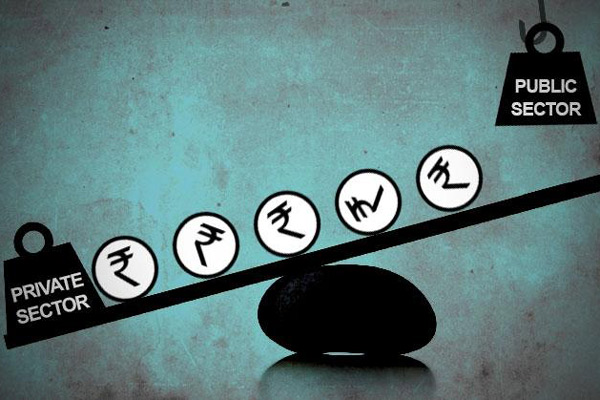
Functioning under government and private sector : a selective analysis

0
Image source - https://bit.ly/2CmObRD

This article has been written by Golock Chandra Sahoo pursuing Personal Branding Program for Corporate Leaders and has been edited by Shashwat Kaushik.

This article has been published by Sneha Mahawar.

Introduction 

I am writing this from my real experiences of working in different sectors in different capacities. My initial appointment was with the state government for some months, and after that, I switched over to the Government of India. I retired on superannuation in 2015. Then I again had an assignment with the state government as a consultant for more than one and a half years, and after that I worked with a government of India autonomous organisation, and finally I came to purely private sector entities. This paper projects differences in the work cultures of various organisations analysed from different perspectives.

By government entity, we mean an authority, a board, or any other body, including a society, trust, or corporation set up by an act of the Central or state legislature. The regulatory entity is a slightly different entity that includes any board, commission, agency, division, or other unit/sub or subunit of state government regulating one or more professions, occupations, industries, businesses, or other endeavours operating in the state. But private entity means any natural person, corporation, general partnership, limited liability company, limited partnership, joint venture, or business trust operating in profit or non-profit mode. Keeping all these definitions in view, one may think of the pattern of functioning of various entities. Government functions for the people, by the people, and of the people, and so the functioning is all for the welfare measures of the countrymen, where no other motive is there. But privately managed entities function differently, with a specific purpose and motive. These differences can be selectively described as follows.

Working with laws, rules and regulations

Government units, offices/departments and government undertaking entities function with a set of laws, rules, and regulations devised for the purpose by the government under various acts, rules, or executive instructions. This being the case, the functioning of such units is very systematic and uniform throughout the state or country. But seldom has any private organisation made a set of rules for its management. The people in charge of such entities adopt different accounting practises and different ways of administration suitable to them, so very rarely can one see the commonality in managing such units. This is perhaps the major difference between the two.

Fixed position with accompanying hierarchy

Government departments function on a well-defined hierarchical up-gradation. One may have an opportunity if she/he continues in the assigned activities with some years of recorded experience that allows for a rise in the ladder. Here, ability and expertise are not the basic criteria to determine one’s eligibility to differentiate and upgrade the position. Entry made in the Annual Performance Appraisal Report (APAR), be it right or wrong on the writing of the Reporting officer or next reviewing authority, is taken to decide eligibility by the Departmental Promotion Committee (DPC). It sounds embarrassing insofar as reliance is placed on the entry made in the APAR by the DPC. But this is never an issue with private organisations. The ability to work with expertise is perhaps the only benchmark on which one is positioned or upgraded. Other than a family based business or a one-person company, expertise in terms of performance attracts up-gradation everywhere in terms of remuneration or position. No APAR approach is there. It can be confessed here that APAR is a means of manipulation, though not in 100 percent of cases under the government, where ratings are given not just on expertise or seniority but something off the record that is called flattery. Many flatterers get the opportunity to be upgraded more easily than their counterparts, even crossing many of their seniors in the line due to the best-recorded entry in their APAR. These promotions are popularly recorded as out-turn promotions.

Another bottleneck under the government is upgrading the communities not on the basis of merit or seniority but on the basis of reservation. The reservation policy works at the time of recruitment and equally at each stage of promotion. As a result, in most cases, people much lower in seniority and merit are there to control the most brilliant personalities belonging to the general class after being promoted. This ultimately demotivates many in the service, while the standard of work gradually deteriorates with an in-experienced hand in a higher role. Most failures to administer under government in the right perspective are attributable to this cause. The government is aware, yet it can’t take any action due to the constitutional remedies available for the reserved categories. In my case, with a lot of expertise and seniority, I had to work under a person who was fifteen years younger than me and who was even trained by me while he was recruited for a junior clerical position in my department. The pain I have felt then is shared by many, and this condition is persisting even now in the face of the verdict of the Hon’ble Apex Court, where it was directed that reservation amenities should be there once with the initial recruitment and not with each stage of promotion in the hierarchy.

Under private management, this type of differentiation never works. Designation never has any implication so far as employment under private management is concerned. A man with even no designation can have a sumptuous earning only if she/he is capable of working to the satisfaction of management. Management recruits only those people who are capable of being multitask masters and managing more assignments than the assignment for which their recruitment is made. Out-turn is very much there in private management to be recorded to decide incentives or remuneration. But in government entities, no one is bothered by the outturn. Salary is secured there like anything else. But private management has every right to act against the remuneration interests of its employees if out-turn is not up to par. Hire and fire is the real mantra with private agencies. But under government-managed bodies or institutions, the mantra is hire and care. None can be dismissed from their job so easily, and the government cares for all in a regular role. The government has schemes of assured career progression on the basis of which one can be upgraded with pay revision (but not with position) three times in the life span of employment after 10, 20, and 30 years of service.

Job satisfaction and job delight

These are two phases of experienced personnel. Job satisfaction is a positive stage, whereas job delight is negative. When a person gets experience due to his long stay in a fixed position and assignment, he gets job satisfaction, and as he becomes competent to clear all assigned functions in a short time, that phase of employment converts to the job delight phase. That means in this phase, the initial time consumption for doing the assigned task gets reduced substantially. Thus, a time comes due for delight when that employee clears all his/her assigned tasks in a short time and the balance of time in the office is utilised for gossiping. This position affects all other employees working nearby. Therefore, it is essentially required that all such personnel in the job delight phase be rotated for some different assignments or be allotted with some change in assignment. This is the principle of HR management. But seldom can one find any such rotation, job change, or additional assignment in government offices. People can rot in a particular position with a particular task for years.

Under private management, more care is taken to see that a person is allotted work in the area in which s/he is comfortable. Yet, no fixed assignment is there for all time. One person can be assigned work of any kind without any differentiation. So here one is to be the master of all assignments for a safe continuation there. Recruitment here is not a traditional step under the government. The annual exercise is there for all sorts of recruitment under government, starting from notification to search machines, short listing to conducting written tests, and finally selecting candidates on the basis of viva, or personal one-on-one face-to-face interviews. The system is no doubt time consuming and cumbersome, and it involves huge costs. Very recently, the Central Government under the Department of Personnel and Training (DOPT) has withdrawn viva voce for some recruitments of Group B and below positions. Yet, to finalise one annual panel to be effective until the time the next list comes is a very tough job. But under private management, everything is done on a selective basis so that the selection of candidates for any position is not unduly delayed.

Corporate Social Responsibility of businesses

This is perfectly applicable to private entities or public sector undertakings where such entities earmark a portion of their declared profit annually for social development. This action directly or indirectly aids the institutions in growing in some other direction, bringing about a change in the status of the people in the nearby vicinities. But seldom in any government department may one notice such a type of assignment of funds. Management of women employees in the workplace is gradually gaining momentum with the entry of a large number of women into the work arena in private and public sector units. So some organisations are assisting the women employees by opening crèche facilities inside the office building or nearby so that newborn baby care can be taken there, facilitating women employees to manage their work hassle free. The development of roads, markets, housing sites, parks, and malls, including the opening of crèches, are the items covered under corporate social responsibility,  and it is now perceived that this is perhaps the greatest action to develop the economic well-being of the people working there as well as the neighbourhood of nearby localities.

Work culture

So far as the work culture is concerned, it is really different in all the organisations. We may take one case for purchase. All government purchases are guided by different provisions of the General Financial Rules (GFR). For making a purchase exceeding a specified amount under GFR, calling for a quotation is a must. This should be preceded by indenting with due recorded justification. Of the quotations obtained by different sources, a rate comparison is made, and the lowest quoting firm gets the purchase order. Again, after procurement, the quality of the material is tested before the firm is finally paid. So under government departments or public sector undertakings, this is the accepted procedure. But in the case of private entities, such time taking and lengthy steps are never resorted to, and any procurement can be made directly just by having some market survey or market information. So work performed by five people in government offices can be managed by one person in private management. Even rate consideration is there in almost all cases to procure without payment of GST. Suppliers prefer private entities to evade the tax liability due to them. This is certainly a bad practise. People in management have a great say in the matter. Under the government, such a type of transaction is rare.

 Here I would like to add that, presently, I am working as an internal auditor in an autonomous private college, where no specific rule is there to be observed so far as procurement is concerned. Management trusts them, perhaps unknowingly, because they favourably loot the entity’s funds. Even then, the auditor working internally has no say, and every such case is internal to the internal auditor. This is a case in reality where I simply rely on the recommendation of the management in most of the cases to give clearance for payment without any examination of admissibility, as was or is being done at the government level. Though I know that internal audits are a great quality management tool for evaluating and improving business-critical processes and can tell the top management what is working well, what is broken, and what is about to break, I feel that I am not being given the due management recognition to opine freely. This is perhaps the greatest loophole in private management, where they retain internal auditors for record sake but function at their whims.

Another issue is that in government departments for effecting any transaction, more people are generally there in comparison with private entities. On government records, an attempt is made to maintain the economy for efficiency and effectiveness while positioning more people for smaller tasks. In private entities, one man does everything as a person of prudence. So perhaps the economy is there in an established manner. Therefore, I feel that economy, efficiency, and effectiveness in transactions are more available at the level of private entities. Government people attempt to set papers in the right position, under the cover of which they make rampant corruption without any check, but corruption under private management is the least in comparison.

Performance ethics

More ethics are needed to run a government establishment. I remember an issue from my time working in a government department. I received a complaint from some people that one of my sub-ordinate staff members is regularly visualising pornography on the office computer during office hours. I did not put that complaint in the right perspective. Yet, after some time, I thought of checking the actual scenario. I rushed to the spot and found that he was busy enjoying the porn show. Mentally, I was too hurt and called for an explanation from that gentleman. I made an adverse entry in his APAR. The entry made there could block him from being promoted for the next two years, and he was only upgraded upon my exonerating him from my remark recorded in APAR stating that his conduct has changed in all these two years. That was a very bad experience. But yet, I feel that laws under the government can take care of all good or bad action inside and while carrying out the official responsibilities. No such regulations exist for privately managed entities, where they can resort to firing an employee when the purpose of retaining them is not met.

Conclusion

Thus, it may be said that there are a lot of differences between private, public, and government entities as far as their functioning is concerned. All such units function in their own way. Targets are there for all, but the accomplishment of the target is only observed by private entities. In government, since punishment is minimal, targets are only on record. Yet action centres are more associated with private entities than the government.


Students of Lawsikho courses regularly produce writing assignments and work on practical exercises as a part of their coursework and develop themselves in real-life practical skills.

LawSikho has created a telegram group for exchanging legal knowledge, referrals, and various opportunities. You can click on this link and join:

https://t.me/lawyerscommunity

Follow us on Instagram and subscribe to our YouTube channel for more amazing legal content.

Download Now

All you need to know about Criminal Procedure (Identification) Act, 2022

0

This article has been written by Burre Anitha and has been edited by Shashwat Kaushik.

It has been published by Rachit Garg.

Introduction

The Criminal Procedure (Identification) Act of 2022 became law on April 18, 2022, upon receiving the President’s assent, replacing the Identification of Prisoners Act, 1920, a colonial era law.

The new Act allows the police and prison authorities to collect, analyse, and store physical and biological samples, including retina and iris samples of the convicted. The old act is limited to the collection of fingerprints, foot impressions, and photographs of the convict.

The advancement in technology and scientific techniques used in criminal investigation is the main reason for the formation of new acts.

All about Prisoner’s Act, 1920

  • The Identification of Prisoners Act, 1920, is applicable to the entire country except for the territories that were part of the Part B States before November 1, 1956.
  • In this Act, measurements include fingerprints and footprints.
  • Persons who have been sentenced for a year or more and persons who have been ordered to give security for maintaining peace or good behaviour under Cr.P.C. have to provide measurements.
  • A police/ prison officer can take measurements from such people.
  • Refusal to provide measurements is an offence under Section 186 of the Indian Penal Code.
  • If a person who has not been previously convicted of an offence punishable with imprisonment for one year or more is released without trial or acquitted, all the measurements and photographs taken must be destroyed unless the court, the District Magistrate, or Sub-Divisional Officer directs otherwise.
  • The state government has the authority to make rules.

Criminal Procedure (Identification) Act, 2022 

What is it

The Criminal Procedure (Identification) Act, 2022 seeks to collect ‘measurements’ from certain classes of persons and further allows for their processing, storage, preservation, dissemination, and destruction with the aim of identification and investigation in criminal matters and for the prevention of crimes.

Measurements include:

  • Finger-impressions,
  • Palm-print impressions,
  • Foot-print impressions, photographs,
  • Iris and retina scan,
  • Physical and biological samples and their analysis,
  • Behavioural attributes, including signatures, handwriting, or any other examination referred to in Section 53 or Section 53A of the Code of Criminal Procedure of 1973.

Section 53 of the 1973 Code of Criminal Procedure includes the examination of blood, blood stains, semen, swabs in cases of sexual offences, sputum and sweat, hair samples, and fingernail clippings by the use of modern and scientific techniques, including DNA profiling and such other tests as:

Section 53A of the Code of Criminal Procedure of 1973 includes knowing the:

  1. Name and address of the accused and of the person by whom he was brought,
  2. age of the accused,
  3. marks of injury, if any, on the person of the accused,
  4. description of material taken from the person of the accused for DNA profiling, and
  5. other material particulars in reasonable detail.

Who can collect the measurements 

The police,the prison officer, a registered medical practitioner, or any other person, or his authorised person, who can collect the measurements as per the Act.

 Measurements could be collected from:

  1. Any person convicted of any offence under any law in force.
  2. Any person who has been detained under any preventive detention law.
  3. Any person ordered to give security for maintaining peace or good behaviour under 117 of the Cr.P.C. for proceeding under sections 107 to 110 of Cr.P.C. can provide the measurements.

These people are compelled to give all measurements except biological ones. But however, all the persons who have committed crimes against a child or a woman and who have been convicted with imprisonment of 7 years or more are compelled to provide the biological measurements as well.

Further, the Act expands the scope of persons to whom measurements can be compelled. Provided, the magistrate can order any person to give their measurements if he deems it fit for an investigation or proceeding under any other law.

Refusal to give measurements

Any person who has refused to give measurements to police or prison officers is considered to have committed an offence under Section 186 of the Indian Penal Code, 1860.

Process and storage of the measurements:

  1. The Act provides notification for collection, preservation, and sharing to state-level agencies.
  2. Provides these records to law enforcement agencies.
  3. These records are stored digitally or electronically for 75 years without deletion.

However, the records of measurements could be deleted from the database only for persons with no convictions at any point in time and who were released without trial, acquitted, or discharged of the offence alleged against them.

This can be done only after all the legal remedies against such a release/acquittal have been completed.

The deletion of such records of measurements is done only at the discretion of the magistrate.

Authority 

The National Crime Records Bureau (‘NCRB’) is the nodal agency for storing, preserving, destroying, processing, and disseminating ‘records of measurements’. 

Provisions of Criminal Procedure (Identification) Act, 2022

The Criminal Procedure (Identification) Act, 2022 has many provisions but the key provisions are stated below

  • Section 1- Short title and commencement 

The Act is called the Criminal Procedure Identification Act, 2022, and it came into force on a date specified by the Central Government through a notification in the official gazette.

  • Section 2- Definitions

The Act provides definitions for various terms, like

  1. Magistrate as a judicial officer of a specific rank.
  2. Measurements include both physical and biological samples.
  3. A police officer is officer in charge who is not below the rank of head constable.
  4. Prison officer means below the rank of head warder.
  • Section 3- Taking of measurements

It mentioned from which class of persons the measurements are to be taken, like

  1. Convicted under any offence and punishable under any law for the time being in force.
  2. If the person has been ordered to behave well or keep the peace by the court concerning certain legal proceedings.
  3. If the person has been arrested for a crime or detained under a preventive detention law.
  • Section 4- Collection, storage, preservation of measurements, and storage, sharing, dissemination, destruction, and disposal of records

The National Crime Records Bureau is the authority for the collection, storage, and destruction of the measurements. The Act specifies that the measurements are to be preserved digitally or electronically for a period of 75 years.

Provided that where any person who has not been previously convicted of an offence punishable under any law with imprisonment for any term has had his measurements taken according to the provisions of this Act and is released without trial, discharged, or acquitted by the court after exhausting all legal remedies, all records of measurements so taken shall, unless the court or Magistrate, for reasons to be recorded in writing otherwise directs, be destroyed from records.

  • Section 5- Power of the magistrate to direct a person to give measurements 

The provision grants authority to the magistrate to order a person to provide measurements for an investigation or proceeding under the Code of Criminal Procedure or any law for the time being in force. The person must comply with the orders of the magistrate.

  • Section 6- Resistance to allow taking of measurements

If any person bound to provide measurements resists or refuses to give measurements, then the police officer/prison officer can take measurements as prescribed in the law.

Resistance or refusal to provide measurements is considered an offence under Section 186 of the Indian Penal Code.

  • Section 7- Bar of the suit

This provision states that no legal suit or proceeding can be initiated against any person for acting in good faith under this Act or any rule made under it.

  • Section 8- Power  to make rules

The Central and state governments have the power to make rules for carrying out the purposes of the Act.

These rules include the manner of taking, collecting, storing, and disposing of the measurements and may include any other necessary provisions.

  • Section-9 Power to remove difficulties

If any difficulties arise in implementing the provisions of the Act, the Central Government may issue an order to resolve the issues. However, such orders must be published in the Official Gazette and cannot be made three years after the Act’s commencement.

Advantages of Criminal Procedure (identification) Act, 2022

Criminal litigation

Use of modern technology 

The previous Act was limited only to fingerprints and footprint impressions, which are minimal sources for catching criminals. In the new Act, there is storage of not only mere fingerprints or footprints but even biological samples, which are stored in the DNA bank, which makes it easier to catch criminals.

Expansion in the list of criminals

The new Act enables the expansion of taking measurements from people and makes the evidence more accessible. So the investigation becomes easy for the authorities.

This makes the investigation easier, and the conviction rate increases.

Drawbacks of Criminal Procedure (Identification) Act, 2022

Vagueness in the terminology

  1. The term “biological samples” is not defined properly, so it could lead to breaches of bodily samples related to DNA.
  2. Private details and medical histories could be unnecessarily stored.
  3. Due to the storage of the individual’s DNA, the family history will be known, which leads to information about the individual’s family.

Degradation of the biological samples

Biological samples are prone to contamination and degradation. The Act doesn’t clearly mention the contamination. In India, the samples are stored by the police, and they lack infrastructure for the storage of samples.

Excessive collection and storage of  measurements

Due to excessive storage and collection of the data, which leads to the creation of extensive databases. It may increase the chances of identifying criminals. Still, due to a lack of people in forensic and other criminal departments, it leads to more excessive work rather than solving the issue.

Cost compliances

Not only for the creation of the DNA databank, but also for the collection process, which also requires a lot of funds. The process of digitization needs a lot of time and funds, which are limited in comparison to the budgets for similar databases in other jurisdictions.

Issues with the NCRB’s role

It is well known that NCRB outsources the day-to-day management to private contractors, which affects the reliability of the data and samples given. It could be easily available to others, which intrudes on their right to privacy.

Disposal or destruction of measurements

The process of destroying measurements is not mentioned. This may lead to confusion about when and how the measurements are to be disposed of, and doubts may arise about whether the measurements are disposed of or not.

Conflicts with Constitutional Law

Issue with Article 14 (Right to Equality)

Due to excessive power delegation to police, prison authorities, or magistrates, they may compel more people to provide their measurements, and even rejection of giving the measurements is also a crime. Such excessive and uncontrolled powers may lead to discriminatory use of powers, which intrudes on the right to equality as enshrined in the Constitution of India.

Issue with Article 21 (Right to Privacy)

The Act’s coverage of the collection of measurements is overboard. So, even the people who  got arrested are compelled to give measurements, which intrude on their right to privacy.

It not only intrudes on the right to privacy of the convicted persons but also of every citizen of India, as the biological samples being collected make it easier to know the family genealogical conditions.

Issue with Article 20(3) (Right Against Self Incrimination)

The word biological samples is not defined properly. This leads to the forced collection of biological samples, which is in conflict with Article 20(3) of the Constitution.

Conclusion

The word measurement has more coverage in the Criminal Procedure (Identification) Act, 2022, compared to the Prisoners Act, 1920, and the word biological samples is not defined properly in the new Act. India is a democratic country, and that doesn’t mean we should intrude on someone’s right to privacy. To resolve this issue, the government has to introduce a Data Protection Bill to safeguard the sensitive information of the public. There is a great need to construct more forensic labs and data storage banks in the country.

We agree that there is a need to improve the efficiency of investigations, and for that purpose, the collection of measurements is essential. But this cannot be implemented at the cost of intruding on the fundamental rights of the citizens of the country.

References


Students of Lawsikho courses regularly produce writing assignments and work on practical exercises as a part of their coursework and develop themselves in real-life practical skills.

LawSikho has created a telegram group for exchanging legal knowledge, referrals, and various opportunities. You can click on this link and join:

https://t.me/lawyerscommunity

Follow us on Instagram and subscribe to our YouTube channel for more amazing legal content.

Download Now

Interaction of artificial intelligence and intellectual property

0

This article has been written by Safitha Rahim pursuing a Diploma in US Intellectual Property Law and Paralegal Studies at LawSikho and has been edited by Shashwat Kaushik.

It has been published by Rachit Garg.

Introduction 

Intellectual Property Rights (IPRs) are those intangible assets that are granted to the creator or inventor of a valuable creation of mind or invention that can be monetized and gain a certain reputation. Intellectual Property Rights include copyright, industrial properties like trademarks, patents, trade secrets, designs, and traditional rights. Intellectual property is an evolving yet very important aspect of the global money market.

Artificial Intelligence (AI) is a type of machine with human-like intelligence built from complex algorithms and mathematical functions. A machine will only become artificially intelligent if it has generalised learning skills, reasoning ability, and problem solving capacity. In the general sense, it is a programmed machine mimicking human behaviour. There are mainly three different categories of artificial intelligence. They are:

  • Artificial Narrow Intelligence

This type of AI is considered weak. They are programmed to perform only specific Tasks. The best examples of this weak AI are Alexa, social humanoid Sophia, etc.

  • Artificial General Intelligence

This type of AI is considered strong AI. They are programmed to perform any task that requires human intelligence.

  • Artificial Superintelligence

This type of AI is hypothetical because it is not programmed in reality. It is calculated that this type of AI can surpass humans with its programmed intelligence.

Intellectual property and its interaction with artificial intelligence have created new works in the present time. Many controversies have been raised about it. The main dilemma is whether the machines are conquerors of human creativity or creators of new works.

Artificial Intelligence and copyright

Chapter 3, Section 13 of the Copyright Act of 1957 defines the work that will get copyright. Copyright law only recognises the creation of minds that are original; that is, they should have a human author.

Artificial Intelligence has been used in works of art since the 1970s. The Artificial Intelligence tools have been used and are currently being used at a more advanced level in writing literary works, journalism, music creation, drawing, and gaming. For example, Google owns an AI company named Google DeepMind. This company’s deep learning algorithm does not have any rules, but their motto is to learn. To be more specific with its creation, the computer software can generate music while listening to sound recordings.

India’s Copyright Act, 1957, expressly defines who is an author of a computer programme under Section 2(d)(6) and what is a computer programme under Section 2(ffc). The computer software is copyrighted under literary works, and this copyright can be protected for a period of 70 years after the death of the author. But whether the artistic work created by an AI is copyrighted under the respective law will be a topic of discussion.  Recently, the US Copyright Office issued rules regarding the use of AI in newly created artistic works, stating that copyright will only be granted to the material part that a human created and not to AI. 

In the landmark case of Infopaq International A/S vs. Danske Dagblades Forening (2009), the Court of Justice of the European Union held that a work generated from a computer programme can only be protected if the author’s creativity is included.

Even though the law does not expressly prohibit copyright for AI art works, the laws are not amenable to works lacking human creativity.

Who will be the owner

The core question regarding the new creative work generated by an artificially intelligent machine is that who is the owner of the work? Whether it is the programmer of the AI software, the person who is using the particular AI to create that work, or the AI itself. Generally, the author gets the copyright over the created work, but if the author is an AI software, then the generality cannot be followed. If the AI software is to be recognised as the author of the created work, then the AI machine should be granted the status and rights of a human.

At present, when AI generates creative work, usually that part will be excluded from the copyright, and only the human creativity in the work will get copyrighted. It is because AI is not actually producing new work; it is mimicking what it learns during its programming. Because the creative work that AI software makes will have a substantive similarity to what it learns, The introduction of ChatGPT into the writing world has compressed the complex writing process to a single click. Because AI software learns from millions of pieces of information and utilises the information when it creates new works. AI can function for a minimum of time and generate complex tasks that may be impossible for humans to do alone. The newly created masterpiece ‘The Next Rembrandt’ using cutting-edge information technology has astonished the world because AI has reclaimed the classic era of masterpieces. 

Artificial Intelligence and trademarks

Section 2 (1)(zb) of the Trade Marks Act of 1999 defines the term trademark.

The trademarks, logos, and brands are the source of identity for the products or services offered by the particular company, trade, or commerce. Trademarks are an important aspect of the current economy because new businesses and start-ups are emerging each and every day.  There are thousands of brands and thousands of creatives to support those brands. Thereby resulting in continuous growth in the number of registered trademarks and the number of applications for trademark registration. 

Artificial Intelligence has a significant effect on the creation of a trade mark or logo. The trade mark can be well groomed, from its font style to the impression that can be left on a customer, with the help of AI software. But unlike copyright, here the ultimate idea of the respective mark will be the creation of a human mind, and the AI can make it more appealing to the eyes of the customers. 

The important aspect of the AI software on trade marks is its efficiency to collect a broad level of data and analyse it within seconds, thereby saving human labour, money, and time. The AI tools can make better use of databases and search engines. Due to the increase in registered trademarks and trademark applications for registration, it will be hard for a human to scrutinise every single application and identify deceptively similar marks, identical goods, and similar services from them. Whereas an AI software can exploit the search engines to the fullest and thereby find deceptively similar and confusing products and services by comparing one mark with another, and even the AI software can assess to some extent whether the trademark will get approved by the registry for registration.

One of the landmark cases related to trademark infringement is Lush vs. Amazon (2014). In this case, it was held that Amazon used the Lush keyword on Google to achieve wrongful gain by utilising the reputation of the Lush cosmetics company, where Lush was not interested in selling their products on the Amazon e-commerce platform. Thereby, Amazon has infringed on the Lush trademark.

As far as trademarks are concerned, the success rate of the products and services in the market will mostly depend on the perception of the customers. The AI software can help with customer searches, recommendations, and suggestions. The AI can make the product recommendation by highlighting the product’s use, quality, and efficiency and thereby boost the interaction between the products and customers, but the ultimate discretion will be on the customers to decide whether to buy the product or not. 

What if AI does not give desired result

The artificially intelligent machine can help with trademark searches and customer interaction to a great extent. But if the AI software does not give the exact search results, has a default in their analytical review, or does not notify similar marks, then it will be a problem for the person who is using it. Even though the AI software offers a global range of monitoring solutions for trademarks, how much can we trust it? 

Artifical Intelligence and patent

A patent is a type of intellectual property that prevents a third-party from using, selling,or making the invention of the patent holder. The patent is for a period of 20 years, which can be renewed by payment of a prescribed fee. The invention should be subjected to the inventive steps under Section 2(1)(ja) of the Patents Act of 1970 and need to have some essential features if it wants to get patented. They are:

  • Novelty
  • Non-obviousness
  • Industrial application 

Section 3(k) of the Indian Patent Act of 1970 expressly prohibits granting a patent to an invention by an Artificial Intelligence. Even though there are software patents or business method patents related to technology, when it comes to the inventions made by Artificial Intelligence, it is an entirely different scenario.

Machine learning, deep learning, and artificial Intelligence have taken innovations to the next level. But what happens if the inventor is itself a machine? The patent has granted a monopoly to its inventor, so the inventor can commercially exploit the invention. Because the intellectual property laws provide recognition for the invention as a reward for the innovation of the inventor. Currently, well developed countries use AI software to stimulate their innovative abilities and use the AI to create inventions too. If these inventions are not patented due to the participation of AI in them, then what will happen to the money and time they invested in their creation? The reality is that AI is used to assist with the potential database and simulation for the invention. Human creativity as well as machine learning skills are combined and used to create innovation.

But there is an actual instance where the inventor of an innovation is an AI machine.

In the landmark case of DABUS (Device for the Autonomous Bootstrapping of Unified Sentience), created by Dr. Stephen Thaler, the applicant was the AI machine itself. The patent offices of the USA, England, and Australia have rejected the application on the basis that the inventor should be a natural person and not a machine. At last, for the first time in the history of intellectual property rights, an AI machine has been granted a patent from South Africa on July 28, 2021.

Artificial Intelligence and design

Section 2(d) defines the term design under The Designs Act of 2000. Designs are the functional aspects of a product that can make a relevant impact on the minds of customers. The designs can portray the aesthetic values of the products, thus forming relevant parts of them.

Artificial Intelligence  has the ability to design not only logos but also web pages and apps. Artificial Intelligence’s introduction to the world of design has opened a new age of mass communication and the utilisation of diverse art styles and software, different from the decades of traditional ways of designing. With the help of AI, any person can create a design that depicts exactly  what the designer intends to say through the design work. There are AI image generating creative platforms like DALL E  2 and MIDJOURNEY. These types of AI can generate realistic images and designs from simple descriptions in the natural language, that is, prompts. The prompt should not be complicated for the AI to perceive, and the description given can be in different styles. But the most insane feature of this AI software, like DALL E 2 is that it is free. 

The most astonishing AI machine that looks like an emerging threat to designers is Uizard and their newly discovered creation, Uizard Autodesigner. They are also creative platforms that generate unique image prompts. But Uizard can even generate designs from a sketch or doodle drawn on a piece of paper and screenshots of an app. The Uizard Autodesigner is the next frontier of AI design and can generate original multi screen designs with a single text prompt. The possible question that will arise in the minds of readers will be, Whether AI will replace Designers? The answer is No, because human creativity and AI design are co-existing in nature. Actually, AI design acts as a catalyst for human creativity in design.

IP laws and AI in long run

Intellectual Property Rights should be subjected to flexible changes to accommodate the creation of Artificial Intelligence. In a decade, Artificial Intelligence will be present in every aspect of intellectual property. So the recognition of the work made by AI, protection of the work created, and liabilities to the AI if they infringe any right of another person and if they make any work that is against human morals and the law and order of the country are needed to be subjected to discussion. All of these will become reality if there is a human entity to represent the AI as a legal entity. A person who can be sued and sue on its behalf.

If AI creates more work and human creativity shrinks to the point where they have to just click a button to create an artistic work or an invention, that will be a serious problem. Human creativity will die out, and machines will take over. In the World Economic Forum’s The Future Of Jobs Report, 2020 has reported that, by 2025, AI will replace 85 million jobs worldwide and, at the same time, create 97 million jobs.

If AI software dominates, then human to human interaction will be seriously affected. Still, a controlled use of AI in invention and creation co-existing with humans can do wonders. They can upgrade our standard of living, save time and money, increase the efficiency of invention, and give new horizons to the creation of minds and other intellectual properties.

Conclusion

Artificial Intelligence is both terrifying and fascinating. AI has vast and deep influence in the area of intellectual property. The creation of mind and inventions made by artificial Intelligence are not protected under IP laws in the normal sense, but they can be if the overall AI machine is disassembled and examined. That the AI machine should be differentiated into respective parts like core, technology, and technical aspects. The core of AI, which is usually a complex algorithm or mathematical function, should be kept hidden as a trade secret, whereas technology can be exposed to the public, thereby allowing new innovations to be made. The technical use of Artificial Intelligence has been recognised and patented in countries like the United States, China, and Europe.

In this continuously developing world, AI inventions need to be protected on a broader level with suitable and strong laws across all countries because of their influence on large scale businesses, startups, and even individual innovations. For example, let’s look at a scenario where a gaming company invests millions for the music creation of the game with AI, but it cannot be protected under Copyright law, and anyone can use it without payment. It will be an injustice to that creation. The recognition of the rights of an AI machine for its creation and invention is debatable, but it is not impossible.

References


Students of Lawsikho courses regularly produce writing assignments and work on practical exercises as a part of their coursework and develop themselves in real-life practical skills.

LawSikho has created a telegram group for exchanging legal knowledge, referrals, and various opportunities. You can click on this link and join:

https://t.me/lawyerscommunity

Follow us on Instagram and subscribe to our YouTube channel for more amazing legal content.

Download Now

Social audit in India : a myth or reality

0

This article has been written by Golock Chandra Sahoo pursuing a Personal Branding Program for Corporate Leaders at LawSikho and has been edited by Shashwat Kaushik.

This article has been published by Sneha Mahawar.

Introduction

Social audit refers to the on-the-ground evaluation of a program’s or scheme’s implementation and outcomes by the community at large, for whom the government’s welfare programme was introduced with the active participation of the key stakeholder groups. Social audit strengthens participatory democracy, facilitates direct social accountability through face-to-face audit by the beneficiaries/users and so enables beneficiaries and all stakeholder groups to determine the extent of the benefit of available resources reaching the earmarked source. It aims to assess the impact of a scheme undertaken by the government in terms of the benefits derived by the common people and acts as an eye opener for the implementer as well as the government to have a concrete idea of the ground reality of the implemented scheme. The Government of India (GoI) initiated the states to take up this audit for all flagship schemes and programmes and agreed to bear 100 percent of the cost incurred for such an audit. A survey of the literature on social audit showed that there was hardly any study on this sensitive issue by researchers or stakeholders other than some small comments issued by various audit entities of the Comptroller and Auditor General of India (CAG) as well as state audit bodies. It is doubtful whether government directives are being followed everywhere to arrange social audits.

insolvency

What is a social audit

Under the 73rd and 74th Constitutional Amendments, a finance commission for each state was established, and devolution of funds, functions, and functionaries shifted from the then government’s control to the full charge and authority of Panchayati Raj Institutions (PRI) and Urban Local Bodies (ULB). Efficiency and efficacy to effectively maintain and manage such a huge responsibility were actually tough tasks. Yet, the devolution added wings to the PRIs and ULBs to march in the direction the amendments intended. The concept of Social auditing came about at this point in time. Fund meant for the welfare of the masses, whether reaching grass root beneficiaries was the need of the masses to check the success as per their needs and measure on spot. Social Audit is thus the verification of the right implementation of a programme/scheme and its results by the community in general, for whom the welfare scheme of the government has been launched with the active involvement of the primary stakeholders. It aims to assess the impact of a scheme undertaken by the government in terms of the benefits derived by the common people and acts as an eye opener for the implementer as well as the government to have a concrete idea of the ground reality of the implemented scheme. Keeping this principle in mind, under the Mahatma Gandhi National Rural Employment Guarantee Act (MGNREGA) 2005, relevant provisions for Social Audit were incorporated. As per Section 17 of the Act, the Gram Sabha would monitor the execution of works within the Gram Panchayat (GP) and conduct a regular Social Audit of all the projects under the scheme taken up within that GP. The GP shall make available all relevant records to the Gram Sabha for social audit.

Difference in between social audit and general audit

Over the years, CAG conducted performance audits of socio-economic developmental programmes of the Central and state Governments and gathered audit evidence such as beneficiary/stakeholder surveys, physical inspections, audio-visual recordings, statistical samplings, etc. As part of their audit. That means the performance auditing at so many places was not covering the principles associated with social auditing in all the modalities, government auditing does. There was actually no real/cent percent means to check all on the spot executed activities meant for the launched welfare schemes that differentiated CAG audit from social audit being intended to be done by the masses. There is synergy between CAG audits and Social audits. While social audits are considered a very powerful mode of ensuring people’s participation in the monitoring and evaluation of any scheme, the follow-up action based on the reports submitted to the government as well as the institutionalisation of the process is an equally critical aspect. The CAG audit, no doubt, brings all deficiencies to the attention of bureaucracy via media reporting in the form of audit paras that reach the Public Accounts Committee for wider information on various involved authorities in the line of Rural Development/urban Development administration. Under the Performance Auditing guidelines of CAG, social audit meetings may be attended by the audit team on the spot during the time of their prescribed audit. So social auditing is covered under CAG audit and not vice versa.

Concept of social audit

Since independence, the general public has had no access to how government welfare schemes have been functioning. As a result, millions of rupees spent on the schemes and projects for providing Awas (houses), Bijli (power), and Pani (water) to the rural/urban poor actually could not meet the needs of the target population, nor was the impact of the activities on the mass ever assessed. There was a lack of transparency and accountability in implementation during and after, which could not be forecast or foreseen. The general audit taken on the schemes by the CAG, either for financial or performance aspects, was only a check of post-implementation issues, and the only result was that there were much more pointed irregularities, which were seldom rectifiable. 

 Objectives of social audit

  • Promoting transparency and accountability in implementation of a scheme.
  • Informing and educating people about their rights and entitlements under law during/for and after the scheme’s implementation.
  • Providing a collective platform such as the Palli Sabha or Gram Sabha to redress their needs and grievances.
  • Promoting people’s participation in the implementation through capacity building of all stakeholder groups.
  • Finally, creating all opportunities to reach the masses without giving them feeling of neglect or otherwise.

The Action Plan prescribed auditing standards for conducting social audits, including detailed plans of action. Evidently, the coverage under social audit and the patterns were quite different from those of financial, performance, or compliance audits as prescribed under the authority of CAG, India, New Delhi. The auditing standard on social audit as a call of the time may be broadly described as follows.

Auditing standards of social audit

  • A social audit should be held at least once every six months at the Gram Sabha. As per Section 6(1) of the MGNREGA Scheme Rules 2011, Social Audit Units (SAU) shall, at the beginning of the year, frame an annual calendar to conduct at least one social audit in each GP every six months.
  • The date, time, agenda, and importance of such auditing should be widely publicised to ensure maximum participation. As per Section 4(2)(c) of the Rules mentioned above, labourers and the village communities shall be informed about the Gram Sabha conducting a social audit in the Jan Sunwai.
  • The time of this auditing should be fixed in such a manner as to be convenient for all to attend.
  • All officials responsible for the implementation of the project at ground level should be present in the meeting to answer the queries of any members.
  • The minutes of the meeting that conducted the social audit should be recorded by a person other than those involved in the implementation.
  • The register of minutes should contain two signatures as a token of attendance at the meeting and exit  by all the attending members.
  • As far as possible, the minutes of the last meeting may be read out at the beginning of the meeting, along with any action taken.
  • Supervisors/observer nominated by the District Programme Co-ordinator should be      available at the venue of the meeting and should observe the pro-active disclosure of information written on the walls of the Gram panchayat and finally the motto underneath.

Status of implementation of social audit

From various audit reports of the Government of India, it came to our attention that everywhere there were shortfalls in conducting this audit. India is the largest democracy in the world and has the highest population in the world. Corruption was thus rampant because there was hardly any strong system to combat and eradicate corruption at every stage. Vote bank politics is there with every ruling party. Freebies to be promised while an election is around the corner are very much there with the ruling government. A social audit was thus intended on paper to check a certain extent of pilferage and bad work on the spot of execution. The government is publishing widely the effectiveness of social audits on paper. But the reality is that no one in government is giving so much importance to this audit. There is no awareness. With the highest percentage of illiterate people, there is no awareness. Even in cases where some people are a little aware of this audit on the spot, their views are never taken into account for remedial action. Roads, bridges, and buildings built today with crores of people’s money are getting destroyed or damaged in a short period of time due to bad workmanship or bad planning. One should remember that a good plan if wrongly implemented is no plan, and a bad plan with the right implementation is similar. Women’s representation is not as strong as desired. Works are undertaken at the whims of bureaucrats without involving people from the village or without the requisite approval of the Gram Sabha. All these issues are indicative of the ineffectiveness of social auditing, which exists on paper but has no relevance, so to speak, to the people for whom the audit is being conducted. Thus, it may be concluded that social auditing is not a reality but a myth. The government should come up with the right guidelines for the implementation of this audit in the best interest of the country. Otherwise, the mandate for implementing this audit will never be fruitful, and corruption will increase on all fronts to swallow the people’s money.

Conclusion

Social audit strengthens participatory democracy, facilitates direct social accountability through face-to-face audit by the beneficiaries/users and so enables beneficiaries and all stakeholder groups to determine the extent of the benefit of available resources reaching the earmarked source. A social audit, needless to say, is a way of measuring, understanding, reporting, and ultimately improving an organisation’s social and ethical performance. But this may appear on paper as being conducted, but the ground reality is something different.

References


Students of Lawsikho courses regularly produce writing assignments and work on practical exercises as a part of their coursework and develop themselves in real-life practical skills.

LawSikho has created a telegram group for exchanging legal knowledge, referrals, and various opportunities. You can click on this link and join:

https://t.me/lawyerscommunity

Follow us on Instagram and subscribe to our YouTube channel for more amazing legal content.

Download Now

Doctrine of pleasure

1

This Article is written by Adarsh Singh Thakur, a 3rd-year student, at Indore Institute of Law; and Upasana Sarkar, a student at Jogesh Chandra Chaudhuri Law College. This article deals with the doctrine of pleasure, which provides a detailed understanding of the relationship of the Government with its civil servants. It also discusses the scope, origin, and history of the doctrine of pleasure. It also gives a detailed analysis of the doctrine of pleasure in India and the UK, and a comparison is made between them.

It has been published by Rachit Garg.

Introduction

Civil Services were introduced in India during British rule therefore, their laws and regulations were also applied in India as per the needs of the country. After the independence of India, the civil services were provided Constitutional Status.

The laws of England still have a great influence on Indian laws. The doctrine of Pleasure is one of these concepts which has been introduced in India under British rule. Under this doctrine, the civil servants were regarded as servants of the crown and these civil servants served at their pleasure.

What is the meaning of the doctrine of pleasure?

As mentioned before, this doctrine originated in England. In England, the Crown is regarded as the Executive head and the civil services are part of the Executive. The doctrine of Pleasure means that the Crown has the power to terminate the services of a civil servant at any time they want without giving any notice of termination to the servant. Thus the civil servants work at the pleasure of the Crown which can remove them at any time. When the civil servants are removed from their service, they do not have the right to sue the Crown for wrongful termination and they also cannot ask for damages undergone due to wrongful termination. This doctrine is based on the concept of public policy and whenever the Crown feels that a civil servant should be removed from his office because keeping him will be against public policy, the Crown can remove such servant.

History and origin of the doctrine of pleasure

The doctrine of pleasure originated in England and came to India with the entry of the East India Company. At that time, India was under British rule. This doctrine owes its foundation to the Common Law. The British introduced this doctrine in India. It is derived from the Latin phrases durante bene placito and durante bene placito regis. It means during good pleasure and during the good pleasure of the King, respectively. The King was considered to be the representative of God and so their decisions cannot be questioned by others. This doctrine was developed from the concept of the Crown, and it was thought that the king is a person who will always be infallible. It is believed that the servants of the Crown can hold their office at its pleasure and can be dismissed at any time the Crown wished. The tenure of the civil servants is not fixed, as they could be removed from their service without giving notice or stating the reasons for their termination. The civil servants were not allowed to ask about the reasons for their termination. Even the existence of a contract could not stop the Crown from dismissing the civil servants. Therefore, it shows that the relationship between the Crown and the civil servants is one-sided, as the Crown cannot be questioned by the servants for its decisions. 

In India, during British rule, the Crown exercised this doctrine to remove any civil servant at any time they wanted. They worked only under the goodwill of the Crown. In spite of the East India Company being in power in India, the Crown had supreme authority to dismiss any civil servants whose appointments had been made by it in the East India Company. The Crown had the ultimate power in all sayings. The incorporation of this doctrine was first made in the Charter in 1833 and subsequently acknowledged in British India with its insertion in Section 240 of the Government of India Act, 1935. So it can be said that this doctrine emerged in India before its independence. 

In the era of post-independence, English law still has a wide impact on the Indian legal system. So this doctrine is considered an important doctrine that was established at the time of British rule. It is one of the important theories that is still being followed in India. This notion states that the employees of the Government are similar to the civil servants of the Crown, who carry out their responsibilities at the whim of the employer. The employee has no right to question the employer in case of dismissal.

Scope of the doctrine of pleasure

The doctrine of pleasure discusses the tenure of civil servants under the Crown. In the case of Shenton v. Smith (1895), the Privy Council explained the doctrine of pleasure and upheld its importance. While explaining it, the Privy Council opined that in the absence of this doctrine, it would be difficult to remove those public servants from their service whose continuance in the office would have a detrimental effect on the State. In other words, it will be difficult to remove those civil servants if it becomes mandatory to show some sort of evidence of the offence to satisfy the court. This doctrine was again upheld in the case of Dunn v. Queen (1896), where it was observed that public servants have no fixed tenure. So they can be terminated from their service at any time on the Crown’s whim. In other words, it meant that the Crown could exercise its discretionary power to dismiss any public servant from employment. Therefore, it can be concluded that civil servants can hold office only at the pleasure of the Crown.

What is the position of doctrine of pleasure in India

The doctrine of pleasure is also followed in India. Since the President of India is the Executive Head of the Union and he enjoys the same position as the Crown enjoys in England, the President has been vested with the power to remove a civil servant at any time under this doctrine.

While this doctrine has been adopted in India it has not been blindly copied in the same manner as it is followed in England and there are some modifications which exist in India’s adoption of this doctrine from that of England. In India, Article 310 of the Indian Constitution embodies the provision for this doctrine.

According to Article 310, except for the provisions provided by the Constitution, a civil servant of the Union works at the pleasure of the President and a civil servant under a State works at the pleasure of the Governor of that State. This implies that the operation of the Doctrine of Pleasure can be limited by constitutional provisions. Under the constitution, the following are excluded from the operation of this doctrine:

  1. Judges of the Supreme Court;
  2. Judges of the High Courts;
  3. Chief Election Commissioner; and
  4. Comptroller and Auditor General of India.

Thus, this doctrine is not absolute and is subject to Constitutional provisions. The civil servants can also be excluded from the operation of this doctrine because they have been provided with some protection under Article 311 and thus this doctrine’s application can be limited to civil servants as well.

What are the constitutional safeguards for civil servants

The Civil servants have not only been provided with Constitutional status under Article 308 but they have also been granted some protection under Article 311. By providing the civil servants with these protections, the confidence of the public in the civil services is maintained and the civil servants are also provided with the assurance that they can honestly carry out their duties without any fear of unjust or unlawful removal from their office under this doctrine.

The following are the protections available to a civil servant under Article 311 of the Constitution:

1.  No dismissal by subordinate authority

Under Clause 1 of Article 311, a civil servant can only be removed from his services by the authority who had appointed him or some other person who has the same authority or rank as the appointing authority. So, any person who is subordinate in authority to the appointing authority, cannot remove a civil servant and in case he does remove him, the removal will not be valid.

Illustration: A, a civil servant who was appointed by C. B who is a subordinate of C, removes A from his office. Here such a removal will not be valid because B did not have the same authority or rank as C (the appointing authority). But if D, who has the same authority as C, removes A then such removal will be valid under Clause 1 of Article 311.

2.   The reasonable opportunity of being heard

Under Clause 2 of Article 311, the civil servants are provided with the right of being heard. This right embodies the principle of natural justice by giving a chance to the civil servant to prove his innocence.

As per this Clause, to remove a civil servant from his post the following steps should be followed:

  1. Holding an enquiry in the allegations made against the civil servant. This enquiry is known as departmental enquiry;
  2. Providing the accused civil servant with the information about what charges have been levelled against him;
  3. Providing such a civil servant with a reasonable chance of being heard in the case.

This protection is very important because under his Article the Civil servant is provided with a reasonable opportunity of being heard. While the clause mentions ‘reasonable opportunity’ it does not define its meaning. When no clarification is provided for the meaning of reasonable opportunity, it appears to be ambiguous protection because there is no method to determine whether a civil servant was provided with reasonable opportunity or not. Thus, the meaning of reasonable opportunity has been taken in the same meaning as the principles of natural justice are understood. Thus, a reasonable opportunity means that the accused is given a chance of presenting his side of the case in order to disprove the charges levelled against him and he should also have the chance to:

  1. Present his arguments before the body which is conducting the enquiry;
  2. Giving his statements as a witness;
  3. Listen to the statements of witnesses against him;
  4. Cross-examine the witnesses.

When such an opportunity is provided to a civil servant, the requirement of reasonable opportunity being afforded to him will be fulfilled.

Illustration: A is a civil servant and corruption charges have been levelled against him. A departmental enquiry is made to look into this matter and find out whether A is guilty or not. But A is not informed about any of the charges which are made against him and he has not been given a single opportunity to argue against these allegations and present evidence. The enquiry concludes that A is guilty without listening to A and as a result A is removed from his post. Such removal can be challenged by A in the Court and it will be held that the departmental enquiry was not valid and the removal of A cannot be deemed to be valid as it has violated the provisions of Article 311 Clause 2.

Who has the right to these protections

While these protections are provided to the people working for the Government, all the Government servants cannot avail of these protections. Thus, only certain people have the right to be protected under the provisions of Article 311.

The following people have the right to be protected under the provisions of Article 311:

The members of:

  1. Civil service of the Union;
  2. All India Service; and
  3. Civil service of any State.
  4. People who hold a civil post under the Union or any State.

By the words civil services, it has been made clear that the members of the Armed Forces are not part of the servants who are covered under the provisions in the Constitution, related to Civil Servants. In the case of Purshottam Lal Dhingra v. Union of India, it was held that the protection provided under Article 311 to civil servants includes permanently employed civil servants as well as temporarily employed civil servants.

Criminal litigation

What are the exceptions to the protection?

While protection has been provided under Article 311 of the Constitution to ensure that their interests are protected, these protections are also subject to some exceptions. When these exceptions arise in a case, the protection cannot be claimed by the concerned civil servant. The following are the exceptions:

  • If the civil servant has been found guilty of a criminal offence, in such cases the protection under Article 311 cannot be availed for him and in such cases, he can be removed for misconduct without getting a chance of being heard.

Illustration: A is a civil servant who has been convicted by a court for a crime under IPC. In such case when the enquiry is made for charges against him, he may not be provided with the chance of being heard and he can be removed and such a removal will not amount to a violation of article 311. Also, he may also be removed without having an enquiry and it will also be a valid removal.

  • In cases where the disciplinary charged with the task of looking into the allegations made against the civil servant, thinks that it is not practicable to hold an enquiry for the same, he has the power to not to hold such an enquiry. In the case of Union of India and Another vs Tulsiram Patel and Others on 11 July, 198, explained the scope of this exception. The Court observed that for determining the impracticability of holding the enquiry the point of view of a reasonable man has to be used. If a reasonable man who is in this situation thinks that holding such an enquiry is not practicable, then not holding such enquiry will not amount to a violation of Article 311.
  • The last exception to the protection under Article 311 is the reasons of security of the State. This right is given to the President and the Governor as the case may be and whenever the President or the Governor is satisfied that it is not in the interest of the security of State to hold an enquiry, such an enquiry can be stopped from taking place. Here, actual threat to the security is not the focus of this exception but only the satisfaction of the President or Governor about the risk of threat to security is enough to invoke this exception. This exception appears to be a loophole against the protection to civil servants because satisfaction is a subjective concept and therefore what a person may consider being a threat might not be regarded to be the same by another person.

Thus, to remove this problem, the Government is required to inform the Court about the nature of the activity of the civil servant which is the basis for President’s or Governor’s satisfaction. If the Court finds the reason to be relevant, then the exception will be allowed but if the reason is not satisfactory or the government fails to disclose this information to the court, the validity of the removal of the civil servant will not be upheld by the court and this exception will not be applied in such a case.

Restrictions imposed upon the doctrine of pleasure

The doctrine of pleasure must be applied while keeping in mind the following restrictions-

  • The contract that has been made between the civil servants and the government may be enforceable. 
  • The Indian Constitution guarantees the citizens of India certain fundamental rights. Article 14, Article 15, and Article 16 of the Constitution of India impose certain restrictions on the free and unfair use of the doctrine of pleasure. This doctrine of pleasure cannot be used without sufficient cause. Article 14 states that the use of any principles or doctrines must be done on reasonable grounds. It prohibits the exercise of a doctrine arbitrarily. Like Article 14, Article 15 also prevents the arbitrary exercise of this doctrine of pleasure. This Article has imposed certain restrictions before their termination from services on the grounds of religion, race, caste, sex, or place of birth. The Constitution also states that all citizens must be treated equally without any unreasonable discrimination under Article 16.
  • The Indian Constitution lays down provisions to restrict the application of the doctrine of pleasure to the tenure of the High Courts and Supreme Court judges, the Chief Election Commissioner, the Comptroller and Auditor-General of India, and the Chairman and Members of the Public Service Commission.

Termination of service amounting to the punishment of dismissal

The two main circumstances under which the termination of service will amount to punishment of removal are as follows-

  • Under certain circumstances, where the public servant is terminated from his service, it might amount to a punishment of dismissal. One such situation can be when a person has the right to hold the post but is terminated from his service. In that situation, his termination itself amounts to dismissal, as he had the right to hold his office but could not as he was removed from it. Although if that public servant has no right to hold a certain post and he is removed from it or transferred to a lower post, then there would not be any deprivation of the person’s right. So it means that the person has not received any punishment.
  • Another situation is when a person works temporarily for a particular post but has no right to hold that post. If, in that situation, he is removed or dismissed from his post, subjecting him to certain negative outcomes, then it constitutes punishment.

Supreme Court’s decision on the discretionary power of the Governor in relation to the doctrine of pleasure

In the case of Shamsher Singh v. State of Punjab (1974), the Supreme Court upheld the provision that the President is usually bound to follow the advice of the Council of Ministers as he is the nominal head of the State. Being the executive head, he is not empowered to do anything against or without the suggestions of the Council of Ministers. He is not permitted to go against their decision if the majority of the Ministers of the Parliament approve it. Therefore, it can be seen that the positions of the Governor and the President are similar, as both of them are the titular heads without any actual power to take decisions regarding any matters. So this principle is also applicable in the case of the Governor of a State, as the Union Minister also holds the office “during the pleasure of the President”, which is stated in Article 75(2) of the Indian Constitution.

In the case of Nabam Rebia v. Deputy Speaker And Ors (2016), the Supreme Court of India upheld the opinion of B. R. Ambedkar, who observed that the Governor cannot discharge any duties on his own. He is always dependent on the advice of the Cabinet Ministers. He has no right to exercise any power independently. He has not been given any function under the Constitution of India to do any act himself without the instructions of the Ministers.

Immunity 

The Indian legal system is in the hands of the Judiciary, which is an independent body. The legislature and the executive are those bodies that are interdependent on each other, unlike the judiciary. The Judiciary is kept independent for fairness and justice so that it does not get influenced by anyone while rendering justice. The doctrine of pleasure has no application in the Indian Judicial System. It means that judges of the High Courts and the Supreme Court are exempt from the application of the doctrine of pleasure. In other words, the judges of the Courts cannot be removed using this doctrine. Not only the judges of the courts but also other categories of people such as the Indian Audits and Accounts Department, defense personnel, Public Sector undertakings, and a few others are exempt from this doctrine as they also cannot be removed from their offices under this doctrine of pleasure.

Civil-Litigation-Practice,-Procedure-and-Drafting_696X293-

In the case of Union of India v. Balbir Singh (2017), the Supreme Court stated that when a public servant is dismissed from his office, the reasons or grounds for his removal will be inspected by the court. After examining the reasons, if the court is well satisfied with them their termination will not be reversed. But if the ground seems to be irrelevant for which he was dismissed as it does not affect the security of the State, then the ground for the public servant’s termination will be considered invalid.

What is the role of Indian judiciary on the doctrine of pleasure

Judiciary plays a very important role in India by performing its function as the interpreter of laws. While the doctrine of pleasure has been adopted from the English Law, Judiciary has through various cases, provided its judgments regarding the applicability of this doctrine in India.

In the case of State of Bihar v. Abdul Majid, the rule regarding the maintainability of a claim by the civil servant regarding arrears for salary was decided by the Supreme Court. In England, the rule was that a servant could not sue the Crown for arrears of salary. The same was argued in this case. A sub-inspector had been removed from his service on the ground of cowardice and was later re-hired. He filed a suit for recovering the arrears of his salary but the Government contended that he cannot do so under the rule followed in the doctrine of pleasure. The Supreme Court held that this rule would not apply in India and thus the sub-inspector had the right to claim the arrears of his salary.

Similarly, the Court also made a judgment regarding another important provision of the doctrine of pleasure. In the case of Union of India v. Balbir Singh, it was held that the Court has the power to examine the satisfaction of the President or the Governor as the case may be. If the Court finds that the satisfaction is based on such grounds which have no relation to the security of the State then, the Court can hold such a satisfaction to be based on irrelevant and extraneous grounds and the dismissal of a civil servant can be held invalid.

A detailed analysis of the doctrine of pleasure in India and UK 

As discussed earlier, the Indian legal system has borrowed this doctrine of pleasure from England and developed it in accordance with the Indian legal structure. In short, this doctrine means the persons, who are the civil servants, work at the will and pleasure of the Crown with a risk of being terminated at any time without any prior notice or reason. At the time of their termination, they are neither given any damages nor the salary for the duration for which they were appointed to the service. In other words, the doctrine of pleasure means ‘tenure at pleasure’ of the Crown.

Doctrine of pleasure in the UK

The concept of the doctrine of pleasure is previously discussed in this article, where it is mentioned that it was developed in the United Kingdom and discusses the Crown’s right to remove or dismiss a public employee at any time, whenever they want to do so. In the UK, this doctrine is established on the concept of the sovereign right of the Crown, where the King is considered to be the representative of God and has the ultimate power, and is not capable of doing anything wrong. His judgments cannot be questioned, as he is considered superior and is devoid of making any mistakes. So it can be concluded that the relationship of the Crown with its civil servants is unilateral in nature.

The nature of this doctrine also seems absolute in the UK, as the civil servants remain in their offices under the absolute authority of the Crown and can be dismissed from their service at the discretion of the Crown. In short, they hold office at the pleasure of the Crown. His decisions are final in all appointments as well as the removal of civil servants. If they are being hired on a contractual basis, then the absolute power to keep them or remove them from their service is also in the hands of the Crown. If they are dismissed from their offices, they will neither get any compensation for their termination nor have any right to challenge the Crown’s or official’s decision to appoint them. Therefore, making a contract at the time of their appointment or recruitment into a service also cannot protect the civil servants from getting dismissed by the Crown. The contract has no value in the eyes of the law. 

Doctrine of pleasure in India

The doctrine of pleasure in India is governed by Article 310 and Article 311 of the Indian Constitution, as mentioned in this article in detail. It lays down the provisions relating to the offices of the civil and defense servants of the Union and States, which they can hold only at the pleasure of the President and the Governor. In India, the doctrine of pleasure is not absolute like that of the UK. In India, the Constitution has laid down certain methods to punish those who are involved in corruption or for whom corruption is increasing in society. Therefore, the Judiciary is always kept independent from the legislature and executive. So the judges of the High Courts and Supreme Court are not governed by this doctrine. This helps the judges pass a fair judgement without any kind of influence. This doctrine is also not applied to other civil servants such as the Chief Election Commission, members of the Public Service Commission, and the Auditor General.

The notion that the King is the ultimate head who is devoid of doing anything wrong is not acceptable in India. While the rules of the doctrine of pleasure are laid down in Article 309, the limitations are given in Article 311 which restricts unreasonable removal of public servants. In short, Article 311 functions like a proviso to Article 310. There are certain conditions inserted for the protection of the civil servants from dismissal by a subordinate authority. They are given a reasonable opportunity to be heard in the event of their termination from service. Therefore, it instills faith among the people in the country’s civil service department. The public servants are also guaranteed certain rights so that they can perform their duties without any unreasonable fear of being removed from their office under the doctrine of pleasure. So it can be concluded that the relationship of the State with its civil servants is not unilateral in nature, like in the United Kingdom, as they can sue the State if they think the dismissal from their service is done on some unreasonable ground.

Differences between India and the UK regarding the doctrine of pleasure in a tabular format 

UK

India

The doctrine of pleasure in the UK can be applied to all civil servants, irrespective of any exceptions.

The doctrine of pleasure in India can be applied to most of the civil servants, with a few exceptions.

If the civil servants are appointed based on any contract or on a contractual basis, then the Crown can also terminate a civil servant without giving notice or a reason.

If the civil servants are appointed on a  contractual basis, then the State cannot terminate a civil servant without a reasonable ground, and the contract will be enforceable in a court of law.

Any actions taken against the civil servants by the Crown cannot be challenged in a court of law.

If the State takes an action against a civil servant that seems wrong, it can be challenged in a court of law.

The relationship of the Crown with its civil servants is unilateral and absolute in nature. 

The relationship of the State with its civil servants is neither unilateral nor absolute in nature.


Recent judicial pronouncements

  • In the case of Union Of India And Others v. Major S.P. Sharma And Others (2014), many of the officers suspected of having committed the crime of espionage were from the neighbouring country, Pakistan. The espionage activities took place from 1975 to 1985. Therefore, when the activities were found, it seemed to be a national threat, and the security of the nation was in question. For this reason, the Court Martial tried these officers to find out whether they were actually a part of the espionage activity or not. They were tried under Section 18 of the Army Act, 1950, to ascertain whether the safety of the nation was under threat or not. After the completion of the proceedings, they were terminated from their office. After that, when the aggrieved parties were dismissed from their offices, they appealed to the Delhi High Court by filing a writ petition. But that special leave petition was also dismissed by the Court. So they had no other option other than finally moving to the Supreme Court against the dismissal of the petition by the Delhi High Court. They argued that the grounds of alleged misconduct in espionage had not been tried by a Court Martial. Not only that, even when they submitted an appeal petition, the Delhi High Court dismissed it without giving them an opportunity to be heard. In the opinion of the Supreme Court, the court can only review whether the actions for termination of service were taken on the basis of relevant evidence or not. Other than that, they cannot determine what grounds would be sufficient to do so. It was further stated that no justification is needed to be given for using the doctrine of pleasure The conclusion drawn by the Court was that no court is permitted to draw a different judgement in a case based on evidence that has been recorded. The right of the President to appoint a person to hold his office at his pleasure, whose service can be terminated by the President at any time without stating the reason for doing so, was upheld by the Supreme Court of India in this case. For terminating a public servant from his post, the authority will not be held accountable for such an act. 
  • In the case of Sunny K. George v. State Of Kerala (2016), the members of the Syndicate of Mahatma Gandhi University submitted the writ petition. They were being nominated by the Government in accordance with the provisions of Section 21 of the Mahatma Gandhi University Act, 2010, under a notification. The petitioners contended that  the nominations were changed afterwards through another notification. At that time, the petitioners names were removed and replaced by a new set of people by intimidating the Registrar of the University, which is unfair in the eyes of the law. The petitioners also mentioned that the tenure after the appointment is four years for the Syndicate’s members. So any notification that was issued thereafter should be considered illegal and arbitrary. They also stated that the Government has no right to act arbitrarily simply because the earlier government is no longer in power due to the formation of a new government. The Kerala High Court observed that the doctrine of pleasure does not give an unfettered right to act in an arbitrary manner. They have no power to withdraw their pleasure at their own discretion without appropriate reasons. It was also upheld that the removal or dismissal of public servants from their offices can be done at the authority’s pleasure without stating the reasons for their removal from the office, where the authority is not required to give a notice or reason for doing so. But this does not mean that they can exercise that power arbitrarily at any time, whenever they want to do so, without any valid reasons or grounds for doing so. Therefore, the Court’s ultimate conclusion was that the doctrine of pleasure does not give power to any authority to act in an arbitrary, whimsical, or capricious manner. 
  • In the case of Rajendra Prasad Baudh v. State Of U.P. Thru Secy. Housing (2016), the petitioner filed a writ petition in the Allahabad High Court requesting the Court to dismiss the nomination order that has been passed by the State Government by issuing certiorari. The petition was submitted by a person who is a Buddhist by religion. He raised arguments against the nomination for the post of Vice President of the International Bauddh Research Institute in Uttar Pradesh because the name of the person listed for it was neither a Buddhist nor a follower of Buddhism. He was Hindu by religion who was nominated. So, it can be justly concluded that the decision taken by the State Government was unfair and arbitrary. This nomination was done only to serve the political interests and nothing else. The petitioner prayed for the cancellation of the nomination for the post of Vice President, as the real purpose would not be served if he were appointed. In the view of the Court, the doctrine of pleasure in a democratic country is very different from a feudal set-up. The Court stated that a democratic country does not have an unfettered right to do anything as it pleases, like that of the Crown. They are not permitted to act arbitrarily, capriciously, or whimsically. They can only use this doctrine of pleasure in a reasonable manner and only for the welfare of the public. In other words, it can be concluded that the right to remove a public servant from his office is guaranteed to authority under this doctrine of pleasure, and he can ‘at pleasure’ do that without stating reason or giving notice, but there are certain restrictions imposed upon the authority. The authority does not have the right to dismiss a public servant at its whim. Otherwise, the morality of this doctrine would be lost.

Conclusion

While the doctrine of pleasure has been adopted from the British legal system, it has been modified to suit Indian context as per prevailing social structure in India. The judiciary has played a key role in balancing the arbitrary aspects of this doctrine by their power of judicial review.

While England has a Monarch as the Executive head, India elects its Executive head through elections. So, the principle ‘the King can do no wrong’ is not suitable to the Indian scenario. Despite the judicial intervention, the exceptions to the protection can still be misused. Therefore instead of reviewing each and every instance of arbitrariness, it would be better if certain guidelines are provided which have to be followed while availing these exceptions. If these guidelines are not followed the dismissal can be held invalid which will also provide speedy redressal to the aggrieved party.

References


Students of Lawsikho courses regularly produce writing assignments and work on practical exercises as a part of their coursework and develop themselves in real-life practical skills.

LawSikho has created a telegram group for exchanging legal knowledge, referrals, and various opportunities. You can click on this link and join:

https://t.me/lawyerscommunity

Follow us on Instagram and subscribe to our YouTube channel for more amazing legal content.

Download Now

All you need to know about software contracts

0

This article has been written by Khushi Oberoi, pursuing a Certificate Course in Introduction to Legal Drafting: Contracts, Petitions, Opinions & Articles and has been edited by Oishika Banerji (Team Lawsikho). 

It has been published by Rachit Garg.

Introduction

A “contract” is a document which includes two or more parties agreeing on written clauses. A contract is termed for a specific period of time once the work has been done, the contract will be terminated. A ” software contract” is a contract between two parties where one party is the “software provider” who lays out all the obligations required by the other party i.e; “software user”. The software provider is the software company who allows the software user to access the software for a period of time on the terms contract and the user can access the software until the contract is terminated or ends. This article discusses software contracts and all other related aspects to it. 

What does a software contract imply

A software contract implies that an owner grants the right to create, view, and revise the contract’s record with software contract applications. To create a software contract, the software provider will send an order form or any document in which the business terms and conditions will be laid out such as how frequently you will be paying, how much you are paying and other commercial details. Before signing any document, it must be read carefully and one should know what they are signing. The software user and the provider has the liberty to add the clauses as per their requirements but both the parties have liberties to accept or reject the clauses which according to them does not fit.

Ownership 

Ownership will be possessed by the software company. Only the access will be granted to the buyer that too for a limited period of time mentioned in the contract.

Associated licence

The licence can be associated by three line items in which one can be selected.

  • Associate by Software Product

Click on “associate by software product ” to select from the list that are associated with the software product. 

  • Associate by Vendor

Click on ” associate by vendor” to select from the list that are associated with lists of vendors.

  • Associated License 

Click on “associated License ” to select the list of available licences.

Features of software contracts 

There are 5 elements of software contracts. They are: 

  • Usage and restrictions 

This specifies the user what are his rights and restrictions. The customer cannot licence,sell or rent his non-transferable rights or licence to another person.

  • Ownership 

This specifies that the software company is the owner of the software.The software company grants the usage and rights to the buyer. The company does not grant any right of ownership to the buyer.

  • Term and Termination 

This specifies the validity of the contract. It will include the details of what occurs when the contract is terminated or ends, what occurs if any of the parties end the contract before completion. It includes “terms” which means guidance for the termination of the contract.

  • Fees and payment

This specifies the mode of payment. It includes the currency ( INR or USD) and at what time the payment has to be made.It also includes clauses related to late fees, instalment and payment after completion of the work.

  • Indemnification 

The term “Indemnity” means when one party suffers any loss or damage, the other party will pay for their losses. For eg: Insurance company insures the insured that if they suffer any loss, the insurance company will pay for them. The software contract includes clauses in which if the party suffers any loss such as hacking or data leak or breach of contract, the customer or buyer can sue the software company for their loss.

Software contracts : a judicial insight


  • Infotech dealer vs Union of India (2010)

In this case, it was held that this case relates to “End User Licence Agreement (EULA)” and the court dismissed the writ petitions holding that the software is goods and whether the transaction would amount to sale or service would depend upon the individual transaction and for the reason of that challenge, the amended provision cannot be held to be unconstitutional so long as the Parliament has the legislative competency to enact law in respect of tax on service in exercise of powers under Entry 97 of List I of Schedule VII.

  • The Commissioner of Income tax vs Zte corporation (2021)

In this case, it was held that buyer is hereby granted a limited, non-transferable, perpetual, non-exclusive licence to use the software and documentation provided pursuant to the contract. In terms of the contract between the assessee and the customers, the buyer has no title or ownership rights.

  • KILITCH Drugs Ltd vs M/S Base Information Management (2011)

In this case, it was said that the contract by which the user received the said software as licence requested the opponent to cancel the licence and refund the payment made by them against the contract under which the complaint was made was proved to be erroneous. 

These cases set an example that a contract must be read with all the terms and conditions prior to signing them. To prevent any mistake or misunderstanding, one can add a clause of witnesses so that if something is missed by the contractual party, the witness can catch the defaults and prevent any damage or loss to the user or the contractual party.

Therefore, the five elements must be read carefully and if there is any doubt, the user can consult the legal consultant to guide them about the benefits and losses they are getting from each clause. If the user is not acceptable with any clause, with the guidance of the legal consultant,the clause can be omitted or excluded from the contract with the agreement of both the parties.

Note:These are the 5 elements which need to be read before signing the software contract. 

If the user is not thorough with the clauses before signing, he cannot claim for compensation or breach of trust by the providers as here he will be held liable for his negligence. The software user can negotiate before it approaches the delivery date, after the delivery there can be no negotiation as the negotiation can be done before completion of the work as per the contract. If required the user can cancel the contract by negotiating by including the clause “termination for convenience “.

Conclusion 

The software contract is a contract entered between the software provider and software user firm. It’s a type of contract which must follow Section 10 of Indian Contract Act, 1872. All the terms and conditions must be read before signing the contract. Once signing the contract, the parties can terminate the contract by agreement and mutual decision. Therefore, the software contracts deals with three main words, namely,  signed, sealed and delivered. The damage related to breach of contract or any misrepresentation or fraud related to software or contract are mentioned in Information Technology Act 2000.

References

  1. https://itatonline.org/archives/infotech-software-dealers-association-vs-uoi-madras-high-court-though-software-is-goods-its-supply-may-be-a-service-and-not-a-sale/.
  2. https://www.casemine.com/judgement/in/5909e3724a932663936b89bc.
  3. https://track.g2.com/resources/software-contracts

Students of Lawsikho courses regularly produce writing assignments and work on practical exercises as a part of their coursework and develop themselves in real-life practical skills.

LawSikho has created a telegram group for exchanging legal knowledge, referrals, and various opportunities. You can click on this link and join:

https://t.me/lawyerscommunity

Follow us on Instagram and subscribe to our YouTube channel for more amazing legal content.

Download Now
logo
FREE & ONLINE 3-Day Bootcamp (LIVE only) on

How Can Experienced Professionals Become Independent Directors

calender
28th, 29th Mar, 2026, 2 - 5pm (IST) &
30th Mar, 2026, 7 - 10pm (IST).
Bootcamp starting in
Days
HRS
MIN
SEC
Abhyuday AgarwalCOO & CO-Founder, LawSikho

Register now

Abhyuday AgarwalCOO & CO-Founder, LawSikho