General Meetings in Your Company – now you must arrange for electronic voting
The Companies (Passing of Resolution by Postal Ballot) Rules, 2001 stipulated that a company is bound to carry out certain specified business transactions and pass resolutions in general meeting through Postal Ballot. These rules established a base for the postal ballot system for companies in India via both postal and electronic mode. However, these rules did not prescribe the mechanism to be followed in case of voting via electronic mode.
In light of this fact Companies (Passing of Resolution by Postal Ballot) Rules, 2011 has been passed in May this year which has superseded the former 2001 Rules. The new rule clearly outlines the ambit of use of electronic mode for voting under postal ballot system.
General Meetings in Your Company – now you must arrange for electronic voting
Prescribed Mechanism for Electronic Mail system apart from Postal Ballot
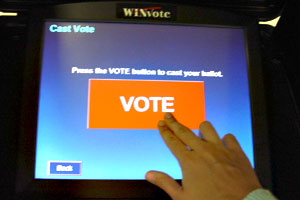
The new regulation has first of all given a clear definition of voting by electronic method. It has been defined as a process for recording votes by the members using a computer based machine to display an electronic ballot and to record the vote and also the number of votes polled in favour or against such that the entire voting gets registered and counted in an electronic registry in a centralized server.
How can a Chit Fund help you to raise capital for your business?
If you run a SME (Small and Medium Enterprise) and you want to raise capital, chances are high that you have never considered raising money through Chit Funds although this has proved to be a successful model in many states in India. Chit Funds generate money with little effort and capital. Many SMEs down south in states such as Tamil Nadu and Kerala profitably uses chit funds to raise funds. On the other hand, it is an informal and efficient way to utilize savings for the participants to the fund and it provides means of savings and finance where traditional banking system can not. On the other hand, there are numerous laws made by states and central government that control activities of chit funds, and certain kind of chits are completely banned. Running a prohibited sort of chit fund may incur criminal liability. Therefore this is an area where one must tread carefully. How can a Chit Fund help you to raise capital for your business?
So, what is a chit fund exactly? How does it function? What are the compliance requirements? Failing to comply to respective state laws on chit funds can get one in serious legal trouble. Even in states where chit funds are allowed, one generally has to obtain permission of the state government, register the fund and comply to a host of laws. To know more about how to run a chit fund legally, read on.
What is a chit scheme?
Chit scheme denotes a transaction by which a person generally know as foreman enters into an agreement with a specified number of persons that every one of them shall contribute a specified sum of money, generally by way of monthly installment over a definite period. The money that is pooled in is then auctioned every month amongst subscriber and the one who bids for highest discount is declared the winner and is given the prize amount. The amount that the chit winner forgoes as discount is distributed amongst the subscribers as dividend after subtracting the promoter’s commission.
Every state has its own rules and regulations that governs chit scheme. For instance, in Kerela Chit Schemes are governed by Kerela Chitties Act, 1975 while Andhra Pradesh Chit Funds Act, 1971 governs chit schemes in Andhra Pradesh.
How is Chit scheme different from prize chits
In chit scheme people generally contribute certain amount of money that is pooled in every month and auctioned, prize chit on the other hand includes any transaction or arrangement by whatever name called under which a person known as foreman collects money in one lump sum or in instalments by way of contributions or subscriptions or by sale of units, certificates or other instruments or in any other manner or as membership fees or admission fees or service charges to or in respect of any savings, mutual benefit, thrift, or any other scheme and utilises the monies so collected for giving prize or gifts to subscribers by draw of lots or any other mean. Such transactions are banned under Prize Chits and Money Circulation Act, 1978.
A SME that wants to conduct chit funds, needs to know this difference, so as not to carry prize chit in name of chit fund as prize chit is banned under the law.
How to conduct a Chit Scheme?
For carrying out chit scheme, subscriber and foreman needs to enter into a chit agreement. Further, no chit can be commenced without prior sanction of the State Government within whose jurisdiction the chit is conducted and unless the chit is registered in that state in accordance with the provisions of Chit Fund Act as discussed later in the post.
Chit Agreement
Components of Chit Agreement
The Central Act on chit scheme that is Chit Funds Act, 1982 stipulates that every chit agreement has to be in duplicate and is supposed to be signed by each of the subscribers or by any person authorised by him in writing and the foreman and should be attested by at least two witnesses and it shall contain the following particulars, namely:-
(a) full name and residential address of every subscriber;
(b) the number of tickets including the fraction of a ticket held by each subscriber;
(c) the number of installments, the amount payable for each ticket at every installment and the
interest or penalty, if any, payable on any default in the payment of such installments;
(d) the probable date of commencement and the duration of the chit;
(e) the manner of ascertaining the prizing subscriber at each installment;
(f) the maximum amount of discount which the prized subscriber has to forgo at any installment;
(g) the mode and proportion in which the discount is distributable by way of dividend, foreman’s
commission or remuneration or expenses for running the chit, as the case may be;
(h) the date, time and place at which the chit is to be drawn;
(i) the installment at which the foreman is to get the chit amount;
(j) the name of the approved bank in which chit moneys shall be deposited by the foreman under
the provisions of this Act;
(k) the consequences to which a non-prized or prized subscriber or the foreman shall be liable in
case of violation of any of the provisions of the chit agreement;
(l) the conditions under which a subscriber shall be treated as a defaulting subscriber;
(m) the nature and particulars of the security of to be offered by the foreman;
(n) the dates on which and time during which the foreman shall allow inspection of chit records by the non-prized and unpaid prized subscribers as given in Section 44 of the Act;
(p) the names of the nominees of each subscriber, that is to say, the names of the persons to whom the benefits accruing to the subscriber under the chit may be paid in the case of the death
of the subscriber or when he is otherwise incapable of making an agreement;
(q) any other particulars that may, from time to time, be prescribed.
Duration of chit agreement
The duration of a chit cannot extend beyond a period of five years from the date of its commencement. However, the State Government may permit the duration of a chit up to a period of ten years depending on the;
(a) the financial condition of the foreman;
(b) his methods of operation;
(c) the interests of prospective subscribers;
(d) the requirements as to security; and
(e) such other factors as the circumstances of the easy may require.
How to obtain sanction of State Government to carry out chit scheme?
An application for obtaining sanction is supposed to be made by the foreman in such manner and form as may be prescribed under the rules formed by state government within whose jurisdiction chit has to be carried.
However, the sanction obtained shall lapse if the chit is not registered within twelve months from the date of such sanction or within such further period as the state government has prescribed.
How to get chit registered?
Registration of a chit scheme comprises of filing of returns, maintaining minutes of the meeting, audit of the account as I will discuss.
Steps for Registration-
– Formation of a group or scheme
First step is the formation of a group or scheme for which prior sanction of registrar is needed. The prior sanction is obtained by filing of an application and payment of Rs. 50 as fees.
– Filing of chit agreement
Subsequently the chit company needs to file a chit agreement with every member in that particular group. The fee for the purpose is around Rs.20 per member.
(1) Every chit agreement shall be filed in duplicate by the foreman with the Registrar.
(2) The Registrar shall retain one copy of the chit agreement and return the duplicate to the
foreman with an endorsement that the chit agreement has been registered.
The registration process is completed in around two months. Another advantage in chit scheme in this regard is that there is no subsequent requirement for renewal of the registration.
After the commencement of the scheme, the chit manager has to file the minutes of each monthly auction with the Registrar along with a fee of around Rs.4
Compliance requirement
– Name of the business- If a company wants to carry out chit business, it is compulsory for it to use the word “chit fund”, “chitty” or “Kuri” as part of its name.
– Exclusive Chit Business- A company that is carrying out chit business is not supposed to engage itself in any other business.
– Paid up Capital- A company has to have a paid up capital of at least Rupees One Lakh to carry on chit business.
– Account Audit- A registered chit fund needs to have its accounts audited by a qualified Chartered Accountant. The fixed deposit made at the beginning of the scheme will be refunded only on the submission of the audited Balance Sheet and Statement of Accounts. Provided further that no such company shall commence any new chit the duration of which would
extend beyond the said period of three years or such extended period or periods under the first
proviso unless it increases its paid-up capital to not less than rupees one lakh.
– Reserve Fund- A company carrying on chit business is supposed to create and maintain a reserve fund in which at least 10% of the annual profit shall be transferred. For appropriating any sum from the reserve fund, prior permission of the Registrar is requisite in form of an application in the prescribed form to the Registrar explaining the circumstances relating to such appropriation.
– Minutes of the proceedings- The minutes of the proceedings of every draw has to be
prepared and entered in a book to be kept for that purpose immediately after the closure of the
draw and shall be signed by the foreman, the prized subscribers, if present, or their authorised
agents, and at least two other subscribers who are present.
The minutes shall contain:-
(a) the date and hour when proceedings began and ended and the place where the draw was
held;
(b) the number of the installment of the chit to which the proceedings relate;
(c) the names of the subscribers present;
(d) the person or persons who become entitled to the prize amount in the installment;
(e) the amount of discount;
(f) full particulars regarding the disposal of the unpaid prize amount, if any, in respect of any
previous installment; and
(g) any other particulars that may be prescribed.
A true copy of the minutes of the proceedings of every draw certified as such by the foreman shall be filed by the foreman with the Registrar within twenty-one days from the date of the draw to which it relates.
After all the tickets specified in the chit agreement are fully subscribed, it is necessary to file a declaration to that effect with the Registrar. Thereafter, a grant of certificate of commencement is issued to the foreman. Thereafter, cheat scheme can commence.
Chit scheme are easy source of money to build capital for SMEs and small businessmen. However, you need to know the regulation controlling it and various compliance requirement before plunging into this business.
You can contact me or send in your queries/ comments/ suggestions about Chit and Money Circulation Scheme at [email protected]
Alternative to patent and utility models a Legislation on Jugaad
Ye desh ‘jugaad’ pe chal raha hai (this country is run by ‘jugaad’) is perhaps the most common refrain that people use while condemning the generally inefficiency of governance. But if a recent paper by DIPP (Department of Industrial Policy & Promotion) is any indication then we shall very soon have a law which will not only legalize but reward these jugaad’s through utility model patents. Now before your mind starts boggling and your thoughts go wild, let me clarify the subject and context of the proposed Indian law on utility model patenting, an easier alternative to patents. Alternative to patent and utility models a Legislation on Jugaad
The law seeks to introduce a new form of intellectual property, called ‘utility model’ to provide protection to such technologies which do not meet the tough and high standards of patent requirement but nevertheless are worthy of protection for their ingenuity and usefulness. The discussion paper seeks to bring attention to the need of recognizing the minor technical advances by small innovators through a proper legal framework. The need for such legal framework is being increasingly felt in India to promote more and more domestic innovations and to encourage the small and medium enterprises to come out with more innovated products.
What is an utility model?
Utility models, also known as petty patents and utility innovations, is a framework for providing limited protection to those innovations which generally involves incremental innovation but may not meet the standards of the Patents Act and yet are commercially exploitable and socially relevant. The patent system as it prevails in India requires a very high standard of novelty, inventive step and industrial application which has its own justification and reasons but it has often been seen that such standards have often inhibited the protection of small innovations which are extremely useful.
Such inventions though technically less complex than those eligible for a patent, may be exploited by Small and Medium Enterprises, (SMEs) which in the spirit of jugaad, may make minor improvements and adaptations to existing products. These innovations may meet the novelty test, but may not meet the inventive step test and thus be ineligible for protection under the patent law. But such informal innovations should be protected in an economy as informal as ours and this is what ‘utility model’ does. Some of the possible innovations which can be appropriately brought under this protection are as follows:
1)Clay Refrigerator (Mitticool): This clay fridge which does not require electricity and keeps food fresh, works on the principle of evaporation. Water from the upper chambers drips down the sides and evaporates, leaving the chambers cool. This keeps food, vegetables and milk fresh naturally for more than two days
2)An onion seed transplanter. Onion seedlings are usually transplanted manually. This task is time consuming, labour intensive and not standardised. The transplanter is a tractor
3)Gas Stove switch: This device turns off the gas stove after a predetermined number of pressure cooker steam release whistles are sounded . The machine counts and displays the number of whistles a pressure cooker has sounded.
How is it different from Patents?
Utility model is a system largely modeled on patent system but differs from it in some very fundamental ways which are as follows:
1)The requirements for acquiring a utility model are less stringent than for patents. While the requirement of “novelty” is always to be met, that of “inventive step” or “non-obviousness” may be much lower . In practice, protection for utility models is often sought for innovations of a rather incremental character which may not meet the patentability criteria
2)The term of protection for utility models is shorter that for patents and varies from country to country.
3)In most countries where utility model protection is available, patent offices do not examine applications as to substance prior to registration. This means that the registration process is often significantly simpler and faster, taking, on average, six months.
4)Utility models are much cheaper to obtain and to maintain.
5)In some countries, utility model protection can only be obtained for certain fields of technology and only for products but not for processes.
Why should one go for ‘Utility model’ protection?
As it has already been pointed out that ‘utility model’ offers protection to those innovation which although are useful in their nature but cannot meet the demands of patent protection. But there is definitely more to the system than this. The utility model protection is a lot easier to get as the process is faster and less complex.
The registration process is not very demanding and the protection is granted almost immediately with quick publication. The whole process does not usually take more than 6 months to get completed. The duration of protection can vary from 5-10 years within which the holder of the right almost has the same monopolistic rights as a patent holder. Utility model also have priority rights under Paris Convention.
The scope of protection is generally the same as that of patents but various countries restrict it to devices and tools and not granting it for processes and biotechnological patents. The registration process is cheap and simple making it easier for people to get themselves registered and get the protection. Utility model could prove to be advantageous to many enterprises by becoming a bridge to getting a patent rights as well. Since utility models can be got relatively quickly, enterprises can enjoy its protection till the time they get patents for the same when the regime of utility model protection can be withdrawn for that particular innovation.
What to expect in future and what needs to be done?
So, the desirability of a law could easily be seen, taking us to the logical next question, what next? According to United Nations report 55 countries have adopted this new form of intellectual property and recognizing it under a proper legal framework. India unfortunately has lagged behind on this count which already caused a great deal of innovation going untapped and getting lost in the oblivion. But as they say, better late than never as Industry ministry finally seems to woken up to the inherent utility of the concept of utility model. DIPP has floated a discussion paper (http://dipp.nic.in/iprfeedback/Utility_Models_13May2011.pdf) analyzing the law as it prevails in various countries and has sought views on 11 questions ranging from the need of a law recognizing ‘utility model’ to the scope and possible framework.
The utility model patent is yet to be introduced in India
The discussion is the first step in process which can eventually culminate into a new law coming into being provided there are more and more people participate in the discussion so that a need and desirability is felt amongst law makers for recognizing this new form of intellectual property. If the discussion paper gets a good response then it might lead to the formulation of a bill by the concerned ministry which after a proper consultation from other ministries might be introduced in the parliament. This entire process might take anything between an year or so. But for all this get going the discussion paper has to get desired response from the citizenry. People need to take up this cause as I believe that the biggest beneficiary of the new law could be the common people themselves and thus their participation is even more expected.
Conclusion
Utility model patent protection promises a lot more small and medium enterprises and small innovators by providing them with a system which can protect and reward their ingenuity without requiring them to reach the high standards required for getting patents. This may lead to more and more innovation from as the assurance that their work shall be protected could motivate many to innovate and lead to better products and technology.
This post was written by Mr. Ravi Shankar Jha of RMLNLU, Lucknow. Ravi Shankar enjoys studying capital markets and securitization.
Foreign Loans in India How to issue guarantee and create security
The low interest rate on borrowing from various types of entities abroad acts as huge incentives for Companies, SME and various other businesses to take loan from external sources instead of seeking loans from domestic financial institutions. To read about the benefits of taking External Commercial Borrowing, click here.
However, before sanctioning a loan, foreign lenders are likely to insist on some form of security or a personal or corporate guarantee by the promoter / promoting company, to safeguard their interest. This post explains the procedure for creation of security under exchange regulations related to External Commercial Borrowings.
Foreign Loans in India How to issue guarantee and create security
What security does the borrower needs to give while securing loan from external source under ECB?
Charge over the immovable assets and financial securities such as shares in favour of the overseas lender acts as security for securing External Commercial Borrowing(ECB). The procedure for creation of the charge is explained below.
Procedure of creation of charge
Borrower is supposed to take “No Objection” from an Authorised Dealer bank under the Foreign Exchange Management Act (FEMA), 1999 for creation of charge on immovable assets, financial securities and issue of corporate or personal guarantees in favour of overseas lender.
Conditions to be fulfilled for getting a no-objection certificate
The bank is may grant a “No Objection” only on fulfillment of following conditions by the Borrower:
(i) The External Commercial Borrowing is strictly in compliance with ECB Regulations and guidelines.
(ii) The loan agreement has a specific security clause that makes it mandatory for the borrower to create charge on immovable assets / financial securities / furnish corporate or personal guarantee
(iii) the loan agreement has been signed by both the parties i.e. lender and the borrower
(iv) the borrower has obtained Loan Registration Number (LRN) from the Reserve Bank
(read further to know about registration requirement for securing ECB)
Click Above
However, in case of charge on immovable assets, fulfillment of certain prior conditions are necessary for the grant of no objection. The conditions are as follow:-
(i) The period of such charge on immovable assets has to be co-terminus with the maturity of the underlying ECB.
(ii) Such ‘no objection’ should not be construed as a permission to acquire immovable asset (property) in India, by the overseas lender / security trustee.
(iii) In the event of enforcement / invocation of the charge, the immovable asset (property) will have to be sold only to a person resident in India and the sale proceeds shall be repatriated to liquidate the outstanding ECB.
Procedure for issuing guarantee
Banks, financial institutions and Non-Banking Financial Institution (NBFC) are generally not permitted to issue guarantee, standby letter of credit, letter of undertaking or letter of comfort for securing the loan under External Commercial Borrowing (ECB) regulations.
However, in case of small and medium enterprises (SME), Textile Companies,RBI under the approval route can consider applications for providing guarantee / standby letter of credit or letter of comfort by banks, financial institutions relating to ECB on merits subject to prudentialnorms.
Conditions to be fulfilled for no-objection for guarantee
The ‘no objection’ to the resident ECB borrower for issue of corporate or personal guarantee under FEMA, 1999 may be conveyed after obtaining –
(i) Board Resolution for issue of corporate guarantee from the company issuing such guarantees, specifying names of the officials authorised to execute such guarantees on behalf of the company or in individual capacity.
(ii) Specific requests from individuals to issue personal guarantee in connection with the borrowing, indicating the details of the ECB.
(iii) Ensuring that the period of such corporate or personal guarantee is co-terminus with the maturity of the underlying ECB.
Compliance requirements for creation and enforcement of security
However, creation and enforcement of charge over immovable assets and financial securities (such as shares) would be subject to Regulation 8 of Foreign Exchange Management (Acquisition and transfer of immovable property in India) Regulations, 2000, [FEMA 21/RB-2000 dated May 3, 2000] and Regulation 3 of Foreign Exchange Management (Transfer or issue of security by a person resident outside India) Regulations [Notification No. FEMA 20/RB-2000 dated May 3, 2000], respectively.
Parking of ECB Proceeds before Utilisation
The proceeds obtained under External Commercial Borrowing can be parked overseas until actual requirement in India, or can be kept with the overseas branches / subsidiaries of Indian banks abroad. The fund obtained can also be remitted to India for credit to their Rupee accounts with Authorised Dealer banks in India, until it is required to be utilised for the permitted end use.
Written by Srishti Aishwarya and Abhyudaya Agarwal
LawSikho has created a telegram group for exchanging legal knowledge, referrals and various opportunities. You can click on this link and join:
Streamline your Company Meetings through video-conferencing
If you own a company and find arranging Board meetings or your General Meetings (AGM, EGM) cumbersome because directors and shareholders are placed in different cities, or if you are a shareholder who considers going a long way to attend a general meeting to be an inconvenient task, here is some good news. You can now carry out your meeting online. Ministry of Corporate Affairs, through what it calls a green initiative, has made the process of carrying out general meeting easier. So, to carry out the general meeting using electronic mode, read on to find out about the law and regulations you need to comply with before availing this facility.
Streamline your Company Meetings through video-conferencing
Under the notification issued by Ministry of Corporate Affairs on 20th May, 2011, shareholders of the company can participate in the general meeting through electronic mode. To ensure quick implementation of the notification and to e nsure larger participation of the shareholder specially of listedcompany, it has been recommended to make such option available in at least five major states/ union territories keeping in mind concentration of shareholder in a place.
Meeting via electronic mode will be convenient for shareholders, hence, they would like to invest money in the company which provides for such facilities. Therefore, it is important for a company to have the provision of conducting meeting using electronic mode at least in major cities such as Delhi, Mumbai, Bangalore, Hyderabad and Kolkata.
It is mandatory for the company to notify the shareholders about the provision which allowed share holder to participate in the meeting through electronic mode.
Responsibility of ensuring audio visual facilities
The Chairman and the secretary of the meeting is supposed to ensure the availability of proper audio visual facilities, so that no technical difficulty arises during the meeting. Specific responsibility is conferred on the Chairman and Secretary for maintaining the integrity and effective participation in the Meeting.
Quorum
Nonetheless, meeting via video conferencing does not do away with the requirement of Quorum as required under section 174 of the Companies Act, 1956. This denotes that at least 5 members in case of public company and 2 in case of other company have to be physically present to constitute quorum for the meeting.
However, in case of a Board meeting, Directors present online will be counted for the purpose of quorum, unlike the member meetings where quorum has to be physically present.
Conditions for online participation by directors and committee members
The notification also allows, directors and committee members to participate in the general meeting through video conferencing if :
1. Proper notices have been issued mentioning that online participation is permitted and
2. Their participation is permitted under Articles of Association of the Company.
The directors are supposed to be provided with specific notice informing them about the option of participating in the meeting through video conferencing. In absence of confirmation from the direction regarding the notice, it shall be presumed that the director will attend the meeting physically. Nevertheless, a director is bound to be physically present in at least one meeting in a financial year.
Compliance prior to the meeting
Circulation of gist of the minutes must be done within seven days of the meeting for removal of doubt.
An important concept introduced by the notification is of of roll call where a director needs to state his place and location. This provision is meant to ensure actual presence of the Directors at the meeting.
The ‘place’ of meeting in a video conference
The place where chairman or secretary will sit during the Board Meeting shall be considered as place of meeting under Section 288 of the Companies Act, 1956. Other essential documents and statutory register that needs to be placed in the meeting, in the video conference meeting, shall be placed before the chairman. The statutory register that requires to be signed by Directors shall be presumed to have been signed by them if they give their consent in the board meeting carried out in electronic form.
Procedure for conclusion of the meeting
It is necessary for the chairman to announce summary of the decisions taken in the meeting with details regarding agenda item and the names of director who have consented or dissented to those decisions.
RoC Certificates to be issued digitally
At present various certificates that are required to be issued to companies and stakeholders by Registrar of Companies are issued manually. Under the new notification, these certificates and letters will now be issued under the Digital Signature of the Registrar of Companies. This proviso has been implemented after taking into consideration Section 5 of the Information Technology Act, 2000 that gives legal recognition to digital signatures. The Digital Certificates are under process and will be available for issue by 30th June, 2011 in phased manner.
The new regulation will make the process of carrying out general meetings easier. A company by availing these provision can ensure smooth run of its business without any hassle regarding calling everyone. The provision allowing digital signature in the documents that were manually done earlier will make the process of filing documents easier and less time taking.
Issues under the Inormation Technology Act, 2000
As the meeting is carried out virtually, at least in part, it is relevant to consider the role of the Information Technology Act (IT Act). Section 4 of the Information Technology Act, 2000 which gives legal recognition to electronic records, Section 13 provides for time and place of dispatch and receipt of electronic record and Section 81 of the Act permits the Information Technology Act to have overriding effect over anything contained in any other law.
This article is written by Srishti Aishwarya, with inputs from Abhyudaya and Ramanuj.
Have you ever considered borrowing money for a business? In fact, most people have to borrow capital at some point or the other. A well hidden secret is that you can borrow money at a cheaper interest rate if you borrow from a foreign lender, usually. At half the interest as compared to India, sometimes.
Why is it so? Well, what is the Interest rate in the US? You can find out on this page. What is the interest rate in India? Click here to find out.
If you compare the interest rates in developed countries and India, it will be obvious to you how profitable can it be for an Indian business to borrow money from from Japan, EU or USA as compared to any domestic lender.
However, the spoiler is that apart from finding a willing borrower from another country, you have to deal with heavy regulations on commercial borrowing by Indian government, primarily administered through RBI. The terminology used for this sort of foreign loans is External Commercial Borrowing. We shall cover in this post who are eligible for such borrowing, and what are the conditions and regulations that RBI impose on these transactions. Please feel free to write to us at [email protected] if you have further questions.
What is External Commercial Borrowing (ECB)?
Commercial loans in the form of bank loans, buyers’ credit, suppliers’ credit, securitized instruments (e.g. floating rate notes and fixed rate bonds, non-convertible, optionally convertible or partially convertible preference shares) availed of from non-resident lenders is referred to as External Commercial Borrowings (ECB).
We have mentioned seven key concepts you need to know about a law before you can think of taking a loan from an international source.
1. Routes to access External Commercial Borrowing(ECB)
ECB can be accessed via two routes that is Automatic Route and Approval Route. Automatic route will only require a filing, while approval route will require the approval of RBI as well. We explain the maximum amount that can be borrowed, the persons eligible to borrow and lend, and the purpose for which the money can be borrowed under each of the routes below.
a. Automatic Route
Under Automatic Route borrower can enter into a loan agreement without prior approval from Reserve Bank of India(RBI), however, the loan agreement has to be registered under RBI.
i. Who can borrow under Automatic Route?
– Service sectors comprising of hotel, hospital, software corporations registered under the Companies Act, 1956.
– Units in Special Economic Zones for their own business requirement
– NGOs that are engaged in micro finance activities
– Infrastructure Finance Companies (IFCs)
ii. Who cannot borrow under Automatic Route?
Financial intermediaries such as banks; financial institutions (FIs); Housing Finance Companies (HFCs) and Non Banking Financial Companies (NBFCs) that are exclusively involved in financing of infrastructure sector for on-lending to borrowers up to 50 per cent of their owned funds under the automatic route cannot borrow under External Commercial Borrowing(ECB). Apart from that individuals, trusts and Non- Profit making organizations are not eligible for grant of money under ECB Regulations. However, NGOs can borrow money from overseas organizations and individuals that are qualified to receive money under External Commercial Borrowing (ECB) Regulations.
iii. Who can lend money under Automatic Route?
· International Banks
· International Capital Markets
· Multilateral Financial Institutions
· Export Credit Agencies
· Suppliers of Equipment
· Foreign Collaborators
· Foreign Equity Holders
Click Above
iv. Maximum Amount that can be borrowed
Companies that are in the service sector such as hotels, hospitals and software companies can borrow up to maximum of US $100 million for import of capital goods and for rupee or foreign currency capital expenditure. However, companies in sectors other than these can borrow up to maximum of US $500. As far as micro finance NGOs are concerned, they can borrow up to US $5 million.
v. Permitted End Use
Loan taken under External Commercial Borrowing can be used for:-
– Investments, such as import of capital goods, new projects,modernization/ expansion of existing production units in real sector, industrial sector including Small and Medium Enterprise (SME) and infrastructure in India
– Overseas direct investment in joint ventures or wholly owned subsidiaries
– First stage acquisition of shares in disinvestment process and in the mandatory second stage offer to the public
· Lending to self help groups by NGOs engaged in microfinance
· Onetime payment for spectrum allocation by eligible borrowers in the telecommunication sector
· On- lending by International Foreign Investment Corporations to infra
sector.
vi. End Use Not- Permitted
Funds received under ECB cannot be used for:
– On-lending or investment in capital market or acquiring a company (or a part thereof) in India by a corporate.
– Utilisation in Real estate,
– Working capital, general corporate purpose and repayment of existing Rupee loans.
b. Approval Route
Under Approval Route, prospective borrower submits an application to RBI in the prescribed form through authorized dealer (AD) as specified by RBI.
i. Who has to borrow under Approval Route?
Generally, all the financial institutions engaged in infrastructure financing and institutions not specified in Automatic Route are supposed to borrow money under approval route. Institutions that borrow money under approval route are:
– Financial Institutions (FIs) that deals exclusively with infrastructure and export finance.
– Non Banking Finance Companies (NBFC) for External Commercial Borrowings that has minimum average maturity of 5 years to finance import of infrastructure equipment for
leasing to infra projects.
– NBFCs classified as Infrastructure Finance Companies ( IFCs) as such by RBI exclusively involved in financing of infrastructure sector for on-lending to borrowers in the infrastructure sector for ECBs beyond 50 per cent of their owned funds.
– Housing Finance Companies for Foreign Currency Convertible Bonds (FCCB)
– Multi-state co-operative Societies engaged in manufacture in real sector
– Special Economic Zone (SEZ) developers for providing infrastructure facilities within SEZ. However, ECB is not permissible for development of integrated township and commercial real estate within SEZ.
– Banks and Financial Institutions who had participated in the textile or steel sector restructuring package
– Corporate which have violated the ECB policy and are under investigation by Reserve Bank and / or Directorate of Enforcement can avail ECB only under the
Approval route.
– Corporate that requires more ECB beyond the prescribed limit under the
automatic route in a year
ii. Who can lend money under Approval Route?
All the institutions that lend money under automatic route can lend money under approval route i.e. International Banks and Capital Markets, Multilateral Financial Institutions, Export Credit Agencies, Suppliers of Equipment, Foreign Collaborators and Equity Holders.
iii. Amount that can be borrowed
Approval route allows to borrow more amount than what is allowed under automatic route.
An additional amount of US$ 250 million can be borrowed under Approval route by Corporate in real sector over and above US$ 500 million that is allowed under the automatic route. In case of service sector an additional amount of US $100 is allowed over and above what is allowed under automatic route.
iv. Permitted End Use
End uses that are permitted under automatic route are also permitted under approval route. Apart from the end usage permitted under automatic route, approval route allows the money borrowed to be invested in the housing sector in the development of
integrated townships. Approval route permits the use of borrowed money for premature buy back of Foreign Currency Convertible Bonds (FCCB) untill June 30, 2011 as recommended by RBI. Refinancing of Rupee loans availed of from the domestic banks by eligible borrowers in the power sector and transport sector that is sea port & airport, roads including bridges for the development of new projects is also allowed under approval route.
v. End Use Not Permitted
Utilization of ECB proceeds as also specified in automatic route is not permitted for on-lending or investment in capital market or acquiring a company or a part thereof in India by a corporate except banks and financial institutions eligible under approval route. Utilization of ECB proceeds is also not permitted in real estate, for working capital, general corporate purpose and repayment of existing Rupee loans.
However, to facilitate funding in infrastructure sector refinancing of Rupee
loans availed of from the domestic banks by eligible borrowers in the transport and power sectors for the development of new projects, subject to the conditions stipulated by RBI.
2. Minimum Average Maturity
The minimum average maturity is 3 years for ECB up to US$ 20 million and 5 years for ECB above US$ for the fund received under automatic route as well as approval route.
Under approval route, minimum average maturity is 10 years for the additional amount of US$ 250 million which is received over & above US$ 500 million under the automatic route.
3. All-in-cost Ceilings
All in cost ceilings includes interest, fees and expenses in foreign exchange and excludes commitment fee, prepayment fee, fees payable in Indian rupees and excludes payment of withholding tax.
All in cost ceiling should not 300 basic points over six month London Interest Bank Offer Rate (LIBOR) or other appropriate reference rate that is applicable for maturity of 3-5 years. For maturity above 5 years, all in cost ceilings should not exceed 500 basis points over six month LIBOR or other appropriate reference rate applicable. Here basic points denotes interest rate. 100 basic points means one percent
ECB is preferred by investors because of ECB is for a fixed period which can be as short as three years and there are fixed returns. Since its favourable for investors, ECB are easily available to borrowers plus the interest rate is fixed. Hence corporations and institutions seeking loan prefers to go for external commercial borrowing instead of internal borrowing. Keep watching this space to know about the compliance requirement and other components of ECB.
Compliance and Filing Requirements
It is imperative for the borrower to utilise the fund obtained under External Commercial Borrowing in accordance with ECB guidelines and RBI regulations. The designated Authorised Dealer bank is also required to ensure that raising /utilization of ECB is in compliance with ECB guidelines at the time of certification.
Borrowers are required to submit Form 83 to report loan agreement detail.The form has to be certified by the Company Secretary (CS) or Chartered Accountant (CA) and submitted to the designated Authorised Dealer bank. Thereafter borrower will get Loan Registration Number from RBI after which it can draw down loans.
Borrowers are supposed to submit details regarding actual transaction and utilisation of the ECB by filing ECB-2 Return Form. The form has to be certified by the designated Authorised Dealer and submitted to RBI within seven working days before the close of every month. Violation of the provisions of the regulations is dealt with by the Reserve Bank of India through compounding of contraventions under Section 15 of FEMA 1999.
For procedure relating to creation of security or issue of guarantee in relation to ECB, see here.
LawSikho has created a telegram group for exchanging legal knowledge, referrals and various opportunities. You can click on this link and join:
Kickstarting your NGO with international funding – Legal Basics
For an NGO in India, funding from international organizations can really boost the efforts of NGOs. International organizations also look forward to donating to NGOs operating in Africa and India instead of developed nations, as that enables them to meet goals of reaching some of the most needy, and deprived sections of the world’s population. Before you look for funding for your NGO from a foreign organization, you need to know some basics about the law that governs international donations.
In India the new Foreign Contribution Regulation Act, 2010 governs the procedure for obtaining donations for NGOs. Under the Act, foreign contribution means the donation, delivery or transfer, made by any foreign source of any article whose value is more than one thousand rupees and has not been given to a person
as a gift for personal use,
currency, whether Indian or foreign,
or foreign security.
Foreign source under Foreign Contribution Regulation Act, 2010
Foreign Company:-
Under FCRA, a foreign company means a company established outside India but having a business establishment in India as given in Section 591 of the Companies Act, 1956. Foreign company also includes Indian subsidiary of a foreign company. Contribution from the subsidiary of a foreign company shall be considered as foreign contribution even if the subsidiary is an Indian company. Foreign company also includes Multi National Corporations under FCRA.
Company under Companies Act, 1956:-
A company within the meaning of the Companies Act, 1956 can denote money under FCRA if more than one-half of the nominal value of its share capital is held, either singly or in the aggregate by,
(a) government of a foreign country or territory,
(b) citizens of a foreign country or territory,
(c) corporations incorporated in a foreign country or territory,
(d) trusts, societies or other associations of individuals (whether incorporated or not), formed or registered in a foreign country or territory,
Trade Union/ Foreign trust/ society, club/ Citizen of a foreign country
Contribution by;
a trade union in any foreign country or territory,
a foreign trust or a foreign foundation which is either in the nature of trust or is mainly financed by a foreign country or territory,
a society, club or other association of individuals formed or registered outside India, a citizen of a foreign country,
shall be considered as foreign source under FCRA.
Institutions which do not come within the ambit of foreign source
Any foreign institution which has been permitted by the Central Government, by notification in the Official Gazette, to carry on its activities in India will not come within the ambit of foreign source. The Central Government has notified numerous UN agencies which do not qualify as foreign source under the FCRA, a complete list of which is available here.
Secondly, a company that is incorporated outside India and having a establishment in India may not be considered as foreign source if fifty per cent or more of the paid-up share capital is held by one or more citizens of India or by one or more bodies corporate incorporated in India, or by one or more citizens of India and one or more bodies corporate incorporate in India, whether singly or in the aggregate.
Who can receive contribution under FCRA?
An association having a definite cultural, economic, educational, religious or social programme can receive foreign contribution after it obtains prior permission of the Central Government or gets itself registered with the Central Government. An association in this regard means an association of individuals, whether incorporated or not, having an office in India and includes a society, whether registered under the Societies Registration Act, 1860.
Thus, association under the Act covers all charitable organisations, educational, social, cultural, religious, political etc. organisations, societies, trusts, companies etc.
Whether the foreign contribution received can be transferred?
No person who has registered and has been granted a certificate or has obtained prior permission and receives any foreign contribution shall transfer such foreign contribution to any other person unless such other person is also registered and had been granted the certificate or obtained the prior permission by central government.
Can you receive foreign contribution in your ordinary bank account?
Foreign contribution by the association registered under FCRA or granted prior approval by Central Government shall be received in a single bank account only through one of the branches of such bank as specified in its application for grant of certificate. However, an association receiving the funds may open one or more accounts in one or more banks for utilising the foreign contribution received by it.
New law for foreign donations. Is your NGO registered?
The new Foreign Contribution (Regulation) Act, (FCRA), 2010 has come into force on 1st May, 2011 whereby after FCRA, 1976 stands repealed. The new provision has brought significant changes in the Act, that has made the process of getting funds under FCRA stringent. This is post explains the salient features of this Act, registration and compliance requirements for NGOs which intend to get donations from foreign bodies. For an elementary analysis of the concepts you must know before you start looking for funding, see this post.
Who can get foreign contribution?
Any person which includes individual, association and company can receive contribution under FCRA if the condition given in the Act are fulfilled. An association in this regard denotes an association of individuals having an office in India. However, it is not necessary for the association to be incorporated. NGOs mustregister under FCRA to get foreign contribution in form of donation.
Which kind of organizations cannot accept contribution?
An organization which is of political nature and an association or company which is engaged in the production and broadcast of audio or audio visual news or current affairs programme cannot accept foreign contribution.
Process of getting contribution
Prior approval
An association can take prior permission for one time contribution. Prior permission is given on case by case basis. Generally prior permission for contribution is taken if the the organisation does not have permanent FCRA registration number; the FCRA registration number has been cancelled by the Government ; the association is instructed by the Central Government to take prior permission in case the organization is prohibited from receiving foreign funds under provisions of FCRA; the FCRA number is suspended due to violation of the provisions and conditions specified under the FCRA or foreign contribution is for one definite cultural, economic, educational, religious or social programme.
To obtain prior permission an online application in Form FC-4, is required to be filled. Thereafter, the hard copy of the online application along with a certificate of recommendation from collector of district or department of the state government or ministry or department of the Government of India needs to be forwarded to Ministry of Home Affairs. The application of prior permission has to be processed within 120 days at maximum; however, in case the application is not processed within such time duration, then the applicant organization can proceed on the basis that the permission has been granted.
An NGO has to register under FCRA to get foreign contribution on a regular basis. For registration, it has to fulfil certain eligibility requirements, which are explained below.
Preconditions for Registration
Before applying for registration, the organization should ensure that it has been in operation for 3yrs, it does not have a parent society that is already registered under FCRA and no foreigner is on the board of the society.
It is also necessary for the NGO to open a separate bank account in the name of the society with the purpose of receiving and utilizing funds received under Foreign Contribution and Regulation Act.
Procedure for registration
For the purpose of registration, an online application has to be made. The hard copy of the online filled application should be duly signed by the person seeking foreign contribution. Thereafter, it has to be forwarded to the Ministry of Home Affairs. The application has to be accompanied by required documents within thirty days of the submission of the on-line application, failing which the request of the person shall be deemed to have ceased. The required documents consist of Form No. FC. 3; copy of memorandum, rules and regulations of the organization and the audited accounts of the last three years; list of office bearers; description of the activity of the association during the past three years; name and address of the bank along with the account number in which the fund will be received and a copy of registration certificate.
Validity of certificate of registration
Every certificate of registration granted shall be valid for a period of five years. For renewal of certificate, the association shall apply six months prior to the date of expiry. The application will be in Form FC-5 and shall be accompanied by a fee of Rs. 500 i.e. re-registration charge.
In case no application is made, the registration shall be deemed to have ceased. A person implementing an ongoing multi-year project shall apply for renewal twelve months before the date of expiry of the certificate of registration.
Application Fee
An application made for grant of prior permission shall be accompanied by fees of Rs. 1000 while application for grant of registration shall be accompanied by fees of Rs. 2000
Restrictions on utilization of funds
Every person who has been granted registration or prior permission shall maintain a separate set of accounts and records, exclusively, for the foreign contribution received and utilized. No funds other than foreign contribution shall be deposited in such account.
The contribution shall be utilized only for the purpose for which it is received. In case the organization wants to meet their administrative expenses from the fund, it can use 50% of contribution for such purpose. However, in case the organization wants to use more than 50% of the contribution for administrative purpose then it needs to take prior permission of the central government.
Compliance requirements
Every person who receives foreign contribution under the Act shall submit a report, duly certified by a chartered accountant, in the Form FC-6, accompanied by an income and expenditure statement, receipt and payment account, and balance sheet for every financial year beginning on the 1st day of April within nine months of the closure of the financial year, to the Ministry of Home Affairs. The annual return in the prescribed Form shall reflect the foreign contribution received in the exclusive bank account and include the details in respect of the funds transferred to other bank accounts for utilization. In case no foreign contribution has been received in an year then a “NIL” report shall be furnished as annual return.
According to the new regulation, provision has been made for inspection of account if the registered person or person to whom prior approval is granted fails to furnish account in accordance with law.
In case, any person to whom certificate of registration or prior permission has been granted receives foreign contribution in excess of one crore rupees or equivalent thereto in a financial year, he shall keep the summary data on receipts and utilization of foreign contribution pertaining to the year of receipt as well as for one year thereafter in the public domain. There can be various ways such as through website, publicly accessible data record etc through which such summary data can be kept in public domain. The Central Government shall also display or upload the summary data of such persons through its website.
Cancellation or suspension of certificate granted under FCRA
The new provision has made provision regarding suspension or cancellation of prior approval and certificate of registration if there is violation of the provisions of the Act.
In case the certificate of registration is suspended, 25% of the foreign contribution received can be utilized for the declared purpose, however, the remaining 75% can be used only after revocation of such
suspension.
In case of cancellation of certificate, the amount received as foreign contribution kept in exclusive foreign contribution bank account shall vest with the banking authority till the Central Government issues further directions in the matter.
Use of foreign contribution by third person
Under the new regulation, a person who receives foreign contribution as per the provision of Act cannot transfer it to any other person unless that person is also authorized to receive foreign contribution as per rules made by the Central Government.
However, if a person intends to transfer the foreign contribution, he may make an application to the Central Government in the Form F-10. The Central Government may permit the transfer in respect of a person who has been granted the certificate of registration or prior permission under FCRA, in case the recipient person has not been proceeded against under any provision of the Act.
Penalty for violation
The new regulation provides imprisonment of the person which may extend up to six years along with fine if a person knowingly gives false intimation with regard to foreign contribution and seeks prior permission or registration by means of fraud, false representation or concealment of material fact. Any person contravening the provisions of the Act shall be punishable with imprisonment for a term which may extend to five years or with fine or with both.
All these provisions makes the rules and law related to FCRA stringent, its important that an organization taking foreign contribution follow these regulations in order to get contribution and avoid penalty.
FDI in LLPs permitted. Are private limited companies still the better route?
Limited Liability Partnerships have been growing in popularity and importance as a simplified form of business that give protection of limited liability to businesses, and the benefits of an incorporated body. The Limited Liability Partnerships Act, 2008 notified in 2009, creates a framework for businesses to function as LLPs. However, India could not fully tap the potential of the new business vehicle, Foreign Direct Investment (FDI) into LLPs was not permitted. This has changed now, with elaborate rules for FDI investment into LLPs.
The Cabinet Committee on Economic Affairs issued a new notification issued on May 11, 2011, approving FDI in LLPs. This post explains some of the key features of the notification. It examines the position of a domestic LLP partner versus a foreign national who is a partner, and examines the position of foreign investment in LLP vis-a-vis companies. This will help in startups and SMEs looking for foreign investment to decide whether they should incorporate as LLPs or companies.
1. Sector and routes
There are limited sectors in which FDI is permitted in LLPs, as compared to FDI in companies. Further the procedure for investing in an LLP is not as streamlined as that for investing into a company.
i. Permitted Sectors for FDI
FDI in LLPs is allowed only in those sectors which come under the ‘automatic route’, that is, in those sectors under the FDI policy where 100% FDI in a company is allowed, without permission of the FIPB. Examples of such sectors are private petrol refining, construction development, electricity, pharmaceuticals, transportation infrastructure, tourism, advertising, films, mass transit, and pollution control. This includes the software and IT industry as well.
FDI in LLPs is also not allowed in sectors which have performance-linked conditions, such as minimum capitalization requirements.
ii. Approval route or automatic route?
Note that there is another difference in the procedure for FDI in an LLP. While under the automatic route, no permission is required for FDI into a company, FIPB approval is required for approval into an LLP.
iii. Prohibited Sectors
There are certain sectors such as agricultural/plantation activity, print media or real estate business were LLPs with FDI are not allowed at all.
2. Investment activities of LLPs with FDI
Corporate groups usually have a web of interconnected shareholdings within their group. They also have investing or holding companies to invest in other entities within a particular geographic region or sector. Such investments are known as downstream investments. Downstream investments are permitted for companies under the FDI policy, subject to certain conditions. However, this is absolutely barred for an LLP with FDI. Such an LLP is prohibited from making any downstream investments into any other entity.
3. Source of LLP Funding
There are two limitations placed on who can invest in a LLP when it comes to foreign direct investment.
An Indian company having an FDI cannot make a downstream investment in a LLP unless both the company, as well as the LLP are operating in sectors where 100% FDI is allowed through the automatic route and there are no FDI-linked performance related conditions.
Foreign Institutional Investors (Flls) and Foreign Venture Capital Investors (FVCIs) are also not eligible to invest in LLPs. This prohibition does not exist for investment into companies.
While companies are allowed to take loans from foreigners (known as External Commercial Borrowings or ECBs) for various purposes, LLPs are prohibited from any External Commercial Borrowings (ECBs.) This severely restricts borrowing options for LLPs. They will have to completely rely on domestic sources (Banks, NBFCs, owners or their relatives) for loans.
4. Capital Contribution by Foreign Partner
The foreign partner can only bring in capital in the form of cash through inward remittance under automatic route. Remittance of any non-cash consideration for holding equity in the venture will require specific approval.
Does India have data protection law? Recent developments…
Is there any data protection law in India?
Indian companies, whether they operated locally or even if they had international clients, did not have any serious data protection obligations. India lacked a data protection law. Occasionally, international clients of Indian tech companies would require them to observe strict data protection standards as per their contract or service level agreements.
This was essential if they had an EU client as the EU data protection norms did not allow data to be moved for processing to any country without observing very high level of data security. There are instances showing that many Indian companies lacked the capability to enforce such norms internally through internal legal and technological mechanisms, as it increased costs, was too difficult to monitor, or for some other reasons.
Overall, this compromised the scope of work for most Indian outsourcing/ data processing companies especially with respect to Europe (USA is yet to have comparably strict data protection norms like European Union).
The situation in India has been changing as India’s IT Act was amended in 2008 to include data protection provisions. This was done to make cross-border of transfer of data easier with respect to regions which have stricter data protection regimes. It has only been partially implemented so far.
However, the Government is likely to make detailed rules to make the remaining parts enforceable soon, in accordance with its usual practice, and to make India a country compliant with strict EU data protection requirements for the promotion of BPO industry.
Data protection when a public authority / government access private data
In India, data protection law is in a very nascent stage, especially when compared to the well-developed Directives in the EU. The Information Technology Act grants the status of confidentiality to any data or information which is accessed by an authority in the exercise of its powers under the Act. This was a useful protection against misuse of information, in a country where abuse of power by police and investigation authorities is not uncommon. Apart from this, there was no other protection granted to data. As a civil society initiative, NASSCOM has in set up the Data Security Council of India as a not-for-profit, self-regulatory organization to promote data protection standards for the IT industry.
New data protection obligations of commercial entities under 2008 amendment
However, another kind of confidentiality, which aims at protection of personal data from private parties, has only recently been introduced in the information Technology Act in 2008 through an amendment. The amendment was introduced to make Indian law compliant with EU law on Data Protection so that data could be passed on by European companies to India for processing.
The new section states that every entity handling, possessing or dealing with ‘sensitive personal data or information’ to implement and maintain reasonable security practices and procedures. If it is negligent in maintaining the same and wrongful loss or gain is caused to any person, then it shall be liable to pay compensation. However, there are certain limitations to the application of this provision.
First, the entity handling data must be engaged in professional or commercial activities. Therefore, NGOs, social service organizations do not come within its purview.
Second, it has been left upon the Central Government to define what is sensitive personal information based upon consultation with professional bodies. The Central Government has not issued any notification in respect of the same. Until the expression ‘sensitive personal information’ is defined, the provision is practically ineffective and cannot be enforced. Fortunately, the DSCI website mentions that the Government shall be defining and notifying it soon.
Third, confidentiality and personal data is not per se protected. A simple leak of the data will not be covered, unless somebody gains or losses from it wrongfully. Even after a notification is issued, the liability upon a service provider for breach of confidentiality is likely to hinge upon whether someone suffered any wrongful gain or loss.
Obligations on a service provider handling sensitive data
Once the scope of sensitive personal data is defined by the Government, a service or Goods Company handling data is required to maintain reasonable security practices and procedures under the law. In order to assess which practices are reasonable, there are three determining factors:
1. An agreement or contract between the service provider and the customer (if there is any)
If there has been an agreement between the company and the customer, then the procedures mentioned in the agreement must be implemented.
2. Security practices and procedures specified under any law for the time being in force
While there is no umbrella legislation for data protection specifying security practices presently, we could soon have one, as explained in the next paragraph. Further, in certain sectors such as banking, insurance and financial services, security procedures have to be in compliance with the directions passed by sectoral regulators. Credit information companies specifically have the obligation to keep certain kinds of data confidential.
Recently (November 2010), a draft proposal has been submitted to the Government on having a new data protection law, which may be accessed here
. The draft mentions a detailed list of the categories of information that could be described as personal, and it argues for protection from State and private entities equally. The draft has been released for public comment by data protection and confidentiality issues in the Department of Personnel Training, the nodal agency of the Government for coordinating efforts on an independent privacy. This paves the way for a more elaborate data protection law to be introduced in India.
3. In the absence of either of the two conditions above, such procedures which the Central Government may specify in consultation with professional bodies or associations
In case a company does fall under any of the sectors where the regulators have passed specific directives, and if it has also not entered into any such agreement with the customer, then any standards prescribed by the Central Government will become relevant. So far, no such standards have been prescribed. However, one may hope that data protection procedures and standards will be specified if specific data protection law mentioned in point 2 is passed.
Interestingly, the Data Security Council of India released a study in December this year, on Reasonable Security Practices under IT Amendment Act,2008, jointly conducted by DSCI and TCS released in the Information Security Summit 2010, which is available here
. For IT companies and all those handling personal data, it may be useful to go through this guide and be ready in advance for the change.





















 Allow notifications





