This article has been written by Shubham Singh, pursuing a Diploma in M&A, Institutional Finance and Investment Laws (PE and VC transactions) from LawSikho.
It has been published by Rachit Garg.
Table of Contents
Introduction
A merger of companies is a method for combining two or more companies or businesses. Through a merger, the assets and liabilities of two companies are combined. Companies can be interested in a merger keeping in mind the following factors, such as:
to improve innovation,
improve research and development (R&D) capabilities,
Eliminate the risk of potential competition,
expand reach to new customers and in new markets,
expand the products and services offered,
for increasing market share and revenue, etc.
Parties to merger/ combination
GlaxoSmithKline PLC (GSK), a London, UK-based company, is a global healthcare company, and at the time of the merger, it was active in three primary areas, namely, pharmaceuticals, vaccines, and consumer healthcare. In India, at the time of the merger, GSK was active through its subsidiaries, i.e., Biddle Sawyer Limited, GlaxoSmithKline Asia Pvt. Limited, GlaxoSmithKline Consumer Healthcare Limited, GlaxoSmithKline Pharmaceuticals Limited, and Stiefel India Private Limited.
Novartis AG (NVS), a Basel, Switzerland-based company, is another global company, and at the time of the merger, it was the ultimate holding company of a multinational group of pharmaceutical companies that are stated to be active in six broad areas of healthcare, namely, pharmaceuticals, eye care, generics, animal health, consumer health, and vaccines. In India, at the time of the merger of GSK and NVS, NVS was existing in all the afore-mentioned areas of healthcare, and NVS operated through four entities whose names were Chiron-Behring Vaccine Private Limited, Novartis Healthcare Private Limited, Sandoz Private Limited, and Novartis India Limited.
The merger / combination
In 2014, GlaxoSmithKline (GSK) agreed with Novartis AG (NVS) to proceed with a merger. GSK proposed to acquire the vaccine business and manufacturing competencies and sell the rights to its oncology portfolio, associated R&D undertaking, and AKT inhibitors. GSK’s motive behind this deal was to make its vaccine business stronger and more sustainable globally.
The appropriate authorities in different countries and the Competition Commission of India (CCI) in India received a notice in 2014 from the merging companies, namely GSK and NVS. The notice has been filed in relation to the below-mentioned three transactions, which were inter-dependent and conditional:
Acquiring the entire human vaccines business of NVS, except the flu (influenza) vaccines business, by GSK in accordance with the Share and Business Sale Agreement and the Implementation Agreement;
Establishing a consumer healthcare business Joint Venture (JV), in which GSK would have 63.5% equity interest and the remaining 36.5% equity interest would be owned by NVS. The content of the notice also reflected that GSK would contribute its global consumer healthcare business (excluding, inter alia, GSK’s consumer healthcare business in India) and NVSs would contribute its over-the-counter consumer healthcare business (excluding the products that are managed by and reported for financial purposes within Novartis’ Pharmaceutical Division, Alcon Division, and Sandoz Division) to the JV, according to the Contribution Agreement and the Implementation Agreement; and
Acquiring the business of GSK relating to a portfolio of oncology (cancer) products, but not including the manufacturing by NVS according to the Implementation Agreement and the Sale and Purchase Agreement.
The appropriate/authorised authorities of other countries and the Competition Commission of India (CCI), after analysing the facts and records of the proposed merger and also the information given in the notice by the merging entities, approved the proposed combination.
The motive for going ahead with the merger was for both GSK and NVS to focus on their primary strengths and areas of growth, which would ultimately result in improving their efficiency and lowering the cost of operations.
The deal between GSK and NVS also impacted the vaccine market in India, as it added six new vaccines to GSK’s list, which included hepatitis A, hepatitis B, polio, meningitis, and rabies. The deal was beneficial for NVS, as after the merger it managed twenty-two oncology and haematology medicine portfolios globally.
After the completion of the transaction between GSK and NVS, GSK’s intention was to return to the shareholders £4 billion of the net proceeds. The company did not expect to make any ordinary share repurchases in 2015. GSK also informed in its Annual Report for the year 2014 that no ordinary shares were purchased in the period from January 1 to February 19.
The joint venture
GSK and NVS entered into a Contribution Agreement, and as per the terms and conditions of the agreement, GSK contributed its consumer healthcare business, whereas NVS added its over-the-counter (OTC) business to the newly formed company, which would do its operations under the name of GSK Consumer Healthcare.
The proposed deal was completed in March 2015, and as a result, GSK’s vaccine business was diversified. As per the Agreement, NVS sold its vaccine business, excluding the flu (influenza) vaccine business, to GSK for $5.25 billion in initial cash consideration and took over GSK’s cancer drug portfolio for $14.5 billion.
The new Consumer Healthcare JV was formed with a plan to have more than two and a half dozen major brands each with annual revenues in excess of $100 million, which included Panadol, Aquafresh, Sensodyne, Otrivin, and Voltaren. This JV aimed to bring together franchises that owned some of the world’s most famous brands, including Pandol, Aquafresh, and Excedrin. The joint venture has ultimately become the global leader, with annual sales worth more than $10 billion and a market share of more than 10% globally.
The deal between GSK and NVS did not include the operations of the GSK Group and Novartis Group in France and the Netherlands, where it was mandatory for them to consult with a local works council. For those operations, GSK, NVS, and GSK Consumer Healthcare (when applicable) have agreed to irrevocable put option arrangements, under which GSK, NVS, or GSK Consumer Healthcare (when applicable) must buy the French and Dutch operations, subject to finishing the necessary consultation process with the relevant works council.
With increased speed to market and investment in new products, it was predicted that the business would have greater opportunities to deliver revenue growth consistently above market rates. The two portfolios were well-suited and the joint business was estimated to have the biggest share of the consumer healthcare market in more than 35 countries.
GSK also instigated a tactical review of Horlicks and other consumer nutrition products, which involved an assessment of GSK’s shareholding in its Indian subsidiary, GlaxoSmithKline Consumer Healthcare Ltd.
However, in Nigeria and India, where GSK conducts its business of consumer healthcare through its listed subsidiaries, namely, GlaxoSmithKline Consumer Nigeria plc and GlaxoSmithKline Consumer Healthcare Limited, respectively, GSK decided not to contribute its businesses to the JV.
Exit of Novartis from the joint venture
The Consumer Healthcare JV, which was established as part of a three-part deal between GSK and NVS, became a fully owned subsidiary of GSK in 2018, after GSK paid $13 billion to acquire the remaining 36.5% stake in NVS.
As per the terms and conditions of the original transaction, Novartis had the right to make GSK buy its stake (or specified tranches of it) in the Joint Venture anytime from March 2, 2018 to March 2, 2035. The new deal to purchase the stake in NVS eliminates this issue and helps in allocating the capital to its other priorities.
As a consequence of the deal, the shareholders of GSK will benefit from the full value of GSK’s Consumer Healthcare progress. With category-leading Power Brands, a better focus on science-based innovation, and improved operational efficiencies, GSK Consumer Healthcare is well-positioned to deliver sales growth, operating margin improvements, and attractive returns.
After effects of merger/ or combinations
After the merger/combination with NVS, GSK’s revenue improved by 6% at Constant Exchange Rates (CER) to £23.9 billion in the year 2015, and the sales of new products amplified by more than 100% to £2 billion. The net profits also rose, reaching £8.4 billion from £2.8 billion in 2014.
The pharmaceutical business dropped by 7% to £14.2 billion. The vaccine business grew by 19% to £3.7 billion. The Consumer Healthcare business of GSK disclosed sales worth £7.8 billion in 2017 and also reported that since 2015 sales have increased by 4% on a 3-year Compound Annual Growth Rate (CAGR) basis (at 2014 CER) with an overall development in operating margins from 11.3% in the year 2015 to 17.7% in the year 2017.
Also, from 2014 to 2017, the shares of the digestive health category of GSK increased from 4.3% to 6.8% worldwide, the growth was mainly due to the Tums brand.
Conclusion
The merger between GSK and NVS, where the companies swap the oncology and vaccine business with each other proved to be valuable for both of them. The merger is a win-win deal for both companies. The merger was beneficial for both GSK and NVS as it enabled GSK to become a global leader in vaccines and consumer healthcare, and at the same time, it helped NVS expand its oncology/cancer portfolio and pipeline while separating its low-profitability businesses of consumer healthcare and vaccines. The deal resulted in enhanced margin and cash flow for both companies, and as a result, there was a saving of up to $1.5 billion for GSK and $1 billion for NVS in annual costs.
Since NVS was performing best in Europe and GSK was a leader in the USA, it was a win-win situation for both companies to have a merger in some of their business lines so that they could use each other’s manufacturing activities and distribution channels to increase their sales.
Since the last decade, the internet has expanded quickly. Users and business developers have often used the internet to advertise the products under their brand name by setting up a website and purchasing a domain name in the name of their company, which is registered in accordance with trademark law, so that the business developers can serve clients under the name of their company. However, the internet has also developed into a risky environment where someone can harm an organisation by stealing its domain name. A domain name is made up of a company’s trademark or symbol, which represents its recognition and high reputation in society.
What is cybersquatting
According to the World Intellectual Property Organisation (WIPO), cybersquatting is nothing but the unauthorised registration of an internet domain using a trademark or symbol that is close to or identical to a trade or service, which can be extremely damaging to the company. In essence, it works like first come, first served. Whoever registers a domain name first has the legal right to sue anyone who attempts to use a similar name or attempts to sell goods under a similar name. A firm can identify itself online by registering a trademark or a domain name. A domain name is assigned on a first-come, first served basis to the individual who pays a small fee and completes the registration form.
Pfizer Products Inc. vs. Mr. Altamash Khan And Anr. (2005)
Facts of the case
In the case Pfizer Products Inc. vs. Altamash Khan and Anr.,The plaintiff (Pfizer) sought an ad interim ex parte injunction against Altamash Khan and another party from using the plaintiff’s trademark “VIAGRA”. The plaintiff also filed a second ad interim ex parte injunction order prohibiting the defendant from selling, alienating, or transferring the domain name “Viagra.in ” to any third party. During the course of the lawsuit, the plaintiff asked the Honourable Court to order the defendant to transfer the domain name in his favour.
A synthetic substance called “Viagra” is used to increase male potency. Senior counsel Mr. Sudhir Chandra spoke on behalf of the plaintiff, stating that Pfizer is one of the top pharmaceutical companies in the world, has clients all over the globe, and manufactures VIAGRA. He also noted that “viagra.com” already stands for the name of the plaintiff trademark, which was registered in 147 other countries besides India. In India, a trademark registration application has already been made and is currently pending, as Sudhir Chandra noted before the Court. The Oxford English Dictionary includes the definition “Synthetic compound used to enhance male potency” for the term “Viagra”.
According to Pfizer, a domain name is essential for the firm to operate in the modern world’s continually increasing internet. The counsel of Pfizer cited the cases of Acqua Minerals Limited v. Pramod Borse and Anr. and Eicher Limited v. Web Link India, in which the court had directed the respondents to transfer the domain name in favour of the plaintiff. This is what is happening in the current case. after consulting several printouts from the Indians. IN Registry. There are two specified timeframes for.IN domain name registration, the plaintiff’s counsel has noted. The first, known as the “Sunrise” period, permits verified trademark owners, businesses, and intellectual property owners to safeguard their domain names. The general public can register their domain names “directI” during the second registration period. INRegistry published a list of authorised registrars with accreditation. One such certified Registrar is “DirectI.” Authorised resellers may be appointed by recognised registrars. The first defendant is a licensed retailer of the aforementioned accredited registrant, “DirectI.”
Pfizer was aware of the scheme, according to Altamash Khan’s representative, but did not submit an application for registration during the “Sunrise” period. The counsel also mentioned that Pfizer was aware of the “.IN Internet Domain Name Policy Framework and Implementation” document issued by the Indian Government. Additionally, Altamash Khan’s attorney said that after the broader public was made aware of the scheme, Altamash Khan acted quickly to seize it. Therefore, it falls under the “first come, first serve” principle. Mr. Mubashir Patel had, on behalf of its client, applied for the domain name “viagra.in” under the general category when registration for the public began on February 16, 2005.
Analysis of the case
Except for India, the plaintiff has registered the trademark VIAGRA in 147 nations, clearly demonstrating that the plaintiff has registered as “www.viagra.com” globally and spent a significant amount of money developing the product and trademark “Viagra”. demonstrating that the plaintiff has a justifiable interest in safeguarding its brand.
The only reason Altamash Khan is putting the domain name “Viagra” up for sale . He bought the domain name specifically to sell it to a potential buyer. If so, it may be a strong indicator that the registration was made in bad faith, as defined in INDRP paragraph 6. If not, there may be a lot of confusion due to the similarity between “www.viagra.com” and “www.viagra.in”. However, the domain is inactive, and the product has already been introduced in India.
“Cybersquatting” can be used to describe the damage Altamash Khan did on Pfizer. Altamash Khan won’t suffer any harm if the domain name “Viagra.in” is directed toward Pfizer because the domain name was bought by Altamash Khan ostensibly for sale rather than for use in a new product.
Judgement of the Court
After hearing from both sides, the Hon’ble Delhi High Court ruled in favour of the plaintiff, finding that the plaintiff had a strong prima facie case. As a result, the plaintiff was entitled to an order directing the transfer of the domain name “viagra.in” to the plaintiff, subject to the case’s conclusion, with the stipulation that if the plaintiff loses, they must retransfer and pay compensation.
Prevention of cybersquatting
One should take precautions to safeguard his domain in order to prevent cybersquatting. There are a few strategies we can use to prevent cybersquatting.
The earliest feasible trademark registration is advised. There is a chance that someone will unlawfully register your brand name before you. In the event of cybersquatting, the person who registered a trademark or symbol pursuant to the trademark statute may only seek legal assistance. However, trademark registration does not provide a guarantee or a right. only if generic terms make up the majority of it.
Purchasing TLDs, such as.com,.org,.net, and.biz, can help prevent cybersquatting. Due to the possibility of cost savings and legal protection provided by TLDs domains. The TLDs will issue multiple reminders before the domain name expires, preventing cybersquatters from registering or targeting expired domain names. It is preferable to renew the domain name rather than paying more to buy it back from a cybersquatter.
A few software tools can be used for prevention. Your brand can be shielded from cybersquatting by using Red Points’ domain takedown service. It can detect cybersquatting websites using some search engine tools, social media, and domain databases. On the other hand, it will automatically take down a fake domain and stop repeat offenders by learning their identities and gathering information. It may also be necessary to take legal action against someone who is trying to sell the domain to a competitor at a premium price in bad faith.
Conclusion
Cybersquatting is a phenomenon connected to the registration of domain names on the internet. The act of cybersquatting is illegal. To address the issue of cybersquatting, the United States has introduced the Anti Cybersquatting Consumer Protection Act (ACPA). Despite the fact that domain names are for business expansion, they have been abused by scammers. Numerous businesses are operating brilliantly in India but have not yet registered a domain name for their company names. Although there are no trademark acts in India like ACPA, we still address the issue of cybersquatting under the trademark act. The best way to prevent cybersquatting is to purchase top-level domains, register them as soon as possible, keep track of their expiration dates so that no one can purchase them before you renew them, and use a few software programs to check if any similar trademarks already exist before buying the domain name. You should also consult an attorney before doing any of these things, in order to reduce the likelihood of legal issues.
Students of Lawsikho courses regularly produce writing assignments and work on practical exercises as a part of their coursework and develop themselves in real-life practical skills.
LawSikho has created a telegram group for exchanging legal knowledge, referrals, and various opportunities. You can click on this link and join:
Foreign Direct Investment (FDI) takes place when an investor purchases or acquires business assets in a foreign country. Business assets can be defined as establishing new business operations/entities in another country or acquiring ownership stake in already existing business entities.
Foreign Direct Investments are not just profit-oriented investments. They are made with the aim of extending long-term investment in the economy of a country. Besides the inflow of money, the transfer of technology and resources also takes place. It strengthens the financial position of the entity and gives rise to new employment opportunities as well.
Types of FDI
FDI can be mainly categorised into four different types, namely: Horizontal, Vertical, Conglomerate, and platform.
Under Horizontal FDI, a business entity makes investments in the business of another country carrying on similar activities. A good example of Horizontal FDI in India is McDonald’s opening its chains in India.
Under Vertical FDI, investments are made across another country in an entity that is involved in the same industry but operates at a different level of the supply chain. Hence, the business activities differ from those of the parent company. Maruti Suzuki has opened up various manufacturing facilities and supply chain networks in India. This is an example of Vertical FDI.
Under Conglomerate FDI, an entity invests in another entity engaged in completely unrelated activities. Walmart’s investment in the leading Indian e-commerce company, Flipkart, is an example of conglomerate FDI in India.
Under Platform FDI, a business expands its operations in a foreign country, and all the outputs from such operations are exported to a third country.
The Foreign Investment Promotion Board (FIPB), under the Department of Economic Affairs, Ministry of Finance, is the concerned authority for controlling, coordinating, and processing FDIs under government approval.
Which business entities are eligible to receive FDI in India?
The following entities are eligible to receive FDI in India:
A company
A Partnership Firm
A Proprietary Concern
Limited Liability Partnership
Start-up Companies
An investment Vehicle
Modes of FDI in India
There are two routes through which an Indian Company or business entity can acquire Foreign Direct investment, namely:
Automatic Route
Government Route
Automatic Route
Investments made under this route do not require the prior approval of the Government of India. There are certain specified sectors in which 100% foreign direct investment can be made without any approval from the Government. Sectors like animal husbandry, plantations, mining, etc. are allowed for 100% FDI under the automatic route.
In certain other sectors, FDIs are accepted up to a ceiling. Any foreign investment up to that ceiling can be done through the Automatic route without seeking any approval from the Government.
Sectors that are not covered under the automatic Route are covered under this route. This route requires the foreign investor to obtain prior approval from the Government of India.
Further, if a foreign investor wants to invest in an Indian entity beyond the permissible threshold under the automatic route, then the approval of the Government is required.
Procedure for Government Approval
Let us understand the detailed procedure for obtaining Government Approval.
An online application has to be filed with the Foreign Investment Promotion Board (FIPB), Ministry of Commerce and Industry, on the Foreign Investment Facilitation Portal, along with all supporting documents as required.
The Department forwards the application to the concerned Ministry and awaits its comments and observations on the same.
The application is also forwarded to the Reserve Bank of India to ensure that the terms and
The conditions of the applications are in line with the regulations of the Foreign Exchange Management Act (FEMA).
Keeping in view the remarks of the concerned Ministry and RBI, the final decision to accept or reject an application rests at the discretion of the FIPB. The FIPB is required to provide its comments to the applicant within 4 weeks from the date of the application.
The FIPB may also ask for additional clarifications or documentation from the application if it deems it necessary. The complete process takes around 8-9 weeks from the date of filing the application.
Eligible investors for FDI
The following persons or entities are eligible to make FDIs in Indian entities:
Any non-resident entity or person can make FDI in India under automatic route in the permitted sectors and up to the permissible limits.
A resident or entity of countries sharing borders with India, say, Bangladesh, Pakistan,
Afghanistan, China, Nepal, and Bhutan can only invest through the Government Route.
Foreign Institutional Investors and Foreign Portfolio Investors can invest through the government route.
Foreign Venture Capital Investors, registered with the Securities Exchange Board of India (SEBI), can invest under the Government Route.
Erstwhile OCBs
Prohibited Sectors
There are certain sectors where FDI is completely prohibited by the Indian government in any form.
Agricultural or Plantation Activities (exceptions are horticulture, fisheries, tea plantations, Pisciculture, animal husbandry, etc.)
Atomic Energy Generation
Nidhi Company
Lotteries, Gambling and Betting businesses
Investment in Chit Funds
Trading in TDR’s
Cigars, Cigarettes, or any related tobacco industry
The Indian Government has undertaken many initiatives in the last decade to increase FDI in India for the betterment of the Economy.
In September 2014, the Make in India Initiative was launched with the objective of opening up the manufacturing sector of the country to foreign investment. For decades, the contribution to Indian GDP has been mostly made by the service sector. Through this scheme, the Government aimed to receive FDI in the manufacturing sector and increase its contribution to GDP growth.
Sectors like Defence, Railways, Construction, Insurance, Pension Funds, and Medical Devices were opened up for Foreign Direct Investment. An Investor Facilitation Cell (IFC) was also set up to assist foreign investors in seeking regulatory approvals, providing support during the pre-investment phase, and providing execution and post-execution support.
In the year 2015, FDI in India witnessed a tremendous growth of 48% and became one of the top global destinations for FDI, surpassing the United States and China.
In September 2015, the Ministry of Railways signed formal agreements with global giants Alstom BSE 0.40% and GE Transport to set up locomotive manufacturing factories in Madhepura and Marhaura in Bihar, a project worth Rs. 40000 crore.
In 2020, amidst the CoronaVirus Pandemic, a few other changes were made to the FDI policy. To protect Indian companies from hostile takeovers, a strict watch has been placed on all FDIs coming from countries sharing borders with India. Investments from these countries were brought under the purview of the Government Route.
Further in 2020, the FDI upper limit for the Defense Manufacturing Sector was raised from 49% to 74% under the Automatic Route and 100% under the Government Route.
In 2021, the FDI upper limit for the Telecom sector was raised from 74% to 100% under the Automatic Route. Also, the upper limit for the Insurance Sector was raised from 49% to 74%.
Significant FDIs made in India in the recent past
Phoenix Mills Ltd., a textile manufacturing Company in India, received an investment of INR 450 crore in qualified institutional placement offering in August 2020 from The Government of Singapore.
Jio Platforms Ltd. sold 25.24 percent of its stake worth Rs 1.52 trillion to various foreign investors between April 23 and July 16, 2020.
In January 2020, Amazon announced an investment of around US$1 billion to help digitise small and medium businesses in India.
In 2019, Saudi Aramco bought 20 percent stake in Reliance’s oil-to-chemicals at
a value of US$ 75 billion.
In May 2023, world’s biggest contract electronics manufacturer, Faxconn, purchased a plot of land in Tamil Nadu ahead of its plan to set up Apple manufacturing units.
Role of FDI in developing economies like India
FDI creates huge employment opportunities in developing nations.
FDI improves the financial status of companies in developing nations, boosts business operations, and increases productivity.
Foreign Investors generally have an established global
marketing network, which contributes to the promotion of exports in developing countries.
FDI contributes to increased capital inflows.
FDI results in an increase in wages and salaries.
Conclusion
Foreign investors see huge potential in the Indian economy given its highly skilled workforce, low wage requirements, and ever-growing consumer market. Today, India is one of the most attractive FDI destinations in the world. In the year 2022, India bagged the 16th position in Kearney’s foreign direct investment (FDI) confidence index. India’s economic development has witnessed promising growth in the recent past and has the potential to continue growing tremendously in the years to come.
Students of Lawsikho courses regularly produce writing assignments and work on practical exercises as a part of their coursework and develop themselves in real-life practical skills.
LawSikho has created a telegram group for exchanging legal knowledge, referrals, and various opportunities. You can click on this link and join:
Intellectual Property Law is a branch of law that protects the expression of ideas by people. However, it does not protect the idea itself. It includes literary and artistic work, designs, symbols, inventions, and discoveries. There are many ways to protect such intellectual property, e.g., Trademark, patent, design, trade secret, and copyright.
These tools are used in different areas for the protection of the ownership rights of authors.
Copyright is one of the incorporeal and intangible rights in the world of intellectual property used for the protection of literary, dramatic, artistic, and musical works. These fields often include the work of imagination, and poetic characters are made repeatedly. Such poetic characters are called fictional characters.
Copyright protection for fictional character : meaning and scope
Copyright protects the creative work of the owner, such as literary, dramatic, artistic, and musical works. Not only the movies or shows, but the copyright also protects the imaginary characters developed in the creative work of the author. Such a character is known as a fictional character. E.g., Tanjiro and Rengoku in the Demon Slayer anime series and Captain America and Iron Man in the Marvel series.
Procedure for obtaining a fictional character copyright
In order to get the protection of a Fictional character’s copyright, it must be registered as a copyright.
1. For the Fictional Character to be eligible for copyright, it must be unique to the author or writer of that particular character.
2. Such a character must be expressed in either some literary work or any form of dramatic work, e.g. Short films, Youtube videos, movies, musical work, etc. It must not merely be an idea in a person’s mind.
3. After the passing of the eligibility test, the next step is the application for filing for the registration of copyright for such a Fictional Character. The filing fee varies from country to country.
4. Along with the application of copyright to a fictional character, a copy of the details of such a fictional character must be filed.
After the registration process is completed, the fictional character of the author is protected and the author is authorised to protect or licence such a fictional character as per his will. The law will provide him with remedies in the event of any infringement of this copyright.
Misappropriation of fictional characters
Misappropriation of fictional characters means that a third party is trying to gain an undue advantage by using, copying, or slightly modifying the original artistic work of the author.
Such a third party is trying to gain unfair advantage from the goodwill of the original author by reproducing a copy of substantial similarity to that of the original work.
Although the Indian Courts have a lenient attitude toward granting protection to fictional characters, it is very difficult to prove a well-delineated character in India. To get protection from such misappropriation, the author must be able to prove his genuine work as well as the ‘substantial similarity’ between his work and the work of the infringer.
Remedies for misappropriation
For the fictional character to be protected from misappropriation, certain conditions must be fulfilled:
The fictional character must be copyrightable; that is, it must be well delineated, unique, and very distinct.
The story of the show, movie, or artistic work must revolve around such fictional characters.
The author must establish that he is the author of the character and that there are no previous instances of such character in any work of art.
Such an author must also establish that the person infringing the copyright has copied his idea and that it holds a substantial degree of similarity with the original character.
Such an infringer must not have only copied the idea but also the way of expression, as copyright does not protect ideas but the creative way of expression.
If the idea and the expression are so imminently mixed that they cannot be separated, then the doctrine of merger applies to such an artistic work, and such an artistic work cannot be given copyright protection.
The copyrighted fictional character is taken as a whole; it is not severable.
Fictional characters that are ordinary and well known to the public are not copyrightable. E.g., Mahabharata characters. This doctrine is referred to as Scenes-a-faire.
Copyright protection of fictional characters in USA
Copyright law has developed exponentially in the United States of America. It is the only country to lay down a two-fold test in order to establish a proper structure in copyright law. In order to get a copyright over the literary, dramatic, or artistic work of the author, it must be substantiated that such artistic work is original and is a work of art and creativity, as mere ideas are not protected under the Copyright Law. It must be in furtherance of the expression of such an idea of creativity.
In the USA, copyright is not mentioned expressly in the US Copyright Statute of 1976, but it is provided under common law practice. In earlier times, fictional characters were protected as a part of larger copyright works, but nowadays, protection of fictional characters is given individually to the author. In the case of Nichols v. Universal Pictures (1930), the American Court laid down the two fold test for the determination of fictional characters copyright.
Well-delineated test
In this test, the American Court laid down that for a fictional character to be given copyright status, it must be a very well-delineated and unique character. It should not be in the image of a general stereotype of personality. E.g. There is one Sharma ji in every movie with a topper kid. Such a character cannot be given copyright. To be qualified as a copyrighted fictional character, it must meet three-fold criteria:
The character must have some physical features that are individual and distinctive to the character.
It must be well-delineated i.e., it must be a well developed character, and the unique features of such a character must be proved time and again in the movie. E.g., Shaktiman has a good personality with his chakra powers.
Such a character must be ‘distinct’ and possess very unique characteristics.
Story being told test
This test establishes the rule that if the fictional character is the main protagonist or antagonist of the story and the whole story revolves around the fictional character, then such a character is copyrightable. But if such a story is being narrated by such a character, then such a character does not qualify for the copyrightability test.
Apart from copyright protection in India, another tool for the protection of fictional characters is Trademark law. Under Trademark law, a fictional character can be given the status of ‘character merchandise’. It can now be given protection under Trademark law by licensing the use of such Fictional characters as trademarks. This recourse took place in the case of Star India Private Limited vs. Leo Burnett (India) Private Ltd., 2003 Bombay High Court.
In this case, it was held that in order to get trademark protection for a fictional character, such a character must have high recognition value in the public domain. However, the fictional character in this case had not attained such public recognition. Hence, the protection of the plaintiff’s fictional character was denied in this case.
Indian standpoint
Although in India there is a lack of a separate and well-defined law of copyright for fictional characters, such a copyright is protected under the larger umbrella of Section 13 of the Indian Copyright Act, 1957. This Section protects the original literary, artistic, musical, and dramatic works, as well as sound recordings and cinematographic films. On the matter of the protection of fictional characters, India is following judicial precedent.
In one of the cases, Raja Pocket Books v. Radha Pocket Books, 1997 DHC, The Delhi High Court categorically held that his character of ‘Nagraj’ imitates the already existing character ‘Nagesh’ and holds phonetic and morphological similarities.
In another case, Arbaaz Khan vs. NorthStar Entertainment Pvt. Ltd., 2016 Bombay High Court, the question of copyrightability of the character “Chulbul Pandey ” of the Dabangg movie was questioned. The Court concluded that this character had distinct features and had gained public recognition. Hence, it qualifies for the test of copyrightability.
Conclusion
Indian law does not very aggressively protect fictional characters through copyright. In India, there are several stages that a fictional character has to go through before qualifying for copyrightability. Because Indian Law covers fictional characters under the broad umbrella of original literary, artistic, musical, and dramatic works, the authors resort to alternative remedies for the protection of fictional characters under Trademark Law. But for that protection, such character must also be celebrated in the public domain.
The Courts must take quick and aggressive measures to protect the copyrightability of such fictional characters, and the authors must be aware that their work of art must be:
Students of Lawsikho courses regularly produce writing assignments and work on practical exercises as a part of their coursework and develop themselves in real-life practical skills.
LawSikho has created a telegram group for exchanging legal knowledge, referrals, and various opportunities. You can click on this link and join:
This article is written byPratibha Bansal, a student of Banasthali Vidhyapith, Rajasthan; and Nimisha Dublish of the Vivekananda Institute of Professional Studies, GGSIPU. She has discussed the concept of divorce under Muslim law, elucidating different modes of talaq under Muslim law and dissolution of the Muslim Marriage Act, 1939.
It has been published by Rachit Garg.
Table of Contents
Introduction
For understanding the methods of dissolution of marriage, lets first see what is marriage under Muslim law because the only essential for divorce under Muslim law is marriage. The dissolution of marriage is known as divorce.
Different religions define marriage differently, such as:-
According to the Hindu Marriage Act, 1955 marriage is a religious sacrament.
Under Muslim Law, Marriage is a contractual relationship between two parties. All the essentials that are required for a contract are present under Muslim Marriage. There is an offer, acceptance, consent, consideration, the capacity of parties, etc. The purpose of such a form of marriage are:-
Legalising sexual intercourse.
Procreation of children.
In the case of Shoharat Singh v Jafri Begum, the privy council held that marriage under Muslim law is a religious ceremony. Under Islam, marriage is recognised as a basis of society. Marriage is an institution which leads to upliftment of man and is also a means for the continuance of the human race.
Divorce is the end of such a marital relationship, as under Muslim law there are two modes given for the dissolution of marriage-
Divorce
Talaq
In daily life, these two terms are alternatively used, but under Muslim law, if a person seeks “divorce”, he will be governed by the provisions of Dissolution of Muslim Marriage Act, 1939. Whereas, “Talaq” proceedings are governed by Muslim Personal Laws.
After the very infamous case of triple talaq, people have become more curious to know about the Muslim law for talaq. The Supreme Court has already ruled that triple talaq is an illegal practice and that a Muslim marriage cannot be dissolved by this method. If the husband still does so, he shall be punished for up to 3 years of imprisonment. This was one of the biggest developments in family law legislation. Marriage is an institution recognised by Indian legislation as sacred. Similarly, divorce is also recognised by most of the religions practiced in India. Islam was the first religion to expressly recognise divorce, or talaq, as the termination of a marriage. In the pre-Islamic era, the husband was given unlimited powers with regard to divorce, and women were considered the mere property of a man. Due to this, social evils and moral ills rose in society, and talaq became a matter of equity and great concern, especially for women. Majorly, two problems originate from the very concept of talaq under Muslim law, first, the method of divorce (triple talaq); and second, the inequality between husband and wife in the marriage.
Before diving into the laws, let’s first try to understand the basic terms and concepts of talaq.
Divorce under Muslim law
Pre-Islamic era
In pre-Islamic Arab society, husbands used to possess unlimited powers concerning divorce. They had the power to divorce a woman at any time, with or without reason. Divorce by the husband was revocable at the will of the husband and could be granted as many times as he wished. There existed at least four types of methods for the dissolution of marriage that were practised in pre-Islamic Arabia. A woman was free to remarry after divorce, but not before serving the period of iddat. The period of iddat was to determine the legitimacy of the child. But at that time, this wasn’t a strict rule.
Post-Islamic era
After the advent of Islam, the Prophet discouraged such customs of divorce and considered the practice a means to undermine the foundation of society. Since the customs have been in practice since time immemorial, the prophet had to mold the laws and wasn’t able to change them in its entirety. The Prophet allowed the practice of divorce by the husband under some conditions. The reforms marked a new journey in the history of eastern legislation. The right to seek separation on reasonable grounds was given to the women. To place an effective check on the rates of divorce and remarriage, the prophet considered that it should be essential for remarriage that the woman marry another man, consummate the marriage, and follow the period of iddat. Though this idea was brought about to curb remarriages, critics accused the procedure of being a disgusting ordeal and a major show of disrespect for women.
Classification of Dissolution of Marriage
Above the table is provides a brief view about the different kinds of methods for dissolution of marriage under Muslim law.
By Husband
Talaq
Talaq is an Arabic word that means taking off any tie or restraint. In law, it means the dissolution of marriage. There are further two types of law that look at the aspect of divorce differently. In Hanafi law, there is no special pronunciation or phrase that is necessary to be spoken to get talaq, whereas in Ithna Ashari law, there is strict adherence to the form in which talaq must be pronounced. The requirements are that the talaq must be uttered orally in the Arabic language in front of two male witnesses who should be honest and virtuous Muslims. The presence of a wife is not necessary at the time of talaq. It would be deemed that the talaq will take effect on the date when the wife knows it. It is essential to inform the wife about talaq in cases where she has to observe iddat and the dower becomes payable during iddat.
Sunnis permit both oral and written forms of talaq, whereas Shias insist on oral talaq. The husband holds a supreme position in the relationship and can give no reasoning, go to no court, require no requirement of the wife’s consent, follow no formality or procedure, and just pronounce talaq to set free the relationship. In Alungaprambil Abdul Khader Suhud v. State of Kerala (2006), the petitioner desired to marry under the Special Marriage Act, 1954 and get it solemnised and registered. As per the provisions of the Special Marriage Act, the marriage cannot be solemnised if the spouse is living or there is no such decree passed by a court for the dissolution of the marriage. The petitioner contended that he had given talaq to her earlier wife and that they no longer lived together. He insisted upon the fact that he isn’t required to obtain a decree from a court as per his Muslim personal law and only needs a certificate from the concerned Jama-Ath to show that divorce has taken place as per Muslim personal law. The state said that no such decree from a court is required and that a certificate from the concerned Jama-Ath must be accepted by the state.
There are four modes available before a husband for dissolving the tie of marriage:
Talaq- ul- Sunnat
This form of talaq is effective in accordance with the traditions established by the Prophet. It is further divided into two parts:-
Ahsan
It is branded as the most laudable divorce. In this case, the husband repudiates his wife during the period of tuhr, i.e., the period of purity, when the wife is free from the menstrual cycle. In this period, the husband does not have intercourse with his wife and leaves her to the observance of iddat. The parties obtain the right of inheritance as the divorce remains revocable during the iddat. As per Hedaya, this is the most relevant and approved method of divorce because the companions of the Prophet approved of it. Also, the husband has the power to revoke the divorce during the period of iddat, i.e., three months or until the delivery of the child. In Ahsan, if the marriage is not yet consummated, talaq can take place during the menstrual cycle as well. The condition of tuhr is not applicable in cases where the husband and wife are living separately or the wife is beyond the age of menstruation or old age. It does not apply to the written form of talaq. This form of talaq can only be done either through the implied period of cohabitation within the period of iddat or through express words. Once the iddat period lapses without revocation, talaq becomes final and irrevocable.
Hasan
In this method of talaq, the husband pronounces the word talaq successively three times during the period of tuhr, i.e., purity. In simple terms, it can be said that it is a form of divorce upon divorce. In this case, the first and second pronouncements are revocable, but if they’re followed by the third pronouncement, they become irrevocable. One essential element of Hasan is that the pronouncement should take place during the period of tuhr, and there shall be no intercourse between the couple during that period. In layman’s language, it can be put forth as follows-
When the wife is serving the period of tuhr and has not yet had intercourse, the husband pronounces talaq. Now, he revokes it by saying words or having intercourse. The wife observes menstruation.
Again the wife is observing the period of tuhr and before intercourse, the husband pronounces talaq. Followed by intercourse (repudiation). Again the wife observes menstruation.
Now, during this third period of tuhr if the husband pronounces talaq then it becomes irrevocable and final.
It is to be noted that in a case where the wife does not observe the menstrual cycle, an interval of 30 days is required between each repudiation. Hasan was brought in to put an end to the ill-treatment of her husband, whom he divorced several times, and took her back without any repercussions. Through this method, the husband is given two chances to take his wife back, as after the third pronouncement, talaq becomes irrevocable. Hasan stops the indefinite process of divorcing and repudiating. This acts as protection for women by ensuring that they won’t be used by Arabs indefinitely. The Prophet stopped the Arabs and Muslim husbands from divorcing unlimited times and restricted them to three chances only.
In this form of talaq, husbands do not follow the concept of talaq-us-sunnat and do not pay attention to the period of purity and abstention from intercourse. This method was followed to escape the restrictions imposed by the Prophet on the above-mentioned method of talaq.
Triple divorce is defined by Hedaya as a form of divorce in which the husband repudiates the marriage by saying three divorces in one sentence. He repeats the sentence three times during the period of tuhr. This kind of divorce is not only legal but sinful as well. But in Shia law, it’s not even allowed. The triple form is not an indispensable requirement. A husband may say ‘I divorce you, I divorce you, I divorce you’ in a sentence or say ‘I divorce you’ three times. In cases where the intention is clear, the divorce becomes irrevocable. These forms of divorce are not recognised by Shias. An intermediary marriage is necessary for a reunion. Though Talaq-ul-Biddat is good in law but bad in theology, it is the most practised form in India.
Another form is ‘one irrevocable divorce’. In this form, the husband may say talaq a hundred times, and it will be considered final. Intentions can be shown in writing as well. Talaq becomes irrevocable under the following circumstances-
Ahsan talaq becomes irrevocable when the period of iddat is completed and served.
Hasan talaq comes into force when the third pronouncement is made to the wife. Iddat does not influence the form of talaq.
Talaq-ul-Biddat also becomes irrevocable when it is pronounced.
In the case of unconsummated marriage, talaq becomes final and irrevocable at the very time of its pronouncement.
A written talaq becomes irrevocable at the very moment of its execution unless it is ambiguous or not clear.
After getting to know the whole process of talaq under this method, one must understand the meaning of implied and contingent divorce. In cases where the husband clearly says to his wife that he is severing the bonds and relations with her and that we have no connection with each other from now on, where the intent is clear, it shall be an implied divorce. The intent and words should be very clear, and there should be no scope for ambiguity in the word construction. When talaq is pronounced by the husband, it should affect the future of both husband and wife. When talaq is affected by future events or vice versa, it is considered contingent divorce, also called talaq-e-taliq. Shia law hasn’t recognised implied and contingent divorce. In the case of Hamad Ali v. Imtiazan (1878), the distinction between implied and contingent divorce was discussed. In the case of Bashchoo v. Bismillah (1935), the husband gave an undertaking to his wife that he would be paying all the expenses and maintenance within a specified period, and if he failed to do so, the wife could file a divorce case against him. He failed to manage the expenses and maintenance, in return for which his wife filed for divorce. The Allahabad High Court held that these proceedings would be valid and lawful as there was an implied written statement (undertaking) given by the husband. Hence, divorce can proceed between the parties.
2. Talaq-ul- Biddat
Ila (Vow of Continence)
The situation wherein a husband who is of sound mind and has attained the age of majority swears in the name of God that he will not have sexual intercourse with his wife and leaves her to observe iddat, he is said to make Ila.
If the husband resumes sexual intercourse within the iddat period being observed by wife, it will lead to cancellation of Ila It is pertinent to note that Ila is not practised in India.
Zihar (injurious Assimilation)
A husband must be of sound mind and above the age of 18 years to be eligible to use this mode dissolution of marriage. If he compares his wife to his mother or any of the female within prohibited degrees, the wife has a right to refuse to have sexual intercourse with him. Such refusal can be accepted until he has expiated himself from penance prescribed by law. Muta marriage(practised among Shias) which admits no other sort of divorce may be dissolved by zihar.
Such form of divorce is no longer in use anymore.
Talaq by the wife
Divorce given by wife under the husband’s delegated power.
Talaq-e-tafweez
This is the only way through which a woman can give divorce to his husband, however, such power to give divorce needs to be delegated by the husband only. It is a form of an agreement made either before or after marriage providing that wife will be privileged to get separated from her husband via divorce under the specified condition as:-
In case the husband marries a second wife
The husband is unable to maintain her for a specified period of time any other condition that must not be opposed to public policy.
If the conditions agreed in the agreement by the husband are well practised by him then, the wife without any prejudice to Law can dissolve her marital ties.
The fact that husband delegates the power to the wife does not dispossess him of his right pronounce talaq.
Divorce by Mutual Consent
Although the practice of giving Divorce by mutual consent was not recognised in the Muslim Law, it was only available to the Muslim women after the enactment of Dissolution of Muslim Marriages Act, 1939.
Khula
The literal meaning of khula is “to lay down” before the law. The husband lays down his right over his wife. It signifies an arrangement entered into to dissolve a connubial connection in lieu of compensation paid by the wife to her husband out of her property, everything that can be given as dower.
Khula is a divorce with mutual consent and at the instance of a wife in which she agrees to give some consideration to her husband. It is basically a “redemption” of the contract of marriage.
Essentials
There must be an offer from the wife’s side
Offer must be accepted by the husband with the consideration for it.
Observance of the iddat period is necessary.
Under Shia law, husband can’t revoke divorce once accepted whereas the wife has been given the power to reclaim the consideration during the iddat period.
2. Mubarat
It signifies mutual discharge from the marital tie. The most essential element is that the mutual consent of both the partners is required in regards to the dissolution of marriage.
In this mode of divorce-
Offer can be made from either of the sides.
Acceptance of offer makes divorce irrevocable.
Iddat is necessary
Under Shia law, parties can dissolve their marriage, if it is not possible for them to continue their marriage by way of mubarat.
The last mode mentioned in the above table for dissolution of marriage is, by way of judicial separation.
By the death of the husband or wife
The death of a person is a natural thing, and it is the most unexpected circumstance. If the husband or wife dies, then naturally the marriage comes to an end. In the event of the death of a wife, the husband can remarry immediately. There’s no restriction on the man as regards marriage. In the case of the husband’s death, the period of iddat is to be followed by the widow. The period of iddat is 4 months and 10 days, and in the case of pregnancy, she has to wait until the delivery of the child to remarry.
Lian can simply be described as the wrong charge of adultery on wife by her husband. Whenever a husband imposes false adultery charges on his wife, then a wife can sue him and can also obtain a divorce on the same ground under the Act, by filing a regular suit for dissolution of marriage. In case of Zafar Husain v Ummat – ur – Rahman, Allahabad High Court held that a wife under Muslim law is entitled to file a suit against her husband for dissolution of marriage and can obtain decree on the ground that she was falsely charged with adultery by him.
Essentials
A husband must be adult and sane.
He charges his wife of adultery.
Such a charge must be false.
False charges do not ipso facto (by that fact itself) dissolve the marriage, it just provides a ground to the wife to move to the court to dissolve the marriage.
Marriage will continue until the decree for dissolution of marriage is passed by the court.
Judicial seperation via mode of lian is irrevocable.
This mode is applicable only to Sahih marriages not on fasid ones.
Retraction can be made by the husband before the end of the trial, admitting that he made the charge of adultery against her wife and such charge was false.
Faskh
Quran says that husband and wife are duty bound to respect each other and treat each other respectfully and obey all lawful orders of each other.
If both of them find that they can’t live as husband and wife further, they can approach qazi who after careful examination may terminate their marriage.
Absence of Husband– whereabouts of the husband are not known from the past four years. Dissolution of marriage decree on this ground will take effect after six months from the date of such decree is passed, and during that period if the husband appears in person or through an authorizes agent. Court if satisfied from same may set aside the said decree.
Failure to maintain- If ahusband fails to provide maintenance to his wife for two years. There is no defence available before husband on the ground of poverty, failing health or unemployment.
Imprisonment of a husband- If the husband is imprisoned for seven years or more.
Failure to perform marital duties- If, without any reasonable cause, the husband is unable to perform his marital obligations for three years.
Impotency of husband- husband was impotent at the time of marriage and continues to be so. If the husband within one year from the date of the order obtained by wife for dissolution of marriage on the grounds of impotency on application satisfies the Court that he ceased to be impotent. If the husband satisfies the court, then no decree shall be passed on this ground.
Insanity, leprosy or venereal disease- If the husband is insane or suffering from leprosy, or any venereal disease from a period of two years, judicial divorce by wife can be claimed on the same ground.
Repudiation of marriage by wife- If a girl is married before the age of 15 years by her father or guardian, then under Muslim law she has been provided with a right to repudiate such marriage after attaining the age of 18 years provided that marriage is not consummated. She is entitled to a decree of divorce for same.
Grounds of dissolution recognised by Mohammedan Law- Wife is also entitled to obtain a divorce on the ground recognised valid under the law.
Cruelty by husband- if the husbandtreats his wife with cruelty, then she can approach the Court and claim for a decree of judicial separation on the same ground.
Some of the ways through which grounds for cruelty could be claimed as follows.
Physical assault.
Making defamatory statements affecting her reputation.
Forces her to lead an immoral life.
Obstructing her from practising her religion.
Husband having more than one wife and does not treat them equally.
Talaqnama
Talaqnama is talaq given in the written form. Talaq via talaqnama can be provided in the absence of wife and also there is no necessity to be signed in the presence of Qazi or wife’s father.
Husband has to execute a proper deed.
A deed must contain the name of the women whom he has divorced and his name.
Points to be considered for a valid talaq
Talaq pronounced under intoxication is not recognised valid under Muslim law.
For a valid talaq, intention is not an essential element.
Husband may give talaq by mere words without any talaqnama or deed.
Talaq made during death illness
An ailing Muslim (generally men) has been given the power to pronounce talaq, just to prevent his right of inheritance moving to his wife after his death.
If the man pronounces irrevocable talaq in death illness and dies before the expiry of the iddat period, a wife is entitled to claim her share.
In case the husband dies after the expiry of the iddat period than there is no right of inheritance.
Legal effects of divorce
Mutual rights of inheritances cease.
Cohabitation becomes illegal, and children born after such intercourse will be illegitimate.
Dower becomes immediately payable.
Parties can contract another marriage.
Wife is entitled to maintenance during the iddat period.
Changes brought by Muslim Women Protection Act, 2019
Section 3
Section 3 made it invalid and unlawful for the husband to pronounce triple talaq to his wife in any way, whether electronically, orally, or in writing.
Section 4
As per this Section, any person who pronounces talaq to his wife in the manner given in Section 3 of the Act is subject to imprisonment for 3 years along with a fine.
Section 5
Section 5 allows Muslim women to ask for maintenance and money from their spouses after divorce to support themselves and their children.
Section 6
As per this Section, custody of minor children can be contested by women as well. After divorce, both parents have equal rights over the children, and hence both of them contest in court of law for the custody of the children.
Shayara Bano v. Union of India (2017)
Facts of the case
In this case, the petitioner, Shayara Bano, filed a petition in court assailing the divorce pronounced by her husband, Rizwan Ahmed. He said I will give talaq, talaq, talaq in front of witnesses on 10th October 2015. He added that he frees his wife from all ties, and there is no relation between husband and wife left. He also said that from today on, I’m haraam and have become naamharram, and you are free to use your life your way. The petitioner contended that this talaq should be considered void ab initio. She also contended that triple talaq should be declared unconstitutional and illegal. As it is not part of Shariat’s Muslim Personal Law. The Supreme Court passed several orders and also asked the Central Government to provide for a high committee report recommending a ban on triple talaq. It also invokes the UN Charter of 1945. The UN Charter aims for the equality of both men and women, but triple talaq violates it. The Law Commission also stepped in and provided various suggestions and recommendations to deal with the issue of triple talaq.
Contentions from the petitioner’s side
It was submitted that talaq was not recognised in the Shariat Application Act, 1937. Also, it was not encouraged by the Prophet. With the advent of time, talaq emerged as a custom and didn’t have Quranic sanctions. He urged the ban of triple talaq as it violates Articles 14 and 15. Muslim women also have the right to live and make their own life decisions.
Contentions from the respondent’s side
The respondent contends that the Shariat Act doesn’t codify Muslim personal law, but it forms the basis of customs. In Muslim law, marriage is a private contract that cannot be questioned by any legislation. They pointed out that the definition of law in the Constitution does not cover personal laws at all. They brought attention to Article 25 of the Constitution, which empowers the Parliament to make laws on secular activities.
Judgement of the Court
The Supreme Court, with a ratio of 3:2, declared triple talaq unconstitutional and gave six months to the Indian Parliament to deal with the legislation to handle triple talaq and the global advancement of Islamic family law in India. A detailed guideline was provided in the 264 page judgement to deal with the issue of triple talaq and future steps to be taken to advance the laws. The judgement was divided into seven parts, which were given by the five judges of the Indian Supreme Court.
Mir Khursheed Rasool v. State of Maharashtra (2022)
Facts
In this case, the dispute between the husband and wife was resolved amicably by the way of settlement. Respondent 2 lodged an FIR under Sections 498A, 406, 504, and 34 of the IPC related to the marriage. The respondent alleged ill-treatment during their short matrimonial life. The parties reached a decision of divorce through a “Deed of Divorce by way of Mubaratnama.” The child’s custody was with Respondent 2, and she cannot claim any future maintenance or claim on the petitioner’s property. She received Streedhan property and one-time maintenance of Rs. 5 lakh. She withdrew all her cases, and the petition was allowed on the basis of mutual consent of the talaq.
Issue involved in the case
Whether the FIR filed by the respondent should be withdrawn or not if the disputes have been settled by mutual decision of divorce through a “Deed of Divorce by way of Mubaratnama.”
Judgement of the Court
The Bombay High Court said that the disputes have been settled between the parties by way of mutual talaq. Both parties agreed to the terms. Hence, the complaints filed against the petitioner would not serve any fruitful purpose and were to be quashed. The Court accepted the request of both the parties and the case was allowed.
Conclusion
After the 2017 judgement of the supreme court held and declared triple talaq unconstitutional, under Muslim law, both husband and wife are given equal rights to dissolve their marital relationship.
When two people enter into a marital relationship, they might not know each other so well, as they got to know each other after living together. And after that, if there is no compatibility between the two, living apart is the best choice to be made.
Bad relations may spoil the life of both the individuals and under Muslim law, talaq is an ancient practice and is not recognised as a sinful act, unlike under Hindu law.
Students of Lawsikho courses regularly produce writing assignments and work on practical exercises as a part of their coursework and develop themselves in real-life practical skills.
LawSikho has created a telegram group for exchanging legal knowledge, referrals, and various opportunities. You can click on this link and join:
Chapter VIII, Sections 126 to 147 of the Indian Contract of 1872, explains the ‘contract of guarantee.’ A contract of guarantee is a contract that is entered into to perform the promise to be liable for a debt or discharge the liability of a third person when he or she is in default. It has three parties, i.e., the surety, the principal debtor, and the creditor, and the obligation arises only on the default of the principal debtor. However, in a contract of guarantee, the right of subrogation arises out of a contractual agreement between the insurer and the insured to avoid any sort of dispute. This is embodied in Section 140 and Section 141 of the Act.
Origin of subrogation
The word subrogation has its origin in two Latin words, “sub,” which means in place of another, and “rogare,” which means ask; thus, “subrogare” means choose as a substitute. In Morgan v. Seymore, it is stated that the surety can stand in the shoes of the creditors and also have the same rights as the creditor against the principal debtor, provided the guarantor has repaid the debt or dues.
Subrogation under the Indian Contract Act, 1872
In India, the surety’s rights of subrogation have been explained under Section 140 and Section 141 of the Indian Contract Act of 1872.
Section 140 of the ICA
Section 140 of the Indian Contract Act of 1872 explains the rights of surety on payment or performance. It says that on default on the part of the principal debtor to pay the guaranteed debt, the surety pays the guaranteed debt and is invested with all the rights or remedies that the creditor had against the principal debtor, although he is not a creditor.
Lalit Kumar Jain vs. Union of India (2021)
In Lalit Kumar Jain vs. UOI, it was held that as per Section 140 of the Indian Contract Act, 1872, the guarantor is invested with all the rights of the creditor that the creditor had against the principal debtor after the payment or performance that he had promised to do with the principal debtor, including the right to file a resolution plan against the corporate debtor.
State Bank of India vs. Indexport Registered & Ors. (1992)
In State Bank of India vs. Indexport Registered & Ors., the Supreme Court held that it is the obligation of the guarantor or surety to pay the debt, and on payment of the debt by the guarantor or surety, the guarantor or surety is subrogated to all the rights of the creditor and can remove the debt amount from the principal debtor.
Section 141 of the ICA
Section 141 talks about the surety’s right to benefit from the creditor’s securities as entered in the contract of suretyship and states that the surety is entitled to all the benefits of the security with whatever security is held by the creditor against the principal debtor, whether the surety knows of its existence or not. If the security is lost, parted with, or sold without the consent of the creditor, then the surety is discharged to the extent of the value of the security.
State Bank of Saurashtra vs. Chitranjan Rangnath Raja and Anr (1980)
In State Bank of Saurashtra vs. Chitranjan Rangnath Raja and Anr, it was held that the General Manager of the Bank had asked for two securities that had to be deposited with the bank for a cash credit facility. One was the pledge of goods, which was deposited by the principal debtor, and the other was the personal guarantee, which the surety himself gave with full understanding and knowledge and entered into a contract of guarantee. The goods pledged by the principal debtor were lost due to the negligence of the bank. The Supreme Court of India held that the surety was discharged because of the wrongful partying of goods without the consent of the surety. Since the bank negligently mishandled the pledged goods, which were supposed to be kept under the lock and key of the bank and supervised by an employee of the Bank, the surety stands discharged.
Illustrations:
X advances an amount of Rs.10000/- to Y on the guarantee of Z. X also has security for recovering the amount of Rs. 10000/- by mortgaging Y’s 6-seater dining table. X cancels the mortgage, and Y becomes unable to pay the debt owed by X. X sues Z on Y’s guarantee. Z is discharged from liability for the value of the 6-seater dining table.
S wanted to purchase a car and he wanted a loan of Rs. 200000/- from N and C was the guarantee of S. N also has further securities for the same debt. Later, S gives up further securities. Here, C is not discharged from liability.
Surety’s right of subrogation
A surety’s right of subrogation in a contract must meet the following conditions in order to be legally valid:
Lawful object
Subrogation in a contract must be for a legal purpose. It is not lawful if it is forbidden by law, if it is fraudulent, immoral, or opposed to public policy, or if it would defeat the provisions of any law.
Capacity
The requirements of capacity to contract for an individual obtaining insurance must be according to Section 11 of the Indian Contract Act, 1872. An individual obtaining insurance must be of sound mind or insane and disqualified under any law.
Intention to create legal relationship
The requirement is met when an offer is made by the insurer and accepted by the insured on a written application for a contract of insurance. The offer should not be for illegal ventures.
Set-off or counterclaim
In the case of default by the principal debtor, if the surety is called upon to make the payment to the creditor, he is entitled to exercise the right of set-off or counterclaim that the principal debtor had against the creditor.
Representation and warranties
The surety, principal debtor, and creditor make certain representations and warranties, and such representations and warranties must not be false.
Indemnification
The indemnity provisions in the contract of guarantee enable an implied promise by the principal debtor to indemnify the surety. Accordingly, the surety has a legal right to recover from the principal debtor whatever he has paid on his behalf.
The doctrine of subrogation applies to contracts or insurance policies.
In terms of the principles of subrogation, it neither terminates nor puts an end to the rights of the assured. The insurer will receive back all the benefits given to the assured for indemnifying the losses.
It arises when the insured’s claim is settled by the insurer for the loss.
When the subrogation letter is executed by the insured on reduced terms, the rights of both the insurer and the insured will be governed by its terms.
It also enables the rights of the insured against third parties to be exercised by the insurer in the name of the assured.
Discharge of surety
The surety is discharged from his liability under the following conditions:
Revocation by serving notice to the creditor: The surety can revoke the continuing guarantee as to future transactions by serving a notice to the creditor.
Surety’s death: In view of Section 131 of the Indian Contract Act of 1872, the death of a surety terminates the continuing guarantee and discharges the surety from liability.
Variance made without the surety’s consent: When a contract is entered into between the creditor and the principal debtor and any variance is made in the contract between them without the consent of the surety, the surety is discharged from its liability.
Release of principal debtor: The surety is discharged from its liability when the principal debtor is also discharged. If the creditor fails to do an act or does some unlawful act and the legal consequences discharge the principal debtor, then the surety is also discharged.
Loss of securities: When the contract of suretyship is entered into with the creditor, if the creditor loses all the securities due to its negligent act or parts of such security without its consent, then the surety is discharged from its liability.
Conclusion
In view of the above, I conclude that subrogation is substituting one party for another in the payment of a debt. Subrogation in a contract is evidenced by an instrument to avoid any sort of dispute regarding the claim for reimbursement. It is automatic. It applies to contracts and insurance policies, and it is one of the legal rights of the surety against the principal debtor.
Students of Lawsikho courses regularly produce writing assignments and work on practical exercises as a part of their coursework and develop themselves in real-life practical skills.
LawSikho has created a telegram group for exchanging legal knowledge, referrals, and various opportunities. You can click on this link and join:
The growing era of technology is driven by data and information. This information can be regarding banking, accounting, or personal biometrics. So there are higher chances of identity theft and cybercrime in today’s society. In this article, the impact of identity theft and cybercrime will be scrutinised, and we will canvass the types and patterns of identity theft and cybercrime. How do we safeguard ourselves from this threat, and what are the legal backups to curb this menace?
What is identity theft
Identity theft is a form of fraud or simply deceit that is done by using the personal information of someone else whose information is not authorised to be used by someone other than him under the law.
It is the criminal use of anyone’s name, security number, personal identification number, or combination of any such primary information that is unique to the victim to gain an undue advantage, preferably financial. The theft is said to have been committed the moment the thief used this information to commit a crime. The thief portrays the victim, i.e., the person whose information has been stolen, to enjoy funds and services, preferably monetary or insurance benefits. This does not end with just one attempt. It becomes a phenomenon unless it comes under the scanner of investigation agencies or experts. So there is repeated victimisation.
Identity thieves use different ways to shell out private information about bank customers; they misuse it to obtain credit cards in the customer’s name and use it for their own needs. Cybercrime affects both a virtual and a human body, but its impact is different on both. This is easily seen in the case of identity theft. Credit card information can be used to pay huge bills, and credit card companies have to suffer the losses.
Types of identity theft
Medical identity theft: In this type of theft, the health insurance policy number of the victim is stolen and is used to reimburse someone else’s medical bill, whom the policy does not cover.
Tax identity theft: It is the theft of a PAN or SSN to receive a refund from the Tax Department of the State in the name of the holder. Here, a change of email address is also initiated so that notification is not sent to the victim whose information is being stolen.
ATM fraud: In this theft, the security number or PIN of the Debit Card is stolen from its holder and used to withdraw funds from the holder’s bank account without his consent in order to fraud him.
Social networking sites: In today’s realm, the use of social networking sites is excessive. It is also a place to get anyone’s personal information regarding name, occupation, profession, family members, and their professions. Profession shows the financial status of individuals. So these can be victimised through mail or phone calls.
Identity theft using a QR (Quick Response) Code: This is a newly adopted method of information theft. Cyber attackers are targeting these devices through the internet or Bluetooth to gain an undue advantage. This is online identity theft. These barcodes can handle a lot of information, from plain text to geolocations. Marketing and online payments rely on QR codes, which contain sensitive financial information. QR codes originated in Japan to track automotive components in the industry. But with its popularity among various industries, it also made rapid progress in marketing. It provides quicker access than typing a URL. Even businesses can track their users by locating them online. This way, cyberattackers also get the chance to target their victims.
Sim swap: SIM swap is a cyber fraud using a duplicate SIM card issued by the mobile service provider. Bank customers use online banking services using mobile numbers and email addresses. With this duplicate SIM OTP sent by the bank, the offender operates as a genuine customer of the Bank. So SIM swapping is also a kind of identity theft as it involves using another person’s digital information to gain financial benefits.
How is this information extracted
There are several ways in which such information can be extracted:
By calling and pretending to be a banker or insurance agent and asking for information by way of confirming it.
Stealing laptops, iPads, and wallets to get bank details or any identity-related information.
Sending fake forms to fill out to get a free credit card or car loan.
Purchasing personal information from a past employee of any company.
Skimming information from an ATM by attaching a device to the ATM that can steal information from the Debit Card after inserting it in the machine.
Flashing fraudulent links on any webpage with attractive titles to lure people with such a feature that if anyone clicks on it, his location or email address can be known.
By affixing the poster with a QR code outside the restaurant or any conspicuous place to lure anyone for a discount, once they scan it through their smartphone, information is exchanged.
Legal provisions related to identity theft
Constitutional perspective
The Constitution of India is the guide for all the laws applicable within the Territory of India. It encompasses various checks to provide a framework for lawful execution. The Constitution of India, under Part III, enshrines Fundamental Rights. One of such rights is the ‘Right to Life and Personal Liberty’ under Article 21. The scope of this Article is very wide. It includes the ‘Right to Privacy’ as well. So data privacy also comes under the ambit of Article 21. One’s digital information is personal in nature, and it can be misused by the perpetrator to cause loss to one’s personality, property, or anything in which the victim is interested. In the case of Justice K.S. Puttaswamy vs. Union of India (2017), the Hon’ble Supreme Court unanimously held that “the right to privacy is protected as an intrinsic part of the right to life and personal liberty under Article 21 and as a part of the freedoms guaranteed by Part III of the Constitution”. The case also laid out the need for new laws relating to data privacy and protection.
Under the Indian Penal Code, 1860
Section 416
As per Section 416 of the Indian Penal Code, 1860 identity theft is shown as cheating by personation. In this Section, identity theft is not directly mentioned but is somehow related to it. Identity refers to how we are perceived by others. Whether the world recognises us as professionals, students, homemakers, scientists, etc. When someone poses as someone else, it usually means that they are acting like someone else for an ulterior motive while hiding their true identity.
Section 418
According to Section 418 of the IPC, if someone intentionally cheats to harm someone who has an interest in the transaction or something to which the cheating relates, they can be imprisoned for a maximum of three years, fined, or both.
Section 419
Section 419 of the IPC provides for punishment for cheating by personation with imprisonment of either a simple or rigorous description for a maximum of three years along with a fine.
Under the Information Act, 2000
Section 66
Section 66C of the Information Technology Act, 2000 provides for punishment for identity theft. It says if anyone fraudulently or dishonestly uses any electronic signature, password, or unique identification feature of any other person, they are guilty of identity theft and liable for imprisonment of either description for a maximum of three years and a fine up to one lakh rupees.
What can be done to stay safe from this victimisation
We should use a strong password and not share personal information without assuring the credibility of the other person on or off the call. Passwords should not be relatable; they should be different in spelling or a mix up of alphabets, digits, and symbols. One must not not use the same password for every login ID. If someone gets the password, he or she can open any file or folder or email address to fetch the commercial or financial information of the victim.
Two-factor authentication, sometimes also referred to as two-step verification or dual-factor authentication, is a security process in which users provide two different facts to verify themselves. He provides a phone number as well as his date of birth. Two factor authentication is implemented to better protect both a user’s credentials and the resources the user can access. Two-factor authentication provides a much higher level of security than single-factor authentication, in which the user provides only one factor — typically a password or passcode. Two-factor authentication methods rely on a user providing a password as the first factor and any other information peculiar to him only. Two-factor authentication adds one more layer of security to the authentication process by making it harder for attackers to gain access to a person’s devices or online accounts because, even if the victim’s password is hacked, a password alone is not enough to pass the authentication check.
One must not click on any random link just to see what is there, as it may lead to the hacker’s webpage. Also, by not installing any app or software, preferably a gaming app or software just for entertainment, as it may have viruses or any other malicious programmes that may be threatening for the user’s device. Don’t share every single detail, like location, photographs showing any address, on Facebook or any social media or dating sites, and don’t carry all documents or leave them in your car while shopping in a mall. As a precautionary measure, one should keep changing its PIN/security code, and password every three months. Don’t disclose personal information to strangers while touring, etc. Never share your AADHAAR/PAN driving licence number carelessly, and keep it safe by sending an OTP message.
Conclusion
Information is the core of cyberspace. Technology has changed our lifestyle by providing fast, accurate online transactions. They save big piles of paper, a bunch of time, and provide virtual space for business transactions. But just as the physical world cannot be crime-free, neither can any of the virtual spaces. Information refers to processed or useful data. It may be about identity in terms of personal, financial, or professional matters. Cybercrimes are not restricted to the commission of hacking and damaging websites. Any information can be used to commit further crimes, and the real perpetrator hides himself in the guise of the victim.
Students of Lawsikho courses regularly produce writing assignments and work on practical exercises as a part of their coursework and develop themselves in real-life practical skills.
LawSikho has created a telegram group for exchanging legal knowledge, referrals, and various opportunities. You can click on this link and join:
This article has been written by Manya Manjari, a student of the BBA.LLB. programme at the Indian Institute of Management, Rohtak. This article briefly discusses fundamental rights and legal rights. We also discuss in detail the difference between legal rights and fundamental rights, the laws they are governed by, and landmark cases, along with their key highlights.
It has been published by Rachit Garg.
Table of Contents
Introduction
The standard of permissible behaviour or action within a limited sphere is called a right. They are the actions of any individual in society that the law has permitted. Rights play an important role in the lives of all members of society. They act as pillars of freedom, respect, and equality. They form the basis of creating a just society where everyone has the power to protect and empower themselves. Apart from these, rights are a framework that protects an individual from discrimination, oppression, and abuse. In a society where people are well aware of their rights, there will always be growth, justice, and a constant effort towards the betterment of humanity.
Difference between fundamental rights and legal rights
The basic difference between fundamental rights and legal rights is that the former are recognised and protected by the Constitution or statute of the country from which they originate, and the latter is conferred upon people by specific laws and regulations that are limited by legislation. We shall see the difference between the two in more depth now.
Meaning
Fundamental rights
Fundamental rights are the fundamental, inherent human rights that have been recognised, safeguarded, and included in the Indian Constitution. All citizens are entitled to these fundamental rights, regardless of their nationality, ethnicity, gender, religion, or other traits.
Legal rights
Legal rights, on the other hand, are any actions or behaviour of a person that the law permits. They are given to an individual by the country or the government to enjoy liberty. These rights are not universal, and they vary from country to country, state to state, and from time to time. Legal rights cover the common features of all rights, i.e., legal, moral, etc.
Origin
Fundamental rights
The origin of fundamental rights can be traced back to the time of recognition of the inherent interests of Individuals and the need to protect their essential liberties. The political and cultural movements that supported individual liberties are the origins of the idea of basic rights. Important turning points were the French Declaration of the Rights of Man and of the Citizen in 1789, the English Bill of Rights in 1689, and the Magna Carta issued by King John of England in 1215. The 1948 Universal Declaration of Human Rights and subsequent international human rights agreements have strengthened it in modern times.
Since the 1950 draft of the Indian Constitution, basic rights have existed in India. A detailed list of basic rights was incorporated into the Constitution, which was influenced by international human rights ideas.
Legal rights
The origin of legal rights can be traced back to the evolution of legal frameworks, and social order is where legal rights are. The creation of laws, rules, and legal frameworks within a certain jurisdiction results in the emergence of legal rights. By passing laws or codes, they are often established and acknowledged by legislative bodies like parliaments or congresses. Depending on the country and legal system, the exact origins of legal rights may change. Legal rights may occasionally arise from constitutional clauses or charters, but more frequently, they are formed through common law norms, court rulings, or international treaties and conventions. Social, cultural, and political considerations, historical changes, and the continuous interpretation and execution of the law all have an impact on how legal rights develop.
Scope
The scope of fundamental and legal rights has been further categorised under several heads.
Fundamental rights
The scope of fundamental rights that have been granted to every citizen in a particular jurisdiction encompasses several rights and covers the following
Civil Liberties
The freedoms and rights of individuals are protected by a number of civil liberties. These include liberty, privacy, and the freedoms of speech, expression, religion, and assembly. These rights guarantee the people the ability to express themselves, exercise their faith, gather in peace, and live their lives as they see fit without suffering unjustified interference.
Political Rights
Political rights ensure that people can participate in the political process. They consist of the freedom to participate in politics, to associate with political groups, and to run for public office. These rights give people the ability to participate in politics, join organisations, and hold public office, all of which support the democratic operation of a society.
Social and Economic Rights
The focus of social and economic rights is on the welfare and socioeconomic circumstances of the person. These rights include the right to shelter, a fair quality of life, social security, healthcare, and education. They want to provide everyone in society with equal chances, opportunities to deal with injustices, and advances in social welfare.
Cultural Rights
Cultural identity, language, customs, and legacy are all protected under cultural rights. These rights guarantee the protection and development of various cultural expressions without prejudice. Cultural rights support variety, inclusion, and the improvement of both collective and personal experiences.
Legal rights
Legal rights can be categorised under the following broad headings.
Human Rights
International treaties and human rights concepts may also be incorporated into legal systems, expanding the range of legal rights to cover essential human rights, including the right to life, liberty, equality, and non-discrimination. The majority of rights are covered by human rights since they are basic rights guaranteed to all people by the advancement of humanity.
Property Rights
These rights cover both tangible assets (land, buildings, and goods) and intangible assets (intellectual property), and they pertain to the ownership, use, and protection of property in general. The Right to property was formerly a fundamental right, but it ceased to be so in 1978 when the 44th Amendment to the Indian Constitution was adopted.
Economic rights
These rights are specifically related to economic well-being and financial security. These rights include the right to a proper standard of living, The right to adequate food, housing, water, and sanitation, and the right to work.
Contractual Rights
These rights protect people’s rights and obligations in contractual relations by governing legal agreements and contractual commitments between parties. This has its roots in the laissez-faire or minimal government intervention doctrine.
Family Rights
These rights create legal duties and safeguards within familial connections and deal with issues including marriage, divorce, child custody, adoption, and inheritance.
Applicability
To understand the applicability of the fundamental and legal rights, it is important to first look at their types and then make out their application.
Fundamental rights
There are six fundamental rights given by the Constitution of India, which are-
Right to Equality
The right to Equality is given in the Indian Constitution in Articles 14, 15, 16, 17, and 18.
Article 14: Right to Equality
Equality before the law and equal protection under the law are guaranteed under Article 14 of the Indian Constitution. It bars discrimination based on racial, ethnic, caste, sexual, or geographic origin. The Supreme Court upheld the right to equality and against discrimination by decriminalising homosexuality in the landmark decision of Navtej Singh Johar v. Union of India (2018).
Article 15: Prohibition of Discrimination
Discrimination on the basis of religion, ethnicity, caste, sex, or place of birth is forbidden under Article 15. The Supreme Court invalidated a government decision that offered caste-based reservations in educational institutions inthe State of Madras v. Champakam Dorairajan (1951)because it contravened Article 15 of the Constitution. However, the Constitution was eventually changed to provide reserves for economically and socially disadvantaged groups.
Article 16: Equality of Opportunity in Public Employment
On the subject of public employment, equality of opportunity is guaranteed by Article 16. The Supreme Court established the legality of reservations in public employment, up to a maximum of 50%, in the case of Indra Sawhney v. Union of India (1992).
Article 18 forbids the state from bestowing any titles, with the exception of academic and military accomplishments. The Supreme Court affirmed the validity of the National Awards, including the Padma Awards, in the case ofBalaji Raghavan v. Union of India (1996)since they were not titles as defined by Article 18.
Right to Freedom
Article 19: Protection of Certain Rights Regarding Freedom of Speech, etc.
Article 20: Protection in Respect of Conviction for Offences
Protection from double jeopardy, arbitrary and disproportionate punishment, and self-incrimination are all provided under Article 20. The Supreme Court ruled inSelvi v. State of Karnataka (2010)that the use of narco-analysis, polygraph, and brain mapping tests on defendants violated their Article 20(3) protection against self-incrimination.
Article 21: Protection of Life and Personal Liberty
The right to life and personal liberty is protected under Article 21. The Supreme Court ruled in the illustrious case of Maneka Gandhi v. Union of India (1978) that the right to life and personal liberty includes the right to live with dignity. Justice K.S. Puttaswamy (Retd.) v. Union of India (2017), another significant decision, saw the Supreme Court proclaim the right to privacy to be a basic right protected by Article 21.
Article 22: Protection Against Arrest and Detention
Protection against arbitrary action by the state, arrest, and imprisonment is provided under Article 22. In the case of D.K. Basu v. State of West Bengal (1997), the Supreme Court established rules for the police to adhere to while conducting arrests in order to prevent violence in custody and guarantee the preservation of the detained person’s rights.
Right against Exploitation
Article 23: Prohibition of Traffic in Human Beings and Forced Labour
Forced labour and human trafficking are prohibited by Article 23. The Supreme Court ruled inBandhua Mukti Morcha v. Union of India (1984)that the state was required to take the appropriate action to stop bonded labour and rehabilitate the victims.
Article 24: Prohibition of Employment of Children in Factories
Article 24 attempts to safeguard children’s rights to education and a healthy upbringing while also safeguarding them against exploitation. Children under the age of 14 are not allowed to work in factories, mines, or other dangerous occupations.
Article 25: Freedom of Conscience and Free Profession, Practice, and Propagation of Religion
The right to freely profess, practice, and spread one’s religion is guaranteed under Article 25. This privilege is constrained by laws governing basic rights, public morals, and health. The Supreme Court ruled in S.R. Bommai v. Union of India (1994)that secularism is a fundamental aspect of the Indian Constitution and that the state has no religion. The Court highlighted that the state must not favour any one religion and must treat all religions equally.
Right to Freedom of Religion
Article 26: Freedom to Manage Religious Affairs
Article 26 grants religious denominations the right to establish and maintain institutions for religious and charitable purposes, manage their own affairs in matters of religion, and own and acquire movable and immovable property. The Supreme Court determined that the term “religion” must be given a broad and liberal construction and that religious acts are protected under Article 26 in the case of The Commissioner, Hindu Religious Endowments, Madras v. Sri Lakshmindra Thirtha Swamiar of Sri Shirur Mutt (1954).
Article 27: Freedom from Payment of Taxes for Promotion of any Particular Religion
According to Article 27, the state cannot impose any taxes to support or further any one religion or religious sect. The Supreme Court ruled that the levy of a tax on a Jain temple for the maintenance of a Hindu temple violated Article 27 in the case of Ratilal Panachand Gandhi v. The State of Bombay (1954).
Article 28: Freedom from Attendance at Religious Instruction or Worship in Certain Educational Institutions
Article 28 forbids religious instruction and worship in establishments of higher learning completely supported by public funds. However, this clause does not apply to state-run institutions that were founded under a trust or endowment that mandates religious education.
Article 29 guarantees minorities’ rights to preserve their own language, script, or culture in order to safeguard their interests. In the landmark decision of D.A.V. College v. State of Punjab (1971), the Supreme Court ruled that it was against Article 29 to require only Punjabi as the medium of instruction in educational institutions.
Article 30: Right of Minorities to Establish and Administer Educational Institutions
Article 30 states that minorities have the right to establish and govern educational institutions of their choice. In the case of T.M.A. Pai Foundation v. State of Karnataka (2002), the apex court held that the right to establish educational institutions and administer them is allowed as long as it is done within reasonability. It is not an absolute right and is subject to reasonable restrictions.
Article 31: Right to Property (Repealed)
Article 31, which guaranteed the right to property, was repealed by the 44th Amendment Act 1978. It used to be a fundamental right initially. The right to property is now a legal right under Article 300-A of the Constitution.
Right to Constitutional Remedies
Article 32: Remedies for Enforcement of Fundamental Rights
Article 32 states the right to approach the Supreme Court for the enforcement of fundamental rights. Individuals have the right to go directly to the Supreme Court for the enforcement of their basic rights under Article 32 of the Indian Constitution. It serves as a shield against the state and private entities violating a person’s rights and is seen as a basic right in and of itself. It is considered the heart and soul of the Indian Constitution. In the landmark case of Bandhua Mukti Morcha v. Union of India (1984), the Supreme Court held that public interest litigation could be filed for raising child labour-related issues and putting issues conspicuously on the government’s agenda, as this instrument protects the child against exploitation and protects their rights.
Legal rights
Legal rights are the wider category that contains all the other types of rights under it. To understand it in terms of Venn diagrams, it can be said that legal rights are the outer main set, and all the other rights are subsets of it. The applicability can be understood with the help of an example and case for each.
Human rights
Every citizen of India is entitled to human rights, such as the rights to life, liberty, equality, and non-discrimination. Due to India’s adherence to numerous international human rights treaties and conventions, these rights are recognised both nationally and globally through constitutional provisions. Other than fundamental rights, it also covers a range of other rights.
All citizens in India are entitled to economic rights, such as the right to a decent quality of living, sufficient food, housing, water, and sanitation, as well as rights at work. To ensure economic security and well-being, the government has enacted a number of laws, policies, and welfare programs to defend these rights. Some of these laws are the Mahatma Gandhi National Rural Employment Guarantee Act, 2005 (MGNREGA), Minimum Support Price Guidelines by the Government of India.
Contractual rights
The Indian Contract Act of 1872, which is valid in India, governs contractual rights. By defining the rights and obligations of parties involved in contractual interactions and outlining remedies in the event of a contract breach, this act creates the legal basis for engaging in contracts. A few other legislations covered under the head are the Sale of Goods Act 1930, The Companies Act 2013 and the Consumer Protection Act, 2019
Family rights
Family rights pertain to different aspects of family ties, such as marriage, divorce, child custody, adoption, and inheritance, and are applicable to persons within the Indian legal system. Personal rules based on a person’s religion or cultural practices control these rights. For instance, Hindu Personal Laws, Muslim Personal Laws and even some secular laws like Special Marriage Act 1955, Guardianship and Wards Act 1890 and many more.
Examples
Fundamental rights
Fundamental rights are the basic human rights that are recognised universally and are inherent to all individuals regardless of their nationality, race, religion, or sex. Examples include the right to life, liberty, and security of the person; the freedom of religion, thinking, and conscience; and the freedom of speech.
Legal rights
Legal rights are those that are guaranteed to citizens under the laws of a country. The right to a fair trial, the right to vote, and the right to possess property are a few examples.
Violation of rights
Fundamental rights
Fundamental rights are infringed when they are violated in some way. This can manifest itself primarily as discrimination. For instance, a person’s right to equality is infringed when they are treated differently on the basis of their colour, religion, or gender. A person’s right to freedom of speech and expression is also violated when it is restricted or when they are punished for expressing their opinions. The rights to life and personal freedom may be violated in instances of wrongful detention, torture, or executions without trial.
Legal rights
A violation of legal rights occurs when an individual’s rights, as protected by law, are infringed upon. This could include instances such as unlawful detention, denial of a fair trial, discrimination based on race or gender, or infringement of property rights. Such violations can lead to legal action and penalties for the offender.
Remedies
Fundamental rights
Whenever there is a breach of a fundamental right of an individual, they can seek remedy in High Courts or the Supreme Court and file for one of these five writs which protect the interest of the citizens. These writs are as follows-
Habeas Corpus
Habeas Corpus means “you shall have the body”. This writ is used to most effectively help an illegally detained person. By this writ, the court asks the authority for the reason for their detention, and in case of failure by the detaining authority to provide any valid reason for detention, the person is released by the court with immediate effect. In the case of Sunil Batra v. Delhi Administration, the writ of Habeas Corpus was made regarding the inhuman treatment of the jail inmates and the Supreme Court accepted the letter and the writ was issued.
Certiorari
Certiorari is a corrective writ. It aims to correct any error by the lower court. This writ is issued mostly to the lower courts. Certiorari is used by the higher courts when the inferior courts have acted in excess of their power and excess of jurisdiction. It can also be issued when the inferior court finds out that there is a violation of principles of natural justice. The order given by the inferior court in those cases are then quased.
Mandamus
Mandamus is means “we command”. This writ is issued by the superior court to the inferior courts to order them to do an act or to abstain from doing an act. It can also be issued to an inferior tribunal, Board, Corporation or any administrative body. It cannot be issued against a private person. When an individual has a right which has been infringed and even after their request to the authority has not performed their duty and provided any help to the aggrieved, then in that case, Mandamus is issued to the court or authority to perform their duties. In the case of Bhopal Sugar Indutries Ltd. v. Income Tax Officer, Bhopal, an order was passed by the Income Tax Tribunal and the officer was to comply by it. However, the officers did not follow the order so the Supreme Court issued an order filed through Mandamus directing them to follow their duties and act according to the directions of the tribunal.
Prohibition
Opposite to Certiorari, this writ is used to for stopping any inferior court or tribunal for stopping them from deciding a case. This writ is not generally issued by the higher court, as it prohibits a court to take any decision on a given topic. This is commonly when the lower courts are ovverstepping their jurisdiction. Like a tribunal reviewing a High Court’s order.
Quo warranto
Quo Warranto means “under what authority”. It is issued by the courts to a private person when the person is holding an office without any authority. This writ is discretionary and can be passed by only courts and not on the demand of any othwer person. However, the notice being issued must be against a person who is holding a public office. In the case of NIranjan Kuman Goenka v. The university of Bihar, Muzzfarpur, it was held that courts shall not issue any writ which is against the person who is holding a private office, it must be for a public office.
Legal rights
Compensation
Whenever any individual suffer harm or losses due to an infringement of their legal rights, they can ask for compensation. Compensation means receiving financial payment or restitution for the damage suffered by any individual. It is meant to restore the individual to the positio they would have been had their legal rights not been breached. For example- when a person suffers legal injury, they can seek compensation under any agreement or even compensation for mental agony.
Specific Performance
In cases where compensations are not possible in monetary terms or becomes inadequate in quantum, then specific performance helps the party to get their obligated work done. It requires the perpetrator to carry out the work as was laid down or any other work which could be decided by the courts so that the suffering party’s original position is restored without them having to suffer.
Damages
Damages are granted for violation of a legal right. This right could be given to the parties by any agreement or by any authority. Damages can be determined at a later stage or be pre-determined. It can also be punitive or punishing in nature, compensatory or to provide for actual losses or nominal i.e., any other relief where no significant loses have been incurred. .
Imprisonment
When a legal right of a person is infringed and the case is of criminal in nature, the perpetrator may even face imprisonment. For instance,if any provision for any personal laws are violated, then the person can even face imprisonment for instance, there is fine as well as imprisonment as punishment for triple talaq.
Summarising the difference between fundamental rights and legal rights
Serial. No.
Basis of distinction
Fundamental Rights
Legal Rights
Meaning
These rights are inherent human rights recognised and protected by the Indian Constitution.
Legal rights are rights that are actions or behaviours permitted by law from country to country.
Origin
Fundamental Rights originate from international human rights agreements and are influenced by historical documents.
Legal Rights originate from a legal framework and are established through laws, court rulings and several treaties.
Scope
Fundamental Rights encompass civil liberties, political rights and social as well as economic and cultural rights.
Legal rights include human rights, property rights, economic rights, contractual rights and family rights.
Applicability
Fundamental rights are applicable to all citizens within a restricted jurisdiction.
Legal rights vary from country to country, state to state, and can change over time and with the government.
Protection
Fundamental rights are protected by the Indian Constitution and International Human treaties.
Legal rights are protected by legal frameworks, laws, regulations and Judicial systems.
Violations
Discrimination, restricted speech, and unlawful detention are some of the ways in which fundamental rights are violated.
Legal rights are violated through infringement of property rights, denial of fair rights and so on.
Legal Framework
Fundamental rights are incorporated and protected by the Indian Constitution.
Legal rights are incorporated by the country’s laws, court rulings and treaties.
Enforcement
Fundamental rights are enforced through the Supreme Court and High courts through Article 32 of the Indian Constitution.
Legal rights are enforced through legal procedures, court systems, and other mechanisms provided by the legal framework.
Remedies
Article 32 provides several remedies to the citizens for the breach of their Fundamental rights. There are 5 writs which protect the interest of the citizens- Habeas Corpus, Quo-Warranto, Mandamus, Certiorari and Prohibition.
The remedies for breaching legal rights can be sought by asking for- Compensation, Specific performance, injunction, liquidated and unliquidated damages, penalties and even imprisonment.
Examples
Right to lifeRight to equality Right to constitutional remedies
Property rightsEconomic rights Cultural rights
Landmark judgments
K.S. Puttaswamy (Retd.) v. Union of India (2017)
Facts
This case concerned one of the most important fundamental rights, principles related to the right to privacy, and the Aadhar card scheme. The case was filed by a 91- year old retired High Court Judge Puttaswamy against the Union of India. It challenged the government’s Aadhar scheme, which contained the biometric identification system, which was to be collected by the government as a record for government uses. The government proposed making it mandatory for access to government services and for availing benefits. The case, taking precedent from privacy judgments in the M.P. Sharma case and Kharak Singh case, went through several benches and was finally referred in front of the 9-judge bench of the Supreme Court.
Issue
Does the maintenance of a record of biometric data violate the Right to Privacy?
Judgment
“Privacy is the ultimate expression of the sanctity of the individual. It is a constitutional value that straddles the spectrum of fundamental rights and protects for the individual a zone of choice and self-determination.” The Aadhar Act was held constitutional by the judgement as it is not violative of the right to privacy. It was also unanimously decided that the right to privacy is a fundamental right under the Constitution of India, is an integral and intrinsic aspect of dignity, independence, and freedom, and can be subjected to change in basic circumstances.
Navtej Singh Johar and Ors. v. Union of India (2018)
Facts
In this case, Navtej Singh Johar filed a writ petition in front of the Supreme Court challenging the decision of the Naz Foundation v. Government of NCT of Delhi (2009), which criminalised consensual carnal intercourse against the order of nature. Section 377 of the Indian Penal Code 1860 was held to be unconstitutional, and this case challenged it, and the matter was referred to the five-judge bench of the Supreme Court.
Issue
Whether Section 377 of the Indian Penal Code 1860 was unconstitutional.
Judgment
In this landmark judgement, the Apex Court held Section 377 to be unconstitutional as it violated Articles 14, 15, 19, and 21. The bench was of the opinion that “distinction has to be made between consensual relationships of adults in private, whether they are heterosexual or homosexual in nature.” It relied on several judgements, like the Puttaswamy Judgement as an effective tool of the right to privacy and the NALSA Judgment (2014) to protect the rights of transgender people. It was finally held that sexual orientation was natural, innate and immutable. It held that the “choice of an LGBT person to enter into intimate sexual relations with persons of the same sex is an exercise of their personal choice and an expression of their autonomy and self-determination”.
Shafin Jahan v. Asokan K.M. (2018)
Facts
This case concerns several aspects, but one of the aspects that it highlights is the legal right to choose the partner of one’s own liking. This is also backed by the fundamental right under Article 21, which is the right to life. The case concerns a girl named Akhila, who was a homoeopathy medicine student. She had converted to Islam and taken up the name Hadiya. She married Shaffin Jahan and eloped. Her father filed several Writ petitions to find out about her, and when she was found, it was revealed that she was staying with her husband and did not want to go back to her family. The Kerala High Court had invoked parens patriae jurisdiction and annulled their marriage. The matter was then challenged before the Supreme Court.
Issue
Whether the Kerala High Court’s decision to annul the marriage was justifiable.
Judgment
It was held that the Kerala High Court had defaulted in exercising its jurisdiction and that it was in excess of its powers. Highlighting every individual’s right to pursue their way of life and autonomy in deciding their own interests, it was said that “choice of a partner whether within or outside marriage lies within the exclusive domain of each individual (as) Intimacies of marriage lie within a core zone of privacy, which is inviolable”. The decision of the High Court was thus quashed.
Arnab Goswami v. Union of India (2020)
Facts
In this case, the Editor-in-Chief of Republic TV and R Bharat, Mr. Arnab Goswami, petitioned the Supreme Court in a Criminal Writ Petition to have his fundamental right to freedom of speech and expression protected. Following the airing of two programs on Republic TV, numerous FIRs and criminal charges were filed against him in numerous states, giving rise to the petition. These covered the Palghar Lynching incident and questioned Sonia Gandhi’s silence, leading to significant fears of a planned campaign. Mr. Goswami also spoke of an assault he reportedly suffered at the hands of INC members. He was arrested and was seeking bail, citing Article 19 of the Indian Constitution.
Issues
Whether the statements given by the petitioner on live television would be protected by freedom of speech in the Constitution under Article 19.
Judgment
All citizens have the right to engage in debates and express their views, as their legal as well as Fundamental rights allow. However, as mentioned in Article 19(2) of the Indian Constitution, this freedom is not unqualified and must be tempered with reasonable limitations. The court highlighted that exercising free speech should not be done at the expense of religious belief. Although Article 19(1) gives people freedom to express their views, Article 19(2) places a reasonable restriction within which the right must be exercised. The Supreme Court allowed the bail application, but it did not dismiss the FIRs brought against the petitioners because it thought they were founded on legitimate limitations intended to protect the integrity of the country.
Anuradha Bhasin v. Union of India (2020)
Facts
The case relates to the Indian government’s arbitrary decision to shut down the internet in Jammu and Kashmir in August 2019 following the quashing of Article 370. It contested the validity of the shutdown, which was brought before the Supreme Court. According to the petitioners, the closure infringed on the fundamental freedoms of expression and the right to do any kind of business or trade utilising the Internet, all of which are guaranteed by Article 19(1) of the Indian Constitution.
Issue
Whether the internet shutdown in Jammu and Kashmir violated the fundamental rights of freedom of speech and expression and the right to business and trade.
Judgment
It was held that the internet’s continuous shutdown violated the fundamental rights of freedom of expression and the right to business and trade of the citizens, and they can’t be curtailed as they are well protected. It declared that the law prohibits the permanent suspension of internet access and that any restrictions imposed must be temporary, finite in time, and subject to court review.
Conclusion
In conclusion, understanding the rights and liberties that are guaranteed to people depends on knowing the difference between fundamental rights and legal rights. Fundamental rights derive from the ideas of equality and human dignity and are intrinsic to all people. They are protected against state encroachment by being incorporated into constitutional instruments. Legal rights, on the other hand, are provided by particular rules and regulations that concentrate on more particular facets of society. While protecting individual liberty is the goal of both sorts of rights. Basic rights are given a higher degree of value and are regarded as being necessary for a just and democratic society.
References
Lexis Nexis’s Indian Constitutional Law by M P Jain – 8th Edition November 2022
Students of Lawsikho courses regularly produce writing assignments and work on practical exercises as a part of their coursework and develop themselves in real-life practical skills.
LawSikho has created a telegram group for exchanging legal knowledge, referrals, and various opportunities. You can click on this link and join:
Plaintiff is the aggrieved party who files suit to claim relief from the court and to accomplish the same, numerous rights and opportunities are granted to the plaintiff but does the defendant only have a right to defend his suit? What if he himself is an aggrieved party? It is a well-established principle that one should come to the court with clean hands. So, here the provisions of Set-off and Counter claim comes into picture which are enlisted under Order VIII Rule 6 and Order VIII Rule 6A respectively where even the defendant has the right to sue the plaintiff if he is also aggrieved in the same suit. With the advent of Equity, these provisions were added by the legislature.
History of set-off
The doctrine of set-off was first implemented by English Courts in 1729 with the advent of equity so that compensation would be provided to defendants as well.
Meaning of set-off
Suppose A and B are two parties to the suit. A filed a suit against B for a bill of exchange for Rs. 2000. B, who was holding a promissory note for Rs. 1000 from A claims to set off that amount. This amount can be set off.
So, set-off is the legal recovery of a sum that is pending towards the defendant by the plaintiff, and the former claims that amount to be set-off in the suit itself. Here both parties are debtors to each other. It was introduced so that even the defendant can discharge his part of the amount. In a literal way, there is no sense in paying an amount to the plaintiff only to recover it back. It will increase the burden on the judiciary since more suits will be filed in the court. Furthermore, it is pertinent to note that there is no legal definition expressly provided under CPC, and it is interpreted through various judgments.
Although, the claim must fulfil some conditions to set off the amount which are listed as follows:
The suit should be for the recovery of money
The amount shall be legally recoverable
Amount receivable should be ascertained
Pecuniary limits of the jurisdiction of the court should not be exceeded
Same character should be filled by both the parties
The character should be such as filled in the plaintiff’s suit
Set-off should be related to the case
Herein, it is clear that the amount will be recoverable only if it fulfils the conditions given under Rule 6 of Order VIII, Civil Procedure Code.
For instance, X sues Y for breach of contract, but Y contends that it is due to neglect by X and wants to set-off the loss caused due to such negligence. Since the amount here is not ascertained, it cannot be set-off. The Hon’ble High Court of Kerala in the case of Sukumaran v. Madhavan, held that set-off can be done in monetary matters only, and for other cases, the defendant may opt for counter claim.
Also, it is to be noted that the plea of set-off should be filed at the first hearing of the suit, and if it is to be filed after the first hearing, prior approval of the court is required.
Types of Set-off
There are two types of set-offs as recognised by law. These are:
Legal Set-off and,
Equitable Set-off
Legal Set-off:
Legal Set-off is recognised in law under Rule 6(1) of Order VIII and should satisfy the conditions mentioned thereunder taking into account the limitation period.
Let’s understand it with the first example, ‘A and B are two parties to the suit. A filed a suit against B for a bill of exchange for Rs. 2000. B, who was holding a promissory note for Rs. 1000 from A claims to set off that amount.
Herein, the conditions of Rule 6(1) of Order VIII are complied with so B can get the amount to be set-off.
Equitable Set-off:
The provision for Equitable Set-off is not expressly provided under CPC and is grounded on equity, justice, and good conscience. It is not a matter of right and can be granted by the court at its discretion.
Let’s understand it with the second example,’ X sues Y for breach of contract, but Y contends that it is due to neglect by X and wants to set off the loss caused due to negligence on the part of X. Since the amount here is not ascertained, the conditions of Rule 6(1) are not satisfied, therefore, the amount can only be set-off at the discretion of the court and not as a matter of right.
Effect of Set-off
The effect of set-off has been given under Rule 6(2) of Order VIII, CPC, where it is expressly stated that the effect of the written statement to set-off is the same as that of a plaint in a cross-suit.
Furthermore, no distinct suit number would lie for a suit related to set-off. Both the original suit as well as suit related to the set-off will be treated as a single suit.
Meaning of Counter Claim:
The rules of counter-claim are given from Rule 6A-6G of Order VIII, CPC which were inserted by the 1976 amendment which came into effect from 1st February 1977 according to which the defendant has the option to file a claim against the plaintiff in addition to suit of set-off.
However, it is significant to note that counter claim should be within the pecuniary limits of the jurisdiction of the court and the plaintiff have the right to file a written statement to answer the counter claim of the defendant and when the defendant files a written statement, he must mention therein the grounds he has quoted in counter claim.
Effect of Counter Claim
The effect of counter claim should be the same as that of a cross-suit and will be treated as a plaint. In the case of Manikchand Fulchand Katariya v. Lalchand Harakchand Katariya, it was held that through counter claim decree for possession can be in favour of the defendant as it is not only limited to money suits.
Unlike set-off, if the suit of the plaintiff is discontinued, dismissed or stayed, then counter claim will also not be processed.
When Counter Claim can be excluded
As per Rule 6C, If the plaintiff contends that the suit should be treated as an independent suit and not as a counter claim, he may apply to the court for the same at any time before issues are settled and it will be upon the discretion of court to pass such an order or not.
Plaintiff’s default in replying to counter claim
If the plaintiff makes a default in replying to the counter claim, the court can pass an order against him in respect of counter claim or can file any other order as it deems fit (Rule 6E).
Relief granted to defendant on success of suit of counter claim:
If the judgement is passed in the favour of the defendant, the plaintiff will be liable to pay balance to the defendant (Rule 6F).
Difference between Set-off and Counter Claim
Set-off
Counter Claim
Provision for set-off has been given under Rule 6(1) of Order 8.
Provision for counter claim has been given under Rule 6(1) of Order 8.
Here both parties are reciprocally debtors and creditors to each other i.e. even if plaintiff has instituted the suit for recovery of money, the defendant also has right to set-off the amount which is payable to him by plaintiff.
It is like a cross-action, which is filed separately in the same proceeding.
It acts as a defence to the action of the plaintiff.
It does not act as a defence, rather it is a cross- action i.e., a distinct suit.
Set-off can be filed from the same transaction and that amount should be ascertainable.
It is not necessary for a counter claim to emerge from the same transaction.
It should be pleaded in a written statement.
It acts as a separate action which is as effective as a plaint.
Set-offs are of 2 types- Legal and Equitable set-off.
Counter Claim is not divided into any types.
Relevant Case Laws
Hulas Rai Baij Nath v. Firm K.B Bass and Co. AIR 1963 All 368.:
In this case was filed by the respondent firm to seek rendition of accounts by claiming Rs. 2100 in the plaint against the appellant (who was their commission agent) because their accounts were not settled since 1941. The court dismissed this appeal and held that in the cases of rendition of accounts plaintiff should not be compelled to proceed at such a stage in the suit in which the respondent has applied for withdrawal like in the present suit. Furthermore, the court also held that nothing in the facts lead to set-off or counter claim as no provision has been shown which could lead to the same. Costs were awarded to the appellant.
In this case, the appeal was filed under section 104 and Order XLIII of CPC, in order to challenge the order preferred in the favour of decree-holder in the dispute related to distribution of property. The 1st respondent could appropriate the balance sale price which was Rs. 2,85,433 that was deposited by the appellant, so the appellant contended there is no alleged fraud or irregularity, therefore order of sale should not be set aside. The High Court of Kerala ruled that in case of separate decree-holders, claim cannot be set-off by one of them.
M/S. A.G. Enviro Infra Projects v. M/S. J.S. Enviro Services Pvt. Ltd., (2023):
In this case, the petitioner under Section 34 of Arbitration and Conciliation Act, 1996 filed a petition for setting aside the final award and to allow the counter claim raised against respondent for charging an excess amount of Rs. 4,14,42,192 with 18% rate of interest whereas the respondent company contended for passing of an award of Rs. 2,00,00,00 for the loss of goodwill. Since the matter has been decided by the Arbitrator first, the prominent question there was- does the Arbitrator fail to decide the counter claim and can the court decide the same. Hon’ble Delhi High Court held that the court could modify the award but the extent should be limited.
Conclusion
It can be concluded that set-off and counter claim acts as a shield and a sword respectively.here set-off acts like a shield which acquaints the defendant with a statutory right to set off the amount pending towards him by the plaintiff, counter claim acts like a sword in the form of cross-action.
Students of Lawsikho courses regularly produce writing assignments and work on practical exercises as a part of their coursework and develop themselves in real-life practical skills.
LawSikho has created a telegram group for exchanging legal knowledge, referrals, and various opportunities. You can click on this link and join:
This article is written by Shristi Roongta, a student from Amity Law School, Kolkata. The article discusses the various kinds of divorce prevailing in India under different personal laws. It also discusses in detail the grounds for divorce, along with a comparative study of the divorce laws with relevant judgments.
It has been published by Rachit Garg.
Table of Contents
Introduction
“Once every effort has been made to salvage the marriage and there remains no possibility of reunion and cohabitation, the court is not powerless in enabling the parties to avail a better option, which is to grant divorce.”
Are you someone looking to take a divorce? Or want to know the procedure regarding divorce? This article delves into various types of divorces applicable on people in the country. India, being a diverse country with different religions, has different types of divorce procedure in accordance with the laws for different religions or communities. In every community, there are mostly mutual and non-mutual divorces and which state different grounds for divorce. However, all religions unlike Mohammedan have approximately similar grounds for a contested divorce (non-mutual divorce, where either of the party seeks divorce on certain grounds). For example, in Hindu law, Christian law and Parsi law, adultery is common ground for divorce along with other grounds such as cruelty, and desertion to name a few. However, in Mohammedan law, the ground of adultery is still not a grave ground. In recent times, there have been some changes to the law of divorce that have changed it for good such as under Hindu law, the irretrievable breakdown of marriage became a valid ground for divorce and the mandatory waiting period of six months for rehabilitation has also been waived off in certain cases.
Divorce under different personal laws
India, being a diverse country with all the major religions around the world, has various statutes for each religion that govern marriage and divorce in the country. Some religions are governed by statutory laws and some by customary laws. For instance, In the case of the Jews of India, they are governed by their customary practices and not by codified ones. The following are the statutes governing divorce of different religions:
The Hindu Marriage Act, 1955 governs the marriage and divorce provisions of Hindus which also includes Buddhists, Jains, Sikhs and Arya Samaj as per the Act. Section 13 of the Act deals with the provision of divorce.
The Dissolution of Muslim Marriage Act, 1939 deals with the divorce provisions of Muslims and states the grounds on which a judicial divorce can be granted by the courts.
The Special Marriage Act, 1954 does not specifically deal with any religion. Therefore, couples of any religion can seek divorce under this Act, only if their marriage is registered under this Act.
Under divorce by mutual consent, the parties seeking divorce are on a mutual agreement to dissolve their marriage when they realise their marriage will not survive due to the differences or disputes between them. Therefore, the law recognises this and provides solutions on the basis of certain grounds laid down in the respective Acts of different communities, which are approximately similar to one another. The common conditions being:
The parties have been living separately for a certain period of time, (time period is different for different religions/communities);
The parties have mutually decided to dissolve the marriage;
They are unable to live together.
When the courts are satisfied that the above-mentioned conditions are fulfilled by the parties, they are granted a decree for divorce.
Contested divorce
A contested divorce is another kind of divorce in which either of the parties seek divorce in court without the consent of the other party. In this form of divorce where either the husband or wife, seeks divorce on any of the following common grounds:
Adultery;
Cruelty;
Renunciation of the world;
Insanity or unsound mind;
Desertion;
Venereal disease;
Not being heard of alive for 7 years or more;
Leprosy;
Conversion;
Laws of divorce in different religions
Types of divorce under Hindu law
Under Hindu law, marriage is a sacrament. However, when disputes arise among the couple, they are left with no option other than divorce. Hence, the Hindu Marriage Act, 1955 not only provides provisions for marriage but also for divorce. This Act is also applicable on Buddhists, Sikhs and Jains. Section 13 of the Act deals with divorce. According to it, there are four types of divorces under the Hindu law:
Contested divorce- It is further divided into two parts:
when either party may take a divorce
when the wife can alone take a divorce
Irretrievable breakdown of marriage
Divorce by mutual consent
Divorce by custom
Contested divorce
Section 13(1) of the Act lays down nine types of fault divorces, such as adultery, cruelty, insanity, diseases and others as mentioned below.
When either of the party can take divorce:
Adultery
The word ‘adultery’ means having sexual intercourse with a wife of another man, and such an act has been committed without the consent of her husband. As per this Secton, it does not amount to rape and it does not penalise a married man who has sexual intercourse with an unmarried woman or a widow. Therefore, the offence of adultery is committed against the husband of the wife and not against the wife. Adultery is a ground for divorce under Hindu law, although it is not a crime per se. In 2018, in the case of Joseph Shine v. Union of India(2018), the Supreme Court quashed adultery as a criminal offence under Section 497 of the Indian Penal Code, 1860. However, it is still a ground for divorce under the Hindu Marriage Act. Section 13(1)(i) provides for adultery, and on this basis, either the husband or the wife can seek a decree for divorce by presenting a petition to the court.
For example, X and Y are married. X, after some time of his marriage with Y, commits adultery with A. Therefore, if Y can seek a divorce by proving that X committed adultery with A.
In the case of V. Varadarajulu Naidu v. Baby Ammal (1963), the appellant, i.e., the husband provided strong evidence with respect to the adultery committed by his wife that she was having an illicit relationship and living with one of the villagers of the same village, where the couple was residing. The Madras High Court granted a decree for divorce and held that since the respondent was living with the villager, the appellant was entitled to the decree of divorce.
Desertion
It means abandoning one spouse by the other without any reasonable cause or without the spouse’s consent. It is a total repudiation of obligations of marriage and it is permanent in nature. Under Hindu law, Section 13(1)(ib) of the Act states about desertion that it is a ground for divorce for Hindus. According to it, if the spouse has deserted the petitioner i.e., the other spouse, for a continuous period of 2 years from the time the petition has been presented.
Essential elements of desertion:
Permanent abandonment – It means abandoning the wife (in some cases, husband) permanently and there is no scope of her returning to the husband’s home.
Previous cohabitation – It means that the husband and the wife must have cohabited together previously.
Without reasonable cause – It means that the husband or the wife without any proper reason abandoned his or her partner.
Without consent – Here consent means the consent of the spouse. Therefore, the husband or the wife has not taken the consent of his or her spouse before abandoning.
For example, A and B have been married for 2 years. One day, in a heated argument, A abandoned B by throwing her out of their home without B’s consent. B can seek divorce on the ground of desertion.
In the case of Bipin Chander Jaisinghbhai Shah v. Prabhavati (1957), it was laid down by the Supreme Court that if the wife leaves her matrimonial home with an intention of deserting her husband and if she later on shows an intention to return, she will not be held guilty of desertion. The Court further laid down that to constitute desertion, it is important to prove that the deserting spouse continued with the intention of desertion throughout the statutory period.
Cruelty
Under the Act, Section 13(1)(ia) deals with cruelty, and it states that there is no precise definition of cruelty. The acts or conducts that constitute cruelty can be so varied and of different kinds that it is impossible to define cruelty. However, various courts have held that cruelty constitutes both physical and mental cruelty. Physical cruelty refers to the act of violence by the spouse, and mental cruelty refers to any act done by a spouse that distresses the other spouse emotionally. Mental cruelty is quite difficult to define; however, it can be said to comprise verbal harassment or emotional abuse.
For example, X and Y have been married for over 3 years. For some time, Y has been harassing X emotionally by abusing him regarding his job, family and related things. This forms cruelty and on this ground, X can seek divorce. The same was observed by the Delhi High Court in the case of Deepti Bhardwaj v. Rajeev Bhardwaj (2022), where the appellant wife had used derogatory and humiliating remarks against her husband (respondent) and her in-laws.
In the case of Mayadevi v. Jagdish Prasad (2007), it was held by the Supreme Court that either of the spouses, be it a husband or wife, can file for cruelty as a ground for divorce for any mental cruelty suffered by them.
Conversion
Section 13(1)(ii) of the Act provides for conversion. If any of the spouses gets converted to another religion and ceases to be a Hindu, amounts to conversion. In this case, the aggrieved spouse can seek a decree from the court to dissolve the marriage.
For example, A and B are married as per the Hindu Marriage Act, 1955. Now, A gets converted to Islam and marries another woman. Thereafter, B can file for divorce on account of this conversion. [Suresh Babu v. Leela (2006)]
Unsound mind or insanity
In case one of the spouses is of unsound mind which makes it impossible for the other spouse to continue living with their spouse, he or she can file for divorce on the ground of unsoundness of mind or insanity of the spouse. Under Hindu law, Section 13 (1)(iii) of the Act deals with this provision. For the ground of insanity, the spouse must be suffering from incurable unsoundness of mind, either continuously or intermittently, from a mental disorder of such a kind or to such an extent which makes it impossible to live with each other. The Section further defines the meaning of “mental disorder” and “psychopathic disorder”. Here, mental disorder means mental illness, incomplete development of the mind or any psychopathic disorder. The meaning of psychopathic disorder is that it is a disorder or disability of the mind that is persistent in nature.
For example, X and Y are married for a month and now X shows symptoms of insanity such as throwing things at her husband without any reasonable cause or abusing him constantly, which makes it impossible for Y to continue living with X. Therefore, X can seek divorce for these reasons.
The Supreme Court in the case of Ram Narain Gupta v. Rameshwari Gupta (1989), held that in the condition of schizophrenia, the petitioner must not only prove the mental disorder but also establish that because of such disorder, it is reasonably not possible for the other spouse to live with his or her spouse suffering from such mental disorder.
Leprosy
The Marriage Laws (Amendment) Act, 1976 has made leprosy a ground for both judicial separation and divorce. Section 13(1)(iv) of the Act states about leprosy as a ground for divorce. The duration of leprosy is, however, not specified in the Act. For the ground of leprosy, it is on the petitioner to prove that the respondent is suffering from an incurable form of leprosy. There are two main conditions for this:
Leprosy must be virulent, and
Leprosy must be incurable.
However, in 2019, a Bill was passed by the Parliament i.e., the Personal Laws (Amendment) Act, 2019 which removed leprosy as a ground for divorce from the five personal laws which includes the Hindu Marriage Act, 1955 as well.
Venereal disease
Venereal disease is a communicable disease that is transmitted through sexual intercourse with the infected person. The other term for venereal disease is Sexually Transmitted Disease, popularly known as STD. Under the Hindu Marriage Act, if any of the spouses is suffering from a venereal disease in a communicable form, such a spouse can seek a decree from the court to dissolve their marriage. Section 13(1)(v) states that “venereal disease in a communicable form” is a ground for divorce.
The Madras High Court in the case of P. Ravikumar: v. Malarvizhi @ S. Kokila (2013) held that when a spouse is suffering from a sexually transmitted disease, the other spouse is entitled to get a divorce.
Renunciation
Renouncing the world by entering any religious path is one of the grounds for divorce under the Act. The Act, under Section 13(1)(vi) recognises renunciation as a valid ground. Therefore, if either of the spouses renounces the world and steps into a religious path without the consent of the other spouse, then the other spouse can seek a decree for divorce.
To constitute it a ground for divorce, two conditions must be fulfilled:
The respondent should have renounced the world;
The respondent should have entered into some religious order
Therefore, if a person renounces the world by not taking any worldly affairs or retires to a single room or does not take interest in cohabitation or he has taken a vow of celibacy or has taken a vow not to speak or talk, however, did not join any holy order. In such a case, it will not be considered that he has renounced the world because the second condition, which states that he must enter into some religious order, has not been fulfilled.
Therefore, if a person who has become a ‘chela’ does not mean that he has joined a religious order. This was held in the case of Govind Dass v. Kuldeep Singh (1971).
Presumption of death
If a person goes missing for a particular period of time and is not heard or seen as being alive, it is presumed that he or she is dead. The Act recognises the concept of presumption of death as a ground for divorce under Section 13(1)(vi). According to it, if either of the spouses has not been heard of being alive for 7 years or more by those who would have heard of him/her naturally, then the other spouse can seek divorce. Here, the spouse seeking divorce must prove that the other spouse has not been heard of being alive for the said time period.
In the case of Nirmoo v. Nikka Ram (1968), it was held by the Delhi High Court that when a person presumes that his or her spouse is dead and marries another person without a divorce, the person (presumed to be dead) can challenge the marriage after his or her return.
B. Grounds available to the wife for divorce:
On the following grounds, only the wife can file for divorce under Section 13(2) of the Act:
Bigamy
Bigamy means marrying another person, during the lifetime of the husband or wife. Therefore, if a husband already has an alive wife who is not divorced and if he marries another woman, he will be held guilty of bigamy. Under Hindu law, Section 13(2)(i) recognises the grounds for divorce.
Rape, sodomy, and bestiality
Rape is an act of forceful sexual intercourse by a man with any woman, without the consent of that woman. The exact meaning of rape as an offence is defined under Section 375 of the Indian Penal Code, 1860. Sodomy means unnatural sexual intercourse done by a person. Bestiality means sexual intercourse between a human and an animal.
If a husband commits rape, sodomy or bestiality, then a wife can file for divorce if their marriage is duly solemnized as per the Hindu Marriage Act, 1955. Section 13(2)(ii) recognises it.
Therefore, if a husband commits any of the above mentioned acts, then a divorce can be sought by the wife.
Solemnisation of marriage before attaining 15 years of age
Under Section 13(2)(iv) of the Act, if the wife’s marriage is solemnised before she attained the age of 15 years and she has repudiated the marriage before 18 years of age then she can seek for divorce. However, the consummation of marriage is an irrelevant factor. This clause is applicable to marriages that were solemnised before or after the Marriage Laws (Amendment) Act, 1976 was commenced.
Irretrievable breakdown of marriage
An irretrievable breakdown of marriage is a notion wherein the husband and the wife cannot stay together as a couple because their marriage has broken down to such an extent that it becomes impossible for them to stay husband and wife. However, there is no precise law dealing with this, and under the Hindu Marriage Act, 1955, the dissolution of marriage is recognised. Recently, the Supreme Court has allowed divorce on the irretrievable breakdown of marriage. This has been discussed in detail in the later part of the article.
Mutual divorce
The most common form of divorce, mutual divorce, is the kind of divorce preferred by the parties because of its lesser procedures and speedy remedy. In a mutual divorce, the parties mutually seek a decree for divorce from the court. Under Hindu law, Section 13B of the Act states about divorce by mutual consent. Based on the following grounds, a divorce shall be granted:
The parties must be living separately for a period of one year or more.
They have not been able to live together.
They have agreed mutually to dissolve the marriage.
A waiting period of 6 months to 18 months is provided under the Section so as to give the parties time for a chance of reconciliation, if possible.
Divorce by custom
Divorce by custom means dissolution of marriage by customary law or practice. Generally, under the Hindu Marriage Act, 1955 a marriage dissolved by custom is not recognized, however, Section 29(2) of the Act states an exception. Section 29(2) of the Act states the Act shall not affect the rights which are recognized by any custom or by any special enactment required for the dissolution of a Hindu marriage, irrespective of the fact that it was solemnised before or after the commencement of the Act.
In a recent judgement, the Chhattisgarh High Court held that a marriage can be dissolved by the customary law under Section 29(2) of the Act, only if it does not violate public policy. [Duleswar Prasad Deshmukh v. Kirtilata Deshmukh (2022)].
Types of divorce in Arya Samaj
The process for divorce in the Arya Samaj community is the same as the Hindu divorce process in accordance with the Hindu Marriage Act, 1955. The couples can either file for mutual consent or non-mutual consent, i.e., contest divorce.
Mutual consent
Under Section 13B of the Hindu Marriage Act, 1955, the couple can file for mutual divorce on the following grounds-
They have been living separately for 1 year or more;
They are unable to live together; and
They have mutually decided to dissolve the marriage.
Without mutual divorce
On the following grounds, divorce can be sought:
If either of the parties to a marriage, commits adultery with someone after the marriage is solemnised;
If either of the parties is treated with cruelty;
The defendant has deserted the plaintiff constantly for a period of 2 years immediately preceding the filing of the suit;
The defendant has ceased to be a Hindu by converting to another religion – any of the spouses gets converted to another religion and ceases to be a Christian, which amounts to conversion. In this case, the aggrieved spouse can seek a decree from the court to dissolve the marriage.
The defendant has been of unsound mind incurably or has been suffering constantly or intermittently from a mental disorder of such a kind to such an extent that the plaintiff cannot be expected to live with the defendant;
The defendant has been suffering from a virulent and incurable form of leprosy;
The defendant has been suffering from venereal disease which is in a communicable form;
The defendant has renounced the world with their entering into any religious order;
The defendant has not been heard of being alive for a term of 7 years or more if the defendant is alive.
Types of divorce under Muslim law
Divorce is known as ‘talaq’ in Mohammedan law. Unlike Hindu law, a marriage is a contract in Muslim law and is governed by their personal laws. Muslims can either take the divorce themselves or by the verdict of the court. There are four forms of divorce:
Divorce by the husband;
Divorce by the wife;
Divorce by mutual consent;
Divorce by the court.
Divorce by the husband
A husband can get a divorce in three ways:
Talaq-ul-Sunnat – this is a revocable form of divorce because once the divorce is taken, it can be revoked. It is further divided into two parts:
Ahasan– this is the most popular form of divorce under Muslim law. In this type of divorce, the divorce can be revoked before the expiration of the iddat period and the word talaq is uttered only once. Iddat is a period which a Muslim woman has to observe after the dissolution of marriage. In case of divorce, the iddat period is of 3 months from the date on which her husband gave her talaq.
Hasan– It is also a revocable form of divorce. However, in this, the word talaq is uttered three times in successive tuhr.
Talaq-ul-Biddat – this is also known as Talaq-ul-Bain. This is a non-revocable form of divorce where the word talaq is uttered three times and it is not possible to revoke the divorce. This is mostly recognised by the Sunni Muslims and not the Shia. However, in the landmark judgement of 2017, the 5 Judge bench of the Supreme Court held talaq-ul-biddat as unconstitutional in the case of Shayara Bano v. Union of India(2017). This case is popularly known as the Triple Talaq case.
Ila – in the case of ila, the husband takes an oath not to have sexual intercourse with his wife. After the oath, the marriage is not consummated for 4 months and after the expiry of 4 months, the marriage is dissolved irrevocably. However, if within the said 4 months time period, the husband resumes the consummation then the said ila is cancelled and the marriage continues.
Zihar– in zihar, the husband compares his wife to prohibited relationships such as of a biological mother or biological sister and thereafter he cannot cohabit with his wife for a period of 4 months. After the expiry of 4 months, the zihar is completed and the wife can either seek a decree for divorce or of restitution of conjugal rights.
If the husband wants to revoke zihar by restarting the cohabitation, the wife cannot seek judicial divorce. It can be revoked only if the following conditions are fulfilled by the husband:
He has observed a fast for two months;
He has provided food to at least sixty people;
He has released a slave.
Divorce by the wife
A wife can take divorce in two forms:
Khula – Khula is a kind of divorce in which the wife gives consent for the divorce and provides certain consideration to the husband for her release from the marriage. This kind of divorce is based on the following conditions:
The wife must have given the offer to the husband
The husband has accepted the offer
The wife must give certain consideration to the husband
However, the same can be revoked by the wife before the acceptance of the offer by the husband or revocable before the husband accepts it.
Talaq-e-Tafweez – This is a different kind of divorce where the husband delegates his power of divorce to his wife or any other person. The power so delegated can either be absolute or conditional and temporary or permanent. The permanent delegation is revocable but not in the case of temporary.
Divorce by mutual consent
This form of divorce is also known as mubarat. It is a type of divorce that leads to the dissolution of the contract of marriage. The marriage is dissolved mutually and the offer can be from either of the spouses. If the offer is accepted then the divorce becomes irrevocable and the iddat becomes mandatory to be observed.
Divorce granted by court decree
As per the Dissolution of Muslim Marriages Act, 1939, a court dissolves a marriage. Section 2 of the Act provides several grounds for a decree for the dissolution of marriage. As per this Section, a married woman shall be entitled to obtain a decree for dissolution of marriage on one or more of the following grounds:
the husband’s whereabouts have not been known for four years;
The wife did not get the maintenance for two years as her husband neglected or failed to provide it;
The husband has been sent to prison for a term of 7 years or more;
Failure on the part of the husband to perform the marital obligations for 3 years without reasonable cause;
The husband has been impotent since the time of marriage;
The husband has been insane for 2 years; or
The husband is suffering from a virulent venereal disease;
The wife was given in marriage before she attained the age of 15 by her father or other guardian, and she repudiated the marriage before she turned 18 years of age. In this case, the marriage must not be consummated;
The husband treats the wife with cruelty, such as
assaults her; or
associate with women of evil repute, who speak or thinks evil; or
forces her to live an immoral life; or
disposes of her property or prevents her from exercising her legal rights; or
obstructs her from practising her religious profession or practice; or
In case he has more wives than one, does not treat her equitably as per the injunctions of the Quran; or
On any other ground which is valid for dissolution of marriage.
However, the following conditions must be satisfied:
A decree has not been passed with respect to the ground, where the husband has been sentenced to imprisonment for 7 years or more, unless and until the sentence becomes final;
A decree that is passed on the ground that the husband’s whereabouts are not known for 4 years shall be in effect for 6 months from the date of such decree. If the husband appears either in person or through an agent within such time period, then the court can set aside the decree if the court is satisfied that the husband is prepared to perform the marital duties;
The court, before passing a decree on the ground that the husband is impotent, then he may file an application to satisfy the court within 1 year that he has ceased to be impotent. If the court is satisfied, then the decree shall not be passed on such grounds.
In the case of Tufail Ahmand v. Jamila Khatun(1962), the Allahabad High Court held that the Dissolution of Muslim Marriages Act, 1939 does not mention that the false imputation of unchastity or false charge of adultery against the wife can be a ground for divorce. However, the Court stated that, this could be called an “omnibus ground” as provided in Clause (ix) of Section 2 of the Act.
Types of divorce under Christian law
The law of divorce for Christians in India is governed by the Indian Divorce (Amendment) Act of 2001. This Act amended the Divorce Act of 1869. The divorce can be taken either mutually or without mutual consent by the parties. Under the said Act, Section 10 and 10A governs the provisions for divorce.
Without mutual consent
Section 10 of the Divorce Act, 1869 states the grounds for the dissolution of marriage. The marriage shall be dissolved by filing a petition in the District Court, either by the husband or the wife on the ground that after the marriage was solemnised, the respondent-
Committed adultery; or
Ceased to be Christian by converting to another religion; or
Has been of unsound mind incurably constantly for a minimum period of 2 years immediately preceding the presentation of the petition; or
Has been suffering from venereal disease in a communicable form for a minimum period of 2 years immediately preceding the presentation of the petition; or
Has not been heard of being alive for a term of 7 years or more by those persons who would have naturally heard of the respondent if they are alive; or
Wilfully refused to have marital intercourse and therefore, the marriage has not been consummated; or
Failed to comply with a decree that is passed for restitution of conjugal rights for a term of 2 years or more after the decree has been passed against the respondent; or
Deserted the petitioner for a minimum of 2 years immediately preceding the presentation of the petition; or
Treated the petitioner with such cruelty that the petitioner felt harm or injurious for them to live with the respondent.
A petition for dissolution of marriage can also be presented by a wife on the ground that her husband is guilty of rape, sodomy or bestiality after the marriage has been solemnized.
In the case of Ammini E.J. v. Union of India (1995), the Kerala High Court observed that in case of adultery, the husband is in a favourable position as compared to the wife because in cases of adultery, the wife has to prove it with one or other aggravating conditions.
In the case of Sudhira Minj v. Amit Anuj Minuj (2018), the Jharkhand High Court held that merely going to the police station with an allegation of mental and physical torture by the husband does not amount to cruelty, which shall allow the wife to seek divorce on that ground as the wife could not provide corroborative evidence which would prove that living with her spouse was harmful or injurious for her. This is an essential element as specified under Section 10(x) of the Divorce Act, 1869. The Court observed that “cruelty in marriage is something beyond the normal wear and tear of daily life. It must be of such a nature which creates unreasonable apprehension in the minds of the aggrieved spouse that it would be harmful or injurious for him/her to live with his/her spouse.”
Mutual consent
The couple can seek divorce mutually by filing a petition together in the District Court on the following grounds under Section 10:
That they are living separately for a period of 2 years or more;
That they are unable to live together;
That they have mutually agreed to dissolve the marriage.
Types of divorce under the Parsi law
Parsi is the smallest religious community in India with a declining population. They follow the Zoroastrian religion and are primarily based in Mumbai For the Parsis in India, divorce is governed by the Parsi Marriage and Divorce Act, 1936. This Act was enacted by the British government and Section 32 to Section 32-B of Chapter IV governs the divorce provisions.
Without mutual consent
Section 32 of the Parsi Marriage and Divorce Act, 1936 states the grounds for divorce among the Parsi community in India. According to it, any married person can sue on one or more of the followings grounds:
If the marriage has not been consummated within a year after its solemnization because of the refusal by the person who is being sued i.e., the defendant;
At the time of marriage, if the defendant was of unsound mind and remains the same till the date of the suit. For getting a divorce on this ground, the following conditions must be satisfied:
The person who is filing for the divorce i.e., the plaintiff must be ignorant of the fact at the time of the marriage
The plaintiff must have filed the suit within 3 years of marriage
The defendant must be unsound incurably for a period of 2 years or more immediately preceding the filing of the suit or;
The defendant must be suffering from a mental disorder either constantly or intermittently and to such an extent that the plaintiff cannot live with the defendant. Section 32(bb) further elaborates on the definition of mental disorder and psychopathic disorder under Section 32(bb)(a) and (b). This ground is similar to Section 13(1)(iii) of the Hindu Marriage Act, 1955 which also states about mental disorder as a ground for divorce.
The defendant was pregnant by someone else other than the plaintiff at the time of their marriage. The divorce under this ground shall not be granted unless the following conditions are satisfied:
At the time of marriage, the plaintiff did not know this fact;
The suit for divorce must be filed within 2 years of the date of marriage;
Consummation did not take place after the plaintiff came to know the fact.
The defendant committed adultery or fornication or bigamy or rape or unnatural offence. However, the suit for divorce must be filed within 2 years after the plaintiff came to know the truth.
The plaintiff has been treated with cruelty or has behaved in such a manner as to which the court finds it improper to live with the defendant. For this ground, it shall be at the court’s discretion whether the decree for divorce shall be granted or only the judicial separation;
Since the marriage, the defendant has voluntarily caused grievous hurt to the plaintiff or the plaintiff has been infected with venereal disease. In the case, where the defendant is the husband and he has compelled his wife into prostitution. However, the divorce on this ground shall not be granted if the suit has been filed for more than 2 years-
After the application of grievous hurt by the defendant or;
After the plaintiff came to know about the infection or;
After the last act of compulsory prostitution which means the date on which the last act of prostitution was done, from that date within 2 years the suit has to be filed.
The defendant has been imprisoned for a term of 7 years or more for an offence under Indian Penal Code, 1860. However, it is applicable only if the defendant has been imprisoned for a minimum of 1 year of the said term, prior to the filing of the suit;
The plaintiff has been deserted by the defendant for a period of a minimum of 2 years;
A Magistrate has passed an order against the defendant by awarding a separate maintenance to the plaintiff and the parties have not consummated for 1 year or more since such decree or order;
The defendant has ceased to be a Parsi by being converted to another religion. However, the suit for divorce must be filed within 2 years after the plaintiff came to know the fact.
In cases of non-resumption of cohabitation or restitution of conjugal rights within 1 year of pursuance of a decree as stated under Section 32A of the Act. In such cases, either of the parties can sue for divorce if:
No resumption of cohabitation between the parties for a term of 1 year or more after the decree for judicial separation has been passed; or
No restitution of conjugal rights between the parties for a term of 1 year or more after the decree for restitution of conjugal rights has been passed.
The Section further states that the decree for divorce shall not be granted if the plaintiff fails or neglects to comply with an order of maintenance as passed against him. [Section 32A(2)]
Mutual consent
As mentioned under Section 32B, both parties can file for divorce together on the grounds-
According to this Section, the parties to a marriage may jointly file a suit for divorce, if the marriage is solemnised before or after the commencement of the Parsi Marriage and Divorce (Amendment) Act, 1988.
that both of them are living separately for a term of 1 year or more;
that they have not able to live together;
that they have mutually agreed to dissolve the marriage.
However, the suit has to be filed after 1 year of marriage.
After the court is satisfied that the averments made in the plaint are true and the parties have given consent out of their free will shall pass a decree to dissolve the marriage.
Under the Special Marriage Act, 1954
Divorce under the Special Marriage Act, 1954 (“Special Act”) is similar to other personal laws. Under this Act also, there are two main categories of divorce i.e., by mutual consent or without mutual consent. Sections 27, 27A and 28 of the Special Marriage Act of 1954 deal with the divorce provisions.
Without mutual consent
Section 27 deals with the grounds on which either the husband or the wife can seek divorce by filing a petition in the District Court. The respondent has –
After the solemnization of the marriage, had voluntary sexual intercourse with any person who is not their spouse; or
Deserted the petitioner constantly for a term of a minimum of 2 years immediately preceding the presentation of the petition; or
Imprisoned for 7 years or more for an offence under the Indian Penal Code, 1860; or
Treated the petitioner with such cruelty, after the solemnisation of the marriage; or
Been of unsound mind which is incurable or has been suffering constantly or intermittently from mental disorder of such kind and such an extent that the petitioner cannot be expected to live with the respondent; or
Suffering from venereal disease which is in a communicable form; or
Suffering from leprosy which has not been contacted by the petitioner; or
Not been heard of a being alive for a term of 7 years or more by those persons who would have naturally heard of the respondent, if the respondent is alive.
In the case of Mr. ‘X’ v. Hospital ‘Z’ (1998), the Supreme Court observed that “ under Section 27 of the Special Marriage Act, the party to a marriage has been given the right to obtain a divorce if the other party to whom he or she was married was suffering from venereal disease in a communicable form. The emphasis in all systems of marriage is on a healthy body with moral ethics. A person who was suffering from that disease even prior to the marriage cannot be said to have any right to marry as long as he is not fully cured of the disease.”
The wife can also present a petition for divorce in the District Court if-
The husband has been guilty of rape, sodomy or bestiality after the marriage has been solemnized;
If the cohabitation has not resumed between the couple within 1 year or more and if the wife has been living separately after an order or decree for maintenance has been passed against the husband.
Either party to a marriage can file for divorce to the District Court under the following grounds-
There has been no resumption of cohabitation between the parties for a term of 1 year or more after the decree for judicial separation has been passed;
There has been no restitution of conjugal rights between the parties for a term of 1 year or more after the decree for restitution of conjugal rights has been passed.
Mutual consent
Section 28 of the Act deals with mutual consent divorce. According to this Section, the parties to a marriage can file for divorce mutually to the District Court together on the following grounds-
That they have been living separately for a term of 1 year or more;
That they are unable to live together and;
That they have decided mutually to dissolve the marriage.
Divorce due to irretrievable breakdown of marriage
Irretrievable breakdown of marriage means the married couple cannot live together any longer as husband and wife because of any problem arising between them. They have to prove to the court that their marriage broke down inadequately and that there are no reasonable chances for them to get back together and separation is the only solution.
The 71st Law Commission Report of India dealt with the concept of irretrievable breakdown of marriage and it strongly recommended it to be included as a separate ground for obtaining divorce under the Hindu Marriage Act, 1955. Based on this report, the Marriage Laws (Amendment) Bill, 1981 was also introduced by the Parliament. However, due to some constant opposition by a few women organisations, it was no longer valid.
There is no codified law regarding this, hence it acquired informal validity that is evoked in several judicial decisions related to divorce. This was not included as an independent ground for the dissolution of marriage by divorce, although various courts have recognized this notion in different cases. In the case of Naveen Kohli v. Neelu Kohli (2006), the Supreme Court recommended the government to incorporate irretrievable breakdown of marriage as a reasonable ground for divorce. Also, the case of N.G. Dastane v. S. Dastane(1975) emphasised on the fact that the irretrievable breakdown of marriage should become an independent ground for divorce.
The Supreme Court recently passed a judgement breaking this rule. The case is discussed below:
Shilpa Saliesh v. Varun Sreenivasan (2023)
Recently in this case, the Supreme Court allowed the divorce on the ground of irretrievable breakdown of marriage and further held that the mandatory waiting period of six months in order to get a decree for divorce under the Hindu Marriage Act, 1955 shall be waived. However, the Court has laid down certain conditions for determining the irretrievable breakdown of marriage which clarified that the parties cannot directly move to the Supreme Court for dissolution of marriage.
Reason behind the judgement
The Court opined that matrimonial suits include many legal proceedings which are time-consuming and sometimes of criminal nature. The multiple legal proceedings before different courts burden the judiciary and increase its work. Moreover, the multiple legal proceedings not only burden the judiciary but also burden the parties financially. Therefore, the Court, exercising its power under Article 142 of the Constitution of India, granted the divorce to the consenting parties on the ground of the irretrievable breakdown of the marriage.
The Court also opined that if there is no possibility of reconciliation in a marriage, then it would be meaningless to continue with that marriage. Therefore, dissolving such a marriage would be a speedy remedy for the parties who cannot live together and have decided mutually to end the marriage.
Six months waiting period
As per Section 13B of the Hindu Marriage Act, 1955 there is a condition that a couple seeking divorce have to wait for a period of six months mandatorily after they have filed the first motion for divorce before the District Court. This condition is laid down because it gives an opportunity to the couple to reconcile their differences and rethink the divorce. However, as per the recent judgement of the Supreme Court, the Court stated that when there is no possibility of reconciliation then this condition would be waived off; otherwise, the long legal proceedings would make the parties suffer.
Conditions to check for seeking divorce under the ground of irretrievable breakdown of marriage
The time period of cohabitation of the parties after the marriage;
Last cohabitation of the parties;
The nature of allegations the parties have made against others and their family members;
The orders passed in the legal proceedings and its impact on the parties relationship;
How many attempts were made by the parties to settle the disputes by the court’s intervention or through mediation and whether they have made an attempt or not and when the last attempt was made;
The separation period must be sufficiently long, and more than six years will be more relevant.
All these factors would be assessed on the basis of the economic and social status of the parties which includes their educational qualifications, the existence of children, alimony and other factors.
Frequently Asked Questions (FAQs)
Is a husband entitled to divorce due to cruelty by the wife?
A husband is entitled to divorce from his wife on the ground of cruelty. This was held in the case of Ompati v. Rajbir (2004), where the wife falsely accused her husband of illegal affairs with his sister-in-law. Therefore, it was held by the Punjab-Haryana High Court that the husband was entitled to grant a decree of divorce because the acts of false allegations would cause cruelty to the husband.
Students of Lawsikho courses regularly produce writing assignments and work on practical exercises as a part of their coursework and develop themselves in real-life practical skills.
LawSikho has created a telegram group for exchanging legal knowledge, referrals, and various opportunities. You can click on this link and join:








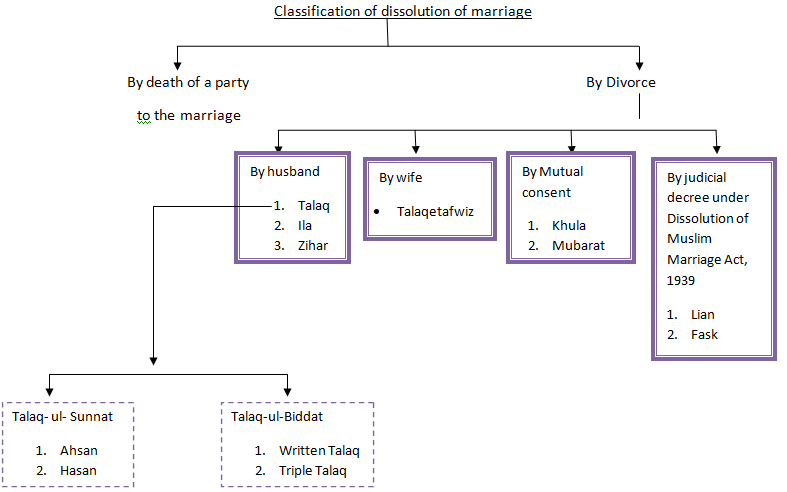












 Allow notifications





