Download Now
Home Blog Page 2

CPA Job Roles and Responsibilities

0
CPA jobs

CPA job roles and responsibilities guide for Indian professionals covering duties, employer landscape, salary expectations, required skills, and CPA vs CA career distinctions. This article is written by Rohit Arora, Senior Associate at LawSikho.

Before investing time, money, and effort into earning the US CPA credential, understanding exactly what you will be doing once you have those letters after your name makes practical sense. The Indian job market for CPAs has transformed dramatically over the past decade, with multinational corporations, Big 4 firms, and Global Capability Centers actively competing for qualified professionals. 

This guide breaks down the actual job responsibilities, employer landscape, compensation expectations, and skill requirements so you can make an informed decision about whether a CPA aligns with your career vision.

What Does a CPA Actually Do?

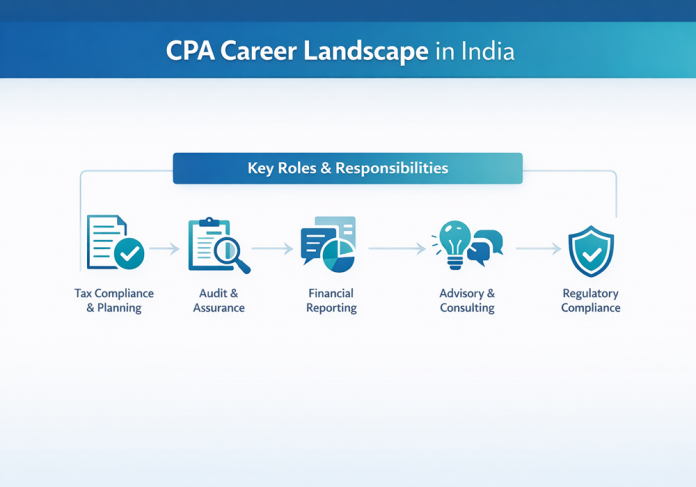
The CPA credential opens doors to diverse roles spanning financial reporting, taxation, auditing, and strategic advisory. Unlike some professional qualifications that funnel graduates into narrow career tracks, CPA holders find opportunities across industries and functions. What unites these varied positions is a foundation of rigorous technical competence and ethical standards that employers trust for their most critical financial work.

Core Duties Across All CPA Roles

Regardless of specific job title or employer, certain responsibilities appear consistently in CPA positions. Financial statement preparation and review form the backbone of most roles, requiring CPAs to ensure organizational finances are accurately captured and reported according to applicable standards. This involves analyzing transactions, preparing journal entries, reconciling accounts, and producing reports that stakeholders rely upon for decision-making.

Compliance represents another universal responsibility. CPAs ensure their organizations or clients meet regulatory requirements ranging from tax filings to SEC disclosures to industry-specific mandates. This protective function requires staying current with evolving rules and translating complex requirements into practical organizational processes. When compliance issues arise, CPAs often lead remediation efforts and implement controls to prevent recurrence.

Advisory functions round out core CPA work. Even in positions primarily focused on compliance or reporting, CPAs regularly advise on the financial implications of business decisions. They analyze cost structures, evaluate investment opportunities, assess risk exposures, and provide the financial perspective that leadership needs for informed strategy development. This advisory dimension grows increasingly prominent as careers advance.

Practice Area Specializations (Tax, Audit, Advisory)

Most CPAs develop expertise in one of three primary practice areas, each offering distinct daily work experiences and career trajectories. Tax specialists help individuals and organizations navigate federal, state, and international tax obligations. Their work cycles between compliance seasons focused on return preparation and planning periods where they develop strategies to minimize future tax burdens. Tax roles require comfort with detailed regulations and the analytical skills to apply complex rules to specific situations.

Audit practitioners examine financial records to provide independent assurance that statements fairly represent organizational performance. External auditors work for accounting firms conducting engagements across multiple clients, while internal auditors focus on their own organization’s controls and risk management. Audit work involves testing transactions, evaluating processes, and exercising professional skepticism to identify potential misstatements or control weaknesses.

Advisory and consulting roles leverage CPA expertise for strategic problem-solving beyond traditional accounting functions. This includes transaction support for mergers and acquisitions, forensic investigation of suspected fraud, operational improvement consulting, and technology implementation guidance. Advisory work tends to be project-based with varied client engagements, appealing to professionals who thrive on diverse challenges and client interaction.

CPA Career Opportunities in India

India has emerged as a global hub for finance talent, with employers across categories actively seeking CPA-qualified professionals. The combination of strong educational foundations, English proficiency, and favorable economics has made India a priority market for organizations building finance capabilities. Understanding where these opportunities exist helps you target your career development effectively.

Top Employers Hiring CPAs (Big 4, MNCs, GCCs)

The Big 4 accounting firms represent the largest and most visible CPA employers in India. Deloitte, PwC, EY, and KPMGcollectively plan to hire approximately 100,000 new employees in India during FY25, spanning audit, tax, and advisory service lines. These firms offer structured career progression, global client exposure, and premium compensation packages. CPA holders are particularly valued for engagements serving US-headquartered clients requiring American accounting standard expertise.

Multinational corporations have established Global Capability Centers across Indian metros, centralizing finance operations that previously resided at headquarters locations. Companies like Amazon, Google, Microsoft, Accenture, and American Express maintain substantial India-based finance teams handling everything from transaction processing to strategic analysis. These GCCs employ CPAs for US GAAP reporting, internal audit, treasury operations, and finance leadership roles. The work often involves direct collaboration with global teams and exposure to enterprise-scale operations.

Beyond Big 4 and traditional multinationals, Indian IT companies with significant US revenue streams actively recruit CPAs for their corporate finance functions. Organizations including Infosys, Wipro, TCS, and HCL require professionals who understand American accounting standards for SEC reporting and investor communications. Additionally, mid-tier accounting firms, Indian financial institutions, and consulting companies have increased CPA hiring as they expand international service offerings.

Job Roles by Experience Level

Entry-level CPAs typically join as staff accountants or associate auditors, spending their first two years building foundational skills under supervision. Daily work involves transaction processing, account reconciliations, audit procedure execution, and supporting senior team members on client deliverables. The focus at this stage is on developing technical proficiency, learning organizational processes, and demonstrating reliability with assigned responsibilities.

Mid-level professionals in years three through seven assume greater ownership and begin supervising others. Senior accountants lead month-end close processes and handle complex technical issues independently. Audit and tax managers run engagements, manage client relationships, and ensure quality standards. These roles bridge execution and leadership, requiring both technical excellence and emerging management capabilities. Compensation increases substantially as professionals demonstrate they can deliver results with less oversight.

Senior positions from director level through partner or executive ranks focus primarily on strategy, business development, and organizational leadership. Finance directors and controllers oversee departmental operations and partner with business leaders. CFOs serve as executive team members, shaping organizational direction. Partners in accounting firms own equity, develop client relationships, and guide firm strategy. These roles reward professionals who have built track records of delivering results and developing others over sustained careers.

CPA Salary Expectations in India

Compensation represents a primary consideration for professionals evaluating credential investments. CPA salaries in India have risen steadily as demand outpaces supply, creating favorable conditions for qualified candidates. Understanding market rates helps you evaluate opportunities and negotiate effectively.

Salary Range by Experience (Entry to Senior)

Fresh CPAs entering quality employers typically earn between ₹6 lakhs and ₹10 lakhs per annum. Big 4 firms and major multinational corporations position their offers at the higher end of this range, with exceptional candidates sometimes receiving packages reaching ₹12 lakhs. Smaller organizations and regional firms generally start lower, though they may offer faster advancement opportunities or other trade-offs.

Mid-career professionals with three to seven years of experience see compensation climb to ₹12 lakhs to ₹20 lakhs annually. Those working on US client engagements or in specialized high-demand areas often exceed these figures. The jump from entry to mid-level reflects demonstrated capability to handle complex work independently and contribute beyond assigned tasks. Performance differentiation becomes increasingly visible in compensation at this stage.

Senior professionals in manager, director, and leadership roles earn ₹20 lakhs to ₹40 lakhs or more, depending on employer and specific position. CFO-level roles in mid-sized organizations command ₹50 lakhs to ₹1 crore packages, while executive positions at large multinationals can exceed these figures substantially. At senior levels, compensation structures often include significant variable components tied to business performance and individual contribution.

Factors Affecting CPA Compensation

Several variables beyond experience influence earning potential. Employer type matters significantly, as Big 4 firms and multinational corporations generally pay more than domestic companies or smaller practices for comparable roles. Geographic location also impacts pay, with Mumbai, Bangalore, and Delhi commanding premiums of 20% to 30% over tier-two cities.

Practice area specialization affects salary trajectories as well. CPAs in transaction advisory, international taxation, technology consulting, and forensic accounting typically earn more than generalists in routine compliance roles. Additional credentials compound earning power, with professionals holding both CPA and CA qualifications commanding premium packages reflecting their dual expertise. Finally, business development contribution and leadership demonstrated through team building increasingly influence senior-level compensation.

Essential Skills for CPA Jobs

Employers evaluate candidates on both technical capabilities and interpersonal effectiveness. Understanding these requirements helps you assess readiness and prioritize development areas. The most successful CPAs combine deep expertise with the communication and relationship skills needed to deliver value in organizational contexts.

Technical Competencies Required

US GAAP knowledge forms the foundation for most India-based CPA positions, particularly those serving American clients or parent companies. This includes understanding revenue recognition, lease accounting, financial instruments, business combinations, and consolidation requirements. For roles involving multiple jurisdictions, IFRS familiarity adds value. The ability to research technical issues, apply standards to complex transactions, and explain positions clearly distinguishes strong candidates.

Technology proficiency has become essential rather than optional. CPAs work with enterprise systems like SAP, Oracle, and NetSuite daily, requiring comfort navigating complex applications and extracting needed information. Advanced Excel capabilities, including complex functions, pivot tables, and data analysis tools, remain universally expected. Increasingly, employers value experience with data analytics platforms, visualization tools, and automation technologies that are transforming traditional accounting work.

For specialized roles, additional technical depth is required. Tax positions demand a comprehensive understanding of federal and state codes, along with planning strategies. Audit roles require mastery of auditing standards, sampling techniques, and control evaluation methods. Advisory positions call for analytical frameworks, financial modeling capabilities, and presentation skills appropriate to executive audiences.

Soft Skills That Drive Career Growth

Communication skills differentiate CPAs who advance quickly from those who plateau. This encompasses explaining complex financial concepts to non-technical stakeholders, writing clear and concise reports, presenting confidently to leadership, and building productive relationships with clients and colleagues. The ability to translate technical expertise into business-relevant insights creates value that organizations reward with advancement and compensation.

Analytical thinking enables CPAs to move beyond processing transactions to solving problems and identifying opportunities. This involves examining information critically, recognizing patterns, evaluating alternatives, and developing practical recommendations. Strong analytical skills position professionals for advisory work that typically commands premium compensation.

Leadership capabilities become essential for career progression beyond individual contributor roles. This includes managing teams effectively, developing junior staff, driving results through others, and contributing to organizational direction. Even early in careers, demonstrating initiative, taking ownership of outcomes, and supporting team success signals leadership potential that accelerates advancement.

CPA vs CA: Understanding the Job Role Differences

Indian professionals often compare a CPA with a Chartered Accountant when evaluating credential options. Both designations indicate advanced accounting competence and open doors to quality employers. Understanding their similarities and distinctions helps you make the choice that best fits your career aspirations.

Where CPA and CA Roles Overlap

In core functions, CPAs and CAs perform substantially similar work. Both conduct audits, prepare financial statements, provide tax services, and offer business advisory services. Both credentials require rigorous examination and ongoing professional development. Organizations employing both CPA and CA holders typically assign comparable responsibilities to professionals at similar experience levels.

The technical foundations also overlap significantly. Accounting principles, regardless of specific framework, share fundamental concepts that transfer across jurisdictions. Audit methodology follows similar logic whether testing under US or Indian standards. Tax planning requires analytical skills that apply regardless of which country’s code you are navigating. Professionals often find that expertise developed under one credential translates reasonably well when encountering the other’s domain.

Career Path Distinctions for Indian Professionals

The primary distinction involves geographic focus and regulatory scope. CA provides practice rights in India and recognition in Commonwealth countries, essential for Indian statutory work, including company audits and domestic tax practice. CPA enables practice in the United States and carries strong global recognition, particularly valuable for roles serving American clients or requiring US GAAP expertise.

Employer preferences vary accordingly. Multinational corporations with US parent companies, Big 4 firms serving American clients, and finance shared services supporting US operations show a strong preference for CPA holders. Conversely, domestic Indian companies, statutory audit work, and positions requiring signing authority for Indian regulatory filings require a CA qualification. Many organizations value professionals holding both credentials for their ability to bridge Indian and American accounting requirements.

Career paths diverge based on these jurisdictional differences. Professionals targeting international careers, particularly involving US-headquartered organizations, find CPA opens more doors. Those focused on domestic Indian practice, particularly in areas requiring statutory signing authority, need a CA qualification. The optimal choice depends on your specific career goals, with many ambitious professionals eventually pursuing both credentials to maximize flexibility.

Conclusion

Understanding CPA job responsibilities before pursuing the credential enables informed career decisions. CPAs perform essential functions spanning financial reporting, compliance assurance, and strategic advisory across diverse organizational settings. The Indian job market offers abundant opportunities through Big 4 firms, multinational corporations, and Global Capability Centers actively competing for qualified professionals.

Compensation rewards experience and specialization, with entry-level packages starting at ₹6 to ₹10 lakhs and senior roles commanding ₹30 lakhs to ₹50 lakhs or more. Success requires combining technical competence in areas like US GAAP with communication and leadership skills that enable organizational impact. For Indian professionals targeting careers with an international dimension, particularly those involving US-headquartered organizations, the CPA credential provides meaningful differentiation and opens doors to rewarding career opportunities.

Click here to read a detailed article on CPA Job Roles and Responsibilities.

Download Now

Company Registration Documents in India

0
Company Registration Documents in India

Documents required for company registration in India include PAN, Aadhaar, DSC, registered office proof, MoA, AoA, and Form INC-9. Practical checklist for first-time founders with step-by-step guidance. This article is written by Neeli Neelay Shah, Senior Legal Content Writer at LawSikho.

Starting your own company is exciting. You have the business idea, the motivation, and probably a co-founder or two ready to build something meaningful. But then comes the paperwork, and suddenly the path forward feels less clear. How many documents do you actually need? Where do you even begin?

Here is the good news: the documentation process for company registration in India is far more straightforward than it appears. The Ministry of Corporate Affairs has consolidated everything into a single online system called SPICe+ (Simplified Proforma for Incorporating Company Electronically Plus), which handles name reservation, incorporation, PAN, TAN, and even GST registration through one integrated form. Once you understand what documents you need and why, gathering them becomes a simple checklist exercise. Thousands of companies register successfully every month, and with this guide, you will be well-prepared to join them.

Categories of Company Registration Documents

Before diving into specific documents, it helps to understand how the requirements are organized. Think of company registration documents as falling into four distinct categories, each serving a specific purpose in proving that your company is legitimate and its founders are eligible to run a business.

The first category covers personal documents from directors and shareholders. These establish who you are and where you live. The second category involves proof of your registered office address, confirming that your company has a physical location in India where official communications can be sent. The third category includes constitutional documents, specifically your Memorandum of Association and Articles of Association, which define what your company does and how it operates. The fourth category comprises statutory declarations and forms where you and your co-founders formally confirm your eligibility and consent to act as directors.

Understanding these four categories helps you organize your document collection systematically rather than scrambling to gather papers at random.

Importance of Document Accuracy in Company Registration

Before you start collecting documents, there is one principle that will save you weeks of frustration: consistency. The name on your PAN card must exactly match the name on your Aadhaar, which must exactly match the name you enter in the registration form. Even minor variations, such as including your middle name in one document but not another, or abbreviating “Kumar” to “K.” can trigger rejection.

The same applies to addresses. If your bank statement shows your apartment number as “Flat 302” but your electricity bill shows “302,” the Registrar of Companies may flag this as a mismatch. Before you begin the registration process, decide on the exact format you will use for names and addresses, and ensure every document reflects that format.

Incomplete or incorrect documents are the primary cause of registration delays. The MCA system is designed to verify information automatically, and inconsistencies get flagged for manual review, which adds days or weeks to your timeline. Taking an extra hour to verify document consistency before submission is always worth it.

Documents Required from Directors and Shareholders for Company Registration

This section covers what you and your co-founders need to gather before starting the registration process. If you are registering a Private Limited Company, the most common choice for startups, you need at least two directors and two shareholders. The same individuals can fill both roles, so two people can incorporate a Private Limited Company by each serving as both director and shareholder.

At least one director must be a resident of India, meaning they have stayed in India for at least 182 days during the previous calendar year. This is a legal requirement that cannot be waived.

Mandatory Identity Proof Documents for Directors and Shareholders

Every director and shareholder must provide identity proof documents. The requirements are straightforward but non-negotiable.

PAN card is mandatory for all Indian directors and shareholders. Your Permanent Account Number serves as your primary identity with the tax authorities, and the MCA system verifies your PAN details automatically. If you do not have a PAN card, apply for one before starting the company registration process.

Beyond PAN, you need one additional government-issued identity proof. Acceptable documents include Aadhaar card, Voter ID (Election Commission of India), valid Indian Passport, or Driving License. The identity proof must clearly show your photograph, full name, and date of birth.

You will also need recent passport-sized photographs of each director and shareholder. These photographs should be taken within the last six months and show a clear frontal view against a light background.

Address Proof and its Validity Period

Address proof is where many first-time founders run into trouble, not because the requirements are complex, but because of one critical rule: your address proof document must not be older than two months from your filing date.

Acceptable address proof documents include bank account statements, electricity bills, landline telephone bills, mobile phone bills (postpaid only), or property tax receipts. The document must clearly show your name and current residential address.

The two-month validity rule is strictly enforced by the MCA system. Even if your address has not changed in years, you cannot use a utility bill from three months ago. Download your latest bank statement or wait for your next utility bill before filing. This single requirement causes more rejections than almost any other documentation issue.

A practical tip: if you are planning to register your company next month, do not start collecting address proofs today. Gather your identity documents now, but save the address proof collection for the week you plan to file.

Additional Documents Required from NRIs and Foreign Directors

Non-resident Indians (NRIs) and foreign nationals have additional documentation requirements for company registration in India due to cross-border identity verification. Foreign directors must submit a valid passport as primary identity proof, including personal details, photograph, and validity page; a Business Visa is required if visiting India for incorporation unless they hold OCI/PIO status. NRIs with Indian passports use them as identity proof, but residential status determines attestation needs.

Documents signed outside India require notarization followed by apostille for Hague Convention countries (e.g., USA, UK, Australia), or consularization via the Indian Embassy for non-member countries. An exception applies if an NRI with an Indian passport is physically in India during filing: their documents can be attested by an Indian practicing professional (CA/CS/CMA) or notary, skipping apostille. 

All non-English documents must be translated by a certified translator, with translations notarized alongside originals before apostille/consularization.

Digital Signature Certificate Requirements for Company Registration

A Digital Signature Certificate, or DSC, is the electronic equivalent of your handwritten signature. Every document filed with the MCA must be digitally signed, making DSC mandatory for company registration.

You need a Class 3 DSC, which is the only class now issued in India after Class 1 and Class 2 were discontinued. Class 3 provides the highest level of security and is accepted for all government filings including MCA, Income Tax, and GST portals.

Obtaining a DSC is straightforward. You apply through authorized Certifying Authorities such as eMudhra, Sify, or (n)Code Solutions. The process is entirely online: you submit your identity proof (PAN card), address proof, and a recent photograph, complete a video verification call, and receive your DSC on a USB token within 2 to 3 business days. The cost typically ranges from Rs. 2,500 to Rs. 4,500 depending on the validity period you choose (1, 2, or 3 years).

Start the DSC application process at least a week before you plan to file your incorporation. While the process is usually quick, occasional delays in video verification or courier delivery can push your timeline.

Director Identification Number (DIN) Requirements and Application

Every director of an Indian company must have a Director Identification Number, a unique identifier that tracks directorships across all companies in India. Previously, you had to apply for DIN separately before incorporation, adding another step to an already lengthy process.

The good news for first-time founders is that SPICe+ has simplified this completely. The incorporation form now allows DIN allotment for up to three directors as part of the same application. You provide your PAN details and personal information in the SPICe+ form, and if approved, your DIN is allotted along with your Certificate of Incorporation.

If any of your proposed directors already have a DIN from a previous directorship, they simply provide their existing DIN number in the application. There is no need to apply for a new one.

Registered Office Documents Required for Company Registration

Every company in India must have a registered office address where official communications, legal notices, and government correspondence will be sent. This address appears on your Certificate of Incorporation and all official documents.

Your registered office can be a commercial space, a rented office, a co-working space, or even your home. The MCA does not restrict the type of premises; it only requires proof that you have legitimate access to the address.

Documents for Rented Premises as Registered Office

If you are renting office space, which is common for startups, you need three documents to prove your registered office address.

First, you need a rent or lease agreement. This agreement should identify the premises clearly, name the landlord and tenant, and specify the rental terms. The agreement does not need to mention the company name since your company does not exist yet at this stage. It can be in the name of one of the proposed directors.

Second, you need a No Objection Certificate from the property owner. This is a simple letter stating that the owner has no objection to the premises being used as the registered office of your proposed company. The NOC should include the owner’s name and address, the complete address of the premises, and a clear statement of consent.

Third, you need a utility bill for the premises, specifically electricity bill, water bill, telephone bill, or gas bill. This utility bill must not be older than two months and must show the address matching your rent agreement.

Documents for Owned Property or Home Office as Registered Office

Many first-time founders operate from home, at least initially. If a director owns the property or you are using a family member’s property as your registered office, the documentation requirements are slightly different.

You need proof of ownership, which can be the registered sale deed, property title document, or conveyance deed. You also need a recent utility bill for the premises, again not older than two months. Even if the property owner is one of the directors or a family member, you still need a No Objection Certificate. The NOC confirms that the property owner consents to the address being used as the company’s registered office.

If you are working from your parents’ home, for example, your father or mother (whoever owns the property) should provide the NOC along with the ownership documents.

Documents Required to Register Virtual Office and Coworking Space 

Virtual offices and co-working spaces have become popular choices for startups that do not need dedicated premises. The MCA accepts these addresses as registered offices, provided you have proper documentation.

Virtual office providers typically supply a documentation package that includes a service agreement, authorization letter permitting use of the address as registered office, and a utility bill for the premises. Some providers also handle the NOC from their landlord on your behalf.

If you are using a co-working space, obtain a rental agreement or membership agreement, an NOC from the co-working space operator (who may need to obtain an NOC from their landlord), and a utility bill for the premises.

Before signing up with a virtual office provider specifically for company registration, confirm that they can provide all required documentation. Some budget providers offer mailing addresses but cannot support registered office requirements.

Memorandum and Articles of Association: Required Documents for Company Registration

The Memorandum of Association (MoA) and Articles of Association (AoA) are your company’s foundational documents. Every company registered in India must have both, and they are filed as part of your SPICe+ application.

Think of the MoA as your company’s external rulebook. It tells the world who you are, what your company does, where it is based, and how much capital you are authorized to raise. The AoA, by contrast, is your internal rulebook. It governs how your company operates day-to-day: how decisions are made, how shares can be transferred, how meetings are conducted, and how directors are appointed.

Memorandum of Association: Format and Contents

The MoA contains six mandatory clauses that define your company’s identity and scope.

The Name Clause states your company’s official name. For a Private Limited Company, the name must end with “Private Limited.” The Registered Office Clause specifies the state where your company’s registered office is located (just the state, not the full address). The Object Clause describes your business activities and what your company is authorized to do. The Liability Clause confirms that your members’ liability is limited to the amount unpaid on their shares. The Capital Clause states your authorized share capital, which is the maximum amount of share capital your company can issue. The Subscriber Clause lists the founding members who are subscribing to shares and forming the company.

For Private Limited Companies, the MoA follows the format prescribed in Table A of Schedule I to the Companies Act, 2013. The SPICe+ system provides an e-MoA form that captures all these details in a structured format, making the process simpler than drafting a physical document from scratch.

Articles of Association

While the MoA defines what your company can do, the AoA governs how your company will function internally. It contains rules about share transfers, board meeting procedures, director appointment processes, dividend distribution, and other operational matters.

You have two options for your AoA. You can adopt Table F from Schedule I of the Companies Act, which provides standard model articles suitable for most private limited companies. Alternatively, you can file customized articles if you have specific requirements, such as detailed investor rights, different classes of shares, or particular restrictions on share transfers.

For most first-time founders incorporating a straightforward Private Limited Company, adopting Table F (with or without modifications) is sufficient and saves the complexity of drafting custom articles. If you have investors involved or complex shareholding arrangements, consult with a company secretary or lawyer about customizing your AoA.

Company Registration Documents: Statutory Declarations and Forms 

Beyond the constitutional documents, you and your co-founders must file certain declarations confirming your eligibility to serve as directors and shareholders. These declarations have legal significance and must be completed accurately.

Form INC-9: Declaration of Compliance by Subscribers and Directors

Form INC-9 is the declaration required under Section 7(1)(c) of the Companies Act, 2013. Every subscriber to the MoA and every first director must sign this declaration.

Through Form INC-9, you are declaring three things: that you have not been convicted of any offence related to the promotion, formation, or management of any company during the past five years; that you have not been found guilty of fraud, misfeasance, or breach of duty to any company during the past five years; and that all documents filed for registration contain correct, complete, and true information.

For most incorporations through SPICe+, Form INC-9 is auto-generated by the system in PDF format. You do not need to prepare it separately. The system creates the declaration based on the information you provide, and each subscriber and director signs it digitally using their DSC.

Form DIR-2: Director’s Consent

Form DIR-2 captures each proposed director’s consent to act as a director of the company. This is a formal acknowledgment that the person agrees to take on the responsibilities and obligations of directorship.

The form requires basic personal information, confirmation of eligibility (that the person is not disqualified under Section 164 of the Companies Act), and the director’s digital signature. DIR-2 is attached to your SPICe+ application along with your other documents.

Documents Required for Different Types of Company Registration

While this guide focuses primarily on Private Limited Company registration, understanding the documentation differences across company types helps you choose the right structure.

Private Limited Company vs. OPC vs. Public Limited Company

A Private Limited Company requires a minimum of two directors and two shareholders, though the same two individuals can fill both roles. This is the most popular choice for startups because it offers limited liability, separate legal identity, and relatively straightforward compliance. You need identity and address proofs for all directors and shareholders, registered office documentation, MoA and AoA, and the standard statutory declarations.

A Public Limited Company requires a minimum of three directors and seven shareholders. The documentation is similar to a Private Limited Company but more extensive due to the larger number of stakeholders. Public companies have no cap on shareholders and can offer shares to the public, but they also face stricter compliance requirements under SEBI. Most first-time founders do not start with a public company structure.

A One Person Company allows a single individual to incorporate a company with limited liability. You need only one director and one shareholder (the same person), but you must also designate a nominee who will take over if something happens to the sole member. The additional document required is Form INC-3, which captures the nominee’s consent. OPCs are available only to Indian citizens who are residents in India.

Section 8 companies, formed for non-profit objectives, require additional documents beyond standard incorporation filings. These include Form INC-12 (application for license under Section 8), Form INC-13 (prescribed Memorandum of Association format), Form INC-14 (declaration by a practicing professional such as CA/CS/CMA), projected income and expenditure statements for the next three years, and draft MoA/AoA tailored for Section 8 compliance. 

Document Filing Process Through SPICe+ Portal for Company Registration

SPICe+ is the single integrated form through which all company registrations happen in India. Understanding the filing process helps you prepare documents in the correct format and avoid common mistakes.

SPICe+ Part A and Part B Documents

The SPICe+ form is divided into two parts that can be filed together or separately.

Part A handles name reservation. At this stage, you propose up to two names for your company in order of preference and provide a brief explanation of the name’s significance. Document requirements at Part A are minimal, usually just any NOC or approval letters if your proposed name requires clearance from a sector regulator or is based on someone else’s trademark.

Once your name is approved (typically within 1 to 2 working days), you have 20 days to file Part B. This is where you upload all your documents: identity proofs and address proofs for all directors and shareholders, registered office documents (agreement, NOC, utility bill), MoA and AoA, Form INC-9 declarations, and Form DIR-2 consents.

All documents must be uploaded in PDF format with clear, legible scans.

Document Format and Upload Specifications

Proper document formatting prevents unnecessary rejections. Scan all physical documents in color at minimum 300 DPI resolution. Ensure text is clearly readable, signatures are visible, and document edges are not cut off. Save files with descriptive names like “Director1_PAN.pdf” or “Registered_Office_Electricity_Bill.pdf” to avoid confusion during upload.

The MCA portal has file size restrictions for each document type, typically around 6 MB per attachment. If your PDF exceeds the limit, use compression tools to reduce size without compromising readability. Most rejections due to “illegible documents” happen because founders upload low-quality scans or compress files too aggressively, making text unreadable.

A practical tip: after scanning and compressing, open each file on your computer and zoom in to verify that all text, signatures, and stamps are clearly visible. If you cannot read it easily on screen, the ROC reviewer will not be able to either.

Common Mistakes That Cause Rejections

Awareness of frequent errors helps you avoid them. The most common rejection reasons are entirely preventable.

Name mismatch between documents is the leading cause of rejection. If your PAN shows “Rahul Kumar Singh” but your Aadhaar shows “Rahul K. Singh,” the system flags this inconsistency. Standardize your name format across all documents before filing.

Using utility bills older than two months triggers automatic rejection. The system checks document dates, and there is no manual override for this rule. Always verify your utility bill date immediately before final submission.

Missing NOC for rented premises is common among first-time founders who do not realize this document is required. Even if your landlord has verbally agreed, you need a written NOC with their signature.

Unsigned declarations occur when founders forget to digitally sign one or more documents. The SPICe+ system requires multiple signatures at different stages. Follow the signing prompts carefully and verify that all required signatures are applied.

Expired DSC causes submission failures at the final step. DSCs have validity periods, and an expired certificate cannot be used to sign documents. Check your DSC validity before starting the filing process.

Conclusion

Company registration documentation falls into four clear categories: personal documents establishing director and shareholder identity, registered office proof confirming your business location, constitutional documents defining your company’s structure and purpose, and statutory declarations confirming everyone’s eligibility. While the complete list may seem extensive at first glance, most items are documents you already have or can easily obtain within a few days.

The key to smooth registration is preparation and consistency. Standardize your name and address format before collecting documents. Verify that all utility bills and address proofs are within the two-month validity window. Obtain your DSC early to avoid last-minute delays. Double-check every document for clarity and completeness before uploading.

Thousands of companies register successfully in India every month, from tech startups to consulting firms to manufacturing businesses. With this checklist guiding your document preparation, you are well-equipped to join them.

Remember that receiving your Certificate of Incorporation is not the end of your compliance journey. Within 180 days, you must file Form INC-20A declaring the commencement of business and confirming that all subscribers have paid for their shares. You will also need to open a company bank account and conduct your first board meeting within 30 days of incorporation. But those are tasks for after you have your certificate in hand. For now, focus on gathering your documents, and take that first exciting step toward building your company.

You can click here for a more detailed understanding on this topic. 

Download Now

How to Register a Private Limited Company

0
Private Limited Company

Private limited company registration in India requires 2 directors, 2 shareholders, and SPICe+ filing. Complete guide covering Section 2(68), registration steps, documents, fees, and critical post-incorporation compliance. This article is written by Neeli Neelay Shah, Senior Legal Content Writer at LawSikho.

Table of Contents

If you are a law student preparing for company law examinations, an early-career professional advising clients on business structures, or an entrepreneur ready to formalize your startup, understanding private limited company registration is foundational knowledge you cannot do without. Private limited companies constitute approximately 96% of all registered companies in India, making this the dominant corporate structure in the country. With over 185,000 new companies incorporated in FY 2023-24 alone, the demand for professionals who understand the registration process continues to grow. This guide will walk you through everything you need to know, from the legal definition to the registration steps and critical post-incorporation compliance. 

Private Company Definition Under Section 2(68) of the Companies Act, 2013

Before diving into registration procedures, you need to understand what legally makes a company “private.” The definition is found in Section 2(68) of the Companies Act, 2013 (“the Act”), and it is not merely academic knowledge. This definition determines what restrictions your Articles of Association must contain, what exemptions the company can claim, and how the company can raise capital throughout its existence.

According to Section 2(68), a private company is one which, by its articles, restricts the right to transfer its shares, limits the number of its members to 200 (excluding present and former employees), and prohibits any invitation to the public to subscribe for its securities. Think of these as the three walls that define the “private” character of the company. Without these restrictions in your Articles of Association, the Registrar will not approve your incorporation as a private limited company.

Three Mandatory Restrictions for Private Companies

Restriction on Transfer of Shares

The restriction on share transfer means shareholders cannot freely sell their shares to anyone they want. Typically, the Articles require that existing shareholders get the first opportunity to buy shares before an outsider can purchase them. This keeps ownership within a controlled group, which is exactly what most founders want.

Limitation on Number of Members to 200

The 200-member limit sounds restrictive, but for most startups and SMEs, this is never a practical concern. Moreover, employees and former employees who hold shares are not counted in this limit. This matters when you implement Employee Stock Option Plans (ESOPs) because employees exercising their options and becoming shareholders will not push you toward the 200 limit.

Prohibition on Public Invitation for Securities

The prohibition on public invitation means no IPO, no public offering, and no listing on stock exchanges. Private companies raise money through private placement from angel investors, venture capital funds, and private equity investors, not from the general public. If you ever want to access public markets, you will need to convert to a public company first.

Key Advantages: Private Limited Company vs LLP vs Sole Proprietorship 

This is perhaps the most common question law students and entrepreneurs ask: which structure is right? The answer depends on your goals, but for most growth-oriented businesses, a private limited company wins on several factors.

Compared to a Limited Liability Partnership (LLP), a private limited company offers significantly better fundraising capability. Venture capitalists and institutional investors prefer the equity structure of private companies because they can acquire shares, implement anti-dilution protections, and plan exits through share sales. LLPs cannot issue shares, making equity financing nearly impossible. FDI in private companies is permitted under the automatic route in most sectors, while LLP investment requires RBI approval.

Compared to a sole proprietorship, the private limited company offers limited liability protection. In a proprietorship, your personal assets are at risk if the business fails. In a private company, your liability is limited to your shareholding. The company is a separate legal entity that can own property, sue, and be sued in its own name. Yes, compliance is higher in a private company, but the protection and credibility benefits usually outweigh the additional paperwork.

Private Limited Company Registration Requirements 

Before you open the MCA portal and start filling forms, you need to ensure certain minimum requirements are met. Getting these wrong means application rejection and wasted fees.

Minimum Number of Directors and Shareholders

A private limited company needs minimum two directors and minimum two shareholders. The good news: the same two people can serve as both directors and shareholders. So technically, you and a co-founder can incorporate a company with just the two of you filling all four positions.

Directors must be individuals (not companies or LLPs), must be at least 18 years old, and must not be disqualified under Section 164 of the Act. Most importantly, at least one director must be a resident of India, meaning they must have physically stayed in India for at least 182 days in the previous calendar year. This resident director requirement cannot be waived.

Shareholders can be individuals or body corporates (including foreign companies). There is no residency requirement for shareholders. Foreign nationals can be shareholders in Indian private companies, though the investment must comply with FEMA regulations and FDI policy.

One persistent myth: there is no minimum capital requirement. The earlier requirement of ₹1 lakh paid-up capital was repealed in 2015. You can incorporate with any amount, even ₹10,000. However, keep in mind that very low capital may raise questions from banks and potential investors about your seriousness.

Shareholding Structure and Capital Requirements

A private limited company requires a minimum of two shareholders and can have up to 200 members, excluding current and former employees. Shareholders can be individuals or corporate entities (including foreign companies), with no residency restrictions, unlike directors. The same two persons can act as both directors and shareholders, making incorporation possible with just two individuals.

The minimum paid-up capital requirement of ₹1 lakh was repealed by the Companies (Amendment) Act, 2015, effective May 29, 2015. Currently, no statutory minimum capital is mandated; companies can incorporate with as little as ₹1,000. The authorized capital should be strategically determined during incorporation, as subsequent increases require Form SH-7 filing with additional fees and stamp duty.

Registered Office 

Every company must establish a registered office from incorporation, serving as the official address for all communications and legal notices. Section 12 mandates verification of this address with the Registrar within 30 days through Form INC-22.

The registered office can be a commercial property, co-working space, or residential premises; there is no legal bar on using residential addresses, though housing society or landlord restrictions may apply. The address must be a valid physical location within India where statutory registers and records are maintained or accessible for inspection.

Private Limited Company Registration Through SPICe+: Step-by-Step Process

The Ministry of Corporate Affairs introduced SPICe+ (Simplified Proforma for Incorporating Company Electronically Plus) in February 2020. This single web-based form replaced multiple earlier forms and integrated 10 services from 3 Central Government ministries. Understanding this process is essential for any company law examination and practical advisory work.

Step 1: Reserving Your Company Name Through SPICe+ Part A

Your company name is its identity, and the MCA is strict about what names are permitted. Rule 8 of the Companies (Incorporation) Rules, 2014 provides detailed naming guidelines.

Names that will be rejected include: names identical or similar to existing companies or LLPs, names similar to registered trademarks without NOC, names using restricted words like “Bank,” “Insurance,” “National,” or “Republic” without approval, and generic names that do not have a distinctive element.

A good company name has three parts: a distinctive word (your unique identifier), a descriptive word (indicating your business), and “Private Limited” at the end. For example, “Nexus Technologies Private Limited” follows this structure.

You file SPICe+ Part A for name reservation, proposing up to two names in order of preference. The fee is ₹1,000. Once approved, the name is reserved for 20 days, within which you must file Part B for incorporation. If you miss the deadline, the name lapses and someone else can take it.

Step 2: Applying for Director Identification Number (DIN) 

Every individual appointed as a director must obtain a Director Identification Number (DIN) under Section 153 of the Companies Act, 2013. This unique identification number remains valid for life unless surrendered or deactivated due to disqualification. DIN serves as a permanent identifier across all directorships held by an individual.

For new company incorporations, DIN for up to three directors can be obtained directly through the SPICe+ form, eliminating separate applications. The form captures personal details, identity proof, address proof, and photographs, with DIN allotted upon incorporation approval. Companies requiring more than three directors must incorporate with three initially and appoint additional directors later.

For directors joining existing companies or additional directors beyond the initial three, Form DIR-3 must be filed separately with a fee of ₹500. The application requires personal information, identity and address proof, and digital signature certification by a practicing professional (CA, CS, or Cost Accountant). Processing typically takes 3-5 working days, with the DIN approval letter sent via email.

Step 3: Getting Your Digital Signature Certificate (DSC)

Every person, including all proposed directors and all subscribers to the Memorandum of Association, who will sign incorporation documents needs a Digital Signature Certificate. If someone is both a director and subscriber (which is common), one DSC works for both purposes. You can obtain DSC from certifying authorities licensed by the Controller of Certifying Authorities. Popular providers include eMudhra and Sify.

For foreign nationals, the DSC must still be from an Indian certifying authority, but documents like passport and address proof must be apostilled or consularised from their home country.

Step 4: Filing for Incorporation Through SPICe+ Part B

SPICe+ Part B is where the actual incorporation happens. This form captures company details, director information, shareholder details, capital structure, and registered office address. Along with it, you will complete linked forms:

e-MOA (INC-33): The electronic Memorandum of Association containing the company’s name, objects, liability clause, and capital clause. All subscribers must digitally sign it.

e-AOA (INC-34): The electronic Articles of Association containing internal rules for managing the company. Private companies can adopt standard Table F of the Schedule I of the Act or create customized articles.

AGILE-PRO (INC-35): This linked form applies for GST registration (optional), EPFO registration, ESIC registration, Professional Tax registration (Maharashtra), and initiates bank account opening.

INC-9: Declaration by all subscribers and directors that all information is true and they are not involved in any fraud.

When all forms are completed and digitally signed, you upload them to the MCA portal and pay the fees. The Central Registration Centre processes the application and, if approved, issues the Certificate of Incorporation containing the company’s CIN (Corporate Identity Number), along with PAN and TAN.

Essential Documents for Private Limited Company Registration

Here is a consolidated checklist of documents you will need:

For Directors (Indian Nationals):

  • PAN card (mandatory)
  • Address proof: Aadhaar, Voter ID, Passport, or Driving License
  • Passport-size photograph

For Directors (Foreign Nationals):

  • Passport (entire copy, apostilled/notarized)
  • Address proof from home country (apostilled/notarized)
  • Photograph

For Registered Office:

  • If owned: Sale deed or property tax receipt, plus recent utility bill
  • If rented: Rent agreement, recent utility bill in owner’s name, No Objection Certificate from owner

Digital Signature Certificates:

  • Class 3 DSC for all directors and subscribers (obtained from licensed certifying authorities)

Registration Fees and State-Wise Stamp Duty

MCA Registration Fees

The MCA fee structure is prescribed in the Companies (Registration Offices and Fees) Rules, 2014, as amended from time to time. Fees depend primarily on the authorized capital of the company.

SPICe+ Part A and Part B Filing Fees

SPICe+ Part A (Name Reservation): The fee is ₹1,000 regardless of the authorized capital.

SPICe+ Part B (Incorporation): The fee structure for incorporation is as follows:

Authorized CapitalFiling Fee
Up to ₹1,00,000Nil
₹1,00,001 to ₹5,00,000₹2,000
₹5,00,001 to ₹10,00,000₹2,000 + ₹200 for every ₹1,00,000 above ₹5,00,000
Above ₹10,00,000Calculated as per slab

Fee Exemption for Companies with Authorized Capital Up to ₹15 Lakh

For companies with authorized capital up to ₹15 lakh, the SPICe+ Part B filing fee is minimal or nil. This is a significant incentive for startups and small businesses. The zero-fee structure for small companies is part of the government’s Ease of Doing Business initiative.

However, remember that stamp duty is separate and payable based on state-specific rates. So while MCA fees may be nil, stamp duty will still apply.

Additional Fees for DIN, PAN, and TAN Application

DIN: When applied through SPICe+, DIN allotment is included in the incorporation fee at no additional cost. If applied separately through DIR-3, the fee is ₹500 per DIN.

PAN and TAN: These are automatically processed through the SPICe+ system. The combined fee for PAN and TAN application is approximately ₹150-200, which is included in the overall SPICe+ processing.

State-Wise Stamp Duty Variation 

Stamp duty is a state subject under the Indian Constitution, meaning each state has its own Stamp Act and fee structure. Stamp duty is payable on the Memorandum of Association, Articles of Association, and certain other incorporation documents. The duty is calculated based on the authorized capital and the state-specific rates. Higher authorized capital means higher stamp duty.

Some states have a flat rate system while others use an ad valorem (percentage-based) system. For example, in the State of Maharashtra, the stamp duty payable by a Company (whether it has no share capital or nominal share capital or increased share capital) towards Articles of Association is 0.3 per cent on share capital or increased share capital (ad-valorem), subject to a maximum of Rs, 1,00,00,000; and towards Memorandum of Association (if accompanied with AoA) it is Rs. 1000 (flat rate). 

Stamp duty increases with higher authorized capital. Always verify current rates on the respective state’s stamp duty portal or through the MCA SPICe+ system, which auto-calculates stamp duty.

E-Stamp Duty Payment Through SPICe+

The SPICe+ system has integrated e-stamp duty payment, making the process seamless. When filing SPICe+ Part B, the system automatically calculates the applicable stamp duty based on the selected state and authorized capital. The duty is paid online along with the MCA filing fees.

This integration has eliminated the earlier requirement of purchasing physical stamp papers, getting documents franked, and uploading stamped documents. The e-stamping is reflected in the final incorporation documents.

Post-Registration Compliance for Private Limited Companies

Getting the Certificate of Incorporation feels like crossing the finish line, but it is actually the starting point. Several mandatory compliances must be completed within specific timelines, and missing them carries penalties that can be severe.

Private Limited Company Registration: First 30 Days Compliance Requirements 

First Board Meeting: Section 173(1) of the Act requires the first board meeting within 30 days of incorporation. In this meeting, you will typically: appoint the first statutory auditor, authorize opening the bank account, adopt the registered office, and pass resolutions on various administrative matters. Minutes must be prepared and signed by the chairperson.

Auditor Appointment: Section 139(6) of the Act mandates appointing the first auditor within 30 days. The auditor must be a practicing Chartered Accountant or CA firm. They provide consent in Form ADT-1, which must be filed with ROC within 15 days of appointment. The first auditor serves until the first AGM.

Bank Account: Open a current account in the company’s name and deposit the subscription money (what shareholders agreed to pay for their shares). This is essential for the next critical filing.

Share Certificates: Within 60 days of incorporation, issue share certificates to all subscribers. These must be signed by directors and bear the company seal if you have adopted one.

Form INC-20A Filing Requirements

This is perhaps the most critical post-incorporation filing, and many new directors are not aware of it until it becomes a problem.

Under Section 10A, inserted by the 2018 amendment, a company with share capital must file Form INC-20A within 180 days of incorporation. This declaration confirms that every subscriber has paid the value of shares agreed to be taken by them.

What happens if you do not file within 180 days?

  • The company cannot legally commence business or exercise borrowing powers
  • The company faces a penalty of ₹50,000
  • Every officer in default (typically directors) faces a penalty of ₹1,000 per day of continuing default
  • The Registrar may initiate action to strike off the company

The form requires a bank statement showing receipt of subscription money and must be digitally signed by a director and certified by a practicing professional. The filing fee is just ₹200, making non-compliance purely a matter of negligence, not cost.

Obtaining Additional Registrations After Private Limited Company Registration

While not all registrations are mandatory, several enhance business operations, compliance, and access to sector-specific benefits.

GST Registration

GST registration is mandatory if turnover exceeds ₹40 lakh for goods (₹20 lakh in special category states) or ₹20 lakh for services (₹10 lakh in special category states), for inter-state supplies, TDS deduction under GST, or e-commerce platform sales. Voluntary registration is advisable for B2B businesses to claim Input Tax Credit and enhance credibility. Registration can be completed through AGILE-PRO during incorporation or separately via the GST portal.

Professional Tax Registration

Professional Tax is a state-level levy applicable in Maharashtra, Karnataka, West Bengal, Gujarat, and other states. Maharashtra integrates this registration with SPICe+ through AGILE-PRO, while other states require separate registration. Companies must register as employers to deduct Professional Tax from employee salaries and director remuneration above threshold limits.

Shops and Establishment Registration

Companies with physical premises must register under the state’s Shops and Establishment Act, which governs working hours, holidays, and employment conditions. Registration is done with the local municipal corporation or labour department, requiring proof of premises, director identity proof, and business address proof.

MSME Registration and Startup India Recognition

MSME registration through the Udyam portal (udyamregistration.gov.in) is free and provides benefits including priority lending, subsidies, and delayed payment protection. Companies meeting DPIIT startup criteria (incorporated within 10 years, turnover under ₹100 crore, innovation-focused) can obtain Startup India recognition for tax exemptions under Section 80-IAC, angel tax exemption under Section 56(2)(viib), and faster IP processing with reduced fees.

Always check the latest classification thresholds and eligibility details on the official portals, as criteria (such as MSME investment and turnover limits) were revised effective April 1, 2025.

Conclusion

Private limited company registration in India, while procedurally streamlined through SPICe+, remains a legal process that demands attention to detail and awareness of ongoing compliance obligations. For law students, understanding Section 2(68), the registration process, and post-incorporation requirements forms the foundation of company law knowledge that will serve you throughout your career. For entrepreneurs, this knowledge helps you make informed decisions about business structure and ensures you start your venture on a compliant footing.

The key takeaways are straightforward: private companies need minimum two directors and two shareholders (can be the same people), there is no minimum capital requirement, the SPICe+ form integrates multiple services into a single application, and post-incorporation compliance begins immediately with critical deadlines at 30 days and 180 days. Miss these deadlines, and the penalties can be substantial.

Whether you are advising a client, appearing for examinations, or launching your own startup, the fundamentals covered in this guide provide the essential framework. The details may change as the MCA issues new notifications and amendments, but the underlying structure of private company registration under the Companies Act, 2013 remains your constant reference point.

For more in-depth coverage on this topic, please visit our LawSikho blog, by clicking here.

Download Now

Generally Accepted Accounting Principles (GAAP)

0
GAAP

GAAP stands for Generally Accepted Accounting Principles, the mandatory US accounting framework. Learn key differences from Ind AS and career pathways for Indian accountants. This article is written by Rohit Arora, Senior Associate at LawSikho.

If you have ever prepared a reporting package for a US parent company, reconciled intercompany balances with an American subsidiary, or supported an audit team working on US-based clients, you have encountered US GAAP in action. 

GAAP, which stands for Generally Accepted Accounting Principles, represents the accounting rulebook that every publicly traded American company must follow. 

For Indian accountants and finance professionals, GAAP knowledge has transformed from a niche specialization into a mainstream career asset. With US corporations increasingly building finance operations in India and mid-sized American accounting firms actively recruiting from Indian campuses, professionals who understand both Ind AS and US GAAP have become highly sought after. 

This guide breaks down what you need to know about GAAP, how it differs from Indian standards, and how you can build expertise that translates into better job opportunities and higher compensation.

GAAP Full Form

GAAP stands for Generally Accepted Accounting Principles, and you will hear professionals pronounce it simply as “gap.” This framework serves as the mandatory accounting standard for all publicly traded companies in the United States. When American companies prepare their quarterly earnings reports, annual financial statements, or SEC filings, they must follow GAAP rules without exception. 

The framework covers everything from how companies recognize revenue and value inventory to how they present information on balance sheets and disclose significant transactions to investors.

For Indian professionals, GAAP matters because the US remains the world’s largest economy, and American companies operate extensively in India. 

Whether you work at Infosys handling US client engagements, at a Deloitte office auditing American subsidiaries, or at a (Global Capability Center) GCC preparing monthly financials for a Fortune 500 parent company, your work product must ultimately comply with GAAP requirements. 

The standards ensure that financial statements are prepared consistently across all companies, enabling investors to compare performance, assess risk, and make informed decisions. Without this standardization, every company could present its financial position differently, making meaningful analysis impossible.

Its Significance in Global Financial Reporting

GAAP’s significance extends far beyond American borders. 

The framework influences accounting practices worldwide and serves as a benchmark against which other national standards are often compared. When international investors evaluate US companies or when American firms assess potential acquisitions abroad, GAAP provides the common language for financial communication. 

The standards have evolved over nearly a century to address increasingly complex business transactions, from basic revenue recognition to sophisticated financial instruments.

For Indian finance professionals specifically, GAAP expertise creates tangible career advantages. 

The Big 4 accounting firms, US MNCs with Indian operations, and shared services centers all value professionals who can navigate both Indian and American accounting frameworks. As India’s role in global finance operations continues to expand, with American companies outsourcing everything from transaction processing to financial analysis, the demand for GAAP-literate professionals has grown correspondingly. 

Understanding GAAP is no longer just about compliance; it is about positioning yourself for roles that offer greater responsibility and compensation.

Who Governs and Enforces US GAAP?

Understanding who creates and enforces GAAP helps you appreciate the authority behind the standards you apply. Three primary bodies share responsibility for the US accounting framework, each with distinct roles. 

The Financial Accounting Standards Board (FASB) serves as the primary standard-setter for non-governmental entities. This independent, private-sector organization develops new accounting standards, issues updates to existing guidance, and maintains the Accounting Standards Codification (ASC), which houses all authoritative GAAP in one searchable database.

The Governmental Accounting Standards Board (GASB) performs a similar function for state and local government entities, recognizing that public-sector accounting has unique requirements focused on accountability and budgetary compliance. 

Finally, the Securities and Exchange Commission (SEC) holds statutory authority to establish accounting standards for publicly traded companies but has historically delegated standard-setting to FASB while retaining oversight and enforcement powers. 

The SEC reviews company filings, can require restatements when it identifies non-compliance, and pursues enforcement actions against companies that violate accounting rules. For practical purposes, when you work with US GAAP, FASB’s ASC Codification at asc.fasb.org is your go-to resource for authoritative guidance.

The Core GAAP Principles That Guide Financial Reporting

At its foundation, GAAP rests on ten core principles that guide how accountants prepare and present financial information. These principles work together to ensure that financial statements are consistent, accurate, and useful for decision-making. While the ASC Codification contains detailed rules for specific transactions, these underlying principles provide the philosophical framework that shapes all GAAP guidance.

The principles fall into three logical groups. 

The first group ensures consistency: the principle of regularity requires strict adherence to GAAP rules, the principle of consistency mandates using the same methods across reporting periods, and the principle of permanence of methods requires stable procedures over time. 

The second group ensures accuracy: the principle of sincerity demands truthful, unbiased reporting, the principle of prudence prohibits speculation and requires conservative estimates, and the principle of non-compensation prevents inappropriate offsetting of assets against liabilities. 

The third group ensures completeness: the principle of materiality requires disclosure of significant information, the principle of continuity assumes ongoing business operations, the principle of periodicity requires reporting in standard time periods, and the principle of utmost good faith expects honesty from everyone involved in financial reporting.

Readers are advised that these principles are conceptual foundations widely recognised in accounting literature and education. While they guide interpretation and judgment, authoritative US GAAP is contained in the FASB Accounting Standards Codification rather than in a formalised list of principles.

How These Principles Apply in Real Financial Reporting

These principles translate into practical decisions you make daily. 

Consider consistency: if your US parent company uses straight-line depreciation for machinery, you cannot switch to declining balance depreciation simply because it produces more favorable numbers in a particular quarter. Any methodology change requires disclosure and justification. 

The prudence principle affects how you estimate bad debts on receivables; GAAP expects you to recognize potential losses when they become probable rather than waiting until customers actually default, but you cannot recognize potential gains until they are realized.

For Indian professionals preparing US GAAP reporting packages, materiality judgments come up frequently. When deciding whether a particular disclosure is required or whether an adjustment is significant enough to record, you apply materiality thresholds that consider both quantitative amounts and qualitative factors. 

A relatively small misstatement might still be material if it changes a profit to a loss or affects compliance with loan covenants. Understanding these principles helps you make sound judgments when specific rules do not provide clear answers, which happens more often than you might expect in practice.

Key Differences Between US GAAP and Ind AS for Indian Professionals

If you prepare financial statements under Ind AS for statutory purposes and also prepare GAAP reporting packages for a US parent, you already know that the same transaction can produce different accounting results under each framework. 

Understanding why these differences exist helps you anticipate them and explain them to stakeholders. 

The fundamental distinction is philosophical: US GAAP is “rules-based” with detailed, specific guidance for many transaction types, while Ind AS (which closely follows IFRS) is “principles-based” with broader standards that require more professional judgment.

This philosophical difference has practical consequences. 

GAAP’s detailed rules can make compliance more straightforward when a transaction fits neatly into an existing category, but the complexity increases when you need to navigate extensive implementation guidance. 

Ind AS offers flexibility but places greater responsibility on accountants to apply principles appropriately and document their reasoning. 

Neither approach is inherently superior; they simply reflect different regulatory traditions and priorities. As an Indian professional working across both frameworks, your value lies in understanding when and why the results differ.

Technical Differences That Affect Your Work

Several technical differences appear frequently in practice and require specific attention when converting between frameworks. Perhaps the most notable is inventory valuation: US GAAP permits the Last-In, First-Out (LIFO) method, which Ind AS explicitly prohibits. 

Companies using LIFO under GAAP report lower taxable income during inflationary periods, but their inventory values diverge significantly from what Ind AS would produce. If you convert GAAP financials to Ind AS or vice versa, inventory is often a major adjustment line.

Lease accounting presents another divergence area. While both frameworks now require most leases to appear on the balance sheet, classification criteria differ. GAAP uses specific tests to distinguish finance leases from operating leases, affecting how lease expenses flow through the income statement. 

Ind AS 116, following IFRS 16, takes a simpler approach that treats nearly all leases as finance leases for lessees. Fair value measurement also differs: Ind AS permits revaluing property, plant, and equipment to fair value through the revaluation model, while GAAP generally requires historical cost measurement for these assets. These differences can produce materially different balance sheets and income statements from the same underlying transactions.

How Can Indian Accountants Build Practical US GAAP Expertise?

GAAP knowledge directly translates into career opportunities and higher earning potential in India’s finance job market. US MNCs, Big 4 firms, and shared services centers actively seek professionals who understand American accounting standards. 

As per industry standards, entry-level positions for GAAP-skilled professionals typically pay ₹7-10 LPA, with mid-career professionals earning ₹12-18 LPA and senior roles commanding ₹20 LPA or more. Professionals who add CPA certification to their credentials often see salary premiums of 20-40% compared to non-certified peers.

The demand spans multiple organization types. Global Capability Centers run by companies like Amazon, Google, and Microsoft employ thousands of finance professionals in India who need GAAP knowledge for parent company reporting. 

The Big 4 accounting firms serve US audit and advisory clients from their Indian offices. Mid-sized American accounting firms, including RSM, BDO, and Grant Thornton have expanded their India recruiting significantly. Even Indian companies listed on US exchanges through ADRs need professionals who can prepare GAAP-compliant financials and navigate SEC reporting requirements.

Where to Start Your GAAP Learning Journey

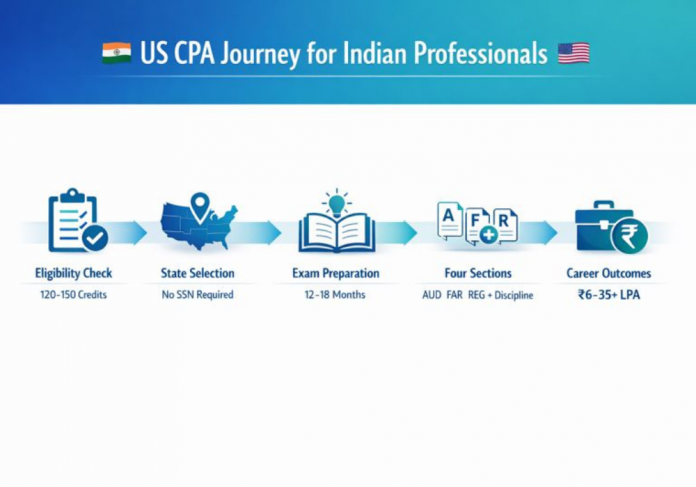
Building GAAP expertise can follow several paths depending on your career goals and available time. The most recognized credential is the US Certified Public Accountant (CPA) designation, which requires passing a four-part exam covering financial accounting, auditing, regulation, and a discipline elective. 

The CPA pathway involves significant investment, typically ₹3-4 lakhs, including registration, study materials, and coaching, plus 12-18 months of preparation. However, the credential opens doors to senior roles and commands strong salary premiums.

If full CPA certification seems too ambitious initially, consider targeted certificate programs. EY India offers a Certificate in US GAAP covering key ASC topics like revenue recognition and lease accounting. Other Big 4 firms and training providers offer similar focused programs. 

For self-directed learning, the FASB’s ASC Codification is available online with basic free access, allowing you to research authoritative guidance directly. CPA review materials from providers like Becker and UWorld can help you learn systematically, even if you are not planning to sit for the exam immediately. 

The key is to start somewhere: take on projects involving US GAAP at work, ask questions when you encounter unfamiliar standards, and progressively build your knowledge through both formal study and practical application.

Conclusion

US GAAP knowledge has become an increasingly valuable asset for Indian finance professionals. From understanding the full form and core principles of Generally Accepted Accounting Principles to navigating the practical differences between GAAP and Ind AS, this expertise enables you to contribute more effectively to organizations with US connections and positions you for higher-paying roles. 

The governance structure of FASB, GASB, and SEC ensures that GAAP remains authoritative and continuously updated, while the ASC Codification provides a structured resource for finding guidance on specific accounting questions.

Whether you choose to pursue CPA certification, complete a targeted certificate program, or build expertise through on-the-job learning, the investment in GAAP knowledge pays dividends throughout your career. 

As US companies continue expanding their finance operations in India and as Indian companies increasingly interact with American capital markets, professionals who bridge both accounting frameworks will remain in high demand. Start building your GAAP expertise today, and you will open doors to opportunities that might otherwise remain closed.

If you are looking for an in-depth guide on US GAAP and how to transition from Indian Accounting Standards to US GAAP, read my article here.

Download Now

CPA Course Details

0
US CPA Course Details

US CPA course guide for Indian professionals covering exam structure, eligibility requirements, fees in INR, career opportunities, and step-by-step roadmap to certification. This article is written by Medha Vinod, Senior Associate at LawSikho.

The Certified Public Accountant credential has rapidly become one of the most sought-after international qualifications among Indian finance professionals. As global corporations establish their finance operations in India and Big 4 firms expand their service delivery centers, professionals with a US CPA certification find themselves at a significant advantage. This guide covers everything you need to evaluate whether pursuing the CPA makes sense for your career and provides a practical roadmap for getting started, from understanding eligibility requirements and costs to mapping out your preparation timeline and career outcomes.

CPA Exam Structure

The CPA examination underwent a significant transformation in January 2024 when AICPA and NASBA introduced CPA Evolution, fundamentally restructuring how candidates demonstrate their competency. The new model recognizes that modern CPAs need both foundational knowledge shared across the profession and specialized expertise aligned with their career direction. Understanding this structure helps you plan your preparation strategically and make informed decisions about your specialization path.

Three Core Sections and One Discipline Choice

Every CPA candidate must pass three Core sections: 

  1. Auditing and Attestation (AUD),
  2. Financial Accounting and Reporting (FAR), and 
  3. Taxation and Regulation (REG). 

These sections test the fundamental competencies that every CPA needs, regardless of their eventual practice area. 

Beyond the Core sections, you select and pass one Discipline section from three options: 

  1. Business Analysis and Reporting (BAR), 
  2. Information Systems and Controls (ISC), or 
  3. Tax Compliance and Planning (TCP).

Each section runs four hours and requires a minimum scaled score of 75 to pass. The scoring system evaluates your performance against a competency standard rather than comparing you against other candidates, meaning everyone who demonstrates adequate knowledge passes. You have 30 months from passing your first section to complete all four sections, providing reasonable flexibility for working professionals managing exam preparation alongside career responsibilities.

The discipline choice carries real career implications. BAR suits candidates interested in financial planning, analysis, and CFO-track roles. ISC appeals to those pursuing IT audit, cybersecurity, or technology advisory positions. TCP works well for professionals building careers in tax planning and compliance. Your background and career goals should guide this selection rather than perceived difficulty levels.

CPA Exam Format and What Indian Candidates Should Expect

The exam combines multiple-choice questions (MCQs) and task-based simulations (TBSs) across each section. MCQs test your knowledge, recall, and conceptual understanding, while TBSs evaluate your ability to apply knowledge to realistic work scenarios requiring analysis and professional judgment. Most sections weigh these components equally at 50% each, though ISC weights MCQs slightly higher at 60%.

Indian candidates can take the CPA exam at Prometric testing centers located in eight cities: Ahmedabad, Bangalore, Calcutta, Chennai, Hyderabad, Mumbai, New Delhi, and Trivandrum. This domestic availability eliminates the expense and logistics of international travel that earlier candidates faced. Core sections follow continuous testing, meaning you can schedule appointments throughout the year whenever slots are available at your preferred center.

Discipline sections operate on a quarterly testing window system, available only during the first month of each calendar quarter. Missing your target discipline window means waiting until the next quarter, so factor this timing into your preparation schedule. The combination of continuous Core testing and quarterly Discipline windows allows strategic scheduling based on your readiness for each section.

Eligibility Criteria and Credit Requirements for CPA Exam

The most common confusion among Indian candidates involves understanding credit hour requirements. The US education system measures coursework in semester credit hours rather than years of study, and CPA eligibility involves two distinct thresholds: 120 credits to sit for the examination and 150 credits for full licensure. Many states allow you to begin testing once you reach 120 credits while completing additional requirements before obtaining your license.

How Indian Qualifications Translate to US Credits

Your Indian qualifications convert to US credit hours through credential evaluation agencies, with the specific count depending on your degree type and university curriculum. A standard three-year B.Com typically provides 90 to 100 semester credit hours, falling short of both exam and licensure thresholds. Adding a two-year M.Com brings your total to approximately 150 credits, meeting full licensure requirements in most states.

Candidates falling short of credit requirements can bridge the gap through various pathways without pursuing additional full degrees. Several US universities offer online bridge programs specifically designed for international CPA candidates, allowing you to complete targeted coursework remotely. NASBA also maintains relationships with approved educational providers offering supplementary courses focused on common gap areas like advanced accounting or taxation.

State Selection and International Candidate Considerations

State selection significantly impacts your CPA journey because each of the 55 US jurisdictions sets its own eligibility criteria, experience requirements, and application procedures. Most Indian candidates lack a US Social Security Number, immediately narrowing viable options to states that explicitly welcome international candidates without SSN requirements.

Montana, and Alaska have emerged as popular choices among Indian candidates. These states participate in international exam administration through NASBA, accept credentials evaluated by recognized agencies, and verify international work experience without requiring US-based CPA supervision. Washington handles the highest volume of Indian applications, combining clear requirements with efficient processing and strong industry recognition.

Your state selection should consider your current credit count, experience status, and long-term career plans. If you already have 150 credits, states like Washington offer complete licensure pathways. If you have only 120 credits currently, some states permit exam sitting while you accumulate additional credits before final licensure. Research specific state requirements before applying to avoid wasted fees and application delays.

CPA Course Fees and Investment for Indian Candidates

Planning your CPA investment requires understanding the complete cost picture beyond just exam fees. Total investment typically ranges from ₹2.5 lakhs to ₹4 lakhs for Indian candidates, depending on your review course selection, state choice, and number of exam attempts. This investment spans credential evaluation, examination fees, study materials, and licensing costs spread across your preparation timeline.

Exam Fees, Evaluation Costs, and Application Charges

Credential evaluation through agencies like WES or NIES costs between $200 and $400, approximately ₹17,000 to ₹34,000 at current exchange rates. This one-time expense provides the official report that state boards require to assess your eligibility. Processing takes four to eight weeks, so initiate evaluation early in your planning process.

Exam fees represent the largest single expense category. As of 2025, Indian candidates pay $510 per section, totaling $2,040 for all four sections, roughly ₹1,83,000. This amount reflects the international administration surcharge that funds testing center operations outside the US. State board application fees add another $90 to $245, depending on your chosen jurisdiction. Failed sections require full fee repayment for retakes, creatinga  strong financial incentive for thorough first-attempt preparation.

Review Course Options and Preparation Investment

Quality review course investment significantly impacts your passing probability and overall cost efficiency. Major international providers include Becker (₹1.2 to ₹1.8 lakhs), recognized as the industry standard used by Big 4 firms for employee preparation. Surgent and Gleim offer strong alternatives at ₹80,000 to ₹1.2 lakhs, differentiating through adaptive learning technology and extensive practice question banks, respectively.

Indian coaching institutes provide localized support with live instruction in convenient time zones. SkillArbitrage offers a CPA Prep and Global Finance Career Acceleration Program at ₹1,20,000, combining comprehensive exam preparation with practical career skills development, including finance tools training, automation skills, and freelancing guidance. The program spans six months with structured study planning and career support throughout your journey.

Evaluate review courses based on your learning style preferences rather than price alone. Visual learners benefit from engaging video instruction, while practice-oriented learners thrive with extensive question banks. Self-motivated candidates can succeed with technology-driven adaptive platforms, while others need the accountability of scheduled live sessions. The cost difference between basic and premium options often proves insignificant compared to the expense of retaking failed sections.

Career Outcomes and CPA Salary Potential in India

India’s emergence as a global hub for finance shared services, combined with expanding MNC operations and Big 4 service delivery centers, has created robust demand for CPA-qualified professionals. Organizations value CPAs for their demonstrated competence in international accounting standards, rigorous examination process, and ethical grounding. This demand translates directly into attractive compensation packages and accelerated career progression compared to peers without international credentials.

Salary Expectations Across Experience Levels

Entry-level CPAs in India typically earn between ₹6 lakhs and ₹9 lakhs per annum, with Big 4 firms and major MNCs offering packages toward the higher end. Metropolitan markets like Mumbai, Bangalore, and Delhi offer premium compensation reflecting higher cost of living and concentration of multinational employers. 

Mid-level professionals with five to ten years of experience command ₹15 lakhs to ₹25 lakhs annually, particularly those working on US client engagements or international financial reporting. 

Combination credentials significantly enhance earning potential. Professionals holding both CPA and Indian CA qualifications command premium compensation reflecting their dual expertise in US and Indian accounting standards. Similarly, CPA combined with MBA or specialized certifications in areas like forensic accounting or data analytics positions you for the highest-paying roles requiring both technical depth and business breadth.

Top Employers and Career Roles for CPAs in India

Big 4 accounting firms, including Deloitte, PwC, EY, and KPMG, actively recruit CPA-qualified professionals for their India operations serving global clients. These firms offer structured career progression, international exposure, and premium compensation packages. Beyond the Big 4, major MNCs, including Amazon, Google, Microsoft, and numerous Fortune 500 companies, maintain substantial finance teams in India staffed with CPA holders.

Banking and financial services institutions, consulting firms, and Indian conglomerates with international operations also seek CPA talent. Typical roles include Financial Analyst, Tax Consultant, Internal Auditor, Controller, Finance Manager, and Treasury Analyst. The CPA credential positions you for advancement into CFO and executive finance leadership roles as your career progresses.

Career flexibility represents another significant advantage. The CPA qualification opens doors across industries since the competencies it certifies apply broadly. Professionals can transition between public accounting, corporate finance, consulting, and specialized practice areas throughout their careers. This flexibility provides career security and optionality that narrow specializations cannot match.

Getting Started: Your CPA Journey Roadmap

Understanding the process sequence helps you plan effectively and avoid common mistakes that delay progress. The CPA journey involves multiple stages from initial evaluation through final licensing, each with specific requirements and timelines. Following a structured approach ensures you complete each step efficiently without backtracking or wasted effort.

Step-by-Step Process from Evaluation to CPA Exam

Your journey begins with state selection based on your qualification profile and career plans. Research specific requirements for international-friendly states like Montana, comparing credit requirements, experience verification procedures, and processing efficiency. Your chosen state becomes your licensing jurisdiction throughout the process.

Next, obtain a credential evaluation through WES, NIES, or another recognized agency. This requires gathering official transcripts sent directly from your educational institutions, degree certificates, and verification of any professional qualifications. Allow four to eight weeks for processing after documents reach the evaluation agency.

With the evaluation report in hand, submit your application to your chosen state board, typically through the NASBA candidate portal. The state board reviews your credentials and confirms eligibility within four to eight weeks. Upon approval, you receive Authorization to test for specific exam sections.

After paying examination fees through NASBA, you receive your Notice to Schedule (NTS), unlocking appointment booking at Prometric testing centers. Schedule your exam at any of the eight Indian testing centers: Ahmedabad, Bangalore, Calcutta, Chennai, Hyderabad, Mumbai, New Delhi, or Trivandrum. Complete all four sections within your 30-month window, then fulfill any remaining experience requirements before applying for your final license.

CPA Exam Timeline and Preparation Recommendations

Working professionals should plan for 12 to 18 months to complete all four CPA sections, studying 15 to 20 hours weekly while maintaining work responsibilities. This timeline allocates three to four months per section with brief intervals between exams for scheduling and recovery. Attempting to compress the timeline significantly often leads to failed sections that extend your overall duration.

Total preparation requires approximately 300 to 400 hours across all sections. FAR typically demands the most time, at 120 to 150 hours, given its extensive content coverage. Your chosen Discipline section needs 80 to 100 hours or more, depending on your background alignment with the specialization.

Consider starting with FAR or AUD based on your individual strengths and background. Some candidates prefer tackling FAR first because it covers the broadest content and has the lowest pass rates, reasoning that completing the hardest section early builds momentum. Others prefer starting with a section where their background provides an advantage, building confidence before facing challenging content. Either approach can succeed with adequate preparation.

Choose a review course matching your learning preferences early in your journey. Quality materials, structured study plans, and extensive practice significantly impact your passing probability. Consistent daily study proves more effective than sporadic intensive sessions, so build sustainable habits that you can maintain across your entire preparation timeline.

Conclusion

The US CPA credential offers Indian professionals a proven pathway to global career opportunities, enhanced earning potential, and accelerated professional progression. With exam availability at eight Indian testing centers, a manageable total investment of ₹2.5 to ₹4 lakhs, and realistic 12 to 18-month timelines for working professionals, the CPA has become more accessible than ever for committed candidates.

Success requires informed planning, consistent effort, and realistic expectations. Start by researching state requirements aligned with your qualification profile, obtain a credential evaluation to confirm your eligibility, and select a review course matching your learning style. Thousands of Indian professionals earn their CPA licenses annually, and with methodical preparation and sustained dedication, you can join them in accessing the career opportunities this internationally recognized credential unlocks.

For more details on this topic, click here.

Download Now

NTA UGC NET Exam

0
UGC NET Exam

Essential UGC NET Exam guide covering eligibility, exam pattern (Paper I & II, 300 marks), syllabus overview, application process, cut-offs, and career outcomes. This article is written by Neeli Neelay Shah, Senior Legal Content Writer at LawSikho.

The UGC NET exam stands as the definitive pathway into India’s academic world, whether you aspire to teach at universities or pursue funded doctoral research. Conducted twice yearly by the National Testing Agency, this national-level examination determines your eligibility for Assistant Professor positions across the country and qualifies top performers for Junior Research Fellowship with monthly stipends. With over 9 lakh candidates competing each session, understanding this exam thoroughly gives you a decisive advantage in your preparation journey.

UGC NET Exam and Its Significance for Your Academic Career

The University Grants Commission National Eligibility Test, commonly known as UGC NET, is India’s premier examination for assessing the eligibility of candidates seeking teaching and research positions in higher education. The National Testing Agency (NTA) conducts this examination on behalf of UGC in Computer-Based Test format, offering candidates two opportunities annually through June and December cycles. Your performance in this single examination can open doors to stable government teaching positions or provide financial support for your doctoral studies.

Junior Research Fellowship and Assistant Professor Eligibility Through UGC NET Exam

When you appear for UGC NET, you compete for two distinct qualifications based on your score. Candidates who rank in the top 6% nationally earn Junior Research Fellowship, which provides ₹37,000 monthly during the first two years of PhD, increasing to ₹42,000 (contingency fund 10,000 (JRF) –₹12,000 (SRF) from the third year. Those who clear the minimum qualifying marks but fall outside the top 6% receive Assistant Professor eligibility, allowing them to apply for permanent teaching positions in universities and colleges. The beauty of scoring in the top bracket is that JRF holders automatically qualify for both benefits, giving them flexibility to choose between research and teaching careers.

Eligibility for UGC NET Exam

The UGC NET Exam eligibility criteria are designed to be inclusive, ensuring most postgraduate students can participate in this examination.

Nationality

Only Indian nationals can appear for UGC NET examination. This requirement exists because the exam determines eligibility for teaching and research positions specifically in Indian universities and colleges under UGC jurisdiction.

Educational Requirements and Percentage Criteria

You need a Master’s degree from a UGC-recognized university to be eligible for UGC NET. The minimum percentage requirement is 55% for General and EWS category candidates. If you belong to SC, ST, OBC (Non-Creamy Layer), PwD or Third Gender categories, the requirement relaxes to 50% marks. Final year postgraduate students can also apply by selecting “Appearing” status, though they must complete their degree with required percentage within two years of appearing. Under NEP 2020, candidates completing Four-Year Undergraduate Programmes with 75% marks (70% if you are an OBC-NCL/SC/ST/PwD) can now apply directly without a Master’s degree.

Age Limits for JRF and Assistant Professor

Here is where things get interesting. For Assistant Professor eligibility alone, there is no upper age limit whatsoever, making this exam accessible even to mid-career professionals seeking academic transitions. However, for JRF qualification, the maximum age is 30 years as on the first day of the notification month. Reserved category candidates (SC/ST/OBC-NCL/PwD/Women) receive 5 years relaxation, effectively extending their JRF eligibility to 35 years.

UGC NET Exam Pattern

Understanding the examination structure helps you allocate preparation time strategically across both papers. The pattern has remained consistent, allowing you to plan with certainty.

Exam Format

The structural design of UGC NET Exam requires you to balance general aptitude skills with deep subject knowledge within a single examination session.

Two Papers in a Single Three-Hour Session

UGC NET Exam comprises Paper I testing general teaching and research aptitude, and Paper II testing your chosen subject expertise. Both papers are attempted consecutively in a single 180-minute session without any break. This continuous format requires building mental stamina alongside academic preparation.

Computer-Based Test (CBT) Mode

The examination happens exclusively on computers at designated test centres. You answer questions by clicking options on screen, can navigate freely between papers, and mark questions for later review using the question palette. NTA provides free mock tests on their official portal that simulate the actual interface, and practicing with these before exam day eliminates any technology-related anxiety.

Total Questions, Marks, and Time Allocation

The examination contains 150 questions worth 300 marks total. Paper I has 50 questions carrying 100 marks, while Paper II has 100 questions carrying 200 marks. Most successful candidates allocate roughly 50-60 minutes to Paper I and 120-130 minutes to Paper II, proportional to their mark weightage.

UGC NET Exam Paper I: Teaching and Research Aptitude

Paper I is identical for all candidates regardless of their subject choice, creating a common evaluation ground for teaching aptitude and research understanding.

50 Questions Carrying 100 Marks in Paper 1

Each of the 50 questions in Paper I carries 2 marks, totaling 100 marks. The questions test your aptitude for academic careers through diverse topics ranging from teaching methodology to logical reasoning. Since this paper is common for everyone, your performance here directly compares against candidates from all 85 subjects.

All 10 Units at a Glance

Paper I covers ten units: Teaching Aptitude, Research Aptitude, Reading Comprehension, Communication, Mathematical Reasoning and Aptitude, Logical Reasoning, Data Interpretation, Information and Communication Technology, People Development and Environment, and Higher Education System. Each unit contributes approximately 5-6 questions, though distribution varies slightly between exam sessions.

Paper II: Subject-Specific Knowledge Assessment

Paper II tests your expertise in your chosen discipline at postgraduate level, carrying double the weightage of Paper I.

100 Questions Worth 200 Marks

With 100 multiple-choice questions worth 2 marks each, Paper II contributes 200 marks to your total score. The questions assess both theoretical understanding and application of concepts, matching the depth expected of someone qualified to teach at university level.

Choosing Your Subject from 85 Options

NTA offers 85 subjects for Paper II spanning humanities, social sciences, languages, commerce, and applied sciences. Your selection should correspond to your Master’s degree specialization. Law graduates choose Subject Code 58, Commerce postgraduates select Subject Code 08, and so on. This choice is final once you submit your application, so decide carefully after reviewing the complete syllabus.

Marking Scheme and Qualifying Criteria for UGC NET Exam

The scoring system and qualification thresholds directly impact your exam strategy and target-setting.

+2 Marks Per Question with No Negative Marking

Every correct answer earns you 2 marks, while wrong or unattempted questions carry zero penalty. This candidate-friendly scheme means you should attempt every single question, even through educated guessing. Unlike many competitive exams, UGC NET does not punish incorrect attempts, making it strategically sensible to never leave any question blank.

Minimum 40% in Each Paper to Qualify

General category candidates must score an aggregate of at least 40% in both the papers to qualify. Reserved categories need an aggregate of 35%. Meeting these thresholds makes you eligible for consideration, with final qualification determined by cut-off percentiles. Candidates in the top 6% nationally qualify for JRF, while those clearing minimum marks but below this bracket qualify only for Assistant Professor eligibility.

UGC NET Exam Syllabus

Your syllabus is essentially your preparation checklist. Knowing exactly what topics fall within scope ensures you do not waste time on irrelevant material or miss crucial areas.

Paper I Syllabus: 10 Units Explained

Each UGC NET Paper I unit has specific topics that appear repeatedly across examination cycles. Familiarizing yourself with these helps prioritize preparation.

Unit 1: Teaching Aptitude (Methods, Learner Characteristics, Evaluation)

This unit covers teaching objectives, levels of teaching, and various methodologies including lecture, discussion, and demonstration methods. You encounter questions on learner characteristics across developmental stages, factors affecting learning, and evaluation systems including Bloom’s Taxonomy and continuous assessment approaches.

Unit 2: Research Aptitude (Methodology, Sampling, Data Analysis)

Research Aptitude covers the entire research cycle from problem identification to conclusion drawing. Key areas include types of research (quantitative vs qualitative, basic vs applied), sampling techniques, hypothesis formulation, and basic statistical concepts like measures of central tendency and correlation.

Units 3-5: Comprehension, Communication, Mathematical Reasoning

Unit 3 presents reading passages with comprehension questions testing inference and vocabulary skills. Unit 4 covers communication types, barriers, and models like Shannon-Weaver. Unit 5 tests numerical ability through number series, percentages, ratios, and basic mathematical problem-solving.

Units 6-7: Logical Reasoning and Data Interpretation

Logical Reasoning tests analytical thinking through syllogisms, Venn diagrams, coding-decoding, blood relations, and argument evaluation. Data Interpretation requires analyzing information presented in tables, bar graphs, pie charts, and line graphs to calculate percentages, identify trends, and make comparisons.

Units 8-10: ICT, Environment, Higher Education System

ICT covers computer fundamentals, internet technologies, and government digital initiatives like SWAYAM, Swayam Prabha and Digital India. The environment unit addresses sustainable development, climate issues, and international environmental agreements. Higher Education System covers UGC functions, NAAC accreditation, and significantly, National Education Policy 2020 provisions which have become high-frequency topics in recent examinations.

Paper II Syllabus: Subject-Specific Units

Paper II syllabi vary for each of the 85 subjects and typically cover the core postgraduate curriculum of that discipline.

Law Subject (Paper II) Syllabus

The UGC NET Law Paper II syllabus (Subject Code 58) consists of 10 units that together cover the full breadth of core and specialized legal subjects. Key units include Jurisprudence (legal theories, schools of thought, concepts of rights and duties), Constitutional and Administrative Law (fundamental rights, directive principles, constitutional remedies, judicial review), and Public International Law & International Humanitarian Law, alongside Law of Crimes (IPC and its mapping to the new Bharatiya Nyaya Sanhita), Law of Torts and Consumer Protection, Commercial Law (laws on contracts, company/partnership, negotiable instruments), Family Law (personal laws and succession), Environment and Human Rights Law, Intellectual Property and Information Technology Laws, and Comparative Public Law and systems of governance.

Commerce Subject (Paper II) Syllabus

The UGC NET Commerce syllabus (Subject Code 08) covers 10 units spanning accounting, finance, marketing, human resources, and business law. Major units include Business Environment (economic reforms, globalization, corporate governance), Accounting and Financial Management (cost accounting, financial statement analysis, capital structure theories), and Marketing Management (consumer behaviour, branding, digital marketing).

Additional units cover Human Resource Management (training, performance appraisal, industrial relations), Business Statistics and Research Methods, Banking and Financial Institutions, International Business, and Income Tax and GST provisions. The exam pattern for UGC NET Commerce Paper 2 consists of both: theoretical and numerical based questions. 

Download Official UGC NET Exam Syllabus PDFs

Only official syllabus documents should guide your preparation, as questions are set strictly based on these. So you can download subject-wise syllabi from the NTA UGC NET portal. Navigate to the syllabus section, select your subject, and download the PDF in English or Hindi. Print this document and use it as your preparation tracker.

UGC NET Exam: A Step-by-Step Guide for Application Process

The application process is entirely online and must be completed accurately to avoid rejection. Understanding each step ensures smooth submission.

Registration Process

The online application involves multiple stages that must be completed sequentially within the notification window.

Registration and Login Credentials

Visit the NTA UGC NET website and click “New Registration.” Enter basic details including name, email, mobile number, and date of birth to generate your Application Number and Password. These credentials are essential for all future activities including application completion, admit card download, and result checking.

Filling Personal and Academic Details

After logging in, complete the application form section by section. Enter personal details matching your Class 10 certificate, educational qualifications including Master’s degree information, and select your Paper II subject from the 85 available options. Double-check all entries before proceeding as some fields cannot be modified after submission.

Photo and Signature Upload Specifications

Upload a recent passport-size colour photograph (JPG/JPEG, 10-200 KB) with white background and clear face visibility. Your signature should be in black ink on white paper (JPEG, 4-30 KB). Non-compliant uploads are a common rejection reason, so verify specifications before uploading.

UGC NET Exam Application Fees and Payment

Application fees were: ₹1,150 for General (UR), ₹600 for General-EWS and OBC-NCL, and ₹325 for SC, ST, PwD, and Third Gender candidates. Female applicants from General and OBC-NCL categories paid ₹600. These fees are non-refundable.

You can pay through credit card, debit card, net banking, or UPI. After successful payment, download the confirmation page showing your Application Number and transaction details. Save this receipt as proof of successful submission.

UGC NET Admit Card Download

Admit cards typically release 7-10 days before examination. Log in with your Application Number and Date of Birth, download the PDF from the “Admit Card” section, and print multiple copies. Verify all details including your photograph, exam centre address, and reporting time. Carry this along with a valid photo ID (Aadhaar, Passport, Voter ID, or PAN Card) on exam day.

Practical Tips to Prepare for UGC NET Exam

Strategic preparation outweighs mere hard work. Understanding what to study and how to approach each component maximizes your score potential.

Paper I Strategy: Scoring Units and Time Allocation

Among UGC NET Exam Paper I’s ten units, Logical Reasoning and Data Interpretation reward consistent practice and can become your highest-scoring areas. Teaching Aptitude and Research Aptitude require conceptual clarity rather than memorization. Current affairs units (ICT, Environment, Higher Education) need regular updates on government initiatives and NEP 2020 provisions. Allocate daily practice time for reasoning and DI, conceptual study for aptitude units, and weekly updates for current affairs sections.

Paper II Approach: Leveraging Your Subject Expertise

Your Master’s degree coursework provides approximately 60-70% of Paper II preparation foundation. Download the official syllabus, map it against your postgraduate curriculum, and identify topics needing fresh learning versus simple revision. Prioritize high-weightage areas that appear frequently in previous year papers, and build depth in your strong topics to maximize scoring potential.

Preparation Timeline

With six months, spend the first two months building foundations across all units, months three and four for deep diving into high-weightage topics, month five for revision and previous year papers, and the final month exclusively for mock tests. With three months, compress this schedule by prioritizing high-scoring areas. Even with 30 days, focused preparation on frequently tested topics combined with extensive mock test practice can yield qualification.

Books and Resource Recommendations for UGC NET Exam

For Paper I, Trueman’s UGC NET Paper I and KVS Madaan’s comprehensive guide cover all ten units effectively. R.S. Aggarwal’s books excel for Logical Reasoning and Data Interpretation practice. Regular reading of education news supplements current affairs units.

For UGC NET Exam Law Paper II, rely on standard postgraduate textbooks supplemented with subject-specific NET guides. Law aspirants should reference M.P. Jain for Constitutional Law, Avtar Singh for Contracts and Torts, and K.D. Gaur for Criminal Law. Commerce candidates benefit from S.P. Gupta for Business Statistics and S.N. Maheshwari for Accounting. Trueman’s and Arihant publish subject-wise NET guides containing practice questions aligned with examination patterns.

UGC NET Exam Cut-off and Results

Understanding how cut-offs function and when results arrive helps you set realistic targets and plan post-exam activities.

Cut-Off for UGC NET Exam

UGC NET cut-off represents the minimum combined score needed for qualification, varying by subject, category, and examination cycle. NTA releases subject-wise and category-wise cut-offs after each cycle based on exam difficulty and score distribution.

From recent cycles, indicative cut-offs for popular subjects show Commerce JRF around 224 marks, Political Science JRF around 224, Law JRF 200 out of 300 total marks. Assistant Professor cut-offs typically fall 10-15 marks lower than JRF thresholds. Target at least 15-20 marks above historical cut-offs for comfortable qualification margin.

UGC NET Exam Result Declaration

Results follow a systematic process that typically takes 6-8 weeks after examination completion, beginning with the release of the provisional answer key, followed by a challenge period, and culminating in the final result declaration. 

NTA first releases provisional answer keys along with recorded candidate responses for verification, and if you find any answer incorrect, you can submit a challenge by paying ₹200 per question within the 3-5 day challenge window: expert committees then review these challenges, and valid objections lead to answer key revisions before final result computation. 

To check your result, visit the NTA UGC NET website when results are declared, click the “Result” link, enter your Application Number and Date of Birth, and view your qualification status (JRF, Assistant Professor, or Not Qualified) along with your percentile score.

UGC NET Exam Scorecard

Your scorecard displays personal details, roll number, subject code, marks in Paper I and Paper II separately, total marks, overall percentile, and qualification status. Download and save multiple copies for use in job applications and further studies.

UGC NET Certificate Download and Validity

The NET qualification certificate is your official recognition document for career applications.

How to Download Your NET Qualification Certificate

After qualifying, access your e-certificate through the UGC portal using your credentials. The certificate contains your photograph, qualification details, and a unique verification code for employer verification.

H3: Certificate Validity Period and Usage

For Assistant Professor eligibility, the certificate remains valid for life, allowing you to apply for teaching positions at any career stage. JRF fellowship must be availed within two years of qualifying; afterwards, only Assistant Professor eligibility continues. Keep your certificate secure for teaching position applications, PhD admissions, and research opportunities.

Jobs and Salary After UGC NET Exam Qualification

Qualifying UGC NET unlocks multiple career pathways with attractive compensation in academia and related sectors.

Assistant Professor Salary Under 7th Pay Commission

NET-qualified Assistant Professors receive 7th Pay Commission Level 10 salary with basic pay starting at ₹57,700 and reaching ₹1,82,200 at maximum. Adding Dearness Allowance (currently 55%), House Rent Allowance (8-24% based on city), and other benefits, gross monthly salary in central universities typically ranges from ₹95,000 to ₹1,05,000 at entry level. State universities and private colleges offer varying packages based on their pay structures.

JRF Stipend and Career in Research

JRF provides ₹37,000 monthly during the first two years of PhD, increasing to ₹42,000 from year three onwards as Senior Research Fellow. You also receive annual contingency grants for research expenses and House Rent Allowance where hostel accommodation is unavailable. Over a five-year fellowship, total financial support approximates ₹20-25 lakh. After PhD completion, careers include university teaching at enhanced pay scales, research scientist positions at national institutes, and post-doctoral opportunities in India and abroad.

EdTech, Coaching, and Content Development and Writing Opportunities

Beyond traditional academia, NET qualification signals verified subject expertise valued across the education industry. EdTech platforms like LawSikho actively recruit NET-qualified professionals for online teaching, content creation, and curriculum development. Coaching institutes hire subject experts for classroom and online instruction. Publishing houses and educational websites employ NET-qualified candidates for developing study materials, question banks, and academic content. These roles often match or exceed traditional academic salaries while offering greater flexibility.

Conclusion

UGC NET Exam remains your essential qualification for entering India’s academic ecosystem, whether through teaching or research pathways. With eligibility requiring Master’s degree (55%/50% based on category), an exam pattern of 150 questions worth 300 marks across two papers, and rewards including Assistant Professor positions (₹95,000+ monthly) or JRF fellowship (₹37,000-₹42,000 monthly), the investment in preparation delivers substantial career returns. For comprehensive coverage of every aspect including detailed preparation strategies and subject-specific guidance, explore the complete UGC NET guide on LawSikho.

This topic is covered in detail on our LawSikho blog, click here.

Download Now

Becoming a US CPA from India

0
Becoming a US CPA from India

Practical roadmap to US CPA certification from India. Understand eligibility, exam structure, costs in INR, and best states for Indian candidates without SSN. This article is written by Medha Vinod, Senior Associate at LawSikho.

The US CPA credential has become increasingly accessible for Indian accounting professionals, and if you’ve been considering this path, now is an excellent time to start. With Prometric test centers operating in eight Indian cities and state boards that accommodate international candidates, you no longer need to relocate or travel abroad to earn one of the world’s most recognized accounting qualifications. The question isn’t whether it’s possible, but rather how to navigate the process efficiently.

This roadmap cuts through the complexity to give you a clear action plan. You’ll understand how your Indian qualifications translate to US credit requirements, which states offer the smoothest pathway for candidates without a Social Security Number, what the exam actually involves under the new CPA Evolution format, and what investment in time and money you should realistically expect. By the end, you’ll have the clarity needed to take your first concrete step toward CPA certification.

CPA Eligibility Based on Indian Qualifications

Your first task is determining whether your current qualifications make you eligible for the CPA exam, and if not, what additional credentials you need. The US system measures education differently from India, using credit hours rather than degree names. Understanding this conversion is fundamental to planning your pathway.

The Credit System and How Your Indian Degree Fits

US state boards evaluate CPA candidates based on semester credit hours, with most requiring 120 credits to sit for the exam and 150 credits for full licensure. Your Indian degrees and professional qualifications get converted to this system through credential evaluation agencies that assess your transcripts and certificates.

A standard three-year Indian B.Com evaluates to roughly 90 credit hours, falling short of the 120-credit exam threshold. This means B.Com holders need additional qualifications to become eligible. However, if you hold a postgraduate degree, the picture changes significantly. An M.Com or MBA adds approximately 60 credits, bringing your total to around 150, which satisfies even the licensure requirement.

Professional certifications carry substantial weight in this calculation. The Indian CA qualification adds between 30 and 60 credits, depending on how the evaluation agency assesses it, making most CAs immediately eligible for the CPA exam when combined with their undergraduate degree. Similarly, CMA and CS certifications receive credit recognition, though typically in lower ranges than CA.

Eligibility Pathways for Different Indian Qualifications

Your starting point determines your most efficient pathway. If you hold only a B.Com, your clearest route involves completing a postgraduate qualification such as M.Com or MBA, which brings you to 150 credits and full eligibility. Alternatively, pursuing the Indian CA alongside your B.Com creates a powerful combination that qualifies you for CPA while also giving you domestic credentials.

Chartered Accountants find themselves well-positioned from the start. With CA plus B.Com typically evaluating to 120 to 150 credits, most CAs can proceed directly to credential evaluation and state board application. This makes the CA plus CPA combination particularly efficient for those wanting both Indian and international recognition.

M.Com and MBA holders with commerce undergraduate backgrounds generally meet the 150-credit threshold without additional coursework. If your credential evaluation confirms sufficient credits, you can move straight to state selection and application. The accounting content in these programs also provides useful preparation for CPA exam topics, particularly in financial accounting and business concepts.

CPA Exam: Structure, Preparation, and Costs

Once you’ve confirmed eligibility, understanding what the exam actually involves helps you plan realistically. The CPA exam changed significantly in January 2024 with CPA Evolution, introducing a new structure that every candidate must understand.

CPA Exam Section Format: Core and Discipline Sections

The current CPA exam consists of three mandatory Core sections plus one Discipline section of your choice, totaling four exams you must pass. The Core sections, which every candidate takes, are: 

  • Financial Accounting and Reporting (FAR), 
  • Auditing and Attestation (AUD), and 
  • Taxation and Regulation (REG). 

Each Core section is a four-hour exam combining multiple-choice questions and task-based simulations.

Your Discipline choice adds specialization to your CPA credential. 

  • Business Analysis and Reporting (BAR) extends financial accounting into analytical and managerial topics. 
  • Information Systems and Controls (ISC) focuses on IT governance, cybersecurity, and system controls. 
  • Tax Compliance and Planning (TCP) deepens taxation knowledge beyond the Core REG section. 

Choose based on your career interests rather than perceived difficulty.

Pass rates vary across sections, providing useful context for your preparation. According to AICPA data through Q3 2025, REG shows the strongest Core performance at 64%, while FAR and AUD hover around 43% and 48% respectively. Among Disciplines, TCP leads at 78%, ISC at 68%, and BAR at 43%. These variations reflect content breadth and candidate self-selection rather than inherent difficulty differences.

Preparation Timeline for CPA Exam

Realistic preparation for all four sections requires 300 to 400 hours of study, distributed based on each section’s demands and your background. FAR typically needs the most time, at 150 to 200 hours, due to its comprehensive coverage of accounting standards across corporate, governmental, and not-for-profit entities. AUD and REG each require 100 to 130 hours, while your chosen Discipline adds another 80 to 120 hours.

For working professionals in India, this translates to a 12 to 18-month journey when studying 15 to 20 hours weekly. Some candidates accelerate this timeline with more intensive preparation, while others extend it to accommodate demanding work schedules. The key is consistent daily study rather than sporadic weekend cramming.

Your 30-month window for passing all sections, measured from your first passed exam, provides reasonable flexibility. However, planning to complete all sections within 12 to 18 months reduces the risk of early sections expiring before you finish. Many successful candidates take one section every three to four months, maintaining momentum while allowing adequate preparation time.

Investment for Working Professionals

The financial commitment for CPA certification has increased notably in 2025, particularly for international candidates. Following NASBA’s June 2025 fee update, Indian candidates now pay $510 per exam section, up from $390 previously. This $120 per-section increase brings total exam fees for all four sections to $2,040, approximately ₹1,83,600 at current exchange rates.

Beyond exam fees, your investment includes credential evaluation at ₹20,000 to ₹30,000, state application fees at ₹15,000 to ₹25,000 (such as $150 for New York), review course materials at ₹1,20,000 to ₹2,50,000, and post-exam licensing costs at ₹30,000 to ₹50,000. The complete investment ranges from ₹3,00,000 to ₹4,50,000, a significant but worthwhile commitment given the career returns.

Review course selection significantly impacts both cost and success probability. Premium options like Becker and Wiley range from ₹1,80,000 to ₹3,00,000 but offer comprehensive materials and proven methodologies. Indian coaching institutes like Simandhar Education, Miles Education, and LawSikho bundle international content with local instruction for ₹1,20,000 to ₹2,00,000, providing mentorship in Indian time zones alongside application support.

Selecting Your US State and Completing Credential Evaluation

Your choice of US state determines your application requirements, experience verification process, and eventual license. For Indian candidates, this decision carries particular weight because state policies toward international applicants vary significantly.

States That Work Best for Indian Candidates Without SSN

Most Indian candidates lack a US Social Security Number, immediately narrowing the viable state options. Guam emerges as the most practical choice for several reasons: no SSN requirement, acceptance of 120 credits for exam eligibility, participation in NASBA’s experience verification service, and a straightforward application process. If you’re uncertain where to apply, Guam represents the lowest-risk starting point.

Montana offers similar flexibility with no SSN requirements and accommodating experience verification policies. Montana has historically been friendly toward CA holders, while Washington has recently streamlined its processing for international applications. Alaska works well for candidates who haven’t completed their education, as it allows exam registration before graduation if you’ve fulfilled sufficient accounting credits.

Illinois appeals to candidates seeking a more traditionally recognized state jurisdiction while still avoiding SSN requirements. The state has expanded acceptance of online degrees from accredited institutions, benefiting candidates who completed distance education programs. However, verify current policies directly with any state board before applying, as requirements change periodically.

Getting Your Credentials Evaluated Through NIES or WES

Before applying to any state, you need an official credential evaluation that converts your Indian qualifications to US credit equivalents. Two agencies dominate this process: NASBA International Evaluation Services (NIES) and World Education Services (WES). Both produce evaluations accepted by major CPA-friendly states.

NIES operates as NASBA’s dedicated evaluation service for CPA candidates, meaning their reports align precisely with state board requirements. Fees run $205 to $300, depending on service level, with standard processing taking six to eight weeks. The direct connection to NASBA makes NIES the safer choice if CPA licensing is your sole objective.

WES offers a broader credential evaluation useful beyond CPA licensing, such as for immigration or graduate school applications. Fees are comparable, and processing times are similar. For CA holders, WES requires ICAI verification before including your qualification, adding a step to the process. Choose WES if you anticipate needing your evaluation for multiple purposes.

Both agencies require official documents sent directly from your Indian institutions in sealed envelopes. Start gathering transcripts, degree certificates, and professional membership certificates early, as Indian universities often take several weeks to process transcript requests. Allow three to four months for the complete evaluation process before your planned state application.

From Exam to License: Completing Your CPA Journey

Passing all four exam sections represents a major milestone, but your CPA journey isn’t complete until you hold an actual license. Understanding post-exam requirements helps you plan the full pathway from the start.

Meeting Experience Requirements from India

Every state requires relevant work experience for licensure, typically one to two years under appropriate supervision. The challenge for Indian candidates lies in experience verification, as some states require a US-licensed CPA to verify your work, while you may work under CA supervision in India.

States participating in NASBA’s experience verification service provide the solution. Guam, Montana, and several other international-friendly states accept verification from qualified professionals, including Indian CAs, eliminating the need for US CPA supervision. This makes state selection even more critical, as your choice determines whether your Indian work experience will count toward licensure.

Your experience must involve accounting work at a professional level, typically including financial statement preparation, audit participation, tax compliance, or related activities. General bookkeeping or clerical accounting work may not satisfy requirements. Document your experience thoroughly, maintaining records of projects, responsibilities, and supervisor details that you’ll need for your license application.

Applying for Your License and Maintaining It

Once you’ve passed all four sections and accumulated the required experience, you apply for your CPA license through your state board. This application involves submitting experience verification, passing an ethics exam in most states, paying license fees, and completing any state-specific requirements.

The ethics requirement typically involves the AICPA Professional Ethics course and exam, costing approximately $200. Most states accept this standardized course, though some require state-specific ethics content. You can complete ethics requirements before, during, or after your CPA exams, providing flexibility in timing.

License maintenance requires ongoing Continuing Professional Education, typically 40 hours annually, depending on your state. CPE ensures your knowledge remains current with evolving standards and regulations. Budget ₹20,000 to ₹50,000 annually for CPE courses, choosing from numerous providers offering content in formats ranging from self-study to live seminars. Some employers cover CPE costs as part of professional development benefits.

Conclusion

The pathway to US CPA certification from India is clearer than it has ever been. With Prometric centers in eight Indian cities, state boards accommodating international candidates, and established evaluation processes for Indian qualifications, the logistical barriers that once made this credential difficult to obtain have largely disappeared. What remains is the commitment to prepare thoroughly, invest appropriately, and execute systematically.

Your next step depends on your current position. If you’re uncertain about eligibility, begin with a credential evaluation to confirm your credit count. If you know you qualify, select your state and start the application process. If you’re already approved, invest in quality review materials and build a realistic study schedule. Each step moves you closer to a credential that opens doors across the global accounting profession.

For more detailed guide, visit this SkillArbitrage article.

Download Now

Certified Public Accountant Course

0
Certified public accountant course

Practical guide to US CPA course from India covering eligibility for Indian qualifications, CPA Evolution exam structure, updated fees in INR, preparation timeline, and career opportunities. This article is written by Rohit Arora, Senior Associate at LawSikho.

If you are an Indian accounting professional eyeing global career opportunities, the US CPA credential has probably crossed your radar more than once. 

The Certified Public Accountant designation opens doors to multinational corporations, Big 4 firms, and international finance roles that remain inaccessible to most Indian accountants. 

But here is the reality: pursuing CPA from India involves navigating US state board requirements, understanding a completely restructured exam format launched in 2024, and budgeting for costs that recently increased significantly in June 2025. This guide provides a practical roadmap covering eligibility pathways, the new exam structure, current costs in Indian Rupees, and realistic career outcomes to help you decide if CPA aligns with your professional goals.

CPA Eligibility Pathways for Different Indian Qualifications

The first question every Indian candidate asks is whether their existing qualifications make them eligible for CPA. The answer depends on how your Indian education translates into the US credit hour system and which US state you choose for licensing. Unlike India’s uniform CA eligibility rules, CPA requirements vary across 55 different US jurisdictions, each with distinct education and experience criteria.

How Do US CPA Credit Hour Requirements Apply to Indian Degrees?

US state boards measure educational qualifications in semester credit hours rather than years of study. Most states require 120 credit hours to appear for the exam and 150 credit hours to obtain the full CPA license. The general conversion rule applied by credential evaluation agencies assigns approximately 30 US credits per year of Indian university education, though this varies based on your university’s accreditation and academic performance.

If you hold a three-year B.Com degree, expect your credentials to convert to roughly 90 credit hours. 

This means you can sit for the exam in most states but will need additional credits for full licensure. Candidates with M.Com or MBA degrees alongside their B.Com typically reach the 150-hour threshold without additional coursework. Indian Chartered Accountants find themselves well-positioned because the CA qualification, combined with a bachelor’s degree, generally touches the 120-150 hour requirement.

For those falling short, bridge courses from accredited institutions can fill the gap. Several Indian CPA coaching providers partner with US universities to offer these supplementary credits. CMA India holders with bachelor’s degrees often meet the requirements too, though exact credit counts depend on evaluation by agencies like NIES or WES.

State Selection Criteria for Indian Candidates

Choosing the right US state is a strategic decision that affects your entire CPA journey. Not every state welcomes international candidates equally, and requirements around Social Security Numbers, US residency, and work experience vary dramatically.

For Indian candidates planning to take exams from India without immediate US relocation plans, Montana, Colorado, Alaska, and Guam stand out as accessible options. 

These states do not require a Social Security Number for examination or licensing and have no US residency mandates. Montana has become particularly popular because it accepts work experience verified by a Chartered Accountant, not just a US CPA, making it ideal for candidates whose supervisors hold Indian credentials.

Colorado offers a unique advantage through its CPA certificate option, which you can obtain after passing all exam sections, even before completing the experience requirement. 

This allows you to add the credential to your resume while accumulating qualifying work experience in India. Experience requirements across states range from one to two years of supervised accounting work, so reviewing each state’s specific provisions through NASBA’s official directory before applying is essential.

Understanding the CPA Exam: Core Sections and Discipline Choices

The CPA exam underwent its most significant overhaul in decades when AICPA launched CPA Evolution in January 2024. If you have researched CPA online, you may have encountered outdated information referencing the old four-section format, including BEC. That structure no longer exists. The current exam requires passing three mandatory Core sections plus one Discipline section of your choice.

Three Core Sections All Candidates Must Pass

Every CPA candidate must clear Auditing and Attestation, Financial Accounting and Reporting, and Taxation and Regulation. Each section runs four hours and requires a minimum score of 75 on a 0 to 99 scale. The three sections test foundational knowledge that AICPA determined essential for all CPAs regardless of their eventual specialization.

FAR presents the steepest challenge, with pass rates hovering around 40 to 43 percent (42.80% cumulatively in 2025. The section covers US GAAP extensively, including financial statement preparation, governmental accounting, and not-for-profit accounting. Indian candidates with strong accounting fundamentals find the conceptual overlap helpful, but the sheer volume of material demands significant study time.

AUD tests audit procedures, attestation standards, and professional ethics, with pass rates of 48.01% in 2025. Candidates from CA backgrounds often recognize familiar concepts, though 

US-specific regulations require dedicated preparation. REG covers US federal taxation and business law, and despite the unfamiliar US tax code, it posts the highest Core section pass rate at 63 to 64 (63.94% cumulatively in 2025) percent due to its more structured, rule-based content.

Choosing Your Discipline: BAR, ISC, or TCP

Beyond the three Core sections, you select one Discipline that aligns with your career trajectory. This choice matters because each Discipline focuses on specialized knowledge and carries different difficulty levels based on pass rate data.

TCP, covering Tax Compliance and Planning, boasts the highest pass rate of any CPA exam section at 78.06% cumulatively in 2025. If you performed well on REG or have tax experience, TCP builds naturally on that foundation. Candidates targeting tax advisory careers or those wanting the statistically most approachable Discipline often choose this path.

ISC focuses on Information Systems and Controls, testing IT governance, cybersecurity, and technology risk. With pass rates around 68.21% cumulatively in 2025, it suits candidates with technology backgrounds or those eyeing IT audit and systems consulting roles. BAR, covering Business Analysis and Reporting, incorporates advanced financial reporting and data-driven decision making from the retired BEC section. At 38 to 45 percent pass rate, BAR is the most demanding Discipline but suits those pursuing financial analysis or corporate accounting leadership positions.

How Much Does the CPA Course Cost to an Indian Candidate?

Cost planning requires careful attention because CPA involves payments to multiple organizations across different stages. Many candidates underestimate the total investment, especially after NASBA significantly increased examination fees for international candidates in June 2025.

Complete Cost Breakdown in Indian Rupees

The complete CPA journey costs Indian candidates between ₹2.5 lakh and ₹5.5 lakh, depending on your choices and whether you pass all sections on the first attempt. Understanding where your money goes helps you budget accurately.

Credential evaluation through NIES costs $225 to $275 (approximately ₹19,000 to ₹23,000), while WES charges $160 to $225 (₹13,500 to ₹19,000). State board application fees range from $90 to $245 (₹7,500 to ₹21,000) depending on your chosen jurisdiction. The biggest expense comes from examination fees, which increased substantially in June 2025 from $390 to $510 per section for international candidates. For all four sections, you now pay $2,040 (approximately ₹1,73,000) in exam fees alone.

Add ethics exam fees of $200 to $270 required by most states, licensing fees of $100 to $500 (₹8,500 to ₹42,500), and contingency for retakes or document courier costs. The mandatory fees without coaching total approximately ₹2.2 to ₹2.8 lakh. Factor in review courses, and the total reaches ₹2.5 to ₹5.5 lakh.

Which CPA Review Courses Are Available in India

Quality review courses significantly improve pass rates, and several options serve Indian candidates through local partnerships or direct access. Your choice depends on budget, learning style, and support preferences.

Becker, available through Indian partners like Simandhar Education and Miles Education, offers comprehensive preparation with pricing ranging from ₹1,20,000 to ₹2,00,000. Their adaptive technology and extensive question banks justify the premium for many candidates. SkillArbitrage provides CPA preparation with competitive pricing and India-focused support, making it worth exploring. UWorld Roger CPA Review offers lifetime access with strong visual explanations at ₹80,000 to ₹1,20,000, while Surgent and Gleim provide adaptive learning and extensive practice questions at ₹70,000 to ₹1,00,000. Most providers offer EMI options through Indian partners, spreading the financial burden over several months.

How Long Does It Take to Prepare for the CPA While Working Full-Time?

Balancing CPA preparation with a demanding Indian work schedule is challenging but achievable with realistic planning. Most successful candidates complete the journey in 12 to 24 months while working full-time, though your timeline depends on study consistency and exam performance.

Realistic Timeline: 12 to 24 Months

Plan for 300 to 400 total study hours across all four sections. This translates to approximately 15 to 20 hours weekly over 12 to 18 months for working professionals. FAR typically demands the most preparation time at 100 to 150 hours due to its extensive syllabus. AUD and REG each require 80 to 100 hours, while your chosen Discipline needs 60 to 80 hours.

The 30-month testing window provides flexibility that the previous 18-month limit did not offer. Once you pass your first section, you have two and a half years to clear the remaining three. This extended window accommodates work demands, travel schedules, and life events that inevitably interrupt study plans. Many Indian professionals structure their preparation by tackling FAR first while motivation is highest, then moving through AUD, REG, and their Discipline sequentially.

Creating consistent study routines matters more than marathon weekend sessions. Early morning study from 5 AM to 7 AM works well for some candidates, while others prefer evening blocks from 8 PM to 11 PM. Mobile-friendly review courses allow studying during commutes and lunch breaks, maximizing limited free time.

Exam Scheduling and Prometric Centers in India

You can take the CPA exam entirely in India without traveling to the US. Prometric operates testing centers in eight Indian cities: Ahmedabad, Bangalore, Chennai, Hyderabad, Kolkata, Mumbai, New Delhi, and Trivandrum. This geographic distribution means most candidates can reach a testing center within a few hours.

Core sections are available for scheduling throughout the year under continuous testing, giving you flexibility to choose dates that align with your preparation. Discipline sections have specific testing windows in January, April, June, July, and October. Avoid scheduling during the final days of any testing window when centers are busiest, and stress levels run highest. Book your slot several weeks in advance to secure your preferred date and time.

Career Outcomes and Salary After CPA in India

The career impact of CPA certification in India has grown substantially as multinational corporations, Big 4 firms, and Global Capability Centers expand operations. The credential signals expertise in US GAAP, international reporting standards, and cross-border financial management that Indian employers increasingly seek.

Job Roles and Hiring Companies

All Big 4 firms operating in India actively recruit CPA professionals. Deloitte, PwC, EY, and KPMG hire CPAs for US-focused audit engagements, advisory services for American clients, and international reporting roles. These firms handle substantial US GAAP work for Indian subsidiaries of American companies, creating consistent demand for CPA qualified professionals.

Beyond Big 4, multinational corporations seek CPAs for financial controller positions, internal audit leadership, and US reporting roles. Global Capability Centers of companies like Amazon, Google, Microsoft, and major banks specifically recruit CPAs for their India operations. Investment banks, consulting firms, and private equity houses value the analytical rigor and international standards expertise that CPA represents. Common roles include audit manager, tax consultant, financial controller, and paths leading to CFO positions.

Salary Expectations: Freshers to Experienced

Entry-level CPAs in India earn ₹6 to ₹12 lakh per annum at mid-sized firms, rising to ₹10 to ₹15 lakh at Big 4 practices. This represents a 20 to 40 percent premium over non-CPA accountants at similar experience levels, and the salary differential widens as careers progress.

With 3 to 5 years of post-CPA experience, professionals typically earn ₹15 to ₹25 lakh annually. Senior managers and directors with CPA credentials command ₹25 lakh and above, particularly in Big 4 firms and large MNCs. The CA plus CPA combination often commands premium compensation, with professionals reporting ₹25 to ₹40 lakh packages at senior levels. Those who relocate internationally with their CPA credentials see even greater returns, with US-based CPAs earning $80,000 to $130,000 annually.

Conclusion

CPA represents a significant investment of ₹2.5 to ₹5.5 lakh and 12 to 24 months of dedicated preparation, but the returns in career growth, salary premium, and global opportunities justify the commitment for Indian professionals targeting international accounting careers. 

The key lies in strategic planning: select your state based on eligibility requirements that match your qualifications, understand the new Core plus Discipline exam structure, budget realistically, including the June 2025 fee increases, and commit to consistent weekly study alongside your work schedule. Whether you hold a B.Com exploring global opportunities, a CA seeking international credentials, or have work experience in MNC finance roles, the CPA pathway from India is more accessible than ever through eight local testing centers and multiple coaching options serving Indian candidates.For a complete guide on CPA Course, read my detailed article on the CPA Course in India: Complete Guide.

Download Now

UGC NET Exam is for what

0
UGC NET Exam is for what

Quick guide to deciding if UGC NET is right for you. Covers exam purpose, ideal candidate profiles, comparisons with SET and CSIR NET, and career outcomes after qualifying. This article is written by Urvi Shah, Senior Associate at LawSikho.

So you’re wondering if UGC NET is worth your time.

Maybe you’ve seen the notifications. Maybe a friend is deep into preparation and you’re thinking, “Should I be doing this too?” Or perhaps you’re staring at your postgraduate degree wondering what comes next, and UGC NET keeps appearing as an option.

Here’s the thing: UGC NET isn’t a casual exam you squeeze into your schedule between other commitments. It demands months of serious preparation. 

And before you invest that kind of time and energy, you deserve to know exactly what you’re signing up for and whether it actually takes you where you want to go.

This guide cuts through the noise. You’ll discover who this exam is genuinely designed for, what doors it actually opens (and which ones it doesn’t), and most importantly, how to figure out if it belongs on your career roadmap or if your time is better spent elsewhere.

Let’s get into it.

Understanding UGC NET: Core Purpose It Is Designed For

Before diving into whether you should take this exam, let’s establish exactly what UGC NET accomplishes and why it exists in the first place.

The Two Core Purposes: Teaching Eligibility and Research Fellowship

UGC NET exists for two primary reasons. 

First, it determines whether you’re eligible to become an Assistant Professor at Indian universities and colleges. 

Second, for candidates who perform exceptionally well (top 1% nationally), it awards Junior Research Fellowship with a monthly stipend of ₹37,000-42,000 to pursue PhD research. 

These aren’t vague benefits; they’re concrete career outcomes tied directly to your examination performance.

When you qualify UGC NET, you fall into one of these categories based on your ranking. The highest performers receive JRF plus Assistant Professor eligibility plus PhD admission preference, essentially a triple benefit. Those who qualify but don’t make the top 1% receive Assistant Professor eligibility with PhD admission rights. 

A third category exists for candidates meeting minimum marks who qualify only for PhD admission. Your combined score across both papers determines which category you land in, with Paper II carrying double the weightage of Paper I.

Why UGC Made NET Mandatory for Teaching Positions

UGC NET wasn’t always mandatory. In earlier decades, universities hired faculty based on postgraduate performance, publications, or institutional preferences. This led to inconsistent quality across institutions and hiring practices that sometimes favored connections over competence. 

The University Grants Commission gradually tightened regulations, making NET or equivalent qualification mandatory for Assistant Professor appointments.

Today, virtually every teaching position advertisement in higher education lists “UGC NET qualified” as an essential requirement. This standardization ensures minimum competency levels regardless of which institution you studied at or where you’re applying to teach. 

For candidates, this means one examination opens doors across thousands of institutions nationwide, rather than navigating different selection criteria at each place.

Who Conducts UGC NET and How Often

The National Testing Agency (NTA) conducts UGC NET twice annually, typically in June and December cycles. The examination covers 85 subjects spanning humanities, social sciences, languages, commerce, performing arts, and several science disciplines. 

You appear for two papers in a single three hour session: Paper I (50 questions, 100 marks) testing general teaching and research aptitude common to all candidates, and Paper II (100 questions, 200 marks) testing your specialized subject knowledge.

The computer based test format means you take the examination at designated centers on screens rather than with pen and paper. Results typically arrive within two months, and qualified candidates receive e-certificates they can download from the official portal. 

Understanding this basic structure helps you plan your preparation timeline and examination strategy effectively.

Is UGC NET Right for You?

Not every postgraduate benefits equally from UGC NET qualification. Some candidates find it transformative for their careers while others discover it wasn’t worth the preparation investment. Let’s examine five profiles to help you identify where you fit.

Ideal Candidates Who Should Definitely Consider UGC NET

Aspiring Academics Passionate About Teaching

If explaining concepts to others energizes rather than drains you, and you’ve imagined yourself in classroom settings rather than corporate offices, UGC NET is practically non negotiable. 

The examination serves as the qualifying gate for teaching careers in higher education. Without it, regardless of how impressive your academic record looks, you cannot be appointed as Assistant Professor at most universities and colleges. 

Your passion for teaching can only translate into a career if you hold this essential credential.

Quick indicators you fit this profile: You genuinely enjoyed seminar presentations during postgraduation. You find yourself naturally helping classmates understand difficult concepts. The thought of a typical corporate job feels stifling compared to academic environments. You’ve researched faculty positions and find the combination of teaching, research, and intellectual freedom appealing.

Research Enthusiasts Seeking Funded PhD Opportunities

Doctoral research without funding is financially challenging across four to six years of limited earning capacity. JRF changes this equation entirely by providing a monthly fellowship that covers living expenses, allowing you to focus entirely on research rather than worrying about finances or working part time jobs that extend your PhD timeline. 

Over a typical doctoral program, JRF provides approximately ₹24 lakhs in fellowship support plus annual contingency grants for research expenses.

Quick indicators you fit this profile: You read research papers beyond assignment requirements. Unanswered questions in your field genuinely excite you. You’ve considered doctoral studies but worried about financial feasibility. Contributing to knowledge creation appeals more than applying existing knowledge in professional settings.

Working Professionals Planning Academic Career Transitions

Career transitions from industry to academia happen more frequently than you might expect. Corporate professionals seeking intellectual engagement, lawyers wanting to teach at law schools, IT professionals drawn to computer science academia, and executives considering management education find UGC NET the bridge between their current careers and academic aspirations. 

Your industry experience becomes valuable in professional education settings where practical insights enhance theoretical teaching.

Quick indicators you fit this profile: Your current job feels unfulfilling despite reasonable compensation. You’ve considered teaching as a “someday” option for years. Academic environments appeal more as you gain professional experience. Work-life balance and intellectual freedom matter more to you now than they did early in your career.

Final Year Master’s Students Planning Strategically

If you’re completing postgraduation and already thinking about UGC NET, you’re demonstrating excellent foresight. 

Final year students have a unique advantage: subject knowledge is fresh from coursework, creating significant overlap between academic preparation and the NET syllabus. 

Many successful candidates clear NET during their final postgraduate year, converting provisional eligibility into a confirmed qualification once they complete their degree.

Quick indicators you fit this profile: You’re in your final year of Master’s and considering academic careers. Your subject interest extends beyond examination requirements. You want to maximize opportunities while knowledge is freshest. You prefer having career credentials ready before entering the job market.

Law Graduates Seeking Academic Specialization

Law graduates with LLM degrees have Subject Code 58 (Law) as a dedicated Paper II option, creating a clear pathway to faculty positions at law schools, university law departments, and judicial academies. Legal education has expanded significantly with National Law Universities, private law schools, and state university law programs creating substantial faculty demand. 

The analytical and research skills developed during legal education transfer directly to UGC NET preparation, giving law candidates inherent advantages.

Quick indicators you fit this profile: You completed or are pursuing LLM and find teaching law appealing. Pure legal practice doesn’t excite you as much as legal scholarship. 

You enjoy explaining legal concepts and analyzing judgments. Law school faculty positions seem more fulfilling than courtroom appearances or corporate legal work.

Comparing UGC NET with Other Qualifications

Understanding how UGC NET compares to alternatives helps you choose the most efficient path toward your specific goals.

UGC NET vs SET/SLET: Understanding the Difference

UGC NET qualification holds validity across India, meaning you can apply for positions from Kashmir to Kanyakumari with a single credential. State Eligibility Test (SET/SLET) qualification is valid only within the state that conducted it. 

If you’re certain about working in a particular state due to family considerations or regional preferences, SET offers a focused pathway with less national competition.

However, UGC NET’s all India validity provides flexibility that SET cannot match. Career opportunities may arise in states you hadn’t initially considered, and central university positions typically attract national candidate pools where SET alone won’t suffice. 

Many candidates appear for both examinations, maximizing their chances through multiple attempts at different schedules. There’s no restriction preventing you from holding both qualifications.

UGC NET vs CSIR NET: Choosing the Right NET for Your Subject

CSIR NET specifically covers five science disciplines: Chemical Sciences, Earth Sciences, Life Sciences, Mathematical Sciences, and Physical Sciences. UGC NET covers 85 subjects, including these sciences. 

Science stream candidates, therefore, have a choice between examinations. The distinction matters because CSIR NET is considered more research oriented and aligned with scientific research careers at CSIR laboratories and research institutions.

For science candidates primarily targeting Assistant Professor positions, either qualification works since both are recognized for academic appointments. 

However, if you’re specifically targeting research scientist positions at government laboratories or industry R&D, CSIR NET may carry more weight in those selection processes. 

Since both examinations occur on different dates, science candidates can attempt both and use whichever result favors them.

UGC NET vs Direct PhD Admission Without Fellowship

You can pursue PhD without UGC NET qualification through university entrance examinations and interviews. The examination is not a prerequisite for doctoral admission. However, the critical difference lies in financial support. 

Without JRF, you won’t receive monthly fellowship, meaning you either self fund your doctoral studies, depend on family support, or pursue PhD part time while working elsewhere, all of which have significant implications for your research quality and completion timeline.

Consider the practical mathematics. A five year PhD without fellowship requires managing all living and research expenses from personal resources. With JRF, you receive enough to cover living costs in most Indian cities while focusing entirely on research. 

For candidates from modest backgrounds, this difference determines whether pursuing a PhD is feasible at all rather than merely comfortable.

UGC NET vs Industry Career: The Opportunity Cost Analysis

This comparison matters most for candidates weighing academic careers against professional opportunities. Industry careers typically offer higher initial compensation, faster salary growth in early years, and more diverse role options. 

Academic careers offer intellectual freedom, job security after permanent appointment, work life balance advantages, and the satisfaction of shaping young minds. Neither path is objectively superior; the better choice depends entirely on your personal priorities.

However, recognize that UGC NET preparation requires significant time investment, typically four to six months of dedicated study. If you’re genuinely uncertain about academic careers, this preparation time could alternatively go toward professional certifications, skill development, or job applications. 

Make an honest assessment: does teaching and research genuinely excite you, or are you considering NET because you’re uncertain about alternatives?

Career Outcomes After Qualifying UGC NET

Understanding what happens after qualification helps you evaluate whether these outcomes justify your preparation investment.

Teaching and Research Positions Available

After qualifying UGC NET, you become eligible for Assistant Professor positions across multiple institution types. Central universities like Delhi University, JNU, and Hyderabad University offer prestigious positions with excellent compensation and research facilities, though competition is intense. 

State universities provide good opportunities with reasonable job security and often less competition than central institutions. Private universities and deemed universities have expanded significantly, creating numerous positions with varying compensation packages.

Affiliated colleges constitute the largest employment segment, with thousands of institutions across India regularly recruiting faculty. Entry level Assistant Professor positions under 7th Pay Commission offer basic salary starting around ₹57,700 plus allowances, with total compensation reaching ₹80,000-1,00,000 monthly depending on location and allowances. 

Career progression to Associate Professor and Professor levels increases compensation substantially, with senior professors at central universities earning above ₹2,00,000 monthly.

Beyond Teaching: Other Career Doors NET Opens

UGC NET qualification has utility beyond traditional teaching positions. EdTech companies creating educational content, online courses, and assessment materials value NET qualified subject experts. 

Research positions at think tanks, policy institutes, and government research organizations often prefer candidates with demonstrated research aptitude that NET qualification signals.

Publishing houses developing textbooks and academic materials seek subject experts for authoring and editing. Some public sector undertakings and government organizations recognize NET qualification as evidence of subject expertise during recruitment. 

While these aren’t primary career paths for NET qualified candidates, they represent alternative opportunities if traditional academic positions aren’t immediately available or appealing.

Intangible Benefits: Professional Recognition and Growth

Beyond specific job opportunities, NET qualification carries professional recognition value. It signals that national evaluators assessed your subject knowledge and teaching aptitude against standardized benchmarks and found you qualified. 

This recognition carries weight in academic circles, research collaborations, and professional interactions.

Academic careers also offer growth opportunities that many professional paths lack. You can specialize in research areas you find fascinating, contribute to your field through publications, guide doctoral students in their research journeys, and participate in knowledge creation rather than just knowledge application.

The intellectual freedom to pursue questions that interest you, rather than assignments dictated by clients or employers, attracts many candidates despite potentially lower compensation compared to corporate alternatives.

Conclusion

UGC NET serves specific purposes: determining eligibility for Assistant Professor positions and identifying candidates worthy of research fellowships. If teaching in higher education or funded doctoral research genuinely aligns with your career vision, this examination deserves your serious preparation and commitment. 

The credential opens doors across thousands of institutions nationwide and provides a pathway to intellectually fulfilling careers that many find deeply satisfying.

However, if you’re considering NET simply because peers are preparing or because you’re uncertain about alternatives, pause and reflect. The examination requires substantial preparation investment that could alternatively go toward professional development aligned with non-academic careers. 

Make your decision based on genuine career aspirations rather than default choices or peer pressure. 

If you want to read a more detailed guide on who should take the UGC Net Exam then you can read it here

Download Now

NTA UGC NET Exam Details

0
UGC NET Exam

Your essential UGC NET guide covering eligibility criteria, exam pattern, Paper I and II syllabus, application process, preparation tips, and career benefits after qualifying. This article is written by Neeli Neelay Shah, Senior Legal Content Writer at LawSikho.

If you are considering an academic career in India, UGC NET is likely the most important examination on your radar. Conducted by the National Testing Agency (NTA) twice a year, this national-level test determines your eligibility for Assistant Professor positions in universities and colleges, and awards the prestigious Junior Research Fellowship (JRF) to top performers seeking funded doctoral research. Whether you are a final year postgraduate student exploring career options or a working professional planning to switch to academia, this guide gives you everything you need to understand UGC NET without drowning in information overload.

UGC NET Eligibility

Educational Qualification 

The basic requirement for UGC NET is a Master’s degree from a recognized university in a subject relevant to your chosen Paper II. General and EWS category candidates need at least 55% marks in their postgraduate degree, while reserved category candidates (SC, ST, OBC-NCL, PwD, Third Gender) need 50% marks. If you are currently in your final year of Master’s, you can still apply and appear for the examination, though you must complete your degree with the required percentage before the deadline specified in the notification.

The 55% or 50% calculation is based on aggregate marks across all semesters of your postgraduate programme. Distance education and open university degrees are accepted as long as the institution holds proper UGC recognition. Foreign degrees are also valid if they have been equivalence-certified by the Association of Indian Universities and for Law students it needs to be validated by the Bar Council of India. This inclusive approach ensures that qualified candidates from diverse educational pathways can pursue academic careers.

Your subject choice for Paper II should align with your postgraduate specialization. For instance, if you completed your Master’s in Law, you would typically choose Law (Subject Code 41) for Paper II. However, some candidates with interdisciplinary backgrounds may choose subjects based on their stronger preparation area, provided they have equivalent knowledge of the complete syllabus.

Age Limit for JRF and Assistant Professor

Here is where UGC NET becomes particularly attractive: there is no upper age limit for Assistant Professor eligibility. Whether you are 28 or 48, if you meet the educational qualifications, you can appear for the exam and become eligible to teach at universities and colleges across India. This policy recognizes that valuable teaching experience and subject expertise can develop at any stage of life, and opening academic careers to mature candidates enriches the higher education system.

However, for the Junior Research Fellowship component, the maximum age is 30 years for General category candidates as on the first day of January of the examination year. Reserved categories OBC-NCL, SC, ST, PwD receive a 5-year relaxation, making the limit 35 years. Women candidates across all categories get an additional 5-year relaxation. Other relaxations exist for LLM holders (+3 years), army officers and research experience (up to 5 years). 

This age limit applies only to JRF; even if you exceed the JRF age limit, you can still qualify for Assistant Professor eligibility and PhD admission eligibility. Many candidates above 30 years of age successfully clear UGC NET and build fulfilling teaching careers without the JRF component. The fellowship is attractive for its financial support during doctoral research, but it is not the only valuable outcome of clearing this examination.

Four-Year Undergraduate Programme (FYUP) Under NEP 2020

The National Education Policy 2020 has introduced a significant new eligibility pathway that reflects the restructured higher education system in India. Candidates who complete a four-year undergraduate programme with research components and score at least 75% marks are now eligible for UGC NET-JRF, even without a traditional two-year Master’s degree. This provision opens doors for students from multidisciplinary undergraduate programmes to pursue academic careers directly after their bachelor’s degree.

This pathway is particularly relevant for students enrolled in institutions implementing NEP 2020’s multidisciplinary education framework. The four-year programme typically includes a research project or dissertation component in the final year, which prepares students for the research aptitude tested in UGC NET Paper I. As more universities adopt this structure, expect to see increasing numbers of candidates using this eligibility route.

However, candidates using this pathway should note that their UGC NET Paper II subject choice should align with their major area of study during the undergraduate programme. The 75% marks requirement is also higher than the Master’s degree pathway, reflecting the expectation of strong academic performance to compensate for shorter formal education duration.

UGC NET Exam Pattern

Complete UGC NET Exam Structure: Duration, Mode, and Question Distribution

UGC NET is conducted as a Computer-Based Test (CBT) in a single session of 3 hours (180 minutes). Both Paper I and Paper II are administered together without any break, and you answer a total of 150 questions worth 300 marks. The examination is held at designated test centres across India, and you can select up to four preferred cities during the application process. The NTA allots centres based on availability, so popular cities may not always be guaranteed.

The best news for test-takers is that there is no negative marking in UGC NET. Every correct answer earns you 2 marks, while wrong or unattempted questions simply carry zero marks. This means you should never leave any question blank, even if you are completely unsure about the answer. Even educated guesses have potential value since there is no penalty for incorrect responses. Attempt every single question before time runs out, using elimination techniques for questions where you can narrow down options.

The CBT interface allows you to navigate freely between Paper I and Paper II during the examination. You can mark questions for review and return to them later, switch between papers as per your comfort, and see a question palette showing your progress. Familiarizing yourself with this interface through NTA’s free mock tests available on the official portal is highly recommended before your actual examination day.

Paper I: Teaching and Research Aptitude (50 Questions, 100 Marks)

UGC NET Paper I is the common paper that every UGC NET aspirant must clear, regardless of their chosen subject. It tests your general aptitude for teaching and research careers through 50 multiple-choice questions worth 100 marks. While there is no fixed time allocation between papers, most successful candidates spend approximately 50-60 minutes on Paper I and reserve 120-130 minutes for the more extensive Paper II.

The UGC NET Paper I syllabus covers 10 comprehensive units designed to evaluate competencies essential for academic careers. Unit 1 (Teaching Aptitude) covers teaching levels, learner characteristics, and teaching methods. Unit 2 (Research Methodology) examines research types, designs, sampling, and ethics. Unit 3 (Reading Comprehension) tests analytical reading through passages. Unit 4 (Communication) covers verbal and non-verbal communication skills. Unit 5 (Mathematical Reasoning) tests numerical aptitude through series, percentages, and calculations. Unit 6 (Logical Reasoning) includes syllogisms, analogies, and deductive reasoning. Unit 7 (Data Interpretation) involves tables, charts, and graphs. Unit 8 (ICT) covers digital initiatives and technology in education. Unit 9 (Environment) examines sustainable development and environmental policies. Unit 10 (Higher Education System) tests knowledge of NEP 2020, UGC regulations, and academic reforms.

Based on previous year analysis, question distribution across units shows some consistent patterns. Teaching Aptitude and Research Methodology together contribute around 10-12 questions and form the conceptual foundation. Logical Reasoning and Data Interpretation are high-scoring units with 8-10 questions featuring predictable patterns that improve significantly with practice. ICT and Higher Education System questions often test current awareness about digital initiatives like SWAYAM and Swayam Prabha, Digital India, and education policies like NEP 2020. Understanding unit-wise weightage helps you allocate preparation time strategically for maximum impact.

UGC NET Paper II: Subject-Specific Paper (100 Questions, 200 Marks)

Paper II evaluates your in-depth knowledge of your chosen subject through 100 questions worth 200 marks. Since it carries double the weightage of Paper I, your Paper II performance largely determines your final ranking and qualification status. A strong Paper II score can compensate for an average Paper I, but the reverse is rarely true. This is where your postgraduate education and subject expertise truly come into play.

NTA offers 85 subjects for Paper II, spanning humanities, social sciences, sciences, languages, and professional disciplines. Popular high-competition subjects include English Literature, Political Science, Commerce, Education, History, Economics, Sociology, and Law. Your subject choice should align with your postgraduate specialization since questions test Master’s level knowledge across the complete syllabus. Some candidates choose subjects slightly different from their exact PG degree if they have equivalent knowledge, but this requires careful consideration of the syllabus overlap and your preparation strength.

Each Paper II subject has a detailed syllabus divided into 8-10 units covering the breadth of that discipline. The syllabus generally mirrors postgraduate curriculum content and includes both foundational theories and contemporary developments in the field. For instance, Law Paper II covers 10 units spanning Jurisprudence, Constitutional and Administrative Law, International Law and International Humanitarian Law, Criminal Law, Torts and Consumer Protection, Commercial Law, Family Law, Environmental and Human Rights Law, IPR and IT Law, and Comparative Public Law. Commerce Paper II spans Business Environment, Accounting and Auditing, Business Economics, Business Finance, Statistics and Research Methods, Management and HRM, Banking, Marketing, Legal Aspects, and Taxation. Understanding your subject’s unit structure helps you plan systematic preparation.

Marking Scheme and Qualifying Criteria

The marking scheme is refreshingly straightforward: +2 marks for every correct answer, zero marks for incorrect or unattempted questions. With 150 questions totaling 300 marks (Paper I: 50 questions for 100 marks; Paper II: 100 questions for 200 marks), your aggregate score across both papers determines your qualification status. There are no separate qualifying thresholds for individual papers; only the combined aggregate matters.

General and EWS category candidates need minimum 40% aggregate (120 marks out of 300) to qualify for Assistant Professor eligibility. Reserved category candidates (SC, ST, OBC-NCL, PwD, Third Gender) need 35% aggregate (105 marks out of 300). Meeting these minimum thresholds is necessary but not sufficient for actual qualification, as the final cut-off depends on competition levels and varies each session based on candidate performance and available positions.

For JRF, you need to score among the top performers nationally in your subject. The JRF cut-off is always significantly higher than the Assistant Professor cut-off, typically by 20-30 marks depending on the subject and session difficulty. JRF is awarded to a limited number of top scorers based on merit and available fellowship slots, making it considerably more competitive than Assistant Professor eligibility alone.

UGC NET Syllabus 

Paper I Syllabus: 10 Units

Units 1 and 2 form the conceptual foundation of Paper I and are essential for understanding academic work. Unit 1: Teaching Aptitude forms the conceptual foundation of your future teaching career. This unit covers the nature, objectives, characteristics, and basic requirements of teaching at different levels. You need to understand the three levels of teaching: Memory level (where students simply recall information), Understanding level (where students comprehend and explain concepts), and Reflective level (where students analyze, evaluate, and create new ideas). The unit also covers learner characteristics including how age, motivation, prior knowledge, and learning styles affect the learning process. Various teaching methods like lecture, discussion, demonstration, and project-based learning are tested, along with their advantages and limitations.

Unit 2: Research Aptitude evaluates your understanding of the research process from problem identification to conclusion. This unit covers types of research including fundamental research (pure research aimed at expanding knowledge), applied research (solving practical problems), and action research (improving specific practices). You should understand the differences between qualitative research, quantitative research, and mixed-methods approaches. Key concepts include variables (independent, dependent, intervening), sampling methods (probability and non-probability), hypothesis formulation, research ethics (informed consent, confidentiality, plagiarism), and thesis writing. Your postgraduate dissertation experience provides a practical foundation for this unit.

Unit 3: Reading Comprehension tests your ability to understand, analyze, and draw inferences from written passages. This unit typically presents one or more passages of 300-500 words followed by 5-6 questions. Passages cover topics from social sciences, humanities, science and technology, or current affairs. Question types include direct factual questions (answers explicitly stated in the passage), inference-based questions (drawing logical conclusions), vocabulary questions (meaning of words in context), and questions about the author’s tone, purpose, or main argument. The strategy is to read questions first, then scan the passage for relevant answers.

Unit 4: Communication covers the nature and characteristics of communication essential for effective teaching. You need to understand the basic communication model: sender, message, channel, receiver, feedback, and noise. The unit distinguishes between verbal communication (spoken and written words) and non-verbal communication (body language, gestures, facial expressions, eye contact). Different levels of communication including intrapersonal, interpersonal, group, and mass communication are covered. Classroom communication skills, barriers to effective communication (physical, psychological, semantic, cultural), and methods to overcome these barriers are frequently tested topics.

Unit 5: Mathematical Reasoning tests your numerical aptitude through number series, percentages, ratios, and basic calculations. Number series questions present sequences following hidden patterns where you must identify the next or missing number. Patterns can involve addition, subtraction, multiplication, division, squares, cubes, or combinations. Percentage questions test calculating percentages, percentage change, and converting between fractions, decimals, and percentages. This unit rewards practice, and learning mental math shortcuts significantly improves your speed and accuracy during the examination.

Unit 6: Logical Reasoning is a high-scoring unit testing your ability to think systematically and draw valid conclusions. Syllogisms are logical arguments where conclusions are drawn from two given statements, and Venn diagrams help visualize these relationships quickly. Analogies test your ability to identify relationships between pairs of concepts (synonyms, antonyms, part-whole, cause-effect, tool-user relationships). Understanding deductive reasoning (general to specific, conclusions necessarily true) versus inductive reasoning (specific to general, conclusions probable) is important. Common logical fallacies including hasty generalization, circular reasoning, and false cause are also covered.

Unit 7: Data Interpretation presents data in tables, bar graphs, line graphs, and pie charts, requiring you to analyze, compare, and draw conclusions. Questions typically involve calculating percentages, ratios, averages, or growth rates from given data. You may need to compare performance across categories or time periods, identify trends, or find maximum/minimum values. The key strategy is reading questions first to understand what information you need, then looking at the data selectively. Approximation skills are valuable since exact calculations are often unnecessary when answer options are sufficiently spread apart.

Unit 8: Information and Communication Technology (ICT) tests your familiarity with computer basics, internet technologies, and digital initiatives. The Digital India initiative and its key pillars (broadband highways, universal mobile connectivity, e-governance, e-kranti) are frequently tested. E-governance models (G2C, G2B, G2G, G2E) and DigiLocker appear regularly. Cyber security concepts including malware, phishing, hacking, and protective measures are important. ICT in education covers e-learning platforms, MOOCs, SWAYAM, NPTEL, virtual classrooms, and concepts like blended learning and flipped classroom.

Unit 9: People, Development, and Environment covers sustainable development, environmental issues, and the relationship between human activities and the natural environment. Sustainable development (meeting present needs without compromising future generations’ ability) and its three pillars (economic, social, environmental sustainability) are core concepts. The United Nations Sustainable Development Goals (SDGs) adopted in 2015 with 17 goals for 2030 are frequently tested. Environmental legislation including Environment Protection Act 1986, Wildlife Protection Act 1972, and Air and Water Pollution Acts are covered. International agreements like the Paris Agreement, Kyoto Protocol, and Convention on Biological Diversity are important topics.

Unit 10: Higher Education System in India tests your understanding of how higher education is structured and governed in India. The National Education Policy 2020 is a landmark reform document with key provisions including multidisciplinary universities, flexible curriculum with multiple entry-exit options, Academic Bank of Credits, and four-year undergraduate programmes. The University Grants Commission (UGC) functions as the primary regulatory body, and you should understand its roles in coordinating standards, providing grants, and framing regulations. NAAC accreditation (evaluating institutions on seven criteria with grades from A++ to C) and NIRF ranking parameters are important contemporary topics that appear regularly in questions.

Paper II Syllabus: Subject-Specific Coverage

Paper II syllabus is structured around postgraduate-level content divided into 8-10 units depending on the subject, with each unit covering a major domain within the discipline. The depth of coverage mirrors what you would study during a Master’s programme, including both foundational theories and contemporary developments. For Law, the 10 units comprehensively cover Jurisprudence (schools of thought, legal concepts), Constitutional and Administrative Law (fundamental rights, federalism, judicial review), Public International Law and International Humanitarian Law, Law of Crimes (general principles, specific offences under new criminal laws), Torts and Consumer Protection, Commercial Law (contracts, company law, negotiable instruments), Family Law (personal laws across communities), Environmental and Human Rights Law, IPR and IT Law, and Comparative Public Law examining different governance systems.

Commerce Paper II similarly spans 10 units covering the business and commerce discipline comprehensively. Business Environment and International Business examines globalisation, trade policies, and business ethics. Accounting and Auditing (the highest-weightage unit with 12-15 questions) covers financial, cost, and management accounting plus auditing standards. Business Economics includes demand-supply analysis, market structures, and macroeconomic concepts. Business Finance covers capital budgeting, capital structure theories, and working capital management. Statistics and Research Methods tests quantitative techniques and research design. Business Management and HRM examines management theories and HR functions. Banking and Financial Institutions covers RBI, monetary policy, and financial markets. Marketing Management includes consumer behaviour and digital marketing. Legal Aspects covers commercial legislation, and Taxation addresses income tax and corporate tax planning.

The official subject-wise syllabus PDFs are available for download on the UGC NET Online portal in both English and Hindi. Syllabi are periodically updated to reflect current academic developments in respective fields, so ensure you have the latest version and check for any recent modifications announced through NTA notifications.

UGC NET Preparation Tips

Paper I: Prepare for Teaching and Research Aptitude

Paper I preparation should begin with understanding each unit’s content, weightage, and question patterns. Teaching Aptitude and Research Methodology require conceptual clarity since questions test understanding of principles rather than mere factual recall. Create summary notes for key theories, their proponents, and distinguishing characteristics. Flashcards work well for matching questions that ask you to connect theories with theorists or concepts with definitions.

Logical Reasoning and Mathematical Reasoning improve dramatically with daily practice. Dedicate 30-45 minutes daily to solving reasoning problems, focusing on speed and accuracy. For syllogisms, master the Venn diagram approach that allows quick visualization of statement relationships. For number series, learn to recognize common patterns (addition, multiplication, squares, cubes, alternating operations) through extensive practice. Data Interpretation similarly rewards regular practice with tables and graphs from previous year papers.

For units like ICT and Higher Education System, maintain a current affairs file with recent policy announcements, digital initiatives, and education reforms. NEP 2020 provisions appear frequently, so read the policy document’s key highlights including multidisciplinary education, Academic Bank of Credits, four-year undergraduate programmes, and regulatory reforms. Environment questions often reference Sustainable Development Goals and international agreements, which can be prepared through concise summaries rather than extensive reading. Subscribe to education news sources or follow UGC and Ministry of Education social media for updates on recent developments.

Paper II: Leverage Your Academic Background

Your postgraduate coursework provides a strong foundation for Paper II preparation, and recognizing this can save significant preparation time. Map your Master’s syllabus systematically against the UGC NET syllabus to identify areas already covered during your degree versus those needing fresh study. For topics you studied during your PG, revision from your existing notes and previous year question practice may suffice rather than starting from scratch with new textbooks.

Focus preparation time proportionate to unit weightage based on previous year paper analysis. In Commerce, Accounting and Auditing contributes 12-15 questions (24-30 marks) while smaller units like Business Environment may have 6-8 questions. In Law, Constitutional Law and Jurisprudence are heavily weighted compared to units like Comparative Public Law. Prioritize high-weightage units for thorough preparation while ensuring basic coverage of all topics to avoid leaving any unit completely unprepared.

Create subject-specific notes as you study rather than just reading passively. Active note-making significantly improves retention and provides quick revision material during the final weeks. Mind maps work exceptionally well for interconnected concepts, helping you visualize relationships and recall information during the examination. Include key case laws (for Law), important theorists and their contributions, formulas (for Commerce numericals), and potential MCQ areas in your notes.

Using Previous Year Papers and Mock Tests Smartly

Previous year papers are your most valuable preparation resource, more useful than any textbook or coaching material. They reveal actual question patterns, difficulty levels, topic emphasis, and question framing styles that you will encounter in the examination. Many questions or their close variations repeat across sessions, making PYQ practice directly scoring. Solve at least 5 years of papers thoroughly, analyzing not just correct answers but also understanding why other options are incorrect.

Begin full-length mock tests approximately 6-8 weeks before the examination date. Simulate actual exam conditions with 3-hour timed sessions without breaks, using the CBT format if possible. Analyze each mock test thoroughly to identify weak areas, track your progress over time, and refine your time management strategy. Note patterns in your mistakes: are they conceptual gaps, careless errors, or time management issues? Address each type differently. Aim for 15-20 full-length mock tests before the actual examination to build stamina and exam temperament. Additionally, many coaching platforms and publishers offer subject-specific mock tests. The key is consistent practice with honest analysis rather than simply accumulating test numbers without learning from mistakes.

UGC NET: Application Process 

The application process is entirely online through the NTA portal at ugcnet.nta.ac.in. The process begins with registration, where you provide basic details including your name (exactly as it appears on official documents), date of birth, mobile number, and email address. Upon successful registration, the system generates a unique application number and password that you must save securely, as these credentials are required for all subsequent interactions including application completion, admit card download, and result checking.

After registration, log in to complete the full application form with detailed personal information, educational qualifications, and examination preferences. Personal details include your complete address, identification information, and category certificates if applicable. Educational details require information about your qualifying degree including university name, year of passing, subjects studied, and percentage obtained. Ensure complete accuracy in these details as discrepancies can lead to application rejection or certificate cancellation after qualification.

Document uploads require careful attention to exact specifications mentioned in the Information Bulletin. Your photograph must be a recent passport-sized colour image with white or light background, in JPEG format between 10-200 KB, taken within the last 3 months. Your signature should be in running handwriting (not block letters) with black ink on white paper, in JPEG format between 4-30 KB. Reserved category candidates must upload valid category certificates in the prescribed format. PwD candidates require disability certificates from authorized medical boards specifying at least 40% disability. Rejection due to document specification violations is common, so verify requirements carefully before uploading.

Examination preferences include selecting your Paper II subject (which cannot be changed after submission), preferred examination cities (up to four choices), and medium of examination (English or Hindi for most subjects). Subject selection is particularly critical since it determines your entire Paper II and cannot be modified even during the correction window. Choose carefully after confirming the subject code from the official Information Bulletin matches your intended subject.

Application Fee 

The application fee structure for UGC NET is category-based to ensure accessibility across economic backgrounds. For UGC NET Exam, General/Unreserved candidates pay ₹1,150, OBC-NCL candidates pay ₹600, and SC/ST/PwD/Third Gender candidates pay ₹325. The fee is non-refundable under any circumstances once paid, so ensure you meet all eligibility criteria and have decided firmly on your subject before completing payment.

Payment can be made through multiple online modes including credit cards, debit cards, net banking, UPI, and digital wallets. The payment gateway is secure with instant confirmation. Keep your device charged and ensure stable internet connectivity during the payment process to avoid transaction failures. After successful payment, download and save the payment confirmation receipt immediately as proof of completed application.

Category-Wise Reservation Policy

UGC NET follows the Government of India’s reservation policy for cut-off determination and JRF allocation. The reservation percentages are: SC (15%), ST (7.5%), OBC-NCL (27%), and EWS (10%). PwD candidates receive 5% horizontal reservation across all categories, meaning a PwD candidate belonging to SC category benefits from both SC vertical reservation and PwD horizontal reservation. These reservations apply primarily to JRF award and merit ranking, ensuring equitable representation in research fellowships across social categories.

For qualification, reserved category candidates benefit from relaxed minimum qualifying percentages (35% aggregate instead of 40%) and separate category-wise cut-offs. This means candidates compete primarily within their category pools for determining merit positions. Candidates must possess valid category certificates issued by competent authorities to avail reservation benefits. OBC-NCL candidates must ensure their certificates specifically include the non-creamy layer clause and are valid for the current financial year. False category claims result in disqualification and potential legal consequences.

UGC NET Exam: Result, Cut off, Scorecard, and Certificate

UGC NET Result and Answer Key

UGC NET results are typically declared 6-8 weeks after the examination concludes, though this timeline can vary based on administrative factors. The NTA announces results through official notifications on its website and sends SMS and email alerts to registered contact details. Results include your raw score, qualifying status (JRF qualified, Assistant Professor eligible, PhD admission eligible, or Not Qualified), and category-wise rank for JRF qualifiers.

Before final results, NTA releases provisional answer keys along with recorded responses showing your attempted answers. This transparency allows you to calculate your approximate score and compare your responses with official answers. If you believe any answer key is incorrect based on authentic sources, you can challenge it through the online grievance system by paying Rs. 200 per question challenged. Expert committees review all challenges, and final answer keys are prepared after considering valid objections. Successful challenges result in revised answer keys benefiting all affected candidates, and your challenge fee is refunded if your objection is accepted.

UGC NET Scorecard 

The scorecard displays comprehensive information including your marks in Paper I and Paper II separately, total aggregate marks, your category, qualifying status, and all-India rank if you qualify for JRF. The scorecard also mentions the validity period of your qualification and can be downloaded from the NTA website for up to one year after result declaration.

UGC NET Cut-Off 

Cut-offs vary substantially by subject based on candidate numbers, competition intensity, and paper difficulty. Popular subjects like Commerce, English, Education, and Political Science have higher cut-offs due to large candidate pools competing for limited positions. Niche subjects may have relatively lower cut-offs but also fewer available positions and fellowships.

For June 2025, Commerce JRF cut-off was approximately 224 marks for General category, while Assistant Professor eligibility required around 194 marks. Law cut-offs typically fall in the moderate range, with JRF cut-offs between 180-200 marks for General category depending on the session. These figures vary each cycle, so treat them as indicative benchmarks rather than fixed targets.

Setting your target 15-20 marks above the previous year’s cut-off for your subject is a prudent strategy that provides a safety margin. Analyze your specific subject’s cut-off history rather than relying on general cut-off figures, and track your mock test performance against these benchmarks throughout your preparation.

Certificate Download and Validity

After result declaration, qualified candidates can download their e-certificates from the NTA website. The e-certificate is digitally signed and verifiable through the NTA verification portal, eliminating the need for physical copies in most recruitment processes. The certificate contains your name, photograph, roll number, subject, qualifying status (JRF/Assistant Professor/PhD admission), and date of qualification. Recruiters can verify certificate authenticity online using the certificate number provided.

The Assistant Professor eligibility certificate is valid for lifetime once you qualify. There is no expiry date, and you can use this qualification for university and college faculty recruitment throughout your career. However, for JRF, the fellowship award must be availed within a specified period from the result declaration date, typically three years. If you do not join a PhD programme and activate your JRF within this validity period, the fellowship offer lapses, though your Assistant Professor eligibility remains intact.

After qualifying, your next steps depend on your career goals. For Assistant Professor positions, start monitoring university and college recruitment notifications through employment news, institutional websites, and UGC’s job portal. Prepare for interviews that typically test subject knowledge, teaching demonstration skills, and research aptitude. For JRF recipients, identify universities and research supervisors in your area of interest, apply for PhD admission (NET qualifiers are often exempt from entrance tests), and complete the JRF activation process through the UGC portal after PhD enrollment to start receiving your monthly fellowship stipend.

Benefits of Qualifying UGC NET

Qualifying UGC NET opens multiple rewarding career pathways in academia and research. The most direct benefit is eligibility for Assistant Professor positions in universities and colleges across India. With UGC NET qualification, you can apply for teaching positions in central universities, state universities, deemed universities, and affiliated colleges. The starting salary for Assistant Professors under the 7th Pay Commission is approximately ₹57,700 per month (Level 10), with additional allowances like DA, HRA, and academic grade pay bringing the total compensation to ₹70,000-90,000 depending on location and institution type.

For top performers, the Junior Research Fellowship provides substantial financial support for doctoral research. JRF recipients receive a monthly stipend of ₹37,000 for the first two years, increasing to ₹42,000 per month from the third year onwards upon elevation to Senior Research Fellow (SRF) status. Additionally, JRF scholars receive House Rent Allowance (8-24% depending on city category) and an annual contingency grant for books, travel, and research expenses. This fellowship allows you to pursue a PhD without financial constraints, focusing entirely on your research work.

Beyond teaching and research, UGC NET qualification enhances your profile for various academic and administrative roles. Many research positions in government organizations, think tanks, and policy institutes prefer or require NET qualification. Educational content development roles, academic consultancy, and positions in regulatory bodies like UGC, NAAC, and AICTE often list NET as a desirable qualification. The examination also serves as validation of your subject expertise, which can be valuable for career transitions into education technology, publishing, and academic administration.

The PhD admission benefit is particularly valuable: UGC NET qualifiers are exempt from university entrance tests in most institutions, proceeding directly to interviews for doctoral admission. Some universities give significant weightage (up to 70%) to NET scores in their PhD selection process. This streamlined pathway saves preparation time for multiple entrance examinations and demonstrates your research aptitude to potential supervisors. Even if you do not plan an immediate PhD, having this option available provides career flexibility.

Conclusion

UGC NET is your gateway to a fulfilling academic career, whether you aspire to shape young minds as a professor or contribute to knowledge creation as a researcher. The examination is challenging but entirely conquerable with systematic preparation and strategic approach. Remember the key takeaways: meet the eligibility requirements carefully, understand the exam pattern thoroughly (no negative marking means attempt everything), prepare Paper I and Paper II with appropriate weightage, and practice extensively with previous year papers and mock tests.

Your preparation should begin now, regardless of when your target examination session is scheduled. Download the official syllabus, create a realistic study plan, and maintain consistent daily effort over months rather than intensive cramming in the final weeks. The investment you make in UGC NET preparation pays dividends throughout your academic career, opening doors to teaching positions, research opportunities, and intellectual growth. Start your journey today, stay disciplined in your preparation, and approach the examination with confidence knowing that lakhs of successful candidates before you have walked this same path to academic careers.

If you want more detailed information on this topic, please visit this blog on LawSikho.

Download Now
logo
FREE & ONLINE 3-Day Bootcamp (LIVE only) on

How Can Experienced Professionals Become Independent Directors

calender
28th, 29th Mar, 2026, 2 - 5pm (IST) &
30th Mar, 2026, 7 - 10pm (IST).
Bootcamp starting in
Days
HRS
MIN
SEC
Abhyuday AgarwalCOO & CO-Founder, LawSikho

Register now

Abhyuday AgarwalCOO & CO-Founder, LawSikho