Download Now
Home Blog Page 221

All about the legal aspects of medical evidence

0

This article has been written by Shanuja Thakur.

It has been published by Rachit Garg.

Introduction

Experts are required in every discipline to examine the cases in which they specialise. In the same way that experts are required to support the evidence and to study the facts accurately in criminal trials, medical evidence also has to support the accuracy and justification of its claims. In the Indian judicial system, the administration of justice is influenced by expert opinion. The significance of medical expert opinion and the use of medical methods during investigation in the criminal justice system has been quite a debate in India for a few years now. Through this article, we will be discussing the admissibility of medical evidence and the nature of such admissibility.   

Understanding medical evidence 

As per the definition, those materials that bring proper and pertinent facts before the Court and with the aid of which the Court is persuaded of these facts are considered “evidence,”. The evidence law classifies evidence as oral, documentary, and circumstantial proof of what is being alleged by the parties in a suit. When we talk about medical evidence, they are opinions of medical experts presented in court. A medical expert’s testimony supported by his scientific knowledge, ability, expertise, and personal experience is referred to as “medical evidence.”

While the law prosecutes a person for murdering and injuring others, medical science provides clues as to how the death of the person and how the harm was caused, Whether the wounds are post-mortem or anti-mortem, the likely weapon used to inflict harm, the effect and outcome of the wounds, the consequences of the wounds, whether they are sufficient in the normal course of nature to cause the death of a person, the duration of the wounds, the number of stabs and the likely time of death, the cause of death, the claim of insanity, the determination of age, etc. All such facts can be conclusively proved in court with the help of medical science. This interaction has inevitably become more prevalent as medical research has developed. However, this evidence is corroborative in nature and does not always override eyewitness testimony, unless that testimony is found to be false. The court may not consider the medical evidence if there is a discrepancy between the two

In criminal trials involving offences against the human body, medical evidence has a “decisive role” to play, and experts’ opinions should be accepted and justified by logic. Strong corroboration is provided by the prosecution’s use of medical information. The prosecution’s case is consistent with evidence that medical science can corroborate, thus there is no reason not to believe the eyewitnesses. It establishes that the injuries may have been caused in the manner suggested and that the injuries may have led to death. Whereas the defence can utilise the medical evidence to prove that the injuries could not have been brought on in the manner stated or that the death could not have been brought on in the manner suggested by the prosecution. If the defence is successful, the credibility of the witnesses is questioned. Medical evidence typically only has corroborative value. It simply serves to show that the injuries may have been caused in the manner asserted. The medical evidence can be utilised by the defence to demonstrate that the injuries could not have been sustained in the way that is being asserted and, as a result, to discredit the eyewitnesses. However, unless the medical evidence goes so far as to completely rule out any possibility of injuries occurring in the way claimed by the eyewitnesses, the testimony of the eyewitnesses cannot be rejected based on an alleged inconsistency between it and the medical evidence.

Qualifications to be a medical expert

A medical expert is a person who has specialised knowledge and expertise in a field that enables him to offer opinions and draw conclusions pertinent to the case, as well as to aid the court impartially and objectively. The medical expert witness is supposed to explain the standard of care in situations involving medical negligence and the professional conduct standard, as well as to offer an opinion backed by solid justifications and supporting data. A medical expert witness must be taught to become competent to be useful. Untrained, and inept expert witnesses would lead courts and tribunals to draw incorrect findings, complicate the resolution of disputes, consume resources, and be expensive. The advice of experts should be backed up by evidence and compelling arguments. The court cannot be expected to relinquish its decision-making and give its power.

Medical evidence and Section 45 of the Indian Evidence Act, 1872 

Section 45. Opinions of experts. —When the Court has to form an opinion upon a point of foreign law or science or art, or as to the identity of handwriting [or finger impressions], the opinions upon that point of persons specially skilled in such foreign law, science or art, [or in questions as to the identity of handwriting] [or finger impressions] are relevant facts. Such persons are called experts.

A legal exemption to the usual rule that evidence from third parties is not admissible in a court of law is provided by Section 45 of the Indian Evidence Act. It says that when a court needs to form an opinion to make a decision but is unable to do so, the court may seek the opinion of a subject-matter expert. Science, the arts, fingerprints, handwriting, and foreign laws are the five categories named in Section 45 as areas in which the court may consult experts. The basis for this rule is the Latin maxim “cullibet in sua arte est credendum,” which states that a party with a particular skill in a subject must be believed and relied upon by the court in a given situation related to that field.

According to Section 45 of the Indian Evidence Act, of 1872, medical evidence can be used to corroborate other types of evidence in India. Particularly in cases of crimes against women, the medical testimony, which is recognised as opinion evidence, is a crucial component of the evidence. Without the assistance of a person with specialised knowledge or experience in a particular field, the court is unable to render an accurate decision. The court consults an expert, a person with specialised knowledge when it needs their opinion on a matter that calls for particular help. If the witness is an expert, the third party’s view is taken into account when determining whether facts are pertinent. Section 45 of The Indian Evidence Act, of 1872 defines an expert. The court might need an expert’s judgement on the following matters: to decide the identity by Handwriting, Finger Impression of a person. Expert opinion on electronic and medical evidence. It is pertinent to note that an individual’s opinion is only regarded as an expert opinion if they have experience in the subjects mentioned above.

A doctor plays a key role in a case’s development by entering the crime scene with the intention of forming an opinion or providing an expert report. However, the testimony of a lone witness cannot be overruled by the report of a medical expert who was not there at the crime site when the crime was committed. However, in cases of controversy, the court has eventually favoured medical evidence over ocular evidence, which we are going to analyse in this research. The injuries that caused the death, the likely weapon, the time of death, and other similar medico elements have all influenced the decision in cases when there is a discrepancy between the medical evidence and the visual evidence. However, given that the medical evidence is probative and corroborative in character, the ocular evidence cannot simply be ignored in this case. To be proven accurate, it needs to be backed up with concrete evidence.

Evidentiary value of medical evidence  

The opinion of a medical expert is not direct evidence, but it has corroborative value. It can only support the grounds of an eyewitness and prove the direct evidence. Over the years the value of medical evidence has appreciated considerably. The provision is however silent on the value or the weight of expert opinions. Only the admissibility of expert testimony is stated in this section. Expert testimony does not constitute substantive evidence, and it is typically used to either support or discredit oral testimony. The testimony of an expert is solely useful as advisory assistance to the court. Since the expert is not a witness of the facts, the court must evaluate his judgement impartially. The expert is never given the authority to make decisions; rather, they are made by the Court with assistance from the expert.

In case of a conflict between oral and expert evidence, oral evidence is given more value, earlier the opinion of an expert was considered merely an opinion, which is irrelevant generally and depends on the circumstances to be considered relevant and have only persuasive value. In the case of State of Haryana v. Bhagirath, the court held. The testimony of a medical expert need not be the final word on the matter. The court will examine this viewpoint. The court is not required to follow an opinion if it lacks logic or objectivity. After all, an individual’s opinion is what they construct regarding a factual scenario. It is up to the judge to adopt the view that is more objective or likely when two doctors form conflicting opinions based on the same facts. Similarly, if a doctor’s conclusion is not supported by probability, the court is not required to accept it just because the doctor said it.

However, this position has begun to evolve. Evidence evaluation is both an art and a science. To determine a contested question of fact, the Court must take into account all pertinent information. It is necessary to weigh all factors, including any expert opinion offered. The crucible must be filled with all necessary inputs. But the Court’s wisdom, common sense, and intellect must be the source of such appreciation. The ability to understand persons and court proceedings is essential. The court’s understanding of the course of events and typical and likely human behaviour will be crucial. Accepting the guidelines of reasonably prudent thinking is necessary. The decision-making process must consider all pertinent circumstances

No piece of evidence can be said to prevail over the others after it has been sorted, tested, analysed, and evaluated unless it is conclusive, convincing, and beyond a reasonable doubt.

Hence the value of the medical evidence or expert opinions, in general, depends on the subject’s nature. In actual practice, we observe that reliable and credible oral evidence is given precedence over scientific evidence and its value depends on how much support it gives to the direct evidence given by an eyewitness or contradicts it removing the possibilities of injury alleged by the party. Hence medical evidence has great persuasive value but it can be disregarded on valid grounds

Important case laws on admissibility and relevance of medical evidence 

We further seek to analyse the current position of medical evidence by following case laws –

Magan Bihari Lal vs State of Punjab

The Supreme Court of India held that” It is now well settled that expert opinion must always be received with great caution and perhaps none so with more caution than the opinion of a handwriting expert. There is a profusion of presidential authority which holds that it is unsafe to base a conviction solely on expert opinion without substantial corroboration. This rule has been universally acted upon and it has almost become a rule of law.”

In Ram Narain Singh v. State of Punjab

This Court held that where the evidence of the witnesses for the prosecution is inconsistent with the medical evidence or the evidence of the ballistics expert, it amounts to a fundamental defect in the prosecution’s case and unless reasonably explained it is sufficient to discredit the entire case.

Solanki Chimanbhai Ukabhai V. State of Gujarat

The Court stated that “typically, the significance of medical evidence is only corroborative. It just establishes that the injuries might have been brought on in the way claimed, nothing more. The medical evidence can be utilised by the defence to show that the injuries could not have been caused in the way that is being claimed, so casting doubt on the eyewitnesses. The testimony of the eyewitnesses cannot be rejected based on an alleged discrepancy between it and the medical evidence, however, unless the medical evidence goes so far as to fully rule out any possibility of injuries occurring in the manner claimed by the eyewitnesses.

Hence, over time the value of medical evidence has increased, it indeed is corroborative and not conclusive and where there is a glaring inconsistency between the direct evidence and the medical evidence in respect of the entire prosecution case, it becomes a defect in the prosecution case. If the evidence of the witness for the prosecution is inconsistent with the medical evidence, this is a most fundamental defect in the prosecution case and unless reasonably explained, it is sufficient to discredit the entire case.

Suggestions

There has not been any substantial amendment to the Indian Evidence Act, of 1872 which could clarify the weightage to be given to medical evidence, the scientific techniques and methods have improved and evolved significantly. The accuracy of such techniques we have now is more than what eyes and ears can perceive. When we talk about human senses and psychology and human perception of things or the state of things around him or her can be inaccurate and can be highly unreliable, whereas medical evidence is scientific and accurate proof of things or the state of things. The reliability of medical evidence is certainly more that how a human perceives the facts because science has reached where humans can’t. DNA tests were not developed at the time this Act was enacted and no changes have been made since there is no mention of DNA testing in it. As a result, no legislation controls DNA tests and specifies how they should be conducted.

Furthermore, it is significant to note that the Indian Evidence Act has some difficulties with the use of expert testimony under Section 45. First off, the Section makes no mention of who qualifies as an expert or how the court will determine if the expert they select is knowledgeable about the subject matter or not. The statute also lacks guidelines for how the court would make sure that the chosen expert is impartial toward any particular party. These factors lead to India’s poor evidence standards for expert opinion.

The standards of collecting medical evidence must be set by courts to make sure that the evidence is reliable and that there is no scope for human error. Forensic science in India stands nowhere as compared to other developed nations that have considerably developed in terms of fighting crime. One DNA sample, just one saliva sample can help forensic experts to solve any matter in their hands that is the kind of power science has and harnessing this resource can certainly help the Indian judiciary and executive authorities to control crime. Laboratories have the potential which is still to be unlocked in India. This can only be done by the legislature and effective implementation of the law.

Updating the law with evolving scientific techniques so that both can run parallel to each other is what we need.  Following century-old criminal law is not going to solve the problems of the present because crime has evolved too and become smart and fast. The laws and the techniques of investigation must become smarter and faster. This is the only way to realise the end goals of our justice system.

Conclusion

According to the Indian Evidence Act of 1872, medical evidence may be used to support other types of evidence in India. Particularly in situations involving crimes against women, medical evidence, which is regarded as expert proof, is an important and necessary component of the evidence. The government has established laboratories and other institutions across the country that provide scientific services to the criminal court system since expert evidence is required in criminal cases. Thus, witnesses and evidence are crucial to the law’s ability to administer justice. The evidence that the court hears is the most important factor in determining whether it will find in favour of the prosecution or the defence. Oral testimony may be thought of as having precedence over medical evidence since witnesses are the justice’s eyes and ears. The oral evidence must be accepted if it is determined to be reliable, factually sound, and establishes probability; it cannot be discounted based on fictitious medical evidence. The medical officer’s testimony must be given limited weight because he is an expert witness, not given extraordinary weight. However, as there is no unquestionable presumption that a medical officer is a trustworthy observer of reality, his testimony must be evaluated and taken into account in the same way as any other regular witness’ testimony. Therefore, rather than giving medical evidence definitive status, it is correct to maintain the corroborative position of medical evidence because the value of its admissibility depends on several factors, such as the credibility of the medical expert, if the medical opinion supports the contention made by the parties, if the opinion is weakening the contentions, then the oral evidence is put under more scrutiny.

References

[1] Indian Evidence Act, 1872

[2] (1999) 5 SCC 96

[3]  2005 (3) KLT 163

[4] 1977 AIR 1091, 1977 SCR (2)1007

[5] AIR 1975 SC 1727

[6] AIR 1983 SC 484

[7] Ram Narain v. State of Punjab, AIR 1975 SC 1727, Amar Singh v. State of Punjab, AIR 1987 SC 826: (1987) 1 SCC 679: 1987 Cr.L.J. 706)


Students of Lawsikho courses regularly produce writing assignments and work on practical exercises as a part of their coursework and develop themselves in real-life practical skills.

LawSikho has created a telegram group for exchanging legal knowledge, referrals, and various opportunities. You can click on this link and join:

https://t.me/lawyerscommunity

Follow us on Instagram and subscribe to our YouTube channel for more amazing legal content.

Download Now

Canada patent search guide

0
Patent laws

This article is written by Satyaki Deb, an LL.M. candidate from the Rajiv Gandhi School of Intellectual Property Law, IIT Kharagpur. It briefly deals with the basics of patent search, types of Canadian patent searches any user can do for free on public databases, and how to do them

It has been published by Rachit Garg.

Introduction

In this fast-developing world, new inventions are being made daily, and the rush to patent them is logical. But inventions are vastly complex these days, and no invention should be made without doing periodic patent searches so as to avoid repetition, waste of funds, or worse, patent infringement. Patent searches also help in deciding the future course of research and development, reducing the risk of patent litigation, chartering the best course to protect and exploit a patent portfolio, deciding new products for the market, gaining new insights with regard to licensing or merger and acquisition opportunities, etc. 

The present article aims to discuss the basics of patent search, the types of Canadian patent search that any user can do for free on public databases, and how to do them.

Basics of patent search

The advanced search usually gives the option of combining search options, like combining abstract and claims, etc. Hence, it is advisable for beginners to do a simple search before moving ahead with an advanced search in the patent databases. A simple search can be done by putting in the patent number, inventor name, assignee name, date, citation, and legal status in the patent office databases or other free or subscribed patent databases. The following screenshots from the Google Patents database will better portray what is a simple search and an advanced search.

Simple Search: In the search box, type in your patent number, inventor name, keywords, etc.

Fig. 1 (Simple Search)

Advanced search: By clicking the advanced search options at the bottom of the simple search page (circled in red in Fig. 1) on Google Patents, one can move to advanced search and reach Fig. 2. Below is a screenshot of the same (Fig. 2), and the red markings show where one can combine multiple search options for better results.

The green markings indicate the search box where you can put in the best-suited keywords for your invention (explained later elaborately) by putting in individual and/or combined conditions like inventor name, assignee name, patent office, legal status, etc.

Fig. 2 (Advanced Search)

Databases for search

The objective of the user’s patent search should determine the database in which the search is to be conducted, and the same is to be conducted in a database that contains all the relevant patent documents from around the world. The best ones are the subscribed patent databases like Orbit (Questel), PatBase, Patseer, etc. because of their tons of premium features like user-friendly user interfaces, analytical data, charts, timely updates, analysis support, etc. Some of the leading free patent databases are Google Patents, Espacenet, Patentscope, Lens, etc.

Simple search

This is the simple search discussed above, and below is the most common type of simple search conducted.

Keyword search

Keyword search is the most basic method of patent search. But despite being the most commonly used and basic search, if it is not done in a structured and systematic way, the user will not get any relevant results. So, firstly, to do a structured keyword search related to an invention, it is best to make a table (as illustrated in Fig. 3) and do it. In the table, keywords and their synonyms indicating both the structural and functional aspects of the invention should be used. For best results, synonyms of the decided keywords should be chosen from a broad, narrow as well as related perspective.

Concept (different structural and functional aspects)SynonymORSynonymORSynonym
Concept 1
AND
Concept 2
AND
Concept 3
AND
Concept 4
Fig. 3 (Structured Keyword Search)

To aid this structured keyword search, various operators like Boolean operators and Proximity or Wildcard operators are also used. Such operators along with their meanings are portrayed below (Fig. 4):

OperatorsMeaning
Boolean Operators
OR+Grouping operatorBroaden search retrieve results containing any of the keywords.
ANDCombining operatorRetrieve results containing all of the keywords.
NOTExcluding operatorRetrieve results that don’t contain the term following it.
Wildcard Operators
$ *Open truncationString of characters of any length.
?Limited truncationZero or one character.
“ ”Compound searchRetrieves documents with the compound words.
( )ParenthesisCombining keywords with different Boolean operators.
Fig.4 (Operators and their meanings)

Limitations of keyword search

As stated before, keyword search is the most basic form of patent search and thus has some limitations, such as often inaccurate terminologies, different official languages in patents, varying detail levels of patent descriptions, etc., which prevent getting the best patent search results. So, to overcome these problems, classification search is also used, and every patent office has its own patent classification system.

Classification search

As the name suggests, classification search is conducted by the classifications attributed to every patent application and granted patents. These classifications are basically codes that patent authorities assign to organise the lakhs of patent applications pouring into their offices. These codes are methodically applied based on their structural features, functional features, intended use, etc. There are some prominent classification systems that are used around the globe, viz., the International Patent Classification (IPC) system, the European Classification (ECLA) system, the Canadian Patent Classification System (CPC/CaPC), the United States Patent Classification (USPC) system, the Cooperative Patent Classification (CPC), and the Japanese File Index and F-Term (FI/F-Term) classification system. Discussing each of them is beyond the practical scope of this article. The IPC and CPC, being relevant to the topic, will be discussed in relative detail.

The codes used for the classification of patents are organised hierarchically, such that the topmost level contains the broadest category of inventions and the same decreases in number to the bottom. In other words, as one goes further down the code, the inventions become more precise, the likelihood of their similarities increases, and naturally, the number of inventions decreases from the top level.

Canadian Patent Classification (CPC/ CaPC)

The Canadian Patent Classification was started in the early 1990s. So, the patent applications back then were filed as per the Canadian Patent Classification, or CPC/CaPC. Prior to October 1, 1989, all the patent applications were filed as per the Canadian Patent Classification. On or after October 1, 1989, all the patent applications are filed as per the International Patent Classification (IPC). Both IPC and CPC based searches can be conducted at the Canadian Patents Database.

International Patent Classification System (IPC)

The International Patent Classification System (IPC) was started way back in 1971 by the Strasbourg Agreement. Every year on January 1, a new version of the IPC is launched, which is mainly necessary to accommodate the patenting of rapidly developing dimensions of science and technology. The IPC provides for a hierarchical system of classifying patents and utility models, irrespective of any language, based on the field of technology they belong to. A guide to the IPC is available here and provides details on the objectives, history, and reforms of the IPC.

Limitations of classification search

Classification search, though better than keyword search, has its own limitations like lacking definite classes for emerging new technologies, degree of subjectivity in the allocation of these classification codes by patent examiners (as in it is often seen that similar inventions are getting different codes in different patent offices) etc.

Combination search

To overcome the limitations of keyword and classification searches, a combination search (Fig. 6) comprising both of these searches is the best method to do a patent search.

Fig. 6 (Combination Search)

Types of Patent searches in Canada and how to do them

There are mainly four types of patent searches possible in the Canadian patent database, and they are discussed as follows:

Basic Search

As the name suggests, it is the most simple form of patent search, and since it is very easy to conduct, beginners are advised to start patent searching with the basic search. It can be easily accessed from here, and Fig. 7 shows what the interface of basic search looks like.

Fig. 7 (Basic Patent Search)

The dark pink circle in Fig. 7 shows that any user can do the basic patent search in English or French and even translate them into each other easily. The yellow circle in Fig. 7 is where the keywords for your patent search must be put in.

How to do Basic Search

The yellow circled search criteria box in Fig. 7 lets us search for the keywords “human stem cells” to search for inventions involving the same. Fig. 8 shows a snippet of how the search results appear.

Fig. 8 (Basic Search Results)

The user can scroll down and easily look up the details of the invention he or she is interested in by clicking on the patent numbers in the second column from the left in Fig. 8. Suppose the user is interested in the second patent, i.e., patent number 2781149, and clicks on the same. Fig. 9 shows how the details of the selected patent easily come up with all relevant details.

Fig. 9 (Details of selected patent from basic search)

Number Search

Number search is the type of patent search that is used when the user already knows the patent number he wants to look up. In other words, this search option should ideally be used only if you already know exactly which patent you want to look up and get its details. Fig. 10 shows the interface for number search, and one can easily access the same from here.

Fig. 10 (Number Search)

How to do Number Search

In the yellow circled box in Fig. 10, put in your patent number and click on “View Data.” Suppose your patent number is 2302484. You insert the same and click on “View Data.” The details of the patent will appear on the following screen and look somewhat like Fig. 9.

Boolean Search

Boolean search is the type of patent search that allows the user to search for relevant patent documents by using boolean operators like AND, OR, as shown in Fig. 4. The Boolean search interface looks like the one shown in Fig. 11. 

Fig. 11 (Boolean Search)

How to do Boolean Search

This might appear, prima facie, to be a complicated type of patent search, as here the user can do a patent search based on search criteria, other information, and date type. All of these are discussed as follows:

Search Criteria

The search criteria gives the user the option to put in a maximum of three strings of keywords (blue encirclings in Fig. 12) by selecting two operators (green encirclings in Fig. 12) in various combinations, i.e., AND, AND combination/ OR, OR combination/ AND, OR combination/ OR, AND combination. The yellow highlights in Fig. 12 allow the user to have two options: “contains” or “does not contain” to further qualify the search words or phrases. The red circle shows the “Text Field” and allows the user to search the keywords or phrases in various places of the patent document like the title, abstract, claims, description, inventor, IPC, CPC, applicant name, etc. to further get more relevant search results.

Fig. 12: (Search Criteria under Boolean search)

Other information 

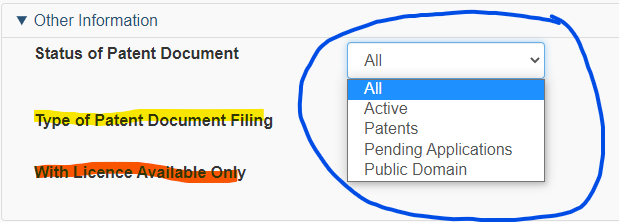
Fig. 13 shows the interface for other information under the boolean search. From the blue-encircled option of the “status of patent document” in Fig. 13, the user can select the option most relevant for him. The drop-down menu for the status of the patent document includes options like “All,” “Active,” “Patents,” “Pending Applications,” and “Public Domain.” New users are advised to go with the “All” option, as it will cover all types of patent documents, including the active ones, the application stage ones, and the public ones. The yellow highlight in Fig. 13 gives the user the option to select the “type of patent document filing,” i.e., select between PCT and non-PCT applications or choose both types. The orange highlight in Fig. 13 gives the user the option to select between only patent documents that are available for licencing or include even those that are not available for licencing. 

Fig. 13 (Other Information)

Date Type 

In Fig. 14, the snippet for the date type option is shown in green encirclings. This option allows the user to select between the various dates of patent documents such as patent issue date, filing date, examination request date, priority date, national entry date etc.

Fig. 14 (Date Type)

One pertinent thing to note in this regard is that in this boolean search option, the “search criteria” is the must-filled option and the rest, i.e., “other information” and “date type,” may be filled in by the user for more effective patent search results.

Advanced Search

As the name suggests, the advanced search option provides the user with the most amount of tweaking of inputs for the most effective search results. The interface for advanced search looks like that shown in Fig. 15 and can be easily accessed from here.

Fig. 15 (Advanced Search)

As the users can see, the boolean search interface and the advanced search interface are pretty similar, and thus logically, they can be used in the same manner as the boolean search. The advanced search option just has a few extra options, such as “select language of filing”- which allows the user to select the patent documents in the language of their filing, i.e., English or French. There is also the added option for users to select the inventor’s country from the option “inventor country/territory”’ to filter out other patent documents and get the most relevant patent search results.

Conclusion

Patent searching is a very technical process that may take some time and practice to master. The above article caters to any user, irrespective of their background, who wants to do a patent search for free in the Canadian public database and can self-train to master the finer nuances of patent search. But it is to be noted that in most corporations and law firms, patent search is done in paid databases (as mentioned before), and patent search in paid databases is another ocean in itself.

Frequently Asked Questions (FAQs)

How do I view the images in the patent document?

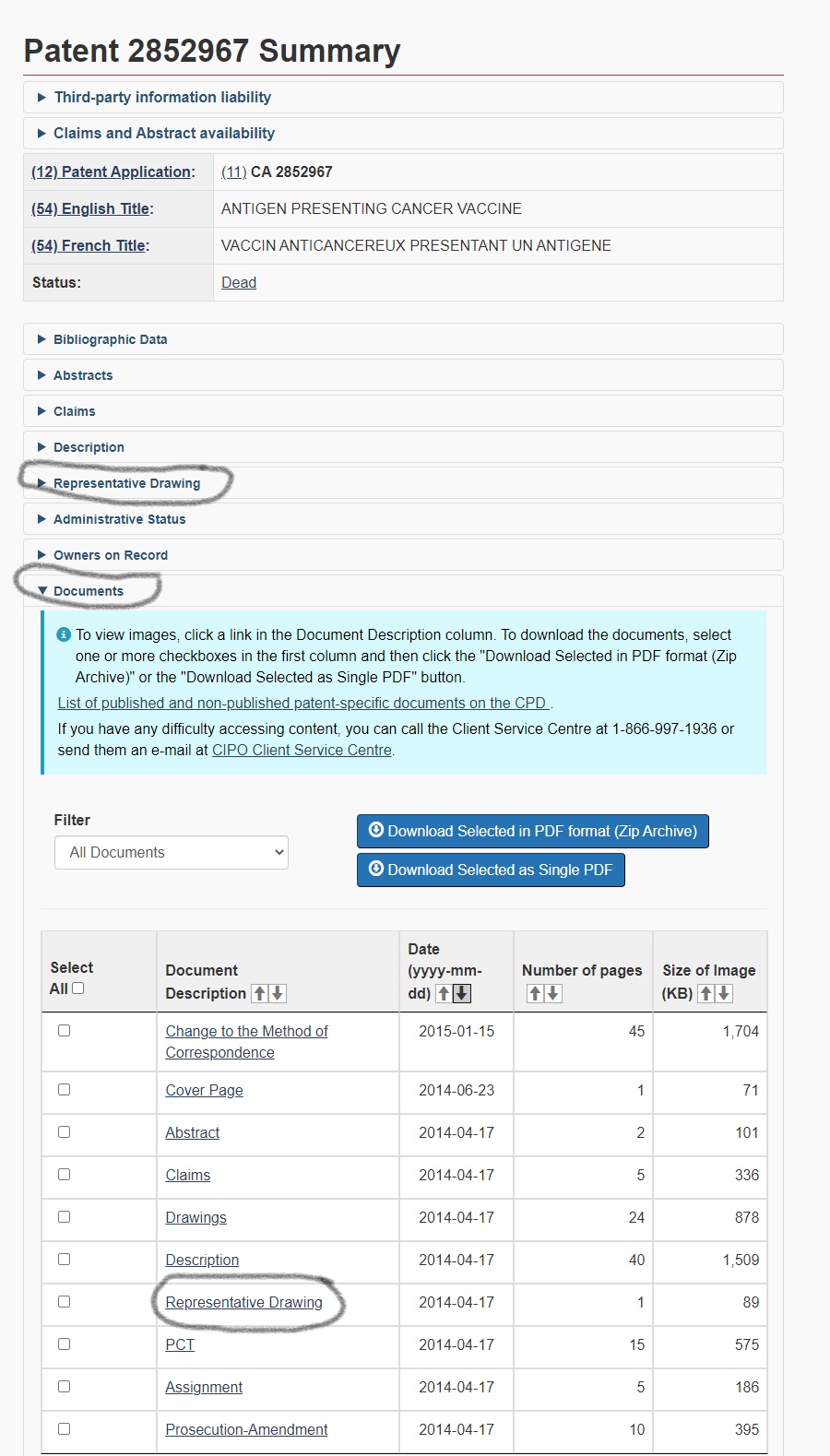
The images in the patent document, if available, will be present under the “representative drawing” option in the patent summary (as shown in Fig. 9), selected from the search results, and the same can be downloaded in pdf format too from the “documents” option at the end of the patent summary. For better understanding, Fig. 16 shows the same thing.

Fig. 16 (viewing/downloading patent document image

Can I order copies of patent documents?

Yes, copies of patent documents can be ordered by emailing [email protected].

Can I share a hyperlink or URL of a patent document from my search result without letting the receiver know my search query?

Yes, it can be done. By default, your search query is shown in the URL to support search term highlighting, as shown in Fig. 9 with light yellow highlights. To stop this, you should remove any caches from your browser. A way to hide your search query is to just note down the patent number of your document and send just the patent number, or do a number search and send the URL of the same.

References


Students of Lawsikho courses regularly produce writing assignments and work on practical exercises as a part of their coursework and develop themselves in real-life practical skills.

LawSikho has created a telegram group for exchanging legal knowledge, referrals, and various opportunities. You can click on this link and join:

https://t.me/lawyerscommunity

Follow us on Instagram and subscribe to our YouTube channel for more amazing legal content.

Download Now

An analysis of Article 13 vis a vis Article 368 of the Indian Constitution

0

This article has been written by Arka Prasad Roy, pursuing a Certificate Course in Introduction to Legal Drafting: Contracts, Petitions, Opinions & Articles from LawSikho.

It has been published by Rachit Garg.

Introduction

The interplay of Article 13 and Article 368  of the Indian Constitution has always been a controversial matter. There is a constant clash between the Supreme Court of India and the legislature. The deeper we dive into this topic we will be able to find several amendments made by the state to secure itself, or to make itself immune, on the other hand we can see the Supreme Court of India making several attempts to put certain reasonable restrictions and check to the powers of the state. In Indian democracy, it is an important aspect so that the administration of justice and the functioning of the judiciary is not made irrelevant by the other organs of the state. Article 13 deals with the laws in derogation of the Fundamental Rights, and Article 368 provides for amendment of the Constitution and the procedure for the same. The scope of amending the Constitution was there for a long time, and then came the question of whether the fundamental rights can be amended at all. This article discusses the interplay of Articles 13 and 368 thereby helping readers understand the Doctrine of Basic Structure in regard to the Indian judiciary. 

Article 13 of the Indian Constitution 

The fundamental rights of the citizen are reserved and protected by Article 13 for regulations that could otherwise restrict our freedom. According to Article 13, all laws and changes made by the Parliament must be evaluated for compliance with the Indian Constitution. The procedure for judicial review is described under Article 13 of the Indian Constitution. It requires the Indian State to uphold and carry out the fundamental rights. Additionally, it gives judges the authority to declare a statute or other action invalid if it violates fundamental rights. The protector of rights indicated in Part III of our Constitution is Article 13. The stated Article’s Clause (1) emphasises that any incompatible existing laws are nullified as of the date the Constitution takes effect. 

The Supreme Court first interpreted Article 13 (1) when deciding whether Article 13 had any retroactive application to laws that violate fundamental rights. A seven-judge bench considered the appeal of a petitioner who had been charged under the Indian Press (Emergency Powers) Act, 1931 in Keshavan Madhava Menon v. The State of Bombay (1951). Whether Article 13 (1) of the Indian Constitution might “declare all legislation inconsistent with the fundamental rights to be void as if they had never been passed and existed or be declared unconstitutional from the very beginning” was one of the questions raised in the appeal. The Court ruled that Article 13(1) did not, for all intents and purposes, render existing laws incompatible with fundamental rights or void from the start. However, Article 13 declares such legislation “ineffective and void” going forward due to the exercise of fundamental rights both before and after the Constitution’s start date.

The Hon’ble Supreme Court got the chance to observe the addition of personal laws in Article 13 in the 2017 case Shayara Bano v. Union of India and Ors (commonly known as the Triple Talaq judgement). The Court, however, held that Muslim men’s rights to issue triple talaq and obtain divorces were arbitrary and unjustified because Shariat law is a statutory law that has been codified by the central legislative assembly.

All you need to know about Article 13(2) of the Indian Constitution, 1950

According to Article 13(2) of the Indian Constitution, the State may not enact legislation that is not “consonant” with the Constitution. Additionally, if a legislation was designed that interfered with a person’s fundamental rights, such law would be void to the extent of the violation. This is a specific justification for judicial review following enactment. 

One of the many cases that further complicates the task of interpreting Article 13 is the State of Gujarat And Another v. Shri Ambica Mills Ltd (1974). To provide some perspective in this case it can be said that,  after the State of Bombay was split in two in May 1960, the State of Gujarat passed the Bombay Welfare Fund (Gujarat Extension and Amendment Act) in 1961. The 1953 Bombay Welfare Fund Act saw a number of revisions thanks to the Amendment Act. A business formed under the Companies Act of 1956, the respondent, made “many contentions.” One of them claimed that some Amendment Act provisions “violated the fundamental freedom of citizen employers and employees under Article 19 (1)(f).” As a result, the Act was illegal and in violation of Article 13 (2). The Constitutional Bench of the Supreme Court was asked, among other things, whether “Ambika Mill,” a noncitizen, might assert that Article 13 (2) of the Constitution rendered the statute void or non-est.

The Bombay High Court had to determine the constitutionality of the Bombay Prevention of Hindu Bigamous Marriages Act 1946 in the case of State of Bombay v. Narasu Appa Mali (1951). The Court provided an answer to the question of whether personal laws might be considered “laws in force” as described in Article 13(3)(a). Hon’ble Justice M.C. Chagla believed that the word “law” did not include “personal law” in the ambit of Article 13 (3) (a). The question was whether or not personal law should be included by Article 13 (3) (a) (b). The former comprises statutory law, whilst the latter include all laws that have been in effect since 1950.

The Supreme Court, however, ruled in Ahmedabad Women’s Action Group v. Union of India (1997) that if religious personal laws are included in the laws that the legislature has codified, then the codification must be for the fundamental rights. The problem that first surfaced in the Narasu decision persisted in the Triple Talaq decision and even after that, further muddying the scope and definition of law and “law in force” in Article 13(3)(a) and (b).

Article 368 of the Indian Constitution

Any article of the Indian Constitution may be added to, changed, or repealed by Parliament in accordance with the prescribed procedure, according to Article 368 of the Constitution, which deals with modification by a special majority and ratification. An amendment may be proposed in either House of Parliament, according to Article 368(2). It must be approved by a majority of all members present and voting in addition to at least two-thirds of the members of that House.

The Parliament of India has the authority to change the Indian Constitution and its processes under Article 368. The Indian Constitution is not easily amended, and doing so necessitates adhering to additional rules. The right to change it while maintaining its essential structure is granted to Parliament under Article 368. Two different sorts of modifications to the Indian Constitution are listed in Article 368. The first type of amendment requires the support of a simple majority in both the Lok Sabha and the Rajya Sabha, the second type requires a special parliamentary majority, and the third type requires the support of a special majority plus 50% of the state’s population. 

Time is not constant; it is ever-changing. The Constitution needs revision. The social, cultural, and political climate of the population is beginning to change. If the constitutional amendments weren’t made, we wouldn’t be able to handle upcoming challenges, and it would become a roadblock to progress. Why our forefathers established the Constitution as strong as it is today has a justification. To make sure that the plans adapt to the expansion of the nation. As a result, in accordance with Article 368, Parliament has unrestricted authority to alter any portions of the Constitution that it sees fit.

Article 13 vis a vis Article 368 of the Indian Constitution

The Constitution must be changed in order to meet modern demands and to reflect shifting social, economic, and political circumstances. However, the government is able to alter the terms of the nation’s ultimate law to its advantage because of the infinite amending powers of the Parliament. This enables the government to use its authority arbitrarily, which could result in violations of human rights and undermine democracy. The Supreme Court judges’ sharp minds have always been able to anticipate potential outcomes that would be detrimental to the country and its people whenever the Parliament attempted to modify the Constitution in order to acquire unlimited powers. They then issued rulings to remind the Parliament that the Constitution is the country’s top legislation and the source of all of the Parliament’s authority. Below is a summary of some of the pivotal Supreme Court rulings and amendments that helped pave the way for the “basic structural doctrine.”

Shankari Prasad v. Union of India (1951)

In the instance of Shankari Prasad v. UOI  (1951), the validity of the Constitution First Amendment Act, 1951 was challenged before the Supreme Court of India. In this curtailing the right to property as under Article 31 was challenged before the apex court. The argument made was as under Article 13 of the Constitution of India, the word “law” included all sorts of law including the law which can amend the constitution, and therefore the validity of such law can be judged with respect to the fundamental rights guaranteed by the Constitution. Article 13 of the Constitution of India states that “All laws in force in the territory of India immediately before the commencement of this Constitution, in so far as they are inconsistent with the provisions of this Part, shall, to the extent of such inconsistency, be void.” It also prevents the state from making any such law.

The Court used the literary rule of interpretation and held that the word “law” included merely the rules, regulations or any such laws made in the course of ordinary legislative power and that a Constitutional Amendment Act is no such ordinary law. Thus, the apex court upheld the validity of the Constitution First Amendment Act, 1951, and said that Article 13(2) does not affect amendments made under Article 368 of the Constitution of India. The court held that the terms made under Article 13 are perfectly general and empowers our parliament to amend the constitution by virtue of the powers as given under Article 368.

Article 13 and Article 368 the two articles which are very widely phrased, and the court using the harmonious rule of construction to avoid conflicts can be seen in the following cases.

Sajjan Singh v. State of Rajasthan (1964)

The validity of the Constitution Seventh Amendment Act was put in question, again this amendment severely affected the right to property, a number of property rights were placed in the 9th schedule, thus far-fetched and immunised from judicial review. It was also argued in this instance that the amendment reduced the area for judicial review and thus was in violation or affected the Article 226. And that if such was to be made then that has to follow the procedure for amending the ‘entrenched provision’, that is the concurrence of at least half of the states should have been obtained for such amendment to be valid. 

The Court held that the pith and substance of the amendment was the only way to amend the Fundamental Right so as the state is able to implement agrarian reform. If it somehow affected Article 226 that that was merely incidental and not intended, that does not lead to amendment of Article. The institution rejected the arguments made by a majority of 3:2, and held that the impugned act did not change Article 226 in any way or whatsoever.

LC Golak Nath v. State of Punjab (1967)

In the history of Indian law, one of the defining instances is Golaknath v. State of Punjab (1967). In this situation, several issues were brought up. The most crucial question, however, concerned whether or not the parliament had the authority to change the fundamental rights guaranteed by Part III of the Constitution of India. While the respondents said that our Constitution’s framers never intended for it to be rigid and non-flexible, the petitioners argued that the parliament lacked the authority to modify basic rights. According to the Court, the parliament cannot change the fundamental rights.    

This was a positive judgement for the fundamental rights, the majority took the position that the “transcendental” position was occupied by the fundamental rights and that no authority made by the provisions of the Constitution of India had the amending power by virtue of Article 368 to amend the fundamental rights and this also included the parliament. This was a positive judgement who was the fundamental rights are concerned, the court might have probably thought that when these rights are completely eroded as a nation we might gradually pass under a totalitarian regime. Chief Justice Subba Rao (then) characterised these as “the primordial rights necessary for the development of human personality,” and further compared fundamental rights to natural rights.

Kesavananda Bharati v. State of Kerala (1973)

In this case, Kesavananda Bharati v. State of Kerala (1973), the primary petitioner, filed a writ petition contesting the Kerala Land Reforms Act, 1963. The petition’s primary arguments were that the Act contravened property owners’ rights and went against the ideas of justice and equality. The Supreme Court’s 13-judge bench heard the case and decided in Kesavananda Bharati’s favour. The key points of the decision were that the Constitution could not be changed by the Parliament in a way that would undermine its fundamental principles and thus affect the basic structure of the Constitution.

In this case, the Supreme Court ruled that while the Parliament has the authority to amend a constitutional provision, it may not alter the basic structure of the Constitution of India. According to the majority bench, under Article 368 of the Constitution of India, the Parliament may change the fundamental makeup of the constitution, and consequently, its actual substance. As a result, the court fully affirmed the 24th Amendment Act, and two provisions of the 25th Amendment were determined to be ultra and intra-vires. The 25th Constitutional (Amendment) Act stated that if the government of a state taking private property, then it would not be the responsibility of the state to compensate the owner equally.

The basic structure idea holds that the Parliament has complete authority to alter the constitution’s fundamental provisions, but with the caveat that certain provisions may never be changed. It also claims that if the constitution’s basic structure is changed, its actual character and essence will be lost, leaving it spiritless. In this case, the bench did not define the phrase “basic structure,” leaving it up to the court to provide an interpretation based on the ‘Constituent Assembly Debates.’

Indira Nehru Gandhi v. Raj Narain (1975)

Indira Nehru Gandhi v. Raj Narain (1975) was a case heard by the Allahabad High Court in 1975. The case was filed by Raj Narain, a political opponent of Indira Gandhi, the then Prime Minister of India, who alleged that she had used government resources for her election campaign. The court found Gandhi guilty of electoral malpractice and unseated her from her parliamentary seat. The judgement also barred her from contesting any election for an additional 6 years. The judgement led to widespread political turmoil and ultimately to the declaration of emergency in India in 1975. The emergency lasted for 21 months and resulted in widespread human rights violations and suppression of political dissent. The judgement was later overturned by the Supreme Court in 1978.

The basis for this case was a complaint made against the then-prime minister, Indira Gandhi, regarding irregularities in the voting process. In the Rae Bareli seat during the 1971 Lok Sabha elections, the respondent contested against the appellant. Raj Narain, the respondent, had made a lavish argument, but in a shocking turn of events, the election results showed that Indira Gandhi had been re-elected and the victory of the Congress had been reinstated with a large majority. In order to do this, the respondent had to file a lawsuit in the Allahabad High Court against the appellant, accusing her of electoral fraud, including bribery, the use of state resources and machinery for a personal campaign, as well as other frauds like the distribution of alcohol, etc. 

The Allahabad High Court removed Indira Gandhi from her position as prime minister and barred her from running for office for a period of six years after finding the appellant guilty of violating Section 123(7) of the Representation of Peoples Act, 1951, for abuse of position. Unhappy with the decision, following the declaration of an emergency in 1975, the 39th Constitution Amendment Act was passed, limiting the court of laws’ ability to decide election-related disputes involving the President, Prime Minister, Vice President, and Speaker of the Lok Sabha and transferring that authority to a committee established under the direction of Parliament.

The key questions in this case involved whether the Constitution 39th Amendment Act was valid or not and if the Representation of the People’s Act 1951 was in violation of the Basic Structure of the Constitution. The Honourable Court ruled with a majority that the Amendment Acts of 1951 and 1974 violate the fundamental principles of the Constitution of India and should be repealed because they limit the courts’ ability to exercise their legal authority and undermine the judicial review principle. 

The 39th Amendment Act’s Clause (4) of Article 329-A was also declared invalid on the grounds that it is outside the purview of Parliament to amend because it contradicts the fundamental basic structure of the Constitution of India. The court determined that “free and fair elections” are a fundamental aspect of our democracy and are therefore the foundation of the Constitution. In the event that elections are being manipulated through nefarious means, the judiciary should step in to ensure justice. The Supreme Court relied on the Kesavananda Bharati ruling in supporting the respondent’s case and the Allahabad High Court’s judgement while stating that Article 329 A Clause 4 is unconstitutional.

The 39th Amendment was repealed because it violated the separation of powers concept and was devoid of a judge’s exclusive jurisdiction over evaluating and deciding legislative issues involving the Constitution’s fundamental principles. Finally, the court decided that because the amendment created an unjustifiable function for one person as opposed to others, it was in breach of Article 14 of the Constitution. It was held in this case that democracy is a basic feature of the constitution. No amending body under Article 368 of the Constitution is competent to pass an ordinary law with a retrospective effect to validate the election. Another significant point which emerged from the opinions presented in the instant case was that ‘basic features’ is applicable to constitutional amendments and not ordinary legislation.

Minerva Mills v. Union of India & Ors (1980)

The questions involved in the instant case are the constitutionality of Section 4 and Section 55 of The Constitution 42nd Amendment Act 1976 and constitutional validity of Clause 4 & Sub Clause 5 of Article 368.  Section 55 of the Constitution 42nd Amendment Act attempted to remove all limitations on the power of the Parliament, and also gave such powers so as the Parliament is able to amend the constitution violating the Basic Structure of our constitution. Section 4 of the Constitution 42nd Amendment Act attempted to deprive the courts of their power to review the constitutional amendments made thereof. This is also an attempt to overturn the judgement of Kesavananda Bharati v. State of Kerela (Article 31C) and Indira Nehru Gandhi v. Raj Narain (few sections of the 39th Amendment), by inserting Clause 4 & Clause 5 in Article 368 vide section 55 of The Constitution 42nd Amendment Act 1976. This is completely evident that the amendment was brought in to remove the limitations brought in by the Kesavananda Bharati case to amend the constitution.

Parliament approved the Sick Textiles Undertakings (Nationalisation) Act of 1974. It was created to achieve a purpose of broad public interest, namely the rebuilding of the textile company’s underperforming assets and the creation of a workable solution. Its aim was to protect the common populace by ensuring that goods were accessible at fair prices. Mills Ltd. was a textile company. It belonged to the sector that produced silk clothes. In 1970, the Central Government established a committee to look into the operation of Minerva Mills Ltd. under Section 15 of the Industries (Development Regulation) Act, 1951. In his pleadings, the petitioner addressed a number of issue, questioned the and constitutional validity of Clause 4 & Clause 5 of Article 368 of the Constitution because if these were held true then the petitioners cannot question the validity of the 39th Amendment Act, which introduced the Sick Textile Undertaking (Nationalisation) Act under Entry 105 of the 9th Schedule, and the central government’s authority to seize management and control of Minerva Mills Ltd.

According to the Supreme Court, Parliament has the power to amend the Constitution without endangering its basic structural principles. As long as they adhere to the fundamental structure (basic structure) theory, Parliament may change fundamental rights. The Court struck down the clause that restricted judicial review. Depriving the courts, the power of judicial review will mean that the Fundamental Rights are a ‘mere adornment,’ and become a right without remedy. If such amendments were to be held valid, then a ‘controlled’ constitution becomes an ‘uncontrolled’ one, these amendments were not made based on a broad consensus to uphold the nation’s interest but made by the brute majority of the ruling party sitting in the parliament.

We can see the constant attempt made by the judiciary in these cases so as to uphold what the constitution makers desired, to make an amendable constitution, but in a ‘controlled’ manner. The check and balances of the power between the organs of the government under the constitution must be maintained so as harmony of law and order is maintained in a country like India. It is very true that in a country like India, with such diverse people with different cultural heritage and backgrounds, a rigid constitution will not be a well-accepted and adopted framework, for such amendments are necessary. We have the concept of a “Living Constitution,” so that new ideas are adopted in it, but that does not justify that the complete power resides with the Legislature, as such can lead to our Constitution becoming an empty shell with no substance.

It is currently held that the Fundamental Rights mentioned in Part III of the Constitution of India can be amended but such should not violate or be in conformity with the Basic Structure of the Basic Features of the Constitution. The basic structure laid down is an attempt to maintain a fine balance between rigidity and at the same time ensuring the flexibility to amend the Constitution by the powers granted under Article 368 and in conformity to Article 13 of the Constitution of India.

Conclusion 

It is clear from the discussion above that the Parliament’s ability to amend laws has experienced significant modifications. To understand whether and to what degree the Parliament can change fundamental rights, it was essential to examine the legal past. This was divided into three major phases.

  1. The court granted the Parliament the freedom to alter the Constitution without any restrictions prior to the Basic Structure concept, which effectively empowered the Parliament to amend the fundamental rights.
  2. The development of the “basic structure” theory, in which we examined the court’s futile attempt to infer restrictions from the wording of an amendment and Article 368. The main thrust of the argument was that no part of the Constitution could be changed by the Parliament in a way that would cause it to lose its original meaning. Regarding how far the Parliament could modify the fundamental rights, the court remained mute. In other words, does the Constitution’s essential tenet of fundamental rights exist?
  3. The court concluded that the limited amending power itself is a part of the basic structure and highlighted that not all, but some, of the fundamental rights form part of the basic structure. The law of the land: amending power following the “basic structure” theory. The court has established various standards for determining how far fundamental rights can be modified. To sum up, if any aspect of a fundamental right satisfies the twin test, effectively indicating that it is a part of the “basic structure,” then the Parliament is unable to change that right. The court cannot change fundamental rights based on equality, social justice, reasonableness, and secularism under the current legal framework.

References 

  1. https://www.mlsu.ac.in/econtents/2249_ARTICLE%2013.pdf
  2. https://www.legalserviceindia.com/legal/article-3491-article-13-of-indian-constitution-an-overview.html
  3. https://blog.ipleaders.in/the-amendment-of-the-constitution-article-368/
  4. https://constitutionnet.org/vl/item/basic-structure-indian-constitution
  5. https://timesofindia.indiatimes.com/readersblog/legal-paradigm/evolution-of-basic-structure-doctrine-in-india-46758/

Students of Lawsikho courses regularly produce writing assignments and work on practical exercises as a part of their coursework and develop themselves in real-life practical skills.

LawSikho has created a telegram group for exchanging legal knowledge, referrals, and various opportunities. You can click on this link and join:

https://t.me/lawyerscommunity

Follow us on Instagram and subscribe to our YouTube channel for more amazing legal content.

Download Now

11th Amendment of the Indian Constitution

0

This article is written by Prabha Dabral from IMS Unison University, Dehradun. The article discusses the 11th Amendment of the Indian Constitution, which deals with Vice Presidential elections in India. It covers all the details about the Vice President and his election procedure.  

This article has been published by Sneha Mahawar.​​ 

Introduction  

Just like any other written constitution, the Indian Constitution also allows for its amendment. However, there are some limitations to that, i.e., the provisions that form the basic structure of the constitution can never be amended. Constitutional amendments are necessary to adjust the provisions according to the changing conditions of society. Article 368 under Part XX of the Constitution of India, 1949, deals with the procedures regarding the power of Parliament to amend the Constitution. 

The Constitution of India can be amended by way of addition, variation, or repeal of any provision in accordance with the procedure laid down for this purpose. One of the important amendments is the 11th Amendment of the Indian Constitution, passed in the year of 1961. This amendment has changed the procedure for the election of the Vice President. Before the 11th Amendment, a Vice President was to be elected through a joint parliamentary meeting of the two houses, Lok Sabha and  Rajya Sabha. But after the 11th amendment to the Constitution, the Vice President is now elected through an electoral college. 

Recently, the election for the Vice President was held in August 2022 by the Election Commission of India. Through this election, Jagdeep Dhankar became the 14th Vice President of India. His election also followed the same procedure as mentioned in the 11th Amendment. This article gives an overview of all the amendments introduced by the 11th Amendment of the Constitution.

The objects of the 11th Amendment Act of the Indian Constitution

The Indian Constitution laid down the procedure regarding the Vice Presidential election under Article 66. According to it, a vice President has to be elected by the members of both houses of Parliament through a joint meeting. But with time, the requirement that the members of both houses assemble at a joint meeting seemed to be totally unnecessary. There were practical difficulties, as joint meetings were not possible at all times. 

Moreover, Article 54 of the Constitution of India states that the President is elected through an electoral college that consists of members of both houses of Parliament and the legislative assemblies of the state. However, it is quite possible that the elections for both houses might not get completed before the presidential or vice presidential elections. Hence, the election of the President, as well as the Vice President could be challenged on the ground of vacancy in the electoral college.

Therefore, an amendment to Article 66 and Article 71 was proposed by A.K. Sen in the Bill in Lok Sabha to achieve these objectives. As per the amendment, the Vice Presidential election procedure was changed, and the mandatory clause requiring members of both houses to vote in a joint meeting was removed. In addition, a new clause (4) was added to Article 71 to ensure that the Presidential and Vice Presidential elections can not be challenged on the ground of vacancy in any of the houses.

The Amendments

Election procedure of the Vice President 

The 11th amendment dispensed with the earlier requirement for the Vice Presidential election. It removed the compulsory clause that requires the members of both houses of Parliament to assemble through a joint meeting.

The amended Article 66 (1) provides that a Vice President shall be elected through an electoral college consisting of members of both houses of the Parliament. 

Disputes relating to the election of a President or Vice President

It is quite a possibility that the elections to the two Houses of Parliament might not be completed before the President or Vice President is elected. It can happen in cases where there is a vacant seat in any of the houses, in cases where the president’s rule is imposed in a particular state, or for any other reason for which an election has not been completed in either of the houses. 

This can delay the election of the President or Vice President. This difficulty was removed by the insertion of a new clause (4) into Article 71 of the Indian Constitution. As per Article 71(4) of the Indian Constitution, both the election of President and Vice President cannot be challenged on the ground of any vacancy in the electoral college. 

Role of the Vice President in India 

The Vice President of India is a government figure who serves beneath the President of India. The post of Vice President is mentioned under Article 63 of the Constitution of India. He is in the second greatest political position, the first being the position of President of India. He serves for a term of 5 years and can continue to hold his office until his successor assumes the office. He can also remain in the office irrespective of the expiry of the term. Being the ex officio chairperson of the Rajya Sabha, he is also an official of the Parliament of India. 

The Vice President’s job is complementary to that of the President. When the President is not available, the Vice President fills in to discharge the duties. This power to determine whether the President is able to discharge his duties or not is understood to be decided by the President himself. And when he should resume his duties is also up to the President.

When the Vice President fills the vacant seat of the President in his absence, he gets the emoluments of the President for that period. During this time, the seat for the Chairman of the Rajya Sabha is not left vacant either. And the Deputy Chairman of the Rajya Sabha acts as its Chairman. This provision is given under Article 91 of the Indian Constitution.

In case the offices of both the President and the Vice President are vacant due to death, resignation, removal, or any other reason, the Chief Justice of India (CJI) acts as the President. The perfect example of this was Justice Hidayatullah. He got to serve in all three great constitutional positions i.e. CJI, Vice President, and President. While he was serving as the CJI, the then President, Zakir Husain, suddenly died in May 1969. Then the Vice President of India, Mr. V.V. Giri became the acting President. Soon, he resigned from office to become a candidate in the 1969 Presidential election. Justice Hidayatullah then served as the President of India for a short period from 20 July to 24 August.

In case, the CJI is also absent, the senior-most judge of the Supreme Court acts as president.  

Eligibility criteria

To be elected as the Vice President of India, the candidate must fulfil the following conditions.

  1. Must be a citizen of India;
  2. Must have completed the age of 35 years;
  3. Must be qualified for the election of Rajya Sabha;
  4. Must not hold any office of profit under any government in India, any local authority, or any other public authority.
  5. Must not be a member of either of the two houses of Parliament and also of the house of the State legislature. If any such person, who is a member of any house, is elected as the Vice President, then he must vacate his seat in that house on the date he enters upon his office as the Vice President.

Further, for the nomination of a person for the election to the Vice President’s office, he must be subscribed to by at least 20 electors as proposers and 20 electors as seconders. Moreover, every candidate is supposed to make a deposit of Rs. 15,000 in the Reserve Bank of India (RBI).

Powers and functions of the Vice President

Ex officio chairman of Rajya Sabha

He acts as the ex officio chairman of the Rajya Sabha. Here, the term “ex officio” means “by virtue of.” It means that the candidate elected as Vice President will automatically become Chairman of the Rajya Sabha. Hence, there is no other method for the election of the chairman of the Rajya Sabha. 

Acts as the President in case of any vacancy

The Vice President acts as the President of India when there is a vacancy in the office of the President. This vacancy can occur due to resignation, impeachment, death, or any other reason. He acts as the President for a maximum period of only 6 months. A new President has to be elected within this period. Moreover, in case the President is unable to discharge his functions due to illness, absence, or any other cause, the Vice President may discharge his functions until the President resumes his office.

His superfluous Highness

The literal meaning of the word “superfluous” is more than is needed or desired. In the case of the Vice President, the Constitution of India does not grant him any special functions. For this reason, he is referred to as ‘His Superfluous Highness’ by constitutional scholars.

However, he plays a very important role in leading the Rajya Sabha as its chairman. 

The election of the Vice President 

The provisions regarding the Vice President in our constitution are derived from the Constitution of America. Article 324 of the Indian Constitution deals with the direction and control of the conduct of elections to the Vice President’s office. This article is read along with the Presidential and Vice-Presidential Elections Act, 1952, and the Presidential and Vice-Presidential Election Rules, 1974

The Vice President is elected indirectly through a single transferable vote. The state legislature has no part in his elections. The electoral college that elects the Vice President consists of members of both houses of Parliament. It includes all the members, both elected and nominated. 

Though the election procedure of the Vice President and the President is quite similar, the electoral college of both of them differs in the members constituting it. In other words, they both are elected through an electoral college, but the only difference is the composition of the electoral college. The electoral college that elects the President is different from the one that elects the Vice President. The difference is as follows:

  1. In the Vice Presidential elections, the electoral college consists of both elected and nominated members of the 2 houses of parliament. But in the Presidential elections, the nominated members are not part of it. 
  2. Unlike the election of the Vice President, the states have a role to play in the Presidential elections. The President’s electoral college consists of elected members of the state legislative assemblies too.

The election of the President and the Vice President can never be challenged on the ground of vacancy in the electoral college. Their elections are not affected by any vacancies in either house of Parliament. If the Supreme Court declares their election to be void, then the acts done by the President or the Vice President before the date of such a court decision are not invalidated.

The procedure for the election of the Vice President

Here is the step-by-step process of the election of the Vice President:

Nomination

The election procedure begins with the process of nomination filed by the interested candidates. The nomination process is supposed to be completed before the last date for filing the nominations. Moreover, the process is required to be done prior to the expiry of the term of office of the Outgoing Vice President. For example, the former Vice President, M Venkaiah Naidu’s term of office was ending on August 10, 2022. However, the election process for the 14th Vice President began on July 5th, and July 19th was the last date for filing the nominations.

Election Commission

It is mandatory for the Election Commission to ensure that the election to the office of the Vice President of India is free and fair. The Commission has to take all the necessary steps to discharge all its constitutional responsibilities.

The election

According to Article 66 of the Indian Constitution, a vice president is elected through an electoral college. In his electoral college, the elected members as well as the nominated members of both houses take part in it. For example, for the 14th Vice Presidential election of 2022, the electoral college consists of the following members:

  • The total number of elected members of the Rajya sabha was 233;
  • The total number of nominated members of the Rajya sabha was 12;
  • The total number of elected members of the Lok sabha was 543.

The principle of election used here is “proportional representation.” The election is held in accordance with this system using the single transferable vote. And the voting is done through a secret ballot. 

Here, the term “proportional representation” refers to a type of electoral system in which subgroups of an electorate are proportionately reflected in the reflected body. In other words, the parties gain seats in proportion to the number of votes cast for them. For example, in the first round of counting ‘X’ got 35% votes, ‘Y’ got 30% votes and ‘Z’ got 25% votes. Since Z got the least number of votes, he will be eliminated. His votes then will be transferred to the other candidates based on who the second preference was in each of the votes. This goes on until one candidate gets the majority.

Requirements for the election of Vice President 

  • The election procedure for the next Vice President is supposed to be completed before the former Vice President vacates his seat due to the expiration of his or her term. This provision is mentioned under the Article 68 of the Indian Constitution.
  • The notification for the election of the Vice President is to be issued on or before the 60th day prior to the expiry of the office term of the outgoing Vice President.
  • The returning officer appointed is the secretary general of either of the houses of parliament by rotation. He is appointed to conduct the Vice Presidential elections. The returning officer’s job is to issue public notice about the intended election in a prescribed form. This is done to invite nominations from the candidates.
  • Any qualified person standing for the election to the office of vice president is required to be nominated by 20 MPs as proposers and 20 MPs as seconders.
  • Nomination papers are then presented to the returning officer within the time and date specified in the public notice.
  • A maximum number of four nomination papers by or on behalf of a candidate can be presented to or accepted by the returning officer.
  • The candidate who is seeking the election as the vice president is required to make a security deposit of Rs. 15,000/-.
  • The nomination papers are examined by the returning officer on the specified date in the presence of the candidate. This is done for the preauthorization of his/her proposers and seconders.
  • If any candidate wishes to withdraw his candidature, he or she can do so by giving a notice in writing in a prescribed manner. The notice must be delivered to the returning officer before the expiry of the specified time.
  • According to Rule 8 of the Presidential and Vice Presidential Election Rules, 1974, the polls for the election are to be taken in the Parliament House.
  • The value of the vote of each member of the electoral college would be the same i.e. one.
  • There is no concept of open voting and the elections are tightly monitored.
  • The votes are recorded in the international form of the Indian numerals or the Roman form. It should not be indicated in words.

Steps for counting votes 

  • The total number of first-preference votes which are acquired by each of the candidates is ascertained.
  • These ascertained numbers are then added up. The total of which is divided by 2 and then one is added to the quotient part and the remainder is considered disregarded. 
  • The number obtained after the calculation is considered as the quota which is sufficient for the candidate to secure his return at the election.
  • If the total number of votes which are credited to the candidate is equal to or greater than the quota, then that candidate is declared as elected.

Electoral college for the election of Vice President 

The electoral college that elects the Vice President consists of the following members:

  • Elected members of the Rajya Sabha
  • Nominated members of the Rajya Sabha
  • Elected members of the Lok Sabha

This electoral college is not supposed to be challenged on the ground that the total members of the electoral college were not present( i.e. there was the existence of any vacancy among the members of the electoral college). This can not act as a stoppage to the ongoing Vice Presidential election.

Judicial pronouncements 

NP Ponnuswami v. Returning officer, Namakkal constituency (1952)

Facts

In this case, the appellant had filed for the nomination for election to the Madras Legislative Assembly. Later, his nomination paper was rejected by the returning officer. The appellant then moved the High Court of Madras under Article 226 of the Constitution, praying for the writ of certiorari to quash the order of the returning officer.  The  Court rejected the petition on the ground that the Court had no jurisdiction to interfere with the order of the returning officer. 

The appellant then filed for the appeal in the Supreme Court with the view that he was entitled to a writ of certiorari in the circumstances of the case. 

Issue

Whether questioning the action of the returning officer can be said to be comprehended within ‘questioning an election’?

Judgment

The Supreme Court dismissed the petition and upheld the High Court’s order that it had no jurisdiction to entertain petitions regarding the decision of the returning officer.

It was held that it has always been of primary importance that the elections be concluded as soon as possible. And all the disputes arising out of elections should be postponed till after the elections are over. This is done so that elections may not be unduly delayed and that no election shall be called into question except by an election petition.

Any irregularities that are committed while the election is in progress, should be brought up before a special tribunal by means of an election petition. It should not be made the subject of any dispute before any court while the election is in progress.

The Court further held that it is a well-recognized principle that an election cannot be held to ease an individual’s grievances. It was observed that, as per Article 62 of the Indian Constitution, the election of the president must be completed within a fixed time. And this is a mandatory provision.

Narayan Bhaskar Khare v. The Election Commission Of India (1957)

Facts

In this case, two petitions were filed to restrain the election of the President. It was contended by the parties that the general elections in Himachal Pradesh and Punjab had not yet been held. Since they were not completed, there was a vacancy in the electoral college that elects the President. Hence, the election commission should refrain from taking the poll for the election of the President until the general elections are completed.

It was pleaded that the Presidential elections should be on hold because the electoral college that elects the President and the Vice President is incomplete. 

Issues

  1. Whether there is any provision that indicates how and when a dispute regarding Presidential and Vice Vice Presidential elections should be decided by the Court?
  2.  Whether the Presidential elections be put on hold until the general elections are completed?

Judgment

The Supreme Court rejected the petitions. It was held that the election procedure for the President or the Vice President should not be stopped, irrespective of the fact that the electoral college is incomplete. 

And that the election of the President and the Vice President should be completed before the expiry of the term of the current President or Vice President. This is a mandatory provision that should be kept in mind. 

Once the President or the Vice President is elected, he or she can be challenged through an election petition. Moreover, their election can only be challenged through an election petition.

Comparing the Vice President of India to the Vice President of the USA

Though the office of the Vice President of India is modelled after that of the American Vice President, there are certain factors upon which they differ. 

Similarity

In India, the Vice President acts as the ex officio chairman of the Rajya Sabha (i.e., the upper house of the Indian legislature). Similarly, the American Vice President acts as the chairman of the Senate (i.e., the upper house of the American legislature).

The Indian Vice President, being the chairman of the Rajya Sabha, has certain powers and functions. In this way, he mirrors the American Vice President, as in the United States of America (USA), the Vice President also acts as the Chairman of the Senate.

Difference

The Vice President in America can succeed to the Presidency when the office of the president falls vacant and remains President for the unexpired term of his predecessor.

In India, on the other hand, in case the office of the President falls vacant, the Vice President assumes the office but it is not for the unexpired time. He merely serves as the acting President until the new President takes charge. In India, the office of the Vice President was created only to maintain the continuity of the Indian state.

Conclusion 

The Vice President of India is an important governmental executive who manages the work and the activities of the President if required. One can say that he plays a very important role. Hence, his elections cannot be obstructed under any circumstances. Keeping this in mind, the 11th Amendment was introduced, as discussed in this Article.

In brief, the 11th Amendment Act is also known as the Constitutional Act of 1961. It comprises amendments of Article 66(1) and Article 77(4) of the Indian Constitution. It eradicates the unnecessary requirement of joint setting and gives a new procedure to elect the Vice President of India.

Frequently Asked Questions (FAQs) 

Who is called the President in India?

In India, the head of state is referred to as the president. In general, he is the leader of the country and the essential manager of the nation.

The post of Vice President is taken from which Constitution?

It has been taken from the Constitution of the United States.

How is the election of the Vice President different from that of the President?

Their elections differ only in the members of their electoral college. The electoral college of the Vice President consists of all the elected as well as nominated members of both houses of Parliament. But the same is not true of elections for the president. The nominated members of the Parliament cannot vote in their elections.

Who is the current Vice President of India?

The 14th and current Vice President of India is Jagdeep Dhankar.

Who elects the Vice President of India?

He/she is elected by an electoral college consisting of members of both the Rajya Sabha and Lok Sabha.

References 


Students of Lawsikho courses regularly produce writing assignments and work on practical exercises as a part of their coursework and develop themselves in real-life practical skills.

LawSikho has created a telegram group for exchanging legal knowledge, referrals, and various opportunities. You can click on this link and join:

https://t.me/lawyerscommunity

Follow us on Instagram and subscribe to our YouTube channel for more amazing legal content.

Download Now

Legislative framework for cross-border insolvency

0

This article has been published by Hardik Swant, pursuing a Certificate Course in Insolvency and Bankruptcy Code from LawSikho.

It has been published by Rachit Garg.

Background

The Insolvency and Bankruptcy Code, 2016, since its inception, has been instrumental in inculcating the discipline of effective, efficient, accountable, and responsible corporate governance practices and the monitoring of the same for the Best Interest of Shareholders. The Code emphasizes that liquidation be the solution of the last resort when it comes to the resolution of and revival of a corporate debtor. This shall turn out to be a win-win situation for both the lenders and the debtors. Yet, there are some issues to be resolved, which we think will be addressed over a while and with the experiences gained from practices.

The Code stands strong with the help of 4 Key Pillars, which are:

1. The Adjudicating Authority i.e. National Company Law Tribunal (hereafter NCLT) and the National Company Law Appellate Tribunal (hereafter NCLAT) as an Appellate body;

2. The Insolvency and Bankruptcy Board of India (IBBI), a dominant supervisory body for the Regulation of the Code;

3. The Insolvency Resolution Professionals, who are the backbone of the Profession, have a significant role to play in the liquidation of the Assets;

4. Information Utilities, which maintain the Financial Records of the Corporate Debtor.

The Government’s Resolve to tackle the Non-Performing Assets Crisis through the Enactment of this Code, and the recent incorporation of the National Asset Reconstruction Company and India Debt Resolution Company shows that it has been alive to the problems faced in practice and amended the Law time and again to suit the Needs of the future.

Speed is the Essence for working and effective implementation of the Bankruptcy Code”

A brief introduction to the cross-border insolvency

The Insolvency Law Committee (ILC) constituted by the Ministry of Corporate Affairs analyzed and submitted its report along with the Recommendations for the roadmap to effectively implement the provisions relating to Cross Border Insolvency (hereinafter referred to as CBI). This Committee noted that the existing provisions – Sections 234 and 235, do not provide a comprehensive base for CBI Matters. Given the Intensity of the Matter, and the requirement of in-depth research to inculcate the UNCITRAL Model Law into the Indian Insolvency Law, the committee submitted its report accordingly with the necessary Modifications to make it suitable for the overall economic and administrative purposes.

Some key Advantages of adopting the Mode Law with specific recommendations are as follows:

  • Increasing Foreign Investments
  • Flexibility
  • Protection of Domestic Interest
  • Priority to Domestic Proceedings
  • Mechanism for Co-Operation.

These provisions will create an internationally aligned and comprehensive insolvency framework for corporate debtors under the code which is essential in the globalized environment. Sections 234 and 235 of the Code, which revolves around entering into Bilateral Agreements and issuance of letters of requests to foreign courts by adjudicating authorities under the code meant an ad-hoc framework that is bound to delay and further increase uncertainties for creditors, debtors, and courts alike.

The Four Main Principles around which the Model Law is based are as follows:

1. ACCESS: the Model Law allows direct access for foreign insolvency professionals and foreign creditors to enter into agreements with their domestic counterparts with or without voting rights, giving them rights to participate in and commence domestic insolvency proceedings against a debtor.

2. RECOGNITION: The Model Law allows recognition of foreign proceedings and provides for remedies by domestic courts based on that. There is a concept of ‘Main’ and ‘Non-Main’ proceedings which goes- if domestic courts determine that the Debtor has its Centre of Main Interests (COMI) in the foreign country, that will be termed as Foreign Main Proceedings; if the domestic courts determine that the entity has an establishment based on carrying on of non-transitory Economic Activity, such will be recognized as Non-Main proceedings. Recognition as a main proceeding will result in automatic relief, such as the moratorium on the transfer of assets of the debtor, and allow the foreign authorities enhanced powers in handling the estate of the debtor. In non-main proceedings, such relief is at the mercy of the courts.

3. CO-OPERATION: The Model Law provides for cooperation between domestic and foreign courts as well as insolvency professionals. this cooperation is subject to guidelines to be notified by the central government and not DIRECT as such. Cooperation will also be provided to the proceedings that have not been recognized as either main or non-main.

4. CO-ORDINATION: The Model Law provides a framework for the commencement of domestic insolvency proceedings when a foreign insolvency proceeding has already commenced or vice versa. It also provides for the coordination of two or more concurrent insolvency proceedings in different countries by encouraging cooperation between the courts.

The Committee then consolidated views and recommendations from a broad range of Stakeholders based on a draft cross-border insolvency framework that was put up for public Comments. Deliberations were made upon relevant issues, the international practices were considered revolving around the domestic Legal principles including the ones laid down in the UNCITRAL Model Laws.

India’s stride towards a cross-border regime

In the year 2000, the ERADI Committee noted that with Sweeping changes brought about by the opening up of the economy, as a result of Globalization, the issues relating to Cross-Border have become more important today and in the years that would follow, and it was decided to make changes in the erstwhile Companies Act 1956.

Later on, another Advisory Group on Bankruptcy Law (the Mitra Committee) stated that Indian Law was not compatible with the standards set in international legal requirements and has not taken into consideration anything related to Cross Border relationships. Both Committees opined that there is a dire need to revamp domestic laws around Insolvency and Bankruptcy. 

Economic ramifications

India’s economic interaction with the rest of the world has seen a dramatic rise over the last three decades since the Economic Reforms of 1991 and has grown even more with the advent of our financial markets. Indian companies continue to expand across the globe.

Today, financial markets are a vast network consisting of credit, derivative contracts, collateral obligations, the market impact of overlapping asset portfolios, and the network of cross-holdings interacting in multiple layers across the board. The banking channel remains pre-dominant for cross-border capital flows with India, though external commercial borrowings have increased in recent years. As far as the role of the banks is concerned- intermediated cross-border trade credit accounts for about one-third of the global merchandise trade credit. importers in India largely meet their funding needs through buyer’s trade credit which may be influenced by both demand and supply side factors alike. Domestic banks generally cater to the trade finance needs of importers from the KEY and largely growing MSME sector while bigger corporates or conglomerates are serviced by foreign banks having an international presence to a great extent. Domestic banks with an international presence in the form of bank branches overseas – subsidiaries or representative offices have a higher share in the trade credit approvals in totality.

Therefore, as India continues to grow, Indian businesses shall continue to expand too along with the rise in the financial markets linkages, financial needs will also be met through resources across the world. in the same way, domestic businesses will be integrated into global ever-disrupting supply and value chains, hence exposing themselves to eternal influences. Cross-Border interactions, in the form of shareholder management, creditor-debtor, supplier-buyer, chain distributors, etc., would become a normal practice for businesses more than ever before. Failures and Insolvencies with Cross Border elements will be inevitable and we can say that India does not need a regime that is internationally acceptable and is rather itself capable of dealing with the complexities these situations may pose in the context of countries with which our economic interests are of paramount importance.

Existing legal alternatives for cross-border exchanges

India has acceded to the Hague Convention on the Service Abroad of Judicial and Extra Judicial Documents in Civil or Commercial Matters and also on the same convention signed a Treaty on Taking of Evidence Abroad in Civil and Commercial Matters in the year 2007 as they provide for mechanisms of cross border co-operation accessing judicial systems across.

In India, the Code of Civil Procedure (CPC), under sections 44A and 45, provides for the recognition and enforcement of foreign Judgements with few Exceptions noted elsewhere in the same statute. These sections maintain recognition and enforcement in the following manner:

1. Decree of foreign courts may be executed in the Indian territory, provided that, that court has similar stature and vested powers as the one domiciled within India. such decrees may have the same result as if given by a local district court.

2. Execution of decrees of the Indian courts outside the territory of our country under the mandate that the central government establishes a transferee court in that respective foreign country and that it is notified to the effect that the said decrees will apply to the such transferee court.

3. Section 51 of the CPC lays down the procedure for execution of decrees concerning the debts by either delivery or sale of property for repayment of the same, the appointment of an official receiver, and also arrest and detention with a reasonable opportunity for the debtor to be able to present his side.

These options are restricted to only the enforcement of the reciprocating decrees by respective courts, but not exactly the cooperation in proceedings, cooperation between the insolvency proceedings, etc., constrained by long-drawn judicial processes and the delays it may cause to come to a certain resolution. The sections mentioned above do not however cover Insolvency Matters directly which brings us to question the clarity of those provisions as far as applicability is concerned. 

UNCITRAL Model Law – An Indian Perspective

The World Bank noted that Insolvency proceedings may have International aspects and that the insolvency laws should provide for rules of jurisdiction, recognition of foreign courts, and the choice of law. The IMF on the other hand encourages its adoption as it provides an effective means of achieving cooperation and coordination among courts and administrators of different countries. India, being a member of the commission responsible for consulting, building, and promoting the model law, the chances of questions arising on the issue of the legitimacy of the law are limited. This Model Law is strongly recommended as the global solution for resolving cross-border issues.

The access and recognition of Indian legal proceedings will be easier in the jurisdictions which have already adopted the law. USA, UK, UAE, Japan, Korea, Singapore, & Mauritius are the countries with which India has significant economic ties and has successfully adopted the Model Law, and is expected to be a signaling factor giving a sense of fear of missing out the countries which are yet to join in.

Arguments in favor of the model law would be the nature of the same being flexible and accommodative of the domestic policies with the country-specific necessary changes, the only issue is that it is more of a rules-based approach rather than being a principles-based one preventing its integration into other domestic laws.

Other concerns relating to the Model Law

1.  It gives a wide range of powers to foreign representatives without any regulatory checks or interventions which may not be well digested by the Legislators in the Host country. The only need is to provide legal assurance to the domestic creditors and the courts that their interests would be adequately protected and have preference over the foreign reps as far as the debtor’s assets’ distribution is concerned.

2.  It cannot address the issue of conflicting laws in cross-border insolvency, however, it does allow for the CBI agreements which have been used effectively by parties to address the issue.

3.   Differing interpretations were offered to the important provisions of the Model Law in the UK and USA courts even when both these countries have adopted the same questioning the integration of the same with Domestic Laws.

4. At the core of economic imperatives, are the financial instruments and multinational conglomerates with cross-border value chains managed through subsidiaries. There is no clear mention of this in the Model Law in question.

Jet Airways India Pvt. Ltd.- the case study

Jet Airways happens to be one of the biggest Failures that Corporate India has seen. Let us take a deep dive into the Twists and Turns, including the Cross-Border issues, which led to the fate of the Airlines going into the long-standing cumbersome Bankruptcy Process. The then-defunct Corporate Debtor is now in the process of Returning to the Industry with a Bang with a new CEO Mr. Sanjiv Kapoor, who has an impeccable record of Turning around failing Airlines.

Jet Airways declared Bankruptcy on 17th April 2019 temporarily after notifying the about its Collapse in the Market and decided to shut down Operations for time being. Little did they know how long was it going to take a stand on its Ground. The assets that it held passed onto other Competitors and some remained parked awaiting the process to complete.

The History of Jet Airways

What started with only 4 leased Boeing 737 Aircraft in 1993 by Founder-Chairman Mr. Naresh Goyal became an Epitome of Success for Private carriers over time in India. Thereafter the Industry saw more Private low-cost Passenger carriers rising from scratch and giving competition to the bigger and more well-established ones like the Jet itself.

The Company started seeing itself in a soup when it postponed its financial results posting while it made a default in its Debt Repayments to HSBC in the Middle East and also to the consortium financiers led by the State Bank of India in the 2nd quarter of 2018. That’s when the Government stepped in with the Directorate General of Civil Aviation and began conducting due diligence and a host of Audits including the financials and many discrepancies were discovered. The Audits were also the result of a tip-off to the government indicating the deferment of salaries to the employees affecting the morale of the employees and their hardships due to non-payment. This phase ended with the jet posting a loss of over Rs. 1300 crores bringing another shock to the market as it was also trying to grasp the reality of the near-collapse situation of an NBFC as large as ILFS in Mumbai around the same time.

All of this further intensifies when the income tax authorities conducted a search and seizure operation in the Mumbai and Delhi Offices of the Defunct after which Founder -chairman Naresh Goyal came under the lens of the Investigating authorities resulting in a Red-Corner Notice being issued against the Goyal couple who stepped down from their board roles on 25th march 2019 and also they were stopped from leaving India. multiple charges of money laundering and foreign exchange violation were punched against him and back-to-back interrogations by the ED, and CBI followed, finally leading to the chargesheet being filed for the various offenses- defrauding banks and misappropriation of funds.

With the Last Flight from Amritsar to Mumbai, the airline announced its decision to shut down the Operations affecting over 20000 employees and their Families. The National Aviator’s Guild (NAG) appealed to the Prime Minister’s Office (PMO) and the Government then put the then Aviation Minister Shri Suresh Prabhu in charge of the situation to save the day for those affected. The government also urged the banks to help try and save the airline without going through the bankruptcy route but this was not going to last long as the water went over the head with the corporate debtor and millions if not billions were at risk for the banks and ultimately for the economy as a whole. The Jet Airways Employees’ Union also tried to take over the Management of the Company but the deliberations fell apart as the plans presented were not viable and would have led to further destruction of fast-falling values of the assets leaving the lenders with the only option of full-fledged Bankruptcy proceedings against the Debtor.

It has been observed that the Common Link between all of the Failures in the Indian Aviation Sector, has been a MERGER at some point of time in the Lives of Defunct airline companies: Kingfisher- Air Deccan, Jet Airways-Sahara, and also a well-known merger of Indian Airlines with a Larger public sector carrier- the ‘Maharaja’ of the Indian Skies- as we like to call it – The Air India– which is now in the Expert Hands of the House of Tatas’. These cases establish the fact that Mergers and Acquisitions exercises in Airlines are Risky.

The Merger with Sahara, Rebranding, and Mis-management

The Merger with Sahara Airlines was a miscalculation on the part of Jet Airways as it was acquired for $500 million, a price much above the actual Worth of the carrier. This merged entity was later renamed JetLite which the customers could not relate to and detached them from both brands. As a result, they started moving to other better Low-Cost carriers.

Later on, the Founder-chairman Naresh Goyal decided to take up the mantle and become a one-man-army of the merged entity without hiring a sound board of directors to assist him with the management of the airlines disregarding the corporate governance principles of management. The Seniors often spoke about his unsound Financial Acumen of him and the absence of a proper Delegation matrix and specialized departments to manage both airlines. All of this led to Mismanagement and in-fights among the Board Members further affecting the Morale of the very driving force of any company – The Employees- right from the Top to the Junior-most one.

The brief of the protocol as approved by the National Company Law Appellate Tribunal, New Delhi

In honor of the Directions of the NCLAT, the Administrator of ‘Jet Airways (India) Limited (offshore regional hub in the Netherlands) and the Resolution Professional of Jet Airways (India) Limited filed their Terms and Conditions of operations as “Cross Border Insolvency Protocols”.

The Clauses of the same are as follows:

1. Mr. Ashish Chhawchharia, in his capacity as the Insolvency Professional of Jet Airways (India) Limited, a company incorporated under the provisions of the erstwhile Companies Act, 1956 and an existing company under the Companies Act, 2013 and having its registered office at the Siroya Centre, Sahar Airport Road, Andheri East-400099 appointed by the NCLT Bench at Mumbai on 20/06/2019; and

2. Rocco Mulder, in his capacity as the Administrator in Bankruptcy of the Company appointed by the Noord-Holland District Court, trade, Sub-district and insolvency in the Netherlands by its court order dated 21/05/2019 (Dutch trustee) each a Party and together be called as parties.

A)  The Company was subject to parallel Insolvency Proceedings in India and the Netherlands.

B) In India, the Company has been admitted into a Corporate Insolvency Resolution Process under the Insolvency and Bankruptcy Code, 2016.

C) In the Netherlands the Co. has been declared bankrupt and a Dutch Trustee has been appointed to manage the Estate of the Co.

D) The Parties facilitated and formulated the proposed Co-Operation with the Protocol.

The Parties agreed to the following:

  • The Purpose: The Parties agree to maintain that the Indian Proceedings are focused on the revival/Resolution of the Co. and the maximization of the value of the assets for the stakeholders and that of the Dutch proceedings was to deal with the liquidation of the assets of the Co.
  • The parties recognize that the company is an Indian company with its center of main interest in India and the Dutch proceedings were non-main ones. for that, the parties also agreed to co-operate and co-ordinate, communicate the necessary information and data sharing pacts, preservation and maximization of the values of assets of the co. Worldwide, effective management and prioritizing of the claims and their effective and transparent reconciliation maintain the comity as regards independent jurisdiction, sovereignty, and authority of ours and Dutch bankruptcy courts.
  • Effectiveness: The Terms of this Agreement on Protocols became effective on Approval of the NCLT/NCLAT in India and subsequent approval of the Dutch Court.
  • Communication and information: For matters of material concerns to either of the parties, the parties are expected to liaise with each other and form a ‘Quid Pro Quo’ over the same. In case the proceedings are carried out in a Dutch court, it is to be maintained that the Indian Counterparties will be kept in the loop for decision-making.
  • Rights to Appear and Attend: The Parties shall have the right to appear in Person or be represented in the proceedings subject to the laws prescribed in each of the jurisdictions.
  • The Parties strived and have made efforts to Co-operate, maintain and preserve the value of the assets of the Company which are located in the Netherlands.
  • To Enable each party to fulfill its obligations and to ensure a complete ad effective overview of the claims, creditor claims were submitted by the relevant applicable Law per jurisdictions.
  • Insolvency Resolution Process Costs: the COC is to include the costs and fees incurred by the Dutch Administrators for any advisor/professional engaged by it for Dutch Proceedings. This is to be paid as per the Law of the Land in India subject to verification by the RP in Indian Proceedings.
  • The Moratorium shall be applied as per Section 14 of the Insolvency and Bankruptcy Code, 2016 against any existing proceedings under any law anywhere in the world as far as the duration of Insolvency proceedings is concerned.

The Winning Resolution Plan and all set for the Revival in 2022:

A UAE-based Indian origin Businessman – Murari Lal Jalan and a London Based firm- Kalrock Capital in consortium went on to win the bid for Jet Airways having a viable Resolution Plan to save the Co. proposing a total cash infusion of Rs. 1375 Crores including the Rs.475 Crore which would go into paying the Stakeholders and other Financial/Operational Creditors.

The New Promoters mentioned above chose to go with the Jet Brand, mainly due to its brand value and customer connections. The Union Home Ministry has already given Security Clearances to Jet Airways 2.0 as per the News dated 08/05/2022 and with its new HQ in Delhi, it is all set to relaunch its commercial flight operations in the current Financial Year. The Focus will be on Cargo Operations apart from the obvious Passenger centric to improve the airline. Delhi, Mumbai, and Bengaluru continue to remain hubs for Jet 2.0 to support tier 2 and 3 cities with sub-hubs. The Aim is to re-energize the brand by infusing energy, warmth, and vibrancy into it while making it bigger and better. It is currently going through a Court-monitored process and plans to return with a combination of premium and no-frills services.

Conclusion

The Alternatives that we’re talking about have their benefits and Limitations. The adoption and the advocacy that persists for the Model Law across the Board is fine but the selective adoption of certain clauses of the same Model Law by the countries relevant to India does not make it an attractive piece of law. It is difficult to cut or ignore any part of the Model whatsoever as it is in itself a book containing case experiences of almost a century with varying approaches to deal with Insolvencies while it still has gaps w.r.t keeping the Financial Entities out of its Ambit. This Gap is of utmost concern as it does not go in line with the requirements of a Globalized World which is also deeply integrated financially. As a result, it becomes disadvantageous for India to adopt the Model Law if it has to put in place a regime inculcating Cross Border Insolvency and the Principles around it making it difficult to make it work that way.

It is an Obligation on India’s part to think beyond the Model Law. The Financial Stability Board (FSB) of India, while working closely with the G20 laid down a set of principles that would make the Cross border Resolution of Banks and Financial Institutions practically effective as they are not just drawn from the Model Law but also go beyond it and can prove a better starting point to formulate and expand the provisions laid down in Sections 234 and 235 of the Code. Keeping in view the Economic Interests of the country, the adoption of the Law by examining country-specific cases, especially the ones in the Major financial hubs of the World will go a long way in setting precedents based on which India can move ahead with the same having Ground Breaking impact in the Law itself suiting the Country and maintaining the Best Practices in the World.

References

https://economictimes.indiatimes.com/news/economy/policy/think-global-act-local-budget-introduces-cross-border-insolvency-andaccelerates-voluntary-liquidation/articleshow/89268737.cmsNews on Government’s readiness for bringing up Cross Border issues w.r.t Insolvencies and Bankruptcies.

Download Now

Data protection laws in India

0
data protection

This article has been written by Manya Manjari, who is pursuing BBA LLB at the Indian Institute of Management, Rohtak. In this article, we will take a brief look at the major data protection laws, the purpose of protecting data, the extent to which our data is safe from the government when the government can interfere with the users’ data, and the recent amendments to the laws in India. The guidelines for data use and protection have also been discussed, along with how India is handling the rapid development of technology and what the proposed legislation targets.

This article has been published by Sneha Mahawar.​​ 

Table of Contents

Introduction 

Data protection safeguards sensitive data against loss, manipulation, and misuse. The Hon’ble Supreme Court of India established the right to privacy as a fundamental right under Article 21 of the Constitution of India as part of the right to life and personal liberty in the case of Justice K.S. Puttaswamy v. Union of India (2017), also called the “privacy judgement.” An aspect of the right to privacy known as “informational privacy” has been acknowledged. The court also observed that information about a person and the right to access that information also require the protection of privacy. There are several proposed bills for data protection and the contributions of the Bureau of Indian Standards on data privacy. The Information Technology Act, 2000 (IT Act) and Indian Contract Act, 1872 are currently the data protection legislation in India because there isn’t any special legislation for this matter yet.

Need for data protection laws 

The legislation on data protection explains what must be done to make sure that private data is treated ethically and appropriately.

  1. Data protection laws control the gathering, use, transfer, and disclosure of personal information and the security of that information.
  2. It gives people access to their data, establishes accountability standards for businesses that process it, and includes redressals for improper or harmful processing.
  3. Data protection laws also provide remedies for false profiles and fraud that can also be made using stolen information.
  4. When information falls into the wrong hands, it can jeopardise people’s safety in various ways, including their economic security, physical safety, and personal integrity, so to protect the users from that exploitation, data protection laws are significant.

Need for data protection laws in India

  1. Millions of Indians use hundreds of applications daily, creating data trails that may be misused to create profiles, target advertisements, and forecast activity and trends. 
  2. In India, the intersection of the different laws for different fields creates ambiguity and it is one of the primary reasons behind the breach of a large amount of data. There is not yet a single codified law in India that pays close attention to all the aspects of data protection and keeps a record for the penalties that should be imposed. 
  3. Countless examples of nonexistent and malfunctioning grievance redressal mechanisms need to be quickly resurrected and reviewed. The enforcement mechanism frequently encounters a number of implementation issues while handling cases related to data breaches and cybersecurity.
  4. Since India is a nation-state,  the data of the citizens is considered a national asset. Depending on India’s security and geopolitical objectives, this national asset may need to be protected and stored within national borders. That would include not only the corporates, but also Non- Governmental Organisations and governmental bodies. 
  5. Despite India being a member to several international organisations that focus on data protection mechanisms like the United Nations Commission on International Trade and the provisions in Directive Principles of State Policies. Article 38 is related to the overall welfare of citizens. Privacy and data protection are essentially related to a welfare state. It also states in Article 51 that in order to create international peace and security, the State should work to promote adherence to treaty obligations and international law.

When can the government interfere with data

The users’ data must be maintained privately and in strict secrecy by any governmental or private institution, organisation, or agency. The government can, however, intercept, monitor, and decrypt information generated, transmitted, received, or stored in any computer resource under the exceptions mentioned in Section 69 of the Information Technology Act, 2000.

Section 69

Section 69 of the Information Technology Act, 2000, provides that the government may demand the disclosure of any information in the public interest when it leads to illegal activities that compromise the national security, sovereignty, and integrity of India, the defence, the security of the state, its friendly relations, or public order when there are violations of the law or fraud.  

Section 69A

The central government may request that any government agency or intermediary limit public access to any information created, sent, received, stored, or hosted on any computer resource under Section 69A for comparable reasons and grounds (as mentioned above). The term “intermediaries” would additionally mean search engines, online payment and auction sites, online marketplaces, and cyber cafés, and also cover telecom service, network service, Internet service, and web hosting providers.  However,  such requests for limiting access would have to be supported by written justifications. 

Section 69B

The central government, for improving data security and for identifying, analysing, and preventing invasion or computer contamination in the nation, may, by notification in the Official Gazette, authenticate any institution of the government to supervise and gather traffic data or information generated, transmitted, or received over any computer resource. Section 69B grants the authority to track and acquire traffic data or information. 

Information Technology Act, 2000

On October 17, 2000, the Information Technology Act of 2000  was passed. It is the main Indian legislation governing e-commerce and cybercrime issues. The legislation was passed to uplift e-governance, provide legal backing for online transactions, and fight cybercrime. The primary goal of the law is to facilitate legal and reliable digital, computerised, and online operations and lessen or eliminate cybercrimes.

The international organisation United Nations Commission On International Trade Law (UNCITRAL) adopted the UNCITRAL Model Law on Electronic commerce (E-commerce) ,1996 to bring legal consistency across several nations and it prompted the Government of India to enact legislation for India based on the guidelines provided in UNCITRAL, which was later revised and approved by the Ministry of Electronics and Information Technology and came to be known as the Information Technology Act of 2000. India became the twelfth nation to modify its cyber laws. 

Scope of the Act 

The Information Technology Act, 2000 is applicable all over India and also has extraterritorial jurisdiction, which applies to cybercrimes conducted outside India. If an Indian system or network is included, regardless of the offender’s country, it would be dealt with under the Act. 

Objectives of the Act

  • To give legal status to all operations conducted electronically, whether through data interchange, other electronic communication, or e-commerce, as compared to the previous paper-based manner of communication.
  • To validate digital signatures as legal proof of any information or documents requiring legal verification.
  • To enable the electronic submission of papers with government departments and agencies.
  • To make electronic data storage easier in India.
  • To approve and make it easier for banks and other financial organisations to transfer money electronically.

Salient features of the Act

The salient features of the Act are as follows:

  • There are 94 Sections in the Act, divided into 13 Chapters and 4 Schedules.
  • All smart contracts made over secure electronic means are legally validated under it. 
  • The Act keeps the required security precautions in check and a legal framework for digital signatures using cryptosystem was also added.
  • Electronic records have been authenticated.
  • There are also provisions for setting up a Cyber Regulations Advisory Committee to advise the Controller and the central government.
  • The Act permits senior police officers and other officials to enter any public space and make arrests for offences covered by the Act without a warrant.
  • Powers of attorney, negotiable instruments, wills, and other similar documents are not subject to the regulations contained in this Act.
  • Finally, this act outlines the numerous cybercrimes and violations, defines them, and specifies the associated penalties.
  • The IT Act of 2000 was amended by IT Amendment Act, 2008. As a result, all types of communication tools and computer resources were now included in the scope and ambit of the IT act 2000. 

Amendments to the IT Act in 2008

The use of devices and the internet has rapidly increased, which has led to new types of crimes like sending offensive emails and messages, child pornography, cyberterrorism, posting overtly sexual online material, video voyeurism, information leakage by intermediaries, and e-commerce scams like data theft and cheating by false representation, also known as phishing. So, the Information Technology Act of 2000 was needed to incorporate punitive measures. Cybersecurity, data protection, and the adoption of security methods and processes relating to these uses of online means have taken on greater significance due to the rise of digital information services like e-governance, e-commerce, and e-transactions. Furthermore, safeguarding critical information infrastructure is essential for maintaining public health, safety, the economic and national security; as a result, it has become vital to designate such infrastructure as a safeguarded system to prevent illegal access.

Amendments in Definitions

  • The word “Digital” has been changed to “Electronic” in the definition section, among other notable changes. As indicated above, this modification broadens the scope of the IT Act beyond digital media, making it more technologically neutral as the creation of an electronic signature does not need any particular technological procedure. It would clearly refer to only online transactions even if they were.
  •  A new definition has also been inserted for “intermediary.” 
  • The inclusion of “cell phones, personal digital assistants,” and other similar devices in the definition of “communication devices” defines its clear-cut applicability. 
  • Another crucial addition that will impact the new Data Protection regulations provided under the Information Technology Act, 2008 is the broad definition of “cyber security” which now includes safeguarding data and equipment from unauthorised access, usage, publication, etc.

Major amendments in legislation

Section 66A 

Sending offensive information over a communication device through an online device is prohibited by Section 66A of the Information Technology (Amendment) Act, 2008. This includes dangerous and inappropriate messages as well as messages that are misleading or inaccurate but are transmitted with the intent to “cause irritation, discomfort, fear, hindrance, humiliation, harm, criminal intimidation, hostility, hatred, or ill will” even while the sender is aware of their falsity.

Section 67 and 67A 

The vast volume of “obscene” content shared online has long gathered attention in India. So it should be no surprise that obscenity is forbidden offline and online in the nation. Section 67 and 67A of the IT Act, which forbids obscene and sexually explicit information, have proven to be crucial measures to control it.

Section 69A

The Central Government may restrict content under Section 69A  of the IT (Amendment) Act, 2008, if it deems that any such content threatens the sovereignty, security,  integrity, or defence of the state, public order, friendly relations with foreign states, or attempts to incite the commission of a crime related to any of those as mentioned earlier. An independent set of rules called  “Information Technology Rules (Blocking of Access of Information by Public Rules), 2009” has been notified for the enforcement of Section 69A, and it is called the Blocking Rules.

Section 77A and 77B  

According to Section 77A of the ITA, 2008, all offences under this Act—aside from those that carry a life sentence or a sentence of more than three years in prison, involve enhanced punishment, negatively impact the socioeconomic standing of the nation, or involve offences against women or minors under the age of 18—can now be combined into a single offence.

In accordance with Section 77B, regardless of the provisions of the Code of Criminal Procedure, 1973, all offences with a three-year or longer sentence are cognizable and subject to bail.

Section 79 

The intermediaries in India are subject to regulation under Section 79 of the Information Technology Act, 2008. This section gained notoriety primarily due to the notorious IT Rules, or Intermediary Guidelines Rules, created under the power of the central government to make rules under Sections 87(1) and 87(2)(zg). 

A “safe harbour” feature in Section 79 of the Act exempts intermediaries from responsibility for the actions of third parties under certain circumstances. This provisional immunity is granted to intermediaries under Section 79(1) of the Act with respect to any information, data, or communication connection made available or hosted by them on behalf of a third party. For Example: If a person or bot puts up any illegal content on Facebook, Facebook by “safe harbour” provision would escape liability by claiming that they had no knowledge about such activities.

Sections 79(2) and 79(3) of the Act apply to these exemptions. Essentially, circumstances, where the intermediary engages in technological, automated, or passive activities, are covered by Section 79(2). In order for Section 79(2) to be applicable, intermediaries must not be aware of or in charge of the data being sent or stored. 

Additionally, the “notice and takedown” system envisioned by Section 79(3)(b) mandates that the intermediary remove illegal information as soon as it has actual knowledge of its existence.

The tremendous growth in internet usage has, however, resulted in an uptick in criminality, including child pornography, cyberterrorism, publishing sexually explicit information online, and video voyeurism. So, these provisions were needed to be included in the Information Technology Act, 2000. 

Development of data protection legislations in India 

The Supreme Court of India has established the right to privacy and data protection as a fundamental right in the case of Justice K.S. Puttaswamy (Retd.) v. Union of India (2017), and the present legislative framework for privacy outlined in the Information Technology Rules, 2011 (IT Rules, 2011) which governs the “collecting, receiving, possessing, storing, dealing, handling, retaining, using, transferring, disclosing sensitive personal data or information, security practices and procedures for handling personal information”. However this provision is considered to be insufficient as it fails to address among other issues, the misuse of data collected from children, breaches of data by corporations outside India and the limited scope of the definition of sensitive data. 

It was insufficient on four levels: 

  • First, the existing model assumed that privacy is a statutory right rather than a fundamental one and does not apply to the state’s processing of individual data. 
  • Second, it understood only a few data types that must be shielded.
  • Third, it imposed few responsibilities on data controllers, which can also be waived by contract.
  • Fourth, there were few punishments for the violators.

Personal Data Protection Bill, 2018

The Justice Srikrishna Committee, tasked by the Ministry of Electronics and Information Technology (MeitY) with drafting data protection legislation for India, came out with the initial proposal of the legislation, the Personal Data Protection Bill, 2018. The government enacted this plan and presented it in Lok Sabha, but it was sent for further modification for the following reasons:

  1. The new provision on data localisation may be the part that generated the greatest public controversy. The law mandates that data fiduciaries keep “at least one serving copy” of customer information on an Indian server or data centre. The only rationale for such a rule is to make it simple for law enforcement to get this information.
  2. This brings up the bill’s second issue: it permits the processing of personal data in the interests of state security if permitted and in accordance with legal procedure. It also allowed for the processing of personal data for the detection, investigation, and prosecution of any crime or other legal infraction. Given India’s inadequate laws prohibiting state monitoring, the state’s access to all personal data presents a serious danger to the right to privacy.
  3. Last but not least, the draft law established a regulatory framework that was not independent enough: the regulatory system was heavily under the influence of the central government and was susceptible to being captured by businesses. On the proposal of an independent commission, the proposed legislation granted the central government the right to nominate members of the data protection authority. Five years were a very little period for a new institution to learn the ropes and obtain the independence it needs to function as an efficient regulator, yet that is how long the appointment could last.

 Personal Data Protection Bill, 2019

This was followed by the Personal Data Protection Bill, 2019, which was later withdrawn amid promises of a replacement measure that would adhere to India’s extensive legal system, keeping in mind the other 81 suggested modifications by the Joint Parliament Committee.

Data Protection Bill, 2021

The Data Protection Bill, 2021, was a single law put out by the committee that would cover both personal and non-personal datasets. The report’s recommendation to move toward total localization of data was under question. A data protection authority had also been suggested in the withdrawn bill. As it develops the framework for the cross-border transfer, accountability of entities processing data, and potential remedies for unauthorised and harmful processing, it had also recommended to explicitly stating the flow and usage of personal data as well as defending the rights of individuals for whom the personal data are processed.

Digital Personal Data Protection Bill (DPDP Bill, 2022)

Every digital processing of private information is now subject to the Digital Personal Data Protection Bill (DPDP Bill, 2022). This would cover both personally identifiable information gathered online and offline that has been converted to digital form for handling. This bill will affect the legal safeguards offered to customers of Indian start-ups doing business abroad, affecting their competitiveness. This viewpoint is further supported by the bill, which exempts the majority of its safeguards from applying to data fiduciaries in India who process personal data belonging to citizens of India. This draft is expected to be presented to the parliament for clearance in the upcoming session of the parliament in 2023.

Comparison of the Digital Personal Data Protection bill with previous bills

Territorial Implementation of the Bill

The territorial implementation of the law, is that the Bill also addresses handling personal data gathered by data controllers on Indian soil and used to provide products and services there. The previous laws were limited to India and had no provisions for any offence committed outside the territory of India.

Fine

Digital Personal Data Protection Bill 2022, which was released, to up to Rs 500 crore. The previous laws were limited to a maximum fine amount of Rs 250 crore. The government increased the fine amount for breaking the rules outlined in the new DPDP bill to make sure that the offenders comply strictly with the laws. 

Rights

Right to be forgotten

Prior to this, the Union Government’s adjudicating officer had to authorise a request to be forgotten before the right could be used. The right to be forgotten for processing, which was previously restricted to disclosure, has been expanded according to the recommendations made in the Data Protection Bill, 2021.

Right to access data

According to the Srikrishna Report, a data fiduciary could enforce the substantive duties of a data fiduciary by exercising rights to confirmation and access. The PDP Bill incorporated the 2018 bill’s requirements while also granting the data principal the right to access all of the data fiduciaries with whom their personal data had been shared in one location. In accordance with the Data Protection Bill, 2021, the data subject has the option to choose a legal heir or legal representative as their nominee, who will be able to exercise their rights to confirmation and access as well as their right to be forgotten in the case of their passing.

Consent

Most data protection laws designate specific types of personal data as “sensitive personal data ” due to the higher risk of harm that may be caused by its unauthorised processing like biometric information, health information, genetic information, etc. So, clear consent will be required before processing, and data protection impact assessments are required, giving this personal data a higher level of safety as per the DPDP bill 2022. In PDP Bill, 2019, consent was made a significant part of the Act, and it even mentioned the provision for withdrawal. And before that in 2018 the JPC suggested a change in the consent as it had to be explicitly taken.

Regulation of Non-Personal Data

The DPDP Bill 2022 lays down the provision of laying down rules every year for the processing of non-personal data, whereas the PDP Bill, 2019 permits the central government to ask any data fiduciary to give the record for non-personal data. And the prior, PDP Bill, 2018 made no mention of this provision at all. 

Bureau of Indian Standards on data privacy 

A separate organisation that regulates data, the Bureau of Indian Standards (“BIS”), has released new standards for data privacy assurance, namely the IS 17428. BIS was established as a national standards authority.  It is designed to give enterprises a privacy assurance foundation to set up, carry out, keep up with, and constantly enhance their data privacy management system. It is an accreditation that companies may use to reassure their clients and staff about their privacy policies. It can also be strategically employed to set a company apart from its rivals in the market to control standardisation, conformity evaluation, and quality control of both goods and services in India. 

The Bureau of Indian Standards has published two Indian Standards, which are IS 17428- Data Privacy Assurance [Part 1] Engineering and Management Requirements and IS 17428- Data Privacy Assurance [Part 2] Engineering and Management Guidelines.

IS 17428: Data Privacy Assurance [Part 1] Engineering and Management Requirements

This part talks about the requirements of any organisation. For an organisation to properly define its role and obligations, the IS Requirements give fundamental definitions of “data controller,” “data processor,” “personal information,” “sensitive personal information, processing, consent,” etc., so that institutions can comply with them accordingly.

IS 17428: Data Privacy Assurance [Part 2] Engineering and Management Guidelines

It gives specific, suggesting approaches that help in carrying out these standards.  It provides fundamental standards for technical design and information management and is lawful. The IS Guidelines offer in-depth advice on the methods and best practices to follow in order to comply with the IS requirements. The IS Guidelines additionally outline important facets to take into account for network infrastructure security and privacy.

Features of the new standards for data privacy 

  • During the development life cycle of any product, service, or solution, the business must consider specific technical and design criteria.
  • The organisation’s privacy needs to consider the relevant jurisdiction, like verifying and testing the relevant data privacy control before and during development.
  • Additionally, the company must set up certain privacy management procedures.
  • Duties like- the types of personal data and outsourcing regulations; the types of private information and leasing regulations; describing its organisational structure, roles, and procedures for responsibility, communication, and governance;
  • A list of such material and its flow-  impose privacy regulations, determine the data retention duration and keep records of documentation and logs, create a technique for privacy effect assessments, create a grievance redressal framework that identifies the grievance officer, make their information public, and establishes processes for submitting and escalating complaints.
  • Improve the knowledge of the organisation’s personnel who handle personal information.

Why India needs a new codified data protection law

  1. India has seen huge technological advancements and is at par with other countries, but it lags with definite and stringent laws which address all the recent changes in the way our data is handled. Over the last two decades, countries like the USA, China and many more have adopted new laws for data protection. India currently lags uniform legislation. The times require India to adopt new laws so that it can walk hand in hand with other countries. 
  2. The current Information Technology Act, 2000 is moderately handling India’s data protection issues, yet it is not very strict as it falls short in implementing the provisions properly. Data Protection with strict implementation is currently a requirement of India.
  3. Spamming is also an issue that has recently taken prevalence where a user receives a large number of the same messages, repeatedly and clutters their inboxes. The USA and several European countries have laws punishing the sender of these spams but India has no mention of it. Laws addressing recently arising problems are the need of the hour.
  4. Online transactions also need to be addressed specifically, as it is currently being regulated by RBI norms, which should be addressed by relevant laws, which necessitates new laws on data protection in India even more.  
  5. Technology is outdated even before it is introduced, and it stands corrected in the situation India is in right now. There are several provisions like online banking, publication rules, cyber defamation, cyber terrorism, cryptocurrency and NFTs that are in dire need of being addressed by proper legislation so that issues related to them can be resolved. 

Important cases 

State of Tamil Nadu v. Suhas Katti (2004)

In the case of State of Tamil Nadu v. Suhas Katti (2004), the victim filed a complaint under Sections 67 of the IT Act and 469 and 509 of the Indian Penal Code, 1860. In order to humiliate the woman, the accused posted pornographic remarks about the victim in a number of groups. In order to harm her reputation, he also disclosed her mobile number and opened a fraudulent account in her name. According to the aforementioned Sections, the court found the accused guilty. 

This case is significant because it encouraged citizens all around the nation to come forward and report incidents of online abuse.

Amar Singh v. Union of India (2011)

The petitioner in this case of Amar Singh v. Union of India (2011) claimed that his telecom service provider had secretly recorded his calls. According to him, the alleged monitoring violated his basic right to privacy under Article 21 of the Indian Constitution. The service provider said that it was carrying out the directives of the authorities (the government of NCT). In light of Sections 69, 69A, and 69B of the IT Act, 2000, this case is significant. The Court noted that a telecom service provider carries out a public-facing activity. It has a natural need to behave sensibly and responsibly. Additionally, it was held by the court that the service provider must confirm the legitimacy of any government orders “to tap phones” when they include serious errors. In order to avoid unlawful call interception, the court further ordered the central government to establish specific directives and rules.

Shreya Singhal v. Union of India (2015)

In the landmark case of Shreya Singhal v. Union of India (2015), two ladies were held by the police for reportedly making inappropriate and disrespectful remarks on Facebook over the appropriateness of announcing a bandh in Mumbai following the passing of a political leader. 

According to Section 66A of the Information Technology Act of 2000 (ITA), the police could make the arrest of a person if that information was sent through a computer resource or communication device with the intent to cause “annoyance, inconvenience, danger, insult, injury, hatred, or ill will.” 

The entire Section 66A was declared unconstitutional by the Supreme Court of India on the grounds that its intended protection against annoyance, inconvenience, danger, obstruction, insult, injury, and criminal intimidation went beyond the bounds of reasonable restrictions under Article 19(2) of the Indian Constitution.

Justice K.S. Puttaswamy (Retd) v. Union of India (2017)

The nine-judge bench of the Supreme Court of India in the case of Justice K.S. Puttaswamy (Retd) v. Union of India (2017) upholds the right to privacy as a right which is protected by the Constitution of India. According to this case, the government’s plan for a standard biometric identity that would be needed for accessing government services and benefits was contested in the suit, which was initiated by retired Judge K.S. Puttaswamy. The government made the claim that the Constitution did not specifically guarantee the right to privacy. As stated by the court, privacy is a basic right or freedom protected by Article 21, which states that “No person shall be deprived of his life or personal liberty except according to procedure established by law.”

Praveen Arimbrathodiyil v. Union of India (2021)

The Union Government published a set of regulations in 2021. Using the authority granted to it by Section 87 of the IT Act of 2000, the Information Technology (Intermediaries Guidelines) Rules, 2011, are replaced by these regulations. The government aims to control internet streaming services, social media intermediaries, and digital news outlets through these regulations. According to these regulations, social media intermediaries must adhere to the laid down internal grievance redressal process. In circumstances of significant offences, these intermediaries are also compelled to provide the government with the details of the person who sent the offensive communication. Under the guidelines, intermediaries who violate them forfeit the protection granted to them by Section 79 of the IT Act.

As stated in the guidelines, intermediaries who violate them forfeit the protection granted to them by Section 79 of the IT Act. The regulations also mandate that the digital news media establish an internal grievance redressal system and adhere to an ethical code of conduct. In this case, several companies, including WhatsApp, Quint, LiveLaw, and the Foundation for Independent Journalists, have contested these regulations. The outcomes of the judgement will impact the future direction of Indian law in information technology, for which the petition is currently pending before the Supreme Court for listing.

Conclusion 

The year 2021 marked a turning point for the nation regarding privacy and data protection. There were many legislative and executive measures requirements in response to the urgent need for comprehensive data protection laws. It is undeniable that India has a long way to go before determining what will work best for a nation such as ours, particularly where data privacy is not well recognised. However, India has tried and continues to make several attempts to give these laws and regulations legislative authority. However, it is significant to inform individuals about data privacy, rights, and framework and bring about relevant provisions for the governance of the same.

Frequently Asked Questions (FAQs) 

Where is the IT Act 2000 not applicable? 

The IT Act 2000 does not apply to the implementation of a power of attorney, the establishment of a trust, the implementation of a will, the sale or transfer of a real estate or any interest, as well as any other type of document execution or transaction that the government may list in the Official Gazette.

What is the current scenario of the Data Protection Bill? 

The Data Protection Bill was recently inviting suggestions from users in India and the Ministry of Electronics and Information Technology (MeitY) is working on the draft to make this bill a panacea for all the matters relating to Data Protection in India. It is also expected to be presented in the following budget session of the 2023 session of Parliament. 

What restrictions does the Information Technology Act have?

Currently, numerous types of cybercrimes, including cyberstalking, cyber fraud, chat room abuse, theft of internet time, and others, are not covered by this Act. The IT Act of 2000 does not address privacy or content control, which is crucial given the dangers the internet presents.

What is the Digital Personal Data Protection Bill 2022?

The DPDP, or Digital Personal Data Protection Bill, is the latest proposed bill, which contains all the suggested amendments and also addresses several provisions that were not added before. It has not yet been approved, but it is said to be significant legislation that addresses recent technological developments. 

References 


Students of Lawsikho courses regularly produce writing assignments and work on practical exercises as a part of their coursework and develop themselves in real-life practical skills.

LawSikho has created a telegram group for exchanging legal knowledge, referrals, and various opportunities. You can click on this link and join:

https://t.me/lawyerscommunity

Follow us on Instagram and subscribe to our YouTube channel for more amazing legal content.

Download Now

An overview of wagering contracts in India

0

This article has been published by Veena Reddy, pursuing a Diploma in Advanced Contract Drafting, Negotiation and Dispute Resolution from LawSikho.

It has been published by Rachit Garg.

Introduction

Wager in simple terms is to gamble. In a wager, two parties are involved, both of them promising to pay a fixed amount on the happening of an uncertain event in the future. The most essential ingredient is that both parties have an equal opportunity to win or lose. Here, parties enter into a contract only for the sole purpose of gaining or losing and do not have any vested interest in the event itself. Hence, wagering contracts can be regarded as betting or gambling contracts. Such contracts are void and unenforceable in courts of law. This article presents an overview of wagering contracts under Indian law.

Wagering contracts in India

Section 30 of The Indian Contract Act, 1872 deals with wagering contracts, and states that “Agreements by way of wager are void, and no suit shall be brought for recovering anything alleged to be won on any wager, or entrusted to any person to abide by the result of any game or other uncertain event on which any wager is made.” Thus, the only aspect which Section 30 covers is the voidability of wagering contracts. It does not cover the definition or the essential elements of a wager.

In the landmark judgment of Carlill vs Carbolic Smoke Ball Company, the Court observed that a wagering contract is a contract where two persons hold opposite views regarding a future uncertain event. There is a mutual agreement between the parties that is dependent on the determination of the uncertain event. The agreement stipulates that one shall pay the other a sum of money or other stakes. There is no real consideration in the contract and both parties are interested only in the sum or stake they are going to gain or lose. It is essential in a wagering contract that both parties either win or lose and winning or losing depends on the happening of the event.

To explain the concept of a wagering contract by way of an illustration, let’s say there is an agreement between Mr A and Mr B in a cricket match that if Team Yellow wins against Team Red, Mr A will pay Rs. 5000, and on the other hand if Team Red wins against Team Yellow, Mr B will pay Rs. 5000. Such an agreement amounts to a wager as neither Mr. A nor Mr. B has any other vested interest in the outcome of the match, apart from the agreed-upon bet.

Essentials of wagering contracts

Uncertainty of event

The first essential of a wagering contract is that the happening of an event must be uncertain, and the parties must be unaware as to when the event would occur. A wager mostly is related to a future event, but it may be a past event too. It only requires that the parties are unaware of its result or when the event has taken place.

For instance, X agrees to pay Y a sum of Rs.1000 if it snows on Saturday and Y agrees to pay a sum of Rs.1000 if it does not snow on Saturday. Here, it is uncertain that it would snow on a particular day, for which the parties have agreed to pay a certain sum of money. Such an agreement is a wagering agreement and is null and void.

Equal opportunity to make a profit or loss

The second thing is that each party should have an equal opportunity to make a profit or loss. In absence of the same, there is no wager. In Baba sahib V. Raja ram, AIR 1931 Bom 264, there was an agreement between the parties to wrestle and the reward for the winner was the whole of the proceeds of the sold tickets. The court observed that while the winner in this scenario would benefit monetarily, the loser of the match would not have to pay anything out of his pocket. The loser of the match would just miss the chance to win a prize, which is different from him having to forfeit something of his own. In a wager, the important feature is that both parties must get an equal opportunity to win or lose and the event must also be uncertain. Here, there was no such agreement since no one was to lose according to the result of the wrestling match. Hence, the condition of equal opportunity to make a profit or incur a loss was not fulfilled.  

Uncontrollable event

The happening of the event in any case should be out of the control of both parties. If one of the parties can manage the event, the transaction lacks a very important ingredient of a wager. For instance, Nick and Harry enter into an agreement that if Nick finishes his homework in 15 minutes, Harry will pay Rs. 500 to Nick and Nick will pay Rs. 500 to Harry if Nick does not finish his homework within the stipulated time. Here, Nick has control over the task and therefore, it will not constitute a wager.

Interest in the stake or sum

Neither party should have an interest in the happening of the event itself. Both parties should be interested only in the stake or sum they win or lose. To elucidate with an example, let’s say A, a car owner, insures his car with General Insurance Corporation of India. A has to pay an insurance premium of Rs. 100 per month. If any accident takes place and the car is destroyed, General Insurance Corporation of India will pay the actual amount of loss suffered. Here, interest of A is in his car. Moreover, on the happening of the event, that is, the accident, A will gain nothing. Hence, it is not a wagering agreement.

Exceptions to wagering contracts

Horse race

Section 30 of The Indian Contract Act, carves out a statutory exception for subscription or contribution, or an agreement for the same, towards any prize the amount of which is Rs. 500 or more to the winner of a horse race. In the judgment of K.R. Lakshmanan (Dr) v State of Tamil Nadu, 1996 SCC (2) 226 the Supreme Court decided whether horse race comes within the ambit of gaming or not. The Apex Court opined that in the horse race jockeys acquire special abilities by training, and also the horses are trained for speed and stamina. Jockeys are specialised in riding and a better-trained jockey can only touch the winning post, in between two fast-running horses. Based on this, the Supreme Court held that horse racing is a game of “mere skill” within the meaning of Section 49-A of the Madras City Police Act, 1888 and Section 11 of the Madras Gaming Act, 1930.

Insurance transactions

Wager and an insurance transaction are dissimilar in many ways. The contract of insurance is a wagering contract if the insurer has interest only in insurance money and lacks any interest in the insured object. In insurance transactions, the interest formed is on the event which is damaging the interest of the insurer itself. The sole purpose behind any insurance contract is to indemnify for a loss which may take place from some future event. There is no motive to win or lose. Whereas, in wagering contracts, both parties are interested in the sum or stake they win or lose. Thus, insurance transactions are not wagering contracts but are termed as indemnity contracts.

Competitions involving skills

Skill plays a very major role in success in any competition. Where the prizes are awarded as per the merits, that is, it is based on the skill of a particular person and not upon a chance, such competitions are not wagers. However, if prizes depend upon a chance, then it is a wager. For instance, winning a lottery ticket is a matter of chance and no skill is involved in it, which makes the lottery a wager. However, some games, for instance, rummy which even though has an element of chance, is considered to be a game of skill as winning or losing can be predominantly attributed to the skills of the players, as held by the Supreme Court in State of Andhra Pradesh v. K. Satyanarayana and Ors. Therefore, it is not a wager. Also, sports competitions such as badminton, lawn tennis, table tennis, basketball, football, cricket etc. are decided by skill and are not games of chance, hence they are not wagers.

Share Market

Trading and investing in the share market by itself does not constitute a wager. This is because by investing in the shares of a company, the investor is essentially buying a part of the company’s ownership, entitling him to a part of the company’s profits and losses. Further, to make money through share market investments, it is imperative to have a working knowledge of the technicalities involved, such as stock charts, company metrics etc. This brings in the necessary element of skill into the transaction. Further, in Chimanlal Purshottamdas Shah vs Nyamatrai Madhavlal, the Bombay High Court observed that speculative transactions do not fall into the category of wager. This means that the law allows trading in goods, land, stock etc. with the intention of making a profit by the rise and fall of their market value.

Gambling and betting where expressly allowed by law

The Public Gambling Act of 1867 has been adopted by some states of India which prohibits establishing and operating a public gambling house. Goa, Daman and Sikkim are the only three Indian states to allow casinos. In Goa and Daman, the Goa, Daman and Diu Public Gambling Act, 1976 allows for establishment of casinos in only 5-star hotels and offshore vessels. That, too, is subject to obtaining prior permission of the state government.

State lottery

In a lottery, parties have equal opportunity to win or lose based on the occurrence of an uncertain event, but neither party has control over the happening of the event. Moreover, the parties have no other interest except the sum or price money involved. Thus, the lottery falls under the category of wager and is void. People cannot get redressal in the courts of law, so even if they are deceived by a lottery ticket seller, there is no legal recourse to claim prize money. In  Jyothish Chandran vs Zee Tele Films Pvt. Ltd., where a consumer complaint was filed against the nine opposite parties complaining of deficiency in service and unfair trade practice on the part of the opposite parties on the premise that opposite parties did not pay the lottery prize money of Rs. 1 crore won by the complainant. The Court opined that a lottery transaction is void and unenforceable in a civil court, the question arises whether the position would be in any way different in the consumer law. The basic consumer right flow from the contracts of sale and purchase of goods or hiring or availing of services for consideration. If the contract itself is void in view of Section 30 of the Indian Contract Act the party to the wagering contract agreement inevitably would have no right flowing from the void contract even in consumer law jurisdiction.

Section 294A of the Indian Penal Code makes keeping a lottery office or using any place for the purposes of conducting a lottery, an offence punishable with imprisonment or fine, or with both. However, this provision carves out an exception for lotteries authorised or conducted by the state governments. Lotteries authorised or conducted by the state governments are subject to the Lottery (Regulation) Act, 1998, and currently there are only thirteen Indian states which organize a state lottery.

Enforceability of wagering contracts

As per Section 30 of The Indian Contract Act, no suit is maintainable in any court of law for recovery of any sum or stake alleged to be won by way of the wager. Even if a person diligently wins in a game of gamble, he cannot move to the Court asking for the prize money won in such a wager, as Section 30 renders these wagering agreements to be void.

Enforceability of collateral contracts

In Gherulal Parakh v. Mahadeodas Maiya, the question which came up for determination was whether it was illegal to form a partnership for entering into wagering transactions. The Supreme Court held that “an agreement collateral to such a [wagering] contract was not unlawful within the meaning of Section 23 of the Contract Act.”  Therefore, a partnership formed with the intention of entering into wagering contracts is legal and enforceable. A partner who had paid the losses incurred in wagering contracts was entitled to recover proportionate indemnity from his co-partners. Here, the court applied the doctrine of collateral contracts, which provides that even when a main transaction is not enforceable by law, it does it vitiate the enforceability of a transaction collateral to it.

In Badridas Kothari vs Meghraj Kothari, the defendant allegedly owed the plaintiff a sum of money on account of some share speculation business dealings, called fatka. The defendant had executed a promissory note in the favour of the plaintiff for the sum of money which was to be invested in the fatka dealing. The note stated that the money was paid to the defendant in cash, but the defendant argued otherwise. More importantly, fatka dealings amounted to a wager under Section 30 of the Indian Contract Act, and hence, the defendant argued that a promissory note executed to repay the debt incurred due to a fatka transaction gone wrong, could not be enforced by a court of law. The court accepted the argument advanced by the defendant, thereby holding that the promissory note executed in this case is a wagering agreement, and differentiated it from a collateral contract.

Conclusion

Wagering agreements are not defined in Indian Contract Act leading to ambiguity in many cases and paving room for multiple interpretations. Wagering Agreements are not illegal as Section 30 of the Indian Contract Act is silent over the aspect, rather it renders it a void agreement. So, here Contract Act just distinguishes between an agreement which is void and one whose object or consideration is unlawful. The section is mute on multiple aspects, thus narrowing down the scope of the section. Due to this, the judiciary has been facing problems. As Section 30 lacks clarity regarding the wagering agreement, it needs to be amended to clarify the picture as to what constitutes a wager and the range of this clause should be extended, thereby removing the vagueness which is prevailing and the inconvenience faced by the jurists.

REFERENCES:

1. Law of Contract and Specific Relief Author Avtar Singh, Ninth Edition.

2. https://indianlegalsolution.com/wagering-agreement/

3. https://legalserviceindia.com/article/l376-Wagering-Contracts.html

4. https://lexforti.com/legal-news/wagering-agreement/

5. https://www.nuvamawealth.com/insight/today-s-perspective-1/what-is-the-difference

between-stock-market-investing–gambling-734efa

6. http://www.bailii.org/ew/cases/EWCA/Civ/1892/1.html

7. https://indiankanoon.org/doc/786123/

8. https://indiankanoon.org/doc/930662/

9. https://indiankanoon.org/search/?formInput=contract%20act%20section%2030

10. https://www.sevenjackpots.com/government-lottery/

11. https://legislative.gov.in/sites/default/files/The%20Lotteries%20(Regulation)%20Act,%01998.pdf

12. https://indiankanoon.org/doc/440731/

13. https://indiankanoon.org/search/?formInput=contract%20act%20section%2030

14. https://indiankanoon.org/doc/58598871/

15. https://www.goa.gov.in/wp-content/uploads/2018/06/GDDPGA-%201_1.pdf

16.  https://thc.nic.in/Central%20Governmental%20Acts/Public%20Gambling%20Act,%201867.pdf

17.  https://indiankanoon.org/doc/399853/

18.  https://indiankanoon.org/doc/84963/

19.  http://www.bareactslive.com/TN/tn500.htm

20.  https://indiankanoon.org/doc/1158685/

21.  https://indiankanoon.org/doc/1248365/

22.  https://indiankanoon.org/doc/388808/

23.  https://legislative.gov.in/sites/default/files/A1872-09.pdf


Students of Lawsikho courses regularly produce writing assignments and work on practical exercises as a part of their coursework and develop themselves in real-life practical skills.

LawSikho has created a telegram group for exchanging legal knowledge, referrals, and various opportunities. You can click on this link and join:

https://t.me/lawyerscommunity

Follow us on Instagram and subscribe to our YouTube channel for more amazing legal content.
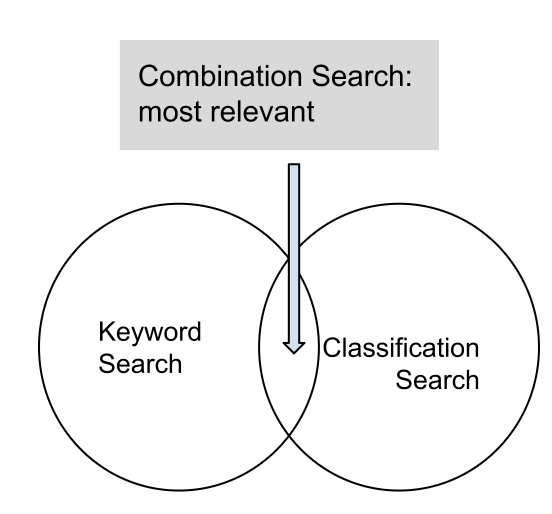
Download Now

Sedition : existing scenario and way forward

0
Sedition

This article is written by Diksha Ranjan pursuing Diploma in Advanced Contract Drafting, Negotiation and Dispute Resolution.

This article has been published by Sneha Mahawar.​​ 

“The use of sedition is like giving a saw to the carpenter to cut a piece of wood and he uses it to cut the entire forest itself”

                                                                   –Former Chief Justice N.V Ramanna

Introduction

Sedition means any form of speech, action or writing that provokes hatred towards the established government and harms the peaceful environment of the country.  The issue with the sedition laws in India is that many consider it to be in conflict with freedom of speech and expression. There has been an abuse of sedition law in our country and according to the National Crime Records Bureau, there has been an increase in sedition cases since 2014. A non-deniable feature of democracy is the power of people to express their opinion on the laws and policies made by the established government, but sedition is often being used to suppress any kind of negative opinion and criticism against the established government. Therefore, criminalization under Section 124A of the Indian Penal Code, 1860 (hereinafter IPC, 1860) is not just in a democratic society and this law has been questioned by the Supreme Court itself.  Recently, there has been an increase in cases of sedition to suppress criticism and protests against certain government policies and projects and to criminalise any dissenting opinions from human rights activists, lawyers and journalists. This indicates that there has been an abuse of sedition laws by the government by filing frivolous and vexatious lawsuits, against the legitimate critique of the government’s policies. Retired Supreme Court Justice Nariman has opined that one of the most obscure of all offences known to the criminal law is the offence of sedition, and has urged the Supreme Court to strike down sedition law.

Statutory provisions related to sedition in India 

Section 124A was incorporated in IPC, 1860 in the year 1870 by the colonial British government to suppress the sentiments of Indian nationalists and freedom fighters. According to Section 124A of IPC, a person is said to commit the offence of sedition if he induces or attempts to induce hostility or contempt or arouses or attempts to arouse animosity in the public through spoken or written words or by signs or through any other visual depiction. This resentment must be brought against the interest of the government established by law in India. Therefore, the two essentials of sedition under IPC, 1860 are as follows:

1.   Inducing or attempting to induce hostility or contempt or arousing or attempting to arouse animosity towards the government of India.

2.    Such acts or attempts may be done:-

a.     through spoken or written words,

b.     through signs,

c.     through visible representations.

The offence of sedition is punishable with life imprisonment or with imprisonment extending up to three years, additionally fine may be attached in both circumstances.

In 1973, Section 124A of IPC, 1860 was declared as a cognizable offence in the Criminal Procedure Code by the Indira Gandhi Government. Therefore, since the offence was made cognizable, Police Officers had the authority to conduct arrests without a warrant.

Apart from Section 124A, other laws that cover sedition in India are as follows:

  1. The Code of Criminal Procedure Code, 1973: Section 95 of the Code of Criminal Procedure, 1973 gives the authority to the State Government to forfeit any printed article, newspaper, book, publication or any document. In order to forfeit or seize such printed articles, newspapers, books, publications or documents, it must, in the opinion of the State Government, contain any matter which is punishable under Section 124A of the IPC, 1860. 
  2. The Unlawful Activities (Prevention) Act, 1967: Section 2(o) of the Unlawful Activities (Prevention) Act, 1967 defines what amounts to “unlawful activity”. It states that any action taken by an individual or an association either through spoken or written words, signs, or visible representations, which induces hostility or hatred and questions the sovereignty or territorial integrity of India will amount to “unlawful activity” within the territory of India. According to Section 2(o)(iii) of the Act, if a feeling of disaffection is caused or induced against India, by words, signs, and visible representation then it amounts to “unlawful activity” which also is the crux of Section 124A of IPC, 1860.
  3. The Prevention of Seditious Meetings Act, 1911: This Act gives the authority to the State Government to declare certain areas as proclaimed areas, and no such public meeting, distribution of any printed material, any discussion, which is likely to cause disturbance or peace or inducing the public, shall be held in any proclaimed area. To conduct any such public meeting in a proclaimed area, written permission from either the District Magistrate or the Commissioner of Police is required. The permission to conduct public meetings can also be denied by the authority on grounds that such a meeting is likely to promote hatred, and disaffection or will result in a disturbance of public peace.    

Arguments in favour of and against sedition law

The proponents of sedition as a crime argue that the law keeps a check on anti-national and terrorist elements that can hamper public order, and security of the state and can incite violence in the nation. It has also been argued that sedition law helps in maintaining the stability of the established government, which would otherwise be attempted to be overthrown by illegal and violent means. With existing sedition laws, contempt of the elected government can be checked. 

However, the constitutionality of Section 124A of the IPC, 1860 is now being strongly questioned. If anyone holds a view that is different from the view which is acceptable to the government, they are immediately termed as ‘anti-national’ or ‘desh-drohi’. Sedition is now seen as a draconian law which is often used against what is otherwise constitutionally guaranteed freedom of speech and expression. The Supreme Court has already given its opinion in the PIL filed against Faaroq Abdullah that “views that are different from the government are not seditious”. There are different laws in India which can take care of unlawful activities; therefore there is no need for such an outdated law which does not fit in the present society. Further, countries like the UK and Australia have already repealed such a draconian law.

Even after several attempts made by the judiciary to restrict the meaning of sedition to an act of incitement of violence, there has been repetitive misuse of sedition law at the hands of the executive. The laws should change as society evolves. It is argued that the legislative intent to enact this law which existed at the time of its incorporation in IPC, 1860, does not exist anymore. Therefore, the laws that may be proper when they were enacted may not be appropriate in today’s situation.

There have been instances to show that sedition has been used as a device to stifle the voice of political rivals, censor free speech and silence any kind of dissent. To name a few, the protest emanating after the Citizenship Amendment Act, as many as 25 sedition cases were filed against people, who raised voices opposing it. Also, 22 of such instances were witnessed after the Hathras gang rape case and 27 sedition cases after the Pulwama mishap. However, the conviction rates in these cases are very low. Moreover, this indicates that the State authorities and police are using the law whimsically to instil fear in the people and silence any criticism against the administration.

Key judicial pronouncements on sedition

Historically, the sedition law has been used to eliminate politically different opinions. The first instance of a case being filed for sedition was against Jogendra Chunder Bose in 1891. Sedition was used by the British Government to silence any negative view and criticism against them and as a result, several freedom fighters like Mahatma Gandhi, Bal Gangadhar Tilak, and many others were sent to prison on sedition charges during the freedom movement.

After Independence, there has been an abuse of sedition by both the Centre and the State Governments to keep in check all kinds of critics and opponents. The legitimacy of sedition law has been questioned by the Courts on multiple occasions. So, the issue regarding the legality of the statute was finally settled by the Supreme Court in Kedar Nath Singh V. State of Bihar (1962). The facts of the case are as follows:

  • In this case, the appellant criticised the ruling National Party, Congress, for its capitalist policies in a speech, for which he was convicted for the charges of sedition.
  • The appellant’s appeal was struck down by the High Court of Patna, therefore, he moved the appeal before the Honourable Supreme Court. The appellant’s contentions were that Section 124A of the IPC, 1860 was violative of freedom of speech and expression under Article 19(1)(a) of the Constitution.
  • The Supreme determined the major issue in this case, which was whether the restrictions imposed under Section 124A of the IPC, 1860 fall within the category of reasonable restriction under Article 19(2) of the Constitution. If the restrictions fall within the ambit of Article 19(2), it is then constitutionally valid.
  • The Supreme Court finally gave the rest to the issue by determining the validity of Section 124A of the IPC, 1860. The Supreme Court upheld the constitutional validity of Section 124A of the IPC, 1860 on the ground that restriction of speech in the interest of protecting public peace and public order is a reasonable restriction under Article 19(2) of the Constitution.

However, it is noteworthy that the language of Section 124A states that “bring into hatred or contempt” or “attempt to excite disaffection”, which can be variously interpreted and due to lack of clarity as to what exactly amounts to sedition, police and authorities find it easy to implicate people. The following mentioned recent cases will give a better understanding of sedition law in our country, as it stands today:

  1. In May, 2021 a writ petition was filed before the Supreme Court of India under Article 32 by two Telugu news channels TV5 and ABN. In this case, M/S Aamoda Broadcasting Company Private Limited Vs The State of Andhra Pradesh, the petitioners were aggrieved by the FIR registered against them on a charge of sedition. The main contentions of the petitioners were that the FIR lodged against them was an assault on the freedom of speech and expression under Article 19(1)(a) of the Constitution. The Apex Court restrained the Andhra Pradesh Government from taking adverse action against two Telugu news channels and remarked that not everything can be seditious, and also stated that we should have clarity regarding sedition laws in our country.
  2. In Rajat Sharma Vs Union of India(2021) a PIL was filed against former Chief Minister of Jammu and Kashmir, Mr. Farooq Abdullah on the grounds of violation of Section 124A of IPC, 1860. Mr. Faarooq Abdullah, in an interview, opined on the restoration of Article 370 with the help of China’s support. The Bench of Justice Hemant Gupta and Justice Sanjay Kishan Kaul stated that every view that differs from the government does not come within the ambit of sedition. The Bench also imposed a cost of Rs. 50,000 on the petitioner claiming that this PIL was filed just for the purpose of publicity.   
  3. In Disha A. Ravi Vs State (NCT of Delhi) (2021), after the aftermath of the Greta Thunberg Toolkit debacle, a case was filed against 22-year-old Disha Ravi, for tweeting in support of farmers’ agitation in India. The accused was arrested on the grounds that the accused was a part of the Khalistani conspiracy against India. In this case, the Delhi High Court expressed that citizens cannot be put behind bars simply because they disagree with the state policies and the accused was released on bail subject to certain conditions.

The Supreme Court puts sedition under abeyance : S.G. Vombatkere v. Union of India 

The constitutional validity of Section 124A of the IPC, 1860 was challenged by some public-spirited individuals in the case S.G. Vombatkere V. Union of India before the Honourable Supreme Court of India. In this case, the Supreme Court considered the security and integrity of the State on one hand and the civil liberties on the other hand, and the Supreme Court opined that both are required to be balanced. It seemed difficult to balance both due to the outdated sedition law, which is being misused. Therefore, the order of 11th May, 2022 passed by the Supreme Court by a bench headed by former Chief Justice of India N.V. Ramanna, stayed the use of the 152-year-old sedition law. In a historic and pragmatic ruling, the Supreme Court directed the Centre and States not to register any new FIR under sedition charges i.e. under Section 124A of IPC, 1860, until the law is reviewed. The Supreme Court ordered that Section 124A of IPC, 1860 should be effectively kept in abeyance till the Union Government reconsiders the provision.

The Supreme Court has clearly given a message by this interim order that civil liberties are to be balanced with the security of the state. The order of the Supreme Court got widely praised and is viewed as an act of judicial statesmanship. Since the inception of the sedition law, it is the first time that this law is suspended. Recent abuse of sedition law stresses the need for a relook on this law and by passing such an order, people’s faith in the judiciary is restored. 

Conclusion

The jurisprudential essence of sedition has been one of the most controversial topics as it unreasonably restricts constitutionally guaranteed freedom of speech and expression. It is high time that sedition law needed reconsideration, because such a law is a bane for democracy, as it does not fit well in post-colonial, independent India. 

The Supreme Court’s decision on sedition got wide acclamation, but it is still incomplete as it needs to be reconsidered by the Union Government and a permanent solution is yet to be provided for the abuse of sedition. The classification of the offence of sedition as cognizable and non-bailable also needs to be considered. Therefore, strict guidelines need to be issued with regard to sedition law in order to safeguard the freedom of speech and expression in a democratic country like India.

References


Students of Lawsikho courses regularly produce writing assignments and work on practical exercises as a part of their coursework and develop themselves in real-life practical skills.

LawSikho has created a telegram group for exchanging legal knowledge, referrals, and various opportunities. You can click on this link and join:

https://t.me/lawyerscommunity

Follow us on Instagram and subscribe to our YouTube channel for more amazing legal content.

Download Now

Why are truck accident claims complicated

0

Due to the ruinous nature of truck accidents, the number of damages caused by a truck wreck can be far beyond that of your average car accident. Also, the circumstances of a truck accident can require additional investigations from attorneys, the truck company, mechanics, police, and other investigators. When truck accident claims get too complicated, you can rely on truck accident lawyers to help guide you through the settlement process. Reasons that truck accident claims can get complicated include the following:

Multiple parties involved

Truck accident claims are often more complicated than other motor vehicle accidents due to the involvement of multiple parties. The truck driver, trucking company, cargo broker, or manufacturer of the tractor-trailer may all be liable for an accident depending on who is responsible.  In addition, there may be other insurers involved in the claim depending on the circumstances of the accident.

Lengthy investigations

In order to determine who is liable for a truck accident, it is necessary to conduct an extensive investigation. This can involve gathering evidence from multiple sources such as police reports, medical records, driver logs, and other documents related to the accident. The investigation process can take a significant amount of time, often lasting months or even years before the case is resolved.


Trucking regulations

Another factor that makes truck accident claims complicated is that there are federal regulations governing the trucking industry that may apply to the accident. Trucking companies are subject to strict federal regulations imposed by the Department of Transportation. They govern everything from how many hours a driver is allowed to work each day to what type of cargo is allowed to be shipped. If any of these regulations were violated during the time of the accident, it could have an effect on who is liable.

Severity of injuries

Truck accidents often involve serious injuries and fatalities due to the size and weight of these commercial vehicles. This leads to high-stakes liability claims that require thorough investigation by an experienced attorney. Oftentimes, insurance companies will try to settle quickly for far less than what you deserve. You should always speak with a lawyer before agreeing to any settlement offer

Necessary evidence 

Truck accident claims can be difficult because of the amount of evidence that must be obtained and analyzed in order to prove liability. This includes obtaining police reports, witness testimony, video footage from nearby surveillance cameras, cell phone records, vehicle maintenance logs, and more. A supportive truck accident lawyer can help you navigate this process and ensure the best outcome for your case.

Insurance companies

Insurance companies can also complicate truck accident claims as they may attempt to limit their liability by offering low settlements or trying to deny claims altogether. You should have an experienced truck accident attorney who knows how to handle insurance companies and can negotiate a fair settlement on your behalf.


Work With Attorneys for More Help

By understanding why truck accidents are complicated and working with an educated attorney, you can maximize your chances of obtaining the compensation you need and deserve. If you or a loved one has been injured in a truck accident, contact a knowledgeable truck accident lawyer today. A truck accident attorney can help you understand your rights and ensure that all liable parties are held responsible for their actions.

Attorneys help by conducting a thorough investigation, gathering evidence, negotiating with insurance companies and other involved parties, and fighting for the best outcome on your behalf. With an experienced lawyer at your side, you can be sure that your rights are protected. 


Students of Lawsikho courses regularly produce writing assignments and work on practical exercises as a part of their coursework and develop themselves in real-life practical skills.

LawSikho has created a telegram group for exchanging legal knowledge, referrals, and various opportunities. You can click on this link and join:

https://t.me/lawyerscommunity

Follow us on Instagram and subscribe to our YouTube channel for more amazing legal content.

Download Now

An overview of the concept of e-HR

0
Human resource

This article is written by Vinny pursuing Diploma in Labour, Employment and Industrial Laws for HR Managers.

This article has been published by Sneha Mahawar.​​ 

Introduction

This writing aims to provide an overview of the concept of e-HR, discuss the adoption of technology in recruitment, learning, and development, compliance, employee engagement, and performance management, advantage and limitation of e-HR.

Understanding e-HR

The term e-HR means managing Human Resources through the support of web-technology-based tools. Innovation in IT enables easy interactions between employees and employers. The objective of e-HR is to make information easily accessible to employees and employers. The application of technology in HR brings the greatest advantage in the HR processes, such as HR recruitment and selection, performance evaluation, performance appraisal, compensation, benefits, training, and development.

To understand the concept of e-HR, let’s consider an example, 

Let us say Mr. Madhav is the owner of XYZ consultancy. He has been running this recruitment agency for the last two years. He has three employees in his organisation. Mr. Keshav and Ms. Krisha are business development executives and digital marketers, respectively.

Ms. Vrida is an HR executive who is handling the end-to-end recruitment process. From posting jobs to onboarding candidates, Vrida is part of the entire recruitment process. She is using google sheets to maintain the database of candidates. This google sheet contains a database of candidates – contact details, highest educational qualifications, previous/ current organization details, current salary, expectation, notice period, and last date of contact. She can track the stage of candidates on the same spreadsheet. Also, she can add the reason for declining candidates. This information allows her to keep track of candidates and helps to analyze the hiring data. Since Google Sheets / Excel is easy to use and most affordable, organizations widely use them in recruitment. HRs can easily store data. 

Initially, when Vrida started, it was easy to track hiring data as candidates’ data, clients, and job roles were limited. After a few months, candidates’ data increased, and the recruitment agency started hiring for multiple job roles. And there are limitations to google sheets. It gets slower when data gets enormous. There are a lot of tabs in google sheets. Tracking hiring data sometimes becomes really time-consuming.  

Vrinda has to use formulas to generate reports and analyze data in Google Sheets/ Excel. There is no customised dashboard where she can find desired results in a few clicks. Searching for data takes time. Google Sheets/ Excel lacks dashboards that allow recruiters and companies’ managers to interact and decide about the hiring process. Enormous data can also cause data duplicacy in spreadsheets. 

Although many business owners like Mr. Madhav and HRs like Ms. Vrinda use Excel and Google sheets in the recruitment process, they lack multiple features and are outdated. This takes a long time to hire. With application-tracking systems and cloud-based solutions, hiring processes are speeding up and becoming more efficient.

Application of e-HR technology in human resource processes

Role of e-HR technology in Recruitment

Technology plays a significant role in identifying hiring needs and onboarding new employees, thus, helping in finding the right talent to expand businesses. 

Writing job descriptions

The first thing that candidates read before applying for any job is the job description. It not only communicates the roles and responsibilities of a job position but also tells about the perks and benefits that candidates will get after joining that role.

Your job descriptions will determine the types of candidates that apply to the job role. As an HR, you often need to speed up hours to understand the job role and then draft job descriptions. This process can be very time-consuming. But with the help of technology, we can save this time and build better & effective JDs. Just you have to add job titles and skills, and AI will generate a job description for you. 

Promoting job postings on social media

Social media is becoming a job-seeking platform where a job seeker can learn new skills, network with organizations, research more about companies, and search for new jobs. Brands are widely using social media platforms to build strong connections with people that will help them to attract good talent. 

Screening resumes through Application Tracking System

When a larger pool of applicants apply for different positions, it becomes hard to rank candidates based on their skills and experience. With ATS ( or Application Tracking System), HR can screen thousands of applicants based on requirements set by an organization. The best ATS software uses AI to look for keywords that help to analyze hiring data. Moreover, job seekers can easily apply for ATS software from mobile devices. An ATS is a platform where HR can access multiple job roles, track all applicants’ resumes and applications, schedule interviews, and track status. 

Enhancing interview process

Gone are the days when organizations conducted only physical or walk-in interviews. Even small organizations have started conducting interviews through Zoom and Google Meet. That saves the traveling time of employees. As a result, it reduces the overall time in conducting interviews. Thus, saving employers time, and they can fill positions faster.  

Automating onboarding new employees

Onboarding involves a lot of repetitive tasks. AI-enabled systems in the onboarding process can automate repetitive tasks and reduce errors. 

  • Maintain employee data in one place – With the help of automation, companies can gather and maintain employees’ data more efficiently. AI will help the organization to analyze this data in a better way during the process of onboarding. Let us say, if companies take employees’ salary slips during the onboarding process, then AI will help them to distinguish new employees on the basis of salary brackets. That will help organizations in the next step of paperwork or legalities. This process will be conducted in a more streamlined manner.
  • Training and development – The organization can personalized training programs with Learning Management Systems. Employees can learn according to their learning pace and styles. Thus, enabling training more efficiently for employees and organizations. Organizations can track the whole employee’s progress and performance through learning platforms.
  • Onboarding checklist – On the first day of joining, employees have introductions, orientation sessions, submission of essential documents, and signing up for different accounts. AI software can help to automate the onboarding checklist and make things easier to track and follow.
  • Chatbots – HR Chatbots is a virtual assistant that enables the organization to automate processes like scheduling interviews, managing employee referrals, providing valuable feedback, sharing learning courses, answering all new hires’ FAQs, and much more.  

Role of e-HR technology in learning and development

Learning and development (L&D) are one of the primary responsibilities of the HR department of any organization, helping to enhance work culture, bridge skill gaps, and increase retention rates of the employees. The purpose of L&D is the growth of employees with knowledge and skill that ultimately leads to organizational success. 

Let us discuss how technology impacts the L&D of the employees at the workplace.

Mobile learning

Mobile learning is the most convenient form of learning. Employees can easily access learning tools whenever they have time to learn. Now the gig economy is rising, and many freelancers are also associated with organizations. That makes learning easy for employees who live in different parts of the world. 

Microlearning 

Microlearning is most effective and highly beneficial for learners. A difficult concept when broken into small chunks of learning, makes it easy for employees to consume in a shorter time. Many organizations have done tie-ups with learning platforms, making training programs quick and effective. 

Gamification

It is the process of including game elements in non-game contexts to engage users. Learning software also contains game elements. These elements provide better engagement and retention of content. That will help to energize boring training programs and make the learning of employees fun and effective. 

AI enhanced learning 

Psychometric analysis shows that every employee has a different learning style. Organizations are also acknowledging this and developing learning content that suits the learning style of employees. AI is helping the organization in designing training modules that fulfil the needs of employees. It will help to track the progress of each employee. 

Role of e-HR technology in compliances

For Indian businesses to fully comply with laws usually need highly professional HR, chartered accountants, or legal firms. Many small businesses do not have money to afford these professionals, and their organizations are not fully compliant with labour laws. As a result, huge penalties are imposed on them.  Thanks to HR technology, small organizations can make their work easy. HR apps can help in PF, ESI, PT, bonus, and gratuity calculations, generating challans, reminding of the due date of compliances. Thus, keeping small businesses compliant with labour laws. 

Role of e-HR technology in employee engagement

Employee engagement is the level of involvement, dedication, and commitment employees have in their work and workplace. Technological advancements within the workplace are enabling companies to enhance communication with employees. Below is a list of different ways that technology is improving employee engagement. 

Digital reward system

Offering rewards is one of the best ways to make employees feel that their efforts and work are valued. Post-Covid, many organizations are working remotely or hybrid. They have started digital reward systems that include Amazon vouchers, Spotify or Apple Music subscriptions, technology and workspace upgrades, and virtual courses to keep employee engagement high.

Eliminates bias

Employees belong to diverse cultures, have different opinions, and have different work potentials. They might witness some kind of discrimination or favouritism in the organization that can dip the motivation level of employees. With performance management tools, the employer can track performance, get authentic feedback, and reward employees accordingly. Thus, technological advancement will not only help in business but also improve employees’ experience and promote employee engagement. 

Utilizing cloud computing technology

Data security is always a big concern for the organization. They can implement cloud computing technologies in their workplace that will enable them to store, transfer, and access files and software through the internet. Thus, employees can access data anywhere and anytime and save costs on purchasing too many subscriptions. 

Social engagement within the workplace

Since employees are one of the best spokespeople for the organization and their brand, employees engaging socially with each other is an opportunity for the organization to create brand awareness. It enables the development of connections with other employees beyond professional relations. Technology makes it easier to plan and conduct team-building exercises and group chilling sessions, helping the management and the employees to connect and unwind together. 

Role of e-HR technology in performance management

Performance management is a process of continuous communication and feedback that helps managers to evaluate employees’ work. Organizations are adapting to technologies and are using performance management systems to track employee performance.  

Track vital talent metrics

Organizations must track talent who is performing best in their work. It is the responsibility of HR managers to review and evaluate performance, identify and fill talent gaps, retain top talent and intervene before employees plan to leave the organization. The latest tools and software enable the tracking of talent metrics regularly so that managers can make strategic decisions.  

Collect and share continuous feedback

Feedback helps to break bad habits, increases our self-awareness, improves job performance, and encourages employees to work more effectively. There are plenty of great tools like Zoho which are helping the organization set up an employee feedback system. They can implement feedback loops throughout the lifecycle of an employee, i.e., from recruitment to exit. 

Using mobile apps for team management

Most organizations are adopting remote and hybrid work modes, and using team management tools on mobile apps is an effective way to manage team productivity. It enables collaboration, communication, and management of teams in one place. Team schedules, communication, and detailed reporting are helping to improve productivity and work quality. 

Limitations associated with e-HR technology

Maintaining and implementing HR tools and software can be expensive. Generally, HRs have to input manual data into HR management systems. If there are any data errors, that can lead to grave consequences. Some employees need personal support. These systems are not apt for them. Implementing technological innovations in the organization requires acceptance from the workforce. That can be time-consuming. Before implementing any HR tools and software, organizations invest in training programs to train the workforce. Organizations might lose talent in recruitment if HRs are not competent with the latest technology. That can cost massive amounts of money to the organizations. The HR management system is prone to hacking/ data losses. Make sure that the person responsible for it is technologically sound enough. 

Conclusion

There have been many innovations in the field of HR. The initial beneficiaries of HR tools and management systems are the people who are educated and employed in white-collar jobs. Organizations hire blue-collar employees, and unorganized job sectors lack educated employees and adequate resources. So, they are unable to implement innovations in HR systems. Today the internet has become an essential tool for data sharing, communication, and knowledge. With the increase in the number of internet users, education is becoming easily accessible to everyone, irrespective of social class. Education will only help to bridge this skill gap. Thus, education will make people more skillful, and implementation will become better and more effective in the future. Till then, it is best if HR managers rely on a combination of e-HR technologies and doing things the traditional way.

References 


Students of Lawsikho courses regularly produce writing assignments and work on practical exercises as a part of their coursework and develop themselves in real-life practical skills.

LawSikho has created a telegram group for exchanging legal knowledge, referrals, and various opportunities. You can click on this link and join:

https://t.me/lawyerscommunity

Follow us on Instagram and subscribe to our YouTube channel for more amazing legal content.

Download Now
logo
FREE & ONLINE 3-Day Bootcamp (LIVE only) on

How Can Experienced Professionals Become Independent Directors

calender
28th, 29th Mar, 2026, 2 - 5pm (IST) &
30th Mar, 2026, 7 - 10pm (IST).

Bootcamp starting in
Days
HRS
MIN
SEC
Abhyuday AgarwalCOO & CO-Founder, LawSikho

Register now

Abhyuday AgarwalCOO & CO-Founder, LawSikho