It is an imperative principle of law that a person is innocent until proven guilty. But in reality, the period of trial in our country is so long that, by the time a case is decided and a person is acquitted, the person already undergoes a long period in jail.
Article 21 of the Indian constitution which gives the fundamental right to live with dignity to all persons is a supreme fundamental right. It puts a duty on the state to ensure this fundamental right for every person. But when a person is accused of any crime and if he is put into custody and not granted bail then a delayed trial makes him stay in jail for a very long period as an under-trial prisoner. Under-trial prisoners are those prisoners who have been kept in judicial custody (in jails) while their trial is going on in court which could culminate into either conviction (guilty) or acquittal (not guilty). Hon’ble Supreme Court Judgement in Hussainara Khatoon & Ors. v. Home Secretary, State of Bihar, stated that the right to a speedy trial is a fundamental right implicit in Art. 21 of the Constitution. If an accused is not tried speedily and his case remains pending before the Magistrate or the Sessions Court for an unreasonable length of time, it is clear that his fundamental right to a speedy trial would be violated.
It is an imperative principle of law that a person is innocent until proven guilty. But in reality, the period of trial in our country is so long that, by the time a case is decided and a person is acquitted, the person already undergoes a long period in jail. Due to this long period in jail, his personality and social existence are seen as that of a criminal. The trauma of being tattooed as a criminal by society remains with the person for the rest of his life.
Causes of delay in trials
Unleashed arrests, mechanical remand and delay in bail hearings and trials, this loop has flooded our prison with people. The Supreme Court itself recognised this concern in Joginder Kumar v. State of UP, The court has cautioned that arrest should be treated as an exception and not the rule and that just because the police have the power to arrest, does not mean that they should do so in every instance. In 2009, the Parliament amended Section 41 to limit the power of arrest for cognisable offences for which punishment is seven years or less. Section 41(1)(b) of the CrPC also puts forth mandatory conditions to be satisfied before making arrests.
These conditions include that the police officer should be satisfied that such arrest is necessary to-
1. Prevent the person from committing any further offence;
2. for proper investigation of the offence;
3. To prevent such person from causing the evidence of the offence to disappear or tampering with such evidence in any manner;
4. To prevent such person from making any inducement, threat or promise to any person acquainted with the facts of the case so as to dissuade him from disclosing such facts to the court or to the police officer; or
5. Unless such a person is arrested, his presence in the court whenever required cannot be ensured. The amended section also requires that the police officer records in writing his reasons for making or not making the arrest.
But this has not been very efficient in curbing unnecessary arrests. It is evident by the fact that during the year 2019, a total of 18, 86, 092 inmates were admitted to various jails in the country. As per the report of NCRB, in 2019, the total number of prisoners was 4.78 lakhs, out of which 3.30 lakhs are undertrial.
Year
Total Prisoners
No. of Convicts
No. of Under Trial
No. of detenues.
Other Inmates
2017
4, 50,696
1, 39,149
3, 08,718
2,136
693
2018
4, 66,084
1, 39,488
3, 23,537
2,384
675
2019
4, 78,660
1, 44,125
3, 30,487
3,223
765
We can see that every year the number of undertrials is increasing. It is very important to understand that these are the statistics from 4 years after the judgment of Arnesh Kumar, “where Supreme Court come down heavily upon law enforcement agencies and sought to curb the problem of unnecessary arrests and detention. The hon’ble court had also emphasised that the magistrate should also apply his mind while ordering an arrestee to be detained beyond a 24-hour period as prescribed in Section 167 of the CrPC. The court also mandated departmental action against police officers and magistrates who do not comply with the provisions of Section 41(1)(b) or do not record reasons for authorising arrests or detentions” This shows that a very strong measure is needed to curb this problem and it’s high time that state did something about it.
Moreover, another significant reason why the trial of criminal cases is delayed is because of the lack of a sufficient number of judges to try the case. Judiciary is heavily burdened. “In the courts of Magistrates and Additional Sessions Judges, there is total inadequacy of judge- strength and lack of satisfactory working conditions for Magistrates and Additional Sessions Judges. There are courts of Magistrates and Additional Sessions Judges where the workload is so heavy that it is just not possible to cope with the workload unless there is an increase in the strength of Magistrates and Additional Sessions Judges. There are instances where appointments of Magistrates and Additional Sessions Judges are held up for years and the courts have to work with depleted strength and this affects the speedy trial of criminal cases. The Magistrates and Additional Sessions Judges are often not provided adequate staff and other facilities which would help improve their disposal of cases.”
At this date, there are around 58 lakhs pending cases at various high courts and 3.9 crores pending cases at the subordinate judiciary. The Niti Aayog, in a 2018 strategy paper (New India @75), noted that at the current rate of disposal of cases in our courts, it will take more than 324 years to clear the backlog.
But the biggest reason for such a large number of under-trial prisoners is a protected mentality of trial court judges to cancel bails and convict the accused. This mentality should be changed by judges. Recently, a retiring High Court justice, Justice K.S. Ahluwalia in his retirement speech expressed his dissatisfaction over the protected mentality of trial court judges to cancel bails and convict the accused. Supreme Court also in the Arnesh Kumar judgment commented on the routine manner in which courts remand a person to custody upon the first production. The Supreme Court held that a Magistrate must address the question of whether specific reasons that are prima facie relevant have been recorded for arrest. The court also stated that the magistrate must assess whether the police officer could have reached a reasonable conclusion that any of the conditions mentioned above are attractive.
The Code of Criminal Procedure has been amended to provide some relief to undertrial prisoners, for example, Section 436-A, which states that if a person has already received half of the maximum punishment prescribed for the offence for which he has been charged, he is entitled to be released on bail on personal bond or surety, except in cases of life imprisonment & death. In cases of offences punishable with life imprisonment, this period is 10 years. This section reveals that there are people who are kept under trial for a period as long as 10 years. Furthermore, if the person cannot arrange a bond or surety, then this relief is also avoided for such under-trial prisoners. Thus, a poor person who cannot afford bail will have to rot in jail until the culmination of the trial.
One such incident has been discussed in the case of Moti Ram and Ors. v. State of M.P, where the accused who was a poor mason was convicted. The Apex Court had passed a sketchy order, referring it to the Chief Judicial Magistrate to release him on bail, without making any specifications as to sureties, bonds etc. The CJM assumed full authority on the matter and fixed Rs. 10,000 as surety and bond and further refused to allow his brother to become a surety as his property was in the adjoining village. Moti Ram went on appeal once more to the Apex Court and Justice Krishna Iyer condemned the act of the CJM and said that the judges should be more inclined towards bail and not jail.
Similarly, In Maneka Gandhi v Union of India, Justice Krishna Iyer once again spoke about how unfair and discriminatory the bail system is when looked at from the economic criteria of a person. This discrimination arises even if the amount of bail fixed by the magistrates isn’t high for some, but a large majority of those who are brought before the courts in criminal cases are so poor that they would find it difficult to furnish bail even if it’s a small amount.
Extent of undertrial
Do you know how far an undertrial period may go? The longest trial in our country is of 54 years faced by Machal Lalung. He was jailed in 1951 on a charge of causing grievous hurt and was released only on the intervention of the National Human Rights Commission in 2005. He passed away 2 years later. There are many other Machal Lalungs in our jails who are not lucky to get noticed by Human Rights networks. A poor person in jail doesn’t get a chance to get a good lawyer. The court appoints a lawyer for those who can’t afford it but in reality, hardly ever do these lawyers take interest in cases of such poor persons and defence becomes a mechanical process left to god’s will. Years of oppressed lives and violation of human rights in jail in the name of the trial have become an accepted Generality. Even a single day in jail is dreadful. The under-trial periods are so long that it is no less than getting punishment like a convict.
Undertrial must be given a right to vote
A person who is innocent until proven guilty by the law. Despite this, it denies an undertrial prisoner the right to vote. The right to vote is an important constitutional right of every person and it should not be taken away by someone merely because a person is in jail pending trial. Until and unless one is held guilty by the court, he must not be kept away from giving his vote. Section 62(5) of the Representation of People Act of 1951 mandates that “no person shall vote at any election if he is confined in a prison, whether under a sentence of imprisonment or transportation or otherwise, or is in the lawful custody of the police”.Suppose, a person who is in custody is not allowed to vote,however, the same person out on bail is allowed to cast his vote. An undertrial is as innocent as any other respectable person in this country. His guilt is not established yet and by barring him from exercising his right to vote, he is treated like a guilty person. Thus, this provision creates an unreasonable classification and violates article 14 of the Indian Constitution.
It is very important to grant under-trial prisoners the right to vote since our political parties and support groups will start to view them as potential voters, and this will motivate them to support poor under-trial prisoners, who are forgotten in jails for years due to poverty and a lack of voice in society, as Machal Lalung was. Further, they would also ensure that an environment will be created where an under-trial prisoner if he comes out on bail, will be accepted by society. They will try that not only the state but also every member of the society shall imbibe this principle in their minds that “An accused is innocent until proven guilty”.
Solutions
The problems and solutions to the same are known to all but their implementation is not done wisely. Some of the proposed solutions are as follows:
Arrest should be made only wherever necessary.
Protected mentality of trial court judges to cancel bail and convict the accused should be done away with.
There must be a speedy trial and for that, there should be a sufficient number of judges, otherwise we witness how overburdened our judiciary is.
Under trial prisoners must be given a right to vote.
On an individual level, we all should endeavour to imbibe in the mind that “An accused is innocent until proven guilty” and thus do not see any person coming from jail with abhorrence. That person may be guilty but that person may also be innocent and if he is innocent he shouldn’t deserve our abhorrence. He may be someone who has spent a dreadful period in jail without any guilt. He may be a victim who needs love, care and acceptance by us.
Conclusion
Speedy justice is a fundamental right, a violation of which undermines a person’s confidence in the judiciary. The cry of prisoners stricken with poverty, illiteracy and lack of resources is a mockery of justice. The inability of the state to conduct speedy trials puts unwarranted pressure on undertrial prisoners and their families. For some are the sole breadwinners of the family, for some couldn’t make themselves present during the last days of their parents, delivery of their wives, or even the last rites of their parents. It’s painful to imagine the plight of such persons. A person who is acquitted leaves jail carrying all the misery he has suffered there, the misery that lives in his mind forever. There is no compensation enough for the misery that is under trial going for several years in jail however, the state should give the best possible compensation.
It’s imperative that the government should set up a committee to review this long-drawn problem and stop only where a panacea is found.
Students of Lawsikho courses regularly produce writing assignments and work on practical exercises as a part of their coursework and develop themselves in real-life practical skills.
LawSikho has created a telegram group for exchanging legal knowledge, referrals, and various opportunities. You can click on this link and join:
This article is written by Shraddha Jain, a law student at the Institute of Law, Nirma University, Ahmedabad. This article discusses the legality of live-in relationships in India, as well as judiciary’s stance on the subject. This article summarises all of the important Supreme Court’s judgments concerning live-in relationships, the legality and rights of children born from such relationships, and several statutes that indirectly include such relationships.
It has been published by Rachit Garg.
Table of Contents
Introduction
In India, the legality of live-in relationships is quite muzzled. Although live-in a relationship is neither a crime nor a sin, it is disapproved in Indian culture to some degree. In a nation like India, where weddings are seen as a societal foundation for legalising a man-woman connection, the notion of a live-in relationship has added a new dimension to the man-woman relationship.
With the passage of time and modernization, India’s social dynamics have seen a few favourable improvements. Several judgments have called into question the ancient notions of Indian society. Certain societal facts, however, remain unaccepted and are viewed through the perspective of patriarchy; a typical example is live-in relationships. While a portion of the Indian population has accepted it, a large fraction remains opposed to the notion. Even while films like “Luka Chhuppi” have helped to normalise it in Bollywood and local cinema, there is still some criticism.
There are various judgements on live-in relationships; some are progressive, while some give regressive statements as well. As a result of these recent contradictory judgments, we must examine prior rulings of various Indian courts to clear up any doubt on the subject. As a result, the purpose of this article is to look into the legal consequences of live-in relationships in India. It starts by looking into the definition, legality, and issues of live-in relationships. It then goes on to outline the benefits for partners who want to pursue a live-in relationship, such as the right to maintenance, the right to inherit property, and the validity given to children born from live-in partnerships, etc.
What is a live-in relationship
Although the term ‘live-in relationship’ is difficult to define, it refers to domestic cohabitation between two unmarried people. Live-in relationships are becoming increasingly prevalent among couples. However, it might be argued that the incidence is higher in metropolitan areas and tier-1 cities, particularly among upwardly mobile young people. Often, couples would enter into live-in relationships to test their compatibility before agreeing to marry. It allows them to better comprehend each other and make well-informed decisions on serious commitments like marriage.
Live-in relationships allow separation without the intervention of the state, which is especially important in countries like India, where divorce is frowned upon and stereotyped.
Pre-marital sex, on the other hand, is frowned upon in Indian society. As a result, couples living together before marriage are frequently regarded as culturally improper, unethical, and repugnant to societal standards. As a result, while some have publicly accepted the notion of live-in relationships, it nevertheless faces social resistance based on traditional attitudes.
Forms of live-in relationships in India
Live-in relationships may be roughly classified into three basic groups. This categorisation assists in determining if these categories come under the broad scope of the term ‘relationship in the nature of marriage.’
Continuing with the concept of ‘relationship in the nature of marriage,’ three scenarios challenge this phrase. The first possibility is domestic cohabitation between two unmarried heterosexual people. Second, adulterous live-in relationships. Finally, there are domestic relationships between same-sex couples.
The first sort of live-in relationship is the most popular, prevalent, and recognised, in which two unmarried heterosexual people deliberately reside. However, the majority of public hostility and legal concerns originate from the second and third scenarios listed above.
Rules to determine relationship in the nature of marriage
In the case of Indra Sarma v. VKV Sarma (2013), the Supreme Court established the following rules to decide whether or not a relationship is ‘in the nature of marriage’:
Time period of the relationship
Section 2(f) of the Domestic Violence Act uses the phrase “at any point in time,” which indicates a significant period of time to establish and maintain such a relationship, which might differ from situation to situation depending on the circumstances.
Shared household
The term ‘shared household’ has been specified in Section 2(s) of the Domestic Violence Act and hence does not require additional explanation.
Providing funds
Financially supporting one another, or any of them, having shared bank accounts, obtaining immovable properties in joint names or in the name of the woman, long-term funding in companies, shares in joint ownership, in order to have a strong connection, could be a guiding factor.
Intentions and behaviours of the parties
The partners’ common aim toward their relationships, such as their individual duties and obligations, essentially defines the nature of that relationship.
Domestic agreement
Delegating responsibility, particularly to women, to manage the home and handle household chores is evidence of a marriage-like relationship.
Public socialisation
Hanging out in society and interacting with friends, relatives, and others as if they really are a married couple is a significant situation to retain the relationship in the nature of marriage.
Main issues with live-in relationships
There are several issues regarding live-in relationships. These are as follows:
Is Indian culture ready to embrace such a new type of relationship?
What are the consequences of adopting or refusing such relationships for the continuation and advancement of society?
Should new legislation be enacted in India to govern such relationships?
What are the implications of legalising such a relationship for married couples?
Should current rules governing the maintenance, guardianship, succession, and inheritance be changed to accommodate such relationships?
What role does the Indian judiciary play in the development of such relationships?
So far, the Indian judiciary has been the most constant in recognising such relationships. However, in terms of protecting women’s claims in such relationships, the Indian judiciary stands ready to provide justice to the most vulnerable members of society.
Laws related to live-in relationships
Though the law is still ambiguous regarding the legality of such partnerships, a few rights have been provided by analysing and altering the laws so that the parties can avoid misusing such relationships. Several pieces of legislation are addressed below.
Article 21 of the Indian Constitution
Article 21 of the Indian Constitution safeguards the basic right to life and personal liberty, and it has been decided by various Supreme Court judgements like S. Khushboo v. Kanniammal and Anr (2010) that the right to life and personal liberty includes the right to cohabit without interruption.
The Protection of Women from Domestic Violence Act, 2005
A domestic relationship is defined in Section 2(f) of the Domestic Violence Act, 2005 as a relationship ‘in the nature of marriage’ between two people residing in a shared home. A domestic relationship is defined as a relationship between two individuals who reside or have resided together in a shared household at any period of time and are connected by consanguinity, wedding, or a relationship in the nature of marriage, adoption, or are friends and family living together as a family group.
Live-in relationships have the characteristics of marriage because the partners live together for a long period of time and represent themselves as husband and wife. As a result, they fall under the purview of the Domestic Violence Act, 2005, and therefore, a woman in a live-in relationship can seek protection and maintenance under this Act. As a result, this Act legalises relationships other than marriage.
The Code of Criminal Procedure, 1973
Section 125 of the Criminal Procedure Code allows a wife to seek maintenance from her spouse if he refuses to support her. If a woman is able to form a marriage-like connection, she is eligible to receive maintenance from that man because the court can make the assumption that such a relationship is a marriage and the woman is considered to be a wife. The primary goals of including live-in relationships under the purview of Section 125 are to safeguard women from domestic violence and to increase the legal threshold for partners in live-in relationships to the level of marriage. The Supreme Court expanded on this precedent from the guidelines of the Malimath committee appointed by the Home Ministry. The committee was chaired by Justice Malimath to make recommendations on the aforementioned proposition.
The Committee submitted its findings in 2009, proposing that the definition of alimony/maintenance under Section 125 be modified to enable women to obtain it. As a result, the Supreme Court ruled in the case of Abhijit Bhikaseth Auti v. State of Maharashtra and Anr (2009), that a woman is not required to prove marriage to seek maintenance under Section 125 of the CrPC, meaning that a woman in a live-in relationship is also entitled to maintenance. This decision demonstrates our judiciary’s liberal and contemporary stance.
Legality of a live-in relationship
There is no explicit law or custom in India that governs live-in relationships. Thus, via decisions, the Supreme Court has expanded the notion of live-in partnerships and established rules for dealing with such relationships.
The Supreme Court first observed live-in relationships as legitimate in the case of Badri Prasad v. Dy. Director of Consolidation (1978). The Court said that under Indian law, a live-in relationship between consenting adults is legal if the requirements of marriage, such as legal age of marriage, consent, and soundness of mind, are met. No rule permits or bans such connections.
In the case of Lata Singh v. State of U.P. (2006), the Supreme Court ruled that, although live-in relationships are considered unethical, they are not illegal under the legislation.
In another well-known case, S. Khushboo v. Kanniammal and Anr (2010), the Supreme Court ruled that living together is a right to life protected by Article 21 of the Indian Constitution, and thus, despite being considered immoral by society, it is not an offence under the law.
In Indra Sarma v. VKV Sarma (2013), the Supreme Court held that if both partners are unmarried and enter into a mutual relationship, it does not constitute an offence.
The same kind of observation was made in the judgement of Badri Prasad v. Deputy Director Consolidation (1978)as well as in the case of SPS Balasubramanian v. Suruttayan (1993), that if a man and a woman have resided together for a long duration of time, the legislation will assume them to be legally married unless the reverse is proven. A strong assumption favours marriage, but it is arbitrable, and the person contradicting it bears the burden of proof. Furthermore, children born from such a relationship would be eligible to inherit from the parent’s properties.
Recent High Court judgements
Gulza Kumari v. State of Punjab
Justice H.S Madaan stated in Gulza Kumari v. State of Punjab (2021) that the non-marital relationship is not culturally or morally justifiable. As a result, the petition was rejected. The Supreme Court has affirmed the legitimacy of live-in relationships in several cases, but in Gulza Kumari, the Court failed to consider the precedent, which is the rule of the court as it was provided by the top court of the nation. For the proper reasons, the Gulza Kumari v. State of Punjab (2021) ruling has garnered a lot of criticism. Within weeks following this verdict, the High Court of Punjab and Haryana announced another decision, but with a totally opposite result.
In Pushpa Devi v. State of Punjab (2021), the petitioners, a female around the age of 21 and a boy around the age of 19, requested the court’s protection to safeguard their live-in relationship from their families, who have been willing to kill them just for family reputation. They were unable to marry because one of the applicants, a boy, had not reached the legal marriage age of 21.
The Court, through Justice Arun Kumar, awarded the petitioners the right to life and personal liberty on the grounds that both applicants have reached the age of majority and have the freedom to choose. This case appears to emphasise the significance of reaching the age of majority and how it alters the manner in which legal protection is conferred.
Rohit Kumar v. State of U.T. Chandigarh
In Rohit Kumar v. State of U.T. Chandigarh(2022) and others, the Punjab and Haryana High Court has urged the Union Government to outline its plan for dealing with live-in relationships. Noticing that no Act controls these relationships and that once an individual has achieved majority in terms of the Majority Act, 1875 (i.e., 18 years of age), it would be challenging for a court to refuse the validity of a live-in relationship, the Bench of Justice Amol Rattan Singh tried to seek a response from the centre by stating, “…what is recommended is to make sure that too many youngsters with developing minds (not properly matured though they otherwise, theoretically, are of the majority age in terms of the aforementioned Act) would not start living together and end up regretting such choices in life, causing major trauma to their parents and loved ones.”
Abhishek Chouhan v. State of Madhya Pradesh
In the case of Abhishek Chouhan v. Madhya Pradesh State (2022), the Madhya Pradesh High Court described live-in relationships as a by-product of the constitutional provision guaranteed under Article 21 of the Constitution, observing that such relationships foster sexual activity and lascivious behaviour, giving rise to sexual crimes.
The Court concluded that, with some exclusions, India has a conservative culture that has not yet achieved such a advanced level of civilization where unmarried girls, irrespective of their religion, participate in lascivious activities with boys only for the entertainment, unless supported by certain future promise of marriage, and that, to confirm her point, a victim should not be required to rely on committing suicide as in the current case.
Legality and rights of children born from a live-in relationship
Children born from void and voidable marriages are given legality under Section 16 of the Hindu Marriage Act, 1955, and Section 26 of the Special Marriage Act, 1954. The right of inheritance of such children is confined to the parents’ properties only. Such children do not have coparcenary rights in the property of the Hindu undivided family and thus cannot claim their parents’ ancestral property.
Children born from live-in relationships were granted legal validity in S.P.S. Balasubramanyam v. Suruttayan (1993). According to the Supreme Court, if a man and a woman reside in the same house and cohabit for a significant period of time, there is a presumption of marriage under Section 114 of the Indian Evidence Act, 1872. As a result, their children will be recognised as legitimate and eligible to inherit a portion of the family estate.
In Bharatha Matha v. Vijaya Renganathan (2010), the Supreme Court gave children born from live-in partnerships a portion of their parents’ property. The Court ruled that children born in live-in relationships may not be considered illegal if the relationship lasts long enough.
Right to a visa in a live-in relationship
In the case of Svetlana Kazankina v. Union of India (2015), the Supreme Court addressed the question of extending a visa to an Uzbekistan national who was in a live-in relationship with an Indian man. The respondents claimed that the refusal of visa extensions was due to the fact that the relevant rules only enable such extensions on certificates of marriage and not in the situation of live-in relationships. The Court emphasised that the rules which allow the extension of visas to foreigners married in India are made with the objective that such couples would enjoy friendship, love, and devotion. The Court stated that marriages and live-in relationships should not be regarded differently when granting a visa extension, citing that they are now a reality of life.
Conclusion
By all indications, we may infer that the notion and legal recognition of a live-in relationship in our country have only grown through time, with many judgments by the Hon’ble Supreme Court and the High Courts playing the most important role. Marriage is seen as a spiritual connection that is recognised as well as highly appreciated in the public sphere. The courts have served as a regulator to remove the taboo in society and allow couples to continue living peacefully with each other and with equal respect in the community.
In India, there is no specific law for live-in relationships. A live-in relationship, although recognised by the judicial system, lacks cultural approval and remains stigmatised. Proper legal enactment is essential to safeguard the rights and interests of such parties.
Frequently Asked Questions (FAQs)
Is it unlawful in India for unmarried couples to live together?
Two people who cohabit and establish a live-in relationship are not criminals. This means that, although live-in relationships are culturally unacceptable in some regions of India, they are neither a criminal offence nor a sin.
Is a certificate required for a live-in relationship?
A certificate is not required. In India, living together is not unlawful. However, you can register your relationship by marrying. Otherwise, no certificate is required.
References
IOSR Journal Of Humanities And Social Science (IOSR-JHSS) Volume 19, Issue 12, Ver. IV (Dec. 2014), PP 28-38 e-ISSN: 2279-0837, p-ISSN: 2279-0845.
Students of Lawsikho courses regularly produce writing assignments and work on practical exercises as a part of their coursework and develop themselves in real-life practical skills.
LawSikho has created a telegram group for exchanging legal knowledge, referrals, and various opportunities. You can click on this link and join:
This article has been written by Oishika Banerji of Amity Law School, Kolkata. This article discusses the concept of life imprisonment in India, law governing the subject matter, and how it has evolved over a period of time.
Life imprisonment refers to incarceration for the rest of the convicted offender’s life. Under India’s legal system, life imprisonment plays a significant role as it has been categorised as a prominent form of punishment. Many believe that life imprisonment is less harsh and more humanitarian than the legal option of the death penalty as a form of punishment. But the idea that the penalty is humanitarian and only mildly severe is a far cry from reality. Life sentences have been the source of considerable pain and worry for people who are sentenced to them and their loved ones, as well as for those who are tasked with imposing or carrying them out. Therefore, it would be correct to state that this significantly recognised form of penance comes with its own set of pros and cons. This article explores the subject matter of life imprisonment with respect to India. In support of the discussion, precedent decisions of the Indian courts and existing statutes have been referred to as well.
What is life imprisonment
Life imprisonment is a legal penalty that is authorised by governments all over the world as a way to punish criminals for the rest of their lives. Due to a significant shift in punitive policies during the previous ten years, the world has moved away from the practice of the death penalty. As a result, life sentences as an alternative to the death penalty have become more common.
The two distinct sorts of punishment outlined by the Indian Penal Code, 1860 (IPC) are “imprisonment” and “imprisonment for life.” Life without parole is always followed by a harsh sentence. The maximum sentence that can be imposed for an offence is twenty years in prison (Section 57, IPC). Because of how frequently this clause is invoked, most people consider life in prison to be 14 years. However, whether the prison term is 14 years, 20 years, 30 years, or until the convict’s death is left up to the state government. The length of the sentence is also determined by a person’s familial circumstances, state of health, and actions leading up to their conviction. The duration of confinement cannot be less than 14 years as per Section 433-A of the Code of Criminal Procedure, 1973 (CrPC), although the sentence may be reduced under Section 342 of the CrPC.
According to a recent United Nations assessment based on target 16 of the Sustainable Development Goals, life imprisonment is the most common type of punishment in the world. This is mostly because most courts consider that because life sentences are reversible, they are preferable to the death penalty. Additionally, it has been reported that more than 5 lakh people are currently serving life sentences around the world as of the year 2014. This statistic represents an increase of nearly 85% over the statistics for the previous 14 years, which were only 2 lakh 60 thousand at the time they were recorded in the year 2000.
The Supreme Court of India defined life imprisonment as confinement for the balance of the convict’s natural life in the case of Bhagirath and Ors v. Delhi Administration (1985). If a person is sentenced to life in prison, he must serve a minimum of 14 years there and a maximum of their entire life.
There is still a misunderstanding over what a life sentence entails. The IPC mentions “imprisonment for life” as a type of punishment that is separate from “imprisonment,” which is of two sorts, namely:
Rigorous, i.e., requiring hard work.
Simple.
However, it appears that the Supreme Court has blurred the line between life in prison and a strict or light sentence. The petitioner in Naib Singh v. State of Punjab (1983), a life convict, argued that because he had spent more than fourteen years of a prison sentence, his sentence should be regarded to have been reduced, and he should be released. The Court rejected his argument and determined that ‘removal’ had been replaced with ‘imprisonment for life’ in the 1955 revision to the IPC. It did not alter the character of the penalty as a result.
In the Pandit Kishori Lal ruling (1952), the Court stated that a prisoner sentenced to transportation would be regarded as if he were sentenced to life in prison with hard labor. Therefore, a person who is given a life sentence will also be considered as though they are receiving a harsh life sentence. The Privy Council in Pandit Kishori Lal’s case (1952) relied on Section 58 of the IPC, which indicated that a prisoner would be treated as though he were serving a sentence of harsh imprisonment while awaiting transportation.
The Privy Council interpreted Section 58 of the aforementioned Code to suggest that the interim remedy would continue to be in effect as long as a prisoner was not transported. The judgment of the Council also goes against the findings of the Law Commission of India, which claimed that legislative clarity is necessary to address the essence of life imprisonment. Even though the Committee had stated in 1838 that life offenders should be condemned to hard labor for a period of time before moving on to hard labour, that was lucrative without any additional aggravations.
In 2016, the Supreme Court of India took into account this problem in the case of Ram Kumar Sivare v. State of Chhattisgarh and said that “let notice be issued in the matter restricted to the question of whether life imprisonment may be coupled with the requirement that such imprisonment is hard imprisonment.” However, the plea was later denied without a written ruling giving reasons. This seems to be a missed opportunity to decisively resolve this issue, even though the cryptic dismissal implies that a life sentence must be served with hard labor. The length of a sentence of life in prison is not specified under the IPC. Since the decision made in the landmark ruling of Gopal Vinayak Godse v. State of Maharashtra (1961), courts have reaffirmed that life imprisonment means confinement for the rest of the prisoner’s life. However, erroneous concerns regarding this issue continue to exist.
This muddle appears to result from the variety of sources for sentence brevity. Although it sometimes seems harmless, the maze of constitutional clauses, laws, rules, regulations, policies, and commands frequently allows for wiggle room. Without delving too deeply into the maze of sentence-shortening clauses, three distinct routes, namely, constitutional, legislative, and regulatory, are apparent. The President and the governor hold the broadest constitutional authority in regard to life imprisonment. This jurisdiction has a greater level of operation than statutory or regulatory powers, and the only way to limit it is through a constitutional amendment. Both the CrPC and IPC grant states and the central government more limited legislative capabilities. The regulatory scope of sentence compression is narrow under Indian criminal laws. According to prison manuals or regulations, prison administrators are given certain abilities that are typically restricted to remissions based on things like time served, general behaviour, and labour accomplished while incarcerated. These are subject to judicial and constitutional authority and are modifiable administratively.
It is interesting to note that without Section 433-A of CrPC, the Court found that there was little scope to stop inmates from leaving jail the day after they were given a life sentence. The Court deferred to the legislature’s decision even though it acknowledged that the fourteen-year timeframe had no clear justification. Additionally, it made it clear that Section 433-A couldn’t limit the President and governor’s constitutionally granted “untouchable and unapproachable” powers. It was evident after this ruling that life offenders could not benefit from sentence-shortening provisions until they had served at least fourteen years of their sentence.
Section 53 IPC, 1860
The position of Section 53 of the IPC is fairly obvious. The phrase “imprisonment for life” refers to incarceration in a prison until death. With regard to commutation, remission, or suspension of sentences by the appropriate government, various sections have merely stated fourteen or twenty years for the purpose of calculating fractional terms. A sentence of life in prison does not equate to a sentence of fourteen or twenty years.
Two further types of punishment, namely, whipping, which is now prohibited, and confinement in reformatories, were added to the section’s five existing types of punishment by later amendments. The term “transportation” has been replaced by “life-long imprisonment.” According to the Code, “life imprisonment” refers to “rigorous incarceration for life” and not “mere imprisonment for life.” Imprisonment can be divided into two categories:
Strict imprisonment, and
Simple imprisonment.
In the case of strict or rigorous imprisonment, the culprit is put through hard labour such as grinding maize, digging the earth, drawing water, cutting firewood, bending wool, etc. In the instance of simple incarceration, the criminal is detained in custody without being required to perform any type of labour.
The maximum sentence that can be imposed for an offence is fourteen years in jail (Section 57, IPC). The minimum is infinite, but the lowest term actually designated for a certain offence is twenty-four hours (Section 510, IPC, read with Section 57 of CrPC). Sections 28, 29, 30, and 31 of the CrPC also discuss the severity of the penalty and the court’s authority to impose it. It is necessary to note that in no circumstance shall individuals subjected to consecutive sentences be condemned to jail for a term exceeding fourteen years, according to Section 31(2)(a) of the CrPC.
Evolution of life imprisonment in India
The British introduced the idea of prisoner transportation in India as a remedy to the death sentence or mutilation, which was primarily used throughout Mughal rule as well. The East India Company’s convicts were brought to Andaman Island. Section 53 of the IPC was revised in 1955, adding life imprisonment as a punishment in place of transportation. In India, life imprisonment was therefore legalised in 1956 after being introduced in 1955.
Despite appearing to be a common punishment, “imprisonment for life” is a relatively new addition to the list of sentences outlined in the Indian Penal Code of 1860. It was introduced through an amendment in 1955 and took the place of the transportation penalty. Life in prison is only permitted for serious crimes, some of which have the death sentence as the only permitted punishment. However, unlike the death sentence, issues surrounding life imprisonment have not garnered widespread notice, polarised opinion, or found a place in legal academia.
In a 2015 Constitution Bench ruling (Union of India v. V. Sriharan, (2016)), the Supreme Court of India made significant observations about life imprisonment. The issue of whether judges could exclude the term from remission for a set amount of time while commuting a death sentence to life in prison came down to a 3:2 majority opinion. According to the ruling by the majority, the high courts or the Supreme Court could extend the sentence beyond remission for a set amount of time. This punishment was only used when the death penalty seemed too severe and life in prison felt too lenient. The minority held a different opinion, contending that judicially limiting remissions to life prisoners amounted to the invention of a new penalty. Additionally, it issued a warning that the distinction between the executive function of sentence implementation and the judicial function of sentence imposition was blurred by such sentences.
Several offences under the IPC are now punishable by “imprisonment for life, which shall mean the remainder of that person’s natural life,” thanks to Criminal Law Amendment Acts passed in 2013 and 2018. Although the definition of life imprisonment provided by the amendment Acts is compatible with how it is interpreted by courts, the change in the terminology introduces contradiction because it does not alter the wording used to describe all penalties within the ambit of “imprisonment for life”. Additionally, it causes a great deal of misunderstanding when it comes to using the sentence-shortening authority legally.
These changes imply that this punishment will probably be applied more frequently. Alongside this, life imprisonment presents a number of issues that have no clear solutions, and there is still much to learn about the same with respect to prison. We must carefully evaluate it given that it is widely used in the criminal justice system. The topic of life imprisonment is far from settled in this article. Instead, it is merely an effort to open a dialogue about the enduringly problematic nature of this punishment.
Laws governing life imprisonment in India
In India, there are various statutes with provisions for life-term penance. The following is a list of key provisions with analysis.
Indian Penal Code, 1860
Section 55 IPC
According to Section 55 of the IPC, the appropriate government may commute a life sentence without the prisoner’s consent to a sentence of imprisonment of either sort for a duration not to exceed fourteen years. The appropriate government has the last say on whether to allow the exercise of the right under the said provision or not. This provision does not stipulate that a life sentence entails a fourteen-year jail sentence or that a prisoner is to be automatically freed following the completion of a fourteen-year sentence. The appropriate government must commute the sentence, and for this reason, every state government has its own set of drafted rules.
Section 57 IPC
According to Section 57 of the IPC, a sentence of life in prison counts the same as 20 years of imprisonment when dividing up jail sentences into fractions. The phrase “life imprisonment shall be judged to be transported for twenty years” is not included in Section 57. For all intents and purposes, a life sentence must be viewed as imprisonment for the entirety of the convicted person’s natural life.
The scope and application of Section 57 of the IPC are constrained since this section may only be utilised to compute fractions of terms of punishment and for no other reason. Therefore, it cannot be understood to suggest that a 20-year sentence is equivalent to a life sentence. It does not necessarily result in a 20-year sentence. There is no automatic release after serving 20 years.
Therefore, the accused does not have the right to be let go after 20 years. Remissions granted in accordance with regulations set under the Prison Act, 1894, or the Jail Manual are essentially administrative orders of the appropriate government and are solely subject to its discretion under Section 432 of CrPC. According to the law, a person who receives a life sentence in jail may remain there for the rest of his or her life.
Code of Criminal Procedure, 1973
Section 432 read with Section 433 CrPC
No matter what is stated in Section 432, a person who is given a life sentence after being found guilty of a crime for which death is one of the punishments stipulated by law or a person whose death sentence has been commuted to a life sentence under Section 433, will not be released from prison unless and until he has served fourteen years of his sentence or if the offender has been convicted of a crime for which death is one of the punishments stipulated by law. Sections 432 and 433 of the CrPC provide the government the authority to postpone, send, or carry out the penalty, whereas Section 433A of the Code limits the government’s ability to reduce or substitute punishment in specific circumstances.
The government may impose complete or any portion of the punishment for which the person is prosecuted under Section 432 of the Code of 1973. According to Section 433 of the Code, the appropriate government may substitute a fine for a life sentence or a sentence of incarceration for a term that does not exceed a year.
Section 433A CrPC
Section 433A was approved to prevent such offenders who are sentenced to death from receiving less-than-ideal parole before serving their full 14 years in solitary confinement. Only if the appropriate government approves a request under Section 432 or Section 433 of the Code will the reason for incarceration experienced by a charged as an under-trial prisoner against the sentence of life confinement be set off.
The Section’s objective is to establish a mandatory minimum sentence of 14 years in prison for anyone found guilty of an offence for which the death penalty is one of the permitted punishments or whose death sentence has been commuted under Section 433 to a sentence of life in prison. The non-obstante clause makes it clear that this minimum sentence is notwithstanding anything in Section 433 of the 1973 Code, which means that the power to suspend or remit a sentence under that section cannot be used to shorten the sentence of someone who has been found guilty of such an offence or whose death sentence has been commuted to a term of life imprisonment of less than 14 years.
By adding Section 433A to the CrPC, Parliament aimed to stop the arbitrary sentence reduction in 1978. As a result, lifers on death row who had their sentences commuted and those for whom the death penalty was an alternative sentencing set down by law would need to serve a minimum of fourteen years before sentence-shortening methods could be used.
In the well-known case of Maru Ram v. Union of India (1981), a group of offenders sentenced to life imprisonment attempted to challenge the legitimacy of this clause through a series of petitions. In the instance of extremely serious offences, such as the murder of a minor boy, where the appellant was charged, the government will not, except for compelling reasons, decrease or commute the sentence under Section 433A of the CrPC. Since the provision is not retrospective, it was determined that it did not apply in cases where life in prison was sentenced for crimes committed before December 18, 1978. They could not ask the state for a directive for their early release on the grounds of pre-conviction detentions and remissions acquired by them in a case covered by Section 433A where the prisoners had not served the entire 14 years of their detention.
What is double life imprisonment
Double life imprisonment signifies the serving of two different sentences simultaneously. The concept of double life imprisonment can be better understood by referring to a case that has been subjected to the same. In 2015, the Bombay High Court, while deciding on the case of State of Maharashtra v. Vitthal Tukaram Atugade (2015), modified a 23-year-old youth’s death sentence to a sentence of “double life” imprisonment, which was to be served consecutively. Although the crime committed by the accused was heinous in nature, the Court determined that the case did not fall under the category of “rarest of rare” cases, and therefore the death penalty was not feasible on such grounds. This conclusion was reached by the Court after taking into account the cumulative effect of the facts and circumstances and weighing the aggravating and mitigating circumstances of the case.
According to the circumstances of the aforementioned case, the accused, who is 20 years old, was charged in 2012 with raping and killing his 4-year-old niece. The prosecution presented evidence, and the accused admitted to having committed the crime when questioned. The accused also freely gave an extrajudicial confession in front of his uncle, which the lower court found valid. In 2015, the lower court executed him for the double crimes of rape and murder. The case appeared before the Bombay High Court, where it was requested to confirm the lower court’s decision and take appropriate further steps.
The Bombay High Court, through a bench led by Justices V.K. Tahilramani and A.S. Gadkari, mitigated the death sentence imposed by the lower court with a term of “double life imprisonment,” to be served concurrently, while partially accepting the accused’s appeal. Even while the bench upheld the accused’s guilt under Sections 376(2)(f) and 302 of the IPC, it was said that the case did not fall under the “rarest of rare” category for receiving the death penalty.
The Bench, with regard to the commutation of the death penalty to a sentence of double life imprisonment, observed that once the balance sheet of aggravating and mitigating circumstances is drawn and has been examined in light of the facts and circumstances of the present case, the Court has no hesitation in concluding that this is not a case where the Court ought to have imposed the extreme penalty of the death sentence on the accused. Due to this, the Court also stated that they were unable to support the confirmation of the accused’s death sentence. Based on the observations of the Court, it was also noted that the accused’s behavior while the Court was hearing the current appeal made it clear that he had regret for the offence he committed. After considering the available evidence, the Court believed that the accused might not pose a threat to society at large if he was released from custody as he had served his time in prison.
Life imprisonment as an alternative to the death penalty
The death penalty, sometimes known as capital punishment, is a punishment meted out to those who have committed grave crimes. As part of the death penalty, the life of the offender is terminated by hanging him or through other comparable techniques. While some nations impose the death penalty for crimes that are seen as inhumane, there are still some, including United States citizens, who think that the death penalty is an egregious violation of a person’s human rights and does not serve the goal of reformation.
Because even the accused is regarded to be covered by the human rights law of that particular state, several jurisdictions currently grant life imprisonment to offenders who have committed heinous crimes. This is done in order to safeguard the accused’s right to life. Additionally, the UN and other welfare groups oppose the death penalty since it gives the offender a free pass from all of his wrongdoings through the straightforward and painless punishment of death, rather than serving the intended purpose of punishing him.
The method used to impose the death penalty is nevertheless a source of worry. After upholding the constitutionality of the death penalty in Bachan Singh’s case in May 1980, the Supreme Court of India laid down a framework to consider while deciding between a death sentence and a life sentence. According to the framework, CrPC regards life imprisonment as the standard sentence, and Section 354 (3) of the 1973 Code makes life in prison equal to the death penalty.
The death penalty may be imposed in the “rarest of rare situations.” This framework also specified that while deciding whether to impose the death penalty, judges must take into account both the mitigating and aggravating circumstances surrounding the crime and the accused. Reformation was viewed as one of the mitigating considerations, and it was the prosecution’s responsibility to demonstrate that the defendant could not be changed. Although the framework requires that both the offence and the accused be taken into account before pronouncing the death penalty, this has not always been the case in recent years.
Concerns about the death penalty being handed down primarily based on the crime component while ignoring the accused have been voiced over the past few years. This indicates that the circumstances of the accused were not appropriately taken into account when the death penalty was awarded; just the brutality of the crime was taken into account. Many accused people come from disadvantaged backgrounds and lack adequate legal counsel, making it difficult for any aspects of their lives to be brought up in court. The Supreme Court has brought up this matter repeatedly, and it is currently considering establishing rules for examining the process of imposing death sentences as well.
Pappu v. the State of Uttar Pradesh (2022)
In the recent case of Pappu v. the State of Uttar Pradesh (2022), the Supreme Court commuted a man’s death sentence to life in prison for the rape and murder of a seven-year-old child. The verdict could set an important precedent for the opposition to the death penalty. The Apex Court modified the death sentence to life in prison with the restriction that he shall not be entitled to “premature release or remission before suffering actual incarceration” for a period of 30 years.
The Supreme Court warned the trial judges not to be persuaded to impose the death penalty only because of the horrifying nature of the crime and its negative effects on society. They should also take into account the defences for life in jail.
In reference to the development of criminological principles, the Supreme Court claimed that criminology has expanded to take into account the “protection of human life” ethos. Penology is a branch of criminology that examines the theories and methods used by diverse cultures to suppress criminal activity and appease the public by providing proper care for those who have committed crimes. The Court also noted that the death penalty acts as a deterrence and a “response to society’s need for appropriate retribution in appropriate situations.”
Penological principles have also “developed to balance the other obligations of society, i.e., of saving the human life, be it that of the accused, unless termination thereof is inevitable and is to serve the other societal reasons and collective conscience of society.”
The below-mentioned arguments are advised to be seen from the lens of life imprisonment as it is the obvious alternative to the death penalty. Therefore, arguments in favor of the death penalty stand against life imprisonment, and the one that is against the death penalty stands in favor of life imprisonment.
Arguments in favor of the death penalty
Retribution
People should receive their just rewards in proportion to the seriousness of their crimes, according to one of the fundamental tenets of retribution. According to this reasoning, true justice necessitates that wrongdoers endure pain and suffering that is commensurate to the offence.
Deterrence
It is frequently defended that executing criminals who have been found guilty of murder will stop future murderers from killing people. The death sentence is frequently defended as giving victims’ families closure.
Arguments against the death penalty
Deterrence ineffective
The statistical data does not support the effectiveness of deterrence. Since 2013 (Section 376A of the IPC), the death penalty has been authorised in rape cases. Despite this, rapes continue to occur, and in fact, their brutality has multiplied. This makes it necessary to consider whether the death sentence is a powerful deterrent against crime.
Execution of the innocent
The most prevalent defence against the death penalty is that, sooner or later, innocent individuals may perish as a result of errors or weaknesses in the legal system. Amnesty International claims that the possibility of putting the innocent to death will never be totally eradicated as long as human justice is subject to flaws. In the majority of civilised nations, the use of death as a form of punishment has been abolished.
No rehabilitation
The death penalty does not allow the prisoner to be rehabilitated and integrated back into society.
Life imprisonment and human rights
Inmates’ rights to have a family, to be private, to enjoy a social life, and other freedoms are typically curtailed by life sentences. Fundamental rights, however, cannot be taken away by any person or group. Every individual has the right to enjoy these freedoms since they were born as people, regardless of their nationality, race, sex, or social, political, or economic status. These freedoms are known as human rights. Human rights include the following, namely, the right to life, the right to dignity, the right to an education, the right to a fair trial, the right to asylum, the freedom of religion and thought, and the right to be treated equally before the law. Thus, human rights cannot be taken away from any individual, including any type of prisoner, no matter how heinous their crime.
Over 53% of India’s convicted criminals are serving life sentences, according to the latest statistics issued by the National Crime Records Bureau of India in 2019. Such enormous numbers result in overcrowding and a lack of space in jails. There are also several reports of detainees’ human rights being violated. Compared to other inmates, those who have been given life sentences may have more of their rights restricted. Analysis of the rights of imprisoned criminals and their human rights has also been explored from a human rights perspective. By implementing imprisonment in this manner, human rights are infringed.
Prisoners are not exempt from the entitlement to human rights that everyone else has. All convicts are expected to live honorable lives and receive respectful treatment. The prisoners must have access to education, proper medical care, enough food, and clean water, among other things. Prisons nowadays are designed with the goals of both protecting society and helping inmates change. The inmates should have adequate resources and a secure environment to promote their overall growth. As much as possible, physical or mental suffering and cruelty should be avoided. However, the circumstances are different in real life. In jail, the inmates experience several forms of horror. The prisons where the inmates must reside in India are in poor condition. Overcrowding, poor funding, brutality, torture, and discrimination, as well as inadequate food and water supplies, are some of the conditions that convicts are forced to endure.
Prisoners in India are not an exception to the generalisation that life in jail is miserable. In prison, the inmates experience numerous terrifying situations. The fundamental principles guiding the prisoners’ detention are:
For the sake of societal security, to prevent convicted criminals from having any additional opportunity to damage society.
To instill terror in the prisoners’ minds to deter them from committing the same acts again.
To transform the prisoner into a better version of themselves and a valuable contributor to society upon release. The third concept, however, is rarely realised in everyday life.
International law’s take on life imprisonment’s impact on human rights
The sentence of life in jail does not, by itself, violate any laws. On the other hand, there are some restrictions on its application and scope. The European Court of Human Rights (ECHR) and the United Nations Human Rights Committee have both stressed the possibility of release for convicts serving life sentences. The possibility of release ought to exist both in theory and in practice.
Human rights law permits life imprisonment, which is how many nations utilise it to punish some of the most egregious offences. International human rights legislation has established applicable restrictions, despite the fact that each country may have its own method of penalty implementation. Even though life in prison is a common penalty in many nations and jurisdictions around the world, there are issues and controversies surrounding it. Many nations that have replaced the death penalty with life in prison are getting flak for it, and in the European legal system, it is forbidden by Protocol 13 of the ECHR.
The International Covenant on Civil and Political Rights (ICCPR) gave the rights to human dignity, the prohibition of torture, and cruel, inhuman, and humiliating treatment or punishment significant global significance as principles guiding the legislation of prison conditions. Since it went into effect in 1976, the ICCPR has played a significant role in recognising prisoners’ rights. According to Article 7 of the ICCPR, no one shall be subjected to torture or to cruel, inhuman, or degrading treatment or punishment. In particular, no one may be the subject of medical or scientific experiments without his or her full consent.
Children who commit crimes must be kept apart from adults and treated according to their age and status. The United Nations Convention against Torture and other Cruel, Inhuman or Degrading Treatment or Punishment (UNCAT), which went into effect in 1987, reiterates the ban imposed by Article 7. UNCAT is still not ratified by India. According to Article 37 of UNCAT, no child shall be subjected to torture or other cruel, barbaric, or degrading treatment or punishment. Crimes committed by those under the age of eighteen are not subject to the death penalty or life in prison without the chance of parole.
To understand the concept of life imprisonment, certain precedents can be referred to in order to understand on what basis courts of law have subjected the accused individual to life imprisonment. It is also clear to the reader by now that life imprisonment can only be granted if certain kinds of offences have been committed by the offender as provided under the criminal laws of India. Keeping the same in mind, certain cases have been discussed hereunder, specifically focusing on the reasoning of the judges in resorting to life imprisonment.
State of Haryana v. Raj Kumar @ Bittu (2021)
The Supreme Court has clarified the governor’s and the state government’s authority to provide remission to prisoners serving sentences in a bench composed of Justices Hemant Gupta and AS Bopanna. The Bench ruled that a prisoner who has served 14 years of a life sentence for an offence for which death is one of the punishments may be granted remission under Sections 432, 433, and 433A of the CrPC. However, under Article 161 of the Constitution, the governor has the authority to act on the advice and recommendation of the state administration in the instance of a convict who has served less than 14 years of their sentence.
In order to benefit from the policy of remission established by an appropriate government under Section 432 of the Code in light of the superseding provision of Section 433 A of the Code, a prisoner must serve a minimum of 14 years in prison without remission for an offence that carries a death sentence. The governor’s authority to commute sentences or grant pardons, however, is unaffected by these limitations or restrictions. In accordance with either Section 432 of the 1973 Code or Article 161 of the Constitution, the state government may establish a policy for the granting of remissions.
In view of Section 433 A of the CrPC, the Bench distinguished between the rights of the state government and the governor. A non-obstante clause in Section 433 A of the Code states that no person shall be released from prison until they have served at least 14 years in custody. This restriction prevents the appropriate government from suspending a life sentence imposed on someone who has been found guilty of an offence for which death is one of the permitted punishments. Therefore, the state government has the authority to release a prisoner after 14 years of actual imprisonment on behalf of the appropriate government.
On the other hand, the governor’s authority is unrestricted as to the length of the prisoner’s actual incarceration, even though it is exercised with the assistance and counsel of the state. As a result, if a prisoner has served more than 14 years of actual imprisonment, the state government, as the appropriate government, is competent to issue an order for premature release. However, if the prisoner has not served 14 years or more of actual imprisonment, the governor has the authority to grant pardons, reprieves, respites, and remissions of punishment, as well as to suspend, remit, or commute the sentence of any person who violates the restrictions imposed under Section 433 A of the 1973 Code. Such power is in the exercise of the power of the sovereign, though the governor is bound to act on the aid and advice of the state government.
Sahib Hussain @ Sahib Jan v. State of Rajasthan (2013)
The present case of Sahib Hussain @ Sahib Jan v. State of Rajasthan (2013) that appeared before the Apex Court of India is a classic case of commutation of punishment from death to life imprisonment.
One cannot ignore that life imprisonment typically translates to a dozen years of imprisonment in the context of Indian criminal law, which punishes murder, and that it may be seriously questioned whether the only alternative will be an adequate replacement for the death penalty. Five years after the judgment delivered in Jagmohan’s case (1972), Section 433A was added to the Code of Criminal Procedure (1973), imposing a restriction on the power of remission or commuted sentence.
In the Bachan Singh case (1980), which was decided after the introduction of Section 433A, another Constitution Bench of the Supreme Court noted that the only thing that Section 433A changed was the fact that, in the majority of cases, imprisonment for life amounted to twelve years of imprisonment before its insertion and fourteen years of imprisonment after its insertion. However, it is still true that this cannot be regarded as a suitable alternative to the death penalty in the instance of Jagmohan (1972).
One of the prime issues before the Court was whether there was any legal provision that allows a life sentence without any formal clemency by the appropriate government to be automatically treated as one for a set amount of time.
The Indian Penal Code, 1860, the Code of Criminal Procedure, 1973, and the Prisons Act, 1894 do not contain any such clauses. Prima facie, a sentence of life in prison or life in transportation must be interpreted as a sentence of life in transportation or life in prison for the entirety of the offender’s remaining natural life. However, the Prisons Act of 1894 solely addresses the regulation of prisons and the care of convicts housed there; it does not grant any authority the jurisdiction to commute or remit sentences. The state government is given the authority to adopt rules, including those pertaining to awards for good behaviour, under Section 59 of the Prisons Act, 1894. As a result, the rules promulgated under the Act should be interpreted in accordance with its purview.
According to the aforementioned regulations, a release requires an order from the appropriate government pursuant to Section 401 of the CrPC. The Court also emphasised that no other regulation had been made known to them that would grant an inviolable right to an unconditional release to a prisoner sentenced to transportation for life upon completion of a specific term, including remissions. The Prisons Act’s regulations prohibit substituting a lesser punishment for a life sentence of transportation.
The matter of remission is solely the responsibility of the appropriate government, and in this case, it is acknowledged that despite taking some actions under Section 401 of the CrPC, the appropriate government did not commute the entire term. Since the petitioner has not yet obtained any right to release, it was decided to retain the same.
Swamy Shraddananda@Murali v. the State of Karnataka (2008)
How would the sentence of imprisonment for life work out in actuality?
What is the surety that the sentence awarded to the convict after painstaking and anxious deliberation would be carried out in actuality?
How can the sentence of life imprisonment (to the end of its natural lifespan) imposed on a criminal as an alternative to the death penalty be distinguished from the regular life sentence imposed as the sentence of first resort?
According to the facts of the case, the Court was to believe that a sentence of life in prison, as defined in Section 45 of the IPC, would be more reasonable and appropriate. The Court also believed that the death sentence imposed by the trial court and upheld by the High Court needs to be replaced with a sentence of actual life in prison or, at the least, one that lasts for a lot longer than fourteen years. The sentence given to the criminal may be imprisonment till his last breath or, if life permits, imprisonment for a duration of not less than twenty, twenty-five, or thirty years, as stated in a court’s ruling. But after the verdict is rendered and signed, the executive is in charge of carrying out the punishment, and this is done in accordance with other legal regulations. By applying various types of remission, the sentence of life in prison will not, in actuality, be the standard life term, which equates to no more than fourteen years.
The solution lies in removing this standardisation, which in reality equates a life sentence to little more than 14 years in jail, and in making it plain that a life sentence imposed in lieu of the death penalty will be severely enforced in accordance with the Court’s instructions. In order for the punishment of life imprisonment, which was awarded in place of the death penalty, to be carried out as ordered by the Court and to be followed in appropriate cases as a uniform policy by both the Supreme Court and the high courts, which are the superior courts in their respective states, the Apex Court, in light of this case, therefore, decided that it must establish a good and sound legal basis for doing so.
It is also widely accepted that Section 57 of the IPC in no way restricts the sentence of life in prison to a maximum of 20 years. According to Section 57, which is exclusively used to calculate fractions of sentences, a life sentence counts the same as 20 years in jail.
The Court decided that it may be tempted and be persuaded to support the death penalty if the Court’s options are only two, namely the death penalty or a sentence of imprisonment, for all intents and purposes, of not more than 14 years. Expanding the options and assuming responsibility for what, in fact, rightfully belongs to the court, i.e., the significant time period between 14 years in jail and execution, would be a lot more just, reasonable, and proper. It should be noted that the Court had decided to choose the expanded option partly because, given the circumstances of the case, a sentence of 14 years in jail would be completely ineffective.
Recent developments in the law of life imprisonment in India
The 2013 and 2018 Criminal Law Amendment Acts, as well as the Supreme Court’s ruling in Union of India v. V. Sriharan (2016), have all had an impact on two kinds of lifters in particular.
One group includes people who have received a life sentence in accordance with the 2013 and 2018 Criminal Law Amendment Acts. The sentence wording “imprisonment for life, which shall mean imprisonment for the balance of that person’s natural life” has been adopted by Parliament through these revisions. The phrase “which shall constitute imprisonment for the remainder of that person’s natural life” is not clear in legal terms.
What is the issue if this phrasing is simply taken as adhering to the Supreme Court’s understanding that “life imprisonment” means being imprisoned for the term of the prisoner’s natural life? If this is merely understood as clarifying, then the law is not uniform. In fact, the terms “imprisonment for life” and “life imprisonment,” which shall mean imprisonment for the term of that person’s natural life, are used interchangeably for various offences in both the 2013 and 2018 amendments. If the latter is intended to generate a sentence that is fundamentally different from “imprisonment for life,” it lacks legislative support because it does not change the substance of Section 53 of the IPC.
Additionally, because it makes no mention of their repeal or exclusion, the application of sentence-lengthening clauses is left in a precarious position. Despite the fact that there is a legal prohibition against doing so, it is unlikely that governments or prison administrations will adopt this stance given the phrase “shall mean imprisonment for the remainder of that person’s natural life.” A lot of unnecessary litigation could be prevented if it were made clear that life offenders sentenced under these modifications would also be eligible for sentence-shortening measures.
Prisoners whose death sentences have been commuted by a court of law to life in prison fall under the second group. In certain circumstances, judges had to decide between the death penalty and life in prison because they thought the former was an excessively severe punishment. Courts have ruled that in some situations, it would be within their discretion to forbid statutory and regulatory sentence shortening for a specific time. A Constitution Bench of the Supreme Court confirmed the high courts and its authority to restrict statutory and regulatory sentence shortening in 2015 by a 3:2 majority (Union of India v. V. Sriharan (2016)). The judges who made up the minority dissent had argued that this prohibition on remission would amount to the creation of a new punishment and would be illegal.
Old concerns regarding life imprisonment have been revived as a result of the Criminal Law Amendment Acts and the majority ruling in Sriharan (2016). Although the goal appears to be to make life in prison harsher and longer than it is now considered to be, this comes at a significant cost to the consistency and certainty of criminal sentencing. Though there is little sympathy for those who have been found guilty under the Criminal Law Amendment Acts or who are anticipating a sentence under Sriharan’s case (2016), the whims of these new sentencing guidelines run the possibility of creating a licence for this group of inmates’ rights to be ignored.
The legal positions stated in Pandit Kishori Lal (1952), Gopal Vinayak Godse (1961), Maru Ram (1981), Ratan Singh(1979), and Shri Bhagwan (2001), as well as the questionable manner in which remission was actually permitted in cases of life imprisonment, present a compelling argument for creating a special category for the extremely rare instances in which the death penalty may be replaced by the punishment of life imprisonment or imprisonment for a term longer than fourteen years, and for exempting that category from the application of the death penalty.
The question of justice arises when life imprisonment is subjected to remission in cases where an individual or a group of individuals have committed an offence that is gruesome enough to not make them eligible for remission. A similar instance was noticed in the Bilkis Bano case (2022).
A special CBI court in Mumbai had sentenced the defendants to life in jail for gang-raping and killing seven members of Bilkis Bano’s family in January 2008. Their conviction was upheld by the Bombay High Court. The crime, which took place during the riots in Gujarat in 2002, involved the gangrape of Bilkis Bano and the killing of 14 members of her family, including her 3-year-old daughter, in a racial attack. The only person who survived the crime was Bilkis. The investigation was turned over to the CBI, and the Supreme Court ordered that the trial be moved from Gujarat to Maharashtra.
All of the prisoners were released from the Godhra jail on August 15, 2022, when the Gujarat government gave them remission. The Gujarat government was determined to be the appropriate government to examine the remission in the case by the Supreme Court in May 2022, and the Court ordered that the remission applications be decided within two months. There was a great deal of outrage about these prisoners’ early release. The remission granted by the Gujarat government to 11 convicts in the Bilkis Bano case has been challenged before the Supreme Court of India. The question as to whether the criminals have truly repented or not remains, thereby highlighting the fact that remission in cases of life imprisonment has to be exercised rationally and judiciously.
Conclusion
One cannot deny that life imprisonment is indeed one of the harshest types of punishment resorted to in India. The long history of British colonialism in India is deeply entwined with the practice of life in prison. The idea of moving captives was introduced by the British. Later, the statute was changed, and life in prison was replaced with transportation. In India, the legal doctrine and practices surrounding life in prison are anomalous and unjustified. Whether life in jail is a simple or strict sentence and what it means for the convicts is ambiguous. The Court’s stance in several decisions, including Sriharan (2016), is damaging to those who have been given life sentences and violates their right to remission. It is extremely clear that the judiciary and the executive branch do not trust one another and do not work together in this situation. There is a propensity to rely on retributive justice and the deterrent approach to criminology, as seen by the trend towards harsher sentences and the granting of life imprisonment for a predetermined period of time without the option of release. In particular, India still has a long way to go, and the judiciary as well as the executive branch of the government should develop specific regulations regarding life imprisonment. Any ambiguity or contradiction in this regard needs to be clarified and resolved at its earliest.
Students of Lawsikho courses regularly produce writing assignments and work on practical exercises as a part of their coursework and develop themselves in real-life practical skills.
LawSikho has created a telegram group for exchanging legal knowledge, referrals, and various opportunities. You can click on this link and join:
The first ‘copyright’ was arguably issued to the owner of a rare book by the High King of Ireland, Diarmait mac Cerbaill in the sixth century. It is said that the King instructed the missionary St. Columba to hand over the copy of the book he had secretly made to the owner, St. Finian, famously saying, “ To every cow belongs its calf; to every book its copy”.
Therein lies presumably the earliest account of one of the most important intellectual property rights, namely the copyright. Broadly speaking, a copyright is a bundle of exclusive rights that exist in relation to cultural creations, extending to literature, photographs, drawings, films, music, plays, computer programs, databases, etc. Such creations are an original expression of an author and are usually granted protection without even the need for registration under the relevant law. The purpose of any copyright law is not only to grant exclusive rights to creators but to also encourage the use of creative work in lawful ways.
What does a copyright protect
While ‘expression’ is granted protection, copyright does not protect ideas or facts. Also, the protection offered by copyright neither extends to ‘inventions’, which are protected by patents; nor do copyrights protect ‘brands’, which are the subject matter of trademarks.
A copyright owner can approach a court of law, if his exclusive rights, like that of public reproduction, adaptation, public performance, public distribution, public display, etc. are infringed. However, under The Copyright Act, of 1957 there has been some confusion regarding the jurisdiction of Indian courts on the place of suing. There have been several contradictory arguments related to the long-arm jurisdiction provided by The Copyright Act, 1957 in cases of infringement of copyright.
To appreciate the position of various Indian courts on the matter, it is pertinent first to understand what jurisdiction and long-arm jurisdiction mean in this context.
‘Long-Arm jurisdiction
“Jurisdiction refers to the extent of the power of a court to entertain suits and applications. When we say that a particular court has ‘jurisdiction’ over a matter, it means that the said court has the power, authority and competency to adjudicate the matter presented before it. In other words, such a court enjoys the power and authority to inquire into facts, apply the law, pronounce a judgment and carry it into execution.
Of the three kinds of the jurisdiction of a court – pecuniary, territorial and subject matter – w.r.t. the issue of ‘long arm’ jurisdiction in relation to the Copyright Act in India, we will concern ourselves mainly with the territorial jurisdiction of different Indian courts.
It is pertinent to understand that while jurisdiction is an aspect of state sovereignty; it is not necessarily coextensive with it. A long-arm statute may allow the courts to exercise jurisdiction over non-resident entities, which are outside of the state or national boundary. It was the U.S. Supreme Court, which developed the jurisprudence related to ‘Long-Arm Jurisdiction’ in the International Shoe v. Washington case.
In the context of India, The Copyright Act, 1957 includes a non-obstante clause, which, it has been argued, provides long-arm jurisdiction to the Indian courts.
Statutory provisions and court decisions on ‘Long-Arm’ jurisdiction under the Copyright Act, 1957
Section 62 of The Copyright Act, 1957 which deals with the jurisdiction of courts over copyright matters states that a suit or civil proceeding that arises w.r.t. infringement of copyright shall be instituted in the district court having jurisdiction. However, it further provides for the expression, “notwithstanding anything contained in the Code of Civil Procedure, 1908 (5 of 1908)” in Clause 2 of the same section, while specifying that such district courts include one where the person instituting a suit resides or where he/she carries on business or works for gain.
This non-obstante clause (“notwithstanding anything contained in the Code of Civil Procedure, 1908 (CPC)) becomes relevant in reference to Section 20 of the CPC, in the case of copyrights. This is because S. 20 of the CPC specifies that a civil suit shall be instituted in either a court where the defendant resides or carries on business or works for gain; or where the cause of action wholly or partially arose. Also, if a non-resident defendant objects to the place of suing, then such a suit cannot proceed without the leave of the Court.
The question of jurisdiction of courts in copyright infringement matters, taking into account the non-obstante clause in Section 62(2) of The Copyright Act, 1957 and laying particular emphasis on the word “include” in the said clause has come up before different courts in India from time-to-time.
In Caterpillar Inc. v. Kailash Nichani, the Court held that Section 62 of the Copyright Act was a significant departure from the norm that it is the convenience of the defendant that primarily governs the choice of jurisdiction. Although the legislature intended to include a non-obvious clause, the court held that the clause was introduced for a specific purpose in the said section; the purpose was to ensure that it was the transgressor or pirate who suffered inconvenience rather than the sufferer who had to chase him.
Similarly, in Glaxo Operations, U.K. v. Samrat Pharmaceuticals it was held that the plaintiff can institute a suit for the infringement of his copyright at a place where he is residing, carrying on business or working for gain. This means that if the plaintiff has an office at a particular place, he can institute a suit at that place.
In Exphar SA & Anr v. Eupharma Laboratories Ltd & Anr, the Court laid particular emphasis on the word “include” in Section 62(2) of The Copyright Act, 1957. While laying such emphasis, the Court compared the jurisdiction of Indian courts under the Copyright Act, 1957 vis. a vis. the Code of Civil Procedure, 1908. The court concluded that Section 62 of the Copyright Act, 1957 provided for a wider territorial jurisdiction as compared to that provided under S. 20 of the CPC.
The Court clarified that subsection (2) of Section 62 in the Copyright Act, 1957 does not restrict the rights of copyright owners to institute suits for infringement but rather removes the impediments to them exercising their rights. It held that the said subsection prescribes an additional ground, expanding the territorial jurisdiction of the courts in copyright cases, over and above the ones specified under S. 20 of the CPC.
Does the long-arm jurisdiction in relation to copyrights extend beyond the national boundaries
Despite the non-obstante clause in Section 62 of the Copyright Act 1957, providing for long-arm jurisdiction to Indian Courts in copyright infringement cases, such long-arm jurisdiction should not be understood as extending beyond the national boundaries. While the Copyright Act, 1957 extends to the whole of India, there are no express provisions in the Act that enable the existence of international copyright.
Also, Article 245 of the Constitution of India lays down that the Parliament or State Legislatures may make laws for the whole or any part of the territory of India or the whole or any part of the State, respectively.
In spite of Article 245(2) of the Indian Constitution stating that no law made by the Parliament could be invalidated on this basis if it had an extraterritorial operation, the absence of any express provision for enforcing the right beyond the national boundaries indicates that remedies under the Act apply only to infringements taking place within Indian territory.
The long-arm jurisdiction in relation to The Copyright Act, 1957 was further clarified in the Indian Performing Rights Society Ltd. v. Sanjay Dalia case (IRPS). In this case, the Court used Heydon’s “rule of mischief” while interpreting Section 62 of the Act. It held that four things are to be discerned and considered in this regard:
Common Law before the making of the Act: Section 20 of the CPC, which provided that a suit was to be instituted only in accordance with the provisions contained therein);
The Mischief and Defect for which the Common Law provided: There was no provision for an author whose copyright had been infringed to sue where he lived, operated a business or was employed. As a result, he suffered inconvenience or deterrence;
What remedy the Parliament hath resolved and appointed to cure the disease of the commonwealth?: By expressly providing for a provision to the author or copyright that enabled him to sue at his place of residence/business/occupation, the defect was sought to be removed;
The True Reason of the Remedy: Plaintiffs should not be forbidden from bringing a suit where they reside, have a head/registered office, conduct business, or work for gain, or where the cause of action arose because the legislature intended that they do not have to drag the defendant to a distant location where they have subordinate offices or branches only to inconvenience them. While providing a remedy to the plaintiff for his convenience, avoidance of counter-mischief to the defendant is also necessary. The lawmakers did not intend for both parties to go to a far-off distant place only because the plaintiff wants to inconvenience the defendant. Thus the express provision is not to be misused to the detriment of the defendant.
Conclusion
It has been argued that the IRPS decision is a paradigm shift on the issue of jurisdiction in Intellectual Property Rights, particularly Copyright and Trademark cases. The decision has somewhat restricted the Long-Arm jurisdiction in Copyright cases and narrowed down the options available to the plaintiffs. It has also clarified that the expression “notwithstanding anything contained in the Code of Criminal Procedure” does not imply that Section 20 of the CPC is inapplicable. It is only that an additional remedy has been provided to the plaintiff for his convenience in copyright infringement cases, but the remedy is not to be constructed and interpreted in a way that it can be misused to the detriment of the defendant.
References
Stavroula Karapapa & luke McDonagh, Intellectual Property Law, 4, (Oxford University Press, 2019)
Tanya Aplin & Jeniffer Davis, Intellectual Property Law: Text, Cases and Materials, Fourth Edition, 54 (Oxford University Press, 2022)
K Kannan, Mulla The Key To Indian Practice, 12th Edition, 7 (LexisNexis, 2019)
International Shoe v. Washington, United States Supreme Court 326 U.S. 310 (1945)
Mueller, Twenty-First Century Procedure, Aspen Casebook Series (Wolters Kluwer 2013)
Deep Chand Arya Industries vs Kiran Soap Works And Ors, ILR 1980 Delhi 1605
Caterpillar INC. v. Kailash Nichani, CS (OS) No. 467 of 2005
Glaxo Operations U.K. Ltd. v. Samrat Pharmaceuticals. AIR 1984, Delhi 265
Exphar Sa & Anr vs Eupharma Laboratories Ltd. & Anr, Appeal (civil) 1189-1190 of 2004
J Sai Deepak, Saikrishna & Associates, Is the extraterritorial application of the Copyright Act possible? 2016
Indian Performing Rights Society Ltd. v. Sanjay Dalia, (2015) 10 SCC 161: AIR 2015 SC 3479: 2015 (8) SCR 210
Abhilasha Nautiyal & Aditya Gupta, Killing Me Softly: The Slow Death of Long-Arm Jurisdiction on Intellectual Property Cases in India
Mulla, The Code of Civil Procedure, Nineteenth Edition (LexisNexis, 2019)
Students of Lawsikho courses regularly produce writing assignments and work on practical exercises as a part of their coursework and develop themselves in real-life practical skills.
LawSikho has created a telegram group for exchanging legal knowledge, referrals, and various opportunities. You can click on this link and join:
The judiciary always refers to certain principles, doctrines, and precedents to pronounce judgment in any suit. These doctrines play an immense role to make the judiciary work efficiently and pace the speed of delivering judgment. In our country, the litigation process is very time-consuming and expensive due to the large number of cases filed every day. Hence, there are two doctrines, i.e., res judicata and res sub judice, under the Code of Civil Procedure, 1908 (CPC), which aim to provide efficiency and speedy process during proceedings.
‘Res judicata’ is a Latin maxim that says the ‘matter has been decided. This doctrine states that when a suit has been heard by the court on similar facts and issues, a final judgment is passed. If the issue is no longer appealable, then this doctrine prohibits continuing the proceedings on the same grounds and same parties.
On the other hand, ‘res sub judice’ is also a Latin maxim that means ‘under the judgment’. When parties file two or more suits on the same matter, then the competent court has the authority to hold the parallel proceedings of the suit. The doctrine ordains a stay of suit to avoid duplication and contrary orders.
Difference between res judicata and res sub judice
Meaning and Definition
Res judicata
Res means a subject matter, and judicata means adjudged. The doctrine of res judicata is adopted from ‘res judicata pro veritate accipitur’ which states that once the decision has been made, it must be accepted as true and final. It developed from English common law. The common law system was developed from the fundamental idea of judicial uniformity. Res judicata was initially adopted from common law into the Code of Civil Procedure, and later it was adopted into the Indian legal system. Section 11 of the CPC deals with the provision of res judicata. According to this Section, a court can not entertain any suit which has been settled on similar facts and issues as those that were directly or subsequently dealt with in a former suit. The proceedings took place in a competent court under a similar title.
The doctrine, which is also known as claim preclusion, prohibits a party from starting new legal actions against the same parties over the same facts and grounds.Several times, a party initiates the proceedings again just to harass the other party. Hence, to prevent the repentance of filing a similar suit, this doctrine is applicable.
In Satyadhyan Ghosal and Others v. Sm. Deorajin Debi and Another (1960), the Supreme Court explained that the doctrine of res judicata emphasizes the final settlement of the matter. No party will be permitted to raise the same issue in a subsequent suit or proceeding between the same parties when a matter, whether on a question of fact or law, has been resolved between two parties in a single proceeding and the decision is final, either because no appeal was filed with a higher court or because the appeal was rejected, or because no appeal is viable.
In Daryao and Others v. The State Of U. P. and Others(1961),the Supreme Court observed that the principle of res judicata, which states that litigation must conclude, is a fundamental principle shared by all courts and does not merely apply to records.
InLal Chand (Dead) By L.Rs. & Ors v. Radha Kishan(1976), the Supreme Court stated that once the final decision is made earlier, judges consider it as the res judicata in the present suit that is filed between the same parties.
The doctrine of res judicata is based on certain maxims, which are the following:
Nemo debet lis vexari pro eadem causa:
This maxim states that ‘no person is tried twice in a similar kind of suit’. It is applicable in both types of suits, civil and criminal, to put an end to the litigation process. Article 20(2) of the Indian Constitution also says that no person shall be prosecuted and punished twice.
Interest republicae ut sit finis litium:
The meaning of the maxim is that there should be an end to litigation since it is in the interests of the nation.
Re judicata pro veritate occipitur:
It means a judicial decision must be accepted as it is.
Res sub judice
The term ‘res’ means matter, and ‘sub judice’ means under consideration. Hence, the doctrine means a matter which is still under consideration. Section 10 of the CPC says that no court can initiate such proceedings between the same parties and the same issues which were directly or subsequently in question in the previous suit if the previous suit is still pending in the competent court. The doctrine of res sub judice aims to stay the proceedings when two or more cases are filed in the same court between the same parties. The objective of the doctrine is to avoid wasting the time in court and avoid contradictory decisions in the same suit. It also protects the parties from unnecessary court proceedings and harassment by other parties. The doctrine is applicable to a trial of the suit, appeals, and revision. It does not prevent a court from issuing temporary orders for the granting of an injunction or a stay.
In Escorts Const. Equipment Ltd v. Action Const. Equipments Ltd (1998), the Delhi High Court observed that to invoke Section 10 of the Code, there must be a matter at issue and the parties are the same in a former and subsequent suit; a former lawsuit that was filed in a court with the jurisdiction to grant the desired relief, whether it was in the same court or another.
The matter at issue in the second lawsuit is also, significantly and directly at issue in the first lawsuit;
The parties involved in the second lawsuit are the same as the parties under whom they claimed to act on their behalf or any of them;
The second lawsuit’s relief is admissible in the court where the initial lawsuit was filed;
The previous suit must be pending in the competent court, or any court situated in India, or the Supreme Court, or any court, or in any court established or formed by the Central Government outside of India.
Purpose
Res judicata
The doctrine of res judicata applies to all civil and criminal cases and is based on the principles of justice, equity, and good conscience. The main aim of the doctrine is to restrict the process of re-litigation. The other purpose of the doctrine is as follows:
It prevents the time and resources of the court from being misused.
It provides a safeguard for the defendant from damage.
It prevents the conflict between the parties in a matter that has been officially resolved by bringing a verdict to an end and barring any future claims.
It prevents the confusion that might be caused by multiple judgments in a single suit.
Res sub judice
The doctrine of res sub judice also aims to save the judiciary time from unnecessary suits. Apart from this, there are a few more objectives of the doctrine which are as follows:
It allows the plaintiff to file one suit for all the issues and facts against the same defendant.
Avoid contradictory decisions on a similar matter in issue.
Stop the courts with concurrent jurisdiction from concurrently hearing and making decisions on two parallel lawsuits involving the same claim, same issue, and similar remedy.
Protect the defendant from paying compensation or damages twice.
Prevent unnecessary confusion.
Essentials
Res judicata
The essentials of res judicata are as follows:
There should be one former and one subsequent suit filed.
The matter is directly and substantially related to the subsequent suit.
The parties who filed suit must be similar to the parties who filed the former suit also.
The titles of both suits are also the same.
The suit must be filed in the competent jurisdiction.
The court must have previously heard and decided the issue that is directly and substantially in question in the subsequent suit.
Res sub judice
The essentials of res sub judice are as follows:
There must be two civil suits between the same parties.
The former suit is pending before the competent court for final decision and the subsequent suit is brought.
The subsequent suit is also filed under a similar title to the former suit.
Any suit that is pending in a foreign court does not invoke Section 10 of the Code.
If the subsequent application is filed before the Tahsildar and the suit is pending before the court, then it will fall under the scope of the doctrine.
The date of the plaint presentation is considered for the institution of the suit, and the appeal is also included in the suit.
The court must have the inherent power to stay the proceedings.
If a decree is passed for violation of Section 10 will be null and void.
The parties can waive their right under Section 10.
In Dr. Guru Prasad Mohanty and Ors. v. Bijoy Kumar Das (1984), the Orissa High Court stated that the objective of Section 10 is to prohibit courts with concurrent jurisdiction from hearing and ruling on two parallel lawsuits involving the same claim, same issue, and identical relief at the same time.
Exceptions
Res judicata
The doctrine of res judicata restricts the parties from re-filing the litigation procedure, but there are certain circumstances when this doctrine is not applicable.
When the decree and order have been obtained by committing fraud and misrepresentation of the facts or issues.
When the judgment is not pronounced on the merits.
When the special leave petition was dismissed without making a proclamation or determination of the judgment.
When the subsequent lawsuits have a different cause of action. If a later lawsuit has a separate cause of action, the court cannot dismiss it.
When the court did not have competent jurisdiction in the former suit.
When there is a question of law.
When an interlocutory order had been passed in a former suit.
If there is any amendment to an existing law that grants new rights to the party then the doctrine will not apply.
When the suit was dismissed by default.
If the party does not raise a plea for res judicata.
Res sub judice
There are certain cases where the doctrine of res sub judice is not applicable. These are as follows:
When the claims in each suit are unique from one another.
When there are both common and unique issues, then this rule does not apply.
When there are different issues between the same parties.
All of the issues from the earlier suit don’t have to be raised in the later litigation for Section 10 to be applicable.
Key differences between res judicata and res sub judice
S.R.No.
Grounds of difference
Res judicata
Res sub judice
1.
Meaning
It means a matter is already decided and can not be heard again. Res judicata prevents a second trial of the formerly settled disputes.
It applies to the pending suit. It bars parallel proceedings. Res sub judice prevents parallel proceedings on the same matter.
2.
Provisions
Section 11 of CPC
Section 10 of CPC
3.
Applicability
Res judicata is applicable to the suits and applications.
Res sub judice is applicable to the suit and appeals.
4.
Essentials
The suit had been decided by the competent court.The issue must be the same in subsequent and former suits.The suit must be filed between the same parties.The court must have jurisdiction.The former and subsequent suits have the same title.
There must be two suits and one must have already commenced.The matter in issue is the same.The suit was filed in a competent court.The suit must be pending in court.The title of the suit and the parties are the same.
5.
Aim
The end of the litigation proceedings.
Prohibit parallel proceedings between the same parties.
Conclusion
The judiciary is overburdened due to some unnecessary and repeated suits. To ensure every person gets justice and for the smooth working of the judiciary, these doctrines must be implemented efficiently. It saves lots of time for the judiciary as several disputes are pending for the final decision, and it also protects the defendant’s rights. If there is no use of the doctrine, then there is no end to the litigation process. Res judicata bars the parties from filing the suit, whereas sub judice bars the trial between the parties. In res judicata, the suit must be decided in the competent court, but in res sub, the suit must be pending before the competent court. Hence, to make the judiciary process speedy and effective, the implementation of these doctrines is necessary.
Frequently Asked Questions (FAQs)
What is constructive res judicata?
The rule of constructive res judicata states that if a party enters a plea in a proceeding involving him and the defendant, he is not allowed to enter a plea against the same party in a proceeding involving the same topic in the future. It is against public policy.
What is the difference between res judicata and the rule of estoppel?
The rule of estoppel prohibits a person from giving two contradictory statements in court. However, res judicata prohibits parties from re-filing the suit.
Estoppel forbids the parties from engaging in certain actions, such as rejecting what he previously said. Res judicata bars the court from taking certain actions that pertain to the same case that has already been resolved by another court.
Does the suit pending in the foreign court bar the proceedings under Section 10 of the Code?
According to section 10, a case that is pending in a foreign court will not bar Indian courts from hearing the case.
What is the inherent power of the court to stay the proceedings?
Section 151 of the CPC grants the power to the court the inherent authority to issue whatever orders are required to uphold the goals of justice and prevent misuse of the legal system. It also grants discretionary authority to achieve the goals of justice.
Students of Lawsikho courses regularly produce writing assignments and work on practical exercises as a part of their coursework and develop themselves in real-life practical skills.
LawSikho has created a telegram group for exchanging legal knowledge, referrals, and various opportunities. You can click on this link and join:
This article is written by Ritika Sharma, pursuing B.Com. LL.B. (Hons.) from the University Institute of Legal Studies, Panjab University. The article discusses the meaning, scope, essentials, and guiding principles for the application of Section 311 CrPC. In addition to these, the article exhaustively studies the importance and misuse of this provision with the help of several judicial pronouncements.
It has been published by Rachit Garg.
Table of Contents
Introduction
The importance of trial lies with procuring the presence of the witnesses and the person to whom summons are sent. However, what if the stages of inquiry or examination of a person conclude and the examination of any witness is still essential for rendering justice? In such cases, Section 311 of the Code of Criminal Procedure, 1973, comes into the picture.
In Jennison v. Baker (1972), Salmon LJ said, “law should not sit limply, while those who defy it go free and those who seek its protection lose hope.”
Section 311 is one of the significant features of criminal law, empowering courts to perform its duty in cases where calling any person or recalling any of the witnesses is crucial in order to answer some questions that are left unanswered during the proceedings of the Court.
Multifarious questions arise with respect to Section 311 and its scope. Some of these are:
When can a person be called for such an inquiry or examination?
Does the court have suo moto power under this section?
When recalled by the court, which party has the power to examine or cross-examine the witnesses?
What are the grounds for rejection of the application filed under Section 311?
The follow-up piece aims at answering all these questions by defining the meaning and scope of this Section and shedding light on various rules that lead to the application of this provision. Moreover, the conundrum around the misuse of this discretionary power is highlighted with the help of judicial pronouncements. The article explains the judicial power and the ambit within which Section 311 can be exercised.
Overview of Section 311 CrPC
Meaning of Section 311 CrPC
This provision empowers the court to summon material witnesses and examine them. It reads as “Any Court may, at any stage of any inquiry, trial, or other proceeding under this Code, summon any person as a witness, or examine any person in attendance, though not summoned as a witness, or recall and re-examine any person already examined, and the Court shall summon and examine or recall and re-examine any such person if his evidence appears to it to be essential to the just decision of the case.” Distinctly, this provision can be invoked in order to call a person as a witness when it is essential for the dispensation of justice.
It is divided into two parts, where the first part is the discretion of the court as reflected by the usage of the word ‘may’ and the latter part is a mandate according to which the court must call or recall witnesses for the just decision of the case.
Scope of Section 311 CrPC
The words ‘any Court, at any stage’ extends the ambit of this provision. In Mohanlal Shamji Soni v. Union of India (1991), the Supreme Court stated that these words signify the discretion of the Court under Section 311 which is vast, and cannot be restricted in the widest possible terms.
In Vijay Kumar v. State of Uttar Pradesh and Anr. (2011), the ambit of Section 311 was examined and the Supreme Court explained that wide discretionary power has been granted to the Court under this Section; therefore, it should be exercised in accordance with the principles of criminal law. Furthermore, in the case of Manju Devi v. the State of Rajasthan (2019), it was held that the scope of this provision is to determine the truth for the just decision of the case.
When can Section 311 CrPC be invoked
Any person can be summoned under this Section at the following stages:
Stage of inquiry- The term ‘inquiry’ has been defined under Section 2(g) of the Criminal Procedure Code, 1973 as “inquiry means every inquiry, other than a trial, conducted under this Code by a Magistrate or Court”. An inquiry is done in order to extract information that is important for the case at hand.
Stage of trial- It is essential for the system of justice that a fair trial be conducted in a court of law. For this, the summon is issued to the accused and other persons whose presence is valuable for the case.
Other proceedings- The scope of Section 311 has been enlarged with the use of the term ‘other proceeding’. It is applicable to any proceeding that is carried out under the Criminal Procedure Code. In the case of Mohanlal Shamji Soni v. Union of India (1991), the appellant contended that the decision regarding the examination of witnesses by the Union of India was incorrect since the case was pending for a considerable amount of time and the defense arguments were also concluded. The Supreme Court observed that there is no limitation with regard to the stage of the trial and hence, the focus should be to obtain the evidence which is essential for a just decision in a case. Therefore, in order to ensure justice, the examination and re-examination of the witnesses were permitted.
Examination of witnesses
The section that specifies the provision related to ‘examination of witnesses’ is Section 135 of the Indian Evidence Act, 1872. It stipulates that the process related to the production and examination of witnesses is to be regulated by the laws formulated under the statutes. After the charges are framed by the police authorities, the trial commences. It gives an opportunity to both parties to examine and cross-examine the witnesses. It is held in three stages according to Section 137 and Section 138 of the Indian Evidence Act, 1872. Firstly, an examination-in-chief is conducted which is followed by cross-examination, in which the opponent party examines the witness. After that, the witness could be examined again by the first party, which is called a re-examination.
Section 311 aims to widen the scope of examination of witnesses in a criminal case.
Suo moto power of the Court
Another important aspect of Section 311 of the 1973 Code is the suo moto power of the court to call or recall witnesses. The court may be dealing with some cases where the parties have not shown any will to call the witnesses whose evidence could be instrumental in making a just decision. In those cases, the court can exercise this power in its own motion. In the case of Manju Devi v. State of Rajasthan (2019), it was observed that the court is competent to exercise suo moto power when it is necessary in order to arrive at a just decision.
In the case of Heeralal Alias Nimma v. State of M.P. (1997), the order of the trial judge, which refused to summon witnesses, was in question. The Madhya Pradesh High Court in this case held that the order was casually observed by the trial judge and, hence, does not meet the requisite legal parameters. While highlighting the importance of suo moto actions of the courts under Section 311, the court, while highlighting the significance of the best available evidence, stated that “if it appears to the court that evidence of a particular witness is essential for the just decision of the case, statute casts the mandate on the court to summon him”.
However, in the case of Nayan Rajan Guhagarkar v. The State of Maharashtra (2021), the court passed a suo moto order to examine witnesses under Section 311, but the Bombay High Court accepted the contention of the petitioner that this provision cannot be used to fill the lacunae in the prosecution evidence.
What can be considered ‘essential’ to the just decision of the case
Section 311 clearly specifies that the summoning of a witness for the examination or re-examination is required if it is essential to call or recall them for the dispensation of justice. The use of the word ‘shall’ in the second part of this provision makes it mandatory for the court to examine witnesses if it is essential for the just decision of the case. In the recent case of The State Represented by the Deputy Superintendent of Police v. Tr. Seenivasagan (2021), the emphasis was laid on the fact that the evidence by a person who is to be recalled should be essential to the just decision of the case.
The question that arises is what can be considered ‘essential’ to a ‘just decision’.
In Mukti Kumar Ghosh v. State of West Bengal (1974), the Calcutta High Court held that for the application of this provision, the Court has to form a bona fide opinion as to the necessity of such an order. It was further observed that the decision regarding the necessity of an order under Section 311 would vary from case to case. In the Mohanlal Shamji Soni case (1991), the Supreme Court highlighted that the fundamental duty of the Court is to render justice.
In a nutshell, the factors necessary to determine what is essential to the just decision of the case cannot be circumscribed within some fixed parameters and would depend upon the facts and circumstances of each case. It has to be ascertained with the utmost care and circumspection.
Importance of Section 311 CrPC
In Hanuman Ram v. State of Rajasthan (2008), it was highlighted that the object of Section 311 is twofold. Firstly, it provides an opportunity for the accused and prosecution to present their case and get justice. Secondly, its importance can be interpreted from the point of view of an orderly society. This provision aims at preventing any scope of failure of justice.
Ensures a fair trial
A fair trial refers to the mechanism where every possibility of bias is removed while conducting the examination of witnesses and recording evidence. It is guaranteed under Article 21 of the Constitution of India, 1950. Section 311, precisely, targets this purpose and ensures that the trial is just and equitable. In the case of Zahira Habibullah Sheikh (5) and Anr. v. State of Gujarat and Others, (2006), the Supreme Court emphasised that the object of Section 311 is to remove the mistakes or possibility of doubts in the trial which could lead to a failure of justice. Also, in State (NCT of Delhi) v. Shiv Kumar Yadav & Anr. (2016), it was observed that discretion under Section 311 has to be exercised judiciously. The witnesses should not be recalled without the presence of some tangible reasons reflecting that the fair trial suffered.
Upholds the rule ‘innocent until proven guilty’
Section 311 upholds the sanctity of the ‘innocent until proven guilty’ rule. In the Mohanlal Shamji Soni case (1991), it was observed that the power of the court to summon witnesses incorporates the rule of natural justice. This provision provides the opportunity for the accused to rebut their case by allowing any fresh evidence that is crucial for the case.
Ensures justice
Section 311 makes the justice delivery mechanism more robust by culling out any scope of doubt in the process of trial, thereby ensuring justice. In several criminal cases, the parties seek to take the benefit of Section 311 by claiming that prosecution evidence has given their previous statements under coercion and, therefore, they should be recalled. This was also the plea of the prosecution in the case of Ratanlal v. Prahlad Jat(2017). The Supreme Court rejected the plea and held that apart from ensuring justice to the accused and prosecution, Section 311 aims at rendering justice from the point of view of an orderly society.
Follows the rule of ‘audi alteram partem’
The rule of ‘audi alteram partem’ is one of the principles of natural justice, which means ‘hear the other side’. Section 311, by providing a mechanism for recalling the witnesses, ensures that this rule is being followed in the criminal procedure. In the Mohanlal Shamji Soni case (1991), it was observed that denying the examination of witnesses under Section 540 (Section 311 of the new Code) would offend the maxim ‘audi alteram partem’ which would lead to the abrogation of one of the important principles of natural justice.
Guiding principles under Rajaram Prasad Yadav v. State of Bihar (2013)
Section 311 is invoked when the evidence is essential for ensuring justice to the parties. In Rajaram Prasad Yadav v. State of Bihar (2013), an application under Section 311 was made by the respondent, stating that he had become hostile earlier due to the life threats that he was receiving. The Supreme Court, by rejecting the application, held that the respondent had several chances before in which he could have made immediate reference to any coercion or undue influence meted out against him. Therefore, he could not change his stance then. The Court also stated various principles guiding the application of Section 311 read with Section 138 of the Evidence Act. These include:
Courts should weigh the need for new evidence and determine if it is essential for a just decision.
The court’s decision should not be an “inchoate, inconclusive, and speculative presentation of facts”.
This power should be exercised only to determine the truth or to obtain proper proof of any fact.
The court must be completely satisfied with the fact that examination of witnesses would result in ensuring justice to the parties.
In cases where proper evidence or material records are not presented, the court should be liberal in allowing the parties to rectify such errors.
A fair opportunity should be provided to the accused, however, the court should also use it very cautiously so as to avoid any capricious or improper exercise of such discretionary power.
The application under this provision should be allowed only for strong and valid reasons.
The judiciary should act judiciously and not arbitrarily.
The objective of recourse to Section 311 must not be to fill a lacuna in the trial but to prevent any kind of serious prejudice against the parties.
The application should be made on the grounds that it is germane to the issues of the case and an opportunity for rebuttal should be provided to the opposite party.
Principles regarding application of Section 311 CrPC
Multifarious rules pertaining to the implementation of Section 311 have been laid down under some landmark judicial pronouncements. Some of these include the following:
Witness can’t be recalled merely because he/ she has given a different statement in another case
This can be explained with the help of the recent judgement of Saud Faisal v. State of Uttar Pradesh & Anr. (2022). In this case, the petitioner was facing two trials for the same offence. In the first trial, the prosecution witness affirmed the involvement of the petitioner as an assailant, while in the second trial under the Uttar Pradesh Gangsters and Anti-Social Activities (Prevention) Act, 1986, he stated that as the petitioner’s face was covered with a cloth, he could not identify him as one of the assailants. This led to the filing of the petition under Section 311 before the trial court, where the application was rejected. In an appeal, the Allahabad High Court affirmed this decision of rejection by asserting that the application had been made after 7 years without any justification, and Section 311 cannot be invoked on the ground that the prosecution witness has given a different statement in another case.
Delay in filing an application under Section 311 CrPC
The delay in filing the application creates substantial doubts about the veracity of the new evidence. When the delay is made in the cases of recalling the witnesses, it is usually concluded that the witnesses have been won over, and therefore, their examination does not serve the purpose of invoking Section 311. The application gets rejected where the delay in filing the application leads to the creation of doubts as to whether a just decision can be arrived at in a case. The same has been observed in several cases.
The Allahabad High Court in Bheem Singh v. State of U.P. Thru. Secretary Home, Govt. of U.P. Lucknow (2022) rejected the applications for recalling the witnesses. The case revolves around the offence of murder under Section 307 of the Indian Penal Code, 1860. The applications were filed to recall two witnesses after 4 and 1 year of the examination-in-chief respectively. The court refused to delve deeper into the details of prosecution evidence due to the following reasons:
There is a huge delay in the filing of the applications and the reasons for such a delay were unsatisfactory.
The applicant can provide oral or documentary evidence regarding the issue at hand.
Power to summon is not confined to any particular class of persons
In the case of Heerala Alias Nimma v. State of M.P. (1997), a petition under Section 540 (Section 311 of the Criminal Procedure Code, 1973) was filed by the accused stating that the witnesses whose names were mentioned in the charge sheet and an inspector who was an essential witness for unfolding the truth were not examined. The trial court rejected this application, declaring that all the significant witnesses had been examined and that the prosecution had closed the evidence and did not intend to examine any other witness. This decision was set aside by the Madhya Pradesh High Court, stating that the Court has the discretion to call or recall any person who can throw light upon the matter in dispute.
The action may equally benefit the prosecution
Section 311 is not a privilege to any one party to the case, rather it benefits both the parties. In the case of Zahira Habibullah Sheikh (5) and Anr. v. State of Gujarat and Others (2006), the Supreme Court highlighted that “this section is not limited only for the benefit of the accused, and it will not be an improper exercise of the powers of the court to summon a witness under the section merely because the evidence supports the case of the prosecution and not that of the accused.” Similarly,in Jamatrai Kewalji v. State of Maharashtra (1967), the Supreme Court held that the term ‘just decision’ under Section 311 is not limited to the accused, and the prosecution can get equal benefit from this provision.
It is also pertinent to note that witnesses called under Section 311 can be crossed by both the accused as well as the prosecution. In Rengaswami Naicker v. Muruga Naicken (1952), the Court observed that two rules are to be applied before invoking this provision. The rules as stated by the Madras High Court are:
That the prosecution and the accused are both equally entitled to cross-examine a court witness, and
That if the evidence of a court witness is prejudicial to the accused, the accused must be given the opportunity to rebut the evidence.
Paramount consideration to the justice in the case
It has been emphasised in an umpteen number of cases that the purpose of this provision is to arrive at a just decision in the case. In the case of Manju Devi v. State of Rajasthan (2019), it was held that the length of the trial cannot be considered a relevant factor in determining whether the application under Section 311 should be accepted or not. If the request is to examine or cross-examine a material witness for a just decision, this section is applied. Therefore, the Section is invoked with great caution and circumspection. The emphasis is to be placed on the vindication of the innocence of the accused person and the prevention of the escape of the culprit.
Not empowered to summon documentary evidence
Section 311 deals with the calling and recalling of witnesses and has a wide ambit of its application. However, it does not include the provision of summoning documentary evidence. The same was highlighted in the case of Tomaso Bruno And Anr. v. State of U.P. (2012). The accused contended that the best evidence was the C.C.T.V. footage that was concealed by the prosecution and placed reliance upon Section 311 stating that the court has the duty to summon the said camera footage. However, the Allahabad High Court disagreed with this contention and observed that the legislative intent behind the framing of Section 311 of the Criminal Procedure Code is to summon the witnesses at any stage of the proceedings. The document on which the accused has to rely is to be summoned under Section 233(3) of the Criminal Procedure Code.
Not applicable if the witness’s examination, cross-examination, or re-examination is not over
In the Mukti Kumar Ghosh case (1974), it was held that the witnesses could not be recalled before the prosecution evidence was closed. Apparently, this provision is to be used as a means of last resort when the witnesses are discharged and the stage of evidence has ended. Section 165 of the Indian Evidence Act could be taken recourse to in cases where the judges want to obtain proof and ask questions from the witnesses in the middle of the evidence stage. Section 165 empowers the court ‘to put questions or order production’.
Can be invoked till the pronouncement of the judgement
The court can exercise the power under Section 311 till the court is in session of the trial (i.e. during the trial proceedings). In Aeltemesh Rein v. State of Maharashtra (1980), it was contended that once the date of the judgement was fixed, the trial was concluded and any application under Section 311 could not be accepted. However, the Bombay High Court held that the trial of the criminal case comes to an end once the judgement has been pronounced, and therefore, an order under Section 311 can be passed at any stage before that.
When the court calls, the witness does not become a party to the litigation
This principle was laid down in the case of Mukti Kumar Ghosh v. State of West Bengal (1954). The Calcutta High Court stated that when the witnesses are called or recalled under Section 540 (Section 311 of the Criminal Procedure Code, 1973), then the Court has to decide as to which party is permitted to examine them. The witnesses, merely by being summoned under this provision, do not become parties to the litigation.
Apart from making the system effective, this principle aims at alleviating the hardships of the witnesses who are being called again and again in the court of law.
Parties to pay the costs
In cases where the powers of Section 311 have been utilised unfairly, the court can order the accused to pay the costs to the witnesses as compensation. This rule emerged in the case of Ashok Kumar v. State of Rajasthan and Anr. (1994), wherein the Rajasthan High Court stated that the ambit within which Section 311 could be exercised includes compensating the witnesses by the accused if justice requires it.
Difference between Sections 311 and 391 CrPC
Section 311 is often confused with Section 391 of the Criminal Procedure Code. Both sections make provisions for additional evidence in criminal cases.
Section 391 simply provides that the appellate court can take further evidence or direct it to be taken by a magistrate or the court of session. Additional evidence is allowed when the court is satisfied with one of the following three parameters:
Evidence ought to have been before it is not there,
Some evidence has been left out,
Evidence was taken erroneously.
In the case of Zahira Habibulla H.Sheikh and Anr. v. State of Gujarat and Ors. (2004), the evidence under Section 391 was permitted before the appellate court because the court was satisfied that the witness had not spoken the truth before the trial court but was willing to do so before the appellate court. The Supreme Court, regarding the application of Section 391, observed that the court has to record the reasons before any testimony is allowed under this provision.
On the other hand, Section 311 allows the calling or recalling of witnesses for the purpose of examination in the court of trial. The object behind this is to include the important evidence that could lead to the just decision of a case, while Section 391 simply allows the appellate court to take further evidence.
This difference was pointed out in the case of Harjit Singh v. The State of Punjab and Others (2009). In this case, the accused were prosecuted for the offence of cheating but were acquitted. The petitioner appealed against the decision and filed a petition under Section 311 before the appellate court for permission to present the photocopy of the judgement, which he contended was material evidence in this case. The question was whether additional evidence is admissible before the appellate court when no such request was made before the trial court. This application was rejected by the Punjab and Haryana High Court as it opined that it would cause serious prejudice to the accused person. The court further highlighted the differences between Sections 311 and 391 of the Criminal Procedure Code. Firstly, Section 311 deals with the examination of additional evidence at the stage of trial, but Section 391 empowers the appellate court to permit additional evidence. Secondly, Section 311 makes it mandatory for the court to accept the application of calling or re-calling witnesses for examination when the same is essential for the just decision of the case. However, no such mandate is expressed within the wording of Section 391.
Table of differences between Section 311 and Section 391 CrPC
The following table consists of the differences between the two as observed in the Harjit Singh case.
S. No.
Basis
Section 311 CrPC
Section 391 CrPC
1
Scope
Section 311 has a very wide scope. It is applicable in all the stages such as stages of inquiry, trial, or other proceedings.
Section 391 has a relatively narrow scope and is applicable at the appellate stage after the trial ends.
2
Object
Object of this provision is to ensure justice and reach a just decision in the case. The court is not empowered to accept an application to fill the lacunae in prosecution evidence.
Section 391 aims at allowing evidence that has been left out or was taken erroneously before.
3
Mandate
Although the court has discretionary powers, this section makes it compulsory to allow the evidence when the same is essential for the just decision of the case.
Section 391 creates no such mandate.
4
Court
Section 311 empowers the trial court to summon witnesses for the evidence.
This provision empowers the appellate court to consider the additional evidence.
5
Applicability
It is applicable at any stage before the trial is concluded and the judgement has been given by the trial judge.
It is applicable during the course of appeal after the judgement has been passed by the trial judge.
6
Recording of reasons
The recording of reasons is not necessary while permitting application under this Section.
Section 391 expressly specifies that the reasons are to be recorded when additional evidence is permitted by the appellate court.
Grounds of dismissal of application under Section 311 CrPC
Section 311 grants courts very wide discretionary power. However, the decision between acceptance and rejection of the application should be made judiciously and not arbitrarily. Following are the points that highlight the grounds on which the courts have rejected the requests for calling or recalling witnesses in some cases:
Change of the counsel- The petition under Section 311 cannot be accepted merely because one of the parties has changed counsel for whatever reason. This was observed in the case of Ag v. Shiv Kumar Yadav and Anr. (2015). The Supreme Court held that witnesses cannot be expected to face the inconveniences just because the party has changed its counsel and is unaware of the defence strategy. If it is permitted, then the aim of the advancement of justice would not be achieved. Re-trials lead to delays in rendering justice. Therefore, it is crucial that the petition is dismissed in such cases.
Abuse of process of law- It is one of the causes of the rejection of a plea made under Section 311 of the Criminal Procedure Code. In the recent case of Sanjeev Singh v. The State of Jharkhand (2022), a petition was filed under this provision to recall two prosecution witnesses as the prosecution had brought new evidence in the form of SFSL (State Forensic Science Laboratory) and CDR (Call Data Record). However, the Jharkhand High Court, while rejecting this petition, held that the CDR cannot be tinkered with and, thus, it already provides authentic information. All the details with regard to calls were stored in it. Furthermore, the court highlighted that the witnesses cannot be recalled when the court is of the view that all the information from the witnesses has already been taken, and hence, any abuse of the process of law should be avoided by rejecting such applications. Similarly, in Umar Mohammad v. State of Rajasthan (2007), when an application under Section 311 was filed after nine months after the deposition of the prosecution witness, the Supreme Court of India rejected the same, observing that it is unlikely that the application was filed by the prosecution witness on his own volition.
Similarly, in the case of Swapan Kumar Chatterjee v Central Bureau of Investigation, (2019), the Supreme Court held that the application under Section 311 was filed to abuse the process and stated “where the prosecution evidence has been closed long back and the reasons for non-examination of the witness earlier are not satisfactory, the summoning of the witness at belated stage would cause great prejudice to the accused and should not be allowed”.
To fill the gaps in the prosecution evidence- The object of the provision is to ensure justice. However, Section 311 cannot be invoked to make amends to any case. For instance, in the case of Nayan Rajan Guhagargar v. The State of Maharashtra (2021), impugned order to recall the complainant to prove a piece of essential evidence (memory card in this case) was challenged. It was contended that, as the stages of the recording of evidence and arguments were over, the court could not take recourse to Section 311. The Bombay High Court observed that the application under Section 311 cannot be accepted where it is made to fill the lacunae in the prosecution evidence. A similar observation was made in the case of the State Represented by the Deputy Superintendent of Police vs. Tr. Seenivasagan (2021) where the Supreme Court of India stated that the application under Section 311 must not be allowed to encourage a step towards causing an unfair advantage to the opposite party.
Misuse of Section 311 CrPC
The wide scope of the application of this provision coupled with the discretionary power of the judiciary results in the misuse of Section 311. The parties, by hook or by crook, strive toward winning the case, and this provision provides a golden opportunity to make use of the loopholes.
Several times, the judiciary acts with complete caution and prevents the misuse of this provision. For instance, in the Sanjeev Singh case (2022) as all the evidence was already taken and the Jharkhand High Court viewed no point in calling any more witnesses, the application made under Section 311 was rejected, and the court averted the scope of abuse of process of law.
In the case of Umar Mohammad v. State of Rajasthan (2007), an application was filed by the prosecution witness stating that the five convicted persons are innocent. This application was to be considered under Section 311. However, the Supreme Court rejected it as there were doubts with regard to the veracity of the application. The court held that the plea was made after 9 months of the completion of the deposition, which points to the fact that the prosecution witness was won over.
In the recent case of the State Represented by the Deputy Superintendent of Police v. Tr. Seenivasagan (2021), Justice Chandrachud stated the reasons upon which the application under Section 311 should be refused. The Apex Court had observed that the new evidence should not be used as a disguise for retrial, and the precondition is that the evidence which is prayed to be admitted in the application is germane to the issue around which the case revolves.
Misuse of this provision leads to delays in the dispensation of justice as the parties make use of this provision to deviate the justice delivery mechanism by adopting unfair means. In the case of State (NCT of Delhi) v. Shiv Kumar Yadav & Anr., (2016), the Delhi High Court succinctly put forth that the plea under Section 311 should be bona fide. The essentiality of the evidence is to be balanced against factors such as hardship to the witnesses or delay in providing justice.
Conclusion
Section 311 gives the courts a carte blanche (i.e. full authority) by empowering them to call or recall witnesses as per their discretion and without any limitations. There are no rigid rules for the application of this provision. However, judicial pronouncements have played a stellar role in defining the ambit and restrictions of this section. Undoubtedly, the court has the duty of fair play to arrive at a decision that leads to the dispensation of justice. As this provision provides discretionary power to the court, it should be invoked with great caution and circumspection. In the recent judgement in the case of Varsha Garg v. the State of Madhya Pradesh & Ors. (2022), the Supreme Court of India expressed the basic parameters for the application of Section 311 in the statement, which reads as “essentiality of the evidence of the person who is to be examined coupled with the need for the just decision of the case constitutes the touchstone which must guide the decision of the court.”
The judges can invoke this section on their own motion. Therefore, they owe a duty not to use it arbitrarily. In the case of Rengaswami Naickar v. Muruga Naicker (1952), Justice Ramaswami stated “a judge is not placed in the high position merely as a passive instrument of the parties. He has a duty of his own, independent of them, and that duty is to investigate the truth”.
Section 311 not only fulfils the constitutional goals of providing a mechanism of fair trial and ensuring justice to the parties but it also guarantees the accused the human right of getting a just decision from an unbiased system. However, certain reforms should be introduced to avoid the misuse of this provision that causes delays in concluding the case.
Frequently Asked Questions
What are the essential ingredients of Section 311 of the Criminal Procedure Code?
An application under Section 311 can be filed at the stage of inquiry, trial, or other proceedings. It can be invoked if the summoning and examination of the witnesses are essential for the just decision of the case. If this requirement is fulfilled, the court has to accept the application under Section 311.
How is Section 311 of the Criminal Procedure Code misused?
The mandate provided under Section 311 is to ensure justice to the parties. This provision acts as a mandate for the courts to pass orders if the condition ‘essential to the just decision of a case’ is fulfilled. However, time and again, it is used to abuse the process of law which causes delays in the dispensation of justice. It can be avoided when the judges use this discretionary power cautiously.
What is Section 311A of the Criminal Procedure Code?
Section 311A was inserted in the Code of Criminal Procedure, 1973 in the year 2005. It lays down the provision empowering the Magistrate of the first class to order any person to give specimen signatures or handwriting. It is considered an extension of Section 311. In the case of Raghunandan v. Union of India (2017), while discerning the relationship between Section 311 and Section 311A, the Rajasthan High Court stated that considering the fact that both the Sections are stipulated in the same chapter i.e. Chapter XXIV of the Code, these are co-related provisions.
References
Kelkar, R.V. (2018) Criminal Procedure, Eastern Book Company, Lucknow.
Students of Lawsikho courses regularly produce writing assignments and work on practical exercises as a part of their coursework and develop themselves in real-life practical skills.
LawSikho has created a telegram group for exchanging legal knowledge, referrals, and various opportunities. You can click on this link and join:
This article is written by Daisy Jain and Shraileen Kaur. This is an exhaustive article that deals with the memorandum of understanding. This article also discusses the requisite clauses of an MOU and the landmark cases dealing with MOU. In this article, the author discusses in detail a memorandum of understanding, its features, purpose, types, scope, significance, and essentials.
A Memorandum of Understanding (“MOU”) is one of the contracts that are frequently exchanged during contract talks, but what an MOU actually entails varies greatly. These agreements can occasionally be fully binding and bind the parties to uphold the agreed-upon obligations. In other instances, they are declarations of the parties’ intention to continue their conversations along the grounds outlined in the document, and they are not binding on any party. Sometimes they are contracts that only come into force if certain other things happen. Sometimes they are an ambiguous mixture of all three, and the parties are unable to distinguish between them.
To understand MOU, we can go through an example, to begin a business partnership, a manufacturer and a supplier may create an MOU outlining how they would cooperate to meet their shared objectives. Prices and product standards do not need to be settled upon yet. They might later sign a supplier agreement that specifies the price and details of the requested goods. An MOU is specifically a negotiation including their common goals before entering into a written agreement.
Suppose you went on a solo trip to a tribal location where you got an opportunity to do scuba diving. Knowing about the opportunity, you instantly got attracted and communicated with the concerned person for other requisites. During the conversation, you couldn’t understand the language of the locality. Despite this, you paid a hefty amount and went scuba diving. The moment you went into the water, you realised that there were numerous carnivorous animals ready to make you their dinner. The other moment you realised that the safety equipment was not working properly. Ever wondered, if such a situation arises what will be your course of action?
Well, to avoid such a situation in real life, the concept of a memorandum of understanding was introduced. It acts as a bridge between the parties and allows them to specify their objectives and expectations. If the parties before entering into the contract have any dispute or disagreement, it can be resolved with the help of the clauses mentioned in the memorandum of understanding.
A memorandum of understanding is an agreement that is considered a preliminary step taken by the parties in favour of initiating a contract that will be legally binding. Prior to the contract, this agreement helps the parties to demarcate a line concerning roles and responsibilities. Unlike a contract, which can be legally enforced, a memorandum of understanding is an agreement that may not be legally binding to the parties and cannot be necessarily enforced in a court of law.
What is a Memorandum of Understanding
Have you ever seen a contract that all the parties to the transaction have signed but that is not enforceable against any of them? A Memorandum of Understanding (MOU) is the name of this document. It comprises the parties’ declarations of their intentions in relation to a transaction or an agreement. MOUs are the best option when a transaction is in its early stages and the parties just want to express their intentions in writing rather than immediately create a legally enforceable contract. As a ‘negotiating starter’, it provides the parties more time to fully comprehend all of one another’s terms and conditions. Furthermore, parties frequently seek to participate in MOUs to find a resolution before investing a significant sum of money in a due investigation, hiring top law firms, or even starting the financing process.
A Memorandum of Understanding is described as “a written statement expressing the initial agreement of parties who plan to engage into a contract or some other agreement; a noncommittal writing preliminary to a contract” in the Black’s Law Dictionary. Additionally, it notes that the MOU is not intended to be legally binding and that the parties are free to negotiate with other parties. Courts rarely enforce MOUs since business persons normally do not intend to be bound by them, although on occasion they do because they discover that a commitment has been made.
A memorandum of understanding refers to an agreement that specifies the terms and conditions agreed upon by the parties involved. It is a legal document outlining the roles, responsibilities, and courses of action of the parties. The signing of a memorandum of understanding usually gives rise to a commercial relationship between the parties. It acts as a governing body for certain types of business-related relationships.
Businesses prefer entering into a memorandum of understanding to-
Ensure proper coordination and cooperation between the parties involved;
Enter into a partnership for a particular project;
Enter into a venture for a short period;
and to ensure that interdepartmental and intradepartmental work is going on smoothly.
A memorandum of understanding is considered a less formal agreement as compared to other agreements and contracts. They are always initiated before entering into a contract.
Although the memorandum of understanding is not binding to the parties, it serves as a cornerstone when the parties are negotiating before entering into a contract.
Requisite clauses in an MOU
In general, an MOU is a representation of the parties’ intentions with regard to a specific trade, transaction, or objective. It is crucial that the MOU’s goal be made very apparent. The MOU should carefully design the following terms to ensure that it is clear what each party intended:
Parties: All parties’ names and contact information, including identity documents and addresses for authorized signers.
Recitals: The MOU’s goals and the parties’ backgrounds.
Intent to make MOU legally binding: The parties have the option of highlighting their intention to make the MOU legally binding right from the start.
Work scope: To ensure that there is no room for misinterpretation, the parties must restrict the MOU’s application specifically to the specific transaction.
Consideration: Money may or may not be used as payment for either party’s consideration; in either case, the parties must specify how payment for either party’s consideration will be made. if it will be at a fixed price or on a commission basis. Also clarified will be the specifics of each party’s tax obligations.
Confidentiality: Confidentiality is the most important factor for all parties because they will be sharing sensitive information without even making the MOU legally enforceable. To maintain the confidentiality of sensitive information, this clause must be properly written.
Roles and duties: Clearly describe each party’s agreed-upon roles and responsibilities to ensure that everyone knows what they are expected to do and what they are not expected to do. The duties and responsibilities should be in line with the MOU’s objectives, work scope, and accomplishment of predetermined objectives.
The tenure and termination: The terms of this MOU must be mentioned by the parties. After the MOU’s first term expires, they might discuss the possibility of an extension or renewal. Additionally, they must list the circumstances under which they may end the MOU, such as (i) bankruptcy or liquidation, (ii) failure to execute under the MOU, etc.
Dispute resolution: There is a risk that there could be disagreements, controversies, or breaches; therefore, it is essential to add this provision to quickly resolve any disagreements through dialogue.
Exclusivity: This clause is typically not included in MOUs, and it is up to the parties to decide whether they want to reach an agreement with additional parties. Nevertheless, the parties may incorporate an exclusivity clause if they choose to prohibit anyone from making proposals to or negotiating with one party’s rivals for a predetermined amount of time.
A consenting signature: All parties need to sign the MOU, and in the case of organizations, the signatories must have official authorization to sign on the organization’s account.
Latest examples of MOUs
Moderna signed an MOU to provide the African Union with up to 110 million doses of the COVID-19 vaccine.
In order to conduct research projects, the University of Newcastle in the United Kingdom and the Indian Institute of Technology, Patna (IIT-P), signed an MOU.
With the goal of empowering local companies and Self-Help Groups (SHGs) by integrating them into the e-commerce space, Flipkart signed an MOU with the Ministry of Rural Development (MoRD) of the Indian government.
With the Indian Navy, Axis Bank signed an MOU giving a pay package for military service.
In order to purchase a 51 percent stake in Monday Swiss UK Ltd., a renowned European developer, and producer of cutting-edge plant-based food substitutes, Zoglo’s Incredible Food Corp. agreed to a legally binding MOU. The non-binding letter of intent (LOI) to purchase a 50.5 percent shareholding is superseded by this MOU. “Following rigorous due care of Monday Swiss, we feel secure entering into a binding MOU,” declared Zoglo’s CEO.
To increase the use of biomass in its manufacturing processes, UltraTech Cement signed a non-binding MOU with Punjab Renewable Energy Systems (PRESPL), India’s largest biomass aggregation and densification company.
Benefits of using an MOU
The basis for a legitimate contract – The MOU serves as the framework for a future, legally binding, final contract by outlining the parties’ intentions for entering into an agreement as well as their duties.
Lessen the uncertainty – The best technique to reduce ambiguity between the parties and achieve consensus ad idem, or a meeting of the minds, is through written communication. MOUs are a simple way to formalize agreements without committing to them legally.
A secure alternative – MOUs are typically viewed as a safer alternative by government corporations, particularly when significant deals are being planned.
Headstart for negotiations – MOUs give parties an advantage when starting the deal, revising the terms and conditions, and negotiating on important issues.
Time to conclude – By signing an MOU, parties are given enough time to decide whether or not they wish to make their purpose a legally enforceable commitment.
Affirms parties’ intentions – Understanding the other party’s intentions in full is essential for efficient communication and contract closure. Once the parties sign a non-binding MOU, their intentions for the transaction become clear, and this results in the agreement being closed by either turning the MOU into a contract or negating it.
Disadvantages of using an MOU
Increased chances of litigation – Its unclear structure may cause disagreements between the parties and, if those disagreements are not resolved through negotiation, then litigation comes into play.
Not legally binding – Parties who are unwilling to fulfil their obligations under an MOU have the opportunity to easily leave the agreement because it is not legally enforceable. If the opposite party cannot demonstrate that the MOU was legally binding, it cannot even make a claim for damages.
Propensity to false claims – The MOU notion has a flaw that might make it binding or non-binding, depending on the parties’ intentions. For instance, if it is stated in the MOU that it is a non-binding MOU and one party complies with its obligations and asserts that it is legally binding, the other party may view the MOU as nothing more than a statement of intent to enter into a transaction. In such a situation, the MOU’s language will be taken into account before deciding whether or not to implement it. As a result, there are many various arguments that can be made about the binding character of an MOU.
Need/importance of MOUs
MOUs are the first step toward legally binding contracts and can be signed by parties who are ready to develop a connection and cooperate before signing a contract.
The parties choose an MOU over a contract because it is easier to understand, less complicated, and takes less time to complete.
This official agreement (MOU) is less complicated than other options, making it a practical choice for the parties. Therefore, an MOU is always recommended when the parties want to prevent any potential legal repercussions before forming binding contracts.
It enables all parties involved to clearly define their objectives. This lessens misunderstandings and removes the chance of unforeseen conflicts in the future.
The MOU may serve as the foundation for the upcoming contract. If there is ever any doubt, it can also be used as a reminder of the parties’ goals and intentions.
It enables parties to exchange sensitive information securely. This paper is especially useful when forming partnerships.
However, as that sort of agreement is not legally enforceable at the MOU stage, it can readily be terminated if any party thinks that its aims and purposes are not being accomplished.
Purpose of a memorandum of understanding
Despite not being legally binding on the parties involved in the agreement, the memorandum of understanding serves multiple purposes –
Setting out a plan and structure for future negotiations.
It facilitates parties in decision-making regarding the venture.
It imposes the necessity of establishing major financial parameters prior to entering into a formal contract.
Additionally, it assists a third party in comprehending the main idea or purpose of the project.
It helps in determining the roles and responsibilities of the parties.
There are multiple sectors that use a memorandum of understanding. Some of these sectors are as follows –
Private and public enterprises
A memorandum of understanding plays a prominent role in the operations of private as well as public enterprises. These enterprises use a memorandum of understanding to get into an agreement with certain organisations where there is no legal binding. A memorandum of understanding for public and private enterprises usually includes the roles and responsibilities of both parties along with the details of the negotiation that took place between the parties.
Government in India and other countries
A memorandum of understanding is a major component not just in India but also in countries around the globe. Numerous times, various nations come together for a particular cause and sign a multilateral memorandum of understanding that helps them operate smoothly and work for the welfare of the people.
Public international law
Memorandum of understanding plays a prominent role in public international law. They are categorised as treaties on a global platform. Under public international law, when such treaties are signed, they should be reviewed by the United Nations Treaty Collection. On the international platform, the memorandum of understanding expressly mentions the intent of the parties and the position of the signatories. According to the discretion of the signatories, a memorandum of understanding at the international level can be legally binding.
Difference between MOUs and contracts
Parameters
Memorandum of Understanding
Contract
Legality
Not legally enforceable
Legally enforceable
Registration
Registration of an MOU is not required
Certain contracts need to be registered in accordance with the law.
Granting of rights
An MOU does not give parties significant rights over one another.
It gives both parties significant, enforceable rights.
Specific performance
An aggrieved party cannot claim for the specific performance.
The contract’s parties have the right to seek specific performance.
Difference between a Memorandum of Understanding and a letter of intent
Basis
Memorandum of understanding
Letter of Intent
Meaning
A memorandum of understanding is a legal document that states the terms, conditions and purpose of the arrangement between the parties.
A letter of intent is a document which states the intention of the parties involved.
Involvement of parties
A memorandum of understanding can be multilateral or bilateral, there can be two or more than two parties involved in the agreement.
A letter of intent is a legal document that involves only two parties.
Enforceability
A memorandum of understanding is not enforceable in a court of law. However, it depends on the words drafted in the memorandum of understanding.
A letter of intent is not legally enforceable in a court of law. However, if the terms of the document indicate legal binding, the same shall be upheld by the court.
Elements and Signatories
A memorandum of understanding entails the purpose, role and responsibilities of the parties involved. it is signed by all the parties that are involved in the agreement.
A letter of intent is a legal document that states all the terms, and conditions and expressly defines all the terms that have been agreed upon by the parties. However, a letter of intent is signed by the party who initially forwarded the proposal.
Application
A memorandum of understanding is used to expressly mention the framework under which parties in the agreement will work together. Such a memorandum of understanding is often in the form of a joint venture or partnership.
A letter of intent is used to expressly state all the terms that have been agreed by the parties prior to signing the contract.
Consequence
Once the memorandum of understanding has been signed both the parties involved in the agreement are under certain obligations to perform the task. The memorandum of understanding ceases to operate after the date of expiration. Generally, parties use a memorandum of understanding as a primary step toward a contract.
A letter of intent is a legal document that can, later on, be converted into a contract. However, the scope of a letter of intent is limited as compared to a memorandum of understanding.
When can an MOU be used
Given that an MOU is not even legally binding, you might be asking why anyone would go through even the slightest effort of drafting one. In the following circumstances, signing an MOU instead of an agreement makes more sense:
MOUs are preferred by ministries, government departments, and statutory bodies as a safer alternative to entering into direct contracts with the opposite party.
Government corporations tend to enter into MOUs to lay out the transaction’s goals, set benchmarks, and assess success at the conclusion.
MOUs are treated like treaties in international agreements.
To encourage conversation in high-stakes transactions.
MOUs are used to formally bind universities, unions, schools, and other entities in the transactions.
Research projects, collaboration, and organizing events.
Difference between MOU AND MOA
Memorandum of Understanding
To make sure that all parties are on the same page, an MOU is a document that outlines general ideas, such as shared objectives and procedures. It can include the broad elements of the agreement, such as the cost, the deadlines, the method of resolving disputes, and the topic matter. MOUs frequently contain language emphasizing that the agreement is not meant to have legal force. MOUs are typically used to check that the parties are in agreement rather than to guarantee the completion of a particular activity.
Memorandum of Agreement
An MOA is a comprehensive commercial document that lays forth a shared goal between the parties. In order to permit the parties to have a meeting of minds and agreed terms, MOAs are developed prior to a more thorough contract. Businesses or organizations can utilize MOAs to formalize their agreements and show that the parties are on good terms. An MOA’s provisions may specify the particular duties and steps that each party will take to accomplish the specified goal.
The legality of the memorandum of understanding
A memorandum of understanding is not always enforceable in court, as was already established. It is crucial to comprehend its legality as a result. Often referred to as a “softer” document, an MOU. An MOU is the best choice when searching for a short-term fix. It is a document that outlines the parties’ intentions with regard to a project. It does not, however, demonstrate the parties’ intention to enter into a binding deal, unlike a contract. As a result, it cannot be enforced in court. The MOU’s drafting primarily determines whether it will have legal force or not. The MOU may be enforceable in a court of law if a lawyer took care to add specific terms or phrases that reflect the whole intention of the parties to make the MOU legally valid.
Depending on the intent behind its creation, a memorandum of agreement can eventually become enforceable in court. For instance, an MOU becomes legally enforceable on the parties if it is set up for consideration or in exchange for money. If one of the parties to the Memorandum of Understanding (MOU) has suffered a loss because the other party violated the MOU, only that loss may be recovered from the party by providing the MOU as evidence. The MOU itself does not become legally enforceable as a result of this, nevertheless. There is still much to learn about the legalities of MOUs. In order to be able to enforce their contracts, it is therefore advised for the parties to acquire a legal agreement.
Legal validity of the Memorandum of Understanding
A Memorandum of Understanding reflects the agreement between parties over a certain business or activity they desire to work on. But the mere fact that a document exists in relation to an agreement struck between the parties does not automatically imply that it is a contract. Every agreement is not a contract, according to the Indian Contract Act of 1872. Contracts that can be enforced in court only include those that are enforceable by law. Therefore, the question of whether an MOU is enforceable in India arises. In India, a contract is legally enforceable when it fulfils all the essential requirements mentioned under Section 10 of the Indian Contract Act, 1872. The following are the essentials to making an agreement into a legally binding contract:
An offer from one party must be accepted by another.
The parties’ assent must be freely given and unaffected by pressure, deception, or undue influence.
To enter into a contract, both parties must be of legal age. This requires that they be over the age of 18, be of sound mind, and not be insolvent or bankrupt.
There must be a matter of consideration.
You need a legal object.
There must be a desire to establish legal relationships.
An MOU must fulfil the aforementioned requisites to be legally enforceable.
Enforceability of the Memorandum of Understanding
The Indian Contract Act, 1872 governs MOUs, and if its requirements are met, the Specific Relief Act, 1963, which grants specific relief where compensation cannot be determined in monetary terms, may be used to compel an MOU’s performance. The MOU is not recognised as a legally binding contract if the requirements of the Indian Contract Act, 1872, are not met. However, on the basis of promissory estoppels and equity concepts, it can still be enforced in a court of law.
Steps to writing a Memorandum of Understanding
While drafting a memorandum of understanding, the individual needs to know about the content to be mentioned in the agreement as well as the needs of the parties involved in the agreement. The essentials which must be included in a memorandum of understanding have already been mentioned in the heading above. Here are the steps that an individual can follow to write a perfect memorandum of understanding that fulfils the needs of both parties. For a better understanding of the steps mentioned below, a sample memorandum of understanding is attached in the article.
Collection of data
The first and foremost thing that an individual must do before drafting a memorandum of understanding is to collect the information from both parties. The information to be collected from both parties include –
Name of the parties
Address of the parties
Contact information of both the parties
Representatives appointed by the parties
Negotiations done by the parties
Listing down the information
Before drafting the agreement, it is important to note down all the major points that have been agreed upon by the parties. The memorandum of understanding must entail the following –
An outline of what a future contract would look like
Roles and responsibilities of the parties
Terms and conditions
Other relevant details regarding the agreement
Date of commencement of the agreement and the expiration of the agreement
Consideration
Organising the information and drafting the agreement
Once all the relevant information is listed down, the noted information should be organised in such a manner that it is clear, concise, and free from ambiguity. While drafting, a person can also take references from the templates available on the internet. However, this does not mean relying solely on the templates. At this stage, the person drafting the memorandum of understanding must create the headings as well as subheadings to organise the information and make it more clear and concise.
Proofreading
After drafting the agreement, it is essential to proofread the agreement to get rid of any grammatical errors and any unnecessary scope provided to either party. An agreement is said to be a good agreement only if it has the least possibility of any future dispute. To avoid any future dispute, the drafted agreement should be read at least thrice.
Presentation to the parties
Once the agreement is drafted and proofread, it should be presented to the parties involved in the agreement. In case any changes are proposed by the parties, the same shall be adhered to. Once all the changes are made, the parties involved in the agreement should sign the agreement along with stating the date on which it was signed.
Is a Memorandum of Understanding legally binding
Generally, the memorandum of understanding is not legally binding. However, the nature of a memorandum of understanding can only be determined after going through the clauses mentioned in the agreement. Normally, the courts interpret the binding nature of the memorandum of understanding by looking into the language that has been used while drafting these legal documents.
While drafting an agreement, if an individual wants to create a binding nature of the document, he or she can include several causes, such as a dispute resolution clause, a confidentiality clause, and various other clauses that create such legal enforceability.
In case a party to the agreement breaches any of the legal obligations mentioned in the agreement, the other party is free to approach a court of law against the defaulting party.
Considering the laws prevalent in India, the memorandum of understanding is not legally binding in a court of law. However, it can be legally enforced if such a legal document fulfils all the elements mentioned in Section 10 of the Indian Contract Act, 1872. The elements mentioned under Section 10 of the Indian Contract Act 1872 are as follows –
The memorandum of understanding should be entered with the free consent of the parties involved. There should not be any coercion or undue influence.
Proper offer, as well as acceptance, should be present in the memorandum of understanding.
One of the most important elements that determine the nature of the memorandum of understanding is intention. The intention of both parties should be expressly mentioned in the agreement. To make the contract legally binding, the intention of the parties should be to draft a memorandum of understanding which creates a legally binding relationship.
The parties to the agreement should be competent to do so. The parties entering into the contract should be over the age of 18 years, have a sound mind, as well as be solvent.
The object of entering into a memorandum of understanding should be lawful, and the consideration involved should also be lawful.
However, the legally binding nature of the memorandum of understanding is not the same in other countries. For instance, in the United States of America, a memorandum of understanding is the same as a letter of intent. Hence, the High Court of Australia came up with a solution to this in the case of Masters v. Cameroon (1954). In this case, the court identified that there are 3 categories in which a memorandum of understanding can be categorised on the basis of its nature.
First category
The first category of memorandum of understanding is binding in nature. As per the first category, the parties have already agreed to be legally bound by the memorandum of understanding, but they want to elaborate on the details and make the agreement more thorough and detailed.
Second category
The second category of memorandum of understanding is also binding in nature. This category of memorandum of understanding includes contingency. As per this category, the enforceability of the memorandum of understanding is contingent on the occurrence of a specific event, although the parties have consented to be bound by it.
Third category
The third category of memorandum of understanding is not binding on the parties. However, once a formal agreement has been executed, the parties involved in the agreement are bound by the terms mentioned by the government.
Types of Memorandum of Understanding
The memorandum of understanding is of two types. These two types are as follows –
Bilateral memorandum of understanding
As the name suggests, a bilateral memorandum of understanding is a legal document signed at the preliminary stage of engagement between two parties. Such an agreement can only be made when there is the involvement of two parties. Instead of expressing a binding legal obligation, it indicates a consensus of the parties’ intention and a planned course of action.
For instance, a memorandum of understanding was signed between Israel and Morocco regarding intellectual property.
Multilateral memorandum of understanding
A multilateral memorandum of understanding refers to a legal document that is signed between more than two parties. It is an agreement that involves more than two parties who are coming together to work on a particular project.
For instance, a memorandum of understanding was signed between the Securities and Exchange Board of India and the International Organisation of Securities Commission.
Landmark case laws
Jyoti Brothers v. Shree Durga Mining (1956)
Facts
In this case, a memorandum of understanding along with a contract was signed between the parties. Later on, due to a conflict of interest, differences arose between the parties, and they approached the court for relief.
Issues
Whether a contract and a memorandum of understanding exist together at the same time and for the same purpose?
Whether the intention of the parties while drafting a memorandum of understanding has to be the same?
Judgment
In this case, the High Court of Calcutta held that in case of a question on the enforceability of the memorandum of understanding, the intention of the parties should be interpreted by the court. The court must interpret the degree of understanding between the parties while signing the agreement. The court stated that a contract, as well as a memorandum of understanding, can not exist together. The presence of one will invalidate the presence of another.
However, the decision in the case was overturned in the case of Kollipara Sriramulu v. T. Aswathanarayana & Others (1968). In this case, the court held that a contract and a memorandum of understanding can coexist. The existence of a contract will have no impact on the assistance of a memorandum of understanding. Both of them would be considered legal.
Subimalchandra Chatterji v. Radhanath Ray (1933)
The Calcutta High Court held that an MoU is enforceable according to general equity rules. Equity makes parties to a contract, even one that doesn’t quite meet all the legal requirements, bound by its terms.
Structural Waterproofing & Ors. v. Mr. Amit Gupta (2001)
The Delhi High Court ruled that “the Memorandum of Understanding, which is otherwise legal, should be implemented and parties should be bound by the conditions and order of the MoU,” in the lack of proof of force or deception.
State of Orissa & Ors v. Titagar Paper Mills Company Ltd. & Ors
According to the Supreme Court’s verdict, it is evident that the nomenclature and explanation given to a contract are not indicative of the underlying character of the instrument or of the transaction covered therein. However, these must be determined by considering all of the terms and MoU provisions in the instrument, along with all of the rights and effects resulting from them, rather than by selectively choosing particular clauses.
Millenia Realtors Private Limited v. SJR Infrastructure (Private) Limited (1985)
The Karnataka High Court held that Memorandums of Understanding (MoUs) are competent for enforcement, and should not be seen as contingent contracts.
Kollipara Sriramulu v. T. Aswathanarayana and Ors (1968)
“A simple mention to a forthcoming formal contract will not prohibit a binding deal between the parties,” the supreme court ruled. The existence of a legally binding contract is not prevented by the parties’ reference to the readiness of an agreement by which the terms of consent are to be formalized.
Georgian Windpower Corporation et al v. Stelco Inc. (2012)
Facts
In this case, the two parties signed a memorandum of understanding for 2 years. The agreement was entered into for the development of a wind energy plant at the site of Stelco Inc. However, before the expiration of the agreement, Stelco Inc. terminated the agreement, breaching the terms mentioned in the agreement.
Issues
Whether a memorandum of understanding is legally enforceable in case the same is not mentioned in the agreement?
Judgment
In this case, the Ontario Supreme Court of Justice held that the termination of the agreement before the expiration of a two-year term by the defendant was wrong. However, the legal enforceability of the agreement was questionable. The Court further stated that while drafting a memorandum of understanding, both parties should make sure that they expressly mention which clauses of the agreement are legally enforceable and which are not. Later on, the court awarded damages for wrongful termination to the plaintiff.
Jai Beverages Pvt. Ltd. v. State of Jammu and Kashmir and Others (2006)
Facts
In this case, a memorandum of understanding was signed between the parties for the distribution of beverages. But a dispute arose between the parties regarding the distribution of profit. The letter on the matter reached the apex court.
Issues
Whether the parties to the agreement in title to the profit that is resulting from the memorandum of understanding?
Judgment
The Supreme Court in this case held that if the parties involved in the agreement fulfil all the terms and conditions mentioned in the agreement, the parties are entitled to the profit resulting from the memorandum of understanding. The court further stated that the legal binding of the memorandum of understanding depends on certain factors, such as the intention of the parties involved, the language used while drafting the agreement, and the nature of the legal document. While the memorandum of understanding is operational, the conduct of the parties also plays a prominent role in determining the enforceability of the memorandum of understanding.
Bikram Kishore Parida v. Benudhar Jena (1975)
Facts
In this case, a question was raised regarding the enforceability of a memorandum of understanding. The dispute was related to the transfer of shares and the validity of the agreement. The matter reached the High Court of Orissa.
Issues
Whether the enforceability of a memorandum of understanding entirely depends on the interpretation by the court?
Judgment
In this case, the court introduced an objective test to check the enforceability of the memorandum of understanding. It was stated that the most appropriate way to check the enforceability of a memorandum of understanding is to check the intention of the parties while establishing the relationship. If a man with ordinary prudence believes that the intention of the other party is to create legally binding relations, then the other party has to compulsorily fulfil his or her obligations. The Court further stated that to make the memorandum of understanding legally enforceable, it is important to –
Use legally binding clauses such as a dispute resolution clause, a confidentiality clause, or an indemnification clause;
Use of such language that creates legal enforceability, such as the use of words that establish emphasis or mandate.
International Memorandum of Understanding
An international memorandum of understanding refers to a legal document that is like a treaty that is signed between two or more than two nations. All the international memorandums of understanding are registered with the United Nations Treaty Collection. They are extremely confidential documents. However, like any other memorandum of understanding which is signed between two parties and the enforceability depends on the discretion of the parties involved, an international memorandum of understanding is also a document where legal binding nature is determined by the intent of the parties involved in the agreement.
One of the landmark cases involving the International memorandum of understanding is Qatar v. Bahrain (1994). In this case, the International Court of Justice declared that a memorandum of understanding can only be declared legally enforceable if it meets certain criteria as established by the court.
Sample Memorandum of Understanding
Disclaimer: The sample is only for reference and understanding purposes, and one can add or subtract clauses according to the parties’ needs.
MEMORANDUM OF UNDERSTANDING
This Memorandum of Understanding (hereinafter referred to as “MOU”) is being signed and entered into on the 25th of July, 2022 (hereinafter referred to as the “Effective Date”) in Maharashtra, India;
BY AND BETWEEN
Elpis Global University, which was established in 2005 by an Act of the State Legislature of Maharashtra. The university has earned an “A” grade from the NAAC and is certified by the University Grants Commission. It has its registered office at Wallington Library, Mahatma Gandhi Marg, Bandra West, Maharashtra, India. (Hereinafter referred to as “Party 1);
AND
Warm Christian University, a globally reputed law university, is constituted under and governed by the laws of Austria and having its registered address at 34/55, Flamingo Lane, Habsburg, Austria. (Hereinafter referred to as “Party 2”);
Party 1 and Party 2 are hereinafter collectively referred to as the “Parties” while individually “Party”.
WHEREAS
Party 1 is a reputed law university in India dedicated to empowering its students for better employment, research as well as development in the fields of law. It has a 33,000 acres campus with world-class amenities and strives to bring holistic exposure to its students.
Party 2 is a globally recognised institution located in Austria; its focus is on world-class research on contemporary legal needs and practices. The prime focus of the institution is in the field of cyber law.
The Parties after numerous rounds of negotiations have decided to enter into this MOU to promote student exchange programs, holistic development of the students, legal research collaborations as well as overall expansion of the academic horizons of their students.
THEREFORE, the parties hereby agree in consideration of their shared obligations which are set forth below:
OBJECTIVES
To emphasise and promote legal research and collaboration between different organisations and create a virtual world for legal research having no boundaries.
To design a dual Master’s degree to be delivered at Elpis Global University as well as Warm Christian University.
To organise and promote student exchange programmes, holistic development of the students and legal research collaboration for students of both the Universities enrolled in executive programmes for a period of 5 years.
ROLES AND RESPONSIBILITIES
It is agreed between the Parties that any activity or programme implemented and undertaken with regards to the objectives in clause 1 will be separately negotiated and agreed between the respective universities or departments or faculties of the Parties as the case may be.
The division of the fee structure for the dual degree mentioned in clause 1(b) shall be such that Party 1 will be entitled to 80% of the fees of the first four semesters and Party 2 will be entitled to 80% of the fees of the last four semesters.
The course of the dual master’s degree as mentioned in clause 1(b) will be independently designed by Party 1 and Party 2 together. Both the parties will have absolute autonomy in their respective spheres.
Student Exchange programmes for undergraduate students for a period of 8 months during their first year will be designed and autonomously decided on by Party 2; while the same for postgraduate students will be decided and designed by Party 2.
The doctoral fellows in each of the Parties will collaborate subject to clause 2(a). In case any intellectual property arises as a result of the research activities carried out by students in collaboration with the universities, each party involved in the agreement shall receive fair and equitable ownership of such intellectual property.
Both Parties acknowledge that prior written consent from the other Party is mandatory before using its trademark, logo, or other copyrighted material in any advertisement or related promotions.
Given the situation of the ongoing pandemic, all activities with reference to clause 2 will take place virtually using the online interface developed by Party 2.
TERM AND TERMINATION
This MOU is valid for a period of five years starting from 25th July 2022 to 25th July 2026. The MOU shall come into effect from the date of signing of the agreement by the signatories appointed by each Party.
At least five months prior to the MOU’s expiration, each Party shall evaluate the MOU’s existing status and decide whether it still wishes for it to be in effect and, if so, what changes might be required. Only a mutually agreed-upon written extension from both Parties shall extend the MOU’s validity period.
The MOU can be terminated by either of the Parties during its validity at their convenience by giving a written 3 months notice through the post. No termination can however take place prior to 6 months from the termination date.
That the pending student exchange programmes and the then ongoing batch of the dual master’s programme should not suffer because of the termination (either because of completion of term or exercise of power under clause 3(b) by either party) of this MOU has been agreed to by the parties and hence, they have decided that these two programmes will be brought to conclusion by the parties through virtual mode.
REPRESENTATION AND WARRANTIES
Party 1 represents and warrants that it:
i) has the authority to execute, deliver and perform its obligations under this MOU, having obtained all required consents from the Trustees and the Dean of the institution;
ii) is duly organised and formed under the laws of India
Party 2 represents and warrants that it:
i) has the authority to execute, deliver and perform its obligations under this MOU, having obtained all required consents from the Trustees and the Dean of the institution;
ii) is duly organised and formed under the laws of Austria.
DISPUTE RESOLUTION
It has been agreed by the parties that any dispute, controversy or claim arising out of, relating to or in connection with this MOU, including any question regarding the interpretation of any terms and conditions in this MOU, validity or termination of the MOU, any difference of opinion with regards to standard practices, shall be resolved by mediation administered by the International Court of Arbitration and Mediation in accordance with the International mediation rules proposed by International Chamber for Commerce.
The number of mediators shall be three. Each Party gets to appoint one mediator individually and another mediator mutually.
The place of mediation shall be Habsburg, Austria.
The language of the arbitration shall be only French.
Signed for and on behalf of Elpis Global University by –
Name:
Position:
Date:
Signed for and on behalf of Warm Christian University by –
Name:
Position:
Date:
The top 3 Memorandum of Understandings signed in 2022
In India and Namibia, for the reintroduction of cheetahs in the Indian territory
Recently, a bilateral memorandum of understanding was signed between India and Namibia. The agreement aims to reintroduce the cheetah as a part of the Indian fauna. After nearly seven decades, India will again have cheetahs in its dense forest areas. The agreement was signed by Bhupendra Yadav, the minister of environment, forests, and climate change, and the Deputy Prime Minister and Foreign Minister of Namibia, Netumbo Nandi Ndaitwah.
As per the agreement, the first set of eight cheetahs will be introduced in Kuno National Park located in Madhya Pradesh. This first set will be introduced on August 15. The agreement has been signed as a part of the cheetah translocation project, which is a commendable initiative by the Ministry of Environment, Forest, and Climate Change. The prime objective of the introduction of cheetahs is to first breed them in a cage before releasing them into the wild.
Flipkart and the Bihar Skill Development Mission for filling skill gaps and creating job opportunities.
Flipkart and the Bihar Skill Development Mission have signed a memorandum of understanding for the development of a supply chain operations academy. The objective of setting up this academy is to cover the skill gaps as well as introduce employment opportunities. According to the memorandum of understanding signed between the parties, the academy would offer a 60-day training programme to individuals who want to make a career in supply chain operations. The 60-day training will be divided into two parts: the first will be a 15-day classroom programme which will be held on a digital platform of Flipkart known as the Flipkart Learning Management System. The other 45-day programme will be an on-the-job training program. At the successful completion of 60 days, the individuals will receive a stipend of 17,500 INR.
Rajasthan Grameen Ajeevika Vikas Parishad and Telangana Stree Nidhi Credit Cooperative Federation for the development of India’s first all-women-run Cooperative Bank
Recently, a memorandum of understanding has been signed by the Telangana government to promote women’s empowerment in Rajasthan. Following the same, Rajasthan Mahila Nidhi will be established, taking its inspiration from Telangana’s Stree Nidhi. The agreement was signed between the Mission Director of Rajasthan Grameen Ajeevika Vikas Parishad, Manju Rajpal, and the managing director of Telangana Stree Nidhi, G Vidyasagar. The agreement was signed in the presence of the minister of rural development, Ramesh Chandra Meena.
The prime objective of the memorandum of understanding is to empower the women’s self-help groups by decreasing the burden on banks for the loan application as well as creating a complementary body that can act as a formal bank when these self-help groups need money
Conclusion
A Memorandum of Understanding is written with a broad goal in mind since communication between the parties to an agreement is essential. Due to how passionate the crew implementing the plans is, there is frequent miscommunication or misinterpretation of the ideas mentioned, and these understanding gaps can cause plans that were intended to fly high to seriously falter. When the parties are in close communication with one another and are constrained by some sort of agreement, it gives them greater room to explain their case, thoughts, plans, or daily updates.
A memorandum of understanding has a prominent role in the 21st century. The use of a memorandum of understanding is not limited to private sector enterprises. A memorandum of understanding is used by various national and international organisations and countries, as well as multinational companies operating in numerous nations. Today, it acts as a potential substitute for the agreements that create legal binding relationships between the parties involved.
Despite numerous years of drafting the memorandum of understanding, even today the parties to the agreement face financial losses due to ambiguity and lack of legal enforceability. Hence, the need of the hour is toemphasise the use of words which create the legally binding nature of the memorandum of understanding. The judicial system needs to create a code of conduct that has to be followed while framing agreements like memorandum of understanding to decrease the potential burden on the courts and protect the people against any unfavourable circumstances.
Frequently Asked Questions
What is the difference between MOU and a contract?
Memorandums of Understanding, or MOUs, are agreements between two parties to cooperate in order to accomplish a common objective. Contrarily, a legally enforceable agreement formed between two or more parties is referred to as a contract.
Is there a certain no. of who can use an MOU?
An MOU may have as many parties as necessary as long as there is more than one.
How long does an MOU last?
An MOU generally lasts for the course of a specified time period or the occurrence of a specific event. The parties will determine the time frame. 30 days, 60 days, or a year, for instance.
Are the pirates in an MOU referred to as agents or partners?
Each party is an independent party and there is no creation of partnership or agency relationship.
Is stamp duty mandatory for the enforceability of the memorandum of understanding?
A memorandum of understanding typically does not require payment of stamp duty. However, the memorandum of understanding should be stamped if it contains a commitment to buy real estate valued at more than INR 100. Stamp duty is also mandatory when an individual needs to present the agreement in court. A document with paid stamp duty can be accepted as evidence in court. If a legal document is not duly stamped, the court will not accept it as evidence.
Are the terms and conditions of the memorandum of understanding applicable to the parties after the expiration of the agreement?
The terms and conditions of a memorandum of understanding cease to be in force when it expires. The agreement may be completely terminated or its terms may be renegotiated at any time by the parties.
If the memorandum of understanding is renewed, the new agreement will include updated terms and conditions reflecting the changes as agreed by the parties.
Can a party terminate a memorandum of understanding?
Termination of a memorandum of understanding entirely depends on the clauses drafted in the document. A memorandum of understanding can be terminated by simply agreeing to the termination and notifying the other party in writing.
Each party must notify the other in writing of the termination once it has been decided to terminate the agreement. Email, an official letter, or even a phone conversation can be used for this. To avoid any misunderstanding regarding the termination of the memorandum of understanding, it is crucial to make sure the communication is precise and unambiguous. The memorandum of understanding is deemed to have ended after the other party has been informed.
It is significant to remember that, depending on the provisions of the document, there can be a set of requirements or circumstances that must be satisfied before the memorandum of understanding can be terminated. For instance, some memorandums of understanding may call for a termination notice before termination. Before making any decisions to terminate your memorandum of understanding, be careful to review its conditions.
Is a memorandum of understanding enforceable in a court?
The enforceability of a memorandum of understanding depends on a wide range of factors, including the agreement’s contents, the legal system under which it is being enforced, the intent of the parties involved, and the circumstances in which the agreement was made.
However, a memorandum of understanding is more likely to be supported in court if it is unambiguous, concise, and contains all significant details regarding the rights and liabilities of the parties. The memorandum of understanding must also be signed by both parties for it to be enforceable. The agreement may not be enforced by a court if one side declines to put a signature.
Does a memorandum of understanding require notarisation?
No, a memorandum of understanding does not require notarization. To demonstrate their good faith, both parties may want to have the agreement attested by a third party. Both parties may choose to consider having the memorandum of understanding notarized as additional proof if they want to enforce their obligations in court.
Students of Lawsikho courses regularly produce writing assignments and work on practical exercises as a part of their coursework and develop themselves in real-life practical skills.
LawSikho has created a telegram group for exchanging legal knowledge, referrals, and various opportunities. You can click on this link and join:
Through this article, the author will deliberate on what is an emergency arbitrator, the Indian perspective on an emergency arbitrator and unsettled questions around the same.
The word ‘emergency’ straightforwardly means exigency. When a party is under a threat that the subject matter of the Arbitration will be destroyed, rendering him remediless, such situations require immediate relief to avoid the entire proceeding from being infructuous. Accordingly, the Arbitration and Conciliation Act, 1996 (hereinafter referred to as ‘the Act’) offers interim reliefs. In Section 9 (before the Arbitral Tribunal is formed), the aggrieved party can appeal to a national court that has jurisdiction, or in Section 17 (after the Arbitral Tribunal is established), the Arbitral Tribunal can provide interim relief to protect the arbitration’s subject matter. Section 9 provides for interim reliefs by the Courts at three stages namely – before, during and after the passing of arbitral award but, before the enforcement of the award under Section 36 of the Act. Section 17 of the Act, provides for interim reliefs by the Arbitral Tribunal after its constitution only during the Arbitration proceedings. Therefore, it is pertinent to note that in cases where Arbitral Tribunal is not constituted and there is a need for an urgent relief to preserve the matter in status quo until the dispute is heard on merits, the only option left with the party is to approach a National court having jurisdiction under Section 9 of the Act which is a long drawn process.
The formation of an Arbitral Tribunal is also a time-consuming task and hence, the concept of Emergency Arbitrator (‘EA’) becomes crucial as it provides for pro-term or conservatory measures to the party/parties before the establishment of an Arbitral Tribunal. The concept of EA is similar to the concept of ad-interim injunction as provided by Section 37 of the Specific Relief Act, 1963 and regulated by the Code of Civil Procedure, 1908, wherein in both cases the primary intention is to maintain the status quo of the subject matter of Arbitration. The EA provides the party/parties with a mechanism to avoid approaching the Court and waiting tirelessly due to endless delays and decongesting the Courts as it can grant urgent relief before the constitution of the Arbitral Tribunal. The efficacy of an EA, invoked by a party, survives on two maxims as below:
Fumus boni iuris
The reasonable possibility that the requesting party will succeed.
Periculum in mora
If the measure is not granted immediately, the loss would not and could not be compensated by way of damages.
An EA is capable of granting conservatory measures to the parties before the formation of the Arbitral Tribunal only for a limited period of time. The EA becomes “functus officio” after passing the interim award.
The legal status of an emergency arbitrator
While the concept of EA has gained a lot of eminences globally, in India the Act does not particularly provide for EA. The definition of Arbitral Tribunal under Section 2 (1) (d) of the Act reads as follows “Arbitral Tribunal means a sole Arbitrator or a panel of Arbitrators”. This clearly articulates that there is no express statutory provision nor recognition of the concept of EA in the Act.
However, there is undeniably considerable precision provided by the Hon’ble Supreme Court (SC) post its landmark judgment in the famous case ‘Amazon.com NV Investment Holdings LLC v/s Future Retail Ltd’. The SC, by passing a pro-Arbitration judgment, acknowledged the interim award passed by the EA appointed under Singapore International Arbitration Centre (“SIAC Rules”) in Indian seated arbitration under Section 17(1) of the Act and stated that it would be enforced as an order of the Court under Section 17(2) of the Act.
This is assuredly an embracing judgment and will drive India closer to being a conducive destination for International Commercial Arbitration. Nevertheless, there are still a lot of questions that need clarity and it is critical to get answers to these questions if India wants to inch closer and be amongst the top 5 favourable destinations in International Commercial Arbitration.
The unsettled debriefs
Adhoc arbitration
Most Arbitrations in India are Adhoc i.e. are not governed by Institutional Rules. While the Amazon.com NV Investment Holdings LLC v/s Future Retail Ltd judgment is embracing, it only provides lucidity to EA in an Arbitration which is governed by Institutional rules providing for an EA. Where the parties have chosen Adhoc Arbitration there is no headway as the Act does not provide statutory recognition to EA.
Recognition and enforceability
The foremost challenge of an EA is in its recognition and enforceability. While the concept of EA is adopted in major There are several international arbitration centres, including Singapore International Arbitration Centre ( SIAC ), London Court of International Arbitration ( LCIA ), International Chamber of Commerce ( ICC ), and International Centre for Dispute Resolution ( ICDR ). In some countries, it is still at a nascent stage. It might be challenging to enforce an interim award passed by an EA appointed under the governing institutional rule in another jurisdiction that does not recognize their sanctity.
Foreign seated arbitration
The concept of EA in Indian seated Arbitration is now settled with the famous Amazon v/s Future Retail case. However, due to the lack of expressed statutory provision for an EA in the Act, it is not possible to enforce an interim award passed by an EA in foreign seated Arbitration.
The duplicity of proceedings
A high possibility exists that parallel proceedings may clog the already burdened courts due to the non-recognition of EAs in foreign seated arbitrations. Under Section 9 of the Act, the claimant must seek interim relief from a National Court with jurisdiction despite an interim award by an EA. In Raffles Design International India Pvt Ltd v/s Educomp Professional Education Ltd, the EA in Singapore granted certain interim reliefs to the petitioner. As a result, the petitioner contacted the Delhi High Court when the respondent acted in violation of the interim award granted by the EA. As the Act does not contain any provisions for enforcing an emergency/interim award issued in foreign-seated arbitration, the award cannot be enforced in India. However, it did state that the only relief available to the parties was to approach the Court under Section 9 of the Act. Hence, it resulted in duplicity of proceedings and the party directed to approach the Court thereby defeating the key objective of the Act i.e. speedy resolution.
Lack of finality of an interim award passed by an EA
The award of an EA is not binding on the Arbitral Tribunal which will be subsequently formed. The Arbitral Tribunal has the autonomy to amend/modify or suspend the award passed by an EA if the time stipulated for such an award is not expired. And hence there is no finality and there will always be a constant threat to the person in whose favour the interim award is passed that the award can be set aside post the formation of the Arbitral Tribunal.
Effect of non-compliance
One of the serious stumbling blocks of an interim award passed by an EA is there is the absence of clarity around the effect of non-compliance. Although, Article 29 (2) of the ICC Rules requires the parties to comply with the order passed by an EA, the same is silent about any ramifications of non-compliance with the same. Hence, as there is no express clarity around the consequence of non-compliance, it can be challenging for a party who has received an award in his favour to get it enforced. It can be another long-drawn legal battle for the struggling party as he might be forced to take recourse to the Courts for enforcing such an award thereby defeating the entire purpose of an EA.
Conclusion
The Amazon.com NV Investment Holdings LLC v/s Future Retail Ltd judgment is assuredly a quantum jump in making India an Arbitration friendly destination. It would certainly stand the test of minimum judicial intervention which is envisaged in Article 5 of the UNCITRAL MODEL LAW on International Commercial Arbitration and the same is adopted in Section 5 of the Act. It also sets cardinal precedence in upholding a key objective i.e. party autonomy which is the cornerstone of the Act. However, there is a compelling necessity to find answers to the above questions. Non-clarity around these will continue to pose a hindrance for India to be a favoured Nation for International Commercial Arbitration. Few swift actions required by the Indian Judiciary which can if not entirely eliminate but bridge the gaps are:
Proactively provide clarity around recognition and enforceability of EA award in foreign seated Arbitration. This can be done by making an amendment to Part II which specifically provides for enforceability of foreign awards rather than waiting for landmark judgment which will subsequently serve as a precedent. This can go a long way in enhancing India’s credibility as a pro-Arbitration nation.
Provide push to Institutional Arbitration domestically. The majority of domestic Arbitration are Adhoc and hence, though the institutional rules provide for an EA those cannot be effectively used. The amendment to the Act and insertion of PART I-A will definitely prove to be beneficial. However, the implementation of the same should be in the letter and in spirit. It is to be noted that though the amendment took place in 2019 it is yet to be implemented thereby making the entire effort counterproductive.
Despite the Amazon (supra) judgment moving us closer to being one of the most preferred seats in international commercial arbitration, we have a long way to go before we reach our goal.
Students of Lawsikho courses regularly produce writing assignments and work on practical exercises as a part of their coursework and develop themselves in real-life practical skills.
LawSikho has created a telegram group for exchanging legal knowledge, referrals, and various opportunities. You can click on this link and join:
Right of first refusal is a contract between Two Parties wherein the second party (Holder) has the contractual first right or first opportunity (Granter) to accept or decline an offer. There is no obligation on the second party to accept the offer. This clause legally binds both parties. Right of first refusal is a very general and common clause of contracts. Right of first refusal is the right of every Investor and partner. To agree all-inclusive and comprehensive Right of first refusal clause is being incorporated in the contracts like Share Purchase Agreement, Franchise Agreement, Lease Agreement, etc. This clause provides certain powers and rights to the parties. This article will insight all the requirements of The right of first refusal.
What is the right of first refusal
Right of first refusal is a contractual right, but not an obligation, to enter into a business transaction with a person or company before anyone else can.
Parties – Grantor & Holder; Grantor Owns an Asset that the holder may, on a future date, want to purchase
Right of first refusal ensures that when a third-party approaches Granter for the Asset, The Grantor must first make an offer to the Holder for the same price and conditions.
Features of the right of first refusal:
Contractual Right
No Obligation
Right of the Investor / Partner
Future transaction
Opportunity
Contractual right
Contractual rights defines as a guaranteed set of Rights given to all the parties whenever they execute a contract. All the parties of the contract have to oblige that as it is mentioned in the agreement to avoid any future disputes. Right to first refusal contracts requires parties to define their contractual rights whereby the first party must offer the second party before engaging in any transaction with the third party for which an agreement has already been executed.
No obligations
The meaning of obligation is any act that is done by any force or pressure.
In the case of the Right, the Second party can refuse the offer and are free to take a decision. First Party can’t make pressure on the second party. If the second party declines to accept the offer the obligor or first party is free to make an offer to others.
Right of the investor/partner
When an Agreement is executed between parties, it is the privilege or right of the other party or second party to get an offer before it will open to or offer to the Third Party.
Future transaction
Right of first refusal always specifies the future date. An agreement or contract executes on the current date but this clause always talks about future certainty.
Opportunity
The right of the refusal clause of an agreement always allows a seconding party to accept or reject the offer. After second party choice, the transaction can lead to other people in general.
Right of first refusal clause in an agreement
Given below are the major points to consider while drafting the Right of first refusal clause in an Agreement –
Deadlines
Time to respond
Extinguish
Exceptions
Transferability
Breach remedies
Transactions that trigger the right of first refusal
Definitions
Deadlines / Time period
In any contract, the time/tenure right of first refusal clause should be specifically mentioned. Like in a lease agreement if the time of the lease expires, after the specified time then the property owner can enter into other transactions without intimating the holder of the right of first refusal. Provision about timing should be clear.
Time to respond
The contract should contain a Limited period in which the party had to respond to accept or reject the offer after the time lapse property owner may enter the transaction with a third party.
Extinguish
The contract should state under which transaction right of first refusal will extinguish or terminated. If a holder of the right of the first refusal accepts the offer but does not complete it, the right will be extinguished. There could be differences or issues if these conditions are not specified in the contract.
Exceptions
A contract should clearly state under which transaction right of first refusal will not apply. Ex – transaction enter between family members or Trust, it can also happen if an owner dies.
Transferability
The parties may decide whether the right of first refusal will be transferable to another party or not. The contract should make clarity on this that if a property is transferred to someone else whether the new owner will continue to give the same Right or not.
Breach remedies
As the right of first refusal is a contractual right and In case any party breach the contract the harmed party may sue the other party for the damages or may ask for some specific performance.
Transactions that trigger the right of first refusal
In the contract, it should be specified at what point the right of first refusal will arise. For example – when the owner wants to sell a property. In that situation, the impact of this clause will arise.
Definitions
The contract should define all the definitions related to the transaction. For example – property, Assets, and Consideration. If details of property and Assets are not clearly defined they may be detrimental to the owner as well to the holder of refusal of first right.
Advantages of the right of first refusal
Modification in the clause of the Agreement
The term of the clause can be amended or modified as per the party’s mutual understanding. If both parties grantor and holder eager to amend any terms and conditions for this respective clause then both of them with mutual consent can do that.
Future deal
ROFR clause speaks about the choice that can be made on a future date, the parties can agree to a transaction at any time for future transactions. This Clause permits to buy of the asset or property later on.
Expedite process
The ROFR clause help to close the transaction soon as the grantor is already aware of that who would be the first buyer and he can directly approach him for an offer. Sale can be expedited by customizing this clause in the Agreement.
No competition for buyer
The holder won’t have any competitors in the market as grantors directly approach him for the transaction. Once the holder opposes the offer only the grantor has the right to make an offer to others. So accordingly this close restricts the competition.
Disadvantages of the right of first refusal
Litigation
The right of first refusal is a source of litigation. As this clause leads to future transactions and the future doesn’t have certainty, there might be chances wherein the holder and grantor not agreed on the executed clause of the agreement.
No marketability
Third parties or buyers don’t show interest in such a transaction wherein they are aware about someone else has a ROFR, which leads to the property becomes not marketable and diminishing the value property.
Lengthy process
Due to the right of first refusal transactions won’t close on time and gets delayed. Sometimes Holder takes time to decide due to which the grantor faces unnecessary wastage of time and he needs to wait till the holder’s decision, after that only he can move to other buyers for the offer.
Delay in the sale
The grantor of the Property can not sell the property immediately when an inquiry is made about the property. Grantors require to approach the holder first despite contacting other buyers.
No competition for the seller
Prices are often pre-decided or pre-negotiated, so the seller can’t expect good returns. The grantor is aware of whom he needs to approach so no competition appears where the ROFR clause is there.
Few examples to understand the right of first refusal
Example – 1. Leave And License Agreement
A is the Landlord of property “X” and B is the Tenant of aforesaid property. In the leave and license agreement between A and B, there is a clause wherein it is mentioned that B would have the first Right to purchase or refuse the offer whenever A sells this property. So now, when A is selling this property and has offers from C to buy this property in 2 Crores. So, B has the first right to purchase or refuse this property in 2 Crores. However, there is no obligation on B to purchase this property.
Example – 2. Author Agreement
The agreement between Author and Company. A Company can stop the Author to sell his books to other Companies However The Author may negotiate with the Company on this clause right of first refusal so that he can sell his books to other Companies also with Mutual understanding between both the parties.
Example – 3. Share Transfer Agreement
An investor of a private company can’t sell its shares to any other person who is not an investor of the Company. He needs to make an offer first to other existing investors of the Company. In case other investors of the Company show interest in buying those shares then he had to compulsory sell those shares to that investor. A and B investors of X Company holding shares 95% and 5% respectively. Now if A wants to sell his 10 shares, in that case, he needs to put the first offer to B if B rejects this offer A can sell his shares to C but in case B accepts his offer then A mandatorily have to sell his shares to B.
Case laws to refer to the impact of right of first refusal
Satyanarayana Rathi Vs Annamalayar Textiles (P) Ltd, as reported in 1999 32 CLA 56
In this case, the private company has inserted in its Articles of Association a clause that states that a member of the Company cannot transfer his shares to a third party without offering them to other members at a price determined by the Board of Directors. The appellant(Supplier of Cotton) in this matter was given shares as security for payment by three members of the Company. Unfortunately, the payment was not made on time. The appellant made an application to the Board of Directors to have the shares transferred to him. But as there were members of the Company who were desirous to purchase these shares themselves. The Board rejected the application as the same was a violation of the pre-emption clause included in the AOA. The Company will be bound by the restrictions as imposed under the Articles which are binding on them over and above any other agreements that may be entered into by the members of the company. So shares can’t be transferred to the appellant.
Similar decisions were rendered in a) Cruickshank Co. Ltd Vs Stridewell Leather Pvt. Ltd, (1996) 86 CompCas 439 CLB, b) Tarlok Chand Khanna Vs Raj Kumar Kapoor, (1983) 54 Com. Cas. 12 (Delhi) among others.
PhonePe and Indus OS
This deal is a straightforward transaction where PhonePe wants to acquire 90% of the stake in the company from its present holding of 32%. Since the takeover is a friendly transaction between the companies, Indus OS also wants the same deal which is valued at approximately $60 million by the fintech company. However, the deal is hindered by two of the major minority stakeholders of Indus OS, namely, Affle Global and Ventureast
Affle Global, a minority stakeholder of Indus OS has an approximate stake of 23% in the company. As soon as PhonePe proceeded with the acquisition transaction by the way of executing an alleged term sheet, Affle Global triggered the ROFR rights of their investment agreement with Indus OS. According to the agreement, the shares of the founders of Indus OS have to be first offered to Affle Global after a price has already been negotiated with a third party and Indus OS can proceed only if Affle Global refuses to purchase the shares at the offered price.
Till now, the acquisition is still facing trials in the Singapore Court of law as both the companies have filed legal proceedings against one another, while recently PhonePe has also appealed to the Securities and Exchange Board of India to interfere as according to them there has been a side-dealing by Vneutreast and Affle Global which has been done deliberately in bad faith to scramble the aforementioned acquisition deal of PhonePe and Indus OS.
Conclusion
There must be a valid contract to make the right of first refusal clause effective. However, it’s tough to finalize the transaction at the initial stage for a future date. It’s always easy to negotiate or discuss when the parties are in an actual situation. right of first refusal clause impact a lot on the transaction. Most of the time its restrict due to which litigation arises between the parties. Due to less competition in the market economy, the country will also degrade.
In some agreements, like leave and license agreements, author agreements, share transfers, etc., ROFR clauses are crucial as they require the grantor to sacrifice by which they might gain an advantage in the future. It is advisable to draft this clause with good negotiations between the parties so that none of the parties will suffer. It is a known fact that a boilerplate clause like ROFR might not avoid all the probable future disputes between the founders and the investors but what is known is to draft these clauses with clear, descriptive, and precise use of words and terms.
Students of Lawsikho courses regularly produce writing assignments and work on practical exercises as a part of their coursework and develop themselves in real-life practical skills.
LawSikho has created a telegram group for exchanging legal knowledge, referrals, and various opportunities. You can click on this link and join:
You’ve been offered a job, and that job involves drafting contracts. You want to accept the offer and start your career in contract drafting, but how? What skills do you need? What topics will you need to know about? How can you learn all this information as fast as possible? And most importantly, what if you don’t have any friends who work in an office and have access to their old job offer letters or performance appraisal documents from the last time they worked?
Working in contract drafting is challenging: it requires analytical thinking, attention to detail, and speed. But don’t be scared! It’s not as hard as it sounds, and with the following pointers, we are sure that you will be able to secure an entry-level position as a contract drafter in no time.
What skills do you need to be a contract drafter
To be a contract drafter, you need to have strong attention to detail and be able to understand complex legal concepts. You will also need to be able to communicate clearly and concisely in writing. It is also helpful to have strong research skills to find relevant information quickly.
In terms of specific skills, you will need to be able to use drafting software. This software is used to create contracts. It is essential to be able to use this software so that you can create contracts that are accurate and compliant with the law.
If you are interested in becoming a contract drafter, it is crucial to develop these skills. With the right skills, you can start your career in this field and help businesses create contracts that protect their interests.
What is contract drafting
Contract drafting is the process of creating a legally binding agreement between two or more parties. Most contracts contain provisions regarding the rights and obligations of each party, as well as terms regarding modification and termination.
The process of contract drafting can be divided into three main steps:
Research
The first step in contract drafting is to research the laws that will apply to the agreement. This research will help you determine what provisions must be included in the contract to make it legally binding.
Drafting
The next step is to draft the actual contract. This step involves putting all the provisions you researched in Step 1 into a legal document. It is essential to ensure that all of the terms are clear and concise so there is no confusion later.
Editing
The last step in contract drafting is to edit the document for clarity and accuracy. This step is essential to ensure that both parties understand the agreement and that it will hold up in court if necessary.
Importance of research in drafting
You first need to learn as much as possible about the contract drafting industry as a whole. This will help you understand what skills are required, what companies you need to reach out to, how to use the best network with people in your industry, and which skills you should focus on learning next. We recommend that you start by reading through our articles on contract drafting. Once you understand the basics of contract drafting, you can then begin diving deeper into specific skills you’ll need to learn to secure a job. We recommend that you read through job postings at least twice. This will give you a good idea of the skills employers are looking for in a contract drafter, which will help you know what skills you need to start learning immediately. You can also use job postings to create your network and learn how to network with people in your industry.
Basics of contract drafting
Contract drafting is the process of creating contracts. Traditionally, these were primarily written documents that regulated commercial activities. However, nowadays, arrangements are also used to regulate various other activities, such as employment relationships or even the use of a service or product. The law governs contracts in the jurisdiction in which they are made. Therefore, when you draft a contract, you must follow the laws of the jurisdiction where the contract will be created. This is why contract drafters must know the law that governs their contracts. Contract drafters often specialise in a particular industry or jurisdiction. This means they know the specific rules applicable to their contracts.
Knowing the company and their culture
Nobody wants to work with somebody utterly unfamiliar with the company they are contracting for. If you want to be a successful contract drafter, you must know the company, its products and services, and its culture as a whole. This means that you need to research and find out as much as possible about the company you are contracting for. This will help you know how to write the contract, how to structure it properly, and how you can quickly and efficiently respond to any questions that the contracting party might have. In addition to becoming a more confident and professional contractor, you will also be more desirable as an employee and be offered better opportunities.
Grammar skills required for contract drafting
It’s no secret that contract drafting is heavily based on grammar. After all, you write and create documents with a set structure and format. Therefore, you need to have excellent grammar skills. If you don’t have great grammar skills, we recommend you start studying and practising them as soon as possible. Here are a few ways that you can do this: – Go Through Grammar Books – There are tons of grammar books available at bookstores and online. You can use these to learn the basics of grammar and ensure that your grammar skills are up to snuff. – Practice Often – Once you have the basics of grammar down, you need to practice these skills as much as possible. The only way to improve at something is to practice it. – Join a Local Meetup – You can also join a meetup group in your area where people meet and practice their grammar skills together.
Importance of past tense in contract drafting
Contract drafting is heavily based on the past tense. In most cases, you will use past tense verbs, past progressive verbs, and past perfect verbs. For this reason, it is essential that you know these grammar structures inside and out. If you don’t know them, don’t worry. You can quickly learn and practice them by reading grammar books or online materials. It’s important to note that past tense is not something you can pick up overnight. It will take some time and practice before you feel confident enough to use it in your contracts.
Knowing the law that governs your contracts
Contract drafting isn’t just about creating a contract that is beneficial for both parties — it’s about creating an agreement that is beneficial for both parties and that follows the law. You need to know the rules and regulations that govern your contracts and the industry you are contracting for. For example, suppose you are contracting for a financial institution. In that case, you will need to know the following laws: Financial Institutions and Financing Law, the Federal Financial Institutions Examination Council’s Rules and Guidelines, the USA Patriot Act, the Bank Secrecy Act, and more. If you don’t know these laws, you cannot create a contract for a financial institution. This is just one example of the type of law you need to know. There are many other types of rules and regulations that you need to know for different industries. The best way to learn these is to read through relevant laws and regulations.
Two key takeaways
Contract drafting is an interesting and challenging career. However, it is not as difficult as it sounds, and with the right skills and knowledge, it can be a very rewarding and fulfilling job. Suppose you are interested in starting a career in contract drafting. In that case, I recommend that you start by researching the industry as a whole, learning the basics of contract drafting, getting to know the company and culture, practicing your grammar skills, and making sure that you know the law that applies to the contracts you are drafting. With the right skills, you can start a successful career as a contract drafter in no time.
Conclusion
Congratulations on making it to the end of this guide! Now you know what contract drafting is all about and how to get started.
Remember that contract drafting is a vital skill for any lawyer. If you can master this skill, you will be in high demand by clients and law firms alike.
Start practising contract drafting today, and who knows where your career will take you tomorrow. Thank you for reading!
Students of Lawsikho courses regularly produce writing assignments and work on practical exercises as a part of their coursework and develop themselves in real-life practical skills.
LawSikho has created a telegram group for exchanging legal knowledge, referrals, and various opportunities. You can click on this link and join:













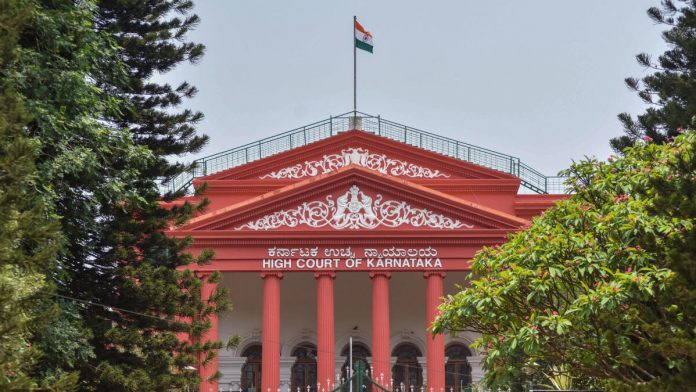



















 Allow notifications





