Download Now
Home Blog Page 256

Article 5 of the Indian Constitution

0

This article is written by Gautam Badlani, a student of Chanakya National Law University, Patna. This article examines the provisions and judicial decisions relating to Article 5 of the Indian Constitution. The article highlights the scope of Article 5 and critically analyses the overriding effect of Articles 7 and 9 on Article 5. The article also highlights the relationship between Article 5 and Article 11 of the Constitution. 

This article has been published by Sneha Mahawar.

Introduction 

In most countries, provisions related to citizenship are found in statutory laws. However, in India, we see that Article 5 of the Constitution deals with citizenship at the commencement of the Constitution. The reason behind this Article can be attributed to the unusual situation prevalent in India during independence. The country was getting divided into two States, namely, India and Pakistan, and the princely states were free to join either of the two countries. The people who were residing in Pakistan and migrated to India had to be conferred with Indian citizenship, and those who were residing in India and moved to Pakistan had to be debarred from Indian citizenship. Thus, it became imperative to define who would be considered a citizen of India at the time of the commencement of the Constitution. 

So far as citizenship after the commencement of the Constitution is concerned, Article 11 confers the power on Parliament to regulate laws relating to the matters of citizenship.

Importance of citizenship 

Under the Indian Constitution, citizens are differentiated from foreigners in the sense that citizens enjoy more rights and privileges than aliens. Fundamental rights guaranteed under Articles 15 and 19 are available only to citizens. Moreover, only an Indian citizen is eligible to be nominated or elected as the President of India, Vice President of India, and judge of the Supreme Court or a high court. Further, only citizens enjoy the right to vote or contest in elections.

Analysis of Article 5 of the Indian Constitution

Article 5 provides that any person who has his domicile in India and who was either himself born in the territory of India or any of whose parents were born in the territory of India or who has ordinarily resided in the territory of India for at least 5 years before the commencement of the Constitution shall be a citizen of India.  

In the case of Abdul Sattar Haji Ibrahim Patel v. State Of Gujarat (1964), the 5 judge bench of the Supreme Court pointed out that the basic condition under Article 5 is that the person must have a domicile in the territory of India and the requirements prescribed under clauses (a), (b) and (c) are alternate in nature and not cumulative. Hence, if any of the conditions is satisfied, a person would be regarded as an Indian citizen.

Domicile in India

The very first condition that Article 5 imposes is having a domicile in India. Domicile is not defined under Article 366, which is the definition clause of the Constitution. Domicile usually means a permanent home with the intention of residing in that place indefinitely. Domicile is primarily classified into two types:

  • Domicile by origin: It refers to the domicile that a person acquires upon his birth.
  • Domicile by choice: It refers to the domicile that a person acquires by willfully moving to another country with the intention of permanently residing or settling there.

In the case of Central Bank of India v. Ram Narain (1954), it was held that the domicile of a person is that place where he has a fixed habitat without any intention of moving from there. 

In order to obtain the domicile of India, it is necessary to establish the intention of permanently settling in India. In the case of Mohammad Reza Debstani v. State of Bombay (1966), the appellant who had gone to Iraq and had subsequently returned to India was denied citizenship on the ground that he had failed to establish the intention of permanently residing in India. After returning from Iraq, the appellant had applied several times to extend his stay in India. While his stay was initially extended, his request for an extension was turned down in 1957. He appealed before the Supreme Court that he should be regarded as a citizen under Article 5 of the Constitution. The Court held that the request for multiple extensions was sufficient to establish that the appellant never had the intention of permanently residing in India. 

Limitations of Article 5 of Indian Constitution

Article 6 provides that irrespective of anything contained in Article 5, if a person has migrated to India from Pakistan, he will be regarded as a citizen of India at the time of commencement of the Constitution if:

  1. His parents or grandparents were born in India as provided by the Government of India Act, 1935.
  2. He migrated to India before 19th July 1948 and has ordinarily resided in India thereafter.
  3. He migrated to India on or after 19th July, 1948 and applied for citizenship in the prescribed manner after residing in India for at least 6 months.

Article 7 of the Constitution provides that any person who migrated to Pakistan after 1st March, 1947 will not be regarded as a citizen of India under Article 5 or 6 of the Constitution. Thus, Article 7 contains a non-obstante clause.

Article 9 of the Constitution provides that if a person acquires the citizenship of a foreign country, then he will not be deemed to be a citizen of India by virtue of Article 5. Thus, we see that the concept of dual citizenship is not permitted under the Indian Constitution. A person cannot hold Indian citizenship and a foreign citizenship simultaneously. 

Landmark judgments 

Firoz Meharuddin v. Sub-Divisional Officer (1960)

In the case of Firoz Meharuddin v. Sub-Divisional Officer (1960), the three-judge bench of the Madhya Pradesh High Court held that citizenship by virtue of Article 5 is never absolute and the person who claims to have fulfilled all the criteria prescribed in Article 5 would be deemed not to be a citizen of India if he migrated to Pakistan after 1st March 1947. Even though a person had an Indian domicile at the time of the commencement of the Constitution and fulfilled the conditions of Article 5, he would be regarded as an alien. 

With respect to the petitioner’s contention that a person who fulfilled the criterion of Article 5 would have absolute citizenship, the Court noted that if the framers of the Constitution wanted to confer absolute citizenship, then there would have been no need for a non-obstante clause and a fiction clause (Article 7). The framers could have simply inserted a proviso to this effect stating that any person who migrated to Pakistan from 1st March 1947 to 26th January 1950 (when the Constitution came into effect) would be excluded from the scope of Article 5. 

However, the framers did not adopt this approach and rather inserted Article 7 as a non-obstante clause. Thus, the precarious right under Article 5 can also be extinguished with retrospective effect. Under Article 9, a person acquiring foreign citizenship would be disqualified from being an Indian citizen. 

Thus, the Court concluded that a person becomes an ipso facto citizen if he has complied with all the conditions of Article 5. However, he can be deprived of citizenship with retrospective effect if he migrated to Pakistan after 1st March, 1947. Similarly, he can be precluded from citizenship if he acquired foreign citizenship. Thus, Articles 7 and 9 override Article 5. 

Rashtriya Mukti Morcha v. Union of India (2006)

In the case of Rashtriya Mukti Morcha v. Union of India (2006), issue arose before the two-judge bench of the Delhi High Court whether Article 5 would override Article 11 of the Constitution and whether the provisions of Article 11, Representation of People’s Act, 1951 and Citizenship Act, 1955 need to be read in conjunction. The Court held that Article 5 was only intended to decide citizenship at the time of commencement of the Constitution and the Constituent Assembly decided to leave sensitive matters relating to citizenship to the wisdom of democratically elected representatives of the people. The Parliament, under Article 11, has the power to determine whether non-citizens should be conferred with civic and political rights or not. Thus, it is not necessary that all the statutes enacted by virtue of Article 11 must be in conjunction with Article 5. 

The Court thus held that Article 5 will not have an overriding effect over Article 11 or any statutes enacted by the exercise of power vested by Article 11. 

Kulathil Mammu v. the State Of Kerala (1966)

The Supreme Court interpreted Articles 5, 6 and 7 in the case of Kulathil Mammu v. State Of Kerala (1966). The Court made the following observations

  1. The framers of the Constitution included the concept of domicile in Article 5 but deliberately excluded it from Articles 6 and 7. 
  2. The person to whom Article 7 applies is disqualified from claiming citizenship either under Article 5 or under Article 6. 
  3. The Court referred to the case of State of Bihar v. Kumar Amar Singh (1955), where a lady who went to Pakistan contended that since the domicile of her husband was India, she too would be deemed to have the domicile of India and hence was entitled to citizenship under Article 5. She also contended that she had gone to Pakistan to get medical treatment, but this was discovered to be false. The Court concluded that even if the domicile of the lady is taken to be India on the basis of the domicile of her husband, she would still be disqualified from availing the benefit of Article 5 as her case would come within the scope of Article 7 and Article 7 will override Article 5. 
  4. The Court, after interpreting Articles 5, 6, and 7 concluded that three dates are of importance. 

The first was 26th January 1950. Those who had an Indian domicile on this day and satisfied either of the three requirements mentioned under Article 5 would be deemed to be citizens of India.

The second was 19th July, 1948. The permit system provided that those who were in the territory that went to Pakistan could come back to Indian territory before 19th July, 1948 and ordinarily reside in India till 26th January, 1950 to be deemed Indian citizens. If these persons came back to India after 19th July, 1948 and stayed in India for a period of 6 months, they could get Indian citizenship by making an application in the prescribed format. 

The third date would be 1st March, 1947. Those who migrated to Pakistan after 1st March, 1947 would not be considered  Indian citizens even if they satisfied the conditions provided under Article 5. 

Conclusion 

After 75 years of independence, we see that Article 5 has become more relevant for academic and historical purposes as compared to practical purposes. Article 5 was meant to deal with the extraordinary situation of that time. 

Currently, Article 11 and the laws made by the Parliament by virtue of Article 11, such as the Citizenship Act, 1955, regulate the citizenship norms in India. The statutes enacted by the Parliament also regulate the political and legal rights of citizens as well as non-citizens.

Frequently Asked Questions 

Which Act deals with the determination of citizenship in India?

In exercise of the powers conferred by Article 11, the Parliament has enacted the Citizenship Act, 1955 which regulates the determination of citizenship in India. This Act contains provisions regulating how Indian citizenship can be acquired and terminated. 

Which statute deals with the conduct of elections of the Lok Sabha, Rajya Sabha and the state legislatures? 

The Representation of People’s Act, 1951 regulates the conduct of elections in India. It provides the qualifications and disqualification for contesting the elections and provides the activities which would amount to corrupt practices during elections. It also prescribes the mechanism for resolving any elections-related dispute. 

References


Students of Lawsikho courses regularly produce writing assignments and work on practical exercises as a part of their coursework and develop themselves in real-life practical skills.

LawSikho has created a telegram group for exchanging legal knowledge, referrals, and various opportunities. You can click on this link and join:

https://t.me/lawyerscommunity

Follow us on Instagram and subscribe to our YouTube channel for more amazing legal content.

Download Now

Significance of waving intellectual property protection on coronavirus vaccines

0

This article is written by Abhishek Gupta pursuing a Diploma in US Intellectual Property Law and Paralegal Studies at Lawsikho. This article has been edited by Ojuswi (Associate, Lawsikho). 

This article has been published by Sneha Mahawar.

Introduction

In the past few years coronavirus has changed our lives upside-down, some countries are on the verge of complete economic and medical infrastructure collapse due to catastrophic waves of mutating covid 19 and some developed countries are on the verge of offering booster shots to their citizens but does this lead to the end of a pandemic for all?

Developed countries like the UK, and the USA which have enough stock of vaccines have started offering 3rd dose of covid shots whereas only 8.9% of people in low-income countries have received two doses. Covid vaccines. vaccines are expected to reach African and other low-income countries by 2023. But the question arises again: are we heading toward ending this pandemic? 

This vaccination percentage differs dramatically, because of the lack of funding for research and development required for covid 19 vaccinations. To end the pandemic all parts of the world should get vaccinated to make them immune and fight the virus but most of the developed countries have not given their best as rich countries have blocked covid vaccine patents for commercial interest. vaccine patents should be given to all developing and underdeveloped countries to put an end to fighting and ending this devastating virus.

IP plays a major role in protecting the rights of an inventor, As research and development costs are very high not every country can afford to develop their covid vaccines so it does in covid 19 vaccine invention So at a time of this world emergency these patent rights of vaccines and medications become more crucial, as it can save a million lives.

A patent waiver is something that can be called a technology transfer for vaccine development and vaccine equity for all the nation so that pandemic is defeated. At present only drug companies which own patents are authorized to manufacture covid vaccines, patent waiver can ultimately result in a solution to the pandemic. 

Need for patent waivers for poor countries

Inequitable distribution of vaccines has opened up a massive gap between developing and rich countries. This is against humanity and the interest of the world on a larger or long-term scale, This can end up giving more catastrophic waves with new mutations in the virus. WHO has warned of various mutations of covid 19 in more contagious and deadly forms, In addition to that Vaccine experts have warned of long covid circulates in developing countries and this can completely disrupt the world and cause a million lives.

The need for a waiver of vaccine patent is becoming urgent as new variants such as omicron, and IHU variants can be very contagious as more research is being performed on these variants but new variants have resulted in a sudden surge in covid 19 infection graph. However, people are still left unvaccinated in most developing countries and left way behind in vaccination. We might see a sudden surge in mortality rates in developing and underdeveloped countries because of low vaccination rates. The problem of Inequitable distribution of vaccines can be solved through the covid vaccine, and patent waiver and that can lead to global access and equity of covid vaccines, as said by the CEO of GAVI and cofounder of COVAX “no one is safe until everyone is safe.”

The African continent imports 99% of its vaccines. African countries have poor health infrastructure as well as a lack of funding, most of the African countries are dependent for vaccination upon bilateral deals and donations. Programs like COVAX have also come up to help the poor, but the demand for the vaccine is high. Delay in the delivery of vaccines is a major issue because of the self-requirement of countries as well. A rapid surge in covid 19 cases have been noticed in these unvaccinated low-income African countries According to WHO Africa needs 900m vaccine doses to fully vaccinate 40 % of its population, it can take them decades to vaccinate the total continent if they are dependent on import, the only way to vaccinate people as soon as possible is to give a patent waiver for vaccines as provided in the emergency provisions from the WTO. Talking about the current scenario, one of the most active variants of concern Omicron is believed to be found in South Africa, this was one such example of how coronavirus can mutate and spread rapidly in low vaccinated areas, how it can disrupt the lives of the entire world. 

As per data 27% of the world, the population has been vaccinated and 84% of all doses that have been administered have gone to high and upper-middle-class countries. Is this disease turning out to be a disease of poor nations? As underdeveloped nations are left way behind in vaccine diplomacy WHO has warned of more catastrophic and deadly waves of covid 19. Natural immunity for all can help in defeating the virus and that can be done by vaccinating more people also in underdeveloped countries and providing a patent waiver to underdeveloped countries so that they can manufacture vaccines without any hindrances and vaccinate their country. We are all in this together even if a single country is left unvaccinated it can give a chance to the virus for mutation and hit waves all across the globe, developed countries like the USA and Britain have vaccinated more than 85 percent of their population but there are millions of cases of the new covid variants in these countries and these variants mutated in Africa and are currently across the globe… The patent waiver is required for the mass production of vaccines all over the world to end this pandemic.

Why is the world divided for the waiver of intellectual property protection for the covid vaccine

India and South Africa along with 60 other WTO members in November 2020 have kept a proposal in front of WTO for covid 19 temporary vaccine patent waiver under the Doha Declaration TRIPS( Trade-Related aspects of Intellectual Property Rights) agreement for ramping up vaccine production in the world and especially low developed countries The proposal was met with strong opposition by Donald Trump administration as well as the UK and the EU. In may 2021 the proposal was revised and was supported by 62 countries with the hope of at least part of the TRIPS waiver till this emergency to ramp up vaccine production. 

In May 2021 when Joe Biden’s administration Supported this proposal it gained momentum. It was also welcomed by WTO but countries like Germany and the UK are having a stance that “limiting factors in the production of vaccines are the production capacities and the high-quality standards, not patents”.

Germany and the UK have developed vaccines like Pfizer and AstraZeneca with research and development costs. Leading World known personalities like Bill gates have also opposed the waiver of patents as it infringes the inventor’s intellectual rights but as per reports he has also made an investment in the vaccine market and has prioritized commercial interest. Within the EU countries like France and Italy have supported patent waiver but countries that spend on research and development have a clear stance that intellectual property rights should be protected and have divided the world into two parts in international vaccine diplomacy, so commercial interest is prioritized before human lives.

What does the law of WTO and TRIPS agreement say

Compulsory licensing is defined by WTO as when a government allows someone else to produce a patented product without the consent of the patent owner. It has given flexibility in patent protection in WTO agreements in IPR. AS still there is confusion that when this flexibility can be used, and there are no clear circumstances mentioned in the WTO agreement as an emergency when compulsory licensing can be used and even if compulsory licensing is issued still, according to the WTO agreement an adequate remuneration according to the circumstances of each case is to be paid. Article 31 of the TRIPS agreement talks about the option of granting compulsory licensing. Compulsory licensing can be used as an important tool for the technology transfer of covid vaccines so that manufacturing can be ramped up and the worldwide vaccination campaign gets a boost.

While the final decision on vaccine patent waiver is still to be taken by the WTO and that will be done by Voting in the UN security council. Wealthy countries should allow this waiver according to one’s humanitarian interests.

How much does the USA’s stance matter on the patent waiver

The US has shown its positive approach toward the waiver of patents on the covid vaccine. As major research and development costs are borne by pharmaceutical companies in the USA, being a major reason why developed countries that developed covid 19 vaccines are hindering sharing technology transfer to other countries.

With the change in administration, the USA revised its decision to support the waiver of covid vaccine patents. WHO and the African Union has applauded POTUS for Supporting the IP waiver as this is a Global emergency. But still, it is a time taking process and if the UN resolution passes the waiver it may still take months or a year to complete the process and start the production as developments have been very slow.

The emergency meeting of WTO’s general council this month

An emergency meeting has been sought by India of the WTO general council as a response to the sudden covid surge all around the globe. This meeting is called regarding the development of a waiver of IPR, India has reached out for the meeting after a sudden spike in covid cases and new mutations. Poor countries lack vaccines and they have emerged to be the epicentre of the pandemic, giving the virus a chance to mutate. Countries like India and South Africa are expecting a proposal submitted in October 2020 for the patent waiver of vaccines for WTO members under the TRIPS agreement. The meeting is dated to take place on 10th January 2022. Furthermore, It is very crucial for poor countries that patent waiver is allowed and that will be done by voting in the UN council. As new variants are more contagious and can cause a more severe fertility rate, sudden steps towards an IPR waiver through the TRIPS agreement are expected as a result.

What is hampering the coronavirus vaccine patent waiver

Delayed meetings as a result of mutation of the virus have been a major reason that has hampered coronavirus vaccine patent waiver, also the fact that many countries who developed vaccines are unwilling to share IPR with other countries as they have commercial interest behind and research and development cost barred by the countries are extremely high. But there is an emergency of a global pandemic that the complete world has to face. Developed countries have to understand the importance and need for IP waivers for a secure future. Developed countries are expected, not to take decisions with commercial interest, more of a humanitarian approach is expected.

What is the global effect of the waiver of vaccine patents

Patent waiver plays a very vital role at this point in time as new variants of covid 19 have caused catastrophic waves all over the world, some economies have collapsed and some are on the verge of collapse. There will be unlimited waves of covid 19 until the complete vaccination of the world is done. Vaccine patents to poor countries can help in mass vaccine production and will also help avoid future covid19 waves. Waiver of IP will help the world to contain the spread of the virus as the vaccinated population is less likely to spread the virus. Covid 19 has exacerbated more poverty and mortality rate in poor countries before this pandemic becomes pandemic for the poor, Rich countries like the UK, Germany, Norway, and Switzerland should stop blocking access to vaccines patent so that universal access to covid 19 vaccine can be offered by technology transfer for manufacturing covid -19 vaccines for equitable access of vaccines all around the globe. 

Conclusion

IPR waiver is not a magic pill, But International bodies have to understand that it is a crisis that is supposed to be addressed by vaccinating people against the virus, waiver of patent rights can result in mass production of vaccines that can ultimately save human lives. A new coronavirus variant termed ”Omicron”‘ has been detected in most parts of the world and is extremely contagious. India has called for an urgent WTO meeting for a patent waiver emergency as a response to the spread of the Omicron variant. A global effort is required to beat the invisible enemy with an immediate response to the patent waiver of vaccines. This Article strongly supports the waiver of Patent rights for covid19 vaccines. 

References


Students of Lawsikho courses regularly produce writing assignments and work on practical exercises as a part of their coursework and develop themselves in real-life practical skills.

LawSikho has created a telegram group for exchanging legal knowledge, referrals, and various opportunities. You can click on this link and join:

https://t.me/lawyerscommunity

Follow us on Instagram and subscribe to our YouTube channel for more amazing legal content.

Download Now

First Supreme Court of India

0

This article is written by Shiwangi Singh, a law student from Banasthali University. This article deals with the events that led to the establishment of today’s Supreme Court of India, the dual form of government in Bengal, the repercussions it caused, and how its damages were cured. It talks about the establishment of new Supreme Courts in Bombay and Madras and also the events that led to the establishment of today’s Supreme Court in India.

It has been published by Rachit Garg.

Introduction

The Supreme Court of India is the custodian of the Constitution. It upholds and uplifts the rule of law and also ensures and protects citizens’ rights and liberties. It upholds our Indian Constitution. There were numerous events in the history of India that paved the way for the establishment of today’s Supreme Court of India. Many Acts were passed during British rule which demanded the setting up of a Supreme Court. Earlier, there was more than one Supreme Court, but eventually, only one apex was decided, which now resides in New Delhi.

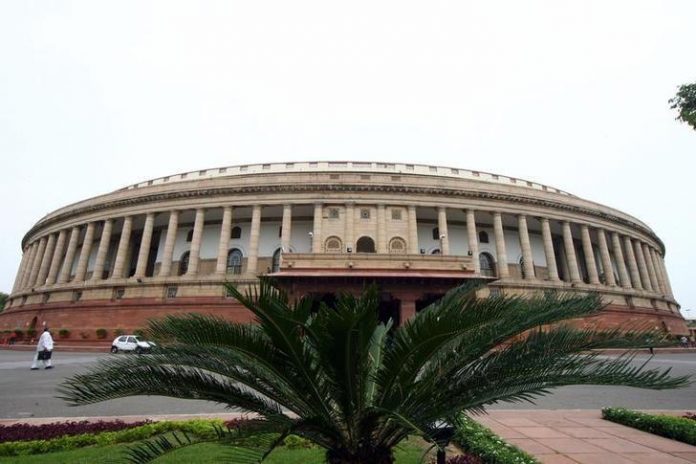
The Supreme Court of India holds the place of highest judicial power in our country where the final appeal regarding any matter is made. Earlier, during the British reign, The Government of India Act, 1935 worked as our governing book, which was further replaced and our country adopted its own constitution on January 26, 1950, and declared itself a ‘Sovereign’ ‘Democratic’ ‘Republic’. The Supreme Court of India was established on this day, but it started to function two days after India became a Republic on January 28, 1950. The Chamber of Princes, which was present in the Parliament House, was the first residence of the Supreme Court, later, it moved into the current building in 1958. It was the Chamber of Princes in the Parliament premises where the opening ceremony of the Supreme Court of India was held. On 29 October 1954, Dr. Rajendra Prasad, the first President of India, laid the foundation stone of the Supreme Court building.

The British, according to their convenience, enacted the Government of India Act, 1935, which had provisions for forming a federal court in India, which would be vested with more judicial powers than the High Court, including original, appellate, and advisory jurisdiction. After the Constitution of India was adopted, this federal court resumed working as the Supreme Court of India, presided over by Hon’ble Justice Harilal Jekisundas Kania.

Article 124(1) of the Constitution states that there should be a Supreme Court in India that would consist of one Chief Justice of India along with seven additional judges. The parliament then passed a precedent for increasing the number of judges.

Importance of the Supreme Court in India

  • The Supreme Court is the Apex Court of India, also known as the highest appeal court, and is considered the last place of appeal where people can seek justice if they feel they are not satisfied with the judgement of the High Court.
  • Under Article 32 of the Constitution, one can directly seek a remedy through writs if they feel their fundamental rights are violated.
  • The Supreme Court has the power of judicial review on the matters mentioned in Article 13, which means it has the power to strike down any law formed by the executive or legislative wing if it finds that the law disobeys the Constitution of India.

The Regulating Act, 1773

The Regulating Act, 1773 also known as the East India Company Act, 1772, was an Act of the British Parliament introduced to establish a central administrative system in India to improve the governance of the East India Company’s rule in India. It was the stepping stone toward parliamentary control over the company. The British Government recognized the company’s political and administrative functions for the first time through this Act. Under this Act, the British East India Company had to carry out its administrative functions under the supervision of the British Parliament and submit its report regarding the revenue, civil, and military functions to the court of directors.

Political situations that led to Regulating Act, 1773

Robert CIive set up the dual system of government administration in Bengal after the Treaty of Allahabad (1765). The establishment of a dual form of government that persisted from 1765 to 1772 gave birth to many problems and led to the establishment of a corrupt government. Robert Clive introduced this system after he became the governor-general of Bengal in May 1765.

  • Under this double government system, the British East India Company set a very interesting form of government, which benefited them in many ways. The company earned both the Diwani which was collecting the revenue rights and the Nizamat which was halving the power to administer civil issues from two different sources which were – Diwani from the Mughal emperor and Nizamat from the Nawab of Bengal.
  • Diwani Rights means that the company has the right to collect revenues from three states, namely – Bihar, Bengal, and Odisha, and in return, the company would pay twenty-six lakh rupees to the Mughal emperor for these rights.
  • This period was full of corruption among the officials of the company who did private trading to fill their own pockets, collected revenues and oppressed the peasants.
  • The company went bankrupt and suffered a huge financial crisis, while the servants flourished greatly. The company’s income from both revenue and trade suffered a lot.
  • Trading businesses became too expensive for the merchants and local handloom businesses got hampered.

All these practices were required to be abolished, and new rules had to be made for better law and order. The Regulating Act held great importance as it looked after the company’s functioning.

Objectives of the Regulating Act

  • To completely abolish the dual form of administration in India.
  • To look over the matters that were concerned about the proper management of the company in India.
  • To redress the grievances caused by the dual form of the government.
  • To establish the Supreme Court in Calcutta.
  • To introduce the governor-general officials in all the British territories in India.
  • The court of directors situated in England would have a full grip on the functioning of the East India Company in India.
  • The company would serve the British Crown with utmost dignity and honesty.

Importance of Regulating Act

  • The Regulating Act of 1773 formed a supreme body for both the administration and judicial wings in India. The Supreme Court at Calcutta was the main hub established to manage judicial functions efficiently. The establishment of the Supreme Court at Calcutta resulted in proper management of judicial functions.
  • It also led to the establishment of an office for the governor-general at Fort Williams, Calcutta, who acted as the prime authority for managing the orders of the British Crown and administered them accordingly. The power to negotiate or declare war was in the hands of the governor-general of Bengal.
  • It provided powers to deal with the judicial issues of the East India Company, this system favoured a corrupt-free administration in India where no one could accept bribes or gifts from local people.

Faults in the Regulating Act

  • The governor-general was not provided with any veto power, and his decisions were often overruled by the members of the Council. He was held responsible for all the administrative decisions taken in India.
  • The Parliament was ineffective in analysing and keeping records of the report sent by the governor-general.
  • The Act was not much inclined towards the Indian people who paid revenue to the East India Company.
  • The powers were not strategically divided between the Supreme Court and the governor-general which often created tension between them.

How were the defects in the Regulating Act removed

  • The issue of jurisdiction of the Supreme Court got addressed, the company officials falling in the ambit of jurisdiction of the Supreme Court were removed and they were allowed to exercise power limited to Calcutta only.
  • The jurisdiction of revenue matters was given in the hands of the governor-general and not in the court’s jurisdiction.
  • In order to reduce the workload, the provincial matters were addressed by the governor-general and council instead of the Supreme Court.
  • Religious laws in the case of Hindus and Muslims were followed to deal with some particular cases.

Overall, this Act brought the concept of the Supreme Court to the apex along with the parliamentary administration of the East India Company. It regulated the working and kept a keen check on the functioning of the company.

Supreme Court of judicature at Fort William, Calcutta : the First Supreme Court in India before independence

Section 13 of the Regulating Act 1773 made a detailed provision for the establishment of a Supreme Court of judicature at Fort William, in Calcutta. This Supreme Court consisted of a chief justice and three other judges of higher rank but inferior to the chief justice. The British King appointed the judges. A barrister working for five years was qualified for the appointment as a Supreme Court judge. The judges held office under the orders of the crown and could also be removed by the crown.

Sir Elijah Impey was the first Chief Justice of the Supreme Court of Calcutta. The judges at the Supreme Court of India had the same powers and authority as the judges that sat in the court of the King’s Bench in England. They followed common laws and rules in both places.

The Supreme Court of Calcutta was the first British court consisting of lawyer judges in India. It was the first court that was fully independent in its jurisdiction and the company had no say in its decision-making after the process; it was a completely free wing and also worked diligently in carrying out its process. Its jurisdiction was extensive, covering large areas and a greater deal of matters happening around. It had control over Madras, Bengal, and Bombay. It had five kinds of jurisdiction namely- 

  1. civil, 
  2. equity, 
  3. criminal, 
  4. admiralty, and 
  5. ecclesiastical jurisdictions.

It had its own way of process and practice and did all the things required for the administration of justice.

The civil jurisdiction of the court was of two types- territorial and personal. In Calcutta, the Supreme Court had territorial jurisdiction, which meant all the matters happening within the presidency of Calcutta fell under the jurisdiction of the Supreme Court. This Supreme Court held the same power to form laws, and pass orders as the High Court of Chancery in Great Britain had at that time.

The criminal jurisdiction of the Supreme Court was extensive and covered all the British matters that arose in Kolkata and within the territories of Bengal, Bihar, and Orrisa. Only the British officials and the servants who were employed with the company were covered under this jurisdiction, other natives were not part of the court’s jurisdiction.

The Supreme Court in India followed the rules of the English Courts. It worked as a court of Oyer and Terminer, and Gaol Delivery in and for the town of Calcutta, the factory of Fort William, and the other factories in Calcutta. The court cannot hold a trial for the Governor-General and the members of his council or the judges of the Supreme Court except if it is a very high criminal case of betraying its own country or felony. The mercy petitions were transferred to the Crown Court in England on the recommendations of the Supreme Court.

The Supreme Court regulated the civil and maritime cases that occurred on the high seas at that time.

The Supreme Court had the same jurisdiction over the British subjects in India as the ecclesiastical courts in England at that time.

The Act of Settlement of 1781 

This Amending Act of 1781 was brought up to rectify the defects caused by the Regulating Act of 1773. A huge amount of tension was present between the Supreme Court and the Governor-General, therefore this Act was passed to reduce the power of the Supreme Court and enhance the power of the Governor-General and his council members again. The servants and staff who worked under the company and fell under the Supreme Court’s jurisdiction now were exempted from its jurisdiction. Now, the court’s jurisdiction became limited to Calcutta. After the implementation of this Act, the Supreme Court had no jurisdiction on the matters of revenue, the government became independent of the control of the Court in the matter of revenue. The Governor-General and his council members gained power over judicial matters as appeals were now made to them instead of provincial courts. This Act strengthened the position of the Council so that they could easily govern according to their convenience and exercise control over India.

The main positive change brought by this Act was to protect the customs and traditions of the local people. The Act stated that all the matters arising among the people regarding land disputes, succession of property to the next heir, and all sorts of contracts and dealings between any parties will be decided as per their personal law. If there is a case between a Hindu and a Muslim then the case would be decided by following the law of the defendant.

The Supreme Court was given the authority to make rules and regulations according to the prevailing conditions and demands of the people, who would deal with their matters according to this law. Therefore, the laws were set according to their way of living. The laws formed were put in front of the British crown, who could accept, reject, or correct them.

Supreme Courts in Bombay and Madras 

The Supreme Courts at Madras and Bombay were established by King George III in 1800 and 1823 respectively. Earlier, Madras and Bombay had a recorder’s court whose judicial function was similar to that of the Supreme Court of Calcutta. But the recorder’s court did not function always which created a lag, and hence, it was replaced by Supreme Court.

These two new Supreme Courts had the same powers, jurisdiction, functions, and limitations as that of the Supreme Court at Calcutta. The Act of 1823 clearly mentioned in Section 17 that the newly established Supreme Courts at Madras and Bombay would have the power to administer, carry out duties, and hold powers of the same magnitude as the Supreme Court at Fort William in Calcutta. This provision bestowed equal power and framed them in an equal place without altering any power or duty of the newly formed Supreme Courts.

These Supreme Courts functioned for a long period of time until 1862, when the high court came into force in all these three places through the Indian High Courts Act, 1861.

Supreme Court of India post-independence

On January 26, 1950, the Constitution of India came into force and the Supreme Court of India came into being. The legal proceedings started two days later, on January 28. The inauguration ceremony took place in the Parliament building at the Chamber of Princes, the same place where the Federal Court of India once functioned. The inaugural proceedings started at 9:45 a.m. and were presided over by the judges of the Federal Court – Chief Justice Harilal Kania and Justices Saiyid Fazl Ali, M. Patanjali Sastri, Mehr Chand Mahajan, Bijan Kumar Mukherjea, and S.R. Das.

Several other Chief Justices of the High Court attended the inauguration ceremony. Attorney General of India, and many Advocate Generals of Bombay, Madras, Uttar Pradesh, and Bihar were present.

After its inauguration, on January 28, 1950, the Supreme Court commenced its sittings in a part of the Parliament House. Later, it moved to the current building in 1958.

Significant events in the history of the Supreme Court

  • 26 January, 1950 – The Constitution of India came into force and marked the establishment of the Supreme Court of India. Justice Harilal Jekisundas Kania held office as the first Chief Justice of India.
  • 28 January, 1950 – The Supreme Court of India gets officially inaugurated and starts functioning from the Chamber of Princes in Parliament House.
  • 19 May, 1950 – A.k Gopalan v. the State of Madras, was the very first case in which the Supreme Court interpreted Article 21 and held that if the personal liberty of a person is taken away by the State according to the procedure established by law, then no authority can challenge such actions.
  • 27 July, 1950 – Champakam Dorairajan v. the State of Madras, the Court held that providing reservations in educational institutions violates Article 15(1). This judgement acted as the catalyst for the First Amendment to the Constitution.
  • 1958 – Supreme Court moved to its present residing building.
  • 1960 – The strength of the judges increased to 14.
  • 3 February, 1964 – Justice S.M. Sikri gets appointed as a Supreme Court judge. He was the first Supreme Court judge who was chosen directly from the bar and promoted as a judge. Since then, there have been only five direct elevations, namely Justices SC Roy, Kuldip Singh, Santosh Hegde, Rohinton Nariman, UU Lalit, and L Nageswara Rao.
  • 22 January, 1971 – Justice S.M. Sikri took charge as the Chief Justice of India, and became the first Chief Justice of India to be elevated directly from the Bar.
  • 24 April, 1973 – Keshavananda Bharati v. the State of Kerala, was a landmark judgement in the legal history of India where 13 sitting judges of the Supreme Court, by a majority of 7:6 stated that Parliament has the power to amend any part of the constitution, including Part III, which consists of fundamental rights, but any new provisions should be brought in light of the Constitution, it should not impinge or distort the basic structure of our constitution.
  • 26 April, 1973 – Justice A.N. Ray replaced three senior judges, Justice K.S. Hegde, Justice A.N. Grover, and Justice J.M. Shelat was appointed as the Chief Justice of India.
  • 3 May, 1973 – Supreme Court Bar Association of India observed ‘Bar Solidarity Day’ in protest against the appointment of Justice Ray as CJI, announcing the bar association to abstain from all kinds of court works.
  • 17 July, 1973 – Justice V.R. Krishna Iyer assumes office as a Supreme Court judge.
  • 23 November, 1973 – EP Royappa v. State of Tamil Nadu, it was a judgement that received a mixed response. P.N. Bhagwati strongly disapproved of the “reasonable classification test” as the test for equality under Article 14. Instead, he put forward the new doctrine which said that Article 14 “strikes against arbitrariness in state actions” and the concept of equality is “a dynamic concept with many aspects and dimensions that cannot be put within traditional and doctrinaire limits.”
  • 28 April, 1976 – It marked the shame of emergency, ADM Jabalpur v. SS Shukla, is considered one of the darkest days of Indian democracy as a Constitution bench of the highest court of the land, by a majority of 4:1 ruled that while an emergency is proclaimed, the right to move to high court under Article 226 for Habeas Corpus challenging illegal detention by the state will stand suspended.
  • 25 January, 1978 – Maneka Gandhi v. Union of India, the court held that as per Article 21, the procedure established by law must be fair, just, reasonable, and not fanciful, oppressive, or arbitrary.
  • 15 September 1979 – Tukaram v. State of Maharashtra, famously known as the Mathura rape case, the Supreme Court reversed the order passed by the Bombay High Court stating that the victim had consented to sexual intercourse. This decision created an uproar which further led to a lot of amendments in penal provisions related to rape.
  • 9 May, 1980 – In Bachan Singh v. the State of Punjab, the Supreme Court confirmed the constitutionality of the death penalty.
  • 6 October, 1989 – Justice Fathima Beevi takes charge as a Supreme Court judge, and becomes the first woman judge of the Supreme Court.
  • 8 June, 2000 – The first judge from the Dalit community who held the Supreme Court office was Justice KG Balakrishnan.
  • 2 February, 2012 – Supreme Court cancelled 2G spectrum licences allotted to various telecom companies.
  • 24 March, 2015 – The Supreme Court declared Section 66A of the Information Technology Act, 2000 as unconstitutional.
  • 30 July, 2015 – the court opened its doors for the first time at 2:30 am in the morning to hear the plea filed by Yakub Menon to stay his execution, however, the court eventually rejected the plea.
  • 2020 – Vineeta Sharma v. Rakesh Sharma, the daughters shall have coparcenary rights irrespective of whether their father was alive when the Hindu Succession Amendment Act, 2005 came into force.
  • 2021 – Laxmibai Chandaragi v. the State of Karnataka, the Court stated that the consent of the family is not required once the two adults with their consent decide to marry. The Court noticed that educated young boys and girls are choosing their life partners which shows how they are not keeping themselves bound to the traditional norms of society. The consent of the family, community, or clan holds no importance once the two adults agree to enter wedlock together with their own consent.

Can Supreme Court be present in more than one place

The Supreme court is the Apex Court and there can only be a single Apex Court in any country. The name itself suggests that a supreme power can only be present in one place which would control the activities of other subordinate courts. If the supreme authority is present in multiple places, then it would create tension in making uniform laws and passing uniform judgments. Today, the judgments passed by the Supreme Court are followed in every court across the country. If there would have been multiple Supreme Courts then this uniformity of following laws and judgments would definitely get hampered.

The issues taken to the Supreme Court could be transferred to a larger judge bench for better decision making but creating multiple Supreme Courts would create a clash of judgments.

Recently the Government has also clarified the rumours which stated that more branches of the Supreme Court are opening in Chennai, Mumbai and Kolkata. The Press Information Bureau (PIB) stated in a tweet that this claim is fake, and no such decision has been taken by the government.

Conclusion

The Supreme Court is the body of the highest appeal where the last proceedings of any matter can be taken. It gives equal opportunity to everyone to seek justice. The Acts mentioned above paved a way for its establishment. The Regulating Act brought central administration and Parliament control with the Supreme Court acting as a supreme judicial body. The Act of the Settlement also tried to curb the defects of the Regulating Act. Both the acts were pioneers of new reform, however, both held certain drawbacks, as well. But today, the Supreme Court stands at the top of our judicial wing and functions diligently and also regulates the laws for the lower to function according to the current situation prevailing.

Frequently Asked Questions (FAQs)

Who was the first Chief Justice of the Supreme Court at Fort William, Calcutta?

Sir Elijah Impey was the first chief justice of the supreme court at Fort William, Calcutta.

What are the functions of the Supreme Court

The functions of the Supreme Court are:

  • The Supreme Court has the authority to give a final verdict against an appeal from other courts like the High Court or District Courts.
  • It acts as an institution that looks over the matters of different governmental bodies, central government, or state government.
  • Article 141 states that any laws passed by the Supreme Court shall be followed by the lower courts in similar cases.
  • The Supreme Court can also take matters or cases and deal on its own accord by taking cognizance of a public issue. This power of the court is known as ‘suo moto’, which means ‘on its own motion’.

Under which article can someone directly move to the Supreme Court?

Article 32 of the Indian Constitution gives the right to individuals to seek justice when they feel that their right has been ‘unduly deprived’.

When was the first day the Supreme Court began to function after the constitution of India came into force?

On January 28, the Supreme Court began to function, this day marks the establishment of the Supreme Court.

Who was the first Chief Justice of the Supreme Court after the constitution came into force?

Justice Harilal Jekisundas Kania assumed the office as the first Chief Justice of India.

Who was the first governor-general of Bengal?

Warren Hasting was the first governor-general of Bengal appointed in the year 1773.

What are Nizamat rights and Diwani rights?

Nizamat rights are the judicial and policing rights, while Diwani rights are the rights to collect revenue.

References 

Download Now

International Tribunal for the Law of the Sea (ITLOS)

0

This article is written by Shiwangi Singh, a law student from Banasthali University. This article talks about various conventions that were formed globally to administer the proper usage of marine resources. It mainly talks about the United Nations Convention on the law of the sea and its important initiative in the form of International Tribunal for the Law of the Sea.

It has been published by Rachit Garg.

Introduction

Life itself arose from the oceans. The ocean is vast and covers 140 million square miles, which is about 72 percent of the earth’s surface. It has a key role in maintaining the balance of life on earth. It is home to many resources like diamonds, silver, gold, metal ores like manganese nodules, oil, and many more. It also gives a huge platform to the coastal countries to earn profits through shipping goods and fishing, which play a huge role in boosting the economies of several countries.

This extensive amount of resources often creates tension among the coastal nations claiming their rights towards access to these resources. The nations use the oceans not just for accessing these natural resources but also use them as water passage for their national trading, which creates conflicts between the nations as every nation wants to fulfil its economic demands by controlling large parts of the sea. Therefore, these two reasons have stimulated the legal rules for the sea.

In order to avoid such conflicts and maintain the ‘status quo’ among the nations, the United Nations Convention on the Law of the Sea in 1982 laid down a comprehensive system for the settlement of sea disputes. It formed a special body under this convention called the International Tribunal for the Law of the Seas (ITLOS) to deal with the issues arising from the sea areas of the countries.

United Nations Convention on the Law of the Sea (UNCLOS)

The United Nations Convention on the Law of the Sea (UNCLOS) is an organisation at an international level that-

  1. formulates guidelines for suitable business occurring overseas, 
  2. ensures that the environment around the oceans is not destroyed for the nation’s own sake, and 
  3. talks about the management of marine natural resources.

UNCLOS, also known as the Law of the Sea Convention or the Law of the Sea Treaty, states the rights and responsibilities that a nation holds towards the use of the world’s oceans. It believes that all the oceans of the world, located in different geographical areas, are closely related and they need to be addressed as a whole. This 1982 Convention was signed by 177 states but it came into force internationally on 16th November 1994.

It provides the backbone for offshore governance by coastal states and the areas that navigate the oceans. It divides all the maritime areas into the following zones, providing each of them with different legal status – 

Baseline

  • The low water line along the shore is known as the baseline. It is the line along the coast from which other maritime zones of jurisdiction are measured.

Internal waters

  • The ships that are entering the internal waters of a country should follow the law of that coastal or port state, known as Port State Control. It is the inspection of foreign ships at national ports to verify whether the condition of the ship and its equipment is according to the requirements of international conventions, and also whether the human crew in the ship is operating with the rules or not.
  • Internal waters comprise all water and waterways which are lying towards the landward side of the baseline from which a nation’s territorial waters are measured.
  • The coastal nation is free to formulate any law for the use of internal waters and the resources obtained from them.
  • There is no interference from foreign countries.
  • Foreign ships have no right to enter the internal waters of a nation.

Archipelagic waters

  • The archipelagic waters include the main islands surrounding the coastal nation.
  • If a country is an archipelago, or if it has an archipelago under it then the baseline is considered between the outermost points of the islands, if the islands are close to each other.
  • The country has full control over archipelagic water just like the internal waters.
  • Archipelagic baseline may exceed 100 nautical miles in length; it should enclose an area of the sea that is at least as large as the area of land enclosed by it, but it should not be more than nine times that of the land area.
  • Foreign ships are allowed for innocent passage through archipelagic waters.

Innocent passage – A passage is considered innocent as long as the movement of a foreign ship in the specific area is not detrimental or harmful to the nation’s peace, security, and law and order of that coastal state.

Territorial sea

  • It extends up to 12 nautical miles from the baseline, where no right of overflight is allowed.
  • The nation is free to use its resources and formulate laws and regulations as per its requirements.
  • Foreign vessels are not allowed to pass through this area unless it is an ‘innocent passage’, but it is up to that particular nation if they wish to suspend the innocent passage.
  • Whenever a submarine is passing through other countries’ territorial waters, it is mandatory for them to navigate on the surface by showing their flags.
  • The sovereignty of a coastal state comprises the airspace over the territorial sea as well as the sea bed and subsoil situated below the sea of that particular region.

Contiguous zone

  • It encloses an area of 12 nautical miles beyond the territorial waters, which implies that it is located at a distance of 24 nautical miles from the baseline limit.
  • The country is allowed to formulate laws only on four areas in this territory, which is regarding- pollution caused by ships or submarines, taxes paid by ships and submarines, customs, and immigration.

Exclusive economic zones

  • It includes the area from the edge of the territorial sea up to 200 nautical miles from the baseline.
  • The country has exclusive rights for the usage of all kinds of resources in this area. It resolved the clashes over fishing rights and oil rights.
  • Foreign ships and flights can pass through this area with proper navigation and would be subject to the regulations of the coastal areas.
  • Foreign states are allowed to lay submarine pipes and cables.

Continental shelf

  • It comprises the submerged extended part of the landmass of the coastal state, which also includes the sea bottom and subsoil of the submarine area that extends beyond the territorial sea.
  • The state has exclusive sovereign rights over exploring and exploiting the natural resources of this area. It can harvest non-living materials and minerals in the subsoil of its continental shelf.
  • It does not include the deep ocean floor that also includes oceanic ridges or its subsoil.

High seas

  • These areas are reserved for peaceful purposes, and all the states, whether they are situated on the coastline or are land-locked, are allowed to sail their ships flying their flag on the high seas.
  • No nation can say that it has full sovereignty over the high seas.

Historical background and formation of UNCLOS

The law of the sea was formulated to resolve the struggle between the coastal areas, which sought to tirelessly expand their control over the marine areas that are located close to their coastal landmasses. By the end of the 18th century, it was taken into consideration that states had the right to exercise their power over their territorial sea.

After the Second World War, several nations urged that the United Nations International Law Commission should codify as well as introduce new laws related to the regulation of the oceans. The commission took it under notice and began working in 1949. It prepared four draft conventions, which were adopted at the first UN Conference on the Law of the Sea.

The First United Nations Conference on the law of the sea (UNCLOS 1)

It was held from February 24 to April 29, 1958. In this conference, four conventions were adopted, commonly known as the 1958 Geneva Conventions, which were – 

  • The Convention on the Territorial Sea and Contiguous Zone (CTS),
  • The Convention on the High Seas (CHS),
  • The Convention on the Continental Shelf (CCS), and
  • The Convention on Fishing and Conservation of the Living Resources of the High Seas (CFCLR).

It did not fix the measurements of the territorial sea.

The Second United Nations Conference on the Law of the Sea (UNCLOS II)

It was held from March 17 to April 26, 1960. Unfortunately, no discussions at this conference resulted in any international agreements. The conference once again failed to fix uniform measurements for the territorial sea and also could not decide anything regarding the freedom of fishing rights.

The Third United Nations Conference on the Law of the Sea (UNCLOS III)

The third session of the United Nations Conference on the Law of the Sea, which was held between 1973 to 1982 led to the formation of the current convention known as UNCLOS. The quad-treaty of 1958, also known as the Convention on the High Seas, was replaced by UNCLOS after the Convention, which ended in the year 1982.

The older concept of 17th-century known as ‘freedom of the seas’ where the nations could conduct their waterways business up to a specified belt of water extended usually up to 3 nautical miles (a unit used in measuring distances at sea, which equals to 1,852 metres) from nation coastlines was replaced by the formation of UNCLOS. Therefore, the portion of water that was beyond the national boundaries was considered international waters. Later in the 20th century, many nations addressed the fact that they needed to extend their access to water areas, including for mineral resources, the protection of fish stocks, and the supply of resources.

In 1945, President of the United States Harry S. Truman expanded their control over all the natural resources that were obtained from the country’s continental shelf. From 1946-1950, seeing this claim of power, three more nations, namely – Ecuador, Chile, and Peru, also extended their control up to a distance of 370 kilometres to cover their Humboldt Current fishing grounds, whereas, the other nations extended their territorial seas up to 22 kilometres.

This Convention addressed all the issues that were not resolved by the previous conferences. It also mentioned the definitions of all maritime zones and also made provisions for the passage of ships, protection of the marine environment, freedom of scientific research, and exploitation of resources.

Objectives of United Nations Convention on the Law of the Sea 

  • It works towards maintaining a peaceful use of the seas and oceans.
  • It facilitates International Communications between different nations located in different geographical locations.
  • It ensures each nation is using the marine resources in an appropriate amount and not exploiting it vigorously. It promotes the efficient usage of ocean resources.
  • It keeps a check on the environment around the oceans and works towards protecting it.
  • It ensures maritime safety by ensuring that no political or any other kind of cause should harm the work of any nation.
  • It mentions the ocean area and the resources obtained from it as ‘the common heritage of mankind’, therefore it administers the resources of the area.
  • It promotes peaceful use of the seas and oceans and works towards the preservation of the marine environment.
  • It gives the right to states to enact legislation concerning the safety of navigation, pollution control, extensive fishing activities, customs, immigration and health, and sanitary arrangements.
  • It ensures criminal jurisdiction for the countries that find any foreign ships floating in their territorial seas.

Initiatives under United Nations Convention on the Law of the Sea 

Several other initiatives were also taken after the establishment of the United Nations Conference on the Law of the Sea, among which the most important was the establishment of – 

  • International Tribunal for the Law of the Sea (ITLOS).
  • International Seabed Authority – The ISA was formed to organise, regulate, and control all the mineral-related activities in the international seabed area that are beyond the limits of national jurisdiction. It looks after all sorts of work related to deep seabed mining, such as the level of environmental pollution caused by it, level of exploitation and exploration of the resources. It is also related to scientific research programs and conducts workshops, seminars, and conferences on the scientific and technical aspects.

International Tribunal for the Law of the Sea (ITLOS)

This is an independent judicial body set up by UNCLOS. Its main function is to look after and resolve the disputes arising among the nations. It is a multi-governmental organisation formed after an official order was passed at the third UN Conference on the Law of the Sea. The United Nations Convention on the Law of the Sea was opened for participation from all the countries at Montego Bay, Jamaica on 10 December 1982. It came into operation after 12 years on 16 November 1994.

Members of the International Tribunal for the Law of the Sea

This tribunal consists of 21 independent members elected by secret ballot by the state parties to the convention. They are elected from among the members who have immense knowledge and ability to resolve matters related to the law of the sea. Each state party may nominate up to two candidates who have the ability to deal with cases on the law of the sea. The two members shall not belong to the same state, in order to maintain equal geographical distribution. There shall be no less than three members from each geographical group as established by the General Assembly of the United Nations.

Jurisdiction of ITLOS

  • The tribunal has jurisdiction over any dispute that requires concern over or interpretation of any rule laid down by the UNCLOS. Its function is to work in sync with the Convention.
  • The tribunal has power over the states and international organisations that are already members of the convention UNCLOS. It also has a hold over the parties who are not its members, like inter-governmental organisations and private entities.

Election of its judges

  • The judges of the tribunal are elected by the members of the Convention. Every three years in New York, an election takes place as one-third of judges of the tribunal expire from their respective positions.
  • Candidates must be nominated by the state parties and should receive a two-third majority of the votes to be elected as judges of the tribunal.
  • There are a total of 21 judges present in the tribunal who are elected for a term of nine years and may be re-elected.
  • Every three years, the term of one-third of the members expires.

Functions of ITLOS

  • It works to protect and safeguard the ocean resources and the different types of species residing in the ocean.
  • It also helps to promote and leverage scientific research for the development of marine technologies.
  • It states provisions related to different maritime zones – territorial occupancies of seas, continental shelf, and exclusive economic zones.

International Tribunal for the Law of the Sea (ITLOS) and India

India has been a member of this Convention since 1995 and has played many roles leading to UNCLOS’s adoption in 1982.

  • The first Indian woman who won the election of the International Tribunal for the Law of the Sea (ITLOS) was Ms. Neeru Chadha. She is also a renowned lawyer who became the chief legal advisor in the Ministry of External Affairs. She held the office in 2017 and would continue for a nine-year term up to 2026.

Enrica Lexie case (2012)

Brief Facts

  • This case started when, on February 15, two Indian fishermen were shot dead by Italian Marine Sergeants, namely- Salvatore Girone and Massimiliano Latorre. Those fishermen were returning from the Lakshadweep islands and were 20 miles off the coast of Kerala when this incident happened. Soon after, the Indian Coast Guards stopped the Italian tanker and arrested Girone and Latorre.
  • The legal proceeding in this case was started in Kerala, where Kerala police officials registered murder charges against them. After this, the case was transferred to the National Investigating Agency (NIA), which registered a case under the Convention for the Suppression of Unlawful Acts against the Safety of Maritime Navigation (SUA), which works to protect against international terrorism.
  • The Italian officials argued and stated that they had taken this extreme step because they thought those fishermen were pirates and that their fishing vessel appeared to be in collision with their tanker named- the MV Enrica Lexie, and they were trying to protect their tanker. They argued by stating that the fishing vessel continued to head towards the tanker despite their continuous auditory and visual warnings.

Issue

  • India argued that it had jurisdiction over this case as the two fishermen were killed without warning who were just 20.5 nautical miles from the Indian coast, which is a part of India’s exclusive economic zone, while the Italian Government mentioned that the Indian Government is not authorised to try the case.

Judgement

  • On February 7, 2014, the charges of murder against the Italian officials were downgraded to violence, which implies that if they get convicted, they would not be punished with the death penalty. On March 7, 2014, India dropped the charges filed by the SUA against the marine officials.
  • On August 24, 2015, ITLOS directed that both countries should stop all the legal proceedings in their courts and asked them not to start any new proceedings that might worsen or jeopardise the proceedings of the arbitral tribunal.
  • After this, the Supreme Court stopped all the proceedings against the two Italian officials, and the matter was finally referred to the Permanent Court of Arbitration in July 2019.
  • In May 2020, the Permanent Court of Arbitration ordered that this case would not be tried in India and would undergo criminal proceedings in Italy. The Court in Hague, further stated that New Delhi was entitled to compensation and asked India and Italy to decide on the amount of payment required.
  • On June 15, 2021, after almost 10 years of trial and national and international dispute processes, the Supreme Court of India quashed the pending criminal proceeding against the two Italian officials, who were charged with the murder of two Indian fishermen, whom they shot to death, at the coast of Kerala in 2012.

The Indian Court agreed to drop the proceedings only on the condition that both the Italian officials would be tried before the domestic courts in Italy and also because a total amount of Rs. 10 crore was deposited by the Italian Government. Out of this 10 crore, 4 crore each was given to the heirs of those two fishermen who were killed, and Rs. 2 crore was given to the owner of the fishing ship.

The Permanent Court of Arbitration (PCA) tribunal awarded this compensation to India by stating that the loss of life, physical harm, damage to the ship, and moral harm suffered by the captain and its crew members cannot be restored.

South China sea dispute (2022)

The South China Sea is a part of the western Pacific Ocean in Southeast Asia. It is located to the south of China, east and south of Vietnam, west of the Philippines, and north of the island of Borneo.

  • Recently, China warned off a US warship that was said to be sailing in its territory near the Paracel Islands in the South China Sea.
  • China usually claims that almost the whole area of the sea lies under its territory, including the Paracel Islands, but many other countries also claim their parts, like Taiwan, the Philippines, Brunei, Malaysia, and Vietnam. The point of contention is over the claim of rights over the regions of the sea because they are said to contain valuable oil and gas deposits.
  • China recently accused the US warship that was sailing in China’s Xisha (Paracel) island’s territorial waters without taking any consent from the Chinese government and the alleged USA of grievously violating China’s sovereignty and also disrupting the regional peace of that area.
  • The USA has argued that it broke no international law and was acting accordingly, and has defended its right of passage through the region.

India’s view on the South China sea dispute

India has stated that it is not a part of the South China Sea dispute and would not try to support any of the nations but only safeguard its economic interests regarding energy security needs. However, China’s growing ability to expand its control over the South China Sea has compelled India to rethink its decision and show an appropriate approach to this issue. India is trying to maintain its strong relationship with the Southeast Asian region. India has sent its navy with Vietnam in the South China Sea for the protection of sea lanes of communication, denying China any space for assertion.

Conclusion

These two global organisations, UNCLOS and ITLOS, indeed play a major role in preserving marine resources and maintaining the environmental conditions of the ocean. It not only safeguards but also promotes peace among the nation by resolving their disputes over jurisdiction. The disputes like the Enrica Lexie case which extended for such long years grabbed a lot of attention from national courts as well as the international courts, and finally was resolved by taking into consideration the facts of the case by the tribunal. The tribunal has been fulfilling its objectives since its formation and tries to maintain international peace. The South China Sea also grabbed a lot of attention in recent times as it is shared by many south-east Asian countries. This dispute led to the development of tension between the USA and China. In such cases where tension arises between two mega powers, one seeks the attention of the tribunal so that the issue of jurisdiction or any other matter gets resolved without harming international peace and security.

Frequently Asked Questions

Is the tribunal a part of the United Nations?

The tribunal is an independent body of judicial order, but it maintains close links with the United Nations, and both have entered into an agreement to cooperate and maintain a relationship to look over matters concerned globally related to the laws of the sea.

What did UNCLOS replace?

It replaced the four Geneva Conventions of April 1958, which were concerned with the territorial sea, the contiguous zone, the continental shelf, the high seas, and the conservation of living resources on the high seas.

What are the countries with whom India shares its maritime boundaries?

India shares its maritime boundaries with seven countries, namely – Sri Lanka, Maldives, Indonesia, Bangladesh, Myanmar, Thailand, and Pakistan.

Which are the countries that border the South China sea?

The South China Sea is bordered by the People’s Republic of China, the Republic of China (Taiwan), the Philippines, Malaysia, Brunei, Indonesia, Singapore, and Vietnam.

References


Students of Lawsikho courses regularly produce writing assignments and work on practical exercises as a part of their coursework and develop themselves in real-life practical skills.

LawSikho has created a telegram group for exchanging legal knowledge, referrals, and various opportunities. You can click on this link and join:

https://t.me/lawyerscommunity

Follow us on Instagram and subscribe to our YouTube channel for more amazing legal content.

Download Now

Unfair labour practices

0

This article has been written by Raksha Yadav, studying BBA.LL.B and pursuing a Diploma in General Corporate Practices: Transactions, Governance, and Disputes from LawSikho. This article provides deep knowledge of the most important aspect of labour laws, i.e., unfair labour practices in India, applicable provisions and some landmark judgments of the Appellate Courts.

This article has been published by Sneha Mahawar

Introduction 

Workers are the most important asset for the economic growth and development of every country. They contribute to the production and manufacturing of goods and services, and in exchange, they receive wages as remuneration. An employer and employee together contribute to gaining revenue and profit, but here the question arises, is it so simple to work peacefully and enjoy the benefits? No, in every organisation, whether public or private, several disputes arise between the employer and employee, either about fair wages, working hours, or trade union demands. To ensure and prevent such disputes and for the welfare of labourers or workmen and their employers, the Industrial Disputes Act of 1947 came into force. The main objectives of the Act are to promote peace and welfare, create amicable relations between employers and labourers, settle industrial disputes, and prevent illegal strikes or unfair trade practices.

Practices that can be considered unfair labour practices 

Before the enactment of labour legislation, workmen and labourers were dominated by employers, but gradually labour welfare provisions were introduced, such as the Trade Union Act of 1926, the Factories Act of 1948, and the Minimum Wages Act of 1948, which gave recognition to the rights of labourers and protected them from exploitation and unfair labour practices.

In simple terms, unfair labour practices are deceitful practices by either employers or labourers to obtain profits that are prohibited by the statutes. Unfair labour practices are defined under the Fifth Schedule, Section 2(ra) of the Industrial Dispute Act, 1947, which was added after the Industrial Disputes (Amendment) Act, 1982. The Fifth Schedule of the Act listed certain practices which amount to unfair labour practices, and Sections 25-T and 25-U  laid down the provisions for the same.

Section 25-T deals with prohibited unfair labour practices. It states that an employer or worker can not engage in such activities which are against the welfare and peace of the employers and labourers as well. This Section also includes registering and unregistering trade unions. Section 25-U provides a penalty of imprisonment, fine, or both for unfair trade practices.

Unfair labour practices by the employer

As per the Industrial Dispute Act, 1947, unfair labour practices can be done by employers and trade unions as well. The Fifth Schedule has mentioned the activities which amount to unfair labour practices. The practices which are prohibited by employers are the following:

  1. The employer can not prohibit their employees from joining or establishing any trade union or can not interfere in their work.
  2. If an employee joins a union, the employer is not permitted to harass or control them.
  3. The employer can not bully an employee for being a part of legal lock-outs or strikes.
  4. Imposing any penalty or giving threats to dismiss them from the services.
  5. No discrimination or partiality for their workmen’s trade union.
  6. Create workmen’s trade unions supported by employers.
  7. Refuse to promote a worker because they supported unions.
  8. Promoting ineligible workers instead of eligible workers.
  9. Firing any employee on false allegations, and little technical mistakes made by the workers.
  10. Assigning work to contractors instead of workmen.
  11. Maliciously transferring workers.
  12. Appointing contract workers to cut down on the wages and compensation that permanent workers must receive.
  13. Appointment of new workmen when a legal strike is going on by the existing workmen.
  14. Refusing collective bargaining with trade unions.
  15. Not awarding the workmen for their work.
  16. Creating violence among the workmen.
  17. Discriminating against the employee who reported any false or illegal practice, discrimination, or any other practice against
  18. Paying fewer wages concerning the work assigned to workmen.
  19. Demotion of the workmen because they took part in trade union activities.
  20. Dismissing the workers who are members of any trade union.

Unfair labour practices by Trade Unions

Unfair labour practices are not only done by employers, trade unions also sometimes contribute to unfair labour practices. The Fifth Schedule of the Industrial Dispute Act mentions the following practices which are prohibited for trade unions:

  1. Promoting and supporting illegal strikes.
  2. Threatening the workers to join trade unions.
  3. Prohibiting any worker from entering the workplace who is not participating in illegal strikes.
  4. Using criminal force against workers who are not participating in strikes or lockouts that are not permitted as per the provisions of the legislation.
  5. Not aiming for workers’ welfare.
  6. Refusing collective bargaining as representatives of workmen.
  7. Entering the residence of the employers and damaging their personal property.
  8. Encourage the workers to demolish the industrial assets.
  9. Imposing illegal strikes such as going slow, or gherao(surrounding the employers to fulfil the demands of the workers).
  10. Threatening or harassing the workers who are going to work.

State legislations on unfair labour practices

In India, most of the labour legislations are enacted by the Central Government but apart from this, states have also introduced legislation that governs labour laws. Few state labour laws are :

Bombay Industrial Relations Act, 1946 

This Act came into force in April 1946 and was applied to the whole of Maharashtra.  It tries to govern the provisions and resolve conflicts between an employer and their employees. It regulates employer-employee relationships, provides for the resolution of labour disputes, and serves a few other purposes. It is necessary to make provisions for the regulation of employer-employee relationships in certain situations, to merge and update the legislation governing the resolution of labour disputes, as well as to make provisions for many other objectives.

The Madhya Pradesh Industrial Relations Act, 1960

This Act came into being in 1960. This Act states that an employer can not penalise any of his employees for participating in any trade union activities like strikes or lock-outs which are legal. The Act makes provisions for the settlement of industrial disputes and regulates the relations of employers and their workers in certain matters.

The Maharashtra Recognition of Trade Unions and Prevention of Unfair Labour Practices Act, 1971 

This Act was passed in 1971 and came into force in September 1975. It was approved by the Indian government to regulate some businesses there to achieve the desired level of empathy between employees and employers. The objectives of this Act are to give recognition to-

  • The trade unions
  • Promote collective bargaining, and
  • Prevent unfair labour practices.

Legislation to prevent and punish unfair labour practices

The Industrial Dispute Act, of 1947 has the provision for the penalty for unfair labour practices under Section 25-U. Any employer or organisation who imposes such practices which are prohibited as per the Fifth Schedule of the Act shall be punished and fined as mentioned in the Section, i.e., six months’ imprisonment or a fine of one thousand rupees or both.

How to settle industrial disputes

Industrial disputes are conflicts between an employer and their workers or labourers and trade unions. The causes can be unfair wages, long working hours, unfair labour practices, improper government machinery, etc. In our country, the litigation process is very time-consuming and expensive. Rather than going to the courts to settle disputes, it is better to settle the dispute via alternative mechanisms. Industrial disputes can be settled through alternative mechanisms as well, which are as follows:

Collective bargaining or negotiation

It is an amicable way to settle the dispute. The parties mutually settle the dispute without the interference of the third party. The settlement of disputes through the collective bargaining process is the most acceptable procedure.

Collective bargaining means that all employees are represented in negotiations and contacts with management by the union, which has been elected as the authorised agent of the worker. The practice of collective bargaining is beneficial to both employees and employers. This ensures both the employees’ rights and the corporation’s essential interests are protected. From three different angles, collective bargaining has been analysed, i.e., as a method of social transformation; as a peace agreement between the parties engaged in combat; and as a framework for industrial law.

In the case of Karol Leather Karamchari Sangathan v. Liberty Footwear (1989), the Supreme Court stated that collective bargaining is the process to resolve disputes between employees and employers in an amicable manner.

Conciliation

Conciliation is an alternative dispute resolution mechanism. Parties can settle their disputes outside of court with the assistance of the conciliator. A conciliator is a neutral party in a dispute who assists the party in reaching a mutual decision. The conciliation process provides quicker and cheaper dispute resolution compared to regular court proceedings. A successful conciliation helps to build a strong relationship among the parties as this resolution safeguards the interests of both parties.

Section 4 and Section 5 of the Act provide provisions to appoint a conciliation officer to settle the industrial dispute. A conciliation officer is the third party who tries to settle the dispute in an amicable way within the board.

Voluntary arbitration 

Section 10-A of the Act states that parties can enter into an arbitration agreement to settle disputes. Arbitration is the process of settling disputes outside of court with the assistance of a third party who is known as an arbitrator. The arbitrator imposes an award that is binding on the parties.

In the case of Workmen Of Cement Industry v. Union Of India (1987), it was observed that voluntary arbitration is the mechanism to settle industrial disputes, which minimises industrial strikes and utilises the workers for the development of the economy of the country.

Adjudication

When disputes are not settled through the above-mentioned methods, they are referred to statutory bodies for settlement. Sections 7, 7-A, and 7-B of the Industrial Disputes Act provide the provisions for the establishment of a Labour Court, Industrial Tribunal, and Labour Tribunal.

Authorities under the Industrial Dispute Act, 1947 for dispute settlement

The Act came into force for labour welfare and aims to investigate, settle industrial disputes and prevent unfair labour practices. The following is the settlement machinery provided by the Act:

Work committees (Section 3)

The constitution of work committees is mentioned under Section 3 of the Act. It consists of the representatives of both the disputing parties. It aims to settle disputes and create an amicable environment for the workers. When 100 or more workers are currently engaged or have been employed on any given working day over the previous 12 months, the competent government may, by general or special order, require the employer to form a works committee under the authorised procedures. The representatives of the establishment’s employers and employees will make up the work committee. The work committee under  Section 3(2) of the Act has to maintain an amicable relationship between an employer and workmen, work for the interests of both employers and workmen, and take necessary steps to avoid industrial disputes.

Conciliation (Section 4)

It is the procedure to settle the dispute with the help of a third party known as a conciliation officer. The appropriate government appoints a person who is deemed fit for the role of conciliation officer as per the provisions of Section 4 of the Act. A conciliation officer may be appointed either temporary or permanent for any specific area or industry. A conciliation officer has the authority to enter into any premises to inquire about any industrial dispute, promoting industrial peace. It is an informal proceeding where the parties have the flexibility to decide the venue, time, and structure to resolve their disputes.

Conciliation Board (Section 5)

The appropriate government can appoint a board of conciliation through official notification in a gazette. The board consists of the chairman and two or four members. There must be equal members on the board. When a dispute arises, the board is appointed to settle it amicably. Section 13 of the Act provides the duties of the board. It can investigate the matter without any delay and settle the dispute fairly and amicably. When the dispute is settled, the board will send the report with the memorandum of settlement to the government; whereas, if the dispute is not settled, the board will send a report stating the causes and recommendations for the disputes.

Court of Inquiry (Section 6)  

According to Section 6 of the Act, the government may appoint a court of inquiry by its official notification to enquire into the matter and make a report on the inquiry within six months. It is borrowed from the British Industrial Courts Act, 1919. It consists of one or more independent persons. There can be one chairman. The main function of the Court of Inquiry is to investigate the matter and make a report on the dispute within six months from the date of the commencement of the inquiry.

Labour Court (Section 7) 

The appropriate government can constitute a labour court after being notified in its official gazette. A presiding officer is appointed by the government. A person who is appointed as the presiding officer must have at least one of the following qualifications:

  1. High Court judge;
  2. District or Additional District Judge for a minimum of three years;
  3. A person who is under the employment of judicial office for at least seven years;
  4. Any presiding officer under the State Act for a duration of a minimum of five years.
  5. Industrial Tribunal (Section 7-A(1)) 

One or more industrial tribunals are settled by the government to settle matters about industrial disputes. The appropriate government, by its official notification, may constitute one or more industrial tribunals for the settlement of the industrial dispute. It can be constituted for a specific time or for any specific case. It is also headed by the presiding officer.

National Tribunal (Section 7-B(1)) 

A national tribunal only entertains matters relating to national importance or if the industry is situated in different states. The Central Government constitutes one or more National Tribunals which have a composition of one presiding officer who must be a High Court judge.

Landmark judgments 

S.G. Chemical and Dyes Trading Employees’ Union v. S.G. Chemicals and Dyes Trading Limited and Another, 1986

In this case, the trade union filed a complaint against the company under Section 28 of the Maharashtra Recognition Trade Union and Prevention of Unfair Labour Practices Act, 1971. The company had given notice that it would close its office located at Churchgate, Bombay. It sent the notice to the Secretary of Maharashtra Industries and Labour Department, Bombay. The union raised a complaint against the notice as eighty-four employees had not received their wages. 

The Labour Court allowed this complaint as it found that the closure of the company was illegal and the termination of the services of the employees was an unfair labour practice. The company was ordered to compensate its employees. The workmen whose services were terminated due to illegal closure will continue their services in the company and are entitled to get their full salary and other benefits. 

Regional Manager, SBI v. Mahatma Mishra, 2006

The respondent was temporarily appointed in 1982 for 88 days, but his services were terminated before the tenure. In this case, the Labour Court found that it came under the ambit of unfair labour practice as the defendant was appointed on May 3, 1982, and terminated on September 3, 1982. Considering that he was hired on May 3, 1982, and that his employment was terminated on September 3, 1982, the Labour Court held that his termination was not casual, but rather one of a permanent nature. In addition, it was determined that the management had reported unfair labour practices.

The Labour Court also found that the respondent did not receive any written notice for the termination of his services; hence it was considered an illegal act under the Industrial Disputes Act, 1947.

General Labour Union (red flag) Bombay v. B.V. Chavan and others.,1984

In this case, the trade union filed two complaints against the company, alleging that they had imposed lockouts and unfair labour practices under the Industrial Dispute Act. After hearing the arguments advanced by both the parties, the Supreme Court found that the closure of the company was justified because it had been suffering losses for a long time, there was no hope to revive the business, it was not capable of continuing the industrial activities in the premises, and the employer had a bona fide intention of the closure of the company. Hence, the company has not committed any unfair labour practices; therefore, the complaints were dismissed.

Conclusion 

One of the major labour welfare legislation is the Industrial Disputes Act, 1947, which deals with industrial peace and the welfare of labourers from any kind of exploitation. The Act prohibits unfair labour practices and also mentions the penalties for the same. The definition of unfair labour practices has not been mentioned in the Act but it provides what are the activities which constitute unfair labour practices. Trade unions and employers can both engage in unfair labour practices. Therefore, the labour tribunals are set up to entertain the appeals.

Frequently asked questions

What does the term “industrial dispute” mean?

Any argument or conflict between employers and employers, employers and workers, or workers and workers that has to do with a person’s employment or lack thereof, terms of employment, or working conditions.

What are the rights provided to labourers under the Indian Constitution?

The Indian Constitution provides every citizen of the country right to equality(Article 14), form an association or trade union (Article 19(1) (c)), a prohibition against forced labour (Article 23), right to adequate means of livelihood (Article 39(a)), equal pay for equal work (Article 39(d)), right to work (Article 41), just and fair working conditions(Article 42), living wages(Article 43).

“Equal pay for equal work” is mentioned under which provision of labour laws?

Section 4 of the Equal Remuneration Act, 1976 states that it is the duty of every employer to pay equal wages for similar kinds of work.

Is the conciliation officer’s decision binding on parties?

No, the conciliation officer does not have the power to make the parties adhere to his order. An officer only suggests solutions and tries to settle the dispute in a fair and amicable manner.

References 


Students of Lawsikho courses regularly produce writing assignments and work on practical exercises as a part of their coursework and develop themselves in real-life practical skills.

LawSikho has created a telegram group for exchanging legal knowledge, referrals, and various opportunities. You can click on this link and join:

https://t.me/lawyerscommunity

Follow us on Instagram and subscribe to our YouTube channel for more amazing legal content.

Download Now

Difference between indemnity and hold harmless clause

0

This article is written by Bhavya Shah pursuing a Diploma in Advanced Contract Drafting, Negotiation, and Dispute resolution from Lawsikho. This article has been edited by Ojuswi (Associate, Lawsikho). 

This article has been published by Sneha Mahawar.

Introduction

The terms ‘Indemnity’ and ‘Hold Harmless’ are perfectly synonymous words regarding contracts and agreements, yet bearing completely different meanings but still used widely.  The same. remedies may be claimed by the aggrieved party for breach of contract. An Indemnification and hold harmless agreement are an agreement that is duty bound where the liability of one or multiple parties to a contract is defined on the loss or damages of either party. This article will focus on explaining what indemnity clauses and hold harmless clauses are, how they are different, and their impact on the contracts. 

What is indemnity

Indemnity is an assurance to make good monetary or other loss that may be caused due to loss or damages. According to Lexis Nexis indemnity is “An Agreement by the party who bears the cost of certain losses or liabilities incurred by another party in certain circumstances, is termed as Indemnity”. 

Chapter VIII of the Indian Contract Act, 1872 Contains legal provisions dealing with the contract of indemnity. Section 124 of the Indian Contract Act,1872 states that “A Contract wherein one party promises to save the other from loss caused to him by the conduct of the promisor himself, or by the conduct of any other person” Further Section 125 of the Indian Contract Act, 1872 Provides remedy to the promise in a Contract of Indemnity acting within the scope of its authority. 

Illustration

P agrees to take assurance against Q, and Q takes a loan of Rs. 500 from R, If Q is unable to pay the loan, P will be required to pay R on behalf of Q. Here P compensates R for his losses inquired by Q on non-payment of the loan amount. The Example above explains that P agrees to Indemnify R against loss or liabilities or potential liabilities of R for arising any claims for damages. 

Meaning of the indemnity clause

The word ‘Indemnity’ derives from the Latin Word indemnis the meaning of harmless forms with facere meaning to make. In Contract Law, an Indemnity clause is a deeply discussed and negotiated clause. It is one of the imperative clauses, which assures the indemnity of the liabilities or loss suffered by the Indemnity Holder.  

The term ‘Indemnity’ can be defined as a security or protection against a financial burden, or liabilities against any loss or risk. In the Indemnity clause, a party who bears the financial burden is indemnifying party called an indemnifier, who promises to secure another party to the contract from any loss, liabilities, damage, or any other legal risk caused due to an act or omission by the conduct of indemnifier himself or any third party or an event. 

In total, the Fundamental canon of the Indemnity clause in an agreement or contract is to transfer or shift liability partially or wholly from one party to another. 

Types of indemnity  

Broad indemnification

The Promisor promises to indemnify the Promisee against the negligence of all parties, including third parties, even if the Promisor had nothing to do with the negligence. For this reason, Broad Indemnification is rarely used and is considered to be illegal and determined coercive in nature

Intermediate indemnification

The Promisor promises to indemnify the Promisee against the negligence of the Promisee and the Promisor. Indemnity does not extend to the actions of third parties.

Limited indemnification

The Promisor promises to indemnify the Promisee only against the negligence of the Promisor for which the Promisee is held liable. The indemnity does not extend to the actions of the Promisee and third parties. 

Drawbacks of indemnity clauses

An Indemnity Clause of a contract needs to be handled with the utmost care, there are multiple ways in which it can be mismanaged or misdirected, to the prospective disadvantage of the person dealing with this contract. Some of the following ways are: 

  • At times, Indemnity Clauses are usually outlined too loosely. and seek protection against unlikely occurrences of scenarios. The broader disadvantage of loose-ended contracts is that in the desire to cover the largest possible course of events, the clause will be too ambiguous to address the happening of an event. In the case of indemnity, particularity and relevance are to be kept in mind  
  • The powers of indemnity will be run by the statute of Limitation and Breach of Contract claim, which is generally capped from when the breach of contract occurred in fact, the Indemnity Limitation begins from the time a party makes an indemnity Claim.  
  • Many Contract lawyers or contract drafters consider the Indemnity clause as a Boilerplate Clause that does not need detailed attention, but that is where the majority of the contract lawyers could have been mistaken. Any loose-end assumptions of any clause in a contract could land one in legal situations that were not apprehended. In the case of indemnity, the assumption of protection, which is usually lacking in reality, can land one in a hitch. 

Key points for drafting of indemnity clause

While drafting an indemnity clause in a contract following key points needs to adhere to:

Identity of the parties 

Who is the Indemnifier and who is the indemnitee? And one needs to mention the personal information carefully and also provide KYC details. 

Duration of claim 

While entering into an Indemnity provider must limit the number of indemnities given into a Contract. An Obligation must be imposed to reduce the burden of loss and the claim which can be brought shall be in a limited duration of time.

Requirement for the clause 

Is there any call for an indemnity clause in an agreement or contract? An indemnity clause is not required if it does not provide additional protection for the breach of contract than it normally would be available for the breach of contract under the common law. 

Drafted in a wide manner 

The indemnity Clause must never be drafted extensively as it not only risks the effect of achieving the desired claims but also excludes some anticipated liabilities. 

What is hold harmless

A provision Hold Harmless or liability of waiver in a contract or an agreement between two parties or more whereby either party agrees not to hold the other party responsible for any loss, risk damage, or consequences that may take place under the agreement. Namely, two parties cannot sue each other for any loss or liabilities they may suffer even if it’s due to the other party’s negligence. Hold harmless provisions are often combined and are interchangeably used with indemnity provisions. 

Illustration 

Mr. A will be responsible for meeting A’s tax liabilities and will hold harmless B against any claims tax authorities indicates that if A is subject to a claim for the tax to be paid on the transaction between A and B, A will not try to blame B, or join B in legal proceedings, and will also repay any expenses or costs B incurs if anyone else claims against B to recover what is agreed. 

Meaning of hold harmless

A Hold Harmless is a common clause in legal contracts and is a core concept in risk transfer. A Hold harmless rescues one party from consequences or liabilities due to the acts of another party. Particularly, the party granting the hold harmless to a third-party shift some or all of the risks onto itself away from that third party. According to Cornell Law School, Hold Harmless is stated as a Promisor in a contract does not hold the Promisee or third party responsible for any loss or liabilities if the Promisee or third party carries out the contract in a way that causes damage to the Promisor. 

At times, A Hold harmless agreement may also be referred to as an indemnification clause. However, this is a mystery because indemnification and holding harmless are two different things. While both require a party to assume responsibilities for another party, a hold harmless may require a party to assume responsibility for making another party whole, as well as assuming liability, whereas an indemnification agreement may only require making the other party whole due to certain financial losses. 

Types of hold harmless clauses 

When one Party will agree not to hold the other party responsible is a unilateral approach and when both the Parties agree not to hold each other accountable and bear the cost of liabilities or damages individually is termed a reciprocal Approach of holding another person harmless. 

Broad form

When one party takes on all responsibilities for any liabilities, risk, damages, expenses, mistakes, or its own negligence, or conduct of a third party or that of the Promisee. This type of Hold harmless Clause is to be complied with caution and take acute measures to assess the risk.  

Limited form

When one Party will be responsible for any accident, Liability, or error which can be accessed in a limited manner. The party will be held responsible for only that part of the damages that are caused due to his own negligence. Usually, in such cases, both the parties have their own hold harmless clauses or separate hold harmless agreements to secure their risk obligation. 

Intermediate form

When one party takes on responsibility for all liability, Errors, or Damages, caused by him, He shall not only be liable for his own negligence but also for the third party and Promisee’s negligence or conduct. If both the parties acted wrongly then each party will only be liable for his own conduct.  This is a most inclined approach for holding harmless clauses, wherein the question is not relying on whose fault it was but rather dependent on who will actually bear the losses.

Protection under hold harmless agreement 

A Hold Harmless clause is a translucent clause indicating that an individual or entity shall not be held liable for any actions that are caused due to negligence or by the conduct of any third party to another individual or enterprise. Actions are any Risk, Danger, Injury, or Damage which is caused due by one party to another.  The hold harmless clause provides the highest protection. Hold Harmless is neither limited to a breach of contract and claiming damages, nor is it a pre-defined blanket of protection like an indemnification. Generally, when such a clause is signed, there is some degree of unavoidable risk that involves an activity or investment, herein one party holds another party harmless, it purely means one may not blame another party for any loss or liability. Despite the similarities with the other risk mechanism, hold harmless provides the greatest protection but it depends on how the contract is articulated. 

Dangers of a hold harmless clause

A hold harmless clause aims to impose on one party the responsibility to pay all liability, damages, costs, expenses, and even legal proceeding fees for the other party to the Contract. The Promisor is responsible to pay the damages to the Promisee even if the Promisee’s negligence obligates the Promisor to pay off the Liability. 

Illustration 

Mr. A is hired to clean a car in the parking lot and enters into a contract with Mr. B who is the owner of the car. A few months later Mr. A  while cleaning the car in the parking lot damaged the Car of Mr. W, herein the car owner wants payment for damages and additional expenses. When Mr. W sends the claim to Mr. A with the understanding that he will pay the damage caused, he refers to the signed contract which includes a hold harmless clause that compels Mr. B to pay for any damages done by Mr. A

Key points for the drafting of hold harmless clause

While drafting a Hold Harmless clause in a contract following key points needs to adhere to:

Before jumping to draft a Hold Harmless Clause, one needs to prepare a list of all information (Effective date, Governing laws, Risk Assessment) and have a comprehensive discussion with the parties 

Identity of the parties 

The name and address of the party who will not be held liable for any consequences. The name and address of the party who will be offering protection from liability.

Effective date 

The date upon which the agreement was executed. If such information is not communicated consider the date of execution as the effective date. 

Governing laws 

The state whose laws will be governed under this contract shall be properly drafted. The governing laws will define the jurisdiction of the parties. 

Under English Law and Indian Law

In English Law, the two terms have been held to be interchangeable. Black Law Dictionary Revised Fourth Edition Define Hold Harmless as ‘ To discharge another party from any obligation for any damages or other liability arising from the transaction. The definition is very similar to the term Indemnity and indicates that the two terms are synonyms. Bryan A. Garner, Indemnify A. and Hold Harmless; Save Harmless[15 Green Bag 2d 17,23 (2011)] stated that “Indemnity and Hold Harmless means nothing more than indemnity alone and that indemnity and hold harmless are synonymous and mean the same thing. In contrast, American law seems to not completely agree with this approach. Mellinkoff’s Dictionary of American legal usage states that ‘Indemnify’ is often used as a synonym for ‘Hold Harmless’. However, when differentiated from Hold Harmless, indemnification is defined as reimbursement for actual loss whereas Hold Harmless would include risk of loss and even Actual loss. Indemnification is narrower than hold harmless in terms of its definition. In the United States v. Contract Mgmt Inc.[912 F.2d 1045, 1048 (9th Cir. 1990)]  the court held that indemnification grants an offensive right allowing a party to seek to indemnify whereas, Hold Harmless grants a defensive right, which safeguards a party from claims.  In Indian Law, The Bombay high court in Gajan Moreshwar v. Moreshwar Madan (1942) held that the equitable principle applicable in England shall be applicable in India. As a result, the indemnity-holder has induced an absolute liability and the indemnifier shall rescue him from his obligation and pay it off. 

Difference between indemnity and hold harmless

One Remarkable distinction between Hold Harmless and an Indemnity- Promisor granting a hold harmless not only shift risks to itself by taking accountability for another’s losses associated with that risk but also assumes the risk directly and agrees not to shift it to the Promisee even if the Promisee’s negligence is ultimately responsible.

BASIC OF DIFFERENTIATIONDUTY TO INDEMNITYDUTY TO HOLD HARMLESS

MEANING
Protects against the actual lossesProtects against actual losses and risk of the liabilities


PARTIES
Indemnifier accepts responsibility for all losses arising from, certain acts, circumstances, hiatus, or happening of eventsPromisor assumes all liability and releases the Promisee from any liability resulting from certain defined acts, circumstances, and events.
ACCOUNTABILITY
Indemnifier has an obligation to pay and reimburse the Indemnitee for all indemnified lossesThe promisor assumes responsibility for all associated risks, losses, and damages and effectively guarantees not to sue or seek to impose liability on the Promisee.

SHIFTING RISK
Shifting risk from Indemnitee to itself (indemnifier)Promisor retains the risk as well as shifts it to itself

BROUGHT ON
The mutual agreement, assent on a settlement or proof of an indemnified loss, or acceptance of obligation of such losses.The instance governed by hold harmless for any acts and circumstances

Conclusion 

Nowadays, Indemnity and Hold Harmless are synonymously used in legal contracts. This is not always accurate. An Agreement to indemnity means that the indemnifier agrees to reimburse the indemnitee for any damages or liability incurred in a certain situation. The indemnitee may first be required to pay and provide their own rebuttal and settlement. This can have a profound impression on the indemnitee.  In comparing this with the Hold Harmless agreement, the party that is held harmless (i.e., Promisee)  does not have to respond to a claim of the obligation, which is in turn transferred to the party holding them harmless. (i.e., Promisor) 

The Importance of ensuring that risk allocations are recognized by the global enterprises in the current fluctuating market conditions. Market leaders are concerned about indemnification and hold harmless obligations that will fare in the face of increasing bankruptcy and dissolutions. By Approaching different defensive risk mechanisms using the duty to indemnify and duty to hold harmless in contract appropriately, the parties can make sure they are accepting an appropriate level of risk for carrying out legal obligations.  Blindly entering into contracts without considering whether they are fulfilling their own legal obligations and rights could expose a business to greater risk or result in loss of rights one didn’t apprehend that they possessed. 

References


Students of Lawsikho courses regularly produce writing assignments and work on practical exercises as a part of their coursework and develop themselves in real-life practical skills.

LawSikho has created a telegram group for exchanging legal knowledge, referrals, and various opportunities. You can click on this link and join:

https://t.me/lawyerscommunity

Follow us on Instagram and subscribe to our YouTube channel for more amazing legal content.

Download Now

How does a bill become a law

0

This article has been written by Gauri Saxena, an LL.M. student at Dr. D.Y. Patil College of Law, Navi Mumbai. This article covers exhaustive research on how a bill becomes law in India, the various stages it undergoes, and its finer aspects. 

It has been published by Rachit Garg.

Introduction

Society and law have been co-existing since time immemorial. Depending on the time and circumstance, society makes laws for the protection and welfare of its citizens. Without laws, society would be little more than a jungle where people would struggle over their most basic wants and anarchy might rule, which is catastrophic for any sort of civilization. Law-making is the fundamental duty of Parliament. To be considered by Parliament, all proposed laws must be presented as bills. Until it has been passed by both Houses of Parliament and the President of India, a bill, which is a draft statute, cannot be said to be a law. Amongst the most crucial tools of government for establishing social order and defending citizens is legislation. Among other purposes, it establishes the duties and rights of those to whom the law applies, including persons and authorities. However, unless there is enforcement or retribution, a law is of very little use.  

The history behind legislation in India

Before the British era

By passing through common law and secular legal frameworks, India’s legal system has developed from religious teaching to the modern constitution and legal structure we have. A civil system may have existed in India throughout the Bronze age and the Harappan civilization, according to the country’s documented legislative history, which dates back to the Vedic era. In India, the law has a distinguished history as a subject of doctrinal guidance from religion and intellectual discussion. It was a rich field that was later strengthened by scholars from the Jains and Buddhists. It sprang out of the Vedas, the Upanishads, and other holy scriptures and was influenced by many Hindu philosophical schools. 

From area to area and from leader to leader, the secular law in India differed considerably. Numerous governing lineages in ancient India had vital components, such as civil and criminal court systems. The Mughals gave rise to the modern common law system, but both the Mauryas as well as the Mughals had great secular court systems. 

After the British era

The ‘vakil’, or advocates, who were part of the Mughal judicial system also changed with the time, largely maintaining their previous function of representing their clients. As only members of English, Irish, and Scottish professional organizations were granted the right of audience, Indian practitioners were unable to enter the newly established Supreme Courts. Following regulations and laws, the Legal Practitioners Act of 1846 allowed for the profession to be practised by anybody, irrespective of ethnicity or religion. 

The first Legal Commission’s establishment marked the official start of law coding. By 1862, the Indian Penal Code had been written, passed into law, and entered into force under the direction of Macaulay. The same commission was also responsible for writing the Code of Criminal Procedure

After Independence

A document that would serve as the newborn country’s Constitution was being written in the newly independent India’s Parliament at that time. The task of creating a Constitution for the young nation will fall to B.R. Ambedkar’s sharp legal intellect. It is difficult to overestimate the significance of the Indian Bar to the Indian Independence Movement; the fact that lawyers made up the majority of the movement’s greatest leaders throughout all political ideologies is sufficient evidence. The founding fathers may have been motivated to commit the necessary effort to create a Constitution of unparalleled proportions in terms of both bounds and length by the resulting system of justice and its relationship to society. 

A natural outcome of the system of law in India is organic law. This has been tailored for Indian circumstances through judicial rulings and legal institutions. Despite being independently undertaken, the shift in the Indian legislature to a societal point of view can be seen to reflect trends in other common law jurisdictions. 

The Indian legislature has changed from being just a creation of the British colonizers to being a vital component of the greatest democracy in the world and a pivotal front in the fight to protect the constitutional rights of all people. 

Types of bills in India

There are five types of bills.

  • Ordinary Bill
  • Financial Bill
  • Money Bill
  • Constitutional Amendment Bill
  • Ordinance replacing Bill

Ordinary bill

This bill may address any subject, excluding financial matters. An ordinary bill is presented in either House of the Parliament. A minister or private member is the one who proposes this bill. In the event of an ordinary bill, there is no presidential proposal. The Rajya Sabha has the authority to amend or reject ordinary bills and to hold them for up to six months. Under Article 111 of the Indian Constitution, it is given to the President for his assent by both the Houses of Parliament. Also, for these bills, a joint sitting is allowed. 

Financial bill

The Union Budget contains the Finance Bill, which specifies all the legislative adjustments necessary for the taxation reforms that the Finance Minister has suggested. Thus, a bill will be considered financial if it just includes government spending while addressing other issues. The Finance Bill evolves into a Finance Act once it has received acceptance from the Lok Sabha (House of the People).

Money bill

When a bill exclusively consists of provisions pertaining to taxes, government borrowing, and spending from the Consolidated Fund of India or receipts to the Consolidated Fund of India, it is referred to as a money bill. Bills might also be considered money bills if they simply comprised elements ancillary to these subjects. The imposition, annulment, modification, or restriction of any tax is contained in a money bill, as per the Constitution of India. Local taxes, however, are not covered by the money bill and cannot be levied locally.

If a bill is a money bill or not is ultimately determined by the Speaker of the Lok Sabha. Furthermore, no national court will hear a case against this order.

Only the Lok Sabha receives this bill, and, exclusively, a minister can make a preface. On the President’s proposal, a money bill is presented. The Rajya Sabha has no authority to change or reject this measure. There is a 14-day limit on how long the Rajya Sabha may hold it. After being passed by the Lok Sabha, the money bill is subsequently delivered to the President of India for his consent. A joint sitting is not allowed when a money bill is involved. 

Constitutional Amendment Bill

This term is used to describe bills that aim to change clauses in the Constitution of India, namely those included in the proviso to Article 368(2). Such bills may be presented in either House of the Parliament. Whenever a bill is introduced by a private member, the Committee on Private Members’ Bills and Resolution must first review the bill and suggest that it be brought before it can be added to the list of businesses for introduction. The simple majority rule is used to decide motions to introduce bills. 

Ordinance replacing bill

To replace an ordinance issued by the President under Article 123 of the Constitution of India, both with or without revisions, this bill is presented to Parliament. 

Difference between a government bill and a private bill 

Even though both private members and ministers participate in the drafting of laws, the bills presented by private members are known as ‘private member’s bills’ and the bills presented by ministers are known as ‘government bills’.

Difference between a bill and an act

A bill is an initiative to write new legislation. The proposal takes the form of a document that outlines the proposed law’s structure and the policy that underpins it. A member of Parliament may propose a bill, as may the Parliament or the state governments.

The bill goes to the Upper House for consent after passing the Lower House after the debate. The Indian President is notified of the bill’s passage by the Upper House and is asked to sign it. An act or statute is created once the bill has been approved by Parliament. The legislation does not always pass into law.

On the other hand, the President or the Governor, depending on whether the bill is a central law or a state law, is notified after the legislature has approved it and asked to sign it. It becomes an act once it has received presidential assent.

The legislature, such as the State Legislative Assembly or Parliament, creates laws through acts. The only way to modify or repeal this act after it has been enacted is to pass a new act. Consequently, a law can be changed or a new law can be created by a piece of legislation.

When this law is put into effect, it becomes a national law that may or may not apply to the entire nation.

How does a bill become a law in India 

Ordinary Bill

An ordinary bill must go through five phases to become law.

PHASES DETAILS 
Phase 1: First Reading The bill is introduced at the ‘first reading’ in one of the two houses of Parliament by a minister or a member of the House. He or she must ask for leave (permission) before introducing the bill. After that, the measure’s title and purpose are read aloud.This is known as moving the bill or making a motion to introduce the bill.
The opposition can refute the moving of such a bill. Any member of the opposing party can object to the bill’s introduction. The speaker may allow them to explain why.  The issue will then go to a vote, according to the Speaker. If the House approves the bill’s introduction, the next step is taken and the bill is introduced.The bill is then presented, followed by its publication in the Indian Gazette. It is also significant to remember that at this time, there is no legislative dialogue.
Phase 2: Second Reading The second reading is divided into two stages:First stageWhen the fundamental idea behind the bill is discussed, it consists of a discussion of the bill as a whole. It is now up to the House or a Joint or Select Committee of the Houses whether to acknowledge it right away or to propagate it in order to get feedback.If a Joint or Select Committee is given the task of reviewing the bill, they do so clause-by-clause, just like the House. Members of the Committee have the authority to move amendments to different clauses. Aside from associations, government agencies, and professionals willing to get involved in the assessment, the Committee may also hear testimony from them. The Committee then puts forward its statement to the House, which then reconsiders the bill in the light of the Committee’s report.The state governments and union territories’ governments are used to gather public opinion when a bill is publicised to do so. A motion to refer the bill to a Joint or Select Committee must be made after the viewpoints are taken and placed on the House’s table. Moving the motion for evaluation of the bill is typically not allowed at this point. Second stageClause-by-clause analysis of the proposed legislation or the Joint Committee’s report is done during this part of the second reading. During this session, every clause of the bill is covered in depth, and proposed changes to clauses may be moved. Before the House votes on suitable clauses, amendments to a clause that have been moved but not yet revoked are put to the vote of the House. If approved by a majority of the members present and voting, the amendments are incorporated into the final text of the bill. The second reading of the bill is considered complete once the clauses, schedules, and, if applicable, clause 1, the ‘enacting formula’, have been approved by the House. Joint Committee Members of the Joint Committee are drawn from both houses.Select CommitteeMembers of the House’s Select Committee are those to which the bill is introduced.
Phase 3: Third ReadingA motion to pass the bill can then be made by the member in charge. The discussion at this point is limited to arguments for and against the bill, without further information than that, which is extremely important.
The only amendments that may be offered at this time are those that are formal, unwritten, or resultant.To pass an ordinary bill, it must be approved by a simple majority of the members present and voting. However, in order to pass a bill amending the Constitution, it must receive the support of two-thirds of the members present and voting in each House of Parliament, as well as the majority of the members of the House. 
Fourth Phase: Bill in other HouseAt this stage, all three readings take place, just like before.Four possibilities exist at this time:Without any charges, the bill is approved by the House.The bill could be sent back to the first (previous) House with modifications for a second look.It has the option of dismissing the bill or keeping it pending. When a deadlock results from inaction on a matter for six months, the President calls a joint meeting where the majority of the members vote to pass the bill. 
Fifth Phase: Assent of the PresidentA bill that has been approved by both Houses is signed by the President. The Lok Sabha Secretariat obtains the President’s assent in the specific instance of a money bill or a bill passed at a joint sitting of the Houses. Only after receiving the President’s assent does a bill become an act.  A bill may receive the assent of the President or not. Unless it is a money bill, the President may also send the bill back to the House for further consideration along with recommendations. However, if the Houses pass the bill with or without amendments, the President is not permitted to hold back his or her signature. 

Money Bill

PHASESDETAILS
Phase 1: IntroductionOn the advice of the President, money bills are only presented in the Lower House, whereas ordinary bills are introduced in either of the Houses. Once the Lower House has approved the bill, it is sent to the Upper House, which has less authority and cannot dismiss or change the legislation. 
Phase 2: Rajya Sabha’s powersRajya Sabha’s authority over money bills is as follows:With or without the recommendations of the amendments, the Rajya Sabha must return the bill in fourteen days. It is assumed that the bill has passed if it is not returned to it within the allotted time frame.The modifications proposed by the Rajya Sabha may or may not be accepted by the Lok Sabha. 
Phase 3: AssentThe President’s consent is needed after the bill has been approved by both houses. He has the following options:Vote ‘yes’, or Refuse to say ‘yes’,However, he cannot send the bill back for revision. 
Phase 4: Bill becomes an actThe proposed legislation is released in the Indian Statute Book as an act following the President’s approval. 

Constitutional Amendment Bill

PHASESDETAILS 
Phase 1: IntroductionA minister or a private member of Parliament introduces the bill. 
Phase 2: ApprovalIt must be approved by a two-thirds majority of the members present and voting in each House, as well as a special majority of the members present (more than 50%) of the total House members. Joint sitting in the event of a deadlock is not permitted. 
Phase 3: In the case of the modification of federal provisions The legislature of half of the states must approve the bill by a simple majority, or a majority of members of the House who are present and voting, if it seems to modify the federal provisions of the Constitution. 
Phase 4: AssentAs opposed to ordinary bills, the President must assent and is unable to reject or return the bill.

Financial Bill

PHASES DETAILS
Phase 1: IntroductionOnly on the President’s recommendation may a financial bill be presented in the Lok Sabha. 
Phase 2: ApprovalAfter the President has suggested that the bill be considered in each House, it must be approved by both Houses of Parliament. The Rajya Sabha can, moreover, suggest changes to the bill. After being introduced, the bill has 75 days in Parliament to be approved. 

Ordinance replacing bill

PHASES DETAILS
Phase 1: Introduction of ordinanceWithin six weeks of the first sitting of Parliament, the ordinance must be laid before it after it has been framed. The ordinance has the option of becoming or expiring at the discretion of the legislature.
Phase 2: Bill to replace the ordinanceA bill designed to address the same issue is then introduced by the government after the ordinance is placed before Parliament.The purpose of this bill is to emphasize the factors that made the ordinance necessary to issue.The bill then proceeds according to the standard legislative procedure.

What is a Joint Committee?

Members of both the Lok Sabha and the Rajya Sabha make up the majority of parliamentary committees. The Joint Parliamentary Committee (JPC) is an ad hoc body prepared with a particular goal and time frame in mind. A motion approved by both chambers of Parliament and passed in one is required to create joint committees. Its purpose is to look into specific bills that have been brought before Parliament or to look into instances of financial irregularities in all forms of government activity.

A motion must pass in one House and receive support from the other to establish a JPC. Parliament makes the selection of the committee’s members. Variable membership counts are possible. In comparison to the Rajya Sabha, there are twice as many Lok Sabha members.

Who can introduce a bill in the Parliament

A bill may be introduced by a member other than a Minister, as well as by a Minister. It is referred to as a ‘government bill’ in the first instance and a ‘private member’s bill’ in the second. Unfortunately, for apparent reasons of not having a majority, private member’s bills rarely pass in Parliament.

Powers of both houses in introducing money bills 

The Lok Sabha (Lower House) is the only place where money bills can be introduced. A money bill that has been approved by Lok Sabha and has been sent to Rajya Sabha (Upper House) must be returned by it (Rajya Sabha) with or without recommendations within 14 days. The recommendations made by the Rajya Sabha are subject to acceptance or rejection by the Lok Sabha. However, the bill is deemed to have been approved by both the Lok Sabha and Rajya Sabha if the Rajya fails to return it within 14 days. 

The average time taken for a bill to become an act

As per a report, the average time taken for bills to be enacted into law in Parliament between 2006 and 2015 came out to be 261 days. 

The President’s role in lawmaking

In terms of passing a bill, the President has specific duties. He must ratify a bill for it to become an Act after it has been approved by both Houses of Parliament. When a bill is presented to the President after receiving approval from both Houses, he has the option of giving his assent or abstaining. However, the President is not allowed to refuse his assent under Article 111 if Parliament passes a bill a second time, either with or without amendment, in response to the President’s refusal to assent to it. He is obligated to give his approval.

In some circumstances, getting the President’s approval before introducing legislation is necessary. The President must first give his or her approval before a bill establishing a new state or changing the borders of an existing state or states is presented to Parliament. Another instance where getting the President’s permission is required by the Constitution is a money bill.

Law-making procedure in states 

Similar to the Union Parliament, the State Legislature’s main responsibility is to make laws.

State List and Concurrent List laws may only be passed by the State Legislature. If the State Legislature is bicameral, ordinary bills may be introduced in either house, but money bills must be introduced in the Vidhan Sabha first. The Governor is notified of the bill’s passage by both Houses and is asked to sign it. The bill may be returned to the Governor for revision. The Governor must give his approval when the Legislature passes this bill once more. 

After receiving the assent of both Houses, as stated in Article 200, the bill is then sent to the Governor. The Governor will then have the option of approving or disapproving. Additionally, he or she has the option of saving their assent for the President’s review.

Here, the Governor must swiftly send a message of recommendation along with the bill back to the State Legislature. The legislature has the option of accepting or rejecting these recommendations in this case, and the bill is once more forwarded to the Governor for his approval. There are only two choices left for him to make at this point: either he will assent to the bill, or he will reserve it for the President’s future consideration.

In the absence of a legislative session, the Governor may promulgate an Ordinance on matters of state concern. The ordinances are legally binding. When the State Legislature reconvenes, the issued ordinances are brought before them. If the Legislature doesn’t reject it before the six weeks are up, it stops working after that point. The ordinance is replaced by a regular bill that is passed by the legislature and becomes law. Following the reassembly of the legislature, this is typically completed within six weeks.

Conclusion

A bill has to go through various stages before it becomes a law, which is the backbone of any society to sustain and thrive. The process for passing legislation through state legislation resembles that of union legislation almost exactly. As a result, only after the draft bills have been approved by the Parliament does the Parliament legislate using the government acts that are corporated into the Indian Constitution. The current duration of legislation seems to be a little longer than required. It is high time that this procedure was sped up so that we get new laws according to the needs of the nation. 

Frequently Asked Questions (FAQs)

A private member’s bill becoming law: has this ever happened?

According to PRS Legislative, since 1970, Parliament has not approved a single private member’s bill. 

How many private bills have been passed in India?

14 private bills have been approved by Parliament to date, including six in 1956. 

Must all bills necessarily be introduced in Lok Sabha first?

No, only the finance bill and money bill have to be introduced in the Lok Sabha first. The rest of the bills can be introduced in either of the houses.

Who determines whether a bill is a money bill or not?

Whether a bill is a money bill or not is ultimately decided by the Speaker of the Lok Sabha. Furthermore, no court in the nation will hear a case against this order.

Who is a private member?

An MP who is not a minister is referred to as a ‘private member’.

References 


Students of Lawsikho courses regularly produce writing assignments and work on practical exercises as a part of their coursework and develop themselves in real-life practical skills.

LawSikho has created a telegram group for exchanging legal knowledge, referrals, and various opportunities. You can click on this link and join:

https://t.me/lawyerscommunity

Follow us on Instagram and subscribe to our YouTube channel for more amazing legal content.
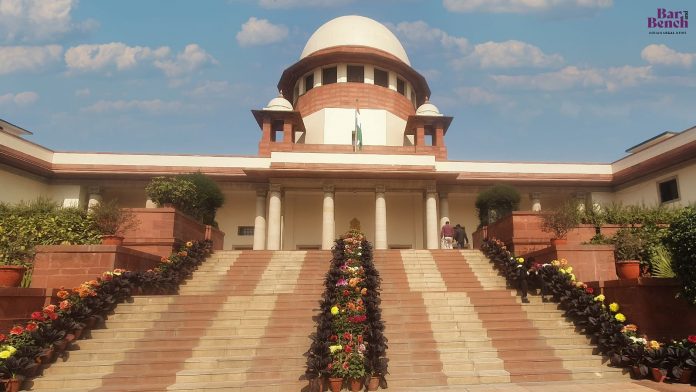
Download Now

Citizenship (Amendment) Act, 2019

0

This article is written by Vedika Goel of OP Jindal Global University, Haryana. This article provides a detailed analysis of the Citizenship (Amendment) Act, 2019 that aims to fast-track Indian citizenship for illegal non-muslim migrants.

This article has been published by Sneha Mahawar.

Introduction

On 11 December, 2019, Parliament passed the Citizenship (Amendment) Act 2019, also known as one of the most controversial amendments to have been passed by the Indian Parliament. The bill received Presidential assent on 12th December, 2019. The bill sought to amend the Indian Citizenship Act, 1955 by fast-tracking Indian citizenship for illegal migrants (Buddhists, Hindus, Sikhs, Jains, Parsis, Christians, and Afghanis) belonging to the states of Afghanistan, Pakistan, and Bangladesh. The Citizenship Amendment Bill was tabled in the Lok Sabha’s winter session. Subsequently, the bill was passed with a majority of 125 MPs voting in favour of it. The bill soon after its passing was heavily debated and ultimately led to widespread protests in many parts of the country. Many activists and international human rights organisations too have played a big part in these protests and have heavily condemned the Indian government’s response to these protests.

This article will deal with the features of the Citizenship Amendment Bill, along with a brief account of its aftermath. The article also discusses recent developments that have taken place with respect to the Act.

arbitration

Citizenship in India

The Citizenship Act, 1955 provides for the various modes of acquiring citizenship in India. The Act also specifies the grounds on which citizenship can be terminated and renunciated. These four modes are birth, descent, registration, naturalisation, and incorporation of territory. 

  • Birth: As the name suggests, a person under this category acquires citizenship if their birth has taken place in India.
  • Descent: Under this category, citizenship is granted to those who have been born to Indian parents outside the Indian territory.
  • Naturalisation/registration: Under this category, citizenship is granted by the Ministry of Home Affairs.
  • By acquisition/ incorporation of territory: Under this category, any state or territory that becomes a part of India shall be declared as a part of the Union of India through an official gazette published by the Central government.

The Act only specifies the above modes for acquiring citizenship by clarifying that no dual citizenship can be granted under Indian law. The Act also provided certain provisions for overseas citizens pertaining to the registration of the overseas citizen card, rights of overseas citizens and cancellation of the overseas citizen card.

Article 5 to Article 11 under Part 2 of the Indian Constitution specify the provisions governing citizenship in India. While Article 5 provides for citizenship at the time of commencement of the Indian Constitution, Article 11, on the other hand, confers powers on the Indian Parliament to legally regulate citizenship rights. This allowed for the enactment of the Indian Citizenship Act, 1955. The Indian Citizenship Act, 1955 has been amended 6 times in the years 1986, 1992, 2003, 2005, 2015 and finally in 2019. These amendments have narrowed down the mode of acquiring citizenship through universal principles such as birth.

Overview of Citizenship (Amendment) Act, 2019

Need of Citizenship (Amendment) Act

As per the government, the need for introducing the Act was felt due to the minorities escaping persecution in Muslim majority countries. The objective of the Act is to give citizenship to illegal immigrants or people who cannot give proof of residence. The CAA 2019 gives citizenship to illegal migrants from Pakistan, Bangladesh, and Afghanistan and lowers the qualification period for Indian citizenship from 11 to 5 years, provided such migrants enter the country on or before 31st December,2014. This gives the migrants the possibility of acquiring citizenship without presenting any documents. The CAA will therefore help such migrants acquire citizenship hassle-free as long as the above criteria are met. The CAA 2019 was therefore enacted to grant hassle-free citizenship to migrants who have faced religious persecution in these three neighbouring countries.

Features of Citizenship (Amendment) Act, 2019

  1. Illegal migrants are prohibited from citizenship under the Indian Citizenship Act, 1955. The underlying objective behind the enactment of this Bill was to amend the old Act and grant citizenship to those illegal migrants who were persecuted in India’s neighbouring countries. The Bill restricted the migrants to six religions, namely Buddhists, Hindus, Sikhs, Jains, Parsis, Christians, and Afghanis. The legislation clearly included the words “those who fled due to religious persecution or had a fear of being persecuted” from the neighbouring states of Afghanistan, Pakistan and Bangladesh will be included in this bill.
  2. Apart from this, the bill also included certain other amendments. Firstly, the cut off date for citizenship was now 31st December, 2014. This meant that one could only apply for citizenship if entry into India was made on or before the cutoff date. 
  3. The amendment also relaxed the naturalisation duration from 11 years to 5 years for all those belonging to the six minority religious groups.
  4. Amendments for OCI (Overseas Citizen of India) holders were also introduced in the bill under Section 7D. A foreigner can register for OCI if their spouse is of Indian origin or if they themselves are of Indian origin. OCI cardholders will also be entitled to certain benefits, like the right to work and study in the country.
  5. Section 6B, Clause 2 &3 of the Act states that such persons shall be deemed to be citizens of India from the date of entry into India, and all legal proceedings against such persons with respect to their illegal migration/citizenship shall be closed.

Exceptions to Citizenship (Amendment) Act, 2019 

The Act has incorporated two major exceptions. Firstly, the Act will not be applicable to tribal areas, namely Meghalaya, Tripura, Mizoram, and Assam. The inclusion of these states in the 6th Schedule of the Indian Constitution is the main reason for bringing about this exception. Secondly, the Act will also not apply to the areas that are notified under the Inner Limit of the Bengal Eastern Frontier Regulation Act, 1873.

Shortcomings of Citizenship (Amendment) Act, 2019

Religious centric approach

One of the major issues with the Act was its religious-centric approach. It has been argued that the Act discriminates against citizenship on the basis of religion. It is shocking to know that around 144 petitions were filed before the Supreme Court against the CAA Act 2019. Moreover, the United Nations High Commissioner for Human Rights (OHCHR) also called the Act “fundamentally discriminatory”. The other concerning issue was that many believed that Muslim citizens would be rendered stateless due to the strict criteria of the Act. 

Further, the exclusion of other religious minorities belonging to other religions, namely Myanmar, Tibet, and Sri Lanka, was also believed to be discriminatory to a large extent. It has therefore been argued that the primary objective of the Citizenship Act should be to provide citizenship and if the legislation is providing the same to the religious minorities of three neighbouring countries, then the same should be done for all religious minorities who were persecuted or were in fear of being persecuted. For instance, sects like Shias and Ahmedis also faced religious persecution in countries like Pakistan (muslim majority) but are nowhere considered in the new Bill.

Constitutionality

Another major issue was raised regarding the constitutionality of the Act. An act that solely invited illegal migrants based on religion was against secularism as well as Article 14 of the Indian Constitution which guarantees equality before the law. The term ‘secular’ was added to the preamble of the Constitution by the 42nd Amendment, 1976 which clearly provides that the State shall not be governed by one religion but equal respect will be given to all religions. This also means that no religion will be favoured in any policy. Clearly, in the CAA, apart from the six religious minorities, no other religious minorities were considered. 

Another argument was raised against Article 25 and Article 26 of the Indian Constitution. Articles 25 and 26 grant freedom of religion, which allows anyone to practice the religion of their choice. However, religious minorities from other groups will not be free to practice their own religion since there will always be a possibility of being forced to convert to another religion in order to attract the relaxations granted by the CAA 2019.

Technical legal shortcomings

The 2019 Report of the Joint Parliamentary Committee on the Citizenship Amendment Bill 2016 (JPC Report) also identified certain technical-legal shortcomings of the CAA 2019. The argument raised in this report was that the CAA did not use the term ‘minority’ but only identified the six non-muslim minorities. It was also believed by the report that naming categories solely on a religious basis goes against the basic structure of the Constitution. The report pointed out how the Indian Constitution categorises minorities such as the Scheduled Castes (SC) and Schedules Tribes (ST) as secular. Therefore, instead of naming religions, it was argued that using the term ‘persecuted minorities’ would have been a better approach.

Assam Discord

There has also been considerable discussion against the Assam Discord and the CAA. It was argued that the CAA goes against the Assam Discord. Firstly, the modification of the date from 1974 to 2014 and the distinction made between Muslim and non-Muslim migrants have become problematic. This is because non-muslim migrants from Bangladesh who entered Assam after 1971 can also apply for Indian citizenship. This undoubtedly goes against the sentiments of the people of Assam and other North-Eastern states. The report expressed its concern regarding the identity of indigenous people on account of citizenship should not be threatened in any manner. This concern was, however, accommodated in the final Act by including an exception that excluded certain North-Eastern states and also the area included under the ‘Inner Line’( Arunachal Pradesh, Nagaland, and Mizoram).

Other issues

It was also argued that the CAA did not include atheists and Jews under the Act. Further, countries like Nepal, Bhutan, and Myanmar that are known to share land borders with India were also excluded. Interestingly, the reason given for this exclusion under the ‘Statement of Objects and Reasons’ is that the said countries explicitly provide for a state religion as constitutionally valid. Therefore, the Act aims to protect religious minorities in such states.

The aftermath of the Citizenship (Amendment) Act

The CAA Act of 2019 led to widespread protests in many parts of the country. From rallies to protests, the whole country was in a state of unrest after the Bill was passed. Not only India but the Bill was condemned globally. Protests were even witnessed in countries like Washington and North America, where Indian protestors stormed the roads to express their concerns regarding the Bill. Even students from various universities were a part of these protests and rallies. The government’s response to these protests shocked the country. The use of tear gas and batons by the police force on the protestors was seen as insensitive and brutal. On 24th February, 2020, over seven people were killed and more than 200 injured during the violent North East Delhi riots. Moreover, at least 27 people were believed to be killed in Uttar Pradesh and Kanpur as a result of the ongoing violent protests. The protest in the famous Shaheen Bagh, a Muslim neighbourhood, turned out to be the epicentre of the anti CAA movement. Violent protests also broke out in Assam after the news of the Act’s passing in 2019. Almost five people were found dead during the protests that took place in the state of Assam. Guwahti remained as the epicentre for the North-East protests and it was feared that the Bill would disturb the topography of the North-Eastern states by allowing people from different cultures and languages to be eligible for citizenship.

The COVID-19 pandemic brought these protests to a halt. However, the crackdown against activists continued despite the pandemic. Protestors and students have been continuously arrested and detained by the police authorities. Many young activists have been arrested under the Unlawful Activities (Prevention) Act 1967, which is famous for its strict bail provisions. The UNHCR has widely condemned these arrests and has openly asserted that the Indian government is simply taking away the right to raise their voice against the discriminatory bill by arresting activists and students.

Current developments

Amartya Sen, Nobel laureate economist recently quoted that when a nation is being divided for ‘political opportunism’, a powerful voice is what is needed. He also expressed how people being sent to jail without committing crimes continues even after independence. The comment was made regarding the arrest of activist Umar Khalid in September 2020 for the North-East Delhi violence that took place in February 2020 that left 53 people dead. He also expressed concern regarding how politically brave people continue to suffer at the hands of the government. Such people are not even being given a fair trial. He also urged the citizens to remain united.

Recently, West Bengal BJP President, Sukanta Majumdar, has asserted that the CAA will be implemented before the 2024 Lok Sabha Polls. He also remarked that a party like the BJP will never fail to meet its promises. He also cited Ram Mandir as an example.

Recently, the Chief Judicial Magistrate (CJM) Court denied the final report of the Assam Police on the death of a minor boy during the anti CAA protests. The father of the boy believed that the child was shot point blank by the police. The police, on the other hand, argued that the authorities were forced to use tear gas and rubber bullets to control the mob, and when the situation got out of control, the police resorted to blank firing, which caused the death of the boy. The government’s and the police authorities’ brutality was finally taken into account by the courts in this case.

Nityanand Rai, Union Minister of State for Home, clarified that the government is not considering any further amendments to the CAA Bill. He further added that the eligible beneficiaries can seek citizenship only after the rules are notified by the Central Government. The  rules should be notified within 6 months of presidential assent, or otherwise, an extension must be sought. The government has received an extension for the fifth time to notify the rules.

Conclusion

The Citizenship (Amendment) Act, 2019 undoubtedly came as a shock to the country. While one community appreciated the move, the other community widely condemned and criticised it. Once again, the country was divided due to religious differences. The divide between Muslim and non-Muslim communities was triggered by this Act. While the government made every effort to justify the passing of this Act, various activists and students openly protested against the Act. The government’s response to the protests was not only brutal but highly insensitive. It raises an important question- Is India truly secular? Do people really have the right to freedom of speech and expression? The fact that over 100 lives were lost due to the CAA protests, one is forced to ask at what cost should the government enact a Bill that is majorly seen as discriminatory and whether in a truly democratic country like India, do people really have a say? The CAA Act has no doubt lowered the trust of the citizens in their government.  It also shows a general disregard for the lives of its people. The government must pick out the ones who are genuinely responsible for inciting violence and not arrest those who only seemed to raise a genuine voice against the Act. The citizens must be united at all times and also pressurise the government to prioritise the basic rights of its citizens. The people must demand a government that is secular and democratic at all times.

Frequently Asked Questions (FAQs)

Has the Citizenship (Amendment) Act, 2019 passed?

The bill was passed by Parliament on 11th December, 2019. It received presidential assent 12th December, 2019. However, the rules are yet to be notified by the Central Government.

Which religious groups are included in the Citizenship (Amendment) Act?

The bill seeks citizenship for illegal migrants (Buddhists, Hindus, Sikhs, Jains, Parsis, Christians and Afghanis) belonging to the states of Afghanistan, Pakistan and Bangladesh.

What is the period of naturalisation in the new Act?

The Act relaxed the naturalisation duration from 11 years to 5 years for all those belonging to the six minority religious groups.

Are there any exceptions to Citizenship (Amendment) Act?

The Act will not be applicable to tribal areas, namely Meghalaya, Tripura, Mizoram, and Assam and the Act will also not apply to the areas that are notified under the Inner Limit of the Bengal Eastern Frontier Regulation Act, 1873.

References


Students of Lawsikho courses regularly produce writing assignments and work on practical exercises as a part of their coursework and develop themselves in real-life practical skills.

LawSikho has created a telegram group for exchanging legal knowledge, referrals, and various opportunities. You can click on this link and join:

https://t.me/lawyerscommunity

Follow us on Instagram and subscribe to our YouTube channel for more amazing legal content.

Download Now

How US businesses have been impacted by the Uyghur Food Labour Prevention Act

0

This article is written by Sneha Sethia. This article has been edited by Ojuswi (Associate, Lawsikho). 

This article has been published by Sneha Mahawar.

Introduction

Uyghurs are among the oldest Turkic-speaking peoples coming from central and east Asia. They are among the officially recognised minority groups of China, forming the large majority of the Xinjiang Uyghur Autonomous Region (XUAR) of the People’s Republic of China. Xinjiang has remained culturally distinct and geographically remote from China consisting of a substantial population of Muslim Turkic-speaking Uyghurs. Beijing claims Uyghurs as part of the “great family of the Chinese state” and contends that Xinjiang has been and will be an integral part of Chinese national territory since ancient times. This article examines the Uyghur Forced Labour protection act and its impact on US businesses.

The conflict between Uyghur Muslims and the Chinese government

Uyghurs believe themselves to be part of a distinct Uyghur nation, having its own history, culture, and language. Uyghurs, believing them to be distinct from Han Chinese culture (population of the rest of China) resisted their incorporation into the Chinese nation-state and sought to establish Xinjiang as a separate Sovereign State. 

This has created tension between the sovereignty and self-determination of the Uyghurs and the Chinese Government. The Chinese government has attempted to overcome the resistance. It is believed that the Chinese government is concerned that Uyghurs hold extremist and separatist ideas, which could become a threat to China’s territorial integrity, government, and population.

Implementation of “Reeducation Camps” and other Programs to stabilise the Uyghur population

To overcome the  “toxicity of religious extremism” the Chinese Government in the year 2017 launched Xinjiang internment camps, which are officially called vocational educational camps in the Uyghur Autonomous Region and are administered by its Chinese Communist Party (CCP) provincial committee. The Chinese officials say that the “reeducation camps” have two purposes: one is to prevent citizens from becoming influenced by extremist ideas, to curb terrorist activities and prevent violence and another is to educate them in Mandarin, vocational skills, and Chinese laws.

The Chinese government has been accused of using the camps for detention and internment, making a massive transformation of the Xinjiang Uyghur Autonomous Region trying to stabilize and control the Uyghur and other Muslim populations and using them for economic purposes. The Chinese Government has arbitrarily detained indigenous citizens of the region in internment camps without trial and is focused on the creation of an enormous forced labour regime. They have the explicit goal of employing every adult citizen with or without their will to increase the economic productivity of the region.

The government has been trying to seek the stability of the population through various measures such as incarceration, detention without trial, and political indoctrination. There’s another program launched by the government to alleviate poverty.

The Chinese Communist Party (CCP) has placed lakhs of indigenous Uyghur and Kazakh citizens from the XUAR into “surplus labour” and “labour transfer” programmes and claims that these programmes are in accordance with the law of the country and that the workers engage for such work voluntarily, in a concerted government-supported effort to alleviate poverty. However, the reports suggest that these programs are coercive and compulsory labour programs.

 In March 2020, the Australian Strategic Policy Institute (ASPI) published a report Uyghurs for sale: ‘Re-education’, forced labour and surveillance beyond Xinjiang, which identified 83 foreign and Chinese companies as allegedly directly or indirectly involved and benefiting from the exploitation of Uyghur workers outside Xinjiang through potentially abusive labour transfer programs

The workers under these programs face the constant threat of re-education and internment. They have no choice but to refuse these jobs, and thus the programmes are a way to forcibly transfer populations into enslavement under hostile environments such as severe physical and psychological abuse, sterilization, sexual abuse, genetic analyses, religious persecution, and cultural and political indoctrination leading to crime against humanity.

In the poverty alleviation program, workers who are transferred for work from place to place or factory to factory are severely underpaid, under coercive and surveilled atmosphere which is a cause of concern at a significant level about forced labour. There’s another program in relation to the poverty alleviation program called “pairing” programs.

In pairing programs, the Chinese provinces tie up with specific regions of the  Xinjiang Uyghur Autonomous Region, focusing on the sectoral needs of paired mainland Chinese Industries. In this program, the companies are expected to set up their factories in the regions of  XUAR based on their needs and demands. Poverty alleviation and pairing programs both rely on labour transfers, in which the XUAR Department of Human Resources and Social Sciences plays a key role. Due to these programs and detention camps, there is a higher chance that the products manufactured in China could be part of XUAR-linked forced labour.  

Use of forced labour to manufacture products

The XUAR region exports a variety of manufactured and raw products across the globe. XUAR fulfils 20% of the world’s cotton demand and also contributes to the majority of the world’s supply of polysilicon which is used to produce solar panels, other major products that China exports globally are minerals, oil, footwear, agriculture products, hair products, construction material, cell phones, cleaning supplies, etc. All these products reportedly use forced labour. To meet these ostensible ends, the Chinese Communist Party (CCP) has already placed millions of Uyghur and Kazakh citizens from the XUAR into “surplus labour”  and “labour transfer” programmes and the number of Uyghurs under forced labour is increasing significantly. 

The US takes steps to combat modern slavery and human rights abuses

With the growing use of forced labour and genocide by the Chinese Government in Xinjiang, the US has taken steps to Combate Modern Slavery and Human Rights Abuses, strengthen US legislation and protect human rights, trade and has updated its foreign policy perspective to fight against the widespread use of forced labour in the global supply chains. Actions include the issuing of Withhold Release Orders by U.S. Customs and Border Protection (CBP), the addition of entities to the U.S. Department of Commerce Entity List, the imposition of visa restrictions by the U.S. Department of the State, the imposition of economic sanction by the U.S. Department of Treasury, as well as the inclusion of various goods to the U.S. Department of Labor’s List of Goods Produced by the use Child Labor or Forced Labor.

On July 1, 2020, the US Department of State in conjunction with the US Department of the Treasury, the US Department of Commerce, and the US Department of Homeland Security issued an updated Xinjiang Supply Chain Business Advisory to strengthen its policy against doing business in the XAUR region

The advisory points out the risks that businesses and individuals should consider when they are involved in a business partnership in, funding in, sourcing from, or providing investments and other support to businesses operating in Xinjiang, linked to Xinjiang, or with labourers from Xinjiang. The US bans imports from the Xinjiang Uyghur Autonomous Region in the north-west of China, except where the importer can provide ‘clear and convincing evidence that their goods were not produced by forced labour. The International Labour Organisation(ILO) report of 2017 estimates that in 2016 about 25 million people were victims of different forms of forced labour. 

Article 2 of the 1930 ILO Forced labour Convention defines the term forced or compulsory labour shall mean all work or service which is exacted from any person under the menace of any penalty and for which the said person has not offered himself voluntarily. China and the US are not parties to the International Labour Organisation but are bound by a related ILO Declaration. ILO prohibits US imports of mined goods, cultivated, or produced wholly or partly in any foreign country by convict labour or forced labour or indentured labour under penal sanctions.

However, the law was only in existence as it was rarely used as it contained a ‘consumptive demand’ clause, which allowed forced labour imports if comparative products were not made or not made in sufficient quantities in the US. In 2015, Congress made certain amendments and closed the loophole by excluding the consumptive demand clause through the Trade Facilitation and Trade Enforcement Act. 

This gave a remarkable boost to enforcement action by Customs Border Protection (CBP) in ‘withhold release orders’ (WROs), prohibiting the entry of goods made using child labour and forced labour in the US, allowing Customs Border Protection to seize and detain imports. The US administration’s updated Xinjiang Supply Chain Business Advisory of July 2021 emphasises that given the prevalence of forced labour the XUAR, ‘corporates and individuals that do not exit supply chains, ventures and investments connected to Xinjiang could be at a high risk of violating US law’. 

Legal risks include: violating statutes that criminalise forced labour including knowingly profiting from engaging in a venture while having the knowledge or in reckless disregard of the fact that the venture has participated in forced labour and human trafficking; violations of sanctions if dealing with designated persons involved in the use of forced labour; export control breaches; and breach of the prohibition of importations of goods produced in part or whole with forced labour or convict labour.

The Uyghur Forced Labour Prevention Act

In December 2021, the US passed The Uyghurs Forced Labour Prevention Act US that creates a rebuttable Customs Border Protection presumption that all imports from the XUAR are made using forced labour under Section 307 of the 1930 Tariff Act and are thus prohibited from entry into the US. The law broadens the scope of the US prohibition from selected goods through WROs to all goods made in the XUAR.

The firms importing goods from XAUR have to show that their imported goods from the XUAR are not made using forced labour by,

  • complying with government guidance,
  • completely replying to inquiries, and
  • providing clear and convincing evidence.

The law provides for sanctions against foreign persons under the Uyghur Human Rights Policy Act of 2020, as amended, Section 6. Imposes sanctions such as asset blocking, ineligibility for visas, admission and parole. It instructs US diplomatic strategy to raise awareness of forced labour in the XUAR and to address it with US allies and partners challenges for the enforcement of US forced labour legislation on the XUAR.

Anti-Foreign-Sanctions Law by China and what it means for US business

In response to the laws banning Chinese Products, China in June 2021 enacted an Anti-Foreign-Sanctions Law Issued by the People’s Republic of China (PRC) to protect China’s integrity, sovereignty, security, peace, internal affairs, and development interests by countering foreign sanctions, particularly countering U.S. sanctions targeting Chinese trade and individuals.

The law prohibits the firms operating in China from complying with foreign sanctions and laws targeting China and it has prepared its large consumer base to retaliate with boycotts. Anti-Foreign-Sanctions Law allows the People’s Republic of China to take countermeasures “if a foreign country violates international law and basic norms of international relations…, or adopt[s] discriminatory restrictive measures against Chinese citizens and organizations, and interfere[s] in [the PRC]’s internal sanctions. The US forced labour legislation and other prohibitions have put trade relations affairs.”

The law aims to reduce the effectiveness and impact of U.S. trade between China and the US conflict. Given the XUAR’s important role in some global supply chains, businesses have warned of the impact of bans, notably of supply chain disruptions leading to excessive costs for manufacturers, overpricing for consumers and financial burden for farmers in the US. Making American companies shift supply chains to other parts of Asia, leading to stock market instability due to the economic conflict, creating fears that the trade war would lead to a US-China economic ‘decoupling’.

Conclusion

Whilst globalization and digitalisation have taken command of supply chains across the globe, and human rights practices are being respected with more strict conviction, the burden to eradicate child labour, forced labour and modern slavery from global supply chains have shifted from the States to corporations. In China’s western region of Xinjiang considering the severity and extent of the abuses, including widespread forced labour sponsored by the state and intrusive surveillance taking place amid ongoing genocide, forbidden from participating in religious observances. and crimes against humanity in Xinjiang, Businesses and Companies must stand in order to fulfil their corporate commitment, they should conduct thorough human rights due diligence on their setup and factory labour in the State of China to fight against the practice of human trafficking and forced labour, fulfil their responsibility to respect human rights as defined in international principles such as the UN Guiding Principles on Business Conduct and Human Rights.

Although the USA is a huge importer of the products being manufactured in XUAR (including products whose parts originate in the XUAR, but are finished in other countries), many other countries are huge exporters of these goods as well, including a significant number of domestic markets within China. Central Asian countries and Russia have significant contributions to the importation of products manufactured in China and make up the top five destinations for XUAR products, with more than fifty percent of shipments from the XUAR going to these countries such as Kazakhstan. Germany, Poland, the Netherlands, France, and Hungary all are huge markets for XUAR products. The effect of the U.S. ban will be significantly diminished without parallel support for import bans in other importing countries. For this reason, this law’s implementation must be accompanied by an effective diplomatic strategy that encourages other countries to implement similar restrictions.

References


Students of Lawsikho courses regularly produce writing assignments and work on practical exercises as a part of their coursework and develop themselves in real-life practical skills.

LawSikho has created a telegram group for exchanging legal knowledge, referrals, and various opportunities. You can click on this link and join:

https://t.me/lawyerscommunity

Follow us on Instagram and subscribe to our YouTube channel for more amazing legal content.
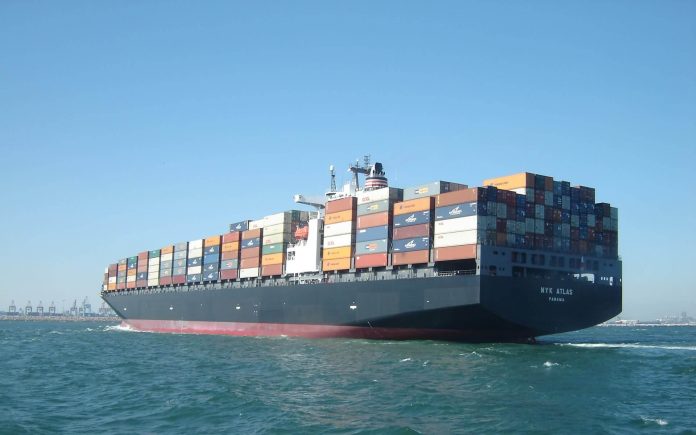
Download Now

Design patents: an overview

0

This article is written by Shiwangi Singh, a law student from Banasthali University. It provides a summary of importance of design patents and the laws that protect designs of various inventions. It discusses difference between different types of patents and trademarks and the advantages one gets from issuing a design patent.

It has been published by Rachit Garg.

Introduction 

The word ‘patent’ is defined as an exclusive right or license that is granted by the government to a person who has invented something that could result in a new experience in today’s world. The government gives us the authority to protect our product or the process of our manufacture by prohibiting anyone from copying, utilising, and selling one’s invention. It gives the inventor a kind of monopoly right on his invention. A patent is also available for improvement in their previous invention.

Out of all such patents, there stands the term ‘design patents’ which play a very crucial role in our daily lives. A design patent is issued to secure legal protection for different visual features of a manufactured item, which means it protects the ornamental design of something that has a practical utility. It provides protection for the outward appearance of an invention so that no one can copy the exterior ornamentation of a specific product. It secures the new idea of an inventor.

If one feels that his or her design for their product is really different and new for the first time,  then they could preserve it under a design patent so that no other competitors could replicate that same design for their own benefit. The design should be unique and has never been used before.

Here we are going to deal with different types of patents, trademarks, and various laws provided by the Indian legislature that are helpful in protecting new inventions, ideas, and designs. The procedure of how a design patent is being registered, the remedies that one can have in case of infringement of their designs or ideas.

Origin and background of design patents

The first legislation in India regarding patents was Act VI of 1856. The main aim of this law was to encourage people to invent new things and manufacture new useful materials. It was also aimed toward disclosing the process of invention or the idea of an invention that an inventor has behind his creation. This Act was further modified and was introduced as XV Patent monopolies in 1859, which gave exclusive privileges to the inventor that included one who could sell, make, and use his or her invention in India for 14 years from the date the invention was registered.

In 1872, the Act of 1859 expanded its scope and included protection related to designs. Its name was further changed into ‘The Patterns and Designs Protection Act’ under Act XIII of 1872. This Act was further amended to provide protection for the novelty of the invention. This Act remained effective for about 30 years without any further changes, but in the year 1833, some changes were introduced in patent laws in the United Kingdom, which made it obligatory to sync the same changes in the patent laws of India.

The Indian Patents and Design Act, 1911, replaced all previous Acts. For the first time, the authority for patent administration was brought under the management of the Controller of Patents. After India gained independence, it was felt that the Indian Patents & Designs Act, 1911, was not very effective and needed a replacement with better useful provisions. Comprehensive patent laws were required so as to meet the political  and economic conditions of the country at that time. Therefore, the government of India appointed a committee under the chairmanship of Justice Dr. Bakshi Tek Chand, a retired judge of the Lahore High Court, in 1949 to review all the patent laws in India and reform them according to the country’s national interest.

Global status of design protection

In China, the designs are protected under the Patent Law of the People’s Republic of China. Chinese design patents do not undergo substantive examination. If the application fulfills the required formalities, then a patent is issued within 6 to 12 months, and these design patents are applicable for a period of 10 years from the date they were registered.

The European Union is governed by the European Community Designs Regulation and Designs Directive. It is one of the most developing forms of design protection in the world. Under this regulation, protection for designs is provided for a period of five years along with the option of four consecutive extensions of years, which would require some fee submission that results in 25 years of protection in total. It provides design protection for the appearance of the whole part of the product that may comprise lines, contours, shape, texture, ornamentation, the product’s colour, the inside design of the product, and even the spare parts. Graphic symbols like computer icons are also protected under this regulation. Similar to design patents in China, European community designs are not subject to examination, but to get a patent the design has to be new and should possess ‘individual character’. The EU Design Regulations also provide protection for unregistered designs for a period of three years following their public disclosure.

In Japan, design patents undergo a substantive examination. The requirements for registration include both industrial utility and novelty. The law clearly states that the design must be “innovative and without precedent”. In Japan, designs are protected under the Designs Act. It deals with various aspects like design registration, application for design registrations, examination of the designs applied for, design rights, infringement of rights, and trials related to them in different chapters of this act. Japanese design patents are registered for a period of 20 years and make no provision for renewing the patent.

Designs are also eligible for design patent protection in the United States. In the U.S., design patent applications are subjected to examination for novelty and other standard requirements. Section 171, of Title 35 of the United States Code, authorises the granting of patents for design subjects. The authority assigned for the registration of design patents is the United States Patent and Trademark Office (USPTO), which regulates the registration process. The design patent is valid for 15 years in the U.S.

Advantages of issuing a design patent

  • Design patents are usually less expensive as compared to the other two patents which are utility and plant patents.
  • By applying for a patent for a design, one can safeguard their idea from being replicated by others.
  • Design patents require no maintenance fees, which is paying a certain amount of money for a prescribed period of time to keep your design secure for a long time if it gets issued as a patent.
  • Design patents are granted to the inventors quite easily and are obtained quickly.
  • They prevent the infringement of product designs.
  • It provides security to the brand of the product as well, so that others can’t earn a profit from the original designs and increase the potential market share of the brand.

Difference between design patent and utility patent

Design PatentUtility Patent
They are meant to protect the ornamental features of a product, such as its shape, configuration, nature of its surface, and overall external appearance.They are meant to protect unique ideas or inventions. It provides a person full control over his or her invention.
It is only inclined towards protecting the design of a product, safeguarding the way it looks.It protects the functional aspects of a product, which are the way a product works, is used, and the way it operates.
It has unique visual features like the product can be cylindrical or rectangular or might have designs on its surface like ridges or curves.It deals with the unique composition, method of manufacturing, or process.
It requires less expenditure to get a design patent.It is more expensive than a design patent.
As this patent deals with only the outer look, it is less valuable.As it deals with the process of making a product, it holds more value because the functionality and the way it would be utilised are the hardest parts to create.
Design patents are granted much faster.Utility patents are not granted that easily.
For example – iPhone has a design patent over the design of its phone, which has distinctive features like rounded corners and a rectangular screen surrounded by a space in between the screen and the frame of the phone.For example – a new iPhone app, which is both a machine and a process. 

Difference between design patent and trademark

Design PatentTrademark
It is a whole diagrammatic representation of a product.It simply signifies a mark that represents a distinct trade that could be a logo, word, shape of a word, etc.
To protect a design, patent registration is done.To protect a distinguishing mark, trademark registration is done, to protect them from infringement.
It is protected under the Designs Act 2000.It is protected under the Trademark Act of 1999.

Designs Act, 2000

The Designs Act, 2000 was introduced to consolidate and amend the law relating to the protection of designs. It was published in the Gazette of India and became effective on 12 May 2000. It extends to the whole of India.

The term ‘Design’ means features of shape, pattern, configuration, ornament, or composition of colours or lines which are applied in three dimensional or two dimensional or in both forms using any of the processes, whether manual, chemical, mechanical, separate, or combined, which in the finished article appeal to or are judged wholly by the eye as per the Design Act.

Objectives of the Design Act

  • The prime objective of the Design Act is to protect designs.
  • It protects new and original designs from getting copied.
  • It regulates and keeps a check on creations so that no fraudulent activity can snatch away the credit from the creator, originator, or artisan.
  • An attractive design draws customers’ attention and helps in increasing the commercial value of an article. Therefore, it helps in expanding the market for the product.
  • It safeguards the interests of the owner by providing them with laws for different situations that might result in the misuse of their designs.

The famous Coca-Cola bottle

The Coca-Cola bottle is one of the first examples of a beverage company that differentiated bottle design by its packaging. It was patented on November 16, 1915, and is still recognizable today.

Coca-Cola Bottle Patent 1915, image source: See the Original Coke Bottle Patent Granted 100 Years Ago 

Infringement of design

When a new design gets registered according to the procedures laid down by the law, the owner of the design gets exclusive rights to stop fraudulent copying of imitation by others, which allows the owner to protect the brand and position in the market by enjoying the profit earned on that particular product.

An infringement of a registered design occurs when a person, without the consent of the proprietor of the design, uses the design for its own profit by importing, publishing, or using it for fraudulent purposes, which would result in the degradation of the brand value of the original design.

If a design is copied for personal use but does not have any intention of being put on sale, then it would not be considered an infringement.

Section 22 of the Designs Act, 2000 talks about the piracy of registered designs. It mentions the grounds for infringement of design, it states –

  • If the design is used for any fraudulent purpose or obvious copying of a design that has already been registered without the consent of the registered owner or the proprietor of the registered design is unlawful.
  • One cannot import any article without the consent of the registered proprietor, or copy the design.

In Cello household products vs. Modware India, (2017) the plaintiff, which was the Cello company, registered a case against Modware India, stating that the bottle manufactured by the Modware company under the name ‘Kudoz’ was similar to their bottles manufactured under the name ‘puro’. The bottles in the Puro series had unique and distinctive features, which included an oval-shaped curve with a flip cap, and these bottles were tinted with a specific combination of two colours. The defendant was accused of using a similar get up and colour combination. In this case, the Bombay High Court decided in favour of the plaintiff and granted an injunction to them by stating that the products and the design must be seen as a whole, from the perspective of a common consumer, so if the visual appeal seems similar, it would mean that a design is being copied in an unlawful manner.

In Castrol India Ltd. vs. Tide Water Oil (2011), the petitioner filed a complaint regarding the copying of the design of their specially designed container, which looked similar to the respondent’s automotive lubricant container. The Court, while deciding on this case, described various tests to decide whether a design is imitated or is a pirated version of the registered design. The Court held that

  1. The word ‘imitation’ does not mean duplication, and the design which is accused of being copied does not require to be an exact replica.
  2. The similarity or the difference will be judged by the sight, through the eye of the purchaser.

Remedies for design infringement

The designs are prone to infringement that can be copied by competitors or some other person, in such cases the owner of the design can claim damages and can also apply for an injunction that would authorize them to stop a company or individual from replicating their designs. The Design Act, 2000 mentions the provisions if someone violates the law and tries to infringe on an original design under Section 22(2).

  • Under Section 22(2)(a), one who infringes the design shall pay a sum of not exceeding twenty-five thousand rupees to the registered proprietor.
  • Section 22(2)(b) mentions that the owner of the registered design can also file a suit for recovery of the damages and can plead for an injunction.

Requirements for getting a design patent

The design on which one wants to get a patent must be really new and unique in the market. Since design does not define the functionality of a product, the courts do not consider the novelty of the design if it lacks certain features.

In Gammeter vs. The Controller of Patents (1917), the Calcutta High Court mentioned that the test of novelty for a design should be done by pacing the two designs side by side and then deciding whether the one for which novelty was claimed was in fact new. It was further observed that it was a matter of first impression.

In Steel bird Hi-tech India Ltd. vs. SPS Gambhir (2014) the Court clearly declared that any design which seeks a patent registration should be new or original as it is considered a product of the intellectual outcome of its creator. The Delhi High Court stated that the design proposed for registration should not be present in the physical or tangible form before the registration process.

Other requirements

  • The new product must possess some originality in terms of its shape and size. The composition of the product might remain the same but its new shape must make it appear different.
  • The patentable design must be original to be valid.
  • Most of the courts hold an opinion that if any product has no unique shape or appearance at the time of its creation, that would mean that it lacks ornamentality and therefore would not be eligible to get a design patent.
  • Non-obviousness of the invention is also a major requirement for the grant of the patent, it means that the invention shall not be obvious or apparent to an ordinary skilled person in the field related to the invention.

Section 4 of the Designs Act mentions the prohibition of a design if – 

  • The design is not new or original.
  • If the design is being disclosed in India or outside India before it was filed for an application for patent.
  • If the design looks similar to other known designs or a combination of known designs.
  • If the design contains obscene or scandalous matter in it.

Chapter II, Section 5 of the Designs Act 2000 deals with the registration of designs. The owner of the product must submit a complete application form according to the requirements mentioned in the Indian Designs Act 2000, along with other information which is:

  • There should be two copies of six images of the article, from the rear, front, top, bottom, left side, right side angle and also from the perspective view of the article.
  • The applicant shall write the correct name and address.
  • The applicant shall give a proper legal document that would mention he or she is an individual, company, etc.
  • The required official fee for the design application shall be submitted.
  • The article to which the design will be applied, for which the design has actually been thought about.
  • The plan describes the utility of the product.

The registration process for design patents in India

Chapter II of the Indian Designs Act, 2000 deals with the registration of designs (Section 3 to Section 10)

  1. The Controller has the authority to register any new or original design which has not been previously published in the country or is not contrary to public order or morality, if an application is made by any person who claims to be the proprietor of that particular design.
  2. The Controller then refers the application to an examiner for proper examination to check whether that design is capable of being registered under this Act. The Controller will abide by the reports sent by the examiner.
  3. Every application form for getting a patent shall be filed in the Patent Office in a prescribed manner and by paying the prescribed fees.
  4. A design shall not be registered in more than one class, in case of doubt regarding in which class the design shall be put, the Controller may decide the question.
  5. If the controller, after proper inspection, feels that the design is not appropriate for being registered, then he can reject the application. However, the applicant can appeal to the High Court after the refusal.
  6. If an application is not completed due to some neglect or default within the prescribed time, then it would be considered abandoned.
  7. If a design gets registered, then the date mentioned for it should be the date of the application for registration.
  8. After this, soon after the registration of a design, the designer shall publish the prescribed particulars of the design so that the public may inspect the design and verify it.
  9. If after public inspection, no issues arise, then the Controller shall grant a certificate of registration to the proprietor of the design when registered. In the event that the original certificate is lost, the controller shall issue one or more copies of the certificate.

In the patent office, a book called the register of designs is kept, which maintains the names and addresses of the proprietors of registered designs, notifications of assignments, and transmissions of registered designs, and such registers may be maintained wholly or partly on computers or floppies, to secure the safety of the data stored. The register of designs shall act as prima facie evidence in any matter that might occur in the future.

Conclusion

A design signifies the creative process of someone, which further becomes a product. The design of any product has a long-lasting effect on the consumer’s mind. It helps them recognize a product. Therefore, it becomes necessary to register a design to provide it with legal protection under the Design Act 2000, which would protect it from infringement and secure the idea and the process of creation for the product owner.

The main objective of issuing a patent is to encourage the creators to contribute more in their respective fields. It gives them a designation for their invention, which further boosts them to innovate more. Patents could be issued for various things, which could be a machine, an article of manufacture, or a composition of the machinery object.

A design patent protects only the ornamental manifestation of an invention, not its features or the way it would be used. A design patent is even granted to a person who has an imaginary new idea regarding any product that he wishes to create and has no solid concrete vision of design or no obvious ornamental design for an article of manufacture. The design patent protects only the appearance of a product, but not its architectural or compositional, structural or functional features. It is a kind of industrial design right that helps to protect our intellectual property rights. It becomes essential for someone when the appearance of a product plays a key factor in its success.

Different design laws are regulated in different parts of the country with differing provisions, but all have the same motive to protect distinguished designs and safeguard the ideas of new inventors and creators around the world.

Frequently Asked Questions

What is the duration of a design patent?

Initially, protection for 10 years is provided to the proprietor of a registered design, along with exclusive rights to sell, make, or import the articles and the right to initiate an action against an infringer. This period of 10 years can be further extended by a period of 5 years if one seeks to renew his or her patent by submitting the renewal fees. Therefore, in India, the maximum validity of registration under the Indian Designs Act, 2000 can be 15 years.

What are the items that cannot be registered under the Design Act?

  • Signs, emblems, or flags of any country.
  • Structures and buildings.
  • Stamps, medals, books, calendars, certificates, jackets, greeting cards.
  • Integrated circuit layout designs.
  • Any principle or mode of construction of any article such as labels, tokens, cartoons, cards, etc.

References


Students of Lawsikho courses regularly produce writing assignments and work on practical exercises as a part of their coursework and develop themselves in real-life practical skills.

LawSikho has created a telegram group for exchanging legal knowledge, referrals, and various opportunities. You can click on this link and join:

https://t.me/lawyerscommunity

Follow us on Instagram and subscribe to our YouTube channel for more amazing legal content.
Download Now
logo
FREE & ONLINE 3-Day Bootcamp (LIVE only) on

How Can Experienced Professionals Become Independent Directors

calender
28th, 29th Mar, 2026, 2 - 5pm (IST) &
30th Mar, 2026, 7 - 10pm (IST).
Bootcamp starting in
Days
HRS
MIN
SEC
Abhyuday AgarwalCOO & CO-Founder, LawSikho

Register now

Abhyuday AgarwalCOO & CO-Founder, LawSikho