This article is written by Mrinal Mukul, a student at O.P Jindal Global University, Haryana. This article talks about Article 164 of the Indian Constitution in context of the State Executive.
It has been published by Rachit Garg.
Table of Contents
Introduction
The Constitution is the supreme law of India. It sets out a framework for defining political principles, establishes the basic structure, procedures, powers, and responsibilities of government agencies, and establishes citizens’ basic rights, duties, and obligations. India has 28 states and 8 union territories (including Jammu and Kashmir after Article 370 was repealed). Every state has a Chief Minister, who is appointed by the governor.
Article 164 deals with state legislatures and elections to the Parliament. It provides a unified voter role for elections to the Parliament and the Legislature of every state. It stipulates that a member of Parliament can only be elected from one Parliament or parliamentary constituency. Article 164 is that part of the Constitution of India which contains the constitutional directives governing the Federal Government (Centre) and its territorial divisions: States and Union Territories.
In essence, Article 164 of the Indian Constitution focuses on the appointment of the Chief Minister and Council of Ministers in India. Furthermore, it focuses on the oath-taking of the ministers and, in certain cases, the appointment of non-members of the legislative assembly into the Council of Ministers.
Provisions under Article 164 of Indian Constitution
Article 164(1) : This clause deals with the provision of the appointment of Chief Minister and other members. However, here the Chief Minister will be appointed by the Governor, and other Ministers will be appointed by the Governor on the advice given by the Chief Minister, and the term of the Ministers may serve as the Governor wishes: provided that in Bihar, Madhya Pradesh, and Orissa, there have to be a Minister in charge responsible for tribal welfare, who may additionally be responsible for enlisted caste and backward class welfare or any other duties.
Article 164(1)(a) : mentions that a total number of ministers in a state shall not exceed 15% limit of the total number of ministers in the state.
Article 164(2) : The Council of Ministers is jointly accountable to the Legislative Assembly of the State.
Article 164(3) : Before the Minister takes office, the Governor shall administer to him the oaths of the concerned office and of secretary based on the forms set out for this purpose in the Third Schedule.
Article 164(4) : This clause deals with the provision which states that a minister who has not been a member of the state legislature for six consecutive months will cease to be a minister at the end of that period.
Article 164(5) The salaries and allowances of the Minister shall be determined by law from time to time by the State Legislature, and until the legislature of the state so determines, shall be as set forth in the Second Schedule.
Article 164 : oath and affirmation by members
Every member of the State Council and every member of the House of People should, before taking his/her seat, take an oath and sign an oath or undertaking in the form laid down by the President or a person designated by the President. An oath and affirmation must be made in the form set out by the Third Schedule.
Article 164(4) deals with the provision which states that if there is no such person as the Chief Minister, the Prime Minister will hold office until a new Chief Minister is appointed. This occurs when the party’s majority members withdraw their support for a Chief Minister who does not have the backing of members of the parliamentary majority. This can be further supported by Article 75(5), which states that in the event of a new election, if the Minister is not elected as an Member of either house of Parliamnet within six months of taking office, he ceases to be a Minister. However, they will remain in office until a successor takes office. The Council of Ministers will be overall accountable to the State’s Legislative Assembly.
The article lays down a few crucial points: the qualifications for being chosen as a member of the parliament. The article also focuses on the exemption through Article 164(4) of the Indian Constitution that even though the elected one is not a member of the house, they can still hold the responsibility of the Chief Minister for a certain time period.
Circumstances in which Article 164 applies
Our Indian Constitution does not specifically mention the qualification to be appointed as Chief Minister. Article 164 states that the Chief Minister will be appointed by the Governor. Moreover, this does not mean that the Governor is free to appoint anyone as a Chief Minister of the state or Union Territories.
The words used in Article 164 give an impression that the Governor has ultimate authority over the State Government. For example, Article 164 states that a minister will hold office at the pleasure of the Governor. All this signifies that under Article 164, the Governor has immense power with regard to the subject matter.
Article 164 and Article 75 (5) of the Indian Constitution also mention that if a person who acts as a Prime Minister or Chief Minister, even when they are not MPs or MLAs, then in such situations, they must not be debarred from practicing any proceeding of the legislature during the period for which they act. Moreover, Article 164 also states the responsibilities and powers of the government’s executive branch.
Landmark judgments relating to Article 164 of Indian Constitution
Har Sharan Verma vs. Tribhuvan Narain Singh
In the case ofHar Sharan Verma vs. Tribhuvan Narain Singh (1971), the Constitutional Division of the Supreme Court considered whether a person who is not a member of the state legislature can be appointed as Chief Minister or not? In this case, the appointment of Tribhuvan Narain Singh as Chief Minister of Uttar Pradesh was questioned on the grounds that he was not a member of either house of the Legislature when he was appointed. In the High Court, Har Sharan Verma claimed that Article 164(1) of the Constitution prohibits the appointment of non-legislators as Chief Minister. Rejecting this argument, the Allahabad High Court stated that a Chief Minister is like any other minister, and they can hold office for six months even if they are not a member of the Legislature.
SR Chaudhuri vs. State of Punjab
In the case ofSR Chaudhuri vs. State of Punjab (2001), the Supreme Court, while interpreting Article 164, stated the law that the Constitutional provisions are required to be understood and elucidated through an object-oriented approach. A Constitution ought not to be understood in a narrow sense. The words used may be generic, but their full and true meaning must be understood, taking into account their real context and the purpose they are intended to serve. The Constituent Assembly debate mentioned earlier in the verdict made it clear that non-members entering the cabinet were considered valid only for six months, during which time members had to be elected, or they would no longer be ministers. An accepted view is that debates in the Constitutional Assembly can be used to help in interpreting constitutional provisions since it is the court’s job to determine the intent of the drafters. We must not forget that our Constitution is not just a document but a living framework for the government and its people, and its working depends upon the democratic spirit underlying it being respected in every form. The debate clearly shows that the privilege is to be extended only for six months.
B.R. Kapur vs. State of Tamil Nadu
In another landmark case which was stated inB.R. Kapur vs. State of Tamil Nadu (2001), the majority of judges, while discussing the issue of a writ of quo warranto, ruled that if a non-legislator could be appointed as a Chief Minister under Article 164 of the Indian Constitution, then they must fulfil the qualification of membership of a legislator as mentioned under Article 173 of the Indian Constitution.
Recent instances of Article 164 of Indian Constitution which were in the news
The most recent instance happened in the West Bengal election when Mamata Banerjee lost the assembly election in Nandigram to Suvendu Adhikari (BJP candidate). She said she would challenge this and could still be a West Bengal Chief Minister. Under Article 164 of the Constitution, it states certain conditions for taking an oath as a minister. However, Article 164(4) says that a minister who has not been a member of the state legislature for six consecutive months will cease to be a minister at the end of that period. All this means that Mamta Banerjee will have six months to get formally elected from any Bengal constituency in a by-poll to hold on to a Chief Minister’s chair. Even in 2011, for the very first time when Mamta Banerjee took oath as a Chief Minister, she was a member of Parliament as she didn’t contest the assembly election. However, after months, Mamta Banerjee was elected from Bhabanipur.
Conclusion
The paper sets out the requirements for electing members of the state legislatures. The paper also provides an exception to Article 164(4) that they may hold the official roles and duties of the Chief Minister even when they are not members of the House of Representatives. Additionally, Article 164 is important to understand the powers of the executive branch and the extent of the governor’s discretion in this context. Article 164 also deals with the appointment, tenure, duties, qualifications, oaths, salaries and allowances of the Minister.
Frequently Asked Questions (FAQs)
1. Who was the first Chief Minister of India?
The first Chief Minister of India was Govind Ballabh Pant.
2. Which Article mentions about the Chief Minister?
Article 164 talks about the appointment of the Chief Minister and other ministers.
3. Why, Article 164 been in the news recently?
Article 164 has been in the news because in West Bengal, Mamta Banerjee will have to win the election in the next six months to be Chief Minister.
4. What does Article 164(4) talk about?
A minister who has not been a member of the state legislature for six consecutive months will cease to be a minister at the end of that period.
5. What is the purpose behind Article 164(4)?
Article 164 (4) and 75(5) also provide that a person who is a Chief Minister or Prime Minister, although not an MLA or MP, shall not be prohibited from participating in the proceedings of any legislature during the tenure for which they act as such.
6. Who appoints the Chief Minister?
The Chief Minister is appointed by the Governor, who also appoints other ministers on the advice of the Chief Minister.
Students of Lawsikho courses regularly produce writing assignments and work on practical exercises as a part of their coursework and develop themselves in real-life practical skills.
LawSikho has created a telegram group for exchanging legal knowledge, referrals, and various opportunities. You can click on this link and join:
This article is written by Nidhi Rani Garg, a law graduate. This article will give you a detailed understanding of the ideas of natural law and natural rights as well as the opinions of numerous philosophers on the subject.
Natural rights are rights conferred on all people by nature or God, which no government or individual can deny or limit. ‘Natural law’ is frequently used to describe how natural rights are conferred on people. The concept of a natural law proving the existence of certain natural rights was originally introduced in ancient Greek philosophy. Later on, it was mentioned in the Bible and developed further in the Middle Ages. During the Age of Enlightenment, natural rights were used to counter Absolutism or Kings’ Divine rights. The contemporary concept of natural rights evolved from ancient and medieval theories of natural law, which held that individuals, as creatures of nature and God, should live their lives and structure their societies in accordance with natural or divine norms and precepts. Natural law concepts were to emphasise the fact that individuals, as natural creatures, have rights that cannot be violated by anyone or any community, especially in the 17th century.
History of natural rights
The idea of all human beings being born equal and possessing equal natural rights that can be recognized dates back to the earliest of human civilization is rooted in history and is linked to individual struggles against injustice. Although the term ‘human rights’ is new, the idea that a person has certain basic, inalienable rights against a sovereign state dates back to the notions of Natural Law and Natural Rights.
Natural law is a concept that originated in ancient Greece. Individual rights, according to this theory, are derived from nature and so cannot be taken for granted or assigned by political authorities.
The idea of natural rights originated from natural law during the Renaissance Humanism era in the early modern period, shifting the focus away from the community and onto the individual. Whereas before, natural law was more concerned with the connection between the state and society, natural rights granted the person the power to oppose injustice and bring claims against the state.
Thomas Hobbes (1588 – 1679), John Locke (1632 – 1704), and Jean-Jacques Rousseau (1712 – 1778) developed the Natural Rights idea during the 18th century’s ‘Age of Enlightenment.’
Definition of natural rights
Natural rights are the rights that all persons are granted basically for being human. They are universal moral principles that apply to all cultures and societies, and they are unaffected by political legislation. As a result, natural rights are frequently referred to as inalienable rights, or rights that cannot be taken away. Natural rights are the foundation of society’s social contract. Even if the government didn’t exist, it would still exist.
Natural rights were initially written about as an element of natural law by the ancient Greek philosopher Cicero. The primary basis of natural law, according to Thomas Aquinas’ natural rights concept from the 13th century, is that “good is to be done and pursued, and evil avoided.” The United States Declaration of Independence and the United Nations Universal Declaration of Human Rights are two modern interpretations of natural rights.
Type of natural rights
Natural rights are divided into two categories, which are described below.
Inalienable rights
Inalienable rights are unalienable components of humankind that serve as the foundation for moral interactions between people. These are privileges that can never be taken away. They are irreversible components of mankind and the foundation for moral interactions between people.
Alienable rights
The term “alienate” comes from the field of property law. It refers to the act of transferring something. Generally, we alienate property rights all the time by selling or giving them away.
What rights can be termed as natural rights
The rights that can be classified as natural rights are listed below.
The right to life preservation
Every human being has the right to survive, and no authority can ever deprive them of that right. This right includes the ability to protect yourself against those who hurt you. The right to life, according to most philosophers, is the most fundamental natural right.
The right to property ownership
Every individual has the right to own property, whether individually or jointly. Some thinkers, such as John Locke, argued that the power to own property included the ability to own one’s own labour.
The right to liberty
Every human being has the right to live a free life. They have the right to freedom of movement (which includes the right to be free of unlawful detention) as well as the right to think freely. Some argue that the right to privacy is a natural right that is included in the right to personal liberty.
The right to religious freedom
Everyone has the right to choose their religion and build a relationship with it. Both Aquinas’ writings and the United States Bill of Rights recognize the right to religion. The Right to Know God was written by Aquinas, and the Bill of Rights affirms that Americans have religious freedom without government interference.
Natural law theory by various philosophers
John Locke
John Locke was the first significant proponent of natural rights. He famously asserted that everyone has the right to life, liberty, and property. Furthermore, no sovereign has the authority to infringe on another sovereign’s rights. One of the motivating reasons for engaging in the social contract, according to Locke, is to protect individual rights. According to social contract theorists, respecting the law is justified and motivated by a collective agreement among society’s members.
The natural rights doctrine of John Locke had a huge impact. His philosophy, for example, was influential in the creation of the United States Declaration of Independence, which highlighted the rights to life, liberty, and the pursuit of happiness. While Locke is seen as a pivotal player in the development of liberal democracies in the eighteenth and nineteenth centuries.
Thomas Aquinas
In the year 1225, Thomas Aquinas was born into a noble family in Italy. Thomas Aquinas was a medieval saint who was said to have been able to levitate and see visions of the Virgin Mary. He was particularly concerned with describing how angels communicate and behave. Nonetheless, he is important because he aids us in resolving a long-standing dilemma: how to combine religion and science, faith, and reason. Aquinas was a saint as well as a philosopher. He established a fresh understanding of the role of reason in human existence by refusing to abandon his faith or believe mindlessly. Aquinas made a significant contribution to Western European civilization by teaching that anybody, not just Christians, might have access to profound truths if they used God’s greatest gift to humans: reason.
Some of the world’s greatest intellectuals may not have been Christians, but that didn’t stop them from having remarkable insights because, as Aquinas maintained, the universe may be productively studied through reason rather than religion. To explain how this may work, Aquinas brilliantly postulated that the universe and all of its dynamics are governed by two types of law: (secular) ‘Natural Law’ and (religious) ‘Eternal Law.’ Much of the world, according to Aquinas, is governed by natural laws. We can learn how to smelt iron or run a business for ourselves. And none of them is based on faith in God.
Aquinas said, referring to Jesus, “Do unto others as you would have them do unto you.” According to Aquinas, Jesus may have given this idea a particularly memorable articulation, but it has always been a cornerstone of moral ideals in most communities. It is an idea that belongs to natural law, not eternal law, according to Aquinas. In a few cases, Aquinas believed, that God works simply via eternal law, outside of human reason. For instance, he cited prophetic revelations and angelic encounters. However, he reassured us that the most helpful knowledge may be found in the world of natural law by atheists and secular-minded people.
Plato
Plato was a Greek philosopher who lived during the Classical period in Ancient Greece and was born into a renowned and rich family in Athens. He founded the Platonist school of philosophy and the Academy, the Western world’s first institution of higher learning. Along with his teacher, Socrates, and his most famous student, Aristotle, Plato is widely regarded as a crucial figure in the development of Ancient Greek and Western philosophy. He is frequently referred to as one of the founders of Western religion and spirituality.
Plato committed his life to assist individuals in achieving what he called “Eudaimonia,” or “fulfilment.” Plato is frequently confused with Socrates, an older friend who taught Plato extensively but did not produce any writing. Plato wrote a number of them, including the Republic, the Meno, the Symposium, the Laws, and the Apology, all of which are brilliantly written scripts of imagined debates in which Socrates is invariably given a leading part. Plato’s view of the ideal state, which he called a “republic,” carried on the natural law theory. He believed only an intelligent and deserving person should be king. Plato emphasized the importance of the perfect division of labour in his republic. To put it another way, each person should focus on his or her own work rather than interfering with the work of others.
Aristotle
Around 384 BC, Aristotle was born in the ancient Greek Kingdom of Macedonia, where his father served as the king’s doctor. With humble nicknames like “the master” and “the philosopher,” he grew up to become possibly the most influential philosopher of all time. Alexander the Great, who went on to conquer the known world, was his first student. Then Aristotle left for Athens, where he briefly worked with Plato before striking out on his own. He was amazed by how many things actually function, such as how a chick develops in an egg? How does a squid procreate? What factors contribute to society as a whole functioning well? Philosophy, in Aristotle’s view, was about practical knowledge.
An explanation of the natural law theory that is more logical was offered by Aristotle. In his opinion, man is connected to nature in two ways. Man has two qualities that make it possible for him to explain his actions: first, he is a creation of God; and second, he has a reason. He described natural law as reason free from the influence of desire.
Cicero
The year 106 B.C. saw the birth of Marcus Tullius Cicero outside of Rome. Cicero had a good education because he was born into a wealthy home. Following his military service, Cicero studied Roman law. The youngest person to hold the highest rank of consul without coming from a political family was elected to each of Rome’s major offices in the course of his subsequent career. The Roman statesman and attorney, Cicero, was a remarkable figure. According to Cicero, true law is the correct thing that is in accordance with nature, it is universally applicable, it is eternal, and there would be just one law in Rome that would be eternal and unchangeable and be applicable to all peoples at all times.
Natural rights and natural law
Natural law and natural rights are strongly connected to each other. Natural laws were utilised as an alternative rationale for the development of a social compact, positive law, and government (and hence legal rights) in the form of classical republicanism during the Enlightenment. Others, on the other hand, utilise the concept of natural rights to question the legitimacy of all such institutions.
The natural law and natural rights tradition come from the 17th and 18th centuries, and it asserts that the universe is controlled by natural laws that may be discovered by human reason. The idea that natural rights are not established by governments is a crucial component of this intellectual tradition. Instead, governments are established to protect these rights.
Natural rights were initially written about as an element of natural law by the ancient Greek philosopher Cicero. Many researchers believe that natural rights arose from natural law, a doctrine that can be found in St. Thomas Aquinas’ mediaeval Catholic philosophy (d. 1274). Natural law was supposed to include concepts of right and evil that could be determined by human reason without the aid of supernatural revelation, particularly in reference to interpersonal relationships.
Natural law and natural rights are mutually exclusive; one cannot exist without the other. In philosophy, natural rights are linked to individuality and personhood. Natural law, on the other hand, is linked to sociality and communality, or the correct interaction between individuals, which can be top-down or horizontal.
Natural rights are implied in natural law theory, although they have only recently been given specific emphasis.
Natural law is concerned with fundamental moral obligations, whereas natural rights are concerned with fundamental moral claims or entitlements.
Natural rights and social contract theory
Around 1600, the concept and theory of a social contract rose to prominence in Europe, becoming one of the most popular means of defining and delimiting people’s obligation of adherence to their government, as well as their right to rebel and overturn it if it becomes oppressive. Political philosophers began to embrace a new perspective on the key issues of political philosophy during this period.
Natural rights have been considered since antiquity, but it was Enlightenment philosophers who invented the contemporary concept of natural rights, which has been important to modern republican governance and civil society. Natural rights emerged as part of the social contract theory, which examined the origins of society and the legitimacy of the state’s control over the person at the time.
Individuals have decided, either directly or implicitly, to renounce part of their liberties and submit to the ruler or magistrate’s authority (or to the choice of a majority) in exchange for the preservation of their remaining rights, according to social contract arguments. As a result, the relationship between natural and legal rights is frequently discussed in social contract theory.
Difference between natural rights and civil rights
Civil rights are a type of legal right that tries to ensure that all people in a country are treated equally. A civic right, for example, seeks to ensure equality of opportunities. These rights are the rights that are granted by society. They are enacted and enforced by law. Regardless of colour, religion, or other personal qualities, civil rights, equal social opportunities, and equal legal protection are all guaranteed.
The right to vote, the right to a fair trial, the right to government services, the right to public education, and the right to utilise public facilities are all examples of civil rights. Civil rights are a crucial component of democracy; when people are denied the right to participate in political life, they are being denied their civil rights.
Civil rights differ from natural rights, and the distinction is explained below.
Natural rights are regarded as universal to all human beings, whereas civil rights are derived from each country’s constitutions or laws.
Civil rights, unlike other rights such as human or natural rights, in which people gain rights naturally, such as from God or nature, must be given and secured by the state’s power.
In general, the major distinction between natural rights and civil rights is that human rights are universally guaranteed in all of the world’s nations, whereas civil rights are protected on a broader and worldwide scale by international law.
For instance, free speech and due process are two of the most valuable and highly treasured civil rights that encourage every individual and citizen of a country to express their views. Natural rights, on the other hand, include the right to life, liberty, and property, to name a few.
Difference between natural rights and legal rights
Natural rights differ from legal rights in that one is codified in law, whereas the other is regarded as universal and morally granted to all people at birth.
Natural rights are the safeguards that a human being wants to ensure dignity and equality in his or her life. On the other hand, legal rights are the government’s safeguards for the people of a specific state.
Natural rights are universally recognised, ensuring that everyone has access to them. On the same note as the basic rights, legal rights are state-wide, open to residents of a given region, and can even be changed by the government as needed.
Natural rights are those that are not based on any culture’s or government’s laws or conventions. Legal rights are those that are granted to a person by a legal system, and they can be modified, abolished, or restricted by human laws.
Concept of natural law in the Roman system
The Romans expanded their study of natural law beyond just theoretical debates, giving it a more concrete form by converting their strict legal code into a cosmopolitan living law. Through the split of Roman law into three separate sections, namely “Jus Civile,” “Jus Gentium,” and “Jus Naturale,” natural law exerted a very positive influence on Roman law in this way. Only Roman citizens were subject to the civil law known as “Jus Civil,” whereas “Jus Gentium” regulated both Roman citizens and non-citizens. It was made up of universal legal rules that followed natural law, or the law of reason. As Roman citizenship was made available to everyone, with the exception of a select group of people, these two later came to be known as “Jus Naturale.” The clash between “Positive Law” and “Natural Law” was not a subject that Roman attorneys bothered to address.
Concept of natural law in India
Possibly the oldest legal system in the world is the Hindu legal system. At an incredibly early age, they created a remarkably rational and extensive body of law. Throughout the entire body of law, there is a notion of ‘justice.’ However, it was hindered from growing naturally and methodically by the constant changes in the political system and the government as well as the multiple foreign invasions that occurred one after the other. Studying this legal system could not be done in a way that was appropriate under foreign rule.
Many of its theories and underlying concepts remain unexplored. The questions that cannot be answered with great certainty include whether there was a concept of “Natural Law” or not, as well as if there was, what its authority was and how it related to “Positive Law.” However, there are a few guidelines and rules that might be mentioned in this regard. Hindu philosophy holds that God is responsible for the creation of the law. The “Shruti” and “Smritis” contain the law.
Natural rights and the Indian Constitution
Natural Justice, a reformed version of natural law, is the foundation of the Indian Constitution. Although the Constitution does not expressly mention the notion of natural justice or law, it is reflected in the provisions. The terms “justice,” which includes social, economic, and political justice as well as equality of status and opportunity, illustrate that natural law principles are included in the Indian Constitution.
The concepts of natural justice have been used by courts to determine the constitutionality of reasonable limits. The obligation to act fairly is part of the fair procedure envisioned by Article 14 and Article 21. With the inclusion of due process in Article 21 of the Constitution, all of the fairness embodied in natural justice principles may be seen in Article 21 when a person’s life and personal liberty are taken away.
In a way, all Fundamental Rights provided to the citizens of India are natural rights and to protect them, we have the Right to Constitutional Remedies.
The Supreme Court held in D.K. Yadav v. J.M.A. Industries Ltd. (1993) that, even if statutory standing orders empowered management to terminate the services of an employee who overstayed the leave period, doing so without a hearing would be a violation of Article 21 of the Constitution because a procedure established by law that deprives a person of his livelihood cannot be said to be just, fair, and reasonable under Article 21.
Conclusion
Natural rights are essential for anybody who wishes to live a happy and prosperous life. While the majority of people do not have to fear losing their inherent rights, it is necessary to be mindful of those who do not. While no single person can eliminate all natural rights violations around the world, we can start to bridge the gap by supporting groups with similar goals or electing people who want to help.
Frequently asked questions
What are natural rights?
Natural rights are those that are necessary for human survival. They are generally accepted and applied, and human law cannot contradict them. These are necessary for society and humanity. Based on the premise that all men are born equal, there are three natural rights that are deemed universal. The right to life, liberty, and the pursuit of happiness are the three rights.
How natural rights are different from legal rights?
The difference between natural and legal rights is that one is codified in law, while the other is considered universal and morally granted to all people at birth. Government bodies impose legal rights, also known as civil rights, to regulate criminal and civil matters. Natural rights and legal rights are frequently combined when statutes are written; natural rights, such as the right to due process, are preserved by law so that the natural right to liberty is not taken away arbitrarily.
Name few rights which can be termed as natural rights.
some of the rights that are considered natural rights are the right to life, the right to liberty, the right to possess property, the right to make a living, and the right to have a family.
State the difference between natural rights and civil rights.
Natural rights are based on the idea that everyone has a right to the basic essentials of life: life, liberty, and property. Civil rights are a form of legal right aimed at ensuring that everyone in a country is treated fairly. For example, a civic right aims to provide equality of opportunity. These are the rights that society confers on people. They are enacted and enforced through laws.
What do you mean by natural law?
Natural law is a philosophical concept which contends that certain obligations, moral principles, and rights are part of what it means to be a human. Natural law theory is predicated on the notion that natural laws are abstract ideas that are independent of culture or norms and are therefore universal concepts. Nevertheless, it is a typical and inborn human behaviour for society.
State the difference between natural law and human law.
Natural law establishes natural human morality, rights, values, and obligations through those individuals’ acts and behaviours. On the other hand, human law, often known as legal law, establishes true human morals, rights, values, and obligations through man-made systems and rules.
Students of Lawsikho courses regularly produce writing assignments and work on practical exercises as a part of their coursework and develop themselves in real-life practical skills.
LawSikho has created a telegram group for exchanging legal knowledge, referrals, and various opportunities. You can click on this link and join:
This article is written by Monesh Mehndiratta, a law student at Graphic Era Hill University, Dehradun. This article provides a detailed explanation of Section 115BAC of Income Tax Act and other sections related to it.
Section 115 bac of Income Tax Act, 1961 has been inserted recently by the Finance Act of 2020. It provides an option to the taxpayers to choose between new tax rates with concessions and actual tax rates without taking into consideration any prescribed exemption or deductions. It also gives clarity to the employees as to whether they should review the new tax regime when withholding the taxes from their salary or not. The Union budget of 2020 introduced this Section. One of the major benefits of this Section is that it provides lower tax rates as compared to old tax regimes and the taxpayer has the option to choose which tax regime he/she wants to follow. It allows the taxpayers to switch between the two schemes.
Applicability of Section 115BAC of Income Tax Act
The Section applies to the following people with effect from Assessment year 2021-22:
Individuals
Hindu undivided families including residents and non-residents
Features of Section 115BAC of Income Tax Act
This Section takes away the deductions that can be availed in the old tax regime.
The major feature of this Section is that it is optional and a person can still opt for the old tax scheme and switch between the two.
It does not apply to business income.
The surcharges and cess rates are the same as old or existing tax schemes.
If the conditions given under the Section are not fulfilled, the option to choose this scheme will be invalid for that financial year.
Who are eligible as per Section 115BAC of Income Tax Act
The Section provides that the individuals and Hindu families which are undivided can pay the tax as per the Section with a proviso that their income/salary must fulfil the following conditions:
It should not include any business income.
It must have been calculated under the provisions of the Act without any kind of deduction or exemption.
The earlier losses due to any deductions must not be included and must be set off.
No depreciation should be claimed as per Section 32 of the Act while calculating the salary or income.
Any exemption related to allowances must not be included.
Exemptions and deductions under Section 115BAC of Income Tax Act
The details of any kind of exemptions or deductions have been given in the Section under the following different categories:
Salary
In the case of salary, the total income must be calculated without taking any exemption or deduction into consideration under the following provisions of the Act:
The provisions to calculate income generated from house property for the purpose of tax are:
Interest on self-acquired property under Section 24(b) of the Act,
The loss of income due to house property can be set off,
30% deductions and paid municipal taxes are allowed but no interests on capital which has been borrowed.
Deductions under Chapter IV A
Contribution by the employer to pension funds under Section 80 CCD,
Additional employee costs must be deducted as per Section 80 JJAA,
Deductions in offshore banking units and International Financial Services Centre (IFSC) as per Section 80 LA.
Conditions necessary for Section 115BAC of Income Tax Act
The conditions to be fulfilled in order to opt-in/opt-out of the Section depend upon whether the income has been generated from any business/profession or not. These are:
No income from any business or profession – In case there is no income from any business or profession, a person can choose this Section before the due date for filing a return has passed.
Income from business or any profession – In case the income has been generated from a business or profession, he can choose before the return is filed but once he chooses this section, he is bound for a lifetime and the same goes with if he opts out of this Section.
However, an individual choosing to select this Section and has income from the business or profession has to fill FORM 10IE in order to take the benefits of this Section. The individuals whose income is calculated from their salaries need not fill out this form but it is mandatory for those whose income is generated from any business or profession. The form must be duly filled before the due date of return and failure would result in non-availability of the scheme under Section 115 BAC.
Tax rates under Section 115BAC of Income Tax Act
The following table provides the rates on tax as per the Section applicable to different incomes:
S.No.
Income range
Tax applicable
Upto 2,50,000/-
No tax
Rs 2,50,001 – Rs 5,00,000
5%
Rs 5,00,001 – Rs 7,50,000
10%
Rs 7,50,001 – Rs 10,00,000
15%
Rs 10,00,001 – Rs 12,50,000
20%
Rs 12,50,001 – Rs 15,00,000
25%
Above Rs 15,00,000
30%
These rates are much lower than the old or existing tax rates and a taxpayer has the option to select which scheme he wants to opt for i.e. new tax scheme or old tax scheme. In case he opts for a new tax regime, he has to satisfy all the conditions given under Section 115 BAC of the Income Tax Act, 1961.
Comparison between the old and new tax regime
One major advantage that the old tax regime provided to the taxpayers was a lot of exemptions and deductions which are not available under the new tax regime. On the other hand, the new tax scheme is beneficial for people who either have invested or will invest in the future in EPF, fixed deposits, life insurance, pension schemes etc. Also, the deductions or exemptions do not apply in case the total income of a person is based on salary. The following table shows the comparison between the tax rates of the old tax scheme and the new tax scheme.
S. No.
Total income
Rate of tax applicable as per new tax regime
Total income
Rate of tax applicable as per old tax regime
Upto 2,50,000/-
No tax
Upto 2,50,000/-
No tax
Rs 2,50,001 – Rs 5,00,000
5%
Rs 2,50,001 – Rs 5,00,000
5%
Rs 5,00,001 – Rs 7,50,000
10%
Rs 5,00,001 – Rs 10,00,000
20%
Rs 7,50,001 – Rs 10,00,000
15%
Rs 10,00,00 and above
30%
Rs 10,00,001 – Rs 12,50,000
20%
Rs 12,50,001 – Rs 15,00,000
25%
Above Rs 15,00,000
30%
Thus, the above table shows that the new tax regime provides more tax slabs and reduced rates of tax on the income when compared to the old tax regime. Another difference between the two is that the tax slab of Rs 3,00,000 – Rs 3,50,000 which is enjoyed by the senior citizens of the country, cannot be availed by them if they choose a new tax regime.
It can also be observed that the old tax regime is beneficial for those with high income and minimum or no investment whereas the new tax regime is best suited for those who plan to invest or have invested in various investments and have low income. Thus, there is no procedure to decide which option is best for the taxpayer. However, he/she must calculate the tax according to both the options and rules and conditions applicable to each of them and then analyse which option is best for them and provides maximum advantages and whether they should choose a new tax regime or not. But if after choosing an option, a person is not satisfied he/she can switch to another but that might be a little problematic and hectic due to the changed procedure for filing of return.
Clarifications of Section 115BAC of Income Tax Act
When the Section was introduced initially by the Finance Act of 2020, there were certain issues and ambiguities related to various aspects but the major problem was the deduction of tax by the employers. Thus, in order to provide clear, certain and unambiguous provisions to the public the Central Board of Direct Taxes (CBDT) gave clarifications about the Section and issues related to it faced by the people. These are:
In case an employer wants to deduct TDS for an employee, he has to take a prior declaration by him, where the employee has income other than profits in a business and wants to opt for concessional rate, tells the employer and he upon such declaration will deduct the TDS and compute his income as per Section 115 BAC of the Act.
If no such declaration is given by the employees, the employer will deduct the TDS as per other provisions and old tax rates of the Act and not according to this Section.
An employee while giving any declaration must be careful and scrutinise every aspect of it because once the declaration is made, it cannot be changed. It should also be noted that such a declaration is for a particular year previously and cannot be used for further years.
The employee also has an option to change the scheme of tax he is opting while filing the return. If he is not satisfied with the old tax regime he can opt for a new tax regime and vice-versa. Section 139 of the Act provides that the option can be changed during the filing of a return and can be different from what has been intimated.
When the return of income need not be filed
Section 115G of the Act provides that a non-resident Indian who has income only by way of investment or long-term capital gains which is arising from transfer of foreign exchange, need not file the return of income under Section 139 of the Act if the tax-deductible from such income has been correctly deducted. However, he has another option as per Section 115-I of the Act to submit the return of income and apply for a refund which is due, if any.
Conclusion
It can be concluded that under the old tax regime the income slabs were high but there were many ways people could easily reduce the tax and their liability to pay the taxes. These also helped a lot of people to escape from paying taxes and thus, there was a need for a new tax scheme. The old tax regime provides 70 exemptions and deductions, the advantages of which were availed by the people and they had to pay fewer taxes. However, with the introduction of the new tax regime with the insertion of Section 115 BAC by the Finance Act of 2020, there are fewer and almost no exemptions and deductions but it provides more income slabs with fewer tax rates. Though there are fewer deductions as per the new tax scheme but lower tax rates with more income slabs which mean that is beneficial for those who fall into the category of less income slab and tend to invest more.
There are no such procedures which help a person in deciding which option he should opt. In order to have a clear decision, he must calculate his income as per both the tax schemes and then compute the taxes. After analysing all the benefits and advantages, he should choose between the two options. If he is not satisfied with the option he has chosen, he can easily switch between the two. However, all this seems quite hectic but due to the online filing of returns, the procedure has been made easy and relaxing.
Frequently asked questions (FAQs)
Under which act Section 115 BAC has been introduced in the Income Tax Act, 1961?
The Section has been inserted recently by the Finance Act of 2020. It provides an option to the taxpayers to choose between new tax rates with concessions and actual tax rates without taking into consideration any prescribed exemption or deductions. It also gives clarity to the employees as to whether they should review the new tax regime when withholding the taxes from their salary or not.
What are the features of Section 115 BAC?
The features of the Section are:
This Section takes away the deductions that can be availed in the old tax regime.
The major feature of this section is that it is optional and a person can still opt for the old tax scheme and switch between the two.
It does not apply to business income.
The surcharges and cess rates are the same as old or existing tax schemes.
If the conditions given under the section are not fulfilled, the option to choose this scheme will be invalid for that financial year.
What needs to be done in case an employer wants to deduct the TDS of his/her employees?
In case an employer wants to deduct TDS for an employee, he has to take a prior declaration by him, where the employee has income other than profits in a business and wants to opt for concessional rate, tells the employer and he upon such declaration will deduct the TDS and compute his income as per Section 115 BAC of the Act.
If no such declaration is given by the employees, the employer will deduct the TDS as per other provisions and old tax rates of the Act and not according to this Section.
The employee also has an option to change the option while filing the return. Section 139 of the Act provides that the option can be changed during the filing of a return and can be different from what has been intimated.
What are the necessary conditions of the Section?
The conditions to be fulfilled in order to opt-in/opt-out of the Section depends upon whether the income has been generated from any business or profession or not. These are:
No income from any business or profession – In case there is no such, a person can choose this Section before the due date for filing a return has passed.
Income from business or any profession – In case the income has been generated from a business or profession, he can choose before the return is filed but once he chooses this section, he is bound for a lifetime and the same goes with if he opts out of this Section.
Students of Lawsikho courses regularly produce writing assignments and work on practical exercises as a part of their coursework and develop themselves in real-life practical skills.
LawSikho has created a telegram group for exchanging legal knowledge, referrals, and various opportunities. You can click on this link and join:
This article is written by Priyal Jain, a student of Amity Law School, Noida. This article aims to explain the concept of extra-judicial killings in India, the history and the causes which lead to such killings, and the legal remedies provided by the government in this regard.
It has been published by Rachit Garg.
Table of Contents
Introduction
Every individual is guaranteed certain basic human rights and liberties, and at the same time, the individual expects that his/ her rights are being respected. However, sometimes the state government, which is entrusted with the responsibility of protecting and promoting the protection of the human rights itself, violates such rights by committing custodial violence or extra-judicial killings. Extra-judicial killings can be referred to as unlawful killings of an accused by any government authority with no approval or order from the court. There are cases in which these killings take place because of an actual encounter (to prevent the accused from escaping), but there are also numerous cases where fake encounters take place, having different agendas; where the police try to twist the facts of the case so that they cannot be subjected to any questioning if such event occurs. These unlawful killings take place not only in India but also in countries like Nigeria, Philippines, etc.
The history behind extra-judicial killings
In earlier times, according to the Hindu scriptures which were composed of the Manu-smriti, it was believed that custodial violence was necessary to maintain peace and avoid criminal acts. During the era of the Mughal dynasty, the principle of ‘eye for an eye’ was quite prevalent. It was only during the time of Akbar’s reign that the torture of the criminals was not supported. After the Mughals, the period of British colonies emerged in India. The Britishers also used torture as a means to interrogate the criminals and promoted the harsh treatment of the accused under trial. When India got independence in 1947, there was no such noticeable difference in this practice of custodial violence and it still exists in today’s 21st century. Hence, even today, there are emerging cases of custodial violence or the killing of prisoners illegally.
What are extra-judicial killings
Extra-judicial killings are those when the accused person is killed or executed illegally by the police officials in charge of the accused person before the judgement of the trial arrives. It can be said that the accused person in such cases is not even given a right to prove himself/ herself innocent before the court of law, which is illegal, as it violates the basic human rights guaranteed to every individual. The physical torture, sexual harassment, or mental torture of the accused by the police or any other officers in charge while the person is in custody also comes under the ambit of extra-judicial killings. The order for such extra-judicial killings always comes from the particular state government. Extra-judicial killings are nowadays seen often. Such killings can also be termed custodial violence.
Famous cases involving extra-judicial killings
Cases relating to extra-judicial killings in India
Mathura rape case [Tukaram and Ors. vs. the State of Maharashtra (1979)], where a young orphan girl was raped by two police officers in police custody, who were later acquitted by the Supreme Court.
Bhagalpur blinding case [Khatri and Ors. vs. the State of Bihar (1980)], because of increasing crimes like abduction, kidnapping, murders, etc., the police officers in Bihar during the years 1979-80 started using a very brutal way to get information or confessions from the suspects, i.e. they poured acid into the eyes of the suspects which burnt their eyes and eventually it led to immediate blindness. This incident was reported by around 31 victims. The police officers involved in this act were convicted by the court. This case also became the first-ever case in which granting monetary compensation to the victim was considered by the Supreme Court.
In D.K. Basu vs. the State of West Bengal (1996), the Supreme Court ruled that custodial violence or extra-judicial killings violate the dignity of any human being, and issued several guidelines for the police on how to handle or interrogate the suspects.
In the 2019 Hyderabad Priyanka Reddy’s rape case, the accused were killed by the policemen in an encounter on the spot where the body of the victim was recovered. The accused raped Priyanka Reddy, a veterinary doctor and then partially burnt her body.
In the 2020 Vikas Dubey vs. the State of U.P. case, the wanted gangster of Uttar Pradesh, Vikas Dubey, was killed in an encounter by the U.P. police, and no evidence was found against the police.
In PUCL vs. the State of Maharashtra (2014), the Supreme Court questioned the genuineness of 99 encounter killings by the Mumbai police between the years 1995 and 1997. Furthermore, a 16- points guideline was laid down by the Supreme Court to be considered the standard procedure for a thorough, effective and independent investigation in cases of death or grievous injury during police encounters.
Cases relating to extra-judicial killings across the globe
Philippines
On July 1, 2016, Oliver Dela Cruz was shot to death in the Bulacan province of the Philippines during a sting operation conducted by the police. A group of armed men first interrogated him and then executed him blaming vigilante violence.
United States
On May 25, 2020, George Floyd, a black man in the United States was pinned down by three police officers after being arrested which resulted in his death.
Pakistan
On January 13, 2018, Naqeebullah Mehsud was killed in a fake encounter staged by the Superintendent of police in Karachi, Pakistan.
Legal provisions relating to extra-judicial killings in India
There are no direct provisions in the Indian legal system which authorise any official to kill an accused person without receiving an order from the legal authority of that state irrespective of the heinousness of the crime committed. However, certain provisions are mentioned below which authorise an official to use force against a criminal.
Section 100 of the Indian Penal Code (IPC), 1860 authorises every individual to exercise his right of private defence, which may extend to causing the death of the other person if there is reasonable apprehension in the mind of the individual that there is a threat to his life. The right to private defence is an inherent right.
Section 46 of the Criminal Procedure Code (CrPC), 1973 allows the police officers to use any degree of force which is required to arrest the accused or prevent the accused from escaping.
Section 4 of the Armed Forces (Special Powers) Act (AFSPA), 1958 authorises every commissioned, non-commissioned or warrant officer to fire or use force, even to the causing of death of any person who the officer believes to be acting in contravention of any law in a disturbed area and considers necessary for the maintenance of public order.
There are certain other provisions in the Indian legal system which in a way provide remedies to the individuals in case of extra-judicial killings or custodial violence, they are as follows:
Section 300 of IPC provides that culpable homicide is not a murder if any public official exceeds the power given to him by law and causes the death of any person which he in good faith believes to be necessary for the maintenance of public order and for securing justice.
According to Section 176(1) of CrPC, if any person dies, disappears or is being raped while in the police custody, an inquiry shall be conducted by the judicial magistrate or metropolitan magistrate besides the police inquiry.
In 2010, the National Human Rights Commission (NHRC) stated that police officers do not have the right to take the law into their hands or kill any person. The police officer must be charged with culpable homicide unless it is proved that no offence has been constituted. The Commission also laid down several guidelines such as:
All cases of deaths occurring in the police station must be reported to the Commission within 48 hours in a prescribed format by the Senior Superintendent of Police.
A magisterial inquiry must be conducted within three months in all cases of deaths which occur in the course of police action.
Necessary action is to be taken against erring police officers who are found guilty in the magisterial inquiry without delay.
Submission of post-mortem report, inquest report and findings of magisterial inquiry was also made mandatory by the Commission.
Views of the Supreme Court in cases of custodial violence or extra-judicial killings
In the case of Om Prakash and Ors. vs. the State of Jharkhand (2012), it was declared that encounters are “state-sponsored terrorism”, and the police are not allowed to kill anybody only because that person is a criminal.
An arrested person has been granted some rights and extra-judicial killings are a violation of these rights. The rights of an arrested person are mentioned below in brief:
Right to information under Article 22 regarding the right to be released on bail.
Right to remain silent as per Article 20(3) of the Constitution.
Right to be presented before the Magistrate according to the provisions of Section 56 and Section 76 of CrPC.
Right to a fair trial under Article 14 of the Constitution.
Right to consult a legal practitioner as per the provisions of Section 50(3) of CrPC and Article 22(1) of the Constitution.
The right to free legal aid to an indigent accused person is implicit in Article 21 of the Constitution.
Extra-judicial killings also serve as an attack on the fundamental rights of the citizens. The fundamental rights which are violated because of these unlawful killings under the Constitution of India are:
Article 14- the right to equality.
Article 21– the right to life and personal liberty except according to procedure established by law.
Article 22– the right to be protected against arrest and detention.
People have the right to a proper trial and prove themselves innocent. There are provisions in our Constitution that provide that no one should be left unheard and that every individual must be given an equal opportunity to be heard before a court of law. However, extra-judicial killings take away the rights of an individual, and so police officers must not take the law into their hands, and wait for the judgement of the court to punish the criminal. These killings lead to a mockery of the Indian Constitution and are unconstitutional.
Causes behind the violation of human rights
There are several reasons which lead to violation of human rights and causing extra- judicial killings.
Public support
Sometimes, the public supports these extra-judicial killings because they think that the court will not provide timely justice. As the police officers are receiving support from the public, it is making them bold day by day, increasing such killings.
Political support
Many political leaders believe that more encounters will serve as their achievement in maintaining law and order in the state.
Rewards
The government provides various types of promotions and cash incentives to the officers who are involved in the execution of extra-judicial killings. As a result, the officers are encouraged to increase the number of encounters even if it requires the execution of fake encounters.
Work pressure
Due to the increase in crimes in our society, more pressure is building up on the police officials to punish the criminals and reduce the crimes committed. The high pressure from the government instigates the police officials to treat the criminals brutally to extract information or confessions from them.
Punitive violence
Many police officials believe that the only way to control the crime and criminals is to torture and ruthlessly beat the criminals so that a state of fear is developed in the minds of the people when they are about to commit a crime.
Hero- worshipping
The officers executing these extra-judicial killings are considered heroes in society as the public thinks such killings to be the best way of cleaning up society. Amidst all this worshipping, the public and the media celebrating this unlawful violence forget that the police have no authority to perform such an act, and it is violative of the human rights of the accused.
Inefficiency of police
The police do not have enough resources to conduct a proper investigation which results in a low conviction rate because if the court will not get enough evidence in a case it will lead to the acquittal of the accused. Encounters are an easy way for the police to create an image in the eyes of the public that law and order are being maintained in the area.
Countries with a high rate of extra-judicial killings
Venezuela- Amnesty International estimated that there were around 8,200 extra-judicial killings that took place in Venezuela from the year 2015 to 2017.
Philippines- The Human Rights Watch estimated the death toll to be as high as 27,000 unlawful killings in the Philippines by 2020. The number is much greater in real.
Bangladesh- Many alleged criminals were killed in Bangladesh by the police in the name of crossfire. Many drug dealers were also killed in 2018 in the name of ‘war on drugs’.
Syria- The Syrian Network for Human Rights in its 2021 monthly report estimated that extra-judicial killings took the lives of around 723 civilians. The number is on increase.
Mexico- From 2014 to 2019, the military force of Mexico has around 3,000 complaints against itself for extra-judicial killings. In July 2020, 12 civilians were killed in a shootout by the soldiers.
Egypt- The Human Rights Watch’s latest report released that Egypt’s Interior Ministry Police and National Security Agency officers have killed dozens of alleged terrorists in unlawful extra-judicial executions.
Congo- According to the estimate of the UN’s Joint Human Rights Office, nearly 293 civilians were killed unlawfully in the year 2021.
Iraq- As per the latest report of the Human Rights Watch, extra-judicial killings are increasing in Iraq day by day, and the government is continuously failing in its attempt to prevent human rights violations. The assassination of the Prime Minister was also attempted.
Nigeria- The Democracy Watch Reports accused the state of killing 13,241 Nigerians extra-judicially in the 10 years up to 2021. According to this report, approximately 1,324 people were killed in a year by the security forces.
Columbo- Mohamed Mamazmi was killed in July 2013, while he was being transported in a jeep. There are many similar cases of extra-judicial killings, which are increasing on a daily basis.
Way forward
All encounter killings must be investigated with the utmost diligence as such killings affect the credibility of the rule of law. Rule of law must be ensured at all costs in every case across the country. It is the duty of the state government to adhere to the rule of law and work in accordance with the rule of law. There is a need to train the police officials in such a way that they are able to handle every unforeseen situation and protect the accused in police custody. As encounter killings are increasing day by day, resulting in human rights violations. Thus, there is a need to instil the importance of human rights in the minds of the police officers executing these unlawful killings.
Conclusion
Appropriate laws must be formed and executed by the government as a measure to prevent such killings. The rules must be strictly adhered to by every state government. The ‘rule of law’ must always be preferred over the ‘rule of the gun’, which means that even the police officers are not entitled to the right to punish the criminals themselves, and criminals can only be punished by the order of the court. It is, however, unlawful for the officers to commit such killings without receiving any order from the legal authority. Although there are various non-governmental organisations (NGOs) like Amnesty International, Human Rights Watch, etc. to protect human rights, they are still not able to curb this practice completely. At the same time, there is a large part of the population who are in support of these killings as they do not believe in the judicial system of our country, and they believe that by executing such killings or violence, justice is not being delayed but is delivered within a reasonable time to the victim. This thinking and the non-believing nature of the people in the government, if changed, might lead to an impact on the occurrence of such unlawful killings. However, not only the people but also the government should not order or support fake encounters and must respect the dignity of every human being. The combined effort of both the citizens and the government can together help to prevent the practice of extra-judicial killings.
Frequently Asked Questions (FAQs) on extra-judicial killings
What does extra-judicial mean?
Extra-judicial means any act done by the officers in authority by law without a legal order from the higher authority.
Why do extra-judicial killings receive support from the general public?
Many a time, due to reasons like delay in delivering justice, the acquittal of the accused because of lack of evidence, or political reasons, the wrongdoer is not punished and so people often find such extra-judicial killings to be correct and justified.
Are extra-judicial killings legal?
No, as extra-judicial killings violate the fundamental and human rights of the individual.
Who is the UN’s special rapporteur on extra-judicial or arbitrary executions?
Mr Morris Tidball- Binz, a medical doctor with a specialisation in the field of forensic science, human rights and humanitarian action was appointed as the special rapporteur of the UN for reporting arbitrary executions, on April 1, 2021.
To whom extra-judicial killings can be reported in India?
Students of Lawsikho courses regularly produce writing assignments and work on practical exercises as a part of their coursework and develop themselves in real-life practical skills.
LawSikho has created a telegram group for exchanging legal knowledge, referrals, and various opportunities. You can click on this link and join:
In this blog post, Nandini Mukati, a student of the School of Law, Forensic Justice and Policy Studies, National Forensic Sciences University, Gandhinagar, writes about the father of International Law: Hugo Grotius. This is an exhaustive article which deals with the concept of International Law, its history and relevance.
Relations between independent states are governed by international law. The norms of law that bind states are derived from their own free will, as represented in conventions or usages widely regarded as articulating legal principles and formed to control the relations between these coexisting separate communities or to achieve common goals. As a result, restrictions on state independence cannot be assumed.
Because norms give order and serve to limit damaging conflict, international law arose as a result of an effort to deal with conflict among states. International law reflects the creation and subsequent adjustment of a world order based almost entirely on the concept that independent sovereign states are the only actors in the international system that matter.
Today, every individual has rights that pervade the international community and are profoundly enshrined in an imperfect global law that, in turn, pervades each of our lives. This rule isn’t set in stone; it’s evolving all the time. To realise its emancipatory potential, it must be made effective, challenged, defended, and reinvented.
We will cover the beginnings of international law, Hugo Grotius’ contribution, how international law has evolved in the twentieth century, the sources and theories of international law, and the individualization of international law in this article. Finally, we look at some of the most recent international law objections.
Father of International Law : Hugo Grotius
Hugo Grotius was a Dutch jurist and scholar who lived from April 10, 1583, in Delft, Netherlands, to August 28, 1645, in Rostock, Mecklenburg-Schwerin. His masterpiece, De Jure Belli ac Pacis (1625; On the Law of War and Peace), is regarded as one of the most important contributions to the development of international law. Grotius, who was also a statesman and diplomat, has been dubbed the “Father of International Law.”
Hugo Grotius was the first child of Jan de Groot and Alida van Overschie, and was born in Delft during the Dutch Revolt. His father was a man of intelligence and political significance, having studied under the great Justus Lipsius at Leiden University. His forefathers had played a significant part in local administration since the thirteenth century, earning him the title of Delft patrician.
Hugo Grotius was an exceptionally gifted child who began writing Latin ballads at the age of eight and entered the arts faculty at Leiden University at the age of eleven. Grotius studied under the renowned humanist Joseph Scaliger, who was essential in Grotius’ growth as a philologist. He traveled to France with Johann van Oldenbarnevelt, a famous Dutch statesman, in 1598, and visited Henry IV, who dubbed Grotius the “wonder of Holland.” Pontifex Romanus (1598), which has six monologues on the contemporary political situation, reflects this perspective.
In 1599, he established himself as an advocate in The Hague, temporarily residing with the court preacher and theologian Johannes Uyttenbogaert.
The Netherlands commissioned an account of the United Provinces’ insurrection against Spain from Grotius in 1601. In 1604, he became involved in the legal processes following the seizure of a Portuguese carrack and its cargo in the Singapore Strait by Dutch traders. This was his first opportunity to write methodically on themes of international justice. Grotius attempted to justify the seizure by appealing to natural justice considerations. He’d cast a much wider net here than just the issue at hand; he was interested in the source and foundation of war’s legality in general. The treatise was never published in its entirety during Grotius’ lifetime, possibly because the company’s victory in court negated the need for public support. In 1608, he married Maria van Reigersberch, through whom he had three daughters and four sons (four of whom lived to adulthood) and who would be important in assisting him and his family in surviving the coming storm. Grotius’ political career was aided by his continuous affiliation with Van Oldenbarnevelt, who maintained him as Oldenbarnevelt’s resident advisor in 1605, Advocate General of the Fisc of Holland, Zeeland, and Friesland in 1607, and then as Pensionary of Rotterdam (the equivalent of a mayor) in 1613.
The resulting work was written in the style of Tacitus, a Roman historian, and covered the years 1559 to 1609. Despite the fact that it was nearly done by 1612, Annales et Historiae de Rebus Belgicis (“Annals and Histories of the Low Countries”) was only published posthumously in 1657. When Middelburg professor Antonius Walaeus produced Het Ampt der Kerckendienaren in late 1615 (a reaction to Johannes Wtenbogaert’s 1610 Tractaat van ‘t Ampt ende autoriteit eener hooger Christelijcke overheid in kerckelijkcke zaken), he sent a copy to Grotius out of goodwill. This was a moderate counter-remonstrant book “on the connection between ecclesiastical and secular administration.” In early 1616, Grotius received a 36-page letter from his friend Gerardus Vossius advocating a dissenting viewpoint, Dissertatio epistolica de Iure magistratus in rebus ecclesiasticis.
Grotius was extensively involved in the politics of the Netherlands. The combined kingdoms of Spain and Portugal claimed a monopoly on trade with the East Indies in the early 17th century.
With the help of his wife and maidservant, Elsje van Houwening, Grotius managed to leave the castle in a book chest and go to Paris in 1621. He is primarily remembered in the Netherlands today for his audacious escape. The original book chest is said to be in the collections of both the Rijksmuseum in Amsterdam and the museum Het Prinsenhof in Delft.
From 1621 until 1644, Grotius spent nearly his entire life in France. During his term, Cardinal Richelieu led France under Louis XIII’s rule from 1624 until 1642.
Grotius’ most renowned book, De jure belli ac pacis [On the Law of War and Peace], was dedicated to Louis XIII of France in 1625 and was published in France.
Grotius began work on a treatise that he had originally composed in Dutch verse in jail, presenting elementary but systematic reasons for the reality of Christianity while in Paris. The Latin dissertation, De veritate religionis Christianae, was published in 1627, while the Dutch poem, Bewijs van den waren Godsdienst, was published in 1622.
He attempted to return to Holland in 1631, but the authorities were still hostile to him. In 1632, he relocated to Hamburg. However, he was dispatched to Paris as an ambassador by the Swedes, a European superpower, as early as 1634. He stayed in this role for eleven years, with the objective of negotiating the end of the Thirty Years War for Sweden. During this time, he was interested in Christian unity and produced a number of papers that would later be combined under the title Opera Omnia Theologica.
Following the death of Prince Maurice in 1625, when toleration was granted to them, many exiled Remonstrants returned to the Netherlands. In 1630, they were given entire autonomy over the construction and operation of churches and schools, as well as the right to dwell wherever in Holland. A presbyterial organization was established by the Remonstrants, led by Johannes Wtenbogaert. Grotius joined Episcopius, van Limborch, de Courcelles, and Leclerc in establishing a theological seminary in Amsterdam.
Grotius was appointed ambassador to France by Sweden in 1634. Grotius accepted the offer and moved to Paris, where he stayed until 1645 when he was relieved of his duties.
In 1644, the queen of Sweden, Christine, who had reached adulthood, began to carry out her responsibilities and returned him to Stockholm. He moved to Sweden in the winter of 1644 – 1645 but decided to depart in the summer of 1645 due to the tough conditions.
Grotius was shipwrecked on the journey home from his last visit to Sweden. He washed ashore on the shore of Rostock, ill and weather-beaten, and died on August 28, 1645; his body was finally repatriated to his homeland and buried in the Nieuwe Kerk in Delft.
Grotius wrote in a number of fields throughout his life. He edited the North African poet Martianus Capella’s encyclopaedic book on the seven liberal arts, as well as the Greek astronomer Aratus of Soli’s Phaenomena, with commentary.
Grotius wrote a variety of philological studies as well as a drama, Adamus Exul (1601; Adam in Exile), which the English poet John Milton praised. Grotius also wrote a number of theological and politico-theological writings, including De Veritate Religionis Christianae (1627), which was perhaps his most popular work during his lifetime.
Contributions of Hugo Grotius to International Law
Hugo Grotius is regarded as a prominent figure in the study of international law today. Unfortunately, opinions on the worth of his contribution to the cause of international peace are conflicted. Grotius was able to establish various rational foundations underlying law as a result of his rationalist worldview. Law was derived from principles rather than being imposed from on high. The axioms that agreements must be kept and that injuring someone necessitates restitution were among the founding principles. Much of subsequent international law has been based on these two concepts.
Grotius set out to build a general theory of law (jurisprudentia) that would constrain and govern war between many independent powers, including nations, in order to achieve his practical goal of minimizing bloodshed in wars. Grotius’ legal masterpiece, De Jure Belli ac Pacis, was published in 1625, and it was heavily affected by the terrible, violent political fights that had erupted in his own nation and throughout Europe, particularly the Thirty Years’ War, which had erupted in 1618.
Grotius placed natural law at the centre of his jurisprudentia, following Roman law and the Stoics’ work. He claimed that law derived from man’s intrinsic nature would be valid to some extent. He made this bold claim because he believed that natural law—the most crucial weapon for preventing and regulating conflicts in Europe—must be independent of religion and apply to everyone, regardless of their religious views. He knew, however, that secular law alone would not be sufficient to restrict and regulate war. As a result, he reinstated several Christian themes into his jurisprudentia.
Grotius was frequently reported as saying that law or natural law should be “secularized,” but this was a hypothetical rather than a categorical statement. To comprehend De Jure Belli ac Pacis’ crucial character of law, one must first comprehend the complete structure of his argumentation. To control and regulate both the resort to war and the use of violence in combat, Grotius employs a multilayered network of norms, including a variety of religious ones.
Only righteous wars, according to Grotius, should be authorised. War must be accepted as a means of resolving issues because there is no court for legal resolution between nations. Causes of war, on the other hand, should be limited to those that may be litigated. The defence and restitution of property, for example, are just causes of war (see also just war). He also devised a theory of crime and punishment, which he used to justify wars as just punishment for crimes committed by autonomous forces, including governments.
Grotius articulated the revolutionary notion that the sea was international territory and that all nations were free to exploit it for nautical trade in his book The Free Sea (Mare Liberum, published 1609). Grotius supplied an adequate intellectual basis for the Dutch breaking up of numerous trade monopolies through its powerful naval might by asserting “free seas” (Freedom of the Seas) (and then establishing its own monopoly). [requires citation] The Dominion of the British Sea, or That Which Incompasseth the Isle of Great Britain, is, and Ever Hath Been, a Part or Appendant of the Empire of that Island, England claimed in John Selden’s Mare clausum (The Closed Sea), “That the Dominion of the British Sea, or That Which Incompasseth the Isle of Great Britain, is, and Ever Hath Been, a Part or Appendant of the Empire of that Island.” Although many governments in the Indian Ocean and other Asian seas recognised the right of unrestricted passage even before Grotius wrote his De Jure Praedae (On the Law of Spoils) in the year 1604, it is widely considered that Grotius was the first to advocate the notion of sea freedom. Furthermore, under the ideas of jus gentium, Francisco de Vitoria, a 16th-century Spanish theologian, proposed the idea of maritime freedom in a more elementary form. Grotius’ concept of sea freedom would last until the mid-twentieth century, and it is still used over most of the high seas today, albeit the scope of its application and reach is shifting.
History of International Law
“Those who ignore history are condemned to repeat it.”
The emergence and development of public international law in both conventions and conceptual understanding is examined in the history of international law. Renaissance Europe gave birth to modern international law, which is closely linked to the evolution of western political organisation in the period. The growth of European concepts of sovereignty and nation-states would entail the establishment of interstate relations methods and norms of behaviour that would provide the groundwork for international law. While the contemporary system of international law may be dated back 400 years, the formation of the concepts and practices that would underpin it can be traced back thousands of years to ancient historical politics and connections.
Around 1000 BC, Ramses II of Egypt and the Hittite monarch signed an agreement establishing “eternal peace and fraternity” between their two nations, which included dealing with territorial respect and forming a defense alliance. Before Alexander the Great, the ancient Greeks created a slew of minor states that interacted continuously. In both peace and war, an inter-state culture arose, dictating how these states should interact. These principles did not apply to relations with non-Greek nations, although the Greek inter-state community mirrored the current international community in certain ways within itself.
A number of variables collided in the 15th century, contributing to the rapid growth of international law into its modern form. The arrival of the printing press, as well as the flood of Greek scholars from the falling Byzantine Empire, fueled the growth of science, humanism, and concepts of individual rights. The increased navigation and exploration by Europeans posed a challenge to scholars in terms of developing a conceptual framework for dealing with various peoples and cultures. The rise of systems of governance like Spain and France brought increased wealth, ambition, and trade, necessitating increasingly complex rules and regulations.
International law can be said to have begun in 1648 with the Treaty of Westphalia, which established sovereign equality among states. The Geneva Conventions of the nineteenth and twentieth centuries formalised rules regulating the conduct of war (jus ad bellum and jus in bello), which were most famously codified in the Geneva Conventions of the nineteenth and twentieth centuries. Organizations arose quickly to aid in the establishment of the law and the resolution of conflicts. The League of Nations attempted but failed to make war illegal. The United Nations has recently emerged as the clearest source of international law. The United Nations Charter establishes the conditions for the lawful use of force, and the United Nations has acted as the primary forum for the development of new international law.
The founding of the International Criminal Court is the most recent development in international law that targets individuals rather than nations. Following an examination of state-oriented courts, these challenges will be addressed.
The International Court of Justice
In order to aid the establishment and preservation of international law, states have built an ever-evolving array of international institutions. The Permanent Court of Arbitration was formed by the Hague Conference in 1899 as an entity to which states might go for dispute resolution. It was a predecessor to the Permanent Court of International Justice, which was established in 1921 following World War I. It was mostly taken from the Treaty of Versailles, and it set the foundation for minority rights protection. The Permanent Court of International Justice (PCIJ) was renamed the International Court of Justice (ICJ) in 1946, and it is still active today.
The International Court of Justice (ICJ) was established as a judicial authority to consider matters involving national-state disputes. It consists of 15 judges who are elected to nine-year terms. The judges are nominated by the Secretary-General and chosen by the United Nations General Assembly and Security Council. All the parties (states) to a dispute must recognise the ICJ’s jurisdiction before it can hear a case. The International Court of Justice (ICJ) remained minor until the 1980s when the Soviet bloc rejected it and Third World countries turned against it following a series of adverse verdicts.
However, once the International Court of Justice (ICJ) decided against the United States in a case brought by Nicaragua over the mining of Nicaraguan waters, it regained credibility, the number of states accepting its authority increased rapidly, and its docket was swamped with cases.
(b) International customary law arising from state practice;
(c) General principles of law acknowledged by civilised states; and, as a secondary manner of determining international law standards;
(d) The publications of “the most highly qualified publicists” and judicial rulings.
A treaty, necessarily, is not so much a source of law as it is a source of legal responsibility. Treaties (sometimes known as agreements, conventions, exchanges of notes, or ordinances) between countries—or between countries and international organizations – are the other major source of law.
Treaties bind only the states that become parties to them, and the decision to become a party to a treaty is fully up to the state, signing up to a treaty is not required. What makes a treaty binding on the countries that have signed it? The response is that pacta sunt servanda, a tenet of customary international law, requires all states to honour their accords. As a result, treaties are better regarded as legal sources of obligation.
Every treaty in force binds the parties to it, and they must uphold it in good faith (Art. 26). Art. 27 strengthens the rule by stating that no party to a treaty may use its internal law to explain its failure to perform any of its international treaty duties. Pacta sunt servanda is thus perhaps the most fundamental concept of international law, and certainly the most fundamental principle of treaties. When a new state arises as a result of a revolt, it does not believe itself to be bound by the treaties signed by the previous state. When the treaty’s responsibilities pertaining to a portion of the territory that has been ceded or amalgamated with other countries, the concept is also ignored.
The earliest and most original source of international law is international customs. Customary international law laws are those that have evolved through time through a long process of historical development. The formation or development of a custom is a usage that has the force of law but has not yet attained the force of law. Usage is the liminal zone between custom and usage; custom begins where usage ceases. When states behave in a specific way in their international relations under certain circumstances, it is believed that they will behave in the same way under comparable circumstances. However, when this usage is widely accepted and recognised by states in their interactions with one another, a perception emerges that such a habit or behaviour has become the state’s right as well as obligation, and usage becomes the custom.
“The general principles of law acknowledged by civilised states” is the third source of international law identified by the International Court of Justice’s statute. These principles essentially provide a system for dealing with international issues that aren’t currently covered by treaties or enforceable customary standards. Many of these general principles are procedural or evidential principles or those that deal with the machinery of the judicial process, and they can be found in both municipal and international law. As a result, Poland was forced to compensate Germany for the illegal expropriation of a factory in the Chorzow Factory case.
The principle of good faith is perhaps the most essential in international law. It is the cornerstone of treaty law and governs the formulation and fulfilment of legal commitments. Another key fundamental principle is equity, which allows for some flexibility in the interpretation and enforcement of international law. For example, the Law of the Sea Treaty called for the delimitation of exclusive economic zones and continental shelves between governments with opposing or neighbouring coasts on the basis of equality.
Other theorists of International Law
Hans Morgenthau – The unquenchable human craving for power, which he connects with the animus dominandi, or the urge to dominate, is the main source of conflict for him. In the second edition of Politics among Nations, Morgenthau organises realism in international relations around six principles. He claims that realism is founded on objective laws that have their roots in unchanging human nature in the fundamental principle. He aspires to turn realism into a theory of international politics as well as a political art form and a functional tool in foreign policy.
The concept of power, or “interest defined in terms of power,” is the cornerstone of Morgenthau’s realist theory, and it informs his second principle: the assumption that political leaders “think and act in terms of interest defined as power.” Although interest defined as power is a universally legitimate category, and indeed a fundamental aspect of politics, as Morgenthau shows in the third principle, diverse things can be connected with interest or power at different periods and in different circumstances. The political and cultural environment determines its substance and how it is used. Morgenthau addresses the relationship between realism and ethics in the fourth principle. While realists recognize the moral importance of political engagement, they also recognize the conflict between morality and the prerequisites of successful political action, according to him. Political conduct should be guided by caution rather than conviction in one’s own moral or ideological superiority. This is emphasised in Morgenthau’s fifth principle, which highlights the idea that all state actors, including our own, must be viewed exclusively as political entities pursuing their individual power-based purposes. According to Morgenthau’s sixth realism principle, politics is an autonomous realm insofar as power, or interest defined as power, is the notion that constitutes politics. It can’t be put on the back burner for the sake of morality. In politics, however, ethics continues to play a role.
John Locke – In Two Treatises of Government, published in 1689, John Locke outlines many of the principles that are now credited to liberalism. Locke makes observations on society and emphasises the necessity of natural rights and laws in his second treatise. Locke argues that people are born with no preconceived conceptions or ideas. The State of Nature is so named because it depicts people in their most primitive state. People’s experiences begin to shape their attitudes and actions as they mature. They are naturally in the state of nature until they choose not to be, or until their barbarous nature is altered. According to Locke, civil governance can bring order to chaos.
Cornelius van Bynkershoek – Bynker-Shock is the most prominent supporter of positivism. He claimed at the time that the foundations of international law were universally agreed-upon customs and treaties.
J.G. Starke – International law is the corpus of law that contains the majority of the principles and rules of conduct that states feel obligated to follow and, as a result, do so in their interactions.
Anzilotti (Italian Jurist) – According to him, international law has binding power because of a basic principle known as Pacta Sunt Servanda. However, the positivist approach fails to account for the binding force of customary international law principles.
Fenwick – International law is a set of laws acknowledged by the entire community of states as establishing their rights and the procedures for enforcing or redressing violations of those rights.
Prof. L Oppenheim – The system of customary and conventional rules that are deemed legally binding on civilised states in their interactions with one another is known as the law of nations in international law.
Philip C Jessup – International law, sometimes known as the law of nations, must be defined as the law that applies to states in their interactions with one another. He goes on to say that international law may also apply to certain inter-relationships between individuals when those inter-relationships affect international issues.
Gray – International law, sometimes known as the law of nations, refers to a set of laws that, by definition, govern the behaviour of states in their interactions with one another.
Hall – International law consists of certain rules of conduct that modern civilised States regard as binding on them in their relations with one another with a force comparable in nature and degree to that which binds a conscientious person to obey his country’s laws, and which they regard as enforceable by appropriate means in the event of an infringement.
Conclusion
Grotius set out to develop a general theory of jurisprudentia that would limit and manage conflict between numerous autonomous forces, including states, in order to achieve his practical goal of reducing wartime bloodshed. The exponential, multifaceted, disorderly, and fragmented evolution of international law reflects the growing complexity of international society and the national societies it controls, and thus the complexity of itself via a feedback effect, in an age marked by political reappraisal of law. We are undergoing a reorganisation of international law within the post-World War II international civilization, which has evolved into a post-colonial and post-Cold War world. This reorganisation may appear perplexing because it combines core aspects of classical international law with new types of amenability to law and new areas of intervention and regulation. International law demonstrates that the observed changes are both fascinating and disturbing, and they encourage us to keep a careful eye on them.
Frequently Asked Questions (FAQ’s)
1. Who is the father of international law?
Answer. Hugo Grotius(1583-1645), Dutch jurist and scholar.
2. Who does international law apply to?
Answer. States create public international law for the benefit of other states. It is founded on treaties that ratify mutual obligation and consent. If one state disregards a feature of international law, it jeopardises international law’s standing, as another state may do the same.
3. Where does international law come from?
Answer. The three basic sources and subsidiary sources of international law are listed in article 38 (1) of the Statute of the International Court of Justice (ICJ).
Students of Lawsikho courses regularly produce writing assignments and work on practical exercises as a part of their coursework and develop themselves in real-life practical skills.
LawSikho has created a telegram group for exchanging legal knowledge, referrals, and various opportunities. You can click on this link and join:
Like how everything in this world is becoming digitalized to meet the requirements of this fast-paced world, the traditional pen and paper contracts have now taken the form of the new age E-Contracts. From the simple household gasoline form registration to the much-complicated patent registrations, everything is happening at the click of the mouse. If 50 years ago someone would have told our parent’s generation that at the flick of an eye, they could do business transactions with a foreign entity, they would have assumed we are conning them. But today thanks to the digital contracts which have come in handy, even the gen x generations are utilizing it with much zeal and enthusiasm as it has paved their way into gen z’s digital convenience and saving them all the hassle of traditional transactions.
While all the digital paraphernalia makes daily tasks a piece of cake, it also imposes a formal legal obligation known as E-Contracts.
It is still a question to wonder as to the number of E-contracts being entered into on a day-to-day basis and that, there are several legislations governing it under our Indian Law and worldwide legal systems.
The nitty-gritty of this fast-evolving method of fulfilling traditional contractual obligations through modern technology is discussed ahead.
What is an electronic contract (e-contract)
Section 2(h), of the Indian Contract Act, 1872, tells us that the term ‘contract’ is an agreement that is enforceable under the law. Interestingly, in the case of an E-Contract, the essence of Section 2(h) is still sustained by only tweaking the mode in which the Contract comes into existence.
Hence, an E-Contract is an agreement that is enforceable under the law and is in all respects drafted, negotiated, and executed digitally. Unlike a traditional contract which is paper-based, E-Contracts are digital in their entirety. In an E-Contract, though there is an absence of a physical meeting of the parties, a meeting of minds is present absolutely. The parties communicate with each other over the internet or through telephonic media. An E-Contract is a step ahead of traditional pen-paper contracts and comes into existence through electronic and digital mediums.
What is the legal validity of an e-contract
As much as we are accustomed to performing our Contractual Obligations in the traditional method, in the current era, we are also warming up to the idea of Electronic Contracts largely due to the hassle-free nature of such transactions and primarily because it is recognized by the Indian Judicature. In order to further understand as, how is an E-Contract legally recognized under Indian Law it is imperative to emphasize the nexus between Section 10 of the Indian Contract Act,1872 and Section 10-A of the Information Technology Act, 2000.
Section 10 of the Indian Contract Act, 1872 provides the crucial pre-requisites for a Contract to be legally valid. It is mandatory that a Contract satisfies the essentials specified in Section 10 of the Contracts Act, i.e.,
1. Offer
2. Acceptance to Offer
3. Consensus ad Idem
4. Lawful Consideration
Like traditional contracts, electronic contracts should also possess the said elements. It should be noted that electronic contracts are specifically not referred to in the Indian Contract Act.
Through Section 10-A of the Information Technology Act, 2000, we can procure the validity of the contracts formulated through the electronic medium.
“Section 10-A of the Information Technology Act, 2000: Validity of contracts formed through electronic means. – Where in a contract formation, the communication of proposals, the acceptance of proposals, the revocation of proposals and acceptances, as the case may be, are expressed in electronic form or by means of an electronic record, such contract shall not be deemed to be unenforceable solely on the ground that such electronic form or means was used for that purpose.”
The nexus between Section 10 of the Indian Contract Act and Section 10(A) of the Information Technology Act is that, when an E-Contract satisfies all the essentials under Section 10 of the Indian Contract Act, then as per Section 10-A of the Information Technology Act, it’s legal authenticity cannot be relinquished only for the plain condition that it was digitally conceived and executed.
Consequently, when an agreement meets all the essential conditions of a contract, it cannot be denied validity only for the mere reason that it was electronically formulated. In a nutshell, E-Contracts are enforceable by law and considered valid contracts.
It is substantial to ascertain the legal validity of an E-Contract for the primary purpose of resorting to legal recourse in the event of any breach thereof.
Indian Evidence Act and e-contracts
Section 65 B of the Indian Evidence Act, 1872, reinforces the validity of Electronic Contracts. Section 65 B pronounces that, any information that is contained in an electronic record that is either printed on a paper, stored, recorded, or copied in an optical or magnetic media produced by a computer is deemed to be a document when the conditions mentioned in this section are satisfied it shall be admissible as evidence without further proof or production of the original.
Kinds of e-contracts
E-contracts are specific to the nature of the business. There are various types of E-Contracts executed depending on the structure of the business. The amalgamation of the conventional contracts with the proficiency of technology constitutes an E-Contract. Below are a few of the most common types of E-Contracts:
1. Shrink Wrap Agreements
2. Clickwrap Agreements
3. Browse Wrap Agreements
4. Scroll Wrap Agreements
5. Sign-In Wrap Agreements
Shrink Wrap Agreements
Shrink Wrap agreements are the End User License Agreements (EULA) or Terms and Conditions, which are packaged with the products. The technique of enclosing the product in a plastic wrap is called Shrink Wrap which declares that the customer purchasing it is bound by the EULA.
Usage of the product is deemed acceptance by the user. Interestingly, the acceptance is by default once the product is purchased along with the packaging being ripped and utilized. An example of Shrink Wrap Agreements is Software Drives.
Clickwrap Agreements
Clickwrap agreements are a form of agreement used for software licensing, websites, and other electronic media. When the user logs in to a website the terms and conditions or the privacy policies of the website are to be accepted by the user as legal consent. Though the user is intimated in this method about the existence of certain terms and conditions and is required to accept the same, there is no power of negotiation.
The user clicks “I Agree” to be bound by the legal obligations. Some prominent examples of Click Wrap agreements are Amazon, Flipkart, and Make My Trip.
Browse Wrap Agreements
Browse Wrap Agreements are online contract or license agreements commonly used in website notices or mobile applications. The terms and conditions are provided in a ‘Hyperlink’ in some part of the website which is not beforehand intimated to the user.
There is no procedure to assent or reject the Terms and Conditions. At the onset, when the user is aware of such terms they can scroll down and double click on the terms and conditions to have a complete view of the same.
Scroll Wrap Agreements
The Scroll Wrap Agreements require the user to scroll down the License Agreements, implying that it has been read by the user by scrolling down through the terms and conditions before they can give their assent or rejection.
Sign-In Wrap Agreements
The Sign-In Wrap agreement is a kind of E-Contract in which once the end-user has signed into an online service or signs in to use a product the acceptance is acquired.
Electronic Signatures
In the world of Electronic Contracts, the ancillary feature that has gained tremendous prominence is the Digital signature or the Electronic Signature. The degree of acceptance of a Digital Signature is at varying levels across the globe, so it is essential to ensure the validity of E- Signature ahead of execution of any International Contract digitally.
The rendering of the signature which is done by the click of a button or through checking a box digitally is called an electronic signature.
Electronic signatures are proffered digitally, which is, unconventional in comparison to the traditional Wet Signature.
Information Technology Act, 2000 recognizes the legal validity of a Digital Signature Certificate (DSC) under Indian Law.
Stamping of e- contract
According to the Indian Stamp Act, 1899, stamp duty is levied on the ‘instrument’. The term instrument engulfs every document which has a right or liability excluding a bill of exchange, letter of credit, cheque, promissory note, bill of lading, insurance policy, transfer of share, debenture, proxy, and receipt.
It should be noted that the term ‘document’ also includes any electronic record as defined in Section 2(1)(t) of the Information Technology Act, 2000.
In India, electronic documents are stamped by taking a print of the document on a stamp paper or by the method of franking or by the method of E-Stamping through the procurement of a stamp duty certificate.
Conclusion
As the world is steadily moving toward complete digitalization and the idea of remote operations in all fields is quickly gaining momentum it can be safe to say that E-Contracts is the next potent revolution that in its stride is ready to completely take over the business field globally and as a result gradually fade away the usage of traditional contracts in all spheres.
Students of Lawsikho courses regularly produce writing assignments and work on practical exercises as a part of their coursework and develop themselves in real-life practical skills.
LawSikho has created a telegram group for exchanging legal knowledge, referrals, and various opportunities. You can click on this link and join:
This article is written by Samriddhi Tripathi, LLM student from Christ University, Lavasa Campus. In this article, the author has explained about the contract of guarantee under the Indian Contract Act with other related provisions in detail.
It has been published by Rachit Garg.
Table of Contents
Introduction
An agreement which is enforceable by law is called a contract. A contract is an agreement where certain terms and conditions are agreed by the parties in exchange of consideration and a guarantee means an assurance which is being given by a party to someone in respect to an act. Hence, the contract of guarantee is a contract between three parties in respect to any default done by a person then another party assures to recover that loss.
In this article you will further read about the contract of guarantee between the specific parties of the contract of guarantee. How the contract of guarantee is different from other forms of contract and provisions under which they are enforced with judicial interpretations.
What is a contract of guarantee
Section 126 of the Indian Contract Act, 1872 has defined the contract of guarantee. The word contract of guarantee in simplified form means a contract which is an agreement forcible in the eye of law and guarantee which means the assurance.
The Contract of Guarantee is a contract where there are 3 people involved. In a sense, a person lends money who is said to be a creditor to another person who is in need of money, called the principal debtor along with a person who gives the guarantee that the money will be repaid to the creditor either by the principal debtor or if he makes a default in paying then the guarantor or surety will make the payment.
Essentials of a contract of guarantee
Parties to be involved in a contract
In a contract of guarantee there must be a contract between three parties. The three parties include the creditor, the principal debtor and the surety. In respect to a loan which is taken by the principal debtor from a creditor having a surety.
Role of surety
The surety is bought in the contract just as a person who gives a guarantee that the principal debtor will pay the amount but if in any circumstances the principal debtor fails to pay the amount the creditor may ask the surety to pay the debt amount. The important point to be noted here is that only if the principal debtor does not pay the debt then only the creditor can ask the surety to clear his debt.
Consideration involved
It is the established principle of contract law that a contract is valid only when the contract involves any kind of consideration in it. Section 127 of the Indian Contract Act, 1872 clarified in respect to the consideration as part of surety it says that if any benefit is being received by the principal debtor the same can be regarded to be for the surety to give the guarantee.
Essentials for making a contract valid
There are certain points to be kept in mind while making a contract valid. There must be an offer, with a lawful consideration between the parties to enter into a contract and the age must be of at least 18 years, giving free consent to enter into a contract.
All the facts must be communicated
All the facts to the surety should be communicated in respect to the contract which is being executed. The creditor or the principal debtor cannot conceal any facts in relation to the contract of guarantee.
There must be a debt
It is important that there must be any kind of debt in the contract. If the debt is not there then there cannot be a contract of guarantee. A promise for the repayment of the dues must be there on part of the principal debtor or the surety.
In the contract of guarantee there are three parties involved. The parties in contract of guarantee are the following :
Creditor – The creditor is the person who lends money to the principal debtor and is entitled to receive the loan back as the specified time period expires.
Principal debtor – The principal debtor is the person who receives the loan from the creditor and it is the primary liability of the principal debtor to return the money back.
Surety – The surety is a person who takes the guarantee that the principal debtor will return the money back. The surety is also called a guarantor. If the principal debtor fails to pay the loan amount then the creditor can ask the surety to repay the loan.
Rights of a surety
Rights against the creditor
i) Right to securities with the creditor
Section 141 of the Indian Contract Act,1872 has mentioned the right of surety to get a share in the security which has been kept while entering into the contract of guarantee. The place of surety is the same as the place of the creditor in terms of security. It is a compulsion on a creditor to share the security with the surety; it is irrelevant whether the surety was aware of the security or not. If the principal debtor defaults in the payment and the surety has cleared the dues, it makes the surety entitled for a share.
ii) Loss of securities without creditor’s negligence
Under this circumstance the creditor takes the security of the principal debtor in case of default of payment. The surety has the right to set-off the claim in respect to the value of security from the debt of the principal debtor.
Illustration– A being the creditor gave a loan to B of Rs 2,00,000 on the surety of C. While B has kept his house on security in respect to the loan borrowed from A. B was in default to pay the loan of A. If A files a case against C for the repayment of the due amount, then C can claim discharge of the amount from the security which was recovered.
Rights against the principal debtor
i) Rights of subrogation
Section 140 of the Indian Contract Act, 1872 has stated the right of subrogation. The right of subrogation means forming a new contract to recover the debt from the parties. As the surety has paid the amount due in respect to default made by the principal debtor. Now the surety takes the place of the creditor and the principal debtor is entitled to pay the repaid loan amount which was paid on behalf of him to the creditor in the original contract of guarantee.
ii) Rights of indemnity against the principal debtor
Under Section 145 of the Indian Contract Act, 1872 it is mentioned to indemnify the surety. ‘To indemnify’ means that a party will pay the damages which are caused to the party in respect of fulfilment of the act of the promisor. Under the Contract of Guarantee the principal debtor is obliged to indemnify the surety in respect to the default of payment at the time of discharging the loan amount. It is not compulsory that the indemnity clauses should be mentioned in the contract; it is an implied duty of the principal debtor in respect to default of payment.
iii) Securities received by the creditor after the contract of guarantee
Section 141 of the Indian Contract Act, 1872 has mentioned the right of surety in the security which is mentioned in the contract of guarantee. If the principal debtor makes a default in payment of the loan amount and the payment is made by surety then in this case the surety can avail the benefit of security. If the amount is being deducted from security then in this case the surety can be discharged.
Surety’s rights against the co-sureties
i) Co-sureties right to get release from the contract
Section 138 of the Indian Contract Act, 1872 has stated that if one surety is discharged from his liability it will not mean that all the sureties are also discharged from his obligation. Co-sureties here means that when more than one surety gives the guarantee or takes the obligation to pay the debt of the principal debtor. As per Section 138 when the principal debtor fails to pay the debt and if the creditor asks only one surety to fulfil his duty. In this case that surety can ask the other co-sureties to fulfil their responsibility.
2.Co-sureties are entitled to contribute equally
Section 146 of the Indian Contract Act, 1872 has mentioned that the liabilities of co-securities are joint. If the contract does not mention the liability of co-securities as joint, it must be implied that all the co-securities will share equally the debt not paid by the principal debtor.
3.Co-sureties entitled to pay the amount as promised
As per Section 147 if the co-securities have promised a particular amount to pay in the sum of debt then they are obligated to pay that sum if the principal debtor causes default in payment of the loan.
Illustrations: Ram, Shyam and Mohan are co-securities to Ramesh. Ramesh took a loan of Rs 9,000. If three of them have decided to pay Rs 3,000 each in case of default of payment of the loan by Ramesh. Then they are entitled to pay Rs 3,000 only
Conditions under which the surety can be discharged from his liability
There are majorly three circumstances when a surety can be discharged from his liability. The circumstances are :-
Revocation of contract of guarantee;
Conduct of the creditor; and
Invalidating contract of guarantee.
i) Revocation of contract of guarantee
By way of notice
According toSection 130 of the Indian Contract Act, 1872 the surety can revoke the contract of guarantee by way of notice to the creditor in advance. The surety is exempted from any responsibility after the surety gives notice to the creditor. It means that prior to the notice all contracts will be valid.
Death of surety
According to Section 131 of the Indian Contract Act, 1872 the death of the surety will cause a revocation of the contract of guarantee. But the legal heirs of surety will be obliged to perform the contract on behalf of surety.
ii) Conduct of the creditor
Terms of contract being changed
According to Section 133 of the Indian Contract Act, 1872 if the creditor makes any changes in the terms of contract with the consent of the principal debtor without the knowledge of the surety. The surety will be discharged from the contract of guarantee. The reason being the surety will be liable for the conduct only which he would have promised to do and not further.
Performance of contract of guarantee
According to Section 134 of the Indian Contract Act, 1872 the surety will be discharged from his promise if the principal debtor fulfils his promise or pays the loan and the contract of guarantee is executed.
Mere compromise
According to Section 135 of Indian Contract Act, 1872 the creditor gives extra time to the principal debtor for the payment of the loan amount and promises that he may not sue the debtor for this; in this case the surety is discharged from the contract.
iii) Invalidating the contract of guarantee
Contracts executed through misrepresentation
According to Section 142 of the Indian Contract Act,1872 if the contract is made by a creditor by concealing material facts from the parties or he has misrepresented the terms of the contract, then the contract is not valid. It will not be enforced under law.
Contract entered through concealing facts
According to Section 143 of the Indian Contract Act,1872 if the contract was entered through concealing a material fact from the parties then the contract will not be valid.
Unless co-sureties consent to a contract
According to Section 144 of the Indian Contract Act,1872 the contract will not be forceable unless the other co-sureties enter into a contract of guarantee.
Surety’s liability
Section 128 of the Indian Contract Act, 1872 has stated the liability of surety. The liability of surety will be co-extensive which means that the extent to which the principal debtor is liable is the same as the surety is liable. The surety cannot be made liable to the extent in which the principal debtor is not. The contract of guarantee is primarily with the principal debtor and then with the surety.
Case laws with respect to contract of guarantee
State of Madhya Pradesh v. Kaluram 1967 SCR (1) 266 (1966)
Facts of the case
The auction was held by the forest officer in Madhya Pradesh for the sale of felled trees. The auction was in favour of Jagatram. The contract was executed between Jagtram and Government of Madhya Pradesh where the payments were decided to be made in instalments where Nathuram and Kaluram were made the surety if Jagatram made any default in payment of the dues. After the payment of the first instalment, Jagatram failed to pay the due amount from the second instalment and cleared all the trees. In respect to the non-payment of the due amount, the surety was asked to fulfil the promise.
Issue involved in the case
Whether the co-sureties are liable to pay the debt ?
Judgement of the Court
The Hon’ble Supreme Court relied his judgement on Section 141 of Indian Contract Act the department should not have allowed the Jagatram to clear the forest without the due payment of loan and it can be seen that the fault was on part of creditor hence, the surety cannot be made liable to pay the loan amount as this act made him discharge from his liability.
Rajappan v. Associated Industries Private Ltd. (1990)
Facts of the case
The agreement of guarantee was drafted by the plaintiff on the account of surety given by the second defendant in respect to a loan of Rs 10,000 to the first defendant. In this case the plaintiff was the creditor, the principal debtor was the first defendant and the surety was the second defendant.
The terms were already reciated to both the parties and both of them agreed to the terms. After relying on the terms the draft was made for the agreement but at the time of execution of signature, the second defendant contended to the Plaintiff that he was in hurry and would sign the agreement later due to some urgent work and left the place. Now when the time came to fulfil the promise of being a guarantor he refused the said terms and said that he had never signed the agreement, hence he is not entitled to pay the due amount.
Issue involved in the case
Whether the second defendant is entitled to pay the amount because he promised to be a guarantor?
Judgement of the Court
The Hon’ble Kerala High Court mentioned there was certain evidence in favour of the second defendant which was produced by the plaintiff in respect to performance of the agreement. The Hon’ble Court established that, as the second defendant on just the basis of not signing the agreement cannot be discharged from his duties. Hence, the contract of guarantee is an agreement where three parties are involved: the creditor, principal debtor and the surety. It should not be necessary that only the signature will be considered as entering into an agreement but implied acts can also be deemed as a consent.
Radha Kanta Pal v. United Bank of India Ltd. (1954)
Facts of the case
The case was in respect to the agreement. Rajanikant Pal (Deceased) came under a bond dated 8 August 1944 with Comilia Banking Corporation Limited (at the time of executing the bond) now known as United Bank of India after amalgamation in respect to appointing Nishikanta Pal as a cashier in the bank. The consideration of the bond was Rs 10,000.
When Nishikanta Pal was appointed as a cashier in the bank, the misrepresentation in cash of the bank was found twice. The bank instead of taking any disciplinary action against Nishikanata deducted the amount from Rajanikant promissory note without any prior consent or information given to the parties in view of adjusting their claims.
Judgement of the Court
The Court stated that the creditor was in the employer’s position. He must have checked in regard to the work being done and he could have taken any action against the employee. The Hon’ble Court stated that Section 139 of the Indian Contract cannot be brought in this case.
Ansal Engineering Projects Limited v. Tehri Hydro Development Corporation Limited and Another (1966)
Facts of the case
The petitioner entered into a contract with the respondent dated 30 March, 1991 in respect to the construction of a residential quarter in Tehri. The residential quarters were not completed within the time period. The respondent terminated the contract on his part and went to United Commercial Bank Ltd. (UCO) to collect the amount. As part of the conflict the plaintiff appointed an arbitrator for the resolution of the said dispute.
Judgement of the Court
The Hon’ble Court stated that the respondent was not entitled to receive the amount from the bank guarantee. This will be regarded as revocation of contract through illegal means and will be termed as fraud on the part of the respondent.
Difference between contract of indemnity and contract of guarantee
Basis
Contract of Indemnity
Contract of Guarantee
Provision under Indian Contract Act
Section 124 of Indian Contract Act defines Contract of Indemnity
Section 126 of Indian Contract Act defines Contract of Guarantee
Definition
It is a contract of promise to save the person from loss which is caused by another person.
It is a contract of a guarantee that the principal debtor will not make a default in payment of due by the surety.
Parties to a Contract
There are two parties involved indemnifier and indemnity holder
There are three parties involved in a contract, creditor, principal debtor and surety
Liability of third party
In this contract the promisor has primary liability in case of default
In this contract the primary liability will be on the principal debtor if he is at default then it is the surety.
Number of agreement between parties
There is only one contract. That is between the indemnifier and the indemnity holder.
There are three contracts.Firstly, between Creditor and Principal Debtor. Secondly with the Principal Debtor and Surety. Thirdly, between Creditor and Surety.
Conclusion
The contract of guarantee is different from the other forms of contract. In the contract of guarantee there are three parties involved instead of two parties and more specifically this contract is executed to protect the creditor from the default of the principal debtor, unusual to other contracts. In common forms of contract there must be a consideration in exchange for fulfilment of the act but here there is no major consideration involved; it is a promise to recover the loss caused to the creditor by the default of the principal debtor.
FAQs
The extent of liability of the surety under the contract of guarantee?
The surety’s liability is coextensive in the contract of guarantee; it means that the surety can only be made liable to the extent with which the principal debtor is liable.
Can a contract of guarantee be enforceable only if it is in writing ?
No, the contract of guarantee can be either in oral or in writing to be enforced in India.
Can a surety be entitled to fulfil his promise even after the principal debtor paid the dues?
The agreement is said to be over on the date at which the principal debtor pays the loan amount and the creditor cannot enforce the surety to pay the amount promised; it is promised only if the principal debtor causes a default in payment to the creditor.
Students of Lawsikho courses regularly produce writing assignments and work on practical exercises as a part of their coursework and develop themselves in real-life practical skills.
LawSikho has created a telegram group for exchanging legal knowledge, referrals, and various opportunities. You can click on this link and join:
This article is written by Shiwangi Singh, a law student from Banasthali University. This article primarily talks about powers of the President, the ways in which he can deal with the issues of the country, the procedure through which various bills go through, and how the President ensures smooth functioning of the administration.
It has been published by Rachit Garg.
Table of Contents
Introduction
As we start to talk about the legislative powers of the President, we need to understand the significance of the word ‘legislation’. If someone has legislative powers, it means he or she has the authority to make and give laws to the country to abide by. He or she has the supreme power to make new laws according to the situations prevailing in the country. The President has the responsibility to protect the constitution. He symbolises unity, integrity, and solidarity of the nation.
The President is declared as-
The head of the Indian state.
The first citizen of the country.
The commander in chief of all the Indian Armed Forces.
The President is elected by an electoral college which consists of the elected members of the Lok Sabha and Rajya Sabha (MPs), the elected members of legislative assemblies of State and Union Territories of Delhi and Puducherry (MLAs).
The President holds his office for a period of five years from the date he enters upon his office.
Legislative powers of the President of India
Power of the President to summon, prorogue and dissolve the house
According to Article 85 of the Indian Constitution, the President of India can,
Article 85(1)– He summons both the houses of the Parliament, which means he can order them to be present in a given specified time and place.
Article 85(2)(a)– Prorogue both the houses of the Parliament, which means he can discontinue the session of the Parliament without dissolving the houses.
Article 85(2)(b)– Dissolve the Lok Sabha, either before its complete term or after the completion of the term, in either cases fresh general elections will have to take place to appoint new members to the house.
Adjournment sine dine
It means “without assigning a day for a further meeting or hearing”. The President can adjourn a house sine dine which means it is adjourned for an indefinite period and the next date to assemble or appear hasn’t been announced.
The President of India can call both houses for a joint meeting in the presence of the speaker of Lok Sabha. Such meetings are conducted to clear the conflict between both the houses which arises over passing of a bill.
Article 108(1) states that joint sitting can be held when-
Article 108(1)(b) – The house has disagreed with the amendments made to the bill.
Article 108(1)(c) – If a bill passed by either of the houses stays in any of the houses for more than 6 months due to any issue then the President can call for a joint meeting. But this does not apply on a money bill.
Power of the President to address the houses
According to Article 87, the President gives a special opening address to both the houses of the Parliament assembled during:
Article 87(1)– The first session after each general election to both the House of the people, after all the members have taken their oath and the Speaker has been elected.
Beginning of the first session every year where both the houses are present together. In this session, the President talks about the various policies and programmes of the ruling government and also highlights the important works that were done by them in the previous year.
Article 87(2)– Rules should be made about the allotment of time to different matters for discussion by the President in such addressals.
Power of the President to call for a joint meeting
The President is bestowed with the right to summon both the houses of the Parliament separately or for a joint meeting at any time. This meeting is different from the special opening address that he makes at the first session of each year and at the first session after every general election.
The above right is termed as the ‘Right to address’ which can be exercised by him at any time of the year.
The President has the right to send messages to both the houses of the Parliament regarding any issue that may be, for example- A pending bill.
Power of the President to present reports to the houses
The President of India while holding the office has to present several reports in front of the Parliament from time to time, those reports are-
Under Article 112(1)– The President has to present reports in front of both the houses that includes a statement of receipts and expenditure of Government of India for that year.
According to Article 112(2), it should show separate reports of:
The sum of total expenditure that was said to be charged from Consolidated fund of India and the actual expenditure spent.
the sums required to meet other expenditure proposed to be made from the Consolidated Fund of India, and shall distinguish expenditure on revenue account from other expenditure.
Under Article 151(1)– The Annual Audit of expenditures of the funds of the Indian Government, these reports are prepared by the Auditor-General of India.
Under Article 323(1)– Annual report of the Union Public Service Commission, these reports contain the details about the work done by UPSC in that year and also some interesting facts about the civil examinations that are held every year, like for example, the total number of candidates belonging to different fields of subject who appeared in the examination.
Article 281– Reports of Finance Commission explaining the details in written form about the actions taken by the commission.
The Finance Commission evaluates the state of finances of the Union and State governments.
Reports of Special officers of Scheduled Castes (SC) and Scheduled Tribes (ST).
Reports of Special officers of Linguistic Minorities and Backward Classes.
Power of the President to formulate special rules
Under Article 239, The President has the power to formulate special rules for the Union Territories.
In certain circumstances, the President can make rules for the peace, progress, and good governance of the Union Territories of Andaman and Nicobar Islands, Lakshadweep, Dadra and Nagar Haveli, Daman and Diu and Puducherry.
In the case of Puducherry, the President can only make rules when the assembly is dissolved and suspended.
He appoints speaker, deputy speaker of Lok Sabha, chairman and deputy chairman of Rajya Sabha
He consults the election commission of India on questions of disqualifications of MPs.
Military powers of the President
He is the commander in chief of all the Indian armed forces.
He has the power to declare war or maintain peace with any nation on the advice of the ministers and the Prime Minister.
All kinds of treaties with other nations are signed in the name of the President of the nation.
Power of the President to assent to bills
A bill is a legislative draft which includes measures or rules for smooth functioning of a country. If a bill successfully gets agreed and passed by the members of the Parliament, after this the President agrees and gives his assent to it and then it becomes an act.
There is rigorous contemplation in the Parliament regarding the bill, because eventually it is going to become a building block of the Indian Constitution.
According to the Article 111, when a bill is passed by the houses it must be presented before the president, he would either give his assent to the bill or withhold his assent therefrom provide that the president may as soon as possible send the bill back to the house without making amendments back to the house for reconsideration and if the house sends that bill again by making or not making changes, then the President will have to give his assent to it.
In case of Ordinary bills, the President can agree to the terms of the bill, withhold his assent or can send it back to the Parliament to make necessary changes.
In case of Money bills, he can either give his assent or withhold his assent, he cannot send it back for reconsideration.
In case of Constitutional Amendment bills, he has to agree with the bill, he neither can disagree nor send it back to the House.
Money and finance bill
Money Bills and Finance Bills both require the assent of the President before it is introduced, however, a Finance bill is an ordinary bill whereas the Money bill is a government bill.
According to Article 110(1), any bill is said to be a deemed money bill if it mentions any of the following things in it-
The abolition, alteration, remission or regulation of any tax.
The borrowings of money done by the Indian Government or any kind of guarantee provided by the Indian Government.
Amendments to financial obligations undertaken by the Indian Government or to be taken by the Indian Government.
The Consolidated fund or the Contingency fund of India, the payment of money into or withdrawal of money from any such fund.
The appropriation of money out of the Consolidated fund of India.
The expenditure done by the Consolidated fund of India.
The receipt of the money on account of the Consolidated fund of India or the public account of India
Custody or the issue of such money and the audit of the accounts of the Union and the State.
According to Article 110(2), a bill shall not be called as a money merely because it deals with imposition of fines, pecuniary penalties, fees for licences, fees for services or about abolition, remission, alteration or regulation of any taxes by any local body.
A financial bill deals with the provisions of revenues and expenditures like alteration in the existing tax structure, imposition of new taxes, and continuance of the older tax systems.
Power of the President to dissolve the Lok Sabha
Under Article 83 of the Indian Constitution, the President of India has the power to dissolve the Lok Sabha. Lok Sabha can be dissolved in following circumstances-
Generally, the President dissolves the Lok Sabha on the advice of the Prime Minister after the completion of its tenure of 5 years, in order to command a majority in the Lok Sabha again.
If the Prime Minister on losing the majority advises the President, then he can dissolve the Lok Sabha.
The President may hear the Parliament and dissolve the Lok Sabha if he finds that there is conflict within the ruling party, and the party position is confusing.
He can dissolve the Lok Sabha if he finds the Prime Minister is acting unconstitutionally, abusing his powers and majority in the House. Here, this act of the President would be considered constitutional.
Power of the President to appoint members
According to Article 80(1), the President can appoint 12 members to the Rajya Sabha, who have practical experience and substantial knowledge in the field of Arts, Literature, Sciences, and Social Services.
Given in Article 331, if the President finds that the Anglo-Indian community is not well represented in the Lok Sabha then he can appoint not more than 2 members from the Anglo-Indian community. But in January 2020, these seats reserved in the parliament and state legislatures were discontinued by the 104th constitutional amendment act, 2019.
He appoints the attorney general of India and determines his remuneration.
He appoints the chairman of the Election Commission and Finance Commission of India.
He appoints the Comptroller and Auditor General of India.
He appoints the chairman and members of the Union Public Service Commission of India.
He appoints administrators of Union territories and the State Council.
He appoints the Chief Justice of India.
Emergency powers of the President
The President can exercise emergency powers in following cases –
National Emergency(Article 352(1))- On the request made by the cabinet of ministers, the President can declare national emergency if he gets convinced that the national security or any part of the country is threatened by war or external aggression, or armed rebellion.
State Emergency(Article 356 and Article 365)- It is also known as President’s Rule. If the state administrative body collapses due to any reason or if it is found that the State government cannot govern the state according to the provisions of the constitution, then the President can declare an emergency.
Financial Emergency(Article 360)- It is imposed by the President if he reckons financial stability of the country is in danger. A proclamation declaring financial emergency must be approved by both the Houses within 2 months from the date of its issue.
Ordinance making powers of the President
The President has the ordinance forming powers which can be issued only on the matters on which Parliament can legislate. The President with the issuance of the Ordinance can amend or repeal an act of the Parliament, but this will be prevalent only for a short duration of time, because Ordinances are issued for a shorter term itself.
A new clause (4) was introduced in the Article 123 which stated that if the President is satisfied and agrees with the issuance of the Ordinance, then it cannot be questioned for a judicial review.
The clause (4) inserted in the Article 123 was removed and it made the Ordinance open for questioning and Judicial review.
Relevant Case:
AK Roy vs. Union of India, 1981– It was decided that the President’s decision can be subjected to judicial review, but on meaningful grounds and not on “every casual and passing challenge”.
The Parliament of India has more powers to amend any law than the President, the President can only make amendments with the help of the ordinances.
According to Article 368 of the Constitution of India, the Parliament has the power to make amendments by-
The Parliament can amend or bring variation to any provision of the Constitution by following a proper procedure as stated in the article.
Any kind of amendment has to start with the introduction of a bill which has to be passed in both the houses to get a clear cut majority of its acceptance and then sent to the President for its assent, after that the following amendments gets into action.
Nothing in Article 13 shall apply to any amendment made under this article.
There is no limitation in amending any law, by addition, variation or repeal the provisions of the Constitution under this Article.
Ordinance-making
Ordinance is a type of law that is propagated by the President when both of the houses are not in session or when either of them is not in session. The recommendation of the Union Cabinet is a must for the propagation of the Ordinance. Ordinance can only be issued on the matters on which Parliament can legislate.
The President issues an Ordinance when he is convinced about any situation which requires an immediate action and is convinced that the situation cannot wait for the Parliament to get into a session.
For an ordinance to become active, it must be approved by the Parliament within 6 weeks or they shall cease to operate. Even if Both the Houses disagree with it, the ordinance will cease to be functional.Parliament is required to sit within six weeks from when an Ordinance was announced.
The Article 123 deals with Ordinance making powers of the President, which is considered as a very important legislative power.
Conclusion
The President of India indeed plays a major role in the administration of our country. From addressing the sessions of the Parliament to issuing an ordinance, he has got major roles to play. The President stands like a solid figure who looks after each and every matter and gives its will towards or against it, in this way he is kept aware of everything happening in the country. Without a President, it would be difficult for the political parties, the Houses of the Parliament to resolve their deadlock over political matters which would definitely curtail the smooth administrative functioning in a country like India.
Frequently Asked Questions (FAQs)
Can a bill be passed without Rajya Sabha?
Only the money bill does not require the approval of the Rajya Sabha otherwise all other bills need approval from both the House before it is presented before the President.
What is the veto power of the President of India?
3 types of veto power are present with the President:
Absolute Veto- he completely disagrees with the bill, ending it then and there and it never becomes an act
Suspensive Veto-he returns the bill with or without consideration back to the Parliament
Pocket Veto-he does not give any view and remains neutral in any matter.
Students of Lawsikho courses regularly produce writing assignments and work on practical exercises as a part of their coursework and develop themselves in real-life practical skills.
LawSikho has created a telegram group for exchanging legal knowledge, referrals, and various opportunities. You can click on this link and join:
This article is written by Rupasana Singh a 6th semester student of Shambhunath Institute of Law, Prayagraj, Uttar Pradesh. This article has been edited by Ojuswi (Associate, Lawsikho).
Intellectual Property alludes to the manifestations of the human mind like developments, abstract and creative works and images, names, pictures, and plans utilised in business. This is a legal right that is given to every individual or creator to protect their invention or creation for a certain period.
The Indian Pharma Industry is growing at a very fast speed and had consistent growth over the past three decades, being the third largest in terms of volume and the thirteen largest in terms of value. The pharma organisations need to stay up with a development that makes a critical effect on many lives and is the primary concern of an organisation. Innovations play an important role in the development of the Pharma Industry for their growth, drug discovery, and higher returns on investment. This blog examines the intellectual rights in the pharmaceutical industry. As the market is expanding and industries also participate in the investment such that intellectual property rights are also becoming very important for businesses. This article mainly focuses on trademarks and patents in the pharma industry.
Relevance of intellectual property rights in the pharma industry
Cipla Limited vs M.K. Pharmaceuticals, In this case, the plaintiff produced “NORFLOXACIN” tablets that were oval in shape and orange in colour in blister packing under the trademark “NORFLOX-400”. Defendant also used the same name, “NORFLOX-400”, but that was not the name for which the plaintiff sued, instead the plaintiff sued the defendant for imitating the shape, colour, and blister packing of pills, which confused the market. It was established that there cannot be a monopoly of colours as no consumer asks for medicine by its colour or shape or by packaging. Blister packaging is very common and tablets are fairly frequent round or oval in shape. Therefore, no injunction was granted. It was held that the name of the medicine should be distinctive and not the colour, shape, or packaging even if there is a deliberate imitation.
Neon Laboratories Ltd vs Medical Technologies Ltd & Ors, In this case, the appellant filed an application in 1992 for the registration of the trademark. In 2001 appellants were granted a trademark of ‘ROFOL’ but after the registration, the product was not introduced in the market until 2004. Then in 1998, the respondent introduced the drug ‘PROFOL’. As a result, it was clear that the respondent had a prior user date while the appellant had prior registration. The case was decided in the favour of the respondent as the Respondent had earned substantial goodwill with its manufacturing and marketing of the drug. Hence Injunction was placed under the trademark ‘ROFOL’. Both the factors of an interim injunction are a balance of convenience and irreparable damage factors of a temporary injunction were in favour of the respondent. The Supreme Court held that a mark should normally be innovation and if the mark is an existing word, it should not bear descriptive features relating to the product.
Trademark law in pharmaceutical industry
The registration of the trademark protects various drugs of pharmaceutical companies and helps in giving immense value to maintaining a brand name for the drug in the market. In India, the pharmaceutical industry is considered to have a majority of the trademark registration as compared to any other sector.
Section 11 of the Trademark Act, 1999, states that a trademark shall not be registered if it has an identity with an earlier trademark and is providing similar goods and services such that it is creating confusion in the market among the public.
Goods or services which are not like those for which the prior trademark is enlisted for the sake of an alternate owner, will not be enrolled, if or to the degree, the previous trademark is a notable trademark in India and the utilisation of the later imprint without due cause would exploit or be adverse to the distinct person or repute of the previous trademark.
Section 13 of the Trademark, 1999 states the provisions related to the classification of Goods and Services and provides that the Registrar shall classify goods and services by the International Classification of Goods and Services for registration of Trademark.
Patents law in pharmaceuticals industry
India had an item patent system for all innovations under the Patents and Designs Act 1911. Notwithstanding, in 1970, the public authority presented the new Licences Act, which rejected drugs and agrochemical items from qualification for licences. This rejection was acquainted with splitting away India’s reliance on imports for mass medications and definitions and accommodating the improvement of the self-reliant native drug industry.
The Indian medication industry grew rapidly by making more affordable variations of different meds authorised for the local market and finally moved powerfully into the overall market with nonexclusive prescriptions once the worldwide licences ended. Similarly, the Patents Act gives different safeguards to hinder abuse of patent honours and give better induction to drugs.
Interpretation of Section 3 (d), of Patents Act, 1970
The basic discovery of a new form of a known substance does not result in the upliftment of the known efficacy of that substance is not patentable. This means that different forms of a known substance should differ significantly in the properties concerning efficacy.
The analyst makes the comparison between the known substance and the new form of known substance concerning their properties or upliftment of efficacy. When the new form is made it is then converted into another new form, and then the comparison between the two of them is made i.e. the already existing form and another new form yet not between the base compound and another new structure.
In the case of Novartis AG vs Union of India and Ors, the true legislative intent of Section 3(d) of the Patent Act,1970 was emphasised and it stated that it deals with chemical substances and more particularly pharmaceutical products. The judgement given by the Hon’ble Supreme Court is to stop the everlasting patented products and give relief to those who can’t afford the lifeguarding drug as these pharmaceutical companies sell such lifeguarding drugs at a very high price hence it is overpriced for the common man to afford it. In this case, the Supreme Court made it clear that India is a developing country and the medicines should be available at a cheaper rate as it is necessary for the lives of 1 billion people. Section 3 (d) of the Patent Act, 1970 prevents pharmaceutical companies from obtaining secondary patents by introducing minor changes in existing innovations.
Section 3 (e) of the Patent Act, 1970, states that “a substance obtained by a mere admixture resulting only in the aggregation of the properties of the components thereof or a process for producing such substance.” It disallows the protection of substances that are acquired just by blending known fixings or parts, such substances involving properties that are the consequence of the conglomeration of such components.
Compulsory licences under the Patents Acts
According to Section 84, any individual, whether or not he is the holder of the permit of that Patent, can make an application to the Controller for grant of compulsory licence on expiry of three years, when any of the accompanying circumstances are satisfied;
The sensible necessities of people in general concerning the licensed creation have not been fulfilled.
The licensed innovation isn’t accessible to the general population at a reasonable cost.
The licensed innovation doesn’t work in that frame of mind of India.
Conclusion
The pharmaceutical industry is unusually knowledge-intensive, and the financial matters of this area are broadly perceived to be strangely delicate to IPRs. The Indian Courts likewise give explanations to guaranteeing the security of licensed innovation freedoms, to advance insurance in each industry, including the drug business.
The drug item has not been conceded insurance, but rather it will be altered and be given security under the demonstration. The term will likewise be reconsidered except if the authority is persuaded by the condition of the country.
In any case, open doors flourish for creating and dissecting more far-reaching information on this complex and basic area, especially in non-industrial nations and nations with economies on the move.
Cipla Ltd Vs M.K. Pharmaceuticals MIPR 2007 (3) 170
Neon Laboratories Ltd Vs Medical Technologies Ltd & Ors 2015 (64) PTC 225 (SC)
Students of Lawsikho courses regularly produce writing assignments and work on practical exercises as a part of their coursework and develop themselves in real-life practical skills.
LawSikho has created a telegram group for exchanging legal knowledge, referrals, and various opportunities. You can click on this link and join:
This article is written by Ms. Sushree Surekha Choudhury from KIIT School of Law. The article gives a descriptive overview of Article 311 of the Indian Constitution and provisions therein with the help of relevant judicial pronouncements.
Articulation of Article 311 of the Indian Constitution was provisioned for facilitating the dismissal or removal of civil servants in India. While it looks like a negative provision that enables the government to remove or dismiss people from power, it is also at the same time a form of protection or safeguards against unlawful and unreasonable dismissal and removal. Since the article makes it a mandate that no person below the rank of the one who appointed that civil servant is eligible to remove him, it puts a reasonable restriction on such dismissal or removal. The origins of the article trace back to the times of British rule in India or so to say, the idea behind the formation of Article 311 is derived from English jurisdiction where a civil servant was eligible to hold office only at the pleasure of the crown. It is a common law system that is adopted under Article 310 as the ‘Doctrine of Pleasure’. The common law system granted the crown immense powers and the crown could terminate the office of any civil servant at will. Although the same rule is adopted in India, it has been attributed to reasonable restrictions.
Application of Article 311
Article 311 makes provision for dismissal or removal of persons employed as civil servants, under the union, and in different states. The legal interpretation of the article would mean, under Article 311(1) the following people cannot be dismissed or removed from their office, by anyone subordinate in rank than the one who appointed them:
A member of civil services of the union,
A member of All-India civil services,
A member of civil services of a particular state,
A person holding a civil post under the union,
A person holding a civil post under a particular state.
Clause 2 of Article 311 puts reasonable limits on the first clause by stating that the person so proposed to be dismissed or removed, must be given a reasonable opportunity of being heard and there shall be a proper inquiry conducted where such person shall be informed about the charges levied against him in detail.
Exceptions to Article 311
Mentioned below are the exceptions to both clauses of Article 311:
There comes an exception to Article 311(1) which states that the provisions of the article shall be applicable only to civil servants, i.e., public servants or public officers. It is not applicable to defense personnel or any other kind of service under the union or state governments.
Article 311(2) that speaks that there must be a proper inquiry and a reasonable opportunity of being heard must be provided, comes with certain exceptions:
When a person is dismissed, removed, or reduced in rank due to criminal charges against him and has been thereby convicted, an inquiry is not needed to be held under Article 311(2),
When the person in authority who is entitled to dismiss, remove or reduce the rank of such civil servant, deems it unnecessary to hold any further inquiry has the power to not hold such inquiry, for reasons that must be recorded in written form, before dismissing, removing or reducing the rank of such civil servant,
When the President of India or Governor of a state is satisfied that it is essential to dismiss or remove such a civil servant from his office for upholding the security and sovereignty of the state, can direct such dismissal or removal without conducting any inquiry.
Doctrine of pleasure
Article 311 is facilitated after the application of Article 310 and both articles could be said to be interrelated. Article 310, popularly known as the doctrine of pleasure, is a provision of the Indian Constitution that states that the civil servants hold office at the pleasure of the President at Union and the Governors for the states. Whereas, Article 311 is eligible for dismissing or removing civil (public servants) only, under Article 310, defense personnel hold office too. However, provisions of Article 311 are not applicable to them. Thus, the officers appointed under Article 310 hold office at the pleasure of the executive and are subject to dismissal, removal, or reducing rank by the application of Article 311. Finally, the decision of the entitled authority to make decisions, in regard to the need to hold an inquiry, shall be final (Article 311(3)).
Exceptions to the doctrine of pleasure
Although the President of India and the Governors of respective states enjoy powers under the doctrine of pleasure, it comes with certain exceptions. The following cannot be dismissed or removed under grounds of contravention of the doctrine of pleasure:
Supreme Court judges cannot be dismissed or removed before their tenure is complete (Article 124),
Judges of high court cannot be dismissed or removed before the expiry of their tenure (Article 218),
The chief election commissioner cannot be put into the purview of the doctrine of pleasure (Article 324),
The chairman and members of the public service commission are an exception to Articles 310 and 311 (Article 317).
Purpose of Article 311
The purpose behind the articulation of the provisions of Article 311 is to give certain security to the civil servants. Article 311 fulfills this purpose in the following manner:
It vests the government servants with security in the tenure of their service.
It provides protection against corruption leading to arbitrary dismissal, removal, or demotion of honest civil servants.
The infringement of provisions of Article 311 that prescribes a manner in which the removal or dismissal of civil servants can take place is enforceable in a court of law. This means that if a civil servant is removed, dismissed, or demoted without following the directions as has been laid down by this article, the civil servant can reach the court of law for remedy. If infringement is proved, the civil servant is deemed to never have been dismissed, removed, or demoted.
Termination of service of a civil servant is deemed to be punishment under this article if the civil servant holding office had such a right. If during his appointment he had the right to hold office and was thereby terminated, such termination will automatically mean a punishment under Article 311. Elsewise, termination of a civil servant who was holding office without having the right to hold such office, the termination of such civil servant from his office, or his demotion shall not be deemed to be punishment under Article 311.
For a civil servant holding office temporarily, it shall be deemed to be punishment under Article 311 if he was terminated from office due to any contravention or as a punishment for wrongdoing.
In the case of Parshotam Lal Dhingra v. Union of India (1957), the Supreme Court discussed two tests to determine whether the termination of a civil servant from his office is a punishment under Article 311 of the Indian Constitution. Those tests were to determine whether:
The civil servant had the right to hold the office or the rank to which he was appointed,
Such a civil servant has been visited with evil consequences.
Protection under Article 311 is applicable to people appointed as civil servants in all natures- permanent civil servants, temporary civil servants, officiating civil servants, or civil servants on probation.
Opportunity of being heard and the 42nd Constitutional Amendment
Article 311(2) makes provision for making proper inquiry while dismissing, removing, or reducing the rank of a civil servant. This states that every such civil servant that is to be dismissed, removed, or reduced in rank must be given a reasonable opportunity of being heard. He must be given a chance to procure and admit evidence and prove his case. Such inquiry can however be omitted if the person in authority thinks it just to do so. Such exception to Article 311(2) is applicable when there are criminal charges levied on the civil servant, if the authority deems fit or if the security and sovereignty of the nation is in question.
This reasonable opportunity of being heard was originally given to the civil servant at both the inquiry phase as well as the punishing phase. However, the 42nd Amendment to the Indian Constitution brought changes. The 1976 Amendment Act removed the punishing phase. The punishment phase is when the inquiry is completed and charges against the civil servant are proved beyond a reasonable doubt. As such, when punishment is being determined appropriate to be effective, the civil servant no longer gets the opportunity to speak and make representations against the punishment being decided for him. Thus, the current stand is such that, the civil servant against whom the imposition of Article 311 is alleged, gets a reasonable opportunity to make representations in the inquiry stage and no further. Once the charges levied against him are proven, he no longer has a right to bargain his case to the jury.
The Supreme Court has elaborated on what comes within the ambit of ‘reasonable opportunity of being heard/ making representation’ as:
Such a civil servant must be produced with an opportunity to deny guilt,
Such a civil servant must get an opportunity to build his innocence, he must be clearly told about the charges leveled against him and the grounds for levying those charges,
Such a civil servant under allegations has the right to defend themselves by cross-examining the witnesses against him,
Such a civil servant has the right to produce witnesses in his support,
Such a civil servant has the right to be examined himself,
Such a civil servant has a right to have access to the final inquiry report before the disciplinary committee considers the report as final, for the civil servant’s observations and comments to be added.
Process of departmental inquiry
When the allegations are made against a civil servant, the first step is the initiation of an inquiry on these changes. This inquiry takes place through the following steps:
An inquiry officer is appointed.
The charges levied on the civil servant are determined.
A charge sheet containing information on these charges is presented to the civil servant.
The civil servant is given the option- to choose a lawyer to represent him or he can choose to represent himself.
Witnesses if any, if required, are called upon during the continuance of the inquiry procedure.
The appointed inquiry officer makes a final report.
This final report is presented to the civil servant for his comments or observations, if any.
The report is then considered final and charges are either proven against the civil servant or he might come out as an innocent person.
The final report is submitted to the appropriate government for further decision-making.
This civil servant under question can reach courts, state administrative tribunals, or Central Administrative Tribunal (CAT) for further appeal.
Other relevant articles of the Indian Constitution
Some other provisions of the Constitution that are relevant to civil services in India are as follows:
Article 53 of the Indian Constitution speaks about the executive power of the union, i.e., the power of the President to make decisions for the union of India. The civil servants of the nation, thus hold office at the pleasure of the President.
Article 154 of the Indian Constitution speaks about the executive power of the states, i.e., the power of Governors of different states to make decisions under their executive power. The civil servants of the states, thus hold office at the pleasure of the Governor of the state where they are holding office.
The officers subordinate to the President and to the Governors of different states are known to be officers of permanent civil services. They are governed by Part XIV of the Indian Constitution, under Article 308-323.
Article 309 grants the Parliament and state legislatures the following powers:
Make regulations on the recruitment of civil servants,
Terms and conditions of service of these recruited civil servants,
These functions extend to the civil servants in public services, civil posts, and posts in reference to the union or any state.
Article 310 of the Indian Constitution speaks about the doctrine of pleasure. The doctrine of pleasure means that a person holding office as a civil servant or a civil post in India, under the union or in any state, shall hold such office at the pleasure of the President of India or the Governors of the respective states.
Article 311 of the Indian Constitution speaks about the dismissal, removal, or reduction in rank of the civil servants for reasons to be specified after a due procedure is followed and only by the person in authority who must not be below the rank of the officer that had appointed such a civil servant.
Article 312 of the Indian Constitution speaks about the All India Services.
Government of India (Transaction of Bills) Rules (1961) are a set of rules that govern the working, functioning, and manner in which the officers of permanent civil services are to assist the President and the Governors, respectively.
Relevant case references
Mentioned below are a few case references that are relevant to civil servants, their rights, and constitutional provisions regarding the same:
Sukhbans Singh v. State of Punjab (1962)
With the question of ‘Is termination of service of a government servant punishment under Article 311?’, the Supreme Court in the circumstances of one case, Sukhbans Singh v. State of Punjab, held that suspension from service of a government servant does not fall within the category of dismissal, removal, or reduction in rank under Article 311. Thus, such suspended government servants cannot seek redressal from courts or tribunals as a constitutional guarantee as provided under Article 311(2).
Shyam Lal v. State of Uttar Pradesh (1953)
In another case, Shyam Lal v. State of Uttar Pradesh, involving a similar question of law, a compulsory retirement by a government servant does not amount to dismissal, removal, or reduction in rank under Article 311 and thus, the government servant cannot have a cause of action under Article 311(2).
State of Bihar v. Abdul Majid (1954)
In yet another case, State of Bihar v. Abdul Majid, the Supreme Court while discussing the rights of civil servants in India, held that a civil servant has the right to sue for arrears of his salary, due from the government. This was a progressive judgment that allowed the civil servants to reach courts for seeking their pending salaries and arrears.
Union of India v. Balbir Singh (2017)
In reference to the doctrine of pleasure, in this landmark judgment of Union of India v. Balbir Singh, the Supreme Court held that even though there is a right vested in the head of the union (the President of India) and the head of each state (the Governors) to terminate the departmental inquiry on charges levied against a civil servant, that grants him an opportunity of being heard, the decisions of the court will be final. The courts are vested with the ultimate power to ensure the civil servants are not removed from office by illicit means. The court can make a detailed inquiry of the same and if satisfied, the court has the power to overrule the decision of termination by the President or Governor.
Union of India and Anr. v. Tulsiram Patel (1985)
In the case of the Union of India and Anr. v. Tulsiram Patel, the Supreme Court of India discussed the exceptions to Article 311(2), i.e., cases where the disciplinary inquiry may be omitted by the person having authority. The Supreme Court held that the prudency test had to be applied. It has to be tested what a reasonable man of ordinary prudence would do in a situation as per the facts and circumstances on a case-by-case basis. The court further stated that in case the civil servant is convicted of criminal charges, he can be dismissed or removed from his office without holding any departmental inquiry.
State of Punjab v. Kishan Dass (1971)
In the case of State of Punjab v. Kishan Dass, the Supreme Court held that a mere reduction in the salary of a government servant cannot be termed as a reduction in rank of a government servant to invoke Article 311. This decision played an important role in establishing the importance of Article 311 and that it cannot be invoked on every little transactional detail unless it strictly fulfills the elements of Article 311 to be invoked. The court stated that the salaries may be reduced for a host of departmental reasons and so, it will not be considered a reduction in the rank of the government servant. Judgments like this help the courts to avoid piles of petty cases.
State of Uttar Pradesh and Anr. v. Audh Narain Singh and Anr. (1964)
Facts
In this case the State of Uttar Pradesh and Anr. v. Audh Narain Singh and Anr., the respondent was appointed as a Tahsildar in the Cash Department of Government Treasury in Azamgarh district of Uttar Pradesh. He was appointed by the Treasurer, with the approval of the Collector of Azamgarh. He was subsequently removed from his position after receiving instructions from the Collector to do so. He filed a case under Article 311(2) for being removed without getting a reasonable opportunity of representing his case. The question of law here was whether the position of the respondent could come under the category of civil servant/civil post under Article 311(1)?
Held
The Supreme Court held that the respondent held office at the Cash Department of the State after being appointed to the post by the Treasurer with due consent of the Collector. He held a civil post in this department and thus, qualified as a government servant under Article 311(1). He was removed from his post without proper procedure being followed and so, this removal is deemed invalid. The Tahsildars receive remuneration directly from the state and are subject to scrutiny and power of District Officers in case of dismissal, removal, reduction in rank, or disciplinary inquiry against charges levied. Thus, the respondent is protected by Article 311 and cannot be removed without following Article 311 strictly.
The Sachin Vaze case
Twice suspended before under several charges, cop Sachin Vaze was reinstated to his office in 2020. The following year, business tycoon Mukesh Ambani received threat letters followed by a bomb blast in his residence, Antilia. This was followed by the murder of Mansukh Hiren who was involved in the bombing case. Police officer Sachin Vaze was suspected to be involved in these cases and was arrested by National Investigation Agency (NIA) on suspicion to be guilty under the Unlawful Activities Prevention Act (UAPA), 1967 of the Maharashtra Government. He was subsequently dismissed from service in Mumbai Police by Mumbai Police Commissioner. He was dismissed without any departmental proceedings being held. The Police Commissioner dismissed him under the provisions of exceptions under Article 311(2)(b). The Police Commissioner gave his reasons in writing as conducting the departmental inquiry before dismissing Sachin Vaze was not reasonably practicable. It was held valid in the instant case as Vaze remains dismissed, keeping in mind the gravity of offenses and the reasonability of applying the exception.
In a similar situation, a person dismissed can seek redressal from a court of law, the respective state’s administrative tribunal, or the Central Administrative Tribunal (CAT).
Conclusion
Civil servants hold a rather respectable and important position in our nation. They are vested with great responsibility and are relied upon for various sovereign activities. They go through a rigorous process of scrutiny before they can finally be appointed to hold an office under the union of India or in a state. Holding such office vests obligations, duties, and responsibilities on these government servants, and they are expected to act with utmost honesty, sincerity, and integrity. With responsibilities and powers that vast, they are also given protection from illegal and unfair practices leading to their dismissal or removal, while also making provisions for it at the same time. First off, they hold office at the pleasure of the President of India at the union and at the pleasure of the Governor of a state where they are holding office. This is popularly known as the doctrine of pleasure and the provisions for it have been mentioned in Article 310 of the Indian Constitution. This comes with another interrelated and crucial provision, i.e., Article 311. Article 311 states that no civil servant can be dismissed from his office, removed from his office or his rank can be reduced, except by a person in authority of the same rank as the officer that appointed him. This provision gives protection and safeguards the rights of the civil servants by restricting the manner in which they can be dismissed, removed, or reduced in rank. Article 311 also makes a detailed provision for dismissal, removal, or reduction in rank to be effected. It stated that the civil servant must be provided with a reasonable opportunity of being heard. He must have an opportunity to represent his case, and produce pieces of evidence and witnesses in his favor. Thus, Article 311 makes a detailed prescription for holding a departmental inquiry on the charges levied against the civil servant. He gets an opportunity for fair representation in such inquiry and he is also informed about the charges leveled against him in detail. He is provided with a charge sheet and the final report is also shown to him where he is given an opportunity to make comments and observations. An aggrieved civil servant further has the right to seek redressal by way of appeal in a court of law or a state administrative tribunal or the Central Administrative Tribunal (CAT). All these provisions are made to ensure a fair trial and protect civil servants against corrupt regimes and political innuendos. Several judicial pronouncements and incidents have shaped the law over the years and have bettered the protection and redressal mechanism.
Frequently Asked Questions (FAQs)
Which article of the Indian Constitution speaks about the doctrine of pleasure?
Article 310 of the Indian Constitution talks about the doctrine of pleasure. It means that the civil servants of India shall hold office at the pleasure of the President at the union and the pleasure of the Governor of a particular state to hold office in that state.
All India Services are defined under which article of the Indian Constitution?
Article 312 of the Indian Constitution speaks about the All India Services.
Which kind of officers are exempted from the purview of Article 311?
Defense personnels are exempted from the purview of provisions of Article 311.
What happens in a departmental inquiry?
In a departmental inquiry, the appointed inquiry officer makes a charge sheet of charges levied against the civil servant and hands him the charge sheet to inform him about the charges in detail. The departmental inquiry proceedings are held with openness and fairness and the civil servant is given a reasonable opportunity of being heard. After the production of evidence, witnesses, and proper scrutiny, a final report is prepared by the inquiry officer who after giving the civil servant an opportunity to make comments or observations to this report, submits it to the appropriate government for further action to be taken.
Where can an aggrieved civil servant file a lawsuit against the outcome of the departmental inquiry proceedings?
An aggrieved civil servant can seek redressal from a court of law or they can reach a state administrative tribunal or the Central Administrative Tribunal to appeal their case.
The doctrine of pleasure grants power to which authority in the country?
The power and privilege under the doctrine of pleasure are enjoyed by the President of India at the central level and the Governors of respective states for their state.
Can suspension from service of a government servant or a compulsory retirement taken by a government servant come under the purview of Article 311?
No. A suspension from service of a government servant cannot invoke provisions of Article 311 (Sukhbans Singh v. State of Punjab). Nor can a compulsory retirement be brought under the purview of the constitutional right guaranteed under Article 311 (Shyam Lal v. State of Uttar Pradesh).
Students of Lawsikho courses regularly produce writing assignments and work on practical exercises as a part of their coursework and develop themselves in real-life practical skills.
LawSikho has created a telegram group for exchanging legal knowledge, referrals, and various opportunities. You can click on this link and join:






















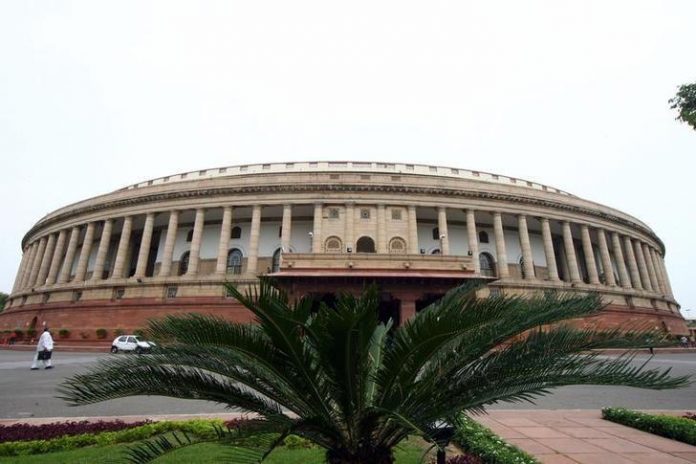







 Allow notifications





