Download Now
Home Blog Page 28

3-Dimensional (3D) trademarks 

0
Well known trademarks

This article is written by Aditi Aggarwal and further updated by Debapriya Biswas. This article deals with the emerging trend of 3D trademarks, how they came to be, and how to protect them under the Indian trademark law. The protection of 3D trademarks in other countries is also discussed at length with the help of some relevant case laws. Lastly, the article covers some FAQs for a better understanding of the readers.

Introduction

While visiting grocery stores, we often come across various products with similar prices and functionality. Yet, we, as customers, only flock towards the products of certain brands that we are more familiar with and have used quite a few times. This customer loyalty comes not only from our comfort with the said brands but also from their recognition and the goodwill they have built in the market. A trademark often gets associated with this goodwill and reputation since it helps bridge a link between the brand and the products and services provided under it.

From brand names to the iconic colour of their products, all of them can be protected under the trademark law if they can act as a source identification for the general public. This also extends to the shape of a product, especially if it is quite unique in its field and aesthetic. Ever wondered how only Ferrero Rocher chocolates have a shape that they have or why no other chocolate has packaging like that of Toblerone chocolates? This is because the product’s shape or the product’s 3D packaging is protected by trademark law. 

In this article, we will learn more about three-dimensional (3D) trademarks that we often see in the form of the shape of the products. 

Meaning of trade mark

In India, Section 2(1)(m) of the Trade Marks Act, 1999  gives the definition of a ‘mark’ that includes a brand, device, label, heading, name, signature, ticket, letter, numeral, word, packaging, the shape of goods, or combination of either colours or any other combination. In addition, Section 2(1)(zb) defines a trademark as a mark that is capable of being graphically represented as well as one that is capable of distinguishing the goods and services of one individual from another. It also mentions that it may include the shape of the products, their packaging and the combination of colours used on the goods.

The best example of this would be the logo and mark of the brand Starbucks, which is quite distinct in its green colour, as well as the graphics. Not only does the logo represent the company, but it also immediately relays to the customers where it originates from. 

A similar case can be seen with Cadbury. Since Cadbury is quite an old company with a global influence, people tend to trust it more than any other local brand. Any product, whether confectionery or any other food product, with the mark of Cadbury is often perceived as one of higher quality due to its long-standing goodwill. 

This goodwill can also be seen through other trademarks such as Domino’s Pizza, Levi, Haldiram, Tata Enterprises and more. Each trademark has become popular and distinctive in its own accord and has acquired goodwill amongst the public.

Section 2(1)(zb) also mentions’shapes of goods’, along with the other conventionally registered marks, such as words, logos, symbols or colours. In fact, Rule 26(4) of the Trade Marks Rules, 2017, mentions the shape of goods or their packaging as a type of trademark as well, while citing that the reproduction of the same, at the time of filing the registration application, shall consist of ‘at least five different views of the trade mark and a description by word of the trade mark.’ This widens the scope of the definition of a trademark to include non-conventional ones like 3D trademarks

What is a 3D trademark 

A 3D trademark is an unconventional trademark that makes use of the three-dimensional shape of a product or its container or packaging to achieve a distinct place in the growing marketplace. It is non-conventional in the sense that it does not comprise two-dimensional elements of mere words, numerals, or figures, which were more traditionally used as trademarks.

In simpler words, a 3D trademark consists of the shape and configuration of a product, which sets it aside from its competitors in the market. When the shape of the product is unique enough to be recognised and connected to a certain brand or origin, it can also start acting as a trademark. 

Let us understand it with a few examples. The iconic London Taxi, which we see so often in British series and movies, can also be considered a shape or 3D trademark. This is because not only is that iconic all-black colour very typical of taxis in London, but the shape is also quite unique in itself. Its evolution and inspiration from the 1900s British carriages to the current style have been used for decades and thus can be geographically recognised, as well as distinguished from all the other taxis around the world. 

Another example would be the ‘Kinley’ water and soda bottles that we are so familiar with. Not only is its unique design quite recognisable, but it has also become a trademark on its own. The trade dress of Kinley, which includes the smooth but waved creases on the body of the bottle, along with the white and blue combination, has been widely popularised and identified with the same. This was also acknowledged and established by the Delhi High Court in the case of The Coca-Cola Company & Anr vs. Narsing Rao & Ors (2014).

These 3D trademarks are also referred to as shape marks, which are a part of the trademark dress of a product. As one may know, a trade dress is the overall appearance and feel of a product, which may include its colour, shape, design, etc. Shape marks, on the other hand, mostly focus on the shape of the product and its packaging. 

In simpler terms, a shape mark is a part of a trade dress that encompasses both 2D and 3D trademarks of a product. However, while 3D or shape marks have become common now and are even protected as trademarks, such was not always the case. 

History of 3D trademark

Initially, trademarks started with logos and wordmarks, with their first traces dating back to the Stone Age, when the livestock were branded with marks (names and drawings) to help identify which animal belonged to whom. It started with the intention to prevent theft of personal property and slowly developed into a source of identification.

This practice continued with Egyptian masonry, using quarry marks and stonecutters’ signs to relay the type of stone used and who worked on it. Once the scale and variety of commercialisation increased, usage of such marks could also be seen on loaves of bread and other baked goods, where the bakers drew and sewed specific patterns onto their bread. The practice of marking one’s goods to help customers identify them and to attach goodwill with the same is what developed into what we know as a trademark and its related legal provisions. 

However, traditionally, trademarks were seen more as logos, words and graphics, the concept of colours and the combination of them being used as a mark developed later from the same. Unconventional or non-traditional marks like smell, sound or shape were recognised much later than their conventional or traditional counterparts. 

In India, the term ‘mark’ was first defined under Section 2(1)(j) of the Trade and Merchandise Marks Act, 1958, which included a ‘device, brand, heading, label, ticket, name, signature, word, letter or numeral, or any combination thereof.’ There was no mention of shape, smell, sound or any other non-traditional marks. Even the combination of colours was not recognised as a mark under the old legislation. 

In fact, it wasn’t until the Trade Marks Act, 1999, that the definition of the term ‘mark’ was expanded under Section 2(1)(m) to include the shape of goods as well as the packaging, which can also be referred to as a shape mark or 3D trademark. As long as the mark fulfils the quintessential function of a trademark, which is to help consumers identify the origin of the goods without any confusion, it shall be considered a trademark. 

The Delhi High Court briefly summarised the evolution of trademarks in the case of Levi Strauss and Co. vs. Imperial Online Services Private Limited (2022). As per the court, the law of trademarks did not initially include the shape of goods or packaging. Traditionally, only some aspects, such as words, names, letters, labels, logos, etc., were identified as marks. 

The primary reason behind the registration was to prevent the unauthorised commercialisation of the structure of the hotel without prior permission or licence from the proprietor. However, such trademarks can also help protect the distinctive architecture of the buildings from being forced without permission. 

Similarly, the Phiroze Jeejeebhoy Towers building at Dalal Street in Mumbai was granted trademark registration in 2018 to the Bombay Stock Exchange (BSE) for its unique structure and the heritage it represented. The trademark protection granted would help preserve the distinctiveness of its architecture as well as the cultural heritage behind its structure. 

Both the aforementioned buildings have the capability to function as an indication source, given their popularity as landmarks and their rich cultural history. In addition, they also act as a geographical representation, thus satisfying the eligibility criteria of a trademark. 

Purpose of 3D trademark

The emergence of 3D trademarks came with developing technology, since earlier, it was difficult to manufacture complex packaging or shapes of goods without proper machinery. With advancements in machinery and technology, the ever-present human creativity can now also be expressed through the packaging and the shape of the products. As with any other trademark, shape or 3D trademarks also need to satisfy the same functionality. They should be distinctive in nature so that any common man can identify the source or origin of the goods, just like any other type of trademark. 

However, while it may sound simple, such is not the case. The parameter for distinctiveness in 3D trademarks is harsher from other marks, especially since the shape of the goods can often be technical or functional in their application, and giving such shapes trademark protection can hinder others from manufacturing in the same industry. 

Let us understand this through an illustration. In India, ceiling fans are quite a common sight to see, isn’t it? That is also the case with its shape, which is commonly found in the form of three- to four-armed machinery that moves in a circular motion above our heads to produce gusts of wind. 

Despite the different brands, the shape remains common among all, and that is because the shape is functional in nature. The fan needs three or more arms to circulate the air in the room, and without this, the ceiling fan would have no use. In such a case, if someone tries to register this ceiling fan design as a trademark, then they wouldn’t be able to secure such protection. 

Since the design is functional in nature, it cannot be registered. If it was, then there would be a monopoly in the market, and it would create unfair competition amongst the competitors. The same is the case for designs that are created due to a technical result. In simpler terms, any design that comes due to some technical manufacturing of the goods cannot be trademarked. 

The best example of this would be the default shape of the handle of a cup or the default shape of the bottle and bottle caps. Any shape that was produced due to the technical manufacturing of the product cannot be registered as a trademark.

In the case of Levi Strauss and Co. vs. Imperial Online Services Private Limited (2021), the Delhi High Court held that even if a shape mark can be a part of the design, it is still required to satisfy the trademark functionality at the time of applying for its registration. The appearance of a mere stitching pattern cannot be recognised as a trademark unless it is distinctive and has an ‘acquired meaning’. 

As per the court, the test of acquired meaning in this context would be similar to that of the test of secondary meaning that is applied to descriptive words in a mark. The court also relied on the book Trademarks and Unfair Competition by Thomas McCarthy when discussing geometric shapes as trademarks. 

According to McCarthy, “uncommon or unusual shapes and symbols that contain some minimum amount of inventiveness or fancifulness can be regarded as inherently distinctive and protected as such, without the need for proof of secondary meaning. The issue is whether this shape is so unusual for this type of goods or services that its distinctiveness can be assumed.” 

In simpler terms, in the absence of any secondary meaning of the shape, the focus would be on whether it is unusual or unique for that category of goods. For example, the unique shape of a perfume bottle. 

The shape of the product should be unique for its goods and not functional in nature. It can be only for aesthetic purposes, setting aside the product from all its competitors. In such a case, even without an acquired meaning, the shape can be registered as a trademark. The 3D mark should also act as source identification, just like any other trademark. 

Protection of 3D marks in India

In India, once a 3D mark is registered or even applied for registration under Section 18 of the Trade Marks Act, 1999, the proprietor will be entitled to sue anyone who infringes on or copies their mark. If the 3D mark is unregistered or is in the process of being registered, the remedy would be awarded under common law in the form of passing off. 

Under Section 20 of the Code of Civil Procedure, 1908 (hereinafter referred to as ‘CPC’), the proprietor of the unregistered mark can file a lawsuit where the defendant resides, where the defendant’s business is carried on, or where the cause of action arose. However, if the mark is registered, then a suit of infringement can be filed under Section 29 of the Trade Marks Act, 1999. 

For the claim of trademark protection for a 3D mark, Section 9(3) of the Trade Marks Act, 1999 is to be consulted. This Section specifies three conditions under which a trademark would not be qualified as a registered 3D trademark:

  1. Where the shape of goods results from the nature of the goods themselves.
  2. Where the shape of goods is such that it is necessary to obtain a technical result.
  3. Where the goods are given a substantial value due to their shape.

To elaborate, Section 9(3)(a) focuses on a situation where the shape of the goods has resulted due to the nature of the goods. For example, the shape of a pen or pencil. The cylindrical shape of the pen makes it easier to hold. Thus, given the nature of a writing instrument, the cylindrical shape is a must and cannot be trademarked. 

Meanwhile, Section 9(3)(b) states that any shape produced due to the technical manufacturing of the goods cannot be trademarked. As discussed earlier, the default design of a ceiling fan with three or more arms is made as such to circulate the air in the room. Such a design that has a purpose and is functional cannot be trademarked under this sub-clause. 

Section 9(3)(c), on the other hand, talks about a shape that can add substantial value to the goods. Here, the ‘value’ can be both functional and monetary in nature. The best example for this would be two-handled mugs in which the second handle can be said to have both functional and monetary value and thus cannot be registered as a trademark.

The purpose of this section is to prevent monopolies of the common shape of goods and ensure that such goods are free for public usage. The contour of a Coca-Cola bottle, the 3D shape of the Super Cub scooter of Honda, and the shape of the Zippo Lighter are some famous examples of 3D trademarks.

Those wondering what types of 3D marks can be registered as trademarks must remember that the mark should not be functional or technical in nature and should act as an identifier of the source. It can be unique among goods whose shape serves no purpose other than its aesthetic appeal. The best examples of this would be the fancy perfume bottles that we often come across in a variety of shapes, sizes and colours. Their shapes have no purpose other than their aesthetic and for easier identification of their brand. 

Other than these, 3D marks can also be protected under Section 2(1)(zg) of the Act. This section lays down the definition of a ‘well-known’ trademark, which is a mark (in relation to goods or services) that has become popular due to a considerable segment of the public using the goods or services under the said mark. 

The substantiality of this mark is judged by the fact that if another marketer uses such a mark in relation to his goods or services, then the public would be likely to take that mark as indicative of a connection in furtherance of trade or service of the original marketer.

For example, assume Coca-Cola’s bottles are newly launched in India, without any trademark. Coca-Cola’s packaging is such that it is recognised by the shape of its glass bottle. If any other company makes a bottle of a similar shape and consumers start identifying and relating it to Coca-Cola’s bottle, then in that situation Coca-Cola would feel the need to protect the bottle’s shape under trademark law, and such a shape would come under the definition of a well-known trademark, as it qualifies the requirement of becoming a substantial segment of the public.

Along with the fulfilment of requirements under Section 2(1)(zb), the Manual of Trademarks, Practice and Procedure, 2015 aids the applicants in listing down the requirements of graphical representation, which are to be adhered to by the applicant, in cases of unconventional trademarks, including smell marks, sound marks, colour marks, etc. as:

  1. A trade mark must have the ability to be graphically represented for the purpose of registration.
  2. A trade mark that has colours, shapes, or packaging should come along with a concise and accurate description of the trade mark. 

Such a description would be included as an endorsement, along with the graphical representation, which would help define the scope of the registration. It is also to be noted that the burden of providing a suitable representation of the trade mark is on the applicant. 

Let us again take the example of the shape of the Coca-Cola bottle. The graphical representation of the shape should be in the form of a perspective drawing while depicting all its features and should have an accurate description of the shape. 

To summarise, the following elements of a product can help in protecting a 3D trademark:

  1. Consumer recognition
  2. Acquired distinctiveness
  3. Goodwill
  4. Extensive proof of usage

Three dimensional (3D) trademark registration in India

The trademark registration process for 3D marks in India is quite similar to that of 2D marks, just with a few additional steps due to its unconventional nature. Given below are the steps for the registration process of 3D trademarks in India:

Trademark search and classification

Just like any other trademark, 3D marks also need to be classified as per the trademark classes defined under the International Classification of Goods and Services, 2001 (also known as the NICE classification) published by the World Intellectual Property Organization (WIPO). Rule 20 of the Trade Mark Rules, 2017 also mandates such classification as per the current edition of the NICE classification.

Once the classification is done, the proprietor is then advised to do a thorough trademark search and market search for their mark. Since 3D marks are quite uncommon to be registered as trademarks, such a search might be comparatively easier and less time-consuming than 2D marks. A thorough trademark search across all Indian trademark databases would prevent any risks of objections from the registrar during the examination process.

Trademark application

Once the 3D mark is designed, classified and prepared for with thorough trademark searches, it is time to file the registration application. Under Form TM-A, one can file their 3D trademark for registration online along with all the prescribed fees and required documents as per Rule 23 of the Trade Mark Rules, 2017.

In the application, the applicant must mention the category of their trademark as ‘three-dimensional trademark’ while providing a detailed description of the shape mark, including its dimensions, combination of colours and an explicit illustration of its shape.

For instance, if the applicant is trying to register the iconic shape of the bottle of their drink, they need to add the details about the shape of the bottle (for example, dome shape attached to a long neck and flat bottom) as well as the dimensions of the bottle. Any other details, such as the combination of colours used on the bottle or any other design that may appear on the bottle, also need to be mentioned in the description.

Furthermore, if there is any usage of the shape mark, then the first usage also needs to be mentioned and submitted as per Rule 25 of the Trade Mark Rules, 2017. This usage can be shown in the form of invoices of sale or even printouts of advertisements representing the 3D mark for which the registration is sought.

As per Rule 26 of the Trade Mark Rules, 2017, documents containing the representation of the 3D mark also need to be submitted alongside the application. These representations should be in the form of drawings or pictures of the shape mark from different angles to emphasise its dimensions and cover the whole shape mark from all views. Pictures of at least three to five different angles (top, bottom and all the sides) of the shape mark should be added to the representation.

Trademark examination

Once the registration application is filed, the registrar examines the application for the availability of the mark and determines whether the mark can be registered as a trademark or not. As per Rule 33 of the Trade Mark Rules, 2017, the registrar may raise an objection and ask the applicant to submit some additional description of the shape mark, such as more pictures of the 3D trademark from different angles and the reason for the usage of the shape mark.

If the registrar is still not satisfied, a show cause notice for the applicant will be issued. During the hearing, the applicant can present a specimen of the shape mark along with proof of its usage in the market, if any. This is usually done for the benefit of the applicant and to determine whether the 3D mark can even be registered as a trademark in India or not.

Trademark publication and opposition

After the objections of the registrar are cleared, the 3D trademark is then published in the trademark journal for public access and to invite any third-party opposition. Usually, a period of four months after the date of publication in the trademark journal is given to raise opposition as per Rule 42(1) of the Trade Mark Rules, 2017. Any interested party can raise opposition based on the similarity of the 3D mark with their own trademark or even opposition regarding the registrability of the mark in India.

Only after all the third-party oppositions are settled can the trademark application proceed to certification from the registrar.

Trademark certification and renewal

Once all the steps of the registration are achieved, the registrar shall grant the applicant a trademark certificate as per Section 23(2) of the Trade Marks Act, 1999, that would be valid for ten years from the date of filing of the application. Once (or even before) the protection period expires, the applicant can apply for the renewal of the trademark with the appropriate fee under Form TM-R as per Section 25(1) of the Act.

Trademark Act vs. Design Act

As established earlier, a 3D mark consists of the shape of the goods, which can also fall under the category of an industrial design. Given that the design of a product also includes its shape, we should be able to register it under the Design Act, 2000 as well. Thus, the question arises which one is better: registration under the Trademark Act or the Design Act? Before answering this question, let us briefly touch upon the differences and benefits of both legislations.

As one may already know, the trademark law usually protects the practical or functional aspects of the goods. This includes the source identification of a product, along with its geographical representation and the goodwill attached to it. The quality of the goods is connected to the goodwill that the mark may have. 

In contrast, design law protects the appearance of the goods. Rather than focusing on functionality, design law protects the creativity and visual aspects of the goods. This includes the patterns drawn on the labels, the unique shape of the product, the distinct packaging, etc. 

In a nutshell, trademark law prioritises identification and goodwill, while design law prioritises visual appearance and creativity. Thus, if a shape or 3D mark is also capable of functioning as a trademark, it would be better to register it under the Trademarks Act.  

This is mostly so, since in India, it is prohibited to register the same design or shape mark under both the Trademark Act and the Design Act. Section 2(d) of the Design Act states that designs under this Act exclude any trademark. Thus, one can receive protection only under any one of the two acts. Due to this, it becomes crucial for one to accurately determine which law would apply for the protection of their 3D mark. 

Both trademark and design laws are territorial in nature and need to be registered in their local nations to increase the reach of protection. However, in India, the protection period prescribed under Section 11 of the Design Act is only for ten years and can be extended up to another five years. On the other hand, Section 25(1) of the Trademark Act also prescribes a ten-year protection period that can be renewed each time for ten additional years.

During registration, the shape mark is required to be submitted in the form of a 2D representation from at least five different angles. These must include the top and bottom views and the different sides encompassing the product. Along with this, a detailed written description of the representations must also be provided. This helps to ensure a comprehensive understanding of the shape, which is up for publication and protection. 

Usually, the registration and examination process of the shape marks as a trademark is scrutinised in quite a strict and rigorous manner to prevent granting protection to any shape that might hinder or unfairly affect the competition in the market. The shape’s uniqueness and ability to enable source identification are the most scrutinised factors. 

However, several aspects, such as the 2D marks on the shape (like labels, wordmarks, descriptions, instructions, graphics, etc.), can help in giving it a distinctive look. The biggest example of this would be the packaging of Maggi noodles, where the trademark, along with the photograph of the noodles and the drawing of the instructions, is distinctive on its own. It adds to the appearance of the product as well as the functional aspect of identification.

Protection under both legislations

As mentioned earlier, the Design Act, 2002 explicitly prohibits registration of any design that is already considered a trademark under the Trade Marks Act, 1999. Thus, protection for the same design or shape under both laws is not possible. However, one can navigate the same, by registering different aspects of the goods under each law. 

For instance, let us take the example of a plastic bottle of soda. If the shape of the plastic bottle is completely novel, then it can be registered under the Design Act. However, if the shape is not novel but is quite unique with respect to the concerned class of goods it is registered under, then a trademark would be a better option. In other words, the shape needs to be distinctive in its field to be recognised as a trademark.

Furthermore, if there are any 2D aspects to the bottle, such as graphics or distinct drawings, then those can be registered under the Design Act. Meanwhile, the 3D marks, like the shape of the product and the packaging, can be registered as trademarks. In this manner, the same product would have the protection of two different intellectual property laws. 

Additionally, if the protection of the mark lapses under the design law, then the proprietor can register it under the trademark law. In simpler words, once the protection period prescribed under the Design Act has expired, the proprietor can apply for trademark protection for the same 3D mark. 

In fact, even without registration of the 3D mark under the trademark law, the proprietor can still sue for passing off while also claiming damages for infringement of their registered design under the Design Act. This exact scenario was seen in the case of Carlsberg Breweries A/S vs. Som Distilleries and Breweries (2018), wherein the Delhi High Court allowed the plaintiff to combine the claims for infringement of a registered design and damages for passing off of an unregistered trademark. In this case, the plaintiff filed a suit for infringement of their registered design and passing of their unregistered trademark in relation to the ‘Carlsberg’ bottle and its overall packaging. The defendant had argued that the suit was not maintainable since the Delhi High Court had previously established in the case of Mohan Lal Proprietor of Mourya vs. Sona Paint & Hardwares (2013) that the two claims were distinct and protection under both cannot be claimed in the same suit. 

When the case was appealed to the Delhi High Court, the court observed that both design infringement and passing off had common questions of fact and law, making it possible to allow for a combined suit. Based on this view, the court overturned the precedent established in Mohan Lal Proprietor of Mourya vs. Sona Paint and Hardwares (2013), with the rationale that Order II Rule 3 of the CPC permits joinder of causes of action, and thus, claims under both trademark law and design law can be permitted within the same suit. 

The primary reason for doing this was to avoid a multiplicity of proceedings and unnecessary litigation costs, especially when the premise of the causes of actions was similar. This judgement also broadened the scope of protection for designs that are registered under the Design Act by allowing them protection under the doctrine of passing off if they can prove to function as unregistered trademarks.

Another case that brought significant changes to the overlapping protections of trademark and design law is Super Smelters Limited vs. Srmb Srijan Private Limited (2019). In this matter, the Calcutta High Court held that after the protection period of a registered design has lapsed, the same design can also be registered as a trademark if it has gained goodwill amongst the public and the design of the product is exclusively associated with the proprietor.

As per the court, a lapsed design can still be capable of the functions of a trademark that can be quite independent of its design rights. While trademark protection and design protection cannot overlap, one can exist when the other lapses. 

Protection of 3D trademarks around the world 

European Union (EU)

When it comes to laws of other countries, the European Union Trademark Directive, 2015 is an extensive directive that covers all 27 member states of the EU, excluding the UK. It helps in obtaining Europe-wide protection through a single application, and it is also a cost-effective way. 

Referring to Article 3 of the EU Trademarks Directive, to qualify a shape of a product or packaging for trademark protection, it should be capable of being distinguished from the goods and services of others in the market and being represented in the trademark register in a manner that causes no confusion on what subject matter the trademark protection is awarded to by the authorities.

The representation is judged by the test of whether the competent authorities and the public can determine the same or not. Further, according to Article 120(2) of the Industrial Property Law, 2002, if a trademark is capable of distinguishing its goods or services, then it may be capable of being represented graphically. 

Article 131(2)(6) of the same law mentions the same conditions for products that cannot be registered as a trademark as Section 9(3) of the Indian Trademark Act. The EU law does not take into account functional features. For example, pizza’s function is to taste delicious, and its taste cannot be registered as a trademark. Thus, only where there is absolute ground of functionality or substantive value of a shape, trademark protection can be given.

United States of America (USA)

In the case of the USA, Section 43(a) of the Lanham Act, 1946, provides protection to 3D or shape marks, whether registered or unregistered. It also protects trade dress from infringement. However, any mark to be protected under this provision must be distinctive in nature and have gained a secondary meaning in the market. 

Japan

Meanwhile, in Japan, trademark law is more focused on the visual appearance and its recognition by the public. Thus, 3D trademarks are protected, as well as explicitly mentioned in the definition of trademark given under Article 2(1) of the Japanese Trademark Act, 1959.

Other countries

In a 2015 paper by the  Intellectual Property Owners (IPO) Association International Trademark Law and Anti-Counterfeiting Committee under the International Trademark Association, named ‘Shape Trade Marks – An International Perspective’, several countries were highlighted for their protection of 3D trademarks. In countries like Argentina, Australia, New Zealand, Singapore, Portugal and Taiwan, shape marks can be registered and protected, but the scrutiny for the process can be quite rigorous and strict. 

In fact, in Australia, 3D marks face quite a bit of difficulty during registration since the registrar has to determine the novelty of the design as well as how distinguishable it is from the other goods in the class it is registered under. Oftentimes, the design is either not unique and novel or is a result of the functionality and nature of the goods. Only some shape marks are allowed registration, based on the satisfaction of the aforesaid criteria, such as the Tiffany’s box. 

The distinctiveness in this case refers to the uniqueness of the 3D mark rather than the distinctiveness it may gain over usage for a long period. Thus, even if a 3D mark has gained goodwill and distinctiveness among the public, its registration may still be rejected due to its shape being in the public domain for years or for not being novel. 

On the other hand, the 2015 paper also mentions countries like Nigeria and South Africa, where trademark protection is more relaxed, as compared to developed countries. In these nations, there are no express provisions that protect shape or 3D marks under trademark law. Most proprietors opt to register their 3D marks under industrial designs or patent law for better protection.

Significant case laws

Ferrero Rocher case (2018)

Ferrero Rocher products have been sold for a long time now. The products enjoy a great customer base, as they have a unique taste and a visual appeal. As a globally known brand, it also faces trademark issues all across the globe. 

Singapore

The question of when a trader should have a monopoly over a shape that he uses in connection with his trade was answered by the Court of Singapore when a trademark application was filed by FERRERO S.P.A. in 2019.

While analysing whether trademark protection should be given to the packaging of Ferrero Rocher, the repercussions of accepting “mere recognition of a product” for its registration, which was earlier granted by Justice Jacob in the matter of Unilever PLC’s Trade Mark Application (2003), were again highlighted.

It was stated that a product’s appearance becomes well-known after the product has been sold and advertised widely by a manufacturer. It was further said that in such a situation, appearance alone would start serving as a trademark, and then a manufacturer could have the shape of the product registered solely on that basis. The manufacturer would acquire a position wherein he can stop other parties/traders from using their trademarks or from selling their products, even though no one is deceived or misled by the same.

The applicants filed the application two times, with the second one in 2019. The written description was submitted on 10th September, 2019 and according to it, the mark was a brown and gold striped paper cup with a 3D ball-shaped chocolate, wrapped in a golden foil having a white sticker on top, placed in it. This particular description did not make any reference to the white oval sticker’s gold rim, which was referred to the first time.

The question of inconsistency was raised by the court. It also questioned the fact that the mark consisted of a ball-shaped chocolate, since the applicant’s submissions or evidence nowhere mentioned that the mark was limited to a ‘ball-shaped chocolate’.

In the final judgement, it was broadly considered that while the application mark was indeed unique, an average consumer who does not know about or has not heard of the applicant’s chocolates would largely view it as ‘functional packaging’, rather than a trademark, if it were to be used in respect of other goods, such as pastries, stuffed wafers, chocolate-based products, etc., for which the registration was sought by the applicant.

Another essential question, which was not answered or proved by the applicants, was whether the average consumer would view any or all the components of the packaging as distinctive if the wordmark ‘FERRERO ROCHER’ was not on the product. It was because of this unanswered question that Ferrero Rocher was not granted the trademark.

India

In Ferrero Spa vs. M/s Ruchi International (2018), the defendant, Ruchi International, was an importer, as well as a marketer, dealing in chocolates under the brand name ‘Golden Passion’, in India. These chocolates were lookalikes of the plaintiff’s ‘Ferrero Rocher’ chocolates, which were sold under the FERRERO ROCHER mark and trade dress. 

Even after an injunction was passed against the defendants, the manufacturing of these chocolates continued in India and was exported from China by the defendants under the brand ‘Golden Passion’. 

The court held that the similarity in the packaging between the defendant and the plaintiff’s products infringed the plaintiff’s rights under Section 29(5) of the Trademark Act. It was decided by the court to grant trade dress protection along with recognition as a well-known trademark, within the meaning of Section 2(1)(zg) and Section 11(6) of the Act. 

The effect of this judgement was that Ferrero Rocher was granted a 3D trademark over the packaging of its product, as far as India is concerned.

Kit-Kat case (2018)

KitKat’s maker, Nestle, is a food multinational that has been trying to establish a trademark for its product in Europe since 2002. However, Luxembourg’s European Court ruled against it.

The case was between Nestle’s Kit Kat and the maker of Cadbury chocolate, US rival Mondelez, over four-fingered wafer biscuits. The biscuits were first sold in 1935. The long battle concluded in July 2018, wherein KitKat lost the appeal and its shape trade mark became annulled across the EU. 

Now, post Nestle’s successful application for a national trademark, it is valid only in the member states. The longevity of a mark could have been considered as a factor in this case, but Kitkat has been using the shape since 1935, and Kvikk Lunsj (formerly Mondelez) started using it just two years later, in 1937.

When this chocolate wrapper is first picked up, its shape is not perceptible. Otherwise, the shape could be used as a mark to identify the product. Further, because an average consumer should be able to recognise the brand with a clear and precise trade mark, this presented a higher hurdle for the shape. 

Thus, if the particular four-fingered shape was fulfilling a function, it could not be a trade mark. Cadbury argued on similar lines and said that KitKat’s shape had everything to do with a technical or design issue and not the identity of the brand.

Dabur India Ltd. vs. Amit Jain & Anr (2008)

In this case, Dabur India had filed a lawsuit against the defendant for allegedly copying the shape and name of their product, ‘Dabur Amla Hair Oil’. The product of the defendant was named ‘Plush Amla Hair Oil’ and had a bottle shape as well as a cap design, similar to that of the plaintiff’s registered design. 

The Delhi High Court analysed both bottles side-by-side to note the dissimilarities between the two. The court found that both the plastic bottles had different sizes, but the shape and design were deceptively similar. 

While observing the shape mark registered under the Design Act by the plaintiff, the court observed that the shape of the bottle was not inherently distinctive or unique in its structure. The elevations of the bottle gave it some design, but it could not be called novel or distinctive in nature. The court further noted that the Apex Court had also found the bottle shape and design to be not novel or distinctive in nature. However, the plaintiff had registered their bottle shape, and the registration application was both approved and valid at the time. 

Even if it was contended by the defendants that the bottle shape was in the public domain in the USA, it does not satisfy the requirements of Section 19 of the Trademark Act, which talks about the cancellation of a registration. A trademark is a territorial right and should be considered as such. 

The court also stated that just because there was a similar design in the USA, it would not amount to prior publication that would render a design registered in India liable to cancellation. Furthermore, it does not affect the right of the plaintiff seeking an order restraining the defendant from infringing its registered design.

Thus, in view of the above, the court decided in favour of the plaintiff and passed an injunction against the defendant, with costs of Rs 20,000 to be paid by the defendant to the plaintiff. This case highlights how the registration of a design or shape can triumph over most of the facts, even if the registered design has prior publication in another country. 

Gorbatschow Wodka vs. John Distilleries Ltd. (2011)

In this landmark case, Justice D.Y. Chandrachud of the Bombay High Court passed a decree concerning the transborder reputation of a shape or 3D mark. The plaintiff owned one of the most popular vodka brands in the world, ‘Gorbatschow Wodka’. It had a very unique design and bottle shape. The vodka bottle was usually made out of glass, with a slender and cylindrical neck attached to a bulbous dome that widens to the bottom of the bottle. This unique bottle design was applied for registration by the plaintiff and was still pending at the time. 

Meanwhile, the defendant launched their own vodka brand named ‘Salute’ with a different colour combination, but the shape of the bottle was very similar to that of the plaintiff’s product. When this came to the plaintiff’s knowledge, they filed a lawsuit against the defendants for passing off.

The main contentions of the plaintiff were that the design and shape of the bottle of ‘Gorbatschow Wodka’ were very distinctive in nature and served no purpose other than its appearance. It was made for the sole reason of setting itself aside from other brands in the industry and for easier identification by the general public. If the defendant was allowed to use a design so similar to that of the plaintiff, it would dilute the distinctiveness and goodwill acquired by the plaintiff’s products. 

The defendant, on the other hand, argued that their product ‘Salute’ had a completely different colour palette, as well as label and design, as compared to the plaintiff’s product. Furthermore, the consumers of average intelligence could easily distinguish between the two, and it was an unlikely situation that any confusion may occur. 

Hearing their arguments, the court observed that while the colour combination and label were distinct, the shapes of both the bottles were deceptively similar to one another. The court also noted that the plaintiff had adopted the bottle shape for no other purpose than its aesthetic, with its design being distinct from all its competitors in the market. As per the plaintiff, the architectural design of the Russian Orthodox Church was the inspiration behind the design of the bottle. This made the shape mark, both novel and creative. 

The court emphasised that the defendant adopted a similar bottle shape with a bulbous structure, with no explanation for the same, especially considering the fact that both the plaintiff and the defendant are part of the same industry. The fact that both the brands and bottles were for the same alcoholic beverage, that is, vodka, was also not overlooked. 

The court also noted that the plaintiff’s brands were available both in India as well as internationally and thus had a transborder reputation with their trademark and bottle shape. In addition, the plaintiff had prior use of the defendant, which also played in their favour. 

In view of the rationale above, the court held the judgement in favour of the plaintiff and passed an injunction against the defendant. This view was backed by the Delhi High Court in the cases of Coca-Cola Company & Anr vs. Narsing Rao (2014) and Zippo Manufacturing Company vs. Anil Moolchandani (2011).

Knitpro International vs. Examiner of Trade Marks (2022)

This is a more recent judgement on shape marks, passed by Justice Prathiba M. Singh of Delhi High Court. In this case, the plaintiff’s shape mark for a knitting needle was refused by the registrar, and being aggrieved by the same, they appealed to the High Court. 

The knitting needle in question was a pair of metallic sticks with a thick diameter and a flat structure at the end. They were registered under class 26 of trademarks in respect of ‘knitting needles and crochet hooks’. 

The application was objected to by the Trademark Registry for not complying with Section 9(1)(a) and Section 9(1)(b) of the Trademarks Act. Due to its lack of distinctiveness, it was later rejected, and the plaintiff appealed against the same. 

During its hearing, the plaintiff submitted that the shape mark of the knitting needles was distinctive in nature and had acquired a secondary meaning amongst the public. However, when the court enquired about distinctive features that would amount to trademark protection, the plaintiff was unable to answer. Instead, they decided to withdraw the appeal.

Observing the same, the court briefly noted the evolution of the definition of ‘mark’ and how it came to include non-traditional marks, such as smell, shape and sound, among others. The fact that remained unchanged was that every mark was supposed to fulfil the quintessential function of a trademark, which is to be distinctive from other competitors and act as a source identification. 

As per the court, if a mark is unable to help the consumers identify its origin, it is not eligible to be registered as a trademark. The mark can be of any type, but as long as it fulfils its objectives, it can be registered. 

In the present case, the knitting needle in question had a shape that was quite generic in its structure, with no human creativity to make it distinctive. The lack of distinctiveness also made it incapable of acting as a source identification. A distinctive shape often helps the consumers associate the product with certain brands and companies. If it is too generic, it would confuse the public with respect to its origin. 

However, if the shape of a product has acquired a secondary meaning in the market, then its inherent lack of distinctiveness can be overlooked, just like in the case of descriptive marks under the Trademark Act. 

Conclusion

At its core, trademark law functions as a consumer protection measure, which prevents consumer confusion and makes it easier for them to purchase the goods and services they want. In granting registration to 3D marks or packaging, courts and the registries of trademarks should try to balance the interests of the applicant traders who want trademark protection with the interests of other traders who may use or are using elements of such trademarks in good faith.

Further, it must be noted that though there are sufficient provisions under trademark law to secure 3D packaging, alternatively, one can also protect the shape of products under the Design Act, which applies to both 2D and 3D marks.

Frequently Asked Questions (FAQs)

What is a trade dress?

Trade dress, as the term suggests, is the overall ‘dress’ of a product. In simpler terms, it is the overall appearance of a product, which includes its colour, shape and design. For instance, the iconic look of Colgate toothpaste, with its red, blue and white combination, along with its specific design. In some products, this also extends to its shape, such as the appearance, colour and shape of the Harpic bottles. This overall appearance and presentation of a product can often help customers identify their origin at the very first glance, making trade dress a very important part of the trademark and marketing of a product. 

Can trade dress be registered in India?

Yes, trade dress can be registered in India. Under Section 2(1)(m) of the Trade Marks Act, 1999, ‘mark’ includes the shape of goods as well as their packaging, which is exactly what a trade dress is. Thus, if a product’s trade dress is unique in its appearance, it can be registered as a trademark in India. 

Can a shape be registered as a trademark?

Yes, the shape of a product can be registered in India. Under Section 2(1)(m) of the Trade Marks Act, 1999, a ‘mark’ includes the shape of goods, and thus, it can be registered under the Act if it satisfies Section 9(3) of the Act.

Is trade dress a 3D trademark? 

No, a trade dress is not merely a 3D trademark. Trade dress is the overall appearance and feel of a product. It includes both the 2D trademarks (logo, word, graphics, etc.) of the product as well as the 3D trademarks (shape of product and packaging). It does not only consist of 3D trademarks. On the other hand, the 3D trademark is usually considered a part of the trade dress. 

References


Students of Lawsikho courses regularly produce writing assignments and work on practical exercises as a part of their coursework and develop themselves in real-life practical skills.

LawSikho has created a telegram group for exchanging legal knowledge, referrals, and various opportunities. You can click on this link and join:

https://t.me/lawyerscommunity

Follow us on Instagram and subscribe to our YouTube channel for more amazing legal content.

Download Now

Doctrine of Aul and Radd

0

This article is written by Adv. Devshree Dangi. It talks about the doctrines of Aul and Radd in Muslim inheritance law. It also discusses the classification of heirs under both the Sunni and Shia law. This article primarily focuses on the concept of the Doctrines of Aul and Radd and their applicability to Sunni and Shia laws with examples. It also analyses the exceptions as to the application of the Doctrine of Radd in both Shia and Sunni law of inheritance. It also mentions various landmark judgments on the applicability of the Doctrines of Aul and Radd and their impact on the subsequent case laws. 

Introduction     

The Muslim law of inheritance is undoubtedly none less than a systematic and interesting strategic system developed for the distribution of the property of the deceased. Based on religious doctrines, this method of division guarantees equity since different proportions of the estate are distributed to all the beneficiaries. Every heir’s share is predetermined, which, once again, acts per the Islamic concept of justice and equality. However, one of the main concerns that arises with the actual implementation of these inheritance rules is the fact that they are often not easy, especially when the total of the fractions defined adds up to more or less than unity. As a result, to manage these differences and to ensure the equilibrium as is envisioned under Islamic law, two doctrines; Aul and Radd are used. 

Whenever the fractions of the estate to which the heirs are entitled add up to more than the total value of the property, the doctrine of Aul comes into force. In such cases, each of the heirs receives less than the calculated share of the total assets to reflect the general formula of the distribution in a bid to ensure that the overall value does not transgress the estates available, hence keeping the integrity of the division intact. On the other hand, the doctrine of Radd, whereby if the total of fraction portions is less than the estate, then is a reduction allowed. This doctrine provides for the distribution of balance to the other eligible heirs so that all the property of the deceased is distributed and none is left undivided. Thus, they are both essential in the management of the complexity of the Muslim inheritance laws and in ensuring that the distribution of an estate as the Islamic Shariah prescribes is just as well as accurate. 

Background : Islamic inheritance law

Muslim inheritance law is based on the Quran and the Sunnah of the Prophet of Islam. There are realistic rules including the Quran verses which precisely state shares given to the different categories of heirs including spouses, children, parents, and siblings concerning shares of the deceased out of the total property to be divided. Additionally, the Sunnah which contains the sayings and actions of the Prophet adds to these Quranic guidelines by offering contextual details and expanded details on the practices of inheritance. Although the rules are well defined, computational difficulties occur when the sum of the allocated portions does not equate to the total. This causes either under distributions where the shares are less than unity or over distributions in the form of shares higher than unity for the estate. These problems coupled with those of distribution lead to the application of the principles of Aul (augmentation) and Radd (return) in Islamic law. Aul is used when the combined share an heir is to receive is more than the value of the estate; hence the shares are adjusted proportionally. On the other hand, Radd occurs when the sum of the shares does not exceed the value of the estate and the extra amount is distributed in the ratio of eligibility of the heirs being in proportion to the share. Such doctrines are meant to maintain equity and justice in the process of inheritance under Sharia law. 

Equitable distribution in Muslim inheritance 

The Islamic law on Inheritance is stringent to foster a purposeful and well-thought-out plan of distributing deceased’s wealth among the bonafide inheritors. This framework involves predetermined shares of all the categories of heirs as provided under the holy Quran and the Sunnah. However, some circumstances may lead to a situation when these predefined shares are not the most suitable numbers for the total estate and may cause a potential deficit or an excess. The doctrines of Augmentation (Aul) and Reduction (Radd) are used as the main tools to tackle these differences and bring fairness to sharing. 

Sources of Muslim inheritance law

Primary sources 

Islamic inheritance law is founded on two primary sources: the Quran and the Sunnah. These sources are combined with other principles and methods to guarantee that all the assets of a deceased person are divided in a wider and fairer manner. 

Inheritance under Muslim law is primarily based on two key sources:

  • The Quran: The Quran establishes the general principles of inheritance by stating the portions that are to be given to different categories of heirs. These shares are described in fractional terms on the deceased’s estate; this way it is more systematic and accurate. 
  • The Sunnah: In matters related to the practices of inheritance, the Sunnah which is the set of traditions and practices as elucidated by Prophet Muhammad affords further details and clarifications that are not otherwise provided under the Quran. Additional details concerning the shares and the modes of distribution are in the hadiths (sayings and deeds) of the Prophet. 

Supplementary sources 

  • Ijma (consensus of scholars): For centuries, the practice of Islamic jurists reaching a consensus on certain matters of inheritance has been incorporated into the overall area of Islamic law. Ijma, the practice of reaching a collective agreement on a sophisticated matter of law is useful for formalising peoples’ inheritance disputes by giving authoritative interpretations and rulings over scholarly consensus. 
  • Qiyas (analogical deduction): As for the Islamic legal rules that are not categorically a part of either the Quran or the Sunnah, jurists use a process called Qiyas, which is the determination of relative similarity. Thus, Qiyas compares new circumstances to previous principles to preserve the objective of inheritance laws and make them applicable to current issues. 

Key principles of inheritance 

Predetermined shares

All percentages of the estate that the Quran and Sunnah decided to give to the varied categories of heirs are conservative. These shares are fixed before they are equally distributed. Key heirs include: 

  • Spouses: It has been noted that a husband or wife would receive a certain portion of the estate according to the legal rules and in this case, the variations would arise where there were other competitors for the estate. 
  • Children: As for the sons and the daughters they inherit portions of the property and as a rule in the patrilocal culture, the sons get a double portion as the daughters. 
  • Parents: The mother and the father of the deceased are the holders of guaranteed shares. 
  • Siblings and grandparents: They also have a fixed portion in the degree of inheritance in case there are no other close relatives. 

Residuary estate 

The primary heirs have taken the portions assigned to them, and any of the remaining parts of the estate, which is termed the residuary estate, go to the residuaries (distant relatives). It concerns how closely one is related to the dead person, including all possible claimants to inheritance. The residuary estate means part of the estate left after the distribution of the shares to the principal beneficiaries is made. 

They are mostly the successors in the close relationships with special proportions envisaged by the Sharia law. The residuary estate is then inherited by more distant relations who are referred to as residuaries. The process of arriving at the residuary estate proves very tedious in that it identifies every person who may have any claim on the inherited wealth in the light of the kinship of the deceased. This entails the elimination of beneficiaries based on likely relationship with the deceased by undertaking the family and ancestral background study. 

Debts and funeral expenses 

Before any distribution of inheritance can take place, there may be burial and funeral expenses as well as the debts of the deceased to be paid. This principle stresses that all the monetary responsibilities should be met before the remaining property is partitioned among beneficiaries. As a general rule, before the distribution of the estate of the deceased, all the lawful debts owed by the deceased must be paid. This includes funerals, which are regarded as one of the first charges on the estate. Further, any balance of the accounts like the loans, credit card bills, medical bills, and many others must be paid from the estate monies. Before, though, and after the payment of all such liabilities the process of distribution of the property amongst the beneficiaries can begin. 

Gender equality in Islamic inheritance 

It should be noted that there are certain provisions of the shares of the male and female heirs, but it is noteworthy that Islamic inheritance law provides equality between men and women. As for the right to inheritance, it is equal for both men and women, nevertheless, the share could be different depending on the family role of the persons. 

Nonetheless, it should be pointed out that Islamic inheritance law does differentiate between male and female heirs as to the rights to shares but now it is crucial to stress the equality of the right to inherit. It is important to note that both men and women have a right to inherit the property of a deceased individual. However, the actual portion that goes to each inheritor depends on such effects as the closeness of the relationship with the deceased, the gender of the heir, and other facets as outlined under Islamic law. 

To eliminate any misunderstanding, it is important to note that the differentiation between shares given to male and female heirs follows the legal principles set down and thus there is no discrimination of any kind. The law seeks to distribute the estate among all the rightful beneficiaries with full regard to the law on how to make that distribution as fair as possible to all the beneficiaries and according to some factors.

Universal heirship and bequests

In Islamic law based on Quran, there is no provision for the modern concept of “will”. However, within certain conditions, a Muslim can make gifts (bequests) as a part of the will. They cannot take more than one-third of the estate and cannot reduce the shares of the primary heirs agreed upon. The doctrines of Aul and Radd further ensure fair distribution:

  • Aul (Augmentation): Used in situations whereby the total fractional shares exceed the estate, in such a case each of the shares is adjusted proportionately. 
  • Radd (Return): Used when the total shares are less than the estate so that the remaining share can be given to the heirs. 

Each of the four principles in Islamic inheritance law is clear, unambiguous, and divine; the remainder consists of scholarly consensus and analogical reasoning to prevent unfair and unjust distribution of a person’s possessions after their death. This way, the system of pre-determined shares does not lose its integrity and fairness in different circumstances: restoring the balance by repaying debts and expenses, the actions are based on the doctrines of Aul and Radd. 

Classification of heirs under Muslim law

In Islamic inheritance law, under both Sunni and Shia laws, heirs have different classifications depending on their category or the closeness of relation to the deceased and the amount of share they are allowed to inherit from the deceased’s property. They are divided into two types; classes of sharers and remaining classes or residuaries. 

Class I heirs: Class I heirs are those people who under the Quran are entitled to a particular share in the estate. It consists of close relatives like the widow, husband, daughter, son, son’s daughter, full sister, consanguine sister, uterine sister, uterine brother, mother, and father. To such people, priority is given as to the distribution of the estate since their shares are also enumerated in the Islamic jurisprudence depending on their closeness and the importance of the figures in the family structure. 

Class II heirs: Class II heirs are the residuary who only inherit the remaining property after the rest of the property has been divided among the Class I heirs. This class is also classified into Quranic residuaries and other residuaries or general residuaries. Sharers according to the Quranic provisions are those who were originally residuary but are demoted to share because they must yield to a higher degree of residuary. These heirs may consist of some of the closer family members who if there are no other heirs then take over the process of inheriting the residual of the estate. General residuary are those, other than the specific ones, who have no fixed share, but share the remainder of the estate after the specific sharers have been provided for; these are the ascendants, descendants, and collaterals who are related to the deceased by blood but do not have a share in his estate as per the shariah law but get the remaining share. 

Class III heirs: Class III heirs refer to other relatives, which are considered to be distant relations. These heirs are all taken into account when there is no sharer or residuary co-heir to take the estate. This class comprises people who have a genetic link with the deceased, but they are not close to him/her in the order of succession. The distribution, also within this class is done in proportion to the degree of consanguinity, the nearer relations being preferred to the more remote ones. This system of inheritance in Islamic law maintains order in the distribution of the assets of the deceased since it is prescribed in Islamic law to cater to all the next of kin, not only the immediate family. 

Doctrine of Aul and Radd

The doctrines of Aul and Radd ensure a fair and balanced distribution of the deceased’s estate by adjusting the predetermined shares of the heirs in specific situations:

  • Meaning of Radd (Return): If the sum of the predetermined shares of all the heirs is less than the unity total estate then the remaining amount is distributed in proportion to the predetermined shares. This makes it possible for all the rightful beneficiaries to be awarded the due share as per their entitlements. 
  • Meaning of Aul (Increase): On the other hand if the total of the predetermined shares of all the heirs sum up to more than unity (the total estate) then the excess is split back to the sharers in the ratio of their predetermined shares. It ensures that none of the heirs inherits more than what he or she is supposed to receive. 

Doctrine of Aul (Augmentation) 

It states that if the total of the fractional shares attached to the heirs surpasses the total of the estate, then the doctrine of Aul is used. This position requires an equal percentage reduction of each of the heirs’ shares aiming at ensuring that the total amount to be given as an inheritance does not exceed the actual value of the estate. Aul also makes it possible for every legal heir to get a little portion of the deceased’s belongings, although their portions may be minimised. This principle has always been upheld to maintain the Islamic legal structure for the division of assets. 

For example, if there are different heirs and the total shares distributed among those heirs are over 100% of the value of the estate, all kinds of shares are reduced in proportion to make them equal to 100%. This adjustment process is important to ensure fairness and that none of the heirs are overly benefited. 

Doctrine of Radd (Return) 

On the other hand, the doctrine of Radd is applied in a situation where the fractions that are acquired jointly amount to less than the total property. In such cases, the balance of the property goes to the qualified heirs in the manner and portion in the same proportion as their stipulated shares. This makes it possible to complete the distribution process without those present not getting anything as it happens in other situations. Further, this doctrine applies only when there are no residuries.

For instance, if all of the assigned shares are less than 100% of the entire estate, the balance of the estate goes back to those heirs in proportion to their share. Thus, this mechanism is effective in distributing all the estates just and fairly as per the principles of justice that are being followed in the Islamic law of inheritance. 

These two doctrines of Aul and Radd have a significant role in the Muslim inheritance system; the actions that sometimes may occur in the distribution of inherited shares if the sum of these shares is not equal to the total of the estate. By these doctrines, Islamic law ensures that the distribution of an estate is correct, proper, and fair because it is the standard of the Quran and Sunnah. A kind of practice that is helpful when establishing the degree of complication in the Islamic inheritance law, together with the practicality needed to serve each inheritor following the religion’s provisions. 

For instance, sharers such as wives and sisters receive 1/4 (one-fourth) and 1/2 (one-half) of the property respectively. Combining these shares, we get a 3/4 (three-fourths) fraction which is less than unity (1). Therefore, the remaining 1/4 (one-fourth) share is known as the residue. If there are no residuary heirs, this share by the application of the Doctrine of Radd will be distributed among the sharers again.

The Doctrines of Aul and Radd can only be invoked on the part of the estate being left over after applying all the expenses including funeral and debts of the deceased. 

Application of Aul in Sunni and Shia inheritance law

Sunni law

Applicability: The doctrine of Aul (increase) is invoked in Sunni inheritance law where all the portions of all primary sharers (the totality of inheritance) exceeds unity (1). This can be the case after paying off debts and funeral expenses have been met. Namely, Aul responds to the case in which the total of the allocated shares equals more than one hundred percent of the estate. 

Adjustment process: When Aul is used in the beneficial distribution, what is left is distributed to the principal beneficiaries in a way that scales up their shares so that the total of their shares is 100 percent of the remaining estate. Their portions are, therefore, reduced in proportion to the amount of the original divisions given to each heir. This proportional adjustment assists in making provisions for every property in the estate without leaving any property unprovided and also assists in making provisions for the fairest way of providing an heir by changing the share ratio according to the initial ratio provided to every heir. 

For example: 

A deceased leaves behind a husband (entitled to ½ share) and two full sisters (both jointly entitled to 2/3).

  • Combined shares: Husband (1/2) + Sisters (2/3)= 7/6.
  • Deficit: The total shares exceeds unity (1) by 1/6.
  • Aul applies: The shares of the husband and sisters will be reduced and the sum reduces to unity (1), ensuring all receive their due inheritance.

Shia law

Different from the Sunni law, the Shia inheritance law does not incorporate the doctrine of Aul. The Shia jurisprudence has several mechanisms tackling the issue of shares adding to more than unity. Thus, the Aul is not used to proportionally reduce the shares of the heirs when their combined predetermined shares is more than the estate. 

Rather than applying Aul, Shia law reduces the division of shares of certain heirs such as daughters and sisters categorised as one who is entitled to a share but whose share is not specified. This reduction helps in making the total of the various shares equal unity. Shares that are fixed concerning certain heirs such as parents, spouses, or children are not changed by this and are kept as fixed shares. The reduction process specifies general principles applying to the overall distribution of inheritance while not using Aul. 

Aul is generally not applied in Shia law when the shares of the heirs add up to 90 percent of the estate.  Under Shea law, the shares of the primary heirs, like, the mother, father, and the spouse are normally constant. This is different from Sunni law wherein Aul is used more often to make the shares total as unity. 

Sunni law utilises Aul to reduce shares in a situation when the total is more than the estate proportionately. Shia law, in contrast, does not apply Aul and uses it to modify the shares of non-fixed shares of certain heirs to keep the shares of the predetermined heirs from being decreased while also making the total distribution fair and just. 

For example:

The deceased leaves behind a husband (1/4), daughter (1/2), mother (1/6) and father (1/6). 

  • Combined shares: husband (1/4) + daughter (1/2) + mother (1/6) + father (1/6)= 13/12. 
  • Surplus: Thus, it is, consequently, evident that the total shares is more than 1 or unity by 1/12. 
  • Shia Law approach: Instead of applying Aul, Shia law adjusts the proportion by reducing the share for the daughter so that the sum of the shares is equal to unity. Therefore, the share of daughter is reduced by 1/12, making their new share 5/12.

Application of Radd in Sunni and Shia inheritance law

Sunni law

Within Sunni inheritance law, the doctrine of Radd is applied when there are no residuries. This means that there is no one to inherit the balance that would have been left in the estate of the deceased in the event all his or her liabilities and burial expenses have been met.

Here’s how Radd functions in Sunni law:

  • Identification of surplus: The first action is to add together all of the predetermined shares that are distributed to the heirs. In other words, if the sum is less than unity, then a surplus is present.
  • Proportionate distribution of excess: The amount arrived at in the previous step, is then proportionally distributed back to the sharers, as the excessive amount. 
  • Unaffected Residuaries: However, it is crucial to understand the fact that Radd is only applicable among the sharers whose shares are predetermined. In cases where residuries are present, then all the leftover property is inherited by them and Radd does not apply. 

For example:

Consider a scenario where a deceased individual leaves behind a wife (entitled to 1/8th share) and a daughter (entitled to 1/2 share), and no residuries.

  • Combined shares: Wife (1/8) + Daughter (1/2)l = 5/8 
  • Surplus identified: The total of the predetermined shares, which is 5/8, is less than unity, that is there is a surplus of property by 3/8. 
  • Application of Radd: The surplus 3/8 is then proportionally distributed back to the wife and daughter in the same ratio as their original shares. It means the wife’s adjusted share will be 1/8 + [(1/8) / (5/8)] × 3/8 = 3/16. The daughter’s adjusted share becomes 1/2 + [(1/2) / (5/8)] × 3/8 = 9/16. 

Shia Law

In the same way, the Shia inheritance law also applies the Doctrine of Radd in case the total predetermined shares of the sharers are lesser than unity. However, because the heirs are divided into two categories, one who is entitled to share and the close relatives, and because of differences in various Shia schools of thought, the Radd practice is not completely uniform but majorly similar. 

  • General principle: Thus, it can be noted that the excess amount identified under Radd is also proportionately restored to the sharers in the Shia law. 
  • Variations across schools: However, a few Shia schools, such as the Ja’fari school, have specific criteria to determine whose shares can be proportionally reduced through the application of Radd. 

Exceptions as to the application of Radd in Shia and Sunni law

The principle of Radd or return under the Shariah laws of Inheritance also deals with the other leftover property after the distribution of the designated shares or faraids to the respective heirs. If there are no residuaries provided for, the residue goes back to the fixed share beneficiaries and is divided among them according to the share they were given. 

However, both the Shias and the Sunnis have different approaches to the implementation of Radd with certain modifications in Sharia law. 

Shia Law 

The application of this rule is in special circumstances of the Shia law when there is no chance of the residuary heir and the remainder of the estate is divided in the proportion of the fixed-share heirs. However, there are specific exceptions to this doctrine in Shia law:

Exception relating to husband and wife: 

  • Husband: The husband cannot claim Radd at all if there are remainders after the distribution of shares to the other heirs because other heirs can be even remote. The older Muslim jurists also have their opinion regarding the residue of the deceased’s property, that in case of absence of an heir, it should be the husband’s share. 
  • Wife: Contrary to the above, the wife is not treated in the same way. Hence, it used to be believed that, if there were no residue, the remaining value did not belong to the wife, but it would go to the State. However, the Oudh court later on adopted the view that if there are no other legal heirs, the residue goes to the wife. This is said to be a fairer way of dealing with the matter but it is not endorsed by all and other courts may or may not uphold this decision. 

Exception relating to mother’s share 

This exception is applicable in a situation where an intestate Shia had died leaving behind a mother, father, and one daughter as well as two or more full or consanguine brothers or one such brother and two such sisters or four sisters. Here, the brothers and sisters, who are of Class II heirs and are otherwise excluded from inheritance, influence the mother’s right to Radd. 

Example: In the case where a Shia dies leaving behind a mother(M), father(F), daughter(D), and two full brothers where the brothers are of class II they are in effect, stripped of their legacy. However, if any amount remains after the distribution of the estate then the residue will also belong to both the father and daughter but the mother cannot take Radd. Therefore, the father will receive 5/24 of the sum, the daughter will be able to receive 15/24 of the sum, whereas the mother retains the right to receive 1/6 of the sum. 

Exception relating to uterine brothers and sisters

If a Shia dies he leaves behind uterine brothers and sisters and full sisters and if Radd is to be claimed the uterine siblings have no right to it. This residue is rather returned to the full sister. 

For instance, if a Shia left behind a uterine brother, a uterine sister, and a full sister, the shares are 1/6 for UB, 1/6 for US, and 1/2 for FS. If the balance is in the ratio of 1/6 then this balance is taken by FS from Radd and in this case, the portion of the Radd is 2/3, and UB with US is 1/6. 

Example: If a man dies a Shia he leaves a uterine brother (UB), a uterine sister (US), and a consanguine sister (CS) then each of them takes one-sixth of the estate, UB gets 1/6, US gets 1/6 and CS gets 1/6. Another 1/6 was shared between UB, US, and CS which were in proportion with each other with all three receiving equal portions of 1/6. 

Sunni Law 

Under Sunni law, the principle of Radd is generally applied when there is no one else entitled to the residuary in the event of distribution of the said fixed shares, the surplus is then distributed among the holders of fixed shares in proportion. However, there is one exception to this rule. Subsequently to identify whether after all assets have been divided based on the fixed shares in case there is any residue left to be divided and no residuary shall have any further right to receive that residue, the fixed share beneficiary shall be the entitled person. However, by use of Radd, the spouse (either husband or wife) cannot derive any benefit in case he/she has been awarded a higher share. 

The share which the spouse still gets prescribed by some portions whereby the law offers the spouse with 1/4 for the husband if there are children, 1/2 if not; 1/8 for the wife, if there are children, 1/4 if no children. This exception makes it possible that through Radd, other heirs get benefits from the surplus but the amount should not exceed the share of the spouse which has been prescribed initially so that the differences in the spousal rights and blood relations in terms of distribution of the share would remain quite clear and distinguishable. 

The role of lawyers 

Here, it should be noted that the Sunni, as well as Shia laws about inheritance, emphasise all kinds of debts and funeral expenses to be paid before the division of estate and application of Aul or Radd. Further, these doctrines apply mostly when there are multiple beneficiaries, the shares are not equal and may require computation.

The process of inheritance especially when there is room for Radd can be rather challenging and legally protracted for the two involved parties; it is, therefore, advisable to seek the services of a lawyer in inheritance law. These people have all the necessary data and legal understanding of the specific legal system (Sunni or Shia) that may allegedly deal with the case and can give the right advice. Thus, a subject is steadily exposed to the existence of such an institution as Radd, and informed about the potential usage of this institution in Sunni as well as in Shia law, providing justice and the adequate legal rights of the legally entitled beneficiaries.

Landmark cases 

Indian courts have played a vital role in interpreting and applying the doctrines of Aul and Radd in various inheritance disputes. Here are few notable examples that highlight the application and limitations:

Sher Mohd vs. Smt. Khadija (2012)

Facts

In the case of Sher Mohd vs. Smt. Khadija (2012), the plaintiff filed a suit for a permanent injunction to give 1/3 share in the property situated in Delhi where an oral partition was made between the plaintiff’s father, Late Sh. Abdul Sattar, and the defendants’ father. Under the partition, some portions went to each father, and when Sh. Abdul Sattar died, a civil suit was initiated and disposed of in 2000 enjoining the plaintiff from creating third-party rights in the specified property. Sh. Abdul, the defendant’s father, passed away in December, 2005 and was a Muslim by religion but did not leave a will or testament. Where a person leaves only daughters as heirs, they take two-thirds of the estate whereby the one-third is distributed amongst the residuaries. The plaintiff left the claim of his share as residuary in the court action. The defendants, who the plaintiff accused of being dishonest, were attempting to sell the plaintiff’s share, hence leading to the legal action. 

Issues

  • Whether the plaintiff has the chance to sue for a 1/3 share in the suit property under the torts law?
  • Whether the doctrines of Aul and Radd or any other Muslim inheritance law support the grounds of the plaintiff?
  • Whether this suit for a permanent injunction is maintainable when a declaration of title is not sought? 
  • Whether the suit is barred under Section 41(h) of the  Specific Relief Act, 1963 on the ground of another remedy is available that is of equal efficacy?

Judgment 

The Supreme Court found that the plaintiff’s suit for permanent injunction was dismissed to the extent of the failure to make out a prima facie case as to the alleged 1/3 stake in the suit property. This is because the plaintiff failed to provide sufficient evidence that could enable the court to deduce that the deceased, Sh. Abdul has no other next of kin apart from the defendants and this is advantageous under Muslim law of succession. Besides, the plaintiff’s argument based on Aul and Radd was wrong without first establishing the nonexistence of other heirs. Based on the legal rules set under the context of an injunction, if there is no prima facie case, issues of balance of convenience and contempt of court due to the perpetration of an irremediable wrong do not arise. Further, the present suit is also legally settled improperly and it seeks only an injunction without praying for any declaration regarding the title of the property violating the provision Section 41(h) of the Specific Relief Act, 1963. Thus, the fact that the plaintiff has not availed himself of an equally effective remedy by seeking a declaration of his title, the suit is in effect non-maintainable. 

Nasrulla vs. Zaffrulla Khan (2016)

Facts 

In the case of Nasrulla vs. Zaffrulla Khan (2016), the plaintiff and defendants are descendants of the deceased Mr. Abdulla Khan and are both his heirs through his estate, which he left after he died intestate on 27-12-1991, the remaining members of his immediate family include his wife, Smt. Zahara Begum. Smt. Zahara Begum later passed away, leaving behind her children: while the first defendant is Zaffrulla Khan, the first plaintiff is Mr. Nasrulla along with Mr. Habibulla Khan as the first defendant and a daughter Nasema Begum as the third defendant. The first child and son of the hereby complainant, namely Mr. Habibulla Khan died on 9-9-1983 without any marriage. The 2nd defendant is the wife of the 1st defendant and daughter-in-law of the appellant/respondent, Mr Abdulla Khan and Smt Zahara Begum. Originally, the scheduled property was owned by Mr. A. A. Razak transferred the same to his wife, Mrs S A Razaak, as a gift willingly on 10-11-1961. Later, Mrs. S. A. Razaak bequeathed the property to Zahara Begam as there was no mention of precise boundary details of the property.  The dispute was heard about the ownership and partition of this property, rendered by both the brothers. 

Issues 

  • Whether the plaintiff Nasrulla has a legal right to share in the property of the dead man according to the Islamic law of inheritance. 
  • Impact of Aul (Increase) and Radd (Return) on the distribution of the shares of inheritance. 
  • Whether the plaintiff proved his/her case to the extent of the relief sought, namely a permanent injunction to restrain the defendants from dealing with the subject property.

Judgment

The Supreme Court stated that the plaintiff’s suit for a permanent injunction was that his case did not prove a prima facie case. The court also held that the plaintiff failed to offer sufficient evidence that he deserved a share of the property as per Shariah law on succession. Namely, the plaintiff did not provide the evidence to prove that Mr. Abdulla Khan had no other beneficiaries except for the persons in question. However, it was never convincingly demonstrated how and to what extent the doctrines of Aul and Radd apply when the said shares are claimed. Due to the failure of the plaintiff to demonstrate a cause of action that could warrant a leap into substantive jurisdiction, the issues on balance of convenience and issues of irreparable loss were considered irrelevant. Moreover, it was practically condemned for procedural impropriety as the suit sought only an injunction without a declaration of title in breach of Section 41(h) of the Specific Relief Act, 1963. The court made it clear that in any case, the plaintiff had an equally effective alternative remedy open in the form of a suit for declaration with consequential relief. Thus, the suit was struck out on this account. 

Makmutha Beevi vs. Mohamed Meeran (2018)

Facts

The case Makmutha Beevi vs. Mohamed Meeran (2023) is centred on the property inheritance where Makmutha Beevi and Mohamed Meeran are the main claimants. After the death of Makmutha Beevi controversy started to emerge on how the provinces of the deceased should be divided to the heirs. The first question related evidently to the utilisation of Aul and Radd in the distribution of the share of the inheritor given the question of Islamic inheritance and the probabilities of multiple successors with differential rights and claims to the inheritance. 

Issues

  • Whether the doctrines of Aul (Increase) and Radd (Return) applicable in the distribution of Makmutha Beevi’s property or not?
  • Whether it is to the specific shares claimed by the plaintiff, Mohamed Meeran, and other heirs – does the Islamic inheritance law apply? 
  • Whether the plaintiff makes a case for an injunction to restrain the other heirs from dealing with the property against them?

Judgment 

The Supreme Court found that having failed to make out a prima facie case of the plaintiff’s claim of a specific share in the estate of Makmutha Beevi, the suit for permanent injunction was dismissed. The plaintiff failed to present adequate evidence to give an exclusive right to the shares claimed per the principles of the Islamic laws of inheritance and distribution of shares and taking into account all the real possibilities of heirs. The court was rather clear in stating that where there is no prima facie case, questions of balance of convenience and where there is irreparable loss are of no value at all. Besides, the action initiated under the suit is procedurally criminal as it only asks for an injunction without praying for a declaration of title contrary to Section 41(h) of the Specific Relief Act, 1963. Therefore, since there was no attempt made to seek a declaration of title, the suit is non-maintainable. 

Critical analysis

The doctrines of Aul and Radd are vital in the Islamic inheritance law to ensure that the estate of a person who dies is equitably and properly divided. These doctrines govern circumstances in which the shares that have been previously offered may have been issued to securities in a way that may be prejudicial to one or the other rightful beneficiary. However, they are not easy to operate and their application must be carefully planned. 

Complexity: The situation can become rather complicated as far as figures are concerned when considering the application of Aul and Radd in an estate where sub-sharers are to receive different shares. The action of share change in a bid to restore equity within them is an activity that requires calculation. Such difficulties may help to enhance the possibility of a mistake when applying the doctrines, which, in turn, may lead to other erroneous interpretations of the heirs’ share and family members’ conflicts. 

Disputes: As the law provides it, there are conflicts over inheritance when one has not applied the Aul and Radd doctrines as they ought to or simply does not understand the said doctrines. Such disagreements may occur in cases of difference concerning the doctrines or in matters where the net adjusted shares have been computed inaccurately. Due to the above-mentioned complications, in cases where the above doctrines are to be used in the distribution of an estate, consultation with professional lawyers with sufficient knowledge on the subject of Islamic inheritance law is recommended. Expertise of this kind can be helpful for the elimination of doubts, for verification of the conformity of events to legal rules, and for the elimination of conflicts that can arise. 

In essence, the doctrines of Aul and Radd are relevant when it comes to dividing an inheritance more fairly. However, they have to be used with presumably sufficient attention to prevent otherwise complex circumstances. 

Conclusion 

In conclusion, Aul and Radd retain two important principles of the Islamic Inheritance law that can be of help in an endeavour to meet justice in the distribution of an individual’s property. They address the discrepancies between the assigned shares and the actual distribution of assets to heirs. They are easier to understand yet they are likely to bring about different areas of divergence resulting from mathematical formulas. As this demonstrates, various factors come to light when establishing the doctrines and the help of a legal advisor is always useful in this matter. It is also important to point out that, the said doctrines apply solely to the residuary estate and do not affect fixed shares or special gifts left by the deceased. 

Frequently Asked Questions (FAQs)

A man dies and leaves behind a wife and a son, the wife gets 1/4 shares and the son gets 1/2. What would happen to the inheritance if the property is small? 

In this case, the sum of predetermined shares of the wife and the son is 3/4 of the property. Since this would be below unity (1), then Radd would be applicable and so this would take place: The last share which is 1/4th of the estate would then be divided about the shares that the wife and the son had got out of the estate at the time of division of the assets. Thus, both are provided for to the extent of their respective share of the estate, should the total estate be small. 

The woman dies and her share is divided between her husband who gets 1/4th and the two daughters, who get 2/3rd. In what manner would the inheritance be divided? 

The combined share is = 1/4(husband) + 2/3 (daughters) = 11/12 < 1 Since, the combined shares do not add up to one or 100 percent as the case may be, there is no necessity to apply the Doctrine of Radd. The inheritance is divided as follows: the husband gets 1/4 of the property and the two daughters jointly take 2/3 of the property while each daughter takes 1/3. 

Why is the doctrine of Radd an issue in Sunni law for the fixed-share heirs? 

Here in the aspect of Sunni law, the Doctrine of Radd by which the fixed-share heirs take other property after the shares have been divided but this does not apply to the spouse. This can be a problem as this means the share of the spouse remains fixed thereby creating a situation whereby the spouse is entitled to a smaller portion even though there may still be portions of the estate left over while other heirs are allowed to claim more. 

What were the effects of this exception to partition on a widow’s share under Shia Law? 

But under the earlier Shia law of inheritance, if the widow is the only surviving heir then she had no right over the surplus through Radd since the remainder was considered to go to the State. While some of the cases have permitted the widow to receive the balance such as the Oudh court it is not quite popular and can reduce the widow to a fixed share only. 

Does the presence of any of these close relatives make it unlawful for a mother to receive Radd under the Shia law? 

Further, under the Shia law it is clearly stated if an intestate dies leaving behind a mother, a father, a daughter, or some brothers or sisters, the mother loses her right even the right to get the Radd. These results can lead to the mother receiving only the fixed share while the balance is distributed among the other beneficiaries. 

Is it possible for the testator to completely negate Aul and Radd while making the will? 

In most cases, no. The Doctrines of Aul and Radd are admitted as mandatory rules of the Islamic law of inheritance; they cannot be omitted by a will. The testator’s authority is to make bequests (gifts) within the legal boundaries of Islamic law as described earlier, however, they are unable to change the shares or the application of Aul and Radd to the spending. 

What if there is no one to share (the primary heirs)? 

When there are no sharers, the whole estate passes to the residuary, who are distant relations in most cases. Aul and Radd do not apply to the shares distributed among the residuaries, their shares are awarded considering the relation one had with the deceased. 

How can the prospects for conflict over Aul and Radd be reduced? 

Here are some steps to minimise disputes: 

  • Clear will: The deceased can produce a distinct and elaborate will to ascertain his/her or their directions on the mode of distributing the properties. As can be seen, the will cannot reflect a breach of Aul and Radd rules but it is else capable of defining the share of bequests to the extent permissible by the rules. 
  • Legal guidance: Consulting an Islamic lawyer or any lawyer who specialises in Islamic inheritance law is very important. They can advise and assist when making decisions about Aul and Radd and guarantee a trouble-free acceptance step. 
  • Open communication: Family members should have comprehensive conversations concerning expectations of inheritance so that any complex issues can be highly avoided.

Why is the Doctrine of Radd not applicable in case there are residues?

As per the Muslim law of inheritance, residuries are entitled to all the property which is left after the division between primary heirs and distant relatives. They inherit all the property which is left after such division, if at all it is left. However, in case there are no residuries, there can be a situation where the property may be left after the distribution of shares of predetermined heirs, and since property cannot be in abeyance, the leftover property is distributed proportionately among the predetermined heirs and hence, there is no need to apply the Doctrinevof Radd.

References


Students of Lawsikho courses regularly produce writing assignments and work on practical exercises as a part of their coursework and develop themselves in real-life practical skills.

LawSikho has created a telegram group for exchanging legal knowledge, referrals, and various opportunities. You can click on this link and join:

https://t.me/lawyerscommunity

Follow us on Instagram and subscribe to our YouTube channel for more amazing legal content.

Download Now

Navigating dispute resolution clauses in contracts

0

This article has been written by Krishna Gupta pursuing a Diploma in International Contract Negotiation, Drafting and Enforcement from LawSikho.

This article has been edited and published by Shashwat Kaushik.

Introduction

A contract is a mutual agreement between the parties for some consideration in the eye of law and which is enforced by law. Contracts are of different forms and are used in a range of works. Contracts may be verbal or in written form. Written contracts or standard contracts provide more clarity about the parties’ expectations and can help prevent misunderstandings. A good written contract will include a process for the resolution of any dispute or issue that may arise. 

Besides, as contracts are under the law of enforcement, written contracts are more easily enforceable.

Any contractual relationship has to have an agreed approach to resolve the dispute arising out of the contract. Dispute resolution clauses in a contract are important measures to test parties’ intentions of how they are going to work together. Robust dispute resolution clauses provide lower cost and timely approaches to resolve the dispute and can help to preserve the relationship.

Contract

A contract is a legal document that outlines the terms of an agreement between two or more parties. It is a mutual understanding that creates rights and obligations for both parties involved. In order for a contract to be considered valid in the eyes of the law, it must meet certain requirements, such as being made between competent parties, having a lawful purpose, and having consideration.

One of the key elements of a contract is an agreement. An agreement is defined as a meeting of the minds between two or more parties that results in a mutual understanding. In the context of a contract, an agreement is reached when both parties agree to the terms of the contract and signify their consent. This consent can be expressed either verbally or in writing, depending on the nature of the contract.

However, not all agreements are legally enforceable. In order for an agreement to be considered a contract, it must also be enforceable by law. This means that the agreement must meet certain legal requirements, such as being supported by consideration. Consideration is defined as something of value that is exchanged between the parties to a contract. It can be money, goods, services, or a promise to do or refrain from doing something. Without consideration, an agreement is not legally binding and cannot be enforced in court.

The Indian Contract Act, 1872, provides a comprehensive framework for the formation and enforcement of contracts in India. Section 2(h) of the Act defines a contract as “an agreement enforceable by law.” This definition highlights the importance of enforceability as a key characteristic of a contract.

It is important to note that not all agreements are contracts. While all contracts are agreements, not all agreements rise to the level of a contract. For example, a casual conversation between friends about going out for dinner is not considered a contract because it lacks the necessary elements of enforceability and consideration.

Dispute resolution

Dispute resolution refers to all the processes used for the resolution of disputes, which includes all the methods used for the resolution of disputes. It further provides early dispute resolution through dispute resolution mechanisms that include arbitration, mediation, negotiation, and litigation.

Disputes might be between:

  • Individuals (e.g., neighbours in a dispute over a shared pathway)
  • Communities (e.g., communities in a dispute over communal, religious, etc)
  • Government (e.g., dispute between state governments relating to rivers, policies, etc., or with the company)
  • Companies (e.g., dispute between companies)

Necessity of dispute resolution

Disputes are an unavoidable part of human interaction, occurring in various settings such as personal relationships, business transactions, and international diplomacy. They can arise from misunderstandings, conflicting interests, or simply different perspectives. While disputes can be disruptive and costly, they also present an opportunity for growth, learning, and the strengthening of relationships.

The impact of disputes

Disputes can have far-reaching consequences, affecting individuals, communities, companies, governments, organisations, and the economy as a whole. Here are some key ways in which disputes can impact society:

  • Financial costs: Disputes can lead to significant financial expenses, including legal fees, court costs, lost productivity, and damage to property or reputation. These costs can place a heavy burden on individuals, businesses, and governments.
  • Emotional and psychological toll: Disputes can be emotionally and psychologically draining, causing stress, anxiety, and depression. They can damage relationships and create a hostile environment for those involved.
  • Time consumption: Disputes can be time-consuming, often requiring extensive negotiation, mediation, or litigation. This can divert attention and resources away from other important activities, hindering productivity and progress.
  • Social disruption: Disputes can disrupt communities and organisations, causing divisions and conflicts. They can erode trust and cooperation, making it difficult to work together effectively.

Benefits of effective dispute resolution

Preventing and resolving disputes at the earliest stage can yield significant benefits for individuals, communities, companies, governments, organisations, and the economy. Here are some key advantages of effective dispute resolution:

  • Cost savings: Early dispute resolution can help minimise financial costs by avoiding the need for prolonged litigation or arbitration. It can also reduce the risk of costly damage to property or reputation.
  • Preservation of relationships: Effective dispute resolution can help preserve relationships between individuals, businesses, and organisations. By addressing the underlying issues and finding mutually acceptable solutions, parties can maintain positive connections and continue to work together productively.
  • Time efficiency: Early dispute resolution can save time by avoiding protracted legal proceedings. It allows parties to focus on resolving the dispute promptly and move forward with their lives or businesses.
  • Social harmony: Effective dispute resolution can promote social harmony and cooperation. By resolving conflicts peacefully, parties can contribute to a more stable and cohesive community or organisation.

Good dispute resolution clauses

  1. The dispute resolution clause shall be well-drafted and unambiguous. A good dispute resolution clause must be clear and concise and should anticipate, to the maximum extent possible, any problems that may occur in the future. Practically, the dispute resolution clause shall:
  2. Define in clear terms the rights and obligations of the parties in the event of a dispute.
  3. Clearly set out what the process the parties in dispute must undertake.
  4. Mention the interests of the parties and their circumstances involved in the dispute and offer the possibility of a fair solution.
  5. Provide that the performance of the contract obligations will continue while the parties are participating in any process of dispute resolution.
  6. Indicate the remedies available in case the dispute resolution process is not followed or is not followed optimally and in case it fails or is ineffective.
  7. Indicate whether the dispute resolution clauses or any agreement will continue to subsist and survive the termination of this agreement.
  8. State the means of enforcing any agreement resulting from the dispute resolution procedures. This is mostly through the Courts or Tribunals.

Dispute resolution process

Dispute Resolution Process is a substitute mechanism used to pursue more cost-effective and expeditious alternative compared to court-based resolution, particularly for civil disagreements.

These alternate mechanisms offer:

  • Greater flexibility and formality
  • Higher expert and creativity
  • Confidentiality and privacy
  • Early resolution
  • Greater timeliness

Dispute resolution mechanism

There are different types of dispute resolution mechanisms, and each varies with the different procedures. Deciding to include one dispute resolution process in a contract will be a significant step toward avoiding certain future disputes. In drafting a dispute resolution clause, we should be careful to engage an approach that would be appropriate to the particular conditions of the contract, the parties, the nature of any probable dispute, and the contracting parties.

Types of dispute resolution mechanisms 

Negotiation

This is the first and most common method in the process of dispute resolution. Negotiation is tried first to solve the dispute almost all the time, while arbitration and mediation are the two most common types of ADR. Negotiation helps the parties to settle the dispute amicably. The primary advantage of this type of dispute settlement is that the parties have a grip on the process as well as the solution. Negotiation is much less formal than other types of ADRs and provides flexibility.

Mediation

Mediation, an informal form of dispute resolution, provides an alternative to traditional litigation. It involves the intervention of a neutral third party, known as a mediator, who facilitates communication and negotiation between disputing parties. Mediators, typically trained in conflict resolution and negotiation techniques, aim to guide the parties toward a mutually acceptable settlement.

Unlike litigation, mediation is non-binding, meaning that the parties are not legally obligated to accept the proposed settlement. This flexibility allows for greater freedom and control for the parties involved. Mediation is often sought in various types of cases, ranging from juvenile felonies to complex business disputes. It has proven to be particularly effective in resolving conflicts between investors and their stockbrokers, as it provides a confidential and neutral forum for addressing issues of breach of contract, misrepresentation, and negligence.

During mediation, the mediator creates a safe and structured environment where both parties can express their perspectives and concerns. The mediator’s impartial and objective approach helps to defuse tensions and encourages open dialogue. Through skillful facilitation, the mediator assists the parties in identifying common interests, exploring potential solutions, and ultimately reaching an agreement that is mutually beneficial.

Mediation often results in faster and less costly dispute resolution compared to traditional litigation. It offers a more flexible and personalised approach, allowing the parties to tailor the process to their specific needs and circumstances. Additionally, mediation preserves relationships, as it promotes understanding and cooperation between the disputing parties.

In conclusion, mediation is a valuable tool for resolving conflicts in various settings. Its non-binding nature, the involvement of an impartial mediator, and the emphasis on communication and negotiation make it a powerful alternative to litigation. Mediation empowers parties to take control of their dispute and work toward a mutually acceptable resolution, fostering better relationships and more efficient outcomes.

Arbitration

Arbitration means submitting a matter to an impartial person (the arbitrator) for a decision that is disputed between the parties. Arbitration is usually an out-of-court settlement method for resolution to the dispute. The arbitrator controls the process, hears both parties, and makes the decisions. Arbitration is usually quicker and less expensive than litigation, and the decision is binding and enforceable. The decision of the arbitrator is final and binding. There is no right of appeal against an arbitral award.

Conciliation

Conciliation, like Mediation, is informal and flexible. It is also voluntary, is conducted with the assistance of a neutral third party (a conciliator) and focuses on the achievement of a settlement of the dispute that is acceptable to the parties. But, unlike in the case of mediation, the conciliator may, if the parties agree, suggest a possible solution to the dispute. In conciliation, the parties are not compelled to accept the final proposal suggested by the conciliator.

Litigation

Litigation starts in court. Litigation is also time-consuming. This is a formal legal process where a judge or jury determines the outcomes of the dispute. Litigation is an organized and structured procedure that is appealable at a court of law. It is appropriate for the difficult and problematic disputes. Litigation is public, costly, and time-consuming. It could ruin business relationships because of its adversarial nature.

Common pitfalls and considerations

  • Ambiguity: Vague clauses become grounds for more disputes. The presence of vague clauses can make a process of dispute resolution extremely ineffective. The ambiguity in terms or procedures may lead to disputes relating to interpretations, which create a room to possibly lengthen the process of dispute resolution. To avoid this, all the terms and procedures involved in the process of dispute resolution have to be well spelt out.
  • Enforceability: Dispute resolution clauses shall be enforceable under applicable law. In various jurisdictions, formal legal requirements exist to ensure that the clause is valid and enforceable. Among others, arbitration agreements may need to comply to certain formalities to become valid and enforceable.
  • Properly drafted vs. rigidity: A proper balance between structure and flexibility is the hallmark of a well-drafted dispute resolution process clause. Processes, by being structured, provide clarity and predictability, whereas some flexibility should be taken care of to handle unforeseen situations and to accommodate business relationships. This way, the clause would remain adaptive without compromising its integrity.
  • Jurisdiction: Jurisdictional clauses in a dispute resolution clause need to be clearly spelt out to avoid jurisdictional conflicts. The jurisdiction clause would determine the power of the court to hear and determine the dispute arising out of the agreement. Vagueness in jurisdictional clauses might just eventually cause a waste of time and money. Stipulating both the governing law and jurisdiction ensures that the parties know their position in law and the responsibilities they have to bear.
  • Scope of the clause: The scope of the clause should be drafted broadly to avoid disputes over whether a specific dispute is within the clause. The scope of the dispute resolution clause is very important and crucial to effectively determining what is covered by the said clause. A dispute resolution clause must lay out the scope of the disputes, whether it is about breach of contract, interpretation issues, or third-party claims. The scope clause of the contract should be properly elaborated and comprehensive to address all potential disputes and reduce the chances of conflicts being left unresolved.

Efficient dispute resolution—some practical tips

Generally, besides skilled drafting, dispute-resolving techniques are required to be appropriately planned and implemented. Some practical tips for effective dispute resolution are:

  • Model draft clarity and precision in language: The language used must be lucid and plain, without any vagueness. All the stages of the procedure relating to dispute resolution shall be spelled out clearly. Interpretations/Definitions shall be well-defined in the initial stages to prevent any misconception.
  • Custom-made clause: The procedure regarding dispute resolution should be molded according to the specific interests and situations of the contracting parties. This may enhance the efficacy and enforceability of the clauses.
  • Detail a step-by-step procedure: Describe a detailed step-by-step procedure for each dispute resolution process, from the initial stage to the final resolution. This provides clarity and follow-through, reducing the possibility of any disputes arising that are related to the process.
  • Envision future scenarios: Any eventual possibility of dispute should be foreseen and addressed within the contract period. To do this, the nature of the business relationships, the type of arising disputes, and the most efficient ways of resolving those disputes should be considered.
  • Review and update regularly:  Dispute resolution clauses need regular review and updating to make sure they are still useful and relevant. This becomes important, especially in the case of long-term contracts or rapidly evolving industries.

Suggestions

Even though there is much literature regarding dispute resolution clauses, several gaps and unexplored areas still exist. Addressing these shall provide deeper insights and enhance the effectiveness of the dispute resolution strategies.

  • Impact of cultural difference: One main area of an identified gap is the limited research on cultural differences. Cultural differences influence the effectiveness of dispute-resolution methods in international contracts. Future research may explore how those cultural dynamics affect the effectiveness of dispute resolution methods.
  • Technological developments in dispute resolution: This is yet another unexplored area: how technology is integrated into dispute resolution, especially via online dispute resolution (ODR) platforms. Again, this is a developing area where there is a lack of comprehensive studies. Studies on how effective the application of technology is in dispute resolution, along with the benefits and challenges, will bring about an increased understanding of the level of modernisation and efficiency concerning the said process, mainly within cross-border disputes.
  • Long-term impact on dispute resolution methods: The other area in which very little research has been conducted pertains to the long-term impact of the methods of dispute resolution. Comprehensive studies identifying long-term outcomes of disputes resolved through different methods are required. These studies can be used to view long-term impacts on business relationships and financial health, as well as compliance with terms over a period, to enhance the dispute resolution strategies toward better sustainability and efficiency.
  • Commercial businesses and startups: Much of the existing literature focuses on large corporations and complicated commercial contracts to the exclusion of small businesses and startups. Often, such entities have unique dispute resolution needs and challenges but are not properly covered by current literature. Research specifically designed in relation to understanding and providing for the needs of businesses and start-ups in dispute resolution will result in more effective, user-friendly ways to deal with these important economic sectors of the country.

Case laws

It was held in Ramesh Chander, 5 SCC 719 (2007) that for a clause to become an arbitration agreement, it must clearly indicate the willingness of parties to refer the dispute to arbitration and be bound by the decision of the tribunal.

In Medissimo vs. Logica (2014) the Court de Cassation ruled that a dispute resolution clause must be imperatively required, as a condition precedent, and sufficiently detailed for a claim to be considered admissible.

Conclusion

An effective dispute resolution clause in an agreement saves time, money, and even business relationships by laying out a clear pathway for the resolution of conflicts. The parties can frame clauses that work in their interest while at the same time being conducive to the smooth execution of contracts with respect to the type of dispute involved, jurisdictional issues, and other specific details regarding the resolution process.

References

Download Now

Understanding US sales tax: compliance and reporting for Indian bookkeepers

0

This article has been written by Aiman Hussain.

Introduction

You might have heard of taxes right?

Import tariffs, custom duties, income tax, accumulated earnings tax, consumption tax, stamp tax, property tax, luxury tax, and many others.

What do you mean by a tax? And what is the need for it?

During a country’s governance, the primary need for a rule, regulation, or law to come into effect is mainly due to a problem or a disturbance. Something similar had occurred when a global phenomenon happened, which was the Great Depression of 1929, which led to a drastic fall of major economies across the globe.

The federal economy of the US was also severely triggered by such a phenomenon and the ancillary factors led the US to implement something called a consumption tax. The motive was to earn revenues to support the economy, as there was excessive expenditure in order to facilitate economic growth.

Whereas India began with the system of VAT and made a transition to the GST system of tax collection. Global markets played a pivotal role in making the market participants aware of the global laws and their compliance.

As the market participants, foreign sellers were capturing foreign customers and foreign customers were looking for foreign products. An economy consists of a large number of producers and consumers. With that having said, consumption taxes can be a great source of government revenue. Therefore, as per the current global market scenarios, the consumption tax in India is GST and that in the US is sales tax & other taxes.

So what is a consumption tax

It is an indirect tax applied on the purchase of goods or services at a flat rate or at a percentage of the total value.

The main element being, the consumer pays the tax as they are the final users of the product. Hence, this is also known as the regressive method of taxation, which is levied irrespective of the consumer’s income.

Sales tax, GST, or VAT are the types of consumption taxes.

Now on, let us just focus on the two taxes: sales tax, which relates to US and GST, which relates to India.

Imagine Akash is an Indian online seller; he has a considerable number of customers in US. With sheer excitement of having foreign customers, he told about this to his friend, Steve. Steve happened to be a well-versed accounting, finance, and taxation professional.

Steve later consults Akash as to how he could carry forward an uninterrupted sale with complete compliance of Indian and US laws.

What do you mean by sales tax and GST

Technically, all of these VAT, sales tax, and GST could be called a type of “sales tax.” But what I mean here is a simple, one-time tax charged at the point of purchase.

The money goes from the consumer, to the vendor, to the government—the end. This form of sales tax exists throughout the United States, determined at the state and local levels. (There is no overarching national sales tax in the US.)

Initially, it was made applicable at the national level. The cascading effect, inefficiency, and high burden on the consumer led to resentment from some great public Democrats that made the US transition.

The transition was made possible by the applicability of sales tax, jurisdiction-wise at the state and local level.

On the other hand, goods and services tax (GST) is levied at every step of the supply chain. Providing input credit to manufacturers and shifting the burden on the end user. This removes the effect of cascading and it is more like one nation, one tax, further reducing the complexity of numerous earlier taxes.

In India, GST is applicable at the central and state level, whereas in federal countries like the US, sales tax is made applicable statewise. States have their set of rules and rates at which a certain product or service is taxed.

On what basis are these taxes levied

In India, there are central and state taxes such as CGST/UTGST and SGST/IGST, which are levied on the basis of the supply being an intrastate supply or an interstate supply.

In the case of US sales tax, a retail seller having an economic nexus is responsible for collecting taxes and remitting them to the state authorities for which he needs to get registered once the turnover crosses a certain threshold. The US states have fixed their dates as to when an eligible business can get it self registered as a tax collector.

For example, Texas has set a threshold of $500000 sales in the previous 12 calendar months, after which a seller needs to get registered. Currently, 45 out of 50 states charge sales tax. There are about 11000 jurisdictions, which include states, cities, and other special taxing districts. For example, Manhattan levies a state tax, local tax, and special district tax for the Metropolitan Transportation Authority. You might have a question as to what the nexus was. Let us ponder a bit more on it.

There are 2 related terms:

  • Physical nexus: It refers to a physical presence in a state through a physical asset, inventory, employees, and brick-and-mortar system, i.e., a retail outlet or warehouse.
  • Economic nexus: It refers to having an economic presence even if there is no physical presence.

In the case of GST, an Indian seller needs to get himself registered, once the business turnover crosses a specified threshold. The threshold varies if he is a supplier of goods or services.

In the case of Akash, assuming he stays in Karnataka and undertakes supply of goods only, he needs to get himself registered within 30 days once his turnover crosses the threshold of 40 lakhs. Akash has his setup in India but is also catering to US consumers. Therefore, he needs to get registered once his sales cross that particular US state’s specified threshold.

Wondering what the tax rates are?

For both the above-discussed taxes, different rates are applicable for different products.

Forty-five states, plus the District of Columbia, collect statewide sales tax that ranges from 2.9% to 7.25%. Thirty-eight states have some additional form of local sales tax, which can average more than 5.0% in some states. The more jurisdictions (cities, counties, states) you sell to, the more complex taxes become.

The GST Council determines the GST rate slabs. The GST Council reviews the rate slabs for goods and services on a regular basis. GST rates are typically high for luxury items and low for necessities. GST rates in India for various goods and services are divided into four slabs: 5% GST, 12% GST, 18% GST, and 28% GST.

Lets us also know about some of the different factors as well 

BasisGSTSales tax
ScopeCovers both goods and servicesGenerally limited to the sale of goods
UniformityAims for uniform rates across the countryRates can vary widely by state and locality
Tax CreditAllows for input tax credits, reducing the tax burden on businessesDoes not allow for input tax credits
Application LevelApplied at a national level with CGST, SGST, and IGSTTypically applied at the state or local level
Cascading EffectEliminates the cascading effectMay lead to a cascading effect (tax on tax)
Point of CollectionCollected at various stages of production and distributionCollected at the point of sale by the retailer
Destination-BasedCollected at the point of consumptionNot typically destination-based
RegulationsUniform regulations across the countryVaries by state and locality, leading to multiple compliance requirements

How about we know a little about the penalties for defaulters in case of late filings or misdeclarations

For US Sales tax, The exact penalties for late filing or misdeclaration of sales tax can vary from state to state, so businesses need to familiarize themselves with the regulations of the state(s) where they operate.

Typically, late filing penalties are calculated as a percentage of the tax due and can range from 2% to 25% of the outstanding amount. In addition to penalties, interest is charged on the unpaid tax for the period between the original due date and the actual date of payment.

Some states also impose additional penalties for repeat offenders or for intentional fraud or negligence. These penalties can include the revocation of a business’s sales tax permit or even criminal charges.

While for GST, demand notices, interest, and penalties are the measures adopted to penalise the defaulters.

Conclusion

Understanding sales tax and GST is crucial for both businesses and consumers. While sales tax is a more traditional form of taxation with its complexities, GST offers a more streamlined and uniform approach.

So as Indian accounting, bookeeping, and finance professionals, we need to expand our horizons in knowing the global taxes and their compliance. We seemingly have an edge, as we have seen India transform from the system of sales tax to GST. Further helping us learn and apply the laws in a manner that provides legal comfort to the Indian sellers catering to their US customers or vice versa in a smooth and efficient manner.

In our example, Steve made Akash know all of the above, which would make Akash well equipped with knowledge, reducing the chances of default in the compliance while catering to his US consumers. Steve’s consultation may also help Akash envision a scalable business at an enormous level globally.

Download Now

Limitation Act, 1963

0
Limitation Act

This article was written by Sachi Ashok Bhiwgade and further updated by Pruthvi Ramakanta Hegde. This article includes various provisions of the Limitation Act of 1963. The articles cover the history, object of the Act. The article includes salient features and major provisions of the Act that include important definitions, remedies for limitation bars, sufficient cause for admitting barred suits and others. The article further emphasised the different judicial decisions related to the application of the Limitation Act, 1963. 

Table of Contents

Introduction

Each country has different laws under which one must bring a lawsuit before the court. These rules are commonly known as “limitation periods.” The law of limitation is based on two major Latin maxims. Firstly, “interest reipublicae ut sit finis litium”  means it is in the public interest to have an end to litigation, and secondly, “vigilantibus non dormientibus jura subveniunt,” it means the law helps those who are vigilant about their rights, not those who neglect them. If a suit is filed after this time of limitation, it will be considered barred by the limitation period. Such a legal action started after the allowed time period will not be permitted by the court. The main intention behind this is to make sure that people act promptly to enforce their rights and that old disputes do not hang over people indefinitely.

In India, the period of limitation is dealt with in the Limitation Act, 1963. The Limitation Act, 1963, plays a very important role because it promotes the timely resolution of disputes between the parties.

History of Limitation Act, 1963

The law of limitations first started in 1859. After this first enactment, the Limitation Act was revised and repealed several times. Accordingly, in 1871, 1877, and 1908, the Limitation Act was replaced. In 1963, it was turned into the current law. The several key stages of development include the following:

  • Before 1859, there was no law of limitation applicable to the whole of India. In those times, various regulations governed the limitation law in different regions of India. In the three presidencies, the courts of the British East India Company followed specific regulations. The courts in the Presidency towns, established by the Royal Charter, applied English law. To eliminate this inconsistency and create a unified legal framework, the Limitation Act of 1859 was enacted. 
  • In 1859, a law was enacted called Act XIV of 1859. This enactment introduced these time limits for the first time and applied them to everyone. This law became effective in 1862 and was focused only on lawsuits. The law states only how long a person has to bring a case to court. However, this law did not cover another important concept called “prescription.” Prescription refers to the idea that if someone uses or does not use something for a long time, they might gain or lose rights to it. For example, if someone uses a piece of land for many years without anyone stopping them, they might eventually gain legal ownership of it. This process was not included in the 1859 law. 
  • The Limitation Act of 1871 replaced the Limitation Act of 1859. The main principles for calculating and excluding periods of limitation were inserted in the main part of this Act. However, the time limits for different types of legal actions were listed in a table at the end of the Act. 
  • The Limitation Act of 1877 replaced the Limitation Act of 1871. The Limitation  Act of 1877 made some little changes to the types of lawsuits and the time limits for filing these lawsuits. The Limitation Act of 1877 expanded the law of prescription in two ways, which include:
    • The Limitation Act, 1871, initially allowed a person to lose their right to land or a hereditary office if they did not claim or use it over a certain period of time. Later, the 1877 Act expanded this rule to apply to all types of property, whether movable or immovable.
    • The 1871 Act stated that easements could be acquired after twenty years of open and uninterrupted use. The 1877 Act extended this to include profit a prendre
  • The Limitation Act of 1908 made some changes but the main ideas of the earlier law remained the same. The Indian Easements Act, 1882, was also enacted during this time. Consequently, the Limitation Act of 1908 explicitly stated that its rules regarding easements would not apply in areas that are governed by the Indian Easements Act of 1882.
  • The Third Law Commission replaced the Limitation Act of 1908 with the Limitation Act of 1963. The 1908 Act only covered foreign contracts. However, the 1963 Act included not just foreign contracts but also contracts made in Jammu and Kashmir, bringing them under its rules.

Object and application of the Act

The main intention of the Act is to prevent cases from dragging on for too long and thereby promote speedy disposal of the cases. The law of limitation sets a deadline within which one can take legal action. This deadline varies for different types of cases and is listed in the Act. After the enactment of the Jammu and Kashmir Reorganisation Act of 2019, the Limitation Act now applies throughout India. The Limitation Act of 1963 covers how to calculate the time limits and permits extensions in certain cases. The Act has 32 sections, 137 articles, and is divided into 10 parts.

Retrospective operation of the Act

The Limitation Act of 1908 has a retrospective operation. Some of the court cases that upheld the retrospective operation of the Act are:

In the B.K. Education Services Private Limited vs. Parag Gupta and Associates (2018) case, the Honourable Supreme Court held that the law of limitation is procedural in nature and has retrospective effect.

In Thirumalai Chemicals Ltd. vs. Union of India (2011), the Honourable Supreme Court observed that limitation statutes have retrospective effect. They apply to all legal proceedings brought after their enactment, even for causes of action that occurred earlier.

In the Excise and Taxation Commissioner vs. M/S Frigoglass India Private Ltd. (2019) case, the Punjab and Haryana High Court ruled that the law of limitation is procedural in nature. Normally, the law of limitation has retrospective effect unless it is explicitly stated in other statutes. 

Important definitions of Limitation Act, 1963

Section 2 of the Act contains major definitions, which include:

  • Applicant: 

This includes:

  • A petitioner.
  • Anyone from whom the applicant gets the right to apply.
  • Anyone whose estate is represented by the applicant as an executor, administrator, or other representative.
  • Application: This also includes a petition.
  • Bill of exchange: This includes a hundi, a type of financial instrument and a cheque.
  • Bond: This is any document where a person agrees to pay money to another person, but the obligation can be cancelled if a specific act is done or not done.
  • Easement: An easement is a right that does not come from a contract. It allows a person to take and use part of someone else’s land. It includes the soil or anything growing on it, for their own benefit.
  • Period of limitation: “Period of limitation” refers to the time limit set by the Schedule for filing a lawsuit, appeal, or application. “Prescribed period” means the time limit calculated according to the rules in this Act.
  • Promissory note: A document where the maker agrees to pay a specified sum of money to another person at a set time, on demand, or at sight.
  • Trustee: This does not include a benamidar, a mortgagee who stays in possession after the mortgage is satisfied, or a person in wrongful possession without title.

Limitation of suits, appeals, and applications of the Act

Part II of the Act deals with various provisions with respect to the limitation of suits, appeals, and applications. Accordingly, it includes the following provisions:

Remedies for limitation bars 

Section 3 states that any lawsuit, appeal, or application filed after the deadline will be dismissed, even if no one points out that it is late. 

Further, Section 3(2)(a) contains provisions for when the lawsuit is considered as filed. Accordingly, a lawsuit is considered to be filed under the following circumstances:

  • In a regular case, the complaint is filed with the appropriate court officer.
  • For a pauper when they submit a request to sue without paying fees.
  • For a company that is liquidating when the claimant first submits their claim to the official liquidator

Section 3(2)(b) contains provisions for set-offs and counterclaims. Accordingly, it states that:

  • If a defendant has a counter-demand against the plaintiff, it is treated as a separate lawsuit and is  filed on the same day as the original lawsuit.
  • If the defendant files a counterclaim, a new claim against the plaintiff, during the lawsuit, it is considered filed on the day the counterclaim is officially submitted in court.

As per Section 3(2)(c) an application made by a formal request in a High Court is considered filed when it is handed to the proper court officer.

The Supreme Court in Punjab National Bank and Ors vs. Surendra Prasad Sinha (1992) held that the rules of limitation are not intended to destroy the rights of the parties. Section 3 only prevents the remedy but does not eliminate the right to which the remedy is related.

In the case of Against the Judgement in As 15/1996 vs. K.J. Anthony (2013), the Court decided that a defendant can present any defence in a suit, even if such a defence may not be enforceable in court because it was barred by the limitation period.

In Bombay Dyeing and Manufacturing Co., Ltd. vs. The State of Bombay (1957), it was held that the statute of limitations only prevents the remedy but does not extinguish the debt.

Limitation does not bar defence

The law of limitation does not stop a defendant from making a legitimate defence, even if the suit is time-barred. Rullia Ram Hakim Rai vs. S. Fateh Singh S. Sham Sher Singh (1961), it was held that the bar of limitation does not prevent a defence. It only bars the action for recovery and makes it time-barred, but it does not stop a debtor from paying off their time-barred debts.

The Honourable Supreme Court, in Shrimant Shamrao Suryavanshi vs. Pralhad Bhairoba Suryavanshi (2002), noted that the Limitation Act removes the plaintiff’s ability to enforce their rights through a court action. However, it does not restrict the defendant from presenting a defence, even if it is barred by limitation and unenforceable in court.

Plea of limitation: duty of court

The court must dismiss any suit filed after the time limit set by the Limitation Act. Section 3 of the Act is mandatory, it states that the court cannot proceed with a suit that is time-barred. According to Section 3, any suit, appeal, or application made after the prescribed period must be dismissed, even if the defence of limitation is not raised.

In the Craft Centre And Ors. vs. The Koncherry Coir Factories  (1990) case, it was held that it is the plaintiff’s responsibility to prove that their suit lies within the time limit. If the suit is out of time and the plaintiff relies on acknowledgments to save it from being time-barred, they must plead and prove this if contested. The Court stated that Section 3 is absolute and mandatory in nature. If a suit is time-barred, the court must dismiss it, even at the appellate stage, without considering whether the limitation issue was raised  or not.

In ICICI Bank Ltd. vs. Trishla Apparels Pvt Ltd. (2015), the Court confirmed that if a lawsuit is filed after the limitation period has passed, the Court is required to dismiss the case on its own. This applies even if the opposing party does not mention or argue that the case is time-barred.

In Mukund Ltd vs. Mumbai International Airport and others (2011), the Court clarified that the Court made it clear that if a lawsuit is filed after the limitation period has expired, the court is not allowed to consider the actual details or arguments of the case. Instead, the court must automatically dismiss the lawsuit because it was filed too late without looking into the merits or evidence presented. 

Starting point of limitation

The starting point of the limitation period depends on the subject matter of the case and is detailed in the Act’s Schedule. Generally, it begins from the date the summons or notice is served, the date the decree or judgement is passed, or the date the event that forms the basis of the suit occurs. In the Trustee’s Port Bombay vs. The Premier Automobile Ltd. and another (1974) case, the Supreme Court explained that the time limit for filing a lawsuit begins when the cause of action arises.

Expiry period of limitation when the court is closed

When the court is closed on the last day of the limitation period, a suit, appeal, or application can be filed on the day the court reopens. Section 4 of the Limitation Act states that if the limitation period expires on a day when the court is closed, the suit, appeal, or application can be made on the next open day. 

For example, if the court reopens on January 1st and the deadline to file an appeal was December 30th, a day the court was closed, the appeal can be filed on January 1st when the court reopens.

Condonation of delay

Condonation of delay means extending the time limit in certain cases if there is a valid reason for the delay. Section 5 of the Act allows for the extension of the prescribed period if the appellant or applicant can show a valid reason for not filing the appeal or application on time. If they can convince the court, the appeal or application can be accepted after the deadline.

If an application is made under any provision of Order XXI of the Code of Civil Procedure, 1908, and the applicant or appellant has been misled by any order, practice, or judgement of the High Court, this can be considered a sufficient cause for the delay. However, if a party cannot provide a valid reason for the delay, the court will reject the application, suit, or appeal.

In the State of Kerala vs. K. T. Shaduli Yussuff Etc. (1977), the Court held that whether there is a sufficient cause for condonation of delay depends on the specific circumstances of each case.

Sufficient cause

Sufficient cause means there should be adequate reasons for the court to believe that the applicant was prevented from proceeding with the application in court.

In State (NCT of Delhi) vs. Ahmed Jaan (2008), it was stated that the term “sufficient cause” should be interpreted liberally. In Balwant Singh (Dead) vs. Jagdish Singh & Ors. (2010), the Honourable Supreme Court ruled that the applicant must show sufficient cause for the delay in prosecuting the proceeding. In this case, there was a delay of 778 days in filing an application to bring legal representatives on record, so it was not allowed by the Court. Thus, the court dismissed the suit because of a lack of sufficient cause.

In Ornate Traders Private Limited vs. The Income Tax Officer (2008), the Bombay High Court ruled that if there is a valid reason and the application for condonation of delay is made in good faith, the court would usually condone the delay. However, if the delay is not explained and there is also negligence and carelessness, the court would normally reject the application.

In H.H. Brij Indar Singh vs. Lala Kanshi Ram (1917), the Bombay High Court observed that the true guide for the Court while exercising jurisdiction under Section 5 is whether the litigant acted with sensible and reasonable diligence in prosecuting the appeal.

Whether an applicant has given a sufficient cause or not depends on the court’s discretion and the specific circumstances of each case. For example, a court can condone the delay for medical reasons.

In the Collector Land Acquisition, Anantnag & Others vs. Mst. Katiji & Others (1987) case, the State of Jammu and Kashmir filed an appeal against a decision to increase compensation for land acquisition. The appeal for condonation of delay was dismissed by the High Court as time-barred because it was four days late. Later, the appeal was made to the Supreme Court.

The Supreme Court allowed the appeal and ruled that the term ‘sufficient cause’ under Section 5 is enough to allow the court to do substantial justice. The order of the High Court was set aside by the Supreme Court.

The Supreme Court also established certain principles while deciding case:

  • A person who files an appeal late does not gain any advantage from the delay.
  • The reasons for the delay must be explained in a realistic manner.
  • Delaying a case does not help the person filing it; in fact, it can put their case at chance of dismissal.
  • The judiciary is respected not for its power to legalise injustice on technical grounds but for its ability to remove injustice.

Legal disability

Section 6 of the Act deals with situations where a person who has the right to file a lawsuit or apply for the execution of a decree is under a legal disability. Legal disabilities include being a minor under 18 years old, insane, or an idiot. Accordingly, Section 6 includes:

  • If a person who is a minor, mentally ill, or mentally disabled has the right to file a lawsuit or enforce a decree, the time period for taking action starts only after their disability ends. Accordingly, they get the same amount of time to act as if their disability never existed. Their legal rights are protected until they are able to act on them.
  • If a person has two disabilities at the start of the time period or acquires a second disability before the first one ends, they can still file the lawsuit or application. They are allowed to do so within the same time period after both disabilities have ended, just as they would have at the original start time mentioned in the schedule.
  • If the person remains disabled until their death, their legal representative can start the lawsuit or make the application within the same time period after the death as the person would have had from the original start time listed in the Schedule.
  • If the legal representative is also affected by a disability at the time of the person’s death, the rules from Section 6(1) and Section 6(2) apply to them as well.
  • If a person dies after their disability ends but within the time allowed by this section, their legal representative can still file the lawsuit or application. The representative has the same amount of time after the person’s death as the person would have had if they had not died.

For this Section, a ‘minor’ also includes a child in the womb.

Disability of one of several persons

Section 7 states that if several people together have the right to file a lawsuit or apply for the execution of a decree and one of them is under a disability like being a minor, insane, or an idiot, discharge happens in the following ways:

  • If other people can settle the matter without needing the disabled person’s agreement, the time limit for taking action applies to everyone.
  • If the matter cannot be settled without the disabled person’s agreement, the time limit does not apply to anyone until one of them can settle it without the disabled person’s agreement or until the disability ends.

In a Hindu undivided family under Mitakshara law, the family manager, known as the “Karta,” can make decisions on his own only if he is responsible for the family’s shared property.

Special exceptions

Section 8 states that Sections 6 and 7, which provide extensions of time for filing lawsuits due to legal disability, include:

Rights of preemption

The rules mentioned under Sections 6 and 7 do not apply to cases aimed at enforcing rights of pre-emption.

Time limit extension

The extension of time provided by Sections 6 and 7 cannot exceed three years from the end of the disability or the death of the disabled person. This means that even with the extensions allowed, one can not extend the filing period beyond three years after the disability ends or the person dies.

Continuous running of time

As per Section 9 of the Act, once the limitation period starts, it keeps going and does not pause, even if something happens that might make it hard to file the suit. However, there’s an exception, if a debtor is given control over the creditor’s estate through letters of administration, the time limit to file a suit to recover the debt is paused until this administration period is over.

Suits against trustees and their representatives

As per Section 10, if someone is holding property in trust for a specific purpose, like a trustee, there is no deadline for when a person can sue them to recover that property or its proceeds. No matter how much time has passed, a person can always take legal action to get the property back or to hold the trustee accountable for how they used it. The usual time limits that apply to most other legal actions do not apply here.

For this section, any property involved in a Hindu, Muslim, or Buddhist religious or charitable endowment is considered property held in trust for a specific purpose. The manager of this property is regarded as the trustee.

Suits on contracts entered into outside the territories to which the Act extends

Section 11 of the Limitation Act, 1963, states that if someone files a lawsuit in India based on a contract made in Jammu and Kashmir before it was fully integrated into India or in a foreign country, the rules of limitation for filing that lawsuit will follow the rules of this Act. The time limits that apply in Jammu and Kashmir or in a foreign country cannot be used as a defence in Indian courts, except in two cases:

  • If the law in that place has completely ended the contract.
  • If both parties involved were domiciled in that place during the time when the rule applied.

Computation of period of limitation

Exclusion of time

Section 12 of the Act explains how to exclude certain time periods when calculating the limitation period for legal proceedings. It includes the following provisions:

  • As per Section 12(1) the day from which the period of limitation begins is not counted when calculating the time limit for filing a suit, appeal, or application.
  • As per Section 12(2) the day on which the judgement is pronounced is excluded when calculating the period of limitation for an appeal, application for leave to appeal, revision, or review of a judgement. The time required to obtain a copy of the decree, sentence, or order being appealed, revised, or reviewed is excluded from the limitation period.
  • As per Section 12(3) if appealing from or seeking to revise or review a decree or order, the time needed to obtain a copy of the judgement is also excluded.
  • As per Section 12(4) the time required to obtain a copy of an award is excluded when calculating the period of limitation for an application to set aside the award.

Any time taken by the court to prepare the decree or order before a copy is requested is not excluded from the limitation period. Only the time after the copy is requested is excluded.

Exclusion of time when leave to sue or appeal as a pauper is applied for

As per Section 13, when someone tries to sue or appeal but cannot pay the court fees and asks for permission to do so as a pauper, the time spent on that application is not counted against them in the limitation period. If the application is rejected, the court can still treat the suit or appeal as valid if the person pays the necessary court fees later. 

Exclusion of time when proceeding in a court without jurisdiction

Section 14 states that if a party is proceeding in good faith in a court that lacks jurisdiction, the time spent in this court should be excluded when calculating the limitation period for another civil proceeding.

The subsection of Section 14 includes:

  • Under Section 14(1), when calculating the time limit for filing a lawsuit, one can exclude the period during which one was diligently pursuing another civil case against the same defendant. This rule applies if the other case was related to the same issue and was being prosecuted in good faith. However, the court was unable to handle it due to a lack of jurisdiction or a similar issue.
  • Under Section 14(2), when calculating the time limit for filing an application, one can exclude the period during which one was diligently pursuing another civil case against the same party for the same relief. This applies if the other case was prosecuted in good faith, but the court was unable to handle it due to a lack of jurisdiction or a similar issue.
  • As per Section 14(3), even if the Civil Procedure Code (CPC), 1908, specifically Rule 2 of Order XXXIII, says otherwise, the provisions of Section 14(1) will apply to a new lawsuit filed with court permission under Rule 1 of that Order. This is relevant when the first lawsuit failed due to a lack of jurisdiction or a similar issue. For this section:
    • When excluding the time of the previous civil proceeding, count both the day it started and the day it ended.
    • A plaintiff or applicant fighting an appeal is considered to be prosecuting a proceeding.
    • Misjoinder of parties or causes of action is considered similar to a jurisdiction defect.

Exclusion of time in certain other cases

Under Section 15 of the Limitation Act, certain periods of time must be excluded when calculating the limitation period for legal proceedings. Those are: 

  • As per Section 15(1) for any suit or application for executing a decree, if the institution or execution has been stayed by an injunction or order, the time during which the injunction or order was in effect, as well as the days it was issued and withdrawn, are excluded.
  • As per Section 15(2) for a suit that requires prior notice or consent/sanction from the government or any other authority, the time taken for giving the notice or obtaining the consent/sanction is excluded. The days on which the application for consent or sanction was made and the day the order was received are both counted.
  • As per Section 15(3) for application for execution of a decree by a receiver, interim receiver, liquidator, or provisional liquidator appointed in insolvency or company winding-up proceedings, the time from the start of the proceeding until three months after the appointment of the receiver or liquidator is excluded.
  • As per Section 15(4) for a suit for possession by a purchaser at a sale in execution of a decree, the time during which a proceeding to set aside the sale was ongoing is excluded.
  • As per Section 15(5) the time during which the defendant was absent from India and from any territories under the Central Government’s administration is excluded.

In the case of M.K. Chabbra vs. Damanjit Kaur (2019), the appellant filed a suit seeking specific performance of an agreement to sell dated 28.03.1993. The respondent, a resident of Canada, claimed that the suit was barred by limitation. The Trial Court applied Section 15(5) of the Limitation Act, 1963, which excludes the time during which the defendant has been absent from India. The Trial Court held that since the respondent was a permanent resident of Canada, the period of her absence from India should be excluded while computing the limitation period.

On appeal, the Delhi High Court critically examined the application of Section 15(5). The Court noted that Section 15(5) applies to defendants who are absent from India. It was further held that if the defendant was abroad, the limitation period would exclude the time of their absence. However, the High Court pointed out that this exclusion should be specifically argued and proven with detailed evidence showing the defendant’s exact period of absence and the impact on the limitation period.

Postponement of limitation

Postponement of limitation refers to extending the period within which a legal action can be initiated. Sections 16 to 24 of the Act address this concept. Under these provisions, the period of limitation will not begin to run in the following circumstances:

Effect of death on or before the accrual of the right to sue 

Section 16 contains provisions for the effect of death on or before the accrual of the right to sue. Accordingly, it contains:

  • Under Section 16(1), if an individual who has the right to initiate a lawsuit or make an application dies before this right arises, the time limit starts when a legal representative becomes available to start the lawsuit or make the application. Similarly, if the right to begin a lawsuit or make an application only arises upon the death of an individual, the time limit begins when there is a legal representative capable of initiating the lawsuit or application. 
  • Under Section 16(2), if the person against whom a lawsuit or application would have been made dies before the right to do so arises, the time limit for taking action starts when their legal representative is available. Similarly, if the right to sue or file an application only arises upon someone’s death, the time limit begins when their legal representative can be sued or have the application filed against them.
  • Under Section 16(3), Sections 16(1) and 16(2) do not apply to lawsuits to enforce rights of pre-emption or to lawsuits for the possession of immovable property or a hereditary office.

In the case of Rajjo Bibi vs. Chhotey Lal (1995), the Allahabad High Court held that if someone who has mortgaged their property dies after making the mortgage but before they can reclaim the property, the time limit for taking legal action is calculated differently. The court referred to Section 16(1) of the Limitation Act, which explains that for reclaiming and taking over the property of a deceased person who had mortgaged it, the time limit for legal action starts when the legal representative is eligible to sue for getting the property back.

Effect of fraud or mistake

Section 17 contains provisions for the effect of fraud or mistake. If a suit or application is based on fraud, mistake, or concealment caused by fraud, the limitation period will not begin until the plaintiff or applicant discovers the fraud, concealment, or mistake. It contains the following subsections:

  • Under Section 17(1),
    • General rule:
      • For any lawsuit or application where a time limit is set by this Act, the countdown for this time limit does not start until certain conditions are met.
    • Specific conditions:
      • If the lawsuit or application is based on the defendant’s fraud, the time limit starts only after the fraud is discovered.
      • If the defendant’s fraud hides the right or title on which the lawsuit or application is based, the time limit starts when the hidden right or title is discovered.
      • If the lawsuit or application is to correct a mistake, the time limit starts when the mistake is discovered.
      • If a necessary document has been fraudulently hidden, the time limit starts when the document is discovered or when there is the ability to produce it or force its production.
    • This rule does not apply in certain cases involving property:
      • If the property was bought for a fair price by someone who was not involved in the fraud and didn’t know about it at the time of purchase, the lawsuit or application can’t be used to recover or enforce any charge against the property.
      • If the property was bought for a fair price by someone who did not know about the mistake at the time of purchase, the lawsuit or application can not be used to recover or enforce any charge against the property.
      • If the property was bought for a fair price by someone who was not involved in hiding the document and did not know about it at the time of purchase, the lawsuit or application can not be used to recover or enforce any charge against the property.
  • Under Section 17(2), if a judgement-debtor has prevented the execution of a decree or order by fraud or force within the time limit, the court may extend the time for execution of the decree or order upon the application of the judgment-creditor. This application must be made within one year from the date of discovering the fraud or the end of the force, whichever applies.

Effect of acknowledgement in writing 

Under Section 18, if there is an acknowledgement of liability concerning any property or right, a new limitation period will start from the date the acknowledgement was signed. It includes:

  • Under Section 18(1), if a person acknowledges in writing that they owe something like property or a right before the time limit for filing a lawsuit expires, this acknowledgment must be signed by that person or someone who has the authority to do so on their behalf. Once this acknowledgment is made, the time limit for filing a lawsuit starts over from the date the acknowledgment was signed.
  • Under Section 18(2), if the written acknowledgement does not have a date, oral evidence can be provided to establish when it was signed. However, according to the Indian Evidence Act of 1872, oral evidence of the contents of the acknowledgement is not allowed. For this section:
    • An acknowledgement can still be valid even if it does not specify the exact nature of the property or right. It remains valid even if it states that the time for payment, delivery, performance, or enjoyment has not yet come. It is also valid if it is accompanied by a refusal to pay, deliver, perform, or permit enjoyment. Additionally, it remains valid if it includes a claim to set-off or is addressed to someone other than the person entitled to the property or right.
    • The term “signed” means signed either personally or by an agent who is duly authorised.
    • An application for executing a decree or order is not considered an application concerning any property or right.

In the case of Laxmi Pat Surana vs. Union Bank of India & Another (2021), the Supreme Court of India interpreted Section 18 of the Limitation Act, 1963, specifically regarding its applicability to insolvency proceedings under the Insolvency and Bankruptcy Code, 2016 (IBC). Section 18 of the Limitation Act states that when there is an acknowledgement of a debt in writing, signed by the debtor, a new period of limitation starts from the date of that acknowledgement. 

The Supreme Court held that this provision also applies to applications for initiating insolvency proceedings under Section 7 of the IBC. Accordingly, if a debtor acknowledges their debt in writing, the time limit for the creditor to file an insolvency application can be extended from the date of that acknowledgement. In this particular case, the Court noted that the limitation period for a default that occurred in 2012 would have expired in 2015 unless the debt was acknowledged in writing before that time. However, the applicant failed to provide any evidence of such acknowledgement by the respondent before the limitation period lapsed. Thus, the Court rejected the appeal and emphasised the necessity of a clear, written acknowledgement of debt to extend the limitation period under Section 18.

Effect of payment on account of debt or interest on legacy 

Under Section 19, where payment is made on account of a debt or of interest on a legacy, a fresh period of limitation will be computed when payment is made. Accordingly, if a payment is made towards a debt or interest on a legacy before the time limit expires by the person who owes the debt or legacy or their duly authorised agent, a new time limit starts from when the payment was made. For payments of interest made after January 1, 1928, there must be a written acknowledgment of the payment, either in the handwriting of or signed by the person making the payment. For this section:

  • If mortgaged land is in the possession of the mortgagee, receiving rent or produce from the land is considered a payment.
  • The term “debt” does not include money owed under a court decree or order.

Effect of acknowledgment or payment by another person 

Section 20 states that when a person is under a disability, the term “agent duly authorised” includes the lawful guardian, committee, manager, or an agent who has been duly authorised by such guardian, committee, or manager. It contains the following subsections:

  • Under Section 20(1), the term “agent duly authorised on this behalf” in Sections 18 and 19 includes, for someone under a disability, their lawful guardian, committee or manager, or an agent authorised by such guardian, committee, or manager to sign the acknowledgement or make the payment.
  • Under Section 20(2), Sections 18 and 19 do not make one of several joint contractors, partners, executors, or mortgagees responsible just because another one of them, or their agent, has signed a written acknowledgement or made a payment.
  • Under Section 20(3), for Sections 18 and 19, an acknowledgment signed or a payment made by any limited owner of property governed by Hindu law, or their authorised agent, is valid against a reversioner, the person who inherits the property succeeding to the liability. If a liability is incurred by or on behalf of a Hindu undivided family, an acknowledgment or payment made by the current manager of the family, or their authorised agent, is considered to be made on behalf of the whole family.

Effects of substituting or adding a new plaintiff or defendant

Section 21 addresses the effect of adding or substituting a new plaintiff or defendant after a lawsuit has already been filed. Accordingly, it includes:

  • Section 21(1), when a new plaintiff or defendant is added to a lawsuit after it has started, the lawsuit is considered to have been started for them from the date they were added as a party. However, if the court is convinced that the new plaintiff or defendant was left out due to an honest mistake, it can decide that the lawsuit should be considered as having started for them on an earlier date.
  • Under Section 21(2) if a new plaintiff or defendant is added to a lawsuit because of a mistake made in good faith and the court accepts this explanation, the suit will be treated as if it was filed on the original date when the lawsuit was first started. That means this rule does not apply when a party is added or substituted because of the transfer or inheritance of an interest during the ongoing lawsuit, or when a plaintiff is made a defendant or a defendant is made a plaintiff.

In the case of Ramalingam Chettiar vs. P.K. Pattabiraman and Another (2001) the Supreme Court explained that Section 21 addresses two key situations:

  • Firstly, it provides that if a new plaintiff or defendant is added or substituted in a suit after its initial filing, the limitation period for that new party starts with their inclusion in the suit.
  • Secondly, the provision in this section allows for a different approach if the court is satisfied that a party was omitted due to a genuine mistake. In such cases, the court can order that the suit, for the newly added or substituted party, be considered to have been instituted at an earlier date. 

The Court also held that, however, this requires the court to make a specific order reflecting that the suit is deemed to have been instituted from the original date. Simply adding or substituting a party is not sufficient; a formal order is necessary to adjust the limitation period accordingly. Without this order, the limitation period for the new party starts from the date they were added or substituted.

Continuing breaches and torts

Under Section 22, where there is a continuing breach of contract or tort, a fresh period of limitation will start at the moment when the breach or tort continues.

Suits for compensation for acts not actionable without special damage

Under Section 23, in the case of suits for compensation for acts not actionable without a special damage limitation period, the period will start from the time when the injury occurs.

In the case of Balakrishna Savalram Pujari Waghmare vs. Shree Dhyaneshwar Maharaj Sansthan and others (1959), the Honourable Supreme Court of India explained what amounts to “continuing wrong” under Section 23 of the Limitation Act, 1908. The Court said that a continuing wrong happens when an act keeps causing harm over time and makes the person who did the act responsible for the ongoing harm. This means that if the wrongful act continues to hurt someone, it is a continuing wrong. The Court also made it clear that if a wrongful act causes a one-time injury, it is not a continuing wrong, even if the harm from that injury lasts a long time. For an act to be a continuing wrong, the act itself must keep causing new injuries over time.     

Computation of time mentioned in instruments

Under Section 24 for the purposes of this Act, all legal instruments are considered to be made with reference to the Gregorian calendar.

Delay in government and private property

Under Section 25 of the Act,

  • If a person has been using access to and the use of light, air, a way, or a watercourse over government property and has done so openly, peacefully, and without interruption for 30 years, then their right to continue using it becomes absolute and indefeasible.
  • For private property, if a person has been using such access and easements without interruption for 20 years, their right to continue using them also becomes absolute and indefeasible.

“Interruption” means an actual stoppage of possession or enjoyment due to an obstruction by someone other than the claimant. This interruption must last for one year after the claimant becomes aware of it and the person responsible for it must be considered an interruption under this section. However, Section 25 is repealed in the state of Orissa.

Exclusion in favour of reversioner of servient tenement 

As per Section 26, if someone has an easement like a right of way or use of water over land or water that is held under a life interest or a lease for more than three years, the time during which the easement was used while such an interest or lease was in effect is not counted towards the required twenty-year period for claiming the easement. This exclusion applies if the person who gains ownership of the land or water after the life interest or lease ends challenges the easement within three years after gaining ownership. However, Section 26 is repealed in the state of Orissa.

In the case of Siti Kanta Pal vs. Radha Gobinda Sen (1928), decided by the Calcutta High Court, Section 26 of the Limitation Act was interpreted. The Court held that a person cannot automatically derive absolute rights just because they have used an easement for 20 years. According to the Court, the right to the easement only becomes final when it is challenged or questioned. Until someone disputes it, the right is only in an incomplete or inchoate state, regardless of how long it has been enjoyed.

Extinguishment of right

The law of limitation usually means that it stops someone from taking legal action after a certain time, but it does not take away their legal rights completely. Section 27 is an exception to this rule and deals with adverse possession. Adverse possession means that if someone occupies or uses another person’s land for a long time without any objection, they can claim legal ownership of that land. If the rightful owner does not assert their ownership, the person in possession can eventually become the legal owner. This section applies not just to physical possession but also to legal possession.

Savings

Section 29 prescribes the provision for savings clauses. Accordingly, it includes:

  • Section 29(1) states that nothing in this Act affects Section 25 of the Indian Contract Act of 1872.
  • Section 29(2) states that if a special or local law prescribes a different time limit for any suit, appeal, or application than what is given in the Schedule of this Act, Section 3 will treat the special period as if it were the period prescribed by the Schedule. Sections 4 to 24 of this Act will apply to such special or local law only if they are not expressly excluded by it.
  • Section 29(3) states that, except for laws related to marriage and divorce, this Act does not apply to any suit or proceeding under such laws.
  • Section 29(4) states that Sections 25 and 26, and the definition of “easement” in Section 2, do not apply to cases arising in areas where the Indian Easements Act, of 1882, is in force.

Provision for suits, and others for which the prescribed period is shorter than the period prescribed by the Act

Section 30 of the Limitation Act includes provisions for suits, appeals, or applications for which the prescribed period of limitation is shorter than what was prescribed by the Indian Limitation Act, 1908. It states that:

  • As per Section 30(a), if a suit has a shorter limitation period under the Indian Limitation Act, 1908, it can be filed within seven years after the new Act begins or within the period set by the 1908 Act, whichever is shorter. If the seven-year period ends before the limitation period under the 1908 Act and, when added to the time already passed under the 1908 Act, is shorter than the period set by the new Act, then the suit can be filed within the period prescribed by the new Act.
  • As per Section 30(b), any appeal or application for which the period of limitation is shorter under the Indian Limitation Act, 1908, may be filed within ninety days after the commencement of this Act or within the period prescribed by the Indian Limitation Act, 1908, whichever expires earlier.

Provisions as to barred or pending suits, etc.

Section 31 of the Limitation Act specifies provisions concerning suits, appeals, or applications that were barred or pending at the commencement of this Act. It includes:

  • Section 31(a) states that if the time limit for starting, appealing, or filing a lawsuit, appeal, or application had already run out according to the Indian Limitation Act, 1908, before the new Limitation Act came into effect, then the new Limitation Act does not allow such actions to be initiated, preferred, or filed.
  • Section 31(b) ensures that the Limitation Act does not affect any suit, appeal, or application that was initiated, preferred, or filed before the commencement of this Act and is pending at such commencement.

Significant case laws 

Case related to exception to the limitation Act 

Union Carbide Corporation vs. Union of India (1991)

Facts

Union Carbide Corporation. vs. Union of India (1991) case, on the night of December 2-3, 1984, a catastrophic disaster occurred when Methyl Isocyanide Gas (MIC), a highly toxic chemical, leaked from storage tanks at the Union Carbide Company in Bhopal. Thousands of deaths occurred in Bhopal due to this disaster. In this case, Union Carbide (India) Ltd. (UCIL), a subsidiary of Union Carbide Corporation (UCC), and New York companies were involved. The Central Government passed the Bhopal Gas Leak Disaster (Processing of Claims) Act on March 23, 1985, to provide effective handling of claims related to the disaster. The Union of India filed for compensation on behalf of the victims in the US District Court, Southern District of New York. Justice Keenan of the Federal District Court dismissed the case on the grounds of forum non conveniens and provided that UCC consents to the jurisdiction of Indian courts and waives the defence based on the statute of limitations. The Bhopal District Court awarded interim compensation of Rs. 350 crores, which was later reduced to Rs. 250 crores by the High Court.

Issue
  • Was the dismissal of the Union of India’s compensation claim by the US District Court on the grounds of forum non conveniens appropriate?
  • Was the interim compensation amount awarded by the Bhopal District Court appropriate, and was the subsequent reduction by the High Court justified?
  • Is the Bhopal Gas Leak Disaster (Processing of Claims) Act, 1985, constitutionally valid?
  • Does the Bhopal Gas Leak Disaster (Processing of Claims) Act, 1985, validly exclude the provisions of the Limitation Act, 1963, for claims registered under it?
Judgement

The Honourable Supreme Court of India recorded a settlement in which UCC agreed to pay U.S.$470 million to settle the claims. This settlement also led to the termination of both civil and criminal proceedings against the UCC. 

The US District Court stopped the Union of India from receiving the compensation based on the doctrine of forum non conveniens. The Supreme Court agreed with this stance because, according to the Supreme Court, by giving its consent to Indian jurisdiction and statutorily waiving the statute of limitations, UCC made it possible for Indian courts to ensure a fair trial in relation to the above suit. 

In determining that the Bhopal Gas Leak Disaster (Processing of Claims) Act, 1985, was not unconstitutional, the Supreme Court said that merely stating that it was within the power conferred upon it by its legislature did not mean it violated Article 14 or any other provision in Part III of the Constitution. This resulted from the Court’s observation in Sankari Prasad (supra) and Sajjan Singh vs. State of Rajasthan (1954) that sovereignty is vested in parliament as well as state legislatures since they have unlimited powers over their legislative subjects.

Thus, the Honourable Supreme Court upheld the constitutional validity of the Bhopal Gas Leak Disaster (Processing of Claims) Act, 1985, on December 22, 1989. The Court confirmed that Section 8 of the Bhopal Gas Leak Disaster (Processing of Claims) Act excludes the provisions of the Limitation Act, 1963, for claims registered under this Act. 

Void or voidable order

An order that exceeds the jurisdiction of the court is void or voidable and can be taken up in any proceeding in any court where the validity of the order comes into question.

State of Punjab and Ors vs. Gurdev Singh (1991)

In State of Punjab and Ors vs. Gurdev Singh (1991), the question arose whether, to avoid an ultra vires order of dismissal, an employee is required to approach a court within the prescribed time by the law of limitation. The Apex Court held that to say that a suit is not governed by the law of limitation runs afoul of the Limitation Act. The statute of limitations was intended to provide a time limit for all suits conceivable.   

Devi Swarup vs. Smt. Veena Nirwani (2006) 

The Court in Devi Swarup and others vs. Smt. Veena Nirwani and others (2006) ruled that it is a well-settled proposition that even void orders have to be challenged so that the same can be declared void. Even a void order continues to have effect until the same is declared non-est.

Sukhdev Raj vs. State of Punjab (2009)

In Sukhdev Raj vs. State of Punjab (2009), the Court held that even for void orders, if a suit is filed, then the period of limitation prescribed by the schedule appended to the Limitation Act is applicable.

Strict interpretation of the Limitation Act

The primary rule in limitation is that fairness or equity does not influence the application of limitation laws. If a claim is time-barred, it cannot be revived by equitable considerations. Various judgements supported this principle,  which includes:

Siraj-Ul-Haq Khan vs. The Sunni Central Board of Waqf, U.P. (1958)

In the Siraj-Ul-Haq Khan vs. The Sunni Central Board of Waqf, U.P. (1958) case, the Court held that while applying the Limitation Act, equitable considerations are irrelevant. The Court further held that the language of the Limitation Act must be interpreted in a very strict and literal sense, even though it leads to hardship.

Amar Nath vs. Mul Raj (1975)

In the Amar Nath And Ors. vs. Mul Raj (Deceased) represented by his legal representatives (1975) case, the Punjab & Haryana High Court reiterated that limitation is a statutory matter. The Court further held that if a decree-holder does not act within the prescribed time as stated in the Act, such person cannot claim an extension period because responsibility lies with such person for not being diligent.

Abdul Hameed vs. Government of India (1999)

In the Abdul Hameed vs. Government of India (1999) case, the Kerala High Court stressed that equitable considerations have no place in the Limitation Act. Further, it was held that the courts must follow the time limit prescribed by the law and should not grant extra time on sympathy for the parties.

The equity of a case does not matter when deciding if a claim is within the limitation period. Courts cannot extend the limitation period based on fairness, sympathy, or the merits of the case. These considerations are only relevant when deciding whether to condone a delay, if applicable.

Other significant cases with respect to the application of the Limitation Act

State of Madras, represented by the Special Tahsildar, Regional Engineering College, Scheme, Tiruchirapalli vs. Muthurethinam & Others (1969) 

Facts

In the State of Madras, represented by the Special Tahsildar, Regional Engineering College, Scheme, Tiruchirapalli vs. Muthurethinam & Others (1969) case, the State of Madras filed multiple appeals against a common judgement delivered in a batch of land acquisition cases. The state obtained twelve printed copies of the judgement and filed one appeal, the main appeal, with these copies. For the other appeals, the state only submitted the decree copies and requested the Court dispense with the requirement to produce additional printed copies of the judgement, claiming that twelve copies had already been submitted with the main appeal. Along with this, the state filed petitions to excuse any delay in filing these appeals, arguing that the appeals might be barred by limitation if only the time taken to obtain certified copies of the relevant decrees were considered under Section 12 of the Limitation Act.

Issues
  • Whether the High Court can dispense with the production of printed copies of the judgement in multiple appeals arising from a common judgement if sufficient copies have been filed in one of the appeals.
  • Whether the benefit of exclusion of time under Section 12(2) of the Indian Limitation Act, 1908, is available to all appeals filed against a common judgement if certified copies of the judgement and decree are filed in only one of the appeals.
Judgement

The Court held that it has the power to dispense with the production of printed copies of the judgement in appeals arising from a common judgement, by following the uniform practice of the Court. However, Order XLI-A only applies when it introduces specific rules that differ from those in Order XLI. While both sets of rules are used, Order XLI-A is considered only where it provides different guidelines not covered by Order XLI of CPC.

The Court held that the benefit of exclusion of time under Section 12(2) of the Limitation Act applies to all appeals filed against a common judgement if the time taken to obtain certified copies of the judgement and decree in one appeal is considered.

Balwant Singh (Dead) vs. Jagdish Singh & Ors. (2010)

Facts

In the Balwant Singh (Dead) vs. Jagdish Singh & Ors (2010) case, the appellant filed an appeal, but during the proceedings, he passed away. An application was filed to condone the delay in bringing the legal representatives of Balwant Singh on record. The applicant’s counsel contended that the application should be treated under Order XXII Rule 9 of the Civil Procedure Code, 1908, read with Section 5 of the Limitation Act of 1963.

Issues
  • Whether the delay in bringing the legal representatives of Balwant Singh on record should be condoned?
  • Whether the appeal should abate if the legal representatives are not brought on record within the prescribed time?
Arguments

The applicant’s counsel argued that a liberal view should be taken to condone the delay in filing the suit. Further cited are previous judgements where the Supreme Court has condoned delays in Ram Sumiran And Ors. vs. D.D.C. And Ors. (1984) and Mithailal Dalsangar Singh vs. Annabai Devram Kini (2003). It was further claimed that the application for bringing the legal representatives on record should be treated under Order XXII Rule 3, read with Section 151 of the Civil Procedure Code of 1908 and the delay under Order 22 Rule 9, read with Section 5 of the Limitation Act.

Respondent’s counsel argued that the appeal had abated due to the delay and that no sufficient cause was shown to set aside the abatement. Further, it was argued that a right had accrued in favour of the respondents, and it would be unfair to take away their vested right based on flimsy grounds.

Court’s decision

The Honourable Supreme Court highlighted that under Order XXII Rule 1 of the CPC, the death of a plaintiff or defendant does not cause the suit to abate if the right to sue survives. However, if the right to sue does not survive, the suit abates. Further, it was held that Order 22 Rule 3 requires an application to bring the legal representatives on record within 90 days. If not done, the suit abates unless the Court sets aside the abatement under Order 22 Rule 9 of the CPC. Section 5 of the Limitation Act allows the Court to condone delays if sufficient cause is shown. It was further held that the court, while deciding these types of cases, needs to balance the principles of substantial justice and follow procedural laws.

The Court should not invoke inherent powers under Section 151 of the CPC and must apply the provisions of Order XXII, Rule 9 of the CPC. The Honourable Supreme Court held that in this case, the appellant did not provide any sufficient cause for the delay in filing suit. The delay in filing the application to bring the legal representatives on record was not correctly explained in this case. As a result, the Court held that the application for condonation of delay was dismissed, and the appeal was treated as abated. Further, the court held that a delay in filing a suit can be condoned only if sufficient causes were shown, but mere allegations without a reasonable explanation are insufficient to admit.

Stress Assets Stabilization Fund vs. Skylead Chemicals Limited (2022)

Facts

In Stress Assets Stabilization Fund vs. Skylead Chemicals Limited (2022) case, this appeal arose from the order of the National Company Law Tribunal (NCLT), Ahmedabad Bench, dated January 12, 2021. The NCLT dismissed the application filed by the Stress Assets Stabilization Fund (SASF) under Section 7 of the IBC against Skylead Chemicals Ltd. on the ground that the application was time-barred under the Limitation Act of 1963.

On December 31, 1997, IDBI Bank sanctioned a foreign currency loan of USD 1.25 million to Skylead Chemicals Ltd. Due to the respondent’s failure to repay, the outstanding amount was converted into Non-Convertible Debentures (NCDs) on March 29, 2001. The account was declared a Non-Performing Asset (NPA) on January 19, 2004. IDBI Bank transferred the loan to SASF on September 30, 2004. SASF recalled the financing facilities on October 31, 2006. Skylead Chemicals Ltd. was declared a sick industrial company by the Board for Industrial and Financial Reconstruction (BIFR) on September 19, 2006. BIFR proceedings continued until its dissolution on December 1, 2016. SASF filed an application under Section 7 of the IBC on January 7, 2019, which was dismissed by the NCLT on January 12, 2021, as time-barred.

Issues

Whether the application filed by SASF under Section 7 of the IBC is barred by limitation?

Arguments

The appellant argued that the period during which the case was pending before BIFR should be excluded from the limitation period. It was further claimed that the entries in the balance sheets of Skylead Chemicals Ltd. from 2004-05 to 2016-17 acknowledged the debt. 

The respondent argued that the application was indeed time-barred. It is further contended that the balance sheet entries do not constitute a valid acknowledgment of debt under Section 18 of the Limitation Act.

Judgement

The National Company Law Appellate Tribunal (NCLAT) concluded that the Section 7 application filed by SASF was within the prescribed limitation period when the excluded period and acknowledgments were considered. The period during which the proceedings were pending before BIFR, from the BIFR reference date to the BIFR dissolution date, should be excluded while calculating the limitation period. The balance sheet entries from 2004-05 to 2016-17, which reflected the outstanding liability, constitute an acknowledgment of debt under Section 18 of the Limitation Act, 1963. These acknowledgements extended the limitation period and made the application under Section 7 of the IBC valid. The National Company Law Appellate Tribunal (NCLAT) overturned the NCLT’s decision and granted SASF’s appeal.

Bhimashankar Sahakari Sakkare vs. Walchandnagar Industries Ltd. (2023)

Facts

In the Bhimashankar Sahakari Sakkare vs. Walchandnagar Industries Ltd. (2023) case, an arbitral award was issued against the appellant (Bhimashankar Sahakari Sakkare) on 24.08.2016 under the Arbitration and Conciliation Act of 1996. As per Section 34(3) of the Arbitration Act, there is a 90-day period to file an application to set aside the award. Further it can be extended by 30 days. In this case, the initial 90-day period expired on 24.11.2016, and the additional 30-day period ended on 24.12.2016.

The trial courts were closed for winter vacations from 19.12.2016 to 01.01.2017. The appellant filed the application under Section 34 and an application for condonation of delay on the reopening day, 02.01.2017. The application was filed beyond the 120-day maximum period hence, the trial court dismissed the condonation application filed by the appellant.

The appellant argued before the High Court that the Court closure should extend the filing period as per Section 4 of the Limitation Act, 1963, and Section 10 of the General Clauses Act, 1897.

Issues
  • Does the benefit of Section 10 of the General Clauses Act, 1897, apply when the last day of the condonable period falls on a holiday?
  • Can the application be filed on the next day when the court reopens?
Appellant’s contention 
  • The appellant contended that Section 34(3) of the Arbitration and Conciliation Act, 1996, provides a three-month limitation period for filing an application to set aside an arbitral award. However, the section permits an extension of 30 days for sufficient cause.
  • The appellant further contended that the last day of the condonable period was 24.12.2016. This date fell during the Court’s winter vacation that was from 19.12.2016 to 01.01.2017. However, the application was filed on the next reopening day, which was on 02.01.2017.
  • The appellant further claimed that Section 10 of the General Clauses Act should apply when the last day falls on a holiday. Hence, filing on the reopening day should be considered valid.
  • The appellant further contended that not providing this benefit creates unfair situations where the condonable period is cut short due to holidays. Section 4 of the Limitation Act allows for actions to be taken on the next working day if the limitation period expires on a holiday. However, this provision only applies to the initial period specified by the law and not to any additional time that might be granted for sufficient cause. The appellant further argues that since Section 4 does not cover condonable periods, Section 10 of the General Clauses Act provides a similar extension for holidays. Hence, this should apply to fill this gap.
  • The appellant further argued that Section 10 confirms that if the last day of a deadline is a holiday, the action can be performed on the next working day. They further requested that the court allow them to file the application on the first working day after the court’s vacation.
Respondent’s contention

On the other hand, the respondent contended that Section 34(3) of the Arbitration Act sets a strict three-month limitation period. Extendable by only 30 days if there were sufficient causes, but not beyond that period.

  • The respondent further contended that the appellant filed the application after the condonable period had expired because they had ample time before the court’s vacation.
  • Respondents contended that the Honourable Supreme Court in Union of India vs. Popular Construction Co. (2001) ruled that the words “but not thereafter” in Section 34(3) mean the court cannot condone delays beyond 30 days.
  • The respondent further contended that Section 4 of the Limitation Act applies only to the prescribed period of limitation and not to the condonable period.
  • The respondent further contended that the judgement in Sagufa Ahmed vs. Upper Assam Polywood Products (2020) clarified that the condonable period is not part of the “prescribed period” and cannot be extended by holidays.
  • Respondents again contended that court vacations are known well in advance and parties should plan accordingly without relying on extensions due to holidays.
  • The respondent further claimed that the appellant had 25 days after the expiry of the prescribed period and before the vacation to file the application but failed to do so.
  • The respondent further contended that Section 34 of the Arbitration Act provides a limited right to challenge an award. Thus, extending the condonable period beyond what is statutorily allowed contradicts the intent of the Act.
Judgement

The Honourable Supreme Court upheld the decisions of the Trial Court and the High Court. It concluded that the application of Section 10 of the General Clauses Act does not extend the condonable period under Section 34(3) of the Arbitration Act. Therefore, the appellant’s application, filed after the 120-day period, was rightly dismissed. The term “prescribed period” in Section 4 of the Limitation Act refers only to the limitation period, not the condonable period. Section 10 of the General Clauses Act cannot be used to extend the statutory condonable period. It was further held that courts strictly enforce the timelines set under the Arbitration and Conciliation Act, 1996 otherwise, this would impact the intent of the Act.

Kantilal Chunilal Sheth (deceased) vs. Krushnalal Chunilal Sheth (2024)

Facts

In the Kantilal Chunilal Sheth Decd. Thro Heirs and L.R. and Others vs. Krushnalal Chunilal Sheth Since the Decd. Thro Heirs and Others (2024) case, the appellant has sought possession of certain properties located in the villages of Bhadbhut and Eksal, Bharuch. The defendant No. 1 is the elder brother of the plaintiff, while the defendant No. 2 is a nephew, and defendant No. 3 is the wife of the plaintiff’s brother. In the initial suit, a compromise was reached on 19.11.1973, where the disputed properties were allocated to the plaintiff. Post-compromise, the plaintiff entrusted the properties to defendant No. 1 for management. In September 1987, the plaintiff requested Defendant No. 1 to transfer half of the property and other movable assets. The defendant refused the tenancy rights and adverse possession over the agricultural lands. In the initial suits, the Trial Court dismissed the plaintiff’s suit on 31.03.1995, and it was further upheld by the Appellate Court on 05.10.1998.

Issues

Whether the execution of the compromise decree obtained by Kantilal Chunilal Sheth in the initial suit was barred by limitation as per the Limitation Act of 1963?

Contentions

The plaintiff argued that possession follows the title, and since the property was awarded to him in the compromise. It was further contended that the defendant’s possession was merely permissive. It was further held that the trial court misinterpreted the limitation law under Article 65 of the Limitation Act, 1963. It was further argued that the defendant failed to prove adverse possession since no specific date of adverse possession commencement was provided.

On the other hand, the defendant asserted the suit was time-barred as it was filed beyond 12 years after the compromise decree. They argued adverse possession since they claimed to have been in hostile possession for more than 13 years. They also contended that the plaintiff failed to comply with procedural requirements under Section 100(3) of the CPC by not framing substantial questions of law. 

Judgement 

The Court considered two primary questions, the entitlement to possession based on the 1971 decree and whether the suit was barred by the limitation and adverse possession claims. Further, the Court referred to Article 65 of the Limitation Act and this Article states that the limitation period starts when the defendant begins to hold the property in a way that is against the plaintiff’s claim, rather than when the plaintiff first acquires the right to own the property. The defendant did not sufficiently establish the commencement date or nature of adverse possession. The plaintiff’s title was recognised, but the claim was dismissed due to the limitation period misunderstanding. The trial court correctly recognised the plaintiff’s title but dismissed the suit on the grounds of the limitation period.

The Honourable Supreme Court held that the execution of the compromise decree obtained by Kantilal Chunilal Sheth was not barred by limitation. The Court upheld the plaintiff’s right to execute the compromise decree and rejected the defendants’ claim of adverse possession. 

Conclusion

Thus, the law of limitation prescribes the time limits within which different suits and proceedings must be initiated by an aggrieved person. The basic idea of the law of limitation is to set a time limit for legal actions to prevent dragging suits. In this regard, the Limitation Act, 1963, does not create new rights or causes of action but sets time limits for enforcing existing rights.  

On the other hand, the Act allows for delays to be forgiven and for certain situations to be excluded from the usual time limits. The judiciary, in various decisions, has broadened the scope of certain terms within the Limitation Act by allowing condonation of delay when there is a sufficient cause.

Frequently Asked Questions (FAQs)

Under what circumstances can the limitation period be extended?

Under certain circumstances, such as fraud, disability, or acknowledgment of debt, the limitation period may be extended.

Does the Limitation Act of 1963 cover criminal cases?

The Limitation Act of 1963 generally does not apply to criminal proceedings. However, there are specific exceptions, which are outlined in Articles 114, 115, 131, and 132 of the Act.

Can the limitation period be extended if the defendant is not in India?

Yes, the limitation period can be extended if the defendant is not in India. According to Section 15(5) of the Limitation Act, 1963, the time when the defendant is out of India is not counted. This means the period of the defendant’s absence is excluded from the limitation period for filing a suit.

Does the Limitation Act apply to a suit to recover possession of movable property?

Yes, the Limitation Act applies to a suit to recover possession of movable property. The limitation period is three years. This period starts from the date when the property is wrongfully taken or when the possession becomes unlawful.

What is the right of preemption?

The right of pre-emption is the legal right that allows a person to buy a property before the owner sells it to someone else.

Is the Limitation Act exhaustive in nature?

The Limitation Act covers everything it mentions in detail and cannot be extended to cover other situations by comparison. It mainly applies to civil cases, unless it specifically says otherwise. 

What is the meaning of “Profit a prendre”?

“Profit a prendre” refers to a right, privilege, or interest that allows a person to enter someone else’s land and utilise its natural resources or products.

References


Students of Lawsikho courses regularly produce writing assignments and work on practical exercises as a part of their coursework and develop themselves in real-life practical skills.

LawSikho has created a telegram group for exchanging legal knowledge, referrals, and various opportunities. You can click on this link and join:

https://t.me/lawyerscommunity

Follow us on Instagram and subscribe to our YouTube channel for more amazing legal content.

Download Now

Section 29 of Trade Marks Act, 1999

0

This article is written by Kanika Goel. It gives a detailed analysis of the provision under Section 29 of the Trade Marks Act, 1999 dealing with the infringement of a registered trademark. Along with the comprehensive explanation of the provision, the article also deals with the various types of trademark infringement, defences available against the infringement and exceptions to it. Further, it provides a brief account of the penalties and remedies available against trademark infringement, which is supplemented by various important case laws.

Introduction

Intellectual property is something which we encounter on a regular basis in our lives. From the bed linens’ designs to the trademarks on various products of the household, from our home furniture to the books we read, intellectual property becomes a part of it. Specifically, intellectual property is a part of almost every single aspect of human life, which involves skills, knowledge, labour, capital, etc. It reflects human intellect and creation. Intellectual properties or IPs are usually classified into two broad categories, namely the “copyrights” and the “industrial properties”. 

Trademark is one such type of intellectual property which comes under the head of industrial property. Trademarks are covered under the Trade Marks Act, 1999 (hereinafter referred to as the “Act”) and reflect the signs, symbols, logos or labels which enable the buyers to identify the goods. They serve as an essential aspect of the IP law as they aim to protect the rights of a proprietor in whose name a mark is registered. 

Trademarks are those distinguishing marks or signs or symbols which help the customers to make a difference between the goods and services associated with a particular mark. For example, the consumers of soft drinks can easily distinguish their choice of drink by choosing Coca-Cola as their preferred drink. Here, the consumers identify the soft drink from the trademark of Coca-Cola.

However, infringement of such trademarks tends to occur which leads to confusion amongst the consumers and unfair competition in the market. When a person uses a mark which is deceptively or confusingly similar to a registered trademark, he is said to infringe that trademark. This article aims to elaborate upon all the concepts and details which are necessary to be understood in order to analyse the concept of trademark infringement.

Meaning of a trademark

As defined under Section 2(1)(zb) of the Act, a trademark is a mark which is capable of being graphically represented in order to distinguish the goods and services associated with one person from another. These marks may include shapes, logos, colours, symbols, words and graphics, sounds, smells, etc. The validity of a trademark is 10 years but can be renewed indefinitely after paying the fee for the same. As mentioned earlier, trademarks in India are governed by the Trade Marks Act, 1999 in conformity with the principles of the Trade Related Aspects of Intellectual Property Rights (TRIPS) agreement and the Paris Convention, 1883.

According to the statutory definition of a trademark under Section 2(1)(zb), such a mark is also considered a registered trademark within the purview of Chapter XII of the Act (excluding Section 107) when it is used in relation to some goods or services to indicate a connection between the goods/services and the person in whose name such mark is registered.

Therefore, graphical representation and distinctiveness constitute the two main essentials of the definition of a trademark. For a mark to be registered trademark, it is essential for it to be represented graphically and must be capable of making a distinction between the associated goods and services with the other goods and services. Once a trademark is registered, the proprietor becomes the exclusive owner of that particular mark and enjoys the right to use it for his goods and services. In such a case, the proprietor gets the power to restrain any other person from using a deceptively similar mark.

Infringement of registered trademarks

A trademark is registered in accordance with the provisions mentioned under Chapter III of the Act. Registration of a trademark gives an exclusive right to the owner to use such a mark. However, there is always a chance of such marks getting infringed. When a person, not being the authorised user or the owner of a registered trademark, uses a mark which is either deceptively similar or identical to that registered trademark, it often creates confusion amongst consumers with respect to the goods and services associated with that trademark. Such an act of usage of such identical marks constitutes trademark infringement. 

However, whenever a registered trademark is infringed, the exclusive owner or the proprietor of that trademark has the right to sue the infringer for the claim of damages and injunction in accordance with the provisions of the Act. Trademark law in India aims to protect the rights of the exclusive owner of a registered trademark and to ensure that exclusivity and the identity of a brand are maintained so that no harm is done to the reputation of the brand owners.

Deceptive similarity of trademarks

As mentioned under Section 2(1)(h), a deceptively similar mark is defined as “a mark shall be deemed deceptively similar to another mark if it so nearly resembles that other mark as to be likely to deceive or cause confusion.” In furtherance of this definition, a trademark is considered to be deceptively similar in comparison with the registered trademark when the degree of similarity between both the marks is so high that they appear identical to each other and causes confusion amongst the consumers with respect to the origin of the goods and services associated with the registered trademark. A holistic approach is to be adopted while checking the deceptive similarity between two marks, keeping in mind the degree of similarity and the likelihood of confusion it may create for the public.

Clause-wise explanation of Section 29

As per Section 29(1) of the Act, a registered trademark is considered to be infringed when a person not being the registered proprietor of that trademark uses it in contravention of the ways of permitted usage. Also, the use of a deceptively similar trademark or an identical mark which reflects similarity to the context of its rendered services is also considered trademark infringement.

Section 29(2) mentions the other ways in which a mark used by an unregistered proprietor may cause confusion with respect to the registered trademark and can cause infringement. These are as follows:

  • When the identity of the mark used by the unauthorised person is similar or identical to that of the registered trademark or the services covered.
  • Both, the identity of the registered trademark and that of the services covered by that trademark are deceptively similar to that of the mark used by any unauthorised person.
  • There lies similarity in goods and services covered by the marks and the identity tends to cause confusion to the public at large.

Section 29(3) talks about the statutory presumption of confusion while stating that the court shall presume that the similarity of goods and services covered by two marks will cause confusion to the public at large if the trademark used falls under the category of clause (c) of Section 29(2).

Section 29(4) mentions the infringement of well-known trademarks or registered trademarks which have a stable reputation in India.  According to this provision, a well-known trademark is considered infringed when there is a use of an identical trademark even though it covers different services. However, it is pertinent to note that in the cases of infringement of a well-known trademark, few things are to be looked upon which include taking unfair advantage of the well-known trademark and using a similar mark without any justified due cause. 

This provision can be understood by the judgement delivered in the landmark precedent of N.R. Dongre vs. Whirlpool Corporation (1996), wherein the Supreme Court held that the respondents were holding a trans-border reputation of their trademark “WHIRLPOOL” which also extended to Indian territory and hence, the usage of the similar mark for the products manufactured by the plaintiff would constitute infringement with the intention of passing-off.

According to Section 29(5) of the Act, a trademark is said to be infringed when such a mark is used by another person as a trade name or the name of its enterprise. This provision restricts such users of unregistered marks. The provision clearly states that usage of a registered trademark as a trade name by another person with respect to the goods and services covered under the registered trademark would constitute infringement of such trademark.

Section 29(6) deals with the modes of unauthorised use of a registered trademark by a person not being the registered proprietor. The uses which constitute infringement of a registered trademark include the following:

  • Attaching the registered trademark to his own goods and packaging;
  • Importation and export of goods under the name of the registered trademark;
  • Use of registered trademark to advertise the goods or to use them on business papers; or,
  • Usage of a registered trademark for the sale of one’s goods or for offering services under the same registered trademark.

In accordance with the provision under Section 29(7), when a person not being the registered proprietor uses a registered trademark to label or package his own goods or to advertise his services not being duly authorised to do so, it is considered as an infringement of that registered trademark. 

Further, as per the provision under Section 29(8), if a person not being the registered proprietor uses a trademark to advertise his goods or services and such advertising is done to take unfair advantage of that registered trademark, or lies in contravention to the honest commercial practices, or harms the character or the reputation of the registered trademark, it constitutes infringement.

Section 29(9) states that a registered trademark may also be infringed by the spoken usage or the visual representation of the words or which constitutes a distinctive element of that mark.

Types of trademark infringement

As mentioned earlier, Section 29 mentions infringement of a registered trademark. In simple words, whenever an unauthorised person uses a deceptively similar mark and creates confusion in relation to the associated goods and services, he is said to infringe that trademark. Majorly, infringement of a trademark is categorised into two types, direct and indirect infringement. Let us understand each of these in brief.

Direct infringement of a trademark

Direct infringement of a trademark is one where an unauthorised person uses a nearly similar or identical mark which leads to confusion regarding the choice of associated goods and services. Infringement of a trademark under Section 29 is considered direct infringement. The following essentials must be present to constitute direct trademark infringement:

Unauthorised person

A person who has no right to use the registered trademark or who is not the owner of the registered trademark.

Deceptive similarity

It is considered as a test to determine the similarity between two marks, one of which is a registered trademark. The mark which creates confusion in the minds of the consumers in relation to some goods and services for which there lies a registered trademark is said to be deceptively similar or identical.

Goods and services

It is important to note that the goods or services in relation to the mark which is not registered must also be similar to those goods and services associated with the registered trademark. Any sort of unauthorised use of a mark which is not registered in the name of the person using it constitutes the act of trademark infringement. 

Registered trademark

When we talk about trademark infringement, it is crucial to understand that only a registered trademark can be an infringement. The concept of passing off applies in other cases.

Indirect infringement of a trademark

When there is an indirect infringement of a registered trademark, all the people who are considered direct infringers and those who aid and contribute to inducing the direct infringement of a trademark are held accountable. Indirect infringement is considered a principle of common law. In such cases, parties do not directly infringe the trademark but contribute to the infringement by either contributing to it or facilitating it. Indirect infringement is further categorised into two types:

Vicarious infringement

As present intrinsically under Section 114 of the Act, when a company commits an offence of trademark infringement, people who are responsible to the company are held liable for indirect infringement of a registered trademark. As the name suggests, vicarious liability usually arises in employer-employee relationships. The only proviso which saves a person from vicarious liability is when such a person acts in good faith and does not possess any knowledge of the infringement.

Contributory infringement

As the name suggests, when a person already knows that the act which has been committed may cause trademark infringement and still continues to contribute and aid in the commission of the particular act, he is said to infringe that trademark in a contributory manner. Hence, a person would be held liable for such type of infringement when the following essentials are fulfilled:

  • Knowledge of infringement; and,
  • Material contribution or aid to the direct infringer.

Exceptions to trademark infringement

Even though a trademark is infringed upon its unfair use in most cases, there lies some defences and some acts which do not constitute trademark infringement. Such acts are covered under the purview of Section 30 of the Act which expressly excludes certain acts which do not infringe a registered trademark. These acts include comparative advertising, fair use of the mark, descriptive and non-commercial use of the mark, usage of such trademark with prior permission or authorisation, etc. Let us understand them in detail.

Acts which do not constitute trademark infringement

As mentioned under Section 30(1), the following acts or uses of a registered trademark do not constitute its infringement:

Authorised use

When the person alleged to be infringing the trademark has already obtained the permission of the exclusive owner of the registered trademark to use the mark in accordance with the honest practices of the industries, it does not constitute trademark infringement.

Comparative advertisement

The term comparative advertising falls under the purview of Section 30(1), which states that if a person uses a mark in relation to advertising some goods and services which are competitive to those associated with the registered trademark, it does not constitute trademark infringement, provided that the mark is used in honest capacity and does not create confusion in the consumer market.

Non-detrimental to reputation

While using a mark which is similar to that of a registered trademark, it must be kept in mind that it should not be detrimental to the reputation of the registered trademark and should be distinctive in character so as to avoid causing any harm to the reputation of the registered trademark. Such acts do not constitute trademark infringement. 

Non-commercial use of a mark

In some cases, even if the mark is identical or similar to that of a registered trademark, usage of it does not constitute trademark infringement. One such case is the use of such marks in academic and research areas. When a person uses a similar mark for non-commercial purposes, for example, in research, academics or making commentaries, it does not constitute trademark infringement because the use of such a mark remains devoid of the intention to deceive the consumers.

Doctrine of fair use

A trademark is not infringement even if it is used without the permission of the proprietor provided that the use of such mark must be fair and devoid of any intention to deceive the public. When a person alleged of infringing the trademark uses it for criticism or for writing reviews and news reporting, it does not constitute trademark infringement because it leads to the determination of honest opinion over a particular category of goods and services. 

When a registered trademark is not infringed

In accordance with the provisions of Section 30(2), the following cases do not constitute an infringement of a registered trademark:

  1. When the plaintiff is devoid of any title to sue the defendant.
  2. In case of invalid registration of a trademark, the alleged infringer can take a defence of getting the registration expunged and use the trademark.
  3. When the alleged infringer uses a trademark to indicate the goods and services of some specific geographical origin.
  4. Using a trademark beyond the scope of conditions and limitations of its registration does not constitute trademark infringement. 
  5. In all the cases where a person uses a trademark except for the cases mentioned under Section 29 of the Act, it does not constitute trademark infringement.
  6. When a trademark is used by a person not the exclusive owner but in due course of honest industrial practices without any aim to take unfair advantage of the trademark, it does not constitute infringement of that trademark.
  7. When a mark is used to indicate the kind, quality or intended purpose of the goods and services associated with the registered trademark, it does not constitute an act of infringement of that trademark.

Enforcement for trademark infringement

It is very crucial to know about the enforcement of legal actions against trademark infringement. Therefore, it becomes important to understand the incidental concepts related to the enforcement of legal actions when a trademark is infringed.

The plaintiff or the person who can sue

When there is an infringement of a trademark, the following persons can step into the shoes of a plaintiff and sue the person infringing the registered trademark:

  • The proprietor in whose name the trademark is registered or his legal heirs/successors;
  • In cases where the registered proprietor fails to take action against the infringer of the trademark, the registered user of that particular trademark can also sue the infringer by giving a prior notice to the registered proprietor;
  • In case of the death of the registered proprietor, his legal heirs;
  • If a trademark is registered in the joint name of two proprietors, any of them can sue the infringer; 
  • In order to protect one’s right to use the trademark, it is very essential for a person to get his trademark registered to hold ownership and exclusivity over that trademark and to possess the right to sue in case of its infringement.
  • In cases of infringement of a trademark registered in India, a foreign proprietor can also sue.

Infringer or the person to be sued

When there is an infringement of a trademark, the following persons can be sued in the capacity of an infringer of that particular trademark:

  • The infringer himself who by his own acts causes the trademark infringement or causes a threat to the reputation of the trademark by infringing the right of the plaintiff to use his registered trademark;
  • When there is an indirect infringement of a trademark and the liability is found to be vicarious, the master in such cases is responsible for his employee’s or servant’s actions, which results in trademark infringement;
  • The agents who use the mark on behalf of the defendant or the infringer can also be sued by the plaintiff;
  • However, it is to be noted that in cases where the trademark infringement is caused by a company, the directors or the promoters cannot be held liable jointly unless there is proof of individual cause of action against them.

Jurisdiction for the suit of infringement

According to Section 134 of the Act, a suit for trademark infringement cannot be filed in any court inferior to the District Court having the jurisdiction to try the suit for the same. It includes the courts within the local limits of whose jurisdiction the plaintiff or the person who files a suit for trademark infringement:

  • Actually and voluntarily resides himself; or,
  • Works for gain; or,
  • Carries or continues his business.

Limitation period for filing a suit of trademark infringement

As per the Schedule of the Limitation Act, 1963, a suit for infringement of a registered trademark is to be filed within 3 years of the date of trademark infringement. However, a suit is barred by limitation if filed beyond the prescribed period of limitation. 

Remedies against trademark infringement

When the exclusive rights incidental to a registered trademark are violated without the permission or the authorisation of the registered proprietor or the owner of that trademark, it constitutes trademark infringement. In such cases of trademark infringement, the owner of the trademark or the registered proprietor can bring a suit against the infringement and pray for any of the following remedies available:

Civil remedies

A plaintiff can seek civil relief through his suit for trademark infringement by way of:

Injunctions 

The competent court can grant discretionary relief to the plaintiff by way of injunctions in order to restrain the infringer from bringing an action against the plaintiff until the suit is disposed of. When the infringer is prohibited from carrying out the actions which have caused the trademark infringement, it is termed as interlocutory injunction. It restrains the defendant from further using the trademark. This is also known as a temporary injunction in accordance with Section 135 of the Act.

In order to completely restrain the infringer or the defendant from carrying on any act that would result in trademark infringement, the competent court can also pass an order of permanent injunction which is granted upon the final disposal of the suit.

In the case of Cadbury UK Ltd. vs. Lotte India Corporation Ltd. (2014), it was stated by the Delhi High Court that the case was an example of trademark infringement because the plaintiffs were successful in establishing their prima facie case showing that their trademark had been infringed after the defendants started using a similar mark in India and that the reputation of the goods of the plaintiff’s company was harmed. Therefore, the court granted a decree of interim injunction in favour of the plaintiffs.

Recently, in the case of Dr. Reddy’s Laboratories Ltd. vs. Rebanta Healthcare Pvt. Ltd. (2024), the Delhi High Court granted an interim injunction to the plaintiff as it was able to establish the prima facie case that its well-known trademark “Rebaheal” was illegally adopted and violated by the defendant showing that it was being used for different treatments. The court passed an order in favour of the plaintiff and stated that the marks used by the rival company were deceptively similar and identical not just visually but also phonetically.

Damages

The competent court can also grant relief to the plaintiff by way of compensation or damages which are to be awarded by the defendant to the plaintiff. These damages are not the actual amount of loss incurred by the plaintiff but only a notional amount of damages or compensation. While awarding damages to the plaintiff, the court usually takes into account, the following parameters:

  • The extent of the actual loss suffered by the plaintiff due to direct infringing actions of the defendant;
  • The injury caused to the reputation of the goods and services associated with the registered trademark of the plaintiff’s business;
  • The court can even award damages in cases where there is no deception between the marks.

Account of profits

As per Section 135(1) of the Act, the court can either award damages to the plaintiff or the account of profits. These are the actual profits gained by the defendant by infringing the registered trademark of the plaintiff. The court can ask the defendant to transfer the actual profits earned by him in the course of trademark infringing activities.

Criminal remedies

Provisions under Chapter XII of the Act mention the penalties that can be imposed by the competent court upon the defendant or the infringer. Several provisions that are counted as criminal remedies against trademark infringement are mentioned below in a tabular form:

SectionNature of infringing actPenalty 
Section 103Contravention of a registered trademark by using false trade marks or falsely applying the mark to some goods and services or tampering with the origin of the goods associated with the registered trademark, etc.Imprisonment for a period of not less than 6 months which may be extended up to 3 years.A fine of an amount not less than ₹50,000/- which may go up to 2 lakhs.
Section 104Selling goods associated with the registered trademark or letting them or hiring them or providing services to which false trademark description is applied. Imprisonment for a period of not less than 6 months which may be extended up to 3 years.A fine of an amount not less than ₹50,000/- which may go up to 2 lakhs.
Section 105A subsequent conviction for the nature of the act mentioned under Sections 103 and 104Imprisonment for a period of not less than 1 year which may be extended up to 3 years.A fine of an amount not less than 1 lakh which may go up to 2 lakhs.

Administrative remedies

Alongside the civil and criminal remedies, the following administrative remedies are also available to the plaintiff against the trademark infringement:

  1. Opposition to the similar mark is one such administrative remedy. 
  2. Another remedy is the correction or rectification of the already registered trademark in order to eliminate the apparent chances of confusion.
  3. To put restrictions on the import and export of the goods associated with the mark used by the infringer to infringe the registered trademark.

Infringement and passing off

Meaning of passing off

A case of passing off arises when a person sells his own goods in the name of other goods associated with an unregistered trademark held by another person. In order to protect one’s goodwill of an unregistered trademark, the action of passing off is used.  

As the phrase suggests, “passing off” enables the plaintiff to restrain the defendant from selling or passing off the goods which is done under the plaintiff’s trademark. Such action is usually available to every person possessing an exclusive trademark, though unregistered. However, certain characteristics or traits are to be observed when an action of passing off is taken. These are:

  1. The trademark of the plaintiff must be misinterpreted by the defendant in order to establish his own name for the goods associated.
  2. There must be a goodwill attached to the goods associated with the plaintiff’s trademark.
  3. In order to initiate an action for passing off, the plaintiff must establish that he has suffered loss because of the defendant’s misrepresentation. 
  4. The misrepresentation caused by the defendant must be done with an ill-intent to cause confusion to the public in relation to the goods sold.

Difference between passing off and trademark infringement

  • Where on one hand, a passing off action is a common law principle, a suit of infringement can only be instituted in a case where a registered trademark is infringed. There lies no question of registration of a trademark in order to bring an action of passing off.
  • A suit of trademark infringement is filed on the basis of one’s statutory rights getting violated. However, in a passing off action, the common law right of the trademark owner is violated.
  • The deceptive similarity between two marks one of which being a registered trademark can become a prima facie proof of trademark infringement. However, in order to establish an action of passing off, one must not only show the similarity between the goods sold by the defendant and those associated with the mark but also establish the fact that his action of showcasing his goods under somebody else’s trademark causes confusion to the public and deceives them.
Trademark InfringementPassing off
A suit for trademark infringement is a statutory remedy under the Trade Marks Act, 1999.An action for passing off is a common law remedy wherein a plaintiff can sue the defendant in accordance with the provisions of Section 20 of the Code of Civil Procedure, 1908.
Deceptive similarity becomes the prima facie proof of trademark infringement.In order to bring an action for passing off, a plaintiff must establish the defendant’s act of using an identical trademark, which harms the reputation of the plaintiff’s brand and causes confusion amongst the public.
In order to bring a suit for trademark infringement, it is necessary to get the trademark registered.There is no need to register one’s trademark in order to bring an action for passing off.
It is not necessary that an injury or damage is caused to the plaintiff’s goods or his trademark.In order to bring an action for passing off, it is essential to establish that the goodwill or the reputation of the plaintiff’s goods and trademark is damaged or injured by the defendant.
An infringement suit can be filed by the plaintiff even in the absence of the use of a similar mark by the defendant.For an action of passing off, the use of goods and injury to the goodwill of the plaintiff’s business is essential.

Important case laws

Parle Products Pvt. Ltd. vs. J.P. and Co. (1972)

Facts

In this case, the plaintiffs being the owner of the registered trademark “Gluco” filed a suit for trademark infringement against the defendants for using a deceptively similar mark and pattern of the wrapper as used by the plaintiffs. 

As contended by the plaintiffs, this had caused confusion in the market regarding the authenticity of the “Parle” goods and diluted the exclusive character of his trademark. Even though the defendants opposed it and contended that there was a sufficient differentiating factor between the marks and the wrappers used, the matter went to the Apex Court as a suit for trademark infringement.

Held

The Supreme Court, while giving the verdict, stated that the trademark used by the plaintiffs with the words “Gluco Biscuits” on the wrapper and the one used by the defendants as “Glucose Biscuit” created confusion amongst the public at large in relation to the prominent place of the former brand in the market. 

The court emphasised the importance of protecting one’s registered trademark against the deceptively similar mark. In this landmark judgement, the court held that the mark on the wrapper used by the defendants was deceptively similar to that of the registered mark of the plaintiffs. 

Cadila Healthcare Ltd. vs. Cadila Pharmaceuticals Ltd. (2001)

Facts

The appellant in this case, namely “Cadila Healthcare Ltd.” is a pharmaceutical company which was responsible for the introduction of a medicinal drug named “Falcigo” for the treatment of cerebral malaria commonly identified as “Falcipharum” and got that trademark registered in 1996. 

As per the contentions of the appellant, the respondent in this case started importing a drug for the treatment of the same disease under the trademark “Falcitab” in 1997. This, according to the appellant, created confusion in the market as it was deceptively similar to its registered trademark. The appellant in this case filed the suit for injunction against the respondent in the Vadodara District Court, Gujarat, but the verdict was pronounced in the favour of the respondent, stating that the formulation of both medicines was different. 

Resultantly, an appeal was preferred before the High Court, but the High Court also dismissed the appeal stating that there was no scope for confusion with regard to the medicines and their formulation. Aggrieved by this, the appellant went before the Supreme Court and preferred an appeal.

Held

The Apex Court in this case, did not get into the details of the previous judgement given by the lower court and the High Court and stated that despite belonging to the same category of drugs in the “Schedule L”, it had high scope of creating a confusion in the minds of the public and hence became a matter of deceptive similarity. Ruling in favour of the appellant, the court stated that the present case was a case of passing off, which also caused damage to the goodwill of the appellant’s reputation.

Conclusion

From this article, it can be analysed that trademark infringement may not just cause an injury to the reputation of the registered proprietor but it also poses a threat to the integrity and exclusivity of the brand associated with the trademark of the owner. Section 29 of the Act gives a detailed description of the ways in which a trademark may be infringed. 

In order to protect and maintain healthy market practices, protection of one’s registered trademark becomes extremely crucial. A suit for trademark infringement not only protects the registered proprietor’s rights but also helps him to ensure that the defendant does not mislead the public by causing confusion with respect to the mark used to deceive people regarding the goods and services associated with the registered trademark.

Frequently Asked Questions (FAQs)

What traits must be established by a petitioner to showcase that his trademark has been infringed?

In order to bring a suit for trademark infringement, a petitioner must establish the following elements:

  • Use of the registered trademark by a person who has no right to use the registered trademark or who is not the owner of the registered trademark.
  • Deceptive similarity is considered as a test to determine the similarity between two marks, one of which is a registered trademark. The mark that creates confusion in the minds of the consumers in relation to some goods and services for which there lies a registered trademark is said to be deceptively similar or identical in nature.
  • It is important to note that the goods or services in relation to the mark which is not registered must also be similar to those goods and services associated with the registered trademark.
  • In order to sue the defendant for trademark infringement, it is crucial to get one’s trademark registered. When we talk about trademark infringement, it is crucial to understand that only a registered trademark can be infringed.

What is meant by deceptive similarity?

As mentioned under Section 2(1)(h), a deceptively similar mark is defined as “a mark shall be deemed deceptively similar to another mark if it so nearly resembles that other mark as to be likely to deceive or cause confusion.” In furtherance of this definition, a trademark is considered to be deceptively similar to a registered trademark, when the degree of similarity between both the marks is such that they either seem identical to each other or cause confusion amongst the consumers regarding the origin of the associated goods and services.

What does not constitute trademark infringement?

As mentioned under Section 30(1), the following acts or uses of a registered trademark do not constitute its infringement:

  • Authorised use of the registered trademark.
  • Comparative advertisement with the registered trademark does not constitute trademark infringement, provided that the mark is used in an honest capacity and does not create confusion in the consumer market.
  • While using a mark, it must be kept in mind that it should not be detrimental to the reputation of the registered trademark and should be distinctive in character so as to avoid causing any harm to the reputation of the registered trademark.
  • In some cases, even if the mark is identical or similar to that of a registered trademark, usage of it does not constitute trademark infringement. One such case is the use of such marks in academic and research areas.
  • A trademark is not infringement even if it is used without the permission of the proprietor provided that the use of such mark must be fair and devoid of any intention to deceive the public.

References


Students of Lawsikho courses regularly produce writing assignments and work on practical exercises as a part of their coursework and develop themselves in real-life practical skills.

LawSikho has created a telegram group for exchanging legal knowledge, referrals, and various opportunities. You can click on this link and join:

https://t.me/lawyerscommunity

Follow us on Instagram and subscribe to our YouTube channel for more amazing legal content.

Download Now

Waqf under Muslim Law

0

This article has been written by Aparajita Balaji and is updated by Dilpreet Kaur Kharbanda. It is an effort to delve into the concept of wakf under Muslim law. The focus is upon the creation of wakfs, their types, and their management. The appointment, powers, and duties of the Mutawalli have also been dealt with. Both the Wakf Act, 1913, and 1995 have been discussed to look into the legislative aspect of the subject. Furthermore, the important precedents have also been discussed to see the evolution of the concept of wakf in India.

Table of Contents

Introduction

The concept of wakf, also termed as waqf, developed under Islamic law. There was no concept of wakfs in Arabia before the advent of Islam. Although there is no mention of wakf as such in the Quran, such Quranic injunctions that deal with charity are at the root of the development and extension of wakfs. Ameer Ali describes the law of wakf as “the most important branch of Muslim law, for it is interwoven with the entire religious life and social economy of Muslims. Wakf, in its literal sense, means detention or stoppage”.

The definition of wakf according to the accepted doctrine of the Hanafi school is the extinction of the proprietor’s ownership in the thing dedicated and its detention in the implied ownership of God in such a manner that the profits may revert to and be applied for the benefit of mankind. One of the Hadiths of Prophet Mohammad reads, a person went to the Prophet and said that he has property; what should he do with that? The Prophet said, give it in the name of Allah and let its receipts go to charity.

According to Muslim law, wakf originates from the principles established by the Prophet. It involves dedicating property to the ownership of God. Almighty, and the devotion of the profits for the benefit of human beings.

Meaning of wakf

If we look at the word ‘wakf’, in its literal sense it is referred to as ‘detention’, ‘stoppage’ or ‘tying up’. According to the legal definition, it means a dedication of some property for a pious purpose in perpetuity. The property so alienated should be available for religious or charitable purposes. Such a property is tied up forever and becomes non-transferable.

It has been observed in the case of M Kazim vs. A Asghar Ali, AIR 1932 11 Patna 238, that wakf in its legal sense means the creation of some specific property for the fulfilment of some pious purpose or religious purpose.

A lot of eminent Muslim jurists have defined wakf in their own way. According to Abu Hanifa, “Wakf is the detention of a specific thing that is in the ownership of the Wakif or appropriator and the devotion of its profits or usufructs to charity, the poor, or other good objects to accommodate loan”.

Further, as defined by Abu Yusuf, wakf has three main elements:

  • Ownership of God,
  • Extinction of the founder’s right and
  • Benefit of the mankind

Section 2 of the Mussalman Wakf Validating Act, 1913, defines wakf as “the permanent dedication by a person professing the Mussalam faith of any property for any purpose recognised by Musalman Law as religious, pious, or charitable.”

The Wakf Act, 1954, Section 3(l) defines wakf as the permanent dedication by a person professing Islam of any movable or immovable property for any purpose recognized by Muslim law as religious, pious, or charitable”.

A wakf can be either in writing or can be made by an oral presentation. In the case of an oral agreement, the presence of words emphasising the intention of the parties is a prerequisite.

Purpose and objective of a wakf

There can be mixed purposes of a wakf; some may be lawful, and some of them may be unlawful. If a wakf is created for a lawful purpose, it would be a valid wakf, and an unlawful purpose would lead to an invalid wakf. The honourable Allahabad High Court in the case of Mazhar Husain Khan vs. Abdul Hadi Khan (1911) held that the unlawful part of the wakf must return back to wakif.

If a wakf is created for a particular purpose, that purpose should be served. But if that purpose somehow, because of some genuine reasons, cannot be fulfilled, then the second best purpose should be completed. 

Here comes the doctrine of cypress into action. The basic meaning of the doctrine is ‘as nearly as possible’. If the wishes of the donor cannot be carried out literally, they can be carried out as nearly as possible. Hence, if a wakf was created for the purpose of establishing a university, if that was not possible and a college was opened instead, that would mean fulfilling the purpose of wakf under the said doctrine. The doctrine is discussed further in the article.

The objective of a wakf should be religious, charitable, or pious. The basic yardstick is what is deemed to be religious, charitable, or pious. All these three words may seem synonymous, but they are not. Religious means purely based on religion, whereas charitable means a kind act, and pious means moralistic or something that is approved by Allah.

Parties to a wakf

There are majorly three parties to a wakf:

  • The founder of a waqf is known as ‘wakif’. 
  • The beneficiary for whom the wakf is created is known as the ‘Mawquf ‘alayh’. A beneficiary must be legally capable of owning a property. 
  • The person appointed for the administration of the wakf is known as ‘Mutawalli’. Mutawalli has been discussed in detail further in the article.

Essentials of a valid wakf

Wakf under Sunni Law

The essential conditions of a valid wakf, according to the Hanafi Law (Sunni Law), are:

Formalities

There are no formalities as such for the creation of a wakf. It can be created orally or by a deed. However, the intention to give property in wakf should be proved. The Privy Council in the case of Beli Ram & Brothers and others vs. Chaudari Mohammad Afzal and others (1948) observed that the validity of the wakf completely depends upon the intention with which the wakif creates that wakf. The court held that if there is a situation where the wakif does not put the wakf-nama into action, then it can be clearly presumed by the court that the dedication of the property was not the intention of the wakif and there was some other malafide intention of the wakif to retain the said property.

Wakf must be unconditional

The wakf created must not be contingent. The giving away of the property must be immediate and complete and should not be based on any condition. Contingent wakfs are invalid. The Allahabad High Court, in the case of Khalil Uddin vs. Sir Ram and Ors. (1933), held that there is only one situation where a condition is allowed and that does not make a wakf invalid, that is, payment of debts before giving away the property to wakf.

Wakf must be irrevocable

Hidaya provides that once the property is given for the purpose of wakf, it becomes inalienable, that is, it cannot be further sold, leased, or mortgaged. The property thereafter vests with God or Allah. 

Permanent dedication of the property

The most important essential of a valid wakf is that it should be a permanent dedication of the property. It has the following prerequisites:

  • There must be a dedication,
  • The dedication must be permanent and 
  • The dedication must be of any property.

The wakif himself has the right to donate such property and give it for any purpose recognized under the Muslim Law. If the wakf is made for a limited period, it cannot be considered as a valid wakf.

In the case of The Karnataka Board of Wakfs vs. Mohd. Nazeer Ahmed (1982), it was held that if a Muslim man provides his house to the travellers irrespective of their religion and status for their stay, this cannot be considered as a valid wakf on the ground that under Muslim law a wakf has a religious motive and that it should be created for the benefit of the Muslim community. When a wakf is constituted, it is always a presumption that it is a gift of some property, made in favour of God. This is a legal fiction”. 

Further, in the case of Mst. Peeran vs. Hafiz Mohd. Ishaq (1966), the honourable Allahabad High Court, while dealing with a leased property and whether that leased property can be converted into a wakf, held that a leased property cannot be given for a wakf, if given, would be invalid because it would not be a dedication of permanent character.

Competence of wakif 

  • Wakif must be a Muslim
  • He must be of a sound mind, meaning he should be able to understand the repercussions of his act.
  • He should be a major (18 years or above) as per the Indian Majority Act, 1875.

A person may profess the capacity but may not have any right to constitute a wakf. Such a person cannot constitute a valid wakf. The subject matter of wakf should be owned by the wakif at the same time when wakf is being constituted. Whether a wakf can be created by a particular person depends upon whether there exists a legal right for the dedicator to transfer ownership of the property or not. 

Let’s take a few situations:

A property held by a widow in lieu of her unpaid dower cannot be given by her for the purpose of dower because she is not an absolute owner of that property.

Further, in case a wakif is a pardanashin woman. She may give away property for the purpose of wakf, but it becomes the duty of the beneficiaries and the Mutawalli to prove that the woman had exercised her mind independently for constituting the wakf after fully understanding the nature of the transaction.

Wakif must be the owner of the property

Wakif must be the owner of the property; thereby, the property must belong to the dedicator completely. A leased or any mortgaged property cannot be given for the purpose of wakf. However, an anticipated property can be allowed for the purpose of wakf, provided the sale of the property is eventually completed.

Wakf under Shia law

The essential conditions for creating a valid wakf according to Shia law are:

  1. It must be perpetual,
  2. It must be absolute and unconditional,
  3. Possession of the thing appropriated must be given and
  4. The wakf property should be entirely taken out of wakif.

Doctrine of cypress

The word cypress means ‘as nearly as possible.’ The doctrine of cypress is a principle of the English law of trusts. Under this doctrine, a trust is executed, or carried out as nearly as possible, according to the objects laid down in it.

Where a settlor has specified any lawful object that has already been completed or the object cannot be executed further, the trust is not allowed to fail. In such cases, the doctrine of cypress is applied, and the income of the property is utilised for such objects that are as nearly as possible to the object already given.

The doctrine of cypress is also applicable to wakfs. Where it is not possible to continue any wakf because of

  • lapse of time, 
  • changed circumstances,
  • some legal difficulty or 
  • where the specified object has already been completed

The wakf may be allowed to continue further by applying the doctrine of cypress.

The Supreme Court in the case of Ratilal Panachand Gandhi vs. State of Bombay (1954) held that when a particular purpose for which wakf is created and due to any reason that particular purpose cannot be given effect, then the courts can step in and allow the trust to be executed in cypress, that is, in a way as nearly as possible to that which the author of the trust intended.

Modes of creation of wakf

Wakf can be created in the following ways:

Inter-vivos

This type of wakf is created between living persons, constituted during the lifetime of the wakif, and takes effect from that very moment. Hanafi law provides the creation of a wakf through unilateral declaration.

Revocation: A wakf created inter-vivos cannot be revoked.

By will

A wakf created by will is contradictory to a wakf created by an act inter-vivos. It takes effect after the death of the wakif and is also known as ‘testamentary waqf’. Such a wakf cannot operate upon more than one-third of the net assets without the consent of the heirs. The Allahabad High Court, in the case of Mohd. Yasin vs. Rahmat Ilahi (1947), held that a wakif can create a testament himself and continue as a manager or trustee of that property.

Revocation: A testamentary wakf can be revoked by the testator at any time before his death.

During death or illness (marz-ul-maut)

Similar to gifts made while the donor is on the deathbed, a wakf created under these circumstances can apply to up to one-third of the property without the consent of the heirs.

Revocation: A wakf created during illness can be revoked only in the circumstance where the wakif recovers from the illness.

By immemorial use

Limitation of time also applies to the creation of wakf property, but wakf property can be established by way of immemorial use.

Completion of wakf

A wakf can be completed by the following modes:

  1. Where a third person is appointed as the first Mutawalli. In such a case, the wakf gets completed only when the possession of the endowed property is delivered to the appointed Mutawalli.
  2. Where the founder appoints himself as the first Mutawalli. In this case, there is no need for either the physical transfer of the property or the transfer of property from the name of the owner to the name of the Mutawalli.

Kinds of wakf

There are broadly two kinds of wakf:

Public wakf

It is created for the public, religious, or charitable purposes. The end benefit goes directly to the people at large, and the descendants and children of the wakif cannot take its benefit.

Private wakf

This type of wakf is created for the settler’s own family and his descendants and is also known as ‘wakf-alal-Aulad’. It is a kind of family settlement in the form of a wakf. In the words of the Prophet, “the most excellent sadaqua that a man can bestow upon his family is wakf-alal -aulad”. Till the heirs are alive, the property remains with them. On extinction of the family, the residue goes to the poor; that is, the ultimate benefit goes to charity.

Ijma gave existence to wakf-alal-aulad. Under Muslim law, there is a duty to maintain one’s wife, children, parents, and those relatives who are unable to take care of themselves. As per the Prophet, “when a Muslim bestows on his family, it becomes alms; though he is not giving to charity or poor people, it is a pious obligation”.

In the case of Abul Fata Mahomed Ishak and others vs. Rasamaya Dhur Chowdhuri and others (1891), two Muslim brothers executed a deed that purported to be a wakf of immovable property for their children and descendants from generation to generation. If there was a complete extinction of defendants, then the property would go for the benefit of orphans, poor, widows, et cetera. The honourable Privy Council held that the extinction of all the defendants seems illusionary and too remote and uncertain, as the family may not be extinct for ‘n’ number of years, and within that time, the property may completely vanish. It was held that such a creation of wakf is nothing but hood winking of the law. Hence, such a wakf cannot be accepted.

After this judgement of the privy council, there was an uproar among Muslims. The judgement was not in consonance with the ancient Muslim law. To reverse the above judgement, the Mussalman Wakf Validating Act, 1913, was passed. The act is discussed in detail further in the article.

Kinds of wakf from the view of their purpose

Wakf Ahli

This wakf is basically created to cater to the needs of the wakf’s founder’s children and their descendants. But the nominees do not have a right to sell or dispose of the property, which is the subject matter of wakf.

Wakf Khayri

This kind of wakf is established for charitable and philanthropic purposes. The beneficiaries in such a kind of wakf may include people belonging to the upper economic sections of society. It is used as an investment for building mosques, shelter homes, schools, madrasas, colleges, and universities. All of this is built to help and uplift the economically challenged individuals.

Wakf al-Sabil

The beneficiaries of such a wakf are the general public. Although similar to wakf Khyari, this type of wakf is generally used for the establishment and construction of public utilities (mosques, power plants, water supplies, graveyards, schools, etc).

Wakf al-Awaridh

In such a kind of wakf, the yield is held in reserve so that it can be used in case of emergency or any unexpected events that affect the livelihood and well-being of a particular community in a negative manner. For example, wakf may be assigned to cater to the specific needs of society, like providing medication to sick people who cannot afford expensive medicines. 

Wakf al-awaridh may also be used to finance the maintenance of the utility services of a particular village or a neighbourhood.

Kinds of wakfs from the view of its output nature

Wakf-Istithmar

Such a kind of wakf is created for using the assets for investment purposes. The said assets are managed in such a way that the income is applied for constructing and reconstructing wakf properties.

Wakf-Mubashar

The assets of such a wakf are used to generate services that would be of some benefit to some charity recipients or other beneficiaries. Examples of such assets include schools, utilities, etc.

Administration of wakf

Mussalman Wakf Validating Act, 1913

This Act of 1913 legalised and recognised wakf-alal-aulad. The objective of the Act was to declare the rights of Muslims to make settlements of their property in favour of their family, children, or descendants. Furthermore, the term ‘family’ has been given a wider interpretation and also includes daughter-in-laws or other people connected with the other Muslim family members.

As per Section 3 of the Act, wakf-alal-aulad would be deemed to be a wakf for religious purposes. However, the ultimate benefit is to expressly or impliedly help the poor, give the usufruct in charity, or fulfil the pious or religious obligations.

Hanafis can create a wakf for their own maintenance or support during their lifetime or for payment of debt out of such property, of which the wakf has been created.

Section 4 of the Act further clarifies that by mere remoteness or uncertainty of benefit, the wakf does not become invalid in the eyes of law. However, as per Section 5 of the Act, if any custom or usage of any sect is contrary to the provisions of the Act, the same will override the Act.

In the case of Radhakanta Deb & Anr. vs. Commissioner of Hindu Religious Endowments, Orissa (1981), the Hon’ble Supreme Court observed that in wakf-alal-aulad, the ultimate benefit is reserved for God, but the property vests in the beneficiaries, and the income from the property is used for the maintenance and support of the family of the founder and his descendants.

The changes brought by the Mussalman Wakf Validating Act, 1913, can be summarised as follows:

  • The 1913 Act validates the wakf in the favour of wakifs, children, family, and descendants. However, the ultimate benefit has to be reserved for charitable purposes.
  • There was a doubt whether a Muslim could eat out of his own wakf because of the dichotomy of views between Sunnis and Shias, especially Hanafis. The 1913 Act clarifies that the Hanafis can have a life interest or pay their debts out of the wakf property.
  • The Act also validates the payment of debts of wakifs out of rent and profits, which accrue from the property of wakf.
  • Confusion over whether the property in wakf could be movable or immovable was settled by the 1913 Act. The term ‘any property’ is used in the definition of wakf under the Act.
  • Religious, pious, and charitable purposes have to be understood as per Muslim law and not English law.

The chronology of the Wakf Acts and the amendments made to them can be understood through the following flow chart:

Wakf Act, 1995 

The most prima facie amendment made by the Wakf (Amendment) Act, 2013 to the Wakf Act, 1995, is the replacement of the word ‘wakf’ with ‘auqaf’. The Preamble of the Act reads as “an Act to provide for the better administration of Auqaf and for matters connected therewith or incidental thereto”

The Act provides for the constitution and establishment of a Central Wakf Council (under Section 9) and the State Wakf Board (under Section 14).

Central Wakf Council

The Central Wakf Council is established by the Central Government. The main role of a Central Wakf Council is to advise the wakf boards of the States and take care of the administration of the waqf. The council consists of:

Ex-Officio chairperson

The Union Minister responsible for waqf is the ex-officio chairperson of the Central Wakf Council.

Appointment by the central government from the Muslim Community

  • Representatives of Muslim Organisations

Three individuals from organisations with a pan-India presence and national importance are appointed.

  • Eminent Individuals
  • Four distinguished figures, each recognized in the following fields, are appointed
  • Administration or management
  • Financial management
  • Engineering or architecture
  • Medicine
  • Parliamentary Representation

Three Members of Parliament, including:

  • Two from the House of the People (Lok Sabha)
  • One from the Council of States (Rajya Sabha)
  • Judicial and Legal Expertise
  • Two former judges, either from the Supreme Court or a High Court.
  • One advocate with national recognition.
  • Board Chairpersons and Scholars
  • Chairpersons of three boards, selected on a rotational basis.
  • Three eminent scholars specialising in Muslim law.
  • Mutawalli Representation

One representative of mutawallis manages waqf properties with an annual income of ₹5 lakhs or more.

Women representation

At least two of the members selected from all the categories must be women.

The term of office of the members of the council, the procedures for carrying out their functions, and the process for filling casual vacancies are determined by rules set by the Central Government.

Further, the State Government or the Board must provide the Council with information on Waqf Boards’ performance, including:

  • Financial performance,
  • Survey results,
  • Maintenance of waqf deeds,
  • Revenue records,
  • Encroachment issues and
  • Annual and audit reports

The Council may also request specific information on issues where there is apparent evidence of irregularity or violation of the Act.

If any dispute arises from the directives issued by the Council, the same is referred to a Board of Adjudication. The Board is chaired by a retired Supreme Court Judge or a retired Chief Justice of a High Court.

State Wakf Board

The State Wakf Board and its members are appointed by the State Government. A state board consists of:

  • A chairperson

The board members elect a chairperson from amongst themselves during a meeting convened.

  • Members

            Electoral Colleges (up to two members from each):

  • Muslim Members of Parliament from the State/NCT of Delhi.
  • Muslim Members of the State Legislature.
  • Muslim members of the Bar Council (or a senior Muslim advocate if no member).

Members from these three categories are elected through proportional representation by single transferable vote.

  • Mutawallis of auqaf with an annual income of ₹1 lakh or more.

The state government can directly nominate members if constituting an electoral college seems impractical; however, the reasons must be recorded in writing for doing so. Further, elected members must always outnumber nominated members, except when nominated members are directly appointed due to practical issues.

  • Nominated Members
    • One Muslim professional with experience in town planning, business management, social work, finance, revenue, agriculture, or development is nominated by the state government.
    • One Muslim scholar in Shia Islamic theology and one in Sunni Islamic theology is nominated by the state government.
    • One Muslim officer from the state government, not below the rank of Joint Secretary, is nominated.
  • In the case of Union Territory
    • The Board must have 5-7 members appointed by the Central Government.
    • At least two members must be women.
    • One mutawalli must be included where the mutawalli system exists.
  • Representation of Shia and Sunni Auqaf

The number of Shia and Sunni members should reflect the number and value of Shia and Sunni auqafs.

  • Term of Office

As per Section 15 of the Wakf Act, 1995, the members of the Board serve a five-year term from the date of notification in the Official Gazette.

The State Wakf Board consists of three committees:

Further, as provided under Section 13(2) of the Wakf Act, 1995, if Shia auqaf in a state account for over 15% of the total number or income of auqaf, the state government may establish separate boards for Sunni and Shia auqaf. Before doing so, a proper survey of the wakfs in the state is conducted by the survey commissioner. One percent of the net income of a State Wakf Board is given to the Central Wakf Council.

Wakf tribunal

Section 83 of the Wakf Act, 1995, provides for the constitution of the wakf tribunals. Section 83 has been simplified here under:

Constitution of the wakf tribunals

  • The state governments notify the constitution of tribunals.
  • Tribunals are constituted to determine:
    • disputes, questions, or matters related to wakf or wakf property,
    • eviction of tenants and 
    • rights and obligations of lessors and lessees.

Application to the tribunal

  • Any Mutawalli interested in a wakf or aggrieved person can apply to the tribunal.
  • Applications must be made within the specified time or within the prescribed time if not specified.

Jurisdiction in cases of multiple tribunals

  • Where a wakf property lies within multiple tribunal jurisdictions, then the application has to be made where:
    • the Mutawalli resides or 
    • conducts business or
    • where he works.
  • Other tribunals cannot entertain the same application unless transferred by the concerned state government.

Composition of the tribunal

  • State Judicial Service member (chairman) not below District, Sessions, or Civil Judge, Class I Rank.
  • One State Civil Services officer equivalent to Additional District Magistrate.
  • One person having knowledge of Muslim law and jurisprudence.

Powers and procedures

  • A tribunal is a deemed civil court with powers similar to a civil court under the Code of Civil Procedure, 1908.
  • Tribunals follow a set prescribed procedure notwithstanding the Code of Civil Procedure, 1908.

Finality and execution of tribunal decisions

  • The decisions of a tribunal are final and binding and carry the same force as a civil court decree.
  • Decisions of the tribunal are executed by the civil court to which the decision is sent for execution and is done as per the Code of Civil Procedure, 1908.

Appeals

  • No appeals lie against the decisions or orders of a tribunal.
  • The High Court can review a tribunal’s records to ensure correctness, legality, or propriety, and may confirm, reverse, modify, or pass other orders.

There has been a constant legal battle as to who has the jurisdiction to deal with specific situations, the wakf board or the wakf tribunal. The Honourable Supreme Court in the case of Rashid Wali Beg vs. Farid Pindari (2021), while dealing with the issue as to whether a wakf tribunal has jurisdiction to deal with the wakf property or not, observed, “to say that the tribunal will have jurisdiction only if the subject property is disputed to be a wakf property and not if it is admitted to be a wakf property, is indigestible in the teeth of Section 83(1) of the wakf Act”. Further, the court, by bifurcating Section 83(1) into two parts, observed that a tribunal has jurisdiction with regards to wakf and wakf property both.

Another important recent judgement is S.V. Cheriyakoya Thangal vs. S.V.P. Pookoya & Ors. (2024). The honourable Supreme Court decided on the issue as to whether the wakf board or the wakf tribunal has a jurisdiction to decide on muttawalliship. The honourable court observed that the wakf tribunal acts like a civil court, with an authority similar to that of a civil court under the Code of Civil Procedure, 1908.

According to Section 83(7) of the Wakf Act, 1995, the tribunal’s decisions are final and carry the same weight as a decree from a civil court. The term ‘competent authority’ mentioned in Section 3(i) of the Act clarifies that jurisdiction lies with the wakf board and not the wakf tribunal. The tribunal adjudicates disputes, while the wakf board handles administrative matters. The board’s jurisdiction is not just limited to routine affairs but extends to disputes arising during property management, including decisions about who serves as Mutawalli and the person responsible for administering the wakf. Thus, the court concluded that the jurisdiction regarding appointment or any other matters connected with Mutawalli lies with the wakf board and not the tribunal.

Mutawalli

Property of a wakf is invested with Allah. Under the Indian Trusts Act, 1882, the property is invested with the trustee, but that is not the case of wakf. Even using the word manager would not do complete justice, as a manager is paid remuneration whereas the post of Mutawalli is more of an honorary job. Thus, it can be said to be a combination of two (trustee and manager) in one role. The honorarium given to a Mutawalli is fixed by wakif in the wakf nama. Usually a wakf deed provides that remuneration to be paid, however, where the salary is not fixed or fixed at a lower rate, then the court can fix the said amount. Furthermore, the remuneration paid to a Mutawalli cannot be beyond 1/10th of the total income of the wakf. 

The manager or the superintendent of the wakf is known as the ‘Mutawalli’. Such a person appointed has no powers, either to sell or exchange or mortgage the wakf property, without the prior permission of the court, unless he has been empowered by the wakf deed expressly to do so. 

Persons eligible to be appointed as a Mutawalli

Any person who has attained the age of majority, is of a sound mind, and is capable of performing the functions to be discharged under a particular wakf can be appointed as a Mutawalli of the wakf. A foreigner cannot be appointed as a trustee of property in India.

Allahabad High Court in the case of Ijaz Ahmed vs. Khatoon Begum (1917) held that where the office of Mutawalli is hereditary, then in that case, even a minor can be appointed as a Mutawalli.

A woman can also be appointed as a Mutawalli. The Privy Council in the case of Shahar Banoo vs. Aga Mohomed Jaffer Bindaneem (1906) held that there is no prohibition against a woman being appointed as a Mutawalli, but the appointment depends completely upon the nature of wakf. For example, if the purpose of wakf is religious activities, then a woman cannot be appointed. 

Furthermore, Madras High Court in the case of Munnavaru Begum Sahibu vs. Mir Mahapalli Sahib and two others (1918) and Calcutta High Court in the case of Kassim Hassan vs. Hazra Begum (1920) held that women are allowed to be appointed as Mutawalli. If a woman is appointed and there are certain spiritual or religious functions that a woman cannot perform, then in that case, a deputy should be appointed to fulfil such religious functions. The same was upheld by the Supreme Court in the case of Mohd. Zainulabudeen (Since Deceased) by LRs. vs. Sayed Ahmed Mohindeen and Ors. (1989) that a woman can be appointed a Mutawalli anywhere and a deputy can be appointed to fulfil or perform the spiritual functions of the wakf.

Persons eligible to appoint a Mutawalli

Appointment by wakif

Since the property of the wakf belongs with the wakif, he has complete power to appoint any Mutawalli of his choice. He may even lay down a series of Mutawalli (succession). Wakif may nominate a successor by name or class of persons that he decides. Wakif may further confer this power of appointment to someone else.

Wakif has complete discretion in the appointment of Mutawalli and can even lay down a few set qualification criteria to be met to be appointed as a Mutawalli.

Appointment by the public or congregation 

In certain circumstances, even the public or a congregation can appoint a Mutawalli for the wakf property. One such example is where, on the wakf property, a mosque is built or is turned into a graveyard; in that case, Mutawalli can be appointed by the public or a congregation.

Appointment by another Mutawalli

If the wakif is dead and there is no scheme in place regarding the appointments of Mutawallis, then the outgoing Mutawalli can decide as to who should be the next Mutawalli, but only when he is dying. If the wakif decides that the appointment of Mutawalli will not be based on hereditary but the existing custom provides completely opposite, then in that case, custom will prevail over the decision of the wakif.

In case two or more Mutawallis are elected and one dies, then, as per survivorship, the other one will step up to be a Mutawalli. The same was dealt with by the Bombay High Court in the case of Haji Abdul Razaq vs. Sheikh Ali Baksh (1948), where it was held that if there was a provision of joint Mutawalli, then, in the case of death of one of the Mutawallis, the office will pass on to the surviving Mutawalli and not to the hereditary Mutawalli.

Appointment by court

In the case of a public wakf, Mutawalli is appointed by the court. The discretion is completely with the courts, but wakif’s intention should be taken into consideration. The privy council, in the case of Mahomed Ismail Ariff vs. Hajee Ahmed Moola Dawood (1916), held that the courts have the power to amend the management rules of a wakf and new rules can be made in the favour of the public interest.

The courts, while appointing a Mutawalli, must take into consideration the following pointers:

  • Direction of wakif
  • Appointment must be made by keeping public interest in mind.

Powers and duties of Mutawalli

Being the manager of the wakf, he is in charge of the usufruct of the property. He has the following rights:

  • He has the authority to use the usufructs to the best interest of the wakf. He is authorised to take all reasonable actions in good faith to ensure that the end beneficiaries are able to enjoy all the benefits from the wakf. As he is not the owner of the property, therefore he is barred from selling the property. However, he could be bestowed upon such rights by the wakif by the explicit mention of them in wakf nama.
  • He can alienate the wakf property by giving genuine reasons and taking prior sanction from the court. If he alienates the property without the permission of the court, it would not be void ab initio; rather, it would be voidable at the instance of any of the parties. If the court retrospectively confirms the alienation, then it would become valid.
  • He can take authorisation from the court to sell or borrow money by showing the existence of appropriate grounds or the existence of urgency.
  • He can file a civil suit to protect the interests of the wakf. Before the Wakf Act, 1934, a Mutawalli could file a suit at any time. But, after the 1934 Act, wakf board files suits.
  • He also has the power to lease the property for the agricultural purpose for less than three years and for the non-agricultural purpose for less than one year. He can get the term extended with due permission from the court. If the wakf nama provides for a longer period of lease, then that would be valid. Otherwise, in the rest of the situations, the permission of the court is a must. Furthermore, if Mutawalli makes an invalid lease, it can be confirmed afterwards by the court and made valid.
  • He has complete power with regard to the legal and economic aspects of wakf.

Removal of Mutawalli

By the court

The court’s power to remove Mutawalli is absolute. A suit has to be filed in the district court, and the procedure laid down under the Code of Civil Procedure, 1908 would be applicable to such a suit. Mutawalli can be removed by the Court only on the following grounds:

  • He denies the wakf character of the property and sets up an adverse title to it in himself.
  • He, although having sufficient funds, neglects to repair the wakf premises and allows them to fall into despair.
  • He causes damage or loss to the wakf property or commits a breach of trust knowingly and intentionally.
  • He is rendered insolvent.

By the wakf board

According to Section 64 of the Wakf Act, 1995, the Wakf Board has the authority to remove the Mutawalli from his office under the following conditions:

  • Of unsound mind
  • Convicted of the offence of criminal breach of trust
  • Convicted under Section 61 of the Act more than once
  • Undischarged insolvent
  • Drug addict
  • Act against wakf in legal proceedings 
  • Neglect the duties of wakf
  • Misappropriates property of the wakf

By the Wakif 

There are different views with regard to the removal of Mutawalli by the wakif. According to Abu Yusuf, even if the wakif has not reserved a right to remove the Mutawalli in the wakf deed, he can nevertheless remove the Mutawalli. However, Imam Mohammed differs on this and believes that unless there is a reservation, wakif cannot do so.

However, the general rule applicable is that if the wakif is alive, Mutawalli can be removed at any time, but if the wakif is dead, then Mutawalli cannot be removed until and unless the wakf nama clearly provides for the same.

Wakf (Amendment) Bill, 2024

As per the ruling government, the proposed amendments by the Wakf (Amendment) Bill, 2024, to the Wakf Act, 1995 are done with an aim to address the gaps in the Wakf Act, 1995, and to prevent the alleged capture of the wakf boards, which, as per the reports referred to by the government, come across as being controlled by the mafias in some places.

One discernible amendment proposed is to rename Wakf as “Unified Waqf Management Empowerment Efficiency Development” or “UMEED”. The acronym UMEED is symbolic of the government’s intention to reform the system for better justice and welfare for the Muslim community.

The Bill’s Statement of Objects and Reasons puts forth that despite amendments made in the year 2013, the Wakf Act, 1995, has not significantly improved the management of Wakf properties. The proposed changes are based on the recommendations from the Sachar Committee, the Joint Parliamentary Committee on wakf, and the Central Wakf Council. 

Key Amendments Proposed by the Wakf (Amendment) Bill, 2024

Alterations in the definitions

  1. The term “Wakf” under Section 3(r) is re-defined to mean the permanent dedication of property, whether movable or immovable, by any individual who has practised Islam for at least five years and owns the property for purposes recognized by Muslim law as pious, religious, or charitable.
  2. The concept of Wakf-alal-aulad under Section 3(r)(iv) is clarified, stating that if the line of succession ends, the waqf’s income should be directed towards education, development, and welfare, including the maintenance of widows, divorced women, and orphans as prescribed by the Central Government, along with other purposes recognized by Muslim law.
  3. Section 3(da) has introduced the role of a collector, who will assume some of the powers previously held by the Auqaf Board.

New provisions added for regulating the wakf properties

Section 3A

Section 3A sets out two conditions for creating a wakf. 

  • Only individuals who are lawful owners of the property and have the competence to transfer or dedicate the property shall establish a wakf. 
  • The creation of wakf-alal-aulad shall not infringe upon the inheritance rights of heirs, including female heirs.
Section 3B

Section 3B mandates that the details of all the wakfs that were registered before the Wakf (Amendment) Act, 2024, must be submitted on an online portal and database within a period of 6 months. This includes details like the name and address of the wakif, the wakf deed, annual income from the properties, pending court cases, mutawalli’s salary, taxes, and other information prescribed by the Central Government.

Section 3C

Section 3C specifies that any government property, whether identified or declared as wakf before or after the amendment, will not automatically be considered wakf property. In the event of a dispute regarding the ownership of such property, a collector will conduct an inquiry and report to the state government. The property will remain unclassified as wakf until the report is submitted.

Survey Commissioner’s role transferred to collector 

Section 4

The Wakf Act, 1995, requires the state government to appoint a survey commissioner to conduct a survey of auqaf. The proposed amendment replaces this role with that of the Collector, who will now oversee jurisdiction. 

Further, the classification of wakf has been broadened to include ‘Aghakhani waqf’ or ‘Bohra waqf’ in addition to Shia or Sunni waqf.

Section 5

Section 5 provides for the publication of a list of auqaf. The report prepared by the Survey Commissioner under Section 4 of the Act is examined by the wakf board, and within 6 months, the wakf board forwards the report to the state government for publication, and accordingly, the revenue authorities update the land records. Now, as per the proposed amendment, prior to updating land records to include waqf properties, revenue authorities must issue a 90-day public notice in two daily newspapers, with one notice in a regional language, to ensure affected parties have the opportunity to raise objections.

Legal disputes and challenges

As per Section 6 of the Wakf Act, 1995, the disputes over whether a property listed as a wakf is indeed a wakf or not and whether it is Shia or Sunni wakf are resolved by a Tribunal, whose decision is final. The proposed amendments allow for the Tribunal’s decisions to be challenged within two years of the list’s publication. An application can even be filed after the two-year period if a valid reason for the delay is provided.

Section 40 of the Wakf Act, 1995, which allows the Board to gather information about any property suspected to be waqf, is proposed to be removed.

Change in constitution of wakf council and auqaf board

The composition of the Central Wakf Council as provided under Section 9 has been left mostly unchanged, but it has proposed two requirements:

  • Inclusion of two non-Muslim members and 
  • Inclusion of two women members among those appointed by the Central Government.

The composition of the Board of Auqaf under Section 14 of the Wakf Act, 1995, is proposed to be revised to include:

  • Two non-Muslim members 
  • Two women members
  • At least one representative each from Shia, Sunni, and other backward classes within Muslim communities. 
  • A member from the Bohra or Aghakhani communities shall also be nominated if they have functional auqaf in the state.

Registration and audit of wakf properties

As per the proposed changes under Section 36, no waqf shall be established without an official waqf deed. The registration process, previously regulated by the Auqaf Board, will now be handled via an online portal. The collector must verify the legitimacy of the application, and if the property is disputed or government-owned, registration will be suspended until a court resolves the dispute.

As per proposed changes under Section 47, the audit process will be modified and will require that the auditors appointed by the Auqaf Board should be selected from a panel prepared by the State Government. Additionally, the Central Government can order audits by the Comptroller and Auditor-General of India and may require the publication of audit reports as it sees fit.

Criticisms of the Bill

The proposed bill has sparked significant debate, raising several concerns that highlight the potential flaws. Some of them are mentioned below:

Violation of constitutional rights

Several opposition members have criticised the bill as undermining the secular fabric of the Constitution. It was argued that the bill violates Articles 25 and 26 of the Indian Constitution, which protect religious freedom and the right of religious communities to manage their own affairs. It was pointed out that the inclusion of non-Muslim members in the Wakf Council and Auqaf Board comprises religious autonomy.

Further, it was claimed by the opposition members in the Parliament that the bill violates Article 30, which grants minorities the right to manage their institutions.

Federalism and state rights

It was argued by the opposition that the bill encroaches upon the rights of state governments, as the management of wakf properties falls under the State List in the Constitution. The central government lacks the authority to make rules for wakf properties, which should remain under state jurisdiction.

Another point of criticism was with regard to the fact that managing wakf properties is an essential religious practice for Muslims. Any interference by the state could lead to religious discrimination, thereby violating Articles 14 and 15(1), which protect the right to equality and prohibit discrimination.

Lack of consultation

Another point of criticism concerns the fact that the bill has been introduced without adequate consultation with stakeholders. The provision allowing the decisions of Wakf Tribunals to be appealed undermines cooperative federalism by giving the Central Government more regulatory control over wakf.

The points of criticism were countered by the government by citing the Wakf Inquiry Report, 1976, which puts forth the significant mismanagement of wakf properties by Mutawallis, resulting in unequal distribution of benefits. The report has recommended abolishing Wakf Tribunals due to their ineffectiveness. 

Further, the point of legislative competence of the centre government was countered by outlining the powers bestowed under Entry 10 (Trust and Trustees) and Entry 28 (Charities and charitable institutions, charitable and religious endowments, and religious institutions) of the Concurrent List (List III).

Due to the criticisms faced by the bill presented in the monsoon session of the Parliament, the same has been referred to the Joint Parliamentary Standing Committee to look into the concerns raised by the opposition regarding the bill.

Difference between Sadaqah and Wakf

Sr. No.BasisSadaqahWakf
1. MeaningSadaqah is voluntary charity given in the name of Allah.Wakf is an endowment of property for religious or charitable purposes.
2.Extent of TransferThe legal estate and not merely the beneficial interest pass to the charity to be held by the trustees appointed by the donor.The legal estate or the ownership is not vested in the trustee or the Mutawalli but is transferred to God.
3.Power to AlienateBoth the corpus and the usufruct are given away. Therefore, the trustee has the right to sell away the property itself.The trustees of a wakf cannot alienate the corpus of the property, except in the case of necessity with the prior permission of the Court or when authorised by the settlor to do so.
4.NatureIt is in the form of a donation or a gift.It is an endowment.
5.Management There is no management involved. The donor can directly give away sadaqah.There is a proper formal setup for the administration and management of wakf. Mutawalli was disappointed to manage the wakf property.
6. Legal AspectSadaqah is governed by the general principles of charity in Islam. There is no specific act or provision that codifies sadaqah.Wakf is governed by the Wakf Act, 1995 and the Wakf (Amendment) Act, 2013.

Difference between Hiba and Wakf

Sr. No.BasisHibaWakf
1.Right of the ownerThe dominion over the object passes from one human being to another.The right of wakif is extinguished and passes in favour of the Almighty.
2.PossessionDelivery of possession is essential.In a wakf inter-vivos, no delivery of possession is essential. It is created by the mere declaration of endowment by the owner.
3.PurposeThere is no limitation with regard to the object for which it has been created.It is contracted only for religious, charitable, or pious purposes. A wakf for family purposes should also be charity.
4.Ownership TransferThe property passes from one person to another, and the absolute right is transferred. The recipient of the gift can use, sell, or dispose of the property as they wish.The right of wakif is absolutely extinguished and passes in favour of the Almighty, and a Mutawalli is appointed to administer the wakf. The property cannot be sold, inherited, or alienated in any way.

Difference between Trust and Wakf

Sr. No.BasisTrustWakf
1.Religious motiveThe existence of a religious motive is not necessary for trust.There should exist a religious motive behind creating a wakf.
2.Beneficiary A trustee may be a beneficiary.A settlor, except under Hanafi law, is not entitled to keep aside any benefit for himself.
3.ObjectThere has to be a lawful object.The object has to be one that is charitable, pious, or religious according to the Muslim faith.
4.OwnershipInvolves double ownership, equitable, and legal ownership. The property vests in the trustee.The ownership of the wakf is extinguished, and the ownership is vested in God.
5.Power of alienation The trustee has superior powers of alienation because he is the legal owner.Mutawalli is a mere receiver and manager and cannot alienate the property.
6.RemunerationA trustee does not have the power to demand remuneration.Mutawalli has the power to demand remuneration.
7.DurationIt is not necessary that a trust should be perpetual, irrevocable, or inalienable.Property is inalienable, irrevocable, and perpetual.
8.Governed byTrusts are governed by the Indian Trusts Act, 1882.Wakfs are governed by the Wakf Act, 1995 and the Wakf (Amendment) Act, 2013.

Relevant case laws

Nawab Zain Yar Jung and Others vs. the Director of Endowments and Others (1962)

In this case, the court held that for a dedication to be a wakf, it does not need to benefit only Muslims or a specific community. As long as the dedication is for a charitable purpose under Muslim law and the property or asset is permanently dedicated, it qualifies as a wakf.

The court also went a step ahead and discussed the difference between the concept of trust in English law and wakf in Muslim law. The court referred to the judgement of Vidya Varuthi Thirtha vs. Balusami Ayyar (1921), where the court held that a trust and a wakf are completely different. In the case of a trust, an obligation is put on the shoulders of the trustee to manage the property, whereas in the case of a wakf, the property is permanently dedicated in the name of the almighty, and the wakif is left with no ownership powers over the property, and further, a mutawaali is appointed to manage Tehelka wakf property.

Ramjas Foundation & Ors. vs. Union of India & Ors. (2010)

The honourable Supreme Court, while dealing with this case, discussed the issue as to whether a non-Muslim can create a wakf and observed that once a property is declared as wakf, or if it is clear from the document that it is meant for a religious or charitable purpose, the original owner’s rights are gone and ownership is transferred to the Almighty. The court took into consideration the book on Mohammedan Law, written by Ameer Ali, which states that anyone, regardless of their religion, can create a wakf, but the purpose of the dedication must be lawful according to both their own religion and Islamic law. The court further observed that since divine approval is crucial for a wakf, it won’t be valid if the purpose is considered sinful by either Islamic law or the creator’s religion. This means that a non-Muslim can create a Wakf for a religious purpose, but it must also be lawful according to their own beliefs.

Faseela M. vs. Munnerul Islam Madrasa Committee & Anr. (2014) 

In this case, the honourable Supreme Court dealt with the issue of whether the suit for eviction against the tenant is triable by the Civil Court or the wakf tribunal where the matter relates to a wakf property. The honourable court observed that Sections 83, 85, 6, and 7 of the Wakf Act, 1995, need to be read together to get a clear picture of the legislative intent. The court held that Section 6 and Section 7 of the Act confer exclusive jurisdiction upon the tribunal for determination of certain disputes regarding auqaf and, at the same time, take away the jurisdiction of the Civil Court away in respect of such disputes.

Further, the court referred to the judgement of Ramesh Gobindram (Dead) through LRS. vs. Sugra Humayun Mirza Wakf (2010), where the honourable Supreme Court dissected the Wakf Act, 1995, and explained the jurisdiction of the wakf tribunal as well as that of the Civil Court. The court held that the suit for eviction of the tenant from the wakf property falls within the jurisdiction of the civil court as it does not fall under Section 6 or Section 7 of the Act. Further, the honourable court held, “the crucial question that shall have to be answered in every case where a plea regarding exclusion of the jurisdiction of the Civil Court is raised is whether the tribunal is under the Act or the Rules required to deal with the matter sought to be brought before a Civil Court. If it is not, the jurisdiction of the Civil Court is not excluded. But if the Tribunal is required to decide the matter, the jurisdiction of the Civil Court would stand excluded”.

Maharashtra State Board of Wakfs vs. Shaikh Yusuf Bhai Chawla & Ors. (2012)

The Supreme Court in this case observed that there is a need to draw a line between Muslim public trusts and wakfs. The court clearly pointed out that painting all the Muslim public trusts with the same brush and gleaning them as wakfs is completely against the law. 

Furthermore, determining whether an institution is a wakf or a public trust involves both facts and law. A Muslim can create either a public trust or a wakf, and it will remain valid. The key feature of a trust is that the property is managed by a trustee according to the terms of the trust document. If the document does not allow the sale or transfer of the property, this might indicate the institution is a wakf, especially if other essential features are also present. The Wakf (Amendment) Act, 1964 clarified that the benefits of a wakf are not limited to the Muslim community alone, emphasising that if the purpose is public utility, the difference between a trust and a wakf becomes less significant.

Salem Muslim Burial Ground Protection Committee vs. State of Tamil Nadu and Ors. (2023)

In this case, the Hon’ble Supreme Court dealt with an issue of whether a particular land that is used as a burial ground should be converted into wakf without fulfilling the requirement of Section 5 of the Wakf Act, 1995, or not. The Hon’ble Court pointed out that the conjunctive reading of Sections 4 and 5 of the Wakf Act, 1995, provides that a notification under Section 5 (Declaration of lists of wakfs) shall be published only after the completion of surveys and submission of reports under Section 4 of the Act. The court clearly pointed out that conducting surveys as per Section 4 of the Act is sine qua non for declaring a property to be a wakf. 

The court observed that skipping the step of conducting surveys and merely issuing the notification under Section 5 of the Act would not constitute a valid wakf in respect of the suit land.

Conclusion

The concept of wakf goes way back to the 9th and 10th centuries, and still wakfs remain a cornerstone of Islamic charitable practice, with a sincere focus on social welfare and community development. All the concepts revolving around wakf, its types, its administration by Mutawalli, and the disputes to be resolved by the wakf boards and tribunals have been discussed in detail above. We have also seen a series of changes brought by the legislature in the Acts dealing with wakfs.

On 8th December, 2023, The Wakf Repeal Bill, 2022, was introduced in Rajya Sabha. In the statement of objects and reasons, it was outlined that the Wakf Act, 1995, has given extensive powers to Wakf Boards. These boards are the third largest owners of the land in the country, and this often leads to disputes over ownership and encroachment on personal property rights of the general public. The Act mandates that the Wakf Board’s Chairperson should be a State Government officer, and the board members should include professionals and recognized scholars, but on the other hand, the membership to Muslims has been limited over time. 

The Act has been criticised for granting unchecked autonomy to Wakf Boards, leading to potential abuse, and for overriding state autonomy (Sections 28 and 29 of the Wakf Act, 1995). It has been pointed out that there is a need for reform to protect citizens’ rights and ensure fair management of wakf properties.

The bill is yet to be passed. If the problems and loopholes mentioned in the bill do actually exist on the ground, then, there is definitely a need to bring legislative changes, so that the true objective and essence of wakf can be safeguarded. 

Looking into the situation at hand, the Wakf (Amendment) Bill, 2024 was introduced in the Lok Sabha on 8th August, 2024 and the amendments proposed are discussed above. The decision of the Joint Parliamentary Committee is something to be looked forward to as there are some significant changes that might come into place if the bill gets passed.

Frequently Asked Questions (FAQs)

Can there be a presumption of a wakf?

Yes, in certain circumstances, a wakf can be presumed to exist. One such example can be immemorial usage of the property. Let’s say a land is a burial ground for over 100 years. It can be presumed that that land is a wakf property.

Can Mutawalli take debt against a wakf property?

No, a Mutawalli cannot take debt against the wakf property. The main reason behind the same is that in general circumstances, the wakf property cannot be alienated. Even if Mutawalli takes debt against a wakf property, he would still be personally liable to pay the amount of debt. Furthermore. A decree against Mutawalli cannot be executed against the wakf property.

Can mushaa (undivided interest in a property) form part of wakf?

Yes, mushaa can form the subject of a wakf. It is irrelevant whether the property is capable of division or not. The same has been held by the Calcutta High Court in the case of Mohammed Ayub Ali vs. Amir Khan (1939). However, there is an exception to this. A mushaa cannot be dedicated by way of wakf for a mosque or a burial ground. Such a wakf would be invalid as the continual participation in the property of wakf is repugnant to the basic essential of the property dedicated to God, as Allah has the exclusive right over such property.

Is it necessary to get the wakf registered on the wakf board?

Yes, it is necessary to get every wakf/auqaf registered at the office of the wakf board. The same has been provided under Section 36 of the Wakf Act, 1995. It provides that an application for the registration of a wakf has to be moved by the Mutawalli generally, but it can also be filed by the wakif, his descendants, a beneficiary, or any Muslim of the same sect to which the wakf belongs. Along with the application, certain particulars are also to be supplied to the board. The board, before registering the wakf makes necessary enquiries as to the genuineness and validity of the application submitted and the particulars provided along with it. If such a situation appears, where the wakf board does not exist at the time of the creation of the wakf, then, in that case, the application for registration of the wakf has to be filed within three months of the establishment of the wakf board.

Does waqf-nama need to be registered under the Indian Registration Act, 1908?

If a waqf-nama dedicates a wakf of an immovable property, having a value of ₹100 or upwards, then it needs to be registered under the Registration Act, 1908. Moreover, a wakf nama, while creating a wakf, extinguishes the ownership of the wakif in the property, and thus it should be registered under Section 17(1)(b) of the Act.

References


Students of Lawsikho courses regularly produce writing assignments and work on practical exercises as a part of their coursework and develop themselves in real-life practical skills.

LawSikho has created a telegram group for exchanging legal knowledge, referrals, and various opportunities. You can click on this link and join:

https://t.me/lawyerscommunity

Follow us on Instagram and subscribe to our YouTube channel for more amazing legal content.

Download Now

Exploring copyright issues in peer-to-peer file sharing systems: risks and legal considerations

0

This article has been written by Zeba Khan pursuing a Diploma in Technology Law, Fintech Regulations and Technology Contracts from LawSikho.

This article has been edited and published by Shashwat Kaushik.

Introduction

Peer-to-peer file-sharing systems have become popular for sharing files, documents, etc. with many users at once through the internet. There are many peer-to-peer systems available, such as Napster, Gnultella, and Freenet, on the internet. Peer-to-peer file sharing systems help to connect directly to the users who have the relevant software installed in the computer system; they bypass the centralised servers. It is widely used in music, movies, and books. 

In the P2P network, the files are distributed among the peers without the involvement of intermediaries. In this system, the total workload is distributed equally among peers, which reduces the burden of each system. 

The P2P file-sharing market is growing globally with the increase in the number of users and a rapid demand for higher speed and capacity for internet connections. The demand for the P2P file-sharing system has increased among individuals, businesses, and government organisations, which is leading towards growth in the peer-to-peer file-sharing system in the market.

 According to the statistical data given by the Recording Industry Association of America (RIAA) as of 2022, there were around 500 million active users of the P2P file-sharing system worldwide. In the early 2000s, there were around 26 million active users of this system and it is estimated to increase rapidly in the coming years. 

How P2P works 

Traditionally for downloading a file, the user simply searches the appropriate file on a web browser and downloads the file through the website. This is a server-client method where the website becomes the server and the user’s computer becomes the client. 

But contrary to this method, if the same file is downloaded from the P2P network, then the process occurs differently. To download from a P2P network, the user has to install the software into their computer system; it will create a virtual network of P2P application users. It allows clients to send requests for the file the user wants to download. Then it locates the request to other computers (peers) via the internet. When the client finds the location, the file starts to download and the other clients are also able to obtain the file from the client’s computer. According to technical statistics conducted by Nova Southeastern University, P2P systems can reduce the download time of large files up to 70% compared to traditional server-based downloads.

Understanding copyright laws

Copyright refers to the legal rights of the owner of intellectual property. This law protects the creator’s original work from being duplicated; it protects the significant mental work of the creator, like novels, music, poetry, etc. To protect this original work by copyright laws, it should be in a tangible form, meaning the work should be in written form, whether it be music, graphic design, films, lyrics, etc. The copyright can be registered voluntarily by the original owner to protect their work from unauthorised use. Any person having the authorship of the original work can automatically get the copyrights of that work to protect and safeguard from replicating or using it. Apart from copyright, there are other forms to protect the intellectual property are trademarks and patents.  

Copyrights cannot be claimed on all types of work; there are some works that don’t come under copyright laws; they are brand names, logos, slogans, domain names, and titles. It also does not protect the ideas, discoveries, concepts, theories, etc.  

The Copyright laws in the United States are protected for the whole life of the original owner until 70 years after their death. The U.S. has amended its copyright laws many times till date, which has altered the duration of the copyright protection. It can be attributed to the Copyright Term Extension Act 1998, which increased the copyright term for 20 years. 

The copyright laws in India are protected for the whole lifespan plus 60 years after the death of the original owner. According to the recent amendment of the copyright laws under the Copyright Amendment Act, 2012, this act offers both civil and criminal repercussions for copyright violations in the country. This act also enables the use of copyright materials for the purpose of criticism, review, news reporting, research, etc. This act seeks balance between the needs of the users and the public, as well as fostering the rights and creativity of the authors and producers. 

Copyright issues in peer-to-peer file sharing

Copyright infringement means an act of violating the exclusive rights of the copyright owner. It can be any work that includes coping with or performing any copyright-protected work without the permission of the copyright holder. In the context of file4 sharing, downloading or uploading any copyright material without the permission of the copyright holder is a copyright infringement. In the United States, there are certain penalties issued under the Copyright Act for copyright infringement under civil penalties. If anyone is found liable for civil copyright infringement, they may have to pay either the statutory damages for up to $750 but not more than $30,000 per work infringed. 

In a P2P file-sharing, anyone can purchase an authorised copy and upload it in the P2P network or any person can purchase a CD and create an MP3 version of it and share it with others. The person who has uploaded the file and the members who share it further are liable for copyright infringement under the federal laws. 

In the Indian context, under the Copyright Act of 1957, Section 14 and Section 51(a)(ii) of the Act define copyright infringement. Section 14 defines infringement as the act of making copies of a work or communicating the work to the public. Section 51(a)(ii) defines any individual who allows a place, including virtual locations, to be used for public communication that infringes copyright as liable for copyright infringement in India. 

Some examples of P2P file sharing copyright infringement 

The Napster case

Napster is a website and software that was mainly used for peer-to-peer file sharing systems. It was used for MP3 music players for sharing music among peers, such that it became a worldwide phenomenon with millions of users. The users would download the Napster software, which connected them with the central server. This server has the list of music that the other users have on their computers. This enables the users to search for any music or  the artist and can easily download the music from the other users who are  online. 

Napster faced a legal issue because it allows the sharing of the legal music without proper authorization. As a result, the court ordered Napster to stop its distribution of copyrighted music and shut down its website.

Sony Corps vs. Universal Studios

This is a Supreme Court case where Sony Corporation manufactured and sold Betamax, a home video tape recorder. In this case, the court determined that Sony’s Betamax did not make Sony liable for secondary copyright infringement. It was because Betamax had substantial non-infringing issues. 

Universal Music Australia vs. Sharman Holdings case

In Australia, this case focused on the Kazaa file sharing platform and whether it authorised copyright infringement. Where the court held Kazaa liable for peer-to-peer file sharing. As a result, a claim for damages was made, but it was settled out of court instead of going for trial. 

MGM vs. Grokster

In this case, a company called Grokster distributed software in a peer-to-peer file sharing system to share copyright materials through an electronic medium. Later, some musicians sued this company for infringing the copyright act by sharing files in the P2P system knowingly.

The Supreme Court ruled that despite Grokster having the potential for non-infringing uses, it was still held secondarily liable for copyright infringement.

Risks associated with P2P file sharing

In a P2P file sharing service, there are many risks involved with it. Here are some types of risks that are most common in these file-sharing systems. 

Malware

This type of risk is very often faced in peer-to-peer file sharing networks; it enables the bad viruses, worms, spyware, and other malicious code into the files. It is important to understand the risk of malware by avoiding links and files from an untrusted peer. There is also the risk of cyberattacks, which are rapidly evolving.  

Sensitive and prohibited content

The risk of sharing personal data through file sharing systems can have serious consequences. It is essential to be vigilant about what type of files are being shared. The sensitive data can be any financial data of any organisation or any personal information, which can be easily vulnerable. 

Personal data and information

Personal identifiable information (PII) is very sensitive data that has many forms, like fingerprint data, location data, and other data. If the cyber attacker accesses it, then PII can expose people to the worst consequences. It can lead to identity theft, financial loss, reputational harm, etc. In these types of cases, it is difficult to trace the spread of the information when unauthorised parties gain access to it. It is important to ensure that the personal data is protected by strong passwords and encryptions so that it is safe from being misused. 

Susceptibility and supply chain attacks

P2P file sharing networks have a major risk of third-party or supply chain attacks. As these third parties can directly target an individual node like emails or an IT admin device, this susceptibility refers to when any malicious code enters the organisation and penetrates the third party that provides services. If any virus or malware is embedded into the third-party services, it can exploit the third-party victims. 

Prosecution

File sharing networks can infringe copyrighted materials and pirated software. Where most of the software can bypass the central server. It can exploit the data sensitivity and privacy of an individual. There are many data protection and regulation policies, such as GDPR (General Data Protection Regulations), which protects the data of the individual and intellectual property. 

The risks cannot be overlooked by any individual, as the peer-to-peer file sharing system is unregulated and has broader, rapidly evolving systems in this digital era. 

Actions that can be taken by copyright holders

Copyright holders can take a number of actions against those who share files on peer-to-peer file sharing networks without their permission, including: 

Sending cease and desist letters

Copyright holders may send cease and desist letters to individuals who are illegally sharing their copyrighted content on P2P networks. These letters demand that the individuals immediately stop sharing the content and may threaten legal action if they fail to comply.

Filing copyright infringement lawsuits

Copyright holders can file copyright infringement lawsuits against individuals who continue to share their content without permission after receiving a cease and desist letter. These lawsuits can result in significant damages, including lost profits, statutory damages, and legal fees.

Requesting subpoenas to identify infringers

Copyright holders can request subpoenas from courts to obtain the identities of individuals who are sharing their copyrighted content on P2P networks. This information can be used to identify the individuals and potentially take further legal action against them.

Pursuing criminal charges

In some cases, copyright holders may pursue criminal charges against individuals who are engaged in large-scale or commercial-scale copyright infringement on P2P networks. Criminal penalties can include fines, imprisonment, or both.

Seeking injunctions

Copyright holders can seek injunctions from courts to prevent individuals from continuing to share their copyrighted content on P2P networks. Injunctions can be temporary or permanent, and they can be used to stop infringing activity while a copyright infringement lawsuit is pending.

Negotiating settlements

Copyright holders may negotiate settlements with individuals who have been accused of copyright infringement on P2P networks. These settlements can involve agreements to stop sharing the copyrighted content, pay damages, or both.

Working with Internet Service Providers (ISPs)

Copyright holders can work with ISPs to identify and take action against individuals who are sharing their copyrighted content on P2P networks. ISPs may be able to terminate the internet access of individuals who are repeatedly infringing copyrights.

These are some actions that the copyright holders can take to claim compensation and to prevent unauthorised access to the copyrighted materials.

International laws on P2P file sharing systems

Australia

The Australian laws have imposed some of the liabilities, such as strict liability on the infringers and the intentions are not necessarily required to determine whether the infringement has been done by mistake or intentionally under the Copyright Act, 1968 of Australia. In a landmark case of Universal Music Australia Pty Ltd. vs. Sharman License, this case deals with secondary liability, as the court in its judgement stated that the software named Kazaa has infringed the copyright materials by authorising the materials. It was later settled by alternate dispute resolution.

The Australian Copyright Act of 1968 has been amended in 2000 by making it more developed and strict for infringers in peer-to-peer file sharing systems, which help the owners to be protected from these infringers.

Netherlands

The Netherlands laws were changed after a new government system came into existence. According to this new law, the government guaranteed the copyright holders that they would be compensated for any copyright infringement done by the citizens of the country for using these materials privately. The compensation was issued indirectly through different means. In a case, the court has stated in its judgement that the citizens of the Netherlands cannot be permitted to use or download any copyright movies or music without paying for them. The Court had stated that the new system is more lenient towards infringement and compensating the copyright holders for infringement is unlawful.

Spain

In a case in Spain, it was ruled that it’s legal to use copyright materials for personal benefits; the users will not be held liable for any criminal punishments. This ruling sent shockwaves through the music industry, as this ruling can be seen as the Spanish laws have allowed downloading and sharing of music in the country without being punished.

In the early 2000s, there were many music labels that tried to criminalise the file sharing systems but unfortunately failed as one of the justices ruled the legality of these systems in the country.

But a few years later, the government amended new laws by which the website owners were prohibited from using any copyright materials for earning money through selling these copyright materials but the file sharing systems and search engines were exempted from this new law.

Canada

In one of the cases in Canada, the judgement that was ruled was a shock for many different countries, as it was stated in the case that downloading or sharing any music or copyright material was legal in the country. 

Among all the other developed countries, Canada is the first country to legalise and amend new laws for P2P file sharing systems and not to amend laws that were agreed in the international treaty.

The United States of America

The USA laws are more strict in its copyright laws. In one of the copyright cases, which was the Napster case, the court ruled that Napster was guilty for infringement of copyright music and it was stated that despite knowing all the laws Napster intentionally encouraged its peers to share and download copyright music. Later, he was told to shut down his software and pay compensation for the damages caused by this software.

In the other case, the Sony Corps case, which was a landmark case of the US, in this case the Supreme Court held that downloading and making CDs of the television shows is legal and it does not come under copyright infringement, but rather it constitutes a fair use.

Conclusion

P2P file sharing systems are a good alternative for traditional file sharing systems. With this system, it is easier to download files from peers in less amount of time. This article has shown the distinct paradigms and standards of third-party liabilities in copyright infringements in different legal systems, including US, Canada, Australia, etc. that have been adopted to protect the intellectual property laws from P2P file sharing systems. This article focuses on the copyright issues faced by the copyright owners and the risks involved in P2P file sharing and what actions can be taken by the copyright holders in peer-to-peer file sharing systems. The article has stated some of the landmark cases related to P2P file sharing systems under different jurisdictions around the globe. In some countries like Canada, Spain, and Sweden, P2P file sharing systems are legal; perhaps the majority countries around the world have issued many amendments to their copyright laws to protect their citizens from unauthorised downloads and sharing of music and files.

Download Now

Section 194R of Income Tax Act, 1961 

0
save taxes

This article is written by Almana Singh. This article explains the concept of tax deducted at source, specifically under Section 194R of the Income Tax Act, 1961 along with a thorough explanation of guidelines for removal of difficulties under sub-section(2) of Section 194R of the Income Tax Act, 1961. This article also discusses the key differences between TDS and TCS, the process of deducting TDS, exemptions under TDS and provisions in case of non-compliance of TDS along with relevant examples and case laws. 

Table of Contents

Introduction 

Tax deducted at source (hereinafter referred to as “TDS”) is a direct taxation mechanism where the tax is deducted at the point of origin itself. This was introduced by the government with two primary objectives in mind. Firstly, under the taxation framework, there are two types of key periods under taxation law; the assessment year and the financial year. For instance, for the financial year of 2021-22, the taxes of this year will be deducted and assessed in the next year, i.e. 2022-23, which is known as the assessment year. TDS was introduced with the intent to address this delay and ensure a steady inflow of revenue to support the seamless working of social schemes and government operations. This allows the government to collect taxes on a monthly basis, which can then be used for public benefit and other essential goals. It is a common practice to exchange gifts between businesses and individual contractors or business-to-business. 

The recipient of these gifts is required to file an Income Tax Return under Section 28 of the Income Tax Act, 1961 (hereinafter mentioned as “the Act”) to declare the gift as an expense; however, it was a common practice to omit these transactions from tax returns, which led to tax evasion. To address these concerns, the Government of India introduced new provisions relating to TDS under the Finance Bill, 2022. It underwent several changes and was later passed by both houses while receiving the assent of the President of India on 30 March 2022. It was finally introduced as the Finance Act, 2022, which came into effect on 01 April 2022. 

The Finance Act, 2022 brought several changes to the TDS framework, the major one being the introduction of Section 194R. Given that Section 194R was a new provision and it might be difficult for the layman to understand, the Central Board of Direct Taxes, under the aegis of the Ministry of Finance, issued Guidelines for removal of difficulties under sub-section(2) of the Section 194R of the Income Tax Act, 1961 (hereinafter referred to as “guidelines”). 

Meaning of TDS

TDS is a system where tax is deducted from a payment before it reaches the recipient. The person making the payment is called the deductor, and the person receiving the payment is called the deductee. 

In this system, the deductor deducts a certain amount of tax from the payment and deposits it directly into the Central Government’s account. This ensures that the government collects tax at the time of transaction itself, rather than waiting for the recipient to pay it later. 

For instance, there occurs a transaction between A and B, and the nature of payment is professional fees where the specified rate of TDS is 10%, in accordance with the Act. A (the deductor) has to give Rs. 30,000 to B (the deductee), on which 10% TDS will be deducted, which amounts to Rs. 3000. Consequently, the net payment received by B would be Rs. 27,000. Now, Rs. 3000 deducted by A will be submitted directly to the Central Government. 

As previously discussed, the Government of India uses TDS as a tool to prevent tax evasion by deducting the taxes at the source or origin of the payment itself rather than deducting it upon receipt. It is to be noted that TDS is not applicable to every transaction or every individual. The Act gives different TDS rates to different categories of recipients, and in accordance with that, TDS has to be deducted.

Difference between TCS and TDS

A tax is collected at source (TCS) operates when a seller collects tax from the buyer at the time of the sale, specifically for certain goods. The seller then adds the tax amount to the sale price and deposits it with the concerned government. TCS is typically applicable to transactions involving goods such as timber, coal, or luxury vehicles. For TCS, the collected tax must be deposited with the government within 7 days from the end of the month in which the sale was made. Section 206C of the Act discusses about TCS.

TDS, on the other hand, is collected at the very origin of the income. It ensures that tax is deducted from payments such as salaries, interest, rent, and other specified incomes before the benefit is received by the recipient. This is to ensure that the government gets a steady flow of income. For TDS, the due date for depositing TDS with the government is the 7th of the month following the month in which TDS was deducted. 

Let’s understand the difference between TDS and TCS with illustrations.

A earns Rs. 1,20,000 annually. His employer Mr. X deducts Rs. 7250 as TDS from his salary and deposits it with the government. Later, A buys a luxury car of value Rs. 15,00,000. The dealership collects Rs. 15,000 as TCS at 1% and deposits it to the government.

A’s employer deducts the tax from his salary before paying him, which is before he receives the benefit of the payment. The TCS deducted by the car dealership collects the tax from A when he makes a payment which exceeds a certain amount. TCS is usually deducted by the government to ensure that it receives taxes on high-value transactions. 

Process of deducting TDS

Any individual can check the TDS deductions made by the deductor through Form 26AS. The deductee receives a TDS certificate from the deductor, which serves as proof of the TDS charged. For example, A will give a TDS certificate to B as proof of the Rs. 3000 TDS deduction. It is the responsibility of the deductor to deposit the TDS amount to the Central Government. Once the amount is deposited, it is reflected in the Form 26AS of the concerned individual, which is accessible through their e-filing account on the Income Tax Department’s website. Once the amount is reflected in Form 26AS, the deductee is allowed to claim a TDS refund or adjust it against the taxes payable in that assessment year.  

Provisions under Section 194R of Income Tax Act, 1961  

The introduction of Section 194R of the Act in the Union Budget, 2022 deals with TDS on the benefits and perquisites between companies, businesses, or individuals. Section 194R has three sub-sections, three provisos, and two explanations under it. 

Sub-section (1) 

Sub-section (1) states that any person who provides the resident with any benefit or perquisite arising from business or professional activities, regardless of whether it is convertible into money or not, must ensure that tax is deducted before providing the individual with such benefit or perquisite. The tax rate is set at 10% of the total value of the benefit or perquisite.

For instance, ABC Pvt. Ltd. was happy with the work done by B as a contractor and offered him a laptop worth Rs. 50,000 as a perquisite. Here, ABC is liable to deduct 10% TDS, i.e., Rs. 5000, before giving the laptop to the contractor. In this case, the deductor would be ABC Pvt. Ltd., and B would be the deductee.

Sub-section (1) has three provisos attached along with it. All of them have been briefed below for a thorough perusal. 

First proviso

The first proviso states that if the benefit or perquisite is given entirely in kind, or partly in cash and partly in kind, and the cash portion is insufficient to cover the tax liability, the deductor has to make sure that the required tax has been paid prior to releasing the benefit or perquisite.

For instance, if ABC Pvt. Ltd. provides a holiday package worth Rs. 1,00,000 to a consultant where 10% of the total value, i.e., Rs. 10,000 has to be paid as TDS and the consultant only receives Rs. 5000 as cash under the holiday package. The proviso states that in cases like these where the perquisite is in half cash and half kind, ABC will be liable to pay Rs. 10,000 TDS before the consultant receives the benefit of the holiday package. 

Second proviso 

The second proviso states that Section 194R does not apply if the total value of the benefits or perquisites provided to the individual during one financial year is less than or equal to Rs. 20,000. 

For instance, If ABC Pvt. Ltd. provided various benefits worth Rs. 15,000 to a resident during a financial year, Section 194R will not be applicable, and ABC will not be required to deposit any TDS on those benefits.

Third proviso 

The third proviso states that Section 194R is not applicable to individuals or Hindu Undivided families (hereinafter referred to as “HUF”) whose turnover does not exceed the Rs. 1 crore mark in the case of business and Rs. 50 lakhs in the case of the profession during the financial year immediately preceding the financial year in which the benefit or perquisite is provided. 

For instance, A is an individual business owner and her turnover of 2022-23 was Rs. 85 lakhs, according to the third proviso, she will be exempted from the provisions of Section 194R in the financial year 2023-24, even if she provided benefits or perquisites to a resident of India which exceeded the Rs. 20,000 maximum limit. 

Sub-section (2) 

Sub-section(2) states that if there is any difficulty in implementing the provisions of Section 194R, then the Central Board of Direct Taxes may issue guidelines with approval from the Central Government to resolve the concerns. It is to be noted that the Central Board of Direct Taxes had released guidelines related to Section 194R on 16 June 2022, which will be discussed in further parts of the article. 

Sub-section(3)

Sub-section (3) states that any guidelines issued by the Central Board of Direct Taxes under sub-section (2) must be laid before both the Houses of Parliament i.e., the Lok Sabha and the Rajya Sabha as soon as they are issued. These guidelines are binding on both the income-tax authorities and the person providing the benefit or perquisite. 

There are two explanations attached to Section 194R. Both are briefed below:

Explanation 01: Under this Section, the phrase “persons responsible for providing” refers to the individuals providing benefits or perquisites. In the case of a company, it includes the company itself and its principal officer. 

Explanation 02: This explanation provides a clarification that provisions of sub-section (1) apply to benefits and perquisites given in cash, kind, or a combination of both. 

For instance, if ABC Pvt. Ltd. gifts a bonus of Rs. 30,000 in cash and a gift voucher of Rs. 20,000 to their employee. The company is legally obliged to deduct TDS on the total value of Rs. 50,000, in accordance with explanation 02 of Section 194R, both cash and kind are considered under Section 194R.

Guidelines for removal of difficulties under sub-section (2) of Section 194R

After the Finance Act, 2022, was approved by the President of India, it was apparent that Section 194R was complex and challenging to understand. To combat this issue, the Central Board of Direct Taxes issued Circular No. 12 of 2022 on 16 June, 2022. The main objective was to remove the difficulties and clarify the provisions enshrined under sub-section (2) of Section 194R. This circular contains 10 questions, and the following section of the article explains in detail all the questions included in the circular. 

Whether the deductor needs to check if the amount is taxable under clause (iv) of Section 28 of the Income Tax Act, 1961, before deducting tax under Section 194R

To understand this question better, let’s first refer to clause (iv) of Section 28 of the Act. Section 28 talks about the income that is chargeable as an income tax under the head “Profits and gains of business or profession”, and clause (iv) states the value of any benefit or perquisite arising from business or the exercise of a profession whether (a) convertible into money or not, (b) in cash or in kind or partly in cash and partly in kind. 

The circular answers this question negatively, stating that the person providing benefit or perquisite is not required to determine whether the amount is taxable under clause (iv) of Section 28 or not. It is to be noted that the benefit or perquisite may be taxable under other sections such as Section 41(1). Section 194R imposes an obligation on the benefit provider to deduct tax at a rate of 10% before giving the benefit or perquisite to a resident without needing to ascertain whether the amount is taxable in the recipient’s hands or under which specific section it falls. 

Unlike Section 195 of the Act, which requires the deductor to verify whether the payment to a non-resident is income in the recipient’s hands because it involves deduction on any sum chargeable under the Act at the prevailing rates, Section 194R does not impose any such requirement. The term “rate in force” in Section 195 makes it necessary to verify the taxability under tax treaties as defined under Section 2(37A), but this requirement does not apply to Section 194R. Therefore, there is no need for the deductor to check the taxability of the amount in the recipient’s hands or the applicable section. 

An illustration would simplify the understanding even more. Let’s say ABC Pvt. Ltd. provides a car worth Rs. 5,00,000 as a perquisite to A, who is a consultant. Under Section 194R, ABC is required to deduct 10% TDS on the value of the car amounting to Rs. 50,000 before the car is provided to A. ABC Pvt. Ltd. has no liability to verify whether the car’s value is taxable under Section 28 clause (iv). On the contrary, if ABC Pvt. Ltd. was paying Rs. 5,00,000 to a non-resident consultant under Section 195, in this case, ABC would be required to determine if the said payment is chargeable to tax in the hands of the non-resident under the Act while also taking into consideration any tax treaties. 

Is there any bar on Section 194R which restricts the benefit or perquisite to just kind

The term “kind” refers to non-monetary benefits or perquisites such as goods, services, or other assets which are not direct cash payments. 

The Central Board of Direct Taxes answered in negative. A bare reading of the first proviso of sub-section (1) answers this question and states that under Section 194R, the tax must be deducted regardless of whether the benefit or perquisite is in cash, in kind or a combination of both. The proviso also covers situations where the benefit or perquisite is half in cash and partly in kind. It brings under its jurisdiction all the benefit and perquisite transactions either in kind or in cash. 

If the benefit or perquisite in question is a capital asset, is there a need to deduct taxes under Section 194R

A capital asset is generally any asset held by a person regardless of connection to business or profession. It includes property of any kind, whether movable or immovable, tangible or intangible, such as land, buildings, machinery, vehicles, patents, trademarks, etc. Capital assets are typically acquired for long-term usage and are not intended for immediate sale or consumption. 

The guidelines made it clear that the need to deduct taxes under Section 194R arises even if the benefit or perquisite is a capital asset. 

It has already been established that there exists no obligation for the deductor to determine whether the benefit or perquisite is taxable in the recipient’s hand and, if so, under which specific section it is taxable. This is also applicable when the benefit and perquisite in question is a capital asset and it falls under the purview of Section 194R. The guidelines referred to several case laws and emphasised the fact that even though the nature of benefit or perquisite may be capital assets, the courts have opined that it will still be taxable. 

The judgements referred to by the guidelines have been briefed below. 

Ramesh Babulal Shah vs. CIT (2015)

Facts

In this case, Ramesh Babulal Shah (the taxpayer) entered into a contract on 2nd January 1979, to buy a plot of land in Dahisar, Bombay, for Rs. 3,54,576, and he had to pay Rs. 25,000 as a deposit. However, he was not given possession of the land. Subsequently, the same seller made another agreement with a third party on 21st December 1979, to develop the same land. Ramesh Babulal Shah initiated a lawsuit and sought interim relief, which was rejected by both the single judge and the division bench. Then, an appeal was filed in the Supreme Court of India, but later it was reprimanded back to the Bombay High Court. 

During the ongoing proceedings, a consent decree was issued, and Ramesh received a sum of Rs. 35,00,000 in the relevant assessment year, which he invested in units of the Unit Trust of India. Ramesh contended that the sum of Rs. 35,00,000 in question should be treated as capital gains, but the Income Tax Officer classified it as business income under Section 28(iv) of the Income Tax Act, 1961. 

Issues

The issue involved in this case was whether the sum of Rs. 35,00,000 received by Ramesh under the consent decree should be categorised as business income or capital gains.

Judgement 

The Income Tax Tribunal held that Ramesh’s transaction was business income, and the Bombay High Court concluded that the Tribunal’s findings were based on facts and that the legal principles applied were well-established. The court found no significant legal question that needed to be addressed and reiterated the Tribunal’s judgement and held that the sum of money in question would be categorised as business income under Section 28(iv) of the Income Tax Act, 1961.

CIT vs. Ramaniyam Homes (P) Ltd. (2016)

Facts 

In this case, the assessee filed an income tax return for the assessment year 2006-07, admitting a total loss of Rs. 2,42,20,780. The case was put under scrutiny by the Assessing Officer who found out that the assessee was indebted to Indian Bank. Indian Bank proposed a One Time Settlement scheme under which the total amount payable was Rs. 10.50 crore, but the assessee paid only Rs. 93,89,000 by the stipulated date. The Assessing Officer was of the opinion that the entire interest waived by the bank should have been shown as income under Section 41(1) of the Income Tax Act, 1961. 

The Assessing Officer treated the difference of Rs. 1,20,67,406 as income under Section 28(iv). The Commissioner of Income Tax (Appeals) nullified the addition of Rs. 1,67,74,868 and held that a mere acceptance of the One Time Settlement without complying with the substantive terms does not give a vested right of waiver. The Income Tax Appellate Tribunal upheld the Commissioner’s decision and noted that the term loan was used by the assessee for acquiring capital assets, and, hence, could not be taxed under Section 28(iv). 

Issues
  • Whether the amount representing the principal loan amount waived by the bank under the One Time Settlement scheme received during the course of business is taxable?
  • Whether the waiver of the principal amount would constitute income falling under Section 28(iv) of the Income Tax Act, 1961?
Judgement 

The High Court of Madras held that the waiver of the principal amount does constitute taxable income under Section 28(iv) of the Income Tax Act, 1961. The Madras High Court also made a reference to the case of Iskraemeco Regent Limited vs. CIT (2010) which stated that Section 28(iv) has no application to loan transactions and the waiver of the principal amount of the loan cannot be treated as income within the meaning of Section 2(24). Consequently, the appeal was dismissed and the decision of the Income Tax Appellate Tribunal was reaffirmed by the Madras High Court that the waiver of principal amount used for acquiring capital assets is taxable under the Income Tax Act, 1961. 

Additional Commissioner of Income Tax vs. Ram Kripal Tripathi (1980)

Facts 

In this case, the assessment year in question was 1965-66. The taxpayer, Ram Kripal Tripathi, made income from selling books, farming, and delivering discourses on Vedanta. He purchased a car for Rs. 16,100 and claimed that it was financed by contributions from his followers. The car was registered in his name, but he argued that it was a gift to facilitate his travels for preaching and not personal benefit. The Assessing Officer included the amount spent on the car as part of taxable income and treated it as a benefit arising from his professional activities. 

Issues
  • Whether the receipt of the car constitutes a “benefit” under Section 28(iv) of the Income Tax Act, 1961?
  • Whether Ram Kripal Tripathi was engaged in a profession within the meaning of Section 28 (iv) of the Act?
Judgement 

The Allahabad High Court held that Ram Kripal Tripathi was indeed carrying on a profession which fell under Section 28(iv) due to his regular discourses on Vedanta, which were considered as vocational activities. The Allahabad High Court also determined that the car received by Ram Kripal Tripathi was funded by his disciples and was a benefit that arose from his professional conduct. It was not merely a relief from travel expenses but a tangible benefit linked to his professional activities. Thus, the value of the car was taxable under Section 28(iv) as part of his income. The High Court also noted that the entire income was taxable and not just a part of it. 

Amarendra Nath Chakraborty vs. CIT (1971)

Facts 

In this case, in the assessment year 1958-59, the appellant is a religious teacher of the Satsang movement. Charubala Dasi in December 1957, made a gift of a piece of land in Calcutta valued at Rs. 40,000. The Income Tax Officer considered the land as a professional income, which was estimated to be Rs. 60,000, and included it in the appellant’s taxable income. The Appellate Assistant Commissioner agreed with this view. The Tribunal reduced the land’s value to Rs. 42,500 but upheld its inclusion under the appellant’s business income. 

Issues

The central issue was whether the value of the land received by the appellant constituted taxable income. More specifically, whether the gift of land was related to the appellant’s professional activities as a religious teacher or was a personal gift made out of natural affection. 

Judgement 

The Calcutta High Court upheld the Tribunal’s decision and affirmed that the gift’s value was taxable. The court gave a reasoning that the gift, while voluntary, was given in appreciation of the spiritual benefits the donor received from the appellant. Thus, it was a professional receipt and not to be exempted under Section 4(3)(vii) of the Income Tax Act, 1922. The High Court noted that the gift was directly connected to the appellant’s professional vocation as a preacher. 

Whether sale discounts, cash discounts and rebates come under the umbrella of benefits and perquisite

Sale discounts, cash discounts, or rebates offered to customers reduce the actual sale price. These reductions can technically be seen as benefits since they lower the purchase price for the customer. Section 194R states that TDS should be deducted from all forms of benefits or perquisites. However, deducting tax on these types of discounts would cause practical difficulties for sellers, and this would go contrary to the larger objective of TDS, which is the welfare of the masses. The guidelines clarified this issue and affirmed that no TDS is required under Section 194R on sale discounts, cash discounts, or rebates given to consumers. For instance, imagine a store offering a 10% discount on a product at Rs. 1000. Here, the customer will have to pay Rs. 900 after the discounts. Although the customer benefits from paying less, the seller need not deduct tax on this Rs. 100 discount under Section 194R. This exception makes transactions less complicated for the seller. 

The guidelines referred to a situation where the seller might give a buy-one-get-one deal on purchases. Consider a situation where a seller offers a deal to buy 10 items, and get 2 more for free. Although it may seem like the buyer is getting a benefit from those 2 extra items, in reality, the seller is selling 12 items for the price of 10. If each item costs Rs. 12, then the total price of 12 items would be Rs. 120, in accordance with the seller’s offer. The buyer is supposed to record the purchase as Rs 120 for 12 items in his books too. Since applying Section 194R in situations like these is complicated, and to make things easier, these situations are exempted from the purview of TDS. It is emphasised that there is no exemption when it comes to free samples, and TDS will apply. 

The guidelines referred to several illustrative situations where the exemption from TDS is not applicable to benefits or perquisites offered by sellers. 

  • Incentives: If a seller provides incentives, such as a car, TV, computer, gold coin, or mobile phone, these are considered benefits, and TDS will be applicable. 
  • Sponsored trips: When a seller sponsors a trip for the recipient or their relatives to achieve certain targets or other company-related goals, these trips will also come under the purview of TDS.
  • Free event tickets: If a seller provides free tickets to an event, TDS will be deducted. 
  • Free medical samples: When the seller gives free medical samples to medical practitioners, TDS will be deducted. 

It may be noted that even if the said benefits are used by the owner, director, employee, etc the TDS must be made in the name of the recipient entity. The reason behind this is that the benefit provided to the recipient entity was due to the relationship between the provider and the entity. To simplify this with an illustration, imagine there is a company selling electronics, and they offer a free mobile phone to a retailer because he performed well and met all the required targets. Even though the mobile phone might be used by the retailer’s director, the company is still required to deduct TDS under Section 194R because the benefit is linked to a business transaction. Similarly, if a pharmaceutical company gives free medicine samples to a hospital and the samples are further given to a doctor who is an employee at the hospital, the TDS must be deducted in the name of the hospital and not the doctor because this is considered a benefit that arose from the relationship between the deductor pharmaceutical company and the hospital.  

The situation would be different if a doctor was a consultant instead of an employee at the hospital and the pharmaceutical company could give the doctor free samples. In this scenario, the pharmaceutical company will directly deduct the TDS of the doctor under Section 194R, bypassing the hospital. 

The guidelines also clarified that the provision of Section 194R will not be applicable to government entities, like government hospitals.

How is the value of benefit or perquisite under Section 194R determined for the purposes of tax deductions

When calculating the value of a benefit or perquisite for tax deduction under Section 194R of the Act the value of the same is typically based on the fair market price. A fair market price refers to a price at which an asset or service would trade in an open, and competitive market. It is the price that a willing buyer would pay to a willing seller, with both parties having reasonable knowledge of the relevant facts and neither being under any compulsion to buy or sell. 

However, there are certain specific cases where different rules apply:

  1. Purchased item: If the benefit or perquisite was bought by the deductor before giving it to the recipient, then the amount paid will become the value of TDS. For instance, a company gives an employee a mobile phone that was bought for Rs. 50,000 (excluding GST). This Rs. 50,000 will be considered the value of the benefit for the purposes of TDS. 
  2. Manufactured item: If the provider produces or manufactures the item being given as a benefit or perquisite, then the value to be used for the purposes of TDS will be the usual selling price of that item. For instance, a company that manufactures watches gives one of its watches to a customer. If the watch is typically sold for Rs. 10,000 then this will be the amount excluding GST that will be considered for the purposes of tax deduction under Section 194R. 

Please note that the value for TDS is considered without considering any GST in the calculations.

When a social media influencer is given a product by a company to use and promote, will the product be considered a benefit or perquisite under Section 194R of the Income Tax Act, 1961

The classification of the product as a benefit or perquisite under Section 194R of the Act hinges on a few specific circumstances. If a product such as a car, mobile phone, outfit, or cosmetics is returned to the manufacturing company after being used solely for promotional purposes, it will not be considered a benefit or perquisite under Section 194R. However, if the influencer keeps the product for personal usage once the promotion is done then it will be deemed as a benefit or perquisite, and the manufacturing company will be legally required to deduct TDS in accordance with Section 194R while also keeping in mind the threshold limit. 

If a service provider uses money out of his pocket in the due course of rendering a service, is this covered under benefit or perquisite

Whether the reimbursement of out-of-pocket expenses constitutes as a benefit or perquisite under Section 194R depends on the specific circumstances of the reimbursement. 

If a service provider, such as a consultant, incurs extra expenses like travel, boarding or lodging while rendering services to a client, these expenses are typically considered the service provider’s business expenses. If the expenses are paid directly by the service provider, then they will be deductible from the income earned from providing the services provided to the client. In this situation, the reimbursement by the client does not count as any benefit or perquisite under the provisions of Section 194R because the expenses are incurred wholly or exclusively for the purposes of rendering the service. 

However, if the client directly pays for these expenses or reimburses the service provider without the invoice being made in the name of the client, then the reimbursement might not be considered a benefit or perquisite. This is because the payment made by the client could be seen as an obligation of the service provider, thereby benefiting the service provider. In these cases, the tax may need to be deducted under Section 194R. 

For instance, there is a consultant who is hired by company X to provide advisory services. As a part of his service, he has to travel to another city, incurring large travel and accommodation expenses. These expenses are necessary for the consultant to fulfil his contractual obligations to X. Now there are two scenarios: 

Scenario 1: The consultant pays his expenses, and the invoices are in the name of X and later, X reimburses the consultant. In this case, the reimbursement is not considered a benefit or perquisite under Section 194R as the expenses incurred are solely for the purposes of providing the services to X, and the invoices of the same are in the name of X. 

Scenario 2: The consultant pays for these expenses, but the invoices are in his own name. Later, X reimburses the consultant. Here, the reimbursement could be treated as a benefit or perquisite, and the tax may need to be deducted under Section 194R since the reimbursement is not directly tied to an expense invoiced in the name of X. 

Conclusively, the determination of whether reimbursement of out-of-pocket expenses is a benefit or perquisite depends on whose liability the expenses represent and how the invoicing and payments are structured. 

Whether the expenditure on a dealer conference is considered a benefit or perquisite under Section 194R of the Act

Expenditure on a dealer or business conference is generally not considered a benefit or perquisite if the primary purpose of the conference is to educate dealers about the company’s products or services. This will include aspects such as:

  1. Launching of a new product; 
  2. Discussing products advantages; 
  3. Obtaining orders from dealers;
  4. Teaching sales techniques; 
  5. Addressing dealer queries;
  6. Reconciliation of accounts.

However, it is emphasised that there are certain types of expenses which will be considered as benefits and perquisites for the purposes of tax deduction under Section 194R. 

  1. Leisure expenses: Costs related to leisure activities or components even if it is incidental to the conference. For instance, a conference might include sight-seeing or a recreational activity, these activities would be treated as incidental to the conference where the primary goal is to promote a certain product or service being provided. 
  2. Family expenses: Costs for family members who accompany the attendees. 
  3. Extended stay: Expenses for the dates before or after the official dates of the conference. 

Here is an illustration to simplify the concept, let’s say there is a company which hosts a conference to educate the dealers about a new product line. The conference includes sessions on product features, sales techniques and addressing dealer questions. The costs of the conference, including the sessions and materials, will not be considered as a benefit or perquisite under Section 194R. However, if the conference includes a leisure trip, covers expenses of extra family members and involves a stay which is beyond the stipulated dates of the conference, these additional expenses will be viewed as benefits or perquisites, and TDS will be deducted in accordance with the provisions of Section 194R of the Act. 

How is a person supposed to confirm that the tax has been deposited

Section 194R states that if the benefit or perquisite is in kind or partly in kind and there is not enough cash to meet the TDS requirement, the person providing the benefit must ensure that the tax has been paid before the benefit is released. When a benefit is provided in kind and tax needs to be deducted under Section 194R, the responsibility lies with the benefit provider or the deductor to ensure that tax has been paid before the benefit is delivered. 

The guidelines refer to a process that has been briefed below:

  1. Advance tax payment by recipient: The recipient of the benefit needs to pay the tax through advance tax. To confirm that the tax has been deposited, the benefit provider can ask the recipient for a declaration along with a copy of the advance tax payment challan. 
  2. Documentation and Reporting: The benefit provider should then record this declaration and challan number in the TDS return, which is Form 26Q. This is done to cross-check that the tax has been duly paid. 
  3. Alternate option: The benefit provider can directly deduct the tax under Section 194R and pay it to the government. In this case, the provider should consider the tax deducted as a benefit under Section 194R and report it in the Form 26Q as tax deducted on the benefit provided. 

For instance, there is a company A which provides a laptop that is a benefit in kind to an influencer as a part of their promotional deal. The value of the laptop is Rs. 1,00,000 and tax needs to be deducted at 10% which would be equal to Rs. 10,000. 

There are two ways of tax deduction in this case:

Scenario 1: Here the tax is paid by the recipient, where the influencer pays the tax amount of Rs.10,000 through advance tax and provides Company A with the challan receipt. Company A then reports that in their TDS returns and confirms that the taxes have been duly paid before the laptop was handed over to the influencer. 

Scenario 2: Here the tax is deducted by the provider, and if company A chooses to deduct the Rs. 10,000 tax by themselves, they pay this amount to the government and report it in Form 26Q. 

In both of these cases, the benefit provider has to ensure compliance with the provisions of  Section 194R by either obtaining proof of advance tax payment or deducting and paying the tax themselves. 

How was the Rs. 20,000 threshold limit supposed to be calculated for the financial year 2022-23

Section 194R came into effect from 01 July 2022. The second proviso to sub-section(1) stated that the provisions of Section 194R do not apply if the value or aggregate value of the benefits or perquisites provided or expected to be provided to a resident during the financial year does not exceed the twenty thousand rupees. The question dealt with confusion as to how the Rs. 20,000 limit was to be calculated for the financial year 2022-23. 

The guidelines suggested that since the threshold of Rs. 20,000 pertains to the entire financial year, the value or aggregate value of the benefits or perquisites which are considered for deductions under Section 194R of the Act should be calculated from 01 April, 2022. Therefore, if the value or aggregate value of benefits or perquisites provided or likely to be provided to a resident exceeds Rs. 20,000 during 2022-23 (including the period up to 30 June 2022), the provisions of Section 194R will apply to any benefits or perquisites provided on, or after 01 July 2022. However, any benefits or perquisites provided on or before 30 June 2022 will not be subjected to tax deductions under Section 194R of the Act.   

Here is an illustration, let’s suppose there is a company ABC which provided a benefit to Mr. X on 15 April 2022, of value Rs. 10,000 and another benefit of Rs. 15,000 on 15 July 2022. The total benefit for that year would be Rs. 25,000 which exceeds the threshold limit of Rs. 20,000 under Section 194R and the provisions of TDS will be applicable. The guidelines clarified that TDS will be deducted only on the benefits provided on or after 01 July 2022. For ABC and Mr. X, TDS will be deducted on the transaction worth Rs. 15,000 which happened after 01 July 2022. 

Exemptions from TDS under Section 194R of Income Tax Act, 1961

There are certain situations where Section 194R is not applicable which are briefed below:

  1. When the total value of benefits and perquisites in a financial year is less than Rs. 20,000.
  2. For individuals and Hindu Undivided Families (HUF) whose business income is below Rs. 1 crore or whose professional income is below Rs. 50 lakhs, Section 194R does not apply. 

Non-compliance of TDS provisions

If a person or entity responsible for providing benefits or perquisites under Section 194R fails to deduct the applicable TDS on benefits or perquisites, they violate Section 271C of the Act. According to Section 271C, if a person fails to deduct the whole or part of the tax as required under Chapter XVII-B (which includes Section 194R), they will be liable to pay a penalty. The penalty will be equal to the amount of tax which was supposed to be deducted. 

Suppose a company provides a perquisite worth Rs. 50,000 to a resident client but fails to deduct the TDS as mandated under Section 194R. Due to the non-compliance of the provision, the company will be held liable under Section 271C and could be penalised an amount equal to the TDS that should have been deducted on Rs. 50,000. 

Conclusion

The article explores Section 194R, which was introduced under the Act in 2022 and targets TDS on benefits and perquisites. This section sets a Rs. 20,000 threshold for TDS on such benefits, applying a 10% rate when the value exceeds the set limit in a financial year. While Section 194R addresses the important issue of tax compliance, it also introduces administrative challenges. The constant need to track and accurately value kind benefits adds complexity for individuals and businesses. 

This extra burden can be demanding as it requires diligent bookkeeping and timely TDS deductions. Despite this, the benefits of Section 194R outweigh the drawbacks. This Section ensures a more consistent revenue influx for the government which, in turn, supports broader objectives by streamlining government schemes and goals.  

References


Students of Lawsikho courses regularly produce writing assignments and work on practical exercises as a part of their coursework and develop themselves in real-life practical skills.

LawSikho has created a telegram group for exchanging legal knowledge, referrals, and various opportunities. You can click on this link and join:

https://t.me/lawyerscommunity

Follow us on Instagram and subscribe to our YouTube channel for more amazing legal content.

Download Now

Personality Rights: an examination of Amitabh Bachchan vs. Rajat Nagi and Ors.
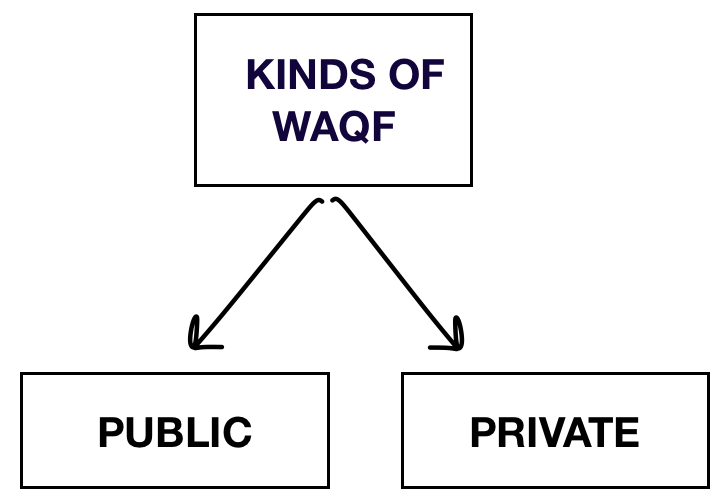
0

This article has been written by Ashwini Kullkarni pursuing a Diploma in Intellectual Property, Media and Entertainment Laws course from LawSikho

This article has been edited and published by Shashwat Kaushik.

Introduction

“The most important kind of freedom is to be what you really are.”

  • Jim Morrison

This quote is widely understood to be in support of separating the art from the artist, from knowing that the personality being shown may not be the artist’s actual personality but a performance being played as a form of protection of the artist’s privacy or in order to better commercially exploit the available opportunities, and as such is a significantly important quote in developing an appreciation of the personality rights vested in a person.

To understand personality rights and how and why they are significant, one must first understand what “personality” is being referred to by these rights and the associated laws and cases. In this context, a “personality” is a popular or recognisable part of a person’s persona that may be associated with them to a great degree. Any mannerisms, name, voice, signature, or other aspects of a personality that, when used, may reasonably be assumed as being that individual’s actions or as being endorsed by that individual are referred to as “personality” as far as personality rights are concerned.

These rights in the context of intellectual property rights are protected by controlling and limiting use of a person’s persona by other people or corporations without explicit consent from the aforesaid individual. These rights are widely used in restricting the use of celebrity personalities by people and corporations or businesses in order to paint a picture of being endorsed or supported by said personality, or as a way of benefiting off the goodwill the personality has garnered.

With the advent of artificial intelligence and technology being able to make convincing replicas of people with only a few photos and videos, it is more important now than ever to understand how personality rights have been protected in India and across the globe thus far and how we may be able to increase the protection afforded by these rights in the future.

History of personality rights

Personality rights historically have been protected as part of bifurcated rights. One arm protects rights that may be protected under trademark laws, such as a person’s name, stage name, or signatures. The other arm covers the rights under copyright laws such as performances, mannerisms, or other notable aspects or personalities, which could in the wider sense be considered a performance-based recognition.

In India, one of the first cases of protection of personality rights and what can be thought to have pushed the rights to the forefront of the media is the case of D.M. Entertainment vs. Baby Gift House (MANU/DE/2043/2010), in which it was held that an individual holds the right to permit or restrict the commercial exploitation of his or her likeness or some other recognisable attribute of that individual’s personality without explicit consent being granted. Even if the exploitation does not lead to consumer confusion regarding endorsement by the personality in question, it may still lead to dilution of the goodwill of the personality. 

Another significant case to be taken into consideration is that of Titan Industries Ltd. vs. M/s Ramkumar Jewellers, which recognised the personality rights of actors Amitabh Bachchan and Jaya Bachchan. In this case, an advertisement by Titan Industries featuring these actors had been infringed by the defendant, and the court recognised that apart from the contractual rights of the plaintiff, the rights of the people featured in the advertisement had also been infringed. It was held that the advertisement displayed a clear message of endorsement by the actors and the use of this advertisement by the defendant was misleading and false. 

These cases, along with many others, have laid the groundwork for protection from the exploitation of a well-known personality’s likeness to be by a third party in India. More recently, another case involving Mr.Bachchan’s likeness being similarly exploited is that of Amitabh Bachchan vs. Rajat Nagi and Ors.

Facts of the case

The nine defendants were allegedly using aspects of the plaintiff’s (Mr. Bachchan’s) well-known and easily recognisable personality, such as his voice and photographs, to entice the public to download certain mobile apps they had created, use their website, and purchase their products, thus commercially benefiting from this use. The plaintiff is associated with a popular televised game show, and the defendants used this connection to create a lottery scam and had also sold clothing items with the plaintiff’s photographs on their aforementioned website. The plaintiff brought a suit against the defendants and against other, unknown defendants in order to protect his personality rights.

Findings of the court

The single-judge Delhi High Court bench of Justice Navin Chawla, found that the plaintiff was a well-known personality and would face serious and irreparable harm to his reputation and face dilution of the goodwill he has garnered if the defendants’ actions went unchecked. The defendants were found to have been misusing the Plaintiff’s popularity and goodwill for their personal benefit and to further their own activities without having obtained prior consent from the plaintiff. Therefore, the plaintiff had a good prima facie case in his favour. Titan Industries vs. Ramkumar Jewellers was cited, since this case had already acknowledged and recognized the celebrity status of the Plaintiff and 

The court granted an interim injunction against all included defendants, and the Department of Telecommunication and Union Ministry of Electronics and Information Technology were directed to take down all websites, links, and applications infringing the personality rights of the plaintiffs. Further, telecom service providers were asked to block mobile phone numbers being used to circulate related messages through messaging applications such as WhatsApp, which further infringed on these rights. 

Impact of the case

The court in the above case granted a blanket restriction on the unauthorised commercial exploitation of the plaintiff’s personality, which has strengthened the right to publicity in the country. If similar relief is granted in future cases, the burden on the plaintiffs will be significantly reduced as they will no longer need to identify all involved defendants in a suit in order to be granted an injunction to stop infringing activities. This could be especially useful in cases where the infringement is widespread and being conducted by a large number of unconnected people, thus making it difficult to restrain activities and identify the people participating in them.

However, it should be noted that this case has acknowledged that the personality’s celebrity status has played a role in the granting of this relief since there was a chance of misrepresenting the plaintiff’s involvement (or lack thereof) with the defendant’s business. Similar relief may not be granted to a common-man individual since they would be less likely to be recognised by the general public, but that would not restrict the damage that could be done to their reputation regardless of their celebrity status. Moreover, the judgement has not declared the extent to which a celebrity’s likeness being used could be understood to have led to this misrepresentation. Several small businesses use celebrity likenesses to gather more attention toward their hoardings or their shopfronts with no intention of misrepresenting the celebrity’s views or affecting the knowledge of the viewer. It can be argued that the general population is also aware of these practices and therefore not likely to be greatly affected by the use of such likeness in the vast majority of these cases. It is therefore imperative that a consensus be drawn on the limits of the likeness being used and when these rights come into play. 

Evolution of personality rights

Personality rights across the globe have seen evolution at a rapid pace as the way people interact with each other and gain popularity among the masses and recognition grows and ebbs. The laws surrounding these rights must keep up with the ever-evolving changes in the way these interactions take place so as to be able to properly cover the appropriate bases and deliver justice as required. With the increase in Artificial intelligence-generated content and the ease with which the technology can be accessed in skillfully and expeditiously imitating a person’s likeness, voice and mannerisms and replicating them as per the prompts of an individual with only a few photographs or videos to train the AI, it is more important now than ever for personality rights to be brought to the forefront of public consciousness. High profile cases such as the one discussed above play a pivotal role in engaging the audiences and informing the public of their rights.

Conclusion

However, these rights cannot remain in the jurisdiction of those with celebrity status or great public recognition. While the case at hand has acknowledged that the celebrity status of the plaintiff has played a role in the granting of an injunction in this particular incident, it must be considered that a common man may also be a victim of such actions. We have already seen crimes being committed with the common people being victims of impersonation with the use of AI technology, and there is an increasing number of people falling victim to their personality rights being infringed with their likeness and voices being used by nefarious actors using said likeness or voice top promote their product in a manner that comes across as more “approachable” without gaining any consent from the people they are exploiting. Personality rights in this day and age cannot remain the sole domain of those with greater public recognition but must be transformed into a right that is accessible and understood by all.

References

Download Now
logo
FREE & ONLINE 3-Day Bootcamp (LIVE only) on

How Can Experienced Professionals Become Independent Directors

calender
28th, 29th Mar, 2026, 2 - 5pm (IST) &
30th Mar, 2026, 7 - 10pm (IST).
Bootcamp starting in
Days
HRS
MIN
SEC
Abhyuday AgarwalCOO & CO-Founder, LawSikho

Register now

Abhyuday AgarwalCOO & CO-Founder, LawSikho