This article is written by Shreya Pandey, pursuing LLM from RamSwaroop University, Lucknow. The article critically analyses the present case in which the conflict between freedom of speech and freedom of privacy was discussed.
Table of Contents
Introduction
The case R. Rajagopal v. State of Tamil Nadu, (1994) is considered to be a landmark case on freedom of speech and expression and the right to privacy. The case was filed for preventing the publication of an autobiography book by a prisoner named Shankar who was given the death penalty. It was assumed by the state that the book contains many such incidents or statements that can cause harm to the reputation of the state and therefore, it prohibited the book to get published. The Supreme Court in this case held that it is a violation of the fundamental right to speech and expression if the book is prevented from getting published just for the sake that it was only apprehended to cause defamation. The Hon’ble Court held that the state cannot take any step prior to the publication but when the books get published and if in case the book consists of any defamatory sentence against the state then after the book gets published the state can sue for defamation.
Facts of the case
An auto driver Shankar was accused of murder and was given death punishment.
He wrote an autobiography book that discusses his relationship with some senior prison authorities with whom he had joined hands in illegal acts.
While writing the book, he was in prison serving life imprisonment, and was punished with the death penalty.
Before being hanged, he sent the biography to his wife through the prison officials.
His wife gave the book to the petitioners (Editor, printer, and publisher of Nakkheeran, Tamily weekly magazine, and Associate editor of the magazine) to get it published.
The Inspector-General of Prisons sent a letter to the petitioners claiming the autobiography to be false and that the publication of such a book is against the prison rules. The Inspector-General of Prisons threatened to take legal action if the book gets published because it was apprehended that the book was defamatory in nature to the staff and prison officials.
Issues raised in the case
Whether a state has a right to prevent the publication of the book if it causes any infringement to the state’s right to privacy.
Whether freedom of speech and expression prevails over the right to privacy.
Arguments by the plaintiff
The arguments set forth by the plaintiff were entirely based upon their right to privacy.
It was argued by the plaintiff that if the book gets published, it will have an adverse effect on the right to privacy of prison authorities.
It was also argued that the book contains much information regarding various authorities and prison management that the plaintiff had no way to check upon.
They argued that certain statements made in the book were not true at all and hence they are defamatory to the state and prison authorities.
A point was raised by the plaintiff that it was not sure whether the book was actually written by Shankar or not, it was just alleged by the defendants that the book was written by Shankar. During the pendency of the proceedings, Shankar was hanged, so confirming from him whether he actually wrote the book or not was not possible.
Arguments by the defendant
The arguments set forth by the defendants (Secretary of Home Department of State of Tamil Nadu, Inspector General of Prisons, Madras, and Superintendent of Prisons (Central Prison), Salem, Tamil Nadu) were entirely based upon their fundamental right to speech and expression.
It was argued by the defendants that the Constitution of India provides every individual a fundamental right to express themselves in the way they like, which is subject to certain restrictions. But in this case, no restrictions are being violated.
It was argued that during the case right to privacy was not considered as a fundamental right therefore freedom of speech and expression shall prevail over the right to privacy.
It was stated in the argument that since the book was written by Shankar himself and all that he wrote were the incidents from his life, therefore it is true and so it can not fall under defamation as truth is one of the exceptions when it comes to the offence of defamation.
It was also stated by the defendants that the proof that the book was written by Shankar himself is that it was recorded by the prison authorities that Shankar gave the book to his wife to get it published. Therefore, it is proved that the book was written by Shankar himself.
Laws involved in the case
Article 19(1)(a) read with Article 19(2) of Indian Constitution – Right to freedom of speech and expression subject to certain restrictions.
Article 21 of Indian Constitution – Right to life and personal liberty
In this case, the right to privacy was discussed and the Court held that the right to privacy is a fundamental right that is inferred under Article 21 of the Indian Constitution. Therefore, every individual has a right to be left alone and so they have a right to try to safeguard their and their family’s privacy.
The Hon’ble Court stated that the right to privacy is not explicitly present in the Constitution but its essence is there in the Constitution and therefore, it needs to be considered and respected.
Ratio decidendi
The book can be published even without getting due authorization from Shankar as this is the right to freedom and expression to publish a book that does not fall under the category of reasonable restrictions under Article 19(2).
The publishers can’t publish any secret information as that is violative of the right to privacy.
The state has no right to prevent or stop the publication of the book but they have the remedy to file a case of defamation if the book contains any secret information that infringes their right to privacy.
Cases referred
The Court referred to Kharak Singh v. the State of UP, 1962, and Govind v. the State of MP, 1975 to deal with the aspect of the right to privacy. The Court also referred to Griswold v. Connecticut, 1965 and Roe v. Wade, 1973 and stated, “… privacy-dignity claims deserve to be examined with care and to be denied only when an important countervailing interest is shown to be superior. If the Court does find that a claimed right is entitled to protection as a fundamental privacy right, a law infringing it must satisfy the compelling State interest test.”
The Supreme Court applied the rule of New York Times Co. v. Sullivan, 1964, and held that any publication that is alleged to be false reports on the matter of public interest can be regulated only if it is published in “reckless disregard of the truth”.
Observations by the Court
Hon’ble Supreme Court Justice B.P. Jeevan Reddy observed that Shankar, his spouse, and lawyer are not the parties to the petition and it is unclear whether the book was actually written by Shankar or not. He stated, “We do not have their version… whether Shankar has indeed written his autobiography and/or…requested or authorized the petitioners to publish the same…” The Judge stated that he will proceed with hearing the case assuming that the book was neither written by Shankar nor did he give any authorization to anyone to get it published. It was also clarified by the Judge that it is a mere assumption. Stating his statement: “We must, however, make it clear that ours is only an assumption for the purpose of this writ petition and not a finding of fact.” Therefore it is clear that there is no absolute proof that the book was an autobiography of Shankar. So it is important to prove whether the book was actually written by Shankar or not.
The Court observed that despite the fact that the right to privacy is not explicitly stated in the Indian Constitution, it comes under the ambit of Article 21, i.e., the right to life and personal liberty. Therefore, the book that allegedly contains details regarding prison authorities in a derogatory sense will amount to defamation (although maybe true).
The state is not empowered by law to put a prior restraint on publication upon the press or media.
It was taken into account by the Court that every individual has a right to privacy and the book is merely based upon one person’s thought that might be biased so it is immoral and illegal to defame such a person based upon someone’s experience. Public officials who are serving their public duty are also entitled to their right to privacy.
The Court observed that every person has a right to get his/her autobiography published because every individual has the freedom of speech and expression under Article 19(1)(a).
Article 19(2) imposes reasonable restrictions to the freedom of speech and expression therefore if any such information that is not true and is defamatory can not be published. So if it isn’t proven that the book was written by Shankar then it should not be published.
The Court finally observed that the state has no such right to prevent the publication of the book merely on the ground that the book may be defamatory. However, the plaintiffs can sue after the publication of the book if the book turns out to be defamatory.
Implications of the judgment
The Hon’ble Court gave their decision on the following points:
Shankar has a right to get his biography published because it was not made by any mala fide intention and has made no false statements.
The book was published and did not reveal any secret information relating to the public officials.
The right to privacy was not considered as a fundamental right during 1995 through any case law or any legislation. Therefore, it was important to discuss this right and bring it under the ambit of Article 21.
The Supreme Court resolved the conflict between the right to press and the right to privacy. The Court held that the right to privacy has acquired a constitutional status.
The autobiography book got published without any alterations.
Critical analysis
The Court did not consider the point that if the book contained anything that could cause defamation to the plaintiff and till the time a case of defamation be sued, a lot of damage could have been caused to the plaintiff.
The question of whether the book was actually written by Shankar or not, was not taken into consideration.
The issue of whether the book was written or published by a mala fide intention or not was also ignored. It was important to take these issues into consideration as these issues could reflect whether the book can bring defamation to the plaintiff or not.
Conclusion
As per the author’s view, the publication of the book without taking into consideration who actually the author is or by what intention the book is being published might cause harm to the plaintiff. The book should have got a little modification before getting published such as removing the names of the prison authorities and police officers. In my view, the Hon’ble Supreme Court gave a better hand to the right to freedom of speech and expression in comparison to the right to privacy, but since both of them were considered as a part of the fundamental right, therefore, the Court should have chosen a midway to deal with this case.
It is to be noted that this case came before the time when the “right to privacy” was legally enforced in India. So it can be assumed that if this case were recent, the judgment might be different.
In my opinion, the Court should have considered that if the book was published with the names of the public officers, they would be highly criticized by the people without giving them a fair chance to even clear whether they were really involved in any such crime or not. If the book gets published with such information then although the state has a remedy to sue, till then the damage would be caused that could have been rectified if the Court would have been a little cautious while giving the decision entirely favoring the right to press.
The right to privacy has yet not been enumerated in the Constitution as a separate right still since it comes within the ambit of Article 21 therefore it needs proper implementation.
The right to freedom of speech and expression is a fundamental right that every individual possesses but it should be restricted in certain situations where such right is getting misused, defamatory sentences are being used, or where there is confusion regarding the truth of the alleged facts.
Students of Lawsikho courses regularly produce writing assignments, and work on practical exercises as a part of their coursework and develop themselves in real-life practical skills.
LawSikho has created a telegram group for exchanging legal knowledge, referrals, and various opportunities. You can click on this link and join:
The United States Constitution, which was written in 1787, ratified in 1788, and has been in effect since 1789, is the world’s oldest surviving written charter of governance. Its opening three words, “We the People,” assert that the United States government exists to serve its people. Article I, which establishes a Congress consisting of a Senate and a House of Representatives, recognizes the people’s primacy via their chosen representatives. The Constitution’s placement of Congress at the start confirms its standing as the “First Branch” of the Federal Government. Congress was given authority for creating the executive and judicial departments, generating income, declaring war, and enacting any legislation necessary to carry out these responsibilities, according to the Constitution. The President has the power to veto individual legislative actions, but it is to be noted that two-thirds majorities in both Houses of Congress can overrule Presidential vetoes. The Senate is also required by the Constitution to advise and agree on critical executive and judicial appointments, as well as treaty ratification approval. This article helps the readers to understand the American Constitution and its associated aspects.
The American Constitution : an insight
The American Constitution has been in effect for nearly two centuries because its founders were successful in separating and balancing governmental authorities in order to protect the interests of majority rule along with minority rights, liberty, equality, and federal and state governments. The Constitution has developed to suit the changing demands of a contemporary society dramatically different from the eighteenth-century world in which its architects lived. It is more of a brief declaration of national ideas than a comprehensive framework of political function. It is known as “the Law of the Land” because it forbids the government from violating citizens’ fundamental rights and civil freedoms as guaranteed by federal law. The Constitution has been revised 27 times till date, the most recent being in 1992. The Bill of Rights is made up of the first 10 amendments.
The Articles of Confederation, which formed a “solid league of affection” between the States and placed most authority in a Confederate Congress, created the necessity for the Constitution. The Central Government, on the other hand, had very limited power that included conducting diplomacy and war, regulation of weights and measures, and was the last judge of inter-state conflicts. Crucially, it was unable to raise any fund on its own and was completely reliant on the States for all of its financial needs. Each State sent a delegation to Congress consisting of two to seven members, and they voted as a bloc, with each State receiving one vote. However, each significant action needed a unanimous vote, resulting in a government that was paralysed and ineffective. Invitations to a conference in Philadelphia to examine revisions to the Articles were sent to state legislatures in 1787, kicking off a campaign to amend the Articles. Delegates from 12 of the 13 states (Rhode Island did not send anybody) met in Philadelphia in May of that year to begin the process of reorganising government. The participants to the Constitutional Convention quickly began to work on crafting a new Constitution for the United States.
The Constitutional Convention
One of the main goals of the Constitution as created by the Convention was to create a government with sufficient ability to act on a national level without jeopardising basic rights. One approach to do this was to divide government authority into three parts and then place checks and balances on those powers to ensure that no one branch of government grew too powerful. The delegates’ fear stemmed mostly from their interactions with the King of England and his strong Parliament. The Constitution lists the authorities of each branch, with powers not delegated to them reserved for the states. Much of the debate, which was held in secret to ensure that all delegates had an opportunity to speak their thoughts, centred on the structure of the new legislature. The Virginia Plan, which allocated representation based on each state’s population, and the New Jersey Plan, which granted each state an equal vote in Congress, contended for the title of new government. The larger states favoured the Virginia Plan, while the smaller states preferred the New Jersey Plan.
They eventually agreed on the Great Compromise (also known as the Connecticut Compromise), in which the House of Representatives would represent the people as apportioned by population, the Senate would represent the States equally apportioned, and the President would be elected by the Electoral College. An independent judiciary was also part of the idea. The founders worked hard to develop a bond amongst the states as well. States must grant “full faith and credit” to the laws, records, contracts, and judicial processes of other states, while Congress has the authority to regulate how states share documents and define the extent of this phrase. States are prohibited from discriminating against people of other states in any form, and they are also prohibited from imposing tariffs on one another. States must also extradite criminal suspects to other countries for trial.
The founders also established a procedure for amending the Constitution, which has been followed 27 times since its ratification. The process for making adjustments is fairly onerous in order to avoid arbitrary alterations. An amendment can be proposed by a two-thirds vote of both Houses of Congress, or by a convention called for that purpose if two-thirds of the states seek it. The amendment must next be passed by three-fourth of state legislatures or three-fourth of ratification conventions held in each state. Amendments have historically stated a time range in which this must be completed, which is usually a period of several years. Furthermore, the Constitution stipulates that no amendment can deprive a state of equal Senate representation without its assent. After deciding on the Constitution’s contents and wording, the Convention began the process of putting the document on paper. It was written in the hand of Gouverneur Morris, a Pennsylvania delegate whose role gave him considerable control over the punctuation of a few phrases in the Constitution.
Framers of the American Constitution
Except for Rhode Island, the founding states jointly appointed 70 people to the Constitutional Convention. Richard Henry Lee, Patrick Henry,Thomas Jefferson, John Adams, Samuel Adams, and John Hancock were among those who declined or were unable to attend. Only 39 of the 55 delegates who attended the Constitutional Convention actually signed the document. The delegates varied in age from Jonathan Dayton, 26, to Benjamin Franklin, 81, who had to be brought to meetings in a sedan chair due to his infirmity.
Guiding principles of the American Constitution
To comprehend the American Constitution’s purpose and significance, it is necessary to examine the concepts and causes that influenced its development in the first place. Individual rights, federalism, law and order, popular sovereignty, judiciary independence, the rule of law, and check and balances, which are included with the separation of powers of the Federal Government, are often referred to as the “guiding principles” in popular literature or scholarly textbooks.
Preamble to the American Constitution
The Preamble to the American Constitution reads as “We the People of the United States, in Order to form a more perfect Union, establish Justice, insure domestic Tranquillity, provide for the common defence, promote the general Welfare, and secure the Blessings of Liberty to ourselves and our Posterity, do ordain and establish this Constitution for the United States of America.”
The American Constitution is introduced in the Preamble. Its magnificent words are the first words people see when they read the Constitution, and memorizing the Preamble is a standard practice among school children across the country while learning about the nation’s founding document. The reader is introduced to three key principles in the Preamble:
The source of the Constitution’s enactment authority (that is the people of the United States),
The Constitution’s overarching goals, which are ordained and established, and
The founders’ desire for the Constitution to be a long-lasting legal document.
The Preamble was referred to as the key to the Constitution by James Monroe, a delegate to the Virginia ratifying conference, and Alexander Hamilton contended in The Federalist No. 84 that the Preamble obviates the necessity for a bill of rights. Despite this, the Preamble received little attention at the Constitutional Convention in Philadelphia, having been added to the document as an afterthought during the final drafting process.
Interpretation of the Preamble by the Supreme Court of the United States
The Preamble was quoted by the Supreme Court of the United States in numerous major court cases over the years after the Constitution’s promulgation, although the Preamble’s legal weight was widely disclaimed. The Preamble, as observed by Justice Joseph Story in his Commentaries, can never be used to expand the powers vested in the general government or any of its agencies. In Jacobson v. Massachusetts (1905), the Supreme Court backed Justice Story’s interpretation of the Preamble, ruling that while the introductory paragraph of the Constitution indicates the general purposes for which the people ordained and established the Constitution, it has never been regarded by the Court as the source of any substantive power conferred on the Federal Government.
The Supreme Court had reasoned in United States Term Limits, Inc. v. Thornton (1995) that allowing states to construct their own criteria for Congress would destroy the structure envisioned by the Framers of the Constitution and therefore the same should not be allowed. The Court highlighted that the Preamble’s aim to form a “more perfect Union” would get disbalanced if states are allowed to frame their own qualifications for Congress.
Outside of court rulings, the Preamble appears to have had a greater effect in remarks from the leaders of the political arms of government, often factoring in numerous arguments over the nation’s early history. During debates in the First Congress over the constitutionality of the Bank of the United States, congressional leaders such as Massachusetts’ Elbridge Gerry cited the Preamble to emphasise the Constitution’s broad purposes and to justify the creation of a national bank to promote the general welfare. The Preamble was also discussed in early legislative discussions about the new government’s involvement in international affairs.
Preamble in recent times
In recent years, the political branches have continued to look to the Preamble for guidance on broad constitutional principles rather than specific legal concerns. Representative Scott Garrett of New Jersey defined the Preamble to the Constitution as a condensed version of what the Founders intended in the Constitution and for the country, in a 2007 address on the House floor analyzing the current interpretation of the Preamble. In this line, President Ronald Reagan defined the Constitution’s Preamble and its opening words, “We the People,” as encapsulating America’s genius, optimism, and promise for all time and for all mankind.
President Barack Obama described the Preamble as the vision of a true United States of America, bound together by a recognition of the common good, that guided the country through its darkest hour and helped it re-emerge as a beacon of freedom and equality under law. As a result, while the Preamble to the Constitution may carry little legal weight in a court of law and may not be decisive in resolving specific legal disputes before the political branches, it remains an important part of the national conversation about the country’s founding document, inspiring and fostering deeper understandings of the American system of government.
Articles of the American Constitution
There are seven articles to the American Constitution which are provided hereunder:
The Federal Government’s structure is defined by the Constitution, which includes laws and regulations that must be observed. This encompasses the legislative, executive and the judiciary branch, as previously stated. It also explains the individual and combined capabilities of each branch, minimizing needless authority thereby establishing the doctrine of separation of power. It further specifies that these branches are not to infringe on the rights of individuals or states. This is accomplished via the use of legally enforceable protocols that must be followed by all branches.
The Constitution establishes the Federal Government’s organization as well as its functions and restrictions. Simply expressed, it establishes the rules by which the Federal Government must operate. It is a manual for what a government branch that holds offices inside those branches can perform. These laws and sets of norms must be followed by the President as well. This creates checks and balances, preventing one branch from overriding the Constitution or abusing authority.
Civil liberties and individual rights offered by the American Constitution
Freedom of religion, freedom of expression, freedom of assembly, freedom of petition, and freedom of access to the media are among the civil freedoms guaranteed by the Constitution. This forbids the government from intruding on or penalising these liberties in an unconstitutional manner. Another significant justification for the separation of powers is that it allows citizens to criticize and confront government behaviour without fear of reprisal from any branch of government. Essentially, surviving a democratic country necessitates this. One of the fundamental aims of a Constitution is to promote democracy, which is prominently incorporated throughout the document.
The right to a public trial for a criminal charge, the right to own weapons, the right to dispute exorbitant bail or unusual punishment, and the right to question arrests and property seizures without a warrant are all guaranteed under the United States Constitution. Wrongful incarceration is one of the topics covered by these principles. Individual rights exist to protect individuals against government abuses of power and to ensure that all citizens have access to basic freedoms.
Ratification
The ratification procedure outlined in the Constitution sparked a lot of discussion in the states. The Constitution would go into force after nine of the thirteen state legislatures had accepted it irrespective of unanimity. Two factions arose during the discussion over the Constitution,
The Federalists, who favoured adoption, and
The Anti-Federalists, who opposed it.
In what came to be known as the Federalist Papers, James Madison, Alexander Hamilton, and John Jay laid forth an impassioned justification of the new Constitution. The 85 articles that make up the Federalist Papers were published anonymously in the newspapers, the Independent Journal and the New York Packet under the name Publius between October 1787 and August 1788, and they remain an invaluable resource for understanding some of the framers’ intentions for the Constitution. The most well-known Articles are No. 10, which warns against factions and argues for a large republic, and No. 51, which outlines the Constitution’s structure, checks and balances, and how it protects people’s rights.
The States then began the process of ratification, with some states debating more passionately than others. On December 7, 1787, Delaware became the first state to ratify the treaty. The Confederation Congress had set March 9, 1789 as the date to begin functioning under the Constitution after New Hampshire became the ninth state to ratify on June 22, 1788. Except for North Carolina and Rhode Island, all states had ratified by that time. The Ocean State was the last to do so on May 29, 1790.
The Bill of Rights
The lack of an enumeration of essential civil rights in the Constitution was a major issue of disagreement between the Federalists and the Anti-Federalists. Many Federalists contended, as in Federalist No. 84, that by accepting the Constitution, the people gave up no rights. However, the establishment of a bill of rights was a deciding factor in the ratification discussion in numerous states.
The Massachusetts Compromise was a compromise in which four states ratified the Constitution while also sending proposals for modifications to Congress. The Philadelphia convention scarcely considered a bill of rights, with most participants believing that individuals’ basic rights were protected by state constitutions.
A charter of rights, according to James Wilson, was unnecessary since all authority not specifically granted to the new government was reserved to the people. However, it was evident that the anti-federalists had the upper hand in this debate. Even Thomas Jefferson, who supported the new government in general, wrote to Madison that a bill of rights was “what the people are entitled to oppose every government on earth.”
Madison, who was then a member of the United States House of Representatives, changed the language of the Constitution where he considered it was necessary. Several members of Congress, led by Roger Sherman, opposed, claiming that Congress had no jurisdiction to amend the Constitution’s text. As a result, Madison’s amendments were presented as a list of Article VII amendments. 17 amendments were passed by the House. The Senate approved 12 of them, and in August 1789, they were forwarded to the states for ratification. There were ten modifications adopted (or ratified). On December 15, 1791, the Virginia legislature became the last state legislature to ratify the amendments, doing so on December 15, 1791.
Evolution of the Bill of Rights by means of amendments
Amendment I: No legislation shall be passed by Congress respecting an establishment of religion or prohibiting its free practice, or abridging the freedom of speech or the press, or the right of the people to peacefully assemble and petition the government for redress of grievances.
Amendment II: The right of the people to keep and bear arms shall not be infringed because a well-regulated militia is necessary for the security of a free state.
Amendment III: In times of peace, no soldier should be quartered in any house without the owner’s agreement, and in times of war, only in a way allowed by law.
Amendment IV: The people’s right to be secure in their persons, houses, papers, and effects against unreasonable searches and seizures shall not be violated, and no warrants shall be issued unless there is probable cause, supported by oath or affirmation, and specifically describing the location to be searched and the persons or things to be seized.
Amendment V: No person shall be held to account for a capital, or otherwise infamous crime, unless on a grand jury’s presentment or indictment, except in cases arising in the land, naval, or militia forces, or in the militia, when in actual service in time of war or public danger; nor shall any person be subjected to being twice put in jeopardy of life or limb for the same offence, nor shall any person be compelled in any criminal case to be a witness against himself.
Amendment VI: In all criminal prosecutions, the accused shall have the right to a speedy and public trial before an impartial jury of the state and district where the crime was committed, which district shall have been determined by law, and to be informed of the nature and cause of the accusation, to be confronted with the witnesses against him, to have compulsory process for obtaining witnesses in his favour, and to have the assistance of counsel for his defence.
Amendment VII: The right to a jury trial must be retained in common law proceedings where the value in question exceeds twenty dollars, and no fact tried by a jury shall be re-examined in any court of the United States other than pursuant to the norms of the common law.
Amendment VIII: Excessive bail will not be necessary, nor will excessive penalties or harsh punishments be administered.
Amendment IX: The inclusion of specific rights in the Constitution should not be regarded as a denial or disparagement of other rights held by the people.
Amendment X: The powers not assigned to the United States by the Constitution, nor prohibited to the states by it, are reserved to the states or the people, respectively.
Amendments to the American Constitution
In 1789, James Madison proposed 12 amendments to the First Congress. Ten of them would eventually form the Bill of Rights, as we know it today. One was never ratified, while the other, dealing with congressional pay, took until 1992 to become the 27th Amendment. The Bill of Rights, which was based on the Virginia Declaration of Rights, the English Bill of Rights, Enlightenment publications, and the rights described in the Magna Carta, contains rights that many people today regard to be important to America.
Amendments to the United States Constitution can be made in two ways, according to the Constitution. By a majority of two-thirds in each chamber, the United States Congress can enact a bill outlining a proposed amendment. Alternatively, a constitutional convention can be called by two-thirds of state legislatures, which will propose one or more changes. The latter has never happened before, and it’s unknown how such a convention would function. In either scenario, the amendments to the United States Constitution are only operative until they have been approved by three-fourth of the states. While on one hand some changes are ratified fast, on the other, the 27th Amendment which was introduced in 1792 but did not get final approval until 1992.
The Equal Rights Amendment was presented in 1972, and 34 of the required 38 states approved it. However, campaigners were unable to get the last four states required for ratification, and the Congressionally mandated deadline for ratification was missed. The first ten amendments were quickly enacted, and the Bill of Rights was born. Following the Civil War, another set of amendments was drafted, which was to protect the rights of liberated slaves. There are presently 25 working amendments to the United States Constitution. There have been 27 ratifications in all, with the 18th being Prohibition and the 21st being the repeal of Prohibition.
Summarized version of the amendments
1st Amendment (Ratified in 1791): Rights to Religion, Speech, Press, Assembly, Petition
2nd Amendment (Ratified in 1791): Right to Bear Arms
3rd Amendment (Ratified in 1791): Quartering of Soldiers
4th Amendment (Ratified in 1791): Search and Seizure
5th Amendment (Ratified in 1791): Grand Jury, Double Jeopardy, Self-Incrimination, Due Process
6th Amendment (Ratified in 1791): Rights of Accused in Criminal Prosecutions: Rights to Jury Trial, to Confront Opposing Witnesses and to Counsel.
7th Amendment (Ratified in 1791): Jury Trial
8th Amendment (Ratified in 1791): Protections against Excessive Bail, Cruel and Unusual Punishment.
9th Amendment ( Ratified in 1791): Non-Enumerated Rights
10th Amendment (Ratified in 1791): Rights Reserved to States.
11th Amendment (Ratified in 1795): Suits Against a State.
12th Amendment (Ratified in 1804): Election of President and Vice-President
13th Amendment (Ratified in 1865): Abolition of Slavery and Involuntary Servitude.
14th Amendment (Ratified in 1868): Defines citizenship, bans governments from interfering with privileges and immunities, mandates due process and equal protection, punishes states for refusing the right to vote, and disqualifies Confederate officials and debts.
15th Amendment (Ratified in 1870): Voting Rights.
16th Amendment (Ratified in 1913): Federal Income Tax.
17th Amendment (Ratified in 1913): Popular Election of Senators.
18th Amendment (Ratified in 1919): Prohibition
19th Amendment (Ratified in 1920): Women’s Right to Vote
20th Amendment (Ratified in 1933): Commencement of Presidential Term and Succession.
21st Amendment (Ratified in 1933): Repeal of 18th Amendment (Prohibition).
22nd Amendment (Ratified in 1951): Two-Term Limitation on President.
23rd Amendment (Ratified in 1961): District of Columbia Presidential Vote.
24th Amendment (Ratified in 1964): Abolition of Poll Tax Requirement in Federal Elections.
25th Amendment (Ratified in 1967): Presidential Vacancy, Disability and Inability.
26th Amendment (Ratified in 1971): Right to Vote at Age 18.
27th Amendment (Ratified in 1992): Congressional Compensation
Conclusion
The basic function and purpose of the Constitution, which should go without saying, is to serve and protect the people of the United States. However, it contains a great deal more. It safeguards individuals from unjustified persecution, assists in the prevention of government tyranny by maintaining checks and balances within the federal government, and explicitly states the laws that govern the government. Individual and state rights are protected by the Constitution, which limits the federal government’s engagement to the bare minimum. Furthermore, the United States Constitution establishes citizens’ expectations as well as citizenship criteria. Thus what can be inferred from the above discussion is that the American Constitution is indeed one such Constitution to look up to and seek inspiration from.
Students of Lawsikho courses regularly produce writing assignments and work on practical exercises as a part of their coursework and develop themselves in real-life practical skills.
LawSikho has created a telegram group for exchanging legal knowledge, referrals, and various opportunities. You can click on this link and join:
This article is written by Jagriti Sanghi, an advocate practising in the Courts of Telangana. This article details the penalties and liabilities in cases of data privacy breaches.
Table of Contents
Introduction
The Right to Privacy is a fundamental right protected under Article 21 of the Constitution that enables an individual to control the use and disclosure of their personal information. This right can be exercised by an individual to prevent the collection, use, and disclosure of their personal information.
There are numerous types of personal information that could be collected and used by an individual. This includes, but is not limited to, medical records, financial records, and habits and activities.
There is a danger that the existence of computerised data about an individual could be used to create inaccurate or misleading information about him or her. This could be exploited by unauthorised third parties.
The Supreme Court stated in the State of Maharashtra v. Bharat Shanti Lai Shah(2008) that though interception of conversation constitutes an invasion of privacy, it can still be curtailed by following legal procedures. In order for the court to make the appropriate ruling, the procedure itself must be fair, just, and reasonable, and should not be arbitrary, frivolous, or oppressive. A person’s right to privacy cannot be infringed by an unrestrained authority. [Directorate of Revenue v. Mohd. NisarHolia (2008)].
What is a data privacy breach
A data breach can be defined as an incident in which one’s information is accessed without their consent. Therefore, a data breach can be said as the release of sensitive, confidential, or protected data. A report indicates that India ranked third in the whole world in terms of a number of breaches of data till November 2021 with total data breaches of 86.63 million Indian users. It is of serious concern in light of the financial and security damage the data breach can cause. Criminals can use the leaked information for numerous illegal activities such as fake ID cards, fraud bank calls, and so on.
Smartphones, laptops, tabs, etc. have become indispensable products in the 21st century. It is very easy for anyone to gather details after a consumer downloads an app. The details often submitted are age, qualification, gender, location, interests, and Aadhar number. This is quite often sold for hefty amounts. Therefore, it is very crucial that there are stringent laws and their implementation to prevent such data breaches and transmission without consent.
A data breach can result in the leak of several types of information such as:
Financial Data—such as credit card numbers, bank details, tax forms, invoices, financial statements
Medical or Personal Health Information (PHI)—as defined in the US HIPAA standard, “information that is created by a health care provider [and] relates to the past, present, or future physical or mental health or condition of any individual”
Intellectual property—such as patents, trade secrets, blueprints, customer lists, contracts
Vulnerable and sensitive information (usually of military or political nature)—such as meeting recordings or protocols, agreements, classified documents
Data privacy and protection
A person’s personal information should not be readily available to other individuals and organisations automatically for purposes of privacy and data protection. Those data must be subject to a substantial degree of control by each individual. Information about individuals is protected by law to prevent misuse on any medium, including computers. To protect personal data, administrative, technical, or physical measures are taken. Data protection and privacy are closely related. Information like a person’s name, address, telephone number, profession, family, choices, etc. is usually accessible in a multitude of places like schools, colleges, banks, directories, surveys, and various websites. It can lead to privacy intrusions such as incessant marketing calls when such information is passed to interested parties. The Information Technology (Amendment) Act, 2008 enumerates the main principles on privacy and data protection, and it defines liability for civil and criminal offences resulting from violations of the law.
Concept of data protection
Data protection is covered in the Information Technology Act, which came into force in the year 2000, although not in every aspect. As a matter of fact, the Information Technology (Amendment) Act, 2008 enacted by the Indian Parliament contains provisions for the protection of personal data. In Section 2(1) of the Act, “Data” refers to a representation of information, knowledge, facts, concepts, or instructions that is prepared or has been prepared in a formalised manner, is intended to be processed by a computer system or computer network, and may be stored within the computer’s memory, or maybe on magnetic or optical storage media, punched cards, or punched cassettes. Further, the IT Act defines certain key terms with respect to data protection such as access to personal data. However, no definition is provided for personal data in this Act, and the concept of “data” is more relevant in the context of cybercrime than in the field of IT, “Computer,Computer network,Computer resource, Computer system, Computer database, Data, Electronic form, Electronic record, Information, Intermediary, Secure system, and Security procedure”. In essence, this Section is intended to protect the individual’s right not to unfairly take advantage of any information by disclosing it to a third party without their prior consent. The definition of ‘third party information’ includes ‘any information that intermediary deals with in his capacity as an intermediary’. A provision in Section 79 entails that an intermediary will not be liable to third parties for information, data, or communication links accessed or communicated by him without regard to subsection (2) or (3). As a result of data protection, a technical framework of security measures is employed to ensure that data is protected from unforeseen, unintended, unwanted, or malicious uses.
Penalties and liabilities in case of breach of data privacy
India does not have a separate and composite personal data protection law to safeguard materials of personal information and data transmitted, stored, and shared. The Personal Data Protection Bill, 2019 is still in the passage and has not been passed as a law. For now, the penalties and liabilities under the InformationTechnology Act are discussed as follows:
Section 43A of the IT Act
According to the Section 43A of the IT Act where a body corporate, possessing, dealing, or handling any sensitive personal data or information in a computer resource which it owns, controls or operates, is negligent in maintaining reasonable security measures and thereby causes wrongful loss or wrongful gain to any person, such body corporate shall be liable to pay damages by way of compensation to the person so affected.
The concept of ‘sensitive personal information under Section 43A provides for civil action in case of security breaches. Other than that, sensitive personal information is not protected by Indian law. According to Section 43A of the Act, the aggrieved person may be entitled to compensation if the company failed to keep his or her personal data protected while they were being processed by the company, whether as a result of negligently implementing or maintaining reasonable security measures.
Therefore, by granting a right of compensation to anyone other than the person who manages the computer facility, a person will have the right to prevent their personal information from being disclosed to third parties or damaged or changed by those third parties. In addition to being able to be used by data controllers, it may also be used by individuals with personal data against third parties. Compensation is justified only because they are ‘affected’ differently. Additionally, it states that accessing data unauthorised is a civil offence.
Section 43A of the IT Act would not apply to the employee/individual since he/she does not come within the ambit of a body corporate. Section 43A mainly deals with the failure of a body corporate to protect data.
Section 72A of the IT Act
In Section 72A, it is given that any person, including an intermediary when providing services under the terms of a lawful contract, discloses information in breach of that contract except as otherwise provided in this Act or any other law for the time being in force breaches privacy. It is unlawful for anyone who has secured access to material containing personal information about another person to disclose, without their consent, or in violation of a lawful contract, any personal information relating to another person. The punishment is upto 3 years imprisonment or a fine of up to 5 lakhs rupees or both.
Section 72A of the IT Act would apply to an individual/company. It will apply to an employee as well since all the ingredients are met. An employee has a lawful contract i.e. employment contract with the Employer. Employees get access to sensitive personal data or material containing personal information while providing services to the clients of the employer under the contract of employment.
Section 45 of the IT Act
Section 45 of the IT Act is a residuary clause that states that whoever contravenes any rules made under the IT Act, for the breach of which no penalty has been separately provided, shall be liable to pay compensation or penalty of up to 25,000 rupees. Section 45 applies to an individual, company, employer, employee.
Section 43 of the IT Act
Civil liability in case of a computer database theft occurs when a computer trespass is committed, unauthorised digital copying is made, data is downloaded or extracted, privacy is violated, etc., under the Information Technology (Amendment) Act 2008. Additionally, Section 43 states that a person shall be liable to pay damages in compensation for a wide range of cybercrimes, including:
unauthorised access to computer systems, computer networks, or resources;
illegal digital copying, downloading, or extraction of data or information stored on a computer; and thefts of data held or stored on any media.;
inserted a computer virus or contaminant into any computer system or computer network;
transmitted undisclosed data or software from a computer, computer system, or computer network;
breaches of security, data thefts, frauds, forgeries, etc.;
unauthorised access to computer databases/data;
instances of theft of passwords, login IDs, etc.;
destroys, deletes, or alters any information in a computer resource, etc., and
steals, conceals, destroys, or alters any computer source code used for a computer resource with the intention of causing it harm.
The Explanation (ii) of Section 43 refers to a computer database as “an organised collection of information, knowledge, facts, concepts, or instructions in text, image, audio, or video prepared or prepared under formal circumstances, or ones produced by computers, computers, or computer networks intended to be used by computers, computers, or computer networks.”
This provision applies to individuals, companies, employers, and employees.
Breach of data privacy and confidentiality violation
Under the IT Act, terms such as violation of confidentiality and privacy are defined.
A violation of privacy is defined in Section 66-E as disregarding the privacy of a person by intentionally or knowingly taking, publishing, or broadcasting an image of his or her private areas without his/her consent. The punishment is up to 3 years of imprisonment or fine up to rupees two lakhs or both.
According to Section 72, any person gaining access to any electronic record, book, register, correspondence, information, document, or other materials without the consent of the person concerned discloses such materials to any other person without the consent of the person concerned, is subject to the punishment up to 2 years of imprisonment, or fine up to 1 lakh rupees or both.
In Section 72A, it is given that any person, including an intermediary when providing services under the terms of a lawful contract, discloses information in breach of that contract except as otherwise provided in this Act or any other law for the time being in force breaches privacy. It is unlawful for anyone who has secured access to material containing personal information about another person to disclose, without their consent, or in violation of a lawful contract, any personal information relating to another person. The punishment is up to 3 years imprisonment or a fine of up to 5 lakhs rupees or both.
The IT Act punishes the breach of privacy. As it would be difficult to consider that Sections 66E, 72, and 72A would provide a sufficient level of protection, Section 66E requires consent from the concerned persons. However, Section 72A only requires consent within a limited scope. Essentially, this section applies only to those who are conferred with powers under the Act.
A Supreme Court ruling in District Registrar and Collector v. Canara Bank (2005) held that a bank’s disclosure of content or copies of private documents of its customers would amount to a breach of confidentiality, thereby violating the privacy rights of those individuals.
Conclusion
Information contained in computer systems may be sensitive, and privacy is a basic human right. Under the Information Technology Act, Chapters IX, and XI describe liability for violations of data confidentiality and privacy arising out of unauthorised access to computers, computer systems, computer networks or resources, unauthorised additions, deletions, modifications, destructions, duplications or transmissions of data, computer databases, etc. Financial information, health information, business proposals, intellectual property, and sensitive information may be protected. The Constitution recognizes privacy rights, but their growth and development are entirely at the mercy of the judiciary. Using extremely repressive methods is no longer an option in today’s connected world where it is so difficult to prevent information from entering the public domain. The Information Technology (Amendment) Act, 2008 addresses data protection, but not exhaustively. Assimilation of the right to privacy and personal data requires specific standards to be established under the IT Act. In conclusion, it is enough to say that the IT Act poses problems in terms of protecting data and that a separate statute is much needed for data protection striking a reasonable balance between personal liberty and privacy.
Students of Lawsikho courses regularly produce writing assignments, and work on practical exercises as a part of their coursework and develop themselves in real-life practical skills.
LawSikho has created a telegram group for exchanging legal knowledge, referrals, and various opportunities. You can click on this link and join:
Businesses at times gather, receive, interchange, or share a great deal of confidential, invaluable information in the course of their transactions. To protect such confidential information and/or trade secrets from getting leaked, the parties either enter into a confidentiality agreement (CA), which is also known as a Non-Disclosure Agreement (NDA), or a Confidential Disclosure Agreement (CDA), or a Secrecy Agreement (SA), or a Proprietary Information Agreement (PIA), or document the confidentiality obligations in the confidentiality clause within an agreement. In this article, we will discuss Confidentiality Agreements and understand the elements of the agreement that need to be kept in mind while drafting the same.
What is a Confidentiality Agreement?
A Confidentiality Agreement is a legal instrument signed by two parties that prohibits the disclosure of sensitive “confidential” information to other parties. These agreements are commonly used by businesses during interactions with prospective buyers, clientele, or hires, to ensure that sensitive or proprietary information is not shared or misused to the owner’s detriment.
The document formalises the parties’ relationships and directs their behaviour and usage of the information. It also serves as evidence in court on the disclosure of confidential information.
A Confidentiality Agreement is also known as the following:
Non-disclosure agreement (NDA).
Confidential Disclosure Agreement (CDA).
Proprietary Information Agreement (PIA).
Secrecy Agreement (SA).
Who are the parties to a Confidentiality Agreement?
A Confidentiality Agreement is signed between two parties:
The party that delivers sensitive information for the stated purpose.
The party that receives the information.
The parties enter into a Confidentiality Agreement to guarantee to the party providing information that the recipient will not divulge or misuse the information and will only use it for the stated purpose.
When is a Confidentiality Agreement required?
A Confidentiality Agreement is required when it is essential to preserve and protect confidential information, innovations, ideas, or creative creations during deliberations, proposals, and negotiations. The following are the common scenarios:
When an employer wants to keep corporate information private while negotiating a position with a potential new hire or delegating new duties to an existing employee.
When considering an independent contractor or consultant, a client wishes to keep their corporate or personal information confidential.
When the seller seeks to keep the proposed terms of the agreement and corporate information confidential during a prospective company acquisition.
When two or more businesses or individuals would like to start working together but want to keep specific details mentioned during discussions confidential.
To protect intellectual property of the person or organization.
Why confidentiality agreements are necessary to be made in writing?
There are various reasons to enter into written confidentiality agreements, for example:
Preventing misunderstandings about what the parties perceive to be confidential. .
Outlining the parties’ expectations about the treatment of sensitive information, whether disclosing or receiving confidential information.
It is easier to enforce written contracts than oral ones.
Upstream arrangements with third parties frequently necessitate the memorialization of secrecy agreements.
Covering issues that are indirectly related to confidentiality, such as non-solicitation.
Can a Confidentiality Agreement last forever in India?
The Indian Contract Act, 1872 governs confidentiality in India. Confidentiality Agreements in India normally impose duties that continue between two and five years, however, some obligations might be permanent. If trade secrets were shared, it is customary for Confidentiality Agreements to extend beyond the term of a commercial partnership. Methods, recipes, procedures, and so forth are examples of trade secrets.
Generalclauses in aConfidentialityAgreement
Details of the parties: The details of the provider of the information and the recipient of the information, between whom the agreement is being signed.
Term: This clause discusses the period of time for which the agreement continues to sustain.
Confidential information: This segment of the agreement indicates and describes in detail as to what information is confidential.
Obligation of the parties: This part clearly states the duties and obligations of the parties.
Use of the information: Sometimes the provider of the confidential information limits the use of the information received by the recipient. This clause covers how such information is to be used.
Exceptions to confidentiality obligations: This segment contains certain exceptions to the confidentiality obligations. These exclusions primarily include material released during a legal process or an inquiry.
Return of information: When the duration of the agreement expires, the receiving party is obligated to return the information, along with any derivative material, and remove it from their operating systems.
Consequences of breach: This part of the agreement imparts the consequences that the recipient of the confidential information would face if it breaches any part of the agreement.
Right to seek an injunction: This clause lets a party who is suspecting a breach can immediately go to a court and get a stay.
Jurisdiction and governing laws: This clause states the laws that will govern in case of a dispute between the parties and which court/courts will have the jurisdiction to resolve/decide the dispute.
Dispute resolution: This clause states the method or medium of dispute resolution.
Points that must be kept in mind while drafting a Confidentiality Agreement
What is the scope of obligation?
The recipient of confidential information is obligated not to divulge the scope, nature, object, or future benefits of the confidential information to any party, including any person, company, or a third party other than the contractual parties. The recipient may be held accountable for breaches of confidentiality agreements committed by the recipient’s employees or agents who have access to the information. To hold the third party accountable, the Agreement must discuss both their obligations and liabilities.
How well is the scope of confidential information defined?
Confidential information should be defined specifically for both parties. It is not advisable to utilize generic definitions to incorporate a broad area of information. Always be precise in defining the extent of secret information, which may be the same or different for both parties. In the case of a discussion including the mutual exchange of sensitive information by both parties, the type of information to be shared by each party may differ. As a result, in such instances, establishing an exact definition of confidential information for each party makes sense.
What is excluded from confidentiality treatment?
Every Confidentiality Agreement contains various exceptions from the receiving party’s responsibilities. These exemptions are intended to address instances in which keep the information confidential would be unfair or unduly inconvenient for the other party. Some common exclusions are:
The recipient already being aware of the information;
That the information is already known to public;
That the recipient independently produced the information without using the disclosing party’s proprietary information;
That the information has previously been provided to the receiver by a third party who owes the disclosing party no duty of confidentiality.
What are the remedies in case of a breach?
One of the significant benefits of entering into a Confidential Agreement is that it provides adequate remedies to the aggrieved party, i.e. the provider of the information. Equitable remedies and liquidated damages are among the available remedies. Equitable remedies include injunctions, which allow the disclosing party to avoid additional damage. Furthermore, the Court may impose a penalty on the recipient that is proportionate to the damage caused by the breach to the disclosing party.
In the event of a breach of the contract, the aggrieved party has the right to terminate the contract. It should include an arbitration clause in the event of a breach to avoid protracted litigation, as well as a jurisdiction clause to decide the location of the suit in the event of a breach of contract.
What is the method for return of confidential information?
Every Confidential Agreement must include a clause requiring the return of the document which will entail the process for returning the confidential information after the termination of the contract.
Does the party hold the right to injunction?
Ensure that you have a clause that allows you to seek injunctive relief if the other party violates the terms of the agreement. This clause merely states that you can obtain a court injunction preventing the other party from engaging in the breaching act.
What is the jurisdiction in case of a dispute?
Ensure that if there is a dispute, then the dispute will be resolved solely in your city. You don’t want to go a long distance and incur additional expenses to enforce the Confidential Agreement.
How do you want to resolve the dispute?
In case of a dispute, how are you going to resolve it? The method of resolution of the dispute should always be mentioned clearly to avoid any further dispute over it.
Conclusion
The primary goal of signing a confidentiality agreement is to protect confidential information and restrict its usage of it by the receiver of such information. Hence while drafting such an agreement there are some points (mentioned before in the article) that one should always keep in mind
It should be ensured that negotiations and discussions do not stall due to unacceptable clauses in the Agreement. While drafting and negotiating the agreement, the end goal should always be prioritised, and unnecessary clauses should be avoided. Standard clauses in the Confidentiality Agreement should be given a high priority while drafting it.
Students of Lawsikho courses regularly produce writing assignments, and work on practical exercises as a part of their coursework and develop themselves in real-life practical skills.
LawSikho has created a telegram group for exchanging legal knowledge, referrals, and various opportunities. You can click on this link and join:
This article is authored by Anusha Kothari, a law student from the Maharaja Sayajirao University of Baroda. This article aims to analyse one of the landmark judgments which led to the enactment of the Environment Protection Act, 1986.
The courts in India in the case of Union Carbide Corporation v. UOI, also known as the infamous Bhopal gas leak case, reiterated the principles of strict liability and absolute liability. A highly toxic gas, methyl isocyanate, escaped the premises of Union Carbide Limited (UCIL) harming a massive population along with the flora and fauna. As an aftermath of this tragedy, the Environment Protection Act, 1986 and the Public Insurance Liability Act, 1991 were enacted to prevent such catastrophe. It even widened the scope of Article 21 of the Indian Constitution, which guarantees every person the Right to Life and Personal Liberty. This right includes the fundamental Right to Live in a Pollution Free Environment for their full enjoyment of life as was held in the case ofSubhash Kumar v. State of Bihar(1991) The constitutional provisions incorporated under Article 39(b), 47, 48, 48A, 49, 51A(g) impose a duty on the citizens and the state to protect the environment.
Facts of the case
In the year 1934, American Industrial giant Union carbide incorporated with the Union of India to form Union Carbide India Limited (UCIL), in which Union Carbide was a majority shareholder holding a stake of 51%. The main objective of the company was to manufacture chemicals, batteries, pesticides and other industrial products. A new plant of UCIL was incorporated in a densely populated area of Bhopal, Madhya Pradesh in the year 1970. On the night of 2nd December 1984, the havoc of gas leak spread unleashed upon the people of Bhopal. Methyl iso-cynate escaped the parameters of the factory killing 2600 people instantly and leaving thousands of them injured. Later reports disclosed the count of people who died reached 20,000 and around 60,000 people suffered irrecoverable physical damage.
The zone wherein the plant was situated was for light industrial and commercial utility, not for dangerous industry. The plant was initially approved only to formulate pesticides in relatively small quantities. The government was apprehensive in implementing strict liability despite the principle being in existence since the Stockholm Conference came into existence.
The Union of India immediately enacted the Bhopal Gas Leak Disaster (Processing of Claims) Act, 1985 (the Bhopal Act) for speedy trial of this case and to prevent the accused from escaping liability. The Union of India tried to litigate the case before the foreign courts but the foreign courts dismissed their petition citing a jurisdictional conflict.
The District Court awarded a sum of 350 million as interim compensation to the victims of the accident which was reduced by the High Court to 250 million. The dissatisfaction amongst the families of the victim led the Supreme Court to increase the amount of compensation to 470 million.
The applicants were still dissatisfied and filed a petition for increasing the compensation amount along with continuing the criminal charges levelled against Union Carbide.
Legal consequences
The Parliament passed the Bhopal Gas Leak Disaster (Processing of Claims) Act on 29th March 1985 which gave the government powers to file a suit on behalf of all the victims (surviving or deceased). This power of government was predicated by the doctrine of parens patriciae. This Act was challenged in the Supreme Court as being ultra vires and violated the fundamental right of the citizens to choose counsel of their own choice. It was also contended that the Government of India was a stakeholder at the UCIL, which resulted in a conflict of interest. However, the plea was rejected and the Act was held constitutional.
The Government of India filed a suit against UCC in New York’s district court claiming 3.3 billion US Dollars. This suit was dismissed on jurisdictional issues.
As a result, the suit was then filed in the District Court of Bhopal, claiming damages of Rs. 3.5 billion. This interim compensation was awarded by the district court.
The UCC appealed in the High Court of Madhya Pradesh for reducing this interim compensation amount and they succeeded. On 4 April 1998, the High Court of Madhya Pradesh reduced this amount to Rs. 2.5 billion.
The appeal was then filed in the Apex Court which applied the doctrine of absolute liability and granted a compensation order of 470 million dollars which was not even 15% of the original claim.
Issues
The validity of the settlement order given by the High Court of Madhya Pradesh was challenged in the case at hand on the grounds-
Whether the settlement amount was justifiable or not?
Is dropping of criminal proceedings against the Union Carbide justified?
Contentions of the parties
Submissions by the appellants
Firstly, the appellants challenged the jurisdiction of the Court, the proceedings were appeals arising from the interlocutory injunction which awarded interim compensation to the victims. The jurisdiction of the Court to withdraw or transfer a suit or proceeding to itself is exhausted by Article 139A of the Constitution. Such transfer implicit in the final disposal of the suits have been impermissible suits were not before the Court to be amenable to final disposal by recording a settlement. The settlement is, therefore, without jurisdiction
The appellants argued that the M.C. Mehta case (1986) had confined the doctrine of strict liability established in Rylands v. Fletcher (1868), and the newly introduced doctrine of absolute liability should not have retrospective effects
It was argued that the criminal proceedings were not a part of the suit where the interlocutory injunction was granted. Therefore the Court had no power to withdraw to itself those criminal proceedings and quash them and such quashing is without jurisdiction.
The liability of the shareholders was in question. The appellant argues that the shareholder’s liability must be determined for a company limited by shares and whether the doctrine of piercing of corporate veil was holding UCC liable impermissible in Law
Submissions by the respondent
The respondents furnished that the appellant was responsible to pay the interim compensation to gas victims under ‘substantive law of torts’ because the terms “other authority” used in Article 372(1) of the Constitution of India, in the context of the said Law, included a competent Civil Court (which in this case is District Court of Bhopal) exercising jurisdiction under Section 9 of the Civil Procedure Code. As a result, it was beyond doubt in the Bhopal suit, whichever was the enterprise occupied in the high-risk activity, be it UCC or UCIL, was responsible to pay the damages as per the rules of absolute liability
Even if the decision in M.C Mehta’s case was taken after the Bhopal gas tragedy, the principle of absolute liability laid in the case can be used.
It was necessary to lift the corporate veil as the UCIL did not have sufficient means to compensate the victims and the UCC held majority shares, so it had to be lifted.
Judgment
The majority opinion was given by Justice Venkatachaliah on behalf of himself and K.N. Singh and N.D. Ojha JJ. while CJ Mishra concurred with him and Ahmadi J. wrote the minority opinion.
The majority opinion directed that the quashing of criminal proceedings against Union Carbide was not justified and held that the criminal proceedings must be initiated. On the point that whether such compensation is adequate or not the majority bench held that the said compensation is adequate, reasonable and fair and in case any deficiency arises in money for rehabilitation, such money shall be tendered by the Union & State government. On this point, Ahmadi J. dissented with the majority. Therefore, the Supreme Court held that the dropping of criminal proceedings is not justified and thus it quashed the earlier order and directed that criminal proceedings shall be initiated as soon as possible.
The Supreme Court also held that the amount compensated is adequate, reasonable and fair; in case any deficiency arises in the rehabilitation of the victim, the government will take care of that.
The Union Carbide Corporation was ordered to indemnify 470 million dollars to the Union of India to settle all claims payable on or before March 31, 1989.
Ratio Decidendi
The Court explained how it calculated the value of compensation. It considered the elements of the no. of persons treated at the hospital, an essential indicator, and depended on the High Court’s order upon the allegations and claims in the amended pleadings of the Union of India. It estimated total fatal cases to 3000 and the average remuneration as Rs 1 lakh to Rs 3 lakh which would be approx 70 crores.
The Apex Court observed the need to evolve a national policy to protect national interests from such ultra-hazardous pursuits of economic gains and expected help of jurists, economists, environmentalists, sociologists, and futurologists to identify areas of common concern and establish criteria that may receive judicial recognition and legal sanction.
Analysis
There are both positive and negative takeaways from the Bhopal gas tragedy case. On one hand, where the criminal proceedings against the state and the UCIL should not have been dropped by the Supreme Court, the legislature enacted and amended all the necessary laws to prevent further similar accidents. Although there were policies and international guidelines regarding environmental protection, no legislation was enacted by the Indian legislature despite being a signatory and part of the Stockholm conference. After the enactment of the laws in the aftermath of the Bhopal Gas tragedy, although it couldn’t prevent further tragedies like the oleum gas leak, it did fix liability on the perpetrators which was a necessary step forward.
The legislature’s step to approach the foreign courts for adjudication of the matter was highly criticised. It reflected the lack of confidence and incompetence of Indian courts. Along with this the compensation awarded to the victims was inadequate. This was later rectified by the courts by granting compensation through Union and state funds which were unjust and unreasonable because public funds cannot be appropriated for private wrongs.
Conclusion
The Bhopal gas leak case is still considered the world’s worst industrial disaster. Its aftermath was a warning that the path to industrialization is fraught with human, environmental and economic perils. This is where the concept of sustainable development holds its importance. Even the judgment of the case was highly criticised because neither the sentence imposed on the company nor the contributions paid by the government have been completely sufficient, the reason being the people affected during the accident were not the only victims. The number of deaths, sick persons, babies born with cancer or deformities and completely handicapped has continued to rise every year.
Students of Lawsikho courses regularly produce writing assignments and work on practical exercises as a part of their coursework and develop themselves in real-life practical skills.
LawSikho has created a telegram group for exchanging legal knowledge, referrals, and various opportunities. You can click on this link and join:
This article has been written by Oishika Banerji of Amity Law School, Kolkata. This article provides a case analysis of MC Verghese v. T J Ponnen (1970).
In the landmark case of M C Verghese v. T J Ponnen (1970 AIR 1876, 1969 SCR (2) 692), a Bench of Justices J.C. Shah, V Ramaswami, and A.N. Grover of the Supreme Court of India affirmed the law of defamation with respect to a married couple. The Apex Court interestingly differentiated between the English Common Law’s take on defamation with that of defamation in the Indian scenario, thereby concluding the common saying that “husband and wife are one in the eye of the law” has not been adopted in the Indian defamation jurisprudence. The present article is a case analysis of this well-known case law.
Facts of the case
T.J. Ponnan (Respondent) married Rathi, M.C. Verghese’s daughter. From Bombay, Ponnan had addressed letters to Rathi, who was then staying with her parents in Trivandrum on July 18, 1964, July 25, 1964, and July 30, 1964. These letters were claimed to include defamatory imputations against Verghese (Petitioner). Verghese then filed a suit against Ponnan in the Court of the District Magistrate in Trivandrum, accusing him of defamation. Ponnan filed an application in which he made two preliminary claims:
That the letters that formed the only basis of the complaint were inadmissible in evidence because they were either forbidden from disclosure by law or were expressly prohibited by law; and
That a husband’s utterance of a libel to his wife was not “publication” under Indian law, and hence could not establish a defamation accusation, and requested for a blanket order of dismissal, and applied that he be dismissed.
The Magistrate found that communication between spouses on a thing defamatory to another did not amount to publishing as the husband and wife are one in the eye of the law. The Magistrate also took into concern that no evidence could be produced against the respondent with respect to the defamatory letters under Section 122 of the Indian Evidence Act, 1872, and therefore released him.
The ruling was set aside and additional investigation into the complaint was directed in a revision application filed by Verghese before the Court of Session. The learned Sessions Judge believed that the English common law doctrine that communication by one spouse to another of a matter defamatory of another person does not amount to publication, did not apply in India and that Section 122 of the Indian Evidence Act, 1872 does not prevent the complainant from proving the letters written by Ponnan to his wife before the Court. After that, the matter was appealed to the Kerala High Court. The High Court overturned the Court of Session’s decision and reinstated the District Magistrate’s decision.
The High Court held that the writing of defamatory matter by Ponnan to his wife Rathi was not in law publication, and that “if the letters written by Ponnan to his wife cannot be proved in court either by herself directly or through her father, in whose hands she had voluntarily placed them, the imputations therein fell outside the court’s cognizance and no charge under Section 500 of the Indian Penal Code, 1860“ could be brought. The present case is an appeal from the judgment and order dated November 1, 1966, of the Kerala High Court in Criminal Revision Petition No. 191 of 1966.
Issues raised
Whether the letters which formed the sole basis of the complaint are admissible in evidence or are they barred by law or expressly prohibited by law from disclosure?
Whether uttering a libel by a husband to his wife amounts to “publication” under the Indian laws or not?
Contentions of the parties
The arguments presented before the Supreme Court of India by both the parties to the case have been discussed hereunder.
Submissions by the petitioner/ respondent
The respondent in his letters to his wife, petitioner’s daughter, according to the petitioner, had defamed him. He further claimed that the letters were in his possession and could be used in the Court as proof.
Submissions by the respondent/ appellant
Ponnan, the respondent, on the other hand, claimed that the letters he sent to his wife are not admissible in evidence unless he consents, under Section 122 of the Indian Evidence Act, 1872, and that since the only publication pled is a publication to his wife, and she is prohibited by law from exposing those letters, no case of defamation can be brought out.
Judgment
A judgment of a case is made up of the ratio decidendi and obiter dicta. The judgment in the present case has both of these ingredients with an interesting note. The same has received its discussion below.
Ratio decidendi
In order for an offence of defamation to be committed under the Indian Penal Code, 1860, there must be the making or publication of any imputation concerning any person, whether by words spoken or intended to be read, or by signs or visible representations, with the intent to harm, or knowing or having reason to believe that such imputation will harm that person’s reputation. To be considered defamatory, an imputation about a person must be made or published, and the imputation must be made or published with the purpose to injure, or knowing or having cause to suspect that such imputation would hurt, that person’s reputation. There can’t be a defamation offence until there’s publishing.
Obiter dicta
The appellant’s counsel had argued that since the present case came before the Supreme Court, Rathi had obtained a declaration of nullity of marriage against Ponnan on the basis of his impotency and that whatever bar existed during the marriage can no longer constitute Rathi an incompetent witness. However, the argument is clearly in violation of Section 122 of the Indian Evidence Act of 1872 as the bar imposed by Section 122 will apply if the marriage was still alive at the time the communications were made.
Landmark cases mentioned in the judgment
The landmark cases that are referred by the Apex Court while deciding the present case have been discussed hereunder.
Wennhak v. Morgan and Wife (1888)
Wennhak v. Morgan and Wife (1888) is a landmark case in English defamation law, in which it was observed that contact with one’s own spouse is not deemed “published” for defamation reasons. The District Magistrate relied on the judgment of this case while deciding the 1970 case of M C Verghese v. T J Ponnen, thereby concluding that a communication by a husband to his wife or by a wife to her husband of a matter defamatory of another person does not amount in law to publication, since the husband and wife are one in the eye of the law.
Queen Empress v. Butch (1893)
In the case of Queen Empress v. Butch (1893), it was decided that there is no legal presumption in India that the wife and husband are one person for the purposes of criminal law. The woman is guilty of theft if she removes the husband’s possessions from his home with dishonest intent. In many cases, her shared possession may give rise to a presumption that she had authorization from her husband to transfer the property away, although this is a factual presumption that can be refuted. The aim with which the husband’s property is taken is a factual matter, and where a dishonest conversion is intended, it plainly amounts to theft.
Abdul Khadar v. Taib Begum (1956)
The Madras High Court concluded in Abdul Khadar v.Taib Begum (1956) that there is no legal presumption in India that a woman and her husband are one person for the purposes of criminal law, and so the English Common Law notion of absolute privilege cannot apply in India. It’s important to recall that the Indian Penal Code, 1860 thoroughly codifies the legislation relevant to the offences it addresses.
Tiruvengadda Mudali v. Tripurasundari Ammal (1926)
A full bench of the Madras High Court had observed in the case of Tiruvengadda Mudali v. Tripurasundari Ammal (1926), that the exceptions to Section 499 of the Indian Penal Code, 1860 must be regarded as exhaustive in terms of the cases they purport to cover, and that recourse to English common law cannot be used to “add new grounds of exception to those contained in the statute.” In a criminal process for defamation, a person who makes libelous comments in his complaint filed in court is not completely protected, since, under the eighth exception and the illustration to Section 499, remarks are only shielded when made in good faith. There is, therefore, support for the idea that while considering the illegality of an act under the Indian Penal Code, 1860, courts will not expand the scope of special exclusions by using the English common law rule that the husband and wife are considered one person.
Rumping v. Director of Public Prosecutions (1964)
Rumping, a Dutch ship’s mate, was prosecuted for a murder committed on board in the present case of Rumping v. Director of Public Prosecutions (1964). A letter sent by Rumping to his wife in Holland, which amounted to a confession, was included as part of the prosecution’s evidence at the trial. Rumping had written the letter on the day of the murder and had given it to a member of the crew in a sealed envelope, instructing him to send it as soon as the ship reached the port outside of England. The member of the crew had passed the same to the captain of the ship, who handed it over to the police when the appellant was detained. The member of the crew, the captain, and the translator of the letter gave evidence at the trial, but the wife was not called as a witness.
The letter was found to be acceptable as evidence. Lord Reid, Lord Morris of Borth-Y-Gest, Lord Hodson, and Lord Pearce believed that there had never been a separate concept or rule of common law that communications between a husband and wife during the marriage were inadmissible as evidence due to public policy concerns.
Moss v. Moss (1942)
In Moss v. Moss (1942), it was held that a spouse is incompetent to give evidence against the other in criminal cases, subject to certain common law and statutory exceptions and that this incompetence continues after a decree absolute for divorce or a decree of nullity (where the marriage was merely voidable) in respect of matters is arising during coverture.
Observations of the Supreme Court
The observations made by the Supreme Court of India in the present case has been laid down hereunder:
The appeal was allowed and the order passed by the Kerala High Court was set aside. The respondent was ordered to be discharged under Section 253(2) of the Code of Criminal Procedure, 1973.
If the defamation case went forward and ‘the wife’ was called as a witness to testify about the communication made to her by her husband, the communication could not be deposed, unless the respondent consented because, if the marriage was still going strong at the time the communication was made, the bar imposed by Section 122 would apply. But the letters were in the appellant’s possession and could be presented in evidence, and he could not prove them in any other way. As a result, the defendant should not have been released.
Analysis
Section 122 of the Indian Evidence Act, 1872 is found in Chapter IX of the statute, which deals with witness testimony in court proceedings. There are two forks in this section, namely,
A married person is not obligated to reveal any communication made to him by his spouse during the marriage; and
Except in two limited circumstances, the married person is not entitled to reveal the communication by giving testimony in court unless the person who made it, or his representative in interest, consents.
Ponnan and Rathi were married at the time he wrote the letters to Rathi. The restriction to the admission in evidence of communications made during marriage applies at the time of the communication, and its admissibility will be determined in light of the status of the marriage at the time of the communication rather than the status at the time when evidence is requested to be provided in court.
Conclusion
As we reach the conclusion of this article, it is evident to say that the present case law recognizes that although the majority of the Indian laws have been breathing with the help of English common law, the former has its own recognition when it comes to specific subject matters such as cases of defamation.
Students of Lawsikho courses regularly produce writing assignments and work on practical exercises as a part of their coursework and develop themselves in real-life practical skills.
LawSikho has created a telegram group for exchanging legal knowledge, referrals, and various opportunities. You can click on this link and join:
The Information Technology Agreement (hereinafter referred to as “ITA”) is a plurilateral agreement in which many countries of the world (including India) are signatories. The ITA’s main objective is to reduce trade barriers and accelerate trade gains for the purpose of mass production and upheaval of communication and Information Technology (hereinafter referred to as “IT”).
Looking at the ITA from a worldwide perspective, expansion in the area of IT trade and fewer trade barriers can potentially generate significant gains in the form of technological innovation and manufacturing. But the golden question is whether the envisaged objectives and benefits of ITA have been delivered to a developing country like India. India joined the ITA in 1996 because it did not possess a strong domestic muscle in the area of electronics and its precedential manufacturing. India in the 1990s lacked the technological muscle to innovate and increase its domestic production of IT goods and services, therefore it entered into the ITA for reducing the trade barriers and importing more electronics to stimulate its own domestic IT production.
This article lays down suggestions for the Government of India (“hereinafter referred to as “GOI”) to overcome the losses, improve mutual gains under the ITA, draw in FDI, accelerate the growth of the budding IT sector and increase the manufacturing capacity of the IT industry.
Information Technology Agreement
The ITA came into effect in India in the year 1997 with 29 countries of the World Trade Organization but later on more members became signatories and now this agreement includes 74 countries. There are countries like China, Taiwan, and the United States (“US”) who are already leading in the technological world but there are upstart countries as well like Thailand and the Philippines who have the potential to become technological players in the near future.
The USA was the proposer of this agreement wherein only the developed countries were the initial participants of this agreement. The ITA was incorporated to lower the custom duties associated with the export and import of IT-based technology as such a move would help in the growth of innovation from the perspective of the US. Developing countries have made the most benefit out of the agreement but it failed to account that developing countries have structural defects in their manufacturing capacities and therefore they cannot reap the benefits of the liberalisation measures undertaken in this agreement. As of now i.e. the year 2022 new members have been added to this agreement but no promises of liberal trade and reduction of tax barriers have been implemented by some of the new and previous participating members.
Will trade in information technology based goods and services lead to innovation?
The ITA was created with the objective of reducing trade obstacles and fasten up the procedure to procure goods and services from the trading country, the ITA is a plurilateral agreement means that any rules constituted under the ITA, the respective signatories have the choice of adopting the rules by their own motion, and the trade barrier reduction is industry-specific. Looking at ITA from a worldwide perspective, the reduction in trade barriers in IT products can lead to innovation because developing economies like India can benefit a lot in the form of an increase in manufacturing and innovation but the same could not take place in India because the IT manufacturing of India was not developed enough to make visible gains. From an economic perspective, it is pertinent to note that manufacturing and innovation are directly proportional to each other, new ideas, inventions, and innovative thoughts can be put into practice only where there is increased manufacturing of goods (example printers, 3D technology, models utilities, etc) because manufacturing gives a platform to develop new products by tapping the same ideas, thoughts, and inventions into a final marketable product. It implies that where the domestic manufacturing of a country is on a backfoot, the best research and development facilities are of minimal use due to a lack of manufacturing units to transform research ideas into tangible products.
Therefore, it can be concluded that when trade in IT-based goods and technology is imported and an additional improvement can be made to the existing technology which will lead to innovation, subject to a condition that the domestic manufacturing capability should be as technologically advanced to be able to make use of the IT goods being imported and use them to make a finished product.
Indian information technology sector
India joined the ITA in 1996 that is 5 years after the foundation of this agreement, being a latecomer India had to face the following disadvantages:
Cost disadvantages – The Indian electronic industry suffered huge losses because there were many cost disadvantages which lead to less investment in plant and machinery, technology assimilation, and development of production and manufacturing capabilities.
Lower rates of manufacturing in China – There are many multinational companies which have their base in India but because of lack of technology and higher manufacturing prices, such companies prefer to sell the finished goods in India but do not indulge in domestic manufacturing.
Competition – The policy of multinationals to manufacture in China and sell in India has increased the pressure on Indian companies to compete with multinational corporations on low prices, hence manufacturing as a whole is being transferred to China and India only serves as a market for selling goods.
Increased demand – Under the ITA, reduction of trade barriers has led to more imports of key IT components whereas the domestic production could not keep up with the imports therefore the liberalization of information and telecommunication services lead to an increase in the demand for IT goods and services but the manufacturing and production is way behind to cater to the demand, hence excessive imports have increased the fiscal IT trade deficit of India.
In terms of innovation, India faces the fundamental issue that even though India has skilled and well-trained IT engineers, the talent and skill of such trained engineers is not being utilized as the research and development done by these engineers is not being able to turn into a finished product because of the lack of technological capability.
Overall experience of india regarding the Information Technology Agreement
When India entered the ITA, it was not in a dominating position because of lack of domestic manufacturing capabilities but this was a blessing in disguise because even though India could not gain significant amounts of inward FDI, excessive IT import acted as a stimulant for the domestic electronic manufacturing of India. Being a signatory of ITA the import tax of IT goods was reduced to nearly zero, hence the trade deficit, in this case, did not lead to negative growth, instead, it boosted the innovative growth of the Indian IT sector.
As per data obtained from the WTO Secretariat, between 1999 to 2005 India had only 26 patents whereas China had 206 patents under the ITA. Hence seeing the higher number of patents it can be concluded that there has been the almost negligible amount of innovation in the industries of India, and whereas China which stood at a better technological pedestal has been making use of its dominant position to sell cheap technology at lower prices thereby lowering the domestic productivity of IT-based goods and products in India.
Policy implications and suggestions
India should advocate for an ITA-3 (a new agreement where India can be the international leader and publish the proposed draft at a global platform) where there is a reciprocity mechanism set-up to distribute the gains of various countries to the largest importer and it should provide incentives to its own domestic industry to rise-up and compete with multinational companies in the same area.
International community should take into account that the countries who are signatories of plurilateral agreements have different capabilities, hence before entering into ITA protective mechanisms should be set-up to help the domestic production of IT services for these weaker countries.
Another ITA should be negotiated with it being friendly towards developing countries because all signatories have a common interest which is zero trade barriers, but the newly negotiated ITA should provide for mechanism to lessen the impact of asymmetric trade deficits, hence it is proposed that some countries should be allowed to charge slightly high trade barrier so that its own domestic competition can compete with foreign players.
Now is the right time for India to negotiate further exemptions other any other offset to the products of similar nature
India should push towards generating revenue by excessive patenting and using intellectual property to create a monopoly over the research and development of IT products and finished goods.
Conclusion
Even though the Government of India in 1996 wanted to liberalize trade in India, at that point in time the Government did not properly analyse the risks and benefits associated with entering a trade agreement where only the technologically dominant giants were present. When the agreement came into effect the manufacturing capacity of India was completely wiped out and even the project stimulus to the growth of IT services in India could not take place because of the humongous amount of imports which took place at almost zero import duty.
The Indian industry could not survive, and the Government was not supportive, at that time the best which could have been done was to give some seed funding to those domestically established companies so that they could compete with the foreign market players thereof. Hence in light of the aforesaid reasons it is concluded that ITA was a disaster for India and it only acted as an impediment in the area of innovation altogether.
Students of Lawsikho courses regularly produce writing assignments, work on practical exercises as a part of their coursework and develop themselves in real-life practical skills.
LawSikho has created a telegram group for exchanging legal knowledge, referrals, and various opportunities. You can click on this link and join:
The article is written by Ansruta Debnath, a law student of National Law University Odisha. This article talks about the 10th Schedule of the Indian Constitution which is the primary anti-defection law of India.
The word defection means the abandonment of one’s allegiance. While a person could defect from their home country as well, in this article’s context, defection is the phenomenon when a political party member, after being elected to an electorate seat, changes their party affiliation. Too often political party changes occur because of greater incentives, mostly monetary, provided by that party to those candidates. These instances of defection not only involve a betrayal of the member to their original party but also involves a greater betrayal to their voter. As candidates represent a party ideology and vision, the moment they change their political party, the main reason why they were elected in the first place gets undermined.
While the anti-defection law endeavoured to rectify and prevent the horse-trading of the legislators of our country, even today, the problem is notoriously prevalent. Even the process of disqualification is guided by the party affiliation of the adjudicator, making the 10th Schedule nothing more than a toothless tiger. Nevertheless, it is imperative to analyse the provisions of the schedule to understand where it is falling short.
Historical background of the 10th Schedule of Indian Constitution
India witnessed a massive number of defections in the late 1970s which echoed a complete disregard of the will of the voters who brought those legislators to power. Furthermore, in 1967, various state governments were ruined because of “party-hopping” MLAs. The situation deteriorated quite fast, finally culminating in the Parliament passing a unanimous motion that called for the formation of a Parliamentary Committee headed by Y.B. Chavan to investigate and report on this increasingly concerning issue. The Committee gave its recommendations and accordingly the 32nd Constitutional Amendment Bill that sought to disqualify defecting parliamentarians from holding ministerial positions was submitted to the Parliament. With the dissolution of the Lok Sabha, this Amendment Bill expired. The 48th Constitution Amendment Bill, which was similar to the previous one, was then introduced. Finally, in 1985, the Rajiv Gandhi government, passed the Constitution (Fifty-Second Amendment) Act, 1985, also popularly known as the Anti-Defection law.
10th Schedule, Article 102(2) and 191(2)
The Amendment Act added the 10th Schedule as well as Clause (2) in Article 102 and Clause (2) in Article 191. While Article 102 contained provisions for grounds of disqualification of members of the Parliament, Clause (2) gave authority to the 10th Schedule as holding legitimate grounds of disqualification. Article 191 spoke about the same but for State Legislatures.
Discussion of the provisions of 10th Schedule of Indian Constitution
Paragraph 1 of the 10th Schedule
The first paragraph of the 10th Schedule is equivalent to a standard definition or interpretation clause. It defines the meaning of “House” as meaning either houses of the Parliament or Legislative Assembly, “Legislature party” as a group consisting of all members in a House of a political party, and “Original political party” as the party to which a member of House belongs to before defecting.
Paragraph 2 of the 10th Schedule
This paragraph talks about the disqualification on the grounds of defection.
Member of a political party
In general, a person belonging to any political party while being a member of a House becomes disqualified from that House if they-
voluntarily give up on their membership of such political party or,
vote or abstain from voting in that House contrary to the direction issued by the political party (and such an action is without the permission of the political party and does not get a subsequent approval within 15 days of the act of voting or abstaining)
Moreover, it has been explained that a person is said to be part of a political party if they have been a candidate belonging to that party before elections to that seat took place.
Independent member
According to sub-paragraph (2), any member who has been elected to any House as an independent candidate is also barred from joining a political party after they are elected.
Nominated member
Nominated members, according to the explanation clause of sub-paragraph (1), are allowed to join a political party within six months of taking the oath for their seat. However, sub-paragraph (3) talks about disqualification of nominated members, wherein it is stated that nominated members of a House can be disqualified if they join any political party after the expiry of that period of six months.
Paragraph 3 of the 10th Schedule and 91st Constitutional Amendment
This paragraph was removed from the Indian Constitution by the Constitution (Ninety-first Amendment) Act, 2003. Paragraph 3 originally said that disqualification did not apply when a political party underwent a split and not less than one-third of the members of the original political party are part of the newly formed faction. However, by the Amendment Act, Paragraph 3 was deleted.
Apart from strengthening the anti-defection law, the 91st Amendment also sought to debar defectors from holding public office. Anyone who had been disqualified under the 10th Schedule became automatically disqualified from being appointed a minister, both at the central and state level. The change was brought about by the insertion of Clause (1-B) in Article 75 and Clause 1(B) in Article 164 of the Indian Constitution.
Paragraph 4 of the 10th Schedule
This paragraph exempted members from being disqualified in case their political party merged with another political party. A merger was said to be valid if at least two-thirds of the members of the legislative party had agreed to such a merger. In such cases, if a member refuses to be part of the new political party and starts to function as a separate group along with some other members, they would not be disqualified as well.
Paragraph 5 of the 10th Schedule
The Speaker, Deputy Speaker, Chairman, or Deputy Chairman are exempted from being disqualified if because of their election to that office they voluntarily give up membership of their original political party or they rejoin a political party after they cease to hold that office. This protection continues to be there as long as that person does not rejoin their original political party or any other political party within the duration of their office.
Paragraph 6 of the 10th Schedule
According to this paragraph, the final decision about whether a person will be disqualified lies with the Speaker or Chairman of a House. In situations where disqualification of the Speaker or Chairman comes into question, the concerned House elects a member who in turn has final authority over the issue.
Paragraph 7 of the 10th Schedule
Indian Courts are prevented from having jurisdiction over any matter related to the disqualification of a member of any House under the 10th Schedule.
Paragraph 8 of the 10th Schedule
Paragraph 8 talks about the rulemaking power of the Speaker or Chairman of a House with regards to the disqualification process etc. Sub-paragraph 3 also empowers the Chairman or Speaker of a House to direct that any deliberate contravention of the rules by any person may be considered as a breach of privilege of the House.
Constitutional validity of 10th Schedule of Indian Constitution
The validity of this Schedule was challenged in the case of Kihoto Hollohan v. Zachillhu And Others (1992). In this landmark judgment, the Supreme Court of India upheld the validity of the 10th Schedule and addressed the following points of contention-
The 10th Schedule was challenged on the ground that the 52nd Amendment Act that brought it about made changes in Chapter IV of Part V and Chapter V of Part VI of the Constitution and thus it should require ratification by legislatures of at least half the Indian states as given in Article 368(2).
It was further contended that even if the Amendment Act did not attract Article 368(2), it took away the power of judicial review and could be struck down.
Another primary question in this case that was addressed was whether the 10th Schedule was violative of Article 105 and Article 194 and the rights within it. According to subparagraph (1) of Paragraph 2, members were liable to be disqualified in case they voted against what the party whip had directed. The petitioner challenged this provision because disqualifying someone because of their opposing views was violative of Articles 105 and 194 as well as freedom of speech and expression as given in Article 19 of the Indian Constitution and freedom of dissent and freedom of conscience.
Finally, it was argued before the Apex Court that the power to decide disqualifications could not be given to Chairmen or Speakers because they were party nominees and were not obliged to give up party affiliations.
The Supreme Court held that Article 368(2) was attracted for the 52nd Amendment Act but simultaneously held that appointing the Speaker or Chairman as adjudicator was justified. However, it also concluded that Paragraph 6 did not exclude extraordinary jurisdiction of the Supreme and High courts as given in Articles 136, 226, and 227.
With regards to freedom of speech and expression, it was considered that in the greater national interest, freedom could be curtailed.
It is interesting to note that the dissenting judgment held the anti-defection law to be unconstitutional and anticipated its use without neutrality by the appointed adjudicators. The ominous judgment finds relevance, especially in today’s political scenario.
Contemporary issues surrounding 10th Schedule of Indian Constitution
Preventing courts from taking jurisdiction
While courts are prevented from taking action in cases of disqualification by defectors, recent years have seen judicial remedies as a response to inaction by the Speaker or Chairman of a House.
In the case of Keisham Meghachandra Singh v. the Hon’ble Speaker Manipur (2020), the appellant was a Congress MLA who filed an appeal to the Supreme Court after a petition to the High Court failed because courts do not have jurisdiction over such cases. Applications for disqualification of a defecting MLA was originally made to the Speaker of Manipur Legislative Assembly but after their inaction, court petitions were filed.
The High Court, however, observed that courts could not be prevented from taking jurisdiction when all alternative remedies present in the 10th Schedule were exhausted and the Speaker was deliberately not taking action.
The Supreme Court, on appeal, held that because in the case of Rajendra Singh Rana And Ors v. Swami Prasad Maurya And Ors. (2007), a Constitution bench had set aside an Uttar Pradesh Speaker’s order based on them failing to exercise appropriate jurisdiction, “failure to exercise jurisdiction” was now a recognised stage when judicial intervention could take place.
At the same time, the bench made it clear that intervention, if any, could occur only after the Speaker/Chairman had taken a decision and not during the time the proceeding is ongoing.
The Supreme Court bench, in the 2020 case also made two other crucial observations which will be discussed more in the next two sections-
It first spoke about the need for an external mechanism to decide cases of disqualification
It also said that a Speaker/Chairman should decide cases of disqualification within three months and asked the Speaker of Manipur Legislative Assembly to decide the case within the next four weeks.
An external mechanism
The Supreme Court through multiple cases has asked the central government to amend the Constitution and prevent the Speaker from acting on partisan lines and acting in an undemocratic manner. Such observations were made in the Keisham case as well as the Karnataka MLA disqualification case. The same could be done by taking away the power of the Speaker to decide these cases and creating a separate permanent tribunal that would function for this purpose.
Justice Nariman, while writing the Keisham judgment, questioned the feasibility of putting the onus on the Speaker to objectively decide on disqualification cases, especially in a country where party politics are often the deciding factor in everything. The judgment stated that only “swift and impartial disqualifications” would give real “teeth” to the 10th Schedule and that could be achieved by placing this jurisdiction beyond someone who remains part of a political party either de jure or de facto.
Unnecessary delays
Party affiliations often prevent the Speakers from taking prompt decisions, especially if the impugned member defected to a party to which the Speaker themselves belonged. This completely makes the purpose of the 10th Schedule useless. In S.A. Sampath Kumar v. Kale Yadaiah (2016), a reference was made to a Constitutional Bench to decide on whether Courts could direct the Speakers to decide cases of disqualification within a fixed time frame. However, Justice Nariman in the 2020 case stated that the reference was not required and went on to prescribe a time limit of three months, saying that Speakers should try to decide the cases within a “reasonable period”.
Conclusion
It is quite clear that the need-of-the-hour is to immediately rectify this situation. While it seems that to stop legislators from defecting cannot be stopped, what can be changed is the way the entire disqualification procedure is undertaken. The establishment of a neutral external body for adjudication purposes is vital. Only then will the legislators fear the 10th Schedule.
While allowing the Courts to have a certain degree of jurisdiction over the process of disqualification amounts to judicial supremacy, it is necessary to protect the interests of the voters. Reducing the court’s powers in this regard would need to be followed by an added layer of scrutiny from another institution to maintain and preserve the accountability of the adjudication process.
Students of Lawsikho courses regularly produce writing assignments and work on practical exercises as a part of their coursework and develop themselves in real-life practical skills.
LawSikho has created a telegram group for exchanging legal knowledge, referrals, and various opportunities. You can click on this link and join:
InvITs and REITs, new asset class investments available for the public at large, was recently in news as on July 30 2021, as the market regulator- Securities and Exchange Board of India( SEBI) reduced the minimum applicable values of REITs and InvITs and a revised trading lot to one unit for these new emerging instrumentalities for investments with a view to making them more attractive for the retail investors. The minimum application value for retail investors of REITs and InvITs was reduced by SEBI to the range of Rs 10000-15000, from the existing Rs 50000 for REITs and Rs 1.0 Lakh for InvITs, at the time of listing with a revised minimum trading lot of one unit. The move was aimed at enhancing the liquidity of the asset class as well as providing more depth to the market. The move, as was expected, met with a positive response from the retail investors.
Defining InvITs
InvITs [Infrastructure Investment Trusts], as stated above, are new investment instrumentalities for retail investors and are more like mutual funds. It enables direct investment of small amounts of money from possible individual/institutional investors in the infrastructure sector to earn some small income as a return which is more attractive than Fixed Deposits (FDs) in Banks or Term Deposits (TDs) in Post Office. An almost identical instrumentality for investment in Real Estate Investment Trusts [REITs] which is for investment by retail investors in the real estate sector exclusively while InvITs may be considered as a slightly modified version of REITs that are designed to suit the specific requirements and circumstances of the infrastructure sector. The two instrumentalities are almost identical with the mutual funds in structure.
Functioning of InvITs
In order to form an InvIT, an infrastructural development company has to jump into the shoes of sponsors and shall be required to appoint trustees. Once the trustees are appointed and trust is formed, the assets are now taken over by the trust and directly controlled by the trustees. Another option is also available if InvIT decides to control the infrastructure assets indirectly through a Special Purpose Vehicle (SPV). In such cases, the SPV directly controls the infrastructure assets on behalf of the trust but the InvIT is required to essentially maintain at least a 50% stake in such an SPV.
For a more clear understanding of the functioning of InvITs, let us presume that we have an infrastructure company by the name M/s ABC Limited. Its core competence lies in erecting Washeries and coal evacuation Projects on a BOT [build-operate-transfer] basis in the primary energy sector based on coal combustion technologies. This signifies that M/s ABC Limited shall construct Washeries and coal evacuation projects like SILO, operate it for a fixed term on a lease agreement [ normally thirty years] and upon completion of its tenure, the infrastructure created shall be finally handed over to the Public Sector giant in Coal mining, Coal India Limited i.e. CIL.
Now, let us further presume that our company has received fresh orders for constructing 7 Washeries, 4 CHPs [Coal Handling Plants] and 2 SILOs for mechanized coal evacuation for which it needs money. Now this money will have to be raised for which the Company may go for selling shares (equity), taking a loan from the bank (debt) or borrowing by issuing fixed income instruments like debentures and fixed deposits. At the same time, under the new InvIT Regulation 2014, the company can go for another option i.e. InvITs [for coal mining and evacuation Projects].
Let us further presume that presently our company i.e. M/s ABC Limited is operating 6 washeries, 3 SILOS and 2 CHPs on a lease basis out of which 5 Washeries and 3 SILOs are having cash flow. By combining 3 Washeries and 2 SILOS operating in Orissa and Chhattisgarh, it can form its first InvIT [CG/Orissa]. For the remaining 2 Washeries and 1 (One) SILO operating in Jharkhand, it can form another InvIT [Jharkhand].
Once the trusts are constituted, the next stage is the appointment of Managers. For regulating InvITs, two types of Managers are required- one being Investment Manager and the other being Project Manager. While the Investment Manager is primarily responsible for ensuring that optimal returns are generated by existing investments of the trust, the day to day administration has to be monitored by the Project Manager and he shall also be responsible for under-construction infrastructure projects.
Once the managers are appointed, InvITs shall be required to be registered. The trusts so constituted can thereafter go for their initial public offers (IPO) or may also come up with non-convertible debentures [NCD] as is happening with most of the InvITs.
With the money so generated, it can thereafter buy more operational assets from the Company or other infrastructure companies and can also go for constructing new washeries, SILOs and CHPs as per the orders received for its operations on a BOT basis which would also comply with the mandatory requirement of 80% investment in revenue-generating infrastructure assets as Washeries, SILOs and CHPs are accepted infrastructure assets by Central Government authorities as high revenue-generating infrastructure assets.
Difference between InvIT and REIT
Real Estate Investment Trusts [REITs] is an investment vehicle that owns and manages investment grade and income-producing real estates properties such as investments in offices, malls, industrial parks, warehouses, hospitality sector, health care centres and almost any assets that can produce an annuity revenue stream. On the other hand, InvITs are designed to pool small sums of money from a number of investors to invest in assets that give cash flow over a period of time and here the investment is made in infrastructure projects such as roads or highways, energy sectors etc which take some time to generate cash flow.
Both are hybrid between equity and debt investment and have features of both equity and debt. While the operating business model helps provide stable, predictable and relatively low-risk cash flow like debt, there is growth potential like equity as well as the returns are not fixed with a scope of change of unit price.
In the eyes of financial experts, however, REITs are considered as a better investment option as compared to InvITs for the following reasons:
More stable return in REITs as they provide more stable income and certain yields as most of the REITs assets are invested in income-generating properties that have long term rental contracts. On the other hand, InvITs cash flows are less certain as they are dependent on a number of factors that affect their daily capacity utilization and scalability of tariffs.
Superior insulation from Regulatory/Political Risks in REITS as they hold land and buildings on a freehold basis or on lease from a government authority. On the other hand, concessions to InvITs on infrastructure projects are more prone to regulatory changes and political interference.
Greater visibility and growth in the case of REITs can be seen and also achieved through the redevelopment of existing assets, new instructions and acquisition of completed/leased assets while in the case of InvITs, growth depends on the successful acquisition of concession assets through a bidding process which is less visible.
Higher terminal value and property ownership in the case of REITS as its underlying assets see growth in value over a period of time. REITs also own the property leased out whose value grows over a period of time like all real estate properties. On the other hand, InvITs comprise concessions where the projects are returned to the authority or are rebid post the concession period.
Better liquidity and superior accessibility for REITs as it is more accessible to small investors and it has higher liquidity due to lower unit price and trading lot. InvITs had bigger trading lot sizes and, therefore, relatively weaker liquidity. This deficiency of InvIT has been attempted to be addressed by July 30 2021 notification. Earlier also in 2019, SEBI had reduced the minimum subscription limit for REITs to Rs 50000 from Rs 2.0 Lakh while for InvITs, it was reduced to Rs 1 Lakh from the earlier cap of Rs 10 Lakh.
The role of trustees is to inspect the performance of an InvIT and they are certified by SEBI with a rider that they cannot be an associate of the Sponsors or Managers.
Sponsors are the Promoters of InvITs and they refer to any organization or a corporate entity having a capital of Rs 100 Crores that establishes the InvIT and are designated as such at the time of the application made to SEBI but for PPP projects, they are designated as the base developers.
Promoters/sponsors are also jointly required to hold a minimum of 25% of the holding in InvITs for a minimum period of three years excluding the situations wherein the administrative requirements or concession agreements mandate the sponsors to hold some minimum percentage in the special purpose vehicle (SPV). In such cases, the total value of the sponsors holding in the primary SPV and the InvITs should not be less than twenty-five per cent (25%) of the value of the InvIT on a post-issue basis.
The third class of regulating authorities is the Investment Managers and they are normally a corporate entity or Limited Liability Partnership (LLP) or organization that supervises assets and the investments of the InvIT and guarantees activities of the InvIT.
The fourth class is that of the Project Managers which refers to the person or persons who are responsible for attaining execution of the Project and PPP Projects. They are responsible for such execution and accomplishment of project landmarks with respect to the agreement and/or other relevant project documents.
The advantage of REITs and InvITs is that they are now innovating financial investment tools as they allow, on one hand, the developers to monetize revenue-generating real estate and infrastructure assets and at the same time, it allows investors and unitholders to safely invest in these assets without actually owning them with prospects for having a better return on investment than a normal fixed deposit or term deposit.
Such monetization also benefits the developers by allowing them to release capital for funding new infrastructure/real estate projects and at the same time, it allows liquidity to investors and unitholders as the units of the trust are listed on the exchange. Apart from these, REITs and InvITs also enjoy favourable tax benefits including exemptions from dividend distribution tax and relaxation of capital gains tax.
2. Low Risks: It has been designed to mitigate the under construction risks in the infrastructure sector with a prescribed requirement that 80% of the investment must be made in the completed and revenue-generating projects. InvITs cannot invest more than 10% of their assets in under-construction projects which greatly reduces the biggest risks associated with an investment in the infrastructure sector, that of delay in completion of the Projects due to factors like delay in regulatory approval, financial closure etc.
3. InvITs aim at ensuring steady and predictable cash flows with a mandatory distribution of 90% of net distributable cash flow to the unit investors.
4. Regulated leverage limits by SEBI: Leverage cap of 70% on the net asset value and a cap on exposure to assets under construction( for publicly placed InvITs)
5. A requirement for the sponsors to hold a minimum of 15% of the units issued by the InvITs with a locking period of three years from the date of issuance which enhances security further.
6. Assets under InvITs have long term contracts that aim at providing a steady cash flow over the long term like 15 to 20 years depending on the underlying assets.
7. InvITs also provide an opportunity to grow by adding more operating projects and increasing the yield.
8. Better liquidity. Public InvIT units can be listed and traded on stock exchanges like other equity stocks. The most recent SEBI move to reduce market trading to one unit shall further enhance the liquidity for listed InvITs and is expected to result in efficient price discovery.
9. Robust corporate governance: Regulatory requirements like management of InvITs by independent trustees, investment managers and project managers, half-yearly valuation by independent valuers, strong minority investor rights, mandatory rating requirements, stringent disclosure policies, tighter caps on leverage etc are all aimed at robust corporate governance in InvITs. Efficient corporate governance further requires that 50% of the Board members of InvITs must be independent directors.
10. Efficient tax structure: InvITs enjoy a concessional long term capital gains tax rate like in equity if the units are held for over three years and sold via the stock exchange which is one of the attractive features of InvITs.
Operational risks: Certain degrees of uncertainties like delay in completion due to delayed clearance by Regulatory Authorities etc are always associated with infrastructural projects and so force majeure risks are always associated with InvITs which affects the availability of underlying infrastructure projects and a resultant adverse impact on revenues. Other risks include delays in collection, ad hoc expenses, tariff risks etc.
Operational risks, however, can be mitigated to some extent through reliable payment security mechanisms, insurance covers etc and investors should seek stable underlying assets with a good quality management team to circumvent the risks.
Refinancing risks: The predominant constituent of finances for infrastructure projects is debt. This envisages large bullet repayments and fluctuating interest rates which create refinancing risks even for AAA-rated infrastructure projects. So investors are required to tread with caution while going for long term infrastructure assets even with a superior credit rating as a situation of low demand and price-related risks may emerge in future.
Regulatory risks: In our country, infrastructure is a highly regulated sector and now InvITs have been introduced which is in a nascent stage still today and the regulations are also evolving. Hence, many unforeseen regulatory risks are involved with InvITs.
Return risks: Under the new module, public invITs are traded on a stock exchange like equity stock and, therefore, the unit price may vary and fluctuate resulting in capital gains at times but also capital loss sometimes. At the same time, the cash flow of the trusts is dependent on the underlying business. Hence, the income from the underlying assets and, therefore, InvITS is variable and may be lower than expected in some years.
Investment in InvITs still an attractive proposition : the reasons behind
Despite being a new instrumentality of investment, from the stakeholders’ point of view also, InvITs are still highly attractive investment prepositions because of following reasons:
For developers, it provides an opportunity to monetize operational assets to free up capital and develop new assets.
For lenders, it provides an opportunity to diversify their operational lending funds to better quality infrastructure assets with higher ratings.
For investors, it is an attractive proposition to earn stable and predictable safe returns from a portfolio of operational assets. It is an attractive investment option for anyone and everyone investing in the capital market and looking for combining stable distribution and wealth.
For the government, such monetization allows creating room for further infrastructure development.
In fact, in just about three years since its introduction in 2018, infrastructure built up through InvITs and REITs have now crossed a whopping Rs 2 Lakh Crores today which can be considered as a stupendous success.
Conclusion
InvITs today are considered as a significant development tool as they help developers to recycle capital locked in long term infrastructure projects like roads, transmission lines on renewable assets etc and at the same time, it ensures a fair return on investments for the small investors who are increasingly getting worried due to constantly falling rates of FDs or TDs with taxation liabilities as well. It also enables the developers to raise long term debts through refinancing and by tapping a whole new set of investor classes like pension funds, insurance companies etc. A CRISIL rating analysis had shown that InvITs and REITs combined together do have the potential to raise around Rs 8 lakh crores of capital for India’s infrastructure build-up of over Rs 2 lakh crores now.
Today, 15 SEBI-registered InvITs and REITs are operating in India and credit ratings on ten of these have shown the highest credit ratings of AAA. First, two publicly listed InvITs were India Grid Trust and IRB InvIT Fund. Even the Insurance Regulatory and Development Authority of India(IRDAI) has allowed insurers to invest in debt securities issued by InvITs and REITs which is expected to improve the overall yield of the portfolios held by the firms which, in turn, is expected to provide more long term funding to the real sector. To further safeguard the investment, IRDAI has prescribed that insurers cannot invest in debt instruments of InvITs and REITs which are rated below AA as part of the approved investments. According to IRDAI, 75% of the insurers’ investments have to be made in AAA-rated assets and only 25% of the assets can go to instruments rated AA or even A. Thus, a conscious attempt has been made by the Regulatory Authority to safeguard the investment.
In a growing economy like India, mega-investment is required in developing infrastructure projects like roads, highways, transportation sector, electricity generation and distribution. Traditionally, these sectors were dependent on funding by government projects or by large corporations with no direct investments from the general public. Now, through InvITs and REITs, a new vista for people at large has been opened for investment.
So a new beginning has dawned in the infrastructure development and investment sector but we all have miles to go. In the current scenario where the interest rates for secured investments like Fixed Deposits(FDs), Term Deposits(TDs) are very low, conservative investors like common Indians are always looking to explore the alternative investment options for better returns and capital appreciation without compromising on fund securities and embracing high risks and for such mindsets, both InvITs and REITs are much better and safer investment options. But as they are very new investment options, it shall require some time for investors to embrace them with open arms until the market matures.
References
The Economics Times- Prime Issue
CRISIL on REITs and InvITs
Blog on chittorgarh.com on “What is the difference between REITs and InvITs”.
(Infrastructure Investment Trusts) Regulation 2014[amended up to July’21].
“What are InvITs?”-An article by Swaraj Singh Dhanjal in Livemint.
“What are InvITs….”- An article by Harsh Shah in Forbes Advisor.
“What is an InvIT?” –by Larissa Fernando in Morningstar.
“All you need to know about invIT…”Money Management in etmoney.com
Students of Lawsikho courses regularly produce writing assignments and work on practical exercises as a part of their coursework and develop themselves in real-life practical skills.
LawSikho has created a telegram group for exchanging legal knowledge, referrals, and various opportunities. You can click on this link and join:
This article has been written by Oishika Banerji of Amity Law School, Kolkata. This article provides a case analysis of the Government of NCT of Delhi v. Union of India (2019) which deals with the distribution of powers between the elected government of NCTD and the Central Government.
Table of Contents
Introduction
The landmark case of Government of NCT of Delhi v. Union of India (CIVIL APPEAL NOS. 2357 of 2017) that appeared before a bench of former Chief Justice of India Dipak Misra, Justices Kumar Sikri, Ajay Manikrao Khanwilkar, A Bhushan, DY Chandrachud, and A Sikri of the Supreme Court of India was concerned with the issue of the status of the National Capital Territory of Delhi (NCTD) and, in particular, the administration of NCTD, the powers and functions of the elected Government of NCTD (GNCTD) vis-à-vis the Central Government (or, to put it another way, the Lieutenant Governor (LG) of GNCTD, as a nominee of the President of India). This controversy centered on how Article 239 AA of the Indian Constitution should be interpreted. The present article deals with the case analysis of the discussed case.
Facts of the case
The central issue pertaining to the present case that appeared before the Delhi High Court in the writ petitions was concerning the powers that an elected government of NCTD may exercise and the way in which NCTD could be run. As previously stated, the President of India governs a Union Territory under Article 239 of the Indian Constitution, and he/she can do so through an Administrator whom he/she appoints with the suitable designation. Administrator or Lieutenant Governor is a common example of such a title. The designation of Lieutenant Governor has been already given in Delhi.
To put it succinctly and precisely, the High Court of Delhi decided that as NCTD is a Union Territory, the President continues to manage both NCTD as well as the Union Territory. The latter comes under the ambit of the Central Government, and his nominee, the Lieutenant Governor. Both have overlapping powers. When these appeals were heard by the Division Bench of the Apex Court, the Division Bench determined that the questions addressed were of fundamental constitutional significance and that they required to be referred to a Constitution Bench under Clause 5(5) of Article 143 of the Constitution of India.
As a result, the cases were submitted to a Constitution Bench to resolve the aforementioned question, namely, the breadth and ambit of the GNCTD’s powers in comparison to those of the Lieutenant Governor. In a ruling dated July 4, 2018, the Constitution Bench answered the different intricacies of the ordinarily complex and ticklish problems. There were three points of view; Justice Dipak Misra, former Chief Justice of India wrote the majority decision to which Justice Khanwilkar and Justice A.K. Sikri had concurred. Justice Dr. D.Y. Chandrachud and Justice Ashok Bhushan had delivered two independent opinions. All of these appeals were instructed to be listed before the Regular Bench for resolution of the particular problems and conflicts that emerge in these appeals after delivering answers to the moot questions that had arisen.
Issues
The issues that were considered by the Supreme Court of India in light of the present case have been provided hereunder:
Whether posting orders of public services are to be passed by the President of India (or for that matter the Lieutenant Governor) or it is the Government of NCTD which is competent to exercise such power once the manpower is assigned to it?
Whether the Lieutenant Governor, empowered by the Ministry of Home Affairs, Government of India empowered to direct ACB Police Station, to not take cognizance of offences against officials of Central Government, if also they are not posted in Delhi?
Whether the Lieutenant Governor has the authority to appoint Public Prosecutors under Section 24 of the Code of Criminal Procedure, 1973 (CrPC), to the exclusion of the GNCTD, or does the GNCTD have the authority to appoint Public Prosecutors, including Special Public Prosecutors in particular cases?
Whether GNCTD is empowered to set up a Commission of Inquiry of its own under the Commission of Inquiry Act, 1952 and without placing the matter before the Lieutenant Governor for his views/concurrence?
Contentions of parties
The arguments presented before the Delhi High Court by both the parties to the case have been discussed hereunder.
Submissions by the appellant
The ruling of the Delhi High Court was challenged in the Supreme Court by the appellant. Senior Advocates Gopal Subramanian, P. Chidambaram, Shekhar Naphade, Rajiv Dhawan and Indira Jaising, were among the attorneys who defended the appellants.
The LG, according to P. Chidambaram, is not a Viceroy. He is the President’s agent, and his authority is entirely dependent on the President’s preferences. The LG is making a mockery of the democratic process. The LG is obligated to act on the Governor’s help and advice under the Government of National Capital Territory of Delhi Act, 1991 and the Transaction of Business regulation. If there are any disagreements, the President will make the final decision.
Indira Jaising stated that Article 239 AA should be read to avert constitutional instability and establish that the Delhi government’s executive and legislative powers are coextensive. According to Article 239 AA (3), the Delhi legislative assembly has legislative jurisdiction over all topics except three on the State List and all subjects on the Concurrent List. There has to be a separation of powers between the Centre and the Delhi government so that the Delhi government can function smoothly without interference from the Centre.
Gopal Subramanium contended that the people of Delhi had the authority to elect their own legislature and administration, as well as to adopt and enforce laws based on the State List entries. He went on to say that Article 239 AA establishes a distinction between the executive and legislative branches of government, which is the core of representative democracy. As a result, the legislature should have complete jurisdiction over the execution of laws, and no other authority should be able to interfere with this vital duty. The Governor’s influence produced delays and paralyzed the government. He demands his input on every matter; he overrules official decisions without even mentioning the government. The Lt. Governor of Delhi should be a ceremonial rather than an actual head of state.
Advocate Rajeev Dhawan stated that, unlike Puducherry, Delhi has a responsible government rather than a representational government. The LG has no authority over Delhi’s affairs. Only the council of ministers has this authority. Only two circumstances allow the LG to intervene in Delhi’s affairs:
If Delhi is threatened or if it exceeds its authority.
If there is a disagreement between the LG and the Council of Ministers, it should be handled through dialogue first, and then reported to the President if no settlement is achieved. The government’s position is unrestricted since it is chosen by the people.
The appellant further stated that the NTCD holds a unique place under the Indian Constitution as a result of the introduction of Articles 239 AA and 239 AB, as well as the Government of National Territory of Delhi Act 1991 (GNCTD Act, 1991). It has given Delhi unique qualities that are only granted to full-fledged states under the Constitution. The appellant contended that, after the revision and promulgation of the Government of National Territory of Delhi Act 1991, Delhi now has greater administrative powers than other union territories.
Submissions by the respondents
On behalf of the respondents, Maninder Singh, the Additional Solicitor General of India, appeared with a group of attorneys that included Sr. Adv. V. Mohana, Prateek Jalan, Sr. Adv Sidharth Luthra, and others.
Despite the addition of Article 239 AA, the respondent maintained that the President remained the executive head. The President acts through the Lieutenant Governor, and the power of the legislature is unaffected by the addition of Article 239 AA in the Indian Constitution.
According to Manider Singh, the Delhi government’s involvement is limited to municipal governance. The Delhi Fire Services Act, 2007, and the DANICS Act, 2003 are examples of central law. The LG has the power to overrule the Council of Ministers in a variety of areas, including public order, law enforcement, and land disputes. The President, acting via the LG, is the head of state of Delhi, which is a Union Territory. The appellant argued that the Delhi legislative assembly is a democratically elected body. The Union of India has a democratically elected government as well. They are better because they are elected by the people of India. Inspite of its unique status, Delhi is not a state. Despite the fact that it has a legislative assembly, it is a Union Territory and is thus subject to the President of India. There is no mention of Delhi in the list of states, and it would be undemocratic to claim that the Union of India and the Delhi Legislative Assembly have the same powers. He further claimed that Article 239 AA was not a valid provision. The legislative branch is in charge of everyday necessities, whereas the administrative branch is headed by the President and the Centre.
Maninder Singh further claimed that just three of the 650 files received in the previous three years resulted in a dispute. The distribution of powers between the Centre and the city government over the governance of the national capital cannot be broken down between the tiers of government. The appellants admitted that they are not a state, yet still claimed state powers, which is unlawful.
According to the respondents, the constitutional plan for union territories has already been addressed in the Delhi Municipal Corporation case. The Court divided Union Territories into three categories, and Delhi, although being the National Capital Territory, is still a Union Territory. The respondent argued that the Court should construe Article 239 AA and the GNCTD Act 1991 to reflect the correct understanding of the Balakrishnan report. Article 239, according to the respondents, is an essential feature of Part VIII of the Indian Constitution. It was suggested that Article 239 be interpreted in conjunction with Article 239 AA. The administrative authorities should reside with Delhi, according to Article 239 of the Constitution.
The respondent drew the Court’s attention to Articles 53 and 73 of the Constitution, as well as Article 246(4). The respondent stated that the right of the council of ministers to use executive powers is not specified anywhere in Articles 239 and 239 AA. The respondent further claimed that the wording “Lieutenant Governor and his Ministers” in Article 239 (4) had nothing to do with the “LG and Council of Ministers.” This demonstrates that the LG is in charge of the administration.
The respondent had argued that Articles 239 AB and 356 are not the same things. In an event when the constitutional machinery fails, Article 356 states that the President will be given all of the state government’s and governor’s powers. As the executive power is vested in the President, this provision does not apply to union territories. Article 239 AA does not provide for the assumption of power, rather it provides for the suspension of Article 239 AA’s operation if the President deems it essential. The respondents further claim that clause 4 of Article 239 AA is analogous to Section 44 of the Government of Union Territories Act of 1963.
Judgment
The judgment of the present case has been divided into ratio decidendi and obiter dicta. The same has received its discussion below.
Ratio decidendi
If any provision of a law passed by the Legislative Assembly with respect to a matter is in conflict with any provision of a law passed by Parliament, then the latter will prevail and the former will be repealed. This is with respect to matter, whether passed before or after the law passed by the Legislative Assembly, or of an earlier law, other than a law passed by the Legislative Assembly.
If the legislation passed by the Legislative Assembly has been reserved for the President’s consideration and has obtained his/her assent, it will take effect in the National Capital Territory. This shall not prevent the Parliament from implementing any legislation relating to the same issue at any time, including a bill supplementing, modifying, altering, or repealing the law established by the Legislative Assembly.
Obiter dicta
Constitutional morality refers to the morality embodied in the constitutional standards and the Constitution’s conscience. Any behavior that seeks to justify itself must have the capacity to be in accordance with constitutional motivation. To realize our constitutional vision, all people, particularly high-ranking officials, must instill a spirit of constitutional morality that rejects the concept of concentrated power in the hands of a few. All three organs of the State must preserve the Constitution’s faith in them by being true to the Constitution. The choices made by constitutional officials, as well as the method by which they are made, must be normatively sound and acceptable. As a result, such choices must be made in accordance with constitutional objective principles and in harmony with the spirit of the Constitution. The Constitution, as the highest instrument, envisions the notion of constitutional government, which includes the concepts of fiduciary public authority and the checks and balances system as twin limbs. Constitutional governance, in turn, breeds the necessary constitutional trust that all constitutional officials must demonstrate while fulfilling their official responsibilities.
Landmark cases mentioned in the judgment
The landmark cases that have been referred to by the Bench while deciding on the case of Government of NCT of Delhi v. Union of India (2019) have been provided with an elaborative explanation hereunder.
Samsher Singh v. State of Punjab (1974)
It was observed in the case of Samsher Singh v. State of Punjab (1974) that an administrator is purely a constitutional functionary bound to act on the advice of the Council of Ministers and cannot act on his own. In light of the present case of Government of NCT of Delhi v. Union of India (2019), it was held that the fundamental functional difference between the Governor and the President on one hand, and the Administrator on the other, is so stark that it is impossible to rely on the Samsher Singh decision as a precedent in this case.
NDMC v. State of Punjab (1997)
In the case of NDMC v. State of Punjab (1997), it was observed that except when he/she is obliged by or under the Indian Constitution to exercise his/her powers at his/her discretion, the Governor of a State is bound by the help and advice of his/her Council of Ministers in the execution of his/her functions, as per Article 163. As a result, the Governor can only act in his/her own judgment if the Constitution expressly permits it.
Bir Singh v. Delhi Jal Board and Others (2018)
The Supreme Court of India while deciding the landmark case of Bir Singh v. Delhi Jal Board and Others (2018) have opined that all Union Territories’ services are services of the Union. For example, in Delhi, the IAS, DANICS, and DASS cadres, as well as teachers and physicians, are all Union services, and the recruiting regulations were developed with the permission of the President or a nominee of the President, the Lieutenant Governor.
Union of India v. Prem Kumar Jain and Others (1976)
For the purposes of Article 312 of the Indian Constitution, a four-judge bench of the Supreme Court decided that the term ‘State’ encompasses a Union Territory, in the case of Union of India v. Prem Kumar Jain and Others (1976). A State specified in the First Schedule to the Constitution shall include a Union Territory for any period after the commencement of the Constitution (Seventh Amendment) Act, 1956. It is therefore impossible to argue that there was anything repulsive in the subject or context that rendered that term inapplicable.
Pandit Ukha Kolhe v. State of Maharashtra (1963)
While deciding the present case of Pandit Ukha Kolhe v. State of Maharashtra (1963), the Supreme Court of India had observed that it is true that jurisdiction to legislate on topics connected to Criminal Procedure Code, 1973 and Indian Evidence Act, 1872 is found in the Third List of the Constitution’s Seventh Schedule, and the Union Parliament and the State Legislature have concurrent authority in these areas. The expression “criminal procedure” in the legislative entry includes investigation of offences, and Sections 129A and 129B of the Delhi Laws Act, 1912 must be regarded as enacted in the exercise of the power conferred by Entries 2 and 12 in the Third List.
Rev. Stainislaus v. State of Madhya Pradesh (1977)
In the case of Rev. Stainislaus v. State of Madhya Pradesh (1977), the Supreme Court had discussed the ambit of the term ‘public order’. The Court had observed that convictions, searches, seizures, and arrests are all part of ‘public order,’ as are investigation, prosecution, trial, and if convicted, sentenced execution. All of these elements must be interpreted together.
State (NCT of Delhi) v. Navjot Sandhu Alias Afsan Guru (2005)
One of the defence arguments in State (NCT of Delhi) v. Navjot Sandhu Alias Afsan Guru (2005) was that proper sanction had not been acquired under Section 196 of the Code of Criminal Procedure, 1973 in order to prosecute the accused people. The Supreme Court of India observed that the Lieutenant Governor had acted in exercise of powers provided by sub-section (1) of Section 196 CrPC read with the Government of India, Ministry of Home Affairs notice dated 20-3-1974, in granting the sanction under Section 196 CrPC. Therefore, the Lieutenant Governor was given the authority to issue sanctions under such notification.
Goa Sampling Employees’ Association v. General Superintendence Co. of India (1984)
In the present case of Goa Sampling Employees’ Association v. General Superintendence Co. of India (1984), the worker had raised a disagreement and a referral in the framework of Section 2(a) of the Industrial Disputes Act, 1974 which deals with the concept of “Appropriate Government.” In this instance, the Central Government appealed to the Industrial Tribunal. The management contested the jurisdiction of the Central Government to make the referral, claiming that the Central Government was not the ‘appropriate government’ in connection to the Union Territory. The industrial tribunal dismissed this claim, but the High Court upheld it, stating that the administrator of the Union Territory of Goa, Daman & Diu shall be the administrator who can make the referral. The Supreme Court of India overturned the High Court’s decision and affirmed the industrial tribunal’s decision that the Central Government was the Appropriate Government in respect of Union Territory.
State of Gujarat & Ors. v. Akhil Gujarat Pravasi V.S. Mahamandal & Ors (2004)
The Supreme Court of India had noted in the case of State of Gujarat & Ors. v. Akhil Gujarat Pravasi V.S. Mahamandal & Ors (2004) that the competence to announce minimum rates for land value (circular rates) is related to Entry 18 of List II of the Indian Constitution, is the Union’s jurisdiction only and the term “entry” in the Seventh Schedule of the Constitution is to be interpreted as broadly as possible.
Ram Jawaya Kapur v. State of Punjab (1955)
The Supreme Court while deciding on the case of Ram Jawaya Kapur v. State of Punjab (1955) has noted that Article 239-AA(3)(a) of the Indian Constitution reserves Parliament’s legislative jurisdiction over all issues in the State List and Concurrent List, while clause (4) makes no similar reservation for the Union’s executive authorities. Clause (4) expressly accords the Government of Delhi with executive powers regarding issues over which the Legislative Assembly has legislative authority. The Assembly has the capacity to make law, but the executive must carry out the policy of the legislation, which requires the Government of Delhi to have coextensive executive powers.
Observations of the Court
The Supreme Court of India made the following observations in light of the present case of Government of NCT of Delhi v. Union of India (2019):
After over seven months of deliberation, the Supreme Court issued a landmark decision on July 4th, 2018, declaring that the Lt. Governor of Delhi is bound by the Council of Ministers’ aid and advice, save in areas of land, police, and public order. The Supreme Court of India had dismissed the writ petition that was filed before it thereby upholding the judgment of the Delhi High Court. CJI Dipak Misra issued three distinct and concurring decisions on behalf of himself, Justice A.K Sikri, and Justice Khanwilkar. Justice DY Chandrachud and Justice Ashok Bhushan gave separate judgments but shared the same opinion.
While pronouncing his verdict, CJI Misra stated unequivocally that the NCT of Delhi cannot be awarded the status of a state under the current constitutional structure. The Constitution does not allow for “absolutism” or “anarchy.” By granting the NCT of Delhi some required independence, the concepts of pragmatic federalism and federal balance will triumph. This is completely based on the Constitution’s limits. The relationship between the Council of Ministers and the LG, according to CJI Misra, should embody positive constructionism’s ideology of profound sagacity and judiciousness.
The interpretation of constitutional provisions, according to Justice Bhushan, should be dependent on the necessities of the moment. According to him, the LG’s powers under Article 239 AA “shall be utilized on constitutionally relevant topics.” The Bench further found that the LG should not operate in a “mechanical fashion” by referring every decision of the Council of Ministers to the President without adequate consideration. In his 123-page verdict, Justice Ashok Bhushan also stated that the Delhi Legislative Assembly represented elected representatives, and that “their choice and opinion must be honored in every way possible.”
According to Justice DY Chandrachud, the LG should be aware that the Council of Ministers, which gives help and advice, is elected to serve the people and embodies both the obligations and ambitions of democracy. If there is a disagreement between the Council of Ministers and the LG, Justice Chandrachud believes it should be handled via conversation and discussion. The Balakrishnan Committee report was also mentioned by Justice Chandrachud.
It’s worth noting that the phrase “with respect to any of the topics mentioned in List II of the Seventh Schedule” that appears in Article 246 clause (3) of the Indian Constitution, grants the exclusive right to enact laws for such State or any portion thereof. The phrase “in so far as any such matter is relevant to Union Territories” in Article 239AA(3)(a) has a distinct connotation. The Constitution distinguishes between the legislative powers of the state and the legislative powers of the Union Territories, as evidenced by the use of these phrases. The Parliament was fully aware of the operation of the Union Territories, as well as the scope and controls of powers to be handed to the Union Territories by constitutional amendment when it inserted Article 239AA into the Constitution.
As the Legislative Assembly of the GNCTD does not have access to Entry 41 of List II of the Constitution’s Seventh Schedule, there is no need for the GNCTD to exercise any executive power in relation to “services”. The GNCTD’s executive power under Article 239AA(4) extends to matters over which the Legislative Assembly has the power to make laws. In terms of “services,” the GNCTD can only use those executive powers that are available to it under any statute enacted by Parliament, or those executive powers that have been assigned to it.
Analysis
The fiduciary character of public authority and the system of checks and balances are two important concepts of constitutional government. To avoid constitutional disagreement, there should be a healthy cohabitation as well as an interdependence between the Union and the state governments. A collaborative federal architecture is required. Delhi’s standing is unique and in a class by itself. The position of Lt. Governor is not the same as that of a state governor. He is still in charge of the administration. All subjects on the state list and concurrent list are subject to legislative action by the parliament for the NCTD. The addition of Article 239 AA (3) makes this feasible.
The Delhi Legislative Assembly has the authority to enact legislation on the concurrent list and the state list, with the exception of police, land, and law and order in the state list. However, if the Parliament passes legislation on matters covered by the State List or the Concurrent List, the State must follow the law passed by the Parliament. As a result, Parliament has the authority to overrule. When clauses 3(a) and 4 of Article 239 AA are read together, the executive power of the Government of NCTD is coextensive with the legislative power of the Delhi Legislative Assembly. The need for prior approval of the Lt. Governor will jeopardize the values of representative administration and democracy envisioned under Article 239 AA of the Constitution for the NCT of Delhi.
The Bench stated that the Lt Governor should have a neutral stance with the Council of Ministers. He should serve as a mediator. The bench further stated that the government and constitutional officials must be treated with respect and that those in positions of power must understand that they are working for the benefit and welfare of the people. Neither the state nor the LG should feel lionised, and they must understand that they are fulfilling their constitutional obligations.
Conclusion
More litigation is expected as a result of the present Supreme Court’s decision. Putting such reliance on the constitutional officers in charge of Delhi’s administration looks to be wrong. In the governance of Delhi, how the parties interpret Article 239 AA (4) currently rests on their wisdom. The decision is only concerned with constitutional principles. It makes no mention of how it would be implemented in practice, which might lead to further lawsuits. So, despite the fact that the decision has been issued, there is still a great deal of friction between the Delhi administration and the LG.
Students of Lawsikho courses regularly produce writing assignments and work on practical exercises as a part of their coursework and develop themselves in real-life practical skills.
LawSikho has created a telegram group for exchanging legal knowledge, referrals, and various opportunities. You can click on this link and join:











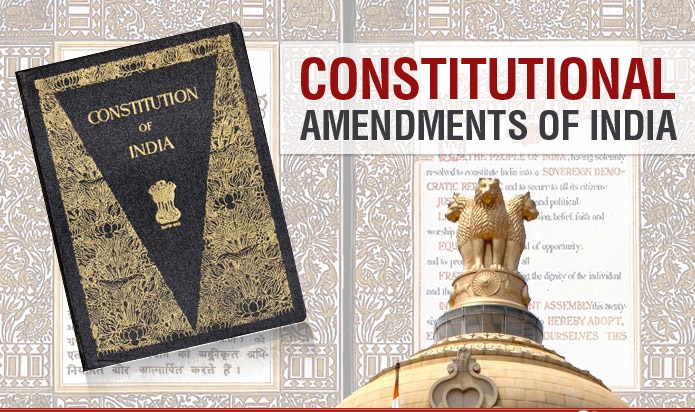




 Allow notifications





