Download Now
Home Blog Page 381

Code on wages : a change in approach

0
Image source - https://bit.ly/3CuqsYQ

This article is written by Anshika Patel and Malini Raj pursuing BA,LLB from the University of petroleum and energy, Dehradun. The article is edited by Khushi Sharma (Trainee Associate, Blog iPleaders).

Abstract 

The labor legislation in India has mostly been a backhand topic for the government but with the progression of rights, survival of human being the concept of labor jurisprudence started to develop, and with growing concern at the international level, India also buckled up its status with respect to labor laws. Due to many loopholes in existing labor practices, the ministry decided to sum up almost all existing laws in four core legislations and one such law is the Code on Wages 2019.

Code on wages streamlines and simplifies the provision of Payment of Wages, Payment of Bonus, Equal Remuneration, and Minimum Wages Act. The present paper tries to put forward a comparative analysis of some relevant provisions of consolidated acts and the code which includes applicability, definitions, offenses and penalties, and other new concepts introduced in the 2019 code. 

Introduction

The background of labor laws in India and the complexities attributed to it is not an unknown fact. The rigidity inherent in the labor legislation established itself as a major impediment for the investments and growth of the labor classes as well as the establishments. The seed for such complexity and overlapping can be seen due to the fact that the grundnorm i.e. the Constitution of India itself provides labor subject matter in the concurrent list hence impliedly giving both the center and the state the power to legislate the same, this authority over the period have resulted in over 200 state legislations and around 50 Central labor laws administering different aspect of labor employment in the territory of India.

Furthermore, vagueness in various elements such as the workforce threshold, wage definition, the types of establishment, etc caused hindrance in the application of the labor law. In this background of the Labour Law structure, the sole probable corrective step was to consolidate the labor laws.

Thus as a step of the Ministry of Labour and employment to codify the 44 Central legislation into 4 codes the code on wages came into the picture. Code on wages summed within itself 4 Central labour laws namely the Payment of Wages Act, 1936, the Payment of Bonus Act 1965, the Equal Remuneration Act 1976, and the Minimum Wages Act 1948 and had repealed the same.

In the word of ministry, “the code on wages was an attempt to transform the old and obsolete labor legislations into more accountable and transparent laws that are aligned as per the need of the hour”.

Scrutinizing some key definitions

Applicability

The study of every law starts with the basic aspect of applicability of the same on various entities. The four Labour Laws that were repealed by the code on wages incorporated within itself different applicability provisions which eventually lead to non-uniformity. Moreover, the scope covered by those four legislations was quite restrictive. Thus as usual code attempted to overcome this shortcoming by clearly stating down the area where the provision of this code will be applicable by taking a broader approach. The previous law’s applicability provisions state that: 

  • The Payment of Wages Act- applicability was decided on the basis of the wage ceiling of the employee and such wage ceiling was twenty-four thousand rupees. 
  • Minimum wages act- restricted its applicability on schedule employment.
  • Payment of Bonus Act- the applicability was based on the wage ceiling of the employee which was notified as twenty-one thousand rupees plus it applies to all the factories and establishments where the number of employees was 20 or more. 
  • Lastly, the Equal Remuneration Act restricts the applicability of the act to the term “workers” as defined under the Industrial Dispute Act 1947. 

Now the Code On Wages has reversed these existing provisions in a way that it is universally applicable on all employees without any specific threshold or scheduled employment with respect to chapter I, II, III, and IV, but for chapter IV there is a catch that applicability of payment of bonus will depend on the threshold that will be provided by the appropriate government.

Hence all employees irrespective of their Wage or status have the rights and remedies available under the code on wages, the only ambiguity left is with respect to chapter 4 where the threshold has to be provided. Moreover, the code makes it abundantly clear that this code will not apply to the areas covered by Mahatma Gandhi National Rural Employment Guarantee Act 2005, coal mines provident fund Act 1948, or schemes made under the same. 

Appropriate government

Appropriate government is an authority that is charged with the duty for implementing the code within their assigned jurisdiction therefore it’s important to determine what is appropriate government? 

  • Payment of wages act- appropriate government for railway transport service, mines, and oil fields was Central Government and for all other cases, it was the State Government. 
  • Minimum wage act- the scheduled employment which is carried by the central government or under its authority or railway, mine, oil field, major port, corporation established by central act the appropriate government was central government and for the remaining schedule employment, it was the State Government. 
  • Payment of Bonus Act- the central government is the appropriate government for those establishments for which under Industrial Dispute Act 1947 the appropriate government is central government and for the remaining establishment the state government is the appropriate government. 
  • Equal Remuneration Act- any employment that is carried under the authority of Central Government or by the central government or Railway, administration, banking company, mine, oilfield, major port, Corporation established under Central act the central government is the appropriate Government and for the other employment, it is the state government. 

On the critique of the definition, it can be seen that the payment of wages act defines the jurisdiction of the appropriate Central Government in a very restrictive manner by limiting its scope to railway transport, mine, and oil field. On the other hand, the equal remuneration act has a broader sense of meaning and jurisdiction of the central government, under the Payment of Bonus Act the definition of appropriate government depends on the Industrial Dispute Act, and lastly, the minimum wages act defines the government in respect of schedule employment hence leaving behind the non-scheduled employment. 

Presently the code on wages defines the same “concerning an establishment which is carried by or under the central government or the establishment of mine, Railway’s, oilfield, ports, air transport service, telecommunication, insurance, and banking company or any corporation established by a central act or public sector undertaking, subsidiary of a company set up by Central Public Sector undertaking or autonomous bodies under the ownership and control of the central government and also includes the establishment of contractor appointed for such establishment, corporation or authority, etc it is the central government who is the appropriate Government and for the other establishments the state government is the appropriate government”.

Hence a reformist step is made in defining appropriate government by including almost every aspect and providing uniformity concerning the identity of appropriate government under the labor law domain.

Establishment

Another important part for the implementation of the code is to have a clear understanding of the term establishment. Under of the code, establishment means “any trade, business, industry, manufacture or occupation carried on and it also includes government establishment”. The definition in the code has given a wider meaning and essence to the term establishment to make sure that the perk of the code extends to every worker in all establishments however there still exists a lacuna in the definition as the code does not describe the term industry, trade, business, manufacture or occupation hence leaving behind an ambiguity unsolved. 

Employee

It is a well-established fact that the labor laws are enacted for the security, growth, and welfare of employees hence it is vital in labor legislation to have a definition of the term “employee“. 

  • The payment of wages act and the equal remuneration Act do not define the term employee. 
  • The minimum wages act defines an employee as “a person who is employed to do any skilled, unskilled, manual, clerical work in scheduled employment…” 
  • Payment of Bonus Act a “person, not being an apprentice, who is employed for a salary or wage not exceeding 21000 per month in an industry to do any kind of skilled, supervisory, unskilled, managerial, administrative, clerical, technical work“. 

The Code On Wages give a combination of minimum wages act and Payment of Bonus Act definition along with certain changes and define the same as “any person other than apprentice employed on wages by any establishment to do any kind of skilled, Semi-skilled or unskilled, operational, supervisory, technical, administrative managerial or clerical work and it also includes within itself a person who is declared an employee by the appropriate government but the same does not include a member of the armed forces of the union“. 

Hence it can be said that the new code eliminated the threshold and the schedule employment provision and added semiskilled, operational workers. A question that lingers around the definition is whether the employee definition provided in the code is exhaustive? Answer to this concerning code on wages is a tough one as there is no case law clarifying the same but looking back at the answer of a similar question by the supreme court in the case of Ahmedabad private Primary Teachers Association vs administrative officers and other it is quite clear that the term employee is not an exhaustive definition. The issue in the case was whether the teacher falls on the definition of employee?

Supreme Court rejected this set of contention by stating that teachers cannot be included either in the skilled or unskilled category. Similarly, they are not Semi-skilled or unskilled employees. Moreover, the code explicitly states that the appropriate government holds the power to notify any person as an employee thus, the final answer that can be concluded is that the definition is not exhaustive. 

Worker

The minimum wage acts, Payment of Bonus Act, Payment of Wages Act do not define the term worker. Under the Equal Remuneration Act defines it as “a worker in any establishment or employment in respect of which this act has come into force”.

The definition rendered was very vague thus the code took a step forward in defining the same as “a person except for an apprentice who is employed in an industry to do any kind of skilled, unskilled, manual, technical, clerical, operational or supervisory work and the same includes a working journalist and a sale promotion employee however it does not include the subjects who fall under the air force act army act Navy Act, a person who is in a managerial or administrative capacity, a person employed in police service or an officer or employee of a Prison plus an employee who is working under supervisory capacity and is earning salary exceeding fifteen thousand per month“. 

Now the difference between the term worker and employee in the point that the term employee is wider than worker as it includes person working under managerial and administrative capacity plus there is no threshold provided for a person working in a supervisory capacity.

Employer

With the growing importance of fixing liability the definition of employer is crucial to identify the person for the wrongdoing. 

  • Section 2(ic) the Payment Of Wages Act does not expressly define the term. 
  • Section 2(14) of Payment of Bonus and section 2(c) of Equal Remuneration Act similarly defines the term. 
  • Definition under the Minimum Wages Act was quite alike to the definition given under the code on wages. 

The code defines it as “a person who directly or through any person employs one or more employee in his establishment and where the establishment is carried on by the department of the central of the state government then the head of such department will be considered as an employer. Moreover, in the case of a factory, the occupier of the factory will be considered as the employer“. 

The code added a new dimension to the definition by inserting ‘contractor’ as well as the “legal representative of a deceased employer” under the definition of employer. An important aspect added in this context is the lifting of the corporate veil by the adjudicating authority to fix the liability.

Minimum wage and National Floor Wage 

Security of minimum wage to all wage workers in India was not strong and the code in this regard brought a change by asserting that the employer has to pay employee wage that is not below the minimum wage and such minimum wage will be notified by the appropriate government for the entire establishment falling within its jurisdiction. Earlier there was no mandatory provision for periodic review of minimum wages but the present code developed this point and provided that the appropriate government will ordinarily review and revise the same every five years. Such a point has been affixed to get minimum wages in line with the ongoing social-economic realities. 

The code also emphasizes the National Floor Wage concept in India. This concept is an old one that was first introduced in the year 1991 however it was a non-binding provision which led to its ignorance by many states. To change this practice legally binding floor wage was introduced under the code which cast a duty on the central government to fix the same. The central government can also fix regional level floor wage considering the regional factors. The minimum wage set by the state government cannot be below the national floor wage and in this way, the code tries to bring uniformity and decrease disparity.

Payment of bonus

The Code takes into account the following two types of bonus disputes to be industrial disputes within the provisions of the Industrial Disputes Act, 1947: 

a) Disputes over bonus fixing or qualification for the bonus payment; and

b) The applicability of this Code to a public sector establishment in respect of bonus.

It is notable that the Code has excluded in the above point a) and b) about the applicability of the Code as concerned towards bonus to an establishment in private sectors.

Claims under the Code

To resolve claims under the Code, the Code establishes a specialized adjudication system in the form of authority.’ It states that a claim must be lodged with the ‘authority designated by the competent government. The Code requires the authority to hear and assess the claims, as well as pay damages up to 10 times the amount of the claim established if the conditions merit it. Furthermore, the authority is required to make every effort to resolve the dispute within three months.

The following are some of the ways in which the Code has introduced uniformity and clarity to various areas of the claims process.

A claim can be lodged by (a) the employee concerned; (b) any Trade Union enrolled under the Trade Unions Act, 1926, in which the worker is associated; or (c) the Inspector-cum-Facilitator [Section 45(4)], whereas the Payment of Wages Act, Minimum Wages Act and Equal Remuneration Act all have more or less same provisions relating for filing claim and group application. Also, as per the Code, the limitation period to file a claim is 3 years (section 45(6)).

But it differs with other Acts such as for Payment of Wages Act (section 20(4)) and Minimum Wages Act (section 15(2)), the limitation period is 12 months and 6 months respectively. There are no penalties foreseen in case of malicious or vexatious claims in the Code. Whereas the above mentioned Acts foresee penalties for malicious and vexatious claims.

By prescribing a single method to arbitrate all forms of claims under the Code, the Code has given uniformity to the claim system in comparison to current wage legislation.

Right to appeal

The Code has developed a new method for appealing an authority order to a ‘appellate authority.’ It’s worth noting that the ‘appellate authority’ is administrative in character and is nominated by the appropriate Government among officials holding positions at least one level higher than the authority. The Code allows the appellate authority to excuse the delay and entertain the appeal beyond the 90 days term if the delay was due to good cause, and it also encourages the appellate authority to try to resolve the appeal as quickly as possible, i.e. within three months.

Bar on suits

To judge claims and appeals under the Code, the Code established an exclusive authorised adjudication mechanism. The officers to be selected by the competent authorities make up the system for adjudication of claims and appeals. The Code thus prohibits the courts from hearing any suit for the recovery of minimum wages, deductions from wages, wage discrimination, or bonus payments if the sum sought is: 

  1. the subject of claims (section 45 of the Code);
  2. the subject of a direction under this Code;
  3. adjudged in any proceeding under this Code; or 
  4. could have been recovered under this Code.

Inspection mechanism/ Inspector-cum-Facilitator

For the appropriate enforcement of labour regulations, an effective inspection system is required. The International Labour Organization also requires member governments to have an effective inspection process in its Labor Inspection Convention of 1947, which India ratified. In this regard, the Code allows the competent government to designate an inspector-cum-facilitator and to establish an inspection plan.

The inspector-cum-facilitator has been given the following power and authority under the Code to ensure effective implementation of the Code: 

  1. examine any person found in any establishment premises whom the Inspector-cum-Facilitator has logical cause to consider is a worker of the establishment;
  2. ask any person to provide any information in his power concerning the names and addresses of the persons;
  3. search, seize, or copy any register, record of wages, or takes notice, or portions thereof, that the Inspector-cum-Facilitator considers appropriate concerning to an offence under this Code that the Inspector-cum-Facilitator has reason to believe was committed by the employer; 
  4. bring to the attention of the appropriate Government faults or abuses not encased by any law currently in force; and 
  5. exercise such other power and authority as may be prescribed.

Inspection scheme

The ability to establish the inspection plan has been entrusted to the appropriate government under the Code. Moreover, to foster e-governance, the Code clearly states that such an inspection mechanism may include:

  1. the creation of a web-based inspection; and
  2. the electronic retrieval of information related to the inspection conducted under this Code.

Furthermore, the Code authorizes the competent government to confer jurisdiction of randomized inspection selection on an Inspector-cum-Facilitator to bring transparency to the Inspection system.

Offences and penalties

The Code authorizes courts with jurisdiction and cognizance over an offence punishable under the Code, which is not subordinate to a Metropolitan Magistrate or Judicial Magistrate of the First Class. In contrast to current wage regulations, the Code has liberalised the right to complain before a court for violations of the Code.

The Code allows an employee, a Trade Union registered under the Trade Unions Act, 1926, or an Inspector-cum-Facilitator to make a complaint without prior permission if they have the approval of the competent government or an authorised officer. This widened locus standi in the Code will go a long way toward ensuring that those who have been wronged receive justice, as well as acting as a deterrent to employers and ensuring efficient enforcement.

Punishments/ penalties for the offences

The Code has incorporated progressive punishments for offences based on the severity and frequency with which they are committed. In comparison to current wage regulations, the Code has significantly increased the amount of punishments for offences. It’s also worth noting that, in contrast to current wage regulations, the penalty of detention has been eliminated for the first time offender as well as for the offence of non-maintenance or faulty record-keeping.

The Inspector-cum-Facilitator shall give the employer a chance to comply with the requirements of this Code through a written manner, which shall lay down a time frame for such compliance, and if the employer conforms to the manner within such timespan, the Inspector-cum-Facilitator shall not start prosecution proceedings for the offences under the Code.

Parallel administrative mechanism for imposition of penalties

The establishment of a parallel administrative procedure to enforce punishments in the Code for some minor offences is a positive move. The Code provides for the appointment of officials to impose fines by the competent government under Section 53(1) of the Code. During the investigation, these officers shall have the authority to summon and compel any person familiar with the facts and circumstances of the case to present evidence or produce any document that, in the opinion of that officer, may be useful for or important to the investigation’s subject matter.

Composition of offences

On the application of the accused, either before or after the commencement of any trial, Section 56 of the Code specifies that the following two kinds of offences may be compounded:

  1. Offenses that are not penalized solely by imprisonment, or 
  2. Offenses that are penalized both by imprisonment and fine.

The scope of composition is further limited by Section 56(2) of the Code, which states that composition does not apply to an offence committed by a person for the second or subsequent time within five years of the date – 

  1. of commission of a similar offence which was previously compounded, or
  2. of commission of a similar offence for which such composition was not made.

Conclusion

According to the study above, the Code has taken positive steps toward simplifying and closing loopholes in existing wage legislation. The Code will assist the country’s economy to a large extent because it attempts to bring gender justice as well as provide near-universal wage law protection to almost all workers employed in practically all establishments with few exceptions.

The Code would contribute to efficient execution of wage laws by establishing uniformity in definitions, mechanisms for e-governance and transparency, an effective grievance redressal process, the right to appeal, and the composition of offences. As a result, Code’s new pay laws will be a powerful instrument for shielding the workforce, and it will undoubtedly result in a new paradigm in wage law enforcement.


LawSikho has created a telegram group for exchanging legal knowledge, referrals and various opportunities. You can click on this link and join:

https://t.me/joinchat/L9vr7LmS9pJjYTQ9

Follow us on Instagram and subscribe to our YouTube channel for more amazing legal content.

Download Now

Role of “right to first refusal” in a shareholders agreement

0
Confidentiality agreement
Image Source - https://rb.gy/gbqk0v

This article has been written by Nimisha, pursuing the Diploma in Law Firm Practice: Research, Drafting, Briefing and Client Management from LawSikho. This article has been edited by Tanmaya Sharma (Associate, Lawsikho) and Zigishu Singh (Associate, Lawsikho).

Introduction 

A right of first refusal requires the proprietor of a property to offer the property to the right holder on similar terms as those presented by that outsider before the proprietor can sell the property to an outsider. First purchase rights are commonly employed in a variety of contractual settings. They are found, among others, in a real estate sale and lease contracts, agreements among shareholders of a closely-held company, joint ventures, franchise agreements, and management agreements. When a right of first refusal is not included in the agreement, the seller can sell the subject property to a third-party buyer. In a right of first refusal, a third-party investor has to decide whether to enter into an agreement that is subject to a right of first refusal.

Difference between ROFR(Right To First Refusal) and ROFO (Right To First Offer) 

ROFR varies from a Right of First Offer (ROFO). ROFO, otherwise called a Right of First Negotiation, merely obliges the owner to undergo exclusive good faith negotiations with the rights holder before negotiating with other parties. A ROFR is a choice to enter an exchange on careful exchange terms. A ROFO is merely an agreement to negotiate. 

Right to the first refusal of a shareholder

A ROFR clause in the term sheet gives investors the choice to buy shares from the company before the shares are offered to an outside party. If they exercise this right, the issue price must be the price offered to the third party. 

Some term sheets first give the option to the company, then to the investor, while others simply give the option to the investor. If there are multiple venture capital investors, the ROFR provision typically specifies that each has the option to purchase a pro-rata portion of the shares being sold.

Relevance of investor’s right of first refusal clause

This clause protects the interest of investors and is very important. In case the founders intend to exit the company due to some event, then investors should have the right to first purchase the stake of founders. The founders cannot exit before the lock-in period if there is a clause to that effect in the term sheet. 

This is how a Right to refusal clause may look like in a term sheet, 

“If any of the company’s shareholders other than the investor proposes to transfer any of their company shares to a third party, then the investor will have a right of first refusal to purchase those shares on the same terms as the proposed transferee. “

Role of right to the first refusal in start-ups equity

In events such as the right to enter a joint venture or distribution arrangement Investors generally negotiate for ROFR when the founders or other investors are willing to sell their shares as they have to match the price at which a third party is willing to purchase such shares of founders or existing investors. One more reason why investors are inclined towards ROFR right is that they get to know what is the price of the shares in the market and this makes their job easy as to whether they want to increase their stake in the company or not. This right gives the right holder the option to get more involved at a later point. Such a right, however, is time-bound, and therefore after the expiry of the period, the seller is free to pursue other buyers.

Note for startups – A ROFR contains a longer and more extensive method to liquidate shares of a company. A startup should try to provide the investor with a ROFO rather than a ROFR.

ROFR (Right of first refusal) versus ROFO (Right of first offer) 

  • When negotiating a shareholder agreement one concern that impacts the shareholders’ decision is controlling their share ratio. ROFR works as a tool for them to maintain control of their share percentage in the company. 
  • ROFR- It provides the existing shareholders with the right to accept or refuse to buy shares of a selling shareholder. ROFO – A similar known mechanism in a shareholders agreement that provides non-selling shareholders with the right to be offered the shares before any external solicitation takes place. 
  • The point to be noted here is that ROFR provides the non-selling shareholders with the right of first refusal to offer from selling shareholders after the selling shareholders has received a third party offer for shares. 
  • On the other hand, ROFO provides the non-selling shareholders with the right to first make an offer to the selling shareholders before the shares are offered to the third party. 
  • The price of shares gained by the Right to first refusal may be influenced by the third party’s offer to buy the shares. 
  • A ROFO allows the selling shareholders to make an offer to the non-selling shareholders instead of approaching the third party. 
  • In reality, the third party is reluctant to negotiate and buy shares when they are subject to a ROFR. This is because they’re uncertain about future investment plans in the company if they buy the shares. 
  • This causes a reduction in prices offered by the third party and the selling shareholders are at risk of selling them at a lower price. 
  • On the other hand, the ROFO mechanism often favours the selling shareholders as there’s no obligation to accept the offer to buy from the non-selling shareholders. 

Simply put, 

  • When a stockholder wants to or prefers to sell some stock, they have to present an offer to the inside venture capitalists if they have a right to first refusal. 
  • The venture capitalists, mostly in good companies, always want more ownership as professional investors. 
  • If the stock sellers sell their shares to outsiders, there could be information rights transferred to them. And all the actual financial results of those companies may get out, which will result in losing control of the company. 
  • If the insider venture capitalists refuse to buy the shares, then the selling shareholders can market them to get some liquidity. 

Conclusion

The author has mentioned the role, advantages, and disadvantages to include ROFR in your shareholders’ agreement. Although all this information is not exhaustive and needs to be studied in different circumstances. While drafting the ROFR clause one must do an analysis of the advantages and disadvantages of this particular clause. 

References


Students of Lawsikho courses regularly produce writing assignments and work on practical exercises as a part of their coursework and develop themselves in real-life practical skills.

LawSikho has created a telegram group for exchanging legal knowledge, referrals, and various opportunities. You can click on this link and join:

https://t.me/joinchat/L9vr7LmS9pJjYTQ9

Follow us on Instagram and subscribe to our YouTube channel for more amazing legal content.

Download Now

Unconventional trademark in sports

0

This article has been written by Pranjali Nanadikar pursuing the Diploma in Intellectual Property, Media and Entertainment Laws from LawSikho. This article has been edited by Aatima Bhatia (Associate, Lawsikho) and Zigishu Singh (Associate, Lawsikho).

Introduction 

Sports and Sports teams have a long history with intellectual property law, more specifically trademarks. For a sportsperson, it is beneficial to seek trademark protection to generate additional revenue, particularly for athletes whose career will likely be short. In the sports industry merchandising, franchising, and branding also plays a very important role as a new revenue generation source. In this article we will discuss certain Unconventional (non-traditional) trademarks in sports.

Meaning of unconventional trademarks 

In India, the Trademark Act, 1999 defines a ‘trademark’ under section 2(zb) as a mark capable of being represented visually, one which can distinguish between the goods or services of one person with those of another. Thus, a trademark is an important intellectual property that helps the customer in recognizing the product and the particular company. Basically, trademarks build trust, loyalty and confidence among people, who believe that this particular trademark will provide them with the best quality product.

Traditionally, trademarks have been sign, label, logos, word/s which distinguishes a product of one entity from the product of another entity. However, Trademarks are often misunderstood as being limited to only signs, labels, logos and words. But within the growing scope and rising importance of intellectual property law in the whole world, it’s a very narrow definition. Thus, further, apart from the traditional trademark, there are various non-traditional trademarks introduced in developed and developing countries. Additionally, the Agreement on Trade-Related Aspects of Intellectual Property Rights (TRIPS) perceives different sorts of trademarks. Thus, trademarks can also be as non-traditional as a color, smell, sound, shape or even a video. Such trademarks are called non-traditional marks. From the international perspective, following are the unconventional trademarks that have been successfully registered. These are :

  • Holograms;
  • Shape marks;
  • Color marks;
  • Smell marks;
  • Sound marks;
  • Multimedia marks;
  • Touch and texture marks;
  • Taste marks;
  • Gesture marks.

In India, the Manual of Trademarks Practice and Procedure of Indian Trademark Registry, 2015 (Draft), however only recognizes small, sound, color and shape marks under the category of unconventional marks. Evidently, India still lacks any successful registration for taste, touch or gesture marks.

Registration of unconventional trademark 

Registration of unconventional trademarks is quite complex. Following are the two most important requirements that needs to be fulfilled if you are planning to register an unconventional trademark :

  • Graphical representation of trademark; and 
  • Examination of the mark’s distinctiveness.

Presently, the demand for unconventional trademark registration is very low as it becomes very difficult to represent such a trademark in graphical format.

Indian perspective of sports 

Nelson Mandela used to say that “Sports have the power to change the world. It has the power to inspire, the power to unite people in a way that little else does. It speaks to youth in a language they understand”. Today, sports speak to every Indian more than ever. With the rapid change and evaluation, sports have now become a sector of business. In India, the sports industry has become a more promising entertainment and business industry. With online communication of  information, sports have gained attention and excitement among people. However, the biggest difference between today’s sports and sports a few years ago is how money plays an important role. Not only merchandising, franchising and branding but also trademarking sportsperson and sports teams has a huge role in sports today. Brands are willing to pay huge sums of money to be associated with a particular sporting event or a sportsperson. 

Trademarks in sports 

In the Indian sports industry, there are many trademark infringement cases. For example, the BCCI filed a suit for the infringement of trademark or domain name Indian Fantasy League. The Madras High Court delivered the judgement that IFL will not be able to use the name/logo of BCCI as it would amount to trademark infringement. Infringement cases were not only about trademarks but also about celebrity’s name infringement which is registered as a trademark. For example, Sourav Ganguly v Tata Tea Ltd.

Unconventional trademarks in sports 

  • Now, we will see that not only conventional, but also unconventional trademarks have benefitted sportspersons and various sports teams. The most famous example of a registered unconventional trademark in the sports industry is Usain Bolt’s pose mark called “the lightning bolt”. Usain Bolt is an olympic athlete participating in various sprinting events, he is considered as the  man on earth and owns several trademarks registered all over the world protecting his name, signature and slogans .
  • Mo Farah is a British long-distance runner. He has also trademarked his very famous victory move. The “Mobot” in the UK Intellectual Property Office.
  • Gareth Bale, a well known footballer has registered his pose mark called “Eleven of Hearts”, which involves curving his hands in heart shape with the number “11” in between. He has also given rights to his pose to be used on shoes, hats, bags, umbrellas and jewelry.
  • Another similar example is of English  striker, Jesse Lingard, who has trademarked his famous celebration move, ‘JLingz’ where he covers his forehead with his fingers forming the initials of his name (in the shape of a J and L). He also gave  merchandising rights to use this trademark on clothing, footwear and headgear.
  • The most famous dispute regarding trademark registration of the move was ‘Vicht’. The Tennis player, Niclas Kroon registered this trademark ‘Vicht’, which was a sign which involved closing her hand in the shape of a duck beak. 
  • With regards to the smell mark, another landmark decision was delivered  in 2003 in the US which dealt with the issue of trademarking of the applicant’s smell mark. While the court did not grant registration for the same, it laid down several guidelines which would allow unconventional marks to be registered.

Practical difficulties faced by sports industry for registration of unconventional trademarks 

Now, it is very evident from the above examples that, in India, successful registration of unconventional trademarks in sports is very less and the graphical representation and distinctiveness are the causes for it, which are also the statutory requirements for a successful registration of an unconventional trademark.

  1. Graphical Representation 

The first and most important factor for registration of an unconventional trademark is graphical representation which is also a big hindrance . This can be achieved either by describing the move in precise and elaborate details or through the graphical medium of a picture or drawing. Further, the sportsperson or a particular sports team who is applying should also make sure that intelligibility, preciseness, clearness, durability, accessibility and objectivity of such graphical representation have been taken into consideration while applying.

Other unconventional trademarks such as smell or color marks, which are intangible in nature, face challenges while representing trademarks in a graphical format. Mere writing down the chemical formula of the smell will not be sufficient to successfully register the trademark. Also; the sample of the smell or sound cannot be a graphical representation. There is only one way to register such an unconventional trademark that is to attach a description so precise that no other sound or smell can be confused with the one trying to obtain trademark registration. Mere generic description of such an unconventional mark can create confusion. Similarly, if a sports person’s signature move or celebration is sought to be trademarked, apart from graphical representation one would require  a description of the mark so precise that on a clear reading of it, the move would not be confused with being similar or identical to move action performed by another person.

  1. Distinctiveness 

Another requirement for successful registration of an unconventional trademark is Distinctiveness/uniqueness. The sportsperson should make sure that his trademark is unique in nature and most importantly, not causing any confusion in the minds of the public with other products or services in the same trademark classification which it seeks to cover. Distinctiveness is a term which is acquired over time. A short period of time is not sufficient to prove the distinctive nature of such a trademark. It is also binding in an action for infringement or passing off to show that the mark has acquired distinctiveness. Thus, it has become very difficult, especially for sportspersons to register their move as, there is no such prior use of the move/action can be attributed to the player showcasing the mark’s distinctness.  

Conclusion 

It is very clear from the above-mentioned examples of unconventional trademarks in sports that India has very less  successful registration of unconventional trademarks in sports in comparison to the European Union. The most important hindrances while successful registration of non-traditional trademarks are graphical representation of such mark and distinctiveness/uniqueness about the mark, and the inadequate instruments to represent the trademark graphically. Thus, it is extremely important for the Indian government to catch up with the modern marketing techniques that use colors, shapes and scents and sound to make their product distinctive. It is also advisable to WIPO that they should provide clear guidelines about how an applicant can apply by satisfying the requirement i.e. graphical representation as it would create harmonization of trademark systems across  the whole world in the interest of global trade also. If TRIPS will introduce uniform guidelines for their member countries for registration of unconventional trademarks, then it will systematize registration procedures and it can benefit the sports industry immensely.

References 

  1. https://www.barzano-zanardo.com/en/approfondimenti/unconventional-marks-in-sports-when-celebration-becomes-a-trademark/
  2. http://www.cnlu.ac.in/2021/CIRF/14%20Yashwardhan%20Singh%20and%20Deeksha%20Singh.pdf.

Students of Lawsikho courses regularly produce writing assignments and work on practical exercises as a part of their coursework and develop themselves in real-life practical skills.

LawSikho has created a telegram group for exchanging legal knowledge, referrals, and various opportunities. You can click on this link and join:https://t.me/joinchat/L9vr7LmS9pJjYTQ9

Follow us on Instagram and subscribe to our YouTube channel for more amazing legal content.

Download Now

All you need to know about IP rights of the gamers in the Esports industry

0

This article has been written by Vinit Bagdai pursuing the Diploma in Intellectual Property, Media and Entertainment Laws from LawSikho. This article has been edited by Aatima Bhatia (Associate, Lawsikho) and Zigishu Singh (Associate, Lawsikho).

Introduction 

In India and all over the world with the development of the esports Industry – the significance of Intellectual property rights has increased enormously. Esports market is presently valued at about a billion US Dollars and their immense popularity is showcased in the fact that —some events consistently attract more than a million concurrent viewers providing the e-sport athletes desirable options for some amazing sponsorship opportunities. However,  the uncertainty of esports over international boundaries and lack of defined rules make them incredibly difficult to manage and organize. People compete with each other by means of devices at different esports tournaments hosted from time to time. Esports have several crucial components that distinguish them from conventional sports. Also, the role that game publishers and developers play is an important factor. In this article we will discuss briefly regarding the IP rights of the gamers in the Esports Industry. 

Evolution of Esports

According to Forbes, Esports has also crossed major league baseball in terms of audience. A total of 335 million viewership of Esports in 2017 is now estimated to be near about 646 million in 2023. According to Business Insider, monthly gamers will rise from 167 million to 276 million in the year between 2018 and 2022 respectively. Esports has an arguably  bigger audience than  Major League Baseball. Different tournaments are regularly happening across the world including India. Example – Tournaments of games like Valorant, Call of Duty, PUBG, CSGO, DOTA and many more and prizes for such events are in millions.

Esports authority is not much supported when it comes to Olympics, but Esports have been growing massively across the world including Asia. There have  also been conversations with the International Olympic Committee to involve Esports in Olympic events; which will be a massive boost to the Esports Industry. Esports is also now recognized by the Indian Olympic Association as “Esports Federation of India”, which is the leading governing body of Esports in the country.

Role of intellectual property in Esports

Intellectual property law, particularly copyright, has always been very valuable within the entertainment world, mostly  for books, films and music. However, the significance of a robust IP strategy for game developers and esports professionals came to the fore with the growth of esports and the popularity of video games in general.

Esports is a modern concept of authorship that makes use of myriad art forms such as sketches, graphics, video, characters, etc., and formulate different levels of human interaction for the implementation of the game. The storyline involved also must be unique and writers shouldn’t infringe on copyrights that already exist. Intellectual property is a vital element of the Esports industry and deals with attributes such as ownership of the property, licensing, advertising and many more such things. 

In eSports, there are different appropriate components such as publishers, organizers, broadcasters, teams, playersviewers, brands etc who are involved. An entity can perform more than one of these roles. Overlapping one of them will create chaos and confusion in the analysis of competition in the eSports market, as it will imply that economic connections are not perfectly horizontal or vertical by any means. However, between eSports publishers and other units like broadcasters and tournament organizers there lies a vertical relationship. E-Sports publishers are in a demanding market, i.e. in the “early” stage of production like suppliers of raw materials. On the other side, organizers and broadcasters work at a lower level than that of publishers; in the downstream market – comparable to that of manufacturers and retailers. The downstream competitors have the ability to control the downstream behavior of all the parties if they have the reacquired access to publisher’s IP to compete in the market. They enjoy significant influence over players, teams, league structures, tournaments, and show status.

Players as well as companies have to be very cautious that they don’t infringe any rights of others which could create trouble in future, including the name of the team and gamer tags as well. Recently, Esports team name Riot Squad in California was sued by Riot Games alleging that it chose the name to confuse the consumers. Teams and Professional players also should try to protect their personality and brand image by obtaining a trademark at the earliest.

Licensing issues can arise when different tournaments take place online (via gaming platforms) or on LAN as well, because all the rights in connection to the game are with the developer of the game. In order to avoid such issues, a license must be obtained by the organizers from the game developers. Also, professional players regularly monetize their brands by creating videos online; they must take care that they operate within the grounds of end user license agreements with regards to the content they post.

Which elements of esports are copyrightable and not copyrightable?

  1. Elements which are copyrightable

Video games are eligible for copyright protection. With regard to esports, this may include audiovisual elements (e.g., maps, sound effects and characters) and literary elements (e.g., the underlying source code). Copyrighting these elements can raise questions of authorship as there tends to be several parties involved in it, for example, game designing, sound engineering, programming, and developing a user interface.

Match footage is also generally protectable under copyright. The tournament organizer or broadcast service typically owns the copyright in match footage; however, individuals who are casting or commenting on a match may have some IP rights on their own cast, depending on the agreements in place.

  1. Elements that are not copyrightable

Copyright does not cover ideas. While musical or dramatic performances can be covered by copyright, sports performances are generally not recognized as copyrightable work. This is because they are not scripted and cannot be reproduced and therefore do not meet the third requirement for copyright protection – that the work must be fixed in a tangible medium of expression. As a result, there are no performance rights in players’ performances in an esports match.

Copying and reproducing the game for gaming events

Players have the right to play a video game on a non – commercial basis as a result of End user license agreements. This means that subject to the approval by the right owner there would be permanent or temporary reproduction of a computer game. Therefore, organizers of esports events have to ensure that they obtain the necessary usage rights/license to make the respective video game widely accessible at their events or through other distribution channels. Players as well as companies need to be vigilant not to infringe the rights of anyone in this matter.

The reason a video game cannot be copyrighted is because it is just a particular expression of the actual game. For example, Mario’s looks and sounds Copyright is owned by Nintendo but that doesn’t mean that Nintendo will have monopoly over all the character-based video games which have plumbers in their video games. However, copycat mobile games that piggyback on the success of popular titles in an attempt to make a quick buck often cross the line between idea and expression, a practice that can actually be traced back to a Pac-Man clone called K.C. Munchkin, which triggered one of the first video game copyright lawsuits in 1982.

As video games have advanced from time to time, characters based on real people rather than plumbers have also spawned lawsuits, most famously when the former Panamanian dictator Manuel Noriega tried to sue Activision over his portrayal in Call of Duty: Black Ops II game. In recent times, digital versions of sports stars’ tattoos may have breached copyright law: the tattoo artist, rather than the person whose skin bears the ink, usually owns the copyright, and some claim they did not give their authorization for their work to be used in any manner.

Conclusion

After reading the above article, one can surely understand the importance of Intellectual Property in the Esports Industry. Therefore, the tournament’s organizers should make sure that they obtain the necessary license from the publishers/developers of the game. The importance of Copyright is valuable as there are constant changes going on from time to time. Tournaments are held online, as well as in offline mode; So, Copyright plays a huge factor, and one should be cautious to not infringe any rights. The ever-growing industry of Esports does not just bring with it billions of dollars in the market but also bestows responsibility on the shoulders of Intellectual Property Rights whilst increasing the significance and usefulness of it in every aspect of E-sport’s presence. 

References

  1. https://www.lemur.legal/post/intellectual-property-in-the-world-of-esports.
  2. https://abounaja.com/blogs/world-of-esports-and-intellectual-property.
  3. https://blog.ipleaders.in/highlighting-complex-relationship-esports-intellectual-property-rights/.
  4. https://www.marks-clerk.com/insights/ip-and-the-rise-of-esports/.
  5. raconteur.net/legal/intellectual-property/video-game-copyright-law/.

Students of Lawsikho courses regularly produce writing assignments and work on practical exercises as a part of their coursework and develop themselves in real-life practical skills.

LawSikho has created a telegram group for exchanging legal knowledge, referrals, and various opportunities. You can click on this link and join:https://t.me/joinchat/L9vr7LmS9pJjYTQ9

Follow us on Instagram and subscribe to our YouTube channel for more amazing legal content.

Download Now

Corrective rape : a reflection of India’s obsession with heterosexuality

0
Indian rape laws
Image Source: https://rb.gy/h95nem

This article has been written by Oishika Banerji of Amity Law School, Kolkata. This article highlights India’s obsession with heterosexuality through the lenses of the study on corrective rape. 

Introduction 

The term ‘corrective rape’ refers to the rape committed by straight against lesbians in order to “cure” or “correct” their homosexuality. Put simply, corrective rape is a deterrent for being gay and infringing traditional gender presentation. The term was coined in South Africa where such crimes are rampant. Often it is the family members of the victim who facilitate it. The underlying causes of corrective rape are frequently disregarded or downplayed in the United States, maintaining the high incidence of sexual violence. Sexual assault is frequently characterized as an issue inherent in conventional gender and sexual orientation conventions, rather than as a problem centred in the dynamics of a relationship. Americans appear to have a skewed, depoliticized understanding of rape that excludes everyone but heterosexual women. Corrective rape, on the other hand, is a form of political, structural, and group-based violence. 

The scenario in India stands extremely disheartening as her obsession with heterosexuality has taken a toll on the homosexuals in her territory. As the country stands in solidarity towards the victims of rapes on one hand, on the other such heinous crimes are encouraged to ‘cure’ or ‘purify’ homosexuals who are absolutely normal human beings. This article highlights such cruel practices against homosexuals which is the consequence of the pride India carries about heterosexuals. 

India’s perception about homosexuals through the lenses of corrective rape 

According to statistics from the LGBTQ Collective’s Crisis Intervention Team in Telangana, 15 cases of ‘corrective rapes’ have been documented in the group in the previous five years. “We are sure there are many more cases, but they go unreported”, says Vyjayanti Mogli, a member of the Crisis Intervention Team. She further added that the Team had come across such cases not because they reported the rape, but because they sought help to flee their homes. Because the perpetrators in most cases of corrective rape are family members, the victims do not pursue legal action. Victims find it traumatic to talk about their brothers or cousins being rapists, so they prefer to forget about it and destroy relations with their relatives.

Families in rural India have their own ways of dealing with LGBTQ people, far away from gay pride parades, meet-ups, and intense Twitter debates. In other areas, hidden honor killings are arranged so that a young homosexual man’s sole option for survival remains to flee to a metropolis in the dead of night, with no money or social support. Corrective rape purports to cure what isn’t wrong, and irreparable damage is sometimes exacerbated by family members who are not only unsupportive but also believe that the assault was justified. Younger lesbians are the most vulnerable since they are still financially reliant on their families. Older women are more aware of their rights and have often moved out of their families’ houses. Even where one should feel free and comfortable, there remains a lot of worries. Some teenage girls leave home and struggle to support themselves. Lesbians living in one-room dwellings in informal settlements are prone to alcohol and drug misuse. As a coping method, many turn to the same. Dealing with all this stress alone can lead to low self-esteem, which remains a major risk factor for suicide.

Legal shield to homosexuals in India 

A 157-year old colonial law that criminalized certain sexual acts as ‘unnatural offences’ with a stringent deterrent of 10 years imprisonment recognized under Section 377 of the  Indian Penal Code, 1860 was scrapped down by the Supreme Court of India in the historic decision of Navtej Singh Johar v. Union of India (2018). Justice DY Chandrachud said ‘the State has no right to control the private lives of LGBT community members and that the denial of the right to sexual orientation was the same as denying the Right to Privacy’. Although public opinion in India’s major cities stood in favor of repealing the aforementioned law, religious organizations and traditional rural populations remained staunch opponents of the same.

Section 375 read with Section 376 of the Indian Penal Code, 1860 recognizes rape of a woman as an offence with rigorous imprisonment of either description for a term which shall not be less than ten years, but which may extend to imprisonment for life, and shall also be liable to fine. Unfortunately ‘corrective rape’ is not considered with the definition of rape provided by the Indian criminal law. This is why it becomes extremely necessary for the law-making authorities to draw their attention to the unfair advantage in the form of ‘corrective rape’ being taken by several Indian citizens to rectify the ‘disease’ of homosexuality because of the less clarifying existing criminal laws. Although the Mental Health Care Act, 2017 can give modest protection to the LGBTQIA+ community, a new law is required to completely eliminate this heinous behavior.

Forced marriages alongside corrective rape have kept the gay conversion theory alive in India. In a June 2021 ruling, the Madras High Court outlawed the practice of ‘conversion therapy’ in India, establishing safeguards for LGBTQIA+ people in the nation. The case involves a lesbian couple who were forced to flee their homes after their parents threatened them due to their relationship. The families proceeded to the police station and filed a missing-person report, following which the pair sought protection from their family’s persecution and police interrogation through the courts. The High Court in S. Sushma v. Commissioner of Police (2021) ordered the prohibition of conversion therapy and ‘any attempts to medically cure or change the sexual orientation of LGBTIQA+ people to heterosexual, or the gender identity of transgender people to cisgender’, in order to protect the couple’s Right to Dignity, Life, Privacy, and Freedom of Choice guaranteed by the Indian Constitution. In addition, the Court suggested that specific standards be implemented to ensure that LGBTQIA+ people’s privacy and constitutional rights are maintained.

Honestly, we don’t have laws to prohibit corrective rape. What we have are precedents and reliance on the judicial system to stand up for human rights and constitutional principles. As corrective rape remains increasing in the country like forest fires, legislatures should wake up from their sleep.

Media highlights on corrective rape 

Media has been an indispensable source to bring forth stories behind closed doors that go unnoticed but remain daunting. Satyavati, a film by Hyderabadi director Deepthi Tadanki, revolves around the aspect of corrective rape. The movie is based on ‘shocking real-life incidents that occurred in Bangalore. “While doing research for my film, I came across two heartbreaking stories of corrective rape; one in which a gay girl was raped by her cousin in order to be ‘cured’ of her homosexuality and another in which family members forced a gay boy to have sex with his mother in order to turn him straight.'” “I attempted to contact these victims, but they refused to speak with me,” said Deepthi. A lesbian couple and their straight companion are shown in the film. “When the straight girl’s family comes to see her, they are skeptical that she is in an ‘unnatural’ relationship with one of the lesbian females. As a result, they plan a ‘corrective rape’ on both their daughter and the lesbian girl” reveals the 27-year-old Guntur native, who has raised finances for the film through crowd-sourcing. 

While family and relatives should be supporting their lesbian youth, they are often participating in corrective rape. In Eswatini, South Africa where the LGBTI+ community is brutally marginalized and criminalized, it’s too usual for young women to be beaten up by males who are attempting to propose, frequently as a result of the woman identifying as a lesbian. She may be assaulted by a male in public and receive no help from others. Worse, corrective rape is becoming more common. In 2018, at least five women were raped by a relative to ‘correct’ their sexual orientation in just four months. Rock of Hope ‘REActors,’ data collectors who register incidences of human rights breaches within the LGBTI+ and sex worker communities, are documenting these egregious violations of human rights. This international instance has been brought to light in this article because the offence of rape which has been immortalized by the word ‘corrective’ exists across the globe which tells us where we are leading to even in this 21st century. 

Conclusion 

The severe anti-homosexuality sentiment in our culture is well-known. Discrimination, marginalization, name-calling, violence, and sexual assault have all been commonplace for gay people. However, being raped by one’s own family members for the sake of ‘correction’ contradicts all logic of decency and compassion. Today, more Indian youth are accepting homosexuality and queer identities than ever before, yet acceptance of their sexuality and the ability to freely express their gender choices remain a daily fight for LGBTQ people inside the confines of their families, homes, and schools. In order to bring in a positive change, it is necessary to change our perception regarding homosexuality which gets overshadowed by our inclination towards heterosexuality. An indispensable need for stringent legislation, robust enforcement mechanism and cooperation of the courts cannot be ignored in the process of erasing this crime. 

References 


Students of Lawsikho courses regularly produce writing assignments and work on practical exercises as a part of their coursework and develop themselves in real-life practical skills.

LawSikho has created a telegram group for exchanging legal knowledge, referrals, and various opportunities. You can click on this link and join:

https://t.me/joinchat/L9vr7LmS9pJjYTQ9

Follow us on Instagram and subscribe to our YouTube channel for more amazing legal content.

Download Now

Safoora Zargar : a crime perpetrator or a victim under UAPA, 1967

0
UAPA
Image Source - https://rb.gy/kfjzz6

This article is authored by Akash Krishnan, a law student from ICFAI Law School, Hyderabad. It discusses in detail the criminal charges levied against Safoora Zargar under the UAPA, 1967 and the legal proceedings hereunder that sparked controversy both nationally and internationally. 

Introduction 

On February 23, 2020, northeast Delhi witnessed an event of outraging violence. The violence was the result of the riots that broke out between the supporters and opponents of the Citizenship Amendment Act, 2019. These riots led to the death of over 53 people and injured more than 200 people. On investigation, it was found that these riots were the result of prior conspiracies. During the investigation, the Delhi police arrested several individuals who were suspected of being connected to the conspiracy for the creation and continuation of the riots. Safoora Zargar, a 21-week pregnant student of Jamia Millia Islamia University was one such individual who was suspected of having a connection to these conspiracies. The arrest of Safoora Zargar created a subsequent controversy as she was denied bail by the Indian Courts. This denial of bail was not only criticized by Indian human rights workers but also by UN Bodies.

The Safoora Zargar case

Safoora Zargar is an M.Phil. student of Jamia Millia Islamia University. She is a student activist, leader, and media coordinator of the Jamia Coordination Committee. She was arrested by the Delhi police on 10th April 2020 and was accused of making defamatory and hate speeches against the government on 23rd February 2020. She was also accused of being part of a conspiracy that led to violence in East Delhi on 23.02.2020.  She was first presented before the Metropolitan Magistrate on 11th April and was sent to 2-day police custody but was granted bail by the Metropolitan Court on 13th April, but was arrested again later.

On 20th April 2020, Safoora Zargar was additionally convicted under the Unlawful Activities Prevention Act, 1967 as the riots were a predetermined conspiracy. Safoora’s lawyer applied for bail on 18th April 2020 but it subsequently was rejected by the court. Again, Safoora’s advocate applied for bail on 30th May but the same was rejected by the Patiala House Court on the ground that there is an embargo for granting bail under Section 43D (5) of the Unlawful Activities Prevention Act. This bail rejection by the Patiala House Court was heavily criticised both domestically and internationally. A major criticism was that she was 21-weeks pregnant and there was a stage of the pandemic in the state. Thus, bail should have been granted on humanitarian grounds. Also, the order was criticised as it was not able to interpret the provisions of the UAPA 1967 properly.  Zargar’s advocate again applied for bail on 23rd June 2020 and was finally granted bail on humanitarian grounds and certain conditions were imposed on the grant of bail. This article analyses the order against the bail applications filed on two different occasions, i.e., rejection of the bail application by the Patiala House Court on 30th May 2020 and the Appeal to Delhi High Court challenging the decision of Patiala House Court.

Before we delve into the analysis of the aforesaid legal proceedings, let us first try and understand the legislation in question, i.e., UAPA 1967.

Unlawful Activities Prevention Act, 1967

It is an Act to regulate and prohibit certain unlawful activities of an individual or association to prevent terrorist activities that disrupt the peace of the State. Following are the provision in question which the Patiala House Court failed to interpret:

Unlawful activities

Unlawful activities have been defined under Section 2(1)(o) as any act committed by an individual or organisation by words or by visual representation:

  1. That halts the activities of a territory or a part of a territory of India.
  2. That disrupts the sovereignty or integrity of India.
  3. That causes disaffection against India.

Punishment for unlawful activities

Section 13 of UAPA states whoever takes part, commits, abets, or advocates any unlawful activities shall be punishable with imprisonment that may extend to 7 years and shall be liable for a fine. If a person assists in conducting any unlawful activity then he shall be liable for imprisonment that may extend to 5 years.

Terrorist act

Section 15 of UAPA states that whoever tries to disrupt the unity, integrity, security, or sovereignty of India or terrorize people or any section of people in India or outside India by the

  •  use of explosive substances or 
  • by any hazardous weapons

These acts should result in the loss of life and property and disruption in supplies of essential products. 

Punishment for a terrorist act

Section 16 of UAPA states that whoever commits a terrorist act, shall be liable for the death penalty or imprisonment for life if such terrorist act results in the death of any person. In other cases, the punishment includes imprisonment which may extend to five years and may also include a fine.

Punishment for raising funds for a terrorist act

Section 17 of UAPA states that whoever directly or indirectly raises funds from legitimate or illegitimate sources and those funds either fully or partially are used to commit any terrorist act then such person shall be punished with imprisonment not less than 5 years and shall also be liable for a fine.

Punishment for conspiracy, etc

Section 18 of UAPA states that whoever conspires to commit or attempts to commit or abets or entices any terrorist act shall be punishable with imprisonment not less than 5 years and shall also be liable to a fine.

Bail

Section 43D(5) states that no person accused of an offence punishable under Chapters IV and VI of this Act shall be released on bail.

Charges on Safoora Zargar

Safoora Zargar was booked by the Delhi Police under Section 3 and Section 4 of Prevention of Damage to Public Property Act, and Section 13, 16, 17, and 18 of the UAPA. Interestingly only Section 13 comes under the purview of Unlawful Activity whereas Sections 16, 17, and 18 falls under punishments related to terrorist acts of the UAPA 1967.

Proceedings before the Patiala House Court 

The Patiala House Court dismissed the bail application by referring to Section 43(D)5 of the UAPA 1967. In its order, the judge was of the view that there was prima facie evidence that Safoora was involved in offences defined under the UAPA.

The contentions of the applicant/accused

The counsel for the accused contended 

  1. That Safoora Zargar is an innocent student who does not agree with the government policies. Simply holding a divergent view on the Citizenship Amendment Act, 2019 does not make her an offender against the State.
  2. That the accused was involved in a peaceful protest against CAA which is her fundamental right under Article 19 of the Constitution of India. The Right to Peaceful Protest has been recognised in the case of Re-Ramlila Maidan Incident Dt vs Home Secretary And Ors (2012).
  3. That the accused is an innocent woman and does not have any connection with the riots/violence that occurred in East Delhi.
  4. That even if the accused intended to protest by peaceful demonstration, the divergent and opposing view against the government policies cannot be deemed as a disaffection to the State. Provisions of the UAPA will not at all be attracted in the case
  5. That the accused should be granted bail on humanitarian grounds as she was 21 weeks pregnant. Moreover, she suffers from PolyCystic Ovarian Disorder and has a history of urinary tract infections. Her condition could become vulnerable due to the ongoing pandemic COVID-19.

The contentions of the public prosecutor

  1. The public prosecutor submitted that the accused delivered an inflammatory speech which led to violence and riots in North East Delhi.
  2. He contended that there is enough evidence on record that establishes a direct connection of the accused to the conspiracy of riots.
  3. From the statement recorded under Section 161 and 164 of the Criminal Procedure Code, 1973 (CrPC) and available WhatsApp chats on record, it can be inferred that there was a conspiracy to cause blockade on the roads.
  4. The freedom of speech and expression and for that matter, the right to peaceful protest or demonstration is not absolute and is subject to reasonable restrictions under Article 19 (2) of the Constitution of India.

Order of the Patiala House Court

  1. The Court relied on the definition of the term ‘disaffection’ that was laid down in the case of  Kedar Nath v. The State of Bihar (1982). The Supreme Court, in that case, held that to bring disaffection under the purview of sedition, one needs to establish that the act was of such nature that it would have a tendency to generate disorder or disturb the public peace.
  2. The Patiala House Court held that mere violence cannot be covered under Section 2(o) of the UAPA. Any activity that can disturb law, order, and public peace and bring a part of a territory or the full territory to stand still, such an act would be covered under Section 2(o) of the UAPA 1967. Therefore, from the statements recorded under Section 161 and 164 of CrPC and available WhatsApp chats on record, it can be inferred that there was a conspiracy to cause blockade on the roads.
  3. It further held that, since the accused is held as per the UAPA Act there is a statutory embargo in allowing bail under Section 43D(5). Therefore, the bail application was rejected by the Patiala House Court
  4. The Court further observed that even if no direct violence is attributable to the applicant/accused, she cannot shy away from her liability under the provisions of the said Act.

Analysis

From the order given by the Patiala House Court, it was clear that it lacked interpretation of certain statutes of UAPA. Firstly, the observation made by the Court did not elaborate how the acts of Safoora Zargar were considered terrorist acts under the UAPA. Most interestingly the entire order did not even mention terrorist acts or part IV or VI of the UAPA.

The Patiala High Court has passed its order without providing a rationale for the provisions of the UAPA. Section 43D (5) clearly states that bail cannot be granted for offences recognised under Chapters IV and VI of the UAPA Act. The Court has considered primary evidence showing that the essence of road blockage was pre-planned and the same shall come under the purview of Unlawful Activity but instead, the Court assumed that this conspiracy of road blockage is an act of terror.

The court should realise that every unlawful activity is not a terrorist act. To have clarity among these terms, Section 2(o) and Section 15 has to be looked into and the Order should not be blatantly passed without proper understanding.

Appeal to Delhi High Court challenging decision of Patiala House Court

Safoora Zargar’s advocate on 17th June 2020 applied for bail challenging the order passed by the Patiala House Court at the Delhi High Court. The High Court of Delhi granted bail on humanitarian grounds on the following conditions:

  1.  The accused shall not indulge in activities in which she is investigated
  2.  The accused shall not hamper proceedings of the investigation
  3. The accused shall remain out of the Delhi NCR region
  4. If the accused wants to leave the Delhi Territory region she needs to seek permission from the concerned court.

Detention of Safoora Zargar slammed by UN Body

The United Nation Working Group on Arbitrary Detention (UNWGAD) slammed the detention of Safoora Zargar in the light of provision under the Universal Declaration of Human Rights (UDHR) and the International Covenant on Civil and Political Rights (ICCPR). It is to be noted that India is a party to both Conventions. The working group also asked for a response from the Government of India regarding the detention of Safoora Zargar which was completely ignored by the Government of India.

According to UNWGAD, the detention of Safoora Zargar falls under two categories drawn by UNWGAD of arbitrary deprivation of liberty.

Category 1 

UNWGAD finds Safoora’s arrest irregular as the complainant itself was a police officer and thus there was a probability of false play. It also noted that the first FIR was filed on the information of a secret informer. After the bail was granted for the first time, she was re-arrested from a different police station on the basis of a different FIR. This act of the police officers was condemned by the working group. The working group considers this as a misuse of power by the police.

Category 2 

UNWGAD considers Safoora’s detention as arbitrary. Zargar was just expressing her opinion and exercising her right to peaceful assembly.

The UNWGAD had requested the Government of India to take necessary steps in the Safoora Zargar Situation and continue the proceedings in accordance with the well-established international norms and treaties.

Conclusion

Denial of bail by stretching the provisions of UAPA by side is not what citizens expect from the courts. The citizens of India rely on the equity and justice of courts and if the courts start to pass orders without actually looking at the provision of the laws involved, then the faith of the citizens is at stake. In-depth interpretation of the provisions under criminal law is a necessity and a judgment that is passed with an improper rationale will only increase the problem for innocent persons. India always sets an example of being a generous nation but the court, in this case, overlooked the medical condition of the accused and hurried in passing its order. This shows a negative attitude on part of the judiciary which was slammed not only by Indian activists but even by the UNWGAD. Therefore it is important that the judiciary learns from this case and ensure that such situations do not arise in the future.

References


Students of Lawsikho courses regularly produce writing assignments and work on practical exercises as a part of their coursework and develop themselves in real-life practical skills.

LawSikho has created a telegram group for exchanging legal knowledge, referrals, and various opportunities. You can click on this link and join:

https://t.me/joinchat/L9vr7LmS9pJjYTQ9

Follow us on Instagram and subscribe to our YouTube channel for more amazing legal content.

Download Now

Supreme Court’s judgment on difference between ‘royalty’ and ‘tax’

0

This article has been written by Oishika Banerji of Amity Law School, Kolkata. This article discusses the recent Supreme Court judgment that differentiates between ‘royalty’ and ‘tax’. 

Introduction 

In the landmark judgment of Indsil Hydro Power & Manganese Ltd. v. State of Kerala and Others (2021) Justices UU Lalit and Vineet Saran observed that ‘royalty’ is based on an agreement between parties and is linked to the advantage or privilege granted to a grantee, whereas ‘tax’ is imposed by statute without any specific benefit conferred on the taxpayer.  The Court made these observations while ruling on a dispute between two Kerala firms and the Kerala State Energy Board over a royalty claim for permitting the companies to use water discharged from hydel power facilities to produce electricity for their own use. The corporations had filed a Special Leave Petition before the Supreme Court requesting the Court to reverse the Kerala High Court’s dismissal of their petitions. This article will be discussing the case in detail and the views of the Apex Court with regards to the concept of ‘royalty’ and ‘tax’.

Indsil Hydro Power & Manganese Ltd. v. State of Kerala

The Supreme Court had clarified the distinction between royalty and tax in the present case while ruling that the Kerala State Energy Board’s royalty demand for enabling enterprises to use water discharged from hydel power plants to produce electricity for their own use would not be constituting a tax.

Facts of the case 

The appellants in the present case namely, Indsil Hydro Power and Manganese Ltd. (INDSIL) and Carborundum Universal Ltd. (CUMI) had businesses that required a steady supply of power. Both the appellants were Captive Power Producers (a captive power producer is someone who generates electricity for their own use). The appellants had built hydroelectric power plants in accordance with the Kerala government policy that allowed commercial agencies and public businesses to build hydel schemes for energy generation at their own expense. They were now regarded differently from Independent Power Producers (IPPs) who generate power not for self-consumption but for supply to the Kerala State Electricity Board in its totality. However, when the government published new rules exempting IPPs from paying water cess, a petition was filed contesting the imposition of ‘royalty’ as a ‘tax.’

According to the Policy, the Kerala State Electricity Board’s specifications for the building, operation, and maintenance of the hydel system were to be followed. Clause 14 of the Policy stated that “Royalty for the use of water, as well as taxes and charges on electricity generation as established by Government/Board from time to time, must be paid by the agency”.  Attempts by the Board to charge a royalty or cost component for restricted water release from the two captive power producers in accordance with Clause 14 of the Policy resulted in disagreements. Separate cases were brought before the Kerala High Court by both the captive power producers to challenge the royalty demand. A Single Judge awarded them relief, but the High Court’s Division Bench had overturned the Single Judge’s decision. This brought the two power producers to approach the Supreme Court with their grievances. 

Issues before the Court

  1. Whether the appellants’ projects are located in areas where the benefit of a managed water supply is guaranteed and may be derived

The facts on record showed that both the projects have certainly derived advantage of the controlled supply of water as contemplated in Clause 14 of the Policy. How much benefit of controlled supply of water each of the projects has received or will receive in the future would be a matter of computation and calculation. The Agreements between CUMI and INDSIL revealed that the Policy’s provisions and conditions, including Clause 14, were carefully integrated into the Agreements. Both CUMI and INDSIL were well aware that, due to their unique position, their units would undoubtedly benefit from a managed water supply.

  1. Whether Clause 14 of the CUMI Agreement and Clause 14 of the Policy which stood incorporated into the respective Agreements could be termed to be unconscionable and/or manifestly arbitrary

The concerned Agreements were reached after extensive debate and with the assistance of legal counsel for both CUMI and INDSIL. It cannot, therefore, be maintained that CUMI and INDSIL had less bargaining strength or were so fragile that they were obliged to accept such terms by force of circumstance. As a result, neither the relevant Clause in the CUMI Agreement nor the elements of the Policy that were adopted in the individual Agreements can be described as unconscionable. Both CUMI and INDSIL were given permission to put up their power-producing units under the Policy, and they knowingly accepted the terms. As a result, the argument that the relevant Clause would be plainly arbitrary could not be held to be justified. 

  1. Is it legal to impose a royalty or fee on a restricted supply of water based on the absence or lack of jurisdiction and other ancillary issues

The appellants had argued that the royalties or charges for restricted water supply, in this case, would be nothing more than forcible exaction and that the Board’s acts would be without jurisdiction in the absence of any statutory justification for such imposition. The State and the Board countered that such royalties or charges had their origins in the particular contracts and that the Board’s conduct was therefore perfectly legitimate. The Apex Court observed that the regulated discharge of water made available to INDSIL and CUMI had always aided them in their energy-generating. The parties’ agreements anticipated payment of fees in exchange for the benefit or privilege conferred upon them. As a result, such charges were quite legitimate.

The distinction between CPPs and IPPs

The Court determined that there is a qualitative difference between CPPs and IPPs. CPPs generate power for personal use. Both CUMI and INDSIL being CPPs produce power for use in their factories or industrial units. If anything is generated in excess of their requirements, the surplus or extra power would be accepted by the Board under the terms of their agreements. The main goal and ultimate usage, however, would be self-consumption. IPPs, on the other hand, generate electricity for the purpose of the Board rather than for personal use. 

The electricity generated by IPPs is fed by the Board’s grid and distributed to its customers in the same way the electricity generated by the Board’s producing units or power plants is. If rates for regulated water supply were enforced universally for CPPs and IPPs, the impact would be that energy delivered through IPPs to common users and the general public would have to bear an additional weight or load for proportional water charges. In these circumstances, a decision by the Board not to apply Clause 14 of the Policy to all IPPs would not be considered discriminatory. 

The bench noted that the differentiation or classification made was based on a clear logic, with the goal of lessening the additional burden placed on consumers. Because the power generated by CPPs would be self-consumed, there would be no need to impose any final or consequential burden on the general public. The grounds for such differentiation or categorization were proper, and the Division Bench of the High Court correctly addressed this question against CUMI and INDSIL, as observed by the top Court. 

Supreme Court’s viewpoint on difference between ‘royalty’ and ‘tax’ in other cases 

While deciding the case of India Cement Ltd v. State of Tamil Nadu & Ors (1990), the Supreme Court of India had laid down that royalty was a tax. Over the next decade, this ruling affected several high courts and Supreme Court decisions, resulting in a drastic change in judicial thinking on the subject as to whether ‘royalty’ and ‘tax’ are synonyms or antonyms of each other. In 2004, the Supreme Court while deciding the case of The State of West Bengal v. Kesoram Industries Ltd. and Ors disagreed with its decision in the aforementioned case stating that the decision was a typographical error and as the Court had “constitutional, legal and moral” obligation to rectify the said error, it decided that royalty was not a tax. It is to be noted that while deciding the case of The State of West Bengal v. Kesoram Industries Ltd. and Ors (2004), the Apex Court could not reverse its earlier decision made in the Indian Cement case owing to a smaller bench in the former case as compared to the latter. Therefore, a nine-judge bench was constituted by the top Court who in an order passed on 30 March 2011 adopted the fact that royalty was not tax and that both are different from each other. 

Judgment delivered by the Court 

Rejecting the submissions that were advanced by the appellants in this present case, the Supreme Court of India relied on the observations made by Justice Banumathi in the case of Jindal Stainless Limited and Another vs. State of Haryana and others (2017) while distinguishing between ‘royalty’ and ‘tax’, which are as follows:

  1. The term ‘royalty’ has always been seen as compensation given for the grantee’s rights and privileges, and it usually has its origins in the agreement between the grantor and the grantee. Whereas, a ‘tax’ is levied by the statutory authority without regard to any unique advantage that would be given to the taxpayer. The royalty would be determined by the parties’ agreement and would usually be proportional to the benefit or privilege granted to the grantee.
  2. A ‘tax’ is a legally enforceable and obligatory exaction of money by a public body for public purposes. It is not remuneration for services provided. Whereas, in a deed, the term ‘royalty’ is used in a broad meaning to express the obligation to make periodic payments to the assignor for the duration of the lease. 
  3. The essential traits of a ‘tax’ are provided hereunder;
  • The essence of taxation is a compulsion, that is to say, it is imposed under statutory power without the taxpayer’s consent and the payment is enforced by law.
  • A tax is imposed for a public purpose without regard for any specific advantage to be given to the taxpayer. This is indicated by stating that the tax is imposed for the purpose of generating general income which once collected, becomes part of the state’s public finances.
  • As tax is a shared burden, the amount imposed on the taxpayer is normally determined by their ability to pay.

The appellants’ argument that the charges levied were compelled exaction and so adopted the features of a tax was dismissed by the Court for being wrong and unsustainable. It was held to be a straightforward contractual connection between the parties, and the Division Bench was correct in dismissing CUMI and INDSIL’s arguments. 

  1. While there is a complete absence of ‘quid pro quo’ (consideration) in the case of ‘tax’ between the taxpayer and the public authority, the scenario is just the opposite when it comes to ‘royalty’. 

The Supreme Court of India found that the demand in the current instances cannot be deemed to be constituting a tax while taking into consideration some notable precedents surrounding similar circumstances. 

Conclusion 

The observations made by the Supreme Court of India in the well-known case of Indsil Hydro Power & Manganese Ltd. v. State of Kerala and Others (2021) is essential as it clarifies the differences existing between ‘royalty’ and ‘tax’. Eliminating the confusion, the Court provided a valid judgment in this present case thereby setting a good precedent to be followed by courts across India. 

References 


Students of Lawsikho courses regularly produce writing assignments and work on practical exercises as a part of their coursework and develop themselves in real-life practical skills.

LawSikho has created a telegram group for exchanging legal knowledge, referrals, and various opportunities. You can click on this link and join:

https://t.me/joinchat/L9vr7LmS9pJjYTQ9

Follow us on Instagram and subscribe to our YouTube channel for more amazing legal content.
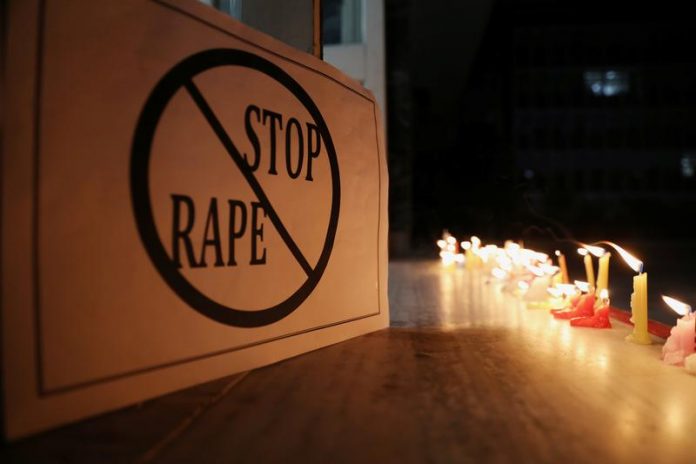
Download Now

Everything you need to know to initiate a CSR program in your company

0
CSR
Image Source: https://bit.ly/2zGT3eP

This article has been written by Rahul Sharma pursuing the Certificate Course in Labour, Employment and Industrial Laws for HR Managers from LawSikho. This article has been edited by Zigishu Singh  (Associate, Lawsikho).

Introduction

Corporate Social Responsibility (CSR) is one such area where we all want to contribute but most of us struggle with identifying  the first step. In this article, I want to approach this topic in detail so that you are confident when approaching this matter in your next corporate meeting.

Where to start?

Draft a CSR policy

As per rule 6 of the Companies (Corporate Social Responsibility Policy) Rules, 2014, the CSR policy of the company should include the following at the minimum:

a)      a list of CSR projects or programs that a company is planning to do;

b)     The modalities and execution framework of the program with timelines;

c)      Monitoring process of the CSR program.

Also, the company should ensure the CSR activities listed are not in pursuance of normal course of business. It should also ensure  that the list of activities in the CSR program are related to the areas/subjects listed in Schedule VII of the Act. Also, The CSR Policy of the company should list that the surplus arising out of the CSR projects or programs, or activities does not form part of the business profit of a company.

Human Resources(HR) departments can help the management draft this policy keeping in mind the above listed points. 

i) Identify possible initiatives for the purpose of CSR contribution: The list of activities in CSR programmes are related to the areas/subjects listed Schedule VII of the Companies act 2013. Some of them are as follows: Working on initiatives that aim to eradicate hunger, poverty and malnutrition, promoting education, promoting gender equality, ensuring environmental sustainability, protection of national heritage, art and culture, etc

ii) Form a CSR committee to manage the programs: Under section 135(1) of Companies Act, every company having a net worth of rupees five hundred crore or more, or a turnover of rupees one thousand crore or more, or a net profit of rupees five crore or more during the immediately preceding financial year, must constitute a Corporate Social Responsibility Committee of the Board consisting of three or more directors, out of which at least one director shall be an independent director.

How to arrive at a budget?

The Board of every applicable company must ensure that the company spends, in every financial year, at least two percent of the average net profits of the company made during the three immediately preceding financial years. This is your baseline figure to get started and it depends on your organizational goals and CSR policy what you decide to spend on your programs.

What can HR departments do to ensure that these programs are executed well and the real value is realized on CSR programs?

Apart from nurturing CSR programs and doing regular audits of the initiatives, HR can ensure that local welfare and social development are on priority when creating a list of initiatives for CSR activities. Also, CSR at its  core is not only about its specific welfare programmes but it is also related to how  HR can ensure that they become part of the organizational culture and its basic tenets; like,  human rights, fair operating practices (fairness and respect), environmental protection, corporate governance and labor welfare.

In addition to the above, you can also go into specific CSR compliances listed as per ISO 26000. 

CategoryPossible Actions for HR
Labour
❏ Aim to eliminate child labour and forced labour.
❏ Ensure compliance with laws and regulations regarding the rights of unions and collective bargaining, and social protection (medical coverage, disability leave, etc.).
❏ Make sure that there is no discrimination in hiring and dismissals.
❏ Understand and controls the health and safety risk involved in activities; provide safety equipment and training.
❏ Avoid contract with suppliers or sub-contractors that use unfair or abusive labour practices, including child labour.

Be compliant with prohibition of child labour act. Do a regular audit of suppliers to ensure that they are compliant as well.Create and maintain the dashboard of compliance for labour laws. Ensure that there is a system for collective bargaining.Create and ensure adherence to the policy on being an equal opportunity employer/Initiate change in management programs for ensuring safety. HR can anchor initiatives on safety such as fire drills, safety training for workers etc. so that both new and existing employees are compliant.
Organizational governance
❏ Incentivize the performance on social responsibility to ensure that people who oversee them are prioritizing it.
❏ Allow your organizational structure to include third-party review of sensitive areas such as financial management, etc.
❏ Create ways to track decisions and their implementation, to ensure accountability and follow-through.

Include performance on social responsibility as a metric, for those involved, in their appraisals so that they can identify the priorities of CSR initiatives. Make sure that reputed external agencies are employed to have regular audits of financial and HR transactions. Create a simple metric to measure organisational effectiveness and clearly define organisational goals for the key people.  Create a code of conduct policy for the employees that is visible, actionable and allows for correction mechanisms
Environment
❏ Reduce carbon emissions  and pollutants into the air, water and soil as much as possible. 
❏ Upgrade to  life-cycle approach (including disposal) – aim to reduce waste, re-use products or components, and re-cycle materials

Create an internal environmental board for following through the initiatives. This board would consist of senior management members who will be accountable for organisational decisions that would impact the environment. Align your organization with SDG goals laid out by the department of economic and social affairs of the United Nations. https://sdgs.un.org/goals
Fair Operating Practices
❏ Practice honesty, respect for property rights, fair compensation and treat your suppliers and customers fairly. 

Draft and regularly update the code of conduct policy. Organise training sessions for employees on this policy. 
Human rights
❏ Identify and respond to members of vulnerable groups within their sphere of influence.
❏ Make sure that people from vulnerable groups are properly treated such as: indigenous peoples, girls and women, those historically discriminated against on the basis of race, ethnicity or religion, people with disabilities, the elderly, migrants, etc.
❏ provide remedy and grievance procedures.

Have zero-tolerance of cases of abuse, sexual harassment, and riotous behaviour in the organisation. Identify the percentage of people coming from weaker sections of the society and aim for a higher percentage each year. 
Community involvement and development
Make sure that your organization takes actions that benefit communities – such as job creation, skill development, and provision of health, welfare and other services – these should be integrated into the core “business model”.
❏ Engage and collaborate with community members before designing programs.
❏ Focus on increasing local procurement and hiring.
❏ When investing in a community, consider the economic, social, and environmental impacts of your investment.
❏ Respect the traditional uses of natural resources by local populations, especially indigenous peoples.
❏ Fulfil tax and other legal responsibilities as described in law, even when punishments are not likely.
Keep local welfare and social development on priority when creating a list of initiatives for CSR activities. 

Can you include employee contribution for CSR programs?

It is a good practice to allow and involve employees in the CSR scheme not only in the initiatives through effort but also by allowing them to make personal contributions to these schemes. Apart from big impact initiatives that your organization may undertake there is always a possibility to create smaller programs such as education support for few children from underprivileged backgrounds that senior employees may wish to contribute to. 

Also, there are occasions where a certain part of the country is hit with natural calamities like floods etc and help is needed immediately, and people are willing to make contributions as per their capacity. In these cases, it takes time to devise and plan a coordinated effort and mobilize an organization’s resources to provide help. It is easier to execute if we just allocate one day’s salary for such efforts and show support to the society. 

One good example is some of the ingenious ways in which some of the top Indian IT companies contributed to the fight against the present COVID situation. Because of the lock-down, it was inevitable for the companies to start work-from-home programmes for their employees, which leaves their state-of-the-art office facilities un-used for a short duration (3-5 months). So, these companies allocated that space for the government to create quarantine/initial care centers for COVID patients. This was very impactful and smart thinking because in this case, you would have both the society’s support and government’s facilitation to drive a whole CSR program on your company’s behalf without much cost. In fact, you would be  utilizing the sunk cost on lease amounts that would have to be paid anyway. 

Conclusion

In summary, you can start a CSR program for your company by first creating a focus group of engaged and socially conscious people who are interested in these initiatives. This group should be diverse and must include people from across all social communities so that you get a diverse point of view on what initiatives would make the greatest impact. You can refer to the legal framework around the CSR program from the Companies Act for determining the structure and the process for execution. Also, people from the HR community can really own these initiatives for better reach and support from senior management. 

References

  1. https://taxguru.in/company-law/draft-csr-policy-private-companies.html.
  2. https://resources.workable.com/corporate-social-responsibility-company-policy.
  3. https://www.legalwriteup.com/2021/06/how-to-draft-a-csr-policy/.

Students of Lawsikho courses regularly produce writing assignments and work on practical exercises as a part of their coursework and develop themselves in real-life practical skills.

LawSikho has created a telegram group for exchanging legal knowledge, referrals, and various opportunities. You can click on this link and join:https://t.me/joinchat/L9vr7LmS9pJjYTQ9

Follow us on Instagram and subscribe to our YouTube channel for more amazing legal content.
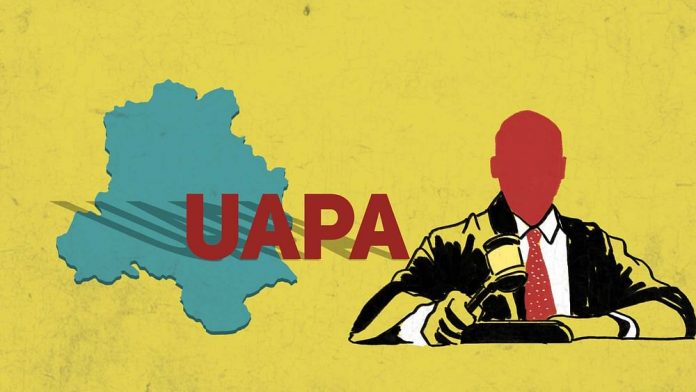
Download Now

Aspects of defamation in India with respect to Subramanian Swamy v. Union of India

0
Image Source: https://rb.gy/wj8jhw

This article is written by Nishtha Garhwal, from Alliance School of Law, Bangalore. The article talks about how the provision of criminal defamation imposes a restriction on the Right to Freedom of Speech and Expression and how the constitutionality of this provision was challenged in the case of Subramanian Swamy v. Union of India.

Introduction

If we look at the past, a varied pattern while dealing with the cases of defamation had been followed by the Supreme Court. The blasphemy laws, obscenity law, and sedition laws of the colonial era have been upheld by the Supreme Court in the cases of Ramji Lal Modi v. State of Uttar Pradesh (1957), Ranjit D. Udeshi v. State of Maharashtra (1964), and Kedar Nath Singh v. State of Bihar (1962) respectively. The Apex Court had also upheld the pre-censorship of films in the case of K.A Abbas v. Union of India (1971)

In addition to this, in the case of Madhu Limaye v. Sub-Divisional Magistrate (1971), the wide powers of the police in order to curtail free association was also upheld by the Supreme Court of India. However, this has limited and restricted the scope of anti-terror laws by putting incitement to violence as a pre-condition in order to punish members of banned organizations. 

With the challenge to the constitutionality of criminal defamation in the case Subramanian Swamy v. Union of India (2016), the Supreme Court had the opportunity to build a legacy of progressive and free speech rulings. 

Criminal defamation

Section 499 of the Indian Penal Code, 1860 is about the offense of criminal defamation. The speech that is intended to harm any person’s reputation is criminalized by this provision. The provision is very wordy and also mentions the instances where the provision can be abused in order to silence critical reporting. There are about 125 defamation cases that have been filed against the Hindu by the Tamil Nadu government where such abuse of the provision of criminal defamation has happened. 

The provision had been present in the Indian Penal Code, 1860 since the Code was first drafted and has completed around 155 years of being present in the statute books. Thus, it is very surprising that a constitutional challenge to this old provision took so long to materialize. 

The Right to Freedom of Speech and Expression is guaranteed under the Constitution of India under Article 19(1)(a). However, the power to impose reasonable restrictions upon the freedom of speech and expression has been given to the state by virtue of Article 19(2) of the Constitution of India. These restrictions can be imposed in the interests of eight separate categories, for instance, public order and decency or morality. 

Defamation is one among these eight categories where a reasonable restriction can be imposed on the right to freedom of speech and expression. Prima facie, it appears that since the framers of the Constitution have written defamation as one of the categories under Article 19(2), then criminal defamation is obviously a permissible restriction that can be imposed on the freedom of speech and expression. However, this does not necessarily hold true. 

As per the Constitution of India, in the interests of one of the eight categories mentioned under Article 19(2), the state may not simply put restrictions on the speech but the restriction imposed must be reasonable. 

The Apex Court has been able to develop rich jurisprudence over so many decades around the question of what restriction can be called a ‘reasonable restriction’. As per the Supreme Court, one of the key components of a reasonable restriction is that the restriction must be drawn narrowly. In simple words, it means that its laws must be framed by the state in such a way that they restrict speech only to the extent of what is necessary in order to achieve a legitimate goal. If a law goes beyond the necessary extent, it can be labeled as overbroad, and thus, it must be invalidated. This ensures that the state is careful while imposing restrictions that curtail the liberties of the individuals as the state will be held liable to hold its strict account. It also provides protection against the chilling effect of vague and wordy legislation on the Right to Freedom of Speech and Expression that prompts self-censorship by the people so as to remain on the right side. 

Burden of criminal law

A striking feature of the law of defamation in India is that it exists in two forms. It falls under civil as well as a criminal offense. The provision of defamation under both Criminal and Civil law seeks to address the issue of damage to reputation. If it is viewed under Civil law, the offender is ordered to compensate the victim, and if it is viewed under Criminal law, the guilty person is said to commit a wrong against the state and is, therefore, punished by imprisonment. But here, the question arises of how this duality in the law of defamation can be explained.

Medieval England was a place where the tormentor was challenged to a duel in response to an insult from them. This was the most acceptable way of responding to an insult. The authorities had the headache of frequent duels. Later, the remedy of criminal defamation was introduced into the law in order to maintain public order. The linking of defamation with the need that the crime must be a wrong against the state or community at large in some way is because of the notion of public order. Therefore, a crime cannot be an offense against a private individual. 

When the draft of the proposed Indian Penal Code was being discussed by the British Indian Law Commissioners back in 1838, they acknowledged the history of England. However, they made a decision to introduce criminal defamation into the Indian Penal Code without requiring any nexus with public order. Thus, in the Indian Penal Code, criminal defamation looked like a public remedy against a private wrong. This is something very peculiar as, without the underlying objective of public order that provided justification to the criminalization of the offense of criminal defamation, the purpose of criminal defamation is completely lost. If the objective is to redress a person for any damage that is inflicted to their reputation, there is civil defamation which requires the offender to compensate the victims. Thus, it can be said that criminal defamation is something unnecessary and excessive. It is not just superfluid but it is much worse than civil defamation. 

As compared to the civil remedies for defamation, the speech is restricted to a far greater extent by criminal penalties for defamation. The criminal penalties put a lot of burdens upon the accused which include the threat of arrest at any point in time and the probability of eventual imprisonment. Any number of cases can be filed against the accused in case of criminal defamation and the accused is asked to be necessarily present at the place of the hearing. In case, the accused persons have a good defense for defamation, they are not permitted to bring up this defense before the commencement of the trial. Therefore, even in most frivolous cases, the accused has to undergo the long pre-trial stage and face the legal process which can be dragged on for months or years. These things are an open invitation to harassment and therefore, have a deep and pervasive chilling effect upon the would-do speakers and deter them from saying something critical. 

Therefore, keeping in mind all the above reasoning, a disproportionate restriction is put on the Right to Freedom of Speech and Expression if the defamation cases that can be placed under Civil law are dealt with under Criminal law. And, this fails the requirement of reasonableness under Article 19(2) of the Constitution of India.

Subramanian Swamy v. Union of India case

In 2014, corruption charges were made by Dr. Subramanian Swamy against Ms. Jayalathitha. Defamatory cases were filed by the State Government of Tamil Nadu against Dr. Subramanian Swamy in response to these allegations. Later, the constitutional validity of the offense of criminal defamation was challenged by Dr. Subramanian Swamy along with some other prominent politicians.

This is one of the landmark cases as far as criminal defamation is concerned. This was also the first case in which the Supreme Court conducted a hearing on a frontal challenge to the constitutionality of one of the oldest and most strict laws that restrict speech, that is, criminal defamation. The challenges to the constitutional validity of the offense of criminal defamation under the Indian legal system were dismissed by the Supreme Court in this case.

Brief facts 

The various Petitioners involved in this case included some notable politicians like Subramanian Swamy, Rahul Gandhi, Arvind Kejriwal on whom the charge of criminal defamation was put. Under Article 32 of the Constitution of India, several petitions were filed through which the constitutional validity of criminal defamation as an offense which is mentioned under Section 499 and Section 500 of the Indian Penal Code, 1860 and Section 199(1) to Section 199 (4) of the Indian Code of Criminal Procedure, 1973 was challenged.

The Petitioners challenged the constitutionality of the offense of criminal defamation on the ground that it hampered their Right to Freedom of Expression guaranteed under Article 19(1)(a) of the Constitution of India. The criminal proceedings against the Petitioners had stayed pending the constitutional proceedings.

Arguments of the Petitioner

It was argued by the counsel for the Petitioner that the concept given under Article 19(2) of the Constitution of India is something very broad and restrictions can be imposed upon it. However, the careful narrow construction of these restrictions must take place. The principle of noscitur a sociis (that is, in order to understand and determine the meaning of an unclear or ambiguous term mentioned under the statute, the words with which it is associated in the context must be considered) has to be applied in order to understand the exception. 

The counsel for the Petitioner contended that defamation is a civil wrong, that is, in personam. Therefore, it falls outside the scope of the Fundamental Rights which are conferred in the interests of the public at large. Under Article 21 of the Constitution of India, an individual’s right to reputation is a private right and thus, when a private person makes a defamatory statement, it cannot be regarded as a criminal act as it does not promote any public interest. Therefore, it would be unconstitutional to include defamation as a criminal offense that protects the rights in rem. Hence, Section 499 of the Indian Penal Code, 1860 would fall outside the scope of Article 19(2) of the Constitution of India. 

It was also pointed out by the counsel for the Petitioner that since Section 499 of the Indian Penal Code,1860 goes beyond the general public’s interests, it falls outside the scope of the reasonable restrictions under Article 19(2) of the Constitution of India. Thus, it contended that if a law deprives a person of their Right to speak the truth, it should be struck down as being unconstitutional. The requirement of proving that a defamatory statement was made for public good also stands out of the limits of reasonableness. 

Arguments of the Respondent

It was argued by the Attorney General, the counsel for the Respondents, that the restrictions under Article 19(2) of the Constitution of India should not be read in isolation but must be read with context. Article 19(1)(a) of the Constitution of India is not a standalone and absolute right and thus, restrictions can be imposed upon this right. 

The counsel for the Respondents disregarded the inefficient distinction between private and public wrong made by the counsel of the Petitioner by linking the public wrong with the injury caused to the public as a whole. It was argued by the counsel for the Respondent that harm to the reputation can not always be compensated in terms of money and keeping this in mind, it further contended that the Right to Reputation cannot be separated from the Right to Dignity that falls under the purview of Article 21. The Right to Reputation also dissects the Right to Freedom of Speech and Expression from the Right to Offend. 

The Attorney General hinged over the debates of the Constituent Assembly and argued that since there existed no other legal provision, thus, in order to provide constitutional protection to Section 499 under the Indian Penal Code,1860, the express provision of restrictions under Article 19(2) of the Indian Constitution was made. Thus, if these restrictions under Article 19(2) are read in isolation and not along with Section 499 of Indian Penal Code,1860, the whole purpose of placing reasonable restrictions would be defeated. 

As far as the distinction between the establishment of personal rights and the rights of society at large under Article 14, Article 19, and Article 21 of the Indian Constitution is concerned, such a distinction would be misleading. Even the Court in its various precedents has established Article 14, 19, and 21 to be one, and thus, this makes the arguments of the Petitioner indefensible. 

In addition to this, Section 199(1) of the Criminal Procedure Code, 1973 provides protection to the Freedom of Speech and Expression. This Section puts a burden on the Petitioner to pursue the criminal complaint without involving the state prosecution machinery. Therefore, this provision deters anyone from filing a frivolous petition that would otherwise overburden the Magistrate’s courts.

Case outcome and judgment

The challenges to the constitutionality of the offense of criminal defamation were dismissed by the Apex Court and the Court said that the restrictions that were imposed on the Right to Freedom of Expression by the criminalization of the offense of defamation were reasonable and just in nature. The Court also said that there exists a constitutional duty to respect the dignity of other people. 

Therefore, the constitutionality of the criminal offense of defamation under Section 499 and Section 500 of the Indian Penal Code, 1860 was upheld by the Supreme Court. The Court relied on the judgments given by other countries on this issue and said that the Right to Reputation falls under the Right to Life given under Article 21 of the Constitution of India. 

Decision overview

The judgment of the case was delivered by Justice Dipak Misra and Justice Prafulla C. Pant also agreed with this. If we deeply study the judgment, it starts with the analysis of the meaning of the terms ‘defamation’ and ‘reputation’ as well as their interaction with the Right to Freedom of Speech and Expression guaranteed under the Constitution of India.

The Court, after conducting the review of various authorities, found that both these terms were clear and unambiguous. In addition to this, the Court said that ‘Reputation’ as a concept is something which is a part of the protection of ‘Dignity’ that is included under Article 21, that is, the Right to Life and Personal Liberty. 

Restriction on Right to Freedom of Speech and Expression

The Court took this opportunity and emphasized the sanctity as well as the significance of the Right to Freedom of Speech and Expression in a democracy and at the same time, it was pointed out by the Court that this right was subject to reasonable restrictions. However, such restrictions should not be too much, yet they must serve the public interest. The legislation which imposes such restrictions should not be arbitrary such that they intrude upon the rights of the people.

Therefore, there shall be a balance between the Right to Freedom of Speech and Expression and the restrictions imposed on this right. Such a balance can be achieved by weighing the importance to society of the Freedom of Speech and Expression against the societal importance to the public interest that is sought to be protected. 

Protection of reputation under Article 21

The Court noted that the criminal law has been chosen by the State as one of the things that would protect reputation. Keeping in mind that reputation is protected under Article 21, the Court said that it cannot subscribe to the view that the offense of criminal defamation hinders the Right to Freedom of Speech and Expression. It was emphasized by the Court that the law on criminal defamation is very clear and thus, this law can be distinguished from the other laws that had been struck down in the past as they were infringing the Right to Freedom of Speech.

Duty of every citizen to protect the dignity of fellow citizens

The Court took the liberty to further emphasize the significance of the concepts of constitutional fraternity and fundamental duty. As per these concepts, there is a constitutional duty as well as an expectation from every citizen of the country to respect the dignity of their fellow citizens. Since this is a duty that is imposed by the Constitution on each and every citizen of the country, it would not be sound to conclude that the existence of defamation as an offense under the law hinders the Right to the Freedom of Speech and Expression. The Court also addressed the question of whether the concept of ‘reasonableness’ was violated by the provisions of criminal defamation whether substantively or procedurally. The Court also examined whether these provisions of criminal defamation are vague, arbitrary, or disproportionate. 

The Court, after examining the four explanations that are included under Section 499 of the Indian Penal Code, 1860 concluded that these provisions are not vague or unambiguous. It was noted by the Court that imputation can be treated as defamation only if it lowers the character of a person or their credit in the estimation of others either directly or indirectly. The Court in this case observed that truth can be taken as a defense in case of defamation only if the defamatory statement was made for the good of the public at large. Therefore, the Court gave its view that if a defamatory statement is not made for serving the public good but only to malign a person, the statement should not be constitutionally protected. 

At last, the Court said that the provision of criminal defamation under the Indian Penal Code, 1860 is not disproportionate. In addition to this, the Court said that whether a restriction that is imposed on the Freedom of Speech and Expression is reasonable and proportional is not determined from the viewpoint of the person upon whom such restrictions are imposed. But, this is determined by examining the standpoint of the interest of the public at large. Applying this, the Court held that the provisions of criminal defamation are not arbitrary or vague. The Court rejected the contention made in the case that defamation is a fundamental notion of the majority in order to crush the Freedom of Speech and Expression of others. 

The Court pitched over to Dr. B.R Ambedkar’s speech for addressing the issue of exaggeration of the term ‘defamation’ by virtue of the restrictions under Article 19(2) of the Indian Constitution and it pointed out that the drafters while drafting Article 19(2) of the Indian Constitution and imposing restrictions on the Freedom of Speech and Expression had the intention of leaving it to the courts to decide as to what would fall under a reasonable restriction and thus, did not specifically defined the terms like ‘defamation’ and ‘public order’. 

Chilling effect

In the history of the Supreme Court, lies the most powerful and most strong argument against the constitutionality of criminal defamation. A judgment was delivered by the Apex Court in 1994 in the case of R. Rajagopal v. State of Tamil Nadu (1994) in which it was recognized by the Court that the provision of civil defamation under the Indian legal system poses an unreasonable restriction on the Right to Freedom of Speech and Expression. Under this provision, the burden of proving the ‘truth’ of the defamatory statement is on the maker of such a statement. There is no space for letting off of honest mistakes or for mistakes that had been made despite taking all due care by the person. 

In a popular case of the United States of America, New York Times v. Sullivan (1964), it was asserted by the Supreme Court that free speech requires ‘breathing space’ in order to survive. In simple words, it means that there must be freedom to make mistakes. The Court held that as far a speech about public officials is concerned, it would not be ample to show that a statement was defamatory and false. It is also required to prove that the speaker was aware of the fact that the statement was false and despite that he acted with reckless disregard as to its truth or falsity.

A strange and peculiar regime set by the judgment delivered by the Supreme Court of India in the Rajagopal case. Along the lines of the law in America as well as other liberal jurisdictions, civil defamation was placed under strict and speech-protective standards. If we look at Section 499 of the Indian Penal Code,1860, it reveals that the provision of criminal defamation is much worse than civil defamation which was held unreasonable and inconsistent with the Rajagopal case. 

As per Section 499 of the Indian Penal Code,1860, it must be proved by the accused that the defamatory statement was made in ‘public interest’ in addition to proving the truthfulness of the statement. Now, the public interest is a very compendious term and thus, it becomes very difficult for the speaker to know on which side of the line their speech would fall before making that speech. This has a chilling effect even on legitimate speech as it prompts the speaker to do self-censorship. This was also the concern of the Court in the Rajagopal case and this led the Court to make modifications to the civil law of defamation.

In order to neutralize the chilling effect on the Right to Freedom of Speech and Expression produced by the provision of criminal defamation, many jurisdictions have either struck down criminal defamation as unconstitutional or have introduced enough safeguards to the Freedom of Speech on the lines of the Sullivan case in America. However, Section 499 of IPC is precise and clear and it admits no creative judicial modifications. Thus, in one view, criminal defamation can be regarded as an unreasonable restriction on the Right to Freedom of Speech and Expression.

Conclusion

Section 499 of the Indian Penal Code,1860 defines criminal defamation and the punishment for the same is prescribed under Section 500 of the Indian Penal Code, 1860. In simple terms, defamation can be defined as any speech or words that are intended to harm the reputation of a person in the eyes of others. This could be either written words or spoken works. In addition to this, visible representations also fall under the purview of defamation. However, the provision of criminal defamation includes some exceptions like imputation of truth that was required for the good of the public at large, a person’s conduct that touches any public question or expressing opinions on a public performance. 

The case of Subramanian Swamy v. Union of India placed two challenges before the Apex Court. First, the Court had to determine whether the provision of criminal defamation is a superfluid restriction on the Freedom of Speech and Expression, and secondly, the Court had to determine whether Section 499 and Section 500 of the Indian Penal Code, 1860 were ambiguously and arbitrarily drafted.

However, the Supreme Court in the Subramanian case held that these Sections are not superfluid restrictions on the Right to Freedom of Speech and Expression. The Court noted that whatever affects an individual, in turn, affects society as a whole. Thus, it said that defamation must be considered a public wrong. 

Since the protection of the reputation is a human as well as a fundamental right, the Court held that criminal defamation does not impose an unreasonable restriction on the Right to Freedom of Speech and Expression. Further, the Court held that Section 499 and Section 500 of the Indian Penal Code, 1860 are not arbitrarily framed.

References


LawSikho has created a telegram group for exchanging legal knowledge, referrals, and various opportunities. You can click on this link and join:

https://t.me/joinchat/L9vr7LmS9pJjYTQ9

Follow us on Instagram and subscribe to our YouTube channel for more amazing legal content.

Download Now

Sexual harassment and other predicaments of the third gender community

0
Image Source: https://bit.ly/3hdvCBx

This article is written by Saurabh Kaushik, pursuing Certificate Course in Advanced Criminal Litigation & Trial Advocacy from Lawsikho. The article has been edited by Prashant Baviskar (Associate, LawSikho) and Zigishu Singh (Associate, LawSikho).

Introduction

The Numbers, statistics documenting transgender people’s experience of sexual violence indicate shockingly high levels of sexual abuse and assault.

The Buck stops with the statistics regarding the ordeal of transgender people’s experience of sexual violence. More than 50% of the transgender individuals are sexually abused or assaulted at some point in their lives. Some reports confirms up to 66% of transgender may have faced the sexual related ordeal, often coupled with physical violence. These people live in the constant fear of repeat victimization.

It is not the statistics that is more worrisome, but the fact that there are no laws other than the [The Transgender Persons (Protection of Rights)] No. 40 of 2019, that protects these people against such abuses and assault, as police/ courts would not take the cognizance of either of these sexual abuses /assault or any other offences against such people as the laws of the land don’t recognise any other gender other than the binary gender of man and woman neither as a perpetrator nor as a victim.

Third gender people were not only part of our glorious history, having been mentioned in works like  Kama Sutra, religious texts like Ramayana and Mahabharata, until Britishers came to India, when they deliberately orchestrated the third gender community and made penal provisions against them. 

This article highlights the real plight of this community, as what they actually face in our country. The first Report on the issues of Transgender, in the year 1999 was in the State of West Bengal in support for the rights and protection of the third gender. Apex’s court 2014 NALSA judgement declared transgender people as the third gender,  at par with the other binary gender of man and woman with respect to all the rights and protection enumerated under the Constitution of India. Then came into existence in 2019, the transgender act [The Transgender Persons (Protection of Rights)] No. 40 of 2019, for enumerating the rights and safeguards particular to transgender people. However, there are transgender community still has grievances, as according to them the said 2019 Act is regressive when compared to progressive NALSA judgment. 

Our history has given them due importance and respect, society has always considered them auspicious for blessings, the Constitution has given them all the rights and protection at par with the other binary gender of man and woman.  Supreme court of India declares transgender as third gender and recognised there rights given in it. So now it is for the Legislature, Executive and the civil society to join hands and give them their long pending rights and protection as enshrined in our constitution.

What is sexual harassment?

With respect to women as the victims

As defined under Section 354A of the Indian Penal Code, 1860.

(1) A man committing any of the following acts—

(i) Physical contact and advances involving unwelcome and explicit sexual overtures; or

(ii) A demand or request for sexual favours; or

(iii) Showing pornography against the will of a woman; or

(iv)Making sexually coloured remarks, shall be guilty of the offence of sexual harassment

(2) Any man who commits the offence specified in clause (i) or clause (ii) or clause (iii) of sub-section (1) shall be punished with rigorous imprisonment for a term which may extend to three years, or with fine, or with both.

(3) Any man who commits the offence specified in clause (iv) of sub-section (1) shall be punished with imprisonment of either description for a term which may extend to one year, or with fine, or with both. 

The culpability under any of the above-mentioned acts amounts to sexual harassment; it is the severity of the punishment for the acts that differ for the liability (punishment).

As per Section 354D, Indian Penal Code, 1860 there are four different acts mentioned from (i) to (iv), committing any one of which would make a man culpable for the offence of sexual harassment, but it is the liability, that is the punishment for the said offence is what which makes first three mentioned acts more severe as compared to the fourth one.  The liability for the first three mentioned acts under Section 354A(i),(ii),(iii) is prescribed under Section 354A(2), which provides for rigorous imprisonment for a term that may extend to three years, or with fine, or with both. The liability for the fourth last mentioned act under Section 354A (i v) is prescribed under section 354A (3), which provides for imprisonment of either description for a term which may extend to one year, or with fine, or with both. 

So the first three mentioned acts are more severe as compared to the last one that is making sexually coloured remarks.

With respect to transgender as the victims

As defined under Section 18(d) of the [The Transgender Persons (Protection of Rights)] No. 40 of 2019.

Whoever harms or injures or endangers the life, safety, health or well-being, whether mental or physical, of a transgender person or tends to do acts including causing Physical abuse, sexual abuse, verbal and emotional abuse and economic abuse, shall be punishable with imprisonment for a term which shall not be less than six months but which may extend to two years and with fine.

Here in the given definition of sexual harassment applicable for transgender people, there is, however, no mentioning of any particular acts, as to what exactly would amount to sexual harassment. This non-mentioning is in itself harassment for the transgender people, as to whether a particular act would amount to sexual abuse/harassment will be decided by the police as per their understanding which may be arbitrary.

Who is the third gender?

Meaning of the third gender, transgender : a general understanding of these words

Third gender: Those who are biologically neither male nor female, maybe a man with a penis but without testicles, or a woman with no vagina, no menstrual cycles. Basically, they are men or women with incomplete reproductive body parts and therefore cannot procreate further.

Transgender: Is one whose gender identity or gender expression, differs from the sex that they were assigned at birth. Unlike the third gender, transgender is able to procreate further, they as a biological gender are complete, but they don’t identify themselves with that biological identity. Like a biological man considers himself not as a man but as a woman from inside, same as with the case of a woman, she doesn’t consider herself as a woman from inside but as a man.

Trans-Man: A person who was biologically a woman at the time of her birth, but after Sex Reassignment Surgery become a man.

Trans-Woman: A person who was biologically a man at the time of his birth, but after Sex Reassignment Surgery become a woman.

As defined under Section (2)(k) of the [The Transgender Persons (Protection of Rights)] No. 40 of 2019

Transgender person:

•Means a person whose gender does not match with the gender assigned to that person at birth, and 

•Includes trans-man or trans-woman (whether or not such person has undergone Sex Reassignment Surgery or hormone therapy or laser therapy or such other therapy)

•Person with intersex variations,

•Gender queer, and 

•People having such socio-cultural identities as Kinner, Hijra, Aravani and Jogta.

All the identities as mentioned above in (2)(k) of the said act, are termed as Transgender and these are the people regarding which this article proceeds.

Famous third gender personalities in India

In politics and activism

*Shabnam Bano– She was the 1st trans member of legislature assembly(Madhya Pradesh).

She worked her entire life on ending corruption, poverty, hunger and unemployment.

*Laxmi Narayan Tripathi – born as a male. She is one of the original petitioners in the apex court in the NALSA judgement. She is one of the most influential transgender activists. 

*Gauri Sawant– runs Sakshi Char Chowghi trust that aims to provide counselling and assistance to trans people and those with HIV/AIDS.

In prestigious government jobs

*Shabi Giri -Working as an Indian Naval Officer.

*Joyita Mondal– First transgender Judge( Lok Adalat).

*K Prithika Yashini -First trans woman police officer in India.

*Sathyasri Sharmila – First transgender registered lawyer in Tamil Nadu.

In other renowned fields

Manabi Bandopadhyay – India’s First Transgender College Principal.

Padmini Prakash-First trans woman news anchor of Lotus News, a local Tamil channel Nitasha Biswas.

Nitasha Biswas -first-ever trans beauty pageant.

Regressive Act (2019) in furtherance of progressive (2014) NALSA judgement

There is yet to be effective legislation protecting the transgender community from sexual violence.

Transgender people require a medical certificate to call themselves transgender

As per the act, if a transgender wants to continue his/her identity as transgender, then they have to apply to the District Magistrate for a certificate of identification indicating their gender as “transgender”. This is an outright violation of the NALSA, which is left to the transgender people to decide for themselves as with what identity (male, female or transgender) they want to identify. 

For chooses to be man or woman, sex surgery and certificate is required

Transgender who wish to identify as a man or woman, have to undergo mandatory sex-reassignment surgery. This very rule was criminalised by the court, as no one can force the transgender to undergo mandatory sex-reassignment surgery.

Who will bear the cost of sex-reassignment surgery?

Whether the sex-reassignment surgery would be free or at the subsidised cost, despite the fact it will be the basis of the identity certification, as without which a transgender person would not be considered either as a man or woman if he chooses to be one. 

The Act doesn’t define “discrimination”

Despite prohibiting discrimination, the act doesn’t explicitly define discrimination. There is a wide range of violations that these people face.

Doesn’t mention which particular acts would amount to sexual abuse as there in 354A of the Indian Penal Code, 1860 which is applicable for women as victims

Besides various issues faced by the transgender community, the case-in-point was the sexual abuse and sexual assault for seeking the rights and protection given under the Indian constitution for the other binary. The Supreme court had also recognised while decriminalising  Section 377, under the Indian Penal Code, that transgender people face sexual abuse and assault, at times at the hands of law enforcement officials. The act makes the sexual offence punishable with imprisonment of only up to two years, but it doesn’t mention the exact acts as what to would amount to sexual harassment as otherwise mentioned in 354A, Indian Penal Code, 1860 which is for the women victims.

The last resort for transgender’s, “begging” has been criminalized

People always question why trans people have to resort to begging. No one likes to beg but the plight of the transgender community was such that they did not have any recognition whatsoever, that is they didn’t even exist before the Supreme Court has declared them as the third gender. Because of these reasons besides other rights transgender people went to court to ask for the right to education, jobs etc and the same has been recognized by the apex court. The court has additionally recognised that transgender persons have been denied rights under Article 16(2) of the Constitution and discriminated against in respect of employment or office of the state on the grounds of sex. However,  the act doesn’t provide for reservation in education and employment for transgender persons. Instead, it criminalized “begging” which was the last and the only available resort for them to feed themselves.

No provisions for economic, social, cultural and political rights

The Act does not grapple with the realisation of civil rights such as marriage, civil partnership, adoption and property rights as well as social security and pension, thereby continuing to deprive transgender persons of theirs. 

There are no provisions in the act that deals with civil rights such as marriage, adoption, partnership, property, pensions, for transgender people thereby continuing to deprive the transgender community of their fundamental rights and the constitutional guarantee given in the constitution and declared by the Supreme Court in NALSA judgement.

Suggestions for further changes for the government of India

As the Apex court has recognised not only, the transgender as the third gender but also at par with the other two binary genders, that is the man and the woman with respect to protection and rights given under the constitution of India. The only legislative requirement that is needed to deliver the rights and protection to the transgender people that are given under our constitution, is by passing a bill which would state that whatever laws, acts, ordinances, rules, regulations are there as the laws of the land would be applicable to the third gender community as far as applicable to them, and in pursuance of that bill/act, the executive must have the right to frame rules and regulation that specifically deals with their issues. Like recently, after the amendment of Article 370 of the Indian constitution all the laws which were otherwise not applicable to the then State of Jammu and Kashmir and now would be applicable to that state subject to the executive power of central governments to make the necessary suitable changes as per the specific state requirements. By delegating the power to the executive to make rules and regulations once the act has been passed undo the legislative requirements to legislate each and every time which saves a lot of time and effort to make timely changes. 

However, easier said than done, despite such a progressive judgment as the (NALSA) delivered by the apex court, directing the government to implement all the changes that have been mentioned in the judgement, the government of India has come up with the 2019 transgender act, which is like giving peanuts for the cashews.

The petition has been filed in the Supreme court alleging that the legislation (2019, Transgender act) which was passed for giving the rights and protection to the transgender community is regressive in nature and violative of their rights, instead of furthering or protecting the rights of trans persons, violates their right to equality, life and privacy under Articles 14 and 21 of the Constitution. The CJI has also said that the petition is good and thereby issued the notice to the central government.

So the least the government can do in the meantime is to include the third gender along with already included other binary gender in Chapter XVI(16) of the Indian Penal Code, offences against the human body as that will give them the very much needed protection against the offences mentioned in the said chapter. As the 2019 transgender act is not serving the purpose for the rights and protection for which the petitioners of the NALSA judgement went to the apex court.

Conclusion

We are celebrating Azadi ka Amrit Mahotsav, (which is an initiative of the Government of India to celebrate and commemorate 75 years of progressive India and the glorious history of its people, culture and achievements). 

As far as progress is concerned, after Nykaa’s record IPO media is chasing Falguni Nayar (the owner of the Nykaa brand) for her interview, the brand which sells lipstick for INR 1100, in a country where the third gender sells their body literally for INR 50. 

Now come to the glorious history of its people, culture includes the Hijra community. 

Our history has not only recognized the Hijra community but also given them due importance and respect The androgynous Ardhanari, the one who is worshipped by many in the Hijra community, is one which signifies when Lord Shiva merges with his wife, Parvati. There were prominent Hijra characters in the most auspicious Hindu’s texts of the Mahabharata and the Ramayana. Hijra was mentioned in the Kama Sutra, a Hindu text on human sexual behaviour written sometime between 400 BCE and 200 CE. During the Mughal era in India, they held prominent positions of administration. Hindu’s have always considered them auspicious for their blessing on events like the arrival of a new bride in the home, the birth of a child. But after Britishers came to India, they sought to eradicate and criminalize the Hijra community through various laws.

Now putting all the things in, if we want to celebrate Azadi ka Amrit Mahotsav in its true sense, we as a nation must stand for this community and raise our support at least on the internet, something like #THEY TOO to be included for the rights and protection given in our constitution and recognised by the apex court in the 2014 NALSA judgement. The 2019 Act, [The Transgender Persons (Protection of Rights)] No. 40 of 2019 has not served the purpose and therefore it has been challenged in the Apex court and the then CJI has said that it is a good petition and hence issued the notice to the government of India.

These third gender people are no less human than the rest of us, they too have all the emotions, desires, dreams, ambitions, fears, bucket-list and what not as rest all of us have. As we Indians don’t like to be discriminated against because of the Western world’s perception of India as a third world country, similarly these third gender people also don’t like to be discriminated against by the perception of the binary gender people.

The reforms which these people are asking is not something that is earth-shattering to legislate for the legislature, as doing these reforms will not harm any political party’s vote bank irrespective of their political ideology, be it left, right or centre, as that is the foremost consideration for any political party to think before legislating for anything new. As these reforms for third gender community is not as culturally sensitive as was favouring for the decriminalization of Section 377 of the Indian Penal Code, where the central government left on the apex court to decide itself, whether to decriminalize the consensual aspect of the said Section or not.

References

  1. https://www.pcar.org/sites/default/files/resource-pdfs/tab_2013_fall_servingtranssurvivors.pdf
  2. https://wcd.nic.in/sites/default/files/Final%20Draft%20report%20BSS_0.pdf
  3. https://socialjustice.nic.in/writereaddata/UploadFile/TG%20bill%20gazette.pdf
  4. https://translaw.clpr.org.in/case-law/nalsa-third-gender-identity/
  5. https://www.latestlaws.com/bare-acts/central-acts-rules/ipc-section-354a-sexual-harassment-and-punishment-for-sexual-harassment
  6. https://lawrato.com/indian-kanoon/ipc/section-354A
  7. https://www.news18.com/news/politics/indias-first-transgender-mla-eyes-mp-polls-for-a-return-to-active-politics-1826539.html
  8. https://thewire.in/gender/over-two-years-after-landmark-judgment-transgender-people-are-still-struggling
  9. https://www.dnaindia.com/india/report-india-s-first-transgender-soldier-vows-to-fight-for-her-job-2541884
  10. https://www.newindianexpress.com/nation/2018/jul/13/assam-gets-its-first-transgender-judge-third-in-country-1842803.html
  11. https://www.indiatoday.in/cities/kolkata/story/manobi-bandyopadhyay-india-first-transgender-college-principal-denied-rtpcr-test-called-mental-by-hospital-staff-1814827-2021-06-14
  12. https://indianexpress.com/article/explained/understanding-articles-370-35a-jammu-kashmir-indian-constitution-5610996/

Students of Lawsikho courses regularly produce writing assignments and work on practical exercises as a part of their coursework and develop themselves in real-life practical skills.

LawSikho has created a telegram group for exchanging legal knowledge, referrals, and various opportunities. You can click on this link and join:

https://t.me/joinchat/L9vr7LmS9pJjYTQ9

Follow us on Instagram and subscribe to our YouTube channel for more amazing legal content.
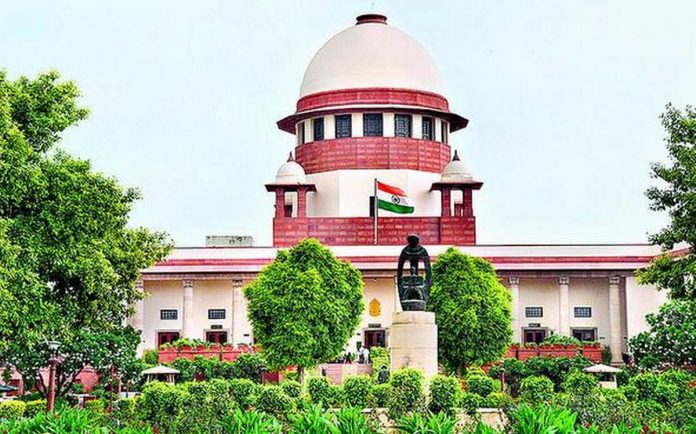
Download Now
logo
FREE & ONLINE 3-Day Bootcamp (LIVE only) on

How Can Experienced Professionals Become Independent Directors

calender
28th, 29th Mar, 2026, 2 - 5pm (IST) &
30th Mar, 2026, 7 - 10pm (IST).
Bootcamp starting in
Days
HRS
MIN
SEC
Abhyuday AgarwalCOO & CO-Founder, LawSikho

Register now

Abhyuday AgarwalCOO & CO-Founder, LawSikho