
Download Now
Home Blog Page 390

All about a non-disclosure agreement

0

This article is written by Gauri Atreja, pursuing Diploma in Advanced Contract Drafting, Negotiation, and Dispute Resolution from LawSikho. The article has been edited by Aatima Bhatia (Associate, LawSikho) and Ruchika Mohapatra (Associate, LawSikho).

Introduction

Any business that transacts with other persons or businesses must exchange trade secrets, sensitive information collected from clients, or market data that they want to keep hidden from competitors. All of this information must be safeguarded. It is critical that workers of the corporation, as well as anyone involved in the company’s business dealings, do not reveal sensitive information about the company’s operations.

How can a company ensure that its trade secrets and business transaction data are safe and secure and that no one involved in the company’s dealings learns about them? To safeguard the secrecy of its business dealings and trade secrets, a smart business corporation usually requires its employees and business associates to sign a non-disclosure agreement. This article seeks to shed light on the details surrounding Non-Disclosure Agreements.

What is a non-disclosure agreement (NDA)?

A non-disclosure agreement is a legally enforceable contract that creates a confidential connection between two parties. The signatory party or the parties to the agreement agree that any sensitive information they collect will not be shared with anyone else. A confidentiality agreement is another name for an NDA.

Non-disclosure agreements are frequently used by businesses when negotiating with other businesses. They make it possible for parties to transmit sensitive information without danger of it falling into the hands of competitors. It’s termed a mutual non-disclosure agreement in this scenario.

What is the need for NDA?

In a variety of scenarios, an NDA is useful. When two companies explore doing business together but wish to preserve their individual interests and the terms of any potential deal, NDAs are usually required. In this scenario, the NDA prohibits all parties involved from disclosing anything about the other party’s or parties’ business procedures or goals.

Some organisations may ask prospective employees to sign a non-disclosure agreement (NDA). If the employee has access to critical company information.

Before conversations between a company seeking capital and possible investors, NDAs are frequently employed. The NDA is intended to protect competitors from learning about their trade secrets or business strategies in these situations.

What are the requirements of an NDA?

NDAs can be tailored to any extent, however, there are six key aspects that must be included:

  • The names of the contracting parties.
  • A definition of what constitutes confidential information.
  • Any exceptions to the rule of confidentiality.
  • A statement describing how the information to be revealed should be used.
  • The time periods in question.
  • Provisions of a different nature.

Defining “Provisions of a different nature”

The last “Provisions of a different nature” item could include information such as the applicable state law or laws, as well as who pays attorney fees in the event of a dispute.

What happens if you breach a non-disclosure agreement?

If you violate an NDA, you will be subject to the contract’s terms and conditions. Breaking an NDA is not a crime in and of itself; but, depending on what was violated, it may be, such as if trade secrets were stolen. If a person violates an NDA, they will usually be sued, which could result in a monetary fee, termination of employment, or the return of an asset, depending on the terms of the agreement.

How long does a non-disclosure agreement (NDA) last?

Because each NDA is distinct, it will last for a different amount of time. An NDA is usually for a period of one year to ten years, although it might be indefinite depending on the information that needs to be kept hidden.

What information is protected under NDA?

A non-disclosure agreement might protect information that isn’t in the public domain or isn’t widely recognised. It can protect any type of private business information, such as a new restaurant concept, a new business endeavour, or any other type of confidential business information that could be valuable to others if disclosed.

A non-disclosure agreement would ideally define the parameters under which material should not be shared. The information included within these bounds is intellectual property, which includes copyrighted content, possibly patentable innovations, trade secrets, formulas, techniques, compositions, compounds, plans, and blueprints, among other things. It could also comprise a company’s customer list, prospective consumers, business relationships and affairs, and so on, all of which are referred to as proprietor’s information. A company’s reputation can be irreparably damaged if such information (especially trade secrets) is leaked.

In an employer-employee relationship, a non-disclosure agreement is generally accompanied by a non-compete agreement, under which the employee is prohibited from disclosing the information not only during the employment period but also for a specific period after the job ends.

What are the uses of NDA?

A non-disclosure agreement is beneficial to multinational corporations, but it is also beneficial to small businesses, partnerships, individuals, and, most importantly, start-ups, because all of them must deal with outsiders and entrust confidential information to them at some point in their business.

A start-up can be anything; an idea, a business plan, a patented innovation, or anything else. A startup can’t keep these ideas to itself; it needs to share them with investors who might be able to help turn the idea into a success. In the case of a patentable invention, the inventor may want the opinion of an expert in that field, and in the case of a business idea, the person coming up with such an idea may need a lawyer to register the business organisation, so having a non-disclosure agreement signed with those outsiders ensures that the information is not leaked to s. (owner of the information).

In industries like film and television, a non-disclosure agreement can be quite valuable. So, if you work in a sector that involves a lot of intellectual production, you may be obliged to sign an NDA on a regular basis, and you may be required to demand others to sign one as well. Also, one of the most recent areas where the concept of NDA has gained traction is the fashion business, which may now demand participants to remain silent for a set period of time or until the collection is unveiled. As a result, an NDA may be the best way to protect the information you don’t want many others to know.

What are the exceptions to NDA?

An NDA ensures that your information is kept private and secure, however, there may be some exceptions. For example, a person who is obligated to keep material confidential may be ordered by a court to reveal it – in this case, the valid order of the court will, of course, take precedence over the NDA’s responsibilities. Also, if the individual already has such knowledge or receives it from another source, he may not be bound by the NDA not to disclose it to anyone else. Furthermore, a question of policy or national security will take precedence over the NDA.

Does an NDA need to be stamped or registered?

Since it can be enforced in a court of law, a legal instrument, document, or contract has value. To enforce the contract, you’ll need to produce it in court to show that you (and the entity you’re enforcing it against) entered it legally, as well as that the provisions of the contract are legitimate. As a result, you must follow specific procedural rules in order to present them in court.

Stamping

Stamping is a necessary procedural formality without which your document will not be accepted in Court under normal circumstances. The stamp duty rate on a non-disclosure agreement will vary by state, but in most Indian states, it should be between Rs. 20 and Rs. 100.

Registration

A non-disclosure agreement can be registered under the Registration Act of 1908 by going to your district or city’s Sub-Office. Registrar’s The fees for the same, as well as the specific rules for registration, differ from state to state. Registration goes a long way toward confirming the authenticity of a document’s contents.

Notarization

Parties may choose to have their agreement notarized in most cases. A notary’s role is that of a witness; when a document is notarized, it means that the notary has personally witnessed the parties signing the contract. In the absence of a witness, a party could make up a variety of explanations to claim that he is not obligated by the contract’s terms. He could claim, for example, that he never signed the contract, that the signature is not his, or that his signature was forged. While there is no legal obligation in India to hire a notary for agreements, it will be useful in preventing parties from refusing to execute (sign) the contract on their own.

The cost of notarization varies depending on where you live. In Kolkata, for example, a leave and licence agreement with a monthly rent of Rs. 10,000 to 15,000 costs roughly Rs. 200.

Although registration and notarization are not legally required, they are always recommended because they make it easier to substantiate your case.

Conclusion

NDA is a contract through which the parties agree not to disclose any information covered by the agreement as entering into the agreement creates a confidential relationship between the parties obligating them to protect all confidential and proprietary information as long as such information is not in the public domain already. Use of NDAs are on the rise in India and are governed by the Indian Contract Act 1872; however for NDAs to be valid in India they need to be stamped. NDAs are highly preferred as they are low-cost, easy to create legally binding documents. When drafting an NDA, it is important to be as detailed as possible, so all parties know what can and cannot be shared as well as the consequences of leaking information. 

References


Students of Lawsikho courses regularly produce writing assignments and work on practical exercises as a part of their coursework and develop themselves in real-life practical skills.

LawSikho has created a telegram group for exchanging legal knowledge, referrals, and various opportunities. You can click on this link and join:

https://t.me/joinchat/J_0YrBa4IBSHdpuTfQO_sA

Follow us on Instagram and subscribe to our YouTube channel for more amazing legal content.

Download Now

The relationship between pledge and hypothecation

0

This article is authored by Akash Krishnan, from ICFAI Law School, Hyderabad. It discusses in detail the concepts of pledge and hypothecation and how the concept of hypothecation is an extended arm of the concept of the pledge.

Introduction

Pledge has been defined under Section 172 of the Indian Contract Act, 1872. It is a form of contract wherein a party (pledger) delivers movable goods as security to another party (pledgee) in exchange for some payment. What is important to note herein is that the security in question is delivered by the pledger to the pledgee. On the other hand, hypothecation is a contract wherein a party (the debtor) pledges his movable goods to another party (the creditor) in exchange for some payment. What is important to note herein is that the debtor only pledges the security to the creditor. There is no delivery of security by the debtor to the creditor.

Now that we have understood the basic idea behind both these concepts, let us try and understand these concepts in detail and the manner in which these two concepts complement each other.

Pledge

Section 172 of the Indian Contract Act defines Pledge as the bailment of goods as security for payment of a debt or performance of a promise. It is also referred to as a special kind of bailment. The person who pledges the goods as security is called the ‘Pledger’ and the person to whom such goods are pledged is called the ‘Pledgee’. For example, if Rahul borrows ₹1,00,000/- from Ramesh and pledges his scooter as the security for repayment, the contract between Rahul and Ramesh is a contract of Pledge, wherein Rahul is the pledger and Ramesh is the pledgee.

In Lallan Prasad vs. Rehmat Ali (1967), the Supreme Court observed that a pledge is a special form of bailment wherein the pledger pledges his personal property to the pledgee as a security, in exchange for a debt. The Court further held that any form of movable property can be the subject matter of pledge.

There are two essential ingredients of a valid pledge. These ingredients are discussed in detail below.

Essential ingredients of a valid pledge

Delivery of possession

Delivery of possession means that the security in question should be actually or constructively delivered to the pledgee. If there is no actual or constructive delivery of security at the time of the creation of debt, then the contract cannot be deemed as a contract of pledge. Actual delivery means that the security is physically handed over to the pledgee. On the other hand, constructive delivery means where the title in the security is transferred to the pledgee but the goods are not transferred physically into his possession. For example, if the key to a godown where the security is stored is given to the pledgee, it would be deemed as constructive delivery.

In Morvi Mercantile Bank Limited vs. Union of India (1965), the railway receipts issued by the railways regarding the transfer of goods from Bombay to Okhla were pledged with the bank for a sum of ₹20,000. However, the goods were lost in transit. On failing to recover the debt from the pledger, the pledgee filed a suit against the railways for the realisation of the security. The Supreme Court held that the delivery of railway receipts by the pledger to the pledgee will be deemed as delivery of the goods involved because it was a constructive delivery and the pledgee can recover the due sum from the railways. What is pertinent to note is that in cases of constructive delivery, the title in goods should pass from the pledger to the pledgee.

In Syndicate Limited vs. Ramchandra Ganapathy Prabhu (1968), the Mysore High Court observed that share certificates are not documents of title of the goods, but themselves constitute as goods. Thus, the delivery of share certificates to the pledgee by the pledger amounts to the actual delivery of goods and not constructive delivery.

In pursuance of a contract

It is necessary that the delivery of security and the receipt of payment in exchange for such delivery is done in pursuance of a contract. However, it is not necessary that the delivery of goods and the receipt of payment should go hand in hand. Delivery of security can be done before the receipt of payment as well.

In Blundell Leigh vs. Attenborough (1921), the plaintiff had delivered a ring to a jeweller and requested him to value the ring for the purpose of a pledge. The jeweller instead pledged the ring for 1000 euros with a pawnbroker and then paid the plaintiff 500 euros in exchange for the ring as security. The jeweller died during the tenure of the pledge. Plaintiff repaid the pledge amount and on coming to know the actual scenario, sued the defendant for releasing the security. The Court held that even though the delivery of security was made by the plaintiff to the jeweller before the money was advanced by the jeweller, a valid contract of the pledge was created and the money was advanced by the jeweller in pursuance of that contract itself. Since the defendant had advanced money in good faith, the legal representatives of the jeweller were made to repay the due amount to the defendant and the defendant was ordered to release the security in favour of the plaintiff.  

Rights and duties of pledger and pledgee

Right of retainer

Section 173 of the Act empowers the pledgee to retain the security till the entire debt has been discharged by the pledger. The term ‘entire debt’ also includes any interest that has been generated.

Section 174 of the Act states that the pledgee cannot hold on to the security and compel the pledger to discharge some other debt for which such security was not pledged, i.e., particular security can be retained by the pledgee only till the debt discharged against it has been recovered.

Right to extraordinary expenses

Section 175 of the Act states that if any extraordinary expense has been incurred by the pledgee to preserve the security, he can sue the pledger to recover the same. A right to retain the goods for recovery of such extraordinary expenses has not been provided under the Act.

Right to sell

Section 176 of the Act states that if the pledger fails to comply with the contract of pledge and makes a default thereunder, then subject to a contract to the contrary, the pledgee has the right to sell the goods held as security to satisfy the debt. However, a duty is cast upon the pledgee to give the pledger a reasonable notice of such sale.

Right to redeem

Section 177 states that if the pledger fails to comply with the contract of pledge and makes a default thereunder, he may at any time before the actual sale of the security by the pledgee, redeem the security by making the full payment. The pledger will also have to bear the costs for any loss suffered by the pledgee due to the default in payment.

Pledge by hypothecation

When goods are pledged via hypothecation, the goods remain in the custody of the debtor even after the payment is advanced by the creditor. Herein, it is deemed that the delivery of security has taken place, but actually, the possession of the security remains with the debtor. For example, if Rahul borrows ₹1,00,000/- from Ramesh and pledges his tractor as the security for repayment, but Rahul continues to remain in possession of the tractor and uses it on a day-to-day basis to plough the field, it is called a pledge by hypothecation.

One of the first cases wherein the concept of pledge by hypothecation was laid down was Reeves vs. Capper (1838). In this case, the captain of a ship had pledged his chronometer with the owner of the ship, but he continued to remain in possession of the chronometer and used it during his voyage. He then later pledged the chronometer to another person. The question for consideration was whether the second pledge was valid in light of the first pledge. The Court held that the instant case was a case of pledge by hypothecation and even though the captain remained in possession of the security, the shipowner had the rights over the security. Therefore, the second pledge was deemed to be invalid.

In Appa Rao vs. Salem Motors and Salem Radios (1955), motor vehicles were pledged by the plaintiff to the defendant but the possession of the vehicles remained with the plaintiff and he used the same for demonstration purposes. The Madras High Court held that a pledge becomes hypothecation when the goods that are to be delivered as security remain in the possession of the debtor instead of the creditor.   

The creditor has no direct right of seizure

In case of a pledge by hypothecation, if the debtor defaults in the repayment of the debt, there is no right vested with the creditor to enter the premises of the debtor to seize the goods held as security. If the creditor wants to exercise this power, he either has to seek permission from the debtor or get an order from a competent court in this regard.

In Union of India vs. Shenthilanathan (1977), the Madras High Court held that in cases of pledge by hypothecation, the creditor does not have a direct right to seize the goods on the failure of the debtor to repay the debt. The only option available with the creditor is to approach a competent court and file a suit for recovery of the debt and obtain a decree for the seizure of the security involved.

Similarities between pledge and hypothecation

Preferential right to recovery

In Rehaboth Traders, By Partner R. vs. Canara Bank (1998), the Madras High Court observed that in cases of hypothecation, a special and preferential right is conferred upon the creditor to recover the debt from the security. The creditor herein is treated as a secured creditor and his right to recover has precedence over all other creditors.

In Bank of Bihar vs. State of Bihar (1971), the Supreme Court held that the bank, i.e., the pledgee has a preferential right over the security pledged with it over all other creditors.

Therefore, it can be observed that in both cases, a preferential right to recover the debt from the security is given to the pledgee/creditor.

Right over the goods

In Rehaboth Traders By Partner R. vs. Canara Bank (1998), the Madras High Court had observed that, in cases of pledge by hypothecation, the debtor has to ensure that the value of the goods pledged as security does not depreciate due to his own negligence. The debtor has to submit regular reports as to the condition/maintenance of the security to the creditor. It was further observed that the creditor has the first right over the security and that the debtor is only holding the security as an agent of the creditor.

In Kamili Sarojini vs. Indian Bank (2008), The Andhra Pradesh High Court had observed that the pledger is empowered to retain the security in his possession until the debt has been repaid by the pledger. The pledger cannot exercise any right over the said security or sell the said security before the debt has been discharged in full.

Therefore, it can be observed that in both cases, the pledgee/creditor has the right over the goods that are delivered as security irrespective of whether or not he is in possession of the security.

Right to sell

In Sree Yellamma Cotton Woollen & Silk Mills and Co. Ltd. vs. Official Liquidator (1969), the Mysore High Court observed that in cases of pledge by hypothecation, the creditor has the right to sell the goods that are pledged as security if the debtor fails to comply with the terms of the contract, provided such a right has been granted to the creditor under the contract of pledge by hypothecation.

In S.N. Choubey vs. Central Coalfields Limited (2001), the Jharkhand High Court observed that in cases of pledge, there are two rights that are vested with the pledgee for the redemption of the due debt. Firstly, he may sue the pledger for recovery of the debt and retain the security in his possession until a decree has been passed and secondly, he may sell the goods held as security after giving the pledgee a reasonable notice of the intended sale.

Therefore, it can be observed that in both cases, the pledgee/creditor has the right to sell the goods for recovery of the debt.

Conclusion

Based on the aforesaid discussion, one can conclude that the sole point of difference between pledge and hypothecation is that in pledge, there is a physical or constructive delivery of the goods to the pledgee but in hypothecation, there is no delivery of goods to the creditor. Apart from this small difference, the rights and duties of the parties under both these concepts are similar and thus, it can be said that the concept of hypothecation is just an extended arm of the concept of the pledge.

References

  1. https://thelawblog.in/2020/06/14/hypothecation-is-no-different-from-pledge-a-justification/#_edn9
  2. https://keydifferences.com/difference-between-pledge-and-hypothecation.html
  3. https://blog.ipleaders.in/understanding-concept-drafting-hypothecation-deed/

Students of Lawsikho courses regularly produce writing assignments and work on practical exercises as a part of their coursework and develop themselves in real-life practical skills.

LawSikho has created a telegram group for exchanging legal knowledge, referrals, and various opportunities. You can click on this link and join:

https://t.me/joinchat/J_0YrBa4IBSHdpuTfQO_sA

Follow us on Instagram and subscribe to our YouTube channel for more amazing legal content.

Download Now

Fundamental rights for environment protection through the lens of judicial precedents

0
Image source - https://bit.ly/2CND3gw

This article has been written by Oishika Banerji of Amity Law School, Kolkata. This article provides a detailed discussion concerning the availability of fundamental rights guaranteed under Part III of the Indian Constitution, to protect the environment, as have been recognized by the Indian courts over several precedents. 

Introduction

Part III of the Indian Constitution provides six fundamental rights (Article 12-35) that are necessary for the overall personality development of every individual thereby preserving human dignity. These rights being justiciable by nature allows a person to approach the court when the same have been infringed. With environmental protection being a significant part of a nation’s development, fundamental rights play a key role in ensuring the same. This article discusses several case laws which have helped in safeguarding the surrounding, under the headings of various fundamental rights. 

Right to life and to live in a healthy environment 

Article 21 of the Indian Constitution guarantees the Right to Life and to Live in a Healthy Environment. Although the article does not expressly mention the environment as a part of “protection of life, and personal liberty”, it is by means of different case laws that have been decided by the Indian courts, one can find a wide interpretation of Article 21 to have included the environment.

Rural Litigation and Environment Kendra Dehradun v. State of Uttar Pradesh (1985)

The case of Rural Litigation and Environment Kendra Dehradun vs. State of Uttar Pradesh (1985) involved unauthorized operation of limestone quarries in the Mussoorie Hill range thereby causing a hazardous effect on the healthy environment along with affecting the perennial water springs. The Supreme Court of India while deciding on the present writ petition highlighted the importance of maintaining a proper balance between economic development and ecological protection.

The Court observed that any kind of development or infrastructural growth that takes place by destroying the environment, lives of people residing around the area of development by causing hindrance to basic amenities like water supply, drainage, etc will not be considered as a development for real prosperity, and economic up-gradation. 

Indian Council for Enviro Legal Action v. Union of India and others (1996)

The Supreme Court of India while deciding on the case of Indian Council for Enviro Legal Action v. Union of India and others (1996) took into account the worst conditions of the Bichhri village at Udaipur District in Rajasthan which was the consequence of the presence of several chemical industrial plants surrounding the area. Chemicals like “H” acid, sulphuric acid, oleum, etc were produced in the Respondent’s chemical plant. It was the untreated toxic wastewater that led to groundwater pollution thereby contaminating the soil and making it unfit for the purpose of cultivation.

The Apex Court while delivering the judgment referred to Sections 3, and 5 of the Environment Protection Act, 1986 which provides that the Central Government must take necessary measures to protect the environment. The suggestions that were provided by the Court in light of this case have been listed hereunder:

  1. Ordered the Central Government to adopt necessary steps to treat chemical industries separately from other industries, and observe them from close quarters to ensure they do not pollute, or harm the environment.
  2. The Court further suggested setting up environmental courts to ensure specific attention to environmental matters so as to provide justice to the aggrieved party and resorting to environment-friendly means. 

Freedom of Speech and Expression 

Article 19 (1)(a) of the Constitution of India guarantees Freedom of Speech and Expression to all citizens of India. How this freedom is associated with environmental matters can be understood by referring to the case of Moulana Mufti Sayed Md. Noorur Rehman Barkati & ors. vs. State of West Bengal & ors (1999) as having been provided below. 

Moulana Mufti Sayed Md. Noorur Rehman Barkati & ors. v. State of West Bengal & ors (1999)

The Calcutta High Court in this present case considered two issues namely;

  1. Is the right to use microphones for Azan purposes an absolute right and should not be restricted?
  2. Whether the right to practice a particular religion is inclusive of the right to use loudspeakers for the purpose of chanting religious texts and/or for the purpose of indiscriminate use of the same whenever needed?

The Petitioners, in this case, had prayed before the Court to restrain the application of Rule 3 of the Environmental (Protection) Rules, 1986 at the time of the call of Azan thereby calling the said provisions to be in violation of Article 14, and 25 of the Indian Constitution. Taking into account all these facts the High Court observed that the usage of loudspeakers or microphones cannot be considered as an integral part of the Azan prayer.

With a firm view no one can claim absolute right by suspending someone else’s rights, the Court held that microphones are major sources of noise pollution which by itself contravenes Article 19(1)(a) of the Constitution for noise pollution resulting in making the citizens captive listeners. Not being convinced with the argument of the Petitioner in concern with Article 14, and 25, the High Court dismissed the writ petition. 

Right to Equality

Article 14 of the Indian Constitution guarantees equality before the law and equal protection of law to every individual within the Indian territory. This Article ensures the prohibition of discrimination on grounds of religion, race, caste, sex, or place of birth thereby promoting human rights. Article 14 vests the duty of taking fair, and just actions when it comes to environment protection solely on the State. 

Bangalore Medical Trust v. B.S. Muddappa And Ors (1991)

The Supreme Court of India while deciding on the case of Bangalore Medical Trust vs B.S. Muddappa And Ors (1991), took notice of the utilization of an empty plot of land which was reserved for the construction of a public park but it was the Bangalore Development Authority (BDA) who allotted that open space for a hospital’s construction. Such allotment was challenged by the local residents who claimed that such land allotment goes against the constitutional provisions for environmental protection.

Considering the facts, the Apex Court held that any act which hinders the basic values of individual freedom, human dignity, and quality of life which has been guaranteed to all the citizens under Article 14 will directly be in conflict with the fundamental Right to Equality and equal protection of the law. The Court further upheld the doctrine of rule of law in this case by observing that any action which stands against the law of the land despite being done at the behest of the executive will still be considered as illegal as the law is the supreme authority, and no man is above law. 

Sushila Saw Mill v. State of Orissa & Ors (1995)

The Orissa Saw Mills & Saw Pits (Control) Act 1991 was enacted to regulate the establishment and operation of saw mills, saw pits, and trade of sawing to protect and conserve forest and environment and for other related matters. The case of Sushila Saw Mill vs State of Orissa & ors (1995) surrounds this legislation as it appeared before the Supreme Court of India in concern with closing down of the Petitioner’s mill with immediate effect as it appeared to be destroying forest areas because of its location within it. The Petitioner contended that the said legislation does not impose a complete ban on mills and if such an instance occurs then that will be contravening the Petitioner’s fundamental Right to Carry on Trade and Business and will be discriminating the Petitioner’s mill from other mills surrounding the district thereby violating Article 14 of the Constitution. 

The observations made by the Apex Court while dismissing the concerned petition have been provided hereunder:

  1. Forest preservation is to be considered as a matter of great public interest and therefore, it will be a rare case that demands a total ban by the legislature. The Orissa Saw Mills & Saw Pits (Control) Act 1991 was enacted to impose a complete ban to carry on sawing operations within the prohibited area. Thus, the legislation clarifies its intention to impose a complete ban which is found to be in the interest of the public.
  2. The Court considered that the Petitioner’s Mill being situated within the prohibited area fell under the ambit of the legislative mandate that the entire area that covers within the prohibited zone would be treated as a class as against the other area. Therefore, when the limits of that district are within the prohibited zone of the reserved or protected or forest area, etc. it is a legislative scheme to give effect to the object of the legislature in the public interest to safeguard forest wealth and environment thereby curbing forest growth. Therefore, the concerned statute was to be treated as class legislation. Thus, it could not be considered as discriminatory and a contravention of Article 14 of the Constitution.

Right to Livelihood 

The Right to Livelihood is included within the ambit of Article 21 of the Indian Constitution which concerns the Right to Life and Personal Liberty. As environment and life are interrelated to each other, the existence of the latter rests solely on the harmonious relationship with the former. Article 21 guarantees the Right to Live in a pollution-free environment which thereby ensures the right to livelihood as well. 

The Supreme Court of India in the landmark judgment of Olga Tellis v. Bombay Municipal Corporation (1986) took into account a writ petition filed under Article 32 concerning deprivation of the Right to Livelihood of the slum dwellers by the Bombay Municipal Corporation Act, 1888. The Petitioners pleaded before the Apex Court that the Act was contravening Article 21, 19(1)(e) and (g) of the Indian Constitution. The pleading was in consequence of the Respondent’s decision of forcibly evicting all pavement dwellers and the slum or busti dwellers in the city of Bombay thereby deporting them to their respective places of origin or to any place outside Bombay city. The Court held that the writ petition was maintainable on grounds that the actions taken by the authority were procedurally ultra vires and infringed the citizens’ fundamental Right to Livelihood. 

Pradeep Krishnen v. Union of India (1996)

The Supreme Court of India in the noteworthy case of Pradeep Krishnen vs. Union of India (1996) clarified how the Indian courts must adopt steps where the Right to Livelihood was in issue. The Petitioner in that case contended that the forest cover in the state of Madhya Pradesh is inclining towards depletion with one of the reasons for the same being entry of villagers and tribals living in and around the Sanctuaries and the National parks. The Apex Court observed that it is the responsibility of the state government to preserve and protect forest covers in their respective states. Further, the state government was directed to take efficient steps to conduct an inquiry in cases where individual claims any right in or over any land which has been proposed to be included in the Sanctuary/National Park, under Chapter IV of the Indian Constitution. Such actions were directed to be taken within a period of six months.

ND Jayal v. Union of India (2003)

A bench of Justices S. Rajendra Babu, D.M. Dharmadhikari, and G.P. Mathur in the well-known case of ND Jayal vs. Union of India (2003) decided on a writ petition filed under Article 32 in concern with the legal actions associated with the environmental aspects of Tehri Dam.

Applying the precautionary principle, the Supreme Court of India held that whenever there appears a state of uncertainty due to lack of data regarding the extent of damage that is likely to be caused, then in order to maintain the ecological balance and preserve the environment and its resources, the burden of proof that the said balance will be maintained rests on the industry which contributes to causing such pollution. The Court further decided on the ambit of “Right to Development” which was observed to include more than just economic well-being. The Right to Development also guaranteed fundamental human rights.

Right to Know 

The Right to Know is also included within the ambit of Article 21 of the Indian Constitution. The Supreme Court of India while deciding in the case of SP Gupta vs. Union of India (1981) highlighted the importance of participatory democracy, remarking that the Union of India has to disclose documents concerning the functioning of the government to the general public for the latter possess the Right to Know about such relevant information. The government is accountable to the public in democratic India and has to showcase the asked documents. The Right to Know like all other fundamental rights is interconnected with environmental protection which has been explained in the case law below. 

Research Foundation for Science Technology and Natural Resource Policy v. Union of India and others (2007)

The Supreme Court of India while deciding the case of Research Foundation for Science Technology and Natural Resource Policy vs. Union of India and others (2007) connected the Right to Know with that of environmental matters. A bench of Justices Dr. Arijit Pasayat, and S. H. Kapadia while hearing the Blue Lady case took into consideration writ petition with regard to the import of toxic wastes from industrialized countries to that of India, despite such wastes being hazardous to the environment and life of the people of this country. The Apex Court had directed the Central Government towards adoption of effective measures to dispose of toxic waste substances thereby bringing in line the Hazardous Wastes (Management & Handling) Rules, 1989 with the BASEL Convention and Articles 21, 47 and 48A of the Indian Constitution.

Freedom to carry trade and business

Article 19(1)(g) of the Indian Constitution mandates the freedom to carry trade and business to every citizen of the nation. The two cases which have been discussed under this broad heading will provide an overview as to how Article 19(1)(g) is associated with environmental matters. 

Ganga pollution case

The Supreme Court of India while deciding in the case of MC Mehta vs. Union of India (1988) issued directions in relation to the industries which carried out tanning business near Kanpur on the banks of river Ganga. Both the Environment (Protection) Act, 1986, and the Water (Prevention and Control of Pollution) Act, 1974 laid down provisions that stated that the primary responsibility of maintaining the cleanliness of the river Ganga and its surrounding areas rested on Nagar Mahapalika and Municipal Boards. The Petitioner, in this case, had contended that the tanneries were creating public nuisance causing a threat to the environment. The Apex Court laid down a few guidelines for the appropriate authority to follow so as to avoid any further water pollution of river Ganga. The guidelines were:

  1. The Kanpur Nagar Mahapalika should take action under the provisions of the Uttar Pradesh Nagar Mahapalika Adhiniyam, 1959, or the relevant bye-laws to prevent the Ganga river from being polluted. The first step is to increase the size of the sewers in the labour colonies of Kanpur.
  2. The Apex Court directed that the practice of throwing corpses and semi-burnt into the river Ganga should be immediately stopped as it contributed to water pollution.
  3. Treatment of trade effluents flowing out of the industries directly to the river should be adapted by the industries for if otherwise occurs, the license under which the industries have been functioning will be taken away. 
  4. The Central Government should take the responsibility of mandating the subject of environmental studies mandatory in all educational institutions to help increase awareness about the need for environmental protection. 

Burrabazar Fire-Works Dealers v. The Commissioner Of Police (1997)

The bench of Justices B.P Banerjee, and A.B. Mukherjee of the Calcutta High Court while deciding the case of Burrabazar Fire-Works Dealers vs The Commissioner Of Police (1997) took into account a writ petition filed by the Petitioners pleading contravention of Article 19(1)(g) of the Constitution of India. Dismissing the writ petition, the Court held that the Freedom to Carry Trade and Business comes with its own set of reasonable restrictions, and therefore any kind of trade that causes environmental pollution cannot be entertained. 

Conclusion 

As we are proceeding towards grave dangers pertaining particularly to the environment, it is necessary for the administrative organs, and the judiciary of a nation to step in to prevent such kinds of ecological imbalances from taking place. The cases that have been explained in this article played a major role in framing the environment law jurisprudence, and therefore should be taken into consideration while deciding environmental matters in the future. 

References 

  1. https://lawtimesjournal.in/moulana-mufti-sayed-md-noorur-rehman-barkati-ors-vs-state-of-west-bengal-ors/
  2. http://www.indiaenvironmentportal.org.in/
  3. https://powermin.gov.in/en/content/protection-environment

LawSikho has created a telegram group for exchanging legal knowledge, referrals and various opportunities. You can click on this link and join:

https://t.me/joinchat/J_0YrBa4IBSHdpuTfQO_sA

Follow us on Instagram and subscribe to our YouTube channel for more amazing legal content.

Download Now

Relevance of copyrights and trademarks in business transactions

0

This article is written by Aditya Anand, from Symbiosis Law School, Noida. This article has brief knowledge and details of the trademarks, copyrights and how it plays an important role in business.

Introduction

Copyright and intellectual property are valuable assets in business. For example,  Salim, Rohan, and Raghu are good friends and hard-working persons who have a certain source of income. Salim is a music composer, Rohan is a book writer and Raghu is a director of a company that deals in the marketing of goods. What if the music that was created by Salim is used by any other person for their income if Rohan’s book gets duplicated which is his source of income and the other person earns the profit and if Raghu sells the goods with a certain mark which has a certain image in the market and a person uses a similar symbol to earn reputation and money. They can surely sue the person who commits these offenses if the law of the land recognizes the violation of copyright and trademark rules as illegal and eventually action can be taken against the infringing persons. To deal with such issues there are copyright and trademark laws that give the owners a sense of security by providing legal rights for their creation, authentication, and distinction of the product. The copyright and trademarks are the primary intellectual properties. 

Copyright and trademark and their role in business transactions

The copyright and trademark are intangible business assets that can be converted into monetary terms and can be reflected in the financial accounts of a business. After the post-independence era and early nineties, there was massive liberalization and globalization of the Indian economy.  The acknowledgement of copyrights and trademarks has secured the company image and values as well as given distinct identities to them as it leads to the growth of multinational companies. 

Copyright 

It is the unique authority given to a particular person for the use, duplicate, or sale who is the owner and holds the exclusive right over the production, publication, or sale of that original work or creation. It indicates the creativity and originality of that product. There can be no unauthorized use as it gives legal authority to the owner. Copyright can be in the form of literary, artistic, dramatic, musical, or any other creation. 

 In India, the copyright laws have been dealt with in Copyright Rules,(2013) and the Copyrights Act (1957).  The author can be any person and the meaning of the author has been stated under Section 2(d) of the Copyright Act,(1957). Generally, the period of copyrights is for 60 years but there are special provisions for the original musical, artistic, literary, and other works that are counted 60 years starting from the day of the death of the author.  Section 17 of the Copyrights Act (1957) states that the author is the first owner of that creation. Copyright infringement has been mentioned under Section 51 of the Copyrights Act(1957). Various circumstances have been discussed. 

In Hindustan Pencils Limited vs J.N. Ghosh And Bros. Pvt. Ltd. on 30 October, 2006 the court held that there was a violation of copyright laws by the Copyright Board of Goa as it was held that when there are similarities between artistic works when fundamental and substantial then it leads to copyright infringement. For the ownership issues Godrej Soaps (P) Ltd. vs Dora Cosmetics Co. on 23 April 2001, this was the case of Delhi High court where it was held that when a carton was designed for valuable consideration on behalf of the plaintiff during the course of employment for which the defendant had no reasonable justification that the court would accept thus it was concluded that the plaintiff is the legitimate owner of the copyright that was printed in the carton as well as the logo.

Trademark 

The trademark can be acknowledged as anything that can be a symbol, phrase, name, or that can be used to identify and distinguish the particular product which is recognizable. It is a form of identification and distinction of the goods and services that differentiate from one company to another. The trademarks are very essential in the franchise business. The trademarks can be represented on the goods or products and if it is in the case of services then it is represented on the website.  The company is the sole owner and provides the convenience for the customer to distinguish the product of a company. 

In India, the rules related to the trademark are governed under the Trademarks Act, (1999). The trademark is issued by the trademark registry that has its branch office in Ahmedabad, Kolkata, Delhi, Chennai, and head office in Mumbai that issue trademarks as per the provisions of the Trademarks Act, (1999). The definition of trademark has also been provided under Section 2(1)(zg) of the Trademarks Act,(1999). It also helps the customer to identify the difference between fake goods and original goods. 

 There are various types of trademarks as one of them is the product trademark that is used for the product and the second is the service trademarks that are used to identify the services. They are generally used for advertising purposes. The duration of the trademark issued is generally ten years after which it has to be renewed. The infringement proceedings for the certification trademarks have been discussed under Section 75 of the Trademarks Act,(1999).

Some of the landmark judgments related to infringement or passing off of trademarks are one of them is  Tata Sons Limited vs Mr. Manu Kishori & Ors. on 9 March 2001  in which Delhi High Court gave the judgment in favor of the plaintiff who was Tata Sons and issued permanent injunction over the defendants subsequently restraining them from using the trademark name TATA to the competent authorities operating the business in any form as it is misleading. Another case of the apex court is  N.R. Dongre And Ors vs Whirlpool Corporation And Anr on 30 August 1996 the fact of the case was such that the defendant applied for registering a trademark in the year 1986 while the plaintiff was the known owner of the trademark which expired in the year 1977, when the objection was raised by the plaintiff and after hearing the plea the court issued temporary injunction over the defendants which was accepted by the Supreme Court undoubtedly when it was appealed by the defendant against the orders of the lower court and Division bench. There are civil as well as criminal remedies available for passing off or infringement. 

Making intellectual property work for business

Copyright has certain advantages that are highly beneficial for the business. The basic advantage of copyright is that there is no investment required to obtain or maintain copyright. India has also signed various international conventions like the Berne Convention which is ratified by 179 countries. India is also a member of the World  Intellectual Property Organisation. The importance of the copyright laws has been taken into consideration at a very large scale and it is acknowledged by most of the UN-recognized countries. It is suggested that heads of the business should ensure that the company employment terms and conditions must have an IP clause so that the work done or assigned by an employer under the course of employment should remain with the business. 

The trademark provides various benefits and eventually provides multifarious usage in the business. The exclusive rights over the product or certain types of services create trust and brand value in the market and earn a reputation for their uniqueness among the customers. The main benefit is that it differentiates the goods and services from one company to another.  It can also be sold, transferred, or purchased from one company to another. It is a valuable business asset. It is a form of intangible asset that has value in terms of money. It acts as a safeguard and creates value in the stiff competition. 

India has also ratified the agreement of the World Trade Organisation(WTO) which has also mentioned the Trade-Related Aspects Of Intellectual Property (TRIPS). In 2013, India also signed the Madrid Protocol which gives international recognition and acceptance of trademarks by all the member countries. The usage of trademarks prevents unlawful, illegal, or counterfeit products or services.

Difference between Copyright and trademark

                          Copyright                             Trademarks 
It protects dramatic, artistic, and musical work, or there can be some other original creation.It acts as a protection of a trade name, value, or the company logo or symbol.
It defends the rights of the people who originate or create. It is valid for up to 60 years for the individual owners.It defends the unauthorized use of company brand value, name, and logo. It is valid for up to 10 years. 
There is no obligation to use the “C” symbol for copyright after registration. It is governed under the Copyrights Act,1957 coupled with Copyright Rules,2013.It is mandatory to use the “R” symbol after the registration and during usage. It is governed under the Trademarks Act,1999.

Conclusion 

The immense increase in the business and startup sectors of the country has contributed immensely to the trademark and copyright laws of the land. The trademark not only creates a brand value by maintaining the reputation but also distinct its products and services. The copyright laws also encourage people to increase their creativity up to the maximum level as it will be safeguarded by the laws and statutes. If there would be no laws then nobody would try to become creative and there would be a sense of insecurity. The law holds and protects the interest of the people who do business and earn income by their creation or a brand value. Such laws diminish the fears, reduce the conflict, and promote as well as protect originality and authenticity.

References 

1.https://www.legisscriptor.com/post/analyzing-the-role-of-copyrights-and-trademarks-in-business-transactions.

2.https://www.mondaq.com/india/trademark/517806/process-trademark-registration-in-india

3.https://www.lexology.com/library/detail.aspx?g=e963324a-4b62-49ab-bd90-aeddb1aee2b0

4.https://www.lawyersclubindia.com/articles/copyrights-and-trademarks-in-business-transactions-13862.asp

5.https://www.mondaq.com/india/trademark/515986/madrid-protocol-in-india-pros-and-cons


Students of Lawsikho courses regularly produce writing assignments and work on practical exercises as a part of their coursework and develop themselves in real-life practical skills.

LawSikho has created a telegram group for exchanging legal knowledge, referrals, and various opportunities. You can click on this link and join:

https://t.me/joinchat/J_0YrBa4IBSHdpuTfQO_sA

Follow us on Instagram and subscribe to our YouTube channel for more amazing legal content.

Download Now

The KSRTC conflict : who gets the trademark

0
Image source: https://rb.gy/pguuva

This article has been written by Ch. Leela Madhuri., pursuing a Diploma in Intellectual Property, Media and Entertainment Laws from LawSikho. It has been edited by Aatima Bhatia (Associate, LawSikho) and Smriti Katiyar (Associate, LawSikho).

Introduction

At present, the world is revolving around Intellectual Property for protecting the rights of owners, and improving novelty or originality. Patents, copyrights, trademarks, and trade secrets are the four types of intellectual properties. Having the knowledge, one can protect their ideas and inventions. These four IPs have different functions and protect one’s rights in different ways. A patent is given to an inventor as a title for his invention by the government. The invention has to be novel and useful. Whereas copyright is a form of protection provided by the government to the authors of original work of authorship. Copyrights are concerned with writing, pictures, music, art, and other forms of intellectual works. Whereas trademark is a manner for an enterprise to assist human beings to discover the goods that the enterprise makes from merchandise made through any other enterprise. Whereas trade secrets are any piece of special company data that offers any enterprise an aggressive benefit that may be taken into consideration as an alternate secret. In simple words, the confidential data of any enterprise are trade secrets. Trade secrets are generally tradeable. So many disputes have taken place due to trademark infringement around the world. One of the conflicts regarding Trademark Infringement is explained in this article. The present article sheds light on the KSRTC conflict over who gets the trademark. 

About trademark

A trademark is a word, symbol or phrase, used to identify the goods of a particular manufacturer or supplier and to recognize them from the products of others. So, to identify them, they have assigned brand names like Gucci, Apple, Mc Donald’s, etc. To fulfill their sole purpose from consumers who want to choose between different goods of the same type in the market the Trademarks must be legally protected. A trademark can be protected based on use or registration. With use, one can know that a certain trademark belongs to a particular company or individual, and with the help of registration one can easily know that the mark has been registered. The period of trademark registration can change. But in general, it is ten years. It may be restored until further notice on the price of extra fees. 

As usual, anyone who intends to use a trademark or have it used by third parties can apply to register it. Trademarks can be purchased and traded usually. Trademark ownership can change for different reasons and in different ways. And sometimes, trademark rights may be surrendered due to rejection, improper assignment or licensing, or generality. A trademark is deserted when its use has been discontinued and determined to be discontinued. While in the Trademark registrations some of the marks are prohibited or rejected by trademark officers if the trademark is similar or has a similar meaning to others. Whereas using such trademarks without the consent of the owner causes trademark infringements, which are severely punishable. And most importantly a registered trademark must be renewed regularly to keep it alive and to protect one’s IP.

What is the conflict concerning the KSRTC trademark?

The acronym KSRTC (Karnataka and Kerala State Road Transport Corporation) has been used by both states i.e Karnataka and Kerala for their public transport services for many decades now. But Kerala and Karnataka SRTCs have been fighting over the custody of the acronym for the past seven years. Several members are being dependent upon public transportation networks for their daily travel in both states. So the people’s confusion is being aroused as both states have the same acronym for using the online transport methods. At present days the world is being simplified by using internet applications. This acronym is making it a little bit difficult for people. Even though both states are not having any problems for the last decades. In 2014 Karnataka sent a legal notice to Kerala State Road Transport Corporation forbidding the use of the term or acronym KSRTC, by declaring that they had acquired the trademark. With this in mind, the chairman and managing director of Kerala State Road Transport Corporation applied for trademark registration with the central government for Kerala. But, it is said by the Trademark Registrar that the acronym was already registered in the name of Karnataka State Road Transport Corporation. Then there was a seven-year legal battle between two states. 

The registration of an acronym as a trademark is not restricted by the Trademark Act of 1999, although the use of abbreviations, as in this case, has acquired a secondary meaning that may be important to the state in some way, be it historical, immense reputation, or good company value, then the chances of getting this trademark registered to appear to be very good. Though, registering such an acronym would raise legal issues if someone else used the same acronym. 

Who won the trademark KSRTC between Kerala and Karnataka?

The acronym KSRTC, short for Kerala State Road Transport Corporation, is brand and the nickname Aanavandi (elephant cart) belongs to Kerala today. The logo issued an ordinance permitting the call KSRTC, that’s generally used for avenue vehicles. Transport Corporation of Kerala and Karnataka, that’s now the simplest utilized in Kerala. Kerala State Road Transport Corporation is one amongst the oldest nation and managed public avenue delivery offerings in India, supported in 1938 and at one time referred to as the Travancore State Department of Transport, it were now no longer restructured till 1965 and feature grow to be referred to as State Road Transport Corporation: Established in 1948, the nation-State Road Transport Corporation, previously referred to as the Mysore Government Road Transport Department, turned into renamed the Karnataka Transport Corporation in 1973. 

At last Kerala with the help of Trademark Registars first user rule acquired the Trademark of the acronym KSRTC. The first user rule means the first one to use or register the Trademark. In this case, Kerala was the first one to use the acronym KSRTC by showing the proof by delivering clear evidence of old buses, bus garages, sheets from journals of previous Transport Ministers, and concerning details of their transport services. In addition, it is important to analyze the meaning of the term secondary meaning because, while the acronym KSRTC is in itself indistinguishable, it should be noted that this acronym has acquired secondary meaning over time within what was taken into account is that the acronym KSRTC is likely to denote very different things in terms of time and extent, and in this case, Kerala SRTC along with the nickname Aanavandi took precedence over Karnataka SRTC. As can be seen in this scenario, it can be concluded that acronyms/characters have some secondary meaning for a given state.

So, at the end of all these never-ending seven years disputes Kerala State Road Transport Corporation has finally acquired the Trademark and acronym of KSRTC on June 3rd, 2021 Thursday. 

Conclusion

This dispute between the 2 states i.e., Kerala and Karnataka, has arranged down several necessary ideas to be pondered upon by the legal fraternity. As this has not been resolved by a Judicial establishment, this can’t be thought of as legal precedence, however certainly (sure enough) has enlightened on certain rules, approaches and practices to be followed in Trademark Cases. Not solely the primary use rule has been employed in this explicit dispute, but, vital importance has been connected to the historical significance of the topic matter, which was an acronym/mark within the gift case. Trademarks could be a sort of intellectual property right, and it’s crucial to notice the importance of a specific intellectual property right to the section of individuals it belongs to. This dispute has in no method noncontinuous the peaceful understanding between the 2 states and may even conjointly use the descriptor in an exceedingly disciplined manner.

Conclusively, Biju Prabhakar, MD of KSRTC and Minister of Transportation of Kerala said a notification would be sent to the Karnataka Transportation Corporation asking them to stop using the brand name on their buses. Nevertheless, the Karnataka State Road Transport Corporation opted to seek all legal options. At the disposal to overturn the Central Registry of Trademarks’ recent ruling in favor of Kerala Road Transport Corporation, to use the term KSRTC only. 

References

  1. KSRTC Name Case: After 7-year Long Battle, Kerala Wins Trademark Dispute Against Karnataka
  1.  KSRTC v. KSRTC Trademark Battle!
  1. Abbreviations as Trademarks- Kerala v. Karnataka! #KSRTC
  1. KSRTC Name Case: Kerala Wins 7-Year-Long Dispute, Gets To Keep KSRTC Trademark For Road Transport
  1. Kerala wins ‘KSRTC’ trademark, Karnataka says this kind of dispute is not good
  1. Two states, one brand: how Kerala won the battle against Karnataka for KSRTC trademark
  1.  ‘KSRTC’ now belongs to Kerala after 7 years of a legal battle with Karnataka 

LawSikho has created a telegram group for exchanging legal knowledge, referrals, and various opportunities. You can click on this link and join:

https://t.me/joinchat/J_0YrBa4IBSHdpuTfQO_sA

Follow us on Instagram and subscribe to our YouTube channel for more amazing legal content.

Download Now

Dire need for cross-border insolvency laws in India

0
Image source - https://bit.ly/3DtEueo

This article is authored by Akash Krishnan, a law student from ICFAI Law School, Hyderabad. It discusses in detail the existing international and national regimes for cross-border insolvency, problems in the existing regime, the need for a separate cross-border insolvency mechanism and recent developments that support the cause.

Introduction

With the growth of the Indian economy, the inflow of foreign investors is at its peak. The increase in the number of foreign companies that finance Indian companies and set up manufacturing units in India has also called for the enactment of cross-border insolvency laws in India. Insolvency refers to a state wherein an organisation or an individual is unable to satisfy their due financial burdens. In simple words, an individual or organisation which is insolvent is unable to pay its debts.

Cross-border insolvency is a means to deal with the insolvency of organisations that have assets or creditors present in a jurisdiction other than their own. If we look at businesses globally, we can identify that cross-border investment agreements and their outcomes are highly affected by the insolvency laws in both jurisdictions, i.e., the insolvency laws of a country set the foundation for foreign investments in that country.

Cross border insolvency laws protect the rights of the foreign creditors against the assets of a corporate debtor who resides in a different jurisdiction. It allows the inclusion of such assets even if the insolvency proceedings are being conducted in a different jurisdiction. Before delving into the need for cross border insolvency laws in India, let us first try and understand the concept in detail.

Theories of cross-border insolvency

The territorial theory

Under this theory, the home state exercises its jurisdiction over all the assets of a corporate debtor that are within its jurisdiction. The home state does not recognise the rights of any foreign jurisdiction over the assets of a corporate debtor that are located within its territory. This theory does not favour the ideology of cross border insolvency laws.

The universalist theory

This theory suggests the formation of an independent and international body to administer the cases of cross-border insolvency. This body will have jurisdiction over all cross-border insolvency claims and also over the assets of the corporate debtors in such cases irrespective of where these assets are located. The body will have the power to determine the insolvency status of the corporate debtor and to distribute the assets or the proceedings from these assets accordingly.

The hybrid theory

There are two hybrid theories in place. These theories have been discussed below:

Modified universalism

According to this theory, in cases of cross border insolvency, all the countries involved should cooperate to identify the most relevant jurisdiction and empower the judicial institutions in that country to deal with the assets of the corporate debtor located in any of the countries involved.

Cooperative territorialism

Under this theory, the home state exercises its jurisdiction over all the assets of a corporate debtor that are within its jurisdiction. This is subject to the existence of multilateral agreements with other countries wherein the home state has given up their jurisdiction w.r.t cross border insolvency cases and permitted the other country involved to deal with the case and also the assets of the corporate debtor.

The international regime of cross-border insolvency laws

The United Nations Commission on International Trade Law (UNCITRAL) Model on Cross Border Insolvency

The UNCITRAL Model Law on cross-border insolvency was adopted in 1997 during the Vienna Conference. This Model law proposed multiple rules to facilitate cross-border insolvency resolution. The major aspects of this Model law have been discussed below in brief:

Rule of access

According to this rule, the creditor in a cross-border insolvency resolution can approach any Court in any jurisdiction that has adopted the Model Law to initiate proceedings against a corporate debtor who is the national of another country that has adopted the Model Law.

Rule of recognition

According to this rule, any country that has adopted the Model Law should recognise and help in the enforcement of the rulings passed by the courts of another country that has adopted the Model Law. To determine the jurisdiction of a particular country, the Model law divided cross-border insolvency resolution proceedings in the following manner:

Foreign main proceedings

The country wherein the principal assets/central interest of the corporate debtor is located will have the jurisdiction to try the case.

Foreign non-main proceedings

The country wherein the commercial establishment or registered office of the corporate debtor is located will have the jurisdiction to try the case.

Rule of relief

In the case of a foreign main proceeding, the relief granted by the foreign court is enforceable in the domestic countries where the assets of the corporate debtor are located. In the case of a foreign non-main proceeding, the domestic court has the jurisdiction to determine the relief and deal with the assets of the corporate debtor.

Rule of cooperation and coordination

According to this rule, there should be coordination and cooperation between judicial bodies in foreign and domestic jurisdictions so as to enforce the reliefs ordered in cases of cross border insolvency.

European Commission regulations on cross-border insolvency resolution proceedings

The applicability of these Regulations is restricted to the EU member states. It recognises the following three forms of proceedings:

Main proceedings

The state of the EU wherein the principal assets/central interest of the corporate debtor is located will have the jurisdiction to try the case.

Secondary proceedings

The state of the EU wherein the commercial establishment or registered office of the corporate debtor is located will have the jurisdiction to try the case.

Territorial proceedings

If the state of the EU wherein the principal assets/central interest of the corporate debtor are located has failed to initiate proceedings, the state of the EU wherein the commercial establishment or the registered office of the corporate debtor is located will have the jurisdiction to try the case.

Indian regime of cross-border insolvency laws

Current position in India

The Insolvency and Bankruptcy Code was enacted in 2016 based on the recommendations of the Bankruptcy Law Reform Committee 2014. The following provisions of the IBC, 2016 are relevant for the current discussion.

Agreements with foreign countries

Section 234 of the IBC empowers the Central Government to enter into agreements with foreign countries for enforcing the provisions under the Code. It further empowers the Central Government to extend the provisions of the Code to the assets of a corporate debtor that are located in any foreign country. This power is subject to the existence of reciprocal agreements between India and other foreign countries.

Letter of request

Section 235 of the Code provides that if the insolvency resolution professional is of the opinion that the assets of the corporate debtor located in a foreign country are to be dealt with, then he can make an application to the adjudicating authority for the same. The Adjudicating authority on receiving such an application, if it deems fit, may issue a letter of request to a court or any other adjudicating authority in the foreign country to comply with the request of the insolvency professional.

However, for issuing a letter of request, it is necessary that the country in which the assets of the corporate debtor are located has entered into a reciprocal agreement with India under Section 234 of the Code. 

Problems with the current regime

Reciprocal agreements

One of the objectives of the Code is the timely completion of corporate insolvency resolution proceedings. Entering into reciprocal agreements is a long and cumbersome process and as of now, there are no reciprocal agreements in place. Thus, if a resolution professional wants to initiate an action against the assets of a corporate debtor located in a foreign country, India will first have to enter into a reciprocal agreement with that country.

This will significantly extend the duration of the insolvency process thereby failing the object of timely resolution of insolvency proceedings. Also, there is no guarantee that the reciprocal agreement will be successfully negotiated and entered into. Thus, if the insolvency proceedings are stalled for the time being to enter into a reciprocal agreement, and India fails to enter into a reciprocal agreement, it is difficult to recover the loss suffered by the creditors due to the suspension of proceedings.

Letter of request

The Code has provided provisions for issuing a letter of request but has failed to provide any procedure for doing the same. Therefore, there is a need for establishing a detailed procedure in this regard to guide the adjudicating authorities.

insolvency

Need for a new framework

The lack of reciprocal agreements and proper procedure under the Code has rendered the code ineffective when it comes to cross-border insolvency proceedings.

In the absence of such a regime, an uneven playing field is created in India. If an Indian company undergoing insolvency has multiple assets in different countries, the creditors of the company will face a severe loss just because the foreign assets are not included in the insolvency proceedings leading to their debts not being realised in full. The company on the other hand, even after undergoing insolvency will have significant financial assets spread across multiple jurisdictions.

Therefore, there is a need for establishing a proper procedure or a separate set of laws governing cross border insolvency laws in India to level the playing field. Let us now discuss the various methods by which a cross-border insolvency mechanism can be introduced in India.

Adopting the UNCITRAL Model Law

The UNCITRAL Model law was passed with the intent of facilitating cross border insolvency resolution proceedings. As of now, around 44 countries have adopted the Model Law, including countries like the USA and the UK. In 2018, an Insolvency Law Committee chaired by Shri Injeti Srinivas, recommended the adoption of UNCITRAL Model Law of Cross Border Insolvency. The Report identified the loopholes in the existing insolvency regime and stated that the adoption of the UNCITRAL Model Law will bring about the much-needed change in the Indian insolvency regime. While recommending the adoption of the Model Law, the Report made the following observations:

  1. The Model Law gives precedence to domestic proceedings.
  2. It facilitates the protection of public interest.
  3. It will instil confidence in foreign investors and attract more foreign investors to India.
  4. It provides a detailed procedure for cooperation and coordination among different countries to deal with cross-border insolvency cases.
  5. It does not mandate the existence of reciprocal agreements. Thus, the cumbersome process involved in forming such agreements can be set aside.
  6. It will help to deal with assets of Indian companies located in foreign companies and vice-versa.
  7. The inclusion of the Model Law will bring Indian insolvency laws at par with foreign jurisdictions.

Even though these recommendations were made in 2018, no steps have been taken to date to follow up on these recommendations and adopt the UNCITRAL Model Law.

Entering into BITs

BITs are Bilateral Investment Treaties or Bilateral Investment Agreements that two countries enter into to protect the interests of their nationals who invest in the host country. One of the objectives of cross-border insolvency is to establish a secure environment for foreign investors. Therefore, if India can incorporate provisions for cross-border insolvency in these bilateral agreements, then foreign investors can invest in India without any external insecurities.

However, one of the drawbacks herein is that it takes a significant period of time to enter into BITs or amend the existing BITs. Also, different countries have different insolvency regimes and negotiations to form a mutual insolvency resolution process is a difficult process.

Recent developments

The Jet Airways saga

In 2019, Jet Airways became the first Indian company to undergo a cross-border insolvency resolution. In the initial proceedings under the NCLT, SBI had filed an application from initiating a corporate insolvency resolution process against Jet Airways. The application was accepted by the NCLT.

Soon after this, an Administrator of the Dutch Court approached NCLT with the plea that insolvency proceedings against Jet Airways were going on in the Dutch Court and that NCLT should not continue with the current proceedings. The NCLT dismissed this plea on the ground that there was no reciprocal agreement between India and Netherlands and thus the NCLT was not bound to heed such requests. Further, the NCLT also held that the proceedings in the Dutch Court are not applicable or enforceable in India and would be deemed null and void in the Indian Courts.

This order of the NCLT was appealed by the Dutch Administrator to the NCLAT. The NCLAT set aside the order of the NCLT on the precondition that the Dutch Court will not alienate the off-shore assets of Jet Airways. It further stated that the Dutch Administrator could participate in the Indian insolvency proceedings, attend meetings of the committee of creditors etc. However, the right to vote in such meetings was not granted. Also, the NCLAT ruled in favour of a coordinated approach between the insolvency professionals in India and the Netherlands and asked them to form a resolution plan that was in the best interest of all the stakeholders.

In furtherance of this ruling by the NCLAT, the insolvency professionals of both countries formed a cross-border insolvency protocol to administer the case. This protocol was based on the UNCITRAL Model Law. The protocol recognised India as the country of main proceedings and the Netherlands as the country of non-main proceedings. Thereafter, the insolvency proceedings continued in India.

This is the first case of cross-border insolvency in India. The NCLAT has clearly taken a stand wherein it balances the interests of the creditors and in doing so, it has also called for an effective cross border insolvency mechanism to be established in India.

US Bankruptcy Code

USA had adopted the UNCITRAL Model law in 2005 and had included provisions for cross-border insolvency in Chapter 15 of their Bankruptcy Code. In SBI v. SEL Mfg. Co. Ltd, SEL was undergoing insolvency. The NCLT Chandigarh bench received an application from a US-based representative of the corporate debtor in which he sought the recognition of the Indian proceedings as the foreign main proceedings. The NCLT herein ruled in favour of the foreign representative and recognised the proceedings as foreign main proceedings.

This was the first case in which a court had recognised the status of foreign main proceedings as provided under the UNCITRAL Model Law.

Conclusion

Currently, the legal regime for cross-border insolvency is still in a very preliminary stage for most of the countries. In India, the Insolvency Law Committee has been submitting reports recommending the incorporation of Model laws of UNCITRAL but they are yet to be passed. Presently there is a lack of clarity with regards to cross border insolvency laws; there are also procedural challenges when dealing with such cases. The adoption of UNCITRAL model laws shall pave the way to eliminating such challenges.

In India, this concept needs a proper legal framework. It can be seen very clearly that there is a pressing need to standardise and formalise the framework of cross border insolvency in India to have consonance with rapidly increasing foreign trade. When we look at the present situation of the Make in India movement, where we are inviting foreign nations to invest here, to motivate the investors India should adopt flexible laws like the UNCITRAL Model Law. Cross border insolvency can only be applied if India enters bilateral treaties with other countries. When the rights and interests of foreign investors are secured, other nations invest here. Therefore, it’s essential that a proper insolvency regime is established which promotes foreign direct investment in India.

References

  1. https://www.scconline.com/blog/?p=247207 
  2. https://indiacorplaw.in/2020/02/reciprocity-requirements-in-indias-adoption-of-the-uncitral-model-law-on-cross-border-insolvency.html 
  3. https://blog.ipleaders.in/implication-foreign-court-insolvency-proceedings-india/ 

LawSikho has created a telegram group for exchanging legal knowledge, referrals and various opportunities. You can click on this link and join:

https://t.me/joinchat/J_0YrBa4IBSHdpuTfQO_sA

Follow us on Instagram and subscribe to our YouTube channel for more amazing legal content.

Download Now

The difference between discovery and invention according to the Patents Act

0

This article has been written by Simranjeet Kaur, pursuing a Diploma in Law Firm Practice: Research, Drafting, Briefing and Client Management from LawSikho. It has been edited by Tanmaya Sharma (Associate, LawSikho) and Smriti Katiyar (Associate, LawSikho).

Introduction

Discovery and invention are the two terms that are often misunderstood because they sound like they are the same thing but in reality, these two have completely different meanings. To understand the difference between both the terms, it is important to understand the individual meanings of both terms. Both of these terms, discovery, and invention mean to bring something new into notice or put light on a new thing, etc. However, these terms have different meanings at the grass-root level. 

What is discovery?

The act of searching and exploring something that already exists in nature or the environment but was never really recognized before is called ‘discovery.’ The recognition of something new which already exists is discovery. Something which has been there in nature or environment but never came in front of the human eyes and has been recognized now, therefore it will be treated as ‘new.’

For example, fossils. Scientists discover fossils that have existed for thousands of years but have never really been recognized by humans before. Another example would be the new species of plants or animals. Therefore, the things, etc which were there in nature for quite a long time but were not recognized by us humans would come under the ambit of a discovery. 

What is an invention?

The creation or designing of something or the process of creating or designing something that never existed before, by using someone’s intellect or knowledge, skills, etc is called an ‘invention.’ The creation or designing of something new with the help of one’s own knowledge, ideas, or experiments comes under the meaning of an invention. 

For example, the creation of television or cell phones never existed before. These were created by scientists by using their own ideas and experiments. However, it is to be noted that the parts which were used in creating such an invention already existed before but the scientists used such parts in creating something new and that is called an invention.

Discovery vs. Invention 

The following are the major differences between a discovery and an invention:

  1. Prior existence: Discoveries are something which already existed but we did not have the knowledge about the same till it was recognized, whereas inventions, on the other hand, are the things, etc which never existed before but only the parts or the things which were used in creating such an invention, existed before.
  2. Occurrence: The occurrence of discoveries is natural; however, inventions are human-made occurrences of things or objects.
  3. Involves: Discoveries involve exploration whereas inventions involve experimentation.
  4. Originality: Although both discovery and invention are considered to be ‘new’, since discovery is related to the findings of something which already existed in nature,  discovery is not original. However, the invention is related to the creation of something new by using prior existing things, therefore, an invention is original.
  5. Patentability: A discovery is not patentable, whereas, an invention is patentable.

Correlation between discovery and invention

Let’s take the example of the telescope and the mountains of the moon. The telescope was invented by a Dutchman, an eyeglass maker. It was because of the invention of the telescope that, Galileo Galilei was able to look far enough into the sky to discover the mountains of the moon. Galileo did not invent the mountains of the moon but rather he discovered them with the help of invention i.e., the telescope.

Just like that, inventions can lead to discoveries and similarly, discoveries can also lead to inventions. For example, Benjamin Franklin discovered the electrical effects of lightning which further led him to invent the lightning rod which is still in use and helps in making buildings much safer during thunderstorms. Therefore, inventions and discovery, sometimes, correlate with each other.

The Patents Act

An  invention is defined under Section 2(j) of the Patents Act, 1970 as “a new product or process involving an inventive step and capable of industrial application.” Inventive Step here means that the invention involves some kind of technological advancement which was not there before. Industrial applicability means that the invention must have some applicability that can be used in the industry.

Section 3(d) of the Act, provides for inventions that are not patentable under the Act. The Act also specifically states that discoveries are not patentable under the Act. Section 3 (c) and (d) of the Act states that the mere discovery of a new substance or scientific principle, etc is not patentable. Therefore, according to the Patents Act, an invention that is either related to a product or a process that is new and has industrial applicability, and also involves an inventive step, can be patented under the act.

Discovery under The Patents Act

The Act clearly states that discovery is not patentable and is excluded from patent protection. Section 3 (c) and (d) clearly states that mere discovery of something that already exists in nature is not patentable under the Act because such discovery is not new and hence would not be considered as an invention. Under the Patents Act, only inventions are patentable and discoveries are not. 

The reason for a discovery being non-patentable under the Act is that discovery of a new form, substance, etc is not a new thing. It already existed in nature and hence it cannot be treated as a new invention since it did not involve any inventive steps, skills, etc. Therefore, such a discovery would not be treated as an invention and shall be non-patentable under the Act.

Invention under The Patents Act

The Patents Act, 1970 defines an invention as a new product or a process that has an inventive step and has some industrial applicability. For an invention to qualify to get a patent, it has to fulfill certain conditions which are as follows:

  • It must be new or novel;
  • It must have industrial applicability;
  • It must involve some inventive step;
  • It shall not fall under the ambit of Sections 3 and 4 of the Act.

If the above-mentioned conditions are fulfilled then the said invention can be patented under the Act.

Section 3 and 4 of the Act deals with inventions that cannot be patented. The following are not patentable under the act:

  1. Inventions that are frivolous and contrary to the natural laws;
  2. Inventions that go against public morality;
  3. Inventions that are a mere discovery of something that already exists in nature;
  4. The mere discovery of a form already existing in nature does not lead to enhancement of efficacy;
  5. Mere admixing of mixtures leading to the aggregation of properties are non-patentable;
  6. Mere aggregation or duplication of devices working in a known way is not an invention;
  7. Horticulture or agricultural method is non-patentable;
  8. Medicinal, curative, prophylactic, diagnostic, therapeutic for treating diseases in humans and animals are non-patentable;
  9. Essential biological processes for the production or propagation of animals and plants is not an invention;
  10. Simple mathematical or the business or the computer programs are not an invention;
  11. Aesthetic creation is not an invention;
  12. Mental act, rule, or method is not an invention;
  13. Presentation of information is non-patentable;
  14. The topography of integrated circuits is non-patentable;
  15. Traditional knowledge is not an invention;
  16. Atomic-energy inventions are non -patentable.

Section 4 deals with inventions relating to atomic energy that is also not patentable under the Act. Therefore, the Patents Act clearly states that an invention is something that is new or novel and has some industrial applicability and it must also involve an inventive step. However, discovery is not specifically defined in the Act.

Conclusion

It can be concluded that discovery and invention may sound very similar but have two different meanings. Discovery is different from invention and vice versa. The definition of invention is there in the Patents Act. However,  the term discovery is not clearly defined anywhere in the Act which creates a lot of confusion in the minds of people. Since, both the terms sound so similar that they are usually misunderstood by each other. 

However, both the terms are also not polar opposite to each other. Discoveries are derived from nature whereas inventions are man-made and require some knowledge, skills, and human intellect. They both are associated with each other and as mentioned above earlier, both the terms can and may lead to each other. It can be seen in history that discoveries have led to inventions many times and also vice versa.

In the end, it can be said that it is because of discovery and inventions that humankind has seen so many changes in the world and these changes have affected our lives in many different ways. Therefore, discovery and inventions are helpful in uncovering the covered or hidden things, phenomena, etc that might be of great help for the human race. 

References

  1. The Patents Act, 1970
  2. https://ipindia.gov.in/writereaddata/Portal/ev/sections/ps3.html 
  3. http://www.differencebetween.info/difference-between-discovery-and-invention 
  4. https://www.effectualservices.com/section-3-of-indian-patent-act-importance-and-interpretation/
  5. https://www.wipo.int/edocs/pubdocs/en/patents/925/wipo_pub_925.pdf 

LawSikho has created a telegram group for exchanging legal knowledge, referrals, and various opportunities. You can click on this link and join:

https://t.me/joinchat/J_0YrBa4IBSHdpuTfQO_sA

Follow us on Instagram and subscribe to our YouTube channel for more amazing legal content.
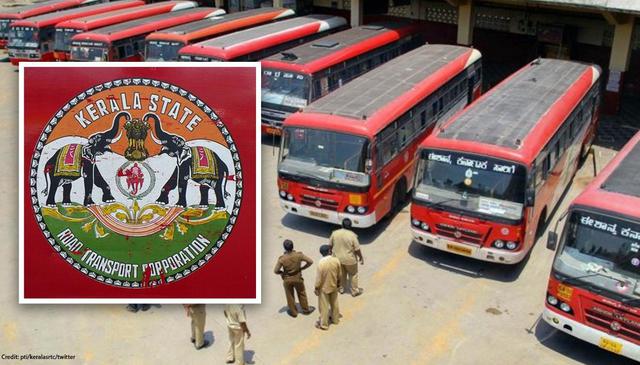
Download Now

Legal challenges faced by start-up while raising funds

0

This article has been written by Jui Shekhar Kadam pursuing the Diploma in Law Firm Practice: Research, Drafting, Briefing and Client Management from LawSikho. This article has been edited by Tanmaya Sharma (Associate, Lawsikho) and Smriti Katiyar (Associate, Lawsikho).

What is a start-up?

“A startup is a cohesion of entrepreneurial talent, involved in developing new inventions in two ways i.e. identifiable & investable form, in progress to validate & capture the worth of and to grow in a fast manner with a scalable business plan for the paramount impact.” Startups are usually small growing companies founded by one or more entrepreneurs who wish to carry out business and are at their initial stages of operation with a limited amount of capital and experience. Startups are involved in innovation, working on shortcomings of existing products or creating a new set of goods and services. Most of the startups are technology-oriented and well-focused on growth potential. To name a few there is Udan, Ola, Razorpay, Pharm Easy, CRED, etc. which are the latest startups in India.

Are you aware of the mechanism of a startup?

Usually, a startup begins with an individual or a small group of people who share a common idea that would fulfil a specific need. Most of the time, startups have been compared to the working of companies, but what distinguishes a startup from a company is its way of working. For instance, a restaurant owner may franchise an existing company which means that they work from an existing template of how business should work. However, a startup focuses on creating an entirely new template. This also indicates another key factor that distinguishes startups from other companies: speed and growth. Startups aim to build on ideas very quickly. Startups follow a process called iteration in which they continuously improve products through feedback and wage data. Often, it can begin with a product called Minimal Viable Product [MVP] that will test and revise control of and ready to be presented in the market. While they are working on the products they also need to rapidly increase their customer bases. This aids them in helping expand their market share which in turn lets them raise more money and which can help them in the growth of their products and audience even more.

A quick note on how startups are funded?

One has to make a plan on how to raise funds for a startup because they are of paramount importance. One has to think from all angles before raising funds for a startup. Generally, they raise money through several rounds of funding. 

  • Bootstrapping: It’s a preliminary round where the founders, friends and family invest in the business.
  • Seed Funding: Seed funding from so popularly known as “Angel Investors”, high net worth individuals who invest in the early stages of set-up.
  • Next comes Series A, B, C, D funding rounds which are primarily led by venture capital firms that invest tens to hundreds of millions of dollars into companies.
  • Lastly, if the Startup desires to expand i.e. to become a public company and open itself up to outside money via Initial Public Offer [IPO] an acquisition by Special Purpose Acquisition Company [SPAC] or go for a direct listing on Stock Exchange. Anybody can invest in a public company and the founders of startups and early backers can tell that stakes to realize a big return on investment.

Legal challenges faced by startups

  1. Taxation: Compliance with taxation laws is a sine qua non. Startups have to be clear about their tax liabilities towards the Government to avoid further legal complications faced by them in India. Vivid sectors attract vivid taxes. Therefore, startups must make sure that they are aware of new taxes, their liabilities and the impact on the business. Further, the Government of India has launched certain schemes for Startups that could provide them exemption if certain conditions are fulfilled.
  2. Listing Necessities: If a Startup decides to get listed on Stock Exchange then it has to fulfil the conditions of listing and SEBI regulations. These regulations throw light on how a Startup can make compliance and adherence with respect to listing procedures. Therefore, updates about such things can prove helpful for a Startup if they wish to get listed on Stock Exchange.
  3. Licensing: Licensing is of paramount importance when it comes to running a business evenly. Several licenses are required and for that necessary permit is also required. For instance for food business licenses related to food safety adulteration health are to be procured. A Startup has to follow the conditions mentioned in the license otherwise it will have to face legal consequences.
  4. Intellectual Property Rights: As Startups expand, the need to protect their Intellectual property increases which include research findings, logos, designs, algorithms, codes, etc. Most of the Startups are innocent about their protection of Intellectual Property i.e. patent filing, how a Trademark is registered, protection of copyright. Knowledge about these things would avoid further challenges.
  5. Corporate Governance: This is the common challenge faced by every Startup. The problem that Startups face in building Corporate Governance is the blueprint that corresponds with every stage of maturity of Startups. The importance of Corporate Governance may not be realized in the initial stage but missing a filing deadline or registration can have adverse consequences. The Central Government not only instructs about the filing of tax schemes and filing of other statutory returns but also it is an effective tool to diminish hurdles faced by Startups and maximize output. 
  6. Lack of Proper Documentation: In many Startups, employment documentation is considered a trivial thing and is mostly ignored by many Startups. Documentation is a relationship between employer and employee. This employee documentation describes the rights and obligations of both the parties and binds them to the laws of the company. It includes employee policies, performance improvement plans, initial job offers, Employment Contracts.
  7. Non-disclosure Agreements: Whenever a business is carried on there are some confidential matters which have to be kept confidential and it can include anything confidential information about a company. This comes into the picture when a Startup thinks to merge or start a Joint Venture with another company. Therefore, one must be aware of its company’s information and draft a Non-Disclosure or Confidentiality Agreement with another company. With a lack of said Agreement, a Startup will get into a plethora of troubles.

So above mentioned are the legal challenges faced by Startups in India. But, on the other hand, in order to face these challenges and also encourage Startups, the Government of India analyzed the situation of Startups and launched a few schemes for Startups.

Schemes for startups

  1. Startup India Initiative: This scheme was launched by Prime Minister Shri Narendra Modi on the 16th of January, 2014 with the motive of generating employment and wealth creation in the country. The goal of Startup is to develop the innovation of products as well as services increasing the employment rate in India. Usually, Startups benefit from this Scheme a lot as it provides financial assistance, the nature of simplified work, Government tenders, etc. Startups usually get a lot of tax benefits, the Department of Industrial Policy and Promotion is maintaining this initiative and working on it for a long term basis. It is considered one of the best government-sponsored schemes as it provides several concessions.
  2. MUDRA Bank: This scheme was launched on 8th April 2015. Micro Clients Development Refinance Agency [MUDRA] as the name suggests this scheme usually plays more emphasis on promoting small business in rural areas. In 2015 INR 1,00,000 crores were allocated to promote Startups culture in India. These MUDRA banks issue INR 10 lakhs to small startups desiring to start a business that is non-corporate and non-farm small/micro-enterprises. In this scheme, there is an absence of collateral security and it is categorized into Tarun, Kishore and Shishu loans.
  3. Support for International Patent: Patent Protection and Information Technology [SIP-EIT] as listed above is one of the legal challenges faced by Startups. Many Startups owners are innocent about Patent filing and other Intellectual Property Rights. The Government of India acknowledged this challenge and designed a scheme for Startups that can aid Startups in their Patent filing. Apart from this financial assistance is also provided for International filing in the information communication technologies sector. There is a reimbursement limit of a maximum INR of Rupees 15 lakhs per invention or 50% of total charges incurred in filing patent application whichever is lesser and it can be applied at any stage of international patent filing by the applicant.
  4. Credit Guarantee Fund Trust for Micro & Small Enterprises [CGTMSE]: The Credit Guarantee Fund Trust for Micro & Small Enterprises, was set up in India on 1st Jan 2000 to provide business loans to micro-level Startups, small scale industries & even Startups with zero collateral. It grants loans for Startups at highly subsidized rates. Government. Government works along with SIDBI and provides a maximum of up to INR 100 lakhs under this Scheme for promoting new Startups as well as rehabilitation of the existing ones.
  5. Stand up India Schemes: It is a notable scheme of the Government for financing SC/ST and/or women entrepreneurs. In this scheme, the loan is granted of INR 10 lakhs to 1cr which can be borrowed by at least one member of SC/ST and at least one woman per bank to set up Greenfield enterprise. It can be based out of the manufacturing, services or trading sector. As per this scheme, it is mandatory to have 51% of the shareholding and controlling takes for SC/ST or women entrepreneurs.
  6. New Generation Innovation & Entrepreneurship Development Centre: The National Science &Tech Entrepreneurship Development Board [NSTEDB] Department of Science and Technology. The government of India launched the New Generation Innovation and Entrepreneurship Development Centre. Through this scheme, many of the challenges which are faced at the initial stages of startups can be solved. Basically, this scheme whips up a ray of hope and spirit of Innovation and Entrepreneurship in youths and assists them in creating or forming a Startup. Some of the academic institutions are also involved in program implementation which will boost students’ confidence in planning a Startup and motivate them to pursue new initiatives that have the potential to be commercialized.

Key takeaways

Right from what is a Startup to what are the schemes, their working mechanisms have been studied in this Article. We have studied what kind of challenges a Startup has to face in its initial years of business. But, the Government of India did acknowledge the hurdles of Startups and designed various schemes for Startups. So these schemes are super helpful for Startups who are still busy finding their way on how to develop a Startup. Founders of Startups should make use of these schemes listed down by the Government as it will pave a way for them on how to work on the expansion of a Startup into a company with the help of various schemes. This can also help them narrow down or work upon the legal challenges which they face while starting up a business.

References


Students of Lawsikho courses regularly produce writing assignments and work on practical exercises as a part of their coursework and develop themselves in real-life practical skills.

LawSikho has created a telegram group for exchanging legal knowledge, referrals, and various opportunities. You can click on this link and join:https://t.me/joinchat/J_0YrBa4IBSHdpuTfQO_sA

Follow us on Instagram and subscribe to our YouTube channel for more amazing legal content.

Download Now

Difference between Section 9 and 17 of the Arbitration and Conciliation Act

0

This article has been written by Abhishek Narsing pursuing the Certificate Course in Arbitration: Strategy, Procedure and Drafting from LawSikho. This article has been edited by Aatima Bhatia (Associate, Lawsikho) and Smriti Katiyar (Associate, Lawsikho).

Introduction 

Arbitration revolves around the agreement entered into between the parties and the process of arbitration commences from the agreement to arbitrate and ends with the award passed by the arbitral tribunal. All disputes arising out of contract are referred to the arbitration.  Arbitration has been a more preferred mode of dispute resolution to resolve commercial disputes, this is majorly due to the overburdening of the Indian court system, and also because of the following aspects: 

(i) governing law, 

(ii) supervisory jurisdiction of the court, 

(iii) constituting arbitral tribunals, 

(iv) and the procedure to be adopted for the arbitration. 

Thus, the bedrock principle of party autonomy being the building block of the law of arbitration. Recently, in the case of Centrotrade Minerals & Metal Inc. v. Hindustan Copper Ltd the Supreme Court underlined the importance of party autonomy in assessing the validity of arbitration agreements and noted that ‘party autonomy is virtually the backbone of arbitrations’ and that in its opinion ‘parties to an arbitration agreement have the autonomy to decide not only on the procedural law to be followed but also the substantive law’. Thus, in order to protect to the interest of the disputing parties, interim measures of protection may be sought either from the arbitral tribunal or a court of law, under Section 9 and Section 17 of arbitration and conciliation Act, 1996, the protection may be sought before or during arbitration and even after the completion of the arbitral proceedings.

Power of an Arbitral tribunal to order Interim measures under Section 17

For the arbitrations seated in India, Section 17 of the act empowers the arbitral tribunal to grant interim relief to the contracting parties. Prior to the 2015 amendment Act (the 2015 amendment), the types of interim reliefs that could be granted by the arbitral tribunal were not illustrated, it was simply stated that the arbitral tribunal upon its discretion, order a party to take any interim measure of protection that the arbitral tribunal considered necessary in respect of the subject matter of the Dispute. In the case of Gulmali Amrullah Babul v. Shabbir Salebhai Mahimwala, it was held that party seeking enforcement of the order made under Section 17 would subsequently file a Section 9 petition for the same reliefs, on the basis of the order made by the arbitral tribunal.  Thus, proceeding under section 9 is not enforcement proceedings made by the arbitral tribunal. This does not mean that the order passed by an arbitral tribunal cannot be enforced in any manner whatsoever, even the court can take the same view under section 9 proceedings.

But, the 2015 amendment ensures that the powers of the arbitral tribunal under Section 17 are aligned with the powers of the court under Section  9 of the act, the tribunal is empowered to grant all measures which can be granted by under section 9(1) of the act. Subsequently, subsection (3) has been inserted in Section 9 that states once an arbitral tribunal has been constituted; a court shall not entertain an application for interim measures, which may render the remedy under Section 17 inefficacious. Through the 2015 amendment, the arbitral tribunal under Section 17 could grant interim measures not only during the arbitral proceedings but also at any time after the making of the award but before its enforcement. But, the words “at any time after the making of the arbitral award but before it is enforced” have been omitted by the 2019 amendment (2019 amendment act) of the act, as it was inconsistent with Section 32 of the Arbitration Act, which provided that the mandate of the arbitral tribunal shall be terminated with the termination of the arbitral proceedings. An order under Section 17 of the act, passed by the arbitral tribunal granting or refusing to grant interim measure may be appealed under Section 37(2)(b) of the act. However, no second appeal is allowed, but the parties can still invoke the Supreme Court’s extraordinary jurisdiction under the Article 136 of the Constitution of India, making a special leave to appeal.

However, after the 2015 amendment, the powers vested under section 17 cannot supersede the legislative intent of section 9 and the courts from time to time made it clear that, an arbitral tribunal cannot make all the orders that a court can normally make, which has been discussed in the case of Pradeep K.N. v. The Station House Officer, that an arbitral tribunal, ordered repossession of a vehicle as an interim measure under section 17 of the act, the court held that the order of repossession can only be made through a civil court. Conferring the power of a civil court to an arbitral tribunal for passing an interim order does not mean that the arbitral tribunal is conferred with the power of enforcement.

Power of a Court to order interim measures under Section 9

Interim measures play an important remedy in domestic as well as international arbitration, due to the time duration between the arising of the dispute and the passing of the award. However, in certain circumstances, the recourse to the arbitral tribunal to receive an order of the interim measure may not be possible or efficacious; due to the institution of the arbitral tribunal or the powers vested with the arbitral tribunal is limited. Under such circumstances, the party had to make an application under Section 9 of the act, to apply to the court for interim measure before or during the arbitral process or at any time after the making of the arbitral award. But, the person who is not a party to the arbitration agreement cannot apply to the court for interim measures. However, after the 2015 amendment, Sub-section (2) and (3) were introduced to section 9 of the act, in the intent that the court does not entertain an application under Section 9 of the act after the institution of the arbitral tribunal. 

The words introduced under Section 9 “the court shall not entertain” which expressly clear the terms that the parties have agreed to invoke the arbitration and arbitral tribunal have been instituted. It is pertinent to mention here that the ‘doctrine of clean hands’ which means the intention of the person approaching the court should be good and not malafide plays an important role in securing the protection of interim measures under Section 9 of the act, as Section 9 allows a party to apply for the protection of the interim measures which is a discretionary remedy and appears to the court to be just and convenient to do so. In the case of Uppal Eng. Co. (P) Ltd. v. Cimmco Birla Ltd., where the petitioner had failed to disclose that they had filed an application under Section 17 for seeking similar reliefs from the arbitral tribunal, the court held that since the petitioner had suppressed material facts, it was not entitled to relief under Section 9 on this ground alone. In another case of S. Raminder Singh v. NCT of Delhi, the petitioner had failed to disclose the fact that he had instituted other legal proceedings (including a civil suit and writ proceedings) for claiming similar reliefs and that his request for relief in these other proceedings was denied by the respective courts where the proceedings were instituted The court held that the Section 9 petition was liable to be dismissed on this ground alone since the petitioner had not approached the court with clean hands.

arbitration

The power of the Court to grant interim measures where the place of arbitration seated outside India 

The interim measure protection under section 9 of the act provides the legal framework for both domestic arbitration and international commercial arbitration seated in India, although the provisions of part 1 of the act are now also available in respect of international commercial arbitration outside India. The provision confers the wide power on the court to order interim measures in respect of :

(i) preservation and custody of goods which are the subject matter of the arbitration agreement;

(ii) securing the amount in the dispute;

(iii) detention or preservation of moveable or immovable property;

(iv) Obtaining evidence which may arise in the arbitration proceedings. 

The arbitration and conciliation act purports to consolidate and amend the law relating to “Domestic arbitration”, “international commercial arbitration” and “enforcement of foreign arbitral awards”. Part I of the act will apply “where the place of arbitration is in India”, and where all the parties to a dispute are Indian nationals and the place of arbitration is in India, it will be a “domestic arbitration”. Contrary, the definition of “international commercial arbitration” Section 2(1) (f) of the act focuses on two elements (i) the arbitration must be relating to the dispute arising out of a legal relationship considered as commercial under the law in force in India and (ii) at least one of the parties to the agreement falls under any one of the categories listed in Section 2 (1) sub clause (f) (i) to (iv) of the act.


A single Judge of Delhi High Court in the case of Dominant offset pvt. Ltd v. Adamovske strojirny, “held that, even if the place of arbitration is outside India, the provisions of section 9 of the act will apply and the court has jurisdiction to order interim measures of protection. It also held that a plain reading of Sub section (2) of Section 2 is an inclusive definition and that it does not exclude the applicability of Part-1 of the act to those arbitration which are not being held in India. In Summary, the aforementioned interpretation gets support from the provisions of Sub-section 5 of Section 2 which states that part 1 shall apply to all the arbitrations and to all the proceedings relating thereto which would also, in my considered opinion, include an international commercial arbitration.”

However, the extent of application of Part I provisions to international commercial arbitration seated outside India, has been the subject of much debate and criticism.

Following the extent of the part I applicability to those of international commercial arbitration seated outside India, this has been first recognized in the case of Bhatia International v. Bulk Trading S.A, where the Hon’ble Supreme court held that the provision of part 1 of the act would also apply to international commercial arbitration outside India. The brief facts of the case were that as per the arbitration agreement, the proceedings for the arbitration were as per the rules of the international chamber of commerce, and the seat of arbitration was Paris. The petitioner to the case filed the petition under Section 9 of the act, before an Indian court seeking interim measures of protection. The contention made by the respondent that the application under section 9 of the act was not maintainable, because under Section 2(2) of the arbitration act  the part I of the act is only applicable to  domestic arbitration or Indian-seated arbitration. The Hon’ble supreme court rejected the contention and interpreted the Section 2 (2) of the act, to mean that it will compulsorily apply to the arbitration taking place in India, regardless of the agreement between the parties, it will also apply to the international commercial arbitration outside India. It will be at the liberty of the parties sitting outside India to expressly or impliedly exclude the application of Part I provision by agreement, if they failed to do so, part I of the act will apply.

However, the decision of the Bhatia international was overruled by the Constitutional bench of five judges of the Supreme Court in Bharat Aluminium Company (BALCO) v. Kaiser Aluminium Technical Services Inc, and held that the part I of the act would have no application to international commercial arbitration held outside India and no application under Section 9 of the act for interim measure would be maintainable. 

Conclusion

Interim reliefs aims to provide the remedies to the disputing parties under the arbitration act, but from the time to time, Indian courts had clearly made it visible that the power to grant interim measures is discretionary in nature, and implied that the parties to the agreement is required to establish (i) a prima facie case in its favour (ii) the balance of convenience in favour to grant of interim measures, (iii) and lastly, that there is an irreparable injury would be caused if such request is not granted.

Further, in the conclusion of the aforementioned requirements, the law commission of India presented its 246th report proposing the amendments to address the concern following the BALCO CASE, proposed that Section 2(2) be amendment to the state that part I shall apply “only” where the seat of arbitration is in India. This will enable a party to a foreign-seated international commercial arbitration to obtain interim measures in India. Moreover, the 2015th amendment empowers the arbitral tribunal under Section 17 of the act to align with the power of the court under Section 9 of the act. However, presently, the definition of the arbitral tribunal is not amended under Section 2(d) of the act to include emergency arbitration, even after the recommendation of the law commission of India in its 246th report. The said proposal was not accepted and no changes were made by the 2015 amendment act. As such, if arbitration is seated in India, the provision of Part 1 of the arbitration act, including Section 17 which related to the enforcement of orders and awards of the arbitral tribunal, retrospectively, would apply to the emergency arbitration and any order passed by the emergency arbitration would be deemed to be the order of an arbitral tribunal under Section 17 of the Arbitration Act.


Students of Lawsikho courses regularly produce writing assignments and work on practical exercises as a part of their coursework and develop themselves in real-life practical skills.

LawSikho has created a telegram group for exchanging legal knowledge, referrals, and various opportunities. You can click on this link and join:https://t.me/joinchat/J_0YrBa4IBSHdpuTfQO_sA

Follow us on Instagram and subscribe to our YouTube channel for more amazing legal content.

Download Now

Article 30 of the Indian Constitution : is it absolute

0

This article is written by Aastha Verma, pursuing B.A.LL.B from Kalinga University, Raipur, Chhattisgarh. The article covers the rights of minorities under Article 30 of the Indian Constitution and the role of the government in the minority community.  

Article 30 of the Indian Constitution

The word minority is not defined anywhere in the Indian Constitution. It is derived from the Latin word ‘minor’ and suffix ‘ity’ which means in small numbers. Article 30 is defined under Part III of the Indian Constitution which defines the fundamental rights of the citizens irrespective of religion, race, caste, and sex. This is also known as the ‘Charter of educational rights’. Article 30 upholds the rights of minority communities to establish and administer the educational institution of their choice. It ensures the rights of minorities which should be preserved. Indian society is a mixture of various communities and its diversity is its strength. Our Constitution guarantees these rights to the minority community so that the diversity of the country is preserved and propagates their culture. This provision safeguards the rights of the minority community by the principle of equality for all under Article 14 of the Constitution. It also empowers the minority community to give education to the children in their language.   

There was a debate in the Constituent Assembly to restrict the minorities to a linguistic basis only and argue that India is a secular state and it should not be categorised based on religion. Another member of the assembly proposed that it is the fundamental right of the citizens to receive primary education in their own language and script subject to the minority population. The Constituent Assembly rejected the proposal and divided the minority into two parts –      

  • Religious Minorities – Religious minorities are decided by the numerical strength of the community. In India, Hindus are in majority and it’s important for the government to save the rights of the minorities. As India is a multi-religious country, Section 2(c) of the National Commission of Minorities Act,1992, six communities are declared to be the minority. They are – Muslims, Christians, Buddhists, Sikhs, Jains, and Parsis. It is established to protect the rights and interests of the minority community. 
  • Linguistic Minorities – Group of people whose mother language is different from that of the majority group is considered as linguistic minorities. The Indian Constitution protects the rights of these minorities by the principle of equality for all. Article 350A of the Indian Constitution imposes an obligation on the State to provide enough facilities to translate the language into the mother language at the primary level of education.   

In the case T.M.A.Pai Foundation v. State of Karnataka (2002) the Supreme Court laid down the guidelines related to Article 29 and 30 of the Constitution. The religious and linguistic minorities shall be determined state-wise and not nationally. Regulation around the proper functioning, well-being of students and teachers can be imposed by the government. The government can impose standard regulations, they should not destroy the minority character of the institution and the interference of the government should be very limited in the minority educational institution.   

There are three types of minority educational institutions –

  1. Institutions that demand recognition and aid from the State.
  2. Institutions that demand recognition from the State and not aid.
  3. Institutions that neither demand recognition nor aid from the State.

The institutions which demand recognition from the State and are aided or not from the State are bound to follow the rules of the State and these regulations are related to the employment of teaching staff, discipline, academic standards, and sanitation, etc. And the institutions that neither demand recognition nor aid from the State are free to administer their rules but have to follow the general laws like labour law, contract, industrial law, etc. Furthermore, these institutions have to follow the eligibility criteria prescribed by the state. They are free to appoint teachers only by the rational procedure. 

Supreme Court’s decision on Article 30

The judgment delivered in case Secretary of Malankara Syrian Catholic College v, T. jose & ors.(2006) the Honourable Supreme Court held that under Article 30 of the Constitution the right conferred to minorities is to ensure equality with the majority that does not mean to give the advantageous position to the minorities and the general laws will apply to all the educational institutions. Also, there is an issue raised that Article 30A prohibits the teaching of Bhagvat Geeta, Vedas, Puranas, etc. The Court held that Article 30A is not there in the Indian Constitution.  

Protection of minorities – why is it important for the Indian government

The Indian government has adopted laws and policies which are discriminating against the rights of minorities. During the communal violence in Delhi, there were a total of 53 people killed out of which 40 were Muslims. Instead of conducting an investigation, the BJP leaders incited violence and targeted activists and protest organizers.

In November 2020, when Sikhs were protesting against the farm bills, the government responded to the protest and investigated their alleged affiliation. On February 8, the Prime Minister spoke in the Parliament for the peaceful protest of the farmers calling an international criticism of the increasing authoritarianism in India.

In December 2019, the government passed a Citizenship Amendment Act, 2019 that discriminates against the Muslim religion while granting citizenship. The government revoked the constitutional autonomy granted to the only Muslim majority state and imposed restrictions in violation of people’s basic rights. The leaders and supporters protest against Muslims for conspiring against the national interests.          

Rohingya Muslim refugees of Myanmar are at risk of their lives and security and the Indian government has threatened and repatriated them. States use law against cow slaughters to prosecute Muslim cattle traders and spread rumours that they killed cows for beef. Many states have passed anti-conversion laws which are used against Muslim men who marry Hindu women.

The action of the government has created a communal hatred in the society and led to fear and mistrust of authorities among the minority community. So, the government has to roll back the discriminatory laws, policies, and ensure justice for abuse against the minorities. 

When can the State interfere in the rights conferred by Article 30

Every institution requires a regular check for the management of the institution so that nobody can misuse the power given to them. The government tries to check the academic status and maintain the standard required for the institution. They have the power to take action if there is a misuse of the power and can control the teachers or employees working in the institution. They can also make them follow the rules and regulations of the institution. The State is responsible to look at these institutes for the effective functioning of the rules and regulations. The State has the authority to make directive policies and can take action for the welfare of the organizations. But it was held that the government cannot impose restrictions on the functioning of the institution as it is a violation of the rights of the minority communities. And after a complete decision, it was laid down that the government forms set rules and regulations for private organizations and the same will be applied to these minority institutes as well.   

The extent of Article 30 also comprises the right to take help from the State in terms of money and finance, right to choose management bodies, staff, and employees. Further included, these rights are not perfect or complete. The motive behind Article 30(1) is to bring the minority institution into existence, make their own terms and conditions, and carry out exams and provide degrees and diplomas.               

Minority institutions under Article 30(1)

In January 2017, the Supreme Court bench held that minority educational institutes have the absolute right to appoint qualified principals in terms of work experience and not alone in terms of seniority. Whether the appointment is reasonable or not and to check whether there is a violation of the right of an individual candidate is done by the High Court under Article 226 of the Indian Constitution by exercising the power of judicial review.     

The dual test criterion

In Rev. Sidharjbhai (1963), a bench of the Supreme Court observed that a minority institution shall be valid only when it satisfies the dual test which makes the minority institution more effective for the minority education. In the case of Kerala Education Bill Case (1957), the dominant word under Article 30 is ‘choice’. Thus, every minority can make a choice in respect of relation with the government and under reasonable restrictions can prescribe the minimum qualification. The qualification and experiences will be applicable the same as that of the University Grant Commission (UGC) but the government won’t be able to impose the selection of teachers of their own choice.        

Educational rights of the minorities

The minority communities are entitled to establish their own educational institution but the right should not be absolute. The Centre has told the Supreme Court that the rights of minorities should not be absolute as it blocks the state laws which are enacted to achieve secular objectives and included that if Article 30 is absolute then the government will not be able to interfere even if the institution is teaching secession or armed revolution. Nobody has the right to do something which is against the public policies just to profess his religion. Under Article 19(6) of the Constitution, it was stated that the government has the right to impose reasonable restrictions on it. Also, the minority institutes that are fully funded by the state lose the right to administer it in spite of the rights given under Article 30. Article 29(1) and 30(1) of the Indian Constitution facilitate the minority rights to establish and manage their own educational institution. The only difference is Article 29(1) tries to define who are minority communities. In the case of St. Xaviers College V. the State of Gujarat, (1974) it was stated that both the Articles are not mutually exclusive. The Indian Constitution provides cultural and educational rights to the minority communities so that they are able to preserve their distinct culture, language, and scripts. 

The 44th Constitutional Amendment of 1978 removed the right to property as a fundamental right but ensured that it would not affect the rights of the minority community to establish the educational institution of their own choice. Under Article 32 of the Indian Constitution, they have the right to establish the institute of their own choice as well as to operate independently but have a formal collaborative agreement with the State.             

Conclusion

Protection of rights of religion and linguistic minorities is the backbone of secular values. Article 30 ensures the rights of the minority communities in educational institutions and prohibits discrimination against them. This Article provides the fundamental rights to minorities irrespective of caste, religion, and sex.  The Constitution guarantees the rights to the minority so that the diversity of the country is preserved and provides avenues for all groups including the marginalized to protect and preserve their culture. The minorities are divided into two groups. Religious minorities are defined as per the National Commission of Minorities Act, 1992, and linguistic minorities are groups of individuals whose mother tongue is different from that of the majority. In the case of T.M.A. Pai Foundation v. State of Karnataka, the Supreme Court held the guidelines for these minority communities and held that minorities will be decided according to the state-wise population and not by nationality. The government has the right to impose reasonable restrictions on these institutions for the effective functioning of the rules and regulations of the institution. Many times the government discriminates against the minority community so they have to roll back the discriminatory law and ensure justice to them, as it is creating a communal imbalance in the society.         

References


Students of Lawsikho courses regularly produce writing assignments and work on practical exercises as a part of their coursework and develop themselves in real-life practical skills.

LawSikho has created a telegram group for exchanging legal knowledge, referrals, and various opportunities. You can click on this link and join:

https://t.me/joinchat/J_0YrBa4IBSHdpuTfQO_sA

Follow us on Instagram and subscribe to our YouTube channel for more amazing legal content.

Download Now
logo
FREE & ONLINE 3-Day Bootcamp (LIVE only) on

How Can Experienced Professionals Become Independent Directors

calender
28th, 29th Mar, 2026, 2 - 5pm (IST) &
30th Mar, 2026, 7 - 10pm (IST).
Bootcamp starting in
Days
HRS
MIN
SEC
Abhyuday AgarwalCOO & CO-Founder, LawSikho

Register now

Abhyuday AgarwalCOO & CO-Founder, LawSikho