Download Now
Home Blog Page 402

Boilerplate clauses in drafting an international environment agreement

0
Five important clauses that can be found in all commercial contracts

This article is written by Rashmi C, pursuing a Diploma in Advanced Contract Drafting, Negotiation, and Dispute Resolution from LawSikho. The article has been edited by Prashant Baviskar (Associate, LawSikho) and Smriti Katiyar (Associate, LawSikho).

Introduction

Environment challenges affect more than one nation and can be addressed only through international cooperation. Environment agreements are one of the most effective and time-tested ways to arrive at a common arrangement by nations to solve such multi-territory problems. 

Environmental agreements have huge ramifications, not just from an environmental perspective, but also from political, economic, and geological perspectives due to their vast scope. These are generally principle-based agreements that facilitate the protection, preservation, and management of the natural environment and form the basis of many environmental protection laws of the signatory member states. Due to the enormous importance that environment agreements hold in protecting and preserving sustainable, safe, and healthy surroundings, it is important that they are well-rounded, comprehensive, and include all relevant clauses so as to enable effective implementation by member states, and thus achieve the purpose set out by them.

Environment agreement

International environmental agreements, also termed multilateral environmental agreements, are treaties that manage or regulate the human impact on the environment in order to protect it and ensure that the environment that we live in is sustainable for other living and non-living beings, both for the present and future. The agreements are binding only on the countries that have ratified them but are nevertheless important in the context of international environmental law.

Elements of international environmental agreements

For a treaty or agreement to be termed as an “International Environment Agreement”, the following elements should be present:

  1. International nature

The agreement should be between Governments of more than one country. It can be bilateral (meaning, between two countries), trilateral (meaning, between three countries) or multilateral (meaning between more than three countries).

  1. Environmental

As Per the Organization for Economic Co-operation and Development (OECD), the term “environment” is the totality of all the external conditions affecting the life, development, and survival of an organism. The international environmental agreements database project divides environment agreements into the following environmental categories:

  1. Nature – Focusing on the conservation, management and protection of natural resources and systems.
  2. Pollution and climate – Focusing on prevention and protection of natural resources like air, soil, freshwater and saltwater resources and systems, from pollution. Also includes treaties on noise pollution.
  3. Species – Focusing on the interaction of human beings with plants, animals, insects, aviators, marine life, reptiles and other living beings.
  4. Freshwater resources – Focusing on the regulation, protection, conservation, management and enhancement of freshwater resources such as lakes, rivers, ponds, streams, etc.
  5. Habitat and oceans – Focusing on maintaining different ecosystems and habitats.
  6. Energy, nuclear issues, and conflict – Focusing on energy production, nuclear weapon-free zones, environmental and biological weaponry (such as bacteriological, toxin and chemical weapons).
  7. Agreement

It includes a set of promises made, and accepted, by the member states, to be implemented within their territories. However, the terms such as “convention” and “protocol” are also used, causing confusion in understanding. 

A convention refers to an actual meeting between member states where they arrive at a conclusive agreement or treaty. It can also refer to wide-scoped agreements among member countries.

A protocol, on the other hand, refers to additional rules, regulations, standards, or restrictions, usually derived from conventions. It acts as a further amendment to an existing convention. Member states that are signatories to a convention are not necessarily bound by a protocol unless they ratify it distinctly.

Boilerplate clauses in international environment agreements

Every agreement needs to answer the “why”, “what”, “how”, “who” and “when” questions for it to be readable, understandable, acceptable, implementable and practicable. For this purpose, environmental agreements contain certain standard stipulations, provisos, or terms, called “clauses” or “articles.”

Boilerplate clauses refer to the standard or general clauses that form part of every agreement, including environmental agreements. These clauses do not deal with the specific subject matter itself, but contain standardized text, acting as ancillary clauses to the main clauses of the agreement. 

Environmental agreements are customized according to the subject matter they deal with. The provisions form the body of the agreement, but only when the boilerplate clauses are included will the agreement become whole. Some of the important boilerplate clauses include:

  1. Denouncement

Denouncement clauses specify the procedure by which a member may opt-out of the contract and the compliance requirements for the same. Denouncement clauses provide an option for member states to move out of, or exit, the agreement. In practice, however, multiple rounds of consultation and discussions take place between the signatory member states before a particular member state finally decides to denounce an agreement.

Illustration

Articles 8(2) and 8(3) of the European Agreement on the Restriction of the Use of Certain Detergents in Washing and Cleaning Products states as below:

“(2). Any contracting party may, in so far as it is concerned, denounce this Agreement by means of a notification addressed to the Secretary-General of the Council of Europe.

 (3) Such denunciation shall take effect six months after the due date of receipt by the Secretary General of such notification.”

  1. Ratification

The ratification clause is based on the Doctrine of Ratification, which is applicable in a situation where a person has committed an act or abstinence on another person’s behalf without his knowledge or consent. In such situations, the person on whose behalf such an act or abstinence is done, may either accept the act or disown it.

In environment agreements, ratification is a means by which a state, which was not a party to the original agreement, can become a party to it and be bound by its terms and articles. It provides a means for acceptance and adherence to international environmental conventions and protocol by nations that originally were not a part of them. It also requires every member state to ratify the same, and submit the Instrument of Ratification to the governing agency.

Illustration

The ratification clause of the Convention Concerning the Status of the Senegal River provides as below:

“The present convention will be subject to ratification by each Contracting State in accordance with its own constructive forms, the Instrument of Ratification will be deposited with the Government of Islamic Republic of Mauritania which will notify each Contracting Party thereof.”

  1. Enforcement

The enforcement clause, also termed “Entry Into Force” specifies the date, and the manner in which the agreement shall come into force. It answers the question of “when” an environment agreement shall become applicable and enforceable.

Illustration

The enforcement clause of the International Convention for the Prevention of Pollution from Ships, 1973 states as below: “The Convention shall enter into force within twelve months after the date on which not less than 15 states, the combined merchant fleets of which constitute not less than fifty percent of the gross tonnage of the world’s merchant shipping, have become parties to it in accordance with Article 13.”

  1. Amendments

Environmental treaties are usually very long-term agreements, with some having been in force for more than a century. They are framed based on the circumstances prevailing at the time of framing them. However, over time, some, or a large part, of the treaties may not be relevant to the current circumstances. In such cases, they undergo additions, removals, rescissions, or such other changes. These changes or modifications, termed as “amendments”, are facilitated by the Amendments Clause. The clause establishes the procedure for making amendments to the original agreement.

Illustration

The “Adoption of Amendments and Annexes to the Protocol, and Amendments to the Annexes” clause of the Protocol on Environmental Impact Assessment in a Transboundary Context to the Framework Convention for the Protection of the Marine Environment of the Caspian Sea states as below:

“Any contracting party may propose amendments and annexes to this Protocol, as well as amendments to the annexes. These amendments and annexes shall be adopted by the Contracting Parties and enter into force in accordance with Articles 24, 25, and 34 of the Convention.”

  1. Depositary

The depositary clause plays a deeply important role in international environmental agreements, primarily due to multiple states being involved in its creation, implementation, and safekeeping. The clause specifies the official custodian for the original document of the agreement or treaty. Generally, heads of inter-governmental agencies are the designated depositaries of such agreements.

Illustration

The depositary clause of the Framework Agreement on the facilitation of cross-border paperless trade in Asia and the Pacific states as below:

“The Secretary-General of the United Nations shall be designated the depositary of the present Framework Agreement”.

  1. Dispute settlement

While member nations would have had comprehensive discussions and consultations prior to signing or ratifying an environment agreement, there may arise challenges, disputes, conflicts, or incorrect understandings in the application or implementation of the agreement terms. To resolve such disputes, the settlement of disputes clause is included in the agreements.

Illustration

The Dispute Settlement Clause of the International Convention for the Prevention of Pollution from Ships, 1973 states as below:

“Any disputes between two or more Parties to the Convention concerning the interpretation or application of the present Convention shall, if settlement by negotiation between the parties involved has not been possible, and if these parties do not otherwise agree, be submitted upon request of any of them to arbitration as set out in Protocol II to the present Convention.”

  1. Languages

The language clause specifies the official languages in which the agreement document is published and available.

Illustration

The Language Clause of the International Convention for the Prevention of Pollution from Ships, 1973 states as below:

“The present Convention is established in a single copy in English, French, Russian and Spanish languages, each text being equally authentic. Official translations in the Arabic, German, Italian and Japanese languages shall be prepared and deposited with the original.”

Conclusion

Above are some of the boilerplate clauses to an international environment agreement. Although these clauses may seem insignificant or secondary to the main clauses, they are highly important and complete the agreement, and make it easier to understand, implement and achieve the objectives set out by the agreement.

It cannot be denied that the boilerplate clauses can be drafted to benefit either of the parties involved. Therefore, it is essential to carefully examine the clauses provided at the fag end of the agreements before signing on the dotted lines.

Transplantation of clauses from one agreement to another without independently considering the operational mechanics of each agreement will be at the peril of parties involved and the consequences of the same would be anyone’s guess.

References

1. https://ironline.american.edu/blog/beginners-guide-environmental-agreements/

2. https://iea.uoregon.edu/treaty-text/2772-0

3. http://www2.ecolex.org/server2neu.php/libcat/docs/TRE/Full/En/TRE-000113.txt

4. https://iea.uoregon.edu/treaty-text/2804

5. https://iea.uoregon.edu/treaty-text/9010

6. https://iea.uoregon.edu/treaty-text/8909

7. https://iea.uoregon.edu/treaty-text/2770

8. https://stats.oecd.org/glossary/detail.asp?ID=813


Students of Lawsikho courses regularly produce writing assignments and work on practical exercises as a part of their coursework and develop themselves in real-life practical skills.

LawSikho has created a telegram group for exchanging legal knowledge, referrals, and various opportunities. You can click on this link and join:

https://t.me/joinchat/J_0YrBa4IBSHdpuTfQO_sA

Follow us on Instagram and subscribe to our YouTube channel for more amazing legal content.

Download Now

Discussing the procedural aspect of charge through notable judgments

0
Image source - https://bit.ly/3EWRHwF

This article has been written by Oishika Banerji of Amity Law School, Kolkata. This article discusses the procedural aspect of charge through notable case laws. 

Introduction 

Chapter XVII of the Code of Criminal Procedure, 1973 lays down the provisions of charge spread over Sections 211 to 224. These provisions intend to provide that the “charge” shall be presenting a complete notice of the offences charged against the accused. The Calcutta High Court while deciding in the case of Mannalal Khatic v. State (1967) observed that the purpose behind a charge is to summarily spell out the charges levied on the accused because of the offence committed along with the prosecution’s allegations against him. A charge is to be considered as the foundation of any accusation as having been observed in the case of Ramkrishna v. State of Maharashtra (1980). It is therefore required to frame a charge properly so as to incorporate the available evidence supporting such charges. In this article, different ingredients, and elements that are involved in a charge, and function along with it have been discussed with the help of a few relevant judgments delivered by the Indian courts. 

Charge under the Code of Criminal Procedure Code, 1973

While Sections 211-217 talk about forms of charge, Sections 218-224 discuss the concept of “joinder of charges”. A look into all of these provisions with the help of notable judgments has been provided hereunder. 

Sajjan Sharma v. State of Bihar (2011)

The Supreme Court of India while deciding on the case of Sajjan Sharma v. State of Bihar (2011) held that both charge framing, and examination of the accused play a significant role in carrying out a criminal trial under Section 313 of the Code of Criminal Procedure, 1973. Put simply, these two can be considered essential steps of a criminal trial. In the present case, the appellant was falsely accused of the offence he did not contribute to, instead, it was his family members who were a part of an unlawful assembly that had taken place.

While taking a note of the facts of the case, the Apex Court remarked that in India, even while naming the accused as being associated with serious offences, it has been endemic that innocent persons or even members of the accused family of who might not have any role in the commission of offence are also roped in and falsely implicated. The Court went ahead to take a cue on the Patna High Court who had upheld the conviction of the appellant based on the charges framed against him. The Apex Court directed the High Court to carry out the framing of the charge and the examination of the accused in a mindful, and mechanical manner to avoid any kind of discrepancies. 

Anasuri Simhadri v. Superintendent, Central Prison, Rajahmundry (1993)

Before discussing the present case, it is necessary to note that a court should not be undertaking a detailed analysis of the materials presented before it while framing charges against the accused. The only thing that should matter to the court is whether the materials that are being considered to frame charges and are presented by the prosecution are sufficient enough for the court to proceed further. 

The case of Anasuri Simhadri v. Superintendent, Central Prison, Rajahmundry (1993) appeared before the Andhra Pradesh High Court concerning the significant traits of a charge which are clarity, and specificity. In the current petition, the plaintiff mentions that three stolen cycles were recovered from the accused possession thereby accusing him of three separate charges, but fails to provide evidence that would show that the possessions came to the accused at different points in time. In the absence of such evidence, the High Court held that the charges need not be dealt with separately, instead should be collectively taken into account and be disposed of as one offence committed by the accused. Therefore, the deterrents in association with the charges were to be running concurrently with each other in place of being separated. 

Ranchhod Lal v. State of Madhya Pradesh (1965)

For quite a few times now, the article has discussed the need for a charge to be specific in order to let the accused know about the same. The question as to whether the absence of such specificity and particularity in the charges alleged against the accused, ipso facto render the charge to be invalid or not was taken for consideration by the Supreme Court of India in the case of Ranchhod Lal v. State of Madhya Pradesh (1965).

It was held that at times it might not be possible for the prosecution to get hold of the accurate information to present a precise charge against the accused before the court of law. It might happen that the amount of information available to the prosecution is difficult to be presented in a concise manner. But in such circumstances, the charge which has been levied may not turn out to be invalid. While Section 212 Code of Criminal Procedure, 1973 states the ingredients of a charge that is “particulars related to time, place, and person”, the Apex Court took a note of sub-clause 2 of Section 212 that is an exception to the provision and to the general rule provided under Section 218 of the Code. 

Dhanjibhoy v. Karim Khan (1904)

Section 212 of the Code of 1973 talks about certain particulars in form of time, place, and person that are required to be present in a charge framed against an accused. In the present case of Dhanjibhoy v. Karim Khan (1904), while the court of law had to decide on the offence of criminal breach of trust, it stated that whatever number of breach of trust might have taken place in a period of one year, it was supposed to be treated as one offence committed by the accused. But if the series of the same act continues beyond a period of one year, then joinder of charges will be illegal in nature. Therefore, it was from this case, where the court interpreted the term “time” as provided under Section 212 to include a term of 1 year only. 

Radha Sasidharan v. State of Kerala (2006)

Section 214 of the Code of Criminal Procedure, 1973 was interpreted by the Kerala High Court in the notable case of Radha Sasidharan v. State of Kerala (2006). The provision states that “words in charge taken in sense of law under which offence is punishable”. To simplify this phrase, the High Court while dealing with the present case stated that every word used in a charge to describe an offence committed by the accused shall be deemed to have been used in the sense that has been attached to them by the law under which such offence stands punishable. Therefore, in order to construe the section related to culpable homicide as only an error for causing hurt by unwholesome drugs, will tend to be misleading so far as the accused is concerned resulting in failure of justice so far as his opportunity to defend is concerned.

K Damodaran v. State of Travancore Cochin (1953)

The Supreme Court of India while deciding in the case of K Damodaran v. State of Travancore Cochin (1953) took into consideration the relevance of Section 215 read with Section 465 which deals with the effect of errors in the framing of charges, and reversal of finding, or sentence by reasons of the error, omission, or irregularity respectively. The top court viewed that a combined reading of both the provisions requires that whenever an error, irregularity, or omission accompanies framing of a charge the only question that a court must be considering is whether such hindrances have resulted in discrepancies in delivery of justice thereby causing prejudice to the accused’s defence. If the same happens then the court must be entertaining such hindrances. 

Harjit Singh v. State of Punjab (2006)

The 2006 case of Harjit Singh v. State of Punjab (2006) that appeared before the Supreme Court of India was in concern with the failure of framing a charge as provided under Section 215 of the Code of 1973. The facts of the case involved the death of a wife by poisoning within seven years of her marriage with the appellant-husband. There was a lack of adequate evidence to frame charges under Section 306 of the Indian Penal Code, 1860 against the appellant. The Apex Court held that as in the first instance charges could not be framed under Section 306 of the Indian Penal Code, 1860, the plea of convicting the appellant could not be accepted. 

Rafiq Ahmad v. State of Uttar Pradesh (2011)

The doctrine of legislation by incorporation was discussed by the Supreme Court of India in light of the case of Rafiq Ahmad v. State of Uttar Pradesh (2011). In the present case, charges for the offence of dacoity were framed under Section 396 of the Indian Penal Code, 1860, but the Court observed that the accused could be charged under Section 302 of the Indian Penal Code, 1860 as well without being charged in particular with it. The offence of murder was to be read along with Section 396. This was named as the doctrine of legislation by incorporation. This observation can therefore symbolise that non-framing of charge, or any kind of defect existing in a charge, will not be affecting the trial in any way. 

Vibhuti Narayan Choubey v. State of Uttar Pradesh (2003)

The meaning of “alteration”, and “addition” of charges have been explained in the case of Vibhuti Narayan Choubey v. State of Uttar Pradesh (2003) by the Allahabad High Court. The Court observed that the phrase “alteration of charge” means changing or variation of an existing charge, whereas, “addition of charge” symbolises adding a new charge altogether. Thus addition to, or alteration of charges means one or more existing charges. 

Re Ramalinga Odayar (1929)

The Madras High Court while hearing the case of In Re: Ramalinga Odayar vs Unknown (1929) observed that the accused charged with an offence will be having a right to recall prosecution witnesses after the alteration of the existing charge levied on him has taken place. This case has been discussed under the previous case for it was the former case that behaved as a precedent for the present one. 

Queen Empress v. Fakirapa (1890)

Section 218 of the Code of Criminal Procedure, 1973 lays down the provision for “separate charges for distinct offences”. It was the case of Queen Empress v. Fakirapa (1890) where the Bombay High Court interpreted the objective behind this provision. The Court held that the purpose of Section 218 is to ensure that the accused have not been mystified in presenting his defence because of the number of charges levied on him and the charges are not interconnected with each other. Thus, Section 218 being an accused friendly provision promotes just, and equitable opportunities for the accused to present his defence before the concerned court of law. 

R Dinesh Kumar v. State (2015)

The Supreme Court in the well-known case of R Dinesh Kumar v. State (2015) addressed the issue as to whether a person can be tried on grounds of committing an offence along with the accused who are facing the trial already or not. The Apex Court held that where there are several persons who have been alleged to have committed various offences which are not wholly unconnected with each other, there may be a joint trial unless such a trial can embarrass the accused in defending himself before the concerned court. 

Conclusion 

As we come to the end of this article, it is necessary to mention that the case laws that have been discussed here are not exhaustive in nature, which is to say that there exist a plethora of cases beyond what has been mentioned concerning the charge. 

References 

  1. https://districts.ecourts.gov.in/sites/default/files/MANJULA%20ADDLJCJ%20SIRCILLA.pdf
  2. https://www.mondaq.com/pdf/clients/318472.pdf
  3. https://corporate.cyrilamarchandblogs.com/2021/05/supreme-court-on-section-482-crpc-have-the-inherent-powers-of-high-courts-been-diluted/
  4. https://lawcommissionofindia.nic.in/reports/177rptp2.pdf

LawSikho has created a telegram group for exchanging legal knowledge, referrals and various opportunities. You can click on this link and join:

https://t.me/joinchat/J_0YrBa4IBSHdpuTfQO_sA

Follow us on Instagram and subscribe to our YouTube channel for more amazing legal content.

Download Now

Influence of social media and technology in the Indian elections

0

This article has been written by Saloni Chitlangia, pursuing the Diploma in Intellectual Property, Media and Entertainment Laws from LawSikho. The article has been edited by Aatima Bhatia (Associate, LawSikho) and Ruchika Mohapatra (Associate, LawSikho).

Introduction

During the Indian parliament election in 2014, social media was a popular word. Politicians used social media as their tool to communicate with their intended audience; to call them either to vote or to protest. One of the prominent reasons for social media being used by political parties is because traditional mass media communication is highly regulated by the Election Commission of India. Politicians have also chosen social media in an attempt to reach voters inhabiting the new media society in a more efficient manner. The 2008 U.S. presidential election was the first election to fully grasp the power and reach of the SNS to impact voters. The U.S. President Barack Obama’s campaign used Facebook in an exceptional way to reach out to young voters. It proved to be successful; allowing him to win the votes of nearly 70% of voters that were under 25 years old. During the anti-corruption movement in 2012, social activist Anna Hazare used social media to connect people in New Delhi.

Social media and elections 

Social media has emerged as an essential tool of communication and has created new ways of political mobilisation and encouraging social media users to engage in political activities; such as following their political groups by tweeting, status update, expressing support through blogs and videos on YouTube.

The widespread use of social media platforms for self-expression, communication, and social participation has resulted in an abundance of voluntarily disclosed personal information online, which can be aggregated to gauge public opinion unobtrusively. As compared to traditional methods of public opinion measurement, social media allows time- and cost-effective data collection and analysis with less human effort. Scholars analysing social media data to gauge public opinion have supported the idea that the predictive validity of social media analysis does not necessarily rely on how representative the users are of the general population. 

The indulgence of political parties in social media has seen a surge over the last decade. Over the years, Indian politics has also become more dependent on the usage of social media to connect with people experiencing the effect of fellow democracies. . In India, the social media platform analyses the closest proximity of the actual vote holding of the political parties. The data is collected from social media platforms to analyse the number of people in support and opposition and those who can be targeted 

The prediction of results can be done through parameters involving volumetric and sentimental analysis. The volumetric analysis encompasses the volume of tweets, tags and hashtags associated with the leaders of political parties and their influenced users. The sentimental analysis includes comparison based and direct opinions. This was seen in the Delhi elections that took place in 2015 where the researchers got overall positive sentiment towards the political party AAP and their CM candidate. Although the analysis depicted a smaller number of differences in vote holding, it depicted a greater number of tweets for BJP, conveying that the dominant mood was in support of the party.

The youth of this generation is highly invested in politics and the ideas associated with it.  Previously, there was no standard platform for individuals to voice their opinions and politicians had to take to the streets to gain popularity. However, now, social media has become a  platform where people can freely express themselves. Politicians still use posters, cutouts, etc for their campaigns- but becoming digital and paying attention to their digital platforms has changed the picture. Platforms like Twitter are perfect for political organizations to broadcast information on a worldwide stream for either debates or discussions. With an estimated  53.1 million active users, (as per the census of 2015), India is the third-largest user of Twitter. The number of people using this platform is huge and it is believed to be a great way of influencing elections and campaigns. 

Thus, Indian political parties are utilising the internet and social media to connect with youth for their agenda and political events because they now know how and where to find them. All the political parties and their candidates have their respective social media pages and teams to run their campaigns vehemently, and greater resources are being invested in digital campaigning.  Observing the famous 2014 general elections of India, social media was the battleground for various political campaigns and there was a tremendous flow of varied political opinions. The election proved that there was a great potential to influence the country’s youth over social media through social media and political campaigns. A serious note was found in both the occasions: regional election as well as state election. 

They used social media like never before. Conventional ways of sending messages, recording calls and public gathering became redundant.  In 2014 the strategy inculcated by the parties was to first monitor the support through social media and then formulate better strategies to seek targeted votes from the people. This resulted in Narendra Modi gaining a following quickly. In India, the use of social media became more relevant and important following the Anna Hazare movement and the victory of Shri Narendra Modi in the 2014 Lok Sabha Election.

Impact of negative campaigning or negative advertising on social media

The political parties and their followers had chosen social media sites for campaigning before elections because of its wider reach. In March, Facebook revealed that BJP had been leading the political ad spend on Facebook. According to the official data of Facebook, BJP and its affiliates accounted for over 50% of the total ad spend as of February while the opposition party, Congress, and its affiliates were at the third position after regional parties. 

However, it is pertinent to note that mere tweets are not enough to count the votes and predict the results. The failure in the prediction of election results can be clearly understood through the US Presidential Elections in 2016, where Donald Trump surprised the world with his win over Hillary Clinton. All the popular vote forecasting tools had predicted Clinton’s chances of winning with a 70% to 99% range. Therefore, result forecasting could be an easy formula to find out the vote holding of a party and to formulate strategies to target more voters for political parties. However, it isn’t always the most reliable method. 

Along with the positive benefits of social media, there are a  lot of negative effects from social media campaigning and advertising. Sometimes news published on social media can be interpreted in the wrong way and thus incorrect interpretations of news will misguide the voters. While heavy campaigning takes place over social media platforms, there is also an increased chance of the spreading of fake news across these same platforms- such as Whatsapp, Facebook and others.  This is often done to influence the voting choices of the citizens.  A recent survey also found that there are a number of fake pages on social media. 

It was reported that Facebook, upon intimation by the Government, had deactivated and removed over 1,000 pages, groups and accounts for violating Facebook’s security policies including fake pages. Individuals associated with an IT Cell of the Indian National Congress (INC), and an Indian IT firm, Silver Touch. Social media’s alarming influence over the general public came sharply to light after nearly 31 people were killed by lynch mobs in several states such as Assam, Maharashtra, Karnataka, Tripura, and West Bengal over a rumour of child kidnapping which was spread using WhatsApp. There are also a large number of  ‘trolls’ and news by various pages to defame individual candidates or political parties. Thus, the issue of regulating social media is a matter that needs to be debated in many countries, as social media is a good servant which becomes bad when handled by a bad master. 

The Ministry of Information and Broadcasting under the Government of India has declared that social media needs to be regulated. Prior to the 2014 Lok Sabha elections, the Election Commission had a made few guidelines to regulate social media and had made it mandatory for the candidates and political parties to declare the amount spent on digital campaigning and also to authenticate the pages belonging to the party and its candidates. The commission also made it necessary to certify the advertisements prior to publishing them on social media. However, these guidelines were only laid down to regulate the pages of political parties and candidates and not those of the public. 

Prior to the recent elections, the Election Commission had said that the model code of conduct would apply even to social media and online campaigning on various platforms like Facebook, Instagram, Twitter, Tiktok, Whatsapp etc. These guidelines were implemented after meeting with the Industry Body Internet and Mobile Association of India (IAMAI). The EC also mentioned that any violations on social media would be processed under the provisions of the Representation of Peoples Act, 1951 and Section 126 of the Act would be applicable. It also made it mandatory for the candidates to mention their pages and their party pages in the nomination papers before the election. 

There are many laws and provisions that regulate the social media troll pages, such as the Information Technology Act 2000 (Amendment 2015), Indian Penal Code,1860 etc. Section 66A of the IT Act had been the provision for online abuse or defamation, however, in 2015 the Hon’ble Supreme Court upholding the provisions of Article 19(1)(a) had struck down Section 66A of IT Act, 2000 in the landmark case Shreya Singhal and Ors v. Union of India. However, there are many provisions in the IPC for the offences relating to cybercrimes and abuse by the troll pages, which are: Section 295A (Intentionally insulting religion or belief), Section 153A (promoting enmity between people), Section 499 (Defamation), Section 505 (Statements conducing to public mischief), 506 (criminal intimidation), Section 124A (Sedition) etc

In spite of having many legal provisions for regulating the various platforms in social media like troll pages, many people get away without facing the consequences due to low awareness about the legal provisions. More offences are being repeated by the political parties, candidates and party workers on social media platforms because of weak laws and more financial resources being circulated for digital campaigning. Hence, awareness needs to be created and stringent laws need to be drafted and implemented for the safety of citizens.

Election commission and social media companies : measures taken to make 2019 Elections safer 

The Election Commission of India, ahead of elections had directed its state-level bodies to appoint nodal officers who would be responsible for keeping an eye on the spreading or circulation of fake news, hate speech and other unlawful content across social media companies. The Election Commission of India had directed its Chief Electoral Officers in states and union territories that any violation of the model code of conduct on social media platforms should be immediately reported to grievance officers of the concerned company and the election commission. 

In order to keep social media secure during elections, the commission had also appointed three nodal officers. Their work was to examine the code violation cases instantly and write to the companies to take appropriate action after receiving approval from the director-general of media. In March, social media companies Facebook, Twitter, WhatsApp, Google and Internet and Mobile Association of India had submitted the voluntary code of ethics for the general election 2019 to the chief election commissioner. The companies had agreed to create a high priority dedicated reporting mechanism for the ECI and also appointed dedicated teams during the elections for taking speedy action during violations. The code of ethics was aimed at preventing inappropriate or objectionable political advertisements. 

The steps taken by social media companies to make elections safer are:

  1. Facebook launched an exclusive feature for India named ‘Candidate Connect’ which allows Lok Sabha candidates to record their election manifesto in the form of 20 second videos.
  2. Facebook planned to start an operations Centre in Delhi, which will work with its offices at Menlo Park, Dublin and Singapore to monitor election content. 
  3. WhatsApp introduced a telephonic tip line for its users to report misleading content and fake news.
  4. Microblogging platform Twitter expanded its political ads policy and Ads Transparency Centre (ATC) in India. 

Conclusion 

As per the latest survey by the Ministry of Information and Broadcasting, it was known that there are about 20 crore internet users in India and there are more than 18 crores mobile/cell phone internet users in India, most of them being within the age group of 18-35 years. There are around 10 crore voters voting for the first time who are within the age of 18-23 years. Thus, social media plays a very crucial role in opinion formation among people during elections. The use of social media for political activities influences peoples’ political efficacy, political participation and political knowledge. The political parties use these social media pages to connect with the people and update them about their welfare activities, and also to compete with their rival parties. Social media is also helping in bringing out a new way through which people can share information, search and increase their awareness. It is hence creating more awareness about the election, development of the nation and various other issues among people in both urban as well as rural areas. Thus, having a very meaningful as well as a positive impact as it is increasing the voting percentage during elections.

References


Students of Lawsikho courses regularly produce writing assignments and work on practical exercises as a part of their coursework and develop themselves in real-life practical skills.

LawSikho has created a telegram group for exchanging legal knowledge, referrals, and various opportunities. You can click on this link and join:

https://t.me/joinchat/J_0YrBa4IBSHdpuTfQO_sA

Follow us on Instagram and subscribe to our YouTube channel for more amazing legal content.

Download Now

Concept of restraint of trade clause in the employment contract and its validity as per Indian laws

0

This article has been written by Manisha Tripathi pursuing the Certificate Course in Introduction to Legal Drafting: Contracts, Petitions, Opinions & Articles from LawSikho. This article has been edited by Zigishu Singh (Associate, Lawsikho) and Ruchika Mohapatra (Associate, Lawsikho).

Introduction 

Whenever a party restricts another party to carry certain business or trade as per  a contract, it falls under the Section 27 of Indian Contract Act, 1872. It has been an issue of discussion for a long time in the field of Commercial law; especially in the case of employment agreement. There is a clause which affects a person’s liberty by restricting them from carrying on the same business, profession or trade for a certain time period. That law is made to protect the interest of businessmen and their business. Hence, this clause is applicable with “reasonable” grounds of the agreement. Debate over this clause is a long fighting battle in which one side says that this is a pivotal clause of the employment agreement and on the other hand, the other proponents say that; an individual should be free to carry the profession, trade or business of his/her choice without obstructions of such legal terms. Such contracts are highly criticized and conflicted in terms of public interest. Under Indian Contract Act its provision Section 27 states that agreement in restraint of trade is void. Every single agreement or contract which restrains a person from practicing any lawful profession, trade or business is null and void. There are few exceptions mentioned regarding this provision in the statute.  Whenever the issue of restraint of trade arises in the Indian context, the first aspect highlighted is that the Indian position is different from the common law of England, by precluding a reasonableness inquiry. 

Aim of restraint of trade agreement

The general principle behind this law is almost the same in India and England. The principle is that all the restraint on lawful business whether partial or full are void. Only difference is; in England the restraint will be valid only if it is reasonable. In India it is valid only if it falls under any statutory or judicial exception. The English law is a little flexible with the word ‘reasonable’ which enables the court to adapt its dynamic conditions. The aim behind this law is to restrain an employee from joining a business or profession which is in direct competition to the employer as per the legal terms of the contract.  

Stipulation of restraint of trade is imposed upon the employee to prevent him/her from benefiting from the skills acquired during the term of an employment from the employer. Particularly, the employer protects his interest and business to a certain extent. Whereas, when certain restrictions are imposed upon an individual during the term of his/her employment, the motive behind it is to ensure performance of employees and fulfillment of contract terms of the employment contract. 

For instance, after signing and entering into an employment contract of a company ,an employee cannot join another company or business of it is forbidden to establish its own business of the same nature as well, during the employment or prior the termination and; in some cases even after the termination for a reasonable time period. For example, in franchise agreement, this provision of restraint prohibits the franchisee from dealing with competitors during the existence of the contract. Thus, this way the franchiser may promote and protect their own goods by reducing the chances of competition in their field of business. An employment contract generally includes this clause into its contract for safeguarding the interest of the employer and business, organization or firm. These are the few clauses that put a restraint over trade.

  • Non-compete clause which specifically forbids former employees to carry the same profession, business or trade after the termination of the contract within a reasonable time period.
  • Non-solicit clause is the serving clause which prevents the employee from consulting or soliciting the employer’s client for a reasonable time period.
  • Non-recruitment clauses prevent the employee from hiring the employer’s former employees.
  • Confidential information clauses forbid the employee to disclose employer’s confidential information.

Statutory exceptions

1. Sale of Goodwill-  Goodwill is an intangible asset and the only exception that is referred to in Section 27 of the statute. It means the restrictions imposed on the seller should be reasonable. Seller is restrained from practising such business or trade for a certain time period for which this business is sold, either by buyer or by any person obtaining title to the goodwill from him/her.  

  • Whenever a person holds reputation or status of a business or brand value, morale, employee, customers and advantages and decides to sell off the goodwill of his/her business, he is obliged to give an undertaking to the buyer of the goodwill that in future, he will not practice any kind of business related, which the goodwill is being sold. These agreements will be considered valid for the reason that its sole purpose is to preserve the interest of the buyer, for which buyer has paid the consideration. Without sale of goodwill of business, such terms of restraining someone from carrying  such business would be against public policy and therefore held void. Here the scope of this rule of exception to this section is narrow. Further, the restrictive covenant would stand extinguished when the goodwill comes to an end.
  • This theory of restraint of trade is a common law related to the enforcing contractual restrictions on liberty to conduct specific business. It became the forerunner of modern competition law. 
  • The Indian Contract Act, which helps to govern the formation and performance of a contract in force inside India, except few parts; deals with the legality of such non-competition covenants. This regulation clearly states that an agreement, whichever puts restriction upon someone from carrying a business, trade, occupation of their choice is void and unenforceable. 

2. Indian Partnership Act, 1932- Under the statute of Indian Partnership, Section 36 defines that those business partners who are stepping out of agreement, shall not carry the similar business or trade for a specific time duration within specified geographical local limits; in these circumstances this kind of agreements will be held valid, except mentioned few reasonable restrictions upon that. Section 11 given under this Act states that the partners cannot involve themselves into competing business during the continuance of the partnership. 

3. Solus and Franchise Agreement- 

  1. Solus agreement is an english concept which deals with the provisions where a manufacturer markets his goods through a single distributor in the market or by an agent. In such conditions agreements may take place, where one party is completely dealing with the product of particular good or the manufacturer is not dealing with another person. For instance: a buyer of a certain goods may agree that he/she will purchase all the requirements from a particular manufacturer of goods only. The rationality of these agreements depends upon the parties. This kind of agreement would be valid if there is an element of reasonableness for the parties to the agreement. If such agreement focuses on making restrictions by one party on the other with an objective to controlling trade, then such agreements are void/invalid.
  1. Franchise agreement gives you the authority and right to use someone else’s name and brand with their permission to run your business under their name and brand. It gives you the right to use the trademark of the franchisor that is the most important element of this agreement. Hence it is legally binding that you need to fulfil certain requirements for receiving the approval for a franchise example: site, branding, advertising, training, support, intellectual property and trademark etc.  

Judicial interpretations 

These agreements are made to put a negative obligation and forbid employees to work for another person during the term of employment. These clauses tend to prevent leakage of trade secrets and confidential information.

  • Those agreements which put restraint after the term of employment on their employees are not allowed by the courts.

In the case of Brahmaputra Tea Co v E. Scarth here an attempt was made to restrain an employee as per employment agreement he was not allowed to compete for five (05) years after termination of service. Court observed in this case that restraining someone from competing, even after the termination of the employment agreement without reasonable grounds, especially the former employees; may be applicable within reasonable limits.This law is derived from english law, and the omission to make such an exception to the general prohibition contained in the provision given under its section 27 which specify that it was not intended to give them legal effect in this country.

In the case of Niranjan Shankar Golikari v Century Spg. & Mfg. Co. Ltd., the respondent’s company is the manufacturer of products like tyre cord yarn and many other essential products. The respondent invited applications for appointments in said plaint. Here, the appellant was employed for the position of shift supervisor in the tyre cord company and entered into a contract for a term of five (05) years. After the completion of training for 9 months, the appellant started being absent from the job and afterward he informed the company that he had resigned without giving prior written notice. Company rejected his resignation and ordered him to rejoin but he had already obtained another employment during that course of time. The respondent company suffered damages due to appellant because he had learned the company’s trade secrets during his training period. Therefore respondent wanted an injunctive relief to restrain him from obtaining employment from any rival company. Whereas appellant said that this agreement and this clause of restraint on trade is against public policy interest at large. The trial court and the High Court found that the negative covenant in the said case was reasonable and it was necessary to protect the company’s interest from huge loss.  

In the case of  M/S.Blb Institute Of Financial Markets vs Mr.Ramakar Jha, the petitioner company is one of the leading educational institutions in the field of financial services. During the course of the business, the petitioner appointed the respondent as one of their faculty members. Due to the work performance, respondents received many promotions and hikes in salary multiple times too. One day the respondent sent his resignation via email and stopped working for the petitioner. The petitioner returned the resignation and asked the respondent to resume his work. As per the said terms and conditions of the employment agreement, the respondent is not authorised to resign before the period of 3 years of the employment or in case willing to resign have to serve 6 months prior notice to the company. Apart from that, respondents cannot join any rival business of the same course of nature. The same thing was observed by the court, that the respondent made a breach of the contract. In this case the petitioner had only asked for interim measures and the final decision was to be rendered by the arbitrators appointed as per the contract.

In “Blue Dart Aviation Limited, Regd Office at Blue Dart Centre, Chennai v/s Capt.Puneet Shankta Chennai”, Here in this case the defendant was a certified pilot. It was agreed to make him a Senior First Officer for an aircraft. Therefore he was liable to serve the plaintiff. Apart from that, the defendant abandoned the services of the plaintiff without giving the company a prior three (03) months written notice. In consequence a suit was filed against him by the plaintiff and prayed for an injunctive relief against him to restrain the defendant from taking employment as a pilot in any other company. As a result of breach of contract, the defendant became liable to pay an amount of Rs. 10,00,000  with 15% outgoing interest from the date of filing the suit. The plaintiff also prayed to the Hon’ble court to grant permanent injunction against the defendant to restrain him from taking up employment in any other company or airline, for three (03) years as per the term of the contract. Injunction is based upon court’s discretion, however court granted injunction for a reasonable time period, as it became difficult for company to arrange another pilot, due to being unable to arrange another pilot within such a short time duration; company had to minimise the flying operation, which directly leads plaintiff to suffer loss. Therefore, in the above stated situation here court desists from directing restoration of status quo ante and for plaintiff to claim any compensation by amending the plaintiff at any stage. 

In the case of Superintendence Company Of India vs Krishan Murgai, the Supreme Court has noticed that any negative covenant beyond and to the extent of termination of the service is void and not enforceable. The Court said:

According to clause 10 of the agreement, the negative covenant not to serve anywhere or enter in any competitive business, during or after the termination of employment of an employee; even if the employee withdraws himself from service despite wrongful dismissal is contradictory to the contract of service. which relieves the employee from prohibitive covenant.

The Delhi High Court in Modicare Limited vs Gautam Bali & Ors, has explained the validity of 27 of Indian Contract Act as:

  • According to this section, every agreement through which anyone is restrained from practicing any lawful profession, trade or business of any nature is void and unenforceable.
  • Under their agreement where the plaintiff has undertaken that he will not involve or carry on any other business in his capacity, which is competing in nature with the defendant, even after termination of employment of the said agreement. According to said section, it would be void and unenforceable to restrain someone from carrying out the profession or business of their choice.
  • Court observed that such terms in the agreement are purely inappropriate, on the other hand the plaintiff was forced to agree upon such terms voluntarily to not to do something competing in nature or to the extent, which was declared void.

3. Conflict of Laws- According to the Constitution of India, Article 19(1)(g) guarantees freedom of trade,occupation and business anywhere in India, with a few reasonable restrictions given under Article 19(6) it shall affect the operation of any existing law or prevent the state from making any law imposing or in the interest of the general public. These restrictions are reasonable and can only be imposed by the law. This is in conflict with the negative covenants in contracts that restrict the fundamental right of freedom of occupation.

Conclusion

Debate over non-compete and non-solicit is also a tough battle and is definitely an important issue of discussion. Law needs to amend and transform as per the time, we are the citizens of a free country and have our fundamental rights too. For the sake of protecting someone’s interest, ceasing someone’s liberty over their choice of profession, trade and business sounds cruel in itself. Section 27 needs to be amended, it also permits and mandates a ‘reasonableness’ inquiry. Whenever the issue of restraint of trade arises in the Indian context, the first aspect highlighted is that the Indian position is differ from the common law of England, by precluding a reasonableness inquiry. 


Students of Lawsikho courses regularly produce writing assignments and work on practical exercises as a part of their coursework and develop themselves in real-life practical skills.

LawSikho has created a telegram group for exchanging legal knowledge, referrals, and various opportunities. You can click on this link and join:https://t.me/joinchat/J_0YrBa4IBSHdpuTfQO_sA

Follow us on Instagram and subscribe to our YouTube channel for more amazing legal content.

Download Now

Clean development project

0

This article has been written by Ayush pursuing the Diploma in Advanced Contract Drafting, Negotiation and Dispute Resolution from LawSikho. This article has been edited by  Prashant Baviskar (Associate, Lawsikho) and Ruchika Mohapatra (Associate, Lawsikho).

Introduction

Clean development mechanism (CDM) is a United Nations offset scheme to fund greenhouse gas emissions-reducing projects that contribute to climate change. It is a part of United Nations action on climate change and it allows developed countries to meet their Kyoto targets by financing the carbon emission-reducing projects in low and middle income group countries because lower-income group countries have lower energy efficiencies, low labour costs, and weaker regulatory requirements and less advanced technologies. The purpose of the CDM is to benefit both the investor and host countries by contributing to sustainable development in the host developing countries. It is the sole prerogative of the host country to confirm whether the project contributes to its sustainable development. Through this article, the author seeks to discuss the 

Advantages of CDM

  1. It not only offers opportunities for sustainable development but also brings important co-benefits like poverty reduction, access to energy efficient lighting and cooking, improvement in air quality and living conditions.
  2. The CDM PROJECT offers for technology transfer and contributes to national sustainable development by promoting the latest technology.
  1. It helps to harness incentives for climate action. The CDM is harnessing the entrepreneurial power of the markets and private sectors to meet the goals on sustainable development and climate change.
  1. It raises money to help most vulnerable countries to bring a change in climate  and this is because the 2% levy on each CDM transaction is transferred into United Nations funds climate change adaptation fund.

India’s role in clean development mechanism 

India ratified the Kyoto protocol in December, 1997 and ratified in august 2002. Effective institutional framework is proactive DNA which issues host country approval in 40 days of project submission. India has consolidated its position among non-annex-1 countries in CDM implementation.

India holds around 24% of the global CDM market. ONGC was the first PSU to have taken the lead role in the area of the clean development mechanism. As previously stated, biomass combustion is the method of energy generation in most rural households.  Although biomass combustion is a form of renewable energy, there are unsustainable characteristics of the status quo.  First, the majority of biomass is currently burnt in open fires or inefficient cook stoves, which have large emission factors.  Second, biomass is the only renewable if it is harvested in a sustainable manner, which is generally not the case where forests are owned and managed by government agencies.  The effects of unsustainable harvesting are forest degradation and depleted biodiversity.  Consequently, although the majority of rural communities currently use a “renewable” energy source, improvements on the current rural energy model are necessary for it to be sustainable. 

Solar energy is an important source of renewable sources. Solar energy being abundant in nature can easily meet the current global need for clean and renewable energy sources. Solar energy is in phase of development in order to meet and compete with other sources in terms of cost, efficiency and performance. Using rooftop solar is one of the promising sources of energy in India. Thus, this work addresses the problems faced by the rooftop solar sector in the Indian market. Design of a PV system is shown in order to run the simulation in a PV system to understand the potential of one rooftop solar PV system and to explain its benefits. The work also addresses the problems associated with rooftop solar PV systems that can be tackled, and a proper system for having the most efficient possible design is established. The work will simplify the processes involved in planning of a solar PV system.

CDM should be reformed and these reforms should be an integral part of India’s climate change. India must call for:

  1. Greenhouse gas emissions reduction commitments to ensure long term CDM projects.
  2. Transparency and clean public accountability procedures.
  3. Reform of CDM so that projects are in line with the government policies.

The central government has constituted a national clean development mechanism authority for the purpose of protecting and improving the environment in terms of the Kyoto protocol. 

Case laws

  1. Smith vs Fonterra cooperative limited 

Summary

Plaintiff Michael John Smith asserts that he is of Ngāpuhi and Ngāti Kahu descent and he is the climate change spokesman for the Iwi Chairs’ Forum. He claims customary interests in lands and other resources situated in or around Mahinepua in Northland, and asserts that various sites of customary, cultural, historical, nutritional and spiritual significance to him are close to the coast, on low-lying land or are in the sea. Smith brought suit against several defendants that operate facilities that emit greenhouse gas emissions, including dairy farms, a power station, and an oil refinery. Smith alleges that the defendants’ contributions to climate change constitute a public nuisance, negligence, and breach of a duty cognizable at law to cease contributing to climate change.  The High Court of New Zealand Auckland Registry dismissed the first two claims, but not the third. The court concluded that Smith cannot call it public nuisance because damage caused was neither known to him nor to the public.

Decision

The court declined to strike the third cause of action, which alleged that the defendants have a duty to cease contributing to climate change. The court found that there were “significant hurdles” for Smith in persuading the court that this new duty should be recognized, but determined that the relevant issues should be explored at a trial. The court explained that “it may, for example, be that the special damage rule in public nuisance could be modified; it may be that climate change science will lead to an increased ability to model the possible effects of emissions.” The Court warned, however, that it would likely be unable to provide the injunctive relief that Smith seeks, which would require a “bespoke emission reduction scheme.”

  1.  Hanuman laxman Aroskar vs. union of India

Summary: On March 29, 2019, the Supreme Court of India suspended the environment clearance for an airport in the state of Goa. Citizen petitioner Hanuman Laxman and NGO federation of rainbow warriors challenged the clearance in the supreme court of India. The court suspended the airport’s environment clearance on the ground that the government failed to take into account the impacts on the environment. The Court then cited the reason by saying that both the Paris Agreement and India’s contribution to the Paris Agreement are key aspects of India’s environmental rule of law. It is challenging the grant of environmental clearance for the development of the Greenfield international airport at mopa in Goa.

Issue: Whether the Government of India’s approval of the new airport being constructed adapted the environmental policies adequately or not?

Decision: On January 16, 2020, the Supreme Court lifted its suspension of environmental cleanliness and allowed the airport project to move forward .The court said in its ruling that the government has taken notice of the environmental commitments that it has to make and to make an airport a zero carbon airport operation. In addition, this court has also appointed the national environmental engineering institute to oversee the government project and whether the government has applied the environmental commitments properly or not. The EAC has analysed the EIA report based on the impact analysis of the different features such as land, water, air, and biological environment etc. for the study of the area within 10 km radius, not only to the project area based on the parameters in the notification and the airport manual.

Conclusion

The clean development mechanism stimulates investments on renewable projects in developing countries. The CDM project must provide the long term benefits relating to the mitigation of climate change. CDM project proponents should be free to choose cost-effective technology as long as objectives of the emissions are achieved. CDM projects should not be judged only by the criterion of the technology but the investments and the ability to overcome market barriers should be considered too. 

The demand from airline operators to meet the commitments under CORSIA (carbon offsetting and reduction scheme) which addresses the increase in carbon dioxide levels from international aviation above 2020 levels. India should try to ensure that it doesn’t get out of the CORSIA market even if ICAO (International Civil Aviation Organization) enlarges the source of supplies from other countries. CDM has been a useful source of finance to industry and India may rebuild a viable domestic carbon market in future on the foundation of environmental protection. The CDM is an interesting instrument to release incentives for new goals and new projects in the renewable energy sector. The goal of the CDM project is both emission reduction and sustainable development but while the emission reductions generate revenues for the developer of the project no such benefit for the sustainable development has been achieved so far but it has helped in the reduction of the greenhouse gas emissions. 

References


Students of Lawsikho courses regularly produce writing assignments and work on practical exercises as a part of their coursework and develop themselves in real-life practical skills.

LawSikho has created a telegram group for exchanging legal knowledge, referrals, and various opportunities. You can click on this link and join:https://t.me/joinchat/J_0YrBa4IBSHdpuTfQO_sA

Follow us on Instagram and subscribe to our YouTube channel for more amazing legal content.

Download Now

An overview of copyright societies

0
Image Source: https://rb.gy/h0inzf

This article has been written by Ajay Kumar, pursuing a Diploma in Intellectual Property, Media and Entertainment Laws from LawSikho. It has been edited by Aatima Bhatia (Associate, LawSikho) and Smriti Katiyar (Associate, LawSikho). 

Introduction

The Copyright Society is a legal body that protects or safeguards the interest of the owner in the product in which copyright subsists. Copyright societies give assurance to the creative author of the commercial management of their works. It can also be described as a registered collective administration society for the management and protection of copyright.

Authors of creative works give a publisher a license to publish the work on a royalty basis. This leads to infringement of work anywhere globally; therefore, it is challenging for the owner to prevent such infringements. To overcome such difficulty, owners of copyrighted works have formed committees to license their creations for display or communication to the public or issue copies of the work to the public. They are authorised to watch out for copyright infringement and take appropriate legal action against the infringer.

Copyright society in India

Governing law

Chapter VII of the Copyright Act, 1957 and Chapter XI of the Copyright Rules, 2013 enumerates provisions for the registration as well as the management of the Copyright Societies in the interest of Authors for whom it would be impractical or uneconomical to license the use of their work individually to all users or to collect the fee from them and also in the interest of the general public and specifically for the users of the right who may not be conveniently able to obtain licenses from individual authors or copyright owners. The copyright societies, therefore, help in enforcing copyright with benefits to both the parties mentioned above. It also aids copyright owners by increasing their revenues and the general public by providing them with a convenient destination to obtain licenses from multiple right holders.

As per Section 2(ffd) of the Copyright Act, 1957, “Copyright Society” means the society registered under Section 33(3).

Copyright Amendment Act, 2012

Prior to the 1994 amendment, the Act provided for the Performing Rights Societies, which carried on the business of granting licences for the performance in India of any work in which copyright subsisted. The 1994 amendment has extended the operation of the legal provisions to the business of issuing licences regarding all rights relating to any class of work in which copyright subsists under the Act.

The 2012 amendment inserted a new sub-section 3A in Section 33, which provides that registration provided to copyright society shall be for five years. The registration may be renewed from time to time.  The Union Government may renew the registration after considering the report of the Copyright Registrar on the functioning of the Copyright Society under Section 36. Also, Section 33A, inserted by the 2012 amendment, made it mandatory for the copyright societies to publish their tariff scheme in the prescribed manner. The registration may be cancelled if the society has not complied with the provision of Section 33A of the Act.

Types of copyright societies in India

Indian Reprographic Rights Organisation (IRRO)

The Indian Reprographic Rights Organisation (IRRO) copyright society was established in 2000, and it primarily focuses on the authors and the publishers. The function of this society is to register and grant licenses concerning the literary work of authors and publishers. This society takes royalties from the users and then transfers the royalties to the authors and the publishers. IRRO has an international association with the International Federation of Reproduction Rights Organizations (IFRRO). It is the only copyright society of its kind existing in India.

Indian Performing Rights Society (IPRS)

The Indian Performing Rights Society (IPRS) was established in 1969. This society is concerned with the registration and licensing of copyrights of members belonging to the music industry. The members of the society mainly consist of songwriters, composers and publishers who are collectively called authors. The society collects the royalties on behalf of its members and protects the copyright of its members. After this, society deducts some amount from royalty as an administrative fee and transfers the remaining amount to the concerned members.

Phonographic Performance Limited India (PPL India)

The Phonographic Performance Limited India (PPL India) society was established in 1941, and it focuses on radio broadcasting and public performance of the songs. The song can be any national or international song, irrespective of its language or fame. The primary function of this society is that it issues licenses to the people who want to perform any song publicly in any social event, function, or show or other places like discos, restaurants, malls, etc.

Code of conduct of the copyright societies

Website

Every society should include the following in its website- Certificate of Registration of the Society, constitution or charter, article of association, memorandum of association, a list containing the members of the Governing councils and the officer in the society, name and address of the chairman, members of general bodies, the annual report along with the audited account, specific details of all the licenses and the format of the licenses, code of conduct and the contact details of the society members. 

Member

Members of the Copyright Society should be treated fairly, courteously, honestly, fairly, and the dealings with members should be made transparent.

Functions of copyright society

The main functions of the Copyright Society are to issue licenses, collect fees and distribute the collected fees to the respective authors. The society would collect fees as per the scheme of tariffs and distribute the same to the authors after deducting a fee of not more than 15% of the total amount collected.

Section 34 of the Copyright Act, 1957 talks about the administration of copyright by copyright societies. As per this section, the copyright societies have the discretion to accept exclusive authorisation from authors and other owners of rights to administer any work by issuing licences or collecting licence fees, or both. It also provides that an author or other owner of rights has the right to withdraw such authorisation without prejudice to the rights of the Copyright Society under any contract.

Copyright societies allow entering into agreements with foreign societies to delegate the right to collect royalties from users in that foreign country. Provided that such country shall not discriminate between Indian authors and other authors concerning the terms of licensing or distribution of royalties.

Effect of 2012 amendment and inconsistency with certain provisions

The amendment of 2012 in the Copyright Act, 1957 added a new provision, Section 33 (3A), which talks about renewing a licence after a period of five years. This section requires the existing Copyright Society to be re-registered as a Copyright Society. However, the problem is that there has not been any punishment mentioned for the non-registration of these copyright societies.

Section 33 says that it is mandatory for any person or association of persons to get itself registered with the Central Government to carry on the business of issuing or granting licences in respect of the Act. This provision has an inconsistency with the provision of Section 30, which talks about the provision of granting licences. Now, the problem is if there is an existing provision that talks about licenses being granted by owners of copyright or their authorised agent, why do we need a provision in the Act that says that unless one is a copyright society, one cannot engage in the business of granting licenses.

The first proviso says that the owner of the copyright in his personal capacity shall continue to license the right to works. However, this provision does not make sense as we allow the copyright owner to continue to grant licences. Right before that provision, the legislature includes a provision that restricts such grant of rights unless one is a copyright society. Therefore, this proviso is redundant, and it also questions the application of Section 30 and Section 18 in a way because Section 18 says that once an assignment is in place and one becomes an owner of specific copyright in work, that individual is going to be acting in the capacity of the owner of the copyright for all those right which are granted to that individual. So, when the assignee of copyright becomes entitled to any right composed in the copyright, the assignee with respect to the rights so assigned shall be treated for purposes of this Act as the owner of the copyright. So, the assignee will also have the right to exercise Section 30 and grant licences to other people. So, if Section 33 is in place, the legislature also questions Section 18(2) along with Section 30. Also, we have no idea how and in what capacity these societies are currently functioning.

Case laws

In Leopold Cafe Stores v. Novex Communications Pvt. Ltd., the primary issue was whether Novex Communication Pvt. Ltd. is entitled to grant licenses on behalf of Copyright Owners in various works? The Hon’ble Bombay High Court observed that Every agent also “does business”, but it is the business of the agency, in which the agent is acting in such a way, that is, it indicates that it is acting on behalf of another who holds the copyright. This is the only way both Section 33 and Section 30 can be reconciled. Even on an agency enforcing Section 33, a complete ban would undoubtedly steer away from the simple language of Section 30 and replace the words “or it’s by a duly authorized agent” completely ineffective.

Finally, the Hon’ble Bombay High Court held that Novex was not permitted to engage in the business of issuing or granting a license in accordance with Section 33 of the Copyright Act. However, they may continue to issue licenses as authorized agents of the copyright owners under Section 30 of the Copyright Act 1957.

It appears that there is a conflict between the application of Sections 30 and 33 concerning the issue and grant of licence.

Conclusion

Copyright is indispensable in today’s world. The various copyright societies in India like IRRO, IPRS, and PPL India serve different purposes. The Copyright Society plays a vital role for authors and owners who have copyright on their work. Copyright Society helps such writers and owners to earn monetary gains in the field of business. It also helps writers and owners to connect with foreign societies. The Proviso added vide the 2012 amendment and the provisions conflicts with sections 30 and 18(2) need to be amended to serve the better purpose.

References


Students of Lawsikho courses regularly produce writing assignments and work on practical exercises as a part of their coursework and develop themselves in real-life practical skills.

LawSikho has created a telegram group for exchanging legal knowledge, referrals, and various opportunities. You can click on this link and join:

https://t.me/joinchat/J_0YrBa4IBSHdpuTfQO_sA

Follow us on Instagram and subscribe to our YouTube channel for more amazing legal content.
Download Now

Exceptions to Section 28 of Indian Contract Act, 1872

0
contract

This article is written by Shweta Kumari, a student of Lloyd Law College. This article is an overview of Section 28 of the Indian Contract Act, 1872 and its exceptions.

Introduction

An agreement to restrict enforcement of contractual rights through legal proceedings is void under Section 28 of the Indian Contract Act, 1872. Section 28 has three exceptions. An important judgement was passed by Delhi High Court in the case Larsen and Toubro Limited v. Punjab National Bank and Another on July 28, 2021, wherein Exception 3 of Section 28 was interpreted. This article is an overview of Section 28 and its exceptions in light of the recent judgement. It also discusses important case laws.

Section 28 of the Indian Contract Act, 1872

Section 28 of the Indian Contract Act, 1872 states that an agreement in absolute restraint of legal proceedings is void.

Section 28 (a) of the Indian Contract Act, 1872 states that:

  1. No agreement can debar enforcement of rights through a court of law. 
  2. No agreement can oust the jurisdiction of a court.
  3. No agreement can stipulate a time limit below the time limit prescribed under the Indian Limitation Act, 1963.

The 97th Law Commission suo moto analyzed Section 28 and proposed an amendment. Section 28(b) of the Indian Contract Act, 1872, inserted via the Indian Contract (Amendment) Act, 1997, states that:

  1. No agreement can extinguish the rights of any party on the expiry of a specified period.
  2. No agreement can discharge any party from any liability on the expiry of a specified period.

Insertion of the aforesaid provisions to restrict any party from enforcement of their rights will render a contract void to that extent. The amendment blurred the lines between ‘right’ and ‘remedy’. 

Exceptions to Section 28

Section 28 of the Indian Contract Act, 1872 is not absolute. It has three exceptions. 

The first exception states that an agreement must refer all disputes to arbitration that may arise between the parties will not be void. Further, a mere arbitration award will be recoverable in the disputes referred. The second clause of Exception 1 was repealed by the Specific Relief Act, 1877.

The second exception states that an agreement to refer to questions that arose before the insertion of the clause to arbitration between the parties will not be void.

The third exception states that a bank’s or financial institution’s guarantee agreement with a provision to extinguish the rights of any party or discharge any party from any liability upon the expiration of a specified period (>1 year) from the date of occurrence/non-occurrence of a specified event will not be void. Exception 3 was inserted via The Banking Laws (Amendment) Act, 2012 in 2013 on the recommendations of the Indian Banks’ Association. It functioned as a redress mechanism for the banks post 1977 amendment. 

The expression “bank” in Exception 3 includes the terms:

TermSection (Definition)
Banking companySection 5(c) of the Banking Regulation Act, 1949  
A corresponding new bankSection 5(da) of the Banking Regulation Act, 1949  
State Bank of IndiaSection 3 of the State Bank of India Act, 1955
A subsidiary bankSection 2(k) of the State Bank of India (Subsidiary Banks) Act, 1959
A Regional Rural BankSection 3 of the Regional Rural Bank Act, 1976
A Co-operative BankSection 5(cci) of the Banking Regulation Act, 1949
A multi-State co-operative bankSection 5(cciiia) of the Banking Regulation Act, 1949

The expression ‘a financial institution’ in Exception 3 means any public financial institution within the meaning of Section 4-A of the Companies Act, 1956.

The insertion of Exception 3 of Section 28 of the Indian Contract Act, 1872 via the 2013 Amendment created a dichotomy in law. There are two viewpoints.

  1. The minimum claim period of a bank guarantee must not be less than 12 months. 
  2. While banks have the right to set the minimum claim period of a bank guarantee to less than 12 months, banks must not extinguish the obligations altogether. 

The case Larsen and Toubro Limited v. Punjab National Bank and Another held the first viewpoint erroneous.

Arbitration agreement

Section 7 of the Arbitration and Conciliation Act, 1996 states that an ‘arbitration agreement’ is an agreement between the parties to refer all or specific disputes that may arise or have arisen between the parties to the arbitration. The agreement can be a clause in a contract or a separate agreement. The agreement must be written. A dispute cannot be referred to arbitration in absence of an arbitration agreement unless the parties provide written consent via joint memo or joint application.

In M/s Elite Engineering and Construction (HYD.) Private Ltd. v. M/s Techtrans Construction India Private Ltd. (2018), the court established specific rules and regulations for the insertion of the arbitration clause.

  1. There must be a clear reference to the document with the arbitration clause.
  2. The reference of the arbitration clause must indicate the intention to incorporate the arbitration clause.
  3. The arbitration clause must extend to any and all types of disputes that may arise or have arisen with respect to the contract.
  4. The contract with reference to another contract with an arbitration clause will be inadmissible.
  5. The contract with reference to another contract with terms and conditions is inadmissible unless there is a reference to the arbitration clause of the other contract in the contract.
  6. There must be a reference to the arbitration clause stated in an institution’s terms and conditions in the contract.

Important cases related to Section 28

In Tapash Majumdar v. Pranab Dasgupta (2006), the East Bengal Club authorized the Executive Committee to take action against the members of the club who challenged the election process of the Executive Committee in the court. The Calcutta High Court ruled that such a restriction was against public policy and violated Section 28 of the Indian Contract Act, 1872.

In Bharat Sanchar Nigam Ltd. v. Motorola India Pvt. Ltd. (2008), the amount of liquidated damages in an advance purchase order, evaluated and imposed by the purchaser, was declared unchallengeable by the supplier. The Court ruled that the unilateral right of the purchaser to determine liquidated damages was in restraint of legal proceedings and thus void under Section 28 of the Indian Contract Act, 1872.

In Hakam Singh v. Gammon (India) Ltd. (1971), the agreement between the parties stated, “The Court of law in the City of Bombay alone shall have the jurisdiction to adjudicate thereon”. A suit filed in Varanasi was dismissed. The Supreme Court ruled that the agreement did not contravene Section 28 of the Indian Contract Act, 1872. The agreement would be void if the Bombay Court did not have the jurisdiction. An agreement cannot confer non-existent jurisdiction on a court. 

In Delhi Bottling Co. Ltd. v. Times Guaranty Financials Ltd. (2001), a hire purchase agreement of commercial vehicles executed in Bombay conferred Bombay courts exclusive jurisdiction in case of any dispute. The Court ruled that the agreement did not violate Section 28 of the Indian Contract Act, 1872 as parties can assign exclusive jurisdiction to any court having jurisdiction.

In United India Ins. Co. Ltd. v. Associated Transport Corpn. Ltd. (1987), the printed words “Subject to Bombay jurisdiction alone” on the consignment note with the signature of the carrier did not amount to an agreement. The Kerala High Court ruled that there was no meeting of the minds between the consignor and the carrier and thus the parties did not enter into an agreement.

In Dilip Kumar Ray v. Tata Finance Ltd. (2001), a hire purchase agreement of Tata Estate Car executed in Madras set the exclusive jurisdiction of all disputes to Bombay. A suit filed in Bhubaneshwar was dismissed. 

In C. Satyanarayana v. K.L. Narasimham (1966), the defendant printed the words “Subject to Madras jurisdiction” on the letter to the plaintiff. The Court ruled that the words did not amount to an agreement and the parties were not bound to the Madras jurisdiction because the plaintiff did not give his consent for the same.

In Baroda Spinning and Weaving Co. Ltd. v. Satyanarayan Marine & Fire Ins. Co. Ltd. (1913), the fire insurance policy required an action/suit against the rejection of a claim within the period of three months. All benefits were dissolved if no action/suit was taken within the prescribed time frame. The Court ruled the agreement valid. Kapur, J. in Ruby General Insurance Co. Ltd. v. Bharat Bank Ltd. and Others (1950) explained that the parties can agree that a promisor will be liable to indemnify the promisee if he is notified within a specific time frame. It is common in insurance agreements where time is of the essence.

In National Ins. Co. Ltd. v. S.G. Nayak & Co. (1997), the Court ruled an insurance agreement clause, which released the insurance company of all liability if a loss/damage claim was not filed within 12 months, not in violation of Section 28 of the Indian Contract Act, 1872. The agreement did not seek to curtail the period of limitation. An agreement to forfeit/waive rights before the lapse of a specified time period is not void. 

In Union of India v. Indusind Bank Ltd. (2016), the Union of India submitted that the bank guarantees which limited the time period within which they could be invoked would not be affected by an amendment introduced a year later. The Supreme Court ruled that Section 28 is substantive law. It operates prospectively and not retrospectively. The court did not delve into the repercussions of the addition of Section 28(b) on the bank guarantees but stated that the Parliament addressed the grievances of the banks through the addition of an exception in Section 28.

Delhi High Court Judgment on Exception 3

In Larsen and Toubro Limited v. Punjab National Bank and Another, Punjab National Bank’s and the Indian Banks Association’s interpretation of Exception 3 of Section 28 of Indian Contract Act, 1872 was challenged. 

Facts

The Indian Banks Association in an attempt to interpret Exception 3 of Section 28 issued circulars wherein a minimum claim period of less than 12 months was declared void on the basis of which Punjab National Bank compelled Larsen and Toubro to set the minimum claim period of bank guarantee to one year. 

Issues Raised

The misinterpretation of Exception 3 of Section 28 by the respondents cost the petitioner superfluous commission charges. The petitioner was also required to maintain collateral security for an extended period. The misinterpretation put an impediment on the petitioner to conduct their business and thus affected their fundamental right under Article 19(1)(g) of the Constitution of India.

A writ petition was filed seeking to quash and set aside the letters issued by Punjab National Bank dated 18.08.2018 and 28.03.2019 to Larsen and Toubro and the letters issued by Indian Banks Association dated 10.02.2017 and 05.12.2018 to all member banks. The petition also sought any interpretation of Section 28(b) read with Exception 3 of the Indian Contract Act, 1872 which prescribed a minimum claim period of less than 12 months void to be set aside. 

Observation of the Court

Section 28 does not deal with the claim period but the rights of the creditor to enforce his rights. The circular of the Indian Banks Association and Punjab National Bank’s communication is erroneous. The claim period is a grace period that extends beyond the guarantee’s validity period and may or may not even exist in a bank guarantee.

Judgment

The Delhi High Court ruled that Exception 3 did not set a minimum claim period for bank guarantees. 

Conclusion

Section 28 of the Indian Contract Act, 1872 and its exceptions safeguard the indispensable interests of the parties. Section 28, amended several times, is still an enigma in the field of law. The recent judgement in Larsen and Toubro Limited v. Punjab National Bank and Another was a piece of the puzzle. 

References


Students of Lawsikho courses regularly produce writing assignments and work on practical exercises as a part of their coursework and develop themselves in real-life practical skills.

LawSikho has created a telegram group for exchanging legal knowledge, referrals, and various opportunities. You can click on this link and join:

https://t.me/joinchat/J_0YrBa4IBSHdpuTfQO_sA

Follow us on Instagram and subscribe to our YouTube channel for more amazing legal content.

Download Now

Reformations and recent developments in e-services brought in by the judiciary

0
Judiciary

This article is written by Nishka Kamath, a student at Nalanda Law College, University of Mumbai. It analyses the approaches made by the Judiciary to shift to e-services as a means to provide uninterrupted access to justice, especially in India. Moreover, a brief discussion on the worldwide scenario and major transformations and management in the judiciary is conferred below. The article will further discuss and assess the steps and the measures taken by the judiciary and the legal professionals to curb and truncate the impact of COVID-19 in the Indian legal industry. 

Table of Contents

Introduction

The world today is going through turmoil while facing the deadly coronavirus outbreak, a pandemic that has not been witnessed for hundreds of years. The entire human race seems to have reached a point of halt. But in spite of all this, one must continue to move forward in order to continue to exist. Humans are evolving by adopting innovative adjustments to fit in the ‘new normal’ and so has the judiciary. No doubt, the pandemic has raised an unprecedented challenge for the judiciary to administer the justice system, but it has also paved a path for the members of the Indian judiciary to re-conceptualise the ways and the manner in which the justice system in the country operates.

Even though the steps to reform the judiciary were taken in 2005 with the foundation of the eCourts projects by the eCommittee, it is in the past few years that major progress of the judiciary to turn into a virtual workspace has been encountered. Numerous activities like online functioning of courts, virtual legal proceedings for traffic and petty offences, online payment of fines and court fees have been made possible by the constructive use of technology. The judiciary has made phenomenal progress, especially, in the Covid times, in the field of e-services and e-courts with the implementation of various plans and the contributions by the eCommittee. This has, in turn, helped to improve the efficacy and enhanced the productivity of court hearings.

There is a legal maxim ‘justice delayed is justice denied’ which doubtlessly correlates with the Indian judicial system, but in recent times, changes have been made to curb such issues. Let us have a look at all the major reformations and developments made in the field of e-services by the Indian judiciary.

Brief history and structure of the judiciary 

The Indian administrative system of justice has a background of over 5000 years. Before independence, the courts were set up at Presidency towns by the East India Company and eventually followed by the British Parliament. Whereas, after independence, the Constitution of India was adopted and steps were taken to have a unified and integrated judiciary. However, after India became independent, the accumulation of pending cases started escalating due to reduced judicial productivity and quality of justice. This has proven to be burdensome on the judiciary, and thus, there arose a dire need for reformation. 

Need for reshaping the Indian judicial system

Due to the accumulation of pending cases, there emerged an urgent need of reshaping the judicial system, and the pandemic has proven to be a bane in bringing about these changes. Having transformed the legal system by embracing technology during this unprecedented global crisis, it is safe to say that the legal system of India has preserved the age-old custom of “Justice, at all cost, always!

Even during such difficult times, it is due to technology that there is no hindrance in the justice delivery system. To curb the effects of the global pandemic, the Indian judicial system is relying majorly on the IT-enabled virtual system and communication facilities, and despite all the hardships the virtual technology in the legal system is thriving. The adaptation of e-courts, e-services, and virtual hearings will be benchmarked as a turning point in the history of the Indian justice system.

Road to justice

Sadly, in a country like India, many citizens face issues in accessing justice. For some citizens, it is difficult to meet the expenses of reaching courts physically or possess the funds to afford a lawyer, whereas others cannot attend court due to the work they might miss during the court visit. Moreover, many courts are inaccessible for people with disabilities. And even after crossing all such barriers, if a person attends a hearing, there is always a possibility of the case being adjourned. 

This is why steps like e-courts and e-services are essential for the proper functioning of the judiciary and the administration of justice. Common citizens have the technical capacity to stream videos now, and there is no reason for a public institution like the judiciary to not bring it into play. This principle was supported in the case of Swapnil Tripathi vs. Supreme Court of India (2018), wherein it was observed that the whole of the judiciary, beginning from the Supreme Court itself, must move towards the live-streaming of proceedings. 

Even though numerous people are getting in touch with technology and other online resources, there are many who still do not have access to such facilities. The COVID-19 pandemic is the perfect time to take steps to implement and enhance e-services like videoconferencing, e-filing, and e-courts and to expand the accessibility of the internet to the under-privileged people and in those areas where internet connectivity is still an issue. Such a practice must be continued even after the pandemic abates, as this will help resolve the aforementioned issues to a certain extent and justice will be served with less hassle.

With more time and technological advancement, all these e-services can be implemented in a better way than they are now. For instance, previously the Supreme Court instructed the litigants to use the Vidyo application which raised doubts on the security and sovereignty as it was used for judicial proceedings. This application raised several “unforeseen linkage issues” possibly because the traffic on the site kept increasing. As a result, the lawyers were instructed to provide an alternative method like WhatsApp, Facetime, and Skype in case video conferencing on Vidyo did not work. E-filing, meanwhile, is carried on via email during the lockdown for which the High Court of Karnataka has provided Gmail addresses of all the district courts. 

Reformations brought by the judiciary in e-services 

“In the middle of difficulty lies opportunity.” – Albert Einstein

The deadly coronavirus has affected the Indian legal system like never before. Several judicial officers and members of the staff have tested positive for the deadly coronavirus and many have succumbed to this fatal disease. It has cast a harsh light on the outdated way in which justice is delivered, the law is taught and legal services are delivered. This virus has paved a path for making use of the IT-enabled tools and alternative work models which were long resisted by the legal industry in India. 

Modern ways of working like work from home culture, remote work, etc. have been accepted at a striking speed and effortlessly. From filling cases in courts to e-filing, from hearing cases in-person to hearing them via videoconferencing, from offline payment of court fees and fines to doing it online, from courts to virtual courts, everything has been revamped, and we can safely say that there are changes in the judicial system as well, and that, it has reformed from delivering justice to delivering e-justice. 

Following are some of the major reformations brought in e-services by projects undertaken by the e-Committee and the Department of Justice –

Virtual court system

The regular court proceedings in our Indian courts in such unprecedented times are either being adjourned or have been carried out virtually via videoconferencing. Considering the present times, litigants have the facility to file plaints electronically via e-filing and also make payments of court fees or fines online via the link provided on the website of virtual courts. Moreover, the media is provided with a special facility for observing case proceedings held by the bench(es). 

A note must be taken that the concept of a ‘Virtual Courtroom’ is not new in India. In the case of State of Maharashtra v. Prafull Desai (2003), it was held that recording of evidence by a court via videoconferencing shall be considered to be ‘as per the procedure established by law’. From that point forward, many courts in India have formulated various guidelines in this respect and have held judicial proceedings via video conferencing. 

eCourts portal

With the launch of the eCourts portal, one can easily view the status of cases, cause lists, judgments, daily orders, etc. It is a one-stop solution for all stakeholders like the litigants, advocates, government agencies, police, and common citizens. Any citizen can check the status of the case arising from any court across the country by using the search criteria option provided on the website. Its benefits are as follows:

Bilingual

This portal is designed in a way that uses multiple languages. The application is implemented in English and local language scripts like Devanagari, Kannada, Tamil, Gujarati, etc. for the ease of advocates, litigants and citizens across states. This will help in proliferating the reach of legal news and in promoting legal awareness without language posing as a hindrance.

User friendly

With this portal, an individual can easily avail of such services with ease. One of the main objectives of this portal is to provide efficient and time-bound citizen-centric service. 

Single unified portal 

This portal is a consolidation of all the portals across the country.  

Quick delivery of court services 

Case status, next hearing date, cause lists, orders, and judgments can be delivered quickly. 

Easy and  efficient access to case information

Case information can be accessed easily and efficiently anytime, anywhere.

E-filing

The COVID-19 pandemic has transformed the way evidence is gathered and passed on. Courts are promoting e-filing of cases which in turn has helped in reducing the wastage of paper which is a major environmental issue all around the globe. E-filing, also known as electronic filing, is a facility that provides filing of cases through the internet. Citizens can access this service by using the portal. A user manual and several guidelines are provided by the eCommittee for easy understanding and support of users while facilitating the use of the e-filing system. 

The present system of e-filing has various facilities like ready-made templates for easy drafting of pleadings, online submissions of documents like vakalatnama and affidavits, signing documents in electronic form (e-signatures), online payment of court fees and fines, amongst others. Moreover, this system will enable police stations all over India to e-file charge sheets and other documents related to the case. 

The system of e-filing has multiple advantages like:

  1. It has proven to be effective in saving time, money, and travel for councils and clients.
  2. Physical presence in the court is not mandatory.
  3. The case files get digitized automatically. 
  4. It has impacted the environment positively by reducing the paper footprint. 

The Supreme Court’s eCommittee has instructed all the high courts to ensure that all the petitions and cases filed by the government must be done via e-filing only from January 1, 2022. Also, physical filing of cases filed by the government will not be allowed after the date in any case. Furthermore, all the petitions, appeals and revisions against judgments/orders of the subordinate courts must also be mandatorily filed via e-filing from January 1, 2022.

ePayment of court fees and fines

Along with virtual courts, easy services for online payment of court fees, fines, penalty and judicial deposits were initiated. The official facility for making payment for Courts in India is ePay. An ePay is a system of making transitions or paying the court fees via an electronic medium, without using any cheque or cash. Moreover, ePay has a user-friendly interface that will help in making online payments simple and hassle-free. An individual will also get an instant acknowledgement of his transaction. 

Online payment can be made by the citizens using the portal. This will reduce the usage of stamps, cheques and cash. The ePayment portal is integrated with state-specific vendors like SBI ePay, GRAS, e-GRAS, JeGRAS, Himkosh, etc. 

Nowadays, it is very easy to make online payments of challans (official notice of a traffic offence) using the online portal. It is quite useful for every Indian citizen as it has many services to offer that will benefit individuals, including:

  • Paying e-challan,
  • Checking the status of a case. 

Recently, by the fear of Lok Adalat, the Maharashtra Highway Safety Portal (HSP), commonly known as the Highway Traffic Police, collected around 5.52 crore e-challan dues from 1.20 lakh motorists in a week. They paid their dues, fearing that they would have to attend court if they default to repay the pending dues. 

Here, efficient use of technology is made for providing a simple, systematic, well-organised and complete traffic monitoring system that ensures that data is shared at the national level. The system of e-challan aims to provide an ideal solution for the challenges faced by the transport department in terms of issuing traffic challans, managing records/back-end operations, tracking the history of the offences committed, payment report, etc. by using, adapting and implementing the latest technology at the ground level. Furthermore, citizens can make online payments of challans ‘anytime and anywhere’. 

Mobile application

The eCourts service mobile application provides services for all stakeholders, particularly members of the judiciary, advocates, litigants, police, government agencies and others. Services like search options for case status, cause lists, court orders can be accessed through this mobile app which is available 24×7. It also has a feature for a search option to track cases by QR code. The key attraction of this application is the option of “My cases” wherein one can bookmark/add personal case numbers and get regular updates regarding them. The calendar feature is yet another feature provided in the application where advocates can view a diary of cases listed in court. 

SMS push and SMS pull facility

SMS push 

SMS push facility is offered to stakeholders like litigants and advocates where case status like its filing, registration, adjournment, scrutiny, listing, transfer of the case, disposal, uploading of orders, etc. are sent automatically to the registered users. The registered users like the advocates and litigants receive such updates by the CIS (Case Information System) 3.0 software while using the SMS push facility. 

SMS pull

Whereas, an SMS pull facility is provided for those litigants who do not have an internet connection. The details of the case can be obtained through the SMS pull application by sending a unique CRN number (Case Number Record) to the number provided i.e. 9766899899 on the portal. The details of the case will be sent automatically as an SMS reply to the mobile user. 

Automatic email service

Litigants, advocates and police stations will receive cause lists relating to their cases, events like next dates, transfer of cases, disposal, copy of order/judgment, etc. in PDF format every day on their registered email ids. Each and every detail of the case will be automatically sent by the CIS software via email. 

National Judicial Data Grid (NJDG)

The statistics of cases pending at the national, state, district and individual court level are now made accessible to the general public, researchers, academicians and the society at large. Any individual can access this information by visiting the National Judicial Data Grid portal

NJDG has also served as a decision support system for the decisions taken by the authorities of the Supreme Court, high courts and Central and State governments for monitoring the pending number of cases and the steps to be taken to reduce the load. The cases of the remotest courts in the country can now be tracked by the management due to NJDG. As per the official website, there are 56,31,563 cases pending in the high courts and 4,01,79,235 cases pending in the district courts as of 23.10.2021. 

The benefits of NJDG are as below:

  1. Transparency is achieved while tracking pending cases on elements related to age, type of case, cause of delay, etc.
  2. The grid produces data from all the district and high courts.
  3. It serves as a national judicial data warehouse. 
  4. It delivers timely inputs for making decisions for implementing policies for the reduction of delays and arrears. 

National Service and Tracking of Electronic Process (NSTEP)

Oftentimes, the age-old method of serving summons and processes are factors leading to an inevitable delay in the quick disposal of cases. This is a mechanism that consists of a centralized process service tracking application and a mobile app for the bailiffs. This is used for quick delivery of summons, notices, processes and the reduction of unreasonable delays in process serving. The NSTEP Mobile Application provided to the bailiffs’ assists in real-time and transparent tracking of service. Once the respective court has the process published via the CIS software, it is accessible on the NSTEP web application in an electronic format. 

These processes can be accessed by the bailiffs on the NSTEP Mobile App. There are Special Personal Digital Assistants (PDAs) for the assistance of bailiffs. The bailiff, on arriving at the destination of the receiver, captures the GPS location, photo of the receiver or door lock (if the door is not opened), the signature of the receiver or the reason for no service (if the summons, notice are not served). This data is then immediately shared with the central NSTEP Application. Such real-time updates from any location – remote or accessible, contribute to narrowing the excessive delays caused in the process service by post. Inter-district or inter-state service of the process is electronic, which lessens the time required to send via post.

e-Sewa Kendra

The e-Sewa Kendra is set up as a one-stop centre for accessing all the facilities provided under the eCourts Project. It has been set up in high courts and one in the district court of each state on a trial basis. With these centres, a litigant can acquire information on case status and get judgments and orders passed by the courts. They can also assist in filing the cases online i.e. e-filing. 

The following are some of the facilities to be provided by the e-Seva Kendra:

  1. These centres handle inquiries on the status of the case, the next date of hearing and other such details.
  2. They handle queries related to judges who are on leave. 
  3. They mentor individuals on how to avail free legal services from the District Legal Service Authority, the High Court Legal Service Committee and the Supreme Court Legal Service Committee.
  4. They also supply soft copies of judgements and judicial orders via email, WhatsApp or any other mode available. 

JustIS Mobile App

The JustIs Mobile App was developed for the Judicial Management System and is used by the judges of district and subordinate courts in the country. The judicial management, organization, monitoring and administrative decisions can be taken with the assistance of the National Judicial Data Grid (NJDG) and the JustIS Application. This Application is secured via a username/password. It is a digital repository that gives all the information to the judicial officer on his/her handset throughout the day. With this application, the usage of digital signatures for orders/judgments/notices was initiated. 

Interoperable Criminal Justice System (ICJS)

The Interoperable Criminal Justice System (ICJS) is an initiative of the e-Committee to transfer data and information between the different pillars of the criminal justice system, like courts, police, jails, juvenile homes and forensic science laboratories seamlessly, from one platform.  

With the help of this platform, all the high courts and subordinate courts can gain access to the metadata of FIR and the charge sheet. The police have been uploading documents like FIRs, case diaries and charge sheets in PDF form for the usage of the courts. 

This platform is an effective tool for court and case management, as all case data is made accessible for courts and tribunals. This platform will serve as a turning point to increase the productivity of the criminal justice system, both qualitatively and quantitatively.

Recent developments in e-services brought by courts across states in India

Major reforms were carried out across the states considering the pandemic times like e-Sewa Kendra, video conferencing, e-filing of cases, etc., some of them are stated below. 

Karnataka

An official YouTube Channel was designed by the Karnataka High Court for live streaming of all the programmes and court proceedings. There are around 15.2k subscribers to the official YouTube Channel.

Bihar

Justice Chandrachud laid the cornerstone of the three e-Seva Kendras at the Patna High Court, the Patna Civil Court and the Panchayat Raj, Lakhanur (Masaurhi subdivision, Patna District) through virtual mode. During the inauguration, an observation was made by the High Court Chief Justice of Patna – Sanjay Karol that the implementation of these e-Seva Kendras would be beneficial in accessing justice for all stakeholders even those residing in the most remote locations. 

An ePay portal was also established which is directly integrated with the online receipts portal of Bihar State Government and can be used 24×7 from any place via net banking and debit/credit cards.

Orissa 

New services were introduced by the High Court of Orissa covering the High Court, District Court and the Taluka Court, they are as follows:

  1. 78 e-Seva Kendras at the Taluka level,
  2. Establishment of OCP (Order Communication Portal),
  3. Video Conferencing Cabinets specially dedicated to advocates,
  4. e-Payment of court fees at the High Court and district courts,
  5. A facilitation Centre for online payment of Court fees in the High Court,
  6. Service of electronically filing court documents in 244 Court Establishments,
  7. Digitization of case records in district courts.

Moreover, Justice S. Murlidhar, Chief Justice of Orissa High Court, inaugurated four District Court Digitization Centres in Cuttack, Ganjam, Sambalpur and Balasore via video conferencing. 

Uttar Pradesh

An ePay portal was established for the district courts of Uttar Pradesh and also via the Stock Holding portal. The court fees required for the filing of cases electronically are also collected via e-stamping. The e-filing portal and online payment of fees have been merged. With the help of this portal, a litigant/advocate can make payment of court fees for both types of cases- old and new. 

Furthermore, a  new website especially dedicated to the district courts of Uttar Pradesh was developed. It contains details of various projects of the eCourts, several publications, circulars and statements needed by the High Court from time to time, and district court data for keeping an eye on the status. It also includes:

CMS (Complaint Management System) 

The CMS is a web-based system authorizing the users to lodge and monitor complaints related to hardware, network, WAN, software, BSNL, etc. With the CMS system, complaint information is sent to the concerned department and officials can settle the complaint quickly. 

EMS (eCourt Management System)

The eCourt Management System is a web-based tool to get records from the district courts of Uttar Pradesh. It manages records like monthly SMS records, technical manpower records, hardware installation records, etc.

DMS (District Inventory Management System)

This is a web-based inventory management system that authorizes the users to enter details related to hardware, categorization of hardware, keeping a track of hardware, etc. 

Another system, the Interoperable Criminal Justice System (ICJS) was inaugurated and made available for the courts of Uttar Pradesh in order to facilitate speedy justice through data exchange between the courts, police/prosecution, jails and the forensic labs. It aims to merge the CCTNS project with the eCourts and other pillars of the criminal justice system. All the district courts of Uttar Pradesh are equipped with the CCTNS software. With this system, the following benefits can be reaped:

  1. This system will assist all the district courts of Uttar Pradesh in storing all the data related to FIR and charge sheets in the software of Case Information System (CIS). 
  2. With the help of this system, all the FIRs and chargesheets will be accessible for all the district courts of Uttar Pradesh. 
  3. This system will also make it easier for the district courts to verify the accuracy of the data in case records that are used through the FIRs and chargesheets on ICJS.

Madhya Pradesh

The Secure Wifi project for the High Court of Madhya Pradesh, the National Service and tracking of electronic processes for the District Judiciary and the implementation of the CIS software with land records at the High Court of Madhya Pradesh, Jabalpur were inaugurated by the Judge of the Supreme Court and Chairperson of the e-Committee Dr Justice D.Y. Chandrachud virtually. An eService Centre in the Indore Bench was inaugurated by the Chief Justice of the Madhya Pradesh High Court. 

Kerala 

An e-filing facility for all types of cases was launched in the High Court of Kerala. With respect to the provisions in the Electronic Filing Rules for Courts (Kerala), 2021, a special counter for e-filing was structured at the High Court by reforming the eSewa Kendra. The e-filing counter also provided enough computer systems and scanners along with internet services. 

Management and reformations by judiciaries worldwide

There were major technological initiatives taken by the judiciaries of various countries for the management of cases globally, which is discussed below.

United Kingdom

As per the 22nd report published by the Authority of the House of the Lords in the UK, it was found that a sudden shift to the remote hearing of cases, which was important for the operation of the justice system in Covid times had an uneven impact across the courts’ service. The senior courts and the courts that dealt with commercial cases adapted well but the lower courts which dealt with the majority of cases and litigants of which are most vulnerable had a hard time adapting to the remote hearings. 

In the UK, the Cloud Video Platform was rolled out in July 2020 which is available for the following hearings- civil, family, tribunals, magistrate, crown. It was found that some cases which included simple procedural hearings concerning only judges and advocates or those cases that involved cultured or well-bred parties and/or legal entities had no difficulties in the process of remote hearing. However, the tribunals, courts dealing with criminal cases, family courts and cases which were complicated faced issues with remote hearings. This was due to the involvement of live evidence and significant controversies associated with it. 

United States of America (USA)

In the United States Federal Circuit Court of Appeals, cases were heard remotely and the documentation could be done electronically, so the parties did not have to file hard copies of the documents. The courts also had the facility of live audio access to arguments, with daily accessible information which was also issued on the Court’s website. The technologies used by the Judiciary for conferencing comprises- AT&T Conferencing, Court Call, Skype for Business, Cisco Jabber, and Zoom. 

Whereas in the Supreme Court of the United States, the Court conducted the hearing of cases online. It heard all the contentions of the parties and that of the counsels remotely by telephone conference. The Court provided a live audio feed of the arguments to FOX News, the Associated Press, and C-SPAN, to live-stream on various media platforms.

Australia 

The online system of Digital Lodgement System Portal was used for filing all the documents of the cases that were commenced on or after 1 January 2020. The registry facilities were arranged online or via telephone; the official papers and documents were to be filed electronically with the Court, and the Court authorized electronic signatures on legal papers for a short while. 

Africa

Taking into consideration the pandemic situation, the Supreme Court of Uganda issued directions enabling judgments and rulings to be issued to the parties through email or WhatsApp. An online cloud-based collaborative solution that allowed Digital Case Management and Evidence Management systems for the High Court of South Africa was implemented. 

Moreover, Chief Justice Mogoeng Mogoeng issued directives for managing the courts that were superior like the Constitutional Court, the Supreme Court of Appeal, the High Court, and other courts that had the same status as that of the High Court. The direction was issued to allow the roll of unopposed applications identified as capable of being dealt with via video-conferencing and for parties to file their arguments electronically. These directions also restricted court hearings in the time of lockdown to matters and appeals which required immediate action or attention emerging out of or from any activities connected with disaster management. 

China

In order to have greater access to justice in the pandemic times, China moved all the court procedures including the filing of the cases, facilities of court documents, exchange of evidence, hearing cases, issuing a judgment and enforcement of justice online. It is one of the major development measures to be adopted in China.   

Moreover, China has strategically built a ‘smart court’ system by using technological innovations for providing speedy and just services. A Smart Court is a court where the judge is in the court and can access cases via a web-based litigation platform. For instance, in East China’s Zhejiang High People’s Court, an online platform for parties to avail services like case filing and online hearings was designed. Furthermore, the courts in China have also designed justice applications that have provided easy access to justice, especially for the younger people who are accustomed to carrying mobile phones while performing their daily chores. This application has facilities like online filing, remote trial, online evidence exchange, among other litigation functions. 

United Arab Emirates (UAE) 

To be safe from the COVID-19 pandemic, the courts in Dubai announced that all the hearings between the parties will be heard online in electronic form via Microsoft Teams, a video conferencing software. Moreover, all the new cases were to be filed online. The courts in Dubai motivated the public to utilise smart services while they ensured that the work or business could be continued via remote working for several departments. 

The criminal courts in Abu Dhabi had trials by video conferencing that permitted the defendants in custody to be a part of the legal proceedings. All the parties to the case, from the defendants to the complainants to the judges and legal counsels were able to access the proceedings via a live video link. 

Benefits availed by e-services 

The ancient custom – Justice, at all Costs, Always! has been enacted and protected by the  Indian Legal System by bringing about a change and reforming the Indian legal landscape with the use of technology, especially in such unprecedented times. 

Even during times of such global crisis, it is due to information technology that unhindered justice is delivered. To curb the effects of the global pandemic, the Indian legal industry very much relies upon IT-enabled virtual systems and communication facilities. Some of the benefits availed by the facilities provided with e-services are as follows:

Increased productivity of young women

Justice D Y Chandrachud asserted that there has been an escalation in the productivity of young lawyers, especially, that of women lawyers.  He propounded that he was amazed by the number of juniors who appeared before the Supreme Court via virtual hearings and that the young lawyers had a sense of confidence and were not intimidated by real physical courts where they have to submit their arguments in front of many lawyers. 

He further affirmed that women have many obligations to perform at their homes and offices and with the virtual court a high level of productivity can be ensured as the women know their case will be called out and they make themselves available accordingly. Via virtual hearing, they do not have to wait for long as it happens in the physical courts’ hearing.

Virtual hearings

With the pandemic having a long-lasting effect, more hearings will be held in virtual mode. A virtual court seeks to eliminate the presence of lawyers/litigants in the court to adjudicate the case online. With the facility of the internet becoming accessible to many, justice will be provided with ease while taking into consideration the measures to safeguard health. 

Indian law doesn’t have any separate provision for video conferencing, but the judiciary via various judgments has laid down various guidelines for video conferencing. For instance, in the case of Amitabh Bagchi v. Edna Bagchi, 2004 it was held that the term ‘presence’ does not mean the actual physical presence in a court i.e. physical presence may not be required for offering a piece of evidence, and that, evidence can be recorded in writing or mechanically in the presence of the Judge. Moreover, the Court asserted that evidence also includes evidence via video conferencing. 

Economical and time-saving

The use of video-conferencing systems, in criminal as well as civil trials, has proven to be cost-effective and time-saving. In criminal trials, there is no transportation of the accused from prison to the court, which, in turn, has increased the efficiency of the judiciary. 

Whereas, the witnesses in civil and criminal matters can save time and money by testifying via video-conferencing and are not required to commute to different states or countries. For instance, the High Court of Himachal Pradesh preferred to obtain the expert opinion of a doctor via video conference which helped in minimizing the additional burden on the doctor. 

Transformation in the method of collecting evidence and safeguarding the environment

The pandemic will also transform the method in which evidence is collected and transmitted. With the courts encouraging the usage of technology for facilities like e-filing and electronic documents to curtail the spread of this virus, the reliance on paper documents is expected to decline drastically. This will aid in minimizing the wastage of paper which is a major environmental concern in India. 

Increased transparency, accessibility 

The main aim of the eCourts is to bring forth a transparent, accessible and cost-effective justice delivery system for all the citizens via the Information Communication Technology (ICT) and the internet-enabled courts. The eCourt project has made digital interconnectivity possible among all the courts from district and taluka levels to the Apex Court.   

Live streaming

There are several misconceptions and misapprehensions about the courts that have made people reluctant to approach courts to seek justice or for the redressal of their rights. As the media is the medium for obtaining information for the public, the information received from the courts is being filtered by them. This, at times, leads to transmission losses which, due to lack of context, lead to misinterpretations of questions and observations by the bench. Lack of direct access to court procedures aggravates misconceptions. Live streaming would bring an end to this problem.

Challenges while using e-services

The usage of e-services in this unprecedented time has aided in securing the ends of justice for many. There is no doubt that e-judiciary is being utilised as a safe mode to acquire justice during such dire times with added efforts for its quick universalization in the country. However, this move is also bringing about several hardships that need to be addressed as a priority to refrain from causing any unnecessary hardships to lawyers and litigants during this quick transition period. There are some hurdles in the journey for justice via online proceedings. Some of them are as follows:

Threat to privacy

With the shift in the court system from the courtroom to virtual hearings there have been several genuine concerns among advocates and parties. The parties fear their safety and privacy with this new system of video conferencing. Moreover, there is no stringent legislation for data protection which is of utmost importance for ensuring the privacy of citizens. Similarly, the applications used during court proceedings must have end-to-end encryption to ensure that the safety and security of the litigants and parties appearing in front of the court are protected. 

Furthermore, it is alleged that the video-conferencing software being used by the Supreme Court, the high courts and the government departments are not safe and pose a security threat to the country. In a plea filed in the Apex Court, the Petitioner asserted that the video-conferencing platforms like Vidyo, Skype, Zoom, WhatsApp, etc are all possessed by foreign companies which have a user policy, thus enabling them to transport data outside India and further exploit it commercially.

Internet accessibility and connectivity issues

As per the guidelines issued by the Hon’ble Supreme Court, for effective functioning of video conferences and online proceedings, the internet connectivity (signal-strength/bandwidth) should be at a minimum of 2 Mbps or it must have a dedicated 4G data connection. There is a possibility that some lawyers, clients and parties to the case may not have such network specifications which will again pose a hindrance in the journey of justice.

Furthermore, many people do not have the means to access the internet, either because they cannot bear the cost of the broadband connection or do not have the requisite devices needed to access the web. To date, some villages do not have a proper network tower, let alone a stable internet connection. All these issues distance people from the justice delivery system.

Digital divide and lack of technological competency

The digital revolution has been successful in providing significant opportunities by creating higher quality work products, means to conduct better research, ways to work more collectively and to serve clients effectively. In the past few years, society has witnessed a “digital revolution”, the significance of which is as stunning as that of the industrial revolution. 

Yet, there are various sectors that are still progressing. The usage of technology and e-services in the middle and upper class and by the West is significantly higher than that of poor people. This gap is often referred to as a digital divide. Additionally, there are several people, who, to date, do not possess the adequate technological capability/competency to have access to justice. 

Professional misconduct of lawyers during virtual hearings

There are various instances where lawyers have shown a lack of professionalism while appearing before the courts for virtual hearing, some of them are as stated below. 

Lawyer attending virtual proceedings while riding a scooter

The Allahabad High Court in a virtual proceeding refused to hear a lawyer who was appearing before the Bench while riding a scooter. Justice Manoj Kumar and Justice Syed Aftab Husain Rizvi said that the Counsel should be careful in the future even if the hearings were to be conducted via video conferencing. 

Lawyer not wearing a band during an online hearing 

The Orissa High Court imposed a cost of Rs. 500 on a lawyer who was not wearing a band while appearing before the Court. The Court stated that the lawyer has violated the dress code prescribed under the Advocates Act, 1961 by not wearing a neckband. 

Lawyer addressing the Supreme Court in T-shirt while lying on a bed

During a virtual hearing with the Hon’ble Supreme Court, a lawyer was witnessed appearing before the Court in a T-shirt while lying on his bed. The lawyer later apologised for the act committed. Justice S Ravindra Bhar, considering this incident, stated that the counsels appearing in court via video hearings should be “presentable” and refrain from showing any images which are “tolerable in the privacy of their homes”. He further said that minimum court etiquette like that of a decent dress, background, etc. should be followed, considering the public nature of the hearings. 

Senior lawyer smoking hookah during a video conference

A video clip of a senior advocate taking a puff of hookah was popular recently. In this clip, the senior lawyer can be seen holding a sheet of paper in front of his face while taking the puff, but still, the smoke can be witnessed to escape from the side.

Overcoming challenges

There are several techniques in which the challenges faced while using e-services can be subjugated. Some of them are as follows: 

Launching a new well-equipped platform

Once the current situation changes, it is quite evident that the current processes of e-services will no longer be applicable. The National Informatics Centre will have to launch a platform that includes features such as videoconferencing and e-filing. This will be a bonus not just for the judiciary but all other components of the justice system such as the police, prisons and lawyers, as well. Moreover, it will also provide quick justice to more people. 

Avoid marginalization of one section of the society

Certainly, the formation of a next-generation justice platform will come with its own set of challenges. For one, there is a risk of a section of society being marginalized. Although information and communication technology is widespread, many people may still find it difficult to navigate a digitally native justice system. As such, the platform must primarily serve the citizens, and all the other functions designed to make the citizens’ work easy should meet this need.

Adopting a modular approach for agencies

Another challenge will be coordinating between the agencies across various levels of government which have different procedures with the help of constitutional remit. This could be addressed by adopting a modular approach where every agency manages and controls its module. The work of the coordinating agency then is to make sure that there is interoperability between the modules for maintaining smooth and effective functioning. 

Implement laws for safeguarding the privacy 

There is a dire need of implementing strict laws for protecting the safety and security of the litigants and parties who are attending virtual court proceedings. There is also a need for the implementation of laws concerning privacy and data protection. Also, the applications used during the court proceedings should have end-to-end encryption. 

Bridge the gap of a digital divide

Any move towards the online functioning of courts must account for the digital divide in the country. While cell phones are widely used, access to a proper bandwidth connection and advanced digital equipment remains exclusive to some urban users. 

The lawyers in rural and semi-urban districts find online hearings challenging because of issues in internet connection and unfamiliar methods of working. 

Other reforms

At the time of the transition, it will be crucial that the current procedures are examined and reviewed to terminate redundancies so that the inefficient processes on paper are not the same in digital form. This is one of the principles of business process reengineering, a term the eCourts project used without delving into its core beliefs. Similarly, for the radical transformation to be successful, the following three things are essential:

  • A clear articulation of the guiding principles and vision of the platform to accomplish a quality justice system that can be future-proof against new technology. 
  • An effective strategy for implementation of the platform’s details. 
  • A clear legal framework that will not only give permission to the implementing agency to lead the coordination of reforms but also to protect the interest of the litigants. 

It is quite disheartening that the information and communication technology features which were required for a very long time have arrived under such terrible circumstances. But as the famous saying goes, “necessity is the mother of invention”, the judiciary, after the COVID-19 pandemic is contained, will have a window of opportunity open to redesign and reshape the justice system for serving a public that will desperately need it.

The way forward

With the current pandemic situation, it is nearly impossible to determine how long the social distancing measures and moment restriction orders will be in force. These preventive measures will probably stay for a long time even after the situation is attenuated. The pandemic is most likely to bring the law into the digital age and restructure its landscape. The existing situations may accelerate and transform the Indian legal system. While bringing about such transformations, the courts have upheld the chief principle of the Indian legal system, i.e., justice must not only be done but seen to be done. In the current situation, arbitration is expected to be the most wanted and versatile form of dispute resolution. 

The hardships faced in these difficult times can be used as an opportunity for the Indian legal system to review and strengthen its operational procedures to reduce the effects of the pandemic as speedily as possible. Having said that, where on one hand, even though a rapid transition is of urgent necessity, yet, on the other hand, it would ultimately depend on the individual capacity of the stakeholder to adapt and adopt this ever-changing, dynamic circumstance. 

The following reformations can be brought in e-services to make the virtual justice delivery system more effective:

Need for a uniformly enabled ICT

There is not only a need for the usage of technology but also the uniform application of technology across the judiciary. Since its formation, the e-Committee has played a pivotal role in the enablement of ICT in the Indian judiciary. The Covid-19 pandemic is one of the best times to bring reforms in implementing a uniformly enabled ICT across the country, which in turn, will ensure that the results of such changes are available to each and every litigant uniformly across the country.  Unless and until the courts empower the litigants by providing them with the needed support through the use of technology, their work would be a work-in-progress. 

Three measures can be implemented by the courts, they are:

Focus on courts instead of eCourts

In eCourts, the main focus should be on ‘Courts’ instead of the ‘e’. The reformations in technology need to be treated as a holistic entity. A success that is broken up into several parts over usage of technology across multiple courts is unlikely to produce results for the litigant. 

Be litigant-centric instead of computer-centric

Computerization and eCourts are dissimilar. In Indian courts, the stage of computerisation is long gone. However, the eCourts must consider the requirements of the litigants and then implement systems to meet their wants. It is the difference between being computer-centric and litigant-centric, and it is time to choose the latter so that the purpose for which the journey began can be achieved.

Standardized process

The focus should be on transforming the process through standardization. ICT-based applications with uniform appearance and above all functionality should be adopted by the entire judiciary.

Future insights and measures to be adopted 

There are two methods in which the concept of courts can be implemented along with other services.  One is the court with a brick and mortar concept which is the actual, real court and the other is a virtual court. A virtual court will have no court hall and direct human interaction but will have an environment of lawyers, judges, parties and witnesses having virtual meetings and exchanging documents via the services provided by e-services, especially through electronic document interchange. There can be improvements in technology and applications like Skype, Zoom, Vidyo, etc. for the effective functioning of virtual courts. Moreover, the facilities of services can be accessed 24x7x365 rather than at a specified time. One measure that can be adopted is to make these platforms more effective in terms of securing the privacy of their users, thus eliminating the threat of privacy breaches and information leaks.

The virtual courts developed in the UK are a crossbreed of total paperless courts and conceptualised virtual courts. The police and the government appreciate this new change. 

Role of the Bar and Bench

The judicial system of a country cannot be said to be complete without the participation of the Bar. The Bar and Bench are similar to the two wheels of a chariot. The role of the Bar is not only to provide staff for the future judiciary but also to represent the interests of their clients. When computerization began, the members of the Bar were reluctant to use technology, but now things are changing gradually, and the members are accepting the fact that ICT is to be considered as a part and parcel of life. 

The Bar Council of respective States, and if need be, the Bar Associations, advocates and academies must provide practical and effective training to make the members of the Bar respond positively to ICT enabled tools and the developments brought in by the Indian Judiciary in terms of technology and virtual court proceedings. 

Current update

Make virtual hearings a permanent part of the judicial system

In April 2021, the Former Central Information Commissioner (CIC) Shailesh Gandhi had called for a virtual hearing to become a permanent part of the judicial system, saying that the achievements of the Supreme Court e-Committee, which was established in 2005, have been “inadequate”. He recommended this in a proposition to Justice DY Chandrachud, the Chairperson of the Supreme Court e-Committee, stating that the draft report released by the Committee in the public domain lacks “any real evaluation of the effectiveness of the earlier efforts and recommendations“. 

In his report, various other features like the Interoperable Criminal Justice System along with a lot of sophistication are mentioned, which can be added later. He further stated that it is important to first start with hybrid courts. He also recommended that the suggestions and specifications of the e-Committee should be welcomed in all states, e-filing must be made compulsory and all the courts should have the needed hardware and also offer either physical hearings or virtual hearings.

Physical hearing to be resumed

On 7th October 2021, the Supreme Court asserted that all the cases listed on Wednesdays and Thursdays i.e. non-miscellaneous days will mandatorily need an in-person attendance of the lawyers and will be heard only via physical hearings in the courtrooms, with effect from October 20. However, the previous arrangement of conducting hybrid hearings on Tuesdays and hearing of cases on Mondays and Fridays compulsorily via videoconferencing/teleconferencing will be continued. 

Moreover, for the hearings on Tuesdays, the new rules state that all the matters that are listed on Tuesday, as a non-miscellaneous day, will also be heard in person; however, upon prior request of the lawyers to the party, the appearance will be facilitated through video/teleconferencing mode. The lawyer must request the link by 1.00 p.m. on the previous business day. 

A virtual court cannot be the norm says the Supreme Court

Furthermore, the Supreme Court on 8th October 2021 expressed its strong reservations on a petition that asked for the virtual courts to be continued as a matter of fundamental rights. It said that virtual courts cannot become the norm as this would mean that the building of the Court should be shut. It further stated that the new system of the virtual hearing was implemented for the courts to continue functioning during the COVID-19 pandemic. 

With the above instances, we can safely assume that e-services are not widely accepted, even in pandemic times in India. The e-Committee will have to take steps and measures to broaden the scope of ICT and e-services in the judiciary by educating lawyers, students, litigants and other members about the same. Only then, some reformation can be brought into society and on the path to access justice electronically. 

Conclusion

The COVID-19 pandemic has changed the ways in which the courts functioned during the global crisis. Almost all the courts across the world have taken action and further encouraged the usage of e-services for various activities like online payment of court fees and fines, online functioning of courts, legal proceedings via virtual hearings. A majority of states in India have shifted to virtual hearings and have developed various applications and tools for the ease of litigants, lawyers and judicial officers.  

All these are indications that the Indian legal system is modernising and is aiding in reducing the hindrances and issues an individual would face while accessing justice- virtually. Nevertheless, despite all the obstacles and challenges of this new system, virtual technology in the Indian legal system is flourishing.

Moreover, to strengthen the Indian judicial system further, the facility of e-filing and virtual hearings can be kept open as an alternative option for an in-person hearing and filing documents in the court, even after the courts resume to normal and the social distancing measures are lifted completely. This will, in turn, serve as a means for the staff, the members of the Bar, and the Bench to get used to such procedures and to understand and correct the mistakes an individual makes while availing the e-services. 

This pandemic has completely transformed and changed the Indian legal culture. While there are numerous advantages of using e-services, it does require a significant amount of training, discipline and basic infrastructure, all of which can only be accomplished if every stakeholder involved will collectively commit to attaining the milestone in the country’s judicial administration system. 

References 


Students of Lawsikho courses regularly produce writing assignments and work on practical exercises as a part of their coursework and develop themselves in real-life practical skills.

LawSikho has created a telegram group for exchanging legal knowledge, referrals, and various opportunities. You can click on this link and join:

https://t.me/joinchat/J_0YrBa4IBSHdpuTfQO_sA

Follow us on Instagram and subscribe to our YouTube channel for more amazing legal content.
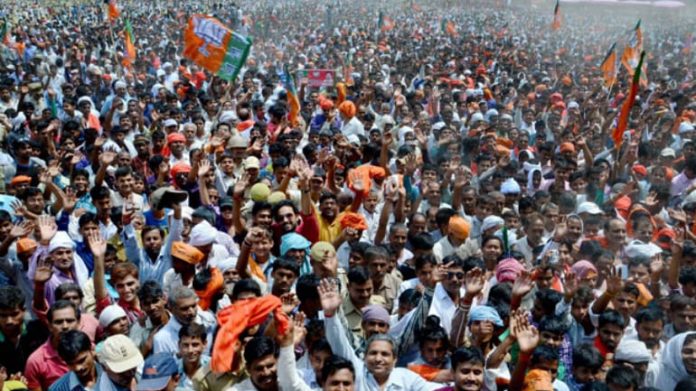
Download Now

Impact of China’s business policies on human rights issues

0
Human rights

This article has been written by Ayushi Ajay Sharma pursuing the Diploma in International Business Law from LawSikho. This article has been edited by Zigishu Singh (Associate, Lawsikho) and Ruchika Mohapatra (Associate, Lawsikho).

Introduction

China implements a socialist market economic regime. Agriculture, banking, finance, insurance, real estate, construction, e-commerce, infrastructure, banking, and technology are all a  part of the world’s second-largest economy.

Chinese corporate culture is strongly influenced by Confucianism. Confucianism is a traditional Chinese religious system that emphasises on human ethics and morals. Confucianism is a moral code for living a good life and having a good character. As a result, the Confucian notion of Guanxi largely suggests the need for a connected network built on the principles of solidarity, loyalty, modesty, and civility. Secondly, in both business and privacy, China’s hierarchy is strictly vertical and widely respected. Thirdly, in order to safeguard individual reputations, influence, and dignity, Chinese people will take care to save face.

However, it should be noted that these ideals have not slowed down in the previous decade, despite the fact that modern Western corporate techniques have gained ground. As a result, China is increasingly observing worldwide convergence on business cultural rules and international business values. The Chinese are notorious for being risk averse. The decision-making process is governed by strict procedures. After multiple meetings, all relevant persons make decisions, and subordinates are not required to share their opinions. Because decision-makers will analyse problems, alternatives, and solutions from a long-term social perspective, the process may appear to be slow. Your Chinese partners will frown on you for making rash decisions. Hierarchical distinctions must be recognized and attempting to get around them will nearly always cause delays in decision-making. Rather than negotiating contracts, Chinese people prefer forming long-term partnerships. Failure to develop a personal foundation for a professional relationship may result in a failure to fulfill business goals. The process of establishing a connection might take anywhere from a few days to several months. Formal meetings, as well as home visits, invitations to sporting events, long meals, and beverages are all part of the package.

China’s pattern of growth

GDP growth has averaged about 10% per year since China began to open up and reform its economy in 1978, and more than 800 million people have been pulled out of poverty. Access to health, education, and other services has also improved significantly over the same time span. China’s rapid economic expansion has outpaced institutional development, and there are significant institutional and reform gaps that must be addressed in order for China to maintain a high-quality and long-term growth path. To further support the market system, the state’s role must evolve and focus on delivering stable market expectations and a clear and fair business climate, as well as strengthening the regulatory system and the rule of law.

Many of China’s difficult development challenges, such as transitioning to a new growth model, increasing ageing of population, developing a cost-effective health system, and promoting a lower-carbon energy route, are applicable to other countries. Through trade, investment, and ideas, China is exerting a rising effect on other developing countries.

Following 2.3 percent real GDP growth in 2020, China’s economy is expected to increase by 8.5 percent in 2021, mainly due to base effects. The pace of growth is decreasing, owing to the lingering effects of policy and macroprudential tightening, as well as floods and the latest Covid-19 Delta variant epidemic. Although lingering stricter restrictions and cautious sentiment as a result of the recent Delta outbreaks would weigh on consumption recovery, their impact is projected to be mainly compensated in the second half of the year by robust foreign demand and moderate policy support. Near-term risks have shifted to the downside, with periodic outbreaks caused by more transmissible COVID-19 mutations posing a considerable economic threat. Given unfavourable demographics, sluggish productivity growth, and the legacy of excessive borrowing and pollution, China’s economy is likely to face structural headwinds in the medium future. Short-term macroeconomic policies and structural reforms are needed to re-energize the trend to more balanced, high-quality growth.

The administration recently emphasised promoting common prosperity as a fundamental economic goal, indicating a likely shift in policy objectives toward addressing income disparity. Over the medium run, policies aimed at reducing high inequality through more equitable taxes and a reinforced social security system will result in long-term poverty reduction, a greater middle class, and increased private consumption as an economic driver. 

Impact of China’s business policies on human rights issues

In recent years, China’s government has increased its participation in a variety of UN and other international organisations, including the global human rights system. It has ratified a number of key United Nations human rights treaties, served on the UN Human Rights Council (HRC) and sent Chinese diplomats to work in the UN human rights system. China has taken a variety of steps that could have an impact on human rights: Under the guise of encouraging economic development, it established the Belt and Road Initiative (BRI) and the Asian Infrastructure Investment Bank (AIIB), and it has emerged as a major worldwide player on social media platforms.

China’s government has strengthened its involvement in a number of UN and other international organisations, including the global human rights system, in recent years. It has ratified several key UN human rights treaties, served on the UN Human Rights Council (HRC), and dispatched Chinese diplomats to work in the UN human rights system. China has done a number of actions that potentially affect human rights: It launched the Belt and Road Initiative (BRI) and the Asian Infrastructure Investment Bank (AIIB) under the pretext of promoting economic development, and it has become a major global participant on social media platforms.

It’s critical to remember why the international human rights system exists, especially for individuals who live in democracies and have access to political participation, an independent court, a free press, and other functional institutions. Simply put, it is because many states fail to defend and abuse human rights, particularly in countries where redress and accountability institutions are lacking. People must turn to institutions that are not under the direct control of their government.

Chinese corporates and human rights

With China’s expanding economic prominence, increased overseas foreign direct investment, and very significant human rights implications, Chinese and international businesses face greater pressures at home and abroad to address human rights issues. The UN Guiding Principles on Business and Human Rights clearly establish the baseline international normative norms on business and human rights (UNGPs). At the UN Human Rights Council in 2011, the Chinese government reaffirmed its gratitude and support for the UNGPs.

Companies must “observe the UN Guiding Principles on Business and Human Rights throughout the entire life-cycle of the mining project,” according to the China Chamber of Commerce of Metals Minerals and Chemicals Importers & Exporters (CCCMC) Guidelines for Social Responsibility in Outbound Mining Investment. There is an increasing urgency for enterprises – including Chinese-headquartered private and state-owned firms, international firms operating and investing in China, and firms with global business ties to Chinese firms – to develop knowledge, tools, and expertise to put human rights into reality. There are several complementary approaches that should be pursued. The development of learning forums on human rights, tailored to Chinese corporate requirements and implications, is one path that has obvious potential.Another option is to engage multiple stakeholders, such as businesses and trade groups, civic society, and international organisations, in constructive and innovative ways.

Merging business and human rights in China

Respect for human rights by Chinese businesses is a novel notion that must be adopted into Chinese corporate culture in order for China’s industries to continue to grow at a rapid pace. Ironically, the image of Chinese corporate irresponsibility may become the primary motivator for Chinese companies to align their operations with human rights.

The People’s Republic of China’s Constitution was amended in 2004 to add provisions protecting private property and human rights. “The state respects and guarantees human rights,” says Article 33 of the Constitution’s chapter on fundamental rights and obligations.

These new constitutional provisions are seen by the Chinese government as a step toward Chinese democracy and a statement that the Communist Party of China (CPC) recognises the need for change in light of the development of the upper and middle classes, who desire property protection.

However, because there is no constitutional court or judicial review process in China, constitutional rights cannot be used as a basis for legal action. This is regarded as the most serious flaw in the Chinese legal system, demonstrating a disconnect between legal discourse and judicial practices. Nonetheless, the Chinese constitution’s articles on private property and human rights provide that the government must strive to respect and promote individual property and human rights. They provide a solid constitutional foundation for the growth of the relationship between business and human rights. The Chinese government adopted the “Socialist Harmonious Society” concept during the 2005 National People’s Congress, officially shifting China’s focus away from economic growth and toward total societal balance and harmony. The concept is prominently displayed in Chinese banners. As a result, businesses have been under pressure to think about corporate social responsibility in order to comply with the new government policy.

China’s government issued its second National Human Rights Action Plan (2012-2015) in 2012, stating that

“The Chinese government’s establishment of a National Human Rights Action Plan is a significant step toward ensuring the constitutional principle of protecting and safeguarding human rights is implemented. It is critical to advancing scientific progress and social harmony, as well as to accomplishing the lofty goal of creating a moderately prosperous society on a global scale.”

The National Human Rights Action Plan has served as a benchmark for evaluating China’s human rights.

Corporate Social Responsibility

The Guide Opinion on Social Responsibility Implementation for State-owned Enterprises Controlled by the Central Government was published by the State Council’s State Owned Assets Supervision and Administration Commission (SASAC) in January 2008. (Guide Opinion). The Guide Opinion is regarded as a significant legal document because it expresses the goal of fully implementing the “spirit of the 17th CPC National Congress and the Scientific Outlook on Development, and [giving] impetus to state-owned enterprises (SOEs) directly under the central government (CSOEs) to earnestly fulfil corporate social responsibilities, in order to achieve coordinated and sustainable development.”

SASAC’s explanation of the Guide Opinion’s background clearly demonstrates that the Guide Opinion is intended to address a new global trend, namely the proliferation of corporate social responsibility (CSR) initiatives such as the United Nations Global Compact, ISO 26000, and multinational companies’ codes of conduct and sustainability reports. However, according to an SASAC representative, CSR guidelines for CSOEs should not only be in accordance with international trends, but also with China’s national and organisational realities.

Grievance mechanism

China has judicial grievance processes enacted into law. The purpose of the Criminal Procedure Law is to “…defend citizens’ personal rights, property rights, democratic rights, and other rights…”

However, China’s judicial system has a number of flaws that make it difficult for regular citizens to obtain justice. The financial and personnel resources needed to run the courts are not distributed equitably across urban and rural areas, with metropolitan areas receiving more resources. The judicial system is also plagued by a number of issues, prompting the CPC Central Committee to issue a communiqué calling for reforms to “uphold the constitution and laws, deepen reforms in administrative law enforcement, ensure independence and fairness in prosecuting bodies and courts, as well as improve judicial practise and human rights protection.”

People with grievances may seek justice through other means, including submitting petitions with government authorities (Xinfang) in Beijing, because the judicial system has failed to resolve the growing number of conflicts and meet public expectations. In practise, petitions that bypass local governments have been regarded as a cause of discontent. Regulations enacted in 2005 aimed to compel local officials to strengthen their system for aiding petitioners, reducing the number of petitioners seeking assistance in the capital.

While the Labor Law, the Law on Employment Contracts, the State Council’s administrative regulations, the ministerial guidelines, and the Supreme People’s Court’s judicial explanations have all contributed to the preservation of labour rights, the practical situation in the factories remains dire. Workers are frequently misinformed about the provisions of a labour contract before signing it, which can result in the contract being voided. Workers have labour contracts with labour dispatch companies in several circumstances. As a result, factories may refuse to accept the workers on an arbitrary basis, resulting in employment insecurity. Many workers confront major barriers in resolving their problems since the ‘All China Federation of Trade Unions’ (ACFTU) does not act as the legitimate agency representing all workers, particularly rural migrant workers.

Issues involving companies

Chinese corporations have been involved in a number of concerns affecting the environment, community health, workers, and customers. Industrial pollution pushed the daily pollution index in large cities to dangerously high levels, resulting in the emergence of “cancer towns” with disproportionately high cancer rates. The lack of an autonomous labour union is a prominent concern among labour issues. For consumers, a recent rash of food safety issues (tainted milk, for example) involving large corporations has created concerns about the safety of Chinese products in general.

Conclusion

In order to uphold the objectives stated by both the Chinese government and the international community on the correct role of business in serving justice, enterprises must develop their own internal mechanisms based on human rights-based access to justice principles. 

References


Students of Lawsikho courses regularly produce writing assignments and work on practical exercises as a part of their coursework and develop themselves in real-life practical skills.

LawSikho has created a telegram group for exchanging legal knowledge, referrals, and various opportunities. You can click on this link and join:https://t.me/joinchat/J_0YrBa4IBSHdpuTfQO_sA

Follow us on Instagram and subscribe to our YouTube channel for more amazing legal content.

Download Now

When does a bill lapse in the Indian Parliament : all one needs to know

0
Hung parliament
Image Source - https://rb.gy/dwb9z3

This article is written by Oishika Banerji of Amity Law School, Kolkata. This article discusses what a Bill lapse in the Indian Parliament is, its cause, and its consequence. 

Introduction 

Generally speaking, the legislature is the law-making organ of the government, and every legislative proposal takes the shape of a Bill which is a statute that has been drafted but does not become a law of the country until it receives the President’s assent. Before the Bill is brought before the President of the nation, it passes through three readings in each of the Houses of the Parliament namely the Rajya Sabha (Upper House), and the Lok Sabha (Lower House). The three readings are:

  1. The first reading which involves the introduction of the Bill in the House;
  2. The second reading involves discussion on Bill’s principle and clauses;
  3. The third reading revolves around the discussion on the motion of the Bill. 

A similar kind of procedure is also followed in the State Legislature. Now after these readings, the Bill is passed to the Upper House of the Parliament by the Lower House in which the Bill originated. This is when the concept of “lapse of a Bill” steps in. Broadly, a parliamentary Bill lapses on two grounds; 

  1. When a Bill is pending in the Lok Sabha waiting for it to be passed to the Rajya Sabha; and 
  2. When a Bill is pending in the Rajya Sabha after it has been passed by the Lok Sabha. 

In either case, the Bill lapses in the Indian Parliament thereby retarding the speed of the Bill to get the President’s assent thereby becoming an Act, or otherwise the law of the land. This article discusses the grounds of the lapse of a Bill in detail and throws light on the issue of lapsing of a Bill which subsequently becomes a detriment for both the Union and the State Legislature.

When does a Bill lapse in the Indian Parliament

Whenever the discussion about Bill lapses comes in, it is to be noted that only the Lok Sabha or the Lower House, and the State Legislative Assembly is subjected to dissolution. No dissolution happens for the Upper House or the Rajya Sabha and the Legislative Council. While Articles 107 and 108 of the Indian Constitution deals with the doctrine of lapses for the Union Legislature, Article 196 applies to the State Legislature. 

Union legislature : Lok Sabha and Rajya Sabha 

Article 107 of the Constitution of India, 1950 lays down the provision as to the introduction and passing of Bills which read as, 

“(1) Subject to the provisions of Articles 109 and 117 with respect to Money Bills and other financial Bills, a Bill may originate in either House of Parliament.

(2) Subject to the provisions of Article 108 and 109, a Bill shall not be deemed to have been passed by the Houses of Parliament unless it has been agreed to by both Houses, either without amendment or with such amendments only as are agreed by both Houses.

(3) A Bill pending in Parliament shall not lapse by reason of the prorogation of the Houses.

(4) A Bill pending in the Council of States which has not been passed by the House of the People shall not lapse on a dissolution of the House of the People.

(5) A Bill which is pending in the House of the People, or which having been passed by the House of the People is pending in the council of States shall, subject to the provisions of Article 108, lapse on a dissolution of the House of the People.” 

A bare reading of the provision generates an idea as to what circumstances are necessary for lapsing a Bill and what are not. While Clauses 2 and 5 are summarized versions of the grounds on which a Bill of the Parliament lapses, Clauses 3 and 4 provide the circumstances which, if they take place, will not render a Bill of the Parliament to lapse. Now Article 107 cannot only be considered to be under lapsing of bills in the Parliament because both Clause 2, and 5 of the provision itself mention that it is subjected to Article 108 of the Indian Constitution. Therefore both Articles 107, and 108 need to be taken into account while understanding the lapse of a Bill in the Indian Parliament. Article 108 provides certain cases in which joint sitting of the Houses of the Parliament takes place. 

The inferences that can we draw from the above discussion are:

  1. A Bill lapses when it is originated in the Lok Sabha but remains pending in the Rajya Sabha;
  2. A Bill which has originated in the Rajya Sabha, and also has been passed by it but remains pending in the Lok Sabha, lapses;
  3. A Bill that has both been originated, and passed by the Lok Sabha but remains pending in the Upper House, or the Rajya Sabha, lapses;
  4. A Bill that has originated in the Rajya Sabha and has been returned back to it by the Lower House after amendments have been made in it but remains pending in the Rajya Sabha, lapses on the date the Lok Sabha dissolves. 

When a Bill gets lapsed because of any of the conditions provided above, the bill needs to be reintroduced in the Lok Sabha only if the acting government feels the need to. 

State legislature : Legislative Assembly and Legislative Council

Article 196 of the Indian Constitution provides the scenarios when a Bill can lapse in the State Legislature. The grounds under which a Bill can lapse have been mentioned below:

  1. Any Bill that remains pending in the Legislative Assembly whether it originates in the same or has been transmitted to the House by the Legislative Council, will lapse.
  2. Any Bill that has been passed by the Legislative Assembly to the Legislative Council and is pending with the latter will lapse.

When a Bill in the Indian Parliament does not lapse

The circumstances when a Bill in the Indian Parliament will not lapse have been provided hereunder:

  1. When a Bill is pending in the Rajya Sabha but has not passed by the Lok Sabha, the Bill will not be considered lapsed.
  2. When the President of India notifies the Houses of the Parliament that he will be holding a joint sitting before the Lok Sabha dissolves, then in such a case a Bill does not lapse.
  3. When a Bill has been passed by both Houses but remains pending before the President for his assent, the Bill does not lapse.
  4. When a Bill is passed by both the Houses of the Parliament but has been returned by the President for the Rajya Sabha to reconsider, the Bill does not lapse.
  5. If there are bills that are pending and let to be examined by Parliamentary Committees, the Bill will not lapse on the dissolution of the Lower House, the Lok Sabha. 

Similarly, the circumstances when a Bill in the State Legislature will not lapse are presented hereunder:

  1. Any Bill that is pending with the Legislative Council but has not been passed by the Legislative Assembly will not be considered to have lapsed.
  2. A Bill that has been passed by both the Houses of the State Legislature but is pending with the President to provide his assent will not lapse.
  3. Any Bill that has been passed by the Legislative Assembly or both of the Houses but the assent of either the Governor or the President is pending will not lapse. 
  4. A Bill passed by either the Legislative Assembly or both of the Houses but has been sent back by the President to be reconsidered will not lapse by the virtue of its return. 

Whether a Bill pending before the President while the Legislative Assembly dissolves can become a constitutionally valid Act 

The question of whether a Bill that was pending before the President for his assent during the time when the Legislative Assembly was dissolved can become a valid Act or not was taken into account by the Supreme Court of India in the case of  Purushothaman Nambudiri vs State of Kerala (1962). In this case, the petitioner had challenged the constitutional validity of the Kerala Agrarian Relations Act, 1960 which became a law after the President had provided his assent to the Kerala Agrarian Relations Bill that was introduced in the Kerala Legislative Assembly. The ground for the challenge was that while the Bill was lying before the President for his assent, the Legislative Assembly was dissolved hence the Bill lapsed ipso facto. Therefore, any assent after the dissolution of the House on a lapsed Bill will stand constitutionally invalid. 

The Supreme Court of India made the following observations in this case:

  1. Clause 5 of Article 196 of the Constitution of India, 1950 provides the circumstances which, if occurred, will render a Bill to lapse; if otherwise, then bills will not be considered lapsed. This particular case does not fall within either of the circumstances provided by the provision and therefore, the doctrine of lapse will not be applicable in this case.
  2. Neither Article 200 nor 201 of the Indian Constitution prescribes any time limit within which either the Governor or the President must reach a conclusion on the said Bill and thereby provide his assent to the same. Therefore, the contention that the assent provided to the concerned Bill, in this case, happened after the Legislative Assembly got dissolved, does not stand.
  3. Although under Article 172 of the Constitution of India, 1950, it has been provided that every Legislative Assembly will have a limited term of life, Article 201 provides a broader perspective on the same subject by using the term “The House of the Legislature” thereby referring to it as a permanent body. 

Thus on these grounds, the Supreme Court of India ruled that a Bill pending before the President for his assent when the Legislative Assembly dissolves will become a valid Act after receiving such assent. 

Consequences of lapse of a Bill

After the dissolution of the 16th Lok Sabha, a list of Bills got lapsed namely the Trafficking of Persons (Prevention, Protection, and Rehabilitation) Bill, 2018, The Aadhaar and Other Laws (Amendment) Bill, 2019, Triple Talaq Bills of 2017, and 2018, and The Citizenship (Amendment) Bill, 2019. Further, the Indian Medical Council (Amendment) Bill, 1987, is considered to be the oldest Bill that has been pending for over 32 years now. It is to be noted that the lapsed bills were formulated for the socio-economic development of democratic India but instead became a disadvantage for the country. The possible consequences of a lapse of a Bill are provided hereunder:

  1. The lapse of a Bill is directly proportional to the wastage of Lok Sabha’s time.
  2. Lapsing of a Bill indicates the efficiency of the functioning of the Parliament which is inclining towards retardation instead of acceleration. 
  3. Lapsing of a Bill is detrimental to the productivity of the Houses of Parliament. 

The possible solution to deal with such grave consequences are;

  1. By improving the productivity of the Parliamentarians so that they can use the provided time at its fullest and just not waste it by debating over baseless grounds and personal vendettas. 
  2. By streamlining the process of passing a Bill from one house to the other and finally receiving the assent of the President. If the President returns the Bill to be reconsidered, the same must be addressed immediately to avoid pendency. 
  3. Recently, Vice President M V Naidu suggested that if a Bill is not cleared in the Rajya Sabha within a period of five years, the same should get lapsed automatically. This will help in the constructive functioning of the houses of the Parliament. 

Conclusion 

The issue of lapsing of a Bill is not a new one but remains much in the discussion because of the impression it creates on the legislative organ of the Indian government. With the dissolution of the 16th Lok Sabha session, it is to be noted that twenty-two out of fifty-five government Bills that remain pending in the Upper House, Rajya Sabha, lapsed. Pointing out such lapses after the dissolution of the 16th Lok Sabha, Vice President M Venkaiah Naidu told members of Rajya Sabha; “As all of you would appreciate, it takes considerable time and energy to get a Bill passed in either House of Parliament. Given the implications for the functioning of Parliament and the impact of Bills getting lapsed on the much-desired transformation of our country, there is a need to rethink the provision regarding the lapsing of Bills in the Upper House of Parliament.” As important legislations on public welfare lapses one after the other, it is time for the government to take into consideration the same and bring about possible solutions to curb such frequent lapses in order to maintain the efficiency of the functioning of the Parliament of India. 

References 

  1. https://www.civilsdaily.com/news/explained-automatic-lapsing-of-bills-in-parliament/
  2. https://indianexpress.com/article/india/parliament-rajya-sabha-venkaiah-naidu-bills-om-birla-narendra-modi-rahul-gandhi-5794025/.
  3. https://www.thehindu.com/news/national/venkaiah-naidu-suggests-automatic-lapsing-of-bills-if-rajya-sabha-fails-to-clear-them-within-five-years/article28096726.ece.
  4. https://www.iasexpress.net/bill-lapse-indian-parliament/.

LawSikho has created a telegram group for exchanging legal knowledge, referrals, and various opportunities. You can click on this link and join:

https://t.me/joinchat/J_0YrBa4IBSHdpuTfQO_sA

Follow us on Instagram and subscribe to our YouTube channel for more amazing legal content.

Download Now
logo
FREE & ONLINE 3-Day Bootcamp (LIVE only) on

How Can Experienced Professionals Become Independent Directors

calender
28th, 29th Mar, 2026, 2 - 5pm (IST) &
30th Mar, 2026, 7 - 10pm (IST).
Bootcamp starting in
Days
HRS
MIN
SEC
Abhyuday AgarwalCOO & CO-Founder, LawSikho

Register now

Abhyuday AgarwalCOO & CO-Founder, LawSikho