
Download Now
Home Blog Page 407

All you need to know about the effects of rescinding a contract

0

This article has been written by Amitha Suresh of Government Law College, Kozhikode, Kerala, pursuing a Certificate Course in Introduction to Legal Drafting: Contracts, Petitions, Opinions & Articles from LawSikho. It has been edited by Prashant (Associate, LawSikho) and Baviskar Ruchika Mohapatra (Associate, LawSikho).

Introduction

Can you change your mind after entering into a contract? The answer would generally be – no, as a contract becomes binding, once it is signed by the parties to the contract. A legally binding contract is required to be performed in accordance with its terms. So, you can’t avoid a contract arbitrarily. That means, if you fail to perform the contract, you will be liable for its breach and you have to make good on the loss suffered by the injured party (specific reliefs are available when monetary compensation would not suffice). 

However, there are certain situations where the contract is no longer binding. One such situation is when a contract is Rescinded i.e., when the Contracting Parties have got all the freedom/right to revoke/cancel a contract without causing its breach thus maintaining their previous position/status prior to entering the contract (status quo ante). Hence it is clear that the rescission is not a remedy for breach of contract, instead a remedy to avoid a non-beneficial contract for adequate reasons backed by law. Now let’s see what are the effects of rescinding a contract in detail.

Rescission of a Contract

Rescission can be legally defined as “the abrogation of a contract, effective from its inception, thereby restoring the parties to the positions they would have occupied if no contract had ever been formed. The word “rescission” is derived from the Latin term rescindere, which means to cut or tear open. It is an unwinding of a transaction or undoing of a contract. 

Rescission can either be mutual or unilateral. Unilateral rescission is generally exercised when it is found that the underlying basis of the contract is basically wrong or on faulty grounds. In other words, some intentional act or omission of a contracting party destroys the very reason that the other party made the contract in the first place. The contract can be rescinded, at the instance or option of the innocent party. It is like a self-help remedy. On the other hand, in mutual rescission, parties rescind the contract on certain already agreed terms of the contract.

Basically, there are two kinds of rescissions based on nature and origin. The first is “common-law rescission” where the contract has a voidable clause at one party’s option or there is a legal ground to avoid the contract such as:

  • Misrepresentation
  • Mistake
  • Duress and undue influence etc.

The second one is “equitable rescission” which requires a party to seek relief from a contract where it would be inequitable to  bind a party by a contract where the foundation is wrong and tainted. It is a discretionary remedy based on equitable grounds and the court merely decides the validity of the rescission which is exercised by the innocent party, rather than initiate it themselves. Hence, we can say that it’s an enforcement of a previously exercised legal right.

Rescission of Contract under Indian Contract Law

In India, there is no mandatory form or mode to exercise the right of rescission. It is enough under Section 66 of Indian Contract Act, 1872 that communication of rescission is done as in the case of a proposal or an offer. However, in certain cases even notifying the concerned authorities, would be sufficient. It is to be noted that the notice of avoidance should be given within a reasonable time after the innocent party knows the relevant facts. Or else, the contract would remain valid, later the innocent can sue such party for breach of contract.

In India, rescission is awarded at the discretion of the court under Sections 27-30 of the Specific Relief Act, 1963. It is essential that the process of rescission is the act of the party rescinding, and not of the court. However, the court may annul a rescission previously influenced by self-help.

Grounds to rescind a contract

Sections 27 and 28 of the Specific Relief Act, 1963 provides the grounds for filing a suit for rescission and we are limiting our discussion only to Section 27. As per Section 27 of the Act  any person interested in a contract may sue to have it rescinded. Such rescission may be granted by the courts in the following cases:

(I)    where the contract is voidable or terminable  

(II)    where the contract is unlawful for causes not apparent on its face and the non-affected party is more to blame than the innocent/affected party.

A voidable contract is an agreement which is enforceable at the option of one or more of the parties thereto, but not at the option of another or others. A contract is declared voidable under various provisions of the Indian Contract Act, 1872 (“ICA”).

According to Section 19 of the ICA, a contract is voidable at the option of the party whose consent was obtained to such agreement by coercion, fraud or misrepresentation. Similar is the situation when the consent was obtained by undue influence under Section 19-A of the ICA.

Similarly, in case of anticipatory breach of contract by one party, the other party to the contract may put an end to the contract, unless there is anything to the contrary as under Section 39 of the ICA

In the same way, in case the time of performance of a contract is of the essence of the contract, non-performance of it by one party in such prescribed time entitles the other to cancel the same as per Section 55 of ICA.

Effects of Rescinding a Contract

In legal parlance, a rescinded contract is void ab initio. After the rescission the parties will no longer be bound by the contract and thus none of the parties have the right to ask any of the parties to perform the contract i.e., the original contract need not be performed

The aftermath of rescission is that:

  • the parties are put back in their previous position prior to entering the contract i.e., the rights and duties of the parties are retrospectively extinguished
  • It’s considered as non-existing

The transaction established by the contract is brought to an end with retrospective effect. The purpose of rescission is to restore the status quo ante, i.e., the state of affairs existing before the contract was entered into. 

Restitution: As a principle of equity, the party rescinding the contract is required to restore or return the benefit received in the nature of money, property and other interests under the contract to the other party. Any party receiving anything under the contract is liable to restore it or make compensation for it to the other from whom it has been received.

When a contract transferring the title to property is rescinded, it usually has the effect of revesting any property so transferred in the transferor.

Section 30 of Specific Relief Act also provides a similar provision to require parties rescinding to do equity by restoring the respective benefits they received out of the contract, and also the compensation which justice may require. If you get the contract rescinded, you cannot be allowed to be unjust to retain any benefit received under the contract.

These sections are in conformity with English equitable rules, i.e., if a purchaser seeks rescission, a court of equity can take account of any profit he has made and make allowances for any deterioration in the property.

Damages: Damages may be awarded to restore the position of the innocent party to the pre-contractual position when he had incurred any expenses under the contract. 

The victim of a fraud is entitled to sue for damages, fraud being a tort. But this cannot be extended to or equated with innocent misrepresentation.

Bars to Rescission

There are certain grounds on which the court may refuse to rescind, namely:

  • The party seeking the remedy have affirmed/ratified the contract

Court may refuse to grant the contract where the affected/innocent party has expressly or impliedly ratified the contract.

  • Restitutio in integrum is not possible

When a party wants to avoid the contract, he must do so, so long as the parties to the contract can be placed in the same position. If parties can’t be substantially restored to their original position due to change in circumstances the rescission can be refused.

In Wallis v. Pratt The buyer could not make out the defect in a seed variety because those he purchased and those supplied by the seller were indistinguishable. The defect could be known only after the seed had been sown and the crop was ready. Here, the Buyer could claim compensation only. There was no chance of avoiding the contract and rejecting the goods.

  • Intervening third party rights are present

The right of rescission may not be available if before the contract has been rescinded, some third party has acquired a right in good faith without notice and for value in the subject matter of the contract.

  • Severance not possible

Rescission is not allowed where the plaintiff is seeking rescission of only a part of the contract and that part is not severable from the rest of the contract.

This remedy is also not available when the requesting party has committed some mistake in relation to the contract and not exercised the same within reasonable time after discovering the misrepresentation.

Recent Case Law Observations

Shiv Construction v. PWD {AIR 2015 MP 42}

A contract for construction of a bridge was a time-bound work. The contractor failed to complete the work within the stipulated time. The State rescinded the contract. The contractor did not challenge it. The contract was allotted to another party. The State was held entitled to recover the loss of money thereby caused.

HD Hanumanthappa v. Mohd Sab {(2011) 1 Kant LJ 49}

The court observed that the party affected by the factors that make the contract voidable, has to avoid it because otherwise it remains valid and it is not like that of a void agreement that does not require to be avoided.

Harmesh Kumar v. Maya bai {AIR 2006 P&H 1}

In this case, an illiterate widow authorised a special power of attorney to attend to litigation against her, transferred her property to his son in fraud, held the suit and execution proceedings are all a nullity.

Krishna Wanti v. LIC {AIR 2000 Del 63}

The court observed that the onus is on the plaintiff to prove fraud and this is quite as high as the burden to prove in criminal law that the accused is guilty beyond a reasonable doubt. In this case, LIC could not prove that the insured had concealed or suppressed knowledge about his heart condition at the time of taking out the policy.

Ganga Retreat and Towers Ltd v. State of Rajasthan {(2003) 12 SCC 91}

In this case, in spite of having acquired knowledge of the true facts assuming that there was any mistake or misrepresentation to begin with and having learnt that the title which was sought to be conferred on them by the respondents was not such a ‘full title’ as they had contemplated it to be, appellants proceeded to have the sale deed executed and registered in their favour, seeking extensions of time and paying interest for the period of delay in payment. The Hon’ble Supreme Court held that the appellants are not entitled to any relief in the realm of the law of contracts. It was observed that there is no question of affirmation to a concluded contract when the party challenging it had voluntarily chosen to implement it knowing all the relevant facts and circumstances.

new legal draft

Suggestions

The rescission is a powerful right as well as an effective remedy in discharging contractual obligations by undoing the injustice done to parties, but it is one of the most difficult to analyse. The present law in India causes confusion and seems to be complex as no separation is maintained between rescission as a right of the innocent party for vitiating factors such as misrepresentation, coercion etc and that of actionable in equity like for anticipatory breach of contract. In my opinion, rescission should be restricted to the former. 

The relief should not be extended to other cases like anticipatory breach, non-performance of contract in time because they are valid contracts in the eyes of law from the inception itself and not vitiated by factors like misrepresentation, undue influence which affect the very reason for the existence of the contract. In fact, there are many other effective remedies like termination, cancellation, and specific performance available in such cases. A narrow approach should be taken in construing rescission. Otherwise, it would lead to misuse of law by bringing everything under the ambit of rescission like economic fallouts in the commercial sphere thereby increasing such and such litigations for unconscionable gains. 

The contracts pertaining to sale of goods, and other commercial agreements should keep out of the purview of this as in most cases the main purpose of rescission is to restore the parties into their original position is not served.  

Conclusion

Rescission is the unmaking of contracts between parties. It not only extinguishes future rights and obligations arising out of the contract but also the very contract itself and treats it as ‘non-existing’. It is not the same as termination or cancellation of a contract. Under Indian Contract law the grounds for rescission not only includes the common-law grounds but also the equitable ones as mentioned above. Therefore, right to rescission which is a self-help one, exercised by parties on terms and conditions of contract or on other legal basis can also seek a discretionary remedy to validate their election to rescind under the Indian Specific Relief Act.

Bibliography


Students of Lawsikho courses regularly produce writing assignments and work on practical exercises as a part of their coursework and develop themselves in real-life practical skills.

LawSikho has created a telegram group for exchanging legal knowledge, referrals, and various opportunities. You can click on this link and join:

https://t.me/joinchat/J_0YrBa4IBSHdpuTfQO_sA

Follow us on Instagram and subscribe to our YouTube channel for more amazing legal content.

Download Now

Unfettered powers to the Executive through the IT rules, 2021

0
Image Source: https://rb.gy/llm0tx

This article is written by Harman Juneja, a student of Dr. B.R. Ambedkar National Law University, Rai, Sonepat. The article talks about the new rules of the IT act and discusses the issues related to it.

Introduction

In the digital age, the general public relies on social media for news, entertainment, and so on. People’s reliance on social media is extremely harmful at this time because there is a great possibility of abuse. As a result, there was a perceived need for severe standards governing any sort of information transfer via intermediaries. In response, the Ministry of Electronics and Information Technology published for public comment the draught Information Technology (Intermediary Guideline) Rules, 2018. As a result, the Government issued the Information Technology (Intermediary Guidelines and Digital Media Ethics Code) Rules, 2021 on February 25th of this year.

Information Technology Rules, 2021

Following years of deliberations and arguments, the Ministry of Electronics and Information Technology, Government of India, has published new guidelines for monitoring social media digital media platforms under the Information Technology Act, 2000 (“IT Act”). The new laws, known as the Information Technology (Intermediary Guidelines and Digital Media Ethics Code) Rules, 2021 (“Intermediary Guidelines”), aim to serve a dual purpose, among other things. These purposes are : 

  1. Making social media platforms (such as Facebook, Instagram, and Twitter) more accountable to avoid misuse and abuse.
  2. Empowering social media users by providing a three-tier redressal structure for efficient grievance resolution. 

The Intermediary Guidelines were developed in accordance with Section 87 (2) of the IT Act and substitute the earlier Information Technology (Intermediary Guidelines) Rules, 2011.

Background of the Act

In India, online intermediary liability is based on Section 79 of the Information Technology (IT) Act, 2000, which grants immunity to intermediaries for third-party content if they do not initiate the transmission, modify its contents, select its recipients, or perform its functions with due diligence. The Information Technology (Intermediaries Guidelines) Rules 2011 (hence referred to as the 2011 rules) set out standards for due diligence.

Section 69A of the IT Act permits the government to mandate that intermediaries remove particular information from the internet or prohibit access to it.

Key features of the guidelines

In carrying out its duties, an intermediary, including a social media intermediary, must adhere to the appropriate due diligence standards. These due diligence measures include, among other things, the following :

  • Conspicuously post the rules and regulations, privacy policy, and user agreement for access or utilisation of its computer resources by any individual on its website, mobile-based application, or both.
  • The rules and regulations, privacy policy, and user agreement should warn the user of its computer resources not to host, display, upload, edit, publish, transmit, save, update, or distribute any information that, among other things, belongs to another person and to which the user has no right.
  • No one may post anything defamatory, obscene, pornographic, pedophilic, invading someone else’s privacy inclusive of physical privacy, demeaning or harassing based on gender, libellous, ethnically or racially objectionable, relating to or encouraging money laundering or gambling, or otherwise inconsistent with or contrary to the laws in force.
  • Nothing should be posted that is detrimental to children or infringes on any patent, trademark, copyright, or other intellectual rights. Anything which deceives or misleads the addressee about the message’s origin, or knows and willfully conveys any material that is obviously false or deceptive but might be fairly interpreted as a fact should not be posted.

After receiving actual knowledge in the form of a court order or being notified by the appropriate government or agency under the IT Act, an intermediary shall not host, store, or publish any unlawful information that is prohibited under any law currently in force concerning the sovereignty and integrity of India, security of the state, friendly relations with foreign countries, or any other law for the time being in force.

New redressal system

The provisions of the Code of Ethics, which is annexed to the Intermediary Guidelines, must be followed by a publisher of fresh and current affairs content. A three-tier grievance redressal structure has been recommended to ensure observation and adherence to the prescribed Code of Ethics by publishers, as well as to handle claims against the publishers. These levels are :

  • Level I is the self-regulatory system that, among other things, appoints a grievance officer who is in charge of resolving grievances received by him.
  • Level II is the self-regulating body, i.e., there will be one or more autonomous state groups of publishers, which will be responsible for overseeing and ensuring the alignment and adherence to the Code of Ethics, as well as addressing grievances that have not been resolved by the publishers within the specified fifteen-day period.
  • Level III is the oversight mechanism; i.e. it shall co-ordinate and facilitate compliance by publishers and self-regulators with the Code of Ethics prescribed, develop and supervise mechanisms for performing the prescribed functions that include, inter alia, the publishing of a Charter on self-rules, including the Code of Practice of Self-Regulatory Entities.

Issues with the guidelines

The 2021 Rules are unconstitutional and in violation of the IT Act in two ways :

  • First, they prescribe a Code of Ethics for regulating digital media, even though the parent Act does not recognise digital media as a separate category of entities and does not seek to subject it or its content to any set of special regulations.
  • Second, it gives extreme powers to the executive for regulation of the things that are being posted on the internet. So let’s discuss the problems in detail.

The parent IT Act is confined to ensuring legal recognition, authentication, and facilitation of electronic data and electronic communication interchange, as well as the reception of such data and communication as evidence. Furthermore, the parent Act does not envision or allow for electronic content regulation, except in two ways :

  1. Offences such as cyber terrorism (Section 66), obscene content (Section 67), sexually explicit material (Section 67-A), child pornography (Section 67-B), and others that are now not applicable, such as tampering and theft.
  2. Sites may be blocked under Section 69-A by a directive to intermediaries in the interest of India’s sovereignty and integrity, defence, security, friendly relations with other states, or public order, or to prevent encouragement to commit any cognizable offence pertaining to these.

Part III of the 2021 Rules governs “digital media,” which is defined as digitised information that is transferred, processed, altered, and so on by intermediaries and “publishers.”

The IT Act’s Sections 69A and 79 (under which these rules are established) make it plain that they apply to intermediaries. 

Extreme regulating powers 

The power to control the content is excessive and unrestrained. Let’s look at how the executive has extreme regulating powers-

  • Section 79 focuses on intermediary responsibility and the requirements that an intermediary must satisfy to be immune from liability for third-party material. Section 69A additionally specifies that content removal instructions may only be sent to intermediaries or government bodies. The clause further states that any “intermediary” who fails to follow such directives would be held criminally responsible.
  • The guidelines define publishers and allow the government to issue takedown notices to them, even though the parent Act’s provisions do not grant the government such authority.
  • While the parent Act allows for particular types of offences to be committed in the form of electronic data (which is seldom encountered in a news and current affairs magazine), its purpose is not to regulate content in any other way. 
  • Even Section 69-A is confined to a well-defined set of organisations called ‘intermediaries’ and ‘Government agencies,’ as the Supreme Court acknowledged in Shreya Singhal v. Union of India (2015). As a result, even under Section 69-A, there is no mechanism to impose content on news media platforms. 
  • The IT Rules, 2021, go far beyond the parent Act’s remit, attempting to regulate digital news media by imposing a “Code of Ethics” with all manner of stipulations regarding “half-truths”, “good taste”, “decency”, and so on, and vesting the power of interference in the Central Government as the highest of three tiers.
  • The IT Rules, 2021, create a new category of companies that will be subjected to an adjudicatory process similar to courts of law, based solely on their status as publishers of news and current affairs material, for a variety of reasons that are not even crimes under the parent Act. 

Public interest litigation against these regulations

PIL by Nikhil Wagle

Nikhil Wagle, a senior journalist, has filed a public interest litigation in the Bombay High Court, contesting the recently issued Information Technology Rules, 2021 under the Information Technology (IT) Act, calling them “arbitrary, unlawful,” and violating the “concept of net neutrality.”

Wagle said in a suit filed on Wednesday by Advocate Abhay Nevagi that the regulations were in violation of the IT Act, which prohibits the government from making “sweeping changes,” and so were “against the law.” 

According to the PIL, the new regulations were “arbitrary, unlawful,” and infringed on Articles 14, 19, and 21 of the Constitution’s fundamental rights. The new regulations, according to the petition, violate the principle of net neutrality, which is followed by all the countries, including India.

PIL by The Wire

According to the petition filed by a digital news portal (The Wire), the IT Rules are arbitrary, illegal, and in violation of fundamental rights guaranteed by Articles 14, 19, and 21 of the Indian Constitution, as well as ultra vires to the IT Act, by illegally delegating judicial powers to the executive and attempting to overrule a long line of precedent established by the Supreme Court. The petition contends that the IT Rules stifle and restrict journalistic freedom in an unlawful manner and that they should be repealed.

“IT Rules limit and unconstitutionally restrict the freedom of press in India,” says the online news site, which filed the petition through its company and veteran journalist Ashish Khetan. The petition explains why the regulations give the state broad control over published material, over-regulation, and an undue burden on the press through onerous requirements that would sap financial and operational resources and capabilities.

Conclusion

The Internet is a hazardous place, and if it is not properly regulated, it has the potential to cause untold havoc and mayhem in society. Every piece of legislation or regulation that is submitted to the public must pass a rigorous public scrutiny test. The legislation aims to govern any chaos or irregularity that may occur; but, if such laws wind up producing additional confusion and unfairness, they defeat the purpose of the legislation. While the Information Technology (Intermediary Guidelines and Digital Media Ethics Code) Rules, 2021 have many benefits and the ability to protect people from the dangers of the internet and social media, it also raises numerous questions about its impact on fundamental rights, which can only be decided by judicial authorities.

References


Students of Lawsikho courses regularly produce writing assignments and work on practical exercises as a part of their coursework and develop themselves in real-life practical skills.

LawSikho has created a telegram group for exchanging legal knowledge, referrals, and various opportunities. You can click on this link and join:

https://t.me/joinchat/J_0YrBa4IBSHdpuTfQO_sA

Follow us on Instagram and subscribe to our YouTube channel for more amazing legal content.

Download Now

The constitutional authority of the Governor to order a floor test

0
Image source - https://bit.ly/3yDZXzd

This article is written by Ridhi Mittal, from Symbiosis law school, Noida. The following article talks about who is a governor, the powers of a state governor, and his authority to issue a floor test. It also talks about the legal case law involving the controversy of the same.

Introduction

A Governor is a person who acts as the Executive Head of the state just like the President, who acts as the executive head of India. Similar to having a governor for every state in India (Article 153 of the India Constitution), there is a Lieutenant Governor for Union Territories of India. The governor is the nominal head of the state. He/she is appointed for a term of 5 years by the President of India. The Governor of the State has several powers namely executive, legislative, financial, and discretionary powers. His primary function is to preserve, protect and defend the Constitution and also the laws that are incorporated in the administration of state affairs. He may have similar functions as that of a President but not all the functions are the same like powers of the President in a contingency situation is something that a Governor does not have. Various emoluments, allowances, and privileges available to a governor are determined by the Governors (Emoluments, Allowances, and Privileges) Act, 1982. He is a vital link between the union government and the state government. Recently, in the case of Shivraj Singh Chouhan v. Speaker, 2020, Madhya Pradesh Legislative Assembly, the Supreme Court has said that the Governor can order a floor test. A floor test is a test ordered by the governor of the state to the Chief Minister in the legislative assembly of the same state when he feels that the Chief Minister has lost the confidence of motion. There takes place a vote of confidence or we can say a trust vote, if the decision comes in favor of the Chief Minister then he continues to be in the office but in case the votes come against the Minister then he has to leave his office immediately.

History

The concept of governor has existed in India from the time when India was colonized by the Britishers. The then East India Company, to have more control and power over India made presidencies that were governed or headed by a Governor. The first governor of Bengal was Robert Clive, George Oxenden was the first governor of Bombay and George Macartney was that of Madras. Soon the governor of Bengal was transferred to Governor-General of India, the rest of the governors being in the same position. Warren Hastings was appointed as the Governor-General of India. He had the power to declare war or make peace with any Indian prince, he could appoint the Governors for the states/presidencies and he took care of matters of defense and foreign affairs. All the governors were answerable to him. After India’s independence, a similar system was established where the Governor-General became the President (Governor of India) and governors of presidencies became the governor of the state. The powers of the Governor-General were transferred to the President and the power of Governors of Presidencies transferred to the Governor of States. For instance, even today, the governor is appointed and answerable to the President of India only and not by any Member of Parliament (MP)

Constitutional provisions related to Governors

Article 153 to 162 of the Indian Constitution, 1949 talks about the Governor. According to Article 153 of the Constitution, there shall be a Governor for each state and one Governor can act for more than one state. 

Appointment and tenure of a Governor 

According to Article 157 of the Indian Constitution, no person shall be eligible for appointment as a Governor unless:

  • He is a citizen of India
  • He has completed the age of 35 years 
  • He is not  a member of Parliament or House of the State Legislature

Article 156 of the Indian Constitution talks about the term of the Governor. According to this Article, a Governor shall hold the office at the pleasure of the President. The President of India appoints him and also the Governor hands in his resignation to the President itself. His office is of the term of 5 years which starts from the day he enters in the office.

Powers of a Governor

  • Article 161 of the Constitution gives the Governor power to grant pardons and to suspend, remit or commute sentences of a person convicted of any offense in terms of the law within the jurisdiction of the executive power of the state. The executive power of a state is limited to the jurisdiction of subjects on which the state legislature can make laws.
  • Article 163 of the Indian Constitution talks about the discretionary power of the Governor.
  • Article 356 of the Indian Constitution mentions that in case a State Government is unable to function according to the constitutional provisions then the union government can take direct control over it. This proclamation is issued by the state’s Governor on consent by the President of India. The Governor has executive, legislative, financial, and discretionary powers. 
  • Executive powers of the Governor can be seen in terms of administration, appointments, and removals of the chief minister and other members of the council of ministers. He also appoints an advocate general, chairman, and members of the state public service commission. 
  • The Governor holds legislative powers which are related to law-making and the state legislature (state legislative assembly or state legislative council). His powers are similar to that of the President of India in terms of Parliament. He can even dissolve the state legislative assembly.
  • The Governor causes to be laid before the State Legislature the annual financial statement which is the State Budget. Without the Governor’s recommendation, no demand for grants can be made. The Governor constitutes the finance commission of the state. Last, he can use certain discretionary powers when there isn’t any party with a clear majority, he can choose a discretionary candidate for chief minister. 

What is a floor test?

A floor test is a confidence motion for or against the government in-house. This is done to ensure whether the government in position enjoys the support of the majority legislature. This test requires the appointed Chief Minister to prove the majority on the legislative assembly’s floor.  When a floor test is called upon in the assembly of the state, the Chief Minister moves a vote of confidence and proves that he has the majority support. But in case he doesn’t have the vote of confidence of the majority, he fails in his test and, as a consequence, is now supposed to hand in his resignation. The reason to have a floor test is to ensure transparency of the constitutional process as the whole idea of the Indian constitution is the same. The majority is counted based on the number of people present and voting and it does not include the people who are absent and not voting. In case more than one person is claiming to form the government and the majority is not clear, the Governor may call for a special session to see who has the majority. In case of a tie, the Speaker casts his vote. Broadly there are 3 kinds of voting systems that are involved in a floor test:

  1. Ballot vote – It is secret voting in a ballot box. This system is similar to voting in elections of the Parliament.
  2. Voice vote – In this method, oral votes are taken by the present legislatures.
  3. Division vote – Voting in this method is done through electronic gadgets or slips.

Case law 

Shivraj Singh Chouhan v. Speaker, Madhya Pradesh Legislative Assembly, 2020 is one of the most prominent and recent case laws regarding a Governor ordering a floor test.

Factual timeline

  1. On 28th November 2018, the fifteenth elections of the legislative assembly were held in Madhya Pradesh.
  2. On 11th December 2018  results of these elections were declared and with the support of four independent members, two members of the Bahujan Samaj Party, and one member of the Samajwadi Party, the INC placed a claim to form the government.
  3.  On 10 March 2020, leaders of BJP handed the letters of resignation of 22 members of INC to the speaker of the MP legislative assembly. The leaders were then taken away to Bengaluru and the letter adverted to the fact that the resignations of these members had not been handed over by the members themselves but rather by leaders of the BJP.
  4. On 13th March 2020 the Chief Minister addressed a communication to the Governor alleging that following a foiled attempt on 3/4 March 2020 to allure Members owing allegiance to the INC, the BJP had on 8 March 2020 arranged three chartered aircraft “to whisk away” nineteen Members to Bengaluru. 
  5. On 14th March 2020 INC issued a three-line whip for ensuring that all its members will be present in the upcoming budget session and will vote in favor of the government. Seeing the situation, the Governor issued a letter mentioning that since the government was not in majority, they had to gain the trust of the people sitting in the house through votes.
  6. On 15th March 2020 the Governor made a disclaimer that since the voting machine was not available, the votes will take place through raising of hands.
  7.  On March 17, 2020, the Governor requested the CM to have a floor test carried out and to establish his majority. In case if he fails to do so the Governor would assume that the CM has lost the support of the majority of the legislative assembly. 
  8. On 19 March 2020, the Supreme Court had ordered a floor test in the Madhya Pradesh Assembly to be held on March 20, following which Chief Minister Kamal Nath tendered his resignation. Bharatiya Janata Party leader Shivraj Singh Chouhan had later taken oath as the new state Chief Minister.

The issue in this case

  • Whether any claim under Article 32 of the Indian Constitution relates to the enforcement of rights under Part III of the Constitution?
  • Also, under the same Article, i.e Part III of the Indian Constitution whether there exists such a right conferred on the person/entity asserting it (petitioner) and whether such person/entity must enforce such a right (respondent)? 

Judgment 

The court in this case disposed of the writ petition and affirmed that no hindrance be served upon the leaders while ferrying them back to Madhya Pradesh. The Supreme Court held that the power exercised by the Governor of MP to convene the assembly for a floor test cannot be regarded as constitutionally improper. It favored holding a floor test in the MP assembly for providing a majority of the government led by Kamal Nath. 

The bench consisting of Justice D.Y. Chandrachud and Justice Hemant Gupta further said that when the  Governor has reasons to believe that the Council of Ministers headed by the Chief Minister has lost the confidence of the House, constitutional propriety requires that the issue be resolved by calling for a floor test and it wouldn’t be accurate to say that the Governor can only exercise his power of issuing the floor test at the very inception after general elections.

As per Article 174 of the Indian Constitution, the Governor can summon the floor test when he feels that the sitting Chief Minister has lost the confidence of the majority and in case there is a dual government then the Governor can ask either of the heads to gain a majority and form a party.

But the Court also added that this exceptional power should be handled with proper care and caution. The Governor is an appointee of the President but does not represent either a political ideology or a political view. Therefore, the Governor is expected to discharge the role of a constitutional statesman. 

The court further upheld Madhya Pradesh’s Governor Lalji Tandon’s order to conduct a floor test on March 16, saying there existed no extraordinary circumstances for him to determine that a trust vote was not the appropriate course of action. 

Citing previous decisions by a nine-judge bench in the SR Bommai case (1994) and a 5 Judge Bench in the Nabam Rebia case (2015) the court said that when the Governor has objective reasons to believe that the incumbent government does not command the confidence of the house, his call for a floor test cannot be construed beyond the bounds of constitutional authority.

Conclusion

A Governor can call for a floor test if he or she believes, based on factual evidence, that the current State administration has lost its majority in the Assembly. The Governor, on the other hand, should not favor one political party over another when conducting a trust vote. The Governor’s right to ask for a floor test does not end when a State government takes office following elections, but it continues during its term. The Supreme Court has ruled that the Governor’s power of trust vote has no bearing on any pending disqualification proceedings before the Speaker.

References


Students of Lawsikho courses regularly produce writing assignments and work on practical exercises as a part of their coursework and develop themselves in real-life practical skills.

LawSikho has created a telegram group for exchanging legal knowledge, referrals, and various opportunities. You can click on this link and join:

https://t.me/joinchat/J_0YrBa4IBSHdpuTfQO_sA

Follow us on Instagram and subscribe to our YouTube channel for more amazing legal content.

Download Now

National Bank for Financing Infrastructure and Development Bill, 2021

0
Image source - https://bit.ly/3bKb9jV

This article is written by Rudresh Mishra, from the School of Law, Jagran Lakecity University, Bhopal. This article analyses the National Bank for Financing Infrastructure and Development Bill.

Introduction 

On March 22, 2021, National Bank for Financing Infrastructure and Development Bill, 2021 was introduced in the Lok Sabha, aiming to create the National Bank for Infrastructure and Development Finance (NBFID) as a principal Development Financial Institution (DFI) for infrastructure financing. DFIs were created to provide long-term funding for economic sectors that involve risks beyond the acceptable limits of commercial banks and other ordinary financial institutions. Unlike banks, DFIs do not accept personal deposits, They source funds from the market, government and, multilateral institutions, and are usually supported by government guarantees. This article will be giving an overview of the newly introduced Bill.

Background

For emerging economies like India, it is still crucial to find sources of investment for infrastructure, because good infrastructure is the backbone of rapid economic growth and development. Long-term loan financing and professionally managed development financial institution (DFI) will serve as a provider, intermediary, and catalyst for infrastructure financing. DFI was established with a capital base of Rs. 20,000 crores and lending target of Rs. 5 lakh crore in three years.

Purpose and objectives

The main development goal of NBFID is to cooperate with the central and state governments, regulatory agencies, financial institutions, institutional investors, and other major players in India and abroad to help establish and improve the necessary institutions to support the long-term growth of infrastructure, including domestic bond and derivatives markets. 

The financial goal of the Institution is to directly or indirectly lend or invest and to attract the private sector and institutions to invest in infrastructure projects in India or parts of India and parts outside of India to promote long-term economic growth in India.

Need for the Bill

India needs to invest heavily in infrastructure. Infrastructure funds require long-term non-recourse funds, which have inherent risks due to higher borrowing costs, delays, and higher risks of project failure. Though banks rely heavily on short-term liabilities, infrastructure financing is essentially long-term financing. Therefore, long-term infrastructure financing exposure has always been the main factor leading to mismatches in bank balance sheets, causing systemic concerns. On the other hand, the Indian corporate bond market is not deep and mature enough to meet India’s infrastructure financing needs.

In this context, as part of the greenfield infrastructure project, it is necessary to promote sustainable economic development, facilitate the inflow of low-cost, long-term patient capital (mainly debt) from India or abroad, and ensure the establishment of a national infrastructure finance bank and development as the most important financial institution. Initially, the institution will be wholly owned by the central government to build confidence in its stability and sustainability and to obtain resources at competitive prices.

Salient features of the Bill

Development of financial institutions

To create a formal institution called the National Bank for Financing Infrastructure and Development to support India’s long-term infrastructure financial development and develop infrastructure financial services. The institution must have development and financial goals, and the share capital of the institution must be one crore rupee.

Equity of the institution

To allow the central government, multilateral institutions, sovereign wealth funds, pension funds, insurance companies, financial institutions, banks, and other institutions to hold at least twenty-six percent shares in the institution at all times.

Board of Directors

The board of directors of this institution is composed of the following members: 

  1. President, appointed by the central government in consultation with the Reserve Bank; 
  2. A Managing Director, to be appointed by the administrative committee;
  3. Not more than three deputy managing directors, each deputy managing director are appointed by the board of directors;
  4. Two central government officials appointed by the central government; 
  5. The number of directors shall not exceed three, and they shall be elected by shareholders in due time. In addition to the central government, shareholders own 10% of the shares. One director may be appointed if it exceeds the entire issued share capital;
  6. The number of independent directors appointed by the board of directors on the recommendation of the Nomination and Remuneration Committee shall not exceed three or one-third of the total number of directors on the board, whichever is greater; it also stipulates that at least one of the directors mentioned in paragraph (e) or in clause (f) must be a woman. Council meetings must be held at least once a quarter, and such meetings must be held at least four times a year.

Power and functions of the Institution

The Institute will perform the following functions and exercise the following powers, namely:

  • Will establish a subsidiary, joint venture, or branch in India or outside India to perform its functions; and with any such subsidiary, joint venture or branch to make any arrangements;
  • Coordinating its activities and the activities of various institutions involved in infrastructure financing, and assigning qualified staff to investigate issues related to infrastructure financing; 
  • Establishing trusts to create such funds to help in the financing of infrastructure projects in India or part of India and part of infrastructure projects outside India; 
  • Obtains or refinances existing loans from lenders for infrastructure projects in India or partly in India and partly outside India; 
  • Loans and advances to be granted to them (with or without securities) transferred to a trust for consideration; 
  • Transfer of issued securities to institutions, etc.

Guarantee, grant, and other concessions

It is stipulated that the central government can provide guarantees for bonds, promissory notes, and loans related to the payment of principal and interest in accordance with the requirements of the institutions and the interest rates and conditions agreed by the central government. It also stipulates that the central government can provide grants or donations to support the institute in the form of cash or government bonds when necessary.

The prior sanction for investigation and prosecution

No investigation agency, including the police, the Central Bureau of Investigation (CBI), Serious Fraud Investigation Office, Directorate of Enforcement, and other agencies, may investigate or investigate any crimes suspected of being committed under any law. Regarding the recommendations or decisions made by the President or other directors, or senior staff of the agency in the execution of their official duties or duties without the prior consent of the central government, in the case of the President or other directors, and implementation in the case of other employees. In cases involving NBFID staff, the court will also seek preliminary sanctions before known criminal offenses.

Benefits of the Bill

The Bill paved the way for the establishment of a government-owned Development Finance Institution (DFI). The role of DFIs has remained instrumental in enhancing Infrastructure projects, finances, debt flow improvement, etc. 

This will help develop a deep and liquid bond market that meets India’s international standards for long-term infrastructure financing, including expanding the issuer and investor base. Other innovative financial tools that may be needed to finance infrastructure such as markets for interest rate derivatives, currency derivatives, etc, may be necessary for infrastructure financing.

It will also lay a solid foundation for attracting equity investment from domestic and global institutional investors and debt investment including green finance, and satisfying funding needs to be based on investors’ risk appetite and asset-liability status in order to cater financing needs of India’s infrastructure sector.

insolvency

Statement of objects and reasons

It was decided to create a legally established institution, the National Infrastructure and Development Finance Bank, as the main development financial institution and development bank to finance infrastructure and eliminate market chaos. They came from disadvantages and lasted a long time. The institution will be wholly owned by the central government from the beginning to build confidence in its stability and sustainability, and to protect resources at competitive prices. The government will provide this institution with donations and donations, preferential foreign loan guarantees, and all other concessions. After the research institute reaches stability and business scope, it can consider dissolving or selling the equity, but the state will always retain 26% of the paid-up voting share capital of the institution as per the Bill.

The institution will have financial goals and development goals. This includes, among other things, developing a high-volume and liquid bond market in accordance with international standards for long-term infrastructure financing in India, and expanding the issuer and investor base. A market for interest rate derivatives, credit derivatives, currency derivatives, and other innovative financial instruments that may require infrastructure financing. Investors conduct green financing based on their risk appetite and asset-liability status to meet the financing needs of the Indian infrastructure sector.

Debt instruments, including bonds and notes issued by institutions, must be considered suitable for authorized investment, securities, and other purposes, subject to the restrictions and conditions set by Indian financial regulators for their regulated entities. It also has the right to provide loans or invest in infrastructure projects in India or partly in India and partly outside India to reduce systemic risks, improve credit quality, subordinated debt, and the maturity date of reasonable debt during the project life cycle.

To obtain long-term emergency funds for the institution, it can also participate in the project construction, monitoring and monetization of projects carried out by itself or through its subsidiaries, such as guarantee, subscription, and distribution services. In general, the agency should serve as a provider, tool, and catalyst for sustainable infrastructure financing in India, and receive government support throughout the life cycle of infrastructure projects. The institution will support the bond market to promote the complementarity of debt generated by the market and loans for infrastructure projects.

Therefore, it is recommended to enact a law, the National Bank for Financing Infrastructure and Development Bill, 2021, which stipulates:

  • National Bank for Financing Infrastructure and Development to support the long-term development of India’s regular infrastructure financing and commercial financing infrastructure;
  • Allowing the central government, multilateral institutions, sovereign wealth funds, and other institutions to hold capital in ​institutions;
  • ​Authorizing the institution to fund infrastructure projects in India or partly in India and partly outside India;
  • Allowing the institution to borrow, or otherwise obtain funds in rupees and foreign currencies;
  • Providing reasonable protection for decision-making to avoid risks;
  • In addition to the institutions established by the proposed law, it also provides for the establishment of further development of a financing institution. 

Conclusion

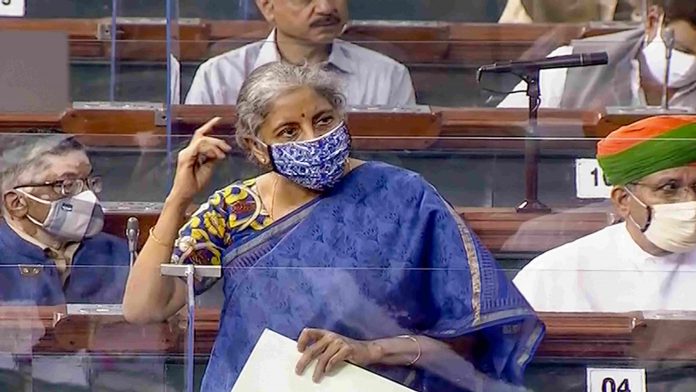
On March 22, 2021, the Honorable Minister of Finance Nirmala Sitharaman introduced the National Bank for Financing Infrastructure and Development Bill, 2021. Established long-term infrastructure financing without recourse in India. It also includes the development of the bond and derivatives market needed to fund infrastructure and develop infrastructure financing business, as well as the issue of whether it is related to.

Issuing loans and advances for infrastructure projects, accepting or refinancing existing loans, attracting investment from private and institutional investors for infrastructure projects, organizing and promoting foreign participation in infrastructure projects promoting negotiations with various government agencies to resolve the scene dispute. Infrastructure financing and infrastructure financing consulting services. Countries can reimburse all or part of the costs associated with hedging exchange rate fluctuations. At the request of NBFID, the state can provide guarantees for bonds, promissory notes and loans issued by NBFID.

References

  1. http://164.100.47.193/Refinput/New_Reference_Notes/English/23032021_124844_1021205239.pdf
  2. https://www.legalserviceindia.com/legal/article-6096-the-national-bank-for-financing-infrastructure-and-development-bill-2021.html
  3. https://prsindia.org/billtrack/the-national-bank-for-financing-infrastructure-and-development-bill-2021
  4. https://www.drishtiias.com/daily-updates/daily-news-analysis/national-bank-for-financing-infrastructure-and-development-bill-2021
  5. https://empowerias.com/blog/prelims-special-facts/national-bank-for-financing-infrastructure-and-development-bill,-2021-empower-ias

LawSikho has created a telegram group for exchanging legal knowledge, referrals and various opportunities. You can click on this link and join:

https://t.me/joinchat/J_0YrBa4IBSHdpuTfQO_sA

Follow us on Instagram and subscribe to our YouTube channel for more amazing legal content.

Download Now

The retrospective aspect of Negotiable Instruments Act – Surinder Singh Deswal v. Virender Gandhi (2020)

0

This article has been written by Aastha Verma, from Kalinga University, Raipur, Chhattisgarh. The article has a deep analysis of the case Surinder Singh Deswal v. Virendra Gandhi with respect to the retrospective aspect of the Negotiable Instrument Act. 

Introduction 

A negotiable instrument is a piece of paper that entitles a person to pay a sum of money that is transferable from one person to another by endorsement and delivery. The main objective before introducing the Negotiable Instrument Act, 1881 is to legalize the system under which these instruments can deliver from one person to another the same as that of ordinary goods. These instruments help in avoiding the carriage of hefty amounts and reduce the risk of theft or robbery. The  Negotiable Instrument Act was amended and introduced two new provisions, Section 143A and Section 148 to deal with the delay tactics of drawers of dishonored cheque due to easy filing of the appeal and obtaining stay on the proceedings which leads to the enforcement of Section 138 of the Act. The amendment came into force on 1st September 2018. Section 143A and Section 148 are discussed in detail. 

Overview of the Act

The Negotiable Instrument Act, 1881 came into existence to define and amend the laws related to the promissory notes, bills of exchange, and cheques. In India, there is always a problem of pending cases in the court and almost 20% of cases are related to the cheque dishonor dispute under Section 138 of the Negotiable Instrument Act, 1881. The Central government through the Negotiable Instrument (Amendment) Act of 2018 has inserted several new provisions. The amendment of the Act helps in addressing the issues of undue delay, efficacy, and efficiency in the case related to the dishonor of cheques. From Section 143A and 148 of the Act, the court has the power to direct the drawer to provide interim compensation during the pendency of criminal complaints and civil appeals. The recovery of fine shall be the same as under Section 421 of the Code of Criminal Procedure, 1973, and in case of acquittal court is empowered to direct the complainant to repay the amount as per the interest rate prescribed by the Reserve Bank of India (RBI)   

Section 143A of Act

This Section provides the power to direct interim compensation at the trial stage. The insertion of this Section empowers the court while trying an offence under Section 138 of the Act, to direct the drawer of the cheque to pay interim compensation to the complaint when –

  1. A summary trial or summons case where the drawer pleads not guilty to the accusation made in the complaint. or,
  2. Upon the framing of the case. 

This measure ensures that the interest of the complaint is protected in the interim period before the charges are proved against the drawer. The provision provides aid to the complainant during the pendency of the proceedings of the case under Section 138 of the NI Act. The interim compensation is up to 20% of the total amount of the cheque. If the drawer is found guilty under this Section then the amount of interim compensation is deductible from the final compensation payable to the complainant. The Section does not prejudice the drawer in case of his acquittal by the court and the complainant has to return the interim compensation within the period of 60 – 90 days and it should be with interest.

Section 148 of Act

This Section talks about the interim compensation at the appellant stage. As per Section 148, the appellate court may direct the drawer in an appeal against conviction under Section 138 to deposit before the appellate court a part of fine or compensation as an award by the trial court which shall be a minimum of 20% of the fine or compensation within 60 days from the date of order passed by the appellant court or further within the period of not exceeding 30 days directed by the appellant on showing sufficient cause by the drawer. It provides the deposit of sum which shall be a minimum of 20% of fine or compensation awarded by the trial court has retrospective effect.   

Are Sections 143 A and 148 retrospective or prospective 

The first case to discuss this issue is Ginni Garments & another v. Sethi Garments (2019), the Punjab and Haryana High Court held that Section 143A of the Negotiable Instrument Act has prospective effect whereas Section 148 has retrospective effect and will apply to the pending appeals on the date of enforcement of the provision.  

The reason was given by the Court to hold Section 143A as prospective were-

  • The amended provision provides for enforcement of recovery of interim compensation by way of the coercive procedure and creates the obligation of the accused. 
  • By virtue of interim compensation if a person is not having the means to pay such a hefty amount the consequences under this Section will be devastating, irrevocable, and irreparable.

That’s why this Section should be prospective as it aware the accused of such consequences in advance and it cannot be applied to the cases where the trial is going on when this provision is not existing.  

Section 148 is retrospective and the reason given by the Court is –

  • The provision of recovery of fine or compensation from the appellant already exists in the existing procedure relating to recovery therefore the Section 148 of the Act has to be treated purely as a procedural which is also beneficial for the appellant. 

Therefore the provision of this Section shall govern all the appeals pending on the date of enforcement of Section 148 of the Act.   

Surinder Singh Desawal v. Virender Gandhi

After the judgment given in the above case, it was challenged in the Supreme Court with respect to the effect of Section 148 of the Act. In the case of  Surinder Singh Desawal v. Virender Gandhi (2020), the Honourable Supreme Court clarified the retrospective applicability of the amended Section and confirmed that Section 148 will be applicable to the cases where the criminal complaints under Section 138 of the NI Act were filed before the amendment.   

Brief facts about the case 

Criminal complaints under Section 138 of the Act were filed by the respondent against the appellant. The trial court convicted the appellant for the offence under Section 138 of the Act and sentenced them to imprisonment of two years and to pay the cheque amount with 1% of interest. Dissatisfied by the conviction order the appellants submitted the appeal to the Additional Session Judge of Panchkula under Section 389 of the Code of Criminal Procedure (CrPC), 1973 for the suspension of sentence and for releasing them on bail. The Court suspended the sentence and allowed the application under Section 389 of CrPC, 1973. Also, directed the appellant to deposit 25% of the total compensation awarded by the Court in accordance with the amended provision of Section 148 of NI Act. 

Again dissatisfied with the Court’s order the appellant filed a revision application before the High Court of Punjab and Haryana that the amended Act should not be applied to the criminal proceedings initiated before the amendment. The High Court dismissed the revision application and confirmed the judgment given by the trial court.   

The Appellant dissatisfied with the decision of the High Court approached the Supreme Court through appeal.   

Contentions 

The contentions were put forward by the appellant before the Supreme Court by way of appeal were –

  1. The appellant said that both the High Court and the first appellate court have directed to deposit 25% of the amount of compensation as per Section 148 of the Act and complaints were filed by the appellant under Section 138 of NI Act prior to the amended Section 148 of the Act.
  2. The appellant said that the first appellate court interpreted the word may as shall under Section 148 of the Act and direct for the deposit of a minimum of 25% of the fine awarded by the trial court for the suspension of sentence. 

Findings and Judgment of the court 

While adjudicating the appeal the Supreme Court referred to the Statement and Object of the amendment Act of Negotiable Instrument and observed that the amended Section 148 is brought by the parliament due to delay tactics of the unscrupulous drawer of dishonored cheque due to easy filing of the appeal and obtains stay on the proceedings because of which the object and purpose of Section 138 are breached. It was further added that the amendment in Section 148 is not violative of the right of appeal and therefore the contention made by the appellant cannot be applicable to complaints filed prior to the amendment of the Act. 

In response to the second contention, the Supreme Court held that the word “may” is generally used as a rule or shall and not as an exception but the appellant court has to give the special reason for directing the payment of deposit under Section 148 of the Act. The amended Section directs the court to pass an order pending appeal to direct the appellant to pay the sum which shall not be less than 20% of compensation either the application is filled by the complainant or by the appellant under Section 368 of CrPC, 1973 to suspend the sentence. The Supreme Court has highlighted the reason for the amendment of Section 148 of the Act which is to eliminate the injustice caused to the payee. A payee is a person who spent considerable time and resources in court proceedings because of delay tactics in dishonoring the cheque which defeated the purpose of the Act.

Therefore, considering the Statement of Object and Reason for the amendment in Section 148 is applicable in respect of appeals against the order of conviction under Section 138 of the Act. Also, in the cases where the criminal complaints were filed under Section 138 of the Act prior to the Negotiable Instrument Amendment Act.

Section 143A is Prospective and Section 148 is Retrospective 

In the case of G.J.Raja v. Tejraj Surana (2019), the Supreme Court has clarified the reason behind Section 143A as prospective and Section 148 to be retrospective in nature despite both of the provisions being introduced by the same amendment Act. The Court noticed that Section 143A is applied before the pronouncement of guilt or order of conviction at the trial stage. Whereas  Section 148 of the Act is applicable after the accused is already found guilty under Section 138 of the Act and comes to the appellate court by way of appeal. Further, added that there is no provision under Section 148 that is similar to Section 143A (5) of the Act as required as Section 421 and 357 of CrPC, 1973 applies post-conviction and is adequate to take care of such requirements. Section 148 depends upon the existing principles and does not create any fresh disability of nature which is similar to Section 143A of the Act.      

Conclusion

Negotiable Instrument used as a model in the commercial world and considered the convenient mode for transferring money. This instrument helps in reducing the risk of theft and robbery but a civil liability has occurred as dishonor of cheque. To protect the drawee from the loss the dishonor of the cheque is made a punishable offence. Now the drawer is liable for the penalties in case of cheque bounce due to insufficiency of funds with adequate safeguards to prevent the difficulties for the drawee. Because of this, there are a number of pending cases before the court related to cheque bounce so an amendment is initiated in the Act. In the case of Surinder Singh deswal v. Virendra Gandhi, the Supreme Court held that the reason behind the amendment in the act is to eliminate an injustice to the payee.     

The amendment to the Negotiable Instrument Act is a great effort to strengthen the speedy disposal of cases and discourage unnecessary litigation. It helps the complainant by providing interim compensation and ordering payment by the accused in case of an appeal against the conviction. It is a positive step towards enhancing the credibility of cheques. 

References 

  1. Cheque Bouncing – Amendments To The Negotiable Instruments Act, 1881 – Finance and Banking – India (mondaq.com)
  2. https://indiankanoon.org/doc/3596090/
  3. https://www.scconline.com/blog/post/2018/08/04/the-negotiable-instruments-amendment-act-2018-highlights/
  4. https://taxguru.in/corporate-law/ni-act-section-148-retrospective-143a-prospective-sc.html

Students of Lawsikho courses regularly produce writing assignments and work on practical exercises as a part of their coursework and develop themselves in real-life practical skills.

LawSikho has created a telegram group for exchanging legal knowledge, referrals, and various opportunities. You can click on this link and join:

https://t.me/joinchat/J_0YrBa4IBSHdpuTfQO_sA

Follow us on Instagram and subscribe to our YouTube channel for more amazing legal content.
Download Now

Analysis of the data protection laws in Canada

0
Privacy

This article has been written by Devagni Vatsaraj, pursuing a Diploma in International Data Protection and Privacy Laws from LawSikho. It has been edited by Prashant Baviskar (Associate, LawSikho) and Smriti Katiyar (Associate, LawSikho). 

Introduction 

Concerns about personal data protection are in the spotlight all over the world. In recent years, stringent data protection and privacy legislation such as the General Data Protection Regulation (GDPR), Personal Information Protection and Electronic Documents Act (PIPEDA), California Consumer Protection Act (CCPA), Brazilian General Data Protection Law, etc. have been enacted and/or proposed. Canada has long been at the forefront of data protection with PIPEDA being enacted in the year 2000. The Model Care for the Protection of Personal Information in 1996 was based on the ten principles which included accountability, consent, and the limiting of data collection. The PIPEDA governs how private-sector organisations handle personal information.

Data protection legislations in Canada

Essentially, the private sector privacy statutes that govern the collection, use, disclosure, and management of personal information in Canada are the PIPEDA, the Alberta’s Personal Information Protection Act, 2003 (PIPA Alberta), and the British Columbia’s Personal Information Protection Act, 2003, (PIPA BC), and Quebec’s An Act Respecting the Protection of Personal Information in the Private Sector (Quebec Privacy Act.) 

The Federal private sector law, PIPEDA, governs the interprovincial and international collection and processing of personal information. The application of PIPEDA extends to personal information held by banks, airlines, railways, telecommunications companies, and internet service providers, across the country; including employee information. For commercial activities within a province, which does not have a substantially similar legislation governing the sector; the PIPEDA generally applies. 

The private sector privacy statutes in PIPA Alberta, PIPA BC, and Quebec Privacy Act have been deemed “substantially similar” to PIPEDA and, therefore, PIPEDA does not operate within those jurisdictions. The health privacy statutes in Ontario, New Brunswick, Newfoundland & Labrador, and Nova Scotia have also been deemed substantially similar to PIPEDA, and therefore, PIPEDA does not apply in respect of private health providers operating within those jurisdictions but continues to apply to other commercial activity therein.

The Privacy Act applies to the federal government departments and agencies and as such does not get covered under the ambit of the PIPEDA. The health data in four others, Ontario, New Brunswick, Newfoundland and Labrador, and Nova Scotia, are protected by local legislation and therefore the PIPEDA does not apply. However, once data crosses national borders, PIPEDA applies irrespective of whether such lateral legislation is in place or not in the country. Federal, provincial, and territorial laws govern all the public sector institutions within each of their respective jurisdictions.

General and sector-specific legislations impacting the protection of data

While the compliance of PIPEDA and the Privacy Act is overlooked by the Privacy Commissioner of Canada; the federal, provincial, and territorial jurisdiction in Canada have their own independent Information and Privacy Commissioner, who reports to their respective legislature and oversees the relevant data protection laws applicable in that jurisdiction. Further, certain offences can be prosecuted by the Attorney General. There are both general and sector-specific legislation across Canada that impact data protection.

General legislations

  1. Canada has enacted The Act to Promote the Efficiency and Adaptability of the Canadian Economy by Regulating Certain Activities that Discourage Reliance on Electronic Means of Carrying Out Commercial Activities, and to Amend the Canadian Radio-television and Telecommunications Commission Act, the Competition Act, the Personal Information Protection and Electronic Documents Act and the Telecommunications Act, 2010 (CASL); which is the anti-spam legislation which addresses matters regarding the collection and use of email addresses and intrusion of computer devices;
  2. Quebec’s IT Act provides for protection of confidential information stored in electronic formats and lays down the regulations for the use, retention and transmission of electronic data;
  3. Quebec’s Civil Code vide its Section 35 governs an individuals’ right of reputation and privacy and protects them from unlawful invasion thereof;
  4. Quebec’s Charter for Human Rights and Freedom vide Section 5 enables an individual to demand a right to private life and vide Section 46 provides for right to fair and reasonable conditions of employment;
  5. Canadian provinces of British Columbia, Saskatchewan, Manitoba, Newfoundland and Labrador have each enacted statutory torts if an individual wilfully violates the privacy of another; and
  6. Canadian Criminal Code encompasses in itself various offences including mischief, fraud, hacking, identity theft and misuse of personal information.

Sector-specific legislations

  1. Specific regulators and/or industry associations have established guidelines that regulate the data protection for their sectors:
  1. Officer of Superintendent of Financial Institutions;
  2. Mutual Funds Dealers Association of Canada;
  3. Investment Industry Regulatory Organisation; and
  4. Canadian Securities Administrators. 
  1. Apart from these industry regulators, as mentioned earlier herein, most provinces in Canada have their own legislations for processing of personal health information by some custodians such as hospitals, clinics and doctors’;
  2. Most provinces have consumer protection legislations in place that require the agencies to ensure accuracy of transactions, give data subjects access to their personal information, limit disclosure and ensure protection of consumers’ rights;
  3. The Federal Bank Act protects all registers and records, including customer records as specified in the act, in order to keep the data safe and secure.

Personal data under PIPEDA

Personal data containing any information, recorded or not, about an identifiable individual is protected by PIPEDA. It not only covers the Personally Identifiable Information (PII) such as name, age, sex, medical record, financial and employee records, etc. but also keeps a track of the individuals’ opinions, comments, and social status. However, personal information processed by federal government organisations that fall under the incidence of the Privacy Act, business contact information in respect to the employment or profession, an individual’s collection, use or disclosure of personal information strictly for personal purposes or an organisation’s collection, use or disclosure of personal information for journalistic, artistic or literary purposes, is not covered by the PIPEDA.

Key principles that apply to processing of data

Referred to as the fair information principles, these ten criteria represent the foundation of PIPEDA as well as the provincial legislations.  Beyond them, organizations are responsible for the protection and fair handling of personal information at all times and are obligated to ensure that any collection, use, or disclosure of personal information is done only for purposes that a reasonable person would deem appropriate given the circumstances. These principles are:

  1. Lawful bases of processing:

Privacy statutes in Canada require organisations to obtain consent from the data subjects, for the collection and processing, i.e., for the use and disclosure of personal information, except for limited exceptions. Further, the consent so provided by the data subject must be informed and legitimate in nature, which means that the data subject must understand the nature, purpose, and consequences of providing such consent. 

The form (express or implied) of consent may vary depending on the nature of the information and the reasonable expectations of the individual. The data subjects may withdraw consent at any time, subject to legal or contractual restrictions and reasonable notice.

  1. Transparency:

Under the Transparency principle, privacy statutes in Canada require organisations to record and give access to individuals’ their specific information regarding its policies and practices describing the administration of personal data, in a form that is generally understandable.

  1. Purpose limitation:

Before the collection of personal information, organisations must identify the purposes for which such data is collected. Such purposes must be documented in accordance with the principle of transparency. Personal information must not be used or disclosed for purposes other than those for which it was collected, except with the consent of the data subject or as required by law.

  1. Data minimisation:

Canadian legislations require that the collection and processing of personal data be limited to the extent to which it is necessary to fulfill the purposes recognized by the organisation. Further, it lays down that the personal information shall only be retained only for such time for which it is absolutely required, and then, such data must be deleted/destroyed. 

  1. Proportionality:

The legislation sets out the dominant compulsion that organisations may collect and process the personal information/records of data subjects, only for purposes that can reasonably be considered appropriate in the situation. The safeguarding obligation imposed, is proportional to the level of sensitivity, which means that, more sensitive the information, the higher the level of protection will be required. The extent to which information shall be accurate depends upon the usage of the information and the interests of the data subject.

  1. Retention of data:

The privacy statutes in Canada impress that the organisation that collects and processes the data must retain the same, only until the purpose for which data was collected, is fulfilled and not any longer than that. Personal data which is no longer required must be destroyed, erased, or made anonymous.

  1. Accuracy:

Organisations are required to ensure that personal information collected and processed, which is stored in its records, is accurate, complete, and updated, especially when such personal information is used to make a decision or the same is to be disclosed to another organisation.

  1. Accountability:

Organisations are responsible not only for protecting the personal data under their control, but also for the data that they transfer to third parties for processing. Organisations must assign/appoint and identify an individual who would be accountable for the compliance with the privacy principles and who would frame as well as implement such policies and practices to ensure compliance with the privacy principles.

  1. Safeguarding:

Both federal and provincial statutes contain specific provisions relating to the safeguarding of personal data. These provisions require organisations to implement technical, physical, and administrative measures to protect data against theft, unauthorised access, copying, unlawful use, modification, or destruction of such personal data.

Treatment of individuals’ rights of data being processed under the Canadian legislation

There are various rights of data subjects like the right to access, the right to be forgotten, the right to file a complaint, etc. Similarly, there are various such rights that an individual is entitled to, in respect of the processing of their personal data. Following are some of such rights:

  1. Right to access data:

Under Canadian legislation, organisations, upon request (subject to exemptions) must inform the data subjects of the existence, use, and disclosure of their personal data and must give them access to that information, including if their data is shared with third-party marketing agencies or otherwise and must state the purpose to such sharing of data. There are some exemptions such as confidential information, information relating to other individuals, national privilege, etc, under which circumstances, the organisations may not provide access to such information to the data subject.

The data subjects’ requests must be specific to allow an organisation to identify their records and respond back within a prescribed time limit or within a reasonable period. Such response must be provided at minimal or no cost and an organisation must make the information available in a form that is generally understandable and acceptable throughout the industry. It is pertinent to note that the right to access data includes providing access to records at the organisations’ office and not handing over the data to the data subjects. 

  1. Right to object processing of personal data:

There is no explicit mention that data subjects can object to the processing of personal data; however, the legislation does provide that an organisation must use the data collected only for the purpose for which an individual has consented, for objects specifically mentioned, for a legitimate purpose and under contractual obligations only. 

  1. Right to withdraw consent:

Under the privacy policies prevailing in Canada, a data subject must be able to withdraw consent at any time, subject to exemptions including but not limited to, fulfillment of contractual obligations, legitimate purpose, legal requirements, etc. Further, prior to the data subject withdraws their consent, they must be informed of the implications of such withdrawal.

  1. Right to data portability:

The Canadian legislation does not include a right to data portability.

  1. Right to rectification of errors:

The privacy statutes in Canada require that when a data subject rings to the notice of an organisation, of inaccuracy and/or incompleteness of their personal data; such organisation must make a note of the same and/or rectify such error within a reasonable period, as the case may be.

  1. Right to be forgotten:

The Canadian privacy statutes provide data subjects with the right to withdraw their consent at any time, however, the statutes fail to provide data subjects with a remedy of right to be forgotten or getting their data deleted. 

  1. Right to object to marketing:

When an organisation discloses personal information of data subjects to third parties for marketing purposes, the Canadian statutes provide that the data subjects must have a right to opt out. They highlight the fact that consent is of utmost importance and that the data subjects must be made aware of the marketing purpose before or at the time of collection of personal data, in an understandable and clear manner. The data subjects must be able to easily opt-out of the organisation using their personal data for marketing purposes and such opting-out must come to immediate effect and the personal data collected must be destroyed instantaneously.

  1. Right to file complaint:

Prior to data protection statutes coming into effect, the data subjects were to address their issues with the person concerned and accountable, within the organisation. It was the duty of an organisation to ensure that proper and simple procedures were in place to effectively address such complaints. The Canadian statutes protect the data subjects in a manner that it provides them with a right to make a complaint to the relevant data protection authority. 

Appointment of Data Protection Officers

Organisations do not have a straight-jacket legal obligation to register with the relevant data protection regulatory authorities for their processing activities. However, organisations that desire to use or disclose personal information without the consent of the data subjects, for statistical, scholarly study. Research purposes must, before such use or disclosure, notify the Federal Privacy Commissioner. There may arise difficulties in processing personal data of the data subjects’ and therefore, the legislation provides that there be privacy officials that mitigate the risk. 

PIPEDA, PIPA Alberta, and PIPA BC expressly state that organisations must appoint an individual who shall be in charge of ensuring compliance with the data protection obligations. Industry-wide, these individuals are referred to as the Privacy Officer, although there is no particular title mentioned in the statutes. While acting in good faith and based on a reasonable belief, if the privacy officer refuses to do something that will contravene the statute, or does something in an attempt to comply with the same; under such circumstances, such privacy officers enjoy immunity against disciplinary action from their employer.

The privacy regulators at British Columbia and Alberta describe the role of the Privacy Officer, stating that these individuals are designing, structuring, and managing programs, training, auditing, documentation, and follow-up. Depending on the type of organisation, these privacy regulators are expected to establish and implement programme controls, coordinate with appropriate persons within the organisation, represent the organisation in the event of a complaint or investigation by a Privacy Commissioner’s office; and promote privacy protection within the organisation.

Restriction on international data transfer

Generally, the organisations agree on entering into an arrangement when transferring data outside of Canada for processing purposes to ensure that the data transferred is provided with a reliable level of protection as is followed under that under Canadian Statutes. Moreover, the Office of Privacy Commissioner has laid down guidelines for processing personal information across borders. Osler, Hoskin & Harcourt LLP has published and reproduced the international comparative guide to data protection. 

  1. Under PIPEDA, the organisations are responsible for personal information in their custody, along with the personal data transferred to third parties for processing. The Canadian legislations permit non-consensual transfer of personal data to third-party processors outside Canada, provided that such transferring organisation uses reasonable means and level of protection while the data is being processed by the processor overseas.  
  2. In Alberta, if an organisation uses a service provider outside Canada to collect and process or eve store the personal data, the organisation must in its privacy policies, specify the jurisdictions in which it is transferred and the purpose for the collection, use, or storage of personal data in the servers overseas, has been authorised for.

Data breach and security

The PIPEDA was amended to include the requirements for the organisations to report to the Privacy Commissioner of any breach of security involving the personal information of data subjects, under its control if it is logical to believe that the breach would create significant harm to the subject (as is also required under PIPA Alberta). The reports to the Commissioner must include a description of the circumstances of the breach and, if known, the cause; the approximate day on which, or the period during which, the breach occurred or; description of breach and the number of individuals affected by the breach and steps that the organisation has taken to mitigate the risk. Moreover, the organisations are required to keep records of every breach of security involving personal information under its control, and to provide the Commissioner with a copy of such records on request. 

Canadian Privacy Statutes have recognised the need to expressly specify the reporting of data breaches and consequences thereof; therefore, these statutes were amended in 2015, which came into effect in November 2018. The provisions now require organisations to implement technical and administrative measures to protect personal information against loss or theft, unauthorised access, and disclosure, copying, modification, or destruction. The safeguards must be appropriate to the sensitive information, i.e., the more sensitive the information, the higher the level of protection will be required. Further, an organisation shall be held responsible for protecting the personal information of data subjects, which is its possession, including the information that has been transferred to a third party for processing. 

Enforcement and sanctions

There has been an escalating inclination towards initiating investigations under the privacy statutes of Canada. The regulators are adopting various innovative strategies through formal as well as the less formal, online privacy sweeps of the Global Privacy Enforcement Network; they are collaborating with national and international counterparts, to conduct joint investigations in accordance with the agreement entered into by and between them. 

Powers of investigation:

The Privacy Commissioner shall investigate the complaint made by data subjects, under PIPEDA, subject to reasonable exceptions. Further, if the Privacy Commissioner has reasonable grounds that the complaint requires that an investigation is warranted, it has powers to initiate the same. During the investigation, the Commissioner can summon witnesses for evidence, inspect documents, compel the production of documents, and inspect premises (except dwelling houses.)

Under PIPA Alberta and PIPA BC, the Privacy Commissioners have similar powers of investigation. However, where a matter is not otherwise resolved, an investigation may be elevated to a formal inquiry.

Power of audit:

The Privacy Commissioner and the OIPC BC have the authority to audit the practices adhered to by the organisation with respect to dealing with personal information of data subjects if they have reasonable grounds that the organisation is contravening the Act. The results of the audit are made public.

Power of enforcement:

Upon concluding an investigation under PIPEDA, the Privacy Commissioner issues a report of findings and recommendations for compliance. The complainant or the Commissioner, with the data subjects’ consent, may apply to the Federal Court for a hearing. The Court has broad remedial powers to order correction of the organisation’s practices and award damages to the data subject so affected. The organisation may voluntarily comply and undertake to fulfill the recommendations made and bring itself into conformity with PIPEDA. If an organisation shows initiative and undertakes measures to be PIPEDA compliant, the Commissioner shall not apply to the Court and/or shall suspend any pending court application. If an organisation fails to adhere to its commitments in a compliance agreement, the Privacy Commissioner, after notifying the organisation, can apply to the Court for an order requiring the organisation to comply with the terms of the agreement. In Alberta and British Columbia, an inquiry may result in an enforceable order. Organisations are given a prescribed time limit, within which they are required to comply with the order or apply for judicial review. Similar is the regulation that must be followed in Quebec. 

Sanctions:

In Quebec, Alberta, and British Columbia, statutory provisions if violated, would constitute an offence and result in fines of up to $10,000 for a first offence and $20,000 for a subsequent offence in Quebec, and up to $100,000 for an offence in Alberta and British Columbia. Under PIPEDA, the contravention of provisions may even result in criminal sanctions. 

Concluding remarks

With the help of the Privacy Commissioner which has established four strategic privacy priorities, i.e., the economics of personal information; government surveillance; reputation and privacy; and the body as information; that guides the Office’s discretionary work, the courts continue to provide a better outlook and shape to the tort of invasion of privacy. Currently, it is focused on implementing its recommendations for enhanced (including but not limited to online) consent under PIPEDA. Further, the Office of the Privacy Commissioner continues to focus on reforming the national security in Canada and the relationship with data protection. It continues to shift its focus towards the issues and consequences of data sharing with its national and international counterparts. Their regulators are very alert and have been alarmed that it is the need of the hour that there be a shift, that what we need is the collaboration between the data protection and other sectors that administer the daily affairs of the data subjects. 

References


Students of Lawsikho courses regularly produce writing assignments and work on practical exercises as a part of their coursework and develop themselves in real-life practical skills.

LawSikho has created a telegram group for exchanging legal knowledge, referrals, and various opportunities. You can click on this link and join:

https://t.me/joinchat/J_0YrBa4IBSHdpuTfQO_sA

Follow us on Instagram and subscribe to our YouTube channel for more amazing legal content.

Download Now

An overview of the Essential Commodities (Amendment) Bill, 2020

0
Image source - https://bit.ly/2YmBeCz

This article is written by Anindita Deb, a student of Symbiosis Law School, NOIDA. This article aims to discuss the provisions of the Essential Commodities (Amendment) Bill introduced in 2020. 

Introduction

The Rajya Sabha passed the Essential Commodities (EC) (Amendment) Bill 2020 on 22nd September last year, which includes measures to remove cereals, pulses, oilseeds, edible oils, onion, and potatoes off the list of essential commodities. The Bill was first introduced in the Lok Sabha on September 14, 2020, by Shri Danve Raosaheb Dadarao, Minister of State for Consumer Affairs, Food & Public Distribution, to replace ordinances promulgated on June 5, 2020. On September 15, 2020, the Lok Sabha passed the Bill.

The EC (Amendment) Bill 2020 attempts to alleviate private investors’ concerns about excessive regulatory interference in their activities. The ability to produce, hold, move, distribute, and supply will allow for economies of scale to be realised and attract private sector and foreign direct investment into the agriculture industry. It will contribute to the expansion of cold storage facilities and the modernization of the food supply chain. 

Minister of States for Consumer Affairs, Food & Public Distribution Shri Danve Raosaheb Dadarao, responding to a discussion on the Bill before it was cleared by the Rajya Sabha, stated that this modification is essential to reduce agri-produce wastage due to a shortage of storage facilities. He claims that this amendment will create a beneficial atmosphere for farmers, consumers, and investors, as well as making our country self-sufficient. According to him, this amendment will boost the agriculture sector’s overall supply chain mechanism. This legislation would also assist the government to fulfil its commitment to double farmer income by encouraging investment in the industry and making it easier to do business.

Background

Despite the fact that India has become surplus in most agricultural commodities, farmers have been unable to obtain better pricing due to a lack of investment in cold storage, warehouses, processing, and export, as the Essential Commodities Act, dampens the entrepreneurial spirit. Farmers lose a lot of money when there are bumper harvests, especially when it comes to perishable goods. 

States can limit the amount of commodities that traders can store and restrict the movement of any commodity that is considered “essential.” The government is required by law to put stock limitations on a variety of things, including food commodities such as pulses, edible oils, and vegetables, in order to discourage hoarding. 

Several experts argue that the Essential Commodities Act, 1955 was useful in the 1960s and 1970s, when India was still a net food importer. Government action under the ECA 1955 often damaged agricultural trade while being completely ineffective in controlling inflation, according to the Economic Survey 2019-20, which devotes an entire chapter to the topic. “First, frequent and unpredictable imposition of blanket stock limits on commodities under the Essential Commodities Act (ECA) neither brings down prices nor reduces price volatility. However, such intervention does enable opportunities for rent-seeking and harassment,” the Economic Survey had said. Economists use the phrase “rent-seeking” to denote unproductive revenue, such as that derived by corruption.

For example, stock limitations on dal (lentils) in 2006, sugar in 2009, and onions in September 2019 increased “the volatility of wholesale and retail prices instead of smoothening them,” according to the survey.

Because merchants’ large stocks can be outlawed at any time under the ECA 1955, they tend to buy significantly less than their regular capacity, causing farmers to lose a lot of money during perishable harvest surpluses. 

According to a 2018 report by the Organisation of Economic Cooperation and Development (OECD), a collection of 36 countries, and the New Delhi-based research organisation Indian Council for Research on International Economic Relations (ICRIER), such laws have kept poor farmers poor by restricting possibilities to export when global crop prices rise.

The Bill will encourage investment in cold storage facilities and the upgrading of the food supply chain. It will benefit both farmers and consumers while stabilising prices. It will establish a competitive market environment and avoid agri-produce wastage caused by a lack of storage space.

Key features of the Bill

The following can be highlighted as the key feature proposed by the Bill:

Regulation of food items

The Act allows the central government to designate particular commodities as essential commodities (such as food, fertilisers, and petroleum products). The production, supply, distribution, trade, and commerce of such important commodities may be regulated or prohibited by the central government. The Ordinance stipulates that the central government may only restrict the supply of particular foods, including cereals, pulses, potatoes, onions, edible oilseeds, and oils, under exceptional circumstances. These include:

  • War
  • Famine
  • Extraordinary price hikes
  • Natural disasters of grave nature

Imposition of stock limits on these commodities

The Act gives the central government the authority to restrict a person’s stock of an essential item. The Ordinance stipulates that any stock limit imposed on specific commodities must be based on rising prices. Only if there is a 100 per cent increase in the retail price of horticulture produce and a 50 per cent increase in the retail price of non-perishable agricultural food items can a stock restriction be imposed. The increase will be computed based on the price in effect for the previous twelve months, or the average retail price for the previous five years, whichever is lower.

Any stock limit imposed on a processor or value chain participant of agricultural produce will not apply if the stock held by such person is less than the following: 

  1. The overall ceiling of installed processing capacity, or 
  2. Demand for export in the case of an exporter. 

A value chain participant is someone who is involved in the production or value addition of agricultural products at any stage of processing, packaging, storage, transportation, and distribution.

While liberalising the regulatory framework, the government has ensured that consumer interests are protected.

Applicability of the provisions of the Bill on the Public Distribution System (PDS)

Any government order relating to the Public Distribution System or the Targeted Public Distribution System will be exempt from the provisions of the Bill addressing the restriction of food items and the imposition of stock limitations. Foodgrains are distributed by the government at subsidised costs to those who are eligible under these systems. 

Benefits of the Bill

The following can be seen as the expected benefits which can be reaped through the implementation of the Bill:

  1. The freedom to produce, hold, move, distribute, and supply will allow the agriculture industry to benefit from economies of scale and attract private sector/foreign direct investment.
  2. The amount of money spent on cold storage and modernising the food supply chain will rise.
  3. It will foster a competitive market environment while also reducing agri-produce waste caused by a shortage of storage facilities.
  4. It will benefit both farmers and consumers while stabilising prices.

Issues raised against the Bill

While the Bill seems to carry the objective of uplifting the farmers’ conditions, people have raised certain concerns. Many experts have criticised the Bill on the grounds that it will be a highly centralised law that will infringe on state authority, as states will be unable to regulate problems such as hoarding and black marketing, for example.

Instead of benefiting producers, the Essential Commodities Act’s stock limit relaxations may lead to illicit marketing and hoarding. This will result in more inflation and a monopoly of a few people on the prices of certain goods.

Conclusion

For a country like India, where a large chunk of the population depends on agriculture and related activities for earning a livelihood, it is important that the government addresses the needs of the farmers, traders, merchants etc., and makes it easier for them to sell their produce. 

When India’s foodgrain production was insufficient, the Essential Commodities Act of 1955 was enacted. However, most agri-commodities are presently in surplus in India, and the government’s revisions to the Act of 1955 are a major step in achieving its goal of doubling farmers’ income and paving the way towards ease of doing business. 

References


LawSikho has created a telegram group for exchanging legal knowledge, referrals and various opportunities. You can click on this link and join:

https://t.me/joinchat/J_0YrBa4IBSHdpuTfQO_sA

Follow us on Instagram and subscribe to our YouTube channel for more amazing legal content.

Download Now

Applicability of personal service contracts in the entertainment industry

0
Entertainment Industry
Image source - https://bit.ly/36IVEW4

This article is written by Shreya Kasale, pursuing the 6-Month Growth Camp: Preparation for LLM Abroad from LawSikho. The article has been edited by Zigishu Singh (Associate, LawSikho) and Smriti Katiyar (Associate, LawSikho).

Introduction

The entertainment industry is a volatile market. It is an industry that is continually changing, where companies are created, merged, re-formed, and dissolved. Furthermore, consumer tastes in artistic products can change quickly, which can push certain artists or artistic movements to the heights of popularity and reduce others to oblivion. Due to these fundamental aspects of the entertainment industry, companies are constantly engaged in a search for new ways to maximise profits. Entertainment companies rely on intricate contracts that are designed to protect them against economic risk. The entertainment industry is an industry where only the most talented survive. However, this emphasis on talent creates an environment where it is hard for new talent to enter. So, many new entertainers sign a personal services contract, which allows them to work under an established entertainer to get their feet in the door.

A personal service contract is an agreement between an individual and a business to provide goods or services. These contracts are typically used in the entertainment industry owing to the various means of payment for their services. When you use a personal service contract, you agree to provide certain services which are binding for a specific period of time. This agreement is a negotiation between the artist and a company that mainly manufactures, promotes, and distributes the artist’s production. It often restricts the artist from creating for a single company for a period of time, which is why they are regulated by statutes and are frequently subject to litigation. In this contract, the company agrees to provide services to the artist and in exchange, the artist agrees to provide their services to them. After which, the company signs a personal service agreement with the artist that states that it will provide all of these agreed-upon services in exchange for a set fee from the artist.

The service may include acting, singing, or any other type of performance. It also includes any other type of work that the party has agreed to do for the other party. In most cases, personal service contracts are offered by large corporations as a way of attracting talent from the pool of artists and entertainers who are more likely to sign with a company due to their status as an employer. Personal service contracts may be offered by an individual or group for anything from one concert or show to a lifetime commitment. They may be offered as either exclusive agreements which only allow the performer to work for one company during its duration or non-exclusive agreements which allow the performer to work with other companies as well. 

Generally, artists lack the financial means to manufacture, sell, and promote their work. Instead, they will  have to find a suitable entertainment business. When it comes to marketing and selling artists’ skills or items to customers, entertainment producers frequently devote a significant amount of time and money. The majority of musicians will not be able to make a profit for their producers. Only a few will make large monetary gains. Producers utilise personal service agreements to bind artists for a certain period of time, during which they seek to recoup their investment in the artist, earn a profit, and offset losses from lesser successful artists.

 Personal service contracts are most often used in the music industry with recording artists. The recording contract is a type of personal service contract. The personal service agreement may allow an artist to have a change in the direction of his or her career but will restrict the terms of a recording contract. A personal service contract also allows a new artist to gain access to a studio and network, which does not need to be for only one song or album. 

A personal service contract can be drafted in a variety of ways, but most commonly an artist will be paid a flat rate for his or her services. On the other hand, if an artist signs to a record label, they are able to negotiate their own personal service agreement. In this situation, they typically expect to be paid through royalties. The labels want artists to sign their agreements because recording contracts are very difficult to change once agreed upon and allow the labels to have control over the artist’s career. 

What comprises a personal service contract?

With the ever-changing landscape of the entertainment industry, personal service contracts are more important than ever. These contracts offer protection for both parties in case anything goes wrong. Six components need to be included in a contract, including the following: 

1.  Employment period- this is usually for a year or until either party terminates it.

2.  Duration of employment- this is how long they need to work for each month. 

3.  The subject of employment- what they will be doing for their employer. 

4.  Salary or wages – their monthly remuneration 

5.  Health insurance coverage – Whether or not they are entitled to health insurance and what kind of coverage it is. 

6.  Vacation time – how much vacation time they get each year and when. 

Each personal service contract is unique. Relevant clauses can be different from contract to contract. The contract is an important agreement that is signed by the artist and the employer before they start working together. The contract outlines the terms and conditions for work to be done, compensation, and other agreements that might need to be made between both parties. The entertainment industry is a varied industry with many types of workers from musicians to actors.

This type of contract also specifies what each party will provide and how compensation will be calculated. These agreements can include clauses about exclusivities, royalties, advance payments (money paid before work begins), and loans (money given before work begins). 

The importance of personal service contract

A personal service agreement is a type of contract between an employer and an employee where the employee agrees to provide personal services in return for wages. The employer has no obligation to provide anything other than wages in return for the employee’s services.

Following are some benefits of such a contract: 

  1. Getting support: By having the support of a large company with experience in marketing and promotion, an artist would benefit the most. The talent will get the recognition it deserves with the help of such companies.
  2. Services agreed on: This allows the artist to tell the company what they need and agree on when and how the services will be delivered.
  3. Everything is in writing: There is no chance of ambiguity when everything is in writing. The contracts help everyone understand their responsibilities and duties. There is no scope for misconception.
  4. Responsibilities become clear: They help artists remember their responsibilities and what is expected of them. This could also entail things like arriving on time for appointments or cancelling with at least 24 hours’ notice.
  5. Termination or amendment of contract: Important information regarding what to do if you need to make changes or wish to stop the contract may be found in service agreements. For instance, how much notice period do you need to terminate the service?
  6. Payment for service: It clarifies how much services will cost and how they will be paid.
  7. Protects the interest of both parties: As everything is written down, the interest of both parties are taken care of.
  8. Legally enforceable by law: If some dispute arises, it can be taken to the court and formally dealt with. 

Case laws

SVF Entertainment Pvt. Ltd. v. Anupriyo Sengupta 

The petitioner owns and operates a film production company. The Petitioner and the Respondent, an actor, entered into a film artist agreement in which the actor agreed to impart his services as a member of the star-cast on exclusive grounds to the Petitioner as per the production plan to be conveyed to him from time to time for a premium remuneration as per the production schedule to be communicated to him. The petitioner has provided a copy of the stated agreement, in which the petitioner and respondent are referred to as “the producer” and “the artist,” respectively.

According to the petitioner, clauses 5.1.9 and 9.3 of the said agreement confirm the respondent’s commitment to providing services exclusively to the petitioner for the duration of the agreement, and that he will not create or participate in any other film, television serial, or advertisement outside the banner of the petitioner without the petitioner’s written consent. The deal was for three years.

The petitioner had applied for an application under Section 9 of the Arbitration and Conciliation Act, 1996, and had asked for enforcement of a negative covenant arising from the agreement to restrain the respondent from breaking the exclusivity clause. However, the court had dismissed the application as there was no balance of convenience in the favor of the petitioner no irreparable injury would have been caused if a favorable order was not passed.

Examples

  • Karan Johar helps new talent to launch in the industry. He has helped many actors to start their careers such as Alia Bhatt, Varun Dhavan, Siddharth Malhotra, Ananya Pandey and many more.
  • Sia Furler worked with RCA records from 2005 to 2008. In support of her album “Colour the Small One”, Sia released 3 singles. She was given a budget to produce the music videos for those singles. In 2006, RCA Records requested that Sia sign a personal service agreement in exchange for production support. The agreement required Sia to release three more singles and one more album under the record label but could  be for multiple songs or albums.
  • Olivia Rodrigo, a multi-platinum singer-songwriter, actor, and 2021 breakthrough talent, has secured a global deal with Sony Music Publishing. ‘SOUR’, her first album, created history.

Conclusion

The entertainment industry is a very competitive market. When you are looking for a contract in this industry, it is important to know what the contract includes and what you should be looking for. A personal service contract is very crucial in the entertainment field. It has many benefits and makes sure that there is no scope of ambiguity among the parties. Though the contract restricts the artist for a certain period of time, it does have a scope of the amendment. Even if any dispute takes place, the suffering party will get compensation for their loss.

The company needs the artist, and the artist needs the company to survive. The company provides the platform to the artist, which helps the artists; after the artist becomes popular, further profit is gained, and then it is a win-win situation. If there had been no company to promote the artist, it would have been difficult for the artist to produce their service, promote and manage their work. This might have otherwise created hurdles for them in music, acting, or other aspects of their career.  


Students of Lawsikho courses regularly produce writing assignments and work on practical exercises as a part of their coursework and develop themselves in real-life practical skills.

LawSikho has created a telegram group for exchanging legal knowledge, referrals, and various opportunities. You can click on this link and join:

https://t.me/joinchat/J_0YrBa4IBSHdpuTfQO_sA

Follow us on Instagram and subscribe to our YouTube channel for more amazing legal content.

Download Now

The importance of trademarks in branding

0

This article has been written by Suvigya Buch pursuing the Diploma in Intellectual Property, Media and Entertainment Laws from LawSikho. This article has been edited by Zigishu Singh (Associate, Lawsikho) and Smriti Katiyar (Associate, Lawsikho). 

Introduction

Andy Warhol once said that, “A Coke is a Coke, and no amount of money can get you a better Coke than the one the bum on the corner is drinking. All the Cokes are the same and all the Cokes are good. Liz Taylor knows it, the President knows it, the bum knows it and you know it.” The Brand that we so lovingly know as Coke today would not be as big a business if it was not for the importance of trademarks in its branding.

Trademark is a  symbol that can be used as a legal means to protect the intellectual property associated with an identifier of a business. Examples of this could be signs, labels, logos or designs to represent a service or product which is made by an individual or a company. They help consumers to differentiate the services or products of one enterprise from the other in order to avoid confusion. In the long term, they also help create goodwill of a company and attach value to the name of the brand or company. A trademark is a medium to communicate almost everything about a particular brand to the consumers and helps in raising awareness of the brand. Trademarks and brands have now become one of the most valuable business assets and exceeds the value of a physical business asset. The existence of a trademark allows an enterprise to be different from its competitors and places awareness and dependability on such a brand. Registering a trademark comes with numerous privileges, the most important one of them being that no one would be in a position to exploit their brand name or logo and if they do so, they would have to compensate the owner of the brand and trademark in monetary terms. The scope of Intellectual Property today has been booming as more and more people and corporations have started to realize its importance. The need for a significant need on branding and commercial appeal has led to shift in focus from the obsolete ways of conducting business to laying more emphasis on the intellectual property of a business which is more concrete and a measurable element of brands and its products. This article talks about the relation of trademarks when it comes to branding of a particular product.

Branding and trademarks

The term ‘brand’ was first used by shepherds in order to place burn marks on their livestock in order to distinguish them from other shepherd’s livestock. Following this, after the Industrial Revolution, manufacturers realized that all the goods that were being sold all around the globe needed to be distinguished from one another and have their product appear unique. This led to the manufacturers labelling their goods and services into a brand which could be protected under trademarks. Thus, the invention of brands took lead and soon became an important part of the corporate landscape. The trend of globalization has given impetus to the importance and significance of brands in the world we live in. However, the process of creating brand recognition is an expensive process and can be taken up by mid-sized and large sized companies only. The concept of trademark provides the owner of a business or an enterprise with the exclusive right in order to prevent it from being used by others in a similar way or by exploiting the reputation of the original brand.

In this article, we will study the relationship of trademarks and brands together as a commercial process and how they complement each other. Quite often, an enterprises’ trademark is mistaken to be seen with its brand or trade name. A trade name is the term under which an enterprise pursues its business and must be differentiated from the enterprises’ legal or registered name. When we bring in marketing of brands, a trademark has two main goals, one of which is to represent the enterprise and create as much awareness as they can in order for the public to recognize the brand and its business operations. This can be implemented by creating a brand name which reflects the goods or services that the enterprise is dealing with and visually by creating a logo. A stunning example of this could be the logo and branding of the ‘M’ from McDonalds. The second goal is for the brand to offer the promise to meet the needs and requirements of a client for the quality of the goods and services to be conveyed to the consumers. For an individual to know how reliable a brand is, the marketer has to ensure that the brand creates some trust and awareness among the general public. This can be done by personal contact with the clients to understand and support their enterprise by way of  brand communication or branding.

In legal terms, a trademark is meant to protect intellectual property which is associated with the identity of an enterprise. As discussed above, a trademark is used to distinguish one brand from another and can take the form of a slogan, word, logo, symbol and several other elements. Recently, smell or a sound has also been included to be protected under trademarks. This kind of legal protection is imperative for any enterprise to protect its rights, core values, brand strategy, its identity etc. The only condition revolving around intellectual property protection is that the enterprise must be unique and that no market competitor can duplicate it. The ability to differentiate one good from another is the original function of the trademark. Other roles include quality function, which means to ensure positive attributes and values of the brand and the communication function, which refers to advertising and communication to the public at large. Brand function relates to the image, identity, culture and presence of a brand which cannot be achieved with the absence of trademarks.

The introduction and protection of an Intellectual Property into a business needs a hefty investment which needs to be made by the business or enterprise. ‘Brand Equity’ refers to the economic value of a protected and an established brand. Numerous surveys have proven that consumers choose a commodity or service to purchase from a well-known and an established brand that from a brand that is not very well known among the group of consumers. With the help of brand recognition, consumers can make decisions about their purchasing choices with great ease and reduce the chances of complexity of the decision to buy a particular commodity. A well-known brand has the chance of increasing its campaigns and ensuring safe margins which will potentially extend the brand to many more avenues of its services. The term and phenomena of brand equity is a part of an enterprises’ assets which are intangible in nature and show a rising number in the share of an enterprises’ value which can be converted into monetary terms.

In the 21st century, the corporate world has made a large shift from almost no protection of a business to using trademarks which could consist of logos or symbols which help identify a product which helps strengthen a business or an enterprise. Today, we see owners of various companies investing in Intellectual Property in a bid to protect their brand and identity in a globalized world. This can be implemented by using their brands’ communication and strategies to increase their purchasing power.

Conclusion

Thus, it can be concluded that trademarks are a healthy tool of marketing to promote brands that are involved in the buying and selling of various goods and services. These tools have been used to accelerate economic advancement of various countries. Trademarks help in generating more income, value and surplus in the economy. Therefore, trademarks and brands are very closely knit and cannot be separated. A positive brand image with the help of a trademark can result in good business for the company whilst also providing legal protection for the brand in question. The rights of each owner of a business can be secured with the help of trademarks and can also be fought for in case of infringement or exploitation of the brand. People today associate every popular brand by its symbol or logo and thus place their reliance on a particular company before making any sort of purchase. This does not help the business of the company which is providing for the goods and services but also helps the consumer make a sound decision of what they want to purchase and more importantly from which brand. It also plays an important role in increasing awareness among the public about a particular brand and places reliability and credibility on it. The right to own a brand and trademark is available to every owner of a business or an enterprise.


Students of Lawsikho courses regularly produce writing assignments and work on practical exercises as a part of their coursework and develop themselves in real-life practical skills.

LawSikho has created a telegram group for exchanging legal knowledge, referrals, and various opportunities. You can click on this link and join:https://t.me/joinchat/J_0YrBa4IBSHdpuTfQO_sA

Follow us on Instagram and subscribe to our YouTube channel for more amazing legal content.

Download Now

Fraud case of Vijay Mallya and the laws related to it

0

This article has been written by Prachi Singh pursuing the Certificate Course in Advanced Criminal Litigation & Trial Advocacy from LawSikho. This article has been edited by Zigishu Singh (Associate, Lawsikho) and Smriti Katiyar (Associate, Lawsikho). 

Introduction

Vijay Vittal Mallya is one of the most prominent personalities in any discussion on living life king size. Former owner of Royal Challengers Bangalore cricket team, Ex-chairman of United Spirits, Chairman of United Breweries group, founder of Kingfisher Airlines, former owner of Force India formula one team and a former Member of Parliament (Rajya Sabha), who was known for his lavish lifestyle and was given the title of ‘King of Good times’ has now acquired his position in the list of people who went from riches to rags. A person who was once famous for his extravagant lifestyle is now embroiled in a financial scandal of 9000 crores. Currently, efforts are being made to extradite him from the UK to India.

Brief history

He belonged to a well to do family, his father Mr. Vitthal Mallya was an accomplished investor who invested in ‘United Breweries Limited’ and purchased stakes in this company and later on he became the director of this company and continued to become the chairman. Mr. Vitthal Mallya died in 1983, after which Vijay Mallya became the chairman of ‘United Breweries Limited’ (hereinafter UB Group).

Vijay Mallya took charge of UB Group when the turnover was 350 crores. Under his chairmanship, the valuation of the company went from 40 crores to 6000 crores. He was a successful businessman who invested in various fields such as chemicals, engineering business, liquor, newspaper etc. In 2015, UB Group was the 2nd largest liquor maker in the world. He was given a Doctorate in Business Administration by the Southern California University because he was administering such a huge business which was growing at an unexplainable rate.

In 2005, Vijay Mallya launched ‘Kingfisher Airlines’ which was known for its luxury travels. Soon it became the 2nd largest airline in the domestic market having 1/4th of India’s share of domestic travellers. He wanted to expand Internationally and hence he acquired ‘Air Deccan’. His company was running in negative and he only focussed on expansion rather than profitability, that’s the reason when he acquired ‘Air Deccan’ his debt started increasing. Market stake of Kingfisher started decreasing eventually and it acquired more debt. He opted for Foreign Direct Investment (FDI) to cover his debt and negotiated with the Etihad Company, but FDI was not allowed at that time in the civil aviation Industry in India. Kingfisher Airlines entered a bad phase and employees started leaving, eventually Kingfisher Airlines shut down. In December, 2012 the government also cancelled the license of Kingfisher Airlines. Burden of loans acquired from banks started increasing after that, Vijay Mallya started taking maximum loans from PSU Banks (Public Sector Banks). State Bank of India alone issued a whopping 1600 crore loan to Kingfisher Airlines. Vijay Mallya took loans from 17 different banks out of which the majority were PSUs.

Banks finally applied for debt restructuring whereas the debt was converted into equity shares of 1400 crores loan by valuing shares of Kingfisher Airlines at Rupees 64.49/- which were trading at only Rupees 39.90/-, this was all possible due to good political connections as he was a Rajya Sabha member at that time. Later on, even IDBI bank provided around 800 crore loans to Kingfisher Airlines when it was already in huge losses. 

In March 2016, when the loan became outstanding around 9000 crores along with interest, Vijay Mallya agreed to pay approximately 6000 crores which was the principal amount along with the condition that all the other loans should be waived. Banks did not agree to this condition and therefore, Vijay Mallya could not repay the loan and went to Britain. Now he is in the ‘Wanted List’ for wilful default. 

Kingfisher Airlines has to pay around 9000 crores rupees along with interest to 17 different banks:

BANKAMOUNT
SBI1,600
PNB800
IDBI800
Bank of India650
Bank of Baroda550
United Bank of India430
Central Bank410
UCO Bank320
Corporation Bank310
State Bank of Mysore150
Indian Overseas Bank140
Federal Bank90
Punjab and Sind Bank60
Axis Bank50
Total of 14 Banks6,360
Other 3 Banks603
Total of 17 Banks6,963

In January 2017, DRT (Debt Recovery tribunal) made Kingfisher Airlines, UB Group and Vijay Mallya jointly and severally liable for an amount which was 6,963 crores and interest of 11.50% was charged on it. In May 2018, SBI calculated the total amount which turned out to be around 9000 crores. 

Royal Court of justice’s verdict

In the Case between Vijay Mallya and Government of India and National Crime Agency, the Royal Court of Justice, London, gave its decision. In this case Vijay Mallya (hereinafter the Appellant) appealed against a decision of Senior District Judge Arbuthnot (SDJ), sitting at Westminster Magistrates Court, on 10th December 2018 to send the Appellant’s case to the Secretary of State.

In this case the Government of India contended that the various loans obtained by Vijay Mallya were acquired by means of conspiracy so as to defraud, and it was also alleged that the Appellant was engaged in money laundering. Government of India therefore, sought for the extradition of Vijay Mallya with respect to these loans.

The Government of India already made an extradition request which was submitted on 9 February, 2017. A warrant was issued for the Appellant’s arrest on 28th March 2017 and he was thereafter arrested and granted bail on certain conditions on 18th April, 2017. Additional charges were later on submitted by the Indian Government and the extradition request was re-certified on 25th September 2017. A fresh warrant was executed on 3 October, 2017 and the Appellant was re-arrested but he was once again bailed.

The relevant offences which were submitted by the Indian Government were Section 120B read with Section 420 of the Indian Penal Code, 1860 and Sections 13(2)/ r.w 13(1)(d) of Prevention of Corruption Act, 1988.

Three allegations were put out against Vijay Mallya: Conspiracy to Defraud, making false representation, and diversion and dispersal of the proceeds of lending.

In this case, Vijay Mallya appealed against the decision given by SDJ on 10 December, 2018, wherein it was concluded that Government had established a prima facie case for the purpose of extradition. This appeal was accepted as the court felt that the Appellant would not receive a fair trial in India because of his political opinions, and that prosecution was politically motivated rather than on facts. Moreover, the court was of the view that his extradition would be incompatible with ECHR (European Convention on Human Rights) Article 3 due to the prison conditions in India.

The grounds before this court were that:

  1. That the lower court (SDJ) was wrong to find a prima facie case which is not being prosecuted in India.
  2. That the lower court erred in law in its approach to the prima facie case test.
  3. That the lower court was wrong to conclude that a prima facie case of conspiracy to defraud was made out.
  4. That the lower court was wrong to conclude that a prima facie case of fraud by false representation was made out.
  5. The lower court was wrong to conclude that a prima facie case of money laundering was made out.
  6. The lower court erred in its approach to the admissibility of the Respondent’s evidence.

The court handled all the issues, after referring to the ruling of SDJ and analysing the contentions made by both the sides, and stated that it was clear beyond any doubt that the SDJ directed itself properly. The court later on stated that the role of an extradition court is to consider whether a tribunal of fact, properly directed, could reasonably and properly convict on the basis of evidence. The extradition court must conclude that a tribunal of fact, properly directed and considering all the relevant evidence, could reasonably be sure of guilt.

The court proceeded on to stating that the evidence were properly evaluated from both the sides and SDJ considered all the relevant evidence properly and there was no failure from her side.

Hence the appeal of Vijay Mallya was dismissed.

Extradition laws in India with respect to UK

Extradition is a systematic process wherein one country surrenders the fugitive offender to another country. This delivery of criminals or accused is primarily based on treaties or bilateral arrangements between the nations. 

According to Black’s Law Dictionary, extradition means “The surrender of one state to another of an individual accused or convicted of an offence outside its territory and within territorial jurisdiction of the other, which, being competent to try and punish him, demands the surrender.”

The principle of extradition basically revolves around three principles in India:

  1. Principle of Double Criminality
  2. Principle of Speciality
  3. Political exception 

Laws related to extradition are governed by the Extradition Act, 1962. Treaties and bilateral agreements between India and other countries govern the extradition norms between the said countries.

The extradition treaty between the Indian government and the government of U.K was signed and enforced in December 1993. So far, only one fugitive named Samirbhai Vinubhai has been extradited from U.K to India on the charges of murder and criminal conspiracy. 

Article 1 of that extradition treaty provides that, the extradition treaty shall deal with the accused retrospectively if he commits an offence that is recognised within the purview of this treaty. Article 2 of the treaty provides that an offence that is punishable in both the contracting States with imprisonment of at least one year shall amount to an extradition offence under the treaty. This holds even when the offence is purely monetary in nature.

Legal provisions used in the present case

Vijay Mallya was charged under Section 120B read with Section 420 of the Indian Penal Code (IPC), 1860 along with Section 13(2) read with 13(1)(d) of the Prevention of Corruption Act (PCA), 1988.

Section 120B of the IPC states about the punishment of criminal conspiracy. Criminal conspiracy is defined under Section 120A of IPC, as per the section whenever two or more persons agree to do (themselves) or cause to be done (by some other person) any act which is illegal, or a legal act by illegal means, an agreement to do such act amounts to an offence of criminal conspiracy. Therefore, to constitute criminal conspiracy, there has to be an agreement between two or more persons and such agreement has to be for commission of an unlawful act or a lawful act by unlawful means.

Section 420 of IPC states about punishment for cheating and dishonestly inducing delivery of property. The punishment for the same may extend to 7 years of imprisonment along with fine. The ingredients that are essential to establish the offence of cheating are; that the accused made a false representation and he knew about the same, and that accused made such false representation with dishonest intention of deceiving the other person, and thereby the accused induced the other person to deliver any property or to do or to omit to do something which he would otherwise not have done or omitted.

Section 13 of PCA states about the offence of criminal misconduct by a public servant. Clause (1)(d) of Section 13 under the act has now been completely omitted by the amendment act 16 of 2018. It stated that a public servant is said to commit the offence of criminal misconduct when such person obtains any pecuniary advantage or any valuable thing for any other person or himself, when such public servant abuses his position to obtain any pecuniary advantage or valuable thing for any other person or himself, or such public servant obtains any pecuniary advantage or a valuable thing with no public interest for himself or any other person.

Section 13(2) of PCA states that such a public servant who commits criminal misconduct shall be liable to fine along with imprisonment which may extend to 7 years but should not be less than 1 year. 

Offences committed under Section 13 of PCA are also scheduled offences under Prevention of Money-Laundering Act, 2002 (PMLA). Section 3 of PMLA states about offence of money-laundering and Section 4 states about punishment for money laundering. Punishment for the same is rigorous imprisonment which may extend to 7 years but which shall not be less than 3 years, and shall also be liable to fine. The object of Section 3 and 4 under PMLA is to confiscate such property that has been obtained through illegal means. 

Current position

Harsh Vardhan Shringla, the Foreign Secretary of India, during his visit to the U.K held meetings with officials to enhance the ties between the two nations and stated that the Indian government has “best assurance” from the U.K authorities of Vijay Mallya’s extradition. He stated that British authorities are working on the extradition process at present. Gaitri Issar Kumar, the Indian High Commissioner stated that the extradition has been decided, the only thing remaining is the legal process.   

Conclusion

The UK court concluded long ago that there is sufficient evidence for a prima facie case against Vijay Mallya but still so much delay only points towards the misuse of legal machinery. Laws are made to protect people and punish the ones who violate them but these laws are also misused by high profile people which is often accompanied by ill-advised political commentary. It has been years and the Indian government is still making efforts to extradite Mallya while he roams free. The delay would only lead to injustice and further degradation, this should act as a benchmark and strict action needs to be taken so as the offenders think twice before committing such crimes. 

References

  1. https://economictimes.indiatimes.com/industry/banking/finance/this-is-how-much-vijay-mallya-owes-to-different-banks-in-india/central-bank-of-india/slideshow/58360003.cms
  2. https://www.ndtv.com/india-news/best-assurance-from-uk-on-vijay-mallya-extradition-foreign-secretary-2493892
  3. https://www.business-standard.com/about/who-is-vijay-mallya.

Students of Lawsikho courses regularly produce writing assignments and work on practical exercises as a part of their coursework and develop themselves in real-life practical skills.

LawSikho has created a telegram group for exchanging legal knowledge, referrals, and various opportunities. You can click on this link and join:https://t.me/joinchat/J_0YrBa4IBSHdpuTfQO_sA

Follow us on Instagram and subscribe to our YouTube channel for more amazing legal content.

Download Now
logo
FREE & ONLINE 3-Day Bootcamp (LIVE only) on

How Can Experienced Professionals Become Independent Directors

calender
28th, 29th Mar, 2026, 2 - 5pm (IST) &
30th Mar, 2026, 7 - 10pm (IST).
Bootcamp starting in
Days
HRS
MIN
SEC
Abhyuday AgarwalCOO & CO-Founder, LawSikho

Register now

Abhyuday AgarwalCOO & CO-Founder, LawSikho