Download Now
Home Blog Page 449

What are the different levels of protection of copyright in the US

0
copyright
Image source: https://bit.ly/2NoAKFN

This article is written by Chayan Bhattacharya, pursuing Diploma in Intellectual Property, Media and Entertainment Laws from LawSikho.

Introduction

We all use copyrights in our daily life. Whenever we are reading books, watching movies, listening to music,  playing video games, or using any software, we are using copyright-protected works.

Even though we are not the owner of the original work, we are using it without any authority. There are different ways of obtaining authority to use a copyrighted work. It can be purchased or a license to use can be taken from the owner. Along with these, there are some other ways of seeking permission to use the work such as using the exceptions and limitations of the Copyright Act.

One can use the copyrighted works which are in the public domain even without permission. Works in the public domain are those that are not protected by the Copyright Act, discoveries, facts, or any works whose term of protection has ended either because it expired or the owner did not satisfy the required conditions. At present, all the pre-1926 works are in the public domain because copyright protection has expired for those works.

What is copyright?

According to the Copyright Act, 1976, copyright is defined as a bundle of rights which includes, among other things, rights of reproduction, communication to the public, adaptation, and translation of the work. Copyright is a right given by the law to creators of literary, dramatic, musical, and artistic works and producers of cinematograph films and sound recordings.

What rights does copyright provide?

The copyright law in the U.S provides the owners with the following exclusive rights:

• The right to distribute copies to the public by sale or another form.

• The right to publicly perform the work.

• The right to reproduce and make copies of an original work.

• The right to publicly display the work.

• The right to perform sound recordings publicly through digital audio transmission.

• The right to prepare derivative works.

The distinction between “idea” and “expression” is key to copyright law. Thus, the Copyright Law protects the “expression” of thought but doesn’t protect the “idea” itself. This distinction is termed the idea-expression difference of opinion from the Copyright Act of 1976.

So the copyright protection for an inventive work of authorship extends to any idea, procedure, process, system, method of operation, concept, principle, or discovery, no matter any form during which it’s described, explained, illustrated, or embodied.

Who can claim copyright?

The inventor/author (s) who created that work, it belongs to him. There are two situations in which work may be hired:

1. When the work is created by an employee as part of the employee’s regular duties, 

2. When an individual and the hiring party enter into an express written agreement that the work is to be considered a “work made for hire” and the work is specially ordered or commissioned:

• Use as a compilation,

• Use as a contribution to a collective work,

• Use as a part of a motion picture or other audiovisual work,

• Use as a supplementary work,

• Use as an instructional text,

• Use as a translation,

• Use as a test,

• Use to answer the material for a test,

• Use as an atlas.

What is not protected by copyright?

The copyright of the following works are not protected under the copyrights act:

• Any processes, concepts, ideas, procedures, methods, systems, principles, or discoveries.

• A mere listing of ingredients or contents.

• Any works that are not fixed in a tangible form – such as a choreographic work that has not been recorded or an improvisational speech that has not been written down anywhere.

• Any short phrases, slogans, titles, and names.

• National Emblem.

• Common/familiar symbols or designs.

• Different or Mere variations of typographic ornamentation, lettering, or colouring.

How long does copyright last?

Copyright for a specific job or innovation depends on various factors, whether it’s been published or not, and, if so, then the date of first publication. The term of copyright starts from the lifetime of the author plus seventy years after the death of the author. Works created or invented on or after January 1, 1978, if the work could be joint work with several authors or persons, then the term of copyright lasts for seventy years after the death of the last surviving author or person. For works made for hire and unidentified or fictitious works, the duration of copyright is 95 years from publication or 120 years from the creation whichever is earlier.

Any works created before January 1, 1978, which work wasn’t published or registered as on its date, the term of copyright is mostly the identical as for works created on or after January 1, 1978. The law, however, provides that the term would have expired before December 31, 2002, and if the work was published on or before that date, the term won’t expire before the 31st day of December 2047

Why is copyright law important?

Copyright law has its dual role. It encourages creativity, and innovation as well as enables the owner/producers of the work financially. Copyright laws enable authors to benefit from their creative work and foster innovation. It provides exclusive rights to authors to protect their work for a limited period but it was also established to promote creativity and learning. Thus copyright is the engine of progress.

What are the different types of copyright?

The different types of works protected by copyright are as follows:

  • Artistic works.
  • Musical works. 
  • Cinematograph films.
  • Literary works.
  • Dramatic works.
  • Sound recordings.
  • Architectural works

The “original works of the author or the person,” are copyright protected under the Copyright Act in the United States. The United States Copyright law is fixed and in a tangible medium, which includes literary, dramatic, musical, artistic, and other intellectual works. Copyright protection is available to both published and unpublished works. The copyright law includes the following:

  • Musical works.
  • Choreographic and pantomime works.
  • Sculptural, pictorial and graphical works.
  • Dramatic works.
  • Audio-visual works.
  • Sound recordings works.
  • Literary works.
  • Derivative works.
  • Compilation works.
  • Architectural works.

What are the 4 stages in protecting copyright?

There are four simple steps one can take.

  1. Ensure your work is properly marked.
  2. Register your work. 
  3. Keep or register supporting evidence.
  4. Agreement between co-authors.

Ensure your work is properly marked

A notice will prevent infringement, as it states that the work is protected under law. Although a copyright notice is not required, as work is automatically protected under copyright protection law, A proper notice will show that someone has an awareness of copyright law and takes the infringements of work seriously.

Register your work

To register for copyright, one needs to go to the eCO Online System and create an account, and then fill out the online form with some basic fees.

Keep or register supporting evidence

Those are as follows:

  • Evolution of ideas,
  • Footprints or watermarking.

Agreement between co-authors

Who will be the owner of the copyright, if the work is a joint venture and what will be the status of the owner when someone leaves. This is decided by the mutual agreement between them.

Registration procedure

Even though registration of copyright is not compulsory, it is preferred for several reasons. Many prefer to register just because they wish to have a certificate of registration along with the facts of their copyright on the public record. Registered copyrighted works are also eligible for statutory damages and attorney’s fees incurred in the process of the litigation after success. Last but not the list, if registration occurs within five years of publication, it is considered prima facie evidence of ownership in a court of law.

When it meets the basic requirements, copyright is automatically vested to the author of an original work. Registration is not required. However, registration significantly enhances all the rights of the holder’s relating to copyrights in several ways. Registration is necessary before a lawsuit is filed, and registration increases the possibility of amounts of “statutory” damages received in case of copyright violation.

According to Section 107 of the Copyright Act, 1976  following are the examples of fair use:

  • Teaching,
  • News reporting,
  • Scholarship
  • Research
  • Comment,
  • Criticism.

But it is subject to the discretion of the courts to consider based on these four factors whether a particular use is fair or not:

  • Purpose and character of the use.  
  • Nature of copyrighted work.   
  • Amount and substantiality. 
  • Effect on the potential market.      

Conclusion

To cope up with the latest technological development and to achieve the social, economic and cultural goals, the United States has come across a very significant task of upgrading and updating its copyright laws.

References


Students of Lawsikho courses regularly produce writing assignments and work on practical exercises as a part of their coursework and develop themselves in real-life practical skills.

LawSikho has created a telegram group for exchanging legal knowledge, referrals, and various opportunities. You can click on this link and join:

https://t.me/joinchat/J_0YrBa4IBSHdpuTfQO_sA

Follow us on Instagram and subscribe to our YouTube channel for more amazing legal content.

Download Now

20th amendment to the Sri Lankan Constitution – why is it controversial and what it means for India

0

This article is written by Pranjali Aggarwal of the University Institute of Legal Studies, Punjab University, Chandigarh. This article discusses the 20th amendment to the Constitution of Sri Lanka, its implications and controversies arising out of it, and the impact of the amendment on India.

Introduction 

The Bill proposing the Twentieth Amendment to the Constitution of Sri Lanka was published on the 2nd of September 2020 in the Gazette of the Democratic Socialist Republic of Sri Lanka. The prime motive of the 20th Amendment is to reintroduce the position that existed after the Eighteenth Amendment in 2010 and to remove many aspects that were brought in by the Nineteenth Amendment in 2018. The 20th Amendment to the Sri Lankan Constitution was passed on 20th October 2020. It was passed with the two-thirds majority in the Parliament (156 out of 225 legislators voted in favor). It is also known as the ’20A Amendment’ or the  ‘Lame Duck Amendment’. It has a drastic impact on the law-making process in the country. The major implication of the amendment is the lack of transparency and accountability of the government towards its citizens which are the basis for any democratic country.

Changes made by the 20th amendment and their implications

The changes made by the 20th Amendment in different articles of the Sri Lankan Constitution and their consequences are as follows:

Article 35

Article 35 deals with the immunity to the President. Before the amendment, the President was granted immunity only in the cases of civil and criminal proceedings. The amendment repealed Article 35 entirely and brought in a new Article which provides immunity to the President from all kinds of legal proceedings during the tenure of Presidency except under the following situations:

  • For acts done by the President when he is acting in the capacity of a Minister or private capacity.
  • During impeachment proceedings according to Article 129(2).
  • Election petition relating to the validity of  a referendum or Presidential election [Article 130(a)].
  • Proceedings in the court of appeal under Article 144 or the Supreme Court, regarding the election of a Member of Parliament.

The 20th Amendment has provided immunity to the President in almost every aspect while acting as President. This may result in misuse of powers and centralization of all the powers in the hands of the President.

Article 33

Article 33 deals with the powers and functions of the President. The 20th Amendment repealed this Article also and introduced new powers of the President. He is now entitled to:

  1. Prepare the statement of government policy and preside at ceremonial sittings of the Parliament.
  2. Appoint and accredit Ambassadors, High Commissioners, and other diplomatic agents.
  3. Declaration of war and peace in the country.
  4. Appoint President’s Counsel and Attorneys-at-law.

Thus, the amendment has widened the scope of powers and functions of the President. 

Article 41A

The 20th Amendment repealed Chapter VIIA of the Constitution entirely. This Chapter used to deal with the Constitutional Council, but after the amendment, it concerns the Parliamentary Council. 

  • Only the Members of the Parliament can become members of the Parliamentary Council. The members that are elucidated as per the Article will only be loyal to either the ruling party or the main opposition party.
  • Thus, due to this amendment, there will be no say of other parties in the Council as there is no provision for them to become members and represent their parties. The Council is deprived of the expert perspective also because there is no provision to appoint persons of eminence and integrity. This Council thus totally negates the pluralistic character of Sri Lanka. The power is constrained in the hands of a few people while taking significant decisions.
  • The recommendations and policies made by the Constitutional Council were binding in nature and the President has to follow them. The amendment altered the position entirely and the Parliamentary Council has been given limited scope. The observations of the Parliamentary Council are only for reference purpose and are now not binding on the President to consider them.
  • It is the weaker Council with a narrowed-down role in the rulemaking process than the Constitutional Council. The formation of the Parliamentary Council favours the President from every aspect. There is no check on his powers and he enjoys unfettered powers.
  • Another loophole in the amendment is that it does not allow the provision for appointment of – Right to Information Commission, office on missing persons, office for reparations. Earlier the appointments were made under the recommendations of the Constitutional Council. Now, the amendment has to be made in the individual acts regarding the appointments in these organizations. If no amendments are made the existence of these offices will cease and the citizens of the country will be deprived of their rights.
  • There is no decided quorum for the meetings of the Parliamentary Council. Any number of members can meet and decide to prepare and provide ‘observations’. Thus, the observations can be biased as they may be developed from the point of view of one party.

Thus, the role of the Parliamentary Council has been reduced and it does not have much say in the matters.

Article 44

Article 44 of the Constitution deals with the powers of the President. 

  • Before the amendment, the President was bound to consult and act on the advice of the Prime Minister while appointing the Members of Parliament as the Ministers. But after the amendment, consultation with the Prime Minister is not mandatory for the President.
  • Another power that has been envisaged under this Article is that the President can assign himself any subject or function. He will remain in charge of this subject or function that has not been allotted to any Minister additionally to the charge of the President. This was not allowed before the amendment.

This Article has allowed the President to perform and control any function and it is his total discretion to appoint any Member of Parliament as the Minister.

Article 45

Article 45 of the Constitution deals with the Ministers who are not members of the Cabinet and their Ministries, subjects, and functions.

  • The 20th Amendment eliminates the condition upon the President for the consultation with the Prime Minister regarding the appointment of the Non-Cabinet Ministers.
  • The President after this amendment is entitled to change the subjects and functions allotted to the Non-Cabinet Ministers. This power before the amendment was only limited to the Cabinet Ministers.
  • This amendment has even made the Non-Cabinet Ministers answerable to the Cabinet and Parliament.

This amendment reduced the position of the Non-Cabinet Ministers to mere puppets in the hands of the President. They are left to function at the mercy of the President.

Article 46

Even in the case of appointment of Deputy Ministers, the President is not bound to consult the Prime Minister and can take the decision on his own.

Article 47

Article 47 enunciates the provisions regarding the tenure of office of the Prime Minister, Ministers, and Deputy Ministers.

  • Before the amendment, the President was not entitled to remove the Prime Minister. The only way of removing him was either he resigns or ceases to be a Member of Parliament. But after amendment, he can be removed by the President, as he is subject to the same provisions as the removal of any other Minister.
  • Before the amendment, the President was bound to take and act according to the advice of the Prime Minister in case he wants to remove any category of the Minister. This power of removal of any Minister can be exercised unilaterally by the President after the amendment.

Thus, all the Ministers including the Prime Minister will hold office according to the will of the President. They will be bound to follow the directions of the President as they will always be under the constant fear of being removed and thus cannot function independently.

Article 48

Article 48 after amendment articulates the conduct of the Cabinet Ministers after the dissolution of Parliament.

  • Before the amendment, the Cabinet Ministers after the dissolution of the Parliament were to abide by the rules set by the Commissioner of Elections. They were not allowed to exert undue influence because of their power in the General Elections. 
  • After the amendment, this scenario has been changed, and now the conduct of the Cabinet Ministers is not restricted by any provision.

Thus, due to the 20th Amendment, the conduct of the Cabinet Ministers is no longer controlled. They can use unfair practices due to their power and manipulate the election process.

Article 50

Article 50 deals with the appointment of Acting Ministers and Deputy Ministers.

  • Before the amendment, the President was bound to act according to the advice given by the Prime Minister, regarding the appointment of the Acting Minister. This condition is now removed after the amendment and the President need not consult the Prime Minister.

It’s the total discretion of the President to appoint any Member of Parliament to act as the Acting Minister or Deputy Ministers. No person has any say in the appointment.

Article 52

Article 52 deals with the Secretaries to the Ministries.

  • Before the amendment, Article 51 dealt with the Secretary to the Prime Minister. This whole provision has been removed after the amendment. Now, there is no separate provision for the secretary to the Prime Minister.
  • Even the offices that are not deemed as public offices have been changed.

Article 70(1)

Article 70(1) deals with the powers of the President to dissolve the Parliament.

  • Before the amendment, the Parliament could only be dissolved after four and a half years according to the discretion of the President. If dissolution was to be done before four and a half years, then the two-thirds majority of Members of Parliament was required to pass a resolution.
  • After the amendment, the President can dissolve the Parliament after one year only according to his own will, except in certain limited situations. The resolution by Members of Parliament regarding dissolution now needs a simple majority only to pass.

This amendment has made the dissolution of Parliament a very simple task. This could lead to the arbitrary dissolution of the Parliament according to the whims of the President. The chances of a stable government would be lost and would lead to instability in the country. The economy and its citizens will face grave repercussions from the instability of the government.

Article 91(1)(d)(xiii)

This Article used to bar the citizen holding dual citizenship to be elected as the Member of Parliament as well as the President. This provision is repealed by the 20th Amendment.

This amendment is directly favouring Gotabaya Rajapaksa (current President of Sri Lanka), and his family who hold dual citizenship. Thus, removing the barriers to their entry into politics and strengthening the hold of the family.

Article 122

Article 122 is added by the 20th Amendment.

  • Article 122 empowers the President to refer any Bill to the Supreme Court if it is termed as “urgent in the national interest” by the Cabinet Ministers. The Supreme Court now has the power to decide the constitutionality of the Bill.
  • In the case of urgent Bills, there is no need to publish them in the gazette.

Thus, the Bills can be passed without the citizens even knowing about the contents of the Bill. They are also deprived of the ‘Right of being heard’ in these cases (only the Supreme Court can decide whether they can exercise their right or not as per Article 134 of the Constitution). Though the constitutional amendments could not be passed following this procedure yet many unconstitutional laws can be passed. Thus, through the addition of this Article, any law that can be against the interests of the citizens can be passed by Parliament and the citizens of the country could not object against it.

 Article 155

  • As per Article 155A(1) and Article 155A(4), before the Amendment, the President was bound to appoint or remove any member of the National Police Commission. The Constitutional Council ceases to exist after the amendment and thus this provision is amended accordingly. Now, the President enjoys unrestricted powers regarding the appointment or removal of the members.

Thus, the police force of the country is also in the hands of the President. The police officials will have to work according to the orders of the President otherwise they could be removed from the position.

Article 111D

Article 111D enunciates the provision regarding the Constitution of the National Judicial Service Commission 

  • Before the amendment, the Judicial Service Commission comprised of the Chief Justice and the two senior-most judges that were appointed by the President with the approval of the Constitutional Council. After the amendment, the President can appoint anyone as a member irrespective of their seniority because this condition has been eliminated. Even the approval of the Parliamentary Council is not needed (council formed in place of the Constitutional Council).

Thus, this Amendment hands over all the powers regarding Judiciary to the President. This will hamper the independent working of the Judiciary. The President can influence the judicial decisions because people owing allegiance to him will be preferred while making appointments.

Article 153(1) and Article 154(9)

Article 153(1) envisages the provisions regarding the appointment of the Auditor-General.

  • Before the amendment, the appointment of the Auditor General was done by the President with the prior approval of the Constitutional Council. After the amendment, this power is unilaterally enjoyed by the President.
  • Article 154(9) defines the term ‘a qualified auditor’. This clause is repealed by the Amendment

This amendment raises concerns about the transparency of the appointment and the credibility of the person appointed because there is no set formula to judge one’s eligibility.

Article 154(1)

Article 154(1) deals with the powers of the Auditor-General.

  • Before the amendment, the Auditor-General had the power to audit all the departments of the Government. But, this power is restricted by the amendment and the Auditor-general has no power to audit the office of the secretary to the President.

This will abate the transparency and accountability of the Office and thus, citizens will not be able to trust the functioning of the government.

Article 156A

Before the amendment, Chapter XXIA of the Constitution (Article 156A) was used to deal with the Commission to investigate allegations of bribery and corruption. This article was repealed by the amendment.

Thus, the amendment eliminates the constitutional existence of the commission to investigate allegations of bribery and corruption and there will be no organization to investigate such matters until a new law is enacted by the Parliament regarding it. Thus, the instances of corruption and bribery would hike because there would be no formal organization to regulate and keep a check.

Chapter XXIB (Articles 156B to Articles 156H)

Before the amendment, Chapter XXIB of the Constitution used to deal with the provisions regarding the National Procurement Commission. The amendment repealed the whole Chapter.

Thus, the National Procurement Commission is scrapped. It used to govern, regulate and investigate the procurements by the government institutions. With the abolishment of this Commission, all the procurement procedures remain unregulated.

Reasons for the 20th amendment being regarded as controversial

The primary reasons for considering the 20th Amendment as controversial are as follows:-

Concentration of power

  • The amendment is favouring the President of the country in every aspect and centralizing power in his hands. The power conferred over the President is unfettered.
  • Powers of other offices of the government are turned futile. They cannot exercise any power without the approval of the President.
  • The President is neither answerable to any institution nor his actions are subject to judicial review. Thus, he can use his power arbitrarily to pass capricious orders.
  • He is unilaterally responsible for key appointments in the country. He is not even bound to consult or act according to the recommendations issued by the Prime Minister or other Councils. 

Injury to the independence of institutions

There are some authorities like the judiciary, auditing department, and other key institutions that should work independently in any democratic country. In Sri Lanka, after the amendment, these institutions have turned into the slaves of the President. They have to abide by the directions of the President because their fate is in his hands as he has absorbed all the power regarding their appointments. Thus, we can expect biased verdicts and reports favouring the President.

Unstable Government

  • The President has the unrestricted power to dissolve the Parliament at any time after one year of the general elections. Thus, the President can dissolve the Parliament according to his will which will affect the stability of the government.
  • It will also impact the governance and administration of the country because of the systematic failures in the political system of the country.

Difficulty in dislodging of the incumbent ruling family

  • The Constitution is amended in such a way that it helps retain the ruling government monopoly in politics. The Rajapaksa family currently holds nine ministerial berths in the Sri Lankan government and almost around 75% of the total budget of Sri Lanka is in their hands. At present, they are occupying major positions and in the future; It would be very difficult for other parties to dislodge them from power.
  • The entire election process is in favour of the ruling party. The rules or regulations that were acting as blocks in their road of power are all removed by this amendment like criteria of dual citizenship for eligibility for the elections etc.
  • The rules set for the conduct of the Ministers in power at the time of elections have been repealed by the amendment. Thus, they can indulge in unscrupulous practices that can help them win the elections.

Blow to the democracy

  • The 20th Amendment has weakened the Constitutional law of i.e. supreme law of any country. The economy generally works by adhering to the principles laid down in the Constitution. Constitutionalism and Rule of Law ensure justice and the interest of the public at large. But after the amendment, the Rule of Law and democratic mechanism of the country has failed miserably which will affect the country in every way.
  • The amendment paves the way for an unlimited and arbitrary government that is not subject to any checks and balances and constraints.
  • Several changes made in the Constitution infringe the fundamental rights of the citizens like junking of the Right to Information, etc.
  • The basic tenets of democracy like transparency, accountability, separation of powers, the welfare of citizens are all wiped out through these amendments.
  • The democracy of Sri Lanka is transitioning towards an autocratic and tyrannical system of government.

India and the 20th amendment

The amendment process in any country is an internal matter and generally does not concern other countries. However, after the passing of the 20th Amendment, India is worried regarding the future steps of the government because of the hasty decisions passed by the government as they hold the two-third majority in the Parliament. India is primarily concerned regarding the abolishment or amendment of the 13th Amendment in the Sri Lankan Constitution.

The 13th Amendment of the Sri Lankan Constitution was the result of the accord between New Delhi and Colombo which was signed on 29 July 1987. It is also known as the Jayawardene-Rajiv Gandhi Accord. It is the sole constitutional provision that safeguards the rights of the Tamils in Sri Lanka. Through this amendment, every province of Sri Lanka got provincial councils. Thus, it helps in conferring power to the Tamil sect and provides the taste of political power, governance of the country. This amendment also gives Tamil the status of the national language. The Sri Lankan Tamils otherwise are a minority and do not enjoy many privileges. There are still certain provisions of the amendment which are not fully implemented.

This amendment is always seen as the hegemony of India in the matters of Sri Lanka. Several attempts have been made to repeal this amendment. Currently, many close advisors to the President like Milind Moragoda, Sarath Weerasekera are avid supporters of the abolishment of the 13th amendment.

If this amendment is repealed, then the constant efforts of India to nudge the Sri Lankan government to implement the amendment fully will go into vain. The Sri Lankan Tamils will lose the only ray of hope that provides them with power and representation in politics.

Thus, both India and Sri Lankan Tamils are concerned about the fate of the 13th Amendment in the future decisions of the Rajapaksa government. 

Conclusion

The 20th amendment to the Sri Lankan Constitution has affected the entire Constitution. It has rollbacked the 19th amendment which was seen as the bulwark of modernism and democracy. As a result, the position of the President has been made similar to that in 1978 and 2009. The amendment has bolstered the powers of the office of the President and these powers are unbridled. Thus, the amendment has led to the formation of the central institution of state power which will stand above, and superior to, everything, and everybody else in our society and polity. This amendment can be seen as a blow to democracy and a tide of authoritarianism.

RTI Commissioner of Sri Lanka Kishali Pinto Jayawardena has rightly summarised the effect of the 20th Amendment Bill that “it does not merely reduce the Prime Minister to a peon and the Parliament to a cipher. Rather, it makes the entire edifice of Parliament irrelevant”.

Thus, in my view, the 20th amendment to the Sri Lankan Constitution is highly whimsical and erratic and is a total violation of democratic principles. It focuses on the imperial Presidency and reducing every other organ of the government to mere rubber stamps.

References


LawSikho has created a telegram group for exchanging legal knowledge, referrals, and various opportunities. You can click on this link and join:

https://t.me/joinchat/J_0YrBa4IBSHdpuTfQO_sA

Follow us on Instagram and subscribe to our YouTube channel for more amazing legal content.

Download Now

Key points of Australia’s opposition to prosecco geographical indication in Singapore

0
Image Source: https://rb.gy/6fmcls

This article is written by Akshay, pursuing Diploma in Intellectual Property, Media and Entertainment Laws from LawSikho.

Introduction

The Intellectual Property Office of Singapore (IPOS) recently decided in Consorzio Di Tutela Della Denominazione Di Origine Controllata Prosecco v. Australian Grape and Wine Inc. on 4 May 2021 that a geographical indication application for “Prosecco” from Italy would be granted, and opposition by an Australian manufacturer would fail on all grounds.

Background

In May 2019, the Consorzio di Tutela della Denominazione di Origine Controllata Prosecco (Applicant), an Italian consortium, applied to register the name “Prosecco” as a geographical indication (GI) in Singapore for wines “from the North East region of Italy, including the entire territory of Belluno, Gorizia, Padova, Pordenone, Treviso, Trieste, Udine, Venice, and Vicenza” (the Specified Region).
In September 2019, the representative group for grape farmers and winemakers in Australia, Australian Grape and Wine Incorporated (Opponent), filed a protest to the Applicant’s GI being registered.
The opponent’s grounds for objection were as follows;

According to Section 41(1)(f) of the Geographical Indications Act (GI Act), the GI “contains the name of a plant variety… and is likely to mislead the consumer as to the true origin of the product.” The GI “does not fall within the meaning of “geographical indication” as defined in Section 2 under Section 41(1)(a) of the GI Act.”

Facts of the case

The Applicant is an Italian-based consortium that was formed and organised under Italian law. The Applicant applied for “Prosecco” to be registered as a geographical indicator for wines (“Application GI”). “Located in the North East region of Italy, and encompasses the whole territory of Belluno, Gorizia, Padova, Pordenone, Treviso, Trieste, Udine, Venice, and Vicenza” (the “Specified Region”), according to the application.

The representative organisation representing grape farmers and winemakers in Australia is Australian Grape and Wine Incorporated (the “Opponent”). The following are the reasons why the Opponent opposed the registration of Application GI:


(a) The indication “contains the name of a plant variety…and is likely to mislead the consumer as to the true origin of the product,” as defined in Section 41(1)(f) of the Geographical Indications Act (“GIA”) (“Ground 1”); and
(b) The indication “does not fall within the meaning of “geographical indication,” as defined in Section 2,” as defined in Section 41(1)(a) of the GIA (“Ground 2”).

Counter-arguments by the opposition

First, the opposition claimed that “Prosecco” contains the name of a plant variety and thus is likely to mislead consumers as to the true origin of the product because “Prosecco” is the name of a grape variety used to produce wines that could come from Australia, as stated in Section 41(1)(f) of the GIA. As a result, registering “Prosecco” as a geographical indicator for sparkling wines from Italy’s northeast area risks misleading customers into believing that wines manufactured from the Prosecco grape variety can only come from that region, while in fact, such wines may and do come from Australia.
Second, the opponent contended that “Prosecco” does not meet the definition of “geographical indication”, as defined in Section 2 of the GIA as “any indication used in trade to identify goods as originating from a place, provided that, among other things, a given quality, reputation, or other characteristics of the goods is essentially attributable to that place.” The opponent contended that, at the time of registration, the ordinary Singaporean consumer would have considered the word “Prosecco” as a generic name for a sort of sparkling wine manufactured from the Prosecco grape variety, rather than as originating specifically in northeast Italy. Furthermore, the opponent contended that “Prosecco” has no quality, reputation, or other feature that is primarily attributed to northeast Italy, because the attributes of “Prosecco” wine are owing to the underlying grape variety rather than the area.
This implies that, under Section 41(1)(a), it is the merchants’ purpose that is important, and consumer perception of the geographical designation is unimportant. Furthermore, the Registrar alluded to a further (unpleaded) cause of rejection for common names of products under Section 41(1)(e) of the GIA that may have been relevant instead. This ground may have enabled the Opponent to argue that “Prosecco” is a generic name for wine manufactured from “prosecco” grapes.

Possibility of deceiving customers

While the PAR determined that “Prosecco” was the name of a grape variety used to make wines from both Australia and Italy, the PAR determined that registering “Prosecco” as a geographical indication for wines from northeast Italy was not likely to mislead consumers about the true origin of the product. The PAR gave many arguments to support this finding:
1. Despite the fact that Australian “Prosecco” wines were marketed alongside “Prosecco” wines from northeast Italy for at least four years prior to the date of registration, no evidence was submitted to indicate that customers were deceived.

2. Wine consumers are likely to pay a reasonably high level of attention to the place of origin of the wines they consume, as it influences consumer choice.

3. It is standard industry practice in Singapore for wines to be sold with accompanying descriptions of the wine’s place of origin, which is clearly noted on every bottle of wine, decreasing the chance of customers being deceived.

4. The usage of the “Prosecco” grape variety appears to be limited to Australia and Italy, and so is not as broad and ubiquitous as to enhance the possibility of consumer misinformation.

Definition of “geographical indication”

The PAR determined that the definition of a “geographical indicator” in Section 2 of the GIA only needs the indication to be “used in commerce to identify products as coming from a location” and is unconcerned with whether the indication is a generic word for a category of product. As a result, the PAR was convinced that the name “Prosecco” has been used in commerce to designate items as being from northeast Italy.

The PAR rejected the opponent’s argument that “Prosecco” wine from northeast Italy lacks any qualities attributable to the area because the submission was based on a single report made at the opponent’s request and might be prejudiced. Furthermore, because the report’s author(s) did not make an oath as to the validity of the report’s contents, the PAR did not give the report any weight and therefore determined that the opponent had not discharged its burden of evidence on that issue.

What was the decision?

The Principal Assistant Registrar (PAR) in Singapore recently dismissed the Opponent’s challenge to the Applicant’s GI application in a ruling dated May 2021.

Based on the following reasons, the PAR determined that the GI application was unlikely to mislead consumers about the “actual provenance of the product.”

  • Since at least 1773, the word “Prosecco” has been used to describe a grape variety. Though it originated in Italy, it has since departed its birthplace and is now grown commercially in nations such as Australia.
  • For at least four years, Australian “Prosecco” has been marketed alongside Italian “Prosecco” from the Specified Region in Singapore.
  • Prosecco buyers are more inclined to pay “quite high attention” to where the wine is made and the grape variety, among other factors.
  • Wines are often promoted and sold in Singapore with accompanying explanations of the wine’s place of origin, with the country of origin prominently marked on every bottle of wine.
  • The amount of time that Italian “Prosecco” has been accessible in Singapore, as well as its popularity, repute, and fame, decreases the probability of customers being deceived even more.

Furthermore, it was determined that the Applicant’s GI registration is within the scope of Section 2 of the GI Act since it simply requires the indication to be “used in commerce to identify goods as coming from a location” and is unconcerned with how the indication is perceived by consumers.

Key points

It is evident from this instance that the IPOS will examine the following factors when considering GI applications:

  • If the GI is likely to deceive the customer about the product’s real origin
  • Whether there is any proof of customers being deceived – while not required, such evidence, if available, would assist an opponent in establishing and strengthening this aspect in the relevant ground of challenge.

Furthermore, despite the fact that “Prosecco” is a grape variety, Section 15(b) of the GI Act does not prevent the registration of GIs that are similar to plant variety names.

As a result, while asking for or opposing a GI, it is critical to be prepared with facts and examine the circumstances of the case at hand in order to create the right arguments for the GI and jurisdiction in the issue.

Conclusion

The current lawsuit is one of Singapore’s first excursions into Geographical Indications legislation. Given the unanswered question of whether Section 41(1)(e) of the GIA could have applied in this case, the general paucity of cases in this area of law, and the growing number of GIs protected and used in Singapore, we anticipate that this area of law will see further and rapid development in the near future.

References


Students of Lawsikho courses regularly produce writing assignments and work on practical exercises as a part of their coursework and develop themselves in real-life practical skills.

LawSikho has created a telegram group for exchanging legal knowledge, referrals, and various opportunities. You can click on this link and join:

https://t.me/joinchat/J_0YrBa4IBSHdpuTfQO_sA

Follow us on Instagram and subscribe to our YouTube channel for more amazing legal content.

Download Now

What kinds of conduct crosses the threshold of sexual harassment

0

This article is written by Ujjayini Banerjee, pursuing Certificate Course in Prevention of Sexual Harassment at the Workplace from Lawsikho. The article has been edited by Ruchika Mohapatra (Associate, LawSikho).

Introduction

As per the Sexual Harassment of Women at Workplace (Prevention, Prohibition and Redressal) Act, 2013 (hereinafter referred to as the “Act”), every workplace that employs more than 10 persons shall constitute an Internal Committee to adjudicate complaints of sexual harassment. In a workplace where the majority of the members of the Internal Committee (except the external member) work together, there may be inherent biases that  may influence the decision making of the Internal Committee, despite the best possible training and capacity building exercises by the employer. 

Often it may happen that the behaviour or actions that may be innocent or harmless to someone may be deemed as sexual harassment by another. Additionally, what may seem as acceptable behaviour or action to one person may be offensive or discriminatory to another. 

Therefore, considering how diverse our workforce has become, and the different perspectives members of such workforce may have, it has become imperative to adhere to a standard that  would determine what amounts to sexual harassment and what does not. 

In light of the biases as mentioned hereinabove and the differences in perception, a parameter such as the “reasonable man test” is crucial in determining what amounts to sexual harassment and adjudicating complaints thereof. 

What is the reasonable man/person standard?

The “reasonable man test” is a hypothesis used by courts of law to lay down a legal standard of whether an action is negligent or not. A reasonable person is “hypothetical person in society who exercises average care, skill, and judgment in conduct”.

It is often used in cases of accidents due to negligence to determine how an action taken by a person may be undertaken or avoided to not cause harm to another person. This means that the reasonable man standard tries to lay down the threshold for objectively determining what a reasonable man ought to have done given the circumstances, and whether the accused person has acted as a reasonable man ought to have acted. 

What constitutes sexual harassment?

The Act defines sexual harassment in concurrence with the Supreme Court of India’s judgment in Vishaka v. State of Rajasthan. Accordingly, ‘sexual harassment’ includes any unwelcome sexually coloured behaviour, whether directly or by implication, such as (i) physical contact and advances, (ii) demand or request for sexual favours, (iii) making sexually coloured remarks, (iv) showing pornography, or (v) any other unwelcome physical, verbal or non-verbal conduct of a sexual nature.

Furthermore, any act in the following circumstances also amounts to sexual harassment at the workplace: 

(i) implied or explicit promise of preferential treatment; or

(ii) implied or explicit threat of detrimental treatment; or

(iii) implied or explicit threat about the present/future status of one’s employment; or (iv) interference with one’s work or creating an intimidating or offensive or hostile work environment; or

(v) humiliating treatment likely to affect health or safety.

Though the ambit of sexual harassment in terms of the Act is wide and expansive, to determine whether an action or behaviour amounts to sexual harassment depends on  the specific facts of the case. 

This is where the reasonable person test comes into play in the context of sexual harassment at the workplace. 

What is EEOC Guidance?

The Equal Employment Opportunity Commission (“EEOC”) issued the Policy Guidance on Current Issues of Sexual Harassment in 1990 which, inter alia, defines sexual harassment and discusses employer’s liability in case of sexual harassment. 

For determining whether an act is severe or prevalent enough to create a hostile workplace, the accused person’s behaviour should be assessed based on the reasonable person’s viewpoint. If the actions of the accused were insufficient to hamper the work environment of a reasonable person, then such actions would not amount to harassment. Here, the EEOC stresses the importance of having an objective view of the actions or behaviour. 

In addition, the EEOC also highlights the need to consider the context of the complaints, and whether a reasonable person would react in the same way as the victim of the alleged harassment if subject to the same circumstances. Furthermore, the EEOC states that the sexual harassment charges have to be viewed from the perspective of the person alleging that such changes  took place and not from the perspective of the general public or majority. 

This is quite evident in our day to day lives. We often see people use or ourselves use gender stereotypes to make fun of someone. Depending on the context and severity, this may or may not amount to sexual harassment. It would be beneficial to use the reasonable person standard to determine this. Though such behaviour may be acceptable to most, it could be harmful to a particular individual given their specific circumstances and therefore may create a hostile work environment for such an individual. 

To further elaborate its point, the EEOC gives the example of ‘A’ inviting ‘B’ to the regular gatherings of all the employees after office hours. ‘B’ may consider this as sexual advances. However, considering that all employees are together invited to such gatherings, a reasonable person may not view the same as sexual advances. Hence, in this example, viewing it from the reasonable person’s perspective and taking into consideration the context of the invitation, we can determine that such actions on the part of ‘A’ do not amount to sexual harassment or contributing to the creation of a hostile work environment. 

Reasonable Woman Test

A United States Court of Appeals, in the matter of Ellison v. Brady had laid down the ‘reasonable woman’ test. In this case, Kerry Ellison had complained of being stalked and sexually harassed by her colleague leading to her working in a hostile environment. When she raised complaints, it was not viewed seriously by her employer who felt that she was being overly sensitive and that the incidents were trivial. The District Court had tossed her case out stating that the actions of the defendant were not threatening or severe. However, in 1991, the Court of Appeals reversed the decision of the District Court. It stated that under the circumstances to which Ellison was subjected, and becuase women are subjected to severe actions of sexual assault or rape, any reasonable woman in Ellison’s position would be equally worried that mild forms of sexual harassment like what Ellison was being subjected could  be a prelude to more violent forms of sexual harassment. 

Essentially, what the US Court of Appeals sought to establish was that though a particular action is perceived by the majority as acceptable or harmless, it does not automatically mean that it is  so. The said actions have to be viewed from the perspective of the person claiming that they have been harmed by such actions. 

The Delhi High Court has held a similar view in the case of Dr. Punita K Sodhi v Union of India & Ors.

In this case, Dr Punita Sodhi worked under Dr KPS Malik at Safdarjung Hospital, Delhi, where the latter started looking for opportunities to get close to the former which ruined the work environment for her at Safdarjung Hospital. He went to the extent of accusing her of incorrectly treating a patient, issuing false memos and even seeking her termination. 

Dr. Sodhi eventually listed out 47 instances of sexual harassment by Dr. Malik and requested that he be transferred as it created a hostile work environment for her. Dr. Malik, in turn, chose to accuse Dr. Sodhi of academic fraud and of misrepresentation. 

The Ministry of Health & Family Welfare, their employer, chose to not follow the Vishaka Guidelines and instead of having an Inquiry Committee as required by the Guidelines, constituted a committee of three doctors. When Dr. Sodhi approached the National Commission for Women, the committee was reconstituted with persons junior to Dr. Malik which is the opposite of the directions of the Dept of Personnel & Training which had clarified that committee members should be senior to an accused person. 

During  an enquiry by the reconstituted committee, Dr. Sodhi was reprimanded both for doubting the legitimacy of the committee and was even issued a Show Cause Notice as to why she shouldn’t be punished for “false accusations”. Meanwhile, Dr. Malik’s complaint was admitted by the same committee, without asking any questions. 

The Delhi High Court not only found the committee’s formation was invalid but also found the enquiry was severely flawed. In addition, the Delhi High Court recognised that sexual harassment is a subjective matter. It stated that often men view sexual harassment as ‘harmless social interactions’ which ‘overly sensitive women’ may find offensive and therefore, it stated that it chooses to view actions amounting to sexual harassment from the victim’s perspective. Thus, the ‘reasonable woman’ test was reiterated by the Delhi High Court, as well. 

Frivolous complaints in the context of the reasonable man/person test

Section 14 of the Act penalises false, frivolous and malicious complaints of sexual harassment, and the complainant is penalised in terms of the Act if: 

i) the allegation is malevolent; 

ii) the complainant knows the allegation is false and still files the complaint; or 

iii) the complainant produces false or forged documents as evidence to substantiate their claim. 

However, the complainant’s mere inability to authenticate or prove an allegation does not attract the applicability of Section 14.

Using the ‘reasonable person’ test, we may find that in certain situations, complaints of sexual harassment are unwarranted or ‘frivolous’. As stated by the courts in India, the US and the EEOC, we have been made to understand that complaints of sexual harassment are contextual.  Therefore, there may be instances where conduct is found objectionable or hostile by an individual who  would not have been considered as such by another individual possessing ‘average care, skill, and judgment in conduct’.

Like the example provided by EEOC of an employee being invited to regular dinners of all the team members by her boss, if the employee feels threatened by such conduct and files a complaint of sexual harassment without having any other incident to corroborate her claim, the reasonable person test could be applied to determine the fate of her complaint. If the boss has not subjected her to any behaviour that would threaten or create a hostile work environment for any average reasonable person in her situation, then this particular employee’s complaint would also not be admissible. It would amount to a frivolous complaint, though it may be incorrect to impose any punishment upon the complainant, in terms of the Act. 

In Additional District and Sessions Judge ‘X’ v Registrar General, High Court of Madhya Pradesh, the Supreme Court of India stated that whether an act constitutes sexual harassment or not may depend on the ‘sensitivity and perception of the harassed individual’. Therefore, the reasonable person test would seem to be a useful tool in such circumstances, because the law seeks to penalise behaviour that an average person would find objectionable or threatening and not from the perspective of an extremely sensitive person. The petitioner, a former Additional District and Sessions Judge of the Madhya Pradesh Higher Judicial Service, had been subjected to sexual harassment by a sitting judge of the Madhya Pradesh Court who would stare at her, pass comments on her looks, and even placed his hand on her back once.  The Supreme Court contended that her claim was legitimate, and allowed her appeal. 

Conclusion

Given the sheer number of incidents of violence against them, women may be overly suspicious when a colleague is being friendly or too comfortable with her. She may consider the conduct as harassment and say that it is creating a hostile work environment for her. If she files a complaint, any committee inquiring into it may not find merit in her complaint and deem it to be frivolous. The idea is not to create an antagonistic environment for any employee who wishes to raise an issue faced by them, so punishing them may not be a rational decision. Instead, clearly defining the yardstick for unacceptable or harassing behaviour is essential.

Pre-empting incidents of frivolous complaints is possible only by raising awareness. There is an imminent need for educating employees about what constitutes sexual harassment and what the threshold of acceptable behaviour at the workplace is. What this will do is (i) prevent employees from innocently doing or saying something that may be disagreeable or offensive to anyone and (ii) preventing misuse of the provisions of sexual harassment redressal by complainants who are more sensitive or more easily hurt than an average person. This will, in turn, ensure that the provisions of the Act are used for their intended purpose and valuable resources of the inquiring committees/adjudicating authorities are not wasted. 


Students of Lawsikho courses regularly produce writing assignments and work on practical exercises as a part of their coursework and develop themselves in real-life practical skills.

LawSikho has created a telegram group for exchanging legal knowledge, referrals, and various opportunities. You can click on this link and join:

https://t.me/joinchat/J_0YrBa4IBSHdpuTfQO_sA

Follow us on Instagram and subscribe to our YouTube channel for more amazing legal content.

Download Now

Impact Of China’s Data Security Law on international data transfers

0
Image source: https://bit.ly/3aGaVuF

 This article has been written by Anwesha Borah, pursuing a Diploma in International Data Protection and Privacy Laws from LawSikho. It has been edited by Zigishu Singh (Associate, LawSikho) and Ruchika Mohapatra (Associate, LawSikho). 

 Introduction

On 20th August 2021, China’s National People’s Congress Standing Committee passed a Data Protection Law known as The Personal Information Protection Law (PIPL). As per the news agency Xinhua report, this law will take effect from November 1, 2021. This new law was proposed last year as there was an increased number of unscrupulous data collection in the commercial sphere.

According to the Xinhua report, the PIPL will set tougher rules and will impose strict obligations on information handlers.  This law lays out a comprehensive set of rules around data collection which could impact China’s technological giants and the foreign companies doing business in China that involves processing Chinese citizens’ personal information.

The new law requires companies or data controllers to obtain consent from individuals to process their personal details which includes sensitive data such as medical and health data, financial information, biometrics, and many more. The data controllers are required to give users options on how their information is going to be used. In cases where the companies illegally process users, data will have to give heavy fines and their services will be suspended and terminated.

The key highlights of China’s Data Security Law

  1. The meaning of Personal Information and Sensitive Personal Information

The meaning of personal information and sensitive personal information has been broadly defined under the PIPL. Further, the law makes a distinction between anonymized information and de-identified information. In the anonymization process, personal information cannot be identified or connected to the natural person or user. Once this process is done, it cannot be reversed. Whereas, in de-identification, the processing of personal information is done in such a way that it makes it impossible to identify a certain natural person without the use of additional information. The de-identification process is similar to the concept of  pseudonymization under the European Union’s General Data Protection Regulation (GDPR).

  1. Rights of the Personal Information Subjects

The PIPL provides a number of rights for personal information subjects, such as

●      the right to know

●      the right to decide on

●      the right to limit or refuse the usage of their personal information.

●      the right to access and copy their data or personal information

●      the right to request correction or completion

●      the right to withdraw consent

●      the right to request to explain the handling rules

●      the right to delete

●      the right of access

●      the right to rectification

●      the right to be forgotten

●      the right to object

The PIPL has imposed higher obligations on the data handlers regarding the individual’s rights. For instance, when transferring personal information to other parties, the PIPL requires personal information handlers to notify individuals about the name/personal name and contact method of the receiving party. Whereas in GDPR, the data controller only needs to notify the data subjects about the third parties.

Under Art. 45 of PIPL states that where individuals request that their personal information be transferred to a personal information handler they designate if such request meets conditions set up by State cyberspace administrations, then in such case the personal information handlers shall provide a channel to transfer it. This explains that the State Cyberspace Administration shall set conditions by which the right to portability shall be exercised.

  1. China-specific Provisions

The government considers personal information protection to be an important issue of national security, therefore the PIPL provides some provisions with strong national security attributes . Under Art. 41 of the PIPL, it doesn’t allow personal information handlers to provide any personal information stored within China to any foreign judicial or law enforcement agencies without the approval or consent of the competent authorities of China.  Additionally, Arts. 42-43 further provide regulations for extraterritorial and constituting protection systems, denoting that the government may put the foreign entities on a list limiting or prohibiting personal information,provided if they engage in any personal information handling activity harming the national security or public interests  of China, and adopt retaliatory measures against any country or region adopting discriminatory prohibitions, limitations, or other similar measures against  China in the area of personal information protection.

  1. Significant Penalties for Violations of the PIPL

The PIPL provides heavy penalties for any violations. The fines can be up to RMB 50 million (approximately US$ 7.7 million) or up to 5% of the Personal information handlers’ revenue of the previous year. The authorities can also suspend an entity’s operations or business license in any violation.  Additionally, individuals are granted both a number of rights under the PIPL and a private cause of action under the PIPL to sue Personal information Handlers who infringe their rights. The authorities can also initiate a civil prosecution against the Personal information Handlers who damage the interests of many people.

Cross-Border Transfer of Personal Information

According to Article 3, the law regulates how personal information is handled within the territory of China, regardless of whether the entity that conducts handling activities has an establishment within China. In addition to this, it shall also apply to processing activities outside the territory of China regarding the personal information of natural persons inside the territory of China under certain circumstances.

Due to globalization, cross-border data transfers are essential and entities outside of China from time to time may come into the possession or control of personal information relating to the people of China. Due to this, personal information is at risk of infringement. Therefore, clauses for extraterritoriality are required in the data protection legislation to protect the interest of individuals as well as the national security of China.

Under Art. 38 of the PIPL, there are three mechanisms for transferring personal information outside of the country and this depends on the type of personal information handlers who need to provide personal information outside the country for business or other such purposes. 

The Personal information handlers processing personal information shall store personal information collected and produced within China domestically. In cases when personal information must be provided across borders, then a security assessment is administered by the State cyberspace administration of China, mentioned in PIPL. However, currently, guidance on assessment procedures and standards is not explained properly t.

In addition to those three mechanisms discussed above, there are two more additional mechanisms for the cross border personal information by the personal information handlers. Namely:

1.     Obtaining personal information protection certification.

2. Making a standard contract formulated by the State cyberspace Administrations with the foreign receiving party.

There are exemptions under the PIPL for the above mechanisms. The process of  personal information can be conducted abroad through treaties or international agreements concluded or acceded to by the Chinese government. However, the authority of domestic regulators supersedes that of international treaties.

Under the PIPL, the Personal information Handlers must seek approval from competent Chinese authorities in connection with providing personal information stored in China to any foreign judicial or law enforcement authority.

The Cross border regulations have more strict restrictions than the GDPR. There are fewer provisions under PIPL for the export of personal information. Prior to providing the personal information, transfer the personal information handler has to do many steps such as conducting a personal information protection impact assessment, notifying and obtaining the consent of each individual and taking necessary measures to ensure that foreign entities have standard protection to protect the personal information which is provided under the PIPL.


Implications for Foreign Investors and Businesses

Recently, China has tightened and developed more stringent regulations in various sectors including the FinTech sector. The government has made strict policies regarding foreign investments as well. All these policies and regulations have impacted large businesses and markets. The recent Data Security law in China is no longer a minor compliance matter. Likewise, for many countries, China also considers data security as a important national security for the country.

It is expected that foreign investors of China would carefully need to do due diligence on the data protection and security of those targets. Before closing a deal with a target they have to check whether the data security is complying with the PIPL or not. These investors can also ask the targets to rectify data compliance issues before closing a deal. .

Businesses in many parts of the world have already adapted the data protection laws and regulations. They have become cautious and seek to manage compliance risks at an early stage rather than giving heavy fines later on. Businesses are consulting and hiring experts in the field of data protection law. They are conducting holistic reviews and doing data protection assessments. They are conducting training programs to educate their employees about data protection and security. The businesses have to comply with the PIPL. Businesses will need to take precautions and avoid doing anything which prohibits the provision of PIPL in China to foreign agencies.

Conclusion

The Personal Information Protection Law (PIPL) applies to all data processing activities involving personal information within China, and as well as to the activities outside China that affect individuals within China. The PIPL imposes strict regulations, more than the European Union’s General Data Protection Regulation (GDPR) , to the companies who are handling the personal information of the natural persons of China. It also imposes significant strict provisions for companies that wish to engage in the cross-border transfer of personal information. The foreign companies or the foreign investors have to do due diligence and comply with the PIPL.

In the view that the PIPL will be effective from November 1,  the companies engaging in personal information of natural persons of China should immediately start reviewing and assessing their data processing activities.


LawSikho has created a telegram group for exchanging legal knowledge, referrals and various opportunities. You can click on this link and join:

https://t.me/joinchat/J_0YrBa4IBSHdpuTfQO_sA

Follow us on Instagram and subscribe to our YouTube channel for more 

Download Now

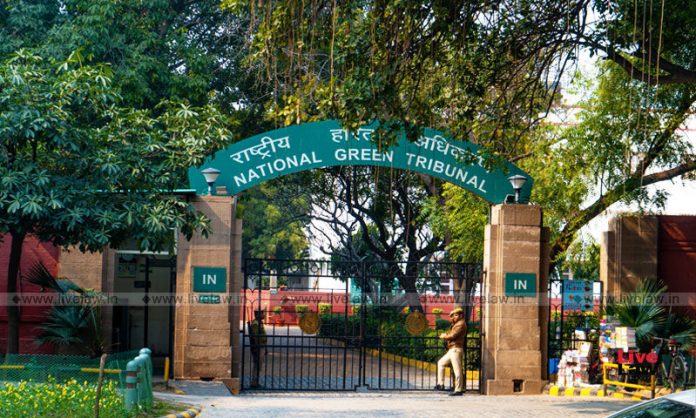
An analysis of whether the NGT has jurisdiction to take suo moto cognizance

0
Image source - https://bit.ly/3yeuvGN

This article is written by Niharika Agrawal, from IFIM Law School. This article deals with the analysis of the case that contains the issue of whether NGT has the jurisdiction to take Suo moto cognizance without an application.

Introduction

National Green Tribunal (NGT) is the specialized body that is regulated by the National Green Tribunal Act, 2010 for effective and expeditious disposal of cases relating to environmental protection and conservation of forests and other natural resources. India is the third country globally and the first developing country that has successfully established a specialized environmental tribunal. Its composition includes the chairperson, the judicial members and the expert members for the term of five years who are not eligible to reappointment. It has the jurisdiction of all the civil cases that involve substantial questions relating to the environment and also enforcement of any legal rights based on the environment. It also has the appellate jurisdiction to hear appeals as a court by being one of the statutory-like courts.  

Recently the question regarding the scope of its jurisdiction has been observed by the Supreme Court while dealing with SLP in the pending case of  Municipal Corporation of GR. Mumbai v. Ankita Sinha (2018). The issue that the Supreme Court was examining was whether the NGT has the jurisdiction to take suo moto cognizance without any formal application. This article comprises various observations made by the lawyers in the above case.

Analysis of the origin of the case

The origin of the above case is from the judgment given in the case of  Ankita Sinha v. the State of Maharashtra (2018) where the Principal Bench, pursuing an article titled “Garbage Gangs of Deonar: The Kingpins and Their Multi-Crore Trade” that had taken cognizance of the same and treated the same as the application under Section 14 of the NGT Act. The article contended that there was illegal disposal of waste from the dumping zones of the garbage at Deonar in Mumbai. Such unauthorized activities are carried out for profiteering which resulted in massive fires that may further adversely affect the environment, health, and the lives of inhabitants. This also caused a huge violation of several legislations related to environmental issues such as the Air (Prevention and Control of Pollution) Act, 1981, Water (Prevention and Control of Pollution), Act 1974, Solid Waste Management Rules, 2016 and the Hazardous Waste  Management Rules, 2016.

The Central Pollution Control Board and Maharashtra Pollution Control Board were directed to conduct joint inspection along with collectors of the areas, and the representatives of the Municipal Corporation Greater, Mumbai. It was also directed to prepare some action plans for remediation of legacy waste and form a report on the steps taken. The report of the joint inspection also observed that there was a huge amount of legacy waste and fire accidents taking place that caused huge air pollution which led to the failure of the Municipal Corporation Greater Mumbai. Such damage to public health was self-evident and has caused huge destruction of the environment and violation of the law. Hence, the Municipal Corporation Greater Mumbai was asked to compensate Rs. 5 cr by way of deposit with the Central Pollution Control Board within one month for environment restitution. Such amount could also be recovered from the polluters or the erring officers as they failed to adhere to the time-line for taking follow-up environment rectification and the rule of law that is necessary for the protection of the environment, for which Municipal Corporation is put to terms by directing the Municipal Corporation, Greater Mumbai to furnish a performance guaranteed to the satisfaction of CPCB in the sum of Rs. 100 crore.

This impugned order of the NGT was kept on stay by the Supreme Court in 2019. Along with the leading case of Municipal Corporation of GR. Mumbai v. Ankita Sinha (2018) and other certain petitions were filed against NGT. Senior Advocates Krishnan Venugopal and V Giri mentioned those appeals before the bench. The bench then agreed to consider all the matters along with the lead matter on 25th Aug 2018.

Hearings in the tribunal

The tribunal, in the case of Municipal Corporation of GR. Mumbai v. Ankita Sinha, asked a bench consisting of Justice A. M. Khanwilkar and Sanjiv Khanna, who was hearing the series of special leave petitions and appeals to address the issue regarding the ability of jurisdiction of the NGT to exercise suo moto cognizance without application just like constitutional courts. 

While analyzing this issue, Senior Adv. A.N.S Nadkarni pointed out to the bench that the NGT is one such authority that needs an applicant or a claimant before it can take cognizance of an issue. It cannot exercise like constitutional courts where the proceedings can be commenced of its own accord. He contended that this authority under the NGT Act requires the existence of a ‘lis’ between two parties in a dispute where one party is demanding something and the other party is denying it. This is the major difference between the tribunal and the courts or else the tribunal will also be a civil court. This also applies in the Administrative Tribunals and other tribunals. The jurisdiction of NGT under the Act does not have the same power as the constitutional jurisdiction under Article 32 and Article 226 of the Indian Constitution.  

To support his contentions, he referred to the decision given by the Supreme Court in the case of Techi Tagi Tara v. Rajendra Singh Bhandari (2017), which observed that all the provisions of the Act read together clarifies that there must be one substantial question relating to the environment and that the question should arise in a dispute and should not be an academic question. It was also held that it is mandatory to have a claimant raising such dispute which is capable of settlement by the NGT through availing some relief that could be either in nature of compensation or restitution of damaged property or restitution of the environment or any other incidental or ancillary relief related to the same. 

Remarking on the contention made by Adv. Nadkarni, Justice Khanwilkar stated that the above wordings are not a statement of law or a binding precedent and it might be just a passing remark. He pointed to Section 14 of the Act which defines the jurisdiction of the tribunal and observes that jurisdiction of the tribunal cannot take the issue only on the filling of the original formal application but instead, under Section 14 (1), the tribunal can exercise the jurisdiction of all nature of civil cases where a substantial question relating to the environment along with enforcement of all the other legal rights are related to the environment. These substantial questions arise out of the implementation of the enactments specified in the Schedule. 

Schedule I specifies the implementation of enactments. According to this, the tribunal can in any way exercise all those powers which are conferred on it under the statutes and also the acts in the Schedule. Justice Khanwilkar pointed out that there is no such precedent or judgment that held that the NGT does not have suo moto power to look into environmental problems and issues without the prior filing of applications. He further reflected on the possibility of having suo moto powers to the NGT and showed his concern towards considering the purpose and intention of the NGT Act. 

He further replied on the contentions of Nadkarni that the other tribunals mentioned by him are related to the dispute between the government and government servants or the government servants inter se. In this case, the tribunal is concerned about the common man who has been the victim of pollution. With this, he also stated the possibility of various reasons due to which applications may not be filed. 

Further, Justice Khanna stated that the tribunal plays a wide and significant role. It would be wrong to say that the NGT does not have suo moto jurisdiction as that might be tantamount to curtailing the powers of the tribunal. To save the powers of the tribunal, it is important to analyze the nature and the functions of the tribunal, the powers that are conferred on it, and the duties that lie upon the tribunals. He also pointed out Section 14(1) that nowhere includes or talks about applicants. Some later provisions in the Act observe the possibility of the presence of the applicant. According to the interpretation of Justice Khanna, there is nothing in the Act to suggest that the jurisdiction of the NGT cannot be practiced without applicants. He also explained the scope of jurisdiction that is indicated under Section 15 (1)(a) of the Act which allows the tribunal to grant relief, compensation, and restitution to the victims of pollution and through other damages caused due to the environment. He lastly clarified that it is available to the ‘victims of pollution’ and not to the ‘applicants’. The case is still pending before the honorable Supreme Court.

Conclusion

The issue in the above case is yet to be examined by the Supreme Court of India. However various senior experts, as well as the judges, believe that NGT has the jurisdiction to take suo moto cognizance without any formal application as it is important to protect the environment and the victims of pollution. It is, in the end, important to save the environment from all the hazardous pollution and other elements that affect the country as well. 

Reference 

  1. https://www.drishtiias.com/important-institutions/drishti-specials-important-institutions-national-institutions/national-green-tribunal-ngt
  2. https://www.sify.com/news/sc-to-examine-if-ngt-has-power-to-take-up-matters-on-its-own-news-national-vierkujccffdd.html
  3. https://www.casemine.com/judgement/in/5dcdb36f46571b625cada0fb
  4. https://www.livelaw.in/top-stories/supreme-court-to-examine-on-25th-august-ngt-jurisdiction-to-take-suo-moto-cognisance-without-application-178865#:~:text=Supreme%20Court%20To%20Examine,-Mehal%20Jain&text=The%20Supreme%20Court%20shall%20consider,to%20take%20suo%20motu%20proceedings.&text=It%20cannot%2C%20like%20a%20constitutional,proceedings%20of%20its%20own%20accord.

Students of Lawsikho courses regularly produce writing assignments and work on practical exercises as a part of their coursework and develop themselves in real-life practical skills.

LawSikho has created a telegram group for exchanging legal knowledge, referrals, and various opportunities. You can click on this link and join:

https://t.me/joinchat/J_0YrBa4IBSHdpuTfQO_sA

Follow us on Instagram and subscribe to our YouTube channel for more amazing legal content.

Download Now

The contentious nature of the waiver on intellectual property rights regarding COVID-19 vaccines by the WTO : an analysis

0

This article is written by Suvigya Buch, pursuing Diploma in Intellectual Property, Media and Entertainment Laws from LawSikho. The article has been edited by Zigishu Singh (Associate, LawSikho) and Ruchika Mohapatra (Associate, LawSikho).

Introduction

It has been a little over a year since India and the rest of the world felt the devastation caused by the COVID-19 pandemic. What was reported to have started in China soon spread all across the globe, bringing entire nations to a standstill, economically and literally. Many COVID-19 patients, even in developed nations like the United States of America (“U.S.”), have struggled with the cost of care, especially those who have been diagnosed with severe COVID-19 and its consequent health complications. The population of developing and under-developed nations, especially low-income nations with underdeveloped healthcare systems have and will continue to face a larger number of challenges in being able to afford their citizens the necessary medical treatment and access to the same. During the initial days of the pandemic, there was a lot of discussion around a possible medication or vaccine and how said the vaccine would be made in such a short time and put up for supply to the remainder of the world. For developing and under-developed nations this was a serious concern.

For many decades the controversy on whether and to what degree Intellectual Property Rights (“IP Rights”), given their restrictive nature, contributed to the development of innovation especially in the medical field. This article tries to explore various points in this debate and deals with the Waiver of Patent Rights of the  COVID-19 vaccines by the WTO.

Innovations in the medical field and IP Rights

Allowing innovative companies to manage research and growth, as well as production and distribution, under the existing framework, according to the majority of advocates and public health researchers, leads to suboptimal results and, when aided by the monopoly power provided by patent rights, may lead to excessive pricing. Despite prior attempts to find a middle ground between affordable and accessible medical treatment and investment in advancements, the debate continues. As a result, drugs and/or vaccines created to tackle COVID-19 and other related health issues are protected by patents under the World Trade Organization’s (“W.T.O”) Agreement on Trade-Related Aspects of Intellectual Property Rights (“TRIPS Agreement”) and sold to various Governments by innovative  companies.

 Countries have to grant patent holders exclusive rights to produce, use and sell drugs and vaccines for twenty years from the date of the patent filing, according to Articles 28 and 33 of the TRIPS Agreement. As a consequence, IP Rights would likely help to reduce availability, intensify capacity shortages, and contribute to exorbitant pricing. What happens when two large and powerful nations of the world propose for such IP Rights to be waived off is the main question at hand. Thus, this pandemic coupled with the race to make vaccines as well as other useful innovations more widely available has yet again brought to light the existing friction between public health promotion, international trade laws, and IP Rights.

The proposal for waiver of IP Rights regarding COVID-19 treatments and vaccines

The World Health Organisation on the 11th of March, 2020, officially announced the COVID-19 virus or Coronavirus to have caused a pandemic. Despite a few bleak initial months, by November of 2020, vaccines had been prepared and approved for use in different nations around the globe. Some of these vaccines include Moderna, along with its collaborators, developing mRNA vaccines, whereas Johnson & Johnson, AstraZeneca, the University of Oxford, and Russia’s Gamelya Institute developed adenovirus candidates.

Medical treatments such as vaccines and other medications that have been developed to combat and curb the COVID-19 virus may be patent protected as per the TRIPS Agreement and thus sold to various governments all over the world by the original manufacturing company as opposed to simply allowing every pharmaceutical company to use the formula and make the vaccine themselves. This is allowed under Articles 28 and 33 of the TRIPS Agreement and as a result, a monopolistic environment is formed. In a pandemic that has not taken very long to bring the world to a standstill, it is not possible for under-developed nations with low-income levels to be able to access and distribute the required vaccination and medication with the necessary ease.

As a result, South Africa and India in October of 2020 put across a proposal at the World Trade Organization (WTO) asking its members to waive protections in WTO rules governing copyrights, patents, trade secrets, and industrial designs with special reference to “prevention, containment or treatment of COVID-19 until widespread vaccination is in place globally, and the majority of the world’s population has developed immunity.” For the duration of the pandemic, South Africa and India “wanted to give all WTO members the freedom to refuse to grant or impose patents and other IP rights relating to COVID-19 vaccines, medicines, diagnostics, and other technologies. Both nations reasoned that quick accessibility to inexpensive medical supplies such as diagnostic kits, ventilators, medical masks, vaccines, medicines, and other personal protective equipment as well for the deterrence and care of patients in desperate need, is essential to be able to combat the pandemic. Furthermore, they also questioned how new treatments and vaccines for COVID-19 that are developed with time will be made swiftly available at inexpensive rates to meet the global demand.

The proposal attracted the support of several developing nations and co-sponsorship from Pakistan, Bolivia, and Eswatini among others. However, it did not pass due to the lack of a consensus between the WTO member nations to go ahead with the said waiver. Countries with significant power such as the U.S. and the United Kingdom among other developed nations as well as the European Union opposed the proposal made by India and South Africa. Most of these nations believed it to be an extreme measure to cure an unproven problem. There is no indication that IP Rights are a sincere obstacle to access to COVID-19 related medicines and innovations, according to a spokesperson for the European Union. As a result, there was no consensus reached within the stipulated deadline as under Article IX(3) of the Marrakesh Agreement which was 90 days and therefore the members of the WTO agreed upon postponing any discussion on such a waiver of IP Rights till the TRIPS Council of 2021. However, the new President of the U.S., Joe Biden, on the 5th of May, 2021, reversed the stance of the U.S. and said that they backed the proposed waiver. While this comes as a welcome move for several under-developed and developing nations, it has enraged the pharmaceutical companies as well as ensuring  the engagement of the investors and inventors to come. Pharmaceutical industry trade unions and companies have also expectedly been vocal of “their opposition to the proposal in question. The International Federation of Pharmaceutical Manufacturers and Associations in December of 2020” released a statement according to which amidst the pandemic, weakening national and foreign IP systems would prove to be counterproductive as IP allows for research and development as well as ensures the engagement of the investors and inventors to come.

Viability of a waiver of IP Rights regarding COVID-19 treatments and vaccines

Article 7 of the TRIPS Agreement specifies that IP Rights must be secured and applied “in a manner conducive to social and economic welfare”. Hence, before considering such a broad waiver of IP Rights it must first be shown that the existing trade rules and compulsory licensing are not enough in ensuring accessibility to inexpensive medication. It can therefore be argued that the developed nations opposing the waiver are right at this stage as there is no indication of such a waiver being the need of the hour. It may be argued that a WTO waiver is the last resort that may only be used when current WTO commitments are found to be insufficient. This was the case with Article 31 of the TRIPS Agreement’s compulsory licensing provisions, which effectively prevented Members with no or insufficient manufacturing capabilities from taking advantage of the TRIPS Agreement’s versatility.

Given the lack of infrastructure and other such essential resources and requirements, it is important to keep in mind that while it may be considered one thing to temporarily reduce the applicability of IP Rights to urgent public needs during a pandemic or other global health emergency, it is another thing entirely to remove the consideration of profitability in all policy-making relating to access to vaccines, necessary testing and therapies, and all other medical products, facilities, and supplies. While there may be a moral aspect to this scenario, it is important to consider whether such a moral aspect will even matter if such an approach is unable to yield the desired results, i.e. easy access to cheap medication.

Conclusion

It can therefore be inferred that in the short term in cases where there is the existing knowledge of creating the medicines or other forms of treatment already exist, a waiver of IP Rights may help speed up the delivery of goods and services. However, in the long run not only will the waiving of IP Rights lead to a lack of incentives for those working to create said medication but also consequently prevent the invention and advancement of knowledge for new medication or vaccinations that the world requires.

Due to the capitalist nature of the economy, several developing nations had to suffer from the lack of infrastructure as well as access to vaccines that would help them in combatting the pandemic. However, the direct waiver of IP Rights relating to COVID-19 vaccines and medications may allow others to manufacture it in principle, but it cannot magically provide the developing nations with the required standard of manufacturing plants, technology, and know-how. Rather than fighting to waive the IP Rights of vaccines and treatments related to COVID-19, pharmaceutical companies must join forces to increase the speed of manufacturing as well as the capacity for the same.

However, the TRIPS Council of the WTO has recently agreed to discuss a revised proposal according to which the waiver should be valid for at least three years after the decision is made on the proposal. The decision taken by the TRIPS council in this matter will be important as it will not only impact the current pandemic but also act as a significant precedent in the future.

References

  1. Report on the United Nations Secretary-General’s High-Level Panel on Access to Medicines, UNSGaccessmeds (Sept. 2016), http://www.unsgaccessmeds.org/final-report (last visited on Apr. 6, 2021).
  2. Trade-Related Aspects of Intellectual Property Rights Agreement (1994), Art. 28, Art. 33.
  3. Allie Nawrat, Exploring the COVID-19 vaccine IP waiver proposal at the WTO, Pharmaceutical Technology (Mar. 15, 2021), https://www.pharmaceutical-technology.com/features/wto-ip-waiver-proposal-COVID19-vaccine/ (last accessed on Apr. 6, 2021).
  4. Waiver From Certain Provisions Of The Trips Agreement For The Prevention, Containment And Treatment Of COVID-19, World Trade Organisation (Oct. 2, 2020) https://docs.wto.org/dol2fe/Pages/SS/directdoc.aspx?filename=q:/IP/C/W669.pdf&Open=True (last accessed Apr. 6, 2021).
  5. Council for Trade-Related Aspects of Intellectual Property Rights, Waiver from Certain Provisions of the TRIPS Agreement, ¶. 5, 7.
  6. Helen Collis, WTO Members Reject IP Rules Waiver for Coronavirus Technologies, Politico Pro (Oct. 16, 2020).
  7. Marrakesh Agreement establishing the World Trade Organisation, 1994, Art. IX(3).
  8. Pharma delivers COVID-19 solutions, but calls for the dilution of intellectual property rights are counterproductive, IFPMA (Dec. 8, 2021), https://www.ifpma.org/resource-centre/pharma-innovation-delivers-COVID-19-solutions-beyond-expectations-but-calls-for-the-dilution-of-intellectual-property-rights-are-counteproductive/ (last accessed on Apr. 6, 2021).
  9. Pharma delivers COVID-19 solutions, but calls for the dilution of intellectual property rights are counterproductive, IFPMA (Dec. 8, 2021), https://www.ifpma.org/resource-centre/pharma-innovation-delivers-COVID-19-solutions-beyond-expectations-but-calls-for-the-dilution-of-intellectual-property-rights-are-counteproductive/ (last accessed on Apr. 6, 2021).
  10. Trade-Related Aspects of Intellectual Property Rights Agreement (1994), Art. 7.
  11. Statement by UN Human Rights Experts Universal access to vaccines is essential for prevention and containment of COVID-19 around the world, OHCHR (Nov. 9, 2020), https://www.ohchr.org/EN/NewsEvents/Pages/DisplayNews.aspx?NewsID=26484&LangID=E (last accessed on Apr. 6, 2021).

Students of Lawsikho courses regularly produce writing assignments and work on practical exercises as a part of their coursework and develop themselves in real-life practical skills.

LawSikho has created a telegram group for exchanging legal knowledge, referrals, and various opportunities. You can click on this link and join:

https://t.me/joinchat/J_0YrBa4IBSHdpuTfQO_sA

Follow us on Instagram and subscribe to our YouTube channel for more amazing legal content.

Download Now

Investment opportunity in the stock market with special focus on the oil sector

0

This article is written by Akshita Gupta, from Symbiosis Law School Noida. This article discusses the investment opportunities in the stock market with a special focus on the oil sector and the Government considering Foreign Direct Investment policy tweaks to ease BPCL privatization.

Introduction 

In India, the oil and petroleum industry is one of the eight essential industries that contribute significantly to the country’s GDP. After the United States and China, India is the world’s third-largest oil consumer. Due to greater focus on the promotion of alternative energy sources such as wind, solar, and nuclear energy, it had already achieved 63 percent energy self-sufficiency by 2017. 

The stock market for oil and petroleum products has also begun to rise as a result of the government’s privatization drive, which has aroused the interest of more global energy giants in purchasing a majority stake in the Bharat Petroleum Corporation. This article seeks to present the most recent trends in India’s oil and petroleum industry, as well as its market size. Also, the legal framework governing investment opportunities in the stock market. 

The Indian oil sector and the investment opportunity in Stock Market

Since India’s economic growth is strongly linked to its energy demand, the demand for oil and gas is expected to increase, making the industry attractive for investment. To meet the rising demand, the government has implemented several initiatives. It has authorized 100 percent FDI in numerous sectors, including natural gas, petroleum products, and refineries, to name a few. As evidenced by the presence of Reliance Industries Ltd (RIL) and Cairn India, it now attracts both domestic and global investment.

Market size

India has surpassed China as Asia’s second-largest refiner, with a capacity of 249.9 million metric tonnes (MMT) in May 2020, with private enterprises contributing 35.36 percent.

India is predicted to be a large contributor to non- Organisation for Economic Co-operation and Development (OECD) petroleum consumption worldwide.

Crude oil output is predicted to reach 30.5 million metric tonnes in 2020, with natural gas usage expected to reach 143.08 million metric tonnes by 2040. Similarly, crude oil imports will climb to 4.54 million barrels per day (mbpd) in 2020, up from 3.68 billion cubic meters last year, while LNG imports will be 33.68 billion cubic meters (bcm). Petroleum product usage has also increased by 4.5 percent to 213.69 MMT. The country’s petroleum product exports have also increased to USD 35.8 billion in 2020, up from USD 34.9 billion in 2019, with a volume increase of 65.7 MMT in 2020, up from 60.54 MMT in 2019. India, as one of the world’s major emitters of greenhouse gases, now has a 6.2 percent share of natural gas in its energy industry, which is predicted to rise to 15% by 2030. India, as the world’s second-largest biogas user, plans to build 5000 CBG facilities by 2023 under the SATAT initiative. The Ministry of Petroleum and Natural Gas of the Government of India has set an aim of reducing oil and gas import dependency by 10% by 2022, providing foreign investors with a wide range of chances to participate in projects worth US$ 300 billion. GAIL (Gas Authority of India Limited) controlled 71.61 percent of the country’s natural gas pipeline network as of March 2020. With 51.25 percent of the market share in March 2020, Indian Oil Corporation Limited was the market leader in the product pipeline network category. By the end of 2020, the energy trade between India and the United States has surpassed $10 billion.

Investments 

Between April 2000 and December 2020, the petroleum and natural gas sector attracted US$ 7.91 billion in FDI, according to data supplied by the Department for Promotion of Industry and Internal Trade Policy (DPIIT). The following are some of the most significant oil and gas investments and developments:

  • India’s natural gas production grew by 22.7 percent year on year in April 2021, according to government data, as Reliance Industries Ltd. and its partner, BP plc, expanded production in the KG-D6 block on the east coast.
  • To accommodate increased demand, Petronet LNG announced plans to raise the capacity of its Dahej terminal by 29 percent to 22.5 million tonnes per annum (mtpa) in February 2021.
  • Bharat Petroleum and Hindustan Petroleum, two of India’s largest oil dealers, have announced plans to expand their rural locations in 2021.
  • ONGC declared in February 2021 that it would boost natural gas output from a KG basin block to 2.5-3 million standard cubic meters per day by May 2021.
  • The government launched key oil and gas projects in Assam in February 2021, including the INDMAX Unit at Indian Oil’s Bongaigaon Refinery, Oil India Limited’s secondary tank farm at Madhuban, Dibrugarh, and a “Gas Compressor Station” at Hebeda Village, Makum, and Tinsukia, which are all remote from Dhemaji.
  • The Ramanathapuram – Thoothukudi natural gas pipeline and the Gasoline Desulphurization Unit at Chennai Petroleum Corporation Limited, Manali, were both launched in February 2021 by the government. Greenstat Hydrogen India Pvt. Ltd. and IndianOil Corp. Ltd. inked a ‘statement of intent ’ in February 2021 to build a center of excellence for the hydrogen value chain and other associated technologies such as hydrogen storage, fuel cells, and so on. 
  • According to Mr. Dharmendra Pradhan, Minister of Petroleum and Natural Gas of India, foreign investors will be able to engage in projects worth US$ 300 billion in India as the government aims to reduce its reliance on oil imports by 10% by 2022.

Top companies in the oil sector of India

Reliance Industries Limited

RIL’s plant at Jamnagar, Gujarat, has a refining capacity of 1.24 million barrels per day, making it the world’s largest refining hub. Its oil and gas segment revenue was US$ 455.53 million until June 2020. Its Petroleum sector operates a nationwide network of over 1300 gasoline retail locations. It is the first firm in India to achieve a market valuation of more than Rs. 13.75 lakh crores.

Oil and Natural Gas Corporation (ONGC)

The country’s largest crude oil and natural gas corporation, ONGC, has agreed to a Memorandum of Understanding (MoU) with NTPC to form a renewable energy joint venture in India. It has a market capitalization of almost Rs. 1.04 lakh crore.

As part of its Energy Strategy 2040, ONGC Videsh, a subsidiary of ONGC, India’s largest international oil and gas company, has made new oil finds in Colombia and Brazil. ExxonMobil and the firm also inked an MoU for offshore blocks.

Petronet LNG Limited 

This company, which has a market worth of Rs. 38,227.5 crore, built the country’s first LNG receiving and regasification plants. The company expects to form LNG station agreements with gasoline and gas suppliers for long-haul trucks and buses. It plans to build 1,000 LNG stations across the country over time, to have 300 LNG stations operational by 2023.

Indian Oil Corporation Limited (IOCL)

Indian Oil Corporation Limited (IOCL) is a public company based in India.

With approximately 47,800 client touchpoints, IOCL focuses on the safety of India’s energy industry and self-sufficiency in refining and marketing petroleum products. It has a market capitalization of Rs. 1.71 crore and is the largest contributor of levies and taxes to the national exchequer. It began supplying the world’s cleanest gasoline and diesel across the country in March 2020, and it plans to invest Rs. 500 crores in Karnataka.

Oil India Limited 

Oil India Limited is a public sector firm that is the world’s second-largest in hydrocarbon exploration and production. Its stock is on the rise. Despite blowouts at one of its locations, market experts expect that they will be able to recover and that prices will progressively improve. The market capitalization is Rs 10,291.01 crore.

The legal framework governing investment opportunity in the stock market 

India is the world’s fifth-largest economy and one of the few economies in the world that has a strong potential for growth and profit in all areas. The significant skilled workforce is one aspect that provides a good return on foreign investors’ capital. To be successful, foreign investors must analyze and calculate the potential and limitations that the Indian markets bring.

Investors must devise a good strategy and conduct considerable research. If foreign corporations are looking for short-term gains, they may be disappointed to learn that they will not be successful; nevertheless, long-term gains can be expected for an investor who understands the Indian market before investing. Investors can reap the benefits of their investments if these criteria are kept in mind and taken care of.

Government policies concerning foreign investment in India

The Indian government has made several efforts to encourage international investment. The Foreign Exchange Management Act (FEMA) of 1999 governs most of the foreign investments in India. The Reserve Bank of India released the Foreign Exchange Management Regulations 2000 and after the Foreign Exchange Management (Transfer or Issue of Security by Person Resident Outside India) Regulations 2017 under FEMA to govern foreign investments. Furthermore, the Department of Promotion of Industry and Internal Trade established a framework that integrated the sectoral rules and conditions that foreign investors operating in Indian firms must meet.

The FEMA, as well as notifications and circulars issued from time to time by the Central Government and RBI relative to foreign investments, are the primary laws that control and regulate acquisitions and foreign investment in India.

In India, there are various types of foreign investment:

Foreign Direct Investment (FDI)

Following our independence, policymakers devised FDI policies in response to the necessity to bring in advanced technology for development and collect foreign exchange resources.

FDI is an investment made by a company or individual that is a substance or entity in one country and has control over economic interests in another country. FDI can take the form of starting a firm, entering into joint ventures, mergers, and acquisitions, opening new offices, and so on. It is prohibited in the following industries: betting and gambling, lottery business, Nidhi Company, housing and real estate business, chit fund business, transferable development rights, retail trading, plantations, atomic energy, and agriculture.

The following changes were made to the FDI policy: 

  • Any non-resident entity from Pakistan, China, Nepal, Myanmar, Bhutan, and Afghanistan can invest in India only after obtaining government approval
  • The beneficial owner of an investment made in India must be based in or a citizen of these countries.
  • These limits are applied in the case of an indirect or direct transfer of ownership of any potential or current FDI in a company in the country, resulting in beneficial ownership that is subject to the restrictions.
  • Investments made before the new policy took effect are grandfathered.

Foreign Portfolio Investment

Foreign Portfolio Investment (FPI) is an investment in Indian securities by foreigners and non-residents, which includes shares, government securities, corporate securities, convertible securities, framework securities, and so on. The goal is to assure India a controlling interest at lower risk or investment than FDI, with flexibility for entry and leave.

In light of the coronavirus, SEBI has taken steps to protect foreign investors and ease the load on their firms’ operations by easing the procedures for FPIs to renew their licenses.

Foreign Investment

An investor’s investment in foreign markets is referred to as an FII. Companies must only register with the stock exchange to make investments under the FII concept. A mutual fund, a pension fund, an insurance or reinsurance firm, and an investment trust that intends to invest in India are all included. The overall investment limit under FII is 24 percent of the Indian company’s paid-up capital. These investments are significant in our country because they are net sellers, increasing the breadth and depth of Indian markets as well as providing a substantial source of speculation. The distinctions between FPI and FII are primarily in the types of financial specialists, and so the phrases FPI and FII are used interchangeably.

Amendments to the FPI’s policy and rules:

  • Instead of the three current categories, the FPIs have been reclassified into two.
  • The registration process for FPIs has been simplified, with registration timelines being shortened.
  • Due to the modification of broad-based eligibility criteria for foreign institutional investors, the FPI route to enterprises that do not satisfy the threshold of 20 investors has been liberalized.
  • Central banks that are not members of the Bank for International Settlements are now eligible to register as FPIs.
  • Foreign Portfolios are entitled to undertake off-market transfers of assets that have been suspended to a foreign or domestic investor, dispose of such securities, and obtain liquidity through firms established in compliance with the International Financial Service Centre.
  • The requirements of the FPI apply to the floating of offshore funds by Indian mutual funds to avoid regulatory arbitrage and the rationalization of the regulatory environment. 

Since overseas investments face greater dangers and risks than domestic ones, current foreign investment law has established an international minimum standard of treatment. These criteria were created with the primary objective of safeguarding foreign investors in host nations.

Though the content of the international minimum standard is difficult to discern, it embodies the law relating to compensation for expropriation of foreign property or investment, as well as dispute resolution or reconciliation of such issues through international tribunals. The minimum level was recognized as a civilized justice or civilization standard.

Foreign investment in India

The following are the ways by which foreign investments can be made:

Automatic Route

According to Regulation 16 of the FEMA Regulations (2017), foreign investment in India is permitted without prior authorization from the Government of India or the Reserve Bank of India (RBI) in all activities or sectors.

Government Route

Foreign investment in activities not covered by the automatic route requires prior authorization from the government via the Government route. The Foreign Investment Facilitation Portal can be used to submit an application to the government for approval. The Ministry of Commerce Department of Industrial Policy and Promotion is in charge of this portal.

What is a Foreign Investment Facilitation Portal and how does it work

The Foreign Investment Facilitation Portal is the Finance Ministry’s online single-window portal for facilitating foreign investment in India. The Department of Industrial Policy and Promotion Board is in charge of the portal. Its functions are as follows:

  • To increase transparency in the process of foreign investment approval;
  • To increase communication, eliminate paperwork, and keep investors informed via SMS/e-mail;
  • To post-approval letters to the portal in a standard format for the convenience of investors;
  • To communicate guidelines and press releases about the FDI policy to the investors.

The FIFP replaced the former Foreign Investment Promotion Board (FIPB) to promote transparency and ease the clearance process for FDI projects, allowing the country’s FDI inflow to increase. Since the elimination of the FIPB, various government departments have been given the authority to review FDI proposals in collaboration with the DIPP, which will also create standard operating procedures for processing applications.

Sectoral limitations on foreign investment

Foreign investment is permitted in the areas or activities listed in Rule 16 of the FEMA Regulations, 2017 up to the limit stated against each sector or activity, subject to applicable laws and regulations. The restriction indicated against each sector is the sectoral cap for the sectors or activities. The total amount of foreign investment shall not exceed the limit set by the sector. In sectors not included in Regulation 16 of the FEMA Regulations, 2017 and not forbidden under Regulation 15 of the FEMA Regulations, 2017, up to 100 percent foreign investment is permissible via the automatic method, subject to applicable laws and regulations. However, this condition does not apply to activities in financial services.

What are the investment options for a person living outside India who wants to invest in India

Entry routes, sectoral caps, and investment limits will apply to any investment made by a person residing outside of India. A person residing outside of India can invest in the manner described below:

  • A person living outside of India can subscribe to, buy, or sell capital instruments issued by an Indian firm, subject to the terms and conditions outlined in Schedule 1 of the FDI regulation. It should be emphasized, however, that a citizen of Bangladesh or Pakistan, or an organization formed in these countries, cannot purchase capital instruments without first obtaining official approval.
  • A foreign portfolio investor can buy or sell capital instruments of a listed firm on a recognized stock market in India, subject to the terms and conditions of Schedule 2 of the FDI legislation.
  • A Non-Resident Indian (NRI) or an Overseas Citizen of India (OCI) may sell or buy capital instruments of a listed firm on a recognized stock exchange in India on a repatriation basis, subject to the terms and circumstances set down in Schedule 3 of the FDI rule.
  • A Non-Resident Indian (NRI) or an Overseas Citizen of India (OCI) may sell or buy capital instruments of an Indian company on a non-repatriation basis, or buy or sell units or contribute to the capital of an LLP, a firm, or a proprietary concern, subject to the terms and conditions set out in Schedule 4 of the FDI regulation. 
  • A person residing outside of India who has been granted permission to do so by the Reserve Bank after consultation with the Central Government may sell or buy securities other than capital instruments, subject to the terms and conditions outlined in Schedule 5 of the FDI rule.
  • A person residing outside of India who is not a citizen of Pakistan or Bangladesh or an entity incorporated in these countries may invest in an LLP by making a capital contribution or purchasing or transferring profit shares, subject to the terms and conditions outlined in Schedule 6 of the FDI regulation.
  • A foreign venture capital investor can invest in the manner and under the terms and conditions outlined in Schedule 7 of the FDI regulations.
  • A person resident outside of India who is not a citizen of Pakistan or Bangladesh, or a business incorporated in these countries, may engage in investment vehicle units subject to the terms and conditions outlined in Schedule 8 of the FDI law.
  • A person living outside of India can invest in Depository receipts issued by foreign depositories against qualifying securities, subject to the terms and restrictions outlined in Schedule 9 of the FDI rule.
  • A foreign portfolio investor, NRI, or OCI can buy, hold, and sell Indian Depository Receipts issued in the Indian Capital Market, subject to the terms and conditions outlined in Schedule 10 of the FDI regulations.

Purchase through a rights or bonus issue

A person residing outside of India who has made an investment in an Indian company is permitted to invest in the firm’s capital instruments, subject to the following conditions:

  1. The Indian company’s offer should adhere to the provisions of the Companies Act of 2013.
  2. The company’s sectoral cap should not be breached as a result of the problem.
  3. The shareholding on which the rights issue or bonus issue is based must have been acquired and held by FEMA Regulations, 2017.
  4. Other than share warrants, capital instruments acquired as a bonus issue or rights issue by a person located outside India are subject to the same requirements as the underlying holding against which the rights issue or bonus issue was issued.
  5. If the company is a publicly-traded Indian corporation, the rights awarded to a person residing outside of India will be at the company’s discretion.
  6. If it is an unlisted Indian company, the rights issued to a person residing outside of India must not be at a lower price than those offered to Indian residents.
  7. An investment made through a rights or bonus issue is subject to the terms and conditions in effect at the time of the issue.
  8. The consideration amount may be paid from money kept in an NRE/FCNR (B) account maintained by the Foreign Exchange Management (Deposit) Regulations (2016) or as an inbound remittance from outside through banking channels.
  9. The consideration amount can also be paid by debit to the NRO account maintained by the Foreign Exchange Management (Deposit) Regulations, 2016 if the original investment was made on a non-repatriation basis.

The current scenario

The following are some of the significant steps taken by the Indian government to boost the oil and gas sector:

  1. Prime Minister Narendra Modi said in February 2021 that the Indian government aims to invest Rs. 7.5 trillion (US$ 102.49 billion) in oil and gas infrastructure over the next five years.
  2. The government provided funding worth Rs. 12,480 crore (US$ 1.71 billion) for LPG (liquefied petroleum gas) direct benefit transfer and Rs. 1,078 crore (US$ 147.31 million) for feedstock subsidy to BCPL/Assam Gas Cracker Complex in the Union Budget 2021.
  3. The Finance Minister declared in the Union Budget 2021 that the Pradhan Mantri Ujjwala Yojana (PMUY) scheme would supply 1 million new LPG connections.
  4. The Ministry of Petroleum and Natural Gas released a draught LNG policy that seeks to boost the country’s LNG regasification capacity from 42.5 million tonnes per annum (mtpa) to 70 mtpa by 2030 and 100 mtpa by 2040.
  5. On October 11, 2019, the Ministry of Petroleum and Natural Gas released a long-term ‘Ethanol Procurement Policy’ as part of the ‘Ethanol Blended Petrol (EBP) Programme,’ which covers ethanol procurement modalities, proposed mechanisms for long-term procurement contracts, pricing methodology, and other topics.
  6. The Ministry of Petroleum and Natural Gas has permitted SC/ST enterprises to provide bulk LPG transportation under the Union Budget 2019-20, Indian Scheme ‘Kayakave Kailasa.’ Bharat Petroleum, Hindustan Petroleum, and Indian Oil Corporation, all state-owned energy companies, aim to spend $20 billion on refinery expansions by 2022.
  7. By 2023, the government plans to build 5,000 compressed biogas (CBG) facilities.
  8. By 2022, the government plans to invest US$ 2.86 billion in upstream oil and gas production, doubling natural gas production to 60 billion cubic meters and drilling more than 120 exploratory wells.

Government considering FDI policy tweak to ease BPCL privatization

The government is considering changing the present foreign direct investment (FDI) policy to allow foreign investors to buy a majority interest in Bharat Petroleum Corp Ltd, India’s second-largest oil refiner. The government is selling its full 52.98 percent ownership in BPCL in order to privatize the company. Vedanta, a mining-to-oil conglomerate, had submitted an expression of interest (EoI) to buy the government’s 52.98 percent stake in BPCL as part of the privatization process. The other two bids are thought to be worldwide funds, with Apollo Global Management being one of them.

Only 49% FDI is now permitted in petroleum refining via the automatic route by public sector enterprises (PSUs), with no disinvestment or dilution of domestic ownership in existing PSUs. A foreign player would be unable to purchase more than a 49% share in BPCL under this rule.

DIPAM has proposed amending the existing FDI policy to allow 100 percent foreign direct investment in a central public sector company (CPSE) in the petroleum and natural gas sector, according to sources.

The Department for Promotion of Industry and Internal Trade (DPIIT), on the other hand, has recommended a special provision for this case.

They stated that a proposed adjustment to the FDI policy is being considered to allow investment in BPCL as part of the disinvestment process. 

Conclusion

In order to offer improved prospects for foreign investment in India, the government has recently loosened some current rules and implemented new legislation in some cases. Many developments have occurred since India’s economy was opened to foreign investors in 1991, with the goal of attracting foreign investment. Since the liberalization, all administrations have begun to enact policies that have increased the attractiveness of the Indian economy to international investment.

References


Students of Lawsikho courses regularly produce writing assignments and work on practical exercises as a part of their coursework and develop themselves in real-life practical skills.

LawSikho has created a telegram group for exchanging legal knowledge, referrals, and various opportunities. You can click on this link and join:

https://t.me/joinchat/J_0YrBa4IBSHdpuTfQO_sA

Follow us on Instagram and subscribe to our YouTube channel for more amazing legal content.

Download Now

Understanding the legality in Bangladesh sending Rohingya refugees to an island

0
Image source - https://bloom.bg/3p8StSG

This article is written by Daisy Jain, pursuing B.COM.LLB (Hons) from the Institute of Law, Nirma University. This is an exhaustive article which deals with the legality of Bangladesh sending Rohingyas to an island. 

An overview of the status of the Rohingya refugees 

The Rohingya are a Muslim-majority ethnic group who dwell primarily in Rakhine, Myanmar’s westernmost region. They use a Bengali dialect rather than the widely prevalent Burmese language. Despite the fact that they have lived in Myanmar for centuries, Myanmar recognizes them as people who came to the nation during the colonial period. As a result, the Rohingyas have not been accorded full citizenship.

As per the Burmese Citizenship Law of 1982, a Rohingya (or any ethnic minority) is only qualified for citizenship if he or she can prove that their forefathers lived in the nation before 1823. They are classed as “resident foreigners” or “associate citizens” (even if one of the parents is a citizen of Myanmar). They are not eligible to work in the public sector because they are not citizens. Within the Rakhine state, their mobility is similarly constrained. 

The Rohingya, a Myanmarese ethnic Muslim-minority, has been called by UN Secretary-General Antonio Guterres as “one of, if not the, most oppressed people around the world.” Around 10 lakh Rohingya lived in Myanmar at the beginning of 2017, one of several ethnic minorities in the country. Rakhine state is home to a majority of the Rohingya Muslims. The Myanmar government, on the other hand, regards them as illegitimate Bangladeshi immigrants and has refused to award them citizenship, even leaving them out of the 2014 census. The present issue began in 2017 when militants from the Rohingya Arsa group attacked more than 30 police stations. According to independent reports and testimonials from Rohingya refugees, Myanmar forces responded by burning communities and killing thousands of civilians, frequently with the help of local mobs. At the time of the 2017 migration, there were also genuine claims of sexual abuse against Rohingya girls and women. Thousands of Rohingya Muslims were compelled to flee Myanmar and seek refuge in Bangladesh as a result of the attacks. The majority of them had to stay in the Cox’s Bazar refugee camps in Bangladesh. The Bangladeshi government now plans to relocate at least one-tenth of the Rohingya population to Bhasan Char, an isolated island off the coast of Bangladesh.

The Rohingya crisis

In Myanmar, the Rohingya have been subjected to years of brutality, prejudice, and oppression. After a tremendous outbreak of violence erupted in Myanmar’s Rakhine State in August 2017, more than 700,000 people – 50% of them were children – were forced to flee to Bangladesh. In the 2017 exodus, those escaping assaults and bloodshed joined over 3,00,000 people already in Bangladesh from earlier waves of migration, thus becoming the world’s largest refugee camp. The COVID-19 outbreak has added a new layer of danger to these congested circumstances. Many evacuees live in makeshift bamboo and tarpaulin dwellings, where daily hazards are all too realistic. A fire in Cox’s Bazar on March 22, 2021, caused enormous destruction when it quickly swept over four Rohingya refugee camps.

Genocide against the Rohingya Muslims in 2016

The Rohingyas are a stateless Indo-Aryan ethnic minority who mostly practice Islam and live in Myanmar’s Rakhine state. During the Rohingya genocide in 2016, they were persecuted by the Myanmar Army. More than 8 lakh Rohingya Muslims are said to be living in unsanitary circumstances in Cox’s Bazar camps after fleeing an army campaign in Myanmar’s Rakhine Province in 2016.

Aftermaths of Myanmar’s Rohingya 

Since the late 1970s, more than one million Rohingyas have fled Myanmar due to widespread persecution. Rohingyas started to migrate to different parts of the world as refugees such as Saudi Arabia, UAE, Pakistan, Bangladesh, India, and Malaysia. The maximum movement was seen in Bangladesh in which 1 million refugees resided. Bangladesh had to face the consequences as a result of the fleeing of the Rohingyas. As Bangladesh was densely populated, the government decided to start shifting Rohingya refugees to the Bhasan Char Island. 

One of the cities of Bangladesh is the Cox Bazar and the government made refugee shelters on the way to Cox Bazar. Only about 7 to 8 lakh Bangladeshi migrants lived in Cox Bazar, out of a total of one million. As a consequence of this, the population density increased in Cox Bazar, and due to which the Bangladesh government was worried about the political implications because of the crisis. The situation was worsened in COVID-19 because of increased community transmission.

2017-18 : plan to decongest Cox Bazaar

As a result of the increment in pollution density in Cox Bazar, the Bangladesh government decided to decongest it. This plan was formed around 2017-18 before COVID-19 because they knew the importance of decongesting the Cox Bazar. In 2017, they decided to shift 1 lakh refugees out of 7-8 lakhs refugees to the island of Bhasan Char which is 39 km far from Naokhali on the mainland. Bhasan Char was not an island before as it has emerged from an ocean. It has been formed through the process of sedimentation. This plan was announced in 2018 by Prime Minister Sheikh Hasina and she said that it is a temporary measure to decongest the refugees and shift them to the Bhasan Char island and after that, a new plan shall be implemented. 

Myanmar military stages coup

Myanmar’s military staged a coup which means that the military of Myanmar has taken power over the government on 1st February 2021. The seizure by the military has led to the detention of leaders which includes the de facto leader Aung San Suu Kyi. They also declared that the country shall remain under 1 year of state emergency. The military seizure in Myanmar has sparked outrage among the Rohingya refugees who resided in the camps of Bangladesh. Plenty of them are now afraid to return to their country, but some are still optimistic.

Provisions made for the refugees on the Bhasan Char island

The Bangladesh government has taken such a big step of shifting people to Bhasan Char island which is made through sedimentation. The government has made some provisions in which they have built shelters, masjids, and hospitals. The total estimated cost which the government is bearing is approximately $272 million. The maximum construction is done by the Chinese and British companies. They have built flood embankments and cyclone shelters which can be used to better handle natural disasters, if any, in the future. In fact, the total number of houses that they have built is approximately 1,440 at a height of 4 m from the land because of the fear of submergence and they can accommodate around 1,00,000 people. People here can engage themselves in farming and livestock breeding. 

Bangladesh ships Rohingya refugees to the remote island Bhasan Char 

The Rohingya refugees reached the low-lying area of Bhasan Char on 4th December 2020. Rohingya families have been relocated from the camps near the Myanmar border to the settlement on Bhasan Char island despite concerns about its safety and lack of consent from the refugees. The 52 sq. km island surfaced in the Bay of Bengal just around 20 years ago. The island which has never been inhabited is flood-prone and vulnerable to frequent cyclones as well. Locals say that high tides flooded the island a few years ago and that cyclones can even cause major storm surges. The Bangladesh government has not involved any international organization including the United Nations in the Rohingya relocation process. However, some national-level NGOs have worked for Rohingyas. The government has planned to bring representatives of some international organizations after the Rohingya stay at the island for some time. It is being said that if Rohingyas give some positive feedback then the Bangladesh government will bring another group of Rohingyas here for a new life. 

The facilities on the Bhasan Char island were developed by the Bangladesh government to ensure better living conditions for them compared to congested camps in Cox’s Bazar. The Bangladesh government defending its moves says that moving refugees will ease the overcrowding in its own camps which are now home to more than one million Rohingyas. The United Nations meanwhile in a statement said that it had been given limited information about the relocations and was not involved in any preparations of sending Rohingyas to the island. The United Nations said that it had not been allowed independently to assess the safety, feasibility, and sustainability of the island as a place to live. Bangladesh’s foreign minister AK Abdul Momen dismissed these claims saying that the facilities of the island were much better than those available in the camps. He also added that the government decided to take around 23,000 families voluntarily as the current camps were too congested. Almost a million Rohingyas fled Myanmar in 2017 following a military-led crackdown and most of these communities live in a vast network of camps in Bangladesh.

What is Bhasan Char

Bhasan Char island is a ‘char island’ which is a geographical island that is created because of a silt deposit or sediment deposit at the mouth of the river. It covers around 13,000 acres and was formed by the deposition of silt where the Meghna River meets the Bay of Bengal, which is rich in alluvial deposits. Char island’s literal meaning is ‘shifting landmass’ as it keeps on shifting or it goes inside the water. It is an ecologically fragile island as it keeps on moving. Bhasan Char island is surrounded by Mangrove forests and due to which it has gained geographical stability. In terms of location, it is a two-and-a-half-hour boat ride away from the Cox Bazar in Chittagong. 

To provide facilities for these migrants who are sheltering on Bhasan Char island, the Bangladesh government has built roads and purchased advanced telecommunication networks. The Bangladesh government has set aside approximately 1,350 acres for Rohingya refugees, with 432 acres dedicated to their rehabilitation and the remainder set aside for future initiatives. They have been accommodated in red-roofed residential units, with the majority of houses being erected four feet above ground to assist them to endure severe tidal waves.

Yanghee Lee, a former UN Special Rapporteur on the Condition of Human Rights, addressed the Human Rights Council in 2019 by stating that she wasn’t sure if the island was “really livable” even after visiting it. The first wave of 1,642 Rohingya landed at Bhasan Char on 4th December, conveyed by naval warships from Chittagong, as per the Associated Press. Some of the displaced refugees were mentioned in western media as alleging they were not approached for their approval. According to other reports, some Rohingyas are “enthused” to be transported to a new, “peaceful and pleasant” location.

Myanmar and the Rohingya

The migration to Bhasan Char has elicited no response from Myanmar, which does not acknowledge Rohingya as an indigenous population and considers them just as Bengalis. Myanmar tentatively decided to take back some Rohingyas two years ago, but just a small number returned. The army retaliated four years ago against the Arakan Rohingya Salvation Army, which Myanmar described as an Islamist terrorist organization. “The atrocities perpetrated on Rohingya women, men, and children during the August 2017 activities, particularly their indiscriminate slaughter, reach the level of both war and crimes against humanity,” according to the UN-appointed Independent International Fact-finding Committee. According to the report, the Army aimed residents for assassinations, rape, and sexual abuse on a “horror scale.” 

The Gambia, with the support of the Organization of Islamic Cooperation, moved Myanmar to the International Court of Justice (ICJ) in November, alleging that it had violated the 1948 Genocide Convention. Myanmar was addressed at the proceedings by State Counselor Aung San Suu Kyi. In January, the International Court of Justice issued a temporary injunction instructing Myanmar to take “all steps within its jurisdiction” to avoid crimes against members of the Rohingya Muslim minority, as required under the Convention on the Prevention and Punishment of Genocide. However, Myanmar is not bound by orders. 

Myanmar continues to discriminate against Rohingya Muslims. There were virtually no Rohingya voters in the latest elections, in which Suu Kyi’s party won a larger majority than in 2015 because the military junta had taken away their ability to vote before the poll. Even those who were qualified to vote were unable to do so due to the presence of up to a million Rohingya outside Myanmar and the cancellation of voting in Rakhine state, where a lakh Rohingya still reside. Rohingya candidates’ nominations were denied due to a lack of proof of citizenship. Myanmar is a member of ASEAN, which has failed to resolve the situation. The non-interference principle governs the grouping. Myanmar has sought refuge in China’s arms as a result of worldwide outrage at Suu Kyi’s defence of the army’s practices before the International Court of Justice. In the midst of it all, Bangladesh, which has done more for the Rohingya than any other country, thinks it is within its rights to circumvent UN worries about the move to Bhasan Char.

The legality of this issue

The relocation of Rohingya refugees raises grave human rights concerns. The relocation amounts to nothing more than threatening widespread captivity of the Rohingya refugees and results in infringement of international human rights obligations. The detention of the Rohingya refugees on the Bhasan Char island is a breach of Bangladesh’s responsibilities and liabilities under the International Covenant on Civil and Political Rights (ICCPR), and seriously jeopardizes their freedom of movement and right to liberty. Article 9 of the International Covenant on Civil and Political Rights (ICCPR), to which Bangladesh is a signatory, gives people the right to liberty and forbids unjustified arrest and removal of liberty unless done in accordance with legal norms. Article 12 of ICCPR gives everybody living within a state’s territory the right to free movement and choice of residency. Bangladesh’s government has violated these provisions of ICCPR.

The Rohingya refugees’ human liberties and rights must be safeguarded. Human rights specialists have urged Bangladesh’s government to freeze the resettlement of Rohingya refugees to Bhasan Char island. Only after all individuals have been properly updated and independent technical evaluations have been performed, can the government continue the relocation of the Rohingya refugees on a volunteer footing. The Bangladeshi government should provide the United Nations High Commissioner for Refugees (UNHCR) accessibility to the island and to those individuals who have migrated as it plays a pertinent role in identifying and collaborating with other international humanitarian players such as international humanitarian organizations, in order to improve the standard of life of the refugees.

The Non-refoulement principle is an international refugee law principle that governs the restrictions towards states that are trying to repatriate or prevent refugees from exercising their rights and duties in any part of the territory. Article 32 of the 1951 Refugee Convention regulates the principle of non-refoulement, which asserts, “The signatory countries shall not remove a refugee legitimately in their area except on circumstances of nationwide safety or maintenance of peace.” Only a decision made in conformity with the judicial process may result in the expulsion of such a refugee. Bangladesh is suspected of violating both the international humanitarian aid framework and the norm of non-refoulement. 

Conclusion

After the Myanmar military began its brutal ethnic cleansing campaign against the Rohingya in 2017, the Bangladesh government was liberal and generous in protecting a needy population. While the stay has been extended because Myanmar has yet to provide circumstances for a secure, respectful, and voluntarily come back. Bangladeshi authorities should realize that the Rohingya refugees are not accountable for the current situation and should guarantee that their rights are safeguarded.

References 


LawSikho has created a telegram group for exchanging legal knowledge, referrals and various opportunities. You can click on this link and join:

https://t.me/joinchat/J_0YrBa4IBSHdpuTfQO_sA

Follow us on Instagram and subscribe to our YouTube channel for more amazing legal content.
Download Now

Fashion and intellectual property laws in India

0
Image source: https://rb.gy/xucvgo

This article has been written by Anjali Singh, pursuing a  Diploma in Intellectual Property, Media and Entertainment Laws from LawSikho. This article has been edited by Prashant Baviskar (Associate, Lawsikho) and Ruchika Mohapatra (Associate, Lawsikho). 

Introduction

“Fashion is not something that exists in dresses only. Fashion is in the sky, in the street; fashion has to do with ideas, the way we live, what is happening. – Coco Chanel

India is a land of diverse cultures, and clothes speak a lot about one’s culture. The Indian apparel industry generates trillions of dollars and provides employment to many people. It’s a fascinating combination of aesthetics and art. Clothes are no longer limited to functional usage but have transgressed boundaries to become artistic expressions. The artistic or the innovative component is what separates the past from the current in fashion. The abundance of ‘artistic factors’ over ‘utility factors’ makes IPR protection predominantly important in the fashion industry. 

Legal provisions protecting fashion laws

 Copyright Act of 1957, the Designs Act 2000, the Geographical Indication Act of Goods Act, 1999, and Trademarks Act,1999, are some of the laws that provide protection in some relevant areas of the fashion industry.

Once a design is brought into its materialistic form from mere imagination, and its originality is apparent from its existence, it automatically finds its place in the category of artistic work under Section 13 of the Copyright Act, 1957. Section 15 of the Copyright Act is an important provision regarding copyright in designs that are registered or are capable of being registered under the Designs Act, 2000. It states that: 

  • Firstly, a design if registered under the Designs Act 2000, will not qualify for the protection under Copyright Act.
  • Then copyright in any design, which is capable of being registered under the Designs Act but which has not been so registered, shall cease as soon as any article to which the design has been applied has been reproduced more than fifty times by an industrial process by the owner of the copyright or, with his license, by any other person. Thus, as per the Copyright Act, 1957, design registration and copyright over an article cannot co-exist.

Section 2 (d) of the Design Act, 2000 lays down the definition of design. According to this provision, “design” means only the features of shape, configuration, pattern, ornament, or composition of lines or colors applied to any article whether in two dimensional or three dimensional or in both forms, by any industrial process or means, whether manual, mechanical or chemical, separate or combined, which in the finished article appeal to and are judged solely by the eye with certain exceptions.

Protection under the Trademark Act, 1999

Stringent punishments have been enshrined under Section 103 and Section 104 of the Trademark Act 1999, for trademark infringers, who are caught for falsely using trademarks and selling goods to earn profits.

Geographical indications

India is a diverse country and is affluent when it comes to traditional knowledge. From Kashmir’s Pashmina to Tamil Nadu’s Kanchipuram Silk, and from Muga Silk of Assam to Surat Zari of Gujarat, India’s traditional fashion assets hold a high economic value and are not just valuable to the national market, but hold enough value in the international market as well. Geographical Indication’ (GI) has features that effectively respond to the needs of indigenous and local weavers, knitters and designers, It accentuates the amalgamation of efforts put by the indigenous workers, the value of traditional knowledge, favorable weather conditions. It is also pertinent to note that the Kutch embroidery from Gujarat, Sujini embroidery work from Bihar, and Kasuti Embroidery from Karnataka have all been granted GIs. The fashion foundation of India [FFI] is putting consistent efforts to protect IP in the fashion industry

An interesting observation 

The definition of ‘design’ can be broken down and understood from the Designs Act 2000. According to the provision: ‘A design is something applied to an article.’ So, it can be interpreted that design and article are two separate entities, for instance, if a dress is made using a distinctive design then it fulfills both the conditions that are of a design and an article, but if a dress is stitched directly by relying on some ideas then only one condition is fulfilled, that is of an article and not of design in that scenario it doesn’t qualify as a design, however, it may find its place as ‘original artistic work’ under the Copyright Act. The vagueness in the concept of design leaves it open to different interpretations.

Grey-areas

Protection is granted only to some components of the fashion industry. To stay afloat in the fashion industry, being up to date with the latest trends is tremendously important. The onerousness of registering a design makes the whole process time-consuming. Without registration, the creator remains incapable of using the product as desired. Copying of the mere designs and altering the fabric and materials used makes an impression that the product is not copied/infringed thus, availing the remedies for piracy becomes troublesome under the present legislation.

Knockoffs are an unlicensed copy of something and with a large number of knockoffs being produced and widely dispersed in different street markets, it becomes infeasible to initiate legal proceedings against infringers.

Substantial case laws

Microfibres v Girdhar

Parties, in this case, were engaged in the business of upholstery fabrics. Microfibre’s artistic work was substantially reproduced by Girdhar, however, because of the applicability of Section 15(2) of the Copyright Act, protection under copyright had ceased.  Microfibre had reproduced them more than 50 times through an industrial process. And since Microfibres had not applied for registration under the Designs Act, the designs were unprotected by the IP regime, held by the single judge bench 

Rajesh Masrani v Tahiliani Design

In this case, an interim injunction was issued in the favour of the plaintiff, as it was alleged that the designs produced while developing clothes and accessories including the embellishments and patterns embroidered and printed on the fabric resulting in the finally produced garments, were artistic works under Section 2(i)(c) of the Copyright Act,1957.

Ritika Private Ltd. v Biba Apparels Private Ltd.

Ritu Kumar (a leading fashion label) complained about the imitation of its fashion designs by a company. The Delhi High Court citing the Microfibres Inc. case held that once the copyrighted works of the plaintiff were applied for making of dresses, and production of the dresses exceeded 50 in number, the plaintiff lost out in ownership of the copyright works as the plaintiff had not secured registrations of the designs, drawings,  sketches,   under the Designs Act as implicitly laid down under the Copyright Act. Hence, the plaintiff could not ask for an injunction of the infringing activity and the case was dismissed.

But in an earlier case, Rajesh Masrani v. Tahiliani Design Pvt. Ltd., as the designs were not reproduced more than 50 times the infringing activity of copying was injuncted; thus the protection under the Copyright Act remained available

Basic understanding of the interplay of laws applied

Suppose a person ‘X’ creates an ‘original artistic work’ say ‘A’ which is a subject matter of copyright under Section 2(1)(c) being an artistic work. X creatively applies for the artistic works on apparel resulting in a new creation ‘Y’. Now, if Y is produced more than 50 times  then it loses its protection under the Copyright Act, but the ‘Original artistic work’ ‘A’ – still retains protection against infringement

Conclusion

Indian streets and markets are famous among people looking for rich designs at feasible prices, which are the first copies of the famous designs. For example, celebrities’ bridal lehengas are most asked for in some well-known street markets, largely popular in Delhi.  These streets offer employment to many, but their whole business ideology is based on design piracy.

Despite several legislations to constrain unauthorised imitations, piracy and other acts cause an infringement of intellectual property. The inherent nature of this industry makes piracy inevitable. The ones who create the designs and enter into the market to earn profits by coming up with artistic representations suffer a lot, as their ideas get stolen just after it makes its appearance.

 It has been observed that the creators more often than not fail to check if their IP utilises the lawful course, and infringers walk away without any penalty imposition. Fashion laws are a compilation of various laws including business finance and commercial laws, civil rights, consumer culture, antitrust and competition law, technology, labour laws for factories, privacy, international trade, and counterfeiting, and most importantly intellectual property. Rightful application of laws is as important as making provisions of the acts and the same should be done cautiously. The infringers shouldn’t be given a chance to leave the legal battlefield without bearing costs and penalties, as protecting the rights and interests of the creative designers needs to be prioritized, to support innovative growth.

References


Students of Lawsikho courses regularly produce writing assignments and work on practical exercises as a part of their coursework and develop themselves in real-life practical skills.

LawSikho has created a telegram group for exchanging legal knowledge, referrals, and various opportunities. You can click on this link and join:

https://t.me/joinchat/J_0YrBa4IBSHdpuTfQO_sA

Follow us on Instagram and subscribe to our YouTube channel for more amazing legal content.

Download Now
logo
FREE & ONLINE 3-Day Bootcamp (LIVE only) on

How Can Experienced Professionals Become Independent Directors

calender
28th, 29th Mar, 2026, 2 - 5pm (IST) &
30th Mar, 2026, 7 - 10pm (IST).
Bootcamp starting in
Days
HRS
MIN
SEC
Abhyuday AgarwalCOO & CO-Founder, LawSikho

Register now

Abhyuday AgarwalCOO & CO-Founder, LawSikho