Download Now
Home Blog Page 469

Ex post facto environment clearance – view of the Supreme Court

0
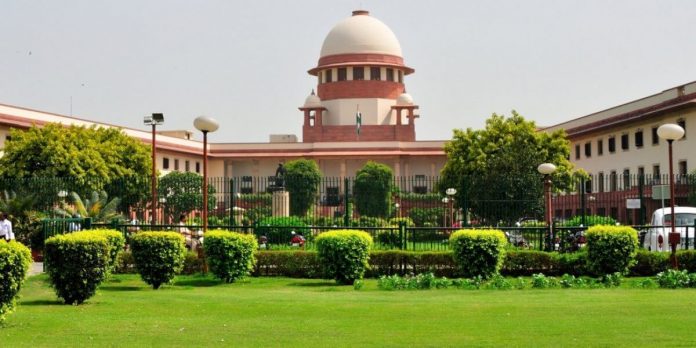
Supreme court of India

This article is written by Nishka Kamath, a student at Nalanda Law College, University of Mumbai. It seeks to discuss the New Draft Environmental Impact Assessment (EIA) Notification of 2020 along with the potential consequences and its impact on the environment. It also throws light upon the ex-post-facto clearance under the draft and views of the courts including that of the Hon’ble Supreme Court about the same. Moreover, the fundamental principles of environmental jurisprudence with several case laws have been discussed at length in this article. 

Introduction 

Time and again, the Latin phrase “Ex post facto” is widely used these days, especially with the notification of the Draft of Environment Impact Assessment (EIA) 2020. The meaning of this Latin phrase as per the Merriam-webster dictionary is ‘done, made, or formulated after the fact’. This controversial draft provides a way for those who implement projects or activities without obtaining prior- environmental clearance, to apply for it in the future. 

The foremost EIA Notification according to the Environment (Protection) Act of 1986, was presented in 1994, which made Environment Clearance (EC) compulsory for the growth of any activity or for setting up a new project listed in Schedule 1 of the notification. This draft was then superseded by the 2006 notification and now, the new notification of 2020 is issued by the Central Government. Similar to the 2020 notification, the aforementioned notifications were also provided by the Central Government while making use of their power under the Environment (Protection) Act, 1986 for taking essential steps for safeguarding the environment. Every notification has proceeded with an identical strategy- before beginning any task or activity it requires authorization from the government agency, the Ministry of Environment, or a specially constituted state-level authority. 

The approval- known as ‘environmental clearance’ (EC) is either assigned or not assigned based on the Environmental Impact Assessment (EIA) studies, viewpoints obtained through public consultation, and an expert assessment of all the suitable documents and details. The approval is followed by certain terms for reducing the environmental and social impacts of the project and to improve the resulting state of affairs. Thus, fulfilling these terms is crucial for the regulatory process to be relevant. 

In this fresh draft, it has been proposed that post-facto environmental approvals will be granted if they meet certain conditions, which is a repetition of a March 2017 notification for those projects which are carried on without clearance. This notification was circulated after the procedures put forth by the Central government in 2012 and 2013 were quashed. Previously, a lot many instances have been encountered where the operations of the projects were carried on without prior environmental clearances and such operations have been overlooked. 

To understand the draft of EIA 2020 and the Supreme Court’s say upon it, let us first dive into the fundamentals of EIA and EC.

Environmental Impact Assessment (EIA) and Ex post facto Environment Clearance (EC)

The environment is the burning topic of the day at local, national as well as international levels. Undoubtedly, the standard of living of people has risen with the vast natural resources, but with the passage of time and the heedless activities of humans, the menace it has caused is inexplicable. An escalation in population pressure day after day, inefficiency in managing material and energy resources, large-scale deforestation, poor effluent dumping from industries, ineffectively handling lethal chemicals, activities relating to building areas for settlements, over-grazing of lands and urbanization, etc have resulted in causing a great threat to the environment and in the creation of ecological imbalance. Environmental pollution is widespread all over the world leading to biological, physical, chemical, psychological, and sociological hazards. The concept of “Environment Impact Assessment (EIA)” plays a pivotal role in the progress of any country in such conditions. The preliminary environmental assessment will help protect the environment and to promote economic growth. It is one of the crucial components of environmental management. 

An EIA refers to the possible impact – positive or negative- which a proposed project may have on the environment. Simply put, it is a method by which the probable impact of a proposed project on the environment and ecology is assessed prior to clearance is given to a project by the competent authorities. Thus, the “pros” and “cons” of the environment are weighed before its execution. If from the environmental angle, if the merits of the project outweigh the demerits, such a project can be labelled to be “environmentally justified”. The hazards and the scope for the launch of any project or activity should be analyzed and measured to make any new decisions. The planners must know the actual condition and review before establishing a new business and make long-term decisions accordingly. An EIA aims to foresee the environmental impacts in the preliminary phase of planning a project and design, discover strategies and mechanisms to abbreviate the deleterious or harmful impacts, shape projects that are suitable to the local environment, and provide the decision-makers with predictions and options. 

The approval- known as ‘environmental clearance’ (EC) is a method to get clearance from the regulatory board for specific projects that lead to environmental pollution, which can either be approved or disapproved based on the fulfilment or non-fulfilment of the regulatory process.

Vide a study by The Chennai Solidarity Group in 2013, IIT Madras made construction in over 52 acres of land by chopping down 8100 trees and intents to construct on another 58 acres of land further which allegedly will amount to 10,000 trees being axed down. This work was carried out without any prior environmental clearance. In due course, post-facto clearance was granted to new buildings and constructions. The Char Dham Pariyojana for expanding the road to Badrinath and Kedarnath consisted of an expansion of 900 km of roads, so the Ministry of Road and Transport divided this project into 53 smaller projects that comprised of less than 100 km each, in order to evade the EIA’s application. This project has already led to massive disasters according to the report which was submitted to the SC several months ago. Also, the construction of Koodankulam Nuclear Power Plant’s units 1 and 2 was carried on without any mandatory clearance which is a requirement as per the Coastal Regulation Zone Notification of 1991 and 2011. 

It is notable that, the SC in 2020 set aside the National Green Tribunal order issued by MoEFCC in 2002, stating that “Ex post facto” Environmental Clearance is not in compliance with the primary principles of environmental jurisprudence. The Court further said that environmental law cannot approve/support the concept of ex post facto clearance.

Notification of EIA, 2006

The main aim of this notification was to deal with the drawbacks of the old notification of 1994. The major change brought in by the 2006 EIA notification is that an attempt has been made to decentralize the powers to the State Government. Previously, all the projects for environmental clearance would go to the Central Government, but now, as per this notification, a huge number of projects would go to the state subject to its size/capacity/area. Although with the issuance of this new notification, the stress on the Central Government will be reduced, this provision can be used for personal gains, as many State Governments are actively pursuing industrialization for their states. This notification also failed to address an important issue of whether there will be any sort of monitoring of state-level projects by the Central Government or not. The 2006 Amendment of the EIA Notification included the following:

  • Classification of Project Clearances: The notification categorized the developmental projects in two categories:

○ Category A (National Level Appraisal): In this category,  the projects are appraised by the Impact Assessment Agency (IAA) and the Expert Appraisal Committee (EAC).

○ Category B (State Level Appraisal): In this category, the projects are provided clearance by the State Level Impact Assessment Authority (SEIAA) and the State Level Expert Appraisal Committee (SEAC). 

  • Establishment of Various Stages: With the 2006 Amendment, four stages were set in motion in the EIA Cycle which are- Screening, Scoping, public hearing, and Appraisal. 

○ Category A projects need not go through the screening process as they need a compulsory environmental clearance. 

○ Category B projects need to go through a screening process. They are further categorized into B1 (those that compulsorily require EIA) and B2 (those that do not require EIA).

  • Projects requiring Compulsory Clearance: Various projects like mining, river valley, infrastructure related to roads, highways, ports, harbors, and airports,  amongst others are officially required to get environment clearance. 

Environment Impact Assessment (EIA) Draft, 2020

As stated above the MoEFCC has presented the Draft of EIA Notification in 2020, intending to replace the 2006 EIA Notification, which, in turn, was a replacement of the 1994 Notification. The Union Environment Minister, Prakash Javadekar stated that the purpose of the 2020 draft notification is to merge all the 55 amendments and 230 office memos issued since 2006. This draft has alleged to lighten the principles and laws relating to the protection of the environment. The government then guaranteed that it will try its level best to strike a balance between the environment and the development issues.

Primary suggestions of the 2020 Draft 

  • Reduction in the duration of public hearings 

One of the main steps of the EIA Mechanism is the participation of the public. This draft proposes to shorten the public hearings’ notice duration from 30 days to 20 days. Having said that, taking into consideration the development of the internet and cellphones, the MoEFCC asserts that it is “moving with the times”.

  • Exemption of projects 

By categorizing projects into categories of A1, B1, and B2, a host of projects are excused from public scrutiny. Here, the projects belonging to the B2 category do not need the mandatory Environmental Clearance (EC), as opposed to the projects of the A1 and B1 categories. The projects under the exempted categories include-

> Hydroelectric projects up to 25 MW,

> Cement plants of small and medium-range, 

> Acids apart from ammonia or phosphoric, sulphuric acid, inter alia.

  • Yearly submission of reports 

This draft recommends the submission of reports based on an annual basis, whereas, as per the 2006 notification, reports had to be submitted every six months.

  • Preparation of the report solely by the project proponents 

The project proponents will self prepare the submission of the compliance report. Thus, if oversight and review are absent, the information of the project presented could be inaccurate.

  • No public reporting for non-compliance 

The general public does not have the authority to report violations and non-compliance, as per the 2020 EIA Notification. On the contrary, the reports from the violator-promoter, the authority of the government, Appraisal Committee, or Regulatory authority will be only considered by the Government.

  • Post-clearance compliance 

Once a project is authorized by the competent authority, the proposed projects must be in compliance with a  certain set of rules that are set out in the EIA report to guarantee that no further environmental change will occur.

  • Penalty for organizations 

Any organization that is found to have infringed the conditions of their establishment, will have to pay a fine if they want to get the clearance.

  • Ex post facto clearance concerning EIA 

The questionable Environmental Assessment Draft of 2020 paves a way for those projects that are run without seeking prior-Environmental Clearance,  to apply for them subsequently. To grant “post-facto clearance” is yet another important proposal in the 2020 Draft. The projects that are carried on without environmental clearance, can be standardised or permitted to apply for clearance. In April 2020, the judiciary in a leading case (discussed in depth further) held that “environment law cannot countenance the notion of an ex post facto clearance.”

Issues involved in the Draft of 2020 Notification

  • Inviting the floodgates of contraventions to open

The environmental lawyers are of the opinion that the post-facto clearance of projects may encourage the industries to start operations without paying heed to the clearance and then eventually regularise the project by payment of fines, which, in turn, will open the floodgates of contraventions. 

  • Boosts the strength of the government at the expense of reducing the strength of the public

The Draft does not provide any solution for the political and bureaucratic stronghold on the EIA process, and thereby on the industries. Rather, it suggests that the power of the government’s discretion be intensified while restricting the participation of the public in protecting the environment. Furthermore, the draft, by restricting public participation, is incompatible with the protection of tribals’ rights, inter alia. 

  • Lenient clearance for strategic projects 

Although projects related to national defence and security are naturally considered strategic, it is in the ambit of the government to determine which other projects should be labelled “strategic”. This draft states that- No data of such projects shall be placed in the public domain. This is an opportunity for clearance of any project that is deemed strategic by the Government, without needing to justify the reason behind doing so. 

  • Lower the time duration, lesser the awareness

A reduction in the motive period for a public hearing from 30 days to 20 days will only make it tougher to study the draft EIA Report, especially when it is not widely accessible or submitted in the local languages. In addition, time reduction would be problematic in areas where information is not readily available or where people are not well aware of the procedure itself.

  • Not in compliance with the International Frameworks and Conventions 

Environmental governance has been significantly bolstered by India’s active participation in the United Nations (UN) Conference on Human, Environment and Development in Stockholm in 1972, the Rio Summit in 1992, the United Nations Framework Convention on Climate Change (UNFCCC) and the Paris Climate Accord. After pledging faithfulness to these global environmental instruments and now recommending to weaken its EIA regime at a national level, India is in a position of having inconsistent beliefs. Failure to comply with commitments made in international negotiations and treaties will undermine India’s position as a world leader in environmental governance and climate politics.

Recent instances of poorly done EIA

An off late example of poorly done EIA can be seen in Goa’s projects which are carried on within the Bhagwan Mahaveer Wildlife Sanctuary and Mollem National Park. The people of Goa have been protesting against this project since June 2021. The issues have been raised in the infrastructure projects of- expanding the National highway into a four-lane highway, doubling the already existing railway line, and the construction of a transmission line of about 3.15 km. The environmental impact of the same is as follows:

  1. The EIA was done poorly in all 3 projects. For instance, the National Highway covers over 33 hectares of land, but only 11 hectares were considered for the assessment. In order to avoid any issues in clearance, the projects were broken down into small pieces for assessment. 
  2. The construction process was operated without the grant of environmental clearance. 
  3. The residents of Goa would be exposed to toxic fumes and their safety will be in jeopardy. 
  4. The project is within a protected forest area and is home to around 238 species of birds and 722 species of plants and mammals. 

Another incident is when oil wells in the Tinsukia district of Assam burst into flames in June 2020. This incident took place at a location situated only a few kilometres away from the protected forest. The process of development and modification was carried out without obtaining a fresh environmental clearance. 
Fundamental principles of environmental jurisprudence

  1. Sustainable development

The principle of sustainable development is the most crucial principle that has developed from international activity on the environment. This concept has its origins in the mid-twentieth century when it occurred to the world that the stress which development was putting on the environment was not acceptable. This concept has taken a concrete stage because natural resources are frequently under danger and degradation. Numerous natural resources in this world are non-renewable, for instance, fossil fuels and minerals. Once a specific amount of such resources is used, the entire amount stands reduced permanently.

The World Commission on Environment and Development, 1987 considered sustainable development as the ability to meet the needs of the current generation without compromising the ability of the forthcoming generation to meet their needs. In short, all that sustainable development needs is that we use these resources with extreme caution, respecting the “rights” of future generations. In fact, any economic activity carried on without a healthy balance between the natural resources, its ecology, and the environment shall result in sustainable development. Hence, the Earth, ecology, and the environment are the three primary concerns of sustainable development.

The U.N. Division for Sustainable Development has enlisted more than 40 areas that fall under the ambit of sustainable development, some of them include:

> Biodiversity

> Forests

> Industry, etc.

The concept of Sustainable Development is not an easy topic to define. However, it has grown in size since it was born. The Supreme Court explained the concept of Sustainable Development in the case of Narmada Bachao Andolan vs Union of India (2000), wherein it observed that “Sustainable Development means what type of extent development can take place which can be sustained by nature or ecology with or without mitigation.”

In yet another case- Vellore Citizens Welfare Forum v. Union of India (1996), the Supreme Court discussed the concept of ‘sustainable development’ which has been accepted as a part of the law of the land. Nonetheless, the ‘precautionary’ principle and ‘polluter pays’ principle are fundamental characteristics of sustainable development. 

  1. The Precautionary Principle

The Precautionary Principle as the name suggests requires the officials in charge to anticipate, prevent and attack the reason for polluting the environment. The deficiencies and limitations of science form the real basis of the Precautionary Principle. This rule is established in the salutary theory that says, it is better to err in the support of care and protection than in the opposite direction where any harm caused to the environment may be impossible to be reversed. In simple terms, a person should always take steps in anticipation of environmental damage, rather than to rectify such damage once it is inflicted. As the old saying goes, “Prevention is always better than a cure.” 

One of the most worthwhile outcomes of this principle is that the burden of proof in matters of a project or activity causing threats to the environment depends upon the person who is proposing to venture the act in question. This technique is established on the accepted fact that those who challenge a proposed project would many a time find it tough to carry the onus of proof off their shoulders. So, it is for the party to alter the status quo, i.e. the party who wished to implement the project/activity must provide sufficient proofs to show that the environment and ecology will not be substantially impacted by this project or activity.

The Supreme Court of India in the year 1969 which is much before the incorporation of Article 51A, observed that it is a fallacy to think that according to the Constitution of India, there are only rights and no obligations/duties. The provisions of Part IV of the Constitution authorizes the legislature and the Government to impose several obligations on its citizens, as observed in the case of Chander Bhawan v. State of Mysore (1969). However, today with a cumulative effect of Article 48A and 51A(g) it appears that the “State”, as well as the “citizens” of the country, have a responsibility to conserve, preserve, protect and improve the environment. In the case of State of Tamil Nadu v. Hind Stone (1981), an observation was made by the Supreme Court that the rivers, forests, minerals, and other such natural resources are the natural wealth of a nation and that these resources cannot be “frittered away and exhausted” by a single generation. The Precautionary Principle makes it compulsory for the State Government to anticipate, avoid and attack the causes relating to the degradation of the environment. 

  1. The Polluter pays Principle

As seen above, the precautionary principle tries to anticipate and avert environmental pollution. But, this is not always feasible. So, in such cases, the Polluter Pays Principle comes into action and dictates that the amounts for remedying/restoring the environment must be paid for either by the person or undertaking who has caused such damage. Under the principle of ‘Polluter pays’, absolute liability or damage to the environment extends not only to compensate the victims of pollution but also, at the cost of restoring the degradation of the environment.  Thus, the polluter must not only compensate the victims of pollution but also pay the expenses of mending the environmental deterioration. 

Even though the principle of Polluter Pays has been actively applied for more than 3 decades, there is still some discourse about the exact scope of this principle, especially, the limitations of such payments. There is one unreasonable rule which states that this principle permits the polluter to freely pollute the environment considering that he is ready to pay for the damage caused and this rule is globally repudiated. This meaning, if given to the rule, would lead to a total misrepresentation of its original meaning and scope. To put it in another way, the principle should not be read to mean “Pay and Pollute”. 

In 1996, the Supreme Court in the Vellore Citizen Welfare Forum’s case had laid two crucial principles to check environmental damage.

  • The first principle was the “Precautionary Principle”, which is explained above.
  • The second principle is the “Polluter Pays” principle. Here, the Hon’ble Court said that rectifying the harm caused to the environment is a part of sustainable development and the violator is liable to make payment to an individual who has suffered and also compensates for restoring the damaged ecology. The Court further stated that these principles are now the law of the land and then asked the Central Government to establish an authority u/s 3(3) of the Environment (Protection) Act. Here, the authority was instructed to frame schemes for restoring the destruction caused and the schemes were to be executed by the government. 

In yet another case (Ramji Patel v. Nagrik Upbhokta Marg Darshak Manch (2000), the Supreme Court restated the principle and said that a polluter is duty-bound to compensate for the harm caused to the environment. It observed that, as there is a violation of Article 21 of the Constitution, the Court can award compensation for renewing the ecological balance as well as to the victims who have undergone this disturbance.  

In the famous case of M.C. Mehta v. Kamalnath (1996), also known as the Span Motel Case, the Supreme Court gave directions to the motel to compensate for the restitution of the environment and ecology as it had hampered the natural flow of River Bees for commercial purposes.

Interesting Fact: The Doctrine of Public Trust (discussed in depth below) was successfully transplanted into the legal system of India by this very judgment. This Doctrine paved a path for other subsequent judgments like Shree Santh Dasganu Maharaja Singh v. Indian Oil Corporation (2018) and M.I. Builders v. Radhey Shyam Sahu (1999)

In another case, known as the Calcutta Tanneries Case (M.C. Mehta v. Union of India (1996), the Court directed a pollution fine of Rs. 10,000 each on all the tanneries in Tangra, Tiljala, Tupsia and Pagla Dangla be paid.

Similarly, the High Court of Rajasthan in Vijaya Singh v. State of Rajasthan (2003), presided that based on the principle of Polluter Pays, each polluting unit must pay 15% of its turnover as injuries caused to the environment.

Thus, judicial activism in this sphere is the need of the hour, especially when the legislature is lagging in bridging the lacunae in the existing mechanism and the administration is even now not completely equipped to meet the challenges. In the succeeding years too, the courts will have to be involved in the execution and effective determination of environmental policy for the elected/branches of Government to become accountable to the law and the public. 

  1. The Public Trust Doctrine 

A theory was developed by the ancient Romans known as the Doctrine of Public Trust. This doctrine is a part of sustainable development and it states that resources like air, sea, forests, etc. can never belong to an individual i.e. there can be no private ownership for these resources. These resources are a gift from nature and should be made available to everyone, irrespective of their culture, religion, economic or social status or religion. 

In the Span Motel Case (stated above) it was held by the Supreme Court that the Doctrine of Public Trust is a part of the laws of India and implies three restrictions on the Government authority that are as follows:

(i) Such property must not be used solely for public purposes, but must also be made available for usage to the local public.

(ii) Such property cannot be sold to private users, even if a fair amount of cash equivalent to the property is provided. 

(iii) Property must only be maintained for certain types of uses only. 

In the case of M.I Builders v. Rather Shyam Sahu (1999), the Supreme Court held that if an underground shopping complex is given permission for construction below a public park, it would be a violation of the Doctrine of Public Trust. In this case, the Lucknow Nagar Mahapalika gave permission for the construction of an underground shopping complex beneath a park under the name- Jhandewala Park (which was of historical importance as affirmed by the Mahapalika) and its construction work was mostly completed, but the High Court then quashed the related resolutions that gave approval for building the complex. Thus, the Court ordered the demolition of the structures and the restoration of the park by issuing a writ of Mandamus. The Court further said that the park should be restored in its original position within a period of three months from the date of judgment and until then precautionary measures were to be taken and necessary safety provided to the public and the users of the park. 

View of the Supreme Court on Environment Clearance (EC) 

  1. Electrotherm (India) Limited v. Patel Vipulkumar Ramjibhai (2016)

In this case, the Court did not order the closure of the unit without a public hearing to determine the consequences of granting Environmental Clearance (EC) for expansion. The Supreme Court held that, in the interest of being just, it is appropriate to change the nature of the public consultation/public hearing requirement from pre-decision to post-decisional.

  1. Common Cause v. Union of India (2017)

The Supreme Court’s judgment and observations in the Odisha illegal mining case are among the most notable ones in safeguarding the environmental laws. A petition that asked for legal intervention to cease all mining leases in Odisha, highlighting the observations of the report established by Justice M.B. Shah Commission, was filed by the non-profit Common Cause which was heard by the Court in 2012. In 2010, this Commission was set up by the Central Government to look into illegal mining of iron ore and manganese ore in the county and reported large-scale illegal mining, especially in Odisha. 

The Court took notice of these illegal mining activities which were destroying the environment and forests and perhaps putting the tribal people of that area in a state of misery, and thus, issued an order that these activities be suspended. The Court further added that it is certain that the granting of EC cannot be considered as a mechanical exercise. It can only be permitted after due diligence and care, as damage to the environment can have long-lasting effects. The Court held that granting an ex-post-facto environmental clearance could be harmful and may cause irreparable degradation of the environment. As per the Supreme Court, the concept of an ex-post-facto or a retrospective EC is totally alien to environmental jurisprudence, including the EIA 1994 and EIA 2006.

  1. Alembic Pharmaceuticals v. Rohit Prajapati and Ors (2020)

In this case, a challenge was made in the Supreme Court for a circular dated 14 May 2002. It was decided that an approach must be adopted by the Court that will hold the industries accountable for operating without environmental clearances in the past, rather than ordering the termination of operations. The Court, here, applied the Doctrine of Proportionality and instructed the payment of damages for disobedience with a binding legal regime. The Court granted reimbursement as a facet of conserving the environment according to the precautionary principle. 

The Supreme Court upheld the 2016 order of the National Green Tribunal setting aside a circular issued by the Union Ministry of Environment and Forests on 14th May 2002 which provided for the grant of ex post facto environmental clearance. The Court was in agreement that the circular was unsustainable in law and that “environment law cannot countenance the notion of an ex post facto clearance”. In short, the circular, if granted, would have contradicted both the precautionary principle as well as the requirement of sustainable development. This would contradict both the precautionary principle as well as the need for sustainable development. 

The Court followed the decision held in the case of Common Cause v. Union of India (started above), which stated that EC’s cannot be granted post-facto. It was held that instructions for closure of industries was disproportionate and thus, the industries be allowed to resume, provided that the compensation was paid. The Court instructed the industries in fault must pay a compensation of 10 crores each and said that the amount must be deposited with GPCB and shall be used for the restoration of the environment where the industries operated. In short, the Court was of the decision that ‘ex post facto’ Environmental Clearance (EC) is against the basic principles of environmental jurisprudence 

Ease of business and the goal of environmental protection – conflicting interests of the government

The foremost goal of the government in relation to the environment is to achieve overall protection of the environment and ecology. Whereas, the secondary goal is to focus on the ease of business. But it is disheartening for the government to pay more attention to the secondary aim of ease of the business and not the primary one. Here, the government seems to fully trust those industries that have a poor track record and whose record is not good enough to be taken into confidence. 

Paving the way forward

The draft notification of 2020 contains a clause that is specifically dedicated to defining several terms related to EIA. It may be helpful if such a clause combines the EIA rules and has the potential of mitigating some vagueness in the present law.

> The Ministry should not reduce the time for public consultation, but instead, should focus on ensuring access to information and awareness of public hearings and their impact on the overall Environmental Impact Assessment (EIA) process. 

> In order to improve the ease of doing business, the government should reduce the average delay of 238 days in granting environmental permits arising due to bureaucratic and complicated laws. 

> Grow now, sustain later should not be the policy, as this concept is dangerously contradicting the concept of sustainable development.

Conclusion

All in all, it wasn’t expected that the Government would disregard the main objective of protecting the environment to achieve an alternative objective that focuses on the convenience of carrying out a business with ease. Taking into consideration that the regulatory reforms were in order, the 2020 Draft notification was an opportunity for the Environment Ministry to make the 2006 notification stronger in ways that would prevent the deterioration of the nation’s environmental conditions. Ergo, the 2020 notification carries on a not-so-strong regulatory framework. 

Also, several relaxations have been given in the 2020 Draft Notification. An important aspect is that of the ex-post-facto Environmental Clearance. As stated above in the Ambelic Pharmaceuticals case, it was said that “Ex-post-Facto Environmental Clearance is unsustainable in law.” Moreover, ex-post-facto Environmental Clearance (EC) is contradictory to the basic principles of environmental jurisprudence. 

The future of environmental governance appears to be dreadful taking into consideration the Draft Notification of 2020 which intends to allow post-facto clearances. The rule of EC will be reduced to a mere formality if these patterns of post-facto clearances keep growing. 

Thus, we can conclude by saying that, if the Draft of EIA will be passed in the present form, it will cause a serious problem to the environmental governance in India by invalidating the precautionary principle, diminishing the due diligence process, and boosting the discretionary power of the government while restraining the engagement of the people to protect the environment. Moreover, the 2020 Draft is against the recently developing doctrine of non-regression.  

References

  1. Book by Prof. Pathan on Environmental Law (Pg. 5-11)
  2. Book by Prof H. D. Pithawalla on Environmental Law (fifth edition) [Pg. 35-40]
  3. https://www.jurist.org/commentary/2020/05/sushant-singh-environmental-clearances-india/
  4. https://www.theindiaforum.in/article/eia-2020-two-steps-back 
  5. https://www.thehindu.com/sci-tech/energy-and-environment/the-hindu-explains-what-are-the-key-changes-in-the-environment-impact-assessment-notification-2020/article32249807.ece/amp/ 
  6. https://idsa.in/issuebrief/indias-environment-impact-assessment-ojamir-080221 
  7. https://www.drishtiias.com/to-the-points/paper3/environmental-impact-assessment-eia-draft-2020
  8. https://www.sciencebeingjournal.com/sites/default/files/03_0901_EIA.pdf  
  9. https://www.annalsofrscb.ro/index.php/journal/article/view/2832/2356 
  10. https://www.indialegallive.com/constitutional-law-news/courts-news/sc-sets-aside-ngts-directions-regarding-ex-post-facto-environmental-clearance/ 
  11. https://www.legalserviceindia.com/legal/article-3532-whether-post-facto-environmental-clearance-under-draft-eia-notification-2020-legally-permissible-.html 

LawSikho has created a telegram group for exchanging legal knowledge, referrals and various opportunities. You can click on this link and join:

https://t.me/joinchat/J_0YrBa4IBSHdpuTfQO_sA

Follow us on Instagram and subscribe to our YouTube channel for more amazing legal content.
Download Now

Traditional knowledge and patenting in fashion industry

0

This article is written by Kinjal Keya, pursuing Diploma in Intellectual Property, Media and Entertainment Laws from LawSikho. The article has been edited by Dhruv Shah (Associate, LawSikho) and Dipshi Swara (Senior Associate, LawSikho).

Introduction

In the modern fashion industry, there has been an increased reliance on traditional knowledge and traditional cultural expressions in order to find inspiration for new design ideas. Premium entities operating in the fashion industry have used ideas from traditional communities to create new fashion trends, various countries have recognized their vast potential in terms of traditional knowledge to contribute to modern fashion and have started recognizing and developing these practices. For instance, South Africa has organized a fashion week event specifically dedicated to indigenous designs. This has great potential for the growth of traditional knowledge-driven modern fashion ideas. However, they pose a challenge regarding the need to balance the rights of traditional knowledge holders and the companies manufacturing and marketing the fashion products made from the application of the traditional knowledge.  

The emerging role of traditional knowledge in fashion industry

Traditional knowledge includes the innovations and practices that play a multifaceted role in all aspects of the lives and livelihoods of the communities residing in a particular area or spread over a region for generations. Traditional knowledge refers to the technical know-how, skill, technique, and methodology of production or value addition of goods and services prevalent for a substantial time period and is passed on from one generation to another. It has a direct proximate effect upon fields such as agriculture and food, human and animal health, clothing, shelter, architecture, art, culture, handicrafts, natural resource management, etc. Traditional knowledge is an indispensable part of the biocultural heritage of indigenous peoples and local communities. The application of traditional knowledge (TK) is not merely limited to rural, tribal, and indigenous spheres, in the modern-day and age, there is a growing market in the domain of the fashion designing industry encompassing clothes, footwear, apparels, etc. 

Traditional knowledge plays a vital role in the modern fashion industry, its contributions are highlighted by the fact that many flagship brands around the world are adopting sustainable traditional designs and rebranding and marketing their contemporary products. Prominent instances of such practices are stated below.

Nike Air Force 1 Puerto Rico and the Guna culture of Panama 

The 2019 sneakers launched by Nike referred to as “Air Force 1 Puerto Rico” were primarily based on the Mola design pattern which has its roots in the Guna culture prevalent in South American Nations such as Columbia and Panama. Although due to misinformation and lack of clarity Nike had mentioned its origins in Puerto Rico but eventually after the issue was brought forward by the Guna community then Nike had to act in time by canceling the launch at that time

Isabel Marant and the Mexican community of Santa María Tlahuitoltepec 

In 2015, Isabel Marant’s a prominent designer presented a blouse in her spring/summer “Étoile” collection. The designer directly recognized that she had taken inspiration from the textile designs of the Mixe Community of Santa María Tlahuitoltepec residing in Mexico. However, such a gesture was not supported by any formal recognition and the Mixe or Ayuuk Community was denied the acknowledgment in the capacity of the original source of inspiration for the design and they were also blatantly ignored during the marketing and endorsement of the collection, furthermore, there was no financial share in profit or compensation provided to the community. 

Navajo Nation vs. Urban Outfitters case 

Another landmark development in the domain of usage of traditional knowledge in the fashion industry emerged in the case involving the company Urban Outfitters, which launched an entire range of products that were inspired by the traditional designs of the Navajo tribe. The collection consisted of multifarious products ranging from perfumes to clothes and undergarments and all of them had the printed design resembling the traditional design of the Navajo tribe. The Navajo community was agitated by this and subsequently, their leaders filed a lawsuit against the Urban Outfitters company and claimed unauthorized usage of their designs for facilitating commercial benefit.  

These instances clearly denote the contemporary fashion industry’s reliance on traditional knowledge and indigenous designs for manufacturing new products. It also highlights the need to protect the interests of the traditional communities who have been protecting and developing the traditional knowledge for generations. 

Consent, acknowledgment and equitable financial distribution

The method to resolve the conflict of interests among the traditional communities and the contemporary fashion industry can be threefold (1) informed and explicit consent, (2) Formal Recognition and acknowledgment of the source, and (3) fair and equitable financial distribution of commercial gains made from the design or product. 

As per the  United Nations Declaration on the Rights of Indigenous Peoples (UNDRIP), Free, Prior and Informed Consent (FPIC) is a duly recognized right of the Indigenous peoples with reference to any developmental work or interference in resources owned and managed by them. The individual stakeholders in the fashion industry that get inspired by traditional cultural expressions (TCEs) firstly need to approach the concerned traditional community and seek for the free, prior and informed consent of its custodians which may include those responsible members of the community that have safeguarded and contributed in the growth of such practice or expression. There must be clear transparency and the community members must be aware of the usage of their motifs, art, and expressions. This principle of prior informed consent shall be made applicable to all such initiatives which involve getting access to TK or TCEs originally belonging to the Indigenous communities.

Furthermore, another essential element is acknowledging the source of product, the textile and fashion designer or the industry outlet that manufactures and markets the products based on traditional knowledge shall compulsorily give credit and duly recognize the origin of such inspiration. Acknowledgment of the source can be done in a two-pronged manner firstly; it can involve the practice of storytelling that refers to a brief mention of the origin in form of a short story or product labeling which will also denote the source of the product. This will help in bringing appreciation for the practice and the traditional community to which it belongs thereby further encouraging the community to contribute more thorough development of skills.

This increased demand in fashion industry goods inspired by traditional knowledge implies new opportunities for the local communities as the financial benefit through sharing of resources and knowledge can contribute to their socio-economic development. However, instances of local communities benefiting from commercial usage of their resources and knowledge have been rare as the bulk of the profits have gone to companies that use them. The cases of biopiracy and misappropriation of traditional knowledge are becoming increasingly common. The holders of traditional knowledge and traditional cultural expressions have to be duly compensated in a justifiable manner. A viable way of doing this could be through fixed profit sharing directly between the industry and the concerned community along with improved economic dividends it will also eliminate the complex chain of intermediaries there. 

Role of geographical indications and its advantages over patents

Patents have been portrayed as an effective tool for protecting rights over traditional knowledge, but they do not cater to the specific requirements of the local community which holds Traditional Knowledge (TK). Patents are largely suited for protecting modern technological inventions because the main precondition for protection being granted under patents are the elements of novelty and inventiveness. On the contrary, traditional knowledge such as the knowledge relating to medicinal plants and crops is dynamic in nature, it evolves constantly through time as it is passed on from generation to generation and is held in a collective manner. Therefore, the local communities which possess the TK may not be able to clearly define the conventional inventive parameter such as the exact time of acquiring such knowledge. Furthermore, the majority of the traditional knowledge is already present in the public domain and therefore is not theoretically a new invention. Another aspect that makes patents unsuited for providing appropriate protection to TK is the fact that they focus narrowly on commercial goals, without taking into account the traditional practices or values.

The most suited tools for protecting the rights of traditional knowledge holders are Geographical indications because they grant the protection regarding the product to the whole area where the traditional community possessing such knowledge resides. It can further help in branding and marketing of the product as a distinct name depicting its geographical origin will be associated with it emphasizing originality. It will also help in raising awareness about the product and there will be no dispute or point of contention as to irregularities in acknowledgment of source as GI clearly defines and recognizes the source.  

Conclusion

There is vast untapped potential in the domain of traditional knowledge and traditional cultural expression which is capable of being utilized in creating contemporary fashion, such usage will bring benefits for both the fashion industry and also the indigenous communities. It has the potential to revamp the socio-economic conditions and improve the living standards of the traditional communities of middle-income and lower-middle-income nations that are facing the threat of cultural and social extinction. The utilization of such knowledge must be subject to a system of checks and balances to ensure that there is equitable distribution of financial benefit gained through the usage of traditional knowledge. A balanced usage will ensure sustainable benefit for the industry as well as the community.   


Students of Lawsikho courses regularly produce writing assignments and work on practical exercises as a part of their coursework and develop themselves in real-life practical skills.

LawSikho has created a telegram group for exchanging legal knowledge, referrals, and various opportunities. You can click on this link and join:

https://t.me/joinchat/J_0YrBa4IBSHdpuTfQO_sA

Follow us on Instagram and subscribe to our YouTube channel for more amazing legal content.

Download Now

Are electronic records and newspaper reports admissible in Indian courts

0
SaaS Agreement
Image Source: https://bit.ly/2JA0HO5

This article is written by Aastha Verma, pursuing B.A.LL.B from Kalinga University, Raipur, Chhattisgarh. The article analyzes whether electronic records and newspapers reports are admissible in Indian courts or not. 

Electronic records as an evidence 

Technology has changed and evolved rapidly with the changing needs of society. This change has been very well recognized by the courts as well as the legislature in India. 

The Information Technology Act (Amendment), 2008 has explained the meaning of electronic records. As per the Act, it includes data, sound, images generated or recorded and sent or received in electronic form. As per the Indian Evidence Act, 1872, electronic records are specified under Section 65B of the Act that prescribes a distinct framework that governs the admissibility of electronic evidence. This Section was inserted through the Information Technology Act, 2000 and forms a part of Chapter V of the Act, which deals with documentary evidence. Any information contained in electronic records which are stored or copied shall also be deemed as a document and will be admissible without any further proof or production of the original. It also lays down the criteria that must be satisfied for information to be categorized as computer output.

Different types of electronic records and their admissibility 

Electronic records, as per the definition under Information Technology Act, 2000, cover a wide range of formats in which data or media can be presented. It includes CD, DVD, pen drive, hard disk, video recording, etc. Each of them deals with different conditions relating to admissibility in a court of law. These kinds of electronic records are admissible as primary and secondary sources of evidence. Original media must be stored or recorded directly in CD, DVD, pen drive, etc., that was self-generated or created without any human intervention. If a CD is a copy of the original and is a duplicate version, it would have to pass the admissibility test under Section 65B of the Indian Evidence Act, 1872. Otherwise, secondary evidence in electronic form will not be considered by the court as a piece of valid evidence.  

Evidence available through video conferencing

In the case of V. Rama Naidu and Another v. Smt. V. Rama Devi (2018), the Court held that Judiciary aims to dispense justice and speed up the process by taking evidence by way of video conferencing. 

In the case of Twentieth Century Fox Film Corporation v. Nri Film Production Associates (2003), certain conditions are highlighted which should be followed while accepting video conferencing. These conditions ensure that the procedure laid down in relevant case laws regarding the admissibility of evidence is followed properly, ensuring a fair trial. 

Evidence in the form of emails, media, and calls generated through mobile phones are presumed under Section 88A of the Indian Evidence Act, 1872, which the court follows while taking email as evidence. E-mails are generally submitted by way of prints out along with the certification under Section 65B of the Indian Evidence Act, 1872. 

In the case of Om Prakash v. State of Madhya Pradesh (2021), it was held that mobile phones can be a very useful resource when it comes to evidentiary values. Mobile phones can be used for tracking location, call records, and submitting media like pictures and videos.           

Are newspapers admissible in India

The court of law requires several evidence and witnesses to be present before the court for proving the statement and accusation. People believe whatever is written in the newspaper is to be true and act accordingly. There is a procedure that is to be followed by every court before reaching the decision. Filing of the suit, the appearance of accused, evidence, framing of charges, trial examination, questioning of accused under Section 313 of Code of Criminal Procedure, 1973, arguments in both the side and at last judgment. 

Even tribunals are required to follow the principle of natural justice though they are not required to follow the Code of Civil Procedure, (CPC) 1908 and Code of Criminal procedure, 1973 strictly, to ensure that justice has been delivered in a fair, reasonable, and just manner. The evidence in the court follows a hierarchy order to prove the allegations. Primary evidence under Section 62 of the Indian Evidence Act, 1872 holds the highest position whereas hearsay evidence is permitted only on strict conditions. 

A primary source of evidence includes historic or legal documents, experimental observations and statistical data of the survey, pieces of creative writing, interviews, blogs, etc. Hence, a newspaper report can be called primary evidence if it has an original copy without any views of further interpretation. 

Secondary evidence is denied under Section 63 of the Indian Evidence Act, 1872. It is admissible by the court when there is not any primary evidence. This evidence describes analyses and interprets upon the primary sources. Sometimes, external sources mislead the evidence which makes it a less reliable source of evidence. Thus, newspaper articles, journals, and magazines can only be considered secondary evidence.

Hearsay evidence    

The word ‘hearsay evidence’ means any information which a person gathers or collects from a person who has first-hand knowledge of that fact or information. Hearsay evidence is not admissible in a court of law. Following are the reasons why hearsay evidence is not relevant as primary evidence:

  • The person who gives the statement does not feel any responsibility for whatever he is saying.
  • The truth is weakened and diminished with every repetition. 
  • It gives an adequate scope for fraudulent activities. 

Exceptions

In certain circumstances, the court allows hearsay evidence. These exceptions are given under Section 6 and Section 32 of the Indian Evidence Act, 1872.

Section 6 defines “the rule of Res Gestae”, which says that there are certain facts that are so connected with the fact in issue they form a part of the same transaction. Such facts are referred to as relevant facts and are admissible in the court of law.

Section 32 defines the ”Dying Declaration” that implies a written or verbal statement of being admissible on behalf of the person who is dead or is incapable of giving the evidence, or who cannot be found. Therefore, hearsay evidence is not admissible in the court with getting clear and justifiable reason as to its credibility.   

Case law

S. P. Shenbagamoorthy v. Dr. Chenna Reddy (1994)

Petitioner’s contentions 

According to the petitioner, the respondent was not approving the files and deliberately postponing to give assent to the laws that have been passed by the legislature sent for his consent concerning disregard of the present government and on several occasions, he creates apprehension in the minds of people in Tamil Nadu. Congress was making use of the office of the Governor to dismiss the Government of Tamil Nadu. In all functions where he has attended as a chief guest made the speech without any provocation and expressed his expression to dismiss the present government. Thus he has violated Article 159 of the Indian Constitution under which he has taken an oath.    

According to the petitioner, the comments made by the respondent are underwarrented and therefore, the respondent is not fit for holding the position of governor in Tamil Nadu, as he is doing so against the interests of the people. Along with the writ petition, the petitioner has filed a newspaper cutting in The Hindu. 

The counsel of the petitioner is relying on the news published in The Hindu. He has also reiterated the other allegations made in the affidavit. 

Respondent’s view

The respondent counsel said that it becomes necessary for the court to consider whether a newspaper report by itself is admissible in evidence. It is a settled principle of law that new reports published in newspapers are only hearsay secondary evidence unless proved by evidence. He further referred to the Supreme Court’s judgment in the case of Laxmi Raj Shetty And Anr v. State of Tamil Nadu (1988), wherein the court held that the notice of facts stated in newspapers cannot be taken unless it is proved by evidence. It is only hearsay evidence. A newspaper is not the document referred to under Section 78(2) of the Indian Evidence Act, 1872, by which allegation can be proved. The presumption of genuineness attached under Section 81 of the Indian Evidence Act, 1872 to a newspaper report cannot be treated as proved of fact. The facts contained in the newspaper are merely hearsay evidence and are inadmissible in a court of law.    

Judgment of the Court 

The Madras High Court held that newspaper reports are by themselves not evidence of the content. Those reports are only hearsay evidence. In this case, neither the reporter nor his report produced can amount to proving the contents of the newspaper reporter. Newspaper is secondary evidence and is not admissible without any proper proof of the content under the Indian Evidence Act, 1872. The judge cannot treat the newspaper as duly proved by the production of copies of the newspaper. 

As per Article 156 of the Indian Constitution, the governor holds office during the pleasure of the president. So it is not open to the petitioner to make an allegation in an affidavit on a mere newspaper report and come to court as it is a Public Interest Litigation (PIL). Further, added that before approaching the court there should be a definite allegation made in the affidavit. The allegations made in the affidavit are from a newspaper report and nothing else. The petitioner has not given any other material fact before the court. The court said that allegations made against the respondent are based on newspaper reports and not on the personal knowledge of the petitioner. “I do not find any merit in the writ petition and therefore it is liable to be dismissed”. 

Before concluding, the court held that facts stated in the news report are hearsay secondary evidence which is not proved by any other material facts and therefore it is inadmissible in the eyes of law. The petitioner has also failed to let in any other material in proof of facts contained in the newspaper. Further, the learned counsel has not put forward any other point before the court. The writ petition, therefore, fails and is dismissed. However, there will be no order as to costs.        

Conclusion

With the enactment of the Information Technology Act, 2000 and subsequent amendment in the Indian Evidence Act, 1872 the use of electronic records in judicial proceedings has long gone. Electronic records are admissible as in primary as well as a secondary form of evidence, subject to the fact that they are accurate, exclusion of possibility or tampering or manipulation are relevant and reliable. Also, it is important to check Section 65B of the Indian Evidence Act, 1872 without which an electronic record in form of secondary evidence is not admissible in the eyes of law. 

The news reports are hearsay secondary evidence which is inadmissible in the eyes of law if the individual has not any other material facts which can prove the facts contained in the news report. Also, the Court held that newspapers cannot be the basis of filing Public Interest Litigation (PIL) parties must do adequate research before approaching the court. Further held that newspaper reports are inadmissible under Section 81 of Indian Evidence Act, 1872, unless the reporter concerned is examined and cross-examined in the court.    

References

  1. https://legislative.gov.in/sites/default/files/A1872-01.pdf
  2. https://indiankanoon.org/doc/1194737/
  3. https://www.mondaq.com/india/trials-appeals-compensation/944810/use-of-electronic-evidence-in-judicial-proceedings
  4. https://www.scconline.com/blog/post/2017/12/07/newspaper-reports-cannot-basis-filing-pil-party-must-adequate-research-approaching-court/
  5. https://www.scconline.com/blog/post/2020/07/14/sc-clarifies-law-on-admissibility-of-electronic-evidence-without-certificate-under-section-65b-of-evidence-act-1872/
  6. https://corporate.cyrilamarchandblogs.com/2021/01/supreme-court-on-the-admissibility-of-electronic-evidence-under-section-65b-of-the-evidence-act/

LawSikho has created a telegram group for exchanging legal knowledge, referrals and various opportunities. You can click on this link and join:

https://t.me/joinchat/J_0YrBa4IBSHdpuTfQO_sA

Follow us on Instagram and subscribe to our YouTube channel for more amazing legal content.

Download Now

Are patents holders protected from US Government infringement by the Fifth Amendment

0

This article is written by Sudisha Mukherji, pursuing Diploma in US Technology Law and Paralegal Studies: Structuring, Contracts, Compliance, Disputes and Policy Advocacy from LawSikho. The article has been edited by Prashant Baviskar (Associate, LawSikho) and Dipshi Swara (Senior Associate, LawSikho).

Introduction

The Bill of Rights comprises the first 10 Amendments to the United States Constitution. These amendments elucidate the rights of American citizens with respect to the American Government and further, set out rules for due process of law. The Bill of Rights and the Amendments can be compared to the fundamental rights granted to Indian citizens by the Indian Constitution. The Fifth Amendment enshrines a number of rights with respect to criminal and civil proceedings, for example, in criminal cases, it promises the right to a grand jury and protects against self-incrimination amongst other things. Another such provision in the Fifth Amendment is the ‘Takings Clause’, as per which- the U.S government cannot ‘take’ and/or seize private property of individuals for public use without just compensation to the property owner. 

While the Takings Clause has been standing in the American Constitution ever since its inception, there have been varied opinions from American courts pertaining to the extent to which the Takings Clause can be applied, especially in terms of ‘private property’ and ‘just compensation’. This is especially true in light of intellectual property rights. The question which has been posed repeatedly in various American courts is whether intellectual property, more particularly, are patents and patent holders protected under the Takings Clause? and whether patents are considered ‘private property’ or ‘property’ as per the Takings Clause? These questions are imperative to accord patent holders protection under the Takings Clause. 

What is the Takings Clause?

The “Takings Clause” of the U.S. Constitution states simply “nor shall private property be taken for public use, without just compensation.” Even though the Fifth Amendment by itself only applies to actions by the federal government, the Fourteenth Amendment ensures that the Takings Clause is actionable by state and local governments as well. Therefore, when any government- federal, state and/or local wishes to acquire a certain property for public use, the government is entitled to take such property from the individual so long as the individual is compensated adequately for the same. The Takings Clause tries to limit the government’s power to take private property. However, the power of the government to unilaterally take property from an individual is called ‘eminent domain power’. 

This ‘Taking’ can happen in two ways- one, which is the physical taking of the property and the second is constructive/ regulatory taking wherein the government can restrict the right of the property owner with respect to the property so that the government action becomes functional. 

Essentially, there are three main components of the takings clause i.e the Property, the Purpose and the Just Compensation. The Takings Clause concerns all kinds of tangible and intangible property, including but not limited to personal property, land and easements, contract rights, trade secrets etc.  In Armstrong v. United States, the U.S. Supreme Court holds that the application of the Fifth Amendment takings clause is not limited to land and real estate but also to more intangible property, such as financial interests. A “just compensation” for any such property is determined by an assessment of the property’s fair market value. The courts however have refrained from setting up any standardized formula for calculating “just compensation” under the Fifth Amendment.  

Generally, for the Takings Clause to be applicable, the property must be taken for the general purpose of ‘public welfare’. In Kelo v. City of New London, 545 U.S. 469 (2005), the Supreme Court allowed the government to take over the property for private cause because the private cause in question was, in turn, furthering economic development and thereby promoting public welfare. However, in most cases ‘public welfare’ has a simpler meaning such as if the government wants to build a new courthouse or a road etc. 

Patent infringement by the U.S Government in light of the Takings Clause

According to 35 U.S.C. § 271(a), patent infringement is the violation of a patent owner’s rights with respect to the patent. Making, using, offering to sell, or selling something that contains every element of a patented claim or its equivalent while the patent is in effect, without the consent or permission of the patent holder is patent infringement.

The two provisions, the Takings Clause and Patent infringement are seemingly conflicting provisions, even though they both aim to protect the property/ patent holder. While the Taking Clause authorises the government to ‘take’ a property from an individual it ensures that the individual is entitled to just compensation in light of such taking and similarly, the infringement clause protects the patent holder from anyone taking undue advantage and/or violating the patent holders right. The courts have conflicting opinions on whether patents and patent holders can be protected under the Takings Clause and whether such taking amounts to infringement. 

Another important provision to be mentioned here is 28 U.S.C. § 1498. The 28 U.S.C. § 1498 harnesses the Government’s eminent domain power, allowing it to use or manufacture patented devices/processes only in exchange for reasonable and entire compensation to the patent holder, which is essentially a compulsory license. Therefore, in light of this provision, the government cannot infringe a patent and the ‘reasonable compensation’ here can be construed to mean nothing but royalty for the compulsory license. In addition, this provision provides immunity to any third-party company/ contractor of the government from infringement claims. Thus, a third-party company hired by the government can easily infringe a patent without any legal repercussions. 28 U.S.C. § 1498 was a heavily debated provision in the In Zoltek Corp. v. United States

Schillinger v. the United States, (1894), was an important case with respect to patent infringement by the US Government. Mr Schillinger was granted a patent for an improvement in concrete pavement. He eventually sued the US Government for unauthorised use of the patent for the building of concrete pavement on the Capitol grounds. The court Supreme Court held that a suit for patent infringement cannot be held against the U.S Government because an infringement of a patent is a tort and the Government is exempt from it until it surrenders its sovereign immunity for intentional torts.

Property or not : Takings Clause and patents

Many contemporary Supreme Court decisions have widened the scope and definition of ‘property’ with regard to the Takings Clause and that they cannot be seized without just compensation. In Horne v. Dept. of Agric., the court held that the Fifth Amendment applies equally to personal as well as real property. In this case, the department of agriculture issued a marketing order which authorised the government to reserve a percentage of the raisin crop. The farmers were also offered a share in the proceeds of the sale of reserved raisins. Mr Horne, a farmer, processed his own raisins to avoid the order. However, when the department of agriculture insisted that he was subject to the order, he sued the department and claimed that the order violated his Fifth Amendment rights against uncompensated takings. The department of agriculture held that the order did not act as taking because Horne’s raisins constituted personal property rather than real property. However, the court held that the Fifth Amendment applies equally to personal as well as real property since it deprives the owners of their property rights to “possess, use, and dispose of” the raisins. It was also noted that the government avoided the duty to pay just compensation for the physical taking of property by offering a share in the proceeds of the sale of reserved raisins.

There have been a couple of cases that have questioned whether the invalidation of patent claims in a decision of an inter partes review (a trial proceeding conducted by the Board of the USPTO to review the patentability of the applied patent) constituted inter alia an unlawful in violation of the Takings Clause. In Oil States Energy Services, LLC v. Greene’s Energy Group LLC (2018) the court suggested that- a decision to grant a patent is not a private right, but one involving public right and that patent holders are subject to patent laws which give the USPTO the authority to grant or cancel a patent. However, the court also categorically mentioned that its “decision should not be misconstrued as suggesting that patents are not a property for purposes of the due process clause or the Takings Clause”, again leaving it up to interpretation. 

According to 35 U.S.C. § 261, “Subject to the provisions of this title, patents shall have the attributes of personal property”. However, in the Oil States decision, the Supreme Court held that the rule was not absolute and did not reflect Congress’ intent for patents to be treated as personal/ private property.  

Similarly, other cases like Christy and Celgene Corp v Peter (2019), have also argued that retrospective application of an inter partes review without just compensation is an unconstitutional taking under the Fifth Amendment. If the patent holder is losing patent rights because the authority found the patent claims invalid after the patent was granted, then the patent holders must be entitled to just compensation.

Conclusion

To answer the question; are patent holders protected from US Government infringement by the Fifth Amendment, the answer seems to be no, patent holders are not protected under the Fifth Amendment. For patent holders to be protected under the Fifth Amendment two questions must be answered- firstly, whether patents are public or private property? And secondly, as per the U.S patent laws, whether the U.S Government can be held liable for infringement? However, in light of 28 U.S.C. § 1498 and the Takings Clause, the answer to both the questions seems to be unfavourable towards the patent holder. Both, the 28 U.S.C. § 1498 and the Takings clause, even though meant for the protection of the patent holder, seem to provide an advantage or power to the Government by providing it sovereign immunity. The Takings Clause also seems to be nullified by the 28 U.S.C. § 1498 provision as well as the concept of compulsory license. 

Over the years, some Supreme Court Justices have held a dissenting opinion and stated that the ‘private property’ in the Takings Clause traditionally includes physical or intellectual property. However, there is no concrete answer yet, on whether and/or to what extent is intellectual property and its holders protected under the Fifth Amendment. 

References

  1. https://www.law.cornell.edu/wex/takings 
  2. https://www.law.cornell.edu/supremecourt/text/155/163
  3. https://www.law.cornell.edu/uscode/text/35/261 
  4. https://content.next.westlaw.com/Document/If1f6ffad24b411e9a5b3e3d9e23d7429/View/FullText.html?contextData=(sc.Default)&transitionType=Default 
  5. https://www.lexology.com/library/detail.aspx?g=186ddbd9-7137-4429-847c-39f61e94d312 
  6. https://www.ipwatchdog.com/2019/11/21/celgene-corp-v-peter-federal-circuit-leave-ptab-patent-takings-issue-another-day/id=116308/

Students of Lawsikho courses regularly produce writing assignments and work on practical exercises as a part of their coursework and develop themselves in real-life practical skills.

LawSikho has created a telegram group for exchanging legal knowledge, referrals, and various opportunities. You can click on this link and join:

https://t.me/joinchat/J_0YrBa4IBSHdpuTfQO_sA

Follow us on Instagram and subscribe to our YouTube channel for more amazing legal content.

Download Now

Trademark battles between prêt-à-porter de lux products and simple prêt-à-porter

0

This article is written by Maksuda Monir Mimu, pursuing Diploma in Intellectual Property, Media and Entertainment Laws from LawSikho. The article has been edited by Dipshi Swara (Senior Associate, LawSikho).

Introduction

Do you remember the famous case of Gucci v Guess, where Gucci went against the American company Guess, just for bearing the letter “G” in their trademark and using the shape Rhombus? While such minor disputes (although turns into a huge conflict among companies) are often dealt with by trademark attorneys, there are many peculiar circumstances that the fashion industry comes up with.  

Did you know there are circumstances where even large companies, with their extraordinary legal departments, fail to protect their brand against minute firms? I am talking about Apple, which failed against the Italian clothing and accessory start-up named “Steve Jobs” on the ground that the fruit “apple” (which represents the brand apple) is edible, but the letter “J” (which represents the clothing brand) is not.  

It is not hidden that luxury apparel today, which is worth more than 70 billion U.S. dollars globally, has been living on their brand name, and a little crack in their monopolistic identity in the market creates huge concerns within the industry. A small familiarity in the name, logo, slogan, between brands, may result in tremendous market fall for luxury apparel. 

So, what are the barriers in these intellectual property protections, and how to overcome those? The article will provide a detailed focus on the different trademark battles that ignite between the small and large fashion houses and how we can come out of those obstacles. 

The difference between prêt-à-porter de lux and simple prêt-à-porter

There is hardly anyone who does not recognize Gucci, Prada, Armani, Versace, Christian Dior, and other such in-fashion clothing brands. Although most of them have evolved as Haute Coutures, i.e., high-end customized designer wears, with time they came up with affordable, high-quality prêt-à-porter or Ready-to-Wear collections, produced in standardized sizes in the factories. Although not mass-produced and known as the image and label boosters for high-end designers, these luxury pre-tailored apparels catch the attention of fashion lovers, who appreciate high-quality designer wear at an affordable price. The prêt-à-porter de lux collections are showcased twice a year in February and September, as the Autumn/Winter collections and Spring/Summer collections. The fashion shows take place a year prior to the release of the stock and are exhibited internationally. 

As an alternative, there are simple ready-to-wear collections by regular designers which are mostly sold through multi-brand boutiques. Such products are lower-priced everyday wear and do not necessarily associate with the name of the designer. The quality here does not play a major role, rather the affordability to the mass population does. 

Why are fashion industries keen to trademark their brand? 

The rising hunger of the fashion inns to brand their businesses may be blamed on the fourth industrial revolution, which exposed the industry at large to Artificial Intelligence (AI). Homogenized production and network communication through AIs have taken the sector to a different level, with the inclusion of 2D and 3D designing tools, smart merchandising options, customized software to pre-collect and study new apparel designs and many more. Such evolution in the fashion industry is not only limited to designers but also has a greater impact on producers, developers, and marketing professionals of the industry. That being said, fashion houses today have reached a new dynamic. However, with high evolution comes higher opportunity cost, which the industry needs to offset through branding and marketing. 

There has been a rising concern that the designs of famous designers are frequently copied by other smaller designers, while at the same time the production houses face difficulty to hold on to their name due to brand faking. This issue remains ignited due to the fact that it is easier to copy and produce textiles compared to many technical products such as machinery or automobiles. Furthermore, those who copy the designs are greatly influenced due to the high mark-up attached to the clothing production as well as the goodwill and recognition of the design is an added bonus. 

Therefore, the luxury fashion houses often find themselves in dispute to protect their trademarks and copyrights, and often find themselves in a position where saving their brand identity becomes a challenge. 

On the other hand, the regular clothing industry faces higher objections and refusals while trademark registration, due to the higher barrier set by the luxury apparel around them, and any slightest similarity to a well-known or prior brand name drag them into a legal battle with the powerful firms, with their massive legal force. This acts as a barrier to entry and uncertainty for smaller firms. Let us now discuss how start-ups and small fashion houses can avoid such disputes. 

How can the simple ready-made clothing industry protect itself from disputes with large firms? 

Prior to starting a clothing line, the firm may be advised to conduct a preliminary search of any prior mark which might contradict the name of the company in the long run. If such a conscious step is taken by a start-up or an existing business that intends to grow in the ready-made clothing sector, then it may be able to avoid any future disputes, which might even compel them to shut down their business. 

Careful considerations must be made prior to the inclusion of any descriptive words in the name, logo, or other trademark-worthy aspects of the business. Since a descriptive mark may lead to higher objections and in some cases may even lead to refusal. Instead, the business should opt for fanciful words or phrases which are arbitrary, to be able to successfully register the mark and use it without dispute. Furthermore, absolute grounds, such as the inclusion of geographical names, misleading characters, or even inclusion of any deceptive component should be avoided. 

In case the trademark, while registration, is met with any provisional refusal on relative grounds, it is recommended that the pros and cons of further claiming the rights on the mark should be assessed. This may save time and effort if the business hires a specialist in the field, who may be able to advise on the chances of overcoming the refusal and gaining legal protection. 

How can luxury brands avoid brand exploitation? 

The well-known brands, as well as the fast-growing companies, should consider having their in-house counsel, who would regularly keep track of any counterfeiting as well as registration of similar marks to theirs. This will reduce the chances of the company losing the market since the matter shall be resolved at an earlier stage, instead of waiting for an impact made by the deceiving firm to take an action. 

An issue arises when well-known brands start their clothing line without a prior search of the mark’s availability in the relevant class of the market. An example can be the case of Bentley Motors, who are forced to destroy their clothing stock, since a declining business trading since 1962, has been using the name “Bentley Clothing”. Therefore, even if a successful business would want to join the fashion industry, they may be contradicted by any prior mark. 

Another concept of branding which has rigorously evolved in this era is cloth marking. The well-known brands may mark their clothes with a computerized marking machine, stitching or printing the brand logo in the clothes. Moreover, there are many famous brands who print their logo in a ginormous size in their t-shirts or other clothing, which trends as fashion wears. 

How to overcome trademark battles?

Following MAC Douglas, perfumes, cosmetics, and accessories chain, when the Ukraine PTO opposed the trademark of Douglas which trades goods mainly made of leather and imitation leather, Ukraine would have refused to accept the letter of consent for using the mark from MAC Douglas due to their internal policies. Therefore, along with the letter of consent the trademark attorney provided strong arguments in relation to the different types of products the two companies produce and any other remarkable difference between the trading of the companies. 

If an attorney was to argue from the prior trademark holder’s end, he would have to focus on the argument of whether there remains any consumer confusion between the brands, and whether the usage of a similar mark would wither the reputation of the brand and affect its market. The fact that the opposition company intends to exploit the market of the prior mark holder by using such a mark. 

On the other hand, when it comes to arguing for the company who is opposed from using the mark, the attorney needs to focus on actual facts, and whether there was, in reality, any chances of a customer mixing between the two products, the argument may be supported by the difference in the type of product supplied, the difference in quality, pricing, etc. It may be argued that the customer, who is used to high-class fashion and holds high loyalty to the other brand, is unlikely to be confused between the two products. 

Trademark practice of clothing industry in India

Although brands like Lacoste, Marks & Spencer, Zara, Promod, Benetton, and Levi’s have immensely grown in the Indian market, garage stitching cannot be seen as holding the pace of branding anyway. Although in recent times, many small boutique owners or small tailor shops are keeping a tab of their brand name, this may be a negligible growth in branding by these household tailors and boutiques. 

One of the main reasons for such reluctance in having a recognized brand name may be due to the customers being keener on buying from foreign fashion houses. This makes them vulnerable against the shark industries, spreading their brand recognition even before entering the market. Therefore, trademark seems like a remote concept for such businesses. 

Conclusion

To conclude, fashion is a creative industry, where 1000s of small and large designers’ creations are exhibited. In this vast market, it is highly unlikely that the same idea would not pop up in the production of different designers. It may be advised to the brand owners to assess the cost of dispute against a minor firm because in many circumstances high fashion brands are seen to invest more in trademark protection than the cost of their market exploitation by small fashion houses. Although, it may be argued that such infringers of rights should be tackled from the seed stage, to ensure no harm is caused to the brand. 

On the other hand, when it comes to everyday wear fashion houses, a similar analysis is advisable, where they are to consider whether the exploitation of their brand name could affect their future growth and whether they would be entering the market which the larger brand has been serving with a similar brand name. They also need to consider whether the large firms are to intervene in their market.


Students of Lawsikho courses regularly produce writing assignments and work on practical exercises as a part of their coursework and develop themselves in real-life practical skills.

LawSikho has created a telegram group for exchanging legal knowledge, referrals, and various opportunities. You can click on this link and join:

https://t.me/joinchat/J_0YrBa4IBSHdpuTfQO_sA

Follow us on Instagram and subscribe to our YouTube channel for more amazing legal content.

Download Now

Givenchy’s selective distribution agreement

0

This article has been written by Rashmi Chandrashekhar, pursuing a Diploma in Advanced Contract Drafting, Negotiation and Dispute Resolution from LawSikho. The article has been edited by Smriti Katiyar (Associate, LawSikho) and Dipshi Swara (Senior Associate, LawSikho).

Introduction

In today’s society, where the brand name is given more importance, there are a number of designers and brands for luxurious products.  A distribution agreement is nothing but a contract or the agreement between a supplying company and another company, which markets and sells the products. Under the distribution agreement, the distributor gets the right to market and sell the products.

One of the important kinds of the distribution agreement is the selective distribution agreement which allows suppliers to appoint particular distributors as per the specific needs. This article will discuss the selective distribution agreement in detail, and specifically, reflect on the involvement of this agreement in the Givenchy case. 

Distribution agreement 

A distribution agreement which is also known as the is nothing but a contract between the distributor and the manufacturer, where the manufacturers allow the distributors to sell, market and make profit from such sales. 

Usually, the distribution agreements will contain certain terms and conditions such as, a clause with regard to the territories, within which the distributor can sell the products, clause with exclusivity rights, reporting requirements etc.,

Types of distribution agreement

Some of the important types of distributive agreements are as follows:

  1. Intensive distribution agreement
  2. Selective distribution agreement
  3. Exclusive distribution agreement

These distribution agreements are well-known agreements in the international markets.

Intensive Distribution Agreement

Under this agreement, the manufacturers use many channels to distribute their products and to reach their target. The intention of the manufacturers behind using this agreement is, to make the product available in abundance and reach a large number of people throughout the territories, where the distribution is allowed. 

The type of products that are generally distributed under the intensive distribution agreements are those that are used on a daily basis. Such as, the newspapers, some of the beverages etc,. 

Selective Distribution Agreement

Under this agreement, the manufacturer distributes the products to few distributors and outlets are chosen in order to make the product available to the customers.

This method of distribution can limit the competition in the market. Some restrictions will be made on the distributors to sell the product to only the selected or approved distributors. The manufacturer or the supplier can impose certain restrictions and insist the distributor to follow certain criteria while distributing the products. Manufacturers or the suppliers of the luxurious products will usually enter into the selective distribution agreement.

Exclusive Distribution Agreement

Under this agreement, the manufacturer or the supplier of the product will authorize one distributor only in order to carry out the distribution of the goods or services, only within a definite territory. The distributor will be the sole authorized distributor for that particular manufacturer who sells only that particular product. Some of the high-tech companies enter into exclusive distribution agreements. 

Selective Distribution Agreement

The concept of the selective distribution agreement is nothing but, a type of distribution system, wherein the supplier undertakes to sell the products or services to a specific distributor, who will be selected based on specific criteria, which will be mainly based on the quality, in order to protect their brand name and also to avoid the possibilities of reselling of the contracted products by the distributors. 

The selective distribution agreement is commonly used for branded products, which are luxurious, durable and sophisticated products. This distribution agreement will usually be for a niche businesses. The selective distribution agreements mainly focus on achieving consistency in standard and the quality of the service provided by them to the outlets to which they sell their products. The margin which is applicable for the supply of the selective distribution agreements is higher than the other distribution agreements.

The width of the distribution channels under the selective agreements are usually low and have a limited number of distribution channels, which depends upon the geographical coverage, consumer criteria and the quality of the product.

The selective distribution agreements are usually used by the supplier in two categories, are for technical consumer products or for luxurious products. The technical consumer products are those products that require pre-sale advice and post-sale services, such as, desktops (PC’s) or home theatres etc. The suppliers of luxurious products, with prestigious brand names, prefer to use selective distribution contracts in order to protect their brand names in the market. 

Criteria for selective distribution agreement 

Based on the decisions of the European Union (EU) Courts, the European Commission, the qualitative selective distribution does not fall under Article 101 (1) of the Treaty on the Functioning of the European Union (TFEU) [Article 101 (1) :

Prohibition on the arrangements which: a. directly or indirectly fix purchase or selling prices or any other trading conditions, b. limit or control the production, market, technical developments or investments, c. Share markets or sources of supply, d. apply dissimilar conditions to equivalent transactions with other trading parties, thereby placing them at a competitive disadvantage or, d. make the conclusions to contracts subject to tie-in of supplementary obligations unconnected with the subject matter of the contract] due to the lack of anti-competitive effects, based on the fulfilment of three conditions, they are as follows:

  1. The product to be sold should be of that nature, which genuinely requires the selective distribution network.
  2. There must be no discrimination made while selecting the resellers or the distributors.
  3. That, the criteria shall not cross the limits or go beyond the necessity.

The logic behind the Selective Distribution Agreement

The Economic and Commercial Logic

The rationale behind using the selective distribution agreement is as follows:

  1. Preventing other retailers or distributors: When discounted retailers or any other distributor starts selling or distributing the products which require the selective distribution network, there will be huge damage caused to the manufacturers as the brand name will be hampered.
  2. Maintaining the brand name: In order to maintain the brand name and its exclusivity in the market, the products must be kept for sale in such an environment, this will enhance its luxury value and its looks. Thus, selecting the distributor or a retailer plays a vital role in maintaining the brand name.
  3. Creating the retailer’s incentives: The supplier’s incentive is to attract more customers by providing them with good products and services. Whereas, the retailer’s incentive is to attract maximum customers by providing them discounts      on the products. Therefore, in the majority of      situations, it is very much necessary for the suppliers to impose certain restrictions on the retailers, in order to achieve standard goals and from restricting them to sell the luxurious products for cheap prices.

Restrictions imposed on the retailers and distributors under the Selective Distribution Agreement

Some of the restrictions imposed by the suppliers on the retailers and distributors are:

  1. Restrictions on Resale Price Maintenance: The supplier restricts the developers or the retailers from determining the product’s resale value or the resale price. There will always be an apprehension in the minds of the supplier that the distributors or the retailers may fix a resale price, which may become a de-facto minimum price, which is prohibited under the section distribution agreement. The Resale price maintenance also covers some of the commercial strategies which may have a major effect on controlling the retail prices. The following are the important examples which constitute the resale price maintenance:
  1. Maintaining the margin for the distributors or the retailers.
  2. Fixing the maximum limit of discount rate which the distributors or the retailers may use.
  3. Keeping the check on the resale price of the competitors.
  4. Threatening or intimidating the buyer to purchase the product at the resale price.
  5. Pressuring the distributors and the retailers to deviate from the recommended discounting price.
  1. Territorial restrictions: The supplier under the Selective Distribution Agreement cannot impose any territorial restrictions on the retailers or the distributors, directly or indirectly.
  1. Supply of the products between the distributors: The supplier of the product shall not restrict one distributor to sell the product to the other distributor who works for the same network or is the distributor of the same product.

Givenchy’s selective distribution agreement case 

Givenchy

Givenchy is a French luxury fashion and perfume brand, which hosts clothing, accessories and perfumes and cosmetic products. The House of Givenchy was founded in 1952 by Hubert de Givenchy. Givenchy is one of the luxurious brands with the distinctive quality of products chooses to enter into a Selective Distribution Agreement in order to maintain the competition along with the image of the brand in the market.

Facts of the case

Givenchy, being one of the main producers of luxurious cosmetic products, distributes its products within its common market with the help of its network of retailers which has been authorized by them and the authorized agents or the retailer’s acts as the exclusive agents in the other member states. 

The notified authorizer’s network is usually based on the authorized retailer’s contract, which has been standardized by Givenchy. These standards that were set by the Givenchy in its Selective Distribution Contract were restricting the trade between the member states, restricting the competition in the market. The notified contract was also imposing certain restrictions on the retailers to resell the products that were covered under this contract to the customers only or to the other networking retailers, who are mainly selling Givenchy’s products. These restrictions which were imposed on the retailers and distributors were causing unhealthy trading in the market. 

In this case, the decision was pronounced by the commission under Article 85(3) of the EEC Treaty (European Economic Community). This Treaty is exclusively designed to make sure that the members of this treaty do not impose any state barriers for conducting trade-related activities between the national markets. 

Article 85(3) of the Treaty of the European Economic Community

Article 85(3): Improvement of the production or distribution and promotion of technological or economic progress.

This case confirms the principle, which was laid down in the case of YSL (Yves Saint Laurent) Perfumes by the Commission on 16th December, 1991. In this case, the marketing conditions of Givenchy, the skincare and the beauty products were defined. There was one clause in this case, which was challenged, i.e. the clause restricting the distributors from choosing the competing brands, wherein, the retailers or the distributors had the restrictions from selling a minimum number of competing brands, including the list which was made by the Givenchy. The majority of the companies, dealing with luxurious products or brands, were following the same practices.

The Commission was of the opinion that, this clause is affecting the market by limiting the access the distributors from getting the new retailers network, which in turn will restrict the intra-brand competitions along with that, it also discourages the new brands, which is intending to enter the market and are ready to compete with the other brands in the market. 

Based on the opinion passed by the Commission, Givenchy deleted the clause, which restricted the retailers or the distributors from choosing the competing brands and amended that clause by replacing it with another clause, which gave freedom to the retailers and the distributors to choose to sell any other luxurious perfume brands, along with the Givenchy’s products.

The principles that were laid down in the YSL Case, which was confirmed in Givenchy’s case, are as follows:

  1. There must be an express recognition of freedom that has to be given to the distributors to fix their own retail prices.
  2. There terms and conditions with regard to cross-selling of contracted products between the retailers within the same member states must be liberalized.
  3. The clauses that impose strict restrictions on the distributors from selling the contracted goods to the other members who work for the same network have to be suppressed. i.e., The Clause which stated that, the sale outlets have to contain sufficient number of competing brands to reflect the image and reputation of the Givenchy Products, which affected the possibilities of the authorized distributors to have access to the selective distribution network which would have further resulted in overlapping of the contracts that are made by the competitors.  

Conclusion

In a nutshell, selective distribution agreement is ever developing and much in this industry where fashion trends and branded products are evolving and people who choose to go for the luxurious branded products. The decision that was made by the Commission in Givenchy’s case, resulted in drastic changes in the market as it liberalized the strict terms and conditions which were imposed on the distributors and the retailers by the suppliers which discouraged the new suppliers from entering into the market and have free and healthy trade between the member states, without any hurdles and restrictions.

References

  1. https://ec.europa.eu/commission/presscorner/detail/en/IP_92_635
  2. https://www.ashurst.com/en/news-and-insights/legal-updates/quickguide—selective-distribution/#:~:text=Although%20many%20selective%20distribution%20arrangements%20are%20considered%20to,must%20be%20individually%20reviewed%20on%20a
  3. Selective Distribution Systems Under The Light Of Coty Decision – Corporate/Commercial Law – Turkey (mondaq.com)
  4.  Selective Distribution Lawyers Commercial Law Experts London (emlaw.co.uk)
  5. https://vivadifferences.com/intensive-vs-exclusive-distribution-vs-selective-distribution/

LawSikho has created a telegram group for exchanging legal knowledge, referrals and various opportunities. You can click on this link and join:

https://t.me/joinchat/J_0YrBa4IBSHdpuTfQO_sA

Follow us on Instagram and subscribe to our YouTube channel for more amazing legal content.
Download Now

Blasphemy in India and Pakistan – similarity in-laws and public response

0

This article is written by Aditi Aggarwal, from Symbiosis Law School, Noida. The article gives a detailed analysis of anti-blasphemy laws in India and Pakistan and their impact on socio-political forces.

Introduction

Blasphemy is derived from the Greek term ‘blasphemia.’ This Greek word, as per scholars, is probably derived from two words: bapto and pheme. Bapto is believed to mean ‘to injure’, and pheme means ‘to speak’. Thus, the word means “injurious speech”. Another understanding of the meaning of blasphemy can be “speaking evil of the divine things”.

Sometimes, Anti-Blasphemy laws are used to protect the religious beliefs of a majority. Other times, they do the function of offering protection to the religious beliefs of minorities. Different laws are made on the offence of blasphemy in different countries. The punishments to differ from country to country. In some countries, it is not illegal.

Importance of religion in the two countries

The word ‘religion’ is derived from a latin word ‘ligare’, which means to link or to join. It means ‘the linking of human and divine’ classically.

When it comes to India, all the traditions of Buddhism, Hinduism, Jainism and Sikhism have emerged from this country and religion is more publicly visible here as compared to English-speaking Western countries. India gives to its citizens the right to Freedom of Religion broadly under Article 25 of the Indian Constitution. According to Article 25, all persons have the freedom of conscience and the right to freely profess, practise and propagate religion and everyone is equally entitled to this right. The explanation 1 attached to this article says that the wearing and carrying of kirpans would be included in the profession of the Sikh religion. The country also gives the right to file a case under Article 32 of the Constitution if anyone’s right to religion is violated. 

When it comes to Pakistan, almost all the people in the country are Muslims or those who follow Islamic traditions. Sunni sect is the major branch of Islam to which most of the Pakistanis belong. Shia Muslims are also significant in number in this country. Sufism is extremely popular and influential among Sunnis. In addition to the two main groups, Ahmadiyyah (also called the Qadiani) is a very small sect. The Constitution of Pakistan also gives the freedom to practice, profess and propagate religion to every citizen and to manage religious institutions under Article 20.

After seeing the importance of religion in both countries, one can imagine how offensive can blasphemy be for both countries. Blasphemy is considered to be a horrible sin and the punishments for it are also made accordingly in both countries.

Anti blasphemy laws in Pakistan and India – similarity in provisions and punishment

In India, three anti-blasphemy laws were introduced by the British in 1860 under the Indian Penal Code i.e. Section 295, 296, and 298.  Another anti-blasphemy law was enacted in 1927 as Section 295-A. Members of all of India’s faith groups can utilize anti-hate speech legislation when their religious sensibilities are hurt. 

When it comes to Pakistan, it adopted the same four laws in the initial stage. Later on, different amendments were made in terms of punishments and there was also an addition of Sections 295-B and 295C which were enacted during the government of General Zia ul Haq. 

Chapter XV of both, the Indian Penal Code 1860 and the Pakistan Penal Code,1860, deal with the offences relating to religion.

According to Section 295, it is an offence to destroy, damage or defile:

  1. Any place of worship.
  2. Any sacred object, the sacredness of which is judged by the fact that any class of persons finds or holds it sacred.

If a person does any of the above two mentioned things, along with insulting the religion of any class of persons or coupled with a knowledge that such class of persons would likely to consider them as an insult to their religion, that person shall be imprisoned with either imprisonment of a term which may extend to two years or with a fine or with both.

Section 295A says that it is an offence to insult the religion or religious beliefs of any class of citizens of India with a deliberate and malicious intent to outrage religious feelings by:

  1. Words (spoken or written) or
  2. Signs or by visible representations or otherwise

A person committing such an offence is compulsorily imprisoned either with a term which may extend to three years or with a fine or with both.

Section 296 states that an offence of disturbing any religious assembly which is lawfully engaged in the performance of religious worship or ceremony shall attract punishment of imprisonment of either one year or with a fine or both. An important element of this section is the word ‘voluntarily’. This offence needs to be done voluntarily by a person, only then will he be punished.

Section 297 talks about the following offences: 

  1. Offering an indignity to a human corpse, or
  2. Causing disturbance to persons who are assembled to perform a funeral ceremony, or
  3. Trespassing on any place which is a place of worship or on any place of burial or any place which is set apart for the performance of funeral rites or as a depository for dead person’s remains 

If either of the above things is done coupled to wound the feelings or to insult the religion of any person or with the knowledge that any person’s feelings are likely to be wounded. The Section further states that such a person shall be imprisoned for a term which is extendable to one year or with a fine or both. 

Section 298 states that if a person with deliberate intent to wound the religious feeling of any person:

  1. Utters any word, or
  2. Makes any kind of sound in the hearing of a person, or
  3. Or makes any gesture in the sight of that person or places any object in the sight of that person

A person committing such an offence would be compulsorily either imprisoned for a term extendable to one year or with a fine or both. 

It is to be noted that the above sections are cognizable, bailable, and non-compoundable except Section 298 which is compoundable, non-cognizable, and non-bailable.

When it comes to Pakistan, Sections 295, 296, and 297 of the Pakistan Penal Code are the same as the Indian Penal Code.

Do blasphemy laws hinder India’s secular image 

India is a secular country as known by every citizen of India. The word ‘secular’ was added in the Preamble by the 42nd amendment, 1976 (also called ‘Mini Constitution’) which makes it very clear that the state will not indulge in the religious matters of the people as all religions are equal to the state. 

In 2020, a petition was filed to remove the words ‘secular’ and ‘socialist’ from the Preamble added by the parliament. The petitioners in the petition tried to examine the concepts like secularism and socialism and their roots which prevail across the whole world. It was further examined that the world dubs them as a “political thought” which is little relevant for the country. Further, the fact was argued that these concepts were deliberately kept out of the Preamble by the Constitution-makers.

Northern India’s state, Punjab, was alleged to have disturbed the understanding of secularism when Section 295AA of IPC 1860 was introduced by the Punjab legislative assembly as an amendment in the early 20th century.

According to Section 295AA, if anyone causes injury, damage, or sacrilege (violation or misuse of what is regarded as ‘sacred’) to four of India’s religious texts- Sri Guru Granth Sahib, Holy Quran, Srimad Bhagwad Geeta and Holy Bible with an intention to hurt the religious feelings of the people, that person would compulsorily be punished with life imprisonment. Though the move has been justified as being done for preserving communal harmony in the state by the government, many public and even media have termed the amendments as regressive and politically motivated. Some also said that it is a threat to freedom of speech and expression. 

There have been many instances where the hypersensitivity in matters related to faith can be clearly seen. For example- an FIR on the actors, producers, and the director of Tandav, an Amazon Prime web series. Around six FIR’s from all over the country have been filed against the web series accused of insulting the Hindu Gods, indecently portraying the Prime Minister, and hurting the religious sentiments of people. We also have the case of Munawar Faruqui, a famous comedian who was accused of allegedly hurting religious sentiments under Sections 295A and 298 of IPC without any evidence/video against the comedian. Not only this, recently a complaint was filed by a Christian group on Kareena Kapoor Khan and two others for her book titled ‘Pregnancy Bible’ under Section 295A of IPC.  “The holy word ‘Bible’ has been used in the book’s title and this has hurt religious sentiments of Christians,” the complainant said.

Which state is more authoritarian with regard to blasphemy

Section 295A of the Pakistan Penal Code states the same offence as that of Section 295A of the Indian Penal Code but the punishment for this offence in Pakistan is either imprisonment of a term which may extend to two years or with fine or with both.

Further, Sections 295B and 295C were added to the Pakistan Penal Code which is as follows:

Section 295B states that if a person wilfully:

  1. Damages, defiles, or descartes a copy of the ‘Holy Quran’ or an extract of it; or
  2. Uses it in any derogatory manner; or 
  3. Uses it for any unlawful purpose.

Shall be punished with life imprisonment.

Section 295C states that whoever impair the sacred name of the Holy Prophet Muhammad directly or indirectly by:

  1. Words (spoken or written); or
  2. Visible representation; or
  3. Imputation, innuendo, or insinuation.

Shall be punished with death and also be liable for a fine.

Section 298 of the Pakistan Penal Code is slightly similar to that of India and it states that it is an offence to utter any word with a deliberate intention to wound/ outrage the religious feelings of any person or inciting religious, sectarian or ethnic hatred:

  1. By using a device like a loudspeaker or a sound amplifier or any other device; or
  2. Makes any sound in the hearing of that person; or
  3. Makes any gesture in that person’s sight. 

A person committing such an offence would be compulsorily imprisoned for a term extendable to three years but that should not be less than a year or with a fine of 0.5 million or with both.

Sections 298A, 298B, and 298C were also added.

Section 298A states the offence of using derogatory remarks in respect of holy personages and punishment for which is up to 3 years imprisonment or a fine or both. Section 298B talks about the offence of misusing descriptions, epithets, titles, etc. which are reserved for holy personages, punishment for which is up to 3 years imprisonment and fine. 298C states that if a person of qadiani group or the Lahori group (who call themselves ‘Ahmadis’ or by any other name) who “directly or indirectly” posing as a Muslim shall attract a punishment up to 3 years imprisonment, rigorous or simple, and fine.

After analysis of chapter X of both the countries’ penal codes, it is clear that Pakistan has stricter laws for the offence of Blasphemy as compared to India. Data provided by National Commission for Justice and Peace (NCJP) shows a total of 776 Muslims, 505 Ahmedis, 229 Christians, and 30 Hindus have been accused under various clauses of the blasphemy law from 1987 until 2018.

Pakistan’s blasphemy laws have come under hefty criticism, as they have often been used to target activists, minorities and to settle personal vendettas. Legal and social discrimination has always been highlighted by Pakistan’s Christians and other religious minorities. Many Hindus and Christians have been murdered brutally over blasphemy allegations that were not even proved.

One of the most shocking incidents relating to Blasphemy laws in Pakistan was the assassination of Salman Taseer, the Punjab Governor. He was brutally shot dead by his own security staff, Mumtaz Qadri. The security staff believed Salman Taseer to have backed blasphemies against the prophet Mohammad allegedly made by a member of Christian community girl, Asia Bibi. 

Do we need anti-blasphemy laws

Many countries have abolished, or reduced the penalty for blasphemy on various grounds like lack of definition of the term ‘religion’, for preserving the freedom of religion, and to follow Article 18 of ‘the Universal Declaration of Human Rights’ which protects atheistic and non-atheistic views to broader the term religion.

In India, in the case of Ramji Lal Modi v. State of U.P (1957), the constitutional validity of Section 295A was challenged on the ground that the provision did not constitute a reasonable restriction on free speech and expression under Article 19(2) of the Constitution. The Court upheld the constitutionality of the provision. The Court further observed that Section 295A puts a restriction which is reasonable upon the freedom of speech in accordance with Article 19(2) of the Constitution ‘in the interest of public order’.

But even after that, India has seen the arrests of newspaper editors for their articles criticizing the public nudity of certain Jain monks and arguing for the right to critique any religion. The fact cannot be changed that blasphemy is a subjective topic, what might be offending for one might not be for the other. We have many instances which prove the same and show us the narrowed scope of Article 295A. 

For instance, In Mathura in 2016, atheists’ private meeting was attacked. Expressing concerns that the meeting could have promoted communal disharmony, the police superintendent justified the move. Another incident is when Kiku Sharda was imprisoned for ‘mimicking’ Gurmeet Ram Rahim Singh during a comedy show which then rekindled the debate over India’s regressive speech laws. Another instance is the Shreya Singhal case where the Apex Court distinguished between ‘incitement’ and ‘advocacy’ and also held that the laws which restrict free speech have to be viewed from a narrow lens so that they only catch the former kinds of acts.

On the debate of ‘if anti-blasphemy laws are needed,’ many countries argue that “If the term religion is broadened enough to include atheism as a religion, then atheism also comes under the purview of freedom of religion and the practicing atheism may fall under the category of blasphemy at many instances.

Public response with regard to blasphemy

A large number of people in Pakistan support the contention that blasphemers should be punished. Many even believe the law is straight out of the Koran and thus, not man-made. 

People who are accused in blasphemy cases are usually deprived of the right to have a lawyer of their choice since most of the lawyers hesitate and thus, refuse to take up such sensitive cases. India has always seen riots and people’s outrage when their religious sentiments are hurt. A person who is accused of blasphemy starts feeling like a convict even when he is an undertrial.

In Pakistan, when before and after Asia Bibi was acquitted, protests continued for a long time and people demanded that she should be converted to Islam. The Christian left Pakistan after being acquitted. Munawar Faruqui, the Indian comedian, made a 10-minute long video titled ‘leaving comedy’ after being acquitted by the court. 

Can religious influence affect the overall development of a state

Religious fanaticism is uncritical zeal or obsessive enthusiasm which is related to one’s own, or one’s group’s, devotion to religion. And India is one such country where we are witnessing this fanaticism as a trend. Academicians and performers have found themselves at the receiving end of backlash even while expressing a legitimate or fair opinion on religion. Ideology is critical to a political party’s success. A political party’s win in a country like India or Pakistan always has a profound effect on the economy of that country, foreign policy, and state politics, as well as its future as a secular republic.

When it comes to Pakistan, it was created as a Muslim state and therefore religion plays a profound role in its political evolution. In the phase before the partition of India and Pakistan, an effective instrument was used as political mobilisation i.e. Islam. That was done to achieve a Muslim state. Because of this, when the objective of nationhood in Pakistan was accomplished, there was a significant decline in the leadership’s emphasis on the role of religion, and the conflict of ideology arose. Where leadership desired a secular state, the people yearned for a Muslim nation.

In India when we see from the legal lens, the Shah Bano case (Mohd. Ahmed Khan vs Shah Bano Begum And Ors, 1985) is the perfect example. The case and the controversy around it reflect how religious fundamentalism can pose a threat to liberal democracy when there is no uniform civil code in a country like India where there is a diversity of religions. The case began with a citizen of India utilizing the Fundamental Right to petition the court but it turned out to become a political dilemma with far-reaching consequences.

This was the first controversy under the Rajiv Gandhi government. After Congress became submissive in front of political considerations in the case, the Modi regime was determined to pursue its stand on triple talaq in the affidavit submitted before the Apex Court. This was done despite stiff resistance from the Muslim clergy. The widespread use of religiously inspired political appeals can be clearly witnessed in BJP’s move to use Hindu ideology to make India an autocratic country. So, when the BJP stands for elections, does it merely stand on political grounds, or does it challenge the secularity on which the Indian Republic was founded?

After the Shah Bano judgment, people started questioning the paradox of giving gender equity to Muslim women through the Triple Talaq Bill while on the other hand denying the right to all Hindu women to enter Sabarimala in the case of Indian Young Lawyers Association vs The State Of Kerala, 2018. Eventually, it was decided by the top court holding that “Where a man can enter, a woman can also go. What applies to a man, applies to a woman.” 

In crux, religious influence can affect a country’s overall development because we have seen these historic judgments change the course of modern India’s development. The SC has also justified the validity of Section 295A, claiming that this restriction is necessary for the preservation of ‘public order’. 

It can be said that India is growing its understanding of politics and secularism while judges are trying to find a perfect balance between religion and the legal development of a state.

Conclusion

In India, one of the biggest problems under blasphemy laws is that even Section 95 of the Criminal Procedure Code is used by state governments to ban publications hit by Section 295A of IPC. The current interpretation of the section does not require the government to show that religious sentiments were hurt. The mere possibility of hurting religious sentiments is enough. Where on one hand, the most stringent punishment India can give under blasphemy laws is life imprisonment. On the other hand, we have Pakistan’s brutal laws which give even the death penalty as a punishment under the offence of Blasphemy.

In Pakistan, Asia Bibi was held on death row because she was found guilty of blasphemy as she made derogatory remarks about the Prophet Mohammed while arguing with another woman over a cup of water. She was finally given a second chance at justice after eight years. The prosecutor failed to prove beyond a reasonable doubt that she was guilty of blasphemy. Thus, the Supreme Court found her innocent and this was a positive development in the fight against blasphemy laws.

Whether anti-blasphemy laws are needed or not and whether section 295A provides a wide clarity or does it need a wider scope and clarity are some of the questions which only the citizens should have the freedom to decide. In fact, even these questions are subjective and there is no end to this discussion. One positive step towards greater good and development which can be thought upon can be the enforcement of a Uniform Civil Code (a secular law, which is above all private laws of any religion or caste) in a country like India.

The main goal of anti-blasphemy laws in any country should be to persecute the wrongdoers and protect the innocent undertrials. As it is rightly said: “It is better that 100 guilty persons should escape than that one innocent person should suffer.

References

  1. https://www.epw.in/engage/article/blasphemy-law-antithetical-indias-secular-ethos
  2. https://www.bbc.com/news/world-asia-48204815
  3. https://www.bbc.com/news/world-asia-48198340
  4. https://www.newsclick.in/section-295-indian-blasphemy-law-making
  5. https://berkleycenter.georgetown.edu/essays/national-laws-on-blasphemy-india
  6. https://www.grin.com/document/512539
  7. https://thewire.in/south-asia/pakistani-academic-junaid-hafeez-blasphemy
  8. https://www.loc.gov/item/global-legal-monitor/2018-09-10/india-punjab-passes-amendments-to-indian-penal-code-and-code-of-criminal-procedure-making-sacrilege-of-certain-religious-texts-a-crime/
  9. https://culturalatlas.sbs.com.au/indian-culture/indian-culture-religion
  10. https://www.britannica.com/place/Pakistan/Religion
  11. https://www.indiatoday.in/movies/celebrities/story/complaint-against-kareena-kapoor-over-title-of-her-book-pregnancy-bible-1828139-2021-07-14
  12. https://www.ijsr.net/archive/v8i4/ART20197158.pdf
  13. https://foreignpolicy.com/2020/07/13/modi-india-hindutva-hindu-nationalism-autocracy/
  14. http://www.inquiriesjournal.com/articles/1061/the-shah-bano-controversy-a-case-study-of-individual-rights-religious-tolerance-and-the-role-of-the-secular-state
  15. https://www.dnaindia.com/india/report-bjp-s-shah-bano-moment-2263904
  16. https://ciaotest.cc.columbia.edu/olj/sa/sa_mar01chb01.html
  17. https://www.thehindubusinessline.com/opinion/columns/rasheeda-bhagat/the-political-circus-over-sabarimala/article25933856.ece
  18. https://indianexpress.com/article/entertainment/web-series/controversies-surrounding-tandav-heres-everything-you-should-know-7163727/
  19. https://www.barandbench.com/columns/munawar-faruqui-case-when-comedy-becomes-crime-and-bail-is-the-exception
  20. https://www.hindustantimes.com/india-news/delete-secular-socialist-words-from-the-constitution-plea-in-supreme-court/story-5JXAm1ml4eYKlYjCZRFJNM.html

LawSikho has created a telegram group for exchanging legal knowledge, referrals and various opportunities. You can click on this link and join:

https://t.me/joinchat/J_0YrBa4IBSHdpuTfQO_sA

Follow us on Instagram and subscribe to our YouTube channel for more amazing legal content.
Download Now

Safe harbor provision under the Digital Millennium Copyright Act

0
Image Source: https://rb.gy/h0inzf

This article is written by Sohini Goswami, pursuing Diploma in Intellectual Property, Media and Entertainment Laws from LawSikho. The article has been edited by Smriti Katiyar (Associate, LawSikho) and Dipshi Swara (Senior Associate, LawSikho).

Introduction

Literature has always been a tool to impart entertainment as well as life lessons. Hence, it is imperative to protect its origin and authenticity. Copyright law is a branch of law that ensures that literature in the literary form, audio as well as video form, is not exploited by people who are not the original creators of intellectual property. Copyright law like most Intellectual Property laws is a territorial right. In India, Copyright law is governed by the Copyright Act, 1957. In the United Kingdom, it is governed by the Copyright, Designs and Patents Act 1988 and in the United States, it is governed by the Copyright Act, 1976. However, with the boom of social media, there has been a need for a separate law to deal with copyright on digital platforms. The Digital Millennium Copyright Act followed in the United States, comes into place in this regard. 

Through this article, we will talk about the Digital Millennium Copyright Act, its role in copyright protection, different titles under it, and light will also be shed on one of the most unique features of the DMCA which is the Safe Harbor provision and everything that is there to know about this provision.

What is the Digital Millennium Copyright Act?

The Digital Millennium Copyright Act established in 1998, is the copyright law followed in the United States. It was implemented as a result of two treaties- the WIPO Copyright Treaty and the WIPO Performances and Phonograms treaty. It also lays down laws to combat copyright infringement of all sorts, remedy for such, and as well as protection. A part of it also focuses on the protection of designs. This law specifically applied and was limited to online service providers.

Scope of the Digital Millennium Copyright Act

The DMCA is split into five headings:  

  1. Under this heading, the “WIPO Copyright and Performances and Phonograms Treaties Implementation Act of 1998, is sheltered. It works towards the goal of implementation of the WIPO accords. 
  2. The “Online Copyright Infringement Liability Limitation Act,” limits online service provider’s liability for copyright infringement when they engage in certain activities. 
  3. The “Computer Maintenance Competition Assurance Act,” exempts from creating a copy of a computer program by activating a computer for maintenance or repair from the law. 
  4. Contains six miscellaneous provisions, relating to the Copyright Office’s functions, distance education, the Copyright Act’s exceptions for libraries and ephemeral recordings, “webcasting” of audio recordings on the Internet, and the applicability of collective bargaining agreement obligations in the case of motion pictures right transfers. 
  5. The “Vessel Hull Design Protection Act,” establishes a new level of protection for the vessel hull designs.

In this article, we will primarily talk about an aspect of Heading II- The safe harbor provision laid down by the Digital Millennium Copyright Act.

Eligibility for safe harbor provision 

The safe harbor options allow immunity against;

Copyright claims under the United States law when the source of a probable threat to the copyright protection is the conduct of the Online Service Producer’s end users. 

Hence, the safe harbor valve does not protect against-

  • Non-copyright claims, such as trademark infringement, unfair competition, rights of publicity, invasion of privacy, defamation, etc.
  • Copyright claims under foreign laws.
  • The Online Service Provider’s direct infringing activities, or
  • The Online Service Producer acting in concert with users to create infringements.

However, although the DMCA does not offer legal protection against foreign or non-copyright claims, it is common for Online Service Producers to offer a DMCA like notice and a takedown regime for other intellectual property claims and for concerns that might arise under foreign law. Holders of other rights and are often willing to use such a process instead of filing a lawsuit.

Safe harbor and its types 

Safe harbor, in simple words, is the immunity available to right holders, content creators as well as online service providers against copyright infringement on the Internet. The objective of this provision is to ensure that no one except the real infringer should be asked to indemnify.

There are four safe harbors under the DMCA.

Storage Safe Harbor

User’s material that is directed to be kept or made available on the Online Service Producer’s Website may be infringing. This category includes the majority of websites and online services. Hence, it protects Online Service Producers from the liability that comes with it.

Transmission Safe Harbor

When infringing material is sent by end-users or others, the infringing material is transmitted, routed, or connected to. Hence, it protects Online Service Providers especially telecommunication companies from such liability.

Caching Safe Harbor

It shields the service provider from liability for storing infringing material from a third party on a system or network controlled or administered by or for the service provider.

Information Location Tools Safe Harbor

By employing information locating tools, you may be liable for referring or linking users to an online location containing infringing material or infringing conduct. Hence it protects the Online Service Providers from such liability.

Requirements under the Act 

For seeking the benefit of this immunity, one must qualify as a service provider. For purposes of the first limitation, relating to transitory communications. A service provider is defined as “an entity offering the transmission, routing, or providing of connections for digital online communications, between or among points specified by a user, of material of the user’s choosing, without modification to the content of the material as sent or received.”

For purposes of the other three limitations, “service providers” is more broadly defined in Section 512(k)(1)(B) as, “a provider of online services or network access, or the operator of facilities therefore.”

Additionally, to be eligible as a service provider, one also needs to;

  1. Adopt and reasonably implement a policy of terminating in appropriate circumstances the accounts of subscribers who are repeat infringers.
  2. Accommodate and not interfere with standard technical measures.

The process to ensure safe harbor protection

The initial process of setting up the safe harbor for the storage, caching and information location tools safe harbors are as follows:

a. The Online Service Provider must designate an agent for service of copyright claims-

i) On their website, and 

ii) In an online filing with the United States Copyright Office.

b. Write, adopt, and post on its website a “repeat infringer policy”.

Moving forward, for the continuing effective gain from the safe harbor immunity, The online service providers must;

i) Manage the notice and takedown notices, and

ii) Reasonably implement its repeat infringer policy.  

Such guidelines are laid down by the DMCA in order to ensure that a uniform compliance procedure is followed by all the online service providers to avoid any inconvenience.

Notice of infringement 

Once, it has been recognized that there is content that infringes someone’s copyright on the platform of the online service provider, the process of its takedown is initiated, the first step is sending a notice of infringement to the infringer.

Concerning three safe harbors, the storage safe harbors, the information location safe harbor, and the caching safe harbor, the DMCA requires that the online service providers promptly remove or disable access to infringing materials when copyright holders give DMCA compliant notice of infringement.

Removing or disabling access to infringing content applies to the storage safe harbor. The information location tools safe harbor and the caching safe harbor have similar requirements. For the information location tools safe harbor, the online service providers must expeditiously remove or block access to links to infringing matters. In designated circumstances, the caching safe harbor requires that the online service providers remove or block access to caches containing infringing matter. There is no takedown requirement for the transmission safe harbor.

Under the DMCA, there are two phases of the takedown process for the storage safe harbor;

  1. Notice Take-down: To begin, an endless supply of a DMCA-agreeable notification of encroachment, the specialist co-op must “speedily” eliminate or block admittance to the purportedly encroaching matter. (§512(c)(1)(C).) The DMCA doesn’t characterize “quickly,” and any assurance or on the other hand judgment on what speed is adequate is exceptionally logical. On the off chance that the OSP eliminates or blocks access, on a basic level it ought to have no liability to the copyright holder whether the copyright guarantee is eventually maintained. 

In the event that the notice of infringement is defective, the online service provider may have an obligation to advise the copyright holder.

  1. Counter-notice procedure: The DMCA incorporates a technique for giving a specialist organization’s end-clients a chance to react to a take-down see and have their substance re-established – with the OSP being insured against liability. As we talk about beneath, this piece of the notice-and-take-down measure is discretionary, however here’s how it works. At the point when an OSP eliminates or hinders admittance to end-client content, the OSP may simultaneously give notice to the end-client and offer the end-client a chance to stop a counter-notice questioning encroachment. On the off chance that the counter-notice conforms to the prerequisites of the DMCA ((§512(g)(3)), the OSP must –
  1. Promptly send a copy of the counter-notice to the complainant,
  2. Inform the complainant that the service provider will restore the challenging matter in ten business days, and 
  3. Put challenged back up in ten to fifteen business days unless the copyright owner notifies the online service provider that the copyright holder has filed a lawsuit against the end-user who posted the allegedly infringing content. 

On the off chance that the OSP follows these methodology concerning counter-sees, it will have no liability to the copyright holder for having reestablished the difficult matter on the occasion the copyright holder neglects to record suit. On the off chance that the proprietor of the copyright sues, the specialist co-op will have no liability to one or the other party, and the claim ends up.

Further that a specialist co-op gives this alternative to its end-clients, the DMCA safeguards the OSP from potential cases by end-clients claiming that the OSP improperly eliminated or obstructed admittance to their substance. This “protection” has restricted importance since the specialist co-op can almost certainly secure itself adequately through terms of utilization that give adequate care to end clients or potentially bring down their entries.

Infringement caused to the right holder

In the circumstance where you are the owner of a copyright, you have to lodge a complaint with the DMCA for a notice of infringement of your copyright. 

Requirements of such notice are:

  1. Identification of the copyrighted work (or a representative list of such works) that the copyright holder asserts has been violated; 
  2. Identification of the allegedly infringing material, as well as sufficient information to allow the OSP to find it on its website;
  3. The copyright holder or its agent’s contact details; 
  4. A statement that the complainant believes in good faith that the copyright owner, its agent, or the law have not permitted the use of the allegedly infringed item; and
  5. A statement that the above information is correct and that the complainant is the owner of the copyright, or is authorized to act on behalf of the owner of the copyright, or is the owner of one of the exclusive rights under copyright law that is allegedly infringed following part under penalty of perjury.
  6. The copyright holder’s or its agent’s physical or electronic signature.

Regular offenders

The DMCA is reasonably clear about the service provider’s obligation concerning users who repeatedly infringe copyrights; to be eligible for the safe harbor, the service provider must “adopt and reasonably implement, and inform subscribers and account holders of, its policy that provides for the termination in appropriate circumstances of subscribers and account holders, who are repeat infringers.”

The resolution necessitates that the rehash infringer strategy is sensibly executed. At any rate, this implies you should have a working email framework so that notification of guaranteed infringement is gotten by the fitting individual for handling. Additionally, it shows that you should not set up your framework such that copyright holders are hindered from gathering infringement data (however it isn’t too clear what this implies). Many specialist co-ops utilize a “three strikes you’re out” standard, ending clients on the third copyright notice.

Whatever strategy an OSP chooses, we strongly advise that it have an internal set of documented procedures for dealing with repeat infringers. These do not have to be public, but they should outline your grounds for dismissing users. These should be guidelines that are both flexible and overly onerous to follow. Adopting an ambitious policy that is marvelous, but has stringent procedures you are unlikely to follow in practice is a bad idea! When someone sues you and alleges you didn’t follow your protocols, this will only make things worse. It is preferable for the guidelines to simply indicate a number of flexible criteria that you can evaluate when deciding on termination, rather than following a set of procedural processes. 

Conclusion

On May 21, a report was submitted by the US copyright office to analyze the effectiveness of the DMCA’s guidelines, especially concerning Section 512 of the DMCA, providing safe harbor to Online Service Providers and its right holders. Though the Online Service Providers and its advocates have given their verdict that this provision has been tremendously helpful for adhering to their issues, a similar kind of enthusiasm has not been witnessed from the content creators and the right holders. Despite the regular submission of a huge number of take-down notices and counter-notices, this provision of the DMCA has not been able to bridge the gap between the copyright infringement of content on the internet and the cases reported. If statistics come into play then it can be seen that only 1/4th of the infringement cases are reported and resolved, which is a scary ratio. Hence it is visible that the DMCA needs to undergo certain changes to incorporate and function as a tightly knit legislation towards online copyright infringement. 

References

  1. https://uk.practicallaw.thomsonreuters.com/2-507-6908?transitionType=Default&contextData=(sc.Default)&firstPage=true 
  2. https://www.copyright.gov/legislation/dmca.pdf 
  3. https://www.congress.gov/bill/105th-congress/house-bill/2281

Students of Lawsikho courses regularly produce writing assignments and work on practical exercises as a part of their coursework and develop themselves in real-life practical skills.

LawSikho has created a telegram group for exchanging legal knowledge, referrals, and various opportunities. You can click on this link and join:

https://t.me/joinchat/J_0YrBa4IBSHdpuTfQO_sA

Follow us on Instagram and subscribe to our YouTube channel for more amazing legal content.

Download Now

Discrimination amongst lawyers under Section 16 of the Advocates Act, 1961

0

This article is written by Srishti Sinha, from the Institute of Law, Nirma University. This article deals with an overview of the Advocates Act and focuses primarily on Section 16 of the Act. 

Introduction 

The fight for power and supremacy has divided the world into various parts but there is no one who can attain absolute power or ownership. However, there are some people who are referred to as great or seniors in their respective fields. In earlier times, the experience was directly proportional to the age of a person, i.e., the older a person is, the more experience he has. In today’s time, there is no age for seniority but it is the essential skill, knowledge, quality, and ability of a person that matters.

The same is the case of lawyers in the Supreme Court or the High Courts. The main concept behind this honor is to acknowledge their better ability and status at the bar. The goal is to thank them for their contributions to the legal profession and, more broadly, to the judicial system. The Advocates Act, 1961 empowers the Supreme Court and the High Courts to designate lawyers at the senior position. The Act does not officially state any advantage to these senior lawyers but the respect and attention that such senior attorneys receive at bars and from the bench in courtrooms, on the other hand, reflects their standing. They also benefit financially since clients are willing to pay the premium fees. Further, these senior advocates are selected based on the opinion of the Supreme Court and the High Courts which do not contain any objective criterion for selecting the candidates. This classification of lawyers under Section 16 of the Advocates Act has had the unintended consequence of undermining the bar’s overall consistency.

Section 16 of the Advocates Act

Section 16 of the Advocates Act states the following:

(1) There shall be two classes of advocates, namely, senior advocates and other advocates.

(2) An advocate may, with his consent, be designated as senior advocate if the Supreme Court or the High Court is of opinion that by virtue of his ability, 

[standing at the Bar or special knowledge or experience in law] he is deserving of such distinction.

(3) Senior advocates shall, in the matter of their practice, be subject to such restrictions as the Bar Council of India may, in the interests of the legal profession, prescribe.

(4) An advocate of the Supreme Court who was a senior advocate of that Court immediately before the appointed day shall, for the purposes of this section, be deemed to be a senior advocate:

[Provided that where any such senior advocate makes an application before the 31st December 1965 to the Bar Council maintaining the roll in which his name has been entered that he does not desire to continue as a senior advocate, the Bar Council may grant the application and the roll shall be altered accordingly.

According to Section 16, there are two types of advocates: senior advocates and other advocates. If the Supreme Court or a High Court believes that an advocate’s talent, standing at the Bar, or unique knowledge or expertise in law merits such designation, the advocate may be named as a senior advocate with his/her permission. It should be noted that there are no ethical parameters or criteria for deciding the designation of the said advocates. 

The role and duty of an advocate is to help in providing justice. An advocate works as an instrument of getting justice. Senior advocate is recognized for his/her skills, experience, knowledge, and expertise. If one is aspiring to become a senior advocate, he/she would have to work extremely hard in the field of law. However, in today’s world, hard work is not the key to success, but smart work is. Among that, one needs to work on his/her communication skills, advocacy skills, counselling skills, and have a holistic approach. Experience is one of the major factors which develops confidence and leads a person to success.

Difference between senior advocates and other advocates

  1. In general, a senior advocate is based and judged on age and experience in a particular legal profession. As previously indicated, it is also specified under Section 16 of the Advocates Act. While it is sometimes assumed that a young lawyer lacks experience and has little knowledge on how to approach and deal with issues, this might not always be the case. 
  2. A senior lawyer is perceived by the general public as an older lawyer with much practice and experience, whereas a new lawyer is expected to learn a lot from the senior lawyer and he/she is also expected to master certain abilities. 
  3. Any advocate can be granted the status of the senior advocate by the court, but only with his/her cooperation and if the court believes that it is due to his/her talent or particular knowledge of the law. 
  4. A different code of conduct applies to senior advocates in certain circumstances. It is distinct from the work of other lawyers. For example, acceptance of legal work (drafting, pleadings or affidavits) by a senior advocate is restricted [Section 49 (1) (g)].
  5. A provision has been made to protect the designation of senior advocates even in the future. 

From the above points, it is clear that there are differences between the standards of the two categories of advocates. 

Section 16 leading towards discrimination amongst lawyers

After years of practice at the bar, advocates in the Supreme Court or the High Courts can earn the title of a senior advocate. An advocate is frequently granted this title if he or she has specific knowledge in the subject of law. They can be distinguished from ordinary advocates by the gown they wear, and they can usually demand high fees for legal services. A senior advocate must adhere to a different code of ethics that restricts him or her from accepting certain types of legal work, such as drafting, drawing pleadings, or affidavits. 

In a recent interview, Mr. Nariman said that “Section 16 (2) of the Advocates Act, 1961 which primarily is concerned with the designation of Senior Advocates based on the opinion of the Supreme Court or the High Courts – is violative of Article 14 of the Constitution (right to equality) and should, therefore, be deleted”. He focused and elaborated that since there are no objective criteria for the selection of the advocates who can be promoted to senior status, therefore, it is purely a selection made by the voting among the judges of a court. Also, it has been observed that there are many instances when the designated senior advocates did not deserve the position. Further, if we go by the fact of seniority on the basis of the number of years spent in practice then, after 20-30 years of practice, every lawyer will be entitled to the designation of the senior post.

The same criteria, like Section 16 of the Advocates Act, may be found in the rules formulated by several High Courts and the Supreme Court of India. The Supreme Court Rules 2013, Order IV Rule 2(a), states: “The Chief Justice and the Judges may with the consent of the advocate. designate an advocate as senior advocate if in their opinion by virtue of his ability, standing at the Bar or special knowledge or experience in law the said advocate is deserving of such distinction.” 

Thus, the Full Court, which includes the Chief Justice and the Judges, has the authority to appoint an advocate as a senior advocate. As a result, it appears that when petitions for designation are received, they are circulated to all judges, and those who receive recommendations from at least five judges are sent to the Full Court for a vote and are typically designated the post of senior advocates . As a result, the process is completely opaque, and there is no way of knowing whether any of the criteria guiding Order IV Rule 2(a) of the Supreme Court Rules and Section 16(2) of the Advocate Act is taken into account because there are no minutes of meetings detailing the evaluation or discussion of applications. Moreover, the applicants are not interviewed, and the reasons for non-designation are not communicated. While the criteria for designation have been stated as standing at the Bar, special knowledge, or experience in law, it is unclear how these are evaluated, resulting in arbitrariness, favouritism, nepotism, and the exclusion of advocates with specialized/domain experience in the process of senior advocate designation.

Conclusion 

To conclude, it is erroneous to believe that popularising judicial institutions or the legal profession, in general, is a good idea. It is all about making them more democratic. Democracy is defined as the freedom to select among the capable. A lawyer’s job is pretty conventional just like any other career. Section 16 of the Advocates Act, which in some or the other way discriminates between the lawyers, is opaque as there is a lot of ambiguity between the words and thus, there is a need to revisit the provision.

References 


LawSikho has created a telegram group for exchanging legal knowledge, referrals and various opportunities. You can click on this link and join:

https://t.me/joinchat/J_0YrBa4IBSHdpuTfQO_sA

Follow us on Instagram and subscribe to our YouTube channel for more amazing legal content.

Download Now

Justice R.F. Nariman – the legal luminary and the jewel of Hon’ble Supreme Court of India

0
Image source - https://bit.ly/2WKe2NK

This article is written by Ms. Somya Jain, from the Vivekananda Institute of Professional Studies. This article enshrines the tireless efforts of the legal doyen Justice R.F Nariman and his multifaceted contribution towards the legal domain. 

Introduction

Justice Rohinton Fali Nariman, who is well known for his multifaceted contribution towards society, recently bid adieu to his tenure as a judge in the Supreme Court. Through the myriad felicitations by the members of the bar and the bench, his magnificent journey as a judge can be seen as one of the admirable journeys of all times. The stellar career of the Hon’ble judge embarked an end to the stereotypical opinions prevailing in society. Upholding the rich legacy of Justice Fali Nariman, Justice R. F. Nariman established his personal legacy by averting the deep-rooted stigmas attached to the traditional jurisprudence and initiated the much-needed affirmative regime. 

The persona that Justice Nariman upheld was justified through the words of the Chief justice of India N V Ramana, “We are losing one of the lions that guarded the judicial institution and one of the strong pillars of the contemporary judicial system.” Being the fifth senior lawyer to be elevated from the bar to the bench, the rhetoric verdicts delivered by the judge brought nothing but glory to the institution. Being an erudite constitutionalist throughout his tenure, his contribution to the evolving legal domain will be commemorated by the human fraternity. 

The path-breaking career of the legal doyen

Under the looming apprehensions of people regarding the illustrious career of his father, Justice Fali Nariman, and his undying legacy, Justice R.F Nariman aimed to be distinctive, holding an individual identity distinguished from that of his father. He started his career by enrolling himself in the Bar in the year 1979 after obtaining his L.L.M. degree from Harvard Law School and a brief stint in New York at a Maritime Law firm for a year. 

Justice Fali Nariman’s stature was enlightened by his obsessive attention to the minutest details and his remarkable grasp of the complicated facts and the underlying legal issues. This quality elevated him to the designation of a senior advocate of the Supreme Court in 1993 when he was merely 37 years of age. Intriguingly, the then Chief Justice of India, M.N Venkatachaliah, amended the rules and reduced the minimum age for appointment as a senior advocate of the Supreme Court from 45 years to designate Justice Nariman as a senior advocate. Having expertise in cases related to Comparative Constitutional Law and Civil Law, his career underwent diversified legal ambit paving way for a wholesome achievement.

His tremendous contribution in the legal field was colossal which resulted in his appointment as a Solicitor General of India in the year 2011 on the recommendation of the late G.E Vahanvati, the then Attorney General of India. However, after 18 months, Justice Nariman resigned his post as a Solicitor General due to the demands of the then Union Law Minister, Ashwani Kumar. 

Considering the judicial aptitude and the fierce independence of the legal doyen, Justice Nariman was elevated as a judge of the Supreme Court of India on 7th July 2014. During his tenure, Justice Nariman was also appointed as Chairman of the Supreme Court Legal Services Committee. He was among the 5 members who were directly appointed from the Bar to be a judge of the Supreme Court. In his 7 years of tenure, he disposed of around 13,500 cases and delivered several notable judgments that had a profound effect on the development of law.

Rich legacy enshrined under multifarious judgments

The impeccable judgments delivered by him would be cherished and grappled by future generations for decades to come. He left behind a legacy of a trove of remarkable verdicts which marked an end to the colonial era. His contribution to some landmark verdicts will remain etched in the history of the country’s evolving jurisprudence and democracy. Sketching a brief about his contribution, some of his landmark judgments are enshrined below.

Striking down Section 66A of the IT Act

One of the earliest judgments that cemented his reputation as a judge among the masses was the case of Shreya Singhal v. Union of India (2015). A Division Bench comprising Justice R. F. Nariman and Justice Chelameswar struck down Section 66A of the Information Technology Act, 2000. The provision empowered the police to arrest a person for transmitting ‘offensive material’ over electronic media and social networking sites. The Court, while striking down the provision, curbed the two dimensions of gross injustice caused under the said provision. Firstly, it restrains the exercise of overreaching power of the law enforcement authorities as this Section uses terms like ‘grossly offensive’, ‘inconvenience’ or ‘annoying’ which are subjective in nature. It creates a lacuna in the provision as the interpretation remains vague due to the discretionary powers of the police. The Court held that the provision cannot be interpreted precisely and thereby established that a legislature that swears by the principles of constitutional democracy cannot create a law that can be manifested arbitrarily.

Secondly, the provision was declared unconstitutional as it violated Article 19(1)(a) of the Constitution of India that guarantees freedom of speech and expression to the citizens of India. In the words of Justice Nariman, “the provision arbitrarily, excessively and disproportionately invades the right of free speech and upsets the balance between such right and the reasonable restrictions that may be imposed on such right. The provision clearly affects the fundamental right of free speech and expression and thus is against the constitutionality of the country.”

Right to privacy : a fundamental right

In a landmark judgment of K.S. Puttaswamy v. Union of India (2017), a nine-judge bench including Justice Nariman, enlarged the ambit of right to life and personal liberty, being one of the fundamental rights. The Supreme Court unanimously ruled that the right to privacy forms an intrinsic part of the fundamental right granted to the citizens of India. The Court held that the “right to privacy is an intrinsic part of Right to Life and Personal Liberty under Article 21 and entire Part III of the Constitution.” Right to privacy was interpreted by the Court to include within its scope ‘liberty’ and ‘dignity’ which forms the foundation of human existence. These terms were said to form a part of ‘life’ and ‘personal liberty’ and thereby, it was stated that the right to privacy was part and parcel of the right to life and personal liberty. 

Decriminalising Section 377 of the Indian Penal Code

One of the most forward-looking judgments that brought about the much-awaited change in society was the decriminalisation of Section 377 of the Indian Penal Code. In the case of Navtej Singh Johar v. Union of India (2018), Justice Nariman delivered a separate judgment that was concurred by three other learned judges. Section 377 that legitimised penalising consensual sex between two consenting adults belonging to same-sex, was decriminalised on the ground that it was manifestly arbitrary and discriminatory in nature and was also violative of Articles 14, 15 and 21. In the observation made by Justice Nariman, he stated that persons who are homosexuals have a fundamental right to live with dignity. They are further entitled to the protection of equal laws and are entitled to be treated in society as human beings without any stigma being attached to any of them. The Bench overruled the judgment of a 2-Judge Bench decision in Suresh Kumar Koushal v. Naz Foundation (2014)

The Sabarimala judgment

In another landmark verdict in the case of Indian Young Lawyers Association v. The State of Kerala (2018), a 5-judge Constitution Bench, by a majority of 4:1, held that denying entry to female counterparts between the age of 10 to 50 years in the Sabarimala temple is unconstitutional as it violates Article 25 of the Indian Constitution and discriminates against women based on gender alone. Justice Nariman delivered a separate concurring judgment stating that the customs and usages prohibited women between the ages of 10 to 50 years from entering the premises of the Sabarimala temple on the ground of a physiological or biological function which is common to all women between those ages. Further, Justice Nariman also held such practice violative of Rule 3(b) of the Kerala Hindu Places of Public Worship (Authorisation of Entry) Rules, 1965 along with Article 25. 

Triple Talaq being made unconstitutional

In a monumental judgment, the Supreme Court in the case of Shayara Bano v. Union of India (2017), by 2:3 majority, held that the practice of triple talaq prevalent among the Muslim community is void, illegal and unconstitutional as it violates Article 14 and 15 of the Constitution. Justice Nariman discussed that gender equality must outweigh religious freedom. Further, he also articulated the doctrine of “manifest arbitrariness” as a facet of Article 14. Justice Nariman examined the Muslim Personal Law (Shariat) Application Act, 1937 in regards to it being violative of the fundamental right. He held that the concept of Triple Talaq was instant and irrevocable thereby denying any scope of possible reconciliation between the concerned parties. Therefore, this form of talaq is said to be manifestly arbitrary in the sense that the marital tie can be broken capriciously and whimsically by a Muslim man without any attempt at reconciliation so as to save it.

The judgment on adultery

In a notable judgment in the case of Joseph Shine v. Union of India (2019), the Court held Section 497 of the Indian Penal Code and Section 198(2) of the Code of Criminal Procedure unconstitutional and violative of Article 14, 15(1) and 21 of the Constitution. Justice Nariman sought to give a concurring judgment on the matter at hand. Section 497 is a denial of substantive equality as it perpetuates the subordinates status ascribed to women in marriage and society. The provision is said to be blatantly discriminatory on the sole ground of sex. The sanctity of the marriage is destroyed when a husband indulges in sexual intercourse with another woman. Further, a woman is treated as a chattel and thereby, if a husband consents or connives his wife to indulge in sexual intercourse with any other person, the offence was not committed. Thus, it is stated by Justice Nariman that Section 497 is restrictive of the agency, autonomy and dignity of a wife, thereby upholding the provision as unconstitutional. 

Reservations in promotions for Scheduled Caste and Scheduled Tribe communities

In the case of Jarnail Singh v. Lachhmi Narain Gupta (2018), Justice Nariman along with other 4 learned judges upheld that the concept of creamy layer, 50 percent ceiling limit and the quantifiable data indicating the compelling reasons will be applicable while granting reservations to Scheduled Castes and Scheduled Tribes in promotions. Contrary to the case of Indra Sawhney v. Union of India (1992), the Court held that though the State is not bound to make reservations for SCs/STs in matters of promotions if at all it is made then the State is bound to collect quantifiable data showing backwardness of the class and inadequacy of representation of that class in public employment in addition to compliance with Article 335 of the Constitution. Therefore, the Court found no ground to revisit the case of M. Nagaraj v. Union of India (2006) which was challenged in the present case. It is further clarified by the Court that even though the State finds any compelling reasons for granting reservations for the same, the State will have to ensure that the reservation provision does not lead to excessiveness so as to breach the ceiling limit of 50% or obliterate the creamy layer or extend the reservation indefinitely.

The infamous Amazon- Future dispute

In a recent case of Amazon.com NV Investment Holdings LLC v. Future Retail Limited (2021), the 2-judge bench comprising of Justice Nariman held that the interim award passed in favour of Amazon by the Emergency Arbitrator appointed under the Arbitration Rules of the Singapore International Arbitration Centre is enforceable under the Indian Arbitration Act. The Court further declared that full party autonomy is granted under the Indian Arbitration Act to have a dispute decided in accordance with institutional rules which can include Emergency Arbitrators delivering interim orders.

Other notable judgments

Justice Nariman ruled other monumental judgments which hold cosmic value in the legal arena. Some of the judgments include the case of Paramvir Singh Saini v. Baljit Singh and others (2021), under which a three-judge bench headed by Justice Nariman made it mandatory to install CCTV cameras in the offices of central agencies including all Police Stations, Office of the Narcotics Bureau, CBI, Enforcement of Directorate, National Investigation Agency, SFIO and any other central agency. This step was undertaken in furtherance of the fundamental right incorporated under Article 21 and keeping a check on the rising numbers of custodial deaths. 

In another case of Indira Jaisingh v. Supreme Court of India (2017), a three-judge bench comprising Justice Nariman established various guidelines for the system of designation of Senior Advocates in the Supreme Court as well as all the High Courts of India. Such guidelines were brought about to ensure fairness, objectivity and transparency with full regard given to merit and capability. 

In yet another landmark case of Arjun Panditrao Khotkar v. Kailash Kushanrao (2020), Justice Nariman in the three-judge bench upheld that electronic records are admissible under the ambit of Section 65B of the Indian Evidence Act. The Court further held that the admissibility is subject to the prerequisite of Section 65B(4) and a certificate is essential if an original document is produced. 

Controversial overview of his tenure

The net of judgments interwoven by Justice Nariman showcases his far-reaching judicial perspective and calibre. However, his tenure was also subjected to some controversies on which the author will now shed light. 

The case of Assam Sanmilita Mahasangha v. Union of India (2014) was considered as ‘one blot’ to the otherwise illustrative career of Justice Nariman. This case was the reason that the National Register of Citizens process was initiated in Assam, even though the matter of constitutional validity of the law was referred to a larger bench. According to the judgment, the migrants of Indian origin who were settled in India before 25 March 1971 were the ones who were qualified to obtain citizenship in India. Further, this would be ensured after examining the paperwork which was either lost or destroyed. Through this disruptive decision, it was the poor and the illiterate segment of society, living in areas where floods and natural calamities were seen on a perpetual basis, who would suffer at the hands of the concerned authorities. This judgment was condemned by large masses and remained inconsistent with the interest of society.

Justice Nariman was appointed as a member of the bench constituted to address the case of sexual harassment of a female employee of the Supreme Court by the former Chief Justice of India Ranjan Gogoi. Justice Nariman concurred with the judgment of Justice Arun K. Misra who directed to further inquire into the said matter. However, the report was never published in the public domain. Further, it was recently notified that the complainant along with 11 members were potential targets of pegasus spyware which left many questions unanswered. Further, in another incident, two court masters were found tampering with the order delivered by Justice Nariman. The two court masters were sacked in the year 2019 by CJI Ranjan Gogoi before receiving a pardon this year. 

Conclusion

Justice Nariman is rightly considered as the legal luminary and a gem of the Supreme Court due to his legal acumen, constitutional insight and prolific outlook. Justice Nariman’s tireless contribution in delivering top-notch judgments inculcated a sense of blistering pace and intellect. It is the fortune of the Indian Judiciary to be blessed with a man of his stature to hold the reins of the Supreme Court. Upholding a distinct legacy, Justice Nariman has been one of the most inspiring figures to future generations, in the legal realm, due to his sheer excellence and persistent efforts to uphold the legal principles established within the Indian legal system. 

References

  1. Justice Rohinton Fali Nariman retires today: A look back at the judge’s legacy (firstpost.com)
  2. The Verdictum: Justice Rohinton Fali Nariman (barandbench.com)
  3. A Multifaceted Expert — Justice Rohinton Fali Nariman | SCC Blog (scconline.com)
  4. How Justice Rohinton F Nariman Will be Remembered (moneylife.in)
  5. Justice Rohinton Nariman’s Legacy: ‘Whence Comes Such Another?’ (bloombergquint.com)
  6. Supreme Court Justice Rohinton Fali Nariman retires: A look at his landmark judgements (republicworld.com)
  7. Justice Rohinton Nariman exits, batted for free speech, privacy | India News, The Indian Express
  8. Justice RF Nariman: Contributions in Development of Law (latestlaws.com)

LawSikho has created a telegram group for exchanging legal knowledge, referrals and various opportunities. You can click on this link and join:

https://t.me/joinchat/J_0YrBa4IBSHdpuTfQO_sA

Follow us on Instagram and subscribe to our YouTube channel for more amazing legal content.

Download Now
logo
FREE & ONLINE 3-Day Bootcamp (LIVE only) on

How Can Experienced Professionals Become Independent Directors

calender
28th, 29th Mar, 2026, 2 - 5pm (IST) &
30th Mar, 2026, 7 - 10pm (IST).
Bootcamp starting in
Days
HRS
MIN
SEC
Abhyuday AgarwalCOO & CO-Founder, LawSikho

Register now

Abhyuday AgarwalCOO & CO-Founder, LawSikho