Download Now
Home Blog Page 474

M/s Orator Marketing Pvt. Ltd. v. M/s Samtex Designz Pvt. Ltd.

0
Image source - https://bit.ly/3DaDdZw

This article has been written by Abhilekh Tiwari pursuing the Certificate Course in National Company Law Tribunal (NCLT) Litigation from LawSikho. The article has been edited by Zigishu Singh (Associate, LawSikho) and Dipshi Swara (Senior Associate, LawSikho).

[Disclaimer for the readers: This piece has been written in the context of laws and facts prevailing at the time of publication. Kindly be updated with any new development post-publication of this piece.]

Hon’ble Supreme Court of India, on 26th July, 2021 passed judgement in the case of M/s Orator Marketing Pvt. Ltd v. M/s Samtex Desinz Pvt. Ltd. and upheld that interest free loan would be considered as financial debt under Section 5(8) of the Insolvency and Bankruptcy Code, 2016.

Introduction

Section 5(8) of the Insolvency and Bankruptcy Code, 2016 (IBC) states that financial debt would be a debt that has a time value attached to it i.e. there must be some interest deriving from the amount given as debt. Most recently in the case of M/s Orator Marketing Pvt. Ltd v. M/s Samtex Desinz Pvt. Ltd., Hon’ble Supreme Court gave a contrary view to this established principle. This article attempts to analyse the issues and arguments in the case and the rationale behind such interpretation of the Section 5(8).

Factual Background

M/s Tata Capital Financial Services (Tata Capital) provided a secured loan of 14 crore to M/s Samtex Desinz Pvt. Ltd. (Samtex). Later, M/s Sameer Sales Pvt. Ltd. (Sameer Sales) which is a sister concern of Samtex lent an interest free loan of 1.60 crores to Samtex for two years as the initial loan was not sufficient for the capital requirements of the Samtex. Sameer Sales later assigned the debt to M/s Orator Marketing Pvt. Ltd. (Orator).

Designation of the relevant parties

Tata Capital – Institutional Lender

Sameer Sales – Sister Concern of Samtex

Samtex – Corporate Debtor

Orator – Appellant, Financial Creditor

Hon’ble National Company Law Tribunal (NCLT) refused to admit Section 7 application initiated by the Financial Creditor Orator stating that the loan is interest free and hence has no time value of money attached to it. Further, due to no time value attached to the amount disbursed, the debt would not be considered as financial debt under Section 5(8) of the IBC.

Later, an appeal was filed before National Company Law Appellate Tribunal (NCLAT), whereby the order of the NCLT was upheld citing the same reason. Finally appeal was filed before the Hon’ble Supreme Court and the Division Bench comprising Justice Indira Banerjee and Justice V. Ramasubramanian, delivered a judgement stating that interest free loans would fall under the category of Financial Debt under Section 5(8) of the IBC.

Issue

Whether the interest free loan amount can be a financial debt Section 5(8) of the IBC?

Basis of decision in NCLT and NCLAT

The NCLT relied on the case of Dr BVS Lakshmi v. Geometrix Laser Solutions Private Limited in which the concept of disbursement was dealt with and it was laid by the NCLAT that if any creditor claims to be financial creditor as under Section 5(8) of IBC then it has to be shown that the debt was disbursed against the time value of money. Similarly, the case of Shreyans Realtors Private Limited & Anr v. Saroj Realtors & Developers Private Limited was also referred wherein a certain unsecured loan amount was disbursed by the respondent against 24% interest which was being claimed as a financial debt. However, when the case at hand was previously in NCLT, it was found that the loan was never accepted with an interest but rather it was an interest free loan. Based on these precedents NCLT New Delhi held that the debt cannot be considered as a financial debt under Section 5(8) of the IBC as there is no time value of money attached to it.

Later, the Appellant filed an appeal before the NCLAT. NCLAT perused the Loan Agreement between the parties and interpreted the meaning of financial debt. Clause 3 of the ‘Terms and Conditions’ of the loan agreement states that the loan is an unsecured loan and Clause 4 of the same states that there shall be ‘NIL’ interest. Hence, it is clear that the loan was an interest free loan and would not be within the ambit of financial debt.

Decision by Supreme Court

– Hon’ble Supreme Court stated that NCLT and NCLAT have patently erred in the judgement. The meaning and interpretation of financial debt should not be done in isolation and without considering the context.

– The legislative intent must be looked upon while interpreting any provision of any statute. It should be considered that what mischief was sought to be removed through any legislation.

– In case of Section 7 application under IBC, the Adjudicating Authority has to look upon the records of information utility or any evidence of default. 

– Further, the IBC is a beneficial legislation and its aim is not just to recover the debt for the creditors but also to revive the debtor.

– The ‘financial debt’ cannot be interpreted in isolation without acknowledging the other relevant definitions which are ‘claim’ under Section 3(6), ‘corporate debtor’ in Section 3(8), ‘creditor’ under Section 3(10), ‘debt’ under Section 3(11), ‘default’ under Section 3(12), ‘financial creditor’ under Section 5(7) along with Section 7 of the IBC. Financial creditor can file an application if there is default and if there is any question with regard to the eligibility of the person filing Section 7 application then it has to be interpreted in accordance with the terms used in the respective provisions.

– The NCLT and NCLAT did not consider the words ‘if any’ in the definition of Financial Debt under Section 5(8). The initial wording of Section 5(8) of the IBC states that financial debt is a debt along with interest, if any, which is disbursed against time value of money. The words ‘if any’ denote that if there is no interest then the principal amount would qualify as financial debt. Further, the clause (f) of Section 5(8) of the IBC states about the commercial effect of borrowing which in the case at hand is present. Furthermore, Section 5(8)(a) of the IBC is inclusive in nature and the clauses are illustrative and not exhaustive.

– The Supreme Court referred the case of Dilworth v. Commissioner of Stamps (Privy Council) to interpret the term ‘include’. It was stated in this case that the term ‘include’ is added in the interpretation clause to enlarge and comprehend the scope of meaning.

– However, the Supreme Court also stated that the enlargement of the scope of the term ‘include’ should not defeat the purpose of the statute. For this the court referred to the case of Anuj Jain, Interim Resolution Professional for Jaypee Infratech Ltd. V. Axis Bank Ltd wherein the Avoidance Transactions were discussed at length. It was stated in this case that the root requirements disbursement against time value of money cannot be overlooked because if overlooked then any transaction could come within the ambit of financial debt.

– Finally the court stated that under IBC, the Financial Creditor is entrusted by the legislature to revive a financially distressed company and is involved with the Corporate Debtor since its inception by providing the necessary financial support. Hence, there is no reason to exclude a loan which was for the working capital of the Corporate Debtor to be outside the purview of Financial Debt.

Analysis

Time value of money means that the money which is being given will be more at the time of return. This would be through the interest on the principal amount. In the case at hand, even if we acknowledge the words ‘if any’, the provision also mentions the consideration of time value of money. Hence, in the present case there is no consideration of time value of money as there was no interest against the amount disbursed. This issue was not answered in the judgement at length which may create some issues in the future. However, it should also be acknowledged that if only ‘interest’ per se would have been laid a sole criteria then ends of justice might have been affected as the Appellant/Financial Creditor would have no other suitable mechanism for recovery of the interest free amount disbursed. Hence, at times it becomes necessary to consider each case in an innovative and unique way and in furtherance of complete justice, courts may slightly deviate from the established precedent.

Conclusion

The basis of the decision were the words ‘if any’. Section 5(8) of the IBC states that financial debt is the debt which may have interest attached to it. In the present case a company took an interest free loan with another and since there was no interest then time value of money could not exist and hence the NCLT and NCLAT dismissed the Section 7 application. However, the Supreme court held that the definition of financial debt should be interpreted in context and the words ‘if any’ in Section 5(8) cannot be overlooked. And hence, it is finally a precedent that interest free loans would fall within the purview of financial debt for the purpose of filing Section 7 application under IBC.

References


Students of Lawsikho courses regularly produce writing assignments and work on practical exercises as a part of their coursework and develop themselves in real-life practical skill.

LawSikho has created a telegram group for exchanging legal knowledge, referrals and various opportunities. You can click on this link and join:

https://t.me/joinchat/J_0YrBa4IBSHdpuTfQO_sA

Follow us on Instagram and subscribe to our YouTube channel for more amazing legal content.
Download Now

Balwinder Singh vs. State of Punjab

0
Image source - https://bit.ly/2ZHhVUD

This article is written by Prachi Singh, pursuing a Certificate Course in Advanced Criminal Litigation & Trial Advocacy from LawSikho. The article has been edited by Zigishu Singh (Associate, LawSikho) and Dipshi Swara (Senior Associate, LawSikho).

CITATION: 1996 AIR 607

DATE: 9TH November, 1995

Introduction

The case of Balwinder Singh vs. State of Punjab highlights an important concept of circumstantial evidence. The conviction was set aside by the Supreme Court on the ground that the circumstantial evidence was not fully established hence the guilt of the accused was not proved beyond reasonable doubt. The article analyses the case in detail and also discusses the important pointers for relying on circumstantial evidence.

Facts of the case

1. Balwinder Singh (hereinafter the appellant) married Smt. Tajinder Kaur on 18.03.1984 and two daughters were born from this wedlock, Pinky who was about 6 years and Rozy who was about 2 years at the time of the commission of the offence. The appellant’s mother, Ajmer Kaur and the appellant were both unhappy with Tajinder Kaur for giving birth to daughters and used to constantly quarrel with her regarding the same. On several occasions, they even inflicted injuries on her.

2. Following the same, Appellant and his mother conspired together to take the life of the two daughters and in pursuance of the same on March 18, 1984; Appellant informed his wife that he would return only after killing both the daughters. He took his daughters to the Patiala bus-stand where he met Balwant Kaur, where he informed her that he was taking away his daughters to kill them. On hearing this, Balwant Kaur informed about the same to the Appellant’s wife.

3. Appellant took his children to his sister Mohinder Kaur’s home in Ludhiana and stayed there for a few hours. After that, he left the house stating that he was going to Rara Saheb.

4. On 19.03.1984, the dead body of a female child was discovered by Dr. Jaswant Singh at around 12 pm. The dead body was taken out and at about 4:30 pm, Appellant reached there and identified the dead body to be his daughter Rozy. The Appellant took the dead body for cremation near Gurdwara Rara Saheb. Meanwhile, Pinky was nowhere to be found.

5. Satya Walia who was a social worker and neighbour of the Appellant filed a written complaint to the police on 23.03.1984 after discovering about the murder and the extra-judicial confession made by the appellant about killing his daughters.

6. An F.I.R was registered and the investigation was done by ASI Iqbal Singh. During the investigation, a disclosure statement was made by the Appellant following which some bones and steel bangles were discovered from the place where the dead body of Rozy was found.

7. After the investigation was concluded, the Appellant and his mother were charged under Section 120-B of Indian Penal Code, 1860 for criminal conspiracy and also under Section 302 and 201 of the Indian Penal code for committing the murder or Rozy and thereafter cremating her dead body to save himself.

8. While the case was in Trial Court, the charge of criminal conspiracy under section 120-B could not be established and as a result, the Appellant and his mother were acquitted for the same. Furthermore, charges against the Appellant under section 302 as to committing murder of Pinky could not be established and hence he was only convicted for the murder of Rozy. There was no direct evidence involved in this case and the prosecution relied upon circumstantial evidence to establish the guilt of the accused.

9. The appellant was convicted under Section 302/201 of the Indian Penal Code and was sentenced to Imprisonment along with fine of Rs. 2000/- and if there is default in payment, further rigorous imprisonment of 2 years under section 302 and another rigorous imprisonment of 2 years under section 201 which has to run concurrently.

10. Thereafter, an Appeal was filed in the Supreme Court questioning the said conviction and sentence passed by the learned judge at Patiala Special Court, under Section 14 of the Terrorist Affected Areas (Special Courts) Act, 1984.

Issue in the present case

Whether the Appeal filed by the appellant challenging the conviction and sentence under section 300 and 201 of the Indian Penal Code, 1860 is maintainable.

Analysis

This case was completely based on circumstantial evidence and there was no direct evidence involved in this case. The prosecution only relied upon various circumstances to establish the guilt of the accused as to committing the murder of his daughter Rozy. Circumstantial evidences are a series of facts which are so associated with the fact-in-issue that inference as to the guilt of the accused can be drawn from them. Circumstantial evidence is susceptible to fallibility and therefore they must only be relied upon if they completely establish the guilt of the accused and exclude any other hypothesis. The chain of events in such cases must be concrete and the guilt has to be proved beyond any reasonable doubt.

At the trial court, prosecution relied upon several circumstances to establish the guilt which are as follows:

i. Prosecution relied upon the ‘Last Seen theory’ as per the statements provided by Tajinder Kaur, Mohinder Kaur and Balwant Kaur.

Tajinder Kaur deposed about the constant quarrels that used to take place with respect to the birth of daughter and also deposed about the fact that appellant and his mother conspired together to kill both the daughters in furtherance of which the appellant took the daughters on March 18, 1984.

On 19 March, 1984 the mother of the appellant then informed Tajinder that both the daughters were killed by the appellant and thrown in the canal. Then on 20 March, 1984 the appellant also informed his wife that he killed both the daughters and cremated Rozy at Gurudwara Rara Saheb.

Satya Walia deposed that when he heard about the murder of both the daughters he enquired about the same from the appellant after which appellant confessed to him about killing his daughters. The Trial Court relied upon the statements made by Tajinder Kaur. 

The Supreme Court did not consider these circumstances concrete so as to form a chain because during the cross-examination of Tajinder Kaur, she admitted that she did not inform anyone about the constant quarrels and also did not disclose to anyone about the fact that happened on 18th and 19th March with respect to appellant and his mother conspiring to kill both the daughters. She only informed this to Satya Walia on 20th March but did not inform the police or even her parents regarding the same.

Mohinder Kaur also deposed that the appellant never came to her house along with daughters as was stated by the prosecution.

Moreover, the statement of Balwant Kaur was also contradictory during cross-examination and was not in furtherance of what was stated by Tajinder Kaur. Therefore, due to contradictions and no conclusive chain the Supreme Court considered these evidence as untrustworthy.

The Supreme Court stated that the trial court erred by relying upon the statements of Tajinder Kaur and overlooked the fact of delay in reporting the crime, and also prosecution has failed to establish the last seen theory and the chain of circumstances beyond any reasonable doubt.

ii. The Trial Court relied upon the extra judicial confession made by the appellant to Satya Walia about killing his daughters and also to Tajinder Kaur, and connected it with the discovery statement made by the appellant through which the dead body and bones were recovered of Rozy.

The Supreme Court emphasized upon the weak nature of the extra judicial confessions and how the trial court has erred in considering them since the circumstances were not fully established and all the statements were contradictory to each other instead of being in consonance with each other. The court stated that extra-judicial confessions should be used with great care and caution and corroboration of all the circumstances is necessary to establish such confessions.

iii. Prosecution also relied upon the fact that the appellant identified the dead body of Rozy and corroborated this fact with the above-mentioned circumstances. However, the defence stated that when the appellant came to identify the dead body, he told everyone that his children fell in the canal and he was searching for them.

The Supreme Court pointed towards the fact that since above-mentioned circumstances are not clearly established hence, they cannot be corroborated with the fact about appellant identifying the dead body. The court also stressed upon the fact that no identification parade was conducted so as to establish whether the person who identified the dead body was the appellant.

Judgment by the court

The Supreme Court considered all the facts and circumstances and then came to the conclusion that since the circumstantial evidence was not fully established, hence the guilt of the accused was not proved beyond reasonable doubt. Court held that the trial court wrongfully convicted the appellant and took a more emotional approach and emphasized upon the killing of a female child, that the trial court got swayed by emotions and did not consider all the circumstances in its entirety.

Therefore, the Supreme Court in this case allowed the appeal, and the conviction and the sentence of the appellant was set aside.

Supreme court’s recent verdict on circumstantial evidence

In a recent judgment passed on 16th April, 2018 in the case of NAVANEETHAKRISHNAN v. THE STATE BY INSPECTOR OF POLICE, Court stated that when conviction of the accused is entirely based upon circumstantial evidences then there are certain points that are to be kept in mind:

· Each and every incriminating circumstance has to be clearly established by some reliable evidence and the circumstances should form such a chain of events that no alternate hypothesis against the guilt of the accused is available.

· The court has to ensure that the chain of events must be such as to rule out the possibility of innocence of the accused.

· Even if one of the links is broken, the chain of circumstances gets snapped and the guilt of the accused cannot be established beyond any reasonable doubt.

· Court has to avoid the danger of suspicion to take the place of legal proof.

· There is a difference between “may be true” and “must be true” and when the entire case depends upon circumstantial evidence then the court has to be cautious.

Conclusion

Circumstantial evidence by its very nature is weak and it is extremely important to establish all the chain of circumstances with precision. If there is even a slight possibility of an alternate theory being created in favour of the accused, then the benefit of the doubt has to be given to the accused. The essentials for circumstantial evidence are that it should be conclusive and the guilt has to be proved beyond any reasonable doubt, but this was not the situation in this present case. If the entire case is based upon circumstances, then all the evidence must be scrutinized with great care to eliminate any alternate hypotheses. However, the trial court in this case overlooked various crucial elements which clearly created alternate hypotheses, and took a more emotional stance. The Supreme Court here took a pragmatic approach and weighed all the minute details, which ultimately led the case in appellant’s favour. 


Students of Lawsikho courses regularly produce writing assignments and work on practical exercises as a part of their coursework and develop themselves in real-life practical skill.

LawSikho has created a telegram group for exchanging legal knowledge, referrals and various opportunities. You can click on this link and join:

https://t.me/joinchat/J_0YrBa4IBSHdpuTfQO_sA

Follow us on Instagram and subscribe to our YouTube channel for more amazing legal content.

Download Now

What are the effects of COVID-19 on contract negotiations

0
Hotel Management Agreement

This article has been written by Aman Khan Afghani pursuing the Diploma in Advanced Contract Drafting, Negotiation, and Dispute Resolution from LawSikho. The article has been edited by Ruchika Mohapatra (Associate, LawSikho) and Dipshi Swara (Senior Associate, LawSikho).

Introduction 

We are all going through an unpredictable and unforeseen global pandemic that has affected everyone’s life in an adverse manner.  Many people have lost their lives and many people have also lost their means of livelihood due to the pandemic. This has not only affected the manufacturing and supply chain, the stock market but has also affected the negotiation and execution of commercial contracts. It is true that the pandemic has changed the course of society for a considerable amount of time to come. Although medical science has developed at a considerable level, it still doesn’t offer complete protection from the current pandemic and also from future pandemics. The full effect of the virus is still uncertain and that is why it is very important that the business owners and companies should consider the possible implication of this pandemic on the negotiation and performance of contracts and should prepare legally for it. The issue has to be taken into consideration in the future of contract drafting and negotiation. So, addressing the key considerations that would impact the Negotiation of Contracts is important at present.

Force Majeure 

It is one of the most important clauses which is present in most contracts and has been a focal point of discussion during this pandemic. Force Majeure basically means the events for which one is not responsible or which are not in anyone’s control and cannot be prevented. One of the challenges faced by certain parties to the contract is the performance of contractual obligations during the time of this pandemic. In light of this pandemic, it has become inevitable to examine the wording of this force majeure clause as its implication largely depends upon its wording and that wording will have a large impact on the negotiation of contracts. It was also seen that whether this situation of COVID was a Force Majeure event or not would largely depend upon the case-to-case basis and each case has to be considered in isolation. 

Force Majeure Clause has a wide meaning and it includes words like pandemic or epidemic which would make it impossible to conduct business, and the situations when this Force Majeure clause can be triggered and if COVID could be termed as Force Majeure event would also depend upon case to case basis and there isn’t a uniform principle in that regard. It is also required to note that at times an event that is there in the clause of Force Majeure does not necessarily trigger that clause because the situation is not adverse enough to trigger the Force Majeure clause or defense under that clause can be availed. For triggering the Force Majeure clause, it is extremely important that the situation in hand should be such that it is out of the control of either party but this beyond control thing is subjective and as far as the Corona is considered, there are many things that are within the control like maintaining social distance, etc. through which spread of corona can be handled, so these things should also be negotiated which drafting the Force Majeure clause.

So it is important that while drafting a  contract, one should take into consideration the things that are supposed to be included in the Force Majeure Clause and the industry for which the contract is being made and one should anticipate the events which could have a bearing on that industry. Those events should be included and the events which would not have any bearing should be excluded.

Conditions precedent 

There is a set of events that have to happen to conclude a contract. So conditions precedent are basic conditions that are required to be fulfilled before finalizing the contract. This clause is very crucial to negotiate upon. In this situation, the negotiation of a condition precedent would mainly depend upon the certainty of the deal, i.e. how parties are going to conclude the deal after forming the documents pertaining to the transaction. The parties should also negotiate to have lesser conditions precedent depending upon what conditions are in their control and what is not in their control. They are also required to keep in mind; the conditions that are not in their control but are mandatory like the regulatory approvals etc. The parties to the contract can also consider making some of the conditions precedents as conditions subsequent which can be fulfilled after the conclusion of the contract but keeping in mind the feasibility of that.

Long stop date 

When the contract transaction is in the final stage, the difficulty could be faced by the parties in acquiring approvals pertaining to regulatory bodies or third party approvals, because in the events like COVID, the offices from where these approvals can be acquired remain closed. At times the parties can also fail to fulfill their obligations like conditions precedent, pre-closing obligation, etc., due to a lockdown because of the COVID scenario. At times the parties who are willing to transact mergers and acquisitions through schemes of amalgamation could not do as the scheme of amalgamation requires the Courts or Tribunal to be functional, which were closed during the pandemic. The lockdown restrictions had also impacted the stamping and registration of contracts. 

So, given the above situations, it is very much required that the parties must negotiate to keep in consideration the extended long stop date (the period between signing and closing) and shall also include in the definition clause the compulsory or mandatory extension of the long stop date in situations of pandemic or catastrophes as it is prevailing these days (COVID).

Indemnity

It can happen that if the present situation of the COVID pandemic prevails for a longer period, there can be heavy fluctuations in the market,  and due to that, changes would take place in the negotiation of indemnity clauses in any contract. Earlier there was trust between the parties but this pandemic has affected that trust. In the pandemic situation, it can be seen that in the near future, indemnity insurance will become a known product. It can also be observed that in the near future, parties will try to figure out and look for policy coverage to mitigate their losses which would arise because of loss of productivity and operations.

Representations and warranties 

These statements of facts are being made by one party to the contract with the other party to the contract at the time of concluding and signing the contract. If in case any party breaches the representation and warranties that they had made, then the other party can definitely claim damages from the party which has committed breach for any loss which has been caused because of the breach. In this situation, certain considerations are supposed to be kept in mind while negotiating these representations and warranties which are:

  • The party which is on the receiving end must try to evaluate the risks which could emanate because of this pandemic and accordingly ask for representations and warranties.
  • The party which is giving the representation and warranties should try to include materiality qualifiers and shall try to disclose the facts concerning the crisis of pandemic in their disclosure schedule.

Material Adverse Change (MAC) effect

It is one of the most crucial provisions of an agreement. A MAC provision till the transaction is concluded. A MAC provision in a contract is an event or situation, which if in case occurs or is anticipated to occur, then it would bring adverse effect on the validity and enforceability of contract or on the assets, liabilities, or operation of the entity in question. 

Here, the important question is whether this situation of COVID would qualify as a trigger to this MAC clause or not. So it can be said that for COVID to qualify as a trigger for MAC, the provision has to be assessed along with the express language of the contract and the very nature of the contract. So accordingly the negotiations have to be made. 

Change in law 

It can be observed that the government of our country has introduced various laws, measures, and guidelines to control the impact of COVID on the health of the people and on businesses. So it can be said that it is a good time to utilize the clause ‘Change in Law’. This change in Law clause helps either party to ask for termination or renegotiation of the contract, in case there is any change in the law because of which the party cannot fulfill its contractual obligations. 

So in the prevailing pandemic situation, such clauses can be negotiated so that a way could be provided to allocate the increased cost which was incurred and suffered by the parties. The parties can also agree among themselves to limit the threshold of increased cost which has been suffered due to change in the law.

A detailed and well-worded change in law clause would benefit the party that becomes ineligible to qualify for the Force Majeure clause. Such a change in law clause becomes very important in the long run and therefore it has to be negotiated very carefully.

Conclusion 

Finally, it can be said that in these testing times everything has been impacted, right from the normal day-to-day life of the people to the functioning of the businesses and even the whole nation has been put to a strict lockdown. So the clauses that were discussed were a few important clauses that are supposed to be negotiated keeping in mind the pandemic which we are facing. In conclusion, it can be said that there is no strict model for negotiation keeping the pandemic in mind, every contract or agreement has to be negotiated to keep in mind the type of relationship it is going to address, the type of Industry to which it belongs and how that industry may get affected by unexpected pandemics like COVID and the external circumstances that may create such an impact. 

References


Students of Lawsikho courses regularly produce writing assignments and work on practical exercises as a part of their coursework and develop themselves in real-life practical skills.

LawSikho has created a telegram group for exchanging legal knowledge, referrals, and various opportunities. You can click on this link and join:

https://t.me/joinchat/J_0YrBa4IBSHdpuTfQO_sA

Follow us on Instagram and subscribe to our YouTube channel for more amazing legal content.

Download Now

Procedure for compromises, arrangements and amalgamation under the Companies Act

0
Image source - https://bit.ly/3A0FJ2d

This article is written by Rohit Jain pursuing B.B.A.LLB from Bharati Vidyapeeth University’s New Law College, Pune and the article has been edited by Khushi Sharma (Trainee Associate, Blog iPleaders).

Introduction

With the increasing magnitude of the companies business and the commercial activities, there had also been an increase in the diversities of the people who deal with them. Occasions of clashes and conflicts frequently arise which needs to be resolved amicably. And to resolve such conflicts the companies generally have to resort to arbitration or compromises to settle such clashes.

Further, value creation, diversification, and for increasing the financial capacity of the companies or for survival, one company may have to join hands with another company either by way of amalgamation or by the takeover. So the companies act provides for the provisions relating to various methods for the reorganization of a company. Thus is becoming vital to discern the provisions of the Companies Act in relation to Mergers and Acquisition, and the procedure thereof. 

Scheme of mergers, acquisitions and arbitration under the company law

Mergers and Acquisition

Before 2013, Section 391 to 394 of The Companies Act, 1956 dealt with the Mergers and acquisitions of a company. But after 2013, due to some backdrops in the old legislation, these provisions were amended by virtue of sections 230-240 of The Companies Act 2013. So now these sections govern any type of arrangement or mergers and acquisitions. All of these sections were notified on 15th December 2016 except Section 234 which was notified on 13th April 2017. These provisions were amended to bring more transparency to the laws relating to M&A. The amendment empowered the Tribunal (NCLT) to sanction the entire process. The provisions under the Companies Act, 2013 deal with the substantive part only, while the procedural aspects relating to M&A are given under the Companies (Compromise, Arrangements, and Amalgamation) Rules, 2016.

Arbitration 

Prior to 1960, Section 389 of the Companies Act empowered them to enter into arbitration as per the provisions of the Arbitration Act, 1940. But the Arbitration act did not provide for foreign arbitrations as a result of which the Indian Companies could not enter into an arbitration agreement with foreign companies. In order to remove this lacuna, the Companies Amendment Act, 1960 dropped section 389 from the companies act as a result of which the Indian companies were free to enter into arbitration agreements with foreign companies, provided that such agreements are allowed by the Memorandum.

Compromise and arrangement distinguished

The word compromise has nowhere been defined in the Companies Act. It basically connotes the settlement of a conflict by mutual consent and agreement or through a scheme of compromise. Thus, for a compromise, there has to be some dispute or conflict. On the other hand, the word arrangement has been defined under section 230(1) of the companies act. The arrangement has a wider connotation than compromise. The arrangement means re-organizing the right and liabilities of the shareholders of the company without the existence of some dispute. A company may enter into a compromise or arrangement to take itself out from the winding-up proceedings. 

Situations under which a company may call for a scheme of compromise:

  1. If in the normal course of business, it becomes impossible to pay all the creditors in full.
  2. Subsidiaries/Units cannot work without incurring losses.
  3. Where liquidation of the company may prove harsh for the creditors or members.

Situation under which a company may enter into arrangements:

  1. For the issue of new shares.
  2. For any variation in property.
  3. Conversion of one class of share to another.
  4. For reorganizing the share capital of the company. 

Reconstruction

Reconstruction is a situation where a new company is formed and the assets of the old one are transferred to the newly formed company. Reconstruction is the key technique used for changing the capital structure of a firm. There are a number of reasons due to which a company may go for reconstruction. A few of them are:

  1. By reconstruction, the company can simplify the capital structure. 
  2. It can eliminate all the past losses.
  3. Helps in raising working capital, adjusting cumulated dividends.
  4. May result in a reduction of fix charges.

A reconstruction of a company may be done internally or externally. In external reconstruction, the old company is dissolved and a new one is incorporated and the assets of the older one are transferred to the new one. Whereas in internal restructuring, the old company continues, only its capital structure is changed. 

Procedure for compromise and arrangement under the company law

After the enactment of the Companies Act, 2013, the procedure for mergers, acquisitions, amalgamations and restructuring has been simplified by the new provisions. The Act of 2013 has removed all the backdrops of the older legislation and is aimed to bring more transparency. It allowed cross border mergers as well, increasing the horizons for the industries and making it easier for them to expand. In order to speed up the process and to bring more transparency the assistance of tribunal was invoked under the 2013 Act. So below is the stepwise procedure for the scheme of compromise and arrangement:

  1. Preliminary Stage (Preparation of Scheme): This is the first stage, in which a detailed scheme is prepared by the members of the creditors. This scheme must contain all the matters that are of substantial interest, it must also explain or show how the scheme is going to affect the members, creditors and all the other companies. The scheme must also disclose the material interest of the director. 
  2. Application to Tribunal: Any member or a creditor of the company (in case the company is winding up, its liquidator) can make an application to the Tribunal i.e. to NCLT proposing the scheme of merger or acquisition between two or more companies. The tribunal can also make the application on a suo moto basis. 
  3. Tribunal looks into the application: Once an application proposing the scheme is made, the tribunal will take a look as to whether the application is within the ambit of Section 230-240. It is pertinent to note here that in this stage the tribunal is not concerned with the merits of the application, it will only look as to whether the application is within the ambit of the act or not. It will also see that the application is accompanied by an explanatory statement. 
  4. Conveyance of Meeting: Once the tribunal sees the application, it issues a notice for the conveyance of the meeting of the creditors and the members of the company within 21 days. It must be noted that, if the scheme is not going to have any adverse effect on any party, then the tribunal can also avoid the call for the meeting. If the meeting is conveyed then the scheme must be approved by a majority of three fourth members present and voting. 
  5. Presentation of the outcome of the Meeting before the Tribunal: Once the scheme is approved by the members or creditors or the liquidator (in case of a winding company) in the meeting, the report of the meeting must be presented before the tribunal within seven days of the meeting. The report must show the confirmation of the scheme of compromise or arrangement.
  6. Commencement of Hearings: After the submission of the report the tribunal shall fix a date for hearing. Such data must be notified in the newspaper through advertisement. Such advertisement must be notified before 10 days of the hearing.
  7. Sanction of Cases: The tribunal shall after hearing all the objections and concerns of all the parties, if it is deemed fair and reasonable to the tribunal then the tribunal may sanction the compromise or arrangement.
  8. Registration of the Scheme with Registrar: Once the scheme is sanctioned by the Tribunal, a certified copy of the order shall be filed with the ROC (Registrar of Company) within 14 days from such sanction order.

Powers and duties of the tribunal

Before understanding the powers and duties of the tribunal (National Company Law Tribunal), it must be understood as to why be the sanction of tribunal important. There are several reasons which necessitate the sanction of the Tribunal; a few of them are listed below:

  1. Once the scheme is approved by the Tribunal, the company is bound to abide by it, any avoidance or deviance from the same may bring legal consequences.
  2. If the tribunal won’t have interfered, the majority might have suppressed the minority’s right; so Tribunal ensures adequate representation of the minority.
  3. Tribunal also has supervisory power, so at any time if NCLT is of the view that the scheme is not in the interest of the member, it may order to modify the scheme or may order winding-up.

The tribunal is empowered with a wide range of powers by the virtue of Section 231. The tribunal has the sole authority either to approve or to reject the scheme of compromise or arrangement. If the tribunal approves the compromise or arrangement, in such a case it further has the following powers:

  1. To supervise/monitor the carrying out of the proposed scheme.
  2. To modify/amend the scheme to achieve the best result.
  3. To order winding up of Company, if it is deemed to the tribunal that the scheme is not workable in the interest of the Company or its member.

Apart from the above powers, the tribunal is also bound by certain duties: So, whenever the tribunal sanctions a scheme, it must make sure that the following factors had been complied with. 

  1. That the scheme is within the provisions of the Companies Act.
  2. The tribunal must make sure that the class of people, who were to be adversely affected by the scheme, are fairly being represented in the meeting.
  3. The proposed scheme must be reasonable; it should not have any adverse effect on society.

Mergers and acquisitions of certain companies – the fast track merger

Under the 1956 act, every company has to follow the same lengthy and time-consuming procedure for compromise and arrangement. The process under the 1956’s act was long and time-consuming because of the intervention of the High Court. So, it may not be economically feasible for ‘certain’ companies to go through such a long procedure. In order to remove this lacuna, the 2013 act introduced the process of Fast Track Mergers. So, Section 233 of the Companies Act covers the substantive part and Rule 25 of the Companies (Compromise, Arrangements, and Amalgamation) Rules, 2016, covers the procedural aspect for the Fast Tack Mergers. This rule 25 of the CAA Rules, 2016 was notified by the Ministry of Corporate Affairs on 15th December 2016. 

As per section 233 of the Companies Act, 2013, there are three classes of companies who are not required to go through the regular merger process, but can prefer the fast track method, those companies are:

  1. Holding and Subsidiary Companies: The Holding companies are defined under Section 2(46) of the Companies Act, and Section 2(87) of the Companies Act, defines a subsidiary company. 
  2. Small Company: Small company has been defined under Section 2(85) as a company other than a public company, having a paid-up capital not exceeding 50 Lakh Rupees or any such amount as prescribed by the government, but shall not, at any time exceed 10 crores. 
  3. Other Classes: As prescribed by the Government in the CAA Rules, 2016.

This fast track merger eliminates the sanction of the NCLT and brings a more speedy process. The steps involved in Fast track merger are mentioned below:

  1. The proposed scheme is served to the Registrar of Company.
  2. Holding of the meeting of Creditors or members.
  3. Declaration of solvency must be filed by both the companies to their respective Registrar.
  4. Filing of the report of the meeting with the Registrar of the Companies, and if the Registrar has no objection then he shall register the company and must issue a confirmation notice. 
  5. If, in case there are any objections, then those objections must be presented before the NCLT, and the tribunal shall decide on it.

There are a lot of advantages that this fast track merger process has brought with it, a few of which are: It has simplified the process, no compulsory requirement of NCLT’s approval, short time, Less expensive, it has removed all the secondary opportunities to raise objection which makes the process more expedient, further there are no need to issue public advertisements, it helps in avoidance of serried of hearings, etc. So now if a person/company goes through this fast track merger, the entire process would last for 90-100 days only. 

Amalgamation of companies by central government in public interest

Section 237 of the Companies Act, 2013 deals with the M&A in Public Interest, this provision is similar to Section 356 of the Companies Act of 1956. The change brought through the amendment enlarges the scope of government power for amalgamation in the public interest. 

Since Mergers and Acquisitions affect the revenue of the Companies and ultimately the economy of the nation, so these mergers can have both positive and negative impacts on the economy. So at any time, if the central government feels that it is important and expedient in the public interest to amalgamate certain companies, the government may order mergers of such companies. 

A few of the provisions relating to M&A in the public interest are as follows:

  1. The central government may at any time order for the merger of a company, by notification in the official gazette.
  2. Generally there are some background checks in mergers, but when M&A is in the public interest, then the central government may avoid such checks.
  3. The government will make sure that the protection of rights of minority shareholder.
  4. If any person is aggrieved by compensation then they can within 30 days from the publication in the gazette appeal to the tribunal.
  5. The section further inserts few more provisos that curtail the above rights under 237(5).
  6. Copy of such M&A must be laid before the parliament. 

Protection of the dissenting shareholder’s rights

As a general presumption, the majority members enjoy supreme authority in controlling the affairs of the company. And the minority is forced to concede the decision of the majority. Thus, there might be a possibility that the majority oppresses the minority. In order to protect the interest, the 2013’s act introduced Section 235 and 236. Both of these sections were notified in 2016. 

As per the Majority’s Rule and Minority’s Right rule as laid in the case of Foss vs. Harbottle (1843) the will of the majority shall prevail and even the court should not interfere in such case, but such rules must be within a reasonable limit. So, Section 236 introduces the concept of Squeezing out Minority Shareholder. So, this means squeezing out the minority shareholder to free the dissenting shareholders. So how these minority shares are purchased is provided under Section 236.

Minority Shareholders are the ones whose issued capital doesn’t exceed 10%. The majority will offer a price to the minority that is reasonable; such an amount needs to be deposited in a separate bank account. The amount from that separate bank account is to be transferred to minority shareholders within 60 days. 

Now, after the Ministry of Corporate Affair’s Notification of 2020, as notified on 3rd February, the scope of minority shareholders is now increased from 10% to 25%. And now if the majority (75%) wants to purchase minority shareholders then they need to go to SEBI (in case of listed Company) or to NCLT (if unlisted). 

References

  1. Dr. N.V. Paanjape, Company Law, Central Law Agency, 10th Edition, 2020
  2. Mergers Regime under Company Act, Mondaq, See here
  3. CS Divesh Goyal, Mergers and Amalgamation under Companies Act, Tax Guru, See here

LawSikho has created a telegram group for exchanging legal knowledge, referrals and various opportunities. You can click on this link and join:

https://t.me/joinchat/J_0YrBa4IBSHdpuTfQO_sA

Follow us on Instagram and subscribe to our YouTube channel for more amazing legal content.

Download Now

Politics and philosophy of M.K. Gandhi in Hind Swaraj

0
Image source: https://rb.gy/x2xhho

This article has been written by Kaushiki Vatsa pursuing the Diploma in Advanced Contract Drafting, Negotiation, and Dispute Resolution from LawSikho. The article has been edited by Ruchika Mohapatra (Associate, LawSikho) and Dipshi Swara (Senior Associate, LawSikho).

Introduction

Hind Swaraj, written by M.K. Gandhi is famous due to its critique of modern civilization. This book was published in 1910 (5 years after the Bengal Partition). This book acted as a foundational base for the ideas of the Indian Nation-state. Gandhi, through this book, talks about his ideas of self-rule and what according to him is independence. He shared his thoughts from Swaraj, western civilization to doctors and lawyers. The main four themes that he focuses on in the book are nationalism, civilization, swaraj, and Satyagraha. According to Anthony Parel, the major argument of Gandhi in Hind Swaraj is that he thinks that India needs a complete and systematic transformation, political, economic, ethical, aesthetic, and spiritual. Gandhi also seems to believe that these spheres of development should not work in isolation but should work interactively.

Effect of British on India

According to Gandhi, under colonial rule, India changed drastically and became an increasingly irreligious country. When he talked about religion, he did not indicate a particular religion. What he meant is that the concept of religion basically includes worshipping some deity and while doing that needs to be following some set of rules. He later on also added that we are turning away from God which in some sense also means forgetting our beliefs and culture which have been passed to us by our forefathers. Later on, he also talked about the major developments of India which include railways and an increase in the number of lawyers and doctors. All these developments have only contributed to the process of losing the strength and vitality of India.

Gandhi on railways, doctors and lawyers

He has an opinion that railways helped Britishers more than they helped Indians. It helped them tighten their grip over the whole of India, thus, leading to a more centralized colonization of India. He also held the British responsible for various famines and epidemics that were spread across India in which thousands of Indians died. There were some people who favoured railways and they said that railways helped or defined what nationalism is. Later on, Gandhi argued that India was a nation even before railways and the Britishers have nothing to do with nationalism. He also made a very critical assessment of lawyers and doctors. He felt that lawyers and doctors have also degraded India rather than contributing in its development by following British conduct of work and in a way destroying people’s habits. They made people ’self-indulgent’ and careless regarding their own bodies. 

Gandhi on modern civilization

What Gandhi did in this book is that he critiqued modern civilization by criticizing several parts of it like railways, doctors, etc. He concluded his critique on modern civilization by comparing it to the Upas tree, a tree that is known to be very poisonous and therefore destroys all the life surrounding it. He had a problem with English as a mode of education or the education system which was introduced by the British in India and called it a fallacious mode of education. For him, education meant the development of oneself so that one could control their senses and be ethical in behaviour. 

Gandhi on Hind Swaraj

The main highlight of the book was Gandhi’s take on Hind Swaraj and how that can be attained. What he believed was that the mere transfer of power from the British to India will not be a hind swaraj. If this is the case, it would be nothing different than having ’English rule without Englishmen’. He also argued that if this happens, India may be called ‘Hindustan’ but actually, it would remain forever ‘Énglishtan.’ His views on attaining Swaraj were different. According to him, Swaraj can be attained if the people become free which will eventually lead to India becoming free. Gandhi said, “it is Swaraj when we learn to rule ourselves!”

Swaraj should be something that has to be experienced by everyone. According to Gandhi, Swaraj is basically home-rule or self-government or self-rule for the people of India. He, later on, explained how this relationship occurs. According to him both of them (people and the state) are equally dependent on each other. And therefore, there is a dependency between Swaraj as ‘self- rule’ of each India and Swaraj as the home rule or self-government for the people of India. Gandhi put forward his opinion that the real challenge or the most important task is not to put an end to British rule and change the government but to free millions of his people. 

Gandhi on Ahimsa

Gandhi wanted India which to be free from the clutches of the British but he wanted to complete this task without the use of violence. Gandhi was against violence mainly because of two reasons. The first reason was based on a practical approach and was that to prepare for armed rebellion, the people should first become armed themselves which was a difficult task. The second reason signifies more of a moral aspect. If the people of India use violence then, India will become the land of unholy from the land of holy and during the process, it will become something which is worse than Europe. 

According to Gandhi, Europe was the worst model to follow because of all the immoral work it does. And therefore, he passionately rejects the use of brutal force or violence for achieving Swaraj for India. He was completely against the idea that major revolts and violence are the only way by which India could achieve its freedom. He felt that in order to achieve complete freedom what is necessary is passive resistance to Britishers and their rule. There should be a movement that should be based on the idea of unity, love, morality, and the sense of belonging for India to move forward on the road to Swaraj. What he meant from passive resistance is the fight for our own right and he believed that it’s the only way by which we can achieve freedom

Criticism 

His opinions were strongly criticized by W.J. Wybergh, who was a good friend of Gandhi though they both had very different opinions. He contested one of the basic ideas or concepts of Hind Swaraj that Western Civilization or civilization, in general, is nothing but a ‘kingdom of Satan’ and due to which it deserves to go lock stock and barrel forthwith (Kriplani, 299). Moreover, Wybergh also said that the number of Indians is huge and to move their competition is necessary and therefore Gandhi’s measure of liberation as the solution for all of this would do more harm than good to them. Wybergh did not agree with the idea of passive resistance too. According to him, it will just take the form of battle from physical to mental plane and therefore passive resistance would not lead to a spiritual path or mode. Wybergh thought instead of calm and religious, it would be dangerous and extreme.

On casually reading about the views and concepts of Gandhi, it would appear very strict and extreme. Gandhi wrote in such a manner because he strongly wanted that Indian people should not fall into the trap of western civilization and hence it involves very strong criticism of western civilization which leads to almost rejecting the concept. A very careful reading would make readers believe that his criticism was in fact much more balanced and rational than it’s mostly understood. First of all, Gandhi makes a clear-cut distinction between western civilization per se and modern civilization and he measures modern civilization more than western civilization under the parameters of morality (Tidrick,97). He focused mainly on the activities, as well as accepting positive aspects like time management and better control over the environment, and better organizational efforts. He does not stop only on the criticism of western civilization; he lays out a perfect plan for alternate modernity. 

Conclusion

Looking at his views from today, it is easy to say that Gandhi anticipated the ills or the aftereffects of modern civilization much before most of his contemporaries. For example, ecological imbalances leading to climate change and many other severe problems. By a much deeper understanding of his opinions on nature and society, we could say that they have somehow stood the test of time. The indiscriminate use of technology and science has led to various problems. Environment degradation and climatic changes are most probably because of the reasons mentioned earlier. Moreover, unrestrained or unconstrained use of technology led to the concentration of power in few hands which also led to decentralization of power which resulted in marginalization and exploitation of groups that are backward by the hands of those who had technology in their hands and thus making the backward group victims. Gandhi not only predicted all these but he also gave the solution for them. Moreover, Satyagraha attracted worldwide recognition as the only correct way by which we can win over wrong in a right way. Some of Gandhi’s opinions contain some truth that would not lose their shine even after centuries. But many of his ideas regarding tradition, culture, and women are highly controversial.

Bibliography

1. M.K. Gandhi, “What is true civilization?” and “How can India become free?” from Hind Swaraj edited by Anthony Parel. (Cambridge: CUP, 1997, 2009) pp. 66-75.

2. Sabyasachi Bhattacharya, The Mahatma and the Poet: Letters and Debates between Gandhi and Tagore 1915-1941, pp 54-59, 65-68

3. .BR Ambedkar, Annihilation of Caste – The Annotated Critical Edition, pp 321-328,333-356

4. Shahid Amin, “Gandhi as Mahatma” in Guha and Spivak (eds)Selected Subaltern Studies, pp 288-296, 338-342.

5. Singh, U.V. Gandhian Philosophy and Terrorism. 2011

6. Tidrick, Kathryn. Gandhi: A Political and Spiritual Life.2006

7. Kripalani, J.B. Gandhi: His life and thought. 1970


Students of LawSikho courses regularly produce writing assignments and work on practical exercises as a part of their coursework and develop themselves in real-life practical skills.

LawSikho has created a telegram group for exchanging legal knowledge, referrals, and various opportunities. You can click on this link and join:

https://t.me/joinchat/J_0YrBa4IBSHdpuTfQO_sA

Follow us on Instagram and subscribe to our YouTube channel for more amazing legal content.

Download Now

Poland’s ban on abortion and the theories of jurisprudence

0
Image source: https://bit.ly/2Z33asM

This article has been written by Kaushiki Vatsa pursuing the Diploma in Advanced Contract Drafting, Negotiation and Dispute Resolution from LawSikho. This article has been edited by Ruchika Mohapatra (Associate, Lawsikho) and Dipshi Swara (Senior Associate, Lawsikho).

Introduction

There are many laws in the world that support one group that tends to be powerful or in powerful positions (most of the times) and is unjust to another group that may not have that high a reach or is not that influential. In this article, I will be talking about laws that are very unjust towards a particular group- Females. (Global Citizen, Sexist laws that still exist in the world) Some examples of these unjust and controversial laws are-  (a) no punishment for martial rape in India and Singapore as long as the wife is above 15 years and 13 years in the respective countries, (b) in countries like Jordan and Lebanon, every citizen is not treated equally and women are given the status of second class citizens, (c) there are more than 46 countries where they don’t have any punishment for domestic violence, (d) women inherit less than their male counterparts in “developed” countries like US and Chile, (e) In Israel a woman can only file for divorce after getting the “permission” from her husband and (f) there are approximately  32 countries in the world where women need their husband’s permission to apply for their passports. 

The aim of this article, by giving all these examples of unjust laws throughout the globe, is to show that these unjust laws are not exception to the laws but in fact these laws become laws in the first place because of the systematic exclusion, marginalization, relegation to the fringes of women in most of the societies (irrespective of their stage of development). In this article,  I would like to narrow down the scope to abortion laws and analyze Poland’s ban on abortion.  The aim of this  article is also to prevent the Polish abortion law from looking like an aberration or an exception within the law- essentially, to prevent the Polish abortion law from being seen in a vacuum, but rather as an example of many such iterations.

Poland’s ban on abortion 

Understanding the jurisprudence behind it

This polish ban on abortion  and the several protests going on as a result of this law can be explored from the perspective of the natural school of law or the positive school of law. Natural school of law sees the law as something which can never be changed with the change in society or beliefs. It is based on the thinking that to form laws we don’t need any prior experience. Positive school of law in simple terms is man made laws. Both of these schools of law give more importance to the law-making processes and do  not highlight the condition when the law is passed that is discriminatory. Both of the schools of law believe that our legal system and laws are neutral, and they are just and fair to all the groups which are present in the society (which is clearly not the case here). 

As of 27th November 2020, Poland banned  all abortions except when the life of the women is in danger due to the pregnancy, or the pregnancy is the result of some criminal act and lastly, when the chances that the fetal impairment might occur are very high. It is important to note that Poland has one of the strictest abortion laws in the country and it has a lot to do with the country’s inclination towards religion. The main aim of the elected government of Poland is to promote several religious agendas that are very discriminatory towards women. As it can be directly seen, this law is clearly assaulting women’s rights and to some extent is morally wrong as well. I would like to explain this behavior through one of the jurisprudence theories, that is the Critical Legal Theory. This theory considers that law is not all neutral and that the law affects different groups of people in different ways. This theory considers the legal system as something which is very unjust and discriminatory as it favors the ones who are privileged while neglecting others. 

The whole structure of our society is that the laws are made for the benefit of one powerful group while being discriminatory towards others. (Ian Ward, The introduction of Critical legal theory, pg. 23). This theory can be helpful to understand why this law was passed in the first place. It is no doubt that the abortion law must have been passed or supported by the group of people who are at powerful positions in the society and  not at the receiving end of this law and rather this law might be beneficial for them. This abortion law in some way legitimizes the injustices against women which is prevalent in Poland and also saves the people who make the law to benefit themselves or particular set of groups rather than saving the whole society.  This particular law also helps us to see the actual facts playing out in society : oppression, inequality, lack of neutral reasoning, marginalization and systematic oppression of one or more particular groups (one gender in this particular case). This law also highlights the fact that every man is bound to a chain that has been embedded in the  society.

Socio legal perspective

 If we talk particularly about this law, this chain comprises  some of the controversial concepts like patriarchy, marginalization of females that has been there in the society for so long that it has led to the systematic exclusion of women from the public space. It is also important to note that this chain is something that can’t be seen or recognized but still it guides us throughout our day-to-day activities and influences all the big or small decisions that we take and as long as a human lives in the society he can’t be unchained. It can be, therefore, deducted that this abortion law is something which is more than a law and is rather a codified form of society’s biasness and intolerance towards the females who already have been marginalized and oppressed. The point to note here is that this non-objective and non- neutral nature of law helps us  showcase that from the very beginning, law is discriminatory.  This also gives us an idea as to why some of the responsible citizens of  Poland are following the law (which is so oppressive and discriminatory in nature) as they are also confused by the myths of the law like the rest of us.

What does the feminist theory say?

To analyze this law more let us look it from the perspective of liberal feminist theory (Stanford Encyclopedia of Philosophy, Liberal Feminism). By applying this perspective, we can deduce that this law might be passed solely on the basis that women are someone who are less strong or less intellectual than men by nature and that is why their most important function is  reproduction as they are not fit for any other activity. Liberal feminism believes that this subordination is rooted in the set of practices and customs and therefore the society has many legal restraints that block women from enjoying most of the opportunities. 

In our society, over time a concept of gender roles has been created which assigns specific duties to a gender. The Poland abortion law highlights the fact that in our society, there is discrimination between men and women under the democratic laws that also influence important spheres of women’s life including the field of reproduction and heath care. This theory also encourages that women should raise their voice on the laws that are made so that they can change the decisions that were made for them (without consulting them). We can clearly see that this is what is actually happening in Poland. Women are protesting and raising their voice so that they can draw the attention of everyone on how oppressive and detrimental this law is. The way how men (both powerful and weak) try to control the lives and day-to-day activities of women is indicative towards patriarchy.  (The Guardian, Radical Feminism by Jonathan Dean). It can be clearly noticed that patriarchy is present in all aspects of society from their workplace to their homes. And this norm is so ingrained in the society that the only way to get freedom from  this particular norm (chain according to the Critical Legal Theorists) is to restructure the society. 

Abortion, as an issue, also paves the path for us to consider the public/private divide resonant across the strands of feminist jurisprudence. From what has been going on in our society for a long time, it can be concluded that men control or dominate the public sphere that is the workplace or a public space whereas the women forcibly have to manage the private sphere that is the domestic sphere (which is within the household), even if they don’t want it.  It is quite interesting that women are “kept” within the houses and have to do domestic work because these works are considered inferior. The whole purpose of doing this is to ensure that women should be kept being oppressed and dominated by them. Eventually this conditioning makes it nearly impossible for women to take their stand and raise the issues that are affecting them directly. It has been observed that all the political processes are biased, and they tend to prefer or favor the public sphere more than the private realm. All law making is done with the mindset to benefit the public sphere as the people who are in power usually go from this sphere only. This isolation of women from the workspace or the public sphere has been possible because of the process of continuous marginalization of them from one generation to another. Ban on abortion is dangerous because of the fact that it violates  women’s rights even though the people who support the ban say that all this is to “protect” women.

 All of this is nothing but a mechanism to control women in every way possible as they are too “weak” to look after them or raise their issues on the matters that are directly affecting them. There has been a historical US case of Roe v Wade [Roe v Wade 410 US 113 (1973)] where the Supreme Court said that women’s right to abortion is implied within Right to Privacy.

From the lens of Realist school of law

Let us try to decipher the fact as to why sometimes the courts and judges have held no objections regarding these laws which seem oppressive as well as discriminatory even though their duty includes protecting the rights of every person. For this approach we have to look into this law from the realism aspect (Britannica, Realism by Duncan Bell). This theory claims that the law can be anything that the judges decide and eventually the court claims. Here comes the role of all humans and the societal factors as well as the personal bias, opinions, ideologies and beliefs of the judge. It is important to note here that this personal bias can be conscious or unconscious and the judges may not know that they have this particular bias regarding someone. 

Realist school of law takes into consideration both the analytical and sociological schools of law. Like the analytical school of law, the realist school believes that the law should be taken as it is and like the sociological school of law it believes that the law and the various decisions are made keeping in mind several factors of the society. They also believe that the laws and the decisions should be made in such a manner that at the end it should meet all the needs of the society. And therefore, the tribunal court of Poland has  tightened this already strict abortion law instead of completely scrapping it. They stated that even in the conditions where the foetus  is diagnosed with a very dangerous disease, the abortion will bedenied. This tightening of one of the strictest ban laws in Europe indicates there might be a majority of people that support this law and the ideology behind it and that is why the courts have made it stricter so that they could meet the needs of most of the society. Poland has always been a very conservative country which has been making oppressive laws throughout the time. All the laws that are made reflect the bias of the judge and the society and the intention is  to promote catholic practices. It is also important to note that in order to achieve these agendas they have continuously attacked interpretation done by judiciary, pulled away the freedom and neutrality of the media and made laws that are oppressive towards women as well as LGBTQ or any other minority group. 

Is the Poland law oppressive?

It is important to note that  public health plays an important part in a country’s development and therefore, it should not be taken lightly . The Poland law is oppressive and therefore women throughout the country are protesting against it. These women who are rebelling against a law should not be treated as “badman” [USLegal, Badman theory] Badman is a metaphorical term used to define people who are against the law. Moreover, this activity of protesting should not be considered morally wrong. But instead, their queries, concerns or suggestions that they have with this ban law should be completely heard. They should be provided with the lawyers so that courts can directly hear their problems or various suggestions that they have with the existing law. The role of judges should be to decide how to solve this very particular scenario in the present and therefore they should not just blindly follow the previous judgements which were wrong rules (Harvard Law Review, The Path of Law by Wendell Holmes Jr., pg 3). According to  Hart’s rule of adjudication, the judges must realize that their knowledge is very limited to change the biased nature of judges while taking a decision or passing the law. They can consider these people who are opposing the law to increase their knowledge as well as their experience as they will get to know their side of the story as well. Moreover, this interaction will also give them the correct internal structure of the society and they will get to know the correct position where the society stands (Bix, American Legal Realism, pg 200). This will further help the judges to adjudicate properly as they will keep the interests of all the groups in their minds. 

Conclusion

This law has become a very sensitive issue and therefore to reach a logical conclusion the judges, the lawyers and as well as the involved parties should be in harmony with each other. The law in no way should feel like it is followed because it is the gunman’s order and because of fear (Bix, Kelen’s Pure Theory of Law, pg 63). The people that are present in the elected government should be more responsible and accountable to all the different groups that are present in the society and this accountability of the officials will further increase their efficiency (Bix, Kelsen’s Pure Theory of Law, pg 61-62).


Students of Lawsikho courses regularly produce writing assignments and work on practical exercises as a part of their coursework and develop themselves in real-life practical skills.

LawSikho has created a telegram group for exchanging legal knowledge, referrals, and various opportunities. You can click on this link and join:https://t.me/joinchat/J_0YrBa4IBSHdpuTfQO_sA

Follow us on Instagram and subscribe to our YouTube channel for more amazing legal content.

Download Now

All you need to know about data privacy and protection in Colombia

0
Privacy

This article has been written by Yaiphabi Rajkumari. This article has been edited by Dipshi Swara (Senior Associate, Lawsikho).

Introduction

Personal data privacy and protection is a constitutional and fundamental right in Colombia. Data Protection Regulations are applicable to all individuals, private and public companies, and government entities regardless of nationality if they carry out the processing of personal data. Two fundamental personal data rights that are recognized by Colombia are Article 15 and 20 of its Constitution. Data Protection Authority, namely the Superintendence of Industry and Commerce (“SIC”) has the power to investigate ex officio and based on complaints, alleged violations of data privacy, and data protection rights of Colombian data subjects and of data subjects domiciled in Colombia. SIC also promotes the rights of individuals related to the processing of personal data and implements educational campaigns for training and informing citizens on how to exercise their rights and their fundamental rights to data protection. 

In Colombia, the data protection regime is based on consent, and processing can occur without consent only by way of limited exceptions. So data controllers and data processors must obtain prior, informed, and express consent from the data subject in order to process personal data.

Article 15 and 20

There are two fundamental rights recognized by Colombia in regards to personal data and that is Article 15 and 20 of its Constitution; Article 15 talks about the right to privacy, and Article 20 mentions the right to data rectification. Personal data that is being processed is regulated by two statutory laws and several decrees that set out the data protection obligations. The two statutory laws are as follows:

Law 1266 

It regulates the processing of the data, credit records, and commercial information which are collected inside Colombia and also abroad, it also defines the habeas data and establishes the data processing principles, data subject rights, data controllers obligations, and specific rules of financial data. According to this law:

  • ‘Data Subject’ is the owner of the information;
  • ‘Data Source’ is a person or entity who shares a commercial relationship with the Data Subject. The information is received by the data source by virtue of this relationship, which is thereby shared with the Data Operator;
  • ‘User of Data’ is a person or entity who uses the information gathered by the Data Operator and has access to the database;
  • ‘Data Operator’ is a person who manages a database. The information in the database is provided by the Data Sources and shared with Users of Data, under the rules provided by Law 1266. For instance, Credit bureaus come under the category of Data Operators.

Regulator of data privacy and protection 

The SIC (Superintendence of Industry and Commerce) is considered as the general data protection authority in Colombia. While the Superintendent of Finance has some specific facilities regarding data protection in relation to financial activities and financial entities that they regulate, the SIC has the power of surveillance over companies that process personal data to ensure compliance with the Data Protection Law and Law 1266/2008 concerning data on credit history reporting and consultation. It also surveys data processors, users, and information sources regulated by Financial Superintendence Law.

Functions and duties of the regulator

The functions and duties of SIC are as follows:

  • Ensure compliance with personal data protection legislation 
  • Carry out investigations and orders necessary measures to ensure habeas data rights.
  • In case the habeas data is at risk, SIC can order the temporary blocking of data if necessary to protect fundamental rights, this blockage is necessary as it is to protect the data while the final decision is adopted
  • Promote the protection of personal data by implementing educational campaigns for data subjects to understand their fundamental rights to data protection 
  • Issue information request to the data processors and data controllers when needed
  • Recommend adjustment or amendments to regulation related to  technology,  information, or communications 
  • Request cooperation of foreign countries or entities when the rights of data subjects outside Colombia territory are affected 
  • Manage the National Public Registry database

Data controllers and processor obligations 

Article 17 of the Data Protection Law lists the obligations of the controllers and they are as follows:

  • The Law requires them to guarantee the subject’s habeas data rights
  • Obtain and keep records with consent that has been granted by the data subject
  • To inform the purpose of processing data to the data subjects
  • Maintain security measures and confidential standards to personal data
  • Will not modify or disclose subjects data without consent
  • Will only use the data for the purposes identified in a privacy policy or notice
  • Rectify incomplete data and providing updates to the processors 
  • Report data breaches to SIC
  • Comply with orders, requirements, and instructions made by the SIC

Additional obligations under the Decree  1377 of 2013. 

  • Limitations of data processing 
  • Cross-border transfer of databases and privacy warnings
  • Adoption of the privacy policy and privacy note
  • Recording databases containing personal data with the National database Registry

Article 18 of the Data Protection Law list the obligations of data processors and they are as follows:

  • Guarantee exercise of the rights of Habeas data to the data subjects.
  • Rectify, or delete and update data for the data subjects.
  • Keep necessary security conditions to prevent loss, adulteration, consultation, or unauthorized use or fraudulent access.
  • Update the databases or information reported by data protection officer within 5 business days from their recipient
  • Process the consultations and claim made by the data subjects
  • Adoption of internal manual of policies and procedures
  • To refrain from the circulation of information that the data subject disputed and whose blocking has been ordered by SIC
  • To allow only the authorized people to access information
  • Registration of databases as claimed in the process according to law
  • To comply with instructions and requirements issued by the SIC
  • To inform SIC whenever there is a violation of the security code and there is risks in the administration of the information of the data subject

Data subjects rights

Under Article 8 the rights provided to the data subject are as follows 

  • To allow access, updates, and amends in their personal data held by either the data controller or the data processor. Situations in which this right may be exercised include when there is partial, inaccurate, incomplete, or misleading data or data whose processing is expressly prohibited or has not been authorized.
  • To be able to request for  proof or evidence of consent granted for the data to the data controller, except when the data doesn’t require consent for processing 
  • To be informed by the data controllers and processors on the use made by their personal data.
  • To submit to the SIC claims for violations of the provisions that contain the Data Protection Law and other rules that modify, amend, or complement it.
  • To revoke or request for deletion of data when processing is not compliant with principles, rights, and constitutional guarantee.
  • Right to access their personal data that has been processed For queries whose frequency is greater than one per calendar month, the data controller may charge only the shipping costs, reproduction, and, where applicable, certification of documents. Reproduction costs may not be higher than recovery costs. 
  • Right to data portability

Law 1581

It regulates all the personal data processing,  as well as databases. Law 1581 defines special categories of personal data, including sensitive data and data collected from minors. Under this law, a ‘Data Controller’ is a legal or natural person responsible for data treatment, or processing, and a ‘Data Processor’ is a legal or natural person in charge of personal data processing. This law is applicable to all of the data collected and processed in Colombia, except data regulated under Law 1266 and certain other types of data or regulated industries. 

Scope of data protection 

All individual, public and private entities, government entities that process personal data must comply with Law 1581/2012 (Data Protection Law). There are some exempted sectors and institutions and they are as follows:

  • Information or databases in a personal or domestic context with personal and domestic aims
  • Database or information or archives with national defense and security functions such as the prevention, monitoring, and inspection of money laundering and terrorist financing 
  • Information or databases that includes press information and editorial content

Remedies

  • ADMINISTRATIVE REMEDIES 

SIC can impose fines after the administrative investigation if the violation is proven

  1. Data controllers and processors will be subject to fine if any data protection law has been violated, the fine can be as high as 2,000minimum legal monthly salary (i.e. COP 1.8 billion (approx. €420,000))
  1. Successive fines could be imposed when the violation does not cease upon the order of SIC
  • CIVIL REMEDIES 

As Data protection is a constitutional right, any individual can come and file a complaint and claim monetary damages for the harm incurred due to the violation of the constitutional rights to privacy and habeas data,  and may also demand suspension of the practice that given rise to such violation

  • CRIMINAL REMEDIES 

Colombian Criminal Code establishes that acts or omissions that violate the personal data protection rights such as unauthorized collection, compilation, subtraction, offer, sale, exchange, interception, disclosure, or modification of personal data, for one’s benefit or of a third party, will be subject to sanctions of imprisonment for a term between 48 to 96 months, and fine up to 1,000 minimum legal monthly salaries (equivalent to COP 644350 million or approximately USD $272914 at current rates; this cap is updated annually).  

Conclusion 

Data protection and privacy is a constitutional and fundamental right under Article 15 of the Colombian Political Constitution. Colombian Data Protection Authority SIC protects the data of the subject and in case of any violation of data privacy or data protection rights of Colombian data subjects and of data subjects domiciled in Colombia, the SIC takes action and provides remedies to them. The SCI collects data, processes them, then transmits personal data. The guarantee of the protection of the subject’s data is provided in the Constitution.

References 

  1. https://www.dlapiperdataprotection.com/index.html?t=law&c=CO
  2. https://www.lexology.com/library/detail.aspx?g=966541e8-1c34-48cb-8c61-69610f561e40

Students of Lawsikho courses regularly produce writing assignments and work on practical exercises as a part of their coursework and develop themselves in real-life practical skills.

LawSikho has created a telegram group for exchanging legal knowledge, referrals, and various opportunities. You can click on this link and join:https://t.me/joinchat/J_0YrBa4IBSHdpuTfQO_sA

Follow us on Instagram and subscribe to our YouTube channel for more amazing legal content.

Download Now

Operation polo : why the rulers of princely states wanted to stay independent

0
Image Source: https://rb.gy/mk8vce

This article is written by Harman Juneja, a student of Dr. B.R. Ambedkar National Law University, Rai, Sonepat. The article talks about Operation polo of 1948 and why the rulers of princely states wanted to stay independent.

Introduction

India was divided into two regions at the time of independence in 1947, one under direct British administration and the other under the British Crown’s sovereign control, with power over their internal affairs remaining in the hands of their hereditary rulers. The latter consisted of 562 princely states with various revenue-sharing arrangements with the British, which varied based on their size, population, and local conditions. In addition, France and Portugal held a number of colonial enclaves.

The Indian National Congress announced the political integration of these regions into India as a goal, which the Indian government pursued during the next decade. Sardar Vallabhbhai Patel and V. P. Menon persuaded the rulers of the various princely kingdoms to join India through a variety of causes. They then went about securing and extending the central government’s authority over these states and transforming their administrations in a step-by-step process. Until 1956, there was very little distinction between the territories which had been part of British India and those that had been princely states. Simultaneously, the Indian government gained de facto (true in fact but not officially) and de jure (officially or in accordance with the law) authority over the remaining colonial enclaves, which were also incorporated into India, using a mix of military and diplomatic measures.

Operation polo

The Hyderabad “police operation” in September 1948 was code-named “Operation Polo” by the independent Dominion of India against Hyderabad State. It was a military operation in which the Indian Armed Forces attacked the princely state controlled by the Nizam and incorporated it into the Indian Union. 

The princely states of India, while in theory enjoyed self-government inside their borders, were subject to subsidiary alliances with the British at the time of partition in 1947, granting them authority over their foreign ties. The British abandoned all such partnerships in the Indian Independence Act of 1947, leaving the states with the choice of complete independence. By 1948, nearly all of them had acceded to either India or Pakistan. However, the Nizam, Mir Sir Osman Ali Khan, Asaf Jah VII, a Muslim monarch who ruled over a mainly Hindu populace, chose independence and planned to preserve it with an irregular force drawn from the Muslim nobility, known as the Razakars, in the wealthiest and most powerful principality, Hyderabad. The Nizam was also troubled by the Telangana uprising, which he couldn’t put down.

Hyderabad signed a cease-fire deal with India in November 1947, keeping all prior agreements in place except for the stationing of Indian soldiers in the state. Following a crushing economic embargo, India invaded Hyderabad in September 1948, fearing the emergence of a communist state and the rising of armed Razakars. The Nizam then signed an instrument of accession, thus joining India.

The operation resulted in widespread communal violence, which was frequently carried out by the Indian army. The Sunderlal Committee was established by Jawaharlal Nehru, the Indian Prime Minister. Its study, which was not disclosed until 2013, found that the overall number of deaths in the state somewhere between 30,000 and 40,000 was a very fair & conservative estimate. Other credible experts put the death toll at 200,000 or even higher.

History 

Nizam-ul-Mulk Asaf Jah founded Hyderabad in 1724, a state that included much of the Deccan plateau. It was not just popular but also rich, with its own army, railway and airline networks, postal system, and radio network. Hindus made over 85 percent of the Nizam’s subjects. The Royal State of Hyderabad was the first to accept British protection under the Subsidiary Alliance strategy in 1798.

Mir Sir Osman Ali Khan, Nizam of Hyderabad, first sought the British government with a request to join the Commonwealth of Nations as an independent constitutional monarchy. The last Viceroy of India, the first Viscount Mountbatten of Burma, turned down this proposal. The Nizam said that he would not join any new dominion after the British left India, and went on to appoint trade representatives in European nations and initiated discussions with the Portuguese to lease or acquire Goa so that his kingdom might have access to the sea.

As a result, the Indian government offered Hyderabad a standstill agreement, promising to maintain the status quo and refrain from taking military action for a year. India was to manage Hyderabad’s international affairs under this arrangement, but Indian Army forces stationed in Secunderabad were to be evacuated.

Hyderabad broke every clause of the agreement in external affairs, by conducting intrigues with Pakistan, to whom it secretly loaned 15 million pounds in defence, by establishing a large semi-private army and in communications, by interfering with border traffic and Indian railway through traffic. India was also accused of breaking the pact by imposing a trade embargo. It found out that without the knowledge of Delhi, the state of Bombay was interfering with supplies to Hyderabad.

Commencement of war

The turmoil, the muddled discussions, and rumours that Hyderabad was arming itself with help from the Portuguese authority in Goa and Pakistan sparked communal riots and heightened tensions.

The Indian government did not like the concept of Hyderabad arming itself with Pakistan’s help. The concept of an independent Hyderabad was defined by Sardar Patel as an ulcer in the heart of India that needs to be surgically removed. India and Hyderabad began discussions at this time, and India chose to annex Hyderabad. This operation was dubbed “Operation Polo” and has also been dubbed “Operation Caterpillar” on various occasions.

The war started. Despite the fact that the battle only lasted five days, from September 13 to September 18, it was significant because the Indian Army seized control of a powerful state, and Hyderabad was annexed to India.

Faced with a certain loss on September 16, Nizam Mir Sir Osman Ali Khan called his Prime Minister, Mir Laiq Ali, and asked for his resignation by the following morning. The resignations of the whole government were presented at the same time.

What other princely states wanted to be independent 

The princely states, pampered and manipulated by the British, retained semi-autonomy under the colonisers and posed the most difficult obstacle to free India. As the moment started to annex these states, Bikaner, Baroda, and a few other Rajasthani states were among the first to join the union. Other states, on the other hand, were emphatic about not shaking hands with India. Some of them believed that this was the greatest time to gain independence, while others desired to join Pakistan. The following are examples of a few states that resisted India’s accession: 

Travancore 

One of the first princely kingdoms to refuse to join the Indian union and dispute the Congress’ leadership of the country was this southern Indian maritime state. The state was well-positioned for the marine trade and had a plethora of people and natural resources. By 1946, Sir C. P. Ramaswamy Aiyar, the dewan of Travancore and a renowned lawyer, had proclaimed his desire to create an independent state of Travancore that would be willing to sign a treaty with the Indian union. Mohammed Ali Jinnah was the driving force behind Travancore’s bid for independence. Travancore gave Britain an advantage in the nuclear arms race in exchange for exclusive access to a mineral called monazite, which was rich in the area. While the Dewan remained committed to his viewpoint until July 1947, he altered his mind after surviving an assassination attempt by a Kerala Socialist Party member. Thus, Travancore became a part of India on July 30, 1947.

Bhopal

Bhopal, which had a Muslim Nawab, Hamidullah Khan, reigning over a majority Hindu populace, was another state that wanted to declare independence. The Nawab, a close ally of the Muslim League, was an ardent opponent of Congress authority. He’d made it obvious to Mountbatten that he wanted independence. The latter, on the other hand, said that “no king could run away from the domain nearest to him.” By July 1947, the prince had become aware of the vast number of princes who had acceded to India and had made the decision to do so as well.

Junagadh

Apart from Hyderabad, the Gujarati state of Junagadh was the only state that had not joined the Indian union by August 15, 1947. Among the Kathiawar states, Junagadh was the most significant. Muhammad Mahabat Khanji III, the Nawab, reigned over a significant Hindu community here as well. When Lord Mountbatten addressed the princes on July 25, 1947, the Dewan of Junagadh had made it plain that he would advise the Nawab on joining the Indian union.

Nabi Baksh, the Dewan of Junagadh, asked Muslim League leader Sir Shah Nawaz Bhutto to join the state council of ministers in early 1947. In the absence of the dewan, Bhutto assumed control of the office and pressured the Nawab to join Pakistan. The Indian authorities were outraged when Pakistan approved Junagadh’s bid for membership since it contradicted Jinnah’s two-nation doctrine. The unstable situation in Junagadh caused the economy to collapse, and the Nawab was forced to flee to Karachi. Vallabhbhai Patel asked Pakistan to hold a referendum in Junagadh, and then deployed soldiers to conquer three of the country’s principalities. The Dewan was obliged to submit to the Indian government because of a severe lack of finances and soldiers. On February 20, 1948, the state held a referendum in which 99 per cent of the voters voted to join India.

Conclusion

Although the operation seemed to be a successful one, there were a lot of unseen problems that didn’t come to the fore. During the operation, the Indian military captured hundreds of individuals, including Razakars, Hindu militants, and communists. This was primarily based on local informants who took advantage of the occasion to settle grudges. An estimated 17,000 individuals were imprisoned, resulting in overcrowded cells and a crippled criminal justice system. 

To pursue these cases, the Indian government established Special Tribunals. There were several legal anomalies, including denial or difficulty to access attorneys and delayed trials, which the Red Cross was pushing Nehru about. The government was under pressure not to punish those who took part in communal violence, which exacerbated tensions between communities. Patel died in 1950 as well. By 1953, all but a few people had been freed by the Indian government.

Like the case in Hyderabad, some other states were also not willing to join India. As princely states wanted autonomy and even some states under the influence of some people refused to join India. These states like Bhopal, Travancore wanted to be independent nations, and states like Jodhpur wanted to join Pakistan. 

References 


Students of Lawsikho courses regularly produce writing assignments and work on practical exercises as a part of their coursework and develop themselves in real-life practical skills.

LawSikho has created a telegram group for exchanging legal knowledge, referrals, and various opportunities. You can click on this link and join:

https://t.me/joinchat/J_0YrBa4IBSHdpuTfQO_sA

Follow us on Instagram and subscribe to our YouTube channel for more amazing legal content.
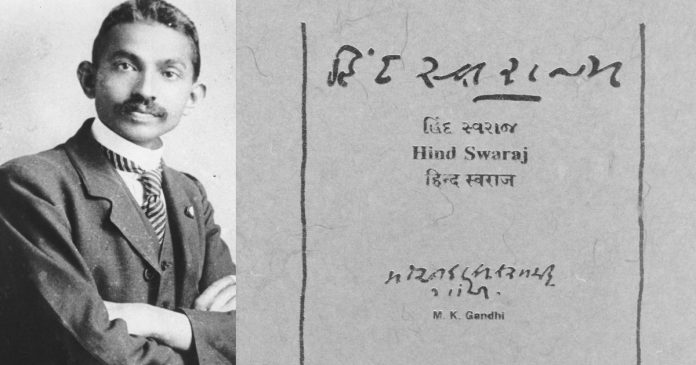
Download Now

Introducing the Vessels Bill, which replaced the Inland Vessels Act, 1917

0
Vessels Bill
Image source - https://bit.ly/37vzd6W

This article is written by Harsh Gupta from the School of law, HILSR, Jamia Hamdard. This is an exhaustive article that deals with the new Inland Vessels Bill that has been passed by parliament recently.

Introduction

The Lok Sabha introduced the Inland Vessels Bill, 2021 on July 22, 2021and subsequently it was passed by the Rajya Sabha on August 2, 2021, now it will be sent to the President for assent. As a result, the 1917 Inland Vessels Act is no longer in effect. The Act regulates inland vessel navigation by states, including the registration of vessels and the safe carriage of goods and passengers.  The Bill aims to create a uniform regulatory framework across the country for inland vessel navigation.  

Main features of the Bill 

The Bill defines mechanically propelled inland vessels like ships, boats, sailing vessels, container vessels, and ferries.  As specified by the central government, these vessels must meet the following requirements: 

  1. Class, 
  2. Design, construction and crew accommodations standards, and 
  3. Type and frequency of surveys. 

A designated authority, as prescribed by the central government, will have to approve the construction or modification of such vessels. The main features are as follow:   

Operation in inland waters

  • To operate in inland waters, all such vessels must have a certificate of survey and a certificate of registration. Indian-owned vessels must be registered with the Registrar of Inland Vessels (appointed by the state government). The registration certificate will be valid throughout the country. States will grant certificates of the survey in a form prescribed by the central government. The certificate will indicate the inland water zones (areas of operation to be delineated by the state) for such vessels. An insurance policy must also be in place to cover liability for death, injury, or damage caused by using the vessel (including accidental pollution). 

Navigation safety  

  • As specified by the central government, these maritime vessels will need to follow certain specifications for signals and equipment to ensure navigation safety. Any vessel in peril must immediately send a danger signal to other vessels within range as well as to the responsible state government. A vessel master who fails to render assistance after answering a distress call may be fined up to Rs 10,000 unless he is unable to do so for specific reasons.  

Investigation in case an accident occurred

  • A police officer and the state government-appointed authority must be notified of any accident aboard such vessels. A District Magistrate may be required to investigate these matters and submit a report recommending actions to be taken. 

Manning requirements : certification of competency and penalty

  • All vessels should have a minimum number of crew members for their respective functions as dictated by the central government. A violation of these requirements could result in a penalty of up to Rs 10,000 for the first offence, and Rs 25,000 for subsequent offences. Certification of competency indicates the ability of recipients to serve in their designated roles and is issued by the central government through qualification, training, examinations and certification. These certificates will be granted by the state governments.

Certificate of prevention of pollution

  • All vessels will discharge or dispose of sewage according to regulations established by the central government. The central government will announce which pollutants cannot be discharged or disposed of. A certificate of prevention of pollution will be granted by state governments in the form prescribed by the central government.  

Database of inland vessel

  • The central government will keep a centralised electronic record of inland vessel data. The records will include information on 
  1. The registration of vessels, 
  2. The crew and manning of the vessels, and  
  3. Certificates issued.  

Establishment of development fund

  • The Bill establishes a development fund that will be used for several purposes, including:
  1. Emergency preparedness,
  2. Pollution control, and
  3. Inland navigation.
  • Such a development fund will be established by each state.  Contributions to the fund come from:
  1. State governments, 
  2. Stakeholders, and 
  3. Proceeds from the wreck and cargo sales.

Non-mechanically propelled inland vessels

  • Under the Bill, the state governments may delegate certain functions related to non-mechanically propelled inland vessels to local governments. Owners, operators, and users of such vessels can benefit from data collection and advisory programs.  Governments will set criteria (such as size, purpose, age, and design) for identifying and categorizing such vessels.  

The Inland Vessel Bill : advantages 

At the moment, 4,000 km of inland waterways are operational in India. With its new Bill, the administration hopes to facilitate the development of the inland shipping fleet in the country, as well as develop more ports across the country for the transport of cargo. According to the Ministry of Ports, Shipping and Waterways, the new Bill will reduce operational bottlenecks in the movement of vessels between states. The development of inland waterways in the country is however viewed with scepticism by market analysts. The Inland Vessels Bill will make tourist ferries and smaller ships more visible across India, however, inland waterways change seasonally, which may mean cargo-carrying ships are not able to utilize these waterways year-round.

In addition, the country’s inland waterways are very underdeveloped and year-long routes will need to be developed for industrial use, according to a senior port and shipping consultant in Mumbai. In India, coastal shipping or inland shipping may, however, find a niche among Micro, Small, and Medium Enterprises, which require smaller loads to be transported across the country. India’s Inland Vessels Bill is expected to boost the MSME sector, and coastal shipping is cheaper and sometimes faster than road and rail transportation. Several MSME companies can hire vessels to transport their goods, eliminating supply bottlenecks. By using alternate modes of transportation in India, such as rail and coastal shipping, the freight rate in the country can be lowered substantially. Another factor that’s a little bit on the outside is that the mix is starting to change a little bit as instead of all the products travelling only by road, they’ve begun to be moved by rail and other modes of transportation as well. Thus, that would reduce freight rates considerably, since rail and coastal shipping have lower rates.

Rules regarding navigation, safety and signals

  • Signals and equipment based on classification and categorisation of mechanically propelled vessels shall comply with the specifications and requirements specified by the Central Government for all such vessels.
  • Any mechanically propelled vessel plying on inland waters shall adhere to the rules and regulations prescribed by the Central Government with respect to the use of fog and distress signals, observing the proper steering and sailing rules, as well as exhibiting and displaying different standards of lights, shapes and signals.
  • Each mechanically propelled vessel, while within the inland water limit, shall exhibit any lights or shapes, or use fog or distress signals, other than those required to be displayed. To ensure safe navigation throughout inland waters, every mechanically propelled vessel must take precautions to prevent collisions. The person in charge of any mechanically propelled vessel shall be deemed to be liable for any damage or loss caused by non-observance of any of the rules made by the vessel in the inland water limit at the time the damage or loss occurred unless it is demonstrated to the satisfaction of the court that there were exceptional circumstances.
  • In inland waterways, the master of a mechanically propelled vessel that encounters a dangerous derelict or more difficult-than-expected navigation hazard shall immediately signal that to other mechanically propelled vessels in the vicinity and the concerned State.
  • The government shall not charge any fees or charges for the use of any device for communicating information under this section if the vessel is mechanically propelled.
  • A mechanically propelled inland vessel’s type or category must be prescribed by the Central Government in terms of navigation aids, life-saving appliances, fire detection and extinguishing devices, and communication devices.
  • Owners, operators, and masters of mechanically propelled inland vessels must comply with all regulations regarding navigation aids, lifesaving equipment, and fire detection and extinguishing equipment.
  • Authority of the State Government may appoint or authorise such officers to inspect mechanically propelled inland vessels during their transits to make sure they comply with applicable regulations.
  • If Surveyors found that the vessel did not have sufficient fire-fighting and lifesaving equipment to comply with the provisions of this Act and if the vessel fails to comply with the rules made thereunder, the surveyor shall issue a notice to the master, owner, or operator in writing, and if compliance is not reported to the surveyor by the owner, the vessel cannot operate.

Conclusion 

Among other things, the new Bill will make it easier to harmonise and effectively regulate the inland vessels as well as ensure seamless and safe navigation between the states. It ensures that all rules and regulations are uniformly applied to ensure inland waterway transportation and trade are seamless, reliable, and economical. Among other provisions, it prescribes the categories and procedures by which mechanically propelled vessels are classified, and requirements and procedures for registering vessels; the identification and categorization of special category vessels by the central government and implementation of the provisions in compliance with the prescribed standards by State Governments. This legislation also mentions the importance of preserving the statuses of authorities created by the respective State Governments to ensure the proper administration of the provisions. Additionally, it aims to give effect to the Digital India Campaign by developing a Central DataBase / E-Portal for registering personnel and building crew databases. Setting high standards for the safety of navigation, protection of life and cargo, prevention of environmental pollution, promoting healthier trade practices, transparency of administrative mechanisms, and training and development of highly skilled workers.

In addition, it discusses future developments and technological advancements in vessel construction and usage. Regulation of technologically advanced vessels of the present and the future is referred to as ‘Special Category Vessels’. Additionally, provisions regarding Wreck and Salvage are introduced. The State Government will appoint the recipient of the wreck. In addition, it introduces principles of liability and limitations of liability. Moreover, it also provides for provisions to ensure secure trade and business practices, and improvements and expansions to the concept of insurance. It provided provisions for casualties and improvised investigations. Providing a service provider and a user with ease of compliance. Furthermore, it provides a platform for State Governments to regulate the unregulated sector of non-mechanically propelled vessels.

References 


Students of Lawsikho courses regularly produce writing assignments and work on practical exercises as a part of their coursework and develop themselves in real-life practical skills.

LawSikho has created a telegram group for exchanging legal knowledge, referrals, and various opportunities. You can click on this link and join:

https://t.me/joinchat/J_0YrBa4IBSHdpuTfQO_sA

Follow us on Instagram and subscribe to our YouTube channel for more amazing legal content.

Download Now

Privatisation of Indian Railways : how bonafide is the need

0
Image Source- https://bit.ly/2Se49Cy

This article is written by Priyanshi Soni, a student of Symbiosis Law School, Noida. This article seeks to discuss the privatisation of Indian railways and the questions raised regarding it, along with stating the merits and demerits of the same

Introduction

Indian Railways are credited for serving the largest democracy in the world. It is one of the highest revenue-generating industries in India. After around 167 years after the start of Railways in India, Tejas Express, which was an initiative of the Indian Railway Catering and Tourism Corporation (IRCTC), was started as India’s first (partially) private train. The train has done incredibly well so far, both in terms of reviews and finances. It is almost at break-even in the first quarter. The Mumbai-Ahmedabad Tejas has seen increased occupancy, and this may be a stepping stone for the introduction of private enterprises.

The second term of the Narendra Modi government introduced the idea of privatizing Indian Railways, as the railways continue to struggle with financial difficulties despite an improving operating ratio, and are still far from achieving an optimal financial position to sustain railway operations, which the Government believes can be achieved through its privatization. 

There has also been a debate going on in recent times regarding the complete privatisation of railways. Is there really a need to privatise them or should it rather be totally owned by the Government? Or, is any mid-way possible? Let us examine the possibilities of privatisation of Indian Railways and the stand of the Government with regard to the same. 

The questions raised regarding privatisation

Indian Railways are an age-old service that we are provided with. With the changing needs of the economy, the Government is of the view to privatise it. There is a long debate going on whether privatisation will be beneficial to the general public or will it prove to be disadvantageous as the accessibility will then become disproportionate, due to income disparity. Another question relates to the manner in which the market forces will impact Indian Railways and the way the Government will tackle any financial withdrawal, post-privatization. 

The coming of privatisation will also raise concerns about which areas private players will focus on, who will control railway operations, and how the distinction between the Government and the private players in all sectors will be drawn. If private players’ judgments and railway organisation outweigh the interests of employees, it may have a significantly negative influence on employee welfare and ultimately lead to the organization’s end. 

The origin of current reforms 

In 2015, an official committee, headed by NITI Aayog member Bibek Debroy, recommended several reforms concerning the Indian Railways, restructuring the Railway Ministry, and suggested a complete overhaul of the railway board and entry of private players. Unification of the railway budget with the Union Budget was also suggested by the committee which was then implemented by the National Democratic Alliance (NDA) Government in 2016. It was pointed out by the committee that there is increased competition in the road transport sector. Low passenger fares and high freight rates have led to a preference for road transport. 

But, the committee supported liberalization as a way of giving entry to private players instead of straightaway terming it as “privatisation”. In its view, this will help in improving services, growth, increase in healthy competition, etc. which will be beneficial for all. 

Opening of the sector

In 2017, the then Union Railway Minister Suresh Prabhu launched the “largest transit-oriented development program ever executed in India” for reform and overhaul of 400 stations. He wanted to open the entry of private players, like airport mode, and lease them for 45 years. But in 2019, NITI Aayog’s Chief Executive Amitabh Kant wrote that there is a delay in implementations of the same. Finally, in 2020, the process to allow private trains on 109 routes began. The Indian Railways plans to introduce the private trains in phases due to start from 2023-24. 

The debate on fares and prices 

The major question that is raised is that will the privatisation of Indian Railways lead to an increase in fares and prices? Last year, it was clarified that only the private concessionaire will decide the fares for private trains. Now since the maker will decide the price, there is a good possibility of higher fares for these trains. But, it is also the stand of the ministry that the operation of these trains will be independent. That means, it signifies that there should be no interference with the regular fare prices. 

Opposition’s stand 

The opposition stood against the privatisation of Indian Railways as they contended that the operation would be handed over to few players and would result in fare price hikes. 

Piyush Goyal, who was the Union Railway Minister, said recently that the Railways will never be privatised but private investment will be encouraged. “Let me make it clear, the Indian Railways will never be privatised, Indian railways is India’s asset and will continue to remain so and belong to the people…If a railway line is installed should there not be the need to ensure good services to the passengers and higher speed trains? And if any private investment comes, I feel it should be welcomed.” – Piyush Goyal. 

Merits of privatisation of Indian Railways

Indian Railways has devolved into an ineffective and bureaucratic monolith over time. The merits of privatisation of Indian Railways are discussed as follows:

Efficient services

In many aspects such as catering and punctuality, railways lack efficiency and if private players enter into the handling of organization, then these services will become more efficient. 

Increase in revenue collection

Right now, both freight and passengers are maintained by a single entity, so there is an imbalance in profits and losses for each other. If private players enter, giving world-class service,  there will be an increase in revenue collection. 

Introduction of latest technology 

The allowance of international private players will lead to the introduction of the latest technology which will improve accountability, unlike present times when accidents are rising. 

Normalization of prices due to competition

An increase in competition is important for the growth of the sector which would be ensured when private players enter and hence lead to overall betterment in the quality of services. This will normalize the prices charged as now the competition will be on the increase and thus, quality would also become better. 

Demerits of privatisation of Indian Railways

Coverage 

It is a big advantage if the railways are government-owned as it helps in wide coverage throughout the nation. On the contrary, when it is privatized, the less popular routes would get neglected leading to poor connectivity. Mainly, the regions such as hilly areas and North-Eastern states will get neglected. 

Increased fares

Increased fare prices are a major problem that might crop up with the coming of privatisation. The private players would be more concerned with making a profit which will result in a rise in prices, resulting in poor reach to all segments of society. This will undermine the very purpose of railways and may result in a loss to road transport. 

Also, taking the social welfare concerns into account, privatisation will lead to high-cost transportation of goods across the country. 

Conflict of interest

Since the Ministry of Railways is given the charge of service providing, policymaking, and regulation, there are fewer chances of conflict of interest, and the interest of the entire system is maintained well. But if privatisation happens, there will be conflicting interests between the Government and its investors. 

The future of privatisation

As we have examined the pros and cons of privatisation, it is now clear that total substitution by any one player can result in many drawbacks. The need is the co-operative working of Government and private sector. The function of privatization is not to override employee and passenger benefits, but also to regulate infrastructure development, with disinvestment in the freight segment which would further help the concentration of investments in diverse sections of railway operations with the engagement of private players in helping the Government supplement its efforts in the sustenance of railway operation. 

It cannot be said that railways can depend totally on the private sector. Definitely some sort of government help is needed. For better connectivity and reach, it is important that the Government keeps a check on the working of the sector. The needs of economically backward people can only be addressed by the Government’s support and supervision. It is, therefore, necessary to have a partnership, rather than a complete substitution. 

In response to the recent Parliamentary debate, Railway Minister Piyush Goyal said that the railways will never be privatised totally. He clarified that the Government is working more on passenger safety. He said the 5,500 km track is going to be privatized this year and talked about the Government’s target of complete electrification by December 2023. It is true that the core sectors can be corporatized, which refers to the restructuring or transformation of a state-owned asset or organization into a corporation, rather than privatized. 

The Niti Aayog strategy for New India @ 75 includes various targets in railway infrastructure, such as raising infrastructure development speed from 7 km/day to 19 km/day by 2022-23. Privatisation will thus help in the development of better infrastructure.

A study on the privatisation of railways

In a recent study conducted by a few BA.LLB students on privatisation of Indian Railways found that most of the common people are not happy with the idea of privatisation as they know that standard of service will do get an increase, but they also are aware regarding increased fare prices which are inevitable. The majority of people are rational and are of the middle class, those who choose rail transport. Thus, people are generally suggesting to not privatise it as it will be disadvantageous for those who heavily depend on the railways as a means of transport. 

Conclusion 

The railways are the largest means of transportation. But in many aspects, it lagged behind; such as in terms of punctuality and accountability, as we discussed above, The private sector can better manage the service. There are increased cases of accidents as well, which calls for a proper modern technological setup in place. 

In recent times, due to the increase in the public mass interface, the Government has made it clear that it is important to open it up, although refused to call it privatization. It is important to modernize the railways to meet up with the modern demands and also to match globally in terms of developments. The need of the hour is thus a balanced approach by both the Government and private players. 

References 


Students of Lawsikho courses regularly produce writing assignments and work on practical exercises as a part of their coursework and develop themselves in real-life practical skills.

LawSikho has created a telegram group for exchanging legal knowledge, referrals, and various opportunities. You can click on this link and join:

https://t.me/joinchat/J_0YrBa4IBSHdpuTfQO_sA

Follow us on Instagram and subscribe to our YouTube channel for more amazing legal content.

Download Now
logo
FREE & ONLINE 3-Day Bootcamp (LIVE only) on

How Can Experienced Professionals Become Independent Directors

calender
28th, 29th Mar, 2026, 2 - 5pm (IST) &
30th Mar, 2026, 7 - 10pm (IST).
Bootcamp starting in
Days
HRS
MIN
SEC
Abhyuday AgarwalCOO & CO-Founder, LawSikho

Register now

Abhyuday AgarwalCOO & CO-Founder, LawSikho