Download Now
Home Blog Page 477

Compelling a non-signatory party of a contract to arbitrate

0

This article has been written by Dishani Dutta pursuing the Certificate Course in Arbitration: Strategy, Procedure and Drafting from LawSikho. This article has been edited by Aatima Bhatia (Associate, Lawsikho) and Dipshi Swara (Senior Associate, Lawsikho). 

Introduction

An arbitration agreement is governed by general principles of Contract and Agency laws; therefore, an agreement/contract only confers rights or impose obligations when parties have signed or at least demonstrated a manifest of intent to become a signatory party. Under general rule, non-signatories cannot be bound or compelled to arbitrate, as they are not privy to the contract. However, if there exists a third-party beneficiary in the contract, the common law also takes that party into account. In appropriate circumstances, non-signatories can be bound to arbitrate as an exclusive exception to the rule of Privity of Contract. Since the element of Consent in arbitration holds water, the nature of non-signatory involvement is ambiguous. Relationship of the third party to the signatory and relevance of the non-signatory to the subject matter of arbitration that they are being bound to, are some factors taken into account, besides the composite nature of transaction between the non-signatory and signatory. In this article we deal with theoretical expectations in the light of Indian jurisprudence to bring a non-signatory to consensus.

Theories binding non-signatories to arbitration 

There is no specific strategy or mechanism devised that an arbitrator could refer to while administering a non-signatory party to an arbitral proceeding. The process of compelling a non-signatory seeks its foundation in complex and fact-oriented theories of contract and corporate laws. Various courts and arbitral tribunals adhere to these theories for dealing with non-signatory parties.

  1. Incorporation of Reference 

Obligation to arbitrate extends to a non-signatory if they have executed a contract with a signatory that has incorporeal arbitration agreement by reference. When a party is a signatory of an agreement that incorporates or refers to a secondary agreement including an arbitration clause, the party can be bound by that arbitration clause even though they are non-consenting non-signatory to the secondary agreement including the arbitration clause. In other words, the arbitration clause is non-existent in the primary contract signed by the party. It is rather found in a separate and pre-existing document that is referred to in the primary contract. Therefore, arbitration becomes binding on the party by virtue of expressed reference to the contractual document inclusive of the arbitration clause (called “relation perfecta”) Thus, the arbitration clause is acknowledged as part of the primary contract.

Giriraj Garg vs. Coal India Ltd. and Others The Apex Court found precedence in the Queen’s Bench Division judgement in Habas Sinai Ve Tibbi Gazlar Isthisal Endustri AS v. Sometal SAL and MR Engineers and Contractors Private Limited v. Som Datt Builders Limited, (2009) 7 SCC 696.The Appellant was the successful bidder at the e-auction scheme for distribution of coal issued by the Respondent, and instituted contractual relationships. The Respondent thereby issued Sale Orders to the Appellant. Adhering to the general terms of the scheme, the Appellant has deposited earnest money with the Respondent. Appellant was unable to procure the booked quantity of coal within an explicit time frame, subsequently the earnest amount for purchase of coal deposited by Appellant was forfeited on account of alleged breach of terms of scheme. Appellant invoked arbitration, and filed a section 11 application before the Jharkhand High Court on instance of failure of the Respondent in appointing an arbitrator. 

The application was rejected by Hon’ble Court on grounds of absence of arbitration clause in the Sale Orders. The Supreme Court of India, in adherence to Section 7(5) of the Arbitration and Conciliation Act, 1996 – The reference in a contract to a document containing an arbitration clause constitutes an arbitration agreement if the contract is in writing and the reference is such as to make that arbitration clause part of the contract. The Apex court held that the Sale Orders had explicit reference to the principal Scheme. Therefore, the guidelines, office orders, notices as well as dispute resolution mechanism contained in the Scheme govern the contractual relation of parties. 

  1. Agency

The Principal is bound by the actions of their Agent under the theory of vicarious liability. Thus, any arbitration agreement executed by the Agent shall extend to the Principal even though they have not signed or consented to the same. However, there must exist an Agency-Principal fiduciary relationship which must be relevant to the arbitrable dispute at hand. It is pertinent that the Agent acted within the scope of their authority when entering into arbitration agreement on behalf of the Principal. Mere natural parent-subsidiary relationship does not confer Agency privileges; therefore, the Agency relationship will only hold water when it has been sculpted as a contract. Ambiguity involving Agent’s actual authority shall negate the attempt to bind the non-signatory Principal to arbitration.

If an Undisclosed Principal is the beneficiary to an arbitration agreement executed by their Agent, they may enforce arbitration as a non-signatory, even though the signatory party was not apprised of their existence. The appellate court in the English case of Interbras Cayman Co. V Orient Victory Shipping Co. passed judgement based on this principle.

  1. Equitable Estoppel 

Both non-signatory and signatory parties may compel arbitration under this doctrine. Courts observed two versions of the doctrine of Equitable Estoppel when adjudicating a non-signatory submission to an arbitral proceeding –

  1. The first strand [Direct Benefit Theory]: The doctrine is grounded in the nature of contractual relation of the non-signatory to the contract/agreement. Parties are estopped from renouncing obligation to arbitrate based on mere absence of their signature in the contract/agreement, whereas they have enforced and maintained status quo as consistent beneficiary of that same contract. In other words, the non-signatory is compelled to submit to arbitration when they have embraced the agreement and procures benefit from it. Courts exercise estoppel to bind a non-signatory to arbitration that consciously exploits the agreement containing the arbitration clause. The estopped party asserts their contract-based claims upon reliance on the underlying contract containing arbitration clause, with aim to maintain their beneficiary status during the tenure of the contract. By virtue of Equitable Estoppel, the non-signatory is curtailed from challenging that agreement as a measure to evade arbitration.  
  1. The second strand: The Court by virtue of this principle, may grant a non-signatory powers to bind an unwilling signatory to arbitration, vice versa annex a ‘willing’ non-signatory to arbitration. The doctrine of equitable estoppel allows a non-signatory to an arbitration agreement to invoke arbitration, only on the instance of a signatory’s reliance on the terms in the contract when asserting their claims against the non-signatory. The relation of the non-signatory’s contractual obligations and duties to alleged wrongs that are subject of arbitration, lays grounds for compelling a non-signatory to arbitration.
  1. Third- party beneficiary 

This theory bears resemblance to direct benefit estoppel as aforementioned. However, they have intrinsic distinctions. Court atones a willing non-signatory third-party beneficiary (plaintiff) to invoke arbitration against a signatory provided a valid arbitration agreement subsists. The plaintiff is allowed to assert claims arising only out of the contract containing an arbitration clause. Here, the beneficiary third-party has been nominated to incur benefits from the contract executed by the signatory, provided the beneficiary is an ‘intended beneficiary’. By way of this reference, the non-signatory third-party can submit to arbitration where need be.

In the case of Mississippi Fleet Card v. Bilstat, Inc., the judgement recognises the non-signatory as a third-party beneficiary of the contract subject to arbitration, thereby binding them to submit to arbitration. The Court laid down a comprehensive test for determination of entity as the third-party beneficiary –

  1. The spectrum of the contractual terms can be subjective of interpretation vis a vis the inclusion of third-party. Mention by name or a specific class can be an implication of the same. 
  2. The third-party has significance to the contract subject to arbitration. The ‘intent’ to encompass the third-party in the form of a beneficiary must be explicit.
  3. The subject matter of Contract has substantial interest in rendering genuine benefit to the third-party on its enactment. 
  1. Assumption 

A non-signatory’s manifestation of intent to assume the contract containing the arbitration clause, thereby, embracing obligation to arbitrate, is corresponding to their waiver of objection to being bound. The non-signatory shall be deemed to have impliedly consented to arbitration.

  1. Veil- piercing/ Alter-ego 

The centrifugal idea of the Doctrine of Alterego or Piercing the Corporate Veil is that a corporation, its managing directors and shareholders are alter ego (literally meaning counterpart) of each other. When mere or no distinction is observed between the shareholders/directors and the corporation or a limited liability corporation, that is, when both act like two sides of the same coin, it shall be identified as the Veil-Piercing or Alter-ego doctrine. A non-signatory is bound to arbitration where it is observed to be the alter-ego of the signatory, in turn allowing the opposition to “pierce the corporate veil”. Courts view this principle as police of fraud and associated torts. 

Extension of the arbitration agreement to a third party is envisaged when a signatory party is found to represent them, and such representation is not merely arising out of being part of a corporate body under Group of Companies doctrine, and such representation arrangement was created in attempts to evade arbitration. Such frivolous strategies amount to an abuse of rights creating exposure for piercing of corporate veil.

  1. Group of companies doctrine 

The central idea of this Doctrine is that when numerous companies form part of a large corporate group, they may be addressed as a single legal entity or une réalité économique unique. However, each company is legally independent of each other – but under this Doctrine, a group of companies shall be treated as one unit and under the umbrella of the same economic reality, where the circumstances, termination and performance of a contract as well as its degree of control executed among the group companies warrant such an inference. The key to binding a non-signatory party to the arbitration is to seek expressed or implied consent in any “group of companies” decision-making – an agreement of one company cannot be binding on another company due to its mere affiliation to the parent concern under the Group of Companies, implying the shareholders and affiliates do not share rights and liabilities under the general rule.  

The obligation to an arbitration agreement can be extended to a non-signatory party of a group of companies, who are an active participant in a contractual relationship, arising in virtue of the Group of Companies Doctrine. In other words –

  1. A non-signatory party has been involved in the enforcement and performance of the contract.
  2. A non-signatory party has been a beneficiary or shall benefit in future from such involvement. 

The doctrine is found to disregard the principle of Privity of Contract as one of the founding factors of any commercial contract. In addition, it fails to recognise the paramountcy of Free Consent in legal contractual relationships. In instances, this doctrine has been used arbitrarily to establish jurisdiction over a non-signatory merely based on their association to a corporate body. One may observe this doctrine as a manifestation of the principle of implied consent and corresponding to the conduct of the parties.

In India, the Arbitration and Conciliation Act,1996 does not expressly acknowledge the doctrine. However, the doctrine has garnered snowballing momentum in axiomatic attempts to evade fragmentation of disputes when dealing with multi-party contractual relations or composite transactions. 

Dow Chemical vs. Isover-Saint- Gobain (1982); the Doctrine finds its roots in the prototype case of Dow Chemical V. Isover-Saint-Gobain – 

In this case, a number of companies constituted a group of Companies under the title of Dow Chemical Group. In a dispute arising out of several distributions’ agreement between Dow Chemical subsidiaries and Isover-Saint-Gobain, an action was brought up that eventually settled through arbitration. However, the parent company of Dow Chemical was not a signatory. It was held that the arbitration agreement cannot be considered exclusive to the two parties to agreement, as each of the franchises of Dow Chemical – Dow Chemical Venezuela, Dow Chemical AG, Dow Chemical Europe, and Dow Chemical France – are incorporated groups of companies recognised as Dow Chemical Group.

This case is an ideal epitome where obligation to arbitrate is extended to a non-signatory party who was initially not intended to be part of the arbitration. The principle contract granted permission to any subsidiary of Dow Chemical group to perform the terms of the contract, according to which they can facilitate delivery and distribution. Isover, displeased with the quality of products procured from Dow Chemical, brought legal action against them before the French Court on the grounds of violation of contract on Dow Chemicals’ part. Dow Chemical upheld the presence of a valid and enforceable arbitration agreement that was part of the principal contract. Therefore, Dow Chemical filed a request for an ICC-administered arbitration against Isover. The plea was granted by the parent Company Dow Chemical USA; Dow Chemical AG and Dow Chemical Europe that were also subsidiaries like Dow Chemical France. Isover raised objection on the participating of the parent Dow Chemical on the grounds that it was not party to the distribution agreement that included an arbitration clause, or simply a non-signatory, therefore its intent to arbitrate any claim against it is non-cognizable.

The tribunal sustained the objection by rendering an interim award that primarily concluded – that the non-signatory party in this dispute are of equal significance as the signatory company since they have an effective role in ‘conclusion, performance and termination’ of the various distribution agreements that the subsidiary companies have entered into. An implied consent to be privy to arbitration may be enough grounds to acknowledge the participation of a non-signatory to the arbitration.

Sukanya Holdings Pvt. Ltd. vs. Jayesh H. Pandya and Ors. (2003) In the case of Sukanya Holdings, disputes arose between several parties regarding the same transaction that was fraudulently executed several times. These parties are not signatories to the agreement therefore cannot be bound to arbitrate under the arbitration clause contained in the principal agreement. The Apex Court was pleased that any non-signatory party cannot be considered privy to arbitration, upholding the essence of Section 8 of Arbitration and Conciliation Act,1996. It also highlighted that cause of action cannot be subject of bifurcation, hence arbitration should be restricted to the parties that have executed an agreement and involvement of third parties are to be sternly contemplated.

Chloro Controls vs. Severn Trent (2013) The plaintiff and the respondent executed a shareholder’s agreement (SHA) containing a dispute resolution clause. It is the primary agreement that gives form to the parties’ relationship. The parties have involved multiple inter-linked agreements in the natural course of business. During dispute redressal, the position of parties to the multiple inter-linked agreements in context of the present case was ambiguous: Since they were non-signatory to the SHA containing arbitration clause, whether or not these adjoining parties could be brought within the ambit of a single arbitration.

In the case of Chloro Controls v. Severn Trent (2013) 1 SCC 641 (Chloro Controls), the tri-judge bench was of the opinion that an arbitration agreement executed by a company that is within the group of corporate entities, can extend to its non-signatory affiliates invoking the Group of Companies doctrine. Therefore, the SC upheld a judgement affirming the engagement of non-signatories to a single international arbitration, based on the existence of an arbitration clause in the principal agreement/mother agreement.

Cheran Properties Ltd. vs. Kasturi & Sons Ltd. & Ors. (2018) The judgement of Chloro Controls Pvt Ltd v. Severn Trent Water Purifications Inc. which relied upon the doctrine of Group of Companies, found precedence in the Cheran Properties judgement. In this case the contracting parties were Sports Pastime India Limited [“SPIL” – a subsidiary of Kasturi & Sons Limited & Ors] and KC Palaniswamy [“KCP”] and Hindcorp Resorts Pvt. Ltd., where the SPIL agreed to transfer their shares to KCP and their nominee, Cheran Properties Limited [“Cheran”]. The Section 35 of the Arbitration and Conciliation Act, 1996 makes arbitral awards binding upon parties and their relatives, therefore the arbitration agreement between the signatories becomes binding on Cheran by referring to the share-transfer agreement between KCP and Cheran.

arbitration

Mechanisms for binding a non-signatory to arbitration 

  1. Joinder: 

Joinder or Extension is a means for third-party inclusion ratified by an original party to a pending arbitration proceeding or post-commencement of proceedings. The third-party may be joined as a supplementary respondent at a later stage of arbitral proceeding. On assenting to a bi-party arbitration, the third-party presence synthesises the arbitration into a multi-party proceeding. Joinder is a mechanism coherent to the Group of Companies Doctrine. Joinder is also permitted under the principle of Equitable Estoppel. 

Arbitrators analyse leads to joinder of a non-signatory to arbitration when these scenarios are present:

  1. Participation of a non-signatory during the formation of a contract, and how their role influences the contract. 
  2. A multi-document constituted an arbitration agreement. 
  3. Non-signatory’s implied or expressed consent to arbitrate, in relation to the contract at hand. 
  4. When a signatory corporate personality is non-existent. 
  5. Fraudulent and tortuous abuse of corporate form.

Joinder effectuates when the all-signatory parties to arbitration have assented unanimously. Furthermore, where the third-party has consensually submitted to be bound vide joinder, the intervention which otherwise has ability to volatilize the arbitration process, ceases to jeopardise the enforceability of the arbitral award; whereas a joinder that does not have approval of either any of the signatory or the third-party may produce contradicting outcomes.

  1. Consolidation: 

Alternative dispute resolution process is pivoted in delivering speed redressal; therefore, it deploys procedural tools to dismiss parallel or successive fragmented arbitrations in attempts to achieve redressal and decide claims collectively. Consolidation is a way of compiling interrelated two-party, one-claim cases into one conglomerate case. The union is conferred only after the cases have been filed separately.

The process of consolidation is perceived to be cost effective and an excellent mechanism to evade contradictory results. Factors like the governing law of the specific seat of arbitration, the prerequisites in the arbitration clause accorded by both the parties, and the rules of the arbitral institution – influence the consolidation of arbitration.

  1. Intervention: 

The prevalence of multi-party transactions and their associated complex discrepancies have made third-party intervention inevitable. Such intervention is unorthodox in the general course of litigation. In extraordinary circumstances, a third-party may be given limited right of intervention, provided said right is expressly permitted. A willing-non-signatory shall appeal for joinder to arbitration on their own, either prior commencement or post-commencement of proceedings. Contrary to joinder, the third-party consensually asserts to be part of arbitration.

Conclusion

Third-party involvement may be inexorable in the constitution of an arbitral tribunal. For instance, where signatories seeking arbitration have failed to appoint a tribunal, there may be instances to resort to third-party for appointment of tribunal. The alarming issue raised in this regard is the status of control signatories hold over the arbitral proceeding, as we know that party-autonomy is the crux of arbitration. Insurgence of third-party in constituting the ruling tribunal intoxicates the contractually accorded dispute resolution clause, thereby threatening the commitment towards and integrity of contractual terms. If the practice of third-party intervention becomes prevalent, it exposes all future probabilities for parties to bend the law to suit their convenience and substantive remedy cannot be conferred to the aggrieved due to the volatile nature of the arbitration. Furthermore, binding non-signatories to arbitration by virtue of exceptions is directly opposed to the voluntariness of parties submitting to arbitration. 

References

  1. https://core.ac.uk/download/pdf/232773331.pdf
  1. https://www.mondaq.com/india/arbitration-dispute-resolution/992980/composition-of-arbitral-tribunal-and-participation-of-third-parties-in-international-arbitration
  1. https://www.mondaq.com/india/arbitration-dispute-resolution/868694/binding-non-signatories-to-an-arbitration–charting-the-shifting-paradigms.

Students of Lawsikho courses regularly produce writing assignments and work on practical exercises as a part of their coursework and develop themselves in real-life practical skills.

LawSikho has created a telegram group for exchanging legal knowledge, referrals, and various opportunities. You can click on this link and join:https://t.me/joinchat/J_0YrBa4IBSHdpuTfQO_sA

Follow us on Instagram and subscribe to our YouTube channel for more amazing legal content.
Download Now

What you should know about the prosecution of top-tier officials

0

This article is written by Abhishek Chaudhary Attri, who is pursuing BBA LL.B from UPES, School of Law, Dehradun. 

Introduction 

When individuals in positions of authority misuse their powers and go rogue against humanity, we witness large-scale criminal acts, where death becomes a statistic. Such individuals need to be held accountable for their actions. This article deals with the prosecution, the accountability and post-transitional justice of such top tier officials. 

The prosecution of top-tier officials : a look into the scenario 

Amid the Second World War, humanity witnessed gross violations of humanitarian laws, particularly in the form of the Holocaust where Jews were persecuted as per the anti-semitism policies of the Nazis and were later sent to concentration camps where they were burned alive in incinerators and poisoned in gas chambers. After the Germans surrendered, many top Nazi officials were accused of war crimes during the Nürnberg trials. The need was felt for an international court to deal with the atrocities related to crimes against humanity, and in pursuance of this, the Convention on Prevention and Punishment of the Crime of Genocide was adopted. In the year 1998, the International Criminal Court was established through the Rome Statute, in the wake of war crimes and genocide occurring in Yugoslavia and Rwanda. The International Criminal Court (ICC) is responsible for the prosecution of top officials.   

The ICC does not have the jurisdiction to try anyone below the age of 18. However, no person over 18 years of age is exempted from prosecution, be it high-level politicians, military officials or even the heads of states or governments. Also, the person in authority can be held responsible for the crimes committed by those under his command. The trials are in no manner subject to political control; they are based solely upon the legal criteria set under the provisions of its founding treaty, the Rome Statute

Any state party can approach the ICC via the office of the prosecutor to request an investigation upon a reasonable basis of reliable information. The prosecution then obtains permission from Pre-trial Chambers before initiating an investigation. In certain circumstances, the office of prosecution can initiate the investigation on its own if it receives reliable information about the atrocities being committed in a state. The investigation then leads to the person who bears the greatest responsibility in commission of these crimes based on the evidence gathered. The Pre-trial Chambers then issues a warrant of arrest or summons to appear. The Pre-trial chambers comprise 1-3 judges, and their primary function is to resolve the issues before the trial begins.

Upon the arrest of the official, the charges are confirmed by the pre-trial chambers. The presidency then constitutes the trial chambers composed of three judges to try the case, and thereby the trial phase begins. The charges against the accused are read to them and it is made sure that it is understood by them. If the accused pleads guilty to the charges with the prior consultation of their lawyer and the Trial Chambers is satisfied that the plea is supported by the facts of the case and the evidence contained, the accused is convicted of the crimes committed. In cases when the Trial Chambers is not satisfied with the conditions, the trials shall commence. 

As the trial commences, the prosecution presents its case first and witnesses are called to testify. The prosecution then conducts the examination of witnesses and the defence cross-examines them. After the prosecutor presents all the evidence, the accused, with the assistance of their counsel, presents its defence. After hearing both sides and examining the testimony of witnesses and all evidence presented, the judges pronounce whether the accused is guilty or innocent. The pronouncement of the judgement is public and a maximum sentence of 30 years can be imposed, however, in certain extreme circumstances, a life sentence can be imposed. 

Individual and State : the fundamental odds 

A country whose top officials, be it politicians or military leaders, have been convicted of gross violations of human rights, needs to be held accountable to have a transition into a new justice system to ensure that no such atrocities occur in the future. To hold individual accountability, the punishment shall be effective and enforceable. However, sometimes, states can intervene in this process of retributive justice and come up with penalties or sanctions that are often vague and have no effect, thereby shielding them in circumstances they are made immune to prosecution. 

The impact of individual accountability is that it doesn’t question the existence of a state, and this may somewhat relieve the pressure upon the state for apologizing and providing reparations or any other kind of redressal to the victims. This eventually has enabled the government to put these top-tier officials under trial quickly for their crimes against humanity.

The nation itself is as responsible as the individuals who cause mass human rights abuses. On several occasions, the state tries to frame these officials while the reality is, such massive human rights violations are often state crimes. They are performed by individuals on a large scale, as they are organised and bureaucratized. The state’s responsibility shall be accountability, recognition and issuing apologies to the victims. 

However, the main issue still lies with the regime that controls the state instruments of power and abuses them for mass atrocities. The regime is of the political faction or military officials who claim monopoly over the territories and use violence to establish their presence. The transition to a justice-oriented state means the end of this regime and also that the monopoly has ended. The state’s instruments of power can be used to address the underlying issues and bring the necessary changes in them in such a manner that it keeps checks and balances in the system which is open to the public. 

Individual accountability shall always be linked to state accountability because when a state commits such gross violation of human rights on a massive scale, individuals rarely take those decisions with full autonomy, excluding a political context. The accountability shall be the same for the individual as of the state, as the acts committed were in the pursuit of violence. Along with the initiative for the trial of the individual perpetrators, the states shall too dissociate themselves from such policies that led to the wrongdoing in the first place. 

The aspect of social accountability 

Society is represented by the people who form it. These people bear the responsibility to create a social construct for the atrocities to occur. Citizens of a nation can be held responsible for agreeing and passively participating in crimes committed by their leaders. The social and political context is established by individual leaders who construct the policies on social receptivity to violent claims that were broadly accepted and normalized, which in turn made the criminal policies seem legitimate as masses would agree upon it. Such conduct will create a criminal product of collective action and a political environment where mass atrocities become acceptable.  

Post-conflict accountability : the need for a new framework 

When top officials, or in some cases, the head of a nation is involved in criminal activities on a massive scale, they are the ones who bear the responsibility for the systematic flaws in the nation that led to such atrocities. Such systematic flaws are curbed by transitional justice which deals with the responsibility of everyone. This can be addressed by a three-tier framework that takes into account individual responsibility, the state’s responsibility and societal responsibility. 

The individual’s responsibility directly deals with the officials or leaders who instigated the crimes against humanity, and such individuals shall be tried. The nation’s responsibility in the transitional justice policy, where the nation is the one who was implicated in mass crimes, must issue apologies or provide reparations. The most significant part of the change in the framework is the societal responsibility for mass atrocities. The citizens of the society must realise that the wrongs committed were due to the acceptance of the political ideologies which led to violence. There have to be societal reforms that shall display the normative continuity with the bad past and understand that this is not how a decent society operates. 

References 


LawSikho has created a telegram group for exchanging legal knowledge, referrals and various opportunities. You can click on this link and join:

https://t.me/joinchat/J_0YrBa4IBSHdpuTfQO_sA

Follow us on Instagram and subscribe to our YouTube channel for more amazing legal content.

Download Now

Examining the scope of a “prima facie” review under Section 11 of the Arbitration Act : Pravin Electricals v. Galaxy Infra and Engineering Private Limited

0

This article is written by Vaibhvee Jangid, pursuing Certificate Course in Arbitration: Strategy, Procedure and Drafting from LawSikho. The article has been edited by Aatima Bhatia (Associate, LawSikho) and Dipshi Swara (Senior Associate, LawSikho).

Introduction

In this case of Pravin Electricals vs. Galaxy Infra and Engineering Private Limited, the Supreme Court by a 3-judge bench has extensively examined the scope of prima facie review under Section 11 of the Arbitration and Conciliation Act, 1996 and made reference to the 246th Law Commission Report on the Arbitration Act. Through this, the court found the anomaly in Sections 8 and 11 of the Arbitration and Conciliation Act, 1996. This report had led to the amendment in the Act in the year 2015 but the anomaly still persists till date even after 2019 and 2021 amendments to the said act. What is prima facie review?  What is the anomaly made reference above? What was decided in the  Pravin Electricals vs. Galaxy Infra and Engineering Private Limited? All these questions will be answered through this article by analyzing the above-mentioned case law. 

What is prima facie review under Section 11 of the Arbitration Act?

Prima facie review under Section 11 means a preliminary review to examine the existence and validity of the arbitration clause in the agreement. This power to examine is given to the Supreme Court in matters of international commercial arbitration and to the High court in matters other than international commercial arbitration.

Section 11 talks about the appointment of arbitrators in which Sub-section 11(6) sets out where “under an appointment procedure agreed upon by the parties:

  1. A party fails to act as required under the procedure; or
  2. The parties, or the two appointed arbitrators, fail to reach an agreement expected of them under that procedure; or
  3. A person, including an institution, fails to perform any function entrusted to him or it under that procedure,

Then, the appointment shall be made upon an application of the party by the arbitral institution designated by the Supreme Court in the cases of international commercial arbitrations and by the High Court in matters other than international commercial arbitrations, as the case may be to take necessary measures unless the agreement on appointment procedure provides other means for securing the appointment.”

Under this “prima facie” review, it is necessary for the court to ascertain the following aspects:

  1. Whether there is an arbitration agreement between the parties;
  2. Whether all the parties to the suit are also parties to the arbitration agreement;
  3. Whether the disputes which are the subject matter of the dispute fall within the scope of the arbitration agreement;
  4. Whether the arbitration agreement was in writing. 
  5. Whether the arbitration agreement was contained in an exchange of letters, telecommunication, etc. 
  6. Whether the core contractual ingredients of the arbitration agreement were fulfilled. 

Background of the case

This case came to the Supreme Court through a special leave petition and arose out of the petition filed under Section 11(6) of the Arbitration and Conciliation Act, 1996 for the appointment of a sole arbitrator for deciding the disputes between the parties. The appellant is Pravin Electricals Pvt. Ltd. which is in the business of providing services for electrical supplies etc. And operates in key industrial and commercial sectors.

And the respondent is Galaxy Infra and Engineering Pvt. Ltd. is a company in Bihar and has a business of providing consultancy services.

On 26/05/2014, Chief Engineer, South Bihar Power Distribution Company Ltd. (SBPDCL) floated a tender for the execution of a scheme in Bihar on a turnkey basis for strengthening, improving and augmentation of distribution system capacities of 20 towns in Bihar.

Subsequently, the appellant submitted its bid and was declared as the winner and was awarded the work on 22/09/2014. According to the Respondent, the Appellant won the bid because of the efforts put up by the respondent under the Consultancy Agreement dated 07/07/2014 for which it would be getting the commission. It is also alleged that the appellant had sent an email on 15/07/2014 to the respondent with a draft of the agreement for any changes and comments. On the same day, the respondent had replied stating that certain conditions were not accepted. In the emails dated 22nd and 25th July, 2014 the final consultancy agreement was agreed upon.

Respondent then had raised several invoices for its commission but one thing that is important to note is that they were addressed to M/s. Process Construction and Technical Services Pvt. Ltd. (“Process”) and not to the Appellant. And those invoices made reference to the agreement between Process and the Respondent. After several invoices were raised, the Respondent finally sent a legal notice to the Appellant, but to the utter surprise, the Appellant denied the fact that any agreement was entered into between the Appellant and Respondent on 7/7/2014.

Pursuant to this the Respondent under Article 14 of the Consultancy agreement dated 7/7/2014 appointed Kameshwar Chowdhary as the sole arbitrator for adjudicating the dispute. Thereby the appellant denied it saying that when no agreement was entered into between them on July 7, 2014, then this Article cannot be invoked.

Thus on 7/09/2018, the Respondent filed an application under Section 11(6) of the act for appointing an arbitrator to resolve their dispute. The Delhi High Court directed the Respondent to produce the original agreement before the court and asked Mr. M.G.Stephen, the managing director of the appellant to obtain his specimen signatures to get a report as to whether the agreement actually has his signatures or not. The report was made by CFSL.

Thereafter on May 12, 2020, Delhi High Court gave its judgment, it held that the Consultancy agreement was executed between the parties by email on July 7th, 2014 on the basis of invoices, that the Department (SBPDCL) had sent the LOI to not just the Appellant but also to the Respondent, M/s. Process was the sub-contractor of the Appellant and regarding the signatures of Mr. M.G.Stephen, the court with the help of few case laws held that the arbitration agreement needs to be in writing and not necessarily be signed. And then accordingly Justice G.S.Sistani (former Delhi high court judge) was appointed as a sole arbitrator.

Issues in the case

  1. Whether the ambit of Section 8 and 11 are same in regard to the scope of judicial intervention?
  2. How to understand the term “prima facie review” under Section 11?
  3. Whether the alleged agreement dated 7/7/2014 is valid or not?

Arguments put forth

The council for the appellant argued that the agreement dated 7/7/2014 is a concocted agreement, he relied on the CFSL report that the signatures could not be matched. It held that as there was no agreement entered into between the parties, the arbitration clause also cannot be invoked. And said that the negotiations actually were held after the said date and after which an agreement was entered into between them so the alleged agreement does not exist.

He also argued that the agreement was notarized in Haryana whereas the parties belong to Mumbai and Bihar. And also the notary’s license had expired before the notarization that allegedly took place on 7/7/2014.  It also said that the said invoices on which the Delhi high court heavily relied were addressed to M/s. Process and not to the Appellant and in the pleadings of the case the Process had been described by the Respondent first as a joint venture partner with the appellant, then as a private company having common directors with the appellant and during the written submissions then it was finally described as a subcontractor. Before the Supreme Court, it has been described as a lead partner of the appellant as well. For all this, the council of the appellant wanted that the case needs to be set aside.

The council for the respondent argued that even if the consultancy agreement dated 7/7/2014 is not relied upon, an arbitration clause existed in the agreement that was executed between them on 25th July, 2014. Then it argued that the SBPDCL had sent an email to the appellant for awarding the contract by marking the respondent in CC. It also said that the CFSL report should not be used to come to any conclusion because it is inconclusive. He finally argued that the ‘dramatis personae’ in the case clearly showed that the appellant would not have got the bid if the respondent would not have helped him.

The decision of the court

The first thing that the court took notice of was the  CFSL report to check the questioned signatures on the consultancy agreement dated 7/7/2014. But the result of the report was inconclusive as the model of both signatures were different and thus technically could not be compared.

The court accepted the argument of the council of the appellant that there is no evidence of how the agreement dated 7/7/2014 was formed as no evidence of any negotiations prior to it were produced before the court. Also, there is evidence that the final agreement was entered on 25/07/2014 which reduces the credibility of the alleged agreement dated 7/7/2014.

There was no explanation provided as to why the notary was done in Haryana when both the parties are from Mumbai and Bihar. Also, the notary’s license had expired before the notary was done on the alleged agreement.

The Supreme Court held that the decision of the Delhi high court is incorrect as the invoices on which the high court based its decision were incorrect. And the invoices were raised to the Process and not to the appellant. Also regarding any agreement being made on 7/7/2014, this comes across as something which is not possible as the negotiations were held from 15th July, 2014 and after which a final agreement was entered into between the parties on 25th July, 2015- the evidence of it is available and not denied by the parties. This raises the question then why a final agreement was made when the alleged agreement was already made on 7/7/2014.

Various instances taken of M/S Process, which was finally identified as a subcontractor, were also contentious. And the stance of it being a subcontractor of the appellant is taken only during the written submissions. Also, the signature of Mr. M.G.Stephen is not necessary as the arbitration agreement needs to be in writing and not necessary to be signed. Thus the CFSL report was not used, also because the findings of it were inconclusive. 

The draft agreement was for the first time exchanged via email between the parties on 15th July 2014 and not on 7th July 2014 based on the evidence produced before the court.

Though the court through an email ascertained that there was some correspondence between SBPDCL and the respondent which shows that there was some dealing between the appellant and the respondent but a contract was there or not, that could not be ascertained. 

Therefore in regard to issue no. 3, the Supreme Court held that it cannot conclusively be held that a valid arbitration agreement exists between the parties and the deeper consideration should be left to the arbitral tribunal to decide. Thus the Supreme Court set aside the Delhi high court judgment as it had held that an arbitration agreement does exist between the parties. However, the court allowed Justice G.S.Sistani (who was appointed by the high court) to be the sole arbitrator.

Analysis of the case on the opinion of judges with case laws

Issue no. 1 and 2 are discussed in this part of the article. The case majorly revolves around Sections 8 and 11 of the Arbitration Act. These two sections have undergone amendments after the 246th report of the law commission on arbitration. The changes that were made in this report are reflected in a Supreme Court case of Mayavati Trading (P) Ltd. v.Pradyuat Deb Burman, (2019) 8 SCC 714:

  1. That the court has to check the existence of the arbitration clause in the agreement and should not deal with any preliminary issues.
  2. Konkan Railway Corpn. Ltd. v. Mehul Construction Co., (2000) 7 SCC 201 and in Konkan Railway Corpn. Ltd. v. Rani Construction (P) Ltd., (2002) 2 SCC 388 the same view was taken that the power of the chief justice to appoint the arbitrator is administrative in nature. But a contrary view was taken by a 7-judge bench in SBP & Co. v. Patel Engg. Ltd. (2005) 8 SCC 618, that it is judicial in nature.
  3. The same stance was taken in National Insurance Co. Ltd. v. Boghara Polyfab (P) Ltd.,(2009) 1 SCC 267 but in addition to that, the court also segregated and identified the preliminary issues that may arise in an application under Section 11 of the act. It divided the issues into three categories (i) which the chief justice (or his designate) is bound to decide; (ii) which he may choose to decide; and (iii) issues which should be left to the arbitral tribunal to decide. But this gave a very wide power to the courts to decide a large number of preliminary aspects which otherwise the arbitrator should decide. This led to a law commission report asking for amendments by adding Sub-section 11(6-A) that said that the “court needs to confine to the examination of the existence of an arbitration agreement.”
  4. In this case of Mayavati Trading (supra), the Supreme Court didn’t get to identify the real issue of Section 11 that is, about the scope and the limit of how much the court should intervene in a case as to determine the existence of an arbitration agreement. As the issue that was framed in the case was about whether the power of the courts to appoint an arbitrator is judicial or administrative in nature.
  5. Thereby the commission wanted that Sections 8 and 11 should have the same level of judicial intervention as Section 8 deals with power to refer the parties to arbitration where an arbitration agreement is there and Section 11 as discussed in detail above. In Shin-Etsu Chemical Co. Ltd. v. Aksh Optifibre Ltd., (2005) 7 SCC 234, Supreme Court held that the issues must be looked at only prima facie. 
  6. The commission thus had suggested amendments to the sections so that the judicial authority can check whether an arbitration agreement exists or not and if it does then, shall refer the case to the arbitration where the arbitration would finally decide on the matter. However, if the court finds that the arbitration agreement does not exist then it is final and not prima facie. The commission also wanted that under Sections 8 and 11 when the parties are referred to an arbitral tribunal then that decision is final and non-appealable and an appeal can be made under Section 37 only when the parties are refused to refer to arbitration or refused to appoint an arbitrator.
  7. Pursuant to it Sub-section 11(6-A) was added. That the high court or the Supreme Court as the case may be must confine itself to examining the existence of the arbitration agreement and to leave all other preliminary issues to the arbitrator.

The most important case law that the Supreme Court referred was Vidya Drolia v. Durga Trading Corporation, (2021) 2 SCC 1, in this case, there were two issues namely (i) when can a subject matter be non-arbitrable and (ii) who decides the non-arbitrability, as to the court at the referral stage or the arbitral tribunal during the proceedings. And also the scope of intervention when the court would decide the arbitrability at the referral stage.

The bench then looked into the law commission report to understand the objective of amendments i.e., adding Sub-section 11 (6-A) in the Act. The commission wanted that the appointment shall not be done by the chief justice but the high court or the Supreme Court and they should delegate the power of the appointment and this power to be regarded as a non-judicial act. This further is clarified by the amendment act of 2015 which added Sub-section 11(6B).

To understand what the ‘prima facie’ means and what is its ambit, the court looked into Section 8, the court held that prima facie review means not doing a complete review or a complete trial but it is a primary review to ascertain and weed out the non-arbitrable disputes and invalid arbitral agreements. Thus the court should not convene itself as some kind of a trial but the court at the referral stage must just look at the preliminary issues. The court in Vimal Kishor Shah v. Jayesh Dinesh Shah, (2016) 8 SCC held that the test that should be applied at the referral stage by the courts is to understand whether there is “good arguable case” for the existence of the arbitration agreement. The court then examined the scope of the word ‘existence’ in 11(6-A) and held that the court just not have to look at the existence of an arbitration clause in the agreement but also to ascertain whether it is valid or not as an invalid arbitration agreement does not exist. Thus existence and validity go hand in hand.

The court then held that the prima facie review under Sections 8 and 11 are the same and not different. They both talk about the existence and the validity of the arbitration agreement and then accordingly have the power to refer the parties to arbitration (Section 8) and appoint an arbitrator (Section 11). The court also looked at the intention of the legislature while they had added Sub-section 11(6) to the Act. They clearly wanted that to reduce the burden of the cases on the courts and the arbitration should be an easy way to have a redressal to their disputes and also thus wanted that there should be a minimum amount of intervention by the courts as to not obfuscate the arbitral proceedings. It held that the scope of the courts is thus limited and restricted.

One thing that is extremely important to note is that the law commission had recommended an amendment under Section 37 which deals with the appeal that the appeal should be provided in cases when the court refuses the parties to refer to arbitration or when it does not appoint an arbitrator. However after the amendment Act of 2015, the appeal provision was extended only to Section 8 and not to Section 11 and it retained Sub-section 11(7) which made the applications under Section 11 non-appealable and thereby created an anomaly because these two provisions’ ambit is the same. Thus in the recent judgment of Vidya Drolia (supra), the court held that the appeal should be extended to Section 11 as well because in both the sections their ambit is the same. And also read that the prima facie test under these sections would also be the same. Thus this anomaly needs to be taken care of by the legislature to make both the provisions appealable. Though using the 2019 amendment to the act, Sub-sections 11(6A) and 11(7) were omitted, the position with regard to the aspect of the appeal is still unclear.

Conclusion

Thus through this case law, we understood the scope and the limit of judicial intervention when it decides the case at the referral stage. It also helped us to understand the anomaly between Section 8 and 11 when their power and ambit is the same, also the wordings as to the “examination or validity” of an arbitration agreement differ and also the provision of appeal is provided only under Section 8 and not under Section 11. This case law in addition to Vidya Drolia judgment makes a strong case for the legislature to make amendments to these sections and thereby bring parity to the provisions.


Students of Lawsikho courses regularly produce writing assignments and work on practical exercises as a part of their coursework and develop themselves in real-life practical skills.

LawSikho has created a telegram group for exchanging legal knowledge, referrals, and various opportunities. You can click on this link and join:

https://t.me/joinchat/J_0YrBa4IBSHdpuTfQO_sA

Follow us on Instagram and subscribe to our YouTube channel for more amazing legal content.

Download Now

Procedural requirements under Section 25B of the Delhi Rent Control Act, 1958

0

This article is written by Priyanshi Soni, a student of Symbiosis Law School, Noida. This article seeks to highlight the provisions related to the procedural requirements under Section 25B of the Delhi Rent Control Act, 1958. 

Introduction

The Delhi Rent Control Act, 1958 was approved by both Houses of Parliament and by the President on December 31, 1958. It came into force on February 9, 1959.  It extends to areas within the New Delhi Municipal Committee, the Delhi Cantonment Board, and the Delhi Municipal Corporation. Also, courts are bound lawfully to read the provisions of this Act keeping in mind the rights of both the tenant and the landlord. The rental laws are intended to serve two main purposes: 

  • Protect the tenant from arbitrarily paying more than the standard rent 
  • Protect the tenant from unilateral eviction.

The Delhi Rent Control Act, 1958

The Delhi Rent Control Act, 1958, was amended in 1988, it provides the landlord with a right to evict the tenant from the residential premises if the landlord is in bonafide need to conduct a business or reside in the property. In Smt. Gian Devi Anand vs Jeevan Kumar And Others (1985), it was held that the Court regards the bonafide need of the landlord in corporate and residential matters alike. 

Few drawbacks

  1. This Act is majorly tenant-friendly and landlords usually face problems in removing a tenant usually. Even the conditions under which a landlord can remove a tenant are strictly monitored. Majorly the Act favors tenants with the intention for outstation students studying in colleges in Delhi. These students live miles away from their homes and so are many times exploited by landlords. 
  2. Another major drawback is that it mismatches between the tenant’s capacity to pay the rent and the actual cost that accommodation holds. Also, the amount spent in law enforcement, in the cases and applications is too high. 
  3. Another issue is very low rents and high maintenance of the property. Many tenants are very old, so they have a fixed rent, which makes it difficult to ensure regular maintenance. 

Protection against eviction 

A landlord cannot arbitrarily evict a tenant. Although if defaults such as non-payment or discretionary withdrawals by tenants are made, then the landlord is allowed to take back the property. Also, tenants of tenants have the same rights as lawful tenants regarding protection from withdrawals. However, on bona fide needs and grounds, eviction can be sought. 

Consequences of the ancient Rent Act in Delhi 

  1. This law compromises the quality or maintenance of the property as landlords do not maintain the property with care which yields their low returns. 
  2. These rules limit supply and drive out genuine renters, forcing them to settle for unregistered and unlawful arrangements.
  3. In 2020, Delhi Government has chalked out a plan to allow the legislation to increase the rent by 25 percent to fund the building’s landlord. Since the rules tend to favor the tenants, the state government can improvise the laws. For example, the Tamil Nadu government has now come up with ways to balance rent control legislation. The state is projected to expand the rental market in this state in order to deal with eviction conflicts. Withdrawing rent control boosts property owner confidence by aiming for good rental returns, thereby helping to unlock the rental housing market’s potential. Petitioners have petitioned the High Courts of Maharashtra, Tamil Nadu, and Karnataka to remove similar anti-rent control statutes. While some of these appeals have been granted, Delhi may be on the verge of enacting a better tenancy law for parties, tenants, and landlords.

Section 25B of the Act

Section 25B of the Delhi Rent Control Act, 1958 describes the special procedure for the disposal of applications for eviction on the ground of bona fide requirement. It has a total of 10 subsections for defining the same. This section provides a procedure for the landlord if he wants to recover the possession of the property. Subsection (1) specifies that the recovery of possession of any premises should be one based on the following grounds – 

  1. As given in clause (e) of subsection (1) of Section 14 which states that the premises which are let out are required in a bonafide manner by the landlord for his purpose or any of his family members if the landlord is an owner himself; or if the landlord or any other person for whom the premise is held, has no other suitable options to reside, it is a sufficient and a bonafide ground; or
  2. Section 14A states that the landlord owning any residential accommodation in Delhi or property given to him by the Central government or local authority must vacate such property if ordered by the government/authority. This is done so that they could be allotted to more deserving ones. Also, he must take responsibility for the government accommodation in case of any default. Such a person, who has been required to vacate or incur obligations in respect of public premises must be enabled to shift to residential accommodation owned by him. Therefore, a right is inferred on such a landlord. Apart from this, there should be an existent relation between landlord and tenant and the landlord (or his wife or child) must be the owner of the premises. In case the landlord satisfies the conditions mentioned in Section 14A, a special right to obtain eviction accrues to him or Section 14B or 14C or 14D can also be referred to. 

Further under Section 25B, subsection (2), for every such application as we saw above, the Controller has to issue the summons. 

Subsection (3) elaborates on the way by which the summon has to be issued – 

  • Clause (a) – the Controller shall issue the summon to be served by registered post along with the issue of summons for service on the tenant, addressed to the tenant or his agent empowered to accept the service at the place where the tenant or his agent actually and voluntarily resides or carries on business. And if required, he shall also publish the summon in the newspaper. 
  • Clause (b) – when the clause containing summon is received back by the Controller or the acknowledgment is signed by the tenant and that is received by the Controller, then it is said that the service of summoning is made. 

Subsection (4) states the next step, wherein after the summon is served on a tenant, the tenant cannot contest the eviction. If he wants to do so, he has to file an affidavit with proper grounds and reasons. The Controller shall provide him with the proper time to contest such application (Subsection 5) and after giving such time, shall proceed with the hearing as soon as possible (Subsection 6). In case of default in appearing for such objection or otherwise in appearing for summons, it will be assumed that the application for eviction is accepted by the tenant.

The Act strictly lays down that no appeals should lie against an order passed on recovery of premises by the Controller, provided that the High Court can ask for records of the case and pass orders on it (Subsection 8) and if no review is ordered by High Court, then the Controller can use his power of review.

Judgments

In Baldev Singh Bajwa v. Monish Saini (2005), it was held by the Supreme Court that whenever a landlord seeks ejectment of a tenant for a bonafide purpose, then it shall be presumed that such ejectment is genuine in nature. Furthermore, the tenant bears the burden of rebutting the aforementioned inference. 

In another case of Satyawati Sharma vs. Union of India & Anr. (2008), it was held that Section 14(1)(e) of the 1958 Act is violative of Article 14 of the Constitution of India because it discriminates between the premises rented out for residential and non-residential purposes. This means when the landlord gave the property to the tenant for his commercial purposes and now wants eviction of such tenant for his (landlord’s) residential purpose, then he cannot practice his right and his right is restricted because now the property is used for commercial purpose and he himself allowed this. 

Conclusion 

To conclude, the Act and specifically provision 25B of the Delhi Rent Control Act, 1958 tends to protect tenants more than the landlord. It has become quite an ancient law now and the need is to come with more amendments to the Act as per the need of the changing times, especially in a city like Delhi. 

The main disadvantage of the Delhi Rent Control Act is that the income from the property is stagnant. As a result, measures such as key money have emerged. As a result, the law has limited renters’ access to low-income communities, not only because of the black market in rented properties but also because they cannot afford significant deposits for rented premises.

References


LawSikho has created a telegram group for exchanging legal knowledge, referrals and various opportunities. You can click on this link and join:

https://t.me/joinchat/J_0YrBa4IBSHdpuTfQO_sA

Follow us on Instagram and subscribe to our YouTube channel for more amazing legal content.

Download Now

When bon voyage ends up in wreckage : demurrage claims in international arbitration

0

This article is written by Snehil Balani, pursuing Certificate Course in International Commercial Arbitration and Mediation from LawSikho. The article has been edited by Aatima Bhatia (Associate, LawSikho) and Dipshi Swara (Senior Associate, LawSikho).

Basic terminologies

Contract of Sale: It is an agreement between a seller and a buyer in which the seller agrees to deliver or sell something to a buyer for a set price that the buyer has agreed to pay.

Shipper: A shipper is a person who enters into a contract with a shipping line or a shipowner for the carriage of goods. The Hamburg Rules define a ‘shipper’ as “any person by whom or in whose- name or on whose behalf a contract of carriage of goods by sea has been concluded with a carrier, or any person by whom or in whose name or on whose behalf the goods are actually delivered to the carrier in relation to the contract of carriage by sea”.

It can be a buyer, a seller, or a third party (for e.g., a company) that solely arranges the transportation of the cargo.

Carrier: The Hamburg Rules define a ‘carrier’ as “any person by whom or in whose name a contract of carriage of goods by sea has been concluded with a shipper.” 

Generally, it is a shipowner or a charterer (depending upon the type of chartering).

Contract of Carriage: It is the contract that is entered between the shipper and the carrier. The Hamburg Rules define a ‘contract of carriage by sea’ as “any contract whereby the carrier undertakes against payment of freight to carry goods by sea from one port to another”. 

Bill of Lading: ‘Bill of lading’ is the formal document that evidences the contract of carriage between the shipper and the carrier.  It details the type, quantity, and destination of the goods being carried. A bill of lading imposes legal obligations on the carrier to care for the goods.

Charterer: Charterer is the legal entity that hires/rents a ship from the shipowner for a voyage or a period of time, to carry its cargo. The charterer is the middleman between the shipper and the shipowner. 

The role of a charterer can be understood through this example: if the vessel is to load 50000 tons of cargo, there could be 10 shippers, say each of them with 5000 tons of cargo. Alone none of the shippers would want to hire the entire vessel of 50000 tons capacity for their 5000 tons of cargo. So, they contact a charterer for transporting their cargo. The charterer’s job is to find a vessel for the cargoes they have from different shippers and maximize the space on the ship they plan to hire.

Charter-Party Agreement: It is the agreement that is entered between the charterer and the shipowner. Loading and discharging cargo from the ship within laytime is one of the essential obligations (among others) which is put upon the charterer through the charter party agreement.

Laytime: The time limit within which a charterer is supposed to load/discharge cargo at a port.

Introduction

Demurrage refers to the amount which is paid by the charterers to the shipowner in case the charterers do not abide by the laytime and extend the process of loading/discharging the cargo at the port. BIMCO under laytime definitions for charter parties 2013 defines ‘demurrage’ as “an agreed amount payable to the owner in respect of delay to the Vessel once the Laytime has expired, for which the owner is not responsible.”

In this article, we will look into the legal nature of demurrage in the light of international principles and case laws.

Reason for payment of demurrage

The purpose of demurrage is compensation for the owners’ loss of the use of the vessel. Detention of the vessel prevents the owners from using the vessel as a freight-earning instrument. In addition to this loss, the expenses of the owner increase due to the increased time of the whole voyage. Expenses like wages of the crew, salaries of the professional staff on board, etc. also increase with the delay in the whole voyage. 

On proof of detention exceeding laytime, the owners are entitled to the demurrage payments without proof of the loss they have suffered as a consequence. In Chandris v. Isbrandtsen-Moller Company, Devlin J. observed that the demurrage rate presumably reflects the parties’ estimate of the loss of prospective freight which the owners are likely to suffer if the ship is detained beyond the lay days.

Legal nature of demurrage : breach or penalty?

A glimpse at the case laws and tribunal decisions on demurrage make it clear that two schools of thought are present regarding the legal nature of demurrage. Different schools of thought also give different reasoning for the payment of demurrage to the shipowner. The school of thought are as follows:

1. Breach of Charter-Party: Some tribunals and courts consider demurrage as a breach of a contract because the charterer agreed to load/discharge the cargo within a stipulated time under the charter-party agreement. And as the charterer has failed in abiding by the contract, he is in breach of the charter-party agreement. Thus, damages are to be paid by the charterer for the breach of contract.

Lord Brandon in President of India v. Lips Maritime Corp. stated that “demurrage is a liability in damages to which a charterer becomes subject because, by detaining the chartered ship beyond the stipulated lay days, he is in breach of his contract.”

Lord Guest in Union of India v. Compania Naviera Aeolus SA (The Spalmatori) stated that “lay days are the days which parties have stipulated for the loading or discharge of the cargo, and if they are exceeded the charterers are in breach.”

2. Penalty for Detention of the Ship: Some courts and tribunals consider demurrage as a contractual penalty that is payable by the charterer as he detained the ship at the port extending the lay days agreed in the charter-party agreement. Another side of the same coin could be stating the detention as ‘use of the ship beyond laytime’.

In the case of Steel Young & Co. v. Grand Canary Coaling Co., Collins MR said that “payment of demurrage is merely a payment for the use of the ship and not damages for the breach of the charter party. Matthew LJ in the same case stated that “there is no ground for suggesting that the obligation to pay demurrage is by way of damages for breach of the charter party. It is merely a payment for use of the ship”. 

When does the laytime begin?

There are three requirements for laytime to commence in the common law. In order to begin the laytime, the ship must be an “arrived ship”. If the three requirements mentioned below are satisfied then the ship is considered to be an “arrived ship” and the laytime for loading and discharging cargo commences. 

The vessel must arrive at the agreed destination

The agreed destination is generally a berth, a dock, or a port. As ports are larger than berths or docks, in case of a berth or a dock the risk of delay to commence the load or discharge process is borne by the shipowner. This is because often the ports are congested and it takes a few weeks to months (after arriving at the port) for the ship to get a berth where cargo can be loaded or discharged. So, as the agreed destination is a berth, the laytime will only commence once the ship has arrived at the particular berth. 

The scenario is vice-versa in cases where the agreed destination is a port. In such cases, the risk is borne by the charterer and if the port is congested or busy, it is the charterer’s liability to get the job done and the laytime can begin once the ship arrives at the port. 

The vessel must be ready to load or discharge the cargo

The concept of ready to load/discharge is taken to be on a case-to-case basis, but generally speaking, the ship must be at the charterer’s disposal in order to commence the load and discharge of the cargo. 

Kennedy J. in the case of Leonis Steamship Company Ltd. v. Rank Ltd. interpreted the concept of “arrived ship” in the ‘commercial sense’ and stated that “to be that area of the named port of destination on arrival within which the master can effectively place his ship ‘ at the disposal of charter’, the vessel herself being then, so far as she is concerned, ready to load, and as near as circumstances permit the actual loading spot, be it quay or wharf, or pier, or mooring, and in a place where ships waiting for access to that spot usually lie”.

Lord Reid in the case of Johanna Oldendroff gave a very wide meaning to the term ‘at the disposal of the charterer’ by stating that “If the vessel lies in the usual waiting place in the port, the vessel is presumed to be effectively at the disposal of the charterer”. This interpretation might act against the charterers as the ship might not be ready to load or discharge at its designated berth but is presumed to be so even when it is not and is just at the usual waiting place.

The ‘notice of readiness’ must be given to the charterers or their agents

Notice of readiness is a notification that is given by the shipowner to the charterer that the ship is ready to load and discharge cargo. The notice of readiness can only be given to the charterer once the above two conditions are met. 

Generally, there is a 6-hour time given to the charterer after the notice of readiness is given. The laytime ‘usually’ begins after 6 hours from the time when the notice of readiness is given to the charterer by the shipowner. 

Where does the dispute arise?

This is the stage where arbitration steps in and dispute resolution commences. Arbitration has played a significant role in waterborne commerce. Today, this mode of settling disputes is extremely popular in the maritime sector.

The reasons due to which dispute regarding demurrage occurs between the parties are manifold. But a glimpse of the following cases will help in better understanding of how situations practically go wrong due to which disputes arise.

Commencement of laytime

One of the most common disputes regarding demurrage is with respect to the commencement of the laytime. For e.g., in the case of Ets Soules v. Intertradax, the ship arrived at the port but was unable to berth for 13 days as the port was congested. So, the issue arose whether the laytime began when the ship arrived at the port or when it arrived at the berth. And finally, it was held that the laytime did not run against the charterer whilst the ship was waiting to berth as the ship was not at the disposal of the charterer to load/discharge the cargo.

Invalid notice of readiness

Dispute regarding invalid notice of readiness arises when the shipowner issues the notice of readiness even when the 2 conditions precedent to it i.e., arrival at the agreed destination and ready to discharge/load, are not met. For eg. in the Agamemnon case, the notice of readiness was tendered to the charterers when the ship was 170 miles away from the port. The premature notice was held to be invalid and the reasoning for the judgment was taken from Mexico I and stated that Mexico I made it clear that when a notice is to be given in order to start laytime running, this must be a valid notice and not an ‘inchoate’ or ‘delayed action device’ seeking to commence laytime automatically on the happening of a certain event.

Exception

If an invalid notice of readiness is tendered to the charterers and the charterers do not object to it and continue the course of load/discharge as if the notice was valid, then even an invalid notice can be considered to be valid notice of readiness. This was first seen in the case of Survey Shipping Company Ltd. v. Compagnie Continentale (France) S.A. here the court of appeal held that “the notice was supposed to take place after clearing customs and the fact that it got accepted without being fully “valid” commenced laytime the next working day”.

Once on demurrage, always on demurrage

The phrase ‘once on demurrage, always on demurrage’ has been very clearly explained by Scrutton on Charter-parties as “When once a vessel is on demurrage no exceptions will operate to prevent demurrage continuing to be payable unless the exceptions clause is clearly worded so as to have that effect.”

This principle was reiterated by Hobhouse J. in the case of The Forum Craftsman and also by Lord Reid in The Spalmatori

The repercussions of this phrase can be ascertained from the case of Ricardo Trading v. Spliethoff’s where a vessel was at port 1 when her lay-time expired and it was agreed that she would divert to port 2 in order to save time due to congestion at port 1. The court held that the shipowner was entitled to the demurrage during the passage of the vessel from port 1 to port 2. As the demurrage started at port 1, it continued till the cargo was discharged at port 2, including the time of the voyage from port 1 to port 2.

Another example of the phrase can be seen in the case of Bewind-White Coal Mining Co. v. Solleveld. In this case, the court held that demurrage ran continuously after lay-time expired, even during a two and one-half months waiting time when all loading of coal had been placed under a government embargo.

Also, once demurrage starts to accrue due to no fault of the ship-owner and subsequently, the vessel is further delayed due to the ship owner’s fault, demurrage will keep accruing; the chain of causation cannot be said to have been broken.

Exceptions:

It is quite paradoxical to see that the phrase states ‘no exceptions shall apply once demurrage begins’ and eventually it has certain exceptions that apply and demurrage cannot be accounted for under these circumstances. The author of Benedict on Admiralty opines about the maxim that “although this maxim once received almost unquestioning acceptance, its strength has been eroded in recent years”.

Mentioned under the charter-party agreement

This exception is even mentioned in the meaning of the phrase that demurrage shall continue until there is a ‘clearly worded exception’ under the charter-party agreement to that effect which states that demurrage shall not occur in the following circumstances. For e.g., demurrage cannot occur on public holidays, Sundays, hurricanes, strikes, etc. is mentioned in the charter-party agreement. This exception was stated in the case of Union of India v. Compania Naviera Aeolu as “there is no insuperable difficulty in providing for relief from demurrage liability if either loading or discharging after the lay-days have gone by is prevented by some stipulated cause.”

Owner’s fault

The demurrage will not occur in circumstances where the delay was caused by the owner’s fault. The arbitral panel in the case of The Cities Service Valley Forge did not apply the maxim as the delay was caused due to the fault of the shipowner. The same was done by the England and Wales H.C. in the case of Alphapoint Shipping Ltd. v. Rotermamfert Nergv Ltd. & anr. 

U.S. court in the Sun Oil Company case highlighted ‘three exceptions’ under the ASBATANKVOY form (one of the most widely used tanker charter-party forms in the world) and stated that demurrage will not occur under these three conditions. The three conditions are:

  1. Six-hour free time: This is the time given to the charterers after the notice of readiness is issued by the ship owners to commence the load/discharge of cargo. The laytime begins after 6 hours have been passed since the issuance of the notice of readiness. 
  2. Time spent shifting: This refers to the time spent in shifting the vessel from the anchorage to the berth. This time was also excluded while calculating the demurrage.
  3. De-ballasting: Ballast or ballast water is seawater carried by vessel in its ballast tanks to ensure its trim, stability and structural integrity. The process of removing this water from the ship is known as de-ballasting. The time required to de-ballast a ship is not included while calculating the demurrage.

Scope of damages

Demurrage is paid by the charterer as ‘liquidated damages’ to the shipowner for the delay beyond the laytime. Liquidated damages are damages whose amount the parties to a contract quantify and designate during the negotiation of a contract for the non-breaching party to receive as compensation upon a specific breach (e.g., non-performance, late performance or inadequate performance).

But an issue arises when due to the delay on part of the charterer the shipowner occurs extra losses beyond those calculated under demurrage. Can the shipowner seek damages in addition to the demurrage?

There are various contrasting judgments regarding the question posed above. The crux of the different stands by different courts is given below.

Breach in addition to detention of the vessel

The availability of damages in addition to demurrage in cases where the charterer has committed more than one breach is very clear and the ‘shipowners are entitled to damages in addition to demurrage’ in such circumstances.

The house of lords in the case of Aktieselskabet Reidar v. Arcos Ltd. held that “The provisions as to demurrage quantify the damages, not for the complete breach, but only such damages as arise from the detention of the vessel … If, however, for reasons other than the shipowner’s default, the charterer becomes unable to do that which he contracted to do … the breach is never repaired, the damages are not completely mitigated, … the shipowner may recover the loss that he has incurred in addition to his liquidated damages or his unliquidated damages for detention.”

Also, in The Bonde case the court stated that “where a charter-party contains a demurrage clause, then in order to recover damages in addition to demurrage for breach of the charterers’ obligation to complete loading within the lay days, it is a requirement that the plaintiff demonstrates that such additional loss is not only different in character from loss of use but stems from the breach of an additional and/or independent obligation.”

Thus, the shipowner is entitled to damages in addition to demurrage if he can prove that “a breach additional to or separate from that of failing to load within the lay days and/or at the agreed rate of loading, so as to establish a separate right not circumscribed the right to demurrage.”

Single breach, multiple damages?

Earlier, the law regarding damages in addition to demurrage in cases where the charterer has committed only a single breach, i.e., detention of the vessel beyond laytime was laid down in the case of Inverkip Steamship Co. Ltd. v. Bunge & co. In this case, the court held that “where the only consequence of the breach is detention and the damages for detention are agreed in the charter party, the owners must accept compensation at the fixed rate in respect of the detention and can recover no more”. The same was affirmed in The Luxmar case where the court stated that “where a demurrage figure is contained in a contract it is intended to cover loss for the delay and general damages for delay cannot be awarded as well”.

But recently, another view was seen in the Eternal Bliss case (2020) where Andrew Baker J. took an opposite view and held that it is unnecessary to prove a separate breach in order to recover damages in addition to the detention of the ship, i.e., demurrage, and proceeds to find that “Agreeing a demurrage rate gives an agreed quantification of the owner’s loss of use of the ship to earn freight by further employment in respect of delay to the ship after the expiry of laytime, nothing more. Where such delay occurs, the demurrage rate provides an agreed measure by which the parties are bound for the owner’s claim for damages for detention, but it does not seek to measure or therefore touch any claim for different kinds of loss [emphasis added], whatever the basis for any such claim”.

However, the charterers (defendants) have been granted permission to appeal the judgment to the Court of Appeal, thus, for now, Eternal Bliss cannot be said to be the rule of law. 

Duration until which the demurrage is calculated : when does the clock stop ticking?

The duration for calculation of demurrage will end in the following circumstances:

Completion of loading/discharging

This is the most common way in which the duration for calculation of demurrage finally comes to an end and the clock stops ticking against the charterer. Once the agreed cargo (between the shipowner and the charterer) is loaded/discharged and the work is completed on part of the charterer, the clock stops ticking and the demurrage is calculated until that point in time.

Charter party agreement provides for a limited period on demurrage

This is not a very common practice nowadays, but in some instances, the charter party provides for only a limited period for demurrage, just like lay days. So, in case of delay, first, the lay days come to an end, then the demurrage days also come to an end, after the time period for demurrage comes to an end, then, after the end of the period of demurrage, the ship owners can seek damages for “undue detention”. 

Bankes LJ in the case of Aktieselskabet Reidar v. Arcos Ltd. mentioned demurrage as the damage for “allowed detention” and the period beyond the period of demurrage (in case of a limited period of demurrage) as “undue detention” and stated that “It will be noted that the learned judge draws the distinction between the “allowed detention”, and the “undue detention”. It may well be that where a charter party … provides for a given number of days … on demurrage, and days stipulated for by the merchant on demurrage are just lay days, but lay days that have to be paid for, are well-founded.”

The frustration of Charter-Party Agreement

Frustration occurs when, without default of either party, the performance of a contract is rendered impossible or changes the party’s principal purpose for entering into the contract so as to render it “radically different”. 

A charter may be frustrated if the performance of the charter is sufficiently delayed. The main factor is whether the interruption will be, (or likely to be) substantial in relation to the remainder of the charter period. The type of delaying events capable of causing frustration are: Requisition war, strikes, ice.

The court in The Luxmar case applied a principle of charter-party law that “although the charterers had failed to load within laytime, a right to terminate would only arise upon the expiry of a ‘frustrating time’ and until then, the remedy was limited to demurrage”.

Thus, the period for the calculation of demurrage will end at the expiry of the ‘frustrating time’ i.e., the frustration of the charter-party agreement. 

Demurrage clause in contracts of sale 

The demurrage clause is often included under a sale contract between the buyer and the seller. In these circumstances, the charterer of the vessel is not a third-party, but one of the parties to the contract i.e., the seller or the buyer. The reason for incorporating a separate demurrage clause under the sale contract in addition to the one already incorporated under the charter-party agreement can be understood in the following way:

Let us consider that the parties had a “FOB (Free on Board) Origin contract” and the seller was the charterer. In a ‘FOB origin contract’, the seller’s obligation and responsibility towards the cargo ends once the cargo is on board and the risk is shifted to the buyer after the onboarding until the cargo arrives at the destination port. Further, it is the responsibility of the buyer to discharge the cargo once it arrives at the destination.

As the seller is the charterer in the present case, he would not want to pay demurrage to the shipowner in case the buyer delays in discharging the goods at the destination port. This is the reason; a demurrage clause is inserted in the sale contract in order to shift the liability of demurrage (for discharging the cargo) upon the buyer.

Let us take for instance that buyer was the charterer in the above example, then the buyer would not want to pay the demurrage to the shipowner in case the seller fails in his obligation to load the cargo at the starting port. So, a clause in the sale contract will be added to pass on the liability of demurrage (for starting port) upon the seller.

Sale Contract v. Charter-party agreement

Sometimes a conflict arises between the demurrage clauses contained under the sale contract and the charter-party agreement as they provide different details. For example, both of them provide a different rate for the calculation of demurrage. So, which one will prevail in such circumstances or is there a midway?

The English courts have consistently held that these clauses must be given an interpretation best to coincide with the commercial sense

For e.g., in the case of Fal Oil v. Petronas a similar situation arose where the sale contract and charter party were inconsistent with each other and provided for different rates for calculation of demurrage and also different laytime. The majority held that although much depended on the precise wording of laytime and demurrage clause in the sale contract, especially the presence of cross-reference to or explicit incorporation of the charter party, the clause in the “sale contract should be treated as an independent clause”. 

Treating the sale contract as an independent clause from the charter-party agreement means that the liability of demurrage imposed under the sale contract is independent of the liability imposed under the charter-party agreement and the sale contract does not act as an indemnity against the liability incurred under the charter-party agreement.

Thus, the default position is very aptly explained in the case of OK Petroleum v. Vitol Energy that “a laytime and demurrage clause in a sale contract liquidates damages caused by delay as between the sellers and buyers: it does not indemnify them against liabilities incurred towards the shipowner under a different clause with a different contract (charter-party contract)”.

Conclusion

The origins of maritime arbitration can be traced as far back as the voyages of ships owned by Phoenicians carrying the cargo of Greek traders. Ever since arbitration has played a significant role in waterborne commerce. Today, this mode of settling disputes is extremely popular in the maritime sector.

Maritime arbitration has witnessed great success in the field of arbitration and has pushed international maritime trade to further progress and prosperity. Today arbitration has become a basic legal system for solving disputes both domestically as well as internationally.

Demurrage claims under international maritime arbitration also form a healthy number of disputes for which law is progressing day-by-day and adapting to the needs of the present time. Development of law is a constant process and this article was intended to give a glimpse of the overall scenario regarding demurrage claims in international arbitration.


Students of Lawsikho courses regularly produce writing assignments and work on practical exercises as a part of their coursework and develop themselves in real-life practical skills.

LawSikho has created a telegram group for exchanging legal knowledge, referrals, and various opportunities. You can click on this link and join:

https://t.me/joinchat/J_0YrBa4IBSHdpuTfQO_sA

Follow us on Instagram and subscribe to our YouTube channel for more amazing legal content.

Download Now

Unfair competition action brought by Tencent Holdings Limited against Shenzhen Palm Vision Technology Private Limited

0
Image source - https://bit.ly/3iosR00

This article is written by Prashant Dhodapkar, pursuing a Diploma in US Intellectual Property Law and Pralegal Studies from LawSikho. The article has been edited by Prashant Bvaiskar (Associate, LawSikho) and Dipshi Swara (Senior Associate, LawSikho).

Introduction

In a recent judgment this year (June 2021), the Beijing Intellectual Property Court decided that the use of Red Packet grabbing software, developed by the defendant Shenzhen Palm Vision Technology Private Limited (‘Palm Vision’), amounted to an act of unfair competition as it allowed the users of the contested software to grab Red Packets in the WeChat app of the Plaintiff Tencent Holdings Limited (‘Tencent’) without actually logging in into the app. This interfered with the normal operation of the Plaintiff’s services provided over the internet. 

This case is especially relevant in light of China’s competition policy, codified in the form of Anti Unfair Competition Law (‘AUCL’) of 1993 and the Anti Monopoly Law (‘AML’) of 2007, and the amendments to AUCL in 2017 and 2019. 

There are several ancillary aspects of the case that are worth contemplating. The central issue of the Tencent v Palm Vision case is that torts committed over the internet can have very serious implications for the online operations of the victim and require more extensive intervention as compared to a mere notice to cease infringing acts or taking down offending content. In introducing the digital equivalent of Red envelopes (also known as Red Pockets or Red packets), Tencent monetized an ancient Chinese custom, and in a way, also let loose a Frankenstein monster. 

The ‘Red Envelopes’ feature of WeChat has become very popular amongst young Chinese for the fun and entertainment (and even gambling) element involved in it but is rather deplorable in light of the cultural erosion it has caused. What is alarming is that the private data of users, including bank account details, gets compromised due to the torts such as committed by Palm Vision.The Chinese government has undertaken an overhaul of its legal system to create and support local enterprises of global repute. Its policy of oversight over social media and internet activities, accompanied by somewhat strict user registration requirements, prevents global adoption of innovative creations such as We Chat. The contention around the WeChat app (bans by India and USA) and the fierce competition and criticism associated with its use within and outside China indicates that for Tencent, success has spawned many hurdles. 

AUCL of China : brief history

As a part of the transition to market economy in the 1970s and 1980s, China started to formulate its antitrust regulatory framework. This culminated in the Anti Unfair Competition Law in 1993. Its objectives included the maintenance of sound development of socialist market economy, encouraging fair and free competition, preventing acts of unfair competition, and safeguarding the lawful rights and interests of businesses and consumers. When the AUCL came into force, not many legal mechanisms were available to address a variety of commercial matters such as advertising, bidding, pricing, monopoly regulation, etc. and the AUCL was provisionally regulating all such matters. 

With the passing of relevant laws such as Advertising Law (1994), Price Law (1997), Bidding Law (2000) and finally the Anti Monopoly Law (2007), it was realized that AUCL overlapped with a lot of other regulations. Moreover, the regulation of unfair practices in the online environment necessitated suitable modifications in the AUCL. Hence an amendment to AUCL was affected in 2017 and all the redundant provisions were deleted and the provisions related to the regulation of business conduct in the online environment were included. A second amendment was carried out shortly thereafter in 2019, mainly to include provisions related to trade secrets. 

Tencent : profile of an innovator 

With a valuation of USD 500 billion in 2018, Tencent is one of the most valuable technology companies in the world. It is a holding company, offering various products and services over the internet through its subsidiaries. Its services include social networks, music, web portals, mobile games, e-commerce, payment services, smartphones, etc. Its flagship products and services include the web portal QQ.com, instant messengers like Tencent QQ and WeChat and Tencent Music. It has four wholly foreign-owned enterprises and twenty subsidiaries. 

Tencent’s business practices have been questioned in the media and several lawsuits brought against it. It has been allegedly involved in user censorship and surveillance through the WeChat app. An action for abuse of dominant position was brought against it, although Tencent came out of it unscathed. Tencent has been accused of blocking TikTok videos. It has also been accused of copying the software and services of its competitors. Alibaba Group happens to be a bitter rival, and its Executive Chairman Jack Ma is reported to have remarked that “The problem with Tencent is the lack of innovation; all of their products are copies.” People love Tencent and its offerings, its rivals hate it,; but no one can really ignore Tencent as it rolls out new products and services with high frequency. 

WeChat app : a star is born

WeChat is a multi-purpose app with features like instant messenger, social media, mobile payment solution, etc. Launched in 2011 as Weixin, its user base has been increasing by leaps and bounds. In 2012 when the app was rebranded as WeChat, it was used by about 100 million people and with the introduction of WeChat payment in 2013, this number increased to 400 million, and 889 million in 2016. Today, it is the largest app in the world with 1 billion monthly active users. Although Facebook and Whatsapp have a comparable number of users, these apps do not offer all the features that WeChat does. Thus, the reasons for the immense popularity and adoption of WeChat are not hard to guess- it is a feature-rich, all-in-one app. For example, the messaging features of WeChat include text messaging, broadcast messaging, hold-to-talk voice messaging, video calls and conferencing, sharing of photos, videos, contacts and location, etc. WeChat Pay service is used for paying bills, purchasing goods and services, transferring money to contacts, and making in-stores payments wherever the stores allow WeChat payments. However, use of this service requires registration of bank or card details, which presents a barrier for non-Chinese users. 

WeChat offers different types of accounts to its users, namely, individual or public accounts (which are useful as service, subscription or enterprise accounts). The enterprise WeChat can be used for tracking leave, working hours or expenses that need to be reimbursed, in addition to the regular features. 

The Chinese government keeps a strict vigil on the online activities, with a view to curb criticism of government functioning. The size of WeChat groups is limited to facilitate this oversight. Any post which uses certain key undesirable words is flagged as inappropriate, and the accounts of repeat offenders are liable to be shut down permanently. The privacy laws regime in China is undergoing change with the passing of Personal Information Protection Law on 20 August 2021 which will be effective from 01.11.2021. Although based on European GDPR, there are stricter conditions requiring separate consents for data collection and every activity involving use of such data. Tencent complies with government regulations, and this has the effect of limiting the group size and also isolating the groups and ultimately the Chinese community from the rest of the world. 

Red Packets transition from physical to the virtual environment

The exchange of red packets or red envelopes is an ancient Chinese custom known as hongbao. Monetary gifts are given on certain occasions (marriage, birth of a child, graduation, new year celebration, etc.) in red packets by elders to younger ones, married people to unmarried persons and employed persons or employers to unemployed or employees. The red packets are supposed to ward off evil and bring good luck.

Just before the new year of 2014, Tencent gave an example of its marketing genius by launching the digital equivalent of red packets on WeChat platform. During the live telecast of CCTV’s Spring Festival Gala in 2015, Chinese viewers were encouraged to shake their phones, and the lucky viewers had the chance to win red packets. This led to the soaring of WeChat popularity. Tencent went beyond the concept of red packet among acquaintances and introduced elements of fun, game and entertainment. 

Thus, when somebody sent a red packet to its group members, there was an option to distribute the amount equally, or randomly. Whenever somebody received a red packet, they felt obliged to send a red packet to somebody else. This ensured regular traffic on the app. Tencent further introduced certain features that increased the social competition aspect of the red packet exchange, thereby getting people ‘hooked’ to WeChat. Besides increasing the social media addiction amongst the youth, the red packets also were used in illegitimate manner (e.g., bribery and gambling). Thus, the red packet exchange in physical and virtual environments is markedly different. While there is a touch of human sentiments when red packets are exchanged physically, in a virtual environment the recipient may be unknown.

The success of WeChat Pay as well as the virtual red packets led to imitation apps by Tencent’s competitors. Several companies introduced their own versions of digital payment solutions and red packets. Alibaba, a fierce competitor and often known to label Tencent as a ‘copycat’, ironically modified its Alipay app to include social media functions, and also included red packets functionality in its Laiwang messaging app (which is considered a copy of WeChat). Aggressive promotion of red packet functionality by Alibaba, and counter-promotion by Tencent (known as Red Packet wars), held the attention of the media for some time. 

Palm Vision’s red packet grabbing software

Palm Vision was established in 2011. Its business activities include communication products, development and sales of computer software and hardware technology, information consulting and services. In 2018, Palm Vison introduced software which allowed users to grab red envelopes in WeChat automatically when the WeChat background is running, without actually logging in into WeChat. Ironically, the red packet plug-in utility of WeChat was used for accomplishing this. Palm Vision’s software provided functions such as ‘speed grabbing’ and ‘big envelope grabbing’ using specific keys, depriving bona-fide WeChat users who had to rely on manual red packet grabbing. This software was downloaded through various platforms such as OPPO software store, Pea Pod, Huawei App Market, Baidu Mobile Assistant, etc. The Software was awarded as the Top 100 Software of China. 

Arguments by the opposing parties

The presence of unauthorized software such as the one introduced by Palm Vision did not go unnoticed by Tencent, and it initiated an action for unfair competition against Palm Vision in Beijing Intellectual Property Court in April 2019. Zhuoyixunchang, the developer of the Android app Pea Pod, was also listed as the second defendant by Tencent, since the software of the accused was launched on Pea Pod. 

Tencent argued that by allowing automatic grabbing of red packets, the accused software deprived the WeChat users of the fun and entertainment, and also compromised the fairness and social interaction element in manual grabbing provided in WeChat app apart from affecting the normal traffic to WeChat. The behavior of Palm Vision amounted to free riding on the popularity of WeChat and was against principles of good faith and business ethics. Tencent had demanded a penalty of RMB 50 million as damages caused to its business activities. 

In its arguments, Palm Vision stated that the two companies were not in competition, since the positioning of the two software in the market was quite different. Moreover, the red packet grabbing utility was developed on an application distribution platform provided by the plaintiff himself, and the plaintiff is obligated to provide clearance to all software developed using this platform. The accused software did not disrupt the normal operation of WeChat in any manner, and therefore, did not violate any provisions of the AUCL of China. The software was used with authorization and permission of the user; hence there was no unfair competition involved.

It may be noted that Tencent had clearly prohibited unauthorized use of third-party software in connection with WeChat functionality. 

Court decision and rationale

In its first-instance judgment reported on 18 June 2021, the Beijing Intellectual Property Court declared that the defendant had used technical means to impede and disrupt the normal operation of the ‘grab red envelope’ function legally provided by the WeChat app, which violated the principles of good faith and business ethics. It ordered the defendant to stop the offending activities and pay a penalty of RMB 4.754 million for the economic loss caused. 

In arriving at this decision, the Court relied on the Article 12 of Anti-Unfair Competition Law of People’s Republic of China, which states that :

A business entity engaged in production or distribution via the internet shall abide by the provisions of this Law. 

A business entity shall not, by using technical means to interfere with users’ choice or otherwise, commit any of the following acts that affect or sabotage the normal operation of any online product or service lawfully provided by another business entity :

(1) Without consent of another entity, inserting a link or forcing a URL redirection in an internet product or service lawfully provided by the said other business entity;

(2) Misleading, tricking or forcing users to alter, shut down, or uninstall an internet product or service lawfully provided by another business entity;

(3) Causing, in bad faith, incompatibility with an internet product or service lawfully provided by another business entity; or

(4) Any other act that interferes with or sabotages the normal operation of internet products or services lawfully provided by another business entity.

The various aspects that the Court had taken into consideration to arrive at its decision included: 

(i) whether the operator (defendant) uses internet to carry out its production and business activities and has a competitive relationship with other operators, 

(ii) Whether the use of technical means, through influencing user choice or other means, has performed an act that hinders or undermines the normal operation or legal provision of network product or services, whether the defendant’s act disrupts normal order market competition in internet environment and harms the interests of other operators or the rights and interests of other persons, and 

(iii) constitutes an act that violates principles of good faith and business ethics. 

The Court observed that the software was specifically designed while keeping the operation of WeChat red packet in mind, and has no other value without the WeChat app. By allowing download of its software, it gathered a user base and through the software, diverted the users away from red packet functionality lawfully provided by WeChat. The operating resources and competitive advantage of WeChat was wrongfully utilized by the accused software. The use of accused software allowed technical means to grab red envelopes by simulating clicks on the screen, thereby functionally changing the normal operation of WeChat app. The accused software affected the users’ experience of WeChat app, and its batch and automated mode of operation increased the burden on We Chat servers.

Concluding remarks

This was the first decision involving an act of unfair competition. The amended AUCL has increased the scope of acts that can be considered as economic torts, especially in the era of business in the online environment. However, it should be noted that the Chinese case laws do not have precedent value; they may have some persuasive value only. Moreover, the Court’s intervention is limited to the consideration of the economic torts, if any, caused by the defendant’s act. However, Courts cannot comment on the adverse effect on society, traditions and cultures brought about by rapid technological changes. Through the analysis of the case, one learns a lot about the business and regulatory environment that the Chinese Government provides to its domestic business entities. Strong entities such as Tencent have emerged and established themselves on the global business landscape. However, Tencent also faces severe criticism, competition that often crosses the thresholds of legitimacy and illegitimate use of its apps and services. If the Chinese Government’s policies which favor localization over globalization continue, its domestic enterprises run the risk of undermining each other’s competitive position. 


Students of Lawsikho courses regularly produce writing assignments and work on practical exercises as a part of their coursework and develop themselves in real-life practical skill.

LawSikho has created a telegram group for exchanging legal knowledge, referrals and various opportunities. You can click on this link and join:

https://t.me/joinchat/J_0YrBa4IBSHdpuTfQO_sA

Follow us on Instagram and subscribe to our YouTube channel for more amazing legal content.

Download Now

Critique of e-sports with the view of Intellectual Property law

0
Image Source: https://rb.gy/le4jjz

This article has been written by Ayushi Pandey, pursuing a Diploma in Intellectual Property, Media and Entertainment Laws from LawSikho. The article has been edited by Dhruv Shah (Associate, LawSikho) and Dipshi Swara (Senior Associate, LawSikho).

Introduction

E-sports (Electronic sports) has gained a lot of popularity in the last decade. With people moving more towards online streaming platforms, be it for watching movies, series, or even games. It has made its audience. It has emerged as serious gaming just like any other physical sport. 

The COVID-19 pandemic has brought everyone to focus on e-sports. It is played on the electronic device on a computer system, mobile phone via the internet that connects one player to another player. It is referred to as ‘electronic sports’. It is similar to what we call video games and online gaming. 

Few mandatory aspects for any electronic game to become an e-sports are: firstly, it should be electronic, secondly, there should be more than one player competing with each other, thirdly, an audience who is watching the game. 

E-sports has the same team spirit as any other physical sport.In 2017, the International Olympic Committee declared it as a sporting activity and then brought it down in 2019 by drawing a comparison that physical games bring physical and mental stability unlike e-sports.. 

Now, intellectual property laws have a big role to play when it comes to streaming the competition or the entire idea and presentation of the game. The monetary profit in the game is huge which has made many organizers invest in the same. These organizers or organizations must be aware of some basic IP law issues that might bring potential liability to what they are doing. A few of the classical problems could be-a reproduction of an e-sport, violation of the performance rights of participants, high chance of competitors using cheat bots, last but not the least any problem that might arise from lack of codification of proper e-sports law for better practice.

In this article, we will talk about E-sports;, recognition of online games as a sport;. protection through iIntellectual property laws and the issues that are faced by the players due to IP laws. 

Protection through IP laws

Protection through Patent Law

Patent law is the biggest protector of any new technological advancement that is introduced in the market. Electronic sports also fall in this category. Patent law grants protection to the makers of the e-sport to eliminate others from fabricating, utilizing, or selling a particular design, idea, and expression of the sport. It has been held that some facets of electronic sports must be patented. In Fantasy sports Properties, Inc. vs. ESPN/Star ware Partners, it was held that hosts must not permit users to put the score in a way that has already been patented by another e-sport or gaming organizers. Also, when the users are using a different method of putting score then that method must be patented for the protection of the same.

Protection through Copyright Law

Copyright law is also a form of intellectual property rights. It however, protects the matter. Anything physical that can be written or drawn is protected under copyright laws. It protects the authentic work of an author which has been expressed in a tangible mode of expression. It does not protect an idea or a way through which an idea could be expressed. An organization or an institute that is hosting an electronic sports event needshall not worry about putting out the statistics of the player as it comes under the public domain once released. Though they need to ensure that any addition that they’ve made to the original game must not be taken from some other game. And if they feel that some other host has copied them they must send them a cease and deceit notice. 

Protection through Trademark laws

Trademark protection gives purchasers a feeling of conviction about a specific item’s source, and permits holders to “create and control the goodwill related to the given item.” Trademark protection for electronic sports is very much similar to physical sports. Sports has been one of that niche that’s been outstanding at getting the honourable courts to prevent the misuse of their marks. In Boston Professional Hockey Association vs. Dallas Cap & Emblem Manufacturing, the team convinced the court to provide them with trademark protection to prevent unauthorized use of their trademarks by others. Although Trademark protection is limited to the use of someone else’s mark for commercial purposes and does not exceed non-commercial purposes,. eElectronic sports hosts shall avoid using the logo of the actual sports team without registering for a license. Also when the host is recognizing a professional team by name either they should obtain a license or put the name in smaller print than that of their website.

Current state of e-sports in India

E-Sports, a virtual world of competitive and structured video gaming, provides the adrenaline rush that athletic fanatics desire in this period of self-quarantine and social distancing. While the United States, China, and Korea continue to dominate the eSports prize pool, India is steadily making its mark. The most popular worldwide games, such as FIFA 20, Counter-Strike: Global Offensive, Fortnight, Call of Duty, PubG, and DOTA, are already popular here. 

In 2019, competitive video gaming had already grown to be a multibillion-dollar business. The epidemic has altered the fortunes of the game industry rapidly, creating attention, while not being a black swan occurrence. Dream11, an online fantasy cricket game developed by Sporta Technologies Pvt Ltd (Sporta), a key player in the domestic gaming space in India, sued Dream11 Team for unauthorised use of its trademarks DREAM11.COM and DREAM11 Design (CS (COMM) No. 355/2020) in an early case in E-eSports litigation in India. Sporta, which runs the website www.dream11.com, claimed that DREAM11 Team had adopted and was utilising trademarks that were identical to its own as part of its company name and domain name, DREAM11TEAM.COM. The Delhi High Court ruled in favour of Sporta, ruling that the Plaintiff had made a prima facie case for an ad-interim injunction. As a result, the Defendant was barred from using the DREAM11, DREAM11.COM, and DREAM11 Design marks by the Court.

As India’s e-sports sector grows, a slew of intellectual property (IP) concerns loom in the background, posing intriguing new questions for our courts to address. 

The current state of E-sports in India gives rise to the question that whether the legal framework is sufficient to regulate E-sports or not? This question was addressed by the Minister of State For Youth Affairs and Sports in the session of Lok Sabha held on 4th Feb, the government recognizes how quickly the industry is growing and is aware that India has a sizable esports and gaming community. There is definitely a distinction between gaming and gambling, as well as the fact that E-esports in India is not officially recognized. Few federations support e-sports but it’s yet to get official recognition from the Ministry of sports.

The birth of e-sports law merely a trend or a revolution towards traditional Sports Law

The COVID-19 pandemics have certainly caused a boom in the use of electronic gadgets. Esports is no different. Due to the restricted physical movement, traditional stakeholders were doubtful of the potential of electronic sports. The skepticism was high because this niche was going to bring legal challenges that haven’t been dealt with before. It brought legal issues such as IP, contract, player representation, e-doping, gambling; also without a global regulating system, the whole procedure became tough. This industry has a huge turnover per year that too with little investment as they do not need to spend on expensive sports facilities, without the help of mainstream broadcasting channels. Instead, all of this is achieved in moral devaluation and with non-serious regulation. In the next 20 years, this fraternity is expected to grow like never before. 

Its relation with the technology, the commercial dimension, and accessibility scope makes it a trendsetter so we can easily rely on the fact that E-sports is revolutionary in nature and has a lot more potential than what we see now.

Conclusion

Electronic Sports is very broad and, yet the discussion on their insurance under IP law is as yet mind-boggling. Prior customary doctrinal methodology disallowed copyright insurance in computer games by contending that player intelligence can’t be ensured as copyright. Nonetheless, as has been examined in the article, there is an expanded level in consequently making it evident that the product of computer games can prompt assorted types of initiation by the players. As has been the situation till now, most players add to the game stages by making new changes without an assumption for any money-related, legitimate and business remunerations that normally go with copyrighted manifestations. Also, the birth of this niche especially during the pandemic has brought huge developments making it revolutionary in nature.

References

  1. What Is eSports and Why Do People Watch It? by Juho Hamari, Max Sjöblom :: SSRN
  2. Success in eSports: Does Country Matter? by Petr Parshakov, Marina Zavertiaeva :: SSRN
  3. The Future is Now: Esports Policy Considerations and Potential Litigation by John T. Holden, Anastasios Kaburakis, Ryan M. Rodenberg :: SSRN

LawSikho has created a telegram group for exchanging legal knowledge, referrals, and various opportunities. You can click on this link and join:

https://t.me/joinchat/J_0YrBa4IBSHdpuTfQO_sA

Follow us on Instagram and subscribe to our YouTube channel for more amazing legal content.

Download Now

The South Asia Group for Energy (SAGE) and India’s cross-border strategies

0
Image source - https://bit.ly/3tiznYC

This article is written by Daisy Jain, from the Institute of Law, Nirma University. This is an exhaustive article which deals with the South Asia Group for Energy (SAGE) and India’s cross-border strategies.

Background                  

The world’s energy consumption has increased by 95 percent in the last 40 years as a result of the world’s population explosion. For the country’s economic chain to grow, energy is presumed to be a necessity, according to the government. Because of the enormous population of India and China, it is predicted that future demand will exceed 90 percent. Energy security in India is defined as the continuous availability of energy sources at a reasonable price at all times. 

When it comes to the significance of energy, it is important to remember that if India wants to become a global economic power, it will need to improve its infrastructure, manpower, demand, as well as supply mechanisms, which is why energy is regarded as being of paramount significance. Even though India has 17 percent of the world’s population, the country only has 0.8 percent of the world’s known oil and natural gas reserves. More than half of India’s energy requirements are met by domestic coal reserves, which are primarily used for electricity generation. As a result, India imports crude oil to meet 80 percent of its requirements.

Main objectives and focus of the SAGE

In partnership with South Asian governments, it is a coalition of energy sector specialists working to promote sustainable energy initiatives. A partnership consisting of the United States Department of Energy (DOE), the United States Agency for International Development (USAID), and three national laboratories: the Lawrence Berkeley National Laboratory (LBNL), the National Renewable Energy Laboratory (NREL), and the Pacific Northwest Laboratory (PNNL), the South Asia Group for Energy (SAGE). To promote the Asia Enhancing Development and Growth through Energy (Asia EDGE) objectives in the South Asian region, the coalition brings together world-class investigations and international advancements in the energy sector.

Objectives

  1. In order to participate in the achievement of the objectives of Asia Enhancing Growth and Development through Energy (Asia EDGE), a United States Government strategy to boost the development of sustainable and safeguard energy markets throughout the Indo-Pacific region.
  2. To provide important information to USAID partner governments in order to facilitate strategic investments.
  3. Research and analysis pertaining to energy sector initiatives in South Asia will be put into action.

Focus of SAGE

It is intended that the SAGE Consortium’s preliminary initiatives will be focused on consistency, adaptability, and long-term sustainability in the South Asian energy sector. SAGE will investigate themes such as resilience to climate-related impacts, how energy decisions affect power system credibility and air quality, adaptability to demand growth ambiguities in the context of e-mobility and similar technologies, and how an enhanced political economy and the assistance of facilitating environments in the region can affect the ultimate sustainability of e-mobility and related technologies. Technical papers and fact sheets on evolving concepts in the energy sector will also be developed by SAGE in relation to these efforts.

Neighbourhood first policy of India

Among the countries sharing India’s border are Pakistan, Afghanistan, Bangladesh, Maldives, Nepal, Bhutan, and Sri Lanka. These countries are diverse in terms of resilience, resources, and size. Historically, India has not been able to sustain a powerful and steady relationship with its neighbors. In 2014, Narendra Modi took the oath of office as Prime Minister of India, with the clear purpose of strengthening India’s ties with its neighboring countries. 

The policy of placing the neighborhood first emphasizes the importance of diplomacy. The relations between India and its neighboring countries should be given the highest priority possible. To build strong ties with its neighbors, India must resolve all of the disparities that currently exist between the two countries’ cultures. After being appointed Prime Minister of India, Narendra Modi has visited a large number of neighboring countries in less than two years, believing that it is essential to strengthening ties with these countries. This policy also calls for a decline in China’s impact in the countries of South Asia, among other things. The neighborhood-first policy is concerned with India’s relations with the countries of South Asia, and as a result, this policy is also referred to as the South Asian Foreign Policy (SAF).

India’s other South Asia focussed efforts

Multiple intergovernmental initiatives in South Asia are promoting energy cooperation. 

  • Eight countries are covered by the agreement: Afghanistan, Bangladesh, Bhutan, India, the Maldives, Nepal, Pakistan, and Sri Lanka.
  • The SAARC Framework Agreement for Energy Cooperation (Electricity) was ratified by all of the member countries of SAARC in the year 2003.
  • It was established in 2014 to assist the coordinated operation of the regional grid throughout SAARC countries.
  • One of the priorities identified in the South Asia Subregional Economic Cooperation (SASEC) Operational Plan for 2016-2025 is energy.
  • SASEC members (India, Nepal, Myanmar, Bangladesh, Maldives, Srilanka, and Bhutan) have identified four priority sectors for collaboration between them.

Involvement of the USA

The United States Agency for International Development (USAID), in collaboration with the Government of India, as well as the private sector in the United States and India, is committed to aiding India and other South Asian countries in their transformation to a “high-performing, low-emission, energy secure” economy by increasing access to adequate and clean energy, expanding investment opportunities in India’s approximately $1 trillion energy sector, and promoting energy efficiency.

Asia EDGE (Enhancing Development and Growth through Energy) is a cooperative effort of the United States Agency for International Development and India that concentrates on energy resource development in the South Asia region and promotes the United States government’s Indo-Pacific Energy Strategy (Enhancing Development and Growth through Energy). A whole-of-government initiative, Asia EDGE aims to develop efficient and sustainable energy markets across the Indo-Pacific region. It was launched in 2009.

Growing energy markets in South Asia

Under Asia EDGE, USAID/India serves as the regional hub for USAID Missions in the South Asia region. South Asia, the largest rising region in the world, has far lower per capita energy usage than the global average. South Asia’s increasing environmental problems include a public health crisis caused by air pollution, which is exacerbated by energy processes, which is a major contributor to global warming. This program of the United States Agency for International Development (USAID) and India motivates countries in the region to establish an effective mix of power solutions to deliver direct exposure to enough accessible and sustainable power to lessen poverty while also driving economic growth and create jobs and increasing energy security. Aside from that, it uses four elements to capitalize on India’s leadership and its private sector to accomplish regional outcomes.

Regional energy markets and unification

South Asia is the least integrated region in the world, with bilateral cross-border trade accounting for approximately 2,500 megawatts of power, or about 1.5 percent of total installed capacity. Greater integration of electricity and natural gas markets is made possible by regional roadmaps, coordinated legislation and practices, appropriate regional entities and networks, and cross-border infrastructure, all of which are supported by USAID/India.

Innovative energy solutions and systems

Innovative energy solutions and systems, such as renewable energy, allocated energy resources, energy-saving technologies, and air pollution control, will highlight economic and environmental obstacles in South Asia’s energy sector. Renewable energy, allocated energy resources, energy-saving technologies, and air pollution control are examples of such technologies. The innovations of the United States Agency for International Development (USAID) contribute to the development of standards, regulations, incentive structure, and policies; the development of an institutional capacity to prepare the sector for long term energy systems the piloting of new technologies and business models; the identification and filling of technological and human resource loopholes; the facilitation of national and regional electricity market portals; and the increase in consumer adoption of innovative energy technologies.

Utility modernization

The electricity sector in South Asia is monopolized by state-owned utilities that are burdened by high system losses, poor financial ratings, and a lack of resources to implement next-generation technologies and business models. America’s International Development Agency’s energy sector reform initiatives aim to improve the financial performance, operational efficiency, and flexibility of public utilities through the help of smart grid technologies, adaptable coal plant generation, the design of power markets, new operations and management practices, and more equitable gender diversity in management and technical positions, among other things.

Involvement and interaction of the private sector

Infrastructure investment and finance in South Asia is mainly powered by the state, with a 3:1 or larger ratio of public to private finance. The region’s infrastructure advancement has been hampered by a heavy reliance on government budgets that are already stretched thin. Better procurement practices will be enabled through USAID’s energy work, which will include the elimination of barriers to the participation of international actors through the acceptance of fairer and transparent policies, guidelines, and tools; raising consciousness about, as well as the implementation of, quality and safety standards; implementing creative public-private partnership (PPP) models and risk-mitigation instruments; and facilitating the implementation of public-private partnerships (PPPs).

Importance of partnerships in energy-related problems

The rationale behind the vital necessity for efficient partnerships in the energy nexus can be inferred from the numerous interconnections and the requirement for incorporated solutions in this sector. In the long term, it is feasible to meet the difficulties addressed by energy within the constraints of the accessible resources as well as the current information and best available technologies. However, this would not occur as a consequence of sudden action or individual actions taken by any energy company or user in segregation, without taking into consideration the actions taken by all of the other participants.

Identifying and bringing into effect beneficial actions

Building partnerships is the process of entering into agreements to gain the advantages of collaborative efforts in the energy sector. It is not only outside the ambit of any single public authority, business, or stakeholder to address the issues engaged in the energy nexus but activities can be synchronized in such a way that the whole is higher than the total of its parts.

new legal draft

Involvement of various characters

A variety of characters from the energy communities, including businesses, various government levels, civil society, and anyone else who has a vested interest in determining the best path forward for an environmentally and socially sustainable social response to the energy challenges, may participate in partnership efforts. While acknowledging the differences in conceptions, priorities, and duties, all partnerships are committed to working together to achieve a mutually beneficial outcome.

Collective advantages

Partnerships for sustainable development must be based on collective advantages to be successful. Examples include a plausible long-term policy to enhance safety in the energy sector, which can lessen the risk associated with investments in that sector while simultaneously increasing energy security, which can result in significant competitive benefits for the whole nation’s economy. A long-term energy strategy with specific goals for the energy portfolio, as well as a potential role for renewable energy, may help to accelerate the dissemination of the best available technologies and to develop innovations in the energy sector. These are just a few examples of the efficiencies that partnerships can generate to maintain a long-term development strategy.

Multiple purposes

In some cases, partnerships serve multiple purposes. In addition to assisting in the integration of policies and the broadening of the scope and increasing the viability of energy planning, they can also assist in the coordination of various sectoral policies such as land planning, rural advancement, nature conservation, manufacturing, and others, all within the context of the sustainable use of energy.

Mutual contribution and trust

Effective partnerships are social constructions that progress through mutual contribution and trust, and when effective, they have the potential to make significant contributions to energy policy. Among other benefits, they promote transparency, inclusiveness, and legitimacy in decision-making, and they contribute to the development of stronger laws and facilitating institutional frameworks.

Partnerships are considered to be a knowledge alliance 

Partnerships can also be thought of as knowledge alliances. They allow for the identification of opportunities to improve energy access, efficiency, and sustainability, as well as the identification of the most effective means of implementing win-win solutions that are more environmentally friendly. They provide opportunities for learning from the energy communities; they improve the ability to anticipate risks and understand from defeat while simultaneously increasing the likelihood of success. Partnerships on a broader scale allow for the development of a shared understanding of the challenges involved in the joint management of energy, and they lay the foundation for the acceptance of the difficult actions that must be made in the short term to return to a sustainable trend in the mid to long term.

Need for energy cooperation in South Asia

In order for regional energy cooperation to progress, governments from all countries must assume primary duty. Development is impossible to achieve without the authorization of the highest levels of government, and the government must have faith in the achievement of these types of collaborations. Generally speaking, the suggestions for South Asian governments for energy cooperation can be divided into four categories:

  1. National utilities, distribution systems operators, and transmission system operators should be broken up.
  2. The signing of additional agreements to integrate and synchronize the grids will also make conventional imports and exports easier to accomplish.
  3. Modernize domestic electricity grids to accommodate feed-in.
  4. In order to establish a culture of safety for private and foreign investors, as well as to improve regional infrastructure, the government should become the primary project sponsor.

Gaps in South Asia’s energy cooperation

There have been a number of reports published that have observed different challenges and gaps in the energy sectors of South Asian countries. These are highlighted in detail below:

Constraints on resources

The South Asian region is confronted with important resource constraints. Despite the fact that coal is ubiquitous in India, Bangladesh, and Pakistan, it is not regarded as a future energy source due to the pollution it causes. The use of coal pertains to the emission of greenhouse gases and the deterioration of the health of citizens in developing nations. The extraction of coal has adverse implications for society as a result of the dislocation of disadvantaged societies as a result of mining operations. While natural gas is a more environmentally friendly hydrocarbon than oil, resources are running low in Pakistan and Bangladesh. There has been accelerated advancement toward regional cooperation on natural gas and renewable energy, but there has also been an increase in reliance on imports.

The paucity of diversification in the fuel basket

There is a single fuel that dominates the energy mix among all South Asian countries, despite the fact that the region is diverse. India, the nation’s biggest consumer of main energy, is largely reliant on coal for its energy needs. Bangladesh, on the other hand, relies on natural gas to fulfill more than 70 percent of its main energy requirements. Pakistan is also highly reliant on natural gas, though the country’s consumption has slowed as a result of domestic supply constraints and a growing dependence on imported liquefied natural gas (LNG). Bhutan and Nepal rely primarily on hydroelectric power as a source of energy. South Asian countries’ energy security is compromised as a result of their over-reliance on a single fuel source, which leaves them defenseless to the destruction wrought by market and technological failings, as well as disruption. In light of the fact that diversification is one of the prerequisites for achieving energy security, countries in South Asia may wish to rethink investing in renewable energy sources.

Limited attention paid to renewable energy sources

Despite the abundance of renewable energy sources available throughout the region, they have not been efficiently utilized. Renewable energy sources make up an insignificant portion of the finished main energy mix in India, Bangladesh, and Pakistan, respectively. Afghanistan has a plethora of renewable resources that, if fully exploited, could significantly reduce the country’s supply gaps. There needs to be more investment in the use of renewable energy technologies throughout the entire region. These concerns may be taken into consideration by policymakers in the context of technology advancing and utilizing international green finance funds. 

Strong focus on imports

Despite the fact that they are utilizing domestic energy resources, all of the SAARC countries are heavily reliant on imported energy. Afghanistan has enough crude oil to meet its domestic demand; however, it relies on imports to meet its energy security and energy cooperation requirements, which account for 100 percent of its oil demand. The absence of refinery infrastructure in all countries except India has resulted in a significant increase in imports. In all SAARC member countries except Bhutan, Nepal, and the Maldives, which are isolated due to their landmass pattern and geographical region, it is financially sustainable to expand their refining abilities. Bhutan, Nepal, and the Maldives are the only countries that are not financially sustainable to expand their refining capacities. This would assist in alleviating the balance of payment problems due to the high cost of hydrocarbon imports.

Low intra-regional energy trade

South Asia’s energy trade is insignificant when opposed to the region’s enormous unrealized capability. At the moment, energy cooperation is constrained to the trade-in oil and electricity between Bhutan and India, India and Bangladesh, and India and Nepal, as well as between Bhutan and Pakistan. Based on the amount of actual demand, the amount of this trade is completely negligible. In South Asia, there are currently no interregional gas pipelines in operation. The Middle East is a major source of crude and refined oil for the region, and the region is highly dependent on it. Expansion of intra-regional energy trade through power connectedness between neighboring nations, as well as oil and gas transmission via pipelines and regional hydroelectric projects, offers enormous potential for growth.

Opportunities for India with SAGE

In order to enhance the efficiency of the partnership and to create cohesiveness around related U.S. government activities in the South Asia region, interactions and partnerships are being formed. The South Asia Group for Energy will progress the objectives under Asia EDGE and the Indo-Pacific Strategy, including the United States-India Strategic Energy Partnership (SEP) through a partnership framework, according to the organization. While India has been purchasing hydropower from Bhutan, it has also been providing electricity to neighboring countries Bangladesh and Nepal. The option of constructing an overhead electricity link with Sri Lanka is now being considered, according to the current plan. India is attempting to build a common pool for neighboring countries, and has an installed power generation capacity of 373.43 gigatonnes. These measures can be achieved through the framework of SAGE. 

Conclusion

As a consequence of the SAGE institutional arrangement, Indian and US entities will be able to share crucial technical information, including details on innovative technologies, for the collective advantage of both parties. It will also play a part in the development of a more comprehensive partnership between the two countries as a whole. Our goal with the SAGE initiative is to bring the best of US expertise and knowledge from three US Department of Energy labs to Indian national institutions for them to benefit from.

References


LawSikho has created a telegram group for exchanging legal knowledge, referrals, and various opportunities. You can click on this link and join:

https://t.me/joinchat/J_0YrBa4IBSHdpuTfQO_sA

Follow us on Instagram and subscribe to our YouTube channel for more amazing legal content.
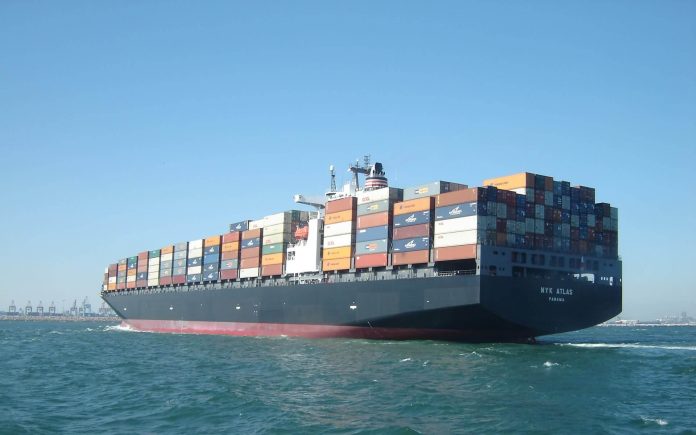
Download Now

Singapore : the best place to be for legal tech startups

0
Image source - https://bit.ly/3A4F6EN

This article is written by Shringarika Srivastava, pursuing a Diploma in Cyber Law, Fintech Regulations and Technology Contracts from LawSikho. The article has been edited by Prashant Bvaiskar (Associate, LawSikho) and Dipshi Swara (Senior Associate, LawSikho).

We are in the era where we are witnessing rapid technological changes worldwide. Technology is taking over every industrial sector. Now how could the legal industry be left out? Involvement of technological resources in the legal industry is of utmost requirement in today’s world especially while going through a pandemic. The sooner we learn the importance of bringing technology and law together the better we can be at producing future ready results. But what is Legal Tech and what kind of services are we talking about here?

What is a Legal Tech Startup

A Legal Tech company is one that offers software that can be used by lawyers to make the work easier and quicker. The purpose of these services is to move past the traditional way of doing the legal work of companies along with in a way that increases the efficiency. Most of such companies are startups offering various types of software that reduces the workload and time consumption and makes it quick and efficient. Suchsoftware solves various kinds of purposes like maintaining, managing, and identification of legal documents. Some software also provides a CRM facility and chat bot facility. And then there are some data security tools. All these things together improve the work efficiency of the law firms as well as in-house legal departments of companies.

Singapore Legal Tech industry

It is a well known fact that the Singapore Legal Tech industry has been flourishing much before the covid came. Legal tech startups have been booming in Singapore the last few years. But when the covid struck it raised the need of innovation in this area. This led to an even greater rise of the Legal Tech startups in Singapore. Multiple opportunities to help these startups grow are also offered by the Singapore government. The Singapore government is calling for innovation in the field of Legal Tech. It highly appreciated the technological innovation in the legal industry. Many experienced technology lawyers working in top firms of the world are moving to Singapore to start their own legal tech firm. They are not alone. Even the young lawyers who want to expand their practice in this area are also driven to enter the Singapore Legal Tech market in some way or the other. 

Few Singapore-based Legal Tech startups to watch out for are:

  1. Alpha Legal Tech

This company is formed by lawyers for lawyers. It offers document comparison solutions which makes the work easier for a legal professional and provides better solutions to time taking cases. This project was Supported by the Singapore Economic Development Board (EDB) and in collaboration with the FLIP, Create+65 which identifies, incubates, tests, and pilots new legal technology solutions to enhance client services.

  1. Rajah & Tann Technologies

This company provides a suite of tech enabled legal solutions like cyber security, e-Discovery, data breach readiness etc. it provides a subscription based software which is being used by almost all the top tier firms in Singapore. This integrated solution service bringing digital services to help lawyers was much needed especially during the global pandemic which gave this company a further push.

  1. VanillaLaw:

This company was started with a policy to keep the work plain and simple so that it is easier to pursue and hence the name Vanilla Law. It is an international boutique law firm that aims at reducing the complexities of legal work using innovative ways. It launched its own web-based platform Vanilla Law Docs, in 2016. Which is an interactive web-based platform that allows their clients to insert relevant information to prepare the first draft of legal documents in return.

Why is Singapore an excellent ecosystem for Legal Tech startups?  

As we saw, given the kind of startups flourishing in Singapore it is evident that the Legal Tech industry had been flourishing in Singapore forthe past few years. The covid pandemic has only given it an extra push. The Singapore Legal Tech industry had already introduced many innovative processes to execute the work more efficiently. The pandemic gave rise to the need of such resources at a mass level and Singapore was ready to offer it. Not just that, but the environment created by the economy at large with the support of the government, Singapore provides major encouragement to such companies bringing in innovation to help the economic growth. Let us look at some of the key factors that make Singapore the best place to form a Legal Tech startup:

  1. Increased number of centres of excellence (COEs):

The country has taken multiple initiatives in the past few years seeing the rising need of digitization in the legal sector. One of such initiatives is the increase in the number of centers of excellence throughout the country especially focused on technological development in the legal sector. This is encouraging more young minds to put their focus on this area and bring in new advancements for the industry to work better. One example of such COEs is the ASEAN Cyber Developments: Centre of Excellence for Singapore, Cybercrime Convention for the Philippines, and an Open-Ended Working Group for Everyone.

  1. Technology and Innovation Roadmap (TIR):

Technology and innovation roadmap TIR in an initiative launched by Singapore Ministry of Law in 2020. It was developed by the Ministry of Law in close collaboration with the Singapore legal industry in order to encourage technology adoption and innovation. It is a sectoral plan for the coming decade till 2030. TIR is considered to be a game changer for the Legal Tech industry as it is aimed towards bringing in new ways and software solutions to making the technological adoption more accessible throughout the country on a large scale. It is prioritizing such introduction to innovation by curating a long term funding plan. These will include introduction of AI and cyber security software amongst other services.

  1. Future Law Innovation Program (FLIP):

FLIP is another great initiative by the Singapore government in this direction. It is set up by the Singapore academy of Law with support of the Singapore government to encourage engagement of technologically advanced resources by the legal industry throughout the country. It brings together the legal professionals, government bodies, technologists and incubators to to bootstrap new and futuristic solutions for courts, law firms and in-house counsels. The Singapore ministry of law along with the legal industry have also introduced the Tech Celate programme with a budget of $3.68B under which they pay off the 70% first year cost of the firms incorporating technological software in their major work executions. This shows how serious the government is when it comes to making the country a smart nation and has not left behind the legal industry in this process.

Is there a downside?

We need to be practical when it comes to bringing a huge change under a certain industry no matter what it is. Everything has its own drawbacks and challenges and it is prudent to consider them along with looking at the bright side of any opportunity. The challenge in this situation is that learning about such a huge level of technological advancement will take a lot of money and time to learn and research about. Most of the lawyers ate tech savvy and have no relation with it whatsoever. The learning curve will be steep and such advanced technological development will also have to come up with the resources to help the legal professionals get and give training to their associates. 

Another issue that is on top of the minds of the legal professionals right now is that the involvement of technology in the legal sector will mean more cyber security and data protection requirements. This technological revolution will mean that all the legal documents will have to be kept in a digitized manner and most of them will be on the cloud instead of personal storage and the question is how will the data be secured from any beach or leakage at such great level.

But there is no denying that even with certain challenges some big firms are already preparing themselves for this change and some are even trying to build their own software solutions. The spokesperson for Tessaract.io said that the move towards digitalization will only continue with the emergence of more areas that need solutions. “There is an increasing preference to promote interoperability among the different tools used and among the different functions in a law firm,” they said. They also identified automation as another emerging area within the Legal Tech space.

Conclusion

There are some sectors that form the basic structure of an economy and law is one of them. There is no economy without law and hence it is important to keep the legal industry growing.  Legal professionals are recognizing the fact that it is the need of the hour to bring technological advancement in the legal industry. Therefore, if you are someone who wants to contribute with their ideas and research in this direction along with getting an exposure to an excellent ecosystem to work in then Singapore is the best place to start with. This country is serious about turning itself into a smart nation and is providing numerous initiatives to encourage such developments. 

References

  1. https://en.wikipedia.org/wiki/Legal_technology
  2. https://www.legalbusinessonline.com/other-news/singapore-fertile-ground-legaltech-innovation
  3. https://contractbook.com/legaltechinstitute/legal-tech-around-the-world-singapore

Students of Lawsikho courses regularly produce writing assignments and work on practical exercises as a part of their coursework and develop themselves in real-life practical skill.

LawSikho has created a telegram group for exchanging legal knowledge, referrals and various opportunities. You can click on this link and join:

https://t.me/joinchat/J_0YrBa4IBSHdpuTfQO_sA

Follow us on Instagram and subscribe to our YouTube channel for more amazing legal content.

Download Now

The executive power to pardon under the Indian Constitution

0
Image source: https://bit.ly/2UPk8pG

This article is written by Ankita Jangid, from Banasthali Vidyapith, Rajasthan. This article deals with the executive power to pardon under the Constitution of India. 

Introduction

The clemency power of the President is one of the powers which has been conferred on the executive. Article 72 of the Indian Constitution confers the power of pardon on the President and Article 161 gives the same power to the Governor. The power of clemency has been exercised for centuries. In the earlier period, the power was used by the kings for gaining a political advantage while in today’s times the use and understanding of pardoning power are more often associated with the concept of mercy and fairness.

The meaning of pardon can be termed as “clemency”, “amnestics”, “grace” or mercy, the clemency power is mentioned in the written Constitution of many nations. The President’s clemency power deals with providing justice to the people which is essentially a function of the judiciary. 

Clemency power has become an integral part of every nation’s executive function. The power is often criticized based on the doctrine of separation of power which is one of the famous doctrines in the Constitution of India. 

Historical background

The practice of pardoning was widespread across the globe and has its origin from Ancient Athens society, where a practice known as adeia facilitated a democratic pardon for individuals, who were successful in obtaining the approval of 6000 citizens by way of secret ballot. Although the source of his clemency power was not an executive privilege, it is not difficult to find similarities in the ancient concept of adeia and the present practice of pardon consideration factors such as the public opinion about the individual sought to be pardoned. 

The concept of clemency was employed by the Ancient Romans. The primary objective is to gain political advantage. The Romans used the clemency power to control the masses of soldiers and citizens. For example, the Romans chose every tenth army troops of transgressors and by doing this they created fear and discipline in the remaining soldiers. 

The position in India in the context of pardon was very different from Athens and Romans. In India, the King was regarded as the head of the State and the life of a person was totally in the hand of the King, he may punish him or he may grant pardon to him but some sections of the society were not given death sentences like Brahmin offenders and old men and children below 5 years.

At the time of British rule, the power of clemency was endowed on the British monarch. In the common law system, the power of pardon is regarded as an act of mercy in which the King forgives any criminal offender. So, it is well said that the power of providing mercy to the people is not a naive concept. 

Power of clemency in various countries

The American Constitution provides the President to grant reprieves or pardons under Article II of Section 2 against the United States, except in the case of impeachment, and includes the power to remit fines, penalties, and forfeitures, except as to money covered into the treasury or paid to an informer. 

The modern-day concept of the pardoning power in the United States suggests that neither  Congress nor the Courts can violate the President’s power to pardon. The power to pardon is an enumerated power of the constitution itself, which is mentioned in Article 2 of the US Constitution that it cannot be used in case of impeachment.

In the UK, the Constitutional monarch can grant a pardon to a conviction on the aid and advice of the council of ministers. A pardon may be absolute and conditional. It is conditional where it does not become operative until the grantee performs a certain act or avoids it. 

In Canada, pardons are considered by the National Parole Board under the Criminal Records Act. The federal cabinet has the power to pardon individuals who have been convicted for a criminal offense. The pardon can be free or conditional. 

Scope of pardoning power 

The scope of clemency power by the President under Article 72 of the Indian Constitution is wider than the pardoning power of the Governor as mentioned under Article 161 of the Indian Constitution. Article 72 condors the power on the President to grant pardon, reprieve, respites, or remissions of punishment or to suspend, remit or commute the punishment of any person convicted in crime in the following cases-

  1. Where the punishment is by court-martial.
  2. Where the punishment is for the offense against any law relating to the matters of executive power of the union.
  3. Where the sentence is a death penalty.

Article 161 confers the power of clemency on the Governor to grant pardon etc in certain cases. The Governor of the State shall have the power to grant clemency, reprieves, respites, or remission of punishment or to suspend or cancel or lessen the punishment of any person convicted of any offense. 

The powers of President and Governor differs in the following ways:

  1. The power of the President to grant clemency extends in the cases where the punishment is by the Court Martial but Article 161 does not provide such power to the Governor under Indian Constitution.
  2. The President can allow pardon in all cases where the sentence of death  but the pardoning power of the Governor does not extend to the death sentences cases. 

Purpose of pardoning power

A pardon is an act of granting mercy, forgiveness, clemency. The Constitution of India empowers the President and Governors to grant mercy or pardon to any person. The President is granted the power of clemency with the view that there should be provisions in the legislation to save the person from the consequences of punishment adjudged by carelessness and mistake against that person by the judiciary. It is, for this reason, the provision of mercy is included in the Constitution of India. 

As per the views that come forward about the existence of clemency in contemporary times. One of them includes the Hegelian view that promotes clemency power which enhances justice in society. Another one who believes in rehabilitation and redemption theory. The belief is that the person should get a second chance to become a good person and their reasoning is based on public welfare. 

The object of pardoning power is to correct judicial errors, for no human system of judicial administration can be free from imperfections. The pardon is an instrument of mercy and the way to correct those grave injustices either on their facts or by an anticipated operation of the criminal’s laws that simply must be reminded. Hence, clemency power is an indispensable element of even the perfect system of laws. 

The clemency power and judicial review

The clemency power of the President is not an absolute one but it is governed by the advice of the Council of Ministers. The basic development served by the judicial system in the context of the Article 72 and 161 allowing the judicial review. Judicial review is an independent judiciary that assures the faith embodied in the Constitution of India. 

There has always been a debate as to whether the power of the executive to pardon should be subjected to judicial review or not. In a series of cases, the Supreme Court of India has laid down the law relating to judicial review of clemency power. 

In Maru Ram v. Union of India (1981) the constitutional bench of the Supreme Court held that the power to grant pardon under Article 72 is to be exercised on the advice of the Council of ministers. The Supreme Court, in this case, laid down emphasis on the British practice while arriving at this conclusion regarding the Indian position. 

The Supreme Court in Dhananjoy Chatterjee alias Dhana v. State of West Bengal(1994) case reiterated its earlier decision in Maru Ram and said that ‘the power under Article 72 and Article 161 can be exercised by the Central and State Governments, not by President and Governor on their own. The advice of the appropriate government binds the head of the state’. In this case, the appellant Dhananjoy, a security guard was challenged and tried for rape and murder and also for the offense under Section 380 of Indian Penal Code, for committing theft of the wristwatch of Hetal Parekh, an 18 years old girl in her apartment. 

new legal draft

In the case of Kehar Singh v. Union of India (1989) a five-judge bench of the Supreme Court has examined the scope of the President’s pardoning power under Article 72 in detail. The petitioner, Kehar Singh, was convicted for the crime of murder for assassinating Prime Minister Smt. Indira Gandhi’s sentence to death was confirmed by the High court and his appeal to the Supreme court was also dismissed. He further filed a petitioner to the President for the grant of pardon. The President rejected his petition on the advice of the Union Government without considering the merits of the decision of the Supreme Court confirming the death sentence. The court opined that the President in the exercise of his power under Article 72, must scrutinize the evidence on record and come to a different conclusion both on the guilt of Kehar Singh and the sentence imposed on him. The president does not amend, modify, or supersedes the judicial record. The judicial record remains intact. The court need not spell out specific guidelines for the exercise of power under Article 72 this is so because the power under Art.72 is of the widest amplitude. The order of the President cannot be subjected to judicial review on its merits. Accordingly, it was held that the President must consider the matter afresh with the law laid down in the present case.   

In a landmark case of Epuru Sudhakar & Anr. v. Government of Andhra Pradesh (2006) the Supreme Court held that the clemency power of the President and Governor under Article 72 and Article 161 is subject to judicial review. 

The Supreme Court laid down certain grounds on which can be claimed by the petitioner for  judicial review of the clemency power: 

  1. If the order is passed without any application of mind.
  2. If the order passed is malafide.
  3. If the order passed on completely irrelevant considerations.
  4. If the order suffers from arbitrariness.

The Apex Court states that the cases where the delay in mercy petition was unexplained of 6 to 12 years, then in those cases the death sentences must be commuted by life imprisonment. There are many factors on which the order of clemency can be challenged like mental illness, age of the accused, lack of legal aid, etc. The Court further observed that these powers rest upon the highest authorities i.e. the President or the Governor of the State, as the case may be and there is no word limitations mentioned in the Articles and they may grant remission as an act of grace and humanity in appropriate cases. 

Instances in which the President has used this power 

There are so many instances in which the mercy petitions were granted by the President using his power under Article 72 of the Indian Constitution. 

Govindasamy (2000) was convicted for the offense of murder by brutally killing his relatives in their sleep in 1984. He belonged to a poor family in Tamil Nadu. The reason behind this act is that his parents were tortured over a land dispute. His merciful pleas were rejected many times. Finally, the President considered his mercy petition after finding that ‘there was no eye-witness’ to the murders he was convicted for. 

Dharmendra Singh and Narendra Singh Yadav (1997) convicts for the offense of murder from Uttar Pradesh were pardoned. In 1994 they had brutally killed a family of five including a 15- year old girl child. Narendra Singh had tried to rape her a few days before, failing which he conspired with Dharmendra Singh to teach them a lesson. Three people were beheaded while a 10 year-old-boy was thrown alive into the fire. 

Another instance is of Shobhit Chamar (1998) a landless cobbler from Bihar Bhabua district who won his pardon in 2011. He was condemned to death for killing 6 members of his upper-caste landlord’s family including the children. 

Dhanajoy Chatterjee (1994), the accused who was sentenced to the death penalty for the crime of rape and murder in the year 1990 and had filed mercy petitions to the Governor of West Bengal. He was hanged after waiting for fourteen years when his mercy plea was rejected by the President due to delay in exercising his clemency power. 

The mercy petition by Afzal Guru (2003) who had attacked the Indian parliament in 2001 and Azmal Kasab who was held responsible in Mumbai Attacks and who was sentenced to death has been decided and rejected by the President recently. 

Besides these, there are a lot of cases in which mercy appeals are pending before the President. The mercy appeal of Sushil Maru accused of brutally killing a five-year-old girl in 1995 and three Dalits from Bihar convicted for massacring people of upper caste organizations are pending disposal before the President. 

Conclusion

The clemency power of the President is very significant as it corrects the errors in the judiciary. The Constitution under Article 72 empowers the President to grant pardon, suspend, remit or commute sentences including the death sentence. A parallel power is also given to the Governor of the State under Article 161. As the judicial review is paramount in our Constitution the clemency power of the President and Governor are subjected to limited judicial power. It is a good development so far as it prevents the misuse of this constitutional power by unscrupulous politicians in favor of people with power and influence. 

If this power is used properly by the judiciary and misused by the executive then, it would be helpful to remove the flaws of the judiciary. The ‘justice delayed is justice denied’ phrase suits the clemency power since there are many instances where there is an unexplainable delay in replying to the petitions. If it takes a long time to resolve the matter, then the clemency power will be more of denial of justice rather than a way to justice. 

References 


LawSikho has created a telegram group for exchanging legal knowledge, referrals, and various opportunities. You can click on this link and join:

https://t.me/joinchat/J_0YrBa4IBSHdpuTfQO_sA

Follow us on Instagram and subscribe to our YouTube channel for more amazing legal content.

Download Now
logo
FREE & ONLINE 3-Day Bootcamp (LIVE only) on

How Can Experienced Professionals Become Independent Directors

calender
28th, 29th Mar, 2026, 2 - 5pm (IST) &
30th Mar, 2026, 7 - 10pm (IST).
Bootcamp starting in
Days
HRS
MIN
SEC
Abhyuday AgarwalCOO & CO-Founder, LawSikho

Register now

Abhyuday AgarwalCOO & CO-Founder, LawSikho