Download Now
Home Blog Page 479

Important cases related to internet shutdowns in India

0
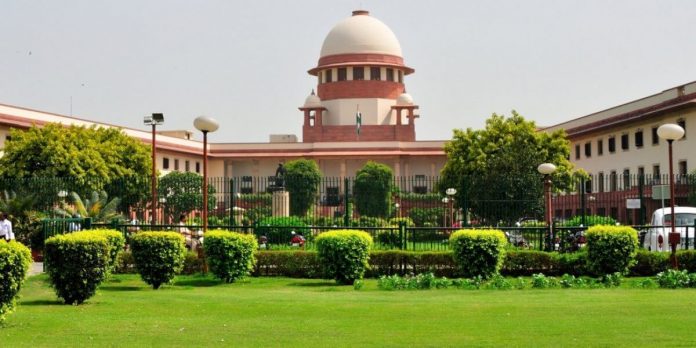
Supreme court of India

This article is written by Anushka Singhal, a student of Symbiosis Law School, NOIDA. In this article, she tries to discuss the issue of internet shutdowns and some major cases related to it. 

Introduction

The 21st century is the age of technology. We have significant technological advancements, with the internet being one of them. Initially, it was just a ‘luxury’ but now it has become a ‘need’. Especially during the last one and a half years, we have all been doing everything ‘online’. From education to jobs, from shopping to weddings, from doctor’s visits to funerals, everything is being done via the internet. One cannot imagine an ‘internetless’ life. But we know that, with ‘use’ comes the ‘misuse’. The internet has also become the source of spreading terrorism and hatred in the society. To curb such instances, the government sometimes shuts down the internet. The question arises – are these shutdowns valid? Do they violate our fundamental rights? This article tries to answer such questions. 

Internet shutdowns in India

Internet shutdowns have become common in India nowadays. When Article 370 of the Indian Constitution was abrogated, it was the internet that was first shut down. The fear of violence and upheavals was in the backdrop of the government’s mind when the internet was shut down in Jammu and Kashmir. Internet shutdown is defined as an intentional disruption of the internet services in a particular area. According to a report, India witnessed 109  internet lockdowns in the year 2020 against the 155 lockdowns all over the world. Thus, India stood at the first position followed by Yemen and Ethiopia respectively. Jammu and Kashmir witnessed the longest internet shutdown which started in 2019 with the abrogation of Article 370 was finally lifted after a long gap of 18 months in February 2021. 2G services were resumed in between but these were not enough. It was on 5th February that the Union Territory was able to enjoy the internet services. The internet was also shut down in the northern states due to the Anti-CAA protests. In December 2019, a major internet blackout happened in Assam to control the protests against the Citizenship Amendment Act that was proposed to be presented in the Rajya Sabha. The state of Bengal also witnessed such a shutdown after the protests in 24 North Pargana and if we count, we will observe that quite a large number of Indian cities and states bore the brunt of internet shutdowns. Thus, internet blackouts have become a common phenomenon to curb violence and protests and the officials do not think twice whenever there is some protest or a threat to national and public security. 

Article 19 of the Constitution – do internet shutdowns violate it?

Article 19 of the Indian Constitution,  provides us with the freedom of speech and expression, the freedom to assemble peacefully, form unions, move freely, reside anywhere and to practice any trade or profession of our choice, subject to certain restrictions. It has been contended several times in the courts that the internet shutdowns violate our freedom of speech and expression along with violating the right to trade and profession. Article 19 is a right and as it is a universal truth that ‘every right comes with a restriction’, there are certain restrictions to Article 19. The internet lockdowns fall under the header of such restrictions unless they are unreasonable. Internet lockdowns are considered both procedural and statutory. They are procedural, i.e. between the government and service provider and they are statutory when imposed under the Indian Telegraph Act, 1885 (Section 5), Section 69-A of the Information and Technology Act, 2000 and Temporary Suspension of Telecom Services (Public Emergency or Public Safety) Rules, 2017 and even under Section 144 of the Criminal Procedure Code (CrPC). As held by the Hon’ble Supreme Court in Anuradha Bhasin v. UOI (2020), the shutdowns do not violate Article 19 of the Indian Constitution. It acts as a reasonable restriction and it should only be enacted if there is a genuine threat to public safety or national security. Certain balancing tests should be carried out and only if extremely necessary, the government should proceed with this extremely restrictive step. The court in Anuradha Bhasin v. UOI (2020) cited the Oake’s test of Canada. In this test, the following points are to be kept in mind- 

  1. The government should establish that the goal of a particular step is very crucial.
  2. The court conducts a proportionality analysis wherein it needs to be shown that the law does not blatantly interfere with the rights; it has a logical purpose and has proportionate effects.

Taking cues from the Canadian test, one must observe that if the internet shutdown blatantly takes away the rights under Article 19 without any solid backing, then it is, of course, against the Constitution, otherwise, it falls within the sphere of law. In the case of Modern Dental College v. State of Madhya Pradesh (2016), the Hon’ble Supreme Court held that there are no absolute constitutional rights except a few. Therefore, imposition of internet shutdowns is valid to the extent that it does not become an instrument in the hands of the government to suppress dissent. Like the governments impose a curfew to stop riots, similarly internet shutdowns can be used and it would not be a violation of Article 19.  Even the government has amended the Temporary Suspension of Services Rules and now the internet can be shut down for not more than 15 days. This step would ensure the protection of our constitutional rights to a great extent.

Landmark cases related to internet shutdowns

Following are some benchmark cases related to internet shutdowns-

  1. Anuradha Bhasin v. Union of India

Passed on – 10 January 2020

Bench – Justice N.V. Ramana and Justice V Ramasubramanian

Facts– In this case, Anuradha Bhasin, a journalist and Gulam Nabi Azad, an Indian politician knocked at the doors of the court against the internet shutdown in Jammu and Kashmir. They contended that due to the shutdown Articles 19 and 21 of the Indian Constitution were being violated. A security order was passed by the home secretariat on 4th August 2019. This order asked the Amarnath Yatris to go back as well as it blocked the internet services, landlines and the mobile networks. Soon after this, the President issued an order applying all the provisions of the Indian Constitution to Jammu and Kashmir. Since then, the internet was shut down in the Union Territories. There were restrictions on movement and gatherings and even a local newspaper was not allowed for publication and distribution. Thus, the writ jurisdiction of the Hon’ble Supreme Court was evoked by the petitioners and a case was filed under Article 32 of the Indian Constitution. 

Judgment– The judgment began with a poem from the novel ‘A Tale of Two Cities’  and discussed some very crucial points. The Court held that the decision of the government was valid as the internet was shut down in the interest of public safety. The Court said that in such cases, one has to carry out a balancing test or we can say the test of proportionality. Though the Court gave the decision in favour of the government, it held that the government must be cautious when balancing liberty with public security. One should first approach the least restrictive action and then move towards the aggravated actions like complete shutdown. The Hon’ble Court took into consideration the prevalent terrorism in the union territories and thus held that the decision was in the favour of the people. It was held that Articles 19 and 21 were not violated in this case. The Court wanted to comment on whether the right to internet is a fundamental right or not but it refrained from doing so as no such thing was demanded by the petitioners or the respondents. This case exhaustively discussed the concept of rights and restrictions when it comes to fundamental rights and advised that a multifaceted approach needs to be adopted when it comes to the freedom of speech and expression. 

  1. Bansashree Gogoi v. Union of India

Passed on – 19 December 2019

Bench – Justice Manojit Nhuyan and Justice Soumitra Saikia

Facts – In this case, several PILs were filed in the Guwahati High Court against the suspension of internet services in Assam. The Hon’ble Court clubbed all of them together and listened to them under this case. In this case, the petitioners requested the Hon’ble Court to restore the internet services as they were not able to carry out their day-to-day functions properly. The petitioners argued before the Court that as the curfew had already been lifted and there were no violent protests, the internet shutdown should also be lifted.

Judgment – The Hon’ble Court ordered the government to immediately lift the internet shutdown. While giving this order, the Court considered that in the interest of the public and its safety, the government could suspend the internet services but as the situation was peaceful the government could not impose such unnecessary restrictions. 

  1. Foundation for Media Professionals v. Union Territory of Jammu and Kashmir

Dated – 11 May 2020

Bench – Justice RS Reddy and Justice NV Ramana

Facts – In this case, an organization named Foundation For Media Professionals approached the Court asking for the resumption of the 4G services in the union territory. The government had initially banned the internet services completely and now it had just resumed the 2G services. The petitioners contended before the Court that the above decision was going against the landmark judgment of Anuradha Bhasin. Further, the petitioners submitted that as all the work is being done online, the impugned orders of the government are hampering the day to day work of the residents. They also argued that since the situation was conducive for resuming 4G services, they should be resumed. Also, if later, the government finds that national security is being threatened, it can resume with the restrictive services in those vulnerable areas.

Judgment- The Court took cognisance of the circumstances and held that 4G internet was the need of the hour. But on the other side, it also held that national security is of utmost importance and cannot be compromised with (upholding the Anuradha Bhasin judgment). The Court also took cognisance of the fact that 4G services can be resumed in the territory with restrictions in certain areas. Therefore, it ordered the government to constitute a committee to examine the whole situation and consider the advice of the petitioners. 

  1. Faheema Shirin R.K v. State of Kerala

Though this case was not completely about the shutdown of the internet at a large scale, it gave us insight into unreasonable restrictions on the usage of phones and the internet and the violation of Article 19 of the Indian Constitution. 

Dated – 19 September 2019

Bench – Justice P.V Asha 

Facts – This case is regarding the restrictions on usage of the Internet in the hostel premises. An 18-year-old girl residing in a government hostel was aggrieved by her expulsion from the hostel. The hostel rules said that the hostel girls would not be allowed to use their mobile phones and internet from 10 PM in the night to 6 AM in the morning. Aggrieved by such orders, the girl approached the authorities. Instead of solving her problem, she was asked to vacate the premises. Aggrieved by such orders, the petitioner approached the Hon’ble High Court.

Judgment – It was held that such restrictions were unreasonable and not necessary for maintaining discipline. The Court said that one should also see the positive aspects of the internet and mobile phone and not only the negative ones. 

Conclusion

Internet shutdowns have become a new tool at the hand of the government. The government uses them as a safety valve whenever it thinks that there can be protests that can turn into disasters. But one needs to consider that such blackouts should be taken as a last resort. People should be educated about the use of the internet and awareness should be spread regarding fake messages. The internet has become an essential for life after food, clothing and shelter and thus it should be taken away only when it is extremely essential. The top position of India on the list of most internet shutdowns is alarming. One should now consider making the right to the internet a fundamental right that cannot be taken away except in cases of emergency. With the pandemic, we have realised the importance of the internet and thus, we may see more cases in the coming future on the internet and its shutdowns. Like we have started a campaign on several social issues, similarly, we can start a campaign for creating awareness about internet usage. If people will become aware then we will not have to resort to the shutdowns. 

References


LawSikho has created a telegram group for exchanging legal knowledge, referrals, and various opportunities. You can click on this link and join:

https://t.me/joinchat/J_0YrBa4IBSHdpuTfQO_sA

Follow us on Instagram and subscribe to our YouTube channel for more amazing legal content.
Download Now

All you need to know about privacy workflow solutions

0
Data Privacy

This article is written by V. Nivetha, pursuing Certificate Course In Technology Contracts from LawSikho. The article has been edited by Prashant Bvaiskar (Associate, LawSikho) and Dipshi Swara (Senior Associate, LawSikho).

Introduction

We live in an era where information is the coin of the realm. We are all very interested, a minimum of in theory, within the security, accuracy, and accessibility of data about ourselves. The newspapers are filled with articles during which the general public is telling pollsters that privacy may be a source of high anxiety, indeed one among the very top concerns during this new millennium. 

Information security policies play a crucial role in achieving information security. Confidentiality, integrity, and availability are basic information security goals attained by enforcing appropriate security policies. Workflow Management Systems (WMS) also enjoy the inclusion of those policies to take care of the safety of business-critical data. Privacy is a crucial security requirement that concerns the topic of knowledge held by an organisation. WMS often process sensitive data about individuals and institutions who demand that their data is correctly protected, but WMS fail to recognise and enforce privacy policies. In this article, we illustrate existing WMS privacy weaknesses and introduce WMS extensions required to enforce data privacy. 

What is risk management?

Risk management is the process of identifying, assessing and controlling threats to an organization’s capital and earnings. These threats, or risks, could stem from a good sort of sources, including financial uncertainty, legal liabilities, strategic management errors, accidents and natural disasters. IT security threats and data-related risks, and therefore the risk management strategies to alleviate them, became a top priority for digitized companies. Therefore, as a result of which, a risk management plan increasingly includes companies’ processes for identifying and controlling threats to its digital assets, including proprietary corporate data, a customer’s personally identifiable information (PII) and property.

What are the constituent steps for risk management?

1. Establishing the context.  

2. Risk Identification. 

3. Risk Analysis. 

4. Risk Evaluation. 

5. Risk Treatment. 

6. Risk Communication and Consultation.   

7. Risk Monitoring and review.

Data privacy workflow solutions

Data privacy workflow solutions are designed to assist the enforcement of regulatory compliance and protect your business from data leakage – but they shouldn’t be relied upon to enforce compliance in real-time.
The right to data privacy continues to be a hotly debated topic. This was highlighted in the recent launch of the California Consumer Privacy Act (CCPA) within the United States. Under which, organizations have had to re-think and re-architect how they manage, store and secure their customers’ personally identifiable information (PII), which incorporates not only names and ‘get in touch with’ details but financial and other sensitive information.

This will most aptly apply to their company websites too and is often a gold mine of valuable customer data. Website owners are forced to reevaluate their consent capture and tracking methods. This has never been more relevant than now with the introduction of the CCPA, giving consumers the right to request access to their data, request you delete their data or ask you to not sell their data.

There are multiple workflow solutions software available on the internet today.

Why workflow solutions are not enough?

As a result, many marketers are looking at Privacy Workflow solutions to assist the management of website visitors’ data preferences. Crucially, this is applicable to the ecosystem of third parties that organizations believe to enhance the functionality of their websites.
The problem is that when a customer requests to possess their data deleted, for instance under the CCPA legislation, the organization still must send that data out of the control of the website to 3rd parties so as to activate this request. From here it’s then up to the third party to suits the request as began by the privacy workflow vendor.
Not only are the privacy workflow providers taking the danger of sending a customer’s PII outside of their website, but they are also counting on that third party to suits the request began by the policies in situations, which isn’t guaranteed by any means. If a 3rd party of which there might be hundreds on one website alone – knowingly or unknowingly fails to suits the request, it’ll be your business that will be held in charge of breaking the law.

What is compliance risk?

Compliance risk, or regulatory risk, occurs when laws, rules, or regulations are violated, or when business standards, internal policies, or procedures don’t suit local, regional, national, or international regulatory guidelines.

Regulations are set by multiple entities across the world and may vary counting on which country or region a corporation is conducting business in. This presents two main challenges: staying compliant globally and therefore the potential for security threats if companies don’t adhere to regulations.

The following four regulations are set forth by different regulatory bodies across the world for various purposes, including the protection of monetary, personal, and healthcare data security information.
PCI DSS (The Payment Card Industry Data Security Standard). this is often the knowledge security standard for organizations handling branded credit cards.
GDPR (The General Data Protection Regulation). This legal framework sets guidelines for the gathering and processing of private information for those living within the European Union (EU).
HIPAA (Health Insurance Portability and Accountability Act of 1996). This U.S. legislation provides data privacy and security to safeguard all medical information.
OCC (The Office of the Comptroller of the Currency). This agency oversees the execution of laws for national banks, and functions to manage and supervise banks within us.

Consequences of non-compliance

There are several different kinds of data privacy risks at play with privacy workflows, with the 2 most serious risks being the danger of being found to be in breach of regulations and therefore the disastrous consequences of potential data leakage.
GDPR non-compliance could end in penalties of the maximum amount as €20 million or four per cent of your annual revenue, whichever is bigger. With the CCPA legislation, as of January 1, 2020, organizations can now be fined up to $2,500 for every negligent violation and up to $7,500 for every intentional violation. Moreover, individuals also can seek damages of between $100 and $750, and actions are often aggregated into a category action, leaving you hospitable the likelihood of enormous financial penalties.
In addition to this, the financial fallout in the event of knowledge leakage is often devastating. At a time when incidents of knowledge breaches have reached an all-time high, the typical cost of an event has increased to $3.92 million per breach, with lost business because of the biggest contributor. If a third party caused the info breach, the value increases by quite $370,000 for an adjusted average total cost of $4.29 million.
This is important to notice as third parties are increasingly liable for data breaches, within the US alone, 61 per cent of companies have experienced a knowledge breach caused by one among their vendors or third parties. Businesses also will need to affect reputational damage and loss of customer trust, which may be extremely harmful.

Solution

As we’ve seen, implementing a workflow solution by itself isn’t enough to make sure data privacy compliance is in line with the CCPA and GDPR legislation. The risks are too great to merely trust that your third-party vendors will suit your website visitors’ requests in which your customers’ data is safe when it leaves your website. Together with your business and your reputation in danger, it’s up to you to enforce your customers’ consent preferences in real-time to be truly compliant.

You must opt for something where the customer’s data remains within your Document Object Model (DOM) and no unauthorized third parties can access the said sensitive customer data. most significantly, this prevents the unauthorized collection of knowledge. Moreover, it is often used as a standalone solution or is integrated with your existing compliance privacy workflow vendor. Don’t be in the dark when it involves ensuring your customers’ data privacy.

Conclusion

Data privacy will become more important with time, following information security problems created by the pandemic, the rise of contact tracing has highlighted the necessity for people to ensure privacy in new ways. Institutions are working to uphold laws and regulations associated with data protection, but people are beginning to think more broadly than simple compliance, which specializes in the ethics of private data recording and processing. As we move forward, privacy must be included in plans for digital literacy, to assist students in better understand their rights and therefore the ways their data are getting used not only in education but in society at large. The more educated the population is, the better it’ll be to make sure that privacy is protected as a right and not merely available as a privilege.
The main focus for privacy in education must be the creation of privacy roles and staff positions and the expansion of assessments of both the internal and external collection and use of private data. Once an establishment can identify and explain how, why, and where personal data are being collected across the system, it can focus efforts on building trust with staff, faculty, and students through transparency, policy, and awareness campaigns.
Working to point out the worth of privacy to schools and staff will help reduce the perception of privacy as a roadblock or explanation for delays in our work and can help build an informed community at the institution. Each step of progress that’s taken and shared with other institutional members increases privacy awareness, helps increase the amount of individuals at the institution; incorporating privacy throughout their work, and moves the upper education community closer to a brighter way forward for privacy management.


Students of Lawsikho courses regularly produce writing assignments and work on practical exercises as a part of their coursework and develop themselves in real-life practical skills.

LawSikho has created a telegram group for exchanging legal knowledge, referrals, and various opportunities. You can click on this link and join:

https://t.me/joinchat/J_0YrBa4IBSHdpuTfQO_sA

Follow us on Instagram and subscribe to our YouTube channel for more amazing legal content.
Download Now

Nike v. MSCHF : the trademark infringement case

0
Image Source: https://rb.gy/sqz2ga

This article is written by Shruti Yadav, currently pursuing an integrated BA-LL.B degree from Jagran Lakecity, Bhopal. This article talks about the dispute between Nike and MSCHF.

Introduction

Trademark infringement is the unauthorized use of a trademark or service mark on or in connection with goods and/or services in a manner that is likely to cause confusion, deception, or mistake about the source of the goods and/or services. Trademark infringement occurs when a third party violates the trademark holder’s rights, such as the exclusive use of a work for a certain period of time. The music, film, and fashion sectors are three of the most well-known businesses that experience significant trademark infringement. Contingent liabilities are funds set aside in the event of possible litigation in infringement situations. Nike Inc. is an American multinational corporation that designs, develops, manufactures, and markets footwear, clothes, equipment, accessories, and services around the world. MSCHF is an American art collective with headquarters in Brooklyn, New York. MSCHF has created a wide range of artworks, including browser plugins, shoes, tangible goods, social media platforms, and pictures. The two American companies butted head recently in a copyright infringement case over MSCHF’s “Satan Shoes“, details about which are mentioned further.

About the case

In a recent controversy that occurred amidst Nike and conceptual art collective MSCHF over the so-called “Satan Shoes, ” in collaboration with singer Lil Nas X was created.

Released at the end of March, made using the modified pair of Nike Air Max 97 featured a pentagram pendant and a reference to a verse from the Gospel of Luke (“I saw Satan fall like lightning from heaven”, 10:18). They contained 60cc of red ink, visible from the transparent section of the sole and “one drop of human blood”.

MSCHF released 666 pairs of shoes that they sold out in less than a minute. Religious and conservative customers asked for a boycott, believing it was an official Nike collaboration. This isn’t the first time MSCHF has referenced the Bible in one of its products. The business previously released a pair of ‘Jesus Shoes,’ which were customised Nike Air Max 97s with holy water collected from the Jordan River in the soles. MSCHF’s earlier “Jesus Shoes” were never a source of concern for Nike, which distanced itself from the product and sued MSCHF for “trademark infringement and dilution, false designation of origin, and unfair competition.”

Nike’s allegations

The trademark infringement lawsuit was registered before the US District Court for the Eastern District of New York wherein it was asserted that MSCHF’s personalised “Satan Shoes” was not approved or authorised by Nike, according to the company. A number of social media users have reportedly threatened to boycott the sportswear brand because of the contentious new footwear, according to the report. Nike also alleged:

  • MSCHF’s ‘Satan Shoes’ launch implied authorisation or consent from Nike owing to the exhibition of their trademarked ‘swoosh’ symbol.
  • Apparently, there is an ambiguity and deceit in regards to the origination of the “Satan Shoes”.
  • This transpired in a severe blow to Nike’s well-established goodwill, with irate customers condemning the release and boycotting the company’s original items.
  • MSCHF, through the launch of its customised shoes, attempted to capitalise on Nike’s invaluable goodwill and reputation.
  • The use of Nike’s trademark caused dilution, resulting in losses both financially and in terms of Nike’s goodwill and reputation.

Nike’s claims

Nike’s demands in the suit include:

  • A permanent injunction order about manufacturing, transporting, promoting, advertising, publicizing, distributing, or selling Satan shoes displaying Nike’s well-established ‘Swoosh’ trademark.
  • An instruction to bring all of the disputed merchandise to Nike for “destruction.”
  • Damages suffered by Nike as a result of the trial procedures should be compensated by MSCHF.
  • An order of profits collected by MSCHF on the sale of “Satan Shoes.”
  • Costs, expenses, and legal fees, as well as statutory and extra damages.
  • Voluntarily recall buying back not only the 665 sneakers sold (sneakers number 666th were supposed to be a giveaway, but they were scrapped after the judge’s temporary order) but also any Jesus Shoes for their original retail prices to remove them in the way from circulation.
  • Purchasers who choose not to return their shoes and later encounter a product issue, defect, or health concern should contact MSCHF, not Nike“, Nike concluded in its official statement and petition.

MSCHF’s counter arguments

MSCHF argued that the Satan Shoes were “individually-numbered works of art” that “push the frontiers of today’s culture through story-telling and performance art” and thus protected under the First Amendment of the United State’s Constitution. MSCHF also relied, in part, on the reasonably limited first-sale doctrine, which allows for the resale of branded goods.

Final settlement and judgement 

  • On April 2, 2021, a federal judge in favour of Nike issued an interim injunction prohibiting MSCHF from producing or marketing the controversial ‘Satan Shoes’ bearing the Nike trademark. 
  • On April 9, 2021, Nike launched an email settlement for MSCHF, which the MSCHF agreed to. The terms of the agreement included a full refund of the original retail price of ‘Satan Myth’ and the shipping cost to the buyer. 
  • In addition, MSCHF shook hands while remembering a pair of “Satan Shoes” and stopped manufacturing and distribution of the product. In a broad sense, Nike’s trademark claims and unfair competition were sufficient to issue a temporary injunction against MSCHF. 
  • This order prevented MSCHF from selling the remaining satanic shoes. 665 shoes out of the 666 pairs had already been sold out. Shortly thereafter, Nike and MSCHF reached an agreement. Under this agreement, MSCHF agreed to repurchase previously sold Satanic shoes at their original retail price and remove them from circulation, which “already served an artistic purpose.”
  • MSCHF has also agreed to repurchase the previous Nike Air Max 97 “Jesus Shoes” with similar adjustments to the base shoe. A federal court judge sided with Nike. However, the effect of this order is unclear, as the latter has made it clear that it has no intention of selling another pair of shoes.

Problems with the judgement

Problem 1 

Other brands that may see their products being repurposed by artists and designers may not like their interpretation and may sue them. However, this is a double-edged sword: take the case of Harlem hip hop tailor Dapper Dan, who created DIY designs in the 1980s with fabrics covered in logos from brands like Gucci or Vuitton and played a dangerously ironic game with luxury goods and logos. Sued for his pirated pieces, after Gucci’s Alessandro Michele “paid homage” to one of his jackets, Dapper Dan returned to fame, becoming an icon and collaborator of Gucci, eventually proving that bootlegs are often more original and desirable than the original products and therefore more fun for consumers.

Problem 2 

The second point to decide is hypocritical, as when the anonymous designer or artist uses the famous logo, they fall under the radar of lawsuits and trademark infringement. However, when a strong name or brand decides to do so, they skip their money for a trial run or a gift or worship. For example, Nike recently conducted an illegal trial of its Army Air Force 1 sneakers inspired by the white, red, and blue USPS cardboard boxes and patches that recreates US Post‘s Priority Mail logo. However, shoes are not the only result of engagement. So it looks like when Nike has borrowed from another company, it is paying homage to the original and is “inspired” but when an independent retailer recreates Nike shoes and sells them, it violates Nike’s policy.

Trademark infringement and the US provisions 

People frequently plagiarise or copy someone else’s original work without permission. Is it possible for the trademark owners to file a trademark infringement lawsuit? What are the rights of a trademark holder? What are the trademark holder’s options to seek redressal? Individuals and companies developing new works and registering for trademark protection do so to benefit from their efforts. Other parties may allow the use of the work through a license agreement or the trademark owner’s purchase of the work. However, several factors can lead other parties to trademark infringement. Reasons include high prices for approved work or lack of access to the supply of approved work. The mission of the U.S. Patent and Trademark Office (USPTO) is to foster innovation, competitiveness and economic growth, domestically and abroad, by providing high quality and timely examination of patent and trademark applications, guiding domestic and international Intellectual Property (IP) policy and delivering IP information and education worldwide. The Lanham Act of 1946 is a federal law in the United States of America that governs trademark law. The required statutory laws conceiving rules relating to trademark violations in the country are listed below.

Section 32 – remedies; infringement; innocent infringers

Anyone without the prior approval of the registrant 

  • Copies, falsifies, duplicates, or imitates the trademark in a way that may be misleading/misleading for the sale, sale, distribution, or advertising of related goods and services.
  • Copying, falsifying, copying or imitating trademarks and applying them to labels, signs, printed material, packaging, packaging, containers or commercial advertisements promotes confusion/deception.

Must assume responsibility for civil litigation, and the registrant has the right to exhaust various remedies.

Section 43 – false designations of origin, false description or representation

Any person uses any word, term, name, symbol or device or any combination or source name or false description or misleading statement in the following ways: 

  • May cause confusion/error/deceive affiliation/connection with others/association.
  • Distortion of others nature/characteristics/quality/geographic origin of the goods, services, or any commercial activity.

 will be sued by anyone else who has reason to believe that their rights will be affected.

Remedies available to the assailant 

Section 34 – injunctions; enforcement; notice of filing suit given Director

Both the Court and the plaintiff may ask the defendant to produce a report detailing his or her compliance with the injunctive order.

Section 35 – recovery of profits, damages, and costs

In case of a breach under Section 1125, the plaintiff shall be entitled to:

  • Profits accruing to the defendant from sales.
  • Damages sustained to the plaintiff (not exceeding three times the actual damages).
  • Costs of proceedings (attorney fees in exceptional circumstances).

Section 36 – destruction of infringing articles

  • Order for destruction of all labels, signs, prints, packages, wrappers, receptacles and advertisements bearing the impugned mark.
  • The Court may also issue an order of delivery and destruction in the event of a deliberate breach including replication, counterfeiting, copying, or improper imitation.

Conclusion

In conclusion, trademark registration permits businesses to sue the infringers for damages, which might be in the form of real damages plus the infringer’s profits, or statutory damages. When submitting a claim for trademark infringement, businesses should be aware of the statute of limitations and any relevant defences, such as fair use.

Innovation and creativity are endless. They are the way to be more productive and kind. However, restrictions should be designed to act as a gateway to thinking in the ethical context so as to maximize the benefits to consumers and brands. The Nike-MSCHF case is a prime example of the segregation of stereotypes and developments that pertain to modern patterns of acceptance, and that malice is widespread in the industry of print and fashion. As manufacturing, marketing and participation in celebrations continue to exist, companies must ensure that these efforts do not violate the law, including federal, state laws, legal heritage and unfair competition. As this data shows, many markets are preparing to take legal action to protect their creative property. They must be done under the ambit of rules and regulations regarding them. Companies must be careful and precisely analyse the drawbacks and legal consequences associated with specialized operations.

References


LawSikho has created a telegram group for exchanging legal knowledge, referrals, and various opportunities. You can click on this link and join:

https://t.me/joinchat/J_0YrBa4IBSHdpuTfQO_sA

Follow us on Instagram and subscribe to our YouTube channel for more amazing legal content.

Download Now

An overview of entry and exit strategies available for businesses in India

0
Image Source: https://rb.gy/dwvau8

This article is written by Vedant Pai, pursuing Diploma in General Corporate Practice: Transactions, Governance and Disputes from LawSikho. The article has been edited by Amitabh Ranjan (Associate, LawSikho) and Dipshi Swara (Senior Associate, LawSikho).

Introduction

The opportunities provided by the Indian economy are unrivalled. During the year 2021 in the midst of an economic pandemic, India saw an increase in Foreign Direct Investment (‘FDI’) by 27% while all other G20 nations saw a decline. India even partly experienced a surge in cross-border M&A activities in the second half of the year. Other developed countries do not provide the diversity of opportunities as provided in India. According to the ‘World Bank’s Ease of Doing Business Ranking 2020′, India ranked 63rd among 190 nations in the year 2020. India has jumped 79 positions, that is from 142nd position in 2014 to 63rd in 2019.

The FDI policy of India has been a major non- debt resource for India. Foreign countries invest in India to take advantage of the relatively lower wages and other special investment privileges. India is expected to attract foreign FDI of US$ 120-160 billion per year by 2025, according to the Confederation of Indian Industry report. Companies around the world are always looking to expand their operations to various parts of the world. This entails additional costs to be borne by such companies. One would then wonder, why would such companies want to expand at all? They do expand for the following reasons;

  • Larger profit margins: The larger an organisation grows, it can get the benefit of economies of scale.
  • Playground for Innovation: Foreign companies can test out products or services without the risk of it affecting them in their domestic markets. Even Disney tests out their policies, parades and rides in Disney Shanghai and then introduces them in the USA.
  • First-mover advantages:  Companies may face tough competition in their domestic markets but may be the first to introduce a product in a foreign market and hence reap advantages being the first mover. They get a chance to define a product forever, for example in India toothpaste is commonly referred to as Colgate.
  • Talent pool: Initiating operations in a foreign country gives them access to a whole new talent pool bringing new concepts, expertise and helping them navigate the local market.

There are various challenges while entering a new market and certain factors to be taken into consideration such as ;

  • Administrative differences.
  • Economic regulations.
  • Cultural differences.
  • Different accounting standards.
  • Transportation of goods abroad.
  • Laws, rules and policies are unique to the country.

What is a market entry strategy?

Entry of enterprises in India or any other foreign country requires a certain strategy without which its foundation in the foreign country will be baseless and haphazard. Market strategy is the sales and marketing framework a business adopts as it expands internationally. These include factors such as resources and technology allocation, product awareness, translation and other services required to make this possible.

Legal compliance while entering Indian markets 

Foreign enterprises while establishing any form of business in India whether directly, through a partner or third-party enterprise have to comply with provisions, rules and regulations of following enactments;

  1. Companies Act 2013.
  2. Labour and Employment Legislations such as Maternity Benefits Act, 1961; the Industrial Disputes Act, 1948; The Contract Labour (Regulation and Abolition) Act, 1970; the Trade Union Act, 1926; the Equal Remuneration Act, 1976; the Payment of Gratuity Act, 1972; the Workmen’s Compensation Act, 1923’ the Employees’ Provident Funds and Miscellaneous Provisions Act, 1952, and so on.
  3. Environmental Laws such as the Environment (Protection) Act, 1986; the Water (Prevention and Control of Pollution) Act, 1974; the Air (Prevention and Control of Pollution) Act, 1981; Hazardous Wastes (Management, Handling and Transboundary Movement) Rules, 2008; the Manufacture, Storage and Import of Hazardous Chemicals Rules, 1989; the Indian Forest Act, 1927; the Forest (Conservation) Act, 1980; the National Environment Tribunal Act, 1995; and the Public Liability Insurance Act, 1991. 
  4. Goods and Services Tax Act,2017.
  5. Foreign Exchange Management Act, 1999.
  6. Limited Liability Partnership Act, 2008.
  7. Indian Partnership Act, 1932
  8. Reserve Bank of India regulations.

Strategies for entering the market

Exporting

This is a passive means of interacting with the market. The Indian market may not justify local manufacturing. This adds to production elsewhere which leads to an increase in marginal profitability. This can be done directly or indirectly.

Direct exporting

In this scenario, the company has to set up its own export department and take care of the packaging, branding and shipping. This way the company has control over its processes and saves on cost. The success of direct exporting depends on the relationship between the exporting firm and the distributor. The foreign enterprise can further cut down on intermediates by establishing its own sales subsidiary. If the sales volume is not large enough, employing a distributor makes better sense. Using this strategy may require creating exporting infrastructure and training employees. Although the benefits of control may outweigh this cost in the long run.

Indirect exporting 

This includes handing over packing, branding, shipping and distributing to intermediaries such as agents, exporters, wholesalers, retailers and distributors.

These intermediaries have the expertise as to the local market conditions and hence avoids the risk of failure. Although this way the firm will not be able to interact with its customers and may lose control over sales and marketing abroad.

Licensing 

The foreign enterprise may allow an Indian entity to use its trademark or its patents at a particular fee which is known as royalty. The foreign enterprise may not have the time and knowledge to enter into the Indian market or production size may not be large enough to justify a manufacturing operation. The enterprise may not have enough resources to invest in the Indian market and by licensing they may be able to access a large market and yet retain a good profit margin. Economic and political instability in India may not justify the risk of setting up a facility from scratch and employing managerial resources. This risk is borne by the licensee instead. The scale of royalties depends on the licensee and the licensee may not be competent to market and sell the product efficiently. Substandard products may be produced by the licensee and hence spoil the image of the licensor. The intellectual property held by the licensee are licensed only for a certain period of time and after such expiry date, the licensee may utilise the same process or technology and pose as a local competitor.

Franchising

This is a special type of licensing in which a foreign enterprise offers its brand, marketing methods, logo and processes to an Indian enterprise at a certain fee.

The foreign enterprise has to engage in a lot more research about the market, Indian legal structure and organisation of franchise and potential franchisees before it engages in this operation. It differs from licensing as to the scope of quality control on all operations of the franchisees.

Local manufacturing

Foreign companies may benefit from manufacturing locally in India. This is due to factors such as tariffs, market size, costs, law and political considerations. Broadly speaking there are three kinds of arrangements that can be made;

Contract manufacturing

Manufacturing is done by an independent firm in India on a contract basis. This may be for the production of parts, finished products or assembly of parts into finished products. This is done by enterprises to avoid high tariff protection and other barriers to the import of their products. Low labour costs in India are an incentive for entry through this route. This method is used when production technology is widely available.

Assembly operation

This is usually the last stage of production including the assembly of parts. Access to parts imported from foreign countries is a prerequisite for this operation. Assembly operations involve less capital and technology investment and larger investment in labour. Enterprises do this to take advantage of the low labour costs prevailing in India. This method is also used in countries where the import of certain finished products is banned by the local government.

Fully integrated local production unit

Setting up an independent plant requires substantial capital investment and hence enterprises indulge in this practice when demand in India appears almost certain. Often the reason for this stems from lower costs and hence enhancing their ability to compete with Indian and foreign enterprises already in the market. High tariffs and transportation costs may also prompt this practice. Sometimes setting up a plant is associated with building trust with the customers and therefore influencing the customers’ decision to change suppliers. Enterprises may also do this to protect what they have already gained through their export. Further political and economic conditions may also influence this decision.

Piggybacking

A foreign company may use an Indian enterprise’s distribution system to sell their product in the market. This may be for the sole reason of sharing transportation costs or a low-risk method of testing a product in the Indian market. Small enterprises may specifically use this method. Once they are certain about the potential of the product, they will eventually set up their own export system.

Joint venture

Foreign companies may enter into a partnership with an Indian partner to form a separate entity known as Joint Venture. The success of this entity depends upon a common focus on similar goals by both partners. Indian partners offer the advantage of providing expertise regarding the local market conditions and having government contacts. The foreign company gets the status of a native in the new market and advantages of a greenfield start-up at a lower investment than merger or acquisition. It is important to have a dispute resolution agreement between the partners, that helps facilitate business regardless of conflict.  

Mergers and acquisitions

Acquiring or merging with an Indian firm in India allows for a fast-track entry into the local market. The foreign firm does not take time to establish itself that way or acquire resources that are otherwise difficult to accumulate. International mergers and acquisitions are difficult although not impossible, they are costly and time-consuming. Market research is of paramount importance before entering any such agreement. Integrating an acquired company into a new entity is quite a challenge for the top management. Foreign companies can also acquire Indian competitors this way and eliminate competition. These agreements usually entail acquiring unwanted assets and incurring costs to maintain them in real term or management time. Acquiring a small stake in an Indian company reduces risk and investment but also lowers overall control.

Green-field investment

This includes setting up independent facilities in India. Such investment requires a big commitment but also includes huge advantages. The foreign entity has complete control over the operations in the new market. Setting up locally also helps build trust with the customers and better interact with them. The Indian Government also encourages such investments.

E-business strategy 

The internet revolution has allowed businesses to enter the Indian market without actually touching base. Small businesses have profited from this, as it helps them overcome barriers usually faced by them. Enterprises can set up a website without much investment and transact with customers through this medium. In the year 2020, more than two billion people purchased goods or services online, and during the same year, e-retail sales surpassed 4.2 trillion U.S. dollars worldwide. Although there are different challenges that come with this such as completion of sales, packaging, shipping, collecting funds and after sale services to customers around the world.

Notable examples of market entry around the world;

  • McDonald’s in France 
  • Red Bull in the U.S.A
  • IKEA In China
  • Starbucks in China

Exit of business

A business regardless of the success and profit it has gained in the Indian market may want to exit it due to a plethora of reasons such as:

  1. Meeting of criteria/objective:  A partnership or entity may be set up in India only for a certain project or to meet a certain criteria/objective. On achieving this it may want to exit the market.
  2. Unprofitable business: A company set up in India may not be profitable for a long duration or may have only had a profit for a brief period of time. The company’s revenue may not justify the cost incurred and hence to minimise losses may need to exit the market at the right time.
  3. Catastrophic event: A foreign entity may have faced the loss of resources due to a natural or manmade catastrophe. The entity may not have insurance or may have insurance, but choose to rather claim the insurance amount and exit. This way the entity reduces its losses.
  4. Legal reasons:  New laws enacted or laws amended by the Indian legislature may not be favourable for business. Rules and procedures to comply with may warrant heavy costs, leaving not enough of a profit margin for the business.
  5. Cash-out: The business being profitable, the owner or investors might want to sell their share in the company.

Business exit strategy

The existing business must have a certain strategy, the same way a strategy is devised for formulating a business. Without such a strategy, the enterprise may suffer greater losses or incur more liabilities than required. A business exit strategy must be devised at the same time a plan is formulated for its formation. This might seem counterproductive but rather helps build the business in a certain direction. Venture Capitalists very often insist on an exit strategy to be included in a business plan before making any investment.

Choosing an optimal business exit strategy may depend upon various factors such as;

  • The amount of control the owners want to retain in the business.
  • Whether the owners want the business to be run in the same or in a certain way.
  • If or not the owner wants to make sure the legacy of the business remains intact.
  • Conditions in the market.
  • Nature of business.
  • The scale of operations.
  • The interest of shareholders, members, partners or founders of a business.

Types of exit strategies

Mergers

Merging a business with another provides for various advantages because of economies of scale. It also increases the value of the business. This way the owner does not lose complete control over the business. If the owner wishes to sever ties with a business this may not be the best option. 

Acquisition

In this scenario, a company is bought over by another. The advantage of this method is that the selling company gets to name its price and hence have better bargaining power. The more time the company has to bargain the more advantage it possesses and less time narrows its options. If a company’s objective from the very start is to get itself acquired, it shouldn’t deal with products so niche or specialised that getting acquired becomes a hurdle.
This is not suitable when owners or members want to retain at least some degree of control.

Initial Public Offering (‘IPO’)

An Initial public offering means a company is offering its shares for sale to the public. This is commonly referred to as ‘going public’. This way a company can raise a lot more capital and pay off its debts. This is ideal for venture capitalists as they sell their share in the company once it goes public. The owner can also exit the business or give up the majority of his control by selling all or most of the shares respectively. IPO’S don’t take place very often in comparison to the number of start-ups as there is a high cost associated with it.  In India the process of issuing an IPO is as follows;

  • The hiring of an underwriter or investment bank.
  • Registration for IPO.
  • Verification by Securities and Exchange Board of India.
  • Making an application to the stock exchange.
  • Creating a buzz by Roadshows.
  • Pricing of IPO.
  • Allotment of shares.

The abovementioned is a costly and time-consuming affair not available or feasible for small businesses. Although many companies have had great success utilising this method.

Sale to a friendly buyer

Selling to a friendly buyer may be more beneficial than selling to an unknown buyer. These friendly buyers include family, friends or colleagues. This way less due diligence is required on both sides and leads to less legal cost for everyone involved. Although, this may eventually lead to dysfunction and strained relationships between the owner and friendly buyers. 

Management buyout (‘MBO’)

This is when the management of a company buys over an organisation or a particular department. This is suitable for a business owner of a private company who wants to retire. The management is well acquainted with the business, which leads to a smooth and trustworthy transfer of ownership. Public companies may use this strategy to sell a non-core department to the management. There are certain drawbacks associated with this exit such as;

  • The management may not be ready or competent to take up responsibilities of the ownership.
  • The owner may have to sell at a lower price than an external party.
  • The management may actively sabotage the value of a company with the object of acquiring the company at a lower price.

Liquidation

In this scenario, the business is shut down permanently. The assets of the company are sold and the proceeds from this is distributed to the creditors first and then to the investors. This can be said to be the easiest and fastest way to exit a market. Liquidation is the least rewarding way to exit as market value, business relationships, customers and all other invaluable assets are lost forever. An entity may even file bankruptcy under the Insolvency and Bankruptcy Code, 2016. This is the last resort when there is no proper exit plan. Bankruptcy has a huge stigma attached to it.

Exit plans must be properly planned with the help of professionals. This may add to cost but avoids future chaos and larger cost. By exiting intelligently one can maximise financial return for shareholders and investors. The business exit strategy should be treated as important as a plan for the formulation of the business.

Conclusion

Entry and exit strategies are important aspects of the ability of any business to respond and adapt to changing circumstances. The capacity to respond and adapt relatively quickly is often referred to as flexibility, and is important for effective performance in any market, particularly in periods of substantial change.


Students of Lawsikho courses regularly produce writing assignments and work on practical exercises as a part of their coursework and develop themselves in real-life practical skills.

LawSikho has created a telegram group for exchanging legal knowledge, referrals, and various opportunities. You can click on this link and join:

https://t.me/joinchat/J_0YrBa4IBSHdpuTfQO_sA

Follow us on Instagram and subscribe to our YouTube channel for more amazing legal content.

Download Now

Position of competition amidst big tech acquisitions : case study of Facebook

0
Image source - https://bit.ly/39Tw1UJ

This article is written by Vinay Yerubandipursuing a Diploma in M&A, Institutional Finance and Investment Laws (PE and VC transactions) from LawSikho. The article has been edited by Amitabh Ranjan (Associate, LawSikho) and Dipshi Swara (Senior Associate, LawSikho).

Introduction : big tech companies and acquisitions

Acquisitions have always been a crucial instrument for wealthy corporations to unlock more and more wealth. Moreover, big tech companies like Facebook, Amazon, Microsoft, Google and Apple are heavily cash-rich and always look to take over other companies with this extensive capital. In the past three decades, these five companies have accounted for more than 800 acquisitions. Even during the covid-19 pandemic, these companies continued to make acquisitions actively. Microsoft and Apple stand ahead in this list by making nine acquisitions each since the beginning of 2020. 

Story of Facebook’s acquisitions

Facebook was started by Mark Zuckerberg in the year 2004 as a small social networking domain for the students of his college. Since then, Facebook has entered many industries like artificial intelligence, virtual reality and many other industries through its acquisition of various other companies. A predominant reason that helped Facebook for its success and dominance is its constant desire for improvement and expansion. 

While its social networking site was the bread and butter of Facebook at the company’s inception, the company is so much more than that today. Facebook has made 91 acquisitions in the past 15 years. Most of them are talent acquisitions. WhatsApp stands as the biggest acquisition of Facebook till date. Some of the recent acquisitions of Facebook include Downpour Interactive, Unit 2 Games, BigBox VR etc.

Yahoo’s offer to acquire Facebook – quick story

In July 2006, Facebook had received an acquisition offer from Yahoo for 1 Billion USD. During that time Facebook had a three-member board with a 22-year-old founder and 2 investors. Both the investors were interested in the deal but Mark Zuckerberg without any hesitation said that “Yahoo had no definitive idea about the future. They did not properly value things that did not yet exist so they were therefore undervaluing the business” and rejected to move with the offer. Until then Facebook didn’t have even one acquisition under its name. Fast forward to 2021, Facebook is one of the richest companies in the world with a market capitalization of over 1000 Billion USD. This can be said  to be the reason for the existence of Facebook as it is today. 

Facebook’s journey with acquisitions

The timeline of Facebook’s acquisition can be described in three phases:

1. The Beginning(2006-2009)

Facebook started its acquisitions slowly and by acquiring small companies in 2007. Parkey, a company working on Offline Applications and Web OS was Facebook’s first acquisition in July 2007. This has helped Facebook develop a media transfer system in its social networking business. In the next two years, Facebook had made two acquisitions namely U connect, a social networking site and Friend feed, a real-time feed aggregator. These helped Facebook in making its principal business of social networking more effective and efficient. 

2. Consolidation (2010-2011)

This is a phase where Facebook had started to focus seriously on acquisitions. It had acquired more than 20 companies in these two years. In this period Facebook’s acquisition strategy was mainly focused on improving its website experience. Facebook’s acquisition objective in these two years can be understood the below acquisitions:

  1. Octazen Solution‘s acquisition helped Facebook’s users to easily invite their contacts to Facebook. 
  2. Divvyshot was a group-sharing photo site that helped Facebook’s users seamlessly share photos from the mobile app. 
  3. Facebook acquired Chai Labs to get its talent who had worked with Google Adsense to assist Facebook in its advertising revenue stream. 
  4. Hot Potato‘s acquisition helped Facebook in integrating the ability to check-in at locations and improving Facebook’s status update technology. 
  5. Rel8tion’s acquisition is aimed at improving Facebook’s Advertising System in its mobile platform.
  6. Beluga was a messaging application and is now integrated with Facebook’s messenger application after the acquisition. 
  7. Snaptu, a mobile application developing company that was acquired by Facebook in 2011 to develop Facebook’s mobile application. 

Similarity, we can find in all of the above-mentioned acquisitions is that Facebook made all these acquisitions to consolidate its products but never made an acquisition to expand its products.

3. Expansion(2012-Present)

Until now almost all acquisitions of Facebook are aimed at acquiring talent or products which helps in developing its social networking site. But, from the time of the acquisition of Instagram by Facebook, Facebook had diversified with its acquisition objective. Until this stage, Facebook had never acquired another company for expansion. But, at this stage, the key focus of Facebook is on the Question – How to capture Market Presence in various business areas? There were quite a good number of acquisitions made by Facebook in this phase to improve its own business, but they were very small in deal size when compared with acquisitions that are aimed at expansion like Instagram, WhatsApp and Oculus VR.  

This started with the acquisition of Instagram, a Photo-sharing social networking platform for a whopping amount of USD 1 Billion in the year 2012. This was the biggest acquisition of Facebook till then. Forbes also reported that this acquisition may be the best internet acquisition ever made. Over the period Facebook became successful in unlocking Instagram’s wealth and also avoiding great competition from Instagram by making this acquisition.

After Instagram, WhatsApp  was acquired by Facebook for19 Billion USD in February 2014. This is considered as one of the biggest acquisitions in the tech industry and also the biggest acquisition for Facebook till now. Investopedia reported this transaction as the Best Facebook Purchase ever. 

Facebook acquired Oculus VR in the year 2014 in a 2 Billion USD deal. This marks the entry of Facebook into the Virtual Reality Industry. Facebook stated that “Both Companies hoped to deliver the world’s best virtual reality platform in terms of social media, communications, gaming and entertainment powered by transformative and disruptive technology.” Facebook’s Founder Zuckerberg called this a historic acquisition as virtual reality technology is going to impact us in our day-to-day activities and lifestyle in near future. Still, Facebook is investing in Oculus Studio in large quantities and acquiring other small companies like Ready at Dawn, Downpour Interactive and BigBox VR which will be useful for developing Oculus Studio’s Products.   

Another big acquisition by Facebook is the acquisition of CTRL-Labs in the year 2019. The size of this deal was not disclosed but it is reported that Facebook may have spent between 500 Million USD and 1 Billion USD for acquiring CTRL Labs. CTRL Lab had a proven record of building interfaces where users can control computers with their thoughts. This acquisition was in line with Facebook’s augmented Reality Initiative. The acquisition of Oculus VR and CTRL Labs may not give an early return to Facebook but the supplementation of Facebook’s database with those companies can result in disruptive technology solutions in the long term as Virtual Reality and Artificial Intelligence are considered to be the Technologies of the future.    

Other important acquisitions of Facebook in the past decade include Giphy, Kustomer, Pebbles, Onova, Little Eye Labs, LiveRail, Redkix which supplemented Facebook in creating effective communication services. 

Facebook’s acquisition strategy

Facebook’s Founder Mark Zuckerberg believes that “the biggest risk in a fast-changing world is not taking any risk”. This valour attitude towards risk-taking helped Mark Zuckerberg and his large team to establish Facebook as one of the biggest Tech Companies around the world. 

Mark Zuckerberg disclosed Facebook’s four main acquisition strategies in a court testimony in 2017. 

  1. Build strong relations with the founders of the Target Company. This aspect is very important while we are having competitors. Because this relationship is what differentiates us from our competitors. 
  2. Both the Acquirer and the Target Company shall have Shared Vision.
  3. Facebook sometimes uses scare tactics over small companies by making them imagine how difficult it will be to run their business alone.
  4. Move fast in the process of acquisition. This is because if the company drags the deal process then competitors will come into the picture and will offer something more than what Facebook offered to the Target Company. This may lead to the deal being more costly or another company making the acquisition. 

The future 

At present, it is completely unclear for outsiders to ascertain the markets which Facebook is aspiring to enter in the near future. But, Facebook had enough money in its account which is greater than the annual GDP of many countries to make new acquisitions. Facebook is still required to prove its products in Artificial Intelligence and Virtual Reality which may be seen as the industries where Facebook may burn a lot of dollars in the coming few years.

Conclusion

From the journey of Facebook, we can understand that the Founder’s vision towards the Future is the biggest asset that any company can have. All these big tech disruptions by Facebook have started from a small dorm at Harvard University by a young student and right now, Facebook is already at the peak of the mountain and is showing no sign of coming down. The days coming ahead will only be more aspiring for Facebook to unlock more and more wealth. It may not be an exaggeration to say that the day is very near where every household in the world will be using at least one product of Facebook.

References

  1. History of Facebook Acquisitions, WebFX
  2. Peter Thiel Talks About the Day Mark Zuckerberg Turned Down Yahoo’s $1 Billion, Inc.com
  3. Mark Zuckerberg explains Facebook’s secret for acquiring companies, Business Insider India
  4. Acquisitios by Facebook, Tracxn
  5. Facebook’s acquisitions on its journey to perfection, Villanova University

Students of Lawsikho courses regularly produce writing assignments and work on practical exercises as a part of their coursework and develop themselves in real-life practical skill.

LawSikho has created a telegram group for exchanging legal knowledge, referrals, and various opportunities. You can click on this link and join:

https://t.me/joinchat/J_0YrBa4IBSHdpuTfQO_sA

Follow us on Instagram and subscribe to our YouTube channel for more amazing legal content.

Download Now

The need of legal amendments for the companies trapped in the process of insolvency due to COVID-19 crisis

0

This article has been written by Bhabya Rani, pursuing a Diploma in General Corporate Practice: Transactions, Governance and Disputes from LawSikho

Introduction

During the dusk of 2019, a number of people in China started searching online for specific symptoms regarding health. This was an outbreak of pandemic (COVID-19) which soon took over the whole world. This had several impacts on business operations and trade which triggered a major corporate solvency crisis. Steps were taken by the government including introduction of relief packages for supporting the economy.

As we know, the government of India temporarily suspended section 7, 9 and 10 of Insolvency and Bankruptcy Code, 2016 (“IBC”) as part of the economic relief package to support the economy. This was to avoid any fresh insolvency petition against companies for a year. So, Covid-19 debts were kept outside the purview of IBC. Latest amendment ordinance, The Insolvency and Bankruptcy Code, Ordinance, 2020, introduced section 10 (A) and 66 (3). Section 66(3) for the protection of partner/director of a corporate debtor from any liability in case any default occurs when Corporate Insolvency Resolution Process (“CIRP”) gets suspended u/s 10A of IBC; also regulation 40 C was introduced in IBBI Regulation, 2016, for providing exemption from the lockdown period.

Challenges faced by economy

The challenge mainly arose due to the uncertain nature of Covid-19 pandemic and its economic consequences. Pandemic led towards sudden supply shock as the previous method of production became impossible in a lot of cases and consumption pattern also changed due to various associated restrictions. Thereby, losses were faced by the companies and urgent liquidity was needed for its continuity. Consumers have limited their expenditure to essential products and services only in this situation. This consistent shock globally disrupted the supply chain as the initial outbreak in China led to plant closures and supply shortage.

The unsure prediction of difficulty regarding duration and path of recovery after the pandemic, and differentiation between the permanent or structural changes and temporary changes in demand, made it difficult to determine the long term viability of enterprises during the pandemic. Even, there is a difference between the propagation mechanism, financial players, and financial context from those seen in the 2008 global financial crisis faced by the world. The coronavirus crisis has directly hit the balance sheet of firms in the real economy, with the potential risk of spread to balance sheets of banks. The presence of more diverse, alternative private capital sources are expert and capable for non-traditional investments through private fund structure which led to the growth of private equity and debt globally which outpaced global GDP growth of 51% between 2017-2019.

The hardest hit sectors in India include civil aviation, tourism, cultural sector etc. Manufacturing sector, agriculture and transport are also struggling. Most MSMEs are on the verge of shutting down.

Need of legal amendments

There is a need for a change in the bankruptcy code or introduction of new restructuring schemes because the businesses and firms are struggling. Many businesses in India are fundamentally sound but their balance sheet is unsound which unveils the unsuitability of the bankruptcy code of India for situations like Covid-19. There is a clear need for reform in insolvency code or introduction of new schemes which would facilitate contractual debt restructurings without the use of bankruptcy procedures in this crisis. Currently, it is very difficult to fix the solvency crisis through normal market operations, without harming the global economy.

The existing liquidity-focused policy measures by the government are insufficient. The support provided is inadequately targeted, which fails to sufficiently tailor the policy response to the problems of different firms. The excessive credit provisions risks overburdening of firms which promotes insufficient use of resources. Direct government decision making is excessively used and private sector expertise is used sub-optimally which could be a better direct support. This level of public spending by the government would be unsuitable over the potential duration of the ongoing crisis.

The legislation must focus primarily on –

  • Better targeted credit to support firms-  Policies of the government should seek to encourage appropriate lending. Target of the credit programme should be the firms that are fundamentally sound and could afford further debt.
  • The infusion of equity or similar investment should be encouraged-  Policy response to encourage borrowing has further added debt burden to a corporate sector. Equity and equity-like instruments help in funding companies and insulate them from shocks to their revenue streams, unlike loan which increases fragility in the balance sheet.
  • Restructuring bankruptcy procedure- The way to preserve the concern value of business is preferably to a punitive approach in a bankruptcy system that destroys value is by improving restructuring and bankruptcy procedure, enabling restructuring of the balance sheet of viable but solvency-challenged businesses. There is a need for improvement to encourage speedy and cheap exchanges of debt for equity and the restructuring of loan terms and conditions or other similar actions.
  • Preventive measure for future pandemic- to prepare the government and corporate sector for future pandemic, one potential tool can be government-backed business interruption insurance against pandemic risk.

Amendments in IBC 

Section 10 (A) included in IBC provides that no application u/s 7, 9 and 10 of the IBC shall be filed against a corporate debtor for any default which has been committed on or after 25th march 2020. Further, new ordinance has a proviso which states that ‘no application shall ever be filed against a corporate debtor during this period i.e., from 25th March 2020 till the suspended period. For avoiding any confusion, the ordinance specifically states that any application filed against a corporate debtor prior to the period of 25th March 2020 shall be held maintainable. 

As we know, ordinances like this play an important role in safeguarding the economy of a country from any type of domino effect occurring because of force majeure events like- Covid-19; it leaves more room for diverse interpretations for a lot of issues at hand. This is really needed when there is uncertainty and no predictions can be made.

The maintainability issue with respect to the applications filed and pending prior to the date of its promulgation is not discussed in this ordinance. However, this was resolved in the case of Arrow line Organic Products Private Limited V. M/s Rockwell Industries Limited, IA/341/2020 by NCLT Chennai bench, where it was held that “the ordinance shall have retrospective applicability to all applications irrespective of their date u/s 7, 9 and 10 of IBC.” This judgement is contradictory to the order passed by NCLT Kolkata, in Foseco India Limited V. Om Boseco Rail Products Limited, CP (IB) No. 1735/KB/2019 where it was held that “the ordinance will not have retrospective applicability in the absence of a specific mention.”

Cumulative implications of amendments

The amendment clearly specifies that no application under section 7, 9 or 10 can be filed for a period of 6 months for any default occurring after 25th march. The application must be within the threshold of Rs. 1 crore. This shows the intent of low value realization of assets. This amendment can aid MSMEs but can hurt them as well. Dues owned by major corporations to MSMEs are usually less than Rs. 1 crore. So, with this amendment the MSMEs wouldn’t be able to drag these major corporations to NCLT even for recovery of their debt. Though, this amendment will protect the MSMEs from being dragged to NCLT by major corporations. This will have a long term impact on MSMEs in realizing their debt as this threshold is permanent as per notification.

The ordinance of June 5 amendment, based on ‘One size fit all’ approach as sector-wise distinction is not considered. Some of the sectors are facing the impact of Covid-19 but certain sectors like- medical and essential services are doing usual business. Suspension of provisions in the code initiating the CIRF altogether is not proper. There must have been a provision specific for the entities which have defaulted solely on account of pandemic.

new legal draft

Future policy development recommendation 

Let’s further explore the four legal amendments that the legislature must focus on, as pointed earlier in this article.

  • Better targeted credit programs as there is a need for policies which encourage appropriate lending. Target of the credit programme should be the firms which are fundamentally sound and could afford further debt. This can be done by decreasing the guarantee percentage; guarantee against extreme negative outcomes on loan portfolios instead of individual loans; encouraging a wider range of credit spreads to allow more risk- sensitive pricing; use stricter minimum credit underwriting standards. This will help in binding resources without generating corresponding economic value. For example– Germany introduced a new fully guaranteed loan programme to support SMEs on April 6, 2020 which offers SMEs loans up to € 800,000 with a full guarantee and 3% interest. Similar programmes are introduced in the US and Australia as well.
  • The infusion of equity or similar investment should be encouraged-  Policy response to encourage borrowing has further added debt burden to a corporate sector. Loans increase fragility in the balance sheet of a company so, equity and equity-like instruments are a better option for funding companies and insulate them from shocks to their revenue streams. Incentives should be taken by the government to harness the expertise of private sector investors and encourage investment as long term equity funds. But, the government may take lead independently if private expertise is not present or the government has an option of private investors as passive participants. This can be done by converting loans backed by government into equity or equity like instruments; and nationalised companies or take significant government stakes. For example– Singapore introduces a Special Situation Fund for Start-ups to leverage domestic and international private capital expertise, with government co-investment on one-to-one basis, via convertible debt. Related programmes are functioning in the UK and US as well.
  • The way to preserve the concern value of business is preferably to a punitive approach in a bankruptcy system that destroys value by improving restructuring and bankruptcy procedure, enabling restructuring of the balance sheet of viable but solvency-challenged businesses. There is a need for improvement to encourage speedy and cheap exchanges of debt for equity and the restructuring of loan terms and conditions or other similar actions. This problem arises due to bias towards liquidation over restructuring which amplifies the issue. The government can deal with problems by-
  1. Establishing temporary processes that facilitate and enforce speedy resolution between existing stakeholders of the firm through the power of cramming up or down the resolution decision.
  2. The temporary resolution system needs to be favourable for handling significant flows of restructuring, and, as such, will have to adhere to clear process and judgement criteria.
  3. As we know, members of the board of directors face personal liability for voting to pursue bankruptcy or formal restructuring which can be an important obstade to voluntary restructurings. So, consideration should be made by the government for limiting personal liability to encourage boards of directors to pursue timely restructurings as a part of temporary action.
  • Preventive measure for future pandemic-  To prepare the government and corporate sector for future pandemic, one potential tool can be government-backed business interruption insurance against pandemic risk. Cover to provide first layer support to prevent viable firms from going under in a pandemic could provide more certainty to business and their leaders about finances of affected firms. Government could either provide insurance or reinsurance to the insurers. Though, reinsurances by the government would be a better use of the private sector’s distribution and administration expertise than the government acting directly as an insurer.

Conclusion

This pandemic will have a long term impact on the world economy. It started with a corporate liability crisis that may turn into a solvency crisis in different sectors and individual firms in the country. It was necessary to focus on liquidity in the beginning. With increasing pressure on the fiscal capacity of governments, there is a need for nuanced policy response to a growing corporate solvency crisis.

As resources are finite and the costs of the pandemic large, governments will have to make tough decisions keeping specific priorities in mind. There is a need for targeted measures focused on those firms that need more support and taking other steps to support the economy through businesses, providing support to the corporate sector in the most efficient and effective way to protect living standards in the country and to prepare ground for long term economic resilience. 

References


LawSikho has created a telegram group for exchanging legal knowledge, referrals, and various opportunities. You can click on this link and join:

https://t.me/joinchat/J_0YrBa4IBSHdpuTfQO_sA

Follow us on Instagram and subscribe to our YouTube channel for more amazing legal content.

Download Now

An insight into the South Carolina property tax for senior citizens

0

This article is written by Aastha Verma, from Kalinga University, Raipur, Chhattisgarh. It describes the Property tax in South Carolina and the special provisions to it for senior citizens. 

Introduction

The property tax law of South Carolina aims at providing property tax relief to the homeowners because of which it becomes complex, nontransparent, non-competitive. A general property tax is applied to all property uniformly and evaluates the effect of a five years reassessment cycle on the equity of the property tax. Adopting any tax policy involves trade-offs and citizens of each state and local government are the best to choose the policies through which they can achieve their aims. The property tax liability is reduced by the fees in lieu of a tax programme, which leads to new jobs and investments in the state. Local governments’ ability to raise money is hampered by the importance of property taxes and base erosion. The property tax represents 27% of total revenue in South Carolina. The burden of taxation is distributed but is not always equitable and efficient for the citizens. 

South Carolina and the perception about property tax

  • The property tax in South Carolina is an ad valorem (according to value), applied to all real property and personal property like motor vehicles, boats, and airplanes, etc. Property tax has been reformed in the past decades and it reduces the tax revenue in many ways. 
  • During the 1990s, many states have limited the growth of the property tax by enacting various relief programs and by expanding various economic developments which include incentives for business location.
  • Many reforms have changed which transfers the fiscal responsibility from local government to the State government and fundamentally changes the relationship between the layers of the government. 
  • Property tax exemptions for homeowners were common law in South Carolina, as lawful residents are exempt from the property tax that pays public school operations.
  • South Carolina also provides property tax exemption to charitable non-profit organizations as some of them provide service to underserved groups because of which over the last ten years the number of charitable groups has increased by 55%. It is noted by National Center for Charitable Statistics, 2014 because of which there is additional stress to the municipalities and therefore some municipalities have narrowed the definition of the non-profit organization which helps to regain the lost tax revenue. 
  • Payment in lieu of taxes is a negotiated agreement between the non-profit organizations and the local government where they have to pay a one-time payment to recurring donations. This is voluntary i.e. not required by law as municipalities have the right to redefine the expanded operation, territory or mission for a non-profit organization. They can negotiate some terms, and the payment should be in monetary worth. 
  • Hospitals providing social services such as free clinics to the poor people or healthcare facilities for city employees are examples of services in lieu of taxes.  
  • The property tax base measures a blend of wealth and consumption. In South Carolina, real property is classified into agricultural, residential, rental, commercial and utility. Therefore, taxes are different in the way they are assessed.
  •  The taxation of intangible property is difficult as the collection and compliance prices are high because the intangible property can be hidden, moved, or changed in different forms just to reduce the tax. 

Salient features of property tax 

  1. Property taxes are different from other forms of taxes as they change frequently.  Every year the local government sets the property tax based on the revenue needed for the value of real estate.  
  2. There are different types of property that can be taxed. The broad categories are-
  • Land
  • Moveable property like- vehicles and intangible property like- ownership, goodwill 
  • Improvement to land like buildings, roads, industries, etc.
  1. The property tax is a salient tax that is billed annually unlike the income and sales taxes.
  2. When the budgetary requirement remains the same and property is removed from the tax base, the other rate increases with the remaining property. If rates are not increased then, the government will fail to meet its revenue goals for service provisions. 
  3. The property tax provides a more stable revenue source as the property values are stable.
  4. The State utilizes a classified tax system in which property is classified based upon its use and tax differently.

A look into South Carolina Property Tax for Senior Citizens : the key aspects 

The State of South Carolina has special provisions for the age group of 65 years or above or the one who resided in the state for at least one year. When the deceased spouse was above the age of 65 and the other spouse was over the age of 50, the person is eligible for this benefit. The benefit is known as the Homestead Tax Exemption. It removes the part of home value from the taxation, which lowers the taxes of the person. It is a complete exemption on taxes on the first $50,000 in the fair market value of legal residents above the age group of 65 years. It also applies to the residents with disabilities and who are legally blind.

Accessing the exemption 

To receive this exemption by July 15 of every year it would be initially claimed at the auditor’s office. If the person is unable to go there by themselves then they can authorize someone to make an application on their behalf. They should have some valid form of documents for age proof like birth certificate, medicare card or license in which age is mentioned. Also, there will be a probability that the whole income tax will be deducted if someone itemized deduction in the federal returns. They do not need to reapply annually but only in the case of the death of an eligible owner or when they move to a new residence. The surviving spouse receives the Homestead Tax exemption benefit if the spouse meets all the following conditions –

  • The surviving spouse is still living in his/her primary legal residence.
  • Obtains a complete fee simple title or a beneficiary of the trust that holds title to legal residence within nine months after the death of the spouse. 
  • Remains unmarried.

If someone moves to South Carolina they can get the Homestead tax exemption benefit. If –

  • He/she holds a complete fee simple title to the primary legal residence.
  • He/she is a legal resident of South Carolina as of December 31 preceding the tax year of exemption. 
  • Must be of 65 years of age or declared permanently disabled by the state or is legally blinded and is certified by a licensed ophthalmologist. 

The state and the local Government likes to attract retirees as they don’t demand facilities of the field of school, police and other local services. In Palmetto, Colombia and South Carolina, the senior citizens have to pay very little or even no tax for the State, this helped them a lot financially. In 2018, more than 450,000 residents were exempted from the property tax through the Homestead Program. 

Way ahead for South Carolina with property tax for senior citizens 

Not all elderly people are on a fixed income as some have businesses and others have private jobs. Elderly people have less income than younger families that’s why the State of South Carolina is providing relief to retirees. The senior citizen’s income is stagnant and they are usually living on a fixed income even after hiking all the basic amenities which include their taxes, food, gas, medicine etc. Sometimes they have to decide whether to purchase medicine or to pay the taxes. So this step taken by the government is helping the individuals tremendously. The government thinks that money should be used for the most vulnerable population who needs it the most and this is the best way to help the individuals in maintaining their houses. 

  • Because of low property tax and special provisions for senior citizens, South Carolina has landed on Kiplinger’s list of top 10 tax-friendly states for retirees. 
  • After retirement people look for the State of South Carolina because of low tax exemptions.
  • People also used to sell their houses and move there so that they have to pay less property tax. Also, vehicle registration, hunting and fishing licences, and parking fees are all lower, making it more appealing to relocate here.

South Carolina political institutions 

Property tax must be understood within the large framework of public revenue. The South Carolina Republican Party is anti-tax and supports less progressive taxation, reduction of income tax, no new tax which helps provide context for the state policy. The party thinks that an ideal tax system generates enough income while dispersing the tax burden in a very simple and cost-effective manner. Because it distributes taxation based on fair market value, a broad-based tax system is more stable and has the capacity to develop as a population and inflation.

Problems faced by the citizens of South Carolina

  • The evaluation of the revenue system has analyzed some problems which were faced by its citizens. The state does not regularly raise enough money to support the public for education, infrastructure and health care facilities. 
  • The state’s roads and bridges need repair but because of revenue adequacy issues, they are as it is. South Carolina is not equitable across different directions like between rich and poor, senior citizens and younger ones, online vendors and homeowners and non-homeowners, etc. 
  • Property tax exemption, incentives for business location are not always given to the people who are in need. When examining the distribution of tax burden, the people between the income from $27,000 to $40,000 are the people who paid the highest percentage of taxes. And the income tax paid by the elderly group is 80% lower than the families under the age group of less than 65 years. 
  • The revenue system has faced several issues which include limits on taxation, internet sales, low gasoline tax rate and reform of property tax relief.
  • South Carolina has the lowest gasoline tax rate in the country which lowers the revenue tax rate gathered from truck drivers from the state. It’s difficult to add it in other taxes which results in a lower growth rate of tax revenue.  
  • It only taxes 36 out of 160 services that are taxed in other states. As a result, purchasers spend more on things that are not taxed, punishing the economic base.
  • All of this contributes to a shrinking tax base, revenue inadequacy challenges, and equity and inefficiency issues.
  • The country differs vastly in terms of rich and poor, the dollar guarantee per country is a windfall gain for some areas while distributing very little to the others.

Conclusion

The State of South Carolina is based on two forms of property tax expansion, one for non-profit organizations and the other is for senior citizens. Also, it is the 9th ranked state in Kiplinger’s ranked list as it has less property tax for retirees. Also, the same scheme is provided to the people who are permanently disabled and are legally blind. Various hospitals have provided social services in their clinics and treatment for the city employees. As the senior citizens have limited income, this initiative taken by the government helped them financially. Also, the government believes that money should be used for the most vulnerable group who require the money and the senior citizens are one of them. The special provisions for senior citizens are helpful but because of low property tax, the government does not have enough money to provide better education facilities, infrastructure and to repair the roads and bridges which is a negative impact on the state of South Carolina. Property tax provides taxation based on the fair market value. 

References 

  1. https://dor.sc.gov/lgs/homestead-exemption
  2. https://tigerprints.clemson.edu/cgi/viewcontent.cgi?article=2724&context=all_dissertations
  3. https://www.lincolninst.edu/sites/default/files/pubfiles/deep_dive_on_scs_property_tax_system-volume_2.pdf

LawSikho has created a telegram group for exchanging legal knowledge, referrals, and various opportunities. You can click on this link and join:

https://t.me/joinchat/J_0YrBa4IBSHdpuTfQO_sA

Follow us on Instagram and subscribe to our YouTube channel for more amazing legal content.
Download Now

Industrial Relations Code 2020 : an overview

0

This article is written by Udita Prakash, from UPES, Dehradun. This article talks about the changes made in the labour laws through the new industrial code and the reasons behind making them. 

Introduction 

The Industrial Relations Code, 2020 is one of the four major Labour Codes that is part of the largest reform scheme of the Central Government in decades. It includes three main core laws that relate to the settlement of labour disputes and collective bargaining agreements, namely:

  1. The Industrial Disputes Act, 1947
  2.  The Trade Unions Act, 1926
  3.  Industrial Employment (Standing Orders) Act, 1946

The aforementioned laws were passed for different purposes and objectives; however, their broad area of ​​concern is similar. The Industrial Dispute Act of 1947 was intended to provide workers with a mechanism that would provide relief against layoffs, downsizing and wrongful termination that is against the letter of the law. It also sought to foster healthy labour relations by minimizing the scope for illegal strikes and lockouts and penalizing unfair labour practices. Therefore, it provided a dispute resolution mechanism, as well as restrictions on layoffs, downsizing and lockouts to ensure that collective bargaining can take place in a pleasant environment.

The Trade Unions Act of 1926 aimed to provide workers with better working conditions, better wages, protection against abusive employment, a fair share of company profits, and to this end, allowed workers to realize their right to form an association, as well as collective negotiation. It facilitated the organization of workers unions and allowed greater participation of the workforce in the management of an establishment. The purpose of the Industrial Employment (standing order) Act,1946, is to have it at the plant level and other commercial establishments, to regulate industrial relations. This regulates the conditions of employment, grievances, misconduct etc. of the workers employed in the Industry. 

Salient features of Industrial Relations Code, 2020

The key changes brought in by the Industrial Relations Code, 2020 can be summed up as follows:-

  1. The definition of worker has been broadened and now includes working journalists as defined in Section 2(f) of the Working Journalists and Other Newspaper Employees (Conditions of Service) and Miscellaneous Provisions Act of 1955 and employees of Sales promotion as defined in Section 2(d) of the Sales Promotion Employees (Terms of Service) Act 1976. Persons employed in a supervisory capacity earning less than Rs. 18,000 per month (or any amount notified by the Central Government) is included in the definition of “worker”.
  2. Fixed-term employment has a legal basis, unlike the current scheme in which video notifications from various state governments were introduced. It allows employers greater flexibility to hire in line with supply and demand. Fixed-term employees are eligible to receive tips on a pro-rata basis if they serve for one year under their respective employment contracts. They are given equality with permanent employees concerning working conditions, wages, allowances, and other benefits.
  3. The applicability threshold of the Labour Disputes (Regulation) Act 1947 under the Labour Relations Bill 2019 had been established in establishments employing 100 or more employees. However, the 2020 Industrial Relations Code has raised this threshold to 300 and has given the “appropriate government” the power to exempt any industrial establishment or class thereof from all or some of the provisions of the Code.
  4. Regarding trade union law, the Code establishes that when there is more than one union in an establishment, the status of the only bargaining union will be granted to the one with 51% of the employees as members. This threshold is a marked decrease from the 75% threshold that was established in the 2019 bill.
  5. There is also a provision for the establishment of the constitution of a bargaining council where there is not a single union that meets the 51% threshold as mentioned above. In such cases, the council is made up of representatives of the various unions as long as they have at least 20% of employees as members.
  6. Concerning layoffs and reductions in personnel, Section 65 applies to industrial establishments that are not included in Chapter X of the Code, which is essentially Chapter VB of the Industrial Dispute Act of 1947. It applies to industrial establishments in which more than fifty workers are working on average per working day during the previous calendar year.
  7. Section 77 of Chapter X applies to industrial establishments in which no less than 300 workers or a greater number of workers than may be specified by the corresponding government, were employed on average per working day in the previous 12 months. Therefore, the establishments included in this provision must obtain prior permission from the Government for layoffs, staff reductions and closure.
  8. The Code forbids strikes and immediate lockouts in all companies and therefore no company can strike contrary to the contract 60 days before the strike or the expiry of a date specified in the strike notification. Strikes are also prohibited while mediation is in progress and within 7 days of the conclusion of such a process. Strikes are also prohibited while proceedings are pending before a labour court or 60 days after they are concluded. The Industrial Disputes Act of 1947 contained similar provisions, but only applied to public utilities.

Trade Union: negotiating union & negotiating council

The Industrial Relations Code 2020 provides a new concept for negotiating trade unions or negotiating councils in an industrial company. According to the stated provision:

  1. In the case of a single union in an industrial company, the employer recognizes that union as the sole bargaining union of the workers.
  2. If there are several unions, the union is recognized by the employer as a bargaining union with 51% of the employees in the industrial company’s model directory.
  3. In the case of several trade unions, none of which fulfil the above-mentioned 51% membership criteria, the employer forms a negotiating council made up of representatives of these registered trade unions, who are supported by at least 20% of the total workforce of the industrial company (1 representative for every 20 %).
  4. Industrial Relations Code 2020 also provides that if the central / state government believes that there is a need for a union or confederation to be recognized as a central / state union, that government may recognize the trade unions alike.

Strikes and lockouts 

  1. Industrial Relations Code 2020 defines “strike” as including the concerted casual vacation on a given day of fifty percent or more of the workers in an industry.
  2. No employee can strike without reporting a strike to the employer 14 days in advance. This notification is valid for a maximum of 60 days.
  3. Likewise, no employer can lockout one of its employees without giving 14 days notice of the lockout. This notification is valid for a maximum of 60 days.
  4. In addition, Industrial Relations Code 2020 prohibits strikes and lockouts: 

(i) during and up to seven days after arbitration; and 

(ii) during and up to sixty days after or before trial in a court or arbitrator 

(iii) during any period in which a settlement or arbitration award is in effect.

  1. Employers are required to report to the relevant government and arbitration officer within five days of receiving/announcing a strike/lockout.

Standing orders 

  1. Industrial Relations Code 2020 states that the provisions regarding standing orders will apply to the establishments that have had three hundred or more employees on any day in the preceding twelve months or a year.
  2. An employer will be required to prepare a draft of standing orders, based on the Central Government model standing order, within 6 months from the code start date, in consultation with recognized bargaining unions or members of the negotiating council concerning the same and it must be certified by the certifying officer.

Re-skilling funds

Industrial Relations Code 2020 provides for the creation of a “reskilling fund” for employees laid off from the industrial establishment by the employer. The fund will be made up of the following amounts:

  1. Employer contribution, equivalent to 15 days of salary as the last retirement of the worker immediately before being fired.
  2. Contributions from other sources as prescribed.

The fund must be used to pay the last 15 days of salary extracted by the worker, to his account, within 45 days after the worker’s dismissal.

Layoff and retrenchment 

  1. Industrial Relations Code 2020 defines lay-off as the inability of an employer, due to shortage of coal, or power, material or breakdown of machinery, accumulation of material or natural calamity from giving employment to a worker whose name is on the muster roll and has not been retrenched.
  2. Retrenchment refers to the termination of service of a workman for any reason other than disciplinary action. It does not include retirement, non-renewal of contract, or completion of tenure of fixed-term employment or termination on the ground of continued ill-health.
  3. The provisions on lay-off and retrenchment under Industrial Relations Code 2020 do not apply to industrial establishments with less than 50 workers on an average per working day or seasonal industrial establishments.
  4. Employers are required to give to every worker who has completed at least one year of continuous service: 

(i) 50% of basic wages and dearness allowance if he is laid off, and 

(ii) one month’s notice (or equivalent wages) and 15 days’ wages for every year of continuous service for such a period to a worker who has been retrenched.

  1. Further, factories, mines and plantations, which have three hundred or more workers must take prior permission of the appropriate Government before lay-off, retrenchment and closure.

Power of government to reject or modify the tribunal award

  1. Industrial Relations Code 2020 provides that the government may, in certain circumstances, postpone enforcement of arbitral awards made by the tribunals for public reasons that threaten the national economy or social justice.
  2. The Industrial Dispute Act,1947 contained similar provisions. In 2011, the Madras High Court (confirming a 1997 ruling by the Andhra Pradesh High Court) overturned these provisions on constitutional grounds, ruling that the power of the executive branch to refuse or change the execution of an arbitral award ruled it to be the executive branch makes it possible to appeal the decision of the tribunal and thus violates the separation of powers between the executive and judiciary, which is part of the basic structure of the constitution.

Grievance Redressal Mechanism

  1. Industrial Relations Code 2020 states that any industrial establishment employing more than 20 employees must have one or more complaint redressal committees for the resolution of disputes arising from individual complaints.
  2. The committee should be made up of an equal number of members representing employers and workers, and the chair should be elected, alternately, from among employees and workers, on a rotating basis each year.
  3. The number of grievance redress committees cannot exceed 10 and there must be adequate representation of female workers on the committee and must not be less than the proportion of women employed in the industrial establishment.

Conclusion 

An industry can grow only when there is peace and harmony in the industrial environment and it is only possible when there is a union in an industry. Having a union in the workplace or any industry is very important. An industry needs to keep its work going so that the needs of the nation can be met and the economy can thrive. If there is no coordination between the employees and the employers, or if there is some conflict between them, this can also affect the economy of the nation. Therefore, it is important to have a union in all workplaces. The union helps to have effective communication between workers and management. They provide special support to workers in a small platform to hold their opinion and raise the issue they face in the workplace. It also ensures that the workers, both men and women who work there, are protected and do not face any kind of malicious or unpleasant activity.

Concluding this, my opinion is that having a Labour Relations Code is important to protect the interest of the worker so that they do not feel neglected and do not have to worry about the workload or the disqualification of their place with another person. Labour law was always important legislation that was not recognized for a long time, although there are laws, they are not enough to protect the interests of workers and employers. Therefore, having a new 2020 Labour Relations Code has helped workers secure their rights and maintain peace in the workplace.

References 

  1. https://www.aparajitha.com/blog/highlights-the-industrial-relations-code-2020/ 
  2. https://www.simpliance.in/blog/the-industrial-relations-code-2020-an-analysis/ 
  3. https://www.simpliance.in/blog/the-industrial-relations-code-2020-an-analysis/ 

LawSikho has created a telegram group for exchanging legal knowledge, referrals, and various opportunities. You can click on this link and join:

https://t.me/joinchat/J_0YrBa4IBSHdpuTfQO_sA

Follow us on Instagram and subscribe to our YouTube channel for more amazing legal content.

Download Now

What legal recourse does a company have for alleged tax fraud

0
Image source - https://bit.ly/2Yb0WK5

This article is written by Aditya Chauhanpursuing a Diploma in Companies Act, Corporate Governance and SEBI Regulations from LawSikho. The article has been edited by Amitabh Ranjan (Associate, LawSikho) and Dipshi Swara (Senior Associate, LawSikho).

Introduction

There are two types of taxes in India: Direct Tax and Indirect Tax. Direct tax is levied on the different types of business and individual’s income that they acquire in a financial year. Corporation Tax which is also known as Corporate tax is also a direct tax that is levied on the net income or the profit of the business. Corporate income-tax (CIT) is levied in both domestic and foreign companies. The tax is imposed as per the provisions mentioned under the Income Tax Act, 1961, CIT changes annually in every Union budget. With the tax imposition the practices like saving tax, tax evasion, tax avoidance and tax fraud is nothing new that Corporate business use to save some money. In November 2020, the State of Tax Justice report said that India loses over 10.3 billion dollars(about 75,000 crore rupees) in taxes every year, about 10 billion dollars of tax abuse is committed by Global MNCs.

Types of Corporate Entities

Corporations are artificial identities that have rights and duties of their own. In India the corporate entities are divided into two categories:

  1. Domestic Corporation:

Companies that are incorporated in India under Companies Act, 2013 are known as domestic companies. Even the foreign companies can be considered domestic if its business is wholly based in India.

  1. Foreign Corporation:

Companies that are of overseas origin and the control and management of the companies are done from outside India are called foreign companies.

The tax levied on both is different and subject to change in every Union budget.

Different methods used by corporations to save tax

  1. Tax Planning:

Tax planning is a legal way to reduce the tax liability by using different provisions of the law. It helps the taxpayers to reduce their tax liability through different ways such as tax rebates, credit applying deductions and the exemptions provided under the tax law. It is a legal procedure and any taxpayer can use it to save their tax to some extent.

  1. Tax Avoidance:

In the process of tax avoidance the taxpayers reduce their liability by the loopholes in the Income tax act. This is a legal method and very much similar to tax planning, the only difference is the methods used for tax avoidance are not prescribed in law.

  1. Tax Evasion:

Tax evasion is a legal method to reduce the tax liability by using illegal ways. The goal of tax evasion is to reduce the burden of the tax and evade profits. The different practices like making false statements, hiding relevant documents, improper records, showing false expenses, etc.

Listed penalties for tax evasion under Income Tax Act

Tax evasion is a criminal offence under Chapter XXII of the Income-tax Act, 1961, non-compliance of Income Tax rules can result into penalty or even a jail of a maximum term of 7 years, following are the instances:

  1. Failure to file Income Tax Return:

Every company has to file its ITR on 30 October every year. Not filing income tax return as per Section 139(1) of Income Tax Act, the assessing officer can penalize you with a penalty of Rs.5,000 or more.

  1. Not paying Tax as per self-assessment:

According Section 140A(1), if the taxpayer fails to pay whole or some part of self-assessment tax or interest then the taxpayer will be treated as a defaulter. According to Section 221(1) defaulters can be charged with penalty by the assessing officer. Officers can exempt you from paying a penalty if you provide a reasonable explanation.

  1. Concealing Income to evade tax:

100% to 300% penalty can be imposed on the tax evaded as per section 271(C) of Income Tax Act for giving the false information. Section 271 AAB list the different penalties as per the scenarios: 

a) 10% penalty of the taxpayer admits to not disclosing the amount for previous year.

b) Penalty of 20% if a person doesn’t disclose the amount for previous year but does so in return income furnished previous year.

c) 30% to 90% of penalty can be levied for not disclosing the amount for previous year.

  1. Not Complying with income tax notice: 

Under Section 142(1) or 143(2) if a person fails to comply with the notice issued by Income tax, then the assessing officer can issue a notice asking to file the income tax return. 

Offences and Penalty Under GST Act, 2017

Chapter XIX, section 122 of Central Goods and Services Tax (CGST) Act, 2017 mentions 21 offences which are liable to penalty and Section 122(1) of the same talks about evasion or non-payment of tax, it includes the following:

  • Collecting GST but not submitting to the government within 3 months.
  • Obtaining CGST or SGST by fraud.
  • Suppressing sale to evade tax
  • Utilizing tax credit without the actual tax receipt

Offences that involves commission of fraud are:

  • Fraudulently obtaining the refund of tax or falsifying the records or producing fake accounts or documents with an intention to evade the payment of tax.
  • Suppressing turnover of the business.
  • Destroying any document that is material evidence. 
  • Furnishing false information with regard to the registration at time for applying for registration or otherwise.

Penalties fine and prosecution under GST laws:

As per Section-122(2) any registered person who supplies any goods or services or both on which tax has not been paid or short-paid or erroneously refunded, or where the input tax credit has been wrongly availed or utilised:

  1.  For any reason, other than the reason of fraud or any wilful misstatement or suppression of facts to evade tax, shall be liable to a penalty of ten thousand rupees or ten per cent. of the tax due from such person, whichever is higher;
  2.  For reason of fraud or any wilful misstatement or suppression of facts to evade tax, shall be liable to a penalty equal to ten thousand rupees or the tax due from such person, whichever is higher.

Under Section 128, the Government may waive any penalty partly or wholly that isreferred in offences under section 122 or section 123 (penalty for failure to furnish information/return) or section 125 (general penalty) or any late fee in section 47 for such class of taxpayers and under such mitigating circumstances as may be specified therein on the recommendations of the Council. 

Disputes and Legal Recourse

Sometimes disputes can arise and they either can be of procedure-related or they can be tax-related and when the tax officer sees non-compliance of rules and they differ from the views of the person they are imposed on, the conflict arises and the initial resolution for such is by quasi-judicial process.

For legal recourse the company may move to Income Tax Appellate Tribunal(ITAT), which is a quasi-judicial body established especially for raising appeal regarding income tax related matters. 

Procedure of Appeal

The appeal must be filed within 60 days during which the order against the person is communicated to the taxpayer or the tax commissioner.

To file an appeal to ITAT the form no. 36 must be filed with prescribed fees. The GST Act defines “adjudicating authority” under section-107 as an authority competent to pass any order or decision for further appeals the person shall move to First Appellate Authority and can later move to National Appellate Tribunal (section-109 Section-110) in case of non-satisfaction the person may move to superior courts like High Court (Section 111- section 116) and Supreme Court(section 117- section 118).

Those unhappy with the decision of the first appellate authority, can file an appeal against the decision to the National Appellate Tribunalwithin 3 months from the date of the notice communicated to the person.

All the GST based appeals are to be made by following prescribed procedure and filing form GST APL-01

Conclusion

Tax is an important source of income for a government and for the development of the country. To pay Income tax is a duty of every individual and company, to not impose the tax burden there are tax rebates and many schemes that government provides, so that company can save some portion of their net profit, and the other reason for giving rebates is that to somehow stop companies and individuals resort to illegal methods like tax evasion and tax frauds. The tax slabs sometimes can look unfair but the rebate is one way for taxpayers to save some part of the income legally. If the individual is not satisfied with the tax assessment or they face any issue regarding the tax related charges imposed on them, there is an e-portal of Income tax of India to resolve such issues and if the further dispute arises, there are provision of quasi-judicial tribunals to resolve the issues and the person can further take the matter to higher judicial bodies if not satisfied with the decisionof the tribunal.

Hence, tax fraud, non-compliance of the rules and disputes arising from the wrong charges by tax officers is something that happens everyday in the system and there are punishments and authorities to resolve issues of charges that are imposed wrongly.

References

  1. https://timesofindia.indiatimes.com/business/faqs/income-tax-faqs/income-tax-evasion-know-about-penalties-under-income-tax-act/articleshow/59895566.cms
  2. https://taxguru.in/income-tax/tax-planning-vs-tax-avoidance-vs-tax-evasion.html
  3. https://www.business-standard.com/article/economy-policy/india-losing-10-3-bn-in-taxes-per-year-due-to-tax-abuse-by-mncs-report-120112001332_1.html
  4. https://icmai.in/TaxationPortal/upload/IDT/Article_GST/210.pdf
  5. https://cleartax.in/s/offences-and-penalties-gst
  6. https://blog.ipleaders.in/procedure-tax-appeals-india/
  7. https://cleartax.in/s/gst-appeals
  8. Goods and Services Tax Act, 2017
  9. Income Tax Act, 1961

Students of Lawsikho courses regularly produce writing assignments and work on practical exercises as a part of their coursework and develop themselves in real-life practical skill.

LawSikho has created a telegram group for exchanging legal knowledge, referrals, and various opportunities. You can click on this link and join:

https://t.me/joinchat/J_0YrBa4IBSHdpuTfQO_sA

Follow us on Instagram and subscribe to our YouTube channel for more amazing legal content.
Download Now

The necessity of independence of Election Commissioner in India

0
Current issues related to the Election Commission of India

This article is written by Sarthak Kulshrestha, from Jagran Lakecity University, Bhopal. This article deals with the Election Commission of India and the need for independent functioning of the same, to conduct free and fair elections regularly.  

Introduction 

The Election Commission of India (ECI) has been established under Article 324 of our Constitution which empowers the ECI to superintend, direct and control all the elections to the Parliament as well as to the State Legislative Assemblies since it is common to both the Central government and state governments. It is set up as the permanent autonomous body which is responsible to conduct free and fair elections all over the country.  

It was established on January 25th, 1950 to manage and conduct the elections and as a Constitutional body, it is also responsible to oversee the entire process of election to the office of the President, Vice-President and Rajya Sabha members through indirect elections. However, the ECI has nothing to do with the elections to the Panchayati Raj Institutions and Municipalities. A separate Constitutional body called State Election Commission (SEC) has been established to administer and conduct the election to these local governing bodies.

India, along with some other countries like Canada, UK, Australia, Sri Lanka and South Africa, follows the independent electoral model. Such an electoral model ensures the independent functioning of the Election Commission without much interference from the government. In a democratic country like ours, elections hold great importance as they provide the common people with their political representatives to work as per their requirements and demands while holding office in the government. The elections held periodically are the democratic processes that ensure the smooth functioning of the government in which those in power can represent the interests of the people who elected them. This article deals with the Election Commission of India in detail and also the extent of independence which has to be ensured to the ECI for its efficient working in a Parliamentary democracy.

Who is an Election Commissioner

Article 324 of the Constitution of India provides the composition of the ECI with the Chief Election Commissioner (CEC) and the President may appoint several other Election Commissioners, from time to time fixing the appointment of Chief Election Commissioner and other Election Commissioners. The CEC acts as the chairman of the Election Commission when any other Election Commissioner is appointed. The ECI comprises a Chief Election Commissioner and two other Election Commissioners. Thus, making it a multi-member body. Each of them holds the office for a fixed tenure which can be 6 years or until 65 years of age, whichever is earlier. Following consultation with the Election Commission, the President may also appoint regional Commissioners to assist the Election Commission to perform the functions as given under Article 324(1) of the Constitution of India. The condition of service of Election Commissioners and Regional Commissioners is determined by the President and the Election Commissioners cannot be removed except in the manner in which the judges of the Supreme Court are removed. 

The powers exercised by the Election Commission are generally classified into three types: 

Advisory powers: The Election Commissioner exercises the advisory powers usually in post-election scenarios as he is empowered to advise the President of India or Governor to disqualify the sitting members of the Parliament or State legislature who are found ineligible. It is also empowered to advise the High Courts and the Supreme Court in matters of disputes arising after the elections. 

Quasi-judicial powers: The Election Commission is empowered to settle the disputes between the candidates or the political parties. It also decides the disputes regarding the allotment of election symbols & administrative powers. The Election Commissioner can disqualify an individual who is found guilty of any malpractice or non-compliance with any law. 

Administrative powers: The Election Commission has the power to ensure proper administration of the elections and for the same, it enforces the Model Code of Conduct for election campaigns. It has been given powers to register or deregister the political parties and also to keep a check on the expenses of the political party. It also appoints the election observers from various departments of civil services to perform the election duties. 

The Chief Election Commissioner (CEC) is usually referred to as first among equals in the Election Commission where two other Election Commissioners are also appointed. The CEC is created under the Constitution and can be removed from office in the manner and grounds on which the judges of the Supreme Court are removed. But the other Commissioners hold their office during the pleasure of the President of India. So, it can be said that the factor of removal of CEC, the equal salary of both CEC & EC/ECs does not confer any higher status on the CEC.  

In T.N. Seshan, CEC of India v. Union of India (1995), it was held that the CEC cannot be considered as superior on the ground that its decision is final because in such a case, the CEC can render the EC as non-functional, thus affecting the smooth mechanism and functions of the ECI. The Court thereby rejected the argument that the ECs function only to put forth advice to the CEC.

Independence of Election Commissioner – why is it necessary in India

The Election Commissioner is supposed to function independently as an autonomous Constitutional body. The independence is ensured under the Constitution by its separate functioning like other commissions as well as by the limited scope of the removal of CEC as provided in the proviso to Clause(5) of Article 324.

This would help the Election Commissioner to exercise their powers without any external pressure and its autonomous functioning can be expected. In a democratic country like India, where a multi-party system is followed, the role of the Election Commissioner becomes even more crucial. In such a vast country, the advisory, quasi-judicial and administrative functions of this body have much more significance as elections take place on a large scale from time to time, thus it becomes very important for the Election Commissioner to be able to perform these functions independently without getting influenced to complete the election process fairly.

However, the independent functioning of the Election Commissioner is not seen practically on the ground. There are some areas of concern such as the selection procedure of Election Commissioners, as they are appointed by the President on recommendations of the Central Government, so it creates room for partiality during the electoral process.

Also, the Constitution has not locked out the retiring election commissioners from any further appointment by the government. The government uses this loophole for compromising the independence of members.

The independence of the Election Commissioner has come into question recently in the State legislative assembly elections held in West Bengal, Assam, Tamil Nadu, Kerala, and Puducherry. The Madras HC blamed the Election Commissioner for local Covid-19 cases in these areas due to the multi-phased elections, which were conducted without considering the transmission risk of the virus under the 2nd wave of the pandemic, and the Chief Election Commissioner moved the Supreme Court against the order of Madras High Court in the case of Chief Election Commissioner of India v. M.R Vijayabhaskar & Ors (2021).  

The Election Commissioner approached the Supreme Court but the SC has also denied the relief to the Election Commissioner. It is observable that despite being empowered enough to manage the election process carefully and fairly, the Election Commissioner failed to do it accordingly. This implies the influence of government control over the Election Commission. 

Freedom from governmental control

The Election Commissioner of India is not seen as completely independent from government control. The EC did not seem interested in merging the rounds of an election when it was needed in wake of the pandemic. Also, in the demarcation of the phases of election, the Election Commissioner appeared to be in the favor of the Central government. All such irregularities affected the credibility of the Election Commissioner to a great extent. Thus, it becomes really necessary for the Election Commissioner to work as a separate body, ensuring complete freedom from governmental control to remain independent because such external influence on their work adversely affects the election processes which often goes against democratic principles. 

new legal draft

Free and fair elections

If the EC fails to secure its independence and lets the authoritative control of the government hinder its functioning, free and fair elections would not be possible. Free and fair elections include various aspects of a transparent process of election, such as the delimitation of constituencies, preparation, revision of amendment and electoral rolls, etc. The main idea behind free and fair elections is political liberty and equality, and to ensure that no one, while exercising their right to vote, faces any party influence or discrimination on grounds of caste, creed, sex, religion, race, language, etc. 

Moreover, malfunctioning of EVMs has been alleged many times which raises the question of the Election Commissioner, who is responsible to ensure the smooth and fair administration of the elections. The influence of money and muscle power is also common in our country, as the entry of many moneyed and powerful candidates in the Parliament and the state legislature is often criticized. Voter bribery, booth capturing and manipulation by the media are some of the unethical techniques which prevent the elections to go freely and fairly for which the Election Commissioner is responsible. 

Prevention of misconduct by election candidates/parties

As we already know that the Election Commissioner is supposed to supervise, manage and conduct the elections in a free and fair manner, it is also necessary that the political parties or candidates involved in a particular election follow the Model Code of Conduct (MCC). MCC is a set of guidelines issued by the EC for the proper regulation of the candidates and the parties. It contains eight provisions that deal with general conduct, meetings, processions, polling day, polling booths, observers, and also the party in power. The code of conduct is to be followed in a way of not posing undue influence over voters. In 2013, the Standing Committee on Personnel, Public grievances, law, and Justice recommended making the MCC binding by making it a part of the Representation of the People Act, 1951.

Control over government officers performing election duties

The government officers performing election duties are ought to perform their duties following the just and impartial procedure. The Chief Municipal Electoral Officers are duty-bound to conduct the elections and assist the returning officers to complete the forms and respond to community inquiries during the electoral process.

Quality decisions on problems related to elections

There have been various landmark judgments of the Supreme Court on the problems related to elections. Some of them are as follows: 

P.R. Balagali v. B.D.Jatti (1971) 

The Supreme Court, in its decision in P.R. Balagadi v. B.D. Jatti (1971), made it clear that the election law mainly exists to safeguard the purity of the elections and make sure people do not get elected by using unfair means or breach of the election law. 

P.A. Sangma v. Pranab Mukherjee (2012)  

The Supreme Court, in the case of P.A. Sangma v. Pranab Mukherjee (2012), dismissed the petition against the election of Pranab Mukherjee on the ground of not disclosing the matter to pass the stage of early scrutiny. The orders of the Election Commission are subject to judicial review if the court finds it partial or unfair.

Union of India v. Association for Democratic Reforms, (2002)

The phrase “conduct of the election” was laid down in Union of India v. Association for Democratic Reforms, (2002)5.SCC 249 through which it held that superintendence and management of elections by the Election Commissioner include a study of all the expenses incurred by the political parties and conduct of elections is a wider phrase which also includes the power to issue directions to the parties for conducting the elections in which they are supposed to give all the necessary details. 

Lily Thomas v. UoI & Ors, Writ Petition (Civil) No. 490 OF 2005

The SC in Lily Thomas v. UoI & Ors (2013) held that any MP, MLA, or even MLC (Member of Legislative Council) who is convicted of a crime of more than two years, will be disqualified as an elected representative on the date when he was convicted. This judgment was a landmark to put the stopper on the growing criminalization of politics.

The judiciary keeps on delivering quality decisions from time to time to ensure independent and fair functioning of the EC, as well as to safeguard the democracy by free and fair elections as it is required.

Conclusion

Considering the various irregularities and inconsistencies, it is high time for the Election Commission of India to reform its functioning. It should be able to uphold the basic features of the system such as rule of law, the sovereignty of the nation, supremacy of the Constitution and, the principle of freedom and fairness in an election. The ECI must be made free from every kind of external influence of the government so that it can work independently, and let the government employees work impartially when they are assigned their duties in the elections. To hold the spirit of democracy, the voters must be able to elect their political representatives through free and fair election processes. To achieve such an error-free and transparent methodology, new technologies must be used so that the administrative efficacy could be improved in the elections. Also, the selection of the Election Commissioners needs some reforms and the Constitutional protection granted to the Election Commissioners regarding their tenure is more than needed, which also needs to be addressed. 

There should be fair electoral procedures to safeguard the independence of the Election Commission and run the elections smoothly for the sake of democratic representation of the people in the legislature.

References

  1. https://www.ijlmh.com/wp-content/uploads/2020/02/Election-commission-of-india-and-its-independence%E2%80%94a-critical.pdf
  2. https://legislative.gov.in/sites/default/files/COI_1.pdf  
  3. http://www.legalserviceindia.com/legal/article-2032-election-commission-of-india-articles-324-to-329-.html

LawSikho has created a telegram group for exchanging legal knowledge, referrals, and various opportunities. You can click on this link and join:

https://t.me/joinchat/J_0YrBa4IBSHdpuTfQO_sA

Follow us on Instagram and subscribe to our YouTube channel for more amazing legal content.

Download Now
logo
FREE & ONLINE 3-Day Bootcamp (LIVE only) on

How Can Experienced Professionals Become Independent Directors

calender
28th, 29th Mar, 2026, 2 - 5pm (IST) &
30th Mar, 2026, 7 - 10pm (IST).
Bootcamp starting in
Days
HRS
MIN
SEC
Abhyuday AgarwalCOO & CO-Founder, LawSikho

Register now

Abhyuday AgarwalCOO & CO-Founder, LawSikho