Download Now
Home Blog Page 493

Sri Dulal Ghosh v. State of Tripura : unintentional insults to religion not a violation of Section 295A of IPC

0
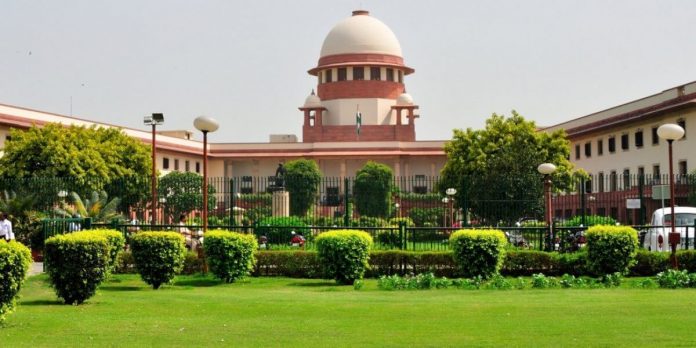
Supreme court of India

This article is written by Varchaswa Dubey from JECRC University, Jaipur. This article is concerned with the case of Sri Dulal Ghosh v. State of Tripura, 2021. Furthermore, the article also reflects certain significant judgments regarding Section 295A of IPC. 

Introduction

The intention to violate religious sentiments has been a prime concern since time immemorial, especially in the Indian context due to people being highly spiritual to their religion, and therefore, even straightforward opinions delivered by people, especially of other religions tend to hurt the religious sentiments of people promptly. 

An increase in the number of cases where freedom of speech and expression is reserved under Article 19(1)(a) of the Constitution of India has led to an increase in hateful comments towards a particular religion, which has further led to communal riots and limitations to the right of speech and expression. 

The concept of blasphemy is not new in the Indian context, and with ever-evolving time, various instances of hurting religious sentiments by different religions have been observed. More importantly, the misuse of legal provisions intending to prosecute those responsible for hurting religious feelings has been observed, which has caused a nationwide debate. 

Section 295A of the Indian Penal Code, 1860 deals with the punitive measures imposed in cases where an individual is found guilty of deliberately outraging or hurting the religious feelings of any individual, by words, either spoken or written or through any signs or visible representation, which insults or intents at insulting the religious beliefs of a particular class of people. Under this Section, such a person shall be punished with imprisonment which may extend up to three years or fine, or both. 

In the case of Sri Dulal Ghosh vs The State Of Tripura (2021), the petitioner has prayed for quashing the First Information Report (FIR) against him under Section 295A of the Indian Penal Code, 1860. 

Origins of Section 295A 

Section 295A was inserted in the Indian Penal Code, 1860 under the Criminal Law Amendment Act, 1927, after a huge debate was triggered in “Rangila Rasul’s case”, where the Lahore High Court while interpreting Section 153A of the Indian Penal Code, 1860, held that no offence had been committed by the person on trial before the Court. However, a contrasting judgment was delivered in the case of Kali Charan Sharma vs Emperor (1927), and it was then that the Legislation interfered and decided to enact a new provision, namely Section 295A of the Indian Penal Code, 1860. 

Facts of the case

In the present case, the petitioner had prayed before the Supreme Court of India for annulling the FIR filed against the petitioner under Section 295A of the Indian Penal Code, 1860. The complainant in the FIR alleged that his religious sentiments were violated by the comment of the petitioner on his Facebook page, where the petitioner has made obscene comments on the Hindu religion by referring to the Bhagavad Gita, the sacred religious textbook of Hindus, as “thakbaji Gita”, resulting in hurting the religious sentiments of Hindus. 

Issues raised 

The primary issue raised before the Supreme Court of India was whether the petitioner, who has posted a comment on Facebook regarding the holy book Bhagavad Gita, had committed an offence under Section 295A of the Indian Penal Code, 1860.

Contentions of the parties

Arguments of the petitioner 

The petitioner argued that the statement made by him had been misinterpreted and that he neither had the intention to hurt the religious feelings of the Hindus nor did he desire the same, and therefore the criminal complaint against him must be disposed of. 

The petitioner through his counsel stated that he is a rationalist and he has been posting comments on social media, based only on his personal beliefs. He argued that he had no intention to humiliate the Bhagavad Gita.

Arguments of the respondent 

The complainant in his criminal complaint alleged that the petitioner always made undignified comments against the Hindu religion and was always intending to hurt the religious sentiments of the Hindus. 

The learned Additional Public Prosecutor had contradicted the petition arguing that the petitioner in the case in hand had reflected the intention to hurt the religious sentiments by making degrading comments on a holy book and that the Court must not interfere in the case at such a stage where the investigation is not complete, and this is not the only time where the petitioner has displayed an intention to hurt religious sentiments; the petitioner had published such comments many times before.

Observations and judgment of the Court

Ratio decidendi 

In the present case, the Supreme Court of India examined the case by considering the observations made in the case of Ramji Lal Modi v. State of U.P. (1957), which ruled that not every act of insult or any attempt to insult religion will be prosecuted under Section 295A of IPC, but only those which include a deliberate intention to outrage the religious sentiments. 

  • The Court held that merely the allegation of the petitioner having a habit of posting such posts which violate the religious sentiments of a religion cannot be allowed as a ground for conducting an inquiry. 
  • The Court further held that the post of the petitioner in the present case lacks any background or foreground, and it is not possible for any common man with reasonable intelligence to notice any degrading remarks which are allegedly made by the petitioner on Bhagavad Gita. 
  • The Court furthermore held that the words used by the petitioner and the words which have been reproduced before the Court for better clarity in Bengali script fail to establish any derogatory meaning which the complement is trying to establish. 
  • The Court lastly observed that insults to religion offered unwittingly or carelessly or without any deliberate or malicious intention to outrage the religious feelings of that class do not come within the Section.

Obiter dictum 

The Apex Court, while analyzing the contemporary scenario where the right to free speech and expression has evolved significantly, especially on social media, explained that social media activity has more permanent effects compared to traditional platforms like statements made to a small group of people. The statements made on social media are also likely to reach more people with great speed, even at the international level, however, what holds back the pace of such statements of the right of free speech guaranteed under Article 19(1)(a) of the Constitution of India is Article 19(2) of the Constitution of India, which places certain grounds of restrictions on the right of free speech and expression. 

Section 295A of IPC is concerned with the punitive measures imposed in cases where there is the intention to violate the religious feelings of any class by any means.  

The Apex Court further emphasized the case of Mahendra Singh Dhoni v. Yerraguntla Shyamsundar and another (2017) where the Apex Court took similar views. 

The Court, while answering the question of whether the petitioner in the present case had violated the religious sentiments, answered in negative and held that going by the dictionary meaning of the statement made by the petitioner in the Bengali script, which is in written form, there were no consequences and due to the lack of any background or foreground, the case in hand does not fall within the ambit of Section 295A of IPC. Therefore, the criminal proceedings against the petitioner were disposed of.

Section 295A of the Indian Penal Code, 1860

Cases under Section 295A

The constitutional validity of Section 295A of the IPC

In the case of Ramji Lal Modi v. the State of U.P. the Supreme Court of India which determining the constitutional validity of Section 295A of the Indian Penal Code, 1860 held that not all the acts which violate or insult or attempts to affront the religious sentiments of a particular religion will fall within the scope of Section 295A of IPC, but only such conduct will be prosecuted where the intention to outrage the religious sentiments of a particular religion is done intentionally. 

The Court further held that the expression “interest of public order” reserved in Article 19(2) of the Constitution of India is much more than just maintenance of public order, and therefore, even if a particular act does not cause a breach of public order, the restrictions in the interest of public order will be reasonable. 

Essentials of Section 295A of IPC

The Supreme Court of India in the case of Sujato Bhadra vs State of West Bengal (2005), gave the essential ingredients required to make out a case under Section 295A of IPC, wherein a person: 

  • By written words, 
  • Deliberately, and with malevolent intentions, 
  • Outrages the religious sentiments or religious beliefs, 
  • Of any individual or class of individuals, 
  • Insults or attempts to insult the religious feelings or beliefs of a particular class.  

The Court further held that the jurisdiction of Section 295A of the IPC encompasses only the citizens of India, and those who are not citizens of India, cannot claim the right to freedom of speech and expression under Article 19(1)(a) of the Constitution of India. 

Protection of religious sentiments 

In the case of Mohan C.Lazarus vs State Represented by Inspector of Police (2021), the Madras High Court, while quashing the FIR registered against the petitioner after an unconditional apology, observed that throwing up malice against another religion and having hatred against members of a certain religion challenged the very purpose of religion.

The Court further held that individuals who are capable of influencing a large section of society through religious sentiments must be very cautious while exercising their right to expression, or religion, or any concerned right. Such practice of rights cannot be at the cost of hurting the religious sentiments of other citizens. 

Misuse of Section 295A of IPC 

In the case of Munnawar S/o Iqbal Faruqui Vs. State of Madhya Pradesh (2021), a comedian was arrested on the pretext of hurting the religious sentiments of Hindus and Union Home Minister, Amit Shah. The petitioner contended that he never uttered any words which may violate the religious sentiments of the Hindus or against Amit Shah. 

The matter eventually went to the Supreme Court of India regarding bail application by the petitioner, after the counsel representing the petitioner submitted that the arrest was made in violation of Section 41A of the Code of Criminal Procedure, 1973 and that the allegations were vague. The Apex court granted ad-interim bail to the petitioner, on the conditions to the satisfaction of the Trial Court with a further condition that the applicant shall not indulge himself in any such activity which could disrupt public order. 

Section 295A of IPC vis-a-vis the right to expression 

In the case of Sri Baragur Ramachandrappa & Ors vs State Of Karnataka & Ors (2007), the Supreme Court of India held that no individual has a right to infringe the feelings of others on the premise that his right to freedom of speech remains unrestricted. It cannot be ignored that India is a country with vast differences in religion, language, culture, etc, and unwanted criticism in the faith of religion of others cannot be accepted. 

Conclusion

After understanding the essentials, and landmark judgments regarding Section 295A of IPC it can be concluded that the Section only aims at punishing such deliberate and malicious acts, which are done with the intention to outrage the religious sentiments. The provision was enacted and inserted in the penal code during 1927 when Hindu-Muslim riots took place due to provocative statements during the rule of the British in India. 

Section 295A of IPC certainly falls within the ambit of Article 19(2) of the Constitution of India and aims at suppressing such acts which outrage the religious sentiments of any religion or class of people who are protected by the law of the land. While there are debates that Section 295A is being misused, on the other hand, it can also be observed that this Section protects the interests of all the religions prospering in India, which is known for its diverse culture. 

References


LawSikho has created a telegram group for exchanging legal knowledge, referrals, and various opportunities. You can click on this link and join:

https://t.me/joinchat/J_0YrBa4IBSHdpuTfQO_sA

Follow us on Instagram and subscribe to our YouTube channel for more amazing legal content.
Download Now

Drafting an agreement between government and petrol pumps to set up electric charging stations at petrol pumps

0

This article is written by Arun Nair, pursuing Diploma in Advanced Contract Drafting, Negotiation, and Dispute Resolution from LawSikho. The article has been edited by Ruchika Mohapatra (Associate, LawSikho) and Dipshi Swara (Senior Associate, LawSikho).

Introduction

The global transportation sector accounts for nearly a quarter of global greenhouse gas emissions. This has led to an urgency to transition to electric mobility as a strategy for decarbonizing the transport sector all over the world. Few countries including India support campaigns like EV30@30, that aim at having at least 30% new sales share for electric vehicles (EVs) by the year 2030.

This is quite an ambitious initiative for countries who are party to it since one of the biggest prerequisites for this strategy is to put forward an accessible network of EV charging infrastructure. Pursuant to this, the government has instituted various policies and schemes to promote the development of the EV ecosystem including charging infrastructure networks and thereby requiring the government agencies to enter an agreement with the suppliers of EV charging equipment to give effect to this.

This article provides a primer on the contractual clauses to be included in the agreement between the government agencies and the equipment suppliers for the installation of charge points at petrol pumps. Such an agreement lays out the governance structure and defines the roles of the parties involved.

Background

The only impediment to this mission would be a lack of charging infrastructure. The government plans to set up at least one e-charging kiosk at every petrol pump across the country with an aim to accelerate the uptake of EVs by the people and for this, the battery charging ecosystem is very important to reduce range-anxiety. For instance, in India, there are approximately 70,000 petrol pumps and the government plans to set up at least one EV charging station at each of them to induce people to go for electric mobility.

This initiative by the government would lay impetus for the oil marketing companies (OMC’s) such as IOCL, HP, BPCL including private players like Shell, Essar Oil, Reliance etc. to enter into arrangements with EV charging equipment manufacturers like Tata Power, ABB India for erecting a network of charge points to cater to the needs of the EV owners and to promote EV in general.

Schemes, policies and guidelines overview : India 

  1. Under the Central Ministry of Heavy Industries, the following schemes were launched namely:

FAME I – Faster Adoption and Manufacturing of (Hybrid &) Electric Vehicles in India (FAME-India) Scheme was launched. The scheme aims to encourage progressive induction of reliable, affordable and efficient electric and hybrid vehicles (xEV). The First Phase of the scheme was initially approved for a period of 2 years, commencing from 1st April 2015. The Scheme has been extended from time to time, with the last extension allowed for a period up to 31st March 2019.

FAME II – The government has approved Phase-II of the FAME Scheme with an outlay of Rs. 10,000 Crore for a period of 3 years commencing from 1st April 2019. Out of total budgetary support, about 86 percent of funds has been allocated for Demand Incentive so as to create demand for Electric Vehicles (xEVs) in the country. This phase aims to generate demand by way of supporting 7000 Electric Buses (e-bus), 5 lakh Electric Three Wheelers (e-3W), 55000 Electric Four Wheeler Passenger Cars (including Strong Hybrid) (e-4W)and 10 lakh Electric Two-Wheelers (e-2W).

  1. Ministry of Power has come up with the Charging Infrastructure for EV-Guidelines and Standards:

The said guidelines laid down the policy pertaining to the tariff to be charged for the supply of electricity to the EV public charging stations and also laid out directions for setting up of public charging stations (PCS), battery charging stations (BCS), captive charging stations (CCS) and battery swapping stations (BSS).

  1. Delhi Electric Vehicle Policy, 2020

The policy was floated with the objective to kick-start the adoption of EV across vehicle segments especially the mass category of two-wheelers and shared public vehicles and goods carriers in the state of Delhi. It aimed at achieving this through purchase incentives, road tax and registration fee waivers, established charging networks and swappable battery stations, maintaining an ecosystem for recycling batteries and setting up a state EV fund.

In addition to Delhi, there are other state governments too who have issued EV policies in line with the FAME scheme of the GoI. Some of these states are Andhra Pradesh, Karnataka, Kerala, Tamil Nadu, Maharashtra.

Different levels of EV charging

Most drivers are familiar with different grades of gasoline, like regular, plus, or premium. EV chargers are characterized by “levels” rather than grades. The levels describe how quickly a charger will recharge an EV’s battery. 

Level 1 Charging

L1 is the slowest type of charging equipment. L1 charging occurs primarily in residential settings. There are very few L1 chargers built for public use.

Level 2 Charging

L2 allows for medium-speed charging. It can occur in residential, public as well as work settings. These are found in many popular public locations for public use.

Level 3 Charging

L3 are the fastest chargers available. Due to their high cost and extremely high power draw, they are intended for commercial or industrial locations rather than residential areas.

Important provisions to be included in the contract

The agreement will be entered between the installer and provider of EV charging and support services (“Supplier”) and the oil marketing companies on whose properties the charging infrastructure will be installed (“OMC”). The purpose of this agreement is to describe the terms and conditions under which the parties will operate. The OMC would be interested to deploy and operate the equipment on their property, whereas the Supplier would install the charging station and be entitled to create access controls and set charging pricing.

1. Engagement

This clause refers to the legal relationship between the parties and sets forth the scope, fees and responsibilities of the Supplier and the OMC. This clause can be drafted as:

The Supplier and OMC hereby engage in this exclusive EV charging supply and service agreement whereby the Supplier will supply, install, operate, and service the equipment on the property addresses under the terms and conditions throughout the term of this agreement. 

2. Term

Both the Supplier and the OMC can decide upon the terms of the agreement. They can further specify the initial term and thereafter decide on an extension for a certain period based on mutual agreement.

The initial term of the Agreement shall be years from the commencement date (the “Initial Term”). The parties may mutually elect to extend the Agreement for a period of the year (the “Extension” and together with the Initial Term, the “Term”). Any further renewals following the Extension will be subject to mutual agreement.

3. Supply and installation

This provision details the responsibilities of the Supplier to prepare the site and install the equipment at the locations within the property and update the equipment periodically during the term of the agreement.

“The Supplier shall supervise including the coordination of all work and conduct the construction required to install the equipment at the designated location(s) within the property as set forth/depicted by the OMC in layouts or diagrams annexed to the agreement. The Supplier shall connect the equipment to the electricity grid and bear the cost associated with the installation. The Supplier shall also obtain all necessary municipality and any other government licenses, permits, insurances and other permits required to carry out the installation.”

4. Maintenance and customer service

Once the equipment has been installed, the OMC would require the Supplier to ensure the proper functioning of the said equipment through timely repair, maintenance, and servicing.

“The Supplier, its approved subcontractors, affiliates, and/or agents will service, operate, and replace the equipment as necessary to keep it in proper working order. The Supplier shall also make available technical service support personnel to service the equipment. If the equipment requires maintenance or replacement due to vandalism, the OMC shall be responsible to carry the costs associated with such services.”

5. Indemnity

The parties would want indemnity from all claims, requests, complaints, accusations, suits, actions, proceedings of every kind arising out of the other party’s conduct. Therefore, such a clause is unavoidable.

“The OMC shall indemnify, the Supplier and any of its associates, harmless from and against any and all damages from third party claims arising out of or relating to the negligence, omissions of the OMC, conditions existing at the property, unless such damages arise out of or relate to the negligence of the Supplier. The Supplier shall indemnify the OMC from and against any and all damages from third-party claims that result from or arise out of the actual or alleged misappropriation or infringement of any intellectual property rights in connection with the equipment.

6. Ownership

The agreement should explicitly state the ownership and title of the equipment supplied in case a subscription-based model is being executed. 

“The equipment is and shall remain the personal property of the Supplier, regardless of the manner in which they may be attached to any part of the property. The OMC shall not permit any charge, lien or other legal processes to be attached to the equipment and shall immediately notify the Supplier if any of the foregoing shall occur.”

7. Training

The Supplier shall have to provide training to the personnel of the OMC on the basic operation of the charging station.

“The Supplier will periodically train and retain its employees on the use and maintenance of the charging infrastructure at no cost to the OMC. Providing such support services is at the discretion of the Supplier.

8. Intellectual property rights

The agreement must mention that all the rights to IP of the charging infrastructure and technology used would belong to which party.

As used in this Agreement, “Intellectual Property” means all copyrights, patents, trademarks and service marks, names, logos, designs, trade secrets, know-how, and all unique concepts, information, data and knowledge that is eligible for legal protection under applicable laws as intellectual property. The parties agree that, as between them, the OMC shall retain ownership of its IP’s and the Supplier shall not obtain any right in any IP of the OMC. The parties agree that, as between them, the Supplier shall retain ownership of its IP’s and the OMC shall not obtain any right in any IP of the Supplier. 

Conclusion

Thus, with the governments wanting to curb the global GHGs and to meet the sustainable development goals and to earn carbon credit among other things, they are encouraged to bring about further favourable policies in this area resulting in further such collaborations between the existing OMC’s, the Government and the suppliers of EV leading to engagement and entering into such contracts.

References

  1. https://beeindia.gov.in/content/e-mobility
  2. https://www.transportpolicy.net/wp-content/uploads/2020/08/Delhi_Electric_Vehicles_Policy_2020.pdf
  3. https://www.timesnownews.com/auto/features/article/tata-power-to-set-up-ev-charging-stations-at-hp-petrol-pumps-in-india/786992
  4. https://economictimes.indiatimes.com/industry/auto/auto-news/govt-plans-to-set-up-charging-infrastructure-across-69000-petrol-pumps/articleshow/79373302.cms?from=mdr
  5. https://fame2.heavyindustry.gov.in/content/english/13_1_brief.aspx

Students of Lawsikho courses regularly produce writing assignments and work on practical exercises as a part of their coursework and develop themselves in real-life practical skills.

LawSikho has created a telegram group for exchanging legal knowledge, referrals, and various opportunities. You can click on this link and join:

https://t.me/joinchat/J_0YrBa4IBSHdpuTfQO_sA

Follow us on Instagram and subscribe to our YouTube channel for more amazing legal content.

Download Now

Arbitration : the revolution in resolving disputes

0

This article is written by Astitva Kumar, a student at Guru Gobind Singh Indraprastha University. The article is the outcome of detailed research and analysis on the topic of arbitration; how it has emerged and its future growth. 

Introduction

Arbitration is a reference to the decision of one or more persons, either with or without an umpire, of some matter or matters in difference between the parties.

In Halsbury’s Laws of England, the term ‘arbitration’ has been defined as: The term “arbitration” is used in several senses. “It may refer either to a judicial process or to a non-judicial process”. A judicial process is concerned with the ascertainment, declaration and enforcement of rights and liabilities as they exist, under some recognised system of law. Industrial arbitration may well have its functions to ascertain and declare, but not to enforce, what in the arbitrator’s opinion ought to be the respective rights and liabilities of the parties, and such a function is not judicial.

Arbitration has long been used as a way of alternative conflict resolution. The UNCITRAL (United Nations Commission on International Trade Law) framework of laws was used to model the Arbitration and Conciliation Act 1996, to modernise Indian arbitration law and bring it in line with best global practices, as well as making India a global hub for arbitration.

Though changes in the legislation have made arbitration a popular alternative to litigation; it is important to remember that the vast majority of arbitration in India is ad hoc, with institutional arbitration accounting for only a small part of all cases. Various attempts have been made to characterise the increasing popular knowledge of legal arbitration forms. Rene David describes arbitration as the resolution of a disagreement between two or more parties by a third distinct party or parties, and his definition is one of the most well-known. The agreement between the parties, not the state, gives these private parties their power.

Fundamental elements of arbitration

Arbitration is a method of resolving disputes outside of a country’s national courts, in which the parties involved refer the problem to a neutral party or parties for resolution. The sole arbitrator, or the Arbitral Tribunal in the case of several arbitrators, is the third impartial party. The arbitral tribunal is usually made up of professionals in their professions who are familiar with the law and the parties’ current or potential disputes. The parties’ arbitration agreement can be in the form of a separate contract or it can be inserted in the original contract as an arbitration clause.

The main element of this technique is that the parties expressly agree that in the case of a dispute between them, the matter will be brought to the arbitral tribunal specified in the agreement for final determination and resolution. Parties prefer arbitrators and arbitration as a means of conflict resolution in general because they follow processes that allow them more flexibility. Since many conflicts include global laws, these arbitral tribunals are better equipped to handle such cases than national courts. In India, arbitration is defined by Section 2(a) of the Indian Arbitration and Conciliation Act, 1996, which, however, does not define what arbitration is, just stating that it is “Any arbitration whether or not administered by a permanent arbitral institute.”

Arbitration has four main characteristics:

  • It functions as a natural alternative to national courts;
  • It is a privately funded way of conflict resolution;
  • The parties are in charge in this mode of dispute resolution; and
  • It is binding on the parties.

Perhaps the most appealing characteristic of arbitration is that the parties have complete control over the process, resulting in higher satisfaction with the final verdict than with the results of litigation. Arbitration might be either institutional or ad hoc. The parties determine components of the arbitration such as the number of arbitrators, their appointment, the laws applicable, and the procedural law relevant to the arbitration in ad-hoc Arbitration. Institutional arbitration, on the other hand, is administered by a prop to the early recognised institution. To govern the arbitration, each institution has its own set of norms and frameworks.

Emergence of arbitration

Before any written legislation, India had a long tradition of arbitration, and the concept of non-judicial dispute resolution was widely accepted in Indian society. Yajnavalka’s writings allude to ancient India’s unique arbitration courts. Even India’s panchayat system is regarded as one of the earliest forms of dispute resolution. “It is undoubtedly a striking characteristic of ordinary Indian life, I would even go so far as to say that it is considerably more prevalent in all walks of life than it is in England. Referring a problem to a sarpanch is a natural means of resolving many conflicts in India. It’s possible that the panch resembles a judicial court in some circumstances since the panch can act based on one party’s complaint rather than both partiesagreement, such as in a caste dispute. However, in many circumstances, the conclusion is reached through mutual agreement.” 

Arbitration has been a part of Indian culture since the dawn of time. Local forms of self-government, such as jirgas and panchayats, held informal arbitral processes and were held to be legally binding. Local luminaries, frequently village elders or individuals of high social status, were nominated to settle disagreements within communities in these types of dispute resolution. This traditional council of adjudicators eventually evolved into the panchayat raj, an Indian type of self-rule that included arbitral techniques as part of a post-colonial ideal of local governance and grassroots democracy. Even early descriptions of arbitration can be found in Hindu mythology. In various versions of the Ramayana, Lord Rama and his family try to reconcile their differences with the help of the gods. Arbitration was given a limited, but gradually developing, role in the adjudication of Indian economic disputes under the British colonial government.

On the 13th of July 1960, India ratified the New York Convention, and the Foreign Awards (Recognition and Enforcement) Act, 1961 was established to give effect to the convention’s Articles. The Act of 1961 was a significant step forward in the development of international commercial arbitration, as it recognised arbitral awards made outside of India’s borders in India. “Foreign Awards will be enforceable in India as if they were awards made in India,” according to Section 4 of the aforementioned Act. The Act also included provisions for “staying proceedings in matters agreed to be referred to arbitration,” “filing of the awards in the court,” “judgement pronounced in terms of the award and a decree passed thereon,” “circumstances under which a Foreign Award could not be enforced,” and “the evidence which the party desiring the enforcement of the award was to produce in support thereof.”

1899

The Indian Arbitration Act, 1899, was the first law on arbitration, and it was limited to Presidency towns (based on the English Arbitration Act, 1899).

1937

1937 Act on Arbitration (Protocol and Convention) dealt with the Geneva Convention‘s recognition and enforcement of foreign awards.

1940

The domestic arbitration law was consolidated by the Arbitration Act of 1940.

1996

The 1996 Arbitration and Conciliation Act combined all provisions relating to arbitration, both domestically and for the enforcement of international judgements.

2001

The 176th Law Commission Report was released, proposing changes to the 1996 Act.

2003

The Arbitration and Conciliation (Amendment) Bill, 2003, was introduced in response to the 176th Law Commission Report.

2004

The Justice Saraf Committee on Arbitration was set up to examine the recommendations of the Law Commission’s 176th Report.

2005

For additional review, the 2003 Bill was forwarded to the Department Related Standing Committee on Personnel, Public Grievances, Law, and Justice. The Bill was dropped after the Department determined that it was insufficient.

2014-2015

The 246th Report and supplementary report of the Law Commission proposed that the 1996 Act be amended.

2015

With effect from October 23, 2015, the Arbitration and Conciliation (Amendment) Act, 2015 revised the 1996 Act.

2017

Under the chairmanship of former Supreme Court judge Justice Srikrishna, a committee was constituted to recommend additional amendments to the Act and to encourage institutional arbitration.

2018

Based on the Sririshna J. Report, the Arbitration and Conciliation (Amendment) Bill, 2018, made additional revisions to the Act.

Advantages of arbitration

Fairness

From the beginning, the arbitration procedure has been marked by a sense of justice. The parties have a say in the appointment of arbitrators, the parties are heard individually in an arbitration procedure, and, perhaps most crucially, the arbitration process is based on the parties’ decision to settle their problems amicably.

Cost-effective

  • Arbitration has become a cost-effective method of settling disputes, thanks to recent modifications to the Arbitration and Conciliation Act of 2015, which allowed this to happen with minimum judicial interference. Arbitration is thought to be less expensive than litigation since it takes less time to resolve a dispute. Furthermore, the rules of evidence and discovery are limited, resulting in significant cost savings.
  • Litigation funding is expensive for a firm since it affects its cash flow, EBITDA, and market value. Rather than investing funds to support expensive litigation, litigation funding allows corporations to put their precious resources to constructive use, such as product development, capacity growth, and so on.
  • The company’s operating profit and market value both improve as a result of third-party financing, which has no cost of capital. Future probability-adjusted payoffs from litigation are typically discounted that investors are prepared to underwrite, resulting in a win-win situation for all parties involved.
  • Because neither contingent liabilities nor contingent assets are reflected in Indian financial accounts, selling the prospect of a claim for a fixed sum of money, along with the cost savings from potential litigation, is tremendously advantageous to a corporation.
  • Singapore’s Civil Law Act was recently amended to allow third-party funding for arbitration and related processes. Similarly, third-party funding for arbitrations and mediations was just legalised in Hong Kong. Third-party funding has also received approval from the Paris Bar Council.
  • There is currently no legislation in India that addresses third-party litigation; however, the Supreme Court has clarified the legal permissibility of TPF in litigation, stating that “There appears to be no restriction on third parties (non-lawyers) funding the litigation and receiving remuneration after the litigation’s outcome.”
  • Arbitration is thought to be less expensive than litigation since it takes less time to resolve a dispute. Furthermore, the rules of evidence and discovery are limited, resulting in significant cost savings. 

Time-saving

When an attorney is representing a client, one of the most common questions is, “When will this lawsuit be over?” This is an obvious issue, given that hiring an attorney is likely to be costly, filing a lawsuit takes time and effort, and living with anxiety over the case’s outcome may be exhausting. Litigation takes time, and parties who anticipate a case to be resolved in a matter of weeks are sometimes disappointed. So, it takes so long for a lawsuit to be filed.

When compared to litigation, the arbitration procedure is usually quick, but it can potentially take a long time if one of the parties purposely fails to meet deadlines and tries to postpone the proceedings. Commercial disputes are notoriously slow to be resolved in Indian courts. Arbitration can save you a lot of time. All India seated arbitrations must now be concluded within 12 months of the tribunal’s formation, according to recent revisions to the Arbitration and Conciliation Act 1996 (Act). The 12-month deadline can be extended by the parties for another 6 months with their cooperation, after which only the Court can grant the further extension.

Depending on the subject matter, the average time it takes for a case to be decided in a court of law is between 6 and 30 years. According to a recent change, the arbitrator must issue the arbitral ruling within 12 months of the case’s reference date. This is a possible indication of the speed with which cases that have chosen the arbitration option are being resolved.

Keeps us away from the mental and physical stress of litigation

For several years, the direct financial cost of civil litigation–and how it affects individuals and societal systems have dominated the access to justice policy agenda. Legal fees and administrative expenditures connected with filing a lawsuit or being sued are seen as a ‘gateway hurdle’ for those seeking justice. Studies on the costs of civil litigation have thus focused on these actual legal costs and direct financial effects, with little regard for the social and psychological aspects of the process until recently.

Litigation-related anxiety can disrupt a client’s mental, emotional, and physical well-being. Clients’ emotions and disorganised thinking are frequently triggered by lawsuits, according to Cohen. Some clients’ interests are only focused on matters pertaining to their case. Other litigants have the opposite attitude, attempting to avoid all aspects of the lawsuit.

Arbitration has value over procedural litigation because of the benefits it provides due to good communication between the parties and having a wide-open approach relating to the conflicts between them. Litigation without any further say is a lengthy process and it sucks out the time and energy of the parties (physically/mentally). Arbitration provides a neutral ground where parties can decide the venue of where the arbitration can take place.

The location of arbitration in domestic arbitration is not an issue. It can take place anywhere in India, depending on the parties’ agreement. If the arbitration is governed by the rules of an institution, it is usually held at the institution’s headquarters, unless otherwise agreed. Section 20(1) of the Arbitration and Conciliation Act allows the parties to agree on the location of the arbitration. In the absence of such an agreement, the arbitral tribunal shall choose the location of arbitration based on the facts of the case, including the parties’ convenience. Please refer to Section 20(2).

Unless the parties agree otherwise, the Arbitral Tribunal may convene at any location it deems appropriate for consultation among its members, hearing witnesses, experts, or parties, or inspecting papers, goods, or other property [under Section 20(3)]. In this way, a lot of stress from a party’s shoulders is taken away. Visiting a court and taking part in proceedings can take a toll on anyone, but with this, parties have the authority and choice of not visiting courts and keep themselves away from the physical and mental stress of it.

Disadvantages of arbitration

  • There are no appeals: The arbitration award only allows for a limited number of appeals. One of the most obvious disadvantages of arbitration is the limited scope of appeal available in awards. There would be no avenue for appeal or rectification if there was a fault with the award.

(Though In India, the Supreme Court has approved two-tiered, or appellate, arbitration. In Centrotrade Minerals & Metal v. Hindustan Copper, a three-judge bench of the Supreme Court of India determined that parties may arrange for an appeal in their arbitration clause and that such a choice would not be contradictory to Indian law.

The case, which was originally heard in 2006, was referred to a higher bench due to a disagreement between the two judges hearing the case. In India, appellate arbitration is not a novel notion. In Heeralal Agarwalla and Co. v. Joakim Nahapiet and Co Ltd., the Calcutta High Court upheld the legitimacy of appellate arbitration under the Indian Arbitration Act, 1899.)

  • There are many different arbitration guidelines to pick from, and it can be difficult to decide which ones to use. Similarly, there are a plethora of institutions that provide arbitration services, making it difficult to choose between them.
  • Different statutes exist in certain nations for local and international arbitration. This determines the applicability of legislation relating to International problems.
  • The cross-cultural language barrier is one of the most significant challenges that arise during the arbitration. The language and culture of the two regions are always in conflict. It becomes increasingly difficult to close the gap and reach a consensus.
  • Cost: While arbitration is normally a more cost-effective legal settlement alternative, it may not be appropriate in circumstances where only a little amount of money is at stake.
  • Rules of evidence: When it comes to accepting evidence, a judge in a traditional court setting has precise rules to follow. Arbitrators, on the other hand, are free to use whatever information that is presented to them.
  • Lack of cross-examination: The arbitration procedure usually consists of documents rather than witnesses, making cross-examination impossible.
  • Restricted discovery: Both parties lose the cost-saving advantage of limited discovery if arbitration is not filed until litigation has already begun.
  • Lack of uniformity: Because there are no clear rules for arbitration, finding consistency might be challenging. It’s possible that an arbitrator is prejudiced, which can happen in forced arbitration agreements.
  • Due to the lack of proof in arbitration, you must rely on the arbitrator’s experience to make the best legal conclusion.
  • Lack of transparency: The level of confidentiality involved in arbitration disputes may be to one party’s disadvantage. In addition, there is a lack of transparency, which does not exist in public courtrooms.

Why do people choose arbitration over litigation?

While it is true that people who fall outside the economic eligibility threshold will always be able to afford to participate in the litigation process because our country has advocates who charge anywhere from Rs. 10,000 to Rs. 1,00,000 or more per hearing, the question then becomes whether the current system, as a whole, provides sufficient economic accessibility to the disadvantaged. While the fees paid to an advocate are one component to examine when evaluating economic accessibility, there are two other charges to consider: the costs of attending a court hearing and the costs of lost pay/business as a result of attending a court hearing. The average cost suffered by a litigant (other than legal expenses) is Rs. 1,039 per case per day, and the average cost incurred due to loss of pay/business is Rs. 1,746 per case per day. While the number of hearings in a case can vary and therefore alter costs, it still adds to the overall cost of litigation. What solutions are available to people who earn more than Rs. 1,25,000 per year but can’t afford the triple cost of advocate fees, daily charges, lost pay, and a possible further reimbursement if they lose their case. Losing or creating so much expense and not even getting any worth of it is a gamble which litigation makes us play. In arbitration, the method is precise and is always effective. 

Enforcement

The ease with which arbitration may be enforced is frequently a deciding factor in favour of arbitration. The New York Convention on the Recognition and Enforcement of Foreign Arbitral Awards is ratified by India (the New York Convention). If a party gets a binding award from a signatory to the New York Convention, and the award is made in a region that India has designated as a “convention nation,” the award is enforceable in India. The Central Government has only notified 48 countries as reciprocating countries, with Mauritius being the most recent addition.

Part II of the Act (Arbitration and Conciliation Act, 1996) requires that an arbitration award granted by a foreign seated tribunal be executed in India if the award debtor’s assets are located in India. While the speed and certainty of such enforcement actions have grown significantly in recent years, there is no set time limit for enforcing a foreign award in India. Any challenges to awards issued in India-seated arbitrations, on the other hand, must be completed within 12 months of the opposite side receiving notice.

Finality

Parties have various options for appealing a verdict under Indian procedural law. An arbitration award, on the other hand, cannot be appealed. The losing party may seek to have the award set aside in Indian courts; but, unlike an appeal, such set-aside proceedings are not a full-fledged review on the merits.

Procedural flexibility

Arbitration allows parties to customise procedures to the specific circumstances of a dispute. In practice, parties frequently choose for institutional arbitration and follow the institution’s usual norms and processes. Foreign parties entering into India-related contracts frequently choose foreign institutions such as the Singapore International Arbitration Centre (SIAC), the International Chamber of Commerce (ICC), or the London Court of International Arbitration due to the lack of credible arbitration institutions in India. With the opening of the Mumbai Centre of International Arbitration (MCIA) and the anticipated introduction of similar institutes in other Indian cities, this practice is projected to become more common.

Neutrality and expertise

Parties can bring their conflicts to a neutral venue through arbitration, which ensures neutrality and skill. This is especially appealing in the context of international transactions. Singapore has surpassed London as the most popular foreign seat for arbitrations involving India.

Arbitration sessions are typically held in private, and the knowledge that a party is engaging in arbitration procedures is kept private. The only time certain aspects of arbitration may be made public is if there are concurrent court proceedings (e.g., where a party applies to courts for interim relief in support of an arbitration or challenges an arbitration award in courts). 

Interim relief

A party’s capacity to secure interim relief is critical to the effectiveness of arbitration (e.g. a party might require a freezing injunction to prevent the other party from dissipating its assets during the pendency of the arbitration). Interim relief can be granted by Indian courts in support of arbitration, even for arbitrations held outside of India. Parties can seek interim relief from Indian courts at any time before the arbitral tribunal is formed. Parties are often expected to seek interim relief from the panel soon after the tribunal has been established. 

Arbitration clause

The Indian Council of Arbitration advises any parties interested in using the Indian Council of Arbitration for arbitration to include the following arbitration clause in their contracts: “Any dispute or difference between the parties arising out of or relating to the construction, meaning, scope, operation, or effect of this contract, or the validity or breach thereof, shall be settled by arbitration in accordance with the Rules of Arbitration of the Indian Council of Arbitration, and the award rendered thereunder shall be binding on the parties.”

An arbitration clause, as previously stated, is a contract provision that specifies when arbitration is required for dispute settlement. In the case of a legal dispute over the contract, it is a provision of the contract that discusses the parties’ rights and alternatives. The parties agree not to sue each other in most arbitration provisions. Instead of going to court, they’ll settle their differences through arbitration. 

Instead of suing each other, the parties will have to settle their issues at these arbitration hearings. They must also come to an understanding of how to fix the situation. This could result in remedies similar to those available through the courts, such as a settlement payout. When opposed to litigation, arbitration is believed to be considerably more flexible and informal.

Furthermore, the arbitration process allows the disputing parties to talk about the remedies on their own terms.

Binding and non-binding clauses

A binding or nonbinding arbitration clause can be included in a contract. A binding arbitration clause specifies that the arbitrator’s ruling on a particular dispute is final. That judgement will be enforced by the courts, and neither side will be able to appeal or fail to act in accordance with it.

A non-binding arbitration clause, on the other hand, allows the contesting parties to reject the arbitrator’s ruling. They may then decide to take the case to court for a final decision. Binding arbitration provisions are commonly used by parties since they are more definitive and take less time.

Essentials of the arbitration clause

Contract arbitration clauses typically read something like this: “The parties to this contract hereby agree to handle legal issues through arbitration techniques rather than civil lawsuits.” An arbitration clause can be adapted to the specific interests of the contesting parties.

Clauses requiring arbitration should be as precise as feasible. As a starting point, they should include the following information:

1.    Information on the parties who are impacted by the clause;

2.    When the provision will take effect and, if applicable when it will expire;

3.    Is it possible to change the clause in the future; and

4.    The ramifications of breaking the provision.

Future of dispute resolution in India

The latest 2019 amendment, which provides the basis for institutionalised arbitration in India, aims to address the aforementioned problem. It calls for the establishment of the Indian Arbitration Council, which will be responsible for, “Taking all such measures as may be necessary to promote and encourage arbitration, mediation, conciliation, or other alternative dispute resolution mechanisms, and for that purpose to frame policy and guidelines for the establishment, operation, and maintenance of uniform professional standards in all matters.”

A tiered method of referring disputes to arbitral institutions was also implemented by the 2019 Amendment. The Arbitration Council of India will now rate arbitral institutions, according to the 2019 modification. Based on considerations such as infrastructure, arbitrator quality and skill, performance, and adherence to time constraints for resolving domestic or international commercial arbitrations, as established by the legislation, arbitral institutions will be graded.

The creating system would provide a gauge of a particular arbitral institution’s competence and integrity, as well as offer validity to the awards it makes. The Supreme Court of India (in this instance of international commercial arbitration) and the high courts (cases other than international commercial attraction) empowered the selected arbitral institutes for the appointment of arbitrators under the 2019 amendment.

This modification aims to decrease the role of courts in arbitration proceedings to improve the procedure’s efficiency in terms of time. This new, swift and progressive legal regime will go a long way toward encouraging more parties to use arbitration as their preferred method of dispute resolution, and it is a significant step toward streamlining the commercial dispute resolution process and making India a preferred location for international arbitration.

Conclusion

India is a rapidly developing economy that requires stable arbitration legislation to establish itself as a worldwide arbitration centre. To achieve this goal, a balance must be struck between keeping arbitration law current and building arbitration centres capable of quickly resolving and processing commercial disputes. With the Amendment Act in place, courts and politicians assuming a pro-arbitration stance, the adoption of best practices is critical in the near future.

More steps must be taken for India to become a global arbitration centre. Signing and ratifying international conventions, such as the ICSID Convention, and extending the scope of recognition of arbitral awards to non-reciprocating countries, would be an important first step. This will allow a larger number of parties to engage in commercial transactions in India, as the ease of resolving disputes is a key consideration when forming business connections.

India now has an excellent opportunity to improve its reputation as a global arbitration centre. Accepting global best practices, adhering to sign agreements such as the ICSID Convention, and addressing the flaws that now plague the Indian arbitration system are the only ways to achieve this. The establishment of the Arbitration Council of India is a significant step in that direction, as it will endeavour to promote both institutional and ad hoc arbitration while also ensuring that the quality of arbitrators and arbitral institutions does not deteriorate.

References


LawSikho has created a telegram group for exchanging legal knowledge, referrals, and various opportunities. You can click on this link and join:

https://t.me/joinchat/J_0YrBa4IBSHdpuTfQO_sA

Follow us on Instagram and subscribe to our YouTube channel for more amazing legal content.

Download Now

Drafting a spacecraft design contract between NASA and Blue Origin

0

This article is written by Arun Nair, pursuing Diploma in Advanced Contract Drafting, Negotiation, and Dispute Resolution from LawSikho. The article has been edited by Ruchika Mohapatra (Associate, LawSikho) and Dipshi Swara (Senior Associate, LawSikho).

Introduction

Many United States companies worked closely with NASA to build the Apollo 11 spacecraft that took the first set of humans to the moon’s surface. NASA’s scientists and engineers planned the mission and identified the technology needed to accomplish it and then worked with the most advanced technology-rich companies’ designs to produce space crafts, rockets, capsules, landers, suits, and rovers. 

No doubt that space missions are big government initiatives, but the private sector players are an essential part of it. For the past couple of decades now, NASA has handed over more work directly to private firms. For instance, rather than doing things in-house, NASA effectively tells various actors in the relevant domain to design a new space vehicle and accepts proposals from them. Once a proposal gets accepted, NASA enters into a written agreement stating the legal terms and conditions.

The aim of this article is to detail the provisions to be included while drafting a spacecraft design contract that will ultimately provide clarity and inform the ways in which parties can protect their interests during the job.

Organization profile

National Aeronautics and Space Administration (NASA)

NASA is a United States governmental agency set up in the year 1958 and headquartered in Washington D.C having more than 17,000 workforces, primarily to oversee, research and develop science and technology related to air and space exploration. Their program involves among other activities – human spaceflight, robotic space probes, developing and testing cutting edge aircraft.

Their mission is to increase the understanding of the universe through innovation and a sustainable program of exploration with commercial and international partners to enable expansion across the solar system and bring new knowledge and opportunities back to Earth.

Blue Origin

Blue Origin is an American, privately funded, aerospace manufacturer and sub-orbital spaceflight services company founded in 2000 by Jeff Bezos (Executive Chairman of Amazon Inc.). It is headquartered in Washington and aims to make access to space cheaper and more reliable through reusable launch vehicles.

Blue Origin was founded with the vision of enabling a future where there will be exploration and expansion of humanity into space to preserve Earth. Therefore, Blue Origins is working on this to serve the needs of all civil, commercial and defence customers.

The collaboration between NASA and Blue Origin

To achieve its objectives, NASA has the mandate to work with any entity or partner by way of Space Act Agreements (SAA) as defined in the National Aeronautics and Space Act of 1958. In the performance of its functions, NASA can enter and perform such contracts, leases, agreements, or other transactions necessary to fulfil its goals.

The SAA majorly can be of four types:

  • Reimbursable Agreement: wherein NASA’s costs linked with the project are reimbursed by the agreement partner.
  • Non-Reimbursable Agreement: where each partner bears the cost of its participation in the agreement and no funds are exchanged.
  • Funded Agreement: wherein funds are transferred to domestic agreement partners to accomplish a mission.
  • International Agreement: wherein the agreement partner is a foreign entity. Such an agreement can be reimbursable or non-reimbursable.

Blue Origin has contracted to work for NASA on several endeavours including programs for developing concepts, designs, and technologies to support future human spaceflight operations and as part of NASA’s Artemis Program to return humans to the moon, and various Commercial Crew Development (CCDev) programs.

All these Space Act Agreement (SAA’s) initiatives are instruments committing NASA to increase cooperation and to support the private sector companies with information and other facilities to accomplish milestones for commercial space programs.

Why such an arrangement?

A partnership between a governmental body and a private entity works well when a private party’s technology and innovation combine with a public sector entity’s incentives to complete work on time. Private Sector participation results in cost savings for the public exchequer in millions of dollars and brings along expanded capacity.

The advantages of SAAs are – access to private finance, efficiency advantages from using private players skills, reduces life-cycle cost and delays in the project, operational and execution risks are transferred from the government to the private participants.

Important design contract provisions

Organizations such as NASA often contract with companies like Blue Origin in some capacity or other, in an area that is still in its nascent stage. In addition, space flight missions are difficult and inherently risky endeavours, and to be successful these organizations know the importance of having a good contract in place before starting work.

A well-written design agreement clarifies expectations and mitigates legal troubles. It should not be adversarial or one-sided – it should be structured to protect everyone’s interest and be mutually beneficial. Parties should make sure that their design contract includes provisions touching upon the statement of work, client responsibilities, deliverables, representations and warranties, timing and payment terms. Some of the important legal provisions that should be included in a design contract between NASA and Blue Origin for designing a spacecraft are detailed below. 

A sample draft of the spacecraft design contract can be as follows:

This spacecraft design contract (“Contract”) is entered on ___________(Effective Date) and ___________ (Place) by and between National Aeronautics and Space Administration, located at _____________ (“NASA”) and BLUE ORIGINS, located at  ______ (“Contractor”).

  1. Statement of Work – 

The statement of work (SOW) clause incorporates the purpose of the agreement between the parties. In this case, it is to facilitate the design and development of a spacecraft with transportation capability while being safe, reliable, and cost-effective. A brief of the clause can be thus:

The contractor shall complete the design, development, test, evaluation and certification of a fully equipped spacecraft capable of undertaking space missions with NASA crew, to and from the ISS, in accordance with the design standards and requirements specified by NASA in the contract. The contractor shall provide resources, personnel, services necessary to perform the requirement specified. NASA reserves the right to adjust the delivery schedule at no increase to the contract price.

  1. Inspection and Acceptance – 

When parties venture out into such a risky proposition, it is important that NASA exercises rigorous assessment and scrutiny over the work performed by the contractor and should provide acceptance only if the work so performed is to the satisfaction of NASA. 

The contractor shall provide and maintain an inspection system acceptable to NASA covering the services, R&D work under this contract. Complete records of all inspection work performed shall be maintained and made available by the contractor during contract performance and even after the contract expires. NASA shall have the right to test and inspect all services and R&D in a manner that will not unduly delay the work, and the right to reject non-conforming services or R&D work. Acceptance shall be final, except for latent defects, fraud, gross mistakes or otherwise as specified in the contract.

  1. Payment – Considering the nature and scale of the project it is advisable for parties to opt for milestone payments in this instance, against a one-time lump sum payment. This means that the payment is based on the progress made towards completing the work. Payments are released against invoices raised upon achieving defined percentages of the contractor’s work set forth in a schedule and agreed upon between the parties.

The contractor shall submit invoices for the work completed in accordance with the milestone acceptance criteria and payment set forth in the __ schedule subject to the verification and acceptance by NASA. The contractor shall submit the original invoices to the ___ address. NASA shall have the right to reduce or withhold milestone payments in the event the contractor fails to complete milestone performances to the satisfaction of NASA as laid down in the schedule.

  1. Representation and Warranties – Both parties shall provide representations and warranties to the other party. However, the contractor’s representations and warranties tend to be more extensive in this scenario. The contractor’s representation and warranty can be thus:

The contractor represents and warrants that all information contained herein shall be true and correct on the date thereof and that the contractor is qualified to enter into this contract. There are no actions, suits, litigation, arbitration proceedings pending to the contractor’s best knowledge that would materially adversely affect the contractor, its financial condition, results of operations and cash flows or otherwise prevent the contractor from performing under this contract.

  1. License, Permits and Approvals – Parties to the contract agree to arrange for the necessary licenses, permits to comply with the Government rules and regulations in association with the transaction. Such licenses, permits and approvals should be taken prior to contracting and should be a condition precedent.

The contractor and NASA agree that they shall comply with the Government’s laws, regulations, policies and directives as they relate to the performance of this Contract without delay. Each party acknowledges that it shall comply with all applicable statutes and regulations and attain all licenses, permits and approvals from the state authorities in respect of the agreement.

  1. Indemnification – The parties would want an indemnity clause in a contract to absorb the losses caused to that party. The clause often lists the actions against which the party seeks indemnity.

The contractor and NASA each agree to defend, hold harmless and indemnify the other party and its related third parties, for any liabilities, costs and expenses (including attorneys’ fees, costs and expenses), arising as a result of claims brought by related third parties of the indemnifying party, for property loss or damage, personal injury or bodily injury, including death, sustained in connection with the activities carried out pursuant to this contract.

  1. Limitation of Liability – The parties would prefer to cap their liability to the maximum extent of the contract value. However, to further safeguard its interest, the contractor can further limit its liability in accordance with the milestone payments. 

In no event shall either party be liable to the other party in connection with this contract under any direct or indirect damages or indemnities of any kind or for loss of revenue or profit arising out of or in connection with this contract and the contractor’s liability arising shall not exceed the aggregate milestone payments made by NASA. The limitation of liability does not apply to claims based on fraud, wilful representation, misconduct.

  1. Confidentiality – Parties would want to include the confidentiality clause in the contract to prevent the other party from disseminating proprietary information about itself.

Neither party shall disclose any terms of this agreement to any third party without the prior written consent of the other Party, except as necessary in the reasonable judgment of a party to comply with judicial or other governmental requirements, or when disclosure is required by a governmental agency or under applicable laws. No public announcement, release, or other disclosure of information relating to this Agreement, including the existence of this Agreement or either Party’s performance, shall be made except by prior written agreement of the Parties. 

Conclusion

A design contract is a distinct contract wherein the contractor is entrusted with developing detailed designs, fabrication and actual demonstrations, whereas the client intends to supervise and retain control over the progress of the project. NASA effectively states its needs to the marketplace and accepts proposals from companies that would not only design the spacecraft but also operate them as a service sometimes. NASA in its bid to maintain its nation’s global leadership in space exploration partners with private entities to leverage their technical and technological capabilities, to enable scientific investigations and develop new-age technology.

It is pertinent to note that such contracts also have some drawbacks. It involves risks for the private participant, who reasonably expects to be compensated for accepting those risks. This can increase government costs. When there are only a limited number of private participants that are big enough to take these tasks, might limit the competitiveness required for cost-effective partnering. If the expertise in the partnership lies heavily on the private side, the government is at an inherent disadvantage. For example, it might be unable to accurately assess the proposed costs.

However, it is safe to assume that such a contract has the potential to favour all the contracting parties and deliver a positive cost-benefit ratio.

References

  1. https://www.nasa.gov/audience/forstudents/5-8/features/nasa-knows/what-is-nasa-58.html
  2. https://www.blueorigin.com/
  3. https://www.dezeen.com/2021/04/20/spacex-starship-nasa-artemis-moon-landing/

Students of Lawsikho courses regularly produce writing assignments and work on practical exercises as a part of their coursework and develop themselves in real-life practical skills.

LawSikho has created a telegram group for exchanging legal knowledge, referrals, and various opportunities. You can click on this link and join:

https://t.me/joinchat/J_0YrBa4IBSHdpuTfQO_sA

Follow us on Instagram and subscribe to our YouTube channel for more amazing legal content.

Download Now

Necessary reforms to achieve efficiency in the working of NCLT

0
Image source - https://bit.ly/3o7WDJU

This article is written by Shivam Singhal, pursuing a Certificate course in Insolvency and Bankruptcy Code from LawSikho. The article has been edited by Priyanka Mangaraj (Associate, LawSikho) and Dipshi Swara (Senior Associate, LawSikho).

Introduction

The path for the establishment of the National Company Law Tribunal (hereinafter referred to as ‘NCLT’) didn’t turn out to be an easy walk as intended by the legislature. Provision for the establishment of such tribunals was incorporated through the Companies Amendment Act, 2002 of the erstwhile Companies Act, 1956. NCLT replaced the Company Law Board and was supposed to have have jurisdiction in matters related to the company and allied disputes. However, their establishment took a halt due to the impending litigation challenging the constitutionality of these tribunals. 

The Hon’ble Supreme Court settled the constitutionality of these NCLTs and through a notification published by the Central government on 1st June 2016 NCLTs were at last constituted. As per Section 408 of the Companies Act, 2013 which provides for the Constitution of National Company Law Tribunal states that:

 “The Central Government shall, by notification, constitute, with effect from such date as may be specified therein, a Tribunal to be known as the National Company Law Tribunal consisting of a President and such number of Judicial and Technical Members, as the Central Government may deem necessary, to be appointed by it by notification, to exercise and discharge such powers and functions as are, or maybe, conferred on it by or under this Act or any other law for the time being in force.”

At present NCLTs have been bestowed with jurisdiction in disputes related to companies under the Companies Act, 2013 like approving the scheme of arrangements, class action suits, share transfer restriction issues along with certain real estate matters in addition to the designated Adjudicatory Authority under Insolvency and Bankruptcy Code, 2016 (IBC /Code).

Rendezvous of NCLT and IBC

Indian courts have always been overburdened with a plethora of cases and the delay in adjudication is ever-increasing without any immediate recourse. NCLT is no exception to this particular headache. As mentioned NCLT is the adjudicating authority under IBC and the applications for the corporate insolvency resolution process are admitted to NCLT. These tribunals are one of the key pillars of the IBC as the decision on admission or rejection for the initiation of the corporate insolvency resolution process (CIRP) is taken by them.

Although the scheme of the IBC is a timely resolution which is currently 270 days for any resolution to be finalized. However, the reality is far from the timeline provided under the code. For instance, as per the official data posted by the Insolvency and Bankruptcy Board of India (IBBI) total of 4376 CIRPs have commenced by the end of March 2021. Of these, 2653 have been closed. Of the CIRPs closed, 617 have been closed on appeal or review or settled; 411 have been withdrawn; 1277 have ended in orders for liquidation and 348 have ended in approval of the resolution plan. An interesting detail about this data is that more than 86 % of the cases admitted have gone beyond the strict timeline prescribed under the code for the resolution. Further, the average time taken from the Insolvency commencement date to approval of the resolution plan by the adjudicating authorities is 433 days as against the 270 days statutory mandate.

Sticking to the statutory timeline was of umpteen importance and the adjudication process has always stayed behind the timeline. This delay creates further two evident problems: 

  1. Delays are hampering the objective of the code initially thought and was one of the key reforms as against its counterpart recovery laws and diminishing the value of the enterprise;
  2. Being economic legislation and technical nature of the matters it is further augmenting the encumbered pending cases status of these tribunals and having an adverse impact on efforts by banks and financial institutions to recover non-performing assets (NPAs).

With the filing of an application for initiation of CIRP being suspended for over a year due to a covid pandemic, the cases under IBC for resolution are expected to further increase. As per the information provided by the Ministry of Corporate Affairs out of 19,844 cases pending in NCLT 12,438 cases are under IBC. That’s roughly 63 percent of the total pending cases. Therefore a large chunk of these pending cases are under IBC and therefore reforms to put stop cork on ever-increasing is the need of the hour.

Necessary changes

NCLTs were touted as the change required for the swift adjudication of the cases with technical and judicial expertise. However, as mentioned already, reality is still far from the intended object. These delays can be attributed to multiple factors including infrastructural problems, nature of the cases involved especially multidisciplinary approach in the insolvency matters, usual delaying tactics by the professionals, fewer appointments and vacancies of officials and members and of the tribunals, etc. Let us look into certain issues and potential reforms which can deal with the surging problem of the increasing cases.

Infrastructural woes

NCLTs were initially established to adjudicate matters mentioned under company law legislation, but since the introduction of IBC in 2016 majority of the matters pertain to that. This added jurisdiction has increased the workload and the infrastructure is inadequate to deal with a high number of litigations. For a long time now RBI has been vocal on the need to ramp the infrastructure to deal with the increasing number of cases.

At present, there are sixteen benches of these tribunals including the Principal bench at New Delhi constituted by the Central Government. Although the government is trying to ramp up the infrastructure to deal with this problem as five benches of NCLT have been recently constituted in Jaipur, Cuttack, Kochi, Indore, and Amaravati along with the NCLAT bench at Chennai. The infrastructural upgrades must go on with the technological and human resource upgrades. As during the pandemic hit timeframe i.e. from 24th March 2020 to 31st March 2021, NCLTs was almost defunct for a longer duration compared to other courts due to non-availability of technical requirement and infrastructure. Whereas there is also a shortage of both judicial members and technical members. Since the nature of cases requires domain expertise, sufficient and regular appointments of the members and presently there are 39 NCLT members against the sanctioned strength of 63. Even the Supreme Court, understanding the gravity of the situation directed the central government to expedite the appointments of members to ensure faster adjudication.

insolvency

Moving beyond NCLTs ambit to ease off the burden

There are several initiatives that are taken in order to ease off the pressure of NCLT along with the dual intention of timely resolutions of companies under economic distress. RBI Prudential framework was notified in June 2019 and the Sashakt Asset Management Company are some of the frameworks devised to ensure resolutions are done without the interference of the NCLT. Although they have their own limitations. Unlike IBC where any company established can go or be taken up for resolution if a minimum default has occurred, RBI’s prudential framework for resolution of stressed assets is very limited. RBI-approved creditors which are mostly scheduled commercial banks or NBFCs can take part in this bank-led resolution process. If a similar system for a class of creditors other than RBI registered is made can ease off the pressure. 

On similar lines, Prepack Insolvency Resolution Process (PRIRP) was notified through an ordinance recently which is also a faster mode of resolution for MSME as compared to the CIRP process under the code. Although there is the involvement of NCLTs in PRIRPs however, the timeframe to resolve a distressed enterprise is lesser compared to CIRP and the involvement of the tribunals is limited. 

Conclusion

As India shares economic duress with the world, regulatory changes must be thoughtful, somewhat flexible, and reasonable. With the Covid pandemic worsening by hampering the adjudication process it can be assumed that the pendency of cases in NCLT will only increase. It would also be wrong to say that reforms are not taking place. The government is actively contemplating the issue of pendency of cases in these tribunals and certain measures have been taken up by the authorities like the Bank led resolution process or the lesser formal version like Prepack Insolvency mechanism for MSMEs or the creation of asset trading platforms which are similar to exchange will create a market for trading if distressed assets and easing off the burden. These changes along with other infrastructural changes can help reduce the deficit and ultimately uphold the objective of both the code and the tribunals.

References

  1. https://main.sci.gov.in/supremecourt/2020/16100/16100_2020_35_1501_24869_Judgement_27-Nov-2020.pdf
  2. https://prsindia.org/billtrack/the-insolvency-and-bankruptcy-code-amendment-ordinance-2020
  3. https://www.businesstoday.in/latest/economy-politics/story/200-insolvency-applications-filed-since-suspension-of-fresh-proceedings-ended-in-march-298864-2021-06-16
  4. https://indiankanoon.org/doc/170650810/
  5. https://www.vccircle.com/banks-weigh-sashakt-panel-proposed-fund-to-turn-around-stressed-assets/ 

Students of Lawsikho courses regularly produce writing assignments and work on practical exercises as a part of their coursework and develop themselves in real-life practical skill.

LawSikho has created a telegram group for exchanging legal knowledge, referrals and various opportunities. You can click on this link and join:

https://t.me/joinchat/J_0YrBa4IBSHdpuTfQO_sA

Follow us on Instagram and subscribe to our YouTube channel for more amazing legal content.

Download Now

Pointers for drafting an effective indemnity clause

0

This article has been written by Niket Khandelwal, pursuing a Diploma in Advanced Contract Drafting, Negotiation and Dispute Resolution from LawSikho. The article has been edited by Ruchika Mohapatra (Associate, LawSikho) and Dipshi Swara (Senior Associate, LawSikho).

Introduction

The term Indemnity derives its existence from the Latin word “indemnis” which means suffering no loss or damage. Whereas to indemnify means to make good a loss. Section 124 of the Contract Act, 1872 defines a contract for indemnity. An indemnity is a promise made by one party (“Indemnifier”) to hold the other party (“Indemnity Holder”) harmless against losses caused by the first party’s actions. There can be a variety of reasons as to why a party requests indemnity from another party or voluntarily provides indemnity to the other party. Common examples can be where indemnification is provided in case any of the representations made to the other party turned out to be untrue or if there is any fraud committed by any directors/employees of one party and this results in a loss to the counterparty. Hence the loss that one party may have suffered on account of another is now born by the second party itself. 

There may be remedies available under legislation similar to indemnity, even without the insertion of an indemnity clause in some cases. For example, if a director enters into a related party contract without securing the approval of the board or shareholders as required under the Companies Act, 2013, the director concerned has to indemnify the company against any loss that may be incurred by him on account of such transaction. 

However, this kind of statutory indemnification may not be available in many cases and may flow only from the terms of the contract. Therefore, it is advisable to have an indemnity clause included in a contract so that both parties can feel protected. 

Some samples of indemnity clauses are listed below

Indemnity arising from breach of representation or warranty

An indemnity clause in a shareholding agreement can require the promoter/founder/directors to indemnify an investor. An indemnity clause in a loan agreement will usually require a borrower to indemnify the lender for a breach of representation or warranty. Syndicate lending agreements can contain indemnity clauses requiring the syndicate members to indemnify each other. For example, consider the following indemnity clause from a syndicate loan agreement:

“Each member of the Syndicate shall indemnify and hold harmless other members of the Syndicate from and against any claims, actions, losses, damages, penalties, expenses, suits or proceedings of whatsoever nature made, suffered or incurred consequent upon or arising out of any breach of any representation, warranty or undertaking or in the performance of the obligations by such member or arising out of the acts or omissions of such member of the Syndicate (and not any other member of the Syndicate) under this Agreement.”

Third party Infringement claims and litigation owing to intellectual property violations

This is a common reason for the insertion of indemnity clauses. For example, consultants, freelancers, and employees may be asked to indemnify the organization in case any work done for the organization infringes the intellectual property of a third party and such third-party claims infringement, or initiates or succeeds. In legal proceedings against the organization. The third-party indemnity clause can include costs of any out of court or negotiated settlement amount for any such claims. For example, consider the following indemnity clause:

“Indemnification for Third-Party Claims. Party A shall indemnify, defend and hold harmless Party B against any and all loss arising out of, by reason of, in connection with or as a result of third-party claims in connection with intellectual property that is the subject matter of license under this agreement.”

Exclusion of indemnity

There are certain losses that cannot be indemnified, such as:

  1. Loss caused by the other party’s deliberate acts: For example, in a contract of insurance, the insured person should not be indemnified if the event which triggers such acts results from their own intentional act. 
  2. Loss caused by the other party’s own crimes/frauds: A contract of indemnity does not cover the losses caused by the receiving party’s own illegal acts. 

Limitation of liability 

This clause provides a financial cap on the amount of liability or limits the liability to certain kinds of losses only, whether with respect to an indemnity claim or with respect to a breach or otherwise. Often, contracts have limitations stating the kinds of losses that a party can claim. For example, a clause can state that a party can claim direct losses but not indirect or consequential losses. Direct or general losses are those which can be foreseen to directly result from the non-performance by a party. While indirect or consequential losses are those losses that may be an indirect consequence of the breach or non-performance. For example, loss of profits on account of delay in service to customers resulting from non-delivery of software to the company may be considered an indirect loss.

Financial caps in limitation of liability clauses are existent in the terms of a contract of the service provider with a consumer (for example, an airline company with passengers), software contracts and terms of use of cloud-based software, contracts of a business with its vendors, etc.

In most financial facilities contracts, however, the lender will insist that there be no limitation of liability clause inserted in the agreements because a failure in repayment of a loan can have a ripple effect and can result in additional costs relating to recovery, which might exceed a stated amount. Most lending agreement templates will, therefore, not include limitation of liability clauses favouring a borrower.

Furthermore, breaches such as breach of confidentiality may also be specifically excluded from the scope of limitation of liability clauses. The amount which is payable by means of damages or as an indemnity does not have any cap and can even be higher than the value received in such cases. This is because there can be an unforeseen loss caused in such cases and it might not be possible to limit or quantify it.

Indemnity vs. guarantee

Indemnity and Guarantee are very different from each other. A table explaining the difference has been compiled here:

BasisIndemnityGuarantee
MeaningA contract where one party promises to the other party that it will compensate the other party in case of any loss suffered by it by the act of the promisee or a third party.A contract wherein a party promises to another party that he will perform the contract or compensate for the loss, in case of default by the principal debtor.
Maturity of Liability Where a default or loss occursWhen the principal debtor fails to perform.
Parties involvedTwoThree
Manner of inclusion in contractsIndemnity clauses are typically included in the parent contract itself.Guarantee is usually executed as a separate contract with the reference to the principal contract.

Indemnity vs. Damages

The Indian Contract Act, 1872 lays down the provision to claim damages under Section 73. Even after having the provision to claim damages, generally it is observed in the contracts that indemnity is preferred over damages. Indemnity has certain advantages over damages which are as follows:

  1. In case of damages, the party can claim for damages only after the loss arising out of such damage has occurred and the claim shall be to the extent of damage which is due to the outcome of the breach. This was held in the case of Maharashtra State Electricity Board v. Sterlite Industries.

Whereas in the case of Jet Airways (India) Limited v. Sahara Airlines Limited, it was held that the indemnity holder can claim for damages before the loss has actually occurred or when there is an accrual of liability.   

  1. In the case of indemnity, there is no necessity of showing a connection between the breach of contract and the loss incurred. Whereas in the case of damages, there is a necessity to show a nexus between the damage caused and the breach of contract.
  2. In case of damages, they can be claimed only against the party who has made the promise in the contract. Whereas in the case of indemnity, the indemnity holder has the liberty to claim the losses suffered from the actions of the indemnifier as well as the third party.
  3. In the case of damages, the claims can only be permissible to the extent to which the parties have knowledge while being a part of that contract. Whereas in case of indemnity, it can cover direct/indirect losses, third party losses and consequential losses, if mentioned and agreed to in the contract. 

Pointers for drafting an effective indemnity clause

Before drafting an indemnity clause, certain points may be referred to which will render the indemnity clause effective without any ambiguities while deciding the rights of both parties. They are as follows:

  1. Before delving into the drafting of an indemnity clause, prepare a list of all the probable actions or situations from which you can incur a loss. This is based on identification of the risk areas. Identify whether the indemnity should cover all losses or specifically mention that it will cover losses arising only from specific situations or trigger events.

For example, you could suffer:   

  1. Additional costs or loss from third party litigation on the intellectual property which is licensed to you under the contract;
  2. Additional costs or losses. Representations and warranties provided by the other party are untrue; or
  3. Actions of the other party or its officials which cause loss or damage to you.

On this basis, you can specify trigger events or keep the indemnity clause even broader.

  1. See if there is any qualification on the loss or the type of claim. For e.g., is it limited to “all claims” or “reasonable claims”? Does it restrict itself to specific losses, such as the amount arising out of tax liabilities, interest and penalties? You can also exclude certain losses, for instance, all losses will be indemnified except for the ones arising from the absolute negligence of the party which incurred the loss.
  2. Specifically, define words like “Loss” and “Liability”. A clear definition will restrict the scope of misinterpretations. 
  3. Should there be a numerical cap on liabilities? For e.g., INR 20 lakhs or the amount of service fee paid over the past three months? This needs to be determined after assessing the scope of indemnity and the possible exposure of the party you represent. 
  4. Specify the claim process, if possible. Should a notice specifying the indemnity claim be issued along with documentary evidence of the loss?
  5. State what will be the consequences if there is a default or breach of indemnity, i.e. the loss is not made good when it is supposed to be made good. Will you revoke the contract? 

Indemnified party – key considerations 

  1. “Losses” to be defined cautiously: It is important to define the losses/liability as direct/indirect, consequential and remote losses that can be claimed under the indemnity clause. Immediate attention should be on the types of breaches and whether such breaches would have any immediately quantifiable loss or not.
  2. Phrases to be used properly: Phrases such as “Hold Harmless” should be used instead of terms like “compensate” or “made good”. The recovery will be based solely on the use of language in the clause. 
  3. Obligation to defend against third party claims: The obligation to defend the Indemnified Party will start at the moment any claim is made by any third party. 
  4. Tax Implications: A breach of representations and warranties triggers the payment for indemnity. Therefore, such payments are to be made to the other party in such a manner that involves the indemnity claim plus the amount of taxes. 

Indemnifier – key considerations 

  1. Duty to Mitigate Losses: There should be negotiation and specifically a duty to mitigate losses on the part of the Indemnifier. 
  2. Limitation of Remedy Clause: The Indemnifier must take into account the “exclusive remedy” clause and “limitation of remedy” clause so that there is no ambiguity in the interpretation of a contract. 
  3. Third-Party Claims: There should be a clear process of third party claims settlement including such statutory claims. Two clauses should exist in a contract, one stating the indemnity arising out of breach of a party and one for claims relating to a third party. 

Conclusion

The indemnity clause is one of the most essential clauses in any type of contract and it goes through many rounds of negotiation. This clause determines the risks and rights of both the parties i.e., the indemnifier and the indemnity holder. There can be serious consequences to a poorly negotiated/drafted indemnity clause and ambiguities should be removed. The sole reason is that the indemnity clause shifts the loss from one party to the other party. The above-discussed points should be kept in mind while drafting an indemnity clause to measure the coverage of losses.


LawSikho has created a telegram group for exchanging legal knowledge, referrals, and various opportunities. You can click on this link and join:

https://t.me/joinchat/J_0YrBa4IBSHdpuTfQO_sA

Follow us on Instagram and subscribe to our YouTube channel for more amazing legal content.

Download Now

Upholding the legislature’s deliberative function : the Madras Bar Association case

0

This article is written by Kavana Rao from Symbiosis Law School, Noida. In this article, by analyzing the observations made by the judges concerning the Madras Bar Association case, we try to understand the importance of discussions and debates before passing bills.

Introduction

Good laws are made when these laws are discussed, debated upon, absurdities are found, and again reworked upon. Active participation through dialogue and discussions not only helps to understand the aims and objectives of the bills better but also becomes a reservoir of information, perspectives, and a source for future judicial pronouncements. 

The Madras Bar Association Case

In this case, the Supreme Court, on November 27th, 2020, set aside the provisions in the Tribunal Reforms Ordinance 2021 which fixed the term of members of various tribunals as four years. The provisions were set aside with a majority of 2:1 where the majority consisted of Justices L Nageswara Rao and S Ravindra Bhat. Along with other few important decisions, it also held that the chairpersons, vice-chairpersons, and the members of the Tribunal shall hold office for a term of five years and shall be eligible for reappointment. It also held that the rules would be amended to make advocates with an experience of at least 10 years eligible for appointment as judicial members in the Tribunals.

Section 184 and Section 186 of the Finance Act, 2017 authorises the Central Government to make appointments, decide the terms of service, allowances of members and other decisions of the various Tribunals. Despite the Finance Act, 2017 already governing these decisions, the Tribunals Reforms Ordinance, 2021 had provisions that involved forming the search- cum selection committees, deciding the eligibility and term of office of the members of the Tribunals. Therefore, the Madras Bar Association filed the writ in the Supreme Court challenging the Tribunals Reforms (Rationalisation and Conditions of Service) Ordinance 2021 to that extent where it was amending the Section 184 and Section 186 of the Finance Act.

Some of the amendments that were disputed in the petition filed by the Madras Bar Association are:

new legal draft

Search-cum-selection committees

The provisions in the Tribunal Reforms Ordinance, 2021 consisted that the Central government will appoint the Chairperson and members of the Tribunals based on the recommendations of a Search-cum-Selection Committee. The Committee will be consisting of the following members: (i) the Chief Justice of India, or a Supreme Court Judge nominated by him, as Chairperson (with casting vote), (ii) two Secretaries nominated by the central government, (iii) the sitting or outgoing Chairperson, or a retired Supreme Court Judge, or a retired Chief Justice of a High Court, and (iv) the Secretary of the Ministry under which the Tribunal is established (with no voting right). The provision also prescribed that the Search-cum-Selection Committee could recommend two names for each post contrary to the direction in one of the previous judgements which allowed only for the recommendation of one name for each post. 

Eligibility and term of office

The Bill establishes a four-year term of office for the president (subject to the upper age limit of 70 years for the Chairperson, and 67 years for members). It also stipulates that a chairperson or member must be at least 50 years old to be appointed. This was contrary to the previous judgments which stipulated that advocates with a minimum experience of 10 years should be made eligible.

The provision under the Tribunal Ordinance Bill also allowed the Central government to make appointments “preferably within three months” of recommendation received by the Search-cum-Selection Committee which was contrary to what was earlier decided in the earlier judgment in the Madras Bar Association Case which had issued a mandatory direction that the appointments must be made within 3 months of recommendation made by the Search cum Selection Committee.

The majority of the judges, Justices L Nageshwara and S Ravindra Bhat held that the conditions laid down in the Tribunal Ordinance, 2021 through its amendments in the Finance Act 2017 were held unconstitutional. Justice Hemant Gupta disagreed on the basis that the law cannot be struck down barely for the reason of being contrary to judgements, and finally, the majority decision was passed with a majority of 2:1.

However, the legislature was not in favour of the verdict passed by the Supreme Court, thus it added a provision under Section 3(1) of the Tribunal Reforms Bill, 2021 that said, “Notwithstanding anything contained in any judgment, order or decree of any court, or in any law for the time being in force, the Central Government may, by notification in the official Gazette, make rules to provide for the qualifications, appointment, salaries and allowances, resignation, removal and other conditions of service of the Chairperson and Member of a Tribunal after taking into consideration the experience specialisation in the relevant field and the provisions of this Act:...”  allowed it to bypass the Supreme Court’s verdict. While passing the Bill which allowed the Parliament to bypass the Supreme Court’s order in the Madras Bar Association, there were barely any discussions and dialogue. It must be noted that the Lok Sabha merely spent 9 minutes discussing the Tribunals Reforms Bill, 2021 which was very little time allotted for a Bill of such grave importance. It was found that the Bill consisted of the same provisions as it was in the Tribunals Reforms (Rationalisation and Conditions of Service) Ordinance, 2021, which was recently struck down in the Madras Bar Association Case. When some of the members pointed out the conflict that the Bill had with the order of the Apex Court, it was disregarded by stating that the Supreme Court had not struck down the provisions on the ground of unconstitutionality. Despite the opposition requesting to refer the bill to the Select Committee, the motion was defeated with 44 ‘ ayes’ and 79 ‘ noes’, thus letting the Lok Sabha pass the bill on August 3rd, 2021 by voice vote, without any debate.

Amarjit Singh Bedi v. Union of India & Ors

Due to the lack of deliberations and discussions, while reintroducing the bill, further passing it in the Lok Sabha, there were few discrepancies in the working of the Tribunals. The bench of Chief Justice N.V Ramana and Justices Surya Kant and Aniruddha Bose was hearing a petition seeking directions for the constitution of the Goods and Services Tax (GST) appellate tribunal which had not been set up even after 4 years of the GST laws coming into existence.

In this case, the Supreme Court demanded from the Centre the rationale behind the recently passed Tribunal Reforms Act, 2021 after the Court struck down the Tribunals Reforms (Rationalisation and Conditions of Service) Ordinance, 2021. The CJI commented about how the Bill that was struck down by the court had come back and now become a law. He commented about how no debates or discussions took place in the Parliament while reintroducing this law after it was struck down by the Court. He also observed how there were no reasons given by the government for introducing the bill. 

In addition to these comments, the Supreme Court asked the Union Government to give a clear stand with respect to the timely filling up of the vacancies in Tribunals across the country and also on the continuation or closing of tribunals. The Court ordered that the appointments were to be completed in another ten days, and also ordered that the pendency in these matters should not be in the way of appointment of members to the Tribunals.

Indian Council Act, 1892

The Indian Council Act of 1892 was an Act of the Parliament of the United Kingdom. This Act strengthened legislative councils in British India by allowing the increase in their size which laid the foundation of the parliamentary system in India.

This not only increased the number of additional members in the Central and provincial legislative councils but also maintained the official majority in them. The primary feature of this Act which is essential for this article is that the Act increased the functions of legislative councils and gave them the authority to discuss the budget and address questions to the executive. An Act as old as 1982, also emphasised the importance of debates and discussions while passing a bill. The Act also allowed for the nomination of some non-official members of the Central Legislative Council and the Provincial legislative councils. This Act was repealed in 1915. This shows that the importance of debates and discussions was established as early pre-independence, hence the discussions and debates still hold relevance in the present day to interpret the new laws and amendments.

Importance of discussion and debates

Debate in the Assemblies is vital to ensure that every legislation is scrutinized well on the floor of the house. The upper house was designed as a part of the checks and balances that exist in India’s parliamentary system. The power of checks and balances ensures that the authority is not concentrated in the hands of a group or individual. The debates and discussions are also important because when the courts have to interpret a law, one of the things that they take into consideration is the debates and discussions in the House. By understanding and analysing the debates and discussions, one can better understand the legislative intent of the Parliament for formulating that law. 

Conclusion

To conclude, through the deliberations of the Supreme Court, we understand the importance of having debates and discussions over the bills. Opposition is the gatekeeper of the government where they are authorised to mind every step of the ruling government. Without debates, deliberations and questioning from the oppositions and among the party members, a sense of arbitrariness is created in the Assembly and also in the nation. Deliberations and discussions help the courts to interpret the law and are sources for better judicial pronouncements in the future.

References

  1. https://www.newindianexpress.com/nation/2021/aug/05/20-bills-passed-in-monsoon-session-without-debate-2340403.html 
  2. https://www.livelaw.in/top-stories/supreme-court-tribunal-appointments-reforms-ordinance-cji-ramana-sg-tushar-mehta-179650 
  3. https://prsindia.org/billtrack/the-tribunals-reforms-bill-2021 
  4. https://www.livelaw.in/pdf_upload/tribunalreformsbill2021watermark-397885.pdf 

LawSikho has created a telegram group for exchanging legal knowledge, referrals, and various opportunities. You can click on this link and join:

https://t.me/joinchat/J_0YrBa4IBSHdpuTfQO_sA

Follow us on Instagram and subscribe to our YouTube channel for more amazing legal content.

Download Now

Basics of a consultancy agreement

0
Image source - https://bit.ly/3u4CzsY

This article is written by Prateek Giri Goswami  pursuing a Diploma in Advanced Contract Drafting, Negotiation and Dispute Resolution from LawSikho. The article has been edited by Priyanka Mangaraj (Associate, LawSikho) and Dipshi Swara (Senior Associate, LawSikho).

Introduction

The quote of Tony Clark “Never assume you know it all. Ask and seek help, most people will fall over themselves to share their skills” explains the importance of seeking the help of advisors. Every human being is surrounded by advisors from birth be it your parents, a teacher, a spiritual advisor, or a friend. It is in human nature to look up to someone before making decisions, so why not seek the help of advisors in your professional or business endeavors? The best part of it is that, unlike other advisers’ relationships, you can create legal enforceability with the advisors. This article will aim to explain the rudimentary principles of a Consultancy Agreement and the various obligations on the Consultant that can be legally enforced.

Who is a consultant?

In the context of professional life, a consultant is a person or firm who provides the services of advising/ consultation for making decisions related to the financial or professional aspect of your life. Consultancy is provided on various complex subjects such as strategy, management, business, finance, HR, IT, or legal consultancy.

What is a consultancy agreement?

A Consultancy Agreement can be defined as an agreement between the consultant and the client which specifies the scope of services that is to be rendered by the Consultant among other obligations for a certain payment to be delivered by the Client. 

Benefits of having a consultant and a consultancy agreement

  1. Nobody is proficient in every area of knowledge, it is better to hire the services of experts having astute knowledge before making decisions that can have a huge impact on your personal or professional life. For example, when you are looking to invest you seek a financial advisor, or while doing business you consult a legal advisor, etc.
  2. These consultancy services are professional in nature, so it’s better to create legal enforceability upon the same by the virtue of entering into a contract for the consultancy agreement.
  3. The Consultancy Business is quite lucrative and prominent in the current corporate world, the individual or company availing such services needs to be protected in the event there is a deficiency or fraud in the services of the Consultants, therefore, with the help of an agreement, several ways to of remedy can be incorporated under the Agreement.

Various important clauses of the consultancy agreement

  1. Scope of Services: This is perhaps the most important aspect of the Agreement, as the implication of this clause will define the contours of every other clause of this agreement, this clause must contain what will be included as services of the Consultant under the agreement and what shall not be construed as services, and if the Services involves multifarious areas than its is appropriate to attach an Annexure (explaining the services in details) with the Agreement. 

A basic example for better understanding is reproduced herein: 

During the term of this Agreement, you will render consulting services to FM Services and the other Freeport Entities, upon request, with respect to international relations, energy industry matters, commercial matters, and other matters in which you have expertise. You will personally perform all of the consulting services required under this Agreement, and you will not delegate to others the performance of such consulting services without FM Services’ prior written consent. The executive officers of any Freeport Entity seeking your advice will, insofar as reasonably practicable, consider your convenience in the timing of their requests, and your failure or inability, by reason of temporary illness or other cause beyond your control or because of your absence for reasonable periods, to respond to such requests during any such temporary period shall not be deemed to constitute a default on your part in the performance of your consulting services under this Agreement.”

  1. Defining the Relation: It is advisable to explicitly define the relationship between the Client and the Consultant, for that a clause shall be drafted stating that the relationship between the parties is not akin to Principal-Agent relationship or Master-Servant (these relationships create liability on the Former for the actions of the Latter), and therefore the Consultant is an independent service provider and is solely liable for its actions.
  2. Governing Laws and Jurisdiction: With the massive outreach of the Consultancy Firms through virtual mediums, clients avail services of service providers from different states or perhaps even different Country, therefore, it is imperative to succinctly state that upon dispute what will be the course of action to be followed by the Parties, for example, a. 15 days notice to rectify, b. Mediation, c. Arbitration (Seat and Venue), d. Applicable Laws and Jurisdiction.
  3. Point of Contact/Authorized Representative: For the sake of clarity, a clause can be inserted stating that the name and designation of the authorized person by the Client Company to whom the Consultant shall render advice and correspond accordingly.
  4. Payment: This clause must contain the procedure for payment, whether it is one-time payment or payment in parts on basis of invoice raised by the Consultant from time to time, usually every Client prefers the latter, some conditions under this clause are:
  1. The Consultant to raise invoices along with other particulars;
  2. The Client will have a certain time for example 30 days to make payment;
  3. Any amount accidentally paid in access to the Consultant shall be returned;
  4. The details of the Account of Consultant to make payment.
  5. Surviving Clauses: Since the Consultant deals with a lot of sensitive information about the Client’s Company, it is pivotal to include surviving Clauses which will remain effective even upon the termination of the Agreement to protect the interest of the Client Company such as:
  1. Confidentiality: – This clause shall include that the Consultant shall not divulge any proprietary information of the Client that is confidentiality in nature, along with various exceptions as to when the Confidentiality will not apply to the Consultant.
  2. Non-Solicitation: This Clause shall include that the Consultant shall not solicit any Clients of the Client or the Employees of the Client.
  3. Obligations of the Consultants: Some common obligations of a consultant are:
  1. The Consultant shall render services with utmost Professional Standard techniques and Practices and shall not indulge in corrupt, coercive, or prohibited practices.
  2. The Consultant to provide deliverables in accordance with the scope of service in the Agreement.
  3. Besides the Payment in accordance with the Agreement, no additional Commission is to be accepted or demanded by the Consultant or its employees.
  4. To maintain accurate and systematic accounts and records in respect of the Services provided under this Agreement, in accordance with internationally accepted accounting principles and standards such as Indian Accounting Standards, GAAP, etc.
  5. To provide access to the Client representative to verify and inspect the services of the Consultant.
  6. Obligations of Clients: Some common obligations of a consultant are:
  1. Clearance: The Client ensures prompt access to various relevant details (depending upon the types of consultancy service) or access to premises of the company to the consultant or its personnel for the purpose of scrutiny so that the Consultant can provide the most educated and viable advice.
  2. Payment: To make prompt payment in accordance with the payment schedule under the agreement.
  1. Ownership: The Consultant while providing consultancy creates a lot of data, Reports, or documents (deliverables) so that the Client can make an informed decision based on the deliverable provided by the Consultant, it is necessary to mention that everything created by the Consultant for the purpose of rendering services under the agreement is the sole property of the Client and upon the termination of the Agreement, all such deliverables created by the Consultant shall be handed over to the Client by the Consultant, and the shall no be exploited in any manner by the Client during or post period of the agreement.
  2. Operation of the Agreement: This clause can be used in other agreements also depending upon the complexity of the agreement, although an agreement needs to be as comprehensive as possible sometimes the services can be of nature that not every contingency can be contemplated or envisaged while drafting the agreement, so in order to address the possibility of any grey area, this clause is included to address the possibility of anything unforeseeable and the parties undertake to operate fairly to resolve such occurrence.

The Parties recognize that it is impractical in this Agreement to provide for every contingency which may arise during the life of the Agreement, and the Parties hereby agree that it is their intention that this Agreement shall operate fairly as between them, and without detriment to the interest of either of them, and that, if during the term of this Agreement either Party believes that this Agreement is operating unfairly, the Parties will use their best efforts to agree on such activities as may be necessary to remove the cause or causes of such unfairness, but failure to agree on any action pursuant to this Clause 8.2 shall not give rise to a dispute subject to arbitration in accordance with Clause 9 hereof.

Remedy for breach of agreement by the consultant

  1. Liquidated Damages and Penalties: The parties can insert a Clause to quantify the liability to pay damages to the Client, in the event the Consultant causes any material breach of the terms and condition incorporated under the agreement which caused any sort of financial loss to the Client, this clause also benefits the Consultant if the liability is expressly limited for example the liability shall not exceed the total value of payment as mentioned under the agreement, for instance, if the Client was supposed to pay INR 500000/- to the Consultant under the agreement, then the liability of the Consultant will not exceed more than INR 500000/- even if the Client suffered a loss bigger than that. Several common ways to enforce penalty are-
  1. Every time the Consultant raises an Invoice, the Client can withhold 5% of the payment as a security, and the accumulation of this security will be released upon the termination of the agreement without any breach by the Consultant. If any the Consultant causes any breach then the Client can refuse to deliver the security amount withheld.
  2. In the event there is any delay in providing deliverables by the Consultant, the Consultant can be fined 0.001% of the Agreement value every day for such delay.
  1. Suspension of Agreement: When there is a scope of rectification of the breach caused by the Consultant, the Client can issue a notice of suspension to the Client, explicitly stating the breach and the time within which it shall be rectified by the Consultant.
  2. Termination of Agreement: This Clause will define the condition under which the Client will be entitled to terminate the agreement and the instance under which the Consultant will be entitled to terminate the agreement and the implications of termination accordingly.

Conclusion

A Consultancy Agreement is like any agreement of services which means all the common boilerplate clauses must be included in it, however, the nature and scope of service will determine the terms and conditions for example if time is of the essence regarding the services, there can be hefty penalties in the event of a delay. For a better understanding of the services, the Client can visit the websites of the service provider, it will help in drafting the contours of the scope of services under the agreement and it will also provide a better understanding of representation and warranties by the service provider.

References

  1. https://blog.ipleaders.in/include-consultancy-agreement/
  2. https://www.consulting.com/consulting-agreement-template
  3. https://www.wonder.legal/in/modele/consultancy-agreement?msclkid=84c3c32bd8ab163c3e6ba39c0ff59d7f

Students of Lawsikho courses regularly produce writing assignments and work on practical exercises as a part of their coursework and develop themselves in real-life practical skill.

LawSikho has created a telegram group for exchanging legal knowledge, referrals, and various opportunities. You can click on this link and join:

https://t.me/joinchat/J_0YrBa4IBSHdpuTfQO_sA

Follow us on Instagram and subscribe to our YouTube channel for more amazing legal content.

Download Now

The burden to declare “rarest of the rare” : subtle failures of substantial justice

0

This article has been written by Shohom Roy, from Symbiosis Law School, Noida. The article elucidates the doctrine of ‘rarest of the rare’ within the Indian legal system and the anomalies associated with it.

Introduction

The Indian judiciary has declared time and again that the punishment of life imprisonment is the norm and the death penalty is an exception reserved for the ‘rarest of the rare’ cases. Even in cases of heinous and brutal crimes, the judiciary mandates that the death penalty should be awarded only when the punishment of life imprisonment is vain or insufficient, owing to the nature and circumstances of the crime. In the case of Chhannu Lal Verma vs The State of Chattisgarh (2018), the Supreme Court of India mandated a psychological evaluation to understand the probability and possibility of inducing reformation within the criminal before commuting capital punishment. Therefore, there has been a transition from punitive to reformative judgements in the country. However, these judgements are not merely the application of law to convict or acquit individuals but are messages from the judicial conscience to the society at large. Crimes that would have been so perverse and appalling as to receive the death penalty a few years ago have been common now. Capital punishment under the ‘doctrine of rarest of the rare’ is riddled with flaws due to the procedural delays in Indian courts.

Genesis of the doctrine of “rarest of the rare”

The idea of the rarest of the rare circumstances is not a hard and fast rule. It is a nebulous idea derived from judicial propriety and based on the status of public conscience. The theory of the rarest of rare, unlike other judicial theories, is not rigorously constrained within strict judicial bounds and is mostly motivated by the current status of crime in society.

In the case of Bachan Singh v. State of Punjab (1980), the doctrine of rarest of rare was established. The matter was brought before the Supreme Court after the High Court of Chandigarh upheld the Session Court’s decision of capital punishment under Section 302 of the Indian Penal Code, 1860. The Supreme Court with a 4:1 majority dismissed the challenges pertaining to the constitutionality of Section 302 of IPC and 354(3) of Code of Criminal Procedure, 1973. The Court said that the six fundamental rights guaranteed under Article 19(1) are not absolute. These rights are subjected to inherent restraints stemming from the reciprocal obligation of one member of civil society to so use his rights as not to infringe or injure similar rights of another. It was held that Section 302 is not violative of both Article 19 and 21 of the Constitution.

It was further held that Section 354(3) of CrPC was not unconstitutional and that the expression “special reason” in the Section means “exceptional reasons” found in the exceptionally grave circumstances of a particular case relating to the crime as well as the criminal. The Apex Court laid down the principle of “rarest of the rare” in awarding the death penalty. It was reaffirmed that for those convicted of homicide, the punishment of life imprisonment was the rule and the death penalty an exception.

Following that, in Machhi Singh v. the State of Punjab (1983), the Court endeavoured to establish guidelines for determining which homicides fell into the rarest of rare category. The Supreme Court laid down the following criteria:

  1. The manner in which the murder was committed:

When a murder is carried out in such a violent, absurd, devilish, repugnant, or reprehensible manner as to arouse the community’s intense and extreme outrage.

  1. Murder Motive:

When a murder is motivated by complete depravity and cruelty.

  1. The nature of the crime is socially unacceptable:

When a murder of a member of one of the lower social groups is perpetrated bride burnings, often known as dowry deaths.

  1. The intensity of the crime:

When the crime is committed in large numbers, such as in the cases of multiple murders.

  1. The personality of the victim of murder:

When the murdered victim is a vulnerable woman or person (due to age or infirmity), a public figure, etc.

Scope of the doctrine

Until 1972, the Indian judicial system viewed life imprisonment as an exception and capital punishment was acknowledged as the norm. In the case of Jag Mohan Singh vs the State of U.P (1972), the Apex Court validated the constitutionality of the death penalty and held that it was not “merely a deterrent but a token of disapproval of crime on behalf of the society”. The judiciary refused to abolish the concept of the death penalty and emphasized the punitive aspect of sentencing. A similar stance was taken in the Bachhan Singh judgement. However, to reduce judicial ambiguity about the usage of the harshest punishment available, certain propositions were put forward.

  •  Capital punishment must be reserved for cases of extreme culpability. 
  • A balance sheet of aggravating and mitigating circumstances of the offender must be evaluated before choosing a punishment for a capital offence.
  • Life imprisonment was to be the norm and the death penalty an exception that may be imposed in cases where life imprisonment proves to be an insufficient punishment or there are no grounds for reformation.
  • Only in cases where there was the occurrence of an uncommon crime, which is unusual to a prudent man or a reasonable mind of the society, for which no alternative punishment would be viable, can be subjected to capital punishment under the doctrine of the ‘rarest of the rare’. 

From this case, it was concluded that the death penalty is constitutional if it is imposed as a last resort for the crime of murder, and the customary sentence for murder is life imprisonment. This indicates that the death sentence can only be applied in the “rarest of rare instances” when no other choice is feasible.

Applicability of the doctrine

When sentencing a convict to death, the general rule is to consider whether the survival of an orderly society necessitates the extinction of the life of the person who committed the crime. The premeditated, cruel, cold-blooded, and heinous nature of a crime, committed without regard for the victim, is often considered when determining whether a case qualifies as “rarest of rare.”

However, some judges like Justice P.N. Bhagwati pointed out the ambiguity and vagueness concerning the interpretation and application of this doctrine. He believed that subjectivity and personal prejudices would play a vital role in interpreting the doctrine and awarding the death penalty and thereby creating a scenario in which individuals would be allowed to live or die according to the judicial outlook. Such arbitrability and reliance on the mindset of the judges would be in contravention with the fundamental rights enshrined in Article 14 and Article 21 of the Constitution. The report of an opinion study conducted by the National Law University Delhi’s Centre on the death penalty with 60 former judges of the Supreme Court of India sheds light on some important aspects of the criminal justice system and capital punishment in India. The majority of the judges believed that the doctrine of ‘rarest of the rare’ was based on categories or types of offences and had no association with the inviability of the alternative life imprisonment as a punishment. The report titled ‘Matters of Judgement’ revealed that despite being used for a long time, there is no uniform understanding of the doctrine within the judicial ranks.  

The effects of procedural delays on the application of this doctrine

The declaration of guilt in a trial and the expediency of such declaration are the pillars of our criminal justice system. While time may not be of the essence in every issue, procedural delays are a major obstacle for crimes that fall within the realm of ‘rarest of the rare’. The doctrine of ‘rarest of the rare’ is primarily concerned with converting society consciousness into judicial conscience. As a result, the implementation of this philosophy varies and evolves. This doctrine’s fluid nature, when combined with procedural delays, results in serious legal flaws in its practical application. In the regular course of events, due to an adversarial system of litigation, the question of guilt flows through layers of judicial scrutiny until it achieves finality. An accused’s guilt takes over 8 to 10 years to reach the level of finality before the Supreme Court, except for high-profile instances. The period is not only exhausting for the litigants, but it also encompasses a major shift in perception of what constitutes the rarest of the rare and guides the judges while deliberating on capital punishment.

Neither the judiciary in its pronouncements nor the legislature through laws has a time limit for the trial of warrant cases. The dynamic nature of the doctrine necessitates expediency. Even the mechanism of fast track courts has been unable to cure this defect, as fast track courts are available at the initial trial level and the ultimate rarity of the case may be decided after years before the Apex Court. Therefore the fast-tracking procedure of trials must be undertaken for heinous crimes until the final decision of the Apex Court so that the standards of using the doctrine of the rarest of the rare does not change due to continuing criminal depravity in the society.  Therefore, the burden of eliminating the underlying injustice hidden in procedural delay rests on the courts who must mould old principles of law to adjudicate on issues that arise out of a complex developing society. Since, with time, heinous crimes get normalised into our society, thereby escaping capital punishment, it is imperative for the courts to either get rid of the doctrine or mould it to suit the needs of the society. The ascertainment of the sociological scenario at the time of the commission of the crime can help determine the applicability of the doctrine.

Article 21 of the Indian Constitution guarantees the right to live with dignity and honour. This right may be restricted subject to the procedure laid down by law. The failure of the criminal system to convict the guilty expediently gives rise to extra-judicial justice in the form of encounters, lynching, etc. Depriving a person of his life can only be justified under the death penalty by a court of the land. The failure to apply the doctrine and award capital punishment by the legal system creates public approval for these defective notions of justice.

new legal draft

Recommendations

Following recommendations are made for regulating and mitigating the controversies around the doctrine of rarest of rare.

Need for standardized guidelines

A uniform set of guidelines should be established that includes the criteria by which cases can be classified as the rarest of the rare. This may help to remove the fog that has accumulated in the minds of diverse jurists, resulting in confusion.

The choice must be made with care and reason

While the accused has committed a heinous act, it must be kept in mind that, despite the act, if there is any chance that the accused will not cause further harm to society, he should not be sentenced to death.

The death penalty shall not be postponed once it has been imposed

The Supreme Court declared in Smt Triveniben & Ors v. State of Gujarat (1989) that the execution process must be postponed on justifiable grounds so that the accused can receive a fair trial. However, it is recommended that no time be wasted when the death penalty has been imposed. This is not to say that the accused should not have the right to appeal, but it should only be available for a limited time.

The punishment should be proportionate to the crime

The death sentence must be carried out in proportion to the seriousness of the crime committed. Petty offences should not be punished with the death penalty. It must be proportional to the severity of the deed to instil dread in future perpetrators, acting as a deterrent and preventing them from committing such a horrible crime.

The death penalty must not be imposed in haste

Before imposing capital punishment, the court must thoroughly examine all aspects of the case and guarantee that it is not imposed in a hurry.

Conclusion

The rarest of the rare doctrine is the only guiding light for the court when considering whether or not to impose capital punishment; yet, the passage of time modifies not only the standards of rarity but also the entire premise for evaluating the sentencing question. As a result, crimes continue to become normalized in our minds, evading the intended goal of the death sentence. In the guise of procedural delays, the thing which is being referred to as a technical feature of criminal procedure is, on the contrary, a matter of severe injustice.

References


LawSikho has created a telegram group for exchanging legal knowledge, referrals, and various opportunities. You can click on this link and join:

https://t.me/joinchat/J_0YrBa4IBSHdpuTfQO_sA

Follow us on Instagram and subscribe to our YouTube channel for more amazing legal content.

Download Now

Issues related to construction contracts in India

0
Image source - https://bit.ly/3o49VHt

This article is written by Nishka Kamath, a student at Nalanda Law College, University of Mumbai. This article seeks to give a brief overview of the issues related to construction and engineering contracts in India. 

Introduction

The term “construction” means any form of building or assembling but is generally limited to the creation of, or performance of work, or in relation to immovable property. This includes both building and construction works, according to the technical subject matter of the contract. A construction contract is a contract in which construction on an immovable land takes place. This construction can occur on any immovable property from an office to an apartment to a road. 

In India, we do not have separate laws for construction like the United Kingdom or the United States of America. There are several types of contracts governed under the Indian Contract Act, 1872, one of them is construction and engineering contracts. Such contracts are mainly related to civil engineering activities. Say, for instance, if an owner of a property wants to build a structure, or the local government wants to lay a road or has plans of building a dam, such contracts would come under construction contracts. However, it is common for any sizable contract involving aspects of civil engineering to be referred to as a construction contract. 

There are several types of construction contracts like lump-sum contracts, time and material (T&M) contracts, cost-plus contracts, unit price contracts, amongst others and several issues arise out of such contracts which are discussed in this article in brief. 

Laws governing construction and engineering in India

The Indian Contracts Act is a law arranged into a systematic code and is based on the English Common Law to a great extent. In some western countries like the United Kingdom and some parts of the United States, there are specific Acts for Construction, whereas in India it is governed under the Indian Contract Act, 1872, just like other contracts. 

For a contract to be valid it must be in accordance with other laws and regulations and not contradict any of them. Hence, depending on the type of contract under construction and engineering laws, the provisions of the following laws must be abided by: 

All the employers and contractors must obey the relevant legislations in force in India or their particular state/city. For instance, the Workmen Compensation Act states that if any employee suffers an injury in the course of employment, then compensation has to be provided. Similarly, as per the Minimum Wages Act, the employer has to pay the minimum rate of wage as specified by the government. Moreover, under Section 194C of the Income Tax Act, a person who has the responsibility of paying any money to a contractor for carrying out any work is required to deduct tax which is commonly known as ‘Tax Deducted at Source (TDS)’ while making the payment. 

Furthermore, social security legislation like the Employee Compensation Act, the Maternity Benefit Act, the Sexual Harassment at Workplace Act, apply to all employers and service providers who hire labourers or employees in the field of construction. The Code on Social Security, 2020 seeks to bring together and replace many Acts including the above ones, inter alia. Also, the Code on Occupation Safety, Health and Working Conditions, 2020 states that occupational safety and health standards that are announced under the Code or the rules, regulations or bye-laws under the Code must comply with the Code. 

Relation between a contractor and an employer

In contracts related to construction and engineering, there is an involvement of two sides. One is the party(ies) who owns the property and another is the contractor(s). There can be more than one party on either side. The individual(s) or owner(s) to whom the property belongs are called client(s) or employer(s) and the contractor(s) or constructor(s) are called service provider(s) or employee(s). The reason behind the construction contract is that it enables the service provider to construct a thing as per the demands of the clients which is provided by the service provider for consideration. 

The relation between the contractor/employees and that of the employer/client is, to a great extent, a delegated relationship, especially in terms of agreements. There is a need for a construction agreement to exist and thus to comprehend the quality, quantity, financial blueprint, and duration to carry on the project according to the client’s choices and requirements as construction comprises a vast and diversifying scope of work. With the absence of an agreement between parties or an incomplete or improper agreement, there is a possibility that either of the parties may have to face troubles in the near future. In addition, not keeping clear, the points like that of quality, quantity, time, finance will lead to suppositions at one point or the other causing doubt, which may lead to disputes further. To take an example, A, a client has mentioned the usage of products belonging to a particular brand to B, the service provider to construct a road, but due to the lack of lucidity in the contract agreement, B using this opportunity for his gains carries on with the construction work by using a cheap local product. Here, we can notice that A paid a high sum expecting the usage of high-quality products but the lack of clarity in the agreements resulted in A’s loss. 

Standard forms of construction contracts and obligations on contractors

There are no stipulated standard forms of contracts for the Indian construction industry. However, several independent organisations around the globe have formulated contracts that can be adopted by companies and governments for use. They are designed to support faster negotiations and adoption of terms between the parties entering into a contract while providing jurisdiction and industry-specific flexibility.

There are specific standard forms of contracts for contracts related to specific construction activities, some of them are stated below. 

For civil engineering construction, there is the International Federation of Consulting Engineers (FIDIC) providing standard forms of contracts that are used all around the globe including in India. The different types of FIDIC Contracts include- 

  1. The Green Book

Short Form Contract (First Edition 1999) recommended for construction work of small capital value.

  1. The Red Book

Conditions of Contract for Construction for Building and Engineering worked designed by the Employer (First Edition 1999) recommended for guidance in conditions of contracts for cases where the design is constructed by the employer. 

  1. The Orange Book

Conditions of Contract for Design-Build and Turnkey (First Edition 1995) which is aspired to be used for turnkey contracts. 

There are several other FIDIC Contracts besides the aforementioned ones, they are- The Red Book (MDB Edition 2005), The Yellow Book: Conditions of Contract for Plant and Design-Build designed by the Contractor (First Edition 1999), The Silver Book: Conditions of Contract for EPC/Turnkey Projects (First Edition 1999), DBO Contract-Conditions of Contract for Design, Build and Operate Projects (2008). 

Plus, apart from the FIDIC Contracts, there are other contracts like the ones listed out by the Institution of Civil Engineers (ICE) and the Indian Institute of Architects (IIA) which are commonly used. The Government construction authorities adopt their own contracts as standard contracts in accordance with the needs of the departments, especially for public-private partnership projects, such as the National Highway Authority of India (NHAI). Other than NHAI, many other government departments like the Public Works Department, Delhi Metro Rail Corporation, Indian Oil Corporation, National Building Construction Corporation, Central Public Works Departments, etc have their own standard form of contracts. 

Also, in addition to the aforementioned contracts, there is another renowned standard form of contract titled as New Engineering Contract (NEC) established by the Institute of Civil Engineers (ICE) which provides a legal framework for project management procedures designed to deal with all aspects of the management of engineering and construction projects. This type of contract can be used for large and small projects, civil engineering and construction, domestic and international. There are several other standard forms of construction contracts such as the Joint Contract Tribunal (JCT) form of contracts, Association of Consultancy and Engineering (ACE) form of contracts, Association of Consultants Architects (ACA) form of contracts. 

Last but not the least, management contracts are executed in the form of Engineering, Procurement and Construction Management Contracts. As the name implies, this type of contract is executed between employers and contractors, where the contractors are hired to manage the completion of a construction project while overseeing developments concerning engineering, procurement and construction of a project.

Right of lien in construction contracts 

Many a time, a contractor or subcontractor might construct a property but may not receive any money for the work carried on or the service provided. In such cases, a contractor or a subcontractor may make a claim against that property for the work done which is referred to as a construction lien, sometimes called a mechanic’s lien. 

Construction liens were formulated to safeguard professionals from the risk of not being paid for the work done. A construction lien makes it tough or impossible to put the property for sale or refinance it as it makes the title unclear. In a worst-case scenario, one can be forced to sell the property to provide compensation to the constructor. 

A point has to be noted that, if an owner of a property is discontented with the quality of construction, avoiding paying the bill will not solve the matter. Thus, it is his/her responsibility to seek a resolution to correct the issue. A successful resolution ends with a so-called release of lien, which is a term used for a document that cancels the lien. 

The laws related to construction lien differ from state to state. In India, the right of lien is available to a Bailee as per the Indian Contract Act under Section 170 for Particular Lien and Section 171 for General Lien. 

Implied terms in a construction contract

The rights and obligations of the parties to the contract are determined by its terms. Express terms are terms that both parties have explicitly agreed to, and can be either in oral or written form. However, express terms do not certainly include all the applicable terms of the agreement. In some cases, the court is willing to imply terms in the contract, as long as the terms are necessary to make the agreement commercially valid.

Terms may be implied as a matter of law. In other words, they are implied as a matter of policy and are universally applicable to all contracts. Additionally, terms may be implied as a matter of fact. That is to say, as a matter of construction of the presumed intention of the parties to a specific contract. 

It must be noted that, although the term will not be implied unless it is reasonable under that specific circumstance to imply such a term, this does not mean that the term will be implied merely because it is reasonable. In addition, if the terms are inconsistent with the express terms of the contract, the terms will not be implied. Even if unambiguous words in a contract produce a commercially unreasonable outcome, the court will not imply terms in the contract to change that outcome. But, the courts will imply a term in cases where it is too obvious that it shows that it must be implied, or to give a “business efficacy” to a contract. 

The terms that may be implied in a construction contract include:

  • A duty to cooperate: The employer must do what is needed to guarantee that the contract will be completed, by referring to clear contractual terms. 
  • A duty to relinquish ownership of the site with a rational time: This term applies only to specific types of contracts, for instance, no maintenance or refurbishment. 
  • An obligation not to hinder/prevent the contractor: The contractor must not be obstructed from doing his contractual duties or obligations under the contract in a regular and ordinary manner. 
  • An obligation to exercise discretion honestly, in good faith: The right to make a decision must be exercised for its proper purpose and must not be arbitrarily or capriciously.

A note must be taken that these terms can be excluded either explicitly or by any admissible surrounding circumstances. Also, the parties should always keep in mind the terms that are efficient to be applicable by both common law and statute, and consider whether any of them should (or can) be explicitly excluded. Contractual terms, including exclusion terms, must be lucid and uncomplicated to curtail the risks of further disputes. One must take expert legal advice on such matters as soon as it is possible to do so.

In the case of Indian law, the usage of both implied and express terms in construction contracts are recognized. Although the express terms can be identified easily, implied terms should be read in the contract while scrutinizing the intentions of the parties to the contract. But, such terms should not violate the intended business purpose of the contract as interpreted between the parties. While there are no set of agreement terms that may be implied in a construction contract, some obligations are interpreted as to be binding on both the parties i.e. the contractor and employer. For instance, a contractor is expected to perform his duties while maintaining a standard of care and must provide materials that are suitable for use in the specific work. 

An interesting question may arise as to are there any terms that are unenforceable in construction contracts? The answer is yes, and those terms are as follows:

  1. clauses that allow an employer to unilaterally end a contract without any remedy to a contractor;
  2. unilateral and substantial modifications of the character of a contract by appending/removing the contractor’s obligations; 
  3. provision for payment of an unreasonable amount in the form of liquidated damages; 
  4. clause expressly prohibiting a party from asserting its rights under or with respect to any contract;
  5. the clause which restricts the time within which a party can assert his rights;
  6. any other clause which violates the provisions of the Indian Contract Act, 1872.

Major issues related to construction contracts 

There are various issues that lead to a breeding ground for disputes including the complicated documents included in construction contracts along with the long duration of construction projects. The most common issues related to construction contracts are as follows:

  1. Employer’s right to make changes in the stipulated work and its limitations.

Can an employer owe the right to make changes in the work stipulated in the contract? Are there any limitations on the right?

The employer or engineer hired to perform under a construction contract can make changes to the work. When such modifications are made, the contractor has the right to demand additional payment so far as such modifications are within the scope of the formal authorization of the employer/engineer-in-charge. But, such changes must not significantly change the character of the contract in question and must be within the contractor’s capacity to perform.

  1. Omission of contracts and employers right to do it by self or delegate it. 

Can there be an omission of work from the contract? If yes, can the employer do it himself or assign a third party to do it? 

Yes, if there is an express term in the contract that allows omission, the employer or engineer may omit the work from a construction contract. However, such omissions must not deprive the contractor of his fair share of work on purpose. The employer cannot omit the work on a non-bonafide ground i.e in bad faith (and have it performed by someone else without the consent of the contractor).

  1. Float period and time extensions.

If the contractor allows in his plan a period of time (known as float) to allow for his own delay, but the employer runs out of time, for instance, a variation or modification in a project, in such case will the contractor be entitled to receive an extension of time if there is a delay after this float has timed out?

The float in a plan will be dealt with on the approach of ‘first come first serve’. Nonetheless, the presence of the float may mean that the contractor cannot request an extension of the time limit, but this will not prevent the contractor from claiming loss or expenses due to these modifications.

  1. The time limit for bringing claims against either party. 

Is there any time limit beyond which the parties to the construction contract cannot bring claims against each other? How long does such a period last and what date is it calculated from? 

According to the Limitation Act, 1963, there is a specific time limit for bringing judicial proceedings and for filing claims before the arbitral tribunal. As per this Act, the limitation period for filing a suit for breach of contract is three years from the date of occurrence either of the breach or the cause of action. 

  1. Bearing the risk of unpredicted ground conditions. 

Who normally bears the risk of conditions that are not predicted? 

It is for the parties entering into a construction contract to agree as to who shall bear the risk of unpredicted ground conditions. Generally, construction contracts usually impose all the risks on the contractor. 

  1. Bearing the risk of a change in the law.

Who usually bears the risk of a change in the law that would affect the carrying out of the work?

Mostly, the construction contracts have provisions for unexpected changes to the law. Usually, an employer bears the risks caused by the changes in the law, and any delay caused by this can be excused by extending the time to the contractor. Section 64A of the Sales of Goods Act, 1930 stipulates that if there is an accretion or reduction in tax or the imposition of a new tax on goods after the contract for the sale or purchase of goods has been made, in the absence of any provision on the payment of this tax, any raise will entitle the seller to an additional amount equivalent to the contract price and the buyer will be accountable to pay the increased amount to the seller. Although, if the tax is reduced, the buyer will have the authority to deduct the corresponding amount from the contract price and the seller will be accountable to pay that to the buyer. This provision applies to any customs duty or excise duty on goods and any tax on the sale or purchase of the goods. 

  1. Intellectual property rights in relation to design and operation.

By whom are the intellectual property rights held in matters relating to the property’s designs and operation? 

Typically, a contract for service has provisions that allow an employer to claim ownership of any intellectual property that may be created by employees in the course of employment. In the case of construction contracts, the intellectual property rights in the form of designs and operations of the property are vested with the employer. 

  1. Suspension of work by a contractor.

Can a contractor suspend work?

Yes, a contractor, under a construction contract, has the statutory right to suspend his performance of his obligations in accordance with any of the reasons specified in the Indian Contract Act, 1872. Circumstances in which a contractor may suspend performance are- employer’s failure to perform any obligation or a significant delay to perform it, failure to make payments for the amount of work completed, failure to adhere to the conditions upon which the performance is contingent, force majeure, etc.

  1. Settlement of ambiguity in terms.

In matters where the terms of a construction contract are unclear, are there any rules to resolve as to how this ambiguity has to be interpreted? 

An attempt should be made to solve any ambiguity in terms with well-recognized rules of contractual interpretation, like the rule of literal interpretation, harmonized construction, giving effect to the intent of the parties, and exercising the interpretations which favour the business efficacy of the contract. These principles must be applied in the same order. If the ambiguity persists in the application of the aforementioned rules, the rule of contra proferentem may be applied. 

  1. The doctrine of the duty of care. 

Do parties to a construction contract have an obligation to care for each other in contract or under any other legal doctrine? 

The principle of “duty of care” is rooted in the law of torts and requires that a person observe a standard of care when performing any activity that could harm others. This obligation applies to all such individuals who, on a reasonable view, can be envisaged to be affected by the acts of an individual. Thus, the doctrine of “duty of care” applies to all the work related to the constructions executed by the contractor. A liability of negligence may occur for any harm caused to individuals who could foreseeably be affected by the act of the contractor. 

  1. Third-party claims.

Do non-contracting parties have the right to claim the benefit of any right in the contract established in their favour?

Third parties may not claim or enforce the terms of the contract against the party to a contract. This principle originates from the doctrine of “privity of contract”, which grants rights and obligations only to the parties to a contract. Thus, in the context of construction law, a contractor cannot be subjected to claims from third parties to a contract related to construction. However, third parties have the right to seek remedies under the law of torts for the damages suffered due to the negligent actions of a contract. As a result, a contractor may be subjected to claims under tort law for negligence.

Resolution of disputes

Disputes may arise from the formation of the contract concerning the existence of a valid contract. Contractual interpretation of the key provisions and inconsistent terms in the documents that form the whole contract can, as well, cause disputes. Another major reason leading to disputes is the delay in the completion of a construction project. Time is of the essence in every construction and yet the most common disputes are arising out of delays in finishing the project. There are other types of issues like breach of contract, wrongful termination, wrongful withholding of retention amount, etc. 

Once a dispute has arisen, the problem is recognised, the danger is allocated, the next action is to determine what remedies may be required to be claimed under the law. The prime remedies available to the non-recalcitrant parties include the specific performance of contracts, damages and injunction. Liability may also arise under the law of torts. 

The dispute resolution mechanism which is chosen by the parties varies depending on the nature and type of the construction project. The main focus of the dispute resolution mechanism should be always on ensuring maximum time and cost savings while being effective. Since a lot of variable factors are involved in construction, parties adopt innovative and flexible mechanisms. These include multi-tier dispute resolution clauses (a combination of alternative dispute resolution mechanisms), the establishment of dispute resolution boards and, occasionally, although very rare an occasion, through the local courts. 

Whereas in India, there are various recognised methods to resolve disputes arising out of construction contracts, including resolving disputes by way of court litigation, arbitration, mediation, conciliation, dispute resolution boards and judicial settlements. Amongst the aforementioned mechanisms, arbitration is the most common mechanism to settle disputes arising out of construction contracts. 

Conclusion

Construction and engineering contracts are those contracts that are formulated for civil engineering activities such as laying down roads, building dams or constructing a new office. Because India does not have any specific separate law for construction like western nations like that of the UK and US, construction contracts usually fall under the ambit of the Indian Contract Act, 1872. 

As there are multiple types of construction contracts like lump-sum contracts, time and material (T&M) contracts, cost-plus contracts, unit price contracts, amongst others, there arise several issues like complicated documentation in the construction contracts, long-duration of construction projects, inconsistent terms in the documents which may cause issues and further lead to disputes. In India, there are various recognised methods to resolve disputes arising out of construction contracts, including resolving disputes by way of court litigation, arbitration, mediation, conciliation, dispute resolution boards and judicial settlements.

To avoid issues, disputes and losses, the parties entering into a contract must always formulate and sign a construction contract. An individual must take expert legal advice on such matters as soon as possible. 

References


LawSikho has created a telegram group for exchanging legal knowledge, referrals and various opportunities. You can click on this link and join:

https://t.me/joinchat/J_0YrBa4IBSHdpuTfQO_sA

Follow us on Instagram and subscribe to our YouTube channel for more amazing legal content.

Download Now
logo
FREE & ONLINE 3-Day Bootcamp (LIVE only) on

How Can Experienced Professionals Become Independent Directors

calender
28th, 29th Mar, 2026, 2 - 5pm (IST) &
30th Mar, 2026, 7 - 10pm (IST).
Bootcamp starting in
Days
HRS
MIN
SEC
Abhyuday AgarwalCOO & CO-Founder, LawSikho

Register now

Abhyuday AgarwalCOO & CO-Founder, LawSikho