Download Now
Home Blog Page 535

Lakshadweep controversy: a constitutional critique

0
Image source-https://rb.gy/fpkmdm

This article is written by Nitika currently pursuing B.A.LL.B(5 yrs), at the National University of Study and Research in Law, Ranchi

Introduction

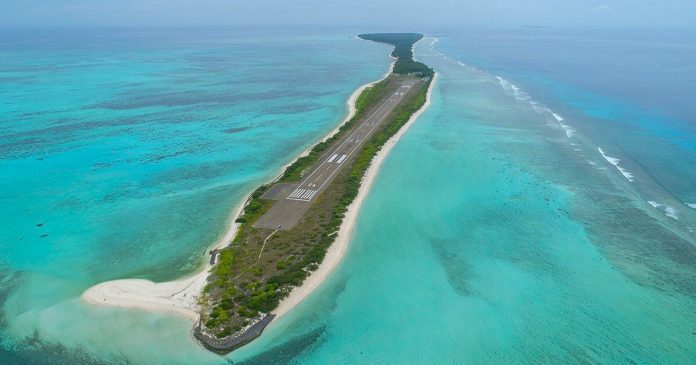
The “save Lakshadweep” social media campaign has gained tremendous popularity in recent days. The steps taken by the administrator and the Draft laws introduced in Lakshadweep have been criticized a lot. The group of 36 islands known as Lakshadweep is famed for its beautiful beaches, lush green terrain, as well as its biodiversity. In Malayalam and Sanskrit, the term “Lakshadweep” means “hundred thousand Islands”. It is India’s smallest union territory covering an area equal to 32 square km

An administrator appointed by the president acts as the head of a union territory. In the usual scenario, a retired civil service officer, particularly an IAS officer is appointed as an administrator in union territories but in the case of Lakshadweep, Praful K. Patel, a politician, has been appointed as an administrator. He is not only the administrator of Lakshadweep but also of Daman and Diu and Dadra and Nagar Haveli. Recently 4 draft regulations have been implemented in Lakshadweep they are:

  1. Lakshadweep Animal Preservation Regulation, 2021
  2. Lakshadweep Panchayat Regulation, 2021
  3. Lakshadweep Prevention of Anti-social Activities Regulation, 2021
  4. Lakshadweep development authority regulation, 2021

which gained a lot of momentum and is the reason for protest and agitation among the public. The residents are very much disappointed with the draft laws and claim that the provisions of the laws are against their basic rights. 

The research paper is extensively about all the draft regulations imposed in Lakshadweep and their analysis. The whole issue has been highlighted along the lines of the Indian constitution. The entire research is based on the draft laws, concerns of the residents, government arguments, precedent cases, judgment of the Supreme Court, etc. This article aims to present an overview of the current controversial issues aroused in Lakshadweep.

Lakshadweep animal preservation regulation, 2021

This regulation is promulgated by the president by exercising the powers conferred to him in Article 240 of the Indian Constitution. This regulation is brought for providing preservation to animals suitable for breeding, mulching, or agricultural purposes.

Section 5(1)

Prohibition against the slaughter of any animal without a certificate from the competent authority. It states that notwithstanding any other law in force, no person shall slaughter or cause to be slaughtered any animal unless he has obtained a certificate in writing from the competent authority and has been approved by the competent authority for such animal stating that the animal is fit for slaughter.

Section 5(2)

It restricts the issuance of a certificate in the case of a cow, a cow’s calf, whether male or female, and, if male, whether castrated or not, a bull or a bullock.

Section 5(3)

It states that even in the case of other animals to which sub-Section (2) does not apply, the authority may refuse to issue a certificate if in its opinion- the animal, whether male or female is useful or likely to be useful for the purpose or draught, or any type of agricultural practice, or the animal (male) is useful or likely to be useful for breeding, or, the animal (female) is useful or likely to be useful for mulching or bearing children.

Section 5(4)

It gives an exception for the slaughter of any animal or a religious day or bonafide religious purposes, but the animal should be above 15 years of age and other than cow, bull, bullock, or calf of a cow.

Section 6

It states that no slaughter should be carried in a place other than what is specified for the purpose. And Section 7 prohibits the transportation of specified animals for slaughter.

Section 8:

It bars a person from selling, keeping, storing, transporting, offering, buying beef or beef products in any form, whether directly or indirectly. And Section 10 imposes penalties for contravention of the above Sections.

Section 11

It specifies that despite anything contained in the Code of Criminal Procedure (CrPC), 1973, all offenses under this rule shall be cognizable, and non-bailable.

ISSUE 1: Does the beef ban violate the right to life and personal liberty?

ISSUE 2: Is a ban on cow slaughter against the right to religion and the spirit of secularism?

Critical analysis

The residents are arguing that the majority of the people living here consume beef and Lakshadweep has a major percentage of the Muslim population, thus such regulation is arbitrary and discriminatory. The order violates the Right to life and the right to privacy guaranteed under Article 21 of the Indian Constitution. 

It also violates the right to choose food or the right to choice covered under Article 21. It affects and infringes the ethnic culture, heritage, food habits of the islanders. The Lakshadweep Animal Preservation Regulation, 2021 violates Article 19 of the Indian constitution which states the freedom of trade and occupation as a fundamental right. 

It also violates Article 25 of the Indian constitution which ensures the right to profess, practice any religion, as it harms the religious sentiments of the Muslim community. Although there is a different side to this too.

This regulation i.e The Lakshadweep Animal Preservation Regulation, 2021, is brought under Part IV of the Indian constitution. Part IV states certain principles which are not binding as fundamental rights but acts like guidelines for the government. 

These are referred to as Directive Principles of State Policy (DPSP). And Article 48 states that- the state shall attempt to manage agriculture and animal husbandry on modern and scientific lines and shall, in particular, take steps to prevent the killing of cows, calves, and other milch and draught cattle.

This issue had been dealt with by the Supreme Court through various judgments. The Supreme court has emphasized in “Quareshi v. The State of Bihar AIR 1958 SC 731 : 1959 SCR 629., that in Article 48, the directive for taking steps for preventing the slaughter of certain specified categories of animals is quite explicit and positive. It is an aspect of organizing animal husbandry on modern and scientific lines. 

The court had opined that the directive in Article 48 contemplates protection only of cows and calves, and other animals, which though once milch or draught, cease to be so in course of time. Article 48 does not forbid the ban of the slaughter of all types of cattle or bulls or bullocks. The state is to prohibit the killing of milch and draught livestock only. 

The Supreme court has interpreted the scope of this Article in the Quareshi case as “ the protection recommended by this part of the DPSP is confined only to cows and calves and to those animals which are currently or capable of yielding milk or of doing work as draught cattle but does not, from the very nature of the purpose for which it is recommended, extend to cattle which at one time were milch or draught livestock but have ceased to be such”, thus prohibition on the killing of cow, bulls, and bullocks more than the age of 16 years i.e above the age of utility did not fall within the ambit of Article 48(Mirzapur Moti Kureshi Kasab Jamat v. State of Gujarat, AIR 1998 Guj 220).

There was a view that a total ban on the slaughter of cows, calves, buffalos, bull, bullocks of all ages is reasonable and completely valid and as per Article 48 of the Indian Constitution. Also in the case of other animals, their slaughter is reasonable as long as they are unfit for milch, draught, or agricultural purposes.

However, this reasoning of applying a test of usefulness in the case of other animals and not in the case of cows, calves, bulls, etc has been criticized by many people for being anti-secular and arbitrary. Gajendragadkar says that Article 48 has been recognized to some extent in a favor of Hindu sentiment regarding cows. Directive principles are enabling provisions i.e it depends upon the discretion of parliament, implementing them is not a mandate, so even the laws which allow such slaughter are not against the constitution i.e unconstitutional or invalid.

Indian secularism has been criticized by Gajendragadkar, he states that the test of secularism has been propounded in the context of distinguishing essentially religious practices from secular practices to restrict Article 25 of the Indian constitution. 

He gives an example of CJ. Das in cow slaughter case i.e Mohammad Hanif Quareshi v. the State of Bihar, MANU/SC/0027/1958, the court while dealing with a challenge against the prohibition of cow slaughter in Bihar, denied the relevance of the Fundamental right in such cases with the reasoning that Muslims have an option of sacrificing other animals and so it is not obligatory to sacrifice a cow only according to religious belief. Having an option counters the notion of having an obligatory duty. 

Thus, the test of essentiality transformed into the test of obligation and it was generalized from differentiating secularism from religious practices. According to him, this reasoning is absurd.

The justification for this test of essentiality has been given by a statement of Dr. Ambedkar during the Constituent Assembly Debates: ‘There is nothing extraordinary in saying that we ought to strive hereafter to limit the definition of religion in such a way that we do not extend it beyond beliefs and such rituals as may be connected with essentially religious ceremonies,  I do not see why religion should be given this vast, expansive jurisdiction as to cover the entirety of life and to prevent the legislature from encroaching upon that field. After all, what are we having this liberty for? 

We are having the liberty to reform our social system, which is so full of inequalities, discrimination, and other things which conflict with our fundamental rights. But in the cow slaughter case, the test to determine whether the practices were ‘essentially’ religious has been changed to ‘essential to the practice of religion’ and thus obligatory, although this significant difference has not been observed.

In my view, a total ban on cow slaughter and the beef ban is discriminatory for the sake of secularism and for the protection of the fundamental right to choose, right to privacy, right of choice of food, and right to religion. DPSP provides for proper management of animal husbandry, so these fundamental rights along with secularism should be balanced with the preservation and protection of animals taking into account the population of the cattle.

Lakshadweep Panchayat regulation, 2021

By exercising the powers conferred by Article 240(1) of the Indian constitution the “Lakshadweep Panchayat regulation, 2021” is brought.

Section 3(1), chapter 2 of this act confers power to the administrator to declare any local area comprising a village or a group of villages as a Panchayat area. The administrator can alter this area, include or exclude any area through the powers conferred to him by Section 6 of this act.

Section 14 of the act lists a few conditions that will lead to disqualification from the Panchayat election in Lakshadweep. One such condition is having more than two children i.e Section 14(n) of the aforementioned act. It mentions two exceptions that are- a person having more than two children on the date of commencement of the act will not be disqualified from contesting elections, so it means that the act has a prospective effect. Also if a kid or more than one kid is born to a person within one year of the commencement date and in a single delivery then he or she will not be barred under Section 14(n) of the Act.

ISSUE 1: Does bringing the two-child norm as a criterion for contesting the Panchayat election violate the right to equality and equal opportunity?

ISSUE 2: Is the two-child norm effective?

Critical analysis

Earlier, Ashwani Kumar Upadhyay, a politician, and lawyer had requested a regulation that would deny entry of people having more than two children into public services, and even they would not get access to subsidies and other government policies. The Ministry of health and family welfare refused to implement such a required law for the whole country. They clearly stated that they would not implement a two-child policy nationwide as the Family Welfare Programme is voluntary without any compulsion on the government.

India is a male-dominated country with families still having a preference for a male child. India is one of the countries having a poor sex ratio. As per Niti Aayog, the sex ratio in India is 900 females per 1000 males in the year 2015. This means that if families were disincentivized from having more than two children, they are more likely to abort or abandon a daughter in the hope of having a son, worsening India’s sex ratio. So such a law would instead have unintended impacts that are sex-selective practices, unsafe abortions, sex determination, female foeticide, etc.

An analysis of the government’s newly released health data showed that such laws are unnecessary, as in 19 out of 22 states and union territories for which data were released, on average women have fewer than two children. The Supreme court dismissed the public interest litigation (PIL) filed by Ashwani Kumar Upadhyay to bring the two-child policy by stating that it depends upon the discretion of the parliament, the court can not direct the parliament to make laws. Also, experts are of the opinion that India does not really need coercive family planning strategies or laws at this stage or point of time, as 25 Indian states already have fertility rates at either replacement level or near replacement level so there is no need for forceful family planning strategies. 

India’s total fertility rate has lowered from 3.4 children per woman, aged 15 to 49 years, in 1992- 1993 to 2.2 children in 2015- 2016 as per the data released from the National Family Health Survey 4 (NFHS 4). This is projected to fall to 1.93 by 2025 and to 1.8 by 2030 without any mandatory child policy or law, according to the health ministry report.

Fertility rates have fallen due to socio-economic factors, access to contraceptives, awareness about birth control, women empowerment, education, modernization, the popularity of the nuclear family concept, overall awareness about sexual health and health of mother and child, sex education, etc. So focusing on these factors and making proper policies for development will work more efficiently rather than bringing flawed legislation to control birth.

Another problem with this issue is that it is more likely that women will suffer more. Despite our constitution providing the right to equality as a fundamental right and various judgments of the Supreme Court have upheld its validity along the lines of gender equality, it is still lacking in a country like India. In Indian families, women still don’t have the autonomy to decide how many children she wants, it depends upon patriarchy, especially in rural areas. So such a policy would undermine women’s empowerment. For example- suppose a couple, in which the male is not a government employee and the female wants to be a government employee or either is a government employee, she may be forced to have more than two children for whatever reasons, one of them being want of a male child and other, for letting her not to do any work. 

Ultimately, it would be the female who will suffer by losing her job. Supreme Court in the case “Sucheta Srivastava vs Chandigarh Administration, added a new dimension of bodily integrity in Article 21 of the Indian Constitution. It was held that every woman has the freedom to make reproductive choices, that is- to decide whether to sustain a pregnancy or not, whether to engage in sexual activity or not and so on. Despite all these measures such atrocities with women are very prevalent in India.

After the 1991 census, several States prohibited those who had more than two children from holding any Panchayat post. Instead of better family planning, this had unintended consequences like men deserting or divorcing their wives if they become pregnant the third time, sex determination and abortions, and given the persisting preference for sons, families going in for repeated pregnancies. 

Laws that punish families for having a third child or force abortions of the third child will increase female foeticide and unsafe abortions. The on-ground reality and also the data show that for the first child, the sex ratio is not too bad but it is very bad for the second and the third child as families give preference to a male child.

According to Poonam Muttreja, director of the Population Foundation of India, the imposition of the two-child policy norm in Lakshadweep is flawed, as Lakshadweep has one of the lowest fertility rates in the entire country and also an aging population. Also, there is no evidence so far, no study or survey has been done that can confirm the efficiency of the two-child policy in the states which have implemented it till now, in fact, it will increase atrocities against women, which is still prevalent in India and would burden woman disproportionately

According to the statistics from the National Family Health Survey (NFHS), the total fertility rate (TFR) of India is falling from 3.4 in 1992 to 2.2 in 2015-16. So it is not evident that there is a population explosion in the country. It is very important to take note that states such as Kerala and Tamilnadu have significantly brought down the fertility rates without any two-child policy norm.

This has been achieved due to better education and health care facilities and also empowering women. Kerala has the highest female literacy rate also.

Also, if we analyze at ground level and for a moment forget all the negative impacts of the two-child policy then also even after the implementation of Lakshadweep Panchayat Regulation, 2021, it won’t affect the fertility rate as having more than two children only disqualifies a person from contesting elections and nothing else, it won’t be effective at all as in reality very limited people wants to contest the election at a various level so only they would be affected and nobody else, unfortunately, it won’t work because this disqualification would be limited for a few and not everyone.

Lakshadweep Prevention of Anti-social Activities Regulation, 2021

Section 3(1) of the regulation empowers the administrator to retain any person if he is satisfied, to prevent that person from acting in any manner which is prejudicial to the maintenance of public order.

Section 20 states that notwithstanding anything given in the Code of Criminal Procedure (CrPC), 1973, all offenses and violations of the orders made under this law shall be cognizable and non-bailable.

Section 8(1) states that the person detained should be communicated about the grounds on which the order of detention was made against him. He should be communicated and informed about the grounds of the detention as early as possible and this should not be delayed for more than 7 days from the date of detention.

Section 8(2) empowers the authority not to disclose facts about detention if in their opinion it is against the public interest.

Section 13 empowers the administrator or the appropriate authority to detain a person for one year from the date of detention.

Section 14 states that no detention order would be invalid merely on the basis that either the person or the place of detention is outside the territorial jurisdiction of the officer authorized to make such detention.

ISSUE 1: Is detaining a person for one year valid i.e constitutional?

ISSUE 2: Is there a requirement for preventive detention law in a place with the lowest crime rate?

Critical Analysis

This act is also known as the “Goonda Act”. Article 22 of the Indian constitution confers protection against arrest and detention. It states that no person should be detained without being told the reason for such arrest and shall not be denied the right to consult a lawyer.

Clause 2 of Article 22 specifies that the person so detained must be brought before the nearest magistrate within the limit 24 hours of his detention, disregarding the travel time. Clause 4 of Article 22 mandates that the detention of a person should not exceed the limit of 3 months.

Provided that such detention can be exceeded if there is a sufficient cause for exceeding it and it should be reported by the advisory board before the expiration of the period of three months. It also states that these clauses will not apply if the detention is made under the provisions of any law in force and which is passed by the parliament.

The Prevention of Anti-social Activities Regulation, 2021 in Lakshadweep is unconstitutional as it is violative of Article 22 of the Indian constitution. It gives power to the administrator to detain a person without public disclosure and legal trial for one year.

One year-long preventive detention is against the personal liberty of a person. Our constitution legalizes preventive detention for sufficient cause maximum up to the limit of three months it can be extended further but after submission of a report. But here in the case of Lakshadweep, once a person is detained he can be kept arrested for one year without following the procedure of submission of the report after 3 months. 

Also there are no such provisions in the regulation to present the detained person before the nearest magistrate within 24 hours of his arrest. The Lakshadweep Prevention of Anti-social Activities Regulation, 2021 mandates the ground for detention to be communicated to the person detained within 7 days from the date of detention. 

This is also against the personal liberty of a person so detained. So it is clear that the regulation does not align with the provisions of the Indian constitution. As the Prevention of Anti-social Activities Regulation, 2021 is not passed by the parliament, it is merely an executive order under Article 240 of the Indian constitution as Lakshadweep is a union territory. 

Thus it cannot even be protected under Article 22(4)(b) which states that the protection against detention as provided under Article 22 will not apply to such detention which is made under the law passed by the parliament.

The residents claim that there is a hidden intention besides framing this legislation which is to suppress the protest and agitation against the laws being implemented by giving immense power to the administrator to detain any individual violating his basic rights. 

Also, there is no sense in implementing such preventive detention rule in Lakshadweep as according to the crime report by the government Lakshadweep has the lowest crime rate in the entire country and heinous crime is very rare, the cases reported are usually of theft, mischief, trespass, etc, and till date, only 3 murder cases are reported. The data released by National Crime Records Bureau (NCRB) also suggest that the island has the least number of violent crimes in the entire country.

To the claim that what was the necessity of bringing such regulation, despite knowing the fact that Lakshadweep has the lowest crime rate, the government answered that the crime rates are low right now but there is no guarantee that it will remain low after developing the island as a tourist hub, so the law is important and thus being implemented beforehand keeping law and order in mind. 

Also, from a national security standpoint, the rule of law was critical, “ the government can’t take any chances on the law and order front because the island is on a major international shipping route,” says one official. Although this answer is vague and unsatisfactory.

In the case of “Hans Muller of Nuremberg versus Superintendent, Presidency jail, Calcutta and others”, the Supreme Court held that Article 21 of the Indian constitution guarantees protection of personal liberty to citizens as well as non-citizens, thus no one shall be denied of his liberty except according to the procedure provided by law and Article 22 lays out a minimum procedure that must be followed in any event of arrest or detention. 

A person must not be arrested or detained without being presented to the nearest magistrate within the limit of 24 hours, disregarding the time of travel. It was only contended in this case that the only authority which can frame laws regarding preventive detention is the central government or the parliament. Thus, it was decided that a law of preventive detention can be adopted by parliament exclusively under entry 9, list I, for reasons related to defense, foreign affairs, or the security of India. 

This is also violative of Article 14 which provides a fundamental right of equality before the law and equal protection from laws to every person. So a person cannot be denied from consulting a lawyer and also he should be allowed to be heard.

The Supreme Court of India ruled in “Rekha versus the state of Tamil Nadu”, which prevents detention is typically repulsive to democratic notions and odious to the rule of law. In the United Kingdom and the United States, there is no such legislation except during wartime. 

We cannot hold preventive detention illegal because it is allowed under Article 22 of the Indian constitution. However, we should keep the intensity of preventive detention within defined limits, or else we will be intruding on a person’s right to liberty guaranteed by Article 21 of the Indian constitution which was obtained after a long, arduous, and significant battle.

The law allows the police to hold anyone in custody even if there is a fear that he would commit an offense that will harm the public interest. 

According to the proposed law, a “cruel person” or a “dangerous person” can be detained on grounds that appear satisfactory to the Administrator’s authority. Several of the charges specified in the proposed law are bailable, including those that are non-cognizable and carry a sentence of fewer than three years, six months, or a fine. Protesters who gather for any social or political purpose are frequently charged with “unlawful assembly”. Thus the intention of bringing such regulation can easily be doubted.

Lakshadweep Development Authority Regulation, 2021

This legislation authorizes the administrator, the government, to establish Planning and Development Authorities to plan the development of any region classified as having “poor layout or outmoded development.” The authority would be a legal entity with a chairman selected by the government, a town planning officer, and two local government officials, as well as three government-nominated “experts.” 

These authorities are responsible for preparing land use maps, conducting type-of-land-use zonation, and identifying locations for proposed national highways, arterial roads, ring roads, major streets, railways, tramways, airports, theatres, and museums, among other things.

The regulation also provides that for zone changes, islanders must pay a processing fee. It means that local governments would have to pay fees to get clearance to change zones following the development plan, as well as costs to develop their land. It also establishes consequences for hindering the development plan’s activities or workers, such as jail.

People’s concerns

Real estate interest

People believe it was issued at the request of ‘real estate interests’ attempting to steal the islanders’ limited property holdings, with the majority of them (94.8 percent according to the 2011 census) belonging to the Scheduled Tribes (ST). Proposals to bring real estate development principles to the island, such as “transferable development rights,” have sparked fears of forced migration.

Forced relocation

It gives the administration the ability to make extensive development plans for any area and remove individuals against their choice. It allows for violent eviction, places the onus on the landowner to develop his property following the authority’s plan, and punishes non-compliance severely.

Danger to the culture

The islanders are a close-knit community with many families. The regulation will put an end to a way of life that they have followed for generations.

Concern to the environment

It is neither ecologically nor socially viable, and it was not drafted with the people’s representatives in mind.

ISSUE 1: Does Lakshadweep Development Authority Regulation violate a person’s right to protest?

ISSUE 2: Is taking away landholdings of islanders for developmental activities legal? Does this regulation infringe the property right? 

Critical Analysis

The government argues that This Regulation empowers the government and its Planning and Development authorities to remove those who are occupying land illegally. For the development of towns on the island, this law has been recommended. Its main purpose is to offer suitable provisions for the rehabilitation and relocation of those individuals and families who have been impacted by the land acquisition. Its goal is to turn this area into a “smart city” in the future. This rule would open the path for development and will go a long way toward raising the island’s social and environmental standards, which had been trailing behind other territories despite its potential.

However, the islanders fear that the government and its administrators may forcibly expel them shortly under the provisions of Lakshadweep Development Authority Regulation, 2021. This rule gives the government and its agencies arbitrary, broad, and unrestrained authority to interfere with islanders’ rights to acquire and maintain the property. It has been proposed with the primary goal of changing the island’s current land ownership and usage. By permitting the government to establish any redevelopment plans for any location, this legislation provides the government broad, arbitrary, and unregulated powers. Under this legislation, he can pick any territory as a “planning area” and relocate people.

After the government decides on the use of a piece of land, the owner has no authority over it from that point forward because it will be utilized for “public purposes” and will be acquired by the government. This rule came into effect to improve the provisions and techniques for developing townships, as well as purchasing, altering, and transferring land owned by the Lakshadweep people. 

The government has been given the power of land acquisition, which is broad, arbitrary, and unrestrained, without consultation with citizens. No developmental plan may be questioned by anybody, including judicial proceedings, according to this Regulation.

This is a clear-cut violation of a person’s right to possess and retain his property as guaranteed by Article 300A of the Indian Constitution. Also, Lakshadweep is a scheduled tribal (ST) territory, which the government is dedicated to safeguarding.

The Constitution (Forty-Fourth Amendment) Act of 1978 made the right to property no longer a fundamental right, but it remained a human right 2 in a welfare state and a constitutional right under Article 300 A of the Constitution. 

Article 300 A states that no one’s property can be taken away from them unless they have legal authorization to do so. The State cannot take a citizen’s property unless it follows the legal procedure. Though not clearly stated in Article 300 A, the need to pay compensation can be inferred from it.

In the case N. Padmamma S. Ramakrishna Reddy (2008) 15 SCC 517, it was held that the property right is both a human and a constitutional right, the court decided that it can only be taken away in compliance with the law. Such a right is protected by Article 300A of the Constitution. 

Keeping in mind the provisions of Article 300A of the Indian Constitution, the provisions of the Act intending to divest such privilege must be strictly read. In “Fomento Resorts and Hotels v. Minguel Martins, (2009) 3 SCC 571”, the court held that, if the state transfers public trust properties to a private entity, the court can apply the public trust doctrine and take affirmative action to defend the right.

Also, Lakshadweep Development Authority Regulation, 2021 was brought during the lockdown and thus the inability of the residents to mobilize or protest against this arbitrary legislation was very well exploited. This regulation also establishes penalties and imprisonment for obstructing the workers or work for developmental activities. This also indirectly violates the right to protest, if done peacefully. Protesting is a fundamental aspect of democracy, and this is a well-established fact that can not be denied, it has also been laid down in various cases. “Freedom of speech and expression,” as defined in Article 19(1)(a) of the Indian constitution, is a basic right granted to citizens against the state, which includes peaceful public demonstrations.

On appeal, the Supreme Court concluded that there was no regulation under which essential rights provided under Article 19(1)(a) may be abridged in the case of “Bijoe Emmanuel v. the State of Kerala, (1986)3 SCC 615. Article 19(a) rights can only be controlled by legislation and on grounds specified in the Constitution, not by presidential orders.

In “Romesh Thappar v. the State of Madras, (AIR 1950 SC 124), the court stated that restricting an individual’s rights under Article 19(1)(a) is unconstitutional until it does not jeopardize the state’s security.

“Right to Protest vs. Public Convenience”, The Supreme Court ruled on October 7, 2020, that “it is critical to acknowledge that a democratic democracy includes the right to protest and express opposition.” Public spaces, on the other hand, cannot be occupied indefinitely

Thus, the Supreme Court through its various judgments recognized that the right to protest is an important fundamental right and an essential part of democracy, so until it is peacefully demonstrated, it can never be curtailed.

Article 48A of the Indian constitution states that the state will work to maintain and improve the environment, as well as the country’s forests and wildlife.

There is also a threat of biodiversity loss through this regulation. The development plans are neither socially viable nor ecologically sustainable and might harm the rich biodiversity of Lakshadweep to a large extent. Lakshadweep has a rich diversity of seaweeds, seagrasses, mangroves, corals, marine fishes, Mollusca, sponges, etc. tuna, sharks, marine turtles, dolphins, whales, birds, etc that are economically and ecologically important fauna found in Lakshadweep. 

The Lakshadweep archipelago is a typical marine system in which delineation of some environmentally sensitive and fragile areas is difficult due to people’s reliance on the resource. As a result, more revisions to the act are required for sensitive places such as coral islands, where fishing is the primary occupation. The proper conservation, propagation, and development of vulnerable ecosystems is a top priority. However, the need for resources for survival must also be taken into account.

In the case “M.C. Mehta v. Union of India, JT 2002 (3) SC 527”, The court emphasized the relevance of key environmental protection requirements. Article 48 A further ensures that the state will take appropriate measures to protect and safeguard the country’s wildlife. The court also held that Articles 39(e), 47, and 48a, individually and jointly, impose an obligation on the state to safeguard and improve people’s health, as well as to protect and improve the environment.

The Supreme court has formulated three principles: the precautionary principle, the polluter pays principle, and the idea of public trust in the case of “M.C. Mehta v. Kamal Nath, 1997 1 SCC 388”. The apex court also held that the natural resources, such as forests, water bodies, and seashores, have long been held by the state as a trustee on behalf of the people, particularly future generations. 

These are common properties, and everyone has the right to utilize them without interruption. If the state transfers public trust properties to a private entity, the court can apply the public trust doctrine and take affirmative action to defend the right.

The government is of the view of converting Lakshadweep into the mini Maldives, but this plan is completely flawed as the Maldives is very different from Lakshadweep. Maldives’ population density is half that of the Lakshadweep. Within their atolls, the Maldives has a plethora of isolated and uninhabited islands that are ideal for tourists. 

Furthermore, despite high-end tourism, the Maldives’ tourist approach does not return income to local people; instead, multinational commercial interests reap the benefits. Climate change is the most pressing ecological issue confronting the Lakshadweep at the moment. If this trend continues, the habitability of the planet will be called into question in the next decades. The atoll island protects the island within by being formed from broken coral and other biologically generated material from the reef. 

The island’s highest point is 2-3 meters above sea level, making it vulnerable to storms and waves. The islands, however, are relatively safe as long as the atoll structure is intact. The structure is a living, self-repairing system that relies on the continuous activity of developing coral. Development activities, pollution, and other factors will disrupt this framework, causing ocean warming. 

As a result, such developments and regulations constitute a threat to Lakshadweep’s biodiversity and even to the existence of the islands. People in Lakshadweep have been living pretty much within the confines of the islands’ ecological integrity, thus disrupting it would be unjust.

Conclusion

All the Draft regulations imposed in Lakshadweep give tremendous power to the administrator. There is a good chance that the regulations would be misused, this will destroy the culture and the way of life of the people living in Lakshadweep. 

This is neither ecologically sustainable nor socially variable, and also the representatives of the people were not consulted before drafting the regulations, thus the concerns of the residents are genuine. This can be said as a recent burning example of the complete failure of democracy.

Bringing development in an area is not wrong, but the cultural diversity, concerns of the people, environment, necessity, the livelihood of the residents, biodiversity, etc should be taken care of. Development cannot be brought about by harming the cultural identity of people and keeping the rich biodiversity of the island at risk. Currently, Lakshadweep coexists with nature, fully cognizant of its reliance on maritime and environment

The environmental condition may alter dramatically because of the commercial exploitation in the name of development. The government should recognize the need to manage resources along with safeguarding the environment i.e sustainable development. Also, basic rights which the constitution of India guarantees should not be infringed in any manner, either directly or indirectly. We are all affected by environmental circumstances.

Necessities include clean water, food, air, and shelter. We must first have access to those basic needs to live the life that development offers. If we pursue development at the expense of the environment, we will soon find ourselves in a situation where our basic requirements are not supplied. In some places of the world, this is already happening. This is why sustainable development is critical; it ensures that development plans consider all factors, including the environment and human rights.


LawSikho has created a telegram group for exchanging legal knowledge, referrals, and various opportunities. You can click on this link and join:

https://t.me/joinchat/J_0YrBa4IBSHdpuTfQO_sA

Follow us on Instagram and subscribe to our YouTube channel for more amazing legal content. 

Download Now

Effects of opting the wrong jurisdiction on a matter : a study based on problems and solutions via judicial pronouncements

0

This article is written by Siddharth Tripathi, from Symbiosis law school, Hyderabad.

Introduction

It is the established and intrinsic part of the law that if any statute confers jurisdiction upon the court of law, any suit before such court has to be decided within the limits of authority and not beyond it. Such a limit of the court’s authority is the jurisdiction of that court. Jurisdiction is defined as judicial authority granted to the court of law in order to adjudicate legal disputes within the authorized area of responsibility. The rationale of jurisdiction is to decide the competency of the court of adjudication in relation to geographical, territorial, pecuniary, and other related aspects of a particular suit. Whenever the suit is instituted before the court of law the first stage before starting proceedings is to scrutinize whether such a court is competent to decide the suit before it or not. If the court has the necessary jurisdiction which is required in order to successfully adjudicate upon the matter, then such court has the power to adjudicate and subsequently decide the issue. However, if the court of law lacks necessary jurisdiction, then such a court is barred from deciding such a suit.

“It is the natural as well as legal right to institute the civil suit in order to claim damages for the loss caused by the act of the defendant.” This right is based on the nation of nature as well as classical law which guides out that where it is right, there is also an effective remedy to cure if any wrong is caused. However, after the institution of the suit, there can be instances that such a suit cannot be tried by the court due to lack of proper  jurisdiction.  The court with lack of jurisdiction cannot try the suit anymore. Such a suit if passed by it is a nullity and that its invalidity can be challenged on the doctrine “coram non-judice.”. Such a decree so passed, has to be set aside and appeal is to be allowed by the court of law. 

The article seeks to analyze the effect of opting for the wrong jurisdiction on the matter, with further elucidation on the function of both the above-mentioned provisions and the conditions when they are applied. The research paper will further analyse problems and solutions of opting for the wrong jurisdiction mainly by analysing statutory provisions along with various judicial pronouncements.

Kinds of jurisdiction

Territorial Jurisdiction

The territorial or local jurisdiction guides out the geographical limits within which the authority of courts is specified. Therefore, a court cannot exercise its power beyond the specified territorial or geographical limit. For example, if a certain cause of caution arose in Uttar Pradesh, only the courts within the territorial or geographical limits of Uttar Pradesh can hear and adjudicate that particular cause of action. 

Pecuniary Jurisdiction

Pecuniary means “related to money or capital”. Pecuniary jurisdiction analyzes and addresses the authority of the court concerning its competence to adjudicate the case of particular monetary value. It guides out whether the court of law can try suits concerning the particular monetary value in question. For ex-“If the pecuniary jurisdiction of the lowest grade court is Rs.10000 and the court ascertains that monetary damage is 15000, the court is not deprived of its jurisdiction to pass a decree for that amount.”This is mainly because the main objective of pecuniary jurisdiction is to prevent the Higher Court from getting itself burdened  with suits whose monetary value falls under the range of their adjudication  

In the case of Karan Singh v. Chaman paswan, the plaintiff filed the suit for recovery of damages of Rs. 2950 in the subordinate court on being illegally deprived of the leased property, but the court dismissed the suit.  Afterward, on appeal to the district court, the Order of the subordinate court was upheld.  However, on the second appeal to the High  Court, it reversed the judgment of subordinate courts and held the defendant liable to provide Rs. 9980 as damages to the plaintiff.  The appellant contested that the Order passed by the district court is null and void, due to its incompetency in light of the limit for pecuniary jurisdiction, but the High  Court dismissed the claim. Later the Supreme Court upheld the decision of the High Court and held that the Order of district court is not void.

Subject matter Jurisdiction

This jurisdiction defines the court competency and its authority to adjudicate the cases of a particular type of subject matter. It means that certain courts are barred from adjudicating the cases of certain subject matter.  For example- “District consumer forums established under consumer protection act, 1986 have jurisdiction only to adjudicate and decide upon the matters pertaining to consumer related cases.” It cannot try criminal cases. In the case of P.Dasa Muni Reddy v. P. Appa Rao The Supreme Court held that the mere institution of a suit before the rent controller by mistake would not confer jurisdiction on him where the subject matter was outside the realm of rent control legislation, and the civil court has the jurisdiction to try that particular suit.  It was held that subject matter jurisdiction is the most important and non-curable out of other kinds of jurisdiction and if judicial decision lacks subject matter decision, such adjudication would be treated as non-est and void in law.

Original and appellate Jurisdiction

“Original jurisdiction refers to the court authority to take cognizance and adjudicate the suits which can be decided in that court at the first instance itself.” “Whereas, Appellate jurisdiction refers to the authority of the court to review and adjudicate the cases that are already heard and decided by the subordinate courts.” In India, both the High  Court and Supreme Court have appellate jurisdiction and can review again the decided suits brought in the form of appeals.

In the case of Kiran Singh & Ors. v. Chaman Paswan & Ors., “The apex court held judgment passed by the court lacking jurisdiction is a nullity and invalid and that, its validity can be challenged at any time during the course of execution or even at collateral proceedings.”A defect pertaining to lack of jurisdiction in relation to territorial, pecuniary, or subject matter of the action strikes at the very competence of the court which lacks authority to pass any decree. However, such defect cannot be validated with the consent of parties to the suit.” 

Therefore, It can be mentioned that territorial jurisdiction guides out the geographical limits, and Pecuniary jurisdiction decides the competence of the court to adjudicate the case of particular monetary value. The subject matter jurisdiction is the court’s authority to adjudicate the cases concerning a special type of subject matter Original jurisdiction is the first instance jurisdiction of any court in which cases are heard afresh. Appellate jurisdiction is invoked when suits already decided are again heard. 

Effects on the bar of jurisdiction of civil court

There is no issue when an express bar of jurisdiction as enumerated under Section 9 of CPC,1908 is concerned. However, problems arose when there was an implied bar by some other statutory provisions..“In the case of Dhulabhai v. State of MP, the five-judge bench had expressly dealt out with this issue and held that jurisdiction of civil court must be excluded when any statutory provision gives finality to the Order of special tribunal and such tribunal has acted within the principle judicial procedure.”However, if it is shown that the tribunal had not acted in conformity in relation to special powers accorded to it, then the civil court has the discretionary power to adjudicate again on the same suit. 

“In the case of Ramesh Gobind Ram v. SHM Waqf, The pertinent issue to decide is whether the civil court has the power to adjudicate on the suit, which can also be tried by the tribunal under a special law.” The court held that in such a scenario Order of preference must first be given to the civil court and then to the tribunal empowered to adjudicate the same suit under a special law. On the same parlance, in the case of Rajasthan SRTC v. Bal Mukund Bairwa, The court held that even if there is an express bar on civil court authority to decide the issue, such court can exercise its discretionary power and decide the matter if it found that tribunal has adjudicated upon the matter without adhering to fair judicial procedure and has acted beyond its competence It can be inferred that ouster of civil court jurisdiction should not be presumed at the very outset and reasonable interpretation as to the effectiveness of Orders adjudicated by statutory authority or any other tribunal should be conducted. 

It can be inferred that when an express bar of jurisdiction as enumerated under Section 9 of CPC,1908 is concerned there is no problem in relation to jurisdiction. However, problems arose when there was an implied bar by some other statutory provisions. In this regard, the five-judge bench had expressly dealt out and held that jurisdiction of the civil court must be excluded when any statutory provision gives finality to the Order of special tribunal and such tribunal has acted within the principle judicial procedure. Also, exclusion of civil court jurisdiction must be effectuated only under special circumstances.

Lack of jurisdiction and inherent lack of jurisdiction

Lack of jurisdiction means when the suit is out of the ambit of a court authority by the virtue of any reason which renders such suit out of the jurisdiction of the court. In the case of Hira Lal Patni V. Kali Nath, It was held that the validity of any decree can be challenged on the grounds of lack of jurisdiction during any stage of the proceedings. This is mainly because the subject matter of the suit was wholly foreign to its jurisdiction. It can be inferred that judgment decided by the court of law lacking jurisdiction is void and its validity can be challenged whenever such defect is discovered. However, Lack of jurisdiction pertaining to pecuniary or territorial jurisdiction cannot be said to be an inherent lack of jurisdiction.

It is to be noted that a defect in pecuniary or territorial jurisdiction does not vitiate the decree and regard it as a nullity. If the court adjudicates on the suit lacking pecuniary or territorial jurisdiction, such decision of the court cannot be regarded as nullity at first instance. As per Section 21 CPC if objection on pecuniary or territorial jurisdiction is not raised at the earliest possible opportunity and such decree does not result in failure of justice to any of the parties to suit then lack of such jurisdiction will not turn the decree as a nullity. “In the case of Ittyavira Mathai v. Varkey and ors., the issue before the apex court is whether the decree passed by the court which has jurisdiction over the subject matter and parties to suit is nullity if such suit was time-barred for which decree is passed.” The apex court opined affirmatively and held that such degree cannot be termed as nullity but at the Highest can be termed as an illegal decree. 

On the same parlance, inherent lack of jurisdiction is when subject matter to be decided is wholly outside the jurisdiction of the court of law to render such decision, if passed, as a nullity. This jurisdiction defect is of the Highest degree and liable to be set aside at any stage of proceedings. In such a case the appellate court would interfere with the decree passed and will set aside it as such decree is Coram non-judice and void. 

It can be inferred that the judiciary has mentioned in its various judgments regarding repercussions on suits under lack and inherent lack of jurisdiction. In the former case which is mostly related to a defect in territorial or pecuniary jurisdiction, the decision of the court does not vitiate the decree and regard it as a nullity. However, in the latter case, which is mostly related to defect in subject matter jurisdiction and decree passed in such case is compulsorily nullity and void ab initio. 

Lack of jurisdiction- return or transfer

According to Order VII Rule 10 of Civil Procedure Code,1908 when there is a defect in jurisdiction so that continuation of proceedings of such suit is not possible, such suit can be returned to the court of competent jurisdiction at any stage when such defect comes into consideration. On the same parlance, Section 24(5) of CPC. 1908 empowers the High  Court and district court to transfer the suit which lacks jurisdiction at any stage of proceedings. 

Effects when the suit is returned on lack of jurisdiction-  

When the suit is returned under Order VII Rule 10 of CPC, 1908 for the defect in the jurisdiction, such suit cannot be continued and it should be filed as a fresh suit in the court of competent jurisdiction. This means that at whatever stage the suit might be if during any such course defect in the jurisdiction is established such suit has been returned to the court of competent jurisdiction and it should be started as a de novo trial, that is from the beginning. In the case of ONGC Ltd. v. Modern Construction & Company The apex court held that when the suit is transferred from the court having lack of jurisdiction, to the court of competent jurisdiction, such a suit cannot be considered to be in continuation and it should commence from the beginning. The court also held that the plaintiff can exclude the period before the previous court under Section 14 of the limitation act and is also entitled to an adjustment in the court fees paid.

Before this case, The Supreme Court gave a contrasting opinion in Joginder Tuli v. S.L Bhatia, in which amendment in the plaint increased the cost of suit, and hence pecuniary jurisdiction was lost. The High  Court on the revision of the plaintiff affirmed that the suit must be continued from where it stood transfer under Order VII Rule 10 and there is no need for a de-novo trial. The Supreme Court affirmed the decision of the High  Court on the ground that evidence in the suit has already been presented and the suit is past the stage of presentation. 

Further, the apex court in the case of Oriental insurance company v. Tejparas Associates and Exports Pvt. Ltd., relied on Joginder Tuli v. SL Bhatia, and interpreted rules 10A and 10B which were added in Civil Procedure Code,1976 vide amendment act 1976. Rule 10A empowers the court of the first instance to decide the date at which both parties should appear before the court in which suit is transferred under Order VII Rule 10 of CPC,1908. It held that since the date for appearance before a court of competent jurisdiction is itself decided by the court which transfers the suit, it cannot be termed as a new filling of the suit and there is a continuation of the suit. 

However, the apex court in the case of M/S. Exl Careers and Anr. v. Frankfinn Aviation Services Pvt. Ltd., reversed the judgment of Oriental Insurance co. v. Tejparas Associated and exports Pvt.Ltd and Joginder Tuli v. S.L Bhatia. Regarding the former, the court held that Rule 10A was inserted so that after transferring suit to the court of competent jurisdiction and deciding the date of hearing in advance, the necessity of serving summons on the defendant can be obviated.  This means that Rule 10A is not related to the court of the first instance and in such a case suit has to commence de novo. In the latter case, the apex court struck down its ratio decidendi affirmatively and held that the instant case has not referred to any precedents on the subject and hence overlooked judicial procedure.

The Amendment Act of 1976 also added clause (5) to Section 24 of the Civil Procedure Code,1908. According to this Section, the suit may be transferred from the court which has no jurisdiction to the court of competent jurisdiction to try such a suit. The High  Court and district court are empowered under the Section to transfer the case from the court lacking jurisdiction before any subordinate court which is competent in terms of its jurisdiction to try that particular suit. Under this Section, the High  Court is also empowered to take Suo moto cognizance and withdraw any case from subordinate court and adjudicate upon it. In the same parlance, it can also transfer such a suit that may be pending, at the stage of appeal or any proceeding to the court of competent jurisdiction. However, this Section does not grant power to the High Court to transfer the suit which lacks jurisdiction from the court of one state to the court of another state.

The Delhi High Court in the case of Pushpa Kapal v. Shiv Kumar, guide out the necessity of incorporating Section 24(5) in the Civil Procedure Code, 1908. In this case, the trial court order to return the plaint to the court of competent jurisdiction under Order VII rule 10, due to lack of pecuniary jurisdiction. Under it, plaint has to be started de novo but parties to the suit contended that since evidence had already been presented, plaint must be transferred under Section 24(5) of CPC and it should begin from the stage it stood at the time of transfer. The Court upheld the application filed under Section 24(5), read with Section 151 of CPC,1908. The Court noted the pertinent reason for the enactment of Section 24(5) is to secure justice and obviate any harassment to the parties of the suit.  Similarly, in the case of Aviat Chemicals v. Magna Laboratory, the plaintiff lost the pecuniary Jurisdiction and permanent injunction was enforced against the defendant. There was a risk that such an Order of injunction would be rendered invalid on the pretext of lack of jurisdiction and such could defeat the purpose of the suit. The court in this matter held that the purpose of the suit is to render out substantial justice and decide the suit expeditiously. It opined that a de novo trial will only frustrate the justice more if such a suit that has passed a certain stage and has been pending for years would be rendered invalid. 

Rule VII Order 10 guides out the return of suit to the court of competent jurisdiction and such suit must be started de-novo ie. From the beginning. In the same parlance, the suit can also be transferred by either district court or High  Court to the court of competent Jurisdiction under Section 24(5) CPC and in such case, it has to be analyzed whether the trial should be started de novo keeping in view the adherence to the law of procedure, equity and justice. If there is the possibility that such return of suit would breach the justice and cause prejudice to the parties on the pretext that such suit has made significant progress,` it has to be transferred under Section 24(5) CPC and should begin from the stage at which it stood transfer from the court of the first instance. 

Conclusion

After the foregoing discussion, it can be concluded that change or alteration in jurisdiction occurs due to inevitable reasons. Section 9 of the Civil Procedure Code guides out that the court shall have the jurisdiction to try the particular case unless expressly or impliedly barred. In this context, it is concluded that if the court lacks jurisdiction pertaining to “subject matter”, then the suit is nullity and void as such suit is regarded as coram non-judice. In the same parlance, if there is a lack of jurisdiction pertaining to pecuniary or territorial limits, then such suit is not void at first instance and the court has to satisfy then such decision does not obviate the fair judicial mechanism. However, objections in such cases must be made at the earliest point in time. In the former case, a trial has to be commenced de-novo, in the latter, it could have avoided that but not necessarily.

Similarly, when the suit lacks jurisdiction there can be either return or transfer of suit. “In the first instance, the suit is returned to the court of competent jurisdiction under Order VII Rule 10, whereas in the latter case it is transferred by the district court or Supreme Court Under Section 24(5) CPC.” On perusal of Section 24(5). This is a beneficial provision on this front, it can be concluded that cases pending in the court of incompetent jurisdiction for a long time or cases past important stages of proceedings are transferred to prevent any miscarriage of justice and encourage expeditious disposal of cases. This is how the main distinction between Order VII Rule 10 and Section 24(5) CPC can be sought. 

It can be concluded that the absence of jurisdiction strikes the normal exercise of court authority to adjudicate the suit. Whereas want of jurisdiction may render the decree and Order passed therein as a nullity. In the same parlance, if there is the error of fact or law in the exercise of jurisdiction by the court of law which enjoys inherent jurisdiction to try the particular suit, such decree or Order passed will not vitiate the legality and validity of proceedings and it can only be set aside as per the procedure of law.


Students of Lawsikho courses regularly produce writing assignments and work on practical exercises as a part of their coursework and develop themselves in real-life practical skills.

LawSikho has created a telegram group for exchanging legal knowledge, referrals, and various opportunities. You can click on this link and join:

Follow us on Instagram and subscribe to our YouTube channel for more amazing legal content.

Download Now

The tussle between Zomato and CCI

0

This article has been written by Pushkaraj Ghorpade pursuing the Certificate Course in Competition Law, Practice And Enforcement from LawSikho.

 Introduction

The Zomato-UberEats deal in the year 2020 raised significant questions pertaining to Anti-Competitive Law in the Indian Regime. The deal comes within the ambit of Combination and needs to be ideally scrutinized under the Competition Act, 2002. However, it escaped the scrutiny by way of availing the “de minimis’ threshold exception. Through this article, the author has made an attempt to bring forward several important aspects of the deal that are related to the scope of anti-competitive practices under the Indian Law, the issues between Zomato and CCI, the stand taken by CCI, and the way forward for the non-notifiable transactions.

The Indian Competition Act, 2002, deals with anti-competitive practices in India. The Zomato-UberEats deal attracts the application of Section 5(a). By virtue of this section, the deal should have been ideally scrutinized by CCI, however, by way of using “de minimis” threshold exemption, the deal very conveniently escaped the scrutiny by CCI under the Act. Under the Competition Act, 2002, Section 29 governs the “procedure” for investigation of such Combinations and combinations can be regulated provided they cause an AAEC (Appreciable Adverse Effect) in the market or lead to any abuse in the dominant position in the market.

Horizontal agreements, by virtue of Section 3(3) of the Competition Act, 2002, are under a presumption that there exists an AAEC, which is not so the case with Vertical Agreements. Thereby, the horizontal agreements are under strict rules and regulations.

The Act also provides for Regulation of Combinations, which prescribes that all the transactions that qualify as a “Combination” need to be notified to the CCI and further it is provided that any Combination shall not be given effect until it has been approved by the Commission or until 210 days have already passed from the date of such notification to the CCI or whichever date is earlier.

The Central Government has the power to put certain transactions under the cap of exemptions from such scrutiny and regulation under the provisions of the Act. Such exemptions have been listed by the CCI under Schedule I of the Combination Regulations, 2011 and also mentioned in Section 54 of the Act, 2002.

The thresholds have been incorporated in the merger regime of India in order to prevent an over-controlling merger regime in India. This prevents the merger regime from becoming extremely tedious and tiring. The idea of scrutinizing the Combinations limits itself to only such transactions which carry in itself the potential to cause adverse effects on the market. But the thresholds have been put to several criticisms in the past as well. One major reason for such criticism has been the difference in the quantification of the assets and the annual turnover of various and diverse industries. The Zomato-Uber deal, in particular, paved the way for initiating dialogue as to under what circumstances such non-notifiable transactions can be brought under the scrutiny of CCI for ensuring there are no Anti-Competitive practices in the country depriving them of fair competition and fair prices.

Major issues between Zomato and CCI

The major issue revolves around the question of non-notifiability of the merger between Zomato-Uber Eats on the grounds that it fell within the ambit of exemption and it needed no notification under Section 5 or 6 of the Act. A clear-cut observation shows that in actuality the Zomato-Uber deal was non-notifiable and satisfied the de minimis exemption threshold.

Zomato’s arguments

In its Draft Red Herring prospectus, Zomato has claimed that CCI by its letter in February 2020, has affirmed that the deal between Zomato-UberEats was non-notifiable and did not require the mandatory notification under the provisions of the Competition Act, 2002. Further, it is highlighted by the prospectus that a show cause notice was issued by the CCI in December 2020 to review the deal, which raised many questions on the powers of CCI to review a combination that at the onset did not qualify according to the requisite threshold.

CCI’s arguments

CCI in its show-cause notice to Zomato has asked for an explanation regarding non-notification. Further, CCI has alleged that the Zomato-Uber Eats merger has significantly violated Section 43A of the Act which deals with mergers that are not filed by the Combination Party before the CCI even though they have crossed the de minimis threshold limit. CCI has also placed its reliance on the Draft Bill of 2020, which is yet to be approved, in order to scrutinize a non-notifiable transaction. This bill consists of several provisions that directly address the issues pertaining to the Zomato-UberEats deal. Furthermore, under Section 31 of the Act, the CCI has the power to determine whether such a combination will have any adverse effect in the market and it is only the commission’s power in determining if there is an adverse effect on the market or not.

Gun-jumping and legal analysis

On the onset, it is clear that, by virtue of probing the deal under Section 43-A, there are major allegations of “Gun-jumping” which have been put forth by the CCI. Gun -Jumping, simply refers to a situation whereby the parties execute a combination without seeking mandatory approval under the Act. This calls for a penalty.

In SCM Solitifert Ltd. And Anr. v. CCI the Supreme Court outlined the legislative intent behind Gun-Jumping saying that under Section 6 of the Competition Act, it is mandatory for every combination to notify the CCI before entering into one. The intention is to ensure that such a combination shall not have “Appreciable Adverse Effect” on the market and it was held by the court that in case any combination resorts to seeking such approval after the combination has been executed, it would defeat the whole purpose of prohibiting Gun-Jumping.

However, the exceptions or the exemptions paint a different picture. By virtue of Section 6, only such combinations can be brought within the scrutiny or require mandatory notification, which has the potential to adversely affect the competition.

Heavy reliance has been placed on the Draft Bill for regulating the Zomato deal, which in fact has yet to be approved by the Parliament. Hence in doing so, CCI has definitely jumped off the fence of jurisdiction and exercised powers beyond the virtue of the Act.

How can CCI’s interference be justified in the Zomato-Ubereats deal?

Since the deal falls within the exemption threshold and passed the test of “non-notifiability”, only on the grounds of wide powers as a potential under the Draft Bill 2020 cannot suffice in exercising the powers beyond the existing Act of 2002.

However, there is a provision under the 2002 Act, which in itself provides wide powers of review and scrutiny. Under Section 20(1) of the Act, and its proviso, the CCI has been conferred with wide powers of review after one year from such a combination if it comes to the knowledge of CCI that such a combination has caused or can cause adverse effect on the competition in the market. Herein, the CCI, Suo moto can investigate the combination and its effect.

It sets out a contrasting provision to the principle of “non-notifiability” in case the combination does not meet the threshold limit set from time to time through various regulations and notifications.

The intention behind this section is straight up to keep a check on such transactions which carry in them the potential to become anti-competitive and hamper the market and free competition. Taking the argument in its true spirits that CCI might have jumped up the jurisdiction and there is a lot of bureaucratic burden with respect to CCI taking up certain combinations within its scrutiny even when they do not meet the threshold. Still, the true legislative intent was to promote free competition in the market without giving free way to any anti-competitive practices.

Changing paradigm of mergers across the globe

The world contours with respect to the Mergers or Combinations that have been changing and no country is far behind the changing patterns. Across the globe, there has been an attempt to challenge the competition authorities to lay down certain legislations which would allow the scrutinization of even those transactions which are off the thresholds. Under US law, Sherman Antitrust Act, 1890 condemns any such merger or combination or contract or a conspiracy that can disrupt the market or lead to monopolization etc. But this act is also vague and too much dependent on the judicial interpretation. In North Securities Co V.  United States the court held that any merger or combination between such firms which fall under direct competition with each other shall be treated as one responsible for “restraint in trade” and would be considered to be in violation of the Sherman Act. Through various developments, there was an enactment of Hart-Scott-Rodino Antitrust Improvements Act, 1975 which laid down an important reform making it mandatory for the parties entering into a merger or any combination to first notify it to the U.S Justice Department and Federal Trade Commission(FTC) before completing such transactions. This can lead to an implication that even when the transactions fall within the non-notifiable category, they can be called for antitrust investigation under US Law.  Similarly in the European Union, there has been a development of a mandatory notification system based on the threshold limit. The European Commission has the power to review such a transaction if it is observed under the UK antitrust regime that it is notifiable under the national competition law of at least 3 member states.

When the changing paradigm is read in the context of Indian law, it can be conveniently laid down that there is lack of any legislation pertaining to the non-notifiable transactions. However, such transactions have not completely hoodwinked the CCI. As per the Competition law Review Committee Report, 2019, CCI has extensively discussed the digital markets and scope of such transactions in the ever-evolving market whereby the companies have a low turnover or less threshold to easily escape the CCIs scrutiny to ensure a fair and competitive market. This report has made several suggestions one of which involves, DVT i.e. Deal Value Thresholds. As per which the Draft Bill of 2020 has been drafted, thereby allowing wide powers to the Central Government in consultation with the CCI to prescribe such thresholds or criteria other than the ones mentioned under Section 5. This means that any transaction can be made to be a combination for the purpose of scrutiny under the law. However, the truth remains that, the CCI without the approved law does not have the power to access the non-notifiable combinations by exercising such residuary powers under the Act.

Conclusion

While a Free market is essential to the growth of the economy, fair competition is equally important. Such fairness needs to ensure that enterprises do not resort to power play and hold the competition of the market all towards themselves. It is also clear that such nascent mergers and combinations find a way to dodge the CCI scrutiny only due to reasons that the anti-competitive laws are not enough to deal with them. It is the need of the hour that as per changing times the legislation adopts the changing laws and for that, the Draft Bill of 2020 which broadens the scope of including non-notifiable transactions must be implemented on a priority basis. Further, it is highly appreciated that provisions like DVT have already made their way in the draft bill and need to get some teeth through implementation. The issue of Zomato-Ubereats was a revolutionary and eye-opening one to understand how loopholes can give way to anti-competitive practices and allows the enterprises to escape the radar of institutions like CCI. With the world advancing towards fair practices by allowing the non-notifiable transactions to also be reviewed, it is pertinent for India to adopt such a law so that it maintains the dignity of the Competition Act, aimed at promoting fair competition and curbing anti-competitive practices.


Students of Lawsikho courses regularly produce writing assignments and work on practical exercises as a part of their coursework and develop themselves in real-life practical skills.

LawSikho has created a telegram group for exchanging legal knowledge, referrals, and various opportunities. You can click on this link and join:

Follow us on Instagram and subscribe to our YouTube channel for more amazing legal content.


Download Now

Prevalence of judicial bias in India

0
Judicial

This article is written by Ridhi Mittal, a student of Symbiosis Law School Noida. It talks about the existing types of judicial bias in India and the need to remove them.

Introduction

‘Bias’ simply means favouring one thing over the other. Be it with things or amongst living beings, bias is always present. ‘Bias’ and ‘discrimination’ are two words that might mean the same to a layman but when studied, they are two distinct terms having similar meanings. Discrimination is differentiating a particular caste, class, religion, gender, or race. It excludes a particular person or a whole society from others, depriving them of opportunities, resources, etc. For instance, discrimination on the basis of gender could be seen at workplaces; a man and a woman performing the same kind of work getting different salaries due to differences in gender. Biasness, on the other hand, means favouritism to one over others on the basis of race, colour, gender, class, or religion. There lies structural inequalities across almost all groups and societies of India. Even though the State tries to reduce these inequalities and biases, it can still be witnessed in the three wings of democracy i.e. legislature, executive, and judiciary. 

Meaning of bias in a judicial sense

‘Bias’ for a layman means inclination towards a person or a group which can be seen as unfair. It refers to favourable treatment for one towards the another. If we use the term ‘bias’ in the judicial sense, it would mean the judge passing an unfair verdict in favour of one party, due to him being friends with the party. It could also mean ‘being way too harsh for a particular advocate and soft for another during a hearing due to differences in gender of the two advocates’. Not only gender bias, class bias, and religious bias are also seen in the courts and our judicial system. Biasness can be seen in different ways like supporting one attorney over another, assignment of cases to judges on personal grounds for appointment of judges, etc. It is a said rule that a judge cannot preside over a case where he has some personal interest in it. Being biased in judicial terms can also be witnessed where a judge is so determined on bringing forth a particular outcome that all arguments and evidence made to the contrary are neglected by the judge. One such case where judicial bias can be seen is the Sahara Birla Paper case, wherein it was seen that the Supreme Court of India gave a biased decision in favor of the government. The petition filed by the NGO, in this case, included allegations against the government. The Court dismissed the petition and aborted the complete issue by declaring the lack of evidence to constitute the offence in question. The Court, rather than asking the petitioner to avail remedies, went on adjudicating the matter by declaring the diary entries inadmissible. Biasness, in this case, can be seen through the judge’s action of ignoring the evidence as he declared the diary inadmissible and gave a verdict without considering the evidence.

Gender bias in courts 

When we talk about being biased on the basis of gender, it does not mean favouring particularly one gender over the other. Rather, it varies from situation to situation. Sometimes, the decisions are biased towards a female and sometimes, towards a male. To quote Andrea Miller, “many judges are not able to factor out their personal beliefs while they are considering court cases, even when they have the best possible intentions.” What she meant to say is that many judges end up being biased in cases due to their preconceived notions. We all know that the minimum age for being appointed as a judge is 21 years on paper. However, in reality, the average age at which judges are being appointed is between 30-40 years, as they first have to complete their education and then also have prior experience in law before being appointed as a judge. In these many years, there have been various changes in social norms and values and also in the living style of people. Therefore, there exists a difference in thought processes between a party to the case and the judge of that case. Gender bias can also be seen in situations where a judge is appointed after going through a very tough phase of his/her life and if he sees another in the same phase, he may become sympathetic towards that person and tend to make a biased decision in his favour. It is not just the court hearings where gender bias is seen in judicial terms; it can also be witnessed in the appointment process. In cases of child custody, females are preferably given custody, even if both mother and father have similar qualifications, work profiles, and earn the same amount. This is on account of the fact that several judges believe that a child will have a better upbringing with a mother rather than a father, thereby creating a situation of gender bias. The case of Km. Kranti v. Uttarakhand Sahkari Chini Mills Sanghi LTD (2011) is a good example of gender bias.

Class bias

Class bias basically refers to a favourable treatment given to one over others, on the basis of class differences. There exist various classes in a society- the higher class or the elite class, the middle class and the working class, and the poor class. A clear example of class bias is the choice of lawyers. Whenever a worker/labourer files a case against the employer of the company, he, belonging to a poor class, has almost no budget to afford a lawyer, but on the other hand, the employer belonging to an elite class hires a top-class lawyer, thereby showing how differences in owning resources lead to class bias. One such scenario can be seen in the Indian thriller flick, ‘Badla’. In this movie, one can see how the protagonist (Naina Sethi) being a rich and famous person hires a prestigious defence lawyer who charges a hefty fee but moulds the case in her favour. Even where the working class is clearly the victim and the protagonist is the guilty one, her resources make the case in her favour (shown during the discussion between Naina Sethi and her lawyer Badal Gupta).

The handling of the cases of Bandhua Mokti morcha v. Union of India and Ors, (1983) (the poor migrants case) and  ‘Suo Motu Writ Petition (CIVIL) No(s).6/2020’ (people to travel back to India from abroad) by the Supreme Court depicts the case of class bias. These two orders somewhere contradict each other, showcasing how even the Apex Court of the country indulges in-class bias. The case involving the poor class was dismissed at the very beginning whereas a special sitting was done for the latter. This example not just depicts the class difference between poor and rich but also how the court has complete faith in the face value of the government. 

Although, contrary to the scenarios of biases in the judicial system of India, a study was conducted by a United States organisation on the district courts of India. This study concluded by saying that the district courts in India were free from gender or religious bias. The verdicts passed by the judges and the practice of law by the legal attorneys were completely fair and in bonafide faith. Such surveys win back the trust of the common people as the judiciary is their last resort and protector of their rights.

Religious bias

Shakespeare, in his novel ‘The Merchant of Venice, Act IV Scene I, gave the example of religious bias. The case in the court was between a Christian and a Jew, taking place in a Christian court. The subject matter of the hearing was regarding a contract between the 2 parties where the Christian(Antonio) was unable to complete the contract, causing the Jew (Shylock) to demand compensation as per the terms of the contract. It was a clear case of awarding damages but being a Christian judge, it could not tolerate a Jew winning over a Christian and therefore, the facts and statements were moulded in such a way that the case went against the Jew and he was denied any relief. Also, in this case, the presiding Judge (Portis) was actually a friend to the Christian, which meant that she had personal reasons to make a biased decision in the favor of the Christian. Such cases of religious bias are frequently witnessed in India too. Religious bias can also be seen when there is a religious dispute between 2 parties and one of the parties has the same religion as that of the presiding judge of the case. When the laws and values are questioned, the judge might take upon himself due to his same religion and thus give a biased verdict. The case of the Ayodhya dispute (2019) is one of the hottest topics when it comes to religion in the judiciary. The religious aspect has led to the criticism of this case and if seen from the point of view of people in support of Babri Masjid, there was a religious bias towards the verdict of this case. Though the author does not question the validity of the judgment of the Hon’ble Supreme Court but makes an attempt to highlight that religion is such an issue where the losing party will often be dissatisfied with the verdict and consider it to be a bias.

Assignment of cases to judges – another matter of bias

A proper procedure is followed for case assignment to judges. When there is a single judge in the courtroom, the case is assigned to him but when there are multiple judges, a rule-based process is followed to assign the case to a judge. Each type of case and police station are assigned to different courtrooms and are referred there only. For example, at a given police station, every murder charge will go to the same courtroom; a larceny charge might go to a different courtroom, as might a murder charge be reported at a different police station. The judges within a specific court keep rotating from one courtroom to another. In the case of M/s Chetak Construction Ltd. v. Om Prakash & Ors. (1998), the court ruled against a litigant trying to select a favourable judge. Then came the lottery system for the assignment of cases to the judges which made it completely impossible to have a favourable judge. 

Such measures are taken in order to avoid any kind of bias by the judge. Judges are supposed to carry out their judicial duties without any fear or favour; ill will or malice. If they become biased or partial, people’s faith in getting justice will be completely lost. If the judges get the liberty to choose the case over which they can preside, there will be a lot of corruption and biased decisions as the judge would tend to make the decision in favour of the party he has some gains with. The parties have the liberty to file the case at their choice of the police station in some situations, and it is fixed where a particular type of case goes and from which police station. If, for instance, there is a case filed against one of the family members of a judge and he himself presides over that case, it is unlikely that the judge, having a personal interest in the matter, would pass a fair judgment. Therefore, in order to eliminate this bias, the judges do not get to decide the case over which they preside, which is appropriate in the context of principles of natural justice.

Need for judicial fairness in the country

The faith that people have in the judicial system is depicted whenever one person makes a statement against another saying, “I will see you in court”. For this faith of the citizens of India, or of any country for that matter, there is a need for the judicial system to be fair and just. Judiciary is an independent body that is not answerable to anyone for its decisions provided it rules in the favor of what is right. If there is a misuse of judicial power in any manner, that would be unfair to its citizens. The judges and lawyers are provided with such salaries along with all the benefits and allowances for the sole reason of avoiding corruption and being true to the case. A well-functioning and fair judicial system is one that works for the welfare and betterment of its public and takes decisions in a fair manner. A verdict when delivered is not limited to that case only but can be implied to all similar situations arising in the future, therefore, one wrong or partial or biased decision can lead to a number of wrong decisions. The need for judicial fairness is felt to protect and safeguard the rights of the citizens, to avoid any kind of discrimination, and to treat everyone equally, without favouring or ill-treating any individual. The independence of the judiciary is important for giving a fair and just decision; any pressure from higher authorities or a powerful person could render the decision biased. 

Conclusion

Biasness is something that is not theoretically promoted by the judiciary. The predisposition of a judge, legal attorney, or anyone dealing with judicial matters, against or in favour of one of the parties is judicial bias. Judicial bias can be seen in decision-making, appointments, or remarks made. These biased decisions are taken in terms of gender, religion, class, etc. A judicial decision should be free from all forms of bias in order to be fair and just in the real sense. Maintaining a just and fair judicial system is difficult but not impossible, and every country should take all measures to ensure that its judicial system is free from all kinds of unfair practices and malicious intentions. 

References


Students of Lawsikho courses regularly produce writing assignments and work on practical exercises as a part of their coursework and develop themselves in real-life practical skills.

LawSikho has created a telegram group for exchanging legal knowledge, referrals, and various opportunities. You can click on this link and join:

Follow us on Instagram and subscribe to our YouTube channel for more amazing legal content.

Download Now

Dewan Housing Finance Corporation Ltd. v. SEBI : case analysis

0
Image source: https://bit.ly/3oLtMIz

This article is written by Amarpal Singh, a student at School of Law, UPES Dehradun.

Introduction

According to Section 14 of the Insolvency and Bankruptcy Code, 2016 (hereinafter “IBC”), the National Company Law Tribunal (hereinafter “NCLT”) on the insolvency commencement date by order shall be required to declare a moratorium prohibiting the institution of suits or continuation of pending suits or proceedings against the corporate body, including the execution of any judgement or order in any court of law, tribunal, arbitral panel, or other authority. 

This issue gained prominence in the case of Dewan Housing Finance Corporation Limited (hereinafter “DHFL”) v. SEBI, wherein the issue for consideration before the Securities Appellate Tribunal (hereinafter “SAT”), constituted of whether the SEBI can initiate or continue the proceeding for violation of securities laws against the corporate debtor. This article aims to provide an analysis of the case through an exploration of the question concerning.

Facts

The Reserve Bank of India (hereinafter “RBI”) suspended the board of directors of DHFL under Section 45 IE of the Reserve Bank of India Act, 1934 and appointed an administrator to manage the affairs of the company. Subsequently, RBI also filed an application under rule 5(a)(1) of Insolvency and Bankruptcy (Insolvency and liquidation proceedings of financial service and Application to Adjudication) Rules, 2019 before the NCLT to initiate a corporate resolution insolvency process (hereinafter “CIRP”) against the DHFL.

The application was admitted, and the moratorium was ordered under Section 14 of IBC. After the commencement of CIRP, the adjudicating officer of SEBI issued a show-cause notice (hereinafter “SCN”) to DHFL under rule 4 of Securities Exchange Board of India (Procedure for Holding Inquiry and Imposing Penalties by Adjudication officer) Rules, 1995 to show cause why penalty should not be imposed for the non-compliance of provisions of regulation 16 of Securities Exchange Board of India (Issue of Listing of Debenture Securities) Regulations, 2008 (hereinafter “Listing Regulations”) read with rule 18(7)(b)(ii) and rule 18(7)(c) of Companies (Share and Capital) Rules, 2014 (hereinafter “Share and Capital Rules”) and regulation 52(1) read with regulation 52(4) of Securities and Exchange Board of India (Listing Obligations and Disclosure Requirements) Regulations, 2015 (hereinafter “LODR Regulations”).

SEBI in the SCN alleged that DHFL had failed to create requisite debenture redemption reserve and failed to invest 15% of the amount of non-convertible debentures under Listing Regulations that were maturing on 31st March 2020. DHFL had also failed to submit the audited financial and line items as prescribed by LODR Regulations.

In the reply to the SCN filed by DHFL, it was stated that since the company is undergoing CIRP in view of Section 14 of IBC, no proceedings can be instituted or continued against the company in the currency period of moratorium. Pending consideration, the adjudicating officer of SEBI, imposed a penalty of INR 20 lakhs on DHFL and held that Section 14 of IBC does not prevent such adjudicating officers from determining the liability of the corporate debtor. The moratorium merely prohibits recovery/ enforcement proceedings but the proceeding in the instant matter was concerned with determining the liability of the corporate debtor for non-compliance with securities regulation and securities law. Subsequently, an appeal was filed by DHFL before the SAT against the order of the adjudicating officer of SEBI.

Issue 

Whether SEBI has jurisdiction to initiate proceedings against the company when a moratorium is imposed under Section 14 of IBC?

Judgement

The order passed by the SEBI adjudicating officer referred to the observation made by the Insolvency Law Committee Report, 2018 that a proceeding initiated to determine or assess the liability is different from recovering the assessed or determined liability. The moratorium imposed on a proceeding to determine liability may not have been the intent of IBC. The SAT held that the adjudicating officer should not have referred to the Insolvency Committee Report, 2018 since external aids for interpretation should only be considered in situations of ambiguity.  

It was further held that once the moratorium is imposed under Section 14 of IBC, the adjudicating officer will not have jurisdiction to institute proceedings. Therefore, the order of the SEBI adjudicating officer, proceedings of recovery under Section 28A upon failure to pay and SCN are quashed, as proceedings cannot be instituted after the moratorium is imposed under Section 14 of IBC.

Analysis 

Courts do not have the jurisdiction to interpret the provision using external aids when there is no ambiguity in the provision

In the case of Sri Jeyaram Educational Trust & Ors v. A.G Syed Mohideen & Ors., the Supreme Court of India held that it is a settled principle that the provision of a statute must be read as it is, in a plain, natural, and straight manner, without omission and substitution of words. The provision of a statute should be assigned and ascribed their natural and ordinary meaning. When reading in such a manner leads to absurdity, vagueness, and ambiguity, only then should courts open their interpretation tool kits which contain settled rules of interpretation and principles to decipher the true meaning of the provision. In the present case, the SEBI adjudicating officer had referred to the Insolvency Committee Law Report, 2018 to interpret Section 14 of the IBC, although Section 14 is patently clear that no proceedings can be continued or instituted against the Corporate Debtor once the moratorium is imposed.

Evidentiary value of Parliamentary Committee Reports

The issue of whether the courts can place reliance on Parliamentary Standing Committee Reports (hereinafter “PSCR”) was dealt by the Indian Supreme Court in the case of Kalpana Mehta v. Union of India, wherein it was held that courts may rely on PSCR as an external aid for interpretation of statutory provisions, in the event that such provisions are shrouded in ambiguity. The PSCR acts as a guide to understand the historical background of law or the nature of the problem which the statute had sought to cure and only has a persuasive value while resolving the ambiguity in the statutory provision.

Further, it was held that although the PSCR is admissible as evidence, the court is not bound by any findings or factual observation in the court. The court also agreed with the conclusions of two earlier cases, namely R.S. Nayak v. A.R. Antulay and State of Mysore v. R.V. Bidap wherein it was clarified that the conclusions of PSCR are not decisive. The courts are free to arrive at a different conclusion. Thus, the Insolvency Committee Report, 2018 which was referred to by the SEBI adjudicating officer has only persuasive value.

Section 14 of IBC prevails over Section 28A of the SEBI Act

The NCLT in the cases of Bohar Singh Dhillon v. Rohit Sehgal & Ors. and Anuj Agarwal v. Bombay Stock Exchange & Ors., held that Section 28 A of SEBI Act is inconsistent with Section 14 of the IBC by virtue of Section 238 of IBC which states that provision of the IBC will override if there is any inconsistency between IBC and any other law for the time being in force or any instrument which has effect under any such law. Therefore, SEBI cannot recover any penalty from the Corporate Debtor during the moratorium period.

Proceedings instituted after imposition of moratorium under Section 14 of IBC are non-est in law


In the case of Alchemist Asset Reconstruction Limited v. Hotel Gaudavan Pvt. Ltd., an arbitrator was appointed who entered upon reference and issued notice to the parties, despite the order of moratorium under Section 14 of IBC. The Supreme Court, while setting aside the order of the district judge for appointment of arbitrator held that arbitration instituted after the imposition is non-est in law. 

Also, in the case of M/s. Innoventive Industries Ltd. v. ICICI Bank, the Supreme Court had held that any proceedings under any law cannot be instituted against the corporate debtor once moratorium under Section 14 of IBC is imposed.

Thus, the proceedings instituted by the adjudicating officer of SEBI after the imposition of the moratorium were non-est in law.

Conclusion

It can be concluded from the above analysis that SAT rightly held that SEBI cannot initiate proceeding against the company after the moratorium is imposed under Section 14 of IBC. This decision of SAT will help to preserve the assets of corporate debtors and allow the available resources to be utilized effectively for the completion of CIRP.

References

  • Bharat Vasani & Varun Kannan, Evidentiary value of Parliament Reports, corporate.cyrilamarchandmangaldasblogs.com (March 9, 2021)

https://corporate.cyrilamarchandblogs.com/2021/03/evidentiary-value-of-parliamentary-committee-reports/.

  • SAT bars SEBI from initiating proceedings after moratorium declared under IBC, (Oct. 9, 2021)

http://finseclawforum.com/2020/sat-bars-sebi-initiating-proceedings-moratorium-declared-ibc/.

  • SEBI’s Penalty of Rs. 20 lakhs on DHFL Quashed by SAT, Legal Era, (Oct 19th, 2020) 

https://www.legaleraonline.com/from-the-courts/sebis-penalty-of-rs20-lakhs-on-dhfl-quashed-by-sat-668717?infinitescroll=1.


LawSikho has created a telegram group for exchanging legal knowledge, referrals, and various opportunities. You can click on this link and join:

Follow us on Instagram and subscribe to our YouTube channel for more amazing legal content.

Download Now

Need for economically feasible forest restoration

0
Image source - https://bit.ly/3lX4I37

This article is written by Sakshi Khulve.


What we are doing to the forests of the world is a mirror reflection of what we are doing to ourselves and to one another.                                      

– Mahatma Gandhi.

Introduction

In the present era of industrialization and development, a huge price has been paid by the entire world in the form of forest degradation. Our dependence on forest is much more than has been assessed so far. We are dependent on forests for food, fodder, timber, oxygen, carbon sequestration, medicine, cosmetics and so on. The need for fossil fuels has led to the high carbon content in the atmosphere and trees are the only source that purifies the air naturally. Forest also provides home to eighty percent of the terrestrial species which includes birds, wildlife, varieties of plants and also the tribal people living in the forest. Preservation of forests requires targeted efforts which include sustainable management and conservation of forests. This attempt to foster ecological growth and efficient land use has been well incorporated in Goal fifteen of Sustainable Development Goals. 

Globally thirty-one percent of land area is dominated by forests. One-third of which comprises primary forest, which means regeneration of forest occurs naturally without human involvement. It is also important to note that half of the world’s forest is based in only five countries which include Russia, USA, Brazil, China and Canada. Currently, the forests all over the world are still degrading though the rate of degradation has lowered in the past decade as the countries are realizing the importance of forest and through various programs and policies are contributing to the safekeeping of the forest.  Activities such as mining, agriculture, building, grazing and so on have led to forests being lost. The natural process of regeneration will take a lot of time therefore this paper focuses on restorations methods which are feasible for the restoration of the forests.

India on forest protection and regeneration

As per the India State of Forest Report, 2019, the total forest cover is 24.56 % of the land cover of the country which in numbers is 80.73 million hectares. There has been an increase of 5188 sq. km of forest and tree cover since the last assessment report.  In terms of area Madhya Pradesh has the largest forest cover in the country and in terms of percentage of geographical area State of Mizoram has 85.41% of forest cover.

The Constitution and major forest laws

By virtue of Article 246 of the Constitution of India, there is a division of power between the union and the state on the basis of subject matter and the 42nd Amendment Act of 1976 has transferred forests under the Concurrent List. When the framers of the Constitution made the 42nd Amendment, the Amendment also gave rise to two very important provisions firstly Article 48A which were the directive principles of state policy to protect the environment and safeguard the forest and the other is to add a fundamental duty of every citizen in the form of Article 51Ak(g), which is also talking in context of protection of environment and safety of forests and wildlife.

Even though the subject of forest falls within a concurrent list the state has a limited control over forest. As per Section 2 of the Forest Conservation Act the state is required to get prior permission of the centre in respect of de reservation of forest or forest use for non-forest purposes, life tea plantation, spices and so on. The state cannot grant lease to a private person, organisation not controlled or owned by the government. Section 3A is a penalty provision for the purpose of contravention of Section 2. The punishment in case of contravention is simple imprisonment which may extend to fifteen days. However, an amendment was made to this Act in 1992 which allowed forest use for non-forest purposes like mining, setting up of power plants, drilling and so on. These activities can cause adverse effects on forests which thereby can degrade the environment. However to conduct such activities the prior consent of the centre is required.

National Forest Policy, 1988 is yet another effort of the government to ensure ecological balance.  all life forms are sustained.  The policy is aimed towards restoration of disturbed forest, conservation of natural heritage, increased forest cover and to promote afforestation. The policy not only favours production of forests but also efficient utilization of forest resources. The policy strives towards maintaining one third of the total land of the country as forest cover and in hilly areas two third to be kept as forest area so as to avoid soil erosion, landslide, land degradation and so on. 

Indian Forest Act 1927: the Act classifies the forest into three categories namely reserved forests, protected forests and Village Forests. Chapter  II of the act deals with reserved forest where the act grants permission to the state to constitute any wasteland or forest land which the government holds into reserve forest (Section 3). The Act has also in the form of Section 26 listed what acts are prohibited in reserved forest which includes setting  fire, trespassing, cutting timber, breaking land for cultivation, mining, hunting, shooting, contravention of Elephants Preservation Act, 1879, etc. shall be punishable with six months imprisonment and fine along with the sum of damage caused. Chapter III deals with village forests wherein a village community may be assigned rights of government or over any land which was constituted as a reserved forest or cancel such assignment. The state can make rules of management of such forest and the laws that apply to reserved forest will also be applied to village forest. Chapter IV deals with protected forest where any waste land or forest land owned by the government but does not fall under the category of reserved forest is called protected forest. The state exercises the power to reserve trees and make rules for forest protocol. Any person who acts in contravention of provisions of Section 30 shall be punished with imprisonment of six months or fine which may extend to five hundred rupees or both. Provisions have also been made with respect to imposing duty on timber and other forest produce and the government can also collect the drift and stranded timber. This includes timber that has not been registered. Although, the Indian Forest Act, 1927 was a good step towards efficient land use, the intentions of the government do not reflect the concern of forest loss, it reflects more about the economic aspect of forest? The policy has focused more on use of the natural resources forest provides which mainly includes wood. So, the protection of forest does not appear as the paramount consideration of the government. The obvious outcome of this policy was collecting revenue from people involved in forest use. 

Forest Restoration Models 

It is very clear industrial development is necessary for socio-economic but if such growth is achieved by hazard and recklessness resulting in loss of life and creation of ecological imbalance, there may ultimately be no real economic growth and prosperity. Therefore the need is to strike the right balance which can be brought through sustainable management. 

  • When we talk about restoration we mainly focus on how to bring back the natural process of how the forest cycle works. We have to look into how a primary forest evolves, the track of the water and how it reaches the soil and further to the plants. So the first step towards a restoration model can be the diagnosis of the area where we want reforestation to take place and find out why a certain forest has degraded or ceased to exist. The answers may range from a variety of factors that may include infrastructure, mining, forest fires, water scarcity, and overcutting of trees. Also a diagnosis of what kind of trees can survive in a particular area. Once we are aware of the right seed and right approach the forest can be restored and it will be economically also feasible as the expense will be done on the right choice. A large amount is spent and wasted on trees or plants that are not suitable for a particular area, a diagnosis prior to planting will prove economically effective. Also assessment for forest needs to be done that does not fall under the category of reserved, village or protected forests. To increase the forest cover other than the government recorded forests the forests owned by private bodies must also be included in definition of forest as elucidated in Godavarman case. The term forest must include as is defined in a dictionary irrespective of ownership. The government needs to identify places which are forest irrespective of whether they are notified or not.
  • A lot of people are dependent on forests for a living. Timber is one of the biggest reasons for cutting down trees. There are certain materials that forest provides which have no substitutes therefore the government has to give clearance for certain forests. For the lost forest the compensation is decided by the ministry of environment and forest. CAMPA (Compensatory Afforestation Fund Management and Planning Authority) is an initiative wherein activities involve compensating for forest diverted to non-forest uses. The funds received by the state from user agencies can be used for forest conservation and protection. Using this scheme to get funds for restoring forests will make this scheme economically viable for forest restoration. The main task of CAMPA is to work towards regeneration of natural forests. It was formed by the orders of the Supreme Court to evaluate compensatory afforestation activities.
  • The Green India Mission launched in the year 2014 also aims towards afforestation activities and restoring diminishing forests. One of the goals of this mission is adoption of improved fuel wood and alternative energy. Now most part of our country is still dependent on wood fire for cooking as in many parts of the country till date the facility of cylinders or gas stoves has not reached. This demands the cutting down of trees. The mission can aim on growing trees like eucalyptus which is one of the economically feasible trees. It can be grown almost anywhere and does not require much water use. The water intake by the tree is 785litres/kg of total biomass which is comparatively very low. What makes it economically viable is the wood availability and is contributing as raw material for pulp, plywood, fuelwood which ensures good returns to the farmers.
  • In case of the Indian Council for Enviro-Legal Action held that the financial costs of preventing or remedying damage caused by pollution should lie with the undertakings which cause the pollution by adopting the “Polluter Pays Principle”.

Conclusion

The Right to Pollution Free Environment was declared to be a part of Right to Life under Article 21 of the Constitution of India in the case of Subhash Kumar vs. State of Bihar and Ors. It must be kept in mind that the permanent assets of mankind are not to be exhausted in one generation. The natural resources should be used with requisite attention and environment must not be affected in any serious way. The need of the hour is the practice of sustainable development. The forest of the country has suffered hugely due to activities which are mainly man-made which involves mining, cutting trees, agricultural purposes, overgrazing and so on. The penalties for contravention of provisions of the Forest Conservation Act need to be made more stringent. Environment-related matters need to be addressed more seriously by the authorities and people. We have to create a balance and harmony between development and the environment to ensure a better future. 


LawSikho has created a telegram group for exchanging legal knowledge, referrals, and various opportunities. You can click on this link and join:

Follow us on Instagram and subscribe to our YouTube channel for more amazing legal content.

Download Now

YouTube cannot be held directly liable for infringing the copyright of a creator

0
Image Source: https://bit.ly/3qvrZsU

This article is written by Bhumika Jain, pursuing a Diploma in Intellectual Property, Media, and Entertainment Laws from LawSikho.

Introduction

Have you come across instances of copyrighted work being infringed on YouTube? You surely have. Ever wondered, what liabilities do these infringers pose, and would YouTube be dragged along for such infringement committed by its users?

With the increase in the usage of the internet, the number of cases of online copyright infringement has been on the rise more than ever. The infringement that takes place in the “virtual” world has widespread consequences and monitoring it is quite a task. To understand it better, have a look at the statistics around the globe to understand the amount of content being uploaded to YouTube every single minute, every single day! 

Approximately 500 hours of videos are uploaded “every minute”, that is 720,000 hours of video uploaded “every day” to YouTube. Name a category of content you wish to see – YouTube has it all. With more than 2 billion monthly active users worldwide, India has the most active monthly YouTube users that are approximately 225 million.

Today, intermediaries such as YouTube play a vital role in our lives and have become an important source of revenue for many. While using YouTube one has to abide by its terms of policies, nevertheless we do come across instances of it being violated by its users.   

So, a highly debated issue around the globe is, what is the extent of liability these intermediaries possess, when its user engages in any unlawful activity such as copyright infringement via their platform and what are the ways to balance the interest of these intermediaries, the owners of copyright and that of the public at large. 

So before diving deep into our topic and understanding the liabilities and immunities these intermediaries possess when infringement takes place via their platform by its users, let us understand the basics first.  

Ownership and infringement under Copyright Act 

The Copyright Act, 1957 (Act) provides an “exclusive right”, upon the owner over their copyrighted work. One does not need a formal registration to acquire copyright. Copyright in a work will automatically subsist as soon as the work comes into existence, provided it’s original. To begin with, let us first understand what is the subject matter of copyright, what are the rights that exist in such work, and who is the owner of such a work.

Section 13 of the Act tells us Works in which copyright subsists i.e., original literary, dramatic, musical, artistic works, cinematographic film, and sound recording. 

For example, instances such as movies, songs, web series, documentaries, blog posts, books, lyrics, choreography, stage plays, music composition, photographs, paintings, drawings, computer programs, etc will all constitute copyright in it.      

Copyright is not a single right but a bundle of rights that are “exclusive” to the owner. The owner can either themself or authorize others to do certain acts concerning the Work. Section 14 of the Act specifies various rights concerning the work. To name a few, such rights are communicating the work to the public, reproducing the work, issuing copies of the work, storing it in any medium by electronic means, adaptation, translation, etc. 

Lastly let us understand who is the owner of the copyrighted work, who has been bestowed with such a plethora of rights.

Section 2 (d) of The Act, describes the author of such work as;

  • In the cases of literary, dramatic work – it is the person who creates the work.
  • In the case of musical work – it is the composer.
  • In the case of artistic work (other than a photograph) -it is the artist.
  • In the case of the photograph -it is the photographer.
  • In the case of cinematographic film and sound recording -it is the producer. 

In most instances, the authors are the “first owner” of the work, this is subject to an exception that is when Section 17 of the Act applies. That is, if the work is commissioned by someone or if it is created in the course of employment, etc. in which instances, unless some contrary understanding is agreed between the parties, the person so commissioning, or employer becomes the first owner of the work. 

To conclude, in most of the instances, the authors are the owners too, with certain exceptions. 

Now that we are clear with the law and we know all the rights that exist in a copyrighted work, which vest “exclusively” with the owner, let us dive deeper into our discussion.  

What constitutes copyright infringement and liability around it?

In simple words, a person not being the owner of the copyrighted work, if they use such work, without obtaining the requisite permission/ licenses from the copyright owner, constitutes an infringement. That is to say, unauthorized use of someone’s copyrighted work is called an infringement. 

Section 51 of the Act specifies when copyright is infringed, Section 51 (a) (i) and(ii) deals with primary/direct and secondary liability respectively.

So, when any person without a license or in contravention of the condition of the license: 

  1. Does anything, the exclusive right to do which is conferred upon the owner, or
  2. Permits for profit any place to be used for communication of the work to the public, unless he was not aware or had no reasonable ground for believing that such communication to the public would be an infringement of copyright.   

They can be held liable for infringement under Section 51 of the Act. 

So, when we come across instances where intermediaries such as YouTube, we find its users upload songs/movies/web series or any such Work (as mentioned above) without authorization/ licenses from the owner, in all such instances the person commits an act of infringement. For example, say a content creator uses copyrighted music in his video, without taking approvals/licenses from the owner, then he has committed an act of infringement. 

Also, the Act does provide some instances wherein certain acts are held not to constitute an infringement. There is a provision such as de-minimis usage (which means the law does not concern itself with trifles). However, these are subject to the facts and circumstances of each case and the same needs to be established in the court of law.    

The legal remedy that the copyright owner possesses against such infringers, is that he/she can institute a civil/criminal proceeding, as provided under the Act. Civil remedies include injunction, damages, or accounts of profit. Criminal remedies include imprisonment of the accused or imposition of a fine or both. 

Let us now discuss what would be the liabilities of the intermediaries, when an infringement is committed by its users/subscribers through their platforms.

What is an intermediary?

The term intermediary is not defined under the Copyright Act, 1957, however, a reference can be made to Section 2 (w) of the Information Technology Act 2000 (IT Act).

Intermediary concerning any particular electronic records, means any person who on behalf of another person receives, stores or transmits that record or provides any service concerning that record. The definition provided under the IT Act is very wide and covers a diverse set of service providers such as ISP, search engines, web hosting services providers, online payment sites, online marketplace etc. 

These intermediaries such as YouTube are subjected to various conditions which they ought to follow, to invoke the “safe harbour provision”.  

The safe harbour provision

“Safe harbour provision” is a well-recognized concept and prevalent around the globe, by which intermediaries can protect themselves, subject to fulfilment of various conditions, against legal liabilities that arise if any unlawful content is posted on their platform by their users/subscribers. It’s not a blanket provision that immunes the intermediaries from the liability in cases of infringement, however, it provides defence for immunity.  

Under the Indian Law, the “safe harbour provision” for intermediaries is provided under Section 79 of the Information Technology Act, 2000(IT Act) (as amended by the IT (amended) Act, 2008). Similar provisions exist in The United States Statute Digital Millennium Copyright Act and also exist around the globe.

The “safe harbour provision” for the intermediaries provided under Section 79 of The IT Act, 2000 (as amended by the IT (Amended) Act, 2008) immunes the intermediaries from the liability for any third-party information, data, communication link made available or hosted by it, subject to fulfilment of various conditions such as:

  • Where the function of intermediary was “limited” to providing access to a communication system over which information made available by third parties is transmitted or temporarily stored or hosted; or 
  • Where the intermediary does not initiate the transmission, select the receiver of the transmission, and select or modify the information contained in the transmission. 

Moreover, the exemption will apply only if:

  • The intermediary observes due diligence while discharging his duties under this act and also observes such other guidelines as the Central Government may prescribe. 
  • The intermediary has not conspired or abetted or aided or induced, whether by threats or promise or authorize in the commission of the unlawful act
  • Upon receiving actual knowledge, or on being notified by the appropriate Government or its agency that any information, data, or communication link residing in or connected to a computer resource, controlled by the intermediary is being used to commit the unlawful act, the intermediary expeditiously removes or disable access to that material on that resource without vitiating the evidence in any manner.

From a broader perspective, it’s a much-required relief, because if intermediaries were to be held liable for every unlawful act committed by its users, it will eventually lead to the non-functioning of these intermediaries.

As we can infer from the above, cases in which, the intermediaries are found hand in glove with one who is responsible for such an infringement or instances when they fail to carry out proper due diligence or fail to act upon having any such knowledge of infringement or upon receiving orders from government or its agency fails to expeditiously remove or disable access to that material on that resource or where the intermediary abets, aids or induces directly/indirectly in the commission of the unlawful act that is when the conditions as laid down by the law are not met, there is no ground of immunity that can be invoked by these intermediaries and hence they can be held liable for infringement. 

Also as stated above, Intermediaries have to exercise sufficient Due-Diligence to be compliant with Section 79 of the IT Act. According to Information Technology (Intermediary Guidelines and Digital Media Ethics Code) Rules, 2021, Part II specifies “Due Diligence” that intermediaries must observe and also provide for the “Grievance Redressal Mechanism”. 

YouTube has a comprehensive policy, community guidelines in place. Its users by accepting the terms of services are obligated to abide by it. Also, YouTube does take copyright infringement seriously in its attempt to eliminate the infringement happening on its platform, various copyright management tools have been set by YouTube such as Copyright takedown notice, Copyright Match Tool, Copyright Verification Program, Issuing Copyright Strikes, Content ID. 

One such tool is Content ID, which lets the owner (the right holder) monetize, track or block the video in question. By choosing to monetize through Content ID, the right holder, in turn, earns revenue from ads run against the claimed video. Using the Content ID tool YouTube has paid more than $ 3 Billion to Copyright Holders.  

Also, very often we do find content that includes work of others used by creators, without obtaining requisite approvals being pulled down by YouTube, this is either because the owner issues a takedown notice, or where the algorithms of YouTube detect an infringed work and accordingly owner of the copyrighted work is intimated of the same. The consequence of this is that on repetition of such activity one will find their account being blocked or even permanently deleted.

What are the liabilities of intermediaries?

As mentioned above, while there exists a “safe harbour provision” under Section 79 of the IT Act, it is not a blanket provision for the intermediaries and subject to fulfilment of the various conditions as laid under the acts, the intermediary can invoke such provision.  

Also, relevant acts one should read together to understand the intermediary’s liabilities and immunities the intermediaries possess are Section 79, 81 of The Information Technology Act 2000, The Information Technology (Intermediary Guidelines and Digital Media Ethics Code) Rules, 2021, Section 51, 52 and 14 of Copyright Act, 1957, Copyright Rules, 2013 and other general laws of the country.  

It is also relevant to interpret Section 81 of the IT Act, on prima facie reading the provision appears such that immunity provided to the intermediaries is restricted in cases of copyright and patent infringement. However, as held under My space Inc vs Super Cassettes Industries Ltd, Sections 79 and 81 of the IT Act and Section 51 of the Copyright Act are to be read harmoniously which states that Section 81 does not preclude the defence of safe harbour for an intermediary. 

Further, there are various other Sections of the Copyright Act, 1957 such as Section 51, Section 52 (1) (b) and (c), Section 14 and Information Technology (Intermediary Guidelines and Digital Media Ethics Code) Rules, 2021 amongst others that requires interpretation to understand the overall liability the intermediaries possess. 

For example, where an intermediary is dragged for infringement under Section 51 (a) (ii) of the Act, which is providing for profit a “place” to be used for communication of infringed work, here an exception is carved out under the act, that is, one can claim lack of knowledge/reason to believe that such communication was an infringement of copyright, to exempt itself from secondary liability, however here the issue of the determining the “actual knowledge” as opposed to “general awareness” needs to be proved, then there is Section 52 of the Act which talks about the transient or incidental storage and such there are various other provisions of the IT Act and Copyright Act which needs interpretation and is the subject matter of trial, which needs to be proved in the court of law before fastening any liability upon intermediaries.

Therefore, despite the existence of e “safe harbour provision”, the liabilities that will be attributed to the intermediaries are subject to fulfilment of the various conditions by such intermediaries as laid down in respect to all the acts and upon the facts and circumstances of each case.

Some prominent cases on intermediaries 

My Space Inc. vs Super Cassettes Industries Ltd. 

The suit was brought by Super Cassettes Industries Ltd (T-series) against Myspace, which is an ISP based in the USA, for infringement of its work. This particular judgment was in response to an appeal filed by Myspace, against the injunction order against it by which the order was reversed by the Division Bench of Delhi High Court and certain important decisions were laid down such as safe harbour provision being available to intermediaries when third party uploads infringing content and same not being struck by Section 81 of IT Act,  having “actual knowledge” as opposed to “general awareness” of infringement and casting obligations on owners to point out the actual content being infringed and fulfilment of conditions as specified under Section 79 the IT Act before fastening the intermediaries with liabilities etc. 

A recent win for “YouTube” 

European Court of Justice (ECJ) in its recent ruling favoured YouTube and held that YouTube and other such intermediaries cannot be made liable for copyright infringement unless the intermediary had specific knowledge that protected content is available illegally on its platform and refrains from expeditiously deleting it or blocking access to it.

Conclusion

It is too farfetched to assume that all the content we see on these intermediaries such as YouTube should be reviewed or scrutinized. Given the magnitude and size of the content uploaded every single minute, it does not only sound humanly impossible, but if every content we see were to be reviewed it will surely have other repercussions such as the curtailment of freedom of speech and expression, etc. and holding intermediaries directly liable, for the user’s unlawful activity, where in turn the intermediaries were compliant with all the laws in the country and have carried out the due diligence as required, will only lead to non-functioning of these intermediaries.

Intermediaries such as YouTube can invoke the “Safe Harbour Provision” to seek immunity in instances where they are compliant with all the laws in the country such as Section 79 of the IT Act read along with the Copyright Act and safeguard itself from direct liability, in cases where their users have committed an unlawful act. 

Having said that, the appropriate legal proceeding should be initiated against the one responsible for infringement to curb such activities and to balance the interest of the owners there shall exist a rigid mechanism in place, to ensure the owners are not deprived of their economic rights and that these intermediaries do not become the breeding ground for the infringed copyrighted work. 

Reference


Students of Lawsikho courses regularly produce writing assignments and work on practical exercises as a part of their coursework and develop themselves in real-life practical skills.

LawSikho has created a telegram group for exchanging legal knowledge, referrals, and various opportunities. You can click on this link and join:

Follow us on Instagram and subscribe to our YouTube channel for more amazing legal content.

Download Now

Tax considerations in share purchase agreements

0
domain name transfer agreement
Image source: https://rb.gy/drbpng

This article has been written by Saswata Tewari, pursuing a Diploma in M&A, Institutional Finance, and Investment Laws (PE and VC transactions) from LawSikho.

Introduction

Mergers and acquisitions (“M&A”) have a significant impact on a country’s economic status; in other words, the more M&As that occur, the greater the impact on the country’s economic status. However, leaving anything unregulated can be dangerous for any country in the world, so to be safe and get the best out of these M&As, governments have implemented regulatory and policy reforms to monitor domestic and foreign M&A activity. 

Taxation has always played an important role in controlling and guiding the shape of M&As in India, and these M&As can be structured in several ways, with different tax implications depending on the framework chosen for a particular transaction. These tax provisions are governed by the Income Tax Act, 1961. This article attempts to address the tax implications of share purchase agreements in India.

A share purchase agreement is an arrangement made especially when a shareholder of a company wants to sell his equity shares to a buyer and exit the company. The agreement lists out how the sale of shares will take place between an individual or organisation with the selling shareholder of the company. There are a few things to keep in mind when learning about tax implications in share purchase agreements, which are covered in the next part of this article.

Tax considerations

Share sale occurs in the method of share acquisitions where the acquirer acquires the shares of the company in which the target business is vested. The business and all of its components are sold entirely to the acquirer. Now coming to the tax implications of the share sale, there are majorly two parts to focus on. They are: 

  • Liability to tax on capital gains. 
  • Liability under Section 56(2)(x) of the Income Tax Act, 1961.

When a share transfer happens, it makes the existing shareholders realize whether it is a gain or loss on such a transfer of shares. Now, the taxation of the gains on the transfer of shares would rely on the factor of whether the transferred shares are held as capital assets or as stock-in-trade. Now if the shares are held as stock-in-trade, the taxations charged on the profits and gains from the transfer of the shares will be calculated under the heading of ‘profits and gains from business and profession’. But if the shares are held as capital assets, the profits and gains that will come from the transfer of shares will be chargeable to tax under the head ‘capital gain’ in compliance with Section 45 of the Income Tax Act, 1961. Section 2(14) of the Income Tax Act states that the word ‘capital asset’ comprises of all kinds of property held by the taxpayer, irrespective of whether it is connected with the business or profession of the taxpayer, but it excludes any stock-in-trade or personal assets of the taxpayer according to certain conditions.

Now identifying whether the nature of investment is a capital asset or a stock-in-trade has been debated for a long time and has led to the confusion many times. The Central Board of Direct Taxes using circulars and notifications have defined the following principles for the classification of income arising from the selling of securities:

  • The first principle is concerned with the income that comes from selling the listed shares and securities that are held for more than twelve months, the taxpayer is allowed the one-time option for choosing to treat the income as either business income or capital gains. It is to be noted that once the taxpayer has selected his option, the decision will be irreversible.
  • The second principle talks about the profit and gains that arise from the sale of unlisted shares which are held as capital gains, regardless of how long the shares have been held unless there are special circumstances where :
    • There is a doubt regarding the genuineness of the transaction.
    • The transaction is linked to a problem concerning the listing of the corporate veil.
    • The underlying business is transferred along with control and management.

The Central Board of Direct Taxes states that in such cases, the Indian tax authorities would make an appropriate decision based on the facts of the case. It has been stated by the Central Board of Direct Taxes that the above mentioned third exception related to the transfer of unlisted shares is done in conjunction with transferring the control and management of the underlying business, would not apply to unlisted shares transferred by Category-I and Category-II Alternative Investment Funds registered with the Securities and Exchange Board of India (“SEBI”).

Capital gains

As per Section 2(14) of the Income Tax Act, if the shares are held as capital assets then the profits and gains coming from the transfer of shares will be taxable under the capital gains tax liability. According to Section 45 of the Income Tax Act, capital gains tax must be determined at the time of transfer of the capital asset, not when the consideration is paid by the transferor or when the agreement to transfer is signed. To put it in another way, a taxpayer should pay the capital gains tax due in the year in which his or her right to receive payment accrues, even though that right to receive payment is postponed in full or in part.

Section 48 of the Income Tax Act states that the capital gain is calculated by subtracting the following considerations from the total consideration received gained on the sale of a capital asset:

  • The total amount of money spent solely and exclusively on such transfer of shares.

In India, the capital gain tax rate will be determined by several factors. These factors are:

  • Identifying whether the capital gains are long-term capital gains or short-term capital gains.
  • Identifying whether the target company is a public listed company or a public unlisted company or a private company.
  • Identifying whether the transaction has taken place on the floor of the recognized stock exchange or by way of a private arrangement.
  • Identifying whether the seller is a resident or a non-resident for taxes.

Also, in the case of a cross-border share sale, the related ‘Double Taxation Avoidance Agreement’ will decide whether capital gains are taxable in India, or the other country, or both.

The common rule is that the short-term capital gain results from the transfer of a capital asset held for less than 3 years whereas the long-term capital gain results if the capital asset is held for more than 3 years. It has to be noted that the gains that result from the transfer of listed shares held for more than 12 months would be considered as long-term capital gain and in any other case, it would be considered as a short-term capital gain. In addition, gains resulting from the sale of unlisted securities held for more than 24 months are known as long-term capital gain; otherwise, they are considered as short-term capital gain.

Section 115AD of the Income Tax Act talks about the preferential rates for Foreign Portfolio Investors related to capital gains resulting from the sale of shares. Although the long-term capital gain rate remains unchanged, the short-term capital gain is taxable at 30% for the Foreign Portfolio Investors under Section 115AD (except for the short-term capital gain from the selling of listed equity securities on the recognized stock exchange’s floor where Securities Transaction Tax is charged at 15%).

Section 56

Section 56(2)(x) of the Income Tax Act states that if any individual receives any property other than immovable property including shares in a company, without consideration or for a consideration less than the fair market value of the property by more than rupees fifty thousand, the difference between the FMV and the consideration is taxable in the hands of the recipient under head ‘income from the other sources.’ To determine the rate at which such income will be charged for taxation it is important to know the tax status of such individual :

  • For individuals – the tax rate is based on the individual’s applicable slab rate.
  • For domestic corporations – corporate tax rates for domestic corporations range from 15% to 30%, depending on the situation.
  • 30 percent for Indian companies.
  • 40 percent for foreign firms.

Securities transaction tax

The securities transaction tax is imposed on the turnover from share sales if they take place on the floor of a recognized stock exchange in India. The seller must pay a securities transaction tax of 0.025 percent on intraday transactions and 0.10 percent on delivery-based sales.

Indirect taxes

The selling of shares is exempt from GST because securities are expressly excluded from the definition of “goods” and “services” as per the Central Goods and Services Tax Act.

Stamp duty

When holding in physical form, transfers of shares in a company are subject to stamp duty at a rate of 0.25 percent of the value of the shares. However, as of July 1, 2020, transfers of shares are subject to stamp duty at a rate of 0.015 percent on the value of the shares transferred, as amended by the Finance Act, 2019. Previously, there was no stamp duty if the shares were owned electronically (dematerialized) with a depository (and not in a physical form). However, the Finance Act of 2019 amends this exemption to only apply to transfers of securities from an individual to a depository or from a depository to a beneficial owner.

Conclusion

Both parties in a share sale need to be aware of the tax implications of the share purchase arrangement ahead of time so that they can devise a strategy to mitigate any risks. The significance of the tax implications cannot be overstated in any way. Potential tax ambiguity and litigation can be avoided if these tax concerns are addressed thoughtfully early in an M&A deal. Tax policies, procedures, and litigation are also essential to the overall success of M&A transactions, as they can be used to add value, reduce costs, and minimise risks.

References 


Students of LawSikho courses regularly produce writing assignments and work on practical exercises as a part of their coursework and develop themselves in real-life practical skills.

LawSikho has created a telegram group for exchanging legal knowledge, referrals, and various opportunities. You can click on this link and join:

Follow us on Instagram and subscribe to our YouTube channel for more amazing legal content.


Download Now

Fire insurance : meaning, procedure and principles of fire insurance

0
Forest fire
Image Source - https://rb.gy/o1u2zu

This article has been written by Shreya Patel, from the Maharaja Sayajirao University, Vadodara.

Meaning 

After marine insurance, fire insurance was created. Only those involved in any kind of trade will benefit from marine insurance. People from all walks of life may be affected by the flames. In four days, the Great Fire of London of 1956 burned 13,000 homes. Fire insurance was born as a result of the “Great Fire.” Fire insurance is a contract that indemnifies the insured for losses incurred. This contract does not aid in the control or prevention of fire, but it does pledge to compensate for the damage. Fire insurance is a contract between two parties, namely, the insurer and the insured, under which the insurer agrees to compensate the insured for losses incurred in exchange for the insured paying an amount known as the “Premium.”

A fire insurance contract is described as “an arrangement” in which one party, in exchange for a consideration, agrees to indemnify the other party for financial loss sustained as a result of the certain subject matter being damaged or destroyed by fire or other defined perils up to an agreed sum.

Fire insurance is a form of property insurance that offers extra compensation for loss or damage to a building that has been damaged or destroyed by a fire. Fire insurance can be capped at a rate lower than the expense of the damages incurred, necessitating the purchase of a separate fire insurance policy. The policy reimburses the policyholder for losses on either a replacement-cost or a real cash value basis. While some homeowners insurance plans offer fire coverage, some homeowners can find it insufficient.

The word fire insurance refers to a form of property insurance that covers fire-related damage and damages.

Most plans provide some form of fire insurance, although homeowners may be eligible to buy extra coverage in the event that their property is destroyed or damaged by fire. Purchasing extra fire coverage helps to offset the cost of replacing, repairing, or rebuilding property that exceeds the property insurance policy’s cap. General exclusions such as war, nuclear risks, and similar perils are common in fire insurance policies.

The word “fire” must meet two requirements: 

(a) There must be actual fire or ignition; and 

(b) The fire must be accidental.

The property must have been harmed or burned by fire. If the property is destroyed by heat or smoke without being ignited, it is not protected by the term “fire.”

Procedure for Fire Insurance

When an individual or a business needs to insure their property, they must fill out a proposal form. The form includes columns for details about the insured land. The proposal includes information about the house, its location, and its contents. All of the questions on the questionnaire must be answered correctly by the insured.

A fire insurance policy is based on trust. When an underwriter receives a request, he or she evaluates the potential loss. The plan may be approved upon receipt, or a surveyor may be dispatched to evaluate it. The contract is established when the underwriter approves the proposal. Occasionally, a cover note is released immediately, and the policy is submitted later. The insurer is obligated to indemnify the liability under a cover notice. The risk coverage begins with the payment of the premium.

A fire insurance policy is typically provided for one year, although it can be reviewed on a regular basis. The insurance agent notifies the insured two weeks before the policy’s expiration date so that it can be extended. However, once the program expires, there is a two-week grace period. The insured will renew it during the grace period, and insurance coverage is maintained in the meantime. 

The insured must have an insurable interest in the property to be insured both at the time the policy is taken out and at the time the loss occurs. If the insurable interest is transferred to another individual, the insurance policy terminates unless the underwriter (insurance company) agrees to extend it.

Principles of Fire Insurance 

The following are the principles of fire insurance:

  1. Insurable Interest in fire insurance.
  2. The principle of Good Faith in fire insurance.
  3. The principle of indemnity.
  4. Proximate Cause of fire insurance.
  5. The doctrine of Subrogation.
  6. Warranties in fire insurance.

Insurable Interest in Fire Insurance

Insurable interest is the general concept of insurance without which an insurer cannot be legally applied because insurance without insurable interest is a gambling transaction.

Insurable interest exists where the subject matter is in such a position that the insured may incur loss during the period of harm and may benefit from its safety. The insurable interest in fire insurance must be present at the time of contract and must continue over the term of the policy and at the time of failure. If the property is sold to another party, the insurance contract will be null and void.

Similarly, if no insurable interest exists at the time of insurance, the policy is null and void. To be considered an insurable interest, the following conditions must be met. There must be a tangible entity that can be damaged or destroyed by fire. The subject matter of insurance must be the object.

The insured must be in a legally recognized partnership in which the insured benefits from the subject-protection matter or is prejudiced by its loss.

The ‘pecuniary interest’ is the insurable interest. Fire insurance is a private agreement between the insured and the insurer. As a result, the transfer of interest will render the contract null and void.

The following individuals have an insurable interest in the subject matter at hand:

  1. If he is the lawful or equal owner, the owner of the property or asset, whether fixed or present, has an insurable interest. The holder may be a sole or joint holder. As trustee of all the land, the partial owner will carry out a policy for the maximum value. A life tenant with the right to use the property for the rest of his life has only an insurable interest.
  2. An agent has an insurable interest in his principal’s land.
  3. A partner has an equal stake in the company’s assets.
  4. A borrower has an insurable interest in the property on which he has a debt lien.
  5. It is owned by an insurer in relation to risks underwritten by him for the purpose of reinsurance.
  6. If the subject matter is mortgaged, the mortgagor has an insurable interest in the full value of the subject matter, and the mortgagee has an insurable interest in any amount due to become due under the mortgage.
  7. A bailee can insure any article or property that has been bailed. He can be a gratuitous bailee or a bailee for a reward.
  8. A trustee has an insurable interest under the property placed in his or her care.

The principle of Good Faith in Fire Insurance

The arrangement of fire insurance is one in which the observance of the utmost good faith (uberrima files) by all parties is critical. The highest level of good faith in fire insurance has two components: first, the disclosure of relevant evidence, and second, the protection of the insured property. Both the insurer and the insured must have clear details on the subject matter of the injury. Since he knows something about the subject matter, the insured must honestly and completely reveal all of the details requested.

The insured is therefore expected to reveal any relevant facts that he is aware of even though it was not requested by the insurer; a material truth is one that affects the insurer’s decisions. The decision could be about accepting, declining, or determining the premium.

House design is an example of material reality in the context of fire insurance. If the assured fails to behave in good faith, the contract can be prevented by the other parties. ! It was irrelevant to argue that the insured was unaware of the fact and thus unable to report it. In a given situation, the insured is required to be aware of all relevant evidence.

The insurer must also report any relevant information of which he is aware. The protection of the property is the second step of good faith.

Thus, good faith is required not only during contract negotiations but also during the policy’s duration and when filing claims. Any changes made after the start of the risk must be communicated to the insurer.

The insured or his agents, as well as the insurer, must take all necessary precautions to avoid or minimize damage. Since the insured is close to the house, he must act to avoid fires and, if a fire does occur, he must do everything possible to extinguish it. In such instances, he must behave as though he were uninsured.

Exceptions to the good faith principles:

  1. The insured is not expected to reveal details in the following situations.
  2. All of the circumstances that reduce the risk.
  3. All information is known or fairly believed to be known by the insurer.
  4. The detail that is well known.
  5. Those facts that the insurer should have known in the ordinary course of his business or that the insurer should have reasonably inferred from the information provided.
  6. Certain details are unnecessary to reveal due to a condition or warranty.

Principle of indemnity

The theory of indemnity seeks to compensate the insured for a loss suffered, and the reimbursement should be designed to put him in as close to the same financial condition after the loss as he was before the incident.

The insured does not make a claim in excess of the sum needed to recoup the actual loss.

The insurers agree to make good the insured’s loss by cash reimbursement, reinstatement, or substitution, so that the insured is completely indemnified, but only up to the amount insured. The law forbids any insurance that allows the insured to benefit from the loss of the item lost.

It will reduce the incentive to ruin the insured property in order to protect the capital.

The guaranteed sum is not a measure of indemnity; rather, it establishes a maximum amount up to which the damage can be indemnified. The real sum of indemnity would be the market value of the subject matter lost or injured by fire at the time and location of the fire’s occurrence. It will never go over the guaranteed number.

When the real loss exceeds the guaranteed amount, only the insured sum is charged; nothing else is paid. However, this theory does not apply when the policy is a respected policy.

In this case, the source of indemnity would be the insured value, which was specified in the policy when it was taken, rather than the real cash value of the property at the time of failure. The real loss is not taken into account in a respected policy. In the case of valued policies, the sum of the claim can be greater or less than the real loss at the time of the burn.

Interpretation of Indemnity

The insured is entitled to complete indemnity if the amount guaranteed is adequate.

In reality, however, such perfection can be difficult to achieve.

Previously, the term ‘indemnity’ was interpreted to mean just material indemnity, i.e., tangible and material property.

Intangible losses, such as lost income, rent, and so on, were not paid. It was a significant burden for honest insured people.

The policy is now expanded to cover not just the material loss of the insured property, but also the ‘consequential loss.’

When a commercial property is destroyed by fire, not only is the material loss due to the destruction of the house, plant, and stock protected, but also the consequential loss of income due to the cessation of sales, wages, taxes, rent, prices, and so on.

Nowadays, all tangible and intangible damages are compensated, and consequential damage is often included in the definition of indemnity.

Consequences of Indemnity in Fire Insurance

The following are the implications of the indemnity doctrine:

  • Only the sum of the insured’s loss will be claimed.
  • In the event of partial harm, the insured can only seek compensation for the amount of damage sustained.
  • The insured must assign to the insurer any rights he might have against a third party arising from the loss.
  • If the insured has affected more than one scheme, he is not entitled to more than one full indemnity.
  • The amount of indemnity varies depending on the type of land.
  • The cost of repairing or restoring damaged buildings to their pre-loss state is used to calculate indemnity.

Similarly, for equipment, the calculation of indemnity is the market value, which is determined after depreciation and wear and tear.

The net cost to the insured is the indicator for stock in exchange. Indemnification may take the form of money, repairs, replacement, or reinstatement.

Proximate Cause of Fire Insurance

The rule is that the immediate cause, rather than the remote cause, is to be considered as causa proxima non-remota spectatur. The proximate trigger is important in fire insurance.

The theory of proximate cause has already been thoroughly explored.

When paying a claim, the insurer still considers the proximate cause.

If the insured property is burnt but the fire was caused by an excepted peril, the legal situation is determined by whether the excepted peril was proximate.

When an explosive bomb destroyed the house, the remote cause was enemy action; the proximate cause was enemy action.

Proximate cause is the active efficient cause that initiates a chain of events that results in a result without the interference of any power. It is a powerful, successful, and proximate cause to the exclusion of all other causes that are too distant.

If the loss is due to the insured perils, the insurer is responsible for the loss as a direct and inevitable consequence of the direct causal relationship being formed.

Doctrine of Subrogation

Subrogation refers to the right of one person to act in the place of another and assert the latter’s rights and remedies. Subrogation is merely a corollary to the concept of indemnity.

According to the principle of indemnity, the insured can only know the actual value of the loss or harm to the property, and it follows that if the damaged property has any value left or the guaranteed can reclaim the lost property or has any right against the third party about that property.

These must be forwarded to the insurer.

If the insured is permitted to keep them, he would have known more than the actual loss, which is in violation of the indemnity principle. If the assured wishes, he will sue the third party, and if he recovers damages, the insurer is released from liability.

If the insured has received the full amount of his loss, any amounts gained from a third party are the insurer’s property up to the amount of their disbursement.

At common law, the right to subrogation is exercisable until the insurer has paid the claim made against him.

Warranties in Fire Insurance

The proposal form’s contents are expressly incorporated into the regulation, which forms the warranty.

new legal draft

Warranty is the assurance given by the assured that something specific will be done or will not be done, or that certain conditions will be met, or that he affirms or denies the existence of a certain state of truth.

Warranties that are listed in the policy are referred to as express warranties, whereas those that are not mentioned in the policy are referred to as implied warranties.

Implied warranties

The first implied guarantee is that the property construction is not subpar, for example, a kaccha house should not be made of a wooden roof of thatched leaves, grass, hay, or bamboo cloths, and so on.

A second warranty states that Fire Extinguishing Appliances should be installed with the house.

Annual maintenance is needed.

Silent threats, such as new building additions, should be avoided. The special articles and property that are exposed to fire must be sent to the fire safety senders.

When the policy is affected, the subject matter of insurance must remain and should be known in the event of a loss.

The identification is based on the location, municipal number, surroundings, and a detailed description of the location; a breach of warranty allows the insurer to prevent the claim.

Warranties must be followed literally, and a violation of warranty renders the relevant item of the policy invalid, even though no increase in risk is involved.

Any warranty to which the property insured or any item thereof is or may be made subject shall apply and continue to be in effect from the time the warranty attaches and shall be a bar to any claim in respect of such property or item, whether it raises the risk or not.

The condition specifies that a warranty is attached for the duration of the policy, and if a warranty is not followed during this period, the insured will not entertain any claim for the property or object affected.

However, if the policy is extended and a warranty violation occurred prior to the renewal date rather than after it, and a failure occurs after the renewal is affected, a claim may be made. Failure to comply with a warranty prior to the current renewal period of a policy does not exclude a lawsuit.

Non-compliance with a contract results in the loss of coverage only during the time of policy in which the violation occurred. These are the cases in which insurance concepts are applied in fire insurance.

References 

Sites

Books

  • Law of Insurance – Book by Avtar Singh
  • LexisNexis’s Principles of Insurance Law by MN Srinivasan & K. Kannan [2 HB Vols.]

LawSikho has created a telegram group for exchanging legal knowledge, referrals, and various opportunities. You can click on this link and join:

https://t.me/joinchat/J_0YrBa4IBSHdpuTfQO_sA

Follow us on Instagram and subscribe to our YouTube channel for more amazing legal content.

Download Now

Nuclear accident insurance : Indian and US perspective

0
Principle of Neutrality
Image source - https://bit.ly/2SsRjPU

This article has been written by Parinaz Fanibanda pursuing B.B.A. LL.B. Hons. in Business & Commercial Laws at Unitedworld School of Law, Karnavati University

An Outline

The study of this present article revolves around the understanding of nuclear accident insurance framework followed nationally in India and comparatively in the global arena along with exploring how nuclear accident insurance framework works, also to describe what different methodologies do both US and India use to function and how the national legislations have played a role of attracting investments. With that, it divulges into describing how the governance of nuclear accident insurance is a crucial issue debatable on its efficacy post the Chernobyl and Fukushima Daiichi nuclear disaster. 

The article also signifies the insurance practice followed in India by way of the ‘Pooling Insurance System’, which is contrary to the practice of ‘Mutual Insurance Association’ followed in the United States of America. Thus, ending on the note that although the CLNDA Act is progressive to realise the nuclear assistance India needs as a developing country, however, certain provision of the legislation calls for amendments to attract foreign suppliers that can help the nation to be at par with international conventions and to develop a nuclear regime which practices transparency regime. 

Understanding the Necessity and Efficiency of Nuclear Energy 

With an ever-increasing growth of population and the consumption of power, the economies face a striking challenge in generating and catering to the ever-amplifying electricity and power generation. From renewable to non-renewable energies the economies frequently face difficulties to maintain the equilibrium between providing clean energy which has less impact on its environmental surroundings but at the same time it also constantly evolves in utilising known and unknown resources. 

Of this, nuclear energy generation is one such instance wherein uranium fuel is utilised, along with the nuclear reactors to resourcefully steam the water and convert it, with the help of reactors into generating around the clock electricity without technological or human interruption at large intervals of time. In today’s era when nuclear energy has remarkably emerged as an alternative of producing clean energy, alongside, it also offers cleaner environmental footprints for the coming generations, as such energy does not burn any materials in the atmosphere hence, not producing any combustion and gases in its surroundings, to keep the environment safe for habitation. With that, it also safeguards on not producing any greenhouse gases to mitigate climate change (see here).     

However, the advantages of setting up nuclear power plants accompany the possible nuclear destruction it can have which may result in loss of property, loss of life, permanent human disability for generations, damage to the environment and likewise. To compensate for the possible loss and reinstate the environment and the human’s position back to normalcy, financial aid of thousands of crores in funds needs to be present with the nuclear operator’s, the state, the defaulters and all the stakeholders in the matter. 

To curb such possible destruction of nuclear power plants or their reactors; fuels; or resources in the factory premises or in transit, the international community since the past two decades has taken several actions to foster the use of nuclear power safely and securely (see here). However, because of the possible destructive impact it can have on society and the environment, the states are encouraged to take nuclear insurance, which would not only be helpful to the foreseeable victims and survivors of such an incident but would also help the state fulfil its duty and responsibility of care and caution towards its citizens. 

What is Nuclear Accident Insurance and Nuclear Damage?

Nuclear Accident Insurance is an insurance cover opted by the operators or by the state, depending upon the convention and treaties signed and ratified by them, which is of importance to decide the course of liability and responsibility it holds towards its citizens. 

Under Indian jurisprudence, The Civil Liability for Nuclear Damage Act, 2010 is followed which recognizes nuclear damage as any damage so done to the loss of life or loss of personal injury to a person, inclusive of grave injuries having a long-term health impact, it also includes loss of property or any such damage so suffered to the property caused by the nuclear accident impact. With that, the legislation also recognizes the damage or loss to the vegetation suffered because of such an incident and the cost of reinstating such damage or any such economic loss suffered by the person.  

How does it work for its stakeholders?

Herein, the stakeholders of such a disastrous accident include the operators, suppliers, insurance company, reinsurers and the victimised states where such an accident occurs. The operators thereunder are those who manage the nuclear power plant and are working on the ground level where the accident would prima facie occur. Thereafter the second liability shifts to the suppliers of resources and raw materials used within such power plants, this is so done in light of a global understanding by the states that nuclear disasters can happen because of sub-standard use of materials, faulty or worn-out equipment, negligent handling of gaseous substances, and the like. 

It is then followed by the third stakeholder of such incidents which are the insurers and the insuring companies, who although are minimalistic in numbers, but play a crucial role in mitigating the loss financially by providing a cover, beforehand to reinstate the situation of the victims to their pre-accident state up-to as much length as possible, with that the insurance companies also have a desire to restore public trust, and the public reputation of the industry in the country where the accident occurs not only national but also crucially at an international level (see here). Usually, these covers are opted by not only the operators of such plants but also the suppliers and the state governments which run into thousands of crores of financial funding. 

However, in all this activity as per the industrial perspective, the willingness of insurance companies remains dicey is because the financial loss to be covered remains unprecedented which may surpass the insurance companies’ capacity while the second major issue is the profit-making capacity which such services offer. 

Although various research analysts and legislators have realised the loopholes, in today’s time, the international conventions and the national laws constructed in conformity with the conventions cap the insurer companies’ capacity progressively. Moreover, another issue that obstructs the willingness of such insurance companies is national legislations that govern the incident on it’s happening whereby in India’s instance the state, at present, prohibits the national and international insurance companies to indulge in introspecting the on-site nuclear power plants either before issuing such insurance policies or at the time of the accident to claim the insurance amount. Contrary to this, most of the developed nations including the United States believes in transparency because of which the insurance companies there are willing to invest, cover, grant and issue their policies to their operators.  

To save the insurance companies from going bankrupt and to lend them additional financial support, the reinsurers or mutual insurance associations are usually utilised. These reinsuring stakeholders in nuclear liability insurance are generally the state government-owned companies or National Security Forums as per the global practice followed since its inception. Additionally, there can even be independent insuring companies which in form of an association back the insurance companies providing such policies.

Followed by them are the last stakeholders of such an incident, the victims, who are at the receiving end of experiencing and living through the disastrous damages. Whilst understanding the purpose of providing nuclear insurance, the objective of having its benefits being reaped by the victims was the purpose realised by many. To actualize such an objective, the practice of exclusive and no-fault liability regime is operationalised at a global level. 

All liability arising from the damage caused by a nuclear accident is channelled to the operator, thereby protecting the rights of the public, that, the operator is exclusively liable for damage resulting from a nuclear incident and under his liability he is held accountable to the exclusion of any other person, regardless of who caused the damage (see here).    

International Conventions and their prominent role   

Any nuclear accident has potential consequences beyond the boundaries of the country where it occurs, and national laws on liability in the case of a nuclear accident are supplemented by several international conventions, in such case the liability is made limited by both international conventions and by national legislation so that beyond the limit’s which are normally covered by insurance, the state can accept responsibility as an insurer of last resort, as it does in all other aspects of industrial society (see here).

To this, over years four prominent conventions, with timely amendments as and when the need was felt have been incorporated. These four conventions are- the Paris Convention On Civil Liability Against Third Parties In The Field of Nuclear Energy, dated 1960, Vienna Convention On Civil Liability For Nuclear Damages, dated 1963, Brussels Convention On Maritime Transport For Damages Incurred During The Transport Of Nuclear Materials, dated 1971 and the Convention for Supplementary Compensation for Nuclear Damage. 

International Atomic Energy Agency (IAEA) is a depository to the Convention on Supplementary Compensation for Nuclear Damage and the Vienna Convention whereas, the Paris Convention on Civil Liability Against Third Parties in the field of Nuclear Energy is a depository of the International Organization for Economic Development (OECD).  The depository hereunder is entrusted with the responsibility of safeguarding the objective and purpose of the Convention to be realised by its signatories and ratified states. 

Invocation of Jurisdictional Immunity under International Conventions 

In cases where victims reside and suffer damage in a country other than the one in which the operator of the nuclear installation has its place of business, it is open to question as to where the victim can or must sue the operator of the damaging installation (see here). It is then in such a scenario when the nuclear conventions generally come into play only if the nuclear installation is located on the territory of a convention state and the victim suffers damage in that or another convention state.

When can jurisdictional immunity not be invoked? 

Contrary to this, when the state or any of its agencies, suffering the disastrous accident is either party to the Paris or the Vienna Convention then in such case neither the state nor its agency can invoke the stated jurisdictional immunity. 

It is so for the reason that, both of these conventions have been drafted with a purpose of exclusively dealing in such scenarios, with the only exception of non-applicability, when the contracting state has explicitly denied to be governed by such convention and have subsequently given up their state immunity, in certain scenarios, as is the position in the United States. 

Therefore, even if the nuclear installation is operated by the state to undertake typical state activities, the defence of sovereign immunity is not available and hence, in the case of a nuclear incident at such an installation, victims could sue the state before the competent courts, regardless of whether the installation served public purposes, (see here) which is a position not standardly followed in the global community. 

Concerning state immunity, the atomic responsibility safeguards that a state can’t summon its defence in the case when it is sued by victims for compensation, while under public law it could be dubious whether the activity of a state-run nuclear energy station that produces energy for general society or an examination reactor utilized for logical exploration as well as clinical radioisotope creation qualifies the elaborate state for conjuring the guard of state resistance. 

Convention on Supplementary Compensation for Nuclear Damage – CSC 

The objective of the 1997 Convention on Supplementary Compensation for Nuclear Damage (CSC) is to establish a worldwide liability regime and to increase the amount of compensation available to the victims of nuclear accidents (see here). Under, CSC the membership of states to be part of the Convention is not only limited to the member signatories of the Vienna or the Paris Convention but to also those states which are neither party to any of these two conventions, however, has national legislation recognizing nuclear liability and which is so in compliance with the CSC. In an alternative understanding, it can also be referred to as a free-standing instrument since it offers a country to recognize its convention and the nuclear liability regime without also having to become a part of other global conventions.

With that, the impact of the Convention on Supplementary Compensation for Nuclear Damage in light of the dual purposes of international agreements on civil liability for nuclear damages ensures victim compensation for transnational damages and safeguarding the long-term viability of the nuclear power industry from liability for nuclear accidents by establishing rules. (see here)

The crux on how CSC is impacting Global Jurisprudence on Nuclear Liability Regime 

Globally, the CSC provides for a minimum national compensation amount of at least 300 million SDR’s and a supplementary compensation fund of about 300 million SDR contributed by the parties to the CSC which is to be drawn on by the installation state in which an accident occurred to compensate victims of a nuclear incident if the first-tier funds are exhausted.

Herein, the SDR stands for the Special Drawing Rights which refer to an international monetary reserve currency curated by the International Monetary Fund which operationalizes as a supplementary alternative to the monetary reserves which the Nations already have. They are globally followed as a practice to have uniform recognition of monetary transactions and are created in exchange for gold or any dollar reserves which the nation augments. 

The crux on how CSC is impacting Indian Jurisprudence on Nuclear Liability Regime 

Of this, India, not being party to either of the conventions, had signed the CSC agreement in 2010 with the enactment of its National Legislation, Civil Liability for Nuclear Damage Act, 2010 (hereinafter referred to as CLND Act) and with it, India has ratified the CSC recently in 2016 thus agreeing to the liability and compensation for damage caused by a nuclear incident. 

With it, the Convention on Supplementary Compensation aims at establishing a minimum national compensation amount and at further increasing the amount of compensation through public funds to be made available by the contracting parties, should the national amount be insufficient to compensate for the damage caused by a nuclear incident. (see here

Analysing CSC in Indian Jurisprudence of Nuclear Liability Framework 

Since Nuclear Power is the fifth-largest source of generating electricity in India after coal, gas, wind power and hydroelectricity (see here), considering its insurance liability is of utmost importance to the nation as it presently has 22 operating nuclear reactors. 

Russia has been a major supplier of nuclear fuel to India since the 20th century and so is it followed by the United States; however, the trade business of nuclear resource supply has been largely affected in India since the augmentation of India not ratifying the CSC Convention which although stands resolved in today’s time, is followed by the CLND Act of 2010.

Role of NPCIL 

India’s nuclear plants are controlled by the Nuclear Power Corporation of India (hereinafter referred to as NPCIL), which is a state-owned corporation founded in 1987 wherein, India boasts a fleet of seven nuclear power plants.

NPCIL is a public sector enterprise under the administrative control of the Department of Atomic Energy (DAE), Government of India. The Company stands registered as a Public Limited Company under the Companies Act, 1956 in September 1987 with the objectives of operating atomic power plants and implementing atomic power projects for generation of electricity in pursuance of the schemes and programmes of the Government of India under the Atomic Energy Act, 1962. (see here

With that, NPCIL is responsible for the design, construction, commissioning and operation of nuclear power reactors. It also helps India sign potential MoU’s in the global arena to source resources, raw materials and monetary funding. 

Why is India’s nuclear liability regime a stumbling block in the global arena?

India’s nuclear liability regime has provided a stumbling block for would-be suppliers, as in most countries nuclear plant operators are liable for any damage caused in the event of an accident, against which they take out liability insurance, but up until 2010 when the Indian government passed its Civil Liability for Nuclear Damage Act, India had been a notable exception, with reactor suppliers potentially liable for damages in the event of an accident. The 2010 legislation makes Indian operators primarily liable for any nuclear accident, but still keeps open the possibility of recourse to suppliers. 

The Indian government via NPCIL’s intervention is currently following the nuclear pool insurance policy apart from the monetary liability that the operator needs to cover. With this Insurance pooling framework, India extracts chunks of capital investment from GIC-Re, ICICI Lombard, Tata AIG, New India Assurance, National Insurance, United India and Oriental Insurance, each of which contributes Rs 3 billion to the corpus. (see here

The present system however not being new in the global arena is still a method not practised by the Nations. In global practice, foreign project developers are allowed to buy their insurance covers from abroad. Such practice is, however, not followed by India since it would mean the unfamiliar insurance agencies would reserve the option to investigate the force plants being created in India before they offer any cover. India’s contribution that way is precluded since the foundation of its atomic arrangement is that few of its atomic offices are outside the pale of examination by any unfamiliar element.

So, the only option available for the project developers is to buy insurance cover through India’s Civil Liability for Nuclear Damage Act of 2010. 

How does Nuclear Insurance function in India?

The pooling insurance system within the nuclear power framework in India works on the contribution of government-owned companies whereby every company has agreed to contribute a certain monetary share which shall be utilised by the NPCIL as a nuclear insurance policy cover in case of nuclear accidents. 

The international pooling mechanism has also resulted in an economy of costs. This regime has however developed since the happening or the unhappening of nuclear accidents would result in unprecedented costs attached to it and to have a cover against such catastrophes would involve high risks, of which no insurance company in Indian jurisdiction promises to cover the cost associated with such an accident (see here). It will accordingly be certain that the pooling instrument is truly reasonable to serve the protection of this especially touchy class of business. 

The Indian Government has subsequently created an Indian Nuclear Insurance Pool (INIP) on 12th June 2015. M/s. General Insurance Corporation of India (GIC-Re), along with several other Indian Insurance Companies, has launched the Indian Nuclear Insurance Pool (INIP) with a capacity of Rupees 1500 crore to provide insurance to cover the liability as prescribed under Civil Liability for Nuclear Damage Act (see here). This has tended to issues identified with CLND Act and had worked with the initiation of work in setting up new atomic force projects. 

How is the US’s Mutual Insurance Association different from the Indian Insurance Pool? 

The USA (the Nuclear Electric Insurance Limited) and Europe (the European Mutual Insurance for Nuclear Installations) have insurance associations that deal with the physical damage and liability in the event of a nuclear accident which is set up by the nuclear industry itself which contrary to the Indian Nuclear Insurance Pool, also invites private entities to have an independent and renewable association for pooling funds and does not make any certain entity liable for a certain share of the fund. 

How is CSC Ratification helping India? 

Considering India being benefited by the CSC Convention has welcomed potential investors, with that India is also made eligible to draw obligatory financial support from other member signatories of the convention. However, since the United States is the largest contributing party to the convention, it has declined to not be bound by the dispute resolution system of the CSC which would oblige the US to be bound by CSC’s decision in case of transboundary nuclear accidents.   

With that, the United States has a large proportion of the world’s nuclear reactors has many accident-prone constructions which would make them more prone to claiming such insurance of which India having deficient finances is yet to discuss on the implication of contributing into such pooling system effectuated by the CSC (see here). 

How is CLNDA Impacting Indian Nuclear Accident Insurance in the Global Community? 

The supplier community perceives the Indian law as deviant from international legal instruments such as the CSC, the Vienna and the Paris conventions. It is prima facie because of the non-compliance of Section 17 of CLNDA with Article 10 of the CSC Annex that deals with the operator’s right to recourse. 

Within the CSC Convention, Article 10 of the annexe describes two conditions paramount to claiming such recourse which can- (1) be by way of expressly providing the operator with the right to recourse against the supplier, in writing with the agreed contractual terms or (2) when the nuclear accident has occurred or results from the act or any omission exercises on part of the supplier which is so done with malicious intent against the operator then such act or omission entitles the operator to opt for a rightful recourse against the latter.  

Whereas, contrary to these conditions the national legislation of CLNDA, provides for one additional condition thus intervening and overstepping its authority beyond the international convention’s scope of the right to recourse. The addition is recognised under Section 17(b) of such act wherein the nuclear incident which has resulted as a consequence of an act of supplier or of his employee, which includes the supply of equipment or material with patent or latent defects or sub-standard services also makes the operator eligible for a right of recourse against the supplier. 

The crass clause has made many suppliers, in particular the international suppliers, reluctant to deal with the Indian operator’s, which is the NPCIL, as the broad scope is not only linear with the international framework but also imposes an additional liability on the supplier thus making them accountable of paying compensation under varied circumstances. 

Furthermore, Section 46 of the CLNDA states that this Act is in addition to other domestic laws in force, thereby allowing criminal liability and other tort claims. 

The CLND Act of 2010 in the author’s opinion has altogether been enacted with an underlying objective of giving codified governance to the concept of no-fault liability which under tortious law means that the victims of the nuclear accident who are eligible to be paid compensation can prima facie move a suit against the operators of such plant without any burden of proving how the accident occurred, this practice in specific ensures that the victims are compensated to the extent of restoring them to the state of normalcy. With this practice, the strict and vicarious liability livid on the operators, in the case when the operators prove it otherwise the same can be shifted on the suppliers on account of fulfilling certain requisites mentioned under the Act.

These conditions have caused considerable unease among domestic and international suppliers. Not only has the supplier community rejected the claims of any apparent safety benefits that might accrue by holding them liable, but have also expressed their inability to participate in India’s planned nuclear energy expansion under this liability framework (see here).

American suppliers have for long been believed that India’s early ratification of the CSC, would protect them from any liability since the US does not recognise the right to recourse as a CSC signatory country against its suppliers however even after ratification the belied stands to be nullified. (see here)

How is the US’s Perspective of Nuclear Accident Insurance different from India?

The reluctance of private enterprises to bear the risk of potentially extensive liability for damage to the public retarded commercial development of nuclear power for the generation of electricity. The 1957 Price-Anderson Act reduced this hesitancy by limiting the liability of nuclear licensees for damage to the public and by providing government indemnification for additional amounts of liability. The stated dual purpose of the Act is “to protect the public and to encourage the development of the atomic energy industry.” (see here)

Unlike India, the United States isn’t a party or signatory with any global atomic responsibility shown aside from the Convention on Supplementary Convention. Moreover, the USA is the principal country that concocts the particular enactment, the Price-Anderson Act 1957 which was sanctioned to cover obligation cases of individuals from general society for individual injury, the death toll and property harm brought about by an atomic occurrence. Even though the USA is not a part of the Paris and Brussels conventions, it has pointedly adopted its principles. The legislation introduced a cap on the total amount of liability each nuclear power plant licensee faced in the event of an accident which has increased the insurance pool. 

Moreover, the law presents the capacity to the district courts to decide the compensation to be paid by the administrators or operators in a circumstance surpassing the most extreme cap. The law offers a two-level protection pool. Post-appraisal of the compensatory sum, if both the level evened out pools are depleted, Congress is submitted in giving the extra fiasco alleviation.

Conclusion 

The foundation of a worldwide atomic obligation system dependent on the CSC is fundamental to completely understand the likely advantages from atomic force regarding the financial turn of events, expectations for everyday comforts, energy costs and supplies, and the climate. Since the reception of the CSC in 1997, significant exertion has been exhausted to give a superior comprehension of the CSC and to explain how its arrangements work to set up a legitimate system that accomplishes the corresponding targets of working with business advancement of atomic force and guaranteeing, in the improbable occasion of an atomic episode, the brief accessibility of significant remuneration with at least suit and different weights. This exertion has given a sound premise on which both producing states and non-creating states would now be able to give genuine thought to clinging to the CSC and along these lines build up a worldwide atomic risk system.

In conclusion, it could be summarized that developing economy such as India and other countries require nuclear energy to sustain the ever-growing demand for power for personal and industrial consumption and hence having national legislation for regulation and recognition of nuclear regimes is of utmost importance to such economies. Having said so, it is pertinent that each country should either be a signatory to either of the Conventions or enact their legislation to address the claims arising from a nuclear incident. Even though India and other countries have engineered a definitive structure to provide compensation to the victims in case of a nuclear accident, there is still some scope for improvement, considering the high potential of risk associated with nuclear activities and the intensity of damage it causes. 

That, it can thus be decisively understood how the Indian regime calls for an amendment to increase its investor bandwidth and how more such global standard practices can be adopted by India which promote more efficiency and transparent regime. 

References 

  1. Ben McRae, Convention on Supplementary Compensation for Nuclear Damage (CSC) and Harmonisation of Nuclear Liability Law within the European Union (2011) 2011 Nuclear Law Bulletin 73.
  2. The Civil Liability for Nuclear Damage Act 2010, Acts of Parliament, 2010 (India).
  3. The Paris Convention on Civil Liability Against Third Parties, Art. II, Art. V (1) CSC.”

LawSikho has created a telegram group for exchanging legal knowledge, referrals, and various opportunities. You can click on this link and join:

https://t.me/joinchat/J_0YrBa4IBSHdpuTfQO_sA

Follow us on Instagram and subscribe to our YouTube channel for more amazing legal content.

Download Now
logo
FREE & ONLINE 3-Day Bootcamp (LIVE only) on

How Can Experienced Professionals Become Independent Directors

calender
28th, 29th Mar, 2026, 2 - 5pm (IST) &
30th Mar, 2026, 7 - 10pm (IST).
Bootcamp starting in
Days
HRS
MIN
SEC
Abhyuday AgarwalCOO & CO-Founder, LawSikho

Register now

Abhyuday AgarwalCOO & CO-Founder, LawSikho