Download Now
Home Blog Page 537

Legal remedies available against online bullying

0
Image Source: https://bit.ly/3zoHbw1

This article is written by Daisy Jain, pursuing B.COM.LLB (Hons) from the Institute of Law, Nirma University. This is an exhaustive article which deals with the legal remedies available against online bullying.

Introduction

The development of technology has resulted in the relocation of many significant real-world activities to the digital world. Increasing reliance on the internet for projects, school, work, colleges, and social purposes also functions as a forum for venting one’s anguish and hostility, which would otherwise be impossible to do in a more formal environment. The virtual space is inundated with traffic, necessitating the adoption of legislation to regulate and rigor the online growing threat that is unleashing chaos and destruction on the lives of children and teenagers. The internet and cyberspace can, without a question, be used for findings and creative endeavors, but the probability of using the internet for illegal activities cannot be ignored or dismissed. Bullies can harass their helpless prey with little or no liability and without fear of repercussions because they have access to the internet on their mobile devices 24 hours a day and seven days a week.

Bullying, no matter what kind it is, has the effect of bringing people down. It can occur at any time and from any location, including school, college, work, home, and even over the internet, to name a few examples. A distinction should be made between bullying that occurs in front of you and bullying that occurs online, as you have less control and no way to run away from online bullying, whereas you do have an option to evade bullying that occurs in front of you in the physical world.

Cyberbullying or online bullying

In the broad definition of cybercrime, cyberbullying or cyberharassment is also identified as online bullying. As a result, it is critical to comprehend what constitutes cyberbullying and harassment to prevent it from happening to someone else. Bullying can be defined as an act “actively sought to harm or harass (someone considered to be resilient)”. As a result, any individual or group of individuals who attempt to harm, manipulate, harass, or intimidate another is referred to as bullying the latter. 

Cyberbullying’, according to cybercrime experts, is defined as “a hostile, deliberate act or an omission that is performed out by a particular person or group utilizing electronic forms of contact against a sufferer who is unable to safeguard himself or herself, repetitively and overtime.” When an individual or group of people bully or intimidate any other individual through the use of digital technologies, whether on the internet or in another virtual realm, this is referred to as cyberbullying or cyber harassment. Sharing personal photos and videos without permission, phishing groups, spam groups, or a particular person, making fake accounts, body shaming, making memes and videos of people making mistakes, especially celebrities, and so on are examples of this. Such conduct or actions are most commonly seen on social networking platforms such as Youtube, Instagram, Twitter, Facebook, and others, as well as through SMS, Instant Messages (IM) services such as iMessage, FB Messenger, WhatsApp, and others, as well as via e-mail, discussion groups, and even gaming sites, among other places.

Cyberbullying can occur for a variety of reasons, including enmity, envy, the feeling of insecurity, and a variety of other reasons. It takes place on social media sites in various forms such as messages or e-mail, by making comments on someone’s post or video on social media sites in a pessimistic or aggressive way, which injures the feelings of an individual about whom they are written.  It can also occur when someone degrades, writes, or posts something hurtful, which can be in the form of sound, video, or text. Cyberbullying is the term used to describe the act of posting such information on the internet.

Different types of cyberbullying

Different methods are used by bullies to trouble people by their negative thoughts in different situations. Cyberbullying, like social media, is a varied and prevalent phenomenon with many different forms and manifestations. It is, therefore, necessary to understand the different types of cyberbullying to empower parents and adolescents to report cyberbullying and take preventative measures against cyberbullying. Cyberbullying can take place in a variety of ways, including:

Exclusion

Exclusion is the intentional act of abandoning somebody out of something. Exclusion is common in in-person bullying instances, but it can also be used to attack and bully a victim over the internet. It is possible that your child will be excluded from or refused entry into social gatherings, even though they see other mates being welcomed, or that they will be excluded from message posts or chats that constitute friends in common. 

Harassment

Although cyberbullying is a wide definition that encompasses many kinds of behavior, harassment is generally defined as an ongoing structure of hurtful or endangering online messages sent to cause injury to another person.

Outing/doxing

An outing also referred to as doxing, is the act of publicly disclosing sensitive or private data about someone without their permission with the intent of embarrassment or humiliation of that person. From the dissemination of private pictures or documents of public figures to the sharing of a person’s saved private chats in an online private group, this can take many different forms. The crucial factor is the victim’s refusal to give consent.

Trickery

Trickery is related to an outing, but with the addition of deceit as a component. In this scenario, the bully will make friends with their victim to entice them into a fictitious sense of confidence. Once a bully has acquired the trust of their attacker, they will take advantage of that trust by disclosing the victim’s secret information and personal data to third parties.

Cyberstalking

It is a primarily serious form of cyberbullying that can escalate to the point of threatening physical harm to the individual who is the victim of the harassment. Stalking can involve a variety of tactics such as surveillance, false accusations, and dangers, and is frequently complemented by offline stalking. If found guilty, the offender will face legal consequences such as restraining orders, probation, and possibly even jail time if convicted.

Fraping

A bully may use your child’s social networking accounts to post unsuitable content under their name, which is known as fraping. When friends post hilarious messages on each other’s social media profiles, it can be considered harmless, but it has the potential to be extremely harmful. For example, a bully posting racial insults through someone else’s profile to tarnish their public image is considered harassment.

Masquerading

A bully uses masquerading when he or she creates an entirely fictitious profile or identity for the sole purpose of cyberbullying another person. This could include creating a fictitious email account and social media profile, as well as selecting a novel identity and photos to deceive the victim. In these situations, the bully is usually someone who the victim is familiar with and trusts. 

Dissing 

Dissing is the act of a bully disseminating inhumane details about any person through public posts or personal messages to either spoil any person’s public image or their interpersonal relationships with other people. Typically, in these circumstances, the bully and the victim have a personal relationship with one another, either as a casual familiarity or as a friendship.

Trolling

Trolling is when a bully goes out of his or her way to deliberately frustrate others by posting incendiary remarks on social media platforms. Although trolling is not always considered a form of cyberbullying, when done with deceptive and detrimental intent, it can be used as a weapon for cyberbullying. Bullies who are more detached from their victims and who do not have a close connection with them are the ones who commonly troll. 

Flaming

When someone engages in online bullying, they either post about it or explicitly send personal attacks and vulgarities to the victim(s). The act of flaming is almost equivalent to trolling, but it is usually a more direct attack on a victim with the intent of provoking them into an online battle.
Legal remedies

Even though there is no particular law that criminalizes cyber-bullying in India, some sections of the Information Technology Act, 2000, as well as the Indian Penal Code, 1860, deal with these issues and can be considered to fall within the broad definition of cyber-bullying.

Legal remedy under Information Technology Act, 2000

The Information Technology Act was enacted solely to deal with issues relating to e-commerce, as is apparent from its preamble. However, it has been construed by the courts to deal with issues relating to cyberbullying, cyberstalking, and other forms of cyber harassment. Chapter 11 of the Information Technology Amendment Act, 2000, includes offences where there is no specific definition of the crime of cyberbullying in this chapter. Although the act provides legal remedies against the same under Sections 66 and 67, they are not always effective. Some of the most important provisions of the IT Act that deal with cyberbullying are as follows:

  • Section 66A of the Information Technology Act, 2000, deals with the transfer of offensive messages through communication services, etc. This Section provided genuine victims of cyber harassment with a possible chance to acquire instant relief against subject matter that may be demeaning or harmful. Its repeal has left police authorities powerless in the face of the growing threat of cyberbullying, which is on the rise.
  • Section 66C defines the punishment for identity theft. 
  • Section 66D of the IT Act deals with personation and the use of a computer resource to cheat.
  • Section 66E of the IT Act deals with the punishment for violating someone’s privacy.
  • Section 67 deals address the punishment for publishing or transferring obscene material via electronic means. 
  • Section 67A deals with the punishment for publishing or transferring material comprising sexually explicit acts, images, or other content through electronic means.
  • Section 67B deals with the punishment for publishing or transferring material comprising sexually explicit acts, images, or other content which portrays children through electronic means.

Legal remedy under Indian Penal Code, 1860

According to the Indian Penal Code, remedies were available in the event of defamatory conduct or an act that was offensive to the modesty of women. The Act was amended in 2013, and new offences were added, including cyberstalking, which was made a criminal offence. The following sections of the Indian Penal Code (IPC) deals with cyberbullying in one way or another:

  • Section 292, which deals with the printing of inappropriate matter or matter for blackmail, states that the matter must be harmful to morality or measured to injure a person and that the perpetrator will be imprisoned for a maximum of two years, as well as be subjected to a fine.
  • According to Section 354A, making or insisting sexually colored remarks, as well as being guilty of the crime of sexual harassment, as well as displaying pornography against the will of the women, are all subjected to punishment.
  • Section 354C provides that a cyberbully can be prosecuted for taking photographs and can be held liable under this Section and other sections if he distributes or publishes the photographs. 
  • As per Section 354D, if a woman is stalked or attempted to be stalked by another person, such person can be held liable for three years for the first attempt and a maximum of five years for any later attempts.
  • Section 499 addresses defamation, which is defined as, when a person, through verbal words or signs, creates or publishes something with the intent of harming the public image of another person. Defamation can be committed through electronic means as well and Section 500 talks about the punishment for defamation.
  • Section 503 talks about the offence, where the person sends threatening messages through the mail.
  • According to Section 507, criminal intimidation through any unidentified communication or means is prohibited, and the offender will be liable for up to two years in prison if he or she is found guilty.
  • According to Section 509 of the Indian Penal Code, offenders who intend to disrespect the modesty of a woman by words or gestures, which can also be done through electronic means, by invading the privacy of the woman, will be punished with imprisonment for one year or a fine or both.

Procedure to follow when you are bullied online

A cybercrime of online bullying can be reported to the cybercrime units in any city, regardless of where it occurred.

  • Cyber Cells: Cyber Cells were created to help aggrieved persons of cybercrime get compensation. These units are part of a criminal investigation unit and are tasked with investigating Internet-related criminal activities. The person can register an FIR at the nearest police station if your home does not have a cyber cell. If anyone is helpless to file an FIR for any cause, that individual can still contact the judicial magistrate or commissioner in his city. Regardless of jurisdiction, every police station is required to file an FIR.
  • Online grievance redressal: When it comes to handling female victims, the police are the most well-known law administration body in India. Even if they have instant access to a police station, women are hesitant to report an event for fear of being questioned and subjected to more suffering. As a consequence, crimes against women remain to go unpunished, and women have to bear the burden of online bullying. Women who do not wish to come forward can submit a complaint with the National Commission for Women. The Commission contacts the police and requests that the investigation be hastened. In the case of major crimes, the Commission can appoint an investigative committee to look into the situation and undertake a field investigation, gather evidence, question witnesses, call the accused, and get police records, etc. At present, there is a centralized cybercrime reporting portal that is governed by the Ministry of Home Affairs
  • Report to CERT: Under the Information Technology Amendment Act of 2008, the Indian Computer Emergency Response Team (CERT-IN) has been established as the national regulatory authority for dealing with computer safety concerns. They give guidance on cyber incident protocol, protection, reporting, and reaction, among other things. 
  • Report to the websites: Most social media platforms that allow users to create accounts include a reporting feature. Under the IT (Intermediary Guidelines) Rules, 2011, these websites must respond within 36 hours to remove information connected to infringing content. For the sake of investigation, the intermediary must keep such information and related documents for at least 90 days. Any objectionable content that is kept, saved, or disseminated on the aggrieved person’s computer system can be brought to the intermediary’s attention in writing or via email signed with an electronic signature.

Case laws

Cyberbullying for the first time was addressed as an issue by the Supreme Court in the landmark case of Vishaka vs.State of Rajasthan (1997). In this case, the Supreme Court issued policies and procedures to safeguard women from sexual harassment when it came to coping with the issue of bullying. In India, the provision that protected cyberbullying, Section 66A of the Information Technology Act, 2000, was struck down in the case of Shreya Singhal vs. Union of India, 2015

In the case of Shibani Barik v. the State of Odisha (2020), the Court observed that cyberbullying was on the rise through Tik Tok and it emphasized the importance of strict regulation to protect the youngsters and children from being bullied. The above-quoted decision perfectly summarizes the flaws in the current legislative framework. The pressing issues pertaining to cybercrimes either necessitate a significant overhaul of the Information Technology Act, 2000, in order to keep up with recent trends in online predator behavior, victim specific requirements, and technological developments, or the formation of new provisions that would deal specifically with cyber offences, the method for enforcing them, the collection of evidence, and the punishment thereafter.

Concerning the government’s responsibility to regulate the misappropriation of Tik Tok, the Court found that: “the effective government has social accountability to impose reasonable burdensome regulations on the companies that are proliferating such applications, and the appropriate government should do so. In some cases, such as Sections 66E, 67, and 67A, which specify punishment for breach of privacy, publication, and circulation of what the Act calls “obscene” or “seductive” content, the Information Technology Act by other laws in force can be effective in bringing such offenders to justice, but this is woefully inadequate. India lacks a specialized law to address crimes like cyberbullying, although the Information Technology Act, 2000 imposes a responsibility on such companies to remove content and exercise caution before posting any content.”

Conclusion

Indian laws are proficient and well-drafted when it comes to punishing traditional offences that take place in the physical territory. Some laws to punish offences committed in cyberspace have been carefully drafted to achieve the goals of justice. The important feature of cyberspace is that, in contrast to physical space, it is constantly expanding and developing. Because of the same reason, it is still difficult to predict how crimes will manifest themselves; cyberbullying is one example of such a crime. It can take many distinct structures and be prosecuted under various regulations of current legislation, but doing so will have an impact on the development of cyber laws in India in the long run. There is a need to define different laws for cyber-crime offences because the mode, implications, gravity, and likely targets are all different from those of traditional criminal offences. Cyberbullying is one of the offences that have the potential to develop into something more serious in the future and should be acknowledged as soon as possible.

References


LawSikho has created a telegram group for exchanging legal knowledge, referrals, and various opportunities. You can click on this link and join:

Follow us on Instagram and subscribe to our YouTube channel for more amazing legal content.

Download Now

Improper trademark selection can kill a brand : how to select valuable trademarks

0

This article is written by Nishant Gulyani pursuing a Diploma in Intellectual Property, Media, and Entertainment Laws from Lawsikho.

Introduction

In today’s branded world, consumers are constantly exposed to trademarks in day to day lives. They identify the brands not with the company’s name but through their trademarks, like the swoosh symbol of Nike, three parallel lines of Adidas, a bitten apple for iPhones, and MacBooks. Customers not only identify the product with their marks but also trust them blindly regarding the price and quality of the products. A trademark is a name, logo, or design that distinguishes your product or service from another seller. It’s the trademark with which the customer identifies a product. These marks, when properly selected, become a valuable asset for the business by optimizing its advertising efforts, creating valuable customer recognition, and, as a result, more sales.

This article will explore the concept of proper trademark selection and its importance in enhancing the value of a brand, along with the drawbacks of improper trademark selection. You will learn to select a valuable trademark for your brand and its efficient use in the growth of your brand. By the end of this article, you will be able to distinguish a proper and valuable trademark from an improper trademark.

What is a trademark?

In layman’s language, a trademark can be termed as a source identifier, i.e., it identifies the source of origin of goods and services. It can be a word, logo, sign, a combination of signs, colour, combinations of colours, sound, and even smell. Its primary purpose is to differentiate the goods and services provided by one seller from those provided by another seller.

For example; the Apple logo, Nokia’s default ringtone, Coca-cola logo, Netflix Logo (written in a designed Red colour font).


What can be termed as a proper/valuable trademark?

A mark to be termed a valuable/proper mark:

  1. Should be dissimilar to the marks of other products and services falling into the same category as your products and services. For example, if you have a clothing brand, then your mark should not be similar to any other clothing brand’s mark, and if it is similar to any prior registered mark in the clothing category, then it is liable to be rejected under Section 11 of the Trademark Act, 1999. The category or class of goods and services can be accessed at WIPO NICE CLASSIFICATION.
  2. Should not designate the kind, quality of goods and services with which it is associated. For example, if you have a pizza store, you can not trademark the name “India’s best pizza”. It will be rejected under Section 9 of the Trademark Act, 1999, as it designates the kind and quality of your product (i.e. pizza).

Legal provisions under the Act

Section 9 of the Trademarks Act provides absolute grounds for rejection of your mark by the Trademark’s Registry. Under it, a trademark can be rejected if:

  1. It is not capable of distinguishing your goods or services from that of another seller (non-distinctive). For example, you can’t register the word ‘car’ for your car brand or the word ‘computer’ for your computer manufacturing company.
  2. It indicates the quality, quantity, or nature of your goods and services. For example, SkinCare can’t be registered for skincare products or services.
  3. It will confuse the consumers or deceive them.
  4. It contains some obscene content.
  5. It can hurt the religious sentiments of a particular section of society.

Section 11 of the Trademarks Act provides relative grounds for rejection of your mark by the Trademark’s Registry. Under it, a trademark can be rejected if:

  1. It is identical or deceptively similar to an earlier registered mark in the same class.
  2. It is identical or deceptively similar to a well-known mark in any of the classes.
  3. It is violative of someone’s copyright or identical/deceptively similar to a prior unregistered mark(protected by the action of passing off)

Global perspective

The United States

As per 15 U.S.C. § 1052, a trademark will be refused registration on the Principal Register of Trademarks if:

  1. It contains a flag or coat of arms of the U.S. or any foreign country.
  2. It contains any immoral or malicious content falsely posing a connection with any person, institution, or religion.
  3. It contains a name, sign, or portrait of any living person without their consent.
  4. It is a descriptive term. A descriptive mark gives the buyer a quick impression of what goods or services are provided under the mark. For example, you can’t register the mark ‘Best Hamburgers’ for your burger store. 
  5. It deceives the customer by using false geographical indications. 
  6. It designates the kind, quality, quantity, or purpose of the products and services to be sold under the mark.
  7. It is merely a surname.
  8. It is similar to a prior registered mark with the USPTO or an unregistered mark or trade name (prior use) in connection with identical goods or services.

Analysis

Although there is parity between the trademark laws of both countries, the only difference is between their approaches to trademark law while abiding by international conventions and agreements. The US laws provide an exhaustive list of grounds for rejection of trademarks, unlike Indian laws that are a bit vague and provide trademark lawyers with the opportunity to capitalize on the loopholes and ambiguity in the trademark act’s provisions. 

The US has separate classification codes which further classify goods and services within an International Class (NICE Classification). These codes help them to distinguish products and services falling into the same class, hence reducing the number of disputes arising due to identical/confusingly similar marks in the same international class. India doesn’t have any such classification and relies solely on NICE Classification.

How can you select a proper/valuable trademark?

You can select a proper/valuable mark for your brand by:

1. Selecting a coined or fanciful mark

A coined mark is an invented mark/word that doesn’t have any meaning in the dictionary and has been invented for your brand only. For example, Kodak for photography products, Maggi for noodles, Google for a search engine, and Tupperware for kitchenware products are all coined and fanciful marks.

2. Selecting an arbitrary mark

An arbitrary mark is different from a coined mark as it has a dictionary meaning, but it is unrelated to the goods and services for which it is used. For example, Apple for mobile phones and computers, Amazon for e-commerce. These marks, Apple and Amazon, do have a meaning in the dictionary but are unrelated to the goods and services for which they are used. If Apple were used for selling apples, it would be outrightly rejected.

3. Conducting a comprehensive trademark search

For your mark in a similar class of your goods and services. A trademark availability search includes searching for the name of your product in the class of goods and services you want to sell to find out whether there are any products or services already registered with a similar name. 

  • A trademark search is conducted on different intellectual property portals of different countries. You need to conduct a search based on the jurisdiction where you want to register your mark:

Note: In well-known marks(popular or famous marks like AMUL or BAJAJ), you can’t seek registration in any of the classes with similar or identical marks. As such, you can’t register Gucci for even electronic products. The classes are different, but Gucci is a well-known mark and the average Indian consumer might be misguided that Gucci has entered the electronic market and, based on their goodwill, will buy the product.

  • You should opt for a device mark using various words in an artistic arrangement that is unique and distinguishable in itself and does not directly designate the services applied under the mark. For example, McDonald’s mark or Zoom’s mark. 


  • You should also check the availability of domain names for your mark. You must ensure that your trademark is available with .com, .in, and several other extensions. To prevent fraudsters from registering your domain name, you should also register the.net and.org extensions for your brand.

How can proper trademark selection help your brand?

A proper and valuable trademark selection:

  1. Creates loyal customers: All the trusted brands in the market have registered valuable trademarks. A trademark assures customers of the consistent quality and fair prices of a product or a service offered by a brand. It helps in gaining the trust of your customers and building a loyal customer base for your brand.

For example, McDonald’s provides consistent quality burgers at all their stores, so when a customer purchases a burger from McDonald’s Outlet, he is assured that he is offered a quality product at a fair price.

  1. Loyal customers bring goodwill and a reputation in the market. People are more likely to purchase your goods and services because they believe they are of higher quality and priced fairly.
  2. It allows you to expand your business in the future and to add more products and services under your mark in the future. For example, Amazon in 2004 registered under class 9 for goods, namely downloadable software to retrieve data from third-party websites. Then, in 2010, it registered under class 45 for social networking services and then went on to add more and more services under its trademark Amazon. A proper/valuable trademark can work wonders for a brand, and Amazon is a living example of it. 

Illustration – If you start a business in clothing, you can add on products like eye care and personal care under your mark once your brand becomes established in the market.

  1. It also enables easy expansion across state lines and jurisdictions, the detection of counterfeit goods, the enforcement of trademark rights, the licensing of manufacturing rights, the commercialization of services and franchise enterprises, and the charging of premium pricing.

For example, there are Apple stores all over the world, and you can buy their products from the store near you without any hesitation about the quality and price of their products.

How can an improper trademark selection kill your brand?

The main aim of trademarks is to identify the source of goods and services and to distinguish your goods and services from those of another seller. So, if you select a mark or name that is similar or identical to another mark and is somehow given registration, the main purpose of the trademark, i.e. to distinguish your goods and services from those of another seller, is defeated. There can be many drawbacks to selecting an improper/similar trademark.

If you somehow register a mark similar to some other mark, the consumer gets confused about who’s who. And if one of the parties develops a bad reputation, the other party that was not engaged in that act would be affected, as the consumer will tend to associate one with another. That is the reason we should select a trademark that distinguishes us from others. As customers not only remember the good quality products, the products that gave them a bad experience also stay intact in their memory. Once this image of your brand is set in the minds of consumers, there is no coming back.

Descriptive terms are weaker trademarks and are generally not registered unless they acquire distinctiveness over a period of time.

For example, if you have a business under the brand name Fresh Juice and, after one year of your business, you apply for the registration of your mark ‘Fresh Juice’, your application will be outrightly rejected and you will have no other option to change the name of your brand.

Your Mark ‘FRESH JUICE’, even if given registration after years of use and acquiring distinctiveness, may not be protectable against similar or identical products as the terms used here are very general and no one has exclusive rights to use the word fresh or juice. 

Significant case laws

Starbucks Corporation v. Sardarbuksh Coffee & Co. & Ors

Facts– Starbucks Corporation filed a trademark infringement suit against an enterprise, namely Sardarbuksh Coffee & Co. The respondent was engaged in similar services as Starbucks with an identical logo (two concentric circles) and a phonetically similar name, i.e., Sardarbuksh.

Issue– Whether both trademarks are identical or deceptively similar to each other?

Rules and provisions– As per section 11 (2) of the Trademark Act, 1999, a trademark shall be refused registration if it is identical or similar to an earlier registered mark. 

According to Section 29 of the Trademark Act, 1999, a registered mark

Judgment– The court held the trademark SARDARBUKSH is phonetically similar to the mark of the complainant and ordered the respondent to modify its mark to SARDAR-JI- BAKSH.

Analysis– The respondent was using his mark SARDARBUKSH for similar services (Class 35) as the complainant with an identical/deceptively similar logo. This indicates that the respondent wanted to ride on the goodwill of the complainant and capitalize on the confusion caused by a similar name and logo.

Turning Point & Anr. v. Turning Point Institute Pvt. Ltd.

Facts– Two entities, i.e. Turning Point Pvt. Ltd and Turning Point were using an identical mark “TP Turning Point” and were providing similar services (educational). A passing off suit was filed by the Turning Point Pvt. Ltd in 2015 restraining the Turning point from using the said mark against which an appeal was filed by the Turning point in 2017 alleging the prior use of the trademark “TP Turning Point”.

Issue– Whether the Appellant (Turning Point) is the prior user of the mark “TP Turning Point” and the respondent is trying to encash on the goodwill of the Appellant?

Rules and provisions– As per section 34 of the Trademark Act, “the proprietor of registered trademark cannot interfere with the use of any identical or similar mark if the person has been using the mark from an earlier date”

Judgment– The Appeal was allowed by the Divisional Bench of the Delhi High Court and the proceedings are still going on the high court.

Analysis– In a passing-off lawsuit, prior use and goodwill are two of the essential factors that must be clearly established by the party requesting an injunction.

These case laws clearly establish the consequences of an improper trademark selection and why you should always conduct a comprehensive trademark search before filing the trademark application for your brand.

Conclusion

We conclude that a trademark is a valuable commercial asset that helps to establish a brand in the marketplace. It makes no difference if your company is big or small. You should always choose a proper trademark and apply for registration. It all begins with a single step. A valuable trademark can bring you- loyal customers and wide recognition in the market. It can help you expand your business across the boundaries and by adding various other services under the mark. While selecting a mark for your brand, you should always avoid generic and descriptive terms and opt for arbitrary and coined marks. Conducting a trademark availability search on different IP portals is a must to avoid any hassles in the registration process. Following the above-listed steps will ensure that you select a proper trademark that becomes a valuable asset for your brand and eventually helps your brand to reach new heights of success.

References


Students of Lawsikho courses regularly produce writing assignments and work on practical exercises as a part of their coursework and develop themselves in real-life practical skills.

LawSikho has created a telegram group for exchanging legal knowledge, referrals, and various opportunities. You can click on this link and join:

Follow us on Instagram and subscribe to our YouTube channel for more amazing legal content.

Download Now

Conversion for marriage : not a place for exercising judicial power in light of Palash Sarkar v. State of West Bengal & Ors.

0
https://rb.gy/qottca

This article is written by Ronika Tater, from the University of Petroleum and Energy Studies, School of Law. In this article, she describes the principle of secularism and the extent of judicial power in relation to the conversion of marriage with the support of relevant provisions and case laws.

Introduction

India is a secular country and the Constitution of India guarantees the freedom of conscience and religion to people of all denominations. In India, a person is free to profess any faith or convert to another religion of his or her faith. However, in the present day, there are laws initiated by the state barring marriage through religious conversion which goes against the core principle of secularism. It is also essential to note that in the matter of any legislation on the conversion of marriage and acceptability of conversion marriage in relation to the personal laws or the municipal laws, the judiciary has no power to interfere unless it is of critical aspect envisaged in Article 21 of the Constitution of India.

Meaning of the term conversion for marriage

The word ‘convert’ is often misplaced in the context of the choice of marriage or for the purpose of marriage. Conversion for marriage takes place when an individual willingly ‘adopts’ another religion for the purpose of marrying a person from a different religion under any religion’s personal law. Article 25 of the Constitution states that every individual has the freedom of conscience and freedom to profess, practise, and propagate their religion. It is essential to note that the freedom of conscience and religion is something that an individual chooses for himself or herself. This provision states the essence of secularism. However, it has been noticed that conversion or interfaith marriage is not socially accepted by the patriarchal mindset of society. In the case of Rev. Stanislaus v. State of Madhya Pradesh, (1977), the Supreme Court was not justified in observing the case and stating that the right to propagate religion does not include the right to convert. However, every individual has the right to adopt another religion but in the case of Smt. Sarla Mudgal and Others. v. Union of India, (1995), the Supreme Court declared conversion for marriage to be unconstitutional. The reason for the adoption of religion for the sole purpose of avoiding the wife or marrying multiple wives was not held to be a valid purpose. In a similar case of the Noor Jahan Begum v. State of Uttar Pradesh, (2014) the Allahabad High Court dismissed the writ petition filed by the couple seeking police protection and stated that the conversion from Hinduism to Islam was solely for the purpose of marriage, without any knowledge or belief about the religion is not a good law.

Secularism and marriage

India is a secular country and it maintains separate personal laws in matters of marriage, divorce, succession to property, child custody or adoption. The following are the personal laws governing marriages in India as below-mentioned:

Case analysis of Shafin Jahan v. Ashokan KM (2018)

Further, in recent times the enactment of specific laws in the matters of marriages have been targeted by society. In the case of Shafin Jahan v. Ashokan KM, (2018), the Supreme Court declared that Hadiya has the freedom to convert to another religion and marry the person of her choice.

Facts

The father of Hadiya, a former Hindu who converted to Islam and married a Muslim, was concerned or under the perception that there has been a violation of his right to protect the interest of his daughter alleging that Hadiya may have been subjected to forced conversion and transported out of the country. Hence, the father filed a writ application in the nature of Habeas Corpus under Article 226 of the Constitution of India.

Issues

  1. Whether the High Court has jurisdiction under Article 226 of the Constitution of India or not?
  2. Whether there is any violation of the fundamental right of the father or the daughter, Hadiya in this said case?

Judgment

The High Court after observing the facts and circumstances of the case stated that there was no part of the jurisdiction to decide what is just and correct course of living for Hadiya who is an adult. She has absolute autonomy over her choice to marry. Considering her appearance and statement before the High Court, the Court held that she was not under illegal confinement or subject to any forced conversion. In this particular case, there was no need for the Court to exercise the writ of habeas corpus. The Court emphasised social radicalization and certain other aspects where the judiciary cannot interfere. Also, if there is any criminality in any sphere, it is the duty of the law enforcement agency to interfere and perform the needful. The Court can only interfere if there is any violation of the fundamental right. Since the marriage was valid as per the Muslim law and to exercise the jurisdiction to declare the marriage null and void was plainly in excess of the judicial power.

Views of the international convention in relation to the right to marry

Article 8 of the European Convention on Human Rights (ECHR) states that any interference with the right to respect for an individual’s private or family life is justified in order to protect his or her health or to protect his or her right to enjoy. The individual is free to choose his or her partner without the undue influence of a third party. Also, any order made by the Court in a particular case should be made to protect their rights and not to curtail them unnecessarily. Hence, it is the essence of humanity that adults are entitled to their private space, and Human Rights (UDHR) focuses on the fundamental importance of marriage as an incident of unorthodoxness while making their choice. Similarly, Article 16 of the Universal Declaration of Human Liberty states that both adult men and women are entitled to equal rights as to marriage, during the marriage and its dissolution. The choice should be devoid of any restriction in relation to their race, nationality, religion, marriage and form a family. The family is the fundamental group of society and it should be entitled to protection by society and the State.

Further, the International Convention is in line with the right to marry a person of one’s choice as envisaged under Article 21. It also states that this right cannot be taken away by anyone except through the law. The intrinsic value of liberty as guaranteed by the Constitution means the ability of each individual to make decisions on matters central to one’s happiness. The matters of belief and faith are the core of constitutional liberty. Thus, the Constitution protects the individual’s way of life or faith to which one seeks to adopt.

Case analysis of Palash Sarkar v. The State of West Bengal & Ors. (2021)

In the case of Palash Sarkar v. The State of West Bengal & Ors. (2021), the two-judge bench consisting of Hon’ble Chief Justice Thottahil B. Radhakrishnan and Hon’ble Justice Arjit Banerjee of the High Court of Calcutta stated that where there is no state legislation controlling, regulating the complexities such as religious conversion or conversion for marriage, the judiciary cannot come forward with to put regulatory measure in order. The judicial power of the Courts can merely examine the existing legislation concerning marriage or conversion, but it cannot interfere in the law-making process of the legislation and the executive.

Facts

The facts of the case were that the petitioner’s daughter, aged 19, married the respondent out of her own choice and did not want to return to her parental home thereafter. According to the police report under Section 164 of the Code of Criminal Procedure,1973 (CrPC) before the Judicial Magistrate, the statement mentioned by the petitioner’s daughter was that she had a relationship with the respondent and had willingly, without any influence, married out of her own choice. The petitioner apprehended that her daughter’s statement had been rendered in an unsafe environment and was coerced or unduly influenced into making those statements. Hence, the petitioner filed this petition calling for the Court to interfere in this particular matter which was of a grave nature.

Issue

Whether the judiciary has the power to inference in the law-making process of legislation or not?

Judgment

After considering the facts and circumstances of the case, the Court illustrated theDoctrine of Pith and Substance” and observed that all the issues in consideration of the religious conversion and acceptability of marriage in relation to the personal laws or the municipal laws are matter on which the judiciary has no power to interfere. It also stated that the case is not where the most essential right of Article 21 of the Constitution of India may be invoked in order to exercise on the premise that there is no legislation to consider the said matter. The judicial power is limited to the validity, enforceability, or any other matter of law which is made by any legislative body, but it cannot state any regulatory measure in the absence of law. 

Further, the Court also mentioned an important aspect of the case that the lady did not appear to be coerced or under any undue influence while making any statement. It is the fundamental right of the adult to marry as per her own choice and decide to convert and not return to her parental house and in such circumstances, there can be no interference by the Court. Hence, the writ petition was dismissed by the Court.

Meaning of the term anti-conversion laws

The anti-conversion laws highlight specific aspects of the acts which are in violation of the secular principle of this nation. Anti-conversion laws are introduced by the states in the name of freedom of religion stating the primary objective as to be the prevention of forceful conversions. Since there is no central legislation addressing the issue of conversion, the only restrictions on the right are envisaged in Article 25 on the grounds of public order, health, morality, and public peace. However, over time, it has been noticed that the particular clauses across such state legislations are against the values of secularism and fail to recognise the intrinsic value of the individual to freely choose their religion and adopt another religion. For instance, in some states’ religious laws, conversion on marriage or marriage on conversion is prohibitory. Section 6 of the Uttarakhand Freedom of Religion Act, 2018 states that any marriage done for the sole purpose of conversion may be declared null and void by the Family Court. Similarly, Section 5 of the Himachal Pradesh Freedom of Religion Act, 2019 states the sole purpose of conversion for marriage by the individual to be null and void by the Family Court. The Madhya Pradesh Freedom to Religion Bill, 2020 also states an anti-conversion law that outlaws religious conversion for the purpose of marriage and declares it to be null and void. Lastly, Section 6 of the Uttar Pradesh Ordinance states that any marriage done for the sole purpose of unlawful conversion by an individual to another religion shall be declared null and void by the courts. Hence, these laws make all marriages of conversion unlawful thereby putting an end to interfaith marriages under personal laws.

Conclusion

The judiciary has no power to interfere in the law-making process in relation to matters of conversion of marriage unless the validity or acceptability of the law is in consideration. The strength of our Constitution lies in the acceptance of the diversity of culture and religion. Society has no role to play in determining the choice of one’s partners. Matters of intimacies of marriage including the individual’s choices whether to marry and on whom to marry lie outside the control of the state. The recent ordinances and state laws do not only violate the right to religion but also put an end to all interfaith marriages under personal law. Hence, it is the duty of the Courts to uphold Constitutional freedom and safeguard individual freedom.

References


LawSikho has created a telegram group for exchanging legal knowledge, referrals, and various opportunities. You can click on this link and join:

Follow us on Instagram and subscribe to our YouTube channel for more amazing legal content.

Download Now

Copyright vs. design : the dilemma in the start-up fashion industry 

0

This article is written by Vasundhara Thakur pursuing a Diploma in Intellectual Property, Media, and Entertainment Laws from LawSikho

Introduction

With the start-up cultural boost in the Indian economy, the fashion industry has now become one of the fastest-growing industries and perhaps the most affected when it comes to seeking legal protection against replication and plagiarism of the products they design. Major stakeholders in the fashion industries are the designers of apparel, jewellery, footwear, and different accessories like watches, scrunchies and/or handbags. Since there is no specified statute that solely governs the fashion industry, it creates chaos and confusion among the start-ups as to which governing law one should seek registration of their products. Whilst the copyright law protects the original artistic work, the Indian Designs Act protects the original and novel design related to the appearance and aesthetics rather than the functionality. So, to curb this dilemma, let’s dive deeper into various protections that are available under both laws. The article throws light upon Copyright and Design laws concerning the start-up fashion industry. 

Protection under copyright in the fashion industry

Copyright protects the creative work of designers and artists in the form of artistic work described under Section 2(c) of the Indian Copyright Act, 1957. However, artistic works like distinct names, phrases or designs that are familiar, others are not protected under the Copyright Act, 1957.

As per the Indian copyright law, the registration of copyright is not obligatory for holding the copyright on original creative work, it comes under the ambit of copyright law the moment a creative work is created and given a tangible form. A copyright registration does not confer any special privilege or rights concerning the creative or artistic work, however, registration of copyright and certificate of registration merely acts as a prima facie evidence of originality of an article/creative/artistic work in the court of law. 

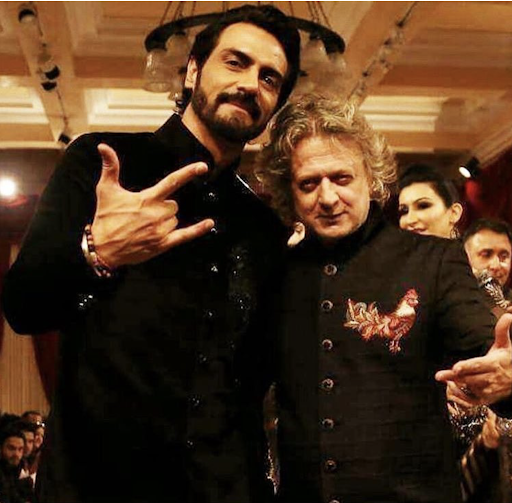
A few examples of copyright in the fashion industry could be an original artistic work like pattern on the fabric, the design of apparel or jewellery, painting, sketches and accessories. Rohit Bal the famous Indian fashion designer has copyrighted his cockerel motif design which was displayed at the India Couture Week (ICW).

(Picture source: fashionnetwork.com)

Protection under Designs Law in the fashion industry

Under the intellectual property law, the aesthetics and looks of a product often come under the realm and the protection of the Designs Law which in India, is governed by the Industrial Designs Act, 2000 (hereinafter refer to as “the Act”). The Act protects the creation of original designs while providing protection against any infringement thereof. An industrial design in its most common sense can be defined as the ornamental shape and form of any article or the aesthetic part of any multi-dimensional article. The uniqueness lies in the form and the shape of the article, it can be a novel combination of lines and patterns or an uncommon combination of colours. Design protection can be secured in different kinds of articles be it for leisure or an industrial item (clothing, electronics, automobiles and the likes) as defined under Section 2 (d) of the Act. 

Industrial designs are associated with the appearance of an article independent of its functionality. The Act only protects the unique shape or design of an article and not the functionality or the uniqueness of the article. There are certain designs that cannot be registered and are specified under Section 4 of the Act. 

An industrial design can be protected for a period of ten years, which can be further extended for a period of five years beyond which the design shall lose its exclusivity and will become part of the public domain. Since it is a territorial right, it can be protected and enforced only in India. However, in case, protection is sought in any other territory, a separate application must be prepared according to the prescribed procedure and fees of the respective territory. An example of design could be the shape or design of the dress and the unique fabric by which the dress is made of. 

Why copyright and/or design protection is needed in the fashion industry?

With the fast pace of growth of the fashion industry, the new designers or start-ups need to get their creative and unique works protected under the relevant statute, as it not only protects the creative aspects of the artistic work and/or the original design but also will safeguard them from the infringers with legal remedies. It provides a monopoly on a product for a limited time while encouraging the creators and/or designers by providing creative space and freedom to create more original and unique designs and products. 

Copyright vs. design 

Both copyright law and design law provide different kinds of protection, where the Design Act provides limited protection, copyright law covers a wide variety of rights and broader protection to the fashion industry. The same has been enumerated below:

  1. Any design which is unregistered under the Act cannot seek legal remedies or protection under the Designs Act. So, to avail, any legal protection or exclusive use of a design the Act mandates the user to get it registered. Legal rights can be enforced only after the successful registration of design. Whereas, it is advisable to get copyright registered, however, the registration of copyright is not mandatory to avail such legal remedies or protection under the Copyright Act. 
  2. Design is a statutory right and not an inherent right. The Act provides protection only after the registration of a design. Whereas, copyright is a common law right and it is protected from the moment it comes into existence that’s why it is considered as an inherent right.
  3. The term of protection of a copyright is usually for the lifetime of the original creator or author or owner plus sixty (60) years. Whereas the term of protection of design is ten (10) years, which can extend to five more years subject to the renewal. 
  4. Any original literary work, artistic work, dramatic work, musical work, cinematograph film, sound recording and visual recording are protected under the ambit of copyright law. Whereas, only original and novel design is protected under the Designs Act. 
  5. Copyright can be registered even after the intimation to the public, whereas a design loses its originality if it catches the eye of the public without registration.
  6. A design needs to be registered as per the class it belongs to as classified under the Locarno Classification which is in harmony with the classification systems across the world. Whereas, copyright subsists in the original artistic work as prescribed under Section 2 (c) of the Copyright Act. 
  7. The outcome or finished products that can be applied to an article comes under the purview of the Designs Act, whereas, copyright subsists in the individual artistic work even if it has not been applied to an article.

Critical analysis 

The Copyright Act, 1957 under Section 15 has established that once a creative work gets protection under the Designs Act and when it is applied to any product or article to give it an aesthetic effect and is commercialized more than 50 times through industrial manufacture, the creative work shall lose its protection under the Indian Copyright Act and will come under the protection of the Design Act, 2000. Whereas, Section 11 of the Designs Act specifies copyright on the registered design for a term of ten years, which can be renewed for a period of five years later on. The primary distinction between a design and an artistic work lies in the applicability of design in an article, while an original artistic work falls under the category of original artistic work, however, its derivatives come under the realm of designs.

The registration process of designs and copyright

Design

For registering an article under the Design Act, 2000 an application for registration can be filed in Form 1 along with the prescribed fee. Form 1 shall include the details of the creator like their full name, postal address, nationality, details of the article, including its name, class or category number as identified under the Locarno classification. The Applicant or their representative needs to send the physical copy of the form in case they have earlier applied electronically. 

Copyright

Although the registration of copyright is not mandatory, it is advisable to get it registered. While applying for the copyright registration, an applicant must fill form XIV or electronically before the copyright registrar, depending on the type of copyright work. In case, the applicant is filling the application by their advocate, a power of attorney along with the form and prescribed fee along with the details of the owner or creator of the artistic work. 

Significant case laws 

Microfibres Inc. vs. Girdhar & Company & others

In this case, the Delhi High Court held that the intent of the legislature was to provide higher protection to original artistic works, however, any activity that is commercial in nature shall grant a lesser period of protection. It was further held that the original artistic work which might be used to industrially produce the article shall fall under the definition of Section 2 (c) of the Copyright Act as artistic work and the original painting shall be protected as the copyright, however, the design derived from it for the purpose of industrial production were said to be covered under Section 15 and shall be protected as it would be registered as a design under the Designs Act.

Ritika Private Ltd. vs. Biba Apparels Private Ltd

The Delhi Court dismissed the plea stating that once the copyrighted work of Plaintiff was applied for the production of dresses exceeding fifty in number, the Plaintiff lost the copyright ownership and since the plaintiff has not secured the registration as mandated by the copyright Act for the registration of sketches, drawings and designs under the Designs Act, the plaintiff can not seek an injunction for the infringing activity. 

Puma vs. Forever 21

In this case, Puma filed an Intellectual property infringement for design patent infringement case against Forever 21 for its designer footwear known as ‘Fenty’, the brand ambassador of the Fenty line was the famous musician Rihana. Forever21 filed a motion to dismiss Puma’s complaint. The US Court held that the design protection can be granted to an article for its unique design, in this case to the ‘Creeper sneaker’, however, it was held that it cannot be protected under the Copyright law merely because it is endorsed by a celebrity. 

Star Athletica vs. Varsity Brands

It was held that if a design and product are inseparable then it would not come under the ambit of copyright. Further, the higher court ruled that any kind of two-dimensional or three-dimensional graphics can be separated and identified independently and hence any design that is capable of being depicted separately in a pictorial and/or sculpture form from the product, could come within the purview of copyright. 

Conclusion

Since the fashion industry is dynamic and with fast fashion brands taking over the fashion market it is suggested to the designers of start-ups and fashion houses to register their unique creations as per the production and marketing of each product or segment of products under the respective law of design or copyright. However, if a design is registered under the Designs Act, 2000 then it is not eligible for protection under the Copyright Act even though it may be an original artistic work. In the case of a design that can be registered under the Design Act, however, not so registered are protected under the Copyright Act if the quantity has not produced more than fifty by using the industrial process by the copyright owner. Therefore, the designs which cannot be registered under the Designs Act are protected under the Copyright Act if they are original artistic work.

The protection granted by the Design Act is not copyright protection, but a true monopoly based on the statute. Although there might be an overlap between both the Acts with regards to design, the two statutes do not provide the same protection. Where copyright registration is voluntary the designs Act mandates registration for legal protection.

It is further concluded that copyright law provides a longer duration of protection as compared to the design law and any product that is one of a kind shall avail the longer protection than the fashion products which are made in bulk for mere commercialisation purposes. 

References


Students of Lawsikho courses regularly produce writing assignments and work on practical exercises as a part of their coursework and develop themselves in real-life practical skills.

LawSikho has created a telegram group for exchanging legal knowledge, referrals, and various opportunities. You can click on this link and join:

Follow us on Instagram and subscribe to our YouTube channel for more amazing legal content.

Download Now

How to establish a theme park in the US

0
Image source: https://rb.gy/dxoovf

This article is written by Shivani Garg, who is pursuing a Diploma in International Business Law from LawSikho.

Introduction

When I started on Disneyland, my wife used to say, ‘But why do you want to build an amusement park? They’re so dirty.’ I told her that was just the point – mine wouldn’t be. 

~Walt Disney

Any theme park is a ticket to bring back the lost child in any of us, no matter what the age is. And if you talk about Walt Disney, the man-made structure made sure that the grown-up kids i.e. adults free themselves from the shackles of their monotonous lives by making Disneyland. Well, the Disney theme park is one of the most successful examples of bringing the dream to reality in the perfect sense one could ever think. Imagine, one day you are so inspired to have your own theme park just like Walt Disney was 75 years back when he opened the first Disneyland theme park in California and then later took it to international expansion

Well, inspiration is one thing but the aftermath of making it your reality is altogether another. Obviously, you will require a humongous amount of finance for that but let’s just assume you have sorted things like finances, etc. for your park but you still need to know about the ‘how part’ and the legality that comes along with it. To make sure things become easy for you I have gathered here all the information that is required to set up a theme park in the U.S. along with the legal assignments that come along with it. To begin with, let me ask you one question. Do you have any idea if there is a huge difference between a theme park and an amusement park? It is the ‘theme’ that makes the difference. While an amusement park is just a collection of rides and games, a theme park is meant to put anyone into a fantastic place where reality is temporarily taken away from life. Before we get started, be sure with what you want to go ahead with. If your choice is a theme park, then let’s see the process of setting it up. Well, the key feature for any theme park’s success is making sure it’s fun for people of all ages to be there and not just kids.

What is the process of setting up a theme park in the US?

Setting up a theme park is one big dream and nothing less than that. To make a theme park successful, it’s utterly important to understand that dreams and reality need to align together somewhere, which also includes pricing your theme park in such a way that it initiates maximum profit. The operation and profitability of a theme park is the result once a theme has been properly established. A few steps to build a theme park:

  • Feasibility Study: this is the first step taken by any developer which provides the initial physical parameters, such as total land size needed and building space required. The planner also includes the initial theme design and other aspects like leisure attraction etc.
  • Concept development: This is the part in the feasibility study where the development process begins with a site visit and an initial meeting to discuss the client’s vision for the park. The design effort begins with a blank page and as things begin (meeting of minds) the greatest opportunity occurs when the unique concept which is the theme of the project can be successfully integrated with the proven experience of an already existing attraction. This is to say, the market is looked into and the resulting plan is the biggest outcome in terms of finance and operation.
  • Design charrette: Once the feasibility study is near completion, the physical and financial framework comes into the picture with respect to the conceptual design. Here, the client groups with designers and other creative team members to discuss the study findings, and all the ideas are involved. This is the brainstorming part with specific goals which depend on the type of leisure attraction being developed.
  • However, it’s really important to keep in mind the potential guest experience right from the beginning as the entire success depends on that.
  • Land use plan: As the master planning begins with design charrette, the initial land use plan becomes more and more refined as well as details as it adapts towards the needs of the concept and site. When we talk about theme parks, they usually have five to seven distinctively themed areas under the overall theme. Each area is unique on its own but acts as a piece of the big picture. There are two layouts for theme parks: 1. loop approach and 2. hub and spoke approach.
  • Illustrated master plan: After the land use plan, functional needs are combined with visual theming in an illustrated master plan.
  • Aerial perspective: The aerial perspective plays a key role in making things appealing and understandable to anyone involved with the project. It acts as a bird’s eye perspective to make things come to life for viewers.

In the case of establishing a theme park, legality is essential. So, it is better to be aware of the laws existing in the country to make things happen for real.

Legality/laws in force

One thing you just can’t miss about this huge project of your dreams is the legality of the laws in force where you plan to execute your project. Here, we talk exclusively of the US! 

Permissions        

  • Licensing: Licensing from authorities is required to run your theme park as your revenue figures revolve around that. It involves the owner of intellectual property either directly or indirectly. Licensing not only enables you to use well-known characters, books, etc but it will also become a unique selling point and attract customers. Licenses include premiums, products, and property.
  • Permission from the United States Consumer Product Safety Commission which is state-wise throughout the US for amusement rides.
  •   Amusement rides license: Once you get your state license for rides, you know for following the procedure get your business license as well. 
  •  Licenses for using space, aerial, and also for water from the state authorities.
  • Health and food license from state food authority.

Laws

It’s easy to know the laws but if you are investing millions into a theme park business without knowing about the challenges associated with it, as per the author’s advice donating the money rather than investing it is a better option. The author has noted down the challenges that even gamers like Disney face being in the theme park industry.

The challenges associated

It’s true that any big project comes with big challenges and when it comes to establishing a theme park, challenges are no less especially with the hit of COVID-19.  Since the pre-COVID era won’t come back ever again, it becomes extremely important to check what challenges one has to face with COVID and irrespective of COVID-19.

  • The mode of conducting business: Well, due to COVID-19 this art is really something that took a blow on many businesses. Many restrictions like that related to health and safety etc. have been laid down by the state legislation. With the major companies in the USA taking hit of COVID and some lobbyists have sought to pressure lawmakers into reopening theme parks as soon as possible, it’s a huge challenge to bring up a new theme park in the US at this point in time.
  • IP issues: Well, whether it’s the expansion or producing entertainment based upon intellectual property used in popular films and television productions, intellectual property is a big deal that certainly can’t be missed at any cost.
  • Bringing innovations to thrill the visitors: With high-tech features and creating an imaginative reality that’s appealing to every single person especially when theme parks like Disney exist is no less challenging but not impossible.
  • Addressing labor issues: One challenge that many parks have faced in the last few years involves the need to compensate employees adequately while remaining profitable. A ballot initiative has been passed by Florida which requires a $15 minimum wage for amusement park labor forces.
  •  Food selection: Since the dynamics of conducting business are changing in 2021, one of the latest trends is to ensure the quality of food that is provided without compromising the theme of the park while keeping health in mind as well. Pretty much challenging!
  • Travel is in question: With social distancing in pictures and new cultures like work from home, viewing the world from your own couch than setting out of the house, etc. becoming the new normal, people have actually developed a habit of questioning themselves, ‘do I actually need to go there at all?’ So, it’s a huge challenge more than ever to bring up and keep the theme park afloat in such circumstances.

Conclusion

“Interactivity is a very big part of what the themed entertainment industry is pursuing quite aggressively.”– Eric Merz

When we talk about the theme entertainment industry and setting up a theme park, everything comes as a big challenge and also a long way of doing things. Certainly, many things have changed with time bringing a whole new level of running a theme park industry. From getting approvals for the license to making sure that a creative vision is delivered so that every individual gets a very personalised experience is not less challenging. In countries like the US, the biggest source of entertainment for people of all ages is amusement parks and theme parks. So, to make sure the experience is that of a lifetime, the pressure to deliver everything up to expectations is quite high. Since customer satisfaction is the necessary element to run a theme park, every minute detail is kept in mind to get the business going and technology plays a huge role in that. Well, let’s admit, one has to beat the already existing top companies to make a new theme park run flourishing. Keeping that in mind it’s of utmost importance to have a well-planned intellectual property strategy for any company in the theme park industry that wishes not only to stand out but also wishes to differentiate its products as well as services from competitors and imitators at bay. Gone are times when people didn’t phone while entering a theme park. 

Today the real-life world steps along with the fantasy world for each one of us. Theme parks provide a combination of things as what we watch in movies like Frozen etc and experiencing all the characters alive is what the theme park is all about – providing a dynamic social environment that is enhanced by visceral and tactical experiences. You see, it’s just not the thrill of adventurous rides but so much beyond that. If you can pull a physical environment, predictive awareness, contextual awareness and bring it down to make the customer experience worthwhile you are good to go with the theme park industry. In the end, a theme park is all about the real world and magical world walking together side by side giving anyone a lifetime of pleasure.

‘’It’s kind of fun to do the impossible.’’ –Walt Disney

References

  1. How to Build a Theme Park: The First Steps (leisure-business.com)
  2. Amusement Park Liability – What You Need to Know | Clifford Law Offices PC
  3. https://linchpinseo.com/theme-park-industry-challenges-opportunities/
  4. When Fun Goes Digital: Creating the Theme Park of the Future – Knowledge@Wharton (upenn.edu)

Students of LawSikho courses regularly produce writing assignments and work on practical exercises as a part of their coursework and develop themselves in real-life practical skills.

LawSikho has created a telegram group for exchanging legal knowledge, referrals, and various opportunities. You can click on this link and join:

Follow us on Instagram and subscribe to our YouTube channel for more amazing legal content.

Download Now

Transformative constitutionalism and role of the judiciary

0

This article is written by Aditi Aggarwal, from Symbiosis Law School, NOIDA. This article discusses transformative constitutionalism, various case laws which reflect the same and the role of the judiciary.

Introduction

The Constituent Assembly met for 166 days for drafting our Constitution. These 166 days were spread over a period of 2 years, 11 months, 18 days and then, the Constitution of India was adopted. Those days involved a lot of struggles and deliberations on how the living document that would determine a person’s basic rights and powers of government should be. In the whole process, many visions and goals were articulated. It is evident since the adoption of this legal document that it has always played a transformative role. Transformation means bringing a change. The motive for the change has always been to bring more equality and liberty to society.

When it comes to the word ‘constitutionalism’, it is an idea that the government’s powers should be limited and observation of these limitations determines their authority. The basic idea is to make efforts in preventing autocratic or arbitrary governments.

Transformative constitutionalism

Transformative constitutionalism means bringing about change in society by infusion of values of equality, liberty, fraternity and dignity. It means to fulfil the basic purpose of the Constitution which is to transform society for the better. One way of understanding it can be that it aims to give supreme importance to Constitutional morality rather than what is morality as per the society. Another understanding can be that the basic structure and essence of the Constitution can never be changed but it still keeps on adjusting itself to the needs of society.

As Justice Chandrachud rightly said, “Transformative constitutionalism refers to the infusion of the values of liberty, equality, fraternity and dignity in the social order. Thus, transformative constitutionalism is an inevitable as well as a significant process that helps to define the essence for democracy and a Constitution within it.”

Origin of transformative constitutionalism

Transformative constitutionalism is not a new concept. It is rather an age-old concept that evolved from South African jurisprudence. It was a publication in 1998 by Karl Klare, a US scholar Professor in the South African Journal of Human Rights, after which many legal scholars took note of the concept and which opened the floor for many debates and discussions on this concept. He described transformative constitutionalism as a project of Constitutional enactment, its interpretation and enforcement on a long-term basis. He further said that this concept is committed to transforming a country’s political and social institutions, egalitarian direction and power relationships in a democratic way. 

Different interpretations

‘What the Constitution means’ has been interpreted in a number of ways. Some believe it to be a single event in history or in the present while some think of it as a continuous process.

The first school of thought

Gautam Bhatia, a scholar of Constitutional law very beautifully describes the first school of thought in his video on ‘The Transformative Constitution’ at the platform Manthan, one of India’s premier forums for public discourse.

He describes the first interpretation as that the Constitution has no transformative nature to it. Some of the arguments in favour of this interpretation are:

  • The Constitution just transferred the powers that were once in the hands of the British Government to the current government that governs the citizens of the country or that we went just from having a colonial regime to an elected government. 
  • Another argument is that most of the provisions are based on the Government of India Act, 1935 which was created by foreign colonisers.
  • The Constituent Assembly, which was formed to draft the Constitution, was itself set up under colonial law.
  • Most of the repressive laws made by the British at that time still exist in our Constitution and we continue to follow them.
  • A slight distinction present is that the Constitution we now have is a codified law. 

He then goes on to explain how people started realizing the actual meaning of words like equality, privacy, and life that brought about a change in society. People now started to realize the actual meaning and importance of the Constitution. They finally started looking at its essence beyond the blueprint for a political transition or mere transfer of power. They began realizing that:

  • The transformation of power was actually from the British Government to citizens of India who now have rights such as the right to equality (Article 14), the right to life (Article 21), the right to practice, profess and propagate their own religion (Article 25), the right to freedom of speech and expression (Article 19), etc. 
  • The right to vote was contemplated upon. People can now choose their own leaders and demolish the government too if the government is not working up to the mark. Also, the government is accountable for everything it does.
  • The transformation paved the way for a new system that was created of the people, by the people, for the people.
  • Hierarchical relations “private sphere” such as those of gender, caste and the economy have now democratised.

Thus, this systematic adoption and creation of our Constitution is one way of interpreting ‘transformative constitutionalism’.

The second school of thought

Another school of thought is interpreted to believe that transformative constitutionalism is a continuous affair that involves continuous evolvement or transformation of state and society. It includes the legal or administrative changes that alter the course of society and mould it to meet the changing dynamics of the country.

With time, the country has seen remarkable judgments where the scope of our fundamental rights have been expanded and how the judgments are given keeping in mind the needs of a changing society. For example, how ‘right to freedom’ was interpreted in the ‘90s by courts and even people is way different from what it means to the people now and how it is interpreted by courts. The scope of the right has definitely widened.

The transformation from traditional judgments

Justice K.S.Puttaswamy v. Union of India (2018)

Emergency imposed by Indira Gandhi during the congress regime in 1976, four out of five judges in the case of ADM Jabalpur vs S.S. Shukla (1976), held that even the right to life given under Article 21 of the Indian Constitution can be suspended at the time of emergency. The fifth judge, Justice HR Khanna dissented and forty-one years later, in the case of Justice K.S.Puttaswamy (Retd) vs Union of India (2018), a nine-judge bench of the Apex Court held that privacy is indeed a fundamental right under the purview of Article 21 of the Indian Constitution. Justice Khanna was thereby proven right and now, even after the proclamation of emergency or by suspension order of the President, the fundamental right to life under Article 21 cannot be suspended.

Kesavananda Bharati v. State of Kerala (1973)

There was a long debate on the question if the parliament has the power to amend the Constitution or not. The Apex Court dealt with many cases like C. Golaknath & Ors vs State of Punjab & Anrs (1967), Indira Nehru Gandhi vs Shri Raj Narain & Anr (1975) and Bhim Singh vs U.O.I & Ors. (2010). The scope of judicial review was also debated in the course of the 24th and 42nd amendments to the Constitution.

This debate was finally settled down in the case of Kesavananda Bharati vs State of Kerala (1973). The concept of basic structure doctrine was laid down and it was decided that the Parliament can amend the fundamental rights given in the Constitution, but its basic structure should be maintained and preserved as it is.

National Legal Services Authority (NALSA) v. Union of India (2014)

The NALSA judgment is one of the landmark decisions of the Apex Court because it is the first to legally recognise non-binary gender identities and uphold the fundamental rights of transgender persons in India. The judgement also directed Central and state governments to take proactive action in securing transgender persons’ rights.

While the phrase “transformative constitutionalism” does not find express mention in the Constitution of India, the Supreme Court takes note of the transformative power of the Constitution in its 2014 NALSA judgment in the following words:

The role of the Court is to understand the central purpose and theme of the Constitution for the welfare of the society. Our Constitution, like the law of the society, is a living organism. It is based on a factual and social reality that is constantly changing. Sometimes a change in the law precedes societal change and is even intended to stimulate it. Sometimes, a change in the law is the result of social reality.

Navtej Singh Johar vs Union of India (2018)

Before this case, sexual conduct between two adults of the same sex, consensual or not, was criminalized under Section 377 of the Indian Penal Code, 1860. In this case, the petitioner challenged this section and claimed that it is violative of Articles 14, 21 and 15 of the Constitution.

In furtherance of this claim, the Court interpreted that the word ‘sex’ under Article 15 includes ‘sexual orientation.’ Further, the rights of the LGBTQ+ community were recognised in this case and the decision in Suresh Koushal v. Naz Foundation (2014) was overruled by the Court.

Joseph Shine vs Union of India (2018)

This was another landmark judgment that decriminalized adultery while interpreting Article 21 of the Constitution. Adultery was earlier criminalized under Section 497 of the IPC. That particular section provided punishment for a man involved in sexual intercourse with a married woman, without the consent of her husband. This Section was found to be arbitrary and discriminatory as it was silent on the consent of a married woman, and was thus struck down.

Indian Young Lawyers Association vs. the State of Kerala (2018) 

This case was filed by the petitioners as a PIL before the Apex Court regarding the entry of menstruating women into the temple of Sabrimala, which had been restricted. It was argued that this restriction was violative of Articles 14, 15, 17, 25 and 26 of the Constitution. The Court, playing the role of a positive interferer of religion, held that women of all age groups can enter the temple. 

Transformative constitutionalism and recent judgements

Xxxxxxxxxx v. State of Kerala (2021)

In Xxxxxxxxxx vs State of Kerala, a couple’s trauma in the course of a live-in relationship was unveiled. A single mother’s isolation, rights of a biological father and love of a mother for her own child- everything was entangled in a legal matter. John, a Christian and Anitha, a Hindu were very much in love and they started to live together away from their parents’ homes. Anitha became pregnant and delivered a baby girl wherein the birth certificate indicated the name of both the father and mother. This birth certificate was the deciding factor in this case and gave way to a landmark judgement. 

After some time, John seemed to have broken up with Anitha and went to Karnataka to act in a Malayalam film. Anitha tried to contact John but all efforts were in vain. Desperate and isolated, she had no option and approached the Child Welfare Committee (Ernakulam), handed over the child to them and executed a deed of surrender which permitted the Committee to give the child in adoption. 

After some time, the couple approached the Kerala High Court with a writ of habeas corpus. The court then interpreted Article 21 of the Constitution to include the parental rights and rights of a child to preserve his identity with his biological parents. Transformative constitutionalism in this case is seen in the way ‘right to life’ has been used to recognise the rights of a child born out of a live-in-relationship. The legality of a couple in a live-in-relationship was also highlighted by the court. 

Dr. Maya D Chablani vs Radha Mittal (2021)

Dr. Maya D Chablani vs Radha Mittal (2021) was a recent case dealt with by the Delhi High Court, whose judgment was appreciated by many people. ‘Right to life’ under Article 21 of the Indian Constitution was applied very liberally on street dogs. It was held in this case that the street dogs have a ‘right to food’ and citizens also have the right to feed them provided they do not impinge upon the rights of others. Regarding the feeding of such dogs, the HC also laid down certain detailed guidelines. With respect to Article 21, it was stated that such a right protects the life of animals too.

Vineeta Sharma vs Rakesh Sharma (2020)

This judgment changed the course of history when it was decided by the Court that coparcenary rights under Section 6 of Hindu Succession (Amendment) Act, 2005 are to be given to both the daughter and the son. Even daughters born before the amendment have now been given full coparcenary rights.

Therefore, this landmark judgment again talked about the right to equality under Article 14 of the Indian Constitution and how excluding a daughter from having a part in coparcenary ownership would mean the negation of her fundamental right to equality.

Anuradha Bhasin vs Union of India (2020) 

This case is of the time in the year when the Jammu and Kashmir Reorganisation Bill 2019 was passed and the government announced a ban on the internet along with the shutdown of all communications. Additionally, there was a restriction on the movement and assembling of public u/s 144 of CrPC. Journalists were restricted from travelling and publishing anything which led to violation of Article 19(1)(a), i.e., the right to freedom of expression. 

The SC held that the right to access the internet is included under article 19(1)(a) and stated that the restriction on journalists violates article 19(1)(g), i.e., the freedom to practise any profession, occupation, trade and commerce over the medium of internet.

Role of the judiciary

Transformative constitutionalism can be best described as a pragmatic lens that helps in viewing the realities of society. It confers a duty upon the state to uphold and ensure the supremacy of the Constitution.

The role of the judiciary is to preserve the essence of the Constitution while interpreting it in such a way that it adapts to the current scenario. Checks and balances in powers have to be made by the judiciary while still adhering to the separation of powers. As a guardian of human rights, the judiciary’s role is to ensure that justice is being done in each case and the sacrality of rights have been preserved. We have seen how the judiciary, in the case laws discussed above, played an inclusionary and transformative role.

Justice N. Anand Venkatesh, judge of Madras High Court is a role model of transformative constitutionalism, as he showed the willingness to learn and decided to take psycho-education while hearing a recent case relating to LGBTQ+ which will help him better understand homosexuality. Additionally, the judge also ordered counselling sessions for the petitioners and their families.

Limitations

The judiciary has given many remarkable judgments where we witnessed a reflection of transformative constitutionalism. However, it still has a long way to go. Stan Swamy, who was arrested in the Elgar Parishad case was denied his medical plea ever after being a senior citizen and very ill. He died on July 5 without any bail and as an undertrial. It is a question to ponder upon whether in this case, the right to life should have been interpreted in such a way that could have allowed him a medical plea. Further, India sees a pool of judgments where lines like ‘justice delayed is justice denied’ become justified. 

Conclusion

Transformative constitutionalism is something that cannot be achieved without the constant support of the judiciary and its willingness to bring a positive change in society. With the judiciary, the role of citizens is also very important in bringing a transformational change in the Constitution that meets the needs of the present day scenario. The first step of doing this is recognizing our rights and values and also keeping in mind not to infringe upon the rights of others. Where preserving the basic structure of the living document of our country is of utmost importance, evolution of our basic fundamental rights needs to be constant in order to keep the wheel of social transformation moving in the society. 

References


LawSikho has created a telegram group for exchanging legal knowledge, referrals, and various opportunities. You can click on this link and join:

https://t.me/joinchat/J_0YrBa4IBSHdpuTfQO_sA

Follow us on Instagram and subscribe to our YouTube channel for more amazing legal content.

Download Now

Center’s power of land acquisition : analyzing the recent Supreme Court judgment

0
Image source: https://cutt.ly/IkJyFyY

This article is written by Harsh Gupta from the School of law, HILSR, Jamia Hamdard. This is an exhaustive article which deals with the centre’s power of land acquisition with the help of a recent Supreme Court judgment.

Introduction

Land acquisition is the power of the sovereign to acquire private land for any purpose of public welfare and use. In India, the sovereign is the state and it follows a two-fold government system, i.e., at the center and state level. When it comes to land acquisition in India, it is basically the power of the union and state to acquire private land for constructing highways, dams, bringing in industrialization, urbanization, development in the region, and it also includes the power to compensate the affected private landowners for their resettlement and rehabilitation. There are following laws that govern land acquisition in India are given below-

National Highways Act, 1956

The National Highways Act, 1956 came into force to provide for the declaration of certain highways as national highways; it was enacted on 11 September 1956 and came into enforcement on 15 April 1957 under the Ministry of Road Transport and Highways. It contains a total of 22 Sections where Section 3A deals with the power to the acquisition of land in which authority has been granted to the central government to acquire any land for building, maintenance, management, or operation of a national highway for a public purpose, and also the law binds the central government to declare its intention for such land acquisition through an official gazette.

Section 3C provides for the provision of hearing if any person is having an interest in land and object to the use of such land then within twenty-one days from the date of notification as per Section 3A, objection has to be raised before competent authority in writing mentioning the grounds, then competent authority as it deems fit may allow or disallow such objections.

Section 3E provides for power to take possession within 61 days from the date of sending of the notice. Section 3-I provides that competent authority shall be vested with the power of civil court while trying a suit under the Code of Civil Procedure, 1908 in the following matters, namely:

  • When to summon and enforce the attendance of any person and examine him on oath.
  • When the discovery and production of any document is required.
  • Where reception of evidence is required on affidavits.
  • Requisitioning any public record from any court or office.
  • Issuing commission for examination of witnesses.

Section 4 of the Act states that national highways to vest in the union, and for this Act, national highways will include all lands connected thereto, all bridges, tunnels, causeways, carriageways, and other structures which are constructed on or across on highways, it will also include all fences, trees, boundary, or any land connected with national highway.

Importance of national highways

One can’t ignore the importance of national highways in a country like India or any country for that matter, it helps in connecting one state to another state, important places, ports, and places of economic importance as well as economic importance. As per data by the National Highway Authority of India (NHAI), national highways only constitute 30% of the total road length in India and they carry more than one-third of traffic of the whole of India and the road length is nearly 1,32,499 km. 

The advantages of national highways are numerous:

  • It helps in supply chain management and connects various roads and highways, it helps in making transportation easy and convenient. National highways also provide economic incentives in the form of better infrastructure and national productivity. 
  • The role of national highways became more important during covid times when railways and airlines were not functioning then, it became a growth corridor and life support for the country and its people. 
  • National highways continued functioning even during the lockdown to provide for seamless movement of essential commodities and medical services all over the country.

Bharatmala Pariyojna (2017)

Bharatmala Pariyojna is an initiative that was envisioned in 2017 to develop the link of highways through developing 34,800 km of National Highway corridors, being India’s largest infrastructure program connecting almost 600+ districts under the project. 

This pariyojana is the result of innovation and technology shift which has ushered in technology-driven highway development with the help of the deployment of automatic traffic surveys. An investment of Rs. 5,35,000 crore will be made, the economic corridor will be 9,000 km long to unlock the full economic potential of the region, the inter corridor and feeder route will be 6,000 km long which will ensure holistic connectivity. It includes national corridors efficiency improvement which will enhance efficiency. It will also ensure- 

  • Border roads and international connectivity;
  • Coastal roads, and port connectivity, greenfield expressways; and
  • Balanced National Highway Development Project works to ensure a boost in border connectivity, leveraging ports for progress, express speed for express gains, and boosting all-around connectivity respectively.

Chennai-Krishnagiri-Salem National Highway Project (2017)

Chennai-Krishnagiri-Salem National Highway Project was regarding the construction of an eight-lane highway namely, NH179A and NH179B, and is the part and parcel of the ‘Bharatmala Pariyojana’ project whose estimated cost is 10,0000 crores which will improve the efficiency of passenger movement across the states and subsequently the country. The length of the projected national highway would be 277.3 km long. The project has been designed to cut the travel time between Salem and Chennai by half an hour from two hours. However, in response to the project, locals including farmers are protesting and they are very possessive about losing their lands and these farmers and locals have received the support of environmentalists across the country against the felling of trees as the projects run through reserve forest and water bodies.

The Road Transport and Highway Minister, Nitin Gadkari, has promised a quicker resolution to the besieging disputes and prompt development of the corridor. Many politicians, farmers, and environmentalists filed a case in Madras High Court for requesting to quash the notification issued by the central government.

Madras High Court’s verdict on the same project

Context

In the case of P .V .Krishnamoorthy v. the Government Of India (2019), the Madras High Court quashed the notification issued by the central government regarding land acquisition as it made it clear that a public hearing was needed to be conducted as against the government notification and environmental clearance was not given and also it was mandatory since the project may carry some adverse impacts on the environment. Thus, the Court asked the government to not refrain the landowners from possession of their properties forcibly.

Highlights of verdict

  • The Court had denied the contention of the Tamil Nadu government to transfigure revenue records and pass on government lands even before the notification was issued under the Land Acquisition Act. Further, the Court ordered for reversal of all transfigured land records within fourteen days.
  • The Court further pointed that the benefits of the projects were a mere illusion and not practical, the court further substantiated above statement by making an argument that small businessman who lives in small villages in Vandavasi or Polur will never get benefitted from the expressway where the traffic is flashing over 120 km/hr and to reach in these villages will need to travel long kilometres to kick up the backside to reach their villages. Therefore, the Court contended that financial consequences were not analyzed by the National Highway Authority of India’s Advisor which will ultimately burden poor villagers.

Tax Collection

Further, the Court also observed that as per agreement between NHAI and toll authority, if a road affects the collection of tolls, then the agreement is to be extended for two times the original period which will cause & affect the traveling public as toll will be collected far beyond their original period.

Observations made by the Supreme Court 

Facts of the case

In the case of the Project Director Project… v. P.V. Krishnamoorthy (2020), an appeal was filed against the Madras High Court order in the Supreme Court as Central Government contended that there was no such need for any approval for obtaining environmental clearance for the said project from the Ministry of Environment, Forest and Climate Change before issuing notification as land acquisition primarily has zero impact on the environment as green belt initiative will be taken into consideration simultaneously.

Issues for determination before Supreme Court

  • The legislative competence of the parliament to enact laws for declaring open green fields as national highways.
  • Executive powers of the Union as discussed in this case.
  • Scope of Section 2(2) of the 1956 Act as discussed in the case.
  • Power of the notification and the scope of judicial review.
  • Prior environment and forest clearance – the stage at which to be mandatorily sought.

Issue 1 – legislative competence of the union

Observations of the Court

The Supreme Court proposed to address the question of parliament’s legislative competence to enact a law declaring open greenfield lands as national highways. It was argued that only a state legislature is competent to enact a law for the construction of new roads traversing through open green fields where no roads exist, and only when there are existing highways would the Central Government be able to declare such in a national highway. In contrast, Schedule VII List I Entry 23 in the Constitution of India in respect of which only Parliament has the power to make laws is “highways declared to be national highways by or under law made by Parliament”. 

Decision

The central government had no authority to invoke Section 2(2) of the 1956 Act, given that it merely permits the central government to declare an existing highway, a national highway. This indicates that the central government’s issuance, in violation of Section 2(2) of the 1956 Act, of notifications to declare the section between Chennai ­Krishnagiri ­Salem National Corridor (C-K-S (NC)), passing through open green fields, as an arbitrary act and in violation of the Constitution’s Article 14.

The 1956 Act, as amended and applicable to the present case, was enacted to allow the Central Government to declare notified stretches or sections of a highway to be national highways; that includes acquiring “any land” for the building or construction of a new highway (which is not necessary to be an existing road or highway). 

Issue 2 – executive powers of the Union

Observations of the Court

It follows that even the challenge to the stated notifications on the basis that they are ultra vires the Constitutional executive powers of the Union, must fail. In the case at hand, the challenge is based on Article 257, as we have noted above. It is urged that Article 257 pointedly refers to the sphere of executive powers of the union. The Constitution’s Article 257 specifically deals with the relations between the union and the states.

As a first step, having said that, the parliament has exclusive legislative competence to make laws about national highways and all subjects related to them, which includes declaring any stretch/section within a state (other than a road/highway that already exists) to be a national highway. Hence, the central government is the only one with the power to construct/build a new national highway in a state and to issue instructions to the state concerning the implementation of the 1956 Act. The argument that the central government lacks executive power despite such a law is incomprehensible. In short, the argument essentially asked by the Supreme Court whether Section 2(2) of the 1956 Act allows the central government to proclaim a national highway in respect of a non-existing road(s)/highway(s) on open greenfield lands within the state.

Decision

It was acknowledged by the Court that the validity of Section 2 of the 1956 Act, under which the central government can declare any highway to be a national highway (other than the scheduled national highways) has been upheld. No declaration is sought that the provision in question is ultra vires the Constitution or law. It is sufficient to observe that the challenge to notifications issued by the central government under Section 2(2) of the 1956 Act as being ultra vires the constitutional derived executive powers is also without merit.

Issue 3 – scope of Section 2(2)

Observations of the Court

The Supreme Court observed that even though the central government is competent to declare any stretch/section of road a national highway, it can only do so relating to an existing road within the state and not on a non-existent road or a road running through greenfield land. However, we are required to examine the question under consideration in light of the 1956 Act and the 1988 Act. Therefore, we will look at Section 2 of the 1956 Act, which states:

“All the highways specified in the Schedule are declared to be national highways. The Central Government can declare any other highway a national highway by notification in the Official Gazette, which is deemed to cause its inclusion in the Schedule. The Central Government may omit any highway from the Schedule by a similar notification, and on publication of such a notification, the highway is no longer considered a national highway”.

Decision

When exercising its powers under Section 2(2) of the 1956 Act, the central government grants the locals of the area concerned the right to traverse a highway from one marked town or inhabited place to another for legitimate travel. As a national highway, it will connect one designated town (Chennai) to another town (Salem) and be open to all users, including the ordinary and reasonable ones. Thus, the court held that the Central Government has full power to notify “any land” (not necessarily an existing road) for acquisition and to build a highway.

Issue 4 – scope of judicial review

Observation of the Court

The crucial aspects were glossed over by the High Court, which instead focused on the sufficiency and adequacy of material, including the appropriateness of the route approved by the competent authority. In the exercise of judicial review, such inquiries are prohibited. In addition, despite the High Court noting that judicial interference is limited in acquisition matters, it intervened based on extraordinary circumstances prevailing in the case. The impugned judgment does not reveal any just circumstance justifying judicial review. 

Decision

In light of the above, the Supreme Court said that the High Court should not have questioned the Committee’s (Committee was constituted of experts from officials of the NHAI and secretary of MoRTH as its Chairperson) decision and the central government’s decision ex consequenti regarding changing section Chennai ­Madurai   (Economic Corridor) (C-M (EC)) to Chennai ­Krishnagiri ­Salem National Corridor (C-K-S (NC)) of the original project, as approved. Interestingly, the High Court has not struck down the notifications under Section 2(2) of the 1956 Act in its conclusion and declaration. The decision to change the sections/stretches to C-K-S (NC) would continue to bind the concerned parties, including the NHAI as the executing agency, as long as Section 2(2) of the 1956 Act remained in force.

Issue 5 – prior environment and forest clearance

Observations of the Court

The intention is to specify that under Section 3-D, the acquisition of notified land can be made only after an environmental or forest clearance has been granted over that specific parcel of land. In other words, the requirement for prior environmental/forest clearance would only arise if, ultimately, the land in question (site-specific) was to be notified under Section 3-D, as being acquired for building, maintaining, managing, or operating the national highway. In this way, environmental and forest laws will be promoted as well as the timeline specified for the building, maintenance, management or operation of the national highway or part of it, which is of national importance and public benefit. 

The landowners would also be reassured that even the land cannot be returned to the original owner if the forest clearance or environment permission is withdrawn since the land had de jure vested in the central government upon notification under Section 3D of the 1956 Act and the central government does not have the authority under this Act to withdraw from an acquisition. 

It is essential to issue a declaration under Section 3D of the 1956 Act within one year from the date of publication of the notification under Section 3A in respect of the notified land, failing which notification under Section 3A ceases to have any effect. It is possible that whilst pursuing the proposal for environmental/forest clearance after notification under Section 3A, some time may be lost, even though the process under the 1956 Act for the acquisition of the land had become ripe for the issue of declaration of acquisition under Section 3D. It is also true that time spent for obtaining environmental clearance or permission under the forest laws has not been explicitly excluded from the period of one year to be reckoned under Section 3D(3) of the Act.

As regards the present case, the NHAI, being the construction agency, had submitted terms of reference to the MOEF as soon as section C-K-S (NC) was declared a national highway, under Section 2(2) of the 1956 Act, dated 1 March 2018. The proposal was submitted on 19 April 2018, and the approval in furtherance thereof was granted by the MoEF on 8 June 2018, following the recommendation by the EAC. On 5 July 2018 and 21 August 2018, the NHAI submitted amendments to the terms of reference. Upon examining the amendment in terms of reference, the Environment   Assessment Committee (EAC) submitted its recommendation on 30 August 2018. The permissions/clearances were granted by the relevant authorities under the environment and forest laws after notification under Section 3A and before issuance of the declaration under Section 3D of the 1956 Act.

Decision

In light of this decision, the time spent to obtain such clearances, including the time until this decision was released as well as the time until the stated permissions/clearances were finalized, whichever comes first, should be excluded since the matter remained under scrutiny. 

Centre versus State – who can declare land as national highway

  • In the recent Supreme Court judgment as mentioned above, the position of centre and state was clarified regarding who can declare land as a national highway by a three-judge bench. The court held that it is the absolute power of the parliament to make a declaration by law that any stretch and/or section within the state territory to be a national highway and it’s not mandatory that stretch or section be a road or existing highway.
  • Further, the Court clarified that the National Highway Act, 1956, and 1988 Act were drafted taking into consideration from and reference to Entry 23 of List I of the Seventh Schedule of the Indian constitution. The Court clarified that the state enjoys exclusive power on the subject matter of roads as per Entry 13 of List II but on this basis meaning to Entry 23 in List I can be interpreted in a restricted manner when it comes to dealing with matters concerning national highways.
  • The Court further relied on the doctrine of pith and substance that even if there is incidental encroachment by the law as per state list then law made by parliament on the subject matter of union list will not render it invalid subject to ascertaining the true character of the legislation. The Court also highlighted the fact that the expression highway is neither mentioned in the state list nor concurrent list, so as per Article 248 of the Constitution of India, Parliament has exclusive right to make laws on subject matter not enumerated in the state list and concurrent list.
  • The Court also focused upon the centre’s obligation under Part IV of the Indian Constitution to provide for the welfare of the people and secure social order and availability of highway any corner of state paves for sustainable development and growth of locals, state, and the country as a whole.

Hence by observations of the Supreme Court, we can conclude that parliament has executive powers to construct a national highway in any corner of the state and for the same to issue proper guidelines and directions to carry out the objectives of the National Highway Act, 1956.

Conclusion

The power of the centre for land acquisition is exhaustive. But at the same time, it provides mandates to any individual who objects to such acquisition within 21 days from the issuance of notification, then it’s up to competent authority whether to allow such objection or disallow. Further, the author feels that development should not outcast sustainable development, by sustainable development author means that the state should come with an alternative to environmental degradation by taking into consideration prospects of the new generation to come.

References


LawSikho has created a telegram group for exchanging legal knowledge, referrals, and various opportunities. You can click on this link and join:

https://t.me/joinchat/J_0YrBa4IBSHdpuTfQO_sA

Follow us on Instagram and subscribe to our YouTube channel for more amazing legal content.

Download Now

Issue conflict in ICSID arbitrations

0
Image Source: https://rb.gy/sqonj6

This article is written by Palak Nangru, pursuing a Certificate Course in Arbitration: Strategy, Procedure and Drafting from LawSikho.

Introduction

The principles of natural justice provide that each person has the right to a fair hearing by independent and impartial judges in judicial and quasi-judicial settings. The independence and impartiality of an arbitrator form the bedrock of any arbitration. When the parties opt for arbitration as the dispute resolution mechanism, they expect that the person who would be appointed as the arbitrator would not be biased towards one of the parties or issues raised. The independence and impartiality of the arbitrators are essential to ensure the legitimacy of arbitration proceedings and the confidence of the parties in the arbitration. 

To ensure that the arbitrators act independently in investment arbitration, the arbitral institutions have set a standard that has to be fulfilled by the arbitrators to ensure that they act with due diligence and impartiality. In this blog, we would be looking at how issue conflict is dealt with in ICSID arbitrations. 

What is an issue conflict?

It is important to remember that persons appointed as arbitrators are not tenured judges, persons who are academicians, retired judges, lawyers and government officials generally act as arbitrators. These individuals provide their services to the disputing parties for consideration. The function of the arbitrators in investment arbitration does not require exclusivity. Thus, the persons acting as arbitrators in one matter may act as the counsel in a similar matter, this often leads to a conflict of interest and the possibility of bias by such persons. This conflict of interest may arise out of the repeat appointment of arbitrators, issue conflict, and multiple hatting.

While there is no universally accepted definition of issue conflict, it is generally accepted that Issue conflict is an issue that arises out of the arbitrator’s relationship with the disputed matter rather than the parties. The arbitrator’s prior experience/ interaction with the disputed matter may give rise to the doubt that his previous experience may impact his ability to give an independent and impartial judgment. Thus, issue conflict is basically the conflict that may arise due to the arbitrator’s pre-existing interaction with the disputed issue. Issue conflict is mainly concerned with the likelihood of bias of the person being appointed as the arbitrator based on the previous judgments, academic writings, or opinions of the person.

Over the past few years, allegations about issue conflict have been raised in various arbitration proceedings to pursue the disqualification of arbitrators. Thus, the concept of issue conflict requires close examination by tribunal members as well as the parties to arbitration proceedings. 

When does an issue conflict arise?

Generally, the following scenarios may give rise to issue conflict: 

  1. If a person concurrently acts as an arbitrator and counsel in different cases in which similar factual or legal issues are raised. 
  2. The person who is appointed as the arbitrator would take up the role of a counsel in a subsequent arbitration proceeding, where similar or the same factual or legal issues have been raised. 
  3. If the arbitrator had previously given an award regarding the issue raised in the arbitration proceedings if he/she had expressed his/her personal opinion or published some academic writing. 

Addressing an issue conflict

According to a report on issue conflict released by the American Society of International Law (ASIL) and the International Council for Commercial Arbitration (ICCA) in March 2016, the problem of issue conflict is not directly dealt with by any international rules or guidelines. Various international investment treaties and agreements indirectly dealt with the issue through disclosure requirements by the arbitrator. 

The International Bar Association (IBA) Guidelines of Conflicts of Interest in International Arbitration specifically provides for certain circumstances in which an arbitrator can be replaced. For instance, in case the person to be appointed as arbitrator had given his/her expert opinion to one of the parties or in situations where the arbitrator may have been involved in the dispute before being appointed as the arbitrator. However, Guidelines provide that the general opinions given by the arbitrator in some legal journal or public lecture would not result in issue conflict.

Meanwhile, Section 11 of UNCITRAL Arbitration Rules, 2013 imposes certain disclosure requirements on the person before he is appointed as the arbitrator and throughout the arbitral proceedings, once he has been appointed. 

ICSID provisions on issue conflict

The International Centre for Settlement of Investment Disputes (ICSID) has also dealt with issue conflict indirectly by imposing certain disclosure requirements and standards for the persons being appointed as arbitrators. 

Section 14(1) of the ICSID Convention provides that the appointed arbitrator must be a person of “high moral character” and should be able to render an independent judgment. Additionally, Rule 6 of the ICSID Arbitration Rules imposes a duty on all persons appointed as arbitrators to give their signatures on a declaration form. The arbitrator also has to provide a statement with disclosures regarding their present or historical relationships with the parties and provide any other information that may raise doubts regarding their independence and impartiality. Further, the Rules impose a continuing obligation on the arbitrators to disclose any information regarding their relationship with the parties or any other information that may raise doubts regarding their independence during the arbitration proceedings. 

Cases where the appointment of an arbitrator was challenged due to issue conflict

The following cases provide the jurisprudence regarding issue conflict raised based on the arbitrator adjudicating upon similar legal or factual issues

1. Electrabel SA v. The Republic of Hungary

In this matter, the appointment of the arbitrator was challenged by the claimant on the basis that she had been concurrently appointed by the respondent as an arbitrator in a matter arising out of a similar factual matrix. The arbitral tribunal had rejected the challenge on the basis that an arbitrator’s independence cannot be doubted solely on the basis that an arbitrator had to decide upon similar legal or factual issues in concurrent arbitrations.

2. Participaciones Inversiones Portuarias Sàrl v. The Gabonese Republic

In this matter, the claimant had raised doubts regarding the independence and impartiality of an arbitrator on the basis that he had acted as an arbitrator in another arbitration proceeding where the arbitral tribunal had dealt with similar legal and factual issues. The arbitral tribunal had rejected the challenge, they had taken their decision on the basis that the legal issues in question were often raised in international investment arbitrations and they were decided based on the factual matrix of the case. 

3. Tidewater v. Venezuela

One of the parties had challenged the appointment of an arbitrator on the basis that the arbitrator was appointed in several other pending arbitrations against the respondent that involved similar legal issues. The party had contended that under such circumstances there would be a risk of prejudgment of the matter by the arbitrator.  The arbitral tribunal had rejected the challenge on the basis that multiple appointments would not indicate a lack of independence and impartiality of the arbitrator. 

4. Caratube International Oil Company LLP and Devincci Salah Hourani v. Republic of Kazakhstan

In this matter, the claimant had challenged the appointment of one of the arbitrators on the basis that he was prejudiced regarding the legal issues raised during the proceedings since he had prior knowledge on the issue since he had acted as an arbitrator for a similar case where the respondent was one of the parties. The arbitral tribunal upheld the challenge. The tribunal opined that the arbitrator may not be independent on the basis that the factual matrix of the other arbitration was similar to the arbitration at hand, and these facts were relevant for deciding the legal issue. Further, the Court had applied the third-party test and observed that even a third party may have doubts regarding the impartiality and independence of the arbitrator in such a situation. 

Through these decisions, it is demonstrated that issue conflict would not arise in situations where the arbitrator has dealt with similar legal issues in the previous arbitration. Further, issue conflict would not arise in situations simply because the arbitrator is dealing with similar legal issues in consecutive or concurrent arbitrations. It can be observed that issue conflict would only arise in situations where the facts and parties of the arbitrations are related to each other. Issue conflict was raised where the arbitrator had expressed his view regarding the legal issue in academic writings 

5. Ubaser v. Argentina

In this case, the claimant had moved to remove the arbitrator on the basis that he had previously expressed his opinion regarding the legal issue in an academic publication. The Tribunal rejected the challenge after observing that the publications by the arbitrator were not against Article 14(1) of the ICSID Convention. 

Most of the challenges to the appointment of the arbitrator based on the opinions expressed by the arbitrator in his lectures, academic writings, or remarks are dismissed by the Tribunals. The tribunals were often of the opinion that for there to be an issue conflict based on the opinion or position taken by the arbitrator, if the arbitrator could directly or indirectly be impacted by the outcome of the dispute, or if he/she has a relationship with either of the parties or individuals involved. Issue conflict raised in a situation where the arbitrator may have an indirect relationship with either of the parties

6. Blue Bank International & Trust (Barbados) v. Venezuela

In these arbitration proceedings, the respondent had challenged the appointment of an arbitrator since he was the partner at one of the branches of the law firm that was representing one of the parties in another arbitration dealing with similar legal and factual issues. The arbitral tribunal had conducted a third-party test to assess whether a third party completely independent of the arbitral proceedings would believe that the arbitrator was biased. The tribunal had concluded that in these circumstances a third party would find that there was a lack of impartiality and likelihood of bias by the arbitrator. Thus, the tribunal had upheld the challenge to the appointment of the arbitrator. 

Conclusion

The present law regarding issue conflict in ICSID is a little ambiguous and uncertain. Thus, it would be ideal if the ICSID Convention and Rules specifically provide the various disclosures that would have to be made by persons appointed as arbitrators. Further, it would be beneficial there are proper mechanisms in place to ensure the enforcement of the disclosure requirements. 

References

  • Report of the ASIL-ICCA Joint Taskforce on Issues of Conflict in Investor-State Arbitration, The ICCA Report No. 3, dated 17 March 2016.

Students of LawSikho courses regularly produce writing assignments and work on practical exercises as a part of their coursework and develop themselves in real-life practical skills.

LawSikho has created a telegram group for exchanging legal knowledge, referrals, and various opportunities. You can click on this link and join:
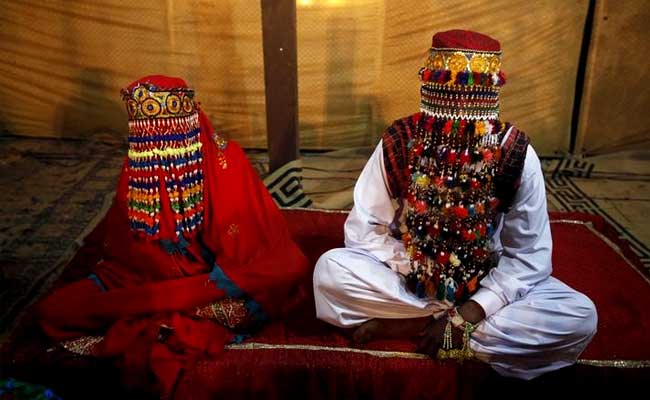
Follow us on Instagram and subscribe to our YouTube channel for more amazing legal content.

Download Now

SC’s take on acquittal based on benefit of the doubt in light of the case of State Of Rajasthan v. Love Kush Meena

0
Image source - https://bit.ly/3sOCXvc

This article is written by Niharika Agrawal, pursuing B.B.A.L.L.B from IFIM Law School. This comprehensive article deals with the analysis of the recent judgment by the Supreme Court in the case of the State of Rajasthan vs. Love Kush Meena with regards to the acquittal based on the benefit of the doubt. 

Introduction 

According to the general perspective, no person is guilty unless proven to be. Similarly, under law, no person is guilty unless and until not proven to be beyond a reasonable doubt. This concept in the legal term is known as ‘Benefit of the doubt’. Under this concept, the defendant is considered to be acquitted by the court if his or her offence has not been established, which means when the prosecution fails to provide the legal evidence against the defendant or an accused of the offence he or she has committed. In criminal cases, all the allegations need to be proven beyond all the reasonable doubts that an ordinary man can have. No such doubt should occur whether an accused is guilty or not. Even if the slightest doubt is observed, no matter how small it is, an accused gets the benefit. 

It is important to know whether an acquittal who is charged for heinous crimes is eligible for public employment under the benefit of the doubt. This was decided in the latest landmark judgement of the case State of Rajasthan v. Love Kush Meena (2021).

An analysis of the case of State of Rajasthan v. Love Kush Meena 

In the instant case, one of the respondents has committed the murder of the appellant’s aunt in the field and along with his other members has also injured the appellant by hurting them through knives. Later, the accused were charged with criminal offences under Section 302, 323, 341, and 34 of the Indian Penal Code, 1860 [IPC]. After the investigation, a charge sheet was filed against the accused to which the accused denied all the charges. Later, it was observed by the learned judge that the prosecution has failed to demonstrate the case against all the accused beyond reasonable doubts. 

On the other hand, there was a notification regarding the recruitment for the post of constable in the Rajasthan Police Services. The respondent had applied for the same and was successful in the recruitment process. But after verification by the police Superintendent, the respondent was issued with a letter stating ineligibility for the aforesaid position. As per the letter by the superintendent, it was stated that since the respondent is charged with many serious offences, the respondent is not eligible for the post of constable. Further, after such rejection, the respondent approached the Rajasthan High Court with the civil writ petition, which the court dismissed again in its first-round stating the same reason for being accused of such heinous crimes. 

During the second round, the court once referred to the letter/circular given by the police superintendent and the court allowed the petition with the contention that there is no solid evidence of the charges against the accused during the ongoing proceedings and hence he should be allowed participation for the post of constable in Rajasthan police service.

The court pointed out the requirements for the appointment of the said position. The requirements were as follows:

  1. The person should not be guilty of any criminal offence after the closure report is sent for approval.
  2. The person should be acquitted by the court (whether under the benefit of the doubt or due to the availability of proof).
  3. Acquitted or discharged based on compromise.
  4. Availed the benefit of Section 12 of the Probation of Offenders Act, 1958.
  5. The person is accused and benefited under Section 15(1)(a) of the Juvenile Justice (Care and Protection of Children) Act, 2015.

Issue involved

Whether the respondent is eligible for the post of constable at Rajasthan Police service (public employment), being involved in criminal cases and acquitted by the court on the grounds of the benefit of the doubt or not?

Legal Provisions involved 

  1. Section 302 of IPC – punishment for the murder.
  2. Section 323 of IPC – punishment for voluntarily causing hurt.
  3. Section 341 of IPC – punishment for wrongful restraint. 
  4. Section 34 of IPC – an act done by several persons having a common intention.
  5. Section 12 of Probation of the Offenders Act – removal of disqualification attaching to conviction.

Contentions of parties to the case

Contentions of the appellant (State of Rajasthan)

In the argument by the appellant counsel, he referred to the case of Avtar Singh v. Union of India and Ors. (2016) where the court has put forth the parameters for such cases. According to this case, it was pointed out that:

  1. The employer should adhere to the government orders before making any decisions. 
  2. If the acquitted is involved in any criminal offence or heinous nature then the employer should undertake all the relevant facts of the case while deciding the employee’s work. 

The counsel for the appellant has also referred to other cases in which the courts have together opined as follows:

  1. A hon’ble acquittal does not mean that the accused was falsely involved or did not have any criminal background.
  2. For the post under police service, the candidate needs to have good character or should have integrity and clean antecedents. 
  3. Also, it was contended that the employer should take into consideration the job profile for selection and the severity of the charges put forth against the candidate. 
  4. It is important to know whether the acquittal of the candidate was a hon’ble acquittal or just the ground of reasonable doubt or is done with the mala-fide intention. 
  5. Hence, an acquittal of a criminal case cannot be part of police service. 

Contentions of the respondent

The counsel for the respondent had supported his arguments with the various other precedents. According to such cases, the following points were referred by the counsel:

  1. In a case where there is a hon’ble acquittal, the accused should be granted relief. 
  2. It was also contended that the employment opportunity is rarely available in the country having a huge number of participants applying there. At such an opportunity there cannot be such mechanical and rhetorical formulas. 
  3. Such cases need to be observed based on the facts of the case, the level of charges against the accused, etc. 
  4. The counsel has also contended that in the instant case there has been a huge lapse of time between the offence committed and the recruitment process and the respondent was also successful in his competitive examination years ago. 
  5. Since there is no solid proof against the accused and the accused is acquitted by the court on the ground of benefit of the doubt, the respondent should grant relief to be eligible for the position in the State of Rajasthan Police service. 

Findings of the court 

  1. According to the court of justice, the offence under Section 302/34 of IPC is non-compoundable, and therefore it was difficult for the court to consider this case as a clean acquittal. The judge thus had the right to terminate the benefit of the doubt in such acquittal cases.
  2. Referring to the case of aforementioned Avtar Singh, the court was of the view that where there is a heinous or such serious nature of crime and the acquittal has relied on the reasonable doubt, the candidate cannot be eligible on such acquittal. 
  3. The court opined that the employer should take into consideration all the government rules, orders, and instructions that apply to the employee before the selection process.

Similar case laws 

In the case of Union Territory, Chandigarh Administration & Ors. v. Pradeep Kumar & Anr. (2018), the scope of the term “hon’ble acquittal” was explained. According to the Supreme Court, any person acquitted in a criminal case is not eligible for the candidature of the concerned post. It was also observed that it is not always necessary that an acquitted or discharged person was falsely involved and has no criminal antecedent or background. Hence, the candidate cannot take the benefit of the case unless and until it’s the hon’ble acquittal. 

Further, in the case of the Inspector General of Police v. S. Samuthiram (2012), the hon’ble acquittal was defined as an accused who is acquitted after full consideration of the prosecution evidence and prosecution has miserably failed to prove the charges levelled against the accused, such accused was considered as hon’ble acquitted. It was specifically pointed out by the court that to enter police service, a candidate needs to be of good character, integrity, and clean antecedent. It was also opined at the end that any acquittal charged in a criminal case is not entitled as a candidate for the appointment of the said post, as such persons are not considered to be fit in the category. 

Conclusion 

The Apex Court has observed that an accused who is acquitted on the ground of the heinous or serious nature of crime is not eligible to have the benefit or opportunity to join public employment. Hence, in the instant case, though there was no solid evidence against the respondent and the respondent was acquitted by the Court under reasonable doubt, the court disentitled for the appointment of the post of constable. Also, the Supreme Court, by rejecting the appeal, stated that for being a part of the police service the person needs to be of good character, should have integrity and a clean background. One of the most important things that the court herein has stated is that the employer should follow all the rules and guidelines of the government before the selection process of an employee. 

References 


LawSikho has created a telegram group for exchanging legal knowledge, referrals, and various opportunities. You can click on this link and join:

https://t.me/joinchat/J_0YrBa4IBSHdpuTfQO_sA

Follow us on Instagram and subscribe to our YouTube channel for more amazing legal content.

Download Now

Child labour in third world countries 

0
Image source - https://bit.ly/38hhyRR

This article has been written by Sneha Jaiswal, currently pursuing BA LLB (Hons.) from Christ (Deemed to be University) Delhi NCR. This article throws light on the concept of third world countries with regard to social evil i.e. ‘child labour’.

Introduction 

When people in many countries hear the term “third world country,” they immediately think of impoverished countries struggling to meet basic human needs.This may be true in today’s society, but during the Cold War, a third world country was defined as a country that did not have an alliance with either the United States (US) or the former Soviet Union (USSR).

In recent times, the term has come to be associated with countries with high poverty rates, financial turmoil, and populations who lack access to basic human requirements such as water, housing or shelter, and food. These countries are frequently underdeveloped, with high mortality rates in addition to widespread poverty. Social evils like child labour magnetise in the third world countries. There are other countries as well that face issues like this but due to its struggle to meet basic necessities of the human race, it has to deal with a number of problems like this.

For a variety of causes, children may be forced to work. Child labour is most common when families experience financial difficulties or uncertainty, whether as a result of poverty, a caregiver’s abrupt illness, or the loss of a major pay earner’s employment. The ramifications of child labour are staggering. Child labour can cause severe physical and emotional injury, as well as death. Slavery and sexual or economic exploitation are possible outcomes. In almost every case, it denies children access to education and health care, limiting their fundamental rights and jeopardising their futures.

What work is classified as child labour

Not all work done by children should be regarded as child labour, that should be eradicated. The ability to function at work by children or adolescents that is not harmful to their health or development or interferes with their schooling is generally considered as a positive thing. Helping their parents around the house, assisting in a family business, or earning pocket money outside of school hours and during school holidays are examples of such activities. These kinds of activities benefit children’s development and the well-being of their families by providing them with appropriate skills and experience, along with training them to be productive members of the family or for society during their adolescence.

Work that deprives children of their childhood, their potential, and their dignity, as well as work that is hazardous to their physical and mental development, is commonly referred to as “child labour.” It denotes work that:

  • Is risky and detrimental to children on a mental, physical, social, or moral level; or
  • Interferes with their education by denying them the opportunity to attend school; forcing them to leave school early; or causing them to try to combine school attendance with overly long and heavy work.

The age of the child, the type and hours of work performed, the conditions under which it is performed, and the goals pursued by specific countries all influence whether or not certain types of “work” can be classified as “child labour.” The response differs from one country to the next, as well as between sectors within countries.

Concept of first, second and third world countries

During the Cold War, the term “Third World countries” was coined. Countries that were not aligned with the Communist Bloc or North Atlantic Treaty Organization (NATO), or were neutral, were referred to as “third world countries.” This concept was first coined to divide countries into three groups based on their political and economic circumstances.

  • The United States, Canada, South Korea, Japan, and Western European states and allies were classified as First World countries during the Cold War.
  • China, Cuba, the Soviet Union, and their allies were among the countries of the Second World.
  • In Asia, Africa, Latin America, and Oceania, third-world countries typically have colonial histories.

The “three worlds” terminology has evolved since the dissolution of the Soviet Union in the early 1990s. Today, the term “third world” refers to a country that is less developed than others and confronts economic, social, political, environmental, and other challenges. As a result, there has been considerable confusion about how the term was first utilized.

The terms least developed countries (as defined by the United Nations) and low-income countries have largely superseded the term Third-World in recent years (as defined by the World Bank). In comparison to the rest of the world, third-world countries are now distinguished by high poverty rates, economic instability, and a lack of vital human resources.

Understanding of third-world countries

Whatever phrase is used, it refers to countries that have high poverty, high child mortality, low economic and educational progress, and low natural resource self-consumption. Countries that are at risk of being exploited by multinational firms and developed nations.

Asia, Africa, Oceania, and Latin America are among the developing and technologically underdeveloped nations. Third world countries have economies that are reliant on wealthy countries, and they are often defined as impoverished, with insecure governments, high childbearing rates, high gender-related illiteracy, and a high risk of disease. The lack of a middle class is one of the most important issues, the country has a largely impoverished population and a small privileged upper class that controls the country’s wealth and resources. Foreign debt is likewise very high in most Third World countries. Because of the ongoing aid they require from other countries to keep their economies afloat and offer some financial stability to their inhabitants, these countries frequently accumulate a large amount of debt from foreign countries.

Political Rights and Civil Liberties, Gross National Income (GNI) and Poverty, Human Development Index (HDI), and Freedom of Information inside a country are all indices used to classify Third World countries.

Root causes of child labour

Children are most frequently involved in child labour because their parents or guardians believe it is “normal” for children to work, and in some instances, it is necessary for the children’s life and the survival of their families. When discussing child labour, it’s critical to think about it from the perspective of the children, their families, and their communities. Some of the core issues that make children particularly prone to child labour are listed below. 

  • Poverty

Poverty is without a doubt the single most powerful influence propelling innocent children into the workforce. When families are unable to cover basic needs such as food, water, education, or health care, they are forced to send their children to work to supplement the family’s income. Poverty is one of the leading causes of child labour since it is linked to several other variables such as low literacy and numeracy rates, a lack of decent employment options, natural calamities and climate change, disputes, and mass migration. Poverty and child labour are inextricably linked; if we don’t address one, we won’t be able to address the other.

  • Inadequate access to quality education

One of the most essential parameters is the availability and quality of education. School should be a friendly setting with suitable class sizes, a curriculum tailored to the requirements of the community, and be accessible to rural residents. It’s one thing to get kids into school and out of hazardous tasks or work, but keeping them there requires providing quality education to everyone which must be accessible to all children without any obstruction.

  • Access to decent work is limited

Children who have been exposed to child labour typically lack the essential educational foundation that would allow them to gain skills and improve their chances for a successful career. If young people cannot find work that is safe in nature that gives social protection, pays fairly, treats men and women equally, and allows workers to express their thoughts, they are often forced to do dangerous jobs. It is also considered child labour when youngsters over the age of the minimum working age perform dangerous jobs.

  • Narrow approach towards child labour

The belief is that employment is helpful for children’s character development and skill development. When parents are unaware of the dangers of child labour and how they affect their child’s health, safety, well-being, and future, they are more inclined to send their children to work. Child labour can also be influenced by cultural beliefs and social conventions.

Like for example in India, not sending a child to work means that the family would not be able to support itself to sustain their living. Many a time child labour is aggravated by sociocultural factors such as the caste system, discrimination, and cultural biases against girls.

  • Climate change and natural disasters 

Farmers in rural areas who lose their harvests due to climate change have no choice but to send their children to work. Natural disasters and climate change are posing a growing threat. Agricultural families who rely on predictable seasons are especially vulnerable to changing rainfall patterns, soil erosion, and extreme weather.

  • Conflicts and mass migration

There is a strong link between child labour and conflict and disaster circumstances. According to the International Labour Organization (ILO), children account for more than half of all persons displaced by war. Due to increased economic shocks, a breakdown of social support, education, and basic amenities, and disruption of child protection services, these children are more exposed to sorts of exploitation, including child labour. In nations afflicted by conflict, the frequency of child labour is nearly twice as high as the worldwide average, and innocent children are also at risk of becoming embroiled in armed conflict, which is one of the worst forms of child labour.

Migrant and refugee children, many of whom have been uprooted by violence, disaster, or poverty, are at risk of being coerced into labour and even trafficked, particularly if they migrate alone or on irregular routes with their families. Violence, abuse, and other human rights violations are common among trafficked children. Some people may feel compelled to break the law. The threat of sexual exploitation looms high for girls, while armed forces or groups may exploit boys.

The plight of children in third world countries 

Many interest groups preferred to focus their efforts on the wretched conditions in the poor countries, despite the fact that the incidences of child labour were alarming. Perhaps it was easier and more politically expedient to blame global corporations and ostensibly insensitive Third World politicians for the problem than to address such complicated imbalances at home. Child labour is a huge and prevalent problem all throughout the world. Although the problem is most widespread in the Third World, child labour exploitation is a long-standing issue that affects both developed and developing nations. The numbers in the Third World are unsurprisingly depressing.

According to the International Labour Organization (ILO), up to 352 million children between the ages of five and seventeen are involved in some form of economic activity in developing nations. At least half of the children are full-time employees. Between 15% and 20% of the children are under the age. Many are working in situations that make reference to the Industrial Revolution’s earliest times. They work in factories and warehouses, often at their parent’s request, in forced or bonded labour situations. They work in mines and brickworks, making matches and fireworks. Pesticide poisoning and toxic gases, for example, are among the dangers children face during work which affect them overall. Millions of children work in the agriculture and fishing industries outside of factories. Countless other children work as domestic maids or prostitutes.

There are no limits to the extent to which children are exploited. According to the ILO data, Africa has the largest problem, with an estimated 72.1 million child labourers and 31.5 million in hazardous work. In Arab states, there are an estimated 13.4 million or about 15 percent are all child labourers in the region. However, such broad strokes fall short of accurately describing the issue. Brazil, Latin America’s largest economy, employs more youngsters aged 14 and under than India. The problem also exists in first-world countries like industrialized European countries. Children in South European countries are employed in great numbers, particularly in seasonal activities, street vending, and household chores.

There is a rising demand for cheap, unskilled labour in eastern Europe, where centrally planned economies are rapidly being turned into market-driven economies. The demand for child employees is rapidly filling. Many east European youngsters under the age of 12 are illegally employed as street vendors, seasonal and migrant labourers on huge arms, and in urban garment manufacturing workshops. Sexual exploitation is also at its peak. The allure of inexpensive child labour persists in the country that kicked off the Industrial Revolution. The ineffective patchwork of rules regulating child employment is criticised by non-governmental organisations that keep an eye on the child labour evil.

Measures to stop the wrath of child labour

Child labour regulation is largely a national obligation, many people believe that the solution resides within sovereign states’ domestic jurisdiction. However, most countries’ labour laws restrict the employment of children under a specific age, but they do not go far enough to alleviate the problem. According to the International Labour Organization, 55 nations have passed legislation restricting the employment of children in dangerous situations or categories of work. Forced labour and servitude, for both adults and children, are outlawed in practically every country in the world, either by the constitution or labour regulation. Furthermore, penal laws prohibit the use of children as prostitutes or the production of pornographic content.

  • Spread awareness

Parental understanding of the dangers of child labour can help to prevent disruptions in school and the forced labour of children. Sometimes because of guardians’ or parents’ lack of understanding, child traffickers target children, and many trafficked children end up working as child labourers. Communities that are aware can better understand and respond to the problems that children face because of child labour. Awareness also assures that communities take advantage of growth, education, job, and entrepreneurial opportunities, resulting in a more developed social and economic society with fewer children suffering. Various non-governmental organisations are trying to educate communities on the importance of child rights through community events, sports, the arts, and theatre.

  • More stringent laws and effective implementation

Long-term societal change involves policymaking, and advocating for better laws necessitates explaining why change is desirable. NGOs conduct research and disseminate information on exploited children, as well as providing case studies to show how their efforts assist children. Collaboration with a number of organizations, including the media, politicians, people, and other members of civil society, is required to drive policy change. Many cases have been brought that have resulted in additional convictions, demonstrating the law’s effectiveness in preventing child trafficking. NGOs also collaborate with local and state officials to keep a close check on the implementation of pro-child legislation.

  • Sending more children to educational institutions

Almost every country has an educational system, but due to low enrolment, it faces the challenge of poor literacy. Education instils in students a sense of teamwork and discipline, which aids in their development as well as the nation’s growth and development in the future. Education teaches and moulds a child’s communication skills and assists them in working as a team. Several initiatives are being implemented by organisations to increase the number of youngsters enrolled in schools. Out-of-school children and those on the verge of dropping out are tracked by the organisation, which ensures that they are brought back into the educational fold.

  • Discouraging child labour 

When businesses or firms openly exploit child labour in fields like retail, hospitality, and menial labour, it receives a resounding endorsement. Today, NGOs educate communities about reporting cases of child labour in companies and households, as well as sensitise trade organisations to prevent this social evil. 

  • Supporting NGOs

Non-governmental organizations offer immediate aid to victims of child labour, while also working for long-term societal change through policy change. The NGO works to ensure that existing policies are implemented. They rescue thousands of children from child labour, in the world ongoing relief and rescue missions. Presently they focus on education and a new life for millions of children affected by armed conflict and exploitation. The NGO works with state or national level authorities or international level authorities, including various departments of state to prevent child exploitation incidence in the world where the vulnerability of children is high.

Example of India, a Third World country 

Many developing countries have extensive national child labour legislation, but weak enforcement measures. India is one of the good examples of a third world country that took steps in the direction to eradicate the evil of child labour from society. ‘No child under the age of fourteen years shall be employed to work in any factory or mine or engaged in any other hazardous employment,’ states Article 24 of the Indian Constitution. The Child Labour (Prohibition and Regulation) Act (1986) prohibits children under the age of 14 from working in a variety of occupations, including carpet weaving, but exempts work done with the child’s family.

The Act also governs the hours and working conditions of children under the age of 14 who are employed. In 1976, the Indian parliament declared bonded labour illegal. The Bonded Labour System (Abolition) Act (1976) prohibits the economic and physical abuse of the weaker sections of the society, frees all bonded labourers, and makes it illegal to compel another to perform any bonded labour. The Supreme Court of India has held that bonded labour is an affront to human dignity and a violation of fundamental constitutional rights. Pakistan, which is also classified as a third-world country, has similar legislation.

Why does the problem of child labour continue

  • Inadequate laws

Labour legislation in many developing countries is inadequate. Almost always, the regulations do not apply to specific areas of the economy where child labour is pervasive, exploitative, and dangerous. Domestic service, agriculture, and wholesale and retail trades, for example, are exempt from many countries’ labour laws. Other exemptions include family companies and businesses with less than ten employees. Furthermore, it is frequently asserted that the minors employed in specific industries are independent contractors rather than factory employees. As a result, the factories can evade the legislation.

  • Enforcement issue

Enforceability is a major issue. For a variety of economic and socio-cultural factors, the enforcement mechanism in most developing countries is insufficient. Labour departments and ministries are understaffed and underfunded. Because labour inspectors are underpaid, they are vulnerable to bribery. The issue of child labour is just one of many challenges that need to be addressed. In the Philippines, for example, there are fewer than 200 inspectors for nearly 400,000 employers. Child labour regulations are difficult to enforce because the enforcement division is not accountable to the entity responsible for the creation and implementation of child labour policy.

  • Less awareness

There are a number of complaints that are being unaddressed related to child labour because children and their parents in poor nations are typically unaware of their rights and are often afraid to report abuse to the concerned authority for their enforcement of their rights. Furthermore, the parents rely on the revenue generated by their children’s work to buy food and to pay off their debts.

  • Supervision issue

Investigators must also cover a lot of ground in terms of geographical location. A further problem is that many minors work in establishments that are not legally recognised by the government. Children are employed by a wide range of businesses, including small farms, tiny workplaces in the urban informal sector, and private properties in the case of family businesses. It’s incredibly difficult to detect the usage of child domestic servants and children doing housework. Even when labour investigators are successful in bringing accused violators before a judicial tribunal, the penalties imposed on them are frequently insufficient to serve as deterrents. Raids by crusading non-governmental organisations carried out in front of worldwide television cameras, do little to enforce the law. Nonetheless, public awareness of child labour conditions around the world has increased, putting the issue firmly on the worldwide agenda.

Codes of conduct, independent investigations, and self-regulation 

More sensitive commercial firms have begun to draught rules of conduct to address the problem of children who are forced to labour in hazardous environments. Such codes, progressively adopted by multinational enterprises or importers in industrialised countries in Western Europe and North America, require that branches and suppliers of these multinationals and importers in developing countries appreciate a set of fundamental workers’ rights, including the right of children not to be subjected to forced labor before a certain age.

Child labour does not make good commercial sense, and progressive and foresighted businesses have contributed their support to its control and elimination. In some cases, corporations have even managed to capitalize on ethical marketing campaigns. Britain’s Body Shop has made substantial profits on its ‘trade not aid‘ slogans. While the company has been criticized in the media for doing more harm than good in some developing countries, its marketing successes point to the fact that companies can take the lead on measures to improve the lives of people in undeveloped countries. Others, on the other hand, have been expected to react to negative publicity about the use of child labour in the creation of their products.

A growing number of American corporations have hired high-profile lawyers, former government officials, and diplomats to conduct what the companies say are independent investigations into their affairs. Nike, looking to shake off the criticisms of consumer groups and non-governmental organizations, hired Goodworks International, an American company owned by Andrew Young, a former mayor of Atlanta and a former ambassador to the United Nations, to monitor Nike’s labour practices. However, according to critics of such schemes, so-called independent investigators are engaged for their reviews and advertising value and are paid by the corporations themselves.

As well-intentioned as the importing and retailing companies in the industrialized consuming states may be, the participation of local employers in developing countries is crucial to the successful reduction and abolition of child labour. As key contributors to economic development in their countries and communities, employers need to be aware of their effect on human resource development. Employers can either hinder or enhance the development of future human capacities depending on their labour practises. Employers can benefit their society and the long-term health of business and industry by eliminating their reliance on child labour and carefully protecting the development of children who work. Employers’ groups can also play a key role in promoting progressive child labour policies. Working with the makers of items that use child labour, as well as the companies that operate as intermediaries between international producers and retailers, is undeniably a part of the answer to the plight of child labour.

Self-regulation is another option that several Western businesses have explored. British retailers, who have shown no commitment to the Rugmark label, prefer to police the carpet-producing firms themselves, looking for proof of child labour abuses.

Conclusion 

Child labour is a serious issue that is hampered by a number of reasons. Child labour is prevalent in third-world nations for a variety of causes that are complex and firmly ingrained in society. Poverty appears to be the root of the problem. Poor children, on the whole, contribute to household revenue. Both urban and rural areas have child labour. However, because poverty is more prevalent in rural regions, the vast bulk of child labour happens there. Despite the fact that many poor rural families strive for a better life in cities, this forces parents to compel their children to work in order to supplement the family’s income and secure survival. According to various studies, children under the age of fourteen are still involved in economic activity in third-world countries like India, Nigeria, etc. Because these children work more, they are less likely to attend school on a regular basis.

Other factors, such as a lack of schools, a lack of regulations and enforcement, corruption, a lack of awareness, and rapid population increase, can all contribute to poverty. Any attempt to solve this problem should consider the problem’s core cause and possible solutions. Corruption has the potential to bring the country to its knees. One of the key reasons for the problem is poverty and low education; yet, there is no miracle remedy. However, continual and consecutive management of a country’s resources and prospects, on the other hand, contributes to continuing development. Building and establishing a new culture in which people refrain from corruption and accept responsibility for the development of their country is the only way for the country to survive any obstacles like child labour it may face.

It is essential to listen to children in order to succeed in the fight against child labour. The UN Convention on the Rights of the Child emphasises that children have the right to express themselves and have their opinions heard on issues that affect them. Children have the ability to prevent and respond to child labour in significant ways. They are crucial players in the child protection system and may provide vital insight into how they view their role and what they anticipate from the government and the community. In a nutshell, emancipating children is the key to reducing child labour.

References 


LawSikho has created a telegram group for exchanging legal knowledge, referrals, and various opportunities. You can click on this link and join:

https://t.me/joinchat/J_0YrBa4IBSHdpuTfQO_sA

Follow us on Instagram and subscribe to our YouTube channel for more amazing legal content.

Download Now
logo
FREE & ONLINE 3-Day Bootcamp (LIVE only) on

How Can Experienced Professionals Become Independent Directors

calender
28th, 29th Mar, 2026, 2 - 5pm (IST) &
30th Mar, 2026, 7 - 10pm (IST).
Bootcamp starting in
Days
HRS
MIN
SEC
Abhyuday AgarwalCOO & CO-Founder, LawSikho

Register now

Abhyuday AgarwalCOO & CO-Founder, LawSikho