On November 17, 2021, the Hon’ble National Company Law Appellate Tribunal (hereinafter referred to as NCLAT) passed a judgement highlighting the mandatory nature of the existence of a dispute prior to the issuance of the demand notice under Section 8(1) of the
Hon’ble NCLAT clarified that a pre-existing dispute, which can be used to challenge an application under Section 9 for commencing the corporate insolvency resolution process by the operational creditor, must be a genuine and substantive dispute. The dispute must reflect a real conflict or controversy where a conflict of claims or rights is clear, as stipulated under Section 8(2) of the I&B Code. Furthermore, any such pre-existing dispute must be conveyed within the stipulated period after the issuance of the demand notice under Section 8 of the I&B Code.
The author discusses the ruling ofHenan Boom Gelatin v. Sunil Healthcare Ltd. (2017) in a detailed manner. The article starts with a brief overview of the case facts, followed by an outline of the key issue adjudicated in the ruling. It then highlights the significant legal provisions discussed and presents the contentions from both sides. Afterward, it provides a concise examination of the judgement and the ratio decidendi followed by a conclusion.
Facts of the case
The appellant, ‘Operational Creditor’ is a manufacturer and exporter of Gelatine & Collagen products. The respondent, ‘Operational Debtor’,’ is a company involved in the business of manufacturing man-made fibres. The appellant and respondent entered into an agreement for the supply of Pharmaceutical Grade Gelatine. Subsequently, they entered into three sales contracts, following which the supply was made and the appellant raised invoices. The respondent failed to make the payments, and after some correspondence, a meeting was held in Shanghai between the parties, where they reached an understanding as per the minutes dated July 27, 2017. The respondent admitted and acknowledged the unpaid operational debt of USD 3,77,392.00 and undertook to complete the payment in three installments.
The respondent failed to make due payments, and consequently, the appellant issued a demand notice dated February 1, 2019 under Section 8 of the I&B Code. Upon the expiry of the notice period, the appellant filed an application under Section 9 read with Rule
6 of the Insolvency and Bankruptcy (Application to Adjudicating Authority) Rules, 2016 against the Respondent. The adjudicating authority issued a notice on the application. In its three replies to the notice, the respondent stated that there was a pre-existing dispute between the parties and referred to a previous email correspondence between the parties wherein the respondent raised concerns about the quality of some gelatine supplied.
The adjudicating authority heard the parties and, by impugned order dated 19.02.2021 rejected the application of the operational creditor filed under Section 9 of the I&B Code on the grounds that there was a pre-existing dispute between the parties. The adjudicating authority held that the email sent to the appellant raising the issue regarding the quality of the gelatine demonstrates a pre-existing dispute. The present appeal has been filed challenging the said order.
Issues
Whether there was a pre-existing dispute when notice under Section 8 was issued.
Law involved in Henan Boom Gelatin vs. Sunil Healthcare Limited
Insurance and Bankruptcy Code, 2016
Section 8: Section 8 outlines the procedure for issuing a demand notice by the operational creditor to initiate the insolvency resolution process. Section 8(1) states that if there is a default in payment by the operational debtor, the operational creditor may deliver a demand notice or a copy of an invoice demanding payment of the defaulted amount. Section 8(2) further specifies that within 10 days of receiving the demand notice or copy of the invoice, the corporate debtor must inform the operational creditor of the following circumstances:
Existence of a dispute: If there is any record of the pendency of the suit or arbitration proceedings filed before the receipt of such notice or invoice in relation to such dispute.
Obligation of payment fulfilled: That the operational debt has been paid by sending an attested copy of the record of electronic transfer of the unpaid amount from the bank account of the corporate debtor or an attested copy of the record that the operational creditor has encashed a cheque issued by the corporate debtor.
The explanation of the Section provides that a demand notice for the purpose of this Section, means a notice served by an operational creditor to the operational debtor demanding the payment of the operational debt that has been defaulted.
Section 9: Section 9 lays down the process of application for initiation of the corporate insolvency resolution process by the operational creditor. Section 9(1) states that after the expiry of the 10-day notice period as mentioned in Section 8(1), if the operational creditor does not receive payment or notice of the dispute under Section 8(2), the operational creditor may file an application before the adjudicating authority for initiating a corporate insolvency resolution process.
Section 9(5) states that within fourteen days of receiving an application under Section 9(2), the adjudicating authority shall:
Admit the application and notify the operational creditor and corporate debtor if:
The application is complete;
The debt remains unpaid;
The invoice or payment notice has been delivered;
No dispute notice has been received, and there is no record of dispute;
No disciplinary proceeding is pending against the proposed resolution professional.
Reject the application and notify both parties if:
The application is incomplete;
The debt has been paid;
The invoice or payment notice has not been delivered;
A dispute notice has been received, or there is a record of dispute;
There is a disciplinary proceeding against the proposed resolution professional.
The proviso further lays down that before rejecting an application due to incompleteness, the authority must give the applicant seven days to rectify the defect.
Arguments or contents of the parties
Appellant
The counsel for the appellant argued that the adjudicating authority wrongly assumed the existence of a pre-existing dispute. He contended that in its reply to the demand notice sent under Section 8(2) of the I&B Code, the respondent admitted the defaulted amount without making any claim about the existence of a dispute. Additionally, the counsel asserted that the respondent, in subsequent correspondence before the adjudicating authority, attempted to fabricate a dispute that never existed initially. He also argued that the email regarding the quality of the gelatine supplied, cited to demonstrate the existence of a dispute, was irrelevant, as a subsequent meeting between the parties in Shanghai resulted in the respondent proposing a payment plan without raising any dispute. Additionally, in subsequent emails, there is no mention of the dispute.
He also contended that the four debit notes were never acknowledged by the appellant and were created by the respondent after the filing of the application under Section 9 of the I&B Code. Thus, there was no pre-existing dispute.
Respondent
The counsel for the respondent argued that the emails in which the respondent raised concerns about the quality of the gelatine supplied by the appellant show the existence of a pre-existing dispute. Additionally, he relied on four debit notes, asserting that the invoices issued by the respondent have been settled, and the appellant has acknowledged these debit notes. In response to the allegation that the debit notes were manufactured along with the email acknowledging them, the counsel highlighted that the appellant has not lodged any complaint of forgery thus far.
Observations by the Hon’ble NCLAT
The Hon’ble NCLAT observed that following the issuance of invoices by the appellant demanding a total amount of USD 3,77,392.00, a meeting between the parties took place in Shanghai. During this meeting, it was unequivocally recorded that the respondent acknowledged the debt and committed to making the due payments in three installments. However, when no payment was forthcoming, the appellant issued a demand notice under Section 8 of the I&B Code.
In response to this demand notice, the respondent acknowledged the defaulted amount while simultaneously requesting approval of a revised payment plan. Notably, Section 8(2) stipulates that the corporate debtor, in its reply to the demand notice, must highlight the
‘existence of a dispute’. Yet, the reply from the respondent conspicuously omitted any mention of such a dispute.
Subsequently, in their three replies to the application under Section 9, the respondent introduced the notion of a pre-existing dispute between the parties. Upon careful examination of the substance of these replies, the Hon’ble NCLAT found no evidence supporting the existence of the alleged pre-existing dispute. The email correspondence cited by the respondent pertained solely to the quality of certain wooden chips/particles found in the supplied goods, with an expressed need for improvement in subsequent deliveries. This communication did not constitute a dispute between the parties.
As there was no genuine pre-existing dispute between the parties, the Hon’ble NCLAT concluded that the adjudicating authority made a mistake in rejecting the application. Consequently, the authority should have admitted the application and proceeded with the corporate insolvency resolution process.
Regarding the four debit notes, the Hon’ble NCLAT deemed them irrelevant for adjudication, as the central point of contention—the existence of a dispute—was absent. The authority’s decision was primarily anchored on the presence of a dispute, which, as established, did not exist. Hence, the Hon’ble NCLAT set aside the impugned order of the adjudicating authority.
Ratio
The Hon’ble NCLAT underscored the statutory purpose behind requiring a corporate debtor to notify the operational creditor about the existence of a dispute in its reply to a demand notice issued under Section 8(1) of the I&B Code. This requirement serves the vital function of ensuring that if a dispute does indeed exist, it is promptly communicated to the operational creditor, enabling them to determine their next course of action. In cases where the corporate debtor fails to mention any dispute, the operational creditor is entitled to proceed immediately with filing an application under Section 9 of the I&B Code, as has been done in the present case.
The concept of a pre-existing dispute, which may serve as grounds to challenge an application under Section 9, must be a genuine conflict or controversy, as clearly evident from the reply as stipulated by Section 8(2). The corporate debtor is not permitted to merely raise the spectre of disputes; there must be a substantive and real dispute present. It is incumbent upon the adjudicating authority to examine the reply and its contents, without delving into the adjudication of the dispute itself. Their role is solely to ascertain whether a genuine dispute is discernible from the reply’s substance.
Conclusion
The judgement delivered by the Hon’ble National Company Law Appellate Tribunal (NCLAT) on 17th November 2021 emphasises the importance of a genuine and substantive dispute prior to the issuance of a demand notice under Section 8(1) of the I&B Code. The ruling clarifies that a pre-existing dispute, if invoked to challenge an application under Section 9 for initiating the Corporate Insolvency Resolution Process, must reflect a tangible conflict or controversy, as mandated by Section 8(2) of the I&B Code.
This judgement reaffirms the importance of adherence to procedural requirements and the need for a bona fide dispute to obstruct insolvency proceedings, thereby upholding the integrity and efficacy of the insolvency resolution framework outlined in the I&B Code.
This article on the landmark case of Felthouse vs. Bindley (1862) was written by Thejalakshmi Anil. The article examines the facts, legal arguments, court reasoning, and the lasting impact of this decision on contract formation in common law jurisdictions. It also discusses how this principle has been applied, challenged, and refined in subsequent cases and in light of technological advancements in communication.
Table of Contents
Introduction
The case of Felthouse vs. Bindley (1862), decided in 1862 by the Court of Common Pleas in England, stands as a cornerstone in the development of contract law, particularly in the realm of offer and acceptance. This case laid down the general rule behind acceptance is that it cannot be implied by mere silence on the part offeree and an offeror cannot impose a contractual obligation on the offeree by stating that unless the latter expressly rejects it, he will be held to have accepted it. The rationale is that it would be unfair to put the onus on the offeree to take the time and expense to avoid the imposition of unwanted contractual agreements.
In this article, we will look at its facts, the legal arguments presented, the court’s reasoning, and the lasting impact of the decision. We will also consider how the principles established in Felthouse vs. Bindley have been applied, challenged, and refined in subsequent cases and in the face of technological advancements in communication.
The case of Felthouse vs. Bindley heard in the Court of Common Pleas in 1862, centers around a dispute over the ownership of a horse. The key figures involved were Paul Felthouse, a builder from London and the plaintiff; William Bindley, an auctioneer from Tamworth and the defendant; and John Felthouse, the original owner of the horse and Paul’s nephew.
In December 1860, Paul and John had a conversation about selling the horse. John offered to sell the horse for 30 guineas. Paul, operating under a misunderstanding, thought the price was 30 pounds and agreed to buy it. On January 1st, John wrote to Paul, clarifying the price mix-up, stating that he would only sell for 30 guineas. Recognizing the difference in value between guineas and pounds (with 30 guineas being 1.5 pounds more than 30 pounds), Paul responded by offering to split the difference at 30 pounds and 15 shillings. He added that if he heard nothing further, he would consider the horse his at that price.
On February 25th, an auction took place where the horse was inadvertently sold by William Bindley with the rest of the stock for 33 pounds, which was handed over to John. The following day, William wrote to Paul, informing him about the mistake. On February 27th, John wrote to his uncle, explaining that the horse was mistakenly included in the sale, but the auctioneer had offered to buy it back without charge, although he forgot to do so. John mentioned that they were trying to recover the horse and even offered the buyer 5 pounds to return it.
This series of events led Paul Felthouse to bring an action against William Bindley for the conversion of the horse. The central question was whether a valid contract for the sale of the horse had been formed between Paul and his nephew before the auction, and consequently, whether Paul had legal ownership of the horse when it was sold by the auctioneer.
The case was first tried before Justice Keating at the Stafford Summer Assizes, where the jury initially found in favour of Paul, awarding him 33 pounds in damages. However, the defendant was granted leave to move for a nonsuit, bringing the matter before the Court of Queen’s Bench for further consideration.
Arguments raised by parties
Plaintiff
The plaintiff, Paul Felthouse, built his case on the assertion that a valid contract for the sale of the horse existed between himself and his nephew, John Felthouse, prior to the auction. He argued that there was a sufficient note of the contract in writing in order to satisfy the Statute of Fraud. He maintained that acceptance could be inferred from conduct, pointing out that his nephew had informed the auctioneer that the horse was sold and should be kept out of the auction. The plaintiff also argued for the admissibility of the letter from John Felthouse dated February 27th, 1861, claiming that this letter, combined with the earlier correspondence, constituted a valid written note of the contract.
Drawing on the case of Smith vs. Neale (1857), the plaintiff’s counsel asserted that it was not necessary for the nephew’s assent to be in writing, as long as there was a written proposal from one party and verbal assent from the other. Furthermore, citing Bill vs. Bament (1841), they argued that a memorandum satisfying the Statute of Frauds could be made at any time before action is brought.
Defendant
The defendant argued that there did not exist a valid contract between the plaintiff and his nephew at the time of the auction. His argument was that there was no binding contract for the sale of the horse when the auction took place. Hence, the plaintiff could not have any insurable interest in the horse at the time of the auction,
Additionally, the defendant also opposed the admission of the letter which was dated on February 27, 1861 from the nephew. The defendant argued that the letter was written after the sale and therefore could not create a contract that did not exist at the time of the auction post the sale of the horse.
The defendant also argued that a written note or memorandum was needed to evidence the sale of the goods. By referencing the case of Carter vs. Toussaint (1822), the defendant argued that the plaintiff had not accepted the horse in a manner that would satisfy the Statute of Frauds. They argued that a mere verbal agreement and the arrangements made for keeping the horse did not amount to acceptance. The defendant’s stance was that on February 25th, the day of the sale, the plaintiff had no legal claim to the horse. Additionally, they pointed out that an admission made by a third party after the fact could not alter the legal positions of the parties as they stood on the day of the sale.
Furthermore, the defendant highlighted that even if the nephew had mentally decided to sell the horse to his uncle at the agreed price, he had neither communicated this intention to his uncle nor taken any steps to legally bind himself to the sale. By emphasising these points, the defendant sought to show that the plaintiff’s claim to the horse was invalid, as there had been no proper acceptance or binding agreement.
Issues raised
Whether a valid contract for the sale of the horse had been formed between Paul Felthouse and his nephew prior to the auction;
Whether the letter from John Felthouse dated February 27, 1861, was admissible as evidence or not?
Law involved in Felthouse vs. Bindley (1862)
Acceptance in Contract law
An agreement arises from a proposal that is accepted. It is only after the acceptance does a contract arise between two parties. An offer does not create any legal rights or duties unless accepted.
This case established the proposition that acceptance cannot be made through silence. The rule is that acceptance cannot be implied from a mere silence on the part of the offeree and that an offeror cannot enforce an obligation upon the offeree that unless he rejects the offer would be held to have accepted it. It is thought to be unfair to put an offer to time and expense in order to avoid the imposition of an unwanted contractual agreement.
In Powell vs. Lee (1908), the plaintiff had applied for headmastership of a school. While the managers had passed a resolution to appoint him, this decision was not communicated to him officially. One member informed the same in his individual capacity to the applicant. Subsequently, the resolution was cancelled and the plaintiff sued for breach of contract. This action was rejected by the Court which observed that there must be a notice of acceptance from the contracting party in some way.
However, there are certain exceptions to this situation when the law does not require the communication of the acceptance.
Unilateral Offer
When one party makes an offer to pay another if the other party performs or refrains from an act, this is called a unilateral contract. The other party need not make a promise to do or refrain from the act. In such cases, the acceptance occurs through performance and there is no need to communicate this acceptance.
In the case of Carlil vs. Carbolic Smoke Ball Company (1893), it was held that full performance is acceptable in such an offer and there is no need to communicate this attempt to perform. This is waived since it would be unreasonable for the offeror to rely on the absence of communication which would have been superfluous or which no reasonable person would expect to be made.
Postal Acceptance rule
The communication of acceptance by post leads to certain practical difficulties since a letter of acceptance may take several days to arrive. To overcome this problem, the Court has devised an exception to the general requirement of communication in the cases of Adams vs. Lindsell (1818) and Household Fire and Carriage Accident Insurance Co Ltd v Grant(1879) 4 Ex D 216.
According to this rule, acceptance is complete when posted putting the risk of loss and delay on the offeror. This will prevail only in certain circumstances wherein the use of post was reasonably contemplated by the parties or stipulated by the offeror as laid down in Household Fire Insurance v Grant (1879). This will not allow a contract to be concluded by posting the acceptance where the letter is incorrectly addressed by the offeree as laid down in LJ Korbetis vs. Transgrain Shipping BV (2005).
Due to advancements in technology and the problems created by this rule, the courts are restricting the scope of this exception. In Holwell Securities vs. Hughes (1974) the postal acceptance rule did not apply because the offeror did not intend that it would apply. While this case is authority for the proposition that the terms of an offer must be met for acceptance to be valid, it also illustrates the reservations modern courts have over the postal acceptance rule.
Regarding internet trading, the Electronic Commerce Regulations (2002) do not specify when acceptance is effected. However, for consumer contracts, these regulations state that orders and acknowledgments are considered received when accessible to the addressee. This implies a default rule of acceptance upon receipt, rather than upon sending as in the postal rule.
Currently, English contract law lacks a definitive case addressing nearly instantaneous communications like fax or email. While it’s clear that contracts can be formed through these media, as seen in Allianz Insurance Co-Egypt vs. Aigaion Insurance Co SA (2008), the technology involved means they are not entirely instantaneous. Emails, in particular, may experience delays depending on their routing.
Postal Acceptance Rule in India
According to Section 4 of the Indian Contract Law, there is a peculiar modification of the rule. As per this section, when a letter of acceptance is posted and out of the power of the acceptor, the proposer becomes bound. However, the acceptor will be bound only when the letter is received by the proposer. Hence, the offeror only becomes bound when a properly addressed and adequately stamped letter of acceptance is posted as emphasised in Ram Das Chakarbarti vs. Cotton Ginning Co Ltd.
Therefore, even after an acceptance is posted, before it comes to the knowledge of the offeror, only the offeror is bound. The acceptor still has the authority to recede from the contract by revoking the acceptance.
J. Willes delivered the lead judgement in this case concurred by the other judges including J. Byles and J. Keating. While there was acknowledgement that the transaction between the plaintiff and his nephew complicated things, the crucial question at hand was whether the horse was the property of the plaintiff at the time of the auction.
The Court of Queen’s Bench held that the letter sent by John was inadmissible as evidence. The court also considered whether there was sufficient written memorandum of the agreement to satisfy the requirements of the statute for contracts involving the sale of goods. The absence of a clear written acceptance from John Felthouse prior to the action weakened the claim of the plaintiff.
Further, the Court argued that there was no complete bargain to transfer the ownership of the horse to the plaintiff before the sale by the defendant. Hence, the Court ruled in favour of the defendant making the rule for nonsuit absolute, and overturned the initial verdict in the favour of the defendant.
Therefore the judgement of this case lays down three key propositions, firstly, acceptance must be communicated to the offeror himself. Secondly, acceptance must be communicated to the offeror or person authorised to receive the acceptance and thirdly the offer cannot impose the burden of refusal.
Rationale behind this judgement
The Court in this case discussed the principles of contract formation, specifically the requirements for a valid offer and acceptance. It was argued that there was no complete bargain when the plaintiff sent the letter on January 2 offering to split the difference in price. The Court reasoned that the plaintiff had no right to impose the sale on the nephew with the condition that the silence would be taken as acceptance. The court considered the uncle’s letter of January 2nd as an open offer. While the nephew could have bound his uncle to the bargain by writing to him, the uncle could also have retracted his offer at any time before acceptance.
The Court also reasoned that even if the nephew intended to sell the horse to the plaintiff at the price proposed by him, this was not communicated to the plaintiff and neither had been legally bound himself to the sale. Therefore, when the horse had been sold by the defendant on 25th February, no action had been taken to vest the property of the horse in the plaintiff. Therefore, the plaintiff has no legal basis for his claim.
With respect to the admissibility of the letter of February 27, the Court held that while this could be considered as an acceptance of the terms of the plaintiff or an evidence of prior agreement, it would still not work in the favour of the plaintiff. If the letter is considered as a first time acceptance, then it would be too delayed since the horse was already sold. If the letter is considered as a documentation of a prior verbal agreement, then a later acceptance cannot have a retroactive effect to bind third parties in accordance with the principle laid in Stockdale vs. Dunlop (1840). Therefore, the defendant does not incur liability for selling the horse since at the time of the sale, the horse was not the property of the plaintiff.
Analysis of the case
The primary principle that has been established in this case asserts that silence cannot constitute acceptance in contract law, and has been both foundational and controversial over the years. While this rule is central to ensuring that contracts are formed through clear and explicit communication, its application has also raised certain complexities and potential exceptions.
With respect to the decision in the case itself, it is argued that the specific facts of the case suggest a different kind of reasoning to be adopted. For instance, the plaintiff had effectively waived the need for explicit communication of acceptance. Moreover, the nephew also had informed the auctioneer about the sale of the horse. This action could be seen as manifesting acceptance, indicating that the court may have applied the rule too rigidly, without taking into account the conduct and intention of the parties. The broader criticism of this rule also arises since many cases also seem to deviate from its strict application. For example, in The Hannah Blumenthal, the House of Lords concluded that a contract to abandon a reference to arbitration could be formed by the silence of both parties. This seems to contradict the principle laid down in this case, suggesting that in some situations, silence can indeed amount to acceptance.
It is important to note, however, that no case has overruled this decision. The contradiction in arbitration-related cases can be attributed to the unique circumstances of arbitration law, where neither arbitrators nor courts traditionally had the power to dismiss an arbitration for want of prosecution. This necessity has led courts to adopt equitable common law doctrines in these situations. Therefore, while the rule that silence does not amount to acceptance remains a fundamental principle, it is not absolute. Exceptions are particularly relevant in certain contexts for instance in ongoing business relationships, where established patterns of behaviour can also mean consent. This flexibility acknowledges the realities of commercial interactions, where silence might reasonably be interpreted as acceptance based on prior dealings.
Despite its foundational status, the rule faces a certain degree of uncertainty in the application, especially in scenarios where the offeree believes their silence has concluded a contract and acts accordingly. Some legal scholars argue that in such cases, the courts should recognize a contract, prioritising the parties’ actual intentions and conduct over strict adherence to formal rules. However, reconciling this view with the precedent set by this case presents significant challenges. Hence, the solution to this dilemma in order to balance the interests of both parties and also to ensure fairness is to require some form of positive action from the offeree in order to constitute evidence of acceptance. This helps to prevent abuse where an offeree taking advantage of this loophole may claim their acceptance only when the contract is advantageous.
Hence, requiring clear and demonstrable agreement to contract terms reduces ambiguity and potential disputes.
Relevance in India
Acceptance in contract law
The general rule of contracts is that an acceptance is not accepted unless it is communicated to the offeror. According to Section 2(b) in the Indian Contracts Act (1872), when a person to whom a proposal is made signifies his assent, only then a proposal is accepted. The term ‘signifies’ used in the section indicates that an acceptance must be communicated to the offeror According to Section 7, a contract is created when the acceptance is communicated to the offer. An accepted proposal becomes a promise.
Therefore both acceptance and intimation of this is necessary for binding contracts. The acceptance must be absolute and must correspond with the terms of the offer.
The principle which has been established in the Felthouse case has been upheld in multiple Indian cases. InBhagwandas vs. Girdharilal and Co (1966), the Court laid down the principle that there must be an external manifestation of acceptance. A mere mental determination to accept which is not accompanied by any external indication is insufficient.
The Felthouse case is a landmark case with respect to the establishment of contract law principles. It has brought significant developments with respect to the shaping of how ‘acceptance’ in contracts is to be understood. Therefore, it has played a significant role in shaping the legal thinking around contract formation in common law jurisdictions.
The significance of this case lies in its emphasis on establishing the importance of clear communication in order to form contractual relationships. This plays a very important role in ensuring that individuals are not bound by agreements which they did not consent to. In this globalised world, this principle is especially important due to the increasing complexity of transactions.
However, with today’s changing context, modern application of this principle also brings forward certain specific challenges that need to be addressed. For instance, the increasing use of electronic communication has led to questions about when and how acceptance needs to be communicated. Therefore, even if the basic principle is the same, the courts of today have had to think about how to apply it in a rapidly changing time.
This has meant that the principles laid down have undergone many changes with emerging exceptions according to specific contexts. For instance, in the case of unilateral contracts or the cases of arbitration. Even the postal acceptance rule, which was developed before the case, faces some tension with the principle laid down in the Felthouse case. This demonstrates the confusion and complexities that arise when there is a need to strike a balance between commercial practicality and legal certainty.
Despite these challenges, the core principle of the case remains sound and continues to provide a clear guideline for contract formation, ensuring that parties are not bound by agreements without their explicit consent.
Frequently Asked Questions (FAQs)
What is the Statute of Frauds?
The Statute of Frauds is an act of England that required that certain types of contracts, wills, and grants, and assignments or surrender of leases or interest in the property should be in writing and signed in order to avoid fraud in the court by perjury. This is satisfied if the contract is evidenced by a writing or writings, contains the essential terms of a contract, is signed by the party against whom the contract is to be enforced, and has enough information to evidence the intent of the parties to enter into a contract.
What is the difference between English and Indian law with respect to the postal acceptance rule?
The only difference here is the position of the acceptor. While in England, both the offeror and acceptor become irrevocably bound when a letter of acceptance is posted, in India the acceptor does not become bound by just posting his acceptance. Here, he becomes bound only when his acceptance comes to the knowledge of the proposer. Therefore this gap between posting and delivery of acceptance can be used by the acceptor for revoking his acceptance by a speedier communication.
Casebook on Contract Law by Jill Poole (OUP, 2016)
Contract Law Text, Cases and Materials Tenth Edition by Ewan McKendrick
Students of Lawsikho courses regularly produce writing assignments and work on practical exercises as a part of their coursework and develop themselves in real-life practical skills.
LawSikho has created a telegram group for exchanging legal knowledge, referrals, and various opportunities. You can click on this link and join:
This article is written by Shenbaga Seeralan S. This article elaborates on the case Pushpalatha N.V vs. V. Padma (2010) which is related to a partition dispute of an intestate property. The judgement of this case answers a very important question concerning the interest in coparcenary property. This article provides an in-depth analysis of the factual bedrock and the legal standpoint along with the critical examination of the circumstance.
Table of Contents
Introduction
The claim of ownership of a property gradually started after the disintegration of individual rights from the community rights. More precisely when the need to legalise the structure of family came into the picture, then the importance of property grew multifold. The American legal scholar and philosopher Nathan Roscoe Pound in his theory of social engineering mentioned the nature of property and its attachment to a group of people. He pointed out that the earliest claim associated with a property was made by a group of people and not by an individual. The form of control over a land changed from communal holding to individual right after the inception of rule of a king. The English jurist Edward Jenks who was a forerunner in propounding sociological aspect of property noted that property is associated with both individual and community rights. He stressed on the fact that no one can be allowed to take disproportionate rights over a property, rather he pointed out that the usage should be confined by the rule of the land and the welfare of the community.
Property can be categorised into various types such as tangible and intangible, real and personal, corporeal and incorporeal, movable and immovable. The Indian legal machinery by means of various enactments and policies have laid a quasi flexible mechanism to determine the rights of property of an individual. The rights devolved upon an individual are also intertwined with the nature of inheritance of the property and the rights of other claimants of the property. This article predominantly deals with the case of Pushpalatha N.V vs. V. Padma and Ors (2010), concerning the rights over the immovable hereditary properties associated with a family. The question of gender rights over the property, the method of inheritance and the share of property among the coparceners are to be examined in detail by the means of this article.
Details of the case
Case name: Pushpalatha N.V vs. V. Padma and Ors (2010), (hereinafter referred to as ‘the case’)
Appellant/ Plaintiff: Pushpalatha N.V
Respondents/Defendants: V. Padma and others
Case no: Regular First Appeal No. 326 of 2004
Equivalent Citation: AIR 2010 Kant 124
Bench: Justice N. Kumar and Justice A.N Venugopal Gowda
Court: Karnataka High Court
Important statutes and relevant provisions involved:
The Hindu Succession Act, 1956 (hereinafter referred to as ‘HS Act’) : Section 8 and Section 6
The main issue of the suit revolved around the five scheduled properties scheduled as A, B, C, D and E. The father of the plaintiff Sri D.N Vasantha Kumar was the owner of the suit property. He acquired this property from his father, the late Mr. D.K. Nabhirajaiah. The ancestral property was bestowed upon Sri D.N. Vasantha Kumar by the means of evidencing a registered deed of partition dated 29 March, 1967. This way, the father of the plaintiff received the said property to his branch of the Hindu Undivided Family.
Consequently, Sri D.N. Vasantha Kumar became the karta of the suit property and his two sons became the coparceners. In course of time the plaintiff’s father died intestate on 31 December, 1984 leaving behind his wife V. Padma, who is the first defendant; two daughters (Pushpalatha N.V, the plaintiff and second daughter, the second defendant) and the two sons who are the defendants 3 and 4. The scheduled properties C and D were transferred to the tillers of the land under the Karnataka Land Reforms Act, 1961. According to the Hindu family law, the defendants 3 and 4 who are also the coparceners of ancestral property got 2/3rd of the share, the remaining 1/3rd of the share was divided between the plaintiff and defendants 1 to 4. On this basis, the plaintiff got 1/20th of the share.
Aggrieved by this decision the first daughter of the late Sri D.N Vasantha Kumar filed a suit for declaration before the Trial Court. She pleaded that on the death of her father, all the children had succeeded to his estate. She claimed that she is entitled to 1/5th of the share in properties, equitably separated among the mother and four children. She also mentioned in her pleadings that the scheduled property ‘A’ was earning a rent of one thousand rupees and it was collected by her mother, who is the first defendant. She demanded her share in the mesne profit from the income of the scheduled property ‘A’. The defendants were served with summons, who in turn filled a detailed written statement enumerating their claims and rights. The plaintiff presented herself as witness and presented three documents as evidence in support of her claim. Similarly, the defendants presented Sri N.V. Tej Kumar the third defendant as witness and no document was produced by them.
The Trial Court framed the issues related to this case and tried to address each issue individually. The following issues are framed.
Whether the plaintiff proved that D.V Vasantha Kumar died intestate leaving behind the properties?
Whether the plaintiff proved her claim of 1/5th share of the scheduled properties?
Whether the plaintiff proved that she is entitled to mesne profit from scheduled property ‘A’ ?
Whether the plaintiff is entitled to any other reliefs?
The Trial Court on examination and thorough inspection of the oral and documentary evidence provided its judgement.
Judgement of the Trial Court
The Trial Court while adjudicating the aforesaid suit assured that the karta of the Hindu Undivided Family died intestate. On the examination of the witnesses and documents, the judge confirmed that the property was an ancestral property so the male lineage would become direct coparceners of the property. Hence, in the scheduled ancestral property according to Section 6 of the HS Act,1956 the late Mr. D.N Vasantha Kumar received 1/4th share. The plaintiff’s father left behind his wife, two daughters and two sons. Therefore, each shareholder would get 1/5th share of the 1/4th share of the late Mr. D.N Vasantha Kumar. Thus, the plaintiff was entitled for 1/20th of the share in ancestral property. Whereas, the two sons of the karta were already coparceners to the ancestral property, they would receive 1/4th the share of the property apart from 1/5th share in 1/4th share of his father Mr. D.N Vasatha Kumar. Thus, the Trial Court decreed that the share of 1/20th share in properties A, B and E was justifiable.
While dealing with the question of share in the mesne profit from the rent of scheduled property A, the court examined the status of the property. It was contested by the respondents that two portions in the said property were rented out and eviction proceedings were carried on. A total sum of 1,147 rupees was collected as the rent from those portions by the first defendant. The court held that the plaintiff was entitled to the share in the mesne profit, however, the quantification of the shares was to be determined by a separate enquiry. Thus the Trial Court decreed the suit partly in favour of the plaintiff on 17 January, 2004.
In the course of time, an amendment to the HS Act was passed in the year 2005 named as the Hindu Succession (Amendment) Act, 2005, which conferred the rights over coparcenary property to a daughter of the coparcener, equivalent to a male heir. Aggrieved by the order of the Trial Court and influenced by the latest amendment, the plaintiff opted for an appeal before the Karnataka High Court.
Issues raised in the case
The issues presented before the High Court in the appeal made by the plaintiff against the order bestowed by the Trial Court were
What are the rights acquired by the daughter of a coparcener in a Joint Hindu Family governed by Mitakshara Law?
What are the rights of a married daughter over a coparcenary property?
Is Section 6 of the Hindu Succession (Amendment) Act, 2005 applicable to the partitions already made?
Does the amendment have a retrospective effect?
What will be the effect of rights under Section 6 of the HS Act, which was repealed?
Arguments of the parties
The counsels for both the appellant and the defendants put forward their arguments before the two-judge bench of the Karnataka High Court.
Arguments by the appellants
The learned counsel Mr. L. Govindraj appearing for the appellant laid the reliance on the recent amendment made in the HS Act in the year 2005. Prior to the amendment, only the grandsons were considered as the coparceners to the property belonging to the grandfather. This was a gender-restrictive provision that posed a huge threat to the well-being of the female members of the Hindu Undivided Family. By amending the Section 6 of the HS Act, the parliament paved the way for a more balanced and gender-neutral approach in relation to lineage to the ancestral property. The amendment granted equal rights to the granddaughters in par with the grandsons while sharing the ancestral property. This right was conferred to a woman by birth. This amendment was in congruence with Articles 14, 15 and 21 of the Constitution of India. Therefore, the learned counsel argued that the plaintiff was entitled to 1/5th share in the scheduled properties.
In relation to the mesne profit received from the scheduled property ‘A’, the rental amount was received by the defendant 1 (mother of appellant). It was contested by the counsel that the appellant had the right to receive the due share from the rental amount received from any ancestral property, with or without considering the amount. Therefore, it was pleaded that the 1/5th share of the rental amount was also applicable in the rental amount received from the scheduled property ‘A’. The learned counsel also argued that the suit properties were not partitioned before 20 December, 2004 and so to envisage the vision of the amendment made, the newly added provisions should have a retrospective effect on the partitions made. Thereby, it was pleaded that the decision of the Trial Court should be corrected so that the plaintiff would receive her due share in the ancestral property.
Arguments by the respondents
The learned counsel Mr. R.B. Sadashivappa appeared for the respondents. While countering the argument of the appellant counsel, the learned counsel quoted the phrasing of the amended proviso. The amendment clearly mentioned that the daughters of a coparcener should be treated as a coparcener on and from the commencement of the Hindu Succession (Amendment) Act, 2005. The counsel argued that the succession opened on the death of the karta Mr. D.N. Vasantha Kumar, which happened prior to the 2005 amendment. Therefore, the share entitled to each member of the family was determined based on that reference date. It was put forward that from this phrasing of the amendment, it was clear that the sons of the coparcener were vested with 2/4th the share of ancestral property along with the share in share of their father’s property. The ancestral property was shared among the coparceners, which included the sons of Mr. R.B. Sadashivappa, so the property was demarcated between Mr. Sadashivappa, his two sons and his brother.
The counsel strongly opposed the idea that the newly amended section should have a retrospective effect. A vested right cannot be scrapped by the means of retrospection. Therefore, the learned counsel contested that the provision on the date of succession should only be taken into account and the new law does not apply to the pending appeal.
In the matter of mesne profit from the scheduled property ‘A’ it was argued that defendant 1 is using the rental amount for her medical and legal expenses occurring in eviction proceedings. In addition to that it was noted that the plaintiff would receive money from defendant 1 for personal and family needs which was never accounted for. So, keeping these facts in mind it was also contested that the mesne profit share should not be granted for the plaintiff. The learned counsel finally prayed for the dismissal of the appeal and to ascertain the judgement of the Trial Court in regards to the share in the scheduled properties.
Laws discussed in Pushpalatha N.V vs. V. Padma (2010)
This case involves provisions from the HS Act and the Constitution of India which forms the underlying base of the dispute.
Section 6 of the HS Act
The provision enables the devolution of interest in the coparcenary properties to the male lineage of the family. This lineage includes three consecutive generations, This right was vested upon the male members by birth and was synonymous to the Mitakshara law. This is a right devolved upon the coparcener on birth. This provision not only guarantees the rights but also subjects the coparceners with the liabilities associated with the property. The Sub-section (1) of section 6 of the Amendment Act grants the right of being a coparcener to the daughter of the coparcener in the Hindu Undivided Family governed by the Mitakshara law on and from the commencement of the amendment Act. The right is conferred provided that the daughter is a biological daughter of the coparcener. She would be bestowed upon the rights on the coparcenary property as she would have if she had been a son. The provision also inflicts some liabilities to the daughter in respect of the coparcenary property. However, the provision does not enable the right if there was a valid testimony in order that had taken place before 20 December, 2004.
The Sub-section (2) of Section 6 of the amendment act entitles the female Hindu member of the family to be the coparcenary owner of the ancestral property according to the Sub-section (1) of Section 6 of the HS Act. The property acquired by the female member of a Hindu Undivided Family can be disposed of by her through a testament.
The Sub-section (3) of Section 6 of the amendment act enables the coparcenary property to be devolved upon the method of testamentary or intestate succession and not through survivorship ideals. This occurs in the event of the death of the karta after the commencement of the Hindu Succession (Amendment) Act, 2005. This provision also mandates that the share a male and a female offspring receive should be equal. If the daughter or the son is deceased then their respective share shall be devolved upon their surviving children. The share of the predeceased child of the predeceased son or daughter shall devolve upon the surviving child of the predeceased child. For example, there is a family of six, consisting of a father (Karta), one son, one daughter, one son-in-law, one daughter-in-law and a granddaughter. If the Karta dies without a will then the property belonging to him will devolve upon the class I heirs, i.e., the son , daughter and the granddaughter through intestate succession.
The Sub-section (5) of Section 6 of the amendment act explicitly mentions that nothing contained in the Section 6 of the HS Act shall affect the partition made before 20 December, 2004. It is also worth noting that partition means any execution of a deed duly registered under the Registration Act, 1908 or through a decree of court.
Article 245 of the Indian Constitution
The article enables the Parliament to make laws to the whole of India and the Legislature of the State can make laws for the whole of the State. However, the laws made by the Parliament shall not be held invalid by the State Legislature.
Article 254 of the Indian Constitution
The provision deals with the inconsistency in the laws made by the Parliament and the laws made by the State Legislatures. This is an enabling provision. Article 254(1) upholds the strong union nature of the Indian Constitution. When a law passed by the Parliament contradicts with the law passed by the State Legislature, then the law passed by the Parliament shall prevail, provided that the matter lies in the concurrent list. Article 254(2) provides a mechanism for the State Legislature to maintain its status quo. When the State Legislature enacts a law in one of the matters in the concurrent list and it contradicts with the law made by the Parliament, then the State can reserve the law for the consideration of the President and when the assent is given by the President then such law shall be applied within the territory of the State.
Judgement in Pushpalatha N.V vs. V. Padma (2010)
The bench of the Karnataka High Court while adjudicating the case had framed prominent factors that are to be addressed. Those include
What is the Hindu traditional law says about the partition of ancestral property in case of succession?
What is the situation prior to amendment in regards to succession of ancestral property to the female member of the Hindu Undivided Family?
What was the defect in the previous law?
What remedy did the parliament by the means of amendment sought for and what was the reason for that amendment?
Obligated to answer all these questions, the bench intricately took cognisance of all the documentary evidence, the written pleadings and the arguments by the learned counsels representing both the parties. The bench took note of various precedents before delivering a judgement. The two-judge bench allowed the appeal sought by the plaintiff. The bench on serious inspection set aside the judgement and decree of the Trial Court. The plaintiff was provided with the relief, by providing the share of 6/25th of the scheduled property A, B and E.
The court declared that the marital status of the daughter does not take away the coparcenary right that she was conferred with by her birth. The court accepted the findings of the Trial Court that the scheduled properties C and D are transferred to tillers and are not disputed by the parties. The court also held that the plaintiff was entitled to the mesne profile in the form of rent from the scheduled property ‘A’, however, the share was to be determined in the final decree proceeding. The court thereby adjudicated the case and necessitated the parties to bear the costs.
Rationale behind the judgement
The High Court of Karnataka meticulously looked into various issues framed and diligently tried to answer every question before arriving at a conclusion. This case is dealt not only as an appeal to a civil suit but also as an opportunity to address the issue of fundamental rights and gender inequality.
Ideas through schools of customary law
The stratification of ancestral property among the members of the family is determined by various factors. It is controlled by testament registered in advance by the karta of the family or through succession based on the rule of land or through a statutory order. Though the succession is regulated by the HS Act, the nature of succession prior to the Act was governed by various schools of family law. These are also called customary law and they are distinct over a territorial boundary.
The Dayabhaga school was predominant in the areas of Bengal. The Mayukha school was influencing the regions of Bombay, Konkan and Gujarat. The Nambudri school had strongholds in the regions of Kerala and Maharashtra. The Mitakshara school was popular in other regions of the sub-continent. This diversity is based on the dynasty ruled over that particular region and the traditions adapted thereafter. The two schools which greatly influenced the Hindus were the Dayabhaga school, which followed religious supremacy and the second and most prominent school was Mitakshara which followed the principle of uniform ancestors.
The Mitakshara school held the dominance over the customary family law of the land except in the States where Dayabhaga ideology was prevalent as it touched upon various aspects of the family. One among them was the devolution of property. This school proposed two methods by which the Hindu family property is devolved. One is through survivorship and the other one is through succession. The MItakshara school upheld the male dominance of the society by providing the sons of the lineage the right to acquire the family property. The school does not provide the female any right on family property. The coparcenary right is endowed on the son, the grandson and the great grandson.
It is also worth noting that the share of each male member is reduced upon the birth of a new son in the family as the Mitakshara law has the principle of survivorship. Whereas, the Mayukha school has a different concept. The daughter in the family has the absolute right over the family property. On the account of this custom, when a Hindu father who follows Mayukha law dies, the daughter takes the right to property and passes it on to her heirs as stridhana.
Laws before the Hindu Succession Act, 1956
The first succession law was passed during the British era, it was the Hindu Law of Inheritance Act, 1929. This law provided inheritance over the family property to the female heirs including son’s daughter, daughter’s daughter and sister. The next legislation in this regard was the Hindu Women’s Right to Property Act, 1937. The most important outcome of this law was granting succession rights to the widow. The share vested on the widow is equivalent to the share of the son. However, the widow is entitled to only limited rights in the property of the deceased husband and the widow cannot become a coparcener of the family property. She was vested with the right to claim partition. The law allowed the daughter neither to claim for inheritance nor succession.
The rights of women were also highlighted in the Constitution of India. The framers of the Constitution were diligent in clearing the injustice directed towards the women. Through various provisions the legislators ensured the equal status of women in the society. Article 14 of the Constitution ensured that the law of the land treats the women equally and provides them with equal protection before law. Though Article 15(2) of the Constitution restricts the State against discrimination on the basis of gender in public and government-aided facilities, the right to equality can be surpassed to create special provision for women and children under Article 15(3) of the Constitution. It is worth noting that Article 39(a) directs the State to secure equal opportunity to both men and women to have adequate means of livelihood.
Principles followed in the Hindu Succession Act, 1956
The HS Act was passed on 17 June, 1956 to regularise the succession among Hindus, Buddhists, Jains and Sikhs. The Act adopted the principles of Mitakshara school of law in the Section 6. The Act provided limited ownership rights to the women of the family. Section 14 of the HS Act provided that any property held by the Hindu female shall be her absolute property and she is entitled to give her property through executing an instrument or as a gift. Similarly, when a Hindu male dies intestate, the property is equally shared among the male and female heirs, as the female heirs are also classified as class 1 heirs under Section 10 of the HS Act. Provided that, the female heirs are not provided with the coparcenary ability in the property. So, the HS Act maintained the position as established by the Mitakshara law. The Section 6 of the HS Act gave the female descendants the right to property through testament or intestate succession.
The class 1 segregation also affected the devolution of property based on the marital status of the women. Apart from denying the coparcenary rights the bias was also existent between a married daughter and an unmarried daughter and also the one between the married daughter and a married son. This is a case of serious inequality as well as the denial of fundamental rights which went unnoticed for decades. Article 13 of the Constitution mandates that any law that is inconsistent with the fundamental rights guaranteed by the Constitution shall be declared void. The main reason for the amendment is to abridge this inequality that was prevalent for a long period of time and provide the women of the Hindu family a just and equal right in the ancestral property by delegating a coparcenary status.
Coparcenary rights of women through amendment
The amendment to the HS Act was passed on 9 September, 2005 and it aimed at providing equal coparcenary status to women over ancestral property. The Section 6 of the Hindu Succession (Amendment) Act, 2005 deals with the devolution of interest in coparcenary property. The provision firmly guarantees the daughter of the coparcener shall be given equal rights by birth similar to that of a son over a coparcenary property. It is worth noting that the amendment provided coparcenary rights to the daughter of the coparcener and not to any other female members of the Hindu Undivided Family. The other female members who are classified as class 1 or class 2 heirs get a share through testament or succession but it is only the daughter of the coparcener who is entitled to be the coparcener.
By the means of the amendment the daughter of the coparcener is bestowed with two rights. One is equality in status with the son of the coparcener and the other is equal rights in coparcenary property similar to that of a son. The daughter has been provided with the right to become a coparcener by birth , which not only guarantees the social status but also her monetary prospects. Along with the rights the daughter of a coparcener is vested with the liabilities associated with the coparcenary property. The amendment was carefully phrased showcasing the rights to be conferred upon the daughter on and from the commencement of the Amendment Act. If this phrasing was not highlighted then the HS Act would have become obsolete. The limited rights conferred to the daughter of the coparcener was enhanced into absolute right through the amendment. It is also worth noting that the amendment mandates that the daughter was born after 17 June, 1956 which is the date of enactment of the HS Act.
Thus, the amendment Act provided the coparcenary right over the ancestral property to the daughter of the coparcener as her birthright from the commencement of the amendment Act as well as ensured that the right to succession to be conferred upon her by the HS Act. However, the Parliament while making the amendment did not forget the fact that the retroactive effect of the amendment shall affect the transactions made in the last few decades. To ensure this contradiction a proviso was added to the Sub-section (1) of Section 6 of the Hindu Succession (Amendment) Act, 2005. The proviso states that any disposition including partition or testamentary action taken place before 20 December, 2004 shall not be affected by the contents of Section 6 of the amendment Act. Among the methods of disposition the testamentary disposition is carried out under Section 30 of the HS Act.
Rule of partition under the HS Act
The HS Act gave a very narrow definition of the term partition. It states any disposition executed by the means of deed under the Indian Registration Act, 1908, or appropriated through a decree of the court. From this definition, it is clear that an oral partition, memorandum or agreement do not affect the right of the daughter as a coparcener. Whereas, when a decree issued by a court is concerned the finality of the decree is in question. The preliminary decree is one which demarcates the rights of the parties, and which can be appealed in an appellate court. The appellate court continues the suit and provides the final decree, which may be the continuation or reversal of the preliminary decree. The final decree is considered as a partition which will be in accordance with the HS Act, providing coparcenary rights to the daughter of the coparcener.
In the case of Phoolchand and Anr vs. Gopal Lal (1967), it was held that there may be multiple preliminary decrees passed by the Trial Court and the Civil Procedure Code,1908 does not restrict the passage of the second preliminary decree. The ultimate need of a decree was to finalise the share of parties based on the present value. So, unless a final decree is passed there is no restriction on updation of the earlier decrees passed. Hence, through this judgement, it can be observed that the preliminary decree cannot be considered as absolute partition.
In the case of S. Narayana Reddy and Ors vs. S. Sai Reddy(1990), the Andhra High Court held that in a Hindu Undivided Family, the partition is carried out through written or oral settlement by the parties or through the intervention of the court. The preliminary decree passed by the court highlights the rights of the parties whereas the final decree determines the shares of all immovable parties and allots specific shares to individual parties. Therefore, the final decree is considered to be absolute and without a final decree the right of the daughter as a coparcener cannot be deprived.
In the case at hand the partition was affected by the decree passed by the Trial Court on 20 December, 2004, which cannot be considered as a final decree. Hence, that cannot be considered as a final and absolute partition. The coparcenary rights of the daughter of the coparcener can be deprived only when an absolute partition is carried out. The effect of the decree passed by the Trial Court cannot overrule the amended provisions of the Section 6 of the HS Act.
Right of a married daughter
The States of Karnataka, Maharashtra, Andhra Pradesh and Tamil Nadu legislated an amendment to the HS Act prior to the 2005 amendment, which granted coparcenary rights over property to the unmarried daughter equal to that of the son. However, it restricted the married daughters from availing those rights, since the legislators did not want to over correct the customary laws. The customary laws prevented married daughters from having property rights to preserve the family wealth from being transferred. When a son of the coparcener was married, he was still entitled to enjoy the coparcenary status whereas a daughter loses her right on marriage. This was an act of inequality on the basis of gender. While enacting the amendment to the HS Act, the Parliament consciously withheld from using the word unmarried daughter in any of the provisions, to ensure that even the married daughter have the coparcenary right similar to the married son.
Section 6 of the Amendment Act intentionally mentions a daughter of the coparcener but not an unmarried daughter of the coparcener. This ensures that the daughter even upon marriage is entitled to her birthright. This principle also upheld the equality quotient mentioned in Article 14 of the Constitution. In the case of Ms. Savita Samvedi and Anr vs. Union of India and Ors (1996), it was held that both the married daughter and the married son should be treated in par with one another. Any alteration can be assumed as a gender discrimination and violation to Article 14 of the Constitution.
It was interesting to note that the Government of Karnataka legislated an amendment called the Hindu Succession (Karnataka Amendment) Act, 1990, granting coparcenary rights only to the unmarried daughters of the coparcener. This was prevalent in the State for a decade until the Parliament by using its inherent powers under Article 245 of the Constitution legislated an amendment to the already existent HS Act, granting equal status to unmarried daughters. This overruled the State law according to Article 254(1) of the Constitution of India.
It was also held in the case T. Barai vs. Henry Ah Hoe and Anr (1982), that when there is a conflict between the laws made by both the Centre and the State, then according to Article 254(1) of the Constitution, the former prevails. The State law can overrule the Central law only when the inconsistency is proved and the assent of the President is received. This was noted in the case of M. Karunanidhi vs. Union of India (1979), where the superiority of the Union Act was highlighted.
Retrospective or prospective effect
Retrospection is a concept of applying a theory or law to the past events, whereas prospection is applying it only to the future. The Parliament is vested with powers to enact both retrospective as well as prospective laws. Usually, any law enacted will be well defined to describe the effect it would have on the society. It would be mentioned in the terms whether it operates in a retrospective manner or in a prospective manner. But in few cases, when there is no explicit mention regarding the timeline, then the law is considered to be prospective. However, when the amendment is made, it is usually assumed to be retrospective in nature, provided that they do not violate any provisions of the Constitution.
In the case of B. Prabhakar Rao and Ors vs. State of Andhra Pradesh and Ors (1985), it was held that the courts cannot presume the retrospective nature of legislation. It is the bound duty of the legislature to clarify the retrospective or prospective nature of an enactment.
In the case at hand, the High Court of Karnataka tried to analyse the enactment to find the nature of it. In Section 3 of the Hindu Succession (Amendment) Act, 2005 it was mentioned that Section 6 of the HS Act is substituted with the new provisions. It was held in the case of Shamarao V. Parulekar and Ors vs. District Magistrate Thana, Bombay and Ors (1952), that the aim of the amendment is to clear any repugnancy in the earlier Act. It was noted that this is similar to making error correction using a pen. Therefore, the timeline of old law exists with the new phrase. It was emphasised that this was the rule in England, the United States and it also applies to India. The Parliament by the means of substituting the Section with new provisions ensured that the enacted amendment had a retrospective effect.
It was also noted from the opening words of the amendment that the provision applies on and from the date of commencement of the amendment Act. The daughter of the coparcener becomes a coparcener by birth, so the effect of this provision follows an anterior date, thus reconfirming the retrospective nature. In addition to this, Section 6(1) of the amendment Act mentions that this Act does not involve any disposition made through execution of a deed or through a final decree made before 20 December, 2004. The explicit mention of alienation of the property indicates that there is an anterior effect to the amendment and it can be concluded that the amendment had a retrospective effect.
Factual rationale of the judgement
The factual evidence is the most prominent factor in deciding any case. In this case it was well observed that partition was not made during the lifetime of the karta Mr. D.N. Vasantha Kumar through the means of testament or succession deed. There were 5 descendants to the properties left by the karta. Two sons, two daughters and wife, the plaintiff being one of the daughters According to the Mitakshara law, in the Hindu Undivided Family, after the death of karta, the biological heirs and the wife will equally divide the properties of the family.
The respondents in their written pleading affirmed that the scheduled properties were sold to Mr. S. Narayan, director of Hotel Sri Veeba Private Limited on 26 November, 2004. It was pleaded that the Sub-section (1) of Section 6 of the Hindu Succession (Amendment) Act, 2005 did not alienate the deed registered prior to the cut off date, which is the date of enactment of the amendment. However, the partition suit was filed on 12th September 2001 and the Trial Court gave the preliminary decree on 17th January 2004. The court also took note of the fact that the defendants filed a memo not to alienate the suit property owing to the pendency. The appeal to the High Court was made on 10th March 2004. Though the sale deed was executed before the cut off date mentioned in Section 6 of the amended Act i.e 20th December 2004, the deed is hit by the doctrine of lis pendens which means the pending of litigation. Therefore, the alienation in this regard would not take away the right of the daughter as a coparcener. The court also accepted the fact that the scheduled properties C and D were transferred to the tillers of the land under the Karnataka Land Reforms Act, 1961.
In accordance with that, each member of the family gets 1/5th of the scheduled property. Through the amendment Act, the daughter of the coparcener becomes a coparcener by birth. Therefore even before the death of the karta, the sons and daughters of the karta became coparceners in the ancestral properties. Along with the karta, there are 5 coparceners which includes two sons and two daughters. So prior to the death of Mr. D. N. Vasantha Kumar, there is a symbolic partition that had happened among the coparceners, with each member entitled to a share of 1/5th of the coparcenary properties. Therefore, the plaintiff is entitled to 1/5th share as a coparcener and 1/5th share in the share of the karta, which is 1/25th share. In total the plaintiff is entitled to 6/25th share in the scheduled property. Similarly, respondents 2 to 4 would receive 6/25th share and the defendant 1 would receive 1/25th share.
Precedents referred to in Pushpalatha N.V vs. V. Padma (2010)
Various precedents were preferred by the learned counsels of the parties and the bench to arrive at a detailed judgement.
Thirumuruga Kirupananda Variyar Thavathiru Sundara Swamigal Medical Educational and Charitable Trust vs. State of Tamil Nadu (1996)
In this case, the appeal was preferred by Thirumuruga Kirupananda Variyar Thavathiru Swamigal Medical Educational and Charitable trust related to establishment of a medical college in Salem, Tamil Nadu. The Government of Tamil Nadu enacted the Tamil Nadu Medical University Act, 1987 which was renamed as Tamil Nadu Dr. M.G.R. Medical University (Chennai) Act, 1987. According to the Sub-section (5) of Section 5 of the Act, other medical colleges are allowed to be affiliated under the M.G.R Medical University. The trust submitted an application to the university seeking affiliation for a new medical college.
The University demanded a no objection certificate from the Government for affiliation. The trust filed a writ petition in the Madras High Court seeking mandamus, which was ordered by the High Court. The trust reapplied for affiliation which was rejected by the University quoting the reason as lapse of last date. The trust again seeked the intervention of the High Court. Meanwhile, the Government of Tamil Nadu passed an amendment named Dr. M.G.R Medical University Tamil Nadu (Amendment and Validation) Act, 1989. A provision was added to the Sub-section (5) of the Section 4 of the Medical University Act, that approval from the State Government is mandatory for affiliation.
During the pendency of the appeal, the Central Government passed the Indian Medical Council (Amendment) Act, 1993 which mandated the medical colleges to get prior approval before opening. It was held under Article 245 and Article 254(1) of the Constitution that the Central law with no inconsistency to the State law is considered predominant. Under Article 254(2) of the Constitution the Parliament is empowered to amend, vary or repeal any State law. The court set aside the order of the High Court and ordered the Central Government to consider the application of the trust under Section 10A of the Indian Medical Council Act, 1956.
Bhagat Ram Sharma vs. Union of India and Ors (1987)
In this case, the appellant was a member of the Legislative Assembly of Punjab. Consequently, after his tenure he was appointed as the member of the Punjab State Public Service Commission. The district of Kangra was transferred to the State of Himachal Pradesh through the State Reorganisation Act, 1956. Now, the appellant made a request to both the Chief Ministers of the State of Punjab and the State of Himachal Pradesh to grant him pension either as a member of Punjab Public Service Commission or as a member of the State Legislature respectively. Both the Governments rejected the claim. The appellant filed a writ petition in the High Court of Punjab under Article 226 of the Constitution seeking relief. The High Court provided partial relief by ordering the Punjab Government to pay four hundred rupees as pension for his service as a member of the Punjab Public Service Commission. However, the court did not allow the pension as a member of the Legislative assembly.
The appeal to the Supreme Court was made against the partial relief granted by the High Court. The court noted that in a legislative procedure there was no real distinction between repeal and amendment. When a provision is deleted and substituted with a new provision then a repeal is performed. So, in the regard to granting pension as a member of the State Legislature the Apex Court denied interfering with the judgement of the High Court thus dismissing the appeal.
United Bank of India, Calcutta vs. Abhijit Tea Co. Private Limited and Ors (2000)
In this case, the bank was the appellant to the suit pending before the High Court of Calcutta. The respondent had a pending due of 31.13 crore rupees to the bank. A compromise decree was initially passed by the court. However, it was set aside by the division bench and allowed appeal. Congruently, the Recovery of Debts Due to Banks and Financial Institutions Act, 1993 was passed by the State Government of West Bengal. Section 31 of the Recovery Act detailed the transfer of pending cases. The respondent filed an application that the suit should remain before the High Court and not be transferred to the Tribunal. It was noted by the court that Section 31 mandated that the appeals pending before any court before the commencement of the Act, which falls under the jurisdiction shall be transferred to the tribunal.
It was observed by the court that when there was a change in law, then the court must abide by it, irrespective of it being an original proceeding or an appeal. When the Act mandates the court not to exercise its original jurisdiction, the court shall follow it without hesitation. On the account of this, the appeal was allowed and the order of the single judge was set aside. The case was transferred to the Tribunal as mandated by the Act. The court also directed the respondent to file their written statement within a period of one month and the court instructed the Tribunal to dispose of the case within a period of six months from the date of reception of the order.
M. Prithviraj and Ors vs. Smt. Leelamma N. and Ors (2007)
In this case, the appeal was made against the order passed by the Principal Civil Judge, Mysore in a suit for partition. The appellant contended that the scheduled property belonged to K. Doddananjundaiah. Upon his death, the right to property devolved to his heirs N. Parvathamma, the mother of plaintiff; N. Leelamma (defendant 1); K. Kamalamma (defendant 2). Among the heirs N. Parvathamma died in 1998 leaving behind the plaintiff and defendant 6 as the legal representatives. Defendant 4 is the adopted son of the karta. Defendant 3 is the purchaser of the scheduled property by executing a sale deed. The plaintiff claimed that the defendants 1 to 6 colluded to execute the deed without his accord and filed for a partition demanding his share of 1/3rd of the scheduled property. The Trial Court passed a preliminary decree granting 1/10th share is the scheduled property to the plaintiff. Aggrieved by this order, he opted for an appeal before the High Court.
The High Court took note of the fact that an amendment was made in the HS Act, which granted coparcenary rights to the daughters of the coparcener. However, the plaintiff relied on the chronology of events and claimed that the amendment would not apply to the partition made before the deadline i.e 20th December, 2004. The court held that the amended provisions of the HS Act does not apply to the facts of the case as the partition was preferred in the year 1969. The court also highlighted that the sale deed would be applicable only to the share of defendants 1, 2 and 4 on the scheduled properties. The appeal was dismissed and the order of the Trial Court was affirmed.
Bhanwar Singh vs. Puran and Ors. (2008)
In this case, judgement of the single judge of Punjab and Haryana High Court in the partition suit was appealed. The owner of the property Mr. Bhima died in 1972 leaving behind the scheduled properties to his son Mr. Santa Ram and three daughters. The son had 1/4th share in the scheduled properties. Using his power as the coparcener, the son of Mr. Bhima mortgaged his share of properties and also executed a sale agreement on it. The appellant of this case is the son of Mr. Santa Ram.
In the suit filed before the Trial Court, the judge noted that since the property belonged to a joint family and Mr. Santa Ram being the karta, is legally entitled to execute the deed. In the first appellate court it was held that Mr. Santa Ram is a coparcener similar to that of his sisters and had inherited equal share in the ancestral property according to Section 8 of the HS Act. The first appellate court did not reverse the sale deed and highlighted that the property ceased to be a joint family property.
The Supreme Court held that considering the effect of Section 8 and Section 19 of the HS Act, the property cannot be considered to be a joint family property. All the heirs are deemed to succeed as tenants in common and not as joint tenants. Therefore, the effect of joint coparcenary status is negated. The court reaffirmed that Section 6 of the HS Act grants the daughters of the coparcener birthright in the property and through Section 19 it was also noted that each of the coparceners was entitled to alienate their respective shares. Therefore, the court held the judgement of the first appellate court as just and dismissed the appeal.
Further cases for which Pushpalatha N.V case was cited
The court held that the scheduled property belonged to the joint family and all the coparceners have equal share in the ancestral property. The plaintiff was not restricted to seek for partition as an entitled coparcener.
The court took notice of the case in hand as a precedent in the issue of share of the members of the joint family in the ancestral property. Section 6 of the amended HS Act granted coparcenary status to the daughters of the coparcener. The court assured the finality of the new amendment in determining the coparcenary rights of daughters.
The High Court was approached regarding a property dispute in a joint family. The appeal was preferred by the second defendant of the original suit. Pushpalatha case was used as a precedent in highlighting the fact that daughters of the coparcener were entitled to coparcenary status by birth.
The court highlighted the fact that the Mitakshara law was patriarchal in nature, by providing coparcenary rights to the male heirs of the family. These rights were provided to the consecutive three generations. As soon as a son is born in the family, he becomes a coparcener by birth, which provides him share in the ancestral property.
The plaintiff filed the suit against the defendants seeking for partition and claiming a share of 1/48th of the scheduled properties. The court held that the female heirs also become the coparceners from the commencement of the amendment Act.
The case of Pushpalatha was placed before the court to seek for a permanent injunction restricting the defendants from alienating the scheduled property. The court took cognisance of the judgement and accepted the coparcenary rights of daughters, however, stated that the circumstances of the present case does not match with the precedent.
The court placed reliance on the Pushpalatha case to affirm the retrospective nature of the amendment. While discussing the applicability of Section 6 of the amended HS Act, the court noted that the transactions made before the deadline provided in the Act were not affected by the new provision.
In this case, the learned counsel appearing for the defendants placed reliance on the Pushpalatha case by contending that the substituted plaintiff cannot be treated as a coparcener. The court also held that Section 6 of the amended HS Act had retrospective effect.
This case was an appeal against the decree passed by the Principal Civil Judge, Bangalore. The court noted by highlighting the Pushpalatha case that the benefits of Section 6 of the amended HS Act cannot be applied in this case as the plaintiff was born prior to 1956. The court also mentioned that the said property was self-acquired by the plaintiff hence it cannot be considered as ancestral property, thereby dismissing the appeal.
The court highlighted the Pushpalatha case to stress on the retrospective nature of the amendment. The High Court noted that daughters are conferred with equal rights in the coparcenary property similar to that of sons. However, the court also mentioned that the Hindu Succession (Tamil Nadu Amendment) Act, 1989 had a prospective effect, effective from 25th March, 1989. The appeal was allowed and the impugned order was set aside.
International perspective
Granting property rights to women is a global necessity as put forward by various legalists and sociologists. It is unfortunate that various countries have not granted property rights to women. Globally, the need for granting equal rights to women is rising through consistent activism from various agencies, statutory principles of various legal institutions and ratification of global conventions. The Director of Social Urban Rural and Resilience Global Practice, a wing of the World Bank commented that one of the prominent initiatives to facilitate financial stability to women is through securing the land rights, which in turn will empower and institutionalise the development of women. It is worth noting that one of the significant barriers to women’s property rights is the degenerative social norms of the country. Various international agreements aim at emphasising the importance of women’s property rights through continued activism and envisaging visionary projects.
The Convention on the Elimination of All Forms of Discrimination against Women (CEDAW) was adopted in 1979 by the United Nations General Assembly focussing on the rights of women. To incorporate the principle of equality, the convention mandated that the ratified nations abolish all discriminatory laws and provisions against women. Article 13 of the convention directs the member nations to take appropriate steps to eliminate economic discrimination against women by ensuring the rights to family benefits. Article 15 instructs the States to provide equal treatment to women in civil matters and to provide them with equal rights in administering property. Article 16(1)(h) necessitates the States to guarantee equal ownership, administration and disposition of family property.
The United Nations Entity for Gender Equality and the Empowerment of Women conducted its fourth World Conference on Women in Beijing in 1995. It was termed as the Platform for Action focussing on equality, development and peace. The action plan reiterated the need for equal treatment of men and women in all economic aspects as mentioned in the Preamble of the Charter of the United Nations. It mandated the ratified nations to pass necessary legislations to ensure that equal rights in property devolve to women. It also provided instruction for developing a comprehensive program to educate and enable women to acquire their rights. To ensure the rigidity of the rights vested upon women the action plan mandated a constitutional guarantee to ensure property rights.
The United Nations announced its visionary Millenium Development Goals in New York, USA in the year 2000 with 8 primary goals. Now, it stands at 17 goals with the target set to 2030. Among all the prominent goals, gender equality is the one most important goal. Goal 5 targets to achieve gender equality and empower all women and girls. This goal mandates the States to undertake reforms that guarantee women equal economic resources, ownership and control of land and inheritance to family property. In the year of 2019, the World Bank started an initiative named ‘Stand for her land’ to reduce the gap between law and practice, thereby ensuring women with equal land rights.
The legal enactments and the judicial precedents are important in guaranteeing the rights of women. The British Parliament granted the property rights to women through the Married Women’s Property Act, 1882. This Act was enacted for the British colonies, one among them being India. Before passing of this law, women were treated in a subjective manner and the right to real inheritance remained with the males. The daughters could only inherit movables like clothes and jewellery. The land rights were vested upon supervision of women only in the absence of male heirs. Though this Act provided women with property rights, the principle of inheritance remained the same. The Law of Property Act, 1922 granted women equal rights as men to inherit property. Women were also allowed to own and dispose of properties similar to men. In the case of R vs. Secretary of the State for Works and Pensions (2015), the Supreme Court of the United Kingdom condones the act of unjustifiable discrimination between men and women in acquiring their property rights.
In the United States of America, like any other country in the colonial era, women’s property rights were not recognised until the passage of the New York Married Women’s Property Right Act, 1884. In the case of Cole vs. Van Riper (1867), it was held that married women are not entitled to own, control or inherit any property. This was the degenerative practice prevalent in that patriarchal era. According to the US common law, inheritance is governed by testament or intestate succession. Through will the property of the parents devolve upon the biological or adopted children. In the case of multiple inheritance through succession, the property is equally divided among the heirs both male and female. The right to inheritance is also vested upon the grandchildren irrespective of the gender.
In the present world, the countries are progressively guaranteeing inheritance rights to the women. According to the study on Gender equity and peacebuilding conducted by the International Centre for Research on Women, the countries that experienced internal and external conflicts have shown greater protection to women. Out of a global scan, 102 countries in Asia, Africa, the Pacific, Latin America and the Caribbean that are in the post-conflict stage have offered progressive inheritance laws to the women. A few sub-saharan countries have no gender-specific mention in their inheritance laws thus maintaining equitable gender-based rights. However, Islamic Sharia law discriminates the position of women in inheritance. In Algeria, on the death of the father, the daughter receives 1/3rd share in the father’s estate, whereas the son receives 2/3rd share. A few countries like Tunisia and Morocco that follow Sharia law have shown a progression by granting equal rights to grandchildren in inheritance irrespective of the gender. Most Latin American countries including Dominican Republic, Mexico, Paraguay grant equal inheritance rights to sons and daughters.
Critical analysis of Pushpalatha N.V vs. V. Padma (2010)
Gender equality should have been a common practice in the world. However, it is unfortunate that still only preponderance is given by multiple activists and agencies to ensure gender equality in all walks of life. The equality in property rights is predominant among other rights to ensure independence and authority to the women. After Indian independence, there was a dire need to reform the long existent colonial law as well as the traditional law to meet the new Indian demography. The provision of the Hindu succession bill was formulated by the member of drafting committee and a legal expert Mr. B.N. Rao and it was catapulted by Dr. B.R Ambedkar.
The main aim of the reform in succession law was to do away with the regressive clauses in the Mitakshara law and the unprogressive principles of other traditional schools. It was necessitated by the law members of the committee that a progressive society can be achieved only through granting equal rights to women. To ensure economic freedom for women, it was necessary to replace the concept of survivorship by substituting it with inheritance through succession. It was also essential to grant equal rights by birth over the joint family property to women.
However, it was easier said than done. There was a string of opposition to the idea of granting equal property rights to women from the conservative sector. In spite of that the HS Act was passed in the year of 1956, which ensured absolute ownership of property possessed by women. Section 14(1) of the HS Act made sure that any movable or immovable property acquired by women before or after the commencement of the law shall become her property with absolute ownership. In addition to that, a daughter of the dying intestate was classified under Class 1 heirs providing her with equal rights similar to that of a son. All these rights were granted to women irrespective of the method the property was acquired. However, similar to Mitakshara law, the coparcenary rights were denied to women even after the enactment of the HS Act. The inequality continued to persist with regards to coparcenary status of women.
The question arises as to why granting coparcenary status to women was essential. Before ensuring equal status of women in the society it is necessary to establish it within the boundaries of a family. Due to the fact that the women were provided with restricted access to family property and because of their dependence on male members to acquire property rights, they had to endure pseudo marginalisation within the family. Their rights and needs even today are placed second to the male members. This also restricts women from acquiring representation in the society thereby their contribution and potential goes unnoticed. Granting equal coparcenary rights to women was a major step towards granting her authority. It was not just a mere access to property of the family but an accreditation towards her equal efforts towards the welfare of the family. This step also ensured social respect by showcasing the ability to support the society through the economic resources at her disposal.
The amendment made in 2005 to the HS Act though considered as a belated remedy, yet it had a significant impact. It is worth noting that the States like Karnataka, Tamil Nadu, Maharashtra and Kerala have been the forerunners in granting the coparcenary rights to the women prior to the amendment in the Central Act. The amendment was a curative legislation towards the injustice inflicted upon women for centuries. The amendment brought a change in Section 6 of the HS Act by enabling the daughters of the coparcener to be a coparcener by birth. This is a right acquired by birth and thus called a vested right. Any heir born in a Joint Hindu Family acquires this right over the family property. However, the party was vested only with the right to be a coparcener but there is no rigidity in the share that would be devolved upon them. This is so because a new addition to the family would reduce the share of already existing coparceners.
The directive principles of State policy directed the State and Central Government to reform the social and economic policies to eliminate obstruction and discrimination faced by women under Article 38 of the Constitution. Article 46 of the Constitution vested the responsibility on the government to ensure the welfare of marginalised communities. These provisions along with the right to equality guaranteed by the Constitution stand as a guardian for the protection of the rights of women. Thus an amendment was preferred in the existing HS Act to meet the guidelines of the Constitution, correct the long-standing error as well as to stand in par with the international community. This amendment is not only considered as a gender based initiative but also a first step towards socio-political change in the society.
In the Pushpalatha case, the court not only stood by the ideals of the amended Act but also tried to give some important interpretations. The first one being the retrospective effect of the amendment. The court clearly noted that when a substitution is made in the existing provision, then it should be understood that the provision was in effect from the start of the Act. On the contrary, if the amendment was considered to have a prospective effect then there would be no remedy for the injustice committed in the past. It would neither affect the condition of the senior members of a Joint Hindu Family nor it would provide justifiable relief to the ongoing proceedings. Taking a retrospective effect was a welcome step towards guaranteeing the economic prospects that are due for the women in a Joint Hindu Family.
However, if the retrospective effect was given without a time frame, it would become disastrous to the entire machinery of administration. The legislators consciously made the provisions of amendment effective on and from the date of commencement of the Act. Thus, any dispute started before 1956 would not be appropriated by the provisions of the amendment. Also, a threshold date of 20th December, 2004 was fixed to determine the applicability of the amended provisions on the ongoing partition suit. This positive restriction provided in the provision Acts as a barrier to the indiscriminate use of enactment to the settled suits.
The next major conclusion drawn out of the judgement of this case is that the coparcenary rights are devolved upon not only the unmarried daughters of the coparcener, but also to the married daughters. This facilitates the female members of the Joint Hindu Family to hold the absolute right over their share of the family property irrespective of their marital status. This not only ensures the authority of women in their parental home but also strikes an independence and autonomy in her marital home as well. Though married daughters of a coparcener ceases to be a member of the Hindu Undivided Family, their rights over the ancestral property are not alienated.
Finally, the amendment, while bestowing rights on the daughters of the coparceners, did not attempt to take away the rights of other female members of the Joint Hindu Family. The Class 1 heirs of a Hindu Undivided Family are provided with the share that they are entitled to as per the provisions of the HS Act. However, since there is an addition of new coparceners to the family property, the share of every other member will be reduced. In this case, the wife of the karta who is not a coparcener, was initially entitled to 1/15th share in the family property but after the amendment she was entitled to 1/25th share in the property.
Way Forward
Granting coparcenary rights alone is insufficient in achieving gender equality. The State should continue its valiant efforts in the direction of visualising an equitable society. It is imperative that women are provided with legal awareness and aid to cherish the rights that are bestowed upon them. It becomes the responsibility of the government to navigate women in filing for their claims and resolving the dispute accordingly. To expedite this process the use of technology should be maximised in filing as well as documentation procedures.
Community outreach programs should be conducted to improve the awareness and knowledge of women in the field of adjudicating legal disputes. The idea of a dedicated helpline and women’s property rights centre should be recommended by the policymakers. There is a possibility that women who are facing property disputes due to the lack of legal knowledge and the fear of the cumbersome process involved would prefer a non-institutional way of settlement. A dedicated helpline for property disputes shall offer free legal aid and awareness to the affected women in the comfort of their homes. This initiative can be undertaken by the women advocate associations of the bar councils across India. Entrepreneurial opportunities should be made available to the female counterparts so that they understand the need for economic resources at their disposal. Policies like tax incentives and financial support that help women in acquiring their property rights should be generalised and made easily available.
The coparcenary status should also be expanded to widows and adopted daughters. The main aim of granting coparcener status is to provide women with economic autonomy. Then it becomes mandatory to provide it for widows and also for the adopted daughters as they pose a higher risk of marginalisation. Considering the broader perspective of property, it would also be apt to provide rights over intellectual property including the devolution of royalty. There should also be reasonable and legal restrictions on disinheritance through testament. Apart from inheritance, the right to residence should become fundamental to all the women of the Joint Hindu Family.
Conclusion
Coparcenary status of women is a significant milestone in achieving gender equality in the society. The State must continue to efficiently implement comprehensive measures in the field of women’s rights through fostering legal awareness, providing infrastructural assistance and reforming degenerative policies. True gender equality can be achieved only when there is an active participation of women in all strata of the society without any discrimination. Advocating for these progressive measures not only benefits the women but also the family, their offsprings and the entire community.
This case had given a wide array of interpretations and provided answers to some serious questions through diligent inspection of statutes. Thus, the precedential value of the judgement is indispensable. Apart from the efforts of the legislative, it is imperative that the judiciary takes the baton of gender equality forward by the means of judgements like these. This ongoing commitment to gender equality will create a just, harmonious, and progressive society for all.
Frequently Asked Questions (FAQs)
What is a Hindu Undivided Family?
Hindu Undivided Family (HUF) or Hindu joint family is a legal entity that represents a family. According to the Mitakshara law, once a man gets into a marital relationship, he is capable of creating a HUF. Section 2(31) of the Income Tax Act, 1961 classifies HUF as a legal person. According to the MItakshara law, a HUF is created by the members of a family who all are the descendants of a common ancestor. A member can be added to HUF by the means of adoption as well. The members of an HUF include father, mother, sons, unmarried daughters, grandparents and grandchildren. A widow, married daughters who have returned to their father’s home, and daughter-in-law’s also form a part of HUF. When a daughter gets married she ceases to be a member of the HUF.
In the case of Surjit Lal Chhabda vs. Commissioner of Income Tax, Bombay (1975) it was held that both Hindu Undivided Family and Joint Hindu Family are synonymous to each other. Every HUF is headed by the karta who is the oldest person in the family. Karta of a HUF is provided with administrative and economic powers to manage the affairs of a HUF.
What are the rights of a coparcener?
According to the HS Act, a coparcener is a person born in a HUF, who has legal rights over an ancestral property. A person with up to four generations of lineal descendants is considered to be a coparcener. In a HUF, all married sons and daughters, unmarried sons and daughters, wives of male members and the karta are considered to be coparceners. Every coparcener has the following rights vested upon them.
Shared rights over the family properties
Right to joint possession of properties
Right to maintain and administer the properties
Right to prevent the misuse of the properties
Right to demand for a partition
Right to alienate or sell the properties
In the case of Prakash vs. Phulavati (2015), it was held that the married daughters were also considered as coparceners even though they may not be a part of the HUF. The married daughters could claim an equal share in the family property in case of absence of a will. It was also noted by the Supreme Court that the right to be a coparcener is vested upon the living daughters of the living coparceners from the commencement of the amended HS Act.
What is mesne profit?
Mesne profit may be defined as the compensation that a rightful owner claims in case of wrongful possession or enjoyment of his/her property. Section 2(12) of the Civil Procedure Code, 1908 defines mesnes profit as the profit received by a person of wrongful possession of a property. Mesne profit serves as a compensatory mechanism to repay the rightful owner the losses incurred due to the wrongful possession of a property. To recover mesne profit the person claiming ownership should prove before the court of law that he/she is the rightful owner and the property is illegally occupied. Order XX Rule 12 of the Civil Procedure Code, 1908 provides a mechanism to pass a decree to recover the mesne profit.
In the case of M/S Hindustan Motors Ltd vs. M/S Seven Seas Leasing Ltd (2018), the Delhi High Court held that the appellant wrongfully occupied the property of the defendant after the expiry of the period of tenancy. The Court ordered to calculate the mesne profit from the date of expiry of tenancy till the date of return of possession of property and pay the calculated amount along with the court expenses to the defendant.
What are the classes of heirs in succession?
The Distribution of property is based on the legal share entitled upon the party claiming for it. This legal predicate is determined by the class to which the party belongs. Class is a general grouping of members of a Hindu Undivided Family on whom the family property is devolved. In general, there are two classes, Class I and Class II. Sections 10 and 11 of the HS Act formulate the distribution of property among heirs of class I and class II respectively. The list of heirs in each class is tabulated in the schedule of the HS Act. The class I heirs include
Son
Daughter
Mother
Widow
Son or Daughter’s predeceased son or daughter
Second generation of predeceased son or daughter
Widow of predeceased son
Second generation widow of predeceased son
The class II heirs include
Father
Brother
Sister
Third generation of son or daughter
Second generation of brother or sister
Paternal or Maternal Grandfather
Paternal or Maternal Grandmother
Father’s brother or sister
Mother’s brother or sister
What is the Doctrine of lis pendens?
The Doctrine of lis pendens is a legal principle which restricts the transfer of immovable properties during the pendency of a suit. Lis pendens is a Latin word meaning pendency of legal action. The aim of this doctrine is to prevent the rights of the parties over a property alienated before the disposal of the suit. This doctrine is envisaged in Section 52 of the Transfer of Property Act. 1882. This Section mandates that upon institution of a suit in any competent court, then such proceedings restrict the transfer of property related to the suit.
In the case of Nagubai Ammal and Ors vs. B. Shama Rao and Ors (1956), the period of restriction on the transfer of property due to the pendency of the suit was discussed. It was held that the property is considered to be under the restriction to sale until a final decree is passed. This means that even appeal proceedings and execution proceedings are considered as pendency of suit.
Students of Lawsikho courses regularly produce writing assignments and work on practical exercises as a part of their coursework and develop themselves in real-life practical skills.
LawSikho has created a telegram group for exchanging legal knowledge, referrals, and various opportunities. You can click on this link and join:
This article on Talaq ul sunnat was written by Smaranika Sen. It exhaustively deals with the concept of talaq ul sunnat. The article further discusses the types of talaq-ul-sunnat. It also gives a brief idea regarding the concept of talaq and its types. It also states the legal perspective of talaq and talaq-ul-sunnat in current times.
Table of Contents
Introduction
Marriage is a union of two people. As India is a diverse country, we have various types of laws relating to marriage in different religions, upholding one’s traditions and customs. The Special Marriage Act, 1954 acts as a special law that one can follow if one is reluctant to abide by the customary laws. This makes it evident that a marriage solemnised between a couple in India is given legal recognition. However, what should one do if there is trouble in paradise? When two people in a marriage cannot live together or fail to continue their marriage, they want to dissolve it, they opt for divorce. There are various customary laws that one can follow to dissolve their marriage.
In the case of Muslims, there are uncodified laws that have originated from various schools of thought, customs, traditions, precedents, etc., that deal with the dissolution of marriage, i.e., talaq. In the case of Muslims, one can either follow customary law or opt for divorce via court. Under Section 2 of the Dissolution of Muslim Marriage Act, 1939, nine grounds have been provided to a married Muslim woman for dissolution of marriage. Through this article, we will discuss the concept of talaq and exhaustively discuss Talaq-ul-Sunnat.
Concept of Talaq
In a literal sense, the term “talaq” denotes release. In Muslim law, the term “talaq” is accustomed to divorce. Talaq is often described as a unilateral form of divorce. It is so because here the husband can end his conjugal life, i.e., talaq, without obtaining any consent from his wife. The consent or wish of the wife is never taken into consideration while giving talaq. In talaq-ul-sunnat, the talaq becomes final and absolute when it is given for the third time. For the first two times, there lies an opportunity for the husband to take back the wife.
Once the husband gives talaq to the wife, under Muslim law, the divorced woman has to serve a waiting period of approximately three lunar months or three menstruating months. This waiting period is termed “iddah” or “iddat”. During this period, the divorced woman is barred from remarrying. The main purpose of this waiting period is to check whether such divorced women have been pregnant or not from their previous marriage. It is also believed that the waiting period is observed by the divorced woman to deal with her emotions.
Different kinds of Talaq
Under Muslim law, there are different kinds of talaq; let us have a brief idea about them.
Talaq by husband
Talaq-ul-sunnat: This kind of divorce is observed to be given by the husband. This form of divorce follows the traditions and prophecy of the Prophet. This talaq has been subdivided into two parts:-
Talaq Ahsan: In this form of talaq, the wife has to serve the period of iddat about three months of menstrual cycles. In this form of talaq, the words ‘talaq’ have to be pronounced only once.
Talaq-i-Hasan: In this form of talaq, the husband is required to pronounce the term talaq in three successive months of the menstrual cycle of the wife.
Talaq-ul-biddat: It is a disapproved form of divorce. It is referred to as the triple talaq or an irrevocable form of divorce. Only the Sunni sect of Islam has been observed to recognise this form of talaq.
Ila: In this form of divorce, the husband does not engage in any sexual activities with his wife for a continuous period of four months, which denotes talaq, and after the end of such period, the wife has to serve the iddat period.
Zihar: In this form of divorce, the husband is observed to compare his wife with another woman, and if such woman lies in a prohibited degree of relationship and simultaneously does not consummate the marriage, the wife can seek judicial remedies. However, the divorce can be stopped if the husband performs penance.
Talaq by wife
Talaq-i-tafweez: In this form of divorce, the wife gets delegated power to get a divorce from her husband. Here, an agreement is made between the wife and the husband where the husband agrees to give his wife the power to get a divorce from him.
Lian: This form of divorce is observed when a husband brings false allegations against his wife on the grounds of adultery. Then the wife can sue and obtain a divorce from him.
Talaq by mutual consent
Khula: This form of divorce is initiated by the wife. In this form of divorce, the wife agrees to return mahr or a portion of it, as mutually decided between them.
Mubarat: In this form of divorce, both the husband and wife mutually agree to get separated from each other. However, this form of talaq is irrevocable.
Talaq-ul-sunnat
Analysis
Talaq-ul-sunnat is also known as talaq-ul-raje. This form of divorce is given by the husband to the wife. For centuries, it has been observed that Talaq-ul-sunnat has been practiced according to the dictates of the Prophet. This form of divorce is also based upon the Prophet’s Sunna and has been in practice since the time of the Prophet. This form of divorce is revocable and thereby the chances of reconciliation after giving talaq-ul-sunnat are quite higher. However, the husband can revoke the pronunciation of talaq during the time of iddat served to his wife. Even if the husband consummates during the period of iddat with his wife, the divorce stands void.
Therefore, we can observe that talaq-ul-sunnat is a type of divorce that does not immediately repudiate or end the marriage permanently. It gives a time when the husband can rethink his decision and act accordingly. This form of divorce is recognised under Muslim law. Talaq-ul-sunnat is further subdivided into two categories. The categories are as follows:
Talaq Ahsan
Talaq Ahsan is considered to be the most acceptable and appropriate form of talaq under the Muslim law of divorce. It is so because there is a high chance of reconciliation even after the husband initiates the process of talaq-ul-sunnat. In this type of divorce, the husband can revoke the talaq during the period of iddat observed by his wife. In talaq ahsan, a single pronouncement of divorce can take place between the time frame of two menstrual cycles for his wife or at such a time where there is no menstruation taking place. It is to be kept in mind that this rule is only followed in the case of the oral pronunciation of talaq. Such a rule is not applicable in the case of written talaq applications. Moreover, if the husband and wife stay away from each other, this rule does not apply.
Procedure of Talaq Ahsan
To get talaq under talaq-ul-sunnat, the husband is required to follow certain obligations. Such obligations are:
There shall be no consummation between the husband and the wife after the pronouncement of divorce; if any such consummation takes place, the divorce will be revoked.
Even during the period of iddat, if the husband consummates with his wife, the divorce is revoked.
In the case of Chandbi Ex vs. Bandesha (1960), it was observed by the Hon’ble Bombay High Court that during the period of iddat, the pronouncement of ‘talaq’ by the husband is revocable. This form of pronunciation can be done by the husband either in words or in writing. Revocation can also be in the implied form, i.e., when the husband cohabits with the wife during the period of iddat. However, once the period of iddat has been completed, the talaq becomes irrevocable.
Talaq Hasan
This is a legal form of talaq, which is also widely accepted under Muslim law and recognised by Muslims. In this form of divorce, the husband is required to pronounce talaq during the period of his wife’s tuhr which is the period during which the wife is not menstruating. However, if the wife is not menstruating, then the husband has to pronounce talaq successively three times after the end of thirty days.
Procedure of Talaq Hasan
The obligations that are required to be followed by the husband during talaq hasan are as follows:
The first pronouncement of divorce by the husband must be expressed in words. Such pronunciation should be made only during the time of the wife.
After the pronunciation of divorce for the second time, the husband is barred from having any sexual intercourse with the wife when she is not menstruating.
Any form of cohabitation or consummation with the wife during the period of purity observed by the wife will revoke the divorce.
If there has been no consummation and the wife enters the third month of purity, eventually the husband pronounces talaq for the third time, and the marriage stands repudiated irrespective of the fact that the wife has observed the period of iddat or not. The talaq hasan is irrevocable after its third pronunciation.
Latest developments from the legal perspective
As reported in The Hindu, recently, two women had filed a plea in the Delhi High Court against talaq-ul-sunnat. One woman contended that there was a misuse of this form of talaq by husbands and thereby it was heavily criticised by her. On such grounds, the woman wanted talaq-ul-sunnat to be abolished. The other woman contended that talaq-ul-sunnat falls under the purview of “essential religious practice” and therefore it should not be stuck down. However, there have been no major developments in this regard so far.
In the case of Reshma vs. Union of India (2021) W.P. (C) 10377/2021, which was filed by a divorced pregnant woman, it was stated that talaq-ul-sunnat was barbaric as it was against women as the husband can divorce without any reason, advance notice and without the presence of the wife. The plea was thoroughly taken into consideration by the Delhi High Court, and it was held that the plea did not stand on the grounds of merit, as the Parliament had already intervened and enacted Section 3 of the Muslim Women (Protection of Rights and Marriage) Act, 2019 clearly states that any pronouncement of divorce in the form of words, electronically, or voice is void.
Comparison with other forms of talaq
There are major differences between talaq-ul-sunnat and talaq-ul-biddat. Though both are divorces given by the husband to the wife. There are some major differences between these two forms of talaq. Talaq-ul biddat is an instantaneous form of talaq. Talaq-ul-biddat is heavily criticised. It has not been accepted by the majority of Muslims, however, some schools of thought do recognise it. The criticism is that this form of divorce is irrevocable and disregards the rights of women in particular.
In the case of Shayara Bano vs. Union of India (2017), the Hon’ble Supreme Court held that talaq-ul-biddat popularly known as triple talaq, is unconstitutional, as it promoted gender inequality and eradicated the rights of women. On the other hand, talaq-ul-sunnat does not become final instantly; it includes approximately three lunar months or iddat. It is accepted and recognised by Muslims. It is an accepted form of talaq, as this type of talaq is not irrevocable. Moreover, it ensures the rights of women as it gives the couple time for reconciliation.
Conclusion
Talaq-ul-sunnat is the most accepted form of talaq among the Muslim community. It is so because this form of talaq is not irrevocable. Talaq-ul-sunnat follows the principles of the Prophet and the Prophet has always propagated the virtue of reconciliation rather than ending the marriage instantly. However, talaq-ul-sunnat has also been criticised by various people as it includes a lot of obligations regarding waiting periods. There is also a lack of awareness regarding this form of talaq.
Frequently Asked Questions (FAQs)
Is Mulsim law codified?
No, the Muslim law is not codified. It has originated from customs, traditions, and from the teachings of the Prophet. However, there are some statutes that are made in support of women’s rights, like the Muslim Women (Protection of Rights and Marriage) Act, 2019. One has to keep in mind that the local laws are always given preference regarding “essential religious practice.”.
Can Muslim women get a divorce other than following the principle of talaq?
Yes, while talaq is the primary source of divorce. Muslim women can get talaq from Khula, Faskh, Tafweez, Lian, and under the Dissolution of Muslim Marriage Act, 1939.
Can the Court interfere in the process of talaq?
Yes, though Muslim law is a customary law that is followed by the people of that religion, the Court has the power to interfere in the process of talaq. However, the Court suffers limited jurisdiction in such cases.
Students of Lawsikho courses regularly produce writing assignments and work on practical exercises as a part of their coursework and develop themselves in real-life practical skills.
LawSikho has created a telegram group for exchanging legal knowledge, referrals, and various opportunities. You can click on this link and join:
This article is written by Sunidhi and Pranav Sethi and it has further been updated by Rachna Kumari. It discusses the sources of Muslim law and elaborates on Supreme Court precedents that have given Muslim law a new perspective. The article also explains how these sources helped in the development of Muslim law.
Table of Contents
Introduction
Islamic jurisprudence draws on a variety of source materials of Islamic law to explain Sharia, meaning the framework of Islamic law. The Quran and Sunna (also referred to as ‘Sunnah’) are the fundamental sources, both of which are uniformly recognised by all Muslims. The Quran is Islam’s holy scripture, which Muslims consider to be Allah’s direct message. The Sunna is a collection of the Islamic Prophet Muhammad’s religious activities and quotes as recorded by his Followers and Shia Imams. Some schools of law, on the other hand, adopt alternative approaches to determine the validity of a source.
The main sources do not address every possible scenario, jurisprudence must rely on sources and genuine texts to determine the appropriate course of action. Secondary sources of Muslim law as per Sunni schools of law are Muslim jurists’ customs, judicial decisions, legislation, equity, justice and conscience. The Hanafi school typically employs representational reasoning and logical reasoning, whereas Maliki and Hanbali tend to rely on Hadith. The Quran, Sunna, consensus, and aql (intellect) are the four sources used by the Usuli school of Ja’fari jurisprudence among Shia. They focus on aql to find broad concepts founded on the Quran and Sunna and employ usul al-fiqh as a method to understand the Quran and Sunna in various contexts, while Akhbari Jafaris depend more on Hadith and do not follow ijtihad. According to Muslim law, there are fewer differences in the actual application of jurisprudence to ceremonial traditions and social interactions between Shia and the four Sunni schools of law, despite crucial differences in jurisprudence foundations.
Muslim personal law is based on Islam which originated in Arabia and it was introduced in India from there. In Arabia, Prophet Hazrat Mohammed, an Arab, established Islam and laid down the foundation of Islamic law. The main groundwork of Islamic legal system was nourished and developed by Arab-jurists, and the real fountainhead of Islamic Jurisprudence is to be found in the pre-Islamic Arabian customs and usages of the 7th century of the Common era.
Historical background of Muslim Law
Muslim Law, or Sharia, is a legal system that has originated from its primary sources, the Quran and Sunna. The evolution of Muslim law is interconnected with the history of Islam itself, beginning in the 7th century Arabian Peninsula and developed through subsequent centuries across different regions and cultures. For proper understanding of the development of Islamic law and religion, a brief reference to the conditions of Arabia in pre-Islamic days is paramount.
Law in Pre-Islamic Arabia
The Pre-Islamic Arabians lived in a crude and primitive paganism. The law prevailing at that time was nothing but a mass of undigested and uncertain custom which in some cases were revoltingly bad. The Muslim Law was introduced by Prophet Muhammad mainly through the revelations of the Quran and through his own directions during his lifetime. It is apparent that the pre-Islamic customs form the groundwork of the Muslim law. Through the Quran, Prophet Muhammad provided clear guidelines on various aspects of life. It emphasised on justice, equality, etc. The Sunna, comprising the Hadith served as a guiding light for Muslims. It complemented the Quran by addressing specific issues such as conduct and legal matters.
Islamic law was introduced in India through various means such as trade, migration and conquest. The first significant Muslim rule in India was established during the Mughal Empire which introduced Muslim law to the Indian community.
Primary sources of Muslim Law
The Muslim law has been derived from various primary sources. These are classified as:
Quran
Sunna or Ahadis
Ijma
Qiyas
The Quran
The Quran is the fundamental source of Muslim law and is the holy book of Islam. It is believed to contain direct revelations from God delivered to the Prophet through the angel Gabriel. These revelations were under the direction of God either in the very words of God or by hints of the knowledge which the Prophet acquired through the inspiration (Ilham) of God. All the principles, ordinances, teachings and the practices of Islam are drawn from the Quran. It is believed that the contents of the Quran were not written down in a single compiled book form during the lifetime of the Prophet, but these were presented to him over a period of approximately 23 years, and many of his companions memorise these revelations. After the Prophet’s demise, his companions compiled the written fragments and the memorised verses into a single book to ensure its preservation and accurate transmission in the upcoming future.
The essential postulates of the Islamic faith are:
That there is but one God; and
That Muhammad is his prophet.
The verses in the Quran are not arranged systematically but are scattered throughout the text. It outlines the fundamental principles that govern human life. The major portion of the Quran is dedicated to deal with theological and moral reflections. The Quran is believed to be of divine origin having no earthly source. It is the first and the original legislative code of Islam. It is deemed to be the final and supreme authority governing the Muslims all over the world.
Muslim law is so intimately connected with religion that it cannot be readily dissevered from it. The Quran reveals God’s will communicated to the Prophet by the angel Gabriel from the original text kept in the seventh heaven. The contents were treasured up in the memories of the faithful and were also committed to writing on palm leaves and skins. It was revised in the time of Usman in 13 A.H. It has been translated into many languages of the world. It is the root of not only Islamic religion but also of the Islamic law. It consists of a large number of communications addressed by God to the Prophet during the last twenty three years of his life. It deals with a variety of subjects. Many parts of the Quran focus on theological and moral reflections emphasising on the unity of God and condemnation of idolatry. The Medinese suras which form one-third of the contents of the Quran relate to the period of victory and power and are rich in legislative materials. They cover the institutions of public prayers, fasting, pilgrimage, prohibition of wine, marriage, divorce, adultery, inheritance, and many such more topics governing the life of the humans. Although the Quran is not in the form of any definite Code but in all matters with which it deals, it is the primary and final authority.
Commentaries on Quran
Many scholars have done extensive research on the Quran and have tried to provide interpretation by a regular system of tafsir (explanation). A vast collection of ahadis ( traditions) as also sunna (acts of the Prophet) were used for the purpose.
The most important commentaries on the Quran are of Tabari whose work extended to thirty volumes, Kashhaf of Zamakhsari who show a more progressive tendency and Fakhruddin-ar-razi. The other important commentaries are of Baidawi which is best known to Europe and of Ghazali.
Sunna and Ahadis
The term ‘Sunna’ literally means ‘the trodden path.’ It refers to the practice and precedents set by the Prophet, encompassing whatever he said or did without reference to God, and is treated as his traditions. It is the second source of Muslim law. Traditions are injunctions of Allah in the words of the prophet. Where the words of Allah did not provide a basis for a given legal rule, the Prophet’s words served as authority as it is believed that even his sayings derived inspiration from Allah.
During his own time, when Prophet Muhammad sat as a judge among the primitive Muslim community of Medina, his own rulings were absolute. In matters, which did not require any change, he was guided by the local usage and customs of the Arabs. Many Quranic verses were revealed with reference to cases which actually arose for decision. In the absence of any revelation on any question which had to be decided, the prophet used to decide it by his own judgement in consultation with his companions. The decision was considered final unless it was altered by some subsequent revelations. After the death of Muhammad, the living source of inspiration terminated and a reference to him was no longer available. Hence, reliance was made on the provisions of the Quran by facts from the life of the Prophet and from his sayings. Stories of occurrences concerning the Prophet given by eye-witnesses are known as ahadis.
According to Muslim law, there are two types of revelations i.e. manifest (Zahir) and internal (Batin). Manifest or express revelations were the very words of Allah and came to the Prophet through the angel Gabriel. Such revelations became part of the Quran. On the other hand, the internal revelations were those which were the ‘Prophet’s words’ & did not come through Gabriel, but Allah inspired the ideas in his sayings. Such internal revelations formed part of Sunna. Traditions, therefore, differ from the Quran in the sense that the Quran consists of the very words of God whereas a Sunna is in the language of the Prophet.
Sunna
Sunna along with ahadis is counted as a second source of law. Sunna is sometimes used in a very wide sense as including not only the decisions and precepts of the Prophet but also his conduct and practice. It is often extended to pre-Islamic customs which had received the approval of the Prophet. It is called sunna of Median (sunnat-ul-taqrir).
Sunna is the practice of the Prophet. Ahadis and Sunna from the foundations of the law during the period of the first Caliphs who were the companions and relations of the Prophet.
Sunna or traditions consists of:
Sunnat-ul-Qual (word spoken): Sunnat-ul-Qual refers to the saying and verbal instructions of the Prophet Muhammad. These spoken words, recorded as Hadiths, provide direct guidance on a wide range of topics, including ethical conduct, religious beliefs, legal rulings, etc. For example, the Prophet’s statement, “The best of you are those who learn the Quran and teach it.” This statement is considered Sunnat-ul-Qual.
Sunnat-ul-Fail (conduct):Sunnat-ul-fail comprises the actions and behaviours of the Prophet Muhammad. It includes his day-to-day practices, habits and interactions with others. Observing the Prophet’s conduct helps Muslims idealise his character and apply his methods to their own lives. For example, the Prophet’s habit of praying five times a day, acts of charity etc. fall under Sunnat-ul-Fail. When examples from the Prophet’s conduct were not available, people used to learn the attitude, conduct and saying of the companions of the Prophet because they had received the favour of visiting and consulting the Prophet.
Sunnat-ul-Tahrir (silence):Sunnat-ul-Tahrir consists of the instances where Prophet Muhammad remained silent or refrained from commenting on certain actions or statements made by others, thereby implying his approval. This form of Sunna indicates consent and shows that the behaviour or statement in question is permissible in Islam. For example, if an act is performed in the presence of the Prophet and he did not object, it is considered as a silent endorsement making that act permissible in Islam.
Collection of Ahadis
Ahadis is the plural form of the Arabic word hadith. Hadith refers to the sayings, actions, and approvals of the Prophet Muhammad. While hadith is singular, ahadis is the plural form. Both these terms are used interchangeably.
The Quran is the manifest (zahir) revelation communicated by Gabriel under God’s directions, the opinions of the Prophet expressed by him from time to time were the internal (batin) revelations conveyed to the Prophet by angel Gabriel or occurred to his mind through inspiration. Considering the sanctity of the sayings of the Prophet, his immediate companions started to note or memorise everything said by him. Records of all his decisions started to be compiled. Many people made the collections of his sayings either in writing or in memory. Later on they were passed from generation to generation.
Since there was no authoritative collection of the ahadis, a rise in false traditions was observed. Many traditions were forged. The growing knowledge about the increasing false traditions gave rise to the development of regular science of ahadis which devoted itself for the purpose of checking the authenticity and genuineness of the traditions which were in circulation. Efforts were made to determine the authority by reference to the chain of isnad (reporters) and only after vigorous examination were the ahadis finalised. Bukhari retained around 7,000 out of 6 lakh traditions and declared the rest to be entirely apocryphal.
The authentic ahadis were noted to different authoritative collections. Some of them classified them according to isnad, each hadis being placed under the last testator into a chain of isnad ( e.g. Ayesha, Fatima, etc.). This kind of collection is called musnad (a collection of hadith).
Several authoritative collections are recognised in the Muslim world for their authenticity and comprehensiveness. The most esteemed collections of Hadiths are:
Sahih al-Bukhari– This collection of traditions was made by Abuo-Ismail-al-Bukhari, a disciple of Hanbal (who passed away in A.D. 869). It is regarded as the most authentic collection of hadiths, covering various aspects of Islamic life and law. It includes over 7,000 hadiths which were collected by Al-Bukhari in a span of sixteen years.
Sahih Muslim– It is an important work on traditions by Muslim Ibn-al-Hajjaj. It is considered the second most authentic collection of Hadith. It contains around 4,000 hadiths, selected for their strong chains of transmission and reliability.
Sunan Abu Dawood– This collection by Abu Dawud al-Sijistani focuses on hadiths related to Islamic jurisprudence (Fiqh). It contains around 4,800 hadiths providing valuable insights into legal precedents and practices.
Sunan al-Tirmidhi– It was compiled by Muhammad Ibn al-Tirmidhi and is known for its critical analysis of hadiths. It contains around 4,000 hadiths categorised based on their legal implications and authenticity.
Sunan an-Nasa’i– It is compiled by Imam Ahmad an-Nasa’i. This compilation is one of the six canonical collections of hadiths. It comprises 5,700 hadiths emphasising on authenticity and practical application.
Sunan Ibn Majah– It is a compilation by Imam Muhammad bin Yazid Majah al-Qazvini. It is generally recognised as the sixth book in the canonical collection of hadith, known as Kutub as-Sittah of the Sunna of the Prophet. It contains 4341 hadiths including some that are not found in the other major collections, thereby offering unique insights.
Other than the aforementioned, there are many collections of hadiths such as Muwatta Imam Malik, Musnad Ahmad ibn Hanbal, Riyal as-Salihin, etc. that guide muslims in their daily lives, morality, spirituality and ethics. These collections form the core of Islamic jurisprudence providing essential guidance on religious, legal and ethical matters.
Ijma (consensus)
The Quran and the traditions continued to have legislative effect but with changing times and the demise of the prophet, the original law-making process ended, so the questions, which could not be solved either by the principles of the Quran or the Sunna, were decided by the Jurists with the introduction of the institution of Ijma. Ijma means agreement of the Muslim Jurists of a particular age on a particular question of law, in other words, it is the consensus of Jurist’s opinion.
Those persons who had knowledge of law were called Mujtahids (Jurists). When the Quran and traditions could not supply any rule of law for a fresh problem, the jurists unanimously gave their common opinion or a unanimous decision and it was termed as Ijma. Not each and every Muslim was competent to participate in the formation of Ijma, but only Mujtahids could take part in it.
There are three kinds of Ijma:
Ijma of Companions: The concurring opinion of the companions of the Prophet was considered most authoritative and could not be overruled or modified. The iIjma of companions is considered higher than the ijma of other jurists. The Maliki school recognised the validity of ijma of the companions and their successors who were residing at Medina. The ijma of the companions was considered to be conclusive and could not be altered by ijma of a later date. According to the Sunni school, individual jurists cannot question a decision reached by ijma but except in the case of the ijma of the companion, the ijma of one age may be reversed by that of another age.
Ijma of the Jurists: This was the unanimous decision of the jurists (other than companions). The Ulemas (alim scholars) were more on the morality tilt than professional jurisconsults for the purpose of jurisprudence. The ijma of jurists was necessary. A kind of legislative power was recognised in the jurists acting in a body.
Ijma of the people or masses: Basically, Ijma is the consensus of the masses. In certain matters of religious practices, (such as fasting, prayer, etc.) the law was established by the consensus of the opinion of the masses. It is the opinion of the majority of the Muslims which was accepted as law. But this kind of Ijma has little value.The principles of ijma were used for the settlement of various legal, political, and ethical problems. The important case is that of the selection of the first caliph (successor) after the death of Prophet Muhammad. The selection of Abu Bakr was based on Ijma. Once a valid Ijma is constituted, it is regarded equal to Quranic verse i.e. it is equally binding on people. Without Ijma, these rules of Islamic law would have been diffused and incomplete. Its principles cover the vast subject. Ijma authenticated the right interpretation of the Quran and the Sunna.
Qiyas (analogical deductions)
The word Qiyas originates from the term ‘Hiaqish’ which means ‘beat together.’ In Arabic Qiyas means ‘measurement, accord, and equality.’ In simpler words, it involves measuring or comparing a thing to a certain standard, or to ‘establish an analogy.’ Those issues which have not been covered by Quran, Sunna or Ijma, the law may be deducted from what has been already laid down by these three authorities by the process of analogy (Qiyas).
The Qiyas is a method of deduction aimed at discovering existing law rather than making a new law. Its main role is to extend the law of the text, to cases which do not fall within the purview of the text. For Qiyas to be valid, it must fulfil the following:
The process of the Qiyas can only be applied to those texts that can be extended. The texts should not be confined to particular facts or rules having a specific reference.
The analogy drawn must be consistent with the principles of the Quran and authority of Sunna.
The Qiyas should be applied to discover a point of law and not to determine the meanings of the words used in the text.
It must not bring a change in the existing law.
If there is a conflict between two deductions, a jurist can choose any one of them. One analogy cannot override the other.
Qiyas hold less importance compared to other sources. This may be because analogical deductions rely on human reasoning which is prone to error. Zahirites called qiyas as only proof instead of a source (asl) of law. An early traditionalist said that, “analogy is like carrion, when there is nothing else, you eat it.”
It may be concluded that the Islamic Jurisprudence is built on Quranic verses and traditional sayings of the Prophet, yet other sources have also helped a lot in developing the sacred law in its present form. It is the collective contributions of all the sources of Islamic law that an orderly and systematic theory of the personal laws of Islam came into existence.
Secondary sources of Muslim Law
Customs
Custom (aadat) is an important source of law and has existed as law in almost all the countries.
Hindus recognised as early as 1868 that a legitimate custom could take precedence over a provision of sacred law. In the instance of Muslim law, the Privy Council conveyed the same sentiment concerning conversions who prefer to adopt Islam but keep their rules, but the Orthodox refused this viewpoint, and the Shariat Act, 1937 was enacted. Despite the fact that all schools trust in the four ancient sources, they do not reject the concept of customs. The Prophet also kept existing Arabian customs, as long as they did not contradict Muslim law. Customs are recognised as an addition to Muslim law. Since there was no Islamic law code at the time, the Prophet and his followers had to rely on conventions to resolve some issues. For example, foster mother remuneration, civil wrongs recompense, and so on. According to Muslim jurists, a legitimate Custom must meet four characteristics which are mentioned below:
A custom must be repeated regularly, i.e. it must be continuous and noticeable.
It should be applicable to everyone and should be rational.
It must not contradict any implied text of the Quran or the Sunna.
It does not have to be very old.
Judicial decision (precedents)
Judicial precedent refers to the practice by which judges follow the earlier decisions in cases with similar facts. The concept of judicial precedent is based on the principle of stare decisis, or conforming to what has already been declared. In reality, this implies that lower courts must follow the procedural rules established by higher courts in previous decisions. This ensures that the law is satisfactory to both parties. However, it is to be considered that the concept of ‘precedent’ is not covered under Muslim law. Kazis (judges) judgements were never regarded as precedents under English law. ‘Fatwas’ (a ruling on a point of Islamic law given by a recognized authority) which has both moral and legal authority, is the closest approach to this theory in Muslim law. But while a Mufti (a professional jurist who interprets Muslim law) would declare Fatwa on a scholar, the Kazi was not obligated by it. Several Fatwa compilations exist, the most notable of which is Fatwa-al-alam-giriyya. Many gift and Wakf practices have been altered to safeguard women, and there is a cluster of precedent under Muslim law. Today, the doctrine of stare decisis is incorporated into Muslim law.
Legislations
Legislation as per Cambridge Dictionary has been defined as ‘a law or set of laws suggested by a government and made official by a parliament’. The importance of legislation may be seen in the fact that, on the one hand, it establishes rules and procedures through the parliament, while on the other hand, it has state-level authority. Some parts of the legislation were approved by the Hanbali school under the names Nizam (Ordinance / Decree), Farmans (irrevocable royal decrees and dastar amals (manual of regulations) but they were not connected to personal laws. The Britishers were never allowed to interfere with personal laws, Muslim law suffered greatly as a result of the lack of effective regulatory frameworks. There were just a few laws in this area, including the Shariat Act, 1937 and the Mussalman Wakf Validating Act, 1913. The Shariat Act, 1937 is concerned with issues like marriage, divorce, inheritance, and family relationships. Further, the purpose of Mussalman Wakf Validating Act, 1913 is to validate and regulate the creation of waqfs (Islamic endowments) for religious, pious, or charitable purposes. The Dissolution of Muslim Marriage Act,1939 was a breakthrough in Muslim law since it granted a Muslim wife the right to a judicial divorce on particular conditions. Following independence, in 1963, a motion to change Muslim personal law was introduced in Parliament, sponsored by progressive Muslims but opposed by the orthodox, resulting in few modifications in this area.
Now, post-divorce maintenance rights are governed by both Muslim personal laws and statutory laws. Section 125 of the Criminal Procedure Code, 1973 (now covered under Section 144 of the Bharatiya Nagarik Suraksha Sanhita, 2023) provides for maintenance for wives, children and parents. It applies to women of all religions including Muslims. After the case of Mohd. Ahmed Khan vs. Shah Bano Begum (1985), the Supreme Court held that a Muslim woman is entitled to maintenance under Section 125 of CrPC. This sparked a significant debate and led to the enactment of the Muslim Women (Protections of RIghts on Divorce) Act, 1986. This act provides for a reasonable and fair provision and maintenance to be provided by the former husband within the iddat period (a period of purification).
In the case of Shayara Bano vs. Union of India (2017), the Supreme Court held that the practice of instant triple talaq (talaq-e-biddah) was unconstitutional by a majority of 3:2. The Court held that triple talaq violated the fundamental rights of Muslim women and was neither an essential part of Islam nor safeguarded by Article 25 of the Constitution. Additionally, the Court concluded that the practice was arbitrary and contradicted the core principles of the Quran and Shariat.
Equity, justice and good conscience
One of the origins of Muslim law is the idea of fairness, justice, equity, and excellent conciseness. These Islamic legal doctrines are known as ‘Istihsan’ or ‘Juristic Equity.’ Istihsan means ‘liberal construction’ or ‘juristic choice’, or what we now refer to as ‘equity law.’ To respond to various conditions in India, a number of Muslim provinces have been transformed. Although the British originated this notion of equity, it has been adopted by various Muslim law schools. This notion of equity was used in most of the matters handled by British Courts under Muslim law. Some of the examples of the principles of equity are:-
Istehsan: It literally means referring or considering a thing to be good at ‘holding for better’. Istehsan is the equitable principle of juristic preference. With the expansion of Muslim rule in the other countries the local conditions had to be taken into consideration. This principle was reduced to a definite rule by Abu Hanifa. In cases in which a law deduced by analogy was found to cause hardship or inconvenience, the jurist was at liberty to adopt a rule which was more in the interest of justice and welfare of the society.
Istidlal: This means inferring one thing from another. The Hanafi justists use it more or less in this sense in connection with the rules of interpretation. The Malikis held it to be a principle of juristic deduction.
Istislah: This doctrine was introduced by Malik and is based on the conception of common welfare. Public advantage was considered to be a basis for reference.
Shariat and Fiqh: ‘Shariaf’ (literally means the path to be followed) means the canon law of Islam, the totality of God’s commands. Shariat embraces all human actions. All human conduct whether it be ethical, legal is covered by the term. Fiqh, the science of jurisprudence has been comprehensively defined as the knowledge of one’s right and obligations derived from the Quran or Sunna or about which the learned scholars have agreed.
Important precedents
Judges emphasise the law when they investigate specific cases. These rulings appear to set a precedent for future cases, and the courts will certainly follow the precedents. The rulings are binding on all lower courts and it follows a framework in terms of its application wherein decisions taken by the Supreme Court will by default apply to High Courts and they can’t deny rulings cited by the Supreme Court.
Mohd. Ahmed Khan vs. Shah Bano Begum (1985)
Facts
In this case, Shah Bano, a 62-year-old Muslim woman was divorced by her husband, Mohd. Ahmed Khan. He refused to provide maintenance to her. Shah Bano filed a claim for maintenance under Section 125 of CrPC. The lower court and High Court awarded her maintenance but the husband appealed and argued that he was not obliged to pay maintenance beyond the iddat period according to Muslim personal law. The husband filed a Special leave petition in the Supreme Court.
Issues
Whether Section 125 of CrPC applies to Muslim women seeking maintenance?
Whether Muslim personal law can override the provisions of CrPC?
Judgement
The Supreme Court upheld the judgement of the High Court and affirmed Shah Bano’s right to maintenance under Section 125 of CrPC. The Court ruled that Section 125 of CrPC is a secular law and applies to all citizens of the country. Further, the Court stated that the provisions of CrPC can take precedence over personal law when the personal law does not provide adequate maintenance. This judgement highlighted the tussle between personal law and secular law. It reiterated the applicability of secular law over personal laws in matters of fundamental rights.
A Muslim husband was only liable for keeping his divorced wife during the iddat period, according to a prima facie interpretation of the MWPRDA, 1986, and after that term, the responsibility of keeping the lady shifted to her relatives. The issue came to the light when the constitutional validity of the Muslim Women (Protection of Rights on Divorce) Act, 1986 was questioned on the grounds that the law was discriminatory and violative of Articles 14 and 21 of the Indian Constitution. The fact that Article 14 was being violated because Muslim women were being deprived of the maintenance benefits of Section 125 of Criminal Procedure Code, 1973. Also, it was pointed out that the right to life guaranteed under Article 21 was being violated as the law will leave Muslim women in a state of helplessness.
Issues
Whether the Muslim Women (Protection of Rights on Divorce) Act, 1986, was constitutional and provided adequate protection and maintenance for divorced Muslim women?
Judgement
The Supreme Court maintained the validity of the MWPRDA, 1986, based on critical analysis. It was decided that a Muslim husband is responsible for making appropriate and equitable arrangements for his divorced wife’s future beyond the iddat period. This approach was founded on the term ‘provision’ in the MWPRDA of 1986, which said that, “at the time of divorce the Muslim husband is required to contemplate the future needs (of his wife) and make preparatory arrangements in advance for meeting those needs”. The court clarified that the Act does not negate the applicability of Section 125 of CrPC. Rather, it provides an alternative mechanism specially for divorced muslim women. The interpretation by SC ensured that divorced Muslim women received fair and reasonable provision for their maintenance. This judgement harmonised personal laws with the broader equitable framework to protect the rights of divorced muslim women.
Chand Patel vs. Bismillah Begum (2008)
Facts
In this case, the appellant married Mushtaq bee who was the elder sister of the respondent. Further, with the consent of his 1st wife (Mushtaq bee); he (the appellant) even decided to marry his wife’s sister (Bismillah Begum). In response to this, the respondent stated that a child was born out after they consummated in their marriage. Bismillah Bano claimed that she had been lawfully married to Chand Patel for the past eight years and that a ‘Nikahnama’ had been performed. She mentioned in her petition that she and her daughter shared a home with Chand Patel’s first wife and that the appellant had knowledge about the same and he had raised the daughter. However, after a few years of marriage, her relationship with her husband began to worsen to the point where he began to ignore her and their small daughter. But the appalling argument found was that Chand Patel claimed that the two had never married.
Issues
Thefollowing were the issues that court considered adjudicating upon:
Whether marriage in Islam with a wife’s sister will be considered void?
Another issue found was whether the wife will be entitled to maintenance even after marriage with her sister is void or irregular?
Judgement
The Supreme Court ruled that if a Muslim man is married to his wife’s sister while still married to his first wife, the marriage will be considered irregular, not unlawful or void. The Supreme Court validated the lower court’s verdict, ruling that the illegal marriage would continue to exist and that the Muslim man would be obligated to support his wife until his marriage was pronounced void by a court of competent jurisdiction. The Court ruled that the irregular marriage between the appellant and respondent remains valid as it has not been annulled by any authorised body. Consequently, the respondent is entitled to maintenance under Section 125 of the CrPC. Chand Patel was directed by the Court to pay maintenance within six months of the date of the judgement, as well as the respondent’s legal fees for arguing the case and setting up a landmark judgement.
Shayara Bano vs. Union of India (2017)
Facts
In this case, Rizwan Ahmed and Shayara Bano were a married couple and they were living together for 15 years. In 2016, Shayara Bano was divorced through immediate triple talaq (talaq -e-bidat) in response to this she filed a writ petition in the Hon’ble Supreme Court of India praying for holding three practices talaq-e-bidat, polygamy, and nikah-halala as unconstitutional as they infringe Article 14 (Right to equality), 15 (Prohibition of discrimination on grounds of religion, race, caste, sex or place of birth), 21 (Right to life), 25 (Right to freedom of religion) of the Constitution.
The practice of talaq-e-bidat allows a man to leave his wife by saying ‘talaq’ three times in one sitting without his wife’s agreement. Nikah Halala is a Muslim custom in which a divorced woman who wishes to remarry her spouse must first marry and divorce a second husband before returning to her first husband. Polygamy, on the other hand, is a practice that allows Muslim men to have many wives.
On February 16, 2017, the Court requested detailed responses from Shayara Bano, the Union of India, several women’s rights organisations, and the All India Muslim Personal Law Board (AIMPLB) on the issues of talaq-e-bidat, nikah-halala, and polygamy. Ms Bano’s claim that these practises are unlawful was recognized by the Union of India and women’s rights organisations such as Bebaak Collective and Bhartiya Muslim Mahila Andolan (BMMA). The AIMPLB has maintained that uncodified Muslim personal law is not available for judicial examination under the Constitution and that these are vital Islamic religious traditions safeguarded under Article 25 of the Constitution.
Issues
Whether the practice of instant triple talaq (talaq-e-bidat) is constitutional?
Whether instant triple talaq violates the fundamental rights of Muslim women?
Whether triple talaq is an essential practice of Islam that is protected under Article 25, which guarantees freedom of religion?
Judgement
The Supreme Court’s 5 Judge Bench issued its verdict in the triple talaq case on August 22, 2017, ruling the system unlawful by a 3:2 majority. The aforementioned practice of divorce is arbitrary, in respect that a Muslim husband might break the marital tie unfairly and thoughtlessly without making any effort to communicate to safeguard the marriage. The Supreme Court, in a unanimous decision pronounced on August 22, 2017, declared instant Triple Talaq to be a violation of Article 14 of the Constitution, putting an end to the practice of divorce. Further, the Court held that instant triple talaq violated the right to equality and right to life and personal liberty (Article 21) of muslim women. The Court examined various Islamic texts, teachings, etc and concluded that triple talaq was not fundamental to the practice of Islam. This decision paved the way for the enactment of the Muslim Women (Protection of Rights on Marriage) Act, 2019, which criminalised the practice of instant triple talaq.
Mohd Abdul Samad vs. The State of Telangana (2024)
Facts
In this case, a deserted wife sought maintenance under Section 125 of CrPC from the family court in Telangana, which granted her 20,000 rupees per month. The husband then divorced her arguing that she could no longer claim maintenance under Section 125 as her rights were governed by the Muslim Women (Protection of Rights on Divorce) Act, 1986. He claimed that the Act offered a more effective remedy and should take precedence over CrPC as special law prevails over general law. The Telangana High Court rejected this argument but reduced the maintenance to Rs 10,000 per month. The husband then appealed to the Supreme Court.
Issues
Whether Section 125 of CrPC applies to divorced muslim women?
Whether the Muslim Women (Protection of Rights on Divorce) Act, 1986 bars Muslim women to claim maintenance under Section 125 of CrPC?
Judgement
The Supreme Court dismissed the ex-husband’s appeal and upheld that divorced muslim women are entitled to maintenance under Section 125 of CrPC as CrPC is a secular law and applies to all women, irrespective of their religion. It reaffirmed that the MWPRDA, 1986 does not override the maintenance under CrPC. The SC relied on the case of Daniel Latifi and Anr vs. Union of India (2001) which upheld the constitutional validity of the MWPRDA, 1986 and said that its provisions do not violate Article 14,15 and 21 of the Constitution of India. However, it interpreted the Act in a way that Muslim women could receive maintenance until they remarry beyond the iddat period. SC also referred to the case of Shabana Bano vs. Imran Khan (2009), where the SC held that divorced muslim women can claim maintenance under Section 125 of CrPC, even beyond the iddat period, as long as they do not remarry.
Conclusion
Muslim law is a comprehensive legal system that governs various aspects of a Muslim’s life. The sources of Muslim law are rooted in divine revelations, traditions and practices of the Prophet Muhammad, providing a robust framework for legal, moral and social conduct. As the holy book of Islam, the Quran is considered the foremost source of Muslim law. It is considered reliable and serves as the ultimate authority in the Islamic jurisprudence. The Sunna includes the practices, sayings and approvals of the Prophet. These traditions offer real life examples of how the principles in the Quran should be applied. The Hadith complement the Quran by providing context and detailed instructions on various aspects of law and life. Ijma ( consensus of Islamic scholars) serve as guiding principles in those aspects where the Quran and Sunna do not have an explicit answer. Qiyas ( Analogical reasoning) is another source that derives legal rulings for new situations by drawing analogies with established principles from the Quran and Sunna. It ensures that the Muslim law addresses contemporary issues while remaining connected to the primary texts.
Muslim law is an integral element of Indian laws and must be understood and implemented in the similar manner as any other law in the country. Despite the fact that most of it is uncodified, Muslim personal law has the same legal significance in India as other religions’ codified personal laws, such as the Hindu Marriage Act, 1955 and the Christian Marriage Act, 1872. Recent Supreme Court judgements have played a crucial role in expanding Islamic jurisprudence. Lately, the Indian judiciary has been interpreting the Muslim personal laws in a manner that aligns with the constitutional principles such as equality, justice, non-discrimination. The Hon’ble Supreme Court of India has taken into account that women’s rights are not being neglected or discriminated against on any grounds by delivering progressive judgements. This has developed in contribution to Muslim law to have a newer perspective with the landmark cases. The recent judgements have emphasised on the need for reforms in the Muslim personal laws to protect the rights of women and marginalised sections of the Muslim community. The judgements have set up a platform of a level playing field and thus, leading to the formation of an egalitarian society. As our country’s legal principles and ideals continue to evolve, it is very important to uphold the principles of justice,equality and basic fundamental rights guaranteed under the Indian Constitution to ensure that the rights of all individuals are protected. It can be noted that the legal framework of Islamic jurisprudence has sustained diverse cultures and eras demonstrating its adaptability with changing times.
Frequently Asked Questions (FAQs)
What is the difference between Sharia, Fiqh, and Usul al-Fiqh?
Sharia refers to the divine law as revealed by Allah to Prophet Muhammad through Quran and Hadith. It covers all aspects of life as well as legal principles. Fiqh means ‘understanding’ and refers to human interpretation. It is developed by Islamic scholars. Usul al-Fiqh means ‘the principles of jurisprudence’ and refers to the science used by Islamic jurists to derive judicial rulings from the primary sources.
Who is the founder of Islamic jurisprudence?
Abu Abd Allah al-Shafi’i, also known as Imam al-Shafi’i, is known as the ‘Father of Islamic jurisprudence’. He established the Shafi’i school of law, which became one of the four major Sunni schools of Islamic jurisprudence.
What is the role of customary practices (urf) in Muslim law?
Urf refers to the local customs and traditions that are not in conflict with the primary sources of Muslim law. It can be considered a source of law when it aligns with the principles of Sharia.
Students of Lawsikho courses regularly produce writing assignments and work on practical exercises as a part of their coursework and develop themselves in real-life practical skills.
LawSikho has created a telegram group for exchanging legal knowledge, referrals, and various opportunities. You can click on this link and join:
This article has been written by Vaishnavi Peddibhotla a practicing IP, Media & Entertainment Lawyer.
Table of Contents
Introduction
Writers have a spectacular talent for storytelling, they let the readers ride the writer’s creativity through their specific way of storytelling. Writers are often recognised by their way of writing and storytelling; it is not new when film producers want to create a film based on the book, which has gained immense popularity. My piece of the article focusses on the aftermath of a producer approaching a writer to create audio-visual content based on the book and it further highlights the kinds of agreements that a writer and producer enter into and its essential clauses.
Book option cum assignment agreement
An option agreement is entered into between the writer and a producer to produce audiovisual content—film, or web series, documentary, short film, etc.—based on the writer’s work. Typically, the work here could mean any literary work such as a novel, screenplay, story, play, etc. The writer, through this agreement, gives an exclusive option to the producer to decide whether he/she can buy all rights in the works to create/produce audiovisual content; however, the same can’t be given in perpetuity so the writer provides this option with the right for a certain time limit, which is called an “option period.” By way of this agreement, the producer also secures his/her right to create/produce audio-visual content and also has time to decide whether he/she can buy all rights in the work. However, in order to have an exclusive right throughout the option period, the producer needs to pay a sum as decided by the parties, which is called an “option fee.” During the option period, the producer tries to pitch the work to various platforms and/or tries to gather resources to effectively buy and produce the audio-visual content such as financial and potential directors/producers on board, etc. Once all this is ready by the producer, and if the producer believes that he/she has sufficient resources to buy/purchase the rights and will give the producer huge success, he/she may proceed to exercise his/her option right and may decide to buy all the rights. The option agreement also includes assignment clauses and applies if all criteria are met and the producer intends to acquire all rights to the works (option cum assignment agreement).
Let’s understand the essential clauses of this agreement and the necessary pointers that one may consider while agreeing.
The essential clauses/pointers of an option agreement
S.No.
Essential Points/Clauses
Explanation
Beneficial for Writer/Producer
Purpose/understanding of the Parties
It is essential to capture the purpose of entering into this agreement.This clause captures the intention and type of deal that the parties are entering, such as the producer expressing its intention to produce audio-visual content (film/web series, TV serial, etc.) based on the works of the writer (book/play/novel/concept, etc.) and indicating that this is an option deal.
This clause benefits both parties as it clarifies the intent.
Exclusivity
This clause secures the right to exercise the option until the option period without any third-party interruptions.
This clause benefits the producer as it shall restrict the writer from pitching the story or granting option rights to any third party.
Option Period
It is essential to capture the option period either for a one-year or two-year period as mutually decided by the parties (the initial option period). During this period, the writer shall not pitch or grant the works to any third party and shall wait for the producer to either approve or disapprove to buy the rights. The period can be further extended if the producer requests further time. This request may be usually agreed upon by the writer for a further period of 6 months (extended option period) or as commercially agreed. Within such an option period, the producer needs to exercise his or her option right. Upon expiry of the initial/extended option period, all rights shall revert to the writer, and the producer shall no longer have any exclusive option rights to the work. Therefore, the producer tries to negotiate for the maximum time period, whereas the writer tries to negotiate for a limited period.
This clause benefits the producer as well as the writer. Producer: The producer shall have the exclusive right for such an initial/extended option period to pitch and check the marketability of the works. Writer: The writer shall be receiving the extended option fees for such an extended time. The extended option fees are non-adjustable to the purchase price or this may differ as commercially agreed on a case-to-case basis.
Option Fees
It is one of the most important clause to capture in the agreement.The option fees are basically fees paid to the writer in grant of the exclusive option for the option period to the producer. option fees are also considered as the advance to the writer which can be later adjusted in the purchase price; however, the same is a commercial call; hence, it shall depend on the work, popularity of the writer and negotiation between the parties.In the event the period is extended further then extended option fees as agreed shall be payable to the writer and these extended/subsequent option fees are usually non-adjustable to the purchase price. It is to be noted that the producer shall not be able to reimburse the option fees paid to the writer if he/she decides not to buy the works. However, the same can be negotiated on a case-to-case basis.
This clause benefits the producer as well as the writer. Writer: The writer shall receive the amount to hold the rights for a certain period of time and the option fees paid are usually non-refundable, so even if the producer decides not to proceed with the work, then the writer gets to retain the amount paid by the producer for the time and rights given. However, the same can be negotiated on a case-to-case basis. Producer: The option agreements are preferred by the producer in general due to the nature of the agreement; the producer need not have to purchase all the rights at once; rather, he/she can initially hold the rights and, upon having resources, may or may not proceed to purchase the entire rights. The producer can pay only a small amount of fees instead of paying the amount in bulk, which can allow the producer to take a backstep if he/she decides otherwise.
Condition Precedent
This clause serves as a precaution to ensure that the works have a clear title, free from any third-party claims, encumbrances, pending suits, liens, etc. The option fees (initial/extended) and purchase fees shall be payable only upon satisfying the conditions such as providing the link documents, proper tax invoices, execution of this agreement and no claims received from any third parties either from the public notice issued by the producer or in general as may be challenged.
The inclusion of this clause shall benefit the producer, who will be well aware of any potential or existing claims before investing in the works. Additionally, the producer shall only pay upon fulfilling these conditions.
Exercise of Option
It is very important to capture how the producer exercises the option if he/she decides to purchase/buy all the rights in the work. During the option period, the producer shall send a notice expressing his/her intention to exercise the option right, which is generally called the (“exercise notice,” and upon receipt of the exercise notice and payment of the purchase fee to the writer, it is deemed that the option is exercised by the producer and the producer shall own all the rights granted to produce/create the audiovisual content.
This clause benefits the producer as well as the writer. Producer: the producer can freely produce/create audio-visual content and be the first and exclusive owner of the rights granted in the works. Writer:– The writer shall receive new recognition through the production and exploitation of the audio-visual content and also receive a purchase fee for such exercise of the option.
Grant of Rights
It is very important to capture what kind of rights are granted and what rights are held by the writer under the agreement. If the producer decides to purchase all the rights by exercising the option. All rights in the copyright shall be granted to the producer. However, the same may not be acceptable to the writer. The writer shall be cautious while agreeing to grant any rights under the agreement. Usually, the clause covers all rights, including derivative rights, exploitation in all modes and the right to the public performance, merchandise, publishing rights, and copyright waivers. However, it is upon the parties understanding that there may be certain rights that restrict the producer or writer from having such rights, which are generally called holdback rights or reserved rights. Holdback or reserved rights are those rights that are reserved or held back with the writer/producer and are not granted/allowed to be utilised by the writer/producer. Hold-back rights can include such things as radio rights, stage rights, restricting production in different languages or limiting the mode of exploitation, such as only non-theatrical exploitation for a certain period of time or from creating any sequel by the writer, etc. This protects the producer’s and the writer’s business interests by ensuring no competing versions of the works are made or distributed without their permission.It is also essential to capture the collection of royalties in the clause. As in stating that any statutory royalties receivable to the writer shall be directly collected from the Copyright Society in which he/she is a member and that these royalties are not waivable.
The inclusion of this clause shall benefit the producer and the writer to attain clarity on what rights are granted. The producer tries to negotiate to have maximum rights to the producer, which will benefit the producer to commercially exploit the work to the fullest without any restrictions. Whereas, the writer tries to restrict and provide limited rights to the producer, which will benefit the writer to exploit or grant such reserved rights to any third parties or for himself.
ROFR
ROFR – The right to first refusal is an essential clause in the agreement; the right to first refusal is added in the agreement to secure the rights for any derivative works to be created based on the audio-visual content. Such as making a prequel, sequel, or remake of the audio-visual content. The addition of this clause shall bind the producer to provide a first right to refusal to the writer. Example: In the event the producer is making a sequel of the audiovisual content and the writer wants to be associated with such production then in such event, the producer is bound to first offer to the writer to be associated with such a sequel. The writer, upon hearing the offer, may accept or refuse. If the writer refuses to be associated, only then the producer may approach third parties. However, it is important to capture that no third-party offers shall be greater than the terms offered to the writer.
The inclusion of this clause shall benefit the writer, as he/she has an absolute right to be involved in the sequel and/or any derivative works that may be created from the audio-visual content. The writer negotiates to be a part of such derivative work since such work is created based on the writer’s original work created. This ROFR will give the writer new possible business opportunities.
ROFN
ROFN is the right of first negotiation. This is an essential clause that gives the producer to negotiate the terms if the writer wants to exploit any of his/her reserved rights, such as if the writer writes a sequel to his/her work and wants to exploit it by creating audiovisual content. Through ROFN, the writer shall be bound to offer first to the producer and only upon the producer’s refusal may the writer proceed with any third parties.
The inclusion of this clause shall benefit the producer, as the producer shall have the absolute right to be involved in the sequel and/or any derivative works that may be created by the writer. This ROFN will give the producer new possible business opportunities since the derivative work created by the writer may be the continuation of the audio-visual content.
Purchase Fee & Assignment clause
Upon the receipt of the exercise notice to the writer, the producer shall need to pay the purchase fee/assignment fee in lieu of granting all/such rights to the producer with respect to the works which generally is termed as the purchase fee. The assignment clause shall mention that upon payment of the purchase fee, the producer shall become the first and exclusive owner of the rights granted herein. The option fee may or may not be adjusted against the purchase fee it shall depend upon the commercial understanding of the parties.
The inclusion of this clause shall benefit the producer as well as the writer. Producer: the producer shall be able to exploit the rights at its sole discretion and Writer: the writer shall receive payment in such regard and another platform to further showcase his/her skills.
Contingent Payment
This clause is an essential clause for writers, however, the same is purely based on the commercial understanding by the parties. This clause allows the writer to ask/negotiate for their share of the net profits earned by the producer received from the exploitation of the audio-visual content based on the writer’s works. It means that apart from the option fees and purchase fees, the writer can also seek a revenue share from the successful revenues/monies generated from the audio-visual content in all such modes and mediums.
The inclusion of this clause shall benefit the writer as this net revenue share shall be an additional amount/income to the writer apart from the purchase fee and this can be a continuous income % to the writer.
Credits
It is very important to capture the credits in the agreement. The producers try not to commit a “specific manner of providing credits’’ to the writer. However, the credits are very important to the writer since the writer is recognized through his/her works. Therefore, the writer shall try to negotiate credits to be in a specific manner rather than having a generic language such as – “based on the work_____, written and authored by __________” etc. however, this shall be changed/revised as commercially agreed by the writer and producer.
The inclusion of this clause shall benefit the writer at most As credits shall recognizes and identify writer’s contributions and hard work in the audio-visual content.
Other essential terms
Representations and warranties are important clauses, it needs to capture – that the writer is the true and exclusive owner of the works; during the option period, the writer shall not exploit the works to any third parties; the producer shall have all rights, license to produce the audio-visual content, and the content created shall not be defamatory, obscene; payment obligations etc. Indemnity is very important – specifically in relation to arising any third-party claims. Confidentiality is very important to keep the agreement and any confidential information confidential by the parties. Termination & Consequences of the agreement is very important to capture who shall have the right to terminate and its consequences shall be carefully negotiated by the parties. Governing law and jurisdiction, waiver, notices, severability, survival, assignment, remedies etc.
I hope that you have a basic understanding of what options are in assignment agreements and what kind of clauses to keep in mind while agreeing. Let’s also try to understand what a shopping agreement means and how it is different from an option agreement.
Shopping Agreement
A shopping agreement serves as a preliminary step in the process of adapting a literary work, such as a story, concept, screenplay, or novel, into audio-visual content by a producer. This agreement outlines the intention of the producer to explore the possibility of creating content based on the literary work. During the shopping period specified in the agreement, the producer is not obligated to make any monetary payments to the writer of the literary work. Instead, the producer is granted a period of time to seek potential platforms or financiers who may be interested in funding the production of the audio-visual content. Once potential partners are identified, the parties involved will negotiate the terms of the production deal, including financial compensation for the author/owner of the literary work. This negotiation typically occurs after the producer secures backing for the project, ensuring that the terms are favourable to all parties involved.
While shopping agreements may not be as common in India currently, this could change as the entertainment industry continues to evolve and adopt global best practices. As the industry matures and becomes more interconnected with the global market, Indian filmmakers and producers may increasingly explore the use of shopping agreements as a tool for project development and financing. Shopping agreements are more common in countries with well-established entertainment industries, such as the United States. In these countries, shopping agreements serve as a means for filmmakers and producers to explore potential projects and secure financing or distribution deals before committing to full-scale production.
Shopping agreements may not be as prominent in India compared to other countries due to several interrelated factors:
Industry infrastructure: Countries like the United States have highly developed entertainment industries with established networks of producers, financiers, and distribution platforms. This robust infrastructure supports the use of shopping agreements by providing a framework for negotiating and executing deals. In contrast, India’s entertainment industry is still evolving, with fewer standardised practices for project development and financing.
Legal framework: The legal framework in countries like the United States may be more conducive to the use of shopping agreements, with clear contractual provisions and precedents that govern such arrangements. In India, the legal landscape regarding entertainment industry contracts and intellectual property rights may be less well-defined, leading to uncertainty and reluctance to rely on shopping agreements.
Cultural norms: Cultural factors can also play a role in the adoption of certain business practices. In some countries, there is a greater acceptance of risk-taking and experimentation in creative industries, which aligns with the flexible and exploratory nature of shopping agreements. In India, cultural attitudes towards risk, trust, and business relationships may differ, influencing the preference for more traditional deal structures.
Market dynamics: The structure of the entertainment market in India may also influence the use of shopping agreements. Factors such as the dominance of certain production houses or studios, the role of government regulations, and the availability of financing options can impact how deals are structured and negotiated.
Industry practices: The process of acquiring rights and developing projects in India’s film industry may follow different practices compared to industries in other countries. There may be a preference for more formalised agreements at an earlier stage of development or different types of agreements altogether.
Financial considerations: Financing structures and investment practices in India’s entertainment industry may differ from those in other countries. Producers and filmmakers may prefer to secure financing or investment upfront rather than relying on a shopping agreement model where payment is deferred until a later stage.
Risk aversion: There might be a general tendency towards risk aversion among parties involved in creative projects in India. Filmmakers and producers may be less inclined to invest time and resources in exploring potential projects without the certainty of a production deal in place.
Overall, the prominence of shopping agreements in India is influenced by a combination of cultural, legal, industry-specific, and financial factors that shape business practices and contract negotiations in the country.
Basic differences between an option agreement and a shopping agreement.
S.No.
Option Agreement
Shopping Agreement
An option agreement is a very established procedure that secures the rights of both parties equally.
A shopping agreement is a modern method that will not monetarily secure the writer. Further, the parties shall receive compensation only upon securing a deal with such third party.
In the option agreement, the writer does not have a say in negotiating the deal with such third parties interested in the project.
In the shopping agreement, the writer along with the producer may directly negotiate the deals with such third parties. Further, the writer shall have absolute control in approaching such third party bought by the producer. In the event the writer doesn’t want to make any offer or deal with a particular third party, the writer shall refrain from making any deal with them.
In an option agreement, the producer shall have an exclusive option right to hold the rights for a certain period of time and purchase them.
In a shopping agreement, the producer shall not have an exclusive right to hold the rights; all rights in the work shall absolutely vest with the writer and only upon securing a third-party deal shall the parties negotiate accordingly. In the event that the producer has found a third party who is interested, then the writer can directly make the deal. Therefore, the writer has control over the deal with such third parties.
In an option agreement, the term is generally longer, i.e., 1-2 years.
In a shopping agreement, the term is usually shorter, i.e., 9-18 months.
In an option agreement, the compensation shall be paid even during the option period for holding the rights.
In a shopping agreement, no monetary/compensation is paid to the writer and similarly, the producer shall be paid only upon securing a third-party deal with the approval of the writer. If any deal is unsuccessful, then the producer shall not be receiving any compensation, even for his/her time and efforts.
What can be the possible impact and changes if the Indian entertainment industry starts entering into shopping agreements:
Increased flexibility in project development: Shopping agreements allow creators to develop and pitch their projects to multiple potential buyers without initially committing to a single entity. This could lead to a more flexible and dynamic environment where innovative and diverse content can be explored more freely.
Attracting global collaborations: The use of shopping agreements, common in Hollywood and other developed entertainment markets, could make Indian filmmakers more attractive to international collaborators and investors. This alignment with global practices could facilitate cross-border partnerships and co-productions efficiently.
Standardisation of contracts and practices: The adoption of shopping agreements could lead to the development of more standardised contracts and industry practices within India. This might result in clearer guidelines and better protection for intellectual property rights and creative contributions.
Increased investment opportunities: By enabling creators to secure backing from multiple financiers and studios, shopping agreements could open up new avenues for investment. This might encourage more private equity, venture capital, and other forms of investment in the Indian entertainment sector.
Enhanced project quality and diversity: With the ability to shop projects around, creators could seek out the best possible deals, resources, and partners to bring their visions to life. This could result in higher-quality productions and a more diverse array of content being produced.
Potential for market disruption: The introduction of shopping agreements could disrupt traditional power dynamics within the Indian entertainment industry. Established production houses and studios might face increased competition from new entrants who can leverage shopping agreements to secure deals.
Changes in risk management: Shopping agreements could alter how risk is managed in the industry. Creators and producers might be more willing to take on ambitious projects knowing they have the opportunity to pitch to multiple buyers. However, this could also lead to increased pressure to constantly develop marketable ideas and secure deals.
Legal and regulatory evolution: The widespread adoption of shopping agreements might necessitate changes in the legal and regulatory framework governing the Indian entertainment industry. Clear laws and regulations would be needed to address the specifics of such agreements, ensuring fair practices and dispute resolution mechanisms.
Professionalisation and skill development: As shopping agreements become more common, there might be a greater need for professionals skilled in negotiation, contract law, and intellectual property management. This could lead to the growth of specialised training programs and career opportunities within the industry.
Cultural Shift in Business Practices: The introduction of shopping agreements could gradually shift cultural norms around business practices in the Indian entertainment industry. There might be a move towards more formalised and transparent deal-making processes, fostering a more professional and trust-based industry environment.
Overall, while the adoption of shopping agreements could bring numerous benefits and opportunities, it would also require careful management of the associated challenges and transitions within the industry.
Determining whether shopping agreements or option agreements are better for the Indian entertainment industry depends on various factors, including the specific needs of the project, the preferences of the creators and producers, and the overall industry context.
Let’s try to understand the potential advantages and disadvantages of each in the Indian entertainment industry:
Shopping agreements
Advantages
Flexibility: Shopping agreements allow creators to pitch their projects to multiple potential buyers, providing more opportunities to find the best fit for their vision.
Control: Creators retain more control over their projects as they are not committed to a single buyer initially.
Exploratory nature: These agreements can be beneficial for new and innovative projects that may require multiple rounds of pitching to find the right backer.
Disadvantages
Uncertainty: There is no guarantee of a deal, which might lead to prolonged periods of pitching without securing financing.
Legal complexity: The legal framework in India might not be as well-suited to shopping agreements, potentially leading to ambiguities and disputes.
Market dynamics: Shopping agreements could disrupt traditional industry practices, possibly leading to resistance from established production houses and studios.
Option Agreements
Advantages
Security: Option agreements provide a sense of security as the buyer pays for the exclusive right to develop the project within a specified period.
Clear timeline: These agreements come with a clear timeline, which can be advantageous for both parties to manage their schedules and expectations.
Commitment: Having an option agreement can show a level of commitment from the buyer, which might attract additional financing and interest.
Disadvantages
Less flexibility: Creators are committed to one buyer, which could limit their ability to seek better opportunities.
Upfront costs: Buyers must pay for the option, which could be a deterrent for smaller production houses or independent filmmakers.
Risk of reversion: If the buyer decides not to proceed with the project, the rights revert to the creator, which might lead to delays and complications in finding new buyers.
Conclusion
Considering the evolving landscape of India’s entertainment industry, option agreements emerge as a favourable choice currently due to their alignment with traditional practices, security benefits, and clarity within the existing legal framework. These agreements provide essential stability and defined timelines, which are crucial in an industry still navigating its growth phases.
However, as the industry matures and adapts to more global standards, shopping agreements offer compelling advantages such as flexibility and greater control over intellectual property rights. They can potentially democratise market access, enabling new entrants to compete on a more level playing field.
Ultimately, the decision between option and shopping agreements should be driven by project-specific requirements and long-term strategic goals. A nuanced approach that integrates elements of both types of agreements could be beneficial, ensuring that the chosen contract aligns with both current industry dynamics and future growth trajectories. As the legal and cultural frameworks continue to evolve, the landscape for these agreements may shift, presenting new opportunities and challenges for stakeholders in India’s vibrant entertainment sector.
This article is written by Isha Garg. It explores the legal prerequisites for lodging a complaint under Section 138 and discusses in detail the key ingredients of the section. It also incorporates the latest and landmark rulings from the Supreme Court to offer a thorough understanding of the legal framework and its practical implications.
Table of Contents
Introduction
With the advent of globalisation, securing transactions became the need of the hour. Initially, trade was conducted through the barter system, which was later replaced by cash transactions. However, the introduction of negotiable instruments, such as cheques and bills of exchange, has revolutionised trade. These instruments facilitated the exchange of credit, allowing businesses to conduct transactions without the physical transfer of cash. With the development of the banking sector, cheques have become a more convenient mode of transaction. But there is a possibility that cheques are issued with insufficient or no amount in the account of the drawer of the cheque, which results in the dishonouring of cheques. To protect the drawee or payee of a cheque, it was deemed necessary that dishonour of a cheque be made a punishable offence. Although civil remedies existed under the Negotiable Instruments Act, of 1881 (hereinafter referred to as the NI Act), the legislature opined that to suppress such acts, there was a need for deterrent punishment. Therefore, additional criminal remedies were inserted under Sections 138 to 142 of the Banking, Public Financial Institutions and Negotiable Instruments Laws (Amendment) Act of 1988. The purpose behind these remedies was to encourage the use of cheques and strengthen their validity. Section 138 of the Negotiable Instruments Act of 1881 confers the benefit solely for the protection of the payee or holder in due course of a dishonoured cheque. This section plays a crucial role in ensuring the trustworthiness and reliability of transactions done through cheques in commercial and financial dealings. This section has undergone various amendments to adapt to the evolving business environment. The last amendment to Section 138 was made in 2002.
Objective behind Section 138 of Negotiable Instruments Act, 1881
In the commercial world, cheques were losing credibility due to the lack of accountability on the part of drawers. Therefore, in general, Section 138 of the Act aims to uphold the reliability of cheques in commercial transactions, deterring the issuance of cheques with insufficient funds or with fraudulent intent. In particular, the following are the objectives of this section:
Deterrence: To restrain and deter individuals from issuing cheques without sufficient balance or with intent to defraud.
Legal Accountability: In order to ensure legal recourse for the payee, it aims to hold people criminally liable for dishonour of cheques.
Promote trust: To promote trust and confidence in financial transactions by providing legal mechanisms to address the misuse of cheques.
Financial Discipline: To encourage financial discipline among individuals and businesses, safeguard business transactions by ensuring that cheques are honoured responsibly.
Speedy Resolution: To facilitate a swift resolution process for cheque dishonour cases, thereby reducing litigation time compared to civil remedies and enhancing judicial efficiency.
Explanation of Section 138 of Negotiable Instruments Act, 1881
Section 138 of the Act provides for the circumstances under which a case for dishonour of cheques is filed. According to Section 138, where any cheque drawn by a person on his banker for payment of any amount of money in the discharge of whole or any part of debt or liability is dishonoured due to insufficiency of funds to meet that amount mentioned in the cheque or it exceeds the amount arranged to be paid from that account by an agreement made with that bank, such person, that is, drawer of the cheque is deemed to have committed an offence. Under this section, he shall be liable for punishment for a term that may extend to two years or with a fine that may extend to twice the amount of the cheque or both.
To establish an offence under this section, the following essentials shall be proved:
Legally enforceable debt or liability
The cheque must have been drawn for the discharge of an existing debt or liability that is legally enforceable. However, a cheque given as a gift or donation, in the discharge of a moral obligation or for an illegal consideration would not be considered a debt or liability for the purposes of this section.
In the case of Somnath vs. Mukesh Kumar (2015), the High Court of Punjab and Haryana ruled that if the cheque has been issued for a time-barred debt, then it will not be considered a legally enforceable debt for the purpose of Section 138.
Insufficient funds
The cheque must be returned unpaid due to insufficiency of funds in the account or if it exceeds the amount arranged to be paid from that account by an agreement with the bank. However, Section 138 does not cover cheques that are dishonoured due to technical reasons such as the irregularity of an endorsement or a discrepancy between amounts stated in words and figures. But if the drawer honestly believes that the cheque would be paid or has no reason to believe that the cheque would not be paid, there is no defence for escaping the liability under this section.
Presented within 3 months
The cheque must have been presented within 3 months from the date on which it was drawn or within the validity period, whichever is earlier. The period for presenting the cheque was shortened from 6 months to 3 months by an R.B.I. notification dated 4th November, 2011.
Legal notice
Proviso (b) to Section 138 provides that within thirty days of receipt of information from the bank about the dishonour of cheque, the payee or holder, in due course, should make a demand in writing on the drawer for payment of the amount of money mentioned in the cheque.
Proviso (c) provides that the notice should mention that the amount written in the cheque must be paid within 15 days from the date when the drawer received the notice. If he fails to pay, then he can file a criminal complaint under this section. Hence, the cause of action arises on the 16th day after serving the notice of cheque dishonour to the drawer.
No particular mode of serving the demand notice has been provided under Section 138 of the Negotiable Instruments Act, 1881. Thus, it can be served either by post or through any electronic form.
Notice by registered post
If the notice is served by a registered post and returned unserved, then there is a presumption of service. The Punjab and Haryana High Court, in the case of Som Nath vs. State of Punjab and Anr. (2007), held that in the following cases, the presumption of due service can be raised:
Unclaimed
Refused the service
Drawer was not present
In the case of K. Bhaskaran vs. Shankaran Vaidhyan Balan and Anr. (1999), the Supreme Court of India held that service of legal notice is not the same as receipt of notice. Giving notice entails a process, while the receipt of notice marks its completion. The payee must send the notice to the correct address and once the notice is sent, his responsibility ends. It is established that if the notice is returned unclaimed rather than refused, it is presumed to be delivered unless the recipient proves the contrary.
In the significant ruling of the Allahabad High Court in the case of Rajendra vs. State of U.P. (2024), the Court held that a demand notice served upon the drawer through email or WhatsApp for the dishonour of the cheque, is a valid notice. It will be deemed to be dispatched and served on the same date, provided it fulfils the requirements of Section 13 of Information and Technology Act, 2000.
The Apex Court in the case of M/s.Saketh India Ltd. vs. M/s. India Securities Ltd. (1999), held that the period of one month is to be reckoned according to the British calendar as provided under Section 3(35) of the General Clauses Act, 1897, and the date on which the cause of action arose must be excluded for this purpose.
Cheque bounce notice format
Although the law does not mandate a specific format for a cheque bounce notice under Section 138. But here are some key points to consider while drafting a legal notice:
Name and address of the person who drew the cheque, that is, drawer;
Name and address of the person in whose favour such cheque has been drawn, that is, payee; and in case of a company, it must be addressed to the company as well as to the persons responsible for the administration and business of such company;
Details of the cheque;
The exact amount for which the cheque was drawn may also include charges for dishonour or legal fees;
Reasons for dishonour, as mentioned in the return memo;
The date on which cheque was returned;
Mention the cheque bounce notice period;
Reference of Section 138.
Grounds of dishonour
Generally, Section 138 provides two grounds for the dishonour of the cheque:
Insufficiency of funds
The cheque amount exceeds the amount specified in the agreement
Besides these, numerous other legal grounds have emerged from the judicial pronouncements to establish the offence under the said section.
Account Closed: In the case of Nepc Micon Ltd. and others vs. Magma Leasing Ltd. (1999), the Supreme Court held that even this ground would be covered under Section 138 as no account would ultimately lead to insufficient money or no money in an account.
Liability of the Guarantor: In the case of ICDS vs. Beena Shabbir (2006) 6 SCC 426, the Apex Court held that Section 138 uses the words “any cheque” and “other liability.” This means that it also includes the liability of the guarantor
Signature mismatch: In the case of M/s. Lakshmi Dyechem vs. State of Gujaratand Ors. (2012), the Supreme Court held that if the cheque is dishonoured due to mismatching of signatures, then it would be covered under Section 138.
Security Cheque: This cheque is given as a security and there is also a promise that if parties fail to make payment, the cheque issued for security will be deposited. In the case of Sampelly Satyanarayan Rao vs. Indian Renewable Energy Development (2016), a cheque was given as security for the loan but it was also promised that in the event of payment by cash, the cheques would be returned. In such a case where no cash was paid and, in default, the cheque was deposited, it was held that since the liability was outstanding, the offence under Section 138 was made out.
Punishment mentioned under the provision
Earlier, the punishment for dishonour of a cheque under Section 138 was imprisonment for a term that may extend to one year or a fine that may extend to twice the amount of the cheque. But, through the Negotiable Instruments (Amendment and Miscellaneous provisions Act) 2002, the legislature extended the term of imprisonment up to two years.
Although a criminal element has been introduced in cases of cheque dishonour, its compensatory nature should not be overlooked. In the case of Damodar S. Prabhu vs. Sayed Babalal H. (2010), the Supreme Court held that the compensatory nature of the section takes precedence over its punitive aspect.
Further, the Apex Court gave a landmark decision in M/s.Gimpex Private Ltd. vs. Manoj Goel (2021), ruling that Section 138 is quasi-criminal in nature. Moreover, in a prosecution under this section, the complainant’s primary concern is the recovery of money and the conviction of the accused serves very little purpose.
Nature of offence
The offence under Section 138 is characterised as quasi-criminal, encompassing both civil and criminal aspects. Civil remedy enables an aggrieved party to recover a cheque amount with interest and cost, whereas criminal remedy creates a deterrent effect upon the accused.
The offence under this section is bailable, compoundable, and non-cognizable, meaning a person cannot be arrested by a police officer without a warrant.
Cause of action
Under Section 138, a cause of action arises when a demand notice is served upon the drawer and he fails to make payment within 15 days from the receipt of the notice. The limitation on filing a complaint is one month from the date when the cause of action arises. However, after the Amendment Act of 2002, the court is empowered to take cognizance even after the expiry of one month by condoning a delay if sufficient cause is shown to the satisfaction of the court.
Presumptions
Under Sections 118 and 139 of the NI Act, 1881, a presumption is raised in favour of the holder of the cheque. Unless the contrary is proved, it is presumed that a cheque is issued for the discharge of legal debt or liability. The section uses ‘shall presume’ which means the court is duty bound to raise the presumption of law. It is a rebuttable presumption. The burden on the accused is not as light as it is in the cases of Section 114 of the Indian Evidence Act, 1872. The presumption that existing legal debt or liability is legally recoverable is not covered under Section 139. It merely presumes that a cheque is issued for the discharge of a debt or any other liability.
Jurisdiction of offences under Section 138 of Negotiable Instruments Act, 1881
To understand the concept of jurisdiction under Section 138, first of all we need to understand what constitutes an offence under this section. Unlike other statutes, this section does not expressly mention the territorial jurisdiction of the courts in which cases of cheque dishonour have to be filed. As the legislature has left loopholes in the matters of territorial jurisdiction, different benches of the Supreme Court of India have attempted to address them using different approaches over time.
The first case on territorial jurisdiction wasK. Bhaskaran vs. Sankaran Vaidhyan Balan and Anr. (1999) in which the two judges bench of the Apex Court observed that an offence under Section 138 can be completed only after a series of the following acts:
drawing of cheque
presentation of the cheque to the bank
payee’s bank returned the cheque unpaid
payee gives notice to the drawer for the payment of the cheque amount
drawer fails to make payment within 15 days of receipt of the notice
The Court in this case ruled that the complainant can file a case in any of the courts having jurisdiction over any of the local areas where the aforesaid five acts have taken place. The Court relied upon Sections 177–179 of the CrPC of 1973. This judgement highlights that if the notice is given from a place where the cheque is not bounced, even then the court will have jurisdiction over the said place. If a cheque is bounced in a particular area of Punjab but notice has been given from Delhi, the courts of Delhi would have jurisdiction. This is also called forum shopping.
But in, M/s.Harman Electronics (P) Ltd. vs. M/s. National Panasonic India Ltd. (2008), the two judge bench of the Supreme Court held that the concept of cause of action that is applicable in civil matters can be applied in criminal matters. Therefore, the Court ruled that the notice would not give jurisdiction and that the cause of action would arise at the place where the cheque got bounced.
Thus, one of the acts established under K. Bhaskaran vs. Sankaran Vaidhyan Balanand Anr. (1999) was removed from the list in the Harman Electronic case.
Following the judgement in the Harman Electronic case, courts have adopted its precedents in all subsequent cases. But the cases that were pending before 2009 were continued and the judgement in the Harman Electronic case was of no help with regard to the pending cases.
Ultimately, to solve this conundrum, the matter was referred before the three judge bench of the Supreme Court in the case of Dashrath Rupsingh Rathod vs. State of Maharashtra and Anr. (2014). The decision, in this case, worsened the matter by holding that only that court will have jurisdiction in whose local area the drawer maintains the bank account. This judgement created some practical problems because, after this judgement, the complainant was forced to actively pursue the accused for the recovery of money.
Moreover, under Section 142 (1)(c) of the NI Act, 1881, the prosecution can be set in motion only after the cause of action has arisen in accordance with clause (c) of the proviso to Section 138. It states that cause of action arises when the drawer fails to pay the cheque amount within 15 days of receipt of notice.
Therefore, to resolve the confusion surrounding jurisdiction, the Union Government brought an amendment in 2015. Section 142(2) was added by the Negotiable Instruments (Amendment) Act 2015, which states that the offence shall be inquired into and tried by the court in whose local jurisdiction the bank branch of the payee is situated, that is, where the payee presents the cheque for encashment.
Trial under Section 138 of Negotiable Instruments Act, 1881
Section 138 of the Negotiable Instruments Act, 1881, addresses complaint cases that are governed by the Code of Criminal Procedure, 1973. Such cases are tried summarily. As it is a complaint case, the magistrate himself conducts the inquiry. He examines the complainant along with other witnesses, and after scrutinising the documents, if he finds sufficient grounds to proceed, the court issues the process. This scrutiny by the magistrate is known as the pre-summoning stage. After the summons are issued, the post-summoning stage begins. This entire process is lengthy, which can frustrate the objective of the Act.
The magistrate, having determined that all the necessary elements to constitute an offence were present, should issue summons.
Summons should be properly addressed and may be sent by post, email or WhatsApp.
The summons must indicate that the offence is compoundable in nature.
The accused shall furnish a bail bond and plead a prospective defence by filing an application under Section 145(2).
The court, after hearing arguments on the application, may allow the examination of witnesses.
The courts must ensure that the examination is complete within 3 months.
Decriminalisation of Section 138 of Negotiable Instruments Act, 1881
On June 8, 2020, the Ministry of Finance proposed the decriminalisation of various offences. It justified its viewpoint on the grounds that it would improve business sentiments and unclog the court processes. These offences also include Section 138 of the NI Act, 1881.
There were arguments both supporting and opposing decriminalisation.
As discussed earlier, Section 138 of the Act establishes criminal liability. The offence under this section is a cognizable and bailable offence. Also, the offence can be made compoundable between both parties, provided both parties consent to it and there is no formal permission required from the court of law.
Arguments in favour of decriminalisation
To promote ease of doing business and support the “AtmaNirbhar Bharat” initiative as envisioned by Prime Minister Narendra Modi in 2020.
To attract foreign investments.
To alleviate the burden of pending cases in Indian courts.
It is important to note that, according to the 213th Report of the Law Commission in 2008, nearly 20 percent of pending litigation involves cheque dishonour disputes under Section 138 of the Negotiable Instruments Act, 1881. The report observed the difficulties the payee faces due to the unscrupulous practice of drawers issuing cheques without any intention of honouring them. Furthermore, the lengthy trials are adding to the struggle of such payees and, synchronously, attacking the credibility attached to the cheques. It also added that the fast track courts should be formed at the ministerial level. The reason being that this approach would leverage added infrastructure and the focused expertise of the magistrate, thereby enhancing efficiency in case disposal.
Arguments against decriminalisation
Making the act of dishonouring punishable has a deterrent effect on society. Thereby, it reduces the risk of fraud and cheating.
The primary reasons for timely payments were the apprehension of imprisonment, legal charges, and a fine.
The credibility of the investors would be compromised if there is no recourse for dishonoured cheques.
If there would be no punishment, then the defaulting party would take advantage of the situation, and it would defeat the purpose of the Act.
The habit of non-compliance can only be curbed with a stringent framework of punishments in place.
Therefore, it is not advisable to decriminalise this section, as its primary intent was to enhance creditors’ confidence and bolster credibility in the cheque system.
Alternatives to Section 138
An aggrieved person, that is, the drawer, can institute a civil suit under the Code of Civil Procedure, 1908 or can opt for any of alternative dispute resolutions like conciliation, arbitration, lok adalats, judicial settlement, etc.
Latest RBI guidelines in respect of Section 138
In India, bankers traditionally made payments by cheques and drafts only, which were presented in banks within a period of 6 months from the date of issuance. The Reserve Bank of India (RBI) was informed by the Government of India that people were exploiting and taking undue advantage of the said practice of banks encashing cheques, drafts or pay orders within a period of six months from the date of issuance as these instruments were being circulated in the market like cash for six months. In the public interest and to improve banking policy, the RBI was satisfied that it was mandatory to reduce the period of encashment of cheques, drafts and pay orders from six months to three months from the date of issuance.
Thus, from April 1, 2012, banks were directed not to honour these instruments if presented beyond three months from their date. Banks were required to strictly comply with this directive and inform customers of the change by printing or stamping the new presentment period on the instruments issued on or after April 1, 2012.
Practical relevance of cheque dishonour complaints
Before the introduction of Section 138 of the NI Act, individuals often defrauded investors by issuing cheques without any intention of honouring them. The only recourse available was to file civil suits, a lengthy and costly procedure. Due to the overburdened court system, resolving disputes took an extended time, often leaving parties in a state of limbo for years. To avoid this complex process, parties would attempt to resolve the issue personally, repeatedly demanding payment from the drawer. This pursuit often extended beyond the limitation period, leaving the aggrieved party without any legal remedy.
The foundation of Section 138 provided a comprehensive solution for cases of cheque dishonour. It established a legal framework for payees to seek redress, deterring potential offenders from engaging in negligent and fraudulent transactions. Despite the penal provisions, courts are inclined towards resolving disputes through amicable settlements between the parties. The Supreme Court has emphasised that imprisonment should be imposed only in exceptional cases, with a primary focus on granting monetary compensation, enabling the payee to recover the cheque amount. In cases where courts impose punishment, it does not discharge an accused from payment of a cheque amount. Therefore, the dual approach provides a comprehensive relief to the aggrieved party. They can pursue criminal proceedings for making the defaulting party liable and simultaneously seek financial compensation through civil courts, ensuring that justice is served on multiple fronts.
The legal framework under Section 138 encourages prompt settlement of dues. It provides 15 days to the defaulting party for the payment of the cheque amount after receipt of the notice. This statutory timeline promotes quick resolution and often results in the drawer arranging the funds to avoid further legal action. It ensures that dues are settled proficiently without prolonged disputes.
For consumers, Section 138 provides a shield against fraudulent practices. It ensures that individuals who receive cheques are not left uncompensated in cases of dishonour. This legal safeguard instills confidence among consumers to accept cheques, knowing that there is legal recourse to address defaults.
Overall, this section contributes to the health of the economy by ensuring that financial transactions are conducted with integrity and accountability. In cheque-based transactions, this ensures the smooth functioning of commerce and trade by promoting trust and reliability.
Latest judgements of Supreme Court of India
Harpal Singh vs. State of Haryana (2024)
The Supreme Court unanimously ruled in the case of Harpal Singh and Ors. vs. State of Haryana (2024) held that in cheque bounce cases under Section 138, the defence that a sufficient amount was available in the other bank’s accounts cannot be appreciated.
In this case, Dharam Singh, the complainant, filed a complaint against the accused for cheque dishonour. Dharam Singh invested in the company of the accused and was assured returns. The accused provided cheques as payment for the agreed amount, but one of the cheques was dishonoured due to insufficient funds in the bank. The complainant filed a complaint under Section 138 of the NI Act and Section 420 of the Indian Penal Code. The trial court convicted the accused but the High Court modified the conviction. The case reached the Supreme Court, where the accused’s argument that funds were available in other accounts was rejected. The Court gave the reasoning that if the cheque is tied to a specific account, then it should not be related to other accounts.
Upasana Mishra vs. Trek Technology India Pvt. Ltd. (2024)
In the case ofUpasana Mishra vs. Trek Technology India Pvt. Ltd. (2024), the Supreme Court found that the respondent served the notice to the appellant by making a demand of Rs 6,50,000 in addition to the demand of interest at the rate of 12 percent per annum from the date of returning the cheque, Rs. 50000 as damages and Rs. 5500 as notice fees.
The Court relied upon the judgement given in the case of Suman Sethi vs. Ajay K. Churiwal and Anr.(2000) and found that a notice issued under Section 138 of the Negotiable Instruments Act, 1881, is omnibus in nature and further reiterated that if in the notice, breakup of the claim specifies the cheque amount, interest, damages, etc. separately and these additional claims are severable, such a demand would not invalidate the notice. In short, a notice of demand made under the section should make a clear and specific demand for the cheque amount; otherwise, the notice would not be valid.
Therefore, the Supreme Court in this case held that the demand made by the respondent was omnibus in nature, that is, invalid, thus quashing the proceedings of cheque dishonour.
Ghanshyam Gautam vs. Usha Rani (Since deceased) Through L.R.S. Ravi Shankar (2024)
In the case of Ghanshyam Gautam vs. Usha Rani (Since deceased) Through L.R.S. Ravi Shankar (2024) the Supreme Court, after considering all the facts and circumstances of the case, found that a settlement has arrived between the parties and the complainant has signed an agreement accepting the full and final settlement of the default amount. Therefore, the court held that once the amicable settlement has arrived, the proceedings under Section 138 are liable to be quashed.
Ajitsinh Chehuji Rathod vs. State of Gujarat and another (2024)
The case of Ajitsinh Chehuji Rathod vs. State of Gujarat and another (2024), emphasises the tangled interplay between the Indian Evidence Act, 1872 and the NI Act, 1881. The Supreme Court noted that in a complaint under Section 138 of the NI Act, 1881, if the accused disputes the signature on the cheque, certified signatures from the bank can be summoned to compare them with the signature of the cheque. The court also explained that the endorsements on the cheque carry a presumption of genuineness under Section 118(e) of the same act. Therefore, it is the responsibility of the accused to present evidence to rebut the presumption of the genuineness of the signatures.
The Court further explained that a certified copy of a document issued by a bank is itself admissible under the Banker’s Books Evidence Act, 1891. It means the mere issuance of a certified copy from a bank is sufficient and there is no requirement to produce formal proof before the court. Hence, in proper cases, the certified copy of the specimen signature maintained by the bank can be obtained, and a request can be made to the Court to compare it with the signature on the cheque, utilising powers under Section 73 of theIndian Evidence Act of 1872.
Atamjit Singh vs. State (NCT of Delhi) (2024),
The Apex Court in the case ofAtamjit Singh vs. State (NCT of Delhi) (2024), determined the question of whether the High Courts should decide if a cheque issued pertains to a time-barred debt in proceedings under Section 482 of the Code of Criminal Procedure.
The Court relied on the decision given in the case of Yogesh Jain vs. Sumesh Chadha (2022) and held that once a cheque is issued in regard to a debt or liability and, upon getting dishonoured, a legal notice is issued, the accused has the burden to rebut a presumption raised under Sections 118 and 139 of the NI Act. The question of whether the cheque is issued in respect of time barred debt or not, is a matter of evidence and cannot be decided by any High Court while exercising powers under Section 482 of the CrPC.
Mr. X. issued a cheque for the amount of Rs. 2 Lakhs as security for the outstanding debt. However, the cheque was dishonoured on the grounds of insufficiency of funds. As a result, Mr. X initiated civil proceedings restraining Mr. Y from encashing the cheque because it was issued for security purposes and not for encashing. The Civil Court decreed the suit in favour of Mr. X and they restrained Mr. Y from encashment. On the other hand, Mr. X initiated criminal proceedings for cheque dishonour under Section 138 of the Negotiable Instruments Act. The criminal trial court convicted the accused for cheque dishonour and awarded the punishment under the said section. Aggrieved by the decision of the criminal court, he filed an appeal before the Supreme Court.
The question to be determined was whether the decision of the Civil Court is binding upon the lower Criminal Court to the extent of damages and sentence. Therefore, the Apex Court ruled that the ‘cheque’ was the subject of dispute in both civil and criminal proceedings. Once the civil court restrained the encashment of the cheque, the decision of the civil court would be binding on the criminal cases initiated under the NI Act, 1881. Consequently, the punishment awarded by criminal law is not maintainable in law. Hence, the criminal court is bound to set aside the conviction.
Raj Reddy Kallem vs. The State of Haryana & Anr. (2024)
The Supreme Court in the case of Raj Reddy Kallem vs. The State of Haryana & Anr. (2024) held that no matter whether the accused has compensated the aggrieved party by paying the cheque amount, he still cannot escape the criminal liability imposed under Section 138 of the NI Act, 1881. Moreover, the complainant cannot be forced to agree to the compounding of the offence.
Conclusion
Section 138 of the NI Act of 1881 is a foundation in the framework of financial law in India. It deals with the issue of dishonoured cheques, a common and notable problem which exists in commercial transactions. This provision plays a significant role in maintaining trust and reliability in the use of cheques as a mode of payment. It seeks to discourage the casual issuance of cheques without any intention of honouring them. Earlier law provided only a civil remedy, but later on, by Amendment of 1988, the provision of a criminal remedy was introduced. By criminalising the act of cheque dishonour, the statute aims to protect the interests of the payee and holder in due course.
There are certain legal requirements that need to be fulfilled to attract criminal liability under Section 138. It ensures that the legal process is followed in proper courts by providing instructions on the matter of jurisdiction. It also provides a stringent yet fair mechanism to address the issue, balancing penal consequences with opportunities for settlement. Moreover, in addition to the law provided by the legislature, judicial pronouncements also contributed to the development of a law on dishonouring cheques. Judicial interpretations have clarified its application, reinforcing its role in promoting financial discipline.
Frequently Asked Questions (FAQs)
Is a power of attorney holder liable under Section 138 of the Negotiable Instruments Act?
Yes, the power of attorney is liable for cheque dishonour cases under Section 138. He assumes the role of the payee or holder in due course or the drawer, as the case may be. Therefore, the complaint filed by him is maintainable under the said section. Provided such power of attorney has knowledge of the transaction so as to be able to bring on record the truth of grievance or offence.
Is compounding of the offence of dishonour permitted under Section 138?
Yes, an offence under Section 138 can be compounded by the complainant. However, the courts cannot compel the complainant to compound the payment of the cheque amount. Because punishing an accused is one thing, and recovery of the cheque amount is another thing. Paying the amount does not absolve an accused of a penalty.
Whether post-dated cheques are covered under Section 138 of the Act?
Post-dated cheques are covered under this section, provided all requirements are fulfilled as stated in Dalmia Cement (Bharat) Ltd. vs. M/s.Galaxy Traders & Agencies Ltd. (2001). It states that in cases of post-dated cheques if there is a stop payment, then indeed the offence is made out under the said section.
How many times can a cheque be deposited?
There is no bar on the number of times a cheque can be deposited. In the case of M.S.R. Leathers vs. S. Palaniappan (2013), the Supreme Court laid down that a cheque should be allowed to be deposited any number of times and the aggrieved party should not be eager to serve a notice upon the accused but if even after 3 months a person is not paying the cheque amount, then obviously legal action can be initiated.
Whether a handwritten notice is valid or not?
In the case of Pawan Kumar Ralli vs. Maninder Singh Narula (2014), it was held that the real purpose of a notice is to give knowledge to the person that the cheque that was issued has bounced and the form of the notice is not a matter of concern. It shall only contain the particulars about the bounced cheque and if a handwritten notice consists of all of them then it is a valid notice.
Whether complaints under Section 138 can be withdrawn ?
Yes, complaints under Section 138 can be withdrawn at any stage of the proceedings, with the permission of the court. This can occur in cases where parties reach a settlement or any other sufficient reason. The court is satisfied that there is reasonable cause to do so in the interest of justice.
Students of Lawsikho courses regularly produce writing assignments and work on practical exercises as a part of their coursework and develop themselves in real-life practical skills.
LawSikho has created a telegram group for exchanging legal knowledge, referrals, and various opportunities. You can click on this link and join:
https://t.me/lawyerscommunity
Follow us on Instagram and subscribe to our YouTube channel for more amazing legal content.
This article is written by Sai Shriya Potla. The article provides a detailed analysis of the judgement of All India Anna Dravida Munnetra Kazhagam (AIADMK) vs. the Chief Secretary, State of Tamil Nadu (2007). The article further elaborates on the facts of the case, issues, arguments by the petitioner and respondent, the rationale behind the judgement, critical analysis of the case and aftermath of the case.
Table of Contents
Introduction
What does the term “bundh” mean?
The literal meaning of bundh is something closed or locked. It is a situation where business activities and transport and communication services are shut down to protest against any government action or policy. Although we use the terms “bundh” and “strike” as synonyms, both have distinct meanings. A strike is a peaceful demonstration by an association or union to express their concerns to the government. It is a legal relief provided to employees under the Industrial Disputes Act, 1947. However, it is not an absolute right, there are certain conditions that need to be followed to conduct a strike, such as that employees cannot strike without providing notice to the employer, a strike cannot be held in the midst of any conciliation proceedings between workers and management and no strike can be held if the industrial dispute is referred to any court or tribunal. In contrast, bundh involves violence, the use of lethal weapons and the destruction of public property. Generally, bundhs are held by political parties to meet their political policies or motives.
India is known for its commitment to being a non-violent and peaceful state. The concept of non-violence goes back to the teachings of Mahatma Gandhi. Since then, it has been the foundation for many legislations and judicial decisions. The Supreme Court, in the judgement of All India Anna Dravida Munnetra Kazhagam vs. the Chief Secretary, State of Tamil Nadu (2007) (hereinafter referred to as “AIADMK”), keeping in mind the principle of non-violence, held bundh to be illegal and unconstitutional.
Details of the case
Name of the case: All India Dravida Munnetra Kazhagam vs. the Chief Secretary, State of Tamil Nadu
Name of the Petitioner: All India Dravida Munnetra Kazhagam (AIADMK)
Name of the Respondent: TheChief Secretary, State of Tamil Nadu
Citation: (2007) 1 scale 607
Date of judgement: 30.09.2007
Case type: Special leave petition
Bench: Justice B. N. Agrawal and Justice P. P. Naolekar
The present case is a Special Leave Petition (SLP) before the Supreme Court of India against the orders issued by the Chief Secretary of the state of Tamil Nadu. On September 27, 2007, the petitioner filed a writ petition along with an interim petition before the High Court of Madras to provide relief. The relief includes the issuance of a declaration to political parties Dravida Munnetra Kazhagam, the Indian National Congress, the Communist Party of India (Marxist), the Communist Party of India and Pattali Makkal Katchi to restrain them from holding a bundh on October 1, 2007. The petitioner stated that it violates Article 19 and Article 21, directive principles of state policy and fundamental duties of the Indian Constitution.
On September 24, 2007, the aforementioned political parties passed a resolution for the complete cession of work and shops on October 1, 2007, in the state of Tamil Nadu to demonstrate public support to the central government on the implementation of the Sethu Samudhram Project.
The petitioner filed a writ petition before the High Court against the resolution passed by the political parties. The petitioner argued that the director of examination (education department) had postponed the supplementary examination, which was supposed to be held from October 1, 2007, to October 4, 2007. The law university also postponed counselling until October 4, 2007, in view of the bundh.
The Advocate General of the state of Tamil Nadu argued that the political parties planned to conduct a strike/hartal, not a bundh. The advocate general referred to the case of the Communist Party of India (M) vs. Bharat Kumar & Ors. (1997) and argued that the Supreme Court prohibited the conduct of a bundh, not a strike/hartal and since in the present case, the political parties called for a strike/hartal, the advocate general contended that the High Court should dismiss the present writ petition.
After hearing the contentions of both parties, the High Court admitted the writ petition and held that the resolution passed the political parties called for a bundh, not a strike/hartal. The court further issued the following directions to the Chief Secretary of the government, the Director General of the police and all District Collectors:
To ensure no political party, group or association conducts any bundh by means of force or intimidation on October 1, 2007.
To ensure the smooth operation and peaceful enjoyment of public transport, including civil aviation, on October 1, 2007.
To take the necessary steps against persons involved in interfering with the free movement of citizens in the state of Tamil Nadu on October 1, 2007.
The High Court directed the Chief Secretary to issue a press note to print media and electronic media on September 29, 2007, to inform the citizens of the steps taken by the police about the bundh.
The High Court further stated that the abovementioned directions should be followed along with the directions issued by the Chief Secretary to the government
On September 27, 2007, the Chief Secretary issued certain directions in alignment with direction no. (V) of the High Court. They include:
Adequate protection must be provided for essential services like telephone and telecommunication, water supply, milk distribution, power supply, fire services, newspapers and hospitals, and ensure they function as they regularly do.
Protection of important government buildings, power stations, sub-stations, telecommunications and bridges, oil installations, railway bridges, etc.
Ensure adequate arrangements to open patrol immediately.
Ensure arrangements for milk and other essential products.
Protection to the High Court and other courts situated in the state of Tamil Nadu.
To take appropriate action against people involved in anti-social elements and acts of violence or vandalism,
Maintain a visible police presence around the state.
Police bandobast outside the railway stations, bus depots, main roads, main junctions, hospitals, courts, schools and colleges.
Ensure adequate protection in all markets and business places.
All police control rooms will keep track of the incidents around the state and take stern action against the offenders.
Ensure the hartal takes place peacefully.
The District Superintendent of Police has the authority to use the vehicles of the collectors if required.
Aggrieved by the decision of the High Court, the petitioner filed an SLP before the Supreme Court on September 29, 2007.
Issues in the case
Whether a call for bundh by any political party, group or association is unconstitutional?
Whether any political party have the authority to prevent citizens from exercising their fundamental rights?
Laws discussed in the case
Article 19 of the Indian Constitution
Article 19 of the Indian Constitution guarantees six freedoms to every citizen. It includes:
Freedom of speech and expression
Freedom of assembly
Freedom to form associations
Freedom of movement
Freedom to reside and settle
Freedom of profession, occupation, trade or business
The present case only deals with freedom of speech and expression and freedom of assembly. It is explained in a detailed manner below:
Freedom of speech and expression allows every citizen to express their opinion or ideas on any issue by way of words, either written or spoken, by visual representation or by any other mode of communication. However, this freedom is not absolute. Article 19(2) imposes reasonable restrictions on certain grounds, which include the sovereignty of India, the security of the state, friendly relations with foreign states, public order, decency and morality, contempt of court, defamation and incitement to any offence.
Freedom of assembly enables the citizens to form an assembly peacefully and without any arms to form meetings or take any processions. However, this freedom is subject to reasonable restrictions under Article 19(3), which include the interests of sovereignty, integrity and public order.
Article 21 of the Indian Constitution
Article 21 of the Indian Constitution guarantees the right to life and personal liberty. This right is available to both citizens and non-citizens. Article 21 is subject to the procedure established by law, which embodies the principles of natural justice, which means the procedure must be just, fair and reasonable.
The Supreme Court widened the scope of Article 21 in the case of Maneka Gandhi vs. Union of India (1978). The Supreme Court included many rights under Article 21 through various judgements. Some of these rights include the right to live with human dignity, the right to livelihood, the right to shelter, the right to health, the right to a clean environment, the right against sexual harassment in the workplace and the right to privacy.
Contentions of the parties
Petitioner
The petitioner contended that the call for bundh by the political parties violated the freedom specified under Article 19 and the right to life and personal liberty under Article 21 of the Indian Constitution.
Respondent
The respondent contended that a bundh can be conducted either peacefully or violently and the court could intervene only if a bundh is conducted violently. The respondent referred to the case of Kameshwar Prasad and Ors. vs. State of Bihar and Anr. (1962)and argued that the court cannot presume that the bundh will always lead to violence and disruption of public peace.
The advocate general argued that the court could not compel the state to make laws or issue any directions with regard to bundh since there is no mention of the term “bundh” in the Constitution.
The respondents argued that no relief can be granted against the political parties under Article 226 by the High Court of Madras.
Judgement of the case
The 2-judge bench of the Apex Court delivered the judgement that a bundh held by any political party, group or association is illegal and unconstitutional.
The Apex Court observed that there is no legislative definition of the term “bundh” to check its constitutional validity. However, the court further stated that the absence of the term does not curtail the right of the citizens to approach the court for relief. The Supreme Court held that holding a bundh abstains from the right of free movement of the citizens and the right to carry on their occupation. Since the legislature did not make any law regulating this matter, the court has the authority to issue an order to protect the fundamental rights and freedoms of the citizens.
The Supreme Court further added that no political party, group or association has the right to prevent citizens from exercising their fundamental rights or performing their duties for the benefit of the political parties or the state. Such actions of the political parties are considered unreasonable in the eyes of the law.
The Supreme Court disapproved the contention of the respondent about the presumption of violence in a bundh by the court. The court stated that the respondent’s contention does not apply in this situation since this court already differentiated between bundh and strike in the case of the Communist Party of India (M) vs. Bharat Kumar & Ors. (1997). In bundh, there is a presence of violence along with restraint on citizens’ freedom of movement and carrying on their day-to-day activities. Although the state is empowered to control possible violence by holding a bundh, in the present day-to-day cases around us, the reluctance of the government to prevent the violence or the political submission of the law-enforcing agencies against the political will of the government will lead to no action being taken to prevent the violence or to protect the public or private property of the state. Hence, the Apex Court stated that it was not generalising but merely taking into account what happens in a bundh.
In response to the respondent’s contention that no relief can be granted against the political parties under Article 226 in this proceeding, the Apex Court held that it has sufficient jurisdiction to grant relief to the petitioner since the bundh would affect the fundamental rights of the citizen. The Supreme Court held bundh to be unconstitutional since it has an adverse effect on the interest of the country as it can halt the business, which in turn results in a loss of production and can also lead to the destruction of public and private property. The Apex Court was of the opinion that if the political parties and the organisers call for holding a bundh, they will be liable to compensate the government for the loss caused to the public.
In light of the above observations concerning the issues and contentions of the parties, the Supreme Court decided that bundh is illegal and unconstitutional and the respondent political parties were restrained from holding a bundh in the state of Tamil Nadu `on October 1, 2007 or on any other day.
Generally, a court restrains itself from passing main relief as an interim order. However, in rare cases, like in the present matter, the Supreme Court, keeping in mind the urgency of the matter and lack of time, passed an interim order despite political parties such as the Indian National Congress, the Communist Party of India (Marxist), the Communist Party of India and Pattali Makkal Katchi not appearing before the court. Only the Dravida Munnetra Kazhagam party appeared before the Supreme Court.
Aftermath of the case
All India Dravida Munnetra Kazhgam vs. L. K. Tripathi & Ors. (2009)
In this case, the petitioner, the AIADMK party, filed a petition before the Supreme Court contending that the respondents disobeyed the order of the court delivered in the case of AIADMK vs. the Chief Secretary, State of Tamil Nadu (2007) and were liable under the Contempt of Courts Act, 1971, read with Article 129 of the Indian Constitution.
Facts of the case
The petitioner argued that all the political parties conducted the bundh on 1 October 2007 leading to the shutdown of buses owned by the state transport corporation, preventing 45,000 private buses from functioning and forcefully closing down all the business operations in the state of Tamil Nadu. The petitioner further contended that the 50,000 employees of the state transport corporation were prevented from working on the day of the bundh.
The petitioners also argued that respondent no. 6, Mr. T.R. Balu, Union Minister for Shipping and Surface Transport, is liable for criminal contempt under Section 2(c) of the Contempt of the Courts Act, 1971 for his statements made at the venue of the hunger strike conducted on October 1, 2007. The petitioner contended that the statements made by respondent No. 6 defame the judiciary.
In the reply affidavit filed by the respondent no. 01, Mr. L. K. Tripathi claimed that transport and communication and the courts functioned normally on October 1 2007. He further stated that as soon as the Apex Court passed the restraint order on September 30, 2007, he sent the directions to the collectors to ensure the maintenance of law and order on 1 October 2007. He further added that a “police bandobast” was provided to the Madras High Court, government buildings of the centre and the state, educational institutions, state trade corporations, bus stops, railway stations and other business areas.
The respondent no. 02, Mr. P. Rajendran, stated in the reply affidavit filed by him the action taken by the police to ensure law and order in the state on the day of bundh. He denied the contentions of the petitioners that the Dravida Munnetra Kazhgam party closed the business operations and any use of deadly weapons.
The respondent no. 3 Mr. Debendranath Sarangi, in his reply affidavit, mentioned the steps taken by him to ascertain the normal operation of the state trading operation. He stated that the same orders were provided to branch managers and divisional managers of various state transport undertakings. He further stated, however, that many workers did not turn up to work on 1 October 2007 and out of the workers who came to work on that day, many of them did not sign the duty chart and left the workplace as soon as demonstrations started in front of the depots. The respondent stated that they continued the work with the available crew and he held that the services gradually increased. He denied the prevention of workers from carrying out their duties. The respondents also stated that workers who did not come to work were not given their wages on 1 October 2007 as per their policy of “no work, no pay.”
The respondent no. 4, Mr. Karunanidhi, stated in the counter affidavit filed by him that the call for bundh on 1 October 2007 by the democratic progressive alliance was based on concern over the delay of the central government over the Sethu Samudram project. However, after analysing the news reports on television and the judgement of the Supreme Court in the case of AIADMK vs. the Chief Secretary, the State of Tamil Nadu (2007) called for the bundh, which was supposed to be held on 1 October 2007. He further added that the same was conveyed to all the political parties and he also instructed the government officials to carry out the judgement of the court.
The respondent no. 5 in the affidavit filed by him stated that he was in his constituency (Tiruchirapalli) on the day of the court’s judgement on 30 September 2007. He stated that he conveyed to respondent no. 03 to conduct normal operations in relation to transportation services. He further added that he contacted all the trade unions in Trichy and directed them to ask the workers to join work on 1 October 2007.
The respondent no. 6, Mr. T. R. Baalu, stated in his counter affidavit that he has the highest regard for the judiciary and stated his belief in the independence of the judiciary. He stated that the contempt petition was against him for defaming him and tarnishing his political image as a union minister. He also alleged that the petitioner, the main opposition party of the state of Tamil Nadu, was trying to defame him, which they could not do in the political arena. He further added that the statements made by him were an exercise of his freedom of speech and expression and were not to instigate any bundh.
The Supreme Court heard the arguments of both parties on 11 November 2008. But the court adjourned on 10 December 2008, to give the petitioner two weeks to file an additional affidavit on respondent no. 6. The Apex Court, in relation to the application made by the petitioner to examine the speech made by respondent no. 06, issued notice to the resident manager of Times of India and Jaya T. V. to produce full tapes of the speech made by the respondent.
Mr. Vasudev Rao, authorised signatory of Times Global Broadcasting Company Limited, now Times of India, in response to the notice issued by the Apex Court, held that the company cannot provide the original tapes of the speech made by respondent no. 06, as the company maintains the content uplinked and downlinked only for the period of 90 days after its telecast with regard to the uplinking and downlinking guidelines issued by the Ministry of Information and Broadcasting, the government of India.
The petitioner filed the affidavit on behalf of Mr. M. Ramasubramanian, Mr. S. Ravikumar and R. Thillai, who are reporters, cameramen and senior sub-editors, respectively, who work with Jaya TV. Mr. M. Ramasubramanian stated in his affidavit that he was assigned to cover the hunger strike in front of the state guest house in Chennai on October 1, 2007. He added that he, along with S. Ravikumar and Satish (camera assistant), then went to cover the speech of respondent no. 06 and stated that he handed over the recorded speech to Mr. R. Thillai. In the affidavit, Mr. R. Thillai stated that Jaya TV has not shifted to digital format and is still using cameras with digital tapes, which are being ingested into the visual editing system “Avid”, so that the tapes can be reused for recording other events. Mr. R. Thillai therefore stated that he could not provide the original speech made by respondent no. 6. He stated that he selected the most objectionable statements made by respondent no. 06 for the telecast.
The respondent no. 6 filed a reply against the affidavits of Mr. M. Ramasubramanian, Mr. S. Ravikumar and R. Thillai, stating that Jaya TV is owned by the AIADMK party, which is the petitioner in this case and hence Jaya TV cannot be treated as an independent and unbiased media channel. The respondent no. 06 further added that the failure of the channel to provide the original tapes of the speech must be treated as enough reason to reject the affidavit made by the members of Jaya TV.
Issues of the case
Whether respondents no. 01 to 05 are liable under the Contempt of the Court Act, 1971 and Article 129 of the Constitution?
Whether respondent no. 06 is liable for criminal contempt as mentioned under Section 2(c) of the Contempt of the Courts Act, 1971?
Contentions of the petitioner
The petitioner contended that the claim of respondent no. 04 of withdrawal of the bundh is a sham because no directions were given to government servants regarding this matter. The petitioner further stated that the workers of the political parties were involved in physical violence and used lethal weapons on 1 October 2007. The petitioner stated that respondent no. 04 must be held liable for the events that transpired on 1 October 2007. The petitioner argued that respondent no. 04 violated the court’s order and deliberately went on a hunger strike.
The petitioner argued that respondent no. 04 indirectly encouraged the enforcement of the bundh in the state transport corporation and therefore, there were no functioning buses on 1 October 2007. The petitioner stated that the bundh organised by the Democratic Progressive Alliance along with the negligence of respondent no. 01, 02 and 03, caused a Rs. 10 crore loss to the Tamil Nadu state transport corporation and therefore the respondents should compensate the amount to the state transport corporation.
The petitioner contended that respondent no. 06 is guilty of criminal contempt under Section 2(c) of the Contempt of the Courts Act, 1971.
The petitioner argued that the respondents no. 01, 02, 03, 04, and 05 are guilty of civil contempt under Section 2(b) of the Contempt of the Courts Act, 1971, for wilfully disobeying the court’s order.
Contentions of the respondents
The respondent no.01 and respondent no. 02 contended they had directed all officers to maintain law and order in the state of Tamil Nadu and provided police bandobast for protection for hospitals, courts, business arenas, bus depots and railway stations around the state. They further contended that they could not be held liable just because the members of the political party were on hunger strike. The respondents no. 1 and no. 02 stated that the petitioner did not submit any evidence to prove that they were liable for civil contempt under Section 2(b) of the Contempt of the Courts Act, 1971.
The respondent no. 04 argued that he had withdrawn the resolution to conduct bundh and there is the absence of evidence to prove the disruption of the essential services on 1 October 2007 was caused by respondent no. 4.
The respondent no. 03 and 05 argued that the concerned ministry and secretary have made all the attempts to ensure the smooth functioning of the state transport corporation. They contended that the total revenue of the state trading corporation on 1 October 2007 was Rs. 4.83 crores. They further stated that the hunger strike of politicians cannot be treated as a piece of evidence for the civil contempt of respondent no. 03 and 05.
The respondent no. 06 argued that newspaper clippings and TV clippings cannot be treated as reliable evidence for holding him guilty of criminal contempt of the court. He further added that the petitioner failed to provide the primary evidence or original tape of the alleged speech made by respondent no. 06.
Judgement of the court
The Supreme Court decided that respondents no. 1 to no. 5 are not liable for civil contempt of the court and respondent no. 6 is not guilty of criminal contempt under the Contempt of the Courts Act, 1971.
The Apex Court held that the arguments of the petitioner about the shutdown of the buses of the state transport corporation and preventing 45,000 buses from functioning cannot be taken into account, as respondent no. 01 and respondent no. 03 in their counter affidavit provided a detailed account that despite the efforts of respondents no. 01 and 03, many employees were on leave due to the continuous three-day holidays and the support of trade unions to the resolution passed to conduct bundh on 1 October 2007. Therefore, the court held that respondent no. 01 and no. 03 are not guilty of civil contempt of the Act.
The Supreme Court also rejected the claims of the petitioner that respondent no. 04 indirectly caused violence and had a role in the closure of transport services and business operations. The Apex Court held that bald statements cannot be taken into account on issues like violence and coercion. The Supreme Court also noted the fact that the petitioner failed to provide evidence.
The Apex Court refused to accept the “Xerox” copies of the newspapers because the petitioner did not attach the full facts of the meeting of political parties at the state guest house to the affidavit. The court held that the evidence provided by the petitioner was not legally admissible.
On a similar note, the court has considered the fact that respondent no. 5 has monitored the operations of all departments to ensure normal operation and therefore, the Supreme Court held that respondent no. 5 did not wilfully disobey the orders of the court.
Relevant judgements referred to in the case
Bharat Kumar K. Palicha and Anr vs. State of Kerala and Ors. (1997)
In this case, a petition is filed in the Kerala High Court seeking relief to declare bundh as illegal and unconstitutional. The petitioners contended that the bundh violates freedom of speech and expression, freedom to form an association under Article 19 and the right to personal liberty under Article 21 of the Constitution by preventing them from carrying out their business activities. The Kerala High Court, while examining the term “bundh,” stated that the intention behind the call for holding a bundh is different from that of a strike or hartal. In bundh, the intention is the complete cessation of public or private activities. The court stated that this inference can be drawn from the fact that the newspapers, hospitals and the milk supply would excluded from the bundh. If they are not excluded, then these services would also come to a standstill. The High Court held that if the intention behind the bundh is to prevent the citizens from providing access to the above services and to prevent freedom of movement, it would lead to the negation of the fundamental rights of the citizens. The High Court further stated that though no announcement was made that people participating in bundhs would be attacked, the past incidents set a precedent that people involved in such bundhs would be attacked and their property may get destroyed. The court further added that the organisers of the bundh cannot forgo their liability by stating that they did not ask the public to do so because any reasonable man can foresee the consequences of the bundh. In view of the above observations, the Kerala High Court held that a call for holding a bundh is illegal and unconstitutional.
Communist Party of India (M) vs. Bharat Kumar (1997)
This case is an SLP against the judgement of the Kerala High Court in the case of Bharat Kumar K. Palicha and Anr. vs. the State of Kerala (1997), which decided the bundh to be illegal and unconstitutional. The Supreme Court agreed with the opinion of the Kerala High Court that there is a distinction between “bundh” and “hartal.” The court held that the fundamental rights of citizens cannot be submissive to the fundamental rights of a class of people or the claim of fundamental rights of an individual. The Apex Court further added that the bundh violates the fundamental rights of the citizens and can also be a threat to the interests of a nation. The Supreme Court agreed with the reasoning of the Kerala High Court and upheld the decision of the High Court, which stated that the bundh is illegal and unconstitutional.
Bandhua Mukti Morcha vs. Union of India & Ors. (1983)
This case is a landmark judgement that reinforces the fundamental right against exploitation. The petitioner, a non-profit organisation dedicated to the release of bounded labourers, addressed a letter to the Supreme Court for the release of the labourers from the states of Maharashtra, Madhya Pradesh, Uttar Pradesh and Rajasthan working in the stone quarries in Faridabad district of Haryana near New Delhi. The petitioner stated that they were mostly bonded labourers and were made to work under inhuman and intolerable conditions. The court treated the letter as a writ petition. The Supreme Court held that every citizen of the nation has a fundamental right to live with human dignity, free from any form of exploitation, under Article 21 of the Constitution. The court further added that the individual derived from the directive principles of state policy- Article 39 clauses (e) and (f), which mention that the state is required to secure the health of workers and ensure youth have freedom and dignity and are protected from exploitation; Article 41, which directs the state to ensure the right to work and public assistance; and Article 42, which requires the state to maintain just and humane conditions of work. The court also held that even though Articles 39, 41 and 42 of the Constitution are not enforceable, the state that has already enacted legislation to ensure protection against exploitation must make sure to protect the right to live with human dignity as enshrined in Article 21 of the Constitution.
Kameshwar Prasad vs. State of Bihar (1962)
This case is based on the constitutional validity of Rule 4A of the Bihar Government Servants Conduct Rules, 1956, which prohibitted government servants from participating in any form of demonstration or strike with regard to any issues with their work. The petitioner, the president of the Patna Secretariat Ministerial Officers Association and assistants or clerks under the Bihar state government filed a writ petition before the High Court of Patna against the impugned rule and argued that Rule 4A violates Article 19 of the Constitution. However, the High Court dismissed the petition and then the petitioner filed an appeal before the Supreme Court. The Apex Court held that Rule 4 is unconstitutional to the extent that it prohibits demonstrations since it violates freedom of speech and expression under Article 19(1) and freedom to peacefully assemble under Article 19(2) of the Constitution. However, the Apex Court held that the prohibition of the strike is valid under Rule 4A since there is no fundamental right to strike.
Critical analysis of the case
The judgement in AIADMK vs. the Chief Secretary, State of Tamil Nadu (2007) is a prime example of the Supreme Court being a guardian of the fundamental rights of the citizens. A call for holding a bundh can result in a restriction on freedom of movement and freedom to conduct business operations, which can result in monetary loss to those individuals who live based on daily wages. Often bundh can lead to the destruction of property, which can affect the functioning of both the government and the general public. Therefore, the author is of the opinion that holding a bundh is illegal and unconstitutional.
Before the present case, the Apex Court in the case of the Communist Party of India (M) vs. Bharat Kumar (1997), has adjudicated that bundh is illegal and unconstitutional however, the court in this case reinforces it and also stated that no group, union or association, including a political party, can call for holding a bundh.
However, despite the Supreme Court’s judgement on this issue, we see violent bundhs being held and often incidents are overlooked by government functionaries due to political influence or negligence of officers. Therefore, there should be a system to ensure no bundhs are held.
Conclusion
We often consider bundhs as a demonstration by people to get the attention of the government to fulfil their needs, but we fail to notice the complete consequences of holding a bundh. Apart from the prohibition on communication and mobility, it can transpire into violence, leading to the destruction of property and grave injuries to the participants, which can sometimes lead to the death of innocent people. The political leaders or the organisers wash their hands of the liability, and ultimately, it is for an innocent man to suffer. Keeping all this in mind, the Apex Court in the case of AIADMK vs. the Chief Secretary, State of Tamil Nadu (2007) held the bundh as unconstitutional and illegal.
Despite many Supreme Court rulings on the prohibition of bundh, many organisers are still issuing calls for bundh. Therefore, there is a need for legislation differentiating bundh and other forms of protest and strictly refraining from the call for holding a bundh.
Frequently Asked Questions (FAQs)
What is the meaning of the term “bundh”?
There is no legislative definition of the term bundh; however, according to the general norms, bundh means the shutdown of transport facilities, communication facilities and business arenas to protest against the actions of the government or demand anything from the government by way of taking out a procession or any other way.
In which case was bundh held unconstitutional?
The Supreme Court, for the first time in the case of Communist Party of India (M) vs. Bharat Kumar (1997), held bundh organised by any union, association or political party to be illegal and unconstitutional.
How does a call for bundh violate Article 21 of the Constitution?
The bundh intrudes on the personal liberty of an individual and causes a threat to human life without the procedure established by the law, thereby causing a violation of Article 21 of the Constitution.
What is the difference between bundh and strike?
A bundh is a protest which includes the complete shutdown of businesses, communication and transport services. A bundh is often characterised by the presence of violence. While, a strike is a peaceful demonstration by a class or group to express their concerns to the government.
References
Constitutional Law of India, Central Law Agency, Dr. J. N. Pandey.
Students of Lawsikho courses regularly produce writing assignments and work on practical exercises as a part of their coursework and develop themselves in real-life practical skills.
LawSikho has created a telegram group for exchanging legal knowledge, referrals, and various opportunities. You can click on this link and join:
This article is written by Prashant Prasad. It deals with the facts, issues, and arguments presented by the appellant and respondent, the various legal aspects involved, and the judgement that was delivered by the Apex Court in the case of R. Kuppayee & Anr. vs. Raja Gounder (2004). Furthermore, the present article comprehensively deals with the gift of ancestral immovable property, along with the legal validity of such a transfer.
Table of Contents
Introduction
Matters related to the family have always been of vital importance and the present case effectively depicts that fact. This case intricately revolves around the principles of the Hindu Succession Act, 1956, along with the legal validity of gifts made by the father in favour of the daughter. It addresses one of the major issues under Hindu law, specifically the power of the father to give ancestral immovable property, as opposed to the traditional and primitive practice.
The core question in the present case discussed by the Hon’ble Supreme Court of India was the authority of the Karta of a family to transfer a portion of ancestral immovable property in favour of a married daughter. The Apex Court ruling not only clarifies the legal boundaries associated with such gifts but also sets a legal precedent that addresses the complex property issues in Hindu families.
The case of R. Kuppayee & Anr. vs. Raja Gounder (2004)serves as a pivotal reference point to understand the extent to which traditional Hindu law accepts modern legal principles involving family property. This case is especially significant as it addresses familial tension and clarifies the father’s authority to transfer property within reasonable limits. The analysis of the case sheds light on the evolving jurisprudence regarding the succession of property in Hindu law.
Details of the case
Name of the case
R. Kuppayee & Anr Vs. Raja Gounder
Petitioner
R. Kuppayee & Anr.
Respondent
Raja Gounder
Name of the court
Supreme Court of India
Bench of judges
R.C. Lahoti & Ashok Bhan
Date of judgement
10 December, 2003
Equivalent citations
AIR 2004 SUPREME COURT 1284, 2004 (1) SCC 295, 2003 AIR SCW 7035.
Background of the case
The case of R. Kuppayee & Anr. vs. Raja Gounder (2004), involves one of the major questions regarding the transfer of ancestral immovable property. In primitive times, the property of the family used to be held collectively and the decision regarding the disposition of that property was made by the head of the family, known as ‘Karta’. At that time, the Karta had limited authority to transfer ancestral property, as it was believed that the property of the family should remain in the family itself for the upcoming generations.
However, with due time as a result of a change in social practices, there was an evolution in the subsisting trend. Thereafter, the Hindu Succession Act, 1956, came and clarified the entire confusion regarding the extent to which family members, including the daughters, had rights to ancestral property. The evolution of laws like this has acknowledged the rights of female members to the property of the family.
The present case arose from the historic position regarding the transfer of ancestral property and the legal boundaries of such a transfer were contested. The main question on which the entire case revolved was whether the father has the right as the Karta of the family to gift any portion of ancestral property in favour of the daughter and if such a gift yes, then under what conditions would such a gift be considered a legally valid gift? The ruling of the Apex Court in the present case is of paramount importance as it determines the extent to which the father has the authority to make such a transfer.
Facts of R. Kuppayee & Anr. vs. Raja Gounder (2004)
In the present case, the appellants are the daughters of the respondent. On 29th August 1985, the respondent, i.e., their father, registered a settlement deed for an extent of 12 cents (1 cent is equal to 435.56 square feet) of land in Thathagapatti village, Salem District, in favour of their daughters. According to the details provided in the settlement deed, the settlement was carried out due to genuine love and affection, and the possession of the land was transferred to them on the day the settlement deed was executed.
The schedule included in the deed indicates that the total property owned by the family is 3.16 acres and a gift was made of 12 cents of land along with the house standing on the gifted land. The settlement deed also mentioned that in the future, neither the respondent nor any male or female heir of the family will have any rights over the property that was gifted.
On 22nd April 1990, approximately five years after the settlement of the deed, the father and his associate asked the appellants to vacate the property and attempted to trespass on it. As a result of an attempt made by the respondent to trespass on the property, a suit was filed by the appellant at the District Munsif Court, requesting a permanent injunction to prevent the father and his associates from interfering with their property or for any other appropriate relief based on the circumstances of the case.
In the written statement, the respondent resisted the suit by asserting that he had not signed any settlement deed; he stated that his son-in-law had purchased the house site and the respondent had been taken to the registrar office merely to witness the sale deed. Additionally, the respondent claimed that he has a habit of consuming liquor and taking advantage of this addiction, the appellants and their husbands deceitfully executed the sale deed from him. Furthermore, the respondent contended that the property in question is a joint Hindu family (JHF) property belonging to both him and his son; therefore, it cannot be transferred as a gift under any circumstances.
The plea was supported by the submitted evidence. Appellant No. 1 acknowledged that the property is ancestral and that her father settled it in her and her sister’s name out of love and affection. An attesting witness to Exhibit A-1 stated he knew the respondent and when he was standing on a road, talking to people, he was called by the respondent to witness the document. He accompanied the respondent to the sub-registrar’s office, where the respondent signed the document after reviewing it. He further stated that he, along with Govindawamy, signed Exhibit A-1 as a witness. Since Govindawamy is deceased, he was cross-examined and it was affirmed by him that he was unaware of fact, as to when, where and in whose name the stamp paper was purchased. He also stated that he had no knowledge of the respondent’s habit of drinking liquor.
After considering the entire case scenario, the Trial Court ruled that the respondent had no authority to give the ancestral property and therefore the suit was dismissed. The decision given by the Trial Court was confirmed by the First Appellate Court as well as by the High Court. Aggrieved by the decisions of the lower court, the present appeal was filed before the Hon’ble Supreme Court of India to give a final decision.
Issues raised
The issues that were raised for consideration in the present appeal are as follows –
Whether the lower court was mistaken in understanding the evidence from the witness who was present during the signing of the settlement deed?
Is it legally valid for a father to give a fair amount of land from the property of a JHF to his married daughters as a gift/settlement?
Arguments of the parties
Appellant
The submissions made by the counsel of the appellant are as follows –
It was argued that the lower court’s findings were incorrect both factually and legally. The counsel specifically claimed that the lower court had misinterpreted the statement of the witness regarding the execution of Exhibit A-1.
It was argued by the counsel of the appellants that the respondent has made the settlement deed in favour of the appellants as a genuine expression of love, affection, and respect towards them.
It was further argued that the claim implied an immediate transfer of ownership of the property on the day the settlement document was signed.
It was also argued that the PW-2, who knows the respondent well, testified that the respondent does not have the habit of alcohol consumption, which suggested that the respondent was of sound mind while signing the settlement deed.
The counsel stated that the respondent is a Karta of the JHF and therefore, he had the authority to gift the ancestral property to his daughter to some reasonable extent.
It was further argued by the counsel that such authority of transfer is being recognised by the Hindu textbooks as well as by the recent judicial rulings.
Respondent
The submissions made by the counsel appearing on behalf of the respondents are based on various claims.
The counsel for the respondent claimed that the respondent had never signed the settlement agreement.
It was argued by the respondent that he was taken to the office of the registrar to observe the sale of a home site by his son-in-law, who is the spouse of appellant no. 1.
The respondent had a habit of alcohol consumption, which was known by the appellants, and taking advantage of this fact, the appellants, along with their spouses, fraudulently obtained the signature of the respondents on the sale deed.
The main contention on the part of the respondents was that the father had no legal authority to give any part of the ancestral immovable property.
Additionally, the counsel pointed out that the property in question is a residential house that is owned by the family, which implies the legality and further implications of the attempted gift made by the father.
Laws involved in R. Kuppayee & Anr. vs. Raja Gounder (2004)
Section 30 of the Hindu Succession Act, 1956
Section 30 of the Hindu Succession Act, 1956, is relevant to this case, as the primary issues present in the case deal with the question of whether the gift of ancestral property made by the father is valid or not. Section 30 of the Hindu Succession Act, 1956, specifically talks about the testamentary succession. It allows allows a Hindu male dying intestate to dispose of his share in coparcenary property either by way of ‘will’ or by other testamentary disposition
Section 30 of theHindu Succession Act, 1956 states that any Hindu may dispose of any property either by will or by other testamentary disposition that is capable of being disposed of by him or her in accordance with the provisions of the Indian Succession Act, 1925. The interpretation of this section clearly gives us the idea that a Hindu could dispose of property, including coparcenary property, through a will.
Coparcenary property
The concept relating to coparcenary property is of vital importance, as in the present case it was the coparcenary/ancestral property that was transferred in favour of the daughter. The conceptual clarity of this concept would give us an idea regarding the fact as to whether the gift of coparcenary property made in favour of the daughter is legally valid or not.
The ancestral property of a JHF is referred to as a coparcenary property; such property does not include the self-acquired property. If the property is inherited by the four generations of male lineage, then such property is referred to as ancestral property. The right of this property is shared among the different coparceners of the Hindu Undivided Family. Before the commencement of the Hindu Succession (Amendment) Act, 2005, the concept of coparcener was limited to the male members of the family, who were given an interest in the coparcener property.
However, after the Hindu Succession (Amendment) Act, 2005, there were changes introduced in the succession law and now women are recognised as coparceners. Therefore, it can be said that in contemporary times, both sons and daughters are considered to be the coparcener of the family. The participation of the daughter in the coparcenary property continues to exist even if she marries and in the event of her death, her offspring automatically acquires the right to the property which was expected to be received by her.
The various rights and duties of coparceners are as follows –
The coparceners have a collective interest in the property and under any circumstances, they don’t enjoy exclusive possession or any distinctive interest in the property.
Since the coparcener follows the Mitakshara system, the share among coparceners is decided by survivorship. As a result, the shares of coparceners fluctuate whenever there is a birth or death in the family.
The members of a coparcenary have the right to joint possession and they can enjoy the ancestral property. If any coparcener member is being obstructed from continuing with the joint possession then that person can exercise this right.
The coparcener is entitled to receive maintenance from the family’s estate. In case of any special occasion, such as marriage, medical urgency, etc., he is entitled to receive money from the ancestral property.
If any coparcener tries to misuse the estate of the family or attempts an unauthorised alienation, he can be restrained from doing so.
The coparcener does have the right to demand the partition of the ancestral property. However, the demand should be definite, as it would be definite after the partition.
The coparcenary member does not have the right to alienate over his interests under usual circumstances. However, Karta of the family holds the authority to alienate joint family property when there is a legal necessity, for the benefit of the estate, or to fulfill other essential duties.
Gift
Gift forms the most vital part of the entire case and it’s because of the gift made by the father that the present case came into existence. Therefore, it is necessary to understand the legal provisions relating to the gift.
Section 122 of the Transfer of Property Act, 1882, defines gift as the transfer of existing movable or immovable property; such a transfer must be made voluntarily and without consideration. Therefore, some of the essential elements of a gift are – there must be an absolute transfer of property in favour of the donee; the property that is getting transferred must be in existence; it is immaterial whether the property getting transferred is movable, immovable, tangible or intangible; the transfer of the gift should be without consideration; the gift must be transferred voluntarily with free consent; and lastly, the gift needs to be accepted by the person to whom it is being transferred.
It has been stated under Mulla’s Hindu law that a Hindu father or the other managing member of the family does have the power to make the gift within the reasonable limits of ancestral immovable property. The alienation must be inter vivos and not by will. A member of a joint family cannot dispose of any portion of the property by will, even for a charitable purpose, regardless of how small the portion may be with respect to the entire estate. However, this position has been changed with due time and Section 30 of the Hindu Succession Act, 1956, allows any Hindu to dispose of any property either by will or by other testamentary disposition.
Relevant judgements referred to in the case
The Apex Court as well as the Bombay High Court has referred to the series of judgements that address the issues involved in the case. The various precedents that were referred to are as follows –
Anivillah Sundararamaya vs. Cherla Seethamma And Ors. (1911)
Facts
In Anivillah Sundararamaya vs. Cherla Seethamma and Ors. (1911), the father made the gift of 8 acres of land out of 200 acres of ancestral immovable property in the year 1899 and thereafter the father died. The plaintiff, who was a member of the family, filed a suit for the recovery of land on the ground that the father was not capable of making the gift of property. The Court was of the opinion that the Hindu law texts fully support the idea that the father is competent to make the gift of an ancestral movable property at the time of marriage. However, in this case, the Court considered the question of whether the gift of immovable property can be made by the father or not.
Issue
The main issue before the Madras High Court in the present case was whether the gift of a partition of a joint family property by the father is legally permissible?
Judgement
After considering the facts and issues associated with the case, it was ruled by the Court that a portion of an ancestral immovable property could be gifted to the daughter either before or after the marriage, and such a gift would be legally valid. Therefore, the gift made by the father is legally valid and it cannot be said that the gift of 8 acres of land in favour of the daughter is unreasonable.
Pugalia Vettorammal and Anr. vs. Vettor Goundan (1911)
In Pugalia Vettorammal and Anr. vs. Vettor Goundan (1911), it was held by the Madras High Court that the father does have the authority/power to make the gift of ancestral immovable property to a reasonable extent in favour of the daughter. Therefore, in this case, the gift made by the father was 1/6th of the total property, and hence such a gift was deemed legally valid.
Devabhaktuni Sithamahalakshmamma vs. Pamulapati Kotayya And Ors. (1936)
In the case of Devabhaktuni Sithamahalakshmamma vs. Pamulapati Kotayya and Ors. (1936), the question arose regarding the power of the father to make the gift of ancestral immovable property in favour of the daughter and the daughter’s daughter. The Court, in this case, ruled that the gift made in favour of the daughter is legally valid even though the defendant has an interest in the property. However, the Court was of the opinion that the gift made by the father in favour of the daughter’s daughter stands on a different footing and therefore, the gift made in favour of the daughter’s daughter cannot be considered a valid gift because a Hindu father is not competent to make the gift of ancestral immovable property in favour of the daughter’s daughter out of love and affection.
The Commissioner of Gift Tax vs. Tej Nath (1972)
In the Commissioner of Gift Tax vs. Tej Nath (1972), a person named Tej Nath made a gift of ancestral property to the various members of the family; the total property gifted comprises an agricultural land of 652 kanals. The gifts were made from the property that was inherited by Tej Nath and the property that was relinquished by his stepmother. The gift-tax officer included the value of these gifts in the gift-tax assessment for the term of years 1945-65, as a result, a tax liability of 65,000 arose. An appeal was filed by Tej Nath, contending that the gift made is void, as he is the Karta of the family and he does not have the authority to transfer ancestral property. The Appellate Assistant Commissioner and the Income-tax Appellate Tribunal concluded that the Karta cannot make a gift of ancestral property and therefore, the gift made is void and should not be taxable.
Finally, the case came before the Punjab and Haryana High Court and the main question before the Court was whether the tribunal’s holding that the gift made by the Karta of the JHF was void ab initio and was therefore not subjected to tax under the Gift-tax Act, 1958, was right or not. After considering the contentions of both parties and analysing the various laws and principles, it was ruled by the Court that the decision given by the Court that the gift made is void ab initio is correct and, therefore, cannot be taxed under the Gift-tax Act, 1958.
Kamla Devi vs. Bachulal Gupta (1957)
In this case, the Court considered the question of the extended meaning of “pious purpose.” In the said case, a Hindu widowed woman, in order to fulfil an ante-nuptial promise that was made on the occasion of the settlement of the terms of the marriage of her daughter, executed a deed of gift in respect of 4 houses in favour of her daughter. The deed was executed after two years of marriage as her marriage dowry. The partition provided the right of income from the property; however, she did not have authority to transfer the property in a way that would harm the rights of those entitled to the reversion.
An appeal was filed by his stepson for the declaration that the gift made is null and ineffective and cannot bind the reversioners. The Trial Court as well as the High Court ruled that the gift made is not valid. Finally, the case came up before the Hon’ble Supreme Court of India and it was ruled that the gift granted to the daughter was perfectly valid and is binding on the reversioners.
Guramma Bhratar Chanbasappa Deshmukh vs. Malappa (1963)
In the case of Guramma Bhratar Chanbasappa Deshmukh vs. Malappa (1963), it was ruled by the Court that the father does have the right to make the gift up to a reasonable extent of the ancestral property in favour of the daughter for her maintenance. It was further stated by the Court that it cannot be said that the gift should be made only by one document or at a single point in time. The Court was of the opinion that the validity of a gift does not depend on the plurality of the document; what matters is the power of the father to make the gift and the reasonableness of such a gift. It was clarified by the court that if the reasonableness of the gift made is indisputable, then the fact that two gist deeds were executed instead of one cannot make the gift less valid. Therefore, relying on this reasoning, the Supreme Court of India held that the gift made by the father in the case of Guramma Bhratar Chanbasappa Deshmukh vs. Malappa (1963) is certainly reasonable and perfectly valid.
Ammathayee Ammal & Anr vs. Kumaresan & Others (1966)
In the case of Anivillah Sundararamaya vs. Cherla Seethamma and Ors. (1911), the Court was of the opinion that there is no ‘pious purpose’ on the father-in-law to make the gift of ancestral property in favour of his daughter-in-law at the time of marriage. The Court further stated that the daughter-in-law becomes a member of the family of the father-in-law after the marriage and then she would be entitled to the ancestral immovable property under certain circumstances. Therefore, it was concluded by the Supreme Court of India that this case stands on a different footing from the case of a daughter who is married to whom the reasonable gift of ancestral immovable property can be made.
Judgement of the case
In the present case, the Hon’ble Supreme Court of India accepted the appeal and dismissed the judgement and decree that were passed by the lower court. It was held by the court that the father does have the authority to make the gift of ancestral property if it is within a reasonable limit. Furthermore, it was held by the Court that, in the present case, the gift made is not vitiated by reason of any fraud or misrepresentation. The appellant was held to be the absolute owner of the property and the respondents were given an injunction order against interfering with the possession and enjoyment of the property in question.
Decision of the Trial Court
The Trial Court relied on the evidence presented by the respondent and dismissed the suit.
It was observed by the court that, if the father had the intention to execute the sale deed in favour of his daughter, then he must have been asked the same from his son for affixing his signature to the sale deed as a witness. However, this was not the case and therefore, Exhibit 1-A cannot be relied on.
It was concluded by the Trial Court that the respondent was brought to the Sub-Registrar’s office under the pretext of witnessing the document, but instead, a deed settlement was executed against him.
The testimony given by the attesting witness was rejected by the court and it was ruled that the property under question is ancestral property and the respondent has no power/authority to gift any portion of such property in favour of his daughter.
As a result, the court dismissed the suit and this decision was upheld by the first Appellate Court as well as by the High Court. Finally, the case came up before the Apex Court, and the final decision was given in this case.
Ruling of the Hon’ble Supreme Court of India
Whether the lower court was mistaken in understanding the evidence from the witness who was present during the signing of the settlement deed
The Supreme Court of India, after careful perusal of the statements given by the witnesses of both parties, was of the opinion that the Trial Court had misconstrued the testimony given by the witnesses.
Hon’ble Supreme Court of India has compared the statement given by Prosecution Witness-2 during cross-examination and what was observed by the Trial Court in the judgement, and it was concluded by the Apex Court that the Trial Court has misread and misconstrued the testimony given by the witness.
The Court stated that if the respondent has to be the witness, then there is no need for the PW-2 and Govindasamy to accompany the respondent. It was further stated by the court that the testimony given by the respondent lacked credibility; the respondent denied his signature on important documents like settlement deed, summons, etc.
Further, the Court was of the opinion that the claim made by the respondent that the appellants took his signature on the settlement deed when he was in a state of intoxication is not believable. Although the respondent had knowledge about the settlement deed, there was no interference on the part of the respondent for five years to cancel the settlement while the appellants lived in the house.
Therefore, the Court concluded that the finding of the lower court which was upheld by the higher court is based on misinterpretation and is legally flawed.
Is it legally valid for a father to give a fair amount of land from the property of a JHF to his married daughters as a gift/settlement
It was held by the Trial Court that, because the property was ancestral property, the respondent lacked the authority to gift any part of such property to his daughters. However, the First Appellate Court has acknowledged that a father does have a right to give a small portion of ancestral property to his daughter. However, in the present case, since the total extent of the family’s property wasn’t determined, it cannot be said that the property gifted by the father was reasonable or not. This finding of the first Appellate Court was affirmed by the High Court.
The Hon’ble Supreme Court of India referred a series of cases to consider the present issue and it was ruled by the court that the father does have the authority to gift the ancestral immovable property; however, such a gift must be within the reasonable limits in favour of the daughter at the time of her marriage or subsequently, considering the total extent of property held by the family. The Court in the present case considered the question of whether the gift made by the respondent in favour of the appellant is within a reasonable limit or not. In the current scenario, the total property that the family was holding was 3.16 acres and the gift was made of 12 cents, which is approximately 1/26th share of the total land holding. Therefore, the Court observed that the share of each daughter would be 1/52nd of the total land holding, which cannot be held to be unreasonable or excessive.
It was further observed by the court that the question of determining whether a particular gift falls within reasonable limits should be based on the family’s status (i.e., the extent of immovable property owned by the family and the extent of property gifted) at the time when the gift was made. Therefore, there is no prescribed rule for calculating the limits of such gifts and it varies from family to family. On the other hand, if it is determined that the gift exceeds reasonable limits, then such gift cannot be upheld as right. Furthermore, the Court observed that the burden of proof in such a situation is on the respondent to prove that the gift made was not within the rational limits while considering the family’s total holdings. Therefore, in the present case, it was ruled by the Court that the respondents failed to demonstrate or substantiate that the gift was unreasonable, considering the family’s total holding. As a result, the Hon’ble Supreme Court of India set aside the judgement and decree that were passed by the lower court and it was ruled that the respondent does have the authority to make the gift up to a rational extent of ancestral immovable property.
Rationale behind the judgement
The Supreme Court of India in the present case addresses two main and vital questions. The first issue was how the settlement deed was handled and the misunderstandings associated with it and second was whether the father was legally entitled to make the gift of ancestral property. The Hon’ble Supreme Court of India discovered that the findings recorded by the Trial Court clearly show that the court has made a mistake in understanding the testimony given by the PW-2. It was stated by the PW-2 that the respondent has invited him to witness the settlement deed and there is no evidence in the present case that shows that the respondent was merely a witness rather than the principal party executing the deed. As a result, it was concluded by the Court that the Trial Court had entirely failed to consider the testimony given by the PW-2 and that the Trial Court did not properly evaluate the credibility of the denial by the respondent. Therefore, the Court concluded by stating that the denial made by the respondent lacks credibility as there were no steps taken by him to cancel the deed even after five years, during which the appellant was in possession of the property in question.
Moreover, the second vital question that arose before the Court was whether the Karta had the authority to make the gift of ancestral immovable property or not. The Trial Court ruled that since the property is ancestral property, the respondent does not have the authority to make such a gift. However, the Apex Court examined the provisions related to the gift of ancestral property and it was ruled by the court that Karta cannot generally dispose of the ancestral immovable property beyond a reasonable limit, but he does have the authority to make the gift up to a reasonable limit, particularly for the welfare of daughters. The Court considered that the property gifted in the present case was reasonable as it constitutes merely a small portion of the total property and was made for the benefit of the daughters.
Critical analysis of R. Kuppayee & Anr. vs. Raja Gounder (2004)
The overall analysis of the present case reveals some of the sacrosanct and crucial aspects of judicial interpretation and property law. The ruling of the Hon’ble Supreme Court of India led to the clarification on the fact that the father does have authority to make a gift to his daughter but that should be within reasonable limits. The analysis of the present case emphasised some of the key points.
The court rightly concluded that there was a misreading of evidence by the lower court and therefore the appellant’s suit was dismissed by the Trial Court. The Apex Court identified that the misreading of evidence led to an incorrect conclusion. The Court, through this interpretation, highlighted the importance of careful and accurate evaluation of the statement of the witness and other evidence. The Apex Court further ruled in the case that the Karta of the family does have the authority to make the gift of ancestral immovable property up to a reasonable limit. This reflects the evolving understanding of Hindu law by balancing the traditional restriction and the modern interpretation of the father’s obligation towards the daughter.
A series of judgements were referred by the Court to consider the present issue and it was concluded by the Court that each case needs to be judged on its own merit by considering the total assets of the family. Additionally, the Court highlighted that judicial interpretation should be sensitive to the practical realities catering to the needs of contemporary times and must not be merely bound by rigid traditional constraints. Therefore, the Supreme Court’s decision in the present case depicts the crucial fact that the father does have the authority to make the gift of ancestral immovable property within reasonable limits.
Conclusion
Based on the above discussion of the entire case, it can be well inferred that the court’s decision to uphold the appeal filed by the appellant is absolutely right. The Court, after examining the material facts and issues of the case, ruled that the settlement deed executed in favour of the appellant is perfectly valid and is not vitiated by reason of any fraud or misrepresentation. The Court in the present case made a significant ruling and held that the father has authority under Hindu law to give a gift of ancestral immovable property to his daughter. However, it was further clarified by the court of law that the gift made should be within a reasonable limit and should not exceed that limit. There is no rule as such to calculate the reasonable limit of the property; it depends on the total ancestral property, and based on that, the reasonable property is being decided.
The Court, in order to ensure the adherence of the decision passed, issued a permanent injunction against the respondent. Thereby, prohibiting the interference of the respondent with the peaceful possession and enjoyment of the appellant. This case has established a significant legal precedent regarding the validity of settlement deeds that involve ancestral property and the case has shaped the interpretation and application of Hindu succession and property law.
Frequently Asked Questions (FAQs)
What implications does the case have on the Hindu succession law?
The judgement given by the Hon’ble Supreme Court in the case of R. Kuppayee & Anr vs. Raja Gounder, strengthened the principle that the father has authority/power to gift ancestral immovable property up to a reasonable limit. This decision has emphasised the moral obligations as well as the responsibilities of the family as enshrined under the ancient Hindu legal texts.
Is registration of gift necessary for ancestral immovable property to become legally valid?
If there is a gift of immovable property, then it must be registered in order to become a legally valid gift. Section 123 the Transfer of Property Act, 1882 states that the gift of immovable property must be registered in order to make it of legal value.
Does the father have an authority under Hindu Law to make the gift of ancestral immovable property in favour of the daughter?
Yes, the father has the authority under Hindu law to make the gift of ancestral immovable property in favour of the daughter. However, the gift made must be within a reasonable limit, and it must not exceed the reasonable limit in relation to the total property owned by the family.
Freelancers are the individuals who are not associated with any company, or relatively speaking, they are self-employed, and who deliver their services on a contract or project basis for any company. Freelancers are the independent contractors or self-employed workers and don’t have any boss. They are not considered the employees of the company that engages them for their services.
What are the freelance contracts
Freelance contracts are the agreements that legally bind and outline the terms and conditions of any project between a freelancer and the client, which form the foundation of the professional arrangement between the freelancer and the client.
Understanding the importance of freelance contracts
A well-drafted and well-versed written contract specifies the project description, payment terms, timeline and schedule, and other necessary details required for the successful completion of the project. Freelance contracts provide a detailed description of the entire work relationship and ensure that both parties have a clear understanding of their roles and responsibilities. A written contract provides clarity in the work relationship and it avoids the ambiguity or any disputes that arise during the course of the project to be accomplished. It also helps to establish the obligations and expectations of the parties that are involved, i.e., the freelancer and the client.
How are freelance contracts essential
Clear expectations: Freelance contracts help to establish a smooth understanding of roles and responsibilities between both parties. It specifies the project description, payment terms, timeline and schedule, and other necessary details required for the successful completion of the project.
Legal protection: Freelance contracts provide legal protection to safeguard the rights, interests, and obligations of both the freelancers and clients. These contracts specify the arrangement of work relationships, which includes project description, payment terms, timeline and schedule, intellectual property rights, and dispute resolutions. By endorsing these details in written contracts, freelancers and clients gain a clear understanding about their respective responsibilities, which reduces confusion or conflicts that might arise during the course of a work relationship.
Transparency: Freelance contracts act as a reference guide for both parties to ensure the smooth functioning of the work relationship and they avoid ambiguity between the parties about any aspect of the services or the roles and responsibilities of the other party.
Payment security: A freelancer needs to incorporate all the information related to the payment terms and it should be very clear. Freelance contracts specify the payment terms, which include how the payment is made, whether it is hourly based and how many hours are to be considered. What will be the payment schedule? Will it be after the submission of work is completed? Will the client pay the deposit amount before starting to work on the project or will they be charged a late fee if payment is not made in time and what will be the mode of payment? In this way, if the payment terms are clearly specified in the contracts, freelancers can protect themselves from payment disputes and ensure that they are fairly compensated for the services they have rendered.
Key terms that ensure a smooth working relationship with a client of freelancers
Title and details of the parties
Title signifies the name of the agreement and it describes the nature and purpose of the agreement. The name of the parties includes all the details, such as name, Aadhar card number, CIN number., age, occupation, and address, and will also provide for the parties’ heirs and successors, who shall survive the contract.
Project description/work scope
This clause is very necessary because it protects the rights of the freelancer. It clearly defines the scope of work that freelancers will be providing. This includes the services they are offering and to whom they are offering their services. It should include various information, such as the project’s execution date, duration or period of the project to be completed within, the detailed description of services that are to be provided, the project’s end date and the payment terms, including when the payment is to be made and in what manner and in which currency.
Payment terms
A freelancer needs to incorporate all the information related to the payment terms and it should be very clear. Freelance contracts specify the payment terms, which include how the payment is made, whether it is hourly based and how many hours are to be considered. What will be the payment schedule? Will it be after the submission of work is completed? Will the client pay the deposit amount before starting to work on the project or will they be charged a late fee if payment is not made in time and what will be the mode of payment and any additional expenses or reimbursements. In this way, if the payment terms are clearly specified in the contracts, freelancers can protect themselves from payment disputes and ensure that they are fairly compensated for the services they have rendered.
Deadlines and timeline
It specifies the duration or period in which the freelancer will start rendering the services and when they will cease. Deadlines and timelines are the duration or period specified in the contract, which is very essential for the submission of the project.
Intellectual property rights
Intellectual property rights are most relevant to the freelancers, as they define who will own the intellectual property rights that are created or produced during the project work and whether the freelancer retains the rights to use them or grants them to the client against the payment. It is a very common feature for the freelancer or independent contractor to either assign work created for the client or retain ownership of their work and grant the client a license to use it.
Confidentiality and non–disclosure
In this clause, both parties are sharing any proprietary or sensitive information and also have some confidential information that is used as a part of freelance services during the course of the project and both parties wish to restrict its disclosure to the third parties, which ensures to protect the confidential information and will not be disclosed to the third parties. This clause specifically builds trust, establishes the professional relationship between the two parties and ensures that both parties have obligations to keep each other’s confidential information a secret.
Termination clause
This provision specifies the circumstances or the events under which the agreement can be terminated due to the breach of obligations under the contract, including any notice periods or termination fees. Having the termination clause in the contract helps both parties understand the conditions and the circumstances that lead to the premature end of the contract or under which conditions the contract can be terminated. This includes specifying any notice periods or termination fees that may apply, which ensures a smooth working relationship between the parties.
Dispute resolution
If the potential disputes arise in the working relationship between the freelancer and the client, then the clause of dispute resolution is very necessary to be included so that the freelancer and client can resolve their disputes through negotiation, mediation, conciliation, or arbitration. It can be considered to involve a mediator or arbitrator to solve the potential disputes that arise in the working relationship.
Conclusion
Freelance contracts are very essential for safeguarding the interests and rights of the freelancer and it gets to know what the client expects from the freelancer. It specifies the project description, payment terms, timeline and schedule, and other necessary details required for the successful completion of the project. It serves as a safety net, defining the expectation or operation of the client, may it be an individual or a company. This legal agreement or contract assures that the payment will be made for the work you deliver and that the client will receive the work of the expected and promised quality.






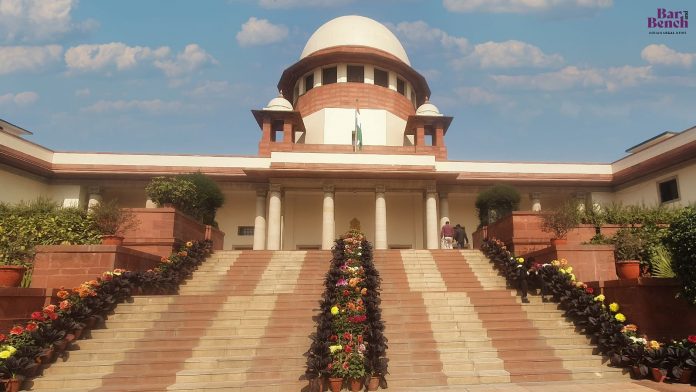









 Allow notifications





