Download Now
Home Blog Page 554

Regulatory concerns and rights available for social media influencers under the law

0
Image source - https://bit.ly/2UqZD7R

This article is written by Sriranjini Garegrat.

Digital era and digital marketing 

Over the last decade, we have observed that there is not a single sector/ industry that technology has not disrupted. From a little child to the elderly, everybody is attached to their smartphone, smartwatch, smart home, smart tv, laptop, or the latest smart something that is launched into the market! All aspects of our lives from work, shopping, entertainment, and social interactions marginally shifted to digital platforms. Now, the digital era is synonymous with digital marketing.

Social media is one such innovation that came out of digitization and, it’s no secret that the number of social platforms out there is – to put it lightly – high. Social media has changed the way in which people communicate and interact with each other. Individuals who could have never imagined speaking to each other due to their geographical distance, can now talk, see, employ, build a company and become best friends all in a matter of seconds! 

Easy accessibility and the reach of social media platforms have become a selling point for brands and marketing teams across the globe. The plethora of platforms to choose from and variety in demographics does not hurt either. Companies have always set aside copious amounts on marketing strategies. With the advent of digitization, advertisers have now turned to digital arenas for marketing their products. Social media is one such digital marketing route. To put things a little into perspective, according to Datareportal, in July 2021 there were about 4.48 billion social media users around the world, which equates to about 57% of the total world population. 
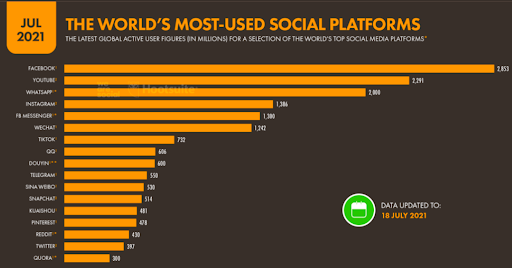
Image source: Kepios analysis (Jul 2021)

It is, therefore, no surprise that advertisers would choose social media platforms as their choice of avenue for product placement. In this article, we will look into the regulations, rules, and ethical codes surrounding social media marketing with a specific focus on influencer marketing.

The influencer marketing trend

Social media influence has gained so much popularity in the last few years that it has become a full-time lucrative job. What seemed like a term that was coined for everyday users of social media who were engaging audiences by talking about their lives, cracking jokes, or just having a conversation to increase followers on their pages, is now the most sought-after gig by celebrities and models alike. Needless to say, the impact that influencers have on their audience along with their seamless reach to millions of people from the comfort of their homes, did not go unnoticed by marketing teams the world over. The influence that influencers have on end consumers is no joke. Due to their authenticity and simplicity, people often turn to their favourite influencers for product advice. 

Associate professor of marketing Anjali Bal defines influencer marketing as, “a type of social media marketing that uses endorsements made by people, organizations, and/or groups seen as influential or experts in a particular area.”

This is what influencer marketing hub states about influencer marketing: “the important thing here is that the online collaborators are genuinely influential. They have to influence the type of people with whom a brand wishes to establish a touchpoint. Influencer marketing is much more than finding someone with an audience and offering them money or exposure to say good things about you.”

Influencers could range from celebrities who are already well known to the public (‘celebrity influencers’) or individuals who have acquired a huge following and created a niche for themselves by their prominent social media presence (‘everyday influencers’). You can learn more about the concept of everyday influencers HERE. Brands have an array of individuals to choose from to endorse their products/services. Much of their choice would depend on the following factors:

  • Cost;
  • Following (reach);
  • Social media presence;
  • Knowledge of the industry (niche);
  • Delivery/ authenticity of endorsement.

Influencer marketing was already gaining momentum in a pre-pandemic market. During the pandemic, physical shooting of advertisements was banned in most countries, brands therefore, leaned all the more towards social media marketing. A market that was worth US$8 billion in 2019, is predicted to be worth a whopping US$15 billion by 2022. Furthermore, organizations have realized that the only way to reach and connect with a younger audience is through social media.

So how exactly does this form of marketing work? Organizations could either hire an influencer to create a short video on their social media page to endorse their product or, collaborate with celebrities that have a huge fan following on social media stirring up a trend amongst consumers. The fundamental steps that go into executing a successful influencer marketing campaign would look something like this:
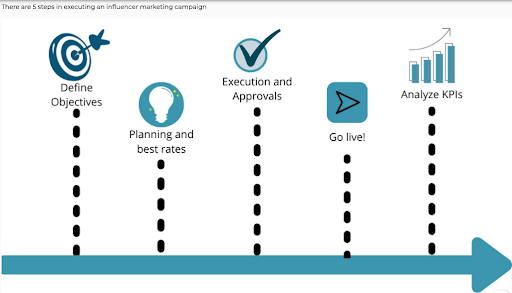
Image source: Media Ant

Fast-food chains have entered such collaborations in the last year to drive up traffic in an industry that was considerably affected by the pandemic. A recent example of this would be the BTS meal created by McDonald’s in collaboration with the Korean boy band ‘BTS’. McDonald’s in the past has also collaborated with rap artist Travis Scott however, the BTS meal was a much bigger success (not surprising considering the boy band has 47 million followers and counting just on Instagram!). It was reported that the BTS meal brought in the most customers the chain had seen in the whole year in merely a week since its launch. 

Some interesting influencer marketing case studies can be found HERE and HERE.

What could possibly go wrong?

Influencer advertising has picked up a lot of momentum in the last few years. The last year saw retail outlets being shut, shooting of ads getting banned, and cost and budget cuts happening on a high scale. Yet companies and manufacturers had to sell. In order to sell, you have to market. Marketing teams, therefore, had to adapt overnight and shifted the majority of their marketing strategies to influencer marketing on social media. 

A recent study of social media users found that over 50% of users preferred getting product information from influencer accounts, and 34% have found brands solely based on influencer posts.

Soon enough, regulators and advertising boards around the world started to realize that the impact that influencers had on their followers was significantly high. There were several consumers that used products that their ‘idols’ or ‘icons’ had spoken highly of on their social media platforms, but caused severe allergic reactions when used by them. 

  • Where does one go in such circumstances? 
  • Who is to blame? 
  • Where does the brand’s responsibility end, and where does the influencer’s responsibility start? 
  • How are consumers protected? 
  • Is there even a contract entailing the responsibilities of each party?

The concept is quite simple: advertisements that are broadcast on television also have to follow certain fundamental standards as set by the advertising board and local legislations. It has been a long-standing debate as to whether celebrities should be held directly liable for any misleading information regarding the brands they endorse. In fact, there were several FIRs filed against renowned Bollywood celebrities for making false and misleading claims in multiple sectors

Consumers have certain expectations from the people they watch or follow. A basic expectation to not be misled or lied to. Influencers have a lot of people following them and have built a reputation for being authentic. They have a significant influence on their followers’ physical, mental, and lifestyle preferences. Consumers are not concerned about the brand’s ethics in such matters, but they do trust that their icons (who claim to be everyday people like themselves), will not misrepresent or mislead them. Influencers are not to blame for this, they simply want an opportunity to showcase their skills. 

It is therefore important that there are standards or codes of ethics at the least for influencers and endorsers alike to follow when they choose influencer marketing as their medium to market their products. 

What are some notable examples of influencer marketing backfiring?

These few examples are only the tip of the iceberg… 

Influencer marketing regulations and ethics

Regulators around the world have understood the need for protecting the interests of consumers and influencers alike. There are various advertising legislations and standards that have been implemented around the world. Below is a quick glance at the influencer marketing regulations of some countries (this must not be considered as an exhaustive list by the reader. Each country has its own regional influencer/digital marketing laws):

SNo:

Country

Regulator

Governing Regulation

Mandatory Requirements Run-through

Useful Resource

1.

USA

Federal Trade Commission (FTC)

FTC’s Endorsement Guidelines

  • Influencer’s responsibility to be aware of their duties and disclose when necessary;

  • Influencers must disclose when they have any financial, personal, employment, or family relationship with the brand – financial relationship does not only mean money. Even products given for equivalent value are counted;

  • Even if posted by someone residing outside the US and foreseeable that the US audience will be viewing the post, this law applies.

  • Disclosure rules: disclosures must be hard to miss and prominently placed under the post; in simple and clear language, bold font; disclosures must be the first thing that users see.

https://www.ftc.gov/system/files/documents/plain-language/1001a-influencer-guide-508_1.pdf

2.

UK

a. The UK Advertising Standards Authority (ASA);

b. The Competition and Markets Authority (CMA);

c. The Committee of Advertising Practice (CAP).

UK Code of Non-broadcast Advertising and Direct & Promotional Marketing (the CAP Code); and 

The Consumer Protection from Unfair Trading Regulations 2008 (CPRs)

  • Brand has to have some level of ‘control’ on an influencer’s post for it to be counted as an ad under the CAP Code;

  • ‘Sponsored ads’ where an influencer receives freebies, gifts, free visits to the store, etc. instead of cash, are not subject to the CAP Code;

  • Ads must be obviously identifiable as ads and endorsements (prominent and clear labeling of posts);

  • Consumers have to know that the ads are ‘paid for’;

  • Make sure you are aware of the industry rules applicable to you when advertising products like food and supplements, or age-restricted products like alcohol or gambling.

https://www.asa.org.uk/uploads/assets/uploaded/3af39c72-76e1-4a59-b2b47e81a034cd1d.pdf

3.

India

The Advertising Standards Council of India (ASCI)

Guidelines for Influencer Advertising in Digital Media

  • Compliance obligations on both influencers and advertisers;

  • If the advertiser has a ‘material connection’ with the influencer, they must ensure that the ad is compliant with ASCI’s Code for Self-Regulation of Advertising Content in India and the Guidelines;

  • ‘Material Connection’ includes cash, free products, discounts, gifts, trips, hotel stays, awards, media coverage, an employment offer, etc. Even if an influencer is not specifically asked to speak about a product and provides an unbiased opinion, they would need to disclose the post as an ad if there is a material connection;

  • Disclosures must have clear and unambiguous labeling. Like the US influencer law, disclosures must be hard to miss by consumers.

  • Guidelines go a step further to state that influencers must conduct their own due diligence and ensure that advertisers can back up the claims they are making regarding the product.

https://ascionline.in/images/pdf/guidelines-for-influencer-advertising-in-digital-media-final.pdf

4.

France 

Autorité de Régulation Professionnelle de la Publicité (ARPP).

ARPP’s Digital Advertising and Marketing Code.

  • Brand must have editorial control over the post. Influencers should be receiving monetary compensation in return; 

  • It must be noted here that, even where the advertiser does not have ‘control’ over the post and the influencer is not ‘promoting’ the product per se, the post must clarify the kind of commercial relationship between the parties;

  • Marketing communications must be clearly distinguishable. Must carry French labeling at the beginning of each post. 

https://www.arpp.org/nous-consulter/regles/regles-de-deontologie/digital-advertising-and-marketing-communications-code/

5.

Australia

a. The Australian Association of National Advertisers (AANA);

b. The Australian Competition and Consumer Commission (ACCC)

AANA’s Code of Ethics

Best Practices Guidelines 

  • The Code and its penalizing provisions are applicable to advertisers only. Influencers only have a duty to include appropriate labeling under their posts. The Code only applies to influencer’s when they are advertising their own products (because in this case, they are advertisers as well);

  • Disclosures must stand out and use appropriate hashtags. 

https://mba-lawyers.com.au/australian-social-media-influencers-now-required-to-disclose-advertising/

In 2016, celebrity Scott Disik put up a post where he shared a little too much information regarding his commercial relationship with a brand than he intended to. He had simply copy-pasted what was sent across to him and did not review or put his own efforts into the caption. His post read, “Here you go, at 4pm est, write the below: Keeping up the summer workout routine with my morning @booteauk protein shake!” This was what the post looked like:

Image source: Content Marketing Institute, Full disclosure: the murky world of influencer marketing

As an influencer, what should you remember when endorsing products?

The rules are pretty straightforward: 

  • Be sure to do your due diligence on the brand and product;
  • Your posts must be honest and transparent;
  • Insist on a written document for short period/ ad hoc works also – always record your terms in black and white. At the end of the day, to your followers, you are the face of the brand/ product. It is your reputation on the line;
  • Ensure your disclosures are unambiguous and prominent. Look up the requirements on labeling and hashtags. Some examples of clear hashtags are #ad #advertisement #partnership #paidpartnership #sponsored;
  • Be aware of any applicable regional legislation and social media platforms’ endorsement guidelines. If brands insist on not including appropriate disclosures for any reason, you can let them know of the relevant legal implications. Some legislations inherently have hefty sanctions and fines mentioned for non-compliance; and
  • You are allowed to ask questions regarding the products you are endorsing

Here is an example of an ambiguous and badly made influencer marketing post v. a clear, well made and compliant post:

Image source: Performance Marketing Association influencer guidelines

Regulatory concerns

Regulating activities on digital platforms or mediums is always tricky and legislatures are still grappling with the pace at which technology is advancing. Influencer marketing is also one such area that has certain concerns when it comes to building regulations around it primarily because it stretches across specific jurisdictions and industries. Some of the concerns that regulators face are:

  • Fraudulent Accounts

As we are all aware, making an account on social media is no hassle whatsoever. It only takes a few minutes for your account to go live. The ease with which accounts can be made is sometimes taken for granted. Some individuals create “influencer accounts” with ads that they claim are sponsored, but in reality, there is no contractual relationship with the brand. Influencers might just be using or trying out the brands and uploading posts on the same. Brands are tagged in these posts, so to consumers, it may seem like a ‘sponsored partnership’. 

Influencers want it to look like a sponsored ad as well because when the brand notices the amount of publicity it is getting, they would want to monetize this by then creating a financial relationship with the influencer. 
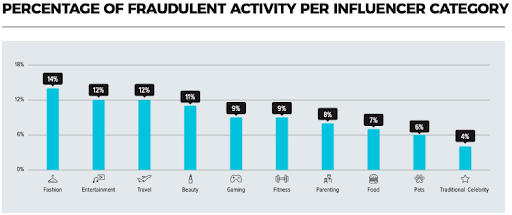
Image Source: Captiv8, 2018 fraud influencer marketing benchmark report

  • Fake number of followers

Brands and endorses primarily look at influencers’ followers to gauge the level of influence and popularity they have amongst consumers. The number of followers is also a metric for financial remuneration. More the influence, the higher the compensation. Some influencers, therefore, create multiple accounts under different names posing as consumers/followers of the influencer’s main account. These fake accounts are then sold in bundles thereby increasing their follower count. 

It has been reported that celebrities like Amitabh Bachchan, Badshah, and Shah Rukh Khan have also paid marketing agencies to boost their street cred. According to Kamala Bryant, a PR Manager who finds influencers to promote products on Instagram, three out of every ten influencers she comes across have fake followers.

  • The influencer effect

Social media has content that a majority of adults might consider as problematic. Content relating to alcohol, drugs, pornography, unhealthy foods, and smoking. Such posts are also sponsored and influencers cannot possibly know the age group of all their followers. Their posts do create a negative impact on the minds of their younger followers. Children from a very young age are exposed to plastic surgery, unaffordable products, and pressure to keep up with the latest trends. 

Nowadays there is another problem in the tourism industry wherein influencers market places that are intentionally under the radar for conservation purposes. This drives up the traffic in such places, consequently leading to the destruction of the environment.

Conclusion

Influencer marketing is just now gaining momentum and thus, regulations surrounding this marketing strategy are also quite nascent. Legislators are realizing the importance of having separate laws to govern influencers and endorsers in the digital marketing arena. 

Compliance with legislation is extremely important to avoid hefty sanctions and fines, and this can only be successful if both the advertisers and influencers work together. 

Authorities must also regularly audit and monitor social media activity to highlight errors and provide time to advertisers and influencers for rectification. Directly penalizing them will not serve the purpose. 

Influencers require time and education regarding the implications of non-compliance to be able to follow the law. Knowing their rights will help them negotiate their affiliate contracts better. 

Some social media platforms like Youtube and Instagram have inherent endorsement guidelines that must be followed by influencers. This is a vital and useful policy that social media companies must inculcate within the culture of the organization. Social media can be accessed by different age groups, it is important to have strict marketing guidelines in place to ensure transparency to their users. Transparency always builds trust and finally increases the reputation of the organization in the long run.

The next time you see a post on social media by one of your favourite influencers, watch out for those hashtags and disclosures! 

References


LawSikho has created a telegram group for exchanging legal knowledge, referrals, and various opportunities. You can click on this link and join:

https://t.me/joinchat/J_0YrBa4IBSHdpuTfQO_sA

Follow us on Instagram and subscribe to our YouTube channel for more amazing legal content.
Download Now

Free legal aid : an analysis of Section 32 of the Advocates Act, 1961

0
Image source-https://rb.gy/gus1z0

This article is written by Ishan Arun Mudbidri, from Marathwada Mitra Mandal’s  Shankarrao Chavan Law College, Pune. This article gives an overview of Section 32 of the Advocates Act 1961.

Introduction

Advocates play a very important role in the justice delivery system. Advocates help in resolving the grievances of the people and giving them their rights, Therefore, the advocates have gained the trust of the people over the years.

The Advocates Act, 1961

Advocates are an integral part of the judiciary. They are also a part of the judicial proceedings. Hence, advocates have certain duties which must be followed for the smooth functioning of the justice delivery system. The duties of legal practitioners have been laid out in different enactments over the years, starting with the Bengal Permanent Settlement  Regulation 1793. As times changed, the legal system evolved and the scope of the legal practitioners also grew. In 1923, the All India Bar Committee was appointed. The main objective of this committee was to fill the gaps in the legal system.

On the recommendations of the All India Bar Committee, the Advocates Act in 1961 was enacted. This extended to the whole of India except Jammu and Kashmir. The main aim of the Act was to govern the professional ethics of an advocate in India. The Bar Council of India and State Bar Council of India were established due to this Act. Before the enactment of this Act, legal practitioners were divided into vakils, lawyers, barristers, advocates, etc. This Act recognized only one category i.e Advocates. Section 2(1) of this act states that an advocate means any person who fulfills the conditions required under this Act is an advocate.

Section 24 of the Act

Section 24 of the Advocates Act mentions the conditions required to be enrolled as an advocate.

  1. The person is a citizen of India.
  2. Has completed 21 years of age.
  3. Has obtained a degree in law after 12th March 1967, after completing a three-year course in law from a recognized University in India.
  4. Currently, a person wanting to get enrolled as an advocate must pass the All India Bar Council exam.

In the case of V. Sudeer v Bar Council of India & Anr, (1999) the Court observed that a person can be enrolled as an advocate only under the rules or conditions given under Section 24 of the Act and not on the basis of any other factors. However, the candidate must pass the Bar Council exam.

Rights and duties of an advocate under this Act

Right to practice in any court

Section 30 of the Act states that the advocates have a right to practice in any court or tribunal in India. This means that an advocate has a right to enter any court and observe the proceedings.

Right to be heard first

Under Section 23 of the Act, the advocates have the right to be heard first in any court proceedings and also not be interrupted by any third party.

Right to meet accused in jail

This right has no specific mention in the Advocates Act but it is a known fact that the advocates can meet their clients in jail as many times as they want.

Duties of an advocate towards clients

  • Advocates must give proper legal advice to their clients about the case.
  • In case an advocate wants to withdraw from the case, he/she shall give notice to the client stating the valid reason for the withdrawal. The advocate shall also give a certain amount of fees to the client as a refund in case of withdrawal.
  • To update the client on any particular briefing.
  • To maintain confidentiality and not disclose any valuable information of the client to the third party.

Duties of an advocate towards the court

  • To maintain discipline and a respectful attitude towards the legal system.
  • To conduct himself/herself in a dignified manner.
  • To enter the courts wearing a proper dress code.
  • To not influence the proceedings of the court for personal gains.

Duties of an advocate towards the opposite party

  • The advocates should not join the opposite party after withdrawing the case.
  • The advocate should communicate only with the opposite party’s lawyer and not with the opposite party directly.
  • The advocate should not use illegal means to win over the witnesses of the opposite party.
  • The advocate should win against his opponent by arguing well and not by fighting with his opponent.

Duties of the advocate towards co-workers

  • Advocates should not be arrogant and egoistic towards their colleagues. This will have a bad impact on the profession of the advocate.
  • The advocate should not take up a case for which another advocate is already working. This can be done only after taking prior permission of the Court and the other advocate.

Section 32 of Advocates Act in context of free legal aid

Legal aid is a concept in India wherein, the people who are economically weak in society, or live in rural areas where they don’t have an access to courts are provided with legal assistance. 

This concept stands true to Article 14 of the Constitution of India which guarantees equality before the law to all citizens in India. Further, Article 39A of the Indian Constitution guarantees free legal aid to the needy. It states that the legal system promotes justice on the basis of equal opportunity, and shall provide free legal aid in any way, to ensure equal opportunities for all the citizens.  Rule 46 of Section 6 of the Bar Council of India states that every advocate shall while practising law bear in mind that any person can be in need of a lawyer, and it is the duty of the advocate to provide legal assistance without asking for any fees. 

In the case of Hussainara Khatoon v. the State of Bihar (1979), it was held by the Court that, if an accused is unable to afford a lawyer then, he/she will have a right to free legal aid at the expense of the State. Hence it is clear by now that legal aid is a fundamental right of the citizens and a duty of the legal practitioners. Section 7(1)(b) of the Advocates Act states that the Bar Council of India should organize legal aid to the poor. Section 30 of the Advocates Act mentions the right of advocates to practice in any court inside the territory. But, Section 32 of the Act states that any court or other authority can permit a person, who has not enrolled as an advocate before it. 

Further, Article 19 of the Constitution gives a right to practice any profession or occupation to the Indian citizens. Hence, any person has a right to practice law in India so, according to this Section, any person can appear in a court in India. According to Section 33 of the Act, a person who is not enrolled as an advocate shall not be entitled to practice in any court. 

Section 45 of the Act also imposes a punishment of six months on the person who has not enrolled as an advocate but is practising in the courts, which is an illegal practice. Hence, according to the provisions of the Advocates Act, only advocates have the right to practice before the courts. However, the right of appearance mentioned in Section 32 is an exception to the right to practice before any court and other provisions mentioned above.

Case laws

Harishankar Rastogi v Girdhari Sharma (1978)

In this case, the petitioner sought the permission of the Court to be represented by another person in a case who is not an advocate under the provisions of the Advocates Act 1961. The Court examined the provisions of Section 30 of the Act, which state that only the advocates are entitled to practice in any court in India.

With regards to Article 19 of the Constitution which guarantees rights to citizens to practice any occupation, the Court observed that the States are open to imposing reasonable restrictions on the right. So, one of such reasonable restrictions imposed on this right is Section 29 of the Advocates Act which states that only advocates are entitled to practice the profession of law.

The Court finally concluded the case by observing that a person who is not an advocate has no right to enter the court. He/she must take prior permission from the Court. Later it is up to the Court to accept or withdraw the permission.

R.K Chawla v Goa antibiotics and pharmaceuticals Pvt Ltd. (2005)

In a similar verdict to the above-mentioned case, the Court, in this case, observed that, although Section 32 of the Advocates Act permits any person who is not an advocate to appear before the court for a case, there is a difference between a right to appear on behalf of some other person and the Court’s permission to allow a non-advocate to appear before it.

The Court further mentioned Section 29 and Section 33 of the Act which states that only advocates can appear before the court. The Court concluded by stating that a power of attorney holder cannot appear before the court unless the Court has granted permission to the holder under Section 32 of the Act.

Hence if a person is a non-advocate, he/she can appear before the court only after taking permission from the Court. The Court further has a right to ask the person on what basis he/she is appearing on behalf of the concerned party.

T.C Mathai v District and Session Judges, Thiruvananthapuram (1999)

In this case, the petitioner claimed to be the power of attorney holder of a couple. He sought permission of the Court to appear and plead before it. The Court, however, declined the request of the petitioner. The petitioner moved the High Court of Kerala under Article 226 of the Constitution. The High Court also dismissed the plea.

Then the petitioner moved to the Supreme Court. The Supreme Court hence observed that Section 2 of the Power of Attorney Act 1882, gives the right to the donee of a power of attorney to do anything with his own name and signature by the authority of the donor. The Act recognizes that the donee may use his own name and signature for any act where sealing is required, by the authority of the donor. Every act so executed shall be in effect with the law as if it had been done by the donee of the power, in the name, and signature of the donor thereof.

Hence, Section 2 of the Power of Attorney Act, cannot hold true to the general provision of a code which states that a particular act should be done by the party concerned and not anyone else. When the code requires that the concerned party should appear before the court, the power of attorney holder cannot take his/her place. It is a different thing if the court has permitted the parties regarding the right of appearance. Otherwise, the accused can in no way send his/her power of attorney on his/her behalf.

Conclusion

The Constitution of India has made it a duty for advocates to provide free legal aid to the needy and poor. The Constitution has also guaranteed the right to practice any profession or any occupation within the territory of India. But on this basis, any person not having the knowledge or adequate skill of that particular job should not take it up.

The Constitution has guaranteed citizens their rights, but with reasonable restrictions. Therefore, when it comes to allowing a non-advocate person to appear before a court under Section 32 of the Advocates Act, there are certain restrictions that stop a non-advocate person from participating in the Court. Lastly, the Advocates Act 1961 is a great addition to the Indian Legal system. The act has brought integration in the context of advocacy in India.

References


LawSikho has created a telegram group for exchanging legal knowledge, referrals, and various opportunities. You can click on this link and join:

https://t.me/joinchat/J_0YrBa4IBSHdpuTfQO_sA

Follow us on Instagram and subscribe to our YouTube channel for more amazing legal content. 

Download Now

Analysing the interplay of blockchain technology and AI arbitration

0
Image source-https://rb.gy/ss5v29

This article is written by Sonali who is pursuing Certificate Course in International Commercial Arbitration and Mediation from Lawsikho.

Overview

“It has become appallingly obvious that our technology has exceeded our humanity.” – These were the words of German Theoretical Physicist Albert Einstein who understood what’s happening today way before anyone else could have thought of.

With the ever-developing territory of technology, Blockchain and Artificial Intelligence (AI) have become new buzz words in the market recently in the last few years and the international arbitration field is also not oblivious of this fact. 

The use of these technologies in international arbitration can be summed up in this statement by Steve Jobs on technology which states that – 

“We are going to be able to ask our computers to monitor things for us and when certain conditions happen, are triggered, the computers will take certain actions and inform us after the fact.” 

This statement can be fully understood on a perusal of what these new technologies have for the international arbitration community. In this article, we will deal with the interplay of blockchain and AI arbitration, how they function and their journey ahead.  

What is AI Arbitration?

Defining AI

Artificial Intelligence (AI) is the continuous evolution of existing computer systems to do or execute what requires human intelligence. The tasks may include but are not limited to reasoning, problem-solving using huge data, communicating through language using words or signs, learning new things from past experiences, continuous adapting to new circumstances, perceiving the surrounding environment and decision making.  

One of the main subsets of AI is machine learning which is used to provide more accurate results using structured and semi-structured data. It allows the AI tools to learn from past experiences automatically without explicitly programming anything. Whereas AI is concerned with enhancing the probability of success, machine learning is mainly focused on accuracy and patterns and making predictions based on given data.  

Presently, AI tools that are highly based on machine learning are globally used in international arbitration for the following purposes:

  • Efficient legal research.
  • Selecting arbitrators, counsels and experts required.
  • Facilitating the automation of procedures.
  • Adjudication process (predictive justice).

Functions of AI in Arbitration

Today the main function of AI is to assist lawyers in the arbitral process. The work profile of AI ranges from general paperwork namely analysing data to doing specific tasks such as analyzing precedents and summarizing and translating evidence based on the inputs of the parties. Some AI tools used in international arbitration are Arbitrator Intelligence, Billy Bot, Lex Machina, Arbitrator Research Tool (ART), LexisNexis, Ross Intelligence, Litigate and Arbilex.

What is Blockchain Arbitration?

Defining Blockchain

A blockchain is a digital database for accounts of several transactions and a copy of every new transaction is being updated to every participant for transparency and decentralization of controlling power. A database having several participants is also known as Distributed Ledger Technology (DLT). The principal properties of DLT are:

  • Transactions are encrypted.
  • All participants agree on the validity of the transaction before submitting it into the network.
  • Validated agreements cannot be changed.
  • All transactions are time-stamped.
  • It is programmable e.g. Smart Contracts.

There are four types of blockchain namely Public Blockchain, Private Blockchain, Consortium Blockchain and Hybrid Blockchain. Going by their inherent properties and traits one can understand that for international arbitration Private Blockchain and Consortium Blockchain is the optimum type to reduce the involvement of the outside public and increase the security and privacy of the network. Their basic attributes are:

  • Private Blockchain: This is used within an organisation amongst limited and selected people such as supply chain management. The organization itself controls the security and accessibility of the network.
  • Consortium Blockchain: Here more than one organization controls the network for exchanging information and for mining purposes (methodology used to validate a transaction for entering into a block).

The function of Blockchain technology in Arbitration

The relevance of blockchain technology in international arbitration has arisen from the advent of Smart Contracts. The terms of an agreement in a smart contract are written in the line with codes. As there is no central authority, the legal system or enforcement mechanism, it is a self-executing contract whose terms are encrypted and is updated among all participants in the decentralized blockchain network. They are trackable and irreversible. 

The encrypted terms of the contract would include the arbitration clause in the coded form which will get triggered on the occasion of default such as breach of contract, delayed delivery, non-payment or non-performance of obligations by either of the parties to the smart contract. Thereafter, parties will exchange their submissions and communicate through the platform itself.

Upon completion of scrutiny of all evidence, the arbitrator will render an award in which the penalty awarded be settled automatically from the security deposits made by the parties and any advance payment already made in the contract. Therefore, there is no need for an enforcement mechanism. 

Not only the use of blockchain can be kept for storage purposes and as a repository for storing documents but the entire process can be automated by using AI algorithms for decision making and other specific tasks as mentioned above in this article. 

Here arrives an interplay of blockchain technology and AI Arbitration. Therefore, we will further see and analyse here the functionality, challenges on board and future prospects of this union in international arbitration scenarios.   

How do they function together?

The interplay of Blockchain Technology and AI Arbitration

From entering into a Smart Contract to triggering of arbitration till serving of final award upon parties, the two concepts work harmoniously to achieve the ultimate goal of international arbitration of fast, efficient and less costly resolution of disputes of contracting parties. 

Their roles can be differentiated into two categories i.e. procedural and legal. The AI tools help in executing the arbitral process more efficiently through appointing arbitrators and experts, summarizing precedents and previous judgments, efficient legal research for counsels etc. Similarly, blockchain technology helps in the legal domain stretching from signing a smart contract, automatic invoking of arbitration clauses to recognition/enforcement of final awards.

The benefit of this interplay

Accordingly, after delving into the individual benefits of both blockchain technology and AI arbitration, we can arrive at a conclusion that they together offer:

  • Greater cybersecurity than cloud computing.
  • More efficiency in the arbitral proceedings.
  • More transparency in arbitral awards.
  • Less risk of cognitive biases of arbitrators while adjudicating.
  • Efficiency in recognition and enforcement of awards.
  • Confidentiality of proceedings and outcome between the restrictive nodes of the blockchain network.

These benefits involve a unique blend of transparency and confidentiality. The transparency of arbitral awards due to AI tool’s predictive analysis aids the parties to predict the outcome in advance and prevent them from filing frivolous claims and settle accordingly. Simultaneously, the restrictions on participants of the blockchain network gives ample confidentiality to the matter.

Risks and Challenges associated

Enforceability of awards

To understand the glitches of enforceability, we can bifurcate the blockchain arbitration into “On-chain arbitration” and “Off-chain arbitration”. The former denotes the arbitration of disputes arising out of simpler contracts, more classic one which is fully automated and self-executing. 

The latter refers to those arbitrations which are not fully automated and specific tasks such as the appointment of arbitrators, legal research or summarizing of documents submitted is done through AI tools to facilitate the arbitration process narrowly. 

It is the off-chain arbitrations where the enforceability of an arbitral award is highly uncertain due to the following reasons:

  • Article II of the New York Convention on the enforcement of the foreign arbitral awards, 1958 (NY Convention) requires the arbitral award to be in “written” form and signed by the parties for enforcement which is impractical in a coded award or on a virtual platform. 
  • However, Article 7 of the UNCITRAL Model Law on International Arbitration, 2006 incorporates the possibility of “electronic communications” within the scope of the telegraph and telefax as it is not an exhaustive list but the similar provision has not been incorporated in Article II(2) of the NY Convention till date. 
  • The seat of arbitration if not pre-decided may pose great hurdles in the enforceability of award as the participants of the blockchain network receive their copies in their computer system which may be situated in several places. Here, difficulty arises because the seat of the arbitration must be a signatory of the NY Convention to receive the benefit of enforcement in more than 166 countries. 

Principles of Natural Justice

All the benefits mentioned above are true to a certain limit. They are most optimum for the document only based arbitrations and often do not take into consideration the oral hearings for adjudication which are an integral requirement for complex arbitrations. The traditional rule of principles of natural justice is an integral part of any dispute resolution mechanism which is undermined in the on-chain arbitrations. The evidence from third parties which sometimes may prove highly beneficial is totally ruled out of the proceedings due to the restrictive blockchain network. 

Security of data

Generally, the hacking of a transaction involved in a public blockchain is almost impossible because of the availability of several nodes in the network and validation of every change in the block by mining. But in a private blockchain network when few parties are involved, it is much easier to hack into the few nodes to change information or temper with the evidence. 

Is their future bright together?

With the time being, smart contracts are getting their recognition across the world through conventions and state laws. The UNCITRAL Model Law on Electronic Commerce, 1996 gives the concept of “functional equivalent approach” which means that if an agreement fulfils the traditional requirements of being in written form, it must be considered “in writing”. 

This rule has been recognized in the US at the federal level under the model laws for the states naming Uniform Computers Information Transactions Act (UCITA) and Uniform Electronic Transactions Act (UETA). This approach will ultimately validate the coded arbitration agreement clauses as “in writing”. Further, the validity of electronic signatures and electronic records in interstate commerce is recognized under the federal Electronics Signatures Recording Act (E-Sign Act).

Similarly in India, Section 10A of Information Technology Act, 2000 validates the contracts formed through electronic means. Section 3 of the Arbitration and Conciliation Act, 1996 allows any communication through electronic means. 

However, it is not clear what can be included in an electronic means but reference to Section 2(1)(t) of the IT Act, 2000 which defines “electronic means” can be sought. Also, to decide upon a seat of arbitration the courts enforcing the award need to base their judgment on the common principles of territorial nexus of the contract or the place of arbitration i.e. venue or institute where it was actually held.   

Conclusion

Consequently, we can arrive at a situation where a full-fledged combination of blockchain and AI arbitration is currently infeasible due to uncertainty in enforcement laws, development of accuracy of AI tools, the impossibility of replacement of arbitrator with the AI pertaining to rules of principles of natural justice and safety issues. 

Whereas we can continue with the use of AI tools for facilitating arbitral procedures and helping counsels for the better conduct of their case and using blockchain for storage and contractual purposes. This combination is an optimum strategy for time-bound and efficient arbitral proceedings in simple and classic disputes which does not require much human intervention in terms of oral hearings and personal opinions. Therefore, the coming days will see some drastic changes in this area and soon it will be omnipresent. 

References

  1. https://www.britannica.com/technology/artificial-intelligence/Reasoning
  2. https://www.javatpoint.com/difference-between-artificial-intelligence-and-machine-learning
  3. http://arbitrationblog.kluwerarbitration.com/2020/09/26/future-of-ai-in-arbitration-the-fine-line-between-fiction-and-reality/
  4. https://www.lexology.com/library/detail.aspx?g=a38af5ee-2713-43b1-abb3-367955126604
  5. https://www.euromoney.com/learning/blockchain-explained/what-is-blockchain
  6. https://data-flair.training/blogs/types-of-blockchain/
  7. https://www.investopedia.com/terms/s/smart-contracts.asp
  8. https://techlawforum.nalsar.ac.in/demystifying-the-cryptic-relationship-between-blockchain-and-arbitration/
  9. http://arbitrationblog.kluwerarbitration.com/2018/11/12/the-marriage-of-artificial-intelligence-blockchain-in-international-arbitration-a-peak-into-the-near-future/
  10. http://cilj.co.uk/2020/12/16/blockchain-arbitration-the-future-of-dispute-resolution-mechanisms/
  11. https://techlawforum.nalsar.ac.in/demystifying-the-cryptic-relationship-between-blockchain-and-arbitration/
  12. http://arbitrationblog.kluwerarbitration.com/2019/08/21/enforceability-of-awards-from-blockchain-arbitrations-in-india/
  13. http://cilj.co.uk/2020/12/16/blockchain-arbitration-the-future-of-dispute-resolution-mechanisms/ 

LawSikho has created a telegram group for exchanging legal knowledge, referrals, and various opportunities. You can click on this link and join:

https://t.me/joinchat/J_0YrBa4IBSHdpuTfQO_sA

Follow us on Instagram and subscribe to our YouTube channel for more amazing legal content. 

Download Now

Impact of the second wave of COVID : legal and governmental concerns

0
COVID-19
Image source - https://bit.ly/2wShoBd

This article is written by Aporva Shekhar pursuing B.B.A.L.L.B. from KIIT School of law. This article analyzes the impact of the second wave of COVID and its various facets.

Introduction

After the eventual decrease in the spread of COVID-19 during late 2020 the country was starting to get back to its normal state and people all around the country became complacent and stopped following the prevention norms. Warnings of the impending second wave of infection fell on deaf ears and this incognizance led to a rapid spread of this deadly malady once again. Only this time it decimated the country with the sharp increase in cases from mid-march, many people and businesses who were trying to cut the losses borne last year were forced to shut down their operations again. The lack of a robust medical infrastructure and the increase in preventable infections choked up the health system, causing even more avoidable deaths than the infection itself. The collapse of one system after another had a cascading effect over the entire country bringing it to a standstill, and the desperate families and people affected had no recourse left to preserve their lives.

Impact of the second wave on the functioning of institutions of government

The decrease in the infection rate when the pandemic first started was due to the nationwide lockdown that was declared on 25th March 2020 by the central government which had garnered appreciation internationally. But the lack of coordination between the authorities in the second wave worsened its impact on the country. The state government has jurisdiction in matters of health as it is under the state list as per the Constitution of India and the union government should have no jurisdiction in this matter. But it is evident that several states in our country fall short on technical expertise and resources required to facilitate the necessary health measures. Renowned medical organizations and institutes have only occupied an advisory role to the government and combined with several administrative hurdles the response to the second wave paled in comparison to its severity.

In a country with a mammoth population like India with widespread inequity, illiteracy, varying access to basic necessities and health care facilities, it becomes almost impossible to provide adequate healthcare to everyone. And with the sharp rise in infections and the gradual shutdowns from state to state a healthcare system that had not bounced back from the previous year was buckling under the pressure of critical patients. The influx of COVID-19 infected patients diverted the already scarce health care resources from the general afflicted patients which caused even more unnecessary deaths. The localized efforts of the state governments were not enough to deal with the crisis and the central government reserved the option for lockdowns as a last resort only to strengthen the hard-hit economy.

During the initial spread, urban areas were most affected and the rural economy continued to thrive with good yields, cheap labour, and less stringent lockdown measures. But in the second wave, rural areas reported more cases than the urban areas and this eventually led to the loss of employment for the rural sector which accounts for almost 58%.  The hospitality and tourism sector also bore the brunt of this economic slowdown, just when the cases were slowing down and the sector was gearing up to recover losses they skyrocketed again and the only purpose the hospitality sector could provide for now was isolation centres. The manufacturing and service sector are so closely associated and in both the waves of virus spread they suffered the consequences of lockdown. Due to this pandemic, India has seen the most severe contraction in its GDP since independence, measuring a contraction of 7.3 percent.

Legal concerns

The second wave of the pandemic has ushered the country into a public health crisis of gigantic proportions forcing the government authorities to face an unpredictable enemy. The economic, social, and health issues that this second wave has raised have forced the executive to tough challenges. The surge of cases in the second wave-exposed the shortcomings of authorities as well as our crumbling medical infrastructure.

With the evident collapse of executive control over the crisis, the judiciary was forced to tackle the issues. The courts were dealing with the issues faced by the people, ranging from a shortage of essential supplies to medical equipment by fulfilling its role and acting as a check and balance against the other arm of the government. And even though the Indian judiciaries are already overburdened with pending cases, the courts did their part to facilitate dialogue between the common people and the executive by way of advice and decisions. The courts have fulfilled their constitutional duties by ensuring the implementation of regulations and asking questions and making the government agencies accountable for their conduct and operation in this time of crisis.

Problems related to virtual court hearings : addressing accessibility 

India has progressed a lot since independence with many technological advances incorporated into our society, but the harsh truth is that the majority of the population still lacks basic access to uninterrupted electricity and internet connectivity. And the forced shift from physical hearings to virtual ones has not only affected the litigants but also the advocates. A large number of people had to get acquainted with new procedures related to virtual hearings all the while maintaining all procedural requirements. This has been a challenge for many legal professionals who do not have access to a good internet connection and do not possess the knowledge or skills required to use digital platforms effectively.

Another issue with accessibility-related to virtual hearings is that the proceeding is only for the advocates, the parties involved, and the judge, and this hampers the concept of a public hearing. The other problem with virtual hearings is that they might compromise sensitive data, hackers can easily enter any video conference and create disruptions. Third-party applications used to facilitate virtual hearings also present a security concern. As long these base-level hindrances are not eliminated, free access to virtual hearings will be a far-fetched dream.

Judicial activism v. Judicial overreach 

The Indian judiciary has played an active and important role in the second wave that has been internationally commended. But in several situations, the line between their intended duty and overreach had been blurred amid the crisis. The constitution of India envisions the judiciary to play a certain role in the overall government machinery. And while the judiciary may hold the role to make the executive responsible and accountable it cannot trespass into jurisdictions not granted to it. This dilution of powers during the crisis has created a dangerous precedent for the separation of organs of the government ordained by the constitution.

The looming oxygen crisis forced a hospital in Delhi to approach the High Court and the bench of J. Rekha Palli and Vipin Sanghi passed the decision stating that any authority obstructing the supply of oxygen should be hanged and not spared. Such disparaging comments coming from judicial institutions have a negative impact on the overall prestige of the judiciary. The Madras High Court took a similar stance against the Election Commission of India abandoning its nonpartisan approach to a certain extent by remarking that the Election Commission should be charged for murder for causing the second wave.

In another incident, the Allahabad High Court took suo moto cognizance and gave out detailed directions to the state government to place lockdowns across several cities. And while this was a necessary step taken by the court in the face of governmental inadequacy, when strictly viewed such an action violated the established legal requirements and jurisprudence in this arena.

Heading the bench for the suo moto proceedings, J. D.Y. Chandrachud has stated that the judiciary does not intend to replace executive function but merely facilitate the communication between the affected people and the executive. And amid a public health crisis of the second wave, any form of state direction is intended to alleviate the suffering of the masses and may not necessarily be considered as unjust overreach.

Increase in crime

The loss of employment has forced many people to use unlawful means to sustain themselves and their families. Crimes against the vulnerable sections of society have been on the rise and with the police and other authorities stretched thin with the implementation of COVID-19 relief efforts, malefactors have become bolder. People with no prior criminal record are forced to resort to illegal activities to make ends meet. And apart from crimes committed out of necessity other crimes against vulnerable people are also on the rise. Cases of rape against infected patients by the hospital staff, domestic violence against females, and other deplorable and heinous crimes streak the news headlines more frequently.

Cybercrimes have also been on the rise since the pandemic started, more and more cases are reported daily, ranging from scams to hate speech promoting communal violence. The economic impact that the pandemic has had on the economy has made people more susceptible to cyber-crime, the shift from physical medium to electronic platform has worsened the situation. Fake websites and loan schemes online have lured desperate people seeking the ends to their needs have been trapped by online scammers. Extortion by morphing and tampering to make explicit pictures has also been on the rise. The masses have been forced to shift their basic daily transactions online due to the pandemic and the flat learning curve for these online platforms has left many people more vulnerable to cyber-crimes.

People being locked in their homes for prolonged periods has made cases of domestic violence and child abuse more common which might even go unreported. Organised crime has been adapting and thriving in this uncertain climate, criminals have been using this opportunity to target more and more people through new phishing techniques. Failing businesses and other organizations have become the main target of usurious loans and terror financing.

Governmental concerns

The pandemic has affected almost all countries around the world severely but India is one of the few countries that has been rocked to its core by the pandemic. India being a developing nation has its own set of existing problems and the coronavirus only added to the burden of exposing the frailties of our administrative system. India has faced decimation on all fronts as a result of this pandemic. The increasing unemployment and crashing economy are some of the major concerns of the government. Cascading effect of the pandemic has cropped up numerous problems that the Indian administration needs to tackle. Even though the country is preparing for a third wave it still hasn’t recovered from the impact of the first two. The economic slowdown has resulted in numerous issues ranging from unemployment to increased crime. The severity of the health crisis has forced people to hoard essential items and organized crime has found a way to profit even in this crisis by overcharging desperate people for basic necessities. The dilapidated infrastructure has completely collapsed from the sheer volume of cases being reported every day. And while India has had success in the past organizing the largest vaccine drive for polio, it is currently falling behind due to a paucity of vaccines and misinformation in the public.

Economic impact

The economic impact of this crisis has been felt most by the middle class and people below the poverty line, as most of them burned through their little savings with no new source of income during the first wave. But according to predictions the fallout of the second wave should be confined to the June quarter. The ultimate course of the economy would be decided by the success of the vaccination program and private consumption. But there seems to be no relief for sectors that rely on physical functions, such as the tourism and labour-intensive manufacturing sectors, which cannot function without physical operation. And amid the increase in infections in the rural areas the lockdown regulations have hampered the agricultural sector as well which provides for the income of 58% of the population. 

The Reserve Bank of India had predicted a growth of 10.5 percent for this financial year but the impact of the second wave pushed that number down to 9.3 percent. And with the impending third wave, the number might decrease even more if the vaccination program does not succeed. But the less stringent localized lockdown norms have had a positive effect on the economy and even add fuel to economic revival.

Risks for the banking sector

The effects of the second wave pose serious threats for the banking sector of the Indian economy with lasting repercussions. Measures to contain the spread of the virus might further reduce the stimulus in the banking sector. The brunt of the rising infections has been felt by important states that account for forty-five percent of total loans in the banking sector. The ongoing crisis could seriously have a detrimental impact on the fragile business sector which is still reeling from the effects of the 2020 lockdown. While a pan-India lockdown like the one that was imposed in 2020 has been reserved by the government as a last resort, the swift spread of the virus projects a very bleak future for the sector. Considering the current situation the banking operations would have to continue to face several challenges. The sluggish recovery of the economy is now being slowed down further with the ongoing crisis, making it very unlikely for banks to contract new business. 

With a lack of new economic opportunities and layoffs in all the sectors, people have been relying heavily on their savings to sustain themselves during this period of economic slowdown. The increasing restrictions that are necessary to control the spread of the virus have severely impacted the income and savings of individuals which has greatly affected retail loans from the MSME (Micro, small and medium enterprises) sector. However, the state-guaranteed refinancing scheme has helped several MSME institutions to continue their operations during this time of economic difficulty. Moreover, state banks have suffered more during this second wave as opposed to private banks considering their greater participation in relief measures organized by the government and their already weak asset quality. The extension of the refinancing scheme till 30th June 2021 is a short-term remedy at best and could expose the sector to stressed MSMEs in the long run. The more accommodative fiscal stance of the government may alleviate some of the short-term growth constraints.

The welfare of healthcare staff

The massive surge in the rate of infections has burdened the already dilapidated health infrastructure that pales in comparison to the population of India. Due to a lack of necessary resources and adequate staff, the existing professionals are struggling to cope up with the inflow of patients. The careless attitude of healthcare institutions has endangered the lives of doctors and healthcare workers. The wide gap between the number of medical professionals and the population of India has posed a serious challenge for the Indian healthcare fraternity to coordinate a well-planned response to the pandemic. The doctor to patient ratio of 1:1456 elucidates the dire straits that the healthcare professionals find themselves in with the onset of the second wave. The change in the nature of infection in the second wave led to the increased need for medical interference for affected people, and this increased admission of patients has severely affected the well-being of medical professionals. 

Government data cited by the IMA (Indian Medical Association), stated that around 573 medical professionals have died as a result of COVID-19 and around 87000 more have been infected. Another study conducted by the ICMR (Indian Council of Medical Research) has found that due to the depletion of the workforce, around 5% of healthcare workers have contracted the infection from their place of work. The continued interaction that healthcare workers have with infected patients combined with the increased workload has adversely affected their well-being and increased their risk of contracting the virus. Healthcare workers are more prone to COVID-19 related burnout, due to the increasing workload, emotionally demanding work, and mental and physical exhaustion from working in precarious conditions. Adding to all these troubles the cases of physical and verbal abuse against medical professionals have also been on the rise according to statistics by WHO (World Health Organization). The only way to remedy this situation is to increase funding and resources to the healthcare sector to ensure the well-being of healthcare workers along with their ability to provide quality care to all patients.

Spread of the virus in prisons

With the devastation brought by the second wave, the Supreme Court ordered several prison authorities around India to vet and release prisoners with a view to containing the spread of COVID-19 in the overcrowded and unhygienic prisons of India. Decongestion of prisons is extremely necessary to control the spread of COVID-19. The overcrowded prison system of India presents a great opportunity for COVID-19 to infect multiple individuals unhindered by safety measures. The prisoners and their welfare are mostly overlooked by the government, and they are the most vulnerable set of individuals considering their confinement to small spaces shared by many others. The Prisons Act, 1894 mandates the medical officer of prisons to oversee the sanitation and hygiene requirements of prisons via the Section 13 of the abovementioned Act. Regardless of this Indian prisons continue to be the breeding grounds for diseases considering the lack of facilities and congestion.

The Supreme Court has clearly reiterated the object of the abovementioned act in the cases of Charles Sobraj v. The Suptd., Central Jail, Tihar(1978) and Parmanand Katara v. Union of India and Ors. (1989) that imprisonment does not result in the extinguishment of human and fundamental rights (barring those rights that lapse as a result of confinement) and the preservation of human life should not be subject to the second opinion even if it is a prisoner.  Amidst the surge of the second wave, the PUDR (People’s Union for Democratic Rights) appealed to J. D.N. Patel the Chief justice of Delhi High Court to consider the worsening condition of women, children and older people in prisons and to order the release of certain prisoners to alleviate the dire situation of inmates. The Supreme Court’s order to release prisoners who were eligible was a great step, but whether it is being followed by the state and Union territories should be scrutinised. Data collected by CHRI(Commonwealth Human Rights Initiative) indicates that the measures taken have not been enough to control the spread of the virus, approximately 1400 inmates have been infected and several more might become affected if the situation is overlooked for long. While States have released 61000 inmates to control the spread of the virus, a more drastic initiative needs to be taken to tackle the problem of prison overcrowding and spread of disease.

Hoarding and black-marketting of COVID-19 essentials

The misfortune of some has created an opportunity for others, during this crisis several individuals and organizations have found a way to make a profit off the desperation of people. Widespread panic has motivated able people to buy essentials like masks, sanitisers, gloves and oxygen cylinders in bulk. Several scammers sell fake medicines and faulty equipment to people who are forced to buy things from questionable sources due to a lack of them in the country. Families of critical patients search high and low for oxygen cylinders and scared individuals hoard them at their homes.

This atmosphere has proven to become an excellent breeding ground for black markets and crime syndicates that use this opportunity to cheat people for money. These individuals use the despondence of people to charge them prices ten times higher than the original for essential items. Despite having a robust workforce and having the moniker ‘the pharmacy of the world’, the country failed to provide for its own people.

Lack of infrastructure 

Health care has never been a top priority for development plans in India and that became painfully evident in the second wave. The number of healthcare institutions pales in comparison to the population of the country. The lack of funding to government hospitals has led a large number of people bereft of affordable health care. And the exorbitant charges and exploitation of private institutions only add to the woes of the crumbling Indian health care system. Despite several attempts to improve the healthcare infrastructure it remains extremely inept to deal with the coronavirus crisis. The second wave exposed the cracks of the system and without immediate changes, the third wave might wreak even more havoc.

More than half of the population have no form of health insurance and due to widespread illiteracy and lack of access around 68% of the population cannot seek medical help. Learning from the disaster of the second wave the Delhi administration has formulated an action plan to boost their health care infrastructure to prepare for the third wave.

Unemployment

The second wave has a huge impact on the employment rates in the country, over ten million people lost their jobs during this period. The overall income of a household has also declined since the pandemic started and combined with unemployment have made many families destitute. The only solution to this problem would be the gradual opening of the economy, but even that wouldn’t solve the problem entirely. More than half of the youth of the country cannot afford quality high education which limits their opportunities in the formal sector with high-paying jobs.

The unemployment rate had reached 23.5 percent in 2020 May, which is a record high for the country. And according to experts, the situation might not improve anytime soon.

Need to pace up vaccination

If there is any solution to be found for the problems plaguing the country, vaccination is the only answer. According to the natural life cycle of a virus, the longer the masses stay unvaccinated the more the vaccine gets the opportunity to mutate and jump from person to person. With a population like India’s, the virus can wreak havoc if left unchecked. Vaccination will ensure that the country can find its way to normalcy, but misinformation and illiteracy have hindered the vaccine program from progressing.

The paucity of the already scarce vaccine and scammers administering fake vaccines to people have further slowed the progress of the most ambitious vaccination program. It is extremely important to pace up vaccination because it is the only way to cut down the loss of life.

Conclusion

India is slowly recovering from the devastation of the second wave and must gear up for the third one. But this crisis has brought to light some serious shortcomings of India’s machinery that need work to deal with any future crisis. The large population of the country makes the task even harder but it is extremely important for the overall health of the country. This pandemic has shown how easy it is for order and system to crumble in the face of chaos. The onus to protect and preserve the life of individuals lies on the State and there is still work to be done.

References


Students of Lawsikho courses regularly produce writing assignments and work on practical exercises as a part of their coursework and develop themselves in real-life practical skills.

LawSikho has created a telegram group for exchanging legal knowledge, referrals, and various opportunities. You can click on this link and join:

Follow us on Instagram and subscribe to our YouTube channel for more amazing legal content.

Download Now

Drafting a venue Hire Agreement for Taj Palace Hotel, Mumbai : an insight

0

This article has been written by Ansari Qamar Zarfishan, pursuing a Diploma in Advanced Contract Drafting, Negotiation, and Dispute Resolution from LawSikho.

Introduction

Taj Palace Hotel is one of the famous hotels in Mumbai, which provides luxury rooms, suits, venues, and banquet halls for a variety of events.  But, can you use a venue without any rights and obligations? Who will be responsible for conducting the event and indemnifying the owner for any wrong done? When you wish to use a premise for conducting any event such as meetings, weddings, parties, etc you have to book that premise or venue by entering into an agreement. We will discuss in this article what is venue hire agreement, what are the essential clauses of a venue hire agreement, and how to draft an effective venue hire agreement for Taj Palace Hotel.  

What is the venue Hire Agreement?

An agreement between the owner of the venue and the hirer for the use of the venue for a particular purpose or event is called a Venue Hire Agreement. The venue can be used for meetings, seminars, weddings, parties, get together, the launch of a product or movies, etc. The agreement should cover the details of the premises to be hired, the purpose of use of the premises, start time and end time of the venue being used, number of rooms required, number of attendees at the venue, payment clause, rights and obligations of both the parties, etc. We will discuss all the clauses in detail in the next paragraph.

What are the essential clauses of a venue hire agreement?

The essential clauses that are to be clearly covered without any ambiguity, under a venue hire agreement are:

1. Parties Clause – The agreement should have the details of the parties, their name, address, in case of a company registered CIN number, telephone number and email address. The owner of the venue is called the “Owner” and the person hiring the premises or venue is called the “Hirer”.

2. Definitions – All the terms used throughout the agreement should be defined in the definition clause to avoid any misunderstanding. More specifically, the premises should also be defined.

3. Booking details/ Purpose –The agreement should contain details regarding the use of the venue, the activities to be conducted on the premises during the period of hire. The time and date of the booking should be provided in detail.

4. Payment – This clause should contain the mode of payment, time, charges payable and the deposit that is to be made for the use of the venue.

5. Cancellation – When and how cancellation can take place, what happens to the deposit in the event of cancellation.

6. Insurance – The hirer shall indemnify the owner against all the losses, expenses, liabilities, claims and damages incurred by the owner due to act or omission of the hirer, its servants or agents.

7. Hirer’s Responsibility – The hirer will be responsible to use the premises for a lawful purpose and maintain the premises in a good condition and not causing any harm to the venue or such other responsibilities as provided in the agreement.

8. Dispute resolution and jurisdiction – This clause is also essential as it clearly states what laws will govern in the event of a dispute, which court will have jurisdiction, and how the dispute will be resolved.

How to draft a venue hire agreement for Taj Palace Hotel, Mumbai?

Now that we know about the important clauses that are to be contained in a venue hire agreement, let us understand how to draft the same for Taj Palace Hotel, Mumbai.

1) Definition

The Definition clause should cover all the terms used in the agreement and it should mean the same throughout the agreement.

For example, Premises – the premises mean the property and/or area identified by Hirer to the Owner for the purpose of the event, including but not limited to, entire hall, restrooms, changing rooms, kitchen, lounge, and garden.

After defining the premises in short, it should be explained in more detail in the agreement while drafting the purpose clause or you can even give the detail of the premises in a separate Schedule at the end of the agreement.

2)     Purpose of Use

This clause should mention the purpose for which the venue is hired, the number of people allowed in the event, the time of attending and vacating the event, and which part of the premises can be used for the event.

Sample Clause:

2.1  The Hirer, its employees, and sub-contractors will be permitted to use the said Premises for conducting the political event of promoting the Kaam Karo Party. For this purpose, the Hirer, its directors, agents, employees, and sub-contractors can enter the premises a day prior to the Event for the purpose of making any operational planning arrangements necessary for the smooth functioning of the Event at such date and time as shall be agreed in advance between the Parties.

2.2  The Event should permit a maximum of 500 people including only adults, guests of the event, plus catering staff and other vendors permitted by the Hirer.

2.3  This Agreement is entered into for the purpose of conducting the political event, the Hirer shall not use the said Premises for any other purposes.

2.4  The Hirer shall arrive and vacate the Premises as stated in this Agreement.

2.5  The said Premises is available from 9:00 am to 10:00 pm.

2.6  The Hirer has permission to use the entire hall and restrooms, changing rooms, kitchen, lounge, and garden are charged separately and would be included in the bill accordingly.

3) Term

The term clause states the date of the executing of the agreement and how long the agreement is effective.

4) Payment Clause

The payment clause should include the booking amount that is paid at the time of booking the venue, the amount of security deposit that is paid before the venue is being used and the Final payment which is paid prior to the commencement of the event. This clause should also mention the mode of payment and bank details.

Sample Clause:

4.1  Booking Amount: The Hirer shall confirm the booking of the said Premises by paying the amount of INR 5000 (Five Thousand Rupees Only) as a “Booking Amount” within ten (10) days following the signing of this Agreement. This Booking amount is non-refundable on the basis of genuine pre-estimate loss of the Owner as it may not be possible to re-hire the Premises to another Hirer at the same or any other price, and this is not intended to operate as a penalty. All the payment shall be made in the manner stated below.

4.2  Security Deposit: The Hirer shall pay the amount of INR 45,000 (Forty-five Thousand Rupees Only) to the Owner as a “Security Deposit” which is explained in detail in Clause 5.

4.3  Final Payment: The Hirer shall pay the amount of INR 1,25,000 (1 Lakh Twenty-five Thousand Rupees Only) as a “Final Payment” seven (7) days prior to the commencement of the Event.

5) Security Deposit Clause

This clause should mention the details of the Security deposit and how it will be refunded and what are the circumstances when it will be forfeited.

Sample Clause:

5.1  Hirer shall pay Security Deposit of INR 45,000 (Forty-five Thousand Rupees Only) to the Owner as an advance payment within thirty (30) days of the signing of this Agreement vide Bank transfer (account details specified above).

5.2  The remaining Final Payment shall be made seven days prior to the commencement of the Event.

5.3  The Security Deposit will be refunded at the end of the Hire Period. In the event of any damages to the property or the said Premises, caused while conducting the Event, or any extra cleaning, rubbish removal, repair, or reinstatement required after the event, the said expenditure will be deducted from the Security Deposit.

5.4  The Hirer can retain the Security Deposit until the Hirer or its employee or sub-contractor vacates and cleans up the said Premises.

5.5  In the event the Owner does not meet its obligations set out under this Agreement, the Hirer can cancel this Agreement and ask for the refund of the Security Deposit.

5.6  The Owner reserves the right to forfeit the Security Deposit in the following situations:

  1. a)     If there is any damage or loss caused to the property, or the Premises during the Event;
  2. b)     Breach of any terms and conditions of this Agreement.
  3. c)     Fails to make Final Payment.

6) Supplies, Equipment, and Deliverables Clause

This clause should mention the equipment that is to be delivered to the premises, the time of delivery, whether the owner can reject the delivery of the equipment, what products can be used for decoration and how these supplies and equipment should be removed from the premises.

Sample Clause:

6.1  All the equipment that is to be delivered to the Premises must be approved by the Owner and delivered ten (10) days prior to the Hire Period. This equipment includes; food and beverage requirement, equipment and technical requirement, health and safety requirements, etc.

6.2  The Owner reserves the right to refuse the delivery of any equipment that is considered dangerous or harmful to the Premises, its employees, agents or guests.

6.3  All Premises decorations should be freestanding i.e., they should not touch the fabric or the content of the Premises. All the decorations must be approved by the Owner.

6.4  Wire, floral wire, non-stick tapes can be used to decorate the Premises.

6.5  Gas burners, naked fires and flammable substances (gasoline, kerosene, generators, etc.) are not allowed near fireworks and flames.

6.6  At the end of the Event, or at a time agreed by the Parties, the Hirer shall remove all the equipment and decoration brought to the Premises. Anything left in the Premises after the Hire Period may be stored by the Owner at the Hirer’s expense and if not removed within 7 days of the end of the Hire Period, the Owner may dispose of the same as it deems fit without any resulting liability to the Hirer.

6.7  The Owner is not responsible for any equipment or other supplies at the Premises before or after the Event and the Hirer will fully indemnify the Owner in this regard.

6.8  The Owner shall take appropriate measures, within its control, to supply lights and equipment in good working condition. The Owner reserves the right to insists that its technician be present at an Event and charge appropriately.

6.9  The Hirer agrees to use the equipment belonging to the Owner in a safe manner and return it in good working condition. Where any equipment is damaged the Hirer will be liable for such damages.

6.10 The Premises must be clear of all the Hirer’s properties and in a clean and useable condition by the time stated in this Agreement.

7) Health, Safety, and Security

This clause puts forward the responsibilities of both the Hirer and the Owner. Since the pandemic is going on, health issues are gaining priority in the country. Thus, this clause should contain the health and safety policies and what precautions are to be taken while using the premises. The Owner should lay down the safety management system and ensure that its employees and contractors are trained to use these safety mechanisms and also the COVID guidelines are followed strictly.

8) Cancellation Clause

This clause mentions the conditions when this agreement can be canceled by either party. What are the consequences of such cancellation, whether and how any amount will be refunded?

Sample Clause:

Cancellation by Hirer: 

If the Hirer cancels the Event, the Owner will retain the non-refundable Booking Amount and unless specified in writing, the following cancellation provisions shall apply:

Where the cancellation occurs within:

a. 30 days of the event, the total amount including Final Amount and Security Deposit will be will not be payable to the Owner;

b. 15 days of the event, 50% of the Final Amount will be payable to the Owner;

c. 7 days of the event, 75 % of the Final Amount will be payable to the Owner;

d. 3 days of the event, a full 100% of the Final Amount will be payable to the Owner.

The sample clause above is about the cancellation by Hirer, likewise, you can have a sub-clause for cancellation by the Owner and write down all the conditions of cancellation of the agreement.

9) Insurance Clause 

The Hirer will have to ensure the Owner for any loss or damages caused to the owner.

Sample Clause:

9.1  The Hirer shall maintain during the Hirer Period, adequate public liability insurance cover providing indemnity against any loss, damages, costs, and expenses for which the Hirer may become liable under this Agreement.

9.2  The insurance policy will be with the reputed insurer and on terms acceptable to the Owner and shall have a minimum policy limit of Twenty Lakhs Rupees (INR 20 Lakhs only) for any one occurrence but be unlimited in aggregate unless agreed otherwise.

9.3  The Hirer will upon request of the Owner provide the proof of such insurance policy cover and evidence that all premiums due are fully paid.

10) Obligations Clause

This clause mentions the obligations of both the Owner and the Hirer such as; comply with all the terms and conditions of the agreement, notify the other party about all the risk to health and safety that can be caused during the event, maintain cleanliness and remove all the rubbish, ensure all the safety mechanism is complied with, observe all the safety precaution relating to COVID-19, etc.

11) Indemnification and Limitation of Liability Clause

In this clause, either party agrees to indemnify the other party from all claims, damages, liabilities, costs, penalties, losses caused due to any breach of obligations under this agreement, or termination due to default or negligence. The limitation of liability clause limits the liability of the party for any loss or damages caused due to negligence of the other party or for any indirect or consequential losses.

12) Advertisement and Publicity 

Taj Palace is a grand and renowned hotel, it has a reputation to maintain, so any kind of advertisement or promotional activities has to be made only with the permission of the Manager or Owner.

Sample Clause:

12.1The Hirer will provide an opportunity to the Owner to approve all advertising for an Event prior to publication, in relation to the sponsorship agreement, use of the Premise name and logo and contact details and the overall look and fee.

12.2 No radio, television, or online broadcast, filming, recording, streaming or taping, or any type of electronic or digital transmission or recording of any kind whatsoever may be made at the Event with the prior written consent of the Owner.

13) Termination 

In this clause, you have to mention who can terminate the agreement, the grounds for termination, the consequences of termination, and what clauses shall survive the termination. 

14) Restriction of Entry and Intellectual Property Rights

This clause is important from the point of view of the reputation and goodwill of the Taj Palace Hotel. If the Owner is of opinion that any particular person is caught misbehaving or has entered into the premises without invitation, or the number of attendees or guests have exceeded the agreed number then, the Owner can refuse or restrict the entry of such person.

With regard to Intellectual Property Rights, the Owner has the right to all the recordings or broadcasts. In the event of any broadcast or recording of any kind has taken place at the venue, firstly it has to be made with the permission of the Owner and then the copy of the same has to be provided to both the Hirer and the Owner.

Sample Clause:

14.1The Hirer agrees that it will not invite or permit more than the agreed number of guests to attend the Event.

14.2The Hire shall not exceed the time limit mentioned in Clause ___.

14.3The Hirer acknowledges that the Owner may reject or refuse admission to any person who fails to behave in accordance with the standards required by this Clause. In which case the Hirer indemnifies the Owner to the fullest extent permitted by law for any claims that may be made against the Owner as a result of such action.

14.4The Owner may request proof of invitation or identification from each or any guest without which entry to the Premises may be refused.

14.5No radio, television, or online broadcast, filming, recording, streaming or taping, or any type of electronic or digital transmission or recording of any kind whatsoever may be made at the Event with the prior written consent of the Owner. A copy of such broadcast will be provided to both the Parties and both the Parties will have the right to such broadcast.

15) Dispute Resolution, Governing Law and Jurisdiction

Dispute resolution and governing law is very important clause as it gives a clear picture as to what has to be done in case of dispute, whether the dispute can be resolved through arbitration or through a suit and how the terms of this agreement can be enforced in the court of law and which court has the jurisdiction to hear the dispute. Lastly, you can mention the COVID guidelines in detail in the annexure at the end of the agreement. The agreement has to be signed by both parties along with two witnesses.

Conclusion

Venue Hire Agreement is an agreement that is entered between the Owner and the Hirer for conducting an event at the Owner’s premises. The essential clauses of this agreement are the purpose of use, payment, insurance, cancellation, Hirer’s responsibilities and dispute resolution. In a Venue Hire Agreement, you have to describe the venue or premises that are being hired in detail. Considering the pandemic situation, you also have to mention the COVID guidelines that are being followed by the Hotel and what the Hirer is required to follow. The agreement should also be drafted keeping in mind the interest of both parties, the language of the agreement should be simple and without any ambiguities. 

References


Students of Lawsikho courses regularly produce writing assignments and work on practical exercises as a part of their coursework and develop themselves in real-life practical skills.

LawSikho has created a telegram group for exchanging legal knowledge, referrals, and various opportunities. You can click on this link and join:

Follow us on Instagram and subscribe to our YouTube channel for more amazing legal content.

Download Now

Witch-hunting in India : a socio-legal study

0

This article is written by Durgesh Nandini from D.E.S.Shri Navalmal Firodia Law College, Pune. In this article, she is talking about the concept of ancient witch-hunting and modern witch-hunting. She is also talking about how the concept of witch-hunting has changed in the present time and how famous politicians, people in power and industrialists are practising witch-hunting on powerless people and how they are using this concept as an excuse to escape from their liabilities.

Introduction

Do you remember, last year, on the evening of 14th June, famous Bollywood actor Sushant Singh Rajput was found hanging in his house? In this case, AIIMS had declared that it was an incident of suicide. But his family had put serious allegations on Rhea Chakraborty that she was the girlfriend of Sushant Singh Rajput and because of her, he died. Everyone had declared her a witch through media and social media. People had confirmed that she was involved with his death and it was not a suicide but a planned murder by Rhea Chakraborty.

Even famous actress Rekha had also faced a witch-hunt when her businessman husband Mukesh committed suicide, his family and the whole media called her a witch. These two famous incidents show how witch-hunting is used as a spice in news in the Bollywood industry.

But witch-hunting does not only exist in the Bollywood industry. It is used as a powerful tool in politics too. As the former president of the United States of America, Mr. Donald Trump has used the term ‘witch-hunting’ more than 337 times and he said that he has also faced witch-hunting. Not too long ago, he added that impeachment proceedings against him are a continuation of the worst witch-hunt in American political history. Senior IPS officer Param Bir Singh had also approached the honourable Supreme Court for shifting all the inquiries against him outside Maharashtra as he has faced a witch-hunt after alleging the former home minister of Maharashtra, Anil Deshmukh of fixing monthly extortion of Rs 100 crore.

The witch-hunt of protestors has gone beyond the student protestors. During the protest of CAA and NRC, many student protestors were arrested and this arrest was declared as a political witch-hunt of protestors by multiple renowned people. Among these students were Asif Iqbal Tanha, Umar Khalid Devangana Kalita, Natasha Narwal and many other students.

Although the form of witch-hunting has changed, this process is not new in India. In the past, the concept of witch-hunting was used only against a woman if her husband or son died or some calamity came into society. But now it has taken a strong place in politics and famous industries.

Meaning of witch-hunting

Many young people are fascinated by witchcraft after seeing it in the Harry Potter series. But this practice is a problem in society. The practice of witch-hunting is related to the word “witchcraft”. Witchcraft is made of two words ‘wicca’ and ‘craft’. Wicca means ‘witch’ and craft means ‘skill or ability’. So witchcraft is the belief in magical practices and the person who does this practice is known as a witch or wizard. Hunting or killing of these wizards or witches is known as witch-hunting.

But now the meaning of this term has changed. According to the Collins dictionary, the meaning of witch hunt is “an attempt to punish the person or group of people who are being blamed or accused of doing something wrong”. These people or that person will be punished because of his or their opinions and not because they have conducted something wrong. 

The origin of witch-hunting in India is not clear, but it was started in Assam, a hundred years ago. This is even prevalent in Europe. The witch-hunting is the custom of killing the targeted people to save society or their families from these evils or further misfortunes. 

In simple words, hunting is sometimes blaming some other person for something wrong that happened to one person.

Victims of a witch-hunt 

Women are the main target of this practice. Women are treated as the symbol of fortune and misfortune or luck or unluck to the family. So whenever any misfortune comes to the family, people start calling the woman a witch and confirm that she is unlucky to the family. That’s why this misfortune or calamity came. These misfortunes include the death of the woman’s husband, or son, or, or any male member of the family or any major natural calamity. This practice of witch-hunting, also known as “Dayan pratha”, is still taking place in the states of Assam, Jharkhand, Maharashtra, Uttar Pradesh, Madhya Pradesh and Rajasthan.

These women or sometimes people (either man or woman) from lower castes are considered as harmful for society and called witches. Therefore, witch-hunting is the custom of killing these people to save the family from these evils or further misfortunes.

Modern witch-hunting

Cyberbullying, media or social media trials are the new forms of witch-hunting in the era of technology. The term “witch-hunt” has made its special place in political and cultural strategies. Many politicians, industrialists, protestors and famous personalities are using this term in response to Mueller investigations, serious allegations and critics. As has been mentioned before, how Mr. Trump tweeted himself as a victim of a witch-hunt and how Mr. Param Bir Singh took the stand of a witch hunt for escaping from investigations.

These conducts are reflecting the modern use of the term “witch-hunt” as a metaphor for escaping from multiple critics and investigations.

Does the witch-hunting refer to only woman-hunting in modern time

Most of the victims of witch-hunting are women but it is not limited to this gender only in the present time. In modern times, witch-hunts are tied up in beliefs about gender, sex and power. At present, witch hunting contains a gender dynamic that’s often overlooked, particularly when a man in a position of power identifies himself as the target of a witch hunt. Anyone, a person in power, celebrity or industrialist irrespective of gender could be a victim of this process. We can also say that sometimes people in power take the help of a “witch-hunt” to escape from their liability and criticism. 

Various forms of witch-hunting in the present time

Witch-hunting of women 

Misogyny is still thriving in our modern society. This is not something new in Indian society. It has existed since very ancient times. The witch-hunt of Rhea Chakraborthy is the biggest example of witch-hunting in the twenty-first century. How the media and people were trying to convict her by hook or crook. When she was not convicted in Sushant’s death, then how she was allegedly arrested in a drug case. How police and the CBI were crossing their limits and they had surrounded her improperly without giving any physical space to her, they were bringing her in a very disrespectful manner. She is a woman and she did not get her space. Media and police officers were encroaching on her physical space. They were disrespectfully dragging her. She was not convicted by a court of law, still, the media was calling her a gold digger girlfriend of Sushant Singh Rajput and drug peddler of the Bollywood industry.

Why did she have to face these things? When she lost her loved one, instead of consoling her everyone was busy blaming and calling her names. Is it the matter where someone has to pay for the death of Sushant? Or someone has to pay because he or she had loved someone and was in a relationship with the person who has died? Or does she have to face it just because she is a woman? She was portrayed as the national vamp by the family of Sushant, media and social media.

There are many women in India like Rhea Chakraborty who have to go through this evil practice, but the death and crying of these women can’t be heard like Rhea Chakraborty as they are not any celebrities. But all these women have to go through this physical and mental pain. According to the report of NCRB, conducted in 2016, more than 2500 people have been tortured and killed in these hunts from 2006 to 2016 and most of them are women.

Witch-Hunt of institutions, journalists, activists, protestors and politicians as a political agenda

In the present time, the scope of witch-hunting has widened. Now, not only the women but various institutions, protestors, journalists and politicians are facing the witch-hunt by people in power or the government itself.

The incessant witch-hunt of human rights organisation, Amnesty International by the Government of India

The allegations of witch-hunting were levelled by Amnesty International, a non-governmental organization, working for the issues relating to human rights globally. The issue will be more clear when we talk about the bifurcation of Jammu and Kashmir. In 2019, when the Indian parliament took back the special status of the state of Jammu & Kashmir and reorganized it into two Union Territories, Amnesty International testified against this action of the government of India at the US Congressional hearing on human rights in South Africa. Amnesty International had claimed that 53 people died in these riots and Delhi Police answered the claim by addressing the report as malicious and biased. Further, the institute accused the government of suppressing freedom of speech and asked to release the activists of the Bhima Koregaon case which took place in 2018 near Pune in Maharashtra.

Amnesty International’s Indian accounts were frozen. But it approached the court and got the accounts reprieved. But the accounts were frozen again as the Home Ministry has said that Amnesty India is not registered under FCRA. All these events are showing that firstly the government in India were beating about the bush while answering the questions of Amnesty International and when it continued asking questions relating to reports of CAA riots and other questions, then the government of India planned to shut the NGO down by hook or crook.

Witch-hunting of protesters, activists and journalists

On one hand, the chief editor of the news channel, Republic TV, Arnav Goswami was accused of witch-hunting and on the other hand, some journalists are victims of witch-hunting. Protesters and journalists who were trying to telecast the true situation of CAA (Citizenship Amendment Act, 2019) and NRC (National Register of Citizens) protests were arrested under the draconian UAPA (Unlawful Activities Prevention Act), 1967 without any pieces of evidence. This action against an individual without following the proper process of law and in violation of norms of arrest and detentions laid down by the honourable Supreme Court reflects is absolute against the Constitution.

Recently, in February 2021, a 22-year old climate activist, Disha Ravi was arrested from Bangalore. Serious allegations were put on her name and it was said that she was indulged with the Khalistani movement related to farmers’ protest.

new legal draft

Legislations related to witch hunt

Witch-hunting is not prominent in India only but many other countries as well. This is why we have multiple laws in force at the International, national and state-level which provide stringent punishment to the perpetrators of this evil practice.

International statutes

This practice violates:

National statutes 

There are no specific laws related to the prevention of witch hunts on the centre level, but there are some other statutes that can be used as an alternative for the victim. The different sections of the Indian Penal Code could be invoked in cases related to a witch hunt.

State statutes

According to the report of NCRB (National Crime Record Bureau) of the year, 2019, Chhattisgarh topped the rank with 22 murders due to witch-hunting and Jharkhand secured the third position. This is why many states have their legislation related to the crime of witch-hunting:

Case Laws 

State of West Bengal v. Kali Singh & Others (2018)

In this case, the honourable Calcutta High Court cited that the judicial execution is not enough to deal with the cases of witch-hunting, as it is there in the mind of people. In this case, three women were killed by seven people under the practice of witch-hunting. The court held that the state is not responsible enough to take care of these kinds of cases, as it failed in giving education to the people and making them aware of the practice.

Madhu Munda And Ors. v. the State Of Bihar (2003)

In this case, the son of Madhu Munda had lodged the FIR against the people who had harassed, tortured and dragged out and thrown his mother in a ditch in front of his eyes. She was lost and couldn’t come home for eight days, because she was lying unconscious in a ditch. The dilemma of this case is that the six accused persons were not punished because of unreliable witnesses who were the son, daughter and other family members of the victim itself.

Why this practice is still there in society

Witch-hunting is an evil practice that is found even in today’s time in various forms. There are multiple reasons why it is still thriving in society. One of the major reasons is that there is no awareness among people. We have legislation on various levels yet we are unable to finish it because the police or investigation agencies and administration do not take these cases seriously. In many small villages, people do not know that this is a crime, they do it either as a religious obligation or as a process to safeguard society.

Not only the perpetrators but the victims also are not aware of the fact that witch-hunting is a crime and they have laws against it. They do not know that a widow can not remorse the death of her husband through this evil practice.

What needs to be done to tackle this problem

  • Many states have legislation against witch-hunting but we do not have any central legislation to deal with this issue. This is why central legislation criminalizing witch-hunting is the need of the hour. If the victims became aware of its illegality, then we would have won the half-game.
  • Only having legislation is not going to help, awareness is the key to tackle this wrong practice. Government should organise campaigns against superstitions.
  • Victims of this practice must be provided compensation and rehabilitation.
  • The State Government must establish special cells to protect women from unwarranted violence.
  • Setting up Non-governmental Organisations may help.

Conclusion

In today’s era, witch-hunting is not limited to superstition only but this practice is used as a political tool. It is not limited to a particular caste, gender, caste or society anyone can be a victim of this practice irrespective of their caste, gender or status. Famous personalities or politicians are portraying themselves as the victim of witch-hunting and escaping from their liabilities. This evil practice is mushrooming because of online social media trials. People directly jump to the social media trials and conclusions without even waiting for the conclusion of the court of law. 

These conclusions and comments make the situation of the accused worse, they may face mental and physical trauma or they might have to lose their reputation and jobs. So eradication of witch-hunting is the need of the hour, and the government must come with separate legislations related to the practice of witch-hunting.

Reference


LawSikho has created a telegram group for exchanging legal knowledge, referrals, and various opportunities. You can click on this link and join:

Follow us on Instagram and subscribe to our YouTube channel for more amazing legal content.

Download Now

Understanding the interpretation of criminal attempt statute concerning the case of State v. Degroot

0

This article is written by Sakshi Singh, from the University of Petroleum and Energy Studies, Dehradun. Through this article, an effort has been made to understand the interpretation of criminal attempts and the result of misinterpretation of the statute. 

Introduction 

We often get confused while reading a provision that what exactly the particular provision contains, mere understanding of a plain text is not going to help, we need to understand what is the true sense of the legislature behind drafting a provision. The Supreme Court of Minnesota in State v. Degroot (2020) explained that a plain reading of the state’s attempt statute has shown that it does not incorporate the elements of an attempt set out in a case of State v. Dumas, 1997. Degroot’s case not only broadened the scope of criminal attempt liability in Minnesota but also illustrated the irrational results of plain reading as a method of interpretation.

What is a criminal attempt 

A criminal attempt is when a person intentionally tries to commit a crime but fails to do so. Mere effort towards the commission of a crime will be counted as a criminal attempt. In other words, it is an inchoate crime where a person with the intention to commit a crime undertakes any steps in furtherance of that crime but ultimately fails.

Ex. A holding a gun, intentionally tried to kill B, when pulled the trigger found out that the gun has no bullet in it and therefore he failed to kill B. A will be guilty of an attempt to murder.

There are certain requirements needed to be fulfilled for the conviction of a criminal attempt:

  1. Intention to commit a crime.
  2. The Substantial step was taken towards the commission of crime beyond preparation.
  3. An attempt to commit an offence.

State v. Degroot 

The case is well known for the misinterpretation of a Minnesota attempt statute; the court took a major misstep while giving reasoning to this case. Here, in this case, A person named Degroot was convicted of attempted criminal sexual conduct in the third degree; electronic solicitation of a child to engage in sexual conduct; and electronic distribution of any material, language, or communication that relates to or describes sexual conduct towards a child. This case created so much confusion around the phrase “a substantial step and more than a preparation for” the commission of third-degree criminal sexual conduct. The Court of Appeal partially reversed the ruling that the district court had violated Sections 609.04 and 609.035. The Supreme Court partially overturned, ruling that the state presented sufficient evidence to support the attempted conviction; the offense of electronic solicitation necessarily includes the offense of electronic distribution, and the state has proven that the electronic solicitation conviction and the attempted third-degree sexual assault conviction were not part of a single behavioral incident.

Courts, by giving a plain reading of Minnesota’s attempted statute, concluded that one doesn’t need to prove that a substantial step occurred at the time and place of the contemplated crime because there was no mention of the notion of place in the plain text of the statute. 

State v. Dumas

This case is well known as the Minnesota test case of criminal attempt, the court has widely relied on this case when considering the sufficiency of the evidence in attempted criminal convictions. The supreme court held in this case – To constitute an attempt to commit a crime, there must be an intention to commit it, followed by an overt act or acts tending and an unaccomplishment of a crime. There must be something more than mere preparation, so close from the time and place of the planned crime; but if they are not so remote, and are made with the specific intention of committing the crime, and did some act in furtherance of that crime, they are sufficient to justify a conviction.

Facts of State v. Degroot 

  • In February 2017, the Cyber Crimes Against Children Task Force conducted an undercover operation in Worthington to investigate internet crimes against children. Special Agent John Nordberg made a fake profile of a 14-year-old boy named “Johnny” on an online dating app. Because the online dating application’s policies require its users to be 18 years old, Johnny’s age was listed as 18.
  • The appellant Darren Degroot emailed Johnny from his home in Edgerton. Special Agent Nordberg, posing as Johnny, responded.
  • Degroot quickly began to question Johnny about his sexual experiences and preferences. Within 10 minutes Johnny wrote, “I’m 14, is that ok with you? Degroot replied, “Oh wow u r young.” As their electronic communication continued, the sexual nature of their conversation quickly intensified. During the first 30 minutes of their conversation, Degroot sent Johnny several unsolicited photographs of his private part and he asked Johnny for photos in return.
  • Degroot expressed his sexual interest. Degroot inquired about where Johnny normally lived and said he was interested in meeting later that day for a sexual encounter.
  • Degroot and Johnny had agreed to meet in the afternoon. Degroot asked Johnny if he was preparing for anal sex, specifically asking him if he knew how to use an enema and if he had personal lubrication. Degroot said he could bring “supplies”.
  • Johnny ended their conversation around noon. Thirty minutes later, Johnny announced he was back online and again confirmed he was 14  if it was okay. After 15 minutes Degroot replied, “Yeah, it’s okay, mate.”
  • Degroot left Edgerton to reach Worthington, which is approximately 40 miles. During the ride, Degroot continued to send fetishized messages to Johnny with updates on his location. When Degroot arrived in Worthington, Johnny used landmarks to direct Degroot to his aunt’s house. Johnny said, “The parking lot is right at the end of the street. Johnny confirmed the relative location of his house a second time and said the door was open. Degroot asked: “Ford Taurus in the garage?” Johnny said yes.
  • Meanwhile, the Worthington Police Department sent an undercover arrest team to the location of the decoy. Officers observing Degroot in the park got out of his car and walked towards the house, carrying a plastic shopping bag. They arrested Degroot while he was still in the parking lot. Degroot’s bag contained personal lubricant, an enema bottle, a long-handled spoon, and a belt.
  • The cops put three charges on Degroot, attempted criminal sexual conduct in the third degree; electronic solicitation of a child to engage in sexual conduct; and electronic distribution of any material, language, or communication that relates to or describes sexuality conducted towards a child.

Arguments 

On appeal, Degroot argued that the state had insufficient evidence to convict him of a criminal attempt, which requires an act to prove that there is “a substantial step and more than a preparation for” the commission of third-degree criminal sexual conduct. He also argued that the district court violated Section 609.04 of the Minnesota statute when he was sentenced for both the offense of electronic solicitation and the offense of electronic distribution. 

Degroot, by referring to Dumas’s case, argued that the phrase “more than preparation for” in the Minnesota Attempts Statute incorporated Dumas’s findings and therefore required the state “to prove that a substantial step occurred at the time and in the place of the intended crime ”. But the court disagreed.

Further, he contended that his preparatory acts did not result in an attempt because he “did not take any further step towards the commission of the intended sexual conduct while on the property where the sexual conduct had to take place.

The State argues that the phrase “more than the preparation for” does not require it to prove that a substantial step occurred at the time and place of the contemplated crime because there was no mention of the notion of place in the plain text of the statute, the majority of jurisdictions that have considered the issue in question concluded that an agreement to meet a minor at a designated time and place, traveling to that location with supplies may satisfy the element of substantial attempt even though the sexual conduct happened elsewhere.

In support of his argument, Degroot argued that the unambiguous language of the Attempt statute, Minn. Section.609.17, requires the state to prove four elements. First, the accused intended to commit a crime. Second, the defendant has taken a considerable step in degree, amount, or extent towards the commission of the intended crime. Third, the step was not part of the process of preparing to commit the intended crime. And the last, if there is any step that took place at the location of the intended crime. The State argues that the unambiguous language of the Attempt Act does not require the defendant to take a significant step at the location of the intended crime.

The language of the Minnesota Attempt Statute Minn. Section 609.17, subd. 1 reads whosoever, with intent to commit a crime, commits an act which is a substantial step towards, and more than preparation for committing the crime is guilty of an attempt to commit that crime.

Opinion of the courts 

The District Court convicted Degroot of attempted third-degree criminal sexual conduct under Minn.Section 609.343, electronically soliciting, and electronically distributing sexual material under Minn. Section 609.352, subd. 2a. The Court of Appeal concluded that the State presented sufficient evidence to support Degroot’s Conviction.

The court determined that Degroot had committed attempted third-degree criminal sexual conduct when he reached Johnny’s residence in Worthington, and this was well supported by the evidence. It specifically talked about the particular phrase in the statute which says that “substantial step forward and more than preparation” for the commission of criminal attempt, Degroot communicating with sexual intent all along the way through electronic communication was sufficient to prove the step was taken forward and more than a preparation for the commission of the crime. The court ignored Dumas’s case entirely because the plain reading of the statute did not reveal any ambiguity.

Degroot used electronic means to solicit a child in sexual conduct by sending him unsolicited photographs that mean electronically distributing material that relates or describes sexual conduct.

Now the question arose before the court if Degroot’s electronic solicitation sentence violated the Minn. Stat. Section 609.035. Section 609.035 of Minn. Statute says that if a person’s conduct constitutes more than one offense under the laws of that state, the person may be punished for only one of the offenses. 

By applying Section 609.035, the court ruled that Degroot can be convicted of both crimes if the crime constitutes a separate criminal act and to determine if the single intention of crimes formed a part of a single behaviour incident, we have to check whether the crime was contemplated at the same time and place. Here the Court declared that attempted criminal sexual conduct and electronic solicitation occurred at different times and places.

Impact 

The Minnesota Supreme Court took a major misstep in its reasoning in Degroot by ignoring more subtle methods of statutory interpretation in favor of a simple and narrow reading of the law. Degroot’s case deviated from the precedent, in which the court chose to ignore not only 108 years of consistent judicial application of the Dumas test to attempted criminal cases, but also the implicit codification of this test by the legislature. 

The Minnesota Supreme Court’s decision in Degroot deviated significantly from the previous one. State v. Dumas ruled that “in order to constitute an attempt to commit a crime, there must be an intention to commit it, followed by an overt act or acts tending, but failing to accomplish that crime”. But the revised law of Minnesota’s Attempt Statute simply says that the defendant must commit an act “which is a substantial step towards, and more than the preparation for, the commission of attempt of crime” by omitting the text requirement of Dumas that there should be an over act which tends to accomplish and which is not remote from the intended crime.

However, the Minnesota Criminal Law Review Advisory Committee clarified that its intention nonetheless was to codify the law as it was then understood, including the Dumas test, as the phrase “and more than mere preparation for ”included in the statute was a term of art which encompassed the full holding of Dumas.

Dumas was cited by the Minnesota Supreme Court and was widely relied on by lower courts when considering the sufficiency of the evidence in attempted criminal convictions until Degroot’s case came. Degroot represents the dismissal of a long well-established meaning behind the phrase “more than preparation” just for the plain meaning analysis.

Conclusion 

The ordinary meaning does not represent a method of rational interpretation in itself. The court didn’t have to look any further than the Minnesota Statutory Code itself to see the confusion that the consistent adoption of a one-sided technique would cause. Much of Minnesota’s current penal code was the product of an effort to clarify existing provisions. To this end, the proposed penal code included extremely detailed commentaries, many of which referred to past cases, such as Dumas, for shaping the intent of the vast majority of proposed laws.

Such absurd consequences could easily be avoided if the court restricted itself from using the plain reading approach it took in Degroot. It was not necessary to overturn more than a century of legal history if the purpose was simply to maintain the convictions in Degroot.

References


LawSikho has created a telegram group for exchanging legal knowledge, referrals, and various opportunities. You can click on this link and join:

Follow us on Instagram and subscribe to our YouTube channel for more amazing legal content.

Download Now

Cost allocation in international commercial arbitrations : a significant concern

0

This article has been written by Achal Jain, pursuing a Certificate Course in International Commercial Arbitration and Mediation from LawSikho.

Introduction

Cost allocation in International Arbitration and International Commercial Arbitration is a crucial concern for the disputed parties participating in arbitration. It has also been a controversial topic among scholars and practitioners. Resolving an International Commercial Arbitration dispute is an expensive affair for various reasons. Such disputes involve high-risk, technical, or complex questions related to issues that ultimately lead to highly expensive legal and other professional fees. Additionally, as parties to the dispute have chosen a private or independent means of dispute resolution, they will also have to bear the fees and expenses of the arbitrators. The cost associated with the dispute resolved by arbitration comes under various heads such as procedural fees which may be the fees and expenses of arbitrators and administrative expenses which are generally fixed by the arbitral institution providing a mechanism for the disposal of a dispute between the parties. The overall costs of arbitration comprise hiring appropriate facilities, transcription services, and hiring of interpreters according to the needs also must be met. Resultantly, the costs of international commercial arbitration are quite high depending upon expenses incurred at a party’s presentation of its issues and case for the perusal of the arbitral tribunal. 

Methods of cost allocation

Looking at cost allocation, International Commercial Arbitration practice provides broad flexibility in terms of cost allocation. Since there is no uniform approach for dividing the costs of arbitration among the parties to the dispute; the preference of arbitral tribunals is differing or varying in this practice. However, this difference appears to create indifference in the allocation of cost. Some approaches that have gained wide acceptance by arbitration practitioners are assuming that unsuccessful parties will bear the cost and it is also considered as an American Rule.

  1. Cost following the event

In this method, it is followed that the party who lost the arbitration will bear the cost and fees of the arbitration. This method includes awarding of costs incurred and fees paid in arbitration. Thus, the party who has won the arbitration gets full indemnification of all the legal costs incurred by them. The above-mentioned approach was first developed in the English court system, and it has spread to many other jurisdictions of common law. In a survey which was done by few arbitral institutions on preferred practice in commercial arbitration where it was noted that, in 50% of the awards rendered, the arbitral tribunals used the Costs Follow the Event principle for allocation of the costs in arbitration. It has also been noted that the method of ‘Costs Follow the Event’ is the most preferred among the tribunals. 

Arbitration ensures that the winning party is indemnified against the expenses incurred and it is to be borne by the losing party. This advantageous position refrains the parties from pursuing unwanted and unnecessary litigation. Nonetheless, it must be noted that in the last few years, before applying any approach as to the allocation of the costs in arbitration, the arbitral tribunal includes a few considerations, such as the intent and conduct of the parties in the proceedings and relative success in arbitration. Moreover, the arbitral tribunals tend to follow other methods, for instance, apportioning of costs between the parties. 

2. Apportioning of costs between the parties

This is one of the most followed approaches by the arbitral tribunals; it is also known as the outcome-based approach. As per this method, the parties incur the costs in accordance with actual success parties have gained based on merits. This model provides the arbitral tribunal with the discretion to share out or apportion the costs and fees incurred between the parties to the dispute if it deems fit to do so. This method gives the arbitral tribunal the flexibility and ease to depart or withdraw from the application of Costs Follow the Event approach if the circumstances enable apportionment. 

A survey was done where it was noted that the arbitral tribunals incorporated the method of Apportioning of Costs between the parties in 30% of the arbitral awards reviewed. Thus, it is the second-favored method of allocation of costs among other methods. Resultantly, it is claimed that this method provides more equitable results- Considering that sometimes it is very difficult to detect who is “the actual winner” at the stage of rendering the final award in arbitration. However, the approach of proportional allocation allows the arbitral tribunals to decide for parties to pay the costs on each and every individual claim or defense raised by them. 

In Sylvania Technical System, Inc. v. The Government of the Islamic Republic of Iran, an opinion was given in the arbitral award rendered where it explained some circumstances that may be suitable for an arbitral tribunal to apportion costs between the parties such as:

When one party wins a claim and the other party wins a counterclaim made by it, apportionment is warranted in such a case. Likewise, there are some cases that involve separate and independent causes of action, such as in a case where a contractor submits claims under two independent contracts involving distinct building projects. If at the end of the arbitration such a claimant got an award in his favor as to one project but lost as to another project, in such a situation an apportionment of costs of the total legal fees incurred by parties should be appropriated.  

The tribunals that follow this approach emphasize that in a scenario where the monetary results do not reflect the actuality of the merits, the “Apportioning of Costs between the parties” appears to be more practical. However, in contrast, this approach is often criticized when it is applied with an inflexible mathematical approach, as it fails to clear the test of fairness in cases where some parties claim unjustified or vexatious legal costs with significant inconsistency. 

3. American rule 

This is the last approach towards the allocation of costs which is known as American Rule, which lays down equal share for the procedural costs, while the remaining costs are to be borne by the party who incurred the cost, except any statute or an agreement between the parties regulates the opposite. Therefore, this American Rule approach is distinct from other methods, this method is outcome-neutral.  

The American Rule approach has been maintained in the legal system of America which derives from English Common Law, while at the same time England has progressed towards the Costs Follow the Event Method. 

The tribunals of this approach clarify that it encourages good and promising claims and at the same time it lowers the barriers to arbitrate, since in this approach the parties bear the risk related to the cost they have incurred, presuming the higher risks that may be faced by the parties while applying the outcome-based method. 

4. Departing from cost allocation methods for specific reasons

In some cases, there arise specific situations wherein the arbitral tribunals have to depart their way from a given model of allocation of the costs for “specific reasons”. Specific reasons may cover punishing for wrongful conduct or preventing undue hardship. This model equips the arbitral tribunals with the flexibility to depart from its provisions for awarding costs for “specific reasons”. There may be a situation when a party does not possess sufficient financial resources and has to resort to international arbitration due to the terms and conditions of the contract signed with the respondent to settle a dispute. This party may not succeed on its claim but nonetheless raise claims on an adequate legal basis involving unsettled questions of law.  

Nevertheless, the “specific reasons” contained in this method may also be invoked in exceptional cases where a party has acted with malafide intention or has engaged in other misconduct. This exception to the costs, follows the event method that has been followed by ICC in various cases such as:

In Final Award No. 6527, an ICC panel of arbitrators deduced that the respondent had acted in bad faith when he had wrongfully withdrawn himself from a contract with the claimant. Thus, the panel declined the claimant’s claim for costs and attorneys’ legal fees because the claimant had claimed for unreasonable and excessive compensation. 

ICC report on costs in International Commercial Arbitration

In 2015, a report was published by the International Chamber of Commerce (ICC) Commission on “Decisions on Costs in International Arbitration”. This report reviewed and considered all the cost decisions rendered in ICC awards from 2008 to December 2014 and it also drew on contributions from eight other arbitral institutions. 

In ICC’s report, it was observed that a majority of tribunals chose to adopt the recovery of costs by the successful party approach, adjusting the allocation of costs as appropriate, depending upon various kinds of factors. The aforementioned approach was followed by many tribunals in the majority of ICC awards that were examined i.e. in 91% of HKIAC awards, in 90% of SIAC awards, and in the majority of ICDR awards, and in more than half of the SCC awards. Moreover, the same was noticed in most of the awards rendered by LCIA and PCA. 

Conclusion 

Parties decide to resolve their dispute through arbitration over litigation as it is one of the most cost-effective mechanisms for dispute resolution, but nevertheless, the parties sometimes have to bear unreasonable costs by the end of the arbitration process.

It is widely noticed that in most of the common law jurisdictions, the Costs Follows the Event principle has been adopted which implies that the losing party will bear the costs and fees of arbitration. However, there is no concurrence that what costs may be awarded to the winning party and if or how costs of arbitration should be apportioned when a party only partially wins arbitration. Moreover, there is no uniform or fixed approach to deciding the claims made for costs and fees incurred by parties. Tribunals tend to resolve a claim made for costs and fees by incorporating one of a variety of laws, rules, and principles available. This technique has resulted in awards being inconsistent, arbitrary, and difficult to predict. The American Rule reduces concerns of the parties related to costs and fees who are willing to arbitrate while the method of Apportioning costs between the parties can prove a better conclusion as to who is the actual winner at the end of the arbitration. 

References

  1. Ezgi Babur von Schwander, “Costs and Reduction of Costs in Arbitration“, Erdem & Erdem Newsletter July 2017, available at: http://www.erdem-erdem.av.tr/publications/newsletter/costs-and-reduction-of-costs-in-arbitration/.
  2. https://repository.law.umich.edu/cgi/viewcontent.cgi?article=1380&context=mjil.
  3. https://www.mondaq.com/turkey/arbitration-dispute-resolution/679932/cost-allocation-in-international-arbitration.
  4.  Queen Mary University and White & Case, “2012 International Arbitration Survey: Current and Preferred Practices in the Arbitral Process”, p. 40-41, available at: http://www.arbitration.qmul.ac.uk/docs/164483.pdf.
  5. https://www.kwm.com/en/knowledge/insights/costs-in-international-arbitration-20180412.

Students of Lawsikho courses regularly produce writing assignments and work on practical exercises as a part of their coursework and develop themselves in real-life practical skills.

LawSikho has created a telegram group for exchanging legal knowledge, referrals, and various opportunities. You can click on this link and join:

Follow us on Instagram and subscribe to our YouTube channel for more amazing legal content.

Download Now

Application of the concept of “utmost good faith” in English Insurance Law

0

This article is written by Raslin Saluja, from KIIT School of Law, Bhubaneswar. The article attempts to analyse the implementation and the impact of the principle of utmost good faith in the English insurance laws.

Introduction

The doctrine Uberrimae Fidei derives its origin from the formation of a contract of insurance under English law. Unlike the usual contracts in the legal landscape, the law of insurance in England revolves around the principle of Uberrimae Fidei, Latin for the principle of utmost good faith. The principle in its ordinary sense means the highest honesty, fair dealing and without any intention to defraud another person. This first very basic and primary principle of insurance has brought about long-standing debates on whether it brings equity and fairness among the contracting parties.

Insurance contracts and the principle of ‘utmost good faith’

Generally under common law, there is no duty/obligation on a party to contract to disclose any material information and ordinarily failure to disclose such information will not give a right to the party to avoid the contract as the principle of caveat emptor applies excluding the contract of sales. Nevertheless, certain contracts specifically require disclosure of facts, one such example of this rare species of a contract is a contract of insurance. An insurance contract is one for discharging indemnification liability by the insurer for premium considered tendered by the insured to the insurer. In simple terms, where one person promises another to indemnify their loss based on some contingent happening in exchange for a consideration known as premium. An insurance contract is based on seven principles namely:

  • Principle of insurable interest;
  • Principle of indemnity;
  • Principle of contribution;
  • Principle of subrogation;
  • Principle of loss minimization;
  • Principle of causa proxima; and
  • Principle of utmost good faith. 

For the purposes of this article, we focus specifically on the principle of utmost good faith. According to this principle, both the parties (i.e. the insurer and insured) must sign the contract of insurance with absolute good faith or belief or trust. It essentially means that the person getting insured must at his own will disclose and surrender to the insurer his complete true information regarding the subject matter of insurance. 

This helps the insurer in determining and analysing the undertaking and potential liability that the insurer would hold in regard to the subject matter of insurance. The insurer’s liability gets void (i.e. legally revoked or cancelled) if any facts, about the subject matter of insurance, are either omitted, hidden, falsified, distorted or presented in a wrong manner by the insured. The insurer’s liability exists only on the sole assumption that no material fact has been concealed/falsely presented by the person getting insured. In practice, the facts that need to be disclosed include:

  • The facts that increase the risk level than usual.
  • Any facts that increase the probability of loss.
  • Any kind of previous claims or loss.
  • Any facts that reduce the subrogation rights of the insurer.
  • Facts relating to the existence of other policies.
  • Any facts relating to the description of the subject matter of the insurance.

The facts that are not required to be disclosed include:

  • Facts of law.
  • Facts that the insurer by common means should know, like common knowledge, current affairs.
  • Any facts that lessen the risk like security fittings, sprinklers, alarms.
  • Facts related to insuring’s survey.
  • Facts that the insurer should have noticed from the other information given by the insured like if the proposer has referred to other records.
  • Facts relating to policy conditions.
  • Any convictions which have been covered or spent under the “Rehabilitation of Offenders Act 1974”. 

Though exercise of good faith is expected by both parties, the insured seems to have more responsibility for disclosing the facts since the insurer is dependent on those facts and if those are wrong/misrepresented, the insurer will end up paying for false claims. This affects the insurers as well as other people involved in the pool whose premiums will be wrongly utilized in payment of false claims.

Utmost good faith under English law

The concept of (subjective) good faith has long been familiar in English law in the sense of honesty which can be reflected in the context of negotiable instruments and the sale of the property. However, the idea of a general doctrine of good faith, in the sense of a requirement of fair dealing, was not part of the lexicon of English contract law until quite recently. It underwent a legislative overhaul and has moved away from the strict common law position. Under English law, there exists a duty of good faith only in insurance law, which was created in the context of the rapid development of maritime trade in the UK. However, as of today, its most recent version enshrined in the Consumer Insurance Disclosure and Representations Act (2012) and Insurance Act, 2015 is abolished with the aim to reform the century-old principles as found in the Marine Insurance Act (1906).

The classical origination dates back to the eighteenth century, traceable to Lord Mansfield who in the case of Carter v Boehm (1766), stated that the governing principle of “good faith” was applicable to “all contracts and dealings”. However, the duty to “all contracts” was overlooked by the English courts who only applied this concept on insurance to impose a very comprehensive duty of disclosure on the insured. The courts have generally refused to recognize such a duty in the context of commercial contracts. This concept changed with the recent case of Yam Seng Pte Ltd v International Trade Corporation Ltd (2013), in which the High Court ruled that any “hostility” of the English courts towards adopting a general duty of good faith in contracts is misplaced. 

In the Court’s conclusion after having found support from various precedents for the implication of obligations of good faith in commercial contracts, it was stated for long term distribution agreements, a general duty of good faith should be implied between the parties. Another example of its implementation is the case of Bristol Ground School Ltd v Intelligent Data Capture Ltd (2014), wherein a contract under which the parties had cooperated with each other on manufacturing training manuals for commercial airline pilots, a duty of good faith was implied. 

Thus, it can be observed that the Court is developing to incorporate the principle of good faith in the overall application of commercial contracts under English law though the same is not being followed in all common law jurisdictions. Therefore, keeping aside the contract of insurance, under general circumstances the parties are not bound by any obligation of good faith under the English law, although except in the law of tort for one party to be held liable of negligence, there must first be a duty of care, which implies acting honestly. This has been the ratio of the judgment in the case of Esso Petroleum v. Mardon (1976), where the court held the defendant liable for providing incorrect information under the tortious remedy of negligent misstatement.

General requirements

The good faith exercised here is of a higher standard than in general contract laws as the insurance contracts are one of speculation. Therefore, the term “utmost good faith” is used in insurance contracts. The parties are required by law to voluntarily disclose the information. There is also the remedy to breach of such contracts which renders the contract terminated upon breach which might not necessarily contribute to the loss. With regard to misrepresentation and non-disclosure, except the fact that in misrepresentation the court has the discretion to award damages in lieu of rescission while in non-disclosure the court has not, the distinction between misrepresentation and non-disclosure may not be material. 

Duty of disclosure

It has been observed, this duty of disclosure is to continue throughout the contract. The situations in which the insured owes a post-contractual duty of utmost good faith may well be confined to some categories. These categories at least include that the insured should avoid making any fraudulent claim or any other fraudulent acts and that the insured owes a duty of disclosure in any situation in which the insured is required to give information to the insurer under the terms of the policy (e.g., where there is an increase of risk). This duty can also be extended in reference to the terms of the policy.

Insured’s duty of disclosure

The law never requires the insured to disclose what he is not able to know, but it is complicated as to whether the insured should disclose what he “ought to” know. In marine insurance, Section 18(1) of the Marine Insurance Act, 1906 (U.K.) provides that an insured is “deemed to know every circumstance which in the ordinary course of business ought to be known by him”. Although, it is said that the 1906 Act has stated the rule applicable to both marine and non-marine insurance, the Court of Appeal has decided that the constructive knowledge, or the deemed knowledge, does not apply to private insurance. The duty of disclosure-only extends to those “material” circumstances. The requirement for materiality is set up in Section 18(2) of the 1906 Act as “Every circumstance is material which would influence the judgment of a prudent insurer in fixing the premium or determining whether he will take the risk”.

Positive outcome or pessimistic results

Though under the English law, Section 17 of the Marine Insurance Act of 1906 codifies the duty of both insurer and insured to act in good faith, failing which contract can be avoided, in practice the 1906 Act was mostly relied upon by insurers to avoid the contract for non-disclosure of information and misrepresentation. The Act had been a backbone for all marine and non-marine contracts but it is reflected in the light of being unduly harsh on insureds and seemed redundant for the rapid developments taking place.

When the new law in the form of the Consumer Insurance (Disclosure and Representations) Act 2012 was enacted, the aim of it was to safeguard the customers by offering more proportionate remedies to insurers in cases where there was innocent/negligent non-disclosure or misrepresentation. This was followed by the Insurance Act, 2015 which essentially replaced the duty of utmost good faith with a new duty of fair presentation of the risk for a business insurance contract. This was with the intention that the English courts will now use the principle as a shield rather than a sword.

At the one end of the spectrum, it can be observed that there were certain problems with the application of the good faith principle under English law. Under several instances, parties demanded remedies for breach of the duty of good faith, but the court gave their judgments without following a specific reference to a fixed set of rules pertaining to good faith thereby raising ambiguities and inconsistencies. Furthermore, in cases where parties argue that a term of good faith has to be implied in the contract, it would be required to meet the strict test for implied terms as decided in Marks & Spencer Plc v. BNP Paribas Securities Services Trust Company (Jersey) Ltd (2015).

On the contrary, it has been suggested that there has been some progress under the English law towards the development of this rule, specifically with the adoption of the Directive on Unfair Terms in Consumer Contracts which contains various references to the doctrine. However, there is not much judicial advancement in this area. In addition to it, there are also debates over which standard is universally acceptable. For instance, the English courts could choose to apply standards based on theories of commercial principles, fair play, objectivity and fairness. For those cases, the courts will have to depend on tort like standards that are external to contract between the parties. While in other cases, the courts might depend on the situations and aims of the contracting parties reflected in the contract. This would require the courts to interpret the contract between the parties and then accordingly decide on the standard to apply.

The above discourse discloses that even though the genesis of the duty of disclosure in the fabric of insurance law was primarily to elevate the involvement of the parties to the contract by way of one party’s volunteering his/her known facts which are unknown to the other, the duty ultimately led to the one-sided development affecting severely the insured and leaving him helpless. Though the element of reciprocity in the character of the duty has often been resounded repeatedly in academic writings as well as in judicial writings, it is yet to be exercised in practice in its true spirit.

In Walford v. Miles (1992), despite the fact that parties had agreed to act in good faith, the English court denied any duty to contract in good faith. For Lord Ackner, such a duty of good faith would be ‘unworkable in practice ’. The ‘pragmatic thesis’ by Brownsworth proposes that the good faith doctrine is also catered to by the English common law by providing piecemeal solutions for specific cases thereby cancelling the need for a worldwide accepted good faith doctrine. Judges of the English courts argue against accepting a requisite of fairness or ‘adequacy,’ by stating that they only are concerned with the adequacy of contracts. Yet this orthodox position articulated in Walford v. Miles contravenes the belief that parties have the freedom to introduce fair terms into the contract.

Conclusion

A general principle of good faith was supposed to alleviate injustice but due to the absence of a predominant specific doctrine of fair and honest dealing, it creates legal insecurity. This is the result of a misunderstanding of the supportive nature of the contractual agreement on the unbiased community morals of fairness and trust. The real difficulty for English courts has been as if they are trapped in finding a principle of general application.

With the introduction of new legislation in the UK that aims to reform insurance law, the draconian remedy for avoiding breaches of duty of good faith has either abolished the onerous duty for consumers or made it less treacherous for businesses depending on the cases. Moreover, the non-insurance realm witnessed some development following the Yam Seng decision, even though this remains unsettled. The overall discussion however indicates that there is the scope for several teething problems. Nevertheless, those changes must be welcomed in light of some of the issues that arose with the preceding version of the duty of good faith under English law. 

References


LawSikho has created a telegram group for exchanging legal knowledge, referrals, and various opportunities. You can click on this link and join:

Follow us on Instagram and subscribe to our YouTube channel for more amazing legal content.

Download Now

NCLT has exclusive jurisdiction for all company matters : MAIF Investments India PTE Ltd. vs Ind-Barath Power Infra Limited

0

This article has been written by Aditee Arya, pursuing a Certificate Course in National Company Law Tribunal (NCLT) Litigation from LawSikho.

Introduction

The case stands as an important judgment by NCLAT (National Company Law Appellate tribunal) which lays emphasis on jurisdiction by the NCLT (National Company Law Tribunal) in matters of judgment related to rectification of registers of companies covering Section 59 of the Companies Act, 2013. NCLT was formed after the new Companies Act 2013 came into existence. Before the act, all matters related to the company would be referred under the companies act 1956 to the company law board while sometimes the parties would move to the district courts or the high courts for similar matters and the decision of the board was not honored. There existed duplicates of cases in court and in board and lack of uniformity and so the decisions given by the company law board were changed when the case was referred by another party to the court. So in order to establish the supremacy of one single tribunal’s decision, it was important for uniformity in decisions and honoring the decisions.  

This article aims to give its readers a clear view of the tribunal’s judgment in the MAIF case. This case stands important as in the case the NCLAT clarifies that after interpreting the reasons of the lawmaker behind making the new act. The tribunals clarify that matters covered under the Companies Act, 2013 can only be decided by the NCLT and cannot be decided by the civil courts. NCLAT has established the supremacy of the judgments by the tribunals in all matters arising under the Companies Act, 2013. The article covers the background of the case, the facts, contentions of the parties, and the decision by NCLT and NCLAT. 

Facts of the case

  • MAIF Investment India PTE Ltd. is the petitioner and the appellant. MAIF invested in the Ind-Bharat (respondent) company’s compulsory convertible shares and one Equity share. They signed an agreement according to which the compulsory convertible shares owned by the petitioner can be converted into equity shares after their consent and by holding a meeting. The respondent tried to convert the debentures into shares which were opposed by the petitioner.
  • A notice was issued dated 17th March 2018 by Respondent no. 2 for conducting a board meeting dated 26th March 2018, for converting the holder of the convertible shares by the petitioner into equity shares which were opposed by the petitioner being decided unilaterally i.e., without the consent of the petitioner. The petitioner withdrew their name from the board of directors due to the breach of the agreement.
  • Later Ind-Bharat entered MAIF Investment India as its equity shareholder of more than one share in their member’s register, without their consent, converting their convertible debentures into shares.
  • MAIF filed a petition in NCLT against the act done by Ind-Bharat, of converting the securities which was a reserved matter.

The decision by the NCLT

Issues before NCLAT

  • Whether this was a complex and contentious issue, to be adjudicated by the Civil court?
  • Whether the CCD’s conversion to equity shares should be decided with the consent of the investor?
  • Whether there was a breach of the AOA and the investor agreement by respondent no. 1?

Contentions by the appellant

  • The appellant contends that the matter of conversion of shares was a reserved matter according to the company’s AOA. So, it should have been done with the consent of the investors. They contended that the act done by the respondent is ultra vires as this matter can not be done without the consent of the petitioner. And if any such act is done i.e converting the CCD into equity shares would be a change in the equity capital of the respondent and that can not be done without the consent of the petitioner according to the investor agreement signed between the parties dated June 25, 2015.
  • The appellant contended that there was a breach of the fiduciary relationship from the respondent.
  • Petitioner demands for rectification of register of members that the petitioner should not be a member holding equity shares of the respondent.

Contentions by the respondent

  • The respondent responds that the conversion has been validly carried out by them in accordance with the investment agreement entered by the appellant at the time of investing.
  • The respondent also contended that the appellant has filed multiple petitions which means that they seem to have many different motives. And that according to section 8 of the arbitration and conciliation act their petition and appeal shall stand barred.

A peek in the Companies Act, 2013

  • Section 59 of the Companies Act; Rectification of Register of Members: states that, if a party who is no more a member of the company and whose name has been entered in the register of the members of a company or has not been removed or in a case in which a party becomes a member of a company but its name has been omitted from being entered or is not entered in the register of the members of the company such aggrieved parties can appeal to the tribunal for rectification of registers. 
  • The tribunal can either dismiss the petition based on the facts or accept and move towards the proceedings.
  • The section does not take any party’s right from the transfer of shares.
  • Section 430 of the Companies Act; Civil Court not to have Jurisdiction: Bars the jurisdiction of the civil court over matters which are to be empowered by the Companies Act to be decided by the National Company Law Tribunal or the NCLAT. Also, no court shall pass any injunction over matters which are pending to be decided by the tribunals. This section is effective over cases that will arise after 1st June 2016. This was made because parties moved to civil courts for company law matters.

Decision by NCLAT

  • NCLAT referring to the decision of Shashi Prakash Khemka vs. NEPC & Ors.  Decided in 2014, the parties, in this case, filed an appeal against the order of company law board to the Madras High court on the matter of Section 111-A of the companies act, 2013 referring to it as a civil suit which cannot be adjudicated by the board, but the supreme court held that a civil court has no jurisdiction in matters which are decided by the National Company Law Tribunal (NCLT) and NCLAT under Section 59. If the disputes are from the Companies Act, 2013. 
  • The appellate tribunal held that the NCLT can adjudicate over matters related to rectification of registers even if the issue in the case is complex and contentious. Section 241 and 242 of the act provide wide powers to NCLT. Powers under Section 241 and 242 do not mean that matters under Section 59 cannot be dealt with by the tribunal. NCLAT barred jurisdiction of the civil court as according to Section 430 of the Companies Act.
  • NCLAT held that the conversion of CCD into equity shares should be done with the consent of the holder according to the AOA. That the issue was not complex and contentious, and rectification shall be done removing the grieve of the appellant. The board held that it was a matter which should have been decided in the presence of the investor of the company and there should have been the presence of at least any one of the directors of the investor company. It was ultra vires on part of the company to decide the matters without the consent of the investor i.e., the petitioner. The written consent from the investor must have been taken according to Article 59.1 of the AOA of the company and so the conversion of the convertible debentures was wrong as if the company did have the power to do so they wouldn’t have called for a meeting of the board of members even at the first place. If Article 62.1 and 62.2 is read off the AOA it shoes that conversion of the compulsory convertible debentures into equity shares is a reserved matter and it would mean change in the paid-up equity of the company which can not be carried forward without the consent of the investor the article 59.1 of the AOA mentioned written consent of the investors.
  • The tribunal exercising power given under Section 59 of the Companies act directs to undo the act and that the name of the petitioner from the register of the members should be removed which states them holding the equity shares of the company.

Conclusion

After having a brief reading of the case, it is clear that after 2016 any matter which will be covered by the provisions of the Companies Act 2013 can be adjudicated only by the tribunals (NCLT and NCLAT), and the jurisdiction of the civil court has been barred by the act. However, parties can always opt for arbitration and the mediation process of resolving disputes. Hence, the National Company Law Tribunal has exclusive jurisdiction for all the company matters. Tribunals are specialized in the matters for which they are made, we can conclude that tribunals are formed with the objective to resolve the dispute they are made for and if those disputes are referred to courts only then what is the point of forming tribunals. It is a tendency of moving to court when parties are not satisfied or when matters are complex. We could learn from the article that about this case in which the NCLAT has in clear words concluded the discussions and debates to the point that only the tribunal has the jurisdiction in the matter and no other court can adjudicate upon the matter and all parties shall only move to the tribunal and decisions by courts will not be valid. 


Students of Lawsikho courses regularly produce writing assignments and work on practical exercises as a part of their coursework and develop themselves in real-life practical skills.

LawSikho has created a telegram group for exchanging legal knowledge, referrals, and various opportunities. You can click on this link and join:

Follow us on Instagram and subscribe to our YouTube channel for more amazing legal content.

Download Now
logo
FREE & ONLINE 3-Day Bootcamp (LIVE only) on

How Can Experienced Professionals Become Independent Directors

calender
28th, 29th Mar, 2026, 2 - 5pm (IST) &
30th Mar, 2026, 7 - 10pm (IST).
Bootcamp starting in
Days
HRS
MIN
SEC
Abhyuday AgarwalCOO & CO-Founder, LawSikho

Register now

Abhyuday AgarwalCOO & CO-Founder, LawSikho