Download Now
Home Blog Page 568

Financial strategies you can adopt as a non-profit organization

0
Indian Trusts Act
Image source - https://bit.ly/2VGoYrS

This article is written by Aditi Sahu, pursuing Diploma in Business Laws for In-House Counsels from LawSikho.

Introduction

For any successful business organization or enterprise, either profit or non-profit company, financial stability plays a role of a foremost element. It is more important than generating revenue but the organization should maintain a balanced budget for their continuance. This is applicable for both profit-making and non-profit organizations. 

The main aim of the profit-based organization is to maximize their profits i.e. increasing revenue because the business is more stable if the cash reserve is high in the organization. The companies face less risk if they have a large cash reserve and strong cash flow which allows them more access to debt and equity markets for expansion. 

Similarly, in the case of a non-profit organization, financial stability is the main objective for them, but here profit maximization is not the primary focus of the company. For a non-profit organization, the main goal is not to generate profit but to provide goods or services to the customers that meet their required needs.

Providing community-based goods and services to the customers in society that meet their required needs be regarded as the mission of the non-profit organization. They also seek a large number of funds or donations from like-minded people whose main interest is to uplift society and to achieve this goal, they give donations to the non-profit organization, which may properly utilize the given resources from donors for public goods. For achieving these objectives, the non-profit organization should have proper financial strategies i.e. how they allocate their funding (stages of funding) or; the amount of the funds that they allocate for public benefits or; for which public goods and services, the organization would invest or raise donations from donors, etc. 

What is meant by a non-profit organization?

A non-profit organization (NPO) refers to an organization that is not driven by profit, however, it focuses on the welfare of society by dedicating all its income to charity, environment protection movements, cooperatives, and religious groups, etc. 

Most NPOs have non paid staff and they act as volunteers. Generally, non-profit organizations (NPOs) are availing tax exemption. NPOs that may consolidate for Charitable or religious purposes are availing tax exemption under the Income Tax Act, 1961. The charitable or religious purposes include relief of the poor or distressed people, medical relief, environmental protection (such as forest and wildlife protection, groundwater and other water bodies protection and preservation), education, advancement in public utility services, etc. 

In India, the terms NPO and NGO (non-government organization) are also often used simultaneously because most of the NGOs are non-profit organizations but both they are different to some extent. Generally, NGOs are separate from the government and don’t require a government council but they depend on the government for funding.

In India, there are three legal forms of NPOs. These are Trusts; Societies and Section 8 Companies (under Companies Act, 2013).

  • Trusts

Trusts are classified into two types, one is a private trust and another one is a public trust. The Public charitable trust may be designed for the benefit of an uncertain and fluctuating class, such as the general public or class of public which could be the potential beneficiary. The Public charitable trust may be established for certain purposes, such as education and medical relief, poverty relief, a recreation of General Public Utilities, etc. Although there is no central legislation that governs public charitable trust, many regions such as Maharashtra, Gujarat, Rajasthan, and Madhya Pradesh have their Acts on Public Trusts. 

In India, generally Public charitable trusts are irrevocable, but if the trust is inactive for a longer duration due to the negligence of the trustee, then, the Charity Commissioner may take steps to revive it. 

In the case of Trusts, the Doctrine of Cypress i.e. “as near as possible” was applied mainly for changing the purpose of the trust because it is difficult to carry out its objectives. 

  • Societies

Societies are regulated under the Society Registration Act, 1860 for charitable purposes. It is a membership organization having a managing committee and governing council to regulate its activities.

As per the provision of the Statute named, Society Registration Act, 1860, Section 20 states that the society might be registered as;

  • Charitable society; 
  • Society established for the promotion  of science, arts, literature, education, or fine arts; and 
  • Society established for public art museums and galleries, etc.

Also, the governance of society differs from trust, unlike trusts, societies may dissolve. At least, 3/5th voting of the society’s members is required for the dissolution of society.

  • Section 8 of Companies Act, 2013

These Section 8 companies are registered under the Companies Act, 2013 for promoting commerce, art, science, sports, education, research, social welfare, religion, charity, protection of the environment, or any other Object. 

The profits and any other income are applied for promoting only the object of the Company and also no dividends are paid to its members. 

Like a society, a Section 8 company may get dissolved. 

Financial strategies and their components

In an organization, financial strategy deals with the procurement or utilization of funds. The primary concern is to ensure that the organization should have an adequate and proper supply of funds to meet their present and future needs and also they must accomplish their desired goals. Also, financial strategy refers to one of the critical components of the business organization. 

Therefore, we can say, the financial strategies ensure the source of funds & their usage and try to manage these funds appropriately. It focuses on the appropriate alignment of financial management and business objectives of an organization for their strategic advantage and it leads to business growth.  

As per the theory of Thomas Wheelen and David Hunger;

“Financial strategy deals with the financial aspects of the organization and ascertains its possible course of action. It also provides a competitive advantage at low-cost funds and flexibility to raise capital to support business policies. Thus, the financial strategy focuses on maximizing the financial value of a business of an organization or an enterprise.”

There are certain components of financial strategy which enable the company for better financial management. These components are:

  • Financing decision

The financial position of the company plays a crucial role in any decision-making process. For any organization, either a profit or non-profit organization, funds availability is called freebies for the execution of any strategic plan.

While raising funds, the financial managers are bound to ensure that the funds are allotted at minimal risk. He should decide the nature of the fund, either from external sources (such as raising capital by issuance of equity shares, preference shares or debentures, and borrowed money as term loan) or internal sources (by reserving or retention of profits and depreciating the value of fixed assets). 

Based on the financial position, some of the strategic decisions are taken by the organization;

  1. What are the sources and in what proportion the long-term funds were allocated?
  2. To what extent the long-term debt has resorted?
  3. Can a firm employ commercial credits? If they can, then to what extent the firm may employ commercial credits?
  4. Should the firm take recourse to capital lease (a source of medium and long term funding where the lessor (the owner of an asset) gives right to the lessee (user of an asset), to use these assets against periodical payments made by the user)?
  • Investment decision

Investment may refer to a path for wealth creation, which helps to accomplish the financial goals and also stabilize the future in terms of financial aspects. Investment may occur by advancing our money for purchasing the securities, i.e. shares, bonds and debentures, investment in real estate, mortgages, etc. 

In an organization, one of the vital components of the financial strategy, i.e. Investment. It plays a major role in the present and future aspects, because any investment made by the company may result in a boon or bane for them.  An organization should make a prudent decision while making any investment because it involves a high percentage of risk.  That’s why, investment decisions play a major role for the present and future aspect, because any investment made by the company may result as a boon or bane for them. 

The investment decision may be considered as profitable and successful only when the investor consider certain important measures, such as-

  1. Hurdle rate– The hurdle rate refers to the minimum rate of return on any project or investment. It also describes appropriate compensation at every level where risks are present. The financial strategy of an organization always seeks wealth maximization, that’s why, if the expected returns are higher than the hurdle rate then the investment may sound worthy and vice versa.
  2. Capital rationing- Capital rationing places certain restrictions or sets limits on a company’s investment against funds availability in an organization for a particular time interval.
  3. Risk factor- It is considered an important factor while investing, therefore, the finance manager must analyze the risk factor whether the investment contains high or low risk. For better investment, the financial strategy gives clear guidance regarding the risks involved in the investment.
  • Dividend decision

For better strategic planning, a dividend decision made by an appropriate authority in an organization plays a prominent role. Here, the appropriate authority is referred to as the finance manager or other higher-level managers, who determine the amount of dividend out of profit which is paid to the shareholders of an organization and also decides what amount should be retained for further growth, expansion, and development of an organization for striking a good balance between both of them. 

  • Working capital management

In an organization, the working capital is referred to as the current assets of the management which is required in day-to-day activity. If the working capital is managed efficiently then, it maximizes shareholders’ wealth. The major sources of working capital are bank loans, overdrafts, trade credits (also known as financial credits), etc. Thus, the strategic decisions are highly influenced by the working capital which makes equilibrium between liquidity and profitability. 

  • Cash flow management

When an organization strikes a perfect balance between liquidity and financial cost, then it is referred to as cash flow management. The finance manager must adopt such financial policies due to which the financial cost will reduce and the organization leads profits. It was also seen that several multinationals, as well as small companies, struggled to reduce their taxes. Thus, any organization when dealing with cash flow must take strategic decisions carefully. 

  • Managing growth and risks

It is very rightly said that business growth is very expensive in nature because it consumes capital which should be managed carefully. Investment of capital is a very high-risk appetite, thus, an organization must collect all the relevant information before making any investment. Therefore, the strategic decision must be taken carefully.  

Need of financial strategy in the non-profit organization

As a profit-making organization, the non-profit organization must be financially secured and stable for meeting its goals and objectives. But, unlike a profit-making organization, the non-profit organization doesn’t have a mission to make any kind of profitable business. They tried to be financially stable for providing social and community-based goods and services which is an altruistic need of an organization. They also seek donations to achieve their goals and thus, they need a financial strategy for making a successful delivery of societal goods and benefits to the underprivileged.

While approaching financial strategic management, they will provide clear guidance for decision making in respect of which business activity will be prioritized for making any welfare charity. However, they not only assist in the decision-making process for the company’s target but also create a platform for planning and tackling the hurdles along their way. 

Financial strategy maximizes an organization’s market value and due to which the long term and the short term goals of an organization get accomplished. It also ensures proper guidance in respect of financial decisions, investment decisions, and cash flow management, etc.

Financial strategy for a non-profit organization

To get success, both profit and non-profit organizations must require an effective financial strategy. Perhaps, both organizations have different approaches but, both need financial stability for operational activities in the organization.  Thus, a non-profit cannot ignore some essential elements which maintain financial stability in the organization. Thus, the elements for a financial strategy for non-profit organizations are:

  • Set a budget according to previous year data and performance as well as future goals 

Budgeting matters a lot because it provides financial information which supports future planning. Several organizations make default in budget planning because they overrate their potential for fundraising and underrate their non-profit expenses.  

To prevent these problems, the budget should be set under previous year data and past performance as well as future goals because it gives clear guidance during formulating a budget.

  • Consider overhead expenses while formulating goals and objectives

Mostly, individuals who worked for non-profit organizations ignored overhead expenses. It seems overhead expenses lead to cost-cutting in their mission. They usually give uttermost importance to their mission that is providing societal products and services to the underprivileged or welfare of society. But the overhead expenses are also an important factor for the growth of an organization. An overhead expense includes employee expenses and office expenses. 

Also, an organization must take an appropriate approach for striking a perfect balance between overhead expenses and raising funds for the welfare mission.

  • Rely on and create an organized system

For any successful non-profit organization, there should be effective organizational techniques. If an organization has organized financial data, then it will be easy for them to stick to their financial plan as well as easy to execute the same. 

The organization may also ensure that the data shall be secured safely and it will get easily accessible. Thus, it is necessary to store the data in software and it must be regularly monitored to avoid any mischief. 

  • Making an effective decision

The non-profit organization thinks that its missions are not affected by economic turmoil, but, this doesn’t happen. They may get affected and to avoid the circumstances, the non-profit always seeks consultancy with professional accountants. The professional accountant of our organization helps in making an informed decision and they also advised us on;

  1. Best pace for allocation of funds in the economic turmoil;
  2. Whether an organization is financially capable or not to make funds for a large welfare campaign; and
  3. The type of campaign is suitable for an organization, etc.
  • Making transparency with donors

The donors have the right to get a piece of appropriate information regarding the funding of a non-profit organization because of the amount which they donated as a result of their hard work. Therefore, the organization must be financially transparent with its financial strategy in front of donors or supporters.

If the organization makes an inappropriate statement regarding the campaign, then it will lead to an adverse impact on their goodwill.  Also, it makes them financially weak and it leads to the non-fulfilment of their welfare campaign. Thus, financial transparency with donors and supporters is very important for the growth and development of an organization as well as for the organization’s mission. 

Financial strategies to increase non -profit funding

Asking for a donation is one of the difficult aspects for the non-profit organization, but it is an important need also. Undoubtedly, it is a big challenge but it can be resolved by adopting a financial strategy and standing fast thereto on the plan. 

  • Step 1

At the very initial stage, the organization has to appoint one financial coordinator who assesses all the financial work and has control over the funds raised from donors and supporters. 

  • Step 2

The finance committee has to be introduced within the organization that keeps an eye on the activity of the financial coordinator as well as look into the financial matters of the company.

  • Step 3

Setup parameters for the usage of the fundraised. Committee of senior staff or volunteers or employees may together develop a creative idea for the campaign or charity by those funds.

  • Step 4

Establish an association with government projects, NGOs, charitable trusts, etc. for the contribution of their funds raised by the donations. It also gives a clear view or transparency to donors and supporters in respect to where their money gets contributed. 

  • Step 5

The organization needs to identify the fundraising method for the upcoming year. The method includes a donation, grants, crowd-funding, events, sales, membership, and sponsorship (community-based partnership). 

  • Step 6

Set a timeline for receiving the donations.

  • Step 7

The organization should have an effective administrative system that records all credit and debts of the business.  Also, the system should be regularly monitored. 

For example, after every fundraising or at once a month check the transactional activities. 

  • Step 8

Say always thanks to donors and supporters as well as acknowledge the CEO, Directors, and Chairpersons in the social events of the organization, in the newsletters, in the advertisement, etc. 

  • Step 9

At the end of every financial year taking the review and suggestions from the donors, supporters, CEO, Board members, etc. on the matter of what the organization did in the previous year? What kind of improvement is needed in the organizational activities? And what organization has to do in the upcoming year?

Golden rules for fundraising in a non-profit organization

Fundraising is one of the most important aspects of the growth of a non-profit organization. As such, this is not an easy task because no one donates their hard-earned money to an unknown organization. Fundraising is the most important source for the non-profit organization for contributing to any welfare campaign and charity, etc. Thus, it is a very crucial aspect for the management to introduce themselves in front of donors for their successful fundraising. To accomplish this fundraising goal, the organization has to adopt some rules which are particularly known as Golden Rules for fundraising in a non-profit organization. These rules are:

  • Know your donors

To know the donors very well is the most urgent aspect for the organization. The contributing habits to donate and the nature of the donor help us for effective communication with them. 

  • Educate the donors

The organization must ensure that they educate their donors as well as supporters regarding their contribution to the social need. It seems to be true that an educated donor will be a happy donor because it builds trust which helps them to donate money to your organization. 

The donors can be educated and be aware by sending brochures and testimonials of an organization as well as past performance records, etc. 

  • Help donors by fulfilling their personal needs

The donors eagerly come to donate their money when their fulfilment gets accomplished due to their support of your cause. Everyone wants their personal benefit even if they are doing any charity work. Thus, if your organization ensures them that they will get personal benefit on their support. 

  • Build a healthier and trustier relationship with donors

The organization must have to build a healthier and trustier relationship with donors and supporters because they are the primary sources of raising funds. Be honest and transparent with the donors and supporters. They never create a feeling of deception or cheating due to any kind of confidentiality by your end. 

  • Respect the donor’s emotions

This factor is very important because if you do not respect your donors then it will cause you a huge setback. If the organization wants their donors to donate for the long term, then it is necessary to respect their emotions and value to them. 

Conclusion

In the concluding statement, we can say that financial stability is the uttermost important aspect for profit, as non-profit organizations irrespective of their goals and objectives are different from each other. For survival, the non-profit organization has to raise funds and strike a balance between the growth of the organization and contribution towards the welfare program. 

It is also clear that the main source of fundraising in non-profit organizations is donors and supporters. Thus, the organization must be financially transparent regarding its financial strategy and be honest with them. Also, the organization needs to make donors and supporters happy with your performance and always respect them because it will build the brand image of an organization as well as new supporters will join your campaign. 

Therefore, to achieve these goals, a proper strategic plan needs to be developed as well as implemented within the organization for better growth.

References


Students of Lawsikho courses regularly produce writing assignments and work on practical exercises as a part of their coursework and develop themselves in real-life practical skills.

LawSikho has created a telegram group for exchanging legal knowledge, referrals, and various opportunities. You can click on this link and join:

Follow us on Instagram and subscribe to our YouTube channel for more amazing legal content.

Download Now

Resolving settlement matters under the Insolvency and Bankruptcy Code, 2016 in the light of Lokhandwala Kataria vs. Nisus Finance

0

This article is written by Sneha Asthana pursuing Diploma in Business Laws for In-House Counsels from LawSikho.

Introduction

The Insolvency and Bankruptcy Code 2016 is a consolidation of all Insolvency and Bankruptcy laws that allow insolvent and bankrupt companies top of the game exit plans and shifts the title from “debtor in possession” to “creditor in control”. The Code holds utmost value for all stakeholders as its main focus lies on easy settlements between debtors and creditors, increased availability of a line of credit, set boundaries between genuine business failures and simple malfeasance and providing painless revival mechanisms. The Code helped the country get away with a few other Acts like Sick Industrial Companies (Special Provisions) Act, 1985, The recovery of debts due to Banks and Financial Institutions Act, 1993 etc., which were valuable Acts in themselves, however, the scattered provisions of such settlements only began confusing people more. The 2016 Code helps put it all together and remove all bottlenecks and streamlining the process of corporate insolvency resolution.

The main objective of the Code was to simplify the process of initiating the corporate insolvency resolution process and put timelines to each step of the process to ensure the process goes smoothly. The Code also clearly determines the parties, documents etc. that are involved in the process. Sections 7, 8, 9 and 10 say that the corporate resolution process can be initiated by financial creditors, operational creditors and corporate debtors themselves. The processes of each are slightly different in terms of fixed periods, submissions etc. The Code elaborately talks not only of the various parties who can initiate corporate insolvency resolution proceedings and what are all the compliance that have to be met to initiate the proceedings but also expands on the procedures and penalties that have to be adhered to. This article intends to understand the different modes of solving a dispute and the old and new withdrawal provisions of the same with the help of case laws. The article also emphasizes the different modes of settlement of such matters.

Initiating corporate insolvency resolution proceedings

Who can initiate CIRP?

Financial creditor

When the application for initiation of CIRP is filed by a financial creditor under Section 7, at NCLT it shall include the following:

  1. Record of Default or some Evidence of Default,
  2. The name of the Interim Resolution Professional,
  3. Any other document asked by the Board. 

The Tribunal is then ought to either admit the application or reject it within 14 days from applying. Upon acceptance of the application, the proceedings commence immediately and a notice of the same is sent within 7 days to the Creditors and Debtors. However, upon rejection, the Board sends a notice to the applicant to rectify any defects in the application within 7 days of receiving such notice and thereby reject the same if no rectifications were to be made.

Operational creditor 

Operational creditors are required to first send out a Demand Notice to the Corporate Debtor of their due payments. Upon receiving such Notice, the corporate debtor is either to pay the amount or send out a Notice of Dispute in the Tribunal within 10 days. If the creditors receive neither, they can file an application to initiate CIRP against the corporate debtor at NCLT under Section 8. This application should include:

  1. A copy of the Demand Notice or Invoice of demanding payment.
  2. An affidavit to the effect that no payment was by the Corporate Debtor.
  3. A copy of the certificate stating there has been no payment made by the corporate debtor. Such certificate is to be taken from any financial institution handling the operational creditor’s accounts.
  4. A copy of the record with the information utility showing no such payment has been made.
  5. Any other proof as required.

Similar to the process of the financial credit’s application, upon receiving the operational creditor’s application, the Tribunal is to accept or reject the application within 14 days and before rejecting, the Tribunal should send a notice to the applicant to rectify any errors of the same. 

Corporate debtors (applicant)

Similar to the other applicant processes, the corporate debtor also has to file the following documents while applying for initiating CIRP against himself under Section 10, viz.:

  1. Information relating to their books of accounts and other such prescribed information.
  2. Information of the interim resolution professional.
  3. A copy of the Special Resolution or the Resolution passed by at least 3/4th majority of the shareholders approving the filing of such an application.

The Tribunal then follows the same process of accepting or rejecting the application within 14 days and before rejecting, sending a notice to the applicant to rectify any mistakes in the same.

What is the procedure for initiating corporate insolvency proceedings?

Once the applications are admitted by the Tribunal, the process of corporate insolvency resolution begins and according to Section 12, it was to be completed within 180 days subject to an application of extension by the debtor of only for 90 days. If such an application is accepted then an extension beyond 180 days was permissible but such an extension was neither to exceed 90 days nor was it to be given more than once. However, the duration of 180 days seemed unrealistic for a process involving huge filings and decisions and tonnes of litigation work. Therefore, the Code was amended to increase the period of the process to 330 days. 

Following this, the moratorium period and public announcement of such proceedings are to be made and an interim resolution professional is to be appointed by the Tribunal who can either be one appointed by the Tribunal or one who was proposed in the initiation applications. All duties under Section 18 of collecting information of the assets, finances, operations, collating claims, constituting Committee of Creditors, filing information etc. become the responsibility of the Interim Resolution Professional. 

A Committee of Creditors is to be constituted under Section 21 which shall constitute all financial creditors of the corporate debtor. Further conditions of operational creditors who are also financial creditors are also focused upon in Section 21. Shortly after the Committee is constituted, it shall select a Resolution Professional upon majority vote under Section 22. The duties of the Resolution Professional are similar to the duties of the Interim Professional, given under Section 25 require the RP to conduct meetings, collating information, taking control of the assets etc. After meeting a few more formalities, any resolution applicant can propose a Resolution Plan to the RP under Section 30 which needs to focus on payment of creditors, payment of such insolvency proceeding costs, management of Corporate Debtor’s affairs and cannot contravene any other laws. 

Once the Tribunal approves the Resolution Plan, the moratorium period shall cease to operate, the debtors and creditors are all to be bound by the Plan and the RP is to record all information regarding the Plan. The objective for creating and implementing a Resolution Plan was first, to pay off the debts and secondly, it acts as a Revival Mechanism for the Corporate Debtor. The implementation of the Resolution Plan marks an end to the process. 

What is liquidation?

Upon any such event that the Insolvency of the Debtor is not resolved because of the following:

  1. If the Resolution Plan is not submitted to the Tribunal in the specified time,
  2. If the Resolution Professional believes to do so,
  3. If during the implementation of the Resolution Plan, the Corporate Debtor does anything to contravene the Plan or the law then the Tribunal can order for Liquidation of the Corporate Debtor under Section 33.  

The Resolution Professional appointed under the insolvency proceedings is to continue to act as the Liquidator unless replaced by the Tribunal. Some of the powers and duties of the liquidator under Section 35 are to verify all claims, to re-evaluate all the assets, to carry on the affairs of the Corporate Debtor, endorse any negotiable instruments, create a liquidation estate out of all the assets of the Corporate Debtor, consolidate claims etc. Following this and a few other legal requirements, the liquidation takes place and the proceeds from such a sale are distributed according to Section 53. Once the liquidation has taken place successfully, the Liquidator applies to the Tribunal to declare the Corporate Debtor as Dissolved. Upon receiving such an application and approving it, the Tribunal is to send out a Notice of the same within 7 days. 

Fast track corporate insolvency proceedings 

Fast Track Corporate Insolvency Proceedings, given under Chapter IV of the Code specifically cater to organizations that make a lesser turnover or have debts in lesser amounts or whose assets do not cross the value of Rs. 1 crore. Such organizations are usually Start-Ups, Unlisted Companies and Small Companies. FTCIRP is essentially the same as the regular CIRP. The only difference between the two is, while the regular CIRP allows 300+ days to complete the process of Corporate Insolvency, companies to which FTCIRP applies don’t require that long hence, the period for them is 90 days which is subject to the application of extension not beyond 45 days. Every other aspect of the proceedings mirrors the proceedings of the regular CIRP.

What is voluntary liquidation?

Before 1st April 2017, voluntary liquidation was governed by the Companies Act, 2013 but after the Code came into existence, it elucidated on such liquidation and transferred the jurisdiction to the NCLT under Chapter V. For any corporate person to apply for voluntary liquidation, they must:

  1. Make a declaration comprising the approval of the majority of directors for such voluntary liquidation and stating through an affidavit that they have looked into all financial affairs of the Corporate Person and its safe to conclude that the Corporate Person has no debts to be paid or if he does then he has the capability to pay them 
  2. That the liquidation is not done to defraud a person.
  3. Have a special meeting to appoint a Resolution Professional to act as their Liquidator.
  4. Have a resolution from the members that this liquidation is only taking place as the expiration of the company has come. 

Where all such conditions are fulfilled, the company must notify the Registrar of Companies of liquidating the company within 7 days of such information. The commencement of the liquidation, after creditors’ approval, can be considered as the date of passing such a resolution. After all the assets of the company have been liquidated, the liquidator is to apply to declare the company dissolved.  

The above are the four different ways of resolving insolvency matters which have been given in a crystal-clear form under the Insolvency and Bankruptcy Code. However, the nature of companies, the continuity of assets and the perpetuity of business changes drastically with the times. Therefore, the Code had to be amended before to accommodate all the changes. The Code has seen several amendments through the years which have been done in the best interest of all parties involved. Some of these amendments have been made for the extension of the CIR process from 270 days to 330 days or giving more power to the creditors or including home-buyers as financial creditors etc. 

Who can withdraw CIRP? 

While the IBC code speaks at length and changes often in regards to the Insolvency proceedings, for a long time it remained mum about the withdrawal of the same. The Code only contained one provision of Rule 8 under the Insolvency and Bankruptcy (Application to Adjudicating Authority) Rules, 2016, which allows the application for initiation of corporate insolvency proceedings to be withdrawn only before it has been admitted by the National Company Law Tribunal. These brought to light questions such as “What happens when parties come to a settlement after admission of application?”, “Can such withdrawals be accepted or made?”, “Will such settlements stand valid?” etc. Luckily, for the country, these questions were broadly answered in the case of Lokhandwala Kataria Construction Pvt. Ltd. vs. Nisus Finance and Investment Managers LLP. 

What happened in the Lokhandwala Kataria Case?

Facts

The financial creditor and Petitioner, Nisus Finance and Investment Managers LLP had filed an application in 2016 in the Mumbai Bench, NCLT under Section 7 to initiate corporate insolvency resolution proceedings against the corporate debtor and Respondent, Lokhandwala Kataria Construction Pvt. Ltd, because of an unpaid debt. After the application was filed, the Tribunal took cognizance of the dishonour of the first cheque as payment by the Respondent and acknowledged the default occurred. Henceforth, the Tribunal admitted the application of CIRP as filed under Section 7. However, after such admission, the parties seemed to have come to a settlement personally.

Post settlement, the Corporate Debtor, appealed to the National Company Law Appellate Tribunal (NCLAT) to withdraw the application by using its inherent powers under Rule 11 of National Company Law Appellate Tribunal Rules, 2016, which allow the Appellate Authority to make such orders to give such directions which may be necessary for meeting the ends of justice or preventing any abuse to the Tribunal, as the same was not permitted under Rule 8 of the Insolvency and Bankruptcy (Application to Adjudicating Authority) Rules, 2016. However, NCLAT found no merit in the same and refused to use its inherent powers under Rule 11 thereby rejecting the appeal and not withdrawing the application to initiate CIRP. 

Upon receiving the order of NCLAT, the corporate debtor approached the Apex Court and filed a plea for the same issue of withdrawing the application to initiate CIRP as the parties had already come to a settlement. 

Issues

  1. Can the CIRP be withdrawn by the Tribunal?

Findings

The Hon’ble Supreme Court observed that since the parties had already come to a settlement outside the Court, there was no need to further proceed with the Corporate Insolvency Resolution Proceedings. The Hon’ble Supreme Court used its inherent powers given under Article 142 which says that the Court may make such orders or pass such decrees that lie in the best interest of justice to the people. Using the power of Article 142, the Supreme court allowed such a settlement between the parties thereby also permitting the withdrawal of the application of proceedings from the Tribunal. 

The Supreme Court, subsequently, observed the same stand in other cases like Mothers Pride Dairy India Private Ltd Vs Portrait Advertising and Marketing Private ltd and Uttara Foods and Feeds Private Limited v. Mona Pharmachem and recommended that competent authorities make suitable amendments to ensure that such matters can be handled with the appropriate Authorities thereby removing the need for the Apex Court’s involvement.

Under the Mothers Pride Dairy case, the Petitioner, Mother Dairy had filed the application of initiating CIRP under Section 9 as an operational creditor. After filing such an application and receiving acceptance of the same by the Tribunal, the parties came to an Outside Settlement, upon which an appeal to withdraw the petition was made but rejected according to the provisions of Rule 11 of National Company Law Appellate Tribunal Rules 2016. Subsequently, a plea was filed in the Supreme Court for the withdrawal of the application post-admission and similar to the Lokhandwala Kataria case, the Hon’ble Supreme Court, in this case as well, used its inherent powers under Article 142 and allowed the withdrawal. 

The Uttara Foods case also saw a similar outcome where both parties then appealed to NCLAT for withdrawal of the application of CIRP under Section 7 after deciding to reach an Outside Settlement. Considering Rule 11 of the NCLAT Rules, 2016, the Appellate Authority, yet again, refused to admit the appeal thereby rejecting the withdrawal. Post rejection, the parties approached the Apex Court for the same issue which then used its inherent powers under Article 142 and approved the withdrawal. Not only did the Hon’ble Supreme Court approve the withdrawal but also recommended making necessary amendments in the Code to give Authorities the necessary power to give orders of such nature. 

Amendment

Considering the Court’s statement, the Insolvency Law Committee decided to deal with the CIRP post-settlement and released a report that talks about how the Code’s only objective was to ensure all creditors are compensated and paid by the Corporate Debtor but with the regularity of applications that are being settled outside Court before starting the process, the Committee unanimously decided to amend the rules allow the withdrawal of initiation applications even after being admitted. However, 90% of the Corporate Debtor’s creditors have to vote for such approval, after which the application can be withdrawn. 

The amendment was shown in Section 12A which is to be read with Regulation 30A of the Insolvency and Bankruptcy Board of India (Insolvency Resolution Process for Corporate Persons) Regulations, 2016, which says that the Adjudicating Authority may withdraw any application made under Section 7, 9 or 10 only upon attaining a majority vote of 90% of creditors from the Committee of Creditors and such a withdrawal proposal is to be filed to the Resolution Professional. 

Subsequently, in a 2019 matter between Shaji Purushothaman v. Union Bank of India, where the Union Bank of India got a Resolution Plan approved by the CoC offered an Outside Court settlement after the approval to which the NCLT responded by allowing Union Bank of India to file an application under Section 12A. The NCLT was of the opinion that if the CoC were happier and believed that the Outside Court settlement was more in their favour, then they may proceed to approve such withdrawal. However, the Tribunal did not comment further on that, completely leaving the decision in the hands of the CoC. 

Even in Satyanarayan Malu v. SBM Paper Mills Ltd, the NCLT Mumbai allowed the withdrawal application even after the expression of interest was given and the Resolution Plan was proposed. In this case, the Corporate Debtor, SBM Paper Mills had filed an application to initiate CIRP under Section 10 of the Code. The Tribunal had admitted the application, the moratorium was declared and the Interim Resolution Professional was also appointed. Resolution Plans were also proposed; however, they were refused by most creditors, therefore, leaving the fate of the application either to liquidation or withdrawal of the application. The case was to decide upon a very important issue: Whether the applicant is entitled to withdraw their own application under Section 12A? The Tribunal then decided that the withdrawal is maintainable even if it has been filed by the applicant himself. The case also decided that the one-time settlement proposal of the Corporate Debtor was in the benefit of both, the Debtor and creditors and hence, the withdrawal after proposing a Resolution Plan was also allowed. 

Critical analysis 

Studies suggest that until 2019, 526 cases were withdrawn mostly before coming to the stage of Resolution Plans. Most companies preferred Outside Settlement and were better equipped to do the same once they got the time they required.  Outside settlements appear to have been more favourable to the creditors than the drafting of Resolution Plans. Perhaps the fear of loss of control over their company and the dedication to it has driven corporate debtors to offer several various proposals to pay their debts. 

Section 12A has broadly given the flexibility of choice to both parties of the application by giving them a choice to withdraw the application of CIRP before:

  1. Before admission of the application under Sections 7 or 9 or 10,
  2. After admission but before the constitution of a committee of creditors (CoC),
  3. After the constitution of CoC but before the issue of invitation for expression of interest,
  4. After the issue of invitation for expression of interest.

However, it has been observed in previous cases that such withdrawal is accepted post invitation for expression of interest. Section 12A is to be read with Regulation 30A of the 2016 Rules as it provides the procedure for such withdrawal. The application of such withdrawal is to be filed by the Resolution Professional or the Interim Resolution Professional through Form FA. Certain time limits are given for such withdrawal before each stage which is to be adhered to. 

Reports from the Insolvency and Bankruptcy Board of India also showed a sharp rise in the number of cases that were withdrawn. Creditors and Debtors found several reasons such as Direct Full Settlement, Direct Settlement with other Creditors, Settlement Promise in the Future, Other Settlements, Applicant not pursuing CIRP due to costs, Debtors not traceable etc. Most cases were settled directly with the applicant and thereby withdrawn. The country would have faced bigger problems had the Insolvency & Bankruptcy Code, 2016 not come to rescue by increasing the threshold limit for initiating CIRP to Rs. 1 crore and by inserting Section 10A in 2020 which suspends the application of the Code for 6 months for any default arising after March 25th 2020. If it were not for these changes, the outcome of such business functioning would be several CIRP applications filed only to be withdrawn later perhaps because of outside settlements or worse, high costs. 

However, the amendment of the Code to bring this section into existence appears to be a great step towards providing the parties to such a matter with a higher level of flexibility. While the proper use of the Section is debatable, the silver lining for the creditors is that yet again, the Code has found a way to give them more power and rightly so! On the other hand, the debtors also get a second chance at paying their debts without having to go through the entire tedious and upsetting process of Insolvency or Liquidation. From a surface level, this also appears to be insulting to the Tribunals because if Outside Settlements were the ultimate motive, then the first step of such an application would mean that people are only wasting the Tribunal’s time. However, as such processes tend to take a toll on both, the debtor and the creditors, it lies in the best interest of everyone to give this second chance and take the slight risk of occupying the Tribunal’s time. 

Conclusion

While the efficiency and use of this Section is still quite a debatable topic, what can’t be overlooked is that this is just another way of giving the debtors a second chance without having caused any loss to the creditors and in turn, giving them more power and control over this decision. Essentially, the main objective of the entire Code lies in the protection of interest of the Creditors and facilitating smoother settlements between both the debtors and creditors, two points which Section 12A seems to tick. Additionally, the Tribunals have also gone to longer lengths by permitting withdrawal of such applications even after reaching the fur stages as prescribed. The root for such decisions, again, lies in the best interest of the creditors to ensure they are helped in every way possible. As time changes, law changes. While Section 12A works for now and seems to have a consistent success rate, the country is yet to look and deal with all the challenges that await us post-pandemic. High rates of using Sections 7,9 and 10 can be predicted and hopefully, Section 12A will also be used equally for proper reasons without any misuse and help to work better for the Business part of our society!

References


Students of Lawsikho courses regularly produce writing assignments and work on practical exercises as a part of their coursework and develop themselves in real-life practical skills.

LawSikho has created a telegram group for exchanging legal knowledge, referrals, and various opportunities. You can click on this link and join:

Follow us on Instagram and subscribe to our YouTube channel for more amazing legal content.

Download Now

Legal challenges SPAC companies are facing to find mergers as share prices fall

0
Image Source: https://rb.gy/wyw3fv

This article is written by Sugandha Nagariya pursuing Diploma in M&A, Institutional Finance, and Investment Laws (PE and VC transactions) from LawSikho.

What is a SPAC?

Imagine if someone famous is asking you to invest in their company without telling you “how they will be investing” or “on whom they will be investing your money”. And as it turns out there is no company ( it is just like a shell i.e. from outside it looks like a company, but from inside there is nothing which resembles it to a company), at least not yet, you are only placing your trust in a founder management team. So would you be willing to invest in that Company? And What is the purpose of this company? 

This is the pitch made by owners of SPAC or Special Purpose Acquisition Companies. It is like someone with a good reputation giving you a blank cheque to just fill in the amount you are willing to invest in their company without even knowing how they are going to use that cheque.

That is why SPAC Companies are popularly known as “Blank Cheque Companies”.

So, in this article, we would learn about SPAC Companies and what legal challenges they face.

SPAC or a special purpose acquisition company is fundamentally a shell company with no business operations. This company aims to raise capital through an IPO route and fundamentally that capital is deployed to make acquisitions. Many market analysts are declaring 2021 as the year of a SPAC. Once a SPAC is publicly listed, the funds that SPAC raises remain in a trust, while SPAC keeps looking for acquisition targets which are usually private companies. 

Management of the SPAC generally has a defined time period typically around 18 to 24 months to identify a target company, and once SPAC identifies these acquisition targets and completes the deal, the SPAC fundamentally doesn’t exist anymore and the newly combined company starts trading under the new name or symbol under the Exchange board. 

If the SPAC is unable to make an acquisition during the defined time period then the trust or the SPAC will get dissolved and all the investment money that was collected gets returned to the investors. The investors have a voting right for and against the acquisition targets, and in the event the investors don’t like the acquisition target, they can redeem their investments. 

Why would a company choose to go public through SPAC? 

SPAC has various advantages over a traditional IPO, including the ability to provide companies with funding even when market volatility and other factors limit liquidity. SPACs may help reduce transaction expenses and shorten the time it takes to become a public business. So, some of the advantages of SPACs as compared to IPOs are as follows:

  • Time period

Due to a time limit that is to be adhered to by SPAC companies, SPAC mergers generally occur in 3 to 6 months on average, while an IPO usually completes in 12 to 18 months. Thus, if the company needs to go public within a short period, SPAC would be a great method.

  • Costs of marketing

SPAC mergers do not require the long process and formalities which a traditional IPO needs to fulfil. Like submitting growth projects, and recent earnings and finance documents to prospective investors.  SPAC also uses an IPO roadshow to attract investors. SPAC simply lets a company go public by merging with a company that already exists and is just sitting on a mountain of cash to combine new business. Also in SPAC, we have to give a 2% underwriter fee and a 3.5% fee at completion, which is cheaper than an IPO.

  • Market price

The price of an IPO is determined by market conditions at the time of listing, whereas the price of a SPAC is negotiated before the transaction closes(generally 10 rupees), which is considerably more advantageous in a volatile market.

  • Additional capital

SPAC sponsors may also raise debt financing in addition to their original capital to not only cover the transaction but also to help the merged company grow. The backup debt and equity are intended to ensure that the deal is completed even if some SPAC investors redeem their shares. This option is not present in IPO funding.

  • Operational expertise

Since we know that SPAC sponsors are well-reputed and experienced people, thus they can use their network of contacts to provide managerial assistance or join the board of directors themselves.

How does the SPAC merger take place and what is the reason for falling share prices?

A SPAC merger starts with planning regarding the investment based on industry and geography-specific investing like in which company you have to invest in and where it is located. After the IPO, the proceeds of the IPO are placed in a trust account, and the SPAC normally has 18-24 months to find and consummate a merger with a target company.  

Once a target firm has been found and a merger has been announced, the SPAC’s public shareholders have the option to vote for or against the merger and redeem their shares if they are against the merger. If SPAC requires more money, they can raise it by debt financing like private investment in public equity. 

The transaction will conclude once shareholders accept the SPAC merger and all regulatory issues have been resolved, and the target business will become a public corporation.

SPAC shares retain their $10 nominal value at the time of the merger. When the merger happens, however, their true worth quickly decreases owing to dilution. Dilution occurs for all shareholders as a result of paying the sponsor’s fee in shares (known as the “promote,” which typically amounts to roughly 20% of the equity). Dilution results from the execution of warrants for individuals who do not hold them — all those who acquire shares on the secondary market.

Investors in SPAC IPOs are not looking for a long-term investment. According to research conducted by Stanford University’s Michael Klausner and New York University’s Michael Ohlrogge that included all SPAC IPOs from 2019 to mid-2020, nearly all IPO-stage shareholders depart before the merger. They are purchasing the IPO to receive a guaranteed share redemption return as well as a free warrant option with no opportunity cost.

Challenges faced because of low share price

There are various challenges faced by SPACs after the merger like, due to merger exchange ratios that favour the merger partner over the SPAC, post-merger returns to SPAC shareholders are low. One cause is sponsor incentives. Sponsors of SPACs stand to lose millions of dollars if the merger does not go through, but might gain tens of millions if it does. Sponsor incentives are to complete a merger, even if the conditions are adverse.

The amount of the SPAC’s consideration paid in the merger is a second cause for poor post-merger returns. According to the Klausner-Ohlrogge research, a nominal $10 per share has a real cash worth of less than $7 per share after accounting for various types of dilution from subsequent share issuances. Sellers will adjust their prices appropriately.

The post-merger firm must do phenomenally well for SPAC stockholders to gain large returns on merger pricing like that. Some do, but the majority do not.

Recent examples

Some anecdotal examples of companies that have gone public via SPAC are as follows:

Nicola as an example, we can see the period at 10$ before the acquisition was completed and then an insane spike in value up to a peak of 64$ and then down back to 11$ as of writing. The seemingly most successful SPAC in 2020 was a company called Quantum Scape, which was focused on technology and reached a peak value of 84$, and they are now down to 32$. 

A brighter story is DraftKings which is a digital entertainment company that went from 10$ to 57$ and currently they seem to continue to grow. 

Virgin Galactic also went public via SPAC, their stock went up 35% in 2020,  reached the peak of 54 in February 2021 then crashed back down to 21$. 

The aggregated data tell us that, of the 313 SPAC IPOs since the start of 2015, Renaissance capital analyzed 93 that had completed mergers and had taken a company public as of October 2020, of these common shares have delivered an average loss of 9.6% and a median return or loss of 29%compared to the average market return of 37% for traditional IPOs in the same period. Only 31% had positive returns as of that date. 

Conclusion

The biggest SPAC on record raised 4 Billion dollars in July 2020 led by hedge fund manager Bill Ackman’s Pershing Square Tontine holdings. Thus, SPACs are gaining traction as a possible liquidity solution for many businesses. The SPAC merger process with a target business takes as little as three to four months to go public, which is much less time than a standard IPO approach.

They’re ideal for regular investors who wish to be a part of a process that is normally closed to them until far later in the process of becoming public.

Investors must, however, recognize the risks associated with SPACs to be successful. Individual investors have found SPAC investment to be less lucrative. Most SPACs underperform the stock market and eventually fall below their initial public offering (IPO) price. Most investors should be hesitant of investing in SPACs due to their poor track record unless they focus on pre-acquisition SPACs.

References


Students of Lawsikho courses regularly produce writing assignments and work on practical exercises as a part of their coursework and develop themselves in real-life practical skills.

LawSikho has created a telegram group for exchanging legal knowledge, referrals, and various opportunities. You can click on this link and join:

Follow us on Instagram and subscribe to our YouTube channel for more amazing legal content.

Download Now

How will Joe Biden’s ‘high tax’ policy affect Venture Funding in the US

0
Image Source: https://rb.gy/yxtcv2

This article is written by Nibha Yadav, pursuing Diploma in M&A, Institutional Finance, and Investment Laws (PE and VC transactions) from LawSikho.

Introduction

The United States of America, the land of ‘Capitalists’ which proudly hosts the richest people of the world like Jeff Bezos, the Founder, and CEO of multinational company Amazon, worth $179 billion, followed by Bill Gates who is worth $111 billion, Mark Zuckerberg worth $ 85 billion, Warren Buffet worth $73.5 billion who are owners of multinational companies like Microsoft, Facebook, Berkshire Hathaway respectively. According to the Forbes 400 2020: The Richest People in America, America’s 400 richest are worth a record $ 3.2 trillion. But unfortunately, the lack of investment in the public policies and the loopholes in the tax system which allegedly favours the richest of America has unmasked the fragility of the healthcare system of the country and the overall quality of its infrastructure. Internal Revenue Services has revealed that audit rates on people making more than $1 million annually have fallen sharply by 80%  between 2011 to 2018. Joe Biden’s government has undertaken the role of fixing this loophole by introducing the new tax policy which is colloquially known as the ‘high capital gains tax policy’. This new policy is believed to majorly impact the top 1% of rich Americans and for that reason, it has garnered a lot of criticism even before the legislation could be passed.

The Joe Biden government is firm on raising revenues for the socialist program “American Families Plan” by evading the preferential tax rate system and raising the rate as high as 43.4% by the end of the year 2022. However, the efficiency of the new tax policy has to be determined taking into consideration different factors like its impact on the entrepreneurial ecosystem and economic growth of the country. In this article we shall be comparatively analyzing the current and the new proposed tax policy, critically review the policy from the perspective of venture capitalists, investors and primarily determine whether it will impact venture funding in the country.

Current tax policy and its shortcomings

Currently under the tax policy of America capital gains i.e. profits raised from selling assets and stock dividends are subjected to personal income tax known as capital gains tax at a much lower rate than the other types of income. Capital gains taxes are applicable to wealthy individuals as their income is based on investment rather than ordinary income or salaried labour. The capital gains tax rate is only at 20% while the income tax bracket is as high as 37%. This is because the current policy fails to recognise the profits earned by capitalists as “income” but identifies them as a mere gain earned on selling assets and dividends. The wealthy people making millions of money are paying way lower taxes than the middle-income taxpayers. This has subjected the middle-income earners to a prolonged disparity. Most of the benefits of the preferential rates for capital gains and dividends go to the 1% richest of the country as a result of this very well off individuals pay a lower effective tax rate than individuals whose incomes are much smaller. In 2012 Warren Buffet famously said that he paid a lower effective tax rate than his secretary, this statement found its way in one of President Barack Obama’s State of Union speeches. 

The Internal Revenue Service has estimated that the tax gap i.e. the difference between federal taxes owed to the state and paid was an average of $ 381 billion from 2011 to 2013. The tax gap today as estimated by the IRS could have risen nearly $ 600 billion and it could be as high as $ 1 trillion a year. About one-third of this tax gap is thought to be owed by the richest 1% of the country. This further proves that the current arrangement is fundamentally unfair to the lower earners as they are the ones shouldering the burden of the tax. 

Biden’s new tax plan, if enacted, would affect less than 1% of taxpayers and would be confined almost exclusively to the richest 1% of Americans who draw returns essentially by selling securities like stocks, bonds and other assets held in taxable accounts for a gain. The revenue thus collected would be then allocated to American Families Plan to fund education, child care, paid leave, etc.

The proposed tax policy and its objective 

President Joe Biden’s American Families Plan includes revenue-raising proposals that would certainly affect very high-income taxpayers by bringing the following changes: reinstating the original personal income tax rate of 39.6% against the current 37% and eliminating tax breaks related to capital gains for the rich. The new tax policy would increase income tax rates of the millionaires in the following manner:

i) Reinstate the original personal income tax rate

Democrats are in favour of restoring the personal income tax rate to 39.6% which was lowered to 37% by the Trump administration in 2017 which effectively raised the threshold for taxable income. The income tax rate of 39.6%  will also apply to people earning more than $4,00,000 million a year. Joe Biden is calling for reinstating the tax rate for the top income tax bracket to as high as 39.6%

ii) Eliminate the special tax rate for capital gains and stock dividends

Capital gains on assets and dividends will now be treated as ‘income’ bringing it at par with the ordinary income or salary. Thus, under Biden’s plan income on capital gains and stock dividends exceeding $1 million in a year will be subjected to the same 39.6% rate that would apply to the other income. Two-thirds of this group would see their taxes go up by an average of $159,000 a year according to the analysis of the Institute on Taxation and Economic Policy.

iii) To end the exclusion of capital gains on assets left for heirs exceeding $1 million

The current tax code taxes only that part of the income when assets are sold and the increase in value of such assets becomes ‘realized’ capital gain. So under the current tax law, if a taxpayer dies and passes on his assets to his heirs, the ‘unrealized’ capital gains on such assets are not considered as part of income and hence, it is not taxed. In order to calculate a capital gain after selling an asset, the ‘basis’ is usually the price which the taxpayer has paid to purchase the asset, such ‘basis’ is subtracted from the sale price they received for such asset, this break is also known as the “stepped-up basis.” The Biden government wants to end this break on capital gains.

Let’s say if a wealthy couple bought a mansion worth $3 million and it values $6 million by the time they die then according to the current tax policy their heirs could exclude $3 million gain and pay taxes on the remaining $1.5 million of the original purchase price.

iv) End the carried interest loophole for millionaires

‘Carried interest’ is the money that fund managers earn for managing someone else’s investments, however, the money they earn is not considered as an income but as capital gains, thus, subjecting it to a lower tax rate of 20%. It would be wiser to remove this loophole from the tax code. 

v) End the loophole regarding taxes paid by high-income earners for health care

As per the Affordable Care Act, people whose income is above $200,000 are liable to pay Medicare payroll tax of 3.8%. A comparable 3.8% tax is levied on investment income known as Net Investment Income Tax, it applies to whatever part of a taxpayer’s adjusted gross income is above $ 200,000. The objective was to levy a 3.8% healthcare tax on the rich regardless of the form of income. However, a loophole allows certain income from pass-through businesses to avoid being part of either Medicare payroll tax or investment tax. The Biden administration is aiming to close this loophole for incomes exceeding $ 400,000 annually. The Obama administration had estimated that closing this loophole would have raised around $ 272 billion over a period of 10 years.

Thus, the Biden administration is aiming to restore the top personal income tax rate at 39.6% for people earning more than $400,000 annually, subjecting capital gains to the same tax rate for people earning $1 million or more annually and ending the carried interest tax break among other things as a key method for compensation. Furthermore, the government would allocate additional resources to the Internal Revenue Services (IRS). This would provide the IRS with better tools to regulate and administer the income of the taxpayers. The tax increase on individuals from the policy on personal income tax and on capital gains together would raise $168 billion by 2022. However, the combined revenue impact could be as little as $88 billion because due to the rate increase on capital gains taxpayers would resort to different techniques to escape this raise. By raising the taxes of less than 1% rich Americans, the American Families Plan could raise $1.5 trillion over a decade. This amount could save nearly $15,000 a year of the Biden Government on child care, workers could get 12 weeks of paid family and medical leave, the administration could make free college tuitions a reality.

A critical review of the new tax policy from the perspective of Venture Capitalists and investors

The announcement of the new tax policy has garnered mixed reactions where few investors are welcoming of this decision while few spars over the government as they could sense danger on their personal income. Silicon Valley venture capitalists and other large investors have mobilized to protest against the President’s plan to raise taxes even before the legislation could be placed in Congress for approval. The National Venture Capital Association, the largest known lobbying group of America has publicly opposed the new proposed policy as they believe it could hamper investment in the longer run. Another venture capitalist David Stewart recently tweeted that the higher capital gains tax has the potential to neuter the entrepreneurial ecosystem of America. Tim Draper, a billionaire venture capitalist believes that higher taxes will rob the incentive to build long term startups and thus, kill the opportunity to create jobs. 

However, capitalist Vinod Khosla believes otherwise. In his opinion sharing the benefits of capitalism is not terrible and lower taxes should not be criteria for ethical folks. Nihal Mehta, the founding general partner at Eniac Ventures, said that investment in human capital any day will outweigh the delta in the tax that we as citizens pay. U.S.  Commerce Secretary Gina Raimondo defended the new proposed policy to raise capital gains tax, saying that the proposed change wouldn’t discourage investment which is the primary concern of many investors, irrespective of the changes venture capitalists are going to continue to invest in new businesses, potential entrepreneurs.

i) Does Joe Biden’s new tax policy fixes the inequities in the tax code or it worsens the condition for investors?

The capital gains tax increase will mark the biggest hike in the history of the USA as the tax rate will be almost doubled from a meagre 20% to almost 43.4%. But it is difficult to comprehend whether raising the tax rate will suddenly fix the inequities in the tax code from time immemorial. A report by the Tax Foundation estimates that the new hiked capital gains tax could result in $469.4 billion revenue over a decade, however, the forecasted revenue will be back-ended and negligible when compared to projected government consumption of $6.6 trillion in 2020 alone. Biden’s plan to tax people drawing a salary of $400,000 or more in a year at a rate of 39.6% would mean paying an additional 6.2% in tax on top of the 39.6% marginal rate. This would also mean that freelancers, small business owners, self-employed people after paying both employer and employee side of the tax they will have to pay an additional 12.4% in tax on top of the 39.6% marginal rate resulting in a total of  53 per cent marginal rate. 

So even after raising the capital gains tax with an objective to tax the millionaires, there might be a possibility where small business owners will end up paying a higher marginal tax rate and a higher effective rate than the wealthy individuals, thus, nullifying the whole objective. This will likely result in a condition where investors will choose to hold onto assets far longer than required. Congressional Research Service published a paper explaining the behavioural responses to changes in capital tax rates as “lock-in effect” wherein such changes may encourage the investors to hold suboptimal portfolios. This basically means that investors will simply hold onto their assets to evade tax than selling them and investing in a better stock which will eventually lead to market inefficiencies. As per the analysis of Tax Foundation, low tax rates on capital gains encourages investment which is good for the economy in the long run while higher tax rates will lead to more consumption which is only good for the short term. Raising taxes on capital gains will result in creative attempts to sell off the assets for the purpose of evading taxes which will eventually do more harm to the economy than good.

ii) How the Wall Street Journal’s editorial under the column titled “The Dumbest Tax Increase” lacks evidence regarding the fundamentals of Venture Funding and Investments?

Wall Street Journal’s editorial titled “The Dumbest Tax Increase”  argues that the proposed tax hike is driven by the ideology of the Biden administration and lacks the common sense to its effect. The new policy is fuelled by the propaganda of the government in power. The journal further accuses the government on accounts of both “unfairness” and economic illiteracy” and argues that it is only justified to levy lower taxes on capital gains than labour income. The editorial backs up this argument by stating that under the current tax code though all the gains are fully taxed all losses are not deductible. Also, the gains in asset values are not adjusted against inflation which means that the investor has to pay taxes, part of which are illusory and capital gains tax is a second tax on corporate income. 

Thus, the income of the investors is subjected to “double taxation” which is unfair when all the income could be taxed once. But even if you don’t consider the argument against double taxation, how raising taxes on a tiny subset of individuals earning more than $1 million a year is unfair? It is unlikely that the increased capital gains tax rate would radically decrease the savings rate among the richest 0.3% of Americans. Also, how is it fair for the lower-salaried people or middle-income earners to pay more taxes than capitalists who get away by paying one set of taxes? The argument about fairness, thus, falls flat on the face when the capitalists are themselves the beneficiaries of such inequity in the system. 

Further, the arguments proposed by WSJ like lower tax rates encourage saving and investment while higher tax rates would discourage investment; low investment would mean lower worker productivity and thus smaller to negligible income gains for the working people is plausible on its face. A report made by the Congressional Research Service in 2018 which was primarily considering the effect of changes to the capital gains rate for Americans with income in the six-figure bracket or more, is contrary to the claims raised. The report stated that although evidence on the effect of tax cuts on saving rates and its relevant impact on economic growth is difficult to obtain, most evidence does not indicate that an increase in savings would reflect in the form of increased investment too. The impact of low capital gains tax rate on economic growth is unclear and it has too little data to suggest otherwise. Even if the journal could prove that a higher capital gains tax rate would have a negative impact on a macroeconomic level in isolation without considering any other factors, that would still not establish that Biden’s policy would too. Even the argument that the proposed higher capital gains tax rate would not raise revenue but even cost the government money on their part is untrue as the reports suggest otherwise. A 2016 report of child care’s impact on the workforce suggests that a 10% decrease in the child care costs could lead to an increase in labour jobs between 0.25% to 1.25%. Federal Trade Commission carried out a research in 2020 which estimated that enabling college education tuition-free would increase enrollment by 26% among students and degree completions by 20% thus, increasing the human capital of the nation. In fact, multiple studies have suggested that extending the accessibility of public health care to lower-income families would improve long term health, thereby increasing life productivity. Thus, the evidence for the benefits of these policies is way more robust than the evidence highlighting the benefits of low capital gains taxes. 

Conclusion

In my opinion, the answer to the question as to whether the proposed “high tax” policy would impact venture funding or investments in the US is No. There is little to no evidence to back up the claim that increased capital gains taxes would lead to a decrease in innovation capital while lower tax rates would result in increased capital investment in the long run as reported by the Congressional Research Service. In fact, Gina Raimondo US’s Commerce secretary said in an interview that entrepreneurs like to create businesses and venture capitalists like to invest in such businesses and they would continue to do so irrespective of the changes proposed to capital gains tax. The notion that higher capital gains tax rate would discourage investors to sell off their assets is because selling an asset is a discretionary decision of the investor when he realizes a gain or loss and it is independent of the changes to the capital gains rate. Those opposing the new tax policy lack empirical evidence to support their claims. 

The anger, denial, and disagreement is coming from a place of unexamined class entitlement and personal loss, Biden’s tax policy if implemented could impact the personal income of millionaires. The argument as to what the ideal capital gains tax rate would be has been reduced to whether it is worth hiking the capital gains taxes to fund Biden’s social investments. One may argue that such socialist programs can be funded by Public Debt or any other means, this argument does hold some credibility as capital gains are an unreliable source of revenue for the government as the investors are the masters in such cases. They have the discretion to decide when to liquidate their assets. The government instead of taxing the value that wealthy investors accrue when they sell off their assets could simply tax any increase in the value of their assets in their portfolios. Reports suggest that the Democrats are actively considering this policy and are in favour of pursuing it. One may say that it is now time for the rich capitalists to make up for the years-long low paid taxes.

References


Students of Lawsikho courses regularly produce writing assignments and work on practical exercises as a part of their coursework and develop themselves in real-life practical skills.

LawSikho has created a telegram group for exchanging legal knowledge, referrals, and various opportunities. You can click on this link and join:

Follow us on Instagram and subscribe to our YouTube channel for more amazing legal content.

Download Now

Analysis of the New Delhi International Arbitration Centre Act, 2019

0
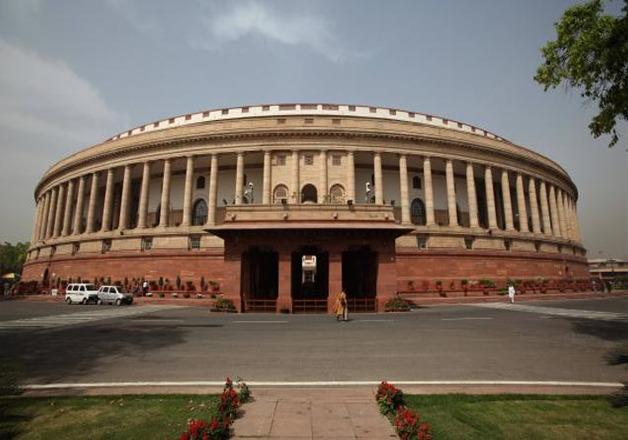
Image source - https://bit.ly/3yDZXzd

The article is written by Harmanpreet Kaur from Amity University, Kolkata. The article will provide an analysis of the New Delhi International Arbitration Centre Act, 2019.

Introduction

Arbitration in India gained importance at the end of the 20th century and it has been flourishing and prospering since then. Arbitration has become the preferred dispute resolution mechanism in India for commercial matters and has been driven at all stages by lawyers, legal practitioners, and even legal students and interns with the support of the courts. The enactment of the Arbitration and Conciliation Act, 1996 that was aimed to regulate domestic arbitration in India brought much cheer and alignment to the procedural laws and legislation of the country. It is adopted by the International Court of Arbitration‘s UNCITRAL Model Law.

The landscape of the arbitration practice in India blossomed after the amendments to the Arbitration and Conciliation Act in 2015 and 2019 which sought to change the practical order of arbitration. The arbitration regime in India has evolved and changed throughout time. 

The New Delhi International Arbitration Centre Act, 2019 is a welcoming step to strengthen Indian arbitration in terms of domestic and international regimes. This article will provide an analysis of the Act and all-important provisions regarding the Act.

The backdrop of the Act

A High-Level Committee was formed in 1995 under the chairmanship of Justice B.N.Srikrishna to take all considerate decisions regarding the arbitration regime in India. One of the most significant suggestions that were recommended by the Committee in 2019 was to revamp and introduce the international centre for arbitration dispute resolution in India for facilitating the settlement of disputes by the processes of arbitration, conciliation, and meditation by promoting arbitration in both the domestic and international spheres. The Committee in consultation with the Ministry of Law and Justice introduced the Bill for the establishment of an autonomous and independent international arbitration institution at New Delhi in the Lok Sabha on July 03, 2019. The Bill was passed by the Lok Sabha on July 10, 2019, and was finally passed by the Rajya Sabha on July 18, 2019. It received the assent of the President on July 26, 2019, finally gaining recognition in the eyes of the law.

Role of the Central Government in setting up the centre

The Central Government has been mandated with establishing an international arbitration institution to establish a body known as the centre under Section 3 for resolving disputes through arbitration, and its main function would be to exercise the powers and functions granted by the Act while adhering to the rules and regulations of the Act by following the principles of natural justice.

The centre would be referred to as the corporate body with the features of perpetual and permanent administration and a powerful common seal. The centre would be incorporated and established as an institution of national importance and would have the power to establish branches at all other places in India but only by the approval of the Central Government.

Composition of the centre

The centre would comprise of the following members for the proper and efficient administration of the institution.

  1. The Central Government, in conjunction with the Chief Justice of India, will designate the chairperson. A person can only be nominated as the chairperson if they have served as a judge in one of India’s high courts or the Supreme Court, or are an eminent person. They must have extensive expertise and experience in conducting arbitration procedures, as well as a thorough understanding of the country’s laws and regulations. The chairperson will be appointed to the institution for a three-year term.
  2. The Central Government should appoint two full-time members, who would be professing substantial knowledge and experience in the regime of arbitration and should be well versed with the legislation of the country.
  3. One part-time member should be appointed as a secretary and as a financial advisor in the institution.
  4. Two members should be appointed by the Central Government on a rotational basis from the body of commerce and industry. 
  5. The chief executive officer should be chosen to keep a check on the centre’s administrative activities and for maintaining a liaison with the secretary and the centre.
  6. The secretariat to the centre must be appointed who would be consisting of:
  • A registrar who would be responsible for supervising the activities of the centre.
  • A council that would be dealing with the matters of domestic and international arbitration.
  • Any other member or members who would be appointed as the secretariat deems fit. 

Objectives of the centre

The main objectives of the International arbitration centre at New Delhi are:

  • Implementation of the deliberate reforms and establishing itself as a leading institution for international and domestic arbitration.
  • Promotion of the legal research and study and organization of the conferences and seminars in the fields of arbitration, conciliation and mediation, and other alternative dispute settlement mechanisms.
  • Facilitating conciliation, mediation, and arbitration procedures with facilities and administrative assistance.
  • Management of the national and international panels of the arbitrators, conciliators and mediators as well as professionals.
  • Coordination and cooperation with the national and international institutions for ensuring the credibility of the centre as a specialized arbitration and conciliation entity.
  • Establishing adequate facilities in India and other foreign nation-states to promote the centre’s activities.
  • Establishing and developing parameters for the centre’s various modes of alternative dispute resolution methods and techniques.
  • Adopting other methods as the centre deems fit but only with the approval of the Central Government.

Functions of the centre

The New Delhi International Arbitration Centre Act has prescribed functions of the centre under Section 14. The functions are:

  • Facilitating the conduct for international and domestic arbitration with professionalism and transparency.
  • The services offered for the conduct of the arbitration and conciliation proceedings to be cost-effective, timely and efficient.
  • There must be efforts to encourage improvements in the system of dispute resolution.
  • Encouraging and promoting research and studies in alternative dispute resolution and its associated issues or matters.
  • Promotion of education and dissemination of knowledge of legislation and the process related to arbitration dispute resolution. 
  • Granting of diplomas and certifications and other academic and professional qualifications.
  • Appropriate steps to be taken to impart training in the alternative dispute resolution and to the ones who are equipped with the handling of cases related to arbitration, conciliation and mediation.
  • Cooperation and coordination are to be maintained among various societies, organizations, national and international with the motive to promote the mechanism of the arbitration.
  • The centre should abide by all the other functions ensured by the Central Government for the promotion of arbitration dispute resolution.

Resignation and removal of the members

Resignation of the members

A letter of resignation is to be submitted to the Central Government by the chairman or any other member of the centre who wants to resign from their offices and responsibilities at any time. Within three months of any member’s resignation, the Central Government should take the appropriate procedures to re-appoint the new member to their position.

Removal of the members 

The Central Government can remove any member from their respective positions and offices by the process of impeachment if:

  • The member has committed the offence of bankruptcy and has not been discharged.
  • The member has profited from any other kinds of employment throughout his tenure of office.
  • The member has committed any offence of criminal nature and involves moral turpitude.
  • The member has acted arbitrarily and abused his positions that would be a harm to the public domain.
  • The member has become physically and mentally unfit to perform the duties of the member.

Finance and audit

Section 24, Section 25, and Section 26 of the Act contain finance, accounting, and auditing provisions. The following are interpretations of the provisions:

  1. The Central Government has been granted the authority to pay an equivalent sum of money in every financial year that would be utilised by the centre to carry out the Act’s aims.
  2. All money supplied by the Central Government, fees collected and received during the proceedings, money received in the form of contributions, grants, and contributors and the amount obtained from investment income shall be attributed to the centre’s funding.
  3. The fund thus collected shall be deposited in any of the banks that should be used for the salaries, allowances and any other expenses of the members and other officials of the centre.
  4. The centre is responsible for keeping accurate accounting and other relevant records.
  5. These records should be audited by the comptroller and the Auditor General of India, which would subsequently be sent to the Central Government.

Establishment of the arbitration chamber and academy

Chamber of Arbitration

The centre has been given the responsibility under Section 28 of the Act for the establishment of a Chamber of Arbitration that would appoint arbitrators and also review the applications for admission to a panel of reputable arbitrators for the maintenance of the permanent panel of arbitrators. The chamber should consist of experienced arbitration practitioners at the national and international level having experience in the area of arbitration and conciliation. The registrar would be appointed as the member secretary of the chamber.

Arbitration academy

An Arbitration Academy shall be established under Section 29 of the Act by the centre to provide training to the arbitrators in the domain of international commercial arbitration and for conducting legal research in the area of arbitration dispute resolution. A permanent three-member committee shall be formed which would submit reports to the centre if any considerable amendment is to be needed in the Act.

Advantages of setting up of a centre

The advantages of setting up an international arbitration centre in New Delhi would be:

Flexibility in the process

The centre would set the goal of carrying out the process in a flexible manner, as it is governed by party autonomy, which means that the parties can select how their conflicts are addressed and resolved. The parameters of the case would likewise be flexible.

Decrease in the backlog of cases

The burden on the courts would be reduced since they would be able to refer matters to the official centre of arbitration if they needed to be resolved through arbitration, conciliation, or mediation. This would also provide the parties with speedy justice and prevent a backlog of cases.

Legal certainty

After enacting the Arbitration and Conciliation Act at the national level, India has made attempts to promote arbitration as a mechanism for resolving disputes between parties. The establishment of the centre would help to advance arbitration on a global scale. As a result, legal certainty will be promoted at both the domestic and international levels of arbitration.

Cooperation 

The New Delhi International Arbitration Centre Act promotes the spirit of collaboration and coordination between the arbitration centre and existing state courts, national and international organisations, and would assist them in establishing centres overseas, which would increase the growth of arbitration procedures.

Privacy of the parties

It would ensure privacy to the parties in dispute throughout the arbitration processes and the decision, as it is a non-public process.

Recommendations other than setting up of the centre 

The setting up of the centre would provide development to the process of arbitration, but other measures must be kept in mind namely:

  1. The procedural rules of the institution should be arbitration-friendly and free of all obsolete procedures.
  2. The chamber of arbitration must also be nationally diversified, that is, it must include reputable arbitrators across jurisdictions and industries to assist international disputants to avail of dispute resolution services.
  3. The rules must provide a clear-cut cost calculation mechanism, which would entail a perception of the autonomy of arbitrators.
  4. The arbitration institution’s reputation is clearly at par with the reputation of the country in which the institution is incorporated. So, the Indian government must take steps to improve the judicially and constantly amend and upgrade the laws with relation to arbitration.
  5. The rules that are given precedence to the parties must include flexibility and efficiency, but the parties must also follow the laws that are explicitly established by the law.

Conclusion

The passage of the Act for the Establishment of an International Arbitration Centre by the parliament is a welcome development that will encourage both local and international arbitration at the same time. As per the regime of arbitration, conciliation, and mediation processes, the establishment of the centre would also broaden the ambit and scope of the legislation. Simultaneously, efforts should be made to build supportive internal structures for the institution to ensure its success. The establishment of a centre, together with other necessary changes and amendments to the Act, will assist India in becoming a hub for arbitration.

References


LawSikho has created a telegram group for exchanging legal knowledge, referrals, and various opportunities. You can click on this link and join:

https://t.me/joinchat/J_0YrBa4IBSHdpuTfQO_sA

Follow us on Instagram and subscribe to our YouTube channel for more amazing legal content.

Download Now

How do Copyright Laws differ from laws of Intellectual Property Rights

0
Image source - https://bit.ly/3s9Qddt

The article is written by Nikhil Thakur from Manav Rachna University. In this article, the author has briefly explained the major differences between Copyright Laws and Intellectual Property Rights Laws.

Introduction

Intellectual property rights (IPR) around the globe have played a paramount role in protecting and safeguarding technological, scientific, and medical innovation. In India, numerous Intellectual Property Rights legislation has been enacted to comply and cope up with the obligations arising due to the World Trade Organisation (WTO) Agreement on Trade-Related Aspect of Intellectual Property Rights (TRIPS).

Around the globe, IPR has become the world’s fastest-growing law field and hence the demand for Intellectual Property Rights expertise has augmented. The Intellectual Property Rights dominion is vast and copyright is a part of it. Intellectual property has been demarcated into two basic categories, that are industrial property and copyright.

Meaning

Intellectual Property Rights (IPR)

According to the World Intellectual Property Organisation (WIPO), intellectual property means and refers to the formation of the mind, namely invention: literary and artistic works; designs; and symbols, names, and images used in commerce.

Intellectual Property Rights are categorized into two main heads, that are:

Industrial design

Industrial design encompasses inventions, trademarks, patents, and geographical indications within its ambit. 

Copyright 

Copyright encompasses literary and artistic works like novels, poems, plays, films, etc. within its purview.

Copyright

Following the words of WIPO, copyright is an exclusive right granted to the owner of literary and artistic works. Films, plays, novels, painting, music, computer programs, maps, advertisement are covered under the ambit of literary and artistic work. In India, Section 14 of the Copyright Act, 1957 defines what is copyright.

Trademarks

According to WIPO, trademarks mean a sign, symbols, logos, and sounds that helps one enterprise to distinguish its marks from that of the other enterprise. In India, Section 2(1)(ZB) of the Trademark Act, 1999 defines what is a trademark.

Patent

According to WIPO, the patent is also an exclusive right that is granted in favour of the inventor of a new product or service. Section 2(1)(m) of the Patent Act, 1970 defines patents.

Industrial design

WIPO defines industrial design from the point of view of the ornamental aspect of an article that may be three-dimensional, two-dimensional, linear, etc. Section 2(d) of the Design Act, 2000 defines design.

Geographical indication

According to WIPO, geographical indication relates to the origin of the product or having a particular geographical origin. Section 2(1)(e) of the Geographical Indications of Goods (Registration and Protection) Act, 1999 defines geographical indication.

Differentiating between Copyright and other Intellectual Property Rights

Copyright and Patent

  • As mentioned previously, copyright is an exclusive right granted to the owner of literary and artistic works. Films, plays, novels, painting, music, computer programs, maps, advertisement are covered under the ambit of literary and artistic work, irrespective of the fact they are published or not. Further, in copyright, the expression shown is protected and not the idea behind that expression, while in the patent, the idea itself is protected.
  • The owner or the holder of the copyright shall have the exclusive right to publish, republish, distribute and recreate the work. Most importantly, copyright comes into play only when the work is tangible. Soon after the completion of the work in any form, the copyright comes to play. 
  • Unlike copyright, patent approval is a long process and may be time-consuming, but if in case the patent is approved, the holder or the owner of such patent shall have the exclusive right to utilize the said invention according to his/her requirements. That means approval of the patent allows the holder of the invention to have unhindered authority over its invention. Another important aspect concerning a patent is that it shall be transformed into a materialistic form that redresses the issues. 
  • The key difference between the copyright and the patent is that copyright is governed through the Copyright Act, 1957 while the patent is governed through Patent Act, 1970.
  • Copyright is a legal right, conferring upon the holder the right to publish, republish, distribute, etc. while, a patent is a statutory right granted by the government to safeguard the owner’s invention for a limited period.
  • The scope of copyright is limited because it applies to only literary and artistic works. On the other hand, the patent applies to any sort of invention, technical, medical, and other enhancement.
  • Between copyright and the patent, there is a vast difference of year of its applicability, as copyright is granted for 60 years while the patent is permitted only for 20 years.
  • In copyright, selling and distributing without the assent of the owner is prohibited, while in the patent, the stealing of the same is prohibited including selling and disclosing important information related to the patented article to the general public.
  • An artist can claim copyright over his/her work, while for claiming a patent it is important that the article for which the owner is seeking a patent shall not be available to the public.

Copyright and Trademark

  • Nowadays, people are becoming more brand conscious. This shows how trademarks and copyright influence the purchasing behaviour of the customers. Hence, it becomes pivotal to clearly understand the demarcations between copyright and trademark.
  • A trademark means a sign, symbols, logos, and sounds that help one enterprise to distinguish its goods and services from that of the other enterprise. Trademark grants an exclusive right to use the goods and services uninterrupted or without hindrance. Copyright, on the other hand, is another tool of intellectual property that protects and safeguards the literary and artistic work of the owner or the producer.
  • The primary difference between the copyright and the trademark is that copyright is enshrined under the Copyright Act, 1957, while trademark is enshrined under the Trademark Act, 1999.
  • Though both copyright and trademark are intellectual property rights and are intangible, they safeguard and protect different categories of products and similarly have a different registration method.
  • The objective of the Trademark Act is to protect and safeguard the trade name, logo, signs, symbols and sounds, while the scope of the Copyright Act is restricted to literary and artistic work.
  • In copyright, the owner has the exclusive right to produce, reproduce, distribute, sell, etc. On the other hand, in trademark, the owner has the exclusive right over its product and services.
  • Particularly, a trademark allows the owner to restrict others from using similar marks or text. The main purpose of granting or acquiring a trademark is to establish a brand name and having protection attached to it. While in copyright, the owner is allowed to stop the other from publishing, republishing, distributing, etc the copyrighted work if done without the consent of the owner.
  • In copyright, any person other than the owner can use such copyrighted material for financial gains, while in trademark there is not only an exclusive right over product and services, indeed, the right to retain it also.
  • Copyright acknowledges the original set of work manufactured by the owner, while trademark establishes a sense of trust and brand value in the minds of the customers to get an edge over its competitors.
  • The duration for which the trademark is protected is too short as compared to the copyright protection duration. Trademark is protected initially for 10 years that can be renewed, while the copyright is protected for 60 years. 
  • The symbol of a registered trademark is ® and the unregistered trademark is ™, while the symbol for copyright is ©.

Copyright and Industrial Design

  • Both copyright and industrial design are subject matter that is protected in the Intellectual Property Rights. Industrial design grants the right to the owner over the outer appearance of the product that can be three-dimensional, two-dimensional, linear, and so on. On the contrary, copyright is the right of an organization or an individual over its intellect and creative work.
  • The scope of industrial design is limited to the outwards appearance of the product. However, there are a few designs that are not eligible to be granted the status of industrial design:
  1. If the outer appearance of the design is particularly because of the technical feature of the product.
  2. If the outer appearance symbolizes civil or industrial construction work.
  3. While utilizing the design, it becomes or is invisible (difficult to ascertain the shape of the design).
  • While in copyright, literary and artistic works are protected. The work here refers to the creation of the mind in the literary, artistic, and scientific sectors. Similar to industrial design, there are a few things that are outside the purview of copyright:
  1. The legal, official, and other legislative documents.
  2. News telecasted by the news channels and reporters.
  3. Operational system and processes.
  • The right over industrial design is granted through the Design Act, 2000, while the copyright is granted via Copyright Act, 1957.
  • The copyright arises at the moment the owner prepares, has completed, or manufactured the product irrespective of its content, whether good or bad, published or not. While industrial design is not granted the moment anyone prepares the design, indeed, it has to undergo verification by the Intellectual Property Office and if they are satisfied, then only the industrial design is granted.
  • In copyright, the registration of the same is not mandatory, while in industrial design, to safeguard the design, it is essential to have an industrial design registered.
  • Similar to patent and trademark, the time duration of industrial design as compared to copyright is much shorter. Industrial design is protected for 5 years, while the copyright is protected for more than 60 years.
  • There are a few conditions that must be fulfilled to get protection under the industrial design:
  1. The design so created shall be novel, fresh, or new.
  2. The design shall mandatorily include an inventive step.
  3. And most importantly, the design is applicable at the industrial level.
  • While in copyright, the protection is granted only when the product is created or prepared by the author or the owner itself through his/her hard work and labour. Most importantly, there shall be no copying of the material from the previously copyrighted material.

Copyright and Geographical Indication

  • Geographical Indications (GI) are granted or permitted to an agricultural, natural, and manufactured product that originated specifically at a fixed location or place.
  • Geographical indication symbolizes a guarantee of quality, authenticity along with the distinctiveness and uniqueness of the merchandise and services. Typically, the GI tag includes the name of the place of origin of the goods and services like Kolhapuri chappals.
  • The prime difference between copyright and geographical indication is that copyright is governed through the Copyright Act, 1957, while the geographical indication is governed through the Geographical Indications of Goods (Registration and Protection) Act, 1999.
  • A geographical indication is a right used on the product to determine its origin, while copyright is a bundle of rights that is granted to the owner upon his//her artistic and literary work. The time frame for geographical indication is 10 years, while the time frame for copyright is 60 years.
  • The ministry that governs the copyright in India is the Copyright office, MHRD, while the ministry that governs geographical indication, patent, trademark, and design in India is DPIIT, Ministry of Commerce and Industry.

Conclusion

Though the copyright is a part of Intellectual Property (IP), it still differs from other intellectual properties namely patent, trademark, geographical indication, and design. Under intellectual property rights, two main categories are industrial design (where all the IPs are included except the copyright) and the other is copyright itself. Hence, copyright is a category of intellectual property rights, while the other IPs namely patent, trademark, design, and so on are subcategories of IPR.

Another important aspect that needs to be taken care of is that there is a single ministry (DPIIT, ministry of Commerce and Industry) that governs the industrial design and its sub-categories, while in copyright there is a specific ministry that is the Copyright office, MHRD.

References


LawSikho has created a telegram group for exchanging legal knowledge, referrals, and various opportunities. You can click on this link and join:

https://t.me/joinchat/J_0YrBa4IBSHdpuTfQO_sA

Follow us on Instagram and subscribe to our YouTube channel for more amazing legal content.

Download Now

Language of courts in light of the State of Maharashtra v. Mahadu Dagdu Shinde

0

This article is written by Pranav Sethi, from SVKM NMIMS School of law, Navi Mumbai. This article elaborates analysis of the language of the courts in light of the case of the State of Maharashtra v. Mahadu Dagdu Shinde.

Introduction

The statement made by the judge based on a decree or order is known as a judgment. It is the culmination of the Court’s proceedings. One of the most significant and time-consuming tasks done by a judge is the formulation of a ruling. The process of formulating and writing a judgment, as well as the manner where it is written, differs from judge to judge and represents a judge’s personality. 

Every judge, regardless of position, has a particular writing style. A judgment differs from a formal order in that it provides grounds for concluding. In the United States, it’s known as an “opinion,” which is a judge’s justification for the final order requested or issued. Language can be used to manipulate and mislead people in social situations. Linguistic in court, utterances are frequently utilized or abused for the benefit of the defense or the prosecution.

It is the writing style of a judge that makes it different from other judgments and will either result in setting up good precedents or dangerous precedents. While judgment writing is in itself an art, it is also to be kept in mind that a judge should not be biased in his opinion or make any “slang remarks” in their judgments.

Writing a long and verbose decision with unregulated terms and citations is no longer acceptable. The pressures of work and stress that most judges face today necessitate the development of abilities in writing judgments that are concise, simple, and unambiguous without sacrificing quality. 

In civil cases, judgments can be divided into two groups based on the requirements of the law: long and short judgments. The conclusion of a case in original litigation necessitates the production of a long and reasoned ruling. While in this article, we analyze the judgment delivered by a trial court in the case of State of Maharashtra v. Mahadu Dagdu Shinde.

Lord Mansfield (Chief Justice of King’s Bench for 32 years) viewpoint on language usage in courts

Most of the world’s disputes arise from words,” observed Lord Mansfield (AD 1705-93), Chief Justice of King’s Bench for 32 years. Great concerns of concept may depend on the interpretation of a single syllable, and precious privileges and concerns may be compromised as a result. The faults and inexactitude of language as a vehicle of concepts contribute to the difficulties of interpretation. The indiscriminate use of the conjunctive “and” and the disjunctive “or” has sparked many debates, and Jeremy Bentham (AD 1748-1832-famous as one of the founders of English law) “devotes some severe criticism to the complexities of the latter monosyllable.”

The words “may” and “shall” have nearly their own legal literature’ (Davenport 112). Many attempts have been made to determine the meaning of the word “accident” in the Workmen’s Compensation Act. 

Human language is insufficient to deal with all possible scenarios. Even when written procedures are prepared by highly qualified individuals who are fluent in the English language, their main purpose is frequently questioned. Difficulties in its actual use may also arise, which might be compounded by a careless or incompetent draftsman.

Indian courts’ language

The main languages of the Indian courts are “Hindi” and “English,” which are used in most of the Indian judicial system. The official language of the Supreme Court of India, the country’s highest judicial institution, is “English.” The High Courts of various states also use English as their functioning language although the constitution allows for the use of “Hindi” or any other language if the governor, with the approval of the President of India, authorizes it. Regional languages are typically utilized in lower courts, but the state government has the authority to use any language by promulgating an act if it believes it is necessary for the plaintiffs.

Supreme Court

The issue of the Supreme Court’s language is addressed in Article 348 of the Indian Constitution. It establishes English as the Supreme Court of India’s official language unless the Parliament specifies otherwise by law. After the passage of Article 349, the Parliament is no longer allowed to make any form of the provision regarding the change of language, which is specified under Article 348(1) as English is the language of the Supreme Court after the Constitution of India has been in force for 15 years. However, this clause does not apply to judgments, orders, or decrees, which must be issued in English alone.

High Courts

As stated in Clause (1) of Article 348, the language used for the High Courts is English. Clause (2), on the other hand, specifies that the governor can approve the use of Hindi or any other language for High Court sessions with the President’s assent. 

A provision additionally states that nothing in Article applies to any decision, decree, or order of the High Courts, implying that the judgments will only be delivered in English. With the President’s assent, the Governor can approve the use of Hindi/another language under Section 7 of the Official Languages Act, 1963. If a judgment, order, or decree is issued in Hindi or another language, it must be followed with English translations.

Subordinate Courts

Until the state government decides otherwise, the language of all courts subordinate to High Courts is essentially the very same as it was when the Civil Procedure Code was first enacted in 1908. In Subordinate courts, two regulations are addressing judgment of language. 

The language of the district courts must be equivalent to the language of the act, according to Section 137 of the Code of Civil Procedure. The state government has the authority to proclaim any regional language as a substitute for judicial proceedings. The magistrate may, nevertheless, issue judgments, orders, and decrees in English. The recording of the evidence must be conducted in the state’s official language.

If a pleader is unfamiliar with English, a translation into the court’s language will be provided upon his request, and the court will cover the costs. The language of all courts other than the High Courts must be determined by the State government, according to Section 272 of the Code of Criminal Procedure 1973. Therefore, in general terms, it means that district courts must employ the regional language as directed by the state government.

Indian legal situation

Substantial Law

In the Indian judicial system, offence there are two categories of law that are applied in the courts. The Substantive Law, which may be established in statute books and precedents, serves as the foundation. In light of the statutes, which have been developed by professionals, the legislature assumes the management of public affairs. 

The judge describes how the law applies to the specific scenario in the lawsuit in front of him at the judicial level. The language employed in the decision is intended to be straightforward and authoritative. Lord Denning, one of the twentieth century’s legal luminaries, has employed language that is so precise that even a novice may deduce the intent and reach a firm conclusion.

Procedural Law

The practical process that occurs at various levels in a court of law is referred to as procedural law. The legal record comes into play at each stage through the channel of its members. Drafting is the first step in the legal registration process – ‘making a rough copy of a legal document before endorsing it’. Many cases originate from documents written in a particular professional terminology. Agreements, gift deeds, sale deeds, mortgage deeds, and testamentary dispositions are examples. The intentions of both parties, who have agreed together on the terms that would bind them, are examined when trying to frame a contract of agreement.

There is consensus ad idem, as the saying goes. The court relies on the written words or the oral statements of the parties. The wording used in these documents gives rise to specific and desirable meanings for a lawyer. As a result, while writing, the meaning of words and phrases becomes increasingly important. 

The aggrieved individual next addresses the court with pleadings, which are “written statements submitted by both sides to a civil action stating out the reasons each will be bringing forth during the trial or of advocating a client’s case viva-voce in court” (McFarlane). A plaint – “a document through the presentation of which a suit is initiated in a civil court” (Mukherjee and Singh) or petition is drafted, detailing the facts and grounds for approaching the court and ending with a prayer for a decree – a judicial decision that the court may grant.

The State of Maharashtra v. Mahadu Dagdu Shinde

The Bombay High Court’s Aurangabad Bench recently ruled in the State of Maharashtra v. Mahadu Dagdu Shinde that even a rape victim’s intentional sexual intercourse involving someone else is irrelevant in determining a rape charge.

Facts of the case

The State brought an appeal before the Hon’ble Court, appealing the judgment of the Additional Sessions Judge, Kopargaon, in Sessions Case No.19 of 2010, which was presented on August 14, 2012.

In this case, a bench of Justices Ravindra V Ghuge and BU Debadwar refused to consider the fact that the plaintiff was habituated to sexual intercourse, according to a doctor’s declaration, after her spouse left her. The case had a 52-year-old man being accused of rape by his brother’s daughter-in-law. The accused was cleared of the allegations by the Sessions Court.

In the beginning, the Hon’ble Court expressed its “great concern” with the Hon’ble Additional Sessions Judge’s repetitive usage of a particular word. While presenting the prosecutrix’s evidence, as well as in the body of the judgment. Given the lack of medical evidence and no bangle pieces located at the crime scene, the Hon’ble Court ruled that the prosecutrix’s statement of having received injuries as a result of the breaking of the bangles was false.

The accused was found not guilty of the charges brought against him under Sections 376 and 506 of the Indian Penal Code, 1860. The prosecutrix claimed that the accused, her cousin’s father-in-law, had performed an offence punishable under Indian Penal Code Section 376.

The prosecutrix’s head had no injury or bump, there were no semen stains on her clothes, and she had no injuries on her thighs or legs, according to the Court. The Court further noted that her claim that she slapped the defendant was unsupported by medical evidence, as there was no slap imprint or abrasions on his face. 

The Hon’ble Court also highlighted that, even though the prosecutrix’s Marathi form of her testimony indicated specific Marathi phrases she used, the Hon’ble Trial Court used unpleasant words repeatedly when recording the English version of her testimony.

Judgment 

This appeal was denied because the prosecution was unable to recognize the case above a reasonable question. The High Court additionally highlighted that the trial court was using the “slang term” several times in this case. According to the High Court, “These words are used in slang language, are treated to be foul words, and are utterly disrespectful to women.”

The Court put forward that, “The Prosecutor was unable to convince it that though the prosecutrix does not have a single abrasion on her body and her entire narration of several injuries as noted above, have been proved to be false, we could still arrive at a conclusion that the accused and the accused alone, had committed the offense.”

Additionally, considering the Supreme Court’s recent judgment in the case of State of Odisha vs. Banabihari Mohapatra and others on February 12, 2021, that suspicion, no matter how strong, cannot be an alternative for concrete evidence.“Suspicion can never take place of proof and the court cannot base it’s the order of conviction based on suspicion“, observed the Court.

Conclusion 

It’s always been seen that the judiciary is one such pillar of democracy that must deliver justice to people promptly. If Justice is gonna reflect vulgar remarks about women then it’s gonna result in setting up dangerous precedents because as rightly said, “justice is to be served but it should also, be recognized by the audience in the courtroom”. 

The judgment must be prepared and arranged in such a way that readers can easily and rapidly navigate through it. There isn’t such a thing as excellent writing. Only excellent rewriting exists. It is imperative that the ruling be revised. 

A revised judgment corrects flaws and assures the Judge that his ruling is correct. Judges should read their decisions after a few years to guarantee that the same mistakes are not made again. There’s always something that can be done better.

References


LawSikho has created a telegram group for exchanging legal knowledge, referrals, and various opportunities. You can click on this link and join:

https://t.me/joinchat/J_0YrBa4IBSHdpuTfQO_sA

Follow us on Instagram and subscribe to our YouTube channel for more amazing legal content. 

Download Now

Legislative analysis : The Scheduled Castes and Scheduled Tribes (Prevention Of Atrocities) Act, 1989

0
The Scheduled Castes and The Scheduled Tribes (Prevention of Atrocities) Act, 1989
Image Source: https://rb.gy/rooh9x

This article is written by Sarakshie Sonawane, 1st year BBA. LLB. (Hons.) at Symbiosis Law School, Pune. 

Introduction

The Scheduled Castes and Scheduled Tribes, as a primitive group has been prominently looked down upon because of their limited source of resources that supplement life. The laws of a nation along with political factors play a vital role not only in the development but also in the acknowledgment of such tribal groups. Due to restricted access to essential rights, they lack in terms of literacy, health, technology, infrastructure, etc. In order to facilitate such resources, it becomes the duty of the legislature to enact laws that act like guidelines that help in achieving the required equality. 

Historical aspect

Today, about 8.6 percent of India’s population constitutes tribes and sub-tribes, let alone the ones that need to be recognized. Before independence, the British also recognised the tribal communities and declared some of them as ‘Scheduled’. The Scheduled Districts Act, 1874 gave the power of self-governance within the British administration. After independence, the Government Ministry of Social Justice and Empowerment was bifurcated in 1999, and the Ministry of Tribal Affairs was formed to provide more emphasis on legal, social, and economic problems of the tribes in India. 

Other than the Sixth and Seventh Schedule, the Constitution provides for equal educational and economic opportunities in the interest of Scheduled Tribes through Article 46 (Directive Principles of State Policy) which acts as guidelines for legislation. Article 15(4), Article 16 (4) and Article 17 are embedded in the Constitution of India as a mechanism to protect their rights by providing reservation and equal opportunities for education, employment, and abolishing untouchability respectively. 

Protection of Civil Rights Act, 1955, was the first post-independent legislation enacted for the purpose of protecting the civil rights of the Scheduled Castes and Scheduled Tribes. The community has been a victim of persistent injustice throughout centuries and has been looked down upon as a downtrodden community. ​The Scheduled Castes and Scheduled Tribes (Prevention of Atrocities) Act, 1989, is also known as the POA, SC/ST Act, the Prevention of Atrocities Act, or the Atrocities Act of 1989. The Act being notified on March 31, 1995, was enacted on September 9, 1989. ​ It is one of the legislations enacted to safeguard the rights of the Scheduled Castes and Scheduled Tribes community in India.​

Objectives

Article 342(1)of the Indian Constitution defines the Scheduled Castes and Scheduled Tribes concerning the states and union territories as a special category of a tribe or a community as declared by the President through a public notification as per Article 366(25)

  • The Act primarily focuses on the prevention of the commission of offences and atrocities against the Scheduled Castes and Scheduled Tribes of India. ​
  • The Act aims to provide for ‘Special Courts and Exclusive Special Courts’ for the purpose of trial of such atrocities. 
  • The Act provides for funds and aids for their free rehabilitation, travel money, maintenance expenses and authorises officers responsible to ensure efficient implementation of the same.
  • Moreover, the Act comprehensively aims for the social inclusion of the Dalits in society and to ensure their protection when crimes infringing their social, economic, democratic, and political rights are committed against them. 
  • It seeks to avoid deprivation, protects from deprivation and aids the deprivation of the marginalized communities.​

Summary of the Policy

  • The Prevention of Atrocities Act, 1989, lists 22 offences related to human behaviour towards this community. Atrocities are referred to offences that deny certain social, economic and political rights, perpetrate exploitation, discrimination and abuse by a person who does not belong to the Scheduled Caste or Scheduled Tribe. ​
  • The Act deters social disabilities like forceful eating or drinking food (obnoxious substance), sexual exploitation, inflicting injuries, forcefully removing clothes, wrongfully occupy land, forceful beggary, false and frivolous complaints to police, denies the use of public resort, malicious prosecution, forceful eviction, bonded labour, offences related to their property, economic exploitation and other social, economic, political barriers and disabilities. 
  • Every offence under this Act is cognizable and non-bailable in nature, neither can an anticipatory bail be granted to the offender. Any person not belonging to the Scheduled Caste or Scheduled Tribe perpetrates such violence upon a member of Scheduled Caste or Scheduled Tribe shall be punished for a minimum period of six months which can be extended to five years and with fine.
  • Whoever not being a member of the Scheduled Caste or Scheduled Tribe community, gives false evidence or fabricates evidence intentionally to cause punishment of a Scheduled Caste or Scheduled Tribe member for capital or imprisonment with fine under the Indian Penal Code. Such a person shall be punished with capital punishment.
  • Whoever not being a member of the Scheduled Caste or Scheduled Tribe community, gives false evidence or fabricates evidence intentionally to cause punishment of a Scheduled Caste or Scheduled Tribe member for seven years or more, shall be punished for a minimum of six years which can be extended to seven and with fine. The same punishment term will be applicable if a person tries to use explosives or ignites fire intending to cause damage to property or hurt a member of the Scheduled Caste or Scheduled Tribe community.
  • The Act also provides to punish a public servant (who is not a member of the Scheduled Caste or Scheduled Tribe) for the willful neglect of his duties under this Act, which is punishable for a minimum period of six months extendable up to a year. 
  • Investigation to be done by a DSP level officer and the report of the investigation to be submitted to the Director-General of Police of the state which will help in solving the cases under this Act more quickly and efficiently.​ The State Level Vigilance and Monitoring Committee under the District Magistrate have to meet twice a year and the District Level Vigilance and Monitoring Committee to meet thrice a year for the proper implementation of this Act.​
  • The Act empowers the government to appoint special public prosecutors under ‘Special Courts’ and impose collective fines. It ensures efficient working of the public servants, authorized officers, right from reporting the crime to imparting justice by punishing the culprit and remedying the victim.

Critical appraisal

  • The SC-ST Act is enacted with the intention to cater to societies’ minority strata, to enhance their equal participation by eliminating hostility and the potential crimes against them. Although the Act provides essential policies that are framed to prohibit caste-based discrimination of the downtrodden community. The Dalits have been at the receiving end of all massacrers like the Bhima-Koregaon violence (2017), Khairlanji (2008) and Una violence. The Act empowers them to fight against injustice and recognizes the special treatment required to protect them. 
  • The Act empowers people who are unaware that their rights are being infringed. Lack of understanding of the Act makes it harder to protect those who are unaware that their rights are being abused. Awareness must be created about the Act and the ideals of the society it seeks to promote.
  • There is a lacuna when it comes to the identification of the atrocity-prone zones in the country. The Act to date identifies only 7 states which are prone to atrocities. The acknowledgement and recognition of such areas are imperative for the quick and speedy redressal of their grievances.
  • Many of the ‘Dalits’ who have converted or no longer belong to this community are deprived of the similar rights they require. Many of the isolated and primitive tribes which are not in the mainstream society can go unidentified. 
  • Misuse of the Act is quite common due to which legitimate atrocities go unnoticed due to the false caste-based hatred created due to the exploitation of the Act. The ultimate power is given to the members of the SC-ST community which can be misused against innocent accused. It can become an instrument of ‘blackmail’ to satisfy vested interests or a mode of vengeance too. 

Amendments to the Act

  • The Act’s amendment with effect from 2016, the term atrocities was extended to include against manual scavenging, forceful devadasis (women) and punishment for 10 years of imprisonment for kidnapping, prevention from contesting elections, grievous hurt etc.
  • It also included provisions for ‘preemption of offences’ and ‘willful negligence’ of public servants. Provision for the establishment of Special Court for speedy disposal of cases, the chapter on ‘Rights of Victims and Witnesses’ was also added. New offences like abusing caste names, social or economic boycotts, compelling to dispose of the human carcass, garlanding with footwear etc. are added to the list of atrocities in the Act. 
  • It specifies duties of public officers, setting up of Exclusive Special Court and Special Public Prosecutor at the district level.  Furthermore, punishes for restricting entry to common property, places of worship, health and education institutes too. 
  • The 1989 Act was also amended in 2018, wherein Section 18 (A) was changed with the effect of a preliminary enquiry not being required for registering a First Information Report (FIR) against the accused. It also mentioned the non-requirement of the investigating officer to approve the investigation. 

Judicial response

  • The rate of conviction is very less as compared to the cases filed with any complaints registered. In 1998, out of 147,000 POA cases filed, only 31,011 were brought to trial. The slow judicial process makes the citizens lose faith in the justice system. The establishment of Special Courts and tribunals must be expedited to do away with this problem.  
  • In Subhash Kashinath Mahajan vs The State of Maharashtra, the Court upheld the validity of the 2018 amendment and reinstated the bar on anticipatory bail. In Sajjan Kumar v The State and Andhra Pradesh, it was held that ‘mens rea’ or criminal intent is an essential ingredient to prove guilt, along with the knowledge of the accused of the victim belonging to the SC-ST community. With the copious cases, the Court considered the kinds of insults and intimidation. In Hitesh Verma V. The State of Uttarakhand & Anr, it held the validity of the case when the insult or atrocity was inflicted because the person belonged to a particular caste or tribe. 
  • Not just the Indian Judiciary, but the United Nations Declaration on the Rights of Indigenous​ Peoples, 2007 and International Labour Standards on Indigenous and Tribal Peoples​ (ILO) are two major International Conventions and organisations that are engaged with tribal rights and promoting the welfare of this community.

Conclusion

The Act has been described as one that has many teeth but seldom bites. The Scheduled Castes and Scheduled Tribes community have faced the brunt of oppression for several centuries and the statute to prevent atrocities against them are directed at curbing discrimination and caste-based violence. Although the Act provides for an efficient system to eliminate social bias as a powerful weapon on paper, implementation of the rules becomes very vital in order to achieve social changes. The police and bureaucracy form the basis of interaction between the state and society. This Act seeks to achieve social equality which is possible when not just the three pillars of democracy, but also the citizens act in harmony with the formulated laws.

There is much to learn from the Civil Rights Act, enacted by the Unites States’ Congress in 1964. Its amendments are landmark moments in history and have successfully eliminated slavery and discrimination to a great extent. Therefore, even if false allegations and misuse of the Act is not very uncommon, a strict system of implementation and redressal forums to identify legitimate injustice should be set up. Nonetheless, the SC-ST Act is the spine that aims to prevents atrocities against the marginalized communities of India and has been fruitful to impart justice for the betterment of India and its citizens.


Students of Lawsikho courses regularly produce writing assignments and work on practical exercises as a part of their coursework and develop themselves in real-life practical skills.

LawSikho has created a telegram group for exchanging legal knowledge, referrals, and various opportunities. You can click on this link and join:

Follow us on Instagram and subscribe to our YouTube channel for more amazing legal content.

Download Now

All you need to know about Amazon and Hanesbrands 13 lawsuits against counterfeiters

0
Image source: https://blog.ipleaders.in/highlights-amazon-future-group-dispute/

This article has been written by Shradha Jain, pursuing the Diploma in Intellectual Property, Media and Entertainment Laws from LawSikho.

Introduction

Amazon filed 13 lawsuits against accused counterfeiters conducting business on its site only days after Congress failed to pass a federal anti-counterfeiting bill that would have forced online retail platforms like Amazon to undertake more severe due diligence on its vendors. “The vast majority of Amazon customers shop with the confidence knowing they will receive an authentic product,” said Dharmesh Mehta, vice president of Customer Trust and Partner Support at Amazon. “In the rare instances when bad actors attempt to take advantage of customers and companies like HanesBrands, our team is relentless about tracking down and holding them accountable.”

Brands can petition Amazon to remove items that infringe on their intellectual property, and Amazon claims to employ software to detect suspicious listings before they are uploaded, claiming last month that it had banned 10 billion questionable listings, some of which were potentially counterfeit. In light of Amazon’s commitment to blocking sales of counterfeit products through its platform, I will present the issues involved, the rules applicable, and their analysis in the present lawsuits.

Background 

The owner of the renowned Champion brand, HanesBrands, is a socially responsible leading maker of daily casual clothing in the Americas, Europe, Australia, and Asia-Pacific. For over a century, the Champion brand has been linked with high-quality uniforms and gear for amateur and professional athletes, as well as popular sportswear and leisurewear designs for children and adults. Millions of ordinary people, celebrities, and sportsmen have worn Champion gear, and the Champion brand has become one of the most recognizable sportswear companies in history.

Amazon.com, Inc. (“Amazon”), in collaboration with HanesBrands, Inc., filed 13 lawsuits against 17 defendants today for selling silicone protective earbud case covers that illegally bear HanesBrands’ registered Champion trademarks. According to the complaint, HanesBrands, a producer of daily casual clothing and owner of the “iconic” Champion brand, has been harmed by the defendants’ unauthorized use of its well-known and valuable IPR. The cases were brought in the Western District of Washington of the United States District Court. The complaints, filed in federal court in Seattle on June 10th, 2021, in collaboration with T-shirt manufacturer Hanes, claim that a range of organizations and nameless people are selling counterfeit Hanes- and Champion-branded products on Amazon’s Marketplace platform for third-party merchants.

According to the complaint, by joining up as third-party vendors, the defendants pledged not to offer counterfeit items. According to the lawsuit, HanesBrands “launched a limited-edition line of electronic accessories, including coverings for earphone cases, displaying HanesBrands’ Champion Trademarks” on May 21, long after the defendants’ fraudulent items were identified and removed from the Amazon shop.

In the Americas, Europe, Australia, and Asia-Pacific, HanesBrands is a socially responsible leading seller of daily athletic gear. HanesBrands’ brands include some of the world’s most recognizable names, including Hanes, Champion, Bonds, DIM, Bali, Maidenform, and others.

The plaintiffs claimed federal trademark infringement, fraudulent designation of origin, and deceptive advertising, as well as a violation of the Washington Consumer Protection Act. The plaintiffs seek an order prohibiting the manufacturing and sale of counterfeit merchandise, as well as, more broadly, prohibiting the defendants from selling anything on Amazon.com. The lawsuit also demands monetary damages, as well as the plaintiffs’ legal costs and attorneys’ fees.

Issue

  1. Did the alleged defendants unlawfully utilize HanesBrands’ registered Champion trademarks?
  2. Was the intention of the defendant to mislead buyers regarding the legitimacy and origin of the items, as well as to establish a fake association with HanesBrands?

Rule

  1. Trademark– is any term, name, symbol, or device adopted or used by a person to identify and differentiate products manufactured or sold by that person from things made or sold by others. The registration of a trademark grants the registered user exclusive use of that trademark and protects the user’s rights. A trademark can be registered with the following organizations:
    1. the United States Trademark and Patent Office, for the fullest possible protection;
    2. the Washington Secretary of State’s Office for a trademark that is only used inside the state or region; or
    3. the federal office as well as the state office.

RCW 19.77 governs trademark registration in Washington. Washington’s legislation is based on the Model State Trademark Bill (MSTB). 

Trademark Infringement- The unlawful use of a trademark or service mark on or in connection with products and/or services in a manner that is likely to cause confusion, deception, or error regarding the source of the goods and/or services is referred to as trademark infringement.

  1. Washington’s Consumer Protection Act– A private individual has the standing to sue for unfair or misleading business conduct under Washington’s Consumer Protection Act. The use of “unfair techniques of competition and unfair and deceptive acts or practices in the conduct of trade or commerce” is prohibited. The public interest criterion consequently sets a constraint on the Act’s otherwise broad interpretation. The Washington Supreme Court has set two standards for satisfying the public interest requirement: (1) the per se test; and (2) the Anhold v. Daniels test.
  2. In Hangman Ridge Training Stables, Inc. v. Safeco Title Ins., Co., the Supreme Court defined the elements of a private Consumer Protection Act as “unfair or deceptive acts or practices” action: We hold that to prevail in a private CPA action … a plaintiff must establish five distinct elements: (1) unfair or deceptive act or practice; (2) occurring in trade or commerce; (3) public interest impact; (4) injury to the plaintiff in his or her business or property; (5) causation.

Photos of products offered for sale defendant in the Amazon store as pictured by Complainant (HanesBrands) 

Analysis

The Defendants sought to sell illegal items in Amazon’s shop, infringing on HanesBrands’ registered Champion trademarks and breaching the law. For trademark infringement, a plaintiff must establish in court that it possesses a legitimate mark, that it has priority, and that the defendant’s mark is likely to confuse customers about the source or sponsorship of the goods or services supplied under the parties’ marks. HanesBrands claims that the defendant Amazon sellers are breaking the law by providing and selling “silicone coverings for earbud cases that illegally display registered trademarks of HanesBrands, Inc.,” particularly Champion’s name and well-known “C” emblem, without the company’s permission. This mark is registered by HanesBrands and the sellers did not obtain the necessary permission from the owner. The sellers want to exploit customers’ confidence in Amazon by seeking to create Amazon Selling Accounts in order to advertise, market, offer, and sell inauthentic products. According to Amazon, the defendants fall into this category and have attempted to “misuse and violate the trademarks and other intellectual property of the genuine makers of those items in order to defraud Amazon and its customers.” This presents a strong case for trademark infringement, making the seller liable. The selling of these counterfeiting goods that are of false origin designation results in breaches of the Washington Consumer Protection Act. Such sales of products by the Defendants are misleading to buyers regarding the legitimacy and origin of the items, as well as to establish a fake association with HanesBrands. Plaintiffs must establish five factors mentioned above in the rules. 

The sellers were involved in “unfair methods of competition and unfair and deceptive acts or practices in the conduct of trade or commerce”, which falls in the categories stated above for establishing a claim. This establishes a solid case for deception if the customers bought the counterfeited goods with the expectation that it is the original and genuine product. If HanesBrands can establish this then the sellers will be in trouble and might have to pay huge sums in damages to the complainant.

As the court had said in Young v. Toyota Motor Sales examined the specifics of the first element above. The case turned on whether the defendant’s unfair or deceptive act needed to be “material” for a plaintiff to prevail on a CPA claim. The Court ultimately determined that a defendant’s unfair or deceptive act does not need to be material. Hence it is important that the Complainant establish it, it being material is not important. 

Conclusion

The cases are not only the most recent in Amazon’s larger effort to boost consumer and brand trust in its vast marketplace, especially as it seeks new partners in the fashion and luxury space, but they are also the most recent in a growing string of joint actions initiated by Amazon and fashion brands such as Valentino and Salvatore Ferragamo, as well as companies such as Yeti and KF Beauty. Amazon created its Counterfeit Crimes Unit in June 2020, a worldwide team devoted to investigating criminal actors and holding them responsible to the full extent of the law, including via collaboration with law authorities. Amazon rigorously bans infringing and counterfeit items in its shop and has invested over $700 million and hired over 10,000 personnel to proactively safeguard its store from bad actors and harmful products. With Amazon gearing up with the big corporations to stop counterfeiting it is clear that the intent is to create deterrence against such IPR infringements in the future. 

References

  1. https://press.aboutamazon.com/news-releases/news-release-details/amazon-and-hanesbrands-file-joint-lawsuits-against-infringers.
  2. https://www.sos.wa.gov/corps/trademark-home.aspx.
  3. https://www.thefashionlaw.com/amazon-and-hanesbrands-team-up-to-file-13-lawsuits-over-the-sale-of-counterfeit-champion-products/.
  4. https://govt.westlaw.com/wciji/Document/I2cd28704e10d11dab058a118868d70a9?transitionType=Default&contextData=%28sc.Default%29.
  5. https://lawstreetmedia.com/tech/amazon-and-hanesbrands-team-up-against-counterfeiters-in-flurry-of-lawsuits/.

Students of Lawsikho courses regularly produce writing assignments and work on practical exercises as a part of their coursework and develop themselves in real-life practical skills.

LawSikho has created a telegram group for exchanging legal knowledge, referrals, and various opportunities. You can click on this link and join:

Follow us on Instagram and subscribe to our YouTube channel for more amazing legal content.

Download Now

Is democracy the best political system when it comes to protecting fundamental human rights

0
Image source - https://bit.ly/3vLbIBo

This article is written by Rashmi Jha from Amity University, Mumbai. This article is about the protection and relation between democracy and human rights.

Introduction 

Human rights and democracy have a very close relationship. Human rights cannot exist in a totalitarian (undemocratic) country. On the other hand, a democratic state must guarantee the existence of human rights. A country can be said to be democratic if it respects and protects human rights. The condition needed to realise the upholding of human rights is democratic values ​​within the framework of the rule of law.

The concept of the rule of law can be considered to represent the model of a democratic state. Implementing a democratic state is actualised through a system of good governance based on representative government, which reflects indirect democracy. According to Friedrich Julius Stahl and A.V. Dicey, the rule of law must fulfil several essential elements: guaranteeing human rights. Thus, to be called a state of law, there must be protection and respect for human rights.

While discussing whether democracy is the best system to protect human rights, we need to look at the opinion of Benedict de Spinoza, a philosopher who had such great political views. According to him, democracy is the best system of governance because it is the most natural and most in line with human freedom.

In addition, in a democracy, the citizens freely and actively participate in building the country. Democracy also aims to avoid irrational desires and guide humans as much as possible to live under the guidance of the government so that they can live in peace and harmony. In short, in a democracy, the freedom of humans to express themselves as rational beings is guaranteed. The following is Spinoza’s view of democracy.

The basic aim of democracy is to avoid irrational desires and to bring people as far as possible to live under the guidance of reason so that they can live in peace and harmony. Democracy is also the most natural system of government and is most compatible with human freedom. In a democracy, a person does not give absolute natural rights rather, they are granted by the community. Therefore, all humans remain the same as when they were in a state of nature. 

Spinoza’s concept of democracy is closely related to his most basic view of self-determination. The democratic system of government opens the opportunity for each individual to jointly determine the development of society and the rules of living together and as a consequence determine themselves. Democracy is the best political system because it believes in the power of many people who can strengthen unity and ensure the welfare of many people.

In addition, in a democracy, every citizen has an adequate opportunity to influence the law-making process. Thus, law-making is not a monopoly of certain people. The involvement of citizens in making laws means that the laws or regulations of the country are truly useful for the interests of many people. This shows that people who live in democratic countries are freer as in the state of nature than people who live in other government systems.

Citizen participation in the democratic process in a country will be realized when freedom of thought, speech, and religion is guaranteed. Through these freedoms, each person actualizes himself as a rational being. He struggles to determine himself, to control his life according to the guidance of reason in order to achieve happiness in his life.

In the following, we will explore specifically the individual freedoms (thinking, speaking, and religion) which cannot be taken away by anyone and need to be guaranteed in a democratic country.

Freedom of thought

The state does not have the power to force people to think or not to think about something. People cannot give up their right to think, as they are the master of their thoughts. Their freedom of thought cannot be conquered by anyone. Therefore, any individual who thinks about things differently from others cannot be forced to speak and think according to the conscience of the supreme ruler.

Spinoza’s view contains the hope that instates freedom of thought must be upheld and guaranteed by the state. According to Spinoza, a good state will give its citizens the opportunity to think according to what they like and speak according to what they think. Guaranteed freedom of thought certainly makes citizens safe and experience happiness in their lives.

Freedom of speech

In the life of the state, everyone is free to speak or express their opinion. Humans speak to express their thoughts, feelings, hopes, and beliefs. If there is a ruler who forces someone to speak not according to what they think but according to the will of the ruler, then that action is despotism and is a form of destroying human freedom. This shows that freedom of speech is a natural right that cannot be conquered by others. The act of repression or coercion not to speak is very dangerous because the citizens will protest in order to fight for their freedom.

Religious freedom

Every human being has the right to determine what is best for the happiness of his life. Reason enables humans to find what is useful for themselves. According to Spinoza, every human being has the right to embrace a certain religion. In this regard, no one can force someone to embrace or not embrace a particular religion. The right to embrace religion is a natural human right that cannot be intervened by other parties. Thus, the state, community organizations, or certain religions do not have the power to force someone to adhere to or not to adhere to a theory and the practice of a certain religion.

Christian and David stated that there was no significant effect of democracy in human rights violations but on another level, it influences negatively. This means that democracy is not the main way for the protection of human rights. Democracy cannot fully protect human rights. Although in theory proposed by Spinoza, this democracy is best for meeting human rights needs in general. This statement makes human rights issues even more complex. What system of government can actually fully protect human rights?

There is still much debate about democracy and its relation to human rights. Spinoza’s claim of democracy is the best but it still needs a lot of comprehensive research. Many countries that do not adopt democracy can still fulfil human rights for their people. For example, an authoritarian government is also responsive to protecting human rights as well as a government that adopts a democratic system. 

This proves that democracy cannot always improve the quality of human rights protection. Everything goes back to the individual starting from the community, government, and also legislators. It takes hard work from the international community to continue to promote human rights regardless of the government system.

Tony Evans said that the democratic system is more concerned with the economy than the protection of human rights. In theory, democracy sells human rights as one of the main goals, but in practice, democracy is only used to increase global economic interest, especially in less developed countries. To tackle it, everyone should take part in improving human rights globally and interrogate how international organizations promote human rights. Thus, democracy will no longer be a face shield for the global economy.

Relation between democracy and human rights 

The political process from the ideology of human rights to the implementation of human rights is an aspect of the political dimension of human rights. This point highlights the historical dimension of human rights. If you carefully observe this aspect of the historical dimension of human rights, you will find that the experience of injustice often produces a general feeling that mankind must stop, eliminate and prevent these injustices in the future. 

The 1948 Universal Declaration of Human Rights can be understood as a response to violations of the basic elements and areas of human existence, as well as an attempt to deny human dignity during the holocaust. Johannes Morsink explained: “Most of the provisions and rights of the Declaration were adopted as a direct response to the horrors of the Holocaust.” This historical dimension does not exclude human rights, which can be further developed when necessary. 

On the contrary, taking the historical nature of human rights seriously will open our eyes to such injustices, and we need to support responses to injustices in order to protect human rights. “The human rights violation in the editor’s mind in 1948 occurred due to the 1948 massacre. Today we can not only point out the atrocities committed by the Nazis, but also point out the atrocities in Bosnia, Cambodia, Rwanda, Darfur, and other regions”. Even this historical dimension of human rights, due to its historical contingency, will not lead to the end of the universality of human rights, because the historical positioning and interpretation of the origin of human rights explain historical injustice in a demonstrative way, and there is no potential for a moral justification of human rights.

The analysis of the historical development of human rights makes further contributions to the discourse of human rights. It displays the arguments and processes from a historical perspective and provides valuable systematic insights. Although in the historical dimension of human rights, the issue of ‘how to deal with’ is still an unresolved issue for the emergence of human rights, ‘why’ everyone enjoys human rights.

It is a part of the ethical size of human rights to deal with the query of the ‘why’. The discourse about the motives why each individual is a right-holder is of significance due to the fact that human rights did not fall from heaven. Human rights aren’t an ‘absolute truth’. The necessity of a justification of human rights is likewise provoked by means of the relation among human rights and corresponding duties: each individual isn’t always best a right-holder however additionally wishes to appreciate the human rights of others. In order to stay coherent with their very own idea, the life of human rights relies solely on the opportunity in their justification. Human rights have to be justified to anyone involved with human rights.

new legal draft

Since democratic principles are part of human rights, democracy is based on human rights. Democracy can also be understood as the expression of a system that respects individual autonomy, which enables them to participate in the formation of opinions and the decision-making process in the legal system where you live as a citizen. At this point, the problem with modern democratic societies seems to be that not all rights holders can participate in the decision-making of the legal society. A person living in this legal society without the citizenship of a particular nation. Changing the community voting access is the first step in solving this problem.

The second question is as follows. For things that violate the human rights of a few people. We do not need to study history too deeply to find some examples of such theoretical observations. I worry that the clever case of banning the construction of minarets is an example. The majority vote in a democratic process to support laws that discriminate against minorities in the national legal system, in which case they are not allowed to build minarets. In the past, everyone, including religious groups and Muslim groups, had to abide by the Swiss building codes when planning and to construct buildings. The ban violated the religious freedom of this minority group. This example shows that in the context of the so-called democratic process, a simplified understanding of democracy can lead to human rights violations. Why is it a “reductionist”? The ideas and concepts of democracy include human rights. Because democracy is based on human rights. First of all, it is the principle of democracy as a part of human rights. Therefore, respect for human rights is part of the democratic system.

Therefore, democracy must have mechanisms to ensure that human rights participate in democratic opinions and decision-making. The process, and the design of these processes, because the possibility of democratic decision-making that violates human rights is excluded from the beginning. As a measure of democracy, it is well known that in a democratic system, respect can be guaranteed in various ways. For example, the Constitution and the Supreme Court should be established in non-existent democracies in order to realize human rights widely.

Human rights education can face these challenges and eliminate the naive assumption that everyone is born democratic and has the skills and abilities to participate in the formation and decision-making of democratic opinions. Thomas Hammarberg emphasized at an expert seminar to prepare the UN Declaration on Human Rights Education: “Communicating their human rights to citizens will create an informed society, which in turn will strengthen democracy”. In Marrakech, in 2009  the United Nations High Commissioner for Human Rights Navanethem Pillay described the expectations for human rights education: human rights education is for preventing human rights violations, promoting non-discrimination, equality and sustainable development, and promoting people’s participation in democracy. Decision-making process”. Human rights education contributes to the operation of democracy.

Democracy and human rights are mutually reinforcing. This means that everyone has the right to democracy. Can human rights be realized in an undemocratic political and legal system? No, if the political and legal system is not democratic, human rights cannot be fully realized, because everyone participating in the formation and decision-making of public opinion is protected by human rights. The relation between democracy and human rights is that human rights play an important role in democracy as a framework and frame of reference. Democratic opinions and decision-making processes must respect human rights when functioning. 

This complex relationship between democracy and human rights reveals the necessity of democratic education. It goes beyond the reductionist understanding of democracy and only considering the rights of the majority and the necessity of human rights education. Human rights education is an important foundation for the realisation of human rights, and everyone must understand their rights. In today’s diverse society, human rights education is “necessary” rather than “pleasant”.Human rights make possible peaceful coexistence, respect for the human dignity of others, and show tolerance and tradition, cultural and religious boundaries, world views and opinions; when human rights enable a person to participate in the democratic process of public opinion formation and decision-making; human rights protect minorities from the influence of majority decisions that violate human rights.

Conclusion

In theory, democracy is indeed one of the best systems that can protect human rights, but that claim is just a claim. There are still many countries that adopt a democratic system but there are still many violations of human rights. Democracy is a form of a country’s political system and also a nation’s political culture.

Winston Churchill admits honestly that democracy is not really the best system of government, but that there is no other system that is better than it. This shows that this democracy is indeed unique. These various types of political regimes around the world call themselves democracies, although what regimes say and do often differ substantially from one another. Indeed, the history of the conception of democracy is very complex and is marked by conflicts of conception. On the other hand, human rights themselves have the complexity to be guaranteed in any kind of political system.

Human rights must be the moral foundation for all parties in a country. Democracy provides a wide door for the government to try to be a representative government and guarantee human rights through legislation. We should recognize democracy for what it is, a form of political association that has social preconditions and embodies particular values, rather than a universal prescription for achieving the conditions of a decent human life. All citizens need to interpret and uphold human rights more than anything from the people, their government, and legislators. All sections unite to monitor and improve human rights.

References


LawSikho has created a telegram group for exchanging legal knowledge, referrals, and various opportunities. You can click on this link and join:

Follow us on Instagram and subscribe to our YouTube channel for more amazing legal content.

Download Now
logo
FREE & ONLINE 3-Day Bootcamp (LIVE only) on

How Can Experienced Professionals Become Independent Directors

calender
28th, 29th Mar, 2026, 2 - 5pm (IST) &
30th Mar, 2026, 7 - 10pm (IST).
Bootcamp starting in
Days
HRS
MIN
SEC
Abhyuday AgarwalCOO & CO-Founder, LawSikho

Register now

Abhyuday AgarwalCOO & CO-Founder, LawSikho