Download Now
Home Blog Page 572

Priti Saraf vs. State of NCT of Delhi : existence of civil remedies by itself is not a ground to quash criminal proceedings

0
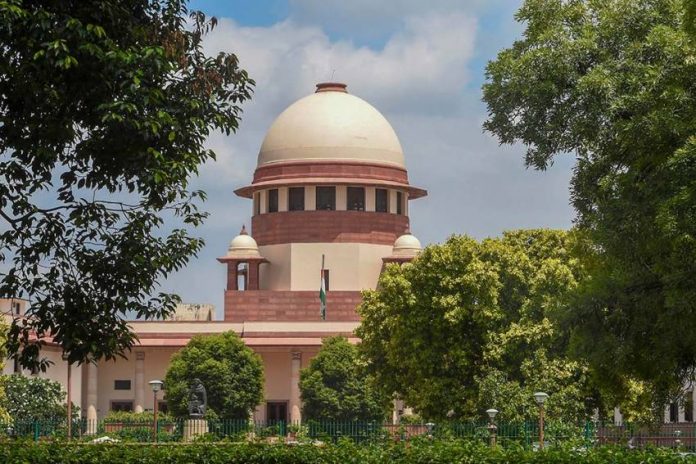
Image source - https://bit.ly/33qa3FN

This article is written by Vanya Verma from Alliance University, Bangalore. This article talks about brief facts of the case, Priti Saraf vs State of NCT of Delhi, the decision of the bench followed by judgement.

Introduction

In the case of Priti Saraf and Anr. v. State of NCT of Delhi & Anr. (2021), the Bench of the Supreme Court had reversed the High Court decision. The High Court had exercised its powers under Section 482 of the Code of Criminal Procedure. The Bench held that though the facts that had been mentioned in the complaint/FIR/charge-sheet revealed a commercial transaction, that was no reason for holding that the offence of cheating was not made out especially when “many times, the offence of cheating is committed in the course of commercial transactions”.

Bench

The Supreme Court’s Division Bench, composed of Hon’ble Justice Indu Malhotra and Hon’ble Justice Ajay Rastogi, decided the case.

Brief facts of the case

The case’s facts revolve around the property in question namely, 37, Friends Colony (East), New Delhi, which is owned by the second Respondents. The said property was mortgaged for Rs. 18 crores with the State Bank of Patiala. The second Respondent allegedly cheated the appellants by forming a partnership with the broker, Ashok Kumar, in order to misappropriate the money paid by the appellants to settle these debts. The second Respondent was also accused of breaching the appellants’ trust by allegedly making a false promise to pay the latter the sum of Rs. 25.50 crores if the contract was not completed. Appellants paid a total of Rs. 12.5 crores at the time of execution. The second Respondent had been accused of attempting to defraud from the beginning of the agreement as there was a failure to meet the three conditions outlined in clause 3 of the agreement.

The mandatory requirements were due on March 22, 2011, but only two of them were completed by May 11 and June 2, 2011, respectively, leaving the third requirement unfinished.

On September 23, 2015, the Appellants filed a private complaint before the learned Magistrate under Section 200 read with Section 190 of the CrPC regarding the alleged offences committed by the second Respondent before the Saket Court in New Delhi. It was then forwarded to the police station in order to register an FIR under Section 156(3) on November 15, 2016, which was contested by the Respondents through a criminal revision, but was later dismissed by the ASJ & Special Judge (NDPS), South East, Saket Courts, New Delhi on April 26, 2017. On April 28, 2017, an FIR was filed against the second Respondent and Mr. Ashok Kumar under Sections 420, 406, and 34 of the Indian Penal Code (IPC).

On October 5, 2018, the investigating officer filed a charge sheet revealing that the second Respondent never obtained site plans sanctioned for the appellants. The High Court’s learned judge, on the other hand, solely considered the agreement to sell (24.12.2011) and the notification of termination (30.01.2011) without looking into other important facts and events that occurred throughout the course of the case. The Justice determined that the second Respondent’s actions amounted to a simple breach of contract and, as a result, cancelled all criminal proceedings, citing inherent power under Section 482 of the CrPC.

Arguments by the parties

The Appellants’ learned counsel based their argument on the fact that the High Court’s inherent power under Section 482 CrPC is an exceptional one, employed only in the rarest of rare cases. The counsel strongly disagreed with the High Court’s decision to ignore the case’s substantial facts, claiming that restricting the matter to a purely civil character and ignoring the criminal features involved is unsustainable in law and should be overturned by the Divisional Bench. The learned counsel for the second Respondent, on the other hand, claimed that the issue was solely civil in nature because the earnest money was only forfeited after the appellants failed to meet and perform the conditions of the agreement to sell dated December 24, 2011. Furthermore, the Respondent asserted that all three elements were met, citing documentary evidence as proof.

The decision of the bench

Supreme Court: The bench of Indu Malhotra and Ajay Rastogi, JJ, answered the “debated” question of when a criminal proceeding may be quashed, either in the exercise of the High Court’s extraordinary powers under Article 226 of the Constitution of India or in the exercise of the High Court’s inherent powers under Section 482 CrPC. The bench held that in the matter of exercise of inherent power by the High Court, the only requirement is to see whether the continuance of the proceedings would be a total abuse of the process of the Court.

“The exercise of the High Court’s inherent power is an extraordinary power that must be exercised with great care and caution before embarking on a review of the complaint/FIR/charge-sheet in order to determine whether the case is the rarest of rare cases, allowing the prosecution to scuttle at its inception.”

It is a well-established legal principle that in order to exercise powers under Section 482 CrPC, the complaint in its entirety must be examined on the basis of the allegations made in the complaint/FIR/charge-sheet, and the High Court was not under obligation to investigate or examine the matter at that time. Without any critical examination, whatever appears on the face of the complaint/FIR/charge-sheet will be taken into account. The offence should appear ex facie on the complaint/FIR/charge-sheet, as well as if any documentary evidence on record. (paragraph 23)

“The Criminal Procedure Code contains a detailed procedure for investigation, charge framing, and trial, and in the event that the High Court wishes to intervene in the complaint/FIR/charge-sheet in the exercise of its inherent jurisdiction, it must exercise proper circumspection with great care and caution.”

In the case of State of Haryana and Others Vs. Bhajan Lal and Others (1990), the Court clarified the ambit and scope of Section 482 of the CrPC, outlining important elements necessary for a case to be quashed by the High Court.

Furthermore, the Court relied on the decision in Nagpur Steel & Alloys Pvt. Ltd. vs. P. Radhakrishna and Others (1997), notably paragraph 3 of that decision, which stated:

“We attentively examined the complaint. The complaint could not, in our opinion, be considered to have failed to reveal the commission of an offence. It would be insufficient to hold that the offence was committed throughout the course of a commercial transaction to rule that the complaint did not deserve a trial. The truth or falsity of the allegations in the complaint was to be determined based on the evidence presented during the complaint case trial. It was unquestionably not a case where the criminal trial should have been shortened. The complaint’s dismissal resulted in a serious miscarriage of justice. As a result, without commenting on the merits of the matter, we grant this appeal, set aside the High Court’s order, and reinstate the complaint. The learned trial Magistrate will proceed with the complaint and resolve it as quickly as possible in conformity with the law.” 

The Court was hearing a matter in which the second Respondent’s property was mortgaged with the State Bank of Patiala, with a total legal liability of Rs. 18 crores owed to the bank. To clear the said debts, the second Respondent formed a scheme with a broker to defraud and cheat the appellants/complainants, as well as misappropriate the funds paid by the complainants as part of the deal. The second Respondent also betrayed the appellants/complainants’ trust by falsely stating to the Appellants/Complainants that the second Respondent would be liable to pay a sum of Rs. 25.50 crores to the Complainant if the deal is not carried forward by the second Respondent.

While an FIR for the offence of cheating was lodged in the matter at hand, arbitral proceedings were also started at the request of the Appellants/Complainants.

The components of the offences under Sections 406 and 420 IPC cannot be deemed to be absent based on the accusations in the complaint/FIR/charge-sheet, the Court observed after a careful reading of the complaint/FIR/charge-sheet.

“…whether the claims in the complaint are otherwise correct or not, must be determined based on the evidence to be presented during the trial.” Simply because a remedy is provided for breach of contract or arbitral proceedings initiated at the Appellants’ request does not entitle the Court to conclude that civil remedy is the only remedy available and that the initiation of criminal proceedings, in any form, will be an abuse of the Court’s process for exercising inherent powers of the High Court under Section 482 CrPC for quashing such proceedings.”

The Court noted that the facts described in the current complaint/FIR/charge-sheet indeed disclose a business transaction, but it is hardly a justification to conclude that the offence of cheating would not be committed in such a transaction. In truth, cheating is frequently done in the course of economic transactions, as illustrated by Sections 415, 418, and 420 of the Indian Penal Code. So far as initiation of arbitral proceedings is concerned, there is no correlation with the criminal proceedings.

As a result, the Court determined that the issue at hand in the case at hand is not one in which the criminal trial should have been shortened. In exercising its inherent jurisdiction, the High Court was not justified in quashing the criminal proceedings. The High Court based its decision on two factors: 

(i) the fact that the sale agreement was terminated due to an alleged breach of contract, and 

(ii) the fact that the arbitral procedures were commenced at the request of the appellants.

The Court observed that both the alleged circumstances noticed by the High Court are unsustainable in law.

Judgement

It was held by the Court:

“On a careful reading of the complaint/FIR/charge-sheet in this case, we believe it is impossible to conclude that the complaint does not reveal the commission of an offence. On the basis of the allegations in the complaint/FIR/charge-sheet, the ingredients of the offences under Sections 406 and 420 IPC cannot be considered to be absent. We would like to point out that whether the claims in the complaint are true or false must be determined based on the evidence presented during the trial.” (paragraph 32)

The pending interlocutory applications were disallowed by the divisional bench, which found that they were submitted with malafide intentions under Sections 340 and 195 of the CrPC.

In conclusion, the Court held that the decision to quash the judgment by the High Court was incorrect and accordingly set aside. Thus, the appeal was successful.

Conclusion

To conclude the findings of the case in brief- the existence of civil remedies is not enough to stop criminal proceedings, according to the Court. The Court stated that just because a remedy is provided for breach of contract or arbitral proceedings initiated at the request of the Complainant does not entitle the Court to conclude that civil remedy is the only remedy and that the initiation of criminal proceedings, in any form, will be an abuse of the Court’s process for exercising inherent powers of the Court. The Court stated that in order to exercise powers under Section 482 CrPC, the Complaint must be assessed in its entirety on the basis of the allegations contained in the Complaint/FIR/charge-sheet, and the High Court was not under an obligation to go into the matter or examine its correctness.

References


LawSikho has created a telegram group for exchanging legal knowledge, referrals, and various opportunities. You can click on this link and join:

Follow us on Instagram and subscribe to our YouTube channel for more amazing legal content.

Download Now

Case analysis : NTPC v. Deconar Services Pvt. Ltd.

0

This article is written by Yukta Joshi pursuing Certificate Course in Arbitration: Strategy, Procedure and Drafting from LawSikho.

Introduction

The Arbitration & Conciliation Act, 1996, works on the scheme with the least interference by courts. The reason why Arbitration was preferred is its expeditious proceedings. It is a well-known fact that court proceedings continue for many years and sometimes the delayed relief even if granted is of no use. Many times, the victim no longer remains on earth till the relief is granted. Especially in India, courts are over-burdened with cases. In this, arbitration comes at the rescue of the courts and business persons. That is the reason, court proceedings arising out of the arbitration or matters connected thereto are highly discouraged by the courts. Indian courts have maintained this stance for a long time.

In a recent decision in NTPC Ltd. v. M/s Deconar Services Pvt. Ltd.1, the Hon’ble Supreme Court reiterated that the courts do not sit in appeal over the arbitral award and must give way to a possible view taken by the arbitrator. In this article, the author briefly lays down the background of the case and analyses the findings by the Hon’ble Supreme Court based on the contentions of the parties relating to the issue of non-interference as mentioned above.

Brief facts of the case

Two contracts were concluded between the appellant and respondent with respect to the two tenders issued by the appellant for the construction of 100 units of quarters and 68 units of quarters respectively.  The appellant decided to award both the contracts to the respondent because of the offer of a 16% rebate proffered by the respondent on the prices for completing the first project. The two letters of the award were issued on 29 June 1988 to the respondent. 

The appellant delayed the handing over of the land to the respondent on which the construction was to occur. Consequently, the construction of quarters in both projects was delayed. The disputes arose amongst the parties relating to their respective obligations under both contracts. Subsequently, the respondent sought an arbitration according to the dispute resolution clause in the contract, and an arbitrator was appointed.

Following the arbitral proceedings, the award was passed on 07.07.2000 in favour of the Respondent. The Respondent was awarded a sum of 23,89,424 and INR 24,36,532 for the first and second contract respectively with an interest of 18% per annum pendete lite and 21% future interest on both the contracts.

Discontented by the decision of the arbitrator, the appellant approached the Delhi High Court under Section 30 and 33 of Arbitration Act, 1940 (“1940 Act”), which provided grounds for setting aside the arbitral award and challenging its validity. The learned Single Judge dismissed the objections raised by the appellant and ordered a cost of Rs. 50,000. The award was thus made under the order of the High Court and could be enforced. 

The appellant, however, preferred an appeal against the order of the Single Judge before a Division Bench of the High Court under Section 39 of Arbitration Act, 1940, which was also dismissed by a common judgment dated 9 April 2010 with a cost of Rs. 10,000. Being aggrieved, the appellant filed a Civil Appeal by way of a Special Leave Petition (SLP) before the Hon’ble Supreme Court of India.

Contentions of the parties

Appellant 

The appellant made the following contentions:

  • The rebate of 16% agreed to be given by the respondent on the prices for completing the first project was unconditional.
  • The grant of escalation of charges by the arbitrator for the work done and the delay was beyond the contractual terms. The appellant referred to the case of New India Civil Erectors (P) Ltd., wherein the court refused the claim for escalation of prices during the period of delay. 
  • The costs imposed by the single judge and the division bench of Delhi High Court were not justified.

In light of the above contentions, the appellant in the SLP argued that the High Court should have had interfered with the award since it was contradictory to the terms of the contract between both parties.

Respondent

The respondent emphasized the limited scope of court intervention in the matters pertaining to an arbitration award. It argued that the court did not sit in an appeal over an award under the 1940 Act and as long as the view taken by the arbitrator is a reasonable and a possible view, the court should not interfere with the same.

Further, the respondent argued that the appellant was intentionally prolonging the litigation.

Issue of law raised

  1. Whether the awards in question were available on any of the available grounds under the Act?

arbitration

Analysis of the judgement 

The Hon’ble Supreme Court acknowledged the contentions of the respondent and emphasised that this Court has consistently held that it does not sit in appeal over an award passed by an arbitrator”. The court iterated that it is a settled proposition that where the arbitrator has taken a possible view, although a different view may be possible on the same evidence, it would not interfere with the award. Further, the court stated that from a catena of other judgments passed by this court, it was clear that in order to succeed in its challenge against arbitral awards, the appellant must show that the award of the arbitrator suffered from perversity or an error of law or that the arbitrator had otherwise misconducted himself. The court recapitulated that merely showing that there is another reasonable interpretation or possible view on the basis of the material on record is insufficient to allow for the interference by the court. 

Further, it noted that due regard must be given to the fact that both the learned Single Judge and the Division Bench of the Delhi High Court had concurrently held against the appellant.

On the merits, the court observed that it was proved that the substantial delay in handing over the sites to the Respondent was attributable to the appellant. Further, concerning the issue of refund of the rebate, the court observed that the arbitrator interpreted the rebate as a conditional one on analysing the documents on record. The arbitrator has held that the intention of the parties was to complete the work together, which would have enabled the respondent to reduce its costs and optimise its charges, thereby allowing it to grant the 16% rebate to the appellant. The court also observed that the appellant had breached the condition for the grant of rebate by causing substantial delay, thereby entitling the Respondent to a refund of the same. In the instant case, since the view taken by the arbitrator was a possible one, the Hon’ble Supreme Court held that it saw no reason to interfere with the impugned judgment. Accordingly, the civil appeals filed by the appellant were dismissed.

In light of the above observation, the Supreme Court has in the present matter replicated and upheld the long old stance and the principle of least court intervention in arbitration matters. 

Similar judgement on this issue of law

There are a plethora of judgments on this issue of non-interference by courts:

Kwality Manufacturing Corporation v. Central Warehousing Corporation 

This judgment highlighted the limited scope of intervention by the courts under Section 30 or 33 of the 1940 Act. It was held that a court did not sit in appeal over the findings and decision of the arbitrator. Moreover, the courts could not reassess or re-appreciate evidence while dealing with a challenge to an arbitral award. The only question that arose here was whether there was an error apparent on the face of the award and whether the arbitrator misbehaved during the proceedings.

Arosan Enterprises Ltd. v. Union of India

In this case, it was held that, where the arbitrator had taken a possible view, even if a different view could be possible on the same evidence, the court would not interfere with the award. The phrase “error apparent on the face of the record” did not by itself mean and imply closer scrutiny of the merits of the documents and materials on record. The objector/appellant in order to succeed in their challenge against an arbitral award must show that the award of the arbitrator suffered from perversity or an error of law or that the arbitrator has otherwise misconducted himself. Merely showing that there is another reasonable interpretation or possible view on the basis of the material on the record is insufficient to allow for the interference by the Court.”

Assam State Electricity Board v. Buildworth Private Limited (Assam State case)

In this case, the Apex Court observed that the arbitrator had granted escalation charges above what was permissible under the contract. Upholding such an award, the Hon’ble Supreme Court held that the arbitrator had correctly taken the view that the provision for price escalation would not bind the claimant beyond the scheduled date of completion. The court held as under;

“…. Matters relating to the construction of a contract lie within the province of the Arbitral Tribunal. Moreover, in the present case, the view which has been adopted by the arbitrator is based on evidentiary material which was relevant to the decision. There is no error apparent on the face of the record which could have warranted the interference of the court within the parameters available under the Arbitration Act, 1940. The arbitrator has neither misconducted himself in the proceedings nor is the award otherwise invalid.”

Recently, in the case of Megha Enterprises, the Delhi High Court had observed a similar ratio, wherein it was held that the court cannot interfere with an award on the ground of inference drawn by the arbitral tribunal from the evidence on record. Therefore, these decisions certainly aid in the fostering of the arbitration regime in the right direction.

Conclusion 

The instant judgment adds to the catena of judicial precedents that highlight the principle of non-interference of arbitrator’s decision by courts on the ground of alternative interpretations or possible views. The arbitrator is free to take a reasonable and a possible view and decide the case based on evidence on record. Merely showing that there is another reasonable alternative or possible view which the arbitrator did not take, would not entail judicial intervention. Minimal intervention in the arbitral process would instil confidence amongst parties seeking to arbitrate and allow them to attain a final, binding decision in a shorter timeline. The courts also, on the other hand, would benefit from the reduction in the litigation and case workload.

References


Students of Lawsikho courses regularly produce writing assignments and work on practical exercises as a part of their coursework and develop themselves in real-life practical skills.

LawSikho has created a telegram group for exchanging legal knowledge, referrals, and various opportunities. You can click on this link and join:

Follow us on Instagram and subscribe to our YouTube channel for more amazing legal content.

Download Now

Case analysis : Sirpur Paper Mills Limited v I.K. Merchants Pvt. Ltd. 

0
Insolvency of parties

This article is written by Priyal Pingle pursuing Certificate Course in Arbitration: Strategy, Procedure and Drafting from LawSikho.

Introduction

This article discusses the judgment given in the case of Sirpur Paper Mills Limited v. I.K. Merchants Pvt. Ltd which was delivered by the Calcutta High Court on May 7, 2021. Under the Insolvency Bankruptcy Code of India (“IBC”), the corporate insolvency resolution process is the process of resolving the corporate insolvency of a corporate debtor in accordance with the provisions of the Code. Corporate insolvency is a state where a corporate person is unable to pay its debt, whether whole or any part or installment, when due and payable.  In such cases, a financial creditor, an operational creditor, or the Corporate Debtor itself can submit an application to the National Company Law Tribunal (NCLT) to start the Corporate Insolvency Resolution Process (CRIP). After NCLT gives its approval to the application, the board of directors is suspended and the management is placed under the control of an Interim Resolution Professional (IRP) and a moratorium is applied on the company. Section 14 of the Insolvency Bankruptcy Code of India discusses the concept of ‘Moratorium’. According to the Oxford dictionary moratorium is “a legal authorization to debtors to postpone payment”. The moratorium is a period wherein the enforcement of existing or new legal proceedings against the company, sale or transfer of assets of the corporate debtor, the collection of any security interest, the recovery of any property from it by an owner or lessor, or termination of essential contracts is prohibited. The moratorium continues till the corporate debtor is in the Corporate Insolvency Resolution Process.

The Calcutta High Court in this judgment answered the question as to what if, the award debtor goes into insolvency before paying the amount awarded to the award-holder in an arbitration proceeding. Does the award-holder still have any rights to claim the amount as decided under the arbitration proceeding? Whether the claim of an award holder is extinguished if a resolution plan is accepted by the NCLT and the award debtor does not file his claim before the Resolution Professional?  

A Single Judge Bench comprising Justice Moushumi Bhattacharya in Sirpur Paper Mills Limited v. I.K. Merchants Pvt. Ltd of Calcutta High Court held that the claim of the award holder would be extinguished once the resolution plan under the Insolvency Bankruptcy Code of India in relation to a corporate debtor was accepted by the National Company Law Tribunal. 

Brief facts of the case

On 7th July 2008, the arbitral award for a sum of Rs.3,21,927.70/- at 9% per annum was passed in favour of the I.K. Merchants Pvt. Ltd (Respondent). Sirpur Paper Mills Limited is a Petitioner in this case. Petitioner is also an award debtor in an arbitration proceeding with the Respondent. On October 31, 2008, the Petitioner challenged the Award dated 7th July 2008 before the Calcutta High Court under Section 34 of the Arbitration & Conciliation Act, 1996. He filed an application seeking annulment of the award under Section 34 of the Arbitration & Conciliation Act, 1996.

In the year 2017, during the pendency of Section 34 application, the Operational Creditors initiated proceedings under the Insolvency Bankruptcy Code of India against the Petitioner before the jurisdictional National Company Law Tribunal. On 18th September 2017, Corporate Insolvency Resolution Process was admitted and an Interim Resolution Professional was also appointed on the same day. On 25th September 2017, Interim Resolution Professional made the public announcement inviting claims from the creditors of the petitioner company.  The respondent did not submit its claim with Resolution Professional within the time granted under the public announcement. On 19th July 2018, National Company Law Tribunal approved the resolution plans from eligible resolution applicants who were invited by the Resolution Professional. On the same day, the Adjudicating Authority also issued a moratorium under Section 14 of the Insolvency Bankruptcy Code of India. This order was challenged before the appellate tribunal in multiple proceedings. Later the National Company Law Appellate Tribunal, Delhi confirmed it.

During this process, the petitioner prayed before the Calcutta High Court for setting aside the impugned award dated 7th July 2008. The Petitioner also argued that the application under Section 34 of The Arbitration and Conciliation Act, 1996 cannot proceed any further as under the Insolvency Bankruptcy Code of India the Corporate Insolvency Resolution Process has been initiated against the Petitioner and is in the process of completion. 

The Calcutta High Court in its Judgment dated 10th January 2020 rejected the Petitioner’s contention and declared that the Corporate Insolvency Resolution Process cannot be used to defeat a dispute which existed before the initiation of this process. The Court also held that since in 2017 the Section 34 proceedings had not been decided in favour of the respondent the award holder could not have filed a claim before the National Company Law Tribunal. The Court also stated that the Award debtor cannot use the Corporate Insolvency Resolution Process to take refuge under the provisions of the Insolvency Bankruptcy Code of India. 

The Calcutta High Court concluded that those arbitral awards which are pending adjudication under Section 34 should show that a pre-existing dispute exists in such cases. The High Court while coming to this conclusion relied upon the Supreme Court Judgments of K. Kishan vs M/S Vijay Nirman Company Pvt. Ltd and Mobilox Innovations Pvt. Ltd. v. Kirusa Software Pvt. Ltd.  

The Petitioner again challenged the maintainability of the Section 34 proceedings before the High Court of Calcutta contending that the present proceeding under Section 34 of the Arbitration & Conciliation Act, 1996, has become infructuous as the management of the Petitioner has been taken over by a new entity following the approval of a resolution plan by National Company Law Tribunal under the Insolvency Bankruptcy Code of India.

Issues of law raised

  1. Whether in considering maintainability of Section 34 application earlier orders dated 10 January 2020 and 3 February 2020 passed by the Calcutta High Court would stand in the way?
  2. Whether the Award-holder could have pressed its claim before the National Company Law Tribunal during the pendency of Section 34 proceedings?
  3. Can the claim of an Award-holder in an application under Section 34 of the Act be frustrated upon approval of the Resolution Plan under Section 31 of Insolvency Bankruptcy Code of India and a successful Resolution Applicant taking over management of an award-debtor?

Petitioner’s arguments

Arguments by the senior Counsel Mr. Jishnu Saha, appearing for the petitioner –  

  1. According to Section 31 of the Insolvency Bankruptcy Code of India, an approved Resolution Plan is binding on the corporate debtor and its employees, members, and other stakeholders. Petitioner while arguing this relied upon the Supreme Court decision in Committee of Creditors of Essar Steel India Limited vs. Satish Kumar Gupta.
  2. Essar judgment counsel appearing for the Petitioner also cited Gaurav Dalmia vs. Reserve Bank of India & Ors; Axis Bank Limited vs. Gaurav Dalmia; Sumitra Devi Shah & Ors. Vs. Tata Steel BSL Limited; and argued that once the Resolution Plan has been accepted then a successful Resolution applicant cannot be faced with undecided claims and therefore the debts of the petitioner extinguished to the extent of the debts which have been taken over by the resolution applicant under the approved Resolution Plan.
  3. The Counsel also contended that according to Section 3(6)(a) of the IBC  a claim is a right to payment irrespective of whether it is reduced to judgment or not and hence there is no doubt that a claim also includes a disputed claim and a right to payment. 
  4. The counsel argued that the amended Section 36 of the Arbitration and Conciliation Act, 1996 will apply to pending Section 34 applications on the date of commencement of the Amendment Act of 2016. The counsel relied upon the Board of Control for Cricket in India vs. Kochi Cricket Private Limited & Ors to urge the aforesaid point.

arbitration

Respondent’s arguments

Arguments by Mr. Sudip Deb, counsel appearing for the respondent

  1. As per Satyadhyan Ghosal vs. Deorajin Debi (Smt); and Arjun Singh vs. Mohindra Kumar; res judicata can apply to different stages of the same proceeding. Therefore, in a current case, it is applied as the submissions of the petitioner have been raised and argued on two earlier occasions. 
  2. Amended Section 36 has prospective application and therefore the respondent could not approach the NCLT for lodging its claim as the application under Section 34 of the 1996 Act filed in October 2008 automatically stayed. 
  3. The dispute raised by the party amounts to a pre-existing dispute which takes the respondent outside the purview of the IBC. 
  4. Counsel relied on Swiss Ribbons Pvt. Ltd. vs Union of India; and argued that the respondent who is the operational creditor does not have any claim in the present case, as nothing is due from the petitioner in view of the pendency of the Section 34 application. 

Analysis of the judgment

The High Court while dealing with the first issue explained that the principles of res judicata applying to different stages of the same proceedings must be read down in those cases where on the emergence of new facts or situations orders are capable of being altered or varied. Therefore in the present case, the question of maintainability of the application under Section 34 of the 1996 Act can be considered at any point of time on the legal aspect and particularly on the pronouncement of a decision relevant to the matter.

The High Court while dealing with the second issue stated that the respondent had sufficient opportunity to approach the NCLT for appropriate relief from 18th September 2017 that is the date of the admission of the application of initiation of the Corporate Insolvency Resolution Process against the petitioner until approval of the resolution plan on 16th May 2018. The Respondent was under an obligation to take active steps under the IBC instead of waiting for the adjudication of the application under Section 34 of the 1996 Act.

The High Court while dealing with the third issue referred to the decision of the Supreme Court in Essar Steel and Edelweiss.  In the Essar judgment, the Court had held that Section 31 of the IBC would be binding on the corporate debtor and the proceedings for recovery of claims which are not part of such resolution plan cannot be initiated by the creditor-debtor. Calcutta High Court based on this judgment along with Sections 25, 29, 30, and 31 of the IBC held that after the approval of the resolution plan under Section 31 of the Insolvency Bankruptcy Code of India the claim of the award holder would be extinguished. 

In this case, the High Court upheld the principle imbibed under IBC that the prime objective of the Corporate Insolvency Resolution Process is a revival of the corporate debtor and a successful resolution applicant should not be saddled with legacy claims or debts. In the cases of the challenge to arbitral awards, where the award is not automatically stayed upon the filing of section 34 application, it would be advisable for the award holders to file their claims with RP within a stipulated time. 

The Court overlooked the participation of the award-holder in the Corporate Insolvency Resolution Process and erroneously quashed the Section 34 proceedings thereby leaving no recourse for the award-holder to enforce his decree against the erstwhile management of the corporate debtor. It is undisputed that the status of the debtor-company must be preserved as a ‘going concern’ and its assets must be appropriately handled. At the same time, an award-holder whose execution decree will attain finality once the process under Section 34 or 37 of the Arbitration Act comes to an end, must not be left remedial.

The law relating to challenge to an arbitral award stipulates that the Court may only grant a stay upon the filing of a separate application. In such a case, the award holder would be constrained to file its claim before RP. Accordingly, the claims shall stand extinguished where either the claims have not been submitted to RP or the same have been held to be non-admissible before the resolution plan is approved.

However, the Supreme Court’s lapse in clarifying the status of unquantified claims has operated harshly on such creditors. The lacuna in the law as highlighted above needs to be judicially or legislatively addressed to safeguard the interests of bonafide creditors

Similar judgments on this issue of law

Ghanshyam Mishra and Sons Private Ltd v Edelweiss Asset Reconstruction Company

In this case, despite approval of the resolution plan by the NCLT, proceedings were sought to be initiated in alternative forums for recovery of dues not provided for in the resolution plan.

The Supreme Court held that Section 31 clearly states that the resolution plan becomes binding on the credit debtor, its employees, members, and creditors, etc. after it is approved by the Adjudicating Authority. Thus, if after the approval of the resolution plan, any undecided claims are allowed, it would result in great uncertainty and discourage prospective resolution applicants.

Essar Steel v Satish Gupta & Ors.

The present decision of the Supreme Court stems from a batch of appeals challenging the decision of the NCLAT in the Essar Steel insolvency resolution along with writ petitions challenging the constitutional validity of the Amendment Act, 2019. It was held by the NCLAT that a resolution plan should not differentiate between financial and operational creditors in the manner of payment of dues. It also directed redistribution of proceeds payable under the resolution plan such that all financial creditors were paid an amount of 60.7% of their admitted claims and operational creditors (with an amount of claim equal to or greater than INR 1 crore) were paid 60.26% of their admitted claim, and operational creditors (with an amount of admitted claim under INR 1 crore) were paid in full. The financial creditors amongst others challenged this decision of the NCLAT before the Supreme Court. The Supreme Court held that all “undecided” claims of the corporate debtor would stand extinguished once a resolution plan was accepted. Therefore, no creditor may pursue any claims against the corporate debtor after the completion of the CIRP.

Conclusion

The dispute on an important point of law related to the interaction between the Insolvency and Bankruptcy Code, 2016 and the Arbitration and Conciliation Act, 1996 has been settled by the Calcutta High Court in the Sirpur Paper Mills case. This judgment makes it very clear that after the approval of the resolution plan a successful Resolution Applicant should not be faced with undecided claims and such claims shall extinguish upon approval of the resolution plan. 

According to the High Court, the present case related to the question of whether or not the arbitral award should be set aside would be a complete waste of judicial time and also of the parties as upon approval of the Resolution Plan under Section 31 of the IBC the claim of the award-holder would be extinguished. 


Students of Lawsikho courses regularly produce writing assignments and work on practical exercises as a part of their coursework and develop themselves in real-life practical skills.

LawSikho has created a telegram group for exchanging legal knowledge, referrals, and various opportunities. You can click on this link and join:

Follow us on Instagram and subscribe to our YouTube channel for more amazing legal content.

Download Now

Legal protection available to whistleblowers in a company

0
Image source: https://bit.ly/3AVgUGA

This article is written by Shivank Datta, pursuing Diploma in Business Laws for In-House Counsels from LawSikho.

Introduction

The increase in whistleblower complaints has led to an increase in its importance and a need for the creation of a robust mechanism for their protection. This increase in whistleblower protection in India points to a tool for the organisations that promotes a transparent structure and allows effective and clear communication. The concepts of ethics, honesty and disclosure of truth are the driving factors for the whistleblowers. Whistleblowers are the employees that feel obliged to disclose information about an organisation’s unethical and corrupt practices by reporting its unlawful activities.

The majority of the whistleblowers who report any misconduct are employees of that organisation. Therefore, it becomes more important that there exists a mechanism that provides protection to them. Time and again, there have been various instances where attempts to control and silence the whistleblowing activities have made it to the headlines. In light of the same, this article attempts to examine the legal aspects of the whistleblowing regime that provides a mechanism for the protection of whistleblowers in India.  

Who are whistleblowers?

The International Labour Organisation (ILO) defines whistleblowing as “the reporting by employees or former employees of illegal, irregular, dangerous or unethical practices by employers.”

The United Nations Convention against Corruption (UNCAC) refers to “any person who reports in good faith and on reasonable grounds to the competent authorities any facts concerning offences established in accordance with this Convention.” 

Whistleblowing is an act where an employee of an organisation, upon witnessing and believing that the practices of that organisation are unethical or corrupt, seeks to stop such activities by informing the top authorities in that organisation or by confiding to an outside vigil mechanism.

Types of whistleblowers

  1. Internal– where the whistleblowers inform about the wrongdoings to the top authorities of that organisation i.e., internal whistleblowing.
  2. External– where the wrongdoings are reported to the authorising outside the organisation like the media or enforcement agencies, it is called external whistleblowing.
  3. Alumni– where the whistleblower is a former employee of the concerned organisation. 
  4. Open– when the identity of the whistleblower is known/revealed, it is called open whistleblowing.
  5. Personal– disclosure of the organisational wrongdoings that are directed towards an individual, is called personal whistleblowing.
  6. Impersonal– where the wrongdoings harm others, it is called impersonal whistleblowing.
  7. Government– where the disclosure of information about the wrongdoings, usually a corruption of the government officials.
  8. Corporate- where the disclosure of information about the wrongdoings of a corporate is made, it is called corporate whistleblowing.

Legal mechanisms in India

The driving force behind free, transparent and truthful whistleblowing is the protection provided by the legal regime. Under Indian law, there are a few legal mechanisms that protect the rights of the whistleblowers by providing them with the independence to disclose information about an improper and unethical activity with respect to any corporation.

The first and foremost protection for whistleblowers is provided under the Constitution of India. Article 19(1)(a) of the Constitution of India gives the citizens the right to impart and receive information under the umbrella of the right to speech and expression. The State has an obligation to provide for the conditions and mechanisms that ensure that this right is effectively enjoyed by all. Further, Article 21of the Constitution of India provides for a right to life and personal liberty that expands to a number of rights including the right to hold a particular opinion as well.

The government of India enacted the Whistleblower Protection Act, 2014 (hereinafter referred to as WPA) that applies only to public servants. With the rise in corruption and other wrongdoings, there was a necessity for the government to establish a robust mechanism that ensures a check on the prevalent wrongdoings within the government. The WPA was enacted with the intent to; 

  • Establish a mechanism to receive complaints relating to the disclosure;
  • On any allegation of corruption or wilful misuse of power or willful misuse of discretion;
  • Against any public servant; 
  • To inquire or cause an inquiry into such disclosure; and
  • To provide adequate safeguards against victimisation of the person making such a complaint.

According to Section 2(d) of the WPA, a disclosure means a complaint relating to an attempt to commit or commission of an offence under the Prevention of Corruption Act; or wilful misuse of power or willful misuse of discretion by virtue of which demonstrable loss is caused to the Government or demonstrable wrongful gain accrues to the public servant or to any third party; or an attempt to commit or commission of a criminal offence by a public servant.

The WPA is Legislation that solely focuses on government bodies and organisations including public sector undertakings. However, nongovernmental public and private companies also have a mechanism that deals with disclosure as prescribed under the Companies Act, 2013 (hereinafter referred to as CA).

Legal protection under the Companies Act

Section 177(9) of the CA provides that all public listed companies have to mandatorily establish a ‘vigil mechanism’ so that the concerns of the persons making disclosures are received and acted upon. In furtherance of the same, it is also mandatory that a whistleblowers policy be established with clear and adequate safeguards against the victimisation of the persons making use of that mechanism. However, the establishment of a whistleblowers policy is not mandatory for private companies and it depends solely on the discretion of the companies to formulate such a vigil mechanism and follow it. The viability of the whistleblower policy is dependent on the intent of the organisation for proper implementation and the directions mentioned in the policy that ensure proper compliance of the same.

The whistleblower policy or the ‘vigil mechanism’ must be a mechanism that provides:

  • A channel to report the violation/wrongdoing like discrimination, wilful negligence, misappropriation of funds and audit reports etc.;
  • A hierarchy structure spanning from the entry-level employee to the top management;
  • Zero harassment towards the person disclosing;
  • Confidentiality to safeguard the whistleblowers;
  • Disciplinary action for the persons providing false information or making false disclosures with malicious intent.

In addition to this, there are various other provisions in the CA that provide for a framework for inquiry and investigation and a vigil mechanism that back the whistleblowers protection by way of external agents/whistleblowing. The CA under Section 206 to 229 play an important part in the vigil mechanism and help in the identification of wrongdoings. Section 208 of the CA empowers an Inspector to go through the records and recommend a further investigation in such matters of doubt; Section 210 empowers the central government to order investigation on the receipt of such recommendations from the inspector or in the public interest or on intimation of a special resolution passed by the company to be investigated. Section 211 has led to the formation of the Serious Fraud Investigation Office (SFIO) pertaining to offences of fraud.

Legal protection under the Securities & Exchange Board of India

The Securities & Exchange Board of India (hereinafter referred to as SEBI) vide circular dated 26th August, 2003 amended the principles of corporate governance incorporated under the standard Listing Agreement. Clause 49 of the Listing Agreement mentioned the formation of a whistleblowers policy for companies. In furtherance of the same, the SEBI vide Regulation 22 of the SEBI (Listing Obligations and Disclosure Requirements) Regulations, 2015 (‘LODR’) made it mandatory for listed companies to have a whistleblowers policy i.e. ‘vigil mechanism’ for their employees. 

To add more protection to the whistleblowers the SEBI vide Regulation 9A(6) of the SEBI (Prohibition of Insider Trading) Regulation, 2015 mandated every public company to have a whistleblowers policy and create such awareness among the employees to report instances of leak of unpublished price sensitive information. The SEBI also introduced a reward mechanism to incentivise the person disclosing information of a violation of the insider trading laws.

The SEBI has brought in various other provisions for the strengthening of corporate governance such as Regulation 30 of the LODR that requires disclosure of material information to the SEBI and the Companies (Auditor’s Report) Order, 2020 (‘CARO’) that applies to every company and necessitates enhanced due diligence and disclosure on the part of the auditors of the company to increase transparency.

The rules provided by the SEBI apply only to listed companies and do not apply to unlisted private companies. The private companies are under no obligation to frame a vigil mechanism or the whistleblowers policy for their company but are bound by the provisions of the CA and the CARO. However, there are certain progressive private companies that have enacted or adopted a whistleblowers policy as it is becoming a globally accepted practice; thereby maintaining a global standard, shareholder trust and transparency in their business activities.

The formation of a whistleblowers policy in a company also necessitates prevention from making frivolous complaints by providing a manner for taking suitable action against persons making false disclosures and complaints. The Companies (Meetings of Board and its Powers) Rules, 2014 provides that in case of repeated frivolous complaints filed by the directors or employees of the company, the audit committee may take suitable action against such director or employee. These aforementioned provisions form the Indian legal regime that focuses on transparency in business and the protection of whistleblowers against disclosures made by them.

Conclusion

The protection of whistleblowers has become increasingly significant with the increase in employee vigilance and corporate governance.  The adoption of such a vigil mechanism in India is imperative for the growth of corporate governance and transparent business practices. The companies must be cognisant in developing a robust whistleblowers policy that not only supports the people disclosing such information by providing anonymity and protection but also ensures that misuse of that protection and information is not entertained. It is difficult to balance the advantages of a whistleblowers policy with the disadvantages of frivolous complaints but adopting such a vigil mechanism in the first place would be a bigger step towards increasing awareness and responsibilities for a strong, transparent and efficient business environment that lead to the creation of a compliance culture in India.

References

  1. https://www.sebi.gov.in/legal/circulars/aug-2003/corporate-governance-in-listed-companies-clause-49-of-the-listing-agreement_15948.html 
  2. https://www.sebi.gov.in/sebiweb/home/HomeAction.do?doListing=yes&sid=1&ssid=3&smid=0
  3. https://ibclaw.in/section-210-of-the-companies-act-2013-investigation-into-affairs-of-company/#:~:text=company%20%2D%20 IBC%20 Laws-,Section%20210%20of%20the%20Companies%20Act%2C%202013,Investigation%20into%20affairs%20of%20company&text=(2)%20Where%20an%20order%20is,the%20affairs%20of%20that%20company.
  4. http://corporatelawreporter.com/companies_act/section-208-of-companies-act-2013-report-on-inspection-made/#:~:text=The%20Registrar%20or%20inspector%20shall,if%20 necessary%2C%20 include%20a%20 recommendation 
  5. https://prsindia.org/billtrack/the-whistle-blowers-protection-amendment-bill-2015#:~:text=The%20Whistleblower%20Protection%20 Act%2C%202014,offences%20by%20a%20public%20 servant

Students of Lawsikho courses regularly produce writing assignments and work on practical exercises as a part of their coursework and develop themselves in real-life practical skills.

LawSikho has created a telegram group for exchanging legal knowledge, referrals, and various opportunities. You can click on this link and join:

Follow us on Instagram and subscribe to our YouTube channel for more amazing legal content.

Download Now

How is counterfeit different from trademark infringement

0

This article is written by Tarandeep Singh Khurana, pursuing a Diploma in Intellectual Property, Media, and Entertainment Laws from Lawsikho.com.

Introduction

“Imitation may well be the sincerest form of flattery, but if taken too far it can also be costly”. Intellectual property rights provide/allow protection and reward to the hard work of the creators by recognising their rights of ownership and preventing others from exploiting their work without their consent. To create an identity in the market, amassed with a plethora of products the creators often use trademarks to mark their products. The marks are distinctive and create goodwill that is associated with the creators vis-a-vis their products. This also serves as an assurance that the consumer can expect certain characteristics and qualities from the said products bearing the trademark. Often there is unjust enrichment by free riders who want to exploit the expectation of the consumers associated with the trademark and the goodwill earned by the creators. The most common methods used by the perpetrators are producing counterfeit products and resorting to trademark infringement. The two can be called fraternal twins. The common feature being the injury caused to the creators of intellectual capital while employing a different modus operandi. 

Louis Vuitton Bags

NIKE Sneakers

What is counterfeit?

The word counterfeit means “made in imitation of something else with intent to deceive”, “to imitate or feign especially with intent to deceive”. It is the practice of making fraudulent copies wherein the paramount intention is to defraud the buyer and the brand being imitated. Counterfeit products bear marks that are substantially indistinguishable from the genuine mark. Even if there are any differences they would be so subtle and trivial that it may escape the user of ordinary intelligence. The customer falsely believes that the products are in fact the original/genuine products due to the identical packaging, colour combinations and near-identical product. They are colourable imitations of the original product. In the COVID-19 pandemic, the illicit practice of counterfeit products has even spread to sanitisers, PPE kits, and other essentials and there has been a massive increase in counterfeiting due to the disruption of supply chains due to the pandemic. Section 104 of the Trade Marks Act 1999 provides for the punishment for selling goods with false trademarks. The punishment prescribed is imprisonment not less than six months but which may extend to three years and with a fine which shall not be less than fifty thousand rupees but which may extend to two lakh rupees. 

Due to economic constraints, a large section of the population cannot enjoy luxury goods. Thus such goods become a prime target as their cheaper imitations can be passed off as original products. This is especially the case for merchandise and apparel where due to ever-changing fashion trends the products have a short life cycle. Many times the consumers are tempted to buy such products due to this very reason.

Currently, China is the worlds’ second-largest economy. Thus it has a huge appetite for luxury goods. However, unfortunately, it is also the leading country in counterfeit goods. At times technical know-how is leaked from the manufacturing centres and cheap counterfeits are produced in sweatshops. 

The popularity of counterfeit luxury brands in China has led to the narrowing of the gap in prices between mainland China and Europe and the introduction of affordable products or sub-brands to attract youngsters. Some notable examples include Rick Owens with Rick Owens Drkshdw, Comme des Garçons with CDG Play and Maison Margiela with MM6. Clearly, there is a strong need for creating awareness among the consumers for the moral hazards of buying counterfeit products and the adoption of creating innovative business models by the brands like constantly innovating and quite often changing the packaging to stay ahead of the counterfeits.


What is trademark infringement?

Trademarks provide an identity to the products by creating distinctiveness of their products. The consumers are protected as they are relying on the visual signs that the product they are buying is the one they are familiar with and within a quality that has been regulated and thus safe. The logo most often used as a trademark is used by the consumers to identify the product vis-a-vis the company. A competitor may try to promote his goods by imitating the trademark already in use with the intention to cause confusion. With the ensuing confusion, the customers may believe that there is an association between the registered trademark and the new mark. Thus the sales would be diverted to the brand trying to hijack the goodwill of the popular trademark. 

Protection of trademarks will only be available if they are registered in a particular territory. Such registration will give the right to exclusively use the trademark in connection with the goods in respect of which it is registered. In the event of an invasion of this right by any other person, using a mark that is deceptively similar to his trademark action for infringement can be taken up by the owner of the trademark. Such an action will be successful if it is proved that an ‘essential particular’ of the trademark has been copied. Section 29 of the Trade Marks Act 1999 enunciates infringement of registered trademarks. Late fashion designers are rightfully asserting their trademarks likewise a Delhi store owner was ordered to stop the misuse of the trademark Sabyasachi in any manner whatsoever. Likewise in the case of Gucci, the French company won a case of trademark infringement and dilution in New York in 2012 but the French court decided in favour of GUESS in 2015. The two companies finally reached a settlement in 2018. 

There can also be a situation when a mark is made similar to a registered or a popular trademark for some related or an entirely different class of products. Thus the underlying objective is to confuse the customer by the similarity in the mark and the products or both and use the goodwill established by the registered trademark. 

Differences between trademark infringement and counterfeit

Due to rampant practices of counterfeit products and trademark infringement and similarity in the harm done by the two they are quite often used interchangeably. Counterfeit is also described as a special type of trademark infringement. However, the two practices have to be distinguished to check the spread of the menace of economic loss by adopting specific countermeasures against the two practices. In layman terms, the practice of making counterfeit products is more a blatant act of dishonesty while infringement is a refined/sophisticated act. Counterfeiting is a cheap imitation and it kind of exploits the consumer’s aspirations limited by economic constraints or at times due to the non-availability of the said products in that region and provides ‘cheap knocked down products’. Infringement is producing goods that are bearing marks similar or identical so as to bring about an element of confusion in the mind of the consumer. The goods are also similar or identical to the original trademark that the consumer believes that there is an association between the two. 

Counterfeit goods are dealt with a stricter burden of proof wherein the mere existence of such goods is sufficient for the plaintiff to initiate actions against the defendants. In case of infringement, it is the responsibility of the plaintiff to prove that the registered trademark is being used by a person who is not an authorised user and the use of such identical or deceptively similar marks will lead to the wrong impression of that of the registered trademark. In the case of counterfeit, the trademark owner can seek relief from ex parte seizure from the court. Under the Indian legal system counterfeiting is an offence under Section 476 of the Indian Penal Code. The remedies for infringement are civil in nature. Nike the famous brand was awarded damages and a permanent injunction against a trader selling counterfeit goods using their trademark. The damages were compensatory and punitive. Similarly Montblanc, a well-recognised luxury brand was given relief in the nature of permanent injunction against a website selling counterfeit products of the said brand but no damages were allowed.

Conclusion: The way ahead

Earlier the street markets and flea markets were the hotspots for counterfeit products and goods bearing imitated trademarks. However, the COVID-19 pandemic has shifted the purchasing from physical stores to online channels. With the advent of social media and e-commerce sites, the menace of counterfeit goods and trademark infringement has reached an alarming level due to the ubiquitous reach of the internet. Quite often the counterfeits sellers create social media accounts wherein they post pictures of original brands. The link to perform the sale directs the person to another site to complete the sale. Such sales are difficult to manage and control. The ease of purchase and the affordability of counterfeit products has resulted in a loyal customer base who are wilful purchasers of such products. In the long run, the brands may get devalued because the counterfeits are of lesser quality. 

The increased business of e-commerce sites that are often acting as intermediaries while affecting the completion of the sales and thus escaping any liability arising out of the sale of counterfeit and products infringing the trademarks. Such intermediaries are quite often storing spurious products in their warehouses during the process. In Germany, Amazon was held not liable for trademark infringement for goods that they store on behalf of third parties. On a similar note due to the immunity afforded by the safe harbour rules of Section 79 of the Information Technology Act, 2000 e-commerce marketplaces were given protection from any liability due to the information posted on their websites by third parties. Since the sale on such platforms is quite often happening due to the popularity of the brands/trademarks it is imperative for such platforms to ensure that the consumers are receiving genuine products and the original brand is not suffering a loss. This can be done by performing a background check of the sellers and having quality control. Freedom to do business should not be an excuse to perform nefarious and unscrupulous acts of counterfeiting and trademark infringement. Greater alacrity on the part of the enforcement agencies is needed as such practices are causing immense economic loss by virtue of hidden sales with no contribution in terms of taxes and irreparable harm to the original trademark owners. 

References

  • https://www.aspaglobal.com/
  • M/S Sabyasachi Couture v. Anil Kumar Batra & Ors CS(COMM) 1543/2016
  • S.M. Dyechem Ltd. v. Cadbury (India) Ltd [(2000) 5 SCC 573]
  • Nike Innovate C.V vs . Ashok Kumar on 8 December, 2017 
  • Montblanc Simplo Gmbh vs Gaurav Bhatia & Ors. CS(OS) 2563/2013 & I.A.2360/2014 
  • Coty Germany GmbH v. Amazon (C-567/18)

Students of Lawsikho courses regularly produce writing assignments and work on practical exercises as a part of their coursework and develop themselves in real-life practical skills.

LawSikho has created a telegram group for exchanging legal knowledge, referrals, and various opportunities. You can click on this link and join:

Follow us on Instagram and subscribe to our YouTube channel for more amazing legal content.

Download Now

For-profit prison system : how to stop the corruption

0
corruption
Image Source: https://bit.ly/3hnk4se

This article is written by Somya Janki from the Kalinga Institute of Industrial Technology. This is an exhaustive article which discusses private prisons and ways to stop corruption.

Introduction

Prison is meant to keep the offenders or someone who is involved in any sort of crime. But what if the prison themselves become a place of crime. It may sound a bit bizarre but it is not surreal at all. Well, it all revolves around a place called for-profit prisons or also private prisons. But here comes a question: what are these private prisons? Why are they private isn’t it the work of the government? But before coming to it we need to get familiarised with the term prison. Thus, the term prison means the places of detention where those who have committed or suspected to do or are sort of accomplice in the acts of deviance are kept for their custody during the trial or those who are sentenced after being found guilty. According to the United Nations Office on Drugs and Crime definition of prison, “These are places of detention within a criminal justice system, holding all prisoners, including those who are held during the investigation of a crime, while awaiting trial, after conviction and before and after sentencing”. While the Prisons Act, 1894 defines the term prison as, “inclusively as buildings maintained by state governments with the purpose to detain prisoners.” It also draws a line of distinction between prisoners as “criminal” , “civil” and “ convicted” prisoners.

Another thing to be taken into consideration is that prison does not imply a jail. The term prison and jail which may sound synonymous but they are quite different from each other. Jail is something which is called the big house, they have smaller facilities and fewer in many prisoners, they are usually run by a local government and the people being locked up are usually for minor offences or misdemeanour like petty thefts, trespass, reckless driving, vandalism of public property, etc. for which punishments are not that severe and in some cases, a person may be detained in jail for the reason of awaiting trial. While prisons are completely a different world where the prisoners cannot be found to be held there for misdemeanours but something like grave crimes or felonies like committing murder, rape, burglary, etc. The prisoners are held for longer sentences and at worst for life imprisonment and they usually serve for criminal rehabilitation. And last but not least jails are usually under the local government and could be found in police stations, while prisons are completely a different detention centre which is managed by the state government.

For-profit prison system : an analysis 

Now, here comes the most intriguing part of our discussion: what does for-profit prison or private prison imply? So there are mainly two types of prison, one is a public prison which is owned by the government itself and it has the primary responsibility of allotting the cells, staff, and guards, carrying out the administrative functions and many more. 

While on the other hand, private prisons are those where these duties of government are carried out by the private industries or businesses contracted by the government and are responsible for managing the administration and assigning inmates, providing staff and security, food and cleaning facilities, etc. But here comes another sign of a question mark. Why would the private industries do it in the first place and get hold of it? We need to ponder upon how it earns or makes money. Therefore, private prisons are not something of the sort employed on their own will but they have a contract with the government to detain these prisoners and for this, they get money for all the expenses they incur in keeping these prisoners. For instance, the daily cost of maintenance of a single prisoner is INR 100 and there are about 1000 prisoners in the whole prison-house, so they will get that amount that is required for the maintenance of all i.e. INR 1,00,000 per day. This is how these private prisons function and besides they have certain functionality which makes them advantageous over the public prison. They can enumerate as –

Creation of jobs

The very first fact about privatization of prisons has generated employment for many as it requires various service jobs to manage it and support the population inside these houses thereby providing job opportunities in numerous ways.

Eases the uproar in public ones

One of the primary reasons for which these prisons was lack of more prisons from the government so to serve this the private sector stepped into it, another advantage that it put forwards being private one is that in case of fewer lock-ups it can quickly fill it up as for them it does not take much time to implement on it.

Maintains equilibrium in a ratio

Many times in public prisons it happens that the ratio of staff and security are outnumbered by the prisoners’ population from the optimum level which is not in the case of private prisons.

Produces consistent results

A private source can anyway make money in multiple ways so it would be consistent with necessities it supplies which are not in the case of public prisons run by the government where much of the thought process is on having minimal expenditure.

However, there are certain disadvantages of private prisons or also well known as for-profit prisons, which revolves around just one factor that is corruption but it produces many facades of disadvantage within it.

Corruption and its growing roots

  • The main evil within private prisons is corruption which is very much deep-rooted in it. The corruption owes to the very fact that these private sectors are part of the private industrial owners who are wealthy conglomerates and entrepreneurs seeking profits.
  • This is very much evident from the fact that private prisons do treat their prisoners as their commodity or assets for their profits rather than as humans. Therefore, unless people do not commit crimes how would the private prisons earn money, so they have this incentive to keep the prisoners for a longer duration of time to fill up their pockets. That is the reason why the prisoners do serve a longer sentence in private prisons in comparison to public ones. 
  • They nowhere take any obligations towards the community, the very purpose for them is the contract so they usually carry out responsibility for the prisoners’ necessity and talk about the maintenance of the cells or upgrading them since they have no liability they do not bother to do so. 
  • To swell their profits they at times choose the prisoner population themselves which would help them to do so. 
  • The most important fact is that public prisons work on the main objective of rehabilitation of criminals to reduce recidivism while private on making more gold which is why they lack transparency in their system. 
  • This contributes to another outcome that the laws, rules and regulations are usually turned in a way for their purpose. This lack of appropriate use of legislation has led to a surge in the violence in these prisons.
  • These prison industries also limit the opportunities of the prisoners, they do not bother to organise vocational training or boot camps for the prisoners thereby not contributing to the rehabilitation process. 

These are the disadvantages of for-profit prisons over the public ones which are the outcome of solely a single factor that is corruption or their want for profit. But these profits come at the cost of violation of prisoners’ rights. But various rights are conferred by legislation to take action against the prison authorities.

Prisoners’ rights under Indian and International laws and legislations (against the corruption prevalent in the private prisons)

The Prison Act of 1894

This was the first legislation regarding prisons in India. These acts lay down the norms for the prisoners’ cells along with their maintenance facilities. It has the following provisions:

  • Maintenance of prison cells laid under Chapter II of the Prison Act of 1894.
  • Chapter III provides the framework of duties of the officers of these prisons.
  • Further in Chapter IV points pertinent to admission, removal, and discharge of prisoners are laid.
  • Some Sections enumerate the separation of prisons for male, female or criminal, civil, convicted, and under trials prisoners.
  • There are provisions related to punishment for offences committed by prison subordinates.

The Prisoners Bill of 1890

The Prisoners Bill of 1890 lays that it is the foremost duty of the government against any prisoner who is detained under any order or sentence of any court and is of unsound mind to be transferred to a mental asylum or any other place where he will be given proper treatment.

The Transfer of Prisoners Act of 1950

The Transfer of Prisoners Act of 1950 was passed keeping in view to avoid overpopulation in prisons. The very essence of it is to get the prisoners transferred from one state to another for vocational training for their rehabilitation and also to get rid of overcrowding.

Fundamental rights enshrined within the constitution

A person even though he is imprisoned has fundamental rights as they are the natural rights of every human. However, he does not full armour of it, nevertheless, they are bestowed upon these are as follows –

  • Right to Equality – Under Article 14 of the Indian Constitution, every person is equal before the law and the state cannot discriminate against people.
  • Right to Freedom – As laid under Article 19 of the Constitution every citizen has freedom of speech and expression with reasonable restrictions to it. And further, he has the right in respect to protection against the conviction of offences. Article 21 which forms the quintessential of prisoners’ right yet is the most violated one. It confers the right to life and personal liberty, further in extension it also lays down the point to live with dignity and the right to privacy too. It also gives the right to health, the right to speedy trials, and the right against inhumane treatment. These rights are a part of international human rights upon the infringement of which there can be a heavy punishment.
  • The Constitution under Article 21A also provides the right to education. There are at times the prison authorities don’t bother about the rehabilitation of criminal acts, under this article not only they have imparted right education to the prisoners but also give them vocational pieces of training in workshops.
  • And last but not the least, the 49th Amendment of the Constitution incorporated Article 39A which lays the provision of free legal aid. It is quite pertinent for the prisoners’ who are to have their trial and lack resources for their legal aid.

There are also certain provisions in the favour of prisoners in foreign law like the United Nations Core Conventions and Specific Instruments and in the United Nations Charter which have altogether same laws about prisoners’ rights such as the right to equality, separation of prisoners, prohibition of inhuman degrading punishments.

Possible ways to curb corruption

The problems of corruption find their origin from the mindsets – the differences of mindset. The capitalist mindset says if an industry can run privately it is the best for the economy while the socialist mindset says that the government should be supplying those services. However, the realist says that the prison system is overcrowded as it is. If we suggest that private prisons should keep their corruption in control, isn’t it like buying ice cream for a kid and then not letting him eat? The only solution to curb it is that the government should try to minimise their dependence on private sectors and with time bring back to the old public prison system because it is quite evident the private firms take up the task to seek profit. Why would the for-profit system of prisons run in the first place then if they have no gains? It’s a game of economics they would do no matter what. Thus, the best plausible way which seems to be practical enough is by switching steadily to public prisons and increasing the number of prisons.

Conclusion 

Although the for-profit system is not prevalent in India the conditions existing can contribute to the thriving of these private prisons. The consequences of it are well known, there would be rampant corruption and gross violation of fundamental rights of the prisoners. Once a system comes into existence it becomes hard to obliterate it. As far as the nation-states like the United States of America, United Kingdom are concerned, if it is seen realistically it isn’t possible to wipe out the corruption from the private prisons because the intention of their owners is primarily to earn profits. So the solution to its creation of more public prisons along with depreciation in the interdependency of these prisons on the private or industrial sector. These incentives should be taken at the time because it is rightly said, “Justice delayed is justice denied”.

References

https://www.investopedia.com/articles/investing/062215/business-model-private-prisons.asp

https://futureofworking.com/6-advantages-and-disadvantages-of-private-prisons/

https://curbingcorruption.com/sector/prison-services/

http://www.penacclaims.com/wp-content/uploads/2018/08/Paridhi-Verma.pdf

https://blog.ipleaders.in/rights-prisoners-major judgments/#Right_to_health_and_medical_treatment

https://www.washingtonpost.com/posteverything/wp/2015/04/28/how-for-profit-prisons-have-become-the-biggest-lobby-no-one-is-talking-about/


Students of Lawsikho courses regularly produce writing assignments and work on practical exercises as a part of their coursework and develop themselves in real-life practical skills.

LawSikho has created a telegram group for exchanging legal knowledge, referrals, and various opportunities. You can click on this link and join:

Follow us on Instagram and subscribe to our YouTube channel for more amazing legal content.

Download Now

How can Indians invest in US startups

0
Startup
Image Source:

The article is written by Gursimran Kaur Bakshi a student at the National University of Study and Research in Law, Ranchi. In this article, the author has explained how potential Indian investors can invest in US startups. 

Introduction

An idea can truly change the world. But change happens eventually and often takes a longer time than necessary. So, use your idea for doing something better. Perhaps, turn your ideas into a startup and take command of the change you bring to the global market. 

A startup is a company or a project that is launched by the entrepreneur in the market by himself or with a group of people for delivering a particular service or a product to the market. A startup may always involve risks because you can never be sure how the market will respond to it. 

Another better way is to invest in startups that are already a runaway market hit. Both decisions would be accompanied by certain market risks. But there is a saying ‘when you think it’s not the right time to jump, that is when you should jump.

Entrepreneurs and investors have something in common. They both have to face financial risks. An entrepreneur by setting up a new startup decides to take potential risks such as how the market will react to it. An investor while investing in a startup too considers a risk that the investment might not have favourable returns. That is why investing in startups is neither for the faint of hearts nor for the slim of pockets. However, investing is fun when you have enough knowledge of how the market works. 

Investing in foreign startups may look like a daunting task prima facie. This is especially true during the COVID-19 pandemic that has changed the outlook of the market and there is also a paradigm shift in the needs of the people. Hence, Indian investors must be aware of these changes before investing in foreign startups.  

The United States is one of the most preferable places for doing business in the world. It is ranked 6th out of 190 countries in the 2020 Report of the Ease of Doing Business published by the World Bank. The startup market is great for Indian investors if they are willing to invest in foreign startups. 

Let’s understand how investments can be made to US startups. 

How has COVID-19 reshaped the US startup market 

Contrary to what one may have expected, the economic slowdown has not impacted the drastic growth of US startup markets. There has been an increase of 24 percent in the US startup market from 3.5 million in 2019 to 4.4 million in 2020. This has been because the US government and the administration have been accommodating in recognising the importance of small startups and businesses. 

During the pandemic, the US Small Business Administration provided 3.3. Million Paycheck Protection Program loans to small businesses and startups who were eligible for the same. The scheme ended on 31st May 2021. Such uptick in business during pandemic has been associated with change in customer preferences, expeditious process to start a new business, and growth of entrepreneur by necessity. 

How can Indians invest in US startups: step-by-step procedure

Before learning to invest in startups, ask yourself, what kind of an investor are you? Are you someone who is just interested in returns? Or are you someone who wants to invest in a startup because you are passionate about it and genuinely want that business to grow? 

Your objective to invest in a startup is directly proportional to your method of investment. To invest in US startups, two important legislations and some regulations are necessary to be taken care of. The two laws are the US Securities Act, 1993 along with the Spotlight on Jumpstart Our Business Startups (JOBS) Act, 2012, and the 2016 Crowdfunding Regulations for individual investors established by the Security and Exchange Commission (SEC) under the Securities Act.

Let’s understand what are the different stages of a startup because investment in a startup may take place based on different stages. 

Stages of startups that the investors should know before investing in US startups

This is said that for estimating the success of a startup, it is important that it provides a solution to at least one pain point to the industry in which it is based. For instance, if the demand for filter coffee in a market is high and no cafes or restaurants sell filter coffee because it requires certain techniques, then a startup for the same may work. Without knowing when to invest in a startup, the investors will not be able to invest at the right place and at the right time and thus, this is for them. 

There are six stages of a startup in usual cases: 

Pre-seed

The importance of the pre-stage is not just to notice a pain point of the market and find the solution to it to venture into the market. You are also required to assess the cost of the opportunity, potential competitors, whether the pain point is based on long-term demand and other alternatives. For instance, in the above-mentioned example, a startup based on filter coffee may not work in the long run. Whereas, a startup similar to Zomato but which focuses only on the coffee market may turn out to be a good startup in the longer run. It is because the demand for filter coffee may vary but the demand for coffee, in general, is here to stay. 

This stage is also known as the idea stage where you may also be able to find a co-founder for yourself, who is willing to share financial resources for setting up the startup. It is a stage where investors can offer venture debt funding which is a loan given to the startups to raise working capital.  

Seed

This stage is where the materialisation for the startup begins. You are required to decide on a business model and financing. To validate the business models, you are required to do experiments in developing various prototypes of the business model to validate your idea of the startup. Validation requires funding. 

Funding at this stage is mostly based on ‘3F’ namely Friends, Family, and Fools. The first two investors are investing at this stage because they know you and your capabilities. That is why their focus of investment is you and not your idea. Thus, the funding from their side will be limited to validate the business model. 

Whereas, fools are those who are investing without knowing the risks involved in it and that is why they are not known as sophisticated investors. But you never know. That foolishness may turn profitable.

Also, many startups are self-funded. When a startup is established on personal funding or operating revenues, it is known as bootstrapping. Bootstrapping is done at the stage when the business does not have any assets.

As against bootstrapping, another way of raising capital for the startup is through getting financial support from angel investors and the participation of incubators. Angel investors are semi-professionals/private investors who use their own money to invest. They may be acquainted with your capabilities but their investment is based largely on the market validation that you have claimed for your startup. They invest in the company in return for an equity share in the company. 

Further, it is preferably important that you have a team. The team may consist of early employees who are willing to work with you on the basis of the market claims you have made on the product or the service the startup wishes to launch. A team at this stage is also important since the next stage requires the testing of the product.  

Thus, the first two stages focus on idea validation. 

Early-stage

This is an important stage where the idea is finally left to evolve as a product or a service. Usually, a product at this stage is tested to be a minimum viable product (MVP) which is not a final product but has minimum features to satisfy the needs of the customers. 

MVP is used to see the response of the potential customers, to find out the areas of improvement, and whether the new version of the product with the suggested changes will satisfy or fulfill the needs of the customers. Crowdfunding and public demos are ways of MVP that can help in raising funds for the product.  

Venture capitalists and accelerators may play an important role in financing the company at this stage. A venture capitalist is a private equity investor that provides funding to startups exhibiting high growth potential in exchange for an equity stake. It does so not with its own private money but pooled from investment companies and corporations. 

A venture capitalist does not fund startups at the initial stage but at the stage where the startup looks forward to expanding itself. Since it is not possible for a venture capitalist to get returns on their investment at the very early stage of the startup when the same is focusing on validating its ideas. 

Growth stage 

A startup only reaches this stage when it becomes successful in testing the minimum viability of the product. This is the stage that focuses on the profitability of the product and meeting the strong demands of the market.  At this stage, the company has to focus on growth which means they would be required to employ more people, venture into the new sector of your targeted audience, and adjust to the new demands of the market. Since this stage requires a new approach altogether, it has the highest failure rate.

Funding at this stage is done through venture capital and corporate venture capital in addition to the above-mentioned ways. The above two stages focus on product/market fit and that is why investment at this stage becomes important for the growth of the startup. 

Expansion phase

At this stage, the company which has now proved its demand in the market wishes to expand further can do so by bridging funding through raising IPO and acquisitions. IPO helps the company to expand from being a private company to be called a public company. Expansion can help in upgrading the infrastructure, recruiting more employees, and generating more profits. 

When a company wishes to expand its growth, the process is called a scaleup. According to the Scaleup Institute of the United Kingdom and OCDE, for a company to reach a stage of scaleup, the company must grow at an annual rate of more than 20% during the last three years. The growth can be in terms of the number of employees or turnover to be considered a company as scaleup. This last stage focuses on scalable distribution and acquisitions. 

The last stage of a startup is the exit stage which is however not necessary. The exit phase is meant for those startups that are established with a specific goal and once that goal is fulfilled, it becomes redundant. 

What to know before investing in US startups 

Identify a disruptor 

A disrupter is that product or service which is here to solve the pain point of the market. If a startup targets a disrupter, the startup has the potential to work. For instance, as mentioned above, if a market has a demand for coffee delivery but there are no cafes or restaurants offering the same, launching a startup of coffee delivery is a disrupter. 

Investors do not invest in a startup randomly. They try to identify a disruptor that has the potential for growth in the future. 

Understand this with another example. Imagine that there was no Netflix. But during the COVID-19 pandemic when most of the countries were in lockdown, Netflix as a concept was introduced for the first time. Now, this startup has the potential to create strong waves in the market. Because first, it took advantage of the fact that entertainment is an indispensable part of people’s lives, and especially during the pandemic, people need this to distract their minds and enjoy themselves amidst all uncertainty. 

So, Netflix is that startup that will attract investors because it has the potential to bring a paradigm shift in the market. 

Team sheet agreement 

A team sheet is a non-binding agreement between an investor and the startup company which mentions things related to due diligence apart from every basic information about the startup. Even though it is not binding, it can be considered as one of the most important agreements for an investor because this prima facie gives an idea to him whether his investment will work out or not.

Due-diligence requirement 

For investors, it is always advisable to carry out due diligence research that helps you form a decent opinion on the potential investment you would be making. Due diligence concerns itself with almost everything relating to the startup- employer’s liability agreement, employees’ contracts, company, and its stakeholders, potential competitors, management, Intellectual property rights concerns, and the overall growth of the company.  

Simple agreement for future equity 

If you are planning to invest through various crowdfunding platforms, you should be acquainted with the concept of the Simple Agreement for Future Equity (SAME). There are startups that do not directly prefer determining the valuation of the company since it takes a lot of time. Hence, they prefer what is termed convertible instruments

A convertible instrument is of two types, SAME, and notes. This instrument helps the investor to invest on the basis that they can use it to convert it to equity at a later stage. A convertible note can be converted into future equity based on a future transaction. It is sought of like a loan that the investor gives at an early stage. But it comes with a maturity date.

SAME refers to the future equity stakes based on your investment in a company in the event of the sale of the company or in a case where an additional round of financing is required. It is not dependent on the maturity date but has a valuation cap.

Many crowdfunding platforms such as WeFunder are based on SAFE which is not considered safe by the SEC because there is no guarantee that the event will arise in the future. Your stakes depend on probability unlike in cases where you have the ownership of a stock of the company based on a priced equity round.

Priced equity round is based on a negotiated valuation of a company wherein you get the fixed ownership of preferred stock in consideration of the monetary investment. It’s much safer especially if you are a first-time investor. 

Things that first-time investors must remember 

Apart from knowing all the things mentioned above, it is suggested that a first-time investor may follow in the footsteps of a lead investor. While thinking about investing in a startup, look for the lead investor– how he has invested, at what stage of the startup did he invest, is his investment giving him favourable returns, etc. 

Which kind of Indian investor can invest in US startups

There are two categories of investors, namely, accredited and non-accredited. An accredited investor in simple terms is an institutional investor or an individual who is able to invest in a security that is not generally available to the public. These are known as sophisticated investors. 

An accredited investor is defined in Section 2(15) of the US Securities Act, 1933 (as amended in 2018). An individual person shall qualify under the rules and regulations of the US SEC as an accredited investor on the basis of various factors such as:

  • Financial sophistication
  • Net worth 
  • Knowledge
  • Experience in financial matters
  • Amount of assets under the management. 

Further, the definition of a person under Section 2(2) means:

  • Individual or trust
  • Corporation
  • Partnership
  • Association 
  • Joint-stock company
  • Any unincorporated organization
  • Government or political subdivision 

An accredited investor is defined by Rule 501 of Regulation D of the Act as a person whose income exceeds:

  • $200,000 for the last two years and is expected to remain the same in the current year 
  • $300,000 for the last two years and is expected to remain the same in the current year if the income is jointly earned. 
  • The net worth must exceed $1 million either individually or with the spouse.

Further, Rule 506 which is also known as the safe-harbour rule allows private companies to raise public offerings by accredited investors. A Foreign investor is not debarred under Rule 506 as per Section 5 of the Securities Act. 

However, there is no requirement that the person needs to be an accredited investor because the EB-5 offering( allowing foreign investors to be eligible for permanent residency in the US provided they invest in US business that helps in creating employment in the US) is not sold to non-US accredited investors. It only needs to be in compliance with Regulation S

A non-US person has to fulfill conditions under Regulation S which are:

  • The investor is not a US person which means he is not a permanent resident of the US.
  • He is not acquiring the securities for the benefit of any US person.
  • The investor must be physically located outside the US both at the time of purchasing the securities and at the time of execution when the investor delivers the subscription agreement.
  • He must not engage in hedging transactions with the securities purchased. 

An unaccredited investor, on the other hand, would be an individual investor who would want to invest in a company in exchange for returns and is also defined under Rule 501. Until 2016, non-accredited individual investors were not allowed to invest in private companies. Now, however, the Crowdfunding Regulations, 2016 allows everyone to invest in startups. 

A non-accredited investor must be someone having an annual income or net worth below $100,000. They are limited to invest no more than $2,000 or up to 5 percent of the lesser of their net worth or annual income.

Can Indian investors make investments through equity crowdfunding platforms 

Investment in startups can be done through equity crowdfunding platforms. These crowdfunding platforms allow individual investors to invest in the early stages of startups. Crowdfunding, unlike any other way of investment, is an easier way of attracting funding at the validation stage of a startup. Crowdfunding is nothing but pooling money from different resources.

At this stage, since the startup needs funding to grow, the amount of investment does not necessarily have to be large. That is why, even individual investors including family, relatives, and friends can invest. This is apart from the angel investors. 

This kind of funding is better than other modes of funding, at least at the early stage, because the startup does not have to be vetted necessarily, or own assets, or have valuation. However, in other modes such as if the startup is looking for venture investment, the valuation of the startup is required. 

Some of the most known platforms are mentioned below. 

Wefunder 

Wefunder is a public benefit corporation and one of the most known platforms amongst angel investors in the US. It is registered with the Financial Investment Regulatory Authority (FINRA). However, the investment contracts on WeFunder are based on SAME which is not considered as safe by the SEC. 

SeedInvest 

SeedInvest was founded by Ryan Feit and James Han in 2012. SeedInvest is registered as SeedInvest Technology, LLC (SeedInvest). It has become the first equity crowdfunding platform to allow 90% of the American to invest in startups in 2015. It allows you to browse and invest in various US-based startups. 

StartEngine

StartEngine allows both accredited and non-accredited investors to invest.

Republic

Republic is registered as OpenDeal Portal LLC and allows you to invest in different US startups, real estate, crypto, and video games through its website. It is a funding portal registered with the US SEC and is also a member of the Financial Industry Regulatory Authority

MicroVentures

It allows both angel investors and venture capitalists to invest often at the same time in pre-vetted startups. It is also a full-time investment bank and registered broker-dealer with FINRA.

Seedrs

It allows all types of investments including co-investment of angel investors and venture capitalists. It also allows secondary trading of shares.

EquityZen

It allows only accredited investors to invest in Pre-IPO startups. 

SharesPost

It allows institutional and individual investors to invest at any stage of the startup. An investor can invest in small startups and even bigger IPOs that are unicorns with a valuation exceeding over $1 billion. 

How to make venture capital investment 

Another way of investment is done by venture capitalists who fund at a later stage of the investment (growth). A venture capitalist, as defined above, mostly invests at the time when the startup wishes to go public through Initial Public Offering. But there is no restriction on them investing in the pre-seed stage. Venture capital investment can either be made by a venture capitalist firm or an individual. One of the most successful startups which raised capital through this is Uber

Further, venture debt funding can also be made by venture capitalist firms or through individual investors along with venture capital. 

Can syndicate investment be made in US startups

Syndicate investment is co-investing and can be helpful for potential Indian investors. This process allows the backer to co-invest with syndicate leaders. A backer is something with minimal experience whereas; a syndicate leader is someone who is professionally experienced. There are three qualities of a syndicate leader as explained by Naval Ravikant, the co-founder of AngelList. According to him, a syndicate leader should have:

  • Access to capital- the required capital to invest. 
  • Proprietary deal-flow- the chances of receiving business proposals or investment offers. 
  • Good judgment- knowledge and market experience.

Why should Indian investors invest in US unicorns

The US has produced some of the most known unicorns (Airbnb, Facebook, and Google) and is still producing them. Investing in unicorns is a two-way street because if investors are running behind unicorns that will give them profitable returns and unicorns are looking for reputed investors. The gameplay here is for experienced players and not for naive average investors. It is also important to note that not all unicorns have opted for an IPO. 

Some of the top known US unicorns are:

In this list, the maximum valuation reached is $95 billion for Stripe and the least is Magic Leap with $ 4.5 billion. 

The rewards and risks in investing in US startups

It is not unknown that 90% of the startup will not be able to make it to IPO. There could be different reasons for that. The clearest understanding that any investor should have before investing is that they might lose all their money. You cannot be an investor if you are not ready to lose it all. 

While investing at the early stage of the startup, the risk would not be much as compared to investing pre-IPO. It is because the valuation of the company is not much and would not have to lose a large investment. However, the risk gets bigger for venture capitalists and those who invest in unicorns because even though the market can be predicted, it is still based on probability. 

While rewards in investment are profits, ownership of equity shares, and satisfaction. The two are materialistic while the third is not as not all investors are investing for money. Some investors truly want the business to grow and believe in their ability.  Thus, these are the pros and cons of investing in a startup. Whereas, the US market currently seems to be more lucrative since the growth and acceptance of startups are much more in that country than anywhere else. That is why it attracts global attention. 

Conclusion 

An attempt has been made in the above article to explain to you the nuances of foreign startups and how Indians can invest in US startups. This will be beneficial for all those Indians who are new to the investment markets but have the flair for investing in foreign startups. However, one should learn the ability to understand how the startup market works, how it is currently working, and what can be the potential future before investing in it. 

References


Students of Lawsikho courses regularly produce writing assignments and work on practical exercises as a part of their coursework and develop themselves in real-life practical skills.

LawSikho has created a telegram group for exchanging legal knowledge, referrals, and various opportunities. You can click on this link and join:

Follow us on Instagram and subscribe to our YouTube channel for more amazing legal content.

Download Now

Does cannabis patents lack utility

0
Image source-https://rb.gy/onwjy2

This article is written by Raghav Singhal pursuing a Diploma in Intellectual Property, Media and Entertainment Laws from lawSikho.com.

Introduction

Silent killer, murderous, carcinogenic, lethal, noxious, Cannabis had been addressed by all these adjectives in the world. Cannabis is most commonly labeled as the most addictive drug present on the earth. The most commonly affected community from Cannabis is Youth. Youth are becoming Cannabis Junkies and crumbling their life to hell. Cannabis is frequently consumed by some mindless creatures for relaxing and cooling effects. 

According to a survey conducted in 2018 more than 11.8 million youth primarily among the teenagers of 10th, 12th grade and college students caught consuming marijuana for daily purposes just to relax and rejuvenate themselves. 

 As rightly said by –William Hazlett that “We do not see nature with our eyes, but with our understanding and our hearts.” Accordingly, Cannabis is also a plant that can have both positive and negative effects. In this article, we will find out what exactly Cannabis is, how Cannabis can be used, and what are the legal rights associated with Cannabis. 

What is Cannabis

 Cannabis is attributed to a group of three plants possessing hallucinatory properties, known as Cannabis sativa, Cannabis indica, and Cannabis ruderalis. We have found that when the flowers, stems, seeds, and leaves of a Cannabis plant are dried, the most common product left after drying is ultimately used and consumed by the pharmaceutical industries for medication purposes and also illegally used by the public at large for their pleasure. 

Different people interpret Cannabis in many different ways and names. Some call it hash, some say weed, marijuana, pot, and whatnot. There is the term marijuana which is most popular in the youth and has been falling out due to its racist history. All these products which are derived directly or indirectly from the Cannabis plant contain tetrahydrocannabinol (THC) and cannabidiol (CBD) compounds which possess highly psychoactive effects in humans but concurrently they are used in different ways in the industries.

The pharmaceutical industry is the major industry that uses Cannabis plant extracts in the manufacturing of certain medicines. Research is done over and over and inventions are done on the Cannabis plant to make new medicines that can treat different diseases. At present Cannabis plants are used in treating diseases such as ALS, Cancer Epilepsy, Seizures, Aids, Multiple Sclerosis, chronic pain, and a lot more. 

Invention and creation are an outcome of someone’s brain intellect. Since these inventions need a lot of R&D and hard work of the inventor, these creations need to be protected under IP laws i.e, patents laws, because ultimately invention has its commercial value and is vulnerable to get stolen leading in violation of the creator right. 

Different forms of narcotics

Presently narcotics substances persist in society by different names, forms, and manners. The National Cancer Institute defines narcotics as substances that deal in treating pain. Cannabis plants contain cannabinoids that directly hit and act on cannabinoid receptors in our brain cells. 

Narcotics are also known as Opioids. Opioids directly induce with the receptors and give a delirious effect and overdoses can even cause death. Opiates to the great extent constitute Morphine and codeine. 
Some of the popular substances are analyzed below:

Marijuana

The trending drug among the youth is marijuana, it is the most prevailing drug used after Alcohol and Tobacco and is as pricey as Gold. The commercial value of Marijuana is next to gold prices as Marijuana is also sold in the TOLA unit. 1 Tola = 10 grams. 

Marijuana has many synonyms like weed, herb, grass, pot, ganja, mary-jane, and slangs. Marijuana is consumed in many forms. The dark-greenish dried mixture of the Cannabis flower is put into hand-rolled joints, some mixes the herb in hookah flavor, water pipes (bongs), and some mixes leaf in the food as well such as candies, cookies, brownies. Marijuana is also brewed in tea for medical purposes. 

Hashish 

It is also an extract of the same Cannabis plant which is commonly known as Charas in India. Same as all narcotics substances, charas too possesses noxious effects. Charas is also dried and molded and sold in different forms such as cakes, chocolate balls, etc. 

Cocaine

This is the most impetus drug that originated from the coca plant; it is not extracted from the Cannabis plant. It is mainly used to get relief from fatigue. This is present in crystal powdered form and is consumed by snorting through the nasal passage. This is uncommon in India in natural form; it is mainly found in the South American regions for ages.

Poppy

Poppy seeds are derived from the poppy plant itself which are mainly used in cakes and top of bangles in retail. Poppy seeds are less addictive and also have less amount of opium content present in it. Opium is mainly used for medicinal purposes and is a prescription medicine in the opioid class. 

The use of these Narcotic substances should be encouraged for medicinal purposes instead of using them for relaxing and mood elevators. So that these naturally occurring Cannabis plants should be proven to be a boon for humanity. The illicit use of this life-saving plant by the community is directly or indirectly bringing stigma to this godsend blessing. 

Intellectual property rights 

According to the Cambridge Dictionary, the general meaning of the word intellect is possessing an ability to think and understand things differently, especially complicated ideas. So anyone who attains this type of intelligence will be considered an intellectual person.   

Intellectual property Law is attributed to protecting the creation of one’s mind, and includes inventions, literary and artistic works, design, logo images used in the industry by creators; these are also considered as the intangible property of the creator. 

In this era of progressive world, day in day out people come up with new ideas, inventions, and research in different fields and once these inventions or literary work comes into the public domain it becomes vulnerable to get stolen leading to the damage of creativity and hard work. Remarkably the IP laws play a significant role in providing legal protection and also aiming in cultivating the habitat in which the best creative brains can quirk. 

For the smooth functioning of the Trade between different nations, an international organization (WTO) was set up in 1995 which executes the agreement on (Trade-Related Aspects on Intellectual Rights) TRIPS. The TRIPS agreement contributes to providing gauging standards for many types of intellectual property rights (IPR). Intellectual property (IP) mainly consists of Trademarks, Copyrights, and patents. 

Utility patents

Utility patents are the rights solely admitted to the invention holder allowing the persons to protect their invention from being used communally. These types of patents are accessible exclusively in the particular state which awards it, by equipping the patent holder to use the invention without the threat of being stolen for up to 20 years.

However, the word Communal is interpreted as “Commercial” meaning thereby that these utility patents prevent the invention to be sold. 

Some features of the Utility patents:

  • The first and the foremost thing is that the utility patents protect the products and not on the process, 
  • There should be a novelty, at the time of opting for utility patents,
  •  The time limit for patents usually varies from 6-15 years and can be extended to 20 years.
  • utility patents are more suitable for incremental inventions 

Plant breeders’ rights

Plant breeder rights are similar to the patents and only apply to the breeder who is developing a new variety by any of the growing methods. The rightful owner of the PBR patents prohibits any other person from using it without the proper permission from the owner. 

However, in other fields such as technology and literature, the main and the powerful legal protection granted to the rightful owner are patents and in the agriculture field, the most popular legal protection granted to the breeder is Plant Breeder Rights (PBR). 

After validating all the basic benchmarks of novelty, stability, and homogeneity the PBR rights are granted. The protection of PBR is in the form of National Legislation. If the breeder has opted for the PBR protection on variety in one region then the same breeder has no rights on the similar type of variety used in other regions.  

PBR under the TRIPS Agreement (Agreement on Trade-Related Aspects of Intellectual Property Rights) is a component of the World Trade Organization (WTO). Signatories of WTO (currently about 150) are committed to complying with the TRIPS requirements of a harmonized minimum level of IP rights protection. 

Although the TRIPS text is quite exhaustive in most regards, only a single sentence refers to PBR. Article 27.3(b) reads, in part, that WTO members must provide plant variety patents, “an effective sui generis system, ” or both. Most countries new to protecting plants are opting for PBR over patents. PBR is a sui generis system, but what constitutes “effective” is less clear.

India is an observer in the international union for the protection of new varieties of plants (UPOV). Under the UPOV rights are granted to the breeders and not to the farmers. 

Cannabis – a lethal substance

Cannabis-related products are always in a wrangling situation, even though the breeders or the inventors have their patents rights protected on their new variety products, these patents lack utility most of the time. Cannabis being a psychotropic substance is used illegally worldwide. So to curb the illegal use many agencies are working diligently in making strict laws over it. 

One such act is the Narcotic Drugs and Psychotropic Substances Act, 1985. All the inventions, discoveries are done with an initial motive of commercializing their novelty products at large. patent holders tend to sell their inventions and make profits out of them. Many big giants companies purchase the patents or some of them give royalty to the rightful owner in return. 

This tension between state and federal law presents obstacles for Cannabis entrepreneurs. At the time of exports, many countries’ Narcotics laws hinder the export of products declaring them as illegal in their countries. Although the exporter country is selling Cannabis made products that are used in the Pharmaceutical industry. 

But due to the lack of awareness and no amendments in the Narcotics and IP Laws many countries including India have weak laws regarding the patentability of Cannabis-related Products. As all the exporters, collaborators, contributors are wishing to get their IP rights protected simultaneously there is a dispute with the Federal drug laws. 

Fundamentally there is a lack of product patentability in India largely in agriculture and agrochemical industries. This is creating a big problem in the pharma industry in India as many companies are doing reverse engineering of the patented products and indulge in making the cheaper version of the products. 

Subsequently after the expiration of the international patents on the drugs the pharma companies started penetrating the international markets after developing the generic drugs. 

Cannabis is always misapprehended in India when it comes to its industrial use. For a long time in India, many companies and start-ups have been struggling with the commercialization of Cannabis in India. NDPS act restricts the people to sell and consume Cannabis in India and has also imposed imprisonment of up to 20 years and a fine if anyone is caught indulging in these types of activities. 

Recently, the US House of Representatives passed a bill to decriminalize the use of Cannabis. This is the first step towards legalising the recreational and medicinal use of Cannabis or marijuana in that country. 

The UN has also passed a resolution removing marijuana from Schedule IV of the Single Convention on Narcotic Drugs, 1961, where it was listed alongside deadly opioids. India has voted in favor of this resolution. While there is growing consensus on the decriminalization of marijuana in India, opium, a narcotic derived from poppy, can never be grown in your garden pot.

Conclusion

There are many myths and illusions regarding Cannabis. People use Cannabis in a destructive way leading to sabotaging the herbal drug (Cannabis) due to lack of the right information. We live in an era where we have Laws, on everything we can think of so that one should not be deprived of his/ her right on such things. 

Many countries have legalised the medicinal use of Cannabis in their countries and many laws are developed which guards people against wrongly using the herb. Many patents are granted to Cannabis in many countries for its medicinal uses. 

Simultaneously if we go through the patents Laws in India there is no such law that grants protection of the law on the substances which are suited for being used as drugs, medicines, or food itself. However, protection is granted on the processes of manufacture of such substances but no legal protection regarding the patent laws are not granted to the pharmaceutical products in India.  

Especially in India the patents on Cannabis plants lack utility because of the persisting stigma on the Cannabis plants India is losing its valuable resource. India has a large variety of Cannabis with them and this should be high time India should see through this sector and change and amend the rules accordingly. 

References 


LawSikho has created a telegram group for exchanging legal knowledge, referrals, and various opportunities. You can click on this link and join:

https://t.me/joinchat/J_0YrBa4IBSHdpuTfQO_sA

Follow us on Instagram and subscribe to our YouTube channel for more amazing legal content. 

Download Now

Lakshadweep and the recent draft regulations

0
Image source-https://rb.gy/sdw3pa

This article is written by Amrit Kaur, a student of Dr B.R. Ambedkar National Law University, RAI, Sonepat. The article throws light on the union territory of Lakshadweep and then talks about the recent draft regulations released by its administration.

About Lakshadweep

Lakshadweep, India’s smallest Union Territory (UT), is a 32-square-kilometre archipelago made up of 36 islands. It has twelve atolls, 3 reefs, 5 submerged banks and ten inhabited islands and is a single-district Union Territory.

The islands cover a total of 32 square kilometres. Kavaratti is the capital and the most important town in the Union Territory. All of the islands are located in the emerald Arabian Sea, around 220 to 440 kilometres away from Kochi, Kerala’s coastal town. Lakshadweep’s mystique is enhanced by its natural landscapes, sandy beaches, the richness of flora and fauna and lack of a hurried lifestyle.

The collection of 36 islands known as Lakshadweep is renowned for its unique and sun-kissed beaches as well as its lush green scenery. The word Lakshadweep means “a hundred thousand islands”, in Malayalam and Sanskrit languages.

The Union Territory of Lakshadweep is surrounded by the warm seas of the Arabian Sea and is about 240 miles off the coast of Kerala. It is politically and historically tied to India, but it is also insulated from much of what is happening on the Indian mainland. 

More than 93 per cent of the indigenous population is Muslim, with the majority belonging to the Shafi School of the Sunni sect. Lakshadweep is divided into three major groups of islands:

  • Amindivi Islands
  • Laccadive Islands
  • Minicoy Island

Amindivi Islands are the northernmost islands whereas Minicoy island is the southernmost. All these islands are tiny islands of coral origin (Atoll) which are hemmed in by fringing reefs. Moreover, a bird sanctuary is located on Pitti Island, which is uninhabited. Under India’s Participatory Guarantee System (PGS), the whole Lakshadweep group of islands was recently proclaimed as an organic agricultural region.

Telecommunication services are only provided by BSNL and Airtel in the Lakshadweep Islands. Airtel offers connectivity to Kavaratti and Agatti islands, whereas BSNL provides access to all ten inhabited islands. The islands of Lakshadweep even have a very stringent entrance policy.

To visit these islands, one needs the Lakshadweep Administration’s entrance permission. Moreover, the Union Territory is directly under the control of an administrator, directly appointed by the Central Government. The current administrator of Lakshadweep is Praful Patel. 

History of Lakshadweep

Discovery of the Island

Lakshadweep’s early history is not written anywhere. What we currently know about its history is built on various legends. According to tradition, the first settlement on these islands took place during the reign of Cheraman Perumal, the last monarch of Kerala’s Chera dynasty. According to popular belief in Kerala, the Cheraman Perumal had a weird dream after which he converted to Islam.

It is alleged that after converting to Islam, Cheraman Perumal slipped out of his capital, Cranganore, which is now Kodungallor, a historic harbour town in Kochi, at the insistence of some Arab merchants, and then headed for Mecca. When his absence was detected, search groups set out on sailing boats for the shores in Mecca, looking for the king at various locations. When the Raja failed to return to Kerala, the Raja of Kolattunad (North Malabar), a tributary prince, is said to have dispatched a search team to hunt for him. This search group became stranded on one of the Lakshadweep islands after getting trapped in a strong storm. These castaways, according to legend, were the first inhabitants on the islands of Lakshadweep.

Religion on the island

The conversion of the Lakshadweep settlers to Islam is similarly steeped in myths and mystery. The conversion process is attributed to ‘Ubaid Allah,’ who is said to be the grandson of the first Caliph, Abu Bakr. It is widely believed that one St.Ubaidullah(r) fell asleep while worshipping in Mecca. He had a dream in which Prophet Mohammed urged him to travel to Jeddah and board a ship to travel to faraway locations. As a result, he departed from Jeddah, but after months of sailing, a storm wrecked his ship near these tiny islands.

He has swept ashore on the island of Amini while floating aboard. He slept off there and had another dream about the Prophet urging him to spread Islam on that island. Ubaidullah began to do so. While this narrative is difficult to verify historically, there is a tomb of Ubaid Allah within the Jami mosque on Androth Island, which is regarded as a holy place.

Governance

From the 16th CE onwards, these islands were controlled by the Arakkal kingdom of Kannur, Kerala’s sole Muslim dynasty and also a matrilineal one. Adi Raja was the name given to the kingdom’s male ruler, while Arakkal Beewi was the name given to the reigning queen. The Arakkal kingdom, however, was regularly at odds with European powers by the 16th century.

With the arrival of the Portuguese in India, the Laccadives became an important harbour for mariners once more. As a result, the Portuguese began plundering island vessels. They forcefully arrived in Amini in the early 16th century to seek coir, but it is reported that the locals poisoned all of the invaders, putting an end to the Portuguese invasion.

Even after the entire island group was converted to Islam, the Hindu Rajah of Chirakkal retained control of the islands for some time. Around the middle of the 16th century, the island’s administration got transferred from the Chirakkal Raja to the Muslim house of Arakkal of Cannanore. The authority of the Arakkal was repressive and intolerable. So, in 1783, a group of islanders from Amini mustered the bravery to approach Tipu Sultan in Mangalore and begged that he take over the administration of the Amini group of islands.

Tipu Sultan was friends with Beebi of Arakkel at that time and so, the islands of the Amini group were given up to him after various consultations. As a result, the suzerainty of the islands was divided, with five islands falling under Tipu Sultan’s authority and the remainder remaining under Arakkal’s rule. The islands were, however, ceded to the British East India Company after the battle of Seringapattom in 1799 and were then controlled from Mangalore.

The Malabar district included the Lakshadweep in the late colonial period and after independence also. The Lakshadweep islands were later on split from the Malabar district and organized as a distinct Union Territory for administrative reasons in 1956, during the reorganization of states. Further,  in 1973, it was given the name Lakshadweep. 

The social and cultural fabric of the Union Territory

The socio-cultural life on the island is one of a kind. Even though Lakshadweep is home to a majority of Muslims, Islam practised here is distinct from that practised elsewhere in India. It is a matrilineal civilization with Hindu customs and caste structures influencing it. Furthermore, while the islanders have ethnic, linguistic, and cultural ties with Kerala’s Malayalam-speaking population, Lakshadweep also has substantial Arabic, Tamil, and Kannada influences.

The long-standing custom of matriliny, in which lineage and property are passed down from mother to daughter, distinguishes the Islamic community of Lakshadweep from the rest of India. However, in recent years, the effect of contemporary lifestyles and nuclear family systems has had an impact on the islands’ ancient matrilineal customs. 

Malayalam is spoken on all islands except Minicoy, where inhabitants speak Mahl, a Divehi script language that is also spoken in the Maldives. Due to their economic and social backwardness, the whole indigenous population has been designated as Scheduled Tribes. Therefore, there are no Scheduled Castes in Lakshadweep. The people’s major occupations include fishing, coconut cultivation and coir twisting. Tourism is a very new business in the Union Territory.

Furthermore, the two most prominent folk art forms in the territory are Kolkali and Parichakali. They are an important component of the cultural atmosphere of the Union Territory, except in Minicoy, where “LAVA” is the most popular dance style. Some of the folk dances are similar to those performed in North-Eastern India.

“OPPANA,” a song sung by a lead vocalist and followed by a group of women, is a frequent part of weddings. Picnics are a popular form of recreation in Minicoy. Independence Day and Republic Day, Milad-ul-Nabi, Eid-ul-Fitr, Bakrid, and Muharram, in that order, are the most celebrated festivities. Surprisingly, Independence Day and Republic Day are celebrated with religious passion over several days.

Politics of the Union Territory

Since 2014, the UT has been represented by a Lok Sabha MP, Mohd Faizal P. P. He is from Nationalist Congress Party (NCP). The NCP and the Congress are the two most powerful parties, with units from BJP and Communist parties as well. Between 1967 and 2004, PM Sayeed was elected for ten consecutive terms, eight of them on a Congress ticket. From 2009 till 2014, his son Muhammed Hamdulla Sayeed served as a Member of Parliament.

Dweep panchayat councils exist in addition to the UT Administration. In the district, panchayat and dweep panchayat elections of 2017, Congress gained a majority of votes.

Recent administrative changes in the Union Territory of Lakshadweep

Praful Patel, the Administrator of Dadra and Nagar Haveli and Daman and Diu, who formerly served as Gujarat’s Home Minister under Narendra Modi, while Narendra Modi was the state’s Chief Minister is the current administrator of Lakshadweep. Following the demise of the then administrator Dineshwar Sharma, he was granted additional responsibility of Lakshadweep on December 5, 2020.

Lakshadweep had not reported a single case of COVID-19 till his appointment in December 2020. With his arrival and multiple visits, mandatory quarantine guidelines and SOPs, for eg: the mandatory quarantine period of 14 days for those arriving from the mainland were removed. As a result, people entered the islands without adopting necessary COVID measures as a consequence of the shift in the standard operating procedures (SOP). COVID-19 was not found in Lakshadweep throughout the entire year of 2020. But the recent change, resulted in the first reported case of COVID-19 on 18 January 2021, the first Covid death on 24 February 2021, and over 5000 cases, 14 deaths, and a frightening test positivity rate of 68 per cent, resulting in a complete lockdown circumstance until recently. In the first five months of 2021 alone, the island had a significant increase in COVID-19 positive cases (about 6,600), causing concern in the densely populated island region with limited health care facilities and a population of only over 70,000.

New proposals presented by the administration

Meanwhile, the administration under Praful Patel has released a few proposals like the ban on cow slaughter and beef, the two-child policy, the allowance to serve liquor to tourists, the Prevention of Anti-Social Activities Regulation (PASA) and land acquisition powers. Let’s have a look at each of these separately.

Ban on cow slaughter and beef

The Animal Husbandry Department of Lakshadweep has recently proposed the draft Lakshadweep Animal Preservation Regulation, 2021 with various stringent provisions under it. The Administration’s directive aims to ban the slaughtering of cows, calves, bulls, and buffalos without a certificate from the competent body.  The selling, buying, transportation and storage of beef and beef products in any form is prohibited under the regulation.

The administration of the Union Territory has not offered any explanation for why the regulation was introduced. Since 96.5 per cent of the population of Lakshadweep, which amounts to around 70,000 people (total population), is Muslim, the majority of the islanders are displeased with the policy.

The regulation provides law enforcement agents with the authority to enter and examine any premise without a warrant. If found guilty of slaughtering any animal without a certificate, the person may face a year of imprisonment and can be fined up to Rs 10,000. Those caught slaughtering a cow, calf, bull, or bullock without a certificate, risk a minimum of 10 years in prison and a maximum punishment of life imprisonment with a maximum fine of Rs 5 lakh. Those who break the beef ban will be sentenced to a minimum of seven years imprisonment. The offences under the regulation are non-bailable and cognizable.

Cow vigilantes will have legal protection under the regulation. According to the legislation, it ensures the preservation of animals appropriate for milking, breeding, or for agricultural uses. No certificate will be issued to slaughter cows, calves, bulls, or bullocks on the island for this reason. 

As per the regulation, the slaughtering of animals for religious purposes other than cows and bulls will require a certificate from the authorities. It goes on to say that the authorities will not issue licenses for slaughtering animals other than cows and bulls if those animals are deemed to be beneficial for agricultural work or for breeding purposes.

The rule stipulates that the animal’s fitness for slaughter must be certified. Also, if a person is caught transporting such an animal, it is that individual who bears the burden of proving that it is not for slaughter.

The policy of two children

The draft Lakshadweep Panchayat Regulation, 2021 by the Lakshadweep administration outlines the procedures for being elected to gram panchayats. According to the regulation, those having more than two children are ineligible to be elected to the gram panchayats. The rule, however, will not apply to people who already have more than two children when it comes into effect. They will still be able to compete as long as they do not have any more children in the future. 

In addition, the regulation mandates that women be given a reservation of 50% of the seats in gram panchayats. “Not less than one-half of the total number of sarpanch offices in the gram panchayats shall be reserved for women: provided, however, that, offices reserved under this subsection shall be allotted by the Election Commission by rotation to different Gram Panchayats in such manner as may be prescribed,” states the regulation. 

It is to be noted here that states like Rajasthan, Telangana, Andhra Pradesh, Gujarat, Maharashtra, Uttarakhand, and Karnataka already have passed legislation making it illegal to run for panchayat elections if you have more than two children.

Serving of liquor to tourists

According to the administration, liquor will now be supplied in resorts on inhabited islands also. Currently, prohibition is in effect on all inhabited islands, with liquor available exclusively at resorts on the uninhabited island of Bangaram. Collector S Asker Ali stressed that liquor licenses will only be granted to resorts catering to visitors, not to locals.

The Prevention of Anti-Social Activities Regulation (PASA)

The Prevention of Anti-Social Activities Regulation (PASA) is popularly known as Goonda Act. According to Section 3 of the Prevention of Anti-Social Activities Regulation, if the administrator is convinced with respect to any person that he/she will act in any manner that will be prejudicial to the maintenance of public order and thus, intending to prevent him from doing that act, it is necessary to do so, may make an order, ordering that the person should be detained.

According to the regulation, a person who is engaged as a bootlegger, cruel person, dangerous person, drug offender, immoral traffic offender, property grabber, cyber offender, money lending offender, depredator of the environment, or sexual offender is deemed to be with the scope of, “acting in any manner prejudicial to the maintenance of public order”. As per the regulation, the person under it can be detained for one year without any public disclosure. 

It is worth mentioning here that the Prevention of Anti-Social Activities Regulation is not something new or unique to Lakshadweep but various states, including Kerala, Karnataka, Tamil Nadu and Uttar Pradesh have likewise regulations

The draft of Lakshadweep Development Authority Regulation (LDAR) of 2021

The Lakshadweep Development Authority Regulation proposes the establishment of the Lakshadweep Development Authority (LDA). It authorizes the administrator, the government, to establish Planning and Development Authorities to plan the development of any region recognized as having poor layout or outdated development. The authority would be an organization with a government-appointed chairman, a town planning officer, and three government-nominated “experts,” as well as two members from local authorities. 

These authorities would be responsible for preparing land use maps, performing zonation for the type of land use and identifying locations for proposed national highways, arterial roads, ring roads, major streets, railroads, tramways, airports, theatres, museums and other infrastructure. However, as per the Act, this does not apply to cantonment areas.

The regulation defines development as the construction, engineering, mining, quarrying, or other operations in, on, over, or under land, the cutting of a hill or any section thereof, or any substantial change in any building or land or the use of any building or land. It states that for zone changes, islanders must pay a processing fee. It means that locals would have to pay fees to get clearance to change zones in accordance with the development plan. They will also have to pay the fees in order to get permission to develop their property.

It provides punishments such as, for impeding the development plan’s activities or workers, a person can be imprisoned. Its goal is to alter the island’s current land ownership. 

The administration also has the authority under the regulation to pick any land for “development” activities that are permitted under the regulation. After the land has been selected, it can be utilized as the administration deems proper. This means that the land’s owner would have no control over it because then it would be used for a “public purpose.”

The legislation stipulates that a property owner must renew his or her land use permit every three years, failing which fines would be levied. According to the regulation, the development plan cannot be questioned by anybody (either before or after it has been approved), including in court proceedings. It gives the administrator the power to forcefully remove or transfer inhabitants from their dwellings for any developmental activity.

It is to be noted here that, the President, under Article 240 of the Constitution, has the right to create rules for the peace, progress, and good governance of the Union Territory of Lakshadweep, and this is how Lakshadweep Development Authority Regulation (LDAR) 2021 will be implemented. The President’s legislative power under Article 240 is so broad that any regulation issued under it, has the ability to repeal or alter any Act of Parliament that is currently in force in the Union Territory. As a result, the President may repeal or alter any Act of Parliament that is currently applicable to Union territory by issuing a regulation under Article 240. Once issued by the President, the regulations have the same force and effect as an Act of Parliament that applies to the region.

According to the administration, the LDAR will help in the development of the Union Territory. The administration has claimed that Lakshadweep is just a few hundred miles away from the Maldives and further both the archipelagos have many things in common but the Maldives has grown as a global tourist place with Lakshadweep being nowhere on the tourist map. The main reason for the same is the negligible presence of tourist facilities in Lakshadweep. Thus, with the help of this regulation the administration claims, it wants to develop Lakshadweep at par with the Maldives.

Reasons behind public backlash to proposals of the administration

  • The ban on cow slaughter and beef is seen by locals as a direct attack on their culture and eating habits. They claim the rule was made without consulting local authorities.
  • For the two-child policy, the motive has been questioned by the locals. 
  • On the matter of the administration’s decision to allow the sale of liquor to the tourists in the Union Territory, residents claim that the decision would increase liquor sales on the island, which has been in a state of near-prohibition up until now.
  • With regards to the Prevention of Anti-Social Activities Regulation (PASA), residents question why such a strict regulation is needed in a state with one of the lowest crime rates in the country. Only 121 incidents of crime were reported on the islands in 2017, 86 in 2018, 186 in 2019, and 89 in 2020, according to the National Crime Records Bureau.
  • The island’s “green zone” designation was lost as a result of the alteration in Covid-19 SOP’s, and infections spiked in the months afterwards. The Union Territory had recorded approximately 7,300 cases and 28 fatalities as of May 28. The islanders blame the administration for the pandemic’s mishandling.
  • The people of Lakshadweep have been protesting vehemently against the Lakshadweep Development Authority Regulation (LDAR) 2021. These reasons have been explained under the next sub-heading.

Reasons for protesting against the LDAR 2021

  • Abrogation of Fundamental Right

  1. The Regulation gives the administration and the Lakshadweep Planning and Development Authority established under the regulation, the powers to acquire, modify and transfer the property owned by the islanders of Lakshadweep. 
  2. It would infringe on the Lakshadweep islanders’ fundamental right which is guaranteed by Articles 21 of the Constitution. This is because people’s right to reside anywhere within the Indian territory might be affected and hence leading to violation of the Right to life under Article 21.
  • Real Estate Lobby Fears

  1. The LDAR is said to have sparked suspicions among the local populace that it is designed to facilitate the entry of capital from outside the islands, in order to acquire land.
  2. Many islanders believe that the LDAR was issued in order to get real estate interests, so as to seize tiny parcels of land owned by islanders.
  3. Proposals to introduce real estate development concepts such as “transferable development rights” in the island have sparked fears of mass migration among the islanders.
  • Forceful Relocation and Eviction

  1. Concerns about forceful eviction have been raised by provisions of LDAR that allow the authority unrestricted ability to remove individuals for developmental plans.
  2. The LDAR also places the burden on the landowner to develop their property in accordance with the authority’s plan, as well as imposes severe penalties in the event of non-compliance with the same.
  • Threat to the cultural life.

The island community is a well-knit group of people that live in close proximity. The legislation might put an end to the way of life that they have followed for generations.

  • Concerns with regards to Ecology

The locals believe that the regulation is neither environmentally nor socially feasible and it was designed without the participation of people’s representatives.

Dilution of the aims of Land Acquisition Act

  1. The regulation might change the Land Acquisition Act‘s provisions that apply to Lakshadweep.
  2. As stated in the preamble, one of the most important goals of the Land Acquisition Act is to guarantee a humane, participatory, informed, and transparent land acquisition process in cooperation with institutions of local self-government and Gram Sabhas constituted under the Constitution, thus, this goal might be neglected under the regulation.
  • Ignores the needs of people and the geographic realities

  1. The regulation calls for the construction and expansion of current and prospective national highways, major streets, ring roads, railroads, tramways, airports, and canals, neglecting the region’s geographical realities and long-standing needs of its inhabitants.
  2. For example, transit connectivity between the islands and the Indian mainland is a key problem for the islanders.
  3. More ships and boats, as well as better facility management, are required, rather than trains and trams.

Conclusion

Lakshadweep is the smallest Union Territory of India. The central government appoints an administrator to look after its administration and thus it is directly under the control of the centre. The recent draft regulations brought out by the administration has led to protests in the region. The local people are not happy with the regulations and have their reasons for the same. But the administration, on the other hand, has its own justifications for the same. Now the future of these regulations will be tested with time only.

References


LawSikho has created a telegram group for exchanging legal knowledge, referrals, and various opportunities. You can click on this link and join:

https://t.me/joinchat/J_0YrBa4IBSHdpuTfQO_sA

Follow us on Instagram and subscribe to our YouTube channel for more amazing legal content. 

Download Now
logo
FREE & ONLINE 3-Day Bootcamp (LIVE only) on

How Can Experienced Professionals Become Independent Directors

calender
28th, 29th Mar, 2026, 2 - 5pm (IST) &
30th Mar, 2026, 7 - 10pm (IST).
Bootcamp starting in
Days
HRS
MIN
SEC
Abhyuday AgarwalCOO & CO-Founder, LawSikho

Register now

Abhyuday AgarwalCOO & CO-Founder, LawSikho