On July 1, 2017, the Central Goods and Services Tax Act was introduced, with the primary object of ‘one nation, one tax’. This tax, paid by the consumer to the government, is imposed on the supply of products and services for domestic consumption. “The GST Act” is based on taxes levied on value additions and includes provisions related to levies and the collection of taxes on the inter-state supply of goods and services. It’s crucial for business owners, tax professionals, and individuals involved in the supply of goods and services to understand this act, as it also imposes fines, imprisonment, and penalties.
The terms of offence and penalty are not defined in the GST Act of 2017.
Generally, offence means any act that is prohibited by the law or any illegal act that is punishable by the law.
Penalty generally means a punishment for breaking and violating the law or for an illegal act.
Some major offences mentioned in the GST Act
GST offences related to documentation
Tampering with financial records and tax documents.
Supplying goods and services without issuing an invoice or issuing an invoice or bill without a corresponding supply leads to discrepancies.
Failing to maintain documents or transporting taxable goods without proper documentation
Using incorrect GST registration Numbers on documents or invoices.
Issuing correct GST invoices without an actual supply of goods/services.
Failing to maintain required documents as per the GST Act.
GST offences related to tax evasion
Evading tax
Fraudulently claiming a tax refund.
Underpaying taxes due to the government
Wrongly availing or utilising Input Tax Credit (ITC) as per the CGST Act.
Failing to remit taxes to the government within the deadline of three months.
Penalty for GST fraud-aiding and abetting
Violating the GST Act and rules.
Failing to maintain an account for any invoice that appears on the company books.
Committing offences against the tax authorities.
Failing to appear before the authority for a GST hearing.
Issuing invoices that do not comply with the GST rules or are against the Act.
Penalties for offences without direct GST penalties
In certain cases, there are no GST penalties applicable, but these GST offences can incur interest at a specified rate (18% annually) on the amount of tax under consideration. The following are some key instances where no penalty under GST is applicable:
The wrong GST rate is not punishable under the GST Act.
The wrong GST return is not punishable under the GST Act.
The wrong filing of GST amounts is not punishable under the GST Act.
Penalties related to the GST Act 2017
According- to Section 122 of the GST Act-Penalties for certain offences. There are some important provisions of the GST Act regarding offences, penalties, and punishments.
Issuing an incorrect invoice or failing to issue an invoice concerning the supply of goods and services
Violating provisions and rules made under the Act.
Fail to remit taxes to the government beyond the period of 3 months from the due date.
Failing to deduct taxes as required under Section 51 (1) and Section 52 (1)
Falsely obtaining a tax return.
Incorrectly maintaining financial records or documents, tampering with or destroying evidence and materials.
Fail to pay tax to the government
If a person does not pay taxes or legally shorts on payment and commits an illegal act, they must pay a penalty of 10% of the unpaid tax amount or a minimum of Rs 10000/-, as specified in Section 122.
Section 122(2) states that if a person who supplies goods and services fails to pay the due tax, they will be liable to pay a penalty equal to Rs. 10,000 or tax, whichever is higher.
Section 122(3) of the Central Goods and Services Tax Act, 2017 addresses the consequences faced by individuals who aid and abet offences outlined in Section 122. According to this provision, if a person knowingly and intentionally assists, helps, or encourages another individual or entity to commit an offence specified in Section 122, they will be held legally liable for their actions.
The penalty imposed on such individuals is significant. They will be required to pay a substantial fine, which will be determined based on specific factors. The penalty amount will either be equal to Rs. 10,000 or an amount equivalent to the tax amount due from the person who committed the offence, whichever is higher. This approach ensures that the penalty serves as a deterrent and reflects the severity of the aiding and abetting.
It is important to note that aiding and abetting an offence under Section 122 involves actively participating in or facilitating the commission of the offence. This can include providing resources, advice, or assistance that directly contributes to the unlawful act. In such cases, the aider and abettor are held accountable for their involvement, even if they did not directly commit the offence themselves.
The purpose of this provision is to discourage individuals from becoming involved in acts that support or facilitate offences under Section 122. By imposing strict penalties on aiders and abettors, the law aims to create a strong disincentive for such behaviour. This provision serves to uphold the integrity of the tax system and ensures that those who knowingly assist in tax-related offences face appropriate legal consequences.
Section 123 of the Central Goods and Services Tax Act, 2017 (CGST Act) states that:
If a person fails to furnish an information return as required under the CGST Act, they shall be liable to pay a penalty of Rs. 1000 for each day of default, subject to a maximum penalty of Rs. 5000. This penalty is intended to encourage timely filing of information returns and ensure compliance with the provisions of the CGST Act.
The information return is a document that contains details of various transactions and activities related to the supply of goods and services. It is required to be filed by businesses and individuals who are registered under the CGST Act. The information return provides valuable data to the tax authorities, enabling them to monitor compliance and identify potential tax evasion.
The penalty for failing to furnish an information return is significant and serves as a deterrent to non-compliance. By imposing this penalty, the government aims to ensure that businesses and individuals fulfil their legal obligations and contribute to the effective implementation of the GST regime.
It is essential for taxpayers to be aware of their responsibilities under the CGST Act and to comply with the filing requirements. Failure to do so can result in penalties and other legal consequences. To avoid any penalties or complications, taxpayers should ensure that they file their information returns on time and in accordance with the prescribed format.
Section 124 of the Central Goods and Services Tax Act, 2017 (CGST Act) deals with the penalty for failure to furnish information or return. This section aims to deter individuals or entities from intentionally or negligently failing to comply with their tax obligations.
According to Section 124, if a person fails to furnish information or return as required under the CGST Act or the rules made thereunder, they shall be liable to a penalty of Rs. 1000 for each day during which the default continues. This penalty is applicable from the day immediately following the due date for furnishing the information or return. It is important to note that the penalty is levied for each day of default, and it continues to accumulate until the default is rectified or the maximum penalty is reached.
The maximum penalty for failure to furnish information or return under Section 124 is Rs. 25000. This means that even if the default continues for a prolonged period, the penalty cannot exceed Rs. 25000. The purpose of this limitation is to ensure that the penalty remains proportionate to the offence and does not become unduly burdensome for the defaulter.
It is crucial for taxpayers to understand and comply with the provisions of Section 124. Failure to furnish information or return can lead to significant financial penalties, which can have a detrimental impact on businesses and individuals. Therefore, taxpayers should make every effort to fulfil their tax obligations timely and accurately to avoid the imposition of penalties under Section 124 and maintain good standing with the tax authorities.
General penalties
According to Section 125 of the CGST Act, if a person violates any rule or law made under this act, he/she shall be liable to a penalty that may extend to Rs. 25000
General discipline related to penalties
Penalty will not be imposed on a minor breach of tax.
Minor breaches are defined as cases where the tax involved is less than Rs 5,000.
No penalty shall be imposed on any person without giving him the opportunity to be heard.
The penalty should be commensurate and proportionate to the degree of breach.
Note – Section 126 does not apply to fixed sums or fixed percentages.
Achievements related to the GST
The net GST revenue for April 2024 stands at ₹1.92 lakh crore, reflecting an impressive 17.1% growth compared to the same period in the previous year, 2023.
We have also seen a positive impact on tax compliance
Achievements of GST: Simplification of – the tax structure by replacing a complex web of indirect taxes, including excise duty, service tax, and various state-level taxes, with a unified tax structure.
Eliminated the cascading effect of taxes and reduced manufacturing costs.
Stabilise the technology platform by E-way Bill and E-Invoice-
E-Invoice is a method in which B2B invoices are authenticated electronically by GSTN for further use on the common GST. It helps you with data reconciliation and accuracy during manual data entry.
E-Way Bill is a digital document- An e-way bill is a digital document that is important for the transportation of goods in excess of 50,000 Rupees under the Goods and Services Tax Act (GST)
The e-invoicing system helped reduce fake invoicing.
GST also helped to significantly reduce transaction costs.
GST also helped to improve the removal of hidden and embedded taxes. This makes compliance easier for businesses.
Punishment
As per Section 132 of the CGST Act, if you have wrongly availed ITC, evaded tax, or wrongly claimed a tax refund, you will be subject to punishment. The punishment depends on the amount involved and is as follows:
If the amount is more than Rs. 100 lakh but less than Rs. 200 lakh, the punishment is 1 year imprisonment with a fine.
If the amount is more than 200 lakh but less than 500 lakh, the punishment is 3 years imprisonment with a fine.
If the amount is more than Rs. 200 lakh, the punishment is 5 years imprisonment with a fine.
In case of offences related to failure to furnish information, destruction of documents and materials, or obstruction of officers, the punishment liable is imprisonment for 6 months with a fine, or both.
Furthermore, if a person commits a subsequent offence, the punishment is a five-year sentence with a fine.
Case laws
In the case of Sita Pandey vs. State of Bihar– February 2022, the Assistant Commissioner of the Patliputra Circle of the Commercial Taxes Department issued an assessment order to an assessee for Rs. 52 crores. The assessee paid a 20% deposit, but then the department issued another notice for Rs. 42 crore. The assessee then approached the Patna High Court, which imposed a fine of Rs. 5,000 on a GST officer for “forcible and illegal recovery” amid a non-functional GST tribunal. The court directed the department to reimburse the entire collected tax to the assessee.
In the case of V. Mohanraj vs. Deputy State Tax Officer, the court has directed the concerned authority to proceed with the adjudication of the question regarding the levy of GST on royalty. The authority must do so on merit and in accordance with the law. The petitioners should be given a reasonable opportunity to be heard during the process.
In the case ofRidhi Sidhi Granite and Tiles vs. State of U.P. (2024), it was found that the imposition of tax occurred due to a technical error in the address of the consignee that was wrongly written in the E-Way Bill. The Court held that the presence of mens rea for evasion of tax is a sine qua non for the imposition of penalty, and mere technical error would not lead to the imposition of penalty.
In the landmark case of Hindustan Steel and Cement vs. Assistant State Tax Officer, the Kerala High Court ruled on the issue of whether an assessee has the right to appeal after voluntarily paying a penalty under the Central Goods and Services Tax (CGST) Act. The court held that if the assessee has wrongly paid the penalty, they do have the right to appeal.
The case involved a company that had been assessed for GST and had paid the tax and penalty due. However, the company later realised that the penalty had been wrongly imposed. The company filed an appeal with the Appellate Authority, but the Authority dismissed the appeal on the grounds that the company had voluntarily paid the penalty and therefore had no right to appeal.
The company then approached the Kerala High Court, which held that the Appellate Authority’s decision was incorrect. The court noted that the CGST Act provides for a right of appeal against any decision of the tax authorities, including decisions on penalties. The court also noted that the voluntary payment of a penalty does not waive the assessee’s right to appeal.
The court’s decision is significant because it clarifies the rights of taxpayers under the CGST Act. It confirms that taxpayers have the right to appeal against any decision of the tax authorities, even if they have voluntarily paid the penalty. This decision provides taxpayers with an important safeguard against arbitrary or incorrect decisions by the tax authorities.
Furthermore, the court’s decision highlights the importance of due process in tax matters. It ensures that taxpayers have the opportunity to challenge any decisions of the tax authorities that they believe are incorrect. This is essential for maintaining fairness and equity in the tax system.
In Shree Govind Alloys Pvt, Ltd vs. State Of Gujarat,- the Gujarat High Court ruled that the expiry of the e-way bill should not be taken as evidence of an assessee’s intention to evade GST. The court also made it clear that they would not impose a penalty on the assessee if the E-way bill expired because generating the E-way bill would not have been necessary if the assessee did not have to pay tax.
Similarly, in the case of Shyam Sel And Power Ltd. vs. State Of U.P,– the High Court held that the intent to evade payment of tax is mandatory for invoking the proceeding of detention, seizure and release of goods and conveyances under Sections 129(3) and 130 (Confiscation of Goods or Conveyance and Levy of Penalty).
In Drs. Wood Product vs. State Of U.P.– the tax officer cancelled the GST registration. However, the Allahabad High Court stated that no officer should cancel the GST registration of any person without sufficient reason. The court also imposed a cost of Rs. 50,000 on the department, stating that the arbitrary action of cancelling GST registration affects the ease of doing business.
Daya Sankae Singh vs. State of Madhya Pradesh, In the case, the Madhya Pradesh High Court held that a penalty should not be imposed on the delay of a few hours in the expiry of the tenure of an E Way Bill if it was not intended to evade tax.
Finally, the High Court of Karnataka held in the case of VRL Logistics Ltd. vs. The Assistant Commissioner Of Commercial Taxes– that Section 29 of the Goods and Service Act permits the detention and seizure of goods only if there is prima facie evidence of a contravention of the provisions of the Goods and Service Tax Act.
Conclusion
The goods and services tax is meant to improve the tax structure. The CGST Act also reduces taxes, promotes economic and financial integration, and replaces multiple indirect taxes. This Act also implements fines, penalties, and punishments for people who fraudulently take tax refunds and wrongly temper their taxes. This act is very useful in saving taxes from fraudulent consumers.
This article has been written by Suryanshi Bothra. The article covers Ahmedabad Women’s Action Group & Ors. vs. Union of India (1997), which is a landmark case focusing on the constitutional validity of personal laws and their exemption from scrutiny under Part III (fundamental rights) of the Indian Constitution. Along with delving into the judgement passed by the Court, it outlines the arguments put forth by both the petitioners and respondents, and goes on to discuss the relevant statutes and legal precedents. The judgement underscores the separation of powers and the non-enforceability of the uniform civil code as a directive principle of state policy.
Table of Contents
Introduction
In the realm of women’s rights and gender equality in India, numerous legal battles have shaped the landscape of justice and social reform. In recent years, the #MeToo movement and increased awareness of gender-based violence have further brought these issues to the forefront, compelling lawmakers and society to reevaluate their stance on women’s rights. Against this backdrop, the AWAG case offers valuable insights into the struggles and triumphs of women’s rights activists in their quest for equality and justice. Ahmedabad Women’s Action Group (AWAG) & Ors. vs. Union of India (1997) stands as a landmark challenge to the complex set of personal laws that govern the intimate spheres of Indian citizens’ lives. The case dealt with a fundamental question that has long haunted India’s legal landscape- how can a modern, secular democracy ensure its constitutional commitment to gender equality while also safeguarding personal laws, particularly when the personal laws often reflect patriarchal norms? The aim of these challenges is to fight for gender equality, particularly in the areas of marriage, divorce, inheritance, and guardianship. The petition in this case highlights the tension between diverse religious practices and upholding constitutional mandates of equality and non-discrimination. This case can be seen as part of a broader movement to reform religious personal laws in order to uphold equality and justice. It was an early attempt at achieving a uniform civil code.
Details of the case
Case name
Ahmedabad Women Action Group (Ahmedabad Women Action Group) & Ors. vs. Union Of India
Parties to the case
Petitioners
Ahmedabad Women Action Group (Ahmedabad Women Action Group) & Ors
Ahmedabad Women Action Group was founded by Dr. Ila Pathak in 1981. Their main aim was to protect women from violence, protest against it and fight for the rights of all women. Since its inception, they have been lobbying for pro-women policies. They have been arguing for equal rights for women, both within their families and in society. This has benefited by applying policy-related pressure on the government. Prior to the Ahmedabad Women Action Group case, there were many attempts made to address gender discrimination in India. Most of those attempts were cited in this case by the Court as precedents, which will be discussed later in the case.
This case highlights the conflict between maintaining cultural and religious diversity through personal laws and the constitutional goal of a uniform civil code (UCC), which aims to ensure uniformity and equality in terms of the governing rules for all Indian communities. It seeks to replace personal laws. Currently, only Goa has a common family law.
Facts of the case
Three writ petitions (by Ahmedabad Women Action Group, Lok Sevak Sangh and Young Women Christian Association) were filed together as a public interest litigation. The petitioners in this case challenged various provisions of Muslim law, Hindu law and Christian law. They claimed that some provisions of these laws (polygamy, unilateral divorce, discriminatory inheritance laws, and testamentary disposition) were violative of the fundamental rights under Article 14, which codifies equality before the law, Article 15, which prohibits discrimination on the grounds of religion, caste, sex or place of birth, and Article 21, which talks about the right to life and personal liberty. The case also raised some very important questions about the need for the uniform civil code, envisioned in Article 44 of the Indian Constitution.
Issues raised
The petitioners in the Ahmedabad Women Action Group case raised issues regarding the constitutional validity of certain provisions of personal law:
Whether Section 2 of the Hindu Marriage Act, 1955, is void due to it violating Articles 14 and 15?
Whether Sections 3(2), 6 and 9 of the Hindu Minority and Guardianship Act, read with Section 6 of the Guardians and Wards Act, 1890 are void?
Whether the unrestricted authority given to a Hindu partner to decide on inheritance distribution without ensuring a specified portion for their spouse and dependents, is valid?
Whether Sections 10 and 34 of the Indian Divorce Act, 1869, should be declared void?
Whether Sections 43 to 46 of the Indian Succession Act, 1925, should be declared void?
Whether Muslim personal law allowing polygamy is declared void on the grounds that it violates Articles 14 and 15 of the Constitution?
Whether the practice that enables a Muslim male to give unilateral talaq (divorce) to his wife without her consent and without resorting to judicial process violates Articles 13, 14, and 15?
Whether taking more than one wife by a Muslim husband should be declared an act of cruelty under Section 2(viii)(f) of the Dissolution of Muslim Marriages Act, 1939?
Whether the Muslim Women (Protection of Rights on Divorce) Act, 1986, should be declared void for infringing Articles 14 and 15?
Whether the Sunni and Shia laws of inheritance, which give females a smaller share compared to males of the same status, should be declared void for discriminating solely on the basis of sex?
Laws involved in Ahmedabad Women Action Group (AWAG) vs. Union of India (1997)
Hindu Succession Act, 1956
Section 2(2) of Hindu Succession Act, 1956
This Section exempts certain Scheduled Tribes, as specified under Article 366(25), from the Act’s application. This Act applies to Hindus, Buddhists, Jains, Sikhs, and anyone who would fall under the ambit of “Hindu”. It covers converts and re-converts of these religions as well.
Section 5(ii) of Hindu Succession Act, 1956
It exempts from its application any estate that descends to a single heir by way of agreements made by Indian State Rulers with the Government of India or by pre-existing enactments before the Act’s commencement. This provision ensures that certain estates, governed by specific historical agreements or laws, retain their intended succession frameworks, despite the general provisions of the Hindu Succession Act
Section 5(iii) of Hindu Succession Act, 1956
The Section exempts the Valiamma Thampuran Kovilagam Estate and the Palace Fund, administered by the Palace Administration Board, through the authority conferred on it by a proclamation by the Maharaja of Cochin.
Section 6 of Hindu Succession Act, 1956
If a Hindu male dies without a will, his property would be distributed in the following manner:
It would first go to the heirs specified in Class I of the Schedule. This includes the immediate family members, such as the widow, children and mother.
In case of absence of Class I heirs, it would go to the Class II heirs. This includes distant relatives, such as siblings, grandparents and other relatives.
In case both Class I and Class II heirs are absent, the property would go to the agnates (relatives through their lineage).
If there are no agnates, the property would go to the cognates (relatives through female lineage)
Under Section 30, a Hindu has the right to distribute his/her property by way of a will, or any other legal document, after his/her death. This would be in accordance with the rules established by the Indian Succession Act, 1925 or any other applicable law.
The explanation to this Section, states that a male Hindu’s interest in a joint family property, or a member’s interest in the property of a tarwad, tavazhi, illom, kutumba, or kavaru, can be considered his own property and also be disposed of by him.
Hindu Minority and Guardianship Act, 1956
Section 3(2) of Hindu Minority and Guardianship Act, 1956
This Section exempts certain Scheduled Tribes, as specified under Article 366(25), from the Act’s application, unless the Central Government specifies otherwise by notification in the Official Gazette.
Section 6 of Hindu Minority and Guardianship Act, 1956
The Section lays down the natural guardians for Hindu minors. They are the guardians of the minor’s personal well-being, as well as the property, except the undivided share in joint family property.
For a boy or an unmarried girl, the natural guardian is the father, and after him, it would be the mother. However, if the child is under 5 years of age, it is usually the mother who has custody.
For an illegitimate boy or an illegitimate unmarried girl, the natural guardian is the mother, and after her, it would be the father.
For a married girl, the natural guardian is her husband.
It must be noted that a person cannot be such a guardian if he/she has ceased to be a Hindu, or has renounced the world. Furthermore, stepfathers and stepmothers are also not eligible to be such guardians.
Section 9 of Hindu Minority and Guardianship Act, 1956
The Section deals with how a Hindu parent, through a will, can appoint a guardian for their minor legitimate children.
A Hindu father can appoint a guardian for his minor legitimate children, through a will. If he dies before the mother, this appointment of his will not come into effect. However, if the mother dies without appointing a guardian, then the father’s appointment will come into effect.
A Hindu mother or widow can also appoint a guardian for his minor legitimate children, though a will.
Such appointed guardians shall take over after the death of the parent who appointed them. They have all the rights of a natural guardian under this Act.
In case the minor child is a girl, the appointed guardian’s rights terminate when she gets married.
Indian Succession Act, 1925
Section 43 of Indian Succession Act, 1925
Section 43 states that if an intestate’s (person who dies without a legal will) father is dead, but the mother and siblings are alive, and there are no living children of any deceased siblings, the mother and each living sibling will inherit the intestate’s property in equal shares.
Section 44 of Indian Succession Act, 1925
Under Section 44, if an intestate’s father is dead but the mother is alive, and so are any siblings and the children of any deceased siblings, then the mother, each living sibling, and the children of each deceased sibling will inherit the property in equal shares. The children of a deceased sibling will equally share the portion that their parent would have received.
Section 45 of Indian Succession Act, 1925
As per Section 45, if an intestate’s father and siblings are all dead, but the mother and the children of the deceased siblings are living, then the mother and the children of each deceased sibling will inherit the property in equal shares. The children of a deceased sibling will equally share the portion that their parent would have received.
Section 46 of Indian Succession Act, 1925
Section 46 states that if an intestate’s father is dead, but the mother is living, and there are no siblings or children of siblings, the property will belong entirely to the mother.
Indian Divorce Act, 1869
Section 10 of Indian Divorce Act, 1869
Either spouse may file a petition in the District Court, for dissolution of marriage on the following grounds:
The respondent has committed adultery
The respondent has converted to another religion and has ceased to be a Christian
The respondent has been of unsound mind for a minimum of 2 consecutive years, before the filing of the petition.
The respondent has had a communicable venereal disease for a minimum of 2 consecutive years before the filing of the petition.
There has been no sign of the respondent being alive, for a minimum of 7 years.
The respondent, of his own will, refused to consummate the marriage
The respondent failed to comply with a decree of conjugal rights, for a minimum of 2 years after passing of the decree
The respondent deserted the petitioner, for a minimum of 2 consecutive years, before the filing of the petition
The respondent treated with cruelty to an extent that has made living together, harmful
The husband has committed rape, sodomy or bestiality since the marriage
Section 34 of Indian Divorce Act, 1869
This Section states that a husband can claim damages from an adulterer.
Section 2(viii)(f) of Dissolution of Muslim Marriages Act, 1939
A Muslim woman can seek a divorce from her husband, if her marriage has not been consummated and if her husband has also treated her with cruelty. Under sub-clause (f), cruelty refers to the husband having more than one wife, and not treating her equally and fairly, as prescribed by the Quran.
Section 2 of Hindu Marriage Act, 1955
Section 2 states that this Act applies to any Hindu, including those belonging to the Virashaiva, Lingayat, Brahmo, Prarthana and Arya Samaj communities, Buddhists, Jains, Sikhs, and anyone who is not a Muslim, Christian, Jew or Parsi (unless proven that they would not be governed by Hindu Law, if not for the passing of this Act). Furthermore, members of Scheduled Tribes also do not fall under the ambit of this Act, unless the Central Government decides otherwise.
Section 6 of Guardians and Wards Act, 1890
Section 6 states that this Act shall not intervene in any legal power already in place to appoint guardians for minors.
Arguments of the parties
Petitioners’ arguments
The main contention of the petitioners’ was that certain provisions of Hindu, Muslim and Christian personal laws violate the fundamental rights guaranteed by Articles 14, Article 15 and Article 21 of the Constitution.
Hindu personal laws
The petitioners claimed that Sections 2(2), 6, 5(ii) & 5(iii), and the explanation to Section 30 of the Hindu Succession Act, 1956; Section 2 of the Hindu Marriage Act, 1955; and Sections 3(2), 6 and 9 of the Hindu Minority and Guardianship Act, 1956 must all be repealed or reformed. The Ahmedabad Women Action Group argued against personal laws, which discriminate based on gender. They contended that the above-mentioned provisions should be declared void for violating Articles 14 and 15 of the Constitution, which guarantee equality and non-discrimination.
Muslim personal laws
The petitioners contended that polygamy violates women’s rights to equality and human dignity. They also stated that unilateral talaq denies women due process and equal rights in marriage. This relates to the controversial practice of triple talaq, which has since been banned in India through legislation. With regard to the stated provisions of the Muslim Women (Protection of Rights on Divorce) Act, 1986, they claimed that it was regressive and discriminatory and, hence, should be declared void. Islamic inheritance laws were also challenged for favouring male heirs, which the petitioners argued was unfair and discriminatory towards women.
Christian personal laws
With respect to laws applying to the Christian community, the petitioners claimed that Sections 10 and 34 of the Indian Divorce Act, 1869 were discriminatory. Similarly, the validity of Sections 43 to 48 of the Indian Succession Act, 1925, was questioned on the ground that they treat women unfairly.
The petitioners implicitly supported the Uniform Civil Code (UCC), by challenging discriminatory provisions in personal laws. Through their questions on certain personal laws, they tried to suggest that the common law would better protect women’s rights. A UCC would replace the current system of separate personal laws for different religious communities, with a common set of laws governing matters like marriage, divorce, inheritance, and adoption for all citizens, regardless of their religion.
Respondent’s arguments
The respondent in the present case contended that issues relating to personal laws, including those with respect to marriage and succession, are sensitive. They stated that these carry social and cultural undertones, and are not subject to trial by any court. The personal laws of different communities, whether Hindu, Muslim or Christian, are sacramental and deeply rooted. According to the Muslim Law Board, if these are altered judicially, it could lead to serious differences. The respondents argued that the judiciary should show restraint. They should let the legislature deal with personal laws. They went to point out that the courts earlier had underlined how efforts to resolve personal law matters through judicial activism were misguided, because the solution to these problems lay in reforming the laws and in the acceptance of such changes by society at large.
Judgement in Ahmedabad Women Action Group (AWAG) vs. Union of India (1997)
Cases referred
Madhu Kishwar & Others vs. State of Bihar & Others (1996)
In the case of Madhu Kishwar & Others vs. State of Bihar & Others, (1996), the petitioners challenged the custody laws of the Santhal Tribe. This case aimed to highlight the gender discrimination prevalent in tribal customs regarding inheritance rights. The petitioners claimed that these customs violated Articles 14, 15 and 21 of the Constitution. The case specifically focused on the denial of women’s ancestral property rights. It raised critical questions about the validity of customary laws that conflicted with the principles of justice and equality, which are enshrined in the Constitution.
The challenge for the court was to balance the preservation of customary law, while protecting the fundamental rights of women and promoting gender equality. This case was cited in the Ahmedabad women Action Group case, as both cases questioned customary laws. In Madhu Kishwar’s matter, the Supreme Court intervened. It shed light on the court’s role in addressing gender-based injustices within customary laws. The Court reconciled customary practices with constitutional principles. However, the Court in the Ahmedabad Women Action Group case, deferred to the legislature for reforms. The variation in judgement highlights the difference between judicial activism and legislative authority while seeking gender equality.
Pannalal Bansilal and Others vs. State of A.P and Another (1996)
This was a similar case, wherein certain provisions of the A.P. Charitable Hindu Religious and Endowments Act, 1987 were challenged. The petitioners argued that lack of uniformity in personal laws, leads to inconsistency and discrimination. The case examined various differential treatments of marriage, succession and divorce laws across different personal laws. The petitioners sought a directive from the Supreme Court, for the Government to formulate a uniform civil code. They argued for a code that would provide equal rights and obligations to all citizens, irrespective of religion.
The Supreme Court in this case, mentioned that India is a pluralistic society and has a secular Constitution. Therefore, it aims to integrate diverse religious, linguistic and cultural communities. However, the Court preferred to make gradual progressive change. The aim of uniformity is noble, but the Court emphasised the need for its careful implementation and efforts to ensure that the code devised, is effective and inclusive. An important aspect of this case was the Court’s decision to exercise restraint and allow the legislature to reform personal laws. The Court in the Ahmedabad Women Action Group case, cited this judgement to reiterate its stance on separation of powers and its importance.
Sarla Mudgal vs. Union of India (1995)
The Sarla Mudgal case was mentioned to discuss the interplay between personal laws, religious practices and constitutional mandate for gender equality. The case also evaluates the scope of Articles 25 (freedom of conscience and free profession, practice and propagation of religion) and 44 of the Indian Constitution. The Court observed that Article 33 (power of Parliament to modify the rights conferred by this Part in their application to forces, etc.) is based on the concept that there is no necessary connection between religion and personal laws. Article 44 aims to deprive religion of social relations and personal laws. It clarified that Articles 25, 26 (freedom to manage religious affairs) and 27 (freedom with respect to payment of taxes for the promotion of any particular religion), which guarantee freedom of religion, do not extend to personal laws such as marriage and succession. The Supreme Court observed that the personal laws of Hindu, Sikh, Buddhist, and Jain communities, like those of Muslim and Christian communities, have sacramental origins. However, the former groups have demonstrated a willingness to adapt for the purposes of national unity and integration. In contrast, certain other communities have shown less inclination to change, despite the Constitution’s directive for a common civil code for all of India.
The Court also noted that previous rulings on the applicability of the fundamental rights enshrined in Part III of the Constitution, to personal laws, were not addressed in this case. The Court concluded that these matters would be more appropriately addressed by the legislature rather than the judiciary.
Anil Kumar Mahsi vs. Union of Indian of India and Another (1994)
The Anil Kumar Mahsi casechallenged the constitutionality of Section 10 of the Indian Divorce Act, of 1869. The petitioner was an aggrieved husband, pleading that Section 10 was discriminatory against him. He claimed that the grounds available for women to receive a divorce were not available to the husband. He stated that the wife could seek a divorce on the grounds of adultery and other offences, while he, on the other hand, could not.
The Court upheld the validity of Section 10 of the Indian Divorce Act, 1869 claiming that women due to their non-aggressive and traditionally defensive roles in society, needed special provisions. The Court affirmed that the provisions were non-violative of Article 14.
Maharishi Avadhesh vs. Union of India (1994)
In Maharishi Avadhesh vs. Union of India (1994), a writ petition was filed under Article 32 (remedies for enforcement of rights conferred under this Part) of the Indian Constitution. The petition asked the Court to intervene in issues pertaining to personal laws. It advocated for a single civil code. The petition had three main prayers. The first was to declare the Muslim Women (Protection of Rights on Divorce) Act, 1986 unconstitutional because it was arbitrary, discriminatory, and violative of Articles 14 and 15, as well as the directive principles of state policy under Articles 44, 38 (State to secure a social order for the promotion of welfare of the people), 39 (certain principles of policy to be followed by the State), and 39A (equal justice and free legal aid). The Court in this case, highlighted that directive principles are guiding principles for governance. They are not subjected to trial by any court and do not override the legislative process. The petitioners also requested the respondents to consider enacting a common civil code for all Indian citizens. The third prayer was for the respondents to refrain from enacting Sharia Law, as it adversely affects the rights of Muslim women. The Court in this judgement, said that this was a matter for the legislature and does not fall under the purview of the judiciary. It laid emphasis on the separation of powers.
The Court in the present case too, said that these claims fall within the domain of the Parliament. The judgement also clarifies the scope of judicial activism. It indicates that the judiciary can advocate for constitutional principles, but it cannot substitute legislative action with judicial procedure. This demarcation of the roles of the legislative and judiciary is crucial in understanding the Court’s approach in the Ahmedabad Women Action Group case.
Reynold Raiamani and Another vs. Union of India (1982)
In Reynold Raiamani’s case, the Supreme Court considered the application of Sections 7 (Court to act on principle of English Divorce Court. Omitted by the Indian Divorce Amendment Act, 2001) and 10 of the Indian Divorce Act, of 1869. These sections deal with the grounds and processes for divorce among Christians in India. The issue revolved around whether the courts could accommodate a liberal interpretation of the restrictive grounds for divorce under the Act. The issue was to understand to what extent the judiciary can interpret and expand the grounds for divorce. The petitioner felt that there was a need to accommodate changing societal attitudes towards marriage and divorce. The prayers were to get a judicial intervention that would allow a broader set of circumstances as grounds for divorce, keeping in mind the modern understandings of marital relationships and individual happiness.
In this case too, the Court emphasised on the fact that the primary responsibility of modifying existing laws and making new ones, lies on the legislature, not the judiciary. This case reinforced the boundary between judicial interpretation and legislative authority. The case limits the scope of judicial activism. These principles were central in enacting and reforming personal laws. In this case, the Court also emphasised the importance of societal and familial stability in matters of matrimonial laws. In the Ahmedabad Women Action Group case, this consideration was relevant, as the judgement highlighted that although it is essential to have reforms, it is also essential to look at its broader implications on society.
Krishna Singh vs. Mathura Ahir and Others (1980)
This case was slightly different from the other cases mentioned in the judgement. In this case, the main issue before the Supreme Court was whether a Sudra could be ordained into the religious order. The question was whether they could become a Yati (ascetic) or Sanyasi (monk), and thereby a Mahant (chief priest) of the Garwaghat Math, according to the tenets of the Sant mat Sampradaya. The High Court in this case, was of the opinion that the ancient Hindu rule which stated that Sudras could not become Sanyasis, would not be valid in the present day due to the fundamental rights under Part III of the Constitution. However, the Supreme Court rejected this idea and held that fundamental rights do not extend to personal laws. It emphasised that the courts shouldn’t intervene in personal laws derived from recognised sources, such as smritis and commentaries, unless there have been alterations in the usages and customs. The Court reaffirmed that personal laws, being a part of the religious and cultural practices, are not subject to judicial reforms under the provisions of fundamental rights. This judgement underscores the judiciary’s limitations in reforming personal laws.
This is particularly relevant to the Ahmedabad Women Action Group Case, wherein the petitioners argued that the sections of a few personal laws were discriminatory to women. Legislative primacy was also affirmed in the case. The legacy of judicial deference in matters like this was maintained. It stresses on consistency in terms of approach towards personal laws.
State of Bombay vs. Narasu Appa Mali (1952)
The case of State of Bombay vs. Narasu Appa Mali (1952) is important in understanding the legislative power of enacting social reforms, and the relationship between personal laws and the Constitution of India, with a special emphasis on Article 14 and Part III of the Constitution of India. The judgement deals with the unequal treatment meted out towards Hindus and Muslims, under the Bombay Prevention of Hindu Bigamous Marriages Act, 1946. The learned Chief Justice Chagla observed whether it was appropriate for the legislature to determine what is regarded as social reform, since in a democracy, the responsibility of deciding state policies and legislations, lies on the elected representatives. Both Chief Justice Chagla, and Justice Gajendragadkar, conceded that Muslims were kept out of the purview of the Act, on the ground that the community recognises polygamy, while bigamy is prohibited under Hindu law. Different communities have unique religious and cultural traditions, which is why they have separate laws. For example, Hindu marriage is seen as a sacrament, while Muslim marriage is viewed as a contract. The Constitution’s Article 44 hopes for a future common civil code, but for now, it allows different personal laws. The Court said that lawmakers can gradually introduce social changes and do not have to apply the same laws to everyone right away. If a law is designed for a specific community’s unique situation, it would not be fair under Article 14 of the Constitution. Therefore, having different laws for different communities is fair and not arbitrary. Justice Gajendragadkar observed that the Constitution explicitly recognises the existence of personal laws and did not intend for them to be governed by Article 13. He noted that the framers of the Constitution were aware of the necessity for a gradual reform in personal laws. They envisioned the eventual establishment of a common code, but did not seek to immediately challenge personal laws by applying fundamental rights to them.
This view was reflected in the Ahmedabad Women Action Group case, which stated that the legislature, and not the judiciary, is the proper forum for legal reforms of personal laws. Both cases acknowledged that social reform is required, but slowly and according to the prevailing conditions. This case explained that many communities were not socially ready for reform, and this justified the differential approach within the legislature. The Court found that it is a “principle which requires the legislature’s sensitivity to the social life of the people, and the social dynamics of the nation”.
Judgement of the court
The Supreme Court, in its judgement, re-iterated the position that personal laws cannot be scrutinised by Part III (fundamental rights) of the Constitution. The Court held that separation of powers plays a significant role. It insisted that amending or reforming personal laws was the prerogative of the legislature. The judiciary cannot encroach on legislative functions. The desire for a unified law governing the personal affairs of citizens is undeniable. However, the Court clarified that it is a matter for the legislature to decide. It also said in its order that social reforms in issues as controversial and sensitive as personal laws, need to be dealt with in a manner that is in line with the procedures established by law. It further stated that while judicial pronouncements are able to highlight problems and stir the legislature’s conscience, the Court itself cannot legislate. Social evils require thorough observation and restructuring, over numerous sittings. Such personal laws can neither be changed by a court decision nor can a precedent be established for the same, shielding personal laws from judicial review. This is to honour cultural diversity and the complexity of personal law reform.
The petitions were dismissed on the grounds that personal laws can only be changed by legislative processes and not by judicial interventions.
Aftermath of the Ahmedabad Women’s Action Group Case
The aftermath of the Ahmedabad Women Action Group (AWAG) case has been significant. It has been referenced in several notable cases. One such instance is P.E. Mathew vs. Union Of India (UOI) on May 3, (1999), where the court underscored the separation of powers between the judiciary and the legislature. Similarly, in Clarence Pais & Ors vs. Union Of India on February 22, (2001), the court cited the Ahmedabad Women’s Action Group case to address the issues of testamentary succession laws. The court concluded that differences in laws were based on historical reasons rather than religious discrimination. The case also highlighted the complexity of achieving uniformity in a federal setting. The Ahmedabad Women’s Action Group case as well as these rulings emphasise the role of the judiciary and legislature in law-making. It reflects the ongoing debates around the Uniform Civil Code (UCC). The UCC aims to standardise personal laws across religions, a topic that remains contentious in contemporary India. The case, through its citations, continues to influence discussions on gender equality, legal uniformity, and the balance of power within the Indian legal system. By addressing the systemic inequalities in personal laws, the Ahmedabad Women’s Action Group case contributes to the broader debate on how to achieve legal uniformity without undermining the pluralistic fabric of Indian society.
Conclusion
Ahmedabad Women’s Action Group & Ors. vs. Union of India(1997) highlighted the intricate relationship between personal laws and fundamental rights in India. The Court explained that personal laws cannot be scrutinised under Part III (fundamental rights) of the Constitution. It emphasised that it was a matter that required legislative action and not judicial intervention. This was said with respect to issues relating to personal law, taking into consideration cultural and religious sensitivities. The ruling in the case upheld the idea of division of powers, while pointing out that significant social changes, specifically those related to deeply rooted personal laws, should be achieved through the legislative process. The Court also reiterated that uniform civil code under Article 44, is a part of the directive principles of state policy and therefore, not enforceable. The judiciary may recommend the enactment of a UCC, but not enforce it. This would guarantee widespread societal reforms, while also maintaining stability. The Court’s decision to not intervene shows the careful balance between honouring religious practices and the ongoing discussion about the necessity of a common civil code.
Proponents of the Uniform Civil Code argue that it might also assist in cultural integration and societal inclusion by establishing a universal set of legal codes for all groups. The fear that the UCC would erode cultural diversity is unfounded as there are other factors besides personal laws that define cultural identity. Cultural diversity has not been damaged by previous reforms of personal laws. However, some of the arguments against UCC are that it may lead to the imposition of Hindu laws on other minorities.
Frequently Asked Questions (FAQs)
What did the Supreme Court decide in the Ahmedabad Women Action Group case regarding personal laws?
The Supreme Court ruled that personal laws cannot be tested against Part III (fundamental rights) of the Constitution. It said that reforms in personal laws, is the prerogative of the legislature and not the judiciary.
How does the Constitution of India view the implementation of a uniform civil code?
Article 44 states that the State shall endeavour to secure for the citizens a uniform civil code throughout the territory of India. However, it forms a part of the directive principles of state policy and therefore, is not enforceable by courts. The judiciary may recommend the enactment of a UCC, but not enforce it.
Students of Lawsikho courses regularly produce writing assignments and work on practical exercises as a part of their coursework and develop themselves in real-life practical skills.
LawSikho has created a telegram group for exchanging legal knowledge, referrals, and various opportunities. You can click on this link and join:
This article is written by Jaanvi Jolly. It seeks to analyse the judgement of the New Delhi Municipal Committee vs. the State of Punjab and others. The case deals with the issue of the levy of tax by the New Delhi Municipal Committee on the properties belonging to various states of India that were situated in the territory of Delhi and whether the exception provided under Article 289(1) would come into play. The brief history of Delhi in the administrative setup is also discussed, along with a brief discussion on the fiscal relationship between the Union and the states and the status enjoyed by the municipalities in the Constitution in light of the 94th Constitutional Amendment. The doctrines of ‘Reciprocal Territorial Tax Immunity’ and ‘Presumption of Constitutionality’ with respect to legislation are also discussed.
Table of Contents
Introduction
The Indian federal fiscal system, whether seen as a federal or a quasi-federal model, finds its place among the various federal polities that have indubitably demonstrated exceptional resilience in satisfactorily answering the contemporary challenges of federalism and division of power. The provisions of Article 268 to 293 under Part XII of the Indian Constitution dealing with the financial relations between the union and the state have been drafted with the utmost care and caution and have attempted to predict and provide for any difficulties that may arise.
The provisions of our Constitution give sufficient room for reconciliation of conflicts of interest that may arise within the federation. The architects of our Constitution, while drawing upon the experiences of other Federations that had to deal with the problem of conflicting tax jurisdiction, wisely decided to assign taxes with a wider economic base, such as income tax, corporation tax, excise duties, import and export duties, to the union and allocated to the states, subjects like agriculture, education, medical care, public health, irrigation, et cetera, which are part of the intimate life of the population and can be efficiently administered in a country like ours only by the state government. Despite an expressly stipulated framework, conflicts relating to competing interpretations often arise, as is presented in the present case.
In the Indian Fiscal Framework, we do follow a partial tax reciprocal immunity where the property of the union government is exempt from any taxation by the states, whereas the states only get this exemption for the land and income arising from direct taxes levied by the union government and would still be liable for the indirect taxes, as held in In Re: The Bill to Amend Section 20 of the Sea Customs Act, 1878, and Section 3 of the Central Excise and Salt Act, 1944 (hereinafter called as the ‘Sea customs case’). However, if we examine the lists provided in the Seventh Schedule, we would find that since the territory of India is divided into states, the power to levy taxes on ‘property’ falls within the ambit of the state government’s power. Then the question arises: was the term land in Article 289(1) a misnomer? Or whether it would apply in the case of Union Territories? It was held that it would apply in the case of union territories. This answer raised another question: whether the taxes levied by the union government (in the exercise of powers under Article 246(4)) to the properties situated in the Union Territories would apply to the properties of various states present in the territorial limits of the union territory or they would get an exemption under Article 289(1) by consideration of such a tax as Union Tax?
Case name: New Delhi Municipal Committee vs. State of Punjab (1997)
Court: Supreme Court
Appellant: The New Delhi Municipal Committee
Respondent: The Union of India and the states of Andhra Pradesh, Jammu & Kashmir, Rajasthan, Kerala, Tripura, Maharashtra, West Bengal, Haryana, and Punjab. The Municipal Corporation of Delhi appears as an intervener.
Bench: Honourable Chief Justice A.M. Ahmadi, Honourable Mr. Justice J.S. Verma, Honourable Mr. Justice S.C. Agrawal, Honourable Mr. Justice B.P. Jeevan Reddy, Honourable Mr. Justice A.S. Anand, Honourable Mr. Justice B.L. Hensaria, Honourable Mr. Justice S.C. Sen, Honourable Mr. Justice K.S. Paripoornan, Honourable Mr. Justice B.N. Kirpal
Date of judgement: 19th December 1996
Case Type: Civil Appeal
Background of the case
It was in 1911 that the British announced the shifting of the capital from Calcutta to Delhi, and the governor general was given authority over the territory of Delhi. So the Punjab Municipal Act, 1911, was directly applicable to Delhi, as at that time it was a part of the state of Punjab, and even in 1912, when Delhi was converted into a chief commissioners province. Other enactments, along with the Punjab Municipal Act, were made to continue by virtue of the Delhi Laws Act, 1912, and the Delhi Laws Acts, 1915, which made provisions for extension of the enactment in force in other parts of British India or the Chief Commissioner’s Province to Delhi. After independence, the Act was made to continue by virtue of the Part C Laws Act 1950 and the Union Territories Laws Act 1950.
The term union territory was not found in the original Constitution and was introduced for the first time by the Seventh Constitutional Amendment Act 1956, which in effect incorporated the various recommendations of the State Reorganisation Commission. Prior to such an amendment, the states in India were divided into four categories, namely Part A, Part B, Part C, and Part D states. Delhi was included within the Part C states. Articles 239 to 242 deal with these states. Article 239 specifically provided that these states were to be administered by the President himself, acting through a chief commissioner or a lieutenant governor. Article 240 empowers the Parliament to create a local legislature, a council of ministers, or both for such states. The State Reorganisation Commission, which was set up in 1953, discussed the functionality of Part C states in its report and was of the view that these states were neither financially nor functionally efficient and recommended their amalgamation with neighbouring states or to make them a centrally administered territory. After the Seventh Amendment Act was passed, the division of territories in India was made into two categories: the first category comprising the states, and the second category, which comprised erstwhile Part C and Part D states, which were now called the union territories. Delhi was part of the Union territories. Further, the Seventh Amendment replaced the content of the former provisions of Articles 239 and 240, and now, under the amended Article 240, the President is empowered to make regulations for certain union territories.
By the 69th Amendment Act, 1991, of the Constitution, Articles 239AA and 239AB were added for the union territory of Delhi. Numerous changes were ushered in by the amendment. Firstly, Delhi was to be now called the ‘National Capital Territory of Delhi’ and would have its own legislative assembly, which would be empowered to legislate on matters mentioned under lists two and three of the Seventh Schedule, with the exception of a few entries, which included land, police, and public order.
The genesis of this lis lies in the application of the Punjab Municipal Act of 1911 to the union territory of Delhi. The Act empowered the New Delhi municipal committee to levy tax on the immovable property belonging to the respondent states but which was situated within the territorial limits of the Union territory. The respondent filed a petition in the Delhi High Court challenging such an imposition of tax by seeking support from Article 289(1) of the Indian Constitution. They claimed that this Article provided them with an exemption from the levy of such taxes. The Delhi High Court, referred to the judgement passed by a 9 judges constitutional bench in the Sea Customs case, which was reaffirmed in the case of Andhra Pradesh State Road Transport Corporation vs. The Income Tax Officer & Another (1969), decided to quash the house tax assessment and demands made on the properties of the respondent states and further restrain future levy of tax by the appellant.
Consequent to the judgement, the appellant filed an application under Article 133(1)(c) of the Constitution seeking the grant of a certificate for leave to appeal to the Supreme Court. The High Court granted the leave and observed that the question arising in this case has great constitutional implications and requires a decision by the apex court.
The matter was first presented on 1 January 1976, before a division bench of the Supreme Court, which allowed the appellant to make tax assessments on the properties of the respondent states; however, no action was to be taken towards the realisation of such taxes. Subsequently, on October 29, 1987, another division bench of the Supreme Court directed that this matter must be listed before a constitutional bench considering the importance of the matter in issue.
Consequently, a constitutional bench was constituted, which heard the arguments and, on 4 October 1994, observed that the matter must be referred to a 9-judge bench. The court stated the reasons for its reference to a bigger bench were that, after considering the arguments raised before it and the decision in the Sea Customs case, it was of the opinion that the issue of point in the present case was also discussed in the Sea Customs case. However, the arguments which were raised in the present case were substantially plausible and required consideration and were not discussed in the Sea Customs case. The latter being a 9-judge bench decision binding on the current 5-judge bench, the Constitution of a 9-judge bench was necessitated for authoritative disposal of the issues involved in the case.
Facts of NDMC vs. State of Punjab (1997)
The civil appeals and the special leave petitions in this case were filed against the judgement of the Delhi High Court dated March 14, 1975. The appellant in the case is the New Delhi municipal committee, and the respondents are the Union of India along with the states of Andhra Pradesh, Gujarat, Haryana, Jammu and Kashmir, Kerala, Madhya Pradesh, Maharashtra, Orissa, Punjab, Rajasthan, Tripura, and West Bengal. The Municipal Corporation of Delhi appears as an intervenor. The Punjab Municipal Act, 1911, was applicable to the union territory of Delhi. Under the provisions of the 1911 Act, the New Delhi Municipal Committee was levying property tax on the immovable properties which belonged to the respondent states but were situated within Delhi. Such imposition was challenged by the respondent by contending that these properties would fall within the exemption provided under Article 289(1) of the Constitution. The Delhi High Court accepted the contention of the respondents by relying on the Sea Customs Case, quashed the assessment, demanded house tax in respect of these properties, and restrained the New Delhi municipal committee from levying such tax in the future. This decision was challenged by the appellant in the Supreme Court.
Issues raised
The 2 main issues before the apex court were:
Whether the properties owned and occupied by the various states in the national capital territory of Delhi are entitled to be exempted from the levy of tax under the Act by the exception provided in Article 289(1)?
Whether, by virtue of Article 289(1), the states are entitled to exemption from the levy of taxes imposed by laws made by Parliament under Article 246(4) upon their properties situated within union territories?
Arguments of the parties
Petitioners
The word union taxation, which is found in Article 289(1), has not been defined in the Constitution. The petitioners claimed that two interpretations could be given to the term. First, any tax that the Parliament levies is in exercise of its powers under Article 246(1) of the Constitution and is only limited to entries in list one of the Seventh Schedule, which specifically empowers the union to make laws on it; and second, any tax that the Parliament levies via legislation, which may be on subjects falling under lists two and three of the Seventh Schedule. The petitioners claimed that the first interpretation must be accepted by the court, and consequently, the exemption under Article 289(1) relating to the properties of the state must be limited to the tax levied by the Parliament in the exercise of powers under Article 246(1) and thus limited to entries under the union list. Further legislations made in the exercise of powers under Articles 246(4), 249, 250, 252, etc. are extraordinary in nature, wherein the Parliament can make laws on entries found in list two.
In light of the provisions of Part XII of the Constitution, which deal with the distribution of revenues between the union and the states, the petitioner sought to emphasise that the union territories are an independent constitutional entity like the states and that they exist separately from that of the union government, and argued that in the present context, the union territory must be considered akin to the state.
It was further argued that the issue in the present case did not arise for adjudication in the Sea Customs Case; it was stated that the issue relating to union territories was not raised in that case, and the observation that ‘The properties of the states situated in union territories were exempt from taxation’ and that the Parliament can directly impose a tax on property was only intended to mean that it was not only the states that could levy the taxes directly on property under the Constitution. Thus, the observation of Chief Justice Sinha must only be considered an obiter dicta on the point.
Further, it was contended that the taxes levied by the New Delhi municipal committee are in the nature of municipal taxes and could not be considered to fall under union taxation. The 74th Amendment Act 1992 was referred to, which incorporated Part IX in the Constitution, which deals with municipalities, and gave them constitutional status. They are now equipped with wide ranging powers to fix taxes, devise machinery for collecting taxes, and utilise the proceeds. Relying on Article 285, which specifically exempts taxes imposed by local authorities, and such exemption is not referred to in Article 289(1) concludes that municipal taxes were not covered in the exception provided by Article 289(1), and thus the states would not enjoy the exemption in this case.
Next, it was argued that to determine whether a tax falls under the ambit of union taxation, the test should be the subject of the levy, that is, the theme, the context, and the specific circumstances under which the tax is levied rather than the legislating authority or the author of the tax, and therefore, on that line of interpretation, union taxation must be limited to situations where Parliament makes the laws imposing taxes under Article 246(1).
It was further argued that Article 289 and 285 of the Constitution are not the only provisions dealing with taxation; the Parliament is required to make laws in extraordinary circumstances on subjects that fall under List two of the Seventh Schedule. For instance, under Articles 249, 250, 252, and 246(4), these cannot be considered as union taxation, even though the Parliament legislates on them in particular circumstances.
Further, to emphasise the independence and autonomous status of the union territories, it was argued that union territories can be considered as nascent states, that is, they are akin to states, and thus the Parliament is not expected to draft legislation for the union territories regularly, giving them autonomy to deal with their matters.
Respondents
The respondents placed reliance on the doctrine of immunity, which allegedly was the rationale for the inclusion of Articles 285 and 289, which seek to establish intergovernmental tax immunity. These two Articles incorporate reciprocal tax immunity between the union and the states. Such immunity is prevalent in the USA, Canada, and Australia, among other countries. The union has, in the form of the union territories, a sizable territory to make laws for levying and collecting taxes, and these territories must come within the reciprocal tax immunity.
Further, Article 265 of the Constitution was discussed, which was interpreted to mean that only two legislatures are competent to tax: that is the Parliament for the Union and the legislature of the State. The local authorities thus cannot be considered to have an independent power to tax, which explains the absence of an exemption for municipal taxes, independent of the exemption for state or union taxation.
On the issue of the interpretation that was to be given to the term ‘union taxation’, it was contended that it should be interpreted the same way as state taxation has been defined in Article 285 of the Constitution. It states that every tax which is either imposed by the state or by authority within the state would be considered as state taxation, and argued that on the same line union taxation would include all taxes imposed by the union. This interpretation would make the tax imposed by the New Delhi municipal committee to be included in union taxation, and thus the states would be exempt from it under Article 289(1).
Further, reliance was placed on the Sea Customs case, and it was stated that both the minority and majority opinions in that case held that the properties of states situated in union territories are to be exempt from union taxation under Article 289(1).
It was also argued that despite Delhi being given special status under Article 239AA and 239AB of the Constitution, the power to legislate is circumscribed by certain restrictions and subject to the legislative power of the Parliament in respect of expressly stipulated matters related to union territories (reference to Article 246(4)). Thus emphasising that the lawmaking powers of the legislative bodies of the union territories are not planetary powers comparable to the state legislatures.
It was further submitted that the taxes which were imposed by the Parliament but collected from the union territories form part of the total tax revenue of the union government. Further, even the non-tax revenue receipts of the union territories are considered as receipts of the union government, and thus it can be seen that the taxes levied by the Parliament in the union territories form part of the union taxation.
Laws discussed in NDMC vs. State of Punjab (1997)
Article 285(1) of the Constitution
This Article is a constituent of Part XII of the Constitution and aims to maintain the financial autonomy of the union government from any interference by the state government, which would hamper effective functioning, and without any fiscal burden presented by the states. It exempts the property of the union from any and all the taxes which the state or any authority within the state may impose, unless the union was liable to pay any such tax on the property before the commencement of the Constitution. However, the Parliament was given the authority to provide otherwise. The object behind this provision is to ensure that no additional burden to pay tax is put on the union government in respect of its properties and assets.
Article 289 of the Constitution
This provision was aimed to facilitate the autonomous and independent existence and working of the state units and is an example of the intergovernmental reciprocal tax immunity principle.
This Article provides an expansive sphere of protection to the state from tax levied by the union government on its property and income.
This subclause presents an exception to the wide general rule provided in the above subclause. It enables the Parliament to levy tax in respect of a trade or business which is carried on directly by the state or on its behalf, on any property used for the purposes of such trade or business, or on any income which occurs in connection with such trade or business.
This subclause is further an exception to subclause (2) and protects any trade or business or class of trade or business that is declared by the Parliament by law to be incidental to the ordinary functions of the government as distinguished from commercial purposes.
Thus, it can be rightly concluded that subclause (3) is an exception to subclause (2) and subclause (2), is an exception to subclause (1).
Article 246 of the Constitution
This provision deals with the division of power between the union and the states as to the subject matter’s jurisdiction. The Seventh Schedule of the Constitution provides for three lists with numerous entries on which the appropriate government is empowered to legislate. The first list is known as the union list and consists of 97 subjects. The matters falling under this list fall within the exclusive ambit of the Union legislature. The second list is known as the state list, consisting of 66 subjects on which the state legislature has exclusive power to legislate, and the third list is known as the concurrent list, which has 47 subjects on which both the union and state legislature have the power to legislate. The Seventh Schedule is read with Article 246. The first clause begins with a non-obstante clause in reference to subclauses (2) and (3) and gives Parliament exclusive power to make laws on the subjects of the union list. The second clause also starts with a non-obstante clause, but only in reference to subclause (3). It is subject to the power of the Parliament provided in subclause (1), which empowers the state legislature to make laws on the matters enumerated in the concurrent list. The third clause empowers the state legislature to make laws on the subjects mentioned in the state list. However, this is made subject to subclauses (1) and (2). The fourth clause states that the Parliament can make laws on the subjects included in the state list in respect of territories that do not fall within any of the states, which effectively makes this provision applicable to the union territories.
Judgement of the case
The decision was given in favour of the respondents, and it was held that the land belonging to the states that is situated within the territorial limits of the union territories would also get the exemption provided under Article 289(1).
Issue-wise judgement
Application of the decision rendered in the Sea Customs case and reaffirmed in Andhra Pradesh State Road Transport Corporation vs. the income tax officer and another (1969) to the present case
The Sea Customs case was related to the amendments, which intended to impose indirect taxes of excise and custom duties on the properties of the states which were being used for the purpose of trade or business as per Article 289(2). The judgement was a 5:4 decision, where the majority opinion was authored by Chief Justice Sinha. It was argued before the court that such a law would go against the principle of Article 289(1). The court held that immunity from union taxation only related to direct taxes and customs, and excise duty being indirect taxes, would not be covered by the exemption. It was noted that exemption under Article 289(1) was restricted to taxes other than agriculture income, as such income fell squarely within the state list and thus came within the ambit of state taxation. It would mean that the income of the state was exempt only from taxes on income, as contrasted with the words property and income in Article 289(1), and would mean that the property is only exempt from direct taxes. But the states contended that list one does not have any entry which enables the Parliament to tax the property, and thus the intention of the framers would have been to exempt the property of the state from all taxes, direct or indirect. The court held that although list one contains no entry that deals with tax on property, that does not mean that the union has no power to impose tax on property in any situation, and Article 246(4) of the Constitution enables the Parliament to make laws for the union territories, even on the subjects that are covered in the state list.
Thus, the Parliament also has the power to impose tax directly on property, but only in the case of union territories. Therefore, the argument that the exemption under Article 289(1) to property would be meaningless cannot stand, as if the state has any property in the union territory, the union could make a law dealing with taxation on property in the union territories, and in case a state has property in any union territory, the exemption under Article 289(1) would be available to the states. Thus, concluding that the exemption only relates to direct taxes. Even in the dissenting judgement, which was authored by Justice Das, who stated that, it cannot be reasonably thought that the Constitution provided for exemption to property tax for state property in a rare case, which is contemplated by 246(4), where the property is situated in the union territory. It must be noted that, despite refusing to accept such an argument, he implicitly accepted that such rare cases would fall within the exemption of 289(1).
Thus, in the present case, the court, after discussing the analysis of the Sea Customs case, held that this particular issue was specifically answered by the court. Although the issue of legislation dealing with tax on property applicable in union territories was not specifically in question, it incidentally arose for consideration when the court was analysing parliament’s power to levy taxes on property directly and thus cannot in any way be called obiter dicta. The Sea Customs case was reaffirmed in the case of Andhra Pradesh State Road Transport Corporation vs. the income tax officer and another (1969) by a constitutional bench.
Interpretation of ‘union taxation’ in Article 289(1) and the scope of its ambit
Progression from Section 155 to Article 289 and Section 154 to Article 285
Articles 285 and 289 of the Constitution deal with reciprocal immunities between the union and the state on the issue of taxation. These resemble the provisions of Sections 154 and 155 of the Government of India Act 1935 (hereinafter referred to as the 1935 Act for brevity), which sought to establish the same balance between the federal government on the one hand and the governments of provinces and federal states on the other. Both the federal legislative list and the provincial legislative list had entries that dealt with levy of tax. However, the federal legislative list did not have an entry that would empower the federal legislature to directly levy taxes on property, and it was the provincial legislature that was exclusively empowered to levy taxes, specifically on lands and buildings.
In the 1935 Act, under Section 154, while the property of the federal government was exempt from all the taxes imposed by the provincial governments, the latter, as per Section 155(1), were granted exemption from federal taxation only in respect of lands and buildings situated in British India and the income accruing from them. Thus, it is evident that even within the 1935 Act, the scope and expanse of the reciprocal immunities in matters of taxation were not equal in length and breadth.
The term federal tax was not defined in the 1935 Act. However, some help was sought from Sections 99 and 100 to decipher its meaning. As discussed above, the federal legislative list did not provide for the levying of taxes on lands and buildings, and this subject was exclusively marketed for the provincial legislative list, which would prima facie appear to make the exemption granted in Section 155 redundant. However, if we examine Section 100(4), which empowers the federal legislature to legislate for territories apart from the provinces, even on the matters provided in the provincial legislative list, which in effect would mean exemption of provinces and rulers of federal states from federal tax in respect of land or buildings that were situated in the chief commissioner’s provinces. Thus it becomes clear that under the 1935 Act, federal taxation included the taxes that were levied by the federal government in the chief commissioners provinces, and the properties of the provinces and rulers of the federal states that were situated within the territorial limits of these chief commissioners provinces would also be exempt from such federal taxation. The court took on the examination to see whether this position was changed during the process of transformation from the 1935 Act to the present-day Constitution of India.
In the process of the birth of the present Constitution, the financial relations between the centre and the units were analysed by two committees, the Union Power Committee and the Union Constitution Committee, which recommended that the scheme that was in place by 1935 should be generally followed in the new Constitution. The present Article 289 was clause 207 in the draft Constitution, which provided that the government of a state would be exempt from federal taxation in respect of lands or buildings that are situated in the territories of the federation or income accruing, arising, or received within these territories. It provided for two exceptions: firstly, any income accruing to the state government via trade or business relating to the land, and second, the personal property or income of the ruler of the Indian state. Therefore, a major change was seen in Section 155 of the Government of India Act 1935. This provision was argued against by the state, which sought to claim a complete exemption. After due discussions, the term ‘lands or buildings’ was replaced by the term ‘property’ resulting in an expansion of its ambit to include even movable property. On the issue of trade and business, a proviso was added, which would enable the Parliament to declare which of the trading is business. Activities of the state would be the ordinary functions of the government and thus would receive exemption; other activities that were of a commercial nature would be made liable to tax.
Thus, the Parliament could now make a law that would declare the trading and business operations of the state liable to union taxation after giving due consideration to the general interest of trade and industry in the whole country. The present Article 285 is substantially the same as Section 154, its predecessor. Article 285(1) exempts the property of the union from all taxes without any exception. Article 289(1) provides the general rule that ordinarily the property of the state and income that is derived by the state from governmental or non-governmental commercial activities shall be immune from the income tax which is levied by the union. Clause (2) then provides an exception and gives the Parliament the power to make legislation imposing tax on the income that is derived by the state from trade or business that is carried on by it or on its behalf. In effect, we can see that the absolute rule under clause (1) is watered down by clause (2). Further clause (3) empowers the Parliament to take out of view clause (2) any trade or business which is incidental to the ordinary functions of the government by making legislation to that effect, thus effectively placing that area of trade or business into the exemption provided under clause (1) and thus exempt from union taxation. Thus, it can be concluded that clause (3) of Article 289 is an exception to clause (2), which in turn is an exception to clause (1) of the Article.
Deciphering the meaning of the word ‘union taxation’
The term ‘union taxation’ is only found in Article 289 of the Constitution. The majority judgement in the Sea Customs case refused to seek aid from Article 366(28), which defines taxation as including any tax imposed, whether general, local, or special, unless the context otherwise requires. The same view was adopted in the present case as well: that this definition cannot be used for the purpose of interpreting Article 289. To resolve the central issue, the court proceeded to analyse the provisions of Part 11, which deal with the legislative relations between the union and the states. The court analysed various provisions under which the Parliament is empowered to make laws on the subjects of the state list in extraordinary situations. Article 279 allows the Parliament to legislate on the matters of list two if the Rajya Sabha declares by resolution that such move is warranted in the national interest; Article 250 empowers legislation by the Parliament on the matters of the state list while the emergency is in operation; Article 252 allows the Parliament to make clause on the matters of the state list where two or more states decide that such legislation is desirable; Article 253 gives the Parliament the exclusive power to make laws for the whole territory to give effect to any treaty agreement or convention with another country or a decision taken at an international conference or meeting. Now the question arises whether the exercise of power by the legislature under Article 246(4), wherein legislation for the union territories can be treated as a situation similar to the above-mentioned exceptional circumstances, which fall beyond the ordinary constitutional scheme, and thus cannot be a part of union taxation.
The court, after analysing the scheme of Part VIII of the Constitution and the changes in the expanse of the powers of the union territories, stated that despite the union territories being given wider powers, they still exist under the supervision of the union government, and due to the paucity of time and the size of their expenses, they have been given more autonomy in the square of their legislative matters, but these must not be seen to have the effect of establishing the independence of the union territories akin to the states. The court discusses the example of Delhi, which enjoys abundant autonomy with a legislature. Still, as per Article 239AA subclauses 3(b) and 3(c), the supervisory nature of the union government is established by stating that the plenary power of legislation on any matter relating to Delhi vests with the Parliament, and in case of a conflict, the law made by the parliament will supersede. Thus, despite having a separate identity in the federal constitutional setup as held in Satya Dev Bushahri vs. Padam Del (1955), the union territories cannot be equated to the states.
The court, while dealing with the contention that union taxation must be interpreted in light of Article 246, which deals with the subject matter of legislation, should be limited to the matters enumerated in the union list. The court refused to apply any such restrictive or limiting interpretation and sought to give it an expansive ambit, and held that it should include all the taxes which are levied by the authority of the laws legislated by the Parliament. The court took support from the majority judgement in the Sea Customs case, which also included all taxes leviable by the union in the term union taxation.
Further, the court held that the legislative powers given to the Parliament to legislate, even on matters falling under the state list, as per Article 246(4) are not rare circumstances. Further, no provision in the Constitution dictates or indicates a restrictive interpretation of the term union taxation. The court considered the specific situations under Articles 240, 250, 252, and 253 and the emergency provisions as special circumstances that could be considered as exceptions to the general rule. Apart from these situations, the term union taxation was held to be all-encompassing for the purpose of Article 289(1).
Position of union territories under our Constitution: a status distinct from that of the Union and the states
The term union territory has not been defined in the Constitution; these are territories which are situated in the midst of contiguous territories that have a proper legislature and fall within the legislative domain of the Parliament.
The term state is also not defined in the Constitution; however, it is defined in the General Clauses Act, 1897. The usage of such a definition in the case of the constitutional interpretation of the term ‘state’ is subject to Article 367, which states that the General Clauses Act of 1897 can be used for the interpretation of the Constitution, unless the context otherwise requires.
Section 3(58) defines ‘State’ as a state that is specified in the First Schedule and shall include a union territory. The question arose: whether, in the present case, the context for a different interpretation exists. In the case of T.M. Kanniyan vs. Income Tax Officer, Pondicherry (1968), Justice Bachawat, speaking for the constitutional bench, stated that with regard to the union territories, the Parliament has expansive powers to legislate on any subject, and there is no distribution of legislative powers. The inclusive definition found under the General Clauses Act is repugnant to the context of Article 246, and the expression state here includes only the states specified in the First Schedule. The Parliament is given the power to pass legislation on the matters of the state list for the union territories by virtue of Article 246(4). If the interpretation as per the General Clauses Act was accepted, it would rob the Parliament of its power to legislate for union territories concerning the matters of List Two. This interpretation runs opposite to the subject and context of Article 246.
Doctrine of reciprocal immunity as originated in the United States and the foundation of Articles 285 and 289
The doctrine owes its origins to the case of McCulloch vs. Maryland (1819), wherein the state tax was sought to be levied on the federal bank and was held to be void. While the decision aimed to declare federal supremacy, it was later interpreted to hold that the property of the states would also be exempt from federal taxation as the property of the federal government is exempt from state taxation. However, in the later cases of Collector vs. Day (1870) and South Carolina vs. United States (1905), the doctrine was watered down and a distinction was drawn between the state functions that could be called strictly sovereign and those that were commercial, and only the former would be exempt. These cases were discussed by the constituent assembly to provide for a reduction in the ambit of state immunity from union taxation. Further, in the case of State of West Bengal vs. Union of India (1964), it was held by a six judge constitutional bench that this doctrine of immunity was rejected by the Privy Council as being inapplicable to Australia and Canada and has also been given up by the United States, and thus there remains no rationale to consider it applicable to India. This view was reiterated in Andhra Pradesh State Road Transport Corporation vs. the income tax officer and another (1969). Thus, Articles 285 and 289 must be interpreted in light of the language of the Articles themselves.
Nature of taxes levied by the municipalities
The court held that considering Article 265 of the Constitution, which directs that no tax can be levied or collected except by authority of law, and under the Constitution, there are two principal bodies that have been given the powers to make laws, especially in matters relating to revenue: the Union Parliament and the State Legislature. While certain other bodies have been vested with legislative power along with the power to levy taxes, these are only limited to specific purposes and are a form of delegated power. In this regard, we still resort with the union and the state legislature. As per Article 243X of the Constitution. It is stated that it is the legislature of the state that can authorise a municipality by law to levy and collect taxes. Such powers would be exercised in accordance with the procedures and limitations specified in the law made by the legislature. Such provision in the case of union territories would mean a legislative assembly of the union territory in place of the legislature of the state, and in union territories that do not have legislative assemblies of their own, such power would have to be delegated by the Parliament. Thus, even after the 74th Amendment Act, despite being given more powers than ever before, they are still dependent on the parent legislature for the grant of such privileges.
Application of Article 289(2) to validate the levy of tax under the Punjab Municipal Act, 1911, and the Delhi Municipal Corporation Act, 1950, upon state government properties being used for commercial purposes
It was contended that the Delhi Municipal Corporation Act and the Punjab Municipal Act have specific provisions that exempt the union properties from local taxation in line with Article 285, but no such exemptions are created in favour of the properties of the state, and this omission must be considered to be deliberate. The court held that neither of these enactments have been ported to be made in the exercise of power under Article 289(2), thus they must not be treated to be enacted for that purpose and therefore should be held to be incapable of living taxes on property of the state governments, which are either used for governmental or for trading purposes. Thus, the court applied Article 289(1) and not (2) in answer to this question.
The court explained that Article 289(2) was a well-considered compromise that sought to balance the demands of the state, which demanded complete exemption for commercial activities from union taxation, and the demands of people who were in favour of levying such union taxes. The constituent assembly rightly made the decision to leave the determination of which trade and business activities of the state government would be subject to union taxation to the Parliamentary wisdom. They were conscious of the difficulty that may arise in demarcating a line between the government and commercial functions, as it would require consideration of the relevant factors of the relevant times before a law was enacted to make the activities liable to union taxation. Therefore, in the present scheme, the union‘s power to tax is not automatic, and it is duty-bound to specify by law which trading and business activities of the state government would be liable to union taxation. Neither the Punjab Municipal Act, 1911, nor the Delhi Municipal Corporation Act, 1950, would qualify as ‘law’ under Article 289(2), as they do not specify which trading activities would be liable to taxation and cannot be considered parliamentary laws as envisaged by Article 289(2). While the former is a pre-constitutional colonial law, the latter is a mere Municipality Act, and neither comes within the ambit of interpretation of ‘law’ under Article 289(2).
Further, the court discussed the practice by which the Parliament may have transplanted municipal legislation existing in a certain state to the union territory of Delhi. Such legislation would not contain exemptions in favour of the properties of the state government, as they were originally legislated for the state, where the properties of other state governments are liable to taxation and are not exempt, thus, when a verbatim transplantation is made to a union territory, it will not contain an exemption in favour of the properties of the state. The government’s omission of an exemption in the Delhi Municipal Corporation Act in favour of the state government cannot be considered to be a deliberate omission with a special meaning.
In line with the decision in respect of all the issues involved in the case, the civil appeals and the special leave petitions were dismissed.
Analysis of NDMC vs. State of Punjab (1997)
The matters of revenue and financial division are often arenas of stiff resistance and conflict. The states would, in every situation, try to seek exemption wherever such scope is presented by the Constitution, while the union would aim to collect as much tax as it could. While the financial relationship between the states and the union is expressly provided for in the Constitution, such provisions in regard to union territories are not very clear. The union territories, even after substantial power has been bestowed upon them by various constitutional amendments, continue to remain very much under the control and supervision of the union government, which is axiomatic to their name itself, which translates to the territories which are owned or controlled by the union.
Under our Constitution, only two kinds of taxation are envisaged that are either state taxation or union taxation, and no separate category has been carved out for the union territories since it would have been considered by the framers that as the taxes levied by the state and its authorities would constitute state taxation, the taxes levied by the union and its authorities would be considered union taxation, and this would include, as per the decision in the present case, the municipal taxes levied by the municipalities in the union territories.
Conclusion
The Constitution of India is a meticulously balanced document. It is designed to provide for a national government that is sufficiently strong as well as flexible to meet the needs of the republic as a whole, and on the other hand, it provides for the state government to deal with aspirations and needs that are more localised in nature. What we see is a beautiful division of power envisaged by the constitution via lists provided under the seventh schedule and the separation of avenues to collect taxes. The position was particularly clear in regard to the states and the unions; however, the status of union territories remained uncharted. By the decision in the present constitutional bench case, the fog was cleared and union taxation was held to include the taxes levied by the union government in the union territories, which once again reiterated that the effective control of these territories lies with the union. Hence, by granting exemptions to the states in reference to the properties of the states that were situated in the union territories, the constitutional principle of separation of power was resounded by the Apex Court.
Frequently Asked Questions (FAQs)
What is the doctrine of ‘reciprocal immunity’ in taxation?
The doctrine of intergovernmental or reciprocal tax immunity owes its origin to the case of McCullough vs. Maryland (1819), in which it was held that the state has no competence to impose tax upon a federal entity; it was later interpreted to include a reciprocal exemption from taxation for the state from federal taxes. The expanse of the latter, however, is narrower. In the case of South Carolina vs. United States (1905), it was stated that the reciprocal immunity enjoyed by the state is restricted to its functions, which are strictly those of a ‘governmental character’ and would not extend to the functions where the state is carrying on a private business, thus destroying the immunity of functions carried on by the state in a corporate capacity. It is based on the theory that it is necessary for the protection of national and state governments in their respective spaces in our constitutional setup and the maintenance of the dual nature of polity.
What is the doctrine of ‘Presumption of Constitutionality of Legislations’?
The doctrine of presumption of constitutionality of legislation is a legal principle that is used by courts to interpret legislation. The legislature, which is the lawmaking body in a democratic setup, is presumed to enact a law that is constitutional and valid; it is presumed to be constitutional unless it ex facie violates an essential constitutional principle. In the case of ML Kamra vs. New India assurance (1992), Justice K. Ramaswamy opined that the court ought not to interpret the statutory legislation in a manner that would make them unconstitutional unless compelled by their language. In the present case, it was observed that the doctrine does not apply universally and has its own recognised limitations. The court must not give unnatural or forced meaning to the words in order to save the statutory provisions from being declared unconstitutional.
Students of Lawsikho courses regularly produce writing assignments and work on practical exercises as a part of their coursework and develop themselves in real-life practical skills.
LawSikho has created a telegram group for exchanging legal knowledge, referrals, and various opportunities. You can click on this link and join:
https://t.me/lawyerscommunity
Follow us on Instagram and subscribe to our YouTube channel for more amazing legal content.
This article is written by Aniket Tiwari. This article is about one of the fundamental rights of a citizen of India, i.e., Article 14 of the Indian Constitution. Please note that the article has been further updated by Upasana Sarkar and Syed Owais Khadri. This article also provides a detailed understanding of the concept, features, and significance of the right to equality. Additionally, it gives a detailed analysis of the right to equality under Article 14. It also looks into the history, international influence, and incorporation of the right to equality under Article 14.
Table of Contents
Introduction
In a general sense, everybody here is capable of understanding Article 14 of the Indian Constitution, i.e., “Right to Equality.” Even after 76 years of independence, our country is not able to gain actual independence. Evils like discrimination are still prevailing in our country. Even the one who created our Constitution suffered from this anathema. Even now there are some places where people are not treated equally and they are discriminated against on different grounds such as religion, race, sex, caste, place of origin, etc.
Therefore, considering the social realities and circumstances of Indian society, our Constitution-makers added Article 14 in the Indian Constitution as the fundamental right to citizens as well as those who are not citizens of our territory.
The primary objective of this article is to elucidate the right to equality under Article 14 of the Constitution. Instances of a husband mistreating his wife, a girl unable to finish her education due to family pressure, or a lower caste individual being treated as inferior to upper caste people are clear examples of discrimination. These scenarios highlight the crucial role of the state in upholding equality among its citizens.
Article 14 basically states that “The State shall not deny to any person equality before the law or the equal protection of the laws within the territory of India.” To treat all citizens equally is the basic concept of liberalism, and Article 14 ensures the same for our citizens. The liberty of any person is directly connected to the equality he/she is getting in society.
Origin of Article 14 of the Indian Constitution
The concept of Article 14 has emerged from the English Common Law and the Magna Carta. Article 14 is the first and foremost Article, which restricts discrimination among the members of society and promotes equality among all the people of the state. It has been borrowed, or rather inspired, from the UK and US Constitutions. Professor A.V. Dicey sets forth two important principles in this Article. The first one is the ‘rule of law’, which can be found in the Constitution of the United Kingdom. The second one is ‘equal protection of law’ whose existence can be traced back to the US Constitution, which ensured equality among the millions of people of the state. Equal protection of the law has its foundation in the 14th Amendment clause of the US Constitution. Therefore, these important principles of Article 14 have been drawn from the British and American Constitutions.
If the reader wants to learn more about the historical context of Article 14, please read further. If not, please skip to the scope.
Historical context of Article 14
Discrimination on various grounds has been an indistinguishable part of human civilizations since time immemorial. It was on the basis of race or colour in the west, on the basis of religion or caste in countries like Germany, and on the basis of class all over the world. The social evil of slavery was also a byproduct of such discrimination. Similarly, discriminatory behaviour towards certain people was also a part of Indian society, like the rest of the world. Hence, the constituent assembly felt the utmost need to incorporate a fundamental right that guarantees equality to all citizens into the Constitution to counter and prevent the discrimination that has been prevalent in Indian society for ages. In fact, Dr. B.R. Ambedkar, who presided over the constituent assembly, was the most significant personality in securing equal rights for all the citizens, particularly because he was well-known for his efforts in securing dalit rights.
Pre-British Era
Discrimination on the basis of caste or religion has been a part of Indian society for ages. Indian society was mostly divided into four castes, or varnas, namely:
Brahmins,
Kshatriyas,
Vaishyas, and
Shudras.
Brahmins were considered to be the most superior caste, whereas Shudras were considered people belonging to the lowest caste. The classification was mainly based on the occupations people from each caste engaged in, and these castes also, in fact, decided the class of the people. The Brahmins were mostly engaged in priestly occupations, performing pujas. Kshatriyas belonged to a class of people who were mostly rulers, administrators, or warriors. Vaishyas consisted of tradesmen, people engaged in business, artisans, etc. Shudras were the labour-class people who engaged in jobs such as cleaning, etc. Shudras were subject to discrimination and, hence, exploitation, as they were considered to be people from the lowest class or caste. Discrimination was to the extent that the Shudras were even not allowed to walk in front of the houses of people who belonged to the higher class or caste.
During British rule
Indian society witnessed several changes during the British period. It was a period that saw attempts to both increase and counter discrimination. The actions and legal frameworks that increased discrimination or were discriminatory in nature on the one hand, whereas a few legislations were enacted to address the issue of discrimination in society.
Britishers considered themselves the superior race or class of people who were masters in every field, rulers, or conquerors. Britishers discriminated against the Indians, claiming racial superiority; there were different clubs, parks, residential areas, railway compartments, etc., for the Europeans where Indians weren’t allowed. Britishers acted as a catalyst for discrimination among Indians by favouring particular groups of people who already belonged to the privileged class and providing reservations in education, jobs, etc., which led to an increase in gaps within different classes of people and thereby increased discrimination, which was already prevalent in society. In addition to the aforementioned discriminations, the divide and rule policy of the British, which was used as an effective tool right from the partition of Bengal in 1905, increased the existing differences or discrimination between various communities and religions to a large extent.
Legislations increasing discrimination or discriminatory legislation
There were various legislations during British rule that were either discriminatory in nature by itself or were exploiting and increasing the existence of discrimination in Indian society by increasing economic disparities or social differences between communities. A few of such acts are discussed below.
Criminal Tribes Act, 1871: The Criminal Tribes Act, 1871 was one of the most deplorable acts of the British Period, which was discriminatory in nature in disguise of an act intending to prevent robberies. The worst aspect of this Act is that it not only increased discrimination but also marked a certain community or a group of people as a stigma in society. The Act labelled a few communities as criminal tribes, stating that certain communities or people are born with criminal tendencies, thereby subjecting them to discrimination, constant targeting, and harsh penalties.
Permanent Settlement Act, 1793: The Permanent Settlement Act, 1793 was basically an agreement between the Britishers and the zamindars (landlords). It provided them with ownership of the lands, and peasants in society were expected only to take care of the land. It facilitated the exploitation of peasants by the zamindars. This Act resulted in increasing the economic disparities between the labour class, i.e., the peasants and the zamindars, since the zamindars exclusively had ownership of lands. The Bengal Tenancy Act of 1885 was also a similar kind of land revenue legislation that increased the economic disparities in society.
Post Office Act, 1854: This Act was discriminatory towards the Indians, as it charged double the postal charge on the Indigenous papers to that charged on the English newspapers.
Communal Award, 1932: The Communal Award was basically a proposal by the British to constitute separate electorates on the basis of caste, religion, etc. It increased the division within politics, ultimately leading to an increase in differences and discrimination between people of various castes and religions.
Legislations that prevent discrimination
There were a handful of legislations that were enacted during the British period, particularly to prevent the discriminatory practices that existed in society. A few of the important Acts enacted for the purpose of ending discrimination in society are discussed below.
Ilbert Bill, 1883: The Ilbert Bill, 1883, proposed by Viceroy Ripon was a significant attempt to end the discrimination between Europeans and non-Europeans. This Bill allowed the trial of a European to be carried out by an Indian judge, which was not the case prior to this Bill.
Caste Disabilities Removal Act, 1850: The Caste Disabilities Removal Act, 1850 was enacted with the objective of protecting the rights of people belonging to lower castes and removing the disabilities suffered by such people. It mainly protected the right to property of the people belonging to the lower castes.
Punjab Land Alienation Act, 1900: The Punjab Land Alienation Act, 1900 was enacted to protect the rights of peasants in the province of Punjab. Its main objective was to prevent the exploitation of peasants by landowners by controlling or regulating the alienation of land.
Madras Presidency Untouchability (Offences) Act, 1924: The Madras Presidency Untouchability (Offences) Act, 1924, was a significant step towards protecting the rights of people belonging to a few particular castes, i.e., Scheduled Castes and Tribes. It aimed at criminalising the practice and acts of untouchability such as denial of access to common water resources, public or religious places, etc., which were very prevalent in Indian society.
In addition to the aforementioned Acts, there were legislations such as the Bengal Sati Regulation Act, 1829, and the Female Infanticide Prevention Act, 1870, etc., were enacted with the objective of ending or preventing gender discrimination.
With the historical antecedents that India had witnessed, a right that guaranteed equality for every individual in the nation, irrespective of caste, gender, race, religion, etc., was felt extremely necessary post-independence. Therefore, Article 14, which guarantees the right to equality, was incorporated into the Indian Constitution.
Incorporation of Article 14 into the Indian Constitution
Did you know Article 14 of the Constitution was not introduced as a separate fundamental right in the Draft of the Constitution? It was actually a part of Article 15 of the draft, which is now Article 21 of the Constitution.
Article 15 of the draft of the Constitution stated, “Protection of life and liberty and equality before law – No person shall be deprived of his life or liberty except according to procedure established by law, nor shall any person be denied equality before the law or the equal protection of the law within the territory of India.” But during the debate on the instant Article, only discussion with respect to the protection of life and liberty took place, and the latter part of the provision, which spoke about equality before the law, was not discussed during the initial constituent assembly debates. It was later recommended by the Drafting Committee that the proposed Article may be divided into two Articles in which one guarantees protection of life and liberty and the other guarantees equality before the law. Therefore, Article 15 of the proposed draft was later incorporated into the Constitution of India as two separate Articles i.e., Article 14, which guarantees equality before law and equal protection of law, and Article 21, which guarantees protection of life and liberty.
International influence on the incorporation of Article 14
Though history and the accidents prior to the independence of India played a significant role in the introduction of the right to equality as a fundamental right under Article 14 of the Indian Constitution, it is important to consider that the introduction of the right to equality was done after studying various international documents.
The Indian Constitution was drafted after studying the constitutions of various countries and other important international documents. U.S., U.K., Australian, French, Canadian, and Irish are a few of the constitutions that have influenced the drafting of the Indian Constitution. The Indian Constitution has borrowed some of the important features from the aforementioned Constitutions. Features such as Fundamental Rights, Judicial Review, Preamble, etc. are borrowed from the U.S. Constitution. Similarly, the features of liberty, fraternity, and equality in the Indian Constitution have been influenced by the French Constitution.
On that account, considering the historical context of discrimination in the nation, the incorporation of the right to equality under Article 14 of the Constitution has been influenced by various international documents that were studied while drafting the Indian Constitution. Some of the important international documents that influenced the incorporation of the right to quality in the Indian corporation are as follows:
The Universal Declaration of Human Rights (UDHR), which was the first and foremost international document in respect of human rights, came into existence in 1948, when the process and discussions regarding the drafting of the Constitution were taking place in India. Consequently, the UDHR had a profound influence on the drafting of the Indian Constitution, especially with respect to the incorporation of fundamental rights in the Constitution.
Article 7 of the UDHR states that everyone is entitled to equality before the law and also to equal protection before the law without being subject to any kind of discrimination. Article 14 of the Indian Constitution, which guarantees the right to equality, is also drafted in a similar fashion. It states that the state shall not deny any person equality before the law and equal protection of the law. Therefore, it is evident that the UDHR influenced the incorporation of the right to equality under Article 14 of the Constitution.
U.S. Constitution
The American Revolution, the American Bill of Rights, and the Constitution of the United States have also had great influence on not just the incorporation of Article 14 but entirely on the feature of fundamental rights in the Indian Constitution. The right to equality was added with the Fourteenth Amendment to the Bill of Rights in the Constitution of the United States. It states that no state shall deny equal protection of laws, which is similar to what Article 14 of the Indian Constitution states.
Declaration of the rights of man and of the citizens
The French Revolution, which was a remarkable event in world history, was mainly about the ideas of equality, liberty, and fraternity. The Declaration of the Rights of Man and of the Citizens is an important document that came into existence as a result of the French Revolution. This declaration represents one of the fundamental instruments of human liberties; it introduced one of the basic values of human civilizations, which is that all individuals are born free and everyone has equal rights. These ideas of the French Revolution and the provisions of the declaration have had a profound impact on the drafting of the Indian Constitution at large, particularly on the incorporation of the right to equality under Article 14 of the Constitution.
Scope of Article 14 of the Indian Constitution
The scope of Article 14 is very wide. Both citizens and non-citizens get the benefit of the right to equality under this Article. This right applies not only to natural persons but also to juristic persons within the territory of the state. This right is generally used by individuals against state actions, not private actions. It is applicable at the time when the right to equality of individuals is infringed upon by the state or by any arbitrary action of the executive. Article 14 was incorporated into the Constitution to remove unreasonable discrimination and to provide fair and non-arbitrary treatment in state actions. The principles of Article 14 promote fairness, rationality, and non-arbitrariness for all members of society.
Features of Article 14
Some of the features of Article 14 are as follows:
Article 14 is protected by the Constitution as it is one of the most important fundamental rights of the people: Fundamental rights are those rights that are granted as well as guaranteed by the Constitution. Article 14, which guarantees the right to equality to all the people of the state, is protected by the Constitution, and anyone infringing on this right of others would be punished by the law.
Article 14 is not an absolute right but a qualified one: Fundamental rights are not absolute in nature. Restrictions can be imposed on Article 14 by the state if it deems it reasonable to do so. But the amount of restriction to be imposed on it is generally decided by the courts.
Article 14 is justiciable: It means that if anyone’s right is infringed upon by another person or the state, then he can go to court for protection of his right. He is permitted to move to the courts for the enforcement of Article 14. The Indian Judiciary allows the people of the state to move directly to the Supreme Court if a person’s fundamental rights are violated.
As Article 14 is not permanent or sacrosanct, it can be suspended by the state: Article 14 is one of the fundamental rights that can be suspended by the state at any time during an emergency.
Right to equality under Article 14 of the Indian Constitution
Article 14 is the first Article of the Constitution that deals with the right to equality. It states that every individual, irrespective of his or her religion, caste, sex, race, or place of birth, is equal before the law and should get equal protection of the laws within Indian territory. The purpose of this Article is to treat everyone under similar circumstances or situations equally, without any kind of discrimination. In other words, people in a group with similar characteristics will be treated in the same way, but not everyone. It means equitable treatment should be given to every individual without discrimination. This is known as a reasonable classification, which is an exception under this Article. But this does not mean this exception can be misused by anyone by using it in an arbitrary way.
Interpretation of Article 14 over the years
Article 14 has undergone many interpretations time and again. The courts have given a number of interpretations by introducing new concepts and striking down various laws and policies that are arbitrary or discriminatory in nature. It was interpreted as the right of every individual to have the same privileges and responsibilities under the same circumstances and situations without any unreasonable discrimination. This Article has been used not only for state actions and policies but also for any unreasonable actions taken by private individuals that can affect the rights and freedoms of other individuals.
In the landmark judgement of National Legal Services Authority vs. Union of India (2014), the right under Article 14 has been interpreted to include various rights and strike down discriminatory policies, which are based on gender, sexual orientation, and other personal characteristics. Therefore, Article 14 is used to protect the right to equality of individuals against state policies as well as any other actions of the state.
Equality before law
Our country, as we all know, is a democratic country and, in fact, the largest democratic country in the world where all are independent to think about anything and do anything subject to reasonable restrictions imposed by the state. Accordingly, it is the right of every individual to be treated equally in application of law or before the law.
Equality before the law essentially means that everyone should receive the same treatment, regardless of their economic status, gender, or caste. The state is not permitted to grant special privileges to anyone in the country.
Definition of equality before the law
Equality before the law has been defined by Dr. Jennings. According to him, equality before the law means
The law should be equal among equals, which means that it should be made in such a way that all the members of society get equitable treatment.
The law should be administered equally among equals. It means that like should be treated alike and not everyone. If everyone is treated equally, then it would lead to inequality. People with different circumstances and different characteristics should not be treated in a like manner. People from the same groups should be treated equally without any kind of discrimination.
Therefore, it means that every individual should have the right to sue and be sued for the same kind of activities and actions. Prosecution and punishment for the commission of the same crime must also be equal for all without any kind of unreasonable discrimination on the grounds of caste, race, religion, political influence, or social status.
Equality before the law and absolute equality
On one hand, equality before law prohibits providing any special privilege to any community or people. It does not talk about equal treatment in equal circumstances. According to it, there must be a very ideal condition, and the state does not need to interfere in society by providing additional privileges in society.
On the other hand, the right to equality is not absolute and has several exceptions to it. Accordingly, equals should be treated equally. Equality before law has several exceptions, for example, the immunity provided to the President and Governor. Reservation is also a typical example that defines that the right to equality is not absolute and can be restricted (or rather used properly) according to the needs of society.
In the very famous case of the State of West Bengal vs. Anwar Ali Sarkar (1952), the question of whether the right to equality is absolute or not was raised. Here the Supreme Court held that the right to equality is not absolute. In this case, the State of Bengal was found to use its power arbitrarily to refer any case to the Special Court, which was made by them. It was thus held that the Act of State of Bengal violates the right to equality.
Equality before the law and rule of law
One of the important aspects of equality before law is that there is a direct nexus between equality before law and the rule of law. In fact, the rule of law, which is given by Prof. Dicey, says that no one here is beyond or above the law and is equal in front of the law, which is the inspiration or rather marks the inception of the concept of every person’s equality before the law, as it was one of the prominent concepts that recognised guaranteed equality before the law.
The rule of law states that in a country all should be treated equally, and as there is no state religion, it (the state) should not discriminate against any religion. Here the concept of uniformity should be applied. Basically, it is derived from the Magna Carta (a charter of rights signed in the UK), which prohibits the arbitrary power of the state.
Equal protection of the laws
This is one of the positive concepts of equality. Equal protection of the law is incurred from Section 1 of the 14th Amendment Act of the US Constitution. According to this principle, everybody who resides in India should be treated equally and will get equal protection of the law. It guarantees all people inside the territory of India should be treated equally, and the state cannot deny it (for equal protection of the law). It puts a positive obligation on the state to prevent the violation of rights. This can be done by bringing socio-economic changes.
The same concept has been discussed in St. Stephen’s College vs. the University of Delhi (1991). In this case, the admission process of the college was checked, and the main issue raised was the validity of the preference given to Christian students in the admission process. Here the Supreme Court held that a minority institution that is receiving aid from state funds is entitled to grant preference or to reserve seats for the students of its community.
The Supreme Court held that differential treatment of candidates in the admission programme does not violate Article 14 of the Indian Constitution, and it is needed for the minority section.
Definition of equal protection of laws
Equal protection of laws means laws should be used to protect people equally under similar circumstances. It should be applicable to everyone in the same situation. There should not be any distinction among the members of society. The term ‘any person’ under this Article includes the body of individuals, companies, and associations of persons, which means both natural as well as legal or juristic persons are included.
Protection against arbitrariness
There is a thin line of difference between arbitrary and non-arbitrary actions. The right to equality prevents the arbitrary action of the state. This Article speaks about equal protection of the law, and it is against the doctrine of arbitrariness. For protection against arbitrariness, there are several restrictions put on every organ of the state. It is an important part of preventing the organ of the state from making any arbitrary decision.
Doctrine of non-arbitrariness under Article 14
Article 14 of the Constitution clearly states that no one should be discriminated against on any grounds and prohibits the state from making any arbitrary laws. It helps the state make fair, reasonable, and non-arbitrary laws so that no particular class or group of people faces discrimination due to differences in their economic condition or ethnicity. This right to equality principle is totally against arbitrary action by the state or executive bodies. It protects the members of society from the arbitrariness and unreasonable policies of the government.
The doctrine of non-arbitrariness was, therefore, established in the landmark case of E.P. Royappa vs. State of Tamil Nadu (1973) for guaranteeing equitable treatment without any unreasonable discrimination. In this case, the doctrine of reasonable classification was challenged before the Supreme Court, where the Court stated that the equality concept is dynamic in nature and cannot be confined or restricted to certain limits. The doctrine of non-arbitrariness evolved from this case to protect all people of different classes and groups from being discriminated against.
Doctrine of legitimate expectation
The doctrine of legitimate expectation is basically not a legal right but rather a moral obligation on the part of the administration to look at and make laws that provide equality to all people in a territory. It gives the right of judicial review in administrative law to protect the interests of people when public authority fails to do so (or when public authority rescinds the representation made to a person).
It acts as a bridge between the expectations of individuals and any act of authority. However, these expectations needed to be reasonable and logical. That’s why they are called legitimate expectations.
There are several instruments provided by the court for achieving the motive of authoritative law (here motive is to meet the legitimate expectation). These instruments are provided to protect everyone against the misuse of power by the organs of the state. It puts a type of restriction (although it is a moral restriction) on a state to use its power arbitrarily.
Intelligible differentia
Intelligible differentia is an important concept under Article 14 of the Indian Constitution, which means understanding the differences. It is defined as a group of individuals having common characteristics that are different from the individuals of other groups. In short, it can be said that Article 14 states that a law should not be applied to everyone uniformly. It should be applied in such a way that individuals belonging to a specific group with some similarities are treated in the same way, not everyone. In other words, it means that the law should be applied in a way that every member of society gets equitable treatment without any kind of unreasonable discrimination based on caste, race, religion, wealth, economic conditions, and others.
The intelligible differentia was enacted to ensure that reasonable classification is permitted to certain groups or sections of society. On one hand, when Article 14 states that everyone should be treated equally without any kind of discrimination based on any of the above grounds, intelligible differentia is implemented to avoid discrimination while permitting certain reasonable discrimination for the betterment and development of a particular group of society. While implementing the intelligible differentia principle, it must be used rationally. It means that there should be a proper nexus between the objective and basis of classification while considering a statute for reasonable classification. For instance, there are provisions for the reservation of seats for women, Scheduled Castes (SCs), Scheduled Tribes (STs), Economically Weaker Sections (EWS), and Other Backward Classes (OBC) of society. The interpretation of the intelligible differentia helps to provide privilege to these sections of society without others feeling discriminated against.
Concept of class legislation and reasonable classification
It is significant to understand the concepts of class legislation and reasonable classification and the difference between them. While one of the concepts is allowed as an exception to the right to equality under Article 14, the other is prohibited by the constitutional provision.
Article 14 of the Constitution prohibits class legislation and regards it as a violation of the right to equality, while it permits the concept of reasonable classification as an exception to the right to equality.
Class legislation refers to the improper or irrational differentiation or discrimination of people for the benefit of a certain class of people based on an unreasonable or arbitrary selection of such class from a large number of people.
On the other hand, reasonable classification refers to the classification of certain groups that are socially and economically backward to subsequently provide such groups certain benefits and privileges for their social or economic upliftment. The rationale for such a classification is due to the fact that India follows the concept of a welfare state, where the state must provide sufficient and equal benefits to every individual in the country. Therefore, reasonable classification for the said purpose is necessary to achieve the said objective. The concept of reasonable classification has also been recognised by the Apex Court of the country.
The Hon’ble Supreme Court, in the case of State of West Bengal vs. Anwar Ali Sarkar (1952), laid down two essentials or conditions that are required to be satisfied to pass the test of reasonable classification. The two essentials are as follows:
Classification must be founded on an intelligible differentia that distinguishes those that are grouped together from others.
The differentia must have a rational relation to the object sought to be achieved by the proposed legislation or law.
The Hon’ble Supreme Court in Ram Krishna Dalmia vs. Justice Tendolkar (1958) held that Article 14 prohibits class legislation and not reasonable classification, which is done for legislative purposes.
Relevant case laws on intelligible differentia
Sri Srinivasa Theatre vs. Government of Tamil Nadu (1992)
In this case, it was observedthat the term ‘law’ that is present in the phrases ‘equality before law’ and ‘equal protection of law’ do not indicate the same meaning. Both expressions have a fundamental difference between them. On one hand, the term ‘law’ is used in a general sense, whereas on the other hand, it denotes specific laws in the expression ‘equal protection of law’. The Supreme Court further stated that ‘equality before law’ is considered a dynamic concept that contains two facets. The first one accepts that everyone is equal, that there shall not be the presence of any privileged class or person, and that nobody should be considered above the law. The second one portrays the state’s duty to ensure a more equal society through our legal system, which is intended by the Preamble and Part IV of the Constitution. Therefore, it can be concluded that the intention of both the expressions ‘equality before law’ and ‘equal protection of law’ is to grant equal justice to all the people of the state without any unreasonable discrimination. Both concepts are complementary to one another, and none can exist without the other.
Pramod Pandey vs. State of Maharashtra (2020)
In the case, the petitioner challenged the condition that states an actor above the age of 65 years must not be present at the time of the shoot at the shooting site. They were not permitted to remain there during the shooting of films or series or series/Over The Top Media (OTT). This restriction was imposed on them by the Maharashtra government. The petitioner argued that the condition is arbitrary and discriminatory in nature as it violates Article 14 of the Indian Constitution. This was because during that period, both the central and state governments had already removed that restriction on their movements and relaxed the general prohibition that was imposed on the actors above 65 years of age. This case took place during the COVID phase. The Bombay High Court stated that though the objective of the state is to safeguard the vulnerable sections of society from the COVID-19 virus, it cannot be considered an intelligible differentia. The reason is that the state government imposed no such restriction in any other sectors or services. So the members of the cast or crew who are 65 years of age or older should not be treated differently. This seems to be discriminatory and arbitrary. The court observed that if persons who are 65 years of age or older are allowed to work and trade in other sectors, then that age-based prohibition in only the film industry seems to constitute unreasonable discrimination. So the Court struck down that condition of the state government by setting it aside.
Madan Mili vs. Union of India (2021)
In the case, a petition was filed against the discriminatory treatment towards the non-vaccinated persons for COVID-19 and not allowing them to enter the state for developmental works in the public as well as private sectors. The Gauhati High Court was of the opinion that it is not evident that those who are already vaccinated cannot get infected or spread the COVID-19 virus by being carriers of it. Both vaccinated and unvaccinated persons must be treated in the same way without discrimination. Both of them can carry and spread this virus. This classification was considered unreasonable as the distinction made is not real and substantial. The Court observed that this classification is not done based on the principle of intelligible differentia as it has no rational nexus and violates the fundamental rights under Article 14, Article 19(1)(d), and Article 21 of the Indian Constitution.
Elephant G. Rajendran vs. the Registrar General (2023)
In the case, the petitioner who filed the writ petition was the father of a junior advocate. His son was not permitted to drink water while he was inside the Madras Bar Association premises. So the senior advocate, his father, filed the suit against all the unnecessary and irrelevant restrictions that are imposed upon the junior advocates. The Madras High Court stated that, like any other fundamental right, the right to access drinking water is also a fundamental right. So the court observed that no person who is a member of a particular bar association can be deprived of their right to access drinking water. It was also said by the court that an advocate’s responsibility is to encourage and enlighten junior advocates and not to deny access to their fundamental rights. He should follow the standards of professional conduct and etiquette that have been laid down by the Bar Council of India. The court also stated that no discrimination on the basis of community, caste, or economic conditions is permitted. Such discrimination has been declared illegal and unconstitutional. It was held that this kind of unreasonable discrimination is not allowed inside the premises as it violates their fundamental rights and creates unnecessary problems. The court concluded by stating that making a class within the class of lawyers is not considered an intelligible differentia. A certain class of lawyers is making this unreasonable classification, which seems arbitrary in nature.
Administrative discretion
It is the freedom of the administration to react or decide any situation according to the circumstances. Here it becomes important for one to understand the term discretion first. Discretion basically describes the understanding of any person to decide what is wrong and what is right, what is true and what is false, etc., and react to these situations accordingly. Next, we would like to explain the need for administrative discretion.
The legislature legislates any law on many presumptions, and it cannot exactly foresee everything that is going to take place because of that law. The main purpose of administrative discretion is to maintain equality in all sections of society. However, this administrative discretion should not go beyond the line and should be used with proper care. The discretion may amount to arbitrariness.
Test of reasonable discretion
In the very famous case of Oregano Chemical Industries vs. Union of India (1979), the petitioner (Oregano Chemical Industries) filed a petition under Article 32 of the Constitution against the order of the Regional Provident Fund Commissioner, which imposed a high penalty under Section 14(B) of the Employees’ Provident Funds and Miscellaneous Provisions Acts, 1952, for the delayed payment of Employees’ Provident Funds and Family Pensions of their employees. Here the conflict arises between Section 14(B) of the Employees Provident Funds and Miscellaneous Provisions Act, 1952, and Article 14 of the Indian Constitution. Here the government was directed to provide the remedy allocable to the Fund so that damages may be compensated.
Section 14(B) states the right of the Central Provident Fund Commissioner or such other officer as may be authorised by the Central Government to recover damages from the employer who has failed in the contribution, provided that such employer has given enough chance to be heard before recovering such damages.
This section also provides that their damages can be waived if there is a sick industrial company by the Central Board. The Court in this case held that the government has arbitrarily used this section, which is beyond the reasonable discretion of the government and is a type of violation of Article 14 of our constitution.
Exceptions to Article 14 of the Indian Constitution
As mentioned above, the right to equality under Article 14 is not absolute in nature, but a qualified one. Therefore, it is subject to some exceptions.
There are some general exceptions, while there are also some specific exceptions, such as the privileges of legislators and the executive heads. There are also some exceptions applicable in cases where special laws have been made or privileges have been given to a certain group of people, such as the children of defence personnel, etc. Reservation is the best example of exceptions to the right to equality under Article 14 of the Constitution.
General exceptions
Some of the general exceptions to the right to equality are as follows:
One of the exceptions is that the rights of private individuals vary from those of public officials. The powers vested in public officials can be exclusively used by them. No private individual can use those powers. For instance, a police officer has been granted the power to arrest if he thinks it is reasonable to do so, and this power cannot be exercised by private individuals, however, it can be allowed if exclusively specified by any legislation.
Another exception is that of reservations, which is also discussed as the rule of reasonable classification. The state is allowed to make special laws for certain groups or categories of people. The rule of law does not prohibit the state from making such laws for a particular class. For instance, there are different sets of laws for members of the armed forces. They are governed by military laws exclusively made for the guidance of the military people.
The law has granted certain discretionary powers to the executive bodies and ministers of the state. Those powers can be used by the minister whenever he thinks fit or is satisfied. He is allowed to use those powers on reasonable grounds only.
People of different professions are governed by different sets of laws. Special rules are made to guide the people of certain professions, such as doctors, nurses, lawyers, police, and members of the armed forces.
Benefits enjoyed by the President and the Governor
As we have read earlier, Article 14 states that everyone should be treated equally without any discrimination. Only reasonable classification is permitted under this Article. But there are certain benefits that the President and the Governor of the State enjoy, which are as follows:
They cannot be questioned for any activities that they do while carrying out their duties in their offices.
They are not subjected to any kind of criminal proceedings during their tenure. (Article 361)
They cannot be arrested or imprisoned during their tenure.
They are not subjected to any civil proceedings during their tenure, even if any act is done by them in their personal capacity.
Benefits enjoyed by the members of Parliament and the Legislature
Some benefits enjoyed by the members of Parliament and the Legislature are as follows:
The members of Parliament are not subjected to any civil or criminal proceedings in case a member of Parliament says anything that is disliked by another member or casts a vote against him.
The members of the State Legislature are not subjected to any civil or criminal proceedings in case a member of Parliament says anything that is disliked by another member or casts a vote against him.
A person is not subjected to civil or criminal proceedings in case of the publication of any true report of the proceedings of parliament in any newspaper or article.
The members of Parliament or the State Legislature are not obliged to attend proceedings in court for any criminal or civil matter while the session is going on. (Article 361-A)
The members of Parliament or the State Legislature cannot be questioned by any court for their opinions, speeches, or votes made during the session. (Article 105 and Article 194)
Establishment of special courts
Special Courts were established after the approval of the Special Courts Bill, 1978. Justice Chandrachud explained and elaborated on this aspect by relating it to the principle of the doctrine of reasonable classification, which is an exception to Article 14. It was held that equality before the law is not absolute. There are several exceptions to this Article that are made for the purpose of equitable treatment in all spheres of society. One such exception is Article 246(2), where it is stated that the State Legislature has the right to address any matter that is incorporated in List III of the seventh schedule, regardless of clause (3), and subject to clause (1) of the Article. In the landmark case of In Re: The Special Courts Bill vs. Unknown (1979), the question was raised to determine whether the creation of special courts was in any way violating Article 14 of the Indian Constitution. This case was filed to determine whether constituting special courts under the Act is legitimate or not. It was held to be legal and constitutionally valid.
Exception of reasonable classification
The concept or the rule of reasonable classification is an exception to the right to equality under Article 14 of the Constitution. Reasonable classification refers to the categorisation of a certain group of people who are backward, either socially or economically, and providing them with certain privileges or benefits for their social or economic upliftment. This kind of classification, which is made on valid grounds, is not considered a violation of the right to equality.
This exception has also been judicially recognised by the Hon’ble Supreme Court in the case of Ram Krishna Dalmia vs. Justice Tendolkar (1958). The Court in this case held that Article 14 prohibits class legislation and not reasonable classification, which is done for legislative purposes.
Other exceptions to Article 14 of the Indian Constitution
In addition to the exceptions mentioned or discussed above, some of the other exceptions to the right to equality under Article 14 of the Constitution are as follows:
If any law is incorporated under Article 39, which seems to be violative of Article 14, then that law would not be considered unconstitutional. It will be considered valid in accordance with the provisions of Article 31(C), which was introduced in the 42nd Amendment as an exception to Article 14. It states that laws that are made by the state for the execution of the directive principles contained in either Article 39(b) or Article 39(c) cannot be challenged in any court of law.
Foreign sovereigns, diplomats, and ambassadors are not subjected to civil or criminal proceedings for the commission of an offence. The state will not take action using equal proceedings. International laws, or globally accepted laws, are used for their trial.
The United Nations Organisation and its agencies are also not subjected to civil or criminal proceedings. They enjoy diplomatic immunity.
Another power that acts as an exception to Article 14 is the President’s power to prevent the filing of any lawsuit against the suspension of certain rights at the time of a proclamation of emergency. The right to move court cannot be enforceable in an emergency situation. This right can be enforced in cases of infringement of Article 20 and Article 21.
Additionally, there cannot be equality before the law for the person who is a wrongdoer. A person who is doing illegal acts cannot ask for the right to equality in front of a court or the judicial system. The case of Baliram Prasad Singh vs. State of Bihar (1992) of Patna High Court clearly explains that there cannot be equality for illegal acts as the petitioner was himself at fault; therefore, he was made to compensate for his illegal act.
Remedies available in case of breach of Article 14 of the Indian Constitution
There are various remedies available to individuals in cases of breach of Article 14 by the state or any other organisation, which are as follows:
When an individual’s fundamental right is violated, they can seek remedy by filing a writ petition under Article 32 of the Constitution of India in the Supreme Court. Article 32 provides constitutional remedies by enforcing fundamental rights in case of any breach of fundamental rights, which includes Article 14. So in cases of violation of any fundamental rights, individuals can submit a writ petition either in the High Court under Article 226 or in the Supreme Court under Article 32.
Another remedy is to file Public Interest Litigations (PILs) against any arbitrary action or policy of the state. PILs mean that public-spirited individuals or organisations can file suit against state actions to seek remedy in cases of violation of Article 14. They can approach the court to challenge unreasonable decisions of the state.
If there is any breach of Article 14 by the state, the individuals can also submit a petition against such state actions or policies that violate one’s right to equality. The court then decides whether compensation should be given for the damages or whether injunctive relief must be awarded to the individual. The remedies to be given totally depend on the nature of the breach.
Therefore, it can be concluded that individuals can seek relief through writ petitions, PILs, regular suits, and other legal means if there is any violation of their right to equality under Article 14 of the Indian Constitution. The judiciary plays a significant role in enforcing fundamental rights and protecting them in case of any infringement of the fundamental rights by the state or any other organisation.
Landmark judgements on Article 14 of the Indian Constitution
Air India vs. Nargesh Meerza (1978)
In the case, the petitioners filed a suit challenging Regulation 46 and Regulation 47 of the Air India Employees Service Regulations as it was violating the fundamental rights of the Constitution. The conditions for termination of the employment of the air hostess were discriminatory in nature, as it said that an air hostess will retire on attending the age of 35 years, upon getting married within four years of her service, or on getting pregnant. These rules of Indian Airlines were considered ultra vires in nature as they violated Article 14, Article 15, Article 16, and Article 21 of the Indian Constitution. The Supreme Court transferred the case from the Bombay High Court and heard it in the form of a writ petition. The Supreme Court stated that the regulations are unconstitutional as they violate the right to equality. So it struck down the regulations. The Apex Court directed to amendment of the termination clause on the marriage and pregnancy of the Air Hostess. It was also found that the managing director was entrusted with too much power. This excessive delegation of power, thus, leads to discriminatory behaviour. Hence, the Supreme Court held the regulations of the airlines to be inappropriate and ordered to amend them. Therefore, the termination of any air hostess on the above grounds would not be considered valid. This was done to protect the fundamental rights of women against unreasonable discrimination.
Indian Young Lawyers Association and Ors. vs. State of Kerala and Ors. (2006)
In this case,the women who were of menstruating age, that is, between ten to fifty years, were not permitted to enter the Sabarimala shrine. So this policy of the temple was challenged before the Supreme Court by five women lawyers. They argued that it was violating the fundamental rights of women. The Court observed that it was unlawful as it was sabotaging the dignity of women. So the Court ordered it struck down. It held that the social exclusion of women on the basis of menstrual status is prohibited under Article 17. It was stated that the doctrine of equality mentioned under Article 14 cannot override the fundamental rights enshrined in Article 26 of the Indian Constitution. It was also observed that Article 15 prohibits any kind of discretion based on religion, caste, race, place of birth, or gender. So no kind of restriction should be imposed upon the women from entering a temple that is related to their religious beliefs. Therefore, rights entrusted under Article 25(1) are granted to all, irrespective of any discrimination, and everyone should have the freedom of conscience and the right freely to profess, practise, and propagate religion.
Tamil Nadu Electricity Board vs. R. Veeraswamy (1999)
In this case, the question raised was whether the scheme made for granting pensions was to be applicable to those who had retired before the scheme was introduced. The Supreme Court observed that the already retired pensioners would not get the benefits of the new scheme as they had gotten the retrial benefits during the time they retired. The Court stated that if the previous retirees were to be given benefits under that scheme, then a financial burden of about Rs. 200 crore would be on the employer to bear, which is not at all practicable. The scheme was introduced to reduce the financial constraints, which seemed to be a valid ground for the Court. The Court was of the opinion that retirees before the introduction of the scheme and after its introduction should not be treated alike. They cannot be considered individuals belonging to the same class. So in this case, Article 14 will not be used; instead, its exception of reasonable classification is permitted as they form a separate class. Therefore, the Apex Court concluded by saying that the introduction of the pension scheme not having a retrospective effect is not illegal.
Shayara Bano vs. Union of India (2016)
In the case, a Muslim woman named Shayara Bano challenged the constitutionality of ‘Triple Talaq’ when her husband divorced her by saying ‘talaq’ three times instantly without any legal proceedings in that matter. She submitted a writ petition to the Supreme Court challenging the constitutionality of ‘Triple Talaq’. The petitioner argued that it was illegal and unconstitutional in nature as it violated the fundamental rights of Muslim women. By ‘Triple Talaq’, a Muslim man could divorce a Muslim woman instantly by pronouncing ‘Talaq’ thrice without any intervention by the state or the court. It can be done by writing, orally, or by electronic means. She argued that her fundamental rights had been violated. Her life changed in an instant when her husband divorced her just by writing a letter, in which he wrote ‘talaq’ three times. She faced great difficulty in surviving, as he had no money. She was left alone without any financial or emotional support. After facing all those troubles, she submitted a petition to challenge its validity. It was stated that the nature of ‘Triple Talaq’ was arbitrary, which is against the dignity of a woman. The Supreme Court observed that this ‘Triple Talaq’ system of divorce violates Articles 14, 21, and 25 of the Indian Constitution. The women’s right to equality, the right to live with dignity, and the right to freedom of religion are denied if Muslim men are given this right to instant divorce. The Court upheld this ‘Triple Talaq’ divorce system as a law that promotes gender inequality and is unjust and unfair for Muslim women. It was also stated that the personal laws of a religion cannot override the principles of equality and fundamental rights that are incorporated in the Constitution. It declared the practice of ‘Triple Talaq’ as discriminatory. The Apex Court concluded by declaring that the ‘Triple Talaq’ is unconstitutional as it is against Muslim women’s rights and dignity. They should be treated on par with men. So the Court ordered the Legislature to make laws that are equal for both genders without unnecessary discrimination based on religious customs.
Navtej Singh Jauhar vs. Union of India (2016)
In this case,the constitutionality of Section 377 of the Indian Penal Code, 1860, was challenged, stating that consensual homosexual acts that were criminalised in earlier times must be decriminalised as they violate their right to equality. This case was about securing the right to equality for all members of the LGBTQ+ community. The members of the LGBTQ+ community have faced a lot of harassment, torture, and social exclusion under Section 377 for many years. In this landmark case, it was contended that their fundamental rights had been violated for years. They are deprived of their right to equality and privacy, which are granted to each and every member of society without any discrimination. The Supreme Court observed that any discrimination that is done on the basis of sexual orientation violates fundamental rights as well as the principle of equality that is incorporated in the Indian Constitution. The Court held that individuals, being adults, have the right to choose anyone for their intimate relationships, and the state has no right to interfere in that matter. Criminalising same-sex relationships or marriage portrays inequality. It causes psychological harm and emotional embarrassment. Accordingly, Section 377 was considered unconstitutional because it violated the dignity of individuals belonging to the LGBTQ+ community. This landmark judgement changed societal thoughts and stigma and fostered a feeling of compassion towards the members of that community. The Supreme Court confirmed that the right to equality, dignity, and privacy is granted to all, irrespective of any person’s sexual orientation. Therefore, it decriminalised Section 377 by accepting same-sex relationships and protecting their rights.
Joseph Shine vs. Union of India (2018)
In this case, the constitutionality of Section 497 of the Indian Penal Code, 1860, was challenged before the Supreme Court of India. Joseph Shine, an advocate, filed a petition against Section 497 to decriminalise adultery in India. He was a non-resident who was determined to reframe the laws that deal with gender inequality. Adultery was criminalised in the British era, where a man was held liable if he would have sexual intercourse with a married woman without her husband’s consent. This law implies that married women are their husband’s property. This section infringed on a woman’s right to autonomy. So Joseph Shine submitted a Public Interest Litigation (PIL) challenging the constitutional validity of Section 497 as it was violating Article 14. He argued that this section violates the right to equality and the principles of individual autonomy and gender justice. The Supreme Court observed that Section 497 only punishes men for adultery while exonerating women for the same crime. Therefore, the law is unconstitutional and discriminatory in nature. The court stated that the state must not interfere with the personal choices of individuals. Individuals have the right to choose the person with whom they want to have intimate relationships. The state’s interference is not required unless it impacts the sanctity of marriage or societal norms. So the court decriminalised adultery for both men and women, stating that adultery can be a ground for divorce. This judgement portrayed that both men and women are treated equally without getting unnecessary privileges. It upheld the principles of marital equality, individual freedoms, and non-discrimination by holding both of them equally accountable for adultery.
Conclusion
The evolution of the right to equality under Article 14 of the Constitution from its incorporation to its present-day broad scope is remarkable. The interpreters of the Constitution, i.e., the Indian judiciary, declared the fundamental rights a part of the basic structure of the Constitution to ensure a just and equitable society without the fear of getting these rights violated by any other person. Any legislation that contradicts the right to equality and other fundamental rights as well is violative of the basic structure and subsequently ultra-vires to the Constitution.
However, in reality, the lack of awareness among the general public has resulted in people becoming the victims of unequal treatment and not even resisting such treatment. Eradication of inequality is impossible unless individuals are made aware of their rights. It is necessary to ensure each and every individual of the country is made aware of his rights and also the various aspects of such rights. Mere information about the right to equality is not much of use if an individual has no idea about various aspects of it, in case of violation of which such individual can approach the courts for remedy. The Indian judiciary has brought about a revolutionary change in the concept of the right to equality by interpreting it in various ways and through various precedents and has always worked for the protection of fundamental rights. However, it is necessary for the people to be aware and approach the courts seeking appropriate remedies. Awareness about options like legal aid is also equally important in championing this cause.
Frequently Asked Questions (FAQs)
Is Article 14 a basic human right?
Article 14, which deals with the right to equality, is incorporated in the Constitution of India as a fundamental right of all, which is also included in the International Human Rights Law as a basic human right. Everyone should be subjected to this principle without any kind of unnecessary discrimination.
Is the reservation policy an exception to Article 14?
Article 14 implies that no person should be given any kind of special treatment based on caste, creed, sex, place of birth, status, religion, or gender. The reservation policy is an exception to Article 14. It is considered reasonable based on the doctrine of reasonable classification. This policy of reservation is not arbitrarily made but is based on the principle of equitable treatment for all. The Supreme Court observed that this reasonable discrimination does not violate any fundamental rights of the Indian Constitution.
What is the objective of Article 14?
The aim of Article 14 is to provide equitable opportunity to all members of society, which includes both citizens and non-citizens. The preamble of the Indian Constitution states that the principle of the right to equality is a basic fundamental right that should be guaranteed to all people without unnecessary discrimination. It helps in keeping all the people at the same level. Equal status and opportunities must be provided to everyone.
What is the significance of Article 14?
Article 14 has played a significant role in protecting the rights and freedoms of the people of the state against any arbitrariness or discriminatory action of the state. If the right to equality of an individual is violated, he could challenge that state’s policy in court, which is violating it. This Article provides equality before the law and equal protection of the laws by safeguarding them from any kind of unnecessary discriminatory policy of the state and keeping all individuals at the same level.
Students of Lawsikho courses regularly produce writing assignments and work on practical exercises as a part of their coursework and develop themselves in real-life practical skills.
LawSikho has created a telegram group for exchanging legal knowledge, referrals, and various opportunities. You can click on this link and join:
Corporate social reporting is more commonly known as CSR (Corporate Social Responsibility) reporting. It is a vital part of any company, a statutory requirement for any company that falls under the said category. It ensures that the company contributes towards the development of the environment and society. CSR reporting means disclosing the company’s accounts concerning CSR activity. The CSR activity can also be called an ESG activity, which stands for environment, social, and governance.
CSR reporting
The Companies Act, 2013, is a significant piece of legislation in India that has revolutionised the corporate social responsibility (CSR) landscape in the country. This act mandates certain companies to allocate a portion of their net profits towards CSR activities, ensuring that businesses contribute to social and environmental welfare.
The law stipulates that companies with a net worth of at least INR 500 crore, a turnover of INR 1000 crore or a net profit of INR 5 crore or more during the immediately preceding financial year must spend at least 2% of their average net profit for the last three years on CSR activities. This provision aims to foster a culture of giving back to society and promote sustainable business practices.
The Companies Act, 2013, provides a comprehensive framework for CSR implementation. It specifies that companies must establish a CSR committee consisting of their board members, including at least one independent director. This committee is responsible for formulating and implementing the CSR policy, identifying CSR projects, and monitoring their progress.
The act also mandates companies to disclose their CSR activities in their annual reports. This disclosure includes details about the CSR projects undertaken, the amount spent on each project, and the impact of these projects on society. This transparency measure ensures that companies are held accountable for their CSR commitments and encourages ethical business practices.
The Companies Act, 2013, has significantly impacted the CSR ecosystem in India. It has led to increased corporate involvement in social and environmental initiatives, resulting in positive outcomes such as improved education, healthcare, sanitation, and environmental conservation. The act has also encouraged collaboration between businesses, non-profit organisations, and government agencies, creating a more robust and sustainable CSR landscape in the country.
Overall, the Companies Act, 2013, serves as a powerful tool for harnessing corporate resources to address pressing social and environmental issues. It promotes responsible business practices, encourages stakeholder engagement, and contributes to the overall development and well-being of society.
The Ministry of Corporate Affairs (MCA) plays a crucial role in governing and overseeing the compliance of Corporate Social Responsibility (CSR) in India. According to the Companies Act, 2013, certain classes of companies are required to allocate a portion of their net profits towards CSR activities. The MCA ensures that these companies comply with the CSR regulations and guidelines.
One of the key mechanisms established by the MCA for CSR governance is the CSR committee. Every company that is required to undertake CSR activities must form a CSR committee. This committee is responsible for formulating and implementing the company’s CSR policy, identifying and selecting CSR projects, and overseeing the utilisation of CSR funds. The CSR committee typically comprises the company’s board of directors, independent directors, and CSR experts.
The CSR committee has several important functions and responsibilities. Firstly, it is responsible for developing the company’s CSR policy. This policy outlines the company’s CSR vision, mission, and objectives, as well as the areas of focus for CSR interventions. The CSR policy should be aligned with the company’s overall business strategy and values.
Secondly, the CSR committee is responsible for identifying and selecting CSR projects. The committee should conduct a comprehensive needs assessment to identify the most pressing social and environmental issues in the areas where the company operates. Based on this assessment, the committee should select CSR projects that are feasible, impactful, and sustainable.
Thirdly, the CSR committee is responsible for overseeing the implementation and monitoring of CSR projects. The committee should ensure that the projects are implemented in a timely and efficient manner and that they are aligned with the company’s CSR policy and objectives. The committee should also monitor the impact of the CSR projects and make necessary course corrections as needed.
The MCA’s role in CSR governance and the CSR committee’s functions are essential for ensuring that companies fulfil their CSR obligations and contribute positively to society. By fostering responsible and sustainable CSR practices, the MCA and the CSR committees help promote inclusive growth and development in India.
Importance of CSR reporting
Corporate social responsibility enhances the company’s development and recognises it’s name in society. Let’s look at some of the top points that explain the importance of CSR.
Brand value: CSR activities such as welfare programmes increase the goodwill of the company.
Employee engagement: Companies that participate in CSR activities are relatively well known in society, thus increasing employee retention. And many people wish to work for such companies.
Poverty alleviation: The CSR activities include the development of society and many education awareness and educational development programmes. Thus, CSR activities help in providing education to the children of the economically backward.
Increase in customers: CSR activities increase the goodwill of the company and therefore more people get to know about the company which can increase its sales.
Enforcement of CSR
The Ministry of Corporate Affairs (MCA) has emphasised the importance of compliance with Corporate Social Responsibility (CSR) regulations, highlighting that non-adherence can result in significant fines and penalties. Under the Companies Act, 2013, certain companies are mandated to comply with CSR rules, which include disclosing CSR accounts within their annual reports.
The CSR accounts provide transparency and accountability regarding a company’s CSR activities. These accounts detail the company’s CSR spending, projects undertaken, and the impact of these initiatives. The disclosure of CSR accounts enables stakeholders, including shareholders, investors, and the general public, to evaluate a company’s commitment to social responsibility and its contribution to sustainable development.
The CSR accounts provide valuable insights into a company’s approach to CSR and its alignment with its business strategies. They showcase the company’s efforts in addressing social and environmental issues, such as poverty alleviation, education, healthcare, environmental protection, and community development. Through these accounts, companies can demonstrate their commitment to creating a positive social impact and contributing to a more inclusive and sustainable society.
The MCA’s emphasis on CSR compliance underscores the government’s commitment to promoting responsible business practices and encouraging companies to play an active role in addressing societal challenges. By mandating the disclosure of CSR accounts, the government aims to enhance transparency, foster accountability, and encourage companies to adopt sustainable CSR practices that benefit both their stakeholders and the broader community.
Section 135 of the Companies Act, 2013, mandates corporate social responsibility (CSR) for certain companies in India. It stipulates that companies with a net worth of INR 500 crores or more, a turnover of INR 1000 crores or more, or a net profit of INR 5 crores or more during any financial year shall spend a minimum of 2 percent of their average net profits of the previous 3 years on CSR activities.
This provision aims to promote responsible business practices and encourage companies to contribute to social welfare and sustainable development. The CSR activities undertaken by companies can include various initiatives, such as:
Education and skill development programmes to enhance employability and uplift disadvantaged communities.
Healthcare initiatives to provide medical facilities, awareness campaigns, and support for disease prevention and treatment.
Environmental sustainability projects to reduce carbon emissions, conserve natural resources, and promote renewable energy.
Social welfare programmes to address issues such as poverty alleviation, hunger, and homelessness.
Community development projects to improve infrastructure, sanitation, and access to basic amenities in marginalised areas.
Companies are required to constitute a CSR Committee, comprising at least three directors, responsible for formulating and overseeing the CSR policy and ensuring its implementation. The CSR Committee is responsible for identifying and prioritising CSR projects, monitoring their progress, and evaluating their impact.
The Act also mandates companies to disclose their CSR activities in their annual reports, providing transparency and accountability. The CSR report must include details such as the amount spent on CSR activities, projects undertaken, and the impact achieved.
This provision recognises the vital role that businesses can play in addressing social and environmental challenges. By mandating CSR, the Companies Act encourages companies to allocate resources and expertise to create positive societal impact, fostering a more inclusive and sustainable economy.
CSR report
A Corporate Social Responsibility (CSR) report serves as a comprehensive document that outlines an organisation’s efforts to fulfil its social and environmental responsibilities. This report typically encompasses a range of data and information related to CSR funds and activities.
CSR funds:
Total CSR funds allocated: The CSR report discloses the total amount of funds allocated by the organisation for CSR initiatives during a specific period. This amount represents the financial resources earmarked for CSR activities.
Sources of CSR funds: The report provides information on the sources of CSR funds. These sources may include profits from business operations, voluntary contributions from employees, or external grants and donations.
CSR fund utilisation Policy: The report outlines the organization’s policy for utilizing CSR funds. This policy defines the principles and criteria guiding the allocation of CSR funds to various initiatives.
CSR activities:
CSR Activities Undertaken: The CSR report details the specific CSR activities undertaken by the organisation during the reporting period. These activities may encompass environmental initiatives, such as carbon emissions reduction or waste management programmes; social initiatives, such as education support or healthcare projects; and community engagement activities.
Objectives and goals: For each CSR activity, the report outlines the specific objectives and goals set by the organisation. These objectives may relate to reducing environmental impact, enhancing social well-being, or fostering community development.
Activity implementation plan: The report provides an overview of the implementation plan for each CSR activity. This plan outlines the key steps, resources, and timeline for executing the activity.
Stakeholder engagement: The CSR report highlights the organisation’s engagement with stakeholders, such as employees, customers, suppliers, and community members. It describes how stakeholders were involved in the planning, implementation, and evaluation of CSR activities.
Impact assessment: The report presents an assessment of the impact of each CSR activity. This assessment may include quantitative data, such as the number of beneficiaries reached or tonnes of waste diverted from landfills, as well as qualitative information, such as improvements in community well-being or employee morale.
Future plans and commitments: The CSR report outlines the organisation’s future plans and commitments regarding CSR. This section may include new initiatives planned for the upcoming year, as well as the organisation’s long-term CSR vision and goals.
The CSR committee is tasked with the duty to do research on which area/segment of society needs development be it infrastructure, water resources, educational institutions, electricity, etc. It is very important to analyse the needs of society and take necessary steps to best utilise the funds for the benefit of society.
A company shall not utilise its funds for any activity that is already developed and does not require any further development.
The CSR report shall ensure the following corporate governance, environmental impact, social responsibility, and economic performance. The company shall explain how its operations affect the environment and therefore, it is the responsibility of the company to utilise the CSR funds to make the environment better in the locality.
Framework for CSR reporting
A CSR report shall be prepared with the following information. In other words, the following are the guidelines/key elements for a proper CSR report:
Collection of data: The information in the report shall be accurate. The research and analysis will be done properly.
Involvement of the stakeholders: The stakeholders play a vital role in the CSR policies and decisions. They can put forth their suggestions and are always concerned about the CSR decisions, even when they are not part of the CSR committee.
Statutory principles: A company shall at all times make sure that it adheres to the statutory provisions.
Proper research: The CSR committee shall assess the environmental and social necessities of society and utilise the CSR funds to improve those particular areas.
Improvement: The CSR activity shall have only one objective, which is to improve and develop society.
Review the CSR report
The CSR report shall be reviewed by the CSR committee to ascertain the following:
The CSR report has been framed as per the statutory guidelines.
The entire data and explanation regarding why the CSR funds were utilised for the said purpose and how they were utilised shall be mentioned.
The CSR report shall be verified by the statutory authority. CSR report shall be included in the company’s annual reports.
The CSR reports shall be made available to all the stakeholders.
The CSR committee shall make sure that there is an improvement in society through the CSR activities.
They should also make decisions regarding the future goals of the company and its CSR funds.
CSR accountability and the latest trends
In recent times, corporate social responsibility (CSR) has gained significant momentum, with an increasing number of companies embracing its principles. This shift is driven by a growing recognition that businesses have a responsibility to contribute to the well-being of society beyond their profit-making activities. As a result, many companies have started actively utilizing their CSR funds to support various social and environmental initiatives.
One notable development in this regard is the introduction of mandatory CSR reporting for certain companies. This requirement aims to ensure transparency and accountability in CSR practices and encourage companies to take a more proactive approach to social responsibility. By mandating CSR reporting, governments hope to create a level playing field for businesses and foster a competitive environment that values ethical and sustainable practices.
To facilitate efficient CSR reporting, many companies have turned to specialised software solutions. These tools offer a range of features that help streamline the process of collecting, analysing, and presenting CSR data. They enable companies to track their progress on various CSR metrics, identify areas for improvement, and create comprehensive CSR reports that meet regulatory requirements.
The use of CSR reporting software has several benefits for companies. Firstly, it enhances accuracy and completeness by automating data collection and analysis processes, reducing the risk of human error. Secondly, it saves time and resources by streamlining the reporting process, enabling companies to focus on their core business activities. Thirdly, it improves transparency and accountability by providing stakeholders with a clear and comprehensive overview of the company’s CSR efforts.
CSR reporting software
TechCSR is one of the best software programmes available for CSR analysis and reporting. It is enabled by management information & location intelligence systems. This software can be accessed via web and mobile applications as well. The management information system helps in analysing the budget and expenditure of the CSR activity. It also keeps track of all the CSR activities, such as the completed activities, ongoing projects, and future projects as well.
The Location analysis feature of this application helps in understanding the current socio-environmental condition of the society, village, area, etc. It provides real-time photographs and videos of the activity in any particular location. This feature enables us to have the best analysis as to the previous condition of the locality and the current situation. In other words, it can help in understanding the development of the area via CSR activity. This application can prepare the best CSR report with all the given information.
Some of the other software applications that help with CSR reporting are:
Submittable
Alaya
Brightest
Catalyser
FundstakPRO
DonationXchange
Optimy
Smartsimple CLOUD
MaximusLife
Case law
Parikh Enterprises Limited case
In the given case, the two managing directors of Parikh Enterprises Private Limited filed an application with the Registrar of Companies for compounding an offence under Section 134(3)(0) of the Companies Act, 2013, which is punishable under Section 134(8) of the Companies Act, 2013.
The application was forwarded to the tribunal by the ROC.
Facts of the case
Parikh Enterprises Private Limited became eligible for CSR as they earned a net profit of 5,35,44,880 INR in the 2013-14 financial year. However, the company failed to establish a CSR Committee, make a report, and explain the reasons for not spending on CSR activities.
The company, in their application, admitted the above offences and requested compounding of the offence. They explained that the non-compliance was not due to any malafide intentions.
Judgement of the court
Section 134(8) provides for punishment for non-compliance with Section 135 of the Companies Act, 2013. The company shall be punished with a fine of not less than Rs.50,000/- which may extend up 25,00,000/-. And the officer(s) in default shall be punished with imprisonment, which may extend to 3 years or a fine of not less than Rs.50,000/- or both.
The company stated in its application that they have constituted a CSR committee and have spent the required amount in the years 2015-16.
Based on the above statements, the tribunal levied a fine of Rs.1,00,000/- on the company, while the managing directors were given only a warning with no fine or imprisonment.
Conclusion
From the above case, we understand the importance of Corporate social reporting and its accountability. Therefore, it is clear that CSR reporting is an important part of the company. And shall be adhered to at all times. The accountability of social reporting has become easier with the latest software developments and AI. CSR explains the responsibility of the company towards society. In a way, it is a social contract between the company and society.
This article has been edited and published by Shashwat Kaushik.
Table of Contents
Introduction
AI, or artificial intelligence, is the capacity of machines to do work or solve problems that humans find difficult to do or solve. AI is revolutionising the agriculture industry. Agriculture depends on various factors like weather, soil condition, irrigation, the amount of fertiliser to use, controlling pests, and the right time to sow and yield the crop. Now that programmed machines are intelligent enough to detect these factors or improve the underlying functionality of these factors, they can directly improve crop yield, both in quality and quantity.
The AI-powered solution helps farmers produce more with fewer resources and improves the quality of the crop produced. In the article, we will see more elaborately how AI improves agriculture.
AI in weather detection
Agriculture heavily depends on the weather factor. The weather plays an important role in determining the right time to sow the seeds. Now, AI is used to detect future weather. Our economies are becoming increasingly dependent on weather, especially with the rise of renewable energy and growing climatic changes resulting in heat waves, hurricanes, droughts, and floods. The field of weather forecasting could gain a lot from the addition of AI. AI models can create forecasts in just seconds and moreover, they are more accurate than traditional weather forecast systems. Accurate weather forecasting helps the farmer take steps to safeguard their crops from some natural calamities, such as more than normal rainfall or droughts. The farmers can choose the right time to sow the seeds, which will be very beneficial for the crop. With the help of AI-based weather forecasting, farmers can access accurate data on rainfall, which helps them to decide the right time and amount of irrigation, fertiliser application and sowing time of seeds, and reaping time of crops and fruits.
AI in soil management
Soil is one of the most important factors in successful agriculture. The right amount of nutrition and minerals is crucial for proper crop growth and yield. By testing the sample soil of the land, the required amount of mineral deficits was determined using AI science. The challenge lies in the fact that the nature of the soil changes with time and places and regions. The AI must be fed with the ever changing data so that it can analyse accurate results. The AI is smart enough to determine the changing factors and suggest accurate and precise decisions to be made to make a sample of soil rich for farming. So, we can improve the quality of the soil by adding or removing the required amount of whatever minerals or nutrients the soil needs for the maximum yield of that particular crop.
Weed management and disease monitoring
Weed management is an important part of successful crop production. Weeds are the unwanted wild plants and shrubs that grow along with our crops and utilise and steal much of the resources like nutrients, water, and space from the crop, thus hampering the crop yield and quality as well. So, it is very important for successful farming to remove the weeds without harming the valuable crops. However, medicines used to kill weeds, called weedicides, can harm the crop as well. AI plays an important role in using the right weedicides at the right place at the right time and in the right quantity and composition so that the main crop remains unharmed and the weeds get killed and removed. Identification of the weed is also a challenge for the farmer.
The use of drones to spread weedicides accurately and uniformly has been a revolution.
Some of the machine learning techniques used for weed identification are CNN, DCNN, SVM, ANNs, KNN, ShuffleNet-v2, and VGGNet.
Cameras and machine learning algorithms are used to distinguish between crops and weeds based on differences in shape, size, and colour. Once weeds are identified, AI-driven systems are used to spray herbicides and weedicides targeting only the weeds. New and continuous update of the AI system is also necessary for accurate results. AI also powers autonomous robots that can physically remove weeds from the ground.
Use of AI in improving irrigation system
There is growing freshwater scarcity all over the world. The traditional irrigation method has not been that efficient in catering to the ever-growing agricultural demand and climate changes. So a smart irrigation system is being introduced. It uses AI and ML (machine learning), which use real-time data from various sources like soil moisture sensors and weather forecasts to tailor water schedules and the extra amount of water needed from irrigation.
It not only optimises water usage and helps in water conservation but also contributes to sustainable agriculture, thus improving crop yields, reducing operational costs, and minimising environmental impact. Smart irrigation emerges as a vital solution for enhancing food security and the preservation of natural resources. Smart irrigation systems are adaptable to changing climatic conditions. Moreover, it can be tailored to the needs of the specific crop type, soil condition, and weather condition; thus, the customisation helps in determining the amount of water needed for the optimal growth of the respective crop.
Implementation of smart greenhouse model
A smart greenhouse model is a greenhouse that uses the Internet of Things and a cloud-based system with sensors to improve the productivity of vegetables, fruits and plants and automatically monitor the greenhouse. It increases efficiency and reduces the need for human interventions. It has sensors to monitor temperature, humidity, and moisture levels and automate the use of mechanical appliances like ventilation, irrigation, and heating.
The model requires much data science research, like the nature of the crop, crop information, crop growth information, crop moisture information, land area information, etc. The data model is made and analysed. The intelligent agricultural greenhouse mainly relies on the large data sets and intelligent control of the cloud platform, where information is stored in global storage accessible to all systems and continuously updated in real-time but monitored.
The smart sensors with cloud technology help in continuous, real-time, and accurate monitoring of the greenhouse environments (temperature, moisture, and humidity) and automatically trigger on and off the lights, heating or cooling system, irrigation pumps, etc. This results in shorter crop growth and a large harvest yield.
Yield mapping and predictive analytics
Around the world, the impact of climate change on crop yields is enormous. To help farmers make informal decisions, there is a need for an interactive prediction system. Random forest algorithms, along with various other techniques, are used for data mining for crop yield prediction. Machine learning is the key technique used for this purpose. Statistical methods are also used for crop yield prediction. Machine learning techniques are used to obtain the following goals:
Increase the accuracy of crop yield prediction.
Provide an easy-to-use user interface.
Analyse different climate parameters such as cloud cover, rainfall, temperature, etc.
This will help farmers know the yield of their crop before cultivating and make appropriate decisions, and data mining is useful for predicting crop yield.
Data is the most important part of any machine learning process. Collecting the data in a diverse climate-changing environment is the most challenging task. Researchers and scientists from all over the world worked collaboratively to collect various forms of data from various sources, manage and analyse them, and feed the machines with that anonymous set of data so that they could create a productive and accurate solution. These are sometimes called smart farms. The use of technology for farming purposes to obtain greater yields.
Conclusion
The integration of artificial intelligence in agriculture has the potential to revolutionise the farming industry. It improves efficiency, productivity, and sustainability. It also makes it more effective by replacing humans with intelligent and effective machines for doing complex and delicate tasks of farming like sowing seeds and spraying pesticides and weedicides. AI also helps farmers make data-driven decisions, optimise resource allocation, and enhance crop yields. However, some challenges need to be addressed, such as cost, access, data gathering and privacy, skill gaps, and infrastructure compatibility, as well as the ever-changing climate conditions and demands. Global warming is also posing a threat to humanity as well as agriculture. By addressing these challenges, AI can be successfully integrated into agriculture, leading to improvements in food security, economic growth, and environmental sustainability. AI not only improved the quantity of crops but also the quality as well. Though AI has come a long way in improving crop yield and agricultural resource management, a lot more research and implementation are yet to be done.
Many uneducated rural populations in many parts of the world are unaware of the possibilities that AI can bring to improving crop yields and agricultural resource management. Many are afraid to implement because of cultural and religious factors. The need of the hour is to engage more and more farmers in believing in the true value of AI and implementing it with full trust, with the help of the governing body as well.
This article is written by Valluri Viswanadham. This article aims to examine the case of Bakar Ali and Anr. vs. Abu Sayid Khan in detail, outlining the key facts as well as issues raised throughout the case. To gain a full understanding of the topic discussed in the case, it will also look at it from a judicial viewpoint.
Table of Contents
Introduction
The faith of Islam promotes a sturdy work ethic and monetary savings to sustain oneself. Islam promotes voluntary and mandatory endowments to alleviate poverty. These endowments aid the underprivileged and redistribute wealth, aiming for a more equitable division of assets. Because the Waqf is related with social wealth and absolute religious existence of Muslims, it is the most important component of Islamic law.
There is no constricted expression to define the phrase, as it is a permutation of dissimilar interpretations. In some cases, a Waqf is viewed as a benevolent organisation and, from time to time, is interpreted as the structure of a bequest.The word Waqf has an straightforward and direct connotation and is translated as prohibition or confinement. Under Islamic law, it signifies an institutional agreement whereby the originator endows his property in support of several definite persons or objects. Such possessions are unendingly reserved for the stated objectives and cannot be divided by inheritance, sale, gift, or otherwise.
The source of the phrase Waqf is from the Arabic term Waqafa, which means, therefore, to detain, hold or tie up. In the Waqf Act, 1995, Waqf is defined as “the permanent dedication by a person professing Islam of any movable or immovable property for any purpose recognised by the Muslim law as pious, religious or charitable”. The property is considered a Waqf only if it is utilised for religion or charity for an extended period or if it can be created by deed or other legal document. Generally, the money raised is spent to fund mosques, refugee houses, schools and cemeteries.
InKarnataka State Board of Waqfs vs. Mohamed Nazeer Ahmed and Anr (1982), the Board of Waqfs published a list of Waqfs in the Official Gazette on November 4, 1965, and this list consisted of the property “Fathimabi Trust” located in Mysore. Mohamed Nazeer Ahmed, the plaintiff, claimed this property as his personal property. He filed a suit to eliminate the property from the list of Waqfs, disagreeing that the property was not Waqf property. The original owner, Fathimabi, did not donate it for benevolent or pious purposes. The Commissioner of Waqfs had no source to contain it in the list. The plaintiff argued that the intent of Fathimabi, as unveiled in her will, was to create a family agreement for the enhanced gratification of the property by her descendants. The lower court has found that the property was devoted to the use of travellers in broad- terms, not completely for poor persons, and there was no charitable, religious, or pious purpose for the dedication.
The document was more of a guideline for Fathimabi’s descendants, not a Will and Fathimabi did not strip herself of ownership rights to the property. There was no everlasting dedication and the property benefited both Muslims and non-Muslims, thus not qualifying as a Waqf under Muslim law, and property records showed individual ownership by descendants, not as Waqf property. The Karnataka High Court has stated that the Waqf Act, 1954, and Muslim Law require a Waqf to have a religious, pious, or charitable purpose benefiting the Muslim community and the dedication of a house by a Muslim for the use of all travellers, irrespective of religion and standing, was held not to be a Waqf on the opinion that under Muslim law, a Waqf should have a devout purpose and be supposed to be only for the help of the Muslim community, and if it is secular in temperament, the charity should be supposed to be to the poor and no-one else. The case of Bakar Ali and Anr. vs. Abu Sayid Khan is a landmark case that consists of various concepts under Islamic law, such as the legality of immovable properties, the duties of the mutawalli and how the concept of perpetuity is important in determining the property of waqf.
Waqf Act, 1995
According to Section 3 of this Act, it is legitimate for a Muslim individual to craft a Waqf, which in all other aspects is governed by the provisions of Muslim Law, for the following purposes-
For the safeguarding and maintaining entirely or partly of his relations, children or successors
Where the individual crafting a Waqf is a Hanafi Muslim, in addition for his protection and to maintain throughout his life span or for the disbursement of his amount outstanding out of the rents and profits of the possessions devoted
Mutawalli
The supervisor or administrator of the Waqf is recognised as the ‘Mutawalli’. An appointed individual cannot sell, exchange, or mortgage Waqf property without court authorisation unless specifically permitted by the Waqf deed. Any adult of sound mind and capable of performing the required duties can be appointed as a Mutawalli of the Waqf. A foreign individual cannot be appointed as the trustee of a property and according to the general rule, the originator of the Waqf is appointed at the time of the Waqf’s creation. But if a Waqf is created devoid of the selection of a Mutawalli, then the subsequent persons are entitled to choose the Mutawalli
The executor of the founder
The Mutawalli on his death-bed
The Court shall be guided by the following rules:
As much as possible, the Court should not forget about the directions of the settler.
Inclination should be given to a member of the settler’s family over a stranger.
In case of a competition between a settler’s lineal descendant and one who is not a lineal descendant, the court is liberated to implement its prudence.
The Mutawalli can use the paramount interest of the Waqf and he is authorised to take all rational measures in good faith to make sure that the end beneficiaries can benefit from the Waqf. He can also file a suit to protect the interests of the Waqf and he also has the authority to lease the property for farming purposes for not more than three years and for non-agricultural purposes for less than one year. He can get the term extended with appropriate authorisation from the court and he is permitted to get paid his salary as provided by the Waqf. If the payment is minimal, he can apply to the court to get it improved. Once a mutawalli is appointed, he cannot be removed by the Waqf. The court can remove a Mutawalli if he denies the Waqf nature of the property, claims ownership, neglects maintenance despite having funds, allows the property to deteriorate, or knowingly and intentionally breaches trust.
Waqf Tribunal
According to Section 83 of the Waqf Act, 1995, the State Government may establish as many tribunals as necessary for the management of Waqf and Waqf property by notifying the Official Gazette and as per the Code of Civil Procedure 1908, the Tribunals are considered to be civil courts and are obliged to perform all the duties and authority of a civil court. A tribunal’s ruling is final and enforceable against the parties. No lawsuit or other legal action may be filed in a civil court instead. A tribunal must decide whether to continue under this legislation. The tribunals will be composed of one State Judicial Service member who does not hold a lower rank than a District, Session or Civil Judge, one State Civil Service member who holds a rank corresponding to that of a District Magistrate, and one individual who possesses expertise in Muslim law and jurisprudence. The Board must apply to the tribunal and may take necessary action when Mutawalli neglects to carry out his obligations under Muslim law or is unable to fulfil his responsibilities. If Waqf property ever comes within the purview of multiple tribunals, an application must be filed with the tribunal whose local boundaries the Mutawalli belong to.
Judicial Interpretations on Waqf Act
InPunjab Waqf Board vs. Shakur Masih(1996), Najaf Khan owned the assets located in Jutog, which included residences and stores. On August 29, 1949, he had written a will leaving all of his possessions to Smt. Mousemat Kariman, the mother-in-law of his son. “Immediately following the demise of Masomat Kariman, my entire property would turn into Waqf and any revenue from that would be utilised for the preservation of the Mosque at Jutog,” he added a note to the will on September 29, 1949, and no one would be allowed to sell or mortgage these homes. The appellant filed the lawsuit, declaring that the land is Waqf’s property and that the respondent has no legal standing at all. The lower Courts have held that there was no creation of Waqf on the part of Najaf Khan and hence the will is void; subsequently, there is no existence of a will. The Supreme Court has observed that Waqf is the everlasting donation by a person practising Islam and any aim recognised as Islam as devout or charitable and dedication shall be permanent and the property, subject of Waqf by way of Waqf, shall belong to Waqf during the donation. The Waqf-like contingency is not valid and for a Waqf to be valid, appropriation should not rely on the contingency and the bequest that creates a Waqf upon the lifespan of the lady is invalid, hence the contingent Waqf is void.
In Garib Das And Ors. vs. Munshi Abdul Hamid (1969), the owner of the disputed house, Tassaduk Hussain, admittedly executed a Waqf deed in 1914. The Waqf deed was for the benefit of a mosque and madrasa in Nathangar. The Waqf deed was registered, and as per the deed, the donor was to maintain the home as Mutawalli. In the event of his death, his wife should take over his role as Mutawalli. Until the donor and his wife were alive, they would support themselves from the property’s income. They should utilise the remaining funds for the mosque and madrasa. The document stated that the Mutawalli would be chosen by the panchas of the Muslim community of Nathangar. Tassaduk Hussain executed and registered three deeds and he died in 1950. One of these deeds claimed to nullify a gift deed performed in favour of some of his relatives regarding the disputed residence in 1939. In the second document, he revoked a previous registered gift deed made in favour of another relative. He claimed to have revoked the Waqf deed of 1914 with the third deed. After that, he signed three different sale deeds. One was in favour of appellant Garib Das. Another was in favour of Shamlal. Another was in favour of Gobind Lal. These three deeds all relate to different areas of the disputed land. In 1950, Tassaduk Hussain died. Plaintiff No. 1, who was chosen to be Mutawalli of the Waqf established by Tassaduk Hussain, filed the lawsuit. Plaintiffs Nos. 2 and 3, who were members of the Nathangar Masjid Committee, joined the lawsuit.
The alienees from Tasaduk Hussain, Garib Lal, Shyam Lal, and Gobind Lal are the defendants. The plaintiffs sought to have the deeds in favour of the aforementioned individuals cancelled. They argued that the sale deeds in favour of the first three defendants could not affect the Waqf. They claimed a valid Waqf had already been created and acted upon in favour of the madrasa and mosque. The plaintiffs prayed that since the three defendants, who are tenants, had renounced their tenancy, they had become trespassers.
As trespassers, they were subject to eviction. The subordinate judge who tried the suit ruled that the deed or Waqf, was illegal. He ruled, among other things, that there could be no reservation for the donor’s benefit in the event of an endowment ostensibly made in favour of the mosque. Additionally, he maintained that Tasaduk Hussain never intended to establish a Waqf. He argued that the endowment was problematic due to doubts about the identity of the mosque and madrasa specified in the Waqf. The Supreme Court has stated that it is possible for the person who established the Waqf to be the first Mutawalli. In such cases, there is no physical transfer of property. It is not compulsory for the property to be moved from the donor’s name as an owner to his name as Mutawalli. The burden of proof for the person asserting that the Waqf was not meant to be acted upon is on them. They must demonstrate otherwise. The apparent transaction must be taken to be genuine.
Details of the case
Case Name
Bakar Ali And Anr. vs. Abu Sayid Khan
Equivalent Citations
(1902) ILR 24 ALL 190
Court
The Hon’ble High Court of Allahabad
Petitioners
Bakar Ali
Respondents
Abu Sayid Khan
Timeline of Verdict
21st December, 1901
Facts of the case
The Appropriator, Fakhruddin, had stipulated in his Waqf deed that the 11,000 rupees he had placed with a Cawnpore-based business be used following the comprehensive instructions included in the document. In compliance with Muhammadan Law, the deed specified how the endowment amount was to be administered and distributed for religious and philanthropic reasons. First, 5000 rupees of the gifted amount were to be set aside for the building of a mosque at a suitable site, along with stores next to it. The Mutawalli, or superintendent, was in charge of these earnings, which were to be used to pay the overhead costs of mosques, such as the salaries of the Imam, who conducted services, and the Muazzin, who called for prayer. When it was deemed essential, the Mutawalli was entrusted with building a pucca well to further meet the requirements of the community.
The balance from the original Rs 11,000 and any additional money earned as a consequence of Mutawalli’s wise management were to be safely stored and accumulated over time. The purpose of this collected amount was to be used to buy suitable real estate that would be added to the Waqf. According to Muhammadan Law, both the newly acquired assets and the revenue from them were deemed to be part of the Waqf and will be allocated to religious and philanthropic endeavours. The purpose of this cycle of investment and reinvestment was to guarantee the steady growth and sustainability of Waqf’s assets and their ability to fund humanitarian endeavours. Additionally, Mutawalli was free to distribute money from the endowed properties; earnings to pilgrims (Hajis). This provision had given Mutawalli the authority to decide how best to utilise the Waqf’s resources to assist pilgrims, depending on his assessment of what would be most helpful.
Issues raised in the case
Whether a Waqf of movable property is valid under Muhammadan law?
Arguments of the parties
Plaintiff
The plaintiffs contended that the Waqf of the property in question was entirely void. This argument was accepted by the lower court. The Subordinate Judge acknowledged the above contentions and held there was no unity between Islamic jurists on this question but chose to lay foot on a verdict of the Calcutta High Court in the case of Fatima Bibee vs. Ariff Ismailjee Bham (1881), 9 C.L.R. 66. This judgement has supported the observations stated by the subordinate Judge, and, as far as the current case is concerned, it was the only reported case directly addressing the issue in the deliberation.
Judgement of the case
The Allahabad High Court had discussed the case where the shares of two companies at Rangoon were made the subject of Waqf, and in that case, it was argued that endowment was not valid as per Muhammadan Law. The Calcutta High Court in Fatima Bibee vs. Ariff Ismailjee Bham had stated that property of this nature was new in its origins, and the ancient texts were only relevant as analogies. There was no hardship in deciding that land can be appropriated as per the authorities mentioned. It was also basically accepted that power was inclusive of various types of properties, although authorities don’t agree on the exact scope of enlargement. It was accepted that items like money fell under the “perishable” category until they were utilised, and it was clear that there is no possibility of getting money back as a dividend. There was a chance of appropriating the funds that the authority had extended to several other types of property, albeit the authorities. The Calcutta High Court had ruled that the Waqf was null and void. The court also examined Justice Ameer Ali’s book in his work on Muhammadan law, which questioned the sanctity of the aforementioned judgement on the ground that the Calcutta High Court did not examine all the authorities in the case of Fatima Bibee vs. Ariff Ismailjee Bham.
The Allahabad High Court has referred to various Islamic authoritative texts to conclude that making a Waqf (Islamic endowment) of dirhams (silver coins) and dinars (gold coins) is lawful. This conclusion is supported by the Fatwa Qazi Khan, where Zafar stated that dirhams could be invested in a Muzarihat (a partnership where one provides wealth and the other labour) to generate profits for the Waqf. Similarly, in Umdat-ul-Kari, a commentary on Sahih Bukhari by Allama Aini, Zuhri’s perspective aligns, noting that profits from such investments could be used for charitable purposes. The Durri-Mukhtar, a renowned Hanafi legal text, also supports this view, stating that the Waqf of movable items, including dirhams and dinars, is valid and customary. The text cites that Qazis (Judges) were instructed to permit the Waqf of dirhams and dinars.
The Allahabad High Court observed considerable inconsistency between authorities concerning the legality of certain endowments. Some authorities consider such endowments absolutely invalid; at the same time others believe they are legal if they ally with custom. These differences extend to various jurists, who hold contradictory opinions: some view these endowments as entirely invalid, others find them legitimate when customary, and a majority believe them legitimate without any restrictions. Additionally, different commentators attribute varying and contradictory opinions to the same jurists. Some authors argue that Waqf, when movable and customary, is valid, while others oppose. The Court noted that the existing opinion supports the legality of such endowments, highlighting that perpetuity is indispensable for a Waqf to be legal.
Analysis
In its consideration, the Allahabad High Court thoroughly analysed Islamic jurisprudence and intellectual texts, referencing authoritative sources such as Fatwa Qazi Khan and Umdat-ul-Qari. These sources were necessary in getting a particular opinion of the principles governing Waqf, principally about the disputed issue of Waqf concerning movable property. The Court recognized the different opinions between Islamic jurists on this matter. Some jurists argued that Waqf concerning movable property, such as money, was inherently void under strict interpretations of Islamic law. On the other hand, others contended that such endowments could be legal, especially when they are allied with customary practices existing in the community. The principle of perpetuity was very important to the court while delivering its verdict. The court emphasised that for a Waqf to be deemed valid, it must serve the long-term assistance of the endowed property for religious or philanthropic purposes over an extended period.
This case is almost 124 years old, but the principles outlined and discussed in this case are still relevant today. In theMaharashtra State Board of Waqfs vs. Shaikh Yusuf Bhai Chawla (2012)case, the Apex Court discusses perpetuity in the case of Abadi Begum vs. Kaniz Zainab (1926), in which the Privy Council expressed the opinion that in such a case, the Waqf would be entirely void. Their Lordships approved the four conditions governing the validity of a Waqf under Shia laws set out in Baillie’s Digest, II, 218-219 and out of the four conditions, the first one is that a Waqf must be perpetual.
Recent case laws
Mohammad Yousuf Sheikh vs. Union Territory Of J&K (2024)
The Jammu and Kashmir High Court in this case was dealing with a case where the petitioners were in the Waqf properties as licensees. They contended that the rents they sued were raised arbitrarily and without rationality, but the Waqf Board has argued that the High Court cannot hear this petition in the same shoes as the Writ Court. Petitioners continue to contend that the Waqf Board, which was constituted under the Wakf Act, 1995, is not a state or any person that has the jurisdiction to amend under Article 226 of the Constitution of India. Jammu and Kashmir High Court has observed that while the Waqf Board is indeed the statutory authority, it cannot be the “state” under Article 12 of the Indian Constitution and the Waqf Board cannot be brought within the scope of the state until it is monetarily, operationally and administratively managed by the Government.
The Jammu and Kashmir High Court stated that the Waqf Board does not fall within the definition of state under Article 12 of the Indian Constitution and hence cannot be amenable to writ jurisdiction under Article 226 of the Constitution. The High Court opined that a writ petition is still maintainable against the Waqf Board if the dispute is regarding the discharge of a duty with public elements. But in this case, lease agreements and disputes over rent payments were not public functions; rather, they were more of a commercial or contractual nature, and hence the court refused to entertain the rent disputes against the Waqf Board. However, the court has taken serious consideration that there is no existence of the Waqf Act, 1995.
In finality, the court has ordered to constitute the Waqf Tribunals within Jammu and Kashmir to hear such disputes, which leaves the petitioners without remedy because the high court has no authority to entertain such matters and has also taken note that no civil court has the jurisdiction to hear the matter regarding the Waqf property as stated in Section 85 of the Waqf Act, 1995. In its judgement, the court ordered to constitute the Waqf Tribunals within Jammu and Kashmir in a span of 2 months and to maintain status quo for petitioners
Mohmood Hussain vs. The State of Tamil Nadu (2024)
The Madras High Court, in this case, was dealing with the constitutionality of the Tamil Nadu Public Premises (Eviction of Unauthorised Occupants) Amendment Act, 2010, which authorised the Tamil Nadu Waqf Board Chief Executive Officer (CEO) to act as an estate officer, which enables them to order the eviction of encroachers of Waqf properties that were brought under the scope of the Tamil Nadu Public Premises (Eviction of Unauthorised Occupants) Act, 1975. Most of the petitioners and appellants are tenants whose leases have expired/determined or were treated as encroachers in respect of the properties/premises belonging to the Waqf. On behalf of the petitioners, it was argued that the Parliament has amended the Waqf Act, 1995, through the Waqf Amendment Act, 2013, which specifically deals with the unauthorised occupation of the Waqf properties and eviction thereof and the amended Waqf Act clearly and categorically provides the procedure to deal with such encroachments or unauthorised occupations.
They have contended that the amended act prohibits the jurisdiction of the revenue court, civil court, and any other authority. This also comprised the estate officer’s power under Tamil Nadu law. It was contended that the Tamil Nadu Public Premises (Eviction of Unauthorised Occupants) Amendment Act, 2010 is null and invalid since the law ratified by Parliament seeks to solve these issues by streamlining a thorough system for evicting unlawful inhabitants from Waqf assets. They argued that this was because any state laws that conflict with the Central Act would be null and void. It was contended that since the Central enactment aimed to cover all aspects by offering a comprehensive mechanism for evicting unauthorised occupants from Waqf properties, the challenged Tamil Nadu Act of 2010 will become void. This was because any state legislation conflicting with the Central Act would be superseded, they asserted.
The State contended that both state and central laws could exist mutually. Under this system, the Tamil Nadu Waqf Board CEO could use the state law to order the eviction of external encroachers on Waqf properties. Meanwhile, during cases involving complex title disputes, the CEO could resort to the tribunal established under the Central Law. The Madras High Court observed the Tamil Nadu Public Premises (Eviction of Unauthorised Occupants) Amendment Act, void qua the Waqf Act, 1995. The High Court ruled that encroachers of Waqf properties could only be evicted through Waqf tribunals established following the 2013 amendment to the Central legislation. The court stated that the 2013 amendment to the Central law was after the 2010 amendment to the State law and hence it could be presumed that Parliament was aware of the State amendment when it consciously amended the Waqf Act, 1995 and opined that the parliamentary law intends to secure the protection of Waqf properties, which requires uniformity of law and consistency of its application all over the country. The Central Act is thus an exhaustive code on the subject. Thus, the State enactment is repugnant to the Waqf Act, 1995, as amended in the year 2013
Abu Talib Husain And Another vs. State Of U.P (2023)
The Allahabad High Court, in this case, was dealing with the issue of whether a Mutawalli of Waqf would be deemed to be a public servant within the meaning of Section-21 of the Indian Penal Code, 1860. The petitioner contended that Abu Talib Husain was the Mutawalli of Waqf Karbala, Nai Basti, Behat Road, Saharanpur and an impugned FIR was lodged and charge-sheet was filed after conducting the investigation, on which cognizance was also taken by the Court. But as per Section-101 of the Waqf Act, 1995, Mutawalli of Waqf would be deemed to be a public servant within the meaning of Section-21 of the Indian Penal Code, 1860. They contended that under Section-197 Criminal Procedure Code, cognizance is bad for the Court because no sanction from the appropriate Government was taken before taking such cognizance.
It was further submitted that Petitioner No. 2 was the father of Abu Talib Husain and also assisted Abu Talib Husain in his discharge of public duty. The learned counsel also contended that cognizance was illegal without sanction from the government as he was a public servant and the state had opposed the above submission and submitted that Section-101 of the Waqf Act, 1995, was a deeming provision for the discharge of duty and Section-197 Cr.P.C. applies only to public servants who cannot be removed without sanction from the State Government whereas for the removal of Abu Talib Husain, sanction from the State Government was not required and Section-197 Cr.P.C. was not applicable in the present case.
Allahabad High Court stated that, from observing Section 101 of the Waqf Act, 1995, it is stipulated that under Section 21 of the IPC, not only every member of the Managing Committee of Waqf but also the Mutawalli of Waqf are also deemed to be a public servant. But despite the above deeming provision, Mutawalli can be removed by the Waqf board as per Section-64 of the Act, 1995 and the Allahabad High Court has stated that a straightforward understanding of Section 197 of the Criminal Procedure Code states that the legislature has made the way for legal fiction so that every member can be considered a public servant under Section 21 of the Indian Penal Code.
The competency of the legislature to pave the way for legal fiction cannot be disputed and the objective of a deeming provision is to interpret the presence of genuinity that does not exist. If the legislature establishes a legal fiction, the courts shall determine the reason why the fiction exists. The courts may assume all facts and situations that are required and necessitate the court to give effect to the legal fiction. The facts of this case show that, despite that Mutawalli was declared a public servant under the Waqf Act, 1995, the word ‘government’ cannot be substituted with the Waqf Board to satisfy the second condition as required in Section 101. It states that the accused is a public servant and the public servant can be removed from the post by or with the sanction of either the central or state government. It is extended if the acts giving rise to the alleged offence were committed by the public servant in the actual or purported discharge of his duty.
Consequently, the court had stated that even though Mutawalli was declared a public servant under Section-101 of the Waqf Act, 1995, the most important factor that cannot be ignored was that they were still not considered public employees. The Allahabad High Court, in its verdict, stated Mutawalli of the Waqf Board cannot be entitled to be granted protection under Section 197 of the Criminal Procedure Code because the conditions for applying this section 197 of Criminal Procedure Code are not satisfied and without complying with that conditions, there is no chance of extending the protection under that provision.
SV Cheriyakoya Thangal vs. SVP Pookoya & Ors. (2024)
In this case, the appellant and respondents had a dispute regarding the rights of Mutawalliship and Sheikhship before the Waqf Board and it was held that the appellants were the Mutawalli and the respondents also filed petitions regarding the issue of jurisdiction before the Waqf Board and the Waqf Tribunal. As per the contentions of respondents, the Waqf Board had no jurisdiction, as the Waqf Tribunal had the original jurisdiction to rule on matters related to Mutawalliship and in the revision petition. The Kerala High Court had refused to accept the judgement and decree of the Wakf Tribunal, which held that the Waqf Board lacked jurisdiction and remitted the matter back to the Waqf Tribunal.
The Supreme Court in Appeal held that the order of the Kerala High Court cannot be sustained in the eyes of the law as the Waqf Board has rightly utilised its jurisdiction in enforcing its authority under Section 32(2)(g) r/w Section 3(i) of the Waqf Act, which has the definition of Mutawalli. After going on with Sections 83(4) and 83(7), which are dealing with the powers of the Waqf Tribunal, the top court has stated that the Waqf Tribunal is deemed to be the civil court and that it has the same powers as the civil courts under the Code of Civil Procedure, 1908.
The Supreme Court has also referred to the term ‘competent authority’ in Section 3(i) of Waqf Act. This makes it clear that the Waqf Board has the jurisdiction but not Waqf Tribunal. The Supreme Court observed that the Waqf Tribunal is the adjudicating authority over the disputes. However, the Waqf Board should deal with the issue relating to administration, which consists of the appointment of Mutawalli, whose duty is to manage Waqf’s properties and the court.
The Supreme Court observed that the Kerala High Court’s judgement cannot be sustained in remitting the case to an adjudicating authority by treating it as a competent authority, which is none other than the Waqf Board. Since the high court did not explore the merits of the case, the supreme court has sent the case back to the high court to decide the revision on merits, per law, except the issue of jurisdiction as decided by the top court in this appeal.
Frequently Asked Questions (FAQs)
What is a Waqf and what are its main principles?
Waqf is an Islamic benevolent donation wherever an individual dedicates possessions, such as capital, property, or buildings, for pious or benevolent purposes. The donated possessions and their earnings are characteristically used for sustaining mosques, schools, hospitals, and other public services and there are three principles of Waqf that the gifted possessions are supposed to continue dedicated to their function perpetually and once a Waqf is established, the assets cannot be reclaimed by the donor or their heirs and the assets of Waqf must be gained by society through spiritual, enlightening, or benevolent means.
Who manages Waqf properties?
Waqf properties are managed by trustees known as Mutawalli, who play an essential role in managing these endowments. Their responsibilities include making sure that the possessions owed by the Waqf deed are used under its precise words. This consists of the maintenance of Waqf properties to protect their functionality and worth over time. In addition, Mutawallis or Nazirs, are entrusted with making discreet saving decisions aimed at generating profits from Waqf assets while adhering to Islamic financial principles. They supervise the allocation of earnings derived from these savings to support chosen functions such as spiritual actions, schooling, donations, and public well-being.
Can Waqf properties be sold or transferred?
Waqf properties are characteristically established with the intention of perpetual commitment, ensuring that the possessions remain devoted to spiritual, benevolent, or public purposes for an indefinite period. This principle emphasises the permanent nature of Waqf as a form of incessant charity (Sadaqah Jariyah) in Islamic tradition. The eternalness of Waqf assets by and large prohibits their transaction or transfer to maintain their intended use. On the other hand, under specific circumstances and with discretion of court, it can be done
References
I.B. MULLA, Commentary on Mohammedan Law, (2nd Ed, Dwivedi Law Agency, 2009, Allahabad)
Bailie Nell B.E., Digest of Mohummudan Law, Part First (Hanafi Law), Second Revised Edition, London, 1875, Vol. II, p. 212.
Prof. I.A. KAN, Mohammedan Law, (23rd Ed, Central law agency, 2010 Allahabad)
Students of Lawsikho courses regularly produce writing assignments and work on practical exercises as a part of their coursework and develop themselves in real-life practical skills.
LawSikho has created a telegram group for exchanging legal knowledge, referrals, and various opportunities. You can click on this link and join:
This article is written by Diksha Shastri. It attempts to uncover the details of the case of the Govt. of Madras, Home Department vs. Zenith Lamps & Electrical Ltd. (1972). In this case, the Supreme Court decided whether the court fees, paid by litigants approaching the court for relief, can be treated by the government as taxes. This article discusses in detail how the Supreme Court clarified the then-existing confusion related to the levy of court fees, whether a fee or tax, by analysing its facts, issues raised, and the Court’s ruling.
Table of Contents
Introduction
Any individual can approach the doors of a court of law to get relief and seek remedy against a wrong that they have faced. On the other hand, it is also true that every organisation or institution needs resources to function. The same applies to the courts of India. Hence, a court fee is taken to ensure that justice is administered smoothly. The purpose of charging a court fee is to protect the functionality of courts while also keeping frivolous cases at bay. The amount of fee taken by the courts varies on a case-to-case basis. However, a fixed structure is set in each state, according to the laws, based on which the amount is decided.
So, what happens when court fees are increased without giving any appropriate reason? Under what circumstances does the government get to increase the court fees? Can such court fees be interpreted to be a tax levied by the government? That’s exactly what was challenged by a writ petition in the case of Govt. of Madras, Home Department vs. Zenith Lamps & Electrical Ltd. (1972). The court, here, emphasised the need for a correlation between court fees and the administration of the court while invalidating certain laws that contradicted this principle.
Let’s get into the details of this case for a better understanding.
Details of the case
Here are the basic details of this case:
Name of the case:Govt. of Madras, Home Department. vs. Zenith Lamps & Electrical Ltd.
Citation: 1973 AIR 724
Name of the petitioner: Secretary, Government of Madras, Home Department
Name of the respondent: Zenith Lamp and Electrical Ltd.
Case type: Civil Appeal
Court: Supreme Court of India
Bench: Chief Justice S.M. Sikri, and Justices A.N. Ray, D.G. Palekar, M. Hameedullah Beg, and S.N. Dwivedi
The case started when the respondent, M/s Zenith Lamps and Electrical Limited, wanted to file a suit in the Madras High Court to obtain relief against a revenue demand of approximately Rs. 2,06,552/- (Rupees Two Lakhs Six Thousand and Five Hundred Fifty-Two). Thus a court fee was imposed on the respondent for this purpose. However, before proceeding with that intended suit, Zenith Lamps filed a writ petition to question the applicable court fee. In this petition, they prayed the Madras High Court to issue a writ of mandamus, or any other order the court deemed fit, to declare the following laws ultra vires and void:
Provisions of the Madras Court Fees and Suits Valuation Act, 1955 (Madras Act XIV of 1955).
They argued that these legal provisions were invalid to the extent that allowed the levy of court fees on an ad valorous, i.e., a very heavy scale. They claimed that the rules were ultra vires because the Madras Court Fees and Suits Valuation Act (Madras Act XIV of 1955), a specific law that established them, was also invalid. Moreover, they argued that there was no justification for the increase in court fees in 1955 and 1956 based on the expenditure incurred for the administration of justice by the court. The respondents (petitioners before the Madras High Court) alleged that whenever there was an increase in the court fees, the State or relevant authority had to justify such an increase with facts and figures proving that the expenditure had, in fact, exceeded the court’s income.
They also claimed that the State was imposing these fees for both criminal and civil administration of justice, which was not justifiable.
In response, the State, in its counter affidavit, asserted that Rule I of the High Court Fees Rules, 1956 and the provisions of the Madras Court Fees and Suits Valuation Act, 1955 were legally valid. The State argued that the court fees charged under these provisions were not excessive and did not amount to a tax on litigants. They provided numbers to prove that during the year 1954-55, the expense of the administration of justice was much higher than the fees received by the court. The other two respondents in that writ petition also filed their affidavits and heavily relied on the claim that the expense of administering justice was higher than the court fees received.
Consequently, M/s Zenith Electricals objected to the later filed affidavits as they were filed after arguments had already started. Moreover, they contended that a thorough scrutiny of data found in the counter affidavit was required, as it contained several unnecessary expenses, such as payments to law officers.
Based on these contentions and arguments, the Madras High Court decided to strike down the levy found in Article I of Schedule 1 of the Act. This decision led to the declaration of the entire Act as invalid.
Aggrieved by this, the State obtained a certificate and filed this appeal before the Supreme Court of India. At this point, Zenith Lamps and Electricals had no interest in pursuing the appeal and prayed that if the decision turned out to be against it, no order regarding the costs should be made.
Hence, the Supreme Court also issued a notice to the Advocates-General to appear in this matter.
Issues raised
Two major issues were involved in this case:
Whether “fees taken in court” as specified in Entry 3 of List II in Schedule VIII of the Constitution is to be considered tax, fees, or sui generis?
Whether the impugned impositions on Zenith Electricals amounted to fees?
Arguments of the parties
When the above-mentioned issues were raised before the court, each of the parties got a chance to present their arguments before the bench. Let’s see how these arguments unfolded.
Arguments of M/s Zenith Electricals
The main arguments of the Zenith lamps and electricals was on the contention of invalidity of Rule 1. For this, they even stated that the hike in court fees from the years 1955 – 1965 were unjustified and there was no evidence that actually proved that the fees collected was less than the expenditure of administering justice through the court.
Secondly, for the aspect of fees and its correlation to the administration of justice, M/s Zenith electrical contended that the fees levied in the year 1963-64 was more than the cost for administration of civil justice. They even pointed out the irrelevant fees included therein such as the fees for hiring government law officers. Besides, they stood their ground on how it isn’t fair for all litigants, ie., people filing the petitions to bear expenses for administering both, civil and criminal justice. So, if for instance, in this case, the Zenith lamps were only filing for a civil remedy. However, the cost of administration of criminal justice was also included somehow.
Thirdly, the counsel for M/s Zenith Lamps and Electricals also claimed that this ad valorem rise in fees without proper justification or verification from the state is unfair to the public at large, as well as inequitable.
Arguments of the State
Now, let’s move onto the arguments presented by the Government for justifying the court fees imposed by them.
The first argument from their end was in favour of the validity of Rule 1. According to the state, the provisions were legal and valid. Moreover, it was also contended by them that neither the fees were excessive and nor did it amount to any tax on the litigants.
Secondly, to justify the imposition of the court fee, they stated that the expenses of administration of justice was higher in the year 1954-55. Moreover, they even claimed that the inclusion of the fees for government law officers was completely valid as it comes under the umbrella of the cost of administration of the justice.
Lastly, for the argument of lack in evidence, the state also presented a supplementary counter statement to prove the cost of administration of justice was more than the court fees received from the litigants throughout in 1954-55.
Laws/concepts involved in this case
Madras Court Fees and Suits Valuation Act, 1955
This Act was enacted to establish the fees taken by courts in Tamil Nadu for filing different cases and petitions. Moreover, the Act also addressed those scenarios under which the charges could be increased and how the costs per case could be determined. The validity of this Act was challenged in the present case to the extent that it allowed the court fees to be determined on an ad valorem basis.
High Court Fees Rules, 1956
Under Section 80 of the Madras Court Fees and Suits Valuation Act, 1955 the High Court has been empowered to make certain rules. As a result, the High Court Fees Rules, 1956 were enacted, whose validity was also challenged in this case. This challenge was imposed on the grounds that the legislation under which this rule was framed did not provide for such an increase in the court fee. The rules were set up to establish a proper system for charging court fees for cases brought before the Madras High Court. These rules also defined the structure of fees for various kinds of legal proceedings in the specific High Court. The main provision in question here was Rule 1.
This rule covered the fees collected by the Registrar and the Reserve Bank of India (RBI) based on the Act. It further stated that the fees for each item are provided in detail in the Appendix to the Rules. It also contained provisions for the scale of collected fees and details for certain exemptions. It applied to all suits filed on or after May 19, 1955, including appeals and other proceedings from original matters. According to this Rule, the final scale of fees was set out in Appendix II of the rules. The Reserve Bank of India collected the fees related to the government and later transferred them to the State’s account. On September 11, 1968, an amendment was made to apply a different fee scale in the rules, which was later added to the Appendix to the rules.
Seventh Schedule of the Constitution
Apart from its Preamble and Articles, the Constitution of India also comes with additional schedules—twelve to be exact. These Schedules address various aspects of governance and administration. For instance, the First Schedule lists the names of all the states and Union Territories of India, the Third Schedule specifies the oaths for various office holders under the Constitution such as Prime Minister, President, Speaker, etc., the Fourth Schedule deals with the allocation of seats for each state and union territory in Rajya Sabha (Council of States), the Eighth Schedule lists the languages recognised by the Union of India, and the Tenth Schedule addresses anti-defection law for both Members of Parliament and Members of State Legislatures.
Of these twelve Schedules, this case dealt with the Seventh Schedule, which is often referred to as one of the most important parts of the Constitution of India. This is mainly because the Seventh Schedule plays a crucial role in maintaining the federal structure of India. It clearly specifies the distribution of powers between the Union and the states. By clearly specifying the jurisdictions of the Central Government and the state governments, this Schedule ensures the smooth functioning of governance. It ensures that there is no overlapping of responsibilities and jurisdictions.
The Seventh Schedule consists of three lists, namely Union List (List I), State List, (List II), and Concurrent List (List III). As their names suggest, the Union List consists of subjects on which only the Central Government can make laws, whereas the State List consists of subjects on which only the state governments can make laws. Both the Central Government and state governments can make laws on the subjects covered by the Concurrent List.
The following parts of the Seventh Schedule came into play in the present case:
List I Entry 77
List I is the Union List. It includes the areas where the Central Government can make laws. Entry 77 in this list grants the Centre the authority to create laws for the organisation, composition, and other powers of the Supreme Court of India (including contempt), as well as the fees charged therein. Hence, this entry provides the Central Government with the power to decide the court fees of the Supreme Court.
List II Entry 3
List II confers legislative powers to the state governments in various aspects. Entry 3 of this list, gives the state governments the power to make laws for the officers and other servants of the High Court, to decide the fees taken in courts (except the Supreme Court), and to establish procedures for rent in courts.
Judgement in Govt. of Madras, Home Department vs. Zenith Lamps & Electrical Ltd. (1972)
The first issue was to determine the nature of the fees collected in courts as per Entry 3, List II of the Constitution. Are they taxes or fees? With respect to this, Dr. Syed Mohammed, representing the State of Kerala, argued that the fees collected in courts are simply taxes. However, the Advocate-General representing Madras contended that they were sui generis, or unique in nature, but more closely related to taxes than the traditional definition of fees. Mr. Tarkunde added that court fees were definitely not of the same nature as the fees provided in List II, Entry 65.
With such different views, the true answer depended on the legally valid interpretation of the entries and other provisions of the Indian Constitution.
Then, taking into consideration the Common Law, it was noted that historically the salary of the judges and judicial officers were taken from the court fees. However, with time and the development of legal principles, the court fees were used solely for the purpose of administration of justice. Prior to this, the court officials were almost entirely paid salaries from the court fees. This history, along with practices prevalent in British India, makes it evident that there is a very close connection between court fees and the cost of administration of civil justice. In the olden days, such fees were directly appropriated by court officials. However, currently, it is clear that fees are not taxes as they are not utilised over the court officials or the general welfare, but for the specific administration of justice.
For example, if you were a litigant filing a civil case in the court, you will have to pay the court fees for recovery of the cost of running the court proceedings and to defray the expenses of administering civil justice.
The Court then began interpreting other legislative frameworks to find similarities, starting with Bengal Regulation XXXVIII of 1795. The Preamble of this legislation stated that by imposing a fee on the administration of justice, we could avoid groundless litigations. In this legislation, there were many Sections that allowed judges to appropriate the fees. Besides, it was also found that many other fees were directed to the accounts of the government under this Regulation.
Moving to the Bengal Regulation VI of 1797, the same objectives were given to discourage frivolous litigations without putting any burden on individuals. This objective was also reflected in the Bombay Regulation VIII of 1802.
This brief history of the Indian legislative frameworks makes it evident that laws for court fees were sometimes enacted with the objective of restricting litigation and sometimes increasing the revenue of the court. However, there was no stable proof that the fees were not taxes, as in those times, there was no prohibition on the levy of taxes on litigation.
The Court then went on to review various precedents from other courts on this matter. It was clear that judges had differing opinions. Some considered fees a type or form of taxation, whereas, for others, it was an amount paid for services rendered by the courts.
These differing views have already been detailed in the precedents section of this article. However, none of these precedents provided a substantial answer to determine the issue in this case. Still, they did show that court fees were not taxes per se. More importantly, there needed to be a correlation between the cost of administration and the fees collected. Since there was no clarity, a need was also felt to interpret the various entries of the Constitution. Here are the entries in question for reference:
Constitutional Entry
Detail
List I, Entry 77
Constitution, organisation, jurisdiction, and power of the Supreme Court (including contempt of such Court), and the fees taken therein; persons entitled to practise before the Supreme Court
List I, Entry 96
Fees in respect of any of the matters in this List, but not including fees taken in any Court
List II, Entry 2
Administration of justice; constitution. and organisation of all courts, except the Supreme Court and the High Court, officers and servants of the High Court; procedure in rent and revenue courts; fees taken in all courts except the Supreme Court
List II, Entry 66
Fees in respect of any of the matters in this List, but not including fees taken in any court
List III, Entry 13
Civil procedure, including all matters included in the Code of Civil Procedure at the commencement of this Constitution, limitation, and arbitration
List III, Entry 47
Fees in respect of any of the matters in this List, but not including fees taken in any court
From a clear understanding of these entries, it was evident that the fees taken in court did not amount to taxes. Now that this is clear, does it make any space for a distinction between court fees and other types of fees? One confusion the court faced in determining this distinction was why the word ‘fees’ was given different meanings in the entries. The Court, relying on the case of Indian Mica vs. State of Bihar (1971), held that even if the meaning of fees was the same, the particular case depended on the subject matter for which such fees were imposed. Hence, court fees must be concerned with the administration of civil justice in that particular state. The following are important inclusions in determining court fees:
Value of the subject matter;
Various steps involved in prosecution;
Cost of upkeep of courts; and
Cost of upkeep of officers administering civil justice.
There may be instances when a fee is nominal, and sometimes it may be hefty. However, it was decided that even after all this, one thing that the legislature is not supposed to do is use court fees to increase general revenue or fund national development. Therefore, the fees paid by litigants must not be used for building roads or hospitals but should be used exclusively for resolving matters of justice.
Further, it was demonstrated that various Articles of the Constitution classified the fees taken in court as taxes. However, that was definitely not the case. It was decided by the Court in previous cases that merely because one part of the revenue is credited to the consolidated funds, it would not make the whole revenue a tax. Relying on the In The Commissioner, Hindu Religious Endowments, Madras vs. Sri Lakshmindra Thirtha Swamiar of Sri Shirur Mutt, it was held that the taxes were a collection of money for public purposes, whereas fees were a payment in exchange for services rendered by the government.
There can be no fixed definition of fees that would be applicable to all different types of fees levied in India. However, in the simplest terms, a fee is a charge for a special service that individuals render through government agencies.
Depending on all these factors, the Court then stated that they were unable to comprehend the reason behind the case filed by the appellant. It was held that both fees and taxes are for the benefit of the state. Moreover, in the past, two High Courts, including the Allahabad High Court in Khacheru Singh vs S.D.O. Khurja (1960), and the Bombay High Court in The Central Provinces Syndicate vs. Commissioner Of Income-Tax, Nagpur (1961), had upheld the increase in the levy of fees.
Hence, it was held that the courts in such cases need to understand the levy of fees very carefully and determine whether or not there is a correlation with the administration of civil justice. Hence, to determine this, the present appeal was allowed, and the case was passed back to the High Court by remand to allow the State to file appropriate documents and affidavits as of October 11, 1966.
Rationale behind this judgement
In this case, the Supreme Court allowed the appeal by the State and remanded the matter to the High Court to accept the affidavit filed on October 11, 1966. The rationale behind this decision was the fact that the State had the power to determine the court fees. However, the only key was that the fees should be in correlation with the cost incurred for the administration of civil justice. The now petitioner, the State of Madras, had filed an affidavit that proved that the cost of administration of justice was higher than the fees obtained. Consequently, it was made clear that neither the state nor the court was profiting from the court fees collected. In fact, it was often falling short even to administer justice. As a result, the increase in court fee was justified. Besides, in this case, the court fees taken was utilised completely in the administration of the justice, and still fell short in the past year. Thus, in such a case, when the fees are not arbitrary, they should be levied accordingly.
Moreover, the Court also made it very clear that the fees taken cannot be fixed fees. That the calculation, increase, and decrease of fees depends on a lot of factors, such as the following:
Subject matter
The fees charged by the court varies mainly on the matter brought before the court, whether it is a civil suit, criminal suit, family matter or any revenue matter, etc.
Stage of litigation
The stage of litigation you’ve reached also factors in while determining the final court fees. For example, the fees for filing an initial suit may be completely different from the court fees for filing an appeal in the same case.
Nature of filing
Court fees also vary depending on the different documents that the parties need to file during the litigation process. This includes the plaints, written statement, counter claim, and all different affidavits.
Statutory provisions
By now it is evident that the state wise charges and legislations for the imposition of court fee are different. Hence, statutory provisions of each state, also play a role in the determination of the final court fee to be imposed on the litigants.
Fixed fees
In certain cases the court fee is a fixed rate as determined in the applicable statute. In such cases, no other factor comes into play and the court fee is determined solely on the basis of the fees fixed by the law or rule.
Relief sought
The specific action or the remedy that an applicant or litigant seeks before the court also determines the fees the court will charge. For example, a petition for the recovery of a debt, or possession of a property, a suit for restitution of conjugal rights, and a suit of specific performance of a contract each have different fee schedules in each jurisdiction.
As long as the fees correlate to the administration of justice and are not used for other general purposes like building roads, infrastructure, etc. they are considered a fair value fee imposed by the courts.
When one looks at it, this decision is appropriate in both ways. It discourages people from filing frivolous litigations and saves the time of the court by imposing a fee on the litigation. Additionally, it also makes the State stay vigilant and ensures that it does not take unfair advantage of its power to decide on the fees by creating a boundary of essential elements to the term ‘fees taken by the court’.
Precedents involved in this case
While deciding the issues raised in this case, the Court relied heavily on precedents set by various jurisdictions in similar cases. Here are the precedents referred to by the Court in this case:
Attorney General of British Columbia vs. Esquimalt and Nanaimo Railway Company and Ors. (1949)
In this Canadian case, while deciding a similar matter, the Privy Council observed that, even though there was no specific definition of taxation, the levy was of such a nature that it amounted to a tax. This case was of importance because they had to interpret ‘tax’ as a ‘levy by the state’. The difference between a fee and a tax did not matter. Thus, according to the Privy Council, any type of compulsory levy by the State, regardless of whether it was termed a tax or fee, was considered a tax.
However, this case was completely different from the present case brought before the Supreme Court. The reason being that this Canadian case involved a dispute over taxation. The issue was over the fact that whether or not a railway company should pay taxes on certain lands and whether they were entitled to an exemption based on a pre-decided agreement. In contrast, in the present case, the primary question revolved around the fees taken by the court and whether or not they differed from taxes. This, along with other differences, resulted in the Supreme Court of India rejecting the application of this Canadian case in the present matter.
Mahant Sri Jagannath Ramanuj Das and Another vs. The State Of Orissa and Another (1954)
In this case, certain provisions of the Orissa Hindu Religious Endowments Act, 1939, post-amendment, were challenged as invalid and ultra vires by two Hindu religious superiors. They argued that these provisions violated the then-applicable fundamental right to property under Article 14(1)(f), and Article 25 and Article 26 of the Indian Constitution. Certain provisions, like the ones that granted authority to administer religious institutions without judicial intervention, were invalid. Moreover, the provisions that restricted the discretionary power of the trustee were also deemed invalid. However, the main point of reference here was that the Court upheld the provision for levying contributions on religious institutions to meet the expenses for the administration of the Act. The Court reasoned that, although tax and fees may seem similar, there is a difference in their legal definitions. It stated that the contributions by the petitioners were a fee and not a tax. Hence, the State could make valid rules for the imposition of such fees without violating the rights conferred under the Constitution.
The Commissioner, Hindu Religious Endowments, Madras vs. Sri Lakshmindra Thirtha Swamiar of Sri Shirur Mutt (1954)
In another case, the validity of certain Acts regulating the administration of Hindu religious endowments was challenged on the grounds that they violated the petitioner’s fundamental rights. Here, the provision for payment of annual contributions was deemed a tax and not a fee, and hence, was found to be beyond the powers of the Madras State to enact the provision. In the case of Zenith Lamps and Electricals, the Court relied on this precedent, noting that when fees are not collected for any specific purpose, they are neither a tax nor a fee. Moreover, it was held that such a fee is imposed only on someone who wishes to file certain documents. Hence, it was definitely not a tax, as it was not mandatory for a specific purpose.
Khacheru Singh vs. S.D.O. Khurja (1960)
In this case, the petitioners argued that the increased court fees levied on them were a tax, not a fee, and hence, invalid. They contended that since the increased fees did not directly relate to the cost of providing or administering justice, such as filing a petition before the court, it was not a fee. They asserted that because the money went into a general revenue fund, it constituted a tax, making the state’s increase invalid. However, disagreeing with the petitioners, the Court stated that, although the traditional definition of a fee includes a service in exchange for the fees, there is a difference between the fees collected in Court and other types of fees. Moreover, it was held that since the Constitution grants the State the power to set court fees, it had the authority to impose such a fee even if it did not meet the traditional definition of a fee.
The Central Provinces Syndicate (PR) Ltd. vs. Commissioner of Income-tax, Nagpur (1961)
In this case, a group of applications by the Income Tax Appellate Tribunal were heard to refer certain questions of law to the Bombay High Court regarding the validity of the Bombay Court Fees Act, 1959. Here also, following an amendment, there was a significant increase in the fees charged by the courts. The petitioners, referring to previous cases, argued that such a strong levy was a tax and not a fee, and asserted that they had the right to pay the lower fees. The court ruled that the new provisions for fees would not apply to applications filed when the old Act was in force. In the present case of Zenith Electrical, however, the Supreme Court disagreed with the view set in this ruling by the Bombay High Court, noting that it failed to focus on the essential elements that form a fee.
Indian Mica & Micanite Industries Ltd. vs. State Of Bihar & Ors. (1971)
Once again, in this case, the petitioners had challenged the validity of fees imposed under Section 90 of the Bihar and Orissa Excise Act, 1915. The High Court claimed that this was a fee for services provided by the government. However, disagreeing with this decision, the Supreme Court held that a fee must have a quid pro quo nature, ie., something in return for something. Moreover, it pointed out the differences between a fee and a tax, stating that a fee is charged for a specific service, whereas, a tax is general. Additionally, it was held that since the State failed to show a proper correlation between the services provided and fees charged, it was mandatory for the State to give justifications for the fee imposed.
Analysis of Govt. of Madras, Home Department vs. Zenith Lamps & Electrical Ltd. (1972)
When one visits the court’s door, it is to seek justice. In this case, a very important aspect that affects litigations all across the country was discussed: whether or not the fees taken by the court should correlate to the cost of the administration of justice. After careful consideration of all the different aspects, the Supreme Court answered with a striking yes. To reach this conclusion, the Court relied on many precedents and common law principles. The answer to each of these, one way or the other, was that no matter how much the fee is, it should always be proportionate to the cost of administering justice. In the present case, when the State tried to impose the cost of administering both criminal and civil justice, it was not accepted as the matter was purely civil. Hence, only the cost of the administration of civil justice must be involved in this calculation.
Moreover, it was stated that no matter what, the fees paid by litigants must not be used for the general growth of the nation but only for the proper functioning of the Court. Another important aspect discussed in this case was whether or not the fees taken by a court were equivalent to taxes. For the correct interpretation of the term, it was held that the fees taken by the court were not taxes per se because of one important difference. This difference came from the fact that a fee is taken in exchange for a service rendered by the government, for example, in this case, it was for filing a petition by Zenith Electricals for the recovery of money. In contrast, a tax is a mandatory and general obligation on the individuals that they will have to pay if they fall under a certain category.
With this clarity in the differences, it became much easier to come up with the final decision where it was held that the fees taken by the court, i.e., the court fees were different from taxes. Besides, even though the State has the power to increase the fees, it must do so with proper records and reasons. There must be a correlation between the fees imposed and the cost of administering civil justice.
Hence, even though it might seem like a trivial matter now, cases like this one help obtain a proper interpretation and clarity of the legal principles, which becomes difficult to obtain by a mere reading of the law.
Conclusion
To conclude, it can be said that the decision of the Supreme Court to accept the appeal and remit the case back to the Madras High Court to accept the counter affidavit that included all the details seems apt. Especially since, only by taking a look at those records and details could the court make a fair decision of whether or not the fees taken by the court were appropriate in relation to the cost of administration of justice. The Court also made it very clear that the fees taken cannot be fixed fees. That the calculation, increase, and decrease of fees depends on a lot of factors, such as subject matter of the case, stage of litigation, nature of filing, statutory provisions, kind of relief sought, etc.
Frequently Asked Questions (FAQs)
What is a court fee?
A court fee is a charge imposed by the court on litigants when they bring a matter before the court by filing a petition, lawsuit, or any other legal document. While the government charges various taxes for the development of the country and generates revenue, court fees are a method adopted by the courts to cover the costs involved in the administration of justice.
How is the court fee determined?
Each state has its own method for the calculation of court fees. However, it usually depends on a number of factors such as the nature of the case, the subject matter involved, the value of the claim, the cost of administering the justice, and the specific regulations set by each jurisdiction, to name a few. For example, in Maharashtra the ad valorem fees are based on the value of claim or subject matter as per the Maharashtra Court Fees Act, 1959. Whereas, in Tamil Nadu it depends on the percent of value of relief sought under the Tamil Nadu Court Fees and Suits Valuation Act, 1955.
Is the court fee the same thing as a tax?
No, the court fee is not the same as tax. Although the concepts may look similar, the difference between the two is apparent from their legal definitions. While the court fee is an amount paid in exchange for services rendered by the court, taxes are mandatory payments imposed by the government for general welfare.
What are court fees in India?
It refers to the fees collected by the court for bringing a matter before it, such as filing a petition. These fees are imposed to ensure that the courts can function autonomously and administer proper justice, while also discouraging frivolous cases before it.
What is ad valorem duty charged by the court?
Ad Valroem in literal sense means according to the value. Thus, this charge means that the court fee is determined on the basis of the value of the matter being raised before the court. Thus, it is a proportionate court fee which can be complex to calculate in high value cases. However, it is very advantageous in the small value cases.
Students of Lawsikho courses regularly produce writing assignments and work on practical exercises as a part of their coursework and develop themselves in real-life practical skills.
LawSikho has created a telegram group for exchanging legal knowledge, referrals, and various opportunities. You can click on this link and join:
This article has been written by Navya Jain. It briefly traces the history of the origin of negotiable instruments. It also discusses the concept of negotiable instruments and the concept of date of maturity. It resolves a crucial question regarding the date of maturity of the instrument if it falls due on a public holiday or Sunday.
Table of Contents
Introduction
The concept of negotiability has been in vogue for time immemorial. Initially, it existed in the form of a barter system. Later, with the evolution of money, it took the form of purchasing goods against money. As the mercantile community progressed further, it developed various instruments such as bills of exchange, promissory notes, cheques, etc. Albeit, a piece of paper, it constitutes and symbolises a contractual commitment between two parties. Hence, a negotiable instrument is a legally valid substitute for money.
Indian jurisdiction first recollects the usage of negotiable instruments in the form of “Hundis” during the Mauryan period. The term “hundi” denotes an indigenous credit instrument created towards a party stating the contractual liability of payment of the amount specified therein. It was often described as a bill of exchange, a promissory note, a letter of credit, and a remittance vehicle. Therefore, ‘hundis’ were often used to raise and remit funds and finance both personal and business transactions. Eventually, with the progressing international standards of trade, the German model of the law of negotiable instruments came to be an inspiration for several nations. Thus, many nations began working towards the evolution of what we call today a formalised negotiable instrument law.
Origin of Negotiable Instruments Act, 1881
Having said that, the Indian law of negotiability is inspired by the British Colonial regime. The original legislation was first drafted by the Third Law Commission of India in 1866. However, it suffered from several defects, and therefore, on account of numerous deviations from English law, the bill had to be revised by a Select Committee. It was only after three more rounds of drafting and criticism that the bill was finally formalised and passed as the Negotiable Instruments Act, 1881. Before the introduction of this legislation, different laws were applicable to different parties. For instance, in a transaction involving Europeans, the English law of negotiations was applicable. Similarly, in the transactions involving Hindus or Muslims, personal laws were responsible for resolving their trade or personal transactions.
Meaning and features of a negotiable instrument
After a brief discussion on the origin of the legislation, let us briefly recapitulate the meaning of the terms “negotiable” and “instrument”. The term negotiable means capable of being transferred by way of delivery. Whereas the term instrument herein is defined as a written document that creates a right in favour of one party and liability against the other. Thus, a negotiable instrument can be defined as a written document specifying one’s liability towards the other. This document also possesses the trait of transferability. As per Section 13(1) Negotiable Instruments Act, 1881, a negotiable instrument refers to the promissory note, bill of exchange, or cheque payable either to the order or to the bearer. In order to categorise an instrument as a negotiable instrument, it must satisfy certain conditions, namely,
It must be in writing.
It must be transferable.
It must create a right to receive and liability to pay the amount.
Every negotiable instrument is drawn based on the following presumptions mentioned in Section 118, Negotiable Instruments Act, 1881. Unless proven otherwise, these presumptions are deemed to be true and applicable to the concerned instrument.
That the negotiable instrument is made for a certain consideration, thus, whenever accepted, negotiated, or endorsed, the said consideration shall become payable upon maturity.
That the negotiable instrument shall become payable upon the date prescribed upon it.
That the negotiable instrument was accepted within a reasonable time frame after having been drawn but before having been matured for payment.
That the negotiable instrument is transferable before its date of maturity.
That the endorsements are made in the order that appears upon the negotiable instrument.
It is presumed that the lost negotiable instrument was duly stamped.
That the holder of the negotiable instrument is a holder in due course.
Explanation of Section 25 of Negotiable Instrument Act, 1881
The bare reading of the provision enunciates that if a promissory note or a bill of exchange matures on a public holiday, such an instrument shall be deemed to mature on the next preceding business day. Thus, Section 25 of the Act resolves a very crucial conundrum regarding the date of payment. Just imagine a negotiable instrument being drawn, which incidentally becomes mature on a public holiday or on a Sunday. The question then is, when will this instrument become payable? In the case of (A) Sarla Jain vs. Central Bank of India, (2009), the Court clarified that in such circumstances, the instrument shall be deemed to have matured on the subsequent day after the public holiday or the Sunday. Regardless of the nature of the negotiable instrument, the Court has always emphasised interpreting the section in its literal sense in order to preserve the letter and spirit of the provision.
For instance, Rajni draws 12 bills of exchange upon M/s JJ Enterprises, payable on the 26th of every month starting from December 2024 to November 2025. Consequently, a bill of exchange matured on 26th January 2025. Since 26th January is a public holiday, it will be deemed to have matured on the next business day.
Promissory note
A promissory note, as defined under Section 4, the Negotiable Instrument Act, 1881, is a financial instrument containing an unconditional undertaking to pay the debt specified therein to a specified person or to the bearer of the instrument. A promissory note containing an express promise to pay is prepared in writing. In Bachan Singh vs. Ram Avadh (1949), it was held that merely implied undertaking shall not be enough to entrust the title of a promissory note. Thus, an express acknowledgement of the specified amount of debt is paramount. The Court, in the case ofKanhailan Chandak vs. R. Mohan (1980), has often clarified that for a promissory note to be validly admitted as evidence, it must be duly stamped with a sufficient amount. An insufficiently stamped promissory note can not be admitted as evidence to prove the liability of the maker. Apart from this, every promissory note has to be signed by the maker in order to make it a valid negotiable instrument. The person who makes a promissory note is called a maker or issuer. Likewise, the person to whom the debt is payable is called a payee.
Bill of exchange
The term bill of exchange is defined under Section 5, Negotiable Instruments Act, 1881. A bill of exchange is also a legal or a financial instrument drawn against a specified sum of money payable towards a party. Just like any other instrument, the bill must specify the amount to be paid along with the date and place of payment. Unlike a promissory note, it is an unconditional order signed by the maker of the bill to pay the specified amount to the person specified therein or the bearer of the instrument. Thus, a bill of exchange differs from a promissory note on account of the number of parties involved in the formation of a bill of exchange. Unlike a promissory note, a bill of exchange involves three parties, namely, drawer, i.e., the person who draws the bill; drawee, i.e., the person who is directed to pay against the bill of exchange; and payee, i.e., the person to whom the payment is made.
Concept of public holiday
A public holiday refers to a holiday whereby all the offices, public and private institutions and all kinds of services are closed. The public holidays include Sunday and national holidays as well, namely, January 26th, August 15th, and October 2nd, or any other holiday so declared by the Central Government. Having said so, a public holiday must not be confused with a local holiday or a government holiday. The effect of a local holiday depends solely on the particular local area. Similarly, the effect of government holidays remains confined to government institutions and has no bearing on private institutions.
The next matter of concern is who decides whether a particular day can be declared as a public holiday or not. When a writ petition was filed before the Court in the case of Kishanbhai Nathubhai Ghutia & Anr vs. The Hon’ble Administrator Union Territory & Ors, (2022) to declare the liberation day of Dadra & Nagar Haveli as a public holiday, the Court opined that this is a matter of government policy. The court lamented the argument that having a particular holiday be declared as a public holiday is a matter of fundamental right or that it violates a fundamental right.
Day of maturity
Apart from the key details like the name of the drawer, drawee, amount, interest payable, etc. The instrument also specifies the date of maturity of the instrument. The date of maturity is defined under Section 22, Negotiable Instruments Act, 1881. The date of maturity of any instrument can be defined as the date on which the instrument becomes payable. This payment could either become due at sight, upon presentation or after ‘sight’ and sometimes even upon the happening of a certain incident. However, there are some instances where the instrument may not specify the date of maturity. In such a scenario, such an instrument shall become payable on the third day after the day it is expressed to be paid. Those three days are known as days of grace. However, no grace period is given for cheques, bills, or promissory notes without any date of maturity. For instance, Mr. X draws a bill of exchange upon Mr. Y. The bill does not specify any date of maturity. As soon as the bill is presented for payment, let’s say, on 5th April 2024, it shall become due for payment within three days of presentation, i.e. 8th April 2024. These three days are called days of grace.
A promissory note or a bill of exchange becoming due “at sight” or “on presentment” means that it becomes payable as soon as it is presented for payment. In other words, no deadline or date of maturity is specified. The drawee/ payee of the bill/ note becomes liable to pay the same as soon as it is presented for payment by the drawer. In such a scenario, the presentation for the payment must be made within usual business hours. Sometimes, it may also happen that the instrument specifies the place of payment. In that event, it shall become payable at the specified place only. Thus, for instance, let us assume Mr. A made certain purchases from Mr. B for Rs. 1000. As soon as Mr. A is presented with the bill of exchange or promissory note by Mr. B, he shall become liable to pay the same.
Calculating maturity
Let us now understand how to calculate the date of maturity using examples.
Example 1: Maturity on a specified date-
Mr. A draws a negotiable instrument upon Mr. B, payable on 25th April 2020. The instrument shall become mature on a specified date + 3 days of grace. Thus, the date of maturity will be 28th April, 2020.
Example 2: Maturity on happening of a certain event-
Mr. A draws a negotiable instrument upon Mr. B, payable on the date when Mr. B turns 21. The instrument shall become mature on the given date + 3 days of grace.
Example 3: Maturity on the date when it is presented for sight-
Mr. A draws a negotiable instrument upon Mr. B, payable when presented. The instrument shall become mature on the date of presentation for sight + 3 days of grace.
Conclusion
From the analysis above, we can undeniably conclude that there are various types of negotiable instruments. Regardless of the kind of negotiable instrument it may be, the maturity of each of these instruments is a crucial point of discussion. It is often a point of dispute amongst various parties. For the aforesaid purposes, the Court strictly interprets the discussed provision to determine the date of maturity. Unless otherwise stated, the instrument shall be considered to have matured on the date specified, ‘+ 3 days’ of the grace period. In the instance where the date of maturity falls upon a public holiday or on Sunday, it shall be deemed to have matured on the subsequent business day.
Frequently Asked Questions (FAQs)
Does the declaration of a public holiday under the Negotiable Instruments Act, 1881 apply to private companies falling under the purview of the Factories Act, 1948 as well?
When does the negotiable instrument become mature if it is payable in installments?
When a negotiable instrument is payable in instalments, it shall be deemed to be matured upon expiry of the third day of the date fixed for payment. Thus, the instrument shall be deemed to have matured upon the expiration of the grace days.
Students of Lawsikho courses regularly produce writing assignments and work on practical exercises as a part of their coursework and develop themselves in real-life practical skills.
LawSikho has created a telegram group for exchanging legal knowledge, referrals, and various opportunities. You can click on this link and join:
A contract is an agreement between two or more parties, either oral or written, to perform certain obligations and is enforceable by law.
Salmond defines a contract as “A contract is an agreement creating and defining obligation between two or more persons by which rights are acquired by one or more to acts or forbearance on the part of others”.
Oral contracts are a thing of the past. In today’s competitive world, each party wants to protect its rights. What if one party fails to perform its part, the relationship between parties sours, there is some unforeseen event or one party dies? We need a legal expert to straighten things out. Sometimes, things may escalate to the courts. Without a written contract, the judge will have a tough time determining the issues relating to the case.
It becomes really crucial for legal professionals to carefully draft a contract. The agreement should be drafted in such a manner that it covers all aspects of the relationship between parties and provides remedies that do justice to both parties. The goal is to avoid court proceedings.
Nature of a well drafted contract
Provides clarity: It will clearly mention the role each party will play during the course of business. There can be multiple discussions between the parties regarding business plan, financial terms and management. A well drafted contract will be non-ambiguous and cover all such aspects in clear language.
Confidentiality: A well drafted contract will contain provisions relating to non-disclosure and confidentiality, protecting classified information. It also contains legal recourse if confidential provisions are breached.
Potential disputes and their resolution: A good drafter must foresee all the events that may lead to a dispute in future and their resolution. For example, in a software licencing agreement for exclusive rights to use software, if the licensee sells the software to a third party, the licensee may cancel the agreement and be liable for compensation.
Protection of intellectual property: A written contract provides credibility that all rights, including the IPRs of the parties, are safe.
Important clauses in a contract
Key clauses in a contract:
Parties’ names and addresses: This clause identifies the parties entering into the contract, including their full legal names and registered addresses. It ensures clarity and helps prevent confusion or disputes regarding the identities of the contracting parties.
Terms and conditions: The terms and conditions clause outlines the specific obligations, deliverables, and expectations of each party. It includes details such as the scope of work, timeline, payment terms, and any specific requirements or deliverables.
Representations and warranties: This clause outlines the representations and warranties made by each party regarding their respective abilities, qualifications, and compliance with applicable laws and regulations. It provides a level of assurance and protection for both parties.
Indemnification: The indemnification clause specifies the extent to which one party agrees to protect and reimburse the other party for any losses, damages, or liabilities arising from the contract. It defines the circumstances under which indemnification is applicable and the limits of such protection.
Payments: The payments clause outlines the agreed-upon payment terms, including the amount, method of payment, and schedule of payments. It also addresses any potential late payment penalties or interest charges.
Renewal: This clause governs the potential renewal of the contract upon its expiration. It outlines the conditions and procedures for renewal, including the notice period required and any changes to the terms and conditions, if applicable.
Limitation of liability: The limitation of liability clause limits the extent of financial responsibility each party bears for damages or losses incurred as a result of the contract. It sets a cap or limit on the amount of liability and may also specify exclusions or exceptions.
Confidentiality: The confidentiality clause protects sensitive information exchanged or created during the course of the contract. It outlines the parties’ obligations to maintain confidentiality and prevent unauthorised disclosure of such information.
Term and termination: This clause defines the duration of the contract and the circumstances under which it can be terminated. It includes the notice period required for termination and any potential consequences or penalties associated with early termination.
Dispute resolution: The dispute resolution clause outlines the process for resolving any disputes or disagreements that may arise between the parties. It may specify the preferred method of dispute resolution, such as negotiation, mediation, or arbitration, and the governing laws and jurisdiction applicable to such disputes.
Boilerplate clauses: Boilerplate clauses are standardised provisions that are commonly found in many contracts. They address various routine matters, such as governing law, force majeure events, entire agreements, notices, no waiver, assignment, and subcontracting. These clauses aim to provide clarity and consistency in handling common contract-related scenarios.
In this article, we are going to delve into notice clauses in a contract. Notice clauses play a crucial role in defining the communication and procedures to be followed when one or more parties need to inform each other about specific events, changes, or actions related to the contract. These clauses establish the framework for timely and effective communication, ensuring that all parties are kept informed and their rights and obligations are protected.
Notice clauses typically outline several key elements:
Notice period: The notice period specifies the duration within which a party must provide notice to the other party or parties. This period can vary depending on the nature of the contract and the significance of the event or change being communicated.
Method of notice: The clause stipulates the preferred method of providing notice. This can include written notice (e.g., via registered mail or email), verbal notice (e.g., telephone call or in-person meeting), or electronic notice (e.g., through a secure online platform).
Notice content: The clause often outlines the specific information that must be included in the notice. This may encompass details such as the event or change being communicated, the effective date, any supporting documentation or evidence, and any actions required in response to the notice.
Recipient of notice: The clause identifies the specific party or parties who must receive the notice. This may include all signatories to the contract, specific individuals within an organisation, or legal representatives.
Consequences of failure to provide notice: The clause often outlines the potential consequences of failing to provide proper and timely notice. These consequences may range from the inability to exercise certain rights under the contract to the imposition of penalties or damages.
Understanding and complying with notice clauses are essential for all parties involved in a contract. By adhering to the specified notice procedures, parties can ensure that communication is clear, transparent, and in accordance with the terms of the agreement. This can help prevent misunderstandings, disputes, and potential legal complications, ultimately contributing to the smooth functioning and success of the contractual relationship.
What are notice clauses
Notice refers to the formal notification given by one party to another in a specified event contained in the Contract. Notice provisions set out the means by which one party can bring attention to another party’s matters, which must be disclosed, by giving ‘notice’.
The Notice clause often appears under the Miscellaneous Section at the end of most Contracts. It is often underestimated, but it can have serious consequences. It becomes important to draft a comprehensive notice provision, negotiate it and fairly protect the rights of both parties.
Provisions which must contain a notice clause
There are some common situations where communication with other parties becomes crucial, as it may affect the nature and conduct of business.
Amending or assigning the contract: In case of any amendment or assigning any work to a third party, the written consent of both parties is required. Notice provision will govern how the information is conveyed and consent is obtained. Its purpose is to avoid any confusion regarding the basic structure of the contract.
Breach of contract: If one or more parties to a contract fail to perform their obligations, the default strongly relies on notice. Such notice often provides for curing the situation and time period for such resolution. The breach may also lead to termination of contract. The notice provision for such cases must be clear, unambiguous and detailed.
Term renewals: Commercial contracts often contain a provision that the contract will be automatically renewed unless one party delivers a termination notice before a specified date or the contract may be automatically terminated if not renewed by proper communication. In such cases, carefully negotiating the notice provisions becomes important.
Termination of contract: Generally, the process of termination requires giving written notice to the other party within a specified date.
Mode of delivery of notices
Electronic mail: As modern day businesses are conducted via email, the notice provisions should include an electronic mode of communication, including any emerging technological method. The email will be updated and regularly checked.
Postal mail: the notice provision should always include a method to communicate through postal mail, provided the method is verified, tracked and reliable.
Facsimile: Many business communications are still done through fax so including them will provide comprehensiveness and inclusivity.
Sample notice clause
A comprehensive notice provision should require that all notices be in writing and all methods of delivery be acceptable. A sample can be as follows-
Any notices required to be given under this Agreement must be in writing and shall be deemed to be conclusively given if transmitted to the other party in person or at the given address, telecopy number, fascimile number, electronic communication or at such address as may be given hereunder. Each party shall have the right to change the place to which notice shall be sent or delivered to the other party.
The effective date of any notice pursuant to this agreement shall be-
the addressee’s receipt of notice; and
the date three (3) days after such notice was sent to proper address, registered or certified mail
the day on which such notice is faxed or sent through electronic mail, provided the sender has received confirmation of such fax or electronic transmission
To [Party 1]: [Company Name]
[Address]
[Attention]: [Name of responsible person]
Telephone: (__) ____
Fax: (__) ____
Email: [_______@____]
To [Party 2]: [Company Name]
[Address]
[Attention]: [Name of responsible person]
Telephone: (__) ____
Fax: (__) ____
Email: [_______@____]”
This format of notice contains all information in clear language and answers questions like the mode of delivery of notice, effectiveness of notice, addresses and change of address. Here, provisions like what constitutes delivery, effectiveness or mode of delivery can be negotiated by parties as per their convenience.
Goldman Sachs vs. Videocon- Understanding the interpretation of notice clause
The facts of the case were that an agreement between Goldman Sachs and Videocon was terminated due to the inability of Videocon to perform its part. Goldman Sachs issued notice on December 14, 2011, setting out the calculations it claimed from Videocon. Thereafter, the case went into litigation and the judge held that Goldman Sachs had failed to provide the manner in which it reached the calculations. Later, on March 7, 2014, Goldman Sachs provided the details.
The issue that arose before the Court was ‘Whether the Notice provided in two stages was fulfilling the criteria set out under the relevant clause of the Agreement?’
Ruling by the court:
The judge interpreted the term ‘on or as soon as reasonably practicable’ and held that the intention of the agreement was not just to provide the calculations but also to provide the details of calculations so the time period of two years for providing the second notice constitutes the delay.
The judge held that the lateness of notice doesn’t render it ineffective. The purpose of the notice shall be kept in mind. So, the claim of Goldman Sachs is effective but Videocon can claim damages due to lateness of notice.
The key takeaway from this judgement is that while drafting the notice clause, a clear time period shall be provided in case of any claim, communication or termination. The careful drafting of notice clauses becomes extremely crucial, considering all practical scenarios. This case is a clear example of drafting vague terms in notice clauses can cost a lot of time and finances for parties.
Notice provisions in construction contracts
Notice provisions in construction contracts play a crucial role in ensuring clear communication, safeguarding the interests of both parties, and facilitating efficient dispute resolution. These provisions typically outline the procedures and requirements for providing formal notifications regarding various events or circumstances that may arise during the course of a construction project.
One of the key reasons for including notice provisions in construction contracts is to establish a formal mechanism for submitting claims for damages. These provisions outline the specific steps and timelines that must be followed when a party believes they have suffered financial losses or damages due to the actions or negligence of the other party. By promptly providing notice of a claim, the affected party can preserve their rights and ensure that the claim is handled in a timely and fair manner.
Another important aspect of notice provisions is the establishment of procedures in case the construction work is stopped or suspended. Delays and disruptions can occur due to various reasons such as weather conditions, unforeseen site conditions, or disputes between the parties. Notice provisions set out the steps that must be taken by both parties in the event of a work stoppage, including the documentation of the reasons for the suspension, the allocation of responsibilities, and any potential impact on the project schedule.
Payment failure is another common issue addressed in notice provisions. These provisions often require the party responsible for making payments (typically the owner) to provide timely and accurate payment for work completed. In the event of a payment failure, the notice provision outlines the steps that the contractor can take to seek remedies, such as issuing a formal notice of default or suspending work until payment is received.
Force majeure events, such as natural disasters, wars, or pandemics, can significantly disrupt construction projects. Notice provisions typically address how force majeure events should be handled, including the allocation of risks and responsibilities, the extension of project timelines, and any potential adjustments to the contract terms.
Finally, notice provisions often address the termination of the contract. They specify the grounds for termination, such as material breach of contract or insolvency, and outline the procedures that must be followed when terminating the contract. These provisions help ensure that the termination process is conducted in a fair and orderly manner, protecting the rights and interests of both parties.
By including clear and comprehensive notice provisions in construction contracts, parties can enhance communication, minimise disputes, and create a framework for resolving issues efficiently and amicably. These provisions serve as a foundation for maintaining a collaborative and productive working relationship throughout the construction process.
Case laws
Kajima Construction vs. Children’s Ark Partnership
In the 2023 case of Kajima Construction vs. Children’s Ark Partnership, a legal dispute arose between the two parties. The contract between Kajima Construction and Children’s Ark Partnership included a provision addressing dispute resolution. This provision required that any disagreements between the parties should first be referred to the Liaison Committee before initiating court proceedings.
The Court analysed this clause and classified it as a condition precedent. A condition precedent is a term in a contract that must be fulfilled before other obligations can be triggered. In this specific case, the parties were required to follow a clear chronological order in the event of a dispute: they had to refer the matter to the Liaison Committee before resorting to court proceedings.
However, the Court noted a crucial limitation of this clause: the lack of meaningful details. While the clause established the need for referring disputes to the Liaison Committee, it did not provide sufficient information about the process itself. The Court emphasised the importance of drafting such pre-conditions in detail to ensure enforceability.
The key takeaway from this case is that pre-conditions in contracts should include specific and detailed information. Each step that the parties are required to take in resolving a dispute should be carefully outlined in the contract itself. This level of detail enhances the enforceability of the clause and prevents ambiguity or confusion in the event of a disagreement.
By providing clear guidelines for dispute resolution, contracts can promote efficient and timely resolution of conflicts, minimising the need for lengthy and costly court proceedings.
Heritage Oil and Gas Limited vs. Tullow Uganda Limited, EWCA (2014)
The parties entered into a Sale and Purchase Agreement where Heritage sold two petroleum exploration fields to Tullow. Tullow made the payment towards the Government and claimed the entire amount as indemnity from Heritage. The contract stated that the indemnified party has to give notice of tax claim to the indemnifying party within 20 working days.
The Court held that the notice provision doesn’t constitute a condition precedent so the indemnification claim by Tullow is valid.
The key takeaway from this judgement is that mere mention of a notice clause doesn’t qualify for condition precedent. The contract has to clearly set out the order of events.
Conclusion
A well drafted document serves dual purpose, firstly, it helps in the smooth conduct of business and secondly, it avoids litigation to a great extent. Each provision of the contract must be drafted after understanding the business requirements, objectives of the organisation, market outreach and individual’s requirements.
Each contract is unique, so a standard format of drafting might not become a general rule. Notice clauses in a contract become very general and repetitive; hence, they are often overlooked. But, as discussed in the above case laws, a loosely drafted notice clause can lead to huge financial losses for corporations. The burden becomes huge if the parties involved are startups, as each penny counts.
As held in the case of Goldman Sachs v. Videocon, the notice clause shall not be open to interpretation. It is best practice to set a time period for each notice. The reasonable period clause shall be followed by a ‘not later than a specified time period’ clause.
It is equally important not just to give notice within the specified date but also to provide the details of the reason for notice in line with the spirit of the contract. Without reasonable details, the objective of the notice can be questioned before a court of law. However, the courts have taken a liberal approach while interpreting the notice clause. As per the view of the courts, a technical error in the notice clause shall not restrict the enforcement of commercial contracts.
To summarise, any legal professional drafting a contract shall keep the notice clause airtight so that even before signing the contract, the expectations from each party become clear.




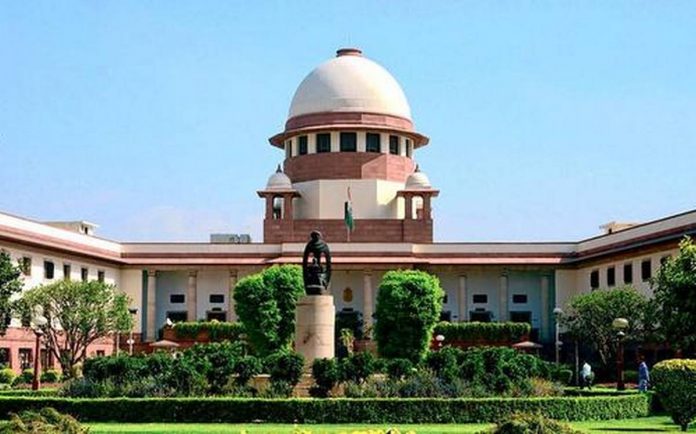











 Allow notifications





