

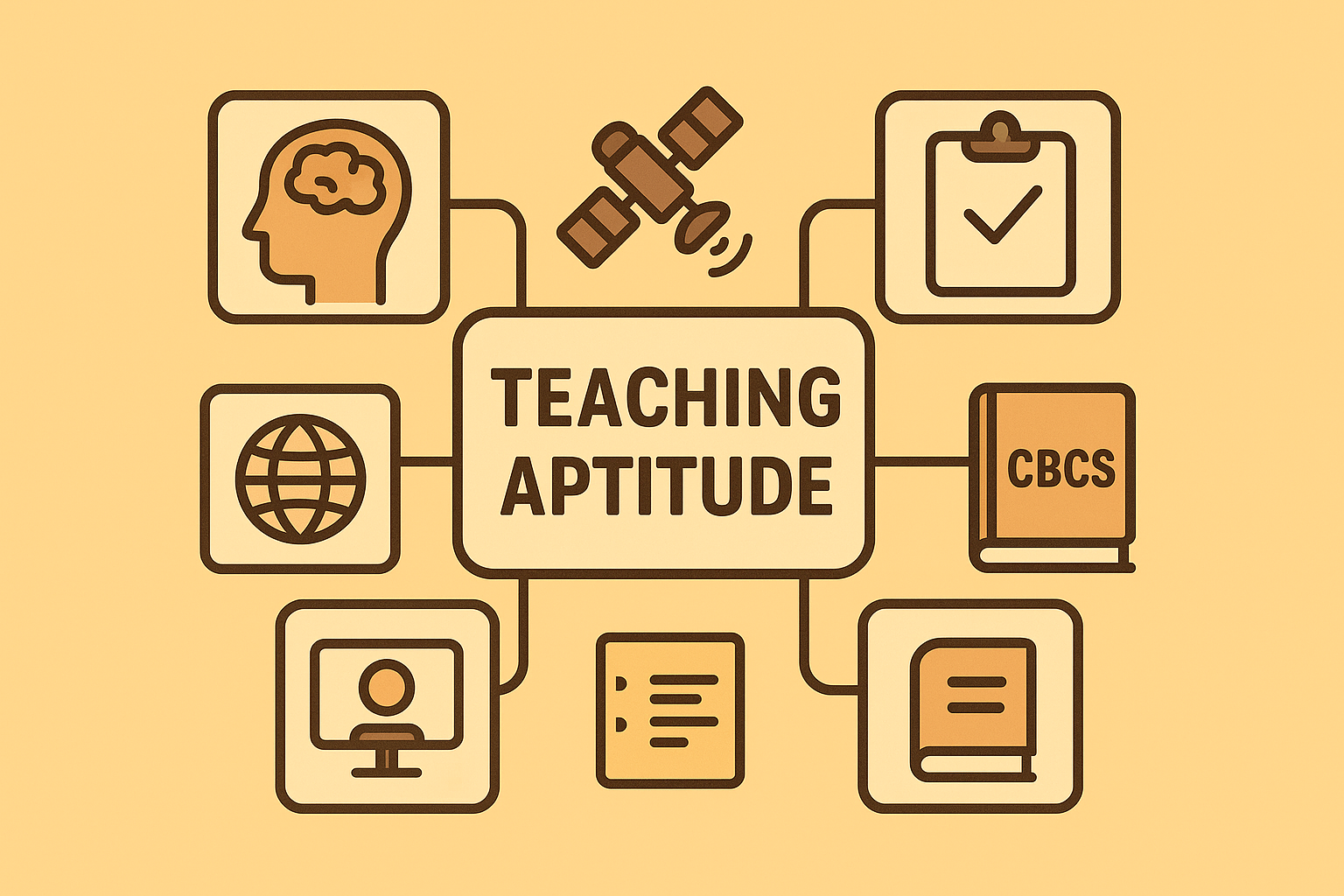
Quick guide to UGC NET Paper 1 Teaching Aptitude Unit 1 covering levels of teaching, SWAYAM, MOOCs, CBCS, and evaluation systems for effective exam preparation. This article is written by Urvi Shah, Senior Associate at LawSikho.
Picture this: You’re three weeks away from UGC NET, and someone asks, “Have you started Paper 1?”
Your stomach drops. Teaching Aptitude? SWAYAM? CBCS? It all sounds like alphabet soup when you’re used to thinking in sections and legal precedents.
Here’s the thing: most law students treat Paper 1 like that distant relative you ignore at family gatherings.

We obsess over our subject papers, then panic when exam day approaches.
But here’s what changed my perspective: Teaching Aptitude is actually your secret weapon.
While everyone’s sweating over specialized subjects, you can lock in 10 solid marks from Unit 1 alone, without months of preparation.
The beauty? It’s logical, structured, and intuitive. You’re not memorizing random facts; you’re understanding how teaching works.
Three levels of teaching? Digital platforms NTA loves? These are basically free marks.
So whether you’re burning midnight oil, stealing study hours during lunch breaks, or just realized Paper 1 exists, this guide is for you.
We’re cutting through academic jargon and giving you exactly what appears in exams.
Ready? Let’s decode together.
What is Teaching Aptitude?
Teaching Aptitude tests your natural ability and understanding of what makes teaching effective.
It evaluates whether you grasp how teachers should communicate, how learners differ from each other, and how modern education systems work.
The National Testing Agency includes this section because anyone aspiring to become an Assistant Professor must understand pedagogical fundamentals before entering a classroom.
Syllabus for Teaching Aptitude Unit 1
The Teaching Aptitude unit covers six major topics as per the official NTA UGC NET syllabus on the website.

These include the concept and objectives of teaching, levels of teaching (Memory, Understanding, and Reflective), learner characteristics, and factors affecting teaching. You will also study methods of teaching in higher education institutions, teaching support systems, and evaluation systems including CBCS and Computer Based Testing.
Each topic further branches into multiple sub topics that require conceptual clarity rather than rote memorization.
Questions from digital learning platforms like SWAYAM, SWAYAM Prabha, and MOOCs have increased in recent years, so do not skip that.
Understanding the Concept and Levels of Teaching in UGC NET
What is Teaching and Its Objectives?
Teaching is fundamentally a process where a knowledgeable person helps a less experienced individual acquire knowledge, skills, and values.
It goes beyond simply lecturing. Effective teaching involves understanding your audience, selecting appropriate methods, and ensuring that learning actually happens. The relationship between teacher and learner is dynamic and requires constant adaptation.
The objectives of teaching span cognitive, affective, and psychomotor domains. Teachers aim to develop critical thinking, problem solving abilities, and independent reasoning in students.
Beyond intellectual growth, teaching also focuses on character building, instilling values, and preparing learners for professional and personal challenges they will face in life.
Basic Requirements and Characteristics of Effective Teaching
Effective teaching demands a blend of subject expertise, communication clarity, and genuine interest in student development.
A teacher must know the subject thoroughly, but equally important is the ability to explain complex ideas in an accessible language. Patience, adaptability, and willingness to use different approaches for different learners form the foundation of good teaching practice.
The characteristics that define effective teaching include being organized, goal oriented, and responsive to student needs.
Good teachers plan their lessons, present content logically, and continuously check whether students are following along.
They create environments where questions are welcomed and mistakes become learning opportunities rather than sources of embarrassment.
Essential Qualities of a Good Teacher
Beyond technical competence, good teachers possess empathy, enthusiasm, and fairness.
They genuinely care about student success and invest effort in understanding individual challenges.
A sense of humor helps, as does the ability to maintain discipline without being authoritarian. The best educators inspire curiosity and model the love of learning they hope to cultivate in their students.
Three Levels of Teaching: Memory, Understanding, and Reflective
Memory Level of Teaching (Herbart’s Model)
Johann Friedrich Herbart proposed the Memory Level of Teaching, which represents the most basic form of teaching focused entirely on memorization.
At this level, students receive facts and are expected to store and reproduce them without necessarily understanding their significance. The teacher dominates the process while students remain passive recipients of information.
This level relies on repetition and drill methods. Assessment typically involves recall based questions where students must reproduce exactly what was taught. While often criticized as “thoughtless teaching,” the memory level serves a purpose in building foundational knowledge before deeper learning can occur. Learning alphabet, multiplication tables, or legal section numbers initially happens at this level.
Understanding Level of Teaching (Morrison’s Model)
H.C. Morrison developed the Understanding Level of Teaching, which moves beyond mere recall to genuine comprehension.
Students at this level can explain concepts in their own words, see relationships between ideas, and apply knowledge to familiar situations. The focus shifts from “what” to “how” and “why” something works.
Morrison’s approach involves exploration, presentation, assimilation, organization, and recitation.
Teachers provide multiple examples and encourage students to draw connections. Assessment at this level includes explanation based questions and application problems.
For law students, understanding why a legal principle evolved and how it applies to different scenarios represents this level of learning.
Reflective Level of Teaching (Hunt’s Model)
Hunt’s Reflective Level represents the pinnacle of teaching where students engage in critical analysis, original thinking, and problem solving.
The teacher becomes a facilitator rather than an authority figure, and the classroom transforms into a space for inquiry and debate. Students question established knowledge and develop independent perspectives.
This level builds upon both memory and understanding, requiring students to already possess factual knowledge and comprehension before engaging in reflection.
Assessment involves research projects, analytical essays, and open ended problems.
Moot court arguments, legal research papers, and case analysis exemplify reflective level activities in legal education.
Learner Characteristics and Factors Affecting Teaching
Adolescent vs Adult Learner Characteristics
Adolescent learners are developing abstract thinking abilities and beginning to form independent opinions.
They are curious but easily distracted, requiring engaging teaching methods to maintain attention. Peer influence significantly affects their behavior, and they respond well to structured yet interactive learning environments that respect their emerging autonomy.
Adult learners bring prior experiences and established learning preferences to education. They prefer knowing the practical relevance of what they study and favor self directed learning approaches.
Unlike adolescents, adults often have competing responsibilities like work and family, making them more focused but also requiring flexible learning arrangements that accommodate their schedules.
Social and Emotional Characteristics of Learners
Adolescents experience emotional fluctuations and are highly sensitive to social acceptance.
They may hesitate to ask questions for fear of appearing ignorant before their peers.
Creating a supportive classroom atmosphere where participation is encouraged without judgment is essential for adolescent education. Recognition and positive reinforcement work better than criticism.
Adults possess greater emotional stability and can handle constructive feedback professionally. They value being treated as equals and prefer collaborative discussions over authoritative instruction.
Social learning through group projects and case study discussions resonates well with adult learners who appreciate diverse perspectives from peers with different professional backgrounds.
Key Factors That Influence Effective Teaching
Teacher Related Factors
A teacher’s subject knowledge, communication skills, and teaching experience directly impact learning outcomes.
Teachers who continuously update their knowledge, embrace new pedagogical methods, and adapt to changing student needs create more effective learning environments. Professional development and staying current with technological tools have become essential.
Personality factors like enthusiasm, patience, and approachability also matter significantly. Teachers who establish rapport with students, show genuine interest in their progress, and maintain appropriate boundaries create trust.
Physical and mental well being affects teaching performance, as does job satisfaction and institutional support available to educators.
Learner Related Factors
Students bring varying levels of prior knowledge, intelligence, motivation, and learning styles to the classroom.
Some grasp concepts quickly while others need repeated explanations.
Socioeconomic backgrounds influence access to resources, study environments, and family support for education. Effective teachers recognize these differences and adapt accordingly.
Health conditions, personal challenges, and peer influences affect student performance beyond their control. A student facing family difficulties may struggle despite having the ability to excel.
Understanding these factors helps teachers provide appropriate support and maintain realistic expectations while still encouraging students to reach their potential.
Support Material and Instructional Facilities
Quality textbooks, laboratory equipment, library resources, and technology infrastructure shape what teachers can accomplish.
Well equipped institutions enable diverse teaching methods including practical demonstrations, digital content, and interactive activities. Inadequate facilities limit educational outcomes regardless of teacher competence or student motivation.
Learning Environment and Institutional Policies
Physical factors like classroom size, lighting, ventilation, and seating arrangements affect concentration and participation.
Beyond physical aspects, the psychological atmosphere characterized by mutual respect, academic freedom, and open communication determines learning effectiveness. Supportive environments encourage questions and risk taking in learning.
Institutional policies provide the essential framework for academic governance and directly influence the quality of teaching and learning in higher education. These policies encompass various dimensions that collectively shape the educational environment and ensure institutional effectiveness.
Curriculum design, examination patterns, workload policies, and administrative support influence teaching quality at the institutional level.
Teaching Methods and Digital Learning Platforms
Teacher Centred vs Learner Centred Approaches
Teacher centred methods position the instructor as the primary knowledge source who controls content, pace, and direction of learning.
Lectures, demonstrations, and direct instruction exemplify this approach where students listen, observe, and absorb information. This method efficiently covers large syllabi but may limit student engagement and critical thinking development.
Learner centred approaches shift focus to students who actively participate in constructing their knowledge.
The teacher facilitates rather than dictates. Group discussions, case studies, project work, and problem based learning characterize this style. Students develop deeper understanding and practical skills, though these methods require more time and smaller class sizes.
Offline vs Online Teaching Methods
Offline methods involve face to face interaction in physical classrooms where teachers and students share the same space. Immediate feedback, non verbal communication, and direct supervision are advantages.
Traditional lectures, seminars, laboratory sessions, and workshops fall under offline teaching. These methods build interpersonal skills and allow spontaneous interaction.
Online methods leverage digital technologies to deliver education remotely. Video lectures, webinars, discussion forums, and virtual laboratories enable learning regardless of location. Flexibility in timing and pace suits working professionals and those in remote areas.
However, online learning requires self discipline and reliable internet connectivity to be effective.
SWAYAM’s 4 Quadrant Approach
SWAYAM courses follow a 4 Quadrant Approach comprising video lectures, e content (readings and presentations), self assessment through quizzes, and discussion forums for interaction.
This comprehensive design ensures online courses match the effectiveness of traditional classroom teaching. Universities can transfer up to 40% of total credits for SWAYAM course completions.
SWAYAM Prabha and Its Educational Channels
SWAYAM Prabha consists of 40 DTH channels covering diverse disciplines from arts and sciences to professional courses.
The channels are uplinked from BISAG (Bhaskaracharya Institute for Space Applications and Geo Informatics) in Gandhinagar. Content is provided by premier institutions including IITs, UGC, CEC, IGNOU, NCERT and NIOS. The INFLIBNET Centre maintains the web portal.
Each SWAYAM Prabha channel broadcasts fresh content for at least 4 hours daily, which is repeated 5 more times during the day.
MOOCs and Their Role Explained
MOOCs (Massive Open Online Courses) are online courses designed for unlimited participation and open access via the internet.
They offer course materials similar to traditional education, including video lectures, readings, problem sets, and interactive forums. Popular MOOC platforms include Coursera, edX, Udacity, and the Indian platform SWAYAM, which hosts courses from institutions worldwide.
MOOCs have democratized education by making courses from prestigious universities accessible to anyone with internet connectivity.
They provide opportunities for lifelong learning, professional development, and skill upgradation without geographical or financial barriers. In India, the integration of MOOCs into formal education through credit transfer mechanisms has enhanced their relevance for university students seeking flexible learning options.
Evaluation Systems in Higher Education
What is Evaluation?
Evaluation is the systematic process of gathering evidence about student learning, interpreting it against standards, and making judgments about achievement.
It serves multiple purposes including providing feedback, certifying competence, and improving teaching methods. Effective evaluation is valid (measures what it intends), reliable (produces consistent results), and practical (feasible to implement).
Types of Evaluation
Formative, Summative, and Diagnostic Evaluation
Formative evaluation occurs during learning to provide ongoing feedback for improvement. Summative evaluation happens at the end to certify achievement. Diagnostic evaluation precedes instruction to identify students’ existing knowledge and learning gaps.
Together, these types create a comprehensive assessment framework that supports learning at every stage.
Criterion Referenced vs Norm Referenced Evaluation
Criterion referenced evaluation measures student performance against fixed standards without comparing students to each other. Anyone meeting the predetermined criteria passes, regardless of how others perform.
This approach focuses on whether specific learning objectives have been achieved and is commonly used for certification examinations.
Norm referenced evaluation ranks students relative to a reference group. Competitive examinations like UGC NET use this approach where qualifying depends on your standing compared to other candidates.
Understanding this distinction helps you approach different examinations with appropriate strategies since the preparation mindset differs between these evaluation types.
What is the Choice Based Credit System (CBCS)?
The Choice Based Credit System introduced by UGC allows students to select courses from core, elective, and skill based options according to their interests.
Courses carry credit values based on instructional hours, and performance is measured through a 10 point grading scale. This system provides flexibility in designing personalized academic pathways.
CBCS facilitates student mobility as credits earned at one institution transfer to another following the same system.
The grading approach reduces pressure from marginal marks differences by grouping similar performances into grade bands. International compatibility of the credit system also benefits students seeking opportunities abroad.
Computer Based Testing
Computer Based Testing (CBT) refers to examinations conducted on computers where candidates read questions on screen and select or type their answers.
The NTA conducts UGC NET and other major examinations in CBT mode, ensuring uniformity, security, and efficiency in examination administration.
CBT in UGC NET provides features like on screen calculator, a question navigation panel, marking questions for review, and a time tracking display. This eliminates risks associated with paper based tests like illegible handwriting or lost answer sheets.
Modern Innovations in Evaluation Systems
Contemporary innovations include online proctored examinations, AI powered plagiarism detection, portfolio assessments, and peer evaluation mechanisms.
Open book examinations and competency based assessments are gaining acceptance as they emphasize application over memorization. Continuous assessment models are replacing high stakes terminal examinations in many progressive institutions.
Conclusion
Teaching Aptitude offers a straightforward path to scoring marks in UGC NET Paper 1 if you focus on understanding concepts rather than memorizing facts.
The three levels of teaching (Herbart’s Memory, Morrison’s Understanding, Hunt’s Reflective), digital platforms (SWAYAM, SWAYAM Prabha, MOOCs), and evaluation systems (CBCS, CBT) form the core areas from which most questions appear.
Your preparation strategy should prioritize these high yield topics while maintaining basic familiarity with learner characteristics and factors affecting teaching. Solve previous year questions to understand the pattern, and remember that conceptual clarity beats rote learning every time.
You can also refer to this guide for covering the entire syllabus of both units of UGC NET. And, for more detailed information on Teaching Aptitude for UGC NET visit here.
With focused effort on the areas covered in this guide, you can confidently approach Unit 1 and secure those valuable marks that contribute to your overall success.
 Serato DJ Crack 2025Serato DJ PRO Crack





 Allow notifications





