The article has been written by Samiksha Singh. This article provides a detailed analysis of the judgement of the Supreme Court in Kamesh Panjiyar v. State of Bihar. In addition to providing a comprehensive analysis of the judgement, the article also elaborates on the relevant provisions of law referred to in the judgement.
Table of Contents
Introduction
While marriage is construed to be sacrosanct, dowry death is a blot on the institution of marriage. In order to control instances of dowry death, Section 304-B was introduced in the Indian Penal Code, 1860 (hereinafter referred to as “IPC, 1860”). Section 304-B of the IPC, 1860, in turn, lays down what would be construed as dowry death. Additionally, it also lays down the punishment for dowry death. Further, since many difficulties were faced in procuring adequate evidence to establish dowry death, Section 113-B was introduced in 1986 in the Indian Evidence Act, 1872 (hereinafter referred to as “IEA, 1872”). Section 113-B of the IEA, 1872, essentially creates a statutory presumption in cases of dowry death. Accordingly, when Section 304-B of the IPC, 1860, is read with Section 113-B of the IEA, 1872, it transpires that once the essentials of dowry death are made out, it shall be presumed by the courts that the accused is responsible for causing dowry death.
The case of Kamesh Panjiyar v. State of Bihar (2005) is a landmark case of dowry death. In this case, the Supreme Court examined the various essentials of dowry death, the timeline for a dowry demand, and the need for a statutory presumption under Section 113-B of the IEA, 1872. The Supreme Court also distinguished the offence of dowry death provided under Section 304-B of the IPC, 1860, with the offence of cruelty under Section 498-A of the IPC, 1860. In this case, since all the essentials of dowry death were made out, the appellant was found to be guilty, and his conviction and sentence under Section 304-B of the IPC, 1860, were upheld by the Supreme Court.
Details of the case
Name of the case: Kamesh Panjiyar @ Kamlesh Panjiyar v. State of Bihar
Facts of Kamesh Panjiyar vs. State of Bihar (2005)
Kamesh Panjiyar v. State of Bihar (2005) was a Criminal Appeal filed before the Supreme Court of India. In this case, the appellant challenged the decision of the Patna High Court, wherein the conviction of the appellant was upheld under Section 304-B of the IPC, 1860. However, the Patna High Court reduced his sentence from 10 years to 7 years of rigorous imprisonment. This conviction and modified sentence, as awarded by the Patna High Court, were challenged before the Supreme Court.
The case of the prosecution was that one Jaikali Devi, the appellant’s wife (deceased), and the appellant were married in the year 1988. At the time of their marriage, Rs 40,000 was demanded and paid as dowry. In addition to this, there was a further demand for a she-buffalo by the appellant during the Duragaman ceremony. This demand of the appellant, however, was not fulfilled. Subsequently, the brother of the deceased (also the informant in this case) requested several times for his sister’s bidagari ceremony. Instead of allowing the ceremony to take place, the prior demand of the buffalo was pressed. It is, however, pertinent to mention that the deceased complained that she was ill treated by the appellant and his family members. Later, the informant learned through a rumour that his sister was murdered by the appellant and his family. Further, the informant also heard that the appellant and the family members were deliberating the disposal of the body. Upon a visit by the informant and his family members to the appellant’s house, they discovered the dead body of the deceased on the verandah. At that moment, the state of the deceased was this: blood oozing out from the mouth and marks of violence on the neck.
During the trial, the appellant submitted that his wife died of rheumatic disease. However, there was no evidence to show this. Upon a perusal of the evidence before it, the trial court drew a presumption in line with Section 113-B of the IEA, 1872, and convicted the appellant under Section 304-B of the IPC, 1860. Consequently, the appellant was sentenced to 10 years of imprisonment.
Judgement of the Patna High Court
The decision of the trial court was challenged before the Patna High Court. The High Court deemed it fit to uphold the conviction. The appellant’s sentence, however, was reduced to 7 years of rigorous imprisonment.
Appeal to the Supreme Court
In the present appeal before the Supreme Court, the appellant challenged his conviction and sentence imposed by the Patna High Court, whereby the appellant’s conviction was upheld and his sentence was modified and reduced to 7 years of rigorous imprisonment.
Laws discussed in Kamesh Panjiyar vs. State of Bihar (2005)
Section 304-B of the Indian Penal Code, 1860
Ingredients
Section 304-B of the IPC, 1860, deals with the provision for dowry death. Accordingly, for an offence of dowry death to be made out, the following essentials must be met:
Cause of death: The cause of death of the woman could be any of the following: any “burn”, “bodily injury” or any other circumstance that was not “normal”;
Timeline for death: For a case of dowry death to be made out, the death of the wife has to occur within 7 years of her marriage;
Subjected to: It has to be established that “soon before” the woman’s death, the woman faced “cruelty” and “harassment” at the hands of either the husband or any of the husband’s relatives;
Relates to: This “harassment” or “cruelty” must relate to the “demand for dowry”;
When should such behaviour occur: Such “harassment” or “cruelty” should be established to have occurred “soon before” the woman’s death.
It is pertinent to note that Section 304-B of the IPC, 1860, does not categorise the cause of the death. As was observed by the Supreme Court in Maya Devi and Another v. State of Haryana (2015), this section does not classify death into any types, like “homicidal”, “suicidal” or “accidental”. In the opinion of the Supreme Court, once the essentials of dowry death under Section 304-B of the IPC, 1860, are met, any type of death, be it “homicidal”, “suicidal” or “accidental” occurring due to any of the causes mentioned under Section 304-B, be it burn, bodily injury, or any other circumstance (which is not normal), would be construed as “dowry death”. Further, by virtue of statutory fiction, the accused would be deemed to have caused the death.
Presumption in cases of dowry death
In instances of dowry death, the burden of proof is on the accused to show that the essentials for dowry death have not been met. Section 113-B of the IEA, 1872, creates a statutory presumption by virtue of which, once the essentials of dowry death are made, it is presumed that the death in relation to the dowry demand has been caused by the accused (be it the husband or his relative).
Meaning of dowry
Section 304-B of the IPC, 1860, does not define what constitutes dowry. Instead, it lays down that the term “dowry” under Section 304-B would carry the same meaning as “dowry” under Section 2 of the Dowry Prohibition Act, 1961. Consequently, according to Section 2 of the Dowry Prohibition Act, 1961, it comprises:
First, “property” or “valuable security”
Second, these items should either already have been given or should have been agreed to be given.
Third, such items could be provided either directly or indirectly.
Fourth, in a marriage,
these items could either be given by one party to the other party or
Parent of any of the parties or any other person to the other parent or any other person.
Fifth, the time of providing such “property” or “valuable security” could be before, during, or after the marriage.
Sixth, these items should be given in relation to the marriage.
However, as clarified, in instances where the Muslim Personal Law is applicable, “dowry” would not include “mehar” or ”dower” within its ambit.
What is not dowry
For any item of “property” or “valuable security” to be construed as “dowry”, it is of paramount importance that such a demand relate to the marriage of the parties. Further, it must fulfil the essentials specified under Section 2 of the Dowry Prohibition Act, 1961. Any demand for money for other purposes would not attract Section 304-B of the IPC, 1860. Thus, the determining factor would be that any sum demanded must ultimately be in connection with the marriage of the parties. If any sum demanded does not relate to the marriage of the parties, then it would not be construed as “dowry.” Consequently, if the death of the wife occurs, then the provisions of “dowry death” would not be attracted. The husband may be liable for homicide, but he would not be liable for dowry death. This is because not every sum of money demanded would be construed as dowry. Such a sum must be demanded in light of the marriage of the parties. The following cases would clarify the position of the law in this regard:
In the case of Appasaheb and Another v. State of Maharashtra (2007), where the appellant had asked for money in order to meet household domestic expenses, the Supreme Court opined that money asked on the ground of financial emergency would not be construed as dowry.
Further, in the case of Modinsab Kasimsab Kanchagar v. State of Karnataka and Another (2013), the Supreme Court reiterated that any sum demanded must relate to the marriage of the parties for it to be construed as dowry. Herein, the appellant, who had demanded Rs. 10,000 for the payment of the loan, was not held to be liable for dowry death when the woman committed suicide. Even though the husband had harassed his wife for the sum of money because of which the woman ultimately committed suicide, the husband was still found to not be guilty under Section 304-B of the IPC, 1860.
However, this does imply that every demand for money that is made for financial needs or emergencies would not be construed as “dowry”. It would have to be determined in accordance with the facts and circumstances of each case. Even a demand for money for financial hardship or domestic expenses can come under the purview of dowry if it is made in relation to the marriage between the parties. In the case of Surinder Singh v. State of Haryana (2013), the deceased wife was constantly beaten and insulted owing to the dowry that was given during marriage. When the deceased woman’s brother went to face his sister’s husband, the husband in turn demanded Rs 60,000 for starting a business. Subsequently, the woman committed suicide. In this case, this demand of money for business was considered to be a dowry demand by the Supreme Court since it was made in relation to the marriage.
Meaning of “soon before”
A lot of confusion arises with regard to the use of the term “soon before” in Section 304-B of the IPC, 1860. According to Section 304-B, one of the important essentials of dowry death is that the deceased should have faced any cruelty or harassment “soon before” her death. This term, however, has not been defined. Yet, it must be understood that the term “soon before” cannot be read to mean “immediately before” the death of the wife. Further, it cannot also be read as “at any time before.” What is required, therefore, is a link between the act of cruelty and the death of the victim. Deriving thereby, the time period of the death must be such that a connection between the effects of the ill-treatment for dowry and the death of the wife can be determined. It must be such that when the death of the wife is caused, one must immediately be led to think that the death in all likelihood was due to the cruelty or harassment the deceased woman was subjected to.
The Supreme Court, thus, in State of Madhya Pradesh v. Jogendra and Another (2022), observed thatthe prosecution essentially has to establish a “proximate and live link” between the death and the treatment (cruelty or harassment). Thus, while there is no fixed time limit as such, the time gap between the dowry demand, cruelty, and the subsequent death should not be such as to render the cause a “remote” one.
Cruelty
On a perusal of Section 304-B of the IPC, 1860, it would be clear that this section does not define the term “cruelty.” However, as was observed in the case of Smt. Shanti and Another v. State of Haryana (1990), the term cruelty under Section 304-B of the IPC, 1860 would denote the same meaning as “cruelty” under Section 498-A of the IPC, 1860. Thus, in accordance with the Explanation to Section 498-A, cruelty under Section 304-B would imply either of the following:
“Wilful conduct” has the likelihood of leading the woman to either commit “suicide” or cause “grave injury” to her life, limb, or health. For the purposes of this Section, “health” includes both the mental and physical health of the woman.
Any harassment caused to the woman. Herein, such harassment must be caused in order to coerce the woman or anyone related to the woman to fulfil any “unlawful demand” of either “property” or “valuable security”. Further, such harassment may also be because the woman or any person related to the woman failed to meet such a demand.
Section 113-B of the Indian Evidence Act, 1872
Section 113-B of the IEA, 1872, lays down the provision for “presumption” in cases of dowry death.
Ingredients
In instances where the Court is faced with a question regarding dowry death and any person is accused of causing dowry death, then a presumption of dowry death shall arise if it is established:
What behaviour: The deceased woman suffered from cruelty or harassment at the hands of the accused;
When: Such behaviour was meted out to the woman “soon before” her death;
For what: Such behaviour was in relation to a dowry demand.
If the above-mentioned three essentials are proved against any accused, it is the obligation of the court to presume that such accused was the one who committed dowry death. It is important to note that the expression used in Section 113-B of the IEA, 1872, is “shall presume.” Therefore, once the prosecution establishes that the essentials of dowry death have been made out against any accused, the court is obligated to presume that the accused was the perpetrator of dowry death. This presumption, however, is rebuttable, and the burden is on the accused to rebut such a presumption.
Initial burden is on the prosecution
While Section 113-B of the IEA, 1872, provides for a presumption of dowry death, such a presumption can only arise after the prosecution is able to establish that the essentials of dowry death have been met. If the prosecution is unable to discharge this burden, then Section 113-B of the IEA, 1872, would not be attracted. Thus, initially, it is up to the prosecution to establish that the essential elements of dowry death have been met in the given case. In the case of Baijnath and Others v. State of Madhya Pradesh (2016), a two judge bench of the Supreme Court observed that in order to take benefit of the presumption under Section 113-B of the IEA, 1872, the prosecution has to establish the ingredients of dowry death. In doing so, the prosecution must show that the woman suffered from cruelty or harassment at the hands of the accused.
Presumption under Section 113-B of the Indian Evidence Act, 1872 is rebuttable
Initially, the burden is on the prosecution to show that the elements of dowry death have been met. However, once the prosecution is able to establish that the essentials of dowry death have been met against an accused, it is presumed that the accused was the one who caused the dowry death of the wife. This presumption, however, is a rebuttable one. The accused is then tasked with proving how the death of the deceased was caused. As was observed by the two judge bench of the Supreme Court in Maya Devi and Another v. State of Haryana (2015), it is the accused who must prove his innocence. Thus, the burden of proof is on the accused to show that the death of the deceased wife was natural. The accused must show that the ingredients of dowry death have not been met.
Issue raised
Only one main issue was raised in this case:
Whether the appellant’s conviction under Section 304-B of the IPC, 1860, and the modified sentence of 7 years rigorous imprisonment awarded by the Patna High Court were correct?
Arguments of the parties
Appellant
It was argued by the appellant’s counsel that the cause of the deceased’s death could not be established. In fact, it was submitted by the appellant that the doctor himself could not ascertain the cause of the death. Further, there was an absence of a live link between the dowry demand and the unnatural death of the deceased. In that light, it was argued by the appellant’s counsel that the conviction of the appellant in the facts of this case was untenable. For these reasons, the appellant submitted that his conviction, as imposed by the Trial Court and upheld by the High Court, was not justified.
Respondent
It was argued by the state that it was only after a proper perusal of the facts that the appellant was found guilty by the courts below. In that light, the state maintained that the conviction of the appellant was justified and that the courts below were not at fault.
Judgement in Kamesh Panjiyar vs. State of Bihar (2005)
The Supreme Court dismissed the appellant’s appeal without any interference in the judgement of the Patna High Court. Thus, the appellant’s conviction under Section 304-B of the IPC, 1860, and his modified sentence of 7 years of rigorous imprisonment were upheld by the Supreme Court.
Rationale behind this judgement
The provisions relating to dowry death were inserted to curb the menace of dowry death.
The 91st report of the Law Commission titled “Dowry Deaths and Law Reform” examined the need to amend the law to incorporate necessary provisions relating to dowry death. The Supreme Court, in turn, examined the difficulties faced in securing evidence related to dowry deaths. In doing so, it was observed that because it was difficult to secure evidence relating to dowry death, the legislature deemed it fit to create a statutory “presumption of dowry death.” For this reason, Section 113-B of the IEA, 1872, was inserted in 1986. This is to say, once the essentials of dowry death are made out, it is presumed by the courts that it was the accused who caused dowry death. This is because Section 113-B of the IEA, 1872, uses the term “shall presume.”
Thus, when Section 113-B of the IEA, 1872, is read with Section 304-B of the IPC, 1860, it must be shown by the prosecution that the deceased faced cruelty or harassment “soon before” the death. Further, it must be shown that the death of the deceased was unnatural.
“Soon before” to be determined as per facts of each case.
Both Section 113-B of the IEA, 1872, and Section 304-B of the IPC, 1860, use the term “soon before.” The prosecution is, thus, tasked with showing that “soon before” the deceased wife’s death, she faced ill treatment (cruelty or harassment) in relation to a dowry demand. This is because the statutory presumption provided under Section 113-B of the IEA, 1872, would apply only when prosecution is able to establish that the deceased was subjected to ill-treatment “soon before” her death. However, as observed by the Supreme Court, there is no formula to determine what would be construed as “soon before.” It has to be determined in accordance with the facts of each case. The only thing that must be kept in mind is that there must be a “proximate and live link” between the dowry demand and the death of the wife.
Dowry death under Section 304-B and cruelty under Section 498-A are distinct offences, and each offence has to be made out separately.
It was observed that while the term cruelty is a common factor in both of these sections, yet these offences cannot be construed as “mutually inclusive.” Thus, the offence under Section 304-B of the IPC, 1860, is different from the offence laid down in Section 498-A. While the meaning of the expression “cruelty or harassment” under Section 304-B of the IPC, 1860, is the same as “cruelty” under Section 498-A, the offences themselves are different from each other since:
According to Section 304-B of the IPC, 1860, “dowry death” is a punishable offence. However, under Section 498-A of the IPC, 1860, “cruelty” itself is an offence.
For there to be dowry death, the time period for the death of the wife is “within 7 years” of her marriage. Unlike “dowry death”, there is no such timeline for an offence under Section 498-A of the IPC, 1860. However, Section 113-A of the IEA, 1872, provides discretionary power to the courts to presume “abetment of suicide” when:
the woman commits suicide
within 7 years of marriage, and
she had suffered from cruelty.
Cruelty here carries the same understanding as provided under Section 498-A of the IPC, 1860.
Thus, both offences have to be proved separately. If the prosecution is able to successfully establish the ingredients of both of these offences, then the accused can be convicted under both Sections 304-B and 498-A of the IPC, 1860.
Reason for the dismissal of the appeal.
One major argument by the appellant before the Supreme Court was that the doctor (that was PW8) stated that the deceased wife’s cause of death was not ascertainable. The Supreme Court, however, was not convinced by the doctor’s opinion. The reason for this was two-fold.
Firstly, the doctor failed to consider the effect of “black-stained” marks that were found on both sides of the deceased wife’s neck.
Secondly, the doctor also failed to consider the effect of the blood-stained fluid that was trickling out from the side of the deceased wife’s mouth. In fact, the other doctor who conducted the post-mortem of the deceased had noticed that the brain matter of the deceased was congested and blood-stained fluid was trickling out.
However, PW8 (the doctor upon whom the appellant relies) failed to consider these factors when he opined that the possible cause of the death of the deceased “was not ascertainable.”
Additionally, the other factors were also taken into consideration by the Supreme Court. It was observed that there was no evidence to suggest that the deceased’s death was under “normal circumstances.” Further, the prosecution witnesses’ evidence amply substantiated that there was a dowry demand and there was ill treatment soon before the deceased’s death. For this reason, the Supreme Court found the judgement of the Patna High Court to be justified.
One more defence was taken up by the appellant. It was submitted that the appellant and his family tried to get the deceased treated for her disease. It was the appellant’s argument that if he indeed had been guilty of committing dowry death, then there was no reason why he would have tried to get the deceased wife treated. In the opinion of the Supreme Court, this argument was in the nature of a “smokescreen.” Accordingly, the Court opined that if the deceased died a natural death, why was there no evidence attested to explain the neck injuries of the deceased? For these reasons, the Supreme Court found the appellant guilty and did not find any infirmity in the judgement of the Patna High Court. Thus, the appeal was dismissed.
Analysis of Kamesh Panjiyar vs. State of Bihar (2005)
In this case, the Supreme Court deemed it fit to uphold the conviction and modified sentence as awarded by the Patna High Court. This was because in this case, the evidence was clear enough to show that there was a dowry demand and that the deceased had to suffer ill-treatment at the hands of the appellant just before her death. In order to oppose his conviction, the appellant had argued that the cause of the death of his wife could not be ascertained. However, as the Supreme Court pointed out, there was no evidence to support that the deceased wife’s death was natural. Hence, the conviction and sentence of the appellant were upheld by the Supreme Court.
Conclusion
Section 304-B of the IPC, 1860, provides the elements and punishment for dowry death. Further, Section 113-B of the IEA, 1872, creates a statutory presumption whereby, once it is established that there was a dowry demand and the deceased wife suffered ill-treatment at the hands of the accused for such a demand, it is presumed that it was the accused who was the perpetrator of the crime. This provision was incorporated into the IEA in 1872 because the then existing law on evidence failed to adequately address the question of dowry death. Since there existed various difficulties in finding sufficient evidence to show dowry death, Section 113-B of the IEA, 1872, was introduced to create a “presumption” of “dowry death.” Accordingly, once the essentials of dowry death are made out, the court presumes that the accused was the perpetrator of the crime.
The case of Kamesh Panjiyar v. State of Bihar (2005), in this regard,is a landmark judgement of the Supreme Court. Since all the essentials of dowry death were made out, the appellant’s appeal was dismissed, and his conviction and sentence as awarded by the Patna High Court were upheld by the Supreme Court. While doing so, the Supreme Court elaborately examined the essential elements of dowry death. Further, the Supreme Court also distinguished between the offence of cruelty under Section 498-A of the IPC, 1860, and the offence of dowry death under Section 304-B of the IPC, 1860. This distinction made by the Supreme Court in Kamesh Panjiyar v. State of Bihar (2005) was affirmed in a recent decision of the Supreme Court in Gurmeet Singh v. State of Punjab (2021).
Frequently Asked Questions (FAQs)
What is proximate and live link?
There must be a “proximate and live link” between the dowry demand, the effects of the ill treatment, and the subsequent death of the wife. The Supreme Court in Parvati Devi v. State of Bihar (2021)reiterated the test for determining “proximate and live link.” While there is no definite time period, it would imply a time period where a connection between the effects of the ill treatment for dowry and the death of the wife can be ascertained. If the ill treatment that the deceased faced is very “remote” or distant in time so as to not have an impact on the wife’s mental state, then there would be no link.
In instances of dowry death, can the evidence given by family members be rejected on the ground that the family members are “interested witnesses”?
The Division Bench of the Supreme Court, in a recent order in State of Karnataka by Gandhinagar v. M. N. Basavaraja & Ors (2024), observed that the evidence of the immediate family members of the deceased in a case of dowry death would not be rejected for the sole reason that the family members are “interested witnesses.” According to the observation made by the Supreme Court, a woman facing cruelty for dowry would most likely ‘confide’ in her family members.
What is meant by the term “relative” under Section 304-B of the IPC, 1860?
It was opined by the Supreme Court in the case of State of Punjab v. Gurmit Singh (2014) that for a case under Section 304-B of the IPC, 1860, to be made out, the accused relative must be related by “blood, marriage, or adoption”.
Can an accused husband be punished merely because the deceased wife died an unnatural death within 7 years of her marriage?
While two of the important essentials of dowry death are that there must be an “unnatural death” and that such death must take place “within seven years of marriage,” these factors alone are not sufficient for the husband to be convicted under Section 304-B of the IPC, 1860. In a recent judgement of the Supreme Court in Charan Singh alias Charanjit Singh v. State of Uttarakhand (2023), it was observed that even if the wife dies unnaturally in her matrimonial home within 7 years of her marriage, this alone would not merit a conviction of the husband. It must also be established that the wife suffered from cruelty or harassment “soon before” her death.
Can suicidal death fall under the purview of Section 304-B of the IPC, 1860?
Since cruelty is a common factor in both Section 498-A and Section 304-B of the IPC, 1860, can it be said that a conviction under Section 304-B can take place only when there is also a charge under Section 498-A of the IPC, 1860?
No, for there to be a conviction under Section 304-B of the IPC, 1860, it is not a prerequisite that there has to simultaneously be a charge under Section 498-A of the IPC, 1860. It is true that “cruelty” is a common ingredient in both of these offences. It is also true that the meaning of cruelty under Section 498-A of the IPC, 1860, is the same as that under Section 304-B of the IPC, 1860. However, as affirmed by the Supreme Court in Gurmeet Singh v. State of Punjab (2021), these two offences are distinct and hence must be established separately. However, if the ingredients of both of these Sections are proved separately in any given case, the accused can be convicted under both sections in that case.
References
P S A Pillai’s Criminal Law, K I Vibhute (14th edition)
Textbook on The Law of Evidence, Chief Justice M Monir (12th edition)
Students of Lawsikho courses regularly produce writing assignments and work on practical exercises as a part of their coursework and develop themselves in real-life practical skills.
LawSikho has created a telegram group for exchanging legal knowledge, referrals, and various opportunities. You can click on this link and join:
This article is written by Priyanka Kumar. The article explains and elaborates on the concept and parameters of the practice of Tribunal secretaries in the Indian arbitration system upon study of it in the international arena. The author here has made an attempt to create an exhaustive literature about the subject, covering various controversies involved in and around the practice of Tribunal Secretaries and its way forward in the Indian arbitral system.
Table of Contents
Introduction
The beauty of arbitration is that it is a modern method of dispute settlement that has the same effect as that of the traditional courts. The decision of an arbitrator, i.e., an arbitral award, ultimately comes out as a legal and binding one, which conveys the seriousness of the arbitral award. With changing times, there have emerged many new factors contributing to aiding the arbitrator/ arbitral tribunal in passing the awards, since despite not being actual courts, arbitral tribunals are performing the function of dispute resolution. These new factors have been introduced time and again so as to deal with the challenges faced, mostly in international arbitrations, such as handling hefty documents, communicating with parties situated in different locations, and providing one platform which acts as a neutral forum for parties of different nations. One such factor introduced to lessen the burden of the arbitral tribunal is of ‘tribunal secretaries’.
When faced with arbitration, the tribunal experiences various challenges, including the emergence of multiple interim proceedings, applications seeking various technical authorisation and sanctions, introduction of multiple documents, submissions of counsels, etc. All these scenarios tend to escalate the work of the arbitral tribunal leading to more reading, organising and passing of several interim and procedural orders until the final award can be derived at. This additional work increases the likelihood of the arbitral tribunal in hiring administrative assistance, also known as, tribunal secretaries.
The concept of ‘tribunal secretaries’ primarily emerged in the practice of international arbitration as a means of providing administrative assistance to the tribunal. Taking a cue from the international practice, it is now also being adopted in domestic arbitrations, worldwide, including in India. Through this article, the author intends to comprehend the concept of ‘tribunal secretaries’ in international arbitration, its origin, practice and limitations. The author then narrows the practice of tribunal secretaries in light of Indian arbitration proceedings. By making a comparative study of different international arbitral institutional rules, the author formulates the conclusion on the way forward for tribunal secretaries in Indian arbitration.
Meaning of tribunal secretary
As compared to the traditional form of dispute resolution, arbitration proceedings are rather time-bound, and therefore, widely preferred in commercial disputes. More often than ever, it has also been seen that arbitration proceedings include bulky and heavy documents, including but not limited to lengthy contracts, correspondence, addendums, etc. It is for this reason that the concept of tribunal secretaries was coined so as to assist the arbitrator/ arbitral tribunal in better organisation and management of the arbitration proceedings. This nature of assistance provided by tribunal secretaries can be broadly termed as ‘administrative’.
The term tribunal secretary does not find a fixed definition given anywhere, it is a creation of practice seen in international arbitration. Additionally, all arbitrations practised around the world, whether domestic or international, ad-hoc or institutional, abide by specific arbitration rules, whether institutional or national arbitration laws. It is as long as these rules provide for tribunal secretaries to assist the arbitral tribunal, that the practice of having tribunal secretaries in arbitration proceedings is supposed to prevail.
Not to be confused with an “expert” in arbitration proceeding
When understanding who should be a tribunal secretary, it is important to not confuse the term with that of an “expert” in an arbitration. An expert is a person who is appointed, usually in special circumstances, to understand a concept or seek his/her opinion on a certain subject that the arbitrators are not well-versed with and which will, in turn, help them in the decision making. On the other hand, a tribunal secretary is a rather permanent part of the arbitration, who is appointed especially to assist the tribunal in its work, in everything except for decision making. A tribunal secretary cannot and should not give an opinion on a subject, whether related to the issue involved in arbitration or remotely close to it, whereas, an expert is called for sharing their expertise in a particular field. These two positions are to be understood in completely different scenarios which nowhere to be overlapped.
Understanding a tribunal secretary
Role and functions of tribunal secretary
It’s quite insufficient for one to describe the nature of a tribunal secretary’s work as ‘administrative’ and get an exact understanding about the role and duties of the tribunal secretary in an arbitration proceeding. In a nutshell, a tribunal secretary’s function is to help the arbitrator(s) organise and manage the case in a better manner by providing assistance in, including but not limited to, preparing the schedule of hearings, arranging and categorising documents, drafting the minutes of the hearings, corresponding with the parties about the hearings and changes, if any, researching on aspects entrusted by the arbitral tribunal, etc. A tribunal secretary is also referred to as an administrative secretary or an arbitral secretary or tribunal assistant in different jurisdictions.
To begin with, the first report was created through comprehensive surveys conducted in the years 2012 and 2013 by the Young International Council for Commercial Arbitration (ICCA) which was then detailed in its commentary called the “Young ICCA Guide on Arbitral Secretaries” published in 2014 (hereinafter referred to as “the Report”). The members of the task force behind the preparation of this report comprised people who had played the role of tribunal secretaries or in some way assisted the tribunal from within an arbitral institution. The report took into consideration ad-hoc as well as institutional arbitrations from across various jurisdictions. From the said Report, the following points could be concluded about the general practice of tribunal secretaries in arbitration-
That the tribunal secretary shall be appointed to assist the arbitral tribunal;
That the tribunal secretary shall be appointed with the consent of the parties and with due notice to them;
That the arbitral tribunal shall not delegate their personal mandate to the secretary and shall always supervise the work done by the secretary;
That, in case the arbitration proceedings were governed by any institutional arbitration rules, the rules of such institutions pertaining to the tribunal secretary shall also apply.
In addition to the above, the Report also laid down various roles that were being performed by tribunal secretaries across the globe, including but not limited to undertaking administrative matters, communicating with the institution and parties, organising meetings/ hearings with the parties, handling and organising correspondence and documents involved in the proceedings, researching, reviewing the documents, drafting procedural orders and some appropriate portions of the final award. To make it clear, the commentary also provided that these tasks were administrative in nature, but the arbitrator could go beyond these and entrust the secretary with additional tasks, provided the same are informed and consented to by the parties to the arbitration.
Rules of various arbitral institutions
The Report merely provided a broad understanding of the role the tribunal secretaries were given in various arbitrations. However, since at the international level, the recent trends show the inclination of parties to assign the case facilitation to ADR institutions, the functions and role of a tribunal secretary can also be understood by reviewing the rules of some arbitral institutions, as under:
Singapore International Arbitration Centre (SIAC) Rules:
The SIAC Practice Notes, PN- 01/15 of 2015 to the SIAC Rules, provide guidelines in case of appointment of “administrative secretaries” in SIAC arbitrations. It specifically lays down only three points, firstly that an administrative secretary shall be appointed only when the amount in dispute is more than Singapore $15,000,000.00; secondly, that such administrative secretary shall be appointed only with the consent of the parties; and thirdly, that the secretary shall have to make a disclosure in respect of independence, impartiality and confidentiality prior to the appointment.
London Centre for International Arbitration (LCIA) Rules:
Article 14A of the LCIA Arbitration Rules, 2020 deals with the scope and ambit of tribunal secretaries in a LCIA-led arbitration. It permits the arbitral tribunal to seek assistance by appointment of a tribunal secretary in matters relating to arbitration, but at the same time clarifies that under no circumstances may an arbitral tribunal delegate its “decision-making” powers. Further, these rules also make it clear that all the functions carried out by a tribunal secretary shall be within the four corners of the LCIA Rules and under the supervision of the arbitral tribunal.
In furtherance thereto, the LCIA Guidance Notes for Parties and Arbitrators lists down the various administrative tasks that a tribunal secretary can handle, including, organising documents, summarising submissions, reviewing authorities, and preparing the first draft of awards/ sections thereto/ procedural orders.
Hong Kong International Arbitration Centre (HKIAC) Rules:
The HKIAC Administered Arbitration Rules, 2013, released the Guidelines on the Use of a Secretary to the Arbitral Tribunal in 2014, laying the entire process, right from appointment to the duties, and remuneration of a tribunal secretary appointed in a HKIAC arbitration, along with a disclosure form. Under the HKIAC set up, a tribunal secretary is supposed to act under the strict supervision of the arbitral tribunal, and the tribunal itself is to be responsible for the acts of the tribunal secretary. It also lays down that none of the decision making tasks are to be carried out by the tribunal secretary and the secretary is strictly to stick to only organisational and administrative work. Most importantly, HKIAC is the only institution in the world which explicitly lays down that a tribunal secretary shall not be responsible for any acts or omissions relating to the arbitration except those which were done dishonestly, thereby protecting the tribunal secretaries appointed under its rules.
Limitations of tribunal secretaries
As stated above, the role of tribunal secretaries is highly administrative, which means that as a tribunal secretary, one can provide administrative assistance to the tribunal but not to the extent that he/she ends up playing a role in the decision making. A tribunal secretary can go as far as organising documents, compiling them, preparing a compendium, summarising details of the documents and even listing them down for the tribunal’s review. However, the one limitation strictly applicable to the function of a tribunal secretary is that they cannot influence the decision making and/or prepare the substantive portion of an arbitral award. In some jurisdictions, a tribunal secretary can even draft the award, however, only at the instructions of the arbitral tribunal and to the extent that it does not showcase the application of mind by the secretary in the palace of the arbitrators.
The justification for this kind of restriction on the tribunal secretaries is done because, the appointment of a tribunal secretary is strictly upon the consent of the parties, making it clear exactly the kind of role he/she will be playing in the proceedings, going beyond this would mean breaching the faith and consent of the parties. Over and above that, if the tribunal secretaries start to draft the substantive portion of the award, they will be acting beyond their powers and stepping in the shoes of the arbitrators, which is not the reason why they have been appointed in the proceedings.
It is also pertinent to note that all the work done by the tribunal secretaries is ultimately reviewed by the Arbitral Tribunal, pursuant to which only the work can bear the signature of the arbitrators and is delivered as an order/ award, final or interim or procedural. Needless to say, if a document prepared by a tribunal secretary proceeds as an order/ award, without the final sanction of the arbitrators, then it does not pass for a document prepared or authenticated by the Arbitral Tribunal. The essence here is that every order or award in the arbitration proceedings needs to show that the mind applied in it was that of the arbitrators and not anyone else’s, for the parties have assigned the task of decision making to the arbitrators.
Process of appointment of tribunal secretary
The process of appointment of a tribunal secretary can become as important as the appointment of the arbitral tribunal itself, as the assistance of the tribunal secretary can become important in shaping the final result of the arbitration. As seen above, along with organisational functions, a tribunal secretary can also be entrusted with drafting of procedural rules and conducting research, as instructed by the arbitral tribunal. This way, despite not expressly being a part of the arbitral tribunal, a tribunal secretary does form part of the team, to the extent of its small contribution and assistance.
There is no uniform process for the appointment of a tribunal secretary, whether in institutional or ad-hoc arbitrations. The only uniformity in the appointment process is the unanimous approval of both parties involved. Thus, even though a tribunal secretary may be appointed for the assistance of the arbitral tribunal, in the absence of parties’ approvals he/she cannot hold the position. In the absence of uniform rules, the rules and practice notes provided under various arbitral institutions provide help in understanding the process of appointment of a tribunal secretary in an arbitration.
As per the LCIA Rules and the LCIA Guidance Notes for Parties and Arbitrators, the arbitral tribunal may seek the assistance of a tribunal secretary subject to the approval of the parties to the arbitration. In order to give approval, the Parties must have known and agreed to the tasks decided to be carried out by the tribunal secretary, payment of the hourly rates and reimbursement costs, and a declaration as to the impartiality and inefficiency of the person being proposed for the post. The arbitral tribunal is also required to send a Curriculum Vitae of the proposed tribunal secretary to the parties. Beyond these, if any other task is to be entrusted to the tribunal secretary, the same needs the approval of the parties first.
In a similar manner, the Young ICCA Guidelines provide for the nomination of the candidate for tribunal secretary to be made by the arbitral tribunal, at their discretion, by disclosing the educational background of the candidate, and the appointment to be made, pursuant to the approval of the parties.
Controversies pertaining to tribunal secretaries and how they have been dealt with
This is one of those rare concepts in the field of international arbitration that has started with a controversy and has never, till date, been able to establish a firm ground. Nonetheless, the practice of tribunal secretaries in arbitration is a much sought-after one. In ad-hoc arbitrations, the parties and arbitrators are free to set the functions of a tribunal secretary, so long as they are in consonance with the local arbitration laws. The problem arises when disputes are to be governed by arbitral institutions and their rules. However, there have been instances to show that in both, ad-hoc as well as institutional arbitrations, parties have not shied away from challenging the arbitral award in view of the involvement of tribunal secretaries. The blur boundaries of tribunal secretaries in arbitration have led to rising concerns.
In light of this, in this section of the article, the author intends to explore the controversies pertaining to tribunal secretaries and explore some cases whereby the topic of tribunal secretaries has been discussed.
Tribunal secretary acts as the “fourth arbitrator”
There is a very thin line between appropriate delegation and excessive delegation. When a tribunal secretary is directed to draft the award, a part of it or be actively involved in the deliberations and decision making of the tribunal, so much that the substantive portion of the award is to be commented on by the tribunal secretary, appropriate delegation turns into excessive delegation, and the tribunal secretary becomes the “fourth arbitrator”. Basically, when adjudicative functions exceed to become administrative functions, the likelihood of challenging the role of tribunal secretary in arbitration increases. The point of controversy naturally then becomes the lack of exercise of the functions of the arbitrators, for which they were appointed and the excess exercise of the functions of the tribunal secretary, to which they were not assigned.
The controversy of the tribunal secretary acting as the “fourth arbitrator” began in the year 1990, when the arbitration proceedings of Campagine Honeywell Bull SA vs. Computation Bull de Venexuela CA (1990), came to be challenged in an appeal before the Paris Court of Appeal (PCA). Honeywell raised an objection that the tribunal secretary had interfered with the two-day hearing of the case. However, despite the claims, the Paris Court of Appeal refused to entertain the claim since Campagine had failed to fully prove the involvement of the secretary.
Again, in the case of Sonatrach vs. Statoil (2014), an ICC arbitration, the notes shared by the tribunal secretary became an issue indicating the involvement of the tribunal secretary in the making of the award. In this case, the parties to the arbitration proceedings had agreed to the scope of work of the tribunal secretary. Sonatrach raised an objection that the tribunal secretary had exceeded her agreed scope of work by producing three notes for the arbitral tribunal, which were on substantive matters. When asked, the arbitral tribunal refused to produce the three notes to Sonatrach on the ground that to do so would amount to a violation of the secrecy of the tribunal’s deliberations in passing the award. This aggravated to the claim of Sonatrach that the tribunal secretary had actively participated in the tribunal’s deliberations and thus, exceeded her agreed remit. The Ld. Judge, ultimately, dismissed the claim on the ground that the arbitral tribunal had merely made the notes of the secretary a part of the deliberations and nothing beyond.
After the allegation of ‘excessive delegation’ to the tribunal secretary was rejected in the above cases, the case of Yukos Universal vs. Russia (2011), took its course wherein the same challenge was highlighted in much heavier light. In this case, the allegations made by Russia were that –
Arbitrators had delegated their mandate and their adjudicative functions to the ‘assistant to the Tribunal’ instead of performing it themselves;
The assistant had unreasonable billing hours, which could only suggest that he had been a part of the substantive work and deliberations;
The assistant was brought on board by the Chairman of the Permanent Court of Arbitration (PCA) without the permission of Russia.
While the District Court of Hague agreed to the challenge of Russia and set aside the award, the Court of Appeal turned around the order and mainly held that the act of the arbitral tribunal failing to inform the nature and extent of work of the assistant to the tribunal, did not amount to a major procedural violation.
Appointed by Arbitrator but requires consent of parties of arbitration
Tribunal secretaries have emerged as a matter of providing administrative assistance to the arbitral tribunal and the appointment cannot go through without the consent of the parties. The primary reason for this is that the pay of the tribunal secretaries is finally to be made by the parties. But, going by this logic, the tribunal secretaries are then supposed to be rather loyal and answerable to the parties over the arbitrators. So also, the demarcation of right and wrong in a tribunal secretary’s conduct is to be administered by the parties instead of the institutions. In the event, that one of the arbitrators nominates a candidate for tribunal secretary, even though the other arbitrators consent to it, the parties may object to a lack of siding with one arbitrator.
In practice, as seen above, in the case of Yukos vs. Russia, one of the grounds for Russia to challenge the arbitral award was that the Chairman of PCA had appointed the secretary without the consent of Russia. Not only was the practice not stopped at the relevant stage, but even the Court of Appeal refused to take Russia’s objection seriously, making it unclear whether the consent of parties is actually essential or not.
Why is a tribunal secretary needed for administrative work in the presence of the case being managed by an arbitral institution?
The ongoing trends give an understanding that the concept of tribunal secretary is broadly being used in arbitrations involving arbitral institutions. Tracing back to the usefulness of arbitral institutions, one can remember that arbitral institutions were formed in order to administer and facilitate the proceedings referred to under the rules of such institutions. The task of these institutions, even today, is to take care of the organisation, facilitation, and communications involved in the proceedings. How then can one justify the appointment of another team member in the form of a secretary to the tribunal to be brought on board for the same purpose? What is then the purpose of the arbitral institution if its job is being assigned to the secretary? It wouldn’t be wrong to argue that this practice is an additional financial burden on the parties to the proceedings who have to bear the expenses of the tribunal secretary, despite having agreed to assign the same tasks to the arbitral institution.
When tribunal secretaries are appointed in institutional arbitration proceedings, it leaves a room for discussion as to who actually manages the day-to-day affairs of the proceedings and therefore, who should take the responsibility for the overall facilitation and management of the case. Along with laying a clear demarcation of a tribunal secretary’s powers as against that of the arbitrators, it has also become notably essential to carve out the distinction between the role of a tribunal secretary as against the arbitral institutions.
Appointed by Arbitrator, but functions as per institutional rules
Another area of ambiguity becomes the appointment of a tribunal secretary, at the behest of and for the assistance of the arbitral tribunal, however, by following the appointment procedure as that of the institution facilitating the arbitration. It is quite reasonably understood now that the various institutional rules provide for the powers, rules and functions of the tribunal secretary. It is also quite clear that the appointment of a secretary can happen only and only with the consent of the parties to the proceedings. Therefore, one can conclude that for the appointment of a tribunal secretary there must be:
A demand for assistance raised by the arbitral tribunal;
Consent of the parties to the proceedings;
Adherence to the institution’s rules for appointment and code of conduct.
In other words, for example, if in an institutional arbitration, say in a LCIA-managed arbitration, a three member arbitral tribunal desires to appoint a tribunal secretary for administrative assistance to them, the secretary’s scope of work will have to be defined by the arbitral tribunal which will have to be forwarded to the parties for their respective consents, and once agreed by the parties, the same will have to be communicated to the LCIA. The LCIA will then, by following the provision of Article 14A of the LCIA Arbitration Rules, 2020, appoint the prospective tribunal secretary. Evidently, appointment of a tribunal secretary requires the involvement of all three parties, whereas its functions remain to be limited to assisting the arbitral tribunal only. To further add to this, a tribunal secretary works on the basis of the instructions given by the arbitral tribunal, however, the secretary’s functions are always required to be in accordance with the institutional rules, while at the same time, the remuneration/ reimbursements of the tribunal secretary are paid by the parties.
More than a controversy, this appears to be an aspect likely to cause confusion with respect to the party/ authority that will ultimately accept responsibility for the actions of the tribunal secretary. Till date, this confusion remains to be unspoken of.
Blooming practice with a lack of uniform framework
It is no surprise that the practice of tribunal secretaries is growing by the day and yet, there is no universal statute/ statutory provision enacted to comprehend the concept of tribunal secretaries in arbitrations. Nevertheless, the lack of judicial enactments has not discouraged the practice worldwide.
The point of controversy then becomes that in the light of the growing practice and absence of judicial enactments, the lacuna will always remain leading to more arbitral awards being challenged. Arbitration being a product of party autonomy and party consent, it, as it is, opens doors for challenge on multiple grounds; to top that, the position of tribunal secretaries will now be under the radar. So also, with there being no uniform framework, the practice of international arbitration may suffer for, one jurisdiction may be well ahead on the concept while the other may be completely behind.
To give it another perspective, youngsters who may want to associate with any arbitration proceedings may also want to become tribunal secretaries, however, the void created with this lack of interpretation may instil an uncertainty in their minds. The Hong Kong International Arbitration Centre (HKIAC) has been organising tribunal secretary training programs, providing training to youngsters and gearing them up for the role of tribunal secretary. However, in the absence of a concrete law on the subject, one may otherwise be certain in stating that such training is in line with the law.
Be that as it may, the concept of ‘‘tribunal secretaries” has mainly arisen from the term “administrative assistance”, which is a universally accepted provision in all arbitration laws. It is for this reason that the practice of tribunal secretaries is still on and blooming.
Indian perspective – practice and interpretation of tribunal secretary
Provisions pertaining to tribunal secretaries under the Arbitration and Conciliation Act, 1996 (“the 1996 Act”)
It’s true that the concept of tribunal secretary is fairly new to the Indian arbitration set-up, nevertheless, it has always been a part of the 1996 Act. There is no provision in the entire 1996 Act which clearly spells out the words “tribunal secretary” and provides for its roles and duties’ but the work of a tribunal secretary being ‘administrative’ in nature, the relevant provision with respect to tribunal secretary can be found under Section 6 of the Arbitration and Conciliation Act, 1996, which provides as follows:
“In order to facilitate the conduct of the arbitral proceedings, the parties, or the arbitral tribunal with the consent of the parties, may arrange for administrative assistance by a suitable institution or person.”
Once again, the concept of administrative assistance can also be spotted under Section 68 of the 1996 Act, which provides the arrangement of administrative assistance by a suitable institution or person in order to facilitate the conduct of conciliation proceedings.
As per the above stated provision, the arbitral tribunal is allowed to arrange for administrative assistance, with the consent of the parties involved in the arbitration proceedings, which can be a suitable institution or a person. The important aspect to notice here is the specification of a “suitable person” in the provision. It is on this basis that the niche of tribunal secretary has been carved in the Indian arbitration landscape.
Development so far
Even though the indirect provision for the appointment of tribunal secretaries exists under the Indian law, it has barely seen the light of practical usage. We find the concept of tribunal secretary being a part of the older precedents more than of the newer ones, even though its existence was created via the 1996 Act. Moreover, considering the number of arbitral institutions that function in the country as on date, it is highly unimpressive to see that the rules of all of them remain silent on the role of tribunal secretary in arbitration proceedings.
Case laws
When it comes to tracing case laws and precedents on the concept of tribunal secretary in India, there are very few precedents set to comment on and elaborate on the role of these tribunal secretaries in Indian arbitration.
Tracing it as far as 1902, in the case of Buta v. Municipal Committee of Lahore, (1902), disputes arose between the parties pertaining to a construction contract. The disputes were related to the measurements of the work done and the rate to be paid for the corresponding work done thereby. The arbitrator had assigned the work of taking some measurements to his son. The Privy Council in this case held that an arbitrator may delegate acts of ministerial character to a third person, and for this reason, the award was not set aside. Following this judgement, in the case of National Electric Supply v. State of Punjab (1962), the arbitrator had taken the assistance of a third party, by the name of Mr. S. L. Jain, for making some calculations which in turn helped him pass the award. The award was thereafter challenged on the ground that this act of the arbitrator amounted to excessive delegation. However, it was held once again that since the assistance was no more than that of ‘ministerial character’, meaning of clerical nature, it did not amount to ‘excessive delegation’ and the arbitrator was allowed in doing that.
Taking a different view than above, in 1931, in the case of Ram Chandra Brij Lal vs Manohar Das Ram Prasad (1931), a contrary view was opined by the Allahabad High Court. In the said case, the parties were members of a body called “Cawnpore Kapra Committee” and they signed an admission form stating that they would abide by the rules of the said Committee and in case of any disputes, the same would be referred to the Committee for settlement. Disputes arose between the parties with respect to the dealings, which fell under the purview of the Committee’s adjudication. The Committee then appointed three arbitrators to decide the dispute. On the final award, one of the three arbitrators, who signed the award, gave the decision against Manohar Das Ram Prasad. The point of challenge then arose for the Defendant that the issue was never referred for adjudication by three arbitrators, and instead the same should have been decided by the Kapra Committee. It was argued by the Defendant that the Committee did not have any authority to delegate its power of deciding on an issue to an arbitral tribunal. Finally, the sum and substance of the argument of the Defendant was that in the absence of an express authority, the Kapra Committee had no power to leave matters to be decided by its members. In this case, the Allahabad High Court held that even though the delegation of ministerial acts could be made by an arbitrator, the same could be done only with express authority. In the absence of an express authority, the arbitrator is required to exercise his own independent judgement on the dispute.
Apart from the case laws discussed above, there could be a few more that one may find, again, where the role of tribunal secretaries is vaguely commented about, in the guise of administrative help, or assistance to the tribunal.
Conclusion
It is well understood that the concept of tribunal secretary is a creation of practice more than of judicial framework. There remains no definite scope and/or uniformity in the role and appointment of the tribunal secretary in arbitration. Its scope and ambit can only be understood upon making a comparative study of the rules of various jurisdictions and arbitral institutions in different parts of the world. More particularly, the regulations with respect to tribunal secretaries in arbitration have their place in the rules of many arbitration institutions instead of any country’s domestic or international regime. Accordingly, it would not be wrong to infer that the concept of tribunal secretary in international arbitration is still gaining familiarity. Nevertheless, the practice of tribunal secretaries in arbitration proceedings has enlarged so much that it cannot be overlooked.
Today, when one looks at the practice of arbitration, the trends always start from the international arena and infuse into the domestic one. The practice of emergency arbitrator, third-party funding, anti-arbitration injunction, etc. are all concepts that originated in international arbitration and eventually moved into the Indian arbitration setup too. Suffice it to say that it is almost inevitable to separate the domestic arbitration practice from the international one. Be that as it may, the Indian Arbitration and Conciliation Act, 1996 does contain the provision with respect to tribunal secretaries, under the head of “administrative assistance”, it is only yet to be deliberated over. Even though several institutions and precedents have interpreted the concept of the tribunal secretary, in the light of every interpretation setting its own standards and boundaries, India holds a rather upper hand in giving its own parameters at this moment.
Indian arbitration is still running behind when it comes to keeping pace with international developments. Adopting the concept of tribunal secretary strongly before most countries could mean making Indian arbitration fairly talked about. And while we are at it, to ease the process, baby steps can be taken, starting with acknowledging the inclusion of the term tribunal secretary under Sections 6 and 68 of the Indian Arbitration and Conciliation Act 1996 and thereafter accepting its practice and giving a green light to the arbitral institutions to actively adopt some rules pertaining to the practice.
It can also be stated that in the absence of appropriate judicial interpretation, there will be one more page left to be turned for India because no sooner than later is “tribunal secretary” going to become the talking point in the Indian arbitration arena. It is very easy to suggest the introduction of a legislative framework for every upcoming concept in arbitration, however, what needs to be assessed is whether the tribunal secretary, as a concept, is as big as suggesting its inclusion in our legislature, i.e., the 1996 Act, by way of an amendment.
As per the 2012 International Arbitration Survey, conducted by Queen Mary University, tribunal secretaries are appointed in 35% of the cases. Considering the need of the hour, an alternative suggestion comes to light which is to have practice notes published alongside the 1996 Act in order to set forth clarifications on the newer concepts arising in the arbitration world. To do this would only show how Indian arbitration is keeping pace with the international developments and accepting newer concepts like tribunal secretaries and at the same time it would also make available to the practitioners, a handbook to refer to when in need is aware of the developments with respect to the practice of tribunal secretaries.
Frequently Asked Questions (FAQs)
Can anyone become a tribunal secretary?
Ideally, the role of a tribunal secretary is assigned by the arbitral tribunal and approved by the parties to the arbitration. So, for now, with the information and developments available on the subject it can be said that anyone can become a tribunal secretary; however, some jurisdictions accept only lawyers/ law students/ persons with legal background to act as a tribunal secretary.
Is a tribunal secretary different from having an expert?
Yes, a tribunal secretary is appointed to assist the arbitral tribunal in administrative work only, whereas, an expert is appointed to give his/her viewpoint on a specific topic or subject which could be helpful to finalise the award.
Is there any training required to act as tribunal secretary?
In the absence of it being definite as to ‘who’ exactly can act as a tribunal secretary, it can be said that no training is compulsory to become a tribunal secretary. However, the Hong Kong International Arbitration Centre (HKIAC) and the Mumbai Centre for International Arbitration (MCIA) do have training programs for tribunal secretaries, and upon clearing those, one gets selected for the respective panels.
Why should one become a tribunal secretary?
Acting as a tribunal secretary is a roadway to becoming a good arbitrator. Since the tribunal secretary gets to spend so much time working with the arbitrators, they tend to learn the manner of conducting an arbitration, from the arbitrator’s perspective. So if someone desires to become an arbitrator, working as a tribunal secretary is a very good head start.
Students of Lawsikho courses regularly produce writing assignments and work on practical exercises as a part of their coursework and develop themselves in real-life practical skills.
LawSikho has created a telegram group for exchanging legal knowledge, referrals, and various opportunities. You can click on this link and join:
This article is written by Nishimita Tah. This article provides detailed analysis of the landmark judgement of Shamsher Singh vs State of Punjab (1974). The article discusses the facts of the case, issues raised, arguments advanced by both parties and the rationale behind the judgement. The article further analyses various intricacies related to the concept of discretionary powers of the governor under Indian federalism, the power of the governor as recognized by the Constituent Assembly and judicial review.
It has been published by Rachit Garg.
Table of Contents
Introduction
The discretionary powers, duties and responsibilities of the Governor under Indian Constitution plays a pivotal role while he is serving in the office. Under the Indian Constitution, the Governor serves his office as the president’s representative in the hierarchy of the legislature. Article 168(1) of the Indian Constitution indicates that every state shall have a legislature which will consist of the office of the Governor and either one or two houses depending upon the situation. The governor serves as the State’s executive head within the scope of Articles 153 and 154 of the Constitution. The Governor plays the role as a leader behind all state executive actions. He exercises power over the officers for reporting him directly or indirectly to carry out all his executive functions.
The role and responsibilities of the Governor under the Indian Constitution includes taking assistance from the Council of Ministers, which is headed by the Chief Minister in carrying out the duties unless and until the Governor works independently in the office. In the cabinet system of the government, the governor serves his office as the official and constitutional head of the state.
In the functioning of our Constitutional system, the Governor is the cornerstone of the State’s constitutional apparatus, regardless of whether he acts on the council of Ministers’ advice or not. The governor is appointed on the recommendation of the Central Government and the President plays an important role in his appointment. The appointment of the governor to its office is for the duration of five years stated under Article 156. Nevertheless, the governor’s presence remains in his office until his successor takes over the official seat before the term of office ends. Article 158(2) of the Constitution states that the permission to hold another position for extra profit is barred for the governor while serving the post as a governor. Once B.R.Ambedkar stated that “the Governor is the representative of the whole of the state”.
The present case is a seminal ruling regarding the notion of the Governor’s discretionary powers and it was decided by a seven-judge bench. The appellants in this case were probationary members of the Punjab Civil Service (judicial Branch). The probation period of both the appellants were terminated by an Order from the Chief Minister and other Ministers in accordance with the High Court’s recommendations and various relevant provisionary rules. The governor of Punjab issued the termination orders in his name without any consultation or getting the president’s approval.
The article delves into the facts of the case, issues raised, arguments advanced by both the parties, legal considerations and a summary of the ruling.
Details of the case
Name of the Case
Shamsher Singh & Anr. vs State of Punjab
Case citation
AIR 1974 SC 2192
Court
Supreme Court of India
Bench
The present case is a seven-judge Bench case. The involved judges were Hon’ble Justices A.N. Ray, D.G. Palekar, Kuttyil Kurien Mathew, Y.V. Chandrachud, A. Alagiriswami, P.N. Bhagwati, V.R. Krishnaiyer
Name of Appellant
Shamsher Singh
Name of Respondent
State of Punjab
Date of Judgement
23.08.1974
Facts of Shamsher Singh vs. State of Punjab (1974)
The present case involves two appeals against the judgement of the Punjab and Haryana High Court. The appellants Shamsher Singh and Ishwar Chand Agrawal joined the Punjab Civil Services (Judicial branch). However, the appellants were terminated without any proper reason.
In the year 1967, dated 27th April, an order was passed on the termination of the service which stated that “The Governor of Punjab is pleased to terminate the services of Shri Shamsher Singh, subordinate Judge on probation based under Rule 9 of the Punjab Civil Services (Punishment and Appeal) Rules, 1952 (Now, as Punjab Civil Services (Punishment and Appeal) Rules, 1970) with immediate effect”. The appellant Shamsher Singh services was terminated by order of the Government of Punjab in the name of the Governor without mentioning the reasons of termination.
A few years later, in the year 1969, dated 15th December, an order was passed which terminated the services of the Appellant Ishwar Chand Agrawal. The order stated that “upon the recommendation submitted by the Hon’ble High Court of Punjab and Haryana, the Governor of Punjab is pleased to terminate with the services of Shri Ishwar Chand Agarwal, Punjab Civil Services (Judicial branch), with immediate effect under Rule 7(3) of Part ‘D’ of the Punjab Civil Services (Judicial Branch) Rules, 1951, as amended from time to time.”
Issue raised
Whether the Governor is empowered to make decisions on the appointment and removal of Subordinate Judicial Service members?
Contentions of the parties
Arguments of appellant
Discretion of Powers
The Appellants argued that the Governor has the right to use their discretion for appointment or removal of subordinate Judicial Service members. The Appellants contended that the Governor as the Constitutional head of the state can exercise the powers and State functioning of appointment and removal of service of Judicial members personally.
The Appellants relied upon the case of Sardari Lal vs Union of India and Ors (1971) where it has been stated that the President or the Governor can make an order under Article 311(2)(c) that is in the interest of the security of the state affairs. It is not advisable to hold an enquiry for dismissal or removal in the rank of an officer, the President or Governor shall conduct in his personal satisfaction. Further, the appellants contended that under Article 234 of the Constitution the appointment and termination of services of Subordinate Judges is to be made by the Governor personally.
Power of Aid and advice
Under Article 163, the Governor can take aid and advice from the Council of Ministers when the Governor is exercising executive power of the State. The executive powers of the State are vested in the Governor under Article 154(1).The powers of appointment and removal of Subordinate Judges under Article 234 of the Constitution whereas the allocation of powers to the Ministers does not grant under the Rules of Business of the State of Punjab.
Rule 7(2) under Part D of the Punjab Civil Rules
According to Rule 7(2) under Part D of the Punjab Civil Rules, the appellants argued that the governor may at the suggestion of the High Court remove any Subordinate Judge without restoring him to his old position during his probationary period. Thus, they argued that under Article 234 read with Rule 7(2) of the Services Rules, the Governor has the authority to remove and appoint subordinate judges and that this authority cannot be delegated to any Minister.
Termination of Service
The appellant Ishwar Chand Agrawal contended that the termination from service was a form of punishment. He further contended that Article 311 and the norms of Natural Justice were allegedly violated by the investigation team.
Rule 9 of Punjab Civil Services Rules (1970)
The appellant also relied upon the Rule 9 of Punjab Civil Services Rules, (1970) which demonstrates the delegation of powers by the Governor of Punjab specified under Article 309 of Indian Constitution.
The rules are specific for the state of Punjab and therefore, governs disciplinary proceedings and appeals for government servants under the state civil services.The power of Rule 9 also dealt with the allocation of powers by the governor to impose punishment upon government servants.
Further, it also stated that the Governor can allocate those powers under the authority subject to certain conditions which includes ensuring the authority allocating the powers follows the principles of Natural Justice, an opportunity to be heard and to hold the procedures prescribed under Rule 9.
However, Rule 9 permits for delegation of powers but the fundamental protection of government servants is provided under Article 311 of the Indian Constitution. It upholds that the powers are delegated during disciplinary proceedings. Thus, the government servants are entitled to fair inquiry, an opportunity to be heard and a reasonable decision before adhesive action taken against him.
Rules of Business
The appellant Shamsher Singh in context to Rules of Business argued that the termination of a subordinate Judge from Service is a personal authority of the Governor and cannot be assigned or handled in accordance with the Rules of Business. The Governor may delegate to the ministers any matter of the Government, this is an exercise of the Governor’s executive authority through the council or officers in accordance with the Rules of matter. Therefore, the Appellant contended that the order was passed by the Chief Minister without the Governor’s formal consent is implausible.
Control over Subordinate authority
It was further contended that Article 235 of the Constitution grants the High Court authority over the lower judiciary. The appellant claimed that the High Court disregarded the Constitution provisions and breached its authority by ordering the government to conduct an inquiry through the vigilance department rather than using judicial powers under the High Court’s control to conduct an inquiry.
Arguments of respondent
Power of aid and advice
The State argued that the Governor only used the authority granted to him by the Constitution, namely the power of nomination and removal, in conjunction with the advice and assistance of his Council of ministers rather than acting on his own.
The argument made for the State contended that the President is the legitimate head of the Union, while the Governor is the head of the state. In the blueprint of the Constitution, the President and the Governor clutch out all the duties and powers with the proper assistance and guidance of the council of ministers.
Termination of services
On behalf of the State, it was argued that the High Court of Punjab and Haryana requested the Director of Vigilance to hold investigation and enquiry on the termination of services by the Superintendent of Police.
The respondents provided justification on why the employment of the appellants should be terminated.
Firstly, one of the Appellants acted in a way that was extremely offensive, disparaging, uncooperative and unworthy of a judicial officer toward the bar and litigant public.
Secondly, the Appellant used to leave his office early before official duty hours.
Thirdly, one of the agriculture inspectors, Om Prakash stated that the Appellant had misused his authority by threatening to include Om Prakash in a case if he did not comply with the directions of the Appellant’s friend, Mangal Singh, Sultanpur Block Development officer.
Lastly, the allegation of malfunction endows with an opportunity to step ahead with his evidence. Further, the respondent also contended that the Governor takes action on the basis of the advice taken by the Council of Ministers which the Governor cannot disapprove of their recommendations.
The respondent also submitted that the termination of service of the government servants on probation does not mandatorily amount to punishment if it is done in compliance with rules of service.
Laws discussed in Shamsher Singh vs. State of Punjab (1974)
Executive power of the State
Article 154(1) of the Constitution vests the executive powers of the State with the Governor. The official control of the State is vested within the representative under Article 154(1).
Conduct of business by the Government of State
The delegation of State Government matters to the Council of Ministers by the Governor pursuant to Article 166(3) of the Constitution is distinct from the assistance and advice provided by the council of ministers under Article 163. Under Article 166(3), the Governor’s executive power is exercised through council in the government’s business delegation. The governor does delegate his duties. The Governor will not be able to hold out these state executive functions in accordance with the Constitution without the assistance and aid of the Council of Ministers.
Council of Ministers to aid and advice Governor
According to Article 163(1) of the Constitution, the Council of Ministers is guided by the Prime Minister to assist and advise the Governor for the performance of the duties in exception where he is concerned with performing his duties at his discretion. According to Article 163(2), the decision of the Governor in his discretion shall be the final decision, if any such question arises as to whether any matter is a matter under the Constitution or a part in respect of which the Governor shall act in his discretion. Henceforth, the word “at his discretion” in relation to the performance of duties, the appellants contended that with the aid and advice by the Council of Ministers, the Governor performs his executive duties. The Governor personally, at his discretion, exercises the constitutional right with respect to the appointment and recall of employees of the Supreme Court and other state services.
Recruitment of persons other than district Judges
The referral of Article 234 deals with the recruitment of persons other than the district judges. Rules of Business of Punjab do not grant the Ministerial post with the authority to appoint or remove subordinates. According to Rule 18 of the Rules of Business, cases will typically be handled by the authority of the Minister in charge who may use the standing orders to give any instructions he deems appropriate for the handling of cases in his department, unless otherwise specified by any other rule.
Council of Ministers to aid and advice the President
It should be noted that although Article 74 provides that there is a council of ministers headed by the Prime Minister to assist and advise the President in the Performance of his duties, the official control of the Union is vested within the President under Article 53(1). Thus, the expression “Union” and “State” under Article 53(1) and 154(1) respectively bring the governing principles within the structure.The activities undertaken within the official control of the Union vests within the role of President under Article 53(1) and is considered to be within the powers of the President as shown under Article 77(1).
When it comes to executive actions that are carried out under the purview of the Governor or President, there are two most important characteristics:
Firstly, it is not permitted for the Governor or President to be sued for any state administrative activity. According to Article 300, it stipulates that the Governor of a State may file a lawsuit in the name of the State and the Government of India may file a lawsuit in the name of the Union.
Secondly, under Article 361, it stipulates that legal action may be taken against the State and Indian government but not against the President or the Governor.
The British Parliament or cabinet system of government is essentially embodied in our Constitution for both the Union and the States. The Hon’ble Supreme Court has taken the view that the powers of the President and Governor are similar to the powers of the Crown under the British Parliamentary system.
Disqualification of members
Article 103 expressly states that the President may only act in accordance with the opinion of the Election Commission and this exempts him from taking the assistance and advice of the Council of Ministers.In accordance with this arrangement, the President serves as the formal or Constitutional head of the Union and executes the duties and authority bestowed upon him by the Constitution with the assistance and aid of his Council of Ministers.
The governor is the official head of State under the cabinet system of Government as outlined in our Constitution. All powers and duties granted by the Constitution are to be exercised with assistance and advice of the council of ministers, with the exception in those matters wherein the Governor is required by the Constitution to carry out his or her duties at his or her own discretion. The remainder that doesn’t come within the legislative or judicial branches of government is sometimes referred to as the executive branch.
Cases discussed
Sardari Lal vs. Union of India & ors (1947)
In thecase of Sardari Lal Vs Union of India & Ors(1947), the President issued an order in accordance with Article 311(2)(c) of the Constitution. The President has to be personally satisfied before termination of an employee from the public service. He was unfit to be retained in the service as specified under the impugned order. The president was further convinced that holding an inquiry was not necessary in the interest of the State’s security. The order was contested on the grounds that the Joint Secretary signed it and it was a presidential proclamation, which means that the joint secretary was not authorised to sign on behalf of the President. Thus, the President or the Governor has the final say when it comes to decisions made by ministers or officers in accordance with business regulations.
Moti Ram Deka etc vs. General Manager (1963)
In the case of Moti Ram Deka etc Vs General Manager (1963) the issue for determination in the case was whether Articles 148(3) and 149(3) of the Constitution which allows for the termination of a permanent employment with a certain notice period infringed Article 311. In this case, it was held that Articles 148(3) and 149(3) of the constitution were unlawful because they were at odds with the terms of Article 311(2). The ruling in the case, does not support the claim that the Governor cannot assign the right to fire a servant at will since it is outside the purview of Article 154. The tenure of a public servant is based upon the qualifications under Article 311 of the Constitution. The Parliament or the State Legislature cannot modify the tenure as to infringe upon the power conferred upon the President or Governor under Article 310. Articles 310 and 311 must be read together but the scope and effect of Article 311 is laid down & the scope of Article 310 is limited.
Jayanti Amritlal Shodhan vs. F.N.Rana & Ors (1964)
In the case of Jayanti Amritlal Shodhan Vs F.N.Rana & Ors(1964), considered the validity of the notification issued by the President under Article 258(1) of the Constitution confers on with the consent of the Government of Bombay to the Commissioners of Divisions in the State of Bombay to handle land acquisition matters for the purposes of the Union within the territorial jurisdiction of the commissioners. In this case, the Court ruled that Article 258 permits the President to designate officers named in the notification to carry out the activities related to the matter over which the legislative branch of government has legislative authority. Further, it was decided that the President’s notification had legal force behind it. The court also ruled that Article 258(1) permits the President to assign to the State the powers vested in the Union and which the President may exercise on the Union’s behalf. It was also stated that Article 258 does not permit the President to assign powers that the Constitution expressly vests in the President.
Bejoy Lakshmi Cotton Mills Ltd vs. State of West Bengal and ors(1967),
In the case ofBejoy Lakshmi Cotton Mills Ltd Vs State of West Bengal and ors(1967), the Court examined the legality of the case through a notice draft that was endorsed by the assistant secretary within the State Government’s land and revenue department. Further, it was argued that the Governor was designated by Article 154(1) of the Constitution and it possessed the executive power of the State. Section 4 and 6 of the Land Development and Planning Act(1948) governed the notification and it took the Governor’s pleasure into consideration. The Governor assigned specific subjects to the minister in accordance with the Rules of Business established under Article 166(3). The government’s official business had to be conducted in several departments listed under the schedules according to the rules of business in the above mentioned case of Bejoy Lakshami cotton mills case . The minister in charge had the authority to establish standing orders pertaining to the case of disposition. Hence, the Court ruled that any Minister’s or officer’s decision made in accordance with the rules of Business belongs to the president or the governor. The Governor here referred to the Governor with assistance and advice from the ministers.
U.N.Rao vs Indira Gandhi(1971)
In the case of U.N.Rao vs Indira Gandhi (1971), the court observed that the Constitution of India drafted was very likely to the British Parliamentary system. Further, it was stated that the executive has the prior responsibility for building up a strong Government policy. The executive acts to be controlled by the Legislature. Article 74(1) of the Constitution states that the Council of Ministers with the Prime Minister at the head to advise the President in the functioning of the Legislature is mandatory.
Judgement of Shamsher Singh vs. State of Punjab (1974)
The Supreme Court categorically restated the long-standing legal doctrine that the President or Governor is just the head of State designated by the Constitution, with actual authority resting with the Council of Ministers with whose assistance and advice the President or Governor conducts his or her functions. The President and Governor, both are under the cabinet form of government under the Constitution.
A consultation paper was published on “The Institution of Governor under the Constitution” by the department of legal affairs in Page 10 it stated that the Constitutional law states that the “functions” of the President, Governor and the “business” of Government belong to the Ministers, not the Head of State or Union. The terms “aid and advice” of Ministers, in the context of our constitutional scheme, mean that the Ministers act and make decisions on their own authority, independent of the President’s Power to accept or reject such actions or decisions with the exception of Governor’s who are subjected to the limited authority granted under Article 163 and whose discretion is remotely controlled by the Centre. Thus, this ruling nullified thejudgement of the Sardari Lal vs Union of India (1971).
Delegation of power by the President or Governor under rules of business under Article 77(3) and Article 166(3)
Article 77(3) and Article 166(3) of the Indian Constitution specify the provisions for the delegation of powers by the President and the Governor under the Rules of Business.
Overview of Article 77
The overview of Article 77 implemented under part V of the Indian Constitution deals with the Union Government. It states about the delegation of executive functions by the President. Article 77 also deals with the conduct of government business. It says that all the executive activities of the government of India shall be put up in the name of the President. The government must give consent to the President before taking any decision , order or activity. The article also highlights the sense of legitimacy and accountability to the government’s actions.
The clause (3) of Article 77 purposely allows the president to make rules for the Indian government for better transactions and allocation of business among the ministers. It also empowers the President to delegate executive functions and responsibilities among the ministers to ensure the smooth functioning of the Government.
The government of India (allocation of business) rules, 1961
The government of India (allocation of business) rules, 1961 extends the importance of Article 77 by specifying the framework for allocation of work among different ministries and departments. It ensures the responsibility of each department for the area of governance, leading to efficiency and specialisation.
Overview of Article 166
Article 166 outlines the rules and procedures governing the conduct of business in the State Government. It lays down with the principles of transparency, efficiency and accountability that advises the smooth functioning of the government in its regular activities. The clause (3) of Article 166 depicts the Delegation of Executive Functions by the Governor.
The Article says that all executive activities in affairs of the state shall be expressed in the name of the Governor. It also says that the execution of Orders and other instruments are made in the name of the Governor. The Governor has the authority to authenticate the Order as per the specified Rules. The governor has also the power to design the rules for smooth transaction of business in the state affairs.
Thus, in both the Articles, delegation of power illuminates certain limitations and guidelines. The Rules of Business in provisions aim to ensure efficient and strict governance and division of responsibilities within the executive level at the central and state affairs.There is a distinction between “the aid and advice of the council of ministers” and “the allocation of the business by the State Government in the name of Governor to council of ministers” mentioned under Articles 163 and 166(3) of the Constitution. Under clause (3) of Article 166 the allocation of business of state government gives an illustration to exercise executive power in the name of the Governor through his council of ministers by delegating his functions.
The aid and advice to the council of ministers and Constitutional restriction. The Governor under the Constitutional framework will not be competent to exercise the powers of the state government without the aid and advice of the council of ministers. The clauses of Article 166 does not show sufficiency in performing the executive actions of the state Government stated under article 166(1) of the Constitution.
The expression connoted “business of government of india” and “business of government of state” under 77(3) and 166(3) includes all executive business.In accordance to article 77(3) and article 166(3) in all cases,the role of President or Governor is to exercise his operations conferred under the Constitution. It is the duty of the President or Governor to make rules for convenient transactions of business by allocating a department between the Government of India and the Government of states after aid and advice of his council of ministers.
Under the cabinet system, if any situation arises in matters like articles 213, 311(2), 356, 360, 123, 317, 352(1) where the president or governor is required assistance not for personal issues but in Constitutional sense, the council of ministers have all the power to provide assistance in such situations to President or Governor. The nature of the cabinet system of government that is responsible to the legislature is that the individual minister undertakes every action to be taken in his ministerial department.
Termination of Service of Ishwar Chand Agrawal
The services of Ishwar Chand agrawal were terminated under rule 7(3) of Punjab civil services(judicial branch) rules,1951.
In the present case, there was no confirmation involved and by reason a notice of show cause was given. The high court ordered termination of service of Ishwar Chand Agrawal is clearly by way of punishment in the facts and circumstances of the case.The hon’ble High Court denied the Ishwar chand agrawal’s protection under Article 311 but also ignored the dignified control over the judiciary.
The form of the order is not clear as to whether the order is by way of punishment. An innocuous words order leading to termination of service in the facts and circumstances of the case, establishes an enquiry into allegations of serious and grave character of misconduct involving stigma has been made ill infarction of the provision of Article 311. A simple case filed on the form of order will not give any sanctity. The order of termination of service of Ishwar Chand Agrawal is illegal and must be kept aside.
It was found that the Hon’ble Supreme Court applied the object of enquiry upon the doctrine of simple order of termination which had been pre show cause and notice . It was held that the inquiry was intended to take traumatic action, the innocent phraseology of the order made no difference.
Jagdish Mitter vs Union of India was cited where Gajendragadkar J. held that “No doubt the order denotes to be one of the discharge and the power of the authority to terminate the temporary appointment with one month’s notice. The Supreme Court stated that the order refers to the facts that the appellant was found undesirable to be retained in Government service. The Court also expressed the casts a stigma on the appellant and it must hold an order of dismissal and not a mere order of discharge.”
The Learned Chief Justice mentioned in the judgement that it was a breach of the requirements of Rule 7 and the orders of termination were passed against Ishwar Chand Agrawal are on that account to be void.
Termination of Service of Shamsher Singh
The Hon’ble Supreme Court held that the termination without specific involvement of charges and misconduct of any government servant does not lead to punishment. However, the protection enshrined under Article 311 does not get invoked.
The Hon’ble Supreme Court also held that if the government servant is terminated without any particular charges of misconduct, corruption and other disciplinary issues before proved against the employee, the defence may not be applicable.
The Hon’ble Supreme Court held that the termination of service order regarding shamsher singh are set aside. In the opinion of the fact the Supreme Court held that shamsher singh is already an employee in the Ministry of law and all the monetary benefit as well as salary will be obtained till the time he is putting its operation in the ministry of law. The State of Punjab will pay all the cost on the allegations upon Shamsher Singh.
Rationale behind this judgement
In this case, Justice A.N Ray delivered the majority opinion. The court rules that the Governor of the state is bound by the aid and advice of the Council of Ministers, when he is exercising the formal constitutional powers. The power to appoint and remove members of the subordinate judiciary is also such a formal Constitutional or conditional power, so the Governor is bound by the aid and advice of the Council of ministers. Article 234 of the Constitution doesn’t grant the authority to the Governor to make independent decisions in this regard.
The fundamental feature of a cabinet form of government is that decisions are made by civil servants and each minister is accountable for every action or inaction conducted within their Ministry. A civil servant makes decisions on behalf of the Government. On the recommendation and assistance of the ministers, the Governor, as the official head of State, appoints and dismisses individuals. In this instance, the Court has ruled that the President and the Governor, in all affairs whether they are of an executive or legislative nature, act with the assistance and advice of the ministers.
If the governor takes independent action, the Council of Ministers must agree with him. Since the governor appoints and removes subordinate judicial service members, it is an executive activity that should be carried out with the assistance and advice of the ministers. Occasionally, the authorities believe that the probationary behaviour could lead to their termination. However, in such situations, the choice is to not to look up into the matter further. The probationer may be entitled for protection if his service is terminated without adhering to Article 311( 2) requirements. He is subjected to investigation into allegations of misconduct.
The governor must follow the High Court’s recommendations in accordance with Article 235. The High Court was supposed to direct district Judges to carry out an investigation. The Court ruled that the appellant’s eligibility must be investigated by the authorities and that the termination order was unlawful. The termination order issued against Ishwar Chand was overturned.
Conclusion
The present case is based on the two appeals from the judgement of Punjab and Haryana High Court. The appellants in the case had joined the Public Civil Service. However, Shamsher Singh and Ishwar Chand Agrawal were kept on probation.On 27th April,1967 an order made by the Government of Punjab , stating Shamsher Singh was terminated without any reason. On 15th December,1969, the other appellant Ishwar Chand Agrawal was terminated from his services due to suggestions made by the High Court by the Governor.
The concerning issue of “termination of service of a probationer” is no more res integra. The Hon’ble Calcutta High Court in the case of Shyamapada Patra Vs Union of India & Ors (2024) has referred to the present case of Shamsher Singh & Anr. Vs State of Punjab, and have cleared the doubt that ‘no conceptual proposal can be laid down that where the services of a probationer are terminated without saying anything more in the order of termination than that the services are terminated it can never amount to a punishment in the facts and circumstances of the case. If a probationer is discharged on the ground of misconduct or inefficiency of a reason without a proper enquiry and without his getting a reasonable opportunity of showing cause against his discharge, it may in a given case amount to removal from service within the meaning of Art. 311 (2)of the Constitution’. The Supreme Court subsequently reaffirmed this in its interpretation of the constitution and the jurisprudence of the original objectives of the drafters and convention of the Constitution. A statement in the order of termination stating that the temporary worker is undesirable imports as a part of punishment was seen in Jagdish Mitter Vs Union of India AIR (1964) .
The Supreme Court in its judgement has tackled the problem and provided a brief explanation of the rules 7(3) and 9 which governs the determination of the questions as to when a termination from service of a probationer is said to amount to discharge from the service and when it can be said to amount to punishment.
Frequently Asked Questions (FAQs)
What is the distinction between “dismissal at pleasure” and “pleasure attached with liability to be dismissed for misconduct” as discussed in the Shamsher Singh case?
The difference between “dismissal at pleasure” implies termination from service within convey of any reason and “dismissal at pleasure but with liability to be dismissed for misconduct” implies that termination from service the decision can only be taken for misconduct after following the procedure of due process and almost providing the opportunity for defence.
How did the Shamsher Singh v. State of Punjab case contributes to administrative law in India?
The case contributed extensively to the development of administrative law in the context of India. It reaffirmed the principles of natural justice, fairness in procedures and the practice of the rule of law in the matters of termination of government servants. It also establishes the fact that in cases of dismissal of pleasure, the executive must act in a fair and reasonable manner.
Did the Shamsher Singh case impact the theory of natural justice in Indian law?
The present case is one of the landmark cases in the matter of termination of government service. The development of the theory of natural justice in the context of administrative actions on termination underscored the importance of fair trial and the right to be heard before decisions are adversely made.
Students of Lawsikho courses regularly produce writing assignments and work on practical exercises as a part of their coursework and develop themselves in real-life practical skills.
LawSikho has created a telegram group for exchanging legal knowledge, referrals, and various opportunities. You can click on this link and join:
35% of businesses in the world were utilising artificial intelligence by the beginning of 2023. Around 42% of businesses are planning to use it in the future. In the rapidly changing business dynamics of the 21st century, artificial intelligence has become a crucial aspect of leadership. This article focuses on the arguments and insights from different scholarly works that focus on how leaders can utilise AI to develop decision-making processes, involve innovation, and navigate the complex ideas of the workplace. Leaders are encouraged to promote business values, enhance automation to streamline protocol, streamline the user experience, and encourage sustainable development.
While encouraging values related to AI, innovation, and sustainable development, leaders need to focus on self-awareness. To understand the scale of the impact of leadership on an international level, leaders need to work on self-awareness. The prediction of artificial intelligence enables leaders to understand goals and outcomes better than ever. This quality of AI helps leaders plan their growth strategy. When growth takes place at the centre of leadership trajectories, simulation and planning become pertinent.
Along with the importance of different roles, performance and planning, business operations, and client experience, leaders need to understand the gaps in service or product management. AI can also leverage that with its data-driven technologies.
Multifaceted approach of AI to leadership
Visionary leaders are always encouraged to include automation practices and prioritise value through automation. Leaders are required to navigate the AI revolution successfully to help employees and customers. The analytical power of AI and the empathy of human nature create a combined system to reveal efficiency. This process leads to sustainable growth.
AI’s impact on leadership decision-making
Leaders are required to focus on the following areas to implement AI fruitfully:
Prediction
Leaders can utilise artificial intelligence to enhance prediction systems. Prediction is necessary for both product and service management. AI leverages a better product or service design model with its predictive analogy.
Decision-making
Once the leaders have a better prediction system, accurate decisions can be made. An organisation gets a competitive edge if its decisions regarding the product or service launch process and strategy are better. Artificial intelligence can create designs to align with different support teams that can help design, branding, and sales professionals launch any service or product.
Compliance
Along with prediction and decision-making activities, leaders must adhere to compliance. Every business process should be compliant with the policies that the organisation is supposed to follow. To determine any non-compliant activities, artificial intelligence can be introduced. With advanced tracking systems and functional and personalised responses, artificial intelligence can identify any unusual transaction.
Workplace management
The most beneficial area is workplace management. The main pillars of workplace management refer to project management, internal communication, and people management. Hence, people management is connected with human resource management; this point will be discussed later under AI in human resource management. All modern tools that keep track of all projects and manage emails and other databases are enhanced by artificial intelligence.
All-encompassing support to leadership
Artificial intelligence has the potential to revolutionise various areas of leadership. With the help of pattern-tracking abilities, compliance technologies, project management tools, decision-making abilities, and other man-management technologies, AI can transform traditional nuances of leadership into digitally enhanced leadership. Studies have shed light on this strength of artificial intelligence with the help of different real-life examples. Artificial intelligence can reduce different biases to get accurate research results. Research has become an important aspect of any project. Lattice, an artificial intelligence tool, helps leaders create goals, review performances, and track and manage team productivity. Tools like 15Five provide goal tracking and 1-on-1 interaction for better and more unbiased information.
To understand the variation of any data set or any survey result, it is important to go through a neutral process that will remove all the biases and carefully check all the outliers. While handling all these fundamental aspects of any research, AI can predict any trend, which will help businesses make any decision about their target audience. Leaders are finally responsible for enhancing the capability of the final product and capturing the right customer base. Handling feedback from senior management and other stakeholders can also be streamlined with the help of artificial intelligence. In this way, the delegation process is easily optimised. Once these administrative burdens are reduced, leaders focus on personal and organisational branding and goodwill.
With the advent of more online learning platforms and coaching systems, leaders can augment their learning process easily. Learning about artificial intelligence and learning through artificial intelligence are both beneficial for leaders. Accessing information on different demographics, sectors, markets, practices, and niches helps leaders understand the right protocol for organisations and management. AI can provide information through scrutinising performance-related data. Leaders can understand the gaps within the organisation.
AI for effective leadership : navigating the new frontier
While leaders learn new things, make effective decisions, delegate work, and manage projects, they also take action on potential risks. Artificial intelligence helps leaders identify potential risks from the market, customers, competitors, and within the organisation. Leaders can also understand potential risks in financial planning. While managing a company’s traditional assets, alternative assets, liabilities, equities, and other investments, leaders also need to understand the risks associated with profits. With the advent of cryptocurrencies, blockchain technology, and other financial technologies, tracking financial transactions and other assets has become easy for organisations. However, some potential risks can cause a breach of protocol. Leaders are accountable for these complex aspects of any business; hence, they require artificial intelligence to avoid those risks. With the help of AI data analytics, financial data can be easily analysed. Effective leaders can also introduce probable changes in the organisation with the help of artificial intelligence. Introducing and managing changes are often very complex, as internal stakeholders often do not encourage such changes. Due to their fear of adopting new things, employees often do not embrace changes. The leaders are responsible for conveying the need for change to all the internal stakeholders. Leaders can provide proper demos regarding the new things with the help of artificial intelligence tools. Showing demos is not enough, employees should go through a proper training programme where AI can be used for training.
AI in human resource management
Over the last 5 years, the use of AI in human resource management has increased by 70%. It is expected that this percentage will increase by the end of 2024. However, there are positive signs of more AI adoption in HRM, but there are certain challenges. With advanced AI tools, HR managers can easily check the performance of their employees. They also keep track of the goals of the individuals and their alignment with the organisational goal. With the help of AI, human resource managers have not only gathered performance information, but they have also found the right candidates for their organisation. AI tools have helped recruiters create job descriptions, analyse the gap between the existing workforce and requirements, and create the appropriate talent pool. Tools like Toolsgorhuman.ai, oorwin, Hirevue, Turing, Cogbee, and Hiredscore can create a customised job description based on the specific requirements of the recruiters. While creating the talent pool, these tools also helped recruiters set resume standards and match the standards with the applications. Along with resume standards, recruiters have also used tools to understand the body language and psychometric features of the candidates. After the outbreak of COVID-19, most of the interview processes were focused on online platforms. As the traditional process of recruitment was disappearing for a long period of time, it was important to have a proper digital system. While candidates were interviewed through video meeting tools, they also had to go through psychometric tests. These tests helped recruiters understand the right mental setup of the candidate, which helped HR managers select them. On the other hand, the tools in Crunchbase help aspirants target the right hiring manager based on the customised search results.
Reasons why AI is important for leadership and development
Artificial intelligence (AI) plays a crucial role in leadership and development due to its transformative capabilities and potential to revolutionise various aspects of organisational management and personal growth. Here are several reasons why AI is important for leadership and development:
Enhanced decision-making:
AI’s advanced data analytics capabilities enable leaders to make informed decisions based on real-time insights and predictive modelling.
It provides access to vast amounts of structured and unstructured data, allowing leaders to identify patterns, trends, and anomalies that might otherwise be missed.
AI algorithms can simulate different scenarios and provide recommendations, empowering leaders to evaluate various options and make strategic choices.
Personalised leadership development:
AI-driven learning platforms offer personalised development journeys tailored to individual needs, strengths, and areas for improvement.
It analyses performance data, identifies skill gaps, and recommends relevant training programmes, courses, and resources.
AI-powered coaching and mentoring programmes provide real-time feedback, guidance, and support, enhancing the development process.
Augmented leadership skills:
AI tools can augment leadership skills by providing real-time assistance and insights.
Natural language processing (NLP) enables AI to analyse communication patterns, identify emotional cues, and suggest effective communication strategies.
AI-powered chatbots and virtual assistants can handle routine tasks and administrative duties, freeing up leaders’ time for more strategic and creative pursuits.
Improved team collaboration and communication:
AI-driven collaboration platforms facilitate seamless communication and knowledge sharing among team members.
AI algorithms can analyse communication patterns, identify potential conflicts, and recommend strategies for effective team dynamics.
AI-powered translation and language processing tools break down language barriers, enhancing global collaboration.
Data-driven talent management:
AI enables leaders to make data-driven decisions regarding talent acquisition, retention, and development.
It analyses employee performance, engagement, and skill sets, identifying top performers and potential leaders.
AI-driven talent management systems streamline recruitment processes, automate candidate screening, and match candidates with suitable roles.
Predictive performance management:
AI algorithms can predict employee performance and identify individuals with high potential.
This enables leaders to invest in the right talent and provide targeted development opportunities.
AI-powered performance management systems offer continuous feedback, allowing employees to track their progress and make necessary adjustments.
Risk mitigation and crisis management:
AI can help leaders identify and mitigate potential risks and respond effectively to crises.
It analyses historical data, monitors real-time information, and provides predictive insights to help leaders make informed decisions.
AI-powered crisis management systems automate emergency response protocols, facilitate communication, and track resource allocation.
Ethical considerations:
As AI becomes more prevalent in leadership and development, ethical considerations become paramount.
Leaders must ensure that AI systems are designed and implemented in a fair, transparent, and responsible manner.
Ethical AI practices involve addressing issues such as bias, privacy, transparency, and accountability.
Conclusion
At the end of the discussion, it can be concluded that the inclusion of artificial intelligence in leadership development, effective decision-making, administrative support, and human resource management can be highly transformative. Prediction, workplace management, decision-making, and compliance management are some of the key roles where leaders can utilise artificial intelligence without any doubt. AI tools can help leaders keep track of the performance of individuals and teams with unbiased systems. These supporting tools not only help the leaders set goals and track productivity, but those tools also reduce the efforts of leaders by delegating work. AI data analytics tools can help leaders invest in the right assets and manage alternative assets, equities, and liabilities. Along with handling performance, decision-making, and other investment-related matters, AI can also provide support for the recruitment process. Enhanced recruitment tools can provide customised job descriptions to recruiters and job seekers. Hence, artificial intelligence has led to a paradigm shift in the way leaders develop themselves in the modern era.
This article has been written by Adv. Sanjay Pandey, practising in District & Sessions Court, Varanasi and having more than 10 years of experience in teaching Law of Contract. He also completed a Diploma in Advanced Contract Drafting, Negotiation and Dispute Resolution from LawSikho in November, 2023.
A contract, in a civilised society, is a tool to create relationships. Unlike blood relations or relationships by marriage, a contractual relationship has its own principles and provisions, which are outlined in the Indian Contract Act, 1872.
A contract is fundamentally a promise between two parties backed by the power of enforceability in a court of law.
The recourse of the court to enforce an agreement is only desirable when a dispute arises in the agreement. Neither a person can enter into an agreement nor be in dispute with himself. Relationships or disputes between a person and himself may be the subject-matter of psychology, spiritual science or self-help. A contractual relationship requires two persons, one of whom makes an offer and the other to accept that offer. These two persons may be two natural persons, two legal persons or one natural and the other a legal person.
It would not be an exaggeration to say that ‘acceptance’ is the core foundation of a contractual relationship.
Definition of acceptance
The definition of acceptance, given in the Indian Contract Act ensures that the parties entering into a contractual relationship must be on the same page regarding the terms of their agreement.
The term acceptance is defined under Section 2(b) of the Act. The section is reproduced here, ”When the person to whom the proposal is made signifies his assent thereto, the proposal is said to be accepted. A proposal, when accepted, becomes a promise”.
The definition has three aspects:
First, the phrase ‘the person’ clearly mentions that an offer made to a specific person shall be accepted only by that person and by no one else.
Second, ‘the proposal’ means an offer is made to be accepted in totality.
Third, ‘assent’ means to give approval to something after careful consideration.
When the individual to whom the proposal is directed accepts the terms outlined in the proposal and communicates his clear, absolute and unambiguous acceptance to the proposer, the proposal now transforms into a binding promise. Now the offer is not an offer anymore. The acceptance of the offer changes its legal status to a contractual obligation wherein both parties are bound by the terms mutually agreed upon.
Essential requirements of a valid acceptance
In order to convert a proposal into a promise, the acceptance must possess the following essentials:
Acceptance must be absolute and unqualified
Absolute acceptance means that the whole of the offer should be accepted. If the offeree accepts a part of the offer that is favourable to him and rejects the rest, it would be an invalid acceptance.
Example: ‘A’ offers to sell 2 plots of land at a certain price. ‘B’ accepts the offer for one plot only. Acceptance is invalid.
Again, the acceptance must be unqualified. It means the offeree shall accept the offer as it is. Neither can he change any of the terms of the contract nor add one from his side. An acceptance with a variation is no acceptance. Similarly, an offer accepted with some condition is invalid. It is simply a counter-offer. It’s essentially a counter-offer that terminates the original offer and makes it impossible to revive through subsequent acceptance
Example:
Hyde v. Wrench (1840) 2 Beav 334
‘A’. offers to sell a farm to ‘B’ for £ 1000 and ‘B’ offers £ 950.
It is a counteroffer by ‘B’ & if again he agrees to pay £ 1000, will not arise a valid contract.
However, when a counter-offer is accepted, whether expressly or by subsequent conduct on the part of the offeror, a contract arises in terms of the counter-offer and not in terms of the original offer.
Acceptance must adhere to the prescribed manner
Where a mode of acceptance is prescribed or a time limit is indicated by the offeror, the acceptance has to be made in that mode only and within the fixed time limit.
Where no mode is prescribed, acceptance must be given in some usual & reasonable manner and within a reasonable time, which would depend upon the facts & circumstances of each case.
If acceptance is not made in the mode prescribed within the fixed time limit, the offeror may reject the acceptance within a reasonable time. However, if he does not reject it within a reasonable time, the contract will be binding.
Acceptance must be conveyed to the offerer
Earlier, in the definition of ‘acceptance’, we saw that an offer can be accepted only by the person to whom it is made. Similarly, once the offer is accepted by the offeree, he shall inform his acceptance only to the offeror, as information given to any other person will be ineffective as if no information has been given.
Felt House v. Bindley (1863) 7LY 835:
‘A’ wrote a letter to ‘B’ (his nephew), showing willingness to purchase his horse at a stipulated price. The letter clearly read, “If I hear no more about the horse, I shall consider the horse mine at £ 33.15”. ‘B’ didn’t reply to this letter but accepted the offer in his mind and also instructed ‘C’, an auctioneer, not to sell the horse as it was already sold to ‘A’, his uncle. The horse was sold by ‘C’ in an auction.
‘A’ filed a suit against ‘C’ on the ground that under the contract with ‘B’,’ the horse had become his property, & ‘C’ is liable for the conversion of his property. But his action failed. Held, that the offeree had not communicated his acceptance to the offeror.
The acceptance must be conveyed by the offeree:
It is the offeree who has the authority to accept the offer and therefore only he can communicate the acceptance.
In Powel v. Lee (1908), 24 TLR 606:
‘A’, the plaintiff applied for the headmastership of a school. He was selected but the school’s decision on his appointment was not officially communicated to him. However, he learned about this from one of the board members of the school. Afterwards, the school cancelled his appointment. ‘A’ sued the school for breach of contract. His action was rejected by the court. Held, information by an unauthorised person is as insufficient as one hearing from behind the door.
No communication of acceptance is required where the offerer specifies a particular mode of acceptance.
e.g., an announcement to pay a reward for discovering a lost thing.
Kinds of acceptance
From the ongoing discussion, it is evident that acceptance cannot be presumed from silence; it has to be communicated to the offeror.
Thus, to convert an offer into a promise, acceptance must either be expressed or implied.
When acceptance is expressed orally or in writing, it is called express acceptance.
When acceptance is inferred from the conduct of the offeree, it is called implied acceptance.
Apart from these, the offer can also be accepted by performing the conditions of the offer or by accepting any consideration.
Carlill v. Carbolic Smoke Ball Co. (1893), 1 QB 256.
It was held that where an offer is made to the public at large, there is no need to communicate the acceptance by an individual, performing the conditions associated with the offer is sufficient.
Communication of acceptance
It is obligatory on the part of the acceptor of a proposal to communicate his acceptance to the person who made the proposal.
Sometimes the acceptor revokes his acceptance. In such a case, the revocation of acceptance of the proposal shall also be communicated to the offeror in the same manner as the communication of acceptance of the proposal was first made.
When the acceptor of a proposal, either himself or by his representative, intimates the offeror of his intention and the offeror comes to know about the same, the communication of acceptance of the proposal is said to be complete.
This is the case of accepting a proposal directly.
But when the offeree uses some other means of communication, like postal service for accepting an offer or revoking his acceptance of an offer, the question arises as to when such acceptance or revocation shall be considered complete.
Section 4 outlines two situations as to when an acceptance is considered complete.
First, a proposer becomes bound by the acceptance of his proposal or it is considered complete against him, when the acceptor initiates the process of conveying his acceptance to the proposer, i.e., he puts his acceptance in some track of transmission and it goes beyond the acceptor’s power to take it back. In such a scenario, the proposer cannot say that his proposal has not been accepted.
Second, from the acceptor’s perspective, acceptance is deemed complete, i.e., the acceptor becomes bound by his acceptance when it becomes known to the proposer.
Furthermore, Section 4 also provides two clear guidelines for the completion of communication of revocation.
First, as against the person revoking, it is considered complete once the revocation is transmitted to the intended recipient and goes out of his ability to retract. Second, once the person to whom the revocation is addressed becomes aware of its content, the revocation is considered complete as against him.
Place of acceptance: In cases where the acceptance is made by letter, the place of acceptance is the place where the letter of acceptance is posted.
In Hairoon Bibi v. United Life India Insurance Co. (1947), it was held that the policy had been revived from the date of the money order and not from the date of its receipt by the company.
Acceptance by telephone: The acceptance of a proposal is complete only when the words of acceptance are clearly heard and understood by the proposer.
As per Section 5, the acceptor may revoke his acceptance at any point of time but before his communication of the acceptance is complete, as against him. That is, the acceptor cannot revoke his acceptance once it reaches the proposer and the proposer becomes aware of the acceptor’s communication of acceptance.
Acceptance in other parts of Indian Contract Act, 1872
The term ‘acceptance’ also appears in the following three sections of the Indian Contract Act:
Section 41: Generally, a contract is meant to be performed by the parties to it. An obligation under a contract can only be fulfilled by the party who made the promise to perform or by his representatives/agents. A person who is not a party to a contract cannot enter into it.
As per Section 40 of the Act, when personal skill or expertise is required to fulfil a contractual obligation, the promisor must perform it personally. However, in other situations where personal skill is not explicitly required, he or his agents may delegate the task to another competent person
Section 41 introduces an exception to Section 40. It says, if the promisee (the individual to whom the promise is made) accepts the performance of the contract from a third party, they lose the right to later enforce the contract against the original promisor.
Section 59: This section applies when a debtor owes several debts to a single creditor. When such a creditor accepts a payment from the debtor with an express instruction or an implied suggestion that the payment made is intended to discharge a specific debt, the creditor must allocate the payment accordingly under the rule of appropriation.
Section 63: Another instance where the term ‘acceptance appears in the Contract Act is Section 63. It is certain that parties to a contract must perform their obligations; otherwise, it would result in a breach of contract.
However, as per Section 63, every person who accepts a promise may, at his discretion, choose not to insist upon the original terms of the contract
The section clothes the acceptor of a promise with four types of powers or abilities so that he can adjust the terms of the contract either wholly or partially in varying circumstances.
Under this section, the person who is under a duty to perform a contract need not to perform it on the exact terms in cases where the person who has right to demand the performance, either:
remit the contract, i.e., accept a smaller sum of money where more is due, or
‘dispense with the contract’, i.e., waive or give up his right to claim performance, or
extend the time for performance, or
accept any other satisfaction for performance
Important provisions of Indian Contract Act, 1872
The Indian Contract Act, 1872, is a landmark piece of legislation that governs the formation, interpretation, and enforcement of contracts in India. It is a comprehensive law that covers a wide range of topics, including the following:
Offer and acceptance:
Offer: An offer is a proposal to enter into a contract, made by one party to another. It must be clear, definite, and communicated to the offeree.
Acceptance: Acceptance is the unconditional assent to the terms of an offer, made by the offeree to the offeror. It must be communicated to the offeror.
Consideration:
Consideration is the price paid or promised for a promise. It can be anything of value, such as money, goods, services, or a forbearance to act.
Capacity to contract:
Only people who have the capacity to contract can enter into legally binding contracts. Minors, persons of unsound mind, and persons who are intoxicated are generally not considered to have the capacity to contract.
Free consent:
A contract is voidable if the consent of one of the parties was obtained by fraud, misrepresentation, coercion, undue influence, or mistake.
Legality of object:
A contract is void if its object is unlawful, immoral, or opposed to public policy.
Discharge of contracts:
A contract may be discharged by performance, agreement, frustration, breach, or operation of law.
Remedies for breach of contract:
If a contract is breached, the innocent party may be entitled to remedies such as damages, specific performance, an injunction, or rescission.
Limitation of liability:
Parties to a contract may limit their liability for breach of contract by including an exclusion or limitation clause in the contract.
Arbitration:
The Indian Contract Act of 1872, a landmark piece of legislation, provides a comprehensive framework for resolving disputes arising from contracts. It recognises arbitration as an alternative dispute resolution (ADR) mechanism, offering a fair and impartial process for settling disagreements without resorting to lengthy and expensive litigation.
Arbitration, as envisaged by the Indian Contract Act, involves the appointment of a neutral third party, known as an arbitrator. The arbitrator, typically a legal professional or an expert in the subject matter of the dispute, is entrusted with the responsibility of hearing both sides of the dispute and making a binding decision.
The arbitration process is usually initiated by one party to the contract, who files an arbitration notice with the other party. The notice typically outlines the nature of the dispute, the relief sought, and the grounds for seeking arbitration. Once the arbitration notice is received, the parties jointly appoint an arbitrator or follow a procedure agreed upon in the contract to select one.
The arbitration proceedings are conducted in a relatively informal manner compared to traditional court proceedings. The parties present their cases, submit evidence, and make arguments before the arbitrator. The arbitrator has the authority to determine the admissibility of evidence, examine witnesses, and control the course of the proceedings.
One of the key benefits of arbitration is its flexibility. The parties can agree on the rules and procedures to be followed during the arbitration, such as the number of arbitrators, the language to be used, and the applicable law. This flexibility allows the parties to tailor the arbitration process to suit their specific needs and circumstances.
The arbitrator’s decision, known as an arbitration award, is final and binding on both parties. The award is typically a written document that sets out the arbitrator’s findings of fact, conclusions of law, and the remedies granted. The parties are legally obligated to comply with the terms of the arbitration award, and it can be enforced through the courts if necessary.
Overall, the Indian Contract Act’s provisions on arbitration offer a valuable and effective means of resolving disputes arising from contracts. By providing a fair, impartial, and flexible process, arbitration helps to promote the efficient and amicable settlement of disputes, thereby facilitating commerce and protecting the rights of contracting parties.
Unjust enrichment:
The Indian Contract Act provides for the recovery of unjust enrichment. Unjust enrichment occurs when one party benefits from the performance of another party without providing adequate compensation in return.
Conclusion
In conclusion, the study related to acceptance presented in this article underscores its importance in the formation of a valid contract. Acceptance is nothing but the linchpin of contract formation, as it ensures consensus between the parties. Once an offer is accepted with consideration on both sides, an enforceable agreement comes into existence, and the parties become legally bound to perform their part of the obligation under the contract.
It is imperative that parties entering into a contract remain vigilant and proactive in their efforts to underpin the integrity and efficacy of contractual relationships.
This article is written by Arya Senapati. It attempts to analyse the practice of ad hoc arbitration in India and the move towards institutionalization of arbitration. It shall also refer to the difference between the two practices and the advantages and disadvantages of ad-hoc arbitration along with landmark case laws.
Table of Contents
Introduction
Arbitration has developed as a majorly preferred form of alternative dispute resolution in India and abroad due to its speedy and convenient nature. In the realm of arbitration, the two forms that are more prevalent worldwide are institutional arbitration and ad-hoc arbitration. While institutional arbitration is conducted by the arbitral institutions that have their own sets of rules and procedures regarding supervision and conduct of arbitral proceedings, ad-hoc arbitration is conducted based on the rules and procedures selected by the disputing parties. Therefore, ad-hoc arbitration provides more flexibility and higher party autonomy.
Since globalisation, ad-hoc arbitration has been used as a predominant method to resolve international investment disputes, international trade, commerce-related disputes, and much more. Even state parties prefer ad-hoc arbitration due to sovereignty considerations and faster resolution of conflicts, but the flipside to ad-hoc arbitration is the lack of standardised rules and procedures and heavy reliance on understanding between the disputing parties which is hard to achieve in most cases. From the Indian perspective, ad-hoc arbitration is highly preferred. Therefore, despite its loopholes, it has proven to be effective in resolving conflicts efficiently and its efficiency can be increased further by discussing the formulation of rules and procedures to standardise the proceedings and make them more uniform.
What is ad hoc arbitration
Ad-hoc arbitration is one of the two types of arbitration which is known for offering the highest form of flexibility and autonomy to the disputing parties. This is attributed to the lack of standardised procedures or regulation by institutional bodies. The choice of procedure falls on the disputing parties and therefore, they have the highest amount of autonomy as compared to any other form of dispute resolution. The parties also have the choice of selection of arbitrators. This makes ad-hoc arbitration truly unique as the disputing parties get immense control over the proceedings.
Simply put, ad-hoc arbitration is a type of dispute settlement mechanism where there is no standardised procedure, no prescribed mode of selection of arbitrators and no institutional control. The choice of procedure and mode of selection of arbitrators is at the behest of the disputing parties. They can either choose an already existing institutional procedure or form a new one that they deem fit.
Scope and applicability
While ad-hoc arbitration was initially used in international investment and commercial matters, its scope has widened post-globalisation to include all forms of commercial and corporate cases including but not limited to investment, breach of contract, management of a company, shares related disputes and much more. Its unique flexibility makes it adept for all kinds of disputes but it is largely seen to be suitable for company law related conflicts.
Early history of ad hoc arbitration
Even though the exact origins of arbitration cannot be traced, it can be said that it had prevalence in classical Greek and Roman eras where it was a preferred method of dispute resolution. It was used to settle matters of family, business, and criminal offenses. It was referred to as “arbitrum” in Rome and was highly relied upon to resolve multiple conflicts. In the Middle Ages, arbitration maintained its reputation but during the Renaissance phase, it gained extreme popularity as it became a tool for resolving conflicts around foreign investment and trade. With the creation of merchant guilds and associations for trade and commerce, the use of arbitration was sponsored by these bodies as it helped in speedier disposal of conflicts.
Towards the 18th-19th Century, ad-hoc arbitration became a popular form of arbitration as it was used to settle matters related to international commerce and investment disputes As global trade relations became complex, the emergence of ad-hoc arbitration became imminent and with the rising awareness regarding the necessity of speedier dispute resolution processes, traders chose ad-hoc arbitration as a popular dispute resolution method due to the higher levels of autonomy it provided to the parties for fixing the arrangement of the process. During this period as the world started to get more connected due to the emergence of globalization, International treaties and conventions came into existence which further propelled the growth of ad-hoc arbitration as a means of dispute resolution.
Up until the 20th Century, ad-hoc arbitration remained a popular method of dispute resolution for resolving matters of foreign investment and international trade but with the establishment of International Arbitration Organisations like the International Chamber of Commerce and the London Court of International Arbitration, a shift towards institutional form of arbitration was seen as corporates and traders preferred a formal and standard set of arrangement for arbitrating matters and getting a desired settlement which could be trusted due to standardization of processes. This institutional led to the formalization of arbitration proceedings where each institution had a specific set of rules and regulations, provisions, and procedures to determine the process of arbitration, the appointment of an arbitrator, the passing of the award, and its effect.
Advantages and disadvantages of ad hoc arbitration
Experts believe that a properly structured ad-hoc arbitration is much cheaper as compared to institutional arbitration and therefore, disputes which have smaller or lesser claims and disputing parties from less privileged backgrounds will always be more inclined towards ad-hoc arbitration. The effort is usually more on the side of the arbitrator(s) as compared to the disputing parties as the arbitrators are usually tasked with the duty of administering, managing, and organizing the entire process of arbitration which saves up a lot of time for disputing parties who are generally busy or run on a strict schedule.
On the contrary, one of the most explicit disadvantages of ad-hoc arbitration is that its effectiveness is highly reliant on the agreement of the parties. If the parties agree on a particular procedure or process, it can be highly efficient. However, considering that parties are already in dispute, it is likely that they won’t agree most of the time and therefore the entire process could be delayed and deemed to be ineffective. The lack of cooperation between disputing parties is generally expected but ad-hoc arbitration is entirely based on cooperation between both parties as this cooperation is what initiates the process and must continue throughout the proceeding to make the ad-hoc arbitration a matter of success.
Considering the above learnings, the primary advantages, problems and solutions of ad-hoc arbitration include:
Advantages of ad hoc arbitration
Flexibility
One of the most common advantages of ad-hoc arbitration is the flexibility that it offers. At the core of ad-hoc arbitration is party autonomy wherein the entire arbitration process is dependent on the choice of the parties regarding the selection of arbitrators, rules of arbitration, venue, etc. Even though it requires a higher level of cooperation, effort, and interest of disputing parties, it still offers a hefty amount of privilege as the parties understand the dispute better than anyone else and are best suited to come up with the right resolution method for the same.
The flipside of this advantage can be observed when parties come from different backgrounds or nationalities which leads to a failure of cooperation and understanding between the disputing parties consequently leading to delays and hefty expenditures. The absence of cooperation and understanding between the parties can at times also frustrate the interest of the parties to reach a settlement or to resolve the dispute altogether which is counterproductive to the entire process of arbitration. These problems do not arise in institutional arbitration as there are clear sets of rules and guidelines established by arbitration institutions that the parties have to abide by. However, this problem in ad-hoc arbitration can be resolved if the parties at once agree to a unified rule to apply to the entire proceeding and decide to abide by the same throughout the proceedings. There are many rules which are used in ad-hoc arbitration but the UNCITRAL Model of Rules is the most preferred one and is highly suitable.
State parties
Owing to the higher degree of flexibility offered by ad-hoc arbitration, it is preferred highly in matters that involve parties associated with the state i.e., the state itself, state associations, authorities, or bodies. State parties are usually of the opinion that by agreeing to an institutional mode of arbitration, where there are pre-decided rules and processes, their entire sovereignty is diluted. For a state party, sovereignty is of utmost importance and sovereignty implies the ability of a state to make its own decisions without any external force or interference. The flexibility of choice that ad-hoc arbitration offers is therefore preferable to state parties as they desire to protect their sovereignty from being hampered in any case.
Ad-hoc arbitration grants the liberty to choose a process that can lead to quiver settlement of issues if followed properly with party cooperation and when matters involve high amounts of money from public funds, it is in the interest of the state to resolve the matter quickly to preserve the general interest of the public. Another factor that enables quicker resolution in ad-hoc arbitration is that parties are allowed to frame the issues of disputes on their own which helps in making the dispute clear and distances any kind of confusion. This leads to a wholesome and quick resolution of conflicts.
Less expenses
Due to the inexpensive nature of ad-hoc arbitration, it is highly preferred by many disputing parties as it costs less compared to institutional arbitration. In ad-hoc arbitration, parties have to pay a sum of money only to the arbitrators, lawyers, or representatives as well as the organizing costs which will typically include the cost of the venue and conveyance plus expenses incurred by the arbitrators. In institutional arbitration, a separate fee is paid to the arbitration institution which is a hefty amount that disputing parties save by opting for ad-hoc arbitration. Most times, due to the flexibility of ad-hoc arbitrations, the disputing parties, as well as arbitrators end up using the office of the arbitrators to conduct an arbitration process which always ends up saving the costs of the venue.
It is worth pointing out that recently there has been a lot of discussion around implementing the 4th Schedule of the Arbitration and Conciliation Act, 1996 to create a model fee structure for ad-hoc arbitration proceedings. In a recent judgement, the Supreme Court wanted to initiate a contempt proceeding against a Public Sector Undertaking (PSU) for haggling over arbitral fees of an arbitral panel that consisted of retired judges and stated that there is a need for standardising a fee structure for preventing such matters in the future.
Even the 246th Law Commission Report called for the fixation of arbitral fees by virtue of the Fourth Schedule of the Arbitration Act through it’s integration into High Court Rules. The commission also clarified that the Fourth Schedule should be applicable to purely domestic and ad-hoc arbitration matters. Through the 2015 Amendments, Section 11(14) was introduced which stated that the determination of arbitral fees will depend upon the rules framed by the High Court after considering the rates proposed in the Fourth Schedule.
Based on these provisions, the Delhi High Court in the case of G.S. Developers and Contractors v. Alpha Corps (2019) as well as the Bombay High Court in the matter of Vestas Wind Technology v. Inox Renewables (2019)held that the model fee structure is merely a recommendation and becomes binding only if it is integrated through rules of the High Court. Therefore, an urgent need is felt to integrate the Fourth Schedule through High Court interventions to standardise and create a model fee structure for arbitral panels and prevent any dispute or contempt arising due to arbitral expenses.
Negotiation
Parties have higher negotiation power on certain matters in ad-hoc arbitration as compared to institutional arbitration. In ad-hoc arbitration, the parties are free to negotiate with the arbitrators regarding the fees. However, in institutional arbitration, the fees given to the arbitrators are already set by the institution and there is no scope for negotiation or bargaining.
The opportunity to negotiate also offers the parties a chance to reduce the costs of the arbitration process and save money in the process but the downside to this is that most parties would not negotiate with arbitrators as arbitrators are usually the judges of the case and no party wishes to displease the judge in any manner whatsoever to prevent an uncomfortable situation. Therefore, a substantial reduction in the fees of an arbitrator through negotiation is a rare instance
Disadvantages of ad hoc arbitration
Lack of meeting of minds
As parties in ad-hoc arbitration are given absolute liberty to frame their own set of rules to be applied in the arbitration process, the entire procedure for framing the rules or settling upon one rule requires the meeting of minds or understanding between the disputing parties. Considering the parties are already in dispute, it is tough to find a common ground even before the process starts. This leads to the expense of a considerable amount of time, money, and effort in the absence of surety that things will eventually reach a consensus in the end.
Selection of arbitrators
In ad-hoc arbitration, the parties are at the liberty of selecting or appointing arbitrators on their own after settling on a particular procedure for appointment but considering that there is no regard for the qualification or competency of an arbitrator in ad-hoc arbitration, parties may end up appointing an incompetent arbitrator, who can hamper the proceedings drastically and end up providing an unfavorable settlement. In institutional arbitration, the arbitration institutions have a panel of arbitrators.
To be a part of the panel, the arbitrators are judged based on set standards, and a thorough background check is conducted by the institutions to ensure that the arbitrator is competent enough to handle the dispute and settle it effectively based on experience and qualifications. This also ensures a smoother process of arbitration and a desirable result based on set laws and policies as well as qualified judgment which is essential for resolving any dispute. Another aspect is that most institutions for arbitrations have an institutional staff who constantly monitors the progress of an arbitration matter and ensures that the matter reaches a settlement in due time and an award is drafted and finalized by the arbitrators.
However, in the ad-hoc system, due to the lack of such institutional mechanisms and the possibility of an incompetent arbitrator presiding over the matter, there is a high likelihood that the parties will eventually have to resort to the court to seek a settlement on the issue and that would negate the inexpensive nature of ad-hoc arbitration as the parties would end up spending more after seeking two different modes of dispute resolution. Even the enforcement of arbitral awards obtained through ad-hoc arbitration can be a major challenge.
The middle ground which is suggested by many scholars and experts to prevent such disadvantages is to design the rules and procedures of an ad-hoc arbitration based on an already existing arbitration rule. For instance, the UNCITRAL Model Law on Arbitration also prescribes rules which are explicitly designed for ad-hoc arbitrations and these can be highly helpful for disputing parties who do not have a lack of cooperation and cannot end up framing the rules of arbitration. Parties can also utilize and adapt existing rules like the ICC Rules of Arbitration based on their requirement or they can take rules from national statutes and legislations like the English Arbitration Act, 1996.
Ad hoc arbitration and Company Law
In the Indian Context, ad-hoc arbitration is highly suited for matters of dispute involving corporate and commercial laws. This can be attributed to the fact that the managers of a corporate entity have busy schedules and wish to settle disputes quickly and inexpensively to return their attention to their core business processes. Any delay in settling puts the revenue and reputation of the company at stake.
It has been observed that ad-hoc arbitration is highly suitable for settling disputes arising from shareholder disagreements, contract breaches, corporate governance issues, and disputes connected to intellectual property rights. However, ad-hoc arbitration also has multiple challenges like the unavailability of a uniform process, the possibility of selection of a biased arbitrator, and weak enforcement of arbitral awards obtained from arbitration of the ad-hoc nature. To counter these problems, the parties must draft clear and concise arbitration agreements mentioning the rules and process of arbitration, the consequences of the arbitral awards, and the process of enforcing them. The parties must also ensure that they choose qualified arbitrators who have no interests or conflict in the matter. Once that is taken care of, companies can get their desired outcomes from the process of ad-hoc arbitration.
It has also been observed in multiple Indian cases that ad-hoc arbitration has been successful at dealing with corporate disputes. For example, in the case of Reliance Infra Pvt. Ltd v. National Highway Authority of India (2008), the parties had an arbitration clause in their agreement to resolve disputes through ad-hoc arbitration and they encountered disputes in connection with the construction of a highway. After the case ended, the arbitrators awarded damages of almost 100 Billion Rupees to Reliance Infra. Similarly, in the case of Hindustan Construction Company Ltd. v. Ministry of Urban Development (2019) the parties entered into an arbitration proceeding of an ad-hoc nature to settle a conflict arising out of the construction of a metro railway project.
At the end of the arbitration, the arbitrators awarded damages of over 20 Billion Rupees to Hindustan Construction Company. Also, in the case of V.K. Bansal v. Birla Corporation Ltd (2014), an application was filed under Section 241 of the Companies Act, 2013 to resolve a matter of dispute arising from the mismanagement of the Birla Corporation Limited. In the matter, the National Company Law Tribunal held that whenever there is a dispute which has arisen due to the oppression and mismanagement of a company, a shareholder can file an application under Section 241 of the Companies Act for arbitration, even though the shareholder holds less than 10% of the shares of the company.
Use of UNCITRAL Arbitration Rules in Indian ad hoc arbitration
Ad-hoc arbitrations by their very nature are dependent on the choice and understanding between parties and the disputing parties are free to decide the procedural norms that will be applied to the proceedings after the selection and appointment of arbitrators. Very rarely do parties agree on one particular set of procedural norms which leads to a lot of delay and expenses in terms of time and money. It is also unfair to expect such a situation of consensus as parties are already in dispute and therefore their minds may not always meet. The UNCITRAL Model Law on Arbitration has become a solution for such situations as more and more ad-hoc arbitrations are being conducted by getting inspired by the system.
The initial use of the UNCITRAL model in ad-hoc arbitration was seen in matters involving ad-hoc commercial arbitration and arbitrations related to investment treaties. Post this, many arbitrators started choosing the UNCITRAL Model as an ideal rule for ad-hoc arbitrations. In the Indian context, the Central Government abstained from using its legislative power given to it under Section 84 of the Arbitration and Conciliation Act, 1996 to create any rules about the process of ad-hoc arbitration.
The UNCITRAL Model Law creates certain standards that inspire many nation-states to integrate the model into their domestic arbitration rules. It provides a detailed procedural framework for arbitration proceedings which are followed by arbitrators to reach a desired settlement. The 246th Law Commission Report of India recognised and acknowledged the fact that the Arbitration and Conciliation Act, 1996 is heavily based on the UNCITRAL Model Law on International Commercial Arbitration, 1998, and the UNCITRAL Conciliation Rules, 1980. Considering the effectiveness of this relation and the deep linked connections between the model law and the domestic law, experts often argue that this model can be a suitable rule for ad-hoc arbitrations.
UNCITRAL notes on organising arbitration proceedings
Even though the UNCITRAL Model Law is a highly popular document, there is another UNCITRAL document that many are not aware of. This piece of document is referred to as the UNCITRAL Notes on Organizing Arbitral Proceedings (UNOAP). Even though the UNCITRAL Model rules are clear, comprehensive, and adequate for being utilized in ad-hoc arbitrations, the agency felt the need to create a separate document to assist Arbitral Tribunals in matters of organizing arbitral proceedings. Based on this necessity, the UNOAP was adopted in the year of 1996.
These are guidelines to the parties to provide them with a clear idea of the structural setup, operational frameworks, and functioning of the International Commercial Arbitration Process. The ideas that emerge from the UNOAP are also suitable to the Indian Ad-hoc arbitration proceedings as claimed by experts. Due to the strong connections between the UNOAP and UNCITRAL Arbitration Rules which further is connected to the Indian Arbitration and Conciliation Act, 1996, it can be said that there exists a clear nexus between the UNOAP and Ad-hoc arbitrations in India.
Co-existence of ad hoc and Institutional arbitration
While discussing the need for a system of rules for ad-hoc arbitration in India, the first thing that scholars point out is that in a large space like India, the government and arbitration community are constantly pushing towards a shift to institutional arbitration. The disputing parties usually prefer ad-hoc arbitrations.
However, It is fair to say that in a large region like India, both institutional and ad-hoc arbitration proceedings can easily co-exist without having to push one above the other as the larger corporates, high-net-worth individuals, international conglomerates and affluent parties can afford the institutional form of arbitration while those seeing greater autonomy and cheaper costs can go for ad-hoc arbitration as they have been. This fact necessitates the growing importance of having a set of rules for ad-hoc arbitration in India because due to the popularity of this form of arbitration, it is not going anywhere but rather can see a higher rate of adoption. The biggest deficiency in organizing and administering an ad-hoc arbitration for an arbitrator is the lack of procedural guidance and uniform framework.
For instance, there are no established principles for acceptance and denial of documents in ad-hoc arbitration, and usually, the local norms that are followed by regional courts are adopted for the same in ad-hoc proceedings which vary from place to place.
Application of Civil Procedure Code and Indian Evidence Act
Another problem arises due to the ambiguity present in Section 19 of the Indian Arbitration Act, 1996 which deals with the process of determination of rules and procedure. The ambiguity arises because the section does not specify in which manner established laws like the Civil Procedure Code, 1908 (CPC) or the Indian Evidence Act, 1872 (IEA) will relate to arbitration proceedings. It doesn’t completely prohibit nor does it completely approve the application of these procedural laws on arbitration matters. It simply states that the Arbitral Tribunal shall not be bound by the CPC and Evidence Act. Due to this ambiguity, different arbitrators are seen to take different approaches. While some arbitrators apply the rules too strictly, some have a very loose attitude towards the application of CPC and IEA to arbitration matters. While stating this, it comes with a note of caution from experts that they do not endorse the application of CPC and IEA to arbitration matters but simply state that clarity on the matter would have proved beneficial for arbitrators to conduct the proceedings smoothly which could also help ad-hoc proceedings.
Coming to the ad-hoc proceedings, the structure of the statement of claim and statement of defense in ad-hoc proceedings derives insignificant guidance from the Indian Arbitration Act. Section 23 of the Act is the provision that deals with the procedural requirements for a Statement of Defence and Statement of Claim. This lack of guidance can be attributed to Article 23 of the UNCITRAL Model which states that the Statement of Claim shall contain “facts supporting his claim, the points at issue and the relief or remedy sought”. This one example of the lack of specificity is highly used by experts to claim how ad-hoc arbitration in India is affected by the lack of rules and the ambiguity in rules that they can be inspired by.
Experts argue that there is an undeniable nexus of UNCITRAL Model Law on International Commercial Arbitration which ties UNCITRAL Arbitration Rules and the Arbitration and Conciliation Act of 1996. Therefore, they state that the similarities between the UNCITRAL Arbitration Rules and Arbitration Act are natural to exist but this also becomes a problem when the UNCITRAL Arbitration Rules are applied to ad-hoc arbitration in India. Scholars claim that UNCITRAL Arbitration Rules will not be a strong choice for ad-hoc arbitration in India because there are a lot of overlaps and omissions between the Arbitration Act and the UNCITRAL Rules.
An example of a problem that could arise from this is that when an award is challenged, there will be inevitable debates regarding the similarities and differences between the UNCITRAL Arbitration Rules and the Arbitration Act. Therefore, it is necessary to provide an improvised version of UNCITRAL Arbitration Rules to be suitable for ad-hoc arbitrations in India. Even though scholars do not believe in the creation of a mandated set of rules for ad-hoc arbitration in India by the Central Government made through the exercise of its power under Section 84 of the Arbitration Act, 1996, they provide two options that can be viable and those are:
Parties should be free to choose between a set of one or more enacted rules that are recognised under section 84 as recommendations of a non-binding nature, or;
A voluntary code can be designed based on the beneficial provisions of UNCITRAL Arbitration Rules, UNOAP, and other institutional rules through consultation between various reputed arbitrators of India. These rules must be simple but well-structured and clear. These could be easily applied to ad-hoc arbitrations.
Either of the options does not take away the party’s autonomy and flexibility of choice which makes ad-hoc arbitrations unique and popular. They simply suggest the creation of non-statutory guidelines with no binding effect or force to make ad-hoc arbitrations more framework-oriented, formal, and standardized for easier conduction and management of proceedings. These voluntary sets of recommendations and rules can also be amended from time to time and can serve as a guidance measure for various arbitrators conducting ad-hoc arbitration proceedings in India. As has been previously discussed, state parties usually choose ad-hoc arbitration to protect their sovereignty and for a quicker resolution of disputes involving high amounts of public funds. Therefore if these non-statutory measures are ever created, state parties from both central and state governments can adopt these rules in their own arbitrations to make these rules popular in other arbitration which are ad-hoc in nature.
Ad hoc arbitration vs. institutional arbitration
In both theory and practice, there are two prevalent modes of arbitration practiced in India. They are:
a) Ad-hoc arbitration, and
b) Institutional arbitration
Here are the basic differences between the two:
Category
Ad-Hoc arbitration
Institutional arbitration
Procedure
The parties are free to choose any procedure which shall be applicable throughout the proceedings.
The institutions have their own sets of procedures which shall apply to the proceedings.
Selection of arbitrators
Parties decide the mode of selection of arbitrators. There are no prescribed qualifications as such.
The arbitrators are appointed after a careful review of their qualifications from the panel set up by the institutions.
Supervision/ Regulation
The proceedings are not regulated by anybody or authority.
The proceedings are constantly regulated and supervised by the institutional staff.
Level of flexibility
Higher
Lesser
Ad-hoc arbitration has become one of the most popular forms of dispute resolution in India. It means that it is a form of arbitration that is not governed or administered by any institution, entity, or individual except the arbitrating parties. The willingness of the parties to enter into arbitration is enough to initiate the processes and the disputing parties make their own arrangements regarding the possession of selection of arbitrators. Therefore, ad hoc arbitration is a process of arbitration where the parties regulate the process and procedure themselves without any intervention from any institution, entity, or individual. They lay out every aspect of the arbitration proceedings on their own accord. The parties are free to design the applicable rules of the process on their own.
In contrast, Institutional Arbitration is the process where the settlement of disputes is done by the intervention of established arbitral institutions. Each of these arbitral institutions has separate rules of their own which are applied uniformly on all arbitration matters referred to these institutions. In simpler terms, institutional arbitration is the process of arbitration wherein specially established institutions intervene and overtake the responsibility of handling the process of arbitration on their own accord through established rules and processes. These institutions help in the standardization of the process of arbitration and ensure that uniform application of rules is followed for all matters referred to them. This also ensures speedy resolution of conflict. These institutions also make it easier by providing processes for the selection of arbitrators, management of cases, and supervision of the entire arbitration process. Through their specific and distinct set of rules and procedures, they assist the disputing parties in reaching a desirable settlement of their conflicts. The institution itself doesn’t arbitrate the matter but the arbitral panel is the body that helps in arbitrating the matters of conflict. The inspiration behind the institutional method of arbitration is the United Nations Commission on International Trade Law (UNCITRAL) Model Law on Commercial Arbitration.
Globally, many arbitral institutions have been recognized to provide exceptional conflict resolution services. In India itself, the most reputed ones include the Indian Council of Arbitration, the Delhi International Arbitration Centre, and the Mumbai Centre for International Arbitration. Each of these institutions has its own set of arbitral rules which are strictly followed in the arbitration processes to resolve the conflict and reach a settlement. All these institutions also provide various administrative support to make the process smooth and easy for arbiters. These institutions also have separate panels of arbitrators and offer various venues for conducting the arbitration proceedings. Even after the existence of all these processes and institutions, India has still not chosen institutional arbitration as a preferred mode of dispute resolution.
Landmark rulings surrounding ad hoc arbitration
Oil and Natural Gas Corporation Limited v. Afcons Gunanusa JV (2022)
In this matter, the Supreme Court of India dealt with matters related to fees of the arbitrators in ad-hoc arbitration proceedings and held that:
Arbitrators cannot decide the arbitral fees on their own and can simply exercise discretion regarding the apportionment of arbitral fees in arbitration proceedings. They can also demand the fees to be deposited and can exercise the power of lien on the passing of an arbitral award in case payment is not made.
The arbitral award must be fixed at the beginning of the arbitral proceedings to avoid any conflicts regarding the amount and create unnecessary delays in the proceedings. This should also be done to avoid any kind of conflict between disputing parties regarding payment of fees.
“Sum in dispute” will always be interpreted as the sum in dispute in a claim and counterclaim separately and not cumulatively. Therefore, arbitrators can charge separately for claims and counterclaims in ad-hoc arbitration proceedings.
The ceiling limit for arbitral fees is 30,00,000 INR and an additional amount of 25% can be paid to a sole arbitrator. This is prescribed by the fourth schedule of the Arbitration and Conciliation Act.
In cases where parties are not in agreement regarding the fees of the arbitrators, the court cannot fix the fee but the arbitral tribunal should fix a reasonable amount as the arbitral fee for the proceedings.
It is not in the right of the arbitral tribunal to seek any form of revision of the arbitral fees in situations where the parties have already fixed the amount in an agreement for ad-hoc arbitration.
Only the parties or a written order of a court can increase the arbitral fee amount fixed by the parties in an agreement.
NHAI v. Gayatri Jhansi Roadways Ltd (2019)
In this matter, the Supreme Court dealt with the question of the applicability of the Fourth Schedule in cases where the fees of the arbitrators have been fixed by the parties prior to the proceedings. The Supreme Court stated that in such cases, priority should be given to the agreement made by the disputing parties regarding the amount of fees that should be afforded to the arbitrators. In cases of institutional arbitration, the fourth schedule shall be used to determine the fees of the arbitrators by the arbitral institutions but in the case of ad-hoc arbitration, party agreement should be given the first priority.
Recommendations
While the ad-hoc form of arbitration has gained massive popularity and adoption, especially in corporate and commercial matters, its loopholes cannot be ignored especially due to its mass appeal. Therefore, certain recommendations have to be made to sustain the popularity of ad-hoc arbitration and make it favorable. These are:
The creation of unified and standardized voluntary and non-binding rules could inspire ad-hoc arbitration proceedings in case of a lack of understanding between the disputing parties.
The government must promote the rules and must promote ad-hoc arbitration specifically for commercial and corporate matters owing to its suitability to such cases and must incentivise parties with tax breaks or lower court fees.
A central authority can be established by the national government to supervise and administer ad-hoc arbitrations in India and also provide guidance or assistance whenever required by parties for arbitrators.
Model arbitration clauses and procedures could be drafted, published, and disseminated by the government to popularize a standardized mode of ad-hoc arbitration and make it more favorable.
Awareness must be spread regarding the feasibility of ad-hoc arbitrations in company law-related disputes and education regarding the pendency of cases in adversarial litigation and the benefits of arbitration.
The Company Law could be amended to specify clear-cut processes for appointing arbitrators who are qualified and specialized in corporate matters for ad-hoc arbitration specifically involving corporate disputes.
Measures must be taken to promote transparency and accountability in the conduct and administration of ad-hoc arbitration proceedings. Mechanisms must be developed to make the arbitrators accountable for their actions.
Ad-hoc arbitration is an inexpensive mode as compared to institutional arbitration and therefore it must be promoted for disputing parties belonging to less affluent communities to resolve their disputes speedily and cost-effectively.
There should be a designated time limit imposed on ad-hoc arbitration matters to prevent lengthier proceedings that go on for ages without providing any solution.
By implementing these recommendations, the Indian government and the Indian arbitration community can find feasible solutions for countering the challenges posed by the current system of ad-hoc arbitration in India and rely on the mode for better resolution.
Conclusion
To conclude, it is fair to say that ad-hoc arbitration has stood the test of time and will be one of the most popular modes of dispute resolution going forward in the future. Its popularity can be attributed to its convenience, flexibility, and inexpensive nature. Even though the government is pushing for institutional arbitration through various channels by creating different arbitral institutions in India, the disputing parties are time and again preferring to go for ad-hoc arbitration. Therefore, the government must recognise that this is the most suitable time to standardize the process of ad-hoc arbitration to serve the interests of justice and conflict management. By creating voluntary and non-binding, non-statutory regulations regarding rules and procedures for ad-hoc arbitration, the government can better serve the interests of disputing parties who choose alternative dispute resolution mechanisms for reaching a settlement.
The popularity of ad-hoc arbitration should not be ignored simply due to the attractive sophistication provided by institutional arbitration. In the run of making India a desired venue for institutional arbitration, the government should not compromise on standardizing one of the most preferred forms of dispute resolution in India. Last but not least, ad-hoc arbitration is highly favorable for corporate matters and its adoption for the realm must be explored thoroughly by experts and scholars with the assistance of government bodies and authorities.
Frequently Asked Questions (FAQs)
Can the Indian government formulate rules to standardize procedures for ad-hoc arbitrations?
Yes, as per Section 84 of the Indian Arbitration Act, 1996, the Central Government has the power to formulate rules and procedures to be applicable to ad-hoc arbitrations in India but it has abstained from utilising those powers to maintain the autonomy of parties in ad-hoc proceedings.
Which provision of company law empowers shareholders to file an application for arbitration?
Section 241 of the Companies Act, 1956 states that whenever there is a dispute which has arisen due to the oppression and mismanagement of a company, a shareholder can file an application under Section 241 of the Companies Act, 1956 for arbitration, even though the shareholder holds less than 10% of the shares of the company.
What was the main recommendation of the 246th Law Commission Report?
The 246th Law Commission report felt the necessity of a paradigm shift from ad-hoc arbitration to institutional arbitration and since then has inspired the government to take multiple steps to make institutional arbitration preferable in India and to make India a preferred destination for institutional arbitration.
Which international law is best suited for ad-hoc arbitration?
While UNCITRAL Model Law requires some modifications to be suitable for ad-hoc arbitration, the most important material that could determine the proceedings of ad-hoc arbitration is the UNCITRAL Notes on Organising Arbitration.
This article has been written by Harshit Kumar. This article discusses debentures and the main focus is the convertible debentures, its features, objectives, types, process of issuance, advantages and disadvantages and risks involved. This article will also discuss the major landmark judgements and regulatory Acts that are controlling the market dynamics. This article will discuss two main types of convertible debentures in detail, which are always in conflict because of their nature. Overall this article will provide a thorough overview of convertible debentures and will help in understanding its complexities in depth and clarity.
Table of Contents
Introduction
Whenever a company requires to increase its capital, it uses some financial tools to do so, and one of the tools is the issuing of shares. However, the capital raised by issuing shares is at times not enough to pay for the long term goals of that company. Therefore, most of the companies go for raising long-term capital which can either be offered to the general public or issued through private settings. Debentures are issued when a company requires funds without lowering its equity position. This is equivalent to borrowing a loan which is to be repaid gradually, with a fixed interest rate. The fund raised through Debenture is also known as ‘Long-term debt’. But the question is, what are debentures?
Debentures
Debentures are one of the tools used by businesses to raise long-term funds, to fulfil their long-term goals. The word ‘debenture’ comes from the Latin word ‘debere’, which means ‘to borrow’. It is a document carrying a company’s common seal that acknowledges a debt. This document consists of an agreement of principal repayment either after a certain amount of time which is predetermined or at regular intervals or at the discretion of the company. There is a clause in the agreement, named “Interest Rate Clause” or “Interest Payment Clause”, stating the payment of a fixed rate interest, which is due on a specified date or half yearly or annually.
“Debenture includes debenture stock, bonds or any other instrument of a company evidencing a debt, whether constituting a charge on the assets of the company or not.”
It is basically a document or a certificate duly signed by an authorised officer/s of a company recognising the money borrowed and ensuring repayment at a fixed rate of interest, putting security on the company’s assets to ensure the fulfilment of its contractual obligations on time and debenture holders are the one who holds the debenture. They are also known as the creditors as they are the lenders to the company. They do not participate in the decision making of the company, however, the company is obliged to pay the interest to the debenture holders, whether or not it makes a profit.
This article will be focusing on the convertible debentures and in detail discuss the objectives, types and process of issuing them along with some recent cases.
Convertible debentures
What are convertible debentures
Convertible debentures are those types of debentures which can be converted into equity shares or preference shares, at the discretion of the debenture-holders or the company. These conversions are done at predetermined exchange rates, after a specific period of time.
The Companies Act, 2013, under Section 71 explains the issuance of the debenture with an option to convert it into shares, either wholly or partially, at the time of redemption. It further explains that the issuance of such convertible debentures will require the company to pass a special resolution, whether wholly or partially.
A convertible debenture is a form of a long term debt that can be converted to shares after a specified period of time. Considering that there is no substantial security linked to the debt, it is often considered an unsecured bond or loan. These are long term debt security that pays interest returns to the bond holders.
A convertible debenture yields regular interest income by the means of coupon payments and upon maturity it provides repayment of the principal.
Features of convertible debentures
The following are the features of the convertible debentures:
The debentures can be converted into either a specified or unspecified number of equity shares when the predetermined period ends. The conversion price depends on various factors like market value, and anticipated rise in the equity share price.
Conversion price: The price or ratio at which the exchange of convertible debentures, for equity shares, takes place, therefore also known as conversion ratio.
The convertible debentures are either fully convertible or partially convertible. When it is fully convertible, then with the expiration of the specified period, the entire face value gets converted into equity shares.
Face value: The face value is the principal amount of the debenture that the investors are paid back after the end of the debenture’s tenure. This amount is borrowed by the issuer, from the investors and this amount is specified on the debenture certificate. In the case of convertible debenture, the face value helps in extracting the conversion ratio. This helps in calculating the number of shares each investor will get after the debenture is converted into equity shares.
When it is partially convertible, then after the specified term expires only the convertible part is converted into the equity, and the non-convertible part is redeemed after the expiration of the specified period.
Redeemable debentures: The redeemable debentures are those types of debentures which are payable after the expiry of the specified duration. These can either be paid fully or in instalments, throughout the existence of the company.
Whether fully convertible or partially convertible, the convertible debentures can be converted into equity shares, either after the expiration of the specified term, or terms in one or more than one stages.
The debenture interest may be paid as per the market force. The companies are permitted to pay any interest they consider as reasonable. Even, where no interest on the debentures is payable, it can be issued as zero interest debentures.
The convertible debentures are listed on the stock exchange. But, in India, they are not actively traded in the stock exchange. The reputed companies stand as exceptions.
Objective of issuing convertible debentures
The convertible debentures provide an option to the debenture holders to convert their investment into an equity share after a certain period, therefore, the number of investors using this tool increased because of its unique advantages, which provides an adequate balance between the profit and risk. There are certain objectives for which the investors are choosing for this tool, these are discussed as follows:
The chances of higher returns: The first objective of investing in convertible debentures is the potential to get high returns. Therefore, the investors will continue earning a fixed income while participating in the equity growth of the company. This means that with the increase in the company’s stock value, the value of the convertible debenture will also increase. This investment can provide a substantial return to the investors, in comparison to the traditional fixed income investment.
Downside protection: This is another objective of choosing for convertible debenture. When there is a decline in the stock price of the company, the value of the convertible debenture will not fall in line with it. The reason is that the fixed-income element of the convertible debenture functions as the buffer for the market fluctuations. This is recognised as downside protection and this provides the investors a more reliable investment option as this reduces the risk related to the equity investment.
An option of diversification: The convertible debentures provide the investors an option to diversify their investment portfolio. Investing in both equity and debt, helps the investors to diversify their risks among the different types of assets. This provides a more reliable and steady long-term investment strategy and helps lower the overall risk of an investment portfolio.
Benefits of Tax: Another objective of convertible debentures is that it can provide tax benefits to the investors. The interest earned on the debentures is taxable as income, however, until the equity is sold by the investors, there is no tax levied when the debenture is converted into equity. Therefore, unlike investing completely in the equity, investing in the convertible debentures provides a tax benefit to the investors.
Liquidity: One more objective of choosing convertible debenture is that investments in it are usually more liquid than the regular equity investments. This can be bought and sold like any other investment because they are traded on major stock exchanges. This liquidity will help the investors to maintain their investment portfolios with greater flexibility and allow them to take advantage of the opportunities of the market.
It can be said that the convertible debentures prove to be a unique chance for the investors to make such an investment which maintains a balance between the return and the risk. Thus, because of various benefits the convertible debenture stands as the most chosen tool even though the traditional method of investments is available.
Types of convertible debentures
Fully convertible debentures
These are the debentures that can be fully converted into equity shares or other into other forms of security, after the expiry of at the issuer’s notice. The rate of conversion is decided by the issuer. The investors acquire the same position as the shareholders of the company, following conversion. As per the SEBI guidelines, the conversion must be done at or after 18 months of the specified date, but prior to 36 months, the option is with the debenture-holders, whether to convert or not.
Partly convertible debentures
These types of debentures hold two parts, which are convertible and non-convertible. This gives an option to the debenture-holder to convert the convertible part into equity shares, on the expiration of the predetermined period. The non-convertible part can be redeemed by the debenture-holder on maturity, the option lies with the debenture-holder. Further, The conversion rate of these debentures is determined by the issuer during issuance of the. Furthermore, the debenture-holders then get the ownership of the company based on the part they hold.
Non-convertible debentures
These types of debentures do not provide any option to the debenture-holders to convert it into equity shares, on maturity. It maintains its debt character throughout its term.
Difference between fully convertible debentures and partially convertible debentures
Basis of difference
Fully convertible debentures
Partially convertible debentures
Feature of conversion
These are fully convertible into equity shares.
Only the convertible part can be converted into equity shares.
Nature of the debentures
After conversion, these do not exist as debt instruments.
The non-convertible part exists as a debt instrument, even after the convertible part is converted into equity shares, it retains this nature throughout the period.
Payment of the Interest
These pay interest to the debenture-holders until converted to equity shares.
These pay interest to the debenture-holders, on the non-convertible part.
Conversion Time
This is basically the time period from the issuance of the debentures. As the specified period expires the debenture is converted to the equity share.
The conversion time varies according to the time period of the partially convertible part.
Conversion Rate and Price
The conversion rate and price is fixed at the time of issuance.
The conversion rate and price is fixed at the time of issuance but this applies only on the convertible part.
Market Value
The market value depends on the conversion rate and the interest rate.
The market value depends on the conversion rate and the interest rate, however, this is a combination of an option to purchase a company’s equity and debt.
Process of issuing convertible debentures
A company can issue convertible debentures in two ways:
By private placement; or
By inviting the general public to subscribe to its debenture.
The issuance of convertible debentures requires the shareholder’s approval. The Companies Act, 2013, under Section 71(1) explains that, at the time of debenture redemption if a company wants to issue convertible debentures then approval of shareholders is required through special resolution. The process of issuing the convertible debentures goes as follows:
Inviting a meeting of the Board of Directors, to discuss the issues.
Discussing and setting the date, time and location for the shareholder’s meeting.
Giving the approval to someone to call for the general meeting.
For the private placement
Approval of the subscription agreement for the security of debt;
Through the PAS 4 form, the approval of the offer letter;
Through the PAS 5 form, the approval of private placement records.
To carry out their duties, the permission of the debenture trustee is required.
For the appointment of the debt trustee, the acceptance of circumstances and terms are required.
The shareholders are given a notice of general meeting, as per the Secretarial Standard-2 and Section 101(1) of the Companies Act, 2013, there must be a 21 days long clear notice period.
A meeting of shareholders is called for the issuance of the convertible debt.
An approval to raise the threshold is required if the money to be borrowed combined with the already borrowed money exceeds the threshold limit.
The letter of offer is shared and a bank account is opened to receive the contribution by the investors to whom the debenture is issued.
Submission of forms
The forms PAS 4 and PAS 5 are submitted along with the GNL- 2CHG-9 for creating a charge to show that secured debentures are issued.
GNL 2: Through this, a company registers certain documents of the company with the registrar of the company.
Using the format specified in the offer letter, the fund allocation is supplied to the company.
A board meeting is called and debenture allocation is done as per the application received.
Additional points
The Board must name the debenture trustee and sign a debenture trust deed, before the offer letter is issued, within the sixty days of the allocation of debentures.
An approval is required of the proposed agreement for the development of the charge and encouraging the director to sign it.
The acceptance of a draught Debenture Trustee deed in SH-12, drafted in favour of the trustee, is required.
The debenture allocations, granted to the applicants, are the responsibility of the board. Further, under PAS-3, the filing of allocation return, with the registrar of the company, is required, within the fifteen days of allotment.
The debenture-holders are given the debenture certificate within the six months of the allocation.
Conditions to be considered when issuing debentures
The issuance of voting debenture is prohibited by an entity.
Until a debenture trustee is named, the company should not produce offer letters for subscriptions of more than 500 of its debentures.
In the case of secured debentures, the charge to be made on the assets of the company must be made in favour of the debenture trustee.
In case when debentures are redeemed, the company must establish a debenture redemption reserve account, through the profit available for the distribution of the dividend.
No such reserves are required for the fully convertible debentures but for partially convertible debentures, the reserve for the non-convertible part must be established.
Compulsorily convertible debentures (CCD)
When a company is thinking of raising the money, the biggest question that comes is what will help more, debt or equity. If equity is chosen then the company’s ownership will be diluted, while the debt will carry a high rate of interest. Other than these an alternate option that can help is the issuance of CCD, which can be converted into equity after the expiration of a particular period or after the occurrence of a specific event.
Nature of compulsory convertible debentures
Compulsory convertible debentures carry a hybrid nature which shows the property of both, the debt and the equity. In the period under which the bond is active, the investors get the fixed interest payments, meanwhile, they also possess the right to convert it into equity when there is a growth in the stock price. The conversion ratio, which is set during the time of issuance, decides the number of shares allocated per debenture.
As the name suggests, the compulsory convertible debentures are the type of debentures which are required to be converted into equity shares after a certain period of time. This is a hybrid type of instrument, which is issued as a debt which carries a certainty of getting converted into equity shares. Compulsory convertible debentures are a combination of debt and equity. Therefore, it can be said that it has a dual nature.
Equity-like feature: The compulsory convertible debenture is such a tool which can be converted into equity, either after a specified period of time or after an occurrence of any particular phenomenon. Because of its mandatory conversion characteristics, it cannot be directly referred to as a ‘debt’, as it carries a repayment obligation. It can instead be called a ‘postponed equity instrument’.
The Supreme Court, in a landmark case of Narendra Kumar Maheshwari vs. Union of India, [(1990) Suppl. SCC 440], ruled that it is hard to say whether a compulsory convertible debenture is a loan or debt, because for debt, there is an obligation to pay the principal amount to the investors, however, the compulsory convertible debenture does not provide any such repayment.
Debt-like feature: Now, the debt nature of the compulsory convertible debenture has also been a topic of debate in many cases. Considering the situation when the debenture is issued, it can be considered equity even before the allotment, however, if there is liquidation in the company before the allotment, then the debenture -holder holds the right to get the interest earned along with the principal amount, as expressed by the Monopolies and Restrictive Trade Practices Commission (MRTPC) in the case of DGIR vs. Deepak Fertilisers(81 Comp Cas 341) 1994. This situation reflects the debt-like feature of the compulsory convertible debentures.
Hence, in the legal sense, the compulsory convertible debentures can be seen as the debt that can be paid off by issuing the shares of the company, but in a situation where the substance of the instrument matters, the compulsory convertible debentures are considered equivalent to the equity.
Compulsory convertible debentures under different laws in India
Company law
Under company law, there is no direct definition of the compulsory convertible debentures, but it showcases how it intends to regulate it. As read above Section 2(30) of the Companies Act, 2013 defines ‘debenture’ as ‘bonds’, ‘debenture stock’ or ‘any other instrument of a company evidencing a debt’, this clears that the Company Law tends to regulate debentures as debt.
When it comes to the authorisation part, the Companies Act, 2013 under Section 71 read with Rule 18 of the Company (Share Capital and Debentures) Rules, 2014 provides that the Company can issue the debentures with an option of converting them into the equity shares. Either partially or completely, with the approval of the debenture-holders through a special resolution. This again shows that the compulsory convertible debentures are regulated as debt.
Security law
The company needs to comply with a few laws other than the company law, like SEBI Law. The ‘debentures’ are considered ‘securities’ under the Securities Exchange Board of India (Issue of Capital and Disclosure Requirements) Rules, 2009. This defines ‘convertible securities’ as the security which is either convertible into or exchangeable with the equity share with or without the discretion of the holders, at a later date. Hence, the SEBI has the power to administer the compulsory convertible debentures.
Taxation law
When it comes to considering the compulsory convertible debentures for the taxation law, the main question that arises is whether it is to be considered debt or equity. If it is debt then the interest earned should be taxable or not. Another issue is about the deduction made on the issuance of the compulsory convertible debentures, as the issuing of capital is not classified as a revenue expenditure and, thus not eligible for deduction, this is a well-established rule. However, the issuance of debenture is classified as a debt instrument and therefore, tax deduction is done on it. So, the key question is whether the compulsory convertible debentures are to be considered as capital instruments or debt instruments.
The Income Tax Act, 1961 (hereinafter “the IT Act”) under Section 36 (1)(iii) allows the deduction of the interest paid on the capital borrowed for a business, by the taxpayer. This means that the interest paid on the compulsory convertible debentures is deductible if they are considered as ‘borrowed’ capital under the IT Act, but there will be no deductions on the return paid on the equity investment if the IT Act considers it as the ‘equity’.
“Until the date of conversion, the interest paid on CCD (compulsory convertible debenture) cannot be treated as interest on equity and that interest paid on debentures are allowable as expenditure under Section 36 (1) (iii).”
The Tribunal, further, rejected the argument of considering the compulsory convertible debentures as equity, it further held that merely characterising the debt as equity, as per the policy of RBI, will not change its consideration of paid interest under the IT Act.
In another case by the Delhi Tribunal, Religare Finvest Ltd. vs. DCIT (2023), observed that the compulsory convertible debentures are of the borrowed fund nature. It should be considered as a debt before the conversion to equity. Therefore, the interest paid on the compulsory convertible debenture, under the IT Act is allowable expenditure.
The tribunals and courts have given different opinions in different cases, hence, the question of whether the compulsory convertible debentures be considered at debt or equity is still not very clear.
The Insolvency and Bankruptcy Code, 2016 (IBC)
As per the Insolvency and Bankruptcy Code, 2016 (hereinafter “the IBC”), under the definition of financial debt, the debentures are prima facie classified as ‘financial debt’. Under Section 5(8) of the IBC, the financial debt is a debt including the interest, that is repaid considering the time value of the money, which includes:
“Any amount raised pursuant to any note purchase facility or the issue of bonds, notes, debenture, loan stock or any similar instrument”
The question of its classification was raised in the case of IFCI Ltd. vs Sutanu Sinha (2023), where the argument was whether the compulsory convertible debenture should be considered a debt instead of an equity share.
The Apex court opined that after considering the definition of definition of debt in the code as ‘liability or obligation in respect of a claim’, the appealing party can be considered a part-owner (i.e. equity participant) of the company. The reason which was given, (in accordance with the subscription agreement) if the company is unable to purchase the shares after a specific period of time, it will automatically be converted into equity.
Therefore, the company cannot claim for any dues or debt from the Corporate Debtor (“CD”). So, it will be against the terms of the agreement if the instrument is considered a debt. It was further held that the investment is essentially a type of debenture which must compulsorily convert into equity, thus, it shouldn’t be considered a financial debt in any way, which means, it must be considered an equity.
Hence, it is an established rule by the court that any investment as debenture, which will compulsorily convert into equity share, shall be considered an equity.
As per Regulation 2(xviii), ‘foreign investment’ is defined as the investment made on a repartiable basis, by any non-resident in the ‘capital instrument’ of an Indian company, or to the capital of an LLP.
Further, under Regulation 2(v), the ‘capital instrument’ is defined as the equity share, preference share, debenture and the warrant share issued by the Indian company. It is further explained that ‘debenture’ includes fully, compulsorily and mandatorily convertible debentures. This means that the fully, compulsorily and mandatorily convertible debentures are considered ‘capital instruments’, but the partially or optionally convertible debentures are considered debt instruments.
It is further explained that, if the compulsory convertible debentures are converted into a fixed number of equity shares then it is considered as equity from the beginning, whereas, if it converts into an unpredictable number of shares, then it is considered as debt, from the beginning.
The compulsory convertible debentures, when converted into a fixed number of equity shares, with compulsory payment of interest, then it is named ‘Compound Financial Instrument’, then these are required to be divided into two parts, which are, financial liability and equity. A fair value of the liability component is determined by the company, before the division of the compound instrument’s initial carrying amount into, financial liability and equity. The fair value of the stand-alone debt instrument helps in deciding the fair value of the financial liability. After the deduction of the fair value of the financial liability fair amount from the complete fair value of the compound instrument, the residual amount is allocated to the equity part.
Optionally convertible debentures
The optionally convertible debentures are such debentures which provide an option to the debenture-holders to convert the debenture into the equity shares on the basis of pre-planned conditions. The conversion of optionally convertible debentures is not compulsory, unlike compulsory convertible debentures. The conversion can be done as agreed mutually by the parties or at the discretion of the debenture-holders.
Nature of optionally convertible debentures
The optionally convertible debentures provide benefits to both, the company and the investors. During the term of the debenture, the company can raise the funds without facing major dilution on the ownership of the company. During the favourable market conditions or strategic opportunities, the company can take the advantage of them and can convert the optionally convertible debentures into equity shares. Also, till the debentures are converted into the equity shares, the investors earn fixed interest income, or it can be retained until maturity. The conversion at the later stage can benefit the investors with the potential gain.
Process of issuance of optionally convertible debentures
For the issuance of the optionally convertible debentures, the companies must follow the regulations provided under the Companies Act, 2013. These are as follows:
Approval of the Board: To authorise the issuance of the optionally convertible debentures, the Board of directors need to pass a resolution. In addition to that they need to determine the terms and conditions and the maximum number of debentures issued.
Approval of the shareholders: A special resolution is required to be passed at a general meeting to obtain the approval of the shareholders. The details of the proposed optionally convertible debentures proposed is provided in the resolution.
Pricing and Valuation: The conversion price needs to be determined by the company for which it needs to conduct the valuation of the shares, and the valuation should be done by a registered valuer.
Appointment of Debenture Trustee: To safeguard the interest of the debenture-holders, a Debenture-Trustee is required to be appointed, who will act as their representative.
Offer letter and application: The company needs to prepare an offer letter which will consist of the terms and conditions of the issuance of the optionally convertible debentures. The investors who want to apply need to fill out an application form and make the required payments.
Allotment and listing: The optionally convertible debentures are to be issued within 60 days of receiving the applications, and the debentures should follow the SEBI regulations if it is proposed to be listed on the stock exchange.
The optionally convertible debentures have come up as a significant type of financial instrument, benefitting both the investors and the company. It provides different options for the investors to make investments and gives flexible financial choices to the companies. This has made the capital markets more dynamic which has helped the Indian companies to grow and become more flexible.
Advantages and disadvantages of convertible debentures
Advantages of convertible debentures
Disadvantages of convertible debentures
The investors receive coupons, which are fixed interest payments.
The investors stop receiving any interest after the debenture converts into equity shares.
The debenture-holders can hold their bonds, if the stock price of the company goes down, till the maturity.
In comparison to the traditional debt instrument, the convertible debentures give lower rates of interest.
The debenture-holders are paid prior to the shareholders, in the situation of liquidation.
The case changes in the situation of bankruptcy. During bankruptcy, the secured creditors are paid prior to the debenture holders. This means the debenture holders are paid only after the secured creditors are satisfied.
When the stock prices of the company are increasing or when the company is performing well, the investors, who are earning a fixed rate of interest can convert the bonds into equity, because of its hybrid nature.
If the company’s stock price goes down, after the conversion, the investors may face loss.
Difference between convertible debenture and non-convertible debentures
Parameters
Convertible debentures (CD)
Non-convertible debentures (NCD)
Meaning
The convertible debentures are the debentures that can be converted into equity shares, either fully or partially, after maturity.
The non-convertible debentures are the debentures that can never be converted into equity shares after maturity.
Interest rate
In comparison to the NCD, the CD gives a lower rate of interest.
NCD gives a high rate of interest.
Value of maturity
The stock price of the company determines the maturity value of the CD. If the stock price is high then it will give high returns, but if the stock price is low then it will give low returns.
The maturity value remains unchanged, it is fixed, the investors receive the return after the maturity.
Conditions of the market
The debenture-holders can convert the bond into equity shares, in the situation of bad market conditions.
The debenture-holders have no option to convert the bond into equity shares during the bad market conditions. To redeem the bond, they are required to wait till the maturity.
Status of the debenture-holders
The debenture-holders carry dual status:i. Creditors; andii. Shareholders
The debenture-holders have a single status of creditors.
Risk involved
There is low risk involved, as the bond will be converted into equity shares.
The risk is high in comparison to the CD because to get the payment the debenture-holders need to wait until maturity.
Risks of choosing convertible debentures
The convertible debentures provide a higher possibility of giving high returns, but, at the same time, there are some risks associated with buying it, which are as follows:
Equity dilution: The time convertible debentures are converted to equity shares, there is a direct effect on the ownership of the shareholders in the company. This dilutes their ownership in the company and this also affects the shareholder value and the earnings from the per share.
Risks with returns: Although the convertible debentures potentially give high returns, however, this comes with some risks, for instance, if the stock market is not showing the desired growth or if the stock price goes down, then the potential return will be low or the value of convertible debenture will go down, resulting to a loss for the debenture-holders.
Risk arising due to fixed-income element: The convertible debenture provides a downside protection through a fixed-income element, in case there is a decline in stock price, however, at the same time if there is an increase in the stock price, the fixed-income element will work as a limitation on the returns of the debenture-holders.
Risk with the credits: This risk is associated with the debenture issuer, if the issuers fail in fulfilling their obligation For instance, if they fail to pay the interest or fail to pay the principal amount back, then the investor will suffer the loss.
Risk with the liquidity: The cash flow at times can become a problem for the investors, for instance, if there is a low demand for debentures in the market then the investors will face problems in selling it at the desired rates.
Although convertible debentures come with lots of benefits and advantages, there are some risks also associated with those benefits. To avoid these risks the investors are required to conduct proper research before investing and about the debenture terms. In addition, the investors should also look for additional investment options to diversify their portfolios.
Relevant cases on convertible debentures
M/s. IFCI Limited v. Sutanu Sinha & Ors. (2023)
Facts of the case
The facts of the case of M/s. IFCI Limited vs. Sutanu Sinha & Ors. (2023) goes in a way that, through a concession agreement, the IVRCL Chengapalli Tollways (ICTL), incorporated as a wholly owned subsidiary, was given a highway construction project by the National Highway Authority of India (NHAI). For some of its purposes, the company received a loan from a group of the lenders and to balance the project the IVRCL infused the equity. The firm, as a part of this, issued the compulsory convertible debentures (CCDS), which were later to be converted into equity shares after a certain period.
The appellant (IFCI Limited), on 14th November 2011, initially consented to subscribe to the compulsory convertible debentures (CCDs) for a sum of ₹ 125,00,00,000. However, the company later faced some financial issues because of which it failed to pay the amount agreed upon to the creditors. As a result, the appellant and a number of shareholders filed for bankruptcy under the Insolvency & Bankruptcy Code, which led to insolvency proceedings. The appellant requested for the priority status of the ‘debtor’, in response to the insolvency proceedings, with the resolution professional. The claim made by the appellant was based on the ownership it carried in the issued debenture. However, the claim was dismissed by the resolution professional, and it instead classified the appellant as the ‘equity holder’.
The resolution professional gave reasons for the dismissal of the claim made by the appellant:
The CCDs should be considered as equity, under the terms of the debenture subscription agreement;
The funds raised are equity in the early concession agreement with the NHAI; and
Should be considered as equity by the group of lenders.
The claim was rejected by the NCLT, which supported the decision of Narendra Kumar Maheshwari vs. Union of India & Ors. (1989), which stated that “A compulsory convertible debenture does not postulate any repayment of the principle….Any instrument which is compulsorily convertible into shares is regarded as “equity” and not ‘loan’ or ‘debt’.”
An appeal was taken to NCLAT, where the NCLAT upheld the decision of NCLT, it further added that the IVRCL had the obligation to repay the interest and as per Section 5(8) of Insolvency and Bankruptcy Code 2016, the CCDs doesn’t fall under “financial debt’.
Unsatisfied with the decision, the appellant took the case to the Supreme Court of India.
Issues raised
The main issue of the case was whether the CCDs can be considered ‘debt’ instead of ‘equity’, regardless of the wording of the CCDs, which must be read with the other documents and discussions inter se the parties.
Judgement
It was observed by the Apex court that, after seeing the Debenture Subscription Agreement (hereinafter as “the DSA”) and the Concessionaire Agreement (hereinafter as “the CA”). It could be found that the IFCI was given security under the DSA, however, the obligation was always on the IVRCL, which was the sponsor, and not of the Corporate debtor. Therefore, the IFCI cannot claim for the recovery of the amount, assuming the role of the ICTL creditor, until and unless it is proved that the debt is of the ICTL.
The court relied on the case of Nabha Private Limited vs. Punjab State Power Corporation Limited (2017) and emphasised that the commercial courts should not try to examine the contract’s implied terms. This means that the contract must be read and understood what it explicitly stated and no extra meaning should be added or implied. The contract should be read as it is and the court should avoid adding or supplementing its meaning.
The order of NCLAT was upheld, stating that if the CCDs are treated as debt then it will be a breach of the Common Loan Agreement, especially the Concession Agreement, which has an overriding effect. It was observed that the issue of whether the CCDs should be considered as ‘debt ‘or as ‘equity’ has been correctly crystallised.
It was further ruled that there is no stated rule that explained that the CCDs would take the characteristics of the ‘financial debt’ upon any event and the investment made was clearly in the form of the debenture which was compulsorily convertible into equity.
The appeal was dismissed stating that the findings of the courts were in accordance with the established legal principles.
Sahara India Real Estate Corporation Limited v. Securities and Exchange Board of India & Anr. (2013)
In the case of Sahara India Real Estate Corporation Limited vs. Securities and Exchange Board of India & Anr. (2013), the Sahara Real Estate Corporation Limited (SRECL) and Sahara Housing Investment Corporation Limited (SHICL) were the two subsidiaries of the Sahara India Pariwar. This case revolves around the investment fraud, where Subrata Roy (the founder) failed to fulfil its commitment to repay the investors the amount in excess of ₹ 2400 crores and the interest accumulated.
Starting on 25th April 2008 until 13th April 2011, the SRECL and the SHICL invited the investors to subscribe to their optionally fully convertible debentures (OFCD) offerings. The total collection the company made during this period was exceeding 17, 656 crores, which was collected from around thirty million investors, under the shadow of ‘Private Placement’. This circumvented the legal restrictions on the public security offering.
The SEBI stepped in during the period when the company was frequently increased from ₹2000 to ₹20, 000. And it also had restricted the two subsidiary bodies from obtaining more funds in the form of optionally fully convertible debenture, in November 2010.
Facts of the case
The main issue started when the Reserve Bank of India (RBI) restricted the Sahara India Pariwar from raising any additional deposits. The growth of the Sahara had always been under suspicion. There was a suspicion that it ran a Ponzi Scheme by collecting funds from investors. The group needed an uninterrupted supply of funds to continue and RBI was showing it hard times by putting restrictions on the collection of funds from the public. But Sahara needed an alternate tool to access the public fund.
The Sahara group decided to establish two companies, which were, the Sahara Real Estate Corporation Limited (SRECL) and Sahara Housing Investment Corporation Limited (SHICL), to offer the optionally fully convertible debentures (OFCDs). For these two companies, the Registrar of Companies (ROC) had to grant the approval.
There were several factors that played their role in this complex legal situation:
The issuance of OFCDs was a public offering due to its vast size. So, if the company obtains funding from more than 50 investors, for that the SEBI has to give its approval, and the company has to adhere to the SEBI’s disclosure requirements. And Sahara sought investment for about 30 million investors.
The next reason was that, normally the public offerings should close after six weeks of opening, however, Sahara kept the offerings open-ended, deliberately, and that too for ten years, resulting in the fund collection of ₹17, 250 Crores.
The trouble on Sahara escalated when it tried to raise funds through Sahara Prime City, through the stock markets. For this, the company had to file a Red Herring Prospectus (RHP), and reveal the financial data of the other group of companies. It was this time Dr. Kandathil Mathew Abraham (hereinafter as “Dr. Abraham”) (then the whole time member of SEBI) noticed the discrepancies with the SRECL and SHICL, and revealed that the funds raised by OFCDs offerings were masked as private placements.
It was observed by Dr. Abraham that, even though the company had a significant amount of money collected through the offerings, the records were not properly managed which could identify the investors. This raised the question of, to whom and how the returns would be repaid when even the professional agencies are not able to trace the investors.
To challenge SEBI’s findings, the Sahra group filed a case in the Securities Appellate Tribunal (hereinafter as “SAT”). The SAT, however, upheld the findings of SEBI, putting significance on the failure of Sahara in revealing the huge number of investors in their Red Herring Prospectus.
Later, the Sahara group took the matter to the Supreme Court, but in August 2012, the Apex court ordered Sahara to repay the amount of ₹ 24,000 Crores, within 90 days to SEBI, which will be repaid to the genuine investors, by SEBI. The Sahara group contended that, over the years, it had already repaid a huge part to the SEBI and was left with only ₹ 5000 crores to be paid more.
Showing its dissatisfaction over Sahara’s tricks to delay the process, the Apex court, in October, warned the officials of the company with the possibility of detention, until the amount is repaid to SEBI. The bench observed that the company had not complied with the previous orders, and hence, summoned the founder (Subrata Roy) and the other directors, to give reasons for the delays. But, Subrata Roy did not appear in court, which resulted in the issuance of a non-bailable warrant against him, with an order to appear in the Court by March 4.
Issues raised
There were several major issues raised before the court:
Whether the OFCDs offered could be classified as “securities” under the definition of the Company Act, SEBI Act and the Securities Contract (Regulation) Act (SCRA), which would determine the SEBI’s authority to investigate and adjudicate this financial instrument.
Whether the OFCDs issuance to a huge number of investors was to be considered a private placement, which will not make the company subject to various SEBI regulations and provisions of the Companies Act, 2013?
Whether the provisions explained under Section 73 of the Companies Act, 2013 which gives the listing requirements required for all public issuings, or if it is at the discretion of the company to get the listings?
Whether the OFCDs should be considered convertible bonds, and if they are, are not subject to the application of the Securities Contract (Regulation) Act (SCRA) through Section 28(1)(b) or not.
Judgement
The Apex Court ruled that:
The SEBI was legally authorised to investigate and adjudicate the case, emphasising on the duty of SEBI, to safeguard the investor’s interest, and this was not against the provisions of the Company Act. The Court further observed that SEBI holds a special power when it comes to safeguarding the investor’s interest, therefore, there is no conflict between the jurisdictional authority of MCA and SEBI.
The OFCDs offerings done by the two companies were of a hybrid nature, despite that the OFCDs do come under the definition of “securities” under the definition of the Companies Act, SEBI Act and the Securities Contract (Regulation) Act (SCRA). The offering of OFCDs to a large number of investors qualified its ability to be traded as securities and the term “debenture” in its name codified its classification as securities.
As per Section 67(3) of the Company Act, the security offerings made by a company and subscribed by more than 50 investors, qualifies as public offerings. Thus, the company must comply with the formalities of the public offerings. The Shara company exceeded the threshold limit and also avoided the formalities of listings, thus, it was subject to civil and criminal liabilities.
As per Section 73(1) of the Company Act, the company should fulfil all the legal requirements of the listing of the securities at the stock exchange if it offers the securities and they are subscribed by more than 50 people as per Section 67(3). Hence, the listing of the public issuings is not at the discretion of the company, but mandatory as per the existing rules.
The Public Unlisted Company (Preferential) Allotment rules 2003 applies only if the preferential allotments are made by the unlisted companies, but if there are public issues involved then this rule has no role.
Section 28(1)(b) of the Securities Contract (Regulation) Act (SCRA) only excludes some specific types of convertible bonds and shares/warrants, from the purview of SCRA, but the debentures which are a different classification of securities under Section 2(h) of SCRA, are not exempted from the purview of SCRA.
Rejecting the contentions of the appellant, the Supreme Court ordered the Sahara company to repay all the funds deposits collected, and in addition to that the 15% interest applied until the refund date. Along with this, a non-bailable arrest warrant was issued against the chairman of Sahara India Company and the other members, who failed to comply with the order of refund. The Court also upheld the authority of SEBI and gave it additional powers to formally implement the refund orders.
Director General of Investigation and Registration v. Deepak Fertilisers and Petrochemicals Corporation Ltd. (1994)
Facts of the case
In the case of Director General of Investigation and Registration Vs. Deepak Fertilisers and Petrochemicals Corporation Ltd. (1994), there were some debenture offerings issued publicly by the respondents on specific conditions and promises. There were some enquiries and compensation applications made related to these offerings. The claim was that the companies who were making the offerings made some misleading and false claims in the prospectus, to raise the funds by issuing the debentures. This made the companies liable under Section 36A of the Monopolies and Restrictive Trade Practices Act, for participating in unfair trade practices. Thus, all the respondents were appearing in the court in lieu of the notice served to them, and objecting to the jurisdiction of the Commission to investigate the matter.
Whether the “debenture” be classified as ‘goods’ under Section 2(e) of the Monopolies and Restrictive Trade Practices Act, 1969, if the debentures are compulsorily or optionally convertible to equity shares?
Even if the debentures are “goods” before allocations, whether there are any trade practices that can call for application for debenture allocation to raise funds for the business or trade?
Whether the company, under Section 2(r) of the Monopolies and Restrictive Trade Practices Act, 1969, provide any service to the potential investors, where it invites the applications of issuing debentures and issues debentures?
Judgement
The court observed that:
Section 2(e) of the Monopolies and Restrictive Trade Practice Act 1969 defines “goods” as,
“goods’ includes goods produced in India, and, in relation to any goods, supplied, distributed or controlled in India, also includes goods imported into India.”
Clause (ii) of the Section was amended in 1991 and is read as
“(ii) shares and stocks including issue of shares before allotment;”
There is no specific definition of “debenture” in the Monopolies and Restrictive Trade Practice Act. The debentures are categorised as a debt instrument by the issuing company until it is distributed among the debenture-holders. At the same time, debentures are considered “actionable claims” under Section 2(7) of the Sales of Goods Act 1930, and the Transfer of Property Act 1882,
Section 2(7) of SOGA 1930: “goods” means “every kind of movable property other than actionable claims and money; and includes stock and shares, growing crops, grass and things attached to or forming part of the land which are agreed to be severed before sale or under the contract of sale;”
Under Section 3 of TPA: “actionable claim” means “a claim to any debt, other than a debt secured by mortgage of immovable property or by hypothecation or pledge of movable property, or to any beneficial interest in movable property not in the possession, either actual or constructive, of the claimant which the Civil Courts recognise as affording grounds for relief, whether such debt or beneficial interest be existent, accruing, conditional or contingent;”
until and unless they are protected by a mortgage. The Legal experts and some authoritative organisations also affirmed that until and unless they are protected by a mortgage, the debentures do not come under the definition of “goods” of the Monopolies and Restrictive Trade Practice Act 1969. Therefore, rather than a tangible property, debentures are financial instruments, as per its nature.
The debenture, either compulsorily convertible or optionally convertible, will not be covered under the definition of “goods” under Section 2(e) of the Monopolies and Restrictive Trade Practice Act 1969.
The reasons being:
The debenture, under Section 2(7) of the SOGA, 1930 is considered an actionable claim, until and unless it is allocated to the debenture-holders. The position of the debenture, before allocation, remains unchanged under the Amended law.
Debentures are debt instruments and not equity, therefore, it is different from stocks and shares. Debentures, either compulsorily convertible or optionally convertible, will remain in their debt characteristic until they are converted into equity shares.
Therefore, either compulsorily convertible debentures or optionally convertible debentures, are not considered ‘goods’ under the Monopolies and Restrictive Trade Act.
In the case of T.T.K. Pharma Ltd. vs Collector of Central Excise (1992), the Commission observed that the issuing of debenture cannot be linked to the act of carrying on a trade, instead it is a way to raise funds using which the company can carry on its business that it has mentioned in its prospectus. In a similar way, in the case of DIT (International Taxation), Mumbai vs. Morgan Stanley and Co. Inc. (2007), the Apex court observed that if a company is issuing capital to raise money to carry on its business, then that cannot be considered a trade practice if there is no sale or purchase of the debentures.
Hence, if a company is issuing debentures to raise funds to carry on its business is not a trade practice under the Monopolies and Restrictive Trade Act, even if it is considered “goods” before the allocation.
Section 2(r) of the Monopolies and Restrictive Trade Act defines “service” as
“Service which is made available to potential users and includes the provision of facilities in connection with banking, financing, insurance, chit-fund, real estate, transport, process, supply of other energy board or lodging or both, entertainment, amusement, or the purveying of news or other information, but does not include the rendering of any service free of charge or under a contract of personal service.”
These are the services listed under this provision which are available to the potential users. However, these services do not include inviting the investors to invest in the stock market for debenture subscription.
Therefore, if a company is inviting the investors to subscribe for debentures, then that is not a “service” under the Monopolies and Restrictive Trade Act.
The court dismissed the case saying that the Commission has no jurisdiction in this case and thus, no order as to the costs was passed.
Narendra Kumar Maheshwari v. Union of India and Ors. (1989)
Facts of the cases
In the case of Narendra Kumar Maheshwari vs. Union Of India and Ors. (1989), the Reliance Industries Ltd. (hereinafter as “RIL”) and Reliance Petrochemical Industries Ltd. (hereinafter as “RPL”), are the two interconnected companies of Reliance Group. Incorporated in 1988, RPL was RIL’s fully-owned subsidiary company. The RPL decided to issue convertible debentures, to fund this project. The Controller of Capital Issues (hereinafter as “CCI”), issued the non-statutory guidelines for approving the issuance of convertible and non-convertible debentures. An application was submitted by RPL for the issuance of fully convertible debentures worth ₹200 Crores, with staggered conversion terms into equity shares.
The debenture issue was earlier sanctioned by the CCI but later it was amended, which implemented some restrictions on the transferability of the shareholders and also included that for issuing the debentures to the non-resident, the company would require to take permission from the Reserve Bank of India (hereinafter as “RBI”). This also imposed restrictions on the employees; ability to transfer the shares.
There was outrage among the investors and many cases were taken to various High Courts challenging the sudden swiftness in the CCI’s process. The concerns were raised regarding the CCI’s non-compliance with the guidelines, not considering the viability of the project, licence and the financial stability. There were additional concerns about the misleading exposures in the prospectus and the special preference being given to the RIL.
The case was intervened by the Supreme Court, restraining the injunction on the issuance of the debentures.
Issues raised
Whether CCI didn’t follow the proper guidelines?
Whether there was a discrimination, and the CCI was favouring RIL?
Is the prospectus misleading, showing the debentures as “full secured convertible debentures”?
Whether there was a lack of security and ignorance of the guidelines by CCI that made the issuance of debentures against the public interest?
Judgement
The Apex Court observed that:
The CCI did apply its mind while evaluating and issuing the debentures. The CCI further has taken all the factors into consideration and abided by all the guidelines and has also shown its decision-making skills. Considering its authority in the matter, the decision of CCI is not subject to judicial review.
There was no evidence showing the CCI’s favouritism towards RIL. CCI was well versed with the purpose for which the debentures were issued because it was done by the RIL, originally. RIL was the promoter company which conceived the project, got it sanctioned, invested its time and money and transferred it to RPL for implementation. So, in this situation, if RIL got some shares without going through a few processes that other investors were to go through there was nothing wrong with that.
Furthermore, the debenture loan for the other investors was secured but it was not the same for RIL, that means, the investors had some advantage with it but RIL didn’t have any, so if there were any problems or disadvantages to be faced by the investors in paying the premium, then that cannot be made a ground for discrimination.
The prospectus stating the debentures as “fully secured convertible debentures” was not misleading because, the RIL stated in it that the security will be provided to the satisfaction of the trustees, which was accepted by CCI also. The CCI couldn’t ensure anything beyond the standard practice which was to be followed, since the trustees are reputable financial institutions. Also, the debentures here are compulsorily convertible debentures, therefore, they were to be converted only after the consent of the debenture holders was given through a meeting.
The CCI has worked as per the principles, it has not done anything which does not count in its duty. Its act is impartial and bona fide. There is no significant harm or injury suffered by the petitioners nor there was any prejudice done. Furthermore, there was no irrationality, and none of the actions were taken which would prevent the legitimate authority from making any decision. Therefore, there was no need to interfere with its duty nor was there anything which was against the public interest.
The writ petition was dismissed by the Supreme Court.
Conclusion
Debentures are the instruments used by the investors to raise funds for their business, it has various categories, one of which is convertible debentures. Convertible debentures are one of the fantastic tools that the investors can use to take the benefit of both debt and equity. Furthermore, the debenture holders are given a unique balance between the fixed income and the capital growth possibility by giving them a choice to convert their investment into equity shares after a specific time. This unique feature benefits the debenture holders with the higher potential returns when there is a growth in the stock price of the company. Moreover, because of fluctuations in the market, the fixed income provides a buffer, and the convertible debenture at the same time provides downside protection.
Different types of debentures meet the different inclinations and business goals of the investors. One type is optionally convertible debenture which provides flexibility with the conversion terms, which can be based on some predetermined conditions, then there is another named compulsorily convertible debenture, which converts only after the expiration of the predetermined period. Therefore, it is important for issuers and the investors to understand the nature of both the types.
There are many benefits of convertible debentures, but at the same time, it also carries some risks. Some of the risks that the investors should know about are like fluctuations in the market, dilution of the equity, credit issues and issues in the liquidity. To reduce these risks there is a need for proper due diligence and risk evaluation is much needed to make wise investment decisions. Therefore, the investors should always do a thorough research about the convertible debentures, before investing in them.
With proper understanding about the convertible debentures and risks associated with it, it can provide long term financial growth and stability and add value to the portfolio of the investors.
Frequently Asked Questions (FAQs)
What is a zero-interest convertible debenture?
A zero-interest debenture is the debenture that pays no interest to the debenture-holders. This provides no fixed interest to the debenture holders during the term of the debenture. The investor’s return is equal to the difference of the face value and the price of issuance.
Can debentures be converted into shares?
Yes, the debentures in the form of convertible debentures can be converted into shares. The convertible debentures are the type of debentures which can be converted into the equity shares after the maturity or at the discretion of the debenture-holders. These conversions are done at predetermined exchange rates, after a specific period of time.
What is the special resolution passed by the company for the conversion of the debenture into shares?
The special resolution is a formal decision made by the company’s shareholders in a general meeting, which requires a higher majority vote in comparison to an ordinary resolution. In this case, the special resolution consists of the major details about the conversion like the conversion authorisation, conversion ratio, interest rate, required changes in the article of association of the company and other government documents, and the authorisation given to the board of directors and other officers to check the conversion process and allocation of shares.
Can convertible debentures be traded on stock markets?
Yes, the convertible debentures can be traded on the stock markets. This provides liquidity to the investors. However, in India the convertible debentures are not actively traded except for some reputed companies, and these are regulated by the Securities and Exchange Board of India.
How are the optionally convertible debentures different from the compulsory convertible debentures?
The optionally convertible debentures provide options to the debenture-holders, either to redeem the debenture or to convert it into equity shares, whereas, the debenture-holders holding compulsory convertible debenture do not have any such option, the debenture has to convert into the equity shares after the maturity.
What tax liabilities are there on the convertible debentures?
The tax liability lies on the interest gained and the principal capital gained on the debentures, by the investors, when the convertible debentures are converted into the equity shares and those shares are sold at a profit.
Students of Lawsikho courses regularly produce writing assignments and work on practical exercises as a part of their coursework and develop themselves in real-life practical skills.
LawSikho has created a telegram group for exchanging legal knowledge, referrals, and various opportunities. You can click on this link and join:
This article is written by Easy Panda. It provides a detailed study of the case of Balbir Kaur vs. State of Punjab (2009), along with the facts, issues raised, arguments of the parties, and the rationale behind the judgement. It also delves into the laws involved and an analysis of the judgement. This case is particularly concerned with the Narcotics Drugs and Psychotropic Substances Act, 1985.
It has been published by Rachit Garg.
Table of Contents
Introduction
“Addiction begins with the hope that something ‘out there’ can instantly fill up the emptiness inside. – Jean Kilbourne
Drug abuse is one of the most common global issues which has a great impact on individuals and the society. It includes all kinds of harmful drug use, which leads to various mental and physical issues. Drug abuse also has social and economical consequences, which affects the daily lives of the people. Regular consumption of these illegal drugs could ruin and eventually also end a person’s life, which is why several drugs are banned around the world. The youth of today are some of the major victims of drug addiction. Looking out for new sensations, a relief from pain, anxiety, etc., seem to be some of the reasons behind the use of drugs. Peer pressure is one of the biggest factors. The use of drugs has a negative impact on society as a whole, and it is important to prevent this through all possible approaches and measures.
Distribution and consumption of drugs is a serious issue in India as well, and to reduce and control this, the government of India has been taking various measures, one of which is the enactment of the Narcotics Drugs and Psychotropic Substances Act, 1985 (hereinafter referred to as NDPS Act).
Details of the case
Case name- Balbir Kaur vs. State of Punjab
Appellant- Balbir Kaur
Respondent- State of Punjab
Court- Supreme Court of India
Bench- Justice B.S. Chauhan and Justice Mukundakam Sharma
Case type- Criminal appeal
Date of Judgement- 7th July, 2009
Equivalent Citation- (2009) 15 SCC 795
Background of the case
The case of Balbir Kaur vs. State of Punjab (2009) is an instance wherein the appellant filed an appeal to the Supreme Court, against the order and the judgement passed by the High Court of Punjab and Haryana at Chandigarh. Before looking into the facts of the case, we must get a clear understanding of the usage of drugs and such substances in India. Also, to get more insights, we should look into the Narcotic Drugs and Psychotropic Substances Act, 1985 for better comprehension of the case.
The Narcotic Drugs and Psychotropic Substances Act, 1985 deals with the issue of illicit drugs and such substances in India. It prohibits a person from producing, manufacturing, selling, transporting, storing or consuming any kind of narcotic drug or psychotropic substance. This legislation was enacted to reform and update the then laws relating to narcotic drugs, that is, The Opium Act, 1852; The Opium Act,1878; and The Hazardous Drugs Act,1930. The introduction of the NDPS Act was necessary, since the provisions laid down in these previous legislations turned insufficient with the passage of time. This Act prescribes severe penalties for the commission of offences, such as imprisonment which can extend up to 20 years, along with fines, depending on the gravity of the offence committed. The objective behind the establishment of this Act was to introduce stringent measures for the control and regulation of distribution, possession, sale and consumption of narcotic drugs and psychotropic substances.
In the present case, the importance of conscious possession in matters which deal with contraband substances, formed the core component. The judgement established an essential legal precedent, with respect to the interpretation and application of the NDPS Act,1985.
Facts of the case
On 19 December 1988, Sub Inspector Uttam Singh was on patrolling duty, along with Assistant Sub Inspector Kasturi Lal and his other colleagues. The patrolling was supposed to be in the villages of Tepla, Rajgarh and Ram Nagar Sainia. When the patrolling party neared the turning of Village Darian, a lady was seen sitting on two bags. Being suspicious of her behaviour, Sub Inspector Uttam Singh asked her about the contents of the bag. She quietly replied that the bag contained poppy husk. Meanwhile, another man, Rajwant Pal Singh joined the police party while they were examining the woman.
The lady was asked by the Sub Inspector Uttam Singh, whether she would prefer to be searched in front of a gazetted officer or not, to which she replied that she wanted to be searched before a gazetted officer and by a lady. Sub Inspector Uttam Singh sent a wireless message to Deputy Superintendent of Police (DSP), Harcharan Singh Bhullar and also requested for a lady constable. D.S.P Harcharan Singh Bhullar thereafter disclosed his identity and that of a lady constable in front of the accused lady. The search was carried out by Senior Inspector Uttam Singh and both the bags were found to be containing poppy husk. 250 grams from each of the bags was taken out as a sample. The first bag contained 30 kg 500 grams, while the second bag contained 29 kg 500 grams of poppy husk. The parcel containing the sample was sealed, and the bags were taken into possession. Senior Inspector Uttam Singh arrested the lady and recorded the statement of the witness Rajwant Pal Singh. After depositing the case property with Gaurmail Singh and completing all other necessary formalities, a charge sheet against the lady was presented in the court.
During the trial, the prosecution examined a number of witnesses and the statement of the accused was recorded under Section 313 of the Code of Criminal Procedure, 1973 (hereinafter referred to as CrPC). The accused denied all the charges against her and pleaded innocence. The trial court examined all the records, including the depositories of the witnesses, and passed its judgement on 20 February 1999. The court was of the opinion that the prosecution was able to prove its case beyond reasonable doubt, and held that the accused held no licence or permit to possess 61 kgs of poppy husk. Therefore, the trial court held the accused guilty under Section 15 of the NDPS Act and was sentenced to a rigorous imprisonment for 10 years. The trial court also asked the accused to pay a fine of Rs 1 lakh and in default, to undergo rigorous imprisonment for an additional 2 years.
Being aggrieved by the decision of the Trial Court, the accused filed an appeal before the High Court of Punjab and Haryana. The High Court, after hearing the contentions of the parties, upheld the judgement of the Trial Court, on 15 May 2008, and dismissed the appeal. Thereafter, the appellant being aggrieved by the order of the High Court, appealed to the Supreme Court, under Article 134 of the Indian Constitution.
Issues raised
The issues raised in the present appeal before the Hon’ble Supreme court of India were-
Whether the High Court has considered all material facts while dismissing the appeal?
Whether there has been any violation of Section 52 and Section 57 of the Narcotics Drugs and Psychotropic substances Act?
Whether a rigorous imprisonment for another 2 years in default of paying a fine of Rs 1 lakh, is valid?
Law involved
Provisions under the NDPS Act, 1985
Section 15
Section 15 of the NDPS Act deals with the punishment for breach, with respect to poppy straw.
It states that if a person is caught being in possession of poppy straw, and it is proved that he was aware about the nature of having such a substance in his possession, that person will be held liable, with a sentence of ten years of rigorous imprisonment.
If a person is found with poppy straw in a quantity lower than the commercial limit, but higher than a smaller quantity, he will also be held liable and be sentenced to a rigorous imprisonment of ten years, and may also include a fine of one lakh rupees.
If a person is caught with the possession of poppy straw of a commercial quantity, he will be sentenced with rigorous imprisonment for a period which shall not be less than 10 years, but may extend to 20 years, along with a fine a minimum of 1 lakh rupees, which may also extend to 2 lakh rupees.
In the case of State of Haryana vs Kewal Singh and Anr (2023), a charge against the accused persons was framed under Section 15 of the NDPS Act. The facts of the case were such that two plastic bags containing more than 100 kg of poppy husk, were found in the trunk of their vehicle, along with a fake number plate. The accused were unable to disprove the charges against them and provide a justification for the possession of such a large quantity of poppy husk. Later, the accused pleaded not guilty and claimed trial. In addition to that, both the accused were alleged to have committed offences that were punishable under Section 279 (Rash driving or riding on a public way), Section 337 (Causing hurt by act endangering life or personal safety of others) and Section 304A (Causing death by negligence) of the Indian Penal Code, 1860. However, the Punjab-Haryana Court, after hearing the arguments of the parties, held that the lack of any independent witness had weakened the case for the prosecution and therefore no charges could be made.
Section 20(b)
Section 20(b) outlines the punishment for the breach, with respect to cannabis plants, as well as cannabis. It states that anybody in violation of any provisions or rules or order or conditions of licence, with respect to the NDPS Act, cultivates any cannabis plant, or manufactures, produces, possesses, sells, transports, purchases, imports and exports the same inter-state, or uses cannabis, will be liable to be punishable with rigorous imprisonment for a term which may extend to 10 years, as well as a fine of 1 lakh rupees. In simple terms, this section declares possession of illegal articles an offence.
In the case of Rizwan Khan vs. State of Chhattisgarh (2020), the court convicted the accused for being in possession of 20kg of prohibited narcotic substance, under Section 20(b) of the NDPS Act, and an appeal made against him was also dismissed.
Section 35
Section 35 concerns itself with the presumption of culpable mental state. It states that the court shall presume the existence of the accused’s guilty mental state, but it shall be a defence for the accused to prove that he does not possess the same. Under this Section, the term “culpable mental state” includes intention, motive, knowledge of a fact and belief in, or having reasons to believe a fact.
In the case ofAbdul Rashid Ibrahim Mansuri v. State of Gujarat (2000), it was held that if an accused convicted under the NDPS Act admits that narcotic drugs were recovered from the bags found in his possession, the burden of proof to establish that he had no knowledge of the bags containing such substances in terms of Section 35 of NDPS Act, lies on him.
Section 41
Section 41 lays down the power to issue warrant and authorisation. It states that a Metropolitan Magistrate or a Magistrate of first class or any Magistrate of the second class appointed by the State Government possesses the power to issue a warrant for the arrest of any person who has committed any offence punishable under the NDPS Act. They also hold the power to issue search warrants at any time of the day and at any place where such a crime has been committed. This Section also deals with the power of any officer of departments such as, excise, narcotics, customs revenue intelligence, etc., of the government (either Central or State) to authorise, by way of a general or specific order, any officer who is a subordinate to him, but superior in rank to a peon, sepoy or a constable, to arrest any person or conduct a search and seizure in any building, place, etc, when he has adequate reason to believe that the person has committed any kind of offence punishable under the NDPS Act.
In the case ofT.Thomas v. State of Kerala (2013), the Kerala High Court held that the authorisation discussed under Section 41 is not mandatory. The gazetted officer himself can conduct the search and such a kind of authorisation is only required when the search is to be conducted by any officer who is subordinate to the gazetted officer.
Section 42
Section 42 establishes the power of entry, search, seizure and arrest without warrant or authorisation. This power is given to various officials appointed by the State and Central Government, such as officers of departments of excise, narcotics, customs, revenue intelligence, paramilitary forces or armed forces, revenue, drugs control, police, etc., Such an officer, who has reason to believe, either from his personal knowledge or information received and reduced into writing, any offence under the act, has been committed, or any substances which are prohibited under the act are stored in any building, place, etc, may between sunset and sunrise:-
Enter into and search any such building, place, etc.
Break and open any door or,
Remove any obstacle for exercising the power above mentioned or,
Seize any such article in respect of which any offence is punishable under the NDPS Act.
In case of a search or an arrest, with regards to anyone holding a licence for manufacturing drugs or substances under the Act, it must be conducted by an officer of a higher rank, such as a sub-inspector. Moreover, if the officer believes that obtaining a search warrant may lead the offender to escape or concealment of the evidence, they can enter and search the place, area, etc., between sunset and sunrise, without a warrant, as long as the reasons for the same are recorded. Furthermore, any information written down, as mentioned above, shall be forwarded to the immediate superior official within 72 hours.
In the case of Mohan Lal vs. State of Rajasthan (2015), it was held by the Supreme Court that the meaning of possession depends on the object and purpose of the enactment. Under the NDPS Act, once the possession is proved, the burden of proof shifts to the accused, to justify the same. Additionally, non-compliance with Section 42 is not permissible. However, significant compliance or delay in compliance can be permitted in exceptional situations.
Section 43
Section 43 – This Section concerns itself with the power to seize and arrest in public places. It states that any officer mentioned under Section 42, shall possess the power to detain and search any person in a public place, and if that person is found to be in the possession of any illegal narcotic drug, psychotropic or controlled substance, he as well as any person accompanying him, can be arrested.
Along with any narcotic drug, psychotropic or controlled substance, any animal, vehicle or article connecting to these illegal substances, shall also be liable to seizure. Any document or such article, which the officer has reason to believe may provide evidence of the commission of an offence which is punishable under the Act, or any document which may provide evidence of any illegally acquired property, are liable for seizure or forfeiture under Chapter VA of the Act. This Section also states that such a search and seizure process, as provided above, does not require the officer conducting the search to record his reasons in writing, as prescribed under Section 42 of the NDPS Act.
The term “public place” mentioned in this provision includes any public conveyance, hotel, shop, or any other place intended for use and is accessible to the public.
In the case of Directorate of Revenue vs. Mohd. Nishar Holia (2007), the Supreme Court held that a hotel is considered as a public place but a room occupied by a guest may not be a public place. The court also observed that while search and seizure between sunrise and sunset can be carried out, no authority has the power to infringe upon the right to privacy of any person.
Section 50
Section 50 – This Section states the various conditions under which the search of a person may be conducted. Any officer authorised under Section 41, Section 42 and Section 43, shall conduct a search of any person involved in any kind of offence prohibited under this Act, and shall take such person to the nearest gazetted officer of any department under Section 42 or to the Magistrate without any kind of delay, if so required. If such a request is made, the officer may detain the person until he is presented before the gazetted officer of any department under Section 42, or the Magistrate. The gazetted officer or the Magistrate before whom the person is brought, can direct for the search to be carried out only on finding reasonable grounds for the same. If not, the person shall be discharged.
This provision also lays down that a female shall not be searched by anyone except another female.
However, if the officer has any kind of reason to believe that it is not possible for him to take the person to be searched, to the gazetted officer or the Magistrate, without the possibility of that person parting with the possession of any kind of narcotic drug or psychotropic substance, he may proceed to search the person under Section 100 (persons in charge of closed place to allow search) of the CrPC. The reasons behind such a belief shall be recorded by the officer, and a copy of the same shall be sent to his immediate superior officer within 72 hours.
In the case of State of Punjab v. Baljinder Singh & Anr. (2019) the Supreme Court observed that merely because there was non-compliance of Section 50 of the NDPS Act as far as “personal search” of the accused was concerned, and no benefit can be extended so as to invalidate the effect of recovery from the search of the vehicle. The Court also stated that “the mandate of Section 50 of the Act is confined to “personal search” and not to search of a vehicle or a container or premises”.
Section 52
Section 52- This Section delves into the disposal of arrested persons and the articles seized. A person arrested under the NDPS Act, must be informed about the grounds of his arrest, as soon as possible. If a person’s arrest or any seizure, is based on a warrant issued by the Magistrate, that person or the seized product must be forwarded to that Magistrate.
It also lays down that every person arrested and article seized under sub-section (2) of Section 41, Section 42, Section 43 or Section 44 (Power of entry, search, seizure and arrest in offences relating to coca plant, opium poppy and cannabis plant) shall be forwarded to the officer-in-charge of the nearest police station or to the officer authorised under Section 53 (power to invest officers of certain departments with powers of an officer-in-charge of a police station) of the Act, without any unnecessary delay. The authority or the officer to whom any person or article is forwarded, shall promptly take such measures, which are necessary for the disposal of the person or article, in accordance with the law.
The case of State of Punjab vs. Makhan Chand (2004), laid down that Section 52 does not empower the Central Government to lay down the precedent for search of an accused, but only deals with the disposal of the seized narcotic drugs and substances.
Section 57
Section 57- This Section deals with the report of arrest and seizure. It states that whenever any official authorised by the government makes an arrest or seizure under this Act, he shall prepare a report of all the particulars of that arrest or seizure, to his superior within the next 48 hours.
The appellant in the present case, was represented by Ms. Kamini Jaiswal. It was submitted that on the basis of the evidence on record, there arose no case for conviction and sentence. It was argued that the appellant, while being about 70 years of age, had initiated some proceedings against the police officers in the past, due to which they must be biassed against her. The counsel further argued that no independent witnesses were examined, as claimed by the policemen, and only the officials were examined as witnesses, despite several independent witnesses already being present there.
It was also contended that there existed a violation of Section 52 and Section 57 of the NDPS Act, since the police officers failed to inform her about her right to be searched in the presence of a gazetted officer and such officer was made available only when she herself asked for the same. Furthermore, it was pointed out that along with the material discrepancies in the statement of the witness, there was also a delay in sending the sample of poppy husk for its examination. According to the charge sheet prepared, the sample was taken on 19th february 1988, whereas it was sent to the office of the chemical examiner on 23rd february 1988. What took place in this period was not answered by the prosecution.
Another major contention which the counsel for the appellant pointed out was that the prosecution was not able to prove the case beyond reasonable doubt on the basis of evidence recorded, which said that the appellant was in conscious possession of the poppy husk. However, as per the submission, the appellant was found to be sitting on two bags on the road, and when questioned, she stated that the same contained poppy husk. Therefore, it was contended that the fact that the appellant was sitting on two bags on an open road, must be the only allegation against her. It cannot be inferred that the appellant was in possession of the contraband, that is, poppy husk.
Judgement of the case
Having gotten no relief from either the Trial Court or the High Court, the appellant filed an appeal by special leave to the Supreme Court. The Apex Court decided that the appellant was indeed in conscious possession of the poppy husk and all the procedures carried out in the process were done in good faith and in accordance with what is prescribed under the NDPS Act. No merit was found in the appellant’s contentions and hence, the appeal was dismissed.
Rationale behind the judgement
The Supreme Court examined the evidence on record and the relevant provisions of the NDPS act, which suggested that the appellant was sitting beside the road and on seeing the police approaching she turned her face towards the village. When the Sub-Inspector questioned her regarding the contents of the bag, she replied that the bag contained poppy husk. This fact was specifically mentioned by Sub Inspector Uttam Singh in his statement. The court found that though there was an objection to his statement during the cross-examination, no further suggestion was made by the appellant. Moreover, the court was affirmed of the fact that the appellant was in possession of the bags which contained poppy husk.
In the case of Madan Lal v. State of Himachal Pradesh (2003), the court was of the opinion that the issue of conscious possession of contraband goods has to be determined on the basis of the facts and circumstances of each case. The fact that determined the conscious possession of contraband substance in the aforesaid case, was that all the accused persons were travelling in the same vehicle and were known to each other. There was no explanation regarding why they were travelling in the same vehicle, despite the mode of transport not being a public transport. Section 20(b) of the NDPS Act declares the possession of contraband articles as an offence punishable with rigorous imprisonment for a maximum term of ten years and a fine of Rs 1 lakh. It is highlighted under this Section, that in order to consider the possession as illegal, conscious possession must exist. However, this does not imply that mere custody is sufficient. It must be accompanied with an awareness of the nature of such possession. To prove the element of possession in a case, mens rea is an important factor.
The court also referred to the case of Supdt. And Remembrancer of Legal Affairs,W.B. v Anil Kumar Bhunja (1979), wherein it was found that the word “possession” holds various meanings in different contexts. It is not possible to find a precise definition of the word possession which could completely fit in every situation with respect to all statutes.
The Apex Court, in another case of Gunwantlal v State of Madhya Pradesh (1972) held that the possession of contraband goods does not necessarily have to be physical, but can be constructive (a different person has power and control over the person who is in physical possession of such contraband goods). Furthermore, the court held that once the possession of goods is established, it is the duty of the accused to prove how he came into the possession of such goods.
Since, when questioned regarding the contents of the bag, the appellant herself admitted that it contained poppy husk, the Court was positive of the fact that she was in conscious possession of the poppy husk and it did not consider any argument raised by the appellant against it. Another point which the appellant raised was with respect to the biasness exhibited by the police officers. To prove this bias, it was stated that Sub-Inspector Uttam Singh, along with the other officials had raided the house of the appellant. The Court observed that if the house was raided with a mala fide intention, the officers must have found something incriminating, but that was not the case and therefore rejected their argument of biasness.
One major contention of the appellant centred around the violation of Section 52 and Section 57 of the NDPS Act. With respect to these, the Hon’ble Supreme Court noted that both the Trial Court as well as the High Court found the appellant under the conscious possession of the contraband goods and thus the allegation of not stating the purpose of search and grounds of arrest, is merely theoretical, lacking any material facts to substantiate it. The Court found that the appellant was in conscious possession of the contraband goods and was searched for the same, which is why she took the defence of Section 52 and Section 57 of the NDPS Act. The violation of the NDPS Act was clearly known to the appellant and the fact that she herself asked to be searched in front of a gazetted officer did not make any valid point. This fact was not sufficient to overturn the finding of the Trial Court and the High Court, and thus no biases can be proved by the appellant against the DSP, who was a gazetted officer, and the lady officer present at the time of search.
The appellant also argued about the violation of Section 50 of the NDPS Act. The Court found this contention to be unreasonable, while taking reference to a well-settled decision, in the case of State of Haryana v. Mai Ram (2008), which emphasised on the conditions laid down under Section 50, for the purpose of conducting a search. It can be inferred from this Section, that it applies to situations which involve personal search of a person, and does not include under its ambit, the search of premises, vehicles, bags or containers. The same was reiterated in State of Punjab v. Baldev Singh (1999).
With respect to the issue of delay in sending the samples, the Court found it to be not maintainable. The Court cited the case of Hardip Singh v. state of Punjab (2008), wherein there was a gap of 40 days between the seizure and sending of samples to the chemical examiner. It was however held in this case, that such a delay will not affect the overall judgement. In the present case, the poppy husk was recovered from the possession of the appellant on 19th February 1998, but was sent to the chemical examiner only on 23rd February 1998. The Court held that this delay will not impact the fact that the recovery of poppy husk was made from the appellant.
Finally, the Court also considered the fact that there was no examination of independent witnesses, and noted that there was only one independent witness present at the time of recovery of the concerned goods. Furthermore, this witness was examined as a witness on behalf of the appellant. Since there came forth no information regarding the presence of any other independent witness during the search and recovery, the contention that the same was invalid, does not hold good.
Analysis of the case
The key fact of the case was that the appellant was charged for possessing poppy husk without any approval from a competent department and therefore, was arrested by the police search party. After the matter went to court, the appellant submitted the argument that the procedures mentioned under Section 52 and Section 57 of the NDPS Act were not followed, and the appellant was not in possession of the concerned substances. The Court, after examining the facts and arguments of the parties, was of the opinion that no provision of the NDPS Act was violated.Further, court held that . The appellant was in conscious possession of the banned substances. The court took reference from various cases, primarily, Madan Lal v. State of Himachal Pradesh (2003), Supdt. And Remembrancer of Legal Affairs, W.B. v. Anil Kumar Bhunja (1979) and Gunwant Lal v. State of M.P (1972), to deliver this judgement.
One of the major findings of this Court is with respect to the possession of any contraband goods. The court was of the opinion that mere physical possession of such goods shall not be enough to confirm the fact that the accused was aware of the same. The possession must be established beyond reasonable doubt and once done, the burden of proof lies on the accused. Further, as seen in the case of Naresh Kumar alias Nitu v State of Himachal Pradesh (2017), the presumption against the culpability of the accused under Section 35, and possession of illicit articles under Section 54 (presumption from possession of illicit articles), are rebuttable and not required to be proved beyond reasonable doubt.
The judgement highlights the significance of how to deal with future cases under the NDPS Act. It lays down the importance of interpreting various provisions of the Act, by the judiciary, and also provides directions for the same. This case also highlights the need for strict procedures and enforcement mechanisms. This would contribute to addressing offences concerned with drugs, in a better manner, which is the need of the hour.
Conclusion
Drug abuse is one of the major issues faced by India. The findings of this judgement will aid in improving the way the NDPS Act is interpreted and implemented, which plays a crucial role in this fight against drug abuse. The use of harmful, illegal drugs not only has a bad impact on the society, but it also results in an increase in crime in the country. People tend to face domestic violence, financial crises etc., as a result of drug abuse. The long term use of drugs also leads to damages in physical, as well as mental abilities, such as decision-making, behaviour, memory, etc.
Despite the present legislations, India has developed into a major hub for banned drugs. According to a report by the National Drugs Dependence Treatment Centre, AIIMS, it was found that around 3.1 crore of the population of the country is reported to be cannabis users and 1.08 crore people are reported to be sedative users. To tackle this problem, the Government of India has launched a campaign by the name of “Nasha Mukt Bharat,” to focus on community outreach programs, which would hopefully further contribute to prevent the use of drugs and other psychotropic substances.
It needs to be understood that mere implementation of laws or establishment of rehabilitation centres or treatment centres are not enough. People will have to motivate themselves and also raise awareness of the disastrous effects of drug and substance abuse. The issue of drug abuse in India requires immediate attention and action, to help alleviate its adverse impact on individuals, families, and the society. Government agencies, healthcare providers, educators, and communities can collectively make efforts to combat drug abuse. Implementation of targeted interventions, providing a supportive environment and taking preventive measures can contribute to eventually eradicating the issue of drug abuse in India, and striving towards a healthier nation.
Frequently Asked Questions (FAQs)
What are the substances prohibited under the NDPS Act?
Under the Narcotic Drugs and Psychotropic Substances Act, 1985 the use of the narcotic drugs and substances that are non-medical and non-scientific in nature are strictly prohibited. It also prohibits any kind of activities related to the use of these narcotic drugs and substances, including their agriculture such as coca plants (which is source of cocaine), opium poppies (which is a source of opium, heroin, etc), and cannabis plants (which is a source of charas, ganja, etc).
Is an offence under the NDPS Act, bailable or non bailable?
Section 37 of the Narcotic Drugs and Psychotropic Substances Act, 1985 states that the offences under this Act are non-bailable. A non-bailable offence refers to any kind of offence committed, wherein a police cannot grant bail on arrest and the power of granting bail is with the court. In case of an offence under the NDPS Act, if the court finds that the accused is not guilty of the offence committed, or the accused is not likely to be involved in any kind of sale/purchase of narcotic drugs and substances, bail can be granted by the court.
When is the International Day against Drug Abuse and Illicit Trafficking celebrated?
The international day against drug abuse and illicit trafficking is celebrated every year on 26th June, to strengthen action and cooperation in achieving a world free of drug abuse. For 2024, the theme, as set by the United Nations Office on Drugs and Crime is, “The evidence is clear: invest in prevention”.
Are Section 52 and Section 57 of the NDPS Act, 1985 mandatory or directory?
The Supreme Court, inGurbax Singh vs. State of Haryana (2001), held that Section 52 and Section 57 of the NDPS Act are not mandatory in nature, but only directory. In this case, there were no serious violations of Section 52 and Section 57. The prosecution presented evidence to prove that these provisions have been significantly complied with and the case of prosecution went on to be accepted.
Is cultivation of opium legal in India?
According to the Department of Revenue, India is one of the few nations which allows for the cultivation of opium. It is allowed because of the medical benefits it has to offer. The opium plant is the main source of opium gum, which contains several indispensable alkaloids such as morphine, which is a widely used painkiller.
Students of Lawsikho courses regularly produce writing assignments and work on practical exercises as a part of their coursework and develop themselves in real-life practical skills.
LawSikho has created a telegram group for exchanging legal knowledge, referrals, and various opportunities. You can click on this link and join:
The advent of social media has changed the ways we communicate with the world around us. The available platforms make us evolve not just our personal lives but also in our business development and growth. Earlier, while we were progressing in a “non-IT” way, we had some risks and threats – someone could issue us a cheque which may get dishonoured, someone could rob us of the cash we may be carrying to the bank, someone could do fraud with our accounts, failing our trust, etc. But now, with technology and social media forming the ever-growing backbone of our lives, we have additional demons to deal with. Online or cyber crime is the devil of today!
There is no denying the fact that social media forms a significant part of our lives. It is not unthinkable to say that an individual may most likely have at least one or more accounts on different social media platforms. Hoarse cries of identity theft, wrongful use of one’s personal information by cyber criminals, credit or debit card frauds and whatnot. The devil is getting mightier with each passing day and what is worse, he may impersonate you to defraud you.
The lurking danger
The interconnectivity of social media means it is a perfect hunting ground for illegal activity. There are many categories of cyber crimes on social media that we can talk about, but for the sake of simplicity, let’s look at the following ones:
Broad-sweep scams, which mean luring users to click on something or visit pages that will push malware onto the user’s computer, are a traditional form of cybercrime.
Digging out personal data that has been carelessly exposed by users.
Fraudulently connect, exchange ideas and trade stolen information.
How social media contributes to the spread of cybercrimes
Social media has become a breeding ground for cybercrime due to its vast reach, interconnectedness, and the personal information shared by users. Let’s explore how social media contributes to the spread of cybercrime and the implications for individuals and society:
Identity theft:
Social media platforms often require users to provide personal information, including names, addresses, and contact details. This data can be easily harvested by cybercriminals through phishing attacks, malware, or data breaches.
Once obtained, this information can be used for identity theft, where criminals impersonate victims to commit fraud, open credit cards, or access sensitive accounts.
Phishing attacks:
Social media is a common platform for phishing attacks, where criminals send malicious links or emails disguised as legitimate messages from trusted sources.
These links can lead users to fake login pages or websites designed to steal passwords, credit card numbers, or other sensitive information.
Victims may be tricked into providing their credentials or downloading malware that can compromise their devices.
Malware and spyware distribution:
Cybercriminals often use social media to distribute malware and spyware through malicious links, attachments, or infected apps.
Once installed, these malicious programs can track users’ activities, steal sensitive data, or even take control of their devices.
Infected devices can be used as part of botnets for DDoS attacks or to spread spam and malware further.
Social engineering:
Social media platforms provide a wealth of personal information about users, which cybercriminals can exploit through social engineering attacks.
By analyzing users’ posts, photos, and connections, criminals can craft personalised messages that appear genuine and manipulate victims into revealing confidential information or taking actions that compromise their security.
Financial scams:
Social media is a prime platform for financial scams, such as pyramid schemes, Ponzi schemes, and investment fraud.
Cybercriminals use social media to lure users with promises of quick and easy money and exploit their trust in friends and family who endorse the scams.
Victims may lose significant amounts of money or become entangled in legal issues.
Cyberbullying and harassment:
Social media can facilitate cyberbullying and harassment, where individuals are targeted with hurtful or threatening messages, photos, or videos.
Cyberbullying can have detrimental effects on victims’ mental health and well-being, leading to depression, anxiety, and even suicide.
Cybercriminals may use cyberbullying as a tool to intimidate or manipulate victims into providing personal information or performing certain actions.
The spread of cybercrime through social media has far-reaching implications for individuals and society as a whole:
Individuals: Cybercrime can result in financial losses, identity theft, reputational damage, and psychological distress. Victims may face difficulties in accessing financial services, obtaining employment, or maintaining relationships.
Society: The rise of cybercrime undermines trust in online platforms and technologies. It can lead to increased fear and anxiety among users, making them hesitant to engage in digital activities. Cybercrime also has economic consequences, as businesses and governments incur costs associated with cyberattacks and security measures.
To mitigate the risks posed by cybercrime on social media, users need to practice good cybersecurity habits, such as using strong passwords, being wary of phishing attacks, and keeping software up to date. Social media platforms also have a responsibility to implement robust security measures, educate users about cyber threats, and work with law enforcement to combat cybercrime.
Broad-sweep scam
Users have an inherent “trust” in social media, and this trust has clouded their alertness in a big way. On a psychological level, this is known to the set of wrongdoers, i.e., cyber criminals and they know how to leverage the mental fabric of users. Among the layman users of social media, it is adequately known that one has to click or tap on something on the screen in order to risk being infected – thanks to a certain minimal awareness spread among the masses. However, cybercriminals are smart and are growing smarter by the day. They have now equipped themselves with something called “drive-by downloads” and infected advertisements, which can easily compromise the devices.
Usually, the initial installation of malware on a device opens the gates for cyber criminals to gain wrongful and unconsented access to the user’s device and all the data that is either present or can be captured. This compromised data is syphoned off, packaged and exchanged hands without the knowledge of the users to whom the data belongs or who generated this data through their navigational activities.
Let’s see how the data (sensitive personal data included) is captured. Once the malware has been installed, it creates a conduit for access, as stated above. Next,t using this malware and access, criminals install malicious software on the device, which hijacks the user’s online banking, usernames and passwords, medical records, etc., all of which are very personal and sensitive to the user.
Data is the new gold and has a monetary value – hence, the data is more or less up for sale by these criminals. And without you knowing about it !!
Personal data and hitting corporate IT infrastructure
Loads of data related to individuals are available publicly and hence to criminals. Such data pertains to which organisation or group the individual works for or is associated with, who are his colleagues and friends, who are associated with him in a professional or private capacity, his designation or role in the organisation, and so on and so forth. This data, collected on a large scale, opens doors to the IT infrastructure of corporate entities associated with the individual. Let’s see how.
The criminal can easily attack the individual with the help of the data he has shared publicly on social media and, at times, using broad-sweep methods. The next task would be to hit the machines (laptops or desktops) of those individuals. Once this is accomplished, the crook has already intruded into corporate IT. There are sufficient methodologies that can now aid in gaining access to multiple nodes within the corporate infrastructure. And what follows is a horror.
“Most organisations allow their users to connect to Facebook, to Instagram, to Twitter and other platforms and that’s where an attack – even if it was targeted at a home user – can have a significant impact on the workplace.” says Michael Sentonas, vice president of technology strategy at cybersecurity firm Crowdstrike.
Other forms of danger
Criminals are quick to set up a fake profile in order to evade detection and exposure. Social media never stops anyone from being there and doing what a person does, simply because human activity and the interconnection of people are the sole ideas that social media stands for. This means that one day, when you befriend an unknown person (or even a known person whose account has been hacked) on Facebook, you might be talking to the criminal himself. And if he is not talking, then you, as a Facebook friend, will make your activities and some of your data visible to him. It makes life a lot simpler for the rogue!
It is important to remember that all social media networks aim at connecting people; they have minimal ways of doing any due diligence on the man himself. A simple 2-factor authentication does not reveal an iota of man’s intent. While social networks do take a plethora of safety measures at the organisation as well as at the IT infrastructure level, there is always a constant conflict between the disclosure and security of user’s data. However, with more and more countries like ours enacting legislation like the Digital Personal Data Protection Act 2023, there is a general expectation of such networks to take additional measures because the Act lays hefty penalties for breaches of data and failures to obey the provisions of the law.
Trading for moolah
Social media is the source of compromised data for cybercriminals. Surprisingly, it is also a trading platform for such data. Criminals do this using their own real profiles built on the same social media, which feeds their intentions with compromised and carelessly exposed data about their prey.
The dark web is an underground online regime that cannot be visible or searchable on conventional search engines. It is hence associated with criminal activities, such as the sale of stolen data. Login credentials, credit card details and even digital identities exchange hands on the dark web.
Your personal data, such as name, address, ID, contact numbers, financial data, and access credentials, are sold like hot cakes. There are well oiled criteria for how buyers value the personal data that is on the block. Such factors include accuracy, freshness, demand, and quantity, amongst others.
Such data is exploited by hackers using system vulnerabilities. One can only imagine what the dark consequences of his/her data being floated on the dark web could be. The buyers are, of course, the ones with wrongful intent, though not always.
Important statistics
A 2021 global survey revealed that 21 percent of organisations worldwide were targets of one to ten social media attacks. Furthermore, 34 percent experienced 11 to 50 cyber attacks generated via social media.
India recorded 50,035 cases of cyber crime in 2020, with an 11.8 percent surge in such offences over the previous year, as 578 incidents of “fake news on social media” were also reported. Stepping back a year, we had 27248 cases in 2018, which gave way to 44735 cases in 2019.
578 cases of fake news on SM, 972 cases of cyber stalking, 149 cases of fake profile, and 98 cases of data theft. UP topped the list, followed by Karnataka, Maharashtra and others. Can we deduce that the lack of internet safety awareness in a relatively less tech-savvy state, such as UP, is a reason for this? The author pleads ignorance and does not make any inferences.
Cyber crime incidents (per lakh population) increased from 3.3% in 2019 to 3.7% in 2020 in our country, as per NCRB.
Talking of money, as we like to say, India lost 18 billion USD to cyber crimes in 2017. In our country, such numbers are underreported due to a lack of awareness.
Some definitions
Cyberstalking
Cyberstalking includes the use of the Internet, email, or other types of electronic communications to harass or threaten another person. This could be by sending annoying emails or text messages, posting on social media, or even hosting websites for the sole purpose of tormenting the victim.
Common cyberstalking offences are issuing threats, solicitation for sex, false accusations, defamation, slander, libel, etc. The offender – termed a “cyberstalker,” could be familiar with the victim or even a complete stranger.
Cyberbullying
Cyberbullying is typical bullying through digital technologies using social media, messaging platforms, gaming platforms and mobile phones. Often, it is a repeated behaviour of scaring, annoying or, in all circumstances, intentionally shaming the victims. Common cyberbullying techniques are: spreading false information or lies; posting embarrassing photos or videos; sending abusive and sometimes threatening messages, images or videos; and impersonating someone to send unwarranted and upsetting messages
How do you safeguard yourself on social media
There is no single remedy or, as they say, a magic bullet, against this menace. One needs to adopt a multi-layered approach for safeguards. Installing security packages and anti-virus is just one way and definitely not the end. To exemplify, we do have police and law enforcement agencies but we never stop being alert when there is a likely danger – we still lock our doors and install CCTV, don’t we? All this because it is a cat and mouse game all over—the good guys try to save themselves with every possible means, but the bad guys still catch up.
The anti-virus role
An anti-virus uses a signature based matching technique to identify a likely virus, malware, malicious code, etc. Industry experts are now demanding the use of AI-based security software that can stay abreast of the treacherous minds of cybercriminals. If not, stay ahead of the rogues; at least be at the same skill, albeit with the intent of annihilating their wrongful attempts.
The human angle
Nevertheless, security shall always need the human being, i.e. the user, to do his bit. No amount of automation can replace the alertness that a user can and should display. “We are not going to stop the end user from clicking on a video or following a particular link. But if we can protect them for 80-90% of what they do, then hopefully, with their education and common sense, we’ll get that to a 98-99% success rate,” says James, ECET.
Degrees of sharing
You must decide and ascertain what information about yourself to share on a social media platform. Most of such platforms provide the option to decide how much information you want to share with your friends and other people on that network. There is no harm, but rather much safety, in making your profile extremely private. By being a little or a lot less open to the world around you, you can be better safe than sorry.
Socialising
One must be vigilant to customise the security settings of one’s social media profile not just at the time of creating or registering the account but also periodically. It is best to avoid connecting with or sending friend requests to unknown people or joining any group. It might sound tough, but you must try to verify the identity of any individual before sending or accepting any friend request. Nonetheless, one has to be very careful not to provide too much personal information when joining any group.
Recourse to law
The readers must, to the least, note that we in India have a cyber crime portal hosted by the Ministry of Home Affairs. The URL: https://www.cybercrime.gov.in/ is accessible to all, and one can and should report even the most feeble cases of cybercrime that one has faced or been a victim of. The author himself is a regular at not just reporting such incidents on this portal but also lodging complaints on other’s behalf for the sake of spreading awareness.
Laws against cybercrime in India
Cybercrimes are a growing concern in India, as they are in many other countries around the world. In order to combat cybercrimes, the Indian government has enacted several laws, including:
The Information Technology Act, 2000 (ITA 2000)
The Information Technology Act, 2000 (ITA 2000) is landmark legislation in India that governs cybercrime and electronic commerce. It was enacted by the Indian Parliament in 2000 and has since been amended several times to keep pace with the rapidly evolving digital landscape.
The ITA 2000 defines various cybercrimes, including hacking, phishing, cyberbullying, and unauthorised access to computer systems. It also provides for the establishment of a Cyber Appellate Tribunal to adjudicate disputes arising from cybercrimes.
The ITA 2000 has played a significant role in combating cybercrime in India. It has helped to raise awareness about cyber threats and has provided law enforcement agencies with the tools they need to investigate and prosecute cybercriminals.
Here are some of the key provisions of the ITA 2000:
Definition of cybercrimes: The ITA 2000 defines various cybercrimes, including hacking, phishing, cyberbullying, and unauthorised access to computer systems.
Penalties for cybercrimes: The ITA 2000 provides for penalties for cybercrimes, including imprisonment and fines.
Cyber Appellate Tribunal: The ITA 2000 establishes a Cyber Appellate Tribunal to adjudicate disputes arising from cybercrimes.
Electronic signatures: The ITA 2000 provides for the use of electronic signatures in electronic transactions.
Digital certificates: The ITA 2000 provides for the issuance of digital certificates by licenced certification authorities.
Data protection: The ITA 2000 contains provisions for the protection of personal data and sensitive personal data.
The ITA 2000 has been amended several times since its enactment in 2000. The most recent amendment was made in 2018. The 2018 amendment introduced several new provisions, including:
Expanded definition of cybercrimes: The 2018 amendment expanded the definition of cybercrimes to include offences such as ransomware attacks and online stalking.
Increased penalties for cybercrimes: The 2018 amendment increased the penalties for cybercrimes, including imprisonment for up to 10 years.
New offences: The 2018 amendment introduced new offences, such as the offence of online defamation.
The ITA 2000 is a comprehensive law that governs cybercrime and electronic commerce in India. It has played a significant role in combating cybercrimes and has helped raise awareness about cyber threats.
The Indian Penal Code (IPC)
The Indian Penal Code (IPC), enacted in 1860, serves as the primary criminal code of India. While it predates the advent of cybercrimes, several of its provisions have been found to be applicable in prosecuting such offences. Here’s how certain sections of the IPC can be used to address cybercrime:
Section 420: Cheating and dishonestly inducing delivery of property: This section criminalises acts of deception or fraud aimed at inducing someone to deliver property or valuable security. It can be applied in cases where cybercriminals use phishing scams, fake websites, or other deceptive tactics to trick victims into parting with their personal information, financial details, or online accounts.
Section 468: Forgery: Forgery involves the creation of a false document or alteration of an existing one with the intent to deceive or defraud. In the context of cybercrimes, this section can be invoked when individuals forge digital documents, manipulate electronic records, or create counterfeit websites to impersonate legitimate entities.
Section 471: Using a forged document as genuine: Closely related to forgery, Section 471 criminalises the use of a forged document as genuine. This provision can be applied when cybercriminals use forged digital documents, such as fake passports or identity cards, to gain unauthorised access to systems, commit fraud, or impersonate others.
Section 499: Defamation: Defamation involves harming someone’s reputation by making false and malicious statements. In the digital age, online defamation through social media, forums, or websites can have significant consequences. Section 499 can be used to prosecute cybercriminals who engage in cyberbullying, spread false information, or defame individuals or organisations through electronic means.
Section 500: Punishment for defamation: Section 500 prescribes the punishment for defamation, which can include imprisonment for up to two years or a fine, or both. This provision serves as a deterrent against malicious online defamation and reinforces the protection of individuals’ reputations in the digital realm.
By leveraging these provisions of the IPC, law enforcement agencies in India can prosecute various forms of cybercrime. However, it’s important to note that the IPC was not specifically designed to address the unique challenges of cybercrime. As technology continues to evolve, there is a need for specialised cyber laws that comprehensively address the complexities and nuances of such offences.
The Copyright Act, 1957
The Copyright Act of 1957 is landmark legislation in India that provides legal protection to the creators of original works, such as literary, dramatic, musical, and artistic works, cinematograph films, and sound recordings. It aims to strike a balance between the rights of copyright holders and the public’s interest in accessing and using copyrighted material.
Key provisions of the Copyright Act, 1957:
Copyright protection: The Act grants exclusive rights to copyright holders, including the right to reproduce, distribute, perform, communicate to the public, and adapt their works. This protection extends to both published and unpublished works.
Copyright term: The duration of copyright protection varies depending on the type of work. For literary, dramatic, musical, and artistic works, the copyright term lasts for the lifetime of the author plus sixty years after their death. For cinematograph films and sound recordings, the copyright term is sixty years from the date of publication.
Fair use: The Act recognises the concept of “fair use,” which allows limited use of copyrighted material without the permission of the copyright holder. Fair use includes activities such as criticism, comment, news reporting, teaching, scholarship, and research.
Moral rights: The Act also protects the moral rights of authors, which include the right to claim authorship of their work and to object to any distortion or mutilation of their work that may be prejudicial to their honour or reputation.
Registration of copyright: Copyright registration is not mandatory in India, but it provides several benefits, such as prima facie evidence of the validity of the copyright and facilitating legal remedies in case of infringement.
Remedies for copyright infringement: The Act provides various remedies for copyright infringement, including injunctions, damages, and criminal penalties.
Significance of the Copyright Act, 1957
The Copyright Act, 1957, has played a pivotal role in safeguarding the rights of creators and facilitating the growth of the creative industries in India. It has helped to ensure that authors, artists, and other creators are fairly compensated for their work and have control over how it is used. The Act has also contributed to the preservation and dissemination of cultural heritage, promoting creativity and innovation.
However, the Copyright Act, 1957, has also faced criticism in recent years, particularly in light of the rapid advancements in technology and the rise of the digital age. Some argue that the Act is outdated and does not adequately address the challenges posed by the internet and digital piracy. There have been calls for amendments to the Act to bring it in line with international standards and to ensure that it remains effective in protecting copyright holders in the digital era.
Agencies to investigate and prosecute cybercrime
In addition to these laws, the Indian government has established several agencies to investigate and prosecute cybercrimes. These agencies play a crucial role in ensuring the safety and security of the country’s cyberspace.
The Cyber Crime Investigation Cell (CCIC) of the Central Bureau of Investigation (CBI) is the nodal agency for investigating cybercrimes in India. It was established in 2001 and is headed by a Director General of Police-rank officer. The CCIC has a dedicated team of cybercrime investigators who are equipped with the latest tools and techniques to investigate cybercrime. It has jurisdiction over all cybercrimes committed in India, irrespective of the location of the accused. The CCIC has also established a number of regional offices across the country to facilitate timely and effective investigations of cybercrimes.
The National Crime Records Bureau (NCRB) is another important agency that plays a role in the investigation and prosecution of cybercrimes. The NCRB is responsible for collecting and maintaining crime data, including data on cybercrimes. It also prepares and publishes the annual Crime in India report, which provides an overview of the crime situation in the country. The NCRB works closely with the CCIC and other law enforcement agencies to facilitate the investigation and prosecution of cybercrimes.
The Indian Computer Emergency Response Team (CERT-In) is the nodal agency for responding to cyber security incidents in India. It was established in 2004 and is part of the Ministry of Electronics and Information Technology. CERT-In is responsible for coordinating cyber security incident response activities in the country. It also provides technical assistance to organisations that have been affected by cyber security incidents. CERT-In works closely with the CCIC and other law enforcement agencies to ensure a coordinated response to cyber security incidents.
These agencies play a vital role in ensuring the safety and security of India’s cyberspace. They work diligently to investigate and prosecute cybercrimes and to provide technical assistance to organisations that have been affected by cyber security incidents.
Despite the efforts of the Indian government, cybercrimes continue to be a major problem in the country. This is due in part to the fact that cybercriminals are constantly finding new ways to exploit vulnerabilities in computer systems and networks. It is also due to the fact that many people are not aware of the risks of cybercrime and do not take adequate steps to protect themselves.
Here are some tips to help you protect yourself from cybercrime:
Use strong passwords and change them regularly.
Be careful about what you click on in emails and on websites.
Keep your software up to date.
Use a firewall and anti-virus software.
Back up your data regularly.
Be aware of the risks of public Wi-Fi networks.
By following these tips, you can help protect yourself from cybercrime.
Piece of advice
I strongly advise the more enthusiastic readers of this article who have the faintest of love for the good to register as a “cyber volunteer” on this cyber crime portal. Your contributions will help strengthen our country’s preparedness for unholy incidents happening on the internet or in the telecommunications media. You can use this portal to make recommendations to the government on cyber crimes and cyber safety. I urge you to bring your legal and technical prowess to contribute to the country’s initiative. You could also offer your help to the cyber cell of the police in your city. They need willing and knowledgeable people like you. You, too, will benefit from building your network and net worth by hobnobbing with law enforcement agencies.
Conclusion
Social media is, just like many other parts of our lives, a necessary evil that has claimed our attention. The good of this is to be nourished and enjoyed for the benefits it offers, such as bringing people closer, irrespective of the distance that separates them. However, there are criminals involved in the way that your messages and digital identities travel. Physically travelling out in the open means you are exposed to accidents, robbers and miscreants you may meet on the way. In a similar manner, the digital technologies that enable you to get your messages across in seconds also mean that there is a potential mistake that can happen along the way. Most importantly, a layman can be socially active on social media, but little does he know about the vulnerabilities that are not visible to him. Technologies will no doubt offer us solutions to lessen this risk of cyber crimes, but we, as active technology users, need to suit up too and be aware and vigilant about the safeguards.
The foundation of any successful business relationship is a well-crafted agreement. However, unforeseen circumstances can arise, posing challenges to the smooth execution of a contract. This is where risk mitigation comes into play.
Risk mitigation in agreements refers to the proactive identification and strategic implementation of clauses that minimise the potential for loss or loophole. By anticipating potential issues and establishing clear procedures for addressing them, agreements become more robust and disputes less likely.
This introductory discussion will delve into the various risks commonly encountered in agreements, explore effective risk mitigation strategies, and analyse the importance of clear and concise contractual language in achieving successful outcomes. Through this exploration, we will equip you with the knowledge necessary to safeguard your interests and navigate the contractual landscape with confidence.
Understanding risk mitigation in agreements
In the legal world, the language used in contracts can make all the difference when it comes to mitigating risk and avoiding costly disputes. The primary reason why clear language is so essential in agreements is that it helps to eliminate confusion and ambiguity. If parties are unsure of their rights and obligations under an agreement, it can lead to disagreements and ultimately result in costly litigation.
Let’s take an example to understand the situation better. Assume that you’re in need of an agreement for yourself. Would you rather have your lawyer draft it with majestic, fancy words that at times don’t make a lot of sense to you, the other party signing the agreement, and even your lawyer, or would you rather have the agreement drafted in simple words that reduce ambiguity amongst the involved parties?
Just imagine the pain of spending hundreds and thousands of dollars in litigation just because the language of the agreement didn’t help you or the parties involved understand the obligations. After all, how is a party supposed to fulfil the obligations when they don’t even understand them in their entirety?
The following are just a few examples of poorly drafted contracts –
Vaguely drafted clauses are another common mistake, as they leave room for interpretation and the more vague the agreement, higher the chances of it being interpreted differently from the actual intent of the agreement.
Unclear words and missing details can create escape routes for the other side. They might use these loopholes to skip out on what they owe you or find ways to get more than they deserve. This can significantly hamper the agreement’s integrity as a whole.
Role of lawyers in mitigating risks
The primary goal of your lawyer should be to ensure that the agreement is air-tight and that there’s no scope for confusion or a different interpretation of the obligations of the involved parties because, let’s be honest, if an agreement can be interpreted in more than one way, then your lawyer probably hasn’t done a good job.
This is not to suggest that parties always enter agreements with malicious intent. However, there can be situations where one party may be aware of a shortcoming in the agreement but chooses not to raise it during the signing process. This shortcoming could then be used to their advantage later on, particularly if the relationship between the parties deteriorates.
As a lawyer, it should be our duty to ensure that we layout each clause of the agreement in a way that it not only secures the best interest of our client but also helps them avoid costly litigation going forward and the following can be incorporated to ensure this-
Organise information: Present information in a logical and organised manner to make it easier for readers to follow the document. Use headings, subheadings, and bullet points to break up the text and highlight important information. Also, structure the agreement in such a way that it not only follows your chain of thought but a reader’s chain of thought as well. For example, listing out the ‘Term’ and the ‘Termination’ clauses is a common practice as it helps the parties understand what the duration of the agreement is and automatically helps them understand the scenarios under which the decided term might be cut short in case of certain “material breaches”.
Be specific: To effectively mitigate risk, ensure each party’s rights, obligations, and responsibilities are crystal clear. Consider the following: a simple “Party A shall pay Party B $100 every month” clause invites misinterpretation. When is “every month” interpreted as payment due? Party B might anticipate receiving it by the first week, while Party A prefers month-end. Similarly, the method of payment is unspecified. Cash might be convenient for Party A, but bank transfers offer better record-keeping for Party B. These ambiguities can escalate into disagreements and, potentially, litigation.
Use examples: Did you notice something about the previous points? Providing relevant examples or scenarios to illustrate complex concepts or clauses in the agreement can help clarify the intended meaning and ensure that all parties are on the same page.
Importance of clarity in contracts for judges
Judges are human beings at the end of the day, who might have different perspectives or notions about different situations. So, would you rather leave it to luck that the assigned judge has the same thought process as you, or would you rather make yourself crystal clear to avoid trouble for your client? It’s better to choose the latter.
Judges typically use several tools and principles to interpret ambiguous contract language. One common approach is to consider the plain meaning of the words used in the contract. This involves looking at the language of the contract itself and determining the most reasonable interpretation based on the words used.
In case you’re looking to define a word in a way that is slightly different from how it’s usually interpreted, then make sure that you define it in the agreement very clearly so that it cannot be mistaken for its plain or, as it is commonly referred to, ‘day-to-day’ meaning. A good example would be the word ‘completion’, as it’s often used in project-based agreements. For a layman, it might mean “completed to their satisfaction”; however, in an agreement, a lawyer may choose to list the services that one party will provide and may further define ‘completion’ as the following –
“Completion” shall occur when all of the following conditions are met:
Delivery of deliverables: Party A shall deliver all final work products as specified in Section 1 [Services], including but not limited to [List of Deliverables]. All deliverables shall be functional and free from material defects, as determined by Party A in its sole discretion.
However, “material defects” shall not include minor deviations from the client’s preferred style or aesthetic choices. The client acknowledges that such subjective preferences do not constitute a material defect.
Client acceptance: The client shall provide written acceptance of the completed services. Such written acceptance shall not be unreasonably withheld, and will be deemed provided upon ten (10) business days of Client’s receipt of all deliverables, unless Client provides written notice to Party A specifying in detail any outstanding issues.”
This served as a mere illustration, but hopefully, the underlying point is clear.
Best practices for business owners in contract negotiations
This might come across as contradictory, but as a lawyer, using simple language doesn’t imply the elimination of legal language from an agreement. A lawyer might be able to eliminate a few legal jargons here and there to make the document more readable to a layman but having to remove everything legal from it isn’t possible.
One might argue that without legally sound agreements (or contracts, as some might say), what’s the purpose of involving lawyers at all? Perhaps, for business owners, familiarising themselves with a few key legal terms could be beneficial. Understanding the meaning of common clauses, like indemnity and severability, might not empower them to draft contracts independently, but it could undoubtedly enhance their grasp of the agreement’s overall context.
It’s only when you actually understand what is being executed between you and the other party that you can effectively negotiate and have your queries addressed. Otherwise, how are you supposed to negotiate something that you don’t understand completely?
Now, this understanding or basic legal acumen may not develop overnight, but you can always work on it. A good practice would be to have your lawyer explain to you the clauses of the agreement that you’re unsure about. Another practice would be to question what you don’t understand and have your doubts clarified rather than agreeing to whatever is being told.
Conclusion
In closing, let’s drive away the myth: clear language in agreements isn’t about dumbing down the law. It’s about empowering all parties involved. By prioritising plain English, we achieve several key objectives:
Reduced risk: When agreements are unambiguous, misunderstandings and disputes are less likely. This translates to fewer costly legal battles and stronger business relationships.
Increased efficiency: Clear contracts save time and resources. Parties can readily understand their rights and obligations, leading to smoother execution and less back-and-forth communication.
Fairness and transparency: When the terms are readily grasped by all, there’s less room for misinterpretations or hidden agendas. This fosters trust and promotes a more ethical business environment.
The call to action is clear: Advocate for clear language in your agreements. For business owners, invest in lawyers skilled at crafting clear contracts. For lawyers, prioritise making legal concepts understandable to their clients. Judges, too, can play a role by rewarding well-drafted agreements that prioritise clarity.







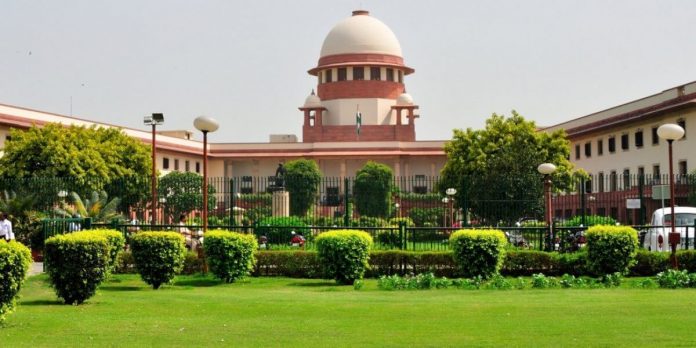










 Allow notifications





