Download Now
Home Blog Page 1432

Real Estate Lawyers: The What & How of The Job!

0
Image source: https://blog.ipleaders.in/legal-analysis-set-real-estate-business-india/

What is real estate law? What do real estate lawyers do and how? This was one of those questions which remained unanswered for a long time for me, until I was sought for advise in a real estate matter myself.

A couple of years ago, a friend’s father contacted me out of the blue. He is a retired marine engineer. His elder daughter had recently been married. So, as a gift to his daughter and son-in-law, he had bought them a flat in Bangalore. He had paid about INR 2.5 lakhs as down payment and signed some papers. He was told that the construction work will start in  about six months. He then went back to his home in Kolkata. About near 6 months later he realised that the construction work has not started. He contacted the parties and learnt that there will be a delay of a couple of months due to some unforeseen circumstances.

But even after few months, the work had not started. That is when he called for clarifications. Upon seeing such a lackadaisical attitude, things got heated and he threatened them with a lawsuit. Then the contractors simply said that he has waived off the right to sue based on one of the papers he had signed. This is when he got in touch with me.

I asked him to share the copies of all the documents. In one of the documents it turns out that this friend’s father had waived off his right to sue among other rights. Now I have next to nothing in terms of experience in real estate law. So I referred him to a friend after initial advice.

While talking to my friend I realised the extent of the real estate laws, rules and regulations involved in these matters. I also realised how much these affect us in our day-to-day lives. It intrigued me to know what do the real estate lawyers do and how? Are there any real estate law courses? So in order to get some insights, I spoke to a couple of real estate lawyers to understand what they do and how.

Here is what I learnt.

What do real estate lawyers do?

Real estate lawyers do everything from title search of a property to dispute resolution. They have to conduct the due diligence for the property to know if the title is clear for development or sale. Then they have to make title search reports or title search certificates as per their client’s requirements. They also check for pending mortgages and litigation on the property, to find a reasonable and amicable solution for their clients. They advise their clients on various property related matters. They draft MOUs, lease agreements, leave and license agreements, etc. They also handle land or property related disputes.

Their clients range from individuals investing in a flat to developers or promoters. So, if you’re a developer trying to get the land to develop a property, you have to get in touch with a real estate lawyer.

Click here to know about real estate law course!

What laws and regulations do they need to know?

While the range of laws applicable to real estate laws is extensive laws, like The Real Estate (Regulation and Development) Act, Transfer of Property Act, Contracts Act, state laws and regulations like Maharashtra Regional and Town Planning Act, Development Control Rules, etc. are what real estate lawyers deal with on a daily basis.

  • The Real Estate (Regulation and Development) Act

Recently, with the The Real Estate (Regulation and Development) Act, 2016 [RERDA],  Real Estate Regulatory Authority (RERA) has come into place. This law was introduced to protect home-buyers as well as help boost investments in the real estate industry. The Act establishes Real Estate Regulatory Authority (RERA) in each state for regulation of the real estate sector and also acts as an adjudicating body for speedy dispute redressal. Under RERDA, all builders and developers have a duty to register their new and ongoing projects with the Regulatory Authority in case they are planning to sell the property. Under the law, RERA has to dispose off a complaint within 60 days of filing. With RERA in place in a state, one cannot file lawsuits in civil courts or high courts.

  • Transfer of Property Act

The  Transfer of Property Act regulates the transfer of property in India and it classifies property into immovable and movable properties. The transfer of property may be to an individual, company or association or body of individuals. A real estate lawyer needs to be thorough in their knowledge of this act as it governs and regulates the transfer of properties between parties.

  • Contract Act

The knowledge of contract law is essential for all lawyers, more importantly the practical experience in the field. Even real estate lawyers have to know how to draft contracts and agreements. They regularly deal with clients who need them to draft the necessary agreements like MoU, lease agreement, leave and license agreement, sale agreement, broker agreement, etc. Therefore, they need to be adept at the subject matter.

  • Consumer Protection Act

Prior to RERA, even in states where RERA has not been established post-RERA, usually the lawyers approached the consumer courts whenever handover of a developing property was delayed, or if there was dispute between the seller and buyer of a property. The real estate lawyers need to know the procedural aspects of the law, how to file a consumer complaint, etc.

  • State Rules and Regulations

The rules and regulations for states differ from one another in terms of procedure, stamp duty, registration, etc. So, for instance in Maharashtra, a real estate lawyer needs to know the Maharashtra Regional and Town Planning Act, Standardized Building Bye-laws, Development Control Rules, etc. along with the other laws. In West Bengal, RERA was met with pushback from the state government’s legislation West Bengal Housing Industry Regulation Act (WBHIRA) which looks like an attempt to dilute RERA. There are two major deviations in the WBHIRA from RERA. It adds “…or any other circumstances as may be prescribed”, under the provision of unforeseen circumstances that prevent a builder from fulfill his contract,” which makes it ambiguous. Also, a garage is described as any parking space sanctioned by the government authority, which differs from the RERA’s definition of garage requiring a roof and walls on three sides. The real estate lawyers need to know and be able to apply the state laws, rules, regulations, bye-laws, etc. related to real estate.

What are the skills required for a real estate lawyers?

So, one of the questions I posed to the real estate lawyers was what kind of skill sets are required for a successful career in real estate law. Another question was what do potential employers look for in candidate while hiring.

In case of the employers, they look for candidates with experience in the real estate laws. This includes the number of deals the candidate may have closed, the nature and quality of said deals, the number of transactions closed, transaction based advise, dispute resolution, etc.

  • Knowledge of real estate laws

A real estate lawyer has to possess a thorough knowledge of the various laws, rules, regulation, bye-laws involved in real estate. These lawyers need to be able to provide end to end service a potential client. A client may come to them for a simple title search certificate or a leave and license agreement. Or a developer may come for understanding his contractual obligations to the client or whether the delay can be justified as unforeseen circumstance.

The thorough knowledge of relevant laws like RERDA, Transfer of Property Act, state rules and regulations like Maharashtra Regional and Town Planning Act, Standardized Building Bye-laws, Development Control Rules, West Bengal Housing Industry Regulation Act (WBHIRA), etc. is essential for real estate lawyers.

You can do a real estate law course to learn more about this field of law.

  • Contract Drafting

Every lawyer must know how to draft contract, real estate lawyers are no exception. They need to know the laws as well as how to draft the contracts needed by their clients. For instance, a developer or promoter developing his property, enters into an MoU with the potential party before entering the developer’s agreement.

Similarly, a house owner entering into a leave and license agreement with licensees, party leasing the property from another, all need a real estate lawyer to help them draft the necessary agreements and advise them.  You can learn more about contract drafting here.

  • Dispute Resolution

The disputes arising of immovable property has to go to the right court. Prior to RERA, parties had the option of going to civil courts, high courts or consumer forums depending on the nature of the dispute. The real estate lawyers need to know the dispute resolution mechanism, the procedures of each forum, etc.

For instance, if the developer has failed to grant possession of the property for more than a year, a complaint can be filed against the defaulting party, i.e., the developer with RERA. The copies of relevant agreement like MoU, developers agreement, etc. has to be submitted along with the applicable fees. Thereafter within 60 days of filing, the matter is to be disposed off by RERA.

With such laws in place, a real estate lawyer has to find an amicable resolution of the dispute for his client. This requires a thorough knowledge of the laws involved, analysis of agreements involved, procedural knowledge, etc. A real estate lawyer must be able to clearly advise his clients on potential issues cropping up and safeguard them against the same to the best of their abilities.

Real estate law is a lucrative, as well as an interesting field of law as it gives the opportunity for lawyers to develop skills and expertise in a varied range of laws. With the changing legislations and regulations, it keeps the lawyers on their toes and helps them stay on top of their game. The market of real estate is always on the rise for real estate lawyers, as the need for legal advise and disputes with respect to property hardly seems to slow down! Making a career in this field will be highly rewarding.

Download Now

Consequences of defaulting on a personal loan

0
personal loan default
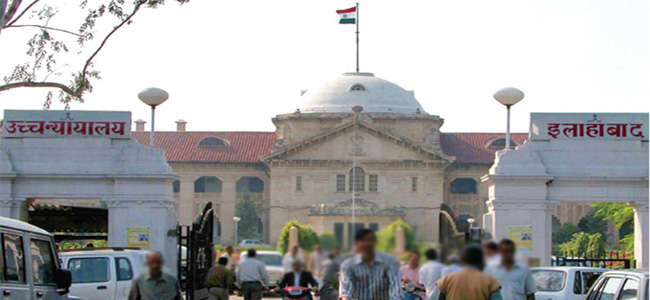
Image Source - https://sarkarijobnews.com/allahabad-high-court-recruitment/

This article is written by Utkarsh Nigam of New Law College, Bharti Vidyapeeth University, Pune. The author through this article discusses the consequences of defaulting on a personal loan. This article was written by the author while pursuing M.A in Business laws from NUJS.

Personal loan is a type of unsecured loan which is taken to meet the current financial needs of any type. The need for urgent cash is fulfilled by this type of loan whether it is a medical emergency, money required to buy a house or to meet day to day expenses. The biggest benefit in taking a personal loan is that no questions are asked by the bank where the money will be put to use, along with it no security or collateral or guarantor is required to acquire the loan thus making it the favourable type of loan in case of a dire need. But this type of loan has drawbacks too.  Money without any security would mean high interest rates are charged by the banks on these types of loans as this would in future become a risky situation for a bank. The banks do not give these types of loan to everybody the banks give personal loan to a person who has a good track record in repayment of the loans. There can be cases where a default can be done, in cases of personal emergencies or death or bankruptcy etc. In these types of cases banks have certain rights or recourses through which they can recover the amount which they issued to the defaulter.

Remedies Available Under Code of Civil Procedure

The first option available to a bank as a plaintiff is to file a Summary suit under Order 37 of the Civil Procedure Code, 1908. The Rule 1 Sub rule 2 states that the order 37 is applicable to all suits upon bills of exchange, hundis, and promissory notes or the money payable in written contracts or enactment in which a plaintiff seeks to recover a debt or demand which is a liquidated one. The condition for this order to be applied is that the sum to be recovered is a fixed a sum of money or is in nature of any debt except a penalty or guarantee in respect of a debt or liquidated demand. Rule 2 of Order 37 requires the suit which is filed under this order to be under the ambit of reliefs granted under this order only and not any other such relief which is not mentioned. Under Order 37 the decree for the suit filed can be get in two ways, first being under Rule 2(3) which states that the defendant is given 10 days from the service of the summons on him to appear. After he has entered in appearance the plaintiff which is the bank in cases of loan default taken from the banks serves on the defendant summons for judgement within ten days from date of service which is supported by an Affidavit verifying the cause of action, amount claimed and that in his belief there is no defence to the suit filed by him.

Rule 2(5) states that the defendant may within ten days from service of such summon for judgement, by affidavit or disclose such facts as may be deemed sufficient to entitle him a chance to defend or apply for leave to defend. This may be granted to him unconditionally or on such terms as the court may deem fit. The proviso to the rule further provides that leave to defend shall not be refused by the court unless it is satisfied that the facts disclosed do not indicate substantial defence or that it is frivolous.

The other way is to get the decree under Rule 2(6) which states that in case if the defendant does not apply for a leave to defend the plaintiff shall be entitled to a judgement immediately or the court may direct the defendant to give such security as it may deem fit. The delay in entering an appearance may be excused under clause 7 of the rule if sufficient cause is shown.[1]

The real benefit to a plaintiff of Order 37 suit is that where the defendant is not able to come out with a substantial defence in his case the plaintiff will be entitled to a judgement immediately. This procedure simply means that the long procedure followed in civil suits gets eliminated starting from filing a written statement to framing issues by court, cross examination etc. The long process affected the plaintiffs. Under Order 37 a plaintiff just have to show that the case falls under the ambit of this order and once the summons is issued it is now the duty of the defendant to show to the court with substantial proof that he is entitled to a leave to defend and if the leave is granted then Order 37 becomes an ordinary civil suit and then the defendant is directed to file his written statement within 30 days.

The Crux of order 37 was summarised in Sunil Enterprises & Anr. v. SBI Commercial & International bank Ltd. where the court summarised the points under Order 37, which were-

  1. If the defendant satisfies the court that he has a good defence to the claim, the defendant would be entitled to unconditional leave to defend.
  2. If the defendant is successful in indicating that he has a fair or bona fide or reasonable defence although not a good defence then also the defendant is entitled to unconditional leave to defend.
  3. If the defendant discloses such fact which entitles him to a leave to defend, that is if in the affidavit he discloses that at the trial he may be able to establish a defence to the plaintiff’s claim, the court may impose conditions at the time of granting leave to defend the conditions being as to time of trial or made of trial but not as to payment into court or furnishing security.
  4. If the defendant has no defence or if the defence is moonshine the defendant is not entitled to leave defend.
  5. If the defendant has no evidence or the defence is moonshine, the court may show mercy to the defendant by enabling him to try to prove a defence but at the same time protect the interest of the plaintiff imposing the condition that the amount claimed should be paid into the court or otherwise secured.

In case of Precision Steel & Engineering works v. Prem Deva Niranjan Deva Tayal the court pointed out that mere disclosure of facts not being substantial one the facts are nothing and what is particularly a substantial evidence depends upon the facts and circumstances of each case.

The Court in Neebha Kapoor v Javantilal Khandwala that the main reason behind Order 37 is the expeditious disposal of suits of commercial nature and it provides for such disposal as expeditiously as possible by prescribing the time frame.

Order 37 is best suited for cases in which a defendant does not have a case or does not have a substantial evidence or proof for asking for leave for defence. Cases in which the borrowers disappear with no trace, these type of cases can be moved expeditiously. The decree as executed by the court has a strong effect which tends the borrowers to offer settlements after they are served with the summons.[2]

Remedy Available Under the NI Act

The second option available in cases when the cheque is issued to return the borrowed money and it bounces or is returned by the bank for insufficient balance in the account of the borrower or in legal language when the cheque gets dishonoured then the person would be liable under Section 138 of the Negotiable Instrument Act,1881. The person who is made liable under Section 138 of the Act has a civil and a criminal liability. The Supreme Court in the case of Laxmi DyeChem v. State of Gujarat & Ors. gave the judgement that criminal proceedings because of insufficient balance can be initiated because of lack of sufficient amount in the bank account. If any person is deemed to have committed offence under this particular section the person can be punished with an imprisonment of up to two years along with a fine which can be twice the amount of the cheque.

Remedy Available Under the DRT Act

The third way available with the banks and Non- Banking financial institutions is to go to the Debt Recovery Tribunal which has been established under the Recovery of Debts due to Banks and Financial Institutions Act, 1993. The Government of India through the Act has constituted 38 DRTs and 5 DRATs (Debt Recovery Appellate Tribunal). The provisions of the Act apply to the cases in which the amount involved is not less than 10 lakhs. The prime feature of the Act is that only banks and financial institutions of any type can only make applications under Section 19 of the Act for recovery of debts under this Act. The DRT and the DRAT are not bound by the provisions of the Civil Procedure Code according to section 22 of the Act but are bound by the principal of natural Justice. Summary suit procedure is followed by the Tribunal for recovery of debts. The evidence is accepted through affidavit and cross examination is not allowed except in cases where the court is satisfied. The defendant has the right to file a claim of set off against the application filed by the plaintiff.  The final order is passed by the Tribunal, if it is satisfied, directing the borrower to pay the required amount which is claimed by the plaintiff. If the borrower fails to pay the amount a recovery certificate shall be issued against the borrower under Section 19(7) of the Act which will then be executed by a Recovery Officer of the Debt Recovery Tribunal under Section 25. The Presiding officer of the Tribunal under Section 19(22) shall issue a certificate for recovery of the amount of debt and any other relevant dues to the Recovery officer. The following modes can be taken by the Recovery officer-

  1. Attachment of sale of the movable or immovable property of the defendant.
  2. Arrest of the defendant and his detention in prison.
  3. Appointing a receiver for the management of the movable or immovable properties of the defendant.

 The Tribunal under Section 19(24) shall be dealt by it expeditiously and efforts shall be made to finally dispose of the application made to it within one hundred eighty days from the receipt of the application. The Debt Recovery Appellate Tribunal shall also follow the same provisions under Section 20(6) of the Act and the appeal shall be disposed within 6 months from the date of receipt of appeal. Under Section 20(3) of the Act every defendant (borrower) is entitled to appeal against the order of the Tribunal within forty five days from the receipt of the order of the Tribunal to the Appellate Tribunal subject to the condition mentioned under Section 21 that the borrower should deposit seventy five percent of the debt as determined by the Tribunal.

Under Section 26 of the Act it shall not be open to the defendant to dispute before the Recovery Officer regarding the correctness of the amount specified in the certificate issued by the presiding officer and the borrower cannot make any objection with regards to the certificate on any ground

Where a certificate has been issued under Section 19 of the Act, the Recovery officer without any prejudice to the provisions to the provisions of Section 25 may recover the amount by any other means stated in Section 28 of the Act. These are-

  1. If any amount is due to the defendant from any person, the Recovery Officer may require such person to deduct from the amount, the amount of debt due from the defendant and such person shall comply with such requisition and shall pay the amount to the Recovery officer.
  2. The Recovery Officer has the power at any time by giving a notice in writing to the person from whom the money is due or will be due to the defendant or to any person who holds or may subsequently hold money for or on account of defendant to pay to the Recovery Officer after the money becoming due such amount which is sufficient to pay the amount of debt due from the defendant.
  3. A notice may be served by the officer to the person who holds or subsequently will hold any money on account of the defendant jointly, and until the contrary is proved the shares of the joint holder will be presumed to be equal. The notice would be send to all the joint holders at their addresses and complying with the contents of such notice is mandatory in nature. Where a person whom such notice is sent if proves that he/she does not hold any money for or on account of the defendant then the person will not be required to pay any sum. But if it is found that the statement was false or the proof was false in nature then such person shall be personally liable to the Recovery officer to the extent of his own liability to the defendant or to the extent of defendant’s liability under the suit whichever is less.
  4. If the person to whom the notice under this section (Section 28) has been issued fails to make the payment, then he shall be deemed to be a defendant in default in respect to the amount specified in the notice and further proceedings can be taken against him for the realisation of the amount according to the provisions of Section 25,26 and 27.
  5. The Recovery Officer also has the power to apply to the court in whose custody the money is belonging to the defendant for payment of the amount of money due towards the debt.
  6. The Recovery Officer may recover any amount of Debt due from the defendant by sale of his movable property in the manner laid down in the Third Schedule of the Income-Tax Act,1961.[3][4]

In cases of corporate loans the new provisions of the Insolvency and the bankruptcy Code will be applicable. The Adjudicating Authority in relation to insolvency resolution and liquidation for corporate persons including corporate debtors and personal guarantors thereof shall be the National Company Law Tribunal having territorial jurisdiction over the place where the registered office of the corporate person is located.For other persons mentioned in the Act the adjudicating authority will be the Debt Recovery Tribunal incorporated under section 3(1) of the Recovery of Debts due to Banks and Financial Institutions Act,1993.

Insolvency and Bankruptcy Code – Financial Creditor or Operational Creditor may file an application to the adjudicating authority against a corporate debtor

This is only applicable to A financial debt as defined under Section 5(8) of the IBC, or operational debt as defined under section 5(21) of the IBC.

Under Section 7 of the newly passed Insolvency and the Bankruptcy Code,2016 a financial creditor may file an application to the adjudicating authority against a corporate debtor. The adjudicating authority within 14 days from the receipt of application ascertains the existence of any such default mentioned by the creditor. The authority if is satisfied with the application issues a notice to the debtor and if the debtor within ten days from the date of receipt of notice fails to make the payment of the debt then the creditor is entitled to make an application before the authority for initiating a corporate insolvency resolution process. The insolvency resolution process should be completed within 180 days from the date of admission of such application. For this purpose a resolution professional shall be appointed to carry out the process of resolution making. If the Adjudicating authority is satisfied that the resolution plan as approved by the creditors under Section 30(4) that is the resolution is approved by not less than 75% of the creditors then under Section 31 it shall by order approve the plan which shall be binding upon the Corporate Debtor and its members employees, stakeholders, creditors etc.

Where the resolution professional at any time during the corporate insolvency resolution process intimates the Adjudicating Authority, but before the confirmation of resolution plan, of the decision of the committee of creditors to liquidate the corporate debtor, then under Section 33 the Adjudicating Authority shall pass a liquidation order. The resolution professional under this case after the order has been passed will act as an official liquidator for the purpose of liquidation. The creditor under Section 42 within 14 days from the date of such decision has a right to appeal against the decision of such liquidator appointed if he gives a decision.

The same powers are conferred on the National Company law Tribunal as well which are vested with the Debt Recovery Tribunal as an adjudicating authority.

The above discussed ways have punishment of imprisonment if the provisions of these Acts are violated. Along with it, hefty penalties are also incorporated in the provisions of the newly incorporated Acts to make the borrowers aware of the penalties if they fail to comply with the provisions. The Insolvency and the Bankruptcy Code has shifted the existing debtor in possession to a creditor in control regime. The code has introduced the concept of Insolvency Professional as a type of intermediary to oversee the process which has nearly eliminated the process of the court as the decision maker, where a lot of time was consumed in the procedure stage and then on the enforcement stage. There is a surge in the credit market because of this and a sense of stability too. The passing of this Code has given a big boost to ease of doing business in the country. The most important feature which the IBC has brought along with the other ways through which suits of default of loan are settled are the strict timelines which are mentioned in the provisions of the Act. The objective is to curtail tactics of the debtors to delay the enforcement of the decree or the liquidation process. India has a high rate of bad debt problem, the Acts aim to curb that and provide solution to it by creation of a database of the defaulters so the business in the country can flourish easily. As India being a developing country may foreign investors are also coming to the country. The Acts discussed above are a way to bring all the lenders and the debtors on a same line and whether the property is located inside or outside the country the Acts cover it all.[5]

References

[1] Referred https://www.nls.ac.in/lib/bareacts/civil/cpc/cpco37.html

[2]Referred http://www.legalservicesindia.com/article/article/order-37-cpc-summary-suits-1514-1.html

[3] Referred http://www.drat.tn.nic.in/Docu/RDDBFI-Act.pdf

[4] Referred http://164.100.47.4/BillsTexts/LSBillTexts/Asintroduced/144_2016_LS_Eng.pdf

[5] Referred http://www.indialaw.in/blog/blog/commercialcorporate/summarising-insolvency-bankruptcy-code-2016

Download Now

3 Common Mistakes Made By Freshers Right After They Join Law Firms

0
law firms

This article is written by Mohona Thakur, Team iPleaders

Over the past week, we have been writing about why law students prefer working with law firms, why do lawyers quit their law firm jobs, life-changing realisations that lawyers have over the course of their career; it was only natural that we talk about the mistakes we lawyers have made as freshers.

How many of you have screwed up the first due diligence report you had to prepare? Not looked up whether the case law you found was overruled by a larger bench? Didn’t proofread the final contract that went for signatures?

As freshers in the legal industry, we lawyers have all made mistakes on the job, some small ones and some embarrassing ones that we may not like to recall. Let’s discuss a few mistakes most freshers make once they join law firms:

  • Not Understanding The Work

Most of the times the instructions that the associates receive is limited to the exact research that needs to be done. Nothing more, nothing less. For instance, this one time I was asked to find out the jurisdiction of courts for a case under Section 138 of the Negotiable Instruments Act. And that is all that I was told. I received no other information, until I went ahead and requested the boss for more information.

The point I am trying to make here is that the associates at law firms are expected to work on a piece of a huge jigsaw puzzle. Most associates end up working long hours finding answers to vague research propositions with limited information. As a result,, the associates end up doing incomplete or superficial work.

Let me give you another example.

Your senior has asked you to make a note on how foreign investor can invest in the e-commerce space in India, and you send him the relevant notification of the FDI Policy. You also send a couple of Press Notes which are old and no longer valid. The associate expected you to distil relevant information from the latest policy, cite it and prepare a short note on it. You’ve missed the point. (Who knows, maybe your senior intended to send this as an email, or or include it in a larger note to be sent to the client).

What freshers are expected to do is provide a detailed and full-proof work. That can only happen if freshers ask for more information. The onus lies on the associates to ask questions. Ask all relevant questions in order to give work that is not only detailed, but also precise. Don’t you think you would be able to provide better, if you knew everything that is to know about a particular piece of work and/or the client?

  • Giving Incorrect or Incomplete Information

As freshers, many of us have had the tendency to finish the assigned work quickly. It’s almost as though we are competing on how quick one can finish the assigned task. Maybe it is to prove our mettle to the reporting Partner, or at times to prove that we are better than our contemporaries.

In this very rush, freshers forget to proofread their own work product. At times, they end up coming with incomplete work, or with work full of discrepancies. Gunjan Chhabra, an arbitration lawyer, mentions this to be a huge problem with freshers. She says, “Efficiency cannot be a substitute for quality,” pointing out that freshers prefer being quick at the cost of doing thorough research.

For instance, your senior asks you how Apple is able to open single-brand retail stores in India, and you tell your senior that 100% FDI is permitted under single-brand retail, which he or she already knows. Your senior was expecting you to let him or her know that Apple is benefiting from a 3-year exemption from local sourcing, which is included as per a 23rd January, 2018 Press Note. This information can also obtained by another company, by making an application to a specific Committee of the Department of Industrial Policy and Promotion.

While you maybe giving the correct information, the above example demonstrates that you did not dig deep enough and your research is not upto the mark. Seniors at law firms notice the effort that is being put in. Look at it from the bigger picture perspective. Put yourself in their position and see what they would expect. If you were your own boss, would you expect yourself to do half-hearted work?

In fact, if I were to be my own boss, I would expect myself to not just ‘do the job’ but do it thoroughly. If possible, know the consequences to the worst case scenario, and have a probable plan of action for the same. Just doing the job won’t help you retain a job. Being better than what your boss expects you to be is what will impress them and make you stand out.

At law firms, with multiple teams working on various sectors of corporate law, it is absolutely important to understand what corporate law is. While I was in law school, I always used to ask myself and others “What exactly do you mean by corporate law? What is it? Is it Companies Act? Then why name it corporate law specifically?” Sandhya Biswas, an associate with Ernst and Young emphasises on “how freshers simply follow the herd mentality and do not understand what they mean when they say corporate law. It’s as broad as saying I want to do law.”

If I were in your shoes, I would have tried to figure out the answer to this question and figured out what did everyone mean by corporate laws. Thereafter, if I really enjoyed it and believed that I could have a future in this field, I would have ensured that I have enough knowledge in order to secure a job at a corporate law firm. A course on companies act, sebi regulations and M&A would help you understand the nuances and nitty gritties of these subject areas – something that law schools forget to teach, especially in practice.

Click here for free materials!M&A lawyers

  • Client Expectations – How to Deal With it

Freshers are the newest lot to join law firms, and naturally they do not understand what the clients expect.

For example, a client has asked your senior to support him or her with everything required to establish business presence in India, and your senior asks you to prepare a note. You look up the FDI Policy and RBI circulars, and specify the routes of establishing business presence in India, that is, through FDI into an Indian company or opening up a project, branch or liaison office. However, you do not specify how to incorporate a company in India, how to transfer funds into the Indian company, what licenses and registrations (tax, shops and establishment, etc.) are required to start business in India. If your memo is sent out directly by your senior, the client will not be able to establish business presence in India. It will be very similar to the information found online for free (which is just formatted and presented in a better way by you), but for which a client would be unwilling to pay legal fees at corporate law firm rates.

It is extremely important to ask questions and figure out what results the client expects, and how would your research fit in the bigger piece of the puzzle. If you know what is required to be done by the client, you would be able to deliver to their expectations, and do precise research. In turn, you present the client with exactly what they need.

Another part of this problem is that associates do not understand the firms way of dealing with a particular client. What kind of work has happened for this client previously? Were there other deals closed on behalf of the client previous to you joining the firm? Have you seen a previous work product that was sent to this client? Could you possibly figure out through this previous work product, as to the quality of work that was given to the client?

These are major and important questions that associates need to ask. Ask the right colleagues at law firms. It is pertinent to understand that asking certain questions, for specific information may not necessarily portray you as clueless. The smart ones in the lot will figure out where you are heading, and more often than not appreciate the effort that you are taking. In fact, these small steps that you take towards understanding the needs of your client vis-a-vis the firm’s approach towards the client, will help you scale up the ladder. Because law firms value their clientele and appreciate associates that understand the need of the clients and deliver as expected.

It is best advised that freshers stay ahead of the curve, and do more than just the bare minimum. Yes, it is absolutely great that one makes it to these corporate law firms. However, it is important acknowledge the harsh reality – that doesn’t mean that you’ve landed in life. In fact, on the contrary, it means – this is where your career begins.

Keep learning, from your mistakes, and others and make the best of every opportunity that life presents you with!

Download Now

Monopolies and Restrictive Trade Practices Act, 1970

0

This article is written by Shreyaa Chaturvedi. The article is a discussion on the Monopolies and Restrictive Trade Practices Act, 1970 (MRTP Act).

The British East India Company ruled India for almost 200 years. They exploited India’s resources for their own selfish purposes and ruined the indigenous industries prevailing in India at that point of time – handicrafts, etc. Prior to Independence, there was no competition regime existing in India. There were only policies and resolutions made by the government that aimed at just and equitable distribution of resources[1]. However, the World Wars that took place led to the initial industrialization of the Indian economy. Although India did not actively participate in the wars it was the major source for the supply of arms and ammunition to the British army. This led to the formation of large Business Houses – Tata’s, Birla’s, etc. Initially this was seen as a positive sign for the blooming Indian economy[2].

Post Independence, India adopted a centralized planning system – 5 year plans that laid down how the resources of the country were to be used in the coming 5 years. During the initial 5 year plans, the primary focus was on achieving the Industrial and Economic development. In 1956, Industrial Policy Resolution was passed wherein all the industries of the country were classified into 3 categories – Schedule A; Schedule B and Schedule C industries. The government was primarily responsible for the pattern of industrial development. Most of the laws and policies that were passed during that time were based on the Principle of Command-and-Control[3].

There was high scale of government intervention in the affairs of the private industries and businesses. The thrust was to promote the public sector of the county which only could lead to the growth of the economy. This era is also termed by many as the period of License Raj wherein, the Private Industries were required to take approval licenses from the government in order to function; there were high tariffs and quotas imposed on the import of goods[4].

The government used to support the Big Business Houses as they largely contributed to the growth of the economy. For them, obtaining licenses and permissions became a cakewalk. Soon it led to concentration of economic power in the hands of few. These monopolistic industrialists started indulging anti-competitive activities which were detrimental to the general public interest. It was also against the sacred principles that governed the formation of the Indian Constitution, the bible of the Independent India[5].

This scenario ultimately led to the formation of the Monopolies and Restrictive Trade Practices Act, 1969 [MRTP, Act].

Constitutional Background

The introduction of Competition Law in India has been inspired by the Directive Principles of State Policy [DPSPs] that form the Part IV of the Indian Constitution. Articles 38 and 39 of the Constitution, inter alia state that the State shall strive to promote the welfare of its people and shall secure social, economic and political justice for its people. The state shall ensure that –

  1. The nation’s resources are distributed judicially and effectively in a manner that best serves the interest of the people.
  2. The operation of economic system should not result in the concentration of wealth in the hands of the few, leading to the common detriment.[6]

Objective of this Project

This research article aims at the critical analysis of the MRTP, Act from various aspects. The article studies the performance and the reasons for its failure which ultimately led to the formation of Competition Act, 2002. The researcher has also taken the help of various case laws to chart down the loopholes that emerged in the MRTP, Act which made the legislation redundant in the current Indian scenario.

Overview of MRTP, Act, 1969

During the reign of Indira Gandhi, there was a reign of socialism that ran through the country. Big Businesses began to be treated with suspicion. The government therefore appointed a series of committees all aimed at formulating a mechanism to check the concentration of power in the hands of few[7]. Let us take the brief background of committees that helped in shaping the MRTP Act, 1969 –

  1. Hazari Committee (1951) – This committee was appointed under the Chairmanship of Mr. Hazari to study the licensing procedure under the Industrial Policy. In its report, the committee found that Big Businessmen have succeeded in thwarting the Industrial Policy regulations to meet their own selfish interests. Further, the States have become biased in granting Industrial Licenses to Big Business Houses.[8]
  2. Subimal Dutt Committee – This committee was appointed to study the institutional design and the pattern of work of various Business Houses. The committee in its report found that 73 business houses were controlling around 56% of the economy; it therefore suggested introduction of MRTP Bill.[9]
  3. Mahanlobis Committee on the Distribution of Income and Levels of Living (1964) – This committee headed by PC Mahanlobis also found concentration of wealth and power in the hands of few wealthy entrepreneurs. It was further observed that the economic model of the country was planned in such a manner that only supported the wealthy few and the same should be reformed.[10]
  4. Monopolies Inquiry Commission [MIC] (1965) – This committee was headed by Justice K.C Das Gupta. It found that there was high concentration of power in private hands and the industrial licensing policy as well as IPR was not effective in addressing the same. Moreover, there was also not any law to govern and regulate the irregularities that were prevailing in the market. MIC therefore drafted a bill to curb the monopolistic and restrictive trade practices. This Bill later became the MRTP Act, 1969.[11]

The new MRTP Act was greatly influenced by its foreign counterparts such as Sherman Act and Clayton Act of USA, the MRTP (Inquiry and Control) Act, 1948 and the Resale Prices Act, 1964 of the UK, etc. Following are some salient features of MRTP Act, 1969.

Salient features of MRTP, Act, 1969

As has been explained earlier, this research is aimed at the critical analysis of the MRTP Act, 1969. However, we cannot correctly analyze a particular legislation without understanding the principles that run at its core. Therefore it is important here to analyze in brief, the salient features of the Act.

Primary Aim

MRTP Act came into force on 1 June 1970. The law was enacted with the sole purpose of –

“Achieving the highest possible production with least damage to people at large while securing maximum benefit”[12]

Concepts Addressed under the Act

It is important to first understand the salient features that govern the Act in order to truly understand the scope of their applicability and the practical difficulties that arose in their implementation. Following are the concepts addressed under the Act –

  • Command and Control Approach – The Act made it mandatory for enterprises having assets exceeding Rs. 20 crores to take approval of the Central Government before any kind of corporate restructuring or takeover. The criterion for identifying the dominant undertakings was also fixed. Enterprises having assets of more than Rs. 1 crore were automatically considered as dominant.[13]
  • Monopolistic Trade Practices – MTPs as covered under the Chapter IV of the MRTP Act are the activities undertaken by Big Business Houses by abusing their market position that hamper or eliminate healthy competition in the market. Such practices are anti-consumer-welfare.
  • Restrictive Trade Practices– RTPs are activities that block the flow of capital or profits in the market. Some firms tend to control the supply of goods or products in the market either by restricting production or controlling the delivery. MRTPA discourages and prevents the firms from indulging in RTPs.[14]
  • Unfair Trade PracticesUTP is basically an act of false, deceptive, misleading or distorted representation of facts pertaining to goods and services by the firms. Section 36-A of the MRTPA prohibits firms from indulging in Unfair Trade Practices (UTPs). This provision was inserted by the landmark 1984 Amendment to the MRTPA.[15]

MRTPA also provided for the establishment of MRTP Commission which shall be a regulatory authority to deal with the offences under the MRTPA. At the time of its enactment, the MRTPA being the first legislation addressing the competition law issues in India seemed to be a perfect law to catch the defaulters. However, with the passage of time, the wave of globalization that entered the country changed the whole scenario[16]. There arose a need for modifications in the existing MRTP Act in order to keep it at pace with the changing economic scenario. There were many loopholes that arose in the law. Some of them have been briefly discussed below.

MRTP, Act: A Damaged Legislation in Need of Repair

Uptil 1984, MRTP was successfully regulating the competition in the Indian market. However, by 1984, certain amendments were required to update the act as per the needs of the society. Following are the major amendments made to the MRTPA –

  • 1984 Amendment – This amendment was based on the recommendations of the Sachar Committee. The amendment inserted Section 36A to the Act to protect the final consumers against the unfair trade practices so that an effective action can be taken against them. Thus, claims against false advertisements, deceptive representation of goods, false guarantees came under the purview of the Act[17].
  • 1991 Amendment – This amendment allowed the MRTP Act to be extended to the public sector and the government owned companies also. After this amendment, the private players functioning in the market were no longer required to take special approvals or permission from the government before carrying out any corporate reconstruction. This amendment to the MRTPA came to effect in the light of the New Economic Policy which led to the opening of Indian economy. The License Raj which restricted the growth of the Indian economy was thus abolished[18].

It should be noted here that despite the above amendments to remedy the shortfalls of the MRTP Act, there were many loopholes left which catalyzed its repeal. Let us have a brief discussion on the same.

Why did it fail? Researcher’s Critical Assessment of the MRTP, Act, 1969

Following are the reasons that led to the failure of MRTP Act, 1969 –

  1. Excessive Government Control – Under the MRTP Act, both small and big businesses were subjected to excessive government control. It was mandatory for the enterprises to take approvals from the government before carrying out any kind of corporate restructuring or takeover. The presence of such complex procedures, many firms found it difficult to survive, thereby affecting the final consumers.[19]
  2. Vague and ambiguous law – Section 2(o) of the MRTP Act defined the term ‘restrictive trade practices’ which covered any activity that prevented, distorted or restricted competition. There was no specific provision that defined the various kinds of anti-competitive activities that would be termed as offences under the Act. Anti – competitive practices such as cartels, bid rigging, abuse of dominance, collusion, price-fixing, predatory pricing etc were nowhere defined[20]. Section 2(o) thus included all types of possible offences within its ambit thereby leading to a large variety of interpretations by various courts wherein the core essence of the law was lost.
  3. Per se rule instead of Rule of Reason – In the MRTP Act there were as much as 14 offences that were considered as per se illegal. The concept of Rule of Reason was not applied. Though the Supreme Court in the Telco case[21] recognized the Rule of Reason, but this development was again frustrated by the passage of the unfortunate 1984 Amendment which mandated that all listed RTPs under Section 33 shall be treated as per se illegal.
  4. Dominance per se bad Under the MRTP Act, dominance was in itself considered as bad, it didn’t matter whether the party has abused it or not. There was a mathematical formula for determining dominance i.e, the undertaking as to have 25% or more control over market share of goods or services. However, the catch here was that that if a firm acquired 20% or 23% of the market share at a particular time; the same was not considered as dominant.[22]
  5. Promotion of exports at any cost – Under Section 38 of MRTP Act, if any project enterprise had a high potential for exports in future, it would cause the authority to simply blindly approve all its applications under the Act without considering the any anti-competitive or monopolistic shadow that it might have. Due to its excessive stress on exports, it ignored all possible drawbacks that a project might have. In many cases, it led to more costs being incurred than the foreign exchange earned through exports.[23]
  6. A Policy of Voluntary Disclosure The MRTPA machinery was highly depended upon voluntary disclosures made the enterprises as there was no agency that could keep a 24*7 check on the market control and structuring of the companies. This proved as a big leeway to the companies leading to late registrations or sometimes no-registration of any change in the company structure. This acted as a means to keep the company out of the purview of the Act.[24]
  7. Inefficiency of the MRTP Commission – MRTP Commission was set up to regulate the anti-competitive practices in the country. However, even though MRTPC had both administrative and judicial functions, the members of the Commission were appointed by the government itself which created a doubt upon the independence of its functioning. Moreover, the Commission was not able to perform its functions efficiently and effectively due to –
  • Unnecessary delays in replacing the members of the Commission.
  • Unwillingness of the government to appoint members promptly or in opening new branch offices.

CLICK HERE

Also, the government had the final say on a proposition and it was on the discretion of the government whether it wanted to refer the matter to the Commission. It happened that most of the time the government unilaterally used to pass the decisions without seeking the consultation of the special expertise body of MRTPC constructed for this purpose. All this led to the body becoming redundant.[25]

  1. Obsolescence – With the dynamic movement of the Indian trade market towards an open and more globalised economy, especially after the New Economic Policy Reforms, led to the MRTP Act soon becoming obsolete. It could not stand the tests of time which required an overhauling of the competition law policies in India in consonance with the new issues arising due to the entry of the large scale foreign firms in India.[26]
  2. No Extraterritorial Application – The MRTP Act, had no extraterritorial application i.e, it could not be applied to business undertakings outside India even if their anti-competitive conduct had a detrimental effect o the Indian market, unless one of the parties were of Indian origin. Thus, when it came to activities such as international cartels, MRTP Act was impotent.[27]
  3. No penalties for offencesSection 12 of the MRTP Act dealt with the powers of MRTP Commission and the types of orders that it can issue in case of taking place of any anti-competitive activities. On a plain reading of the provision, we can infer that the Commission did not have the power to impose harsh penalties or fines on the defaulters. The best it can do is to issue ‘cease and desist’ orders or charge nominal fines. Jail terms, though provided for, were rarely imposed.[28]
  4. Concurrent Jurisdiction under Consumer Protection Act – Post 1984 Amendment, Section 36A was inserted in the Act with the aim to protect the customers from UTPs. As a result, the Commission was soon piled up with consumer complaints for defective goods and inefficient services which were already provided for in the Consumer Protection Act. The consumers were thus left with an option whether to approach the Consumer Court or the MRTP Commission as they both had concurrent jurisdiction. The majority of the time of the Commission was spend resolving consumer disputes while in reality the primary purpose for which the Commission was set up was to regulate anti-competitive practices. A backlog of these cases was subsequently transferred to CCI.[29]

Thus it was clear that MRTP Act, 1969 failed in fulfilling the object for which it was created in the first place. The Commission did not have many powers and was most engaged in consumer cases. Moreover, the various amendments that took place weakened and liberalized the government’s attitude towards monopolistic and anti-competitive practices, rather than strengthening it.

Judicial Attitude towards MRTP Act: A Study of Important MRTP Cases

In order to understand the true context of the limitations of MRTP Act, 1969 that led to its abolishment, we need to study these landmark cases that exhibit the judicial attitude towards these loopholes –

Tata Engineering and Locomotive Co. Ltd vs. Registrar of Restrictive Trade Practices Agreement[30]

Facts – In this case, TELCO entered into an agreement with its dealers wherein the dealers were assigned certain fixed territories within which they had to sell Tata’s vehicles. This territorial restriction was challenged to be a ‘restrictive trade practice’.

Held – Supreme Court in this case for the first time in India applied the Rule of Reason and held that such territorial restriction was not an anti-competitive practice as it was meant for equal distribution of goods throughout the country. The positive effect of this judgment was undermined by the 1984 Amendment, Section 33 of which made territorial allocation a per se RTP.

Director General of Investigation and Registration [DG (IR)] vs. Modi Alkali and Chemicals Ltd[31]

Facts – The Commission received an anonymous complaint that some enterprises have formed a cartel to create virtual scarcity of goods and the prices of chlorine gas and hydrochloric acid have risen by 200% in last 4 months. After investigation, DG reported that there was no case of cartel and no action should be taken. MRTPC then conducted further enquiry.

Held – Even though the term ‘Cartel’ was not defined under the MRTP Act, it was laid down that “cartel is an association of producers who by an agreement among themselves attempt to control production, sale and prices of the product to obtain a monopoly in any particular industry or commodity”. Although in this particular there was not enough evidence to hold anyone liable so the case was dismissed. However, this case brought into light an important category of anti-competitive agreements which were till now not even identified in India.

Sirmur Truck Operator’s Case[32]

 Facts – In this case, the company fixed high freight rates for non-member truck operators while the rates were much lower for the members. This thus increased the cost of transportation for non-members. They alleged that this was an RTP.

Held – It was held that this was indeed an RTP under Section 2(o) of the Act. The MRTPC issued ‘cease and desist’ orders. This case however brought into light the fact that the Commission did not have powers to impose penalty or high monetary fines. The best it could do was to issue cease and desist orders.

American Natural Soda Ash Corporation (ANSAC) vs. Alkali Manufacturers Association of India (AMAI) and others[33]

Facts – ANSAC were trying to export soda ash consignments to India. AMAI filed a complaint with MRTPC to prevent these cartelized consignments from being shipped into Indian Territory.

Held – SC held that MRTPC cannot exercise extraterritorial jurisdiction and therefore it cannot take any action against foreign cartels unless the anti-competitive agreement involves an Indian party. This case thus highlighted another loophole in the MRTP Act.

Thus, it can be very well inferred from these cases that the shortfalls of the MRTP Act were inescapable even from the eyes of Indian Judiciary. This is what ultimately led to the formation of the Current Competition Law.

Conclusion and Recommendations

When problems arose in the functioning of MRTP Act, 1969 there arose a need for a new, revised competition law policy. However, the question that arose was that whether we need to amend the MRTP Act itself or there was a need to create an altogether new legislation. For this purpose, many committees were set up. The most important among them is the Committee headed by S.V.S Raghavan.

Raghavan Committee Report, 1999[34]

Raghavan Committee was set up to suggest changes in the Competition Policy in India. It gave the following recommendations –

  1. Setting up of CCI and winding up of MRTPC.
  2. Bring Government monopolies, foreign companies under the ambit of Competition Law.
  • Setting up of new limits and rules governing mergers, predatory pricing and abuse of dominance.
  1. Transfer of all pending MRTPC cases to CCI

Enactment of Competition Law, 2002

Competition Law, 2002 was announced by the then Finance Minister of India in his budgetary speech of 1999. The new law covers all the major loopholes that were present in the old MRTP Act. The Competition Act, 2002 primarily deals with these aspects –

  • Anti – Competition Agreements
  • Abuse of Dominance
  • Combinations Regulation.
  • Competition Advocacy

The new Act also provided for establishment of a quasi-judicial body called Competition Commission of India (CCI) for registering of all the complaints and also a Competition Appellate Tribunal (COMPAT) to hear the appeal cases against CCI orders.[35]

Brahm Dutt v Union of India[36]

In this case, the constitutional validity of the appointments made under newly enacted Competition Law, 2002 were challenged. It was contended that since CCI had adjudicatory functions as well, then the Chairman of CCI should be a retired judge of Supreme Court or High Court and not an expert in any field as provided for under the Act.

It was held by the Supreme Court that the practice of appointing an expert as the Chairman of the Committee was a set practice across many jurisdictions. Moreover, the Competition Act also provided for an appellate body – COMPAT which was presided over by a retired judge. So in case a party is not satisfied with the orders of CCI, they can approach the appellate tribunal. The writ petition was thus dismissed.

Future Scope and Recommendations

As has been rightly said the positive effects of any law can only be realized when it is effectively enforced. A weak enforcement of law would be no different than not having the law itself. The same applies for the newly enacted Competition law whose jurisprudence is currently at its very nascent stage. However, as a researcher, I would like to give some of my own suggestions –

  1. CCI should try to focus more on the competition law violations that affect the common majority of people. Most of the cases that this authority has decided till now involve niche markets that are mostly controlled by the richest 10% of the country.
  2. It should also strongly deal with anti-competitive activities of the firms located abroad and the ill effects it has on the Indian market.

Thus we can conclude that we need a good competition policy and an efficient and effective competition law in order to confidently face the challenges posed by globalization in Indian markets.

[1] Amit Kapoor, Competition Regulation-history, Insights and Issues for the Way Forward, 2009 Manupatra (2009).

[2] Aditya Bhattacharjea, India’s New Antitrust Regime: The First Two Years of Enforcement, 57 Antitrust Bull. 449 (2012).

[3] Dorothy Shapiro, A Competition Act by India, for India: The First Three Years of Enforcement under the New Competition Act, 5 Indian J. Int’l Econ. L. 59 (2012).

[4] S. Chakravarthy, India’s New Competition Act 2002 – A Work Still in Progress, 5 Bus. L. Int’l 240 (2004).

[5]UK Essays, MRTP Act: Rise Fall and Need for Change: Eco Legal Analysis, November 2013.

[6] Leela Kumar, MRTP COMMISSION and COMPETITION COMMISSION of INDIA, SSRN Publicaions .

[7] Dr. S. Chakravarthy, Why India Adopted New Competition Law, 2008 CUTS Int’l (2008).

[8] R.K Hazari, Industrial Planning and Licensing policy Report, Government of India, Planning Commission, 1951.

[9] INDIA, & DUTT, S. (1969). Report of the Industrial Licensing Policy Inquiry Committee. [New Delhi], Dept. of Industrial Development.

[10] INDIA, & MAHALANOBIS, P. C. (1964). Report of the Committee on Distribution of Income and Levels of Living. New Delhi, Government of India, Planning Commission.

[11]Kulshreshtha, V. D. “REPORT OF THE MONOPOLIES INQUIRY COMMISSION: AN EVALUATION.” Journal of the Indian Law Institute, vol. 8, no. 3, 1966, pp. 413–427. JSTOR, JSTOR, www.jstor.org/stable/43949911.

[12] Preamble, Object and Reasons, Monopolies and Restrictive Trade Practices Act, 1970

[13]Mohammad Asad Mahmood, Critical Analysis of Competition Law in India, Latestlaws.com.

[14]R. Shyam Khemani, India’s Competition Policy Reforms, 30 Int’l Bus. Law. 7 (2002).

[15]Shiju Varghese Mazhuvanchery, The Indian Competition Act: A Historical and Developmental Perspective, 3 Law & Dev. Rev. 241 (2010).

[16] CUTS International, National Law University, Jodhpur & , Study of Cartel Case Laws in Select Jurisdictions – Learnings for the Competition Commission of India, COMPETITION COMMISSION of INDIA, Apr. 25, 2008.

[17]Narayana Rao Rampilla, Developing Judicial Perspective to India’s Monopolies and Restrictive Trade Practices Act of 1969, A , 34 Antitrust Bull. 655 (1989).

[18]Sarbapriya Ray; Ishita Aditya Ray, Emergence and Applicability of Competition Act, 2002 in India’s New Competitive Regime: An Overview, 1 J.L. Pol’y & Globalization 15 (2011).

[19]Sahil Parikh, Background and Basics of Competition Law, S.H. Bathiya & Associates, Sept. 21, 2012.

[20]Haridas Exports v All India Foat Glass Manufacturers Association (2002) 6 SCC 600.

[21]Telco v. Registrar of Restrictive Trade Agreements 1977 AIR 973, 1977 SCR (2) 685; Mahindra & Mahindra Limited v/s Union of India 1984 (16) ELT 76 Bom, 1982 138 ITR 670 a Bom; Continental T.V. v GTE Sylvania; Voltas Ltd v/s Union of India 433 U.S. 36 (1977).

[22] Ministry of Human Resources and Development (MHRD), Evolution of Competition Law and Policy in India, E-Pathshala .

[23]Rahul Singh, Shifting Paradigms, Changing Contexts: Need for a New Competition Law in India, 8 J. Corp. L. Stud. 143 (2008).

[24] Vijay Kumar Singh, Competition Law and Policy in India: The Journey in a Decade, 4 NUJS L. Rev. 523 (2011).

[25] S. Chakravarthy, India’s New Competition Act 2002 – A Work Still in Progress, 5 Bus. L. Int’l 240 (2004).

[26] Dorothy Shapiro, A Competition Act by India, for India: The First Three Years of Enforcement under the New Competition Act, 5 Indian J. Int’l Econ. L. 59 (2012).

[27] Aditya Bhattacharjea, India’s New Antitrust Regime: The First Two Years of Enforcement, 57 Antitrust Bull. 449 (2012).

[28]Amit Kapoor, Competition Regulation-history, Insights and Issues for the Way Forward,  2009 Manupatra (2009).

[29]UK Essays, MRTP Act: Rise Fall and Need for Change: Eco Legal Analysis, November 2013.

[30] 1977 AIR 973, 1977 SCR (2) 685.

[31]2002, CTJ 459 (MRTP).

[32](1995) 3 CTJ 332 (MRTPC) 74 Truck Operators Union vs. Mr. S.C. Gupta & Mr. Sardar AIR 1986 SC 991 (1995) 3 CTJ 70 (MRTPC).

[33](1998) 3 CompLJ 152 MRTPC.

[34]Report of ‘The High Level Committee on Competition Policy and Law’ – Dept. of Company Affairs, Govt. of India, New Delhi, 2000.

[35]Preamble, Statement of Objects and Reasons, Competition Act, 2002.

[36](2005) 2 SCC 431; MANU/SC/0054/2005.

Download Now

Career Opportunities for M&A Lawyers

0
M&A lawyers

Venturing into the legal industry, I was not adequately prepared. Most of it was due to lack of information, some of it was my lack of planning. But I remember some of my peers gearing towards the law firms. They were doing due diligence in their internships and talking about it all the time. For someone like me, doing litigation internships, it did not make much sense at the time.

I saw people going in herds towards certain law firms at the end of the law school. It made me wonder again what was at those firms. They offered handsome salary packages while I struggled to meet ends in litigation. So, naturally I was curious. I wanted to know more about what they did. It turns out they did work with financial structuring for mergers and acquisitions.

I only had a basic idea of what mergers and acquisition was, in the literal sense. It did not make much sense to me back then. Why were they getting paid so much for strategizing and financial structuring?

While I was interning with an infrastructure company, I remember, there used to be asset purchases, joint venture deals, acquisition deals, etc. happening all around me. But I was pretty clueless as to the nature of the transaction. I only knew my briefing and incorporation of necessary provisions. But without the bigger picture in place, I realised that I was not going to achieve much.

Once I had a sit-down conversation with my mentor, where I told him that I barely understood what I was doing, he patiently explained to me the deal involved in the task at hand. Then he asked me to look up and research on somethings. He even gave me reading materials! After that I was immersed into the books till I understood some of the conceptual aspects of my job. Needless to say in my four month stint, I did not become an expert of any sort. But, I was less clueless.

I was wondering the same thing while writing this article. I’d always wondered what an M&A lawyer does? I asked my bosses about it. They had been M&A lawyers when they began their career. I bombarded them with questions about the scope and the work profile.

I wanted to know what is venture capital, private equity. Who are investment bankers? What do they do? What does an in-house lawyer do for the companies, if they are already consulting the big law firms? How do M&A or investment lawyers learn about the vast and complex subject matter? Do they slog for years to learn it or do an M&A course?


M&A lawyers
Click here for free materials!

The biggest question I had was, what are the career to opportunities for an M&A lawyer.

For instance, when I finish my M&A course what are the kinds of positions I am looking towards. I see job posts on LinkedIn, on a regular basis. They are all looking for transactional lawyers in PE & VC, or a lawyer who has worked with a law firm in M&A. So it was time to find out the career opportunities in the field. Here are some of them:

  • M&A teams of top law firms

There are law firms like AZB & Partners, Cyril Amarchand Mangaldas, Khaitan & Co., Shardul Amarchand Mangaldas & Co.,Trilegal, etc. which has dedicated teams for mergers and acquisitions. These lawyers work with businesses to secure financing and draft contracts for the purchase of other businesses.

In the recent, Flipkart -Walmart deal of $16 billion had teams of lawyers working at the deal and its structuring. The lawyers were involved from Khaitan & Co.’s and Shardul Amarachand’s general corporate, competition law, banking & finance, M&A, IPR and tax practices. The M&A teams have to do various things like draft agreements upon the exit of founder Sachin Bansal, do due diligence with respect to Flipkart, structure the deal in order to get the approval from the Competition Commission of India

Lawyers in this mergers & acquisitions field are known for handling the asset purchases and sales for the business. They often have to deal with the tax implication on the transactions as well. They can help by creating comprehensive deals.

You can read more about the role of M&A lawyers in transactions here.

  • Legal counsel at Private Equity firms

A private equity(PE) firm is an investment management company that provides financial backing and makes investments in the private equity of startup or operating companies through a variety of loosely affiliated investment strategies including leveraged buyout, venture capital, and growth capital. The private equity firms like Goldman Sachs, Blackstone, Apax, The Carlyle Group, etc. are the biggest players in the Indian market.

The PE firms have to manage their interest in the startups and ongoing concerns. They need to invest while ensuring that their interests in the ongoing concern is protected.

PE firms need lawyers to help with the investment strategies for the available funds to the right companies. The financial advisors need the lawyers to comprehend not only the transactions, but to enable them put the necessary provisions in order to protect the client’s interests.

  • In-house counsels at large Indian and global companies

The companies generally engage a law firm for their dealings. Then why do they need an in-house counsel for the same thing? The answer is simple. The law firms are expensive and cannot be called for day-to-day operations. It is not cost effective in the long run. The other reason is that the company and its various departments may need the legal expertise intermittently.

Indian companies like Tata, Bharti Airtel, Zomato, ONGC, Infosys , have acquired companies abroad. Tata acquired Tetley Tea,Jaguar and Land Rover,Corus . Bharti Airtel’s acquisition of Zain Africa gave them a stronghold in telecom sector there.

Zomato acquired Urbanspoon. ONGC has spent over $8 billion in acquiring companies for strategic oil resources.

These lawyers are needed by a varied industry in their work, such as Biotechnology banking and financial services, alternative energy, airlines and transportation, energy, venture capital, telecommunications, software and technology, real estate, private equity, mining, manufacturing, hospitality, hedge funds, food and beverage, energy, construction.

Like all in-house lawyers, these lawyers need to have an in depth knowledge of the business as well as the legal knowledge. They need to help the business and other teams strategise before dealings, etc. Also, an in-house counsel would help bring down the legal expenses while negotiating, and resolving disputes on their own.

The career for M&A lawyers is lucrative as they are always in demand for their specific skill sets. But M&A is not a subject which is taught at most law schools. It is either learnt through internships or when one starts working or by doing an M&A course. So the first step to establishing a career in this complex yet lucrative field of law, would be to learn about it as much as you can and then plan your career accordingly.

Good luck!


Download Now

Top legal institutes in Indore and factors to be kept in mind while deciding the right one

2
Top Law Colleges in Indore
Image Source - http://johndrury.biz/what-is-your-criteria-for-success/

In this article, Sakshi Goyal of Symbiosis Law School, Noida discusses Top Legal Institutes in Indore and Factors to be kept in mind while deciding the right one.

Top Law Colleges in Indore    

Sage University Law School   

Sage University, which was recognised by the chief minister as the best upcoming university in Madhya Pradesh, has launched a law school with a very different approach. The university has brought in globally renowned faculty members and a star studded advisory board to create and fulfil the vision of creating the best law school in Central India and give a competition to National Law Universities. Although it was set up with a budget of over 200 crores, the fees charged is one of the lowest in the entire region amongst private universities.

Interestingly, the law school is developing a system to provide specialised training to its students to crack judicial services exams. You can get more information regarding this over here.

Sage University has collaborated and signed an MoU with iPleaders to provide practical training to its students. They have also launched a research report on 7 hottest career opportunities for law graduates that all law students and young law graduates will benefit from.

One of the USP of the law school is that India’s topmost criminal lawyer KTS Tulsi is a chair professor in this university, and he is overseeing research on how India can speed up the criminal justice system. It will be a big benefit for students to learn from a legal luminary like Mr. Tulsi.

Courses offered

BA LLB, BBA  LLB

Fees

INR 50,000 per year

Seats: 300

Prestige Institute of Management and Research

Department of law of Prestige Institute of Management is affiliated to Devi Ahilya University, Indore. It provides legal education at both undergraduate and postgraduate level. Moreover, it regularly conducts Moot courts, Legal Awareness Camps. It has a 24 hours access to online research engines like SCC, Manupatra and other online law journals.

Courses offered

Bachelor of Arts + Bachelor of Law (Hons.), Bachelor of Business administration + Bachelor of Law (Hons.), Bachelors of Commerce + Bachelors of Law (Hons.), Bachelors of Law (Hons.)

Fees

Annual Fees for the integrated course of law (5 years) is One Lakh Eleven Thousand per year and for Bachelors of Law (3 years) is Eighty Seven Thousand annually.

Seats Offered

120 Seats for 5 years integrated course and 60 seats for 3 years Bachelors course  

Faculty details

Nishant Joshi is the incharge of Department of Law and also an associate professor. He did his Ph.D from Banasthali Vidyapeeth, Rajasthan. He is M.Com and MBA specialized in Foreign Trade from Devi Ahilya University, Indore.

Indore Professional Studies Academy

College of Law, IPSA, Indore is an exclusive department of law, affiliated by Devi Ahilya University, Indore. It was established in 2009 and provides for a world class course outline. It has a huge campus of 51 acres area. It conducts Moot court competitions and court visits. The college also participates in sports competitions and have hostel and transportation facility.

Courses offered

Bachelor of Arts + Bachelor of Law (Hons.), Bachelors of Law (Hons.)

Fees

Annual Fees for the integrated course of law (5 years) is Forty Five Thousand per year and for Bachelors of Law (3 years) is Thirty Thousand annually.

Seats Offered

IPSA offers 60 Seats for 5 years integrated course and 60 seats for 3 years Bachelors course  

Faculty details

The college is headed by director Prof. S.D. Malviya and also has an eminent personality like Dr. Ankita Nirwani as its associate professor.

Indore Institute of Law

The institute is affiliated with Devi Ahilya University, Indore. It provides legal education at both undergraduate and postgraduate level. For the purpose of encouraging students to research and publish. They have started their own journal named Udgam Vigyati. It also has a monthly newsletter “Nyay Disha”. It also conducts moot court competitions, parliamentary debates, client counselling sessions and international law fest. The college provides access to online research journals.

For the purpose of admission, the college conducts IILET exam. Student having 45% aggregate in their 12th standard are eligible to appear for the IILET exam.

Courses offered

Bachelor of Arts + Bachelor of Law (Hons.), Bachelor of Business administration + Bachelor of Law (Hons.), Bachelors of Law (Hons.)

Fees

Annual Fees for the integrated course of law (5 years) is One Lakh Fifty Seven Thousand per year and for Bachelors of Law (3 years) is Thirty Four Thousand annually.

The college also provides several scholarships based on 12th class marks and students can also avail scholarship of INR 10,000 if they have scored above 100 in the IILET conducted by the institute.

Faculty details

Dr. Manpreet Kaur Rajpal, is the Head of Department as well as an associate professor.

Educational Qualifications: PhD, LLB, LLM, MBA, MA, B.Com. She has also published several Research papers in different journals.

Devi Ahilya Vishwavidyalaya

The School of Law is an exclusive department dealing with law of Devi Ahilya Vishwavidyalaya. It was established in 1998 and also provides M.Phill and Ph.D in Law.

Courses offered

Bachelor of Arts + Bachelor of Law (Hons.) at undergraduate level.

Fees

Annual Fees for the integrated course of law (5 years) is Forty Seven Thousand per year

Seats Offered

60 Seats for 5 years integrated course

Faculty details

Dr. Manish Sitlani, Professor and head of Department.

Eeducational Qualifications: Ph.D, MBA, LLB and M.Com. He has 21 plus years of experience and have published many Research papers in international journals.     

Oriental University, Indore

Courses offered

Bachelor of Arts + Bachelor of Law (Hons.), Bachelor of Business administration + Bachelor of Law (Hons.), Bachelors of Law (Hons.)

Fees

Annual Fees for the integrated course of Bachelor of Arts + Bachelor of Law (Hons.) (5 years) is Forty Thousand Five Hundred per year, for 5 years integrated course of Bachelor of Business administration + Bachelor of Law (Hons.) is Fifty Four Thousand Five Hundred per annum  and for three years Bachelors of Law (Hons.) is Thirty One Thousand per annum.

Seats Offered

The college offers 120 Seats each for all Law courses.

What should be considered while selecting a law college

As soon as the admission process starts, websites are full of questions like which is the best college for law ‘whether Amity or Symbiosis?’, which one is better of two ‘Nirma or UPES, Dehradun?’

While sending the admission applications students have few top colleges and universities in their mind, but the actual tension arises when acceptance and rejection letters arrive. While deciding which college to get enrolled into, the students as well as their parents undergo a great level of stress. I remember when I was in the quest of deciding law colleges, I was going through all the websites and brochure of different law colleges, checking their rankings, their placement opportunities, faculty, etc.

Academic Factors

Law School’s area of specialisation

Many students before getting enrolled into a college have a specific field of law in their minds which they will practice in future, so in that case, one should make sure that the college they are selecting should have enough courses of that field to offer.

But this should not be the only reason to choose a college, as education provided by the law colleges at graduate level is very generalized and would cover a bit of every law and moreover, interests over a period of time do tends to change and people gets to know about their likes and dislikes once they start to study deeply about it.

Facilities and Infrastructure of a Law School

Student should definitely consider the infrastructure and the facilities which a law college provides. Law is about research and a law college should definitely have good library with good amount of legal resources. Moreover students should also check whether the college has competent staff to assist them in their legal research. Besides the library law colleges should also give access to online research engines.

Go through the Academic program of the college

By seeing a college’s academic program, a student comes to know how he/she can shape their legal career. Some colleges prefer that students should undergo a compulsory internship program and while others don’t. The students should check whether a college covers all the basic courses.

The practical aspect of legal profession is different from that of theoretical aspect, therefore the students should see whether the college which they are choosing offers some kind of practical programs.

Faculty of the College

It is really important that a law college should have competent and experienced faculty. In India, there is shortage of good faculty in law. So before enrolling students should get a perspective of the qualification of the professors who will be teaching them. They can even go through their articles or other published work.  

Look at the Class strength

Smaller classes mean deep and good discussion between the students and professors. Many students have a fear of speaking in public and they don’t participate in the discussions which has a large audience. But larger classes also have exposure to different opinions which will be both boon and bane. Larger classes also mean that the professor’s attention is divided. Usually, student forgets to look into this aspect in the rush of choosing the best one.

Ranking of the college

There are plenty of online sites which ranks the colleges and I know it is like Bhagavad Gita for students. Students should go through that but before that they should also check the basis on which the colleges are being ranked, however, they should look deeper than just ranks.

Non-Academic Factors

Training and Placement cell of the college

Some students are already aware of what kind of job they want or which sector they want to go after graduation. For this the Training and placement cell plays a very important role in providing campus placements. If the student dreams to work in a big shot law firm then he has to make it to top tier law school. Column of internship is very important in CV’s nowadays, students should see how strong is their Training and placement cell, can the college even get you an internship in an area related to your interest.

Fees of the college

A number of people enrolling in law are increasing year by year and so are the law colleges. The legal education is expensive in India. Student should calculate the total fees of the college and with this they should also consider the living expense. If the college is awarding any scholarships, then accommodate that in your calculation. If the student is taking any kind of educational loan, then he should also consider the interest which he would be paying. The basic idea behind is to get the most realistic idea about the money which a student would be spending to complete his graduation in law.

Location of College

Location is also an important factor which the student to should consider while deciding their college. Location determines the cost of living, the climate, cost of travelling. Moreover it will determine the amount exposure you will get for eg. studying law in Delhi would be providing more exposure to the law students as compared to other states as it has the Supreme Court.

Extracurricular Activities

Law students do have free time, so the student should make sure that college provides facilities for extracurricular activities. Students should check whether the college has its student journal, student societies, sports teams, mooting and other opportunities.

Conclusion

It doesn’t matter whether you join NLUs, UPES, Symbiosis or Amity University. The only thing that matter is how good you are at understanding law. Definitely recruitment cell helps you get good internships and placement but if the student is hard working and talented then he can secure his job by studying in any college. Students should always think of the next move and focus on his weakness and see how can the college help to overcome them. They should make a list of colleges and then compare them according to their own needs and priorities. Brochure of every university looks good, every university shows all the glossy and bright aspect of their colleges but student should visit the college campus, go for open houses, talk to present students and talk to people, know what’s their opinion about the college and then decide.

Download Now

How to Draft a Shareholders Agreement

0
shareholders agreement

Recently, I had to draft a shareholders’ agreement. The work landed on my plate and I didn’t know how to do it.

I thought of getting some guidance from my seniors, but it didn’t feel right to ask every small details. So, what was the alternative?

I did not know much about mergers and acquisitions throughout college and thereafter I was an IP and media lawyer. However, you cannot always control what work you get as a lawyer.

So like any reasonable lawyer, I started my research right at the beginning. But then I hit a roadblock. The problem was I could not find anything relevant online and the books were all theoretical. So for someone like me, understanding the concepts meant going to a law firm and learning there. That seemed unrealistic. So I did the next best thing possible. I enrolled for the most comprehensive M&A course available online!

Now, any working professional would agree with me on the fact that it is difficult, even if not impossible to learn after leaving law school. The reasons keep piling up. The long commute, the ungodly hours at work, the deadlines, projects, and meetings, etc. The point is we keep making excuses for not working on ourselves.

If we won’t invest in ourselves in order to improve, why should any employer do any different? Why would they give you the raise or the promotion, if you have allowed yourself to stagnate?

Click here here for free materials

shareholders agreement

This brings me back to the M&A course. I had immediate access to the content and reading materials. The content was simple yet informative and crisp. But, initially I could not make any sense of what I was reading. My inference was that it means just reading up is not enough. You need to be able to apply and discuss, air the doubts, get them clarified if you will. Because you can read the concepts and understand how things work. But to be able to draft, say a shareholders agreement, you need to be able to apply what you have learnt, effectively.

So, how do you do that?

Since there is no decent guide on the internet on how to draft a good shareholders’ agreement, let me share my newfound knowledge.

I will try to break down the essential provisions and clauses in a shareholders agreement for you.

Let us start with the basic question first.

What is a shareholders agreement (SHA)?

As the name suggests, it is an agreement between the shareholders. It could be amongst all shareholders or a particular class of shareholders. The goal of the agreement is simply to protect the shareholders investment. This includes how the company is run as well.

The shareholders agreement details the rights and obligations of the shareholders, regulating the sale of shares, protecting the shareholders (especially, minority shareholders) and the company, how the company’s important decisions are to be taken and how it is going to operate. The appointment of directors and quorum requirements, determining the matters requiring special resolution or providing veto rights to certain shareholders, financial needs of the company, restrictions on right to transfer shares freely, defining the obligation of each of the shareholder towards the company.

Think of a shareholders agreement as a rule book or guidelines for the company and the shareholders, to protect the investments.

Key elements to consider before drafting the SHA

The SHA is slightly more complicated than common contracts. The rights and obligations of the shareholders, the transfer of share, exit policy, etc. give it a complex structure. So one needs to be clear on the concepts like the instruments used (equity shares, preference shares, debentures, etc.), rights involved (veto rights, voting rights, anti-dilution rights, etc.), the intent of the parties, etc.

The following elements must be taken into account before making a SHA:

Key Elements Reasons Behind Its Existence

Commercial Intent

The commercial intent of an investor differs from an investee. The investor is looking to get maximum return on his investment with minimum setbacks. Whereas the investee needs the money and wants to independently operate the company.

Terms of the Deal

The different types of instruments like equity share, preference share, debenture, hybrid securities, etc. provide for maximisation of return on investment. The nature of investment and the ownership of different kinds of securities, help the investors’ returns. These are defined terms in the SHA.

Protection of Investment

The investors do not generally for the controlling rights. But in any case, they need to keep an eye on their investments. Therefore, in order to protect their investment, the investors get board representation, affirmative voting rights for the reserved matters as per SHA, get regular financial reports, budgeting plans, right to inspection, right of first refusal etc.

Exit Rights

The purchase option provides for purchasing another shareholders’ shares in case of a breach of terms or default, unless it is resolved in stipulated time. The breach has to be a material breach which changes things drastically for the company, to the detriment of the investment.

Representations, Warranties and Indemnity

The investees and its promoters must provide representations and warranties for the investment. They must state the true state of affairs of the company and present it so to the investors. In case of a breach of a warranty,  the investor can seek indemnity as provided in the SHA.

Dispute Resolution

There is usually a period of negotiation set aside to amicably resolve the disputes arising out of the SHA. But in case of failure to do so, the parties have the option to move to arbitration. The location of arbitration is usually convenient for the company in order to cut the financial costs involved.


This brings us to the next part of the discussion.What is the purpose of creating an SHA? What are the intentions of the parties to the contract? What do they want to get out of the agreement? What are the different mechanisms that help protect the interests of the shareholders and the owners? What is the extent of the shareholders representation in the running of the company?

Key clauses related to a SHA:

  • Capital Structuring

The company has a specific authorised share capital in their capital structure along whose lines the share is allotted. The share capital is structured to represent the ownership of the shareholders.  The SHA details the capital structure, timeline of of payment, subscription of shares, etc.for the shareholders. This important to establish the relationship between the shareholder and the company.

  • Restriction on Transfer

Except in case of transfer of shares to family or a trust, there are restrictions imposed on a shareholder when selling their shares to a third party.  A written consent must be obtained from the existing shareholders This helps to ensure that the the company has the option of finding another purchaser or an existing shareholder at the same offer. The clauses like right of first refusal or right of first offer may be inserted in the SHA to provide for the same. Then there maybe clauses for the forced transfers through tag-along rights, drag along rights, buy back rights, etc

The drag along rights ensure that if a certain majority number of shareholders want to sell their shares to a third party, then the minority shareholders can be forced to sell under the same terms. On the other hand if shareholders are selling to a third party they may be forced to take the minority shareholders with them by using the minority shareholders’ tag-along rights.

  • Restricted Activities Clause

Generally a simple majority of shareholders, i.e., 51 % is needed to appoint or remove directors to which helps to take control of the company. This leaves out the minority shareholders to simply get on the same page and offers them no decision making powers. With a restricted activities clause in an SHA, a super majority may be needed for making important decisions like hiring key personnel, dividends, issuance of shares, entering major deals, etc. This ensures that even the minority shareholders have a say in the decision making.

  • Confidentiality

The shareholders have to maintain the integrity all the proprietary information created, discovered, developed, or otherwise known and  has commercial value in the business. They cannot divulge such information without the written consent of the other shareholders or owners. Any such disclosure of fact could amount to material breach and lead to consequential costs or termination.

  • Indemnity

Any  material breach of the covenants, representations and warranties, agreement, etc. is protected. There is usually a collateral or  a penalty interest or amount for such acts. The idea is that, the parties are acting on the representations and warranties of each other and making financial decisions. In the event there is material breach or the party’s representations turns out to be falsified or lacking in some manner, then the financial interest of the other party is protected.

  • Termination

In case of material breach by any parties, the termination clause may be attracted. This means that party to the agreement may terminate the same on the occurrence of any specific event or breach. For instance, if a party has not contributed their share towards the capital or they represented to be solvent, but later it is revealed that they are undergoing liquidation, etc. In such situations, the SHA may be terminated upon written notice to the defaulting party.

  • Vesting Periods

The vesting periods ensure that the shareholders are invested in the company for a specific period, before they get the benefits of the shares. After a set of conditions related to vesting period is achieved such as, revenue target, etc, then an agreed percentage or number of shares will be vested with the shareholders. If the prerequisites are not met with, then the company may insert a provision to automatically buy the shares back. During acquisitions if such vesting period is continuing, it may be accelerated to ensure smooth transition.

  • Dispute Resolution

The SHA must provide for a clear dispute resolution mechanism. In cases of deadlock, the business may get affected. The dispute can be over seeking additional funding for the company, dividends, an increase or reduction of shares, or acquisition of the company. To avoid this, there can be buy out of the shares of the disgruntled shareholders. A shotgun clause or a fundamental dispute clause can be inserted in the agreement to provide a deadlock situation, to be used as the last resort.

While the  complexity of the SHA is significant, it is easier to learn the conceptual and practical knowledge of the same. There are a lot of theoretical material available on the subject. There are also M&A courses available online. The point is, it is never too late to start learning and improve. Find your area of interest and start learning all that you can about it. Learn its practical applications, conceptual knowledge and more.

Here is a sample shareholders agreement for your reference.

________________________________________________________________________________________________________________________________________________

Shareholders Agreement


by and between


Airports Authority of India

and

Mumbai International Airport Pvt. Ltd.

and

GVK Airport Holdings Pvt. Ltd.

and

Bid Services Division (Mauritius) Ltd.

and

ACSA Global Ltd.

Mumbai International Airport Private Limited

Shareholders Agreement


                                                      TABLE OF CONTENTS

CLAUSE 1…………………………………………………………………………………………. 5

DEFINITION AND INTERPRETATION…………………………………………………………. 5
CLAUSE 2 ………………………………………………………………………………………… 9
SHA EFFECTIVE DATE…………………………………………………………………………. 9
CLAUSE 3………………………………………………………………………………………….10
CAPITAL STRUCTURE………………………………………………………………………….. 10
CLAUSE 4…………………………………………………………………………………………. 15
SCOPE AND OBJECTIVE OF THE JVC: BUSINESS PLAN………………………………… 15
CLAUSE 5…………………………………………………………………………………………. 16
MANAGEMENT AND THE BOARD OF DIRECTORS……………………………………….. 16
CLAUSE 6…………………………………………………………………………………………. 21
SHAREHOLDERS’ RIGHTS AND OBLIGATIONS……………………………………………. 21
CLAUSE 7…………………………………………………………………………………………. 23
TERMINATION……………………………………………………………………………………. 23
CLAUSE 8…………………………………………………………………………………………. 26
CONFIDENTIALITY………………………………………………………………………………. 26
CLAUSE 9…………………………………………………………………………………………. 27
MISCELLANEOUS……………………………………………………………………………….. 27
SCHEDULE 1……………………………………………………………………………………… 34
PRIVATE PARTICIPANTS……………………………………………………………………….. 34
SCHEDULE 2……………………………………………………………………………………… 35
BROAD PRINCIPLES FOR DERIVING FAIR MARKET VALUE OF EQUITY SHARES…..35
SCHEDULE 3 …………………………………………………………………………………….. 36
RESERVED BOARD MATTERS………………………………………………………………….36
SCHEDULE 4……………………………………………………………………………………… 37
RESERVED SHAREHOLDERS MATTERS…………………………………………………. 37
ANNEXURE 1 ………………………………………………………………………………………38
DEED OF ADHERENCE…………………………………………………………………………. 38


                                                  SHAREHOLDERS AGREEMENT

This Shareholders Agreement made on this 4th day of April, 2006,

BY AND BETWEEN

1. The Airports Authority of India (hereinafter referred to as “AAI”) (which expression shall, unless it be repugnant or contrary to the subject or context thereof, be deemed to mean and include its nominees, legal representatives, successors) of the one part;

2. The Parties listed in Schedule 1 hereto (hereinafter individually referred to as “Private Participant” and collectively referred to as “Private Participants”) (which expression shall, unless it be repugnant or contrary to the subject or context thereof, be deemed to mean and include their respective nominees, legal representatives and successors) of the second part;

AND

3. Mumbai International Airports Private Ltd. having its registered office at CSI Airport , Mumbai (hereinafter referred to as the “Company” or the “JVC”, which expression shall, unless it be repugnant or contrary to the subject or context thereof, be deemed to mean and include its legal representatives, successors and permitted assign) of the third part.

The Private Participants and AAI (along with any AAI Nominees) are hereinafter collectively referred to as the “Shareholders” and individually as “Shareholder”.
                                                                    
All of the Shareholders and the JVC are hereinafter collectively referred to as the “Parties” and individually as the “Party”.

WHEREAS:

A. AAI is an authority established under the Airports Authority of India Act, 1994 and is responsible for, inter alia, the development, operation and maintenance of airports in India.

B. AAI issued an advertisement on February 17, 2004 inviting proposals from interested parties for selection of competent and willing persons for undertaking the Project (hereinafter defined).

C. Private Participants are members of a consortium, which had bid, were thereafter short listed and eventually selected by AAI (with the approval of the Government of India) as the joint venture partners for undertaking the Project.

D. AAI and the JVC have entered into the OMDA (as defined hereunder), pursuant to which AAI has, among others, granted to the JVC, and the JVC has accepted, the right to undertake the Project, in accordance with the terms and conditions set forth therein.

E. The Shareholders shall, in accordance with the terms and conditions set forth in this Agreement, subscribe to such Equity Shares of the JVC so that immediately thereafter the equity capital is held in the manner and quantity, and subject to such rights and restrictions, powers and obligations as provided for hereunder;

F. The Shareholders hereto, for themselves intend to set forth and record the terms and conditions to govern the relationships in their mutual capacity as the shareholders of the JVC and to record their respective rights and obligations in relation to the management and functioning of the JVC and other matters incidental thereto.

NOW THEREFORE, in consideration of the above recitals, the mutual covenants of the Parties, and other good and valuable consideration, the receipt and sufficiency of which are hereby acknowledged, the Parties agree as follows:

CLAUSE 1

DEFINITION AND INTERPRETATION

1.1 In this Shareholders Agreement (including any recitals, annexure, schedules or exhibit attached thereto), except where the context otherwise requires, the following words and expressions shall have the following meaning:

“AAI Nominee(s)” shall mean any GOI PSU nominated by AAI;

“AAI Default Purchase Period” shall have the meaning ascribed to the term in Clause 7.2(d) hereunder;

“AAI Offer Notice” shall have the meaning ascribed to the term in Clause 3.7.2(i) hereunder;

“AAI Offer Price” shall have the meaning ascribed to the term in Clause 3.7.2(i) hereunder;

“AAI Purchase Period” shall have the meaning ascribed to the term in Clause 3.7.2(ii) hereunder;

“AAI Purchase Shares” shall have the meaning ascribed to the term in Clause 3.7.2(i) hereunder;

“Adjourned Meeting” shall have the meaning ascribed to the term in Clause 5.11.2 hereunder;

“Affected Party” shall have the meaning ascribed to the term in Clause 9.3.1 hereunder;

“Alternate Director” shall have the meaning ascribed to the term in Clause 5.7.1 hereunder;

“Board of Director(s)” or “Board” means the board of director(s) of the JVC; “Chairman” means chairman of the JVC;

“Charter Documents” means the Memorandum of Association and Articles of Association of the JVC incorporating as appropriate, and consistent with, to the extent permitted by law, the terms and conditions of this Agreement.

“Claimant(s)” shall have the meaning ascribed to the term in Clause 9.4.3.1 hereunder;

“Companies Act” means the Companies Act, 1956;

“Consequential Loss” shall have the meaning ascribed to the term in Clause 9.16.1 hereunder;

“Deed of Adherence” shall have the meaning assigned thereto in Clause 3.6.1 (b) hereof;

“Defaulting Party” shall have the meaning ascribed to the term in Clause 7.2(a) hereunder;

“Defaulting Shareholder(s)” shall have the meaning ascribed to the term in Clause 3.5 hereunder;

“Director” means a director on the Board of Directors of the JVC;

“Equity Shares” shall mean the equity shares of the JVC;

“Fair Market Value” shall mean the value of the Equity Shares of the JVC as determined in accordance with Schedule 2 hereof;

“Foreign Airlines” means a Foreign Entity that provides air transport services;

“Foreign Entity” means any Entity other than an Indian Entity;

“Foreign Entities Equity Cap” shall mean that the aggregate Foreign Shareholding shall not exceed forty-nine (49) percent of the total issued and paid up capital of the JVC;

“Foreign Shareholding” shall mean the aggregate of:

(a) The aggregate of the direct shareholding of all Foreign Entities; and

(b) The aggregate of the “Beneficial Foreign Ownership” in the JVC of the Indian Entities. Such Beneficial Foreign Ownership shall mean the shareholding of the Foreign Entity in an Indian Entity multiplied by the shareholding of the Indian Entity in the JVC, represented as a percentage; and where the Foreign Entity holds shares in an Indian Entity (holding shares in the JVC) indirectly through one or more Entities, then Beneficial Ownership shall mean the shareholding of the Foreign Entity in the Entity multiplied by the shareholding of the Entity in the Indian Entity holding shares in the JVC (and so on) multiplied by the shareholding of the Indian Entity (holding shares in the JVC) in the JVC, represented as a percentage.

Provided however, if the Indian Entity is public listed company, any shares of such Indian Entity held by foreign institutional investors shall not be included for the purposes of determining Beneficial Foreign Ownership as set out above.

As an illustration:

If a Foreign Entity holds 60 % shares in an Indian Entity who holds 30% shares in JVC, then such Foreign Entity’s Beneficial Ownership in JVC is:

0.60 * 0.30 = 0.18*100 = 18 %

If an Foreign Entity holds 60 % shares in B (an Indian Entity) who holds 80% shares in another Indian Entity who holds 30% shares in JVC, then such Foreign Entity’s Beneficial Ownership in JVC is:

0.60 * 0.80 * 0.30 = 0.144*100 =14.4%.

“GOI” means the central government of India and any ministry, department, or instrumentality thereof;

“GOI PSU” shall mean any company in which not less than fifty-one (51) percent of the paid up share capital is held by GOI, and includes a company which is a subsidiary of a GOI PSU as thus defined;

“Group Entities” with respect to a specified Entity, includes any other Entity directly or indirectly controlling, controlled by or under common control with such specified Entity; provided, however, that, for purposes of this definition, the terms “controlling”, “controlled by” or “under common control with” mean the possession, directly or indirectly, of the power to direct or cause the direction of the management and policies of an Entity, whether through the ownership of voting securities, by contract or otherwise, or the power to elect or appoint at least 50% of the directors, managers, partners or other individuals exercising similar authority with respect to such Entity.

“Initial Subscription” shall have the meaning ascribed to the term in Clause 3.2 hereunder;

“ITREOI” means the ‘Invitation to Register an Expression of Interest’ document issued by AAI on February 17, 2004;

“Managing Director” means the whole time managing director of the JVC;

“Non- Defaulting Party” shall have the meaning ascribed to the term in Clause 7.2(a) hereunder;

“OMDA” means the Operation, Management and Development Agreement entered into, on or about the date hereof, between the AAI and the JVC;

“Option” shall have the meaning ascribed to the term in Clause 3.3.3.1 hereunder;

“Original Director” shall have the meaning ascribed to the term in Clause 5.7.1 hereunder;

“PP Default Purchase Period” shall have the meaning ascribed to the term in Clause 7.2(c) hereunder;

“PP Offer Notice” shall have the meaning ascribed to the term in Clause 3.7.1(i) hereunder;

“PP Offer Price” shall have the meaning ascribed to the term in Clause 3.7.1(i) hereunder;

“PP Purchase Shares” shall have the meaning ascribed to the term in Clause 3.7.1(i) hereunder;

“Private Participants” shall have the meaning ascribed to it in the preamble of this Agreement;

“Private Participants Agreement” shall have the meaning ascribed to the term in Clause 4.2.4 hereunder;

“Project” shall have the meaning ascribed to it under Clause 4.1.1 hereunder.

“Proprietary Information” shall have the meaning ascribed to the term under Clause 8.1 hereunder;

“Remaining PP Purchase Period” shall have the meaning ascribed to the term in Clause 3.7.1(iii) hereunder;

“Remaining Private Participants” shall have the meaning ascribed to the term in Clause 3.7.1(i) hereunder;

“Reserved Board Matters” means the matters listed under Schedule 3 hereto;

“Reserved Shareholders Matters” means the matters listed under Schedule 4 hereto;

“Respondent(s)” shall have the meaning ascribed to the term in Clause 9.4.3.1 hereunder;

“RFP” means the ‘Request for Proposal’ document issued by AAI on April 1, 2005;

“Rupee(s)” or “Rs.” means Indian rupee(s);

“Scheduled Airlines” means those airlines that operate “Scheduled air transport service” as defined under the Aircraft Rules, 1937;

“Scheduled Airlines Equity Cap” shall mean a maximum equity interest of ten

(10) percent in the total issued and paid-up share capital of the JVC held aggregately by the Scheduled Airlines and their respective Group Entities (other than such Group Entities that were airport operators on the date of the issue of the ITREOI and the RFP);

“Seller PP” shall have the meaning ascribed to the term in Clause 3.7.1 hereunder;

“Second PP Offer Notice” shall have the meaning ascribed to the term in Clause 3.7.1(iv) hereunder;

“Second PP Purchase Period” shall have the meaning ascribed to the term in Clause 3.7.1(vi) hereunder;

“Shareholder” or “ Shareholders” shall have the meaning ascribed to the term in the preamble of this Agreement;

“Shareholders Agreement” or “Agreement” means this shareholders agreement;

“SHA Effective Date” means the date on which the conditions precedent set forth in Clause 2.1 hereunder are satisfied;

“SPV PP” shall have the meaning ascribed to the term in Clause 3.6.1 hereunder;

“Third Party” means any Entity not a Party to this Agreement;

“Transfer” shall include (i) any transfer or other disposition of such securities or voting interests or any interest therein, including, without limitation, by operation of Applicable Law, by court order, by judicial process, or by foreclosure, levy or attachment; (ii) any sale, assignment gift, donation, redemption, conversion or other disposition of such securities or any interest therein, pursuant to an agreement, arrangement, instrument or understanding by which legal title to or beneficial ownership of such securities or any interest therein passes from one Entity to another Entity or to the same Entity in a different legal capacity, whether or not for value; (iii) the granting of any Encumbrance or charge in or extending or attaching to such securities or any interest therein;

“Trigger Debt Equity Ratio” means a debt to equity ratio of at least two (2) to one (1);

Other Capitalised terms used herein (and not defined herein) but defined under the OMDA shall have the meaning ascribed to the term under the OMDA.

1.2 In this Agreement, unless the context otherwise requires, the interpretation rules as mentioned in Clause 1.2 of the OMDA shall apply.


CLAUSE 2

SHA EFFECTIVE DATE

2.1 This Agreement shall come into force and effect and be binding upon the Parties from either (i) the date of execution of this Agreement; or (ii) the date of execution of the OMDA by the relevant parties therein, whichever is later (“SHA Effective Date”).

CLAUSE 3

CAPITAL STRUCTURE

3.1 The JVC shall have an authorized share capital of Rs. 250,00,00,000 (Rupees Two Hundred and Fifty Crores only).

3.2 The Shareholders hereby agree to subscribe to, no later than 14 days from the SHA Effective Date, such number of Equity Shares of the JVC necessary for the Shareholders to own and hold, legally and beneficially, issued share capital of Rs. 200,00,00,000 (Rupees Two Hundred Crore) (“Initial Subscription”) in the manner set out below:


Shareholder Number of shares Percentage holding

AAI (along with AAI 5,20,00,000 26%
Nominees)

Private Participants

(1) GVK Airport Holdings Pvt. 7,40,00,000 37%
Ltd.

(2) Bid Services Division 5,40,00,000 27%
(Mauritius) Ltd.

(3) ACSA Global Ltd. 2,00,00,000 10%

Sub Total 14,80,00,000 74%


TOTAL 20,00,00,000 100%


The Parties hereby undertake and agree that the JVC shall, immediately, but no later than twenty-one (21) days, after the Initial Subscription reimburse to AAI the incorporation costs (including, but not limited, any legal costs or registration charges paid by AAI) incurred by AAI for, or in relation, to the incorporation of the JVC, to the extent the same have not already been reimbursed by the JVC.

3.3 Cash Calls and Future Capitalisation

3.3.1 Subject to the Initial Subscription as set out in Clause 3.2 hereinabove, the JVC, in order to meet its financial requirements may, from time to time, increase its authorized and/or paid up capital. Provided however, the JVC shall, prior to making any fresh issue of Equity Shares ensure that the Trigger Debt Equity Ratio is maintained. If the Trigger Debt Equity Ratio is not so maintained, the JVC shall not issue any fresh Equity Shares till such time as the Trigger Debt Equity Ratio is in place. Towards this end, the Private Participants (without diluting AAI (along with AAI Nominees) equity shareholding) hereby covenant and agree to infuse funds in such form and quantity as may be necessary to ensure that the Trigger Debt Equity Ratio is maintained immediately prior to the time of any fresh issue of Equity Shares. Notwithstanding anything contained to the contrary in this Clause 3.3.1, where any financing documents prescribe that equity capital be infused in the JVC prior to any draw-down of debt, the JVC may, to the extent necessary, make such cash calls or issue such fresh equity to its shareholders, so as to ensure compliance with the requirements of such financing documents.

3.3.2 Subject to the JVC complying with the requirements of Clause 3.3.1 above, the Private Participants hereby undertake and agree to subscribe to such number of Equity Shares as may be called upon to do so by the JVC, proportionately in accordance with their respective shareholding in the JVC or in such other proportions as may be mutually agreed, subject to such proportions complying with the Foreign Entity Equity Cap and Scheduled Airlines Equity Cap.

3.3.3 AAI’s Option

3.3.3.1 The Parties hereby further acknowledge and agree that, subsequent to the Initial Subscription, AAI (along with AAI Nominees) shall have the right, but not the obligation, to subscribe to such number of Equity Shares in any subsequent capitalization of the JVC, proportionate to its then shareholding in the JVC (“Option”). It is hereby expressly acknowledged and agreed between the Parties that to the extent any AAI Nominee does not subscribe (whether in whole or in part) to any Equity Shares that it is otherwise entitled to subscribe in any future capitalization of the JVC, AAI (or any other AAI Nominee(s) designated by AAI in this regard) shall have the right, but not the obligation, to subscribe (whether in whole or in part) to such number of Equity Shares as the AAI Nominee was entitled to subscribe but did not subscribe in such future capitalization of the JVC.

3.3.3.2 In the event AAI (along with AAI Nominees) does not inform the JVC of its decision to exercise such Option within the prescribed time, AAI shall deemed to have not exercised its Option and will accordingly not be bound to subscribe to any Equity Shares in the additional capitalisation of the JVC.

3.3.3.3 To the extent AAI (along with AAI Nominees) chooses or is deemed to have not to exercised its Option, it shall be the obligation of the Private Participants to acquire the aforesaid Equity Shares, proportionately in accordance with their then¸ inter-se, respective shareholding in the JVC or such other proportion as may be mutually agreeable between the Private Participants, subject to such proportions complying with the Foreign Entity Equity Cap and Scheduled Airlines Equity Cap. Provided however, the Parties hereby agree that reasonable time shall be provided to the Private Participants to acquire such Equity Shares.

3.3.3.4 The Parties further agree, that to the extent AAI (along with AAI Nominees) chooses to exercise its Option (whether in whole or in part) in accordance with Clause 3.3.3.1 hereinabove, but fails, for whatsoever reason, to subscribe its portion of the Equity Shares of the JVC within the prescribed time, it shall be deemed that AAI (along with AAI Nominees) has not exercised its Option and the provisions of Clause 3.3.3.3 shall apply accordingly.

3.4. The Equity Shares of the JVC shall, unless otherwise provided for under this Agreement, have identical rights and privileges with respect to dividend and voting right.

3.5. If, for any reason, any of the Shareholders (other than AAI and and/or AAI Nominees) are unable to fulfill their obligation to capitalize the JVC in the manner and effect provided hereinabove (“Defaulting Shareholder(s) ”) by the due date of such capitalization, then the Defaulting Shareholder(s) shall be liable to pay an interest of the then State Bank of India Prime Lending Rate plus an additional ten

(10) percent per annum from the aforesaid due date upto the date of rectification (in full) of such default by the Defaulting Shareholder. If the Defaulting Shareholder does not fulfill its capitalization obligation, within thirty (30) days of the due date of such capitalization (or such other date as may be mutually agreed between the Parties), then all rights of the Defaulting Shareholder under this Agreement including those on the Board shall stand suspended until rectification of default by the Defaulting Shareholder. Such default shall be considered a material breach (but not the only material breach) for the purposes of this Agreement, and if such material breach is not remedied by the Defaulting Shareholder within thirty (30) days from a Breach Notice being issued (in accordance with Clause 7.2(b)), this Agreement may be terminated vis-à-vis the Defaulting Shareholder in accordance with Clause 7.2.

In this regard, the Parties expressly undertake and agree that in the event the entire shareholding of the Defaulting Party is purchased by any of the non-defaulting Private Participants (or their approved nominees) in accordance with the provisions of Clause 7.2, the non-defaulting Private Participants (or their approved nominees) shall be obliged to subscribe to such additional Equity Shares of the JVC as may be required to rectify the default of the Defaulting Shareholder, proportionately in accordance with the number of Equity Shares purchased by the non-defaulting Private Participants (or their approved nominees) from the Defaulting Shareholder in accordance with the provisions of Clause 7.2 or in such other proportions as may be mutually agreed between the non-defaulting Private Participants, subject to such proportions complying with the Foreign Entity Equity Cap and Scheduled Airlines Equity Cap.

3.6. Transfer restrictions

3.6.1 Any Shareholder may, subject to the provisions of this Agreement and the OMDA, and in compliance with the Applicable Law, Transfer, whether directly or indirectly, all or any of its/their Equity Shares to a Third Party provided that:

(a) The Shareholder is not in default of this Agreement;

(b) The Third Party purchaser agrees and undertakes to be bound by the terms and conditions of this Agreement and executes a deed of adherence in the form and manner attached in Annexure 1 (“Deed of Adherence”).

(c) If the Shareholder is Private Participant, the consent of AAI (as required under the provisions of the OMDA) is obtained.

(d) Such Transfer does not result in the Foreign Entities Equity Cap and/or the Scheduled Airlines Equity Cap being exceeded.

(e) Considering the political sensitivities, GOI approves the buyer and its constitution.

For abundant caution, it is hereby expressly clarified that where Private Participant is a special purpose vehicle established primarily for the purposes of holding Equity Shares in the JVC (such Private Participant being an “SPV PP”), a Transfer of any shareholding in such SPV PP shall constitute an indirect Transfer of Equity Shares by the SPV PP for the purposes of this Agreement and be subject to the restrictions on transfer of shares as set forth in this Agreement.

3.7 Rights of First Refusal

3.7.1 In addition to the requirements set out in Clause 3.6 and subject always to the lock-in provisions set out under Clause 2.5 of the OMDA, if at any time, a Private Participant desires to Transfer, whether directly or indirectly, any or all of its Equity Shares or voting interests therein owned by it (the “Seller PP”), then, it shall:

(i) make an offer for the sale of the PP Purchase Shares (as defined hereunder) to the other Private Participants (the “Remaining Private Participants”) by a Notice mentioning therein:- (a) the total number of Equity Shares proposed to be offered for sale (the “PP Purchase Shares”), (b) the price at which the PP Purchase Shares are being offered for sale (the “PP Offer Price”; and (c) any other terms and conditions in connection therewith (the “PP Offer Notice”). A copy of the PP Offer Notice shall also be sent to AAI;

(ii) Subject to receiving the PP offer Notice, and in accordance with its terms and conditions, the Remaining Private Participants shall have the option to purchase between them all, but not less than all, of the PP Purchase Shares, proportionately in accordance with their, inter-se, respective shareholding in the JVC or in a manner as may be mutually agreed between them, provided that such purchase of the PP Purchase Shares by the Remaining Private Participants shall not result in the Foreign Entities Equity Cap and/or the Scheduled Airlines Equity Cap being exceeded.

(iii) Transfer of all, but not less than all, of the PP Purchase Shares to the Remaining Private Participants shall take place at the same time and date at the registered office of the JVC within thirty (30) days from the date of the PP Offer Notice (the “Remaining PP Purchase Period”);

(iv) If the Remaining Private Participants do not purchase all the PP Purchase Shares from the Seller PP within the Remaining PP Purchase Period then the Seller PP shall, within three (3) days of the expiry of the Remaining PP

Purchase Period, make an offer by notice to AAI for the sale of the PP Purchase Shares at the PP Offer Price and on the same terms and conditions as contained in the PP Offer Notice (the “Second PP Offer Notice”);

(v) Subject to receiving the Second PP Offer Notice and in accordance with its terms, AAI (along with AAI Nominees), shall, at AAI’s option, have the right to purchase all, but not less than all, of the PP Purchase Shares.

(vi) Transfer of all, but not less than all, of the PP Purchase Shares to AAI and/or any of the AAI Nominees shall take place at the same time and date at the registered office of the JVC within thirty (30) days from the date of the Second PP Offer Notice ( the “Second PP Purchase Period”);

(vii) If AAI (along with any of AAI Nominees) does not purchase all the PP Purchase Shares from the Seller PP within the Second PP Purchase Period, then the Seller PP shall be at a liberty to sell, within a period of ninety (90) days of the expiry of the Second PP Purchase Period all, but not less than all, of the PP Purchase Shares at a price not lower than the PP Offer Price and on terms and conditions not more favourable than those offered to AAI in the Second PP Offer Notice to any Entity.

3.7.2 If at any time, AAI and/or AAI Nominees desire to Transfer any or all of Equity Shares or voting interests therein owned by it/ them, to any Entity (other than any inter-se transfer amongst themselves or their Group Entities), they shall:

(i) make an offer for the sale of the AAI Purchase Shares (as defined hereunder) to the Private Participants by a notice mentioning therein:- (a) the number of Equity Shares proposed to be offered for sale (the “AAI Purchase Shares”), (b) the price at which the AAI Purchase Shares are being offered for sale (the “AAI Offer Price”; and (c) any other terms and conditions in connection therewith (the “AAI Offer Notice”). A copy of the AAI Offer Notice shall be sent to each Private Participant, who shall have the option to purchase between them all, but not less than all, of the AAI Purchase Shares, proportionately in accordance with their, inter-se, respective shareholding in the JVC or in a manner as may be mutually agreed between them provided that such purchase of the AAI Purchase Shares by the Private Participants shall not result in the Foreign Entities Equity Cap and/or the Scheduled Airlines Equity Cap being exceeded;

(ii) Transfer of all, but not less than all, of the AAI Purchase Shares to the Private Participants in accordance with the AAI Offer Notice shall take place at the same time and date at the registered office of the JVC within thirty (30)days of the date of the AAI Offer Notice (the “AAI Purchase Period”);

(iii) If the Private Participants do not purchase all the AAI Purchase Shares from AAI and/or AAI Nominees within the AAI Purchase Period then AAI and/or AAI Nominees shall be at a liberty to sell, within a period of ninety (90) days of the expiry of the AAI Purchase Period, all but not less than all, the AAI Purchase Shares at a price not lower than the AAI Offer Price and on terms and conditions not more favourable than those offered to the Private Participants in the AAI Offer Notice, to any Entity.

3.8 The Parties hereby expressly undertake and agree that, notwithstanding anything to the contrary contained in this Agreement, no Foreign Airlines and/or their respective Group Entities (other than such Group Entities that were airport operators on the date of the issue of the ITREOI and the RFP) shall hold, nor be allowed to hold, any Equity Shares of the JVC.

CLAUSE 4

SCOPE AND OBJECTIVE OF THE JVC: BUSINESS PLAN

4.1 Purpose of the JVC and Scope of this Agreement

4.1.1 The purpose of the JVC shall be to design, develop, construct, finance, manage, operate and maintain the Airport, as provided for under the OMDA (“Project”).

4.2 Shareholder Commitments

4.2.1 Each Shareholder hereby agrees to cooperate with each other Shareholder and with the JVC and to use its reasonable efforts to the extent that it has the authority and ability to do so to promote the success of the JVC and the Project and in attaining the objectives set forth in the Business Plan. Provided however, the Parties hereby expressly acknowledge and agree that AAI (or AAI Nominees) shall only be responsible for contributing equity capital in the JVC in the manner and to the extent set out in this Agreement.

4.2.2 Each Shareholder hereby undertakes towards the other Shareholders and to the benefit of the JVC;

(a) To perform and observe all of the provisions of this Agreement, the Charter Documents and all other agreements between the Parties;

(b) intentionally omitted

(c) Subject to AAI’s rights in relation to the Reserved Board Matters and the Reserved Shareholder Matters, and without prejudice to the foregoing, to procure that (i) every person for the time being representing it in its capacity as shareholder, and (ii) every person appointed as a Director in terms of this Agreement will exercise any power of vote or cause the power to vote to be exercised, at any meeting of the Shareholders or the Board of the JVC, as the case may be, so as to ensure the approval of any and every resolution necessary or desirable to procure that the affairs of the JVC are conducted in accordance with the OMDA and otherwise to give full effect to this Agreement, and likewise so as to ensure that no resolution is passed which is not in accordance with the OMDA and/or the provisions of this Agreement; provided, however, that except as expressly directed or as otherwise contemplated by any provisions in this Agreement each Shareholder shall have full discretion on how to vote the Equity Shares which such Shareholder owns or on how to cause any person appointed by such Shareholder to act in operating the JVC, subject only to Applicable Law; and

(d) To cause any of its Group Entities, to comply with the provisions of Clause 4.2.1 and paragraphs (b) and (c) of this Clause 4.2.2.

4.2.3 If any Director nominated by a Shareholder pursuant to Clause 5, for any reason refuses to exercise his discretion in accordance with the provisions of this Agreement, such Shareholder shall forthwith take all action within its power or control to substitute such Director.

4.2.4 The Parties agree that the Charter Documents shall, to the extent permissible under Applicable Law, incorporate the provisions of this Agreement and, to the extent that the Charter Documents are inconsistent with the Agreement, the Shareholders shall exercise their power as shareholders of the JVC to ensure that the Charter Documents are amended to the extent possible under Applicable Law to remove any such inconsistencies. Further, the Parties also agree that the Private Participants may enter into any agreement amongst themselves to regulate their inter-se relationship as shareholders of the JVC (“Private Participants Agreement”), provisions of which agreement shall, to the extent the same are not contrary to or inconsistent with the provisions of this Agreement, not detrimental, in any way, to the interest of AAI and as permissible under Applicable Law, be incorporated in the Charter Documents. For abundant caution, it is hereby expressly agreed between the Parties that in the event of a dispute or inconsistency between the Private Participants Agreement and this Agreement, the provisions of this Agreement shall take precedence. The Parties further expressly acknowledge and agree that the onus to prove whether the Private Participants Agreement (or any provision thereof) is not contrary to or inconsistent with the provisions of this Agreement, detrimental, in any way, to the interest of AAI or permissible under Applicable Law, shall be that of the Private Participants and the decision of the AAI shall be final.

4.2.5 Notwithstanding anything to the contrary contained in this Agreement, the Parties hereby expressly acknowledge that each AAI Nominee or every person for the time being representing the AAI Nominee in its capacity as shareholder, as the case may be, shall exercise any power to vote or cause the power to vote to be exercised, at any meeting of the shareholders, as the case may be, in the same manner as AAI exercises its power to vote or causes the power to vote to be exercised (including abstaining from voting if AAI so abstains) or in such other manner as may otherwise be notified by AAI in writing.

CLAUSE 5

MANAGEMENT AND THE BOARD OF DIRECTORS

5.1 The JVC shall be managed and governed under the overall superintendence, direction and control of the Board. The Board shall have overall authority with respect to development and management of the JVC and the Project. The officers of the JVC shall have the authority and responsibilities specified by the Board of Directors, consistent with the Charter Documents and this Agreement.

5.2 Composition of the Board

5.2.1 The Board composition shall be determined as under:

(i) AAI shall have the right to nominate such number of Directors as is proportionate to its shareholding in the JVCsubject to a minimum of one(1).

(ii) For abundant clarity, it is expressly set out here that the aforesaid right of AAI to nominate one (1) director to the Board shall subsist and survive irrespective of AAI not being a Shareholder in the JVC.

(iii) Private Participants shall have the right to nominate the remaining Directors.

5.2.2 The Shareholders hereby acknowledge and agree to vote their respective shareholding in the JVC in such manner so as to ensure appointment of the nominees of AAI and the Private Participants, as Directors from time to time

5.3 Chairman

5.3.1 The Parties hereby undertake and agree that till such time as the Private Participants in the aggregate hold more than fifty (50) percent of the total paid up and outstanding equity share capital of the JVC, they shall have the right to nominate the Chairman of the JVC, who shall be appointed by the Board.

5.3.2 The Parties further acknowledge and agree that if, at anytime, the aggregate shareholding of the Private Participants is equal to or falls below fifty (50) percent of the total paid up and outstanding equity share capital of the JVC, AAI shall have the right to nominate the Chairman of the JVC, who shall be appointed by the Board.

5.3.3 The Chairman shall preside over all the meetings of the Board or of the Shareholders of the JVC.

5.3.4 If the Chairman is not present at a Board meeting or a Shareholders meeting, the Directors who are present may appoint an acting Chairman from the other nominee Directors of Private Participants or, if none of the nominee Directors of Private Participants are present, any Director present at the meeting, for the purpose of the Board meeting.

5.3.5 In the event of any deadlock, the Chairman shall not have the casting vote.

5.4 Managing Director

5.4.1 The Private Participants shall also nominate the Managing Director of the JVC, who shall, following a Board resolution, be appointed by the Board. The Managing Director shall not be liable to retire by rotation. The term of each appointment for the Managing Director shall be for such period as would be decided by the Board from time to time and subject to a detailed employment agreement (if considered necessary by the Board) with the appointee.

5.4.2 The Managing Director shall be responsible for day-to-day management of the JVC and for implementing the Project. The Managing Director will exercise his powers subject to the overall superintendence, direction and control of the Board.

5.5 Qualification

5.5.1 The Directors need not hold any qualification shares in the JVC.

5.6 Resignation and Removal

5.6.1 All Directors, expect the Managing Director, shall be liable to retire by rotation provided that AAI or the Private Participants (as the case may be) shall be entitled to nominate the same or any other person as a Director to fill the vacancy caused by such retirement/ rotation. Except where a Director is required by Applicable Law or the Charter Documents to vacate office, no Director shall be removed during the term for which he was elected without the consent of the Shareholder that recommended his appointment on the Board. Notwithstanding the foregoing, a Shareholder may ask for removal, substitution or recall for any reason, of any of the Directors nominated by such Shareholder and such Director shall be bound by the direction of removal, substitution or recall. Each Shareholder agrees to co-operate with the other Shareholders in convening a meeting of the shareholders of the JVC to effect such removal and to vote in favour thereof, if so required.

5.7 Alternate Director

5.7.1 A Director, other than the Managing Director, (the “Original Director”) shall be entitled at any time and from time to time, to appoint any person to act as the Original Director’s alternate (“Alternate Director”) (and the Shareholders shall procure that the Board appoints such person as his alternate) and to direct the termination of the appointment of such Alternate Director (and the Shareholders shall procure that the Board terminates the appointment of such Alternate Director).

5.7.2 Such Alternate Director shall be entitled, while holding office as such, to receive notices of meetings of the Board or any committee thereof to which the Original Director has been appointed, and to attend and vote as a Director at any such meetings at which the Original Director is not present and generally to exercise all the powers, rights (other than the right to appoint an Alternate Director as provided in this Clause 5.7.1), duties and authorities and to perform all the functions of the Original Director. Further, such Alternate Director shall be entitled to constitute quorum, exercise the vote and sign a written resolution on behalf of the Original Director at any meeting of the Board or any committee thereof and to the extent permitted by Applicable Law his signature, vote, presence and consent shall be deemed to be that of himself (as if he is a Director in his own right) and the Original Director for whom he is an Alternate Director.

5.8 Vacancy

5.8.1 If a vacancy in any such office should occur for whatever reason, or a Director is absent for a continuous period of one (1) month from the place where meetings of the Board are regularly held and no Alternate Director has been appointed in his place, then the Shareholder that nominated such Director shall be entitled to nominate a replacement Director, and the Shareholders agree to vote their Shares unanimously for the election of such replacement Director.

5.9 Mode of conduct of Board Meeting

5.9.1 Board meetings shall be held at least once every quarter at such places in India as the Board may determine and failing any such determination at the JVC’s registered office located at Mumbai. If and when permitted under Applicable Law, a Director may participate in a Board meeting or a committee/sub-committee meeting of the Board by means of telephone, audio and/or video conferencing or other communication facilities, and a Director participating in such a meeting by such means shall be deemed for the purposes of this Agreement, to be present at that meeting.


5.10 Notice and Agenda for Meeting

5.10.1 Unless the requirement of notice is waived by all Directors, a minimum of fourteen (14) days written notice (or such shorter period as all the Directors may agree) of the Board meetings shall be given to all Directors and their Alternate Directors. Each notice of a meeting of the Board shall contain, inter alia, an agenda specifying in reasonable detail, the matters to be discussed at the relevant meeting and shall be accompanied by all necessary written information.

5.10.2 The Board shall only transact the business set out in the agenda accompanying the notice to the Directors. Provided however that with the unanimous consent of all the Directors with at least 1 (one) Director nominated by AAI in attendance and voting in favour, the Board may transact business that is not set out in the agenda.

5.11 Quorum

5.11.1 The quorum for the meetings of the Board or any adjournment thereof shall necessarily include at least one (1) Director nominated by AAI and at least one (1) Director nominated by any of the Private Participants. Provided that the requirement of having at least one (1) Director nominated by AAI for validly constituting any meeting of the Board or any adjournment thereof shall apply irrespective of its shareholding in the JVC; Provided further that the requirement of having at least one (1) Director nominated by any of the Private Participants for validly constituting any meeting of the Board or any adjournment thereof shall only apply till such time as the Private Participants, in the aggregate, hold at least 26 percent Equity Shares in the JVC.

5.11.2 If within half an hour from the time appointed for holding a meeting of the Board, a quorum is not present, the said Board meeting shall stand adjourned to the same day in the next week, to be held at the same time and place (“Adjourned Meeting”). If at the Adjourned Meeting as well, a valid quorum cannot be constituted, the Directors present shall constitute a valid quorum.

5.11.3 All items of business transacted or decisions taken at meetings where the quorum is not so constituted shall be null and void.

5.12 Committees of the Board

5.12.1 If the Board finds it necessary to constitute a committee or sub- committee, the Board shall determine the powers (including scope, termination, amendment of and withdrawal thereof) of such committee or sub-committee. The committee or sub-committee shall be subject to and be under the supervision of the Board. Notwithstanding anything to the contrary contained, AAI shall have the right to nominate one nominee each on every committee and sub-committee constituted by the Board.

5.13 Decisions

5.13.1 Each member of the Board of Directors shall be entitled to cast one vote with respect to any matter to be decided by the Board of Directors.

5.13.2 A resolution of the Board of Directors shall be adopted by the affirmative vote of the simple majority of the Directors present at a meeting at which a quorum of the Board of Directors is present. Provided, however, that as long as AAI along with the AAI Nominees, in the aggregate, holds not less than ten (10) percent of equity share of the JVC, any decision in relation to the Reserved Board Matters shall be considered as passed by a majority vote necessarily requiring the affirmative vote of the Directors nominated by AAI.

5.13.3 The JVC or any of its Directors, officers, agents or representatives shall not undertake any Reserved Board Matter without the prior approval by the Board.

5.14 Resolution by Circular

5.14.1 Subject to Applicable Law and for matters other than Reserved Matters, resolutions of the Board may be passed by circulation, if the resolution has been circulated in draft, together with necessary papers, if any, to all the Directors, then in India or outside India, and has been signed by a majority of the Directors. Such resolutions may be signed by the Directors as single document or in counterparts.

5.15 Authority

5.15.1 Unless otherwise authorised by the Board, none of the Directors shall be empowered to bind the JVC individually.

5.16 Disqualification of Directors

5.16.1 Subject to Applicable Law, a Director shall not be deemed disqualified to serve by reason of his being officer, director or shareholder of any other body corporate.

5.17 Inspection and Information

5.17.1 It is hereby agreed between the Parties that AAI shall have the right to examine the books, records and accounts to be kept by the JVC and shall be entitled to receive all information, including monthly management accounts and operating statistics and other trading and financial information.

5.17.2 Without prejudice to the generality of Clause 5.17.1, the JVC shall supply AAI with copies of:

(a) audited accounts of the JVC (complying with all relevant legal requirements); and

(b) monthly/quarterly management accounts of each principal division of the JVC; these shall include a consolidated profit and loss account, balance sheet and cash flow statement broken down according to the principal divisions of the JVC including a statement of progress against the relevant Business Plan, a statement of any variation from the quarterly revenue budget and up-to-date forecasts for the balance of the relevant Financial Year and itemizing all expenditure in relation to the JVC’s capital programme entered into by each principal division of the JVC during that period;

CLAUSE 6

SHAREHOLDERS’ RIGHTS AND OBLIGATIONS

6.1 Matters Requiring Approval of Shareholders

6.1.1 Till such time as AAI along AAI Nominees, in the aggregate hold at least ten (10) percent Equity Shares in the JVC, the JVC (or any of its Directors, officers, agents or representatives) shall not give effect to any decision or resolution in respect of the Reserved Shareholders Matters, unless the same is approved by the affirmative vote of AAI .

6.1.2 The Articles of Association of the JVC shall (a) expressly permit the proxies to vote at the JVC’s shareholders’ meetings; and (b) expressly permit the appointment of multiple proxies/representatives in respect of the JVC’s shares and specify the number of votes that each proxy is authorised to use.

CLAUSE 6A

REPRESENTATIONS AND WARRANTIES

6A.1 Each of the Private Participants hereby warrant and represent to and for the benefit of AAI, the JVC and the other Private Participants that:

(i) It is duly organised and validly existing under law and has all requisite legal power and authority to execute this Agreement and carry out the terms, conditions and provisions hereof;

(ii) The execution and delivery by the Private Participant of this Agreement has been duly authorized by all requisite corporate and other action and will not contravene any provisions of or constitute a default under, any other agreement or instrument to which it is a party or by which it may be bound;

(iii) This Agreement and all such other agreements and written obligations entered into and undertaken in connection with the transactions contemplated hereby to which it is a Party, constitute or will constitute following the execution and delivery thereof valid and legally binding obligations of such Private Participant, enforceable against it in accordance with its respective terms, subject as to enforcement of remedies to applicable bankruptcy, insolvency, reorganisation and other laws affecting generally the enforcement of the rights of creditors and subject to a court’s discretionary authority with respect to the granting of a decree ordering specific performance or other equitable remedies;

(iv) It is not insolvent and no insolvency proceedings have been instituted, nor threatened or pending by or against it;

(v) It has complied with Applicable Law in all material respects and has not been subject to any fines, penalties, injunctive relief or any other civil or criminal liabilities which in the aggregate has or may have a material adverse effect on its ability to perform its obligations under this Agreement.

(vi) There are no actions, suits, claims, proceedings or investigations pending or, to the best of the Private Participant’s knowledge, threatened in writing against it at law, in equity, or otherwise, whether civil or criminal in nature, before or by, any court, commission, arbitrator or Governmental Authority, and there are no outstanding judgments, decrees or orders of any such courts, commissions, arbitrators or governmental authorities, which materially and adversely affects its ability to perform its obligations under this Agreement.

6A.2 AAI hereby warrants and represents to and for the benefit of the JVC and the

Private Participants that:

(i) It is duly organised and validly existing under law and has all requisite legal power and authority to execute this Agreement and carry out the terms, conditions and provisions hereof;

(ii) The execution and delivery by AAI of this Agreement has been duly authorized by all requisite corporate and other action and will not contravene any provisions of or constitute a default under, any other agreement or instrument to which it is a party or by which it may be bound;

(iii) This Agreement and all such other agreements and written obligations entered into and undertaken in connection with the transactions contemplated hereby to which it is a Party, constitute or will constitute following the execution and delivery thereof valid and legally binding obligations of AAI, enforceable against it in accordance with its respective terms, subject as to enforcement of remedies to applicable bankruptcy, insolvency, reorganisation and other laws affecting generally the enforcement of the rights of creditors and subject to a court’s discretionary authority with respect to the granting of a decree ordering specific performance or other equitable remedies;

(iv) AAI is not insolvent and no insolvency proceedings have been instituted, nor threatened or pending by or against it;

(v) It has complied with Applicable Law in all material respects and has not been subject to any fines, penalties, injunctive relief or any other civil or criminal liabilities which in the aggregate has or may have a material adverse effect on its ability to perform its obligations under this Agreement.

(vi) There are no actions, suits, claims, proceedings or investigations pending or, to the best of AAI’s knowledge, threatened in writing against it at law, in equity, or otherwise, whether civil or criminal in nature, before or by, any court, commission, arbitrator or governmental authority, and there are no outstanding judgments, decrees or orders of any such courts, commissions, arbitrators or governmental authorities, which materially and adversely affects its ability to perform its obligations under this Agreement.

6A.3 Each of the Parties to this Agreement hereby acknowledges that (i) other than the representations and warranties made in and/or referred to in this Clause 6A, no Party has relied upon or will rely upon any other representation or warranty (whether written or oral) or any financial projection or forecast or market information delivered to it with respect to the business and operations of the Company for the purposes of this Agreement; and (ii) there are no representations or warranties by or on behalf of any Party or its representatives other than those expressly set forth and/ or referred to in this Clause 6A for the purposes of this Agreement.

CLAUSE 7

TERMINATION

7.1 Termination

7.1.1 The Parties agree that in the event any of the Shareholders (along with any of their respective Group Entities and in case of AAI, also along with the AAI Nominees) cease to hold, directly or indirectly, any Equity Shares of the JVC, this Agreement shall stand terminated automatically vis-à-vis such Shareholder. Provided however, the obligations of such Shareholder under this Agreement relating to confidentiality (Clause 8) and dispute resolution (Clause 9.4) and such other provisions of this Agreement that by their nature are intended to survive, shall survive any termination of this Agreement.

7.2 Right to Terminate for Cause

(a) In the event of occurrence of a material breach of any of the terms and conditions of this Agreement or any covenant, representation, warranty or agreement set forth herein (“Material Breach”) on the part of a Shareholder (the “Defaulting Party”), any other Shareholders (“Non-Defaulting Party”) may give written notice of the alleged breach (“Breach Notice”) to the Defaulting Party.

(b) A termination event (“Termination Event”) shall be deemed to have occurred:

(i) If such Material Breach, if reasonably capable of being cured, is not cured by the Defaulting Party within thirty (30) days of receipt of the Breach Notice (“Cure Period”), or if such Material Breach is not reasonably capable of being cured, forthwith upon issue of the Breach Notice;

(ii) In the event an insolvency, winding up or a bankruptcy petition or other insolvency application is presented against a Shareholder, or a court of competent jurisdiction makes an order, or a resolution is passed, for the winding up, dissolution or judicial management or administration of that Shareholder otherwise than in the course of a reorganisation or restructuring previously approved in writing by the other Shareholders (such approval not to be unreasonably withheld). For avoidance of doubt, it is clarified that exercise of any powers by GOI under the AAI Act with respect to AAI or its property, including but not limited to reconstitution thereof shall not be a Termination Event;

(iii) In the event any attachment, sequestration, distress, execution or other legal process is levied, enforced or instituted against the assets of a Shareholder, or a liquidator, judicial manager, receiver, administrator, trustee-in-bankruptcy, custodian or other similar officer has been appointed (or a petition for the appointment of such officer has been presented) in respect of any assets of a Shareholder; or

(c) On the occurrence of a Termination Event on the part of any of the Private Participants:

(i) the non-defaulting Private Participants shall have the right to acquire the entire shareholding of the defaulting Private Participant in the JVC; and the defaulting Private Participant hereby undertakes and agrees to so transfer, its entire shareholding in the JVC to the non-defaulting Private Participants at such price as agreed / to be agreed between the Private Participants. Provided however, such Transfer does not in any way result in the Foreign Entity Equity Cap and/or the Scheduled Airlines Equity Cap being exceeded;

(ii) Transfer of all, but not less than all, of the Equity Shares held by the defaulting Private Participant shall take place at the registered office of the JVC within thirty (30) days from the date of occurrence of a Termination Event (“PP Default Purchase Period”);

(iii) In the event the entire shareholding of the defaulting Private Participants is not purchased by the non-defaulting Private Participants pursuant to Clause 7.2(c)(i) above, AAI (and/or AAI Nominees nominated by AAI in this regard) shall have the right, but not the obligation, upon issuing notice within forty five (45) days after expiration of the PP Default Purchase Period to the defaulting Private Participant, to acquire the entire shareholding held by Defaulting Party in the JVC and the defaulting Private Participant undertakes and agrees to so transfer its entire shareholding held in the JVC to AAI and/or AAI Nominees (as the case may be) at the lesser of (i) 50% of the par value; or (ii) 50% of the Fair market Value.

(iv) If all of the Equity Shares held by the Defaulting Party are not purchased by the Non-Defaulting Party (being either AAI (and/or AAI Nominees) or the non-defaulting Private Participant (or their approved nominees)) within sixty (60) days of the expiry of the Default Purchase Period, then the Material Breach, in respect of which the Breach Notice was given, shall be deemed to have been condoned and the Termination Event shall be deemed to have been lapsed without prejudice to other remedies at law or under this Agreement which the Non-Defaulting Party may have against the Defaulting Party.

(d) On the occurrence of a Termination Event by Material Breach of AAI:

(i) the Private Participants shall have the right, but not the obligation, upon issuing notice to the AAI within forty five (45) days after date of occurrence of the Termination Event (“AAI Default Purchase Period”) , to acquire the entire shareholding of AAI (including the shareholding of the AAI Nominees) at the lesser of (i) 100% of the par value; or (ii) 100% of the Fair market Value. Provided however, such Transfer does not in any way result in the Foreign Entity Equity Cap and/or the Scheduled Airlines Equity Cap being exceeded;

(ii) If all of the Equity Shares held by AAI (along with AAI Nominees) are not purchased by the Private Participant (or their approved nominees) within sixty (60) days of expiration of the Default Purchase Period, then the Material Breach, in respect of which the Breach Notice was given, shall be deemed to have been condoned and the Termination Event shall be deemed to have been lapsed without prejudice to other remedies at law or under this Agreement which the Non-Defaulting Party may have against the Defaulting Party.

(e) Any Shareholder entitled to purchase shares under this Clause 7.2 shall have the right to designate any of its’ Group Entity(s) to purchase the said shares, in place and stead of such Shareholder. Provided however, (i) such Transfer does not in any way result in the Foreign Entity Equity Cap and/or the Scheduled Airlines Equity Cap being exceeded; and (ii) the Group Entity agrees and undertakes to be bound to the terms and conditions of this Agreement and executes the Deed of Adherence.

CLAUSE 8

CONFIDENTIALITY

8.1 The Parties hereby acknowledge and agree that each of them and their Group Entities possess and will continue to possess information that has been created, discovered, developed, or otherwise known and owned by them and their Group Entities, which information has commercial value in the business in which they and their Group Entities, are or may become engaged (the aforementioned information is hereinafter called “Proprietary Information”). The Parties, on behalf of themselves and their Group Entities, agree that during the terms of this Agreement and after the termination or expiration hereof, each of them will keep in confidence and trust all such Proprietary Information, and they and their Group Entities will not use or disclose any such Proprietary Information or anything directly relating to it without the written consent of the other Parties.

8.2 In the event of the expiration or termination of this Agreement for any reason, the Parties shall promptly, at the direction of the owner of such Proprietary Information, cease to use, destroy or return to the owner or its Group Entities all documents and data of any nature pertaining to the Proprietary Information owned by such Party or any of its Group Entities, and will not keep or deliver to anyone else any documents or data of any description or any reproduction of any description containing or pertaining to any Proprietary Information.

8.3 This Clause shall not, however, apply to information which:

(a) is or becomes publicly available without fault of any Party;

(b) was known to any Party on a non-confidential basis prior to disclosure;

(c) is independently developed by any Party without use of the Proprietary Information;

(d) is disclosed by the owner of such information to a Third Party without restrictions similar to those contained herein;

(e) is disclosed in order to enable the sell-down/ drawdown of debt or to proposed Third Party transferees, provided that the recipient executes a confidentiality undertaking to use the information solely for that purpose;

(f) is disclosed in order to comply with the requirements of Applicable Law including any requirements for the stock exchange listing of the JVC or any Entity, which directly or indirectly, holds Equity Shares;

(g) is disclosed to any of the consultants (legal, financial, technical or otherwise) of the Parties, provided that the recipient executes a confidentiality undertaking to use the information solely for the purpose disclosed.

8.4 The Shareholders on behalf of themselves and their respective Group Entities also agree with each other and their respective Group Entities and the JVC to use their, and to cause the JVC to use its, best efforts to assure that all information disclosed in connection with the business of the JVC and not otherwise generally available shall be kept confidential and shall not be revealed.

CLAUSE 9

MISCELLANEOUS

9.1 Notices

9.1.1 Any notice to be given under this Agreement shall be deemed to have been duly given upon receipt when in writing and delivered in person, by facsimile transmission, by telex or by courier, addressed as follows:-

(a) If to AAI and/or AAI Nominees:

Airports Authority of India, Rajiv Gandhi Bhawan, New Delhi – 110 003.

Attention: Chairman

Fax No:+91-11-24641088

(b) If to the JVC:

Mumbai International Airport Pvt. Ltd., CSI Airport, Mumbai.

Attention:    Mr. G.V. Sanjay Reddy

Fax No:+91-40-2790 2665

(c) If to Private Participants:

1. GVK Airport Holdings Pvt. Ltd., Paigah House, 156-159,

Sardar Patel Road, Secunderabad-500 003, Andhra Pradash, India

Attention: Director, Mr. G.V. Sanjay Reddy

Fax No: +91-40-2790 2665

2. Bid Services Division (Mauritius) Ltd. Les Jamalacs,

Vieux Conseil Street, Port Louis, Mauritius.

Attention: Mr. Ryan Licht

Fax No: +27-11-772-8972

3. ACSA Global Ltd.

Les Jamalacs, Vieux Conseil Street, Port Louis, Mauritius.

Attention: Mr. Rory Mackey

Fax No: +27-11-453-9354

9.1.2 Any Party may change its address provided above for the purpose of this Agreement by giving written notice to the other Parties of such change in the manner hereinabove provided.

9.2 Force Majeure:

9.2.1 Notwithstanding anything to the contrary contained in this Agreement, it is hereby expressly agreed between the Parties that no relief shall be granted to any Party under this Agreement for, or on account of, Force Majeure.

9.3 Specific Performance of Obligations

9.3.1 The Parties to this Agreement agree that, to the extent permitted under Applicable Law, the rights and obligations of the Parties under this Agreement shall be subject to the right of specific performance and may be specifically enforced against a Defaulting Party. The Parties acknowledge that any breach of the provisions of this Agreement will cause immediate irreparable harm to the adversely affected Party (“Affected Party”) for which any compensation payable in damages shall not be an adequate remedy. Accordingly, the Parties agree that the Affected Party shall be entitled to immediate and permanent injunctive relief, specific performance or any other equitable relief from a court of competent jurisdiction in the event of any such breach or threatened breach by any other Party. The Parties agree and stipulate that the Affected Party shall be entitled to such injunctive relief, specific performance or other equitable relief without (i) the necessity of proving actual damages; or (ii) posting a bond or other security. Nothing contained herein shall limit the Affected Party’s
right to any remedies at law or in equity, including without limitation the recovery of damages from the defaulting Party.

9.4 Governing Law and Consent to Jurisdiction; Arbitration

9.4.1 This Agreement and all questions of its interpretation shall be construed in accordance with the laws of the Republic of India.

9.4.2 The Parties agree that they shall attempt to resolve through good faith consultation, disputes arising in connection with this Agreement, and such consultation shall begin promptly after a Party has delivered to the other Party a written request for such consultation. Provided that if such good faith consultations have not resulted in a resolution of the dispute within sixty (60) days of such consultations having commenced, the provisions of Clause 9.4.3 shall apply.

9.4.3 Arbitration

9.4.3.1 Any dispute, which could not be settled by the Parties through amicable settlement (as provided for under Clause 9.4.2 hereinabove) shall be finally settled by arbitration in accordance with the Indian Arbitration and Conciliation Act, 1996. A notice of the intent to refer the dispute to arbitration may be given by a Party or group of Parties (“Claimant(s)”) to the other Party or group of Parties (“Respondent(s)”).

9.4.3.2 The disputes shall be referred to a tribunal comprising three (3) arbitrators. The Respondent(s) and the Claimant(s) to the arbitration shall have the right to appoint one arbitrator each and the two arbitrators thus appointed shall choose the third arbitrator who will act as a presiding arbitrator of the tribunal (together forming the “Arbitral Tribunal”). In the event of failure by the Respondent(s) and/or the Claimant(s) to appoint their arbitrator(s) or by the two arbitrators appointed by the Respondent(s) and the Claimant(s) respectively to appoint the third arbitrator, the said arbitrator(s) shall be appointed by the High Court of Delhi.

9.4.3.3 Such arbitration shall, unless otherwise agreeable to the Parties, be held at New Delhi, India. All proceedings of such arbitration shall be in the English language.

9.4.3.4 The decision(s) of the Arbitral Tribunal shall be final and binding on the Parties.

9.4.3.5 Subject to this Clause 9.4, the Courts at Delhi shall have jurisdiction over this Agreement.

9.5 Entire Agreement

9.5.1 This Agreement, together with all Annexures, Schedules, Exhibits and attachments hereto, represents the entire agreement and understanding between the Parties with respect to the subject matter of this Agreement and supersedes any prior agreement or understanding, written or oral, that the Parties may have had.

9.6 Amendments

9.6.1 Any modification, amendment, or waiver of any provision of this Agreement shall be effective if, but only if, in writing and signed in person or by an authorized representative of each Party.

9.7 Severability

9.7.1 If any article, clause, section or paragraph, or part thereof, of this Agreement or any agreement or document appended hereto or made a part hereof is invalid, ruled illegal by any court of competent jurisdiction, or unenforceable under present or future Applicable Laws, then it is the intention of the Parties that the remainder of the Agreement, or any agreement or document appended hereto or made a part hereof, shall not be affected thereby unless the deletion of such provision shall cause this Agreement to become materially adverse to any Party in which case the Parties shall negotiate in good faith such changes to the Agreement as will best preserve for the Parties the benefits and obligations under such provision.

9.8 Counterparts

9.8.1 This Agreement may be executed in two or more counterparts, and by each Party on the same or different counterparts, but all of such counterparts shall together constitute one and the same instrument.

9.9 Waivers

9.9.1 No failure by a Party to take any action with respect to a breach of this Agreement or a default by any other Party shall constitute a waiver of the former Party’s right to enforce any provision of this Agreement or to take action with respect to such breach or default or any subsequent breach or default. Waiver by any Party of any breach or failure to comply with any provision of this Agreement by a Party shall not be construed as, or constitute, a continuing waiver of such provision, or a waiver of any other breach of or failure to comply with any other provision of this Agreement.

9.10 No Agency

9.10.1 This Agreement shall not constitute any Party as the legal representative or agent of another Party, nor shall any Party have the right or authority, to assume, create or incur any liability or obligation, express or implied, against, in the name of, or on behalf of another Party.

9.11 No Third Party Beneficiaries

9.11.1 Nothing expressed or mentioned in this Agreement is intended or shall be construed to give any Entity other than the Parties hereto (and their respective successors and permitted assigns) any legal or equitable right, remedy or claim under or in respect of this Agreement or any provision herein contained.

9.12 Independence of the Parties with respect of each other and of the JVC

9.12.1 The Parties are and shall remain independent. None of the Parties or any Group Entity thereof shall considered an agents of the other, nor shall they have authority to enter into any contract or any obligation for, or make any warranty or representation on behalf of the other, or the JVC.

9.13 Arms Length

9.13.1 All relationships between each Party and/or any relevant Group Entity of such Party of the one part, and the JVC, of the other part, shall be conducted at arms length and on competitive terms.

9.14 Expenses

9.14.1 Each of the Parties shall bear the fees and expenses of its respective counsel, accountants and experts and all other costs and expenses incurred by it incidental to the negotiation, preparation, execution and delivery of this Agreement.

9.15 AAI not Promoter

For the benefit of the shareholders and expediting the operation of this agreement and of the OMDA, AAI has blocked the name “Mumbai International Airport Private Limited” with the Registrar of Companies and has got the skeleton of the structure of the JVC registered. The Parties hereby expressly agree and acknowledge that merely by such act of AAI or its shareholding, neither AAI nor any of the AAI Nominees shall, at any point, for whatsoever reason, be construed to be the promoter(s) of the JVC. If at any point, AAI and/or any of the AAI Nominees are held to be promoters of the JVC under Applicable Law, resulting in some loss, expense, cost or liability to the AAI and/or its nominee(s), the Private Participants shall keep AAI and/or its nominee(s) harmless and shall indemnify them in full.

9.15 Encumbrance

9.15.1 Notwithstanding anything to the contrary contained in this Agreement, it is hereby expressly agreed between the Parties that the Private Participants shall have the right but not the obligation to, in any way, Encumber their shareholding in the JVC in favour of the Lenders for raising Debt for the use of the JVC, in accordance with the provisions of the OMDA.

9.16 Consequential Loss

9.16.1 Notwithstanding anything to the contrary contained in this Agreement, in no event shall any Party, its officers, employees or agents be liable to any other Party (on the basis of contract, indemnity, warranty or tort including negligence and strict or absolute liability or breach of statutory duty or otherwise) for any matter arising out of, or in connection with, this Agreement in respect of any Consequential Loss suffered by such other Party. Each party undertakes not to sue any other party, its officers, employees and agents in respect of such Consequential Loss.

For the purposes of this provision, “Consequential Loss” means any indirect or consequential loss (including loss or protection, loss of profit, loss of revenue, loss of contract, loss of goodwill, liability under other agreements, or liability to third parties) resulting from such breach and whether or not the Party committing the breach knew or ought to have known, that such indirect or consequential loss would be likely to be suffered as a result of such breach and includes the payment or repayment of any amounts (or any acceleration thereof) to lenders or creditors of the aggrieved Party from time to time, but excludes death or personal injury resulting from the negligence of the Party liable, its officers, employees or agents.


IN WITNESS WHEREOF the Parties have hereunto set their respective hands the day and year first above written.

For and on behalf of Airports Authority of Witnessed by:
India:
Signed by ____________________

For and on behalf of Mumbai International Witnessed by:
Airport Pvt. Ltd.:
Signed by ____________________

For  and on  behalf of  GVK Airport Witnessed by:
Holdings Pvt. Ltd.:
Signed by ____________________

For and on behalf of Bid Services Division Witnessed by:
(Mauritius) Ltd.:
Signed by ____________________

For and on behalf of ACSA Global Ltd.: Witnessed by:
Signed by ____________________


                                                        SCHEDULE 1

                                                PRIVATE PARTICIPANTS


(1) GVK Airport Holdings Pvt. Ltd.

(2) Bid Services Division (Mauritius) Ltd.

(3) ACSA Global Ltd.


                                                              SCHEDULE 2

      BROAD PRINCIPLES FOR DERIVING FAIR MARKET VALUE OF EQUITY SHARES

In the event that a determination needs to be made of the Fair Market Value of the Equity Shares, the procedures and approach set forth in this Schedule shall apply:

1. If the JVC at that time is publicly listed company then the Fair Market Value shall be the weighted average of the daily trading price for the shares over the previous twelve (12) week period, with the weights being the value of the daily turnover of the Equity Shares.

2. If the JVC is not publicly listed, then:

(i) Fair Market Value of the Equity Shares means the value of the Equity Shares determined by a firm of independent chartered accountants of international reputation (the “Valuer”) on the basis of a transaction between a willing seller and a willing buyer and in accordance with Indian GAAP. Provided that in the event AAI is not the defaulting Party, in determining such value, the Valuer shall:

(a) not ascribe or take into account directly or indirectly, any value per se to the land provided to the JVC under the Lease Deed.

(b) exclude any value attributable directly or indirectly to the state support granted to the JVC.

Provided however, if AAI is the defaulting Party then the Valuer shall attribute the above value while determining the Fair market Value of the Equity Shares.

(ii) Upon receiving a request from a concerned Party for determination of the Fair Market Value of Equity Shares where required in terms of this Agreement, the Board will select the Valuer and instruct the Valuer to determine the Fair Market Value in accordance with Paragraph 1 above.

(iii) The JVC will provide the information required by the Valuer for such determination, within a period of seven (7) days of his appointment.

(iv) The Valuer shall determine the Fair Market Value within a period of twenty (20) days thereafter and provide his report to the Board, with copies to all Parties.

(v) The costs, including fees of the Valuer, incurred for such determination shall be borne by the seller and / or the buyer, as may reasonably be determined by the Board.


                                                                SCHEDULE 3

                                                RESERVED BOARD MATTERS

1. Any change in the business of the JVC (including any cessation of any kind of business);

2. Change of rights of any class or classes of shares (directly or indirectly);

3. Sale, transfer, lease, license or disposal of all or a substantial part of its business, undertaking or assets whether by a single transaction or series of transactions, related or not, provided that this clause shall not apply where the value of and consideration for the business, undertaking and/or assets being sold, transferred, leased, licensed or disposed of aggregates to less than ten (10) percent of the net fixed asset of JVC in any period of twelve (12) months;

4. Commencement of any action to wind up or dissolution of the JVC including passing of a resolution that the JVC be liquidated.


                                                        SCHEDULE 4

                                     RESERVED SHAREHOLDERS MATTERS

1. Any change in the business of the JVC (including any cessation of any kind of business);

2. Change of rights of any class or classes of shares (directly or indirectly);

3. Sale, transfer, lease, license or disposal of all or a substantial part of its business, undertaking or assets whether by a single transaction or series of transactions, related or not, provided that this clause shall not apply where the value of and consideration for the business, undertaking and/or assets being sold, transferred, leased, licensed or disposed of aggregates to less than ten (10) percent of the net fixed assets of the JVC in any period of 12 months;

4. Commencement of any action to wind up or dissolution of the JVC including passing of a resolution that the JVC be liquidated;

5. Any shareholder resolution requiring the consent of not less than three-fourths (75%) of the shareholders voting (special resolutions) under the provisions of the Companies Act.

                                                               ANNEXURE 1

                                                    DEED OF ADHERENCE

This DEED OF ADHERENCE (“Deed”) is executed this [•] day of [•], by [insert here name and details of transferee company], a company / body corporate incorporated under the laws of [•] with its registered office / principal place of business at [•] (the “Transferee”)

WHEREAS:

A. By a Shareholders Agreement dated [•], 2006 (the “Shareholders Agreement”) among AAI, [insert here names of Private Participants] and the JVC, the Shareholders agreed to a mutual distribution / regulation of their rights and liabilities as shareholders of the JVC.

B. Section 3.6.1 (b) of the Shareholders Agreement requires, inter alia, that, concurrently with the transfer of shares in the equity capital by any Shareholder (“Parent”) to any third party, such third party shall, as a pre-condition of such transfer of shares to it execute this Deed and be bound by the Shareholders Agreement.

NOW THIS DEED WITNESSETH AS FOLLOWS:

1. Definitions And Interpretation

Capitalised terms used but not defined in this Deed shall, unless the context otherwise requires, have the respective meanings ascribed thereto in the Shareholders Agreement.

2. Undertakings

2.1 Transferee hereby acknowledges that it has heretofore received a copy of, and has read and understands the Shareholders Agreement and other Project Agreements, and covenants, agrees and confirms that it shall be bound by all provisions of the Shareholders Agreement as if it was an original party thereto, including with respect to the rights and obligations of the transferor Party contained therein, and the Shareholders Agreement shall have full force and effect on it, and shall be read and construed to be binding on it.

3. Governing Law

This Deed shall be governed by and construed in accordance with the laws of the India. The terms and conditions of the Shareholders Agreement in relation to the provisions regarding arbitration and other terms and conditions shall be deemed to have been incorporated in this Deed.


SIGNED BY:


By ____________________

Name:

Title:

Witness

_______________________

Name:


________________________________________________________________________________________________________________________________________________

Download Now

Legal and regulatory framework governing QIBs

1
Qibs
Image Source - http://www.qatarisbooming.com/article/qib-sponsors-third-annual-information-security-conference-financial-sector

This article is written by Asmita Topdar. In this article, Asmita discusses Legal and regulatory framework governing QIBs in India.

Introduction

The existence of cut-throat competition to sustain oneself in the burgeoning competitive market is extremely high. Every day a novice organisation enters the market with huge expectations to grow and become one of the well knowns in the market. To achieve this, adequate funds are required at every stage of business right from planning to achieve the final goal of profit. Requirement of funds burgeons at various stages of the whole journey specially during expansion or diversification of the business. Inevitably finance plays a crucial role in the very existence of a company. The initial investment by the proprietor/s is not always sufficient for the long running of a business and hence every company irrespective of its size has to look out for available sources of finance before it. The founders or the promoters have to critically assess their financial needs and choose the best suitable source from which they can fund their needs.

There are various ways of raising fund like :

  • Trade credit
  • Issuing equity and preferential shares
  • Issuing debentures
  • Mutual funds
  • Initial public offering (IPO)

Initial Public Offering (IPO)

An initial public offering, or IPO, is the very first sale of its shares issued by a company to the public.[1] For the purpose of raising funds from the market, a private company can go public by sale of its shares to general public using this very process of Initial public offering. This private company could be either a new entity or an already established company which decides to raise funds from market and wants to be listed on a stock exchange and hence goes public.[2]

Before a company goes for an IPO, it is considered to be a private company having relatively handful of investors comprised of early investors like family, friends, new founders etc along with professionals like angel investors and venture capitalists (VCs). A company goes public when the company starts issuing its shares to individuals other than the early investors and institutional investors. Institutional investor is an organisation formed by group of investors who pool in funds to invest and purchase securities, property, and asset in a company. An ‘issuer’ is a company which offers its shares for raising finance.

Types of Investors

Under IPO category, company issues the total number of shares divided into 3 major parts for 3 different categories of investors. Investors can apply for shares under any of these categories:

  • Retail Individual Investor (RII)

  1. Has limit of less than Rs. 2 Lakh for applying for shares in a company.
  2. Allocation of 35% share from the total shares issued.
  3. Only eligible people to bid under this category are Indian residents, NRIs and Hindu Undivided Families (HUFs).
  • Non-Institutional Investors

  1. Can apply for shares of more than Rs. 2 Lakh.
  2. Investors under this category are entitled to 15% of the total shares issued also known as High Net worth Individual (HNI) quota.
  3. Hindu Undivided Families (HUF), resident Indian Individuals, Societies and trusts companies, NRIs, are eligible to bid.
  • Qualified Institutional Buyers (QIBs)

  1. 50% shares reserved for investors under this category.
  2. 5 % from this 50% may be reserved for mutual funds.
  3. Financial institutions such as banks, insurance companies, mutual funds, Foreign Institutional Investors (FIIs) etc are permitted to bid for shares.

Qualified Institutional Buyer

Certain guidelines have been formulated by SEBI (Securities and Exchange Board of India) in order to regulate the investors and those investors who qualify and are regulated by these SEBI guidelines are known as Qualified institutional Buyers (QIBs). They are those institutional investors who are generally considered to have sound expertise and required financial might to evaluate and invest in the capital markets.[3]

QIB has been defined by SEBI under section 2(zd) in SEBI (ICDR) Regulations, 2009 as

  • a scheduled commercial bank
  • an insurance company registered with the Insurance Regulatory and Development Authority (IRDA)
  • a state industrial development corporation
  • a foreign institutional investor and sub-account registered with the Board (other than a sub-account which is a foreign corporate or foreign individual);
  • a provident fund with minimum corpus of 25 crore rupees
  • a foreign venture capital, venture capital fund and mutual fund investor registered with the Board
  • a public financial institution as defined in section 4A of the Companies Act, 1956
  • a bilateral and multilateral development financial institution
  • National Investment Fund set up by resolution no. F. No. 2/3/2005-DDIIa pension fund with minimum corpus of twenty five crore rupees dated November 23, 2005 of the Government of India published in the Gazette of India
  • a provident fund with minimum corpus of twenty five crore rupees
  • insurance funds set up and managed by army, navy or air force of the Union of India [4]

Legal and regulatory framework governing QIBs

In order to ensure transparency in the process of investment for the public, SEBI has formulated and introduced some changes in the legal framework of investment procedure. While the allocation pattern for both retail investors and QIBs has remained unchanged, SEBI has brought changes in order to safeguard the interest of the big investors from misuse of discretionary power of shares allocation conferred on the merchant bankers.

  1. The Issuer should have minimum average ‘operating profit before tax’ of Rs. 15 crore , arrived at on the premise of consolidation and restatement during the period of 3 most profitable years out of the immediately 5 previous years as against having profit in at least 3 out of 5 years. [Regulation 26(1)(b)]
  2. Where Issuers do not have track record or fail to adhere the eligibility criteria, the limit of mandatory allotment to QIBs has been increased from 50% to 75% in order to minimize the risks of naive investors. If the condition stipulated in regulation 26(1) cannot be satisfied, the Issuer may go public if the issue is made through the book-building process and at least 75% of the net offer is allotted to public, to Qualified Institutional Buyers (QIBs) and full subscription money is refunded in case of failure to make the said minimum allotment to QIBs. [Regulation 26(2)] Moreover, for the purpose of compliance of the eligibility condition specified in sub-regulation (2) of regulation 26 and regulation 27, it has also been specified that the 75% portion as a whole of net offer to public proposed to be compulsorily allotted to Qualified Institutional Buyers cannot be underwritten [amendment in proviso to Regulation 13(2)][5]
  3. The Issuer has to declare the price band or floor price at least 5 working days before the opening of the bid in case of making an IPO. [Regulation 30(2)]
  4. The Issuer has to announce the price band or floor price of the issue on the websites of those stock exchanges where the securities are proposed to be listed and application forms duly filled with these prices have to be made available on the websites of the concerned stock exchanges. [Regulation 30(3A)]
  5. However if the post issue shareholding of the promoters is less than 20%, then alternative investment funds may contribute to meet such shortfall, subject to a maximum of 10% of the post issue capital. [Regulation 32(1)(a)] Such contribution shall be locked in for a period of 3 years as specified in Regulation 36(a).
  6. In case of IPO, minimum of 20% of the post issue capital have to be contributed by the promoters of the Issuer.
  7. The allocation in the net offer to public category shall be as follows: [6]
Eligibility of Issuer to make IPO under Regulation 26(1) Eligibility of Issuer to make IPO under Regulation 26(2)
  1. Retail individual investors – Minimum 35% ;
  2. Non-institutional investors – Minimum 15%;
  3. QIB – Maximum 50% (including 5% for mutual funds)
  4. Additionally, they shall be eligible for allocation under the balance available for QIB in addition to 5% allocation to mutual funds.
  1. Retail individual investors – Maximum 10%
  2. Non-institutional investors-Maximum 15%
  3. QIBs- Minimum 75% (5% for mutual funds)
  4. Additionally, they shall be eligible for allocation under the balance available for QIBs in addition to 5% allocation to mutual funds.
  1. Existing range of Rs. 5000 – Rs. 7000 has been enhanced to Rs. 10,000 – Rs 15000 towards minimum application size. [Regulation 49(1)][7]

Conclusion

Thus, the changes introduced by SEBI have injected transparency in the system. Business community will certainly welcome more reforms to safeguard the interests of the institutional investors. Further initiatives may be taken for bringing greater transparency in the process.

[1] Hayes, C. A. (2017, March 24). IPO Basics: What Is An IPO? Retrieved from https://www.investopedia.com/university/ipo/ipo.asp

[2] Definition of Ipo | What is Ipo? Ipo Meaning. (n.d.). Retrieved from https://economictimes.indiatimes.com/definition/ipo

[3] Pandey, A. (2017, June 30). What is a Qualified Institutional Buyer and how are Qualified Institutional Buyers regulated? Retrieved from https://blog.ipleaders.in/qualified-institutional-buyer/

[4] (n.d.). Retrieved from https://www.sebi.gov.in/acts/icdrreg09.pdf

[5] Get In Touch. (n.d.). Retrieved from http://corporateprofessionals.com/amendment-in-sebi-icdr-regulations-2009

[6] Get In Touch. (n.d.). Retrieved from http://corporateprofessionals.com/amendment-in-sebi-icdr-regulations-2009

[7] Get In Touch. (n.d.). Retrieved from http://corporateprofessionals.com/amendment-in-sebi-icdr-regulations-2009

Download Now

Pleadings under the Code of Civil Procedure

5
commissions for local investigations
Image Source - https://daimamunene.wordpress.com/category/supreme-court/

In this article, Asmita Topdar discusses the rules of pleadings under the Code of Civil Procedure.

Introduction

Pleadings form the foundation for any case in the court of law. It is a statement in writing filed by the counsel of plaintiff stating his contentions on the case, on the basis of which the defendant shall file the written statement defending himself and explaining why the plaintiff’s contentions should not prevail. Sometimes the plaintiff, having filed his plaint, may, with the leave of the court, file a statement or the court may require him to file a written statement. In such cases, the written statement forms part of the plaintiff’s pleadings. Similarly, there are cases in which the defendant having filed his written statement may, with the leave of the court, file an additional written statement or the Court may require him to do so. In such cases the additional written statement also forms part of the defendant’s pleadings.[1] This is the first stage of a suit. Code of Civil Procedure (CPC) in order 6, Rule 1 defines pleadings as a written statement or a plaint. The plaintiff’s written statement and the defendant’s additional written statement are termed supplemental pleadings.

Objective of pleading

The whole objective behind pleading is to narrow down on the issues and provide a clear picture of the case thereby enhancing and expediting the court proceedings. The pleadings help both the parties know their point of dispute and where both parties differ so as to bring forth the relevant arguments and evidence in the court of law.

The Supreme Court on 25th March, 1972 while disposing a case praying for certain amendments in an election petition, observed that rules of pleadings are intended towards giving justice and to act as aids for fair trial.

Rules of Pleadings

The four words which can crisply summarise the rule of pleading is ‘Plead facts not law’. The counsel of both the parties should only project the facts in their respective case rather than suggesting on the laws applicable in the particular case.

To gain a crystal clear understanding of the same, the rules can be studied in two parts that is:

1) Basic or Fundamental Rules

2) Particulars or other rules

Basic or Fundamental Rules

Basic or Fundamental Rules are discussed in the sub-rule (1) of Rule 2 of Order VI of the Code of Civil Procedure, 1908. Summarising the provision, the basic rules of pleadings are the following:

Facts should be pleaded upon and not the law

This was first held in the case Kedar Lal v. Hari Lal where it was held that the parties are under the duty to state the facts on which they are claiming their compensation. The court shall apply the law as per the stated facts to render the judgement. One should not assert or apply any laws for claiming right on the stated facts.

Material facts should be pleaded

The second basic rule is to present facts which are material only. Immaterial facts shall not be considered. The question arose in the court of law that what is the actual scope of ‘material facts’. It was decided by the judge in the case Union of India v. Sita Ram that material facts will be inclusive of all those facts upon which the plaintiff’s counsel will claim damages or rights as the case may be or the defendant will put forth his defence. In nutshell, facts which will form the basis for claiming a right or compensation by the plaintiff or prove the defendant’s defence in the written statement will fall under the ambit of being ‘material’.

Evidence should not be included while pleading

It says that pleadings should contain a statement of material facts on which the party relies but not the evidence by which those facts are to be proved.[2]

There are two types of facts :

  • Facts probanda : the facts which need to be proved, i.e material facts
  • Facts probantia: facts by which a case is to be proved, i.e evidence

Only facts probanda should form the part of pleadings and not facts probantia. The material facts on which the plaintiff relies for his claim or the defendant relies for his defence are called facta probanda, and they must be stated in the plaint or in the written statement, as the case may be.[3]

Facts in concise manner should be presented

This is the last and final basic rule of pleadings. Compressed and crisp presentation must be adhered while presenting the pleadings. At the same time it must be kept in mind that in order to maintain brevity of facts one should not miss out on important facts in the pleadings. Pleadings can be saved from superfluity if one takes care in syntax.

Particulars or other rules

  1. Particulars with dates and items should be stated wherever fraud, misrepresentation, breach of trust, undue influence or wilful default are pleaded in the pleadings.
  2. Generally departure from pleading is not permissible, and except by way of amendment, no party can raise any ground of claim or contain any allegation of fact inconsistent with his previous pleadings.
  3. Non-performance of a condition precedent should be specifically mentioned in the pleadings. Performance of the same shall not form a part of the pleadings since it is already implied.
  4. If the opposite party denies a contract, it will be held as denial of the facts of the contract and not its validity, enforceability and legality.
  5. Wherever malice, fraudulent intention, knowledge or other condition of the mind of a person is material, it may be alleged in the pleading only as a fact without setting out the circumstances from which it is to be inferred.
  6. Unless the facts are material, there is no need for the facts to be stated in verbatim.
  7. Pleadings should only state the giving of a notice, when it is required to give a notice or condition precedent, without disclosing the form or manner of such notice or giving details of any circumstances from which the form of notice can be determined, unless the same is material.
  8. Implied relations between persons or contracts can be alleged as facts and the series of conversations, letters and the circumstances from which they are to be inferred should be pleaded generally.
  9. The facts which deals with onus of proof or which favours a party shall not be pleaded.
  10. Every pleading should be signed by the party or one of the parties or by his pleader.
  11. A party to the suit shall provide with his and the opposite party’s address.
  12. Each and every pleading need to be approved by making an affidavit by the party or a person who is acquainted by the facts stated in the pleading.
  13. A pleading may be ordered to be strike out by a court of law, if it feels the same is scandalous, frivolous, unnecessary or intended towards embarrassing, prejudicing or delaying a fair trial in the court.
  14. Amendment of pleadings shall be allowed by the court
  15. The pleadings shall be divided in proper paragraphs whenever required, consecutively numbered and structured properly. Every argument or allegations must be in separate paragraphs. Dates, sums and any totals shall be expressed in figures as well as in words so as to maintain clarity for the judge as well as the parties concerned in the trial.
  16. Forms in Appendix A of the Code should be used wherever they are applicable. Where they are not applicable, forms of like nature should be used.

Amendment of Pleadings

Rules 17 and 18 of Order VI of Code of Civil Procedure, 1908 deal with amendment of pleading. These provisions aim towards achieving justice in the society. Rule 17 of the Code of Civil Procedure, 1908 provides either parties may be ordered to amend or alter his pleading at any stage of the proceeding in such manner which shall be fair and just and allow amendment when necessary so as to determine the exact controversial question between the parties.

On the other hand Rule 18 deals with the issue of failure of amending the pleading. It deals with the law that if court orders a party to make necessary and if he fails to do the same within the given time limit given by the order or if no time is limited then within 14 days from the date of the order, he shall not be permitted to amend after the expiration of such limited time as aforesaid or of such 14 days, as the case may be, unless the time is extended by the Court.

Conclusion

Pleadings form the backbone of any legal suit. The case is set out in the pleading. It guides the parties to form the arguments and know the contentions of the other party so as to frame claims or defence by either party respectively. It is guidance in the whole journey of the suit. They also determine the range of admissible evidence which the parties should adduce at the trial. The Code of Civil Procedure lays down the fundamental rules of pleadings along with the amendments to the same. These provisions are aimed to strike a balance in the society and to achieve the ultimate ends of justice.

[1] Legal Provisions of Order VI of Code of Civil Procedure, 1908 (C.P.C.), India – Pleadings Generally. (n.d.). Retrieved from http://www.shareyouressays.com/knowledge/legal-provisions-of-order-vi-of-code-of-civil-procedure-1908-c-p-c-india-pleadings-generally/114328

[2]Pleadings : its rules and amendment. (n.d.). Retrieved from https://legaldesire.com/pleadings-rules-amendments/

[3] Pleadings : its rules and amendment. (n.d.). Retrieved from https://legaldesire.com/pleadings-rules-amendments/


Students of Lawsikho courses regularly produce writing assignments and work on practical exercises as a part of their coursework and develop themselves in real-life practical skills.

LawSikho has created a telegram group for exchanging legal knowledge, referrals, and various opportunities. You can click on this link and join:

https://t.me/lawyerscommunity

Follow us on Instagram and subscribe to our YouTube channel for more amazing legal content.

Download Now

Intimation of Notice under the Income Tax Act, The Customs Act, 1962, The Central Excise Act, 1944 and the GST

0

This article is written by Advocate Sanket S. Bora.

In a recent landmark judgement by the Hon’ble Bombay High Court, in the case of SBI Cards & Payments Services Pvt. Ltd. v. Rohidas Jadhav, the High Court discussed Order XXI Rule 22 of the Code of the Civil Procedure, 1908.

Facts of the Case

  1. The respondent had been evading service of the Notice under Order XXI Rule 22 of the Code of the Civil Procedure, 1908.
  2. He was served by an authorized officer of the Claimant, by sending a PDF and a message to his mobile number as a Whatsapp Message.

Judgement

Service Via WhatsApp

It was held by the Hon’ble Bombay High Court that since the WhatsApp indicators showed that not only the message along with the attachment was delivered, but the same were opened by the Respondent, the same would be valid under Order XXI Rule 22, of the Civil Procedure Code, 1908.

In light of the above Judgement of the Bombay High Court apropos serving of the notice under CPC, following are the various provisions under various tax laws apropos serving of notice:

Sr. No. Statute Provision Whether Whatsapp Notice is Eligible Mean of Serving of Notice
1. The Income Tax Act, 1961 Section 282. Service of notice generally

(1) The service of a notice or summon or requisition or order or any other communication under this Act (hereafter in this section referred to as “communication”) may be made by delivering or transmitting a copy thereof, to the person therein named,—


(a) by post or by such courier services as may be approved by the Board; or


(b) in such manner as provided under the Code of Civil Procedure, 1908 (5 of 1908) for the purposes of service of summons; or


(c) in the form of any electronic record as provided in Chapter IV of the Information Technology Act, 2000 (21 of 2000); or


(d) by any other means of transmission of documents as provided by rules made by the Board in this behalf.


(2) The Board may make rules70 providing for the addresses (including the address for electronic mail or electronic mail message) to which the communication referred to in sub-section (1) may be delivered or transmitted to the person therein named.


Explanation.—For the purposes of this section, the expressions “electronic mail” and “electronic mail message” shall have the meanings as assigned to them in Explanation to section 66A of the Information Technology Act, 2000 (21 of 2000).

Following is the relevant extract of the Section 12 of the Information Technology Act, 2000:

“2(t) “electronic record” means data, record or data generated, image or sound stored, received or sent in an electronic form or micro film or computer generated micro fiche;”


“12. Acknowledgment of receipt.

(1) Where the originator has not agreed with the addressee that the acknowledgment of receipt of electronic record be given in a particular form or by a particular method, an acknowledgment may be given by—

(a) any communication by the addressee, automated or otherwise; or

(b) any conduct of the addressee, sufficient to indicate to the originator that the electronic record has been received.

(2) Where the originator has stipulated that the electronic record shall be binding only on receipt of an acknowledgment of such electronic record by him, then unless acknowledgment has been so received, the electronic record shall be deemed to have been never sent by the originator.

(3) Where the originator has not stipulated that the electronic record shall be binding only on receipt of such acknowledgment, and the acknowledgment has not been received by the originator within the time specified or agreed or, if no time has been specified or agreed to within a reasonable time, then the originator may give notice to the addressee stating that no acknowledgment has been received by him and specifying a reasonable time by which the acknowledgment must be received by him and if no

acknowledgment is received within the aforesaid time limit he may after giving notice to the addressee, treat the electronic record as though it has never been sent.”


Section 2(t) and Section 12(1)(b) of the Information Technology Act, 2000 makes it clear that notice or summons served by means of Whatsapp under Section 282 of the Income Tax Act, 1961 shall be valid.


· The Customs Act, 1962 Section 153. Modes for service of notice, order, etc.


(1) An order, decision, summons, notice or any other communication under this Act or the rules made thereunder may be served in any of the following modes, namely :—


(a) by giving or tendering it directly to the addressee or importer or exporter or his customs broker or his authorised representative including employee, advocate or any other person or to any adult member of his family residing with him;


(b) by a registered post or speed post or courier with acknowledgement due, delivered to the person for whom it is issued or to his authorised representative, if any, at his last known place of business or residence;


(c) by sending it to the e-mail address as provided by the person to whom it is issued, or to the e-mail address available in any official correspondence of such person;


(d) by publishing it in a newspaper widely circulated in the locality in which the person to whom it is issued is last known to have resided or carried on business; or


(e)      by affixing it in some conspicuous place at the last known place of business or residence of the person to whom it is issued and if such mode is not practicable for any reason, then, by affixing a copy thereof on the notice board of the office or uploading on the official website, if any.


(2) Every order, decision, summons, notice or any communication shall be deemed to have been served on the date on which it is tendered or published or a copy thereof is affixed or uploaded in the manner provided in sub-section (1).


(3) When such order, decision, summons, notice or any communication is sent by registered post or speed post, it shall be deemed to have been received by the addressee at the expiry of the period normally taken by such post in transit unless the contrary is proved.

Since, Section 153(1) is limited to e-mail apropos serving of notice vide electronic means, serving of notice vide Whatsapp shall not be a valid mode of service of notice.
· The Central Excise Act, 1944 Section 37C. Serving of decisions, orders, summons, etc.


(1) Any decision or order passed or any summons or notices issued under this Act or the rules made thereunder, shall be served, –


(a) by tendering the decision, order, summons or notice, or sending it by registered post with acknowledgment due [or by speed post with proof of delivery or by courier approved by the Central Board of Excise and Customs constituted under the Central Boards of Revenue Act, 1963 (54 of 1963)] to the person for whom it is intended or his authorised agent, if any;


(b) if the decision, order, summons or notice cannot be served in the manner provided in clause (a), by affixing a copy thereof to some conspicuous part of the factory or warehouse or other place of business or usual place of residence of the person for whom such decision, order, summons or notice, as the case may be, is intended;


(c) if the decision, order, summons or notice cannot be served in the manner provided in clauses (a) and (b), by affixing a copy thereof on the notice board of the officer or authority who or which passed such decision or order or issued such summons or notice.


(2) Every decision or order passed or any summons or notice issued under this Act or the rules made thereunder, shall be deemed to have been served on the date on which the decision, order, summons or notice is tendered or delivered by post [or courier referred to in sub-section (1)] or a copy thereof is affixed in the manner provided in sub-section (1).]


Since, Section 37C(1) of the Central Excise Act, 1944 does not include serving of notice vide electronic means; service of notice vide Whatsapp shall not be valid mode of service of notice.
· Service Tax Section 37C of the Central Excise Act, 1944 vide Section 83 of the Finance Act, 1994. Since, service of notice vide Whatsapp is not a valid mode of service of notice under Section 37C of the Central Excise Act, 1944, the same shall be invalid for issues apropos Service Tax.
· The Maharashtra Value Added Tax Act, 2002 NA There is no provision apropos service of notice in the Maharashtra Value Added Tax Act, 2002
· The Central Goods and Services Tax Act, 2017 Section 169. Service of notice in certain circumstances


(1) Any decision, order, summons, notice or other communication under this Act or the rules made thereunder shall be served by any one of the following methods, namely:—


(a) by giving or tendering it directly or by a messenger including a courier to the addressee or the taxable person or to his manager or authorised representative or an advocate or a tax practitioner holding authority to appear in the proceedings on behalf of the taxable person or to a person regularly employed by him in connection with the business, or to any adult member of family residing with the taxable person; or


(b) by registered post or speed post or courier with acknowledgement due, to the person for whom it is intended or his authorised representative, if any, at his last known place of business or residence; or


(c) by sending a communication to his e-mail address provided at the time of registration or as amended from time to time; or


(d) by making it available on the common portal; or


(e) by publication in a newspaper circulating in the locality in which the taxable person or the person to whom it is issued is last known to have resided, carried on business or personally worked for gain; or

(f) if none of the modes aforesaid is practicable, by affixing it in some conspicuous place at his last known place of business or residence and if such mode is not practicable

for any reason, then by affixing a copy thereof on the notice board of the office of the concerned officer or authority who or which passed such decision or order or issued such summons or notice.

(2) Every decision, order, summons, notice or any communication shall be deemed to have been served on the date on which it is tendered or published or a copy thereof is affixed in the manner provided in sub-section (1).

(3) When such decision, order, summons, notice or any communication is sent by registered post or speed post, it shall be deemed to have been received by the addressee at

the expiry of the period normally taken by such post in transit unless the contrary is proved.


Since Section 169 is limited to e-mail apropos serving of notice vide electronic means, serving of notice vide Whatsapp shall not be a valid mode of service of notice.
· The Integrated Goods and Services Tax Act, 2017 Section 169 of the Central Goods and Services Tax Act, 2017 vide Section 20 of the Integrated Goods and Services Tax Act, 2017 Since, service of notice vide Whatsapp is not a valid mode of service of notice under Section 169 of the Central Goods and Services Tax Act, 2017, the same shall be invalid for issues apropos IGST


Click here

On perusal and analysis of the provisions under various statutes apropos service of notice, it is observed that only the Income Tax Act, 1961 shall have Whatsapp as a valid mode of service of notice. It is pertinent to note that service of notice vide e-mails was included in the Customs Act, 1962 vide the Budget amendments for F.Y. 2018-19. Further, the recently enacted Goods and Service Tax Law also restricts the use of electronic means to e-mail as a valid mode of service.

Download Now
logo
FREE & ONLINE 3-Day Bootcamp (LIVE only) on

How Can Experienced Professionals Become Independent Directors

calender
28th, 29th Mar, 2026, 2 - 5pm (IST) &
30th Mar, 2026, 7 - 10pm (IST).
Bootcamp starting in
Days
HRS
MIN
SEC
Abhyuday AgarwalCOO & CO-Founder, LawSikho

Register now

Abhyuday AgarwalCOO & CO-Founder, LawSikho