Download Now
Home Blog Page 1441

Procedure for Resignation of Directors under Companies Act, 2013

0
Resignation

In this article, Shamika Vaidya, pursuing Diploma in Entrepreneurship Administration and Business Laws from NUJS, Kolkata discusses the procedure for the resignation of directors

Introduction

Section 168 of the Companies Act has been instrumental in giving a clear view about the resignation of directors which was absent in the early Act, 1956. Although before the Companies Act, 2013, orders passed by the courts adhered to the same principle but the new provision leaves no ambiguity.

Types of Directors    

There are different types of directors in a company who play a different set of exclusive roles, therefore, the grounds for resigning can be different.

  1. Managing Director – They are empowered with an overall charge of running the Company.
  2. Executive Director/ Whole Time Director – They look after the day to day working of the company. Thus, MD and WTD are more responsible as they run the company. 
  3. Non-Executive Director – They are not involved in day to day working and decision making.
  4. Nominee Director – These are appointed by the PE/VC investors/banks who have advanced loans or shareholders in case of a listed company to represent their interests.
  5. Independent Director – These directors have no pecuniary relationship with the company, they are there to guide the company and ensure good governance. Regulation 16 (1)(b) of the LODR Regulation defines an Independent Director

Section 2(60) defines Officers in Default which includes directors under whose authority, direction or who had the knowledge and had consented to the contravention.

Possible reasons behind Resignation

Better Career Options

Directors may resign if they have better opportunities or have to be part of some venture which he is restricted as a director by AOA. Ravi Venkatesan resigned as an independent director from Infosys to pursue an interesting career opportunity in a Bangalore based company


Disagreement with the Board

When a difference of opinion and lack of trust arise within the directors which nevertheless also results into ego clashes and lack of effective communication, hampering the important role of decision making which is entrusted to them possibly affecting the performance of the company, any of the directors may choose to resign at such a time.   

Irregularities in the Company Affairs

When a director, is aware of some suspicions or unscrupulous practices in the affairs of the company and finds himself dragged into it, he may resign from the Company to save himself from personal liability arising out of those activities which may or may not be beyond his power.

Although, Regulation 25(5) of the LODR regulation states that the liability of the independent director is limited to the acts which occur with his knowledge, consent or connivance.

Fear

The present bodies like SFIO, ED, EOW and the punishments under acts like PMLA Act which can get the officers in default arrested for 10-20 years or attach properties. Any contravention even by the other (KMP) may attract personal liability or even arrest. Any slightest hint or early signs of warning from the financial statements and cash flows about the possibility of the company getting either into loss or accusations of fraud can make a director resign.

Removal given the face of resignation

Defaults, contravention or non-adherence to compliances by the director lands him in trouble and the board may want him to vacate the office. However, sometimes this removal is given a face of resignation being a bilateral benefit where the director is asked to resign himself instead of getting thrown out of the office.

Withdrawal of nomination

This applies to the Nominee directors mostly appointed by the banks, NBFC’s investors on the BOD. Once the transaction between the entity and company is complete the Nominee director may resign or sometimes after the withdrawal of nomination by the entity.   

Provisions under the old company Act

Many questions were raised whether the resignation of the director of a company is unilateral or bilateral as there was no clear provision mentioned in the 1956 Act.

In Pandurang Camotim Sancoalcar v. Suresh Prabhakar Prabhu, it was held by the Bombay High Court that the Companies Act,1956 is silent on the provisions with regards to the resignation of the director and a reference has to be made in Articles of Association.

If the AOA has provided that permission of the Board is needed or some other procedure like approval of shareholders the same had to be followed.

In Companies where even the AoA is silent about the resignation of the Managing Director, the resignation would take effect when it is rendered to the board as stated in T. Murari v. State.  

Provision under the new Companies Act

Section 168 of the Companies Act,2013 provides a procedure for the resignation of the director.

https://lawsikho.com/course/diploma-companies-act-corporate-governance
click above

Notice

A notice has to be served by the director to the company mentioning about the resignation.

Form DIR- 11 have to be filed by the Director under his digital signature.

Steps to be taken by the company

Upon receiving the receipt of the notice, the company has to pass the board resolution and  has to intimate the RoC by filing form DIR 12 with Reason for Resigning, Proof of Dispatch and Notice that is sent to the Company (Copy) within 30 days of resignation along with prescribed fees as per Rule 15 of Companies (Appointment and Qualification of Directors) Rules, 2014 and also publish on website. In the Report of Directors of the preceding General Meeting of the Company, it is required to disclose the same.

In Manav Kumar Agarwal v. Discovery Enterprises Private Limited & Ors, CLB passed an order, that if the Board of Directors have not passed a resolution on submission of the letter then the director is seen as to be continuing the post. The same was set aside by the Delhi High Court which was of the view that the moment the letter is rendered by the director he is resigned unless the AoA demands approval and it was remitted to NCLT and was appealed before NCLAT which held the High Court’s judgment.

There is a long list of compliances for the listed companies, the same is not the case with private firms and can take undue advantage. The promoters in order to safeguard the directors in an instance of default can show the resignation letter with an explanation that the director was in no way related to the company as he had resigned long back. In Dushyant D. Anjaria v. Wall Street Finance Ltd., the Bombay High Court held that the submission of Form 32 was compliance on part of the company and negligence or delay in intimating it to the Registrar of the Companies was their liability.

If all the directors of the company resign and in the absence of promotor the government can appoint director until the next General Meeting.

AoA

Section 6 of the Company’s Act speaks about the prevalence of the statute over the agreements, resolution, articles, and clauses unless they come under other statutes. In case the AoA of a company specifically states that the approval of Board in certain situation the same will be needed unless it doesn’t conflict with the intent of Section 168.

When a director submits a resignation, even after having liabilities incurred then it will not require Board approval unless mentioned in the AoA, although he can be held liable for his acts. When the resignation letter specifically mentions the approval of the board and the AoA is silent, the approval will be taken. There is no obligation on the director to co-opt other directors before leaving the office unless mentioned in AoA of the company.

Listed Company

https://lawsikho.com/course/diploma-entrepreneurship-administration-business-laws
click above

Companies listed in stock exchanges are regulated by the Security and Exchange Board of India. Rule 30, of SEBI (Obligations of Listed Entity which has Listed its Specified Securities) Regulations,2015 speaks about disclosing certain information and events which according to the SEBI is important. Such information should also be available on the company’s website and a letter stating the same should be forwarded to the stock exchanges where the company is listed.

The Companies Act,2013 amended the Schedule which earlier mentioned 180 days for the appointment of a new director after the resignation of the independent director to 90 days. This was effective in tuning up  Requirements of 25(6) of SEBI (Listing Obligations and Disclosure Requirement), 2015 and  Rule (4) Companies(Appointment and Qualification of Directors), 2014 with Schedule IV.

Corporate Governance and Investments

The resignation of Independent Directors can be a ringing bell for the shareholder as some mismanagement or unscrupulous activities. It can affect the investment of the company including Foreign Direct Investment. One of the things that are often been looked at by the investors is the board of directors to invest in a company.

Liability pursuant to Resignation

In, State of Karnataka v. Pratap Chand & Ors.  the court ruled that the Director is only liable when he is responsible for the operations of the company and for the acts done with his consent and connivance. Thus, on proving the same the directors can be free from personal liability.  However, the provisions have been made more stringent. Independent Directors on the board of Nirav Modi’s company were high profile executives like, Sanjay Rishi (American Express president), Gautham Mukkavilli (former PepsiCo executive) and Suresh Senapathy (former Wipro CFO). Most of them opted for resignation post fraud. Personal assets of these directors are frozen, although independent director is seldom held liable, is not involved in day to day business the (MCA) is in the process of making them held liable, presuming that they know the affairs of the company.

Two independent directors from IDFC sent the resignation letter after being named in FIR by the CBI. Their contention was, being part time directors, their role was limited in the process, however, the ex-deputy MD was arrested due to advancing loans to defunct companies.

The directors can also be held liable after their resignation if found guilty.

Shares of director after Resignation

Shareholder Agreement or Articles of Association clauses determine whether a director has to transfer his shares after resignation. If they are silent then it is totally his decision whether or not to sell his shares post-resignation. If he does not sell his shares he remains a shareholder of the company.

Conclusion

With frauds coming out and the directors being held personally liable, the position of a director of a company is that of responsibility. The new Companies Act has made the process of resignation more certain and unilateral providing easy exit options for directors. However, it might depend on each case with reliance on AoA of the company as to the approval of the Board.    


LawSikho has created a telegram group for exchanging legal knowledge, referrals and various opportunities. You can click on this link and join:

https://t.me/joinchat/J_0YrBa4IBSHdpuTfQO_sA

Follow us on Instagram and subscribe to our YouTube channel for more amazing legal content 
 

Sources

https://web.iima.ac.in/assets/snippets/workingpaperpdf/8968550572016-03-36.pdf

https://www.forbes.com/sites/mitchelltuchman/2017/10/20/before-you-invest-investigate-the-companys-board-heres-how/#25b501715d91

https://www.thehindubusinessline.com/news/national/ed-raids-vadodara-firm-directors-in-2600-cr-bank-loan-fraud/article23480465.ece

https://www.forbesburton.com/blog/94-does-a-director-leaving-their-company-need-to-sell-their-shares

https://taxguru.in/company-law/resignation-director-subject-approval-acceptance.html |Gurminder|03rd June 2018|

 

Download Now

5 Things To Keep In Mind While Drafting Your Very First Contract

3
contract

This article is written by Mohona Thakur from Team iPleaders.

As interns, most of us never get a chance to draft an contract. If you’ve ever been asked to draft one, consider yourself lucky. So where do we cultivate the habit of drafting? How do we know what we draft is good?

Let me tell you a little something I learnt from my experiences.

During my second year at law school, I interned with Larsen and Toubro (L&T) at their head office in Mumbai. I had chosen to intern in-house because of two reasons – (a) I get to absorb what really happens in the legal department of a company and, (b) this was different than the quintessential law firms.

On my second day at L&T, I was asked to “review two contracts and incorporate important boilerplate clauses into a new contract.” These were my instructions. I was given no background to the contracts I was about to review, no inputs on what may have been negotiated and agreed upon between parties. In fact, I wasn’t even told what kind of a contract I was to review.

In about thirty minutes, in my inbox were two 300 page contracts titled “Software Subscription License Agreements.” I had a day and 600 pages to go through apart from drafting a new boilerplate contract. As a nineteen-year-old, barely into law school, I only wished Contracts-I taught us how to draft or review contracts.

Four years down the line, fresh out of law school, I was given the responsibility of handling clients on my own and with it came the responsibility of drafting water-tight contracts. The first lesson I learnt while drafting contracts was right here: know the answers to ‘who-what-when-where-why and how’ of the contract. Here is what these five major questions refer to:


  • Who – Who are the parties to the contract?


Imagine if you were asked to draft a contract, let’s say an employment agreement between a company and a prospective employee and you had no details about the employee. How would you go about it?

Most lawyers do not bother about the parties and generally leave those details blank, and at times even expect the clients to put in their name, address and other relevant details. This is a mistake. It is important that you know the details of both the parties and thoroughly so.

Let me give you a rather small instance. While drafting a Memorandum of Understanding a couple of months ago, I did not have the complete information about the other signing party and like a true lawyer, left the field empty in the document. A part of me wanted to get done with the work and quickly so. That part of my brain decided to be lazy and finish the work by the end of the day and move on with life.

The very next day my boss looked at the document and asked me “Have you ever drafted a contract before this one? Because looking at this MoU, it doesn’t look like it.” Aghast, I asked him, “Why? Where have I gone wrong?” What was then pointed out to me was the fact the details of the parties were left empty.

I made the mistake out of sheer laziness to find out the exact details from the other party and, of course by taking it for granted.

Your superiors notice such minute details. At the end of the day, better drafting skills lie in the details and that’s what makes a contract water-tight.


  • What & Why – What is the contract for? What’s the purpose for which the parties want to enter into a contract?


Do you think you could begin drafting a contract without the details of what you are drafting the contract for? Or why are the parties entering into a contract in the first place?

All contracts have a purpose. Think about it. Why would anyone get into a contract if it wasn’t for a reason. Employment contracts are essential to an employee for the mere fact that this is proof not only of the fact that he is an employee with a company, but also because it lays down each party’s rights and obligations clearly.

In fact, this is an issue that lies in the absolute basics. Let’s say you are making an employment contract for an employee in your company. Is the employee joining as a marketing associate? Or in the sales team? Is he to work as a full-time employee or a consultant?

This is information you need to have beforehand, before you sit to draft the contract, because a number of other clauses would be affected by how much or how little information you have. For all you know, you would draft an employment contract for a full-time employee, whereas what was negotiated and agreed upon would be a consultancy agreement.

This was a rather simple example. Let’s say you go ahead and draft advanced contracts such as licensing agreements, then it would be of utmost importance that you know not just the ‘what’ but the nitty-gritties too. The more technical the contract is, the more difficult it will get to pinpoint the ‘what’.

Would you rather have this information before hand and work with it, or would you like to correct your contract and re-do the contract after you’ve spent hours drafting it?


  • When – What’s the duration of the contract?


A contract could be for a fixed period of time, or perpetual with the option of leaving after a notice period. The duration of the contract is of utmost importance. It doesn’t necessarily have to be the duration of the contract in itself, it could be a fixed duration within multiple clauses that affect the whole contract.

For example, let’s take constructions contracts. You would have a start date, and a commission date, a specific deadline for delivery of certain raw materials, and then specific durations by when phases of the construction of the entire site would be completed. These clauses are either standard, or well-negotiated. The intention of your client while you draft the contract must come across clear to avoid any confusion later on in case of litigation.


  • Where – Where are the parties located? Where is the contract to be enforced?


Locations are crucial in all contracts. An arbitration contract wherein the parties are located in Bombay cannot have a seat in Delhi, unless the parties explicitly agree to the same in writing.

A lot of the work done by lawyers is on the basis of sample contracts, or previously drafted contracts, and not all sit and apply their brains to change the relevant clauses. More often than not we take the locations to be for granted and the lawyers generally notice that they may have made an error only when parties maybe on the verge of a dispute. These are generally tagged to be ‘typographical errors’ by the lawyers who drafted the contract. However, when such contracts, land up in courts, the advocates on either side look for the slightest of errors to interpret the contract in their favour.

In fact when you look at a standard contract you see clauses such as ‘Governing Law and Jurisdiction’ and ‘Enforceability’ that refer to certain jurisdictions wherein the contract would apply.


  • How – How is the contract going to work? Deliverables? What’s the quid-pro-quo? What happens if you don’t comply with the contract?


‘How’ can safely be said to be the crux of any contract. Imagine a contract with vague deliverables, or no clause that explicitly states the consequences of breach of contract. Do you pay damages? What is the liability? Is it joint of severe? Do you go into mediation, arbitration, or do you sue the other party in court?

These questions are all answered through certain boilerplate clauses such as: Waiver, Rights and Liabilities, Damages, Severance, Guarantee and Indemnity, and the likes. A common question arises here – How do we know what are these boilerplate clauses?

True. With absolutely zero idea about how contracts are drafted, especially when it is your first attempt, it’s only natural that you use a sample contract. There is no harm in doing that, but out of personal experience, you learn and retain a lot more when you draft these clauses yourself. There is no scope of forgetting something once you’ve done it from the scratch yourself. It’s like learning how to the ride the cycle or learning how to walk as a kid, you do not forget it once you’ve learnt it.

As I write this, I go back two years in my life to recollect every word my boss had then taught me – “use short, to the point sentences, avoids ambiguity.” But, why did my first boss have to teach me how to draft an effective contract? Why didn’t Contracts – I and II cover it back in law school? Why did I not learn it during any of my internships?

I realised quite early that I wasn’t the only one facing this issue. Think about it. As a fresher, when you sit for interviews, especially the corporate law firm interviews, why is it that they ask theoretical questions? I remember being once asked “What’s the difference between a guarantee and indemnity?” and not “When do you use guarantee and when do you use the indemnity clause in a contract?”. As a matter of fact, at the end of this interview, it was made certain that corporate law firms invest resources, time and energy in training fresh law graduates for a year and a half to meet industry requirements.

What’s worse? This seems to be the accepted industry norm. They expect law graduates to know where to find the law – that’s their basic requirement. The rest can be learnt and skills acquired over-time, they say. However, I do not believe that is entirely true.

Look at the cycle.

Associates at law firms or reporting managers at companies or advocates in courts do not think interns to be competent enough to handle drafting. I can safely say this, I believe that interns generally do not get handson drafting work at law firms. There could be two reasons for the same, either they do not think that law students are competent enough to draft contracts on their own (which isn’t entirely untrue) or that they do not have the time in hand to train these interns by telling them how to go about it. Eventually, by the time these law students graduate out of law school and turn lawyers, they have no experience in handling contracts and partners and senior associates and managers then take it upon themselves to train these very lawyers for a considerable period of time to draft contracts.

I have one question. How easy would it be if you already knew how to draft certain clauses, were well aware of how specific contracts function, knew what boilerplate clauses meant, had learnt a few tricks about negotiations or like I did, tried your hand at mock negotiations, taken up contract drafting courses, or maybe just had the time to google how to draft your first contract (to be honest, not sure how helpful google would be in this department).

As a parting advice, I’d say that you’d have to be ahead of the curve, the learning curve that the industry itself has set for all freshers. Imagine the possibilities if you knew how to draft a sound contract by the end of law school? Would any law firm or company say no to you?


Download Now

Process of obtaining Director Identification Number (DIN)

1
Director Identification Number

In this article, Animesh Tiwary, pursuing Diploma in Entrepreneurship Administration and Business Laws from NUJS, Kolkata discusses the process of obtaining a Director Identification Number.

Introduction

The director of a company is responsible for managing the day to day affairs of the company. He is the one who gives directions to managers regarding any decision or policy change undertaken by the shareholders or promoters of the company. They may be promoters of the company, especially in the case of private companies, or an employee of the company. The Companies Act, 2013 also recognizes the position of director in the company and fixes the minimum and the maximum number of directors allowed in the company. A director other than the promoter may be appointed by the company by passing a resolution in the general meeting. Therefore, in order to be appointed as director, an individual need to obtain a Director Identification Number (DIN) after the approval from Central Government.

What is a DIN?

Director Identification Number (DIN) is a unique 8-digit number allotted to a person who is appointed the director of a company. The validity for such a number is for a lifetime. He has to make an application in the Form DIR-3 (in case of an existing company) according to Section 153 and 154 of Companies Act, 2013. However, in the case of formation of a new company, the application is made only through SPICe (Form INC-32) at the time of its incorporation.

DIN remains the same for every individual irrespective of the number of companies he has served or is serving as a director.

DIN application is processed by Central Government under the Ministry of Corporate Affairs.

Purpose of obtaining DIN by a director

The basic purpose of obtaining DIN by the directors is to get themselves registered in the database of the government authorities so that they can identify themselves before signing a return, information or application related to the company by mentioning their DIN underneath their signature.       

Sections related to Allotment of DIN under Companies Act 2013

Chapter XI – Appointment and Qualification of Directors

Section 153 – Application for allotment of Director Identification Number

This section states that everyone who is intending to be appointed as director of a company shall make an application to the Central government along with fees in the prescribed format. However, after the introduction of Companies (Amendment) Act, 2017, a proviso has been added according to which once a number is allotted to an individual as DIN by the Government, the requirement of this section is exhausted.

Section 154 – Time period specified for allotment of Director Identification Number    

The allotment of such DIN must be done within one month of receiving the application under Section 153 in the manner prescribed under the Act.

Section 155 – Prohibition to obtain more than one Director Identification Number

This section prohibits a person, who has been allotted DIN under section 154, to apply for another DIN.

Section 156 – Director to intimate Director Identification Number

This section states that every director, once allotted DIN, shall intimate the same to the company or companies in which he is appointed as director, within one month of receiving the DIN.

Section 157 – Company to inform Director Identification Number to Registrar

This section makes it mandatory for every company to furnish the DINs of all its directors to the Registrar or relevant authorities of central government along with the prescribed fees and in the prescribed format, within 15 days of receiving the intimation by the director or with the additional fees and within such time period as has been specified under Section 403 of the Act.

Failure to abide by the above provision before the expiry of the time period specified under section 403 with additional fee shall result in fine of twenty-five thousand to one lakh rupees for the company and shall attract criminal liability for the officer in default in the form of fine.

Procedure for Obtaining DIN under the Provisions of the Companies Act (2013)

There is a certain procedure laid down under the Companies Act which has to be followed when applying for DIN.

Application for DIN in case of a newly incorporated company

  • Any individual who has to be appointed as a director in a new company must apply for DIN only through SPICe (Form INC-32) at the time of incorporation of the new company.

What is SPICe (Form INC-32)?

This form is an integrated form for allotment of DIN, reservation of name and incorporation of a new company. This need to be submitted along with the documents containing details of the directors, subscribers, e-Memorandum of Understanding (Form INC-33) and e-Article of Association (Form INC-34). After the successful submission and scrutiny, the new company is allotted the Company Identification Number (CIN) and director receives DIN. However, the maximum number of directors allowed to apply during incorporation has been limited to 03 (three) directors using this form.

  • Documents neededProof of Identity (PoI) and Proof of Address (PoA) of the applicant is needed to be provided along with the form. However, attaching PAN card and Aadhar card has been made mandatory while filing SPICe.   

Application for DIN in case of an existing company

  • A person to become a director in an existing company must apply through eform DIR-3 before the relevant authority and needs to follow certain procedures as mentioned under the Act.

What is Form DIR-3?

This form is required to be filed with regards to the provisions mentioned under Section 153 and Rule 9(1) which states that every individual who is to be appointed director of an existing company needs to apply for DIN through eform DIR-3 to Office of Regional Director (Northern region), Ministry of Corporate Affairs, Central Government along with prescribed fees as provided under Companies (Registration Office and Fees) Rules, 2014.

  • Documents needed– Photograph, Proof of Identity (attested copy of passport in case of foreign national), proof of residence, PAN details, a copy of board resolution proposing his appointment as director in an existing company and specimen signature duly verified (all such documents must be scanned and submitted through electronic means only)

Application process for DIN through eform DIR-3

  • The applicant needs to fill up the relevant personal details such as name, father’s name, DOB, PAN, place of residence in the form DIR-3 which can be downloaded through MCA website.  
  • After filling the relevant details, the person needs to attach his photograph and scanned copy of supporting documents duly attested (proof of address and proof of identity in electronic format only).
  • Such DIR-3 form must be mandatorily digitally signed by applicant and same shall be verified by a full-time practicing Company Secretary (CS) of the company or Managing Director or the existing Director or Chief Executive officer (CEO) or Chief Financial Officer (CFO) of the company in which the person has to be appointed as a director.
  • After digitally signing such form needs to be uploaded and payment of fee of ₹500/- must be made as the filing fee for DIR-3. However, payment made only through electronic mode is accepted. Once the fee is paid, the DIR-3 application is processed within one month of receiving the application.
  • Further, an approved DIN is generated, however, a provisional DIN is generated in case if the details are found to be a potential duplicate and the user is intimated of the same through a message in the receipt. It is further verified by the office of DIN cell and upon approval, such provisional DIN can be put to use.
  • In case of a foreign national applying for DIN, he should fill the details of valid passport and attach the certified copy of the same in the DIR-3. The supporting documents along with the photograph should be certified by the Indian Embassy or notary of his home country. If he possesses POI or OCI card, then the attestation can be done by a public notary in India.  

Precautions to be taken while filing form DIR-3

It must be noted that mentioning PAN details by an Indian applicant is mandatory. Therefore, he must ensure that the personal details provided by him in DIR-3 matches with that mentioned in the PAN details. Any mismatch will result in rejection of the application.  

However, after the application is rejected, the Central Government shall notify and provide the reason for the same. An applicant has 15 days to rectify the discrepancy. Further, if the Government is satisfied, it will grant the DIN.    

Application process for any change in particulars of director

  • Every person who has been allotted DIN can make changes in the particulars of a director through filing eform DIR-6 pursuant to Rule 12(1) of Companies (Appointment and Qualification of Directors) Rules, 2014.
  • Such changes in the particulars stated in DIR-3 shall be intimated to the Central Government within 30 days of such change.
  • The person has to fill in the relevant changes and attach a copy of proof of such changes and verification in form DIR-7 which shall be scanned and submitted digitally. Moreover, email ID and mobile number are to be given mandatorily. In case there is a change in the applicant’s name, the person must attach gazette notification along with the form DIR-6.
  • Further, the form shall be signed by a practising chartered accountant (CA) or company secretary (CS) or cost accountant of the company.

Documents needed– Proof of change in particulars and a copy of verification in the form of DIR-7, both of which shall be self-attested by the applicant.   

Precautions to be taken while submitting supporting documents

  • An applicant must ensure that the documents submitted are currently valid and have not expired.
  • Documents such as Voter id card, driving license, passport, Aadhar number can be submitted as address proof.
  • Documents issued by LIC may be used for purpose of DOB and address proof.  

Grounds for cancellation of allotment of DIN

The Central Government may cancel the allotted DIN under following grounds-

  • In case of issuance of a duplicate DIN to a director, the DIN can be cancelled.
  • The DIN allotted will be cancelled on the death of the respective director.
  • The person has been declared of unsound mind by the court.
  • If the DIN has been obtained by fraudulent basis.
  • The person has been adjudicated as insolvent by the court.

Once the person has been allotted a DIN, it remains the same for the rest of his life irrespective of whether he remains a director in a company or not. However, a person can surrender his DIN to the central government by making a declaration that he has never been appointed as a director.

Conclusion   

The process of obtaining DIN from the Central government has been made easier after the Companies Act, 2013 by introducing eforms for which application can be made only through electronic mode. This has also resulted in the increase in transparency and speeding up of the whole process. Moreover, the applicants can keep a track of their application through the MCA website and remove any discrepancy indicated by the office of regional director.   

Download Now

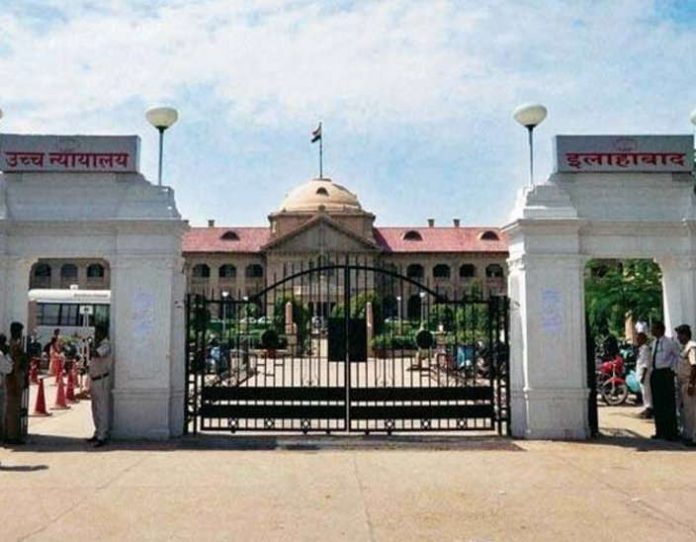
Why Can’t Centre Create High Court Bench In West UP?

1
Image Source - https://www.bhaskar.com/career/allahabad-high-court-declared-result-of-clerk-stenographer-driver-cadre-post-5880496.html

This article is written by Rajendra Singh Jani, President Meerut Bar Association, Chairman Of The Central Action Committee For Establishment Of High Court Bench In Western UP.

To begin with, it is deeply disgusting, shocking and frustrating to see that BJP which is holding the helm of affairs in Centre as well as in State of UP is not listening to the repeated legitimate demand of its own MPs both in Lok Sabha and Rajya Sabha as well as its own Union Ministers with considerable experience like Union Home Minister Rajnath Singh who are all repeatedly and unitedly demanding the creation of a high court bench in West UP yet Centre is just refusing to relent! Why is Centre so intransigent about not relenting to what is the legitimate and popular demand of the more than 9 crore people of West UP by which the litigants and seekers of justice would be saved from the unnecessary trouble of travelling so far more than 700 to 750 km on an average all the way to Allahabad to seek justice by creating a high court bench in any of the 26 districts of West UP? Why Centre pompously inaugurates 14 lane national highway by which time spent in covering the distance between Meerut and other districts to Delhi stands reduced by one or two hours but is not ready to do anything by which the people are saved from the trouble of travelling so far to Allahabad to seek justice?

Why Centre is not listening to even its own BJP MP and former Union Minister Sanjeev Baliyan who candidly pointed out to Lok Sabha Speaker in Zero Hour that from his Muzaffarnagar constituency, Punjab and Haryana High Court, Rajasthan High Court, Madhya Pradesh High Court and above all even Lahore High Court in Pakistan which is about 498 km is nearer than Allahabad High Court which is 730 km away? He pointed out that about 15 lakh cases of West UP were pending which is more than many states pending cases! He pointed out that Maharashtra with 8 crore population has bench and 3 benches and Madhya Pradesh with 7 crore population has high court and 2 benches but West UP with more than 8 crore population has not even a bench! Taking the bull by the horns, he did not shy away from even saying that the stiff opposition by lawyers from Allahabad High Court is no ground to deny West UP a bench and said that for 10,000 lawyers of Allahabad, the neck of 8 crore people of West UP cannot be stifled!

Why Centre is not listening even to Kanta Kardam who is Rajya Sabha MP and Mr Kanta has even said that she will raise the demand for a bench in Rajya Sabha? She said that this is not a demand just of lawyers but is a justified demand of the people of West UP and creation of a bench here is imperative. Why Centre is not listening to its own BJP MP Vijaypal Singh Tomar who so elegantly raised the demand for a high court bench in Rajya Sabha? Rajinder Agrawal who is BJP MP from Meerut rightly said that all MPs from West UP are united in demanding a high court bench for West UP.

Even General VK Singh who is Union Minister and BJP MP from Ghaziabad has supported this legitimate demand and made the lawyers meet Union Law Minister Ravi Shankar Prasad in March and he too supported the demand for a bench in West UP! Even Union Home Minister Rajnath Singh too has reiterated time and again his firm and full support for the creation of a high court bench in West UP! Amit Shah too had assured his support for bench in West UP while meeting a delegation of lawyers in Meerut! Still why even after more than 4 years of being in power in Centre and nearly one and a half year in UP is Centre not taking any step to create a bench in West UP?

 We all know how Sampoornanand who was UP CM had demanded the creation of a bench in West UP from Centre in 1955 but Centre refused even though a bench was created in Lucknow in 1948 for just 12 districts but for nearly 40 districts of West UP including those now in Uttarakhand not a single bench was approved by the then PM Jawaharlal Nehru! Even ND Tiwari as UP CM had proposed the creation of a bench in West UP but Centre again didn’t accept it! Mayawati as UP CM even proposed the creation of West UP as a separate state but again Centre didn’t accept it!

The lawyers of West UP are fighting people’s struggle who are worst affected as they have to travel more than 700 to 800 km on an average all the way to Allahabad to attend court hearings and many times trains get late and many times have to travel without reservation! How many people can afford to go by plane as some lawyers of Allahabad argue? Very few!

What purpose is served by creating a single bench for such a large state like UP which has maximum population more than 22 crore as UP CM Yogi Adityanath keeps mentioning repeatedly, maximum villages more than one lakh whereas no other state has more than 5000 villages, maximum MPs for Lok Sabha at 80, maximum MPs for Rajya Sabha at 31, maximum MLAs in Vidhan Sabha at 404, maximum MLAs in Vidhan Parishad at 104, maximum towns more than 900, maximum pending cases more than 10 lakh and here too West UP owes for more than half of them, maximum hate crimes, maximum Judges in high court at 160, maximum PM since independence, maximum Mayors, maximum elected representatives at all levels and is among the largest states still has just one high court bench created by Jawaharlal Nehru more than 70 years back on July 1 in 1948 but not a single for West UP even 70 years later in 2018! How can this be ever justified?

Why even six months continuous strike by lawyers of 26 districts of West UP thrice as they did in 2001, three to four months strike as they did in 2014-15, two months as they did in 2010 and one month as they did in 2009 apart from the strike every Saturday and even many times on Wednesday apart from the many strikes for weeks every year has failed to shake Centre in taking any concrete step for creating a high court bench in West UP? Why is Centre unmoved even after the lawyers have unitedly decided to go on strike from 6th to 8th August in protest against Centre’s nonchalant approach in not setting up a high court bench in West UP? Why is PM Narendra Modi not ready to give at least a sympathetic hearing to the more than 50 year old legitimate demand for a high court bench in West UP?

Why even the right and laudable legal advice rendered by one of the most eminent jurist of India Soli J Sorabjee in his capacity as Attorney General that, “Centre is empowered to create a high court bench in West UP without any recommendation from the Chief Justice or Chief Minister or anyone else in this regard” failed to shake Centre in creating a bench in West UP promptly? Why Centre even disregarded what former Chairman of Supreme Court Bar Association BN Krishnamani said so eloquently that, “Only by the creation of a high court bench in any of the districts in West UP will the people living there get real justice”? If UP can’t be given more benches and West UP can’t have even one bench then all benches in India must be disbanded right now because it is the people of West UP who are suffering the most because of no bench here and have to travel the most!

It is indisputable that as per the Section 51 of the States Reorganisation Act of 1956, the Centre can create a high court bench in any of these 3 states – UP, Bihar and Jammu and Kashmir directly by bringing it up in Parliament. BJP Rajya Sabha MP Vijay Pal Tomar himself on 25th July very rightly and forcefully raised his voice demanding creation of a high court bench in West UP at the earliest and wondered why when Centre is empowered to create a bench in UP without any recommendation from the Chief Minister or Chief Justice is not taking necessary step in this direction! Centre does not need any recommendation from State Government or the Chief Justice as has been very wrongly propagated for many decades by Centre as it wants to just avoid it on any specious pretext! After Centre declares bench for West UP, State Government has to just allot land for it.

What a national disgrace that these very 3 states – Uttar Pradesh, Jammu and Kashmir and Bihar keep on grabbing the national news headlines for all the wrong reasons as crime incidents keep multiplying very rapidly and what is worst is Centre’s irrational stand to not allow a single more bench in any of these 3 states! Why Centre even disregarded what former Chairman of Supreme Court Bar Association BN Krishnamani said that, “Only by the creation of a high court bench in any of the districts in West UP will the people living there get real justice”? Why Centre is ignoring even what Atal Bihari Vajpayee demanded the setting up of a bench in West UP as Opposition Leader way back in 1986 right inside Parliament?

Why Centre fails to appreciate that if bench is created in any of the 26 districts of West UP, all the more than 9 crore people will stand to gain equally irrespective of religion, caste, creed, community or gender? Why Centre fails to appreciate that when 2 high court benches more can be created for just 4 and 8 districts of Karnataka at Dharwad and Gulbarga which already had bench at Hubli and which has just 6 crore population and not even two lakh pending cases whereas West UP has more than 5 lakh pending cases and UP more than 10 lakh similarly Maharashtra already had 3 benches at Nagpur, Panaji and Aurangabad and one more now created at Kolhapur, Assam with just about 2 crore population had 7 high court benches before Manipur, Meghalaya and Tripura were given high court itself for just 27, 29 and 36 lakh population, Sikkim with just 6 lakh population and less than 100 pending cases has high court and above all even Port Blair with just 3 lakh population has bench then why is West UP with more than 9 crore population and more than half of the total pending cases of UP has not even a single bench of high court?

Why Centre is ignoring even the legitimate voices of its own leaders from West UP like Union Minister Satyapal Singh who demanded 5 benches for UP at Meerut, Agra, Jhansi, Gorakhpur and Varanasi and not prepared to create even a single bench not just in West UP but in any hook and corner of UP except continuing with the one already at Lucknow? Why Centre is clinging with the recommendation made by the Law Commission in 1956 in its fourth report that more benches should not be created while not caring for the 230th report of Law Commission made in 2009 which recommended creation of more benches and here too why just UP is being singled out?

Why can’t one bench at least be approved straightaway for West UP at any of the 26 districts? Why should the more than 9 crore people of West UP be denied “speedy Justice”, “justice at doorsteps” and “affordable cheap justice”? Why should they be made to travel so far even after more than 70 years of independence? Why Lucknow has high court bench since 1948 for just 12 districts with just 62,000 square km area even though it is so near to Allahabad just 200 km away but West UP with 26 districts and more than 98,933 square km has not even a bench 70 years later in 2018? If Lucknow is capital then so are Bhopal which is capital of Madhya Pradesh, Bhubaneshwar which is capital of Odisha, Dehradun which is capital of Uttarakhand and Thiruvananthapuram which is capital of Kerala but they have neither high court nor bench! Then why both high court and bench only for Eastern UP and nothing for West UP? Not even a single bench of high court for West UP! Why can’t this be remedied right now?

Download Now

How I Blew My Interview with Amarchand Mangaldas

2
Amarchand Mangaldas

This article is written by Ramanuj Mukherjee, CEO, iPleaders.

Not understanding what a legal career is all about can be quite costly.

Let me tell you a story of how I blew my interview with erstwhile AMSS (now split into two parts CAM and SAM) which at that time was the biggest law firm in India.

To be fully honest, while I was aware of its pre-eminent position in the legal world as the top most law firm in India, I had also heard some bad stories that made me kind of uneasy about joining this place.

However, when the Day 0 calls came, I did apply for AMSS, apart from Luthra & Luthra and Trilegal. AZB did not come to my campus that year, and while Khaitan also came on Day 0, I didn’t even apply for it. Somehow, I was under the impression that Khaitan isn’t that great a law firm so I skipped the interview. That was of course my ignorance. While in 2010, Khaitan wasn’t quite the giant it is today, it was one of the best. However, the brand had not quite caught up within law schools (shows why law firms should promote themselves in law schools).

I wish I had given the interview, then I would have another story to share.

Trilegal, on the other hand, definitely made the best impression by putting in the extra effort of making a presentation about the firm. It sounded start-uppy, entrepreneurial and a successful meritocracy. When I asked my mentor Shamnad Basheer, who used to teach at NUJS at that time, he also encouraged me to go for Trilegal.

I was leaning towards Trilegal, and also had heard great things about the culture in Luthra & Luthra so that was my 2nd choice. Yes, I know. Many lawyers will beat me up for thinking like that but that’s how I was thinking.

Trilegal was my first interview. I was done in 12 minutes. When I was walking out, I knew I made it. The partners were impressed. They mentioned later to a senior of mine who worked at Trilegal that they thought I had an X factor. When I heard that I gloated over it for at least two weeks.

Well, if you ask me now, X factor or not, everyone has to work their assess off if they go to a law firm. Once I joined the law firm I never felt again that I have any such X factor.

I also cracked the Luthra interview easily. I was not as sure here that I had cracked the interview as I was in the previous one, but I could tell that it went overall positive.

Then finally I had an interview with AMSS. I still remember that the partner who interviewed me was Mr. S.H. Bhojani. Mr. Bhojani is very senior, and he was kind and soft spoken during the interview. He was accompanied by an HR manager who also asked a bunch of questions.

My interview was going quite well. I definitely had the CV to make the cut. I answered some technical questions asked from my CV comfortably. Then, came my first blunder. Mr. Bhojani asked me which team I would like to work with. I said M&A. This was absolutely fine, in hind sight though, Mr. Bhojani was partner in the banking team, having spent many years at ICICI as the legal head. I was of course not very smart on that front, not having googled my interviewer beforehand.

That’s how it is. Blunders do not begin in the room where the interview happens, they usually start taking place much earlier, when you are supposed to prepare.

Anyway, Mr. Bhojani asked me “Why M&A? Why not the banking team?” I actually didn’t have much idea about what kind of work banking teams do. I imagined it must be boring stuff because I generally despise banks. I guess it is because as a kid I had to stand in long SBI queues with my mom too many times.

Even today, I associate bureaucracy and authoritarianism with banks. I would rather get a root canal rather than having to go to a bank. I try to limit my visit to banks to 1 in 10 years.

When I was asked why not the banking team, my inner feelings came out. I did not want to work in the banking team. I said “No, I wouldn’t fancy the banking team.” “Why?” Mr. Bhojani was curious. I was not sure what I should say. I hesitated for a moment and then said “I think banking law would be a lot of paperwork and sort of boring”. Mr. Bhojani was taken aback. He reflected for a moment, looking down at my CV.

Probably he considered if it is still worth continuing a conversation with me or if he should let me go.

Then he said with pity “Well, Ramanuj, all law practice is a lot of boring paperwork. You are in the wrong profession if that is what you are thinking.”

I actually am not sure about his exact words anymore. It has been a good 8 years since this interview. I am quite sure, however, that that’s exactly what he conveyed. And I can totally understand what he meant today.

I had an image of corporate lawyering, despite doing half a dozen law firm internships, that it is glamorous and totally thrilling. Well, that could not be any more untrue. I guess that excitement had built up thanks to reading books like “Predator’s Ball” and “Big Short”.

Blunder No. 1 – That was a huge blunder. I told the banking partner that banking law was boring and too much paperwork. I want to do something cool. Misplaced priorities but I suppose Mr. Bhojani let it pass.

Anyway, we continued with the interview, and it didn’t look like I was totally rejected. I was then asked several questions by the HR manager. He tried to gauge my interest in life. He asked me where I see myself in 5 years. I gave the standard answer we prepare for such a question. How I was going to become an expert in a certain area of law and then find my feet in the legal industry. It was all made up. Truth be told, I had no idea what I was going to do, and in fact I wanted to be an entrepreneur, so I hid my intentions and gave the textbook answer.

Of course, the HR manager was a smart person. This is what I can say looking back. I actually didn’t bother to ask his name, nor did I make any eye contact, smile or even acknowledge him during the interview. This is also a huge blunder but I would have gotten away with it. The right thing to do, however, was to respectfully acknowledge him and establish rapport.

However, I was not the person back then that I am today. I was focused on the more imposing person, the law firm partner and only cared about impressing that one person. For me, an HR manager was a side actor, not of much relevance. I noticed this happening in the moot courts also. I will make eye contact while speaking only with those who spoke up, had an imposing presence, or seemed threatening. In every other bench there would be someone who doesn’t speak up and keeps listening quietly. I would forget to make eye contact with them, to include them, or to even acknowledge their presence.

That sort of arrogance and ignorance never goes unpunished, one way or the other.

The HR manager deftly took me around some more questions and then sprung the same question again. “I am not very clear what you want to do in the years to come,” he said, “your goals in your formative years are critical”. I grudgingly came up with more things I want to do. More non-authentic bla bla bla.

The HR manager was having none of it. He grilled me again. “What do you really want to do?”

He was so right. He saw through me. You have that sort of superpower when you take hundreds of job interviews.

I didn’t have the courage to tell the truth. On top of that I was young and arrogant. I felt like I was being pressurised. I was not going to take it lying down.

I coldly looked at him and paused for a moment. Then asked “Should I repeat what I just said?” My irritation and arrogance showed through for a moment.

I knew that was it. Just the way I knew I was getting through Trilegal that day, I knew I wasn’t getting through to AMSS. I told myself who cares, I didn’t want to work there anyway.

By evening we found out the offers and began celebrating. I forgot that I made these huge blunders.

What was the last blunder? Was it that I was arrogant? Not really. Yes, it wasn’t the best thing to use my arrogance to hide my inability to answer a very pertinent question, but that wasn’t the real big blunder. My blunder was my fear of showing who I truly am. My inability to say the truth: “Actually, I don’t know what I will do in 5 years. I hope someone can show me the way. I need to find a mentor.”

It takes courage to say things the way you are, especially about your vulnerabilities and weaknesses. However, when we learn to talk about them in a matter of fact way, then our weaknesses turn into our strengths.

Look at this article for example. I am authentically writing about a time I screwed up. Does it make me feel worthless in your eyes? I don’t think so. I have turned a past failure into a useful lesson for you.

We all have wounds, weaknesses, doubts, incompetence, failures and terrible pasts. When we hide them, we become weaker. When we own them, stop hiding, we get stronger.

Blunder No. 2 – being inauthentic, synthetic in an interview, and thinking you are smarter than the interviewer.

Never do it, never.

Hope you learned from my mistakes.

I played a role in making a course around how to ace internships and interviews for big law. Check it out here.

I also created a program that helps lawyers develop powerful profiles that clients and recruiters lap up! Here is a link to the corporate law career development program. It is a one year plan to polish your resume, build a formidable professional network, and deepen your claim to expertise in your field. Check it out!

Do you have any interview blunders to share? Tell me in comments or hit reply. I would love to know more.

Download Now

Mediation as an effective ADR mechanism

0
mediation in india

In this article, Anveksha Padhye does a critical analysis on whether mediation is an effective ADR mechanism or not.

Introduction

“Discourage litigation. Persuade your neighbors to compromise where you can. Point out them how the nominal winner is often the real loser – in fees, expenses and waste of time.  -Abraham Lincon

An Alternative Dispute Resolution is an outcome of all such problems which are facing by the public constantly in the litigation. It is like a substitute to the traditional method of resolving dispute and justice. An ADR mechanism mainly focuses on delivering justice through mutual consent of the parties in the minimum time without any delay like in litigation. An ADR mechanism recognized four methods to resolve any dispute such as arbitration, conciliation, mediation and negotiation. Alternative methods are work on the mutual consensus and try to settle dispute with as early as practicable. ADR mechanism is an option to the public who don’t want to go for conventional method or want to resolve their matter without courts interference. These mechanisms have their own advantage as well as flaws, like any other process have might do.

Yet, particularly in the context of mediation, it needs emphasis that this is only one of the important objectives. Mediation as a processual intervention in the legal system fulfills other instrumental and intrinsic functions which are of an equal, if not greater importance. In its instrumental function, mediation is a means to fulfilling stated objectives. The intrinsic function of mediation emphasizes the value of mediation as an end in itself.[1]

It is a non–binding procedure in which an impartial third party, the conciliator or mediator, assists the parties to a dispute in reaching a mutually satisfactory and agreed settlement of the dispute. Mediation is a process by which disputing parties engage the assistance of a neutral third party to act as a mediator.[2]

Mediation in India – Historical Analysis

In India, the law and practice of private and transactional commercial disputes without court intervention can be dated back to ancient times. Arbitration or mediation as an alternative to dispute resolution by municipal courts has been prevalent in India from Vedic times.

  • The earliest known treatise is the Bhradarnayaka Upanishad, in which various types of arbitral bodies viz
  • (i) the Puga 
  • (ii) the Sreni
  • (iii) the Kula.

These arbitral bodies, known as Panchayats, dealt with variety of disputes, such as disputes of contractual, matrimonial and even of a criminal nature. The disputants would ordinarily accept the decision of the panchayat and hence a settlement arrived consequent to conciliation by the panchayat would be as binding as the decision that was on clear legal obligations.[3]

Principles of the mediation

Every process of ADR mechanism has its own basic principles on which it’s work and giving positive outcomes. Like as other process mediation has its own fundamental principles which are helpful in settling disputes between the parties on their mutual consensus. Parties choose mediation process over litigation may be because of these principles which have given effective way to the process. Mediation usually has seen in the family matters or any neighboring issues which could be resolve by mediation process rather than go to court for justice.

In generally there are 5 basic principles usually seen in the mediation process and it should be followed strictly by the mediator as well as the parties for an effective outcome. Five basic principles of mediation process are as follows:-

Parties should participate voluntarily

It is necessary that no one should forced to mediate, it should be in the hands of parties and they have to decide whether they want to mediate or go to the courts. Parties have their voluntary participation in the mediation process. it is going to be more fruitful.

People will cooperate more fully if they know they are free to leave at any point. This engages their own free will and sense of purpose and enables them to drive the process towards agreement rather than to be led to an understanding by a third party. If they drive the process they are more committed to the outcome.[4]

Confidentiality matters in the process

Within the mediation itself the mediator must not divulge any confidences that are shared with them unless given permission to do so. Unless someone shares a criminal intent or act that involves harm to self or other.

  • In respect of further proceedings (except with the express permission of both sides)
  • In order for people to feel safe to explore their fears and anxieties the process must be perceived to be entirely confidential.[5]

All the information given in the mediation shall be kept confidential and it cannot be used in the court proceedings neither by the mediators nor court can ask why the mediation did not work.

Mediators are impartial

The mediator must act impartially and neutrally. He/she should observe all principles of mediation and consider only matters of procedure. He/she should not comment, value judgments, nor give advice or suggesting solutions. Impartiality of a mediator should ensure that the parties accept him/her as a person who is sincerely dedicated to resolving the dispute and who favors both sides in the dispute, seeking solutions that would satisfy both sides in the dispute. The mediator must keep in mind that his/her behavior, attitude, and sometimes the techniques of mediation can bring a sense of sympathy towards one side. When that happens, then the mediation went the wrong way. The mediator cannot perform the function if there are circumstances that indicate doubts about his impartiality and objectivity.[6]

An agreement has to be settled with the satisfaction of parties concerned

The responsibility for defining the problem, setting the agenda and agreeing the solution rests with the people in the dispute.[7] The mediation procedure can be started only if there is an agreement between the parties. Mediation will not be started without both parties intending to resolve the dispute. In such cases, mediation is misused only as a mean of withholding the court process and keeping the situation at the “status quo”.

A mediator needs to know how to explain the advantages of such dispute resolution to the parties, so that they themselves voluntarily agree to be part of such process. The parties should be informed on the possibility to interrupt the mediation process at any stage, if they express need for such. The principle of willingness applies at all stages of the proceedings. A party or the mediator may at any time withdraw and then transfer the case to the judge.

A mediator can interrupt mediation if he/she feels that parties turn away from the solution or that are even more opposed than they were at the start of mediation. The basic principle in the process of mediation is that the mediation procedure should not harm the parties in any way, but to contribute to the resolution of their dispute.

Given that mediation is only a supplement to the court proceedings, it must not prevent a party from exercising the right of access to court and use of judicial protection.[8]

Mediation is without prejudice to other procedures

It is important that people reserve the right to invoke other measures. If the mediation were seen as an enforced procedure or one that removes an individual’s rights it would constrict the creativity and increases the potential for resistance.[9]

Is mediation an effective ADR mechanism or not?

The use of the term “mediation” is well known in International Law. It is the technical term in International Law which signifies the interposition by a neutral and friendly state between two States at war or on the eve of war with each other, of its good offices to restore or to preserve peace. The term is sometimes as a synonym for intervention, but mediation differs from it in being purely a friendly act.[10]

Mediation at one level of perception is a means of avoiding the pitfalls of litigation. The problems which arise in the resolution of disputes through litigation are well known.

These are, broadly

  • (i) delay
  • (ii) expense
  • (iii) rigidity of procedures and
  • (iv) a reduction in the participatory role of parties.[11]

In the path of resolving these pitfalls of litigation, mediation is the most frequently adopted ADR procedure.

The process of mediation may have to pass through several stages such as :-

  • opening statement
  • opening statement to the parties
  • summarizing and agenda setting.
  • exploration of issues.
  • private sessions or caucuses
  • joint negotiation session
  • agreement

Practitioners in this field adopt their own perfected styles. They differ in their basic steps. A lot depends upon the nature of the dispute. The more complicated a matter, the more private meetings would be necessary to pave the ground for a joint meeting.

A mediator may adopt either a facilitative or evaluative approach. Mediators try to avoid opinions and judgments.  They rather facilitate and encourage parties to open up their communications and disclose their interests and priorities. In this process the mediator gets the opportunity of locating the points of difference and the area of controversy or dispute. He may then help the parties to bridge the gap between them.[12]

The essence of mediation lies in the role of the mediator as a facilitator. The mediator is not an adjudicator. Unlike the Judge in a traditional Court setting or for that matter even an arbitrator, the mediator is neither an adjudicator of facts nor an arbiter of disputes. The role of the mediator is to create an environment in which parties before him are facilitated towards resolving the dispute in a purely voluntary settlement or agreement.

The mediator is a neutral. The neutrality of the mediator is akin to the neutrality of a Judge but the role of the mediator is completely different from that of a Judge. The mediator does not either deliver judgment or dictate to the parties the terms of the agreement.[13]

Mediation is an effective ADR mechanism can be seen by these 4 benefits of the process such as

  1. Informality – No court rules or legal precedents are involved in mediation. The mediator does not impose a decision upon the parties. As opposed to adversarial forums, the mediator helps to maintain a business like approach to resolving a dispute. There are no fixed solutions in mediation. Parties can look to developing creative solutions to resolve matters and the solution rests with the parties themselves.
  1. Privacy and confidentiality – The mediation conference takes place in a private setting such as a conference room at any of the Arbitration Associations. Mediation is not a matter of public record. Its confidentiality is maintained.
  1. Time and cost savings – Mediation generally lasts a day. Complex matters may require more time due to highly technical issue and/ or multiple parties. Without the formalities found in litigation, mediation usually results in substantial costs savings.
  1. Control – Parties have control over their participation in mediation. A party can decide to terminate their participation at any point in mediation. Mediators help parties maintain control over the negotiation that takes place.[14]

Implementation strategies

For an effective implementation, there is always a need of strategies and policies. Mediation process is frequently used by the public but there is lack of implementation. More mediation centres have to be set up by High courts and particular sect of cases should be giving to the mediation by courts.

The development of mediation as a viable alternative to litigation is still in the incipient stages in India. Mediation centre’s have recently been set up by a few industry and trade associations. Similarly, professional lawyers have in certain isolated instances attempted to develop into fullfledged professionals with expertise in mediation. These instances are, however, sporadic and the overall potential of mediation still remains to be explored. Strategies for successful implementation of mediation must, be carefully assessed and a conscious effort has to be made towards the evolution of a process that will be acceptable to the society at large. In achieving a high level of acceptability for the mediation process, several issues need be focused upon and these include:

(i) Developing awareness;

(ii) Advocacy;

(iii) Building capacities;

(iv) The creation of an institutional framework; and

(v) Actual implementation.[15]

Conclusion

There is no necessary interference of court in ADR techniques but yet in different stages court would have discharge some important functions. The mediation is not adjudication of cases but in the settling dispute. Mediator is also not allowed to adjudicate but can only try to settle dispute or could communicate with the parties.

Implementation of the process does not mean to take every case under mediation but initially it should apply on the small plot of cases and after witnessing the success implementation could be done on large number of cases. Mediation is a significant process for reducing burden from the judiciary and it is capable enough to shifts the focus from adjudication towards resolving or settling dispute under fundamental legal system.

It is more facilitative for the development of law to approach preventive process unlike litigation oriented approaches only. Above all, confidence in the mediation process will be fostered only if the mediator discharges in positive terms the ethical concerns of a process to which the role of the mediator is central.

References:-

  1. [1] M E D I A T I O N – realizing the potential and designing implementation strategies., Dr. Justice Dhananjaya Y. Chandrachud,  available at http://lawcommissionofindia.nic.in/adr_conf/chandrachud3.pdf  last visited on 21-07-2018 at 9:44 AM
  2. Avtar Singh, Law of Arbitration & Conciliation and Alternative Dispute Resolution system (Eastern Book Company, 10th edition) page no. 520
  3. ADR in India: Legislations and Practices, S.Chaitanya Shashank, Kaushalya T. Madhavan, available at https://www.lawctopus.com/academike/arbitration-adr-in-india/ last visted on 21-07-2018 at 10:11 AM
  4. [1] Principles of mediation, available at https://rhizomenetwork.files.wordpress.com/2010/12/principles_of_mediation.pdf last visited on 21-07-2018 at 12:15PM
  5.  Ibid
  6.  Basic principles of mediation, available at http://www.posredovanje.me/en/posredovanje/osnovna-nacela-posredovanja  last visited on 21-07-2018 at 12:26 PM
  7. Supra 3
  8.  Supra
  9. Supra 3
  10. Supra
  11. Supra
  12. Avtar Singh, Law of Arbitration & Conciliation and Alternative Dispute Resolution system (Eastern Book Company, 10th edition) page no. 521
  13. Supra 1
  14. Supra 12 pg 524
  15. Supra 1
Download Now

All You Need To Know About Unlawful Assembly or Section 144!

0
Ipc 144

In this article, Kanishk Khullar discusses section 144, laws punishing unlawful assembly under the Indian Penal Code.

In India we often hear in news about the applicability of Section 144 at different parts of the country in case of riots or strikes or vase public processions. When and why the government tends to invoke this section? Does it infringe any fundamental rights? Who has the power to apply section 144? And who all are liable to be punished as an unlawful assembly? All these questions will be answered in this article.

Right to Assemble

Article 19 (1)(B) of the Constitution of India 1949, lay down that ‘All citizens shall have right to assemble peaceably and without arms. That means citizens of India has been given freedom to assemble and organize a public gathering or even processions on their own will. But this right to assemble is subject to reasonable restriction by the state in the interest of sovereignty and integrity of India or public order under clause 3 of Article 19 of the Constitution of India 1949. Thus, an appropriate authority can prohibit holding up of a public meeting, in a case where they are of the opinion that doing so is necessary for maintaining public peace and tranquillity.

Dispersal of Unlawful Assembly

In Babulal Parate v. State of Maharashtra[1], the Hon’ble Supreme Court while observing that right ‘to hold public meeting’ and to ‘take out public processions’ vests under Article 19 (1) (b) of the Constitution of India, stated that:

“Public order has to be maintained in advance in order to ensure it and, therefore, it is competent to a legislature to pass a law permitting an appropriate authority to take anticipatory action or place anticipatory restrictions upon particular kinds of acts in an emergency for the purpose of maintaining public order.”

Hence, to put reasonable restriction over the freedom to assemble granted under article 19 (1)(B), sections 129 and 130 of the Code of Criminal Procedure, 1860 talks about the dispersal of assemblies.

According to Section 129 of Cr.P.C any unlawful assembly or any assembly of five or more persons likely to cause a breach of public peace may be dispersed by command of any Executive Magistrate or an officer incharge of a police station or a police officer, not below the rank of a sub-inspector, by use of civil force.

According to Section 130 (1) of Cr.P.C, If any such assembly cannot be otherwise dispersed, and if it is necessary for the public security that it should be dispersed, the Executive Magistrate of the highest rank who is present may cause it to be dispersed by the armed forces. 

After going through above two sections i.e. 129 and 130 of Cr.P.C one obvious question which arises to the mind of the reader that:

What is an Unlawful Assembly?

An assembly may turn unruly and which may cause injury to person, property or public order. Such an unruly assembly is termed as ‘Unlawful Assembly.’ In Moti Das v. State of Bihar,[2]it was held that ‘an assembly, which was lawful to start with, became unlawful the moment one of the members called on the others to assault the victim and his associates, and in response to his invitation all the members of the assembly started to chase the victim while he was running.’

The term ‘Unlawful Assembly’ has been defined under section 141 of the Indian Penal Code, 1860 as an assembly of five or more persons having a common object to perform an omission or offence.

Essentials to constitute an Unlawful Assembly[3]

To constitute an unlawful assembly the following 3 conditions must co-exist:-

  • There must be an assembly of five persons.
  • The assembly must have a common object and
  • The common object must be to commit one of the five illegal objects specified in the section.

1) There must be an assembly of five persons

The Supreme Court of India has upheld invariably in a number of cases such as Dharam Pal Singh v. State of Uttar Pradesh[4] that;

Where only five named persons have been charged for constituting an unlawful assembly, and one or more of them are acquitted, the remaining accused (who are less than five) cannot be convicted as members of unlawful assembly, unless it is proved that the unlawful assembly, besides convicted persons consisted of some other persons as well who were not identified and so could not be named.”

2) The assembly must have a common object

The law does not declare a mere assemblage of men, however large it is, as illegal unless it is inspired by an illegal common object. In the case of Sheikh Yusuf v. Emperor,[5]the court said that; “the word ‘object’ means the purpose or design to do a thing aimed at and that the object must be ‘common’ to the persons who comprise the assembly.” A Common Object is where all or minimum five member of the assembly possesses and shares one object.   

3) The common object must be to commit one of the five illegal objects specified in the section

As stated earlier, an assembly of five or more persons is designated as an unlawful assembly, if the common object of the persons composing that assembly is any one of the following five objects declared illegal under section 141, IPC:

https://lawsikho.com/course/certificate-criminal-litigation-trial-advocacy
click above
  1. To overawe Government by criminal force.
  2. To resist the execution of law or legal process.
  3. To commit an offence.
  4. forcible possession or dispossession of any property; or
  5. To compel any person to do illegal acts.

i) To overawe government by criminal force: ‘Overawe’ means to create fear in mind of another person. That is when a public procession tends to overawe government by the use of force, like what the Stone Pelters do at parts of Kashmir to protest against the government, such an assembly is termed as an unlawful assembly.

ii) To resist the execution of law or legal process: Resistance by an assembly to a legal process or execution of law, for example, executing a court’s judgment or order comes under execution of law, Hence, restraining the arrest in case of Baba Ram Rahim in Haryana was an illegal act by people and government decided for dispersion of unlawful assembly under section 144 of the Code of Criminal Procedure, 1973.

iii) To commit an offence: Where an assembly of 5 or more persons having a common object of performing an act which is prohibited by law or forms an offence under Indian Penal Code or other special or Local Laws, such an assembly would be an unlawful assembly.

iv) Forcible possession or dispossession of any property: Where a criminal force is used by an assembly to deprive a person of enjoyment of the right to way or right to use of water or any other incorporeal right that the person is enjoying and in possession of. Or to obtain possession of any property or to impose such rights, the above acts are prohibited under clause 4 of section 141 of the Indian Penal Code, 1860.

v) To compel any person to do illegal acts: if assembly by using criminal force on others compel them to perform an illegal act than that assembly would be an unlawful assembly.

What is Section 144 of the Code of Criminal Procedure?

Section 144 gives the “Power to issue order in urgent cases of nuisance or apprehended danger”.

This section gives power to a District Magistrate, a Sub-divisional Magistrate or any other Executive Magistrate specially empowered by the state government in this behalf to issue orders in the case where he has sufficient ground to take action and for immediate prevention or speedy remedy is desirable against the apprehended danger.

The object of section 144 is to pass an immediate order in advance to prevent any apprehended danger or to immediately give a remedy in case of emergency. Preservation of peace and tranquillity in society is the prime purpose of the state government; hence, the government specially empowers executive magistrates under 144 to take immediate action in case of emergency and to provide an immediate remedy in the following three situations mention under clause 1 of section 144 of the Code of Criminal Procedure:

To Prevent;

  1. Obstruction, annoyance or injury to any person lawfully employed.
  2. A danger to human life, health or safety, or
  • Disturbance of the public tranquillity or a riot or an affray.

Prohibition of the right to assemble is not absolute

In the case of Dr. Anindya Gopal Mitra v. State,[6] it was held that the amount of power vested under the magistrate under section 144 is to suspend the exercise of the right on particular occasions and not to prohibit it absolutely. In this case, police commissioner refused to give permission to a political party (BJP), to hold public meetings by prohibiting it under section 144 of the Cr.P.C., the Hon’ble Calcutta High Court; quashed the order passed by the police commissioner and said that ‘the holding of meetings could not be totally prohibited, but necessary restrictions may be imposed and preventive measures may be taken.’

Duration of applicability of section 144

According to clause 4 of section 144 of the Cr.P.C. ‘No order under this section shall remain in force for more than two months from the date of issuance, provided the state government, if of the opinion that it is necessary to do in case of emergency to prevent danger to human life, health or safety or to prevent a riot, than the state government may order the magistrate to make order to extend the period of applicability of section 144, not more than the period of six months.

As this section confers full power to magistrate to take certain action to apprehend danger in case of emergency, the Magistrate should apply his mind to see whether the matter is of such nature which requires an order under this section, as otherwise a matter to disperse unlawful assembly creating public nuisance can be dealt with under section 133 of Cr.P.C

Difference between section 144 and section 133 of the Cr.P.C

Cases of ordinary public nuisance are covered under section 133; while, cases of urgency are covered by section 144. Further, under the latter, the very urgency of the case demands the laying aside of the usual formalities and preliminaries to the making of an order. While, under section 133, the Magistrate acts on the report of a police officer or other information; there is no such requirement under section 144.[7]

Who all are liable to be penalised for being a Part of an unlawful assembly?

Section 142 of Indian Penal Code

Whoever, being aware of facts that makes any assembly an unlawful assembly, intentionally joins that assembly or continues in it, is said to be the member of that unlawful assembly.

In the above section, to become a member of an unlawful assembly there should be a presence of knowledge and intention on part of the person joining such assembly.

Punishment for Unlawful Assembly

i) Under Section 143 of I.P.C. whoever is a member of an unlawful assembly shall be punished with imprisonment of either description for a term which may extend to six months, or with fine, or with both.

ii) Under Section 144 of I.P.C. whoever joins unlawful assembly armed with a deadly weapon which is likely to cause death; shall be punished with imprisonment for two years, or fine or both.

iii) Under Section 145 of I.P.C. whoever joins or continue to be in unlawful assembly, knowing it has been commanded to disperse, shall be punished with imprisonment for 2 years, or fine, or both.

iv) Under Section 149 of I.P.C. where an assembly commits an offence than every member of that unlawful assembly, who knew such offence is likely to be committed, will be guilty of that offence. And be punished for the term same as for the offence.

Conclusion

  • Hence, section 144 is only to be used in an emergency situation to prevent any riot or to maintain public order or otherwise public nuisance by an unlawful assembly is dealt under section 133 of the Code of Criminal Procedure, 1973.
  • On the other hand ‘knowingly’ being a part of an unlawful assembly’s object, would make a person equally liable for punishment irrespective of his role in the assembly.
  • Thus, Sections 144 and 133 lay down reasonable restrictions on Freedom to assemble, guaranteed under article 19 Clause 1(b) of the Constitution of India and do not infringe any fundamental rights of any citizens, until or unless applied arbitrarily.


[1]  AIR 1961 SC 884.

[2]  AIR 1954 SC 657.

[3]  Guar, K.D., Textbook Indian Penal Code, 5th Edn., (Pune)2013, p.246.

[4]  AIR 1975 SC 1917.

[5]  AIR 1946 Pat 127.

[6] 1993 CrLJ 2096 (cal).

[7] Dr. Jain, A.K., Criminal Procedure Code, 2nd Edn., (Delhi) 2013-14, p.115.

Download Now

How Does LawSikho Help Our Students To Get Jobs And Internships

0
internships

A lot of people ask us how can we help to get a job or internship. Many even ask if the industry will recognise certificates awarded by iPleaders and LawSikho.com.

Nobody wakes up in the morning and feels, hey, today I will really like to enroll in an online course, and then spend hours and hours over the next few months studying, doing exercises, attending classes.

But sometimes you have to do exactly that because you have a problem and the course is a solution to that problem.

The problem could be that you quickly need to learn a new area of law that you do not know much about but need at work. Or it could be that you did several internships but were unable to convert even one of them into a PPO. Or maybe you are not even getting internships.

Maybe you feel stuck in the current job. You recognize that learning practical legal skills in a certain area of law is going to make a big difference, maybe you can jump into a better job if you learn that.

And there are those rare people who actually love to learn and they take a course for a more pure reason – to enhance their knowledge and skills. Such people rarely have problem in finding jobs or getting where they want to get in their lives. This article or our career support may not be very relevant for them. If any such person is reading this I will suggest that you skip to something else.

However, the majority of learners of our online courses are taking our courses to solve a problem, and usually it is something to do with getting a job. Or getting a better job.

Today, I am going to talk about this and tell you how exactly we help our students and alumni with jobs, internships and career support.

First of all, we don’t give any guarantee to anyone that we will get you a job, or an internship for that matter. Such a guarantee will be meaningless. We have no magic wand to make you a better lawyer. In fact, we believe giving such a guarantee is counter-productive and is not in student interest. Students must be told that they have to focus on learning and development, which will result in superior expertise, which then leads to jobs and independently winning clients.

Therefore, our goal is to create extraordinary lawyers in India, and each of our courses are geared towards that goal. If you become a good lawyer, and can demonstrate the same, you will be in an amazing position in your career. You will experience being in demand.

Lawyers and people with legal skills are in high demand in India. The only problem is that many law graduates do not learn the practical skills and applied knowledge quickly enough to take advantage of the opportunities that exist around them. Our courses change that equation very powerfully.

The caveat of course is that becoming a good lawyer is a lot of work. It is not easy. You are not going to become a terrific lawyer just because you bought our course and paid us INR 23,600. The game begins right at this point.

Doing the course successfully requires you to work week after week, according to a plan that we create for you. You have to read the material we give you. You have to watch the videos. You will have to do the two exercises we give you every week, submit them on time, attend classes every week, get feedback that you may not like, implement the same next time, and keep improving various legal skills incrementally.

Every week there will be progress. Some people will see massive difference while others will struggle to move forward even an inch. But if you keep it up for a year, by the end you will realise what a great distance you have covered.

Think of it like swimming classes. Or singing classes.

If you want to learn swimming, you have to get into water frequently. It really helps if you have a good coach. It may even feel hopeless in the first few classes, but if you keep going to the swimming class over a month or two, you will end up learning to swim in a crude way at least. Some people learn fast, some learn slow, but everybody can learn by showing up to the class often enough. After learning to just float, there is still a lot to learn in swimming to really master it, but we will come to that in a bit.

When I was a little kid, my parents would take me to swimming class. They would take me there almost every morning. The water was chilly, chlorinated, and unpleasant according to me. There we had to hold the side rails and splash our legs imitating the movements of freestyle swimming. Day after day we were made to do just that, splash around in the water. Then one day the coach came and held our hands and took us into deep water while we kept splashing our legs behind us, trying to stay afloat. Then suddenly he left our hands in the middle on the pool and we tried to float desperately trying to catch hold of him again. After a few breathless moments, the coach grabbed me again and I managed to keep my head above the water again.

This went on like that for weeks, till one day I was able to float on my own. At one point, I even learned to do backstrokes. Then I learnt breast strokes.

I wasn’t really a fast swimmer though. I couldn’t win any races to save my life. That’s because after 2-3 months I just quit. If I had stuck to it for a year, I probably would have become really amazing and would have swam very fast too! If I had practiced and practiced, one day I may have been winning competitions as well, especially if I had a coach to guide me through it.

That’s how skills work. You keep doing it, ideally under the supervision of a coach who knows how to turn your weaknesses into strengths, and how to develop your strengths into deadly weapons that deliver your knockout wins. But the most important factor is that you must spend enough time doing it, over a long period. Consistency is the key here.

Legal skills are no different. Drafting, negotiation, due diligence, compliance, cross examination, research – all these are important skills to learn when you are a lawyer, depending on what exactly you do. You can practice these skills. You need to practice them in specific situations too. Just because you know how to draft a shareholders’ agreement doesn’t mean you can also draft a power purchase agreement. There are a lot of different things to learn.

However, in a controlled environment, through exercises and live classes, we teach you practical legal skills. This is a training that only LawSikho.com courses offer in the entire country. Because of such personal training and coaching, our courses are much more than just expensive courses that just give you some study material to read and videos to watch, and let it be at that.

More than money, we just need 8-10 hours of your time every week. But those hours that you put in require solid work. If you do that, and follow our instructions, we can assure you that you will find yourself spoilt for choice.

Now let us tell you apart from giving great practical training on legal work, how we help our students and alumni to find jobs.

Many students have received their dream jobs through our courses. However, I think it is mystifying for most law students and young lawyers as to how their high and mighty law schools are not able to help much with recruitment while we promise to help not only our students but even our alumni with jobs and internships!

Our biggest advantage is that our curriculum is always tailormade for practice of law. Law schools teach you sections from statutes and case laws around those sections. We don’t teach that. We teach you law from a more practical perspective – how to draft agreements, how to negotiate in specific situations, how to  perform due diligence, how to structure transactions, how to prepare a compliance checklist and then track compliance progress every month, how to advice clients in tricky situations, how to liaison with a government regulator on behalf of your client, how to handle a raid by an inspector and such other very practical things.

We have relationships with law firms and other recruiters

These are the things that law firms and companies need young lawyers they hire to know. But in most cases, lawyers come untrained and unprepared. This imposes a big training cost on the employer. This is why a large number of recruiters avoid hiring freshers. However, if you come pre-trained in these skills, you are a very attractive hire for most legal recruiters. We teach you these skills, so that makes LawSikho.com a very important strategic partner lawyers and law firms want to associate with.

We have a relationship with a large number of tier 1, tier 2 and tier 3 law firms, lawyers’ chambers and in some cases with in-house legal teams too, where these organisations want us to recommend our high performing students to them. These internships could be assessment internships too, where a law firm will make a job offer provided that your performance matches the required standards. As more of our students impress these law firms and lawyers, we are told, again and again: “Do you have more students like these? Please send them to us”.

That’s the relationship we have with the industry. Currently, I have too many requests for interns from all over India, and too few students to fulfill all those requests!

And this is just the beginning for LawSikho. As we are setting a new standard in practical legal education, and the word is spreading, there is a massive respect for these courses in the industry.

We help you to build a great profile which gets shortlisted

A lot of the exercises are geared towards building an impressive CV. For example, if you are doing an M&A course and want to work with law firms, some of the exercises you do in the diploma course will be writing relevant articles and publishing them, and we guide you throughout this process. We also help you to finetune your CV so that it is well received. We even prepare you for interviews! We have modules related to this that we will give you free of cost if and when you need them. When you land an internship, we guide you about how you can perform amazingly in these internships so that you can stand out amongst all interns and be considered for a PPO.

We train you to build your professional network

Getting the dream job usually depends on networking. The best jobs don’t get advertised, nor can you get them by randomly sending emails. For that you need to know people, and already successful lawyers need to recommend you. A big part of doing well in that front is building your own network where people are ready to refer you, because they are already impressed by you and they like you. This is useful not only for landing a job, but even to begin your practice or grow your practice as a lawyer too. As a lawyer, a lot of success depends on your networking skills. We help you to develop these skills through exercises, under our coaching. Not only that, by the end of the program, you will have a reliable professional network in which there are many successful people who trust you and are willing to vouch for you.

This will be a gamechanger.

Why complain about how some law students and lawyers get advantage in the legal industry thanks to family contacts? Make your own contacts! That’s the road to success.

Do you prefer this kind of a program, or a guaranteed placement as many mediocre institutions offers? If you learn everything we offer, take all the actions you need to take, I do not see why you will even need such a guarantee. Such thing is wanted by lazy people who have no confidence in themselves and do not want to work. We do not want to attract the wrong crowd after all.

Learn to catch a fish rather than relying on someone else to catch one for you, and you are sorted for life.

If you have any other specific questions about our career support program that is available with all our diploma programs, feel free to call me directly on +91 11 40845203. If I can’t pick up, just leave me a message.

Here are some courses we offer, along with last date of enrollment:

  • LawSikho Diploma in Entrepreneurship Administration and Business Laws | Fee: INR 20,000 plus GST | Course Duration: 1 Year | Seats: 20 | Enroll By: 31st July 2018 | Commencement Date: 1st August  2018 | To enroll: click here.
  • LawSikho Diploma in Intellectual Property, Media and Entertainment Laws | Fee: INR 20,000 plus GST | Course Duration: 1 Year | Seats: 20 | Enroll By: 31st July 2018 | Commencement Date: 1st August  2018 | To enroll: click here.
  • LawSikho Diploma in Cyber Law, Fintech and Technology Contracts | Fee: INR 20,000 plus GST | Course Duration: 1 Year | Seats: 20 | Enroll By: 31st July 2018 | Commencement Date: 1st August  2018 | To enroll: click here.
  • LawSikho Diploma in M&A, Institutional Finance & Investment Laws (Including PE and VC Transactions) | Fee: INR 20,000 plus GST | Course Duration: 1 Year | Seats: 20 | Enroll By: 31st August 2018 | Commencement Date: 1st September 2018 | To enroll: click here.
  • LawSikho Diploma in Advanced Contract Drafting, Negotiation & Dispute Resolution | Fee: INR 20,000 plus GST | Course Duration: 1 Year | Seats: 20 | Enroll By: 31st August 2018 | Commencement Date: 1st September 2018 | To enroll: click here.
  • LawSikho Diploma in Industrial and Labour Laws | Fee: INR 20,000 plus GST | Course Duration: 1 Year | Seats: 20 | Enroll By: 15th September 2018 | Commencement Date: 16th September 2018 | To enroll: click here.
  • LawSikho Diploma in Companies Act, Corporate Governance and SEBI Regulations | Fee: INR 20,000 plus GST | Course Duration: 1 Year | Seats: 20 | Enroll By: 15th September 2018 | Commencement Date: 16th September 2018 | To enroll: click here.


Download Now

Why Every Lawyer Must Know Business Laws

0
business laws

Business is the backbone of the economy. Big, small, medium enterprises, are all contributors to the economy of the country. Right from the pakora walas to the jewelers, to the big pharma and technologies companies. They are all governed by various laws right from their inception to their dissolution.

I was thrust with the responsibility of helping out my mother in the family business for about three years. The challenges that a business of such small scale faces everyday, made me rethink everything I know as a lawyer. Any business, big or small are dependent on accountants and lawyers, as much as they are on their manufacturing, sales and other functions.

I learnt how a simple delay in filing complete IT returns, can cost the business multi-fold. How unpaid creditors are not just a concern for the business’ reputation, but can result in lawsuits. How an ill-maintained books of accounts could lead to income tax queries and possible penalties. How the delay in employees’ salaries and bonuses could not only halt the business functions, but also result in a labour lawsuit.

In my head I was comparing this to the MNC’s functions. They have multiple times more employees, creditors, manufacturing, sales, revenue, etc. If I found the tasks associated with a small business so monumental, what happens behind the walls of these industry giants?

They have to worry about more laws and regulations, audits and accountability to the shareholders and other stakeholders.

# Structuring a Business

The most important thing for a business is its structuring. How is it structured? Is a proprietorship more suited to a startup or an LLP? How do you incorporate an LLP? Is co-founder agreement necessary to a startup? What suits best for a family business – partnership deed or an LLP? How do you draft the necessary protections and allocate the liabilities?

These are the tricky questions a good lawyer must address with his clients on a day-to-day basis. Because in the foundation lies the laws and regulations which will impact the business in the long run. This has to be dealt with clarity in order to navigate the functions of the business.

Sometimes the best way to go is have a one man company. But what are the compliances that a lawyer needs to bear in mind and inform his clients. What if the business is growing and new investors want a share? How does a lawyer best accommodate those investors while protecting the founders interest? You can learn more about structuring such deals and compliances by learning the basics through business law courses available.

# Taxation, Basic Accounting & Import – Export

I had just started getting involved in the business functions, when I got a letter from the IT department asking for show cause on our IT returns. The instinct of being a lawyer was to appear before the department myself. But I had to allocate resources, oversee the printing  and ten other things. So I simply hired a tax lawyer for the job. It was expensive compared to if I had gone, but I learnt that in business time is money, and my time was needed more in the other functions.

The GST is evolving and changing from time to time.  How do you register your business for GST? Do you know the basics of indirect taxes, income taxes, tax deduction at source, etc. which is necessary for most organisations? You don’t have to be CA to advise and provide for your clients basic tax needs. What is equalisation levy and how does it function?

Do you as a lawyer know how to study and interpret the profit and loss accounts or the balance sheets for your clients? How does that impact the shareholders and accountability?

What about the appointment of auditors, their role and removal? Do you know what your client’s business needs and when? How do you advise without understanding the basic functioning and mandatory requirements under the law?

A lawyer needs to understand his clients business on any given day. He cannot advice competently without knowing how the business works or what it needs on a daily basis. It is not all about contracts and disputes. Your client may just need the basic advice about his taxes and systems to put in place before the audit. It is these basic things beyond the regular paradigm that makes a lawyer from ordinary to exceptional.

# Corporate Governance

An entrepreneur or a company simply want to run his business without nagging hiccups. This is where the troubleshooting lawyer comes into the picture.  They need to advise what their clients need to do in order to run smoother operations. There needs to be systems in places to ensure that any changes do not impact the larger picture.

From the appointment of directors, independent directors, holding meetings, remuneration, dividends, the lawyer must be in the know. Sure these are secretarial functions, but these days legal and secretarial functions are operated by CS-LLB who are adept in dual roles.

How does corporate governance help detect company fraud, its investigation and punishment? The recent PNB scam was an eye-opener for the need of effective corporate governance. Simple mechanisms and processes in place can help weed out the nuisance elements. It can also help establish a more transparent and accountable organisation which is trusted by the stakeholders and investors alike.

# Negotiation and Contract Drafting

This is the where the lawyers are of utmost need. Contract drafting is the bread and butter of any lawyer. How do giants of Silicon Valley negotiate contracts? How to negotiate commercial leases?

Contract drafting is essential to any organisation big or small. From agreements for vendors, shareholders agreements, non-disclosure agreements, to employment agreements and more, are part and parcel of the day to day life of lawyers. The second and primary job, is to negotiate the terms and conditions, obligations, rights, etc. for the parties. This is where the excellent lawyers get to shine. They get to negotiate and get their clients the best possible deal out of the process of negotiation.

Every lawyer learns the basic and necessary elements of contracts in college. But what they don’t learn is the practical application of their knowledge. How do you ensure that clauses capture the essence of the instructions or requirements of the clients? How do you translate the needs of your client into the contracts while protecting their interests against the potential risks? These are the questions that can be answered by a learned lawyer only. What you don’t have in experience, you can learn by doing a contract drafting course.

# Arbitration and Dispute Resolution

Where there are parties coming together for business, there are potential disputes. Non-payment, defective products, breach of contractual obligations, etc. are all common disputes between parties to contract. The contract usually provide for a dispute resolution mechanism.

Traditionally litigation is a popular mode of dispute resolution. But it is expensive and time consuming, which is usually not good for businesses. Therefore, more and more organisations are opting for alternate dispute resolution like arbitration and mediation. These mechanisms are usually part of the contract. The parties agree to jointly or severally appoint an arbitrator or a mediator to resolve the disputes arising from the contract.

How to reduce the risk of litigation and minimise court intervention in an arbitration proceeding? What are the different types of arbitration? What is the procedure to challenge an arbitral award? When can a court intervene in an arbitration proceeding? What are process to be followed for negotiation, mediation and conciliation? A lawyer must be able to represent his client competently in such proceedings. Therefore he/she must know the procedures and their implementation well. They also need to advise the clients as to when to go for litigation and when to opt for alternative dispute resolution mechanisms.

# Knowledge of other relevant aspects

By no means a lawyers expertise is limited to few areas. People come to you for all sorts of queries and you have to be able to answer them. So that means having functioning knowledge about possible issues in information technology laws, intellectual property laws, foreign direct investments, mergers and acquisitions, labour laws,etc.

How and why to make a disclosure schedule in M&A transactions? How to draft a scheme of arrangement for mergers? What are the operational issues pertaining to FDI? How to outsource technology work to a third party developer? What are the liability of intermediaries and Internet Service Providers? How to protect the intellectual property of the company? How to draft a franchising agreement? How to obtain a trade license in Bangalore? What is ESOP? What is the insolvency resolution process for corporates under IBC?

These are some the pertinent questions that would arise during the functioning of a business or a client. So a well equipped lawyer must know how to navigate these questions and provide an optimal solution or advise. The clients are coming to an expert lawyer who will ideally be the one stop for all their problems.

Imagine how indispensable a lawyer would be to an organisation if he/she can be the one stop solution for their client! Therefore, it is imperative for any lawyer to be equipped with the knowledge of relevant business laws. It is not only good for the business houses, but also for the lawyer’s practise. It is a win-win situation for all involved!


Download Now

How To Get A Job At Big Law Firms

0
law firms

I always dreamt of being a part of the big law firms like Shardul Amarchand Mangaldas (SAM), Cyril Amarchand Mangaldas (CAM), Khaitan & Co. (KCO), Luthra and,Luthra, AZB, Trilegal, LakshmiKumaran and Sridharan (L&S).

Most law students and lawyers dream of working at the big law firms one day. To be part of the legacy is almost a rite of passage. It helps you know that you are headed in the right direction. But they are selective in their membership.

I was clueless as to how to go about it. I sent emails with my CV and cover letter, but never had any luck. It left me questioning what could I have done more or properly to bag that internship or job in the big law firms.

I had decent grades, I’d interned at the Supreme Court, High Court, with NGOs, etc. I had done mooting and even won one. I had not written any research papers, but how much can that add up to? As it turns out, a lot! I never knew the power of writing a research paper until very recently. It is one of the easiest way to show your skill set and domain knowledge to prospective employers!

So how do you get a job at the big law?

These firms hire through campus placements, pre-placement offers based on internships and lateral hiring. So what do you need to have on your CV that would allow you to make it through the golden gates? What do you need to learn and focus on – skill sets or areas of law?

According to an interview of Kriti Kalyani who had worked with LKS for over two years, she applied for a summer internship with LKS via email and got through. Her prior internship stint at Nishith Desai Associates (NDA) helped her secure the internship. She explains further that how crucial the presentations of the interns was for a future with the organisation. She made a thorough presentation of chronological judicial pronouncements with a pattern of mindset of the judges in different forum. At LKS, the presentation was well liked and it resulted in getting her a call back.

I asked around people regarding landing jobs at these firms, read SuperLawyer interviews and came up with the following mantra:

# How to get an internship and convert them into PPOs

I used to struggle getting the internships of my choice. I must have applied a dozen times to the big law firms. I had above average grades, co-curricular activities, but I never got through. What was it that I was doing wrong?

Going through the interview of Anish Jaipuriar, I learnt that he did multiple internships with KCO. Thereafter, he applied for a position and was shortlisted for an interview. After a couple of rounds of interview with KCO, he secured his PPO!

So what had he done differently from the rest?

First and foremost, interning multiple times with the same law firm helps build trust and demonstrates an interest in the organisation. Thereafter, according to Anish, he did prepare his CV well and knew everything related to the information therein. He also read basics of the company law which was an important area of questioning for him.

What do you do in an internship to set you apart from the rest?

According to Anish, punctuality and dedication to the work goes a long way in creating an impression. You must seek out meaningful work from the associates. But that also means doing the small tasks exceptionally well first. Most people will put all their energies in meaningful work. But the ones who show the same level of integrity in small tasks, get noticed.That helps you to be entrusted with the meaningful work.

So to break down, he focused on his multiple internships and did the tasks at hand well. Then he read the relevant areas of law he was interested to work in. Thereafter, he prepared his CV well enough for questioning. This way he bagged the PPO with focused work and attention to details.

# How to build your CV

How does one build their CV to get the recruiters attention and a callback?

Harshita Khurana, has worked with SAM and is presently working with KCO. In her interview, she gave some advice on CV building. A CV is a candidate’s first impression, so it has to be the best possible one. You need decent grades, a diverse range of internships, moots, publications, etc. But more importantly your CV should clearly indicate your area of interest. It cannot be a mixed bag of areas of interest. An internship with in family law and an IPR moot might showcase diverse interest, but on your CV it may look confusing. Your publications should also be on the relevant areas of your interest.

The point is everything on your CV should be there for a reason and build up to the fact that you’re the perfect candidate for the position. So curate it accordingly to ensure a call back.

# How to ace your interview

I never interviewed well. The ones where I thought I aced it, I was not selected. And the ones where I thought that I have surely failed, I managed getting the job. So what is the key to acing the interview?

According to Harshita, for an interview, just study the organisation well and be yourself. Do not settle for anything that’s not your forte or not a part of your plan.

Ramanuj Mukherjee, CEO, iPleaders, shares his insights in an article about What Area of Law Should I Focus on to Get a Sureshot Job at a Law Firm? He mentions that what kind of questions he was asked during his placement interviews.

They mostly were a variation of the question, What is your favourite area of law?’

So you must know the about the area of laws that you want to work in, for the foreseeable future with the law firm. The questions can be from any aspect of the focus area, so you must be well-prepared to answer them.

You could be interested in tax laws, media laws, M&A law, cyber laws, business laws, company laws, labour laws, etc. But you must know and have demonstrated skills in the area and your CV. You may have done internships, moots, diploma courses, publications, etc which adds value to your profile in the domain.

Kriti shares her senior’s advice for interviews. One needs to prepare the CV well, which includes reading up on all recent changes in the topics you did years ago. Kriti also brushed up on her area of interest – tax basics. She was also asked basic accounting questions from 12th standard. So the questions can basically be from any aspect of your CV. Therefore you must know it like the back of your hand. The interview techniques vary based on the interviewer. So you can only do so much.  For the rest, just be confident and trust all that you have learnt in five years of law school!

So to sum it all up, apply for internships in the law firms and follow-up. Then work dedicatedly on all assignments, impress superiors with your work. Build your CV to reflect the relevant area of focus and know it well. And last but not the least know about of your area of law and CV well to ace your interviews!

Hope you learn from my mistakes and newly learnt insights from the successful candidates.

Good luck!


Download Now
logo
FREE & ONLINE 3-Day Bootcamp (LIVE only) on

How Can Experienced Professionals Become Independent Directors

calender
28th, 29th Mar, 2026, 2 - 5pm (IST) &
30th Mar, 2026, 7 - 10pm (IST).
Bootcamp starting in
Days
HRS
MIN
SEC
Abhyuday AgarwalCOO & CO-Founder, LawSikho

Register now

Abhyuday AgarwalCOO & CO-Founder, LawSikho