Download Now
Home Blog Page 1454

How to file human rights violation complaint

0
Complaint Human Rights Commission
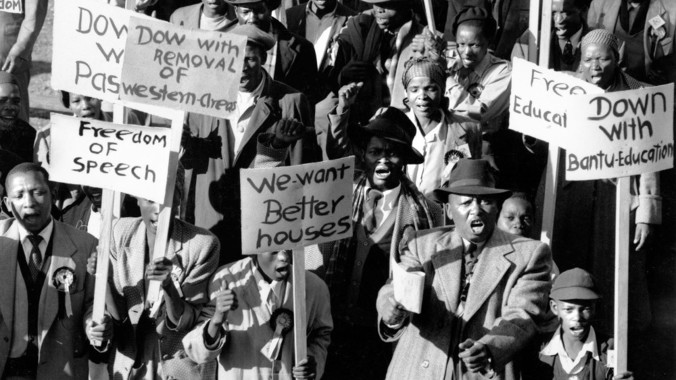
Image Source - http://bricsjournal.com/today-human-rights-day-day-commemorate-sharpeville-massacre/

In this article, Saksham discusses how to file human rights violation complaint.

Definition of Human Right

Human: A member of the Homo sapiens, a man, woman or child; a person

Rights: Things to which you are entitled or allowed; freedoms that are guaranteed.

Human Rights: The rights that you have simply because you are a human (1).

In short Human Rights are the rights that a person has simply because he or she is a human being.

Many eminent persons have stated the importance of human rights through their statements. For eg:

President Nyerere, of United Republic of Tanzania, remarked, “We shall try to use the Universal Declaration of Human Rights as a basis for both our external and internal policies.”

Nelson Mandela said, “It is an ideal hope to live for and achieve, but it is an ideal for which I am prepared to die”.

Negros Oriental Jose announced, “No cause is more worthy than the cause of human rights” and “They are what make man and woman human.”

His Holiness the XIV Dalai Lama of Tibet reminded human rights workers that “the protection of these rights and freedoms are of immense importance, both for the individuals affected and for the development of the society as a whole.”

Kinds of Human Rights:

There are two main kinds of Human Rights:

  1. Economic, Social and Cultural Rights
  2. Civil and Political Rights
  • Human rights are Universal i.e. they are given to all persons irrespective of their place of birth, language, caste , creed, religion or race etc.,
  • The Human Rights are Inalienable i.e. no person can be deprived of their human rights and
  • The Human Rights are indivisible i.e. you can divide few human rights as more important than other human rights which signifies that all human rights are given equal status and protection by law.
  • The Human rights as given to us is very important as it empower individuals and promotes justice and well being.

Commissions for Protection of Human Rights

  1. National Human Rights Commission, New Delhi, India

The National Human Rights Commission (NHRC) of India is an autonomous public body constituted on 12 October 1993 under the Protection of Human Rights Ordinance of 28 September 1993. If the alleged act is of national importance then NHRC will take suo motu action of its own.

  1. State Human Rights Commission

Every state in India has got a State Human Rights Commission for protection of human rights in a particular State. If any person has a grievance that his or her human rights are being violated then he may approach the respective state commission where the alleged act has been committed.

Guidelines on how to file complaint with the NHRC

1. Complaint may be made to the Commission by the victim or by any other person on his behalf.

2. Complaint should be in writing, either in English or Hindi or in any other Language included in the eighth schedule of the Constitution. Only one set of complaint needs to be submitted to the Commission.

3. Complaint may be sent either by Post or Fax or even by email.

4. No fee is chargeable on such complaints.

5. The complaint shall disclose

i) Violation of human rights or abetment thereof or;

(ii) Negligence in the prevention of such violations, by a public servant.

6. The jurisdiction of the Commission is restricted to the violation of human rights alleged to have been committed within one year of the receipt of complaint by the Commission.

7. Documents, if any enclosed in support of the allegations in the complaint must be legible.

8. Name of the victim, his/ her age, sex, religion/ caste, State and District to which the incident relates, incident date etc. should invariably be mentioned in the complaint.

9. Please submit the complaint preferably in the format which is made available on the website of Human Rights Commissions which can be different for different states.

10. Following types of Complaint(s) are not ordinarily entertainable:

i. Illegible

ii. Vague, anonymous or pseudonymous;

iii. Trivial or frivolous in nature;

iv. The matters which are pending before a State Human Rights Commission or any other Commission;

v. Any matter after the expiry of one year from the date on which the act constituting violation of human rights is alleged to have been committed;

vi. Allegation is not against any public servant;

vii. The issue raised relates to civil dispute, such property rights, contractual Obligations, etc;

viii. The issue raised relates to service matters;

ix. The issue raised relates to labour/industrial disputes;

x. Allegations do not make out any specific violation of human rights;

xi. The matter is sub-judice before a Court/ Tribunal;

xii. The matter is covered by judicial verdict/decision of the Commission.

11. As far as possible complainants are encouraged to make use of the format given in website of human rights commissions to file their complaints. The guidelines indicate the kind of information, which would facilitate in processing a complaint (2).

Steps taken to Protect Human Rights in India

In India, all citizens are entitled to enjoy the privilege of human rights. Several initiatives have been undertaken in India for the greater protection of the women, children and certain other groups of the society such as:

  1. Sati practice has been prohibited in India.
  2. The minimum age for marriage has been fixed by law. A boy below the age of 21 and a girl below the age of 18 cannot marry.
  3. The Protection of Human Rights Act, was enacted in 1993.
  4. Right to Information act was passed in 2005.
  5. Child labour (below the age of 14) is prohibited in factories, and mines.
  6. Right to education has been accepted as a fundamental right in India. The Right of Children to Free and Compulsory Education Act  was passed in 2009.
  7. Dowry system has been prohibited by law. The Dowry Prohibition Act was passed in 1961. 
  8. The Protection of Women from Domestic Violence Act was passed in 2005 to protect women from domestic atrocities. 

Sociological perspective

From a sociological perspective and perfect realization of human rights the whole society should accept the basic norms of human rights. Human rights have three basic premises:

  1. The individual remains the primary subject of international human rights law,
  2. This international human rights law accepts the existence of the groups and
  3. Individual human rights can be fully enjoyed if certain other human rights are fully or partially developed.

Human rights and humanitarian laws

There is a distinction between human rights and humanitarian laws. The Humanitarian laws are those rules of international law which aim to protect people suffering due to the armed international conflicts and directly serving military purposes.

Conclusion

There is always a hierarchy in the subjects of human rights law. No human rights can be detracted from the individual’s human rights, and human rights laws recognize certain rights of the groups. Moreover, the diversity of the cultures and civilization, beliefs and traditions, history and aspirations re­flected in polico-legal system, give rise to ever changing meaning to ‘human rights’.


References:

  1. Bringing Human Rights to Life by United for Human Rights

  2. www.nhrc.com

Download Now

Can a Company be the one-person in a One Person Company?

1
one-person
Image Source: https://blog.ipleaders.in/wp-content/uploads/2016/06/Company_picture.jpg

In this Article, Swasti Gupta, pursuing Diploma in Entrepreneurship Administration and Business Laws from NUJS, Kolkata discusses on whether a company be a one-person in the One Person Company

Introduction

As per the World Bank’s global rankings of Doing Business 2018 report, India moved up thirty spots from last year by ranking at 100 among 190 nations. This climb was attributed to business-friendly reforms introduced by the government over the years One such welcome reform is the debut of the provision of One Person Company (‘OPC’ hereinafter) in the Indian legal system through the Companies Act, 2013 (‘The Act’ hereinafter).  An amalgamation of a sole proprietorship and a company form of business, an OPC is a breakthrough for entrepreneurs looking to establish their own ventures with the structure of an organized business.

The J.J. Irani Committee first mooted the concept in 2005 to the Government, in its advisory report on the revision of the existing Company Law, to provide an avenue for increased participation of entrepreneurs in economic activities. The Committee recognized that

“it would not be reasonable to expect that every entrepreneur who is capable of developing his ideas and participating in the marketplace should do it through an association of persons… [and recommended] that the law should recognize the formation of a single person economic entity in the form of ‘One Person Company’. Such an entity may be provided with a simpler regime through exemptions so that the single entrepreneur is not compelled to fritter away his time, energy and resources on procedural matters.”

The position of OPC under the Indian Company Law

  • Member of an OPC

The definition of a One Person Company finds a place in Section 2(62) of the Companies Act 2013, which reads as – ‘One Person Company means a company which has only one member, thereby limiting the minimum and the maximum number of members in an OPC to one. Further, the Companies (Incorporation) Rules, 2014 (‘The Rules’ hereinafter) require that such a member has to be a natural person who is an Indian citizen and a resident of India who has clocked 182 days of stay in India in the immediately preceding one calendar year. A person cannot incorporate more than one OPC.

  • Classification of an OPC

Section 3(1)(c) of the Act classifies an OPC as a private company formed for lawful purposes by one person unless expressly excluded in the Act or the Rules. As per Section 3(2), an OPC can be formed as a company limited by shares or guarantee or an unlimited liability company. Since an OPC is classified as a private company, an OPC limited by shares will require a minimum paid up capital of one lakh rupees and will have restricted rights to transfer its shares along with the inability to make invitations to the public for subscriptions.

  • Directors

As per Section 152(1) of the Act, the single member forming the OPC is deemed to be its First Director, until the single member duly appoints the director(s). Further, the minimum and the maximum number of such directors can be 1 and 15 respectively, beyond which a special resolution will be required to be passed by the OPC.

  • Incorporation of an OPC

An OPC cannot be incorporated for or converted into a not for profit company with a charitable object. It also cannot carry out Non-Banking Financial Investment activities including investment in securities of any corporate body. In order to distinguish an OPC from other types of Companies, the words ‘One Person Company’ must be placed in a bracket below the name of the Company, wherever the company name appears. Further, in the event that the paid-up share capital of an OPC exceeds fifty lakh rupees or its average annual turnover of immediately preceding three consecutive financial years exceeds two crore rupees, then the OPC has to mandatorily convert itself into a private or public company.

Further, the memorandum of an OPC requires the single member of an OPC to nominate another person along with his/her written consent for such nomination and the nominee will be entitled to the single member’s shares in the OPC, in the event of his death or incapacity. The name of the nominee can be changed by the member at any time after providing due intimation to the Registrar of Companies in the prescribed manner. Such nominee has to be a natural person who is an Indian citizen and a resident of India who has clocked 182 days of stay in India in the immediately preceding one calendar year. Such person cannot become a nominee in more than one OPC.

Can a Company be the one person in a One Person Company?

From the provisions of Companies Act, 2013 and the Companies (Incorporation) Rules, 2014 it can be deciphered that in order to be eligible to incorporate a one-person company, the single member so forming an OPC must be

  1. A natural person
  2. An Indian Citizen
  3. A resident of India who has stayed in India for a period of 182 days in the preceding one calendar year.

A natural person is defined as ‘a human being as distinguished from a person (as a corporation) created by operation of law’. Under the Indian Law, a Company means a ‘company incorporated under the Companies Act, 2013 or under any previous company law’. It is a creation of law and is therefore classified as an artificial juridical person. A company, in its capacity as an artificial person, can enter into contracts, possess properties in its own name, open a bank account, incur debts, sue and can be sued by others.  Even from a jurisprudential perspective, according to Salmond, a Company enjoys a fictitious existence of an artificial person, through legal imagination, which is distinct from a natural person. The Supreme Court has also reiterated the same view where it held that the very act of incorporation of a company refers to forming a legal corporation as a juristic person. The said legal corporation can act like a natural person but only through a designated person, whose acts are processed within the ambit of law. Therefore, a Company enjoys the status of a legal person that is clothed with many rights, obligations, powers and duties conferred on it by law through its Memorandum of Association and are exercised through a natural person i.e. human beings.

Moreover, as per common law precedents, a company is a ‘legal person’ or a ‘legal entity’ that is separate from and capable of surviving beyond the lives of its members. Further, in Daimler Co Ltd v. Continental Tyre & Rubber Co Ltd, the House of Lords held ‘that a company incorporated in the UK is a legal entity created by law… it is not a natural person with a mind or a conscious.’

Additionally, in deciding that a corporation is not a citizen of India, the Supreme Court has held that ‘neither the provisions of the Constitution nor of the Citizenship Act, confer the right of citizenship on, or recognize as a citizen, any person other than a natural person’.

Therefore, in the light of the above-mentioned discourse, case laws and provisions of the Companies Law, it can be concluded that the intention of the Companies Act and the Rules is to limit the formation of an OPC by a natural person i.e. human beings as single members. A company gains the status of a corporate personality that is classified as a juristic or an artificial legal person, but such corporate personality does not accord it a status equivalent to that of a natural person or an Indian Citizen. Therefore, a Company, not falling within the ambit of a natural person or an Indian Citizen, cannot be the one person in a one-person company.

One Person Company: A Global Perspective

Although OPC is a recent concept in India, it has been prevalent in the United Kingdom for years through a precedent set by Lord Herschel in the renowned case of Saloman v. Saloman & Co. Ltd where he acknowledged the idea of a one-man company as lawful. Further, under Section 7 of the UK Companies Act, 2006, a one-person public and a private company can be formed by complying with the registration and Memorandum of Association requirements, as laid down in the UK Act. Similarly, in the United States, almost all states permit single member limited liability companies with varied state-specific laws for the same. Amongst Asian countries, Pakistan, Singapore and China adopted OPC in their legal systems in 2003, 2004 and 2005 respectively.

Conclusion

The concept of One Person Company carries the potential to serve as crutches for the era of Start-up India by bringing the small and medium-sized businesses that earlier operated in the unorganized sector within the purview of organized sector and by offering a simple legal framework that advances the interests of entrepreneurs. This impact will be in alignment with the intention of the J. J. Irani Committee to recognize and uplift entities that are created by single entrepreneurs, rather than an association of persons, through the introduction of OPC in the Indian Legal System. Furthermore, an OPC enjoys several privileges and exemptions under the Companies Laws in the form of exemption from conducting general and board meetings, provision of taxation of the entity separate from its owner’s income and separate legal entity of the company ensuring limited liability of the sole shareholder. However, these benefits are not without their own limitations as the setting up and maintenance of an OPC is cumbersome, time-consuming and heavy on the pocket.

It is worthwhile to note that it has been five years since the concept of OPC was brought to life in India. Perhaps the Government should undertake a concrete five-year assessment of its reform in the form of a cost-benefit analysis to assess whether the concept of OPC has lived to its expectations and added to the economic development of the country or whether it has proven to be yet another paper reform.

Download Now

All you need to know about the Press Council of India

4
Press Council
Image Source: http://images.indianexpress.com/2015/11/pci-1.jpg

In this article, Jahnavi Singh, pursuing Diploma in Entrepreneurship Administration and Business Laws from NUJS, Kolkata discusses the Press Council of India.

Introduction

The Press Council of India was first established in the year 1966 by the Parliament of India, recommended by the first Press Commission. The object was to preserve the freedom of the press and for maintaining and improving the standards of the press in India.  Presently, the function of the council is governed under the Press Council Act, 1978. It is a statutory, quasi-judicial body which acts as the watchdog of the press. It adjudicates the complaints against and by the press for violation of ethics and for violation of the freedom of the press respectively.

It is headed by the Chairman, who should be a retired judge of the Supreme court of India. The Council has 28 members of which 20 have to represent the press by being nominated by the press organisations, agencies and other bodies. 5 members are nominated by the 2 houses of the parliament and 3 represents cultural and legal fields and one nominee of the Bar Council of India. They serve for a term of 3 years. The Council was reconstituted on 22nd May 2001.

It is being basically funded by revenue which is being collected as fee levied on the registered newspaper in the country on the basis of the regulation. No fees are levied on newspaper which has circulation less than 5000 copies.  

Functions of the Press Council of India

  1. It helps the newspaper to maintain the independence.
  2. It builds a code of conduct for the newspapers in accordance with the high professional standards
  3. It works to promote technical and other research areas related to the news
  4. It helps provide proper training to new journalists
  5. It helps to spread the news all over India
  6. It promotes the supply of newspaper from one place to another and on time
  7. It helps to promote the proper function of production or publication of the newspaper in a proper manner
  8. It helps to keep a review of on all the functioning, the production and processing of the newspaper.
  9. It ensures that maintenance of the taste of the people should be kept in mind and see over both the rights and responsibility of the citizenship.

Powers of the Council

  1. They have the power to censure any rule which generally violates the journalists’ ethics and the public taste.
  2. They can hold any enquiry against any editor of the journal if they found that any misconduct has been taken place with regard to any matter related to the press.
  3. The proceedings should be taken place with regard to the judicial hearing under Section  193 and 228 of the Indian Penal Code.

Complaint Procedure

If we have to make any complaint against the newspaper then the Press Council of India is the best place to start. If the complaint is not resolved by the journalist and the individuals are not satisfied then they can approach the Press Council for justice.

  • The complaints should be in writing within two months of the publication of the news on a weekly or daily basis and four months in other cases. It should also be mentioned that how the publication is objectionable within the meaning of the Act.  
  • The copy of the letter should be given to the editor and its reply should also be attached their within. A declaration form should also be attached.  In declaration form, it should be clearly mentioned that this case is not pending in any other courts.
  • On the other side if the editor or the journalist feels that he is aggrieved by the action then he can also file a complaint under this Act. The journalist should inform the Council about the reason for the action of the authorities against him. Declaration against any matter is going on in any of the courts is also to be mentioned.
  • On seeing the complaint, if the Council feels that the matter discloses the sufficient ground then for the inquiry then they will issue a show cause notice to the respondent and then they will consider the matter through the committee on the basis of both the written and the oral evidence. If the council comes to know that the respondent newspaper has violated the norms of the journalism then the council while keeping in mind the misconduct which was committed by the newspaper will warn the journalist or will disapprove the journalist of not publishing anything as the case may be.
  • When the council takes up the case of the misconduct it also directs the government to take the appropriate steps with regard to the grievances of the complainant.  The decision of the council will be final it cannot be challenged in any of the courts. The licence of the journalist can also get cancelled if any misconduct has taken place with regard to them.

Meeting Session

For the meeting of the press, a notice should be issued to every member of the council at least 21 days before the meetings being taken place.  The start date of 21 days should be counted from the date of the proceedings.

Questions being Raised in such Meetings

A member shall bring a question before the council after giving 10 days clear notice to the secretary and puta agenda of the meeting as what has to be done in the meeting. A chairman has a power to give rise to that question or can cancel that question. The chairperson has also such powers that he can raise any question without giving prior notice.

Expectation from the Clients

It is being expected from the client that only if they feel like any misconduct have been taken place then only they should come to the committee otherwise it is of no use. Neither the committee nor any other person has that much of time to go through the case which is vague. So there are somethings which are expected from the customers and they are as follows:

  1. The case which they are going to file should be according to the provision as being mentioned in the act.
  2. All the news agencies should remit the levy to the council properly.

Conclusion

In conclusion, the press plays a very important role in today’s world. The news given by different newspapers should be correct as all the citizens of India read the newspaper and this impacts their life. Nothing vague should be mentioned in the newspaper. All the news regarding every sector should be mentioned. People have a right to know that what is happening in the world.

Press Council of India is important to stop the misconduct which takes place among the press. By the passing of the Act, the situation of press has improved a lot. Journalists are scared before publishing any fake news as this can affect their career as well as their licence can also get cancelled. There are many competitions which are being taken place among different newspapers.

Download Now

List of Chief Justices of Supreme Court of India

0
office of profit
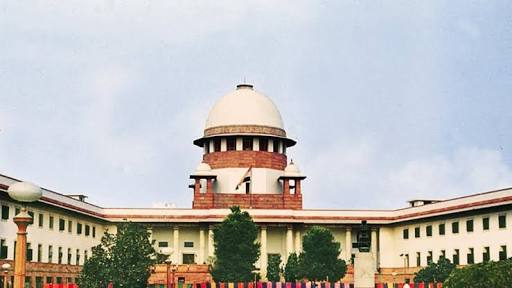
Image Source - https://bit.ly/2StaRFc

In this article, Chinmayee Behera of KIIT Law School gives an elaborative list of Chief Justices of Supreme Court Of India.

APPOINTMENT OF JUDGES

  1. According to Article 124(2), Every Judge of SC shall be appointed by the President after consultation with other judges(judges of SC and High Court of states) and CJI can hold office till the age of 65.
  2. Must be a Citizen Of Indian
  3. Must hold the position of a Judge in High Courts for at least 5 years and must be an advocate for at least 10 years of a High Court.
  4. Must be in the opinion of the President
  5. No person appointed as a Judge in SC can hold an office in any other court

REMOVAL OF JUDGES

  1. A CJI may by writing to President resign his office.
  2. A Judge Of Supreme Court shall be removed from his office by an order of the President passed after an address by each House of Parliament supported by majority members of that House and by majority vote(i.e not less than two-thirds). Such action is taken when CJI is found incapable, due to unacceptable behavior or incapacity. Voting for removal of CJI should be in presence of President and voting should be submitted to the President.

Chief Justices of Supreme Court of India

Chief Justice Of India                                             Notable Work done
1.   

   H.J. Kania

(26 January 1950 to 6 November 1951)

  1. Justice Harilal Jekisundas Kania was the first Chief justice of India after the Republic Of India in 1950.
  2. He was appointed under the Rajendra Prasad(first President Of India)
  3. He was an acting judge in Bombay High Court in 1930, then was appointed as Additional Judge in June 1931- March 1933.
  4. Kania succeeded Spens(Patrick Spens) on 14 August 1947.
  5. In the year 1951 Kania died in office due to sudden heart attack, aged 61.
2.  M.Patanjali Sastri16 November 1951- 3 January 1954(till he reached his retirement age)
  1. Justice Mandakolathur Patanjali Sastri was the Second Chief Justice Of India and was appointed under the office of Dr. Rajendra Prasad.
  2. He was elected from Madras High Court Bar.
  3. Sastri along with Sidney Wadsworth(the British judge who served in the Indian Civil  Service) tried complicated cases that followed after passing of Madras Agriculture Debt relief act.
  4. He was also the first Tamilian to become Chief Justice Of Supreme Court.
3. Mehr Chand     Mahajan(4 January 1954 to 22 December 1954)(till he reached his retirement age)
  1. Justice Mahajan was third Chief Justice Of India under the office Of Dr. Rajendra Prasad.
  2. He was elected from Punjab and Haryana High Court Bar
  3. He was an Indian National Congress nominee on the Radcliff Commission(boundaries of India and Pakistan)
  4. During Maharaja Hari Singh, Mahajan was Prime Minister of Jammu & Kashmir(15 October 1947- 5 March 1948) and played a key role in the accession of J&k to India.
  5. Mahajan also served as the first Judge of Supreme Court after the independence of India from 4 October 1948 – 3 January 1954.
4. Bijan Kumar Mukherjea

(23 December 1954 – 31 January 1956)

  1. He was fourth appointed Chief Justice and took oath under the office of Dr. Rajendra Prasad.
  2. He was elected from Calcutta High Court Bar
  3. He joined Calcutta bar in 1914 as become Junior Govt. Pleader, in 1934 he became Senior Govt. Pleader and Judge at Calcutta High Court in 1396.
  4. He was also a member of Bengal Boundary Commission.
5. Sudhi Ranjan Das

(1 February 1956- 30 September 1959)

  1. Justice Sudhir was appointed as fifth Chief Justice Of India under the office of First President Of India Dr. Rajendra Prasad.
  2. He was elected as an Additional Judge of Calcutta High Court in 1942 and became succeeding Judge, Calcutta High Court in 1944.
  3. In 1949-1950 he served as Chief justice of Punjab High Court.
  4. He was appointed in the Supreme Court in 1950, before some days of commencement of new Constitution.
  5. He had hold the office twice as an Acting Chief Justice Of India before being Chief Justice of India.
  6. He was Chief Justice Of India for over three years and retired on September 30, 1959.
6. Bhuvaneshwar Prasad Sinha(1 October 1959-31 January 1964)
  1. Justice Sinha was appointed as Sixth Chief Justice Of India from Patna High Court Bench during the tenure of Dr. Rajendra Prasad Presidency.
  2. He also served as President of Bharat Scouts and Guides(April 1965- February 1967).
  3. He worked as Vakil in Patna High Court(from 1922-1927) then as an Advocate in 1927-1935 and was also lecture at Government Law College, Patna(from 1926-1935).
  4. He was a member in Patna University for Faculty Of Law and of the Board Of Examiners in Law and also a member at the court of Benaras Hindu University(now known as Banaras Hindu University)
  5. He was a Government Pleader from 1935-1939 and Assistant Government Advocate from 1940- 1942
  6. Then he hold the office of Judge in Patna High Court(1943- 1951), then became Chief Justice Of Nagpur High Court(1951- 1954).
  7. Then in December 1954- 30 September 1959 he became Judge in Supreme Court and then Chief Justice Of India and retired on 31 January 1964.
7. P.B. Gajendragadkar

(1 February 1964- 15 March 1966)

  1. Justice Pralhad Balacharya Gajendragadkar seventh chief Justice Of India hold his Office under the Office of Sarvepalli Radhakrishnan second elected President Of India.
  2. He was elected from Bombay High Court Bar.
  3. He held positions of a Judge in Bombay High Court(1945- 1957), then as Judge of Supreme Court Of India in 1957.
  4. After, his retirement as Chief Justice he was Honorary Vice- Chancellor Of the University Of Mumbai in 1967.
  5. He was also awarded Padma Vibhushan from Government Of India.
8. Amal Kumar Sarkar

(16 March 1966- 29 June 1966)

  1. Justice Amal hold the office of Chief Justice of Supreme Court. He was elected from Calcutta High Court Bar under the office of Sarvepalli Radhakrishnan
  2. He started his career as a practicing advocate in Calcutta High Court
  3. In 1949 he became Judge in Calcutta High Court.
9. Koka Subba Rao

(30 June 1966- 11 June 1967)

  1. Justice Rao was ninth Chief Justice Of Supreme Court he hold his office.
  2. He was elected from Madras High Court Bar under office tenure of President Sarvepalli Radhakrishnan.
  3. He was first recruited as a District Munsif in Bapatla, Guntur district.
  4. He was also first Chancellor in Sri Venkateswara University and remained in the position till the University Act was amended.
  5. After holding the office of Judge and Chief Justice Of Madras High Court, on 31 January 1958, he became Judge in Supreme Court.
  6. His most famous Judgement was for Golaknath v. State Of Punjab, where he ruled that Fundamental rights cannot be amended.
  7. JUDGMENT: (i) the power to amend the Constitution is not to be found in Article 368 rather in Article 245,246 and 248 read with List 1 Entry 97.(ii) amending power cannot abridge or take away the fundamental rights guaranteed under Part III of Constitution. (iii) within the meaning of Article 13(2), the law amending is also a Law.                                                 
  8. Doctrine Of Prospective Overruling theory in the judgment, the decision will have the only possible operation and Parliament will have no power to abridge Fundamental Rights from the date of Judgement.
10. Kailas Nath Wanchoo(12 April 1967- 24 February 1968)
  1. Justice Wanchoo was the tenth Chief Justice Of India appointed by President Sarvepalli Radhakrishnan from Allahabad High Court Bar.
  2. He hold an official position from February 1947- January 1951 as Judge in Allahabad High Court, then as a Chief Justice in Rajasthan High Court from 1951- 1958.
  3. He also hold various position in Uttar Pradesh Judicial Reform Committee Chairman(1950-1951), a sole member in Indore Firing Inquiry Commission (1954), Member in Law Commision (1955) and commision chairman in Dholpur Succession Case(1955).
  4. Wanchoo also delivered Judgement in Golaknath Case as a Judge.
11. Mohammad Hidayatullah

(12 April 1967- 24 February 1968)

  1. Hidayatullah is regarded as an eminent jurist, lawyer, scholar, educationist, author and linguist person.
  2. He was eleventh Chief Justice Of Justice appointed by Zakir Hussain third President of India from Bombay High Court Bar.
  3. He was Sixth Vice- President Of India served from 31 August 1979- 30 August 1984, he was acting President Of India for twice from 20 July 1969- 24 August 1969 and 6 October 1982- 31 October 1982.
  4. He was part of Supreme Court for a long tenure and gave numbers of landmark Judgements. His two most famous Judgement was in Golaknath Case and Ranjit D. Udeshi which dealt with the law of obscenity, this displayed a flair for literature which was not so common among judges.
  5. In 2003 Hidayatullah National Law University which was established in Raipur his hometown and in Chattisgarh a national moot is organized in his memory known as ‘Justice Hidayatullah Memorial National Moot Court Competition ‘ by Chhattisgarh University.
  6. He had written many books and was honored with various awards.
  7. He was a member of Nagpur Municipal Committee(1932- 1933), member of Nagpur University as an Academic and Executive Councils(1934- 1953), member of Nagpur Improvement Trust(1943- 1945) along with he also hold a position in Member of Nagpur Bar Council (1943- 1946).
  8. In 1935 he took teaching as a profession at University College Of Law and taught till 1943, later on, served as Dean in Nagpur University as Faculty Of law(1949- 1953). In addition, he also served in many other University as Pro-Chancellor in Delhi University, Chancellor in Jamia Millia Islamia and also Chancellor of Hyderabad University. During 1963-1970 he was President of Indian Law Institute, International Law Association(1968- 1970) and of Indian Society Of International Law(1969- 1970).
12. Jayantilal Chhotalal Shah

(17 December 1970- 21 January 1971)

  1. Justice Shah twelfth Chief Justice Of India from 17 December 1970- 21 January 1971 appointed by Varahagiri Venkata Giri from Lahore Bombay High Court Bar.
  2. After his retirement, he headed Shah Commision. It was set up by the Central Government under the Commission Of Inquiry Act 1952.
  3. Shah was a practicing lawyer in Allahabad, then he moved to Bombay and was a judge for 10 years in 1949, then on October 1959 he was appointed as Judge of Supreme Court and then as Chief Justice in December 1970.
  4. He was also a part on the legal team in Gandhi Assassination Case prosecuting Nathuram Godse and other defendants.
13. Sarv Mittra Sikri(22 January 1971- 25 April 1973)
  1. Justice Sikri was thirteen chief justice under the office of President V.V. Giri from Lahore High Court bar.
  2. He started his legal career in 1930 as a practitioner at Lahore High court. Then, he was appointed as the assistant advocate general of Punjab in 1949 then as advocate general from 1951- 1964.
  3. He was appointed as judge of the Supreme Court of India and gradually became Chief Justice in January 1971.
  4. Landmark Judgement:- Kesavananda Bharati Sripadagalvaru and Ors v. State Of Kerala and Anr. Justice Sikri held that fundamental importance of freedom of an individual has to be preserved. Fundamental right in Part III of the Constitution of India cannot be abrogated, through reasonable consideration of those rights could be affected. The doctrine of basic Structure was laid down which stated any amendment in the constitution should follow basic objectives of the constitution.  
14. Ajit Nath Ray

(26 April 1973- 27 January 1977)

  1. He was the fourteenth CJI appointed by President V.V. Giri from Calcutta High Court Bar.
  2. A.N Ray appointment as CJI was the most controversial one. The appointed superseded the three senior-most Judges and was called the blackest day in Indian democracy. The protest against A.N Ray continued for many months.
15. Mirza Hameedullah Beg(28 January 1977- 21 February 1978)
  1. He was fifteen CJI appointed by Fakhruddin Ali Ahmed from Allahabad High Court Bar.
  2. He was Chief Justice of Himachal Pradesh High Court(January 1971).
  3. Landmark Judgement:- (i) Beg was involved in Habeas Corpus Case. Subsequently, Beg served as chairman of the Minorities Commission of India (1981-1988).
16. Yeshwant Vishnu Chandrachud

(22 February 1978- 11 July 1985)

  1. Justice Chandrachud was sixteenth CJI appointed by President Neelam Sanjiva Reddy from Bombay High Court Bar.
  2. Notable Judgement:-(i)Habeas Corpus Case during Emergency(1975- 1977) of Indira Gandhi.

(ii) Minerva Mills Case, the SC provided clarification on the interpretation of Basic Structure Doctrine. The Parliament cannot exercise its limit beyond the constitution.

(iii) Shah Bano Case, SC invoked a provision in CrPC 1973, for a secular legislation in to order to maintenance compensation to those of divorced Muslim women. Due to this case gave Rajiv Gandhi government, had to pass a majority to Muslim Women act 1986.

17. Prafullachandra Natwarlal Bhagwati

(12 July 1975- 20 December 1986)

  1. Justice Bhagwati was appointed as seventeenth CJI by President Gyani Zail Singh from Gujarat High Court.
  2. He was held reason pioneer of Judicial activism as he introduced the concept of public interest litigation and absolute liability in India.
  3. In 1960 he was appointed as Gujarat High Court Judge and in 1967 as Chief Justice of the court. He also hold the seat as Governor of Gujarat. In 1973 he was appointed as judge of SC and then as CJI.
  4. Notable Judgement:-(i)He faced criticism during ADM Jabalpur v. Shivkant Shukla case during the emergency period. He supported and praised Indira Gandhi Government which opposed by people and Justice Hans Raj.

(ii) Maneka Gandhi v. UOI:- Gandhi was requested from a Regional Passport Office to return passport within seven days” in public interest” through an official letter. Gandhi filed a writ petition under Article 21 of Constitution of India.

18. Raghunandan Swarup Pathak

(21 December- 18 June 1989)

  1. He was appointed as eighteenth CJI under the office of President Gyani Zail Singh from Allahabad High Court Bar.
  2. He was one of Judge among the three judges in International Court of Justice in The Hague.
  3. He was Judge in Allahabad High Court(1962) Chief Justice of Himachal Pradesh Court in(1972) and Judge of SC(1978).
  4. He was a judge in the Bhopal gas disaster case. He facilitated settlement between Union Carbide Corporation and the Government of India.
19. Engalaguppe Seetharamaiah Venkataramani

(19 June 1989- 25 September 1990)

  1. He was appointed as nineteenth CJI by President Venkataraman from Karnataka High Court Bar.
  2. In 1970 he was appointed as Judge of Karnataka High Court, then as Judge of SC and was the first person to be elected from Karnataka as CJI.
  3. He was nominated by Collegium Of Judges.
20. Sabyasachi Mukherjee

(18 December 1989- 25 September 1990)

  1. He was appointed as twentieth CJI by President Venkataraman from Calcutta High Court.
  2. He also served as acting Chief Justice of Calcutta High Court(1963).
  3. He worked as a member of 8th Finance Commission.
21. Ranganath Misra(26 September 1990- 24 November 1991)
  1. Justice Misra was twenty-first CJI appointed fro Odisha High Court Bar by President Venkataraman
  2. He was appointed as first Chairman of National Human Rights Commission, he was appointed as Governor of Odisha(1993-1996)
  3. He was acting CJ of Odisha High Court and became permanent later on.
  4. In 1983 he was appointed as Judge of SC and later on became CJI.
22. Kamal Narain Singh

(25 November 1991- 12 December 1991)

  1. He was appointed as twenty-second CJI appointed by President Venkataraman from Allahabad High Court Bar.
  2. He was appointed as Additional Judge of Allahabad High Court(1970) and Permanent Judge(1972). He joined SC in 1986 and acted as CJI in 1991.
23. Madhukar Hiralal Kania

(13 December 1991- 17 November 1992)

  1. Justice Hiralal Kania appointed as twenty-third CJI from Bombay High Court by President Venkataraman.
  2. In 1971 he was appointed as Judge of Bombay High Court, in 1987 as judge of SC and in 1991 as CJi.
24. Lalit Mohan Sharma

(18 November- 11 February 1993)

  1. He was appointed as twenty-fourth CJI by President Shankar Dayal from Patna High Court Bar.
  2. He took oath as Judge of Patna High Court(1973) and joined SC in 1987.
25. Manepalli Narayana Rao Venkatachaliah

(12 February !993- 24 October 1994)

  1. Justice Narayana Rao was twenty-fifth CJI appointed by President Shankar Dayal from Karnataka High Court Bar.
  2. He is honored with Padma Vibhushan, Doctor Of letters, Doctor of Laws and Honorary Doctorate from University known as Rani Channamma University.
  3. He served as chairman of National human rights Commission and headed National Commission for review the working of the constitution.
  4. He was appointed as permanent Judge of Karnataka High Court and then in 1987 was elevated as Judge of SC.
26. Aziz Mushabber Ahmadi

(25 October 1994- 24 March 1997)

  1. Justice Ahmadi was appointed by President Shankar Dayal Sharma from Gujarat High Court Bar.
  2. He served as judge of Gujarat High Court, then as Judge of SC(1988) and also served as chancellor at Aligarh Muslim University.
  3. He has achieved Foreign recognition as a member of the American  Inn of Laws, nomination in various International Committees and degree of Doctor of Laws.
27. Jagdish Sharan Verma

(25 March 1997- 17 January 1998)

  1. Justice Verma was appointed as twenty- seventh CJI from Madhya Pradesh Bar by President Dayal.
  2. He was Judge of Madhya Pradesh High Court (June 1972) and also served as Chief Justice of Rajasthan High Court(September 1986) and also acted twice as Government of Rajasthan(in 1986 & 1989).
  3. He delivered judgment arguing that Juvenile convicted for murder to be tried in separate Act(Juvenile Justice Act 1986)
  4. He was the first judge to reject Government’s proclamation of Emergency that took over Right to life and liberty.
  5. Notable Judgement:-(i)K Veeraswami v. UOI:- Justice Verma diverged saying the Parliament had not intended a higher judiciary member as a ‘Public Servant’. He recognized the need for an appropriate mechanism to deal with corruption by members in higher Judiciary.

(ii)Kumari Shrileka Vidyarthi v. State of U.P & Ors:- Justice Verma stated that the basic requirement of Article 14 of Indian Constitution is fairness by the state.

(iii)Nilabati Behera v. State of Orissa & Ors:-Justice Verma argued the principle of sovereign immunity not acting as a defense in relation to compensation as a remedy to Public Law. he said Compensation as a constitutional remedy for violation of Fundamental Rights.

(iv)Jamaat-e-Islami v.UOI:-Justice Verma stated that the tribunal can not make a necessary subjective judgment in a case. He coined ‘greater probabilities’ and never explained. Then natural justice satisfied taking into account the Public Interest.

(v) Other Landmark Cases:-

  • Hindutva Judgement
  • Vishakha & others v. State Of Rajasthan
  • AFSPA Judgement
  • T N Godavarman Thirumulkpad v. UOI & Ors.
  • Jain Hawala Case
  • Second Judge Transfer Case
  • Ayodhya Judgement:- in this case, SC elaborated meaning of Indian Secularism
  • S.R Bommai v. Union of India:- this case was related to Presidential Proclamation under Art 356(1) of Emergency Provision Of constitution for dissolving Karnataka Legislative Assembly.
28. Madan Mohan Punchhi

(18 January 1998- 9 October 1998)

  1. He was appointed as twenty-eighth chief Justice Of India by President Kocheril from Punjab and Haryana High Court Bar.
  2. He was appointed as Judge of Punjab and Haryana High Court(1955), in (1982) he was appointed as judge of SC and became CJI in 1998.
  3. The Punchhi Commission which dealt with matters related to center and state relation was initiated by Justice Punchhi.
29. Adarsh Sein Anand

(10 October 1998- 31 October 2001)

  1. He was appointed as twenty-ninth CJI by President Kocheril from Jammu and Kashmir High Court Bar.
  2. He was an Additional Judge of Jammu and Kashmir High Court(11 may 1975), in(1 November 1985) transferred to Madras High Court.
  3. Notable Judgement:- (i) Nilabeti Behera case(1993), he gave his judgment on the right to compensation in case of custodial deaths hailed as a significant contribution to the protection of Human Rights.

(ii)In case of D.K Basu, he laid down safeguards against custodial torture, this safeguarded Rights of Prisoners.

(iii) In Judgment of V.C Mishra Case, the SC first sentenced the Chairman of Bar Council Of India for contempt of court and suspended him from practicing.


30. Sam Piroj Bharucha

(1 November 2001- 5 May 2002)

  1. Justice Bharucha the thirtieth Chief Justice of India was appointed by K.R Narayan from the Bombay High Court Bar.
  2. He started as an advocate in Bombay High Court(1960), the became Additional Judge(1977) and then he was appointed as Chief Justice Of Karnataka High Court
  3. He has delivered a significant legal decision. He was part of five benches constitutional panel in 2001 for dismissal of J. Jayalalithaa as Chief Justice of Tamil Nadu. Till date, this was the first and only dismissal of a Chief justice.  
31. Bhupinder Nath Kirpal

(6 May 2002- 7 November 2002)

  1. Justice Bhupinder was the thirty-first Chief Justice Of India from Delhi High Court Bar by President K.R. Narayan.
  2. He worked as an advocate in Delhi High Court(1962), then appointed as a Judge in Delhi High Court(November 1979- December 1993), he was Chief Justice of Gujarat High Court and later on became CJI.
  3. After retirement, he remained as President of the Indian Forest Commission.
32. Gopal Ballav Pattanaik

(8 November 2002- 18 December 2002)

Justice Pattanaik thirty- second Chief Justice Of India appointed from Odisha High Court Bar by President Dr. A.P.J Abdul Kalam.

  1. He enrolled as an advocate in Odisha High court in (1962), in(1971) he became a counsel for the Government of Odisha. In 1974 he became Additional Government Advocate and subsequently the Government Advocate.
  2. In 1983 he became a permanent Judge of High Court and in 1995 he was appointed as Chief Justice Of Patna High Cou.
  3. During his judicial tenure allegation raised as misconduct against members of the higher judiciary.
  4. Landmark Judgment:-(i)Narmada Dam Project(where SC gave clearance for the height to be increased along also they should certify rehabilitation).

(ii) He denied giving permission to the Central Government of India for the ability to grant permission to Hindu organization to perform ceremonies at the disputed Babri Masjid site in Ayodhya.

(iii)A landmark judgment in the Daniel Latifi v. UOI,2001. Justice Pattnaik held that the liability of Muslim husband to his divorced wife under Section 3(1) of the act to pay maintenance. This judgment upheld the right of Muslim women in India.

33. V.N. Khare

(19 December 2002- 1 May 2004)

  1. He was thirty- third CJI under the office of President D.r Abdul Kalam from Allahabad High Court Bar.
  2. He was appointed as Chief Standing Counsel for Government of Uttar Pradesh, on 25 June 1983, he was appointed as a Judge of Allahabad High Court. Later on, in 1996, he was appointed as Chief Justice of Calcutta High Court.
  3. In 1975 Khare represented Prime Minister Indira Gandhi in her case Raj Narain for alleging electoral malpractice during the emergency.
  4. Gujarat Violence following Godhra train burning was a failure of his justice system. His Best Bakery Case reopened and later in 2012 he gave an interview giving details.
34. S. Rajendra Babu

(2 May 2004- 31 May 2004)

  1. He was thirty-fourth CJI appointed under President Dr. Abdul Kalam from Karnataka High Court.
  2. He interpreted the provision of the Muslim Women Act 1986(Protection of Rights on Divorce)
  3. He was appointed as Karnataka High Court in (February 1988).
35. Ramesh Chandra Lahoti

(1 June 2004- 31 October 2005)

  1. Justice Lahoti the thirty-fifth CJI appointed by Dr. Abdul Kalam from Madhya Pradesh High Court Bar.
  2. In 2004 Justice Lahoti broke the grounds with many of the predecessors stating Indian Judiciary to be clean.
  3. He upheld laws for Haryana for population control which did not allow more than two children. He rejected the argument based on the right to Privacy and religion.
  4. He quashed Illegal Migrants Act
36. Yogesh Kumar Sabharwal

(l November 2005- 13 January 2007)

  1. He was elected as thirty- sixth CJI from Delhi High Court by President Dr. A.P.J Abdul Kalam.
  2. He started his career as an advocate for Delhi administration. Represented Delhi in Bar Council of India. Also hold a position of Additional Judge in Delhi High Court(November 1986), later in(February 1999) became Chief Justice of Bombay High Court.
  3. Notable Judgements:- (i) In 2005 a constitutional bench headed by Justice Sabharwal held unconstitutional the dissolution of Bihar assembly and paved away for the fresh election.

(ii) In 2006 he refused to grant relief to Delhi sealing drive in which thousands of constructors were demolished across Delhi.

(iii) In 2007 head of 9 judges constitutional bench which held that cases will be an open challenge in the court if they violate Fundamental Rights under ninth schedule after 24 April 1973

37. K.G Balakrishna

(14 January 2007- 12 May 2010)

  1. Balakrishna was the thirty-seventh CJI from Kerala High Court by president Dr.Kalam.
  2. He is a chairperson of national Human Right Commision since 7 June 2010 and the first one to become CJI from Kerala High Court Bar.
  3. He was appointed as judge of Kerala then transferred to Gujarat High Court(1997) and the in 1999 became Chief Justice of Gujarat High Court.
  4. He was also appointed as Governor Of Gujarat for few months and also as general counsel of Gujarat National Law University.
  5. Notable Judgement:(i) he abolished Hartal by political parties in Kerala High Court Judgment.

(iii) In 2010 he passed judgment abolishing Narco Analysis in interrogations and was also part in the Supreme Court bench for Lalu’s Case.

38. S.H. Kapadia

(12 May 2010- 28 September 2012)

  1. He was thirty-eighth Chief Justice of India from Bombay High Court by first female President Pratibha Patil.
  2. He was a permanent Judge of Bombay High Court(1993), later became Chief Justice of Uttarakhand High Court(2003).
  3. Notable Judgement:-(i)  he quashed the appointment of Central Vigilance Commissioner, the judgment caused severe embarrassment for the government and made PM Manmohan Singh admit the error in the appointment.

(ii) he dissented judgment in Lalu Prasad Yadav’s Bail cancellation case under income tax appellate tribunal order.

39. Altamas Kabir

(29 September 2012- 18 July 2013)

  1. He was the thirty-ninth CJI appointed by President Pranab Mukherjee from Calcutta High Court.
  2. He was an executive chairman of NALSA on 14 January 2010.
  3. He also held the seat of Judge in Jharkhand High Court and then became CJI of Supreme Court.
  4. Landmark Judgement:- (i) domestic Violence Act, husband relatives will also be liable for the crime

(ii) Ordered to end Haj Subsidy by the year 2022.

(iii) He granted bail to the journalist Syed Mohammed Ahmed Kazmi, who was arrested for alleged involvement in Israeli Embassy vehicle blast.

40. P. Sathasivam(19 July 2013- 26 April 2014)
  1. He is current Governor Of Kerala in office since 2014.
  2. He was fortieth Chief Justice Of India from Madras High Court Bar under the office of President Pranab Mukherjee.
  3. He was the second Judge from Tamil Nadu to become CJI and also the first Judge of SC to be appointed as Governor of a State.
  4. He started his career as an advocate in Madras, then became Additional Government Pleader and then hold a position of Special Government Pleader in the Madras High Court.
  5. He became a  permanent Judge in Madras High Court on 8 January 1996 and later on, in 2007 transferred to Punjab and Haryana High Court.
  6. He was also Chairman of the General Council of the Gujarat National Law University.
  7. Notable Judgement By P. Sathasivam:-(i)Reliance Gas Judgment(2010), he highlighted the use of natural resources through public sector undertakings.

(ii)Triple Murder Case which upheld the conviction of Dara Singh.

(iii)he also delivered judgment on Jessica Lal Murder Case(29 April 1999)

(iv)he also delivered judgment on Mumbai Blast case and sentenced Sanjay Dutt(Bollywood Star) imprisonment of five years.

41. Rajendra Mal Lodha

(27 April 2014- 27 September 2014)

  1. Justice Lodha was the forty-one Chief Justice Of India appointed by President Pranab Mukherjee. He was elected from Rajasthan High Court Bar.
  2. He served as Chief Justice Of Patna High Court, as Judge in Rajasthan High Court and Bombay High Court.
  3. On 14 July 2015, Justice Lodha headed a committee in Supreme Court and suspended the owners of Rajasthan Royals and Chennai Super Kings from IPL tournament for two years for involvement in betting.
  4. He started his career from Jodhpur Bar Council of Rajasthan in February 1973 and later on moved to Jaipur 1977 and in 1990 was appointed as Central Government counsel at the Rajasthan High Court.
42. H.L. Dattu

(28 September 2014- 2nd December 2015)

  1. Justice Handyala Lakshminarayanaswamy Dattu was forty- second Chief Justice Of India was appointed under the office of President Pranab Mukherjee and he was selected from Karnataka High Court bar.
  2. He also served as Chief Justice Of Kerala high Court and Chhattisgarh High Court, and currently, he served as Chairman of National Human Rights Commission.
  3. In 1995 December 18 Dattu was appointed as Judge of Karnataka High Court.
  4. In February 2014, Dattu was nominated by CJI P Sathasivam as a nominee to five-member panel to appoint Lokpal.
  5. Justice Dattu was part two highlighted Controversy, he was charged up for corruption and Justice Katju also called for Dattu impeachment on charges of corruption. Justice Dattu was also involved in 2G Spectrum case when he asked the names of whistleblowers. 2G Spectrum was a scam which was alleged under the United Progressive Alliance by the politicians and government officials.
43. T.S. Thakur

(3 December 2015- 3 January 2017)

  1. Justice Tirath Singh Thakur forty-third Chief Justice Of India appointed under the office of President Pranab Mukherjee from Jammu and Kashmir High Court Bar.
  2. He was former Governor Of Assam and later on became a Judge of Jammu 7 Kashmir High Court, in 1990 he was designated as Senior Advocate. He was appointed as Additional Judge of Jammu & Kashmir in 1994 on 16 February and transferred as Judge to Karnataka High Court in March 1994. Again on July 2004, he was transferred as Judge to Delhi High Court and on 2009 he took over the position as Chief Justice Of Punjab and Haryana.
44. Jagdish Singh Khehar

(13 September 2011- 27 August 2017)

  1. Justice Jagdish Singh Khehar Ahluwalia was the forty-fourth Chief Justice Of India was first to be CJI from Sikh Community was appointed by President Pranab Mukherjee.
  2. His Landmark Judgement was Triple Talaq and right to privacy.
  3. Notable Judgement By Khehar:

(i) Justice Kehar led the five-judge constitution bench in case of S.C Advocates on Record v. UOI, he enabled Collegium System to continue and quashed NJAC Act and declared 99th Amendment unconstitutional.

(ii) In case of Nabam Rebia & Bamang Felix Deputy speaker & others, Justice Khehar headed a historic judgment that reinstated Arunachal Pradesh Government and held action against Governor for violation of Constitution. In his judgment, he referred to.

(iii) Justice J.S Khehar imposed an exemplary cost of Rs.25 lakh on NGO Suraz India Trust for filling 64 false cases in various High Courts and also in certain Apex Court and for wasting the judicial time.

(iv) In case of State of Punjab v. Jagjit Singh, Justice Khehar gave a significant verdict on ‘Equal pay for Equal work’ applicable to those who engaged daily wagers.

(v) Justice Khehar was also a part of the bench in case of Sahara Chief Subrata Roy.

(vi) Justice Khehar upheld the practice of validity of Triple- Talaq, it was in the ratio of 3:2 majority and ordered Central Government to bring new legislation within six months to govern marriage and divorce in Muslim community.

45. Dipak Misra

(28 August 2017 – Incumbent)

  1. Justice Misra forty- fifth Chief Justice Of India appointed by President Ram Nath Kovind, from Odisha High Court Bar.
  2. He was former Chief Justice of Patna and Delhi High Court.
  3. He started his career as practicing in Odisha High Court, then he was appointed as Additional Judge at Odisha High Court in 1996, later he was transferred to Madhya Pradesh and became a permanent Judge on 17 December 1997. In December 2009 he became Chief Justice Of Patna and on 2010 he was appointed as Delhi High Court.
  4. Justice Misra will be serving till 2 October 2018.
  5. Notable Judgement By Justice Misra:

(i) Justice Misra upheld the constitutionality of criminal defamation. He was part of seven benches of SC in case of Calcutta High Court Judge C.S. Karnan of contempt of court and sentenced him for six months.

(ii)His landmark Judgement was confirming death penalty for the four convicts in Nirbhaya Case.

(iii) In case of Yakub Memon’s Justice Misra led the bench and upheld rejection to stop Yakub’s execution. He was ordered death warrant and his last-minute petition was also rejected.

(iv) In the case, on Reservation in Promotion, Allahabad High Court judgment was upheld by Justice Misra and Justice Dalveer on the reservation in promotion only if there exists sufficient data and evidence is present to justify the need and the bench rejected the Uttar Pradesh Government decision to provide reservation on the grounds that it failed to furnish sufficient valid data.

(v) In Case of Own Motion v. State, Justice Misra delivered judgment where Delhi Police has to upload FIR(First Information Report) on their website within 24hrs so that accused can file appropriate application before the court for redressal.

S.P Gupta v. Union Of India 1982

The Supreme Court held that Chief Justice Of India shall consult two senior-most Judges of the Supreme Court before sending his opinion. Certain guidelines were laid down.

  1. Individual commencement of high constitutional functionaries in the matter of appointment of judges. It gives primacy to the Chief Justice but a check is put on him by the senior most judges.
  2. During the Judicial appointments, Constitutional functionaries must act collectively.
  3. Seniority was a must provide for the appointment.
  4. Union Government has no role in the appointment of Judges, they have to consult Chief justice before taking any such steep.

After 1982, in 1987 NJC(National Judicial Commission) came into play

S.C Advocate On Record Association v. Union Of India  1994

This case was decided by 9 bench Judges. The majority was opinion delivered was in a ratio of 5:4. The decision from first judge transfer case was overruled and it was held that Chief Justice is best to consult as he knows the suitability to appoint senior most judges and was also necessary to eliminate political influence. It was decided the Chief justice needs to consult and the final decision must be by CJI. Other Condition laid:-

  1. Appointment of Judges of Supreme Court and High Court is an united and consultative participative  process as the best and the suitable person should be selected. So, the primary decision must depend on Chief Justice.
  2. Appointment of Chief Justice Of Supreme Court and High Court must be appointed by CJI and Chief Justice of that particular High Court
  3. Conformity by the Chief Justice Of India is the must

Re- Presidential Reference 1999

This was in reference to appoint Judge of SC/HC and to seek clarity from President the Collegium consisted of CJI and 4 senior most Judges. The guidelines laid down were:

  1. Setting up Collegium to make the recommendation
  2. The opinion of all member must be in writing
  3. Senior Most Judge of SC when hails from HC from where the person is recommended comes should also take in writing.
  4. If the majority of Collegium is against the appointment of the particular person, then, the appointment should be considered.

Opinion: Therefore, the responsibility to make a recommendation for appointment as SC Judge has been taken away from the Central Executive and placed in the Collegium. Thus, it broadens the sphere of consultation.

S.C Advocate On Record Association v. Union Of India 2015

99th Amendment Act, 2014 introduced NJAC(National Judicial Appointment Commission). In 2016 NJAC was replaced by Collegium system again. In the judgment of 5 Judge bench; in the ratio of 4:1 it was decided that , the 99th amendment act(2014) and NJAC Act(2014) are unconstitutional. The majority judgment held that the amendment and Act to be violative of independence of the judiciary and the basic structure of Constitution. This Judgement intended and independent Judiciary without Executive interference.

CONCLUSION

In no democratic country appointment of judges has been exclusively in the hands of Judiciary. It doesn’t maintain secrecy in the appointment of Judges and keeps executive intervention away. This system may not be the best available but is transparent than a collegium.


Download Now

How does Alimony work under the Indian Laws

5
alimony

In this article, Akanksha Misra, of Symbiosis Law School, NOIDA discusses alimony and all the pertinent questions relating to alimony in India.

Introduction

Marriage marks the beginning of a partnership that is expected to last a lifetime by the society. But this partnership does not always go the expected way due to personal reasons of partners which eventually disturb their life and make it unbearable. Divorce has helped such individuals in these situations by seeking the remedy of law to separate from their partner. Divorce is the legal method of putting a relationship to an end and it should be justified by both the parties. There is usually a monetary compensation given to the financially weak party by the financially stronger one in order for them to maintain the same standard of living after separation. This compensation is usually an obligation by law in the majority of countries.

What is alimony?

The term alimony is derived from the Latin word ‘Alimonia’ which means sustenance. It is also referred to as spousal support or maintenance. It is a legal obligation of a partner to their spouse to provide financial support after the course of a divorce. This financial support is based on the family laws of the country. This alimony is decided based on the earning power and the person economically dependent on the marriage.

There are mainly two types of alimony-

  1. Given at the time of court proceedings- This is usually the maintenance amount.
  2. Given at the time of legal separation- This can be given either in a lump sum or as a fixed monthly or quarterly payment or as per the requirements of the spouse.

Alimony Laws in India

The personal laws of different religions in India govern the maintenance rights of a woman. These personal laws deal with marriage, divorce, and the maintenance for which there are various provisions for people who can claim maintenance.

Let’s look at various different laws for the same:-

  1. Alimony under Hindu Law

In Hinduism, it is considered the spiritual duty of the husband to maintain his wife and give her all the comforts.

Under Section 24 of the Hindu Marriage Act, 1955, both the wife and the husband are entitled to claim maintenance from their spouse. Thus, this section does not differentiate between a male and a female. This maintenance depends on certain factors like husband’s earnings, assets & liabilities, wife’s financial standing, employment, etc.

When the couple decides to get divorced by mutual consent, the decision on the alimony to be paid by either of the party is on account of their decision and mutual understanding. But in contested matters, the issue of alimony is decided on the merits of each case. It is also possible that no alimony is given at all based on facts and circumstances. The maintenance amount depends entirely on the discretion of the court.

The wife also has an additional option to claim maintenance under Section 18 of the Hindu Adoptions and Maintenance Act, 1956. The entitlement to alimony is based on the following:-

  • If the husband abandons her, without any justified reason, without her consent.
  • If the husband treats her with cruelty.
  • If the husband has another wife.
  •  If the husband suffers from a virulent form of leprosy.
  •  If the husband has concubine in the same house.
  • If the husband converted to another religion.
  •  If there is some other reason for the wife to live separately.
  • This section is read with Section 23 of this Act, which specifies that it shall be the discretion of the court to award maintenance if any and what amount to be awarded.

However, if the couple is married under the Special Marriage Act, 1954, only the wife has the entitlement to claim permanent alimony.

  1. Alimony under Muslim Law

Here the parties first need to decide which law to file under, for the purpose of claiming the alimony amount. In Muslim law, women are the ones given the right to alimony. According to Sharia, the Muslim women are given the absolute right to maintenance. The right remains unprejudiced even if the wife has a good financial standing and the husband is poor.

For the Muslim women, The Muslim Women(Protection of Rights on Divorce) Act, 1986 lays down the provisions for the maintenance/alimony. After a divorce she is entitled to:-

  • A reasonable and fair amount to be paid during the iddat period.
  • An amount equal to the dowery agreed to be paid during the time of marriage.
  • A title to the property(or properties) given to her either before or after marriage.

Also, Muslim woman is eligible to claim maintenance if:-

  • She did not remarry and is unable to maintain herself after the iddat period.
  • She has children and is unable to support them.
  • If there isn’t anyone to maintain her, the magistrate would order the State Wakf Board to pay the maintenance.
  1. Alimony under Christian Law

The Christian law deals with the maintenance of wife under Section 36, Section 37 and Section 38 of the Indian Divorce Act, 1869. Section 36 deals with the petition for expenses and alimony pending the suit. The main object of this Section is to provide the wife with financial support while the matrimonial suit is pending.

Section 37 of Indian Divorce Act, deals with the matter of permanent alimony. In every case, the court may order the husband to pay a weekly or monthly sum for her financial support the court may seem reasonable. If in the future, the husband is unable to make such payment, the court may temporarily discharge or suspend the order. There are some factors taken into account under Section 37:-

  • Conduct of parties before and after marriage.
  • Nature and source of husband’s income.
  • Wife’s own fortune, if any.

Section 38 of the same Act deals with the rules regarding payment of alimony. It may be given to the wife herself or to any trustee on her behalf. The objective is to ensure the wife is given alimony.

  1. Alimony under Parsi Law

The maintenance of the wife is dealt with under Parsi Marriage and Divorce Act, 1988. Section 40, of this act, deals with the permanent alimony and maintenance. It authorizes any court to order the defendant to pay a periodical sum for a term not exceeding that of the plaintiff’s own life. It is important for the court to have regard to the conduct of the parties and the merits of each case.

Apart from the above-mentioned maintenance laws in different religions, there is also Right to Maintenance under Section 125, of the Criminal Procedure Code, 1973 which was legislated as a tool for social justice. Under this section, a follower of any religion can apply without any restriction. It lays down provision for a husband to maintain his wife, parents, and children if they do not have adequate means to maintain themselves financially or suffer from any form of mental or physical disability. The spouse can file for maintenance before the court and the court considers the income, assets, and property of the husband and will provide a proper maintenance to the required spouse as per the circumstances and requirement. There is no requirement for a wife to divorce her husband to get maintenance under this section.

Are you entitled to alimony?

More often than not, it is women who are entitled to the alimony rights. Alimony rights have been based on the existence of a weaker and stronger partner in financial standing. The stronger partner needs to compensate the weaker partner for all the comfort that has been taken away. But in a recent court case, it was ordered for the working wife to be entitled to alimony as well. It was based on the ground that it is the duty of the husband to provide for the wife and she has to be put on a higher pedestal. Also, a jobless husband was ordered to pay alimony to wife having a stable income. In case of “Streedhan”, the wife has exclusive rights over the same and the assets she received from her family or the husband’s family are to remain hers.

Can husband claim alimony?

The husband may also be entitled to alimony, though it is rare. It was observed in a 2014 case where the wife was accused of physical and mental torture on her physically challenged husband and eventually ordered her to pay the alimony. The bench also observed that the cruelty or conduct should be such that no reasonable person would tolerate it.

A husband can claim maintenance from his wife if there is any permanent disability owing to which he cannot earn the daily livelihood. Also, during the process if it seems that the husband is not financially independent to pay for the expenses of the court proceedings, the court may order the wife to pay the husband in such a case keeping in mind both husband and wife’s income and as may seem reasonable.

Section 24 of the Hindu Marriage Act, 1955 in the above matter says the following-

“Where in any proceeding under this Act it appears to the court that either the wife or the husband, as the case may be, has no independent income sufficient for her or his support and the necessary expenses of the proceeding, it may, on the application of the wife or the husband, order the respondent to pay to the petitioner the expenses of the proceeding, and monthly during the proceeding such sum as, having regard to the petitioner’s own income and the income of the respondent, it may seem to the court to be reasonable.”

This was seen in Nivya VM v. Shivaprasad N.K.[OP (FC) No. 26 of 2015 (R)].

How is the quantum of alimony decided?

The maintenance amount to be paid is decided by the court on the basis of some specific parameters. These parameters are both spouse’s income, net worth and investment as well as their financial needs and liabilities. Their standard of living and financial standing is also taken into account. There is not a fixed formula for the decision regarding alimony amount, generally, it was considered one-third of the spouse’s income for paying the alimony. In a recent Supreme Court judgment, 25% of the husband’s net salary was taken as a benchmark to constitute a just and proper amount of alimony. The court also observed that the amount must be just enough to live with dignity after the marital separation.

Certain factors are taken into account that influence the alimony amount as well as duration during which it needs to be paid. They are as follows:-

  1. Duration of marriage– marriages that lasted for more than 10 years are entitled to a lifetime alimony.
  2. Age of spouse– A young receipt may get it for a shorter duration of time keeping in mind their prospective career excellence and potential to become financially sound.
  3. To equalize the economic condition of both spouses– The higher earning spouse is entitled to pay heavy amount whereas a lower earning spouse may be asked to pay an able amount for alimony.
  4. Enjoyment of successful career– Such a spouse may be subject to pay a higher amount of alimony.
  5. The health of spouse– If the spouse claiming for alimony is in poor health, the other spouse will be subjected to paying high alimony to ensure proper well being and medication for the spouse.
  6. Child custody– The spouse who maintains child custody will be entitled to receive a greater amount for the expenditure incurred on child’s upbringing and education.
  7. Liabilities of the husband(like taking care of his wholly dependent parents) and flourishing career of the wife(earning sufficient amount comfortably) will also be considered.

Mode of payment of alimony

The alimony can be given through two modes of payment, either as a lump sum or regular monthly payment. Usually, the former option is the preferred one. This is because lump sum payment gives certainty to the partner receiving it as monthly payment may stop if the giving spouse loses his or her source of income or reasons like death. Also, lump sum payment is not subject to taxes as it is considered a capital receipt whereas monthly payment is subject to taxes for the spouse who gets it.

To summarise, alimony with respect to various personal laws is as follows:-

Personal laws & Parameters Hindu Law Muslim Law Christian Law Parsi Law
Relevant legislation i) Hindu Marriage Act, 1955

ii) Hindu Adoption And Maintenance Act, 1956

The Muslim Women(Protection of Rights on Divorce) Act, 1986 Indian Divorce Act, 1869 Parsi Marriage & Divorce Act, 1988
Key provisions Hindu Marriage Act- Section 24 and Section 25

Hindu Adoption And Maintenance Act- Section 18

Section 3(1), Section 3(2) and Section 4 Section 36, Section 37 and Section 38 Section 39, Section 40, Section 41 and Section 42
Is the husband entitled? YES (under Hindu Marriage Act, 1955) NO NO NO
Factors affecting the quantum of maintenance i) Income & property of the claimant

ii) Income & property against whom alimony is claimed

iii) The conduct of the parties and other circumstances

i) Needs of the divorced woman

ii) Standard of living at the time of marriage

i) Conduct of parties before and after marriage

ii) The nature and source of husband’s income

iii)Fortune of the wife & other circumstances

i) Plaintiff’s own income

ii) Income of defendant

Payment Lump sum or regular fixed amount Lump sum or instalments.

Even monthly payment beyond iddat period till the amount is fixed

The gross sum of money, or monthly or weekly sum paid directly to the wife herself or her trustee The gross sum of money or monthly or periodical sum for a term not exceeding the life of the plaintiff

Is it mandatory to pay alimony?

Not every spouse is required to pay alimony which is also known as maintenance. Divorce alimony is granted mostly in cases where a spouse is not able to support herself or himself without any financial help from their former partner. This alimony can be either temporary or permanent. It is temporary when the spouse getting alimony is still young and requires some time to start earning well on their own. It may be permanent if the spouse has no probability of becoming financially sound owing to their age or disability or if the partner is not receiving the same enjoyment and comfort during their married life.

If partner claiming the alimony was not the financial provider and wholly or partly depended upon their spouse, then the financially stronger partner will be asked to pay the alimony. The appropriate amount of alimony and the duration vary based on the court the case is in.

What if there is a refusal to pay alimony?

There have been numerous cases where the ex-spouse refused to pay the amount of alimony or quit their jobs for this purpose. This refusal may count as the contempt of court and may lead to imprisonment for a few months to even years based on the facts of the case. The ex-spouse may also be asked to compensate their former partner by paying a fine. In short, this refusal can be very costly to bear as the court takes this matter of contempt very seriously and regards it as interference with the due course of justice.

How litigants misuse the provision of alimony and what can be done?

There have been several cases where the petitioner has misused the provision of alimony for their financial gain without any reasonable explanation. Both, males as well as female, have the potential to earn and to try to earn their own livelihood. This has been more forced on men to get their hard earned money in comparison to women and this is due to the gender roles that have been determined by the society. Women are seen as potential child-bearers who need to take care of their families and can sustain without a job. Even when a woman is efficient enough and young enough with potential, she still finds solace in getting maintenance from her husband and this should be seen as greed. In a recent case, a highly qualified woman asked for alimony from her husband and quit her job for the same. The court observed that she cannot sit idle expecting to get an alimony from her husband. There is also another case from such numerous cases where a woman was denied alimony by a court in Pune. She was well educated and had been earning adequate money in a job before marriage.

Such litigants forget that the whole idea of the maintenance provision is so that those individuals not having any capacity to support himself or herself and only those should get the benefit. Even women not leading the same comfortable life as during marriage are given this right to get alimony. The court of law should consider helping or rehabilitating such women rather than just letting them rely on alimony as a quick solution.

The court should also consider both the genders equal and should not be quick to judge as this can lead to an easy bias. The respondent’s side should be given due emphasis and the women’s earning and potential should be considered properly.

Can a working woman ask alimony in India?

There have been recent judgments in which the court has given the right to alimony to working women as well. This is usually given on the ground that the women have the right to live a dignified life according to her husband’s standard of living. Also, it is believed that it is the husband’s duty to provide his wife with every comfort and financial support. Judgments, providing these grounds, have been given by a Family court in the city of Nagpur. This court also held that the husband cannot avoid his liability towards the wife.

Another significant judgment was delivered by a court in Delhi which allowed a working wife to claim alimony based on certain facts of the case such as to maintain her minor child. The court also stated that she would not get the same support to manage her child as she had been getting while residing at her matrimonial home.

But there have also been cases when the court has disallowed working women from claiming alimony owing to her young age, potential, adequate income, and a successful career. Thus, it cannot be said that all working women get their alimony.

Is there any difference between Alimony & Maintenance?

The answer is NO. Alimony, spousal support or maintenance- All terms mean the same, ie., the legal obligation on a partner to give financial support to their spouse after the course of a divorce. These terms are known by different names in different countries. For instance, it is known as ‘alimony’ in India, ‘ailment’ in Scotland, ‘maintenance’ in countries like England, Ireland and Canada, and ‘spousal support’ in the United States.

Difference Between Alimony & Child Support

Both alimony and child support are different from one another even though both require a payment by the spouse to their partner for the same.

In case of alimony, the spouse gives financial support to their partner to lead a comfortable life without any financial burden as the partner claiming the alimony may not have the sufficient means or the ability to earn adequate income for themselves. It usually involves two persons- one with stronger financial standing and other with weaker, where the stronger one pays the alimony one to the one requiring it.

On the other hand, child support is a separate payment to help raise the young child. The parent retaining the custody spends a considerate amount of money as well as time on their child, thus child support helps with easing off the burden on money spent. These payments usually end when the child attains the age of an adult.

Conclusion

Alimony comes as a relief to those who cannot maintain themselves owing to their personal reasons and conditions. This provision has enabled many to maintain themselves and their family. The court grants it, based on the income and assets of the husband or wife, to be given to their partner and makes a decision. It is also dependent on, under which law the petition for alimony has been filed.

References

Download Now

Penalties for Trademark Infringement

0
Trademark Infringement

In this article, Rituparna Padhy, pursuing Diploma in Entrepreneurship Administration and Business Laws from NUJS, Kolkata discusses the penalties for trademark infringement

Introduction

A trademark is an identifiable badge, expression or image that indicates a particular item or benefit and lawfully separates it from every other item. A trademark serves to exclusively distinguish an item or service with a particular organization and is an acknowledgement of that organization’s responsibility for the mark. Trademarked items are by and large considered a type of property. One of the principle reasons for having an item trademarked is to shield the item from being utilized without the consent of the source organization. Trademarks, for example, Coca Cola, HP, Canon, Nike and Adidas fill in as a sign of origin of the products and also a sign of quality.

‘TM’ means Trademark and ‘SM’ means Servicemark. The utilization of TM and SM images implies to the general population that the organization is claiming exclusive ownership of trademark and can be utilized by one who has recorded a trademark application. The ® image can be utilized just once the trademark is registered and the registration certificate is issued. Likewise, you may utilize the registration symbol only regarding the products as well as services in regard to which the trademark is registered. The registration procedure is the same for both trademarks and servicemarks.

Registration of Trademark and Exclusivity of Right to Use

For a trademark to be registered, the user must submit an application for such registration. Subsequent to all the assignments and transfers of the trademark, the original registration shall be deemed to be the prima facie evidence of the validity.

As per Section 29(6) of the Trade Marks Act 1999, the “use of the registered trademark” includes

  1. affixing the mark on the goods or its package;
  2. displaying the goods with the mark, supplying the goods to the market for sale, rendering or proposing to render service under the mark, or storing the goods;
  3. importing or exporting the goods with the mark;
  4. using the mark on business papers or advertisements.

India recognises the concept of the “Well-known Trademark”. A well-known trademark in relation to any goods or services means a mark that has become so intrinsic to the substantial segment of the public, which utilizes such goods/services such that the use of such a mark in relation to other goods/services is likely to be considered as a connection between the two marks.

When does Infringement of Trademark occur?

A trademark will be considered to be infringed and the user/proprietor can seek relief when any person other than the registered user/proprietor uses a mark which is:

  1. identical to the trademark and the goods or services for which it is used are similar to the goods or services covered by the registered trademark;
  2. similar to the trademark, and the goods or services for which it is used are identical to the goods or services covered by the registered trademark; or
  3. identical to the registered trademark, and the goods or services for which it is used are identical to the goods or services covered by the registered trademark; and
  4. which results in the apprehension that the public may be confused or may get the wrong impression that the mark has an association with the registered trademark.

Furthermore, a registered trademark can be deemed to have been infringed by any person other than the registered user uses a mark which may be similar to the registered trademark, or is used for any service/good similar to that of the originally registered trademark.

The provisions for trademark infringement focus on three main objectives of any person who is not the registered user but uses the mark in the course of his trade –

  1. the intent to use the trademark despite the knowledge of such use being unlawful,
  2. dishonest intention to take undue advantage, or
  3. damages the uniqueness or reputation of such a registered trademark.

Furthermore, an advertisement may also cause an infringement of the trademark if such advertisement takes unfair advantage of the trademark or damages its uniqueness/reputation. In addition, if the certain words impart uniqueness to the registered trademark, the trademark may be infringed if the spoken use of such use and its visual presentation references association with it.

In light of the relevance of advertisements in the current consumer ecosystem, multiple courts have elaborated on what can constitute trademark infringement in the context of an advertisement. In the case of Reckitt Benckiser India Limited v. Hindustan Unilever Limited, the defendant had allegedly portrayed Dettol soap (appellant’s product) as a normal soap which “allows germs to enter through the cracks of the skin” while advertising their own product, Lifebuoy soap. The appellant claimed that such portrayal caused great damage to its goodwill and reputation as the viewers would recognize the familiar characteristic features of Dettol soap even if the logo was not shown. The court ruled in favour of appellant, opining that the general public (and not a particular section of society) would indeed view the advertisement as a whole and possibly be influenced to see Dettol as ineffective. The court further justified awarding punitive damages if circumstances so warranted.

When will it be not considered as Infringement?

To prove innocence, the defendant must prove that such usage is in line with the honest commercial/industrial practices, and does not take unfair advantage of the repute of the trademark. To prove the above, the following pointers help in understanding when a trademark is not infringed and can be used–

  1. the use also specifies the “kind, quality, quantity, intended purpose, value, geographical origin, the time of production of goods or the rendering of services.”
  2. The registration does not extend to the use of the trademark when the registration is subject to any conditions/limitations.
  3. The registered proprietor/user had allowed such use of the trademark or if the use is intended to indicate such usage by the registered user/proprietor himself.
  4. Neither the purpose nor the effect of the use of the trademark is to signify any connection with the registered good/service.

It is to be noted that there can be no infringement of an unregistered trademark, for only upon registration does the user/proprietor receive the exclusive right to use the trademark for their goods or services.

Penalties for Infringement of Trademark

Registration of a trademark is not a prerequisite to institute civil or criminal proceedings against violation of trademarks in India. Significantly, infringement of a trademark is a cognizable offence and criminal proceedings can be initiated against the infringers. Such enforcement provisions are expected to encourage the protection of marks in India and limit infringement of trademarks.

The relief which a court may usually grant in a suit for infringement or passing off includes a permanent and interim injunction, damages or account of profits, delivery of the infringing goods for destruction and cost of the legal proceedings.

The order of interim injunction may be passed ex parte or after notice. The Interim reliefs in the suit may also include an order for:

  1. Appointment of a local commissioner, which is akin to an “Anton Pillar Order”, for search, seizure and preservation of infringing goods, account books and preparation of the inventory, etc.
  2. Restraining the infringer from disposing of or dealing with the assets in a manner which may adversely affect plaintiff’s ability to recover damages, costs or other pecuniary remedies which may be finally awarded to the plaintiff.

In case of a criminal action for infringement or passing off, the offence is punishable with imprisonment for a term which shall not be less than six months but which may extend to three years and fine which shall not be less than INR 50,000 but may extend to INR 2,00,000.

In many cases, if circumstances so warrant, the courts can impose punitive/exemplary damages on the parties also.

Conclusion

Trademarks are an integral part of the use of goods and utilization of services because it prevents dishonest individuals/groups from taking undue advantage of a person’s work and traversing credit away from the actual user/creator. 

Download Now

Corporate Governance in India

0
Corporate
Image Source: https://previews.123rf.com/images/thampapon1/thampapon11210/thampapon1121000006/15610866-hand-of-business-man-draw-diagram-of-good-governance-policy.jpg

In this article, Bharat Rajvanshi currently enrolled in the Certification in Corporate Governance course at LawSikho talks about corporate governance in India

Introduction

Corporate governance is set of principles or guidelines on which a company is governed. It ensures that the corporate works in a way it supposed to work to achieve the desired goals. It makes the corporations accountable to each stakeholder including, directors, shareholders, employees, customers etc. The term governance itself explains the meaning that it is an act of managing a corporate entity. The entity of a corporation is separate from its officials which makes corporate governance an important subject to study. Corporate governance plays an important role to protect the rights of thousands of shareholders, who have ownership in the company but do not play an active role in governing day to day business activities.

Corporate governance is a part of Indian corporate sector since the beginning but corporate governance failure and fraud of Satyam Computer Services Limited increased the concerns about corporate governance in India.

The need for Corporate Governance in India

In the last decade, corporate fraud and governance failure is occurring frequently which is why we require good corporate governance in the country. India provides proper norms and laws aligned with international requirements to govern a corporate. Some of the important reasons are discussed below which raised the need for corporate governance in India.

  1. A corporate has a lot of shareholders with different attitudes towards corporate affairs, corporate governance protects the shareholder democracy by implementing it through its code of conduct.
  2. Large corporate investors are becoming a challenge to the management of the company because they are influencing the decision of the company. Corporate governance set the code to deal with such situations.
  3. Corporate governance is necessary to build public confidence in the corporation which was shaken due to numerous corporate fraud in recent years. It is important for reviving the confidence of investors.
  4. Society having greater expectations from corporate, they expect that corporates take care of the environment, pollution, quality of goods and services, sustainable development etc. code to conduct corporate is important to fulfil all these expectations. Takeovers of the corporate entity created lots of problems in the past. It affects the right of various stakeholders in the company. This factor also pushes the need of corporate governance in the country.
  5. Globalization made the communication and transport between countries easy and frequent, so many Indian companies are listed with international stock exchange which also triggers the need for corporate governance in India.
  6. The huge flow of international capital in Indian companies are also affecting the management of Indian Corporates which require a code of corporate conduct.

Principles of Corporate Governance

Corporate governance has evolved around certain key principles, which form the base of rules and guidelines set for the corporate.

Transparency

Disclosure of the relevant information about corporate in timely and accurate manner is necessary. It helps stakeholder to know their rights and day to day activity of the corporate.

Accountability

It ensures the liability of the person who takes decision for the interest of the others. Hence persons like managers, chairmen, directors and other officers should be accountable to other stakeholders of the corporate.

Independence

Independence of top manager is important for smooth functioning of the corporate. Board of Director must work without the interference of any interested party in the corporate.

Corporate Governance Framework in India

The Indian framework on Corporate Governance has been vastly in sync with the international standards. Broadly, it can be described in the following:

  1. The Companies Acts 2013 has provisions concerning Independent Directors, Board Constitution, General meetings, Board meetings, Board processes, Related Party Transactions, Audit Committees, etc.
  2. SEBI (Securities and Exchange Board of India) Guidelines ensure the protection of investors and have mandated the companies to adhere to the best practices mentioned in the guidelines.
  3. Accounting Standards issued by the ICAI (Institute of Chartered Accountants of India) wherein the ICAI is an autonomous body and issues accounting standards. The disclosure of financial statements is also made mandatory by the ICAI backed by the Companies Act 2013, Sec. 129.
  4. Standard Listing Agreement of Stock Exchanges applies to the companies whose shares are listed on various stock exchanges.
  5. Secretarial Standards Issued by the ICSI (Institute of Company Secretaries of India) issues standards on ‘Meetings of the board of Directors’, General Meetings’, etc.. The companies Act 2013 empowers this autonomous body to provide standards which each and every company is required to adhere to so that they are not punished under the Companies Act itself.

Issues in Corporate Governance in India

Although there exist many issues in the field of Corporate Governance especially in India, an effort has been made to highlight only the major ones here:

Board performance

The requirement of at least one woman director is necessary, and also the balance of executive and non-executive directors are not maintained. Evaluation is not performed from time to time and transparency is lost somewhere. The performance is not result oriented. These requirements are not always met with.

Independent Directors

Independent directors are appointed for a reason which does not seem to be fulfilled in the current scenario. Even after SEBI guidelines being issued to the corporates, for the appointment of an audit committee or giving of a comprehensive definition of the independent directors, the actual situation appears to be worse.

Accountability to Stakeholders

The accountability is not restricted to that of the shareholders or the company, it is for the society at large and also the environment. The directors are not to keep in mind their own interests but also the interests of the community.

Risk Management

The risk management techniques are to be mandatorily be undertaken by the directors as per the Company Laws and they have to mention in their report to shareholders as well. This is not being done in the most sincere manners required for the job.

Privacy and Data Protection

This is an important governance issue. Cybersecurity has evolved to be the most important aspect of modern governance. Good governance can only be achieved once the directors and other leaders in the company are well known about the hazards in this field.

Corporate Social Responsibility (CSR)

Being among the few countries to legislate on CSR, it is mandatory for companies to invest minimum 2% of the profits in the last 3 years for CSR activities. Otherwise proper reasons should be mentioned in the reports in case of failure. The companies seem to be reluctant towards making such investments.

Suggestions

In line with the issues mentioned above, there is a greater onus upon the directors of the companies to adapt to the standards and best practices provided in various laws and guidelines. Other than the laws and norms prescribed by various institutions from time to time, the companies are also expected to act responsibly towards the society as a whole because the corporates are so huge in the current times, that they affect each and every individual citizen of the country equally. The burden on the companies is already reduced as they are made to follow a set of guidelines and they are not required to make any amends to that. It is also required that the stakeholders also participate in the decision making processes to make it a contributory job altogether.

Conclusion

The more the level of corporate governance, the stronger is the company in the eyes of the shareholders of the company. The independent and the active directors are the ones who infuse and contribute towards displaying the corporate as that of having a positive outlook. When it comes to investment, the investors also seek to find the companies with stronger corporate governance in them. The corporate governance requirements in India deliberate the companies to audit their working culture and give the shareholders community a more positive outlook as their actions have moral and legal implications. The new norms after the Companies Act 2013 came into the picture, are very balanced and innovative. They have helped reformed the growth of Indian companies as per international standards. Shareholders are involved in the decision making of the companies and various safeguards have been put in order so that the interests of the shareholders and the society as a whole is not sidelined. Corporate Governance imbibes the much-required transparency in the corporates. Therefore, it pushes India ahead in the race of emerging economies of the world.


LawSikho has created a telegram group for exchanging legal knowledge, referrals and various opportunities. You can click on this link and join:  

https://t.me/joinchat/J_0YrBa4IBSHdpuTfQO_sA

Follow us on Instagram and subscribe to our YouTube channel for more amazing legal content.
Download Now

How to set up an open university in India

0
open university

This article is written by Ashraf Belal of NLUO. The article discusses the steps to be followed for setting up an open university in India.

INTRODUCTION

The Open and Distance Learning system in India has emerged as an important mode of providing education to the diverse section of the society. Besides, the changing dynamics of the Open Distance Learning system in the last six decades have been encouraging. As it is said, the temporal and spatial boundaries have disappeared. The impressive number of Open Distance Learning institution in the country bears the testimony to the fact. At present 25% of students of higher education in the country are enrolled in the Open Distance Learning system.

In the last six decades, the Open Distance Learning system has registered a phenomenal growth in the context of expansion and diversification of higher education. From a single institution in 1962 (Delhi University) the number of Open Distance Learning institutions have reached approximately 250 including central, state, deemed to be and private universities along with many stand-alone institutions.    

What are open universities

Open universities in India are typically the single mode of open distance learning institutions offering education through distance mode and are established by an act of parliament or state legislature. The fact that, it is not possible for everyone to pursue a regular education system. There may be various reasons for the same, it can be location, affordability, health issue etc. For those people, Open Universities are a blessing. In India currently, there are 14 open universities such as Indira Gandhi National Open University, Dr. B.R Ambedkar Open University, etc.

General requirements for setting up an open university

Setting up a university is not a very easy task in India, you have to comply with many guidelines and norms. There is a minimum standard defined by the UGC which means you shall comply with standards, higher than the minimum, of instruction. If you want to set up an open university you have to send a proposal to Department of Higher Education (Ministry of Human Resource Development). For sending a proposal, there must be a sponsoring body, that is the body which provides capital for the establishment of a university.  

The proposal for setting up an Open university must be submitted by a Sponsoring Body, that sponsoring body can be:-

  • Society registered under Societies Registration Act, 1860 ( Central Act No. 21 of 1860);
  • Any Public Trust registered under the State Public Trust Act, or the Indian Trusts Act, 1882 ( (Central Act No. 2 of 1882) or under the relevant laws in any other State or Union Territory; or
  • A Company registered under section 25 of Companies Act, 2013.

Application

The sponsoring body has to submit an application along with the detailed proposal to the Department of Higher Education along with a demand draft of Rs. 1,00,000 in favor of the Director of Higher Education. That application must consist of detailed content of the proposal and other required documents.

A. The content of the proposal

When the sponsoring body proposes for the establishment of a university it has to meet certain guidelines. While sending the proposal it must also include certain documents, necessary for the verification.

a.) All the details of sponsoring body which must include the copies of its registration certificate, constitution, and other bye-laws;

b.) It must also include the proposed name of the university the location and the headquarters of the proposed university;

c.) The objective and goals of the proposed university, how it will enhance the human resource, welfare of deprived section, some particular policies to help certain groups of society for eg. there are minority institution whose goal is to promote education in their community, similarly goal of an open university may be promoting education among those people who are unable to pursue regular courses due to any reasons.

d.) Justification regarding the necessity of establishing the proposed university;

e.) Nature and the type of programmes of study, training, and research proposed to be undertaken by means of open university.

f.) For an open university, sponsoring body or any of its constituents should have experience in conducting distance/open/online, the education programme for a minimum of 10 years and should have been already recognized by Distance Education Council (DEC). the requirement of land, infrastructure and other resources may be accordingly amended to suit the nature of education being imparted.

g.) The proof of ownership of lands or plans for land procurement.

h.)Outlays of capital expenditure proposed for the next five years and its source of finance

i.) The institute must also have approval for their academic programs from respective statutory bodies like All India Council for Technical Education (AICTE), Medical Council of India (MCI), bar council of India (BCI), national council for teachers education (NCTE), bar council of India (BCI), Indian nursing council, distance education council.

B. Examination of Proposal

The state government on receipt of the proposal will constitute an inspection committee. The committee will consider the proposal on the following grounds:-

a.) The constituted committee will check the financial soundness and assets of sponsoring body.

b.) Background of the sponsoring body that is to say expertise and experience in the field of education, its general reputation.

c.) Whether courses are able to develop the human resources as per the requirements of contemporary demands, that is the potentiality of the courses.

d.) The committee will prepare a report to the state government within the period of two months from the date of first meeting and deficiencies observed during scrutiny will be communicated with sponsoring body and they will submit a report regarding removal of deficiencies.

C. Issue of Letter Of Intent

a.) After the submission of the report by the committee, if the state government satisfied, it may issue a letter of intent within one month of the submission of the report by the committee and ask sponsoring body to:-

b.) Establish an endowment fund for the university which will be pledged to the government which may be increased by notification from time to time. The amount of endowment fund shall be:-

            a.) 5 crores for a single domain.

            b.) 8 crores for multi-domain.

c.) give an undertaking not to dissolve the university before 15 years of its establishment and if the university is dissolved before 15 years all the assets of the university without liabilities and free from all encumbrances shall vest with the government.  

D. Submission of Compliance Report by the Sponsoring Body

The sponsoring body has to submit a compliance report along with an unambiguous affidavit, necessary documents to fulfill all conditions referred to, in the letter of intent within a maximum period two years. The sponsoring body will have the provision to include any additional details during the period of two years from the time LOI is issued and compliance report submitted.

However, the state government may extend the term of the letter of intent for the further period of one year if such request is made by the sponsoring body and the state government is satisfied with the reason given by the sponsoring committee.

E. Enactment of Law for Private University

After receiving satisfactory recommendations from the inspection committee, the state government will table a separate Act for the specific university before the state legislature for its approval. After the passing of Act government will issue a gazette notification. This notification then will be sent to UGC and MHRD for information. The sponsoring body will be further required to make an application to UGC to enlist the newly incorporated university in the UGC list of authorized universities.

The university will be required to get itself assessed by NAAC within three years of its establishment and will also have to fulfill all other requirements laid down by the various statutory bodies as applicable.

List of some Open Universities in India

1. Indira Gandhi National Open University (IGNOU), New Delhi
2. Dr. B.R Ambedkar Open University (BRAOU), Hyderabad
3. Nalanda Open University (NOU) Patna
4. Vardhaman Mahaveer Open University (VMOU), Kota
5. UP Rajarshi Tandon Open University (UPRTOU), Allahabad
6. Uttarakhand Open University, Haldwani (Nainital)
7. Karnataka State Open University (KSOU), Mysore
8. Madhya Pradesh Bhoj Open University (MPBOU), Bhopal


Download Now

Regulation of Television Content in India

2
Television Content
Image Source: https://www.livemint.com/rf/Image-621x414/LiveMint/Period2/2017/05/11/Photos/Processed/[email protected]

In this article, Preetham Kumar J pursuing Diploma in Entrepreneurship Administration and Business Laws from NUJS, Kolkata discusses on how television content is regulated in India

Introduction

“The television is unique in a way in which intrudes into our homes. The combination of picture and voice makes it an irresistibly attractive medium of presentation. It has tremendous appeal and influence over millions of people. Television is shaping the food habits, cultural values, social mores and what not of the society in a manner no other medium has done so far….”, said the Supreme court in a landmark judgement on “airwaves” in the 90’s. The cable TV revolution of the 90’s like all other revolutions before it presented us with the proverbial “double-edged sword” situation where with the good, it also brought the bad which had to be checked.

The Need for Regulation


In 2017, the TV-owning homes in India increased from 153.5 million to 183 million. Interestingly, the number of rural households owning TV is 17 per cent more than urban households. One of the major reasons attributed to this growth in TV sets is the increasing number of nuclear families without elders than ever before. Given the low levels of literacy in India in general and rural India in particular, the excess influence of TV has to be regulated. Unlike the movies, where the demand side i.e. the audience is filtered before entering into the movie hall, no such mechanism exists in case of Television, hence there is a need to filter the supply side i.e. the content before it can be transmitted.

How is the content on Television regulated?

Presently, the content on television is regulated in multiple ways which range from statutory regulation to self-regulation. However, in India, there are on an average two new channels launched every month and a new show is launched every third day. Also, there are about 800 channels in India across more than 20 languages. A single monolithic regulatory mechanism is impossible to supervise and regulate the content of this magnitude. Hence, the content is classified to facilitate better regulation.

How is the content on Television classified?

The content on TV is broadly classified as follows-

  • Non-news and Current affairs(entertainment)
  • News and Current affairs
  • Advertisements
  • Films on Television.

Each of the above categories is regulated by statutes and self-regulatory codes supervised by statutory and self-regulated bodies.

Non-news and Current affairs TV channels

The content or “programs” on these channels are regulated by the Cable Television Networks (Regulation) Act, 1995 which consists of a program code and the advertising code which all content transmitted or retransmitted on television must adhere to. The Program and the advertising codes are collectively called “codes” and are mentioned in the Cable Television Networks (Rules), 1994.

The Program code largely regulates the content that should be shown on TV which includes content that may violate various statutes. For example, the program code prohibits airing any content that may not be suitable for public viewing which may be otherwise prohibited under the Cinematograph Act, 1952. This code also prevents the airing of content that may be in contravention of prevalent the public policy such as obscenity, communal disharmony etc.

The Advertising code, on the other hand, regulates the content that can be advertised and prohibits advertising of those content that is in violation of public morality and decency and any other content that can create social disharmony etc.

The above codes are enforced by the following bodies-


The Inter-Ministerial Committee(IMC)

This is a committee constituted by the Ministry of Information & Broadcasting (MIB) and looks into violations of any of the above codes and reports it to the MIB accordingly for various actions. A case in point was about NDTV India which was taken off-air by the MIB for a day due to violations of code that was not followed while reporting the terrorist encounter in Kashmir.

Electronic Media Monitoring Centre(EMMC)

This is another body established by the MIB to monitor the content of various TV channels for any violations of the above codes or statutes such as the Cable Act etc. The EMMC after finding any violations reports it to the Inter-ministerial committee for further action.

State-level and District-Level Monitoring Committees

There are monitoring centres established at the district and the state levels. The District level monitoring committees are authorized to decide on any local content violating the code. In case of National level content violations, the district level committees may forward the complaints to the IMC through the state level committees.

All of the above-mentioned bodies are bodies of the state that have been constituted under certain statutory provisions. However, to ensure the independence of the media, a self-regulating provision has also been acknowledged by the state. To that end, an Indian Broadcasting Foundation (IBF) has been formed to form guidelines for regulating all content on TV across all forms of transmission viz cable, terrestrial, DTH, IPTV etc. The IBF has adopted Self-Regulation Guidelines and Content Code and Certification Rules, 2011, which are applicable to all non-news broadcast programs on TV. The IBF has also established a Broadcast Content Complaints Council (BCCC), which receives complaints on any particular content broadcast on television. The complaint has to be filed with the BCCC within 14 days of the first broadcast. Apart from this, the BCCC can also initiate suo-moto proceedings against any particular content broadcast on television.  


News and Current Affairs TV channels

These are the most sensitive regulatory topics on TV. Unlike the Press Club of India, which is a statutory body for regulating newsprint content, there is no statutory regulatory body to regulate content for the News channels in India. This has been a point of much debate as the news broadcasters invoke the freedom of fair and free media in a democracy is essential whereas the people on the other side advocate for some form of regulation as no institution is above law. For the moment, there is no statutory regulatory mechanism and the News and the Current Affairs TV channels in India are regulated by a self-regulatory body known as the News Broadcasters Association (NBA) which has formulated a standards code known as the NBA Code.

The NBA has also laid down news broadcasting standards regulation as an industry standard and also constituted under it News Broadcasting Standards Authority (NBSA) for disputes adjudication and to enforce the NBA code.

Advertisements

With increasing TV viewership by the day, the Advertisement(Ad) revenue has become a very lucrative option for all the channels. However, the content of these advertisements has to be monitored. There is no statutory provision or body to regulate the ad content in India. Hence, a self-governing body called the Advertising standards council of India (ASCI) has been formed to regulate the ad content in India. The Asci has prescribed an ASCI code to which all the Ad content in India has to adhere to.

Films on Television

The Cinematograph Act,1952 provides for the establishment of a central Board for Film Certification (CBFC) which has to certify films for public exhibition. Exhibition of any film without the certificate of the CBFC is illegal. Based on the content of the films, the CBFC awards a certificate to the films which range from unrestricted public viewing(“U”) to restricted to adult viewing (“A”).  Hence, any film, song or promo of a film can be aired on TV only after it has been certified by the CBFC for unrestricted public viewing. Any content awarded an “A” certificate cannot be aired on TV.

State Broadcasting Network- Doordarshan

After the advent of the cable TV and the deluge of the private channels and broadcasters, there is still a state broadcaster known as the Broadcasting Corporation of India popularly known as the Prashar Bharathi established under the Prashar Bharthi (PB) Act, 1990. The primary aim of the Prashar Bharthi is to conduct public broadcasting services to inform, educate and entertain the public and to ensure a balanced development of broadcasting on TV.   The PB Act also provides for the establishment of a Broadcasting Council to receive any complaints with respect to content aired on these channels.

Conclusion

There has been a raging debate across the globe as to the role of the state in controlling the media. The advocates of free media aver that an independent media is a sine qua non for a sustainable democracy, the advocates of the state say that any institution with unbridled freedom will lead to the creation of a Frankenstein monster. While both sides are right, there has to be a line drawn to distinguish between regulation and censorship. But the question is can we actually draw such a line? With the advent of fake news and the repercussions it has, the state is not wrong in pushing for censorship where required, especially in cases of national security or “alleged” national security reasons. But, if once such powers are given to the government can they be taken back? Also on the other side, there has been an alarming rise of corruption in the media and some deliberate attempts to influence opinions at the behest of vested interests. Who, then should be the sentinel of free, fair and independent media? The answer cannot be in the binary as all of us are stakeholders in it. Thus a combination of statutory and self-regulating bodies is the best way to protect the freedom of the content across all media, where India has made a start and has a long way to go.

Download Now

Personal Laws of Hindu and Muslim in India

1
hindu law
Image Source -https://www.scoopwhoop.com/inothernews/hindu-muslim-unity/

In this article, Saksham CHHABRA from UPES (Dehradun) discusses the personal laws of Hindu and Muslims.

INTRODUCTION

Personal laws are the laws that are applicable to a particular religion in common and those laws which govern the religion. These can be the custom or the legislation that has been followed for a long period of time and these are the laws from where these religions have also derived their grundnorm (Basis) and the law on these have developed and evolved. The people have been following these laws for a long period of time and these are prevalent to the people of their religion. These laws have been established keeping in mind the various beliefs and sentiments of the people.

HINDU PERSONAL LAW

The Hindu law is one of the most ancient and primitive laws that are still prevalent in today’s era and also known to the world at large. It is governed by the Hindu Succession Act of 1956, it is a codified law passed by the Parliament of India related to the Intestate (unwilled property), to amend and regulate the Intestate and Testamentary Succession under the Hindu law but in some cases, the Indian succession act plays a major role. Section 5-29 talks about the intestate succession related with the concept of women as a coparcener(a person who shares the inherited land equally) (Sections 6 & 7), male intestate and their order of succession.

(Section 8-13), female intestate and their order of succession (Section 14-16), other relationships and rights (half-blood, full-blood, Child in a womb etc) has been dealt under (Section 17-29) of the Hindu succession act. Part VI of the Indian Succession Act, 1925, starting from Section 57, expressly recognizes the right of a Hindu to dispose of his property according to the will made by him (Testamentary Succession). Schedule III provides for sections which are applicable to wills and codicils under Hindu law subject to restrictions.

Earlier, women were not treated as equals to the males and did not have the same rights in the property but after the amendment in the year 2005 they are treated as equal and possess the same right as the males and now they can also become either a Karta or a coparcener after the amendment, of which they did not possess the right earlier. The Hindu law has various acts and provisions that govern it in matters like Divorce, Marriage, Adoption, Succession, Property, Minority, Rights of the son, Pious obligation etc. which are governed by The Hindu Marriage Act, 1955, The Indian Succession Act, 1925, Guardianship and Adoption Act, 1956. These following laws are in accordance with the Hindu personal law. The Main sources of the Hindu law are the customs and legislation, from where the law has been derived.

GUARDIANSHIP:

The Hindu law of guardianship of minor children has been reformed, codified, and defined by the Hindu Minority and Guardianship Act,1956. Thus, Section 4(b) of the act, states that a minor means a person who has not completed the age of eighteen years. He is considered to be a person, who is physically and intellectually imperfect and immature, and hence needs someone’s protection. Section 6-9 deals with the concept of various guardians under the Hindu law and what are the rights and restrictions. There are certain ways in which the guardianship of the child is given to either of the parents:

1) If the couple has either a boy or an unmarried girl (legitimate), then the first guardian would be the father and after the father the mother will be considered for guardianship; but in case of a child who is less than 5 years of age, the custody of the child would always be with the mother unless the father after his death has appointed someone else as the guardian of the minor child.

2) If the couple has an illegitimate boy or girl, then the first guardian of the child is the mother and after mother, the guardian is the father unless the mother after her death has appointed a person to be the natural guardian of the minor child.

3) If the couple have a daughter and she is married then the guardian of the married daughter will be his husband.

GROUNDS FOR REMOVAL OF A GUARDIAN:

The court has the power to remove any guardian in accordance to the Section 13 of the Hindu Minority and Guardianship Act, 1956, which are as follows:

1) If he ceases to be a Hindu,

2) If he becomes a hermit or ascetic,

3) The court can remove him if his interest is against the interest of the minor.

The welfare of the minor is of utmost importance while deciding such things.

ADOPTION UNDER THE HINDU LAW:

Adoption under the Hindu law can be done in two ways:

  1. Within-country adoption,
  2. Inter-country adoption,
  • The Intercountry adoption is governed by the Juvenile Justice Act. Under which there is an agency which is also known as the Central Adoption Regulating Authority.
  • The landmark case of, Laxmikant Pandey vs Union of India in the year 1984, gave inter-country adoption rules and regulation got a new dimension which changed the whole scenario of rules and procedures that were earlier followed.

Under the Hindu law, the concept of adoption is followed due to certain religious beliefs. There are certain obligations in the Hindu law that are required to be performed by the son, for that purpose adoption is necessary. Thus, the Hindu law allows the adoption of a child under the Hindu Adoption and Maintenance act, 1956 and every adoption has to take place within the confines of this act and any contraventions of the provisions of this act will be void. Earlier, this act was of the concept that only a male can adopt a child but later an amendment was made and now a female can also adopt. The act is applicable in the whole of India except the state of Jammu and Kashmir and applies to any person who is a Hindu. Also, Section 6-17 of the Hindu Adoption and Maintenance Act, 1956 talk about who can adopt, what are the essentials for a valid adoption, conditions for a male and female to adopt, who can be adopted, what are the rights and relationship in the eyes of the law between the parents and the adopted child etc.  

DIVORCE UNDER THE HINDU LAW:

Divorce under the Hindu Law is done under the Hindu Marriage Act. Section 10 of the Indian Divorce Act of 1869, states the right of women to apply for the divorce from her husband on certain grounds as mentioned in the section such as adultery, bigamy, desertion, etc.(See More). Also, after the amendment in the act, a new section was also inserted in it, as Section 10A, which has given the freedom to the couples to Divorce By Mutual Consent. So there are various chapters in the act that talk about the various ways of divorce while under the Hindu Marriage Act section(11-18)  talks about nullity of marriage. This act lays down the rights and procedures, for judicial separation and even for remarriage if the couple wishes to and also for maintenance and settlement of cases. While section (19-30) talks about the jurisdiction and the procedure to lay down, in the process of the divorce. Divorce is a concept which has been established after the year 1956 as earlier there was no provision regarding divorce and the practice of the Sati system was prevalent in the country but since the rights and duties of the women were restricted the lawmakers recognized the need and made this act.

MUSLIM PERSONAL LAW:

When we talk about Muslim law we understand that it is a codified law and is governed by the Muslim Law (Shariat) of 1937 and all the laws related to Divorce, Maintenance, inheritance etc are governed by it.

The source from where the Muslim law is derived is mainly the Quran. Although the Muslim community is differentiated into two main groups:

  • Shia Community( Shia Law)
  • Sunni Community( Sunni law)

Both these communities are governed and regulated by their own laws but these laws that govern them are mainly derived from the Quran as it is believed that Quran is the Word of God and any individual who is a Muslim follows this law (A person is considered to be a Muslim when he believes that there is one god and Muhammad is the Prophet).

ADOPTION

The Islamic law does not recognize the concept of adoption unlike the Hindu law and this was also proved in the landmark case of, Mohammed Allahabad vs Mohammad Ismail, where the court held that there is no concept of adoption under the Mohammedan law similar to adoption as under the Hindu system but the Muslim law acknowledges the concept of paternity. The basic difference between the two is that under adoption, the person who is adopted is called as the son of another person while in paternity the essentials of acknowledgment are that the acknowledgee must not be known as the son of another.

Proviso Clause– If an individual wants to adopt a child he can do so under the guardianship and wards act of 1890, with the orders of the court.

GUARDIANSHIP UNDER THE MUSLIM LAW:

These Authorities of Muslim Law tell us about the guardianship of the property of the minor, as guardianship is just an interference. Since, these authorities of Muslim law emphatically speak about the guardianship of the property of the minor, the guardianship of the person is a mere inference and since the Muslim personal law is not codified like the other laws there are certain concepts and terms that we study under this.

RIGHTS OF THE GUARDIAN:

  1. Power of alienation,
  2. Power to grant the lease,
  3. Power to carry on business on behalf of the minor child,
  4. Power to conduct partition,
  5. Power to incur debts and enter into contracts.

Further, the Muslim law deals with the concept of the natural guardian, testamentary guardian and guardians appointed by the court and also covers the concept of custody in terms of de facto, custody and guardianship which are of utmost importance which have been defined under the Muslim law in detail as the Muslim law is not a codified law there are concepts related to every aspect.

SUCCESSION

The Muslim law is governed by its own law known as the Shariyat. The Muslim law does not recognize the concept of separate property. There is only one property with same general rules (such as rule of representation, rule of exclusion, rule of primogeniture, rule of vested inheritance and of spec successions) for both male and female succession, if a Muslim individual dies without making a will then, after the death of an individual as per the laws, the property under his ambit of ownership would be distributed among the legal heirs after deducting some expenses and liabilities from the remaining property which is also known as the Heritable Property.  The Muslim law for succession constitutes as follows:

  1. The Quran,
  2. The Ijma,
  3. The Sunna,
  4. The Qiya,

DISTRIBUTION OF PROPERTY:

Under the Muslim law, there are two schools known as the Shia and Sunni school of law. Under the Shia law the property of the deceased person is divided as PER STRIP which also means per relationship they share in the family thus, the quantum depends upon the branch in which they are and also the number of people that are present in their branch while under the Sunni law, the heritable property is divided PER CAPITA which also means per head according to which they get equal share in the heritable property. If a Muslim man or women wants to make a will of his separate property then he can only make a will of the one-third property and not more than that and the remaining property will go to the legal heirs and if the person wants to will more than one-third property then he has to take the consent of other legal heirs and if he has not taken the consent of other heirs and wills more than his right of one-third the share of property after his death, then the person to whom the property was willed will be only to the extent of one-third.

Inheritance Under The Sunni Law:

  1. Sharers,
  2. Residuaries,
  3. distant kindred.

The sharers are the person who is directly entitled to a certain amount of share in the property as per capita and it is fixed by Koram(12) and after the sharers if any property is left it goes to the residuary and even after the residuary have taken their shares it will go back again to the shares. Distant kindred are those relations which are neither sharer nor residuary and property will go to them only if neither of the sharers or residuary is alive. The right of inheritance in Muslim law comes with birth, a child in a womb does not possess any right, he will have an equal right in the property only if he is born alive in the family and the shariyat law even talks about the number of shares in case of a widow with children and other cases and if any person dies without any legal heirs then his whole property goes to the government in the process called as Escheat.

Inheritance Under The Shia Law:

The order of succession under the Shia law is as follows:

  1. Heirs by consanguinity,
  2. Heirs by special case
  • Group 1( parents and children and descendants of children)
  • Group 2( grandparents, brother, and sisters and their descendants)
  • Group 3( paternal and maternal aunt and uncles)

DOCTRINE OF AUL AND RADD:

There are cases where there arises a situation in which the total sharers exceed the heritable property, then the share is decreased proportionately. While in the case where the share of sharers is less than the heritable property the remaining part goes to the residuary and if there is no residuary then it passes on to the distant kindred.

In case of a testamentary succession, there are following cases:- (See Here)

  • Revocation of Muslim Wills:

A will is, by its exceptional nature, revocable. A testator may,  whenever he feels like, revoke his will explicitly or implicitly. In this manner, when the deceased testator demolishes the topic of his inheritance, or totally changes its inclination, or exchanges it to someone else, revocation might be construed. In any case, the marriage of the testator after the making of the will does not revoke the will. This rule of Muhammadan Law is totally different from the rule under Indian Succession Act, 1925 where the marriage of the testator revokes his will.

  • Lapsing of Legacies:

Under the Sunni law, if the legatee does not survive the testator, the inheritance lapses and forms some portion of the testator’s estate, while under the Shia law If the legatee does not survive the testator, the inheritance does not lapse but rather goes to the beneficiaries of the legatee. It is just when the legatee has no beneficiaries, then the inheritance lapses.

  1. Abatement of Legacies:

Under the Sunni Law, if the bequests surpass the bequeathable third, and the heirs don’t consent, under the Sunni law, the inheritances abate rateably. Inheritances for pious objects are likewise diminished pro­portionately as bequests for common purposes and don’t have priority over them. Estates for pious objects are themselves separated into three classes :

  1. mandatory philanthropies, e.g., an inheritance for the execution of Hajj in the interest of the expired;
  2. suggested, yet not required, e.g., an endowment for philanthropy on the below average overshadow those of the third.

While Shia law does not perceive the standard of abatement. Of a few bequests, the first in time prevails until the point that the bequeathable third is depleted. Where a few estates are to be found in a will, need is determined by the request in which they are mentioned. It is to be noted, in any case, that where there are successive bequests of the correct third to two different people, the later inheritance prevails.

  • Executor of a Muslim Will:

Under the strict Muhammadan law, an executor was simply an administrator to complete the intentions of the testator. He was a trustee named by the testator to protect and deal with his property and kids after his demise. He was not the lawful proprietor of the property of the deceased and the property did not vest in him. He had no energy to offer or contract or estrange the property in some other way. Now, under the provisions of Section 211 of the Indian Succession Act, 1925. an executor of a Muslim’s will is his legal representative for all reasons and all the property of the deceased vests in him; in this manner, he has the ability to dispose of the property at the appointed time.

DIVORCE UNDER THE MUSLIM LAW:

The Divorce under the Muslim law is governed by the Muslim Marriages act of 1939. The act says that divorce can take place under two circumstances that are:

  1. By wife: When in a marriage the wife wants to give divorce to the husband she can do it in 3 ways which are also known as the Judicial Divorce:
  • Talaq-i tafweez
  • Lian
  • Dissolution of Muslim marriage act
  1. By Husband: When the husband gives the divorce to the wife it is called as Extra Judicial Divorce and the ways are as follows:
  • Talaq-i-Sunnat
  • Talaq-i- Biddat
  • Talaq-i-Hasan
  • Talaq-i-Ahasan
  • Ila
  • Zihar

Under the Shia and Sunni Law, there are certain conditions that are looked before and calling a divorce a valid one is a Capacity, Formalities, and Use of Express Words, Free Consent under the Shia law. Thus, divorce is legal under the Muslim law and can be done in various ways and also there can be divorced by the way of mutual consent by both the parties.

CONCEPTS OF WILL

A will is a document in which a deceased person entrusts his property to be distributed be assets to be distributed according to his wish. Section 2(h) of Indian Succession Act, 1925 provides that Will means the legal declaration of the intention of a person with respect to his property, which he desires to take effect after his death. The following are the terms related to a will are as follows:

WHAT DO YOU UNDERSTAND BY THE TERM CODICIL?

The codicil is an instrument made in relation to a Will, explaining, altering or adding to its dispositions and is deemed to be a part of the Will. The purpose of codicil is to make some small changes in the Will, which has already been executed. The codicil must be reduced to writing and has to be signed by the testator and attested by two witnesses. It is also the duty of the court to arrive at the intention of the testator by reading the Will and all the codicils.

WHO IS AN EXECUTOR?

An executor is a person who is appointed by the court to perform the necessary procedures of the will after the death of the person. The Will confers the powers to collect the outstanding, pay debts and manage the properties, the person is appointed to perform any task that is related to the will of the person.

WHAT DO YOU MEAN BY PROBATE?:

A probate is the proof of the appointment of the executor unless it is revoked by the executor and it signifies that he has the full power. The grant of probate to the executor, however, does not confer upon him any title to the property.

WHAT DO YOU UNDERSTAND BY THE CERTIFICATE OF ADMINISTRATION?

It is a certificate granted by the competent court to an administrator where there exists a Will authorizing him to administer the estate of the deceased in accordance with the Will. If the Will does not name an executor, an application can be filed in the court for grant of Letter of Administration for the property.

HOW ARE THE WILLS ATTESTED?

Attestation means signing a document for the purpose of testifying the signature of the executants. Therefore an attesting witness signing before the executants have put his mark on the Will, cannot be said to be a valid attestation. It is necessary that both the witnesses must sign in the presence of the testator but it is not necessary that the testator have to sign in their presence. It is also not necessary that the attesting witnesses should know the contents of the Will.

DIFFERENCE BETWEEN HINDU AND MUSLIM LAWS:

            HINDU LAWS              MUSLIM LAWS
1) Under the Hindu Law, practice of polygamy is abolished. 1) Under the Muslim Law, practice of polygamy is present under the law.
2) Adoption is there under the hindu law. 2) Adoption is not there under the muslim law.
3) Hindu law is a codified law. 3) Muslim law is not a codified law.
4) Under the Hindu law, there is concept of separate and ancestral property. 4) Under the Muslim Law, there is concept of only joint and single property.
5) Hindu Law is governed by the Hindu Succession Act, 1956. 5) Muslim law is governed by the Muslim Shariat Law Act of 1937.

CONCLUSION

Personal laws, as we know them, are the laws that vary from religion to religion but when we study them we understand that all the laws are almost similar to each other just it is the custom and practice which is being followed since a long time. Personal laws of every religion are slightly different from the others but are mostly same but are treated with their own ways and policies. India is a secular country, with so many religions and beliefs vested in it, I personally believe that there should be same laws for each and every citizen of this country irrespective of their religion, as we all are Indians first and as per the Article 44, of the Constitution of India there should be a Uniform Civil Code in the country for all its citizens and everyone should have only one law and policy other than making it as complex as it is now.

REFERENCES:

  1. The Hindu Law(bare act),
  2. Muslim laws,
  3. The Indian Succession Act,(bare act),
  4. Guardianship and wards act,1956(bare act)
  5. Hindu Succession Act,(bare act)
  6. Hindu Marriage Act(bare act)
  7. Hindu Divorce act(bare act)

Download Now
logo
FREE & ONLINE 3-Day Bootcamp (LIVE only) on

How Can Experienced Professionals Become Independent Directors

calender
28th, 29th Mar, 2026, 2 - 5pm (IST) &
30th Mar, 2026, 7 - 10pm (IST).
Bootcamp starting in
Days
HRS
MIN
SEC
Abhyuday AgarwalCOO & CO-Founder, LawSikho

Register now

Abhyuday AgarwalCOO & CO-Founder, LawSikho