Download Now
Home Blog Page 1453

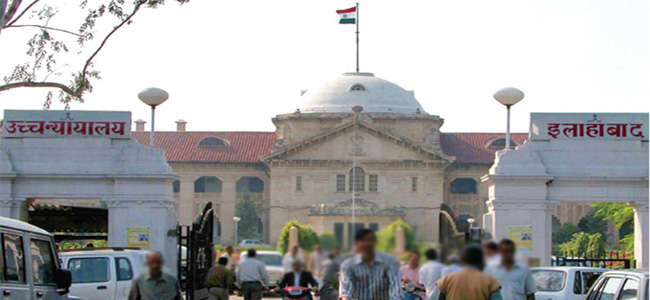
Allahabad High Court – A Walk Through History

0
personal loan default
Image Source - https://sarkarijobnews.com/allahabad-high-court-recruitment/

This article is written by Sadhvi Bhardwaj, of Indore Institute of Law, Indore. This article deals with the origin of Allahabad High Court and its present working culture.

Introduction

Allahabad High Court – Structural Organisation

The Allahabad High Court consists of the officers and officials of Registry with the apex two posts Registrar General and Senior Registrar reserving for HJS (Higher Judicial Service) officers and both the posts are filled up from amongst one of the senior most HJS officers. Registrar General is the head of all the Officers and Officials working in the High Court. The Office staff at High Court of Judicature at Allahabad is broadly divided into four Cadres:

General office Cadre – General Office cadre is the nodal cadre for handling all the administrative and judicial work in the Hon’ble court and ensuring judicial work is carried out in a streamlined and time-bound manner.

BS Cadre and PS Cadre – BS (Bench Secretary) and PS (Private Secretary) cadres are specialized cadres and are attached to Hon’ble judges to assist them in judicial proceedings and other miscellaneous work. These posts are filled through departmental examination.

Computer Cadre- It consists of officers and officials in following hierarchy:

  •        System Manager
  •        Senior System Analyst
  •        System Analyst
  •        Programmer Gr. 1
  •        Programmer Gr. 2
  •        Computer Operator A, B & C

The origin of the High Court of Judicature at Allahabad.

The High Court in Allahabad was conceived on 18.06.1866 under the Royal Charter of Her Majesty Queen Victoria i.e. The Letters Patent of 17.3.1866. It procured its present status under the United Provinces High Courts (Amalgamation Order) 1948 upheld w.e.f 19.07.1948. The High Courts Act, 1861, ordered by British Parliament, accommodated the substitution of Supreme Courts of Calcutta, Madras, and Bombay and for the foundation of High Courts in their places. It likewise accommodated the foundation of High Courts in some other piece of Her Majesty’s regions, excluded in the purview of another High Court by Letters Patent.

The High Court in Allahabad was set up by the Letters Patent of 17.03.1866 for the North Western Province supplanting the old “Sudder Diwani Adalat” of Agra, which arrived at an end on 13.06.1866. The principal Chief Justice and the Judges of the High Court of North-Western Provinces at Allahabad were named in the above Letters Patent itself. For a long time, amid 1866 to 1869 the High Court in this manner framed, kept on working at Agra and it was not before the pre-winter of 1869 when the Chief Justice first sat at Allahabad.

Establishment of the new province – Oudh

In 1834, the Upper Provinces were isolated from the Presidency of Bengal and another administration of Agra was constituted which was superseded by the North-Western Provinces in 1836. The zone of North-Western Provinces and the territory of Oudh were named as United Provinces of Agra and Oudh in the year 1902. The entire territory was set under the ward of the Governor in 1921 on the execution of India Constitutional Reforms. After the decisions of 1920, a Legislative Council was framed at Lucknow in1921 and Lucknow was made the Capital. The territory was named “Joined Provinces” in 1937.

Prior, the domains of twelve areas of Oudh, to be specific, Lucknow, Faizabad, Sultanpur, Rai Bareilly, Pratapgarh, Barabanki, Gonda, Behraich, Sitapur, Kheri, Hardoi and Unnao, which were under the British Crown were brought under the locale of the Judicial Commissioner of Oudh at Lucknow vide the Government of India Order dated 04.02.1865. In 1925 vide U.P. Act No.IV of 1925, the Chief Court of Oudh was constituted with one Chief Justice and four puisne Judges swapping the Judicial Commissioner’s Court for the above Districts. In the above foundation, two courts i.e. the High Court in Allahabad for North-Western Provinces and the Chief Court of Oudh at Lucknow, were at the same time working and were practicing the forces of the High Courts over the separate domains. The current two courts additionally alluded to in Section 219 of the Government of India Act, 1935 were amalgamated and the new High Court of Judicature at Allahabad was set up w.e.f. 26.07.1948 under the United Provinces High Courts (Amalgamation Order) 1948 which was issued in activities of forces under Section 229 of the Government of India Act, 1935.

The Amalgamation Order of 1948

The High Court of Allahabad practices supervisory justice and control over the subordinate legal by uprightness of Bengal, Agra and Assam Civil Courts Act, 1887. The Amalgamation Order 1948 in Article 3 gives that the High Court in Allahabad and the Chief Court in Oudh might constitute one High Court by the name of the High Court of Judicature at Allahabad. Article 3 of the Amalgamation Order – 1948 is quoted below: –

“As from the appointed day, the High Court in Allahabad and the Chief Court in Oudh shall be amalgamated and shall constitute one High Court by the name of the High Court of Judicature at Allahabad (hereinafter referred to as “the new High Court”)”

A plain reading of Article 14 of the Amalgamation Order, 1948, makes it clear that the Judges of the High Court might sit at Allahabad or at such different places as the Chief Justice may name with the approval of the Governor. It additionally gives that at the very least two judges as the Chief Justice every once in a while, choose, should sit at Lucknow all together exercise jurisdiction and power in regard of cases emerging in the region of Oudh region. At the end of the day, a bench of the new High Court of Judicature was named at Allahabad with another bench or bench or at the very least two judges at Lucknow just for the twelve districts of Oudh territory. Article 14 of the Amalgamation Order 1948 is reproduced herein below: –

“The new High Court, and the Judges and division Courts thereof, shall sit at Allahabad or at such other places in the United Provinces as the Chief Justice may, with the approval of the Governor of the United Provinces, appoint: Provided that unless the Governor of the United Provinces with the concurrence of the Chief Justice otherwise directs, such judges of the new High Court, not less than two in number, as the Chief Justice may from time to time nominate, shall sit at Lucknow in order to exercise in respect of cases arising in such area in Oudh as the Chief Justice may direct, the Jurisdiction and power for the time being vested in the new High Court: Provided further that the Chief Justice may in His discretion order that any case or class of cases arising in the said areas shall be heard at Allahabad.”

Late enforcement of the Indian Constitution

The Constitution of India was authorized considerably later on after the development of the High Court of Judicature at Allahabad. In this manner, the High Court of Judicature at Allahabad isn’t a making of the Constitution of India. It owes its birthplace to the High Courts Act of 1861, Letters Patent of 1866 and the Amalgamation Order of 1948. The Constitution of India, not the slightest bit condenses, adjusts or influences the expert, ward, status and the presence of the High Court of Judicature at Allahabad. It, in any case, asserts and endorses of the High Court for each State including one for the State of U.P. Article 214 of the Constitution of India in unequivocal terms gives that there might be a High Court for each State. Article 214 of the Constitution of India is reproduced below: –

Art. 214: “There shall be a High Court for each State. “The place of sitting of the High Court at Allahabad, Lucknow and such other places as the Chief Justice may appoint, may not be misconstrued to mean creating a new High Court within the same State.

The absence of permanent bench in the court.

In a reported five judges choice of the Supreme Court of India on account of Nasirudin Vs. State Transport Appellate Tribunal, AIR 1976 SC 331, the Hon’ble Supreme Court following out the historical backdrop of the High Court of Judicature at Allahabad inferred that there is no perpetual bench of the High Court at Allahabad. The benches at Allahabad and Lucknow might be changed as per arrangements of the Amalgamation Order 1948 i.e. at the attentiveness of the Chief Justice with the endorsement of the Governor. The Chief Justice of the High Court has no energy to increment or diminishing the zones of the Oudh every now and then.

The Hon’ble Supreme Court in yet another case, Federation of Bar Association in Karnataka Vs. Association of India announced in JT 2000 SC 303 completely decided that there is no principal appropriate to have a bench of the High Court at somewhere else on the ground of separation nor the foundation of the bench can be chosen the enthusiastic and wistful contemplations. The High Court itself is the most appropriate apparatus to choose whether it is fundamental and attainable to have a bench outside the essential bench. At the point when the board of trustees of judges constituted by the Chief Justice has disfavoured the foundation of a bench, the Chief Justice can’t be pressurized to take an alternate remain through strikes and disturbance.

Formation of another bench in western Uttar Pradesh

It is from the newspapers that the present Union Minister of Law, Justice and Company Affairs had kept in touch with the Chief Justice of the Allahabad High Court looking for his supposition on the development of a bench of the High Court in western Uttar Pradesh. The Chief Justice on discussion with ten senior-most Judges of the Court had rejected agree to build up another bench of the High Court, as had been done progressively by the past Chief Justices before. In this specific situation, one can’t bear to dismiss report of Justice Jaswant Singh Commission which was set up to think about the modalities, attractive quality and the achievability of constituting or making a bench of the Allahabad High Court somewhere else in the State of U.P in perspective of the long-standing interest of a bench in western piece of the State. The Commission prescribed for a circuit bench at Agra from the separation perspective of the general population of the slope area of the State who was neither one of the wells associated by street or generally with Allahabad nor were had of adequate intends to movement such long separation for prosecution. In any case, the said proposals of the Commission lost all its importance once a different State of Uttaranchal was set up by the U.P State Reorganization Act, 2000 w.e.f. 9.11.2000 for the thirteen slope regions of the State of Uttar Pradesh, to be specific, Pauri Garhwal, Tehri Garhwal, Uttarkashi, Chamoli, Dehradun, Nainital, Almora, Pithoragarh, Udham Singh Nagar, Bageshwar, Champawat, Rudraprayag, and Haridwar.

A different High Court for the State of Uttaranchal was constituted around the same time under Section 26 of the Act which enabled the President to advise the place of Principal bench of the High Court and the Chief Justice of the said High Court to tell, if important, extra place or places of sitting of the said High Court with the endorsement of the Governor. Indeed, generally, the said proposals of the Commission are of no outcome as there is nothing on record openly to demonstrate that the Government at any point acknowledged the said report.

Chief Justice of the Allahabad High Court.

The retiring age of Chief Justice is 62 years and Justice Dilip Babasaheb Bhosale is the present Chief Justice of the Court and following is the list of Chief Justices till date: –

Sl. No. Chief Justices Tenure
1. Walter Morgan (judge) 1866-1871
2. Robert Stuart 1871-1884
3. William Comer Petheram 1884-1886
4. John Edge 1886-1898
5. Louis Addin Kershaw 1898
6. Arthur Strachey 1898-1901
7. John Stanley    1901-1911
8. Henry Richards 1911-1919
9. Edward Grimwood Mears 1919-1932
10. Shah Muhammad Sulaiman 1932-1937
11. John Gibb Thom 1937-1941
12. Iqbal Ahmad 1941-1946
13. Kamala Kanta Verma 1946-1947
14. Bidhu Bhushan Malik 1947-1955
15. O.H. Mootham 1955-1961
16. Manulal Chunilal Desai 1961-1966
17. Vashishtha Bhargava 25/2/1966-7/8/1966
18. Nasirullah Beg 1966-1967
19. Vidyadhar Govind Oak 1967-1971
20. Shashi Kanta Verma 1971-1973
21. Dhatri Saran Mathur 1973-1974
22. Kunwar Bahadur Asthana 1974-1977
23. D. M. Chandrashekhar 1977-1978
24. Satish Chandra 1978-1983
25. Mahesh Narain Shukla 1983-1985
26. Hriday Nath Seth 1986
27. Kalmanje Jagannatha Shetty 1986-1987
28. Dwarka Nath Jha 1987
29. Amitav Banerji 1987-1988
30. Brahma Nath Katju 1988-1989
31. B. P. Jeevan Reddy 1990-1991
32. Manoj Kumar Mukherjee 1991-1993
33. S. S. Sodhi 1994-1995
34. A. Lakshman Rao 1995-1996
35. D. P. Mohapatra 1996-1998
36. N. K. Mitra 1999-2000
37. Shyamal Kumar Sen 8/5/2000-24/11/2002
38. Tarun Chatterjee 31/1/2003-26/8/2004
39. Ajoy Nath Ray 11/1/2005-26/1/2007
40. Hemant Laxman Gokhale 7/3/2007-8/3/2009
41. Chandramauli Kumar Prasad 20/3/2009-7/2/2010
42. Ferdino Rebello 26/6/2010-30/7/2011
43. Syed Rafat Alam 4/8/2011-8/8/2012
44. Shiva Kirti Singh 17/10/2012-18/9/2013
45. Dhananjaya Y. Chandrachud 31/10/2013-12/5/2016

Reporting and citation

The Allahabad High Court Judicature provides with private journals that report Allahabad High Court Judgements such as: –

  1.   Allahabad Criminal Cases
  2.   Allahabad Law Journal
  3.    Allahabad Daily Judgements
  4.    Allahabad Civil Journal
  5.    Allahabad Weekly Cases
  6.    Allahabad Rent Cases
  7.    Revenue Decisions
  8.    U.P. Local Bodies and Education Cases
  9.    Lucknow Civil Decisions (LCD)
  10.  Judicial Interpretation on Crimes (JIC)

Landmark decisions of the Allahabad High Court

There are plenty of cases lying under the Allahabad High Court, that are resolved or are waiting to get resolved but what had earned the court a great fame is its judicial participation in those cases which has resulted in shaping the Indian Legal System and obviously their unforgettable judgments made by the eminent jury. The court till date has delivered a number of judgments that kept the powerful ruling class in check and has played an important role in establishing the rule of law in India post-independence. Some of those are pen-down below:-

  • The Indira Verdict– Under this, the former Prime Minister Indira Gandhi was convicted by a single-judge bench of Justice Jagmohan Lal Sinha of the Allahabad High Court on 12 June 1975. Facts state that Indira Gandhi won the 1971 parliamentary election from Raebareli defeating Rajnarayan, a socialist leader. She was challenged by him on the grounds of violation of the Representation of the People Act, 1951 and electoral malpractices and was even found guilty. The court in her judgment prohibited her from contesting elections for six years and also excluded her of all electoral posts.

  • The Babri Judgement– Under the following, the Allahabad High Court ruled that Ram Lalla, the Nirmohi Akhara, and the Waqf Board will be the joint-title holder of the Ayodhya disputed land over ‘Babri Masjid-Ram Janmabhoomi’ suit and thus, the land will be divided into three settlements. This judgment was given after six years of filing suit by a special full bench of the court. The decision made was to distribute two-thirds of the disputed land to Hindu claimants, one-third to the Sunni Muslim Waqf Board. Also by the majority of 2-1, the court claimed that birthplace of Lord Ram was right beneath the central dome of the destroyed mosque.

  • The ban on ‘Caste Rallies’- The Allahabad High Court judgment over banning of caste rallies with immediate effect issuing notices to the Centre, Uttar Pradesh Government, in July 2013 was a prominent decision taken for refining politics. A bench of Justices Uma Nath Singh and Mahendra Dayal put brakes on such rallies in the most populated state of the nation via the pronouncement on a PIL lodged for the ban on rallies that target the caste of the common folk for gaining maximum votes during elections.

  • Kids to study only in ‘Government Schools’– Though the Indian Government Schools provide ninety percent (90%) children’s’ populace with the necessities required, still face the neglected situations. Looking at such, the Allahabad High Court in August 2015, gave a tremendous decision over the education of the children of all Government officials. The judgment was to send the children of all the Government authorities only to Government schools for getting educated. This was to ensure that these schools run in a good condition and the responsibility to keep a record and check of this was awarded to the Chief Secretary of Uttar Pradesh.

  • Judgment on the Triple Talaq– Of all the judgments till date, ‘Triple Talaq’ is the most controversial. At present, this atrocity has disturbed the judicial conscience and is lying pending in the apex court. However, the decision given by a single-judge bench of Justice Suneet Kumar in December 2017, is the most remarkable one. The Allahabad High Court considered the act of Triple Talaq to be cruel and unconstitutional. It impedes and drags India from being a nation and ruins the rights of Muslim wives. The court stated that no personal law can be above the Constitution and thus, has banned it.

Controversies

Being the nation’s largest high court, the Allahabad High Court has always been in the limelight due to various controversies regarding its judicature and the working of its law counselors. Some of the most recent controversial matters are discussed below:-

  • A list of 33 senior lawyers prescribed by the Allahabad high court collegium for the judgeship in the nation’s biggest high court has stirred a discussion with no less than 33% of them purportedly identified with sitting and resigned judges of the Supreme Court and the Allahabad HC. A portion of the recommended names incorporates the brother-in-law of a sitting SC judge, a first cousin of another SC judge other than children and nephews of a few previous judges of the apex court and the Allahabad HC. Altogether, no less than 10 advocates in the list of 33 are said to be identified with previous or sitting judges, other than a senior supporter who is allegedly the law partner of the wife of a senior politician in Delhi. The law ministry received several complaints from the Allahabad and Lucknow bar against the proposals and has asked the Intelligence Bureau (IB) for a record verification on every one of these legal advisors. It is likewise checking if the HC collegium has given sufficient opportunity to candidates from the SC/ST, OBC and minority networks, other than ladies. In the three arrangements of in excess of 83 recommendations made by the Allahabad HC since 2015, not very many had a place with OBC/SC/ST, ladies or the minority community.

  • The Supreme Court had issued a notice on 4 May’18 in an appeal filed by the Allahabad High Court against its own judgment dealing with the question of superintendence of the High Court over family courts. The High Court was represented by Advocates Jagjit Singh Chhabra and Yashvardhan while the matter was heard acknowledged by a Bench of Justice Ranjan Gogoi and Justice R Banumathi, which issued a notice to the respondent, Uttar Pradesh Judicial Services Association.

  • Chief Justice of India (CJI) Dipak Misra on 31 January’18 recommended the impeachment of Justice Shri Narayan Shukla, the eighth senior-most judge of the Allahabad High Court, following an adverse report about him by an in-house panel set up by the CJI. The Supreme Court noted how Justice Shukla, on September 4, even made some corrections to the September 1 order. When the impeachment motion is moved in Parliament, an investigation is conducted. If the findings of guilt are confirmed, the impeachment motion changes to removing of the judge through votes of the majority. However, the CJI has set the process in motion with a letter to the Prime Minister for the impeachment of the judge. The trigger was a scathing report of a misconduct by an internal probe into a medical college admission scam by the committee led by Madras High Court Chief Justice Indira Banerjee.

  • The Supreme Court on 22 October’18 upheld its controversial remarks that something was “rotten” in the Allahabad High Court where the “uncle judges syndrome” was rampant and needed cleansing. On 26 November’18, the remarks were made in a 12-page order while making the insinuation that several judges of the high court suffer from ‘uncle judge’ syndrome, which refers to judges passing favorable orders for parties represented by lawyers known to them. This remark was made because of the rejection of the arguments of senior counsel P.P Rao that even a clarification that some are excellent and good judges would still cause suspicion on the integrity of the judges. All this was done under the bench of justices Markandey Katju and Gyan Sudha Mishra while dismissing the Allahabad High Court’s application for expunging of the remarks.

Download Now

Fees and Time Involved in Incorporating a Private Limited Company

5
private limited company registration

In this article, Jagmohan Rana discusses the Fees and Time Involved in Incorporating a Private Limited Company in India. 

Being one of the fastest developing economies, India is home to millions of aspiring entrepreneurs. The majority of them desire to incorporate a registered company having a separate legal identity in the eyes of the law. From multiple options available like one person company, a public company, limited liability partnership and private limited, the option that is most preferred by the startups is a private limited company. This is due to numerous benefits associated with this business structure.

One major thing that refrains them from doing so is the confusion about the cost and time involved in private limited company registration. Today, with this article we will understand the time and cost involved in private limited company registration in India. To begin let us first understand the meaning of private limited company.

What is the private limited company?

Private Limited Company is a privately held business that can be incorporated with minimum 2 and maximum of 200 members. Some of the major benefits of the private limited company include limited liability, separate legal identity, the scope of foreign direct investment etc.

Features of private limited company

Some of the features of the private limited company-

Limit on members liability

In the private limited company, the liability of members is limited to their share only. Thus the members cannot be held responsible personally for meetings the liabilities of the company.

Perpetual succession

The private limited company formed is a completely distinct identity from its members in the eyes of law. Thus the life of the company never comes to end even when the life of members comes to end.

Number of directors

Only two directors are required to form the private limited company that makes it easier to form this form of company.

Separate legal identity

The legal identity of the company is completely distinct from its members. Thus a company can hold property in its name, Obtain trademark registration etc.

Factors affecting the cost of private limited company registration

The procedure of private limited company is almost same in every state. However, the cost involved in private limited company registration is different. Do you know why? This is because the stamp duty of every state is different that in turn make the cost of company registration variable in distinct states. Moreover, there are several other factors that impact the cost of private limited company registration. Below we have listed out certain factors on which the cost of company registration will depend-

  • Authorized Share Capital of the company
  • Number of Directors in the company
  • Stamp Duty of the State where the company is proposed to be registered
  • Charges are taken by professionals like CA’s or CS or Lawyers.

Procedure

Now we will understand the step by step procedure of private limited company registration in India, the cost involved in it and the time taken at each step.

Digital Signature Certificate – To start the procedure of private limited company registration the directors and subscriber to the memorandum of the company are required to obtain the digital signature certificate. This is because in order to validate the documents filed electronically attaching a valid DSC is mandatory. One thing to be noted here is that Chartered Accountants or Company Secretary are not required to obtain DSC.

Cost – For one Digital Signature Certificate, the cost is 500 Rs. As minimum two members are required to register a private limited, total cost involved in acquiring DSC becomes 1000 Rs.

Time Taken – 1 day

Directors Identification number – After obtaining DSC the directors of the company is required to apply for director identification number. It is unique number issued by the ministry of corporate affairs that is mandatory required to be obtained by every person desiring to act as a director in any company.

Cost – For each DIN 500 Rs. is government fees. Just like DSC minimum, two DIN is required to be obtained by the company. Thus, the total cost involved in this step is 1000 Rs.

Time – 1 day

Obtaining Name Approval – If you desire to seek name approval in advance you can apply for it through Reserve Unique Name form. In this form, you can provide any two unique company’s name preferences. If you desire to get the name approval in one shot make sure to select the name as per the ministry’s guidelines.

Cost – The one-time cost of filing this form is only 1000 Rs.

Time took- 1-2 days

Filing of incorporation forms – This is the final and most crucial step in the process of company registration. The major cost and time of private limited company registration are involved in this step only. Factor that plays a major role in this step is the authorized share capital of the company. In this step the various forms like spice form, MOA and AOA are required to be filed. You can get the cost details for this part from the ministry of corporate affairs website by entering the authorized share capital amount of your company. In case you select SPICE from the drop down and then enter the share capital amount for registration, it will show you the cost for filing MOA, AOA.

Cost – As the exact cost will depend upon case to the case here we provide you the estimated cost for filing these forms and obtaining PAN and TAN of the company-

  1. Stamp paper and notary charges for affidavit- 200 approx.
  2. SPICE Form – No charges.
  3. Memorandum of association- 2000 approx. However, stamp Duty Charges depending upon the state of registration.
  4. The article of Association- 300 approx. However, stamp Duty Charges depending upon the state of registration.
  5. Permanent Account Number (PAN) of the company- 107 Rs. Approx.
  6. Tax deduction and collection account number- 63 Rs. Approx.

One important thing to be noted here is that this is the approximate government cost involved in the private limited company. The exact cost will vary from state to state and other factors.

In addition to the cost mentioned above the professional charges charged by the chartered accountant or the company secretary will also be added to the cost. That will make the cost of private limited company registration in India around INR 10,000/.

Download Now

What is a Wagering Contract? Can it be enforced?

0

In this Article, Saksham Chhabra from UPES(Dehradun) discusses wagering contract and its enforceability.

WHAT IS A CONTRACT?

A contract is a voluntary, deliberate, and a legally binding agreement between two or more parties. Contracts in the general sense are usually written but they can be spoken or implied on the mutual consent of both the parties and are generally related to lease, rent, sale or employment. Under Section 2(h) of the Indian Contract Act, 1872 the term Contract has been specifically defined as an agreement which is enforceable by law. Thus, it implies that an agreement which is enforceable by law is a contract. A contract is a legal way of performing activities between two parties and making sure that neither of the party at any point of time while in the performance of the contract backs out or otherwise the other party can sue him in the court of law for the breach of Contract. The contract made between any two parties should be made in a proper manner and should have the following essentials in it to be called as a valid contract which has been defined under the section 10 of the Indian Contract Law,1872-

All Agreements are contracts if they are made by the free consent of the parties, competent to contract for a lawful consideration and with a lawful object and are not hereby expressly declared to be void”. (see more)

ESSENTIALS OF A VALID CONTRACT:

  1. offer and acceptance,
  2. legal intention and relationship of parties,
  3. lawful consideration,
  4. lawful object,
  5. possibility of performance,
  6. free consent,
  7. certainty,
  8. not expressly declared void,
  9. writing and registration formalities,
  10. parties capacity to contract.

Thus, when two parties enter into an agreement with an intention to hold the other party liable in case of non-performance, the agreement automatically becomes a contract.

WHAT IS A WAGERING CONTRACT?

When we talk about contracts we come across various types and kinds of contracts such as Quasi-contracts, Implied contracts, Expressed contracts and many more. One such type of contract is known as Wagering Contract. Wagering Contract is one in which there are two necessary parties between which the contract has been made and wherein, the first party promises to pay a certain sum of money to the second party on the happening of a particular event in the future and the second party agrees to pay to the first party on not happening of that particular event. The basic fundamental of a wagering agreement is the presence of two parties who are of sound mind to get profit or loss. A Wager in the common language means Betting or Gambling. The basic meaning of the term wager is betting. Section 30 of the Indian Contract Act specifically talks about agreements by way of wager, as void. The section read as follows:

Agreements by way of wager are void and no suit shall be brought for recovering anything alleged to be won on any wager, or entrusted to any person to abide the result of any game or other uncertain events on which any wager is made.” (see more)

Carlill vs Carbolic Smoke Ball co.(1893): This is the only case law which has defined a wagering contract in the most expressive and encompassing way. It States as follows:

One by which two persons, professing to hold opposite views touching the issue of a future uncertain event, mutually agree that, dependant on the determination of that event, one shall win from the other, and that other shall pay or hand over to him, a sum of money or other stake; neither of the parties having any other interest in that contract than the sum or stake he will win or lose, there is no other consideration for making of such contract by either of the parties. If either of the parties may win but cannot lose or may lose but cannot win, it is not a wagering contract”. (see more)

Image Source – https://en.wikipedia.org/wiki/Carlill_v_Carbolic_Smoke_Ball_Co

Thus, it can be stated that all wagering agreements are contingent agreements but all contingent agreements are not wagering agreements. Thus in the simple language, we can understand that a wagering contract is a futuristic contract which is based upon the happening of a certain event in the future. A wagering contract may or may not be imposed depending upon the circumstances in the future.

HISTORY OF LAW RELATED TO THE CONCEPT OF WAGER:

Since the primitive times when there were cases in British India, the law that related to the wagers was the common law in England governed it but then in 1848, the Wagers Avoiding Act came into force. Earlier, it was regarded that any action of the wager may be maintained if it was not against the personal feelings of the third person with evidence and that it was in contradiction to the public policy. When we discuss the concept of gambling and betting we know that this kind of activities existed in our country from the olden ages which were not adopted in England and were boycotted. These types of activities have not been specifically mentioned under the Indian Contract Act or the Hindu law in general and thus these type of activities are considered as illegal and are not been protected under the ambit of our Indian constitution under Article 19 or Article 301.

Also in the case of Chimanlal Purshottamdas Shah vs Nyamatrai Madhavlal(1985), a new dimension was given to the term Wager which follows, ”The essence of Gambling and Wagering is that one party is to win and the other to lose upon a future event which, at the time on track, is of an uncertain nature- that is to say, if the event turns our own way, A will lose; but if it turns out the other way, he will win”. (see more)

TYPES OF WAGER:

I. Moneyline Betting:

This type of betting is one of the easiest types of betting. Betting through money line is very simple as it is done only on sports competitions and games and it is totally based upon the outcome/result of the match. This type of betting is illegal and this type of activity has been mostly seen in cricket that to the highest in the Indian Premier League.

II. Spread Betting:

This type of wager/ betting takes place where the person who is placing the bet on the most favored team playing in the match to win the match by a certain margin or on the team which is regarded as the underdog for it to win or even if it loses then with a very close margin.

III. Over Betting:

This type of betting is done in the game where the better places his bet on the total of number score or total of goals scored by both the teams through a combination of the certain number and which is totally a futuristic event uncertain and nobody has control over it.

IV. Under Betting:

This type of betting takes place when the better places his bet on the condition that the combination of the total number of goals and pints that are scored by both the teams will be less or under a certain limit. This type of wager is also related to the final outcome of the game.

V. Prop Betting:

This type of betting is very unique and creative in nature as it is not related to the final result of the game. In this case, the better places his bet on something like the first half of the game or like whether there will be a super over in a cricket game etc. thus, this is also known as prop betting.

ESSENTIALS OF A WAGERING CONTRACT:

1.Equal opportunity:

One of the main points in a wagering contract is that there should be an equal chance for both to either win or lose depending upon the outcome of the future event.

2.Uncontrollable:

These events are futuristic which may or may not take place and it should be beyond the control of either of the party because if either of the party has control over it then it would not amount to wager.

3.No Outside Interest:

Both the parties should have a single interest as to the profit or loss in the result of the event and there should not be any outside or personal interest attached with the uncertain event as that will not amount to wager as well.

4.Dependency:

The wager agreement is fully dependent upon the happening of the futuristic event whether it is contrasted with the past, present or future as to the result of that event.

5.Promise:

The wager contract should contain an important clause which should state that the parties promise to pay the money or money’s worth to the other party on the happening of the event and this should be agreed upon by both the parties.

DIFFERENCE BETWEEN WAGER AGREEMENT AND CONTINGENT CONTRACT:

WAGER CONTRACTS CONTINGENT CONTRACT
1)All wager contracts are void. 1)Contingent contracts are not void.
2)Wager contracts come under the ambit of Contingent contracts and thus is a narrow concept. 2)These contracts cover the concept of wager contracts and is a wider concept.
3)The happening of the uncertain event is the sole condition of the wagering contract. 3)The happening of the event is not the sole condition of the contingent contracts.
4)The parties have only one interest in the contract i.e the winning or losing depending upon the outcome. 4)The parties have there personal and other motives attached to the contract except for the profit or loss.
5)The parties are required to keep mutual promise under the rules of the wagering contract. 5)The parties are not required to keep mutual promises under the contract.

CAN A WAGERING CONTRACT BE ENFORCED?

The Effects and Enforceability of a wagering contract can be understood by the concept that under the Indian Contract Act it has been explicitly declared as a void ab initio and thus even section 65 of the Indian Contract Act does not apply to it as the contract is void but there is nowhere mentioned that these type of contracts have been forbidden by the law, which again implies that except the state of Gujarat and Maharashtra the wagering contracts are void and are legal in the other states. Thus, these agreements by way of wager are void and thus no suit can be brought for recovering anything alleged to be won on any wager or entrusted to any person to abide by the result of any game or any other such uncertain event on which any wager is made. This was also seen in the case of Badridas Kothari v. Meghraj Kothari AIR 1967 the court held that although a promissory note was executed for the payment of the debt caused through wagering transaction, the note was not held enforceable. Thus, the winner cannot recover the money, but before it is paid to him the depositor recover from the stakeholder. Also, it was also seen in the case of GherulalParekh v. MahadeoDas 1959 AIR 781 the honorable supreme court in its judgment said that although a wager is not unlawful under Section 23 of the Indian Contract Act and thus all the proceedings and transactions collateral to the main transaction are as such enforceable.

EXCEPTIONS TO THE WAGER AGREEMENT:

As per the Indian Contract Act Section 30 states that there are also certain exceptions in the wagering agreements and thus the section read as follows:

This section shall not be deemed to render unlawful a subscription or contribution, made or entered to into for or towards any plate, prize or sum of money, of the value or amount of five hundred rupees or more, to be awarded to the winner of any horse race. Nothing in this section shall be deemed to legalize any transaction connected with horse- racing, to which the provisions of section 294A of the Indian Penal Code shall apply”. (see more)

Since a wagering contract is a void contract, thus there are certain exemptions to it which are as follows:

1. Showcase of talent is not a wager:

Using your talent or skill in front of people in some competition will not amount to wager(such as sports competitions, puzzles etc), but there is a winning the prize depend upon mere possibility then it will amount to wager. In the eyes of law prize competitions do not amount to wager but if the amount is not reasonable then it would amount to gambling and it will automatically become void.

2.Share Market:

The transactions that take place under the share market shall not amount to wager where the shares are bought and sold and mere delivery of shares from one person to another will not be regarded as the wager.

3.Horse race competition:

Sometimes, the state government may authorize certain horse race competition if the local laws permit it and if the people contribute with a sum of RS 500 or more towards the prize money which is to be given to the winner of the horse race then it will not consider a wager.

4.Insurance Contracts:

The contracts of insurance are not wagering at all because these are contracts of Indemnity. These contracts are entered upon to safeguard and protect the interest of one party from any damage hence it is not a wager.

5.Commercial transactions:

The Agreements that are done for sale and purchase of any commodity that is to be used on a commercial base in which there is genuine intention to do legitimate businesses which are valid and if they intend to do so they are required to pay the difference.

CONCLUSION

Under Section 30 of the Indian Contract Act, the term Wager has not been defined and it does not even define about wager agreement it only says that such agreements are void with the proviso of section 294A of the Indian Penal Code. The Indian lawmakers have never made any amendments in this section to define such terms ever since this law came into force and up till now, the section is silent on many things which are necessary to be defined specifically. So, we can only wait for the lawmakers to amend the following section and break the ambiguity on many things which have caused a lot of problems for the judiciary to decide many cases in the past. Thus, it seems a matter of urgent importance to bring the necessary amendments in the act.

REFERENCES

  1. The Indian Contract Act
  2. https://indiankanoon.org/doc/447653/
  3. https://indiankanoon.org/doc/1295756/
  4. https://indiankanoon.org/doc/786123/
  5. https://indiankanoon.org/doc/930662/
  6. https://indiankanoon.org/doc/399853/
Download Now

From humble beginnings – The Story of MNLU

0
MNLU

Mitali Agarwal is a student of the founding batch of MNLU Mumbai. Her academic areas of interest are Criminal law and Economics. She is a judicial service aspirant. Sketching, cooking and poetry are her co-curricular interests.

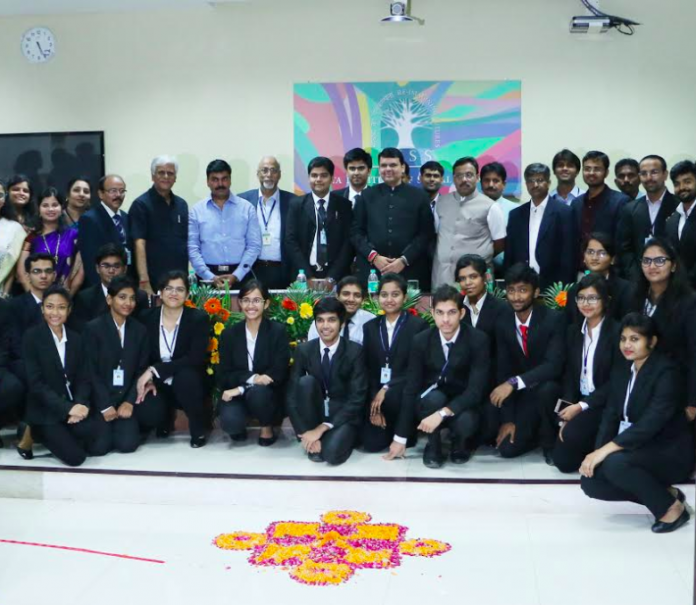
From whining about eight people in the hostel room, bad mess food, the incessant bureaucracy of a state-run University, to endless struggle of a nascent University, we somehow grew a lot in three years to become a close-knit family of some 160 diverse bunch of students. Now merely two years remaining for the first batch to graduate, we as a University have come a very long way. Only yesterday did we have a humble beginning from a single classroom at the beautiful campus of distinguished TISS Mumbai, with eminent speakers from across the country interacting with the first batch of students within the very first week. Now having moved on to a bigger temporary campus of CETTM MTNL Mumbai, we have accomplished various milestones on the way.

Every time we have expressed our concerns about lack of seniors, an alumni base, a permanent campus, inadequate funding and even some basic facilities, we have been reminded constantly of the difficult journey of the sister NLUs especially NLSIU. The students are fondly called “The partners in the making of MNLU” by our founding Vice-Chancellor, Prof. (Dr.) Bhawani Prasad Panda; and from the very start, the students in synergy with the administration and faculty have put their best efforts in every endeavour. Nothing has been served to us on the silver platter in the last three years and it has been a relentless struggle at MNLU Mumbai. Our modest beginnings, however, did not impede us from exceeding all expectations and carve a niche for MNLU Mumbai. One of our Professors rightly says, “Hard learning is always the best learning”, and the challenges we face have only made us stronger and prepared for the ruthless world outside. The last academic year especially has been noteworthy in the progress of the University due to the remarkable efforts of all the three batches along with the support of the faculty and the administration.

The University has successfully organized two successive students exchange program with Berlin School of Economics and Law (BSEL) Germany in 2017 and 2018. The outreach of the University has substantially expanded with eminent legal luminaries from the academia, the bar and the bench, partners of major law firms visiting the University to interact with the students. The administration has been working tirelessly to secure best internships for the students and the students of the first batch are scheduled to intern with major law firms like Shardul Amarchand Mangaldas, Cyril Amarchand Mangaldas, J Sagar, Khaitan, S&R Associates among few this summer. The students have been performing exceptionally well at national and international Moot Court and ADR Competitions this year. The major Moot Court Competition feats include –  

  • Runners Up trophy in the 7th RGNUL National Moot Court Competition;
  • Best Researcher and Semi-Finalists consecutively in in the 16th and 17th Henry Dunant Moot Court Competition;
  • Best Speaker and Best Researcher in NHRC-SGLC All India Moot Court Competition;
  • Best Researcher in the 2nd Gurjeet Singh Memorial National Moot Court Competition;
  • Runners-up in 7th RGNUL National Moot Court Competition;
  • Quarter finalists of the ICC Moot Court Competition 2018 India National Rounds;
  • Semi-finalist in 2nd Maharishi Markandeshwar National Moot Court Competition,
  • 14th Nani Palkhivala Memorial National Taxation Moot Court Competition,
  • Osmania University Moot Court Competition Hyderabad,
  • 8th Paras Diwan Memorial International Energy Law Moot Court Competition UPES Dehradun and
  • 3rd SK Puri Memorial National Moot Court Competition.

The University also secured three prestigious international representations in ADR competitions – MNLU Mumbai being one of the only two institutes from Asia and out of eleven institutions worldwide, selected in mediation category of IBA-VIAC CDRC Vienna Mediation and Negotiation Competition to be held in Vienna. Further, the students won both the negotiation and mediation competition of the Negotiation Mediation Client Counselling Competition (NLS NMC) 2018 and qualified to represent the University respectively at the International Rounds at Cardiff, Wales, 2018 and 14th ICC Mediation at Paris to be held in 2019. Further, the University also won the National Negotiation Competition at the 2nd VIPS Dispute Resolution and Client Consultation Competition, Delhi; Second runner-up, and the semi-finalist at the IV RMLNLU National Mediation Competition, 2018; Runner-up Mediator Lex Infinitum, 2018 and the Upcoming Negotiating Team Lex Infinitum, 2018.

A National conference on “Regulatory Challenges to Business in India” was also conducted successfully by the University. Further, A Training Program on Mediation and Negotiation was conducted in collaboration with Peace Keeping and Conflict Resolution Team (PACT). The University also hosted the South Asia-Pacific Rounds of The NILS Business & Human Rights Moot Court Competition 2018. The University also organised various roundtable discussions and workshops on “Establishment of the Centre of Excellence in Maritime Law and Allied Matters” in association with Directorate General of Shipping; “Challenges to Criminal Justice Administration in the State of Maharashtra”; “Implementation of the Transplantation of Human Organs and Tissues Act, 1994” in association with The Regional and State Organ and Tissue Transplant Organisation (ROTTO-SOTTO) Western Region; “Transnational Crimes with Special Focus on Human Trafficking” in collaboration with International Justice Mission (IJM).

MNLU Mumbai is no exception when it comes to the struggles of a budding University. We have had our own shares of ups and downs like the students of any other University which shall continue for times to come as well. We have come a long way and certainly, there are miles to cover. As long as we are determined to grow irrespective of the logistical and administrative issues, even sky is not the limit.

Download Now

Non-filing of Annual Returns and Financial Statement to the Registrar of Companies – An Analysis

0
non-filing

In this article, Animesh Tiwary, pursuing Diploma in Entrepreneurship Administration and Business Laws from NUJS, Kolkata discusses on non-filing of Annual Returns and Financial Statement with RoC.

Introduction

The Companies Act, 2013 lays down provisions containing certain rules and regulations which a ‘company’ whether public or private limited has to abide by, right from the initial stage of ‘incorporation’ to the final stage of ‘dissolution’. This has been done in order to encourage transparency and high standards of corporate governance. The directors of the company need to inform the ‘Registrar of Companies’ (hereafter referred as “ROC”) of any material change in the financial, legal or managerial status of the company since the further directions of the ROC depends on this information. Section 92 and Section 137 of the Act mentions the mandatory filing of the annual return and financial statement of the company before the ROC within a stipulated time as has been prescribed under the Act.

Provisions Relating to the Annual Filings made to RoC under the Act

Section 92

This section talks about the filing of the annual return to ROC. According to this, it is mandatory for every company to file a copy of the annual return within 60 (sixty) days from the date on which Annual General Meeting (AGM) or 60 (sixty) days within the date on which the AGM was scheduled to be held or should have been held in cases where the company failed to conduct an AGM along with the statement specifying the reason for the same accompanied with the fine imposed under Section 403 of the Act. (Ministry of Corporate Affairs, 2013)

(1)  The ‘annual return’ of the company must contain information in the Form MGT-7 (e-form) as has been prescribed under the Act. This information includes following as they are at the close of the financial year such as: –

  1. The registered office of the company, information about its holding, subsidiary and associate companies and principal business activities;
  2. The pattern of its shareholding and shares, debentures and other securities;
  3. the indebtedness of the company;
  4. members and debenture-holders of the company accompanied with changes made from the close of the previous financial year;
  5. promoters, directors, key managerial personnel of the company accompanied with changes made from the close of the previous financial year;
  6. meetings of the members, Board and its different committees accompanied with their attendance details;
  7. remuneration of directors of the company and its key managerial personnel;
  8. penalty or punishment imposed on the company, its directors or officers of the company and details of compounding i.e. settlement of offences and the appeals made against such penalty or punishment;
  9. information regarding shares held by or on behalf of the foreign investors along with their names, addresses, countries of incorporation, registration and percentage of shares held by them;
  10. such other matters related to the company as may be mentioned and must be signed by a director and the company secretary, or by a company secretary in practice;

(2) In case when the annual return is filed by a listed company or, by a company having  paid-up capital and turnover as may be allowed under the Act, that company shall obtain certification by a company secretary who is currently practicing, in the mentioned form under the Act, declaring that the annual return mentions the facts correctly and ensure that the company has followed all the provisions of this Act.

Section 137

It deals with the filing of the financial statement by the company. According to this, a copy of financial statement which may include consolidated financial statement approved and adopted at AGM of the company, with all the other documents required to be attached with such statement, must be filed before the office of ROC within 30 (thirty) days of date of the AGM held by the company. This filing must be done through Form AOC-4 (e-form). (Ministry of Corporate Affairs, 2013)

In case, there is no AGM held by the company, then it may file the financial statement with such additional fees within the time prescribed under Section 403 of the Act.

Section 403

This section of the Act is concerned with the fees required for filing of the annual return or financial statement u/s 92 and 137 before the office of ROC. This section also specifies the time period within which any document, fact or piece of information is required to be submitted, filed, recorded or registered before the ROC under the Act. The time period specified is 270 days from the date by which it should have been submitted, filed or registered. (Ministry of Corporate Affairs, 2013)

Non-compliance with Section 92 and Section 137 by the Company

Section 403(2) of the Act states that where a company commits any default or fails to submit, register or file the document within expiry of time along with the prescribed additional fee, the company and its officers who are responsible for such default will be held liable for the penalty or punishment for such failure.

Therefore, if a company or its officers does not comply with above-mentioned provisions, then penalty or prosecution under Section 92 (5) and Section 137 (3) shall be initiated against them.  

Section 92 (5) deals with penal provision for companies. It suggests that if a company fails to file its annual return under sub-section (4), before the expiry of the period specified u/s 403 with additional fee, the company shall be punishable with fine which shall not be less than ₹50,000/- but which may extend to5,00,000/- and every officer of the company who is in default shall be punishable with imprisonment for a term which may extend to six months or with fine which shall not be less than ₹50,000/- but which may extend to ₹5,00,000/-, or may be both.

Similarly, Section 92(6) deals with the penal provisions listed for the officer who is in default. It states that if the company secretary in practice with the company certifies the annual return and advices against the provisions mentioned under the act, he shall be punishable with fine which shall not be less than ₹50,000/- but which may extend to ₹5,00,000/-. (Goyal, Implication of Non-filing of Company Annual return, 2016)

Suggestions Of J. J Irani Committee

However, after the enactment of the new Companies Act in 2013, certain concerns were raised by various stakeholders that such penalties and punishment prescribed under the new Act is ‘disproportionate’ due to various reasons. Therefore, in order to look after these concerns, a committee under J. J Irani was formed. Their report suggested that “the Companies Act may lay down the maximum as well as minimum quantum of penalty for a particular offence, however the Act should also contain provisions for the levying authority while imposing any penalty taking into consideration the size of company, nature of business, injury to public interest, nature and gravity of default, repetition of default, etc.”

Moreover, the Standing Committee on the Companies Bill, 2009 in its 21st report had also stated that “transgressions, purely procedural or technical in nature, should be viewed in a broader perspective, while serious non-compliance or violations including fraudulent conduct should invite provisions like imprisonment which is hard and may at as a deterrent for others.” There have been cases internationally, where companies which are of a smaller size in terms of their business undergo a separate and more liberal penalty and compliance regime whereas companies with a relatively larger size.

Therefore, in view of the above, the committee observed that small businesses need encouragement which can be provided to them by laying down a more liberal regulatory regime and reducing punishments wherever they are found unreasonable. Further, the Committee felt that “the procedural and technical non-compliances due to reasons such as lack of professional guidance should attract less stringent punishments as compared with violations for substantive requirements.” The Committee also observed that as per the scheme of the Act, most of the offences which are punishable with fine or imprisonment or both are technical/procedural in nature, and thus, for the ease in administration and regulation of the Act, the old provisions of the previous Act relating to compounding may be reinstated. Therefore, under sub-section (1), the Tribunal should have the power to compound offences punishable with fine as well as offences punishable with imprisonment or fine or both. (Tax Management India, 2016)

Exemptions for certain provisions under Section 92 and Section 137

The Ministry of Corporate Affairs has introduced certain exemptions/relaxation/adaptations to some of the provisions of the Companies Act, 2013 through its notifications dated 5 June 2015. The exemption has been provided for following a class of companies- Private companies, Companies formed with charitable objects, Government companies. The exemptions related to Section 92 and Section 137 has been stressed here. Exemptions made for companies under Section 92(1)(g) and the proviso to Section 92(1)

Every company is, currently, required to prepare an annual return which contains information as they stood at the end of the financial year, which includes remuneration of directors and key managerial personnel of the company.

Moreover, in cases of a one-person company (OPC) and small company, such annual return must be signed by the company secretary or by the director of the company.

Now, few amendments have been brought which provide for a private company that are small companies which are required to provide the details of the aggregate i.e. amount of remuneration drawn by the directors instead of providing details of remuneration of directors and key managerial personnel of the company.

Compounding of Offence under Sections 92 And 137

ROC has the power to issue show cause notice to the companies which fail to file the return within 270 days. He can ask the company to file the forms and compound the offence under the sections through Section 441 and ask the company to provide the reason for the same.

In these circumstances, companies have a remedy for escaping penalties and prosecution i.e. compounding of offences. Compounding is a compromise or arrangement between the regulator of the enactment and person committing an offence. Since for a compounded offence, no penalties and prosecution can be charged. (P P Varkey v. STO, 1999)

According to Section 441(1) of Companies Act, Notwithstanding anything contained in the Code of Criminal Procedure, 1973, any offence punishable under this Act (whether committed by a company or any officer thereof) with fine only, may, either before or after the institution of any prosecution, be compounded by the Tribunal; or where the maximum amount of fine which may be imposed for such offence does not exceed ₹5,00,000/-, by the Regional Director or any officer authorized by the Central Government.

However, a company can apply for compounding only if it has not defaulted on the filing. Therefore, in case of late filing, the company needs to file both the e-forms i.e. AOC-4 and MGT-7 before the office of ROC with additional fees u/s 403. Once the default stops, the company need to go for compounding of offence starting from 31st or 61st day from the date of AGM till the date of filing of forms with ROC as the case may be. (Goyal, 2016)

It has been further reiterated by the court in a similar case that once compounding of an offence is done, neither the assesses nor the department can challenge such compounding order. (S Viswanathan V. State of Kerala, 1993)

Amendments Introduced as per Companies (Amendment) Act, 2017

In regards to the concerns raised by various stakeholders including company representatives and regulating authorities, certain amendments have been proposed in the Companies Act, 2013 in the form of Companies (Amendment) Act, 2017. The Companies (Amendment) Bill, 2017 was passed by both the Houses of Parliament before receiving the assent of President to become an Act on 3rd January 2018. Few amendments introduced with respect to non-filing of the annual return and financial statement have been mentioned below:

Section 92

The new Act has omitted the subclause (c) of Section 92(1) which is related to ‘indebtedness’ of the company. It has also modified subclause (j) which held that details of foreign institutional investor holding shares of the company must be mentioned. Now, details like their name, address, country, registration, etc. have been omitted.

Moreover, a proviso is added for a one-person company (OPC), small company or any other such company which has provision to introduce an abridged form of annual return.

Also, now the companies have to give a web-link of annual return in Board’s report and publish the same in their websites.

Section 137

The new Act proposes that references of within the time specified u/s 403 of the Act is omitted from this section. Now, there will be no mention of Section 403 anywhere in this section.

In this section, there is a proviso after the fourth proviso, an exemption is provided to holding company from attaching the audited financials of its foreign subsidiary company, in case if the foreign subsidiary company is not required to prepare the audited financials as per rules of the country of incorporation. Now, attachment of unaudited financials will be treated as sufficient compliance. However, it must be in the English language.

Section 403

An increase in the late fee has been proposed in the new Act for the delay in filing the annual return and financial statement before the office of ROC (u/s 92 and 137 respectively). The additional fee will be not less than ₹100 per day, however, will differ from a class of companies.

The company will file the documents such as annual return and financial statement with an additional late fee, without prejudice, in cases of delay in such filing before ROC and such company and its officers responsible for the same must be held liable for penalties and prosecution, without any prejudice. 

Conclusion

We can conclude from the above that there are several provisions which regulate the conduct of the company in matters of filing of information such as annual return and financial statement under Sections 92 and 137 respectively, mentions the guidelines for filing and lays down the impact of non-compliance of the same in the form of penalties and prosecution. However, a company can be absolved from such penalties and prosecution through compounding of offence under Section 441(1) provided it is notwithstanding anything contained in CrPC, 1973. Therefore, it is suggested that a company failing to make filings before ROC within 300 days must go for compounding of the offence i.e. a compromise or settlement with the regulating authorities in order to save itself from future prosecutions. The Government has also tried to provide some relief to the companies and reduce some complexities of the former Act by introducing amendments in the form of Companies (Amendment) Act, 2017.

Download Now

Voluntary Liquidation under the Insolvency and Bankruptcy Code, 2016

0
Voluntary Liquidation under the Insolvency and Bankruptcy Code, 2016

In this article, Navdeep Baidwan discusses Voluntary Liquidation under the Insolvency and Bankruptcy Code, 2016.

Up until now, there was no single legislation in India to deal with insolvency and bankruptcy. Provisions relating to insolvency and bankruptcy of companies could be found in the Sick Industrial Companies (Special Provisions) Act, 1985 (SICA), the Recovery of Debt due to Banks and Financial Institutions Act, 1993, the Securitization and Reconstruction of Financial Assets and Enforcement of Security Interest Act, 2002 (SARFAESI) and applicable provisions of the Companies Act, 1956/ 2013. The aforesaid legislations provide for multiple authorities viz., Board of Industrial and Financial Reconstruction (BIFR), Debt Recovery Tribunal (DRT) and National Company Law Tribunal (NCLT) to adjudicate upon and decide on matters pertaining to insolvency and bankruptcy of companies. Having said that, voluntary liquidation of companies was governed by the applicable provisions of the Companies Act, 1956.

Voluntary Liquidation under the Insolvency and Bankruptcy Code, 2016

The Central Government on March 30, 2017, inter alia notified, Section 59 of the Insolvency and Bankruptcy Code, 2016 (hereinafter referred to as the “Code”) which deals with voluntary liquidation of corporate entities. Subsequently on March 31, 2017 the Insolvency and Bankruptcy Board of India (“IBBI”), notified the Insolvency and Bankruptcy Board of India (Voluntary Liquidation Process) Regulations, 2017 (the “Regulations”). The provisions of voluntary liquidation and the Regulations were made effective from April 1, 2017.

Erstwhile provisions

Preceding to the aforesaid provisions, voluntary liquidation process was governed by the provisions of the Companies Act, 1956, more specifically Section 482 to Section 530. Until then the provisions contained in the Act of 2013 had not been enforced. Subsequently by virtue of notification of the Eleventh Schedule of the Code with effect from November 15, 2016, various winding up provisions contained in the Act of 2013 had been amended and voluntary winding up sections under the Act of 2013 were omitted and the provisions of the Act of 1956 continued to apply in relation to voluntary winding up proceedings before various High Courts in the country.

Jurisdiction over proceedings of Voluntary Liquidation of Companies

Period Prior to April 1, 2017 Post April 1, 2017
Authority on which power has been vested to deal Jurisdictional High Court Jurisdictional National Company Law Tribunal
Legislative application The applicable provisions of the Companies Act, 1956 Section 59 of the Code read with the Regulations.

Invoking Voluntary Liquidation process

In terms of the Code, a Corporate Person[1] may initiate a Voluntary Liquidation process if it satisfies the following conditions:

  • the Corporate Person should not have committed any default;
  • majority of the directors or designated partners of the Corporate Person make a declaration[2] verified by an affidavit stating that each of the directors have made full enquiry into the affairs of the company, basis which they have formed an opinion that (i) the Corporate Person has no debt or it will be able to pay its debts in full out of the sale proceeds of its assets under the proposed liquidation; and (ii) liquidation is not initiated to defraud any person;
  • the Corporate Person shall within a period of 4 weeks from the date of declaration pass a special resolution, approving the proposed Voluntary Liquidation;
  • Where the Corporate Person owes any debt to any person, creditors representing two-thirds in value of the debt shall consent to the Contributories’[3] Resolution within 7 (seven) days of its passage (Creditors’ Approval).

Liquidation Commencement Date

The Voluntary Liquidation process shall be deemed to have commenced from the date of passing of special resolution approving the proposed Liquidation and subsequent approval of the creditors (if required).

Effect of Liquidation form Liquidation Commencement Date

The Corporate Person shall from the Liquidation Commencement Date cease to carry on its business except to the extent as required for the purposes of winding up its business. However, the Corporate Person shall continue to exist unit the Adjudicating Authority[4] passes an Order giving effect to the Liquidation.

Appointment and remuneration of Liquidator

The Liquidator so appointed shall be independent of the Corporate Person. A person shall be considered independent of the Corporate Person, if he-

  • Is eligible to appointed as an independent director on the board of the Corporate Person under section 149 of the Act of 2013, where the Corporate Person is a Company ;
  • Is not a related party within the meaning of Section 188 of the Act of 2013;
  • Has not been an employee or proprietor or a partner- (i) of a firm of auditors or company secretaries or cost accountants or cost auditors of the Corporate Person; (ii) of a legal or consulting firm, that has or has had any transactions with the Corporate Person contributing ten per cent or more of the gross turnover of the firm.

Additionally, remuneration payable to the Liquidator shall form a part of the Liquidation process.

Powers and duties of Liquidator

In terms of Section 35 of the code, Liquidator shall inter alia have the following power and duties:

(a)      to verify claims of all the creditors;

(b)     to take into his custody all assets, property, effects and actionable claims of the corporate person;

(c)      to evaluate the assets and property of the corporate person in the manner as may be specified by the Board and prepare a report;

(d)     to take such measures to protect and preserve the assets and properties of the corporate debtor as he considers necessary;

(e)      to carry on the business of the corporate debtor for its beneficial liquidation as he considers necessary;

(f)      to sell the immovable and movable property and actionable claims of the corporate person in liquidation by public auction or private contract, with power to transfer such property to any person or body corporate, or to sell the same in parcels in such manner as may be specified;

(g)     to invite and settle claims of creditors and claimants and distribute proceeds in accordance with the provisions of this Code;

(h)     to obtain any professional assistance from any person or appoint any professional, in discharge of his duties, obligations and responsibilities;

(i)      to perform such other functions as may be specified by the Board

Public announcement of Liquidator

Liquidator shall make public announcement in ‘Form A‘ of Schedule I within 5 days of his appointment inviting stakeholders to submit their claims due to the Company within 30 days from the date of his appointment.

“Public announcement shall be published in –

(a) English and Regional Language Newspapers;

(b) website of the Company, if any;

(c) website designated by the Board.

[Newspaper shall be widely circulated at the location of the registered office as well as the and principal office]”

Claims by stakeholders

Every stakeholder shall submit their Statement of Claims to the liquidator within 30 days from the commencement of Liquidation.

By operational creditors shall include a person to whom a corporate debt is owed. In terms of Section 5 (21) -operational debt means a claim in respect of the provision of goods or services including  employment or a debt in respect of the repayment  of dues  arising  under any law for the time being in force and payable to the Central Government, any State Government or any local authority. In form B
By financial creditors Shall include a person to whom a financial    debt is owed. In terms of Section 5(8), financial   debt means a debt along with interest, if any,     which is disbursed against the consideration for the time value of   money   and   includes   items referred  to  in  sub-clauses  (a) to (i) of Section 5(8). In Form C
By workmen and employees Shall include any person claiming to be a workman or employee of the Corporate Person In Form D/E as the case may be
By other stakeholders Shall include any person other than a operational creditor, financial creditor, or workman/ employee claiming to be a stakeholder of the Corporate Person In Form F

On receipt of claims, the Liquidator would verify the claims within a period of thirty days’ from the last day of receipt of claims and may either accept or reject the claims, in whole or in part. The reasons for acceptance or rejection of the claim shall be writing and shall be communicated to the Corporate Person within seven days.

Realization of assets, Proceeds of Liquidation and distribution of proceeds

Realization of Assets by the Liquidator


The Liquidator shall value and sell all assets of the Corporate Person in such manner and mode as the Corporate Person may require. Moreover, the Liquidator shall endeavor to recover and realize all assets of and dues to the Corporate Person in time-bound manner .
All monies to be put in a separate bank account A separate bank account in the name of the Corporate Person followed by the words ‘in voluntary liquidation’, in a scheduled bank for receipt and distribution of all money in furtherance of the Voluntary Liquidation process shall be opened.
Distribution


Proceeds from realization to be distributed within six months form the date of receipt to the stakeholders.

Completion of Voluntary Liquidation process and preparation of final report

Liquidator shall endeavour to complete the liquidation process within 12 months from the date of commencement of liquidation process. “Upon completion of the liquidation process, the liquidator shall prepare the Final Report consisting of (a) audited accounts of liquidation, showing receipts and payments pertaining to liquidation since its commencement; (b) statement demonstrating that assets of the corporate person are disposed off, debts are satisfied and no litigation is pending against the corporate person and (c) a sale statement in respect of all assets realized.

Adjudicating Authority to effectuate Liquidation process

Upon completion of the Liquidation process and subsequent preparation of the final report, the Liquidator shall make an application to the NCLT in form NCLT-1 for dissolution of the Corporate Person. The Adjudicating Authority shall then fix a date for the hearing of the petition/ application. Where the NCLT is satisfied with the application, it shall pass an order that the Corporate Person be dissolved from the date of that order.

Limited liability of the Directors of the Corporate Person

The liabilities of a Directors of the Corporate Person shall not continue to post its dissolution, except in such cases where the Liquidator and/ or the Adjudicating Authority have opined that the dissolution process was initiated to fraud and deceive any person and/ or the creditors.

Allied risks and liabilities

Any person[5] who initiates the voluntary liquidation proceedings with the intent to defraud any person shall be punishable with a minimum penalty of one lakh rupees which may extend to one crore rupees. It is a well-founded principle of law that a fraud vitiates all underlying transactions. Where the Adjudicating Authority is of the view that the directors of the company who have initiated the voluntary liquidation proceeding with the intention to defraud any person, the entire liquidation process would be suspended/ rendered void.

Further, where during the liquidation process, the Liquidator is of the view that the business of the Corporate Person has been carried out with the intent to defraud the creditors of the Corporate Person, or for any other fraudulent purpose, the Liquidator may make an application in terms of the NCLT Rules to the Adjudicating Authority, upon which the Adjudicating Authority may pass an order that such persons who were knowingly parties to the carrying out of the business in such fraudulent manner shall be liable to make such contributions to the assets of the corporate person as it may deem fit.

Moreover, Where the Liquidator is of the opinion that the Corporate Person will not be able to pay its debts in full from the proceeds of assets to be sold in the voluntary liquidation, he may make an application to the Adjudicating Authority to suspend the process of voluntary liquidation and pass any such orders as it deems fit.

Appeal provisions

The Code allows flexibility to the Company to prefer an appeal against the order of the Adjudicatory Authority by filling an appeal memorandum to National Company Law Appellate Tribunal (“NCLAT”). Sub-section (2) of Section 61 says, “Every appeal shall be filed within thirty days before the NCLAT”. In addition to the same an appeal may also be preferred to the Hon’ble Supreme Court of India against the order of the NCLAT within 45 days from the receipt of such order.

[1] ‘Corporate Person’ means a company as defined in clause (20) of section 2 of the Companies Act, 2013, a limited liability partnership, as defined in clause (n) of sub-section (1) of section 2 of the Limited Liabilities Partnerships Act, 2008, or any other person incorporated with limited liability under any law for the time being in force, but shall not include a financial service provider;

[2] such declaration shall be accompanied by audited financial statements and a record of business operations of the Corporate Person and valuation report of the assets of the Corporate Person prepared by a registered valuer;

[3] A ‘contributory’ means a member of a company, partner of a limited liability partnership, and any other person liable to contribute towards the assets of the corporate person in the event of its liquidation.

[4] The Adjudicating Authority for the purpose of the Code shall be the National Company Law Tribunal (NCLT) having territorial jurisdiction over the place where the registered office of the Corporate Person is located.

[5] In terms of Section 3(23) of the Code, a person shall include;

  • an individual;
  • a Hindu Undivided Family;
  • a company;
  • a trust;
  • a partnership;
  • a limited Liability Partnership; and
  • any other entity established under a statute

Download Now

Inspection of Documents under SEBI Proceedings

0
SEBI Intermediaries
Image Source: https://bit.ly/2pKJ2fq

This article is written by Jitesh Maheshwari. Jitesh is an Associate at Mindspright Legal, Mumbai.

Introduction

In a recent order of Phillip Commodities India Pvt. Ltd. (See here) SEBI has granted an opportunity of personal hearing with respect to the issue of inspection of documents. It was the first case in which the Ld. Whole Time Member (WTM) had granted an opportunity of personal hearing on the issue of whether inspection of documents must be provided to the Noticee for certain documents or not. Although in normal practice, SEBI addressed the issues of inspection by way of administrative notices/letters, in this case, the outcome of the issue of personal hearing was decided by granting the Noticee an opportunity of personal hearing as an impasse was created between the conflicting stands of SEBI and the Noticee.

However, the WTM held that the order should not be cited as a precedent in every matter where inspection is sought by the parties. The passing of formal orders on every objection/issues raised by each Noticee would lead to a multiplicity of orders in the same proceeding resulting in the delay of the dispensation of justice. It would also clog-up the quasi-judicial and appellate forum with unwarranted litigations. This may help the entities which don’t have substantive submissions to make on merit to engage in dilatory tactics.

Issue involved

The stand of SEBI was that the inspection of all the documents relied upon in the Show Cause Notice had been granted to the Noticee and so no further opportunity of inspection could be granted in the matter. However, the stand of the Noticee was that it is entitled to get the additional documents. Hence, the issue involved in the present case was whether the inspection of the documents has to be provided for all the documents or the documents relied upon by SEBI in the issuance of the Show Cause Notice.

The Investigating Authority investigates a case and collects some documents in the course of the investigation. Out of the documents collected during the investigation, some, and not all are relied upon by SEBI to form a case against the person and the Show Cause Notice is issued. Due to this, the issue raised in various cases is whether the Noticee is entitled to the inspection of only those documents relied on by the authority in the Show Cause Notice or all the documents collected by the Investigating Authority in the course of the Investigation?

Price Waterhouse Case

The Hon’ble Supreme Court of India in its order in Securities and Exchange Board of India v. Price Waterhouse (see here) directed SEBI to provide all the statements recorded during the course of the investigation to the respondents and further directed SEBI to permit the inspection of all the documents collected during the investigation to the respondents.

Ramalinga Raju Case

Post the order of the Apex Court in the Price Waterhouse case, it was the perception in the market that the position regarding the issue of inspection is settled and it is mandatory for SEBI to provide the inspection of all the documents collected by the Investigating Authority during the Investigation. However, the Hon’ble Securities Appellate Tribunal made the observations in the matter of Shri B. Ramalinga Raju v. SEBI (see here) that the directions given in the facts of Price Waterhouse case cannot be said to be the ratio laid down by the Apex Court and applicable to all other cases. While observing the same it was held by the Hon’ble Tribunal that:

There can be no dispute that while determining the rights and obligations of the parties the quasi-judicial authority must adhere to the principles of natural justice which inter alia, includes the obligation to furnish requisite documents on the basis of which charges are framed and permit cross-examination of the persons whose statements are relied upon.” (emphasis supplied)

Hence, it can be observed that although the Apex Court in the Price Waterhouse case directed SEBI to provide the inspection of all the documents collected during the inspection, the SAT observed the directions of the Apex court to be case specific and held that the inspection of the documents on the basis of which the charges are framed has to be provided.

The WTM in the Phillip Commodities case applying the reasoning of the SAT in Ramalinga Raju case refused to accede to the request of the Noticee of granting inspection of all the documents collected during the examination. It observed that it is only obligatory for SEBI to grant the inspection of relied upon documents, which has already been granted to the Noticee.

Smitaben Case

In the matter of dealings in the shares of Nissan Copper Limited (see here) it was held by the then WTM that SEBI is not under an obligation to arrange and provide all the records and documents that the accused may need. There was no need to defend itself as the tests of natural justice are met if the records relied upon are provided. It was observed that the obligation of SEBI is only to provide the relied upon documents, and even if certain documents can help the Noticees to defend their case SEBI has no obligation to provide the same. The order was set aside at the appellate stage in the matter of Ms. Smitaben N. Shah v.  SEBI (see here) wherein the Hon’ble Tribunal in Para 7 of the order had clearly stated that:-

“If the documents asked for are relevant and may help the delinquent to prepare his/her defence they have to be furnished and it is not correct to say that only the documents relied upon in the show cause notice alone are to be supplied to meet the ends of the justice”

Hence, in this case, the SAT observed that it cannot be said that SEBI will only provide the documents which have been relied upon by SEBI in the Show Cause Notice and if need be, the documents required by the delinquent for his / her defence should be furnished.

Conclusion

In the opinion of the Authors, the stance of SEBI on the issue of inspection of documents in the Phillip Commodities case and stance of SAT in Ramalinga Raju case is wrong, as SEBI being a statutory authority is not at the liberty to withhold information, on the basis of what it has relied upon while preparing the SCN or otherwise, and should allow an entity to inspect and take copies of all the information which it has collected during the course of investigation.

It may be possible that there are certain documents collected by the Investigating Authority during the investigation but the same are not relied upon in the Show Cause Notice as it actually defends the case of the Noticee. In such a circumstance, it is imperative that the inspection must be granted to the Noticee on all the documents collected during the investigation and may be under the exclusive possession of SEBI. The Apex Court in Price Waterhouse case directed SEBI to grant inspection of all the documents collected during investigation instead of granting the inspection of the relied upon documents. Therefore, the observation of SAT in Smitaben case was good and must be followed by SEBI. In order to prevent the entities from engaging in any dilatory tactics, SEBI must formulate some guidelines. It is also imperative that, in the light of the contradictory orders of SAT, the Supreme Court decides the issue of inspection by making it a precedent and settle the position.

Download Now

All you need to know about Terms and Conditions in Technology contracts

0
contract of sale

In this article, Shruti Sharma currently enrolled in the Certificate Course in Technology Contracts at LawSikho talks about Terms and Conditions in Technology Contracts

Introduction

With the advent of technology, e-commerce businesses have flourished to a remarkable extent across the globe. We as a customer are dependable on the various transactions which happen through technology whether it is related to the purchasing of products/goods or money transactions etc. You may come across with various online websites dealing with the different services and products such as Amazon, Flipkart, Snapdeal, Paytm etc to name a few.

Going back in an era where there were no technology related transactions, the customers used to get the “written receipt” or “bill” with printed “Terms and Conditions” which were not so exhaustive and complex and also readable to the customers. Moreover, this kind of transaction didn’t carry any privacy issues as well.

However, with the changing scenario, a new concept was introduced in the business world named as a “Technology Contracts” which doesn’t require paper form and the parties to be present at the same time. The Technology contracts consist of certain standard terms and conditions which the user has to agree to proceed further in the process or to complete the transaction. The user has no option but to agree to the terms and conditions being displayed by the e-commerce companies, in case the user will not click on the “I Agree” button they will not be allowed to use the online platform for the requisite purpose and ultimately they have to agree with their unreasonable conditions as well.

Types and Usage of Technology Contracts

In the current market scenario, there are various technology contracts which we deal with such as “Software License Agreement, SaaS/Cloud Agreements, outsourcing contracts etc.

However, there are various terms and conditions posted on the website while going through the same such as “Privacy Policy” and “Terms and Conditions” or “Terms of Usage”. Moreover, usually these both policies are interrelated and one can easily find out the link while going through the respective policies.


E-commerce and E-contracts

Nevertheless, it is to mention herein that our e-contracts have been provided with the legal validity after the enactment of the Information and Technology Act, 2000 which has not only provided the e-contracts their legal position whereas it has also incorporated certain obligations and duties which the intermediaries i.e. e-commerce business has to follow and in case of failure, the penalties have also been provided to shape it in a more stringent and concrete manner.

The important aspect which has been included in the IT Act 2000 is regarding the Intermediary liabilities of e-commerce companies towards the user as “Information Technology (Intermediaries Guidelines) Rules, 2011. As per the rules, the e-commerce companies have to prepare and display the “Privacy Policy” and the “Terms and Conditions” on their website.

Standard Terms and Conditions

There are certain terms and conditions being tagged in by various e-commerce companies such as how you need to use the website or the terms by which a user is governed while dealing or having transactions through online. These standard terms of use and rules and regulations are published on the website in accordance with the IT (Intermediaries Guidelines) Rules, 2011 in Rule 3(1) to have an access of the e-commerce business website.
The following are standard terms of use one can easily find while accessing any e-commerce website:


(a) Eligibility/Competent to Contract

Similar to Indian Contract Act, 1872 the person who is below 18 years are incompetent to contract or is not eligible to use the website. The underlying principle is same as e-contracts are also the legal binding contracts. Therefore, the website usually makes it clear that one should be 18 years or above to use the website or if not should use the website or do the transaction through his/her guardian or parents. Moreover, the website owner has a right to terminate the contract in case it is brought to their notice that the user is not competent to contract.

(b) Use of Website

The user is bound to follow the major binding rules while using the website.
Few binding rules are :
(i) User shall not use information in any manner whatsoever which doesn’t belong to him/her.
(ii) User shall not share, display, upload etc any information which is defamatory, obscene or which encourages any unlawful activities in any form whatsoever or which is against the integrity and sanctity of our country.
(iii) The user shall not violate or infringes the intellectual property rights or privacy rights of anyone as the personal information is also being shared here.
(iv) The information should not contain anything libellous or image, video of any minor or an adult.
(v) No information shall be shared which is inappropriate in any form and violates the rights of others.
(vi)  No hacking in any form shall be entertained etc.

(c) Privacy

The Privacy Policy usually they include in the terms of usage so that the user shall be aware of privacy obligations they adhere to.

Importance Of Reading Terms And Conditions

The users usually don’t bother to read the terms of use provided in the website and just click on the button “I Agree”.

It is a general human psychology to read the terms carefully when someone provides you with certain clauses on e-stamp or legal paper where you consider yourself legally binding in case any breach occurs from your side but in case of e-contracts the situation is completely opposite and users don’t understand the importance of reading the terms of usage provided on the website which can prove to be problematic for them as similar to the legal paper.

Access to the Services

Few website doesn’t give any guarantee that you would have an access to the services without any interruption. Moreover, without prior informing the user, the website may be occasionally suspended or restricted to be used.

Amendments/change in terms of usage

It would be strange for the users to know that the e-commerce companies take control of all the amendments and changes in the terms of usage without any prior notification to the users. Therefore, in layman terms, the terms and conditions which a user is agreeing to could be changed at the sweet will of the e-commerce companies and make you legally binding for the terms which you have never agreed to and which has been applied to you without even intimating you.

Disclaimer

The e-commerce companies don’t take any liability for transactions being done on their website and claim no warranty regarding any services being supplied by them.

Indemnity

Without being aware the users bind themselves with the indemnification clause where the user has to indemnify the e-commerce company and hold them harmless in case of any breach by the user. Therefore, it is really important to thoroughly review the terms of usage because the breach of any terms and conditions may lead you to indemnify (make good of the loss) to the e-commerce company. Moreover, in certain clauses, they also incorporate saying that you release or waive them from all the liabilities, claims etc in regard to any transaction being done on or through the website.

Other Terms, Policies and Guidelines

The users should be aware of the fact while using the website and crawling through the terms of usage, they are getting themselves bound by the other terms, rules, policies and guidelines of the website for which they provide link itself and sometimes they might not. Therefore, the terms of usage are always subject to the other terms and policies as well and they are termed as a part and parcel for the usage terms user is agreeing to.

Communications

Through the use of some websites a user agrees and provides consent to the website to send you e-mails or communications timely as and when required. Therefore, your agreeing to the terms of usage provides them with your consent to receive the same and intrude your privacy.

Payment terms

Some website clearly mentions that in case they don’t receive the payment through the credit card or such other payment modes, then the user agrees to pay all the due and outstanding payment which the e-commerce company demands. Moreover, you never know if they also add any penalty clause which would be unreasonable for the user to pay for a minor default.

Conclusion

The Technology Contracts or the e-contracts are nothing but the legally valid and binding contracts which a user agrees to them in multiple ways while having a transaction on umpteen numbers of websites. Since, e-contracts are electronic contracts hence; they don’t require any physical signatures and the user’s click on “I Agree” button itself would suffice to make it a complete legal valid contract. Moreover, since the user activities will be governed by the terms and conditions provided by the website; so they should be aware about the same and the legal implications associated with it.

Download Now

Speculations around India’s own cryptocurrency Lakshmi

0
cryptocurrency
Image Source - https://themerkle.com/what-is-the-cryptocurrency-tax-fairness-act/

This article is written by Akshita Bohra.

Challenges for Lakshmi in India

As per recent reports, the Reserve Bank of India has formed a panel for discussing the viability of a visual currency for the Indian Economy. Though the name for the same hasn’t been finalized, there are speculations to name it Lakshmi, after the Indian Goddess for Wealth.[1] The aim of the panel is to analyze the requirements for a fiat cryptocurrency. The step has been taken following the popularity in transferring through cryptocurrencies such as Bitcoin, Etheruem, Ripple, etc. However, given their non-fiat nature[2], the Central Bank is not keen on entertaining these visual currencies and do not favor their presence in the economy.

With the recent fall in the price of Bitcoin, followed by the theft of Bitcoins worth more than Rs. 20 Crore from an Indian Cryptocurrency Exchange[3], the popularity of the same might see a downfall. It is pertinent to note that these exchanges are not regulated the way SEBI approved exchanges are controlled. Internationally, cryptocurrencies are regulated as commodities by several central banks. They are not treated as currencies as the name suggests and rather they have emerged as investor’s darlings because of the curious techno-cum (nature).[4] This is because investors can transfer money without it being tracked back to its source. This gives them autonomy.

Presently, Indian regulations and provisions do not provide for any type of control over such visual currencies with the Finance Ministry declaring them to be non-legal tender in the Budget of 2018. The main reason for doing so could be to curb the tax evasion and money laundering practices that can be easily carried out with cryptocurrencies. The RBI has time and again warned about the financial and legal risks involved with the use of these tenders. It issued notices three times in December 2013, February 2017 and December 2017. The latest notice comes on April 5th, 2018 with RBI ordering Indian banks to terminate all business relationship with cryptocurrency exchanges.[5] It has not explicitly banned the use of the same but has discouraged it widely. The pace at which transactions are growing, if the Indian economy does adopt a visual currency, transfer would be much faster and easier.

Now, to deal with problems related to cryptocurrencies. Bitcoin has come under global scrutiny as it is regarded unsafe. There are no dispute resolution methods and the transactions cannot be traced to any person. In order to secure such transactions, ledger-like blockchain technology is required which records transactions. RBI will have to develop its own blockchain so as to protect investor interest and prevent thefts. The law on cryptocurrency will require disclosure of the source of income along with classification of cryptocurrency – whether it is an asset or a security. If it is a security then Securities and Exchange Board of India will have to be involved for regulating the limit on transactions, listing requirements, procedures to be followed for transfer, penalties for fraud and misrepresentations, disclosure in financial statements, procedure in case of theft, etc. If it as an asset then investment limitations on the same will be required, whether banking companies can fund them or not on behalf of their clients.

The Banking Regulation Act, 1949 controls the business of the banks. Under section 5(b) Banking means acceptance of deposits of money from public for the purpose of lending or investing with the option of repayment on demand. The same will be required to be amended if banks are to be allowed to deal in visual currencies, the word “money” will have to be strung with the words “and visual currency”. Banks also perform agency functions for their customers by paying on behalf of them. Therefore, acceptance of deposits in visual currency will be a primary function thereafter. Presently, banks allow electronic transfer of money, but with the possibility of India having its own legal visual currency the requirement for scrutiny will grow tenfold as frauds and money laundering opportunities will also grow.

As far as cybercrime is concerned, the current provisions of sections 43 and 66 of the Information Technology Act, 2000 deal with theft of any data from any computer system providing for punishment of the same – If any person, dishonestly or fraudulently, does any act referred to in section 43, he shall be punishable with imprisonment for a term which may extend to three years or with fine which may extend to five lakh rupees or with both. What the provisions lack are exclusive terms to deal with theft of money in digital form. In a case where India introduces its own cryptocurrency, the legislation will have to be amended to include scenarios where money is laundered through cyber technology. Cryptocurrencies will be used to transfer large amount of funds, therefore penalty as per the amount involved in the transaction will have to be decided upon. The Executive will have to come up with a proper procedure for complaints arising out of theft of money, procedure for dispute resolution mechanism, etc.

Suggestively, to ensure that there is easy introduction of the system in the country, the RBI can set a limit on banks having a particular amount of turnover that will be allowed to perform transactions through cryptocurrencies. All such transactions shall require prior RBI approval with proper disclosure and authenticity. Additionally, banks can have mandatory IT representatives on the board to help ensure data protection policy of the Bank is up to the satisfaction of the RBI. For this purpose, section 10A(2)(a) of the Banking Regulation Act, 1949 will be required to be amended as it does not explicitly provide for appointment of an IT expert to the Board.

One facet is the insurance policy of banks. Whether a certain limit of the transaction would be insured by the banks as against theft of cryptocurrency, or the banks will have full accountability for transactions that take place. Whether the banks will have individual cyber protection or will the protection provided by RBI be enough. Customer and investor protection are the main goals of RBI which it adheres to fulfil. Banks are the intermediaries through which transactions take place. With the recent PNB fraud, investor faith in banks has been shaken. To ensure their satisfaction, banks’ policy could provide for fair insurance of money being transferred through the medium of cryptocurrencies. Keeping in mind the Financial Resolution and Deposit Insurance Bill, 2017 will the deposits in form of cryptocurrencies (which will be a huge amount) be insured in case the bank goes bankrupt and initiates insolvency proceedings?

Another aspect to be dealt with is the tax implication of owning and using a cryptocurrency. Currently, any gains or investments arising out of a visual currency is subject to capital gains tax as in the case of other assets.[6] This would by default classify cryptocurrencies as assets. As mentioned earlier, if the government treats them as securities, then would they be subject to the same provisions as other securities under the Income Tax Act, 1961. Whether there could be any deductions or exemptions as in the likes provided under section 10 of the Act. Whether they will continue to be treated as capital gains as in the case of assets under section 54 or would they fall under the miscellaneous income from other sources as in the case of securities under section 56 (2) of the Act.

Last challenge for the Indian legislation would be to amend the Reserve Bank of India Act, 1934 to include cryptocurrencies as one of the currency formats of India. Sections 22-29 deal with the power of the RBI to issue currency in the country. Presently, notes authorized by the RBI are circulated throughout the country. In order for a digital currency to evolve, the sections would have to be amended to provide RBI with legislative authority and backing to do so.

To conclude, introducing a legally backed up digital currency has a lot of scrutinization and legislative activity involved. The threat of hacking and misappropriation of data is pervasive along with the instantaneous need to curb tax evasion and money laundering practices. Even when there is no legal support to visual currency, the number of people transacting through the same is growing day by day. The introduction of a cryptocurrency could be next best alternative to try and make the Indian economy more investor friendly. All in-all to move towards a digitalized economy, a visual currency is definitely a step forward.

[1] Govt considering its own cryptocurrency, Business Standard (April 14th, 2018, 12:11 pm) http://www.business-standard.com/article/economy-policy/govt-considering-its-own-cryptocurrency-117091600051_1.html

[2] Fiat currencies are those currencies which are declared to be of legal tender and are regulated by an authority.

[3] Bitcoins worth Rs 20 crore stolen from exchange in India’s biggest crypto theft, Economic Times (April 14th, 2018, 1:28 pm) https://economictimes.indiatimes.com/industry/banking/finance/banking/bitcoins-worth-rs-20-crore-stolen-from-exchange-in-indias-biggest-crypto-theft/articleshow/63740771.cms

[4] Cryptocurrency Regulation in India, IndianEconomy.net (April 14th, 2018, 11:02 am) https://www.indianeconomy.net/splclassroom/cryptocurrency-regulation-in-india/

[5] Indian Cryptocurrency Exchanges May Move Supreme Court to Challenge RBI’s Order, Crypto-news (April 14th, 2018, 6:25 pm)  http://www.crypto-news.in/news/indian-cryptocurrency-exchanges-may-move-supreme-court-challenge-rbis-order/

[6] Cryptocurrency Regulation in India, IndianEconomy.net (April 14th, 2018, 11:02 am) https://www.indianeconomy.net/splclassroom/cryptocurrency-regulation-in-india/

Download Now

Justice Hans Raj Khanna – The only Judge who stood up against Indira Gandhi

0

The article is by Aviva Jogani, a 3rd Year BA LLB (Hons.) Student at Jindal Global Law School, Sonepat.

Introduction                                                                         

Sometimes, Indian Judicial system is alleged for corruptions but Justice Khanna was among those who lost his position as the chief justice only to seek justice for the Indian citizens. 3rd July 2018 marks the 106th birth anniversary of the Late Hon’ble Justice Hans Raj Khanna, the judge who is renowned for standing up for the fundamental rights of Indian citizens. Justice Khanna was the son of freedom fighter Srab Dyal Khanna who was a lawyer initially but later became the mayor of Amritsar.

Landmark judgment

He was well known for his judgment in the case of ADM Jabalpur v. Shivkant Shukla AIR 1976 SC 1207; Indian judiciary at that time was going through a dark phase. The Supreme court held that Article 21 includes the right to life and personal liberty against its unauthorized deprivation by the State. In case of suspension of Article 21 by emergency under Article 359, the court cannot question the authority or legality of such type of State decision. Article 358 is much broader than Article 359 as fundamental rights are suspended completely in the former but not necessarily in the later.

Justice Khanna was even terminated from his position of chief justice by late Prime Minister Indira Gandhi for his honest work ethic against the existing government at the time of emergency. This case is more commonly known as the Habeas Corpus Case. Habeas corpus is a Latin phrase which means that “you must have the body”. In the legal context, this means “a writ ordering a person under arrest to be brought before a court of law, so that the court may ascertain whether his/her detention is lawful”. In his dissent, Khanna said, “What is at stake is the rule of law …the question is whether the law speaking through the court can be absolutely silenced and rendered mute .”

Article 21 of the Constitution

Article 21 of the Constitution of India protects the right to life and liberty of every individual. This Article states,“No person shall be deprived of his/her life or personal liberty except according to the procedure established by law”. It is a well-settled fact that the procedure established by law under Article 21 must be “just, fair and reasonable”. To put it simply, this means that any procedure attempting to take away the life and personal liberty of an individual must follow the principles of natural justice that require an individual to be given an opportunity to be heard before any action can be taken against him/her. However, Article 359 of the Constitution of India had suspended the right to enforce this article where a Presidential proclamation of emergency is in operation. The issue that arose, in this case, was whether a writ of Habeas Corpus was enforceable by a person for challenging the grounds of his detention during such emergency.

The downfall of Indira Gandhi

This case falls in the backdrop of the elections of Indira Gandhi, the late Prime Minister of India, who was removed from her position for her indulgence in corrupt practices in 1975. This led to her being barred from contesting elections or holding office for a period of six years due to which she could not vote or speak in the Lok Sabha, the lower house of the Parliament, thereby rendering her dysfunctional and powerless. Threatened by the animosity of the opposition coupled with the fear of losing her seat as the Prime Minister, Indira Gandhi requested President Fakhruddin Ali Ahmed to declare a state of emergency. At her behest, citing that India’s security was threatened by internal disturbances, he declared a state of emergency. Article 359 of the Constitution was invoked which deprived individuals of the right to enforce their fundamental rights. This was followed by a chain of unlawful detention of leaders of the opposition party without giving them an opportunity to be heard. Some of the leaders included Morarji Desai, Atal Bihari Vajpayee, Jayaprakash Narayan and L.K. Advani. Consequently, several writ petitions were filed in various courts all over India.

Habeas Corpus Case

The case that followed was the famous Habeas Corpus Case, which was decided by a Five Judge Bench comprising CJI A.N. Ray, Justice Beg, Justice Chandrachud, Justice Bhagwati and Justice Khanna. Excluding Justice Khanna, the four others unabashedly and unflinchingly supported the Government in power concurring that no person can move the court by filing a writ of Habeas corpus questioning their grounds for detention during a proclamation of emergency. Justice Khanna stood alone in his dissent against Indira Gandhi. He maintained his view that no state has the power to deprive the person of his life and liberty without legal authority. He stated that:

“Article 21 cannot be considered to be the sole repository of the right to life and personal liberty of an individual. The right to life and liberty was not unknown at the time of constitution drafting; the principle that no one shall be deprived of his life and liberty without the authority of law was not a gift of the constitution. Thus, even in the absence of article 21, the state does not hold any power to deprive the citizens of their right to liberty. The power of the courts to issue a writ of habeas corpus is deemed to be one of the most important features of democratic states under the rule of law. The principle that no one shall be deprived of his life or liberty without the authority of law is derived from the notion that life and liberty are precious possessions of every individual”.

Justice Khanna in his autobiography Neither Roses Nor Thorns (2003) revealed that the night before the judgment he told his sister that even though his decision would cost him the seat of the Chief Justice of India, he had made up his mind. He vehemently dissented stating that the Judges were not there to only decide cases, but rather decide them as they deemed it to be correct. While it is highly regrettable that they could not generally concur, it is better for their autonomy to be kept up and maintained than be sacrificed for the wrong reasons. “A dispute in a Court of last resort appeals to the brooding spirit of the law, to the intelligence of a future day, when a later decision eventually may correct the error into which the dissenting Judge believed the court to have been betrayed”.

And so it did. In spite of being the senior-most judge, his junior Justice Beg superseded him to occupy the position of Chief Justice of India. All the judges in this case with the exception of Justice Khanna went on to become Chief Justice of India at some point of time. Although this was termed as the darkest hour in Indian democracy, which struck at the heart of the Constitution placing all the integrity and credibility of the Indian judiciary at stake, Justice Khanna stood as a guardian angel protecting his people at the cost of his own prospective success. Khushwant Singh, an Indian author and politician described Justice Khanna as “so clean a man that he makes angels look disheveled and dirty.” A few years later, Justice Bhagwati expressed regret by saying that he was completely wrong in making that judgment. If that case were to come to him today he would certainly agree with what Justice Khanna decided back then. He regrettably admitted that he had been swayed by the opinion of the other judges as he was a junior judge at that time. Since it was the first time such a case had come before him, he gave in to the majority views at that time.

This case became so groundbreaking that it was dissented not only in India but also internationally in several countries. The New York Times in its Article titled ‘Fading Hope in India’ wrote:

“In case, India is ever able to discover its way back to the freedom and democracy that were hallmarks of its initial eighteen years as an autonomous country, somebody will doubtlessly erect a landmark to Justice H R Khanna of the Supreme Court. It was Justice Khanna who stood up valiantly and eloquently for freedom of individuals by disagreeing with the Court’s decision of maintaining the privilege of Prime Minister Indira Gandhi’s Government to detain political rivals at their own will and without any court hearings. Indian democrats are probably going to recall infamously the four judges who dutifully overturned the decisions of a half‐dozen lower courts scattered over India which had disagreed to the decision of the Government. Thus, the privilege of habeas corpus could not be suspended despite the crisis that Mrs. Gandhi announced”.

Eventual consequence of the disharmony

This controversy eventually led to the 44th Constitutional Amendment in 1978, passed unanimously, which ensured that Article 21 could not be suspended even during a Presidential emergency. Justice Khanna was awarded the Padma Vibhushan, the second highest civilian honour given by the Government of India in 1999. Later, he also served as the law minister of India. Unlike the other judges of Supreme court, he was not ambitious and worked in favour of the rights of the common citizens of India. Rather he took decisions that he believed in, even if it required him to go against the government. He changed the picture of decision-making for Indian judges and became a role model for other Indian Judges. Moreover, he was internationally applauded for his decisions. His honesty, nobility, and virtues will not only continue to be deeply embedded in the heart of every Indian but also mark a touchstone for the entire Indian judiciary. He died at the age of 95 on 25th  February 2008. He will always remain alive in the heart of the citizens for his noble work. We owe him the democracy that today guards our nation.

Reference

  1. V.N. Shukla, Constitution of India (2017), Professor Mahendra Pal Singh (revised), 13th Edition.
  2. Manish Chibber, ’35 yrs later, a former Chief Justice of India pleads guilty’, 2011, The Indian Express, available at<http://archive.indianexpress.com/news/35-yrs-later-a-former-chief-justice-of-india-pleads-guilty/847392/>.
  3. ‘Fading Hope in India’, 1976, Special to The New York Times, available at<https://www.nytimes.com/1976/04/30/archives/fading-hope-in-india.html>

Download Now
logo
FREE & ONLINE 3-Day Bootcamp (LIVE only) on

How Can Experienced Professionals Become Independent Directors

calender
28th, 29th Mar, 2026, 2 - 5pm (IST) &
30th Mar, 2026, 7 - 10pm (IST).
Bootcamp starting in
Days
HRS
MIN
SEC
Abhyuday AgarwalCOO & CO-Founder, LawSikho

Register now

Abhyuday AgarwalCOO & CO-Founder, LawSikho