Download Now
Home Blog Page 1468

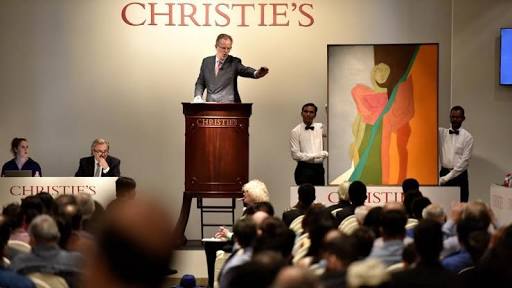
How to buy an immovable property at Auction

0
Public auction
Image Source - https://www.hindustantimes.com/mumbai-news/going-going-gone-christie-s-backs-out-of-live-auctions-in-india/story-5nNmHB8QZ2wnXc0eYcmH5O.html

In this article, Smita Singh discusses on documentation essential for acquiring valid transfer of title of immovable property through public auctions.

Introduction

One of the modes of acquiring title over immovable property is through a public auction conducted by Civil or Revenue Officers. Transfer of title through such auction normally involves acceptance and confirmation of highest bid by the concerned Civil or Revenue Officer and issuance of Certificate of Sale to the purchaser.

Whether a certificate of Sale requires registration

Section 17(1) of the Registration Act, 1908 enumerates the documents that are required to be compulsorily registered. These include inter alia instruments of gift of immovable property; instruments creating, decelerating, assigning, limiting or extinguishing any right, title or interest in immovable property etc. Section 49 of the Registration Act provides that a document required to be registered, unless it is so registered, shall not affect any immovable property comprised therein and also will not be received as evidence of any transaction affecting such property.

Section 17(2) of the Registration Act, however, exempts the requirement of compulsory registration in respect of inter-alia any Certificate of Sale granted to the purchaser of any property sold by public auction by a civil or revenue officer. Therefore, any Certificate of Sale issued by civil / revenue officer in respect of property sold by public auction is not required to be compulsorily registered.

Filing of certificate of Sale with Registering Authority

Section 89(4) of the Registration Act requires every Revenue Officer granting a Certificate of Sale to a purchaser of immovable property sold by public auction, to send a copy of the Certificate to the jurisdictional Registering Officer and such officer is required to file the copy in Book No.I.

Difference between registration under Section 17(1) and filing of copy under Section 89(4)

In Shanti Devi L Singh vs. Tax Recovery Officer & Ors. [MANU/SC/0476/1990], the Supreme Court considered whether the filing of a copy of Certificate in Book No. I under Section 89 is same as registration of the document under section 17 or is a distinct concept. The Court noticed the following difference between the two processes:

  1. i) Under section 17 it is the original of a document that is registered whereas, under section 89(4), only copies or memoranda are filed.
  2. ii) The executant of a document to be registered has to present it for registration and go through the attendant and subsequent prescribed processes. A copy to be filed under Section 89 is merely transmitted to the Registering Officer for filing. The procedure of presentation is dispensed in case of sale certificates, possibly because they are issued by public authorities discharging their official duties.

iii) Additional particulars relevant to a document admitted for registration are required to be endorsed thereon as per Sections 58 and 59 of the Registration Act. This requirement does not apply to a copy filed under section 89(4).

  1. iv) When a document is registered, the document in entirety is copied to the relevant book and the original document is returned to the person who presents the document with necessary endorsements. This requirement is absent in the case of a copy which is just filed.
  2. v) Where a document is registered, a certificate of registration is issued which is admissible to prove the due registration of the document.

In Shanti Devi L Singh case Supreme Court further held that the two processes being different, the purchaser at Court or revenue sale is under no disadvantage on account of lack of registration. It held that Certificate of Sale not being a compulsorily registrable document, the transfer of title is not vitiated by non-registration of the Sale Certificate.

In Yamin & Ors. vs. Mohammed Shafiq [MANU/UP/0516/2004] Allahabad High Court reiterated that a Sale Certificate issued by the revenue officer is not required to be compulsorily registered.

The Andhra Pradesh High Court in T. Yogayya Naidu vs. Mohammed Latifulla Sharif [MANU/AP/0377/2009] noticing the difference between registration under Section 17(1) and filing of copy under Section 89(4), held that in respect of the Sale Certificate issued by revenue officer in public auction, it could not be insisted that Sale Certificate must be registered.

Narandas Karsondas vs. S.A. Kamtam and Anr. [MANU/SC/0363/1976] In case of auction other than by Civil or Revenue Officers, however, the exemption from registration is not available. In such cases, the transfer would complete and ownership would pass only by a registered instrument of conveyance.

Effect of Sale certificate issued in a court auction

Allokam Peddabbayya and Ors. vs. Allahabad Bank and Ors. [MANU/SC/0700/2017] On confirmation of sale and issuance of sale certificate, the ownership of the property gets transferred to the auction purchaser. The Supreme court in Sagar Mahila Vidyalaya vs. Pandit Sadashivarao Harshe & Ors. [(1991) 3 SCC 588], considering Order 21 Rule 92 read with Section 65 of the Code of Civil Procedure, held that once an order is made confirming the sale, the title of the auction purchaser relates back to the date of sale; the title in the property thereafter vests in the auction purchaser; the issue of Sale Certificate in favour of auction purchaser though mandatory, the grant of Certificate is mere ministerial act and not judicial.

In B. Arvind Kumar vs. GoI & Ors. [(2007) 5 SCC 745] the Supreme Court reiterated that when a property is sold in public auction in pursuance of an order of the Court; the bid is accepted, and the sale is confirmed by the Court in favor of the purchaser, the sale becomes absolute and title vests in the purchaser. A Sale Certificate is issued to the purchaser only when the sale becomes absolute. The Sale Certificate is merely an evidence of such title.

The Bombay High Court in Aatam Gems vs. Oriental Bank of Commerce [MANU/MH/1004/2008] restated that when an auction purchaser deposited the entire sale consideration and the objections to the sale have been dealt with and disposed of in accordance with law and the Competent Authority confirmed the sale, an absolute right vests in the auction purchaser and he is entitled to issue of such sale certificate.

Stamp duty payable on sale certificates

Shree Vijayalakshmi Charitable Trust vs. Sub-Registrar [MANU/TN/1861/2012] Sale certificate issued by Civil or Revenue Officers is exempted from the requirement of compulsory registration, but it is not exempted from payment of stamp duty.

Bhupendra Singh vs. Board of Revenue, U.P. [MANU/UP/2007/2012] Non-payment of duty would render the document inadmissible in evidence till penalty is paid. The document could also be impounded.

Conclusion

From the above, it emerges that in case of sale of immovable property in an auction by Civil or Revenue Officer, the title in the property passes to the purchaser on confirmation of the bid and issuance of Sale Certificate. Such Sale Certificate is not required to be compulsorily registered. Though the Sale Certificate Is required to be sent to the registering officer for filing in Book-I, the procedure is not similar to the requirement of compulsory registration. Failure to send a copy of the Sale Certificate to the registering officer or failure of the registering authority to file the document in Book-I, may not vitiate the title of the purchaser at court auction.


Download Now

Call For Papers – Indian Law Conclave @JLU Bhopal, 29 June – 1 July, 2018 – Submit by May 31

0
India Law Conclave

About Indian Law Conclave

Indian Law Conclave is a three-day National Conference organized by Adhrit Foundation, INY Foundation, and Model Governance Foundation at Jagran Lakecity University, Bhopal from 29th June – 1st July, 2018. Focus areas of the Conclave would be Alternative Dispute Resolution Mechanism, Constitutional Law, Corporate Law, Cyber Law, Intellectual Property Law, International Law, and Maritime Law.

The Conclave will have both Formal and Informal events. Formal events include Keynote Presentations, Paper Presentation Competition, and Group Discussions. Informal events include Open Forum, Cultural Night and Ethnic Fashion Show, Life Mapping Exercise, Dance and Music performances. Workshops and Mini Bootcamps on Entrepreneurship, Governance, Leadership, Public Policy, Research Methodology, Self Management, and Social Media will be also conducted during the Conclave.

Call for Papers

The Organizing Committee of Indian Law Conclave hereby invites original research papers and case studies on the following themes for presentation at Indian Law Conclave 2018 and publication in a book with an ISBN:

1. Changing Landscape of Legal Systems in India

2. Alternative Dispute Resolution Mechanism

3. Constitutional Law

4. Corporate Law

5. Cyber Law

6. Intellectual Property Law

7. International Law

8. Maritime Law

*Topic can be chosen from any one of the eight themes mentioned above.

Eligibility

1. The submission is open to all students, research scholars, teachers and professionals around the world.2. Co-authorship shall be permitted. There is no bar on the number of co-authors.

3. All authors must register separately as delegates for the main event.

Submission Guidelines

1. The work should be original, and must not be previously published or must not be in the stage of submission/consideration anywhere else.

2. The word limit, excluding footnotes, endnotes, references, and bibliography can range between 2500-7500 words.

3. An abstract should be written at the beginning, explaining the aims and motives of the paper. Word limit: 250-750 words.

4. Submissions should be made in MS Word format.

5. Main Text – Times New Roman, font size 12, double spacing, justified, with a margin of an inch on all sides.

6. Footnotes – Times New Roman, font size 10. Substantive footnotes are accepted.

7. Citation Mode – Harvard Bluebook (19th Edition)

8. Bibliographies or reference lists are welcome, but not necessary.

9. Each submission must be accompanied with a short description about the author(s).

10. A soft copy of the research paper must be uploaded at www.indianlawconclave.com/research.html by 31st May, 2018.

Prizes

  1. First Prize + Certificate + Rs. 5000
  2. Second Prize + Certificate + Rs. 3000
  3. Third Prize + Certificate + Rs. 2000

General Guidance

1. Registration for India Law Conclave 2018 is mandatory for participation in this competition.

2. Types of Research Papers: Literature Review, Exploratory/Original Research, Case Study, Descriptive, Commentary or a mix of various types.

3. Our Editorial Board will provide detailed comments to author(s) in case their paper needs revision and improvement.

4. A Publication Certificate will be issued to the contributor(s) whose research paper(s)/case study(ies) is/are selected for publication in the book.

5. Participation Certificate will be issued to all the participants of Indian Law Conclave 2018. No separate participation certificate will be issued for participation in this competition.

Presentation Guidelines

The paper can be presented through any of the two methods:

1. PowerPoint Presentation – The paper can be presented through a PowerPoint presentation. It must not contain more than 15 slides.

2. Video Presentation – The paper can be presented through a high definition video.

Note: Discussion on every presentation will be facilitated during the conference.

Publication in the Book

1. Selected presented papers will be published free of cost in a book having an ISBN.2. Non-presented papers will not be considered for publication.For any other queries, please write to us at [email protected] or visit http://www.indianlawconclave.com/call-for-papers.html.

Note: Indian Law Conclave will also witness a workshop on Legal Research Methodology, a session on introduction to effective CV, cover letter, and Statement of Purpose, and a number of other networking and learning opportunities. For a detailed list of events, participants may visit the agenda at http://www.indianlawconclave.com/agenda.html.

Download Now

Why do lawyers need Professional Liability Insurance?

0
Professional
Image Source: http://www.attorneysliability.com/images/indexMain.jpg

In this article, Vedashree Kurukuri, pursuing Diploma in Entrepreneurship Administration and Business Laws from NUJS, Kolkata discusses on professional liability insurance for lawyers

Introduction

Ivamy who is an authority in insurance law has defined a contract of insurance as a “contract whereby one person called the insurer undertakes in return for the agreed consideration called the premium, to pay to the other person called the assured, a sum of money or its equivalent on the happening of a specified event”. Insurance may be classified into two types; general insurance and life insurance. Life insurance refers to insuring the life of an individual. In most instances, it acts as a protection and as a mode of investment which is primarily dependent on the happening or the non-happening of the specified event. The unique feature of life insurance is that it doesn’t involve the principle of indemnity which forms the crux of all other forms of insurance. General insurance refers to all other forms of insurances which include fire insurance, marine insurance, professional liability insurance etc.

What is professional liability insurance?

Professional liability insurance is also known as professional indemnity insurance or errors and omissions insurance. This insurance covers the insured with respect to any action that may arise due to negligence, malpractice, errors or omissions that arise during the performance of their professional duties. The professional liability insurance only covers any civil liability that a professional may incur. It does not include a claim arising out of criminal liability. Professional negligence or misconduct may lead to bodily injuries (generally includes medical practitioners) or financial loss (generally included chartered accountant, lawyers etc.,) or both bodily injury and financial loss (generally covers architects).

The cover provided by the insurers against professional liability includes the legal costs and expenses for the purpose of trial and any amount of civil damages or settlement that may have been awarded against the professional. Indian law doesn’t provide any specific statute to regulate the various aspects of professional liability insurance.

Professional Liability Insurance in India

The professional liability insurance is not very popular in India. Neither the Insurance Act nor the specific professional practice rules of various professions mandate taking this insurance cover. It is left to the will of the individual or the service provider to take out the policy. While most medical practitioners and medical establishments necessarily opt for such an insurance cover due to the high number cases of medical negligence that arise, the same does not apply to lawyers and law firms because they hardly witness any cases of negligence being filed against them and hence are not prone to taking professional liability insurance. The United Kingdom makes it necessary for solicitors to take out and maintain professional indemnity from the 1st October 2013. This is due to the high number of cases that are filed against the lawyers, it also acts as a means of securing the position of the client and not just the lawyer. The same is not the position in India as there is no such mandate that needs to be followed the lawyers.

Professional Liability Insurance Policy Coverage

There are no rules or regulation to govern the extent of the coverage that may be provided by the insurers. Most of the insurers specify in their policy the extent of liability that they are willing to cover. The extent of coverage may be summarised to include the following:

  • The legal liability which a professional may incur due to any financial loss that the client may have suffered due to the breach of professional duty or negligence by the lawyers.
  • The policy also covers law firms as they are in the business of providing professional legal services. It is nowhere mandated that either legal professionals or law firms must take out a professional liability insurance.
  • The policy cover extends to group insurances in certain cases. A law firm may take a group Professional liability insurance against all its employees in order to facilitate any claim that may arise against the firm due to the action of any one or more of its employees.
  • The insurance claim amount is inclusive of the costs, fees and expenses incurred in defending the insured and any amount of compensation, damages or settlement that is awarded to the insured.

Exclusions

Like any other policies, Professional liability insurance policies also provide for certain exclusion which would not be covered by the policy. The following are the most common exclusions:

  • If the claim has arisen due to any criminal act or an act which has been done in violation of any law. This means to say that any criminal act leading to the claim or any criminal liability that arises will not be covered by the insurer.
  • If the breach of professional duty is due to rending of such services while under the influence of intoxicants or narcotics.
  • Third-party public liability is not covered under professional liability as it has separate policies for the same.
  • Those claims which arise because of infringement of intellectual property rights of the client.
  • If the claim is due to willful or intentional non-compliance with any legal requirements which are essential to have been complied with.
  • The liability covered does not include fines, penalties, punitive and exemplary damages.
  • Pure financial loss in terms of loss of goodwill or loss of market.
  • War and nuclear perils.

Who comes within the meaning of a professional?

In order to understand who can take such an insurance, it is necessary to understand who is a professional for the purpose of insurance. The term “professional” has not been defined by any statute currently in force. The Oxford Reference Dictionary defines a professional as:

  1. relating to or belonging to a profession,
  2. engaged in an activity as a paid job rather than an amateur,
  3. Competent,
  4. a professional person,
  5. A person who is very skilled in a particular activity.

This means that any person who is an expert or skilled in a field or practising a certain profession would come within the purview of the term “professional”. This definition is very broad and makes it difficult to identify the specific categories of people who can be referred to as professionals for the purpose of professional liability insurance. In common parlance, doctors, chartered accountants, lawyers, architects are understood to mean professionals.

Professional liability insurance is provided by various private insurance companies. Analysing the policies, the term “professional” can be understood to include “architects, engineers, doctors, lawyers, chartered accountants, and medical practitioners, and services such as medical establishments, information technology companies, financial institutions, media companies, law firms and such other professional service providers.”

The absence of a proper definition for the term “professional” creates ambiguity making it difficult to limit the scope of professional liability insurance and who can avail the same. Though the individual policies provide the categories of people who are covered, it varies from one insurer to another. This is detrimental to those categories of professionals who are not provided with the option to avail the same due to non-recognition of them to be professionals. It is essential that the term “professional” is defined at least for the purpose of insurance in order to prevent any ambiguity and to ensure that no profession is left out from being covered under the professional liability insurance.

Action against professional misconduct

Professional misconduct refers to those actions which are outside the purview of the services, pieces of advice rendered by the professionals and also includes such acts which are illegal and immoral.

Let’s take the example of lawyers

It is not a common practice by lawyers and law firms in India to take out a professional liability insurance. One of the main reason for this being the lack of awareness. Not all lawyers or law firms are aware that professional liability insurance exists, at the same time the clients are not aware of the option to sue their lawyers or the law firms for breach of professional duty or negligence. There have hardly been any cases where the clients have sued their lawyers or law firm for providing negligent services. The question that arises here is where should a client approach in case of deficiency of service by the lawyers or law firms?

The Advocates Act, 1961 provides for an aggrieved person to file a complaint against an advocate before the disciplinary committee of the State Bar Council or the Committee to take a Suo Moto action. This leads to carrying out disciplinary proceedings against the advocate who is accused of being guilty of professional neglect or misconduct as the case may be. This doesn’t provide any remedy for the aggrieved person as it primarily deals with the conduct of the advocate.

The other possible remedy could be to approach the consumer redressal forum. The purpose of enacting the Consumer Protection Act, 1986 is to ensure speedy redressal of consumer disputes. The question whether the services provided by lawyers falls within the purview of “service” and whether the client are “consumers” for the purpose of the act has been answered in positive by the National Consumer Redressal forum in the case of D.K.Gandhi v. M.Mathias. The case was initially filled in the state dispute redressal forum where it was held that the services provided by lawyers are by means of a unilateral agreement which is the power of attorney and hence the service cannot be challenged in the Consumer forums. An appeal was made to the National Consumer redressal forum which held that the decision of the state forum was erroneous and concluded that the services provided by lawyers fall well within the ambit of the consumer disputes and hence may be challenged in the consumer forums. This led to the filing of an SLP with the supreme court which allowed the petitions and ordered a stay on the order of the National Consumer redressal forum. As a result, the current position is unclear as to where the services provided by a lawyer can be challenged for professional misconduct. This makes it necessary to settle the position either by means of a statue or by means of rules which are specific to the regulation of claims against professional services of lawyers.

Source of Security

India is a developing country which is growing very rapidly. Ever since the liberalisation of the foreign investments in the Indian market, the number of foreign players has also increased. The legal profession does not have a provision for foreigners to practice but these foreign players have taken the role of a client for many lawyers and law firms. The scope of the profession has crossed the boundaries of the domestic law. Many law firms deal with domestic and foreign clients. The foreign individuals and firms are not new to the concept of suing their lawyers. In fact, it is mandatory in many countries for the legal professionals to take out and maintain a professional liability insurance. This had to led to many foreign clients asking their representing law firms to take a professional liability insurance. It showcases to the client, the ability to pay in case of an award of damages or compensation being issued against the firm.  The Professional Liability Insurance acts as a security to the clients as well as the legal professionals, even more so in cases where the amount of liability is high. Even one bad lawsuit against the law firm can affect the rest of the cases they handle and negatively impacts its reputation. The clients would be more confident about the firm when they are insured against professional liability. The limited instances of cases being filed against the legal professionals should not become a reason for them to not take an insurance cover against professional liability.

Suggestions

Life insurance, marine insurance and fire insurance have specific legislations which have been enacted for their regulation. The growth in the insurance sector and the economic development has led to the increase in the importance of professional liability insurance. It is necessary that a legislation or certain rules must be made in order to regulate professional liability insurance. They must focus on defining the term “Professional” in order to negate any ambiguity and also to identify the specific categories of people who would be covered by the insurance. It must be made mandatory to take out a professional liability insurance at least if a lawyer or the law firms deal with cases whose value exceeds a certain amount. One other aspect that must be clarified is which forum can the aggrieved party approach in order to file a suit against a lawyer or the law firm.

Conclusion

The economic development is a combined result of growth in all sectors including the insurance sector. Professional liability insurance for lawyers is still very uncommon. Its relevance is not limited to the legal professionals but also is a protection for their clients. It does contain the aspect of financial security to both the parties because the insurance coverage claim that arises in case of civil liabilities, extending to the legal costs and any damages, compensation or settlement amount that must be paid by the legal professional. With the increase in the foreign players in the market, individual cases are worth large numbers. In cases where the suit is filed against a lawyer or a law firm by clients who claim to have had a financial loss amounting to millions, it would lead them to bankruptcy if not covered by professional liability insurance. It would further lead to a loss of reputation and also adversely affect the other clients. Without the coverage of professional liability insurance, neither the law firm is financially safe, nor the clients have any assurance of recovering their loss when a suit has been filled. Hence, in the current scenario, it is important that a regulation is made for professional liability insurance and the that it is made mandatory for lawyers and law firms to take out the insurance.

Download Now

How to choose the right internship

3
Top Law Colleges in India
Image Source - http://www.imo.org/en/About/Careers/Internship/Pages/Default.aspx

This article is written by Swapnil Singh, of Ram Manohar Lohiya National Law University. The article gives a basic understanding of how to choose the right internship. This article gives some basic points which a student should keep in mind before choosing an internship.

Introduction

Internship is one important pillar of a student’s academic career. It makes a person self-dependent. You are a few steps away from your convocation and the only thing you need right now is a list of internships to guide you through what you want to do after college. The only question is, how to know which can be the right internship for you? The right internship serves as a window to gain skills, market those skills and learning to use them. The right internship is the one that aligns with your career goals and helps you in finding your interest.

Some Questions you should ask

There is a certain question you should ask yourself before finalizing your internship because your decision will affect the way your future turns out to be. Before choosing an internship, you should know what is your objective behind doing an internship and what you are seeking from a particular internship. There is nothing like a perfect internship but you have to find the one that is best suited for you and will help you in achieving your future goals.

The questions that you should ask yourself are

1. What will I learn in this internship?

Chalking out what you will learn in an internship is a really important task because the set of skills you learn during such internship determines what you can offer to your future employer. This is important when you have to choose between a generic internship at a well-known institution and a specific internship at an unfamiliar company, a well-known institution may make one excited but there is not as much to learn as in an unfamiliar small institution.

2. Will this internship help me in the future?

The right internship is a foot in the door of the future you want. The seniors, you meet can be a great contact and may be of help when you are looking for paid work after graduation. The right internship will provide you with a resume that can help you in achieving the future you want.

3. Will this internship add new tools to my toolbox?

Internships are a chance to learn new things, it helps in introducing you to things you want to explore. Every internship should be a chance to learn a new skill that can add to your CV. The primary focus should be on making a CV that employers will be interested in.

4. Will this be the chance to find a culture that aligns with your values?

Work environment plays a major role in internships. You can explore and know what suits you, whether you want to leave office by noon on Saturdays or you want to work 100 hours a week. Internships can be a great way to know what suits you.

5. Do reviews from previous interns interest you?

There is a huge trend where previous interns write their reviews on different websites like Lawctopus or opinions of seniors from your own college who have already interned in that particular office can be a great way to know what you can expect during your internship period. If what they say is something that you are keen on experiencing and trying, you can go for this particular internship.

If you ask yourself these questions and you find an internship that is the answer to them, it can be the internship you are looking for.

Things to Look for in an Internship

There are a set of things you should look for in an internship to make it an experience that will pave the way for you. It is important to judge the potential of every internship and what it has to offer in terms of experience and knowledge. Every internship should provide you with an adequate experience and should open up a new area for you. It should not just be another waste of time but something that will count and offer you things you are looking for. It should teach you something that will bring you closer to your future goals. The things that make an internship right for you are:

1.An opportunity to figure out your career choice

An internship is a good way to know whether you want to pursue a particular career or not. It should provide you with enough experience to test the waters. Therefore, look for a hands-on experience in an internship to make a well-informed decision in the future.

2. A chance to separate yourself from your peers

The internship should be a way for you to stand out among your batchmates and peers. Distance from your pack makes you realize what you are truly looking for in your career. A good internship should make you stand out from your group.

3. An opportunity to learn from your supervisor

A good mentor is really necessary during an internship to guide you through the various ups and downs in an internship. A good mentor helps you to realize what you are looking for and how you should go about it. A supervisor with experience in handling interns is important to teach them responsibility and the approach to handle projects on their own.

4. It should be a test of what you have learned

You learn a lot of things during your time at the college but you never get a chance to actually practically use it. This opportunity should be a great way to know whether what you can practically implement the things, you have learned at college. Practical knowledge is really important and to be able to practically deal with things you need experience.

5. A chance to make an impact

It should be important that you work on something with which you can make an impact: a project that will matter. You should look for internships with which you can work on projects that deal with real-world issues, this will be a good story to talk about in your next interview. An experience to make an impact and work on real problems will make you realize whether you are actually interested in a particular field or not.

6. A way to work with people who motivate you

An internship should provide you with an opportunity to work with people who you have always looked up to and who have always inspired you. An opportunity to work at a place where everyone is excited to work and motivated to come to work and make a difference will make you choose a work culture similar to this in your future. A group of inspiring people to work with can make a lot of difference and can inspire you to make a difference.

7. A way to build essential skills

Leadership, project management, and work ethics are few of the skills that are essential to make a good employee. You should research for the set of skills you will learn in an internship because it is essential to know what you are looking for and whether the internship can offer you those skills or not.

8. A chance to experience something new

An internship should provide you with a chance to learn and experience things that are new to you. You should look for internships that will add new skill sets and experiences to your resume. It is important to have a resume that reflects diverse skills and experiences, it is a good way to tell your future employer that you possess a skill set that will make you stand out from others.

9. It should have additional benefits

An internship should offer you additional benefits like it can be a way to earn an income, a chance to meet people who you look up to in your profession or a chance to explore a new city. These factors should not be a deciding point but can definitely add up when you are finalizing an internship.

Importance of Internship for a Law Student

When you are a law student, you have a plethora of career options to choose from. It is really important to know what do you want to do before choosing your internships. There are three most prevalent career choices in law school:

1. Litigation

If you are looking for a career in litigation, there is no point interning at a law firm. You need to intern under lawyers in District Courts, High Courts and Supreme Courts to get an understanding of how things work in a court. You need to learn how to research, draft and present it in the court. It is important to intern under senior because it will provide you with the right amount of guidance, exposure, and learning.

2. Corporate

A corporate career demands you to have the patience to work for hours sitting in one place. It important to start early because you need to intern at a lot of places before you can zero down where you want to work in. Initially doing a basic internship will help in understanding the law but your law firm internship will actually teach you about the basics of law firms and skills you need to have.

3. Academics

If you want to go for further studies and don’t want to give up on academics just yet, you need to find internships that are specific to the course you would like to study. Internships play a very important role in getting a good college, especially for foreign institutions.

How to ace your internship

To be successful in securing and excelling in a corporate internship, you need to plan and prepare well ahead. Lawsikho observed the process and created a course on how to ace your internship. The course covers the practical insights of the journey of securing a corporate law internship and converting one into a job offer for hundreds of law students and then identified the elements that worked and that didn’t work. This program is developed to enable you to acquire those skills before you even walk into a corporate internship. You will be able to build yourself into a person whom a law firm seeks out. A wide range of topics are covered in a huge amount of detail, such as:

  • How to draft an effective CV
  • How to write an effective cover letter
  • Guides for performing different kinds of tasks at an internship
  • How to excel at due diligence
  • How to excel at proof-reading assignments and learn for the future
  • Comprehensive technical skills training on M&A, Corporate, Debt Finance, FDI, General Corporate and Stamp Duty
  • Hacks for high-powered Google, Manupatra, MCA and BSE searches
  • Presentation and formatting techniques
  • Learn how to read and interpret financials of a business
  • Internship Plan for mapping out your internship progress
  • How to write expert-level articles that catch client and recruiter attention
  • How to draw complex corporate structures in PowerPoint from Day 1
  • How to build expertise in any area of law
  • How to network effectively before, during and after your internship
  • Detailed interview preparation modules for technical and HR-style interviews

Conclusion

Picking the correct internship for yourself can deliver an opportunity for future that prompts full-time responsibility and headway with early on preparing and experience. You can take as long as you want to find the right internship, but remember everything will depend on how seriously you perform your work and how willing you are to learn from every opportunity that comes your way. Show up on time, be professional and show enthusiasm for every project that is offered to you to work on. You should always ask for guidance from your mentors and set some goals with them. You should look for new experiences because you ought to include yourself in exercises that let you encounter chance, disappointment, achievement, and collaboration as that will enable you to develop as an employee.

Download Now

How to write a Copyright Infringement Notice

0
Image Source - http://www.goldmanlegal.net/node/61

In this article, Nikita Sukhathankar, pursuing Diploma in Entrepreneurship Administration and Business Laws from NUJS, Kolkata discusses on how to write a copyright infringement notice.

Introduction

Intellectual Property Rights, as the term suggests, is a right over the work which involves human intellect. Copyright, just like any other intellectual property, grants the author or creator the exclusive right over their work.

What is a copyright?

As stated above, copyright is an intellectual property right that grants the creator or author of a certain work involving human intellect the exclusive right over the said piece of work. Copyright is seldom termed as a ‘bundle of rights’ due to its quality of protecting a diverse set of artistic and literary works. According to Section 13 of the Copyright Act 1957, a person can claim copyright over original literary, dramatic, musical and artistic work, cinematograph films, and sound recording. Subsequently, Section 14 gives a brief description of the exclusive rights vested in the copyright holder which is elaborated further in this paper.

Legislative framework

The copyright law in India has been made in compliance with the international copyright conventions of which India is a signatory, such as the Berne Convention 1886, The Universal Copyright Convention of 1951, The Rome Convention 1961 and  The Agreement on Trade-Related Aspects of Intellectual Property Rights (TRIPS).

There have been slow paced but progressive changes in the copyright law in India. The first post-independence copyright law, vis-à-vis, Copyright Act, 1957 has been amended 6 times in all. The latest amendment of 2012 have been made to make the copyright law in compliance with the WIPO Copyright Treaty (WCT) and WIPO Performances and Phonograms Treaty (WPPT)

How copyright helps the creator of the work?

If a person is a creator of a certain work, it is only fair for him/her to want to protect her work from commercial exploitation or from false claims of ownership of the said work by others. A copyright helps the owner of the work from possible circumstances of such misappropriation. For instance, a person writes a draft of a novel and is willing to publish it, however, due to some unfortunate reason, his work is leaked and someone else publishes it and gains the rights of ownership over that work with subsequent credit for the book and the commercial benefits arising out of it. Had the original author registered for a copyright for his/her work, he/she could have avoided the possibility of going through a potential copyright infringement suit. A creator of a certain work has an exclusive right to his/her work, may it be published or unpublished. A copyright comes into existence the moment the work comes into existence in a tangible medium. Although it is not a mandate to register a copyright, it has been recommended to do so to avoid conflicts.

Copyright infringement

Copyright infringement simply put, is the use of work protected under the Copyright Act 1957 in such a way, the exclusive right of which subsists with the holder of the copyright alone. The copyright holder could be the creator of the work or could be an assignee of the copyright under Section 18 of the Copyright Act 1957. To make a certain use of works protected under the Copyright Act 1957, a person needs to seek permission from the copyright holder in the form of a licence from the owner of the copyright. For instance, the original author of a book reserves an exclusive right to distribute his work and for such distribution, he shall grant a certain bookstore the licence to distribute his work. However, if a certain bookstore fails to obtain a licence from the author and despite that, distributes the copies of his books, it will amount to copyright infringement.

To understand copyright infringement, it is important to understand which exclusive rights are vested with the holder of the copyright and Section 14 of the Copyright Act 1957 helps to understand the same:

In case of literary, dramatic or musical work:

  • to reproduce the work in any material form including electronic medium;
  • to perform, communicate or issue copies of the work to the public;
  • translation and adaptation of work;
  • to make any cinematograph film or sound recording.

In case of computer programme:

  • any above acts;
  • to sell or commercially rent a computer programme.

In case of artistic work:

  • to reproduce the work in any material form including storage in an electronic medium; or
  • the depiction of a three-dimensional work as two-dimensional and depiction of two-dimensional work as three-dimensional.

In case of cinematograph film:

  • to make a copy of the film including a photograph out of the film or storing it in any medium;
  • to sell or commercially rent any copy of the film;
  • to communicate the film to the public.

In case of sound recording:

  • to make any sound recording which incorporates the original work;
  • to sell or commercially rent a copy of the sound recording.

The copyright legislation has created a demarcation between acts that qualify as an infringement and the ones that do not within the provisions of Sections 51 and 52 respectively, of the Indian Copyright Act 1957. Section 51(a) of the Indian copyright act 1957 talks about the ‘acts’ that lead to infringement by way of commercially exploiting the copyright by any person who has no interest in the exclusive right that is granted to a copyright holder and Section 51(b) talks about distribution, sale, import, etc of such infringing copies of the work. Further, Section 52 talks about certain acts that do not amount to infringement, for instance, using a work protected by copyright for the purpose of research or personal use does not amount to infringement.

Notice of a copyright infringement

Once the copyright holder is informed about his/her copyright being infringed, the immediate thing to do is send a copyright infringement notice to the infringing party. A copyright infringement notice is like any other legal notice which contains the ingredients of a cease and desist notice. Sending a notice is the step that comes before the copyright holder could avail his civil or criminal remedies under the Copyright Act 1957.

What is a cease and desist notice?

A cease and desist notice is a legal notice that prohibits a person from doing certain acts that violate the legal right of a certain person. The extent of legal validity of a cease and desist notice is that it helps the plaintiff prove to the court of law that there has been a reasonable amount of efforts put in by them in order to avoid litigation. In Midas Hygiene Industries P. Ltd. and Anr. v. Sudhir Bhatia and Ors., 2004 (3) SCC 90, Supreme Court held that a cease and desist notice acts as a very important and useful tool to pronounce injunctions. Hence, the notice is considered an important tool for adjudicating cases relating to copyright infringement in favour of the copyright holder.

Ingredients of a copyright infringement notice

Different legal notices have certain particulars that they need to mention to complete the purpose of the notice. Following are the ingredients of a copyright infringement notice:

  • name of both parties;
  • the work protected by the copyright;
  • date of creation of the work;
  • date when the work was first published;
  • date of copyright registration (if applicable);
  • description of the violation of the copyright;
  • demands with respect to compensating the infringed party (fine);
  • demands with respect to the course of action to be taken by the infringing party with a view to cease the violation of rights of the copyright holder;

Below is a sample draft of a cease and desist notice for a copyright infringement with the abovementioned particulars, where M/s XYZ have illegally distributed copies of books written by Mr. Ramesh. M/s XYZ had not obtained a licence from the copyright holder to do so:

Mr. Ramesh,

58-B, Magnus tower, Kanjurmarg, Mumbai

Tel. no. – 9999999999

Email id – [email protected]

Subject – Cease and desist letter for copyright infringement.

To,

M/s XYZ,

I, Mr. Ramesh, am the sole owner of my authored work named ‘Metamorphosis’ which is in the form of a novel and I retain all the rights of this copyrighted work. I have written this book on 1st June 2012 and it was first published on 1st July 2013. I got my book registered as a copyright on 1st July 2012. It has come to my notice that, your bookstore, M/s XYZ has been making an unauthorized distribution of the copies of my book. I have not granted a licence to your bookstore for distribution of the copies of my book and under section 14 of the Copyright Act, 1957, I as the sole copyright holder, reserve the right to distribution of my literary work.

I would like to bring to your notice that, since your act amounts to infringement of my legal rights granted under section 63 of the Copyright Act, 1957, you could be liable to a fine ranging from Rs.50,000 to Rs. 2,00,000 and also for imprisonment term of 6 months to 3 years.

I hereby, demand that you,

  1. cease the unauthorized use of my copyrighted work;
  2. provide me with a written assurance that you will desist from making any further unauthorized use of my copyrighted work;
  3. you shall return back all the copies of my work that you retain.

I hope that you understand the civil and penal charges that such an infringement of my legal right attracts and hope that you will work on the issue expediently. Looking forward to resolving the issue amicably, however, I’m willing to use my rights against such infringement if necessary.

Yours truly,

Mr. Ramesh

Take down notice under Copyright Rules 2013

With the dynamic developments in Information Technology, there has been an ease in availability of content on the World Wide Web. This has also led to illegal circulation, publication and or communication of various copyrighted works. Section 52(1)(c) of the Copyright Act, 1957 necessitates the copyright holder whose work has been infringed on a certain website to send the required intermediary a notice on whose website such infringed work is visible.

An intermediary in this section refers to an intermediary in section 2(c) of the Information Technology Act, 2000 as any person who on behalf of another person stores, transmits or receives data or provides any other service with respect to that data. The Information Technology (Amendment ) Act, 2008 takes a step further by specifically including telecom service providers, internet service providers, web-hosting service providers, search engines, online payment sites, online auction sites, online marketplaces and cyber cafes in the definition of intermediaries.

Subsequently, under the powers vested under section 78 of the Copyright Act, 1957, the parliament set up Copyright rules,2013. Rule 75 of the Copyright Rules, 2013 (see the rules here) requires a person whose copyright has been infringed on the internet to serve a notice to the intermediary for taking down of the infringing content. According to rule 75 (2), a take-down notice must contain the following particulars:

  • description of the work;
  • details establishing that the complainant is the owner or exclusive licence holder of the copyrighted work so infringed;
  • details establishing that the copy of the work which is the subject matter of the transient or incidental storage is an infringing copy of the of the work owned by the copyright holder and the act of the infringing party is not covered under section 52 of the Copyright Act 1957;
  • details of the location where the transient or incidental storage of the work is taking place;
  • details of the person who has uploaded the copyrighted work which amounted to its infringement, if available; and
  • an undertaking that the complainant shall file a suit against the infringing party in a competent court and produce before the intermediary the order of the competent court, within 21 days from the receipt of the notice.

Section 75(3) further mandates the intermediary to take down the content complained of within 36 hours for a period of 21 days or until the order of such competent court is received by the intermediary with regard to the status of the case whichever is earlier.

Conclusion

It can now be inferred from this paper that although the development of Copyright law is only recent in India, the efforts to providing better protection of copyright is visible through the latest legislation. Especially, the Copyright Rules, 2013 purports the attempt of drawing parallels between Indian and the international Copyright legislations for instance, the takedown notice rule (rule 75 discussed above) shows the attempt of legitimizing the incorporation of copyright law within information technology which has been given legislative backing in the United States of America namely, in the Digital Millennium Copyright Act, 1998. Copyright infringement notices are a fair means of attempt in avoiding litigation and settling the issue outside of court.  The notice acts as a legal threat to the party infringing the copyright and brings to his attention the liability that he has attracted towards the holder of the copyright.

Download Now

Anmol Malhotra: B.A. LLB. (Hons.) – Speaks on how Advanced Certification in Cyber Law Practice, Information Technology and Media Law course was useful for him

0

Currently, Anmol is in his third year of B.A. LLB. (Hons) F.Y.I.C (integrated) from Rajiv Gandhi National University of Law, Punjab. Anmol has worked as a Legal Intern at AZB & Partners. Anmol shares his experience on how Advanced Certification in Cyber Law Practice, Information Technology and Media Law helped him.

So far my experience with iPleaders was good while doing the course on ADVANCED CERTIFICATION IN CYBER LAW PRACTICE, INFORMATION TECHNOLOGY AND SOCIAL MEDIA LAW.

One of my friends referred me this course as he also did this course, and, it helped both of us. It helped us to gain practical knowledge on E-commerce, data security and software licensing. It gave me lot of clarity on cyber law. I am overall satisfied with this course. Video lectures were all good, only the quality could have been little better. Moreover, if the videos are more of lecture based it will be helpful for students like us. I have already referred this course to few of my friends. I have gone though the overview of few of the other courses of iPleaders, which I find very helpful for law students.

I have planned to do the Advanced Certificate Course on Companies Act, 2013 soon. And, I am sure, I’ll implement the knowledge once I’ll complete my college. I am sure there will always be a requirement for this kind of law courses that iPleaders has come up with for law students like us. The team is really doing a noble job.

Download Now

Contribution of Law Students in the Legal Profession

0
Image Source - http://bit.ly/3hEyPYR

In this article, Shreyanshi Maheshwari, a student of Symbiosis Law School, NOIDA discusses Contribution of Law Students in Legal Profession.

Introduction

Law as a profession provides valuable service throughout the society in different ways to different groups of people at the different level in both the public and private sphere. Whether be any section of society, the law is needed for all. Law is not just the contribution of the lawyers but the profession also depends on the contribution of the budding lawyers or the law students. It is important to acknowledge and thank those who are the foundation of this profession as they provide their high level of service on which the modern society is dependent. In the modern context, it also provides us with the opportunity to highlight the role of law students in the legal profession as well as in the society. Law students have a strong sense of justice and have a will to remove the injustices from the society and through their legal knowledge gained through legal education they make this change significant. The change is not sudden but is a result of a gradual change that comes over a period of time.

  • First, it is important to consider that law student play different roles in different situations. Like they act as a litigator in the moot courtroom while they act as a counselor in the Client Counseling.
  • Secondly, their roles also differ from country to country. Nations have different legal systems, different in their legal education and therefore it creates a difference in their work and contribution. Maybe, what is considered to be a contribution of a law student in one country is not considered to be the same in the other country.
  • Thirdly, it is important to note that the role of a law student is undergoing significant changes. The nature of legal services, the new education structures, greater flexibility in working practices and many other factors are making significant changes in the existing legal profession.

Role of Law Student in Legal Profession

Moot Court

Clinical legal education plays a very important role in transforming a law student into a good advocate. Moot court plays a very important role in this transformation. Today, society needs to have efficient advocates, lawyers, judges. Making a good and efficient law professional is not an easy task and therefore needs tremendous efforts and commitment. Moot court is one such activity that not only enhances legal knowledge, but it also enhances the communication, drafting, legal research, and presentation skills. Most important, it helps us in boosting our confidence. After presenting moots, students get to know what real court proceedings are like. This makes them well aware of the legal process and prepares them as an advocate.

Mock Trial

It makes students aware of all the aspects of a criminal trial as taking on the roles of the Advocates, Witnesses, clerks, investigating officers, accused and victim. This supplements the traditional classroom learning by encouraging the development of essential skills such as logical reasoning, clear communication, and teamwork, which makes the students well aware of the legal procedure as well as about the laws too. Every student should take part in mock trial as it helps in assisting the way in which the story needs to be formatted and how the trial needs to be presented, helps in seeing the case from the other side, helps in finding the loopholes in your case, assists in evaluating case themes and stories, allow you to polish your skills.

Client Counseling

Traditionally legal counseling was seen as a lawyer advising the client regarding the client’s legal problem. As time changes, Client Counseling Competition came into practice. Modern day education should focus more on the lawyering skills. Client counseling is one such important skill in which law students need to be trained in. One of the most important functions of a lawyer is to advise people who are seeking his assistance in knowing the legal implications of their own actions. In Client Counseling, students themselves act as Client and Advocate and therefore prepare them for a real-life client counseling meeting wherein one being an advocate is required to understand what your client’s problem is and how you can resolve it.

Debating

“Don’t raise your voice, improve your argument”.

Conventional wisdom says that competitive debate is excellent preparation for the practice of law. The art of debate involves mastering the skills of obvious value: the confidence to speak in public and make sense; constructing a logical argument; ability to read audience’s mind and reactions; and most importantly hearing the arguments of others and to respond to them. The aim of a debate should be the truth, neither victory nor unjust interest. Studying law as a course gives a great intellectual challenge as it develops the ability to argue on the basis of the proof and evidence in a way that can be really hard to counter. So if a law student has good debating skills, he will be a good lawyer.

Internships

Law internship is where higher education meets employment. It allows law students to gain experience through working in an organization while studying in a university. It is a first-hand experience in the legal profession and is very helpful in understanding the day-to-day responsibilities of an advocate. It helps us in knowing how to behave in a professional setting so that we never stand out for wrong reasons. While the law school is teaching us the fundamental substantive law, the internships help us to think like a lawyer and are more of practical knowledge of the profession. It provides the law student with the five essentials, that is, direction, good resume, professionalism, substantive work and a better understanding of the profession. More the internships more are your knowledge regarding your profession and greater knowledge results in the great advocate.

Blogging

Blogging offers law students a lot of benefits, allowing them to explore their topic of interest, showcase their writing skills, and to allow them to connect to the other like-minded law students and lawyers. Blogging was initially used by people to showcase their views, opinions, thoughts, experiences, and feelings. Today, it has grown and is used by millions, everyone from an individual to businesses to professionals. Blogging is no longer an individual hobby, it has emerged as an influential tool, affecting the thoughts and views of millions of people. The one writing the blog affects the lives of so many people. The law student while writing blogs affects the minds of various people as they transfer the information regarding their profession to others, as a result, contributing to the whole legal profession.

Legal Research

The ability to conduct a legal research is essential for any lawyer regardless of his area of practice. Law students generally hear the word ‘Legal Research’ on their internships. Contrary to layman meaning it is not just finding the law. It is analyzing law that is in one’s hand, that is, finding, understanding and applying the law. Whether it is a legislation or a case law or a current judgment of High Court or of the Supreme Court, a legal professional needs to be well aware of the current laws and legislation. It is one skill that is primary to legal practice and therefore most important of all. Legal research is gradually improving through the online legal databases. A considerable appreciation for the improvement of legal research goes to these online legal databases. If these online legal databases, used properly and intelligently can give exact and needed knowledge about the case laws. This reduces the time and resources, required to conduct a quality legal research but in addition to this, it needs proper training for using these legal databases. If law students learn to use these legal databases in their law schools it helps them in contributing to a quality legal research during their internships and jobs.

Conclusion

The Legal profession is a profession of service and welfare. And as an agent of justice, lawyers and law students play an important role in the preservation of peace and justice in the society. Law students play different roles, quite a number of which are only noticed by those who are being benefited from their services. Without law students, we won’t have future lawyers and ultimately we’ll have no one to protect us from the abuse of law. There are lawyers on both the sides of our legal system. Someone protects your rights, while the other protects someone else’s right. As we need a doctor to remain physically fit, we need present and future lawyers to remain legally fit.

Studying as a law student you get to know how the theory should be applied in practice. Law students are equipped with a variety of skills such as research, writing, drafting, communication, critical analysis, etc. law students make an impact on the lives of many as they are directly connected to the society and society needs them for everything whether it be for advice or referencing or for representation. Law students are budding future lawyers and contribute to the legal profession in every possible way.

Download Now

All you need to know about the services undertaken by NABARD

0
Agriculture
Image Source: https://modernfarmer.com

In this article, Nritika Sangwan, pursuing Diploma in Entrepreneurship Administration and Business Laws from NUJS, Kolkata discusses on the services undertaken by NABARD

According to the 2011 Census, 68.84% of the Indian Population resides in rural India and it is no surprise that approximately 70% of this rural population does not possess bank accounts. Consequently, financing in rural India is majorly controlled by informal sources like private moneylenders, traders and commission agents who are known to exploit these debtors. As a result, the Central and State Governments have started to make significant efforts to provide institutional credit to rural areas.

Introduction

The National Bank for Agriculture and Rural Development (NABARD) is one of the prime financial institutions in India which provides developmental credit in rural areas. Its mission is to “promote sustainable and equitable agriculture and rural prosperity through effective credit support, related services, institution development and innovative initiative.” NABARD has a total of 336 District Offices and six training centres in India and a special cell at Srinagar. It has many branches across India with its headquarters at Mumbai. The head of NABARD Regional Office (RO) is the Chief General Manager (CGMs) and there are various top executives at the head office which include:

  1. The Executive Directors (ED)
  2. Managing Directors (MD) and
  3. The Chairperson.

The main responsibilities of NABARD comprise resolving matters concerning policy and to plan and manage operations for credit in the field of agriculture and other economic activities.

Background

NABARD was set up on July 12, 1982, to execute the National Bank for Agriculture and Rural Development Act 1981. Its establishment was based on the recommendations of B. Sivaraman Committee. It replaced:

  • The Agricultural Credit Department and Rural Planning and Credit Cell of Reserve Bank of India
  • The Agricultural Refinance and Development Corporation

The authorized capital of NABARD was raised six times; it initially maintained only INR 100 crores which was revised to INR 30,000 crore. The Government of India owns 100% share in the paid-up capital, which stands at Rs.6,700 crore.

The International affiliates also advise and provide monetary aid to NABARD. Organizations such as World Bank associated organizations and other rural and agricultural developmental agencies work with it for the upliftment of the rural people.  

Duties

NABARD works towards uplifting the rural and agricultural sector and prepares grounds for rural and social innovations. It plays a prime role in framing development initiatives for our country’s rural sector industry, cottage industry, and small-scale industries. It reinvests the profits earned through developmental spending towards research activities to frame better development initiatives for rural and agricultural fields. This has helped NABARD gain trust among rural communities.

For rural and agricultural development, NABARD has partnered with many national and international organizations and has over 4000 partner organisations which assist it to plan and execute rural and social innovation. Some of the initiatives of NABARD include – SHG Bank Linkage program, initiative to improve the living standard of tree-based tribal communities, forming farmer clubs to educate and motivate farmers to incorporate crop productivity initiatives, programs for soil and water conservation,

NABARD has been consistently maintaining its position of the highest taxpayer, and figures among top 50 taxpayers to the exchequer. Together with its associated economies, NABARD carries out and supports integrated development for the rural sector.

Role of NABARD

One of the most important funding agencies to finance the institutions that provide credits for the purpose of investment and production to promote various development activities in rural India is NABARD. Its role is to coordinate rural finance actions of all agencies engaged in developmental work at the field level and maintaining a constant contact with the Government of India, State Governments, the Reserve Bank of India (RBI) and other national institutions interested in policy formulation and refinancing the institutions that finance the rural sector. It adopts measures like framing rehabilitation plans, restricting the credit institutions, etc, for the creation of institutions that improve the absorption capacity of the credit system. It regulates the institutions that financially aid the rural economy and controls its client institutes. Furthermore, training services for the institutions working in the field of rural elevation are also provided by NABARD. It also regulates cooperative banks and RRBs and manages talent acquisition via IBPS CWE.

NABARD undertakes to refinance the following:

    1. State co-operative agriculture and rural development banks (SCARDBs),
    2. State co-operative banks (SCBs),
    3. Regional rural banks (RRBs),
    4. Commercial banks (CBs)
    5. Other financial institutions approved by RBI.

Even though individuals, partnership concerns, companies, State-owned corporations or co-operative societies can be the beneficiaries of investment credit, production credit is more often than not, given to individuals.

NABARD has to its credit and important initiative, which is the ‘SHG Bank Linkage Program’. The purpose of this initiative is to encourage banks to lend funds to self-help groups. Since these self-help groups mainly constitute women, they have become an essential Indian tool for microfinance. Under this program, 3.3 crore members of 22 lakh self-help groups were linked to the credit in March 2006.

In addition to this, NABARD has also undertaken various Natural Resource Management programs which cover several avenues such as watershed development, tribal development and agricultural innovation through dedicated funds created for this purpose.

Objectives

NABARD is required to supervise and regulate the functions of RRBs, i.e. the Regional Rural Banks and the cooperative banks which account for 50% of the rural credit. NABARD undertakes to make sure that a strong credit distribution system is in place to provide rural credit that can suffice and support the growing and diversifying credit requirements for agriculture and rural development.

Activities and services undertaken by NABARD to perform various functions

Activities to discharge Credit Functions

  • NABARD formulates the guidelines for the functioning of the financial institutions in rural India.
  • It issues credit facilities to these financial institutions
  • Supervises the flow of rural credit at the ground level.
  • It devises annual credit plans for several districts in order to identify credit potential.

Activities to discharge Developmental Functions

  • It assists the rural credit institutions like RRBs and cooperative banks to formulate development actions schemes for themselves.
  • To better the affairs of the Regional Rural Banks, NABARD assists them in signing Memorandums of Understanding with the Governments and cooperative banks.
  • NABARD also keeps a check to ensure that development action plans of banks are being implemented properly.
  • It also extends its support financially to aid the training institutes of commercial banks, RRBs and cooperative banks.
  • For the improvisation of the management information system, development of human resource and to computerize the operations of cooperative banks, NABARD extends its financial support.

Activities to discharge Supervisory Functions

  • As per the provisions of Banking Regulation Act, 1949, NABARD, inspects RRBs and Cooperative Banks.
  • It volunteers to carry out inspections of the non- credit cooperative societies and the State Cooperative Agriculture and Rural Development Banks (SCARDBs).
  • It gives its recommendations and suggestions to the Reserve Bank with regards to licensing of Cooperative Banks and setting up of new branches of RBBs and State Cooperative Banks.
  • Apart from off-site surveillance, it undertakes portfolio inspections of RBBs and Cooperative Banks.

Conclusion

In a nutshell, NABARD for fulfilling its role as a facilitator of rural prosperity and is entrusted with the refinancing of credit institutions in rural areas, stimulating institutional development and evaluation and inspection of customer banks.

NABARD introduced a novel direct lending facility under ‘Umbrella Programme for Natural Resource Management’ in 2007-2008. This Programme offers loans at reasonable rates of interest to provide financial aid for natural resource management projects. Already loan amount of about Rs 1000 crore has been granted to 35 projects. Some of the projects that have been sanctioned are: (i) Collection of honey in Maharashtra by the tribal community (ii) Tussar value chain by a women producer company (‘MASUTA’) (iii) eco-tourism in Karnataka etc.

With regards to rural developments, the contribution of NABARD has been exceptional. NABARD, having been set up as the apex Development Bank mandating the facilitation of credit flow by the Government of India for improving and promoting agriculture and other village industries, sanctioned agricultural credit flow of Rs 1,57,480 crore in 2005-2006. It is expected that the GDP will grow at 8.4%. The Indian economy in its entirety is ready for stronger and faster growth in the coming years. NABARD’s role in the overall development of India in general and rural and agricultural in particular is very vital.

Download Now

Can News Headlines Be Copyrighted?

0
Image Source - https://stjamesgettysburg.wordpress.com/2013/03/03/how-not-to-read-the-newspaper/

With content curation and other literary works still being in the grey area with respect to Copyright Laws, Sarang Khanna, Marketing Analyst and Researcher at iPleaders, asks an interesting question – Can News Headlines Be Copyrighted? 

Would you happen to take a wild guess as to what constitutes ‘news’ these days, especially on the social media? Let me answer this for you – celebrity fashion statements, celebrity weddings, with the recent one of Sonam Kapoor and Anand Ahuja!

Open Facebook or Instagram and you’ll be flooded with news, images and videos about their wedding ceremonies, who wore what, who danced to what, yada yada yada. What is interesting to note is that if you happen to read the headline of these news reports, they all seem to be the same: Sonam Kapoor and Anand Ahuja Married! However, there are certain very unique headlines I came across that can get any reader interested (even if you don’t want to know whether KJo danced to Shava Shava or not). Let me give you some examples:

  • Koi Mil Gaya song video: SRK forgets steps, copies Ranveer at Sonam Reception [The Deccan Chronicle]
  • After Wedding To Anand Ahuja, Sonam Kapoor Changes Her Name On Instagram [NDTV]
  • Anand Ahuja age and net worth after his marriage to Sonam Kapoor [metro.co.uk]
  • Sonam Kapoor now a married woman: Star galore at celebration [The Gulf News]

And another: “Bhai Power: Salman ignores Jacqueline, hugs Katrina at Sonam Reception”. While I do not quite comprehend the media frenzy over this wedding, as a lawyer who takes keen interest in intellectual property rights, I was wondering if these headlines could be protected? I mean, think about it. What help is it to a news business if competitors can copy their headlines?

Having limited knowledge about it, I decided to research. I found an interesting case named Krishika Lulla v. Shyam Vithalrao Devkatta. Ever heard of the movie Desi Boyz? Yes, the John Abraham and Akshay Kumar no-brainer that went on to collect over 80 Crores at the Box Office (sometimes I genuinely wonder how!). Writer Shyam Vithalrao Devkatta had filed a case under the Copyright Act stating that although the script wasn’t copied, the title to a script he had written i.e. ‘Desi Boys’ was infringed as it was the soul of the story and took away everything. The Supreme Court in 2011 had ruled that no copyright exists in the ‘title’ of a movie or any other literary work under the Copyright Act.

However, in this particular case, as the title consisted of only two words, that too a very generic phrase in the Hindi language, I started to wonder whether newspaper headlines would also be interpreted as ‘titles’ in the same sense? Research ensued,  as a result of curiosity, and let’s have a look at the technicalities that exist around the world in this respect, and what stand the Indian intellectual property space is likely to take, when an issue like this reaches the judiciary.

What Are The Qualifications For Copyright?

For a work to gain copyright protection, it must be an original work of authorship like literary works, musical and artistic works, cinematic works, and even computer programs. There is even copyright infringement of software by the means of software piracy.

As news headlines would fall under the category of “literary works”, we must  look at some Indian case laws discussing the same, but sadly there is none, talking specifically about the amount of skill involved in the headline or title writing. Let us then attempt to look at the broader definition of literary works, and how international jurisdictions have interpreted it in this regard.

Definition of ‘literary work’

The term ‘literary work’ does not take into consideration merit or style of the literature. Literary works include things such as poetry, novels, short stories, and even things like stock exchange listings, prices, logarithm tables etc. In the UK, to decide whether or not something falls under the category of a literary work, the courts  usually rely on the test laid out in Hollinrake v. Truswell (1894) in which the qualification for literary work is that it must provide ‘either information or instruction, or pleasure, in the form of literary enjoyment’.

The Infopaq CaseProsecuted for scanning and copying 11 word extracts from popular newspaper articles, the European Court of Justice (ECJ) delivered an important judgement against Infopaq. The judgment was trendsetting for two reasons, as first, it set out that copyright was only applicable to a literary, musical, dramatic, or artistic works which are original ‘in the sense that it is its author’s own intellectual creation’.

Secondly, the court also noted that parts of a copyright work will enjoy the same protection as long as ‘they contain elements which are the expression of the intellectual creation of the author of the work’. It continued to hold that individual sentences, or even parts of them, constitute of literary work. Infopaq was hence found to be in copyright infringement,  as this case became a landmark test for the same.

The Meltwater CaseIn this other landmark case, a British court explicitly acknowledged that newspaper headlines would be protected by copyright laws as free-standing literary works. Headlines, it was  noted “involve considerable skill in devising and they are specifically designed to entice by informing the reader of the content of the article in an entertaining manner. In my opinion headlines are capable of being literary works, whether independently or as part of the articles to which they relate.” To determine whether a particular headline was eligible for copyright protection, the judge in Meltwater held, the only test was to apply was whether the headline was original in the ‘Infopaq sense’.

Viewpoint For The Copyright Protection of Headlines

The main argument for protection of headlines lies in the concept of skill, judgement and creativity that the author employs in headlines. In the popular Infopaq case, the ECJ held that “isolated sentences” would qualify as a literary work under the copyright law if “it conveyed to the reader the originality of the publication by communicating to the reader an element of expression of intellectual creation by the author.” It concluded that eleven word fragments would constitute impermissible reproduction if it were to convey the intellectual creation of the original author. Thereby, the court held that a headline by itself could convey the originality of the article to the reader.

The UK Court of Appeals upheld this judgement in NLA v. Meltwater wherein it was held that headlines were copyrightable as headlines involved considerable skill and were specifically designed and composed to entice the reader by informing the reader of its contents in an entertaining manner. It also made a reference to the University London Press judgement, for the requirement of creativity, a landmark judgement vastly relied on by the Indian courts.

The New Zealand High Court also upheld that the ‘title’ could be considered as an original literary work. Original literary works were not confined to only works of extensive literature as there is no requirement of literary merit, it was observed by the NZ High Court.

Viewpoint against Copyright Protection of Headlines

The main line of argument against protection of headlines stems from the maxim “de minimis non curat lex”, which when applied to copyright cases essentially states that the law does not concern itself with trifles or with what is negligible. Thus, it brings in the concept of substantiality in terms of copyright protection. When it is brought into the realm of copyright law, that is to say, what lies in the lack of substantiality of a work in the nature of a headline or title.

This argument, though has not been recognized as a necessary qualification in the Indian courts (according to Pepsi Co vs Hindustan Coca Cola), has been upheld by the Federal Court of Australia in the prominent case of Fairfax Media v. Reed International Books. It was  held that headlines by themselves were not substantial or extensive and did not have a significant character of their own, and that they lacked the lacked originality as required in a literary work, unlike detailed news reports.

However, the reasoning based on originality is misplaced since the headlines originate from the author and require some skill. Therefore,  in my opinion, the court has erred in its decision to define a relationship between substantiality and originality. The threshold of substantiality alone can however, stand in respect to copyright protection for headlines.

Landmark cases in Intellectual Property Law boil down vastly to the kind of arguments you rely on to make your case indispensable. IP lawyers and professionals need to be well versed with legal, and even various scientific and technological aspects. Especially in a country like India, which is often looked at as a non-IP friendly regime. Although, every year the IP litigation is increasing which is a good sign as far as awareness and protection go.

Companies and even individuals constantly need smart legal professionals to ensure that their creative works are not used by other people. In-depth knowledge of intellectual property is the only way to make sure that your copyright, or patent, or trademark is not violated, and even if it is, what is the way to go about it.

Could Headlines By Copyrightable In India?

In essence the debate on according protection to headlines is placed on two themes, creativity and substantiality. While a headline may involve creativity, it may only involve as short as three words, whose combination would be removed from the public domain. While the former, i.e. the creativity would be a reason to accord copyright protection, the latter, i.e. the erosion of the public domain may be a reason to not accord protection to works that are insubstantial.

In the debate between skill and erosion of public domain, the answer lies in deciding which one of these themes is more indispensable as a principle in copyright law.  While skill is a necessary constituent of originality as per the decision in EBC v. DB Modak, the substantiality of the work, is based on the principle of de minimis which is a maximum not specific to copyright law. Further headlines, per se, are not necessarily short, and may often consist of two or more sentences. Even when they are short, they still pass the originality test. Also, having a substantiality test would erode the principle in University London, i.e. fixation and originality being the only basic qualifications required for copyright protection. Hence, in my opinion, headlines must be held copyrightable.

However, it must be acknowledged that in India the position the courts would likely take is towards applying the substantiality test as applied in Fairfax in Australia. This is since the de minimis rule has been applied to copyright cases such as Pepsi, and hence a standard of substantiality may be required, in case this issue comes before the Indian courts.

On the other hand Meltwater will only have persuasive value, which would be considerable, as it placed reliance on University London in stating the satisfaction by headlines of the originality test. Therefore, on a cumulative weighing of Indian precedent and persuasive English precedent, the courts in India are likely to involve a standard of substantiality in affording protection, thereby denying protection to most headlines.

In the result, the most likely and correct result, in my personal opinion, is that Indian courts should confirm copyright protection over headlines, once such headlines satisfy a basic standard of substantiality, i.e. the weight of such headlines, as compared to the weight of the entire work in itself, it must be substantial enough to warrant general copyright protection. There is clarity in the Indian law about movie titles being ineligible to enjoy copyright law (refer this news report by The Hindu), but there is still lack of clarity with respect to news headlines, as no such case has yet reached the courts.

However, copyright being an automatic protection on the fixation of the work, this issue may only be resolved in each case where such a headline is alleged to be infringed. Further, given that in a fast moving news or media industry like in India, such headline infringement, even if proven, cannot really be undone, given the limited shelf-life of such content. Only damages may be awarded in infringement cases in India, if  at all, which will still in most cases, not be an effective remedy for the situation.

Intellectual Property is a tricky thing. While mere ideas cannot be protected, even substantial yields of intellectual prowess find it hard to be safeguarded from infringement. In a global village that the society is becoming, violation is easy and hard to detect. For entrepreneurs and freelancers, these times demand caution, for corporates they demand dedication, for students they demand awareness, and for lawyers they demand knowledge.

The relevance of intellectual property rights is at its peak today, and it is only increasing. Let us all do an activity today, let us open our eyes for all Intellectual Property around us, and spot trademarked, patented, and copyrighted materials throughout the day. You will be amazed by how comfortable intellectual property of others has made our lives, and how granted do we take it for.

Good luck!

Download Now

Indian Drone Policy And Regulations – The way forward

0
drone india

This article is written by Eshan M Saha. Eshan is an advocate and holds experience in Infrastructure (Projects) & Litigation (Arbitration) and currently advice on Policy & Regulatory aspects of Defence & Aerospace Sector.

There’s many a slip ‘twixt the cup and the lip. A policy has to pass through many hurdles for qualifying as a regulation. Regulation is what converts policy into action. Policy without regulation, is like a car, without wheels. Research and white papers are essential to form a policy. It is good to think like an economist or scientist, from the perspective of consequences. Once the Policy is in place, it is time to walk the talk. Too much of Policy analysis is equivalent to Policy Paralysis.

Can something basic and workable be decided? Obviously YES. Who will bell the cat? Everything is about perspective and perception. It is easy to point fingers, at the appropriate authority. However, it is pertinent to gauge, why the Directorate General of Civil Aviation (“DGCA”) is also hesitant, to pass a Regulation by means of Executive Action. Obviously, there are multitude factors because of which DGCA maybe in a fix as well. Most importantly, how fast can clearances/permissions of projects for DRONE/UAV services be expedited?

What are the alternatives, in case such a stalemate persists? Only regulation won’t suffice. Fast track clearances for projects are required. Can there be an alternative authority created apart from the DGCA, to do the same? The answer might be in affirmative, as the old adage goes, where if there is a will, there is a way. What can be the way out in such a scenario

First and foremost, we need to define the point from where the jurisdiction of DGCA begins and ends. Can there be an overlap in jurisdiction with any other authority? What are the Vertical (lower & upper) and Horizontal limits of Public Airspace? In relation to this, what are the Vertical and Horizontal limits of PRIVATE vis-a-vis PUBLIC AIRSPACE? Do we need to take a relook at the Aircraft Act and/or any other statute? We certainly need to do so, for clarity. This is because all this can be formulated by Executive Action. Therefore, the same is workable.  

Can an alternate authority be created to sanction projects vis-a-vis DRONE/UAV services?

Would it be pragmatic, to vest such powers on some other authority? Is this the best way forward to expedite projects for DRONE/UAV services? Most importantly, who will take the ultimate call in sanctioning projects? ‘Uneasy lies the head that wears a crown’. Some crowns, have the burden of a cross. However, someone has to take the call. Section 5 of the Aircraft Act of 1934 empowers the Central Government to make Rules. It is to be seen, which division of the Central Government, makes such Rules. Most importantly, which authority provides clearances for projects.

Let us try and connect the dots. What is the lateral connect? Who are the main authorities?

Let us be presumptuous, from the perspective of Public Administration and Governance. The DGCA is probably not the Primary Authority, to expedite projects for DRONE/UAV projects. Maybe the Home Ministry is the Primary Authority in this respect. Rule 13 of the Aircraft Rules 1937, is one such provision(s) wherein, photographs cannot be taken from flight, except permission from DGCA. The violation can be of such nature, that intervention may be required by the Ministry of Home Affairs (“MHA”), and in some cases, by the Ministry of Defence (“MOD”). National Security is of paramount importance.

DRONE/UAV surveillance services is required for multiple survellance/security purposes such as

  • a) Disaster Management
  • b) Border Security
  • c) Counter Terrorism
  • d) Internal Security
  • e) Emergency Response etc.

This is considering that DRONEs/UAVs will be primarily used for surveillance. What is certain is that MHA is an authority of equal importance. This is specially in the context of gathering data. There are multitude reasons for the same. Therefore, for the time being, maybe the DGCA is the secondary authority. The DGCA is ideally the secondary authority, from the perspective of VERTICAL LIMITS (lower & upper). It would be interesting to see, how Rule 21 of Aircraft Rules 1937 (applicable to DANGEROUS FLYING) is implemented to define the “lower” VERTICAL LIMIT. The tertiary authority here, is the Ministry of Defence. The MOD is the tertiary authority from the perspective of specific AIRSPACE and establishments. All are of equal importance. Neither can/should work, without collaboration with the other two. Therefore, it is time to build a Team/Authority, for expediting projects for DRONE/UAV services. The onus of putting a regulation in place still lies with the DGCA though. Unless Section 5 of the Aircraft Act 1934, is used to appoint a separate authority for the same.

How can we have a workable regulation?

Let us start with the basics and fundamentals. First let us eliminate the areas, where DRONEs/UAVs cannot fly. Rule 12 in conformity with SCHEDULE I of Aircraft Rules 1937, mentions prohibited areas of flight. This is keeping in mind, the limits set by the DGCA. Though the same does not seem exhaustive. Now the To be, or not to be question lies with the Home Ministry from an overall perspective. What does a DRONE/UAV service provider need to do? Ideally, a DRONE/UAV service provider needs to define its respective FLIGHT PATH(s). A particular DRONE/UAV, can fly, only in a particular way. This technical point is important. Aeronautical science and aerodynamics have to be considered.

Only defining the respective FLIGHT PATH, is a specific aspect. A larger issue is to define the AIRSPACE surrounding the FLIGHT PATH.

Needless to mention, monopoly is needed, on the FLIGHT PATH and the AIRSPACE. This is to prevent clash, collision or conflict between UAVs/DRONEs. The only way to gain monopoly is by competitive bidding. The usual NIT, RFQ and RFP process, has to be followed. Administrative criteria has to be defined accordingly. Swiss Challenge method, should also be applicable, for eager participants. Biding is necessary, because AIRSPACE is as good, as a natural resource.

The ICAO was formed in 1947 under the auspices of the United Nation Organisation.

ICAO was formed pursuant to the Convention on International Civil Aviation, at Chicago on 7th December 1944 (hereinafter referred to as the Chicago Convention). India is an original signatory to the convention. Pursuant to the convention, entering into force on 4th April, 1947 the ICAO has actively regulated and published circulars, to provide uniformity in Civil Aviation standards at the International level. As of 2017, India is not only a State Party to the ICAO, but is also a Member of the Council of States of the ICAO.

The ICAO in 2011, vide Circular 328 AN/190 has published Rules and Regulations, pertaining to and governing unmanned aircraft system(s). These rules are detailed rules consisting of seven chapters, and various appendices providing uniform guidelines for regulating the licensing, use and operations of unmanned aircraft system (hereinafter referred to as UAS). A copy of the said Guidelines as approved by the Secretary General and published under his authority.

In 2015, the ICAO vide Doc. 10019 AN/507 published a manual on remotely piloted aircraft systems, and the said manual by the approval of the Secretary General has been published under this authority. This manual deals with details, rules and provisions pertaining to Remotely Piloted Aircraft Systems (RPAS) and governs the technical nitty-gritty as to the infrastructure, and details of systems, to be put into the place for operations of RPAS.

The Directorate General Civil Aviation (“DGCA”) is a statutory body attached to and within the aegis of Ministry of Civil Aviation (“MCA”) created to regulate Aviation affairs within the territory of India.

The Directorate General of Civil Aviation (DGCA) is the regulatory body in the field of Civil Aviation, primarily dealing with safety issues. It is responsible for regulation of air transport services to/from/ within India and for enforcement of civil air regulations, air safety, and airworthiness standards. The DGCA also coordinates all regulatory functions with the International Civil Aviation Organisation (ICAO).

The Union of India through Ministry of Civil Aviation (“MCA”) is responsible for formulation of national policies and programmes for the development and regulation of the Civil Aviation sector in the country.

It is responsible for the administration of the Aircraft Act, 1934 (“Act”/“ACT”), Aircraft Rules, 1937 and various other legislation, pertaining to the aviation sector in the country. Under Section 4 of the Aircraft Act, 1934 the MCA has the power to make rules implementing the Chicago Convention.

Under Section 5 of the Aircraft Act, 1934 the MCA can make rules regulating the manufacture, possession, use, operation, sale, import, or export of any aircraft or class of aircraft and for securing the safety of aircraft operations. Section 5 stipulates a host of provisions for which the rules may be provided for. It is pertinent to mention in this regard, that under Section 5 of the Aircraft Act, 1934 the Central Government is theCompetent Authority” empowered to “make Rules”. The MCA/DGCA acts on behalf of the Central Government. Therefore, the Central Government is still empowered to make Rules, through some other Ministry/Department. 

Under Section 5A, the MCA can issue any such directions, on behalf of the Central Government, from time to time in any matter consistent with the said ACT. Furthermore, in order to achieve the purposes of the said Act, the Central Government under exercise of its powers conferred under the said Act, has enacted the Aircraft Rules 1937 (hereinafter referred to as the said Rules). The DGCA issues directions, regulations and circulars from time to time, to achieve the purposes of the said Act in consonance with the said Rules.

The DGCA in its draft of Air Transport Circular XX of 2016 (draft dated 21st April 2016), issued Guidelines for obtaining Unique Identification Number (UIN) and Operation of Civil Unmanned Aircraft System (UAS). Comments were invited on the said circular, and the last date for comments was 21st May, 2016.

In the introduction to these Guidelines, DGCA has expressly stated that the said guidelines have been issued pursuant to ICAO Circular 328 and Doc 10019 AN/ 507. This draft circular is dealing with the civilian use of UAS especially with regards to damage assessment of property and life in areas affected with natural calamities, surveys, critical infrastructure monitoring including power facilities, ports, and pipelines, commercial photography, aerial mapping, etc. They are also increasingly proliferating into recreational field and are likely to be used in many other domains.

The draft Circular has 13 main clauses

Under clause 3, Civil Unmanned Aircraft (UA) has been classified in accordance with the weight of the UA and has been categorised as per weight :

  1. Micro: Less than two Kg
  2. Mini: Greater than two kg and less than 20 kg
  3. Small: Greater than 20 kg and less than 150 kg
  4. Large: Greater than 150 kg.

Under clause 4 strict details have been provided as to who can be granted and issued UIN, and list of documents to be tied for the issue of UIN, have been provided for.

Under clause 5 provisions have been made for Unmanned Aircraft Operator Permit (UAOP) and the circular explicitly states, that for all civil UA operations at or about 200 feet Above Ground Level (AGL) in uncontrolled air space, for any purpose whatsoever, will require UAOP from DGCA. It further provides that operation of civil UA in uncontrolled airspace is restricted and exemption is made for certain entities for conducting operations without the issuance of UAOP from DGCA.

Following entities will not require UAOP from DGCA

  1. As per the Circular Civil UA Operation below 200 feet in uncontrolled air space and clear of notified prohibited, restricted and danger areas, as well as Temporary Segregated Areas (TSA) and Temporary Reserved Areas (TRA), will not require UAOP from DGCA. In addition, the operators shall obtain permission from the local administration and the concerned ADC. 
  2. Model aircraft operating below 200ft AGL in uncontrolled airspace and indoor UA for recreational purposes only. (Aero modelling activities carried out within the premises of educational institutions will be considered as recreational purposes). The lower VERTICAL LIMIT of 200ft AGL in uncontrolled AIRSPACE needs a relook.

Under clause 6 of the Circular, procedure for issuance of UAOP has been established and all those operators having a UIN intending to conduct civil operation of UA at or about 200 ft. AGL (Above Ground Level) in uncontrolled airspace shall their application to DGCA along with compliance of all necessary formalities and procedure mentioned therein.

Clause 7 of the Circular addresses the security aspects of operation of the UA and places responsibilities upon the owners/operator for the safe custody, security and access control of the UAS. In case of loss of UA the operator shall report immediately to local administrator/police, BCAS and DGCA within 24 hours of the occurrence of such incidents/accidents.

Clause 8 of the Circular addresses training requirement for remote pilot.

  1. The clause provides that the remote pilot should have attained 18 years of age, and have thorough ground training.
  2. The Remote Pilot shall undertake thorough practical training in the control of UA in flight and which may consist of a proportion of simulated flight training.
  3. The training should enable the remote pilot to demonstrate that he /she can control a specific UA throughout its operational condition including safe recovery of UA in cases of emergency and system malfunction.
  4. However, the above training requirement for remote pilots is not applicable for micro category UA and recreational flying. This is clearly a discrepancy. It needs to be resolved.

Clause 9 provides for maintenance of UAS, and provides for maintenance and repairs of UAS and ground control equipment, in accordance with manufacturers approved procedures. The remote pilot shall not fly the UA if he /she is not reasonably satisfied with the working condition of the control system of UA including radio link. The UAOP holder shall maintain records of each flight, and make records available to the DGCA on demand.

Under clause 10, operational guidelines for using UA has been provided. These guidelines are applicable to operation above 200 ft. AGL in uncontrolled airspace.

Clauses 11, 12 & 13 of the circular deals with legal obligations, insurance and enforcement action provisions that have to be complied with by the UAS Operator.

Critique of the circular

As per Issue No.1, it seems that while the circular issued by the DGCA, is appearing to be in tandem with the circulars and manuals issued by ICAO, there are about ten key areas which may have been overlooked in this circular and need to be specified, so that there is clarity on the same.

  • The first issue is pertaining to the operational aspect of uses of UAV.
  • The UAV should have sensors and/or systems and the current state of the art technology in place, to avoid birds, trees and other objects which may cause interference in the flight path.
  • The technology/apparatus should be able to detect, recognise and understand aerodrome signs, markings and lighting.
  • It should ideally also be able to recognise visual or any other signals of interception.
  • It should be able to identify and avoid terrain, as well as severe weather and wind conditions.
  • It should be able to avoid collisions from other aircraft in flight.
  • Further to that, regulations should be provided for noise level(s) that is permissible for the operations of these drones. This in turn shall lead to further innovation and challenges for entrepreneurs in the drone industry.
  • This is in tandem with the “SMART CITIES” Concept/Project/initiative (http:// smartcities.gov.in/content/innerpage/smart-city- features.php) as envisaged by the Central Government.
  • A Smart City should ideally have drones for surveillance, security and traffic management services at least, for better governance and public administration. This is also in tandem with the “MAKE IN INDIA” (http:// www.makeinindia.com/home) initiative of the Central Government, and has the potential to generate employment and promote investments and development, thus providing an impetus to the Union of India not just for domestic use, but also for exports since India lacks a high-end technology park or manufacturing centre which can manufacture high end technical equipment for UAVs/drones.
  • This will give a boost not just to the manufacturing and infrastructure sector, but to the IT sector as well as unmanned and autonomous aircraft/drones are the order of the day and the same shall be controlled by software.

Environmental consideration in operations of UAS

Issue No. 2 pertains to Clause 3.20 of Exhibit – B addresses environmental consideration in operations of UAS. Clause 3.20 places the following criteria that have to be considered for operations of these UAS :

  1. The amount of fuel consumed;
  2. Nature and location of the operation;
  3. Environmental footprints;
  4. Noise and gaseous;

The above criteria have to be complied with applicable standards and in Chapter – VI the ICAO has provided detailed provisions for environmental protection that has to be considered, in the operations of these UAS. The DGCA should notify the applicable benchmark for the same via regulation.

Issue No.3 deals with safety measures. Further consideration should be made with regards to the safety of the drone, and all drones should come equipped with a parachute or some other alternate safety mechanism to prevent crashes. Drones should have a mechanism in place which will automatically unfurl the parachute if it drops below the lower vertical limit and/or is no longer in control of the remote operator. Pursuant to the same, drones should also have an inbuilt collision avoidance system as mentioned herein above.

Issue No.4 is that, there should be a designated AEROSPACE PARK, or at least one demarcated “DRONE ZONE” in each State, for conducting test flights of drones. This should also be in line with the smart cities plan of the Central Government. This aerospace park or demarcated drone zone, is required to test unmanned autonomous drones or unmanned aerial vehicles (UAVs) so that there is no conflict with people operating these drones for recreation or any other civil purpose.

Issue No.5 deals with the issue of the vertical limits of 200 ft. Every UAV apart from those flown indoors or for recreation purposes within confined limits, should have been issued a UIN, regardless of the vertical limit. The UAVs can also be used for destructive/hazardous/terrorist purposes and could jeopardise the safety and security of the public at large. The divide/limit between PUBLIC and PRIVATE AIRSPACE needs to be resolved.

Issue No. 6 is that, there should also be a mechanism in place, to monitor the entire flight path of the UAV’s, and not just limited to 500 meters visual line of site (VLOS) as provided for in clause 10 of the circular. The said system should automatically track, record and report the flight of the drone to the DGCA. In urban areas, where there are massive high rises and a monsoon season, visual range for the operations of these UAVs is inconsequential. Furthermore, there should be the necessary technology in place, to monitor, report and record the flight path of each and every drone.

Issue No.7 deals with primary classification of UAVs. The classification of UAVs should not be as per type or weight, but primarily be classified as per the designated/ demarcated/preprogrammed/predetermined flight path and purpose of the UAV. The flight path is controlled airspace and path, which is governed by the vertical upper & lower limit, and the horizontal limit(s) permitted exclusively for operations and flight of the UAV. This is granted and regulated by the DGCA, keeping in mind the vertical and horizontal limit(s) in which it can operate from the point of take off to the point of landing.

UAVs depending on their respective design and flight capability, can only fly in a specific way and manner, solely dependent on its aerodynamic and other related nuances. The UAOP and UIN should be granted, only after testing the said UAV, and taking into account average weather and wind condition. It should further undergo design approval, deadlift payload capacity checks, and stringent test flight(s), before the license is issued. Further classification should be Sector and Service/Utility specific. 

As per issue No. 8, the policy should have specific detailed provisions pertaining to regular/periodical systematic statutory check-up of the drones post the license has been issued. These check ups, are required to make sure that the drones are not been used for any other purpose other than what the license has been issued for, to make sure the drones has not become hazardous in nature, therefore pertains to the public at large in danger, during the course of operations.

Issue No. 9 is that there should be aerodromes as in tandem with international guidelines if possible, and local needs of the population and a policy should be formulated accordingly. These aerodromes should provide charging and refuelling services for the drones, and have the requisite infrastructure for drops and pick ups.

Issue No. 10 is that there should be a comparative study of available technology, in respect of telecommunication of UAVs/drones and Air Traffic Authority and regulations should be framed accordingly, to monitor and record feedback. This is so that, the regulation can be at par, with the applicable technology.

Ultimately, a Team has to be formed as the requisite authority.

Ideally, a Team of five personnel is required. First from DGCA, Second from Home Ministry and Third from Defence Ministry. The fourth official, should be a DRONE PILOT to check technical details/feasibility of PROJECTS. The fifth an individual, who will act as an AGGREGATOR, and take a call. The onus of taking the call on clearing a project, should lie with just one individual. The others have to coordinate, and deliver as per set targets and deadlines.

Overview of the above arguments

A pragmatic approach and execution is required. A basic regulation, needs to be in place. The same will define, where DRONEs/UAVs can fly and cannot fly. Private players should bid for AIRSPACE and FLIGHT PATH for DRONE/UAV services. Subsequently, a TEAM needs to be put in place, to execute clearances for such projects.

If the Government fears threat to National Security, the same can be resolved by counter measures.

There is already a lot of information, available through online maps. What is the delay for? Do the government officials, fear action by the Vigilance or CBI later? Or from the opposition? Suggestions have been already invited. Stakeholders have probably already put forth their proposals. It is time to resolve and expedite any pending issues.

The requirement of DRONEs/UAVs is manifold.

It is for standard surveillance services. The distinct advantage being, DRONEs/UAVs cover blind spots. However, there is a basic requirement nowadays. There seems to be probability of political turmoil. The same is from apprehension of communal riots and violence. Irrespective of Government/Opposition in the Centre/State, the apprehension persists. In any event, what is wrong in living in a Police State ? The aftermath of child rapes of late, has been shocking. An EYE in the SKY, will also serve as a basic deterrence. At least, women will be comparatively safer. Ultimately the onus lies on the Central Government to take a call. As the states cannot legislate on Aviation.

Though the State Governments might also have DRONE/UAV services in PRIVATE AIRSPACE, below the lower VERTICAL limit, where the jurisdiction of DGCA does/may not extend. This will be below the lower VERTICAL LIMIT. How the States work around issues of DANGEROUS FLYING synonymous with Rule 21 of the Aircraft Rules 1937, amongst others, will be enlightening. A classic example is DRONEs/UAvs used for spraying bio fertilizers in the Agriculture Sector. These DRONEs/UAVs fly at a height of maximum 50 feet AGL. Time will tell, on who sets the ball rolling, and who steals who’s thunder. Most importantly who bells the cat.


Download Now
logo
FREE & ONLINE 3-Day Bootcamp (LIVE only) on

How Can Experienced Professionals Become Independent Directors

calender
28th, 29th Mar, 2026, 2 - 5pm (IST) &
30th Mar, 2026, 7 - 10pm (IST).
Bootcamp starting in
Days
HRS
MIN
SEC
Abhyuday AgarwalCOO & CO-Founder, LawSikho

Register now

Abhyuday AgarwalCOO & CO-Founder, LawSikho